


Abstract
Laser beam oscillation has been recognized as an effective means to modify temperature gradients and relieve stress concentration in welded joints, yet its role in dissimilar titanium alloy bottom-locking configurations—where asymmetric thermo-mechanical responses arise from both material mismatch and structural constraints—remains unclear. This study investigates the influence of circular oscillation amplitude (0, 0.5, 1.0, and 1.5 mm) on residual stress distribution in laser-welded TC4/TA18 bottom-locking tube joints at a constant power of 1000 W. Unlike the monotonic effect of laser power, oscillation amplitude redistributes the heat source spatially. A three-dimensional thermo-elastic–plastic finite element model incorporating a moving oscillating Gaussian conical heat source was developed in ABAQUS and validated against weld macrographs, thermal cycles, and blind-hole residual stress measurements. The results reveal a non-monotonic dependence of residual stress on oscillation amplitude: as amplitude increases from 0 to 0.5 mm, the peak hoop residual stress rises, but further increasing amplitude to 1.5 mm substantially reduces both hoop and axial residual stresses while promoting a more uniform stress field. At 1.5 mm, the molten pool covers the entire bottom-locking step geometry, the region of high hoop tensile stress (>700 MPa) is minimized, and the peak axial tensile stress at the bottom-locking gap end (BLG End) is reduced by 41% (from 415 MPa to 243 MPa) compared with non-oscillation welding. An amplitude of 1.5 mm is therefore recommended as the optimal parameter for residual stress control of these joints at 1000 W within the investigated parameter range. This finding provides a practical guideline for mitigating residual stress-induced failure risks in aerospace hydraulic and fuel delivery systems.
1. Introduction
TC4 (Ti-6Al-4V) and TA18 (Ti-3Al-2.5V) are a widely used dissimilar titanium alloy combination in aerospace hydraulic and fuel delivery systems, with the former providing high strength and the latter offering ductility and formability [1,2,3]. These tubes are typically joined using a bottom-locking configuration, a design that ensures self-alignment, simplifies assembly, and provides reliable sealing performance under service loads [4,5]. Laser welding is the preferred fabrication method for such joints due to its high energy density, localized heating, and minimal distortion [6,7]. However, the rapid heating and cooling cycles inherent to laser welding inevitably generate significant residual stresses, which can impair fatigue resistance, promote stress corrosion cracking, and reduce the overall service life of welded components [8].
In conventional laser welding without beam oscillation, parameters such as laser power and welding speed primarily determine the heat input per unit length, thereby governing the peak temperature, cooling rate, and ultimately the magnitude and distribution of residual stresses [9,10]. With the introduction of beam oscillation, oscillation amplitude and frequency become key parameters affecting residual stress. Yan et al. [11] developed a finite element model for oscillating laser welding of 316LN stainless steel and found that residual stress gradually decreased with increasing oscillation amplitude. Wang et al. [12] proposed an equivalent fluid–structure interaction model for oscillating laser welding of aluminum alloys, demonstrating that beam oscillation effectively reduced the area of high tensile residual stress at the weld center. For narrow-gap configurations, Liang et al. [13] employed an equivalent heat source model to simulate oscillating laser welding of high-strength steel and showed that increasing the amplitude helped relieve stress concentration in the heat-affected zone (HAZ). Jiang et al. [14] systematically investigated the effects of oscillation frequency and amplitude on residual stress distribution in Invar alloy butt joints, revealing that both parameters promote stress uniformity and reduce peak stress. Huang et al. [15] extended the analysis to geometrically complex thin-walled T-joints, demonstrating the effectiveness of oscillating laser–arc hybrid welding in controlling melt flow and defect formation. This beneficial effect is mainly attributed to the fact that beam oscillation spatially redistributes the heat input through controlled beam trajectories, rather than simply increasing or decreasing the total heat input, with the amplitude governing the effective heat-affected width and the uniformity of the temperature field.
Despite these advances, the above investigations have focused predominantly on similar-material joints with simple butt or narrow-gap configurations. In contrast, dissimilar materials generate highly asymmetric temperature and stress fields due to differences in thermophysical properties [16], while the stepped geometry of bottom-locking joints introduces additional constraints and potential stress concentration zones. Although our previous work has revealed the effect of laser power on residual stress in TC4/TA18 bottom-locking joints [17], the regulation mechanisms of laser power and oscillation amplitude are fundamentally different—the former influences residual stress by altering the total heat input (a “quantitative” regulation), whereas the latter spatially redistributes the heat input through beam trajectory control (a “spatial” regulation). To date, the role of oscillation amplitude in such dissimilar-material bottom-locking joints remains unclear, and the coupling mechanism between the oscillating heat input and the asymmetric thermo-mechanical response arising from material mismatch and structural constraints has not been systematically investigated.
The present study takes this as an opportunity to systematically investigate the influence of circular beam oscillation amplitude (0, 0.5, 1.0, and 1.5 mm) on residual stress distribution in laser-welded TC4/TA18 dissimilar titanium alloy bottom-locking tube joints. A combined experimental and numerical approach is employed. Experimentally, weld macrographs, thermal cycles, and blind-hole residual stress data are obtained. Numerically, a three-dimensional thermo-elastic–plastic finite element model incorporating a moving oscillating Gaussian conical heat source is developed to reproduce the transient thermal and mechanical responses during welding. Through this integrated approach, the study aims to reveal the regulation mechanism of oscillation amplitude on residual stress in this class of geometrically complex, materially dissimilar joints, and to determine the optimal amplitude for practical engineering applications.
2. Experimental Procedure
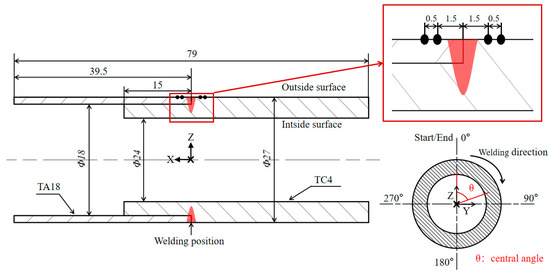
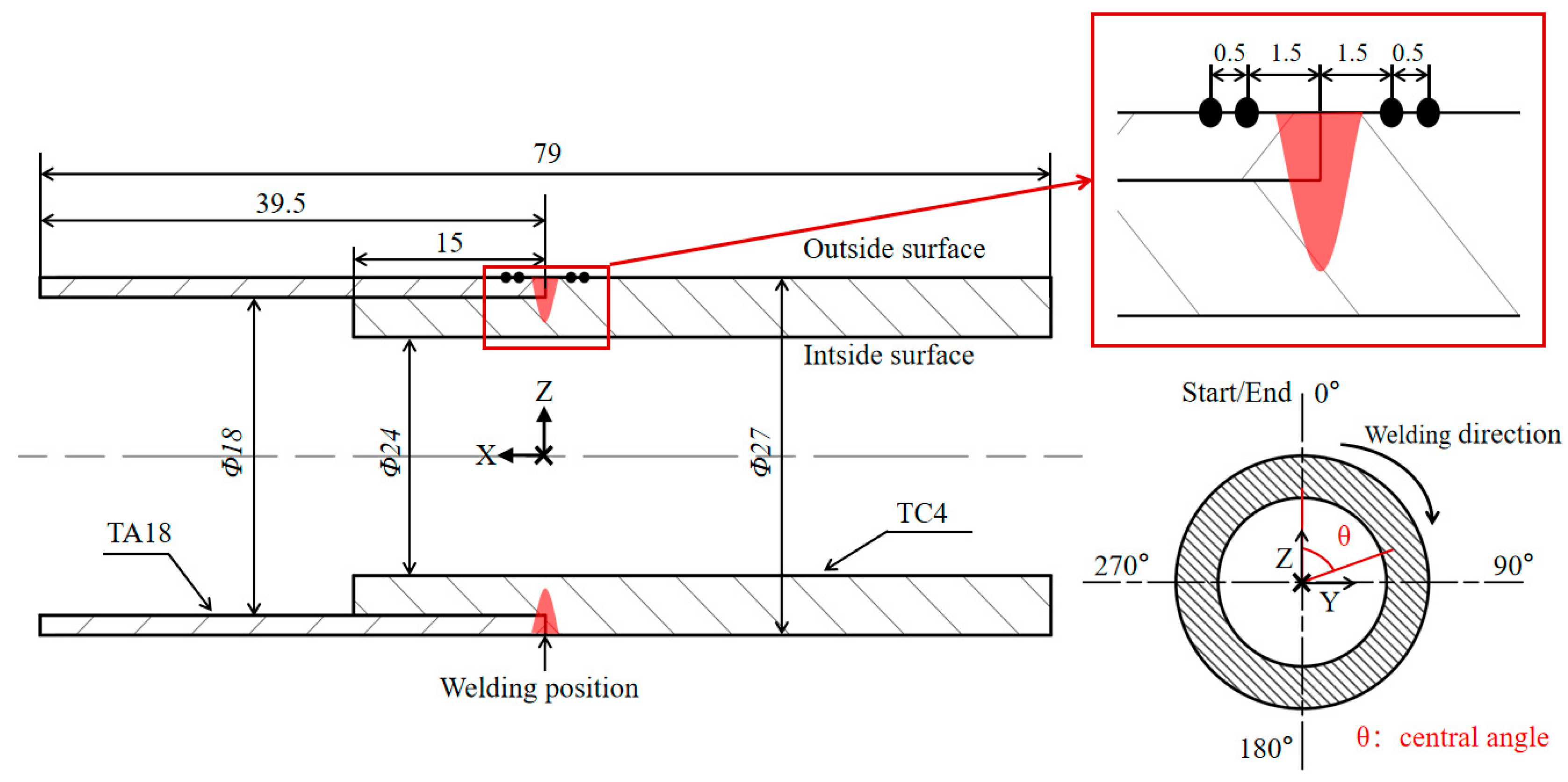
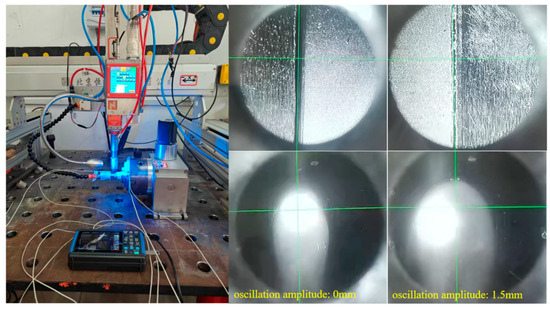
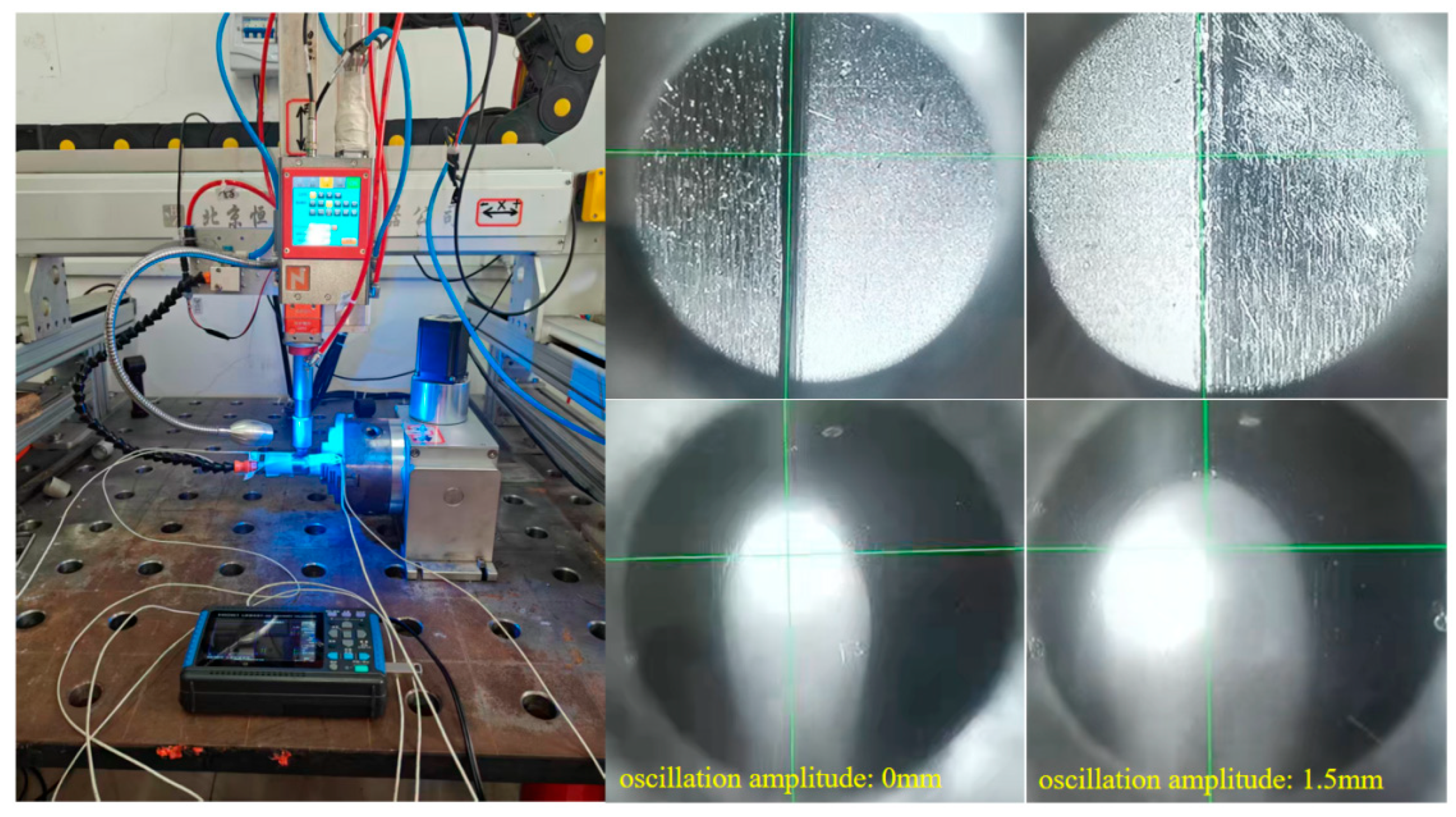
The base materials (TC4 and TA18), bottom-locking joint geometry, welding system (IPG YLS-6000 fiber laser, IPG Photonics, Oxford, MA, USA), and characterization methods (K-type thermocouple, blind-hole drilling, and optical microscopy) were identical to those described in our previous work [17], except for the laser parameters. The nominal chemical compositions of the base materials are listed in Table 1, and the geometric dimensions and structural schematic of the joint are illustrated in Figure 1, which also defines the central angle and the locations of temperature measurement. A photograph of the actual welding setup is shown in Figure 2.
Table 1.
Nominal chemical composition of the base materials (wt.%).
Figure 1.
Geometric dimensions (Unit: mm) of the dissimilar titanium alloy bottom-locking joints, definition of central angle, and locations of temperature measurements.
Figure 2.
Actual view of the laser welding.
In the present study, the laser power was fixed at 1000 W and the welding speed at 20 mm/s, while circular beam oscillation was applied at four amplitudes (0, 0.5, 1.0, and 1.5 mm) with a frequency of 200 Hz. High-purity argon (99.99%) was used as the shielding gas at a flow rate of 15 L/min. The laser beam had a spot diameter of 0.1 mm and was focused on the workpiece surface (zero defocus) with a focal length of 200 mm. These fixed parameters were determined through preliminary trials covering a broader range of oscillation amplitudes from 0 to 2.5 mm. The results showed that when the amplitude increased to 2.0 mm, the molten pool could no longer completely cover the entire bottom-locking step geometry. Therefore, the four amplitudes of 0, 0.5, 1.0, and 1.5 mm were selected for the systematic investigation.
Thermal cycles and residual stresses were measured only for the non-oscillation condition (0 mm amplitude), as a representative case for model validation, with temperature measurements recorded at θ = 180° and residual stresses determined using the blind-hole drilling method in accordance with ASTM E837 [18]. It should be noted that only one specimen was prepared for each oscillation amplitude condition. Therefore, no statistical repeatability or standard deviation can be provided for the measured residual stresses.
3. Numerical Analysis
3.1. Finite Element Model and Simulation Cases
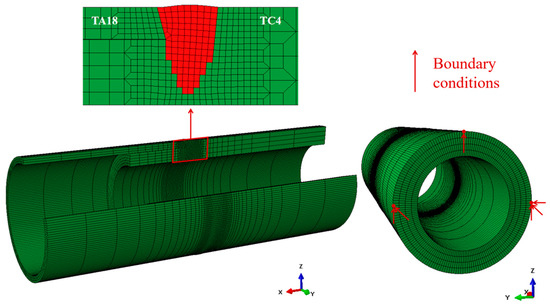
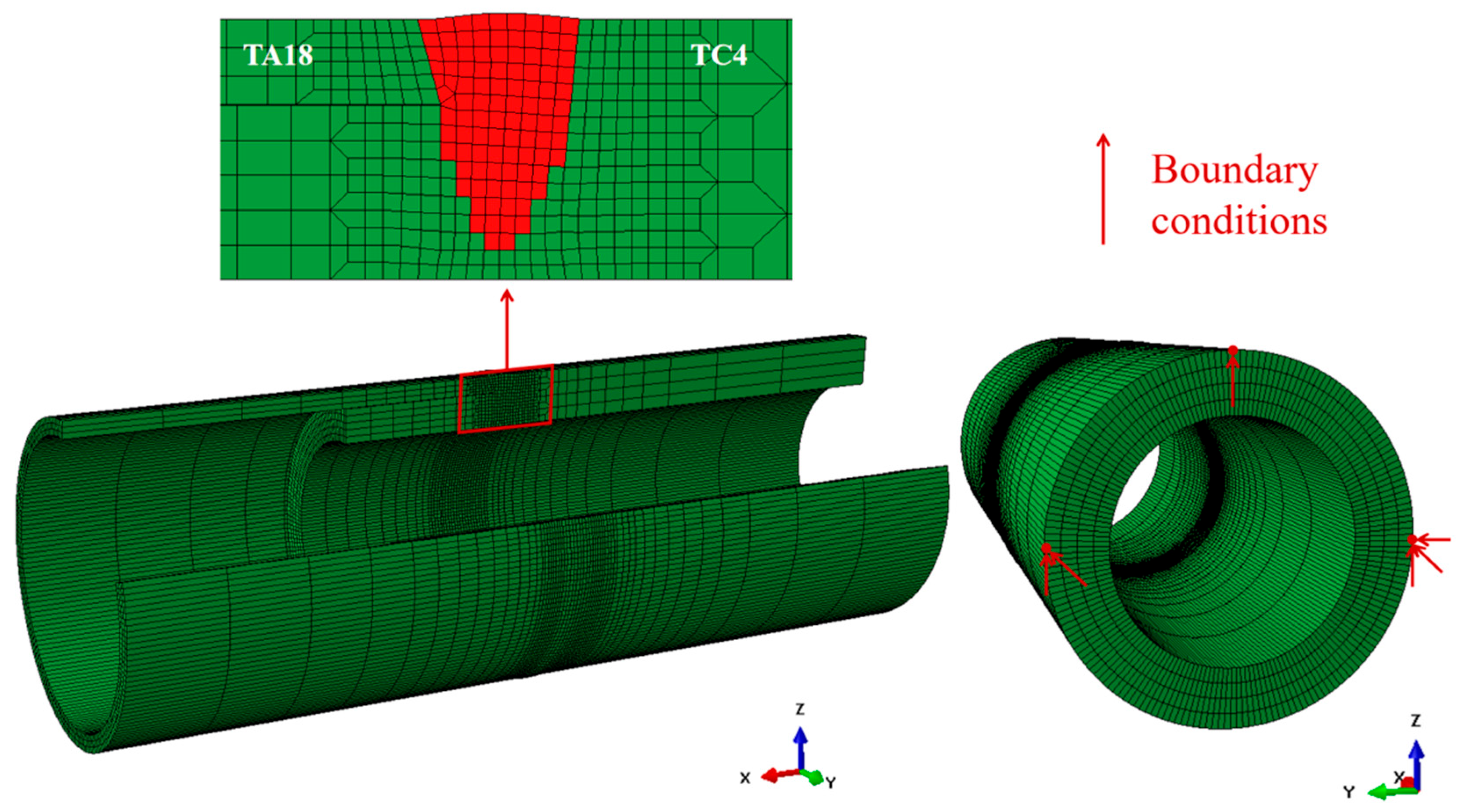
Three-dimensional finite element models were constructed in ABAQUS 2022 based on the nominal geometry of the dissimilar titanium alloy tubular joints (Figure 3). A sequentially coupled thermo-mechanical analysis scheme was implemented, in which the transient temperature field was first solved from a purely thermal analysis and subsequently imported as a prescribed thermal load for the mechanical computation. The mesh was refined in and around the weld zone with a minimum element size of 0.25 mm, while coarser elements were used farther away from the weld. No formal mesh sensitivity analysis was performed, but the adopted mesh strategy was based on our previous work [17], where it was validated against experiments.
Figure 3.
Finite element models and boundary conditions.
To isolate the influence of circular laser beam oscillation amplitude on residual stress development, four computational cases were designed with all other process parameters held constant. The amplitudes were set to 0 mm (no oscillation), 0.5 mm, 1.0 mm, and 1.5 mm (Table 2), covering the range over which the oscillating beam alters the weld pool coverage of the bottom-locking step feature. An identical mesh, consisting of 97,740 elements and 116,280 nodes, was employed for all four cases. Because the oscillating heat source was implemented via a moving coordinate trajectory in the DFLUX subroutine rather than by modifying the geometry or re-meshing, the same mesh can adequately resolve the melt pool dimensions for all amplitudes. This approach eliminates numerical discrepancies arising from mesh discretization, ensuring that any differences in the predicted stress fields are attributable solely to the oscillation amplitude. The thermal and mechanical analyses used DC3D8 and C3D8I element types, respectively [19]. As shown in Figure 3, the mechanical boundary conditions were applied by constraining three nodes on the bottom surface of the tubular structure in the x, y, and z directions to prevent rigid body motion. This restraint configuration replicates the clamping conditions used in the experiments.
Table 2.
Calculation cases.
The temperature-dependent thermophysical and mechanical properties of TA18 and TC4 alloys were taken from our previous study [17]. The properties of the weld metal were determined by the arithmetic mean method, weighted by the volume fraction of each base metal in the fusion zone (FZ).
3.2. Thermal Analysis
The temperature field is governed by the transient heat conduction equation [20]:
where ρ represents the density, c denotes the specific heat capacity, T stands for the instantaneous temperature, t is the time, ∇ is the spatial gradient operator, q is the heat flux vector, and Q represents the heating rate of the internal heat source.
A three-dimensional Gaussian conical heat source was adopted to represent the laser heat input [21]. Its heat flux distribution is described by:
Here, re stands for the radius of the upper surface, while ri represents the radius of the bottom surface; ze and zi represent the Z coordinates of the upper and bottom surfaces, respectively. Q denotes laser welding power, and η stands for the efficiency of the laser welding.
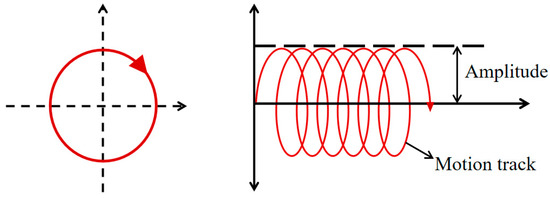
The key advancement of the present study is the treatment of beam motion. To reproduce the circular oscillation trajectory, the instantaneous coordinates of the heat source center are programmed to follow a circular path superimposed on the linear welding motion. Following the trajectory equations summarized in Wang & Gao [22], the coordinates are given by:
where A is the oscillation amplitude, f is the oscillation frequency, v is the welding speed, and t is the time. The resulting trajectory is schematically illustrated in Figure 4. This oscillating heat source was implemented in ABAQUS via a user-defined DFLUX subroutine written in FORTRAN.
Figure 4.
Circular trajectory of the oscillating laser beam.
Convective and radiative heat losses from the workpiece surfaces are accounted for using Newton’s law of cooling and the Stefan–Boltzmann law, respectively [20], and are given by:
where hc stands for the heat transfer coefficient; Ts represents the surface temperature of the workpiece; T0 denotes the ambient temperature taken as 20 °C. σ denotes the Stefan–Boltzmann constant; ε is the emissivity, which takes the value of 0.8.
3.3. Mechanical Analysis
The mechanical computation employed the same mesh as the thermal analysis, with only the element type converted to C3D8I and the boundary conditions updated accordingly. The total strain increment at any material point was decomposed into elastic, plastic, and thermal components, as given in [23]:
where represents the elastic strain, denotes the plastic strain, and is the thermal strain. The elastic response was governed by isotropic Hooke’s law, while plastic yielding followed the von Mises criterion.
It should be noted that the model does not account for metallurgical solid-state phase transformations during cooling. For the TC4 (α + β) alloy and near-α TA18 alloy, the weld thermal cycle may induce β → α′ martensitic transformation in TC4 and promote grain growth in both materials. These microstructural changes can generate transformation-induced plasticity, which alters the local yield strength and relaxation behavior, ultimately affecting the final residual stress state. This simplification is acceptable for the present parametric study focusing on the relative trends of residual stress with varying oscillation amplitude, but may influence the accuracy of absolute stress predictions.
4. Results and Discussion
4.1. Temperature Field
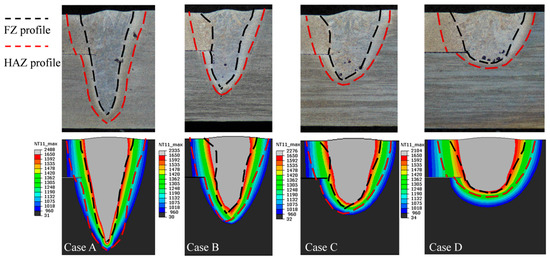
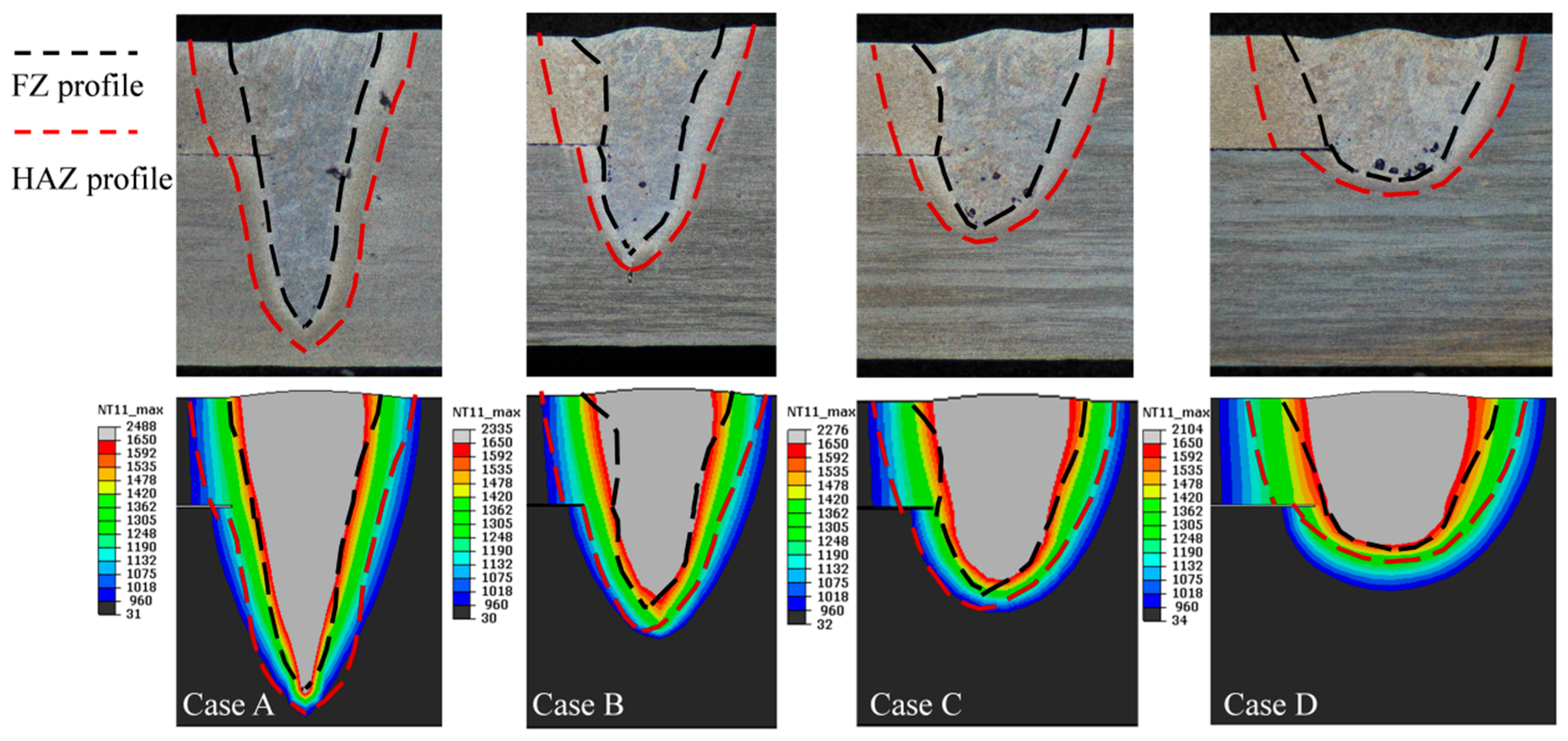
Figure 5 compares the simulated and experimentally measured weld cross-sectional morphologies at the 180° position for Cases A–D (oscillation amplitudes of 0, 0.5, 1.0, and 1.5 mm). The gray and light gray regions in Figure 5 represent the FZ (peak temperature exceeding 1650 °C) and the HAZ (temperature between 960 °C and 1650 °C), respectively. As the oscillation amplitude increases, the weld width exhibits a gradually increasing trend, while the penetration depth and the peak temperature show a gradually decreasing trend. In Case D (1.5 mm), the molten pool covers the entire bottom-locking step geometry, ensuring complete fusion at the step corner while avoiding excessive melting of the thin-walled TA18 side. The close correspondence between the simulated and experimental weld profiles demonstrates that the oscillating heat source model accurately captures the thermal response of the joint.
Figure 5.
Macroscopic morphologies of the bottom-locking structures and peak temperature distributions (Unit: °C) at the 180° cross-section.
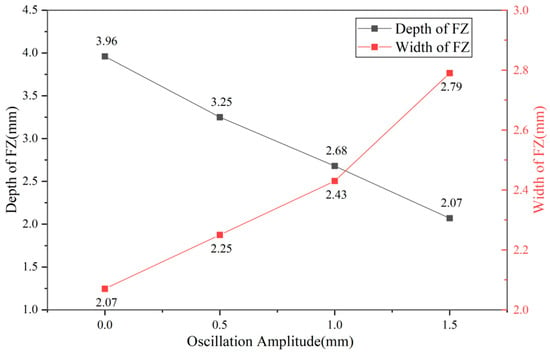
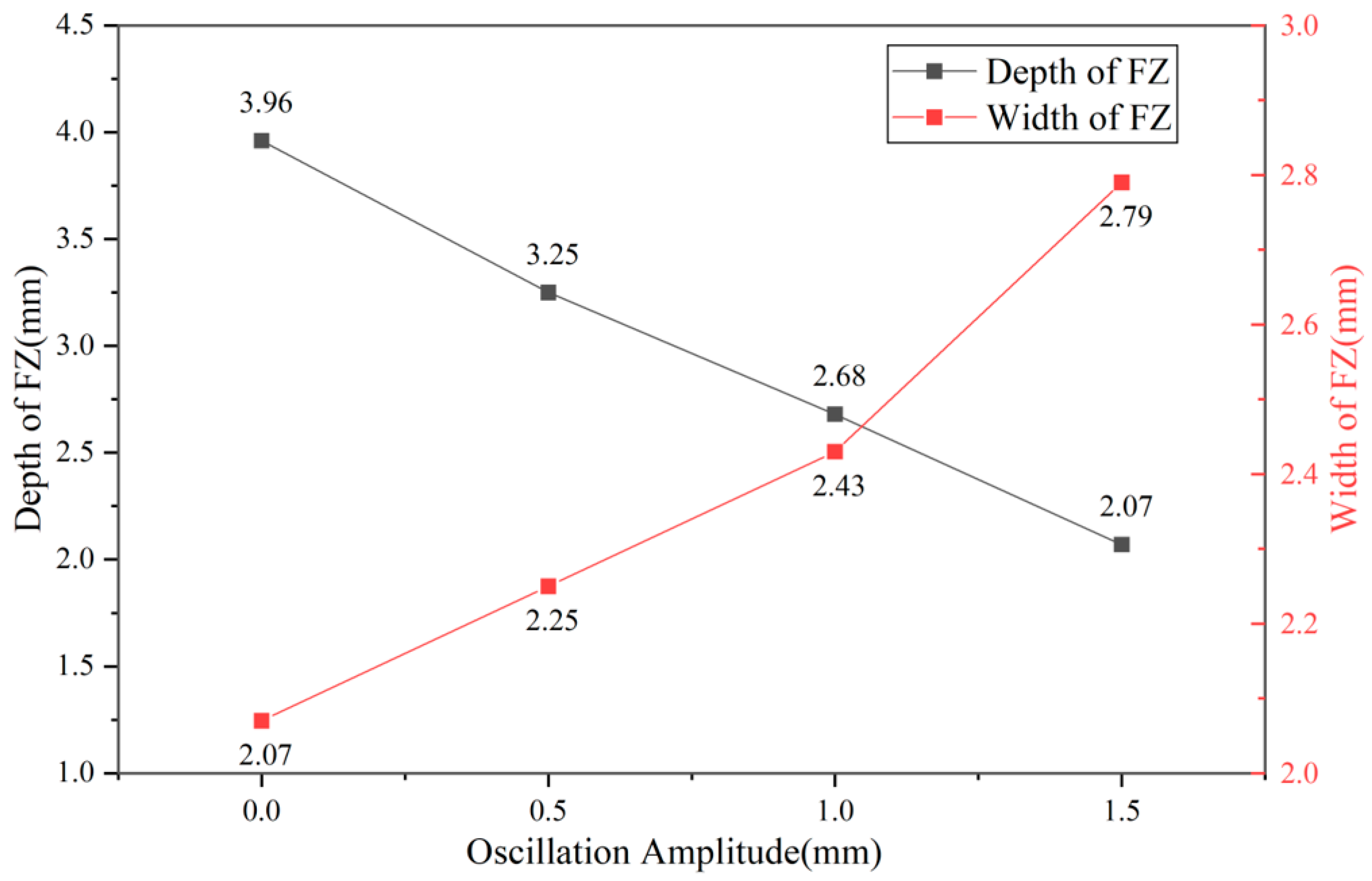
Figure 6 further quantitatively presents the experimentally measured penetration depth and weld width under different oscillation amplitudes. Case A (non-oscillation) yields a penetration depth of 3.96 mm and a weld width of 2.07 mm, exhibiting a typical narrow-deep weld pool profile. As the oscillation amplitude increases, the weld width gradually rises to 2.25 mm (Case B), 2.43 mm (Case C) and 2.79 mm (Case D), while the penetration depth decreases to 3.25 mm, 2.68 mm and 2.07 mm, respectively. The quantitative results confirm that the weld pool evolves from a narrow-deep morphology to a wide–shallow morphology with increasing oscillation amplitude, which is fully consistent with the macroscopic weld cross-sectional features observed in Figure 5. This variation trend is also in agreement with the general law of oscillating laser welding reported by Cai et al. [24].
Figure 6.
Experimentally measured penetration depth and weld width under different oscillation amplitudes.
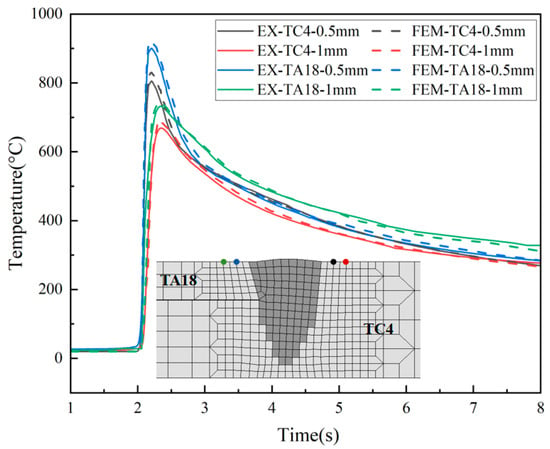
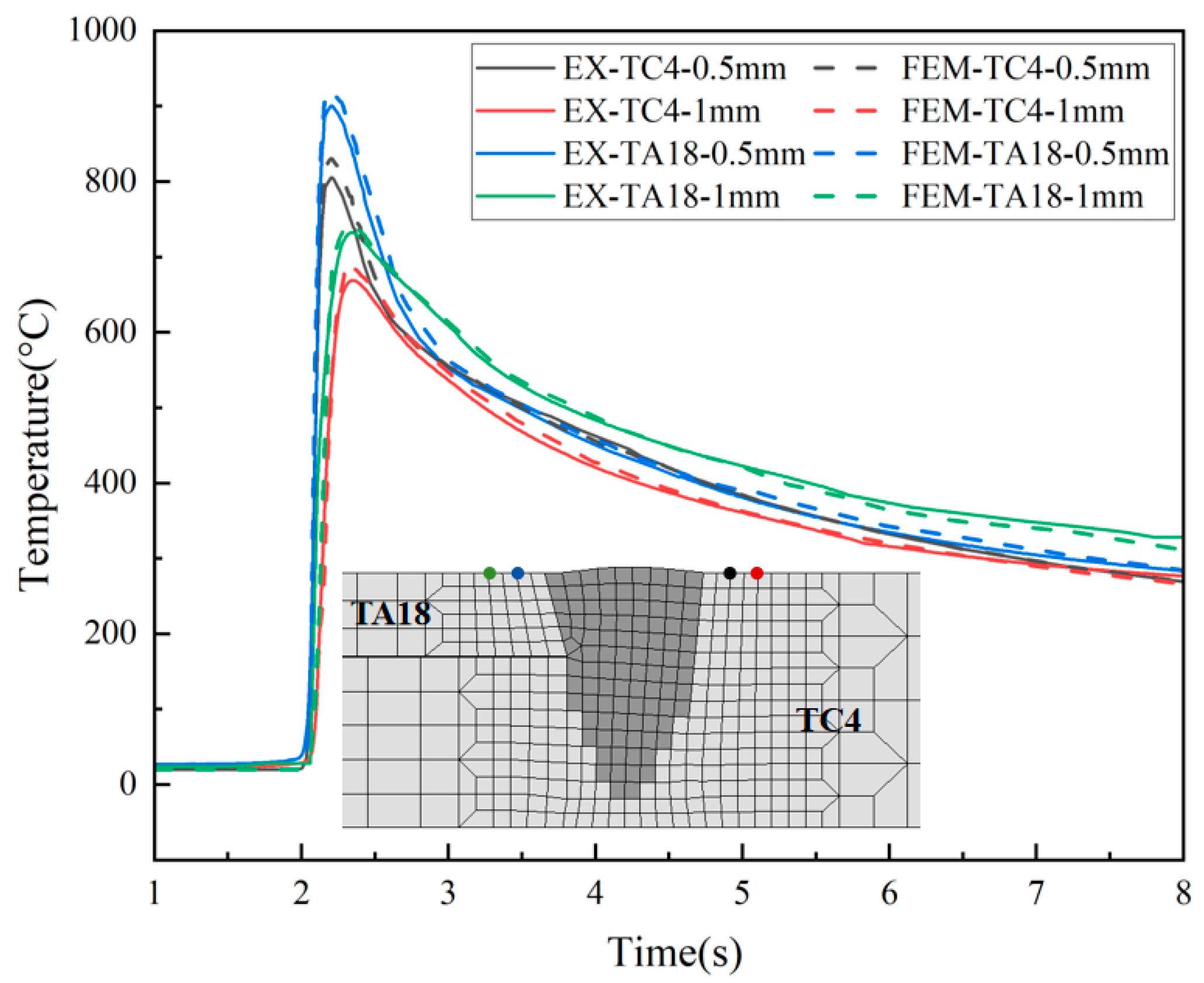
Figure 7 shows the measured and simulated thermal cycles at θ = 180° for Case A. The simulated peak temperature and cooling rate are in good agreement with the experimental data. At the same distance from the weld center, the peak temperature on the TA18 side is approximately 100 °C higher than that on the TC4 side. This is mainly attributed to the thinner wall thickness of the TA18 side in the bottom-locking structure, which results in a smaller heat capacity. Compared with the TC4 side, which has a larger wall thickness, heat dissipation on the TA18 side is slower, ultimately leading to a more concentrated temperature rise in this region.
Figure 7.
Thermal cycle at the outer surface of the 180° cross-section for Case A.
4.2. Residual Stress Distribution
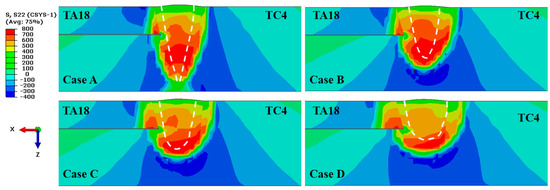
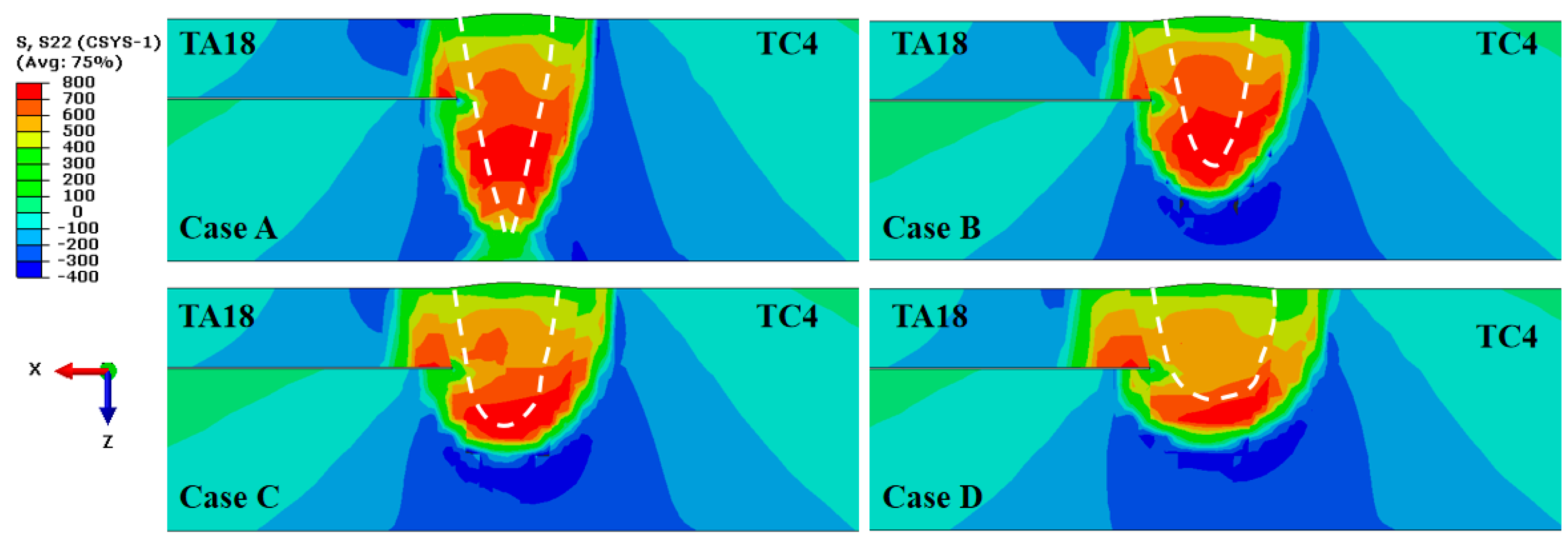
Figure 8 presents the contour distributions of hoop residual stress at the 180° cross-section of the bottom-locking laser-welded joints under four process cases, where white dotted lines denote the boundary of the FZ. In all cases, high hoop tensile stresses are concentrated in the FZ and the adjacent HAZ, balanced by compressive stresses in the surrounding regions, with the higher tensile stresses mainly located on the TA18 side near the weld and in the middle of the tube wall. As the oscillation amplitude increases, the distribution characteristics of the high-stress region evolve in a manner consistent with the weld geometry, transitioning from a narrow-deep pattern to a wide–shallow one. The overall hoop residual stress distribution becomes more uniform, and the region where the tensile stress exceeds 700 MPa is significantly reduced. This evolution is mainly attributed to the decrease in peak temperature and temperature gradient caused by the increasing oscillation amplitude, which in turn promotes a more homogenized stress field.
Figure 8.
Hoop residual stress distribution contours (Unit: MPa) at the 180° cross-section.
It is worth noting that the peak hoop tensile stress exhibits a non-monotonic dependence on oscillation amplitude: it increases from 763 MPa in Case A to 776 MPa in Case B, reaches a maximum of 799 MPa in Case C (amplitude of 1.0 mm), and then slightly decreases to 795 MPa in Case D (amplitude of 1.5 mm). This trend differs from previous studies [11,12,14], in which the peak stress either monotonically decreased [11,14] or exhibited a saturation-type response [12] with increasing oscillation amplitude. The non-monotonic behavior observed in the present work may be attributed to the specific constraint conditions imposed by the bottom-locking geometry and the mismatch in thermophysical properties between TC4 and TA18, which make the residual stress response to oscillation amplitude more complex than that in simple joint configurations.
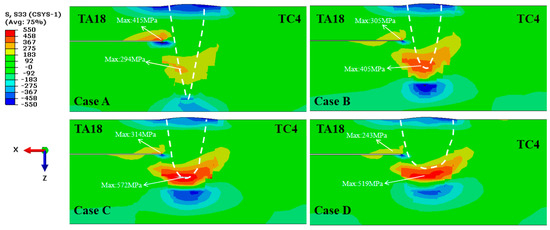
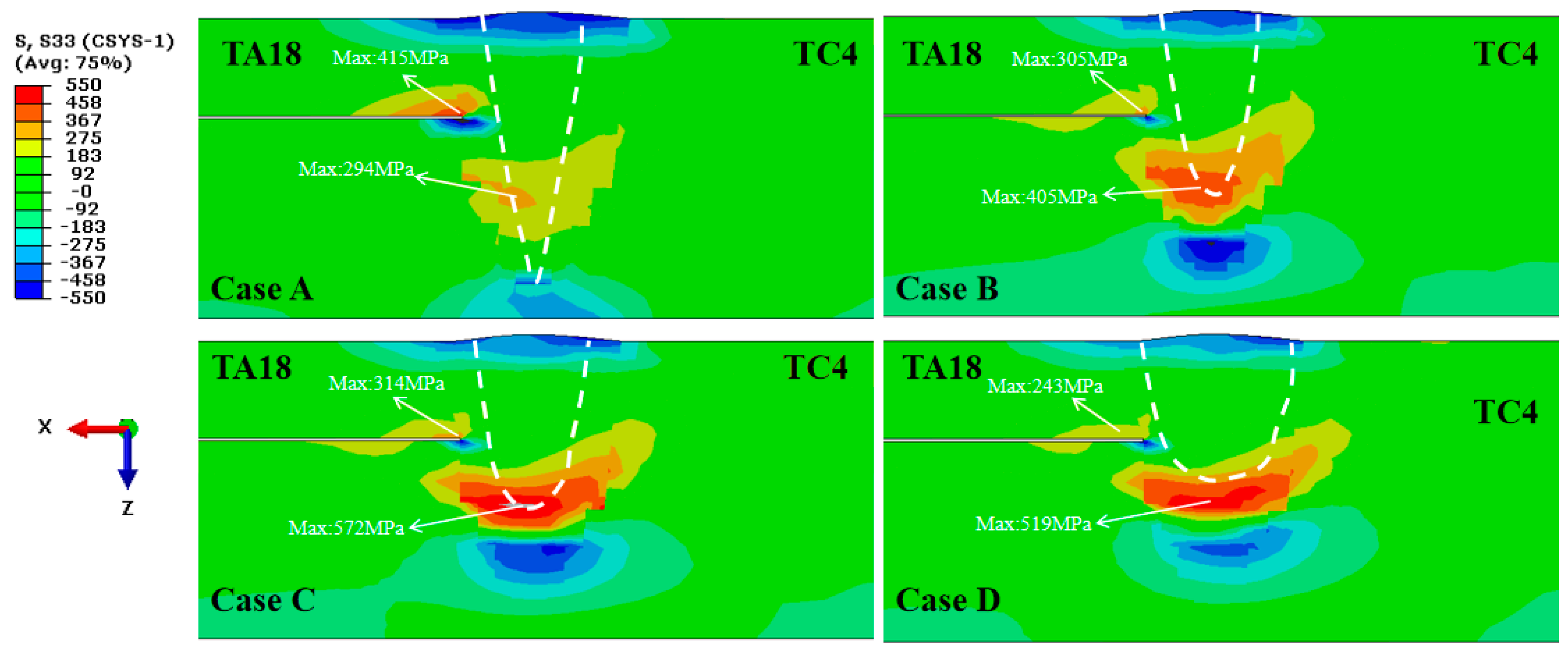
Figure 9 shows the axial residual stress contours for the four cases. On the TA18 side, high tensile stress concentrates in the BLG End region, while compressive stress appears on the upper surface. A relatively high tensile stress also exists in the middle of the tube wall, with a high compressive stress zone below it. As the oscillation amplitude increases, the axial residual stress response exhibits a pronounced location-dependent behavior. In the middle of the tube wall, the axial tensile peak stress shows a non-monotonic trend, rising from 294 MPa in Case A to 572 MPa in Case C, and then decreasing to 518 MPa in Case D. In contrast, the peak axial tensile stress in the BLG End region exhibits an overall decreasing trend: from 415 MPa in Case A to 305 MPa in Case B, then slightly rebounding to 314 MPa in Case C, and finally decreasing to 243 MPa in Case D, representing a reduction of 41%. This location-dependent response reflects the different sensitivities of distinct regions within the bottom-locking joint to oscillation amplitude—the stress evolution in the middle of the tube wall is primarily governed by changes in penetration depth, whereas the BLG End region is influenced by both structural constraints and heat input distribution.
Figure 9.
Axial residual stress distribution contours (Unit: MPa) at the 180° cross-section.
Compared with previous studies, Yan et al. [11] reported that transverse stress in 316LN stainless steel butt joints transitioned from compressive to tensile with increasing amplitude. Wang et al. [12] found that the area of high transverse tensile stress in aluminum alloy oscillating laser welding decreased with increasing amplitude. Jiang et al. [14] reported a monotonic decrease in equivalent residual stress with increasing amplitude in Invar alloy butt joints. In these studies, the residual stress responses were relatively uniform in their trends. In contrast, the present work reveals distinctly different evolution patterns of axial residual stress in different regions of the bottom-locking joint—a continuous decrease in the BLG End region versus a non-monotonic trend in the middle of the tube wall. This discrepancy highlights the complexity introduced by the asymmetric constraints inherent to the bottom-locking geometry and the mismatch in thermophysical properties between the dissimilar materials.
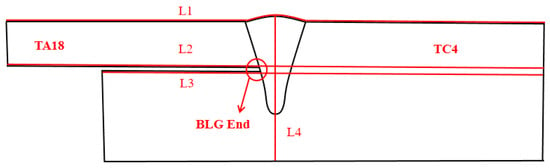
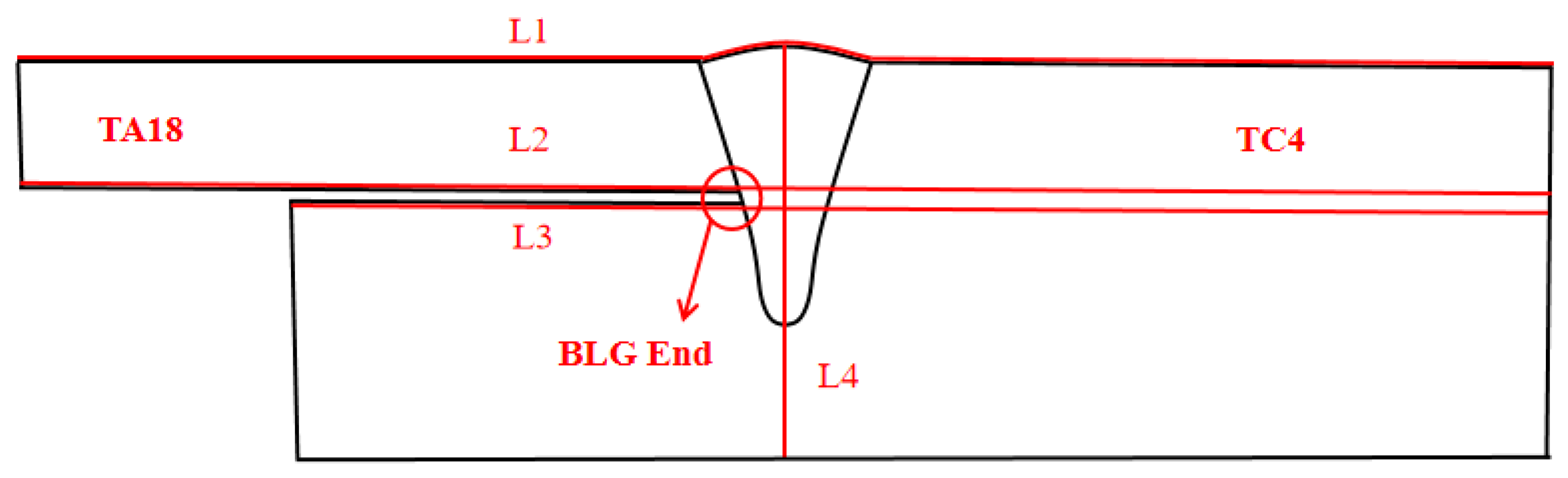
To enable quantitative comparison, residual stresses along four paths (L1–L4) were extracted from the 180° cross-section (Figure 10). The BLG End—the terminus of the mating gap between the two tubes—exhibits high stress concentration due to the abrupt geometric discontinuity at the weld toe, and is therefore a focus of the present analysis.
Figure 10.
Schematic of cross-sectional path and BLG End.
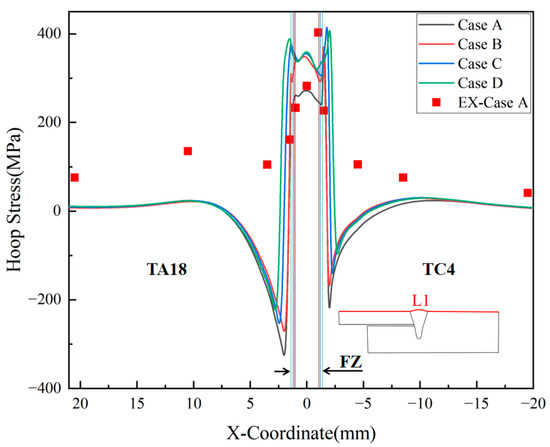
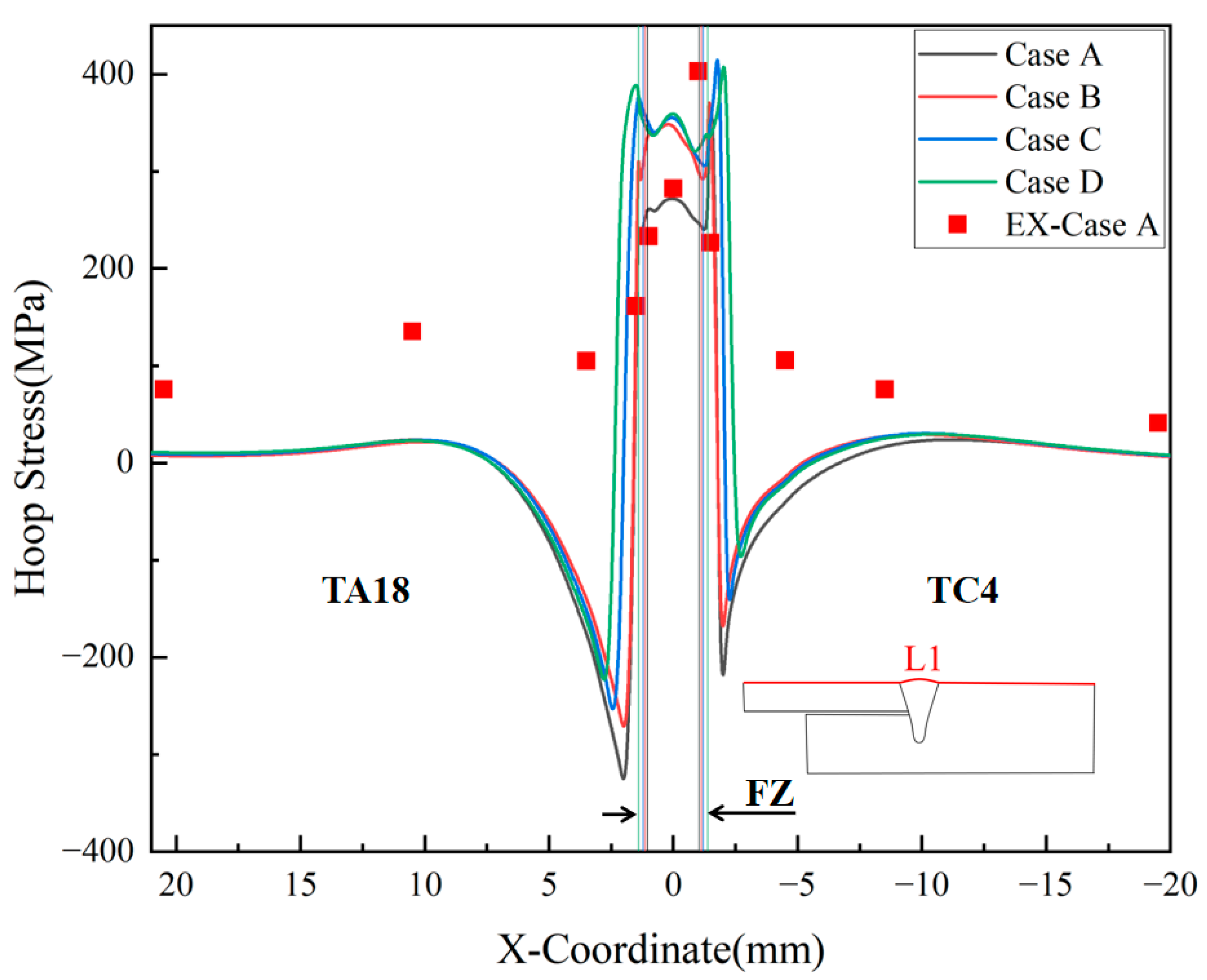
Figure 11 quantitatively compares the hoop residual stress distribution along Path L1 in laser-welded joints under four oscillation amplitudes. All four cases display a similar hoop residual stress profile along Path L1, with tensile stresses localized near the FZ and adjacent HAZ. Moving away from the weld, the hoop residual stress decays quickly, shifts to compression, and gradually diminishes to a low level in the base metal. Furthermore, the distribution range of high tensile stress expands with increasing amplitude. The peak hoop tensile stresses for the four cases are not high, approximately 400 MPa, and are located in the HAZ on the TC4 side. In the weld zone, the tensile stress level of Case A is approximately 100 MPa lower than that of the other three cases, indicating that laser beam oscillation increases the residual stress on the upper surface of the joint.
Figure 11.
Hoop residual stress distributions along Path L1.
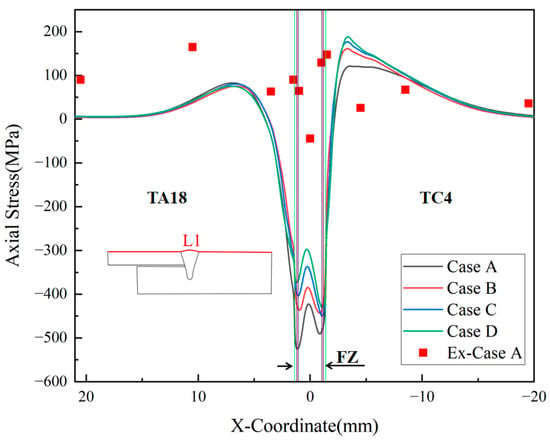
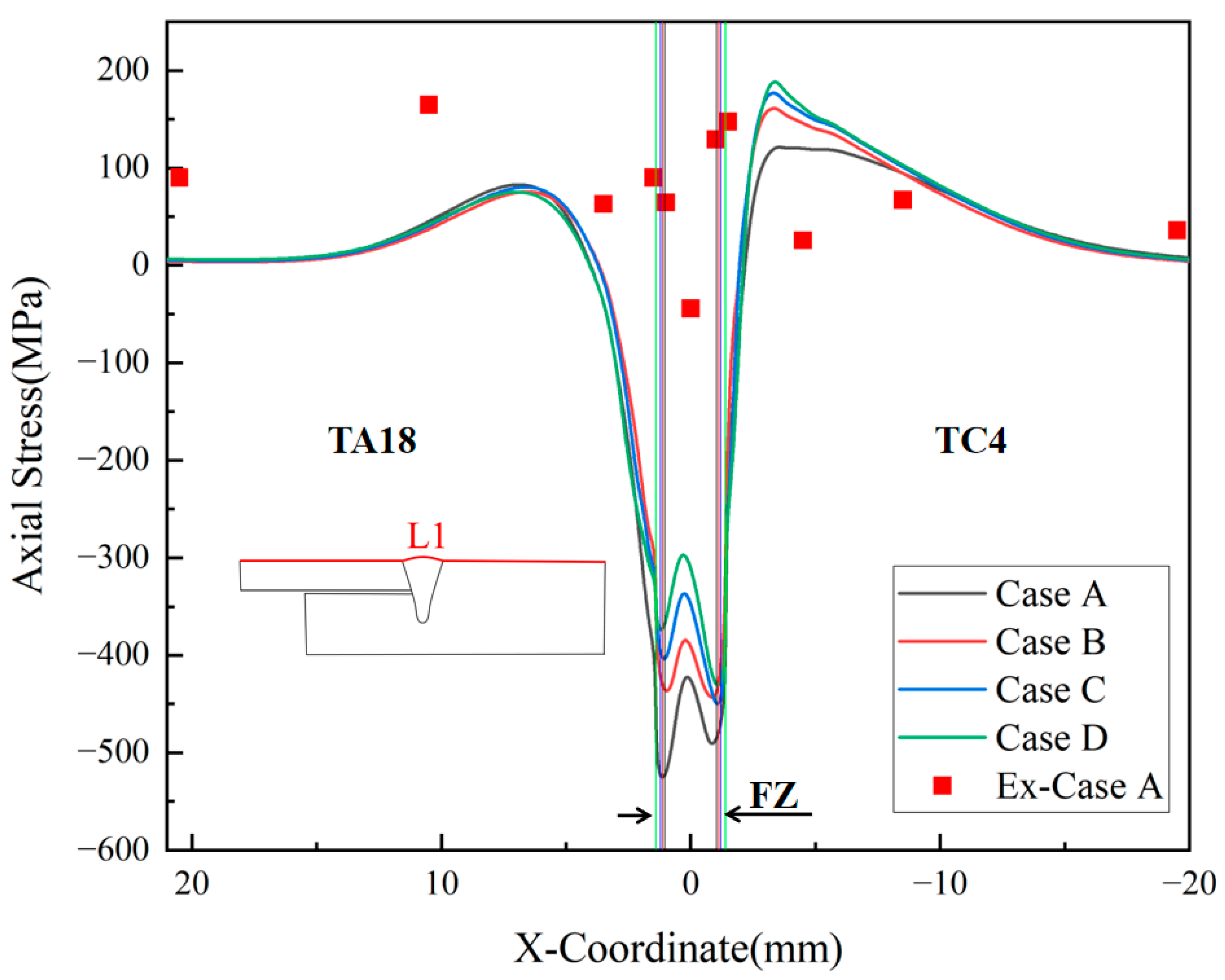
Figure 12 quantitatively compares the axial residual stress distribution along Path L1 under four oscillation amplitudes. The axial residual stress along Path L1 follows a similar trend for all amplitudes: tensile stresses remain low, whereas compressive stresses dominate in the vicinity of the FZ and HAZ. A comparison of the peak compressive stresses among the four cases reveals that the oscillation amplitude has a significant influence, and the peak stress exhibits an overall decreasing trend with increasing amplitude. Specifically, the peak compressive stresses are −520 MPa (Case A), −440 MPa (Case B), −450 MPa (Case C), and −430 MPa (Case D), with the peak compressive stress in Case D being approximately 17% lower than that in Case A. Furthermore, as can be seen from Figure 11 and Figure 12, the simulated hoop and axial residual stresses along Path L1 in Case A are in good agreement with the blind-hole drilling measurements in the weld and heat-affected zones. In the region far from the weld, the measured stresses are slightly higher than the simulated values, which may be attributed to the initial residual stresses present in the base material prior to welding [25]. Overall, the close agreement confirms the reliability of the numerical model in predicting residual stress distributions. It should be noted that the experimental validation was performed only for the non-oscillation case (0 mm). For the oscillating cases, the numerical predictions are used primarily to capture the relative trends of residual stress with increasing amplitude, rather than to provide fully validated absolute stress values.
Figure 12.
Axial residual stress distributions along Path L1.
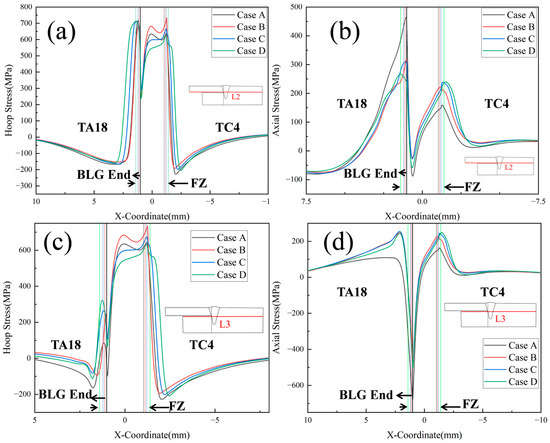
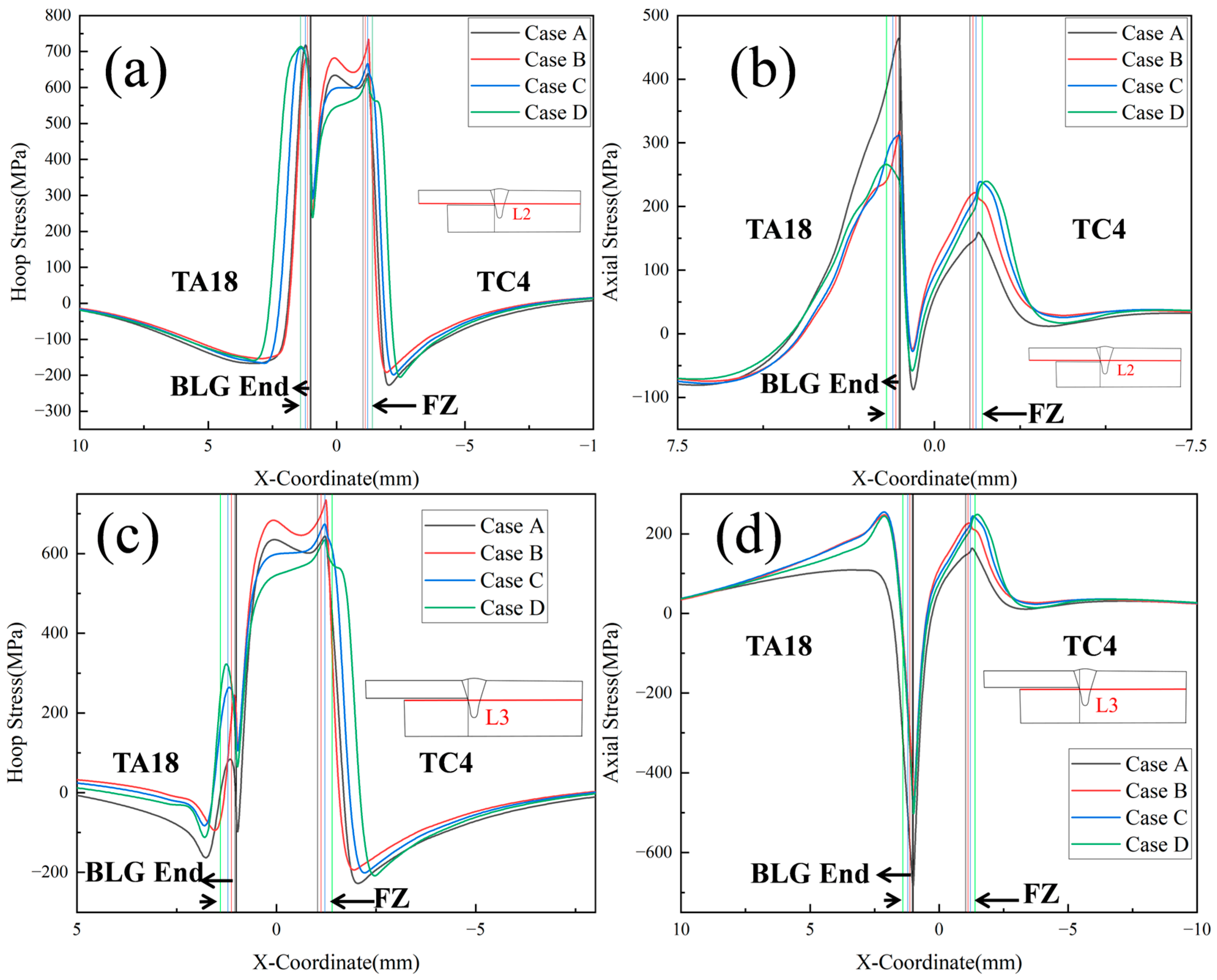
Figure 13a shows the hoop residual stress distribution along Path L2. On the TA18 side, the peak hoop tensile residual stresses for the four cases show relatively small differences, all around 700 MPa, but the range of the high-stress region expands with increasing oscillation amplitude. On the TC4 side, the hoop residual stress exhibits larger variations. As the oscillation amplitude increases, the peak residual stress first increases and then decreases, with Case D showing the lowest residual stress level in the weld zone, approximately 50 MPa lower than that in Case A.
Figure 13.
Residual stress distributions along Path L2 and Path L3: (a) Hoop residual stress of Path L2; (b) Axial residual stress of Path L2; (c) Hoop residual stress of Path L3; (d) Axial residual stress of Path L3.
Figure 13b presents the axial residual stress distribution along Path L2. The axial residual stress along Path L2 is highly sensitive to the oscillation amplitude, particularly in the BLG End region. On the TA18 side, compared with Case A (460 MPa), the peak stresses in Cases B and C decrease by approximately 170 MPa, representing a reduction of nearly 37%; Case D shows a reduction of 200 MPa relative to Case A, corresponding to a 43% decrease. On the TC4 side, the peak axial tensile stresses in Cases B to D increase by about 70 MPa compared to Case A. From an overall distribution perspective, increasing the oscillation amplitude effectively reduces the residual stress at the BLG End and results in a more uniform stress distribution in the joint.
Figure 13c shows the hoop residual stress distribution along Path L3. In the BLG End region, the hoop residual stress remains relatively low for all cases, below 300 MPa. Increasing the oscillation amplitude slightly elevates the tensile stress in this region. High hoop tensile residual stresses all appear in the weld region on the right side of the BLG End, where the stress level is approximately 600 MPa. Among the four cases, the peak stresses in Cases B and C are higher than that in Case A, with Case B being nearly 100 MPa higher than Case A, while the peak stress in Case D is comparable to that in Case A. In the weld zone, Case D exhibits the lowest tensile stress. Figure 13d shows the axial residual stress distribution along Path L3. Relatively high compressive residual stresses appear in the BLG End region for all four cases. The peak tensile stress appears in the HAZ on the right side and increases slightly with rising amplitude. However, the peak tensile stress remains at a relatively low level, approximately 200 MPa.
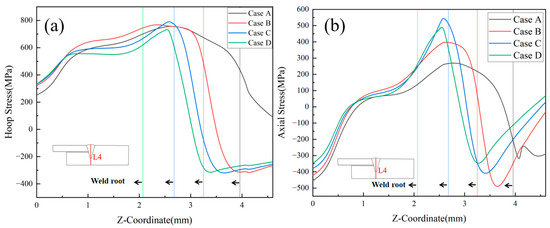
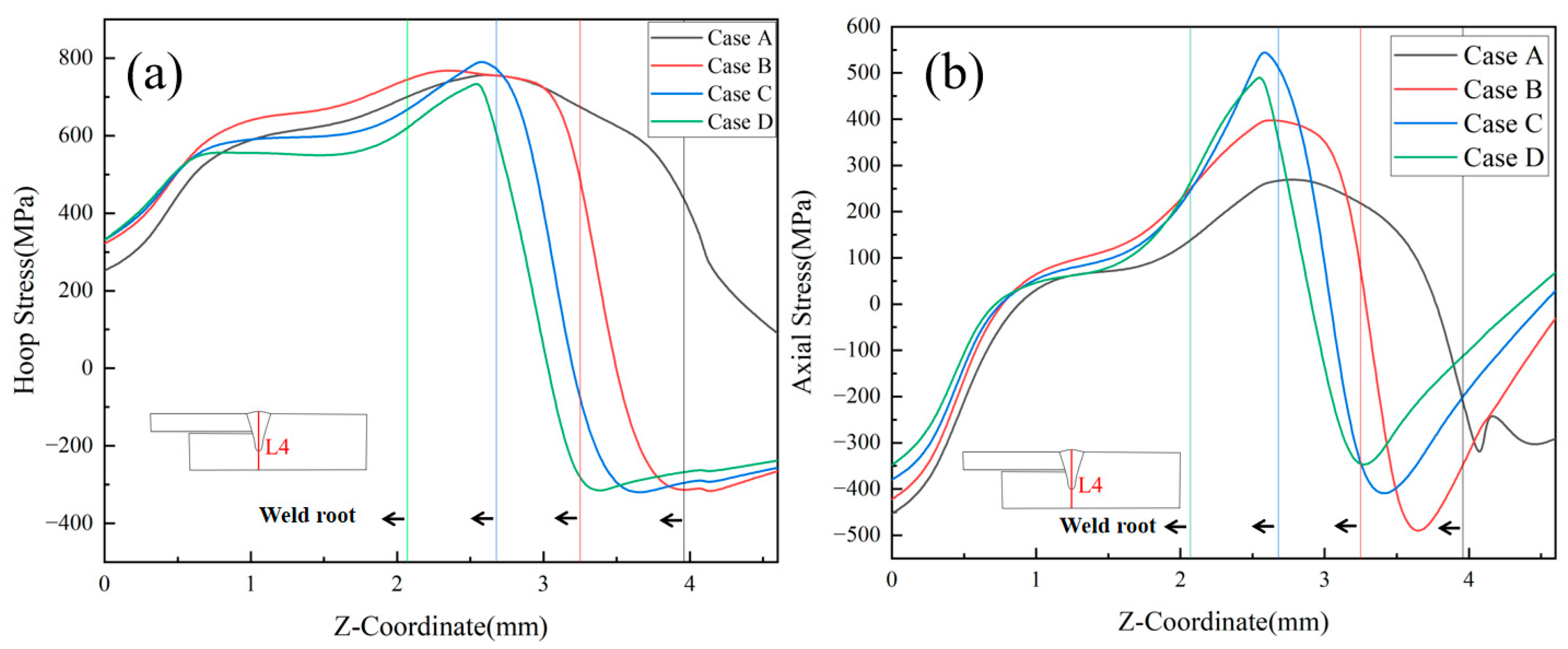
Figure 14a shows the hoop residual stress distribution along Path L4. As the oscillation amplitude increases, the penetration depth decreases, and consequently the region of high hoop tensile stress along the thickness direction gradually shrinks. The peak stress values, however, show little variation among the four cases. Figure 14b shows the axial residual stress distribution along Path L4. The axial residual stress varies significantly along the thickness direction. As the oscillation amplitude increases, the peak axial residual stress first increases and then decreases: Case A is 250 MPa, Case B is 425 MPa, Case C reaches a maximum of 550 MPa, and Case D decreases to 500 MPa.
Figure 14.
Residual stress distributions along Path L4: (a) Hoop residual stress; (b) Axial residual stress.
The above residual stress results indicate that the distribution and magnitude of residual stress do not vary monotonically with increasing oscillation amplitude. The peak hoop residual stress reaches its maximum at an amplitude of 1.0 mm (Case C), while at 1.5 mm (Case D), although the global peak does not reach its minimum, the high-stress region is significantly reduced. Benefiting from the larger amplitude and more uniform heat distribution, the uniformity of the hoop residual stress distribution is substantially improved. Furthermore, in the critical BLG End region, Case D exhibits the lowest axial residual stress, which is reduced by 41% compared with the non-oscillation case (Case A). Therefore, under the fixed process conditions adopted in this study (1000 W, 20 mm/s, 200 Hz), an oscillation amplitude of 1.5 mm is recommended for laser welding of TC4/TA18 bottom-locking joints. It should be noted that this recommendation is specific to the materials and joint configuration investigated in this work, and further verification is required when extending to other parameter windows or different joint geometries.
5. Conclusions
This study systematically investigated the influence of circular laser beam oscillation amplitude (0 mm, 0.5 mm, 1.0 mm, 1.5 mm) on the residual stress distribution in laser-welded TC4/TA18 dissimilar titanium alloy bottom-locking tube joints at a constant laser power of 1000 W. A combined experimental and numerical approach was employed, and the following conclusions are drawn:
- (1)
- As the oscillation amplitude increases, the weld pool becomes progressively wider and shallower, and the temperature field distribution becomes more uniform. At an amplitude of 1.5 mm, the molten pool covers the entire bottom-locking step geometry, ensuring complete fusion at the locating shoulder interface.
- (2)
- The residual stress distribution (including both hoop and axial components) exhibits a non-monotonic dependence on oscillation amplitude. The global peak hoop residual stress first increases and then decreases, reaching its maximum at an amplitude of 1.0 mm. Although the global hoop residual stress peak at 1.5 mm is not the lowest, increasing the oscillation amplitude homogenizes the hoop residual stress field and significantly reduces the region where the tensile stress exceeds 700 MPa. The axial residual stress response exhibits a pronounced location-dependent behavior: in the BLG End region, the peak axial tensile stress shows an overall decreasing trend, with a reduction of 41% at 1.5 mm amplitude compared with non-oscillation welding (0 mm); in the middle of the tube wall, however, the peak axial tensile stress first increases and then decreases, rising from 294 MPa in Case A to 572 MPa in Case C, and then decreasing to 518 MPa in Case D.
- (3)
- From the perspective of residual stress control under the investigated experimental conditions, an oscillation amplitude of 1.5 mm is recommended for laser welding of TC4/TA18 bottom-locking joints with laser power of 1000 W, welding speed of 20 mm/s, and oscillation frequency of 200 Hz. At this amplitude, the region with hoop tensile stress over 700 MPa is minimized, and the axial residual stress at the BLG End reaches the minimum value, generating the most uniform residual stress field within this parameter window. It should be noted that this recommendation is specific to the present experimental conditions and joint geometry; further verification may be required when scaling to other parameter windows or different tubular configurations.
Author Contributions
J.X. (Jian Xu): Writing—original draft, Data curation, Validation, Visualization. C.Z.: Conceptualization, Writing—review and editing, Project administration, Funding acquisition. D.L.: Methodology, Data curation, Validation. X.X.: Data curation, Validation. J.X. (Jingyi Xue): Methodology, Writing—review and editing, Supervision. X.Y.: Data curation, Validation. Y.F.: Formal analysis, Conceptualization, Funding acquisition, Supervision. All authors have read and agreed to the published version of the manuscript.
Funding
This work was supported by the Natural Science Foundation of Jiangxi (NO. 20242BAB20020, NO. 20242BAB25029 and NO. 20252BAC250128) and Nanchang Key Laboratory of Intelligent Operation and Maintenance Technology for Aircraft.
Data Availability Statement
All original data are included in the article, and further inquiries can be directed to the corresponding author(s).
Conflicts of Interest
The authors declare no conflicts of interest.
References
- Wang, F.; Sun, Z.; Liu, Z.; Hai, M.; Wu, Y.; Zhang, J.; Luo, R. Performance analysis on welded joints made of TC4/TA17 dissimilar titanium alloys. Ocean Eng. 2024, 294, 116758. [Google Scholar] [CrossRef] [Scilit]
- Wang, S.Q.; Li, W.Y.; Jing, K.; Zhang, X.Y.; Chen, D.L. Microstructural evolution and mechanical properties of electron beam welded dissimilar titanium alloy joints. Mater. Sci. Eng. A 2017, 697, 224–232. [Google Scholar] [CrossRef] [Scilit]
- Kumar, A.; Sapp, M.; Vincelli, J.; Gupta, M.C. A study on laser cleaning and pulsed gas tungsten arc welding of Ti-3Al-2.5V alloy tubes. J. Mater. Process. Technol. 2010, 210, 64–71. [Google Scholar] [CrossRef] [Scilit]
- Yang, B.; Tan, C.; Chen, G.; Sun, H.; Liu, F.; Wu, L.; Chen, B.; Song, X. Online monitoring system for welding states of bottom-locking joints in high-speed trains via multi-information fusion and 3DCNN. J. Manuf. Process. 2024, 113, 105–116. [Google Scholar] [CrossRef] [Scilit]
- Yang, B.; Wang, W.; Liu, F.; Xu, X.; Li, X.; Wang, H.; Han, X.; Song, X.; Tan, C. Keyhole development and the effects on weld formation and mechanical properties of Laser-MIG hybrid welded bottom-locking joints with assembly gaps. Opt. Laser Technol. 2025, 187, 112908. [Google Scholar] [CrossRef] [Scilit]
- Abioye, T.E.; Olugbade, T.O.; Ogedengbe, T.I. Welding of dissimilar metals using gas metal arc and laser welding techniques: A review. J. Emerg. Trends Eng. Appl. Sci. 2017, 8, 225–228. [Google Scholar] [CrossRef] [Scilit]
- Auwal, S.T.; Ramesh, S.; Yusof, F.; Manladan, S.M. A review on laser beam welding of titanium alloys. Int. J. Adv. Manuf. Technol. 2018, 97, 1071–1098. [Google Scholar] [CrossRef] [Scilit]
- Junaid, M.; Khan, F.N.; Rahman, K.; Baig, M.N. Effect of laser welding process on the microstructure, mechanical properties and residual stresses in Ti-5Al-2.5 Sn alloy. Opt. Laser Technol. 2017, 97, 405–419. [Google Scholar] [CrossRef] [Scilit]
- Wang, Y.; Liu, W.; Gong, W.; Wang, Y.; Lü, P. Effect of Laser Power on Weld Formability and Residual Stress of Unequal Thickness 410 Ferritic Stainless Steel/RCL540 Low-Carbon Alloy Steel. Materials 2024, 17, 5537. [Google Scholar] [CrossRef] [Scilit] [PubMed]
- Mitra, S.; Arora, K.S.; Bhattacharya, B.; Singh, S.B. Effect of welding speed on fatigue property of laser welded dual-phase steel. Trans. Indian Inst. Met. 2022, 75, 525–534. [Google Scholar]
- Yan, S.; Meng, Z.; Chen, B.; Tan, C.; Song, X.; Wang, G. Prediction of temperature field and residual stress of oscillation laser welding of 316LN stainless steel. Opt. Laser Technol. 2022, 145, 107493. [Google Scholar] [CrossRef] [Scilit]
- Wang, Z.; Yang, P.; Liao, W.; Jiang, L.; Zhao, S.; Liu, Y.; Gao, M. Stresses numerical analysis of oscillating laser welding in aluminum alloys based on the equivalent fluid–structure interactions model. Opt. Laser Technol. 2025, 191, 113365. [Google Scholar] [CrossRef] [Scilit]
- Liang, G.; Qin, G.; Cao, P.; Wang, H. Evolutions of temperature field and stress field in narrow gap oscillating laser welding process based on equivalent heat source. J. Mater. Res. Technol. 2024, 28, 154–167. [Google Scholar] [CrossRef] [Scilit]
- Jiang, Y.; Liu, X.; Chen, S.; Zhou, K.; Zhao, Y.; Zhan, X. Controlling Residual Stress and Microstructure Distribution in an Invar Alloy Joint Fabricated by Oscillating Laser Welding. Materials 2025, 18, 4099. [Google Scholar] [CrossRef] [Scilit] [PubMed]
- Huang, X.L.; Luo, C.; Zhang, C. Numerical Simulation of Thin-Walled 5A06 Aluminum Alloy Double-Seam T-Joint During Oscillating Laser-Arc Hybrid Welding. Aeronaut. Manuf. Technol. 2025, 68, 61–70. [Google Scholar]
- Merga, A.; Gutema, E.M.; Gopal, M.; Lemu, H.G. Numerical Simulation of Temperature Distribution and Residual Stress in Laser Beam Welding AA6061 and Ti-6Al-4V and Optimization of Welding Processes. Recent Pat. Eng. 2025, 19, E260624231323. [Google Scholar] [CrossRef] [Scilit]
- Cao, M.; Liu, D.; Zhou, X.; Wang, W.; Wang, Y.; Zhang, C.; Xiao, X. Effect of Laser Power on Residual Stress in Bottom-Locking Welded Joints Between TC4 and TA18 Titanium Alloys: Numerical Modeling and Experiments. Metals 2025, 16, 48. [Google Scholar] [CrossRef] [Scilit]
- ASTM E837; Standard Test Method for Determining Residual Stresses by the Hole-Drilling Strain-Gage Method. ASTM International: West Conshohocken, PA, USA, 2020.
- Li, Y.; Li, Y.; Zhang, C.; Lei, M.; Luo, J.; Guo, X.; Deng, D. Effect of structural restraint caused by the stiffener on welding residual stress and deformation in thick-plate T-joints. J. Mater. Res. Technol. 2022, 21, 3397–3411. [Google Scholar] [CrossRef] [Scilit]
- Deng, D.; Murakawa, H. Prediction of welding distortion and residual stress in a thin plate butt-welded joint. Comput. Mater. Sci. 2008, 43, 353–365. [Google Scholar] [CrossRef] [Scilit]
- Sun, J.; Liu, X.; Tong, Y.; Deng, D. A comparative study on welding temperature fields, residual stress distributions and deformations induced by laser beam welding and CO2 gas arc welding. Mater. Des. 2014, 63, 519–530. [Google Scholar] [CrossRef] [Scilit]
- Wang, Z.; Gao, M. Numerical simulations of oscillating laser welding: A review. J. Manuf. Process. 2024, 119, 744–757. [Google Scholar] [CrossRef] [Scilit]
- Deng, D. Influence of deposition sequence on welding residual stress and deformation in an austenitic stainless steel J-groove welded joint. Mater. Des. 2013, 49, 1022–1033. [Google Scholar] [CrossRef] [Scilit]
- Cai, J.; Wei, Y.; Ouyang, Z.; Liu, X.; Jin, H.; Chen, J. Investigation on clockwise circular oscillating laser welding for the 5A06-H112 aluminum alloy: Energy distribution, seam appearance, microstructure, and mechanical properties. Opt. Laser Technol. 2024, 176, 111026. [Google Scholar] [CrossRef] [Scilit]
- Deng, D.; Kiyoshima, S. Numerical simulation of residual stresses induced by laser beam welding in a SUS316 stainless steel pipe with considering initial residual stress influences. Nucl. Eng. Des. 2010, 240, 688–696. [Google Scholar] [CrossRef] [Scilit]

Disclaimer/Publisher’s Note: The statements, opinions and data contained in all publications are solely those of the individual author(s) and contributor(s) and not of MDPI and/or the editor(s). MDPI and/or the editor(s) disclaim responsibility for any injury to people or property resulting from any ideas, methods, instructions or products referred to in the content. |
© 2026 by the authors. Licensee MDPI, Basel, Switzerland. This article is an open access article distributed under the terms and conditions of the Creative Commons Attribution (CC BY) license.