


Abstract
Hot deformation effectively refines the microstructure and homogenizes the composition of high-nitrogen martensitic stainless steel (HNMSS), but its influence on austenite stability during subsequent cooling remains unclear. In this study, the effect of the hot deformation strain on austenite stability in HNMSS 30Cr15Mo1N0.37 was investigated by means of a Gleeble thermomechanical simulator, X-ray diffraction (XRD), electron back-scatter diffraction (EBSD) and transmission electron microscopy (TEM). The austenite stability is evaluated by the austenite fraction measured via XRD at room temperature. The results show that the austenite content in HNMSS 30Cr15Mo1N0.37 gradually increases with the strain range from 0 to 0.8. The austenite fractions are 69.5%, 73.1%, and 80.7% when the strains are 0, 0.4, and 0.8, respectively. At a strain of 0.14, dislocation accumulation leads to the formation of dislocation cells and sub-grains within austenite, which enhances its stability. When the strain exceeds 0.36, the austenite grains are significantly refined, the austenite stability is attributed to the synergistic effects of dislocation accumulation and grain refinement, which collectively increase the resistance to martensitic transformation. Furthermore, both recrystallized grains and dislocation cells influence the morphology and size of martensite laths. The martensite laths are significantly refined from 100 nm at a strain of 0 to 35 nm as the strain reaches 0.8, and their morphology changes from straight to curved.
1. Introduction
Nitrogen, as a crucial alloying element, significantly enhances the mechanical properties and corrosion resistance of martensitic stainless steel [1,2,3,4]. However, the as-cast microstructure of high-nitrogen martensitic stainless steel exhibits issues such as composition segregation and coarse dendrites. The secondary dendrite spacing in the central region is 95 ± 28 μm [5], the segregation ratios of Cr and Mo can reach 1.72 and 2.07, respectively [6]. Hot deformation can break the dendrites, alleviate segregation, and promote the diffusion and homogenization of nitrogen and other alloying elements. As a result, it forms a uniform and fine equiaxed grain structure and improves the overall properties of high-nitrogen martensitic stainless steel [7,8,9,10]. Strain exerts a notable influence on austenite grain size, dislocation substructures, and precipitation of the phases, which in turn affects phase transformation behavior during subsequent cooling. Therefore, an in-depth investigation into the influence of different hot deformation strains on the austenite stability in high-nitrogen martensitic stainless steel and its underlying mechanisms is of great significance for guiding the processing and fabrication of key high-performance components made from high-nitrogen steel.
The applied strain significantly influences the austenite stability and its subsequent microstructural evolution during hot deformation. The strain affects the martensite start (Ms) temperature. The Ms point increased with increasing strain when the strain was below 9.4%, promoting martensite formation; whereas it decreased when the strain ranged from 9.4% to 36.2%, inhibiting the martensitic transformation [11]. This strain-induced variation in austenite stability is closely related to the evolution of internal defects and recrystallization. A higher density of internal defects promotes the formation of substructures, which act as barriers to martensite interface migration. An increased fraction of recrystallized grains contributes to grain refinement. Finer grains provide more grain boundaries that obstruct martensite growth and homogenize stress distribution. Collectively, these features, higher defect density and more recrystallized grains, synergistically increase resistance to martensitic transformation and thus improve austenite stability [11,12,13,14,15,16,17]. In addition, martensitic transformation is most difficult in dynamically recrystallized grains due to high defect density and small size; it is next most challenging in deformed grains, especially near grain boundaries; and it is least resisted in statically recrystallized grains, particularly when they grow into large sizes [18]. He et al. [19] investigated the effect of strain on microstructure of low carbon steel and found that a strain of 20–45% promoted the formation of dislocation cell structures and refined martensite blocks. Furthermore, extensive research has been conducted on microstructural evolution and hot deformation behavior of high-nitrogen martensitic stainless steel [7,8]. However, the influence of hot deformation strain on austenite stability in high-nitrogen martensitic stainless steel remains unclear. In particular, the influence of dislocation substructures and recrystallized grains on the subsequent phase transformation during cooling has not yet been elucidated.
In the present work, we investigated the evolution of microstructural substructures within austenite grains in HNMSS 30Cr15Mo1N0.37, including dislocations, grain boundaries, and twins, under different hot deformation strains. Furthermore, we elucidated the influence of deformation strain on the austenite stability of HNMSS 30Cr15Mo1N0.37.
2. Materials and Methods
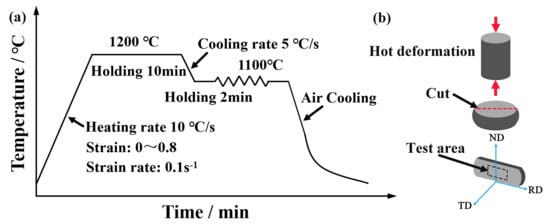
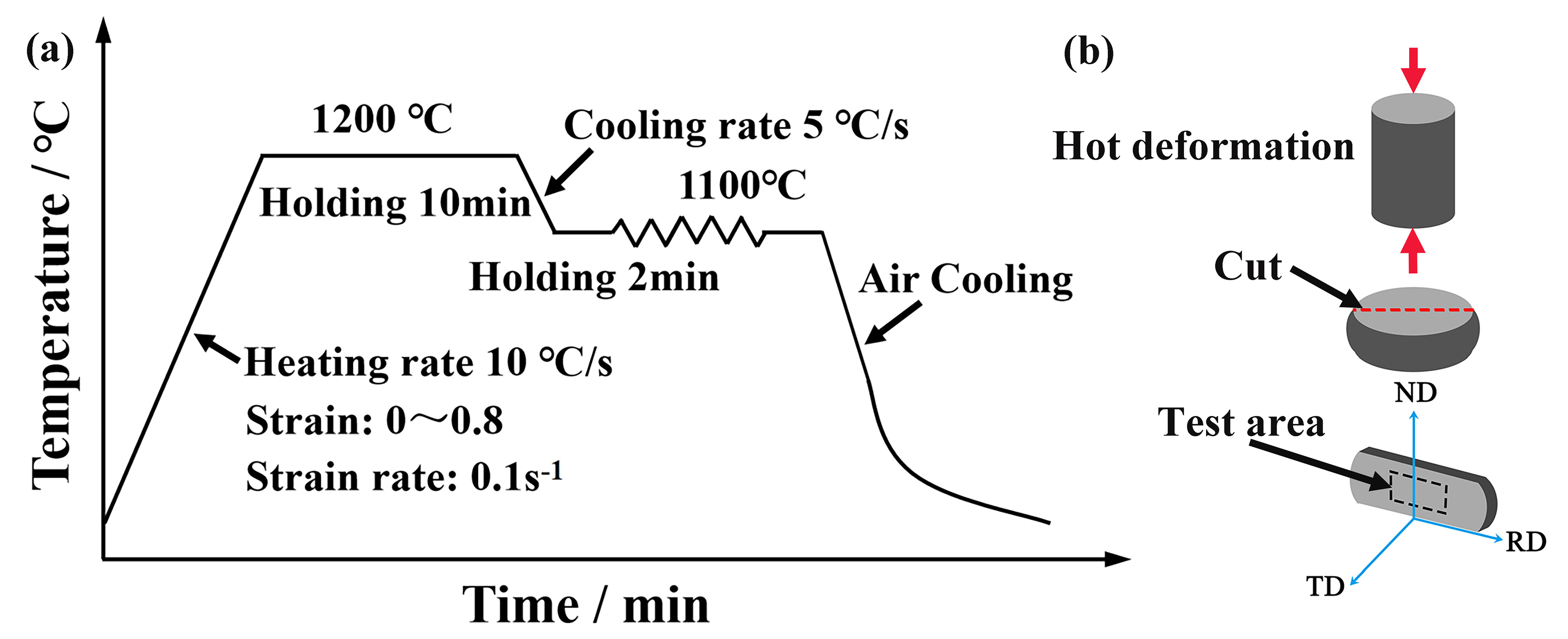
The HNMSS 30Cr15Mo1N0.37 was melted and cast in a 50 kg vacuum pressurization induction melting furnace, with its chemical composition detailed in Table 1. The ingot was homogenized at 1200 °C, forged into a slab, subsequently annealed at 850 °C, and then machined into cylindrical specimens of Φ10 mm × 80 mm for hot compression tests. The hot compression tests were conducted on a Gleeble-3500 thermomechanical simulator (Dynamic Systems Inc., Poestenkill, NY, USA). The specimens were heated to 1200 °C at 10 °C s−1, held for 10 min to ensure complete austenitization, and then cooled to 1100 °C at 5 °C s−1, followed by a 2 min hold. Hot compression deformation was performed at 0.1 s−1 to true strains of 0, 0.14, 0.22, 0.36, 0.51, and 0.8 after holding. The specimens were air-cooled to room temperature after hot deformation, as shown in Figure 1a. In the Gleeble-3500 thermomechanical simulator, the strain rate and temperature during the deformation of cylindrical specimens were controlled by its precision closed-loop system. The servo-hydraulic system, combined with displacement feedback, adjusted the anvil speed in real time to ensure that the strain rate accurately followed the preset program. Temperature control was achieved by resistive heating, with real-time monitoring via a thermocouple and dynamic adjustment of the heating current, assisted by a multi-mode cooling system for rapid cooling. The system recorded data including time, temperature, force, and displacement. Argon was introduced before testing and maintained at 10–12 bar to prevent oxidation and decarburization.
Table 1.
Chemical compositions of the HNMSS 30Cr15Mo1N0.37 (mass fraction, %).
Figure 1.
Schematic diagram of the hot deformation procedure (a) and sample test area (b).
The specimens were sectioned parallel to the compression axis, as shown in Figure 1b. The microstructure was characterized using a field-emission scanning electron microscope (FE-SEM) equipped with an Oxford-EBSD imaging system (Oxford Instruments, Abingdon, UK) after grinding and polishing. Data were processed and analyzed using the AZtecCrystal software 2.1. For the transmission electron microscopy (TEM) observation, slices 0.5 mm thick were cut, ground to 40–50 μm, and then punched into 3 mm diameter disks. Subsequently, the disks were ion-milled and observed on a Talos F200X TEM (Thermo Fisher Scientific Inc., Waltham, MA, USA).
The austenite content was quantitatively analyzed by X-ray diffraction (XRD; SmartLab, Rigaku, Tokyo, Japan). The measurement was performed with a Cu target over a 2θ range of 40–102°, with a step size of 0.02°, 40 kV, and 150 mA. The austenite volume fraction was calculated using the TOPAS software V6 based on the Rietveld refinement with the standardless quantitative method [20,21].
Nanoindentation tests were performed using a Nanoindenter XP system (KLA Corporation, Milpitas, CA, USA) under load control, with a maximum load of 4 mN and a constant loading rate of 100 μN/s. Three regions were selected per specimen, and a 6 × 6 grid with a spacing of 40 μm was tested in each region. Subsequently, the nanoindented regions were characterized using the FE-SEM equipped with an Oxford-EBSD imaging system.
3. Results
3.1. True Stress–Strain Curves
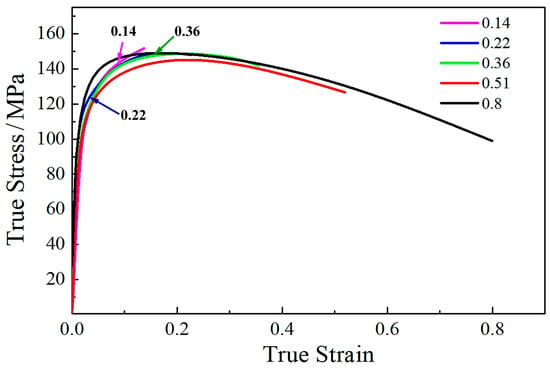
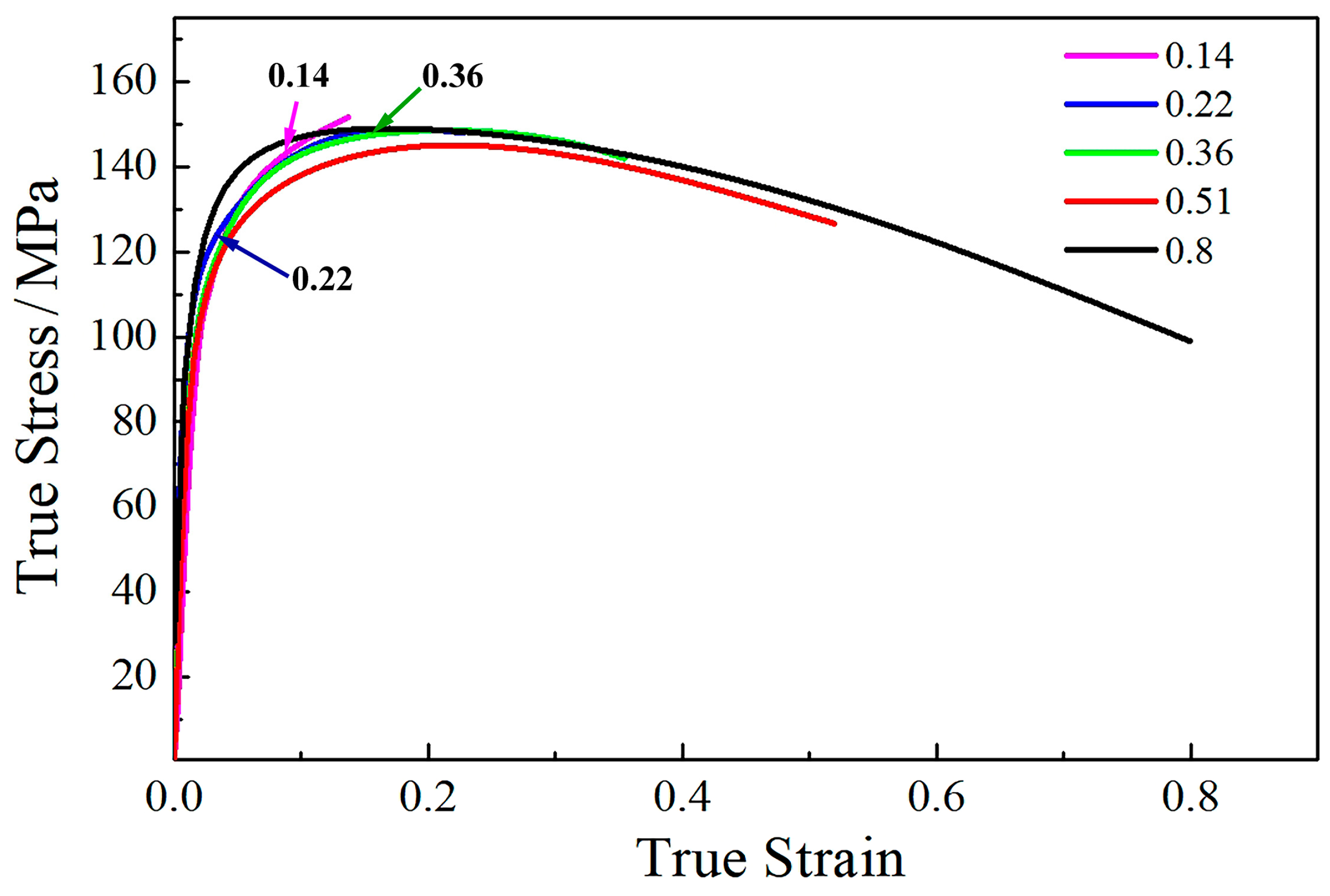
Figure 2 shows the true stress–strain curves of HNMSS 30Cr15Mo1N0.37 at 1100 °C and 0.1 s−1 under different deformation strains. The flow stress increases rapidly with increasing strain during the initial stage of deformation. Subsequently, the rate of stress increase gradually slows down, and the stress begins to decline as strain further increases. The peak stress is 145 ± 3 MPa under different strains. Specifically, the maximum flow stress already approaches the peak value when the strain reaches 0.14. The dislocation density increases rapidly, leading to a sharp rise in flow stress during the initial stage of hot deformation. Dynamic recovery (DRV) counteracts part of the dislocation multiplication through dislocation annihilation and rearrangement, thereby slowing down the stress increase. The peak stress is typically reached just before the onset of significant dynamic recrystallization (DRX). At this point, dislocation multiplication and entanglement dominate, while the softening effect due to DRX is still very limited. Once the strain exceeds the critical value for DRX, the softening effect induced by DRX gradually becomes dominant, leading to a decline in flow stress. Dislocation strengthening primarily increases the flow stress through dislocation multiplication and entanglement. In contrast, DRX softening eliminates high-density dislocation structures through the nucleation and growth of new dislocation-free grains, thereby producing a significant softening effect. The greater the magnitude of softening caused by DRX, the more pronounced the stress drop after the peak stress and, consequently, the lower the final steady state flow stress.
Figure 2.
True stress–strain curves of the HNMSS 30Cr15Mo1N0.37 at different deformation strains.
3.2. XRD Analysis
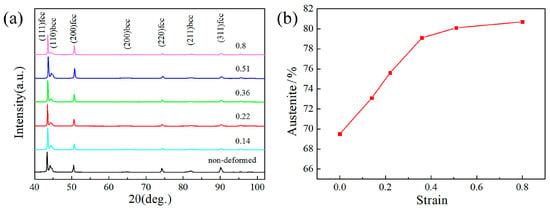
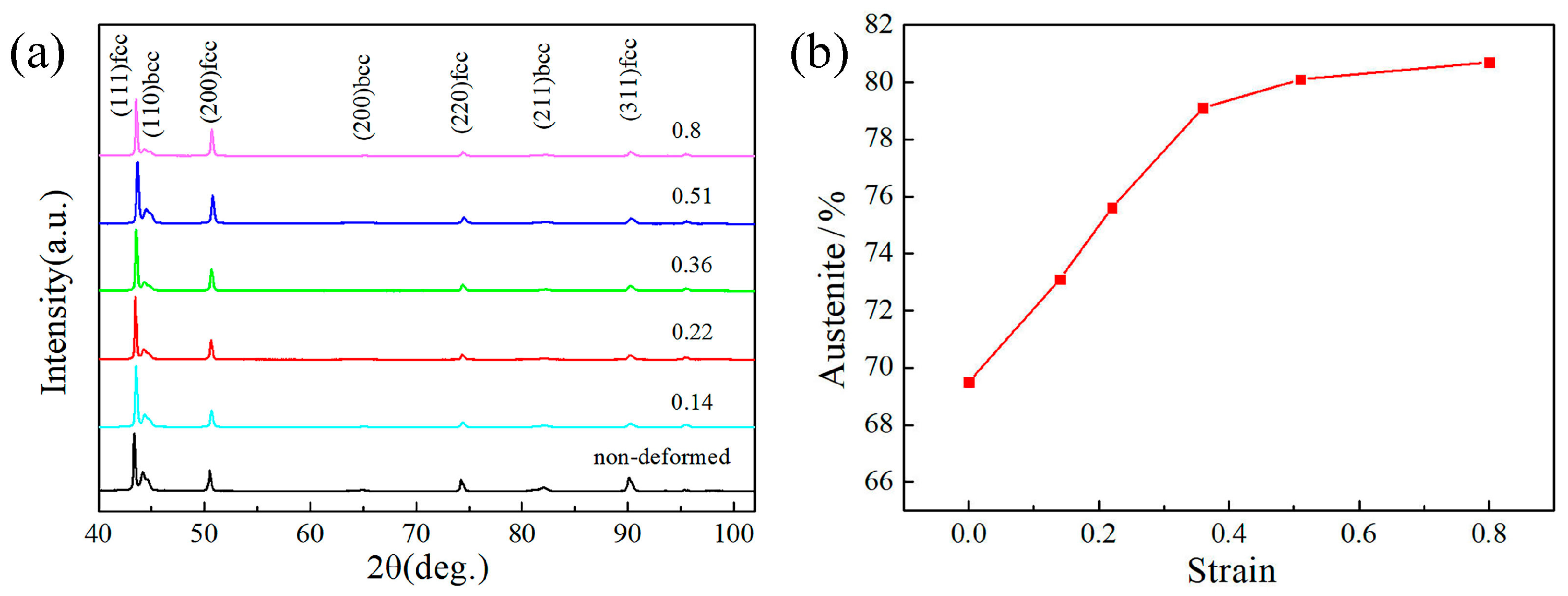
Figure 3 shows the XRD spectra and austenite volume fractions of the HNMSS 30Cr15Mo1N0.37 at different deformation strains. The diffraction peak intensity of the (200)fcc plane continuously increases, while that of the (110)bcc plane gradually weakens with increasing strain, as shown in Figure 3a. The austenite volume fraction was calculated in TOPAS software V6, as shown in Figure 3b. The austenite content is 69.5% when the strain is zero. The austenite content increases to 73.1% at a strain of 0.14, then further rises to 79.1% when the strain increases to 0.36. Finally, the austenite content reaches 80.7% when the strain is increased to 0.8. Therefore, the austenite content in the HNMSS 30Cr15Mo1N0.37 initially increases rapidly and then the rate of increase slows down as the strain increases.
Figure 3.
XRD spectra (a) and volume fraction of austenite (b) of the HNMSS 30Cr15Mo1N0.37 at different deformation strains.
3.3. EBSD Analysis
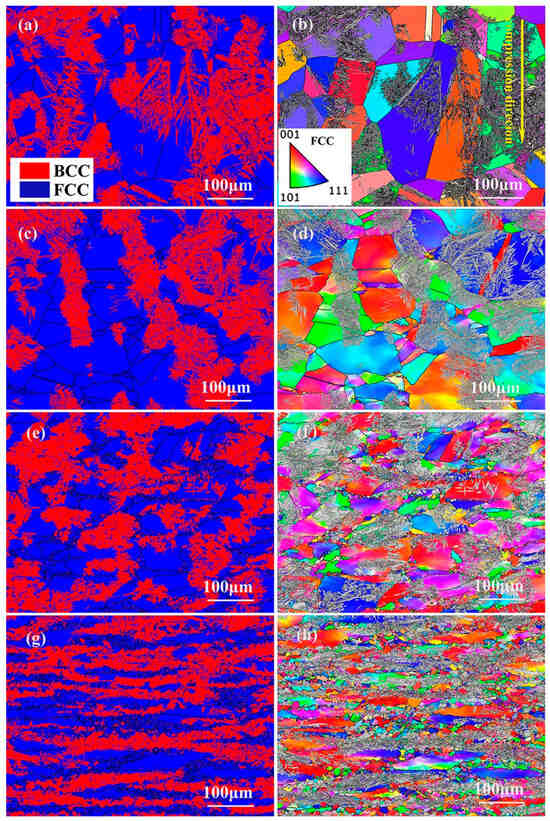
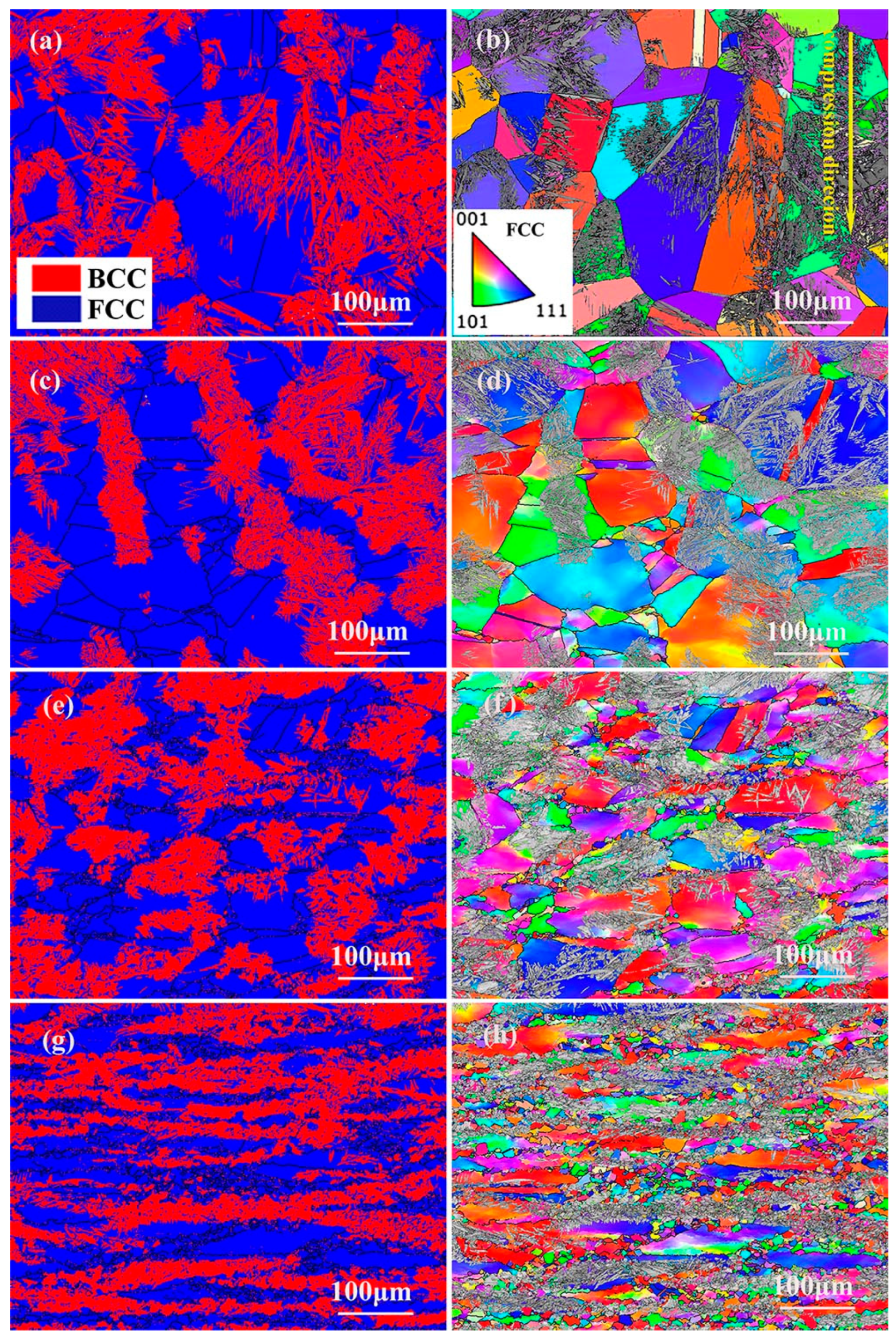
Figure 4 shows the EBSD phases and Inverse Pole Figures (IPFs) of the HNMSS 30Cr15Mo1N0.37 at different deformation strains. The microstructures consist of austenite and martensite at room temperature under different strains, as shown in Figure 4a,b,e,f. The austenite appears in blocky and film-like shapes, with the film-like austenite distributed between martensite laths when the strain is zero, as shown in Figure 4a,c. The austenite in HNMSS 30Cr15Mo1N0.37 exhibits blocky, granular, and film-like shapes, with the granular austenite located near grain boundaries at a strain of 0.14, as shown in Figure 4b,d. Moreover, the content of granular austenite rises when the strain further increases, as shown in Figure 4e–h. The austenite with <111>, <101>, and <001> orientations appears as large blocks. Partial austenite within the <111> and <101> orientations undergoes martensitic transformation when the strain is zero, as shown in Figure 4c. The deformed austenite with <111> and <001> orientations remains largely in blocky shapes, while the fraction of <101> oriented austenite that transforms into martensite continuously increases as the strain increases, as shown in Figure 4d,g. Furthermore, most of the blocky <101> oriented austenite has undergone martensitic transformation at a strain of 0.8, as shown in Figure 4h. The Schmid factor of <101> oriented austenite in HNMSS 30Cr15Mo1N0.37 lies between those of the <001> and <111> orientations. This makes it easier to activate multiple slip systems simultaneously, resulting in strong interactions and entanglements among dislocations. Consequently, a significantly higher stored energy is accumulated within the grains compared to those with <001> and <111> orientations. The <101> oriented austenite is more prone to transform into martensite during subsequent cooling. Therefore, the <101> oriented austenite exhibits lower stability compared to austenite with <111> and <001> orientations.
Figure 4.
EBSD phases (a,c,e,g) and IPFs (b,d,f,h) of the HNMSS 30Cr15Mo1N0.37 at different deformation strains: (a,b) 0, (c,d) 0.14, (e,f) 0.36, (g,h) 0.8.
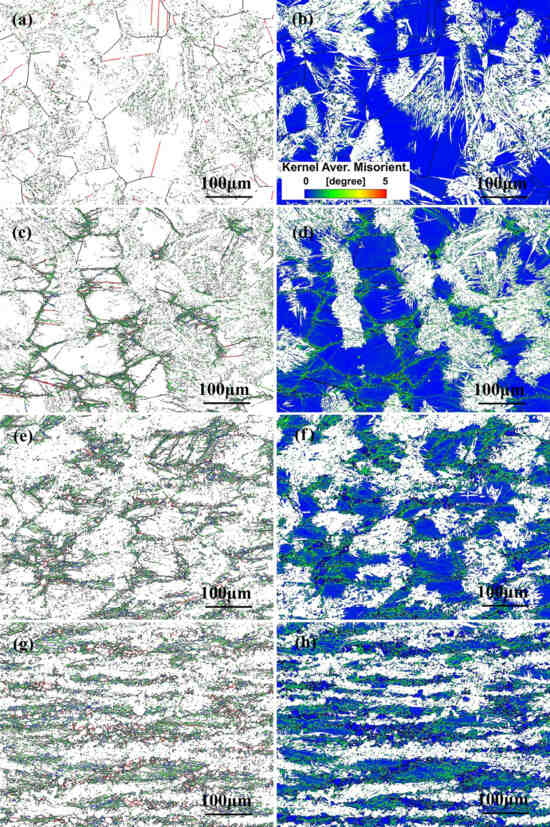
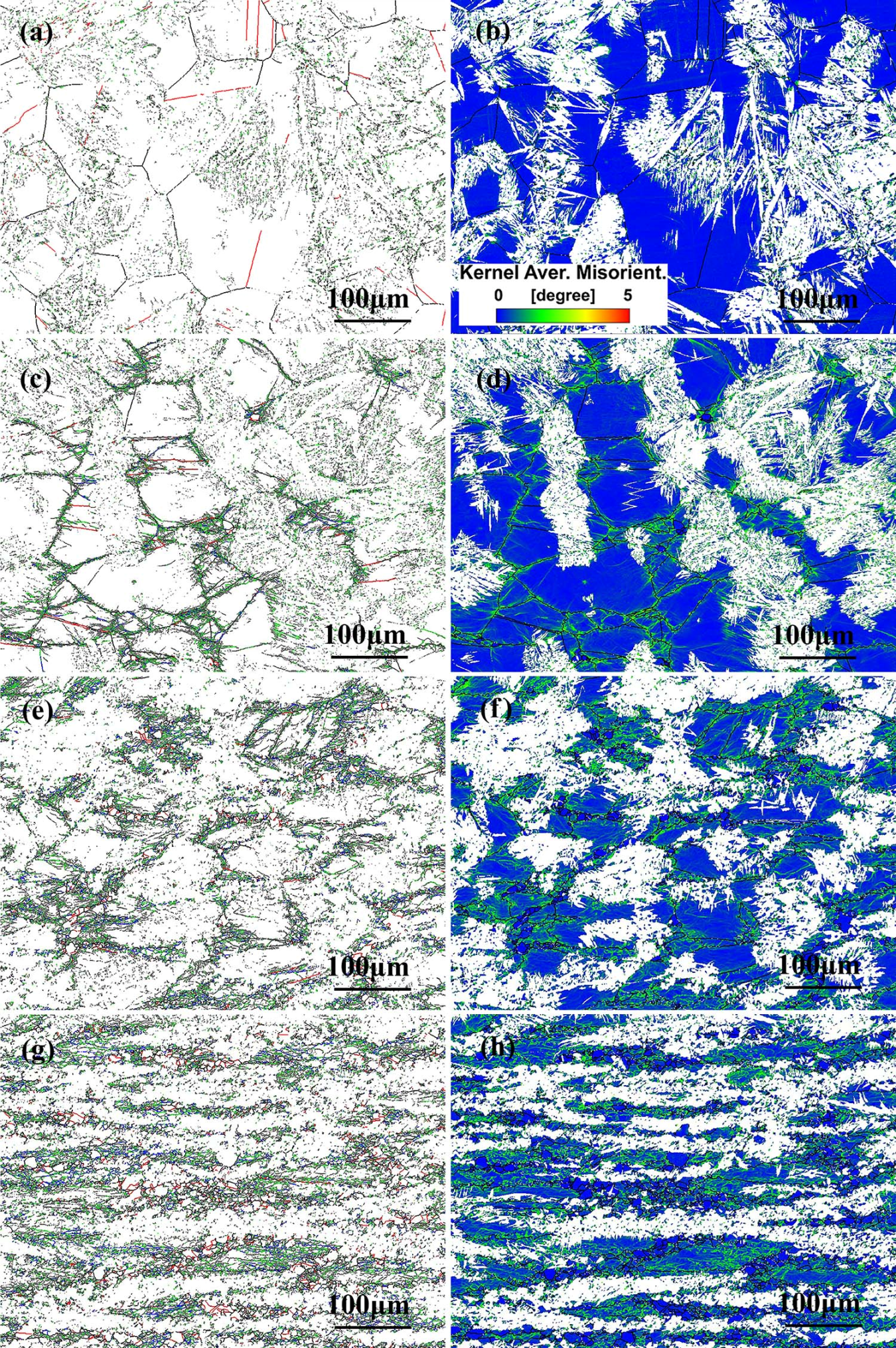
Figure 5 shows the grain boundary character distribution (GBCD) maps and corresponding local average misorientation (LAM) maps within austenite in the HNMSS 30Cr15Mo1N0.37 at different deformation strains. The austenite grains are equiaxed at a strain of zero. The proportions of austenite grain boundaries with misorientation angles in the ranges of 2° ≤ θ < 5°, 5° ≤ θ < 15°, and Σ3 twin boundaries are 8.3%, 2.2%, and 3.6%, as shown in Figure 5a. A small number of recrystallized grains are observed at the austenite grain boundaries at a strain of 0.14, with a volume fraction of 2.2% and a size of 1–2 μm. The proportions of austenite grain boundaries with 2° ≤ θ < 5°, 5° ≤ θ < 15°, and Σ3 twin boundaries are 14.9%, 4.5%, and 1.8%, as shown in Figure 5c. Continuous recrystallized grains form along the grain boundaries, with a volume fraction of 15.6% and a size of 5–10 μm with a further increase in strain to 0.36. The proportions of austenite grain boundaries with 2° ≤ θ < 5°, 5° ≤ θ < 15°, and Σ3 twin boundaries are 12.6%, 7.6%, and 2.6%, as shown in Figure 5e. A large number of continuous recrystallized grains form along the grain boundaries, with a volume fraction of 73.6% as the strain further increases to 0.8. Some recrystallized grains grow to 18 μm. The proportions of austenite grain boundaries with 2° ≤ θ < 5°, 5° ≤ θ < 15°, and Σ3 twin boundaries are 12.8%, 8.5%, and 4.9%, as shown in Figure 5g. Figure 5b,d,f,h are the distribution maps of the LAM with austenite corresponding to Figure 5a,c,e,g, respectively, where blue and red represent low and high LAM. The LAM within the austenite grains is relatively low when the strain is zero. Furthermore, the LAM of the austenite gradually increases as the strain increases. The LAM is higher near the grain boundaries compared to the grain interiors at low strain. However, the difference in the LAM between the austenite grain boundaries and within the grains is not significant when the strain reaches 0.8.
Figure 5.
The grain boundary character distribution (GBCD) maps (a,c,e,g), and the corresponding LAM maps (b,d,f,h) within austenite in the HNMSS 30Cr15Mo1N0.37 at different deformation strains: (a,b) 0, (c,d) 0.14, (e,f) 0.36, (g,h) 0.8. (The silver, green, blue, black and red lines in (a,c,e,g) represent boundaries with 0.8° ≤ θ < 2°, 2° ≤ θ < 5°, 5° ≤ θ < 15°, θ ≥ 15° and Ʃ3 twin boundaries, respectively).
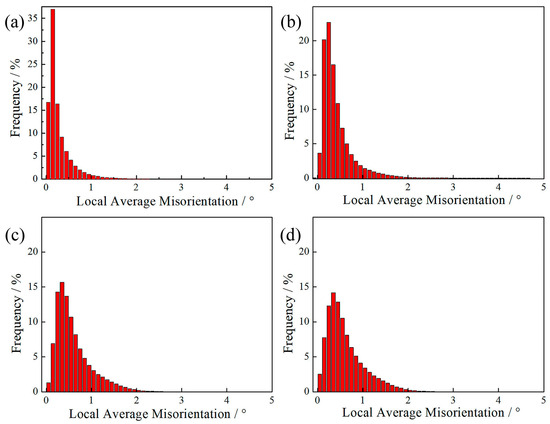
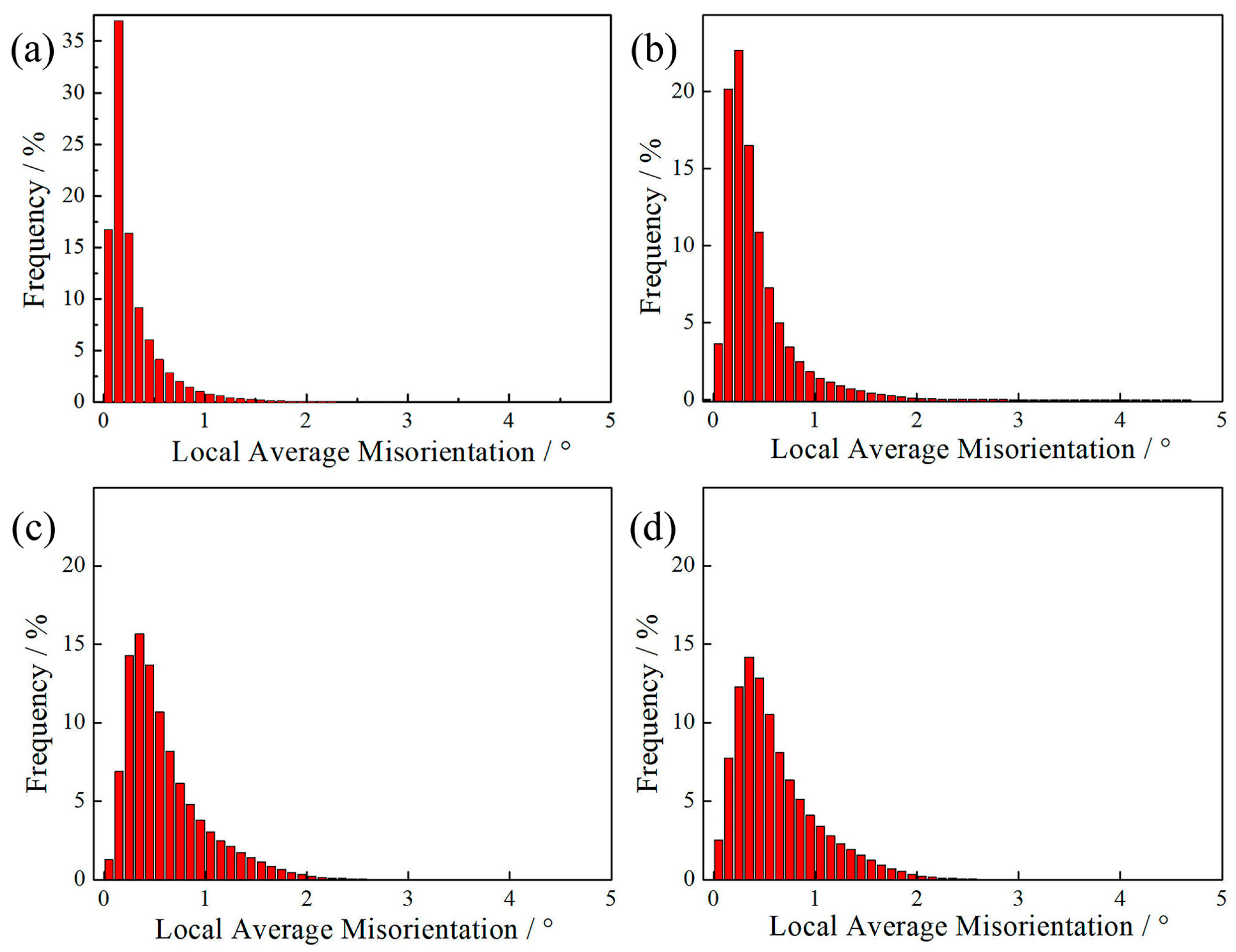
To further quantify the evolution of local misorientation with increasing strain, Figure 6 presents the angular distribution statistics of LAM corresponding to the microstructural states shown in Figure 5. Figure 6a,b,c,d show the statistical results of the LAM with austenite, corresponding to Figure 5b,d,f,h at strains of 0, 0.14, 0.36, and 0.8, respectively. The LAM value is 0.3° when the strain is zero (Figure 6a). The LAM at the austenite grain boundaries increases significantly, with an LAM value of 0.41° at a strain of 0.14 (Figure 6b). Moreover, the LAM at the austenite grain boundaries and within some grains increases when the strain increases to 0.36 and 0.8, with the LAM values increasing to 0.6° and 0.72° (Figure 6c,d). In all deformed conditions, the LAM values are higher than those in the undeformed state, reflecting the accumulation of hot deformation and dislocation activity with increasing strain.
Figure 6.
The angular distributions of the LAM within austenite in the HNMSS 30Cr15Mo1N0.37 at different deformation strains: (a) 0, (b) 0.14, (c) 0.36, (d) 0.8.
3.4. TEM Analysis
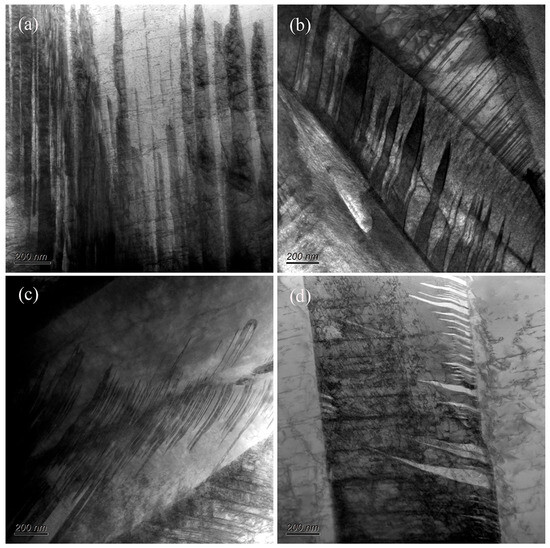
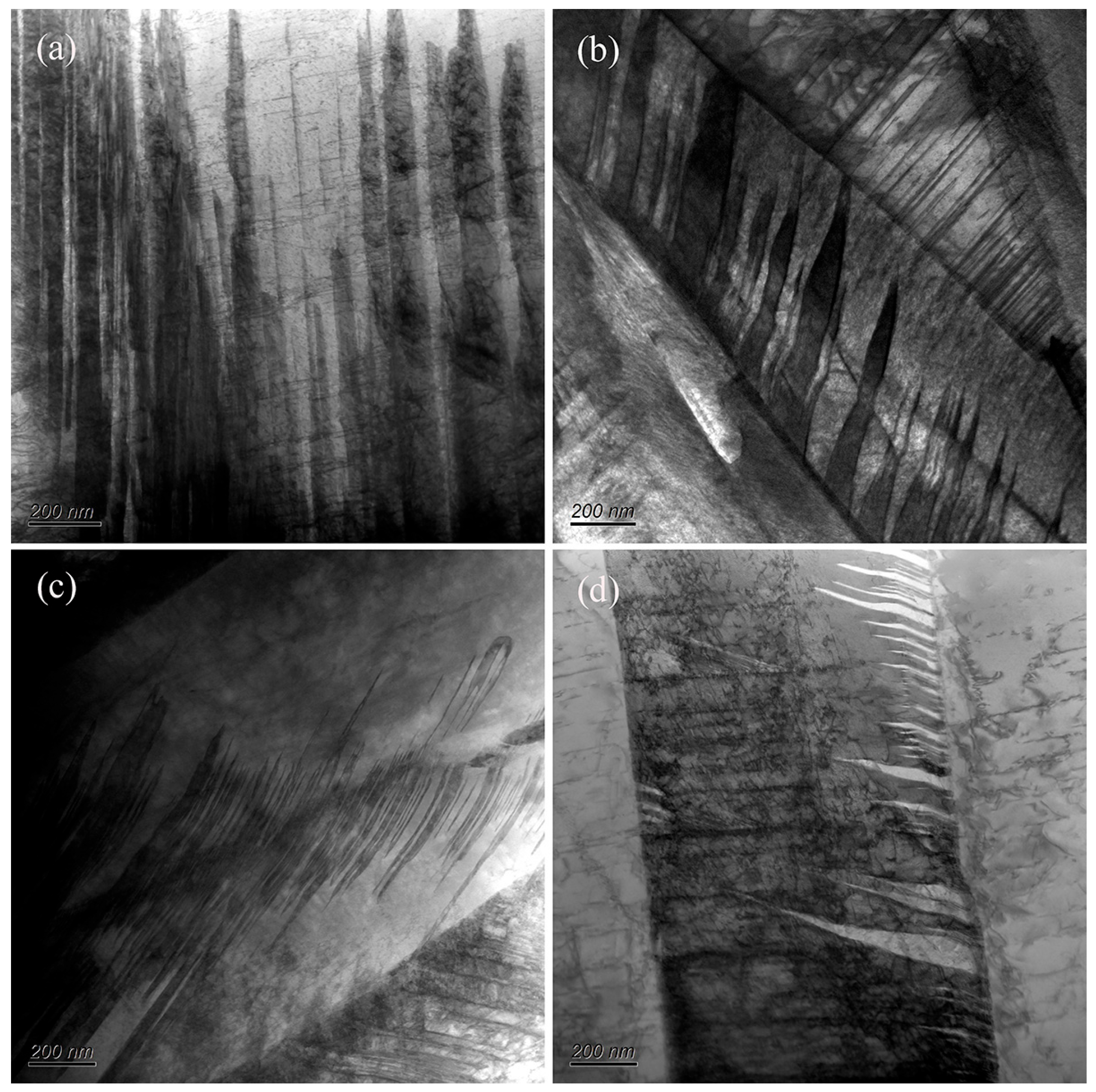
Figure 7 shows TEM images of the HNMSS 30Cr15Mo1N0.37 at different deformation strains. The martensite exhibits a typical straight lath morphology with an average width of 100 nm at a strain of zero. High-density twin substructures are present inside the laths, as shown in Figure 7a. Both the morphology and size of the martensite laths change as the strain increases. The lath width gradually decreases, and their morphology evolves from initial straight to curved. The martensite laths are markedly refined, with an average width reduced to about 35 nm at a strain of 0.8, as shown in Figure 7d.
Figure 7.
TEM observation of martensite lath morphology in the HNMSS 30Cr15Mo1N0.37 at different deformation strains: (a) 0, (b) 0.14, (c) 0.36, (d) 0.8.
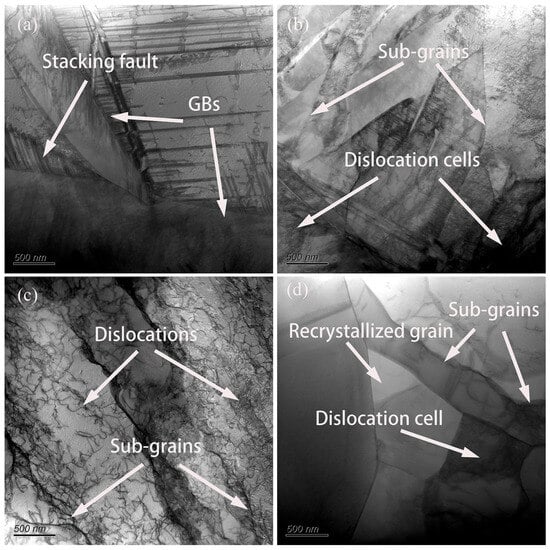
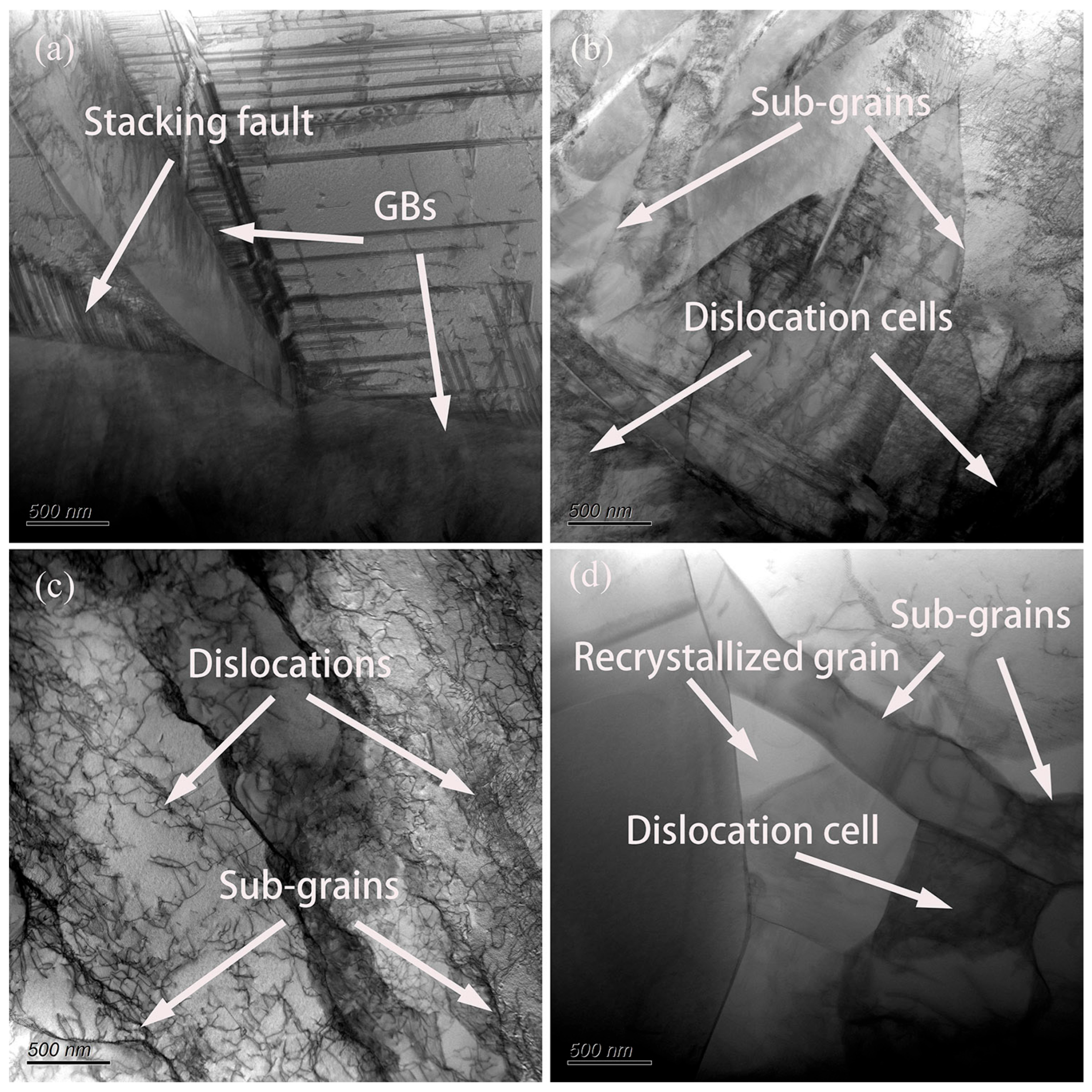
TEM was further employed to analyze the dislocation substructures within austenite grains at different strains, as shown in Figure 8. The dislocation density inside austenite grains is relatively low, and fine stacking fault substructures are observed when the strain is zero, as shown in Figure 8a. Dislocation cells with high-density dislocation tangles and sub-grain boundaries form inside the austenite grains at a strain of 0.14, as shown in Figure 8b. Continuous and uniformly distributed sub-grain boundaries are formed within the austenite grains, and the sub-grains contain high-density dislocations at a strain of 0.36, as shown in Figure 8c. Recrystallized grains and dislocation cells with intense dislocation tangles are observed inside the austenite grains when the strain further increases to 0.8, as shown in Figure 8d.
Figure 8.
TEM observation of substructures within austenite grains in the HNMSS 30Cr15Mo1N0.37 at different deformation strains: (a) 0, (b) 0.14, (c) 0.36, (d) 0.8.
3.5. Nanoindentation Analysis
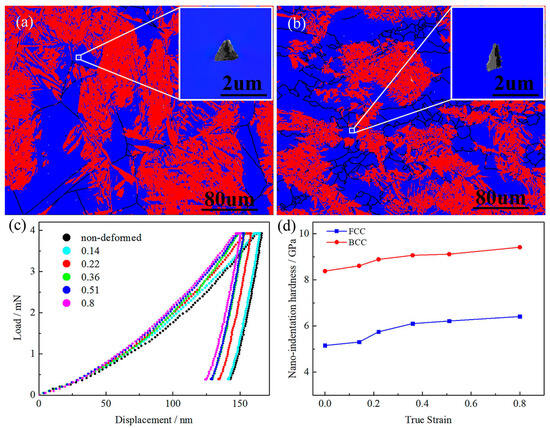
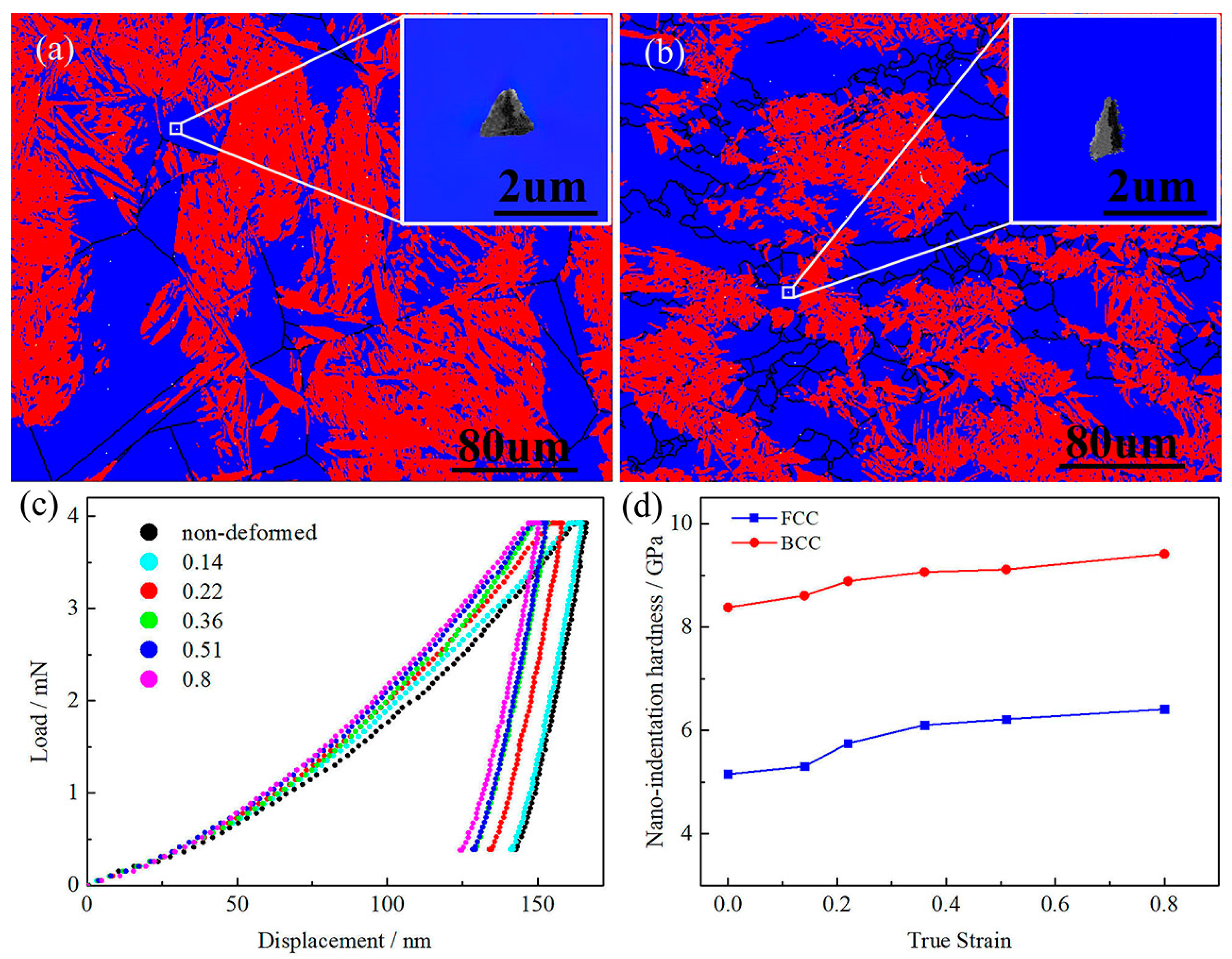
The austenite stability of HNMSS 30Cr15Mo1N0.37 at different deformation strains was analyzed via nanoindentation, as shown in Figure 9. EBSD analysis confirms that no stress-induced martensitic transformation occurred, and no nucleation of fresh martensite is observed within the indented region, as shown in Figure 9a,b. It is reported that the first “pop-in” in a load–displacement curve is primarily associated with dislocation generation, while subsequent “pop-ins” may relate to the austenite to martensite transformation [22,23]. In the present work, the nanoindentation curves under different strains exhibit smooth and continuous characteristics, with no pronounced pop-ins, as shown in Figure 9c. Thus, this indicates that the austenite in HNMSS 30Cr15Mo1N0.37 retains high stability and undergoes no martensitic transformation under the applied stress of 4 mN. The hardness of both austenite and martensite phases in HNMSS 30Cr15Mo1N0.37 continuously increases with strain, as shown in Figure 9d. The hardness of the austenite phase is 5.165 GPa and that of the martensite phase is 8.381 GPa at a strain of zero. The austenite hardness rises to 6.107 GPa and the martensite hardness to 9.065 GPa when the strain increases to 0.36. Further increasing the strain to 0.8, the hardness of the austenite and martensite phase is 6.411 GPa and 9.415 GPa, respectively. Compared with the state at a strain of zero, the hardness increases by 24.1% for austenite phase and 12.3% for martensite phase as the strain further increases to 0.8.
Figure 9.
Nanoindentation characterization of the HNMSS 30Cr15Mo1N0.37 at different deformation strains: EBSD phase at 0 (a) and 0.8 (b), load–displacement curves (c), and true strain—nanoindentation hardness curves (d).
4. Discussion
The austenite stability of HNMSS 30Cr15Mo1N0.37 is closely linked to the microstructural evolution induced by the hot deformation strain. The LAM within the austenite grains is 0.3° when the strain is zero. The LAM increases to 0.41° as the strain reaches 0.14, as shown in Figure 6. Dislocation slip induces heterogeneous lattice rotation, leading to the generation of local misorientation within the grains. A greater local misorientation corresponds to a higher dislocation density [24,25]. Dislocation cells form inside the austenite grains at relatively low strain. The formation of dislocation cells does not significantly promote martensitic transformation; instead, a high dislocation density contributes to austenite stabilization [11,19]. The prior austenite grains are equiaxed, with no recrystallized nuclei at the grain boundaries, and a relatively high fraction of Σ3 twin boundaries within the grains at a strain of zero. The proportion of recrystallized grains rises, while the fraction of Σ3 twin boundaries inside the grains decreases as the strain increases. However, when the strain increases to 0.8, continuous recrystallized grains with a volume fraction of 73.6% form along the prior austenite grain boundaries, and the fraction of Σ3 twin boundaries within these recrystallized grains increases, as shown in Figure 5. Fine recrystallized grains increase grain boundary area, which hinders the growth of martensite [26,27]. Furthermore, Σ3 twin boundaries feature highly coherent atomic arrangement and excellent lattice matching, significantly reducing the activation energy barrier for martensite nucleation and decreasing the critical driving force required for phase transformation [28,29,30]. Nevertheless, the overall austenite stability is not governed solely by the Σ3 twin boundary fraction; instead, it is the result of a synergistic combination of multiple microstructural factors. Meanwhile, the hardness of the austenite in HNMSS 30Cr15Mo1N0.37 continuously improves with increasing strain. The hardness of austenite rises from 5.165 GPa when the strain is 0 to 6.411 GPa as the strain reaches 0.8, representing an increase of 24.1%. Since martensitic transformation follows a shear mechanism, an increase in the strength of the parent austenite phase raises the resistance to transformation [26,31], thereby suppressing the extent of martensitic transformation. In summary, at a strain of 0.14, dislocation accumulation leads to the formation of dislocation cells and sub-grain structures, which enhances austenite stability. As strain further increases, the austenite stability is attributed to the synergistic effects of dislocation accumulation, Σ3 twin boundaries and grain refinement, which collectively increase the resistance to martensitic transformation.
In addition, the proportions of grain boundaries with 2° ≤ θ < 5° in HNMSS 30Cr15Mo1N0.37 are 8.3%, 14.9%, and 12.8%, while the proportions of grain boundaries with 5° ≤ θ < 15° are 2.2%, 4.5%, and 8.5% at strains of 0, 0.14, and 0.8, respectively, as shown in Figure 5. Dislocations multiply and rearrange to form low-angle grain boundaries (LAGBs) during hot deformation, thereby subdividing the original austenite grains into multiple sub-grains. This process results in the formation of abundant dislocation cells and sub-grain structures within the material [32,33]. The austenite grains undergo work hardening with a linear increase in dislocation density, while dynamic recrystallization has not yet initiated at a strain of 0.14. Martensitic transformation preferentially nucleates along the original austenite grain boundaries, and the morphology of the martensite laths is not significantly influenced, resulting in an insignificant refinement effect. The high dislocation density provides the number of nucleation sites for phase transformation as the strain further increases [34,35]. Simultaneously, dynamic recrystallization refines the austenite grains [36], reducing the critical nucleation size of martensite laths. Consequently, a finer lath structure is formed during the martensitic transformation stage. Furthermore, the presence of extensive dislocation cell structures within the dynamically recrystallized grains interrupts the continuous growth of martensite plates, further refining the martensite laths as the strain further increases.
5. Conclusions
- (1)
- The austenite content in HNMSS 30Cr15Mo1N0.37 increases with strain when the hot deformation strain ranges from 0 to 0.8. The austenite fractions are 69.5%, 73.1%, and 80.7% at strains of 0, 0.14, and 0.8, respectively. The hardness of the austenite and martensite phases in HNMSS 30Cr15Mo1N0.37 rises from 5.165 GPa and 8.381 GPa at a strain of 0 to 6.411 GPa and 9.415 GPa when the strain further increases to 0.8, representing increases of 24.1% for austenite phase and 12.3% for martensite phase.
- (2)
- At a strain of 0.14, dislocations accumulate within austenite grains, forming dislocation cells and sub-grain structures, which enhance the austenite stability. When the strain exceeds 0.36, austenite grains are significantly refined, further increasing austenite stability and suppressing martensitic transformation.
- (3)
- Recrystallized grains and dislocation cells influence the morphology and size of martensite laths. Martensite laths decrease significantly from 100 nm at a strain of 0 to 35 nm when the strain further increases to 0.8, and their morphology changes from straight to curved.
Author Contributions
Conceptualization, S.T., Q.W. and C.L.; methodology, S.T. and Q.W.; validation, S.T. and Q.W.; formal analysis, S.T.; investigation, S.T. and Q.W.; data curation, S.T.; writing—original draft, S.T. and Q.W.; writing—review and editing, S.T., Q.W. and C.L.; visualization, S.T. and Q.W.; supervision, Q.W. and C.L.; project administration, Q.W. and C.L.; funding acquisition, Q.W. All authors have read and agreed to the published version of the manuscript.
Funding
This work was supported by Gan Zhou “Jie Bang Gua Shuai” Program (2023ULGX0002) and Jiangxi Double Thousand Plan (jxsq2023101058).
Data Availability Statement
The original contributions presented in the study are included in the article, further inquiries can be directed to the corresponding author.
Conflicts of Interest
The authors declare no conflicts of interest.
References
- Simmons, J. Overview: High-nitrogen alloying of stainless steels. Mater. Sci. Eng. A 1996, 207, 159–169. [Google Scholar] [CrossRef] [Scilit]
- Rashev, T.V.; Eliseev, A.V.; Zhekova, L.T.; Bogev, P.V. High-nitrogen steel. Steel Transl. 2019, 49, 433–439. [Google Scholar] [CrossRef] [Scilit]
- Wang, Y.; Feng, H.; Li, H.; Zhang, Y.; Jiang, Z.; Wang, X. Microstructure evolution and mechanical properties of martensitic stainless bearing steels with different carbon nitrogen ratios. J. Mater. Res. Technol. 2024, 33, 5888–5897. [Google Scholar] [CrossRef] [Scilit]
- Li, X.; Hou, L.; Wei, Y.; Wei, Z. Constitutive equation and hot processing map of a nitrogen-bearing martensitic stainless steel. Metals 2020, 10, 1502. [Google Scholar] [CrossRef] [Scilit]
- Lu, P.; Feng, H.; Li, H.; Zhang, P.; Zhu, H.; Ni, Z.; ·Zhang, S.; Jiang, Z. Cleanliness improvement and microstructure refinement of as-cast high-nitrogen stainless bearing steel by magnesium treatment. Metall. Mater. Trans. B 2024, 55, 3266–3283. [Google Scholar] [CrossRef] [Scilit]
- Xia, L.; Feng, H.; Li, H.; Zhang, S.; Zhu, H.; Jiang, Z. Manufacturing high strength-toughness high-nitrogen stainless bearing steel 30Cr15Mo1VN by pressurized duplex process. Metall. Mater. Trans. B 2024, 55, 4163–4181. [Google Scholar] [CrossRef] [Scilit]
- Feng, H.; Jiang, Z.; Li, H.; Jiao, W.; Li, X.; Zhu, H.; Zhang, S.; Zhang, B.; Cai, M. Hot deformation behavior and microstructural evolution of high nitrogen martensitic stainless steel 30Cr15Mo1N. Steel Res. Int. 2017, 88, 1700149. [Google Scholar] [CrossRef] [Scilit]
- Cai, X.; Hu, X.; Zheng, L.; Li, D. Hot deformation behavior and processing maps of 0.3C-15Cr-1Mo-0.5N high nitrogen martensitic stainless steel. Acta Metall. Sin. (Engl. Lett.) 2020, 33, 693–704. [Google Scholar] [CrossRef] [Scilit]
- Zheng, S.; Liu, J.; Xu, L.; Wen, S.; Han, Z. Hot deformation behavior of high nitrogen martensitic stainless steels. Mater. Res. Express 2019, 6, 016533. [Google Scholar] [CrossRef] [Scilit]
- Song, Y.; Lu, Y.; Li, Y.; Sun, H.; Li, H.; Xu, H.; Wang, Y. Effect of nitrogen on the thermal deformation behavior of martensitic stainless bearing steel. Mater. Technol. 2024, 58, 809–818. [Google Scholar] [CrossRef] [Scilit]
- He, B.; Xu, W.; Huang, M. Increase of martensite start temperature after small deformation of austenite. Mater. Sci. Eng. A 2014, 609, 141–146. [Google Scholar] [CrossRef] [Scilit]
- Tsuzaki, K.; Fukasaku, S.; Tomota, Y.; Maki, T. Effect of prior deformation of austenite on the γ → ε martensitic transformation in Fe-Mn alloys. Mater. Trans. JIM 1991, 32, 222–228. [Google Scholar] [CrossRef] [Scilit]
- Nikravesh, M.; Naderi, M.; Akbari, G. Influence of hot plastic deformation and cooling rate on martensite and bainite start temperatures in 22MnB5 steel. Mater. Sci. Eng. A 2012, 540, 24–29. [Google Scholar] [CrossRef] [Scilit]
- Maalekian, M.; Lendinez, M.; Kozeschnik, E.; Brantner, H.; Cerjak, H. Effect of hot plastic deformation of austenite on the transformation characteristics of eutectoid carbon steel under fast heating and cooling conditions. Mater. Sci. Eng. A 2007, 454–455, 446–452. [Google Scholar] [CrossRef] [Scilit]
- Derazkola, H.; Garcia, E.; Murillo-Marrodán, A.; Fernandez, A. Review on modeling and simulation of dynamic recrystallization of martensitic stainless steels during bulk hot deformation. J. Mater. Res. Technol. 2022, 18, 2993–3025. [Google Scholar] [CrossRef] [Scilit]
- Chatterjee, S.; Wang, H.; Yang, J.; Bhadeshia, H. Mechanical stabilisation of austenite. Mater. Sci. Technol. 2006, 22, 641–644. [Google Scholar] [CrossRef] [Scilit]
- Maalekian, M.; Kozeschnik, E.; Chatterjee, S.; Bhadeshia, H. Mechanical stabilisation of eutectoid steel. Mater. Sci. Technol. 2007, 23, 610–612. [Google Scholar] [CrossRef] [Scilit]
- Wang, H.; Yang, P.; Mao, W.; Lu, F. Effect of hot deformation of austenite on martensitic transformation in high manganese steel. J. Alloys Compd. 2013, 558, 26–33. [Google Scholar] [CrossRef] [Scilit]
- He, B.; Guan, Q. Effect of ausforming strain on the microstructural evolution of lath martensite in low carbon steel. Met. Mater. Int. 2022, 28, 2330–2339. [Google Scholar] [CrossRef] [Scilit]
- Hou, Q.; Huang, Z.; Wang, J. Application of rietveld refinement to investigate the high chromium white cast iron austempered at different temperatures. J. Iron Steel Res. Int. 2009, 16, 33–38. [Google Scholar] [CrossRef] [Scilit]
- Bénéteau, A.; Weisbecker, P.; Geandier, G.; Aeby-Gautier, E.; Appolaire, B. Austenitization and precipitate dissolution in high nitrogen steels: An in situ high temperature X-ray synchrotron difraction analysis using the Rietveld method. Mater. Sci. Eng. A 2005, 393, 63–70. [Google Scholar] [CrossRef] [Scilit]
- Zhou, S.; Hu, F.; Wang, K.; Hu, C.; Dong, H.; Wan, X.; Cheng, S.; Misra, R.; Wu, K. A study of deformation behavior and stability of retained austenite in carbide-free bainitic steel during nanoindentation process. J. Mater. Res. Technol. 2022, 20, 2221–2234. [Google Scholar] [CrossRef] [Scilit]
- Hossain, R.; Pahlevani, F.; Sahajwalla, V. Effect of small addition of Cr on stability of retained austenite in high carbon steel. Mater. Charact. 2017, 125, 114–122. [Google Scholar] [CrossRef] [Scilit]
- Li, Y.; Goto, S.; Kostka, A.; Herbig, M. Local measurement of geometrically necessary dislocation densities and their strengthening effect in ultra-high deformed pearlite. Mater. Charact. 2023, 203, 113132. [Google Scholar] [CrossRef] [Scilit]
- Brewer, L.; Field, D.; Merriman, C. Mapping and Assessing Plastic Deformation Using EBSD; Springer: Boston, MA, USA, 2009. [Google Scholar]
- Yuan, J.; Zhang, Q.; Wang, J.; Wang, L.; Wang, C.; Xu, W. Synergistic effect of magnetic field and grain size on martensite nucleation and variant selection. Acta Metall. Sin. 2022, 58, 1570–1580. [Google Scholar]
- Umemoto, M.; Owen, W. Effects of austenitizing temperature and austenite grain size on the formation of athermal martensite in an iron-nickel and an iron-nickel-carbon alloy. Metall. Trans. 1974, 5, 2041–2046. [Google Scholar] [CrossRef] [Scilit]
- Trang, T.; Lee, D.; Heo, Y. Direct observation of the ledge-typed twin boundary in a martensitic steel. Acta Mater. 2023, 259, 119285. [Google Scholar] [CrossRef] [Scilit]
- Guimarães, J.; Rios, P. Driving Force and Thermal Activation in Martensite Kinetics. Metall. Mater. Trans. A 2009, 40, 2264–2272. [Google Scholar] [CrossRef] [Scilit]
- Malik, A.; Amberg, G.; Borgenstam, A.; Ågren, J. Phase-field modelling of martensitic transformation: The effects of grain and twin boundaries. Model. Simul. Mater. Sci. Eng. 2013, 21, 085003. [Google Scholar] [CrossRef] [Scilit]
- Brofman, P.; Ansell, G. On the effect of fine grain size on the Ms temperature in Fe-27Ni-0.025C alloys. Metall. Trans. A 1983, 14, 1929–1931. [Google Scholar] [CrossRef] [Scilit]
- Wang, Y.; Cheng, L.; Sheng, Z.; Wang, E.; Wang, J.; Xu, J. Research progress on hot deformation behavior of high nitrogen austenitic stainless steels: Influence factors and microstructure control of hot deformation at high temperature. Metals 2026, 16, 361. [Google Scholar] [CrossRef] [Scilit]
- Lin, H.; Yang, M.; Song, B. Study on hot compressive deformation behavior and microstructure evolution of G13Cr4Mo4Ni4V steel. Mater. Today Commun. 2024, 38, 108429. [Google Scholar] [CrossRef] [Scilit]
- Liu, J.; Chen, C.; Feng, Q.; Fang, X.; Wang, H.; Liu, F.; Lu, J.; Raabe, D. Dislocation activities at the martensite phase transformation interface in metastable austenitic stainless steel: An in-situ TEM study. Mater. Sci. Eng. A 2017, 703, 236–243. [Google Scholar] [CrossRef] [Scilit]
- Li, D.; Yan, Z.; Wang, R.; Kang, Y.; Shen, L. Effect of hot-deformation processes on phase transformation of low-alloyed, multiphase, high-strength steel. Steel Res. Int. 2021, 92, 1900522. [Google Scholar] [CrossRef] [Scilit]
- Derazkola, H.; Gil, E.; Murillo-Marrodán, A.; Méresse, D. Review on dynamic recrystallization of martensitic stainless steels during hot deformation: Part I—Experimental study. Metals 2021, 11, 572. [Google Scholar] [CrossRef] [Scilit]

Disclaimer/Publisher’s Note: The statements, opinions and data contained in all publications are solely those of the individual author(s) and contributor(s) and not of MDPI and/or the editor(s). MDPI and/or the editor(s) disclaim responsibility for any injury to people or property resulting from any ideas, methods, instructions or products referred to in the content. |
© 2026 by the authors. Licensee MDPI, Basel, Switzerland. This article is an open access article distributed under the terms and conditions of the Creative Commons Attribution (CC BY) license.