


Abstract
Additive manufacturing (AM) using powder bed fusion (PBF) has been the predominant printing method used over the last decade. The capability of this approach to produce complex parts with high precision has attracted the attention of major industries as a potential tool for replacing traditional manufacturing technologies. 15-5 PH stainless steel is one of the alloys being studied as a candidate for PBF processes. Its superior strength and corrosion resistance have made it a highly attractive option in numerous industries, including the automotive, nuclear, and petrochemical industries. To enhance the properties of 15-5 PH stainless-steel AM parts following printing, one can use a thermal treatment such as age hardening. However, very little research exists regarding the functional properties of AM parts made from this alloy after heat treatment. This study aims to evaluate the effect of H1150M age hardening heat treatment following printing on the properties of 15-5 PH steel, particularly regarding its mechanical properties and environmental behavior. The microstructure was studied using both optical and electron microscopy, along with X-ray diffraction (XRD) analysis. The mechanical properties were examined by tensile testing and fracture toughness assessment. Corrosion behavior was analyzed in terms of potentiodynamic polarization and using impedance spectroscopy. The results obtained have shown that over-aging caused by H1150M heat treatment has a detrimental effect on the mechanical and environmental behavior of the tested alloy. This was primarily attributed to the formation of an austenitic phase within the inherent martensitic matrix, the generation of brittle phases (mainly carbonitrides of Cr and Nb) and a reduction in grain size.
1. Introduction
Additive manufacturing (AM) is a transformative production technology that has emerged over recent decades and enables the fabrication of parts with intricate geometries in a flexible way [1,2,3,4,5]. This approach utilizes feedstock materials, usually in the form of powder or wire, to construct near-net-shape components. By leveraging a CAD model of a desired part, AM technologies can create complex structures through a layer-by-layer deposition and consolidation process [6,7,8,9]. Among the various AM techniques available today, powder bed fusion (PBF) has garnered significant attention and achieved widespread adoption. This process employs a finely distributed feedstock powder along with an energy source, typically a laser or electron beam, to selectively melt and fuse material according to predefined cross-sectional geometry [10,11,12,13,14]. Selective laser melting (SLM) is a PBF process that enables the fabrication of components with high dimensional accuracy, excellent surface finishes, and intricate internal features [15,16,17]. This process is typically conducted under an inert atmosphere, such as high-purity argon or nitrogen, to prevent oxidation and contamination during fabrication [18,19,20,21].
Structural materials such as stainless steel constitute a prominent class of engineering alloys that are under extensive investigation for AM applications. Their excellent mechanical properties and corrosion resistance, together with their proven widespread industrial use, make them attractive candidates for AM development [21,22,23,24,25,26,27]. Within this group of alloys, precipitation-hardening stainless steels such as 15-5 PH and 17-4 PH are of particular interest due to their excellent combination of high strength, toughness, and corrosion resistance [28,29,30,31]. While 17-4 PH stainless steel has been the subject of numerous studies on SLM in AM [32,33,34,35,36], relatively limited research has been conducted on this method using 15-5 PH [37,38]. 15-5 PH stainless steel is a ferrite-free variant of 17-4 PH, specifically designed to enhance corrosion resistance while retaining favorable strength and ductility. Its strengthening mechanism is primarily driven by copper precipitation, where the size, distribution, and morphology of the precipitates have a critical impact on the alloy’s mechanical behavior [39]. A variety of standardized heat treatments are commonly applied to tailor the mechanical and environmental behavior of this alloy. In general, a solution heat treatment is carried out prior to aging to ensure complete dissolution of the copper within the iron matrix, which brings the alloy to condition A (CA) state. Then, multiple options are available for the aging treatment. These include: (i) H900, which achieves a fully aged condition of the steel with extremely fine precipitates and maximum strength; (ii) H925, which has slightly lower strength than H900; and (iii) H1025 up to H1150-M, which provide an enhanced over-aging treatment, but with relatively reduced strength and increased toughness compared to the previous options. In this study, we specifically selected the H1150-M heat treatment to examine its effect on the tested alloy (SLM-printed 15-5 PH stainless steel), aiming to increase ductility, which, in turn, improves toughness, though it comes with a trade-off in strength.
Recently, there has been little research published regarding over-aging heat treatments applied on AM 15-5 PH alloy. Studies have explored the fully aged conditions such as the H900 aging treatment [40], exploring its effect on mechanical properties environmental and fatigue behavior. Another common method is to characterize AM 15-5 PH steel without aging at all [41]. It should be noted that the H1150-M heat treatment is specifically designed to achieve moderate strength while providing better ductility, toughness, fatigue endurance, and corrosion resistance; hence, it was the treatment selected for the alloy in this work [42]. The objective of this study is to understand the effects of this treatment on the functional properties of AM 15-5 PH steel in terms of mechanical and environmental behavior, which has not been explored before.
2. Experimental Procedure
2.1. Preparation of the Tested Specimens
The specimens for this study were fabricated via a Selective Laser Melting (SLM) process utilizing an SLM 280 production system (SLM Solutions, Lubeck, Germany). 15-5 PH stainless-steel powder characterized by a mean particle size distribution of 35–40 µm served as feedstock material. Its chemical composition profile is detailed in Table 1, confirming adherence to the AMS-5659 standard [43] for 15-5 PH alloys. To minimize retained austenite within the as-built microstructure, the build chamber was purged with a 99% purity argon protective atmosphere rather than nitrogen [39]. Processing was executed using a 250 W laser power at 850 mm/s scanning velocity, 50 µm layer thickness, and 100 µm hatch distance. Following the additive process, the initial cubic and cylindrical geometries were precision-machined into the final test specimen configurations.
Table 1.
Chemical composition of 15-5 PH stainless steel used as feedstock powder for the SLM printing process.
2.2. Microstructure Evaluation
Microstructural characterization was conducted using optical microscopy and scanning electron microscopy (SEM-JEOL 5600, Jeol Ltd. Tokyo, Japan) [44]. Specimens were prepared by grinding and diamond suspension polishing to a surface roughness of approximately 1 µm. To reveal the alloy’s martensitic structure, the polished surfaces were etched with Kaling’s reagents (1.5 gr CuCl2, 33 mL HCL, 33 mL ethanol and 33 mL H2O). Phase identification was performed using a Panlytical Empyrean diffractometer (Malvern Panalytical, Almelo, The Netherlands) (CuKα radiation λ = 1.514178 Å) equipped with a PIXcell3D-Medipix3 detector (Medipix, Geneva, Switzerland), operating at 45 kV and 40 mA. Following the ASTM E975-13 standard [45], phase quantities were quantified based on integrated peak intensities [9,46]. For high-resolution analysis of precipitates and micro-segregation, transmission electron microscopy (TEM) was performed using a JEOL-JEM-2100F (JEOL, Tokyo, Japan) (operating at 200 kV), involving bright-field imaging, SAED and EDS. TEM specimens were specifically fabricating using a dual-beam focused ion-beam microscope (FEI, Verios-460L, Hillsboro, OR, USA). Finally, orientation maps of the microstructure of the steel were acquired by SEM (FEI Verios XHR 460L) equipped with EBSD (Oxford instruments, Abingdon, UK) to define grain size and quantify secondary phases.
2.3. Mechanical Properties: Tensile Testing and Fracture Toughness Testing
The mechanical performance of the SLM-printed 15-5 PH was assessed via tensile testing on a Cormet C-76 system (Cormet Testing Systems, Vantaa, Finland). Test specimens, featuring a 25.4 mm gauge length and a 7 mm2 round cross-sectional area, were machined for the printed material along the vertical XZ plane. This specific build orientation was targeted due to the characteristic property anisotropy and the typically lower mechanical values associated with this plane. A minimum of three repetitions were performed for each set of heat treatment conditions.
The fracture toughness analysis examined both fatigue crack initiation and its propagation from the starter notch, along with static loading until the final fracture load. The pre-cracking loading was performed using an Instron testing machine (Instron ElectroPlus E10000 Linear-Torsion, Norwood, MA, USA). Then, the machine was fitted with a 10 kN load–cell, operating under load control with a sinusoidal waveform at a frequency of 15 Hz in air. The cyclic loading of the fatigue pre-cracking was applied with a load ratio of R = 0.1 and a maximum load of 3 kN for 200 k cycles, followed by a 2 kN load for the final 100–150 k cycles. The maximum stress intensity in the final stage of the fatigue crack remained below the estimated value of 20 MPa√m. The crack propagation was monitored using a crack opening displacement (COD) gauge, together with visual observation of the crack growth on the sides of the specimen. The crack propagated from the initial notch length of about 8 mm to the overall length of the crack: 11.25 < a ≈ 0.5 W < 13.75 mm, in accordance with the ASTM E-399 standard [47]. For reference, both as-printed and post-H1150M specimens were tested, with 3 specimens for each condition.
2.4. Electrochemical Analysis
Corrosion characteristics were evaluated through potentiodynamic polarization (ASTM G5 [48]) and electrochemical impedance spectroscopy using a Bio-Logic SP-200 system. The electrochemical cell consisted of a 1 cm2 area test specimen (working electrode), a platinum counter electrode, and a saturate calomel reference electrode (SCE). Tests were carried out in a 3.5% NaCl environment, with polarization scans set at 0.5 mV/s and EIS frequencies spanning 10 KHz to 0.015 Hz (10 mV amplitude). Initial surface consistency was achieved by polishing all samples to a 1200-grit finish. For statistical reliability, each experimental run was conducted three times per specimen.
3. Results
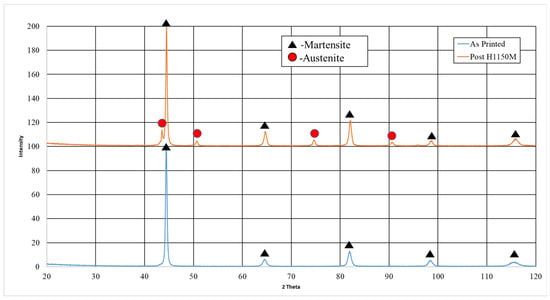
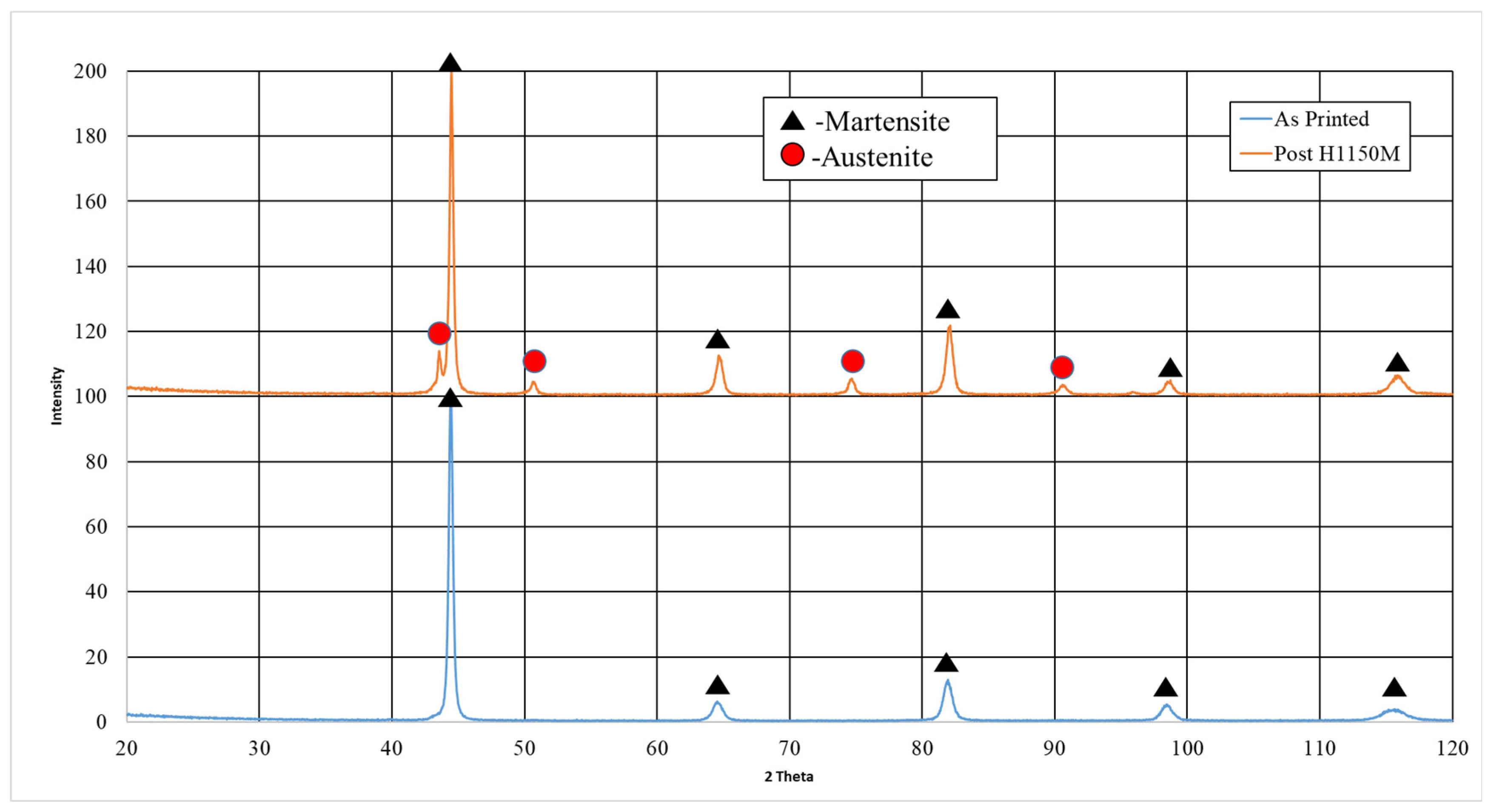
The XRD pattern analysis for both the as-printed and post-H1150M heat treatment samples is presented in Figure 1, with quantitative measurements listed in Table 2. The result for the as-printed alloy displayed purely martensitic structure. The martensitic peaks in Figure 1 also match a ferritic structure. This is because the tested stainless steel has a low carbon content, which reduces the c lattice parameter of the tetragonal structure, bringing it closer to the a and b lattice parameters; so, the lattice resembles a BCC structure [49]. In contrast to the as-printed alloy, the sample subjected to H1150M heat treatment exhibited a distinct presence of the two phases—83% martensite and 17% austenite. The formation of the austenitic phase during the heat treatment was probably caused by diffusion, where carbon and alloying elements exited the martensitic structure and stabilized an austenitic phase around it.
Figure 1.
XRD analysis of PH 15-5 produced by SLM process in as-printed and post-H1150M heat treatment conditions.
Table 2.
Phase content of 15-5 PH stainless steel in both as-printed and post-H1150M heat treatment conditions.
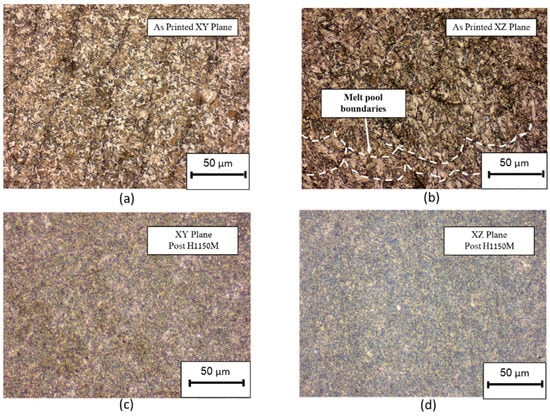
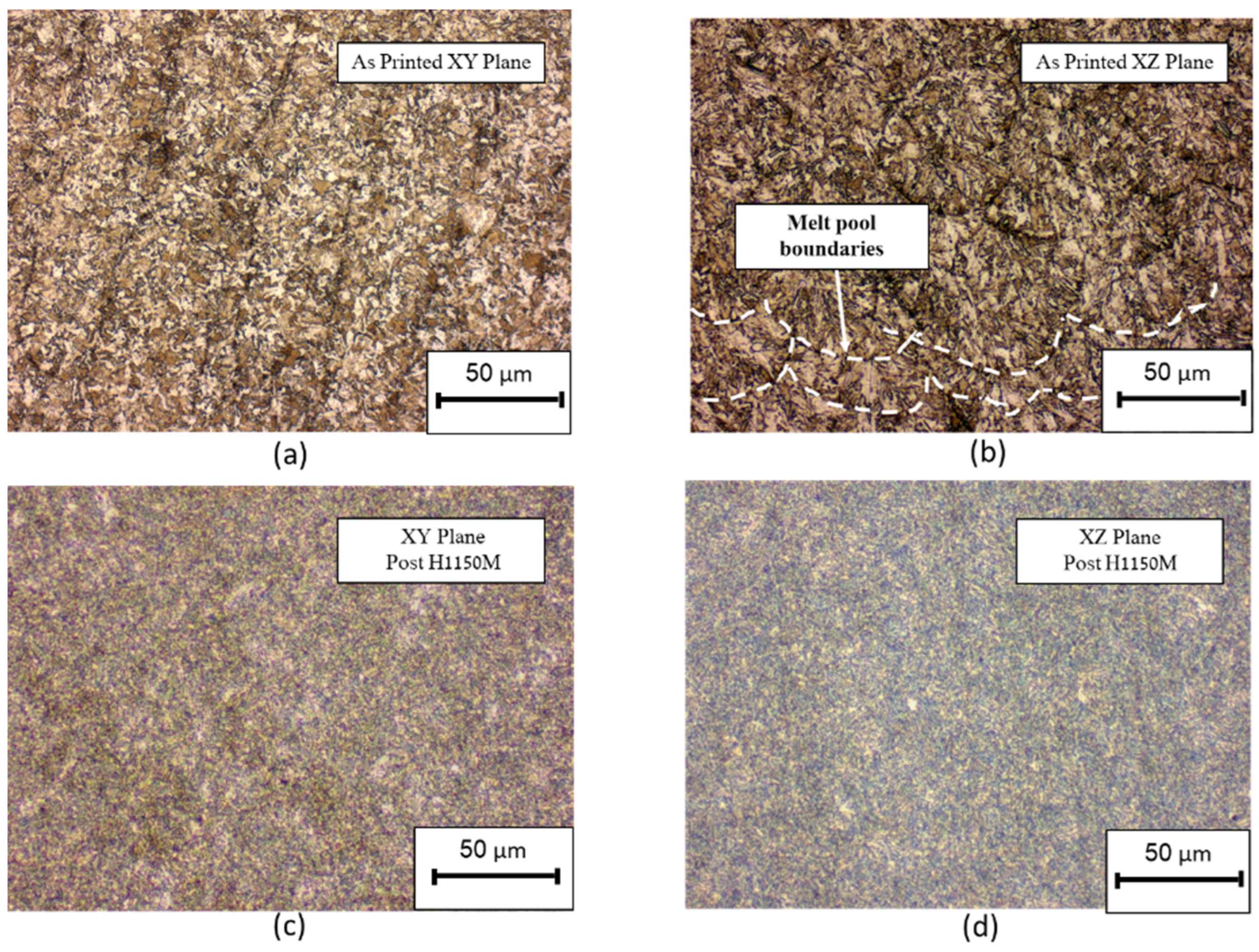
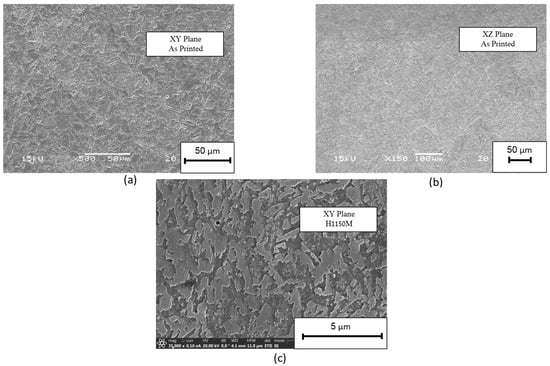
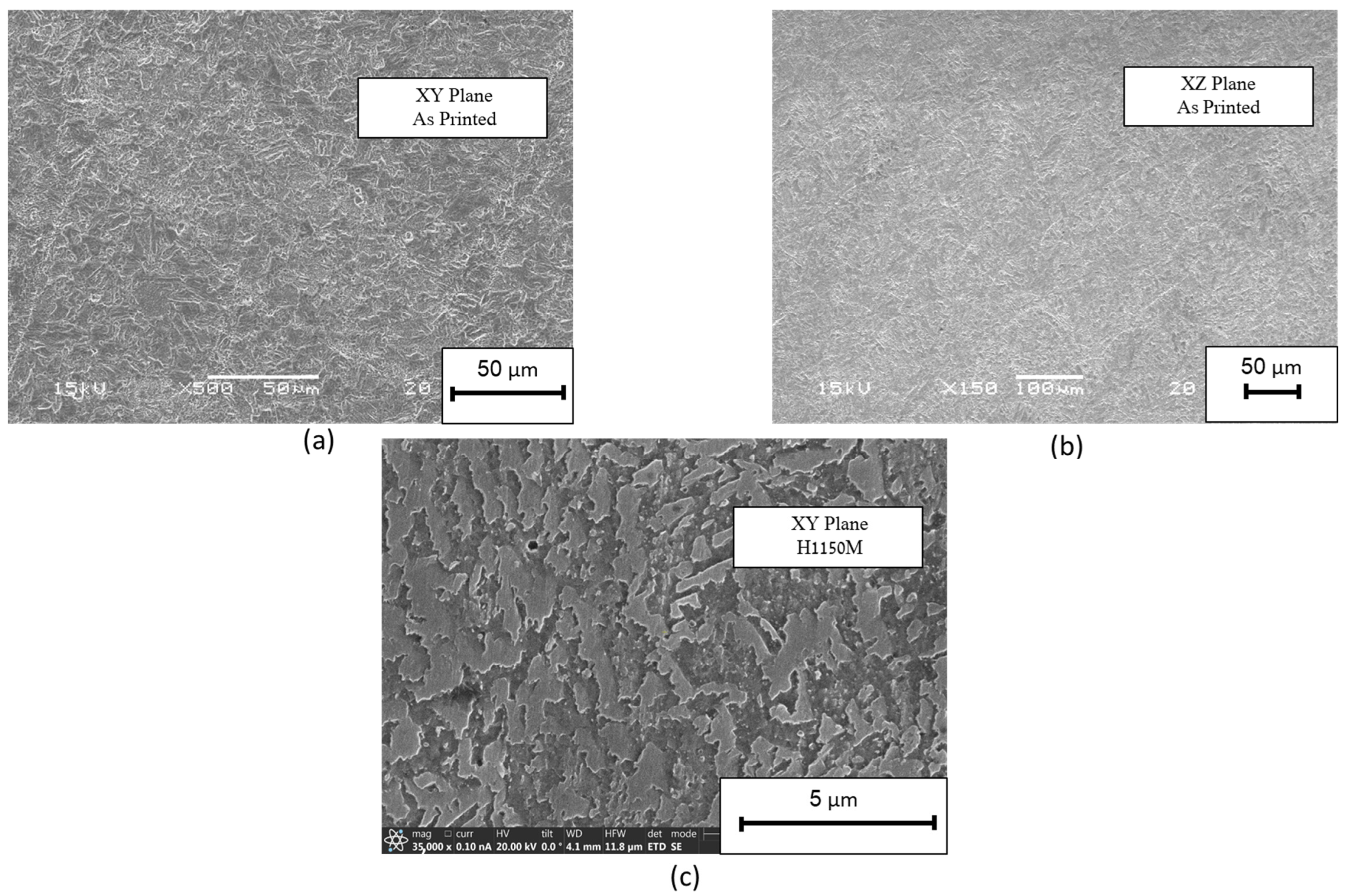
The typical microstructure of 15-5 PH stainless steel in the as-printed condition and post H1150M heat treatment is presented in Figure 2. In the as-printed sample, the XY plane exhibits a relatively homogenous structure with randomly oriented grains compared to the XZ plane, which revealed more visible melt pool boundaries. The directionally oriented grain growth in the XZ plane was due to the epitaxial nature of solidification during the AM process [50,51,52]. An in-depth analysis of the microstructure using scanning electron microscopy is shown in Figure 3. This reveals a characteristic martensitic structure in the as-printed sample, whereas the post H1150M heat-treated sample displayed two distinct phases. Based on the results of the XRD analysis, those two distinct phases correspond to the martensitic matrix and a secondary austenitic phase.
Figure 2.
General microstructure of SLM 15-5 PH stainless steel captured by optical microscopy: (a,b) as printed, (c,d) post H1150M heat treatment.
Figure 3.
Close-up views of microstructure of PH 15-5 stainless steel: (a,b) as printed, (c) post H1150M heat treatment.
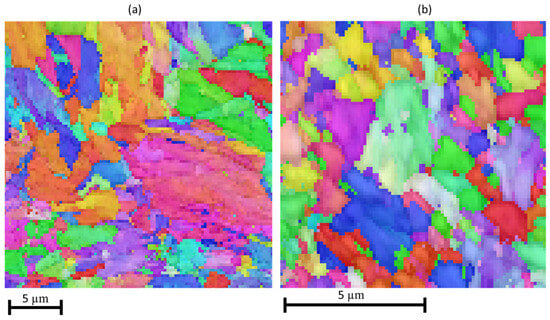
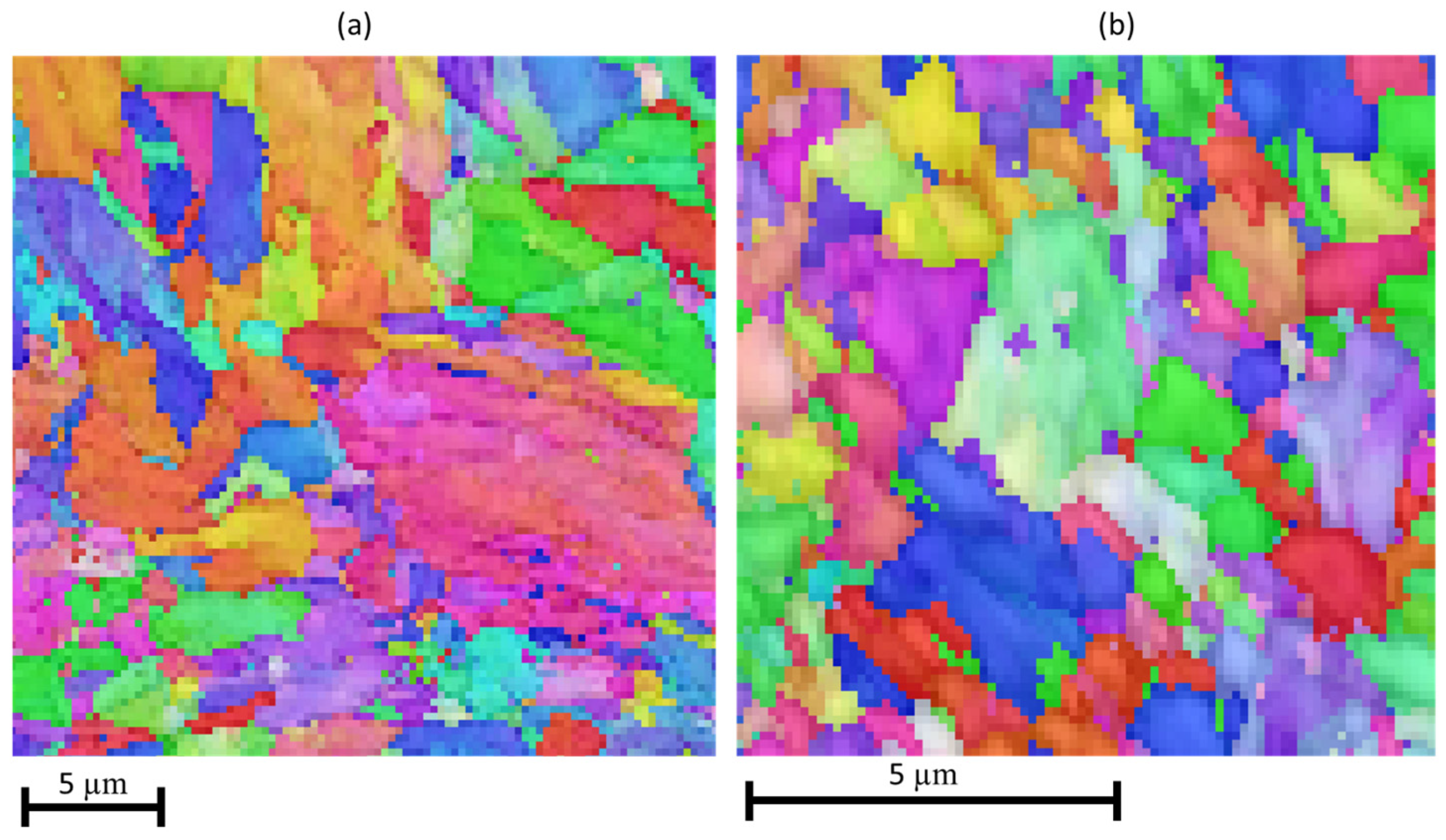
The results obtained from the EBSD analysis are shown in Figure 4. Inverse pole figures of 15-5 PH stainless steel for both as-printed and post-H1150M heat-treated samples show a decrease in grain size after heat treatment, from an average of 5 µm to 1 µm. Furthermore, the EBSD results for the austenite content basically align with the XRD analysis results, showing less than 1% austenite content prior to heat treatment and 12% austenite content after heat treatment. The difference in austenite fraction between XRD and EBSD could be related to the interaction volume difference in the two tests.
Figure 4.
EBSD—inverse pole figures of 15-5 PH stainless steel: (a) as printed, (b) post H1150M heat treatment.
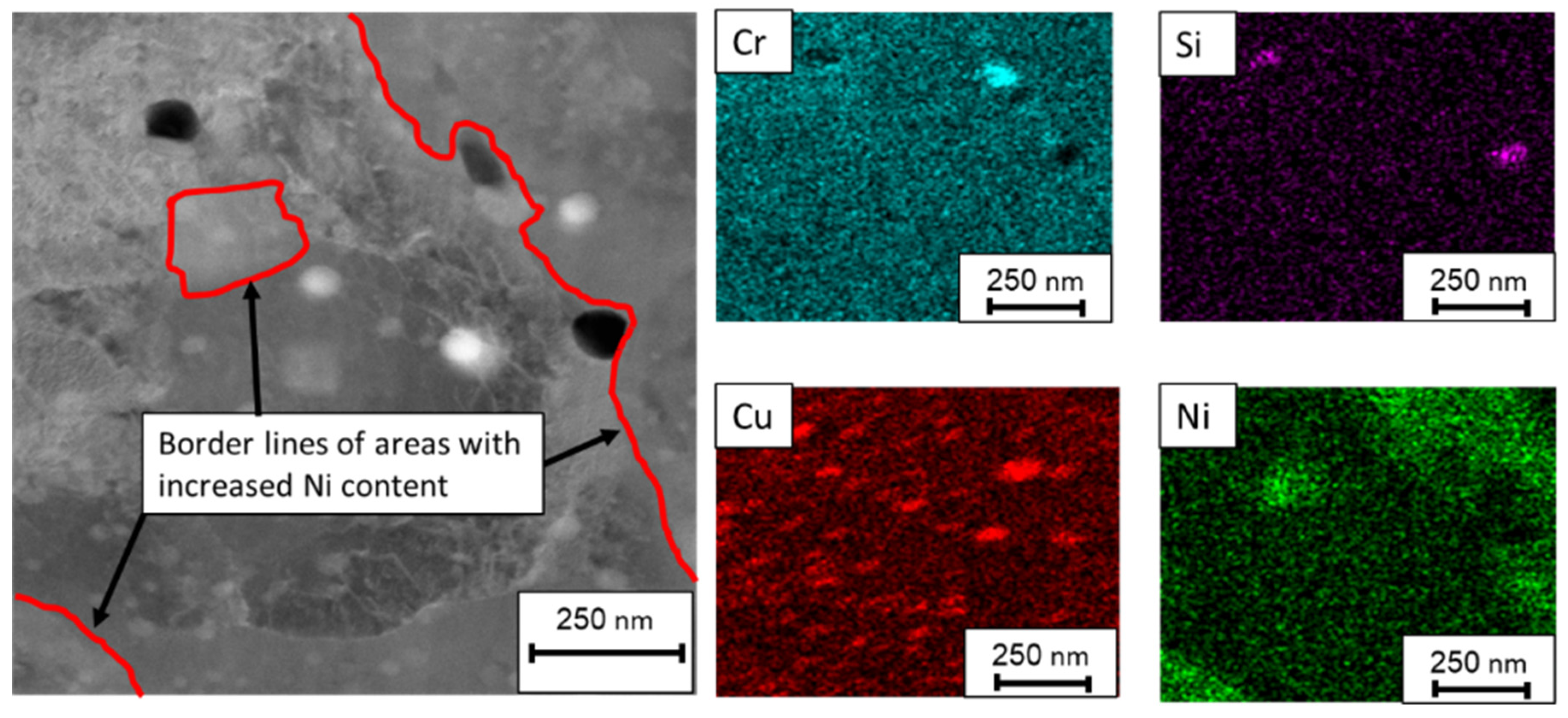
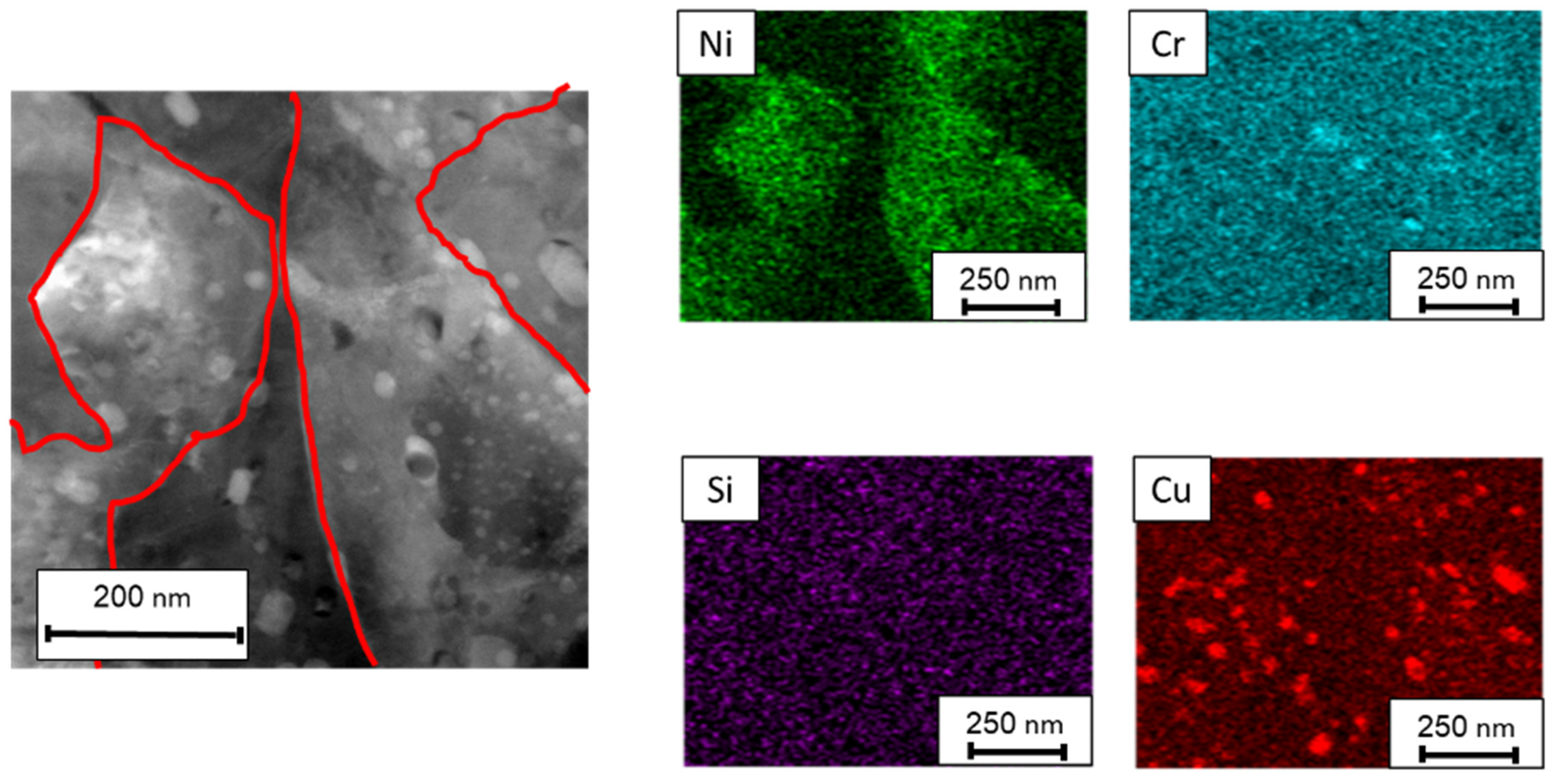
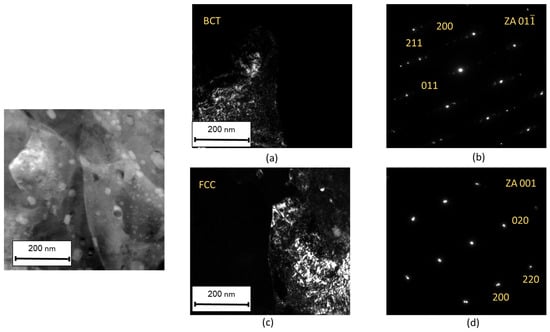
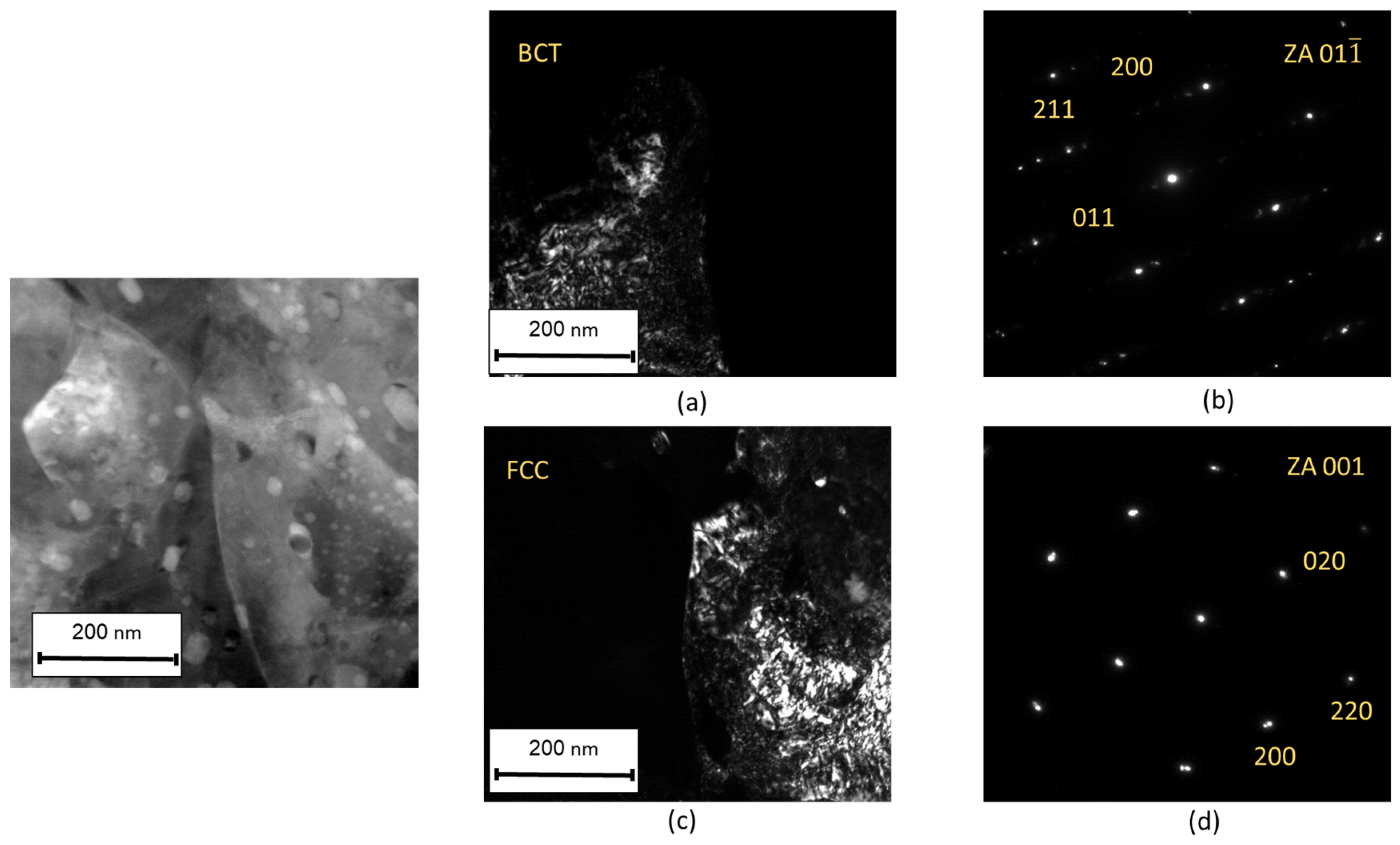
Further microstructure analysis of 15-5 PH stainless steel post heat treatment, as obtained by TEM, is shown in Figure 5. This reveals that, although the Cu-rich precipitates were randomly distributed throughout the matrix together with Cr and Si, a clear tendency of preferred Ni segregation was observed. The redistribution of Ni may initiate the formation of the austenite phase, primarily since Ni is known as an austenite-stabilizing element. The accumulation of Ni was clearly demonstrated at the interface between the martensitic matrix and the austenitic phase, as shown in Figure 6. The martensitic and austenitic phases with BCT and FCC structures, respectively, were analyzed using SAED, and their respective patterns are presented in Figure 7. The martensitic phase is depleted of Ni, while, on the contrary, the austenitic phase is enriched with it. Copper precipitates are scattered throughout the matrix, with a slight increase in their concentration in the austenitic phase as well.
Figure 5.
General alloying element distribution post H1150M heat treatment, as obtained by TEM.
Figure 6.
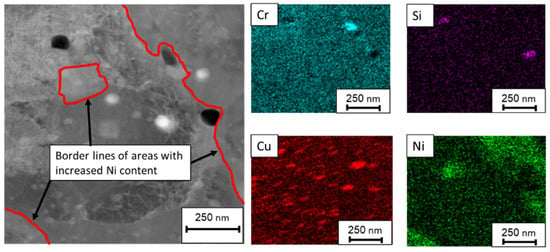
Elemental distribution at the interface between the martensitic matrix and the austenitic phase post H1150M heat treatment (borderlines of areas with increased Ni content are marked in red).
Figure 7.
Electron diffraction of phases at the interface between the martensitic matrix and the austenitic phase: (a,b) martensitic matrix, (c,d) austenitic phase.
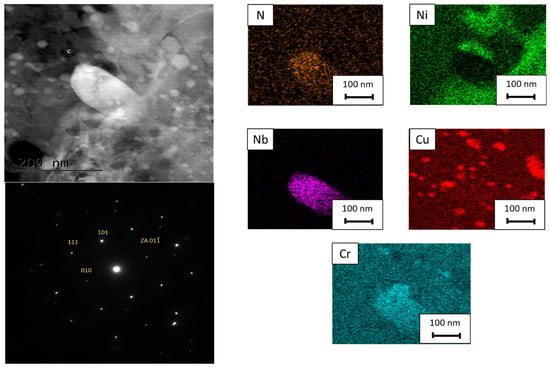
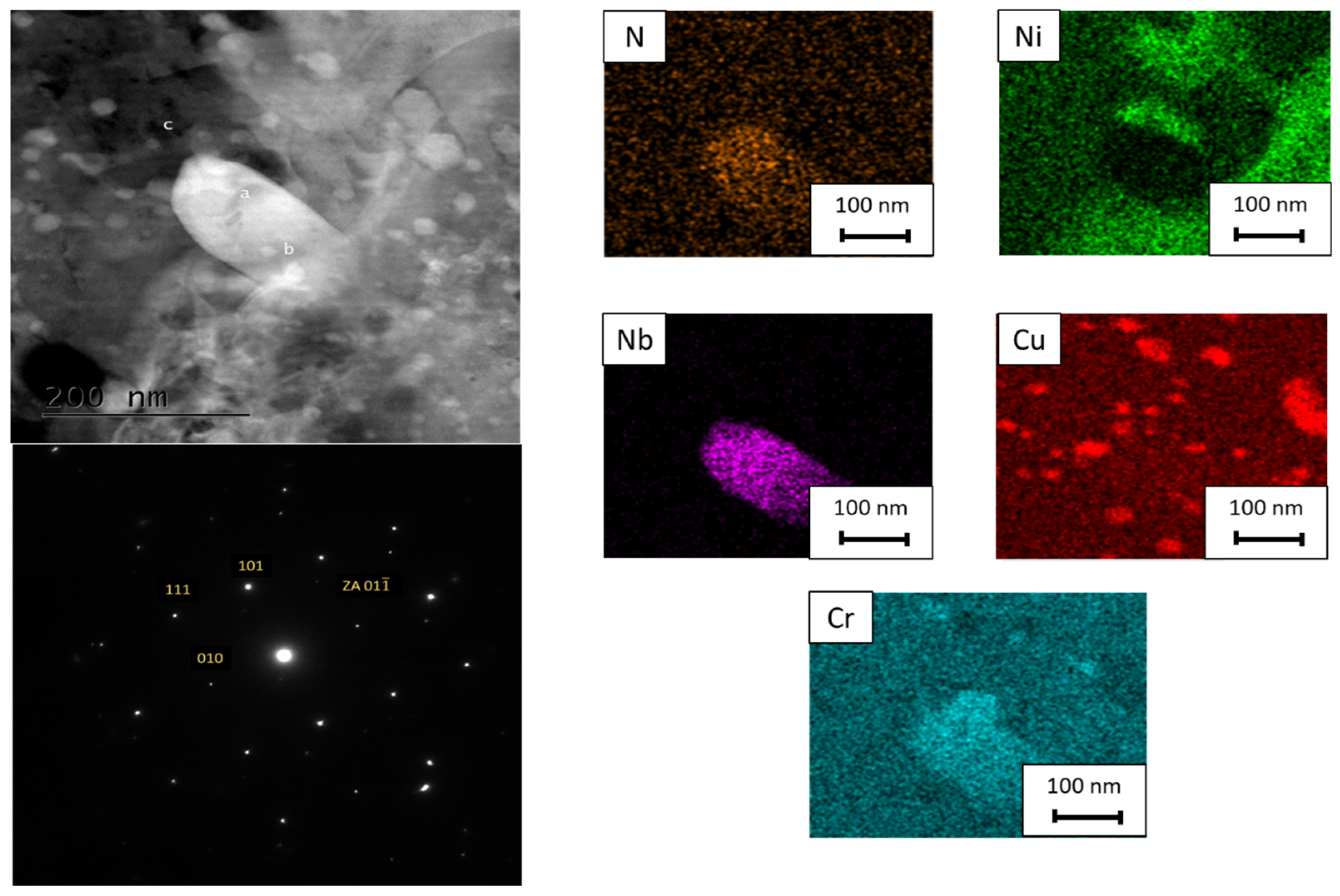
The mechanical properties of 15-5 PH stainless steel in terms of tensile and hardness testing for both as-printed and post-H1150M heat-treated conditions are presented in Table 3. This reveals a distinct decrease in the UTS, yielding stress, elongation and hardness of the heat-treated samples compared to the as-printed alloy. The reduction in UTS can be attributed to the shift in the size of Cu-rich precipitates, along with the formation of brittle nitride phases in the matrix. In general, the Cu-rich precipitation is the main strengthening mechanism in PH steels [53]. Cu-rich precipitates are extremely small in the as-printed condition [54]; this is primarily due to the thermal cycling that occurs during the printing process. The extremely small size of the Cu-rich precipitates cannot be easily revealed even through TEM examination [55]. It appears that the use of the standard H1150M heat treatment in this study resulted in significant growth in the precipitates’ size. As a result, their effectiveness in impeding dislocation movement decreases, leading to a substantial drop in UTS. The reduction in elongation may be attributed to the formation of brittle phases, along with changes in grain size induced by the heat treatment. Brittle particles in the form of combined carbonitrides of Cr and Nb were identified in the post-heat-treated samples, as seen in the EDS and SAED images presented in Figure 8. These brittle particles can serve as stress concentration sites, which reduce ductility and promote crack initiation, ultimately leading to premature failure. In parallel, the high internal stresses in the as-printed sample combined with a fast heating rate during the heat treatment can induce recrystallization, which, in turn, reduces grain size [56]. Additionally, during solution treatment, solute elements such as Nb redistribute within the matrix, where Nb may form brittle phases such as those indicated above [57].
Table 3.
Mechanical properties of 15-5 PH stainless steel in both as-printed and post-H1150M heat treatment conditions.
Figure 8.
Chromium and niobium carbo-nitrides identified by EDS and SAED.
Fracture toughness data for the as-printed and heat-treated samples are presented in Table 4. These characteristics were subject to the following conditions set by the ASTM E399 standard:
- (1)
- 0.45 W < a < 0.55 W;
- (2)
- Pmax/Pq < 1.10.
Where W represents the specimen width, a is the crack length, and Pmax and Pq are the load values calculated from the force versus COD curve [58]. Since condition (2) was not met in this study, the resulting fracture toughness cannot be directly defined as K1c. As an alternative, this study used a comparative fracture toughness value, denoted as Kq [59,60,61], to assess how the H1150M heat treatment impacted the toughness of the as-printed samples. It should be emphasized that Kq is intended solely for qualitative comparisons and does not represent absolute toughness. The results obtained clearly demonstrated that the stress intensity factor, Kq, of the heat-treated sample was reduced by approximately 20% compared to the as-printed specimen. This can be related to the somewhat reduced ductility of the heat-treated alloy, as found from the tensile testing. The reduced ductility signifies a reduced capability of the material to withstand the propagation of cracks due to lower energy absorption.
Table 4.
Fracture toughness values of 15-5 PH stainless steel in both as-printed and post-H1150M heat treatment conditions.
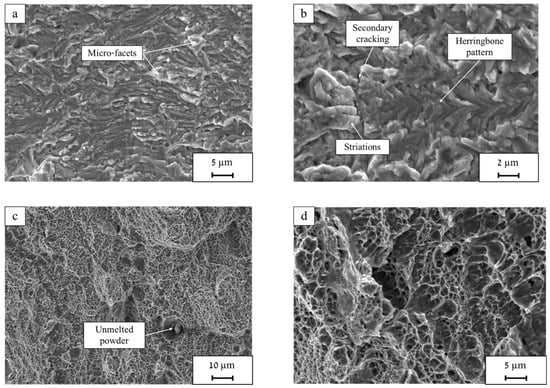
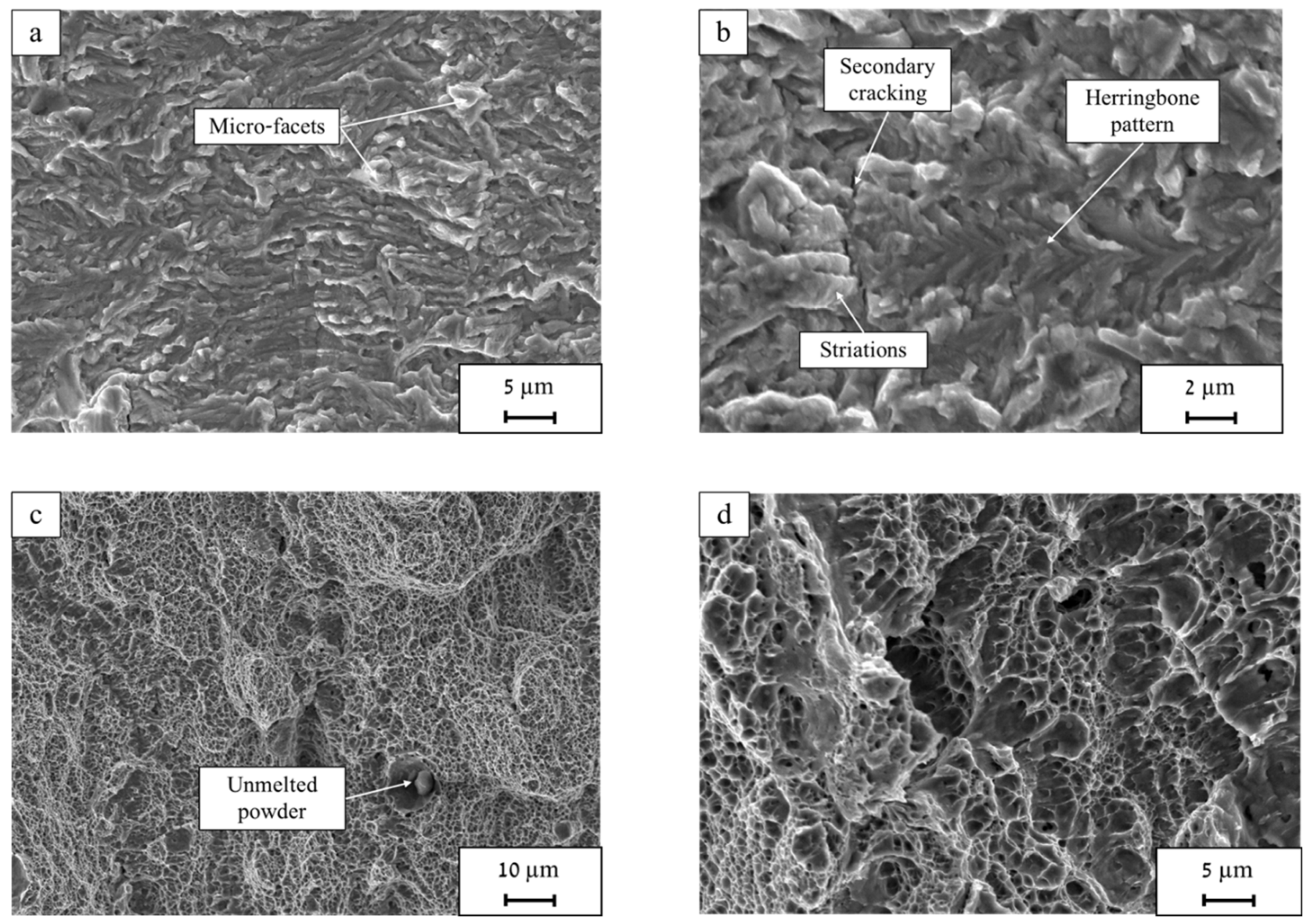
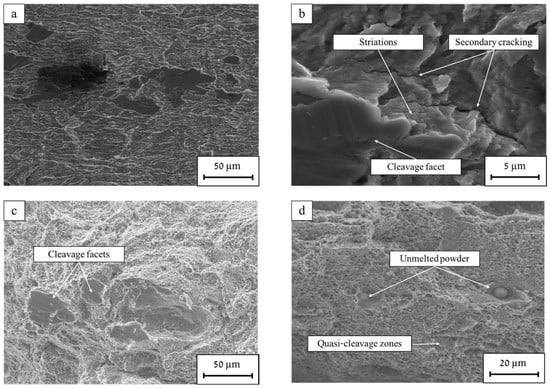
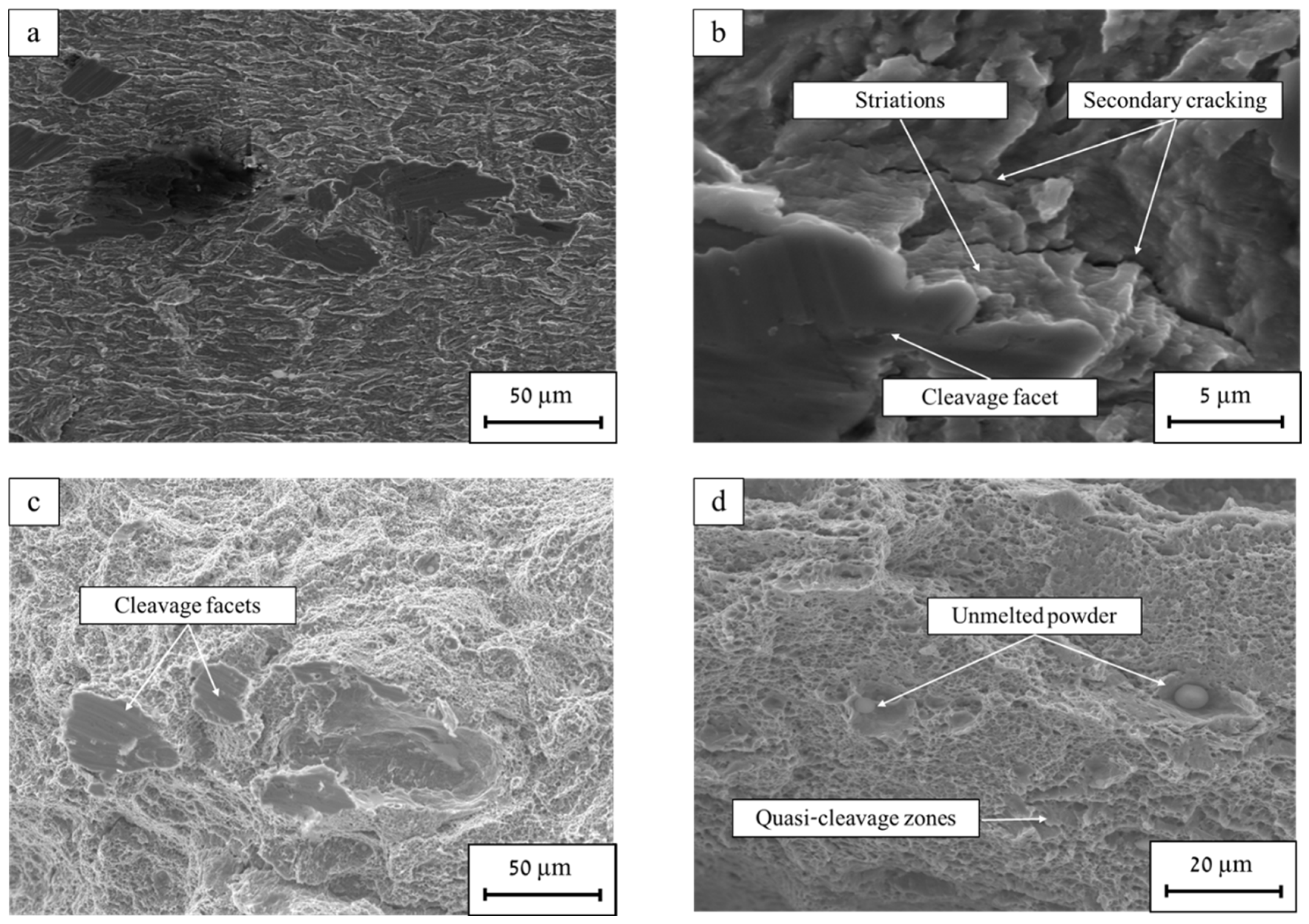
Fractography images of the as-printed specimen following fracture toughness testing are presented in Figure 9. These disclose a complex surface morphology in the crack propagation zone, characterized by a herringbone pattern, secondary cracking and fine striations. This indicates that the crack requires a significant amount of energy to propagate through the matrix. The final rupture surface exhibits a high density of dimples, indicating that the final rupture mode was relatively ductile. Fractography images of the heat-treated specimen after fracture toughness testing are shown in Figure 10. These reveal relatively large brittle cleavage facets on the fracture surface, both within the crack propagation zone and in the final rupture region. Additionally, the observed striations in this case are far more pronounced than in the as-printed alloy, indicating faster crack propagation behavior [62]. In general, the appearance of the heat-treated alloy indicated a more brittle nature [63,64]. Overall, the results of the fractography analysis are aligned with the reduced Kq of the heat-treated sample compared to that of the as-printed specimen.
Figure 9.
Fractography images of as-printed specimen after fracture toughness testing: (a,b) crack propagation zone, (c,d) final rupture region.
Figure 10.
Fracture surface images of heat-treated specimen following fracture toughness testing: (a,b) crack propagation zone, (c,d) final rupture region.
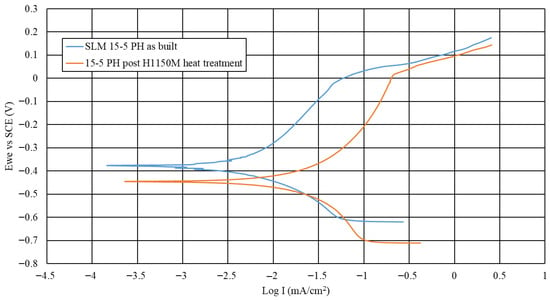
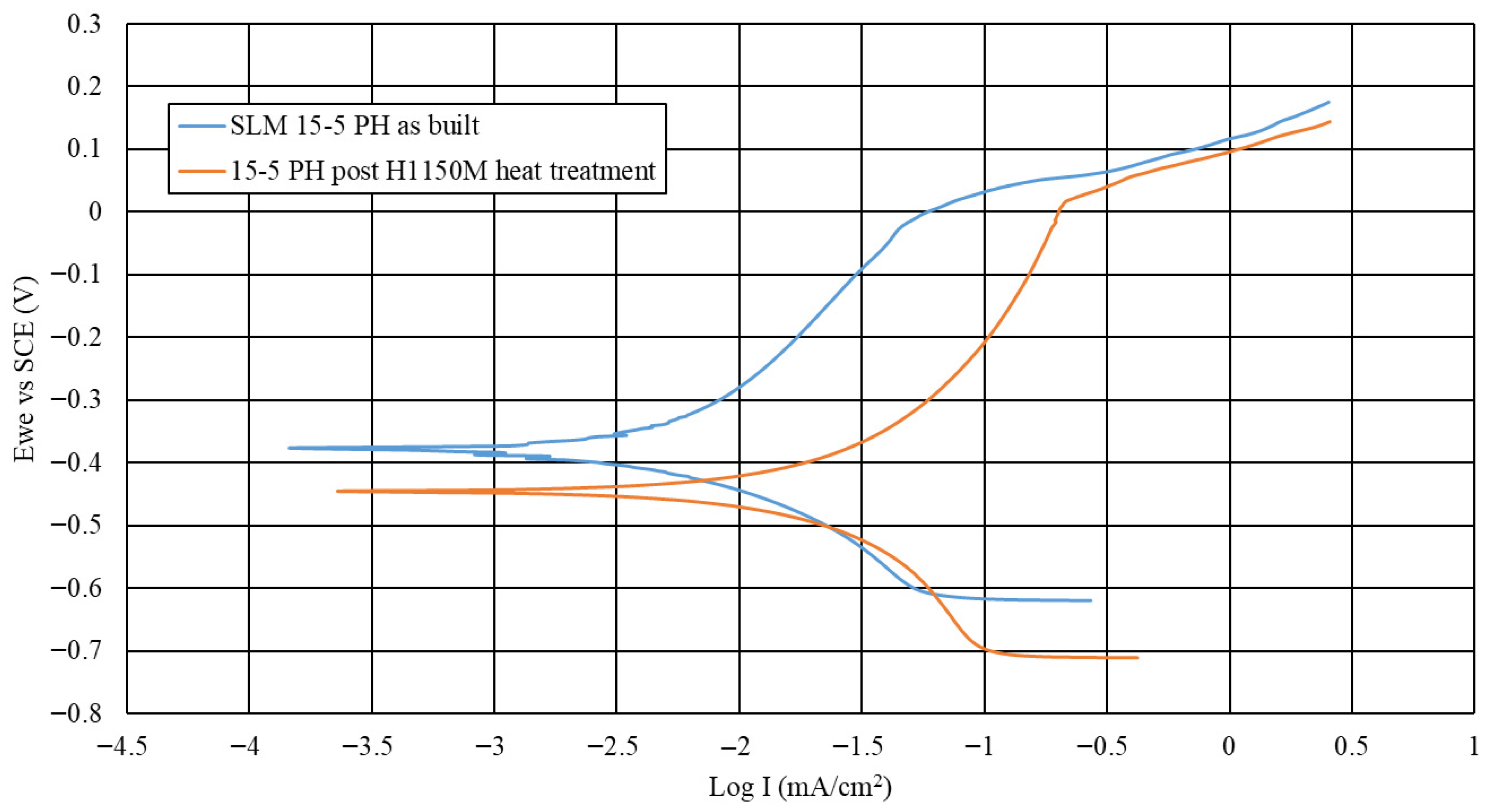
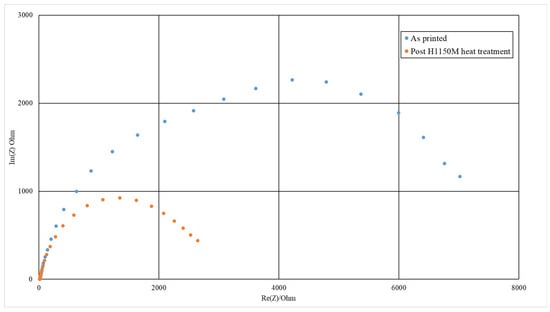
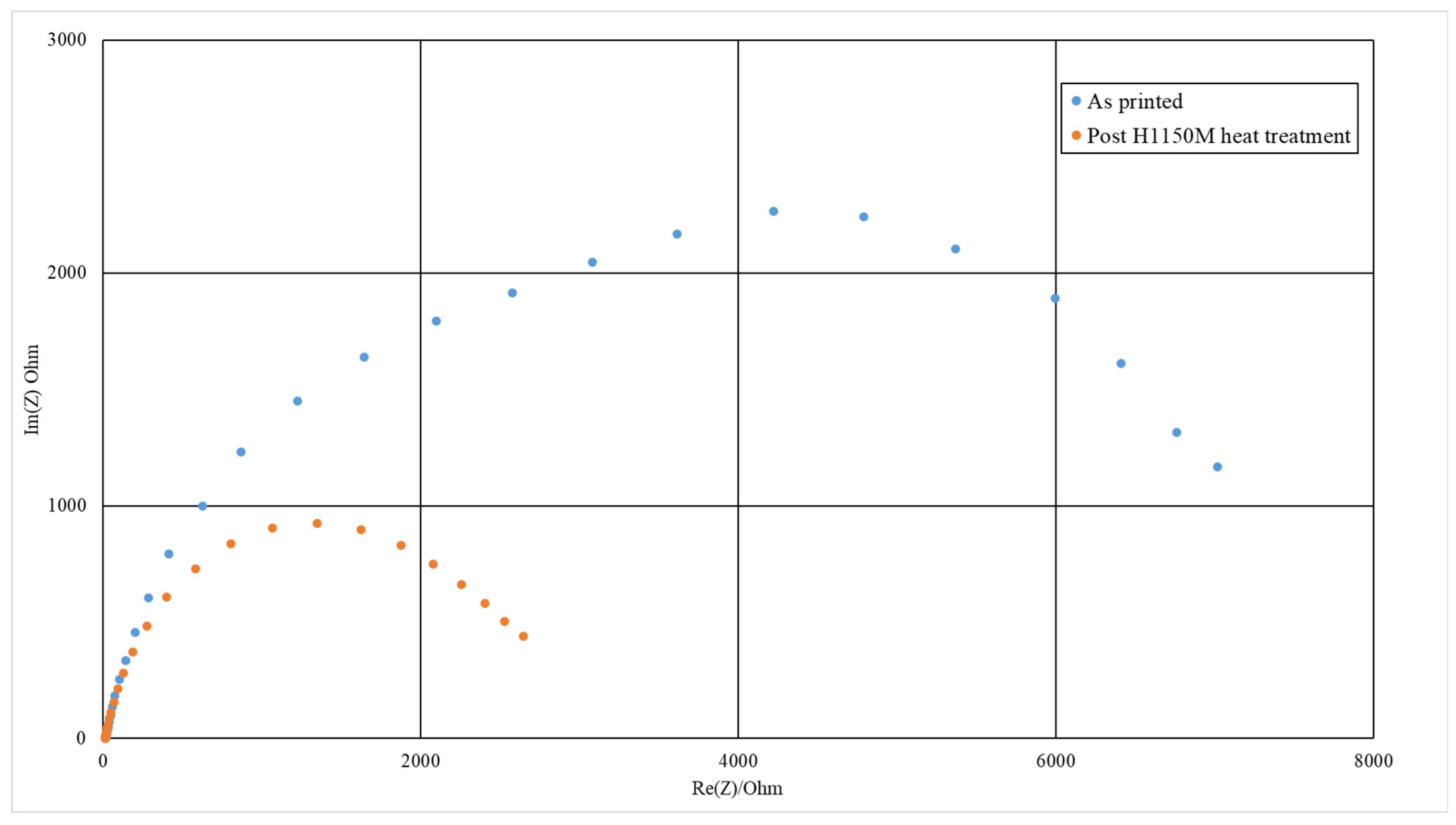
The electrochemical performance of 15-5 PH stainless steel, both as printed and post H1150M heat treatment, in terms of potentiodynamic polarization analysis is presented in Figure 11 and Table 5. These reveal that the potentiodynamic curve of the post-heat-treated sample was shifted towards elevated corrosion current and lower corrosion potential, which demonstrates its relatively inferior corrosion resistance. Furthermore, the corrosion rate of the post heat-treated alloy generated by Tafel extrapolation was 0.251 mmpy, compared to 0.073 mmpy obtained by the as-printed sample, again signifying the poorer corrosion resistance of the heat-treated specimen. In general, it should be noted that neither sample (as-printed and post-heat-treated) demonstrated outstanding corrosion resistance, probably due to inherent microstructural imperfections formed during printing [62]. The results obtained by the potentiodynamic polarization examination were also supported by the impedance spectroscopy analysis. This is shown in the Nyquist curves in Figure 12 and the generated electrochemical parameters found in Table 6. According to the Nyquist curve, the relative resistance radius of the heat-treated sample was significantly reduced, indicating decreased surface corrosion resistance, which therefore impeded overall corrosion performance.
Figure 11.
Potentiodynamic polarization curves of 15-5 PH stainless steel in as-printed and post-H1150M heat treatment conditions.
Table 5.
Electrochemical parameters generated from Figure 9.
Figure 12.
Nyquist curves obtained from electrochemical impedance spectroscopy analysis of 15-5 PH stainless steel in as-printed and post-H1150M heat treatment conditions.
Table 6.
Electrochemical impedance spectroscopy parameters derived from Figure 10.
4. Discussion
The results obtained in this study clearly demonstrate the detrimental impact of H1150M heat treatment on the functional properties of 15-5 PH stainless-steel samples produced via AM using the SLM process. This was expressed as a deterioration in both mechanical properties and corrosion performance. Overall, the negative effect of this heat treatment can be attributed to a detrimental alteration in the microstructural characteristics of the as-printed alloy.
It was evident that the reduction in UTS was linked to a change in the size of Cu-rich precipitates, along with the formation of a brittle phase. This claim is supported by the fact that the size of the Cu-rich precipitates in the heat-treated alloy was much larger than in the as-printed alloy due to over-aging. In addition, it seems that the coherency of the precipitates in the heat-treated alloy was reduced compared to the original Guinier–Preston zone coherency [65] in the as-printed alloy. Consequently, the ability of the heat-treated alloy to impede dislocation movement was considerably reduced, which led to the observed drop in UTS. The reduced elongation of the heat-treated alloy can be primarily attributed to the formation of brittle phases (mainly carbonitrides of Cr and Nb), along with recrystallization processes that induce grain size reduction. The reduced ductility of the heat-treated alloy impaired its ability to endure crack propagation due to lower energy absorption. This, in turn, resulted in a significant reduction in the relative fracture toughness (Kq) of the heat-treated alloy compared to the as-printed alloy (89 MPa√m versus 113.8 MPa√m, respectively).
The corrosion performance of the heat-treated alloy, examined by means of potentiodynamic polarization and impedance spectroscopy analysis, demonstrated a clear deterioration compared to the as-printed alloy. This was manifested in the increased corrosion rate of the heat-treated alloy (0.251 mmpy compared to only 0.073 mmpy obtained by the as-printed alloy). Impedance spectroscopy analysis based on the Nyquist curve also clearly supports the results obtained by the potentiodynamic polarization examination. The inferior corrosion performance of the heat-treated alloy can be related to the formation of an austenitic phase during the heat treatment due to Ni diffusion out of the martensitic matrix [63]. The formation of an austenitic phase induces a micro-galvanic effect where the martensitic matrix acts as an anode and the austenitic phase acts as a cathode. In addition, the oxidation of copper precipitates during heat treatment can also enhance the micro-galvanic effect, where the precipitates act as a cathode to the martensite anode. These observations are also supported by the findings of Avula et al. [66], who claimed that the continuous growth of secondary phases such as austenite and copper-rich precipitates during heat treatment of direct metal laser sintering (DMLS) 15-5 PH stainless steel has a deteriorating effect on the corrosion performance of the alloy.
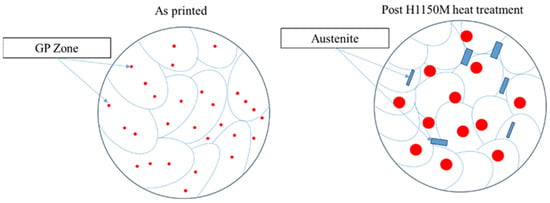
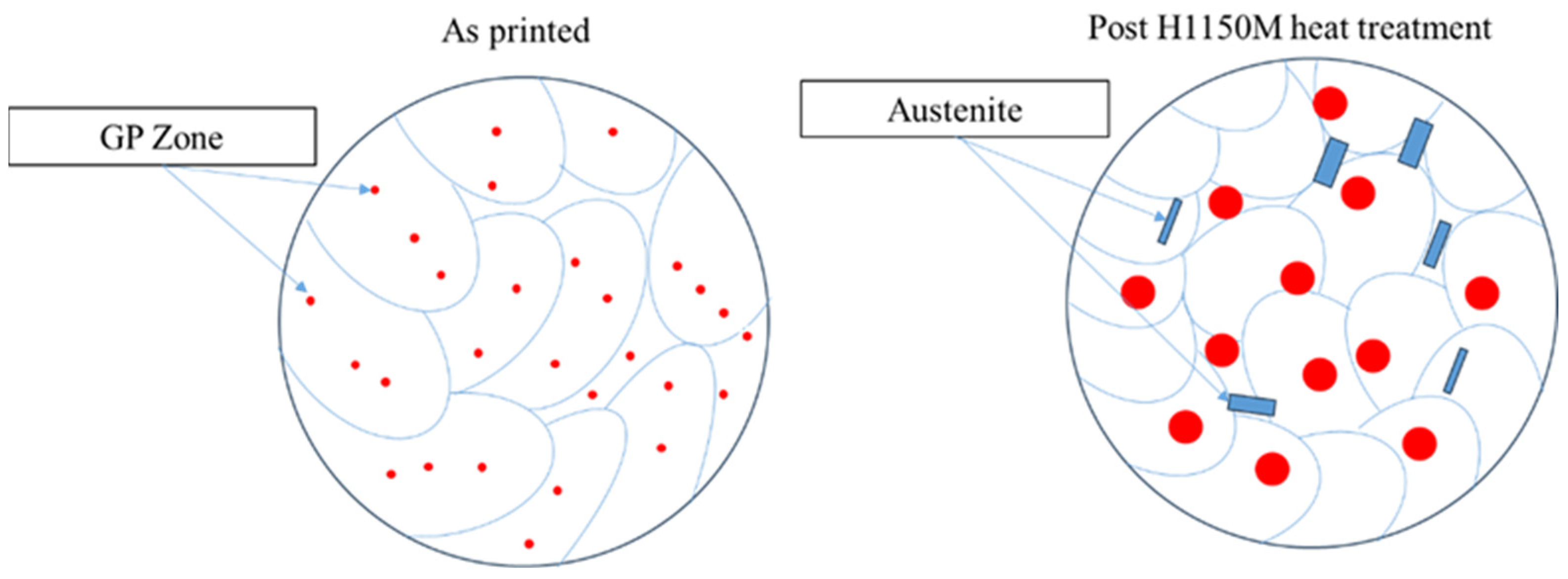
A schematic illustration that highlights the microstructural differences between the as-printed and heat-treated alloys is shown in Figure 13 below. These differences are responsible for the degradation in the functional properties of 15-5 PH stainless steel post H1150M heat treatment.
Figure 13.
Schematic illustration of the microstructural differences between as-printed and post-H1150M heat treatment samples of SLM-produced 15-5 PH alloy.
Finally, since the H1150M heat treatment negatively impacts the functional properties of SLM-printed 15-5 PH stainless steel, alternative approaches should be considered. For example, reducing the austenite volume fraction could help prevent the deterioration of the steel’s corrosion resistance. Direct aging may be a viable alternative to the conventional solution treatment plus aging, typically used for conventional wrought 15-5 PH alloys. When solution treatment is performed above the AC1 temperature, austenite formation increases; however, without it, subsequent aging steps below that temperature may reduce the austenite content. Additionally, the size and distribution of copper-rich precipitates influence corrosion resistance. Therefore, controlling their size is crucial for both corrosion resistance and mechanical properties. Hence, aging time, even without conventional solution treatment, should be carefully monitored.
5. Conclusions
- This study shows how H1150M heat treatment affects the functional properties of 15-5 PH stainless steel produced by AM-SLM technology. The experimental results clearly demonstrate that applying H1150M heat treatment post printing has a detrimental effect on the mechanical properties, particularly in terms of fracture toughness and ductility, as well as on the corrosion performance. This detrimental impact can be attributed to a significant modification in the microstructural characteristics of the as-printed alloy.
- Based on the results obtained, it is believed that conventional heat treatments, such as H1150M, typically used to enhance the toughness, ductility and corrosion resistance of wrought 15-5 PH stainless steel, are not suitable for 15-5 PH alloy produced by SLM. Therefore, novel heat treatment methods must be developed to effectively improve the properties of printed alloys.
Author Contributions
Conceptualization E.A. and A.S.; methodology: E.A. and A.S.; validation: M.B., E.A. and A.S.; investigation: M.B., E.A. and A.S.; writing—original draft preparation: M.B. and E.A.; supervision: E.A. and A.S. All authors have read and agreed to the published version of the manuscript.
Funding
This research was funded by Kreitman School of Advanced Studies at Ben-Gurion University of the Negev.
Data Availability Statement
The raw data supporting the conclusions of this article will be made available by the authors on request.
Acknowledgments
The authors would like to thank Tomer Ron, Eyal Eshed and Nitzan Maman for their assistance in experimental work.
Conflicts of Interest
The authors declare no conflict of interest.
References
- Afshari, E.; Ghaffari, M.; Nemani, A.V.; Nasiri, A. Effect of heat treatment on microstructure and tribological performance of PH 13-8Mo stainless steel fabricated via wire arc additive manufacturing. Wear 2023, 526–527, 204947. [Google Scholar] [CrossRef] [Scilit]
- Nong, X.D.; Zhou, X.L.; Wang, Y.D.; Yu, L.; Li, J.H. Effects of geometry, location, and direction on microstructure and mechanical properties of 15-5 PH stainless steel fabricated by directed energy deposition. Mater. Sci. Eng. A 2021, 821, 141587. [Google Scholar] [CrossRef] [Scilit]
- Das, T.; Roy, H.; Lohar, A.K.; Samanta, S.K. Mechanical and microstructural properties of laser direct energy deposited 15-5 PH and SS 316L stainless steel. Mater. Today Proc. 2022; in press. [CrossRef] [Scilit]
- Khodabakhshi, F.; Farshidianfar, M.; Gerlich, A.; Nosko, M.; Trembošová, V.; Khajepour, A. Effects of laser additive manufacturing on microstructure and crystallographic texture of austenitic and martensitic stainless steels. Addit. Manuf. 2019, 31, 100915. [Google Scholar] [CrossRef] [Scilit]
- Nahmany, M.; Aghion, E. A Review of the Latest Welding Technologies for Metallic Components Produced by Additive Manufacturing Processes. J. Mater. Eng. Perform. 2025, 35, 12259–12279. [Google Scholar] [CrossRef] [Scilit]
- Leon, A.; Katarivas Levy, G.; Ron, T.; Shirizly, A.; Aghion, E. The effect of strain rate on stress corrosion performance of Ti6Al4V alloy produced by additive manufacturing process. J. Mater. Res. Technol. 2020, 9, 4097–4105. [Google Scholar] [CrossRef] [Scilit]
- Afshari, E.; Ghaffari, M.; Vahedi Nemani, A.; Nasiri, A. Grain refinement and strengthening of PH 13-8Mo martensitic stainless steel through TiC/TiB2 inoculation during wire arc additive manufacturing. Addit. Manuf. 2023, 68, 103504. [Google Scholar]
- Rafi, H.K.; Starr, T.L.; Stucker, B.E. A comparison of the tensile, fatigue, and fracture behavior of Ti-6Al-4V and 15-5 PH stainless steel parts made by selective laser melting. Int. J. Adv. Manuf. Technol. 2013, 69, 1299–1309. [Google Scholar] [CrossRef] [Scilit]
- Meredith, S.D.; Bakai, A.S.; Keist, J.S.; Palmer, T.A. Impact of composition on the heat treatment response of additively manufactured 17-4 PH grade stainless steel. J. Alloys Compd. 2019, 738, 44–56. [Google Scholar] [CrossRef] [Scilit]
- Ron, T.; Leon, A.; Popov, V.; Strokin, E.; Eliezer, D.; Shirizly, A.; Aghion, E. Synthesis of Refractory High-Entropy Alloy WTaMoNbV by Powder Bed Fusion Process Using Mixed Elemental Alloying Powder. Materials 2022, 15, 4043. [Google Scholar] [CrossRef] [Scilit]
- Saeidi, K.; Gao, X.; Lofaj, F.; Kvetková, L.; Shen, Z.J. Transformation of austenite to duplex austenite-ferrite assembly in annealed stainless steel 316L consolidated by laser melting. J. Alloys Compd. 2015, 633, 463–469. [Google Scholar] [CrossRef] [Scilit]
- Herzog, D.; Seyda, V.; Wycisk, E.; Emmelmann, C. Additive manufacturing of metals. Acta Mater. 2016, 117, 371–392. [Google Scholar] [CrossRef] [Scilit]
- Leon, A.; Aghion, E. Effect of surface roughness on corrosion fatigue performance of AlSi10Mg alloy produced by Selective Laser Melting (SLM). Mater. Charact. 2017, 131, 188–194. [Google Scholar] [CrossRef] [Scilit]
- Zhou, Y.; Wang, W.; Li, L.; Wang, S.; Huang, Z.; Zhang, Z.; Kong, D.; Shang, F.; Zhang, B.; Li, X.; et al. Microstructure and corrosion performance of laser powder bed fusion produced duplex stainless steel using Ni over-alloyed mixed powder. Corros. Sci. 2025, 253, 113025. [Google Scholar] [CrossRef] [Scilit]
- He, Y.; Zhong, M.; Beuth, J.; Webler, B. A study of microstructure and cracking behavior of H13 tool steel produced by laser powder bed fusion using single-tracks, multi-track pads, and 3D cubes. J. Mater. Process. Tech. 2020, 286, 116802. [Google Scholar] [CrossRef] [Scilit]
- Fang, Y.; Kim, M.K.; Zhang, Y.; Kim, T.; No, J.; Suhr, J. A new grain refinement route for duplex stainless steels: Micro-duplex stainless steel matrix composites processed by laser powder bed fusion. Mater. Sci. Eng. A 2023, 881, 145351. [Google Scholar] [CrossRef] [Scilit]
- Li, S.; Yang, S.; Zhao, Y.; Dong, Y.; Wang, Z. 2 GPa h13 steels fabricated by laser powder bed fusion and tempering: Microstructure, tensile property and strengthening mechanism. Mater. Sci. Eng. A 2023, 888, 145803. [Google Scholar] [CrossRef] [Scilit]
- Zhang, T.; Zhou, X.; An, Z.; Deng, M.; Dang, M. The influence of atmospheric environment on the forming quality of 316L components by laser powder bed fusion. AIP Adv. 2025, 15, 055007. [Google Scholar] [CrossRef] [Scilit]
- Baehr, S.; Klecker, T.; Pielmeier, S.; Ammann, T.; Zaeh, M.F. Experimental and analytical investigations of the removal of spatters by various process gases during the powder bed fusion of metals using a laser beam. Prog. Addit. Manuf. 2024, 9, 905–917. [Google Scholar] [CrossRef] [Scilit]
- Pauzon, C.; Mishurova, T.; Evsevleev, S.; Dubiez-Le Goff, S.; Murugesan, S.; Bruno, G.; Hryha, E. Residual stresses and porosity in Ti-6Al-4V produced by laser powder bed fusion as a function of process atmosphere and component design. Addit. Manuf. 2021, 47, 102340. [Google Scholar] [CrossRef] [Scilit]
- de Oliveira, A.R.; Masoumi, M.; Nizes, A.D.C.; de Abreu, H.F.G.; Santos, S.F.; Jardini, A.L.; Del Conte, E.G. Process atmosphere and build location effects on maraging microstructure and resulting properties after Laser Powder Bed Fusion. Int. J. Adv. Manuf. Technol. 2024, 134, 5449–5461. [Google Scholar] [CrossRef] [Scilit]
- Kumar, P.; Jayaraj, R.; Suryawanshi, J.; Satwik, U.; McKinnell, J.; Ramamurty, U. Fatigue strength of additively manufactured 316L austenitic stainless steel. Acta Mater. 2020, 199, 225–239. [Google Scholar] [CrossRef] [Scilit]
- Balit, Y.; Charkaluk, E.; Constantinescu, A. Digital image correlation for microstructural analysis of deformation pattern in additively manufactured 316L thin walls. Addit. Manuf. 2020, 31, 100862. [Google Scholar] [CrossRef] [Scilit]
- No, G.W.; Jeong, J.; Ryu, G.H.; Seol, J.B.; Kim, J.G. Mechanical Properties and Microstructure of Laser Powder Bed Fusion-Processed 18Ni300 Maraging Steel According to Direct Aging Treatment Conditions. Steel Res. Int. 2024, 96, 2300805. [Google Scholar] [CrossRef] [Scilit]
- Król, M.; Snopiński, P.; Nowak, A.J.; Radoń, A.; Karpiński, M.; Kowalski, A.; Osadnik, M.; Burian, W.; Żak, A.; Jóźwik, B. Hot deformation behavior of laser powder bed fusion newly developed MS400 grade maraging steel. J. Therm. Anal. Calorim. 2024, 150, 1137–1147. [Google Scholar] [CrossRef] [Scilit]
- Aguilar, F.; Huynh, T.; Kljestan, N.; Knezevic, M.; Sohn, Y. Microstructure and Mechanical Characterization of AISI 4340 Steel Additively Manufactured by Laser Powder Bed Fusion. Metals 2025, 15, 412. [Google Scholar] [CrossRef] [Scilit]
- Ko, G.; Kim, W.; Kwon, K.; Lee, T.-K. The Corrosion of Stainless Steel Made by Additive Manufacturing: A Review. Metals 2021, 11, 516. [Google Scholar] [CrossRef] [Scilit]
- Mirzababaei, S.; Pasebani, S. A Review on Binder Jet Additive Manufacturing of 316L Stainless Steel. J. Manuf. Mater. Process. 2019, 3, 82. [Google Scholar] [CrossRef] [Scilit]
- Rodriguez, J.; Zuriarrain, A.; Madariaga, A.; Arrazola, P.J.; Dominguez, E.; Fraile, I.; Soler, D. Mechanical Properties and Fatigue Performance of 17-4 PH Stainless Steel Manufactured by Atomic Diffusion Additive Manufacturing Technology. J. Manuf. Mater. Process. 2023, 7, 172. [Google Scholar] [CrossRef] [Scilit]
- Moreno-Garibaldi, P.; Alvarez-Vera, M.; Beltrán-Fernández, J.A.; Carrera-Espinoza, R.; Hdz-García, H.M.; Díaz-Guillen, J.C.; Muñoz-Arroyo, R.; Ortega, J.A.; Molenda, P. Characterization of Microstructural and Mechanical Properties of 17-4 PH Stainless Steel by Cold Rolled and Machining vs. DMLS Additive Manufacturing. J. Manuf. Mater. Process. 2024, 8, 48. [Google Scholar] [CrossRef] [Scilit]
- Chang, G.; Zhang, X.; Ma, F.; Zhang, C.; Xu, L. Printing, Debinding and Sintering of 15-5 PH Stainless Steel Components by Fused Deposition Modeling Additive Manufacturing. Materials 2023, 16, 6372. [Google Scholar] [CrossRef] [Scilit]
- Dong, D.; Wang, J.; Chen, C.; Tang, X.; Ye, Y.; Ren, Z.; Yin, S.; Yuan, Z.; Liu, M.; Zhou, K. Influence of Aging Treatment Regimes on Microstructure and Mechanical Properties of Selective Laser Melted 17-4 PH Steel. Micromachines 2023, 14, 871. [Google Scholar] [CrossRef] [Scilit]
- Sanguedolce, M.; Zekonyte, J.; Alfano, M. Wear of 17-4 PH Stainless Steel Patterned Surfaces Fabricated Using Selective Laser Melting. Appl. Sci. 2021, 11, 9317. [Google Scholar] [CrossRef] [Scilit]
- Kerbout, A.; Tanji, A.; Hermawan, H.; Barka, N. Influence of Selective Laser Melting Process and Heat Treatment Parameters on the Corrosion Resistance of 17-4 Precipitation Hardening Stainless Steel. Metals 2025, 15, 232. [Google Scholar] [CrossRef] [Scilit]
- Meng, L.; Long, J.; Yang, H.; Shen, W.; Li, C.; Yang, C.; Wang, M.; Li, J. Femtosecond Laser Treatment for Improving the Corrosion Resistance of Selective Laser Melted 17-4 PH Stainless Steel. Micromachines 2022, 13, 1089. [Google Scholar] [CrossRef] [Scilit]
- Aripin, M.A.; Sajuri, Z.; Jamadon, N.H.; Baghdadi, A.H.; Syarif, J.; Mohamed, I.F.; Aziz, A.M. Effects of Build Orientations on Microstructure Evolution, Porosity Formation, and Mechanical Performance of Selective Laser Melted 17-4 PH Stainless Steel. Metals 2022, 12, 1968. [Google Scholar] [CrossRef] [Scilit]
- Lam, T.-N.; Wu, Y.-H.; Liu, C.-J.; Chae, H.; Lee, S.-Y.; Jain, J.; An, K.; Huang, E.-W. Transient Phase-Driven Cyclic Deformation in Additively Manufactured 15-5 PH Steel. Materials 2022, 15, 777. [Google Scholar] [CrossRef] [Scilit] [PubMed]
- Lee, J.R.; Lee, M.S.; Chae, H.; Lee, S.Y.; Na, T.; Kim, W.S.; Jun, T.S. Effects of building direction and heat treatment on the local mechanical properties of direct metal laser sintered 15-5 PH stainless steel. Mater. Charact. 2020, 167, 110468. [Google Scholar] [CrossRef] [Scilit]
- Bassis, M.; Ron, T.; Shirizly, A.; Aghion, E. Effect of Microstructure Modifications on Stress Corrosion Endurance of 15-5 PH Stainless Steel Formed by Wire Laser Additive Manufacturing (WLAM). Metals 2023, 13, 1748. [Google Scholar] [CrossRef] [Scilit]
- Pandey, P.K.; Mandal, S.; Kumar, A.; Bhagyaraj, J.; Murty, S.V.S.N.; Suresh, K.; Mondal, K. Effect of aging time on the corrosion behaviour of selective laser melted (SLM) 15-5 PH stainless steel. Corros. Sci. 2026, 264, 113783. [Google Scholar] [CrossRef] [Scilit]
- Nong, X.D.; Zhou, X.L. Effect of scanning strategy on the microstructure, texture, and mechanical properties of 15-5 PH stainless steel processed by selective laser melting. Mater. Charact. 2021, 174, 111012. [Google Scholar] [CrossRef] [Scilit]
- AK Steel. 15-5 PH Stainless Steel Product Data Sheet; AK Steel Corporation: West Chester, OH, USA, 2007. [Google Scholar]
- AMS5659L; Steel, Corrosion-Resistant, Bars, Forgings, Rings, and Stock, 15Cr - 4.5Ni - 0.30Cb (Nb) - 3.5Cu, Consumable Electrode Melted, Solution Heat Treated. SAE International: Warrendale, PA, USA, 2019.
- Kaya, A.; Uzan, P.; Eliezer, D.; Aghion, E. Electron microscopical investigation of as cast AZ 91 D alloy. Mater. Sci. Technol. 2000, 16, 1001–1006. [Google Scholar] [CrossRef] [Scilit]
- ASTM E975-13; Standard Practice for Determining the Amount of Retained Austenite in Steel with Near Random Crystallographic Orientation. ASTM International: West Chester, PA, USA, 2021.
- Shaffer, D.; Wilson-Heid, A.; Keist, J.; Beese, A.; Palmer, T. Impact of retained austenite on the aging response of additively manufactured 17-4 PH grade stainless steel. Mater. Sci. Eng. A 2021, 817, 141363. [Google Scholar] [CrossRef] [Scilit]
- ASTM E399-23; Standard Test Method for Linear-Elastic Plane-Strain Fracture Toughness (KIC) of Metallic Materials. ASTM International: West Chester, PA, USA, 2023.
- ASTM G5-14(2021); Standard Reference Test Method for Making Potentiostatic and Potentiodynamic Anodic Polarization Measurements. ASTM International: West Chester, PA, USA, 2021.
- Sun, Y.; Hebert, R.J.; Aindow, M. Effect of heat treatments on microstructural evolution of additively manufactured and wrought 17-4 PH stainless steel. Mater. Des. 2018, 156, 429–440. [Google Scholar] [CrossRef] [Scilit]
- Wei, H.L.; Mazumder, J.; DebRoy, T. Evolution of solidification texture during additive manufacturing. Sci. Rep. 2015, 5, 16446. [Google Scholar] [CrossRef] [Scilit] [PubMed]
- Bassis, M.; Kotliar, A.; Koltiar, R.; Ron, T.; Leon, A.; Shirizly, A.; Aghion, E. The Effect of a Slow Strain Rate on the Stress Corrosion Resistance of Austenitic Stainless Steel Produced by the Wire Laser Additive Manufacturing Process. Metals 2021, 11, 1930. [Google Scholar] [CrossRef] [Scilit]
- Dass, A.; Moridi, A. State of the art in directed energy deposition: From additive manufacturing to materials design. Coatings 2019, 9, 418. [Google Scholar] [CrossRef] [Scilit]
- Haines, M.P.; Moyle, M.S.; Rielli, V.V.; Haghdadi, N.; Primig, S. Site-specific Cu clustering and precipitation in laser powder-bed fusion 17-4 PH stainless steel. Scr. Mater. 2024, 241, 115891. [Google Scholar] [CrossRef] [Scilit]
- Moyle, M.S.; Haghdadi, N.; Luzin, V.; Salvemini, F.; Liao, X.Z.; Ringer, S.P.; Primig, S. Correlation of microstructure, mechanical properties, and residual stress of 17-4 PH stainless steel fabricated by laser powder bed fusion. J. Mater. Sci. Technol. 2024, 198, 83–97. [Google Scholar] [CrossRef] [Scilit]
- Lv, B.; Cao, S.; Niu, X.; Luo, H.; Straumal, B.; Qi, Y. Electropulses induced direct aging and ultrafast precipitation in additive manufactured 15-5 PH stainless steel. Mater. Res. Lett. 2024, 12, 507–514. [Google Scholar] [CrossRef] [Scilit]
- Ressel, G.; Brandl, D.; Hönigmann, T.; Lukas, M.; Stark, A.; Gruber, C.; Lukas, S.; Stockinger, M.; Kozeschnik, E. Microstructural refinement by spontaneous recrystallization without prior deformation of a 15-5 PH steel alloy and its mechanism. Mater. Des. 2023, 234, 112370. [Google Scholar] [CrossRef] [Scilit]
- Cui, L.; Jiang, S.; Xu, J.; Peng, R.L.; Mousavian, R.T.; Moverare, J. Revealing relationships between microstructure and hardening nature of additively manufactured 316L stainless steel. Mater. Des. 2021, 198, 109385. [Google Scholar] [CrossRef] [Scilit]
- Ramadas, H.; Nath, A.K.; Sarkar, S.; Ganesh, P.; Kaul, R.; Majumdar, J.D. Fatigue crack growth rate and fracture toughness evaluation of 15-5 precipitation hardening stainless steel fabricated by laser powder bed fusion process. Mater. Sci. Eng. A 2023, 861, 144356. [Google Scholar] [CrossRef] [Scilit]
- Santos, P.L.L.; Avila, J.A.; Fonseca, E.B.d.; Gabriel, A.H.G.; Jardini, A.L.; Lopes, E.S.N. Plane-strain fracture toughness of thin additively manufactured maraging steel samples. Addit. Manuf. 2022, 49, 102509. [Google Scholar] [CrossRef] [Scilit]
- Fonseca, E.B.; Gabriel, A.H.G.; Ávila, J.A.; Vaz, R.F.; Valim, D.B.; Cano, I.G.; Lopes, É.S.N. Fracture toughness and wear resistance of heat-treated H13 tool steel processed by laser powder bed fusion. Addit. Manuf. 2023, 78, 103862. [Google Scholar] [CrossRef] [Scilit]
- Xiao, L.; Chen, D.; Chaturvedi, M.C. Effect of Boron and Carbon on the Fracture Toughness of IN 718 Superalloy at Room Temperature and 650 °C. J. Mater. Eng. Perform. 2005, 14, 528–538. [Google Scholar] [CrossRef] [Scilit]
- Bassis, M.; Ron, T.; Leon, A.; Kotliar, A.; Kotliar, R.; Shirizly, A.; Aghion, E. The Influence of Intralayer Porosity and Phase Transition on Corrosion Fatigue of Additively Manufactured 316L Stainless Steel Obtained by Direct Energy Deposition Process. Materials 2022, 15, 5481. [Google Scholar] [CrossRef] [Scilit]
- Bagnoli, D.L.; Banerji, K.; Boardman, B.; Bucheit, R.D.; Burghard, H.; Clarke, T.M.; Dahlberg, E.P.; Gabriel, B.L.; Gurland, J.; Hertzberg, R.W.; et al. ASM Handbook, Volume 12: Fractography; ASM International: Materials Park, OH, USA, 1987. [Google Scholar]
- Leo, P.; Nobile, R.; Barreiro, J.; Bagheri, S.; Mele, C. Precipitation hardening stainless steel samples processed by additive manufacturing: Process parameters and thermo mechanical treatments effects on microstructure and corrosion resistance. Opt. Laser Technol. 2022, 156, 108547. [Google Scholar] [CrossRef] [Scilit]
- Ringer, S.P.; Hono, K. Microstructural evolution and age hardening in aluminum alloys: Atom probe field-ion microscopy and transmission electron microscopy studies. Mater. Charact. 2000, 44, 101–131. [Google Scholar] [CrossRef] [Scilit]
- Avula, I.; Arohi, A.C.; Kumar, C.S.; Sen, I. Microstructure, corrosion and mechanical behavior of 15-5 PH stainless steel processed by direct metal laser sintering. J. Mater. Eng. Perform. 2021, 30, 6924–6937. [Google Scholar] [CrossRef] [Scilit]

Disclaimer/Publisher’s Note: The statements, opinions and data contained in all publications are solely those of the individual author(s) and contributor(s) and not of MDPI and/or the editor(s). MDPI and/or the editor(s) disclaim responsibility for any injury to people or property resulting from any ideas, methods, instructions or products referred to in the content. |
© 2026 by the authors. Licensee MDPI, Basel, Switzerland. This article is an open access article distributed under the terms and conditions of the Creative Commons Attribution (CC BY) license.