


Abstract
Ti microalloying can effectively improve the comprehensive properties of 20CrMnTi gear steel, but it also readily leads to the formation of large-sized TiN inclusions with sharp angular edges, which act as preferential initiation sites for fatigue cracks. Rare earth Ce is capable of modifying these coarse TiN inclusions in a targeted manner, and the addition strategy of Ce directly determines the final modification performance. This work systematically compares the inclusion modification effects between the conventional Ce-Fe alloy addition process and the synchronous co-addition process of Al, Ce and Ti. The results show that in the Ce-free steel, most TiN inclusions are large, angular particles with an average size of 4.27 μm. After Ce introduction, the original coarse complex inclusions Al2O3-TiN and MnS-TiN are transformed into fine composite inclusions, and are composed of Ce-Al-O-rich or Ce-O-S-rich core phases and TiN. Combined with EDS analysis, thermodynamic calculations and reported crystallographic investigations, the core regions match the characteristic signatures of CeAlO3 and Ce2O2S. Therefore, these phases are tentatively assigned as the two aforementioned inclusions. The synchronous co-addition of Al, Ce and Ti delivers superior modification performance, which can refine the average size of TiN to 2.43 μm. Thermodynamically, CeAlO3 and Ce2O2S possess lower formation Gibbs free energy than Al2O3, demonstrating that their formation is thermodynamically favorable after Ce addition. These rare earth phases can act as heterogeneous nucleation cores for subsequent TiN precipitation, thereby achieving the refinement and modification of large-sized TiN inclusions.
1. Introduction
Gear steel is a typical low-carbon alloy carburizing steel that combines high strength, excellent impact toughness and moderate hardenability, serving as the core structural material for manufacturing heavy-duty transmission gears in automotive, engineering machinery and other industrial sectors [1,2]. The most prominent process advantage of this steel grade lies in that it can be directly quenched right after carburization, which greatly simplifies the subsequent heat treatment workflow and well adapts to the requirements of large-scale industrial production. For this reason, it has long been the dominant steel grade applied for the transmission and rear axle driven gears of medium-duty trucks in China [3,4]. Nevertheless, due to the relatively high titanium addition level in 20CrMnTi gear steel, a large number of TiN inclusions are prone to precipitate during the smelting process. Among them, large-sized TiN particles with sharp morphologies act as preferential initiation sites for fatigue cracks during gear service, which directly degrades both contact fatigue and bending fatigue performance and significantly cuts down the service life of the component [5,6]. Accordingly, developing a stable and efficient metallurgical regulation process for 20CrMnTi gear steel to precisely suppress the precipitation of large TiN inclusions and achieve quantitative control over their size distribution carries remarkable engineering value and theoretical significance for the high-quality industrial production of this steel grade.
Adding aluminum and rare earth elements into molten steel can effectively reduce the total oxygen content of the steel bath and achieve deep deoxidation, thereby drastically cutting down the number of primary large-sized inclusions in steel [7,8,9,10,11]. Meanwhile, a large number of highly dispersed micron/submicron rare earth complex inclusions generated during the deoxidation process can act as viable heterogeneous nucleation cores for TiN, providing stable nucleation sites for the heterogeneous precipitation of TiN. Ultimately, the brittle large-sized sharp-angled TiN inclusions prone to fracture in steel can be directionally modified into fine-grained rare-earth-modified TiN complex inclusions with regular rounded morphology and uniform size distribution. Cheng et al. [12] found that the excessive addition of Al will trigger saturated nucleation in molten steel, leading to the formation of alumina agglomerates with sizes of 7–25 μm, which severely degrades the castability of molten steel and impairs the surface quality of finished steel plates. Amatanweze et al. [13] investigated the effects of different alloying additions on the mechanical properties of cast Cr-Ni-Mo steel, and reported that the Mn-Si alloy delivered the optimal performance, with an ultimate tensile strength of 257 ksi and a yield strength of 196 ksi. Song et al. [14] demonstrated that the Si-Mn alloy can steadily control the total oxygen content in steel at 35 × 10−6, regardless of the initial oxygen level of molten steel. This process effectively enables the plasticization regulation of inclusions, with inclusions dominated by spherical silicates, and drastically suppresses the formation of Al-bearing inclusions. Metallurgical technology using Ca deoxidation to modify inclusions can significantly improve the toughness of steel. As the Ca content in steel increases, the average size of inclusions decreases while their number density rises [15]. Yao et al. [16] showed that the size and spatial distribution of TiN are critical to its grain refinement effect. When TiN particles are fine and uniformly dispersed, they can maximize their nucleation core efficiency. For 20CrMnTi gear steel, TiN particles that are agglomerated, oversized and mostly square-shaped will generate a pronounced negative impact on the mechanical properties of the steel. Cha et al. [17] further revealed through in situ observation that, during the deoxidation process with Al-Ti alloy, Al2O3 precipitates first, followed by Ti element nucleating on the Al2O3 surface to form TiN or TiC, resulting in core–shell structured composite inclusions which exhibit less adverse effects on the mechanical performance of steel than single-phase TiN inclusions. Li et al. [18] separately investigated the modification behaviors of single-added La and Ce on TiN-bearing inclusions in 20CrMnTi gear steel. In their work, the average sizes of TiN-bearing inclusions were 3.24 μm for La-treated steel and 2.77 μm for Ce-treated steel, respectively, showing that Ce possessed a stronger refining capacity for TiN-bearing inclusions than La. At present, the conventional addition process for rare earth elements mostly adopts the form of a Ce-Fe alloy, which is typically added into molten steel after the completion of Al and Mn alloying, and prior to the initiation of Ti alloying. Under this process route, a large number of primary large-sized TiN inclusions that have not been sufficiently modified often remain in the molten steel, and the deep deoxidation potential of both Al and Ce cannot be fully unleashed. Breaking the traditional logic of stepwise alloying by simultaneously adding the three Al, Ce and Ti metals into the molten steel to complete deep deoxidation and multi-element alloying in one single step can drastically increase the instantaneous solute concentration of the three active elements, Al, Ce and Ti, within the local micro-zones of the molten steel. This approach not only enables a more thorough deep deoxidation of the molten steel, but also provides superior thermodynamic and kinetic conditions for the heterogeneous nucleation modification of TiN inclusions by rare earth Ce. Nevertheless, systematic research on this synchronous composite deoxidation and alloying pathway is still extremely scarce. Carrying out relevant mechanism investigation and process exploration work is of critical theoretical value and engineering guiding significance for the industrial precision smelting of high-quality 20CrMnTi gear steel.
This work takes 20CrMnTi gear steel as the research object and adopts a combined methodology of high-temperature metallurgical experiments and thermodynamic equilibrium calculations to systematically investigate the modification and regulation effects of different high-content rare earth Ce addition processes on TiN inclusions in steel. The core focus is to clarify the evolution rules and modification mechanisms of TiN inclusions in terms of morphological characteristics, size distribution, spatial occurrence state and other dimensions under two distinct schemes, the conventional Ce-Fe stepwise addition process and the synchronous co-addition process of Al, Ce and Ti. The research outcomes can further improve and enrich the theoretical system for directional and precise control of large-sized TiN inclusions in 20CrMnTi gear steel.
2. Materials and Methods
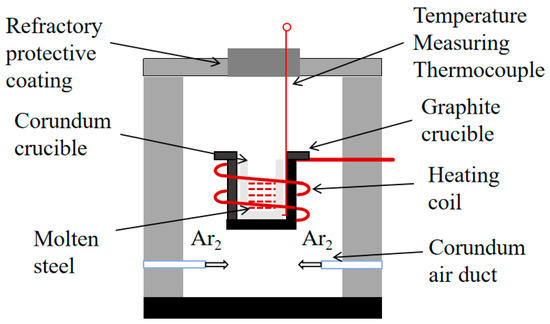
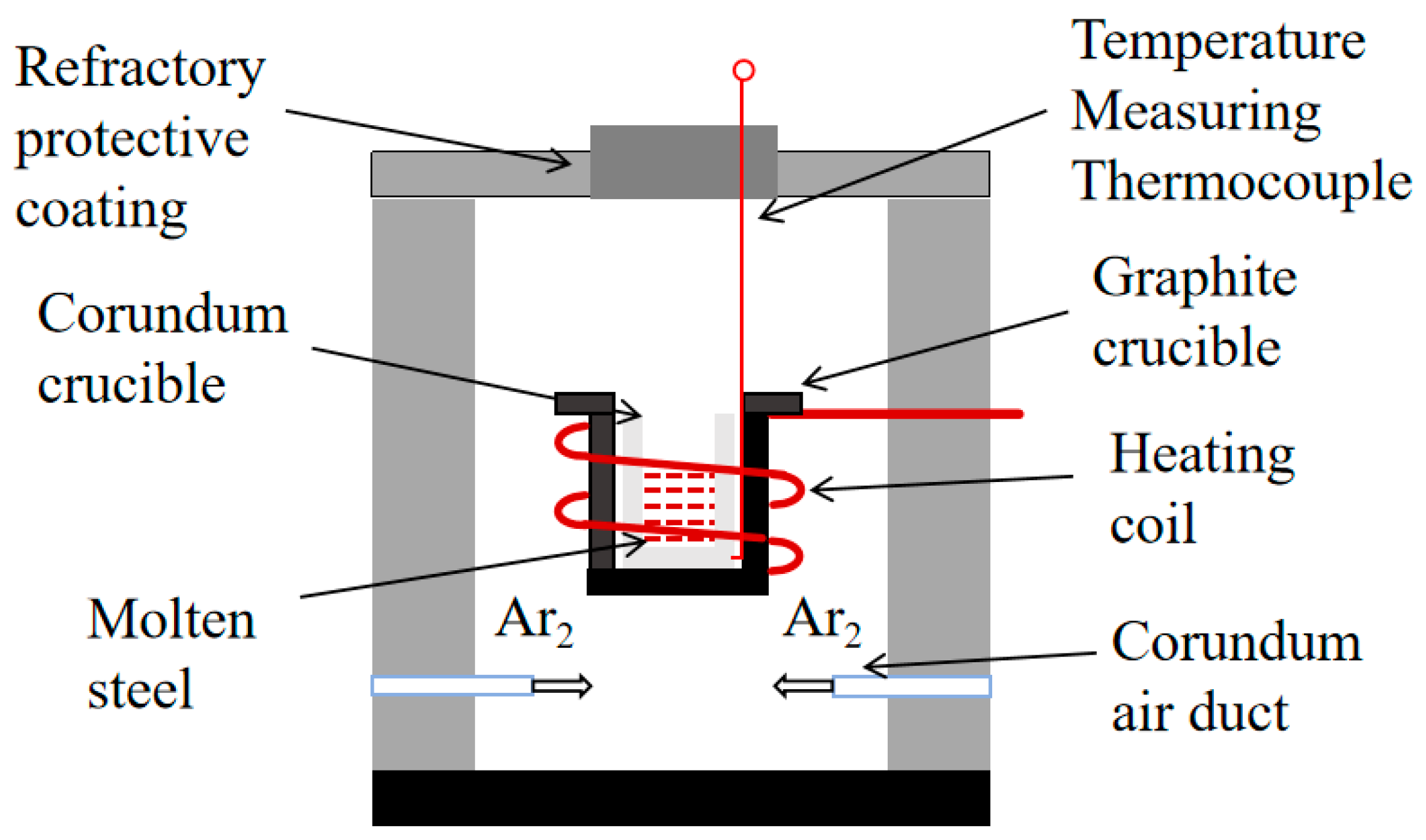
The melting experiment was performed under a continuously flowing high-purity argon atmosphere with a purity of 99.99% and a constant flow rate of 150 mL/min. The induction furnace setup is shown in Figure 1. The raw materials used in the steelmaking process include industrial pure iron rod, graphite, ferrosilicon, ferromanganese, ferrochromium, aluminum granules, titanium granules, Ce-Fe alloy and cerium granules.
Figure 1.
Schematic diagram of the high-frequency induction furnace.
The smelting procedure of the experimental steels is described as follows: pure iron granules, carburizer, ferrosilicon and ferrochromium were placed together into an alumina crucible nested inside a graphite crucible, then positioned in the furnace and heated up at a rate of 60 °C/min. After the melt reached 1600 °C, it was held for 1.5 min before the secondary alloy additions. After completion of the alloy additions, the molten steel was held for another 1.5 min and then immediately taken out for air cooling until solidification. The feeding sequence for Steel 0# was aluminum wire, ferromanganese, and titanium wire. For Steel 1#, the feeding sequence was aluminum wire, ferromanganese, Ce-Fe alloy, and titanium wire, with a 2 min interval between each addition. For Steel 2#, ferromanganese was added first, followed by the pre-mixed metallic materials consisting of Al granules, Ce granules and Ti granules to ensure all substances in the crucible were fully melted. After the entire feeding process was completed, the alumina crucible was taken out for air cooling until the molten steel solidified into shape. The chemical compositions of the as-cast experimental steels are listed in Table 1. For conventional elements in steel, the measurement precision is generally ≤±0.01%; for alloy elements with medium and high content, the measurement precision is generally ≤±0.05%; for trace elements and rare earth elements, the measurement precision is ≤1 ppm. Three types of steels designated as 0#, 1# and 2# were all subjected to repeated smelting experiments, with each steel grade being smelted 3 times. To ensure the reliability of experimental data, all steel specimens used in this study were randomly selected from each heat of the corresponding steel grade. To clarify the modification effect of rare earth Ce on inclusions in steel, the Gibbs free energy of major inclusions in the steel system was calculated via thermodynamic theory. Steel specimens with different compositions were machined from the central region on the cross-section at one-half height of the as-cast ingot, and then sequentially subjected to grinding, polishing and cleaning. The morphologies of inclusions in experimental steels were observed via field emission scanning electron microscopy (FESEM, ZEISS, Jena, Germany). To minimize the statistical bias induced by the local segregation of inclusions, polished cross-sections of cubic steel samples with a dimension of 10 × 10 × 10 mm were adopted for microscopic observation. Five observation positions, including four corner regions and one central region of the cross-section, were uniformly selected for each specimen. Each steel composition was melted in three independent heats to ensure the repeatability and reliability of experimental results. Inclusion statistical analysis was conducted separately for each heat, and three random SEM fields of view at different positions were analyzed for each batch. The FESEM observations were performed at an accelerating voltage of 20 kV, a working distance of 8 mm, and a scanning speed of 6 s/frame, with a fixed magnification of 1000× and a single field-of-view area of 7500 μm2. Inclusions larger than 0.5 μm were statistically analyzed using OTS image analysis software (Version 6.2, Oxford Instruments, Abingdon, UK), and the total scanning area for each group of samples was 4.6 mm2. The inclusion size was quantitatively characterized by the equivalent-circle diameter (). The average size and number density of inclusions in each heat were calculated individually, and the final statistical results were determined by averaging the data from three independent melting experiments. To guarantee the accuracy and credibility of statistical quantification, the quantified amounts of TiN-containing inclusions in different steel samples were specified as follows: 248 in 0# steel, 302 in 1# steel, and 350 in 2# steel. An energy-dispersive X-ray spectroscopy detector (Oxford Instruments) was used to analyze the elemental composition of inclusions, and statistical analysis was conducted on the quantity and size of inclusions.
Table 1.
Chemical compositions of the experimental steels (wt.%).
3. Results and Discussion
3.1. Effect of High-Content Rare Earth Ce Addition Methods on the Modified Morphology of TiN Inclusions in Steel
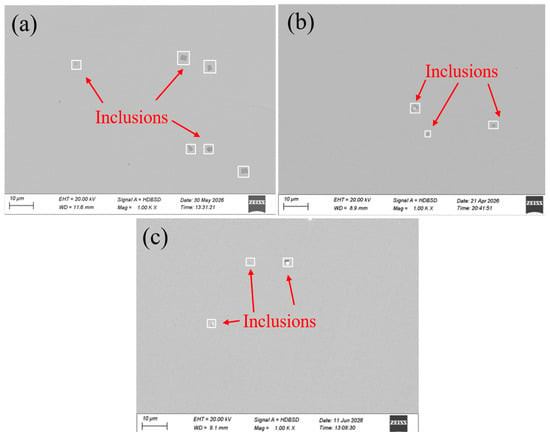
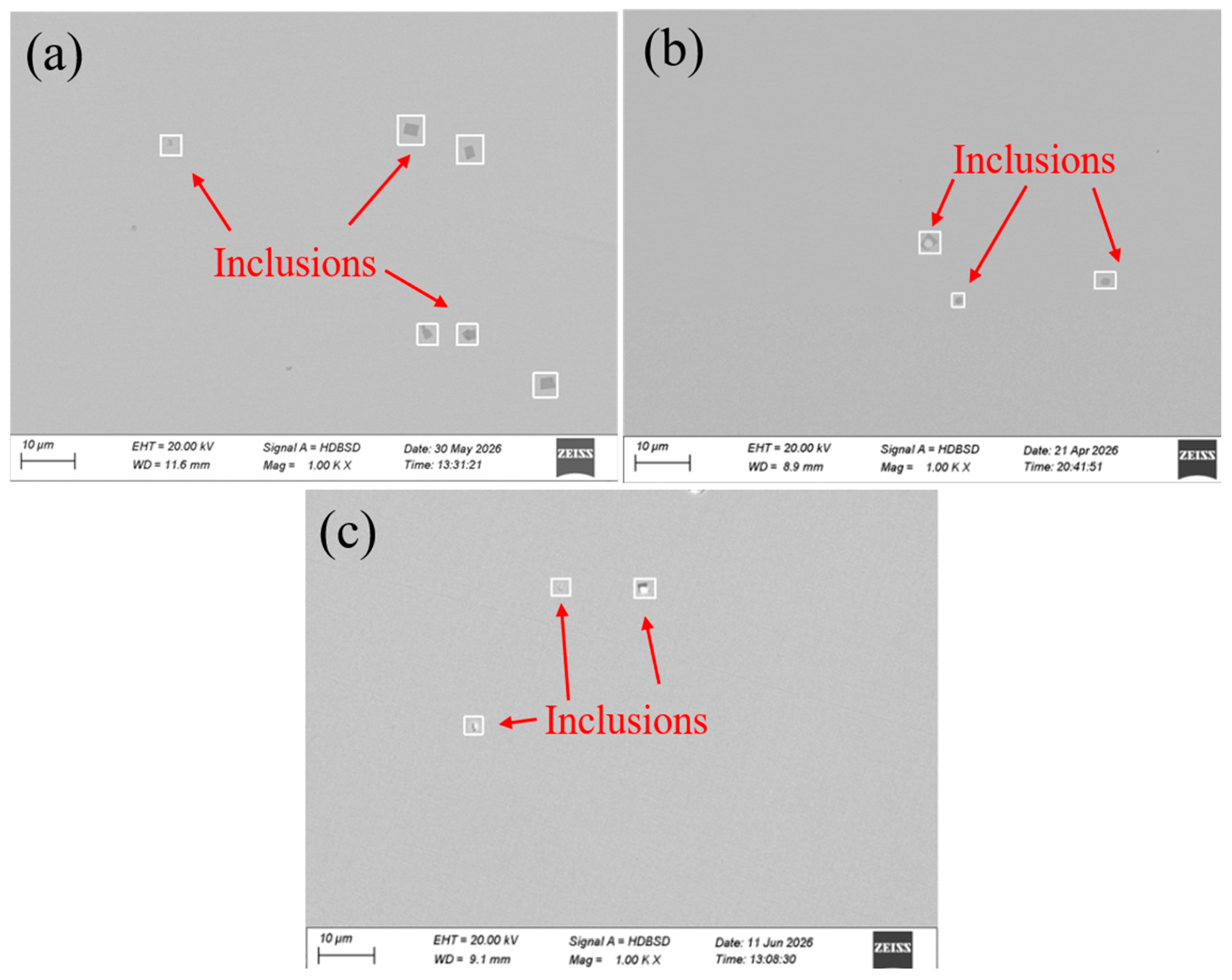
Figure 2 illustrates the influence of rare earth Ce addition methods on the inclusion distribution in 20CrMnTi gear steel. Without the addition of rare earth Ce, there is a relatively large number of inclusions with considerably large sizes in the steel, and most of these inclusions are large-sized TiN particles with sharp, angular edges. After rare earth Ce addition, the average inclusion size decreases significantly, which indicates the effective refinement of TiN inclusions, a reduced fraction of coarse inclusions and the formation of more fine inclusions, and the inclusions exhibit an ellipsoidal morphology, demonstrating that the addition of Ce has generated a distinct modification effect on the large-sized TiN inclusions. The synchronous Al, Ce and Ti addition process delivers a superior inclusion modification performance in steel, compared to the conventional Ce-Fe alloy addition process.
Figure 2.
Effect of rare earth Ce addition methods on the modification of TiN inclusions in steel. (a) Steel 0# without rare earth Ce addition; (b) Steel 1# added with Ce-Fe alloy; (c) Steel 2# with simultaneous co-addition of Al, Ce and Ti.
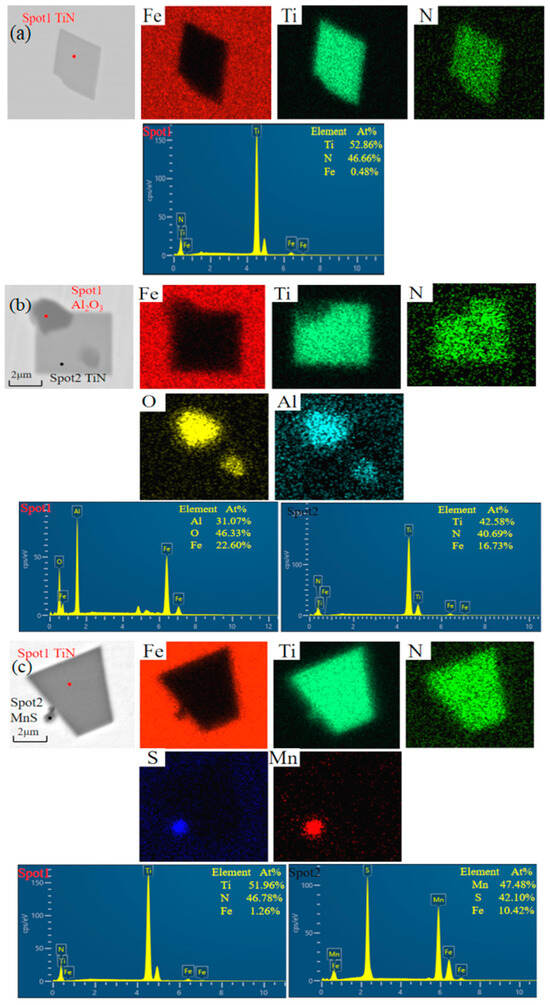
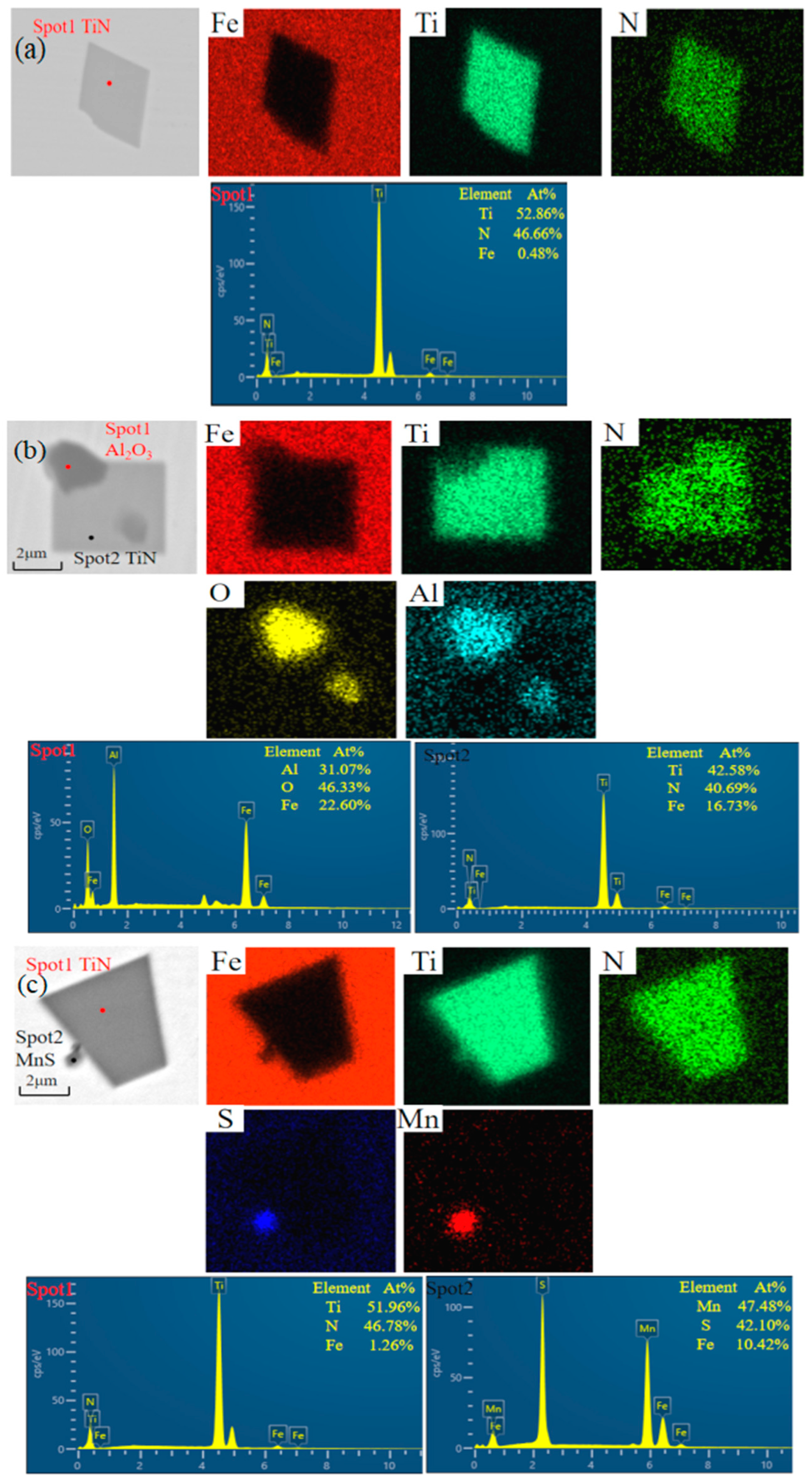
To further clarify the modification effect of rare earth addition methods on TiN inclusions in 20CrMnTi gear steel, a characterization analysis was performed on the elemental distribution of typical inclusions in steel under different rare earth addition routes. Figure 3 presents the morphology and elemental distribution of TiN inclusions in Steel 0# without rare earth Ce addition. In 20CrMnTi gear steel free of rare earth elements, the precipitated TiN-type inclusions are mainly categorized into two groups: single-phase pure TiN inclusions, and Al2O3-TiN composite inclusions that nucleate and precipitate using Al2O3 as the core. Both types of inclusions generally show large sizes with sharp angular edges, and some large inclusion particles have an equivalent diameter of over 10 μm, with a high tendency to form regional aggregation distribution. Previous studies have reported that coarse and angular TiN inclusions are associated with preferential fatigue-crack initiation under cyclic loading [6,7]. Therefore, reducing the size and angularity of these inclusions is expected to be beneficial for fatigue resistance.
Figure 3.
Morphology and elemental distribution of TiN inclusions in steel 0# without rare earth Ce addition. (a–c) all represent typical TiN inclusions found in Steel 0#.
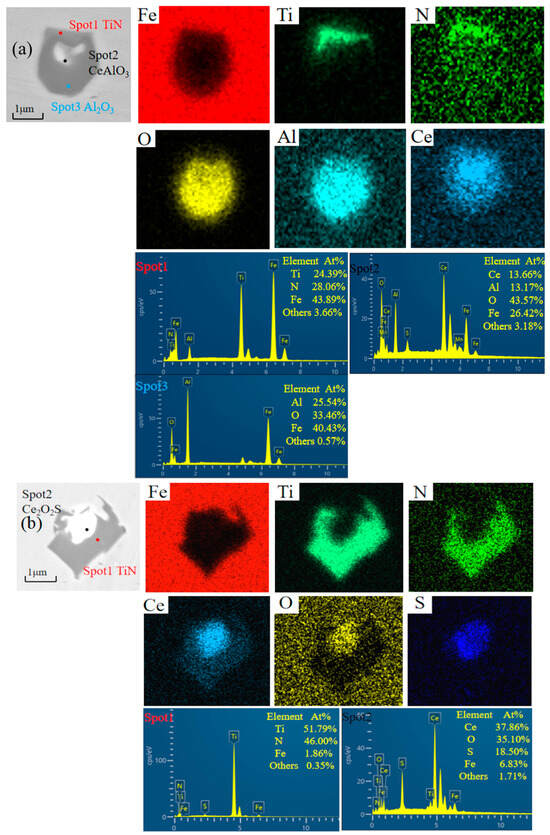
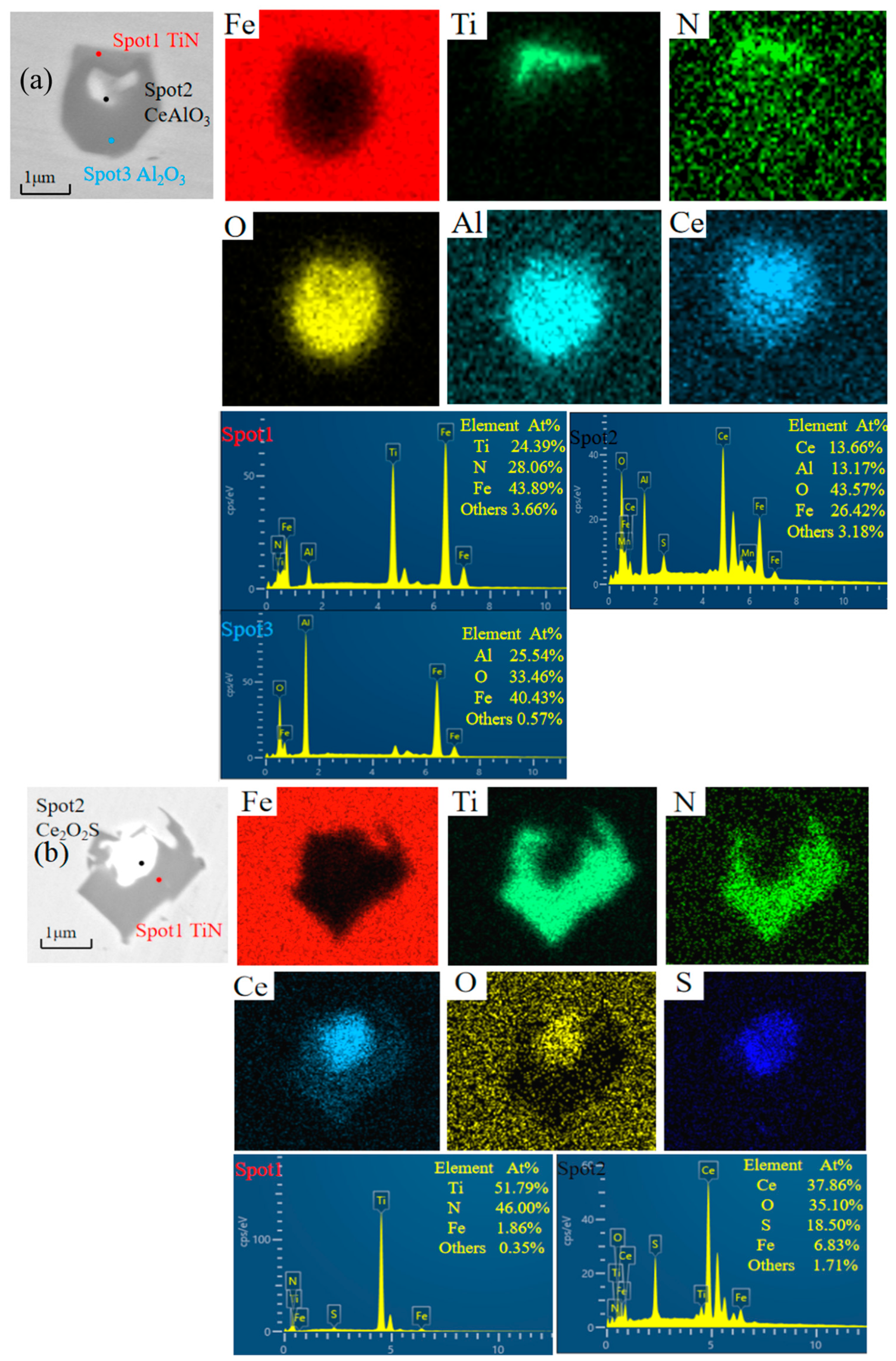
Figure 4 presents the morphology and elemental distribution of TiN inclusions in Steel 1# with conventional Ce-Fe alloy addition. Quantitative elemental analysis of the typical composite inclusion shown in Figure 4a reveals that the atomic fractions of each element in the core of the inclusion are: Ce 13.66 at.%, Al 13.17 at.%, and O 43.57 at.%. The core exhibits a Ce-Al-O elemental region. Based on the atomic fractions of these elements, this Ce-Al-O region can be tentatively assigned to the CeAlO3 phase. During the subsequent solidification and cooling process of molten steel, Ti and N elements are capable of heterogeneous nucleation on CeAlO3 substrates. Combined with the crystallographic matching results reported in previous studies, possible epitaxial growth of TiN is speculated to occur on the CeAlO3 surface, ultimately forming core–shell structured CeAlO3-TiN composite inclusions with a CeAlO3 core and a uniformly covered TiN outer layer. Compared with the traditional Al2O3-TiN inclusions that feature sharp angular edges and coarse sizes, this type of rare earth-modified inclusion generally shows a rounded and regular morphology. Figure 4b shows the second type of typical rare earth composite inclusion in Steel 1#. Its EDS spectral test results indicate that the atomic fractions of elements in the core of the inclusion are in the following order: Ce 37.86 at.%, O 35.10 at.%, S 18.50 at.%. Based on the atomic fractions, the bright-white, Ce-O-S-rich core of this inclusion exhibits elemental characteristics consistent with the rare earth oxysulfide phase Ce2O2S. Therefore, combined with EDS analysis and thermodynamic calculations in Section 3.3, it is tentatively assigned to Ce2O2S. Compared with MnS, Ce has an extremely strong chemical affinity for sulfur, which can preferentially capture S in molten steel to form a stable Ce2O2S core, and effectively suppress the precipitation of elongated MnS inclusions. At the later stage of solidification, Ti and N elements enrich and precipitate on the surface of the Ce2O2S core, ultimately forming a Ce2O2S-TiN composite inclusion.
Figure 4.
Morphology and elemental distribution of TiN inclusions in steel 1# with conventional Ce-Fe alloy addition. (a) and (b) represent typical TiN inclusions found in Steel 1#.
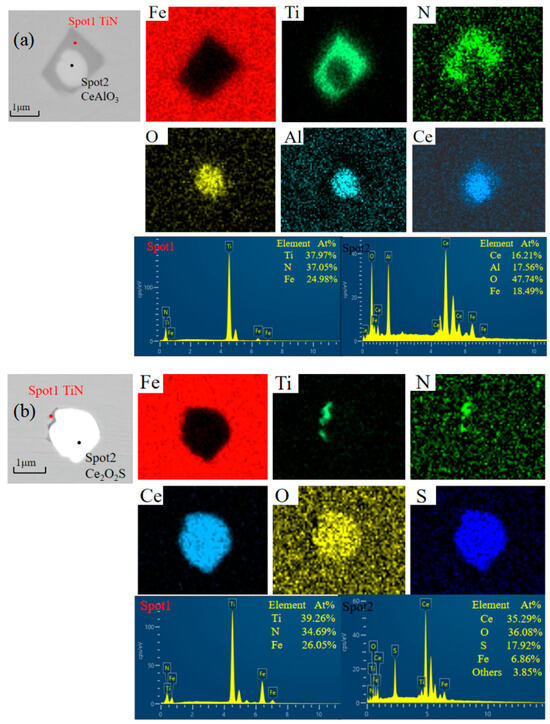
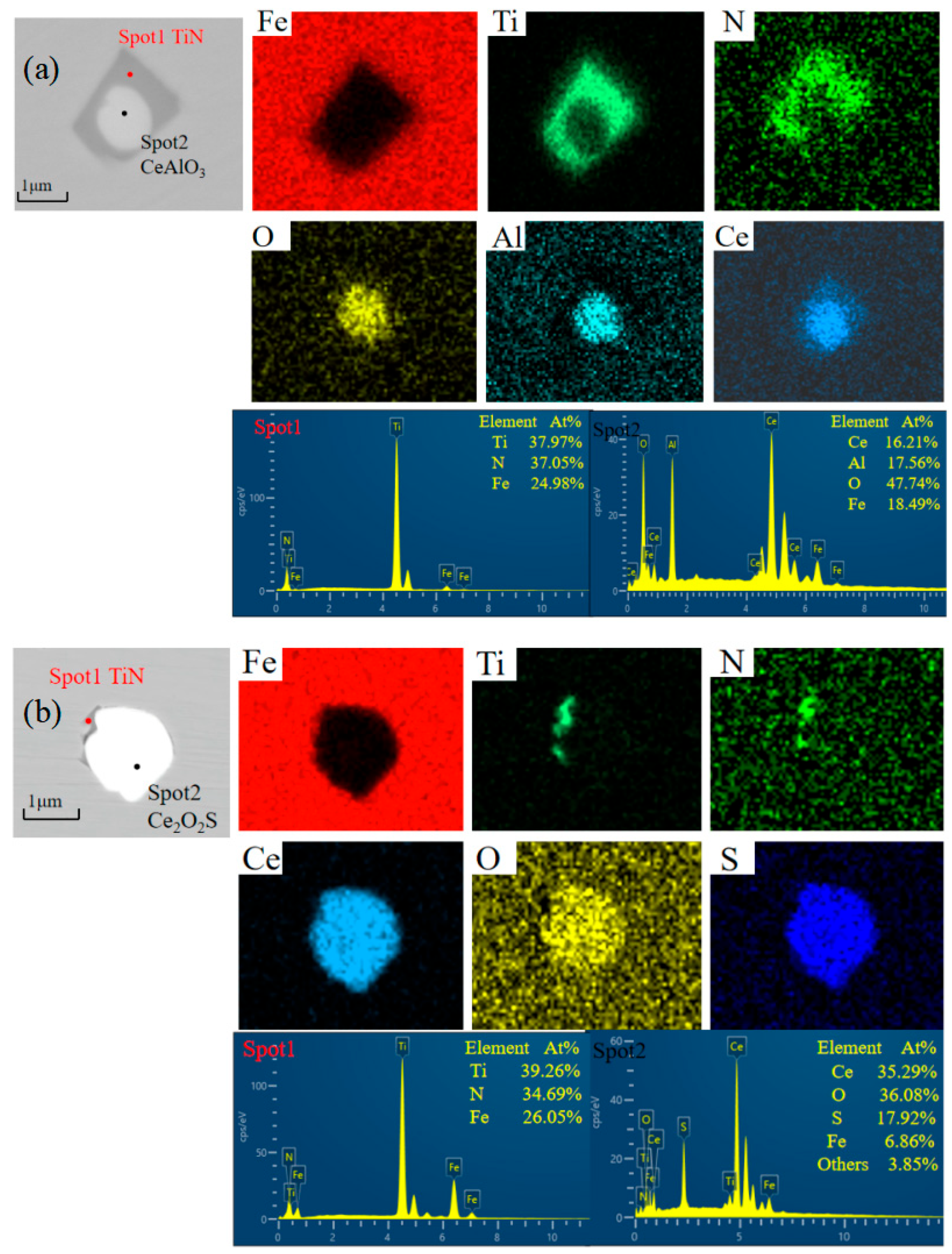
Figure 5 presents the morphology and elemental distribution of TiN inclusions in Steel 2# with simultaneous co-addition of Al, Ce and Ti. The atomic fractions of elements in the core of the inclusion in Figure 5a are: Ce 16.21 at.%, Al 17.56 at.%, O 47.74 at.%. The core region of this inclusion still exhibits Ce-Al-O-rich characteristics and is tentatively assigned to CeAlO3, and the TiN phase adheres to and coats the outer surface of CeAlO3, forming a CeAlO3-TiN composite inclusion. Figure 5b shows the typical Ce2O2S rare earth composite inclusion in Steel 2#. Its elemental atomic fractions in the core of the inclusion are: Ce 35.29 at.%, O 36.08 at.%, and S 17.92 at.%. This bright-white inclusion is considered to be a Ce-O-S-rich phase tentatively assigned to the thermodynamically stable Ce2O2S phase. During the solidification of molten steel, TiN particles are uniformly adsorbed on the surface of the Ce2O2S core, forming Ce2O2S-TiN composite inclusions with stable structure and fine size. No traditional long-strip-coated sulfide structure is generated, and the inclusion modification effect is remarkably enhanced. It has to be acknowledged that there are certain limitations in identifying inclusion compositions solely by EDS analysis. Wang Jian et al. [19] conducted systematic research on inclusions in steel using the EBSD phase identification method, and their inclusion identification results are consistent with the findings in this paper, which further verifies the correctness of this study.
Figure 5.
Morphology and elemental distribution of TiN inclusions in steel 2# with simultaneous co-addition of Al, Ce and Ti. (a,b) represent typical TiN inclusions found in Steel 2#.
In summary, the addition of rare earth Ce can achieve highly efficient modification of TiN inclusions in 20CrMnTi steel. After the separate addition of Ce-Fe alloy and the simultaneous co-addition of Al, Ce, and Ti, the original large-sized, sharp-edged Al2O3-TiN and MnS-TiN composite inclusions in steel are transformed into fine-sized, near-spherical rare earth composite inclusions of CeAlO3-TiN and Ce2O2S-TiN.
3.2. Effect of High-Content Rare Earth Ce Addition Methods on the Modified Size of TiN Inclusions in Steel
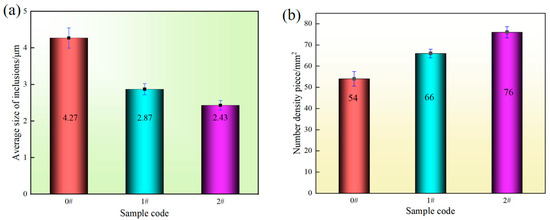
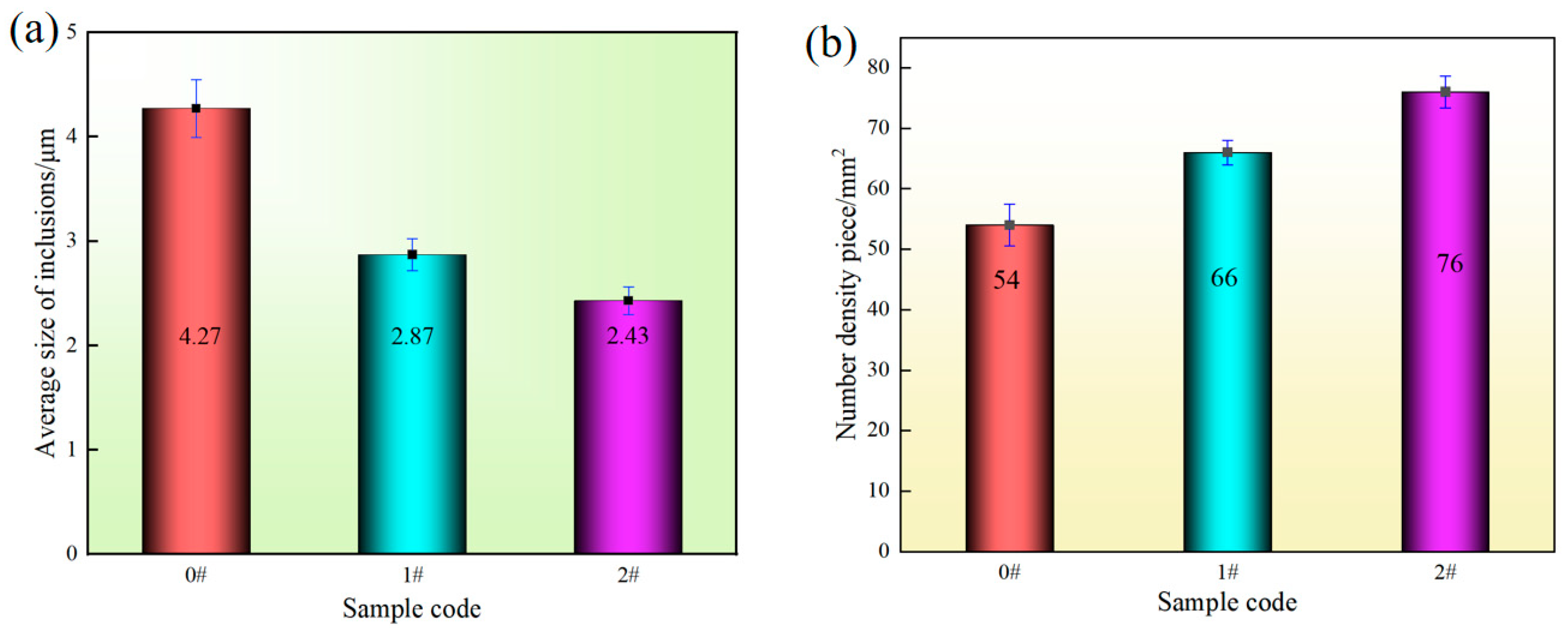
To further quantitatively reveal the influence of rare earth Ce addition methods on the size evolution and refinement effect of TiN inclusions in steel, a statistical analysis was conducted on the average size of TiN-bearing inclusions in three groups of test steels, namely Steel 0#, 1# and 2#. The corresponding results are presented in Figure 6. In the blank control Steel 0# without rare earth Ce addition, the average size of TiN-bearing inclusions reaches 4.27 μm. Combined with the aforementioned microscopic morphology observation results, the widespread presence of conventional large-sized, irregularly shaped composite inclusions is identified as the core reason for its relatively large average size. After the modification treatment with rare earth Ce, the size of TiN inclusions in two groups of rare earth experimental steels is refined. In Steel 1# modified by conventional Ce-Fe alloy addition, the average size of TiN composite inclusions decreases to 2.87 μm; in Steel 2# modified by the simultaneous co-addition of Al, Ce and Ti, the average size of TiN inclusions is further refined to 2.43 μm. The error bars represent the standard deviation (SD), which reflects the statistical deviation of the average TiN inclusion sizes obtained from three groups of experimental steels. Compared with the conventional Ce-Fe-modified Steel 1# and the unmodified Steel 0#, the synchronously Al-, Ce-, and Ti-modified Steel 2# exhibits distinctly narrower error bar distributions. In terms of number density, the number density of inclusions in 2# steel is relatively higher, indicating that the simultaneous addition of Al, Ce and Ti has a superior modification effect on large-sized sulfide inclusions in steel, which can transform more large-sized inclusions into small-sized ones. This demonstrates that the synergistic co-addition strategy not only effectively refines the average size of TiN composite inclusions but also remarkably improves the dimensional uniformity of inclusion populations. Compared with the unmodified steel, two rare earth addition processes can reduce the average size of TiN inclusions in steel, with outstanding refinement performance.
Figure 6.
Effect of rare earth Ce addition routes on the average size and number density of TiN inclusions in steel. (a) Average size of TiN inclusions; (b) number density of TiN inclusions.
By comparing the two rare earth addition strategies, the synchronous Al, Ce, and Ti co-addition process exhibits a superior TiN refinement effect compared with the conventional Ce-Fe addition process. Although both processes generate CeAlO3-TiN and Ce2O2S-TiN composite inclusions, the difference in refinement efficiency is mainly associated with the distinct inclusion formation pathways. In the conventional Ce-Fe addition process, Ce is introduced after Al alloying, and part of the oxide inclusions or Ti-containing phases may have already formed before Ce participates in modification. Therefore, Ce mainly modifies pre-existing inclusions, which may limit the formation of uniformly distributed Ce-containing nucleation substrates. The simultaneous co-addition of Al, Ce and Ti yields a smaller average size of TiN inclusions, which effectively suppresses the agglomeration growth and coarsening behavior of TiN composite inclusions, and finally achieves the refinement of TiN inclusions.
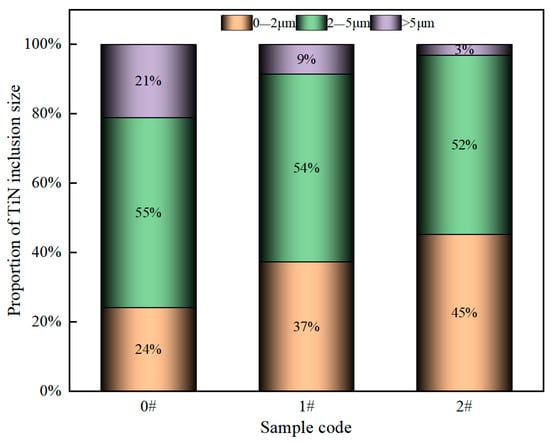
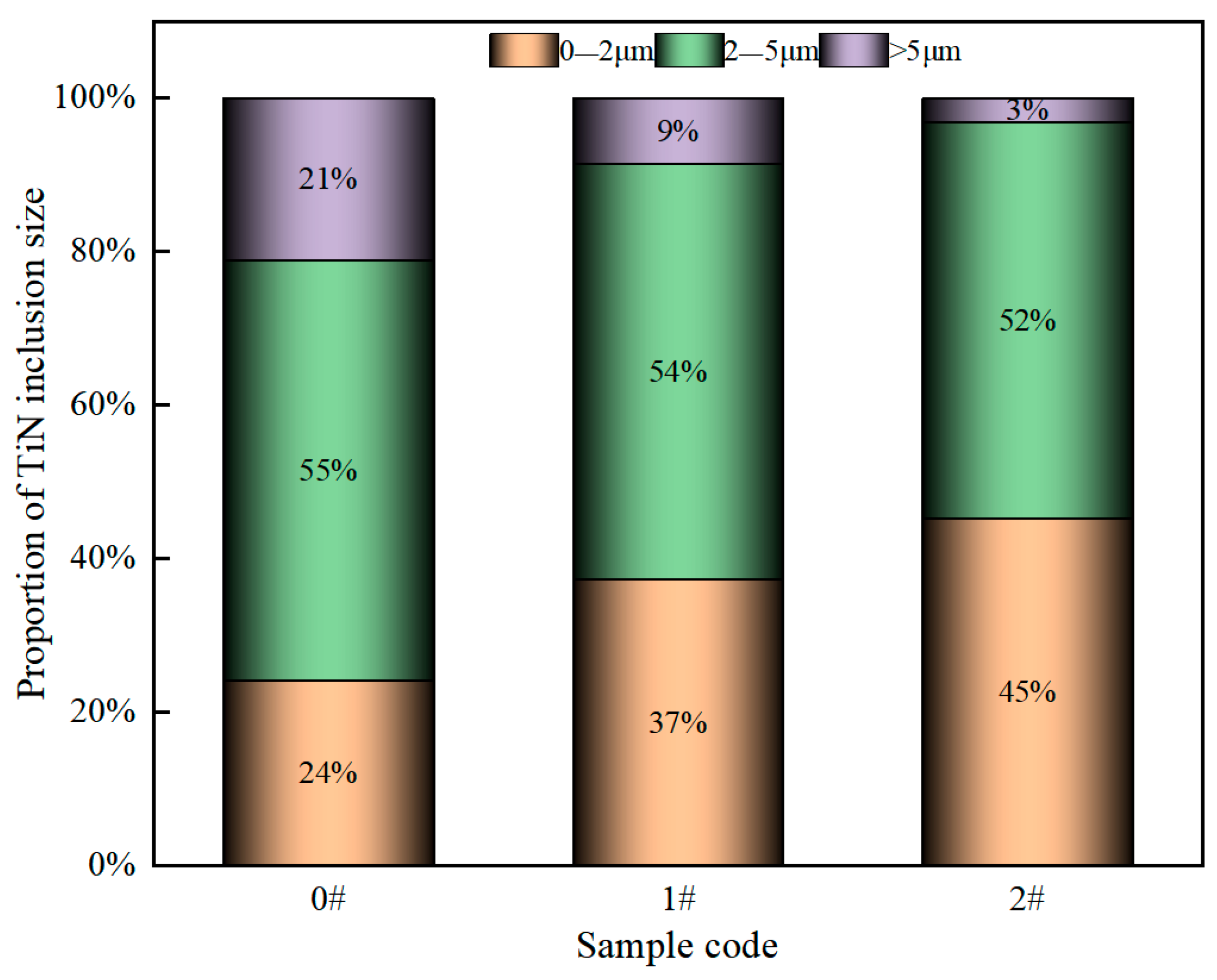
The effects of three conditions—without Ce addition, conventional Ce-Fe alloy addition, and simultaneous co-addition of Al, Ce and Ti—on the size distribution of TiN inclusions in steel are shown in Figure 7. When high-content rare earth Ce is introduced, both the conventional Ce-Fe alloy addition and the simultaneous co-addition of Al, Ce and Ti can effectively modify TiN inclusions smaller than 2 μm. Specifically, under the simultaneous co-addition of Al, Ce and Ti, the modification ratio of inclusions smaller than 2 μm increases to 45%, while the proportion of large-sized TiN inclusions larger than 5 μm drops to 3%, presenting a better TiN inclusion modification performance than conventional Ce-Fe alloy addition.
Figure 7.
Effect of rare earth Ce addition methods on the size distributions of TiN inclusions in steels.
The foregoing experimental results confirm that both Ce-containing test steels generate CeAlO3-TiN and Ce2O2S-TiN composite inclusions with similar compositions, whereas finer inclusions are obtained in No. 2 steel. Given the comparable final bulk Ce contents of the two steels, the difference in inclusion refinement is not dominated by the variation in Ce recovery but originates from the distinct formation conditions of inclusions under different addition routes. In the conventional stepwise addition process, Ce is introduced prior to Ti, and the formed Ce-bearing oxide and oxysulfide particles can undergo precipitation, growth, collision, floatation and redistribution before the addition of Ti. In contrast, the synchronous Al, Ce, and Ti addition instantaneously increases the local concentration of multiple reactive solutes within molten steel microregions. This promotes the rapid precipitation of numerous fine Ce-containing particles when Ti and N solutes approach supersaturation, which provides sufficient potential nucleation substrates for subsequent TiN formation and avoids the generation of coarse TiN particles with large sizes and low quantities.
3.3. Analysis on Modification Mechanism of TiN Inclusions in Steel by High-Content Rare Earth Ce
As demonstrated in the foregoing experimental study, after the addition of rare earth Ce into molten steel, the original TiN inclusions will be modified into CeAlO3-TiN and Ce2O2S-TiN composite phase inclusions. To clarify the underlying mechanism of rare earth Ce addition on TiN inclusions in steel, thermodynamic calculation and analysis were carried out for the precipitation behavior of typical inclusions in the steel system. The standard Gibbs free energy of formation for the typical substances in this steel grade is listed in Table 2.
Table 2.
Standard Gibbs free energy of formation for typical substances in steel.
Under conditions of constant temperature and constant pressure, a negative value of Gibbs free energy of formation indicates that the reaction is thermodynamically feasible. The isothermal reaction equation for chemical reactions can be applied to calculate the Gibbs free energy of formation of each inclusion, as presented in the following equations.
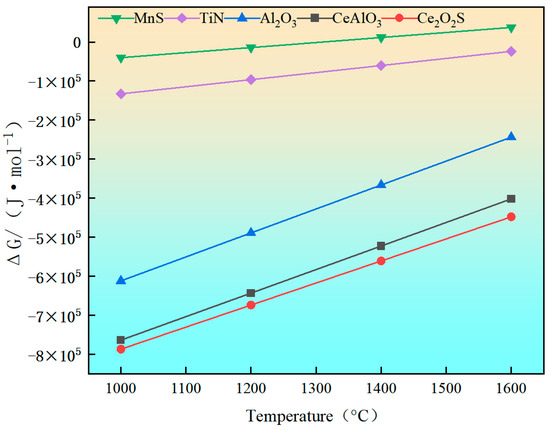
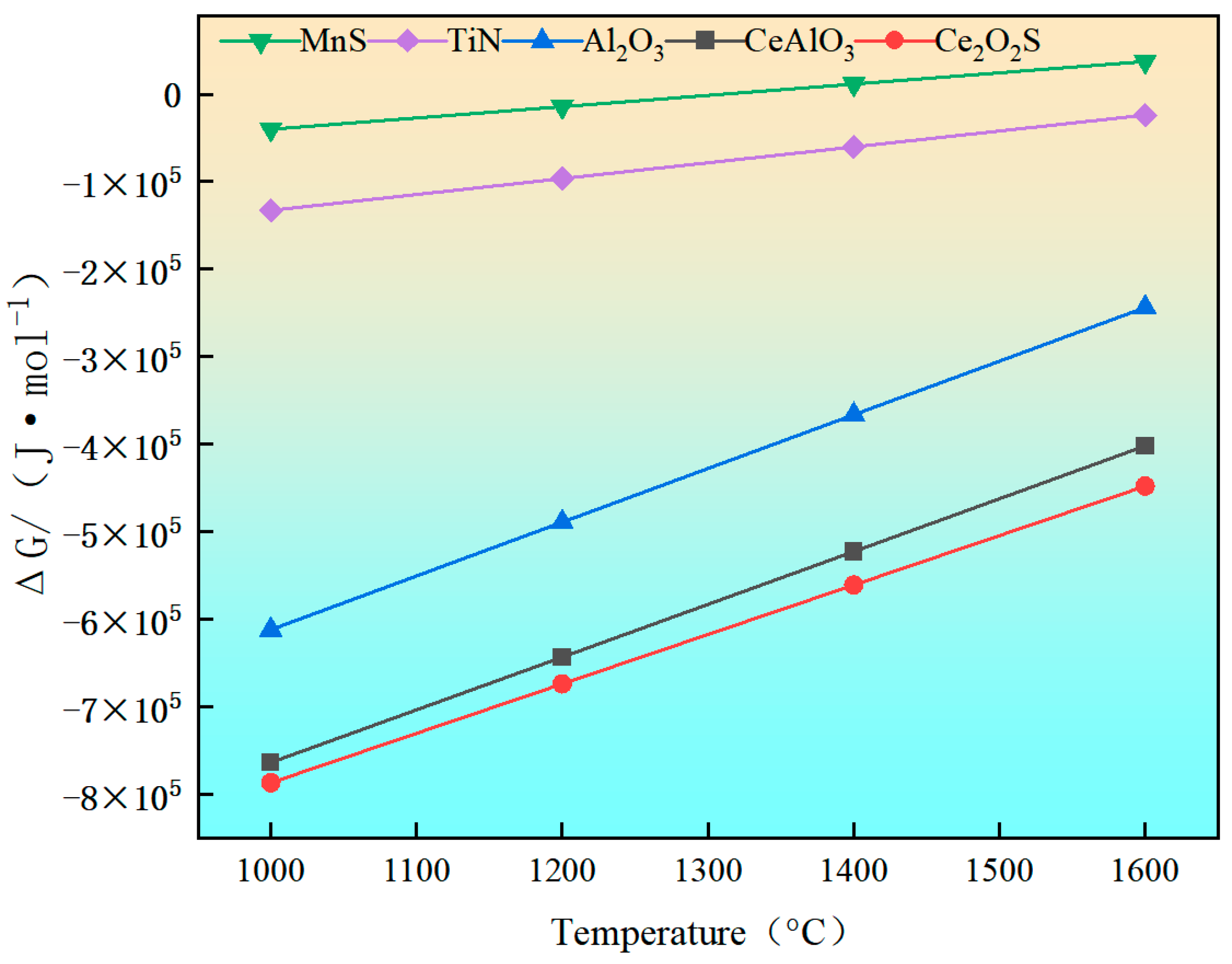
In Equation (1), ΔG refers to the Gibbs free energy of inclusion formation, with the unit of J·mol−1; ΔGθ denotes the standard Gibbs free energy of inclusion formation, with the unit of J·mol−1; R is the universal gas constant, which takes the value of 8.314 J·mol−1·K−1, J represents the activity quotient. In Equation (2), fi is the Henry’s activity coefficient of component i; eij is the interaction coefficient of element j on element i; [%i] and [%j] are the mass percentages of element i and element j in liquid steel respectively. In Equation (3), ai is the activity of component i. The dissolved elements in steel take the 1 wt% dilute solution as the standard state. This study adopts only first-order interaction coefficients for activity calculations, while second-order terms are neglected, which may introduce uncertainties, especially for systems containing highly reactive Ce. The applied interaction coefficients are valid for liquid steel at 1600 °C and are primarily used to evaluate thermodynamic tendencies at the experimental melting temperature. Due to the lack of reliable temperature-dependent interaction coefficients, the 1600 °C parameters are held constant for the extended temperature range plotted in Figure 8. Accordingly, the calculated Gibbs free energies merely reflect the relative thermodynamic driving force for phase formation rather than precise equilibrium precipitation behaviors of complex inclusion systems. The results demonstrate that CeAlO3 and Ce2O2S are thermodynamically more favorable than Al2O3 under the investigated conditions. Combined with the observed inclusion morphologies and elemental distribution characteristics, these thermodynamic findings support the mechanism that Ce-bearing phases modify the precipitation behavior of TiN inclusions. Inclusions such as TiN, CeAlO3 and Al2O3 are treated as pure substances, and their activity value ai equals 1. The interaction coefficients of various elements in liquid steel at 1600 °C are listed in Table 3.
Figure 8.
Formation Gibbs free energy of typical inclusions in steels.
Table 3.
First-order interaction coefficients of solute elements in liquid steel at 1600 °C.
Using the interaction coefficients of elements in molten steel listed in Table 3, the activity of each solute element in molten steel can be calculated, which can further yield the activity quotient J for the formation reactions of various inclusions in steel. Substituting the calculated J value and the ΔGθ values from Table 2 into Equation (1), the standard Gibbs free energy of formation ΔfG can be obtained, and the corresponding results are summarized in Table 4.
Table 4.
Calculation parameters and results of Gibbs free energy of formation for inclusions in molten steel.
Figure 8 shows the variation in the Gibbs free energy ΔG for the formation reactions of typical inclusions in steel, including MnS, TiN, Al2O3, CeAlO3 and Ce2O2S, as a function of temperature. Without the addition of rare earth Ce, the Gibbs free energy of Al2O3 is lower than that of TiN and MnS. As a result, the preferentially precipitated Al2O3 can act as the nucleation core for TiN inclusions, further forming Al2O3-TiN composite phase inclusions. After adding rare earth Ce, the Gibbs free energy of CeAlO3 and Ce2O2S is even lower than that of Al2O3, which inhibits the generation of Al2O3 in molten steel. Therefore, CeAlO3 and Ce2O2S phases will preferentially form in steel with Ce addition.
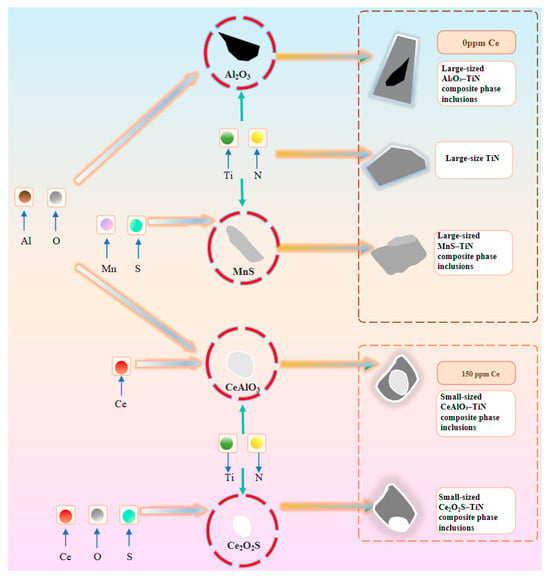
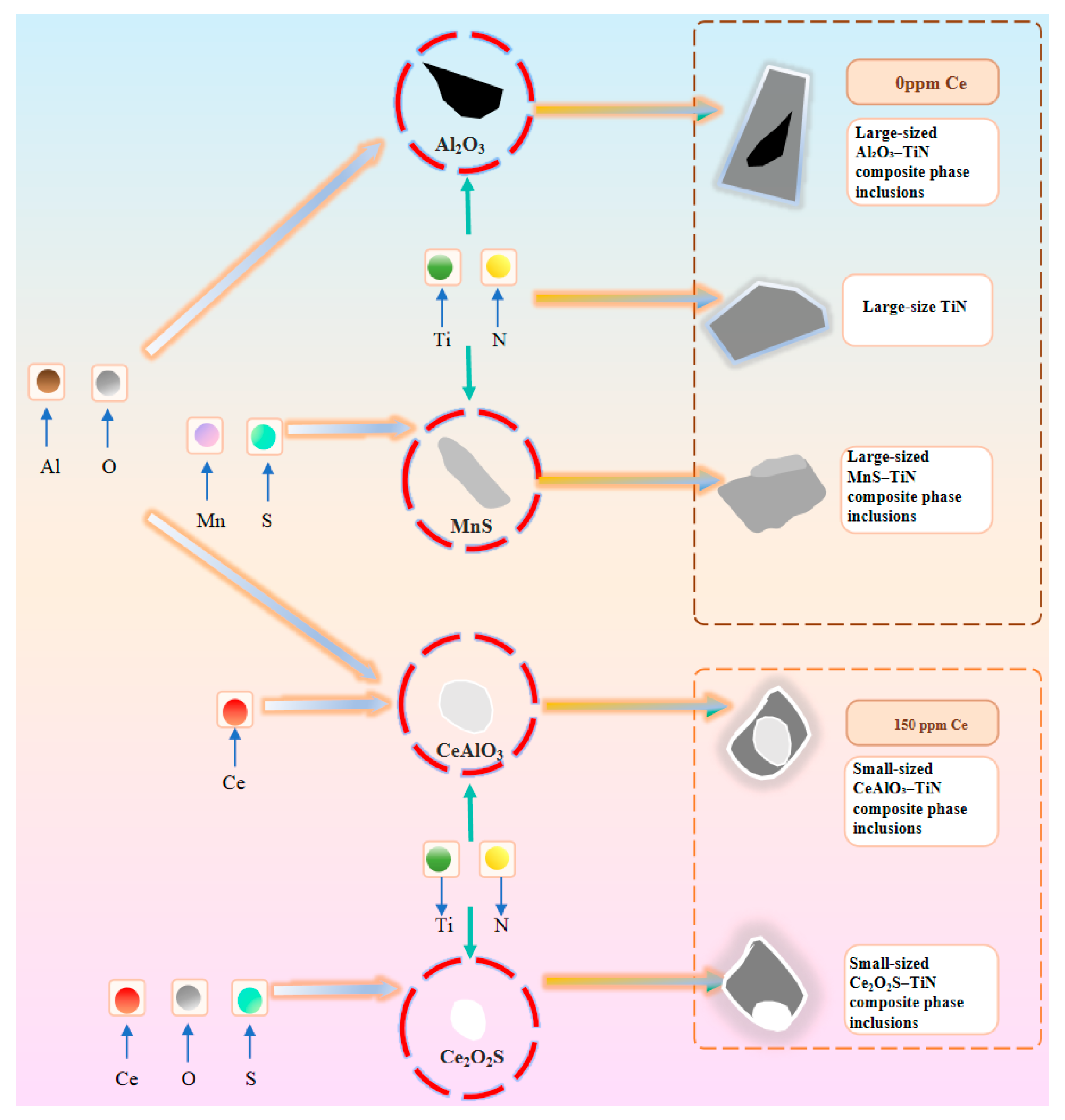
Figure 9 illustrates the modification mechanism of rare earth Ce on TiN inclusions in 20CrMnTi steel. Without rare earth addition, the titanium-containing inclusions in steel are mainly single-phase TiN, as well as Al2O3-TiN and MnS-TiN composite inclusions. At the initial stage of solidification, the highly stable Al2O3 precipitates preferentially, which provides heterogeneous nucleation sites for TiN and further grows into coarse, angular Al2O3-TiN composite inclusions. Meanwhile, MnS forms a long-strip coating structure on the surface of TiN, leading to the generation of large-sized MnS-TiN inclusions. When the content of added rare earth Ce reaches around 150 ppm, its chemical affinity for O and S is significantly higher than that of Al and Mn. This allows Ce to preferentially precipitate thermodynamically stable CeAlO3 and Ce2O2S phases in high-temperature liquid steel, which consumes free O and S in the molten steel, thus suppressing the formation of hard Al2O3 and long-strip MnS inclusions. Studies by He Feihu showed that the rare earth phase has a good crystallographic matching relationship with TiN [20]. The rare earth phases can act as heterogeneous nucleation sites to induce the uniform nucleation of TiN, ultimately realizing the spheroidization, refinement and homogenization of inclusions.
Figure 9.
Evolution mechanism of TiN inclusions modified by rare earth Ce.
4. Conclusions
- (1)
- Without rare earth Ce addition, the inclusions in steel have a relatively larger size, and most of these inclusions are large-sized TiN particles with sharp edges and corners. With the addition of rare earth element Ce, the pre-existing large and angular Al2O3-TiN and MnS-TiN composite inclusions in steel are transformed into fine composite inclusions consisting of Ce-Al-O-rich or Ce-O-S-rich core phases and TiN. Combined with EDS analysis, thermodynamic calculations and reported crystallographic investigations, the core regions match the characteristic signatures of CeAlO3 and Ce2O2S. Meanwhile, the process with the simultaneous addition of Al, Ce and Ti delivers a better modification effect on inclusions in steel compared with the traditional Ce-Fe alloy addition process.
- (2)
- Without rare earth Ce addition, the average size of TiN inclusions in 20CrMnTi gear steel is 4.27 μm. After modification with the traditional Ce-Fe alloy, the average size of TiN inclusions decreases to 2.87 μm; when modified by simultaneous addition of three metals Al, Ce and Ti, the average size of TiN inclusions is further refined to 2.43 μm. Under the simultaneous Al, Ce and Ti addition process, the modification proportion of inclusions smaller than 2 μm increases to 45%, while the proportion of large-sized TiN inclusions larger than 5 μm reduces to 3%.
- (3)
- Thermodynamically, CeAlO3 and Ce2O2S possess lower formation Gibbs free energy than Al2O3, demonstrating that their formation is thermodynamically favorable after Ce addition. These phases can act as heterogeneous nucleation sites for the subsequently precipitated TiN inclusions, thereby modifying the large-sized TiN inclusions in steel into finer CeAlO3-TiN and Ce2O2S-TiN composite inclusions.
Author Contributions
Conceptualization, K.L. and F.Y.; methodology, K.L., S.L., J.P. and F.Y.; validation, S.L., J.P. and L.L.; resources, L.L. and F.Y.; writing—original draft preparation, K.L., S.L., J.P. and F.Y.; writing—review and editing, S.L., J.P., L.L. and F.Y. All authors have read and agreed to the published version of the manuscript.
Funding
This research was funded by the Inner Mongolia Autonomous Region Postgraduate Scientific Research Innovation Project (grant number KC2025061S) and the Youth Program of the Natural Science Foundation of Inner Mongolia Autonomous Region (grant number 2024QN05029).
Data Availability Statement
The original contributions presented in this study are included in the article. Further inquiries can be directed to the corresponding author.
Conflicts of Interest
The authors declare no conflicts of interest.
References
- Zhang, X.; Cao, Y.; Zhang, Y.; Pan, D.; Wang, K.; Li, Z.; Li, L. High-Temperature Carburization of Gear Steels: Grain Size Regulation, Microstructural Evolution, and Surface Performance Enhancement. Coatings 2026, 16, 386. [Google Scholar] [CrossRef] [Scilit]
- Liu, X.; Liu, Y.; Han, J.; Liu, C. Influence of carbon segregation on asymmetric quenching distortion of 20CrMnTi steel ring. Mater. Today Commun. 2025, 47, 113272. [Google Scholar] [CrossRef] [Scilit]
- Zhang, Y.; Hu, Y.; Yan, H.; Li, S. Effect of Induction Heating Composite Shot Peening on the Wear Resistance and Fatigue Strength of 20CrMnTi Spiral Bevel Gears. JOM 2024, 77, 884–897. [Google Scholar] [CrossRef] [Scilit]
- Zhang, Y.; Wei, S.; Yang, W.; Guan, J.; Li, G. Study on the Wear Performance of 20CrMnTi Gear Steel with Different Penetration Gradient Positions. Materials 2025, 18, 3685. [Google Scholar] [CrossRef] [Scilit] [PubMed]
- Wu, X.; Du, Y.; Gao, P.; Tang, X.; Wang, X. Research on the Wear Evolution Behavior of 20CrMnTi Alloy Steel under Different Loading Conditions. J. Phys. Conf. Ser. 2024, 2785, 012158. [Google Scholar] [CrossRef] [Scilit]
- Ren, Z.; Li, B.; Zhou, Q.; Hou, R.; Zhang, Y. Optimization of high-speed grinding parameters for anti-fatigue performance of 20CrMnTi steel. Int. J. Adv. Manuf. Technol. 2022, 122, 3565–3581. [Google Scholar] [CrossRef] [Scilit]
- Liu, X.; Bao, Y.; Gao, F.; Bi, C. Investigation into the Evolution of Nonmetallic Inclusions in Silicon and Aluminum Composite-Deoxidized 316 Stainless Steel. J. Sustain. Metall. 2025, 11, 4728–4741. [Google Scholar] [CrossRef] [Scilit]
- Wang, D.; Li, B.; Huang, L.; Zhan, D.; Gao, H. Effects of Deoxidation Processes on Inclusions in Environmentally Friendly Free-Cutting Steel. Metals 2025, 15, 1018. [Google Scholar] [CrossRef] [Scilit]
- Yan, S.; Zhu, J.; Ren, L.; Yang, J. An Industrial Practice on the Effect of Deoxidation Process on Inclusions in U75V Heavy Rail Steel. Metall. Mater. Trans. B 2025, 56, 1494–1510. [Google Scholar] [CrossRef] [Scilit]
- Zhang, Z.; Deng, Z.; Liang, Z.; Zhu, M. Effect of Deoxidation Method on Nonmetallic Inclusions in Heavy Rail Steel. Metall. Mater. Trans. B 2026, 57, 2237–2247. [Google Scholar] [CrossRef] [Scilit]
- Bobba, S.; Leman, Z. Effect of Deoxidation Practice on the Mechanical Properties of Low Alloy Plain Carbon Steel. Int. J. Steel Struct. 2025, 25, 1271–1279. [Google Scholar] [CrossRef] [Scilit]
- Yang, C.; Liu, Y. Oxide Inclusions in Aluminum-deoxidized Ultra-low CarbonSteel. J. Phys. Conf. Ser. 2023, 2587, 012053. [Google Scholar] [CrossRef] [Scilit]
- Amatanweze, K.T.; Athavale, V.A.; Lekakh, S.; O’Malley, R.J.; Bartlett, L.N. Inclusion engineering through deoxidation practice optimization for enhanced mechanical properties of cast Cr-Ni-Mo steel. Mater. Sci. Eng. A 2026, 953, 149584. [Google Scholar] [CrossRef] [Scilit]
- Song, T.; Wang, Z.; Bao, Y.; Gu, C.; Zhang, Z. Effect of Silicon–Manganese Deoxidation on Oxygen Content and Inclusions in Molten Steel. Processes 2024, 12, 767. [Google Scholar] [CrossRef] [Scilit]
- Wang, R.; Yang, J.; Xu, L. Improvement of Heat-Affected Zone Toughness of Steel Plates for High Heat Input Welding by Inclusion Control with Ca Deoxidation. Metals 2018, 8, 946. [Google Scholar] [CrossRef] [Scilit]
- Li, Y.; Cheng, G.-G.; Lu, J.-L.; Sun, J. The effect of TiN precipitated particles on the austenite grain and hardenability of 20CrMnTi gear steel. Ironmak. Steelmak. 2022, 49, 940–953. [Google Scholar] [CrossRef] [Scilit]
- Cha, W.-Y.; Kim, W.-Y. In-situ Observation of Inclusion Formation Behavior in Ultra-Low Carbon Steel with Al–Ti Complex Deoxidation: Regular Article. ISIJ Int. 2025, 65, 1631–1641. [Google Scholar] [CrossRef] [Scilit]
- Li, X.; Liu, S.; Yang, F.; Liu, L.; Peng, J.; An, S. Study on the differential modification of TiN and sulfide inclusions in 20CrMnTi gear steel by rare earth La and Ce elements. Ironmak. Steelmak. 2025, 52, 778–788. [Google Scholar] [CrossRef] [Scilit]
- Wang, J.; Peng, J.; Zhang, F.; Peng, J.; Liu, S.; An, S. Thermodynamic calculation and experimental analysis on effects of rare earth Ce on TiN phase precipitation in 20CrMnTi steel. Iron Steel 2024, 59, 66–73. [Google Scholar] [CrossRef]
- He, F.; Peng, J.; Zhang, F.; Wang, Y.; Chang, H. Experimental and first-principles calculation of TiN growth mechanism on CeAlO3 surface in steel. J. Iron Steel Res. Int. 2024, 31, 452–463. [Google Scholar] [CrossRef] [Scilit]

Disclaimer/Publisher’s Note: The statements, opinions and data contained in all publications are solely those of the individual author(s) and contributor(s) and not of MDPI and/or the editor(s). MDPI and/or the editor(s) disclaim responsibility for any injury to people or property resulting from any ideas, methods, instructions or products referred to in the content. |
© 2026 by the authors. Licensee MDPI, Basel, Switzerland. This article is an open access article distributed under the terms and conditions of the Creative Commons Attribution (CC BY) license.