


Abstract
The hydrogen storage properties of LaNi5 framework materials prepared by filling porous substrates with LaNi5 powders were studied. Aluminum silicate fiber blanket, 110 pores per inch (PPI) polyester foam, and 70 PPI and 110 PPI nickel foams were used as porous substrates, and 45-, 80-, and 200-mesh LaNi5 powders were sequentially poured onto the substrates. To reduce particle detachment, LaNi5 framework materials with 70 and 110 PPI nickel foam substrates were compressed at 0.5 MPa for 20 min. Microstructural analysis showed that LaNi5 powders were uniformly distributed within the 70 PPI and 110 PPI nickel foam substrates. At 303 K and 4 MPa, all LaNi5 framework materials could be activated after two hydrogen absorption cycles. PCT test results show that the hydrogen storage capacity values of the LaNi5 framework materials with the aluminum silicate fiber blanket, 110 PPI polyester foam, 70 PPI nickel foam, 110 PPI nickel foam, compressed 70 PPI nickel foam and compressed 110 PPI nickel foam substrates at 303 K are 1.31, 1.27, 1.37 and 1.63, 1.29 wt% and 1.57 wt%, respectively. The corresponding ΔH values are −30.0, −28.4, −27.8, −26.3, −28.4 and −29.2 kJ·mol−1, respectively. After 10 cycles, the capacity retention rates of the LaNi5 framework materials ranged from 95.7% to 98.8%, all higher than those of the pure 45-, 80-, and 200-mesh LaNi5 powders (91.7–94.1%). The LaNi5 framework material with the 110 PPI nickel foam substrate exhibits the best comprehensive hydrogen storage properties.
1. Introduction
Hydrogen has become a promising, new clean energy carrier due to its high energy conversion efficiency, zero carbon emissions, and wide availability [1,2,3]. Hydrogen storage remains a major bottleneck for the large-scale utilization of hydrogen energy [4,5]. The low density of hydrogen gas results in low volumetric storage density for conventional gaseous storage. Although high-pressure storage can increase the gaseous hydrogen storage density (at 70 MPa, the volumetric storage density is approximately 40 g·L−1), it also brings safety risks [6,7]. Although low-temperature liquid-hydrogen storage has higher volumetric storage density (at 20 K and 0.1 MPa, the volumetric storage density is approximately 70 g·L−1), it requires maintaining an ultra-low temperature of 20 K, which involves high liquefaction energy consumption and strict requirements for storage containers [8]. In recent years, solid hydrogen storage has attracted widespread attention owing to its high volumetric storage density, moderate hydrogen storage pressure, and safety [9,10].
Metal hydrides are the most widely investigated and applied solid hydrogen storage materials [11,12]: 2M + xH2 ⇌ 2MHx. Among various metal hydrides, LaNi5 alloy has a hydrogen storage capacity of approximately 1.5 wt%. Despite its moderate hydrogen storage capacity, its mild hydrogen absorption/desorption conditions, easy activation, and rapid kinetics have attracted extensive attention [13,14], making LaNi5 alloy one of the most widely used commercial hydrogen storage alloys. It has been widely applied in vehicle-mounted solid-state hydrogen storage tanks, stationary hydrogen storage systems, and negative electrodes of nickel–metal hydride batteries. Despite these advantages, the large-scale practical application of LaNi5 alloy still faces challenges. In practical applications, LaNi5 alloy is used in powder form. During hydrogen absorption and desorption cycles, the volume expansion and contraction of LaNi5 powder particles generate internal stresses, which cause particle cracking and pulverization [15,16]. Pulverization reduces hydrogen storage capacity, and the accumulation of fine particles creates a dense powder bed with poor hydrogen gas permeability. Moreover, the hydrogen absorption reaction of LaNi5 is an exothermic reaction. The dense powder bed hinders the timely dissipation of reaction heat, resulting in local heat accumulation and preventing the complete progress of the hydrogen absorption reaction. As a result, the capacity retention of LaNi5 powder decreases rapidly.
To address the pulverization of LaNi5 powder particles, recent research has mainly focused on improving the structural stability of LaNi5 alloy through elemental substitution [17,18]. Chen et al. [14] reported that Mn substitution in LaNi5−xMnx (x = 0, 0.25, 0.5, 0.75, 1) alloys stabilized the crystal structure during hydrogen cycling, with LaNi4.25Mn0.75 achieving 94.0% capacity retention after 1000 cycles. However, the introduction of larger Mn atoms reduces interstitial sites for hydrogen storage, resulting in decreased hydrogen capacity. Liu et al. [19] found that Al substitution in LaNi5-xAlx (x = 0, 0.25, 0.5) alloys reduced lattice expansion during hydrogenation and enhanced cycling stability, while excessive Al addition reduced hydrogen storage capacity due to the occupation of hydrogen storage sites. Zhu et al. [20] demonstrated that Co substitution enhanced the cycling stability of LaNi5-xCox (x = 0, 0.25, 0.50, 0.75) alloys. After 1000 cycles, LaNi4.5Co0.5 maintained a more complete crystal structure and larger particle size, and its cycle stability was significantly better than that of pure LaNi5.
Elemental substitution can improve the structural stability of LaNi5 alloys to a certain extent, but this method often compromises hydrogen storage capacity and fails to eliminate ~25% volume expansion during the hydrogen absorption process of LaNi5 [21]. The expansion generates internal stresses that lead to cracking and eventual pulverization. Therefore, completely preventing pulverization during hydrogen absorption/desorption cycles remains challenging, and the key issue is how to improve heat and mass transfer. In recent years, the polymer encapsulation and porous framework strategies have attracted much attention. Zadorozhnyy et al. [22] prepared three-dimensional porous LaNi5 bulk materials by laser beam powder bed fusion, which exhibited significantly higher thermal conductivity than LaNi5 powders. Ugaddan et al. [23] embedded AB5-type metal hydride powders in polyethylene (PE) and polymethyl methacrylate (PMMA) matrices to prepare polymer-based composite pellets by cold pressing. The polymer matrices effectively suppressed alloy pulverization, with the PE-based composite maintaining stable hydrogen storage performance and less than 3% powder loss after 20 hydrogen absorption/desorption cycles.
Based on the above, this study proposes a novel structural design strategy for LaNi5 hydrogen storage alloys. LaNi5 framework materials with aluminum silicate fiber blanket, 110 PPI polyester foam, 70 PPI nickel foam, and 110 PPI nickel foam substrates were prepared by filling the porous substrates with LaNi5 powder of the different particle sizes. This design utilizes the interconnected pore network in the porous substrates to facilitate hydrogen gas flow and rapid heat dissipation. This strategy provides a feasible approach to developing solid hydrogen storage materials with excellent cycling stability.
2. Experimental Methods
2.1. Preparation and Characterization
To improve the heat and mass transfer of LaNi5 powders, LaNi5 framework materials were prepared by filling porous substrates with LaNi5 powders. Commercial LaNi5 powder with a purity of 99.9% was purchased from Baotou Lanxi New Materials Technology Co., Ltd. (Baotou, China). Three types of LaNi5 powder with different particle sizes (45, 80, and 200 mesh) and four types of porous substrates (aluminum silicate fiber blanket, 110 PPI polyester foam, 70 PPI nickel foam and 110 PPI nickel foam) were used in this study. The macroscopic photographs of the porous substrates are provided in Figure S1 to illustrate their morphologies and dimensions. Among these substrates, the 70 PPI and 110 PPI nickel foam substrates were used to investigate the effects of pore size, whereas the aluminum silicate fiber blanket and 110 PPI polyester foam substrates were used to investigate the effects of thermal conductivity and physicochemical properties on the hydrogen storage capacity of LaNi5 alloy powders.
The porous substrate was first fully immersed in polyethylene glycol (PEG) solution. Subsequently, 45-, 80-, and 200-mesh LaNi5 powders were poured onto the porous substrates in turn. Afterward, the porous substrates filled with LaNi5 powders were vacuum-dried at 0.1 Pa to remove the solvent and then heated to 300 °C at a heating rate of 5 °C·min−1 under the same vacuum condition and maintained for 30 min to complete the solidification of PEG.
To prevent the detachment of powder during hydrogen absorption and desorption cycling, the LaNi5 framework materials with 70 PPI and 110 PPI nickel foam substrates were compressed at 0.5 MPa for 20 min. The pore sizes of the porous substrates and the particle sizes of the LaNi5 powder used in this study are summarized in Table 1. The loading rates of the LaNi5 framework materials, defined as the mass ratio of LaNi5 powder to the total mass of LaNi5 framework material, are listed in Table 2.
Table 1.
Pore sizes of porous substrates and average particle sizes of LaNi5 powder used in this study.
Table 2.
LaNi5 loading rate of LaNi5 framework materials.
A PHENOMWORLD scanning electron microscope (Phenom-World B.V., Eindhoven, The Netherlands) was used to observe the microstructures of the LaNi5 framework materials in secondary electron mode. The accelerating voltage was 15 kV, and the chamber vacuum was 1 Pa. Mercury intrusion porosimetry (MicroActive AutoPore V 9600) (Micromeritics Instrument Corporation, Norcross, GA, USA) was used to measure the pore sizes and the porosity of the LaNi5 framework materials.
2.2. Hydrogen Storage Property Measurements
Activation, pressure–composition–temperature (PCT) and cycling performance measurements were performed using a Sieverts apparatus (Zhejiang University, Hangzhou, China). For the Sieverts measurements, samples in the shape of small rectangular pieces were cut from the prepared framework materials and then placed in the sample chamber. The mass of LaNi5 powder contained in each sample was calculated by the total mass of the sample multiplied by the corresponding LaNi5 loading rate listed in Table 2.
The Sieverts apparatus used in this study has a pressure measurement range of 0.1 Pa to 10 MPa, a temperature control range from room temperature to 800 °C, a hydrogen purity of 99.99%, and a sample chamber volume of 79 mL. Before testing, the samples were evacuated under vacuum at 423 K for 30 min to remove surface oxides. The temperature was then cooled to 303 K, and hydrogen absorption activation tests were conducted under a hydrogen pressure of 4 MPa.
The PCT curves were measured at 293 K, 303 K, and 313 K. The enthalpy change (ΔH) and entropy change (ΔS) during hydrogen absorption were calculated using the Van ’t Hoff equation:
where Peq is the equilibrium plateau pressure, P0 is the standard pressure (0.1 MPa) and R is the universal gas constant.
The cycling performance tests were conducted at 303 K under a hydrogen pressure of 4 MPa. The hydrogen capacity retention after 10 cycles was calculated according to the ratio between the hydrogen storage capacity after cycling and the initial hydrogen storage capacity.
3. Results
3.1. Microstructure
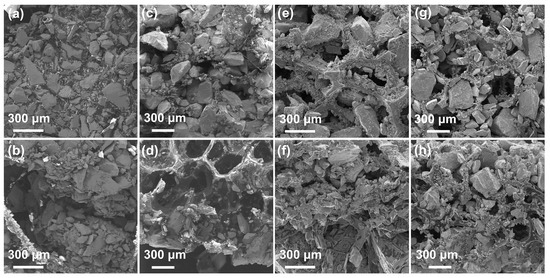
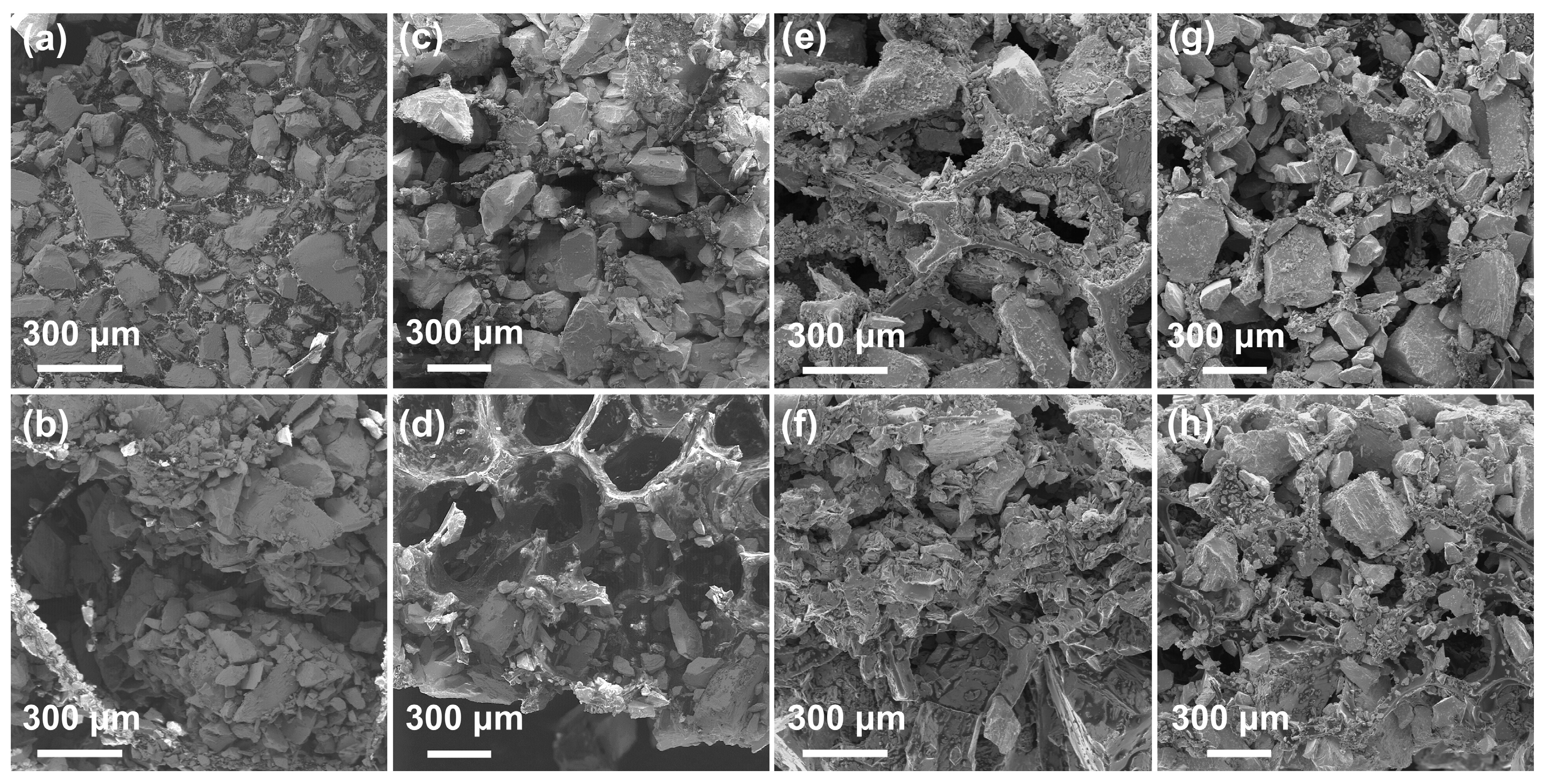
The microstructures of LaNi5 framework materials with the different substrates are shown in Figure 1. The differently sized LaNi5 powder is uniformly distributed on the surface of the aluminum silicate fiber substrate (Figure 1a); however, due to the relatively large interval of aluminum silicate fiber blanket substrate, it does not fully fill the interior of the substrate (Figure 1b). The loading rate of the aluminum silicate fiber blanket substrate is 81.63 wt%. For the 110 PPI polyester foam substrate, the differently sized LaNi5 powder fully fill the surface (Figure 1c); however, due to the poor connectivity of the 110 PPI polyester foam substrate, the LaNi5 powder does not fill the internal pores, especially the large particles (Figure 1d). The loading rate of the 110 PPI polyester foam substrate is 75.04 wt%. For the 70 PPI nickel foam substrate, due to its good connectivity and large pore size, the differently sized LaNi5 powder fully fills the surface and the pores, with a uniform distribution throughout the framework material (Figure 1e,f). The loading rate of the 70 PPI nickel foam substrate reaches 88.85 wt%, which is the highest among these framework materials. For the 110 PPI nickel foam substrate, due to its small pores (200–300 μm), which are smaller than the particle size of 45-mesh powder (~355 μm), only the smaller powder particles filled the interior of the substrate, leaving large particles on the surface (Figure 1g,h). The loading rate of the 110 PPI nickel foam substrate is 85.05 wt%.
Figure 1.
SEM images of LaNi5 framework materials: (a) surface and (b) side view of aluminum silicate fiber blanket substrate; (c) surface and (d) side view of 110 PPI polyester foam substrate; (e) surface and (f) side view of 70 PPI nickel foam substrate; (g) surface and (h) side view of 110 PPI nickel foam substrate.
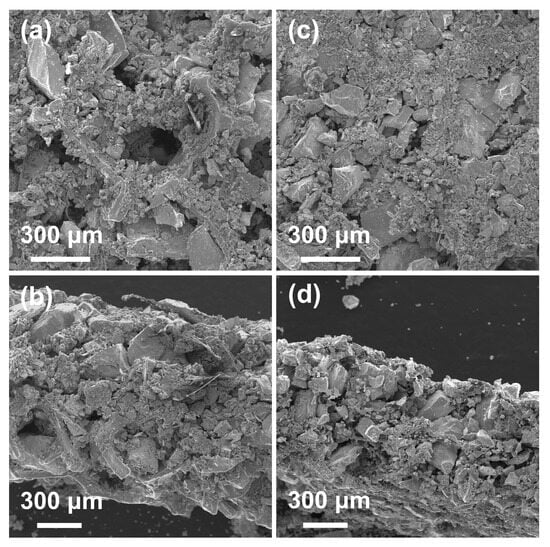
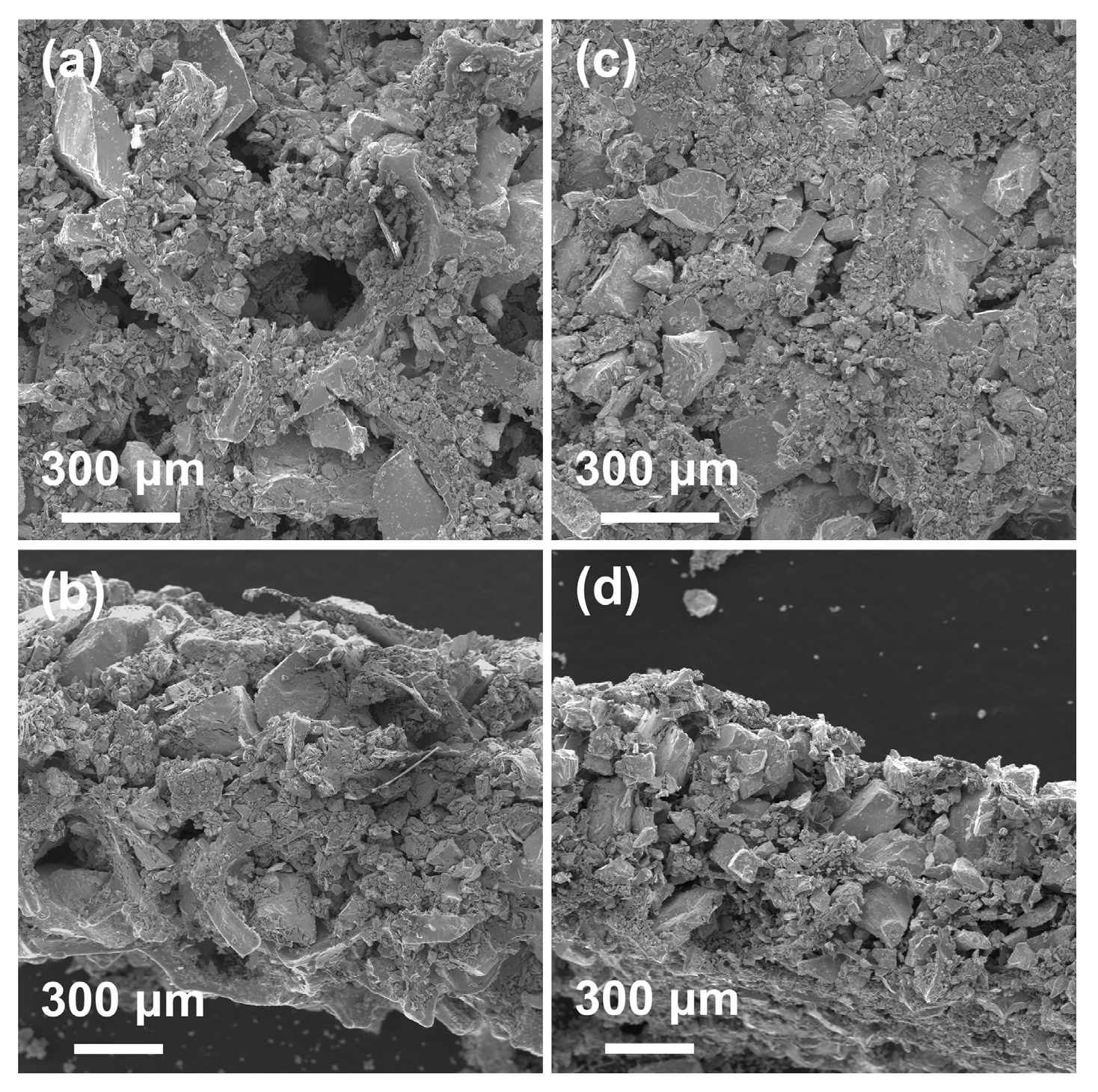
To prevent particle detachment, both LaNi5 framework materials with 70 PPI and 110 PPI nickel foam substrates were compressed at 0.5 MPa for 20 min. Their microstructures are shown in Figure 2. After compression, the microstructure of the LaNi5 framework material with the 70 PPI nickel foam substrate becomes more packed while still retaining a large number of gaps and pores (Figure 2a,b). Meanwhile, some large LaNi5 particles on the surface are pressed into the porous interior during compression. For the LaNi5 framework material with the 110 PPI nickel foam substrate, after compression, the microstructure becomes denser and more compact, with few gaps and pores left (Figure 2c,d). Compression similarly results in the large LaNi5 particles on the surface being pressed into the porous interior.
Figure 2.
SEM images of compressed LaNi5 framework materials: (a) surface and (b) side view of 70 PPI nickel foam substrate; (c) surface and (d) side view of compressed 110 PPI nickel foam substrate.
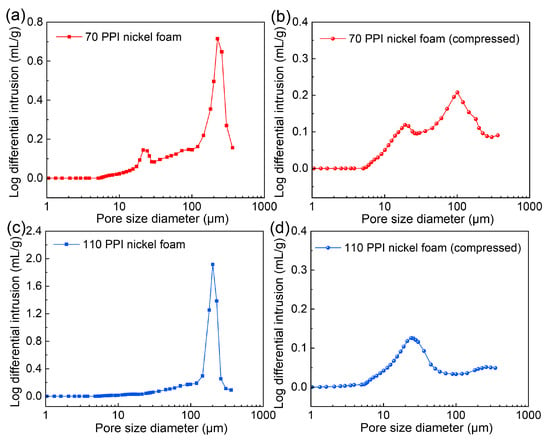
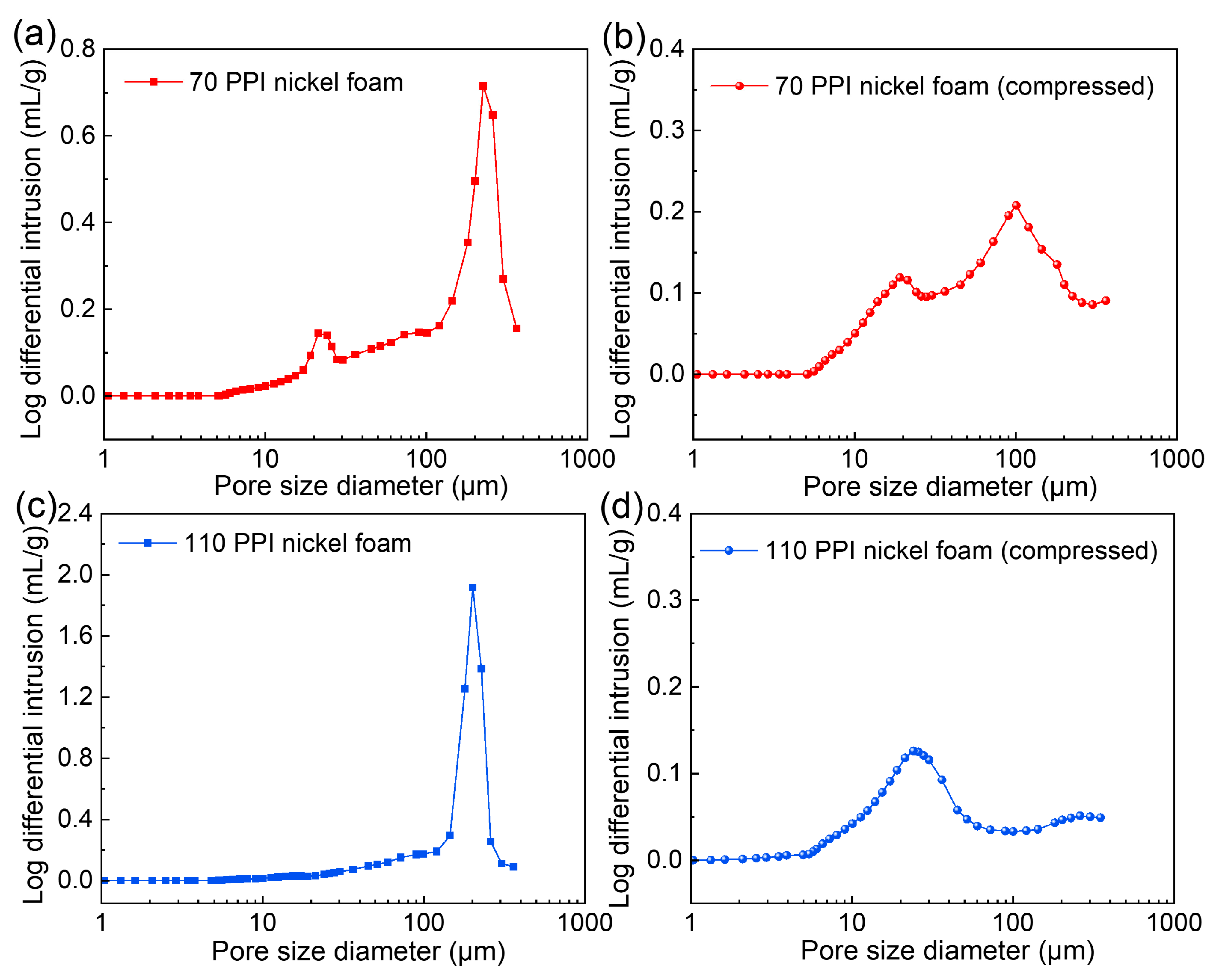
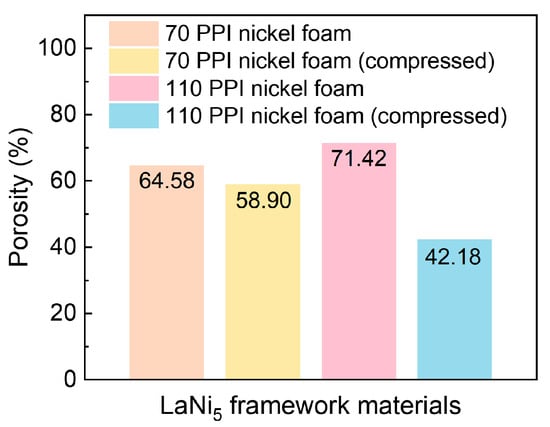
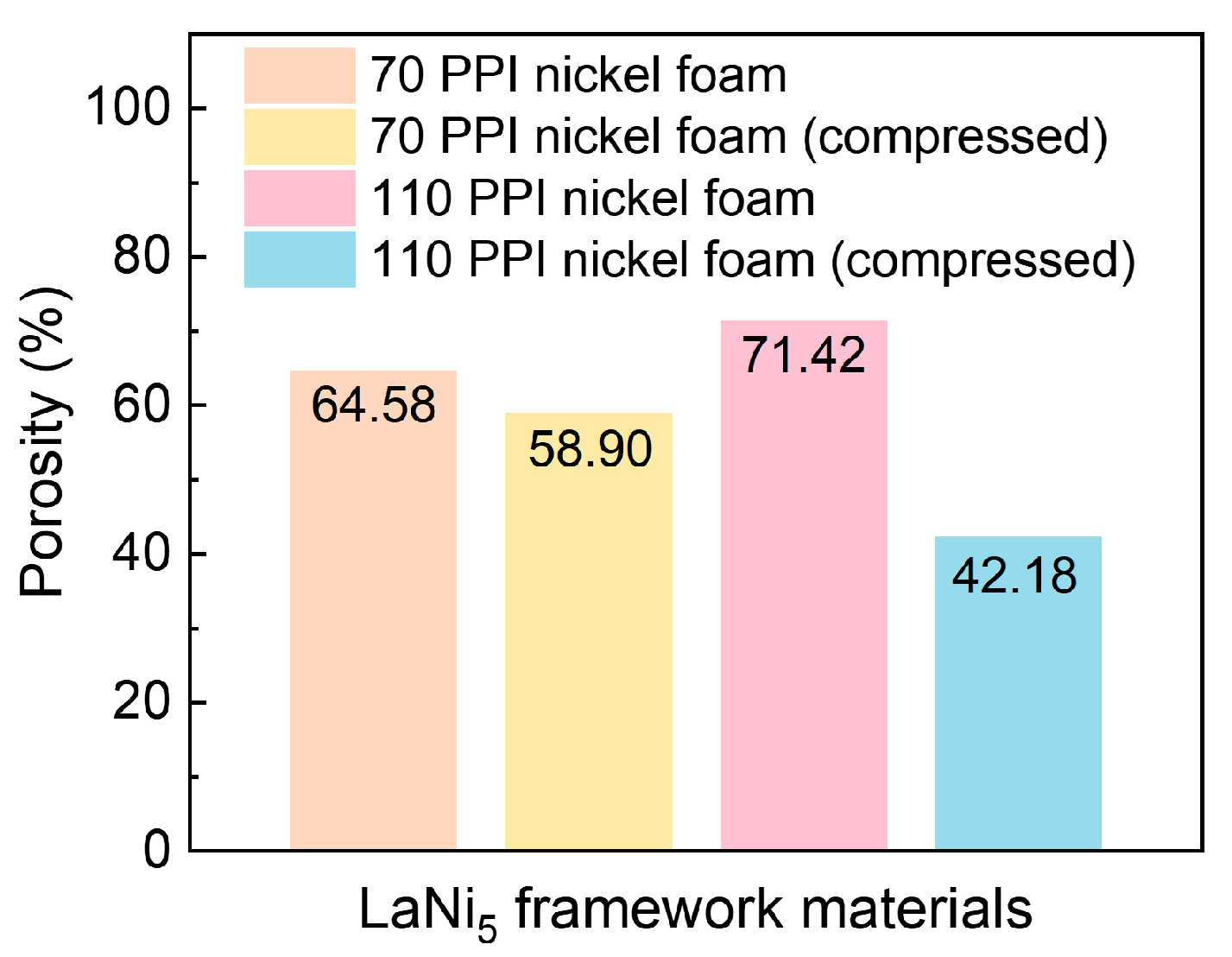
The pore size distribution curves and porosity of the LaNi5 framework materials with 70 PPI and 110 PPI nickel foam substrates are shown in Figure 3 and Figure 4. The pore sizes of the LaNi5 framework materials with 70 PPI and 110 PPI nickel foam substrates are determined to be 250 μm and 200 μm (Figure 3), respectively. After compression, the pore sizes of both framework materials show a significant decrease. The porosity of the LaNi5 framework material with the 70 PPI nickel foam substrate is determined to be 64.58% (Figure 4), and after compression, it decreases to 58.90%, while the porosity of the LaNi5 framework material with the 110 PPI nickel foam substrate is 71.42%, and after compression, it decreases to 42.18%, nearly half of its initial value.
Figure 3.
Pore size distribution curves of LaNi5 framework materials with: (a) 70 PPI nickel foam substrate, (b) compressed 70 PPI nickel foam substrate, (c) 110 PPI nickel foam substrate, and (d) compressed 110 PPI nickel foam substrate.
Figure 4.
Porosity of LaNi5 framework materials.
3.2. Activation Curves
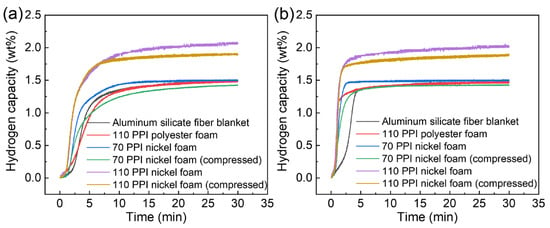
The activation curves of the LaNi5 framework materials for the first and second hydrogen absorption cycles at 303 K and 4 MPa are shown in Figure 5. In the first hydrogen absorption cycle (Figure 5a), the LaNi5 framework material with the 110 PPI nickel foam substrate has the shortest hydrogen absorption induction period, while that with the 110 PPI polyester foam substrate has the longest induction period. Among all samples, the LaNi5 framework material with the 110 PPI nickel foam substrate has the maximum hydrogen absorption capacity, while the other three samples have nearly the same, relatively low hydrogen storage capacity. After compression, the hydrogen storage capacity of both the LaNi5 framework material with the 70 PPI and 110 PPI nickel foam substrate decreases.
Figure 5.
Hydrogen absorption activation curves of LaNi5 framework materials at 303 K and 4 MPa: (a) First cycle. (b) Second cycle.
In the second hydrogen absorption cycle (Figure 5b), the hydrogen absorption induction periods of the LaNi5 framework materials are significantly decreased, implying that they exhibit good activation properties at 303 K and 4 MPa, except for the LaNi5 framework material with the aluminum silicate fiber blanket substrate, which still has a low hydrogen absorption rate.
3.3. PCT Curves
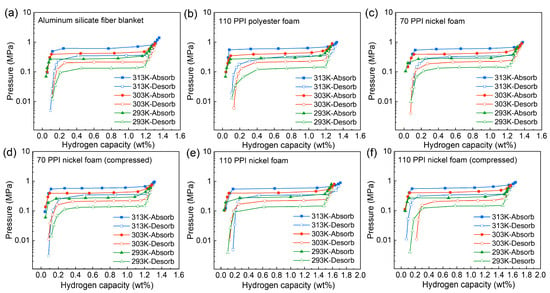
The PCT curves of the LaNi5 framework materials at 293 K, 303 K, and 313 K are shown in Figure 6, and the hydrogen storage properties are summarized in Table 3. All the samples exhibit a single hydrogen absorption and desorption plateau, and the platform pressure increases with the increase in temperature. The hydrogen storage capacity values at 303 K are 1.31, 1.27, 1.37 and 1.63 wt% for the LaNi5 framework materials with the aluminum silicate fiber blanket, 110 PPI polyester foam, 70 PPI nickel foam and 110 PPI nickel foam substrates, respectively. The LaNi5 framework material with the 110 PPI nickel foam substrate has the maximum hydrogen storage capacity. After compression, the hydrogen storage capacity of the LaNi5 framework materials decreases, from 1.37 wt% to 1.29 wt% for the 70 PPI nickel foam substrate and from 1.63 wt% to 1.57 wt% for the 110 PPI nickel foam substrate.
Figure 6.
PCT curves of LaNi5 framework materials with (a) aluminum silicate fiber blanket, (b) 110 PPI polyester foam, (c) 70 PPI nickel foam, (d) compressed 70 PPI nickel foam, (e) 110 PPI nickel foam and (f) compressed 110 PPI nickel foam substrates at 293 K, 303 K and 313 K.
Table 3.
Hydrogen storage property parameters of LaNi5 framework materials at 293, 303, and 313 K.
Based on the Van ’t Hoff equation and the hydrogen absorption plateau pressure at different temperatures, the ΔH and ΔS of hydrogen absorption of the LaNi5 framework materials are obtained (as shown in Figure S2) and are listed in Table 3. The ΔH values of the LaNi5 framework materials with aluminum silicate fiber blanket, 110 PPI polyester foam, 70 PPI nickel foam and 110 PPI nickel foam are determined to be −30.0, −28.4, −27.8 and −26.3 kJ·mol−1, respectively. Among them, the LaNi5 framework material with the 110 PPI nickel foam substrate has the smallest absolute ΔH value, implying that it has the lowest thermodynamic stability of the hydride phase. After compression, the ΔH of the LaNi5 framework materials with the 70 PPI and 110 PPI nickel foam substrates decreases to −28.4 and −29.2 kJ·mol−1, respectively.
The ΔS values of the LaNi5 framework materials range from −98.5 to −111.0 J·mol−1·K−1, exhibiting the same variation trend as ΔH.
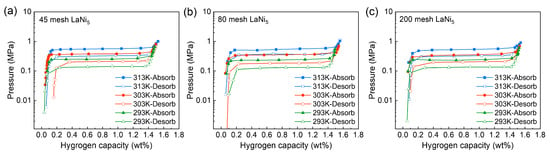
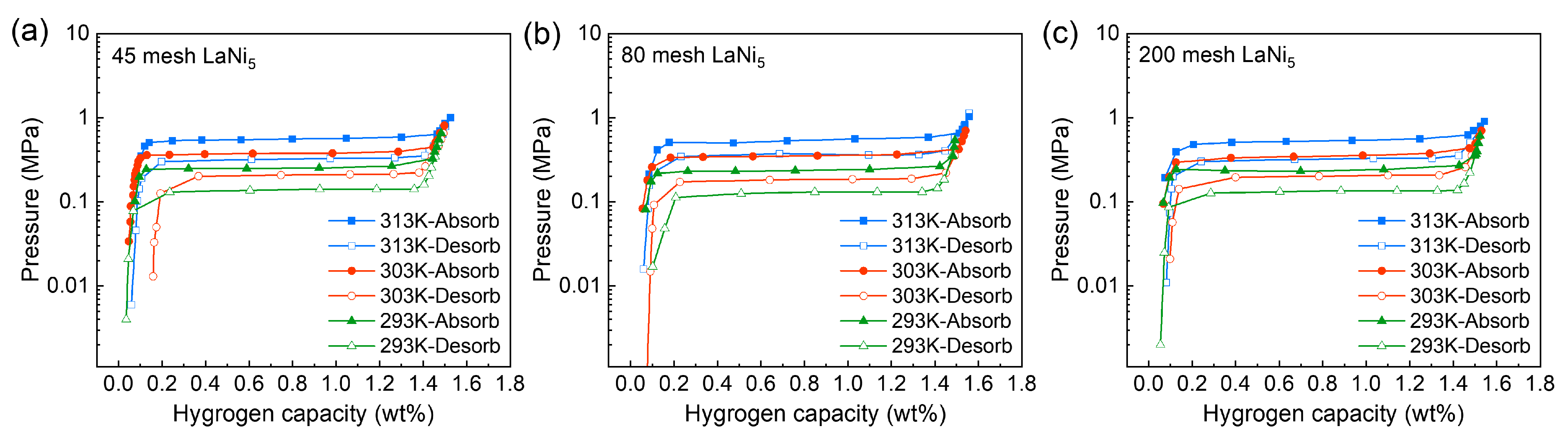
For comparison, the PCT curves of 45-mesh, 80-mesh, and 200-mesh LaNi5 powders at 293 K, 303 K, and 313 K are shown in Figure 7, and the hydrogen storage properties are summarized in Table 4. ΔH and ΔS are obtained using the Van ’t Hoff equation shown in Figure S3. The ΔH values of the 45-, 80-, and 200-mesh LaNi5 powders are −30.8, −31.3, and −31.4 kJ·mol−1, respectively. The relatively small variation in ΔH indicates that particle size has little influence on the thermodynamic properties of LaNi5 powder. Therefore, the differences in ΔH among the LaNi5 framework materials may be related to framework structure, instead of particle size.
Figure 7.
PCT curves of (a) 45-mesh, (b) 80-mesh and (c) 200-mesh LaNi5 powders at 293 K, 303 K and 313 K.
Table 4.
Hydrogen storage property parameters of 45-mesh, 80-mesh and 200-mesh LaNi5 powders at 293, 303, and 313 K.
3.4. Capacity Retention
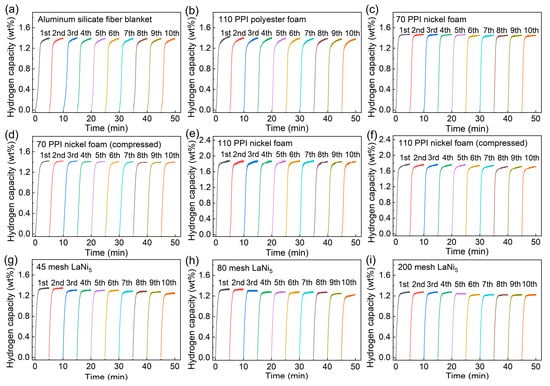
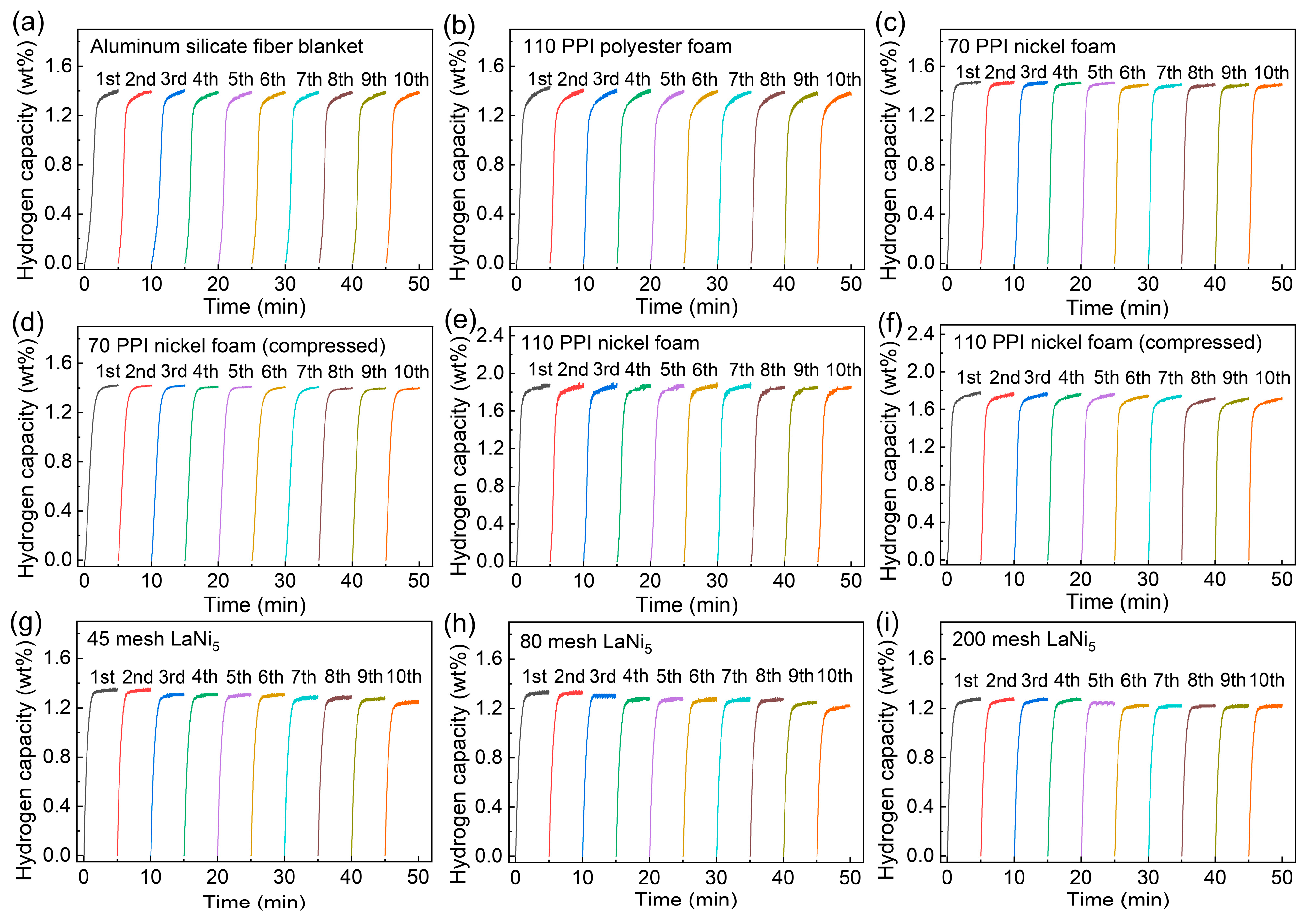
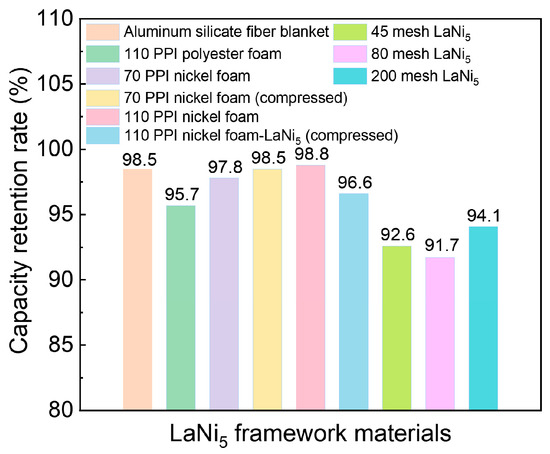
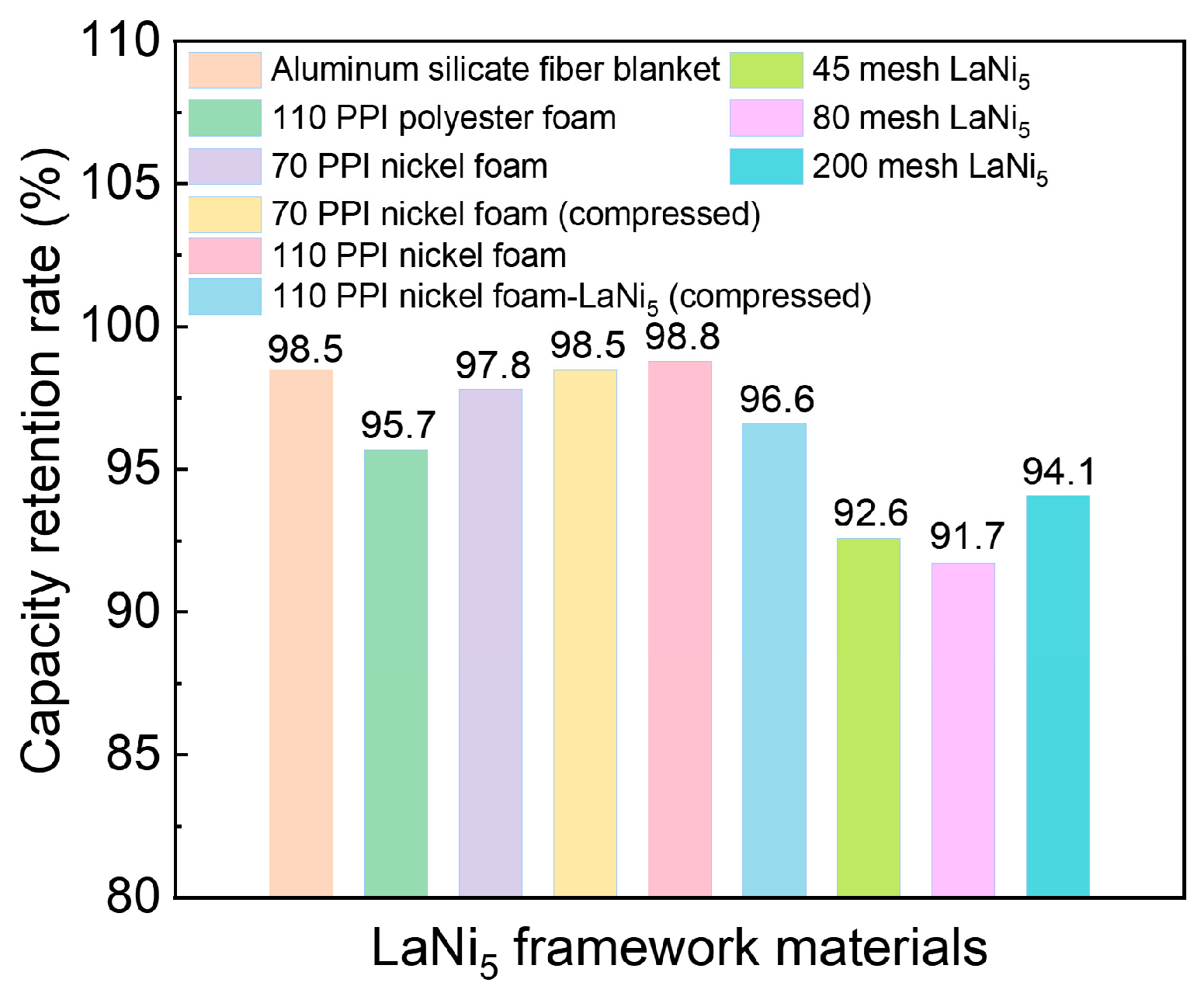
The hydrogen absorption curves and capacity retention rates of the LaNi5 framework materials and pure LaNi5 powder after 10 cycles are shown in Figure 8 and Figure 9. It can be seen that the capacity retention rates of the LaNi5 framework materials with the aluminum silicate fiber blanket, 110 PPI polyester foam, 70 PPI nickel foam and 110 PPI nickel foam substrates are 98.5, 95.7, 97.8 and 98.8%, respectively. Among them, the LaNi5 framework material with the 110 PPI nickel foam substrate has the highest capacity retention rate. After compression, the capacity retention rate of the LaNi5 framework material with the 70 PPI nickel foam substrate increases from 97.8% to 98.5%, while that of the 110 PPI nickel foam substrate decreases from 98.8% to 96.6%. After 10 cycles, the capacity retention rates of the 45-mesh, 80-mesh, and 200-mesh LaNi5 powders are 92.6%, 91.7%, and 94.1%, respectively. The microstructures of the LaNi5 framework materials after 10 cycles are shown in Figure S4. The SEM images show that the LaNi5 particles retained relatively large particle sizes without obvious pulverization.
Figure 8.
Hydrogen absorption curves of the LaNi5 framework materials with (a) aluminum silicate fiber blanket, (b) 110 PPI polyester foam, (c) 70 PPI nickel foam, (d) compressed 70 PPI nickel foam, (e) 110 PPI nickel foam, (f) compressed 110 PPI nickel foam substrates and (g) 45-mesh, (h) 80-mesh and (i) 200-mesh LaNi5 powders during 10 cycles.
Figure 9.
Capacity retention rates of the LaNi5 framework materials and LaNi5 powders after 10 cycles.
4. Discussion
The capacity retention rates of all LaNi5 framework materials (95.7–98.8%) are higher than those of pure LaNi5 powder with different particle sizes (91.7–94.1%) after 10 cycles of hydrogen absorption and desorption. This improvement may be attributed to the porous substrates, which enhance heat and mass transfer and reduce the pulverization of LaNi5 powder during cycling.
In practical applications, LaNi5 alloy is used in powder form. The repeated volume expansion and contraction during hydrogen absorption and desorption cycles generate internal stresses within the alloy particles, ultimately leading to particle cracking and pulverization. The pulverization of powder into fine particles inhibits hydrogen transport. As a result, the hydrogen storage capacity of LaNi5 powder is limited. In addition, hydrogen absorption is an exothermic reaction that generates a large amount of reaction heat. The poor heat transfer performance of the dense powder bed inhibits the timely release of reaction heat, resulting in local heat accumulation, which inhibits the hydrogen absorption reaction process, making the hydrogen absorption reaction insufficient. As a result, the hydrogen storage capacity of LaNi5 powder decreases.
In this study, porous substrates are filled with LaNi5 powder, where the powder is uniformly distributed within the porous substrates, forming a large number of pores supported by the porous substrates. These pores provide sufficient extra space for LaNi5 powder, facilitating the timely transfer of reaction heat. As a result, the reaction can proceed more thoroughly, thereby maintaining high hydrogen absorption capacity. At the same time, the sufficient extra space is also beneficial to the rapid flow of hydrogen gas, enabling almost all individual LaNi5 powder particles to fully participate in the hydrogen absorption and desorption reactions and thereby maintain high hydrogen absorption capacity during cycling.
In addition, the LaNi5 framework materials can also reduce the pulverization of LaNi5 powder. Due to sufficient extra space within the frameworks, the microstress caused by the expansion and contraction of LaNi5 powder, as well as temperature fluctuations during hydrogen absorption and desorption, can be reduced. As a result, the pulverization of LaNi5 powder can be inhibited, resulting in higher capacity retention rates of LaNi5 framework materials.
The heat and mass transfer properties are related to the pore structure of the materials. Laurencelle et al. [24] confirmed through simulations that the effective thermal conductivity of pure LaNi5 powder is approximately 0.15 W·m−1·K−1, while the effective thermal conductivity of aluminum foam filled with LaNi5 powder increases to 10.0 W·m−1·K−1, demonstrating that the porous structure can significantly enhance the heat transfer performance of LaNi5 powder. Regarding mass transfer, the Bruggeman equation is employed to calculate the effective diffusion coefficient of hydrogen in the porous structures, as follows [25]:
where Deff is the effective diffusion coefficient; D0 is the diffusion coefficient of hydrogen in gas phase, which is a constant at the same temperature and pressure; and ε is the porosity. Higher porosity results in a larger Deff. Therefore, porous substrates can enhance the heat and mass transfer of LaNi5 powder, which is consistent with our analysis.
Deff = D0ε1.5
The hydrogen storage capacity of LaNi5 framework materials is also influenced by their porosity. As shown in Figure 4, the porosity values of the LaNi5 framework materials with the 70 PPI and 110 PPI nickel foam substrates are 64.58% and 71.42%, respectively. According to Table 3, the hydrogen storage capacity values of the LaNi5 framework materials with the 70 PPI and 110 PPI nickel foam substrates are 1.37 wt% and 1.63 wt% at 303 K, respectively. These results indicate that the porosity of LaNi5 framework materials indeed influences their hydrogen storage capacity. After compression, the porosity of the LaNi5 framework materials with the 70 and 110 PPI nickel foam substrates decreases, resulting in corresponding decreases in their hydrogen storage capacity.
The hydrogen capacity values of the LaNi5 framework materials with the 110 PPI and compressed 110 PPI nickel foam substrates, as shown in Figure 5, reach approximately 1.7–2.0 wt%. We speculate that the relatively higher hydrogen storage capacity may be related to the structural characteristic of the porous substrate. More research work will be needed in future studies to verify this assumption.
Porous substrates also affect the thermodynamic properties of LaNi5 framework materials. As summarized in Table 3 and Table 4, the absolute values of ΔH for the LaNi5 framework materials (26.3–30.0 kJ·mol−1) are generally lower than that reported for LaNi5 alloy (30.4 kJ·mol−1 [26]). Similarly, the absolute values of ΔS for the LaNi5 framework materials (98.5−111.0 J·mol−1·K−1) are generally lower than that reported for LaNi5 alloy (111.2 J·mol−1·K−1 [26]). However, the reasons and their underlying mechanism remain unclear and require further investigation.
5. Conclusions
This work systematically investigated the microstructures, activation, PCT curves, thermodynamic properties and cycling stability of LaNi5 framework materials and compared their cycling stability with pure 45-, 80- and 200-mesh LaNi5 powder. The main conclusions are summarized as follows.
(1) LaNi5 framework materials were prepared by filling porous substrates with LaNi5 powder. LaNi5 powder was uniformly distributed within the LaNi5 framework materials with the 70 PPI and 110 PPI nickel foam substrates. After compression, the LaNi5 powder was pressed into the porous structures, forming a more compact structure.
(2) All LaNi5 framework materials were activated after two hydrogen absorption cycles at 303 K and 4 MPa, and the LaNi5 framework material with the 110 PPI nickel foam substrate had the shortest hydrogen absorption induction period.
(3) The porosity of the LaNi5 framework materials influences their hydrogen storage capacity. The porosity values of the LaNi5 framework materials with 70 PPI and 110 PPI nickel foam substrates are 64.58% and 71.42%, and their hydrogen storage capacity values at 303 K are 1.37 wt% and 1.63 wt%, respectively.
(4) The ΔH values of the LaNi5 framework materials with the aluminum silicate fiber blanket, 110 PPI polyester foam, 70 PPI nickel foam, 110 PPI nickel foam, compressed 70 PPI nickel foam, and compressed 110 PPI nickel foam substrates are −30.0, −28.4, −27.8, −26.3, −28.4, and −29.2 kJ·mol−1, respectively.
(5) The capacity retention rates of the LaNi5 framework materials after 10 cycles (95.7%–98.8%) are all higher than those of pure 45-, 80-, and 200-mesh LaNi5 powder (91.7%–94.1%).
(6) The LaNi5 framework material with the 110 PPI nickel foam substrate exhibits the best comprehensive hydrogen storage properties, including high hydrogen capacity (1.63 wt%, at 303 K), the shortest hydrogen absorption induction period, and excellent cycling stability (98.8%, after 10 cycles).
Supplementary Materials
The following supporting information can be downloaded at: https://www.mdpi.com/article/10.3390/met16101095/s1, Figure S1: Digital photographs showing the macroscopic morphology of porous substrates: (a) aluminum silicate fiber blanket, (b) 110 PPI polyester foam, (c) 70 PPI nickel foam, and (d) 110 PPI nickel foam; Figure S2: Van′t Hoff plots log PH2 vs. 1000/T of the LaNi5 framework materials with: (a) Aluminum silicate fiber blanket, (b) 110 PPI polyester foam, (c) 70 PPI nickel foam, (d) 110 PPI nickel foam, (e) compressed 70 PPI nickel foam, and (f) compressed 110 PPI nickel foam substrates; Figure S3: Van′t Hoff plots log PH2 vs. 1000/T of the (a) 45 mesh, (b) 80 mesh and (c) 200 mesh LaNi5 powders; Figure S4: SEM images of the LaNi5 framework materials with: (a) Aluminum silicate fiber blanket; (b) 110 PPI polyester foam; (c) 70 PPI nickel foam; (d) compressed 70 PPI nickel foam; (e) 110 PPI nickel foam and (f) compressed 110 PPI nickel foam substrates after 10 cycles.
Author Contributions
Conceptualization, X.S.; methodology, W.Z.; validation, W.Z.; data curation, H.L. and W.Z.; writing—original draft, H.L.; writing—review & editing, X.S.; supervision, X.S.; Funding acquisition, X.S. All authors have read and agreed to the published version of the manuscript.
Funding
This research received no external funding.
Data Availability Statement
The original contributions presented in this study are included in the article/Supplementary Materials. Further inquiries can be directed to the corresponding author.
Acknowledgments
The authors would like to express sincere gratitude to University of Science and Technology Beijing for providing valuable resources, which have supported this research study.
Conflicts of Interest
The authors declare no conflicts of interest.
Abbreviations
The following abbreviations are used in this manuscript:
| PPI | Pores Per Inch |
References
- Qazi, U.Y. Future of Hydrogen as an Alternative Fuel for Next-Generation Industrial Applications; Challenges and Expected Opportunities. Energies 2022, 15, 4741. [Google Scholar] [CrossRef] [Scilit]
- Staffell, I.; Scamman, D.; Abad, A.V.; Balcombe, P.; Dodds, P.E.; Ekins, P.; Shah, N.; Ward, K.R. The role of hydrogen and fuel cells in the global energy system. Energy Environ. Sci. 2019, 12, 463–491. [Google Scholar] [CrossRef] [Scilit]
- Sikiru, S.; Oladosu, T.L.; Amosa, T.I.; Olutoki, J.O.; Ansari, M.N.; Abioye, K.J.; Rehman, Z.U.; Soleimani, H. Hydrogen-powered horizons: Transformative technologies in clean energy generation, distribution, and storage for sustainable innovation. Int. J. Hydrogen Energy 2024, 56, 1152–1182. [Google Scholar] [CrossRef] [Scilit]
- Wang, X.S.; Cheng, T.; Hong, H.L.; Guo, H.Z.; Lin, X.; Yang, X.; Nie, B.J.; Hu, Z.G.; Zou, J.X. Challenges and opportunities in hydrogen storage and transportation: A comprehensive review. Renew. Sust. Energy Rev. 2025, 219, 115881–115900. [Google Scholar] [CrossRef] [Scilit]
- Ma, N.; Zhao, W.H.; Wang, W.Z.; Li, X.R.; Zhou, H.Q. Large scale of green hydrogen storage: Opportunities and challenges. Int. J. Hydrogen Energy 2024, 50, 379–396. [Google Scholar] [CrossRef] [Scilit]
- Rampai, M.M.; Mtshali, C.B.; Seroka, N.S.; Khotseng, L. Hydrogen production, storage, and transportation: Recent advances. RSC Adv. 2024, 14, 6699–6718. [Google Scholar] [CrossRef] [Scilit] [PubMed]
- Barthelemy, H.; Weber, M.; Barbier, F. Hydrogen storage: Recent improvements and industrial perspectives. Int. J. Hydrogen Energy 2017, 42, 7254–7262. [Google Scholar] [CrossRef] [Scilit]
- Aziz, M. Liquid Hydrogen: A Review on Liquefaction, Storage, Transportation, and Safety. Energies 2021, 14, 5917. [Google Scholar] [CrossRef] [Scilit]
- Altaf, M.; Demirci, U.B.; Haldar, A.K. Review of solid-state hydrogen storage: Materials categorisation, recent developments, challenges and industrial perspectives. Energy Rep. 2025, 13, 5746–5772. [Google Scholar] [CrossRef] [Scilit]
- Xu, Y.H.; Zhou, Y.; Li, Y.; Ding, Z. Research Progress and Application Prospects of Solid-State Hydrogen Storage Technology. Molecules 2024, 29, 1767. [Google Scholar] [CrossRef] [Scilit] [PubMed]
- Scarpati, G.; Frasci, E.; Ilio, G.D.; Jannelli, E. A comprehensive review on metal hydrides-based hydrogen storage systems for mobile applications. J. Energy Storage 2024, 102, 113934–113964. [Google Scholar] [CrossRef] [Scilit]
- Nemukula, E.; Mtshali, C.B.; Nemangwele, F. Metal Hydrides for Sustainable Hydrogen Storage: A Review. Int. J. Energy Res. 2025, 2025, 6300225–6300240. [Google Scholar] [CrossRef] [Scilit]
- Liu, J.J.; Zheng, Z.; Cheng, H.H.; Li, K.; Yan, K.; Han, X.B.; Wang, Y.; Liu, Y. Long-term hydrogen storage performance and structural evolution of LaNi4Al alloy. J. Alloys Compd. 2018, 731, 172–180. [Google Scholar] [CrossRef] [Scilit]
- Chen, X.Y.; Xu, J.; Zhang, W.R.; Zhu, S.; Zhang, N.; Ke, D.D.; Liu, J.J.; Yan, K.; Cheng, H.H. Effect of Mn on the long-term cycling performance of AB5-type hydrogen storage alloy. Int. J. Hydrogen Energy 2021, 46, 21973–21983. [Google Scholar] [CrossRef] [Scilit]
- Chen, K.; Lau, M.Y.; Luo, X.Y.; Huang, J.N.; Ouyang, L.Z.; Yang, X.S. Research progress in solid-state hydrogen storage alloys: A review. J. Mater. Sci. Technol. 2026, 246, 256–289. [Google Scholar] [CrossRef] [Scilit]
- Uchida, H.; Uchida, H.; Huang, Y.C. Effect of the pulverization of LaNi5 on the hydrogen absorption rate and the X-ray diffraction patterns. J. Less-Common Met. 1984, 101, 459–468. [Google Scholar] [CrossRef] [Scilit]
- Zhu, W.; Yang, H.; Xu, J.; Yue, S.Y.; Wang, L.; Liu, J.J.; Li, Y.Q.; Ye, Y.; Yan, K.; Cheng, H.H. Function mechanism of Fe in improving cycle stability and plateau characteristics of AB5-type hydrogen storage alloys. Int. J. Hydrogen Energy 2024, 63, 1013–1024. [Google Scholar] [CrossRef] [Scilit]
- Xu, J.; Chen, X.Y.; Zhu, W.; Zhang, W.R.; Cui, H.; Zhu, S.Q.; Liu, J.J.; Liu, H.F.; Yan, K.; Cheng, H.H. Enhanced cycling stability and reduced hysteresis of AB5-type hydrogen storage alloys by partial substitution of Sn for Ni. Int. J. Hydrogen Energy 2022, 47, 22495–22509. [Google Scholar] [CrossRef] [Scilit]
- Liu, J.J.; Li, K.; Cheng, H.H.; Yan, K.; Wang, Y.; Liu, Y.; Jin, H.M.; Zheng, Z. New insights into the hydrogen storage performance degradation and Al functioning mechanism of LaNi5-xAlx alloys. Int. J. Hydrogen Energy 2017, 42, 24904–24914. [Google Scholar] [CrossRef] [Scilit]
- Zhu, Z.D.; Zhu, S.; Lu, H.Q.; Wu, J.; Yan, K.; Cheng, H.H.; Liu, J.J. Stability of LaNi5-xCox alloys cycled in hydrogen—Part 1 evolution in gaseous hydrogen storage performance. Int. J. Hydrogen Energy 2019, 44, 15159–15172. [Google Scholar] [CrossRef] [Scilit]
- Wang, R. Crack formation and fracture of LaNi5 during hydrogenation. Mater. Res. Bull. 1976, 11, 281–284. [Google Scholar] [CrossRef] [Scilit]
- Zadorozhnyy, V.Y.; Chernyshikhin, S.V.; Korol, A.A.; Zadorozhnyy, M.Y.; Nikonova, D.I.; Mogilnikov, P.S.; Stepashkin, S.A.; Dorofeeva, V.A.; Moskovskikh, D.O.; Kaloshkin, S.D.; et al. Production of Durable Bulk Materials from TiFe and LaNi5 via Laser Beam Powder Bed Fusion and Pressing: Effect of Prior Mechanical Activation. J. Alloys Compd. 2026, 1054, 186215–186226. [Google Scholar] [CrossRef] [Scilit]
- Ugaddan, E.; Violi, D.; Fiume, V.; Barale, J.; Luetto, C.; Rizzi, P.; Baricco, M. AB5-Based Metal Hydride Embedded in Polyethylene and Polymethylmethacrylate for Hydrogen Storage. Int. J. Hydrogen Energy 2024, 78, 952–961. [Google Scholar] [CrossRef] [Scilit]
- Laurencelle, F.; Goyette, J. Simulation of heat transfer in a metal hydride reactor with aluminium foam. Int. J. Hydrogen Energy 2007, 32, 2957–2964. [Google Scholar] [CrossRef] [Scilit]
- Berson, A.; Choi, H.W.; Pharoah, J.G. Determination of the effective gas diffusivity of a porous composite medium from the three-dimensional reconstruction of its microstructure. Phys. Rev. E 2011, 83, 026310–026322. [Google Scholar] [CrossRef] [Scilit] [PubMed]
- Ohlendorf, D.; Flotow, H.E. Heat Capacities and Thermodynamic Functions of LaNi5, LaNi5H0.36 and LaNi5H6.39 from 5 to 300 K. J. Less-Common Met. 1980, 73, 25–32. [Google Scholar] [CrossRef] [Scilit]

Disclaimer/Publisher’s Note: The statements, opinions and data contained in all publications are solely those of the individual author(s) and contributor(s) and not of MDPI and/or the editor(s). MDPI and/or the editor(s) disclaim responsibility for any injury to people or property resulting from any ideas, methods, instructions or products referred to in the content. |
© 2026 by the authors. Licensee MDPI, Basel, Switzerland. This article is an open access article distributed under the terms and conditions of the Creative Commons Attribution (CC BY) license.