


Abstract
This study examines organizational hypocrisy (OH) in relation to counterproductive work behavior (CWB) and investigates the indirect roles of organizational silence (OS) and job withdrawal behaviors (JOW). Drawing on Social Exchange Theory, the study proposes that perceived inconsistencies between organizational values and actual practices are associated with employee silence, withdrawal, and counterproductive work behavior. Data were collected from 437 employees working in Saudi Arabian five-star hotels and Class-A travel agencies and analyzed using Partial Least Squares Structural Equation Modeling (PLS-SEM). The results revealed that organizational hypocrisy was positively associated with organizational silence, job withdrawal behaviors, and counterproductive work behavior. Organizational silence showed significant positive relationships with both job withdrawal behaviors and counterproductive work behaviors, while job withdrawal behaviors were also positively associated with counterproductive work behavior. Furthermore, statistically significant individual indirect associations through organizational silence and job withdrawal behaviors, as well as a sequential indirect association through both variables, were identified within the proposed model. The findings extend Social Exchange Theory by providing support for an interconnected pattern of associations between perceived organizational hypocrisy, organizational silence, job withdrawal behaviors, and counterproductive work behavior. Rather than establishing a progressive temporal sequence, the results are consistent with the theoretically proposed ordering of these constructs within the model. This integrated perspective contributes to the literature by documenting individual and sequential indirect associations within a unified theoretical framework in the tourism and hospitality context. Given the cross-sectional design, however, the findings do not establish causality or confirm the temporal ordering of the examined variables. The findings also offer practical insights for managers seeking to strengthen organizational authenticity, encourage employee voice, and address employee disengagement and counterproductive work behavior.
1. Introduction
Counterproductive work behavior (CWB) has become a major concern for tourism and hospitality organizations because service quality and guest satisfaction depend heavily on employees’ attitudes and behaviors. Such behaviors have been associated with a range of organizational and individual factors, including frustration, disengagement, and perceived unfairness among employees [1]. In service-intensive settings, where employees interact directly with customers, even relatively minor organizational inconsistencies may be associated with unfavorable employee responses that undermine productivity, service quality, and organizational reputation [2,3]. Consequently, understanding the organizational conditions associated with counterproductive work behavior remains an important priority for both researchers and practitioners [4].
One organizational factor that has received growing scholarly attention is organizational hypocrisy, which refers to inconsistencies between an organization’s stated values, commitments, or promises and its actual practices [5]. Such discrepancies may be particularly salient in tourism and hospitality organizations because these industries place considerable emphasis on authenticity, reliability, and consistency in interactions with both employees and customers [6]. When employees perceive a mismatch between organizational rhetoric and organizational actions, trust in the organization may decline, potentially weakening the psychological exchange relationship between employees and their employer. Previous studies have suggested that these perceptions are associated with a variety of unfavorable employee attitudes and behaviors [7,8,9].
Existing research has also linked organizational hypocrisy to organizational silence and job withdrawal behaviors, both of which represent important employee responses to unfavorable organizational experiences [10,11]. Employees who perceive organizational inconsistencies may become reluctant to express opinions or offer constructive suggestions because they believe their views will not be valued or because they fear negative consequences [12]. Organizational silence has, in turn, been associated with withdrawal-related behaviors such as psychological disengagement, absenteeism, and reduced organizational commitment, reflecting lower employee involvement in the organization [13]. Both organizational silence and job withdrawal behaviors have also been associated with counterproductive work behavior, whereby dissatisfied employees may express their frustration through behaviors that undermine organizational functioning [14,15]. In tourism and hospitality organizations, these behaviors may include neglecting service responsibilities, reducing work effort, or interacting inappropriately with customers, all of which may adversely affect service quality, customer satisfaction, and organizational reputation [16,17].
Taken together, prior research suggests that organizational hypocrisy is positively associated with organizational silence, organizational silence is positively associated with job withdrawal behaviors, and both organizational silence and job withdrawal behaviors are positively associated with counterproductive work behavior. These documented associations indicate that organizational hypocrisy may represent more than a superficial inconsistency between organizational rhetoric and practice. Instead, it may be associated with a broader pattern of unfavorable employee responses. Accordingly, examining the indirect relationships involving organizational silence and job withdrawal behaviors may contribute to a more comprehensive understanding of how organizational hypocrisy is statistically associated with counterproductive work behavior in tourism and hospitality organizations [18,19,20,21,22].
This study is grounded in Social Exchange Theory (SET), which proposes that employment relationships are based on reciprocal exchanges involving trust, fairness, and mutual obligations [23]. From this perspective, employees evaluate the quality of their exchange relationship with the organization according to whether organizational actions are consistent with stated commitments. When employees perceive violations of these expectations, they may become less willing to reciprocate positively, resulting in lower engagement and behaviors that are less beneficial to the organization [24,25,26]. Within this theoretical framework, SET provides a useful basis for examining the proposed associations among organizational hypocrisy, organizational silence, job withdrawal behaviors, and counterproductive work behavior.
Although counterproductive work behavior has been widely examined, much of the existing literature has focused on manufacturing organizations and general business settings, whereas comparatively less attention has been devoted to service-intensive industries such as tourism and hospitality [27,28,29]. Moreover, previous studies have frequently investigated counterproductive work behavior in relation to factors such as workplace stress, organizational injustice, or personality characteristics (e.g., [16,30]), while organizational hypocrisy has received comparatively limited attention as a potential organizational antecedent. As a result, understanding of how perceived organizational inconsistencies are associated with employee attitudes and behaviors remains incomplete.
A second limitation concerns the examination of intervening mechanisms. Although organizational silence and job withdrawal behaviors have each been examined separately in previous studies (e.g., [15,31]), relatively few studies have investigated their sequential indirect relationships within a single conceptual framework. Consequently, limited empirical evidence is available regarding whether organizational hypocrisy is statistically associated with counterproductive work behavior indirectly through organizational silence and job withdrawal behaviors. Addressing this gap may contribute to a better understanding of the relationships among these constructs, particularly within tourism and hospitality organizations where employee behavior has direct implications for service delivery and customer experiences [6].
To address these gaps, the present study examines a conceptual model in which organizational silence and job withdrawal behaviors are proposed as sequential mediators of the association between organizational hypocrisy and counterproductive work behavior. Rather than examining these constructs independently, the study conceptualizes them as interconnected variables within a broader Social Exchange Theory framework. Specifically, the proposed model examines whether perceptions of organizational hypocrisy are statistically associated with organizational silence, job withdrawal behaviors, and counterproductive work behavior through direct and indirect relationships.
Accordingly, this study investigates the associations among organizational hypocrisy, organizational silence, job withdrawal behaviors, and counterproductive work behavior among employees working in five-star hotels and Class-A travel agencies in the Eastern Region of Saudi Arabia. By examining both direct and sequential indirect relationships, the study seeks to extend current understanding of how these organizational and behavioral constructs are statistically related within a service-intensive context.
This study makes three principal contributions. First, it extends the organizational hypocrisy literature by examining its statistical association with counterproductive work behavior, an outcome that has received relatively limited attention within tourism and hospitality research. Second, it evaluates a sequential mediation model in which organizational silence and job withdrawal behaviors are examined as interconnected mediating variables linking organizational hypocrisy with counterproductive work behavior. Third, by focusing on tourism and hospitality organizations in Saudi Arabia, the study contributes context-specific evidence from a service-intensive industry in which employee behavior is closely related to service quality, customer satisfaction, and organizational reputation. Collectively, these contributions provide additional empirical evidence regarding the relationships among these constructs while offering practical insights for managers seeking to promote healthier organizational environments.
2. Literature Review and Hypotheses Development
2.1. Social Exchange Theory (SET)
Social Exchange Theory (SET) provides an appropriate theoretical framework for examining the proposed relationships among organizational hypocrisy, organizational silence, job withdrawal behaviors, and counterproductive work behavior. The central premise of SET is that employment relationships are based on reciprocal exchanges involving trust, fairness, and mutual obligations [32]. Employees continuously evaluate the quality of their exchange relationship with the organization, and when they perceive that organizational actions are inconsistent with stated commitments, they may reassess the value of their contributions and adjust their attitudes and behaviors accordingly [16]. Within this perspective, organizational hypocrisy—defined as the inconsistency between what an organization communicates and what it does—may be perceived as a violation of reciprocal expectations and has been associated with lower levels of trust and weaker exchange relationships [5,33].
From the perspective of SET, organizational silence can be viewed as one possible employee response associated with perceived violations of the exchange relationship [34]. Employees who perceive organizational hypocrisy may become less willing to express ideas, concerns, or suggestions because they question whether doing so will be meaningful or appropriately valued. Rather than representing only fear of negative consequences, silence may also reflect a reduction in employees’ willingness to make discretionary contributions to the organization, consistent with the principle of negative reciprocity described by SET [33]. In this way, withholding voice may represent a behavioral response associated with employees’ perceptions of an imbalanced exchange relationship [35,36].
SET also provides a useful framework for understanding the association between perceived organizational imbalance and job withdrawal behaviors [37]. Employees who perceive that the exchange relationship has become unfair may reduce their psychological and behavioral investment in the organization by disengaging from work-related activities [38]. Behaviors such as absenteeism, reduced effort, declining organizational commitment, and psychological detachment may therefore reflect adjustments in employees’ contributions that are consistent with their perceptions of reciprocity and fairness [39]. Within this framework, job withdrawal behaviors may be interpreted as another manifestation of negative reciprocity, reflecting lower employee engagement rather than active organizational participation [40,41].
Counterproductive work behavior likewise can be interpreted within the SET framework as one of several employee behaviors associated with deteriorating exchange relationships. Employees who perceive organizational betrayal or inconsistency may exhibit behaviors that are less supportive of organizational objectives, including neglecting responsibilities, reducing service quality, or engaging in actions that undermine organizational functioning. In tourism and hospitality organizations, where employee interactions directly influence customer experiences, such behaviors may have particularly important organizational implications [1]. Accordingly, SET offers a coherent theoretical foundation for examining the proposed direct and indirect associations among organizational hypocrisy, organizational silence, job withdrawal behaviors, and counterproductive work behavior without implying that these relationships reflect established causal or temporal processes.
2.2. Organizational Hypocrisy and Counterproductive Behaviors
Organizational hypocrisy refers to the inconsistency between an organization’s stated values, commitments, or promises and its actual practices. When employees perceive discrepancies between organizational rhetoric and organizational actions, they may question the authenticity and credibility of organizational commitments, thereby weakening trust in the employment relationship [5,42]. Such perceptions have been associated with employee frustration, cynicism, and dissatisfaction, which previous research has linked to counterproductive work behavior [26].
From the perspective of Social Exchange Theory, organizational hypocrisy may be interpreted as a perceived violation of reciprocal obligations between employees and the organization. When employees believe that organizational commitments are not consistently reflected in managerial actions, they may become less willing to reciprocate positively by maintaining high levels of engagement and discretionary effort [43]. Within this context, counterproductive work behavior has been discussed as one potential employee response associated with perceived organizational inconsistency, including behaviors such as reducing work effort, neglecting responsibilities, or engaging in actions that are detrimental to organizational functioning [44].
These relationships may be particularly relevant in tourism and hospitality organizations because frontline employees play a central role in service delivery and customer experiences. Behaviors that undermine organizational effectiveness may therefore extend beyond internal organizational outcomes and be associated with service quality, customer satisfaction, and organizational reputation [45].
Previous empirical studies provide evidence consistent with a positive association between organizational hypocrisy and unfavorable employee outcomes. Existing research has linked organizational hypocrisy with lower levels of trust, reduced psychological safety, weaker organizational commitment, and greater employee cynicism [22,46]. Likewise, perceived discrepancies between organizational rhetoric and actual practices have been associated with frustration, moral disengagement, and perceptions of organizational insincerity, all of which have been linked to counterproductive work behavior [47,48]. Collectively, this body of evidence suggests that employees who perceive higher levels of organizational hypocrisy may also report higher levels of counterproductive work behavior. Accordingly, the following hypothesis is proposed:
H1.
Organizational hypocrisy is positively associated with counterproductive work behavior.
2.3. Organizational Hypocrisy and Organizational Silence
Organizational silence refers to employees’ intentional withholding of ideas, concerns, or opinions that could be beneficial to the organization. Previous research has identified organizational hypocrisy as an organizational condition that is associated with organizational silence because employees may perceive managerial statements as being inconsistent with organizational actions [49,50]. When employees observe persistent discrepancies between organizational rhetoric and actual practices, they may view expressing their opinions as unlikely to influence decisions or produce meaningful organizational change. Consequently, remaining silent may be perceived as a more appropriate response than speaking up [20,51]. This issue is particularly relevant in tourism and hospitality organizations, where effective communication, employee feedback, and continuous problem-solving are essential for maintaining service quality and operational effectiveness [52]. In organizational environments characterized by perceived hypocrisy, employees may become less willing to communicate operational concerns, service-related suggestions, or constructive criticism, thereby limiting the exchange of information that supports organizational learning and service improvement [53]. Empirical evidence generally supports a positive association between organizational hypocrisy and organizational silence. Previous studies have reported that organizational hypocrisy has been associated with lower confidence in managerial responsiveness, reduced psychological safety, and stronger perceptions that transparency and open communication are not genuinely valued within the organization [10,20]. Likewise, employees who perceive inconsistencies between organizational promises and actual practices have been found to regard speaking up as ineffective, making them more likely to withhold their opinions and remain silent [18,54]. Collectively, these findings suggest that higher perceived organizational hypocrisy is associated with higher levels of organizational silence. Hence, we hypothesize:
H2.
Organizational hypocrisy is positively associated with organizational silence.
2.4. Organizational Hypocrisy and Job Withdrawal Behaviors
Job withdrawal behaviors refer to employees’ psychological and behavioral disengagement from their work roles, including reduced effort, absenteeism, lateness, and lower participation in organizational activities [55]. Within the Social Exchange Theory perspective, perceived organizational hypocrisy may be associated with greater job withdrawal because inconsistencies between organizational values and organizational practices may weaken employees’ willingness to invest time, energy, and commitment in the employment relationship [56]. Rather than openly confronting perceived organizational inconsistencies, employees may respond by distancing themselves psychologically and behaviorally from their work roles, making withdrawal one possible response to an organizational environment perceived as lacking authenticity or credibility [5]. This relationship may be especially relevant in tourism and hospitality organizations, where employee engagement and service commitment are fundamental to service quality and customer satisfaction. Lower levels of employee involvement have been associated with withdrawal-related behaviors that may disrupt teamwork, reduce service consistency, and adversely affect customer experiences [6,16]. Existing research provides considerable empirical support for a positive association between organizational hypocrisy and job withdrawal behaviors. Previous studies have reported that organizational hypocrisy has been associated with weaker psychological attachment to the organization, stronger feelings of betrayal and disillusionment, and lower commitment to work responsibilities [11,57,58]. Employees who perceive discrepancies between organizational promises and organizational practices may therefore become less engaged with their work roles and less willing to contribute beyond minimum job requirements. Collectively, these findings suggest that higher perceived organizational hypocrisy is associated with higher levels of job withdrawal behaviors. Therefore, we postulate that:
H3.
Organizational hypocrisy is positively associated with job withdrawal behaviors.
2.5. Organizational Silence and Counterproductive Behaviors
Organizational silence limits employees’ opportunities to express concerns, share suggestions, or communicate dissatisfaction through constructive channels. When employees repeatedly withhold their opinions, unresolved workplace issues and negative emotions may accumulate, and these experiences may be associated with behavioral rather than verbal expressions of dissatisfaction [59,60]. Accordingly, organizational silence represents more than the absence of communication; it has also been associated with employee attitudes and behaviors that are detrimental to organizational functioning [61]. This relationship is particularly relevant in tourism and hospitality organizations, where service quality depends heavily on employee initiative, communication, and responsiveness. Employees who remain silent about operational problems, service failures, or workplace concerns may become less engaged with organizational objectives, and this reduced engagement has been associated with higher levels of counterproductive work behavior that may adversely affect service performance and customer experiences [1]. Previous research provides empirical support for this association. Organizational silence has been linked to unresolved frustration, feelings of powerlessness, cynicism, and lower organizational commitment, all of which have been associated with counterproductive work behavior [14,21,62]. Furthermore, organizational silence has been associated with psychological withdrawal and employee disengagement, which have likewise been linked to behaviors that undermine organizational effectiveness [63]. Collectively, these findings suggest that higher levels of organizational silence are associated with higher levels of counterproductive work behavior. Consequently, the following hypothesis is proposed:
H4.
Organizational silence is positively associated with counterproductive work behavior.
2.6. Job Withdrawal Behaviors and Counterproductive Behaviors
Job withdrawal behaviors reflect employees’ psychological and behavioral disengagement from their work roles through actions such as absenteeism, lateness, reduced work effort, and psychological detachment. Employees who report higher levels of withdrawal behaviors may also exhibit weaker attachment to organizational goals and responsibilities, which may be associated with lower motivation to maintain expected performance standards [6]. Within this context, job withdrawal behaviors have been associated with conditions under which counterproductive work behavior is more frequently observed [64,65]. This relationship is particularly important in tourism and hospitality organizations, where service quality depends heavily on employee commitment, responsiveness, and discretionary effort. Employees who become disengaged from their work roles may demonstrate lower support for organizational objectives and may be more likely to neglect responsibilities that directly affect customer experiences and operational performance [66,67]. Previous empirical studies have consistently reported positive associations between job withdrawal behaviors and counterproductive work behaviors. Job withdrawal has been associated with lower accountability, greater emotional detachment, and weaker commitment to organizational norms [68,69,70]. More recent evidence likewise indicates that higher levels of withdrawal behaviors are associated with higher levels of counterproductive work behavior, particularly in service settings where employee engagement is closely related to operational performance and service quality [15]. Collectively, these findings provide support for examining a positive association between job withdrawal behaviors and counterproductive work behavior. Accordingly, we hypothesize:
H5.
Job withdrawal behaviors are positively associated with counterproductive work behavior.
2.7. Organizational Silence and Job Withdrawal Behaviors
Organizational silence represents more than a communication-related behavior and has also been associated with employees’ psychological and behavioral disengagement from their work roles. Employees who repeatedly withhold their opinions, concerns, and suggestions may become less psychologically connected to both their work and their organization [71]. As opportunities for meaningful participation become more limited, employees may perceive their contributions as having little value, which may be associated with lower motivation to remain actively involved in organizational activities [72]. This relationship is especially relevant in tourism and hospitality organizations, where employee participation and communication play important roles in maintaining service quality and operational effectiveness [73]. Reduced employee voice has been associated with lower levels of organizational involvement and belonging, as well as withdrawal-related behaviors such as reduced effort, absenteeism, and diminished organizational commitment [74]. Previous research has linked organizational silence to job withdrawal through feelings of futility, alienation, emotional exhaustion, and weaker organizational identification [75,76]. Collectively, these findings suggest that employees reporting higher levels of organizational silence may also report higher levels of job withdrawal behaviors. Thus, we hypothesize:
H6.
Organizational silence is positively associated with job withdrawal behaviors.
2.8. The Mediating Role of Organizational Silence in the Link Between Organizational Hypocrisy and Counterproductive Behavior
Perceptions of organizational hypocrisy are unlikely to be associated with counterproductive work behavior solely through direct relationships. Instead, employees frequently respond to perceived inconsistencies between organizational rhetoric and actual practices by withholding their opinions, concerns, and suggestions [1]. When employees believe that organizational actions do not align with declared values, they may perceive voice as ineffective and gradually disengage from constructive forms of participation [36]. Organizational silence may represent an important mechanism through which perceptions of organizational hypocrisy are associated with harmful workplace behaviors [26]. By suppressing voice, employees experience the absence of a constructive channel through which dissatisfaction can be expressed and addressed. Consequently, unresolved frustration and disengagement may accumulate and become associated with negative behavioral responses rather than being expressed through open communication [24,77]. Organizational hypocrisy has been associated with organizational silence, while organizational silence has been associated with counterproductive work behavior [18,52,53]. Accordingly, organizational silence is expected to be associated with the relationship between organizational hypocrisy and counterproductive work behavior. Consequently, we hypothesize:
H7.
Organizational silence mediates the association between organizational hypocrisy and counterproductive work behavior.
2.9. The Mediating Role of Organizational Silence in the Link Between Organizational Hypocrisy and Job Withdrawal Behaviors
The proposed relationships suggest that organizational silence may serve as a theoretically relevant mechanism linking organizational hypocrisy to job withdrawal behaviors. When employees perceive inconsistencies between organizational discourse and actual practices, they may become reluctant to express concerns, suggestions, or feedback, viewing communication as ineffective or potentially risky [10,78]. This reduction in voice represents an early sign of disengagement and is associated with lower levels of employee involvement in organizational activities. Persistent silence has also been associated with feelings of alienation, reduced organizational attachment, and higher levels of withdrawal behaviors such as reduced effort, absenteeism, and psychological disengagement [79,80,81]. Thus, organizational silence may help explain the association between perceptions of organizational hypocrisy and more visible forms of employee withdrawal. Existing evidence supporting the links between organizational hypocrisy and silence, as well as between silence and withdrawal, further supports this mediating role [18,24]. Accordingly, we hypothesize:
H8.
Organizational silence mediates the association between organizational hypocrisy and job withdrawal behaviors.
2.10. The Mediating Role of Job Withdrawal Behaviors in the Link Between Organizational Hypocrisy and Counterproductive Behaviors
Employee reactions to organizational hypocrisy are not necessarily reflected in immediate counterproductive actions [5]. In many cases, employees respond by distancing themselves from their work roles and reducing their involvement in organizational activities. This behavioral retreat represents a coping response to perceived inconsistencies between organizational values and actual practices without directly confronting the organization [82]. As employees become increasingly disengaged from their responsibilities, their attachment to organizational goals and norms may weaken [83]. Reduced participation, lower effort, and psychological detachment may reduce employees’ sense of obligation toward the organization and may be associated with counterproductive behaviors. In this regard, job withdrawal may represent a transitional mechanism through which perceptions of organizational hypocrisy are associated with more visible forms of workplace misconduct [11,15]. Empirical evidence supports this reasoning by showing that organizational hypocrisy is associated with higher levels of withdrawal, while withdrawn employees are more likely to engage in behaviors that undermine organizational effectiveness [15,84]. Therefore, job withdrawal behaviors are expected to mediate the association between organizational hypocrisy and counterproductive work behavior. Accordingly, we hypothesize:
H9.
Job withdrawal behaviors mediate the association between organizational hypocrisy and counterproductive work behavior.
2.11. The Mediating Role of Job Withdrawal Behaviors in the Link Between Organizational Silence and Counterproductive Work Behavior
Organizational silence is associated with counterproductive work behavior both directly and indirectly through job withdrawal behaviors [85]. Employees who consistently withhold their opinions, concerns, and suggestions may become less engaged with their work roles and organizational responsibilities. As silence persists, reduced participation and psychological detachment are associated with more visible forms of withdrawal, including diminished effort, absenteeism, and lower involvement in organizational activities [56,86]. Job withdrawal behaviors may represent a pathway through which organizational silence is associated with counterproductive actions. Employees who disengage from their roles may show lower adherence to organizational expectations and exhibit higher levels of behaviors that undermine organizational effectiveness [87,88]. Thus, the association between organizational silence and counterproductive work behavior may be partially explained by employees’ withdrawal from work responsibilities [81,89]. Therefore, we hypothesize:
H10.
Job withdrawal behaviors mediate the association between organizational silence and counterproductive work behavior.
2.12. The Sequential Mediating Role of Organizational Silence and Job Withdrawal Behaviors
The proposed model suggests that organizational hypocrisy may be associated with counterproductive work behavior through a sequence of interconnected employee responses. Drawing on Social Exchange Theory and the employee disengagement literature, organizational silence and job withdrawal behaviors are conceptualized as theoretically related mechanisms reflecting increasing levels of employee disengagement. When employees perceive discrepancies between organizational values and actual practices, they may become less willing to express their opinions, concerns, and suggestions, resulting in organizational silence [5,16]. Organizational silence, in turn, is associated with lower involvement in organizational activities and reduced participation in workplace processes [1]. As employees perceive that expressing their views is ineffective or unlikely to influence organizational decisions, they may reduce their psychological and behavioral investment in the organization, with withdrawal potentially representing a more immediate response than overt deviant behavior. Employees who refrain from voicing their concerns are therefore more likely to exhibit withdrawal behaviors such as reduced effort, absenteeism, and psychological detachment [73,81]. Job withdrawal behaviors are further linked to weaker attachment to organizational goals and responsibilities, which has been associated with counterproductive work behavior [88]. Because withdrawal reflects a deeper level of disengagement, employees may experience weaker constraints imposed by organizational norms and expectations, which are associated with behaviors that undermine organizational effectiveness. In this sense, withdrawal may represent an intermediate mechanism through which early disengagement is associated with more visible and harmful workplace behaviors [35,81]. Accordingly, organizational silence and job withdrawal behaviors are conceptualized as interconnected mediating mechanisms through which organizational hypocrisy may be associated with counterproductive work behavior [24]. Rather than functioning as independent mediators, organizational silence and job withdrawal behaviors are conceptualized as sequential stages within the proposed conceptual model. This process-oriented perspective extends Social Exchange Theory by providing a framework for understanding how perceived organizational hypocrisy is associated with increasingly harmful employee responses through interconnected mechanisms of disengagement [24,60]. Therefore, we hypothesize:
H11.
Organizational silence and job withdrawal behaviors sequentially mediate the association between organizational hypocrisy and counterproductive work behavior.
Based on the above-mentioned, a proposed model has been suggested, as illustrated in Figure 1.
Figure 1.
Research Conceptual Framework.
3. Methodology
3.1. Sampling and Data Collection
The present study employed a non-probability convenience sampling strategy targeting employees working in five-star hotels and Class-A travel agencies in the Eastern Region of Saudi Arabia. Data were collected using a cross-sectional survey between May and August 2025. Participants were recruited through professional networks, industry contacts, and online communities frequented by hospitality and tourism employees. To ensure eligibility, respondents confirmed that they were currently employed in either a five-star hotel or a Class-A travel agency within the study area. Screening questions at the beginning of the questionnaire verified these criteria, and ineligible responses were excluded from the final dataset.
The participating organizations represented the upper tier of the tourism and hospitality sector, characterized by intensive employee–customer interactions, standardized service procedures, and a strong emphasis on service quality. This context was considered appropriate because employees regularly encounter organizational policies, managerial communication, and customer-facing responsibilities directly related to the study variables. Consequently, these organizations provide an appropriate setting for examining the relationships among organizational hypocrisy, organizational silence, job withdrawal behaviors, and counterproductive work behavior.
Data were collected through a structured electronic questionnaire. Before full deployment, the survey instrument was pilot tested to evaluate clarity, wording, and formatting in accordance with established survey research guidelines (e.g., [90]). The final questionnaire was distributed through individualized invitations sent to identified eligible employees using direct email and professional networking platforms, including LinkedIn, Facebook, and X. These platforms served solely as communication channels to deliver invitations to employees identified through the researchers’ professional networks and industry contacts and were not used to disseminate an open or publicly accessible survey link. In total, 500 unique survey invitations were issued to eligible employees. Because invitations were delivered through multiple communication channels, the exact number of completed questionnaires attributable to each channel could not be determined. Responses were monitored throughout the data collection period to ensure quality and consistency.
Several procedural safeguards were implemented to minimize duplicate and invalid responses. These included restricting multiple submissions from the same IP address where feasible, examining response patterns for inconsistencies or straight-lining, and removing incomplete or suspicious questionnaires during data cleaning. No participation incentives were offered, thereby reducing the likelihood of careless or repeated submissions.
Because all variables were measured using a self-reported cross-sectional survey administered to a single source, several procedural remedies were adopted to reduce the potential influence of common method bias (CMB) [91]. First, respondents were assured of anonymity and confidentiality to reduce evaluation apprehension and social desirability bias. Second, the questionnaire emphasized that there were no right or wrong answers and encouraged honest responses. Third, all measurement items were adapted from previously validated scales and carefully reviewed during pilot testing to ensure clarity and minimize ambiguity. In addition, different scale anchors and item wording were used where appropriate to reduce respondents’ tendency to provide uniform responses across constructs.
Following data collection, common method bias was assessed statistically. Harman’s single-factor test was conducted using exploratory factor analysis, and the first unrotated factor explained less than 50% of the total variance, indicating that common method variance was unlikely to pose a serious concern. Furthermore, full collinearity variance inflation factor (VIF) values were all below the recommended threshold of 3.3, providing additional evidence that common method bias did not materially affect the results [92].
Ethical considerations were carefully addressed throughout the study. The introductory section of the questionnaire explained the study objectives, assured respondents of anonymity and confidentiality, and emphasized that participation was voluntary. Electronic informed consent was obtained before respondents completed the questionnaire. Participants were also provided with the researchers’ contact information for any questions regarding the study.
3.2. Research Instruments
The questionnaire consisted of five sections. The first collected respondents’ demographic information. The second measured organizational silence using the 15-item scale developed by [93]. The third assessed job withdrawal behaviors using the four-item scale adapted from [94]. The fourth measured organizational hypocrisy using the nine-item scale adopted from [48]. Finally, counterproductive work behavior (CWB) was measured using the six-item scale adapted from [95].
To establish content validity, the questionnaire was reviewed by academic experts in organizational behavior and hospitality management, who confirmed the clarity, relevance, and appropriateness of the measurement items for the research context. All constructs were measured using a seven-point Likert scale ranging from 1 (strongly disagree) to 7 (strongly agree).
3.3. Data Evaluation
A total of 500 unique survey invitations were sent directly to identified eligible full-time employees working in five-star hotels and Class-A travel agencies in the Eastern Region of Saudi Arabia. Invitations were delivered through the researchers’ professional networks and industry contacts using direct email and individualized messages via professional networking platforms, including LinkedIn, Facebook, and X. These platforms were used exclusively to communicate with identified eligible employees and were not used to distribute a publicly accessible survey link. Of these, 437 valid questionnaires were returned, representing a response rate of 87.4%. No missing data were identified.
The sample size exceeded the recommendation of [96], who suggested a minimum ratio of 10 observations per measurement item. Among the respondents, 351 (80.3%) were male and 86 (19.7%) were female. Employees aged between 26 and 35 years constituted the largest age group (81.5%).
Data analysis was performed using SPSS version 24 and SmartPLS version 4. Following the two-step analytical procedure proposed by [97], the analysis included descriptive statistics and partial least squares structural equation modelling (PLS-SEM). PLS-SEM was selected because of its suitability for exploratory and prediction-oriented research [98], as well as its robustness when handling moderate sample sizes and non-normal data distributions [99,100]. To further assess the potential influence of common method variance, Harman’s single-factor test was performed following the recommendation of [91].
4. Results
4.1. Measurement Model
An Exploratory Factor Analysis (EFA) was initially conducted on the 34 items to verify the potential impact of common method variance (CMV). The results indicated that the first unrotated factor accounted for only 24.3% of the total variance, suggesting that CMV was unlikely to represent a serious concern in the present study [91] (see Table 1). The convergent validity and internal consistency reliability of the measurement model were further assessed using the average variance extracted (AVE), composite reliability (CR), and Cronbach’s alpha (see Table 1). According to [100], the recommended threshold values are 0.50 for AVE, 0.70 for CR, and 0.70 for standardized outer loadings. The results revealed that all constructs satisfied the recommended AVE and CR thresholds, indicating that more than 50% of the variance in the indicators was explained by their corresponding constructs and demonstrating satisfactory levels of internal consistency reliability. Furthermore, all measurement items exhibited outer loadings above the recommended threshold of 0.70, indicating adequate indicator reliability. In addition, all variance inflation factor (VIF) values were below the threshold of 5, indicating the absence of multicollinearity issues. Consequently, the measurement model demonstrated satisfactory convergent validity and strong psychometric properties, consistent with the recommended standards in the PLS-SEM literature [98,100].
Table 1.
Measurements and Variables Parametric Attributes.
The discriminant validity of the measurement model was assessed using both the Fornell–Larcker criterion and the Heterotrait–Monotrait ratio (HTMT) (see Table 2). The square root of the AVE values for all constructs (diagonal elements) exceeded the corresponding inter-construct correlations, indicating that each construct explained more variance in its own indicators than in other constructs, thereby confirming adequate discriminant validity [101]. In addition, the indicator loadings were consistently higher on their respective constructs than on other constructs, as recommended by [100], further supporting the distinctiveness of the constructs. Moreover, all HTMT values (reported in parentheses) were below the conservative threshold of 0.90 [98], providing additional evidence of discriminant validity. Collectively, these findings indicate that counterproductive work behavior, job withdrawal behaviors, organizational hypocrisy, and organizational silence are conceptually distinct constructs and are not excessively correlated, thereby supporting the robustness of the measurement model.
Table 2.
Discriminant validity-Fornell & Larcker Criteria and HTMT Values.
4.2. Testing Research Hypotheses
As shown in Table 3 and Figure 2, the results of the hypothesis testing provide substantial support for the proposed conceptual model and reveal significant direct and indirect statistical relationships among organizational hypocrisy (OH), organizational silence (OS), job withdrawal behaviors (JOW), and counterproductive work behavior (CWB) in Saudi Arabian five-star hotels and Class-A travel agencies. Regarding the direct effects, the first hypothesis (H1) was strongly supported, indicating a significant positive association between OH and CWB (β = 0.514, T = 4.385, p < 0.001). This finding indicates that higher perceived organizational hypocrisy was associated with higher reported levels of counterproductive work behavior, consistent with the proposed conceptual model.
Table 3.
Hypotheses Testing Results.
Figure 2.
The Research Final Model.
Similarly, the second hypothesis (H2), which examined the relationship between OH and OS, was strongly supported, revealing a highly significant positive relationship (β = 0.937, T = 7.119, p < 0.001). This finding indicates that higher perceived organizational hypocrisy was associated with higher reported organizational silence among employees in hospitality and tourism organizations.
Correspondingly, the third hypothesis (H3) revealed a significant positive association between OH and JOW (β = 0.528, T = 4.705, p < 0.001), indicating that higher perceived organizational hypocrisy was associated with higher reported job withdrawal behaviors among employees in hotels and travel agencies. The fourth hypothesis (H4) demonstrated a significant positive association between OS and CWB (β = 0.218, T = 2.461, p = 0.014), indicating that higher reported organizational silence was associated with higher reported counterproductive work behavior. In addition, the fifth hypothesis (H5) showed a significant positive association between JOW and CWB (β = 0.423, T = 4.156, p < 0.001), indicating that higher reported job withdrawal behaviors were associated with higher reported counterproductive work behavior. Moreover, the sixth hypothesis (H6) revealed a significant positive association between OS and JOW (β = 0.233, T = 2.414, p = 0.016), indicating that higher reported organizational silence was associated with higher reported job withdrawal behaviors among employees in hotels and travel agencies.
Regarding the indirect effects, the results provide support for all proposed mediation hypotheses. Specifically, organizational silence showed a statistically significant indirect effect in the relationship between organizational hypocrisy and counterproductive work behavior (H7: β = 0.204, T = 2.544, p = 0.011). This indirect effect was classified as partial because both the indirect effect and the corresponding direct effect (OH → CWB) remained statistically significant. Similarly, organizational silence showed a statistically significant partial indirect effect in the relationship between organizational hypocrisy and job withdrawal behaviors (H8: β = 0.218, T = 4.102, p < 0.001), as both the indirect effect and the direct effect (OH → JOW) were significant.
Job withdrawal behaviors also showed statistically significant partial indirect effects in the relationships between organizational hypocrisy and counterproductive work behavior (H9: β = 0.223, T = 2.294, p = 0.022), as well as between organizational silence and counterproductive work behavior (H10: β = 0.099, T = 2.079, p = 0.038). In both cases, the direct and indirect effects remained significant, indicating partial rather than full mediation. Finally, the sequential indirect effect of organizational hypocrisy on counterproductive work behavior through organizational silence and job withdrawal behaviors was significant (H11: β = 0.092, T = 2.108, p = 0.035), supporting the proposed sequential indirect relationship within the conceptual model. Collectively, these findings indicate statistically significant direct and indirect associations that are consistent with the proposed conceptual model. However, because the data are cross-sectional, these indirect effects should not be interpreted as evidence of causal mediation or temporal ordering.
In addition to hypothesis testing, the structural model demonstrated satisfactory explanatory and predictive capabilities. The effect size (f2) analysis revealed that organizational hypocrisy exerted a large effect on organizational silence (f2 = 1.196), as well as large effects on counterproductive work behavior (f2 = 0.354) and job withdrawal behaviors (f2 = 0.381). Conversely, organizational silence exhibited small effects on counterproductive work behavior (f2 = 0.071) and job withdrawal behaviors (f2 = 0.083), whereas job withdrawal behaviors exerted a medium effect on counterproductive work behavior (f2 = 0.246). The model also demonstrated substantial explanatory power, accounting for 87.8% of the variance in organizational silence (R2 = 0.878), 64.6% of the variance in job withdrawal behaviors (R2 = 0.646), and 61.2% of the variance in counterproductive work behavior (R2 = 0.612).
Moreover, all endogenous constructs exhibited Q2 values greater than zero (OS = 0.694, JOW = 0.512, CWB = 0.468), confirming the predictive relevance of the model. The PLSpredict assessment further supported the model’s out-of-sample predictive performance, as all Q2_predict values were positive and the PLS prediction errors (RMSE) were lower than those of the linear benchmark model for each endogenous construct. These results indicate high predictive power for organizational silence and job withdrawal behaviors, and moderate-to-high predictive power for counterproductive work behavior.
5. Discussion
The discussion interprets the empirical findings by comparing them with previous research, highlighting areas of convergence and divergence within the organizational behavior literature. The results show how the observed relationships align with existing evidence while extending current knowledge in the tourism and hospitality context.
The findings indicate that organizational hypocrisy was positively associated with counterproductive work behaviors, indicating that perceived inconsistencies between organizational discourse and actual practices were associated with higher reported levels of counterproductive work behavior. Employees who perceive that their organization has failed to uphold its stated values may report lower levels of positive reciprocity, a pattern that is consistent with higher reported counterproductive work behavior. In tourism and hospitality organizations, where employees directly shape customer experiences, such perceptions may be relevant not only to employee attitudes but also to service quality, customer satisfaction, and organizational reputation. This result is consistent with Wagner et al. [102], who reported relationships between organizational hypocrisy, lower trust, greater employee resistance, and counterproductive conduct. Likewise, Goswami et al. [48] identified associations among perceived organizational insincerity, frustration, disengagement, and behaviors that impair organizational effectiveness. Miao and Zhou [30] further reported that organizational hypocrisy was associated with weaker fairness perceptions and greater retaliatory and destructive behaviors. Similarly, Zhao and Liu [22] highlighted the role of diminished psychological safety in explaining the relationship between organizational hypocrisy and harmful employee actions. Within the Saudi tourism and hospitality sector, these findings are particularly important because employee behavior directly affects service quality, customer satisfaction, and organizational reputation.
The findings further indicate that organizational hypocrisy was positively associated with organizational silence, suggesting that perceived inconsistencies between organizational rhetoric and actual practices were associated with higher reported levels of organizational silence. When organizational messages are viewed as inconsistent with managerial actions, employees may conclude that speaking up is unlikely to produce meaningful change, a pattern that is consistent with greater organizational silence. This interpretation aligns with Carlos and Lewis [103], who associated organizational hypocrisy with greater cynicism and lower levels of proactive communication. Similarly, Zare et al. [54] showed relationships among perceived organizational inconsistencies, perceptions of injustice, and greater silence relative to voice behavior. Mirzaei and Ghadimi [19] also linked organizational hypocrisy with lower psychological safety and a greater tendency among employees to withhold their opinions. More recent evidence from Wang et al. [10] supports this perspective by showing that employees who perceive managerial communication as lacking authenticity reported higher organizational silence and lower active engagement. This finding is particularly relevant in hospitality and tourism organizations, where effective communication and timely reporting of operational issues are essential for maintaining service quality and continuous improvement.
Furthermore, the results indicate that organizational silence was positively associated with counterproductive work behaviors, indicating that higher reported organizational silence was associated with higher reported counterproductive work behavior. One possible theoretical interpretation is that this association is consistent with perspectives suggesting reduced psychological attachment to the organization; however, the present cross-sectional data cannot establish this process or its temporal sequence. Hasan and Tuncay [104] revealed associations among organizational silence, lower organizational commitment, neglect of work responsibilities, and behaviors that conflict with organizational interests. Likewise, Saifa et al. [63] found that organizational silence was associated with psychological withdrawal and counterproductive behaviors. Omran and Samar [105] further observed relationships among suppressed communication, frustration, disengagement, and harmful workplace behavior. Qi and Ramayah [62] also showed that unresolved employee concerns and organizational silence were associated with behaviors that undermine organizational performance. Given the customer-facing nature of tourism and hospitality work, these outcomes may be associated with lower service consistency, weaker teamwork, and reduced engagement in delivering high-quality guest experiences.
Consistent with these findings, organizational hypocrisy was also positively associated with job withdrawal behaviors, indicating that perceived discrepancies between organizational discourse and actual practices were associated with higher reported job withdrawal behaviors. When employees perceive that constructive communication is ineffective, dissatisfaction may be reflected in higher reported withdrawal behaviors rather than open dialogue. Organizational silence also demonstrated a statistically significant indirect effect within the proposed model linking organizational hypocrisy and job withdrawal behaviors; however, this finding reflects a statistical association rather than evidence of a causal mechanism. Gamma et al. [106] were among the first to report associations among organizational hypocrisy, weaker fairness perceptions, and job withdrawal behaviors such as reduced work effort and absenteeism. Similarly, İlsev and Aydın [57] indicated that perceived psychological contract violations associated with organizational hypocrisy were related to lower employee contributions and disengagement from work responsibilities. Çayak [18] likewise linked perceived organizational insincerity and lower confidence in organizational integrity with withdrawal behaviors. Zeb et al. [11] indicated relationships among perceived betrayal, disillusionment, absenteeism, and lower organizational commitment. Collectively, these studies support an interconnected pattern involving employee concerns, withdrawal behaviors, and unfavorable organizational outcomes, without establishing that these responses emerge in a gradual temporal progression.
The results also reveal that job withdrawal behaviors were positively associated with counterproductive work behaviors, indicating that higher reported withdrawal behaviors were associated with higher reported counterproductive work behavior. Within the proposed conceptual model, job withdrawal behaviors constituted a statistically significant indirect pathway; however, the present cross-sectional design does not permit conclusions regarding whether withdrawal temporally precedes or progresses to counterproductive work behavior. Eder and Eisenberger [107] depict that job withdrawal behaviors were associated with weaker psychological attachment to the organization and higher levels of counterproductive conduct. Conlon et al. [108] similarly identified relationships among absenteeism, reduced organizational commitment, and harmful workplace behaviors. Bauer and Spector [109] further discussed job withdrawal as a pattern of negative reciprocity associated with workplace deviance, without establishing a uniform progression from one behavior to another. Fatima [69] likewise reported associations among emotional detachment, intentional neglect of work responsibilities, and disruptive employee behavior. These findings emphasize the importance of maintaining employee engagement in service environments where discretionary effort and organizational commitment are essential for achieving service excellence.
Finally, the findings demonstrate that organizational silence was positively associated with job withdrawal behaviors, indicating that employees reporting higher levels of organizational silence also reported higher levels of job withdrawal behaviors. Although this association is consistent with theoretical perspectives linking silence and disengagement, the present findings do not establish that organizational silence temporally precedes job withdrawal behaviors. Hao et al. [31] documented connections among the absence of employee voice, weaker organizational identification, and disengagement from work responsibilities. Likewise, the evidence presented by Shaukat and Khurshid [71] linked organizational silence with feelings of futility and lower active job involvement. Dong et al. [76] further provided evidence of relationships between organizational silence, lower psychological safety, a weaker sense of belonging, and withdrawal behaviors. The study by Yağar and Dökme Yağar [110] also showed that silence co-occurred with frustration, alienation, absenteeism, and reduced organizational commitment. More recently, Attia et al. [75] demonstrated significant statistical connections among organizational silence, emotional exhaustion, and behavioral withdrawal. Taken together, this body of evidence suggests that employee silence may represent a relevant indicator of disengagement; however, the present study does not demonstrate that silence is an early stage or that it subsequently develops into more visible withdrawal behaviors. Organizational silence and withdrawal should instead be interpreted as statistically related employee responses that warrant managerial attention when they occur within hospitality organizations.
5.1. Theoretical Implications
The findings of this study advance SET by showing that organizational hypocrisy is not only a breach of reciprocity but also an organizational condition associated with a broader pattern of unfavorable employee responses. By identifying its positive associations with counterproductive work behavior, silence, and job withdrawal behaviors, the study indicates that hypocrisy may represent a multidimensional perceived violation related to lower trust, weaker communication, and reduced commitment. This broadens the explanatory power of the theory by identifying hypocrisy as a relevant organizational condition associated with multiple negative relationships within the employment relationship. The results also extend the theoretical understanding of indirect relationships within SET. Previous research has often conceptualized silence or job withdrawal behaviors as isolated outcomes of exchange breaches, but this study examines them as interrelated variables that form part of the indirect associations between organizational hypocrisy and counterproductive work behavior. By showing that silence and job withdrawal behaviors are associated with counterproductive work behavior and have statistically significant indirect roles within the proposed model, the study highlights the layered nature of negative reciprocity, offering a more nuanced view of how employees regulate their responses to perceived injustice.
Another important theoretical contribution lies in examining the statistically significant sequential indirect association involving silence and job withdrawal behaviors. While SET has traditionally explained job withdrawal behaviors as a direct response to relational imbalance, this study provides statistical support for a proposed model in which silence is positioned before job withdrawal behaviors. This sequential indirect association enriches the theory by supporting the theoretically specified ordering of the constructs without establishing that employees pass through these responses in temporal stages or that silence subsequently escalates into deeper disengagement and harmful behavior. The introduction of this theoretically ordered model offers a more detailed account of how exchange violations may be statistically connected with multiple employee responses. Furthermore, the study refines SET by clarifying the statistical indirect role of silence in the link between hypocrisy and job withdrawal behaviors. This pattern highlights the relevance of communication and employee voice to the statistical relationship between organizational hypocrisy and detachment, without establishing that communication breakdown causally accelerates disengagement. This finding adds depth to SET by situating silence as an important construct associated with perceived exchange imbalance and by providing a theoretical link between employee voice and job withdrawal behaviors.
The statistically significant individual and sequential indirect associations involving silence and job withdrawal behaviors also contribute to the theoretical advancement of SET. They suggest that single-step models may not fully represent the interconnected relationships associated with perceived reciprocity violations and that an integrated perspective may offer additional theoretical insight. By examining the proposed ordering from hypocrisy to silence, job withdrawal behaviors, and counterproductive work behavior, the study pushes the theory beyond its traditional static interpretations and offers an integrated framework that captures the relationships among these employee responses. Taken together, these contributions enrich SET by situating organizational hypocrisy as an organizational condition within an interconnected pattern of negative reciprocity, demonstrating the interplay between silence and job withdrawal behaviors as statistical indirect variables, and advancing a sequential model of the proposed associations. This integration not only strengthens the explanatory capacity of the theory but also adapts it more precisely to service-driven industries such as tourism and hospitality, where employee communication, disengagement, and counterproductive work behavior are particularly visible and relevant to service outcomes.
A further theoretical contribution of this study lies in its model-level novelty. While prior studies have generally investigated organizational hypocrisy, organizational silence, job withdrawal behaviors, and counterproductive work behavior as separate research streams, the present study integrates these constructs into a unified conceptual framework. This integration contributes to theory by positioning organizational hypocrisy as an upstream construct associated with multiple employee responses rather than only with isolated outcomes. The study therefore shifts scholarly attention from examining independent relationships toward understanding the interconnected direct and indirect associations between organizational experiences and employee behaviors. In doing so, it offers a more holistic conceptualization of employee reactions to organizational inconsistencies and provides a foundation for future research to investigate whether other proposed sequential relationships involving organizational hypocrisy and workplace attitudes and behaviors can be confirmed through longitudinal, time-lagged, or experimental research designs.
5.2. Practical Implications
Based on the findings, this study provides a set of actionable recommendations aimed at guiding managers in tourism and hospitality organizations toward addressing the organizational concerns associated with organizational hypocrisy, silence, and job withdrawal behaviors. The recommendations are designed not only to address counterproductive behaviors but also to build sustainable organizational practices that enhance authenticity, trust, and long-term performance. The findings suggest that organizations should recognize hypocrisy as more than a reputational issue; it is a perceived inconsistency that was associated with silence, job withdrawal behaviors, and counterproductive work behavior. Managers in tourism and hospitality should therefore establish transparent alignment between stated values and actual practices. This requires continuous auditing of internal policies and external messaging to ensure consistency. Actionable steps include conducting regular “value–practice alignment reviews” and introducing independent feedback mechanisms through which employees can evaluate and comment on the authenticity of organizational claims.
Because silence emerged as a statistically significant indirect variable within the proposed model, organizations should address the climate that discourages employee voice. Moving beyond traditional suggestion boxes or surveys, managers should implement dynamic feedback platforms that allow real-time reporting of concerns with guaranteed follow-up. In hospitality operations, digital “speak-up dashboards” integrated into daily workflow can enable employees to raise operational or ethical concerns without fear of neglect or retaliation. Embedding accountability for managerial response into performance evaluations further increases the likelihood that employee input will receive an appropriate organizational response. The significant association between silence and job withdrawal behaviors indicates the value of monitoring both forms of disengagement without assuming that one necessarily precedes the other. Managers may use attendance records, schedule adherence, and guest satisfaction reports to identify co-occurring indicators of disengagement that may warrant managerial attention. Practical measures could include “employee engagement heatmaps” that visually display units or teams showing elevated indicators associated with job withdrawal behaviors, enabling targeted interventions such as job rotation, workload redistribution, or structured dialogue sessions to support employee engagement.
Counterproductive work behavior, as an important adverse behavior examined in the model, underlines the value of creating positive reciprocity practices. Instead of relying only on punitive measures, managers should introduce recognition programs that emphasize authenticity and fairness. For example, rewarding employees not only for performance but also for demonstrating alignment with organizational values can reinforce the credibility of those values. In tourism and hospitality, guest-facing employees could be publicly recognized for actions that embody the organization’s stated mission, signaling to staff that organizational values are not merely symbolic.
Finally, the study highlights the statistically significant individual and sequential indirect associations involving silence and job withdrawal behaviors, which suggest that interventions may benefit from an integrated rather than isolated approach. The findings do not establish a fixed progression toward counterproductive work behavior; however, single initiatives may be insufficient to address the interconnected nature of the examined employee responses. Managers should adopt integrated intervention frameworks that combine voice enhancement, continuing engagement initiatives, and resilience-building programs that strengthen employees’ ability to cope with organizational inconsistencies. Embedding such frameworks into leadership development ensures that managers are trained to recognize and address patterns of perceived hypocrisy, silence, withdrawal, and counterproductive work behavior without treating them as empirically confirmed stages of a single process.
5.3. Limitations and Future Research
This study provides valuable insights into the association between organizational hypocrisy and unfavorable employee attitudes and behaviors; however, several limitations should be acknowledged. The first limitation lies in the sampling frame, which was restricted to hotels and travel agencies in Saudi Arabia. While this context is highly relevant given the centrality of hospitality and tourism to the Saudi Arabian economy, the findings may not fully capture cultural, institutional, or organizational variations across other countries or service sectors. Future research should expand the scope by including cross-national samples or diverse service industries to examine whether the observed relationships hold in different cultural or regulatory contexts, thereby improving the generalizability of the model.
An additional limitation relates to the demographic composition of the sample. Male respondents represented 80.3% of the participants, while employees aged between 26 and 35 years accounted for 81.5% of the sample. Although this distribution may partially reflect workforce characteristics within the tourism and hospitality sector in the study context, it may limit the generalizability of the findings to more gender-balanced or age-diverse populations. Employees from different demographic groups may perceive organizational hypocrisy and report different levels of silence, job withdrawal behaviors, and counterproductive work behavior. Future research should therefore seek more demographically diverse samples and examine potential differences across gender and age groups.
One important limitation relates to the cross-sectional design of the study. Although the proposed model was developed based on Social Exchange Theory and prior empirical evidence, the research design does not permit definitive conclusions regarding causal relationships or temporal ordering among the study variables. Therefore, the observed associations should be interpreted with caution. Future research could employ longitudinal or experimental designs to provide stronger evidence regarding the directionality of the relationships and to further examine the theoretically proposed ordering of organizational hypocrisy, organizational silence, job withdrawal behaviors, and counterproductive work behavior.
Another limitation concerns the indirect relationships tested in this study. The focus was placed on organizational silence and job withdrawal behaviors as intermediate variables, yet other psychological constructs—such as cynicism, emotional exhaustion, or reduced organizational identification—may also help explain the association between organizational hypocrisy and counterproductive work behavior. Future research should therefore integrate additional intermediate variables to explore parallel or alternative indirect associations, enriching theoretical understanding of the relationships between employees’ perceptions of organizational inconsistency and their workplace attitudes and behaviors.
The study also concentrated on the sequential indirect association involving silence and job withdrawal behaviors, which, while insightful, may not represent the full complexity of behavioral dynamics. Employee reactions may be nonlinear and can involve feedback loops or simultaneous mechanisms rather than simple stepwise progressions. Future studies should consider testing moderated mediation or reciprocal models to examine how silence and job withdrawal behaviors are dynamically related to other organizational factors over time.
A further limitation relates to the dependent variable of counterproductive work behavior, which was treated as a single outcome. While this provided clarity for testing the model, counterproductive work behavior can vary in form and intensity, ranging from minor neglect to deliberate sabotage. Future research should disaggregate these behaviors to investigate whether organizational hypocrisy is associated with different forms of counterproductive work behavior and whether the indirect associations differ depending on the severity of the behaviors. Finally, the study controlled for demographic characteristics but did not examine their potential moderating effects. Factors such as age, tenure, education, or employment status may be associated with differences in employees’ perceptions of hypocrisy and their reported levels of silence, job withdrawal behaviors, or counterproductive work behavior. Future research should therefore adopt a more nuanced approach by testing the interactive role of demographic variables, which could reveal subgroup-specific patterns that remain hidden in aggregate analyses.
6. Conclusions
This study examined the relationships between organizational hypocrisy and counterproductive work behavior in tourism and hospitality organizations through the individual and sequential indirect roles of organizational silence and job withdrawal behaviors. The findings revealed that organizational hypocrisy was positively associated with organizational silence, job withdrawal behaviors, and counterproductive work behavior. Furthermore, organizational silence and job withdrawal behaviors showed statistically significant individual and sequential indirect associations linking organizational hypocrisy with counterproductive work behavior. The study contributes to the literature by extending Social Exchange Theory and providing support for the proposition that employee reactions to organizational hypocrisy may be reflected in an interconnected pattern of direct and indirect associations rather than solely in direct relationships. By providing support for the theoretically proposed ordering of organizational hypocrisy, organizational silence, job withdrawal behaviors, and counterproductive work behavior within the model, the study offers a more comprehensive understanding of the associations between organizational inconsistencies and negative workplace behaviors. However, these findings do not confirm that the examined responses occur in this temporal order. The findings also provide practical insights for tourism and hospitality managers by emphasizing the importance of aligning organizational values with actual practices, encouraging employee voice, and addressing indicators of employee disengagement. Despite these contributions, the study is limited by its cross-sectional design and its focus on employees in Saudi Arabian hotels and travel agencies. Future research may examine the proposed model in different cultural and organizational contexts, employ longitudinal designs, and explore additional indirect or moderating relationships that may further clarify the associations among employees’ responses to organizational hypocrisy.
Author Contributions
Conceptualization, A.M.H. and B.S.A.-R.; methodology, A.M.H. and B.S.A.-R.; software, A.M.H. and B.S.A.-R.; validation, A.M.H. and B.S.A.-R.; formal analysis, A.M.H. and B.S.A.-R.; investigation, A.M.H. and B.S.A.-R.; resources, A.M.H. and B.S.A.-R.; data curation, A.M.H. and B.S.A.-R.; writing—original draft, A.M.H. and B.S.A.-R.; writing—review & editing, A.M.H. and B.S.A.-R.; visualization, A.M.H. and B.S.A.-R.; supervision, A.M.H. and B.S.A.-R.; project administration, A.M.H.; funding acquisition, A.M.H. All authors have read and agreed to the published version of the manuscript.
Funding
This research was funded by the Deanship of Scientific Research, Vice Presidency for Graduate Studies and Scientific Research, King Faisal University, Saudi Arabia, grant number [KFU253046].
Institutional Review Board Statement
The study was conducted in accordance with the Declaration of Helsinki, and the protocol was approved by the Deanship of Scientific Research Ethical Committee, King Faisal University (Project identification code KFU253046) on 1 January 2025.
Informed Consent Statement
Informed consent was obtained from all subjects involved in this study.
Data Availability Statement
The data presented in this study are available on request from the corresponding author due to confidentiality considerations and the need to restrict access to researchers who meet the eligibility criteria.
Conflicts of Interest
The authors declare no conflicts of interest.
References
- Al-Romeedy, B.; Khairy, H. Organizational politics and employee job performance in the tourism and hospitality industry: Workplace stress and counterproductive work behavior. Tour. Rev. 2024, 79, 1457–1473. [Google Scholar] [CrossRef]
- Correa, J. Relationship Between Leadership Style, Organizational Commitment, and Organizational Citizenship Behavior in the Public Sector. Doctoral Dissertation, Capella University, Minneapolis, MN, USA, 2025. [Google Scholar]
- Baquero, A. Hotel employees’ burnout and intention to quit: The role of psychological distress and financial well-being in a moderation mediation model. Behav. Sci. 2023, 13, 84. [Google Scholar] [CrossRef] [PubMed]
- Zheng, W.; Wu, Y.C.; Chen, X.; Lin, S. Why do employees have counterproductive work behavior? The role of founder’s Machiavellianism and the corporate culture in China. Manag. Decis. 2017, 55, 563–578. [Google Scholar] [CrossRef]
- Penklis, D. Organized Hypocrisy; Troubador Publishing Ltd.: Market Harborough, UK.
- Hasanein, A.; Elrayah, M. Beyond the Workplace: How Psychological Empowerment Influences Employee Creativity in the Saudi Hotel Sector—The Mediating Role of Affective Commitment and the Moderating Role of Psychological Safety. Eur. J. Investig. Health Psychol. Educ. 2025, 15, 76. [Google Scholar] [CrossRef] [PubMed]
- Rousseau, D.M.; Hansen, S.D.; Tomprou, M. A dynamic phase model of psychological contract processes. J. Organ. Behav. 2018, 39, 1081–1098. [Google Scholar] [CrossRef]
- Gustafsson, S.; Gillespie, N.; Searle, R.; Hope Hailey, V.; Dietz, G. Preserving organizational trust during disruption. Organ. Stud. 2021, 42, 1409–1433. [Google Scholar]
- Nayak, S.; Budhwar, P. Diversity-related psychological contract breaches and turnover intention: A moderated-mediation model of diversity HR practices and engagement. J. Manag. Psychol. 2026, 41, 213–247. [Google Scholar]
- Wang, Y.; Xie, Y.; Liu, M.; Guo, Y.; He, D. Silent majority: How employees’ perceptions of corporate hypocrisy are related to their silence. J. Bus. Ethics 2024, 195, 315–334. [Google Scholar] [CrossRef]
- Zeb, F.; Wang, Q.; Shahjehan, A. Hypocrisy is the tribute that vice pays to virtue: Dynamics of perceived organization hypocrisy and job embeddedness in the hospitality industry. Front. Psychol. 2023, 13, 1036320. [Google Scholar] [CrossRef] [PubMed]
- Moon, B.; Kang, M. Breaking employee silence through dialogic employee communication: Mediating roles of psychological safety and psychological empowerment. Manag. Commun. Q. 2025, 39, 230–262. [Google Scholar]
- Nurohman, D. Silent Influence: How Great Leaders Lead Without Shouting Preface; PT Indonesia Delapan Kreasi Nusa: Jakarta, Indonesia, 2025. [Google Scholar]
- Yao, L.; Ayub, A.; Ishaq, M.; Arif, S.; Fatima, T.; Sohail, H. Workplace ostracism and employee silence in service organizations: The moderating role of negative reciprocity beliefs. Int. J. Manpow. 2022, 43, 1378–1404. [Google Scholar] [CrossRef]
- Zhang, W.; Xia, B.; Derks, D.; Pletzer, J.; Breevaart, K.; Zhang, X. Perceived overqualification, counterproductive work behaviors and withdrawal: A moderated mediation model. J. Manag. Psychol. 2024, 39, 539–554. [Google Scholar] [CrossRef]
- Ahmed, M.A.O.; Zhang, J.; Fouad, A.S.; Mousa, K.; Nour, H.M. The dark side of leadership: How toxic leadership fuels counterproductive work behaviors through organizational cynicism and injustice. Sustainability 2024, 17, 105. [Google Scholar] [CrossRef]
- Barling, J. Brave New Workplace: Designing Productive, Healthy, and Safe Organizations; Oxford University Press: Oxford, UK, 2023. [Google Scholar]
- Çayak, S. The mediating role of organizational hypocrisy in the relationship between organizational silence and organizational rumor: A study on educational organizations. Int. J. Psychol. Educ. Stud. 2021, 8, 2. [Google Scholar]
- Mirzaei, V.; Ghadimi Tavakoli, M. A survey on the mediating roles of organizational silence and rumor in the relationship between organizational narcissism and organizational hypocrisy. Psychol. Res. Manag. 2023, 9, 125–156. [Google Scholar]
- Sulphey, M.; Jasim, K. Can Paradoxical Leadership Revert Silence Imposed by Corporate Hypocrisy and Organizational Inertia Bring in Voice Behavior: An Examination Using SEM. SAGE Open 2025, 15, 21582440251341673. [Google Scholar] [CrossRef]
- Younus, S.; Danish, R.; Sair, S.; Rahi, S. Mediating role of information silence between destructive leadership and counterproductive work behaviour: Evidence from the tanners’ sector of Pakistan. Int. J. Bus. Excell. 2022, 26, 115–135. [Google Scholar] [CrossRef]
- Zhao, H.; Liu, W. Employee perceptions of corporate hypocrisy and knowledge hiding: Roles of moral identity and organization-based self-esteem. J. Knowl. Manag. 2022, 26, 1945–1967. [Google Scholar]
- Mitchell, M.; Cropanzano, R.; Quisenberry, D. Social exchange theory, exchange resources, and interpersonal relationships: A modest resolution of theoretical difficulties. In Handbook of Social Resource Theory: Theoretical Extensions, Empirical Insights, and Social Applications; Springer: New York, NY, USA, 2012; pp. 99–118. [Google Scholar]
- Al-Romeedy, B.S. AI-driven knowledge and intelligence: A strategic framework for competitive advantage in tourism and hospitality industry. Bus. Process Manag. J. 2026, 1–32. [Google Scholar] [CrossRef]
- Gupta, P.; Singh, S.; Broccardo, L.; Alzeiby, E.A. Examining the link between CSR perceptions and employee advocacy through organizational justice: Can corporate hypocrisy mitigate? Corp. Soc. Responsib. Environ. Manag. 2025, 32, 615–634. [Google Scholar]
- Cohen, A. Counterproductive Work Behaviors: Understanding the Dark Side of Personalities in Organizational Life; Routledge: London, UK, 2018. [Google Scholar]
- Akarsu, T.; Marvi, R.; Foroudi, P. Service failure research in the hospitality and tourism industry: A synopsis of past, present and future dynamics from 2001 to 2020. Int. J. Contemp. Hosp. Manag. 2023, 35, 186–217. [Google Scholar]
- Junça Silva, A.; Martins, S. Measuring counterproductive work behavior in telework settings: Development and validation of the counterproductive [tele] work behavior scale (CTwBS). Int. J. Organ. Anal. 2025, 33, 928–948. [Google Scholar]
- Lee, L.; Madera, J. A systematic literature review of emotional labor research from the hospitality and tourism literature. Int. J. Contemp. Hosp. Manag. 2019, 31, 2808–2826. [Google Scholar] [CrossRef]
- Miao, Q.; Zhou, J. Corporate hypocrisy and counterproductive work behavior: A moderated mediation model of organizational identification and perceived importance of CSR. Sustainability 2020, 12, 1847. [Google Scholar] [CrossRef]
- Hao, L.; Zhu, H.; He, Y.; Duan, J.; Zhao, T.; Meng, H. When is silence golden? A meta-analysis on antecedents and outcomes of employee silence. J. Bus. Psychol. 2022, 37, 1039–1063. [Google Scholar] [CrossRef]
- Yin, N. The influencing outcomes of job engagement: An interpretation from the social exchange theory. Int. J. Product. Perform. Manag. 2018, 67, 873–889. [Google Scholar] [CrossRef]
- Urbinati, N. Virtuous Hypocrisy; John Wiley & Sons: Hoboken, NJ, USA, 2025. [Google Scholar]
- Islam, T.; Rizvi, F.; Farooq, W.; Ahmed, I. Employee silence as a response to cronyism in the workplace: The roles of felt violation and continuance commitment. Kybernetes 2025, 54, 90–109. [Google Scholar]
- Jin, M.; McDonald, B. Understanding employee engagement in the public sector: The role of immediate supervisor, perceived organizational support, and learning opportunities. Am. Rev. Public Adm. 2017, 47, 881–897. [Google Scholar]
- Karamath, W.; Pathania, B. Quiet Quitting as a Response to Burnout: Investigating the Psychological Drivers Behind the Trend. Int. J. Innov. Sci. Res. Technol. 2025, 10, 157–169. [Google Scholar] [CrossRef]
- Khalid, S.; Hashmi, H.; Abbass, K.; Ahmad, B.; Khan Niazi, A.; Achim, M. Unlocking the effect of supervisor incivility on work withdrawal behavior: Conservation of resource perspective. Front. Psychol. 2022, 13, 887352. [Google Scholar] [CrossRef] [PubMed]
- Cropanzano, R.; Anthony, E.; Daniels, S.; Hall, A. Social exchange theory: A critical review with theoretical remedies. Acad. Manag. Ann. 2017, 11, 479–516. [Google Scholar] [CrossRef]
- del Pilar Pulido-Ramírez, M.; Almanza-Junco, C.; Castillo-Vergara, M.; Sánchez Cárcamo, R. The impact of organizational cynicism on job satisfaction and performance: A study in Colombian SMEs. Curr. Psychol. 2025, 44, 10040–10054. [Google Scholar] [CrossRef]
- Kazmi, S.; Usmani, S.; Raza, S. The effect of despotic leadership on the employee work withdrawal behavior and acquiescent silence. Rev. Manag. Sci. 2022, 4, 31–49. [Google Scholar] [CrossRef]
- Wu, J.; Du, Y. Linking abusive supervision to promotive and prohibitive voice behavior: Testing the mediating roles of work engagement and negative reciprocity. Int. J. Environ. Res. Public Health 2022, 19, 5498. [Google Scholar] [CrossRef] [PubMed]
- Christensen, L.; Morsing, M.; Thyssen, O. Timely hypocrisy? Hypocrisy temporalities in CSR communication. J. Bus. Res. 2020, 114, 327–335. [Google Scholar] [CrossRef]
- Mahand, T.; Caldwell, C. Quiet quitting–causes and opportunities. Bus. Manag. Res. 2023, 12, 9–19. [Google Scholar] [CrossRef]
- Yaghi, A.; Yaghi, M. Evaluating organizational hypocrisy within universities as toxic leadership behavior. Public Integr. 2021, 23, 385–400. [Google Scholar] [CrossRef]
- Yilmaz, C. Counterproductive Work Behavior Towards Organizations and Customers: Alignment with Organizational Values and Psychological Safety in Hotel Industry. J. Tour. Gastron. Stud. 2025, 13, 1744–1764. [Google Scholar]
- Lu, J.; Wang, C.; Jamali, D.; Gao, Y.; Zhang, C.; Liang, M. A novel framework to unearth corporate hypocrisy: Connotation, formation mechanism, manifestation, and contagion effect. Bus. Ethics Environ. Responsib. 2022, 31, 1136–1156. [Google Scholar] [CrossRef]
- Goswami, S.; Bhaduri, G. Investigating the direct and indirect effects of perceived corporate hypocrisy on turnover intentions. J. Glob. Fash. Mark. 2021, 12, 214–228. [Google Scholar] [CrossRef]
- Goswami, S.; Ha-Brookshire, J.; Bonifay, W. Measuring perceived corporate hypocrisy: Scale development in the context of US retail employees. Sustainability 2018, 10, 4756. [Google Scholar] [CrossRef]
- Bisel, R.; Okpaireh, E. Employee Silence. In The Routledge Handbook of Employee Communication and Organizational Processes; Routledge: London, UK, 2025; pp. 90–98. [Google Scholar]
- Kühl, S. Influencing Organizational Culture: A Very Brief Introduction; Springer Nature: Berlin/Heidelberg, Germany, 2025. [Google Scholar]
- Zaghmout, B. Paranoia in Leadership: Leading Through Uncertainty and Strategies for Resilience; Taylor & Francis: Abingdon, UK, 2025. [Google Scholar]
- Katırcıoğlu, E. Organisations surrounded by silence: Evaluation of tourism and hospitality literature within employee silence, quiet quitting, and quiet firing. J. Tour. 2024, 10, 80–92. [Google Scholar] [CrossRef]
- Lee, K.; Kim, Y.; Shin, H. Effect of hotel employees’ organizational politics perception on organizational silence, organizational cynicism, and innovation resistance. Sustainability 2023, 15, 4651. [Google Scholar] [CrossRef]
- Zare, A.; Alizadeh, H.; Sepehry, S. Relationship between bully leadership and hypocritical behavior: The role of perceived climate of silence and interpersonal trust. Transform. Manag. J. 2018, 10, 149–178. [Google Scholar]
- Martins, B.; Moreira, A. Corporate Hypocrisy in Focus: A Review of Employee Perceptions. In Organisational Behaviour and Design; Ricciardelli, A., Valeri, M., Eds.; Contributions to Management Science; Springer: Cham, Switzerland, 2025. [Google Scholar] [CrossRef]
- Georgiadou, A.; Vezyridis, P.; Glaveli, N. “You Pretend to Pay Me; I Pretend to Work”: A Multi-Level Exploration of Quiet Quitting in the Greek Context. Hum. Resour. Manag. 2025, 64, 923–941. [Google Scholar] [CrossRef]
- Ilsev, A.; Aydin, E. Leader hypocrisy and its emotional, attitudinal, and behavioral consequences. In Destructive Leadership and Management Hypocrisy: Advances in Theory and Practice; Emerald Publishing Limited: Leeds, UK, 2021; pp. 129–141. [Google Scholar]
- Ilsev, A.; Bayhan Karapinar, P.; Metin, S. Actions matter more than words: From leader hypocrisy to employee withdrawal. Nonprofit Manag. Leadersh. 2024, 34, 879–899. [Google Scholar]
- Saei, E.; Liu, Y. No news is not good news: The mediating role of job frustration in the perceptions of organizational politics and employee silence. J. Appl. Behav. Sci. 2024, 60, 520–552. [Google Scholar]
- Zou, J.; Zhu, X.; Fu, X.; Zong, X.; Tang, J.; Chi, C.; Jiang, J. The experiences of organizational silence among nurses: A qualitative meta-synthesis. BMC Nurs. 2025, 24, 31. [Google Scholar] [CrossRef] [PubMed]
- Hasanein, A.M.; Khairy, H.A. Presenteeism and Emotional Exhaustion as Mechanisms Linking Abusive Leadership to Non-Green Behavior in Hotel Enterprises: The Buffering Role of Co-Worker Support. Eur. J. Investig. Health Psychol. Educ. 2026, 16, 46. [Google Scholar] [CrossRef] [PubMed]
- Venz, L.; Nesher, H. Be smart, play dumb? A transactional perspective on day-specific knowledge hiding, interpersonal conflict, and psychological strain. Hum. Relat. 2022, 75, 113–138. [Google Scholar]
- Qi, F.; Ramayah, T. Defensive silence, defensive voice, knowledge hiding, and counterproductive work behavior through the lens of stimulus-organism-response. Front. Psychol. 2022, 13, 822008. [Google Scholar] [CrossRef] [PubMed]
- Saifa, N.; Khanb, M.; Shaheenc, I.; Javidd, A. The ostracism effect on counterproductive work-behaviours through the mediating role of defensive-silence, emotional-exhaustion, and job-dissatisfaction. Int. J. Innov. Creat. Change 2021, 15, 598–618. [Google Scholar]
- Nauman, S.; Zheng, C.; Basit, A. How despotic leadership jeopardizes employees’ performance: The roles of quality of work life and work withdrawal. Leadersh. Organ. Dev. J. 2021, 42, 1–16. [Google Scholar]
- Riester, J.; Keller, J. Considering the dark side of work: Bullshit job perceptions, deviant work behavior, and the moderating role of work ethic. J. Bus. Ethics 2025, 198, 675–693. [Google Scholar]
- Hamouche, S.; Koritos, C.; Papastathopoulos, A. Quiet quitting: Relationship with other concepts and implications for tourism and hospitality. Int. J. Contemp. Hosp. Manag. 2023, 35, 4297–4312. [Google Scholar] [CrossRef]
- Raza, A.; Ishaq, M.; Jamali, D.; Zia, H.; Haj-Salem, N. Testing workplace hazing, moral disengagement and deviant behaviors in hospitality industry. Int. J. Contemp. Hosp. Manag. 2024, 36, 743–768. [Google Scholar]
- Carpenter, N.; Berry, C. Are counterproductive work behavior and withdrawal empirically distinct? A meta-analytic investigation. J. Manag. 2017, 43, 834–863. [Google Scholar]
- Fatima, A. Impact of workplace ostracism on counter productive work behaviors: Mediating role of job satisfaction. Abasyn J. Soc. Sci. 2016, 9, 388–408. [Google Scholar] [CrossRef]
- Rotundo, M.; Spector, P. New perspectives on counterproductive work behavior including withdrawal. In Handbook of Employee Selection; Routledge: London, UK, 2017; pp. 476–508. [Google Scholar]
- Shaukat, R.; Khurshid, A. Woes of silence: The role of burnout as a mediator between silence and employee outcomes. Pers. Rev. 2022, 51, 1570–1586. [Google Scholar]
- Sözen, H.; Basım, H. The Dark Side of Organizational Behavior: Examining Undesirable Aspects of Organizational Life; Taylor & Francis: Abingdon, UK, 2022. [Google Scholar]
- Maslach, C.; Leiter, M. The Burnout Challenge: Managing People’s Relationships with Their Jobs; Harvard University Press: Cambridge, MA, USA, 2022. [Google Scholar]
- Turkoglu, H. Behind the Silence: A Critical Exploration of the Sexual Harassment of Women in the Hospitality Workplace. Doctoral Dissertation, Bournemouth University, Poole, UK, 2025. [Google Scholar]
- Attia, N.; Saleh, M.; El-Sayed, S.; Ali El-slamoni, M.; Ahmed Elnabawy, M.; Ata, A.; Hendy, A.; Bassuni, E.M.; Mohamed, H. From exclusion to deviance: Understanding the impact of workplace ostracism on nurses’ deviant behaviors through emotional exhaustion and defensive silence. BMC Nurs. 2025, 24, 786. [Google Scholar] [CrossRef] [PubMed]
- Dong, X.; Chung, Y.; Yun, J. The mediating effects of anxiety and happiness and the moderating effect of social network services for employee silence and psychological withdrawal behavior. Sage Open 2023, 13, 21582440231206969. [Google Scholar] [CrossRef]
- John, S. Predictors of Employee Silence and Its Impact on Work Engagement. Doctoral Dissertation, Department of Psychology, University of Calicut, Kerala, India, 2023. [Google Scholar]
- Lewis, C. In Search of ‘Honest Opponents’: A Narrative Study Exploring Employees’ Decisions to Speak Up. Doctoral Dissertation, Northeastern University, Boston, MA, USA, 2020. [Google Scholar]
- Ghaleb, B. The concept of alienation and alienation in organizations. Pancasila Int. J. Appl. Soc. Sci. 2024, 2, 206–223. [Google Scholar] [CrossRef]
- Khanam, A.; Sadaf, S.; Tarab, S. Customer incivility and employee turnover intention: Exploring a moderated sequential mediation of workplace spirituality, employee cynicism, and work alienation. Asia-Pac. J. Bus. Adm. 2026, 18, 481–500. [Google Scholar] [CrossRef]
- Srivastava, S.; Chhabra, B.; Madan, P.; Puri, G. From workplace bullying to workplace withdrawal: Mediating role of fear-based silence and moderating role of personality. J. Organ. Eff. People Perform. 2023, 10, 248–264. [Google Scholar]
- Vera, T.; Franklin, M. Neuroscience for Change at Work: Practical Insights to Overcome Workforce Resistance to Organizational Change; Kogan Page Publishers: New York, NY, USA, 2024. [Google Scholar]
- Tan, S. Positive Approaches to Conflict at Work; Taylor & Francis: Abingdon, UK, 2025. [Google Scholar]
- Murcia, M.; del Rio, M.; Annosi, M. The Procession Goes Inside: Employees’ Dissonance Reduction Strategies in Response to Corporate Hypocrisy. Corp. Soc. Responsib. Environ. Manag. 2025, 32, 6106–6119. [Google Scholar] [CrossRef]
- Kim, H.; Wang, J. Silence in the workplace: What do we know from research? Eur. J. Train. Dev. 2024, 48, 56–83. [Google Scholar] [CrossRef]
- El-Sayed, A.; Ali, M.; Abdel Razek, N.; Abdelaliem, S.; Asal, M. The effect of organizational silence on the relationship between workplace ostracism and nurses’ procrastination behavior: A structural equation modeling. Int. Nurs. Rev. 2025, 72, e13050. [Google Scholar] [PubMed]
- Capenter, N.; Newman, D.; Arthur, W. What are we measuring? Evaluations of items measuring task performance, organizational citizenship, counterproductive, and withdrawal behaviors. Hum. Perform. 2021, 34, 316–349. [Google Scholar] [CrossRef]
- Liu, F.; Li, J.; Lan, J.; Gong, Y. Linking perceived overqualification to work withdrawal, employee silence, and pro-job unethical behavior in a Chinese context: The mediating roles of shame and anger. Rev. Manag. Sci. 2024, 18, 711–737. [Google Scholar]
- Billah, M.; Martin-Sardesai, A.; Ahmed, Z. Silent resistance to organizational change–an Australian perspective. J. Public Budg. Account. Financ. Manag. 2025, 37, 156–174. [Google Scholar] [CrossRef]
- Hair, J.; Black, W.C.; Babin, B.J.; Anderson, R.E.; Tatham, R.L. Multivariate Data Analysis, 6th ed.; Prentice-Hall: Upper Saddle River, NJ, USA, 2010. [Google Scholar]
- Podsakoff, P.M.; MacKenzie, S.B.; Lee, J.-Y.; Podsakoff, N.P. Common method biases in behavioral research: A critical review of the literature and recommended remedies. J. Appl. Psychol. 2003, 88, 879–903. [Google Scholar] [CrossRef] [PubMed]
- Kock, N. Common method bias in PLS-SEM: A full collinearity assessment approach. Int. J. e-Collab. (IJeC) 2015, 11, 1–10. [Google Scholar] [CrossRef]
- Zheng, X.T.; Ke, J.L.; Shi, J.T.; Zheng, X.S. Survey on employee silence and the impact of trust on it in China. Acta Psychol. Sin. 2008, 40, 219–227. (In Chinese) [Google Scholar] [CrossRef]
- Song, H.; Zhao, S.; Zhao, W.; Han, H. Career development support, job adaptation, and withdrawal intention of expatriates: A multilevel analysis of environmental factors. Int. J. Environ. Res. Public Health 2019, 16, 3880. [Google Scholar] [CrossRef] [PubMed]
- Spector, P.E.; Bauer, J.A.; Fox, S. Measurement artifacts in the assessment of counterproductive work behavior and organizational citizenship behavior: Do we know what we think we know? J. Appl. Psychol. 2010, 95, 781–790. [Google Scholar] [CrossRef] [PubMed]
- Nunnally, J.; Bernstein, I. Psychometric Theory McGraw-Hill Series, 3rd ed.; Psychology: East Sussex, UK, 1994. [Google Scholar]
- Henseler, J.; Ringle, C.M.; Sinkovics, R.R. The use of partial least squares path modeling in international marketing. In New Challenges to International Marketing; Emerald Group Publishing Limited: Leeds, UK, 2009; pp. 277–319. [Google Scholar] [CrossRef]
- Do Valle, P.O.; Assaker, G. Using Partial Least Squares Structural Equation Modeling in Tourism Research: A Review of Past Research and Recommendations for Future Applications. J. Travel Res. 2016, 55, 695–708. [Google Scholar] [CrossRef]
- Hair, J.; Matthews, L.M.; Matthews, R.L.; Sarstedt, M. PLS-SEM or CB-SEM: Updated guidelines on which method to use. Int. J. Multivar. Data Anal. 2017, 1, 107. [Google Scholar] [CrossRef]
- Fornell, C.; Larcker, D.F. Evaluating structural equation models with unobservable variables and measurement error. J. Mark. Res. 1981, 18, 39–50. [Google Scholar] [CrossRef]
- Wagner, T.; Lutz, R.; Weitz, B. Corporate hypocrisy: Overcoming the threat of inconsistent corporate social responsibility perceptions. J. Mark. 2009, 73, 77–91. [Google Scholar] [CrossRef]
- Carlos, W.; Lewis, B. Strategic silence: Withholding certification status as a hypocrisy avoidance tactic. Adm. Sci. Q. 2018, 63, 130–169. [Google Scholar]
- Hasan, T.; Tuncay, E. Examining the mediating role of organizational loneliness in the effect of organizational silence on the intention to quit. Upravlenets 2021, 12, 102–118. [Google Scholar] [CrossRef]
- Omran, K.; Samar, E. The impact of employee silence on counterproductive work behavior in the telecommunication sector in Egypt: An empirical study. Int. J. Bus. Manag. Rev. 2021, 9, 16–28. [Google Scholar]
- Gamma, K.; Mai, R.; Loock, M. The double-edged sword of ethical nudges: Does inducing hypocrisy help or hinder the adoption of pro-environmental behaviors? J. Bus. Ethics 2020, 161, 351–373. [Google Scholar]
- Eder, P.; Eisenberger, R. Perceived organizational support: Reducing the negative influence of coworker withdrawal behavior. J. Manag. 2008, 34, 55–68. [Google Scholar]
- Conlon, D.; Meyer, C.; Nowakowski, J. How does organizational justice affect performance, withdrawal, and counterproductive behavior? In Handbook of Organizational Justice; Psychology Press: East Sussex, UK, 2013; pp. 301–327. [Google Scholar]
- Bauer, J.; Spector, P. Discrete negative emotions and counterproductive work behavior. Hum. Perform. 2015, 28, 307–331. [Google Scholar] [CrossRef]
- Yağar, F.; Dökme Yağar, S. The effects of organizational silence on work engagement, intention to leave and job performance levels of nurses. Work 2023, 75, 471–478. [Google Scholar] [PubMed]
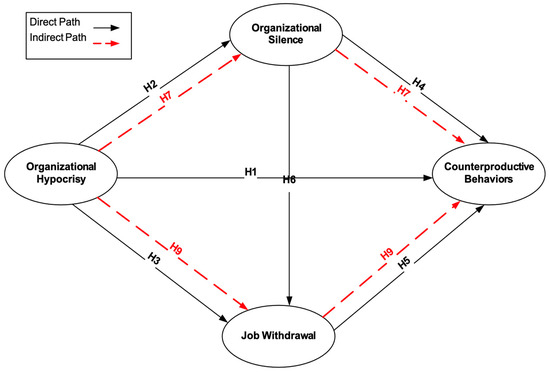
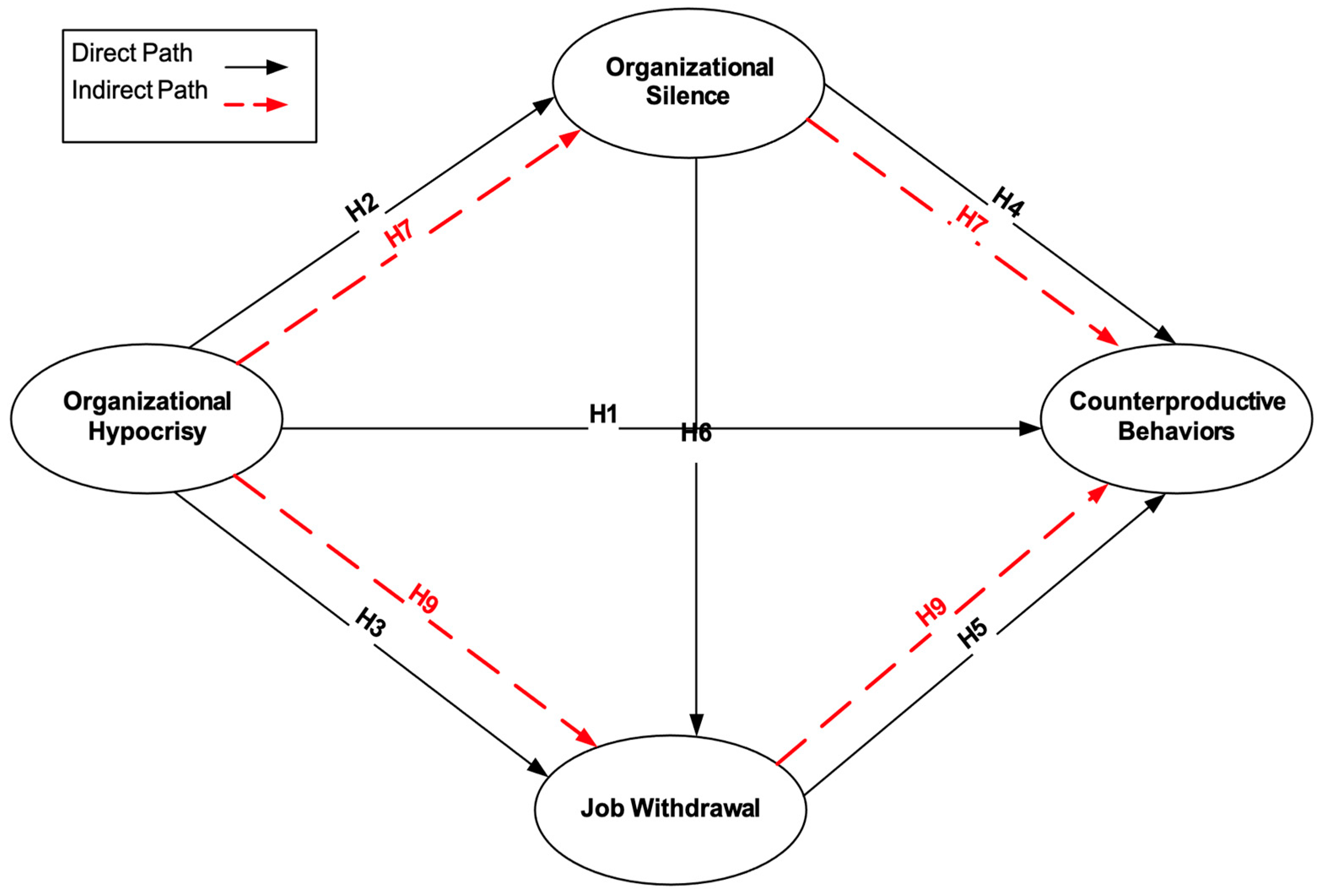
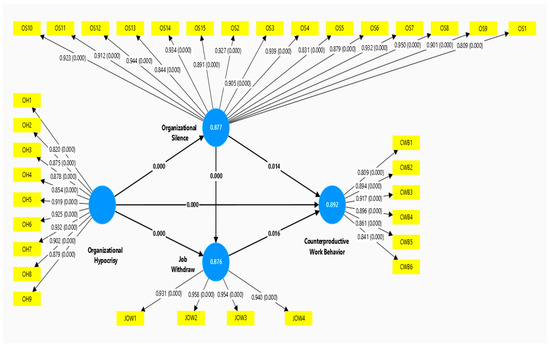
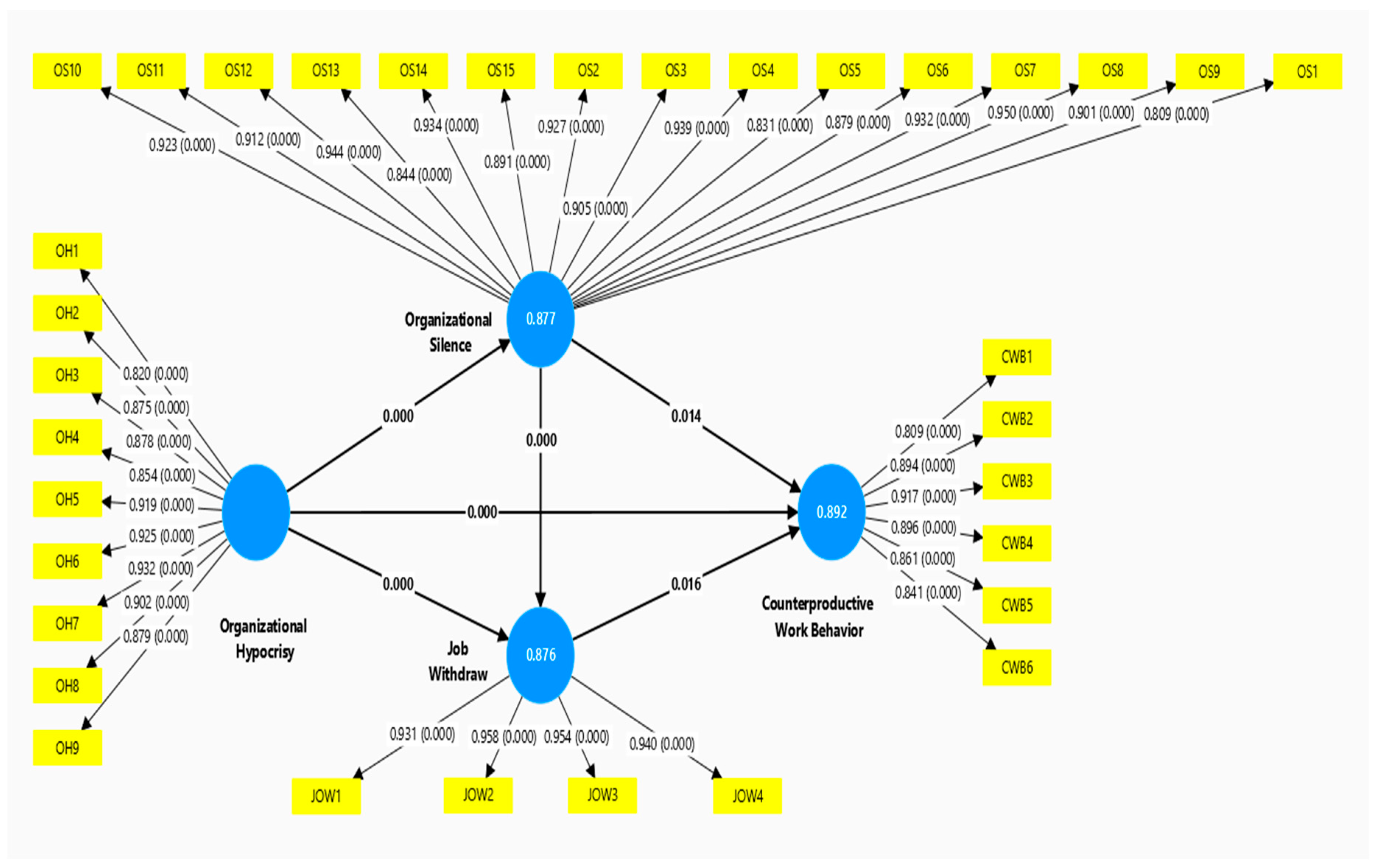

Disclaimer/Publisher’s Note: The statements, opinions and data contained in all publications are solely those of the individual author(s) and contributor(s) and not of MDPI and/or the editor(s). MDPI and/or the editor(s) disclaim responsibility for any injury to people or property resulting from any ideas, methods, instructions or products referred to in the content. |
© 2026 by the authors. Licensee MDPI, Basel, Switzerland. This article is an open access article distributed under the terms and conditions of the Creative Commons Attribution (CC BY) license.