


Abstract
Environmental injustices in the United States are rooted in structural racism, particularly policies of racial segregation and disinvestment such as redlining that have produced enduring inequalities in the built environment and population health. This concept paper examines extreme heat as a racialized environmental exposure in Buffalo, New York—a post-industrial Great Lakes city increasingly framed as a “climate haven”. While such designations suggest relative protection from climate risk, they obscure the socio-spatial inequalities that shape uneven vulnerability on the ground. Drawing on a structural racism framework and insights from urban political economy, this study argues that extreme heat vulnerability in Buffalo is not incidental but produced through historically embedded patterns of disinvestment in housing, infrastructure, and environmental resources. Neighborhoods such as the East Side, Black Rock, and the West Side exhibit heightened exposure due to concentrations of thermally inefficient housing, limited tree canopy and green space, and unequal access to cooling resources. These conditions reflect the material legacy of segregation and uneven urban development, which continue to structure differential capacity to adapt to rising temperatures. Although extreme heat is widely recognized as a major public health threat, it remains underexamined in mid-sized northern and Rust Belt cities, where risk is often perceived as episodic rather than structurally produced. This paper addresses this gap by advancing a conceptual critique of the “climate haven” narrative, demonstrating that relative geographic advantage does not equate to equitable resilience. By theorizing extreme heat as a mechanism through which structural racism is reproduced, this study highlights the need for place-based, justice-oriented climate adaptation strategies that confront the historical and institutional drivers of vulnerability in Great Lakes cities.
1. Introduction
Extreme heat has emerged as one of the deadliest and unevenly distributed climate risks in United States cities [1]. Drawing on global disaster mortality data, extreme heat is widely recognized as the deadliest weather- and climate-related hazard, exceeding fatalities associated with floods, hurricanes, and other natural disasters [2]. In the U.S., heat-related illness and mortality are projected to increase as the frequency, intensity, and duration of heat events rise under climate change [3,4]. These impacts are not experienced uniformly; rather, they are mediated by the intersecting effects of housing quality, neighborhood infrastructure, and access to adaptive resources, including air conditioning, energy affordability, urban tree canopy, and public cooling spaces [5,6,7,8]. Consequently, extreme heat constitutes not only a climatic hazard, but also a socially patterned public health threat.
This concept paper engages urban development and climate mitigation strategies by examining how historically produced environmental inequalities shape contemporary heat vulnerability in a northern, post-industrial urban context. Rather than providing a formal statistical analysis, the paper adopts a conceptually informed urban case study approach, using Buffalo, New York, as an illustrative example to synthesize insights from historical redlining scholarship, housing research, emerging heat-mapping data, and climate adaptation literature. By situating extreme heat within a framework of structural racism, environmental justice, and urban political economy, this work highlights climate vulnerability as not merely a function of biophysical exposure, but structurally produced through long-standing inequities in infrastructure, investment, and governance. In doing so, this paper contributes to a growing body of interdisciplinary scholarship that calls for climate adaptation strategies attentive to inequities in housing quality, environmental amenities, and access to adaptive resources that have emerged through long histories of segregation and disinvestment [9,10]. In addition to examining the historical production of heat vulnerability, the paper draws upon design justice to explore how climate adaptation strategies can more equitably address the unequal distribution of climate risk in historically marginalized neighborhoods.
Against this backdrop, Buffalo’s emerging status as a “climate haven” reveals a critical contradiction: while the city is increasingly positioned as a site of refuge from climate impacts, this designation obscures the uneven distribution of housing quality, infrastructure, environmental amenities, and adaptive resources that shape vulnerability on the ground. Legacies of racial segregation, disinvestment, and uneven urban development have produced built environments that are systematically underprepared for extreme heat, particularly in historically marginalized neighborhoods. As a result, climate haven status does not signal inherent resilience, but rather masks the ways in which structural inequalities continue to determine who is protected from, and who is exposed to, intensifying heat risk.
This paper makes three key contributions. First, it critically interrogates the concept of the “climate haven” by demonstrating that relative geographic advantage does not equate to equitable resilience. Second, it advances a structural racism framework to show how extreme heat vulnerability in northern cities is produced through historically rooted patterns of racialized disinvestment embedded in housing and infrastructure. Third, it extends climate vulnerability research beyond its traditional geographic focus on southern and coastal cities by positioning post-industrial Rust Belt cities as critical, yet underexamined, sites of climate risk [11].
Environmental injustices in U.S. cities are rooted in historical systems of racial segregation that structured access to housing, resources, and environmental protection along racial lines [12]. Federal housing policies, including redlining, racially restrictive covenants, and exclusionary lending practices, institutionalized racial hierarchy in the urban landscape, shaping enduring patterns of residential segregation and neighborhood disinvestment [13,14]. These processes systematically deprived racially minoritized communities of infrastructure investments and environmental protections while concentrating environmental burdens such as industrial pollution and inadequate housing conditions [12,15]. Although these policies were formally dismantled in the mid-twentieth century, their spatial imprint persists in contemporary neighborhood conditions and health inequities [16,17]. As climate change intensifies environmental stressors, these historically produced inequalities increasingly determine who is most vulnerable to emerging climate-related hazards, including extreme heat.
A growing body of research demonstrates that patterns of racialized disinvestment are closely linked to present-day urban heat exposure. Formerly redlined neighborhoods exhibit significantly higher surface temperatures, lower tree canopy coverage, and reduced access to cooling amenities compared to historically advantaged areas [15,17]. These disparities are reinforced by the urban heat island (UHI) effect, whereby densely built environments with impervious surfaces absorb and retain heat, disproportionately affecting low-income and racially marginalized communities [18,19]. In addition to higher exposure, these communities often face greater sensitivity due to pre-existing health conditions and reduced adaptive capacity related to income constraints, housing inefficiencies, and energy insecurity [6,20]. Together, these factors produce what has been described as a “climate vulnerability gap”, in which structurally disadvantaged populations bear a disproportionate share of climate-related risks [21].
Despite these advances, research on heat vulnerability has disproportionately focused on southern or oceanic coastal cities, reinforcing the assumption that northern urban regions face comparatively limited risk [22]. This geographic bias obscures emerging vulnerabilities in post-industrial cities, where aging infrastructure, population decline, and legacy patterns of racialized disinvestment shape both exposure and adaptive capacity [23,24]. Northern cities may be particularly susceptible to episodic extreme heat events due to lower baseline acclimatization, less widespread adoption of air conditioning, and infrastructure not designed for sustained high temperatures [25,26]. Moreover, disinvestment in housing stock, common in many Rust Belt cities, exacerbates indoor heat exposure, further compounding health risks.
2. Buffalo and the Climate Haven Narrative
Buffalo has increasingly been described as a potential “climate haven”, reflecting broader narratives that position Great Lakes cities as relatively insulated from the most severe impacts of climate change. These narratives have gained prominence in climate migration and adaptation scholarship, which identifies certain regions as comparatively resilient to hazards such as extreme heat, drought, sea-level rise, and wildfire (source). Buffalo’s former mayor, Byron Brown, stated that “Buffalo will be a climate refuge city for centuries to come” [27]. However, the validity of this characterization remains contested.
Climate havens are defined as locations that are comparatively less vulnerable to climate-related risks, such as extreme heat, sea-level rise, drought, or wildfire, attracting climate migration [10,28]. These definitions are often rooted in regional or geographic characteristics, including access to freshwater and historical climate patterns. In this context, the Great Lakes region is identified as advantageous due to its abundant freshwater supply, inland location, and the climatic influence of large water bodies.
From a climatological perspective, large lakes such as Lake Erie play a significant role in regulating regional temperatures. Through processes such as thermal inertia, evaporation, and heat exchange, water bodies absorb and release heat more slowly than land surfaces, which can moderate temperature extremes and reduce peak daytime heat in adjacent areas [29]. This moderating effect has contributed to the perception that cities like Buffalo are less vulnerable to extreme heat relative to regions lacking such natural cooling mechanisms.
However, while these processes operate at a regional scale, they do not uniformly translate into reduced exposure at the neighborhood level. Recent research emphasizes that climate vulnerability is mediated by local conditions, including housing quality, land use, and infrastructure [9]. As a result, the benefits of climatic features such as proximity to large water bodies are unevenly experienced and can be diminished or offset by the built environment.
This limitation points to an important gap in climate haven discourse. Climate havens are often identified according to regional climatic advantages, yet these assessments may overlook variation in vulnerability within cities themselves. As a result, climate resilience cannot be understood solely through geography or climate projections, but must also account for how housing quality, infrastructure, environmental amenities, and adaptive capacity are distributed across urban neighborhoods.
In this context, framing Buffalo as a climate haven risks obscuring the uneven distribution of environmental risk within the city. While the region may experience fewer large-scale climate hazards, localized vulnerabilities, particularly extreme heat, are shaped by the legacy of segregation, disinvestment, and uneven urban development. Understanding who benefits from climate haven characteristics, and who remains vulnerable despite them, is therefore critical for evaluating climate resilience and developing equitable adaptation to the historical and institutional processes that have produced unequal neighborhood conditions, making structural racism central to understanding contemporary heat vulnerability in Buffalo.
3. Structural Racism Frameworks
This concept paper employs a framework grounded in structural racism to examine how racialized urban policies have produced enduring patterns of climate vulnerability in Buffalo. Structural racism refers to the interconnected system of institutions, policies, and practices, including housing, planning, labor markets, and governance, that collectively produce and reproduce racial inequities over time [30]. Rather than operating through isolated acts of discrimination, structural racism is cumulative and adaptive, embedding disadvantage across multiple sectors and generations while systematically privileging White populations. As a result, racial inequities in health and environment persist even in the absence of explicitly discriminatory intent.
In urban contexts, structural racism is fundamentally spatial, shaping the organization of cities through policies such as redlining, exclusionary zoning, and uneven investment. In this paper, neighborhood inequality refers to the uneven geographic distribution of housing quality, infrastructure investment, environmental amenities, public resources, and adaptive capacity across urban neighborhoods. These disparities shape differential exposure and vulnerability to environmental hazards such as extreme heat. As Pulido [31] argues, racism operates as a socio-spatial process tied to racial capitalism, in which the production of space is inseparable from the production of inequality. Structural racism allocates environmental benefits, such as green space, infrastructure, and environmental protection, and burdens, such as pollution, deteriorating housing, and heat exposure, along racial lines. Over time, these inequalities become materially embedded in the built environment, producing landscapes that reflect and reproduce racial hierarchy.
Applied to climate change, this framework reveals that hazards such as extreme heat do not occur on a neutral terrain. Instead, they interact with historically produced inequalities in housing quality, infrastructure, and access to resources, transforming climate exposure into a mechanism through which structural racism is reproduced. In cities like Buffalo, legacies of segregation and disinvestment have produced neighborhoods characterized by thermally inefficient housing, limited tree canopy, and inadequate access to cooling resources, conditions that intensify vulnerability to extreme heat. Climate risk, therefore, is not simply a function of rising temperatures, but of the unequal capacity of communities to buffer and adapt to those temperatures.
To extend this analysis, this paper draws on design justice as a complementary conceptual lens for understanding how contemporary built environments and climate adaptation strategies continue to reflect and reproduce relations of power [32]. Design justice emphasizes that planning and design decisions are not neutral, but shaped by whose knowledge, priorities, and experiences are centered in decision-making processes. Historically marginalized communities are often excluded from these processes, resulting in infrastructure and interventions that fail to address, or may exacerbate, existing inequities.
Applied to extreme heat, a design justice perspective highlights how adaptation strategies, including green infrastructure, cooling centers, and housing retrofits, can either reinforce or challenge structural inequalities. Without attention to equity, such interventions risk concentrating benefits in already advantaged areas or contributing to processes such as green gentrification. In this context, design justice shifts the focus from vulnerability alone to the politics of adaptation, emphasizing that equitable climate resilience requires not only reducing exposure, but transforming the systems of decision-making and resource distribution that produce unequal risk in the first place.
While structural racism provides a framework for understanding how unequal climate vulnerabilities are historically produced, design justice offers a framework for how adaptation should proceed. Together, these perspectives move beyond identifying patterns of exposure and vulnerability to consider who participates in climate decision-making, how adaptation resources are allocated, and whether adaptation interventions reduce or reproduce existing inequalities. In this sense, design justice provides a pathway for translating analyses of structural racism into more equitable climate adaptation strategies.
4. From Redlining to Segregation: The Racialized Production of Urban Space in Buffalo
Redlining emerged in the 1930s as a federally sanctioned system for assessing neighborhood “risk” in mortgage lending and urban investment [13]. Through the Home Owners’ Loan Corporation (HOLC), U.S. cities were mapped and graded based on perceived desirability, with neighborhoods containing Black residents systematically coded as hazardous for investment [33]. These assessments were not unbiased descriptions of market conditions but racialized judgments that linked race, housing age, and neighborhood value. As a result, redlining functioned as a structural mechanism that restricted access to capital, reinforced residential segregation, and shaped the long-term development of urban neighborhoods.
In Buffalo, the effects of redlining and exclusionary housing practices contributed to persistent patterns of racial segregation that continue to define the city’s urban geography. Historically redlined neighborhoods experienced sustained disinvestment, while predominantly white neighborhoods benefited from greater access to mortgage credit and public investment. Over time, these dynamics established racial separation at the neighborhood level and positioned Buffalo among the most racially segregated cities in the United States. Historical accounts of neighborhoods such as Black Rock document how industrial development, infrastructure decisions, and uneven municipal investments have shaped long-term housing and land-use patterns [34]. Areas such as Black Rock and the East Side, influenced by proximity to industry and shifting patterns of capital investment, were characterized by long-term disparities in housing quality, land use, and neighborhood amenities [34]. These outcomes were not incidental but reflected policy and planning decisions that structured inequality into the city’s physical and social landscape.
Recent research further illustrates the persistence of these historical patterns in Buffalo’s contemporary built environment. Using HOLC redlining maps alongside street-level imagery, Lin, Qui, and Li [35] found that neighborhoods historically classified as “hazardous” continue to exhibit lower levels of visual and perceptual quality, including indicators associated with building condition, maintenance, and infrastructural investment. The continued relationship between past redlining designations and present-day neighborhood conditions demonstrates that the effects of redlining remain embedded in the urban environment. These findings reinforce the understanding that inequalities in housing quality, building maintenance, infrastructure investment, and neighborhood environmental conditions are visibly and physically encoded in the built form of the city [35].
These historical and contemporary analyses reveal that redlining did not simply segregate populations, it created the structure and organization of the city itself. Decisions of where to invest, what infrastructure to develop, and which neighborhoods to prioritize shaped patterns of inequality that became embedded in housing, land use, and environmental conditions. These processes systematically limited the ability of marginalized communities to shape development outcomes while concentrating disadvantage in specific areas. As a result, decisions regarding investment, infrastructure, and environmental amenities were often made without meaningful input from the communities most directly affected by them. In this context, segregation in Buffalo reflects not only spatial separation, but the cumulative effects of planning and policy decisions that distributed resources and environmental burdens along racial lines [13,36].
These patterns are not confined to the past. Contemporary political and corporate decisions regarding investment, infrastructure, and land use continue to reinforce and reproduce racial disparities in housing, infrastructure investment, environmental amenities, and neighborhood development. Through zoning practices, development priorities, and an uneven allocation of public resources, these actors uphold, and in some cases, intensify, the uneven conditions established through redlining.
By situating Buffalo’s segregated landscape within this historical-structural context, redlining emerges as a foundational mechanism through which structural racism produced and spatially fixed racialized patterns of environmental vulnerability, shaping the conditions that now structure extreme heat exposure. In this sense, redlining can be understood not simply as a historical policy, but as a structural process through which racial inequality was materially embedded into the urban landscape.
5. Housing Stock in Neighborhoods Shaped by Redlining
Where redlining produced racialized patterns of segregation, its most enduring effects are embedded in the conditions of neighborhood housing stock. In Buffalo, historically redlined neighborhoods reflect a long establishment of racialized disinvestment rooted in twentieth-century urban policy. Segregation in Buffalo was not just a demographic outcome but a deliberate strategy through which Black and immigrant residents were confined to specific areas and systematically denied access to neighborhood reinvestment [37]. Exclusionary lending practices limited access to mortgage capital and home improvement financing and modernization in redlined neighborhoods.
As a result, these neighborhoods developed concentrations of aging housing characterized by limited infrastructural upgrades. Rather than reflecting natural depreciation, these conditions represent the cumulative effects of disinvestment and constrained reinvestment capacity. These outcomes also reflect long-standing inequalities in whose housing needs and neighborhood priorities were recognized within planning and redevelopment processes. In Buffalo, these processes were further reinforced by deliberate municipal policies that prioritized demolition over reinvestment. Rather than investing in repair and recovery, the city systematically removed deteriorating housing, producing large areas of vacant lots, and fragmented urban landscapes. These spaces, often consisting of open fields with little to no tree canopy, contribute to environmental exposure rather than mitigating it.
These conditions also shape the capacity of neighborhoods to respond to environmental stressors. Aging housing stock often lacks adequate insulation, ventilation, and energy-efficient systems, limiting its ability to regulate indoor temperatures under conditions of environmental change [38]. As a result, historically disinvested neighborhoods face constraints not only in housing quality, but in their ability to adapt to emerging climate risks. The physical characteristics of housing, produced through long-term policy decisions, therefore play a central role in structuring contemporary patterns of vulnerability.
These housing conditions are not only indicators of past disinvestment, but active determinants of present-day climate vulnerability. Thermally inefficient structures, lack of insulation, and limited access to cooling technologies directly translate into elevated indoor heat exposure during extreme heat events. In this way, the legacy of disinvestment becomes materially embodied in the capacity of housing to buffer, or intensify, climate risk, illustrating how structural inequalities are reproduced through the built environment under conditions of climate change. Viewed through a design justice lens, these conditions highlight how historical decisions regarding investment and redevelopment continue to shape unequal capacities to respond to contemporary climate risks. Together, these conditions highlight the need to examine how historically produced neighborhood environments shape contemporary patterns of heat risk.
6. Extreme Heat in Erie County
In Western New York, extreme weather is more commonly associated with winter blizzards and lake-effect snow events than with heat, reflecting the dominance of lake-driven snowfall processes in the regional climate and shaping how residents perceive climate risk [37,39]. Survey data from Yale’s Climate Opinion Maps [40] reflect this perception gap: while 65% of Erie County residents report concern about global warming and 68% recognize its connection to extreme heat, only 44% believe that global warming will harm them personally, and nearly half perceive little to no direct impact. This does not indicate a lack of climate awareness; rather, it reflects how regional identity and historically moderate summer temperatures contribute to the under recognition of heat as a meaningful local threat. This perception is further reinforced by Buffalo’s Great Lakes location, which has traditionally been associated with milder summer conditions because water features can lower urban temperatures through natural processes like evaporation and convection [29]; however, emerging evidence suggests that assumptions obscure significant urban variation in heat exposure. While there is no universally agreed-upon definition of a heat wave in the academic literature, it is generally understood as a prolonged period of unusually high temperatures [41]. Scientific definitions typically rely on temperatures exceeding a defined threshold across a given spatial extent, with thresholds varying by region [42]. Heat-related risk, however, is determined more than temperature alone. Vulnerability to extreme heat reflects the interaction between environmental exposure and the social, demographic, and built-environment conditions that shape an individual or community’s capacity to respond and adapt [43]. Factors such as housing quality, age, health status, socioeconomic conditions, and access to cooling resources influence how heat is experienced and whether it results in adverse health outcomes [43]. Understanding these differences requires attention not only to environmental conditions, but also to the ways resources, infrastructure, and adaptive investments are distributed across communities. Recent empirical evidence from Erie County demonstrates that heat exposure varies substantially across neighborhoods, highlighting the limitations of generalized assumptions about regional risk.
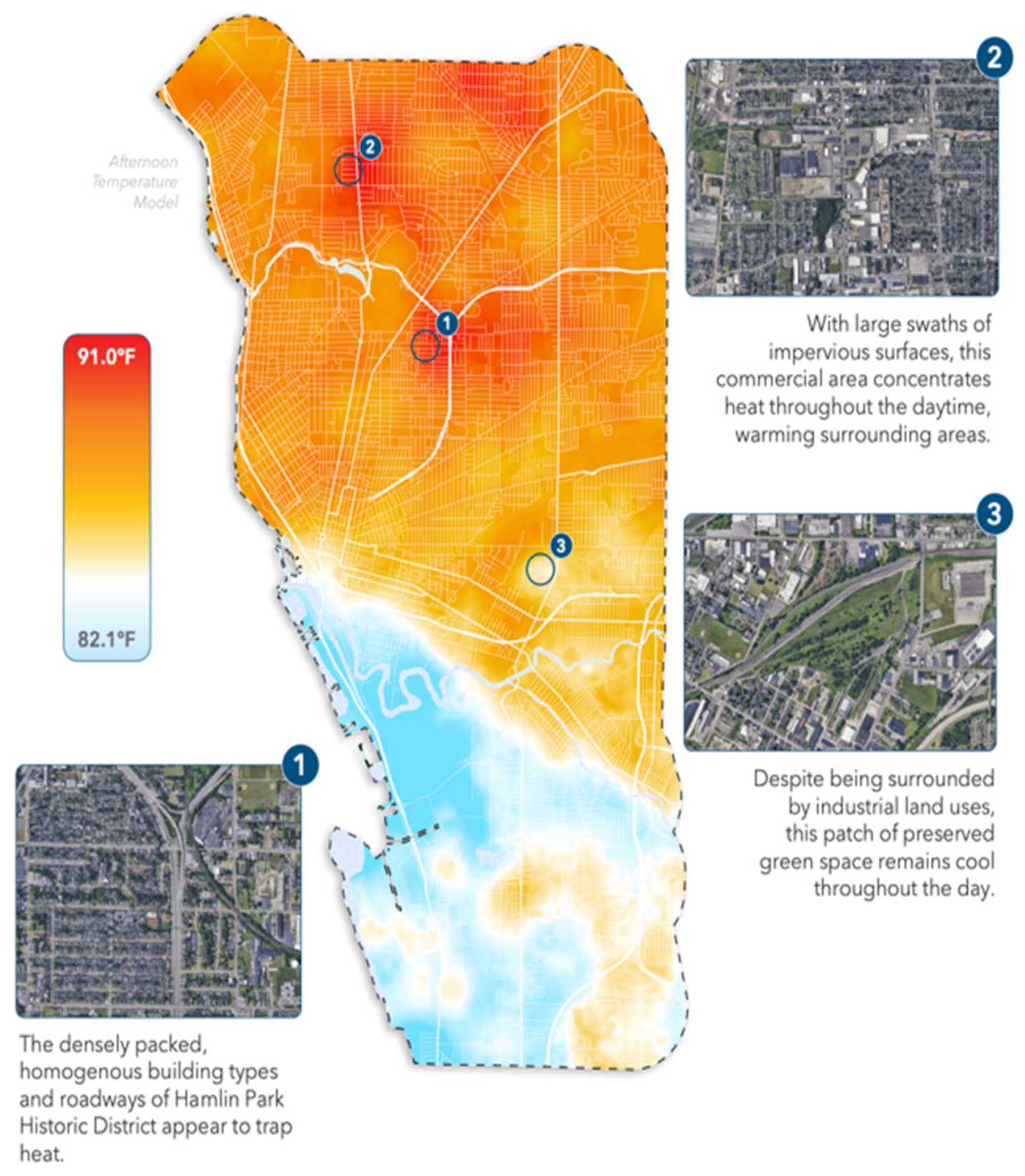
The Heat Watch Erie County campaign is particularly valuable in this context because it provides an opportunity to examine the exposure dimension of heat vulnerability at a neighborhood scale. When considered alongside existing evidence on housing conditions, segregation, and disinvestment, these observations help illuminate how historical inequalities intersect with contemporary patterns of heat exposure. In August 2025, Erie County Department of Environment and Planning, in partnership with CAPA Strategies and the University at Buffalo Department of Environment and Sustainability, conducted a Heat Watch campaign to map localized temperature variation across the region. Using mobile sensors, community participants collected more than 58,000 measurements across 64.4 square miles along nine sampling routes, capturing conditions during monitoring (6–7 a.m.), afternoon (3–4 p.m.), and evening (7–8 p.m.) periods [44]. During the afternoon sampling window, the campaign recorded a maximum air temperature of 92.7 °F, with a temperature differential of over 10 °F across neighborhoods at the same time, demonstrating that heat exposure varies significantly within short distances [44].
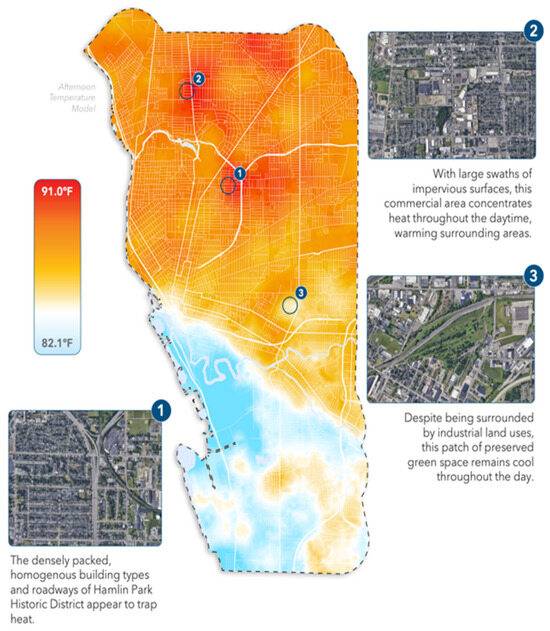
As shown in Figure 1 [44], the highest temperatures in the afternoon were concentrated in densely built areas north of Interstate 190, including sections of the East Side and parts of Black Rock, where building density, industrial land use, and limited vegetation contribute to heat accumulation. In contrast, comparatively cooler conditions were observed closer to natural and vegetated areas to the south, highlighting the cooling influence of tree canopy and proximity to Lake Erie [44].
Figure 1.
Afternoon air temperature distribution across Buffalo, New York, illustrating localized heat concentration in densely developed and impervious areas compared to cooler conditions in vegetated and waterfront zones. Highlighted areas demonstrate how building density, land use, and green space influence spatial heat patterns [44]. Reproduced with permission from CAPA Strategies. 2025. Community Heat Monitoring in Erie County, New York.
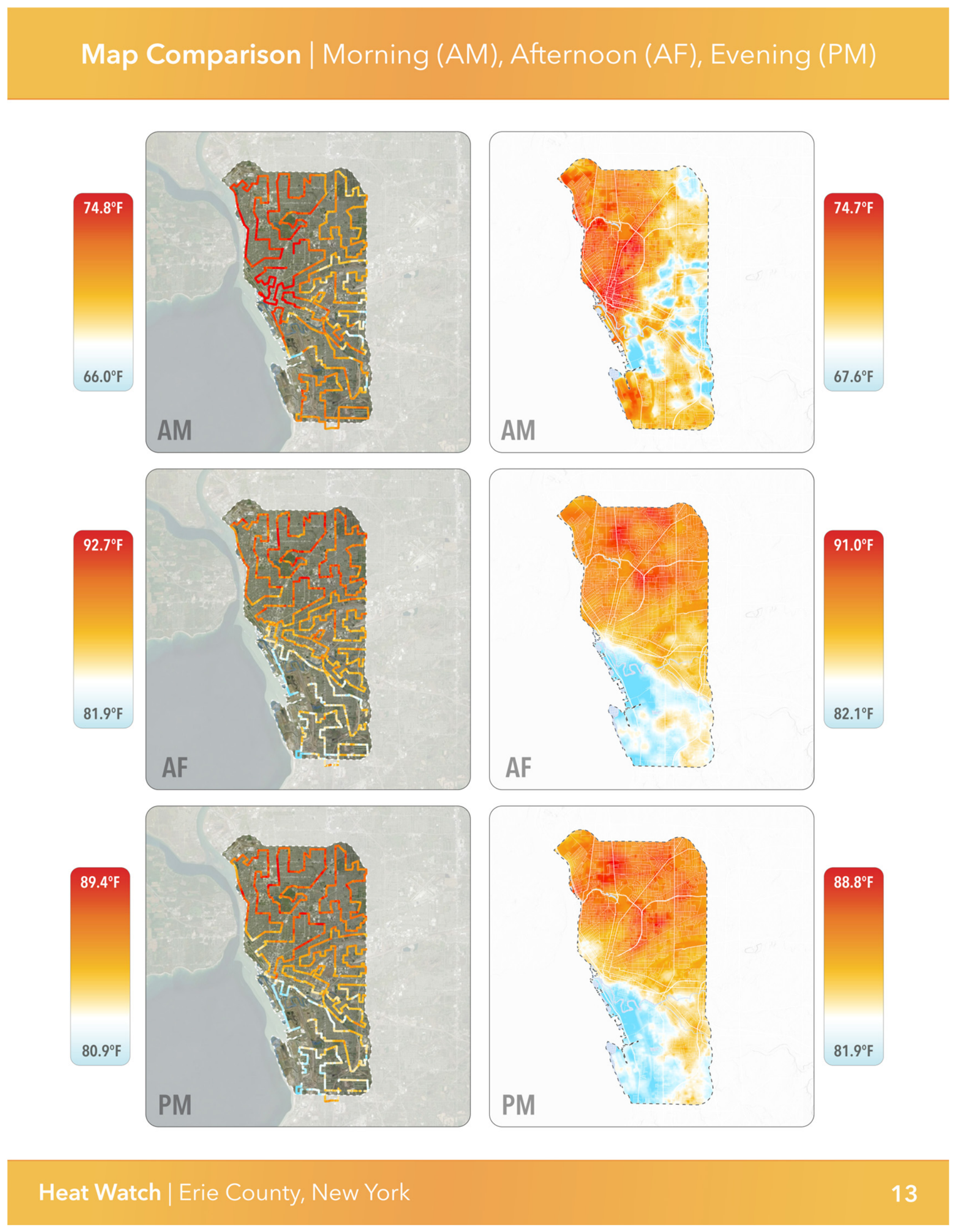
Temperature variation was also evident throughout the day. Morning conditions ranged from approximately 66 °F to 75 °F, with elevated temperatures persisting overnight in dense urban zones, including areas associated with downtown Buffalo and surrounding neighborhoods such as Black Rock [44]. By the afternoon, temperatures reached between approximately 82 °F and 91 °F, with the highest values concentrated in residential and commercial zones on the East Side and portions of the West Side and Black Rock with high housing density and limited canopy cover [45]. Evening temperatures remained elevated between approximately 80 °F and 89 °F, indicating that these same neighborhoods retained heat well into the night [44].
The persistence of heat into the evening hours is significant for neighborhoods such as the East Side, Black Rock, and parts of the West Side, where older housing stock and limited access to cooling infrastructure constrain the ability of residents to mitigate heat exposure. Even after peak daytime temperatures decline, densely built areas remain as much as 8–9 °F warmer than cooler parts of the study area, reducing opportunities for nighttime relief [44]. In these neighborhoods, where homes often lack adequate insulation and cooling systems, elevated outdoor temperatures translate into sustained indoor heat exposure [45].
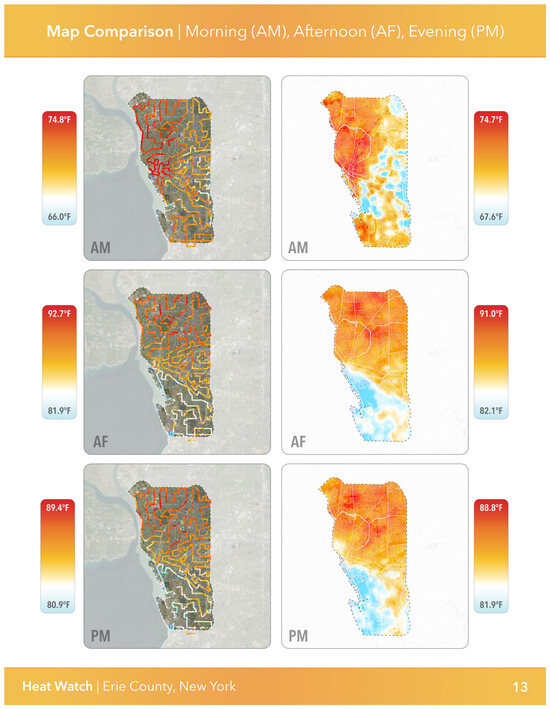
Notably, based on Figure 2, parts of the West Side experience elevated temperatures in the morning despite their proximity to major bodies of water, Lake Erie and the Niagara River, features that are typically associated with localized cooling effects [29]. This highlights that the cooling potential of natural features can be offset by characteristics of the built environment. The influence of nearby infrastructure, specifically the presence of a major highway such as Interstate 190, further contributes to heat accumulation through increased surface heat retention [46]. Proximity to environmental amenities, such as bodies of water, does not always translate into reduced exposure, emphasizing how urban form and historical patterns of development shape the uneven distribution of environmental benefits across neighborhoods. These patterns underscore that the distribution of environmental risks and benefits is shaped by design decisions, reflecting whose needs are prioritized in the planning and development of urban space and whose communities continue to experience disproportionate environmental exposure.
Figure 2.
Spatial variation in air temperature across Buffalo, New York during morning (AM), afternoon (AF), and evening (PM) periods from the 2025 Heat Watch Erie County campaign. The figure illustrates significant intra-urban temperature differences, with warmer conditions concentrated in densely built areas and cooler temperatures in more vegetated zones [45]. Reproduced with permission from CAPA Strategies. 2025. Community Heat Monitoring in Erie County, New York.
Importantly, the results reveal that even in a mid-sized Great Lakes city, extreme heat is an uneven environmental risk. These patterns also reflect the long-term consequences of planning and development decisions that have unevenly distributed environmental benefits and burdens across neighborhoods. The perception that Buffalo is “not a heat-vulnerable city” obscures the reality that moderate increases in temperature can produce significant localized heat burdens, particularly in neighborhoods shaped by historical disinvestment and aging infrastructure. Despite growing recognition of extreme heat as a public health concern, northern and mid-sized Great Lakes cities remain underrepresented in heat and climate vulnerability research. This gap reflects broader assumptions that such regions face limited heat risk, obscuring how structural conditions shape localized exposure and vulnerability.
7. Designing Equitable Climate Adaptation in Buffalo
The patterns of heat vulnerability discussed throughout this paper suggest that climate adaptation in Buffalo cannot rely solely on technical responses to rising temperatures. Because contemporary heat risks reflect long-standing histories of segregation, disinvestment, and uneven development, adaptation efforts must address both environmental exposure and the unequal distribution of resources that shape adaptive capacity. Effective adaptation requires not only reducing heat exposure, but also ensuring that historically marginalized communities are meaningfully included in decisions regarding climate resilience investments. Recent climate adaptation scholarship argues that effective responses to climate change require more than incremental or purely technical interventions. Transformative adaptation emphasizes addressing the social, institutional, and governance structures that produce vulnerability while ensuring that adaptation efforts do not reinforce existing inequalities [47]. Adaptation involves not only reducing exposure to climate hazards, but also addressing the historical conditions that shape unequal adaptative capacity.
Just like many other major cities in the Northern region of the United States, Buffalo has requirements in its housing codes that state landlords are responsible for heating during winter months [48]. The same applies in New York City, where from 1 October to 31 May, building owners are required to keep an indoor temperature of at least 68 °F, and when it is below 55 °F, it must be at least 62 °F, regardless of the temperature outside [49]. However, Buffalo and many of these major Northern cities share having no existing codes or laws that require landlords to keep below a maximum indoor temperature in buildings. This is a major issue for cities like Buffalo, as indoor extreme heat holds more danger than outdoor heat [50]. In this context, housing improvements represent an important climate adaptation strategy. Investments in insulation, ventilation, energy-efficient cooling technologies, and weatherization can reduce indoor heat exposure while simultaneously addressing long-standing disparities in housing quality across historically disinvested neighborhoods. During New York City’s worst heatwave in 2006, temperatures in some homes reached over 102 °F, and over 80% of the heat strokes were linked to indoor extreme heat [50].
Transformative adaptation scholarship emphasizes that resilience cannot be achieved through technical interventions alone. Effective adaptation requires addressing the social and institutional conditions that produce vulnerability while ensuring that communities have meaningful opportunities that participate in shaping resilience strategies [47]. This perspective aligns closely with principles of design justice, which emphasize equitable decision-making, community knowledge, and the redistribution of resources toward historically marginalized populations. In Buffalo, adaptation efforts should therefore be evaluated not only by their ability to reduce heat exposure, but also by their capacity to address the inequalities that shape vulnerability in the first place.
Altogether, Buffalo’s unequal experience of extreme heat reflects the combined effects of housing policy, neighborhood disinvestment, and structural racism. Addressing these disparities requires more than emergency heat response measures alone. Climate adaptation efforts should include investments in housing improvements, equitable access to cooling resources, urban green initiatives, energy affordability programs, and community-centered planning processes that prioritize neighborhoods facing the greatest climate risk. Consistent with broader calls for transformative adaptation [47], building climate resilience in Buffalo requires addressing the social and institutional conditions that shape vulnerability rather than simply responding to its consequences.
8. Conclusions
These findings demonstrate that extreme heat in Buffalo is not uniformly distributed but structured along lines that closely mirror historical patterns of segregation and disinvestment. Contemporary heat vulnerability is not simply a consequence of climatic conditions, but the result of unequal housing quality, infrastructure investment, environmental amenities, and access to adaptive resources produced through decades of racialized urban development. More broadly, this study challenges dominant climate adaptation narratives that equate geographic location with resilience. Buffalo illustrates an important limitation of climate haven discourse: a city may possess relative climatic advantages at the regional scale while simultaneously containing neighborhoods that experience disproportionate climate vulnerability. As climate change reshapes patterns of risk and mobility, climate haven narratives risk obscuring the neighborhood-level inequalities that continue to shape uneven exposure and vulnerability. Climate haven status, therefore, should not be understood as an indicator of universal resilience, but as a condition that must be evaluated through the distribution of vulnerability, adaptive capacity, and access to environmental resources across urban communities.
Future research should build upon emerging local datasets to examine the relationships among housing conditions, neighborhood environments, extreme heat exposure, and health outcomes in historically marginalized communities. Additional work is also needed to better understand how extreme heat interacts with other environmental stressors, including air pollution and energy insecurity. Such research can help refine adaptation strategies while advancing a more nuanced understanding of how climate risks are experienced within cities increasingly promoted as climate havens.
Addressing extreme heat as an environmental injustice requires moving beyond technical solutions toward justice-oriented approaches to climate adaptation. While structural racism helps explain how unequal heat vulnerabilities are historically produced, design justice provides a framework for how adaptation can be pursued more equitably through community participation, inclusive decision-making, and equitable resource allocation. In Buffalo, this includes investments in housing quality, the expansion of urban green infrastructure, energy affordability programs, and participatory planning processes that prioritize historically marginalized communities. By linking structural racism and design justice, this paper contributes not only to understanding climate vulnerability, but also to identifying pathways toward more equitable climate adaptation in Buffalo and other Great Lakes cities increasingly promoted as climate havens. Rather than treating climate haven status as an indicator of inherent resilience, this study highlights the need to examine who benefits from climatic advantages and who remains vulnerable despite them. Ultimately, climate adaptation requires moving beyond questions of where climate risks occur to consider how resilience is produced, who benefits from adaptation investments, and whose voices are included in decisions about the future of cities.
Author Contributions
Conceptualization, M.L.M. and E.S.W.; methodology, M.L.M. and E.S.W.; formal analysis, M.L.M. and E.S.W.; writing—original draft preparation; M.L.M., E.S.W. and R.S.; writing—review and editing, M.L.M., E.S.W. and R.S. All authors have read and agreed to the published version of the manuscript.
Funding
This research was funded by Climate Smart Community Grant Program.
Institutional Review Board Statement
Not applicable.
Informed Consent Statement
Not applicable.
Data Availability Statement
Restrictions apply to the availability of these data. The maps associated data analyzed in this study were obtained from CAPA Strategies, LLC and are available upon reasonable request with permission from the data provider.
Conflicts of Interest
The authors declare no conflict of interest.
References
- Kelley, J.; Hartwell, C.; Mix, E.; Gridley-Smith, C.; Wellenius, G.; Nori-Sarma, A.; Hess, J.; Errett, N. Extreme Heat Preparedness and Response Implementation: A Qualitative Study of Barriers, Facilitators, and Needs among Local Health Jurisdictions in the United States. Environ. Res. Health 2025, 3, 031002. [Google Scholar] [CrossRef] [Scilit] [PubMed]
- Wahlstrom, M.; Guha-Sapir, D. The Human Cost of Weather-Related Disasters 1995–2015; UNISDR: Geneva, Switzerland, 2015. [Google Scholar]
- Vose, R.S.; Easterling, D.R.; Kunkel, K.E.; LeGrande, A.N.; Wehner, M.F. Temperature Changes in the United States. In Climate Science Special Report: Fourth National Climate Assessment; US Global Change Research Program: Washington, DC, USA, 2017; Volume 1. [Google Scholar]
- Reidmiller, D.R.; Avery, C.W.; Easterling, D.R.; Kunkel, K.E.; Lewis, K.L.M.; Maycock, T.K.; Stewart, B.C. Impacts, Risks, and Adaptation in the United States: Fourth National Climate Assessment, Volume II; US Global Change Research Program: Washington, DC, USA, 2018. [Google Scholar] [CrossRef] [Scilit]
- Clark, S.S.; Miles, M.L. Assessing the Integration of Environmental Justice and Sustainability in Practice: A Review of the Literature. Sustainability 2021, 13, 11238. [Google Scholar] [CrossRef] [Scilit]
- Gronlund, C.J. Racial and Socioeconomic Disparities in Heat-Related Health Effects and Their Mechanisms: A Review. Curr. Epidemiol. Rep. 2014, 1, 165–173. [Google Scholar] [CrossRef] [Scilit] [PubMed]
- Harlan, S.L.; Brazel, A.J.; Prashad, L.; Stefanov, W.L.; Larsen, L. Neighborhood Microclimates and Vulnerability to Heat Stress. Soc. Sci. Med. 2006, 63, 2847–2863. [Google Scholar] [CrossRef] [Scilit] [PubMed]
- Jesdale, B.M.; Morello-Frosch, R.; Cushing, L. The Racial/Ethnic Distribution of Heat Risk–Related Land Cover in Relation to Residential Segregation. Environ. Health Perspect. 2013, 121, 811–817. [Google Scholar] [CrossRef] [Scilit] [PubMed]
- Anguelovski, I.; Chu, E.; Carmin, J. Variations in Approaches to Urban Climate Adaptation: Experiences and Experimentation from the Global South. Glob. Environ. Change 2014, 27, 156–167. [Google Scholar] [CrossRef] [Scilit]
- Shi, L.; Chu, E.; Anguelovski, I.; Aylett, A.; Debats, J.; Goh, K.; Schenk, T.; Seto, K.C.; Dodman, D.; Roberts, D. Roadmap towards Justice in Urban Climate Adaptation Research. Nat. Clim. Change 2016, 6, 131–137. [Google Scholar] [CrossRef] [Scilit]
- Shandas, V.; van Diepen, A.; Voelkel, J.; Rao, M. Coproducing Resilience through Understanding Vulnerability. In Building a Climate Resilient Economy and Society; Edward Elgar Publishing: Cheltenham, UK, 2017; pp. 78–95. [Google Scholar]
- Bullard, R.D. Environmental Justice in the 21st Century: Race Still Matters. Phylon (1960–) 2001, 49, 151–171. [Google Scholar] [CrossRef] [Scilit]
- Blatto, A. A City Divided: A Brief History of Segregation in Buffalo; Partnership for the Public Good: Buffalo, NY, USA, 2018. [Google Scholar]
- Rothstein, R. The Color of Law: A Forgotten History of How Our Government Segregated America; Liveright Publishing: New York, NY, USA, 2017. [Google Scholar]
- Hoffman, J.S.; Shandas, V.; Pendleton, N. The Effects of Historical Housing Policies on Resident Exposure to Intra-Urban Heat: A Study of 108 US Urban Areas. Climate 2020, 8, 12. [Google Scholar] [CrossRef] [Scilit]
- Krieger, N.; Wright, E.; Chen, J.T.; Waterman, P.D.; Huntley, E.R.; Arcaya, M. Cancer Stage at Diagnosis, Historical Redlining, and Current Neighborhood Characteristics: Breast, Cervical, Lung, and Colorectal Cancers, Massachusetts, 2001–2015. Am. J. Epidemiol. 2020, 189, 1065–1075. [Google Scholar] [CrossRef] [Scilit] [PubMed]
- Nardone, A.; Chiang, J.; Corburn, J. Historic Redlining and Urban Health Today in US Cities. Environ. Justice 2020, 13, 109–119. [Google Scholar] [CrossRef] [Scilit]
- Oke, T.R. The Energetic Basis of the Urban Heat Island. Q. J. R. Meteorol. Soc. 1982, 108, 1–24. [Google Scholar] [CrossRef] [Scilit]
- Voelkel, J.; Hellman, D.; Sakuma, R.; Shandas, V. Assessing Vulnerability to Urban Heat: A Study of Disproportionate Heat Exposure and Access to Refuge by Socio-Demographic Status in Portland, Oregon. Int. J. Environ. Res. Public Health 2018, 15, 640. [Google Scholar] [CrossRef] [Scilit] [PubMed]
- Hernández, D. Understanding ‘Energy Insecurity’ and Why It Matters to Health. Soc. Sci. Med. 2016, 167, 1–10. [Google Scholar] [CrossRef] [Scilit] [PubMed]
- Meerow, S.; Pajouhesh, P.; Miller, T.R. Social Equity in Urban Resilience Planning. Local Environ. 2019, 24, 793–808. [Google Scholar] [CrossRef] [Scilit]
- Teron, L.; Endreny, T. A Convergence of Climate, Social Justice, and Infrastructure Policy Enables Forestry to Cool Cities. Environ. Plan. B Urban Anal. City Sci. 2023, 50, 1718–1721. [Google Scholar] [CrossRef] [Scilit]
- Schinasi, L.H.; Benmarhnia, T.; De Roos, A.J. Modification of the Association between High Ambient Temperature and Health by Urban Microclimate Indicators: A Systematic Review and Meta-Analysis. Environ. Res. 2018, 161, 168–180. [Google Scholar] [CrossRef] [Scilit] [PubMed]
- Stone, B., Jr.; Vargo, J.; Liu, P.; Hu, Y.; Russell, A. Climate Change Adaptation through Urban Heat Management in Atlanta, Georgia. Environ. Sci. Technol. 2013, 47, 7780–7786. [Google Scholar] [CrossRef] [Scilit] [PubMed]
- Anderson, B.G.; Bell, M.L. Weather-Related Mortality: How Heat, Cold, and Heat Waves Affect Mortality in the United States. Epidemiology 2009, 20, 205–213. [Google Scholar] [CrossRef] [Scilit] [PubMed]
- Nordio, F.; Zanobetti, A.; Colicino, E.; Kloog, I.; Schwartz, J. Changing Patterns of the Temperature–Mortality Association by Time and Location in the US, and Implications for Climate Change. Environ. Int. 2015, 81, 80–86. [Google Scholar] [CrossRef] [Scilit] [PubMed]
- City of Buffalo. Mayor Byron W. Brown Delivers His Thirteenth State of The City Address; City of Buffalo: Buffalo, NY, USA, 2019. [Google Scholar]
- Siders, A.R. Managed Retreat in the United States. One Earth 2019, 1, 216–225. [Google Scholar] [CrossRef] [Scilit]
- Jandaghian, Z.; Colombo, A. The Role of Water Bodies in Climate Regulation: Insights from Recent Studies on Urban Heat Island Mitigation. Buildings 2024, 14, 2945. [Google Scholar] [CrossRef] [Scilit]
- Gee, G.C.; Ford, C.L. Structural Racism and Health Inequities: Old Issues, New Directions1. Du Bois Rev. Soc. Sci. Res. Race 2011, 8, 115–132. [Google Scholar] [CrossRef] [Scilit]
- Pulido, L. Rethinking Environmental Racism: White Privilege and Urban Development in Southern California. In Environment; Routledge: London, UK, 2017; pp. 379–407. [Google Scholar]
- Costanza-Chock, S. Design Justice: Community-Led Practices to Build the Worlds We Need; MIT Press: Cambridge, MA, USA, 2020. [Google Scholar]
- Egede, L.E.; Walker, R.J.; Campbell, J.A.; Linde, S.; Hawks, L.C.; Burgess, K.M. Modern Day Consequences of Historic Redlining: Finding a Path Forward. J. Gen. Intern. Med. 2023, 38, 1534–1537. [Google Scholar] [CrossRef] [Scilit] [PubMed]
- Goldman, M. Buffalo’s Black Rock: A Neighborhood and the City. J. Urban Hist. 1979, 5, 447–468. [Google Scholar] [CrossRef] [Scilit]
- Lin, X.; Qiu, W.; Li, W. Revisiting HOLC Redlining Maps with Street View Image Data on Urban Visual Perceptual Quality: A Case Study in Buffalo. Environ. Plan. B Urban Anal. City Sci. 2026, 1–19. [Google Scholar] [CrossRef] [Scilit]
- Kraus, N. Local Policymaking and Concentrated Poverty: The Case of Buffalo, New York. Cities 2004, 21, 481–490. [Google Scholar] [CrossRef] [Scilit]
- Notaro, M.; Jorns, J.; Briley, L. Representation of Lake–Atmosphere Interactions and Lake-Effect Snowfall in the Laurentian Great Lakes Basin among HighResMIP Global Climate Models. J. Atmos. Sci. 2022, 79, 1325–1347. [Google Scholar] [CrossRef] [Scilit]
- Taylor, H.-L.; Jung, J.-K.; Dash, E. The Harder We Run: The State of Black Buffalo in 1990 and Present; University at Buffalo Center for Urban Studies: Buffalo, NY, USA, 2021. [Google Scholar]
- Jones, E.A.; Lang, C.E.; Laird, N.F. The Contribution of Lake-Effect Snow to Annual Snowfall Totals in the Vicinity of Lakes Erie, Michigan, and Ontario. Front. Water 2022, 4, 782910. [Google Scholar] [CrossRef] [Scilit]
- Marlon, J.; Goddard, E.; Howe, P.; Mildenberger, M.; Jefferson, M.; Carman, J.; Rosenthal, S.; Fine, E.; Gillreath-Brown, A.; Leiserowitz, A. Yale Climate Opinion Maps 2024. Available online: https://climatecommunication.yale.edu/visualizations-data/ycom-us/ (accessed on 1 June 2026).
- Bunting, E.L.; Tolmanov, V.; Keellings, D. What Is a Heat Wave: A Survey and Literature Synthesis of Heat Wave Definitions across the United States. PLoS Clim. 2024, 3, e0000468. [Google Scholar] [CrossRef] [Scilit]
- Stéfanon, M.; D’Andrea, F.; Drobinski, P. Heatwave Classification over Europe and the Mediterranean Region. Environ. Res. Lett. 2012, 7, 014023. [Google Scholar] [CrossRef] [Scilit]
- Nayak, S.G.; Shrestha, S.; Kinney, P.; Ross, Z.; Sheridan, S.; Pantea, C.; Hsu, W.; Muscatiello, N.; Hwang, S.-A. Development of a Heat Vulnerability Index for New York State. Public Health 2018, 161, 127–137. [Google Scholar] [CrossRef] [Scilit] [PubMed]
- CAPA Strategies. Summary Report Heat Watch Erie County NY; CAPA Strategies: Portland, OR, USA, 2025. [Google Scholar]
- Williams, A.A.; Spengler, J.D.; Catalano, P.; Allen, J.G.; Cedeno-Laurent, J.G. Building Vulnerability in a Changing Climate: Indoor Temperature Exposures and Health Outcomes in Older Adults Living in Public Housing during an Extreme Heat Event in Cambridge, MA. Int. J. Environ. Res. Public Health 2019, 16, 2373. [Google Scholar] [CrossRef] [Scilit] [PubMed]
- Yang, B.; Hussey, O.; Alexander, S. Quantifying Highway Expansion Impact on Urban Heat Island Effect in San Francisco Bay Area. Cities 2026, 169, 106555. [Google Scholar] [CrossRef] [Scilit]
- Muse, N.; Iwaniec, D.M.; Wyczalkowski, C.; Mach, K.J. Heat Exposure and Resilience Planning in Atlanta, Georgia. Environ. Res. Clim. 2022, 1, 015004. [Google Scholar] [CrossRef] [Scilit]
- City of Buffalo. Warrant of Habitability: Frequently Asked Questions; City of Buffalo: Buffalo, NY, USA, 2026. [Google Scholar]
- New York City. Housing Authority Heating. Available online: https://www.nyc.gov/site/nycha/residents/heating.page (accessed on 16 July 2026).
- Quinn, A.; Tamerius, J.D.; Perzanowski, M.; Jacobson, J.S.; Goldstein, I.; Acosta, L.; Shaman, J. Predicting Indoor Heat Exposure Risk during Extreme Heat Events. Sci. Total Environ. 2014, 490, 686–693. [Google Scholar] [CrossRef] [Scilit] [PubMed]
Disclaimer/Publisher’s Note: The statements, opinions and data contained in all publications are solely those of the individual author(s) and contributor(s) and not of MDPI and/or the editor(s). MDPI and/or the editor(s) disclaim responsibility for any injury to people or property resulting from any ideas, methods, instructions or products referred to in the content. |
© 2026 by the authors. Licensee MDPI, Basel, Switzerland. This article is an open access article distributed under the terms and conditions of the Creative Commons Attribution (CC BY) license.