


Abstract
Grounded in Social Cognitive Theory, this study investigates how digital technologies shape employees’ work experiences and social life in digitally transforming hotel organizations. Specifically, it examines the role of digital empowering leadership in fostering digital work engagement through the mediating mechanisms of digital self-efficacy and digital thriving at work within five-star hotels in Egypt. As digital technologies increasingly redefine how employees interact, collaborate, and derive meaning from their work, understanding the human and social consequences of digital transformation has become a critical research priority. Data were collected from 394 full-time employees working in five-star hotels in Egypt and analyzed using Partial Least Squares Structural Equation Modeling (PLS-SEM) with WarpPLS software. The findings reveal that digital empowering leadership significantly enhances employees’ digital work engagement, digital self-efficacy, and digital thriving at work. Furthermore, digital self-efficacy and digital thriving at work positively influence digital work engagement and partially mediate the relationship between digital empowering leadership and digital work engagement. By highlighting how digitally enabled leadership shapes employees’ psychological capabilities and flourishing in technology-rich workplaces, this study contributes to the growing literature on the social implications of digital technologies in organizational settings. The findings underscore that successful digital transformation extends beyond technological adoption to encompass employees’ empowerment, well-being, and meaningful engagement in digital work environments. Practical implications are provided for hotel managers seeking to cultivate human-centered digital workplaces that support employees’ social and psychological flourishing amid ongoing technological change.
1. Introduction
The accelerating pace of digital transformation has fundamentally reshaped the operational and strategic landscape of the hospitality industry, particularly within five-star hotels where advanced technologies and AI-enabled systems are deeply embedded in service delivery and customer experience [1,2,3,4,5]. Hotels are increasingly investing in digital infrastructures, revenue management systems, and intelligent service technologies to enhance efficiency and competitiveness [6,7]. While these technological advancements offer substantial opportunities, they simultaneously impose new psychological and behavioral demands on employees, requiring them to adapt, learn, and remain engaged in digitally intensive work environments [8,9,10]. Consequently, understanding how leadership can effectively foster employee engagement in such contexts has become a critical research priority.
Emerging research highlights the pivotal role of digital leadership in facilitating organizational transformation and enhancing employee outcomes [11,12,13,14]. In particular, empowering leadership—characterized by autonomy support, participative decision-making, and confidence building—has been widely recognized as a key driver of employee motivation, engagement, and performance in hospitality settings [15,16,17,18]. More recently, scholars have begun to extend this perspective to digital contexts, suggesting that digital empowering leadership can play a vital role in fostering employees’ readiness for technological change and innovation [19,20,21,22]. However, despite these advances, the literature remains fragmented, with limited empirical attention devoted to how digital empowering leadership specifically influences digital work engagement—a contextually nuanced construct reflecting employees’ cognitive, emotional, and behavioral investment in digital work processes [23,24].
A critical gap in the literature lies in the insufficient integration of psychological mechanisms that explain how leadership translates into engagement within digital environments. Drawing on Social Cognitive Theory [25,26,27], individual cognition—particularly self-efficacy—plays a central role in shaping behavior and motivation. Digital self-efficacy, defined as employees’ belief in their ability to effectively use digital technologies, has been identified as a key determinant of technology adoption, innovation, and work outcomes in hospitality [28,29,30]. Prior studies have demonstrated that leadership behaviors can enhance self-efficacy, which in turn drives engagement and performance [31,32]. Nevertheless, there remains a pronounced scarcity of empirical investigations that explicitly position digital self-efficacy as a mediating mechanism through which digital empowering leadership translates into digital work engagement, particularly within the underexplored context of the hotel industry.
In parallel, the concept of thriving at work—encompassing a joint sense of vitality and learning [33]—has gained increasing attention as a critical psychological resource in dynamic and demanding work environments. In the hospitality industry, thriving has been linked to improved service performance, innovation, and engagement [34,35,36]. Recent systematic reviews emphasize the importance of thriving in fostering employee adaptability and well-being in digitally transformed workplaces [37,38]. However, despite its relevance, limited research has explored thriving at work within explicitly digital contexts or examined its role as a mediator linking leadership and digital engagement outcomes. Existing studies tend to focus on traditional leadership styles or general work engagement, overlooking the distinct nature of digital work environments [39,40].
Furthermore, while prior studies have examined either self-efficacy or thriving independently, there is a notable lack of integrative frameworks that simultaneously consider both constructs as complementary mediators in the relationship between digital empowering leadership and digital work engagement. Social Cognitive Theory suggests that behavioral outcomes are shaped by the dynamic interplay between environmental factors (e.g., leadership), personal cognitive factors (e.g., self-efficacy), and experiential states (e.g., thriving) [41,42]. Yet, empirical studies in hospitality have rarely adopted such a holistic perspective, particularly within digitally intensive settings. This omission limits our understanding of the multi-path mechanisms through which leadership drives employee engagement in the digital era.
Additionally, the majority of existing research has been conducted in non-Middle Eastern contexts, raising concerns regarding the generalizability of findings to emerging economies such as Egypt, where the pace and nature of digital transformation in hospitality may differ [43,44,45]. Although some studies have explored digital transformation and leadership in Egyptian hotels [3,46], there remains a paucity of empirical work examining employee-level psychological processes in this context, particularly within five-star hotels characterized by high technological intensity.
To address these gaps, the present study develops and tests a comprehensive model grounded in Social Cognitive Theory to examine how digital empowering leadership influences digital work engagement through the mediating role of digital self-efficacy as well as digital thriving at work. By concentrating on employees working in five-star hotels within the Greater Cairo region, this study not only contributes to the growing literature on digital transformation in hospitality but also provides context-specific insights into the psychological mechanisms underpinning employee engagement in emerging markets. In doing so, it responds to recent calls for more integrative, theory-driven, and contextually grounded research on leadership and employee behavior in digital work environments [23,47,48]. Moreover, by conceptualizing digital empowering leadership as a context-specific leadership capability that extends traditional empowering leadership to technology-mediated work environments, this study contributes to the emerging literature on digital leadership in hospitality.
2. Theoretical Foundation and Hypotheses Development
2.1. Social Cognitive Theory
This study draws on Social Cognitive Theory (SCT) to explain how leadership influences employee behavior in digitally intensive work environments. SCT posits that human functioning results from the reciprocal interaction between environmental influences, personal cognitive factors, and behavioral outcomes [25,26,27]. Within organizational contexts, leadership behaviors constitute a critical environmental factor that shapes employees’ internal cognitions—such as self-efficacy—and psychological states, which subsequently drive behavioral responses, including work engagement.
A central premise of SCT is that individuals are proactive agents who regulate their own motivation and behavior through cognitive mechanisms [49,50]. Among these mechanisms, self-efficacy is particularly influential, as it determines how individuals perceive challenges, exert effort, and persist in the face of difficulties [26]. In parallel, SCT acknowledges the role of affective and experiential states, suggesting that individuals’ sense of vitality and growth—captured through constructs such as thriving—can further reinforce positive work behaviors.
In digital work settings, where employees are required to continuously adapt to evolving technologies and complex systems, the interplay between leadership (environment), digital self-efficacy (cognition), and digital thriving (psychological state) becomes especially salient. Recent studies in hospitality and tourism have increasingly adopted SCT to explain how digital leadership shapes employee attitudes and behaviors, particularly under conditions of rapid technological change [30,47]. Building on this perspective, the present study conceptualizes digital empowering leadership as a key environmental driver that enhances employees’ cognitive confidence and psychological vitality, ultimately fostering digital work engagement.
2.2. Digital Empowering Leadership and Digital Work Engagement
Empowering leadership has long been recognized as a leadership style that enhances employees’ intrinsic motivation by granting autonomy, encouraging participation in decision-making, and fostering a sense of competence and meaning at work [15]. Within hospitality settings, such leadership behaviors are particularly valuable due to the service-oriented and dynamic nature of hotel operations, where employees must respond quickly to customer needs and operational challenges [16,18,50,51].
With the advent of digital transformation, empowering leadership has evolved into a more context-specific form—digital empowering leadership—which emphasizes enabling employees to effectively engage with digital tools, platforms, and AI-enabled systems [20,21]. This form of leadership not only provides traditional empowerment but also equips employees with the support, autonomy, and confidence needed to navigate digital complexities.
Although digital empowering leadership builds upon the principles of traditional empowering leadership, the two constructs are not conceptually identical. Traditional empowering leadership primarily emphasizes delegation of authority, participative decision-making, autonomy, and employees’ general psychological empowerment [15,52,53]. In contrast, digital empowering leadership extends these behaviors to technology-mediated work environments by explicitly enabling employees to confidently utilize digital technologies, experiment with new digital tools, continuously develop digital competencies, and adapt to ongoing technological change. Beyond granting autonomy, digitally empowering leaders reduce uncertainty associated with digital transformation by facilitating technology-related learning, encouraging digital experimentation, and fostering employees’ confidence in using digital systems. Consequently, digital empowering leadership represents a context-specific leadership capability designed to support employees in digitally intensive workplaces rather than merely a digital application of traditional empowering leadership.
Digital work engagement extends the traditional concept of work engagement into technology-mediated environments, reflecting employees’ vigor, dedication, and absorption in digital tasks and processes [23,24]. In hotel contexts, this includes engagement with property management systems, AI-driven customer service tools, and digital communication platforms [54].
Existing literature suggests that leadership plays a vital role in enhancing engagement by aligning job resources with employees’ needs and capabilities [55,56]. In digital environments, leaders who empower employees to experiment with technology, make decisions, and develop digital competencies can significantly enhance their motivation to engage in digital work. However, despite growing interest in digital leadership, empirical research specifically examining the direct effect of digital empowering leadership on digital work engagement remains limited and fragmented. From an SCT perspective, digital empowering leadership enhances employees’ perceived control and confidence, which in turn increases their willingness to invest cognitive and emotional energy in digital tasks. Therefore, it is hypothesized that
H1:
Digital empowering leadership positively influences digital work engagement.
2.3. Digital Empowering Leadership and Digital Self-Efficacy
Self-efficacy is a foundational construct in SCT, reflecting individuals’ beliefs in their capability to perform specific tasks successfully [26]. In digital work environments, digital self-efficacy refers to employees’ confidence in their ability to effectively use and adapt to digital technologies [29,57]. This construct is particularly critical in the hospitality industry, where employees frequently interact with complex digital systems and are expected to continuously update their technological skills [28].
Leadership behaviors play a crucial role in shaping self-efficacy by providing mastery experiences, social persuasion, and psychological support [27]. Empowering leaders, by delegating authority, encouraging participation, and fostering a supportive environment, create conditions that enhance employees’ confidence in their abilities [58]. In digital contexts, leaders who actively promote learning, experimentation, and digital skill development can significantly strengthen employees’ digital self-efficacy [20,59].
Empirical evidence supports this relationship, showing that digital leadership positively influences self-efficacy, which in turn enhances employee performance and innovation in hospitality settings [30,32]. Despite this, limited research has explicitly examined digital empowering leadership as a driver of digital self-efficacy within hotel environments. Drawing on SCT, it is argued that digital empowering leadership fosters employees’ belief in their digital capabilities by providing both structural and psychological support. Hence, it is hypothesized that
H2:
Digital empowering leadership positively influences digital self-efficacy.
2.4. Digital Empowering Leadership and Digital Thriving at Work
Thriving at work is conceptualized as a psychological state characterized by the joint experience of vitality (feeling energized) and learning (continuous growth) [33]. In the hospitality industry, thriving has been associated with improved service performance, creativity, and overall well-being [34,36].
In digitally transformed workplaces, thriving becomes increasingly important as employees face ongoing technological changes and must continuously acquire new skills [60,61]. Leaders play a central role in fostering thriving by creating environments that support learning, autonomy, and psychological safety [40]. Empowering leadership, in particular, enhances thriving by enabling employees to explore new ideas, take initiative, and develop their competencies [39].
However, the concept of digital thriving at work remains underdeveloped in the literature, with most studies focusing on general thriving rather than its application in digital contexts. Moreover, the relationship between digital empowering leadership and thriving has not been sufficiently explored in hospitality settings. From an SCT perspective, digital empowering leadership provides the environmental conditions necessary for employees to experience both vitality and learning in digital work environments. Accordingly, it is hypothesized that
H3:
Digital empowering leadership positively influences digital thriving at work.
2.5. Digital Self-Efficacy and Digital Work Engagement
Digital self-efficacy plays a pivotal role in shaping employees’ behavior in technology-driven environments. According to SCT, individuals with higher self-efficacy are more likely to embrace challenges, exert greater effort, and remain persistent, leading to higher levels of engagement [26,49].
In hospitality contexts, digital self-efficacy has been linked to technology adoption, innovative work behavior, and job performance [29,62]. Employees who are confident in their digital abilities are more likely to interact effectively with digital systems, experience less technology-related stress, and demonstrate higher levels of motivation and engagement [63]. Furthermore, digital self-efficacy enhances intrinsic motivation by reducing uncertainty and increasing perceived control over digital tasks [64]. This, in turn, fosters a deeper level of cognitive and emotional investment in digital work. Thus, it is hypothesized that
H4:
Digital self-efficacy positively influences digital work engagement.
2.6. Digital Thriving at Work and Digital Work Engagement
Thriving at work represents a key psychological resource that enhances employees’ motivation and performance. Employees who experience vitality and learning are more likely to be proactive, resilient, and fully engaged in their work [33,38].
In hospitality settings, thriving has been shown to positively influence work engagement by fostering enthusiasm, adaptability, and a positive outlook toward work challenges [53,65,66]. In digital environments, thriving becomes even more critical, as employees must continuously adapt to technological changes and develop new competencies [37]. Employees who thrive in digital work contexts are more likely to embrace new technologies, actively participate in digital processes, and maintain high levels of engagement. Therefore, it is hypothesized that
H5:
Digital thriving at work positively influences digital work engagement.
2.7. The Mediating Role of Digital Self-Efficacy
SCT suggests that environmental factors influence behavior through cognitive mechanisms, particularly self-efficacy [27]. In this study, digital empowering leadership is expected to enhance digital work engagement by strengthening employees’ digital self-efficacy. Empirical studies have consistently demonstrated the mediating role of self-efficacy in the relationship between leadership and employee outcomes [31,32]. In digital contexts, leaders who empower employees and support their technological development can significantly enhance their confidence in using digital tools, which in turn drives engagement [30]. Thus, digital self-efficacy serves as a key explanatory mechanism linking leadership to digital engagement. Therefore, it is hypothesized that
H6:
Digital self-efficacy mediates the relationship between digital empowering leadership and digital work engagement.
2.8. The Mediating Role of Digital Thriving at Work
Beyond cognitive mechanisms, SCT also emphasizes the role of affective and experiential states in shaping behavior. Thriving at work represents such a state, reflecting employees’ energy and continuous development [33]. Prior research indicates that thriving mediates the relationship between organizational factors and work engagement [39,67]. In digital environments, empowering leadership can foster thriving by creating supportive conditions that encourage learning and vitality [40]. However, the mediating role of thriving in digital leadership contexts remains underexplored, particularly in hospitality. This study argues that digital empowering leadership enhances employees’ sense of vitality and learning in digital work settings, which in turn promotes engagement. Accordingly, it is hypothesized that
H7:
Digital thriving at work serves as a mediating mechanism linking digital empowering leadership to digital work engagement.
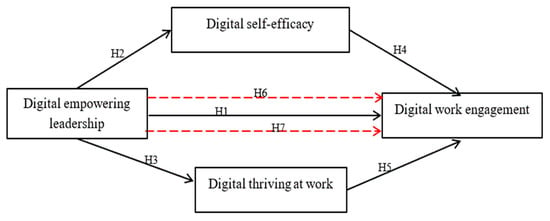
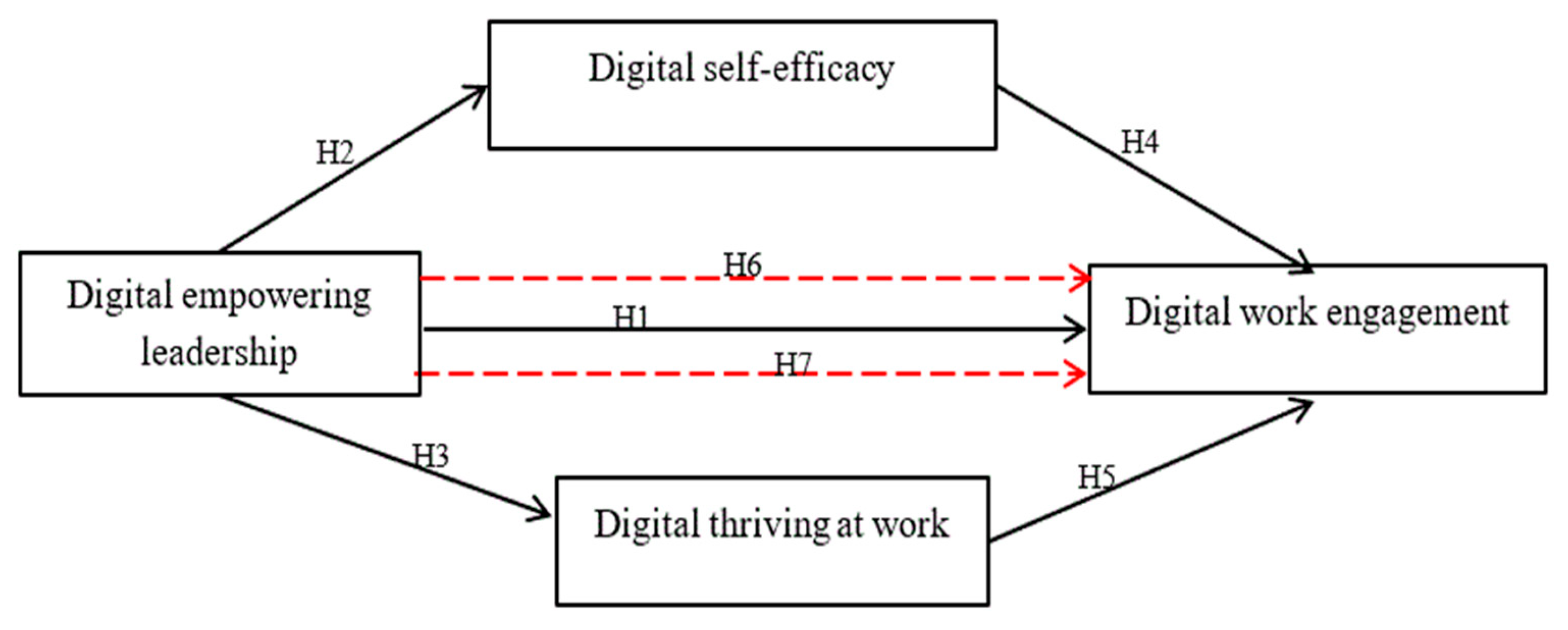
The study’s theoretical framework is presented in Figure 1 below.
Figure 1.
Research conceptual framework.
3. Methodology
3.1. Study Context
The study conducted on Five-star hotels offering an ideal setting for examining the proposed framework due to their high reliance on digital technologies and AI-enabled systems. Employees in these hotels regularly interact with advanced digital tools across core operations such as guest management, reservations, marketing, and back-office functions, making them particularly suitable for investigating the impact of leadership on digital competencies and engagement. The present research targets employees engaged on a full-time basis operating within Egyptian five-star hotels located in the Greater Cairo, with particular emphasis on functional departments with intensive technology use. These include front desk and guest relations, where staff handle bookings, digital check-ins, and AI-supported guest services; sales and marketing, which leverage digital platforms for promotions, analytics, and customer interactions; and IT and operations teams, responsible for maintaining and optimizing digital systems and supporting organizational digital transformation. Targeting these departments ensures employees have meaningful, frequent engagement with digital technologies, providing a solid foundation to examine how digital empowering leadership influences digital self-efficacy and thriving, which in turn promote digital work engagement.
3.2. Study Sample
The study included full-time employees actively performing digital or technology-driven tasks. Eligible participants had a minimum of six months of tenure in roles requiring routine interaction with digital systems, AI tools, or technology-enabled processes. Targeted departments were front desk and guest relations, sales and marketing, and IT and operations. Employees excluded from the study included part-time, temporary, or contract staff, those on extended leave, and individuals whose roles did not involve substantial use of digital technologies, as they would be less able to provide relevant insights into the relationships under investigation.
Due to the wide geographical distribution of Egyptian five-star hotels, a purposive sampling technique was employed. This approach of non-probability method is frequently applied when probability sampling is not feasible because of logistical challenges, limited resources, or a broadly dispersed population.
Data were collected between January and March 2026. Out of the 500 questionnaires administered, 394 were deemed suitable for analysis, reflecting a usable response proportion of 78.8%. Based on the criterion outlined by Hair et al. [68], which advocates a minimum ratio of ten participants per observed variable, a sample of no fewer than 360 individuals was necessary for the 36 indicators employed in the study. Consequently, the achieved sample size of 394 surpasses this recommended benchmark and is therefore regarded as adequate to ensure the credibility and robustness of subsequent statistical procedures.
3.3. Measures
Digital Empowering Leadership (DEL): This construct was measured using a 12-item scale adapted from Ahearne et al. [15], capturing leadership behaviors that foster employees’ sense of meaning, participation in decision-making, confidence, and autonomy. Items were contextualized to reflect the digital environment and the use of technology.
Digital Thriving at Work (DTAW): Thriving was assessed using a 10-item scale based on Porath et al. [33], measuring vitality and learning during digital work. Vitality reflects employees’ energy and enthusiasm, while learning represents continuous personal and professional growth.
Digital Work Engagement (DWE): A six-item scale adapted from Zia et al. [23] captured employees’ focus, effort, and involvement in digital job tasks.
Digital Self-Efficacy (DSE): This construct assessed employees’ confidence in performing tasks using digital technologies, measured with an eight-item scale based on Chen et al. [69] and Liu and Kamioka [59].
3.4. Ethical Considerations
The study complied with the ethical standards of the Declaration of Helsinki, ensuring voluntary participation, informed consent, the right to withdraw at any time, and strict confidentiality and secure handling of all data for research purposes only.
3.5. Common Method Bias
To reduce the risk of common method bias (CMB), both procedural and statistical techniques were applied. At the design stage, respondent anonymity and confidentiality were guaranteed to limit social desirability bias, while items were mixed and arranged by construct to reduce context-related effects. From a statistical perspective, Harman’s single-factor test showed that no single factor explained more than 50% of the total variance, indicating that CMB was not a major concern. In addition, multicollinearity was assessed using Variance Inflation Factors (VIFs), all of which were below the recommended threshold of 3.3, further confirming the absence of serious bias issues. Taken together, these procedural and statistical assessments suggest that common method bias is unlikely to have substantially influenced the study findings. Nevertheless, as with most cross-sectional survey research relying on self-reported data, the possibility of residual method bias cannot be entirely eliminated. Accordingly, the findings should be interpreted with appropriate caution.
3.6. Analytical Strategy
The data were examined using Partial Least Squares Structural Equation Modeling (PLS-SEM) with WarpPLS version 8.0 [70]. This technique is well-suited for analyzing complex models involving multiple latent constructs, particularly when data normality is uncertain and sample sizes are moderate. The analysis was conducted in two phases. First, the measurement model was assessed to verify reliability, convergent validity, and discriminant validity. Second, the structural model was evaluated to test the proposed relationships among the study variables.
4. Results
4.1. Participants’ Profile
The demographic profile of the respondents presented in Table 1 indicates a predominantly male sample, with males accounting for 61.42% of the participants, while females represent 38.58%. In terms of age distribution, the largest proportion of employees falls within the 30 to less than 45 years category (50.76%), followed by those aged between 45 and 60 years (25.89%), and a smaller segment aged below 30 years (23.35%). Regarding educational attainment, the majority of respondents hold an undergraduate degree (70.56%), whereas 17.26% have a high school education or below, and a relatively smaller proportion (12.18%) possess postgraduate qualifications or higher.
Table 1.
Demographic Characteristics of Respondents (N = 394).
4.2. Measurement Model
As shown in Table 2, the psychometric evaluation demonstrates that all constructs meet the required standards of reliability and validity. The factor loadings for digital empowering leadership (DEL), digital self-efficacy (DSE), digital thriving at work (DTAW), and digital work engagement (DWE) exceed the recommended cut-off values, confirming satisfactory indicator reliability. Internal consistency is also supported, as both Cronbach’s alpha (CA) and composite reliability (CR) values are above the accepted thresholds.
Table 2.
Measurement Model Results and Psychometric Properties.
Convergent validity is confirmed through average variance extracted (AVE) values greater than 0.50 for all constructs. In addition, variance inflation factor (VIF) results fall within acceptable ranges, indicating the absence of multicollinearity issues. Overall, the measurement model is considered sound and appropriate for further structural analysis.
Table 3 presents the correlation matrix assessed using the Fornell–Larcker criterion, which confirms the presence of satisfactory discriminant validity among the study constructs. Consistent with this criterion, each construct exhibits stronger associations with its own indicators than with other variables, indicating that the constructs are empirically distinct and discriminant validity is adequately established.
Table 3.
Latent Variable Correlations and Square Roots of AVE.
Table 4 reports the heterotrait–monotrait (HTMT) ratio results, which further support the discriminant validity of the study constructs. Overall, the results provide empirical support for the discriminant validity of the constructs, indicating that they represent conceptually and statistically distinct dimensions, providing additional evidence for the adequacy and robustness of the measurement model.
Table 4.
Discriminant Validity Assessment (HTMT Ratios).
4.3. Model Fit
The model fit and quality indices demonstrate that the proposed model meets the recommended standards and exhibits strong overall adequacy [69]. APC, ARS, and AARS indicate significant explanatory and predictive power. Collinearity diagnostics are within acceptable limits; AVIF and AFVIF both below the recommended thresholds. The GoF reflects strong overall model performance. Collectively, the indices detailed in Appendix A confirm that the model is robust, well-specified, and suitable for hypothesis testing.
4.4. Evaluation of the Measurement Model and Hypothesis
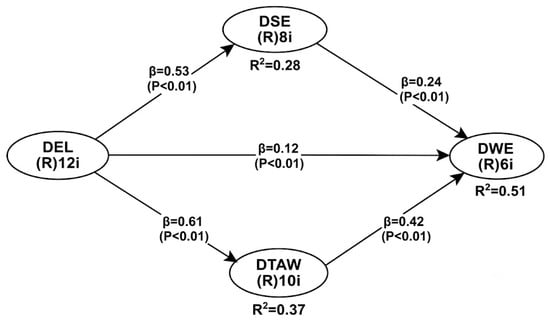
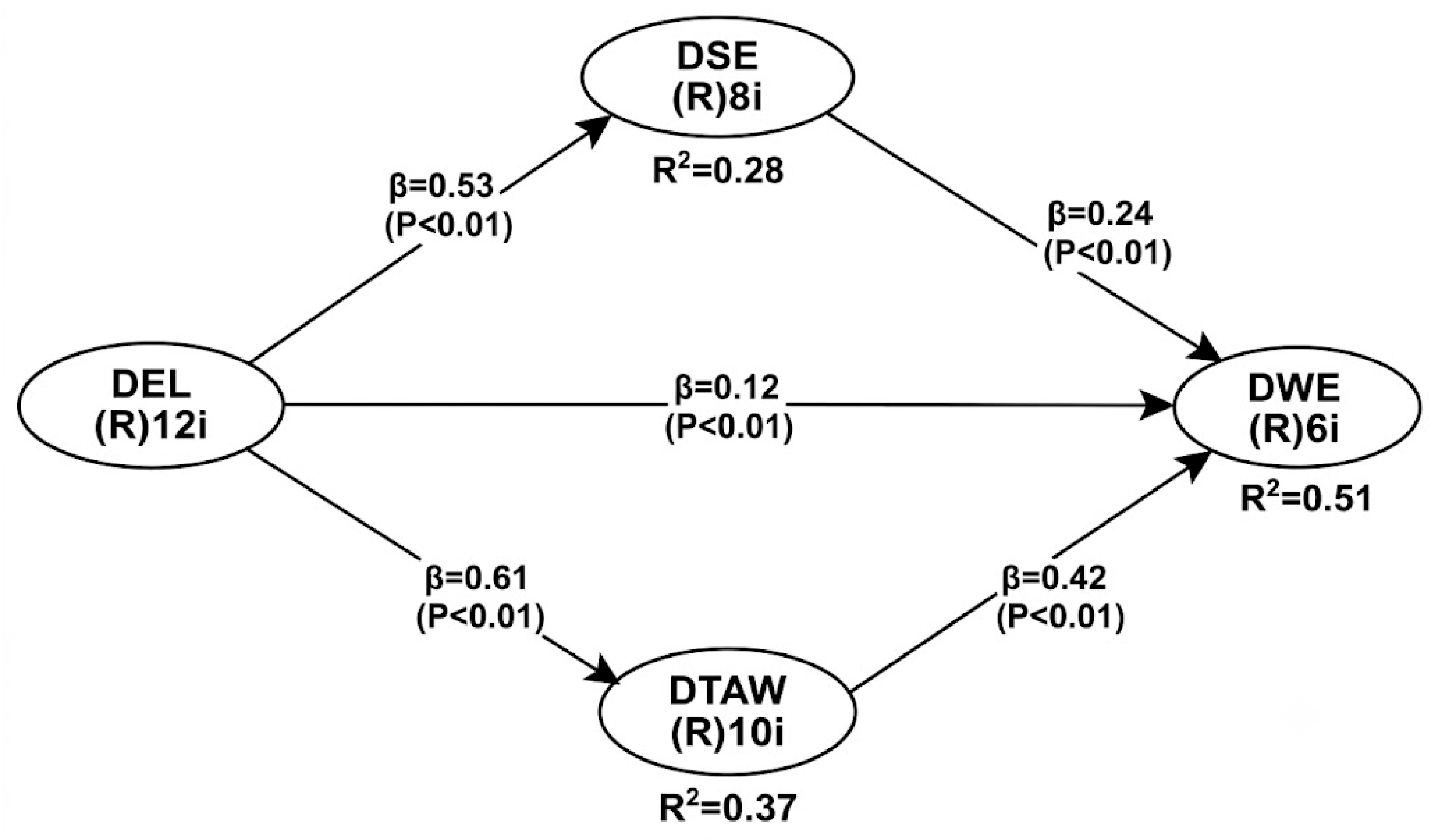
Table 5 and Figure 2 present the outcomes of the analysis of direct relationships among the study variables. As shown in Table 5, all proposed relationships are statistically significant and receive empirical support. Specifically, digital empowering leadership (DEL) positively influences digital work engagement (DWE, β = 0.12, p < 0.01, f2 = 0.063), digital self-efficacy (DSE, β = 0.53, p < 0.01, f2 = 0.283), and digital thriving at work (DTAW, β = 0.61, p < 0.01, f2 = 0.372). In turn, both DSE (β = 0.24, p < 0.01, f2 = 0.158) and DTAW (β = 0.42, p < 0.01, f2 = 0.290) have positive effects on DWE. The coefficient of determination values indicate that the model explains 28% of the variance in DSE, 37% in DTAW, and 51% in DWE. Predictive relevance, assessed using Q2, is also satisfactory, with Q2 values of 0.282 for DSE, 0.372 for DTAW, and 0.520 for DWE, demonstrating that the model has good predictive accuracy for the endogenous constructs.
Table 5.
Results of Direct Effects and Structural Model.
Figure 2.
Final study results.
In terms of indirect mediation effects, Table 6 reveals that digital self-efficacy (DSE) and digital thriving at work (DTAW) have a partial mediation effect on the relationship between digital empowering leadership (DEL) and digital work engagement (DWE). For H6, the indirect effect of DEL on DWE through DSE is 0.127 (SE = 0.034, t = 3.741), with a bootstrapped 95% confidence interval ranging from 0.061 to 0.194 and a variance accounted for (VAF) of 0.515, indicating partial mediation. Similarly, for H7, the indirect effect of DEL on DWE via DTAW is 0.256 (SE = 0.034, t = 7.535), with a 95% bootstrapped confidence interval of 0.190 to 0.323 and a VAF of 0.681, also suggesting partial mediation. These results demonstrate that both DSE and DTAW serve as significant mechanisms through which DEL enhances employees’ digital work engagement.
Table 6.
Results of mediation analysis.
5. Discussion
The results provide empirical support for all seven proposed hypotheses. Specifically, digital empowering leadership was found to positively influence digital work engagement, digital self-efficacy, and digital thriving at work. In addition, both digital self-efficacy and digital thriving at work positively influenced digital work engagement and significantly mediated the relationship between digital empowering leadership and digital work engagement. These findings provide comprehensive support for the proposed research model grounded in Social Cognitive Theory.
The findings of this study provide a comprehensive and theoretically grounded explanation of how digital empowering leadership enhances digital work engagement within technology-intensive hotel environments. Consistent with prior research, the results confirm that digital empowering leadership exerts a significant positive influence on digital work engagement. This finding aligns with earlier studies demonstrating that empowering leadership fosters higher levels of engagement by enhancing autonomy, participation, and meaningfulness at work [15,16,18]. More specifically, in digital contexts, the present results support emerging evidence that leadership behaviors tailored to technological environments—such as digital leadership—play a critical role in enhancing employee engagement [48,56]. This suggests that empowerment becomes more impactful when it is aligned with digital work structures, enabling employees not only to feel motivated but also to effectively navigate digital systems and tasks.
The study further reveals that digital empowering leadership significantly enhances digital self-efficacy, reinforcing the central premise of Social Cognitive Theory that external influences shape individuals’ beliefs in their capabilities [26,49]. This finding is consistent with empirical studies in hospitality and related sectors, which have shown that leadership behaviors positively influence employees’ self-efficacy, particularly in technology-driven environments [30,32]. In line with Kim et al. [28], employees in hotel settings rely heavily on their confidence in using information systems to perform effectively. The current results extend this understanding by demonstrating that digital empowering leadership serves as a key mechanism through which such confidence is developed, particularly by providing support, learning opportunities, and autonomy in digital work processes.
Additionally, the findings indicate that digital empowering leadership has a positive effect on digital thriving at work, highlighting the importance of leadership in fostering not only cognitive resources but also positive psychological states. This result is consistent with prior hospitality research showing that empowering and supportive leadership enhances employees’ vitality and learning [39,40]. Furthermore, studies such as Chang et al. [34] and Wu et al. [36] emphasize that thriving at work is a critical outcome in service-oriented industries, as it enables employees to maintain energy and continuously develop their skills. The present study extends this stream of research by situating thriving within digital work environments, suggesting that digital empowering leadership plays a crucial role in helping employees perceive digital transformation as an opportunity for growth rather than a source of strain.
Moreover, the results demonstrate that digital self-efficacy has a significant positive effect on digital work engagement. This finding is strongly supported by Social Cognitive Theory, which posits that individuals with higher self-efficacy are more likely to engage in tasks, exert effort, and persist in challenging situations [26]. Empirically, this result is consistent with previous studies linking self-efficacy to engagement and performance in digital and hospitality contexts [29,62]. Similarly, Zhan et al. [63] and Paredes-Aguirre and Fernandez-Solis [64] highlight that employees with higher levels of digital self-efficacy experience greater motivation and lower levels of uncertainty when interacting with digital technologies. Thus, the present findings reinforce the notion that confidence in digital capabilities is a critical prerequisite for meaningful engagement in digital work.
The study also finds that digital thriving at work significantly enhances digital work engagement, which is consistent with prior research emphasizing the role of thriving as a key driver of positive work behaviors. For instance, Chang and Busser [65] and Kim et al. [66] demonstrate that employees who experience vitality and learning are more likely to be engaged and perform effectively. Additionally, recent reviews highlight thriving as a crucial resource in dynamic and digital work environments, where continuous learning and adaptability are essential [37,38]. The present study extends these findings by confirming that thriving remains a critical determinant of engagement even in digitally intensive contexts, suggesting that employees who feel energized and are continuously developing their skills are more likely to immerse themselves in digital tasks.
Importantly, the mediation results provide deeper insights into the mechanisms through which digital empowering leadership influences digital work engagement. The significant mediating role of digital self-efficacy supports prior research demonstrating that self-efficacy acts as a key cognitive pathway linking leadership to employee outcomes [31,32]. In digital contexts, this finding suggests that leadership enhances engagement not only directly but also indirectly by strengthening employees’ confidence in their ability to use digital technologies. This is consistent with studies such as Frick et al. [20] and Liu and Kamioka [59], which highlight the role of leadership in building digital competence and confidence among employees.
Similarly, the mediating role of digital thriving at work underscores the importance of affective and experiential mechanisms in shaping employee engagement. This finding aligns with previous studies indicating that thriving mediates the relationship between organizational factors and work engagement [39,67]. By extending this mechanism to digital environments, the present study demonstrates that leadership fosters engagement not only by enhancing employees’ capabilities but also by promoting their sense of vitality and continuous learning. This dual mediation finding is particularly significant, as it highlights that both cognitive and psychological resources are necessary to fully explain how leadership drives engagement in digital contexts.
6. Theoretical Implications
This study makes several important theoretical contributions to the hospitality and organizational behavior literature, particularly within the context of digital transformation. First, it extends Social Cognitive Theory (SCT) into digitally intensive work environments by empirically demonstrating how leadership influences employee behavior through both cognitive and experiential mechanisms. While SCT has long emphasized the role of self-efficacy in shaping behavior [26,49), this study advances the theory by integrating digital self-efficacy and digital thriving at work within a unified framework. In doing so, it provides a more comprehensive explanation of how environmental factors (i.e., digital empowering leadership) translate into behavioral outcomes (i.e., digital work engagement) in technology-driven contexts.
Second, the study contributes to the digital leadership literature by refining the conceptualization of empowering leadership within digital environments. Although prior research has established the importance of empowering leadership in hospitality [15,16], this study demonstrates that its effectiveness is contingent upon its alignment with digital work demands. By introducing and empirically validating the concept of digital empowering leadership, the study responds to recent calls for more context-specific leadership models that reflect the realities of digital transformation [20,22]. This shifts the theoretical discourse from generic leadership behaviors to more technology-contingent leadership approaches. Specifically, this study argues that digital empowering leadership should be viewed as a distinct context-specific leadership construct rather than merely empowering leadership applied in digital settings. Its unique focus on facilitating employees’ digital capability development, technology-related autonomy, and confidence in navigating digital work differentiates it from conventional empowering leadership and broadens the conceptual understanding of leadership in digitally transforming organizations.
Third, the study advances the literature on work engagement by contextualizing it within digital work environments. While traditional engagement research has focused on general job resources, this study highlights the importance of digital-specific resources, such as technological confidence and continuous learning capacity. By demonstrating that both digital self-efficacy and digital thriving significantly predict digital work engagement, the study enriches existing engagement models and aligns with recent research emphasizing the evolving nature of engagement under digital transformation [23,24].
Fourth, the study offers a novel contribution by adopting a dual mediation perspective, simultaneously examining cognitive (self-efficacy) and experiential (thriving) pathways. Prior research has typically investigated these mechanisms in isolation [31,39], limiting the understanding of how leadership influences employee outcomes. By integrating both mediators, this study provides a more holistic and process-oriented explanation, suggesting that engagement is not a single-stage outcome but rather the result of interconnected psychological processes. This integrative approach contributes to theory development by highlighting the complementarity of cognitive and affective mechanisms in digital work settings.
Finally, the study contributes to the hospitality and tourism literature in emerging markets, particularly Egypt. While digital transformation has been widely studied in developed economies, there is limited empirical research examining employee-level mechanisms in emerging contexts [43,44]. By focusing on five-star hotels in Greater Cairo, this study provides contextually grounded insights and enhances the generalizability of digital leadership theories across different economic and cultural settings.
7. Practical Implications
The findings offer practical guidance for hotel executives and human resource managers seeking to strengthen employee engagement during digital transformation. Given that many hotels, particularly in emerging economies, operate under financial, technological, and workforce constraints, the recommendations presented below emphasize practical, scalable, and cost-effective initiatives that can be integrated into existing organizational practices.
First, hotels should foster digitally empowering leadership as a core managerial capability. Rather than relying on costly leadership development programs, organizations can embed empowering behaviors into routine management practices. Supervisors can encourage employee participation in digital decision-making, hold brief digital check-ins during daily meetings to discuss technology-related challenges and opportunities, and gradually delegate responsibility for routine digital tasks. A train-the-trainer approach, whereby digitally competent managers share their expertise with colleagues, represents an efficient mechanism for disseminating digital leadership practices while minimizing training costs.
Second, organizations should continuously strengthen employees’ digital self-efficacy through accessible learning opportunities. Instead of investing heavily in external training, hotels can leverage internal expertise by promoting peer learning, informal mentoring, and knowledge sharing among employees. Designating departmental “digital champions” to support colleagues, alongside providing access to vendor manuals, online tutorials, and short learning sessions, can enhance employees’ confidence in using digital technologies while requiring minimal financial investment.
Third, managers should cultivate work environments that promote digital thriving and sustainable engagement. The findings demonstrate that employees are more engaged when they experience both continuous learning and vitality in digital work. Managers can foster these conditions by encouraging experimentation with digital technologies, recognizing employees’ learning efforts, providing regular constructive feedback, and maintaining psychologically safe environments where mistakes are viewed as learning opportunities. In parallel, practical measures such as equitable workload distribution, rotation of digitally demanding tasks, and short recovery breaks can help sustain employee energy and reduce the risk of digital fatigue.
Finally, hotel organizations should adopt a human-centered approach to digital transformation. Digital investments are most effective when technological implementation is accompanied by leadership support and employee capability development. Rather than pursuing large-scale technological upgrades that may exceed organizational resources, managers should prioritize incremental digital improvements that employees can readily adopt and master. Simple internal assessments, such as brief surveys or supervisor evaluations, can help identify employees requiring additional support, while recruitment processes can emphasize candidates’ adaptability, learning orientation, and digital readiness. By aligning technological initiatives with employee development, hotels can maximize the return on digital investments while fostering a more engaged, confident, and resilient workforce.
8. Study Limitations and Future Research Avenues
Notwithstanding its contributions, this study is subject to several limitations that provide opportunities for future scholarly inquiry. Foremost, the adoption of a cross-sectional research design constrains the extent to which causal inferences can be drawn regarding the relationships among the examined constructs. Although the proposed framework is anchored in Social Cognitive Theory, subsequent studies may benefit from employing longitudinal or experimental methodologies to more effectively capture the evolving and reciprocal interactions among leadership, self-efficacy, thriving, and employee engagement over time. Such designs would also allow researchers to examine how these relationships evolve as digital transformation progresses. Accordingly, the observed relationships should be interpreted as theoretically supported associations rather than definitive causal effects. Future research employing longitudinal, time-lagged, experimental, or multi-source designs would provide stronger evidence regarding the causal mechanisms proposed in this study while further reducing potential common method bias.
Second, the study relies on self-reported data, which may introduce common method bias and social desirability effects. Although statistical remedies can mitigate this issue, future studies are encouraged to use multi-source data, such as supervisor ratings of employee engagement or objective performance indicators, to enhance the robustness of the findings.
Third, the research model focuses on two mediating mechanisms (digital self-efficacy and digital thriving at work), which, while theoretically justified, do not capture the full complexity of employee behavior in digital environments. Future research could extend the model by incorporating additional mediators such as psychological safety, digital resilience, or cognitive flexibility, which have been highlighted as important factors in digital transformation contexts.
Fourth, the study was conducted exclusively among employees working in five-star hotels located in Greater Cairo, a context characterized by relatively advanced digital infrastructure, greater investment in technological innovation, and more mature digital transformation initiatives than many other hospitality settings. Consequently, employees in this context may experience higher levels of exposure to digital technologies and digitally empowering leadership than employees in lower-tier hotels, smaller hospitality businesses, or organizations operating in less digitally developed regions. Therefore, caution should be exercised when generalizing the findings beyond similar organizational contexts. Future research is encouraged to replicate the proposed model across different hotel categories, geographical regions, service sectors, and cultural environments to examine the robustness and boundary conditions of the observed relationships.
Fifth, the study is conducted within five-star hotels in Greater Cairo, which may limit the generalizability of the findings to other contexts, such as lower-tier hotels, different regions, or other service industries. Future research could conduct cross-cultural or multi-industry comparisons to examine whether the proposed relationships hold across different organizational and cultural settings.
Sixth, from a methodological perspective, future studies could employ advanced analytical techniques, such as longitudinal structural equation modeling or multilevel modeling, to capture the nested nature of hospitality organizations (e.g., employees within departments, departments within hotels). This would provide deeper insights into how leadership operates at different organizational levels.
Finally, future research could explore alternative model configurations, such as serial mediation (e.g., digital empowering leadership → digital self-efficacy → digital thriving → engagement) or reciprocal relationships, to further unpack the dynamic interplay between cognitive and psychological mechanisms in digital work environments.
Author Contributions
Conceptualization, H.A.K. and A.M.H.; methodology, H.A.K.; software, H.A.K.; vali-dation, A.M.H. and H.A.K.; formal analysis, H.A.K.; investigation H.A.K. and A.M.H.; resources, H.A.K. and A.M.H.; data curation, H.A.K. and A.M.H.; writing—original draft preparation, A.M.H. and H.A.K.; writing—review and editing, A.M.H. and H.A.K.; visualization, A.M.H. and H.A.K.; supervision, H.A.K.; project administration, H.A.K.; funding acquisition, A.M.H. All authors have read and agreed to the published version of the manuscript.
Funding
This research was funded by the Deanship of Scientific Research, Vice Presidency for Graduate Studies and Scientific Research, King Faisal University, Saudi Arabia, grant number [KFU261875].
Institutional Review Board Statement
The study was conducted according to the guidelines of the Declaration of Helsinki and approved by the Deanship of Scientific Research Ethical Committee, King Faisal University (ERB No. KFU261875, KFU261875, date of approval: 1 January 2025).
Informed Consent Statement
Informed consent was obtained from all subjects involved in this study.
Data Availability Statement
Data are available upon request from researchers who meet the eligibility criteria. Kindly contact the first author privately through e-mail.
Conflicts of Interest
The authors declare no conflicts of interest.
Appendix A. Measurement Scales
| Digital Empowering Leadership (DEL) | DEL.1 | My manager helps me understand how my use of digital technologies relates to the organization’s goals. |
| DEL.2 | My manager helps me understand the importance of my role in achieving digital transformation in the organization. | |
| DEL.3 | My manager helps me see how my use of digital tools contributes to overall organizational effectiveness. | |
| DEL.4 | My manager encourages me to express my ideas and suggestions about digital work processes. | |
| DEL.5 | My manager listens to my ideas about improving digital systems and technologies. | |
| DEL.6 | My manager considers my input when making decisions related to digital tools and systems. | |
| DEL.7 | My manager expresses confidence in my ability to perform at a high level using digital technologies. | |
| DEL.8 | My manager believes I can handle demanding tasks involving digital systems. | |
| DEL.9 | My manager shows confidence in my capabilities to effectively use digital tools. | |
| DEL.10 | My manager allows me to make decisions regarding how I use digital technologies without constant supervision. | |
| DEL.11 | My manager gives me freedom in how I use digital tools to perform my job. | |
| DEL.12 | My manager allows me discretion in carrying out digitally enabled tasks. | |
| Digital Self-Efficacy (DSE) | DSE.1 | I believe I can succeed at almost any endeavour to which I set my mind by utilizing digital technologies |
| DSE.2 | Even when things are tough, I can perform quite well by utilizing digital technologies | |
| DSE.3 | I will be able to achieve most of the goals that I have set for myself by utilizing digital technologies | |
| DSE.4 | When facing difficult tasks, I am certain that I will accomplish them by utilizing digital technologies | |
| DSE.5 | Compared to other people, I can do most tasks very well by utilizing digital technologies | |
| DSE.6 | I will be able to successfully overcome many challenges by utilizing digital technologies | |
| DSE.7 | I am confident that I can perform effectively in many different tasks by utilizing digital technologies | |
| DSE.8 | In general, I think that I can achieve outcomes that are important to me by utilizing digital. | |
| Digital Work Engagement. (DWE) | DWE.1 | While performing the digital job task(s), I am really focused. |
| DWE.2 | While performing the digital job task(s), I give a lot of attention. | |
| DWE.3 | While performing the digital job task(s), It has a great deal of personal meaning to me. | |
| DWE.4 | While performing the digital job task(s), I feel a strong sense of belonging. | |
| DWE.5 | While performing the digital job task(s), I am willing to put extra effort on them without being asked. | |
| DWE.6 | While performing the digital job task(s), I really push myself to work on it beyond what is expected of me. | |
| Digital Thriving at Work (DTAW) | DTAW.1 | At work, I find myself learning often when using digital technologies. |
| DTAW.2 | At work, I continue to learn more and more over time through digital systems and tools. | |
| DTAW.3 | At work, I see myself continually improving in using digital technologies. | |
| DTAW.4 | At work, I am not learning when working with digital technologies. (R) | |
| DTAW.5 | At work, I have developed a lot as a person through my use of digital tools and systems. | |
| DTAW.6 | At work, I feel alive and vital when working with digital technologies. | |
| DTAW.7 | At work, I have energy and spirit while performing digital job tasks. | |
| DTAW.8 | At work, I do not feel very energetic when using digital systems. (R) | |
| DTAW.9 | At work, I feel alert and awake when engaging in digital work tasks. | |
| DTAW.10 | At work, I look forward to each new day of working with digital technologies. |
References
- Cheng, X.; Xue, T.; Yang, B.; Ma, B. A digital transformation approach in hospitality and tourism research. Int. J. Contemp. Hosp. Manag. 2023, 35, 2944–2967. [Google Scholar] [CrossRef] [Scilit]
- Manoharan, G.; Ashtikar, S.P.; Kumar, S. Extenuating digital transformation: Revolutionizing hotel operations through AI technology. In Hotel and Travel Management in the AI Era; IGI Global Scientific Publishing: Hershey, PA, USA, 2024; pp. 257–274. [Google Scholar]
- Abdel-Hamid, T.A.; Ahmed, M.A.E.A.S.; Zohry, M.A.F.; Elshabrawy, G.A.; Elgohary, E.M. The role of digital transformation in improving customer satisfaction: An empirical study on Egyptian hotels. Electron. J. Inf. Syst. Dev. Ctries. 2022, 88, e12234. [Google Scholar] [CrossRef] [Scilit]
- Hasanein, A.M.; Khairy, H.A.; Al-Romeedy, B.S.; Albarq, A.N. Working Smarter with AI in Hotel Industry: How Awareness Fuels Eustress, Task Crafting, and Adaptation. Societies 2026, 16, 36. [Google Scholar] [CrossRef] [Scilit]
- Khairy, H.A.; Salama, W.M. How Customer Technology Readiness Sparks Hotel Brand Evangelism: The Roles of Empathy, Admiration, and Technological Empowerment. J. Tour. Serv. 2026, 17, 314–339. [Google Scholar] [CrossRef] [Scilit]
- Alrawadieh, Z.; Alrawadieh, Z.; Cetin, G. Digital transformation and revenue management: Evidence from the hotel industry. Tour. Econ. 2021, 27, 328–345. [Google Scholar] [CrossRef] [Scilit] [PubMed]
- Marques, J.; Marques, R.P. Digital Transformation of the Hotel Industry: Theories, Practices, and Global Challenges; Springer Nature: Berlin/Heidelberg, Germany, 2023. [Google Scholar]
- Lee, A.; Lee, Y. The Impact of Job Demands and Job Resources on Work Engagement and Well-Being of Hotel Employees Under Digital Transformation. Int. J. Tour. Res. 2026, 28, e70279. [Google Scholar] [CrossRef] [Scilit]
- Ye, D.; Xu, B.; Wei, B.; Zheng, L.; Wu, Y.J. Employee work engagement in the digital transformation of enterprises: A fuzzy-set qualitative comparative analysis. Humanit. Soc. Sci. Commun. 2024, 11, 35. [Google Scholar] [CrossRef] [Scilit]
- Salama, W.; Khairy, H. Building adaptive hospitality workforces in the AI era: A moderated mediation model of artificial intelligence and robotics awareness, digital self-efficacy, task crafting, and psychological resilience. Intang. Cap. 2026, 22, 720–749. [Google Scholar] [CrossRef] [Scilit]
- Hussein, H.; Albadry, O.M.; Mathew, V.; Al-Romeedy, B.S.; Alsetoohy, O.; Abou Kamar, M.; Khairy, H.A. Digital leadership and sustainable competitive advantage: Leveraging green absorptive capability and eco-innovation in tourism and hospitality businesses. Sustainability 2024, 16, 5371. [Google Scholar] [CrossRef] [Scilit]
- Jasim, T.A.; Khairy, H.A.; Fayyad, S.; Al-Romeedy, B.S. Digital leadership and creative performance in tourism and hotel enterprises: Leveraging strategic agility and organizational learning culture. Geoj. Tour. Geosites 2024, 54, 872–884. [Google Scholar] [CrossRef] [Scilit]
- Ullah, I.; Ud Din, S.; Wang, B.; Fiaz, M.; Yuan, Y.; Hayat Mughal, Y.; Alhaider, M. Digitalizing the hospitality industry: The impact of digital transformational leadership, digital culture and taking charge on organizational resilience. Int. J. Contemp. Hosp. Manag. 2025, 37, 3791–3813. [Google Scholar] [CrossRef] [Scilit]
- Seraj, A.H.A.; Hasanein, A.M.; Al-Romeedy, B.S.; Elziny, M.N. Redefining the digital frontier: Digital leadership, AI, and innovation driving next-generation tourism and hospitality. Adm. Sci. 2025, 15, 369. [Google Scholar] [CrossRef] [Scilit]
- Ahearne, M.; Mathieu, J.; Rapp, A. To empower or not to empower your sales force? An empirical examination of the influence of leadership empowerment behavior on customer satisfaction and performance. J. Appl. Psychol. 2005, 90, 945. [Google Scholar] [CrossRef] [Scilit] [PubMed]
- Hassi, A. Empowering leadership and management innovation in the hospitality industry context: The mediating role of climate for creativity. Int. J. Contemp. Hosp. Manag. 2019, 31, 1785–1800. [Google Scholar] [CrossRef] [Scilit]
- Moustafa, M.A.; Elrayah, M.; Aljoghaiman, A.; Hasanein, A.M.; Ali, M.A. How does sustainable organizational support affect job burnout in the hospitality sector? The mediating role of psychological capital. Sustainability 2024, 16, 840. [Google Scholar] [CrossRef] [Scilit]
- Wang, C.J.; Yang, I.H. Why and how does empowering leadership promote proactive work behavior? An examination with a serial mediation model among hotel employees. Int. J. Environ. Res. Public Health 2021, 18, 2386. [Google Scholar] [CrossRef] [Scilit] [PubMed]
- Hasanein, A.M. Responses to the AI revolution in hospitality and tourism higher education: The perception of students towards accepting and using microsoft copilot. Eur. J. Investig. Health Psychol. Educ. 2025, 15, 35. [Google Scholar] [CrossRef] [Scilit] [PubMed]
- Frick, N.R.; Mirbabaie, M.; Stieglitz, S.; Salomon, J. Maneuvering through the stormy seas of digital transformation: The impact of empowering leadership on the AI readiness of enterprises. J. Decis. Syst. 2021, 30, 235–258. [Google Scholar] [CrossRef] [Scilit]
- Abasaheb, S.A.; Subashini, R. Maneuvering of digital transformation: Role of artificial intelligence in empowering leadership-an empirical overview. Int. J. Prof. Bus. Rev. 2023, 8, 20. [Google Scholar] [CrossRef] [Scilit]
- Fan, X.; Yang, N. When digital meets human: How organizational digital capability promotes service innovation via cognitive flexibility and empowering leadership. Acta Psychol. 2026, 262, 106014. [Google Scholar] [CrossRef] [Scilit] [PubMed]
- Zia, A.; Memon, M.A.; Mirza, M.Z.; Iqbal, Y.M.J.; Tariq, A. Digital job resources, digital engagement, digital leadership, and innovative work behaviour: A serial mediation model. Eur. J. Innov. Manag. 2025, 28, 3192–3216. [Google Scholar]
- Handayani, N.; Febriyanti, S.; Pradana, M.S. Work Motivation and Employee Engagement in Digital Work Environments: A Systematic Literature Review. J. Ilm. Manaj. Kesatuan 2026, 14, 141–152. [Google Scholar] [CrossRef] [Scilit]
- Bandura, A. Social Foundations of Thought and Action; Prentice Hall: Englewood Cliffs, NJ, USA, 1986. [Google Scholar]
- Bandura, A. Social cognitive theory of self-regulation. Organ. Behav. Hum. Decis. Process. 1991, 50, 248–287. [Google Scholar] [CrossRef] [Scilit]
- Bandura, A. Self-Efficacy: The Exercise of Control; Freeman: New York, NY, USA, 1997; Volume 11. [Google Scholar]
- Kim, T.; Suh, Y.K.; Lee, G.; Choi, B.G. Modelling roles of task-technology fit and self-efficacy in hotel employees’ usage behaviours of hotel information systems. Int. J. Tour. Res. 2010, 12, 709–725. [Google Scholar] [CrossRef] [Scilit]
- Asonge, L. Artificial intelligence readiness and service innovation performance in hospitality: The role of employee digital self-efficacy and psychological safety. Int. J. Soc. Sci. Educ. Res. 2026, 12, 16–28. [Google Scholar] [CrossRef] [Scilit]
- Zhu, J.; Luo, Y.; Wang, H. Digital leadership and employees’ innovative behavior in the hospitality industry: The role of digital self-efficacy and individual learning orientation. Curr. Psychol. 2025, 44, 16283–16297. [Google Scholar] [CrossRef] [Scilit]
- Dewi, N.P.; Nurhatisyah, N.; Elkarima, N.; Pawar, A. Transformational Leadership, Digital Competence, and Employee Performance: Examining the Mediating Role of Self-Efficacy and the Moderating Influence of Perceived Organizational Support. J. Manaj. Bisnis 2025, 16, 47–72. [Google Scholar] [CrossRef] [Scilit]
- Mamdouh, A.; Adel, R.; Khourshed, N.; Ragheb, M.A. Impact of Digital Leadership on Employee Performance with Mediation Roles of Digital Self-Efficacy and Employee Motivation. Bus. Ethics Leadersh. 2025, 9, 109–129. [Google Scholar] [CrossRef] [Scilit]
- Porath, C.; Spreitzer, G.; Gibson, C.; Garnett, F.G. Thriving at work: Toward its measurement, construct validation, and theoretical refinement. J. Organ. Behav. 2012, 33, 250–275. [Google Scholar] [CrossRef] [Scilit]
- Chang, C.C.; Zhuang, W.L.; Hung, C.W.; Huan, T.C. Investigating the influence of thriving at work on hotel employees’ service performance with the moderating effect of leader-member exchange. Int. J. Hosp. Manag. 2024, 119, 103736. [Google Scholar] [CrossRef] [Scilit]
- Akhtar, M.W.; Karatepe, O.M.; Rescalvo-Martin, E.; Rizwan, M. Thriving at work as a mediator between high-performance human resource practices and innovative behavior in the hotel industry: The moderating role of self-enhancement motive. Int. J. Hosp. Manag. 2024, 123, 103897. [Google Scholar] [CrossRef] [Scilit]
- Wu, C.M.; Chen, T.J.; Wang, Y.C. Formation of hotel employees’ service innovation performance: Mechanism of thriving at work and change-oriented organizational citizenship behavior. J. Hosp. Tour. Manag. 2023, 54, 178–187. [Google Scholar] [CrossRef] [Scilit]
- Manfreda, A.; Kulichyova, A.; Ting, A. “Thriving at Work” in Tourism and Hospitality: An integrative Systematic Literature Review and Research Agenda. Cornell Hosp. Q. 2025, 66, 436–455. [Google Scholar]
- Merkuž, A.; Zupic, I.; Mihelič, K. Thriving at work: State of the art and looking towards to enhanced employee well-being in the future. Econ. Bus. Rev. 2024, 26, 196–221. [Google Scholar] [CrossRef] [Scilit]
- Rabiul, M.K.; Karatepe, O.M.; Al Karim, R.; Panha, I.M. An investigation of the interrelationships of leadership styles, psychological safety, thriving at work, and work engagement in the hotel industry: A sequential mediation model. Int. J. Hosp. Manag. 2023, 113, 103508. [Google Scholar] [CrossRef] [Scilit]
- Finstad, A.K.; Mutonyi, B.R.; Slåtten, T. Cultivating a Thriving Workforce in Hospitality Organisations-An Empirical Study of Its Antecedents and Consequences. Qual. Innov. Prosper. 2025, 29, 18–38. [Google Scholar] [CrossRef] [Scilit]
- Bandura, A. Social cognitive theory: An agentic perspective. Asian J. Soc. Psychol. 1999, 2, 21–41. [Google Scholar] [CrossRef] [Scilit]
- Bandura, A. Social-cognitive theory. In An introduction to Theories of Personality; Psychology Press: Hove, UK, 2014; pp. 341–360. [Google Scholar]
- Mavitha, K.; Kushe Shekhar, S. Mapping the landscape of digital transformation and digital technologies in the hotel industry: A comprehensive bibliometric analysis. Digit. Transform. Soc. 2025, 4, 329–347. [Google Scholar] [CrossRef] [Scilit]
- Han, X. Empowering the global tourism workforce: How digital transformation influences HR development. J. Knowl. Econ. 2025, 16, 9873–9897. [Google Scholar] [CrossRef] [Scilit]
- Hasanein, A.; Metwally, A. Hospitality leading green for a sustainable scene: The mediating role of green organizational culture in the relationship between green servant leadership and environmental performance. Geoj. Tour. Geosites 2025, 60, 1243–1253. [Google Scholar] [CrossRef] [Scilit]
- Hasanein, A.M.; Elrayah, M. Beyond the Workplace: How Psychological Empowerment Influences Employee Creativity in the Saudi Hotel Sector—The Mediating Role of Affective Commitment and the Moderating Role of Psychological Safety. Eur. J. Investig. Health Psychol. Educ. 2025, 15, 76. [Google Scholar] [CrossRef] [Scilit] [PubMed]
- Li, W.; Zhang, J.; Xie, C.; Huang, S. The effect of hotel digital leadership on employee digital voice: A social cognitive theory perspective. J. Hosp. Mark. Manag. 2026, 1–29. [Google Scholar] [CrossRef] [Scilit]
- Khan, A.N.; Wang, Y.; Khan, N.A.; Ahmad, A. Digital leadership enhances employee empowerment, techno-work engagement, and sustainability: SEM analysis in public healthcare. INQUIRY J. Health Care Organ. Provis. Financ. 2025, 62, 00469580251317653. [Google Scholar] [CrossRef] [Scilit] [PubMed]
- Bandura, A. Social cognitive theory: An agentic perspective. Annu. Rev. Psychol. 2001, 52, 1–26. [Google Scholar] [CrossRef] [Scilit] [PubMed]
- Bandura, A. The social and policy impact of social cognitive theory. In Social Psychology and Evaluation; The Guilford Press: New York, NY, USA, 2011; pp. 33–70. [Google Scholar]
- Ayad, T.H.; Hasanein, A.M. Investigating the impact of green transformational leadership on pro-environmental behavior in tour operators: Testing the mediating role of employer attractiveness. Geoj. Tour. Geosites 2025, 59, 835–843. [Google Scholar] [CrossRef] [Scilit]
- Khairy, H.A.; Salama, W.M. Humanizing Brands as Social Change in the Digital Age: How Anthropomorphism, Empathy, and Technological Empowerment Drive Hotel Brand Evangelism. Societies 2026, 16, 94. [Google Scholar] [CrossRef] [Scilit]
- Alshiha, A.A.; Alkhozaim, S.M.; Alnasser, E.M.; Khairy, H.A.; Al-Romeedy, B.S. Psychological empowerment and employee resilience in travel agencies and hotels. Tour. Rev. 2025, 80, 1394–1412. [Google Scholar] [CrossRef] [Scilit]
- Rick, V.B.; Stebner, M.; Dräger, L.; Franken, A.; Mertens, A.; Nitsch, V. Effects of AI-based technologies on employees’ work engagement: Implications for the human-centered design of digital work. Z. Für Arbeitswissenschaft 2024, 78, 323–334. [Google Scholar] [CrossRef] [Scilit]
- Çağlar, E.S. Work engagement, empowerment and leadership styles: Analyses from cultural perspectives in hotel management. J. Glob. Strateg. Manag. 2012, 6, 17–31. [Google Scholar] [CrossRef] [Scilit]
- Li, Z.; Yang, C.; Yang, Z.; Zhao, Y. The impact of middle managers’ digital leadership on employee work engagement. Front. Psychol. 2024, 15, 1368442. [Google Scholar] [CrossRef] [Scilit] [PubMed]
- Zhao, H.; Wu, P. AI Job substitution risks, digital self-efficacy and mental health among employees. J. Occup. Environ. Med. 2025, 67, e302–e310. [Google Scholar] [CrossRef] [Scilit] [PubMed]
- Peng, M.Y.P.; Liang, Z.; Fatima, I.; Wang, Q.; Rasheed, M.I. The nexus between empowering leadership, job engagement and employee creativity: Role of creative self-efficacy in the hospitality industry. Kybernetes 2024, 53, 3189–3210. [Google Scholar] [CrossRef] [Scilit]
- Liu, Q.; Kamioka, T. The effects of employees’ digital growth mindset and supervisors’ coaching behaviour on digital self-efficacy. Technol. Soc. 2025, 81, 102875. [Google Scholar] [CrossRef] [Scilit]
- Coetzee, M. Thriving in Digital Workspaces. Emerging Issues for Research and Practice; Springer: Cham, Switzerland, 2019. [Google Scholar]
- Batra, S. (Ed.) Thriving in the Workplace: Inclusivity, Digital Work, and Well-Being; Springer Nature: Berlin/Heidelberg, Germany, 2026. [Google Scholar]
- Li, X.; Gong, Z.; Choi, H.; Kang, S.W. AI Self-Efficacy and Innovative Work Behavior in Hospitality and Tourism: A Job Demands-Resources Perspective on Work Engagement and Schedule I-Deals. Behav. Sci. 2026, 16, 431. [Google Scholar] [CrossRef] [Scilit] [PubMed]
- Zhan, H.; Cheng, K.M.; Wijaya, L.; Zhang, S. Investigating the mediating role of self-efficacy between digital leadership capability, intercultural competence, and employability among working undergraduates. High. Educ. Ski. Work-Based Learn. 2024, 14, 796–820. [Google Scholar] [CrossRef] [Scilit]
- Paredes-Aguirre, M.; Fernandez-Solis, C. How Digital Self-Efficacy Boosts Employment Hope: A Multigroup Analysis Across Organizational Levels. Adv. Public Health 2025, 2025, 4055012. [Google Scholar] [CrossRef] [Scilit]
- Chang, W.; Busser, J.A. Hospitality career retention: The role of contextual factors and thriving at work. Int. J. Contemp. Hosp. Manag. 2020, 32, 193–211. [Google Scholar] [CrossRef] [Scilit]
- Kim, H.; Im, J.; Shin, Y.H. Relational resources for promoting restaurant employees’ thriving at work. Int. J. Contemp. Hosp. Manag. 2023, 35, 3434–3452. [Google Scholar] [CrossRef] [Scilit]
- Imran, M.Y.; Elahi, N.S.; Abid, G.; Ashfaq, F.; Ilyas, S. Impact of perceived organizational support on work engagement: Mediating mechanism of thriving and flourishing. J. Open Innov. Technol. Mark. Complex. 2020, 6, 82. [Google Scholar] [CrossRef] [Scilit]
- Hair, J.F.; Black, W.C.; Babin, B.J.; Anderson, R.E.; Tatham, R.L. Multivariate data analysis, 7th ed.; Pearson: Hoboken, NJ, USA, 2010. [Google Scholar]
- Chen, G.; Gully, S.M.; Eden, D. Validation of a new general self-efficacy scale. Organ. Res. Methods 2001, 4, 62–83. [Google Scholar] [CrossRef] [Scilit]
- Kock, N. WarpPLS User Manual: Version 7.0; ScriptWarp Systems: Laredo, TX, USA, 2021. [Google Scholar]

Disclaimer/Publisher’s Note: The statements, opinions and data contained in all publications are solely those of the individual author(s) and contributor(s) and not of MDPI and/or the editor(s). MDPI and/or the editor(s) disclaim responsibility for any injury to people or property resulting from any ideas, methods, instructions or products referred to in the content. |
© 2026 by the authors. Licensee MDPI, Basel, Switzerland. This article is an open access article distributed under the terms and conditions of the Creative Commons Attribution (CC BY) license.