


Abstract
As part of the European Erasmus+ IM-PRO-IN-DE project, this article evaluates a qualification course in instructional design for digital learning, with particular attention to Universal Design for Learning (UDL), creative thinking and inclusive education. The study adopted a mixed-methods design, combining quantitative questionnaire data with qualitative open-ended responses and trainer observations. Twelve higher-education students participated in the course evaluation. The results show positive perceptions of the relevance of the training, especially regarding leadership, collaborative work, digital assessment and the pedagogical use of technologies. At the same time, several participants reported only partial gains in their understanding and application of UDL, indicating the need for more applied activities, structured case studies and sustained communities of practice. The article, therefore, contributes a project-based empirical evaluation of teacher preparation for inclusive digital learning, while acknowledging the limits of a small, single-course, self-report study.
1. Introduction
The IM-PRO-IN-DE project (“Improvement of competences of current and future teachers through the development of advanced training in the instructional design of digital training”), funded by the European Union’s Erasmus+ programme, responds to the growing need for teachers who can design accessible, flexible and meaningful digital learning experiences. This need is directly connected to the international agenda for equitable and quality education, particularly Sustainable Development Goal 4, which calls for inclusive and equitable quality education and lifelong learning opportunities for all, and to UNESCO’s emphasis on digital competences, accessibility, and human-centred technology in education [1,2,3]. Within this context, the present article examines how instructional design, digital technologies and UDL can support teacher preparation for more inclusive learning environments.
The scholarly gap addressed by this article concerns the limited empirical documentation of how short, project-based teacher education courses help trainees connect instructional design principles, UDL and digital technologies with inclusive practice. Although creative thinking, service-learning and inclusion are frequently invoked in teacher education, they are often insufficiently operationalised in course evaluations. In this study, creative thinking is understood as participants’ perceived capacity to design alternative, flexible and context-sensitive learning resources; inclusion refers to the reduction of barriers to participation and learning; and service-learning is approached as a pedagogical orientation that connects academic learning with socially meaningful educational needs.
UDL provides the theoretical framework for the study. It assumes that learner variability is the norm and that curricula should be proactively designed to offer multiple means of engagement, representation, action and expression [4,5,6]. In this sense, UDL is not limited to individual accommodations after barriers have already emerged; rather, it promotes anticipatory universal learning adjustments that make learning more accessible, relevant, acceptable, flexible and inclusive for diverse learners. This theoretical orientation is consistent with rights-based and social-justice perspectives on education and with pedagogical approaches that value learner agency, dialogue and transformation [7,8].
The digital technologies considered in the course included learning management platforms, discussion forums, collaborative online tools, QR codes, multimedia resources, digital assessment tools and emerging smart technologies, including artificial intelligence tools for the development and adaptation of educational resources. These tools were examined not as ends in themselves, but as mediators of accessibility, collaboration, feedback and learner participation.
Accordingly, the article is guided by the following research question: How do trainees perceive the contribution of a digital learning instructional design course to their understanding of UDL, creative thinking and the design of inclusive digital learning experiences? The specific aims are to describe the course context, analyse participants’ quantitative and qualitative feedback, identify perceived strengths and areas for improvement, and discuss the implications and limitations of the findings for future teacher education initiatives.
IM-PRO-IN-DE Project: Digital Skills for Teachers
The Erasmus+ IM-PRO-IN-DE project is a strategic partnership in higher education (KA220-HED) with a duration of 30 months, starting on 1 November 2023 and ending on 30 April 2026 [9]. This project stems from the observation that a significant proportion of teachers (72%) face difficulties in designing lessons and assessments in digital environments, and that over 80% do not find adequate support to overcome these shortcomings [9]. The lack of preparation for integrating new technologies is perceived as a future barrier to teaching, which underlines the urgency of initiatives such as IM-PRO-IN-DE.
The project’s central aim is to support new and future teachers in acquiring up-to-date knowledge of instructional design theory (the systematic planning, development and evaluation of learning experiences, combining pedagogy, technology and design to make teaching more effective and engaging) and in developing skills to use digital technologies. The aim is to enable them to design adaptive, personalised, and contextualised learning in blended and fully online teaching and learning formats [9]. To this end, the project plans to offer two-semester training opportunities focused on the application of digital training instructional design in teaching practice. It should be noted that, although the concepts are similar and complementary, pedagogical design encompasses the educational context, the learner’s profile and methodologies, whilst instructional design focuses on the structuring and delivery of content.
Consequently, the digital learning instructional design course, developed within the scope of IM-PRO-IN-DE, is a rapidly evolving multidisciplinary field that concentrates on learning in technology-rich environments. This course aims to equip teachers with the ability to personalise the design of their e-courses and modules to align with their individual and professional objectives. Furthermore, it emphasises a theoretically grounded pedagogical and instructional design for e-learning, focusing on the effective and, wherever possible, efficient use of technology. The course also seeks to improve teachers’ analytical skills, their critical approach to problems in this theoretical-applied field, and to develop their abilities to solve complex problems and think critically and independently [9].
The project’s key objectives include making the learning process more efficient in terms of time and resources, enabling teachers to tailor learning to the needs of individual students (including those with special needs), and fostering a mindset that allows for continuous adaptation to new technologies. The project also aims to operationalise generic, inclusive and technology-specific aspects within a fully inclusive educational practice, and to increase the range of learning pathways available to students, particularly those facing physical barriers to access [9].
The European added value of IM-PRO-IN-DE lies in promoting digital transformation by developing digital readiness, resilience, and capacity, including support for improving digital skills. The project emphasises effective communication to help students achieve learning objectives, the clarity of content and messages, and the shift in students’ behaviour from information recipients to content contributors. Ultimately, IM-PRO-IN-DE seeks to inspire and motivate students to acquire more knowledge and achieve more than expected [9].
Promoting inclusion through service-learning is also a central theme, as we explore how projects can be designed to include students with diverse educational needs, ensuring that everyone has meaningful roles and can contribute effectively. The IM-PRO-IN-DE project is grounded in Universal Design for Learning (UDL) and the inclusion of students with special needs. It should be noted that UDL considers students’ individual differences as a starting point for designing flexible and accessible curricula and, as a theoretical and pedagogical framework, focuses on promoting educational inclusion by reducing barriers to access, participation and success for all students [5]. Therefore, UDL is based on intentional and proactive planning of teaching practices, recognising that each pupil learns in a unique and individual way [10]. It should also be noted that the development of social and emotional skills, such as communication, cooperation and empathy, is also a fundamental aspect. Service-learning is seen as a tool to enhance the skills of students with special needs, contributing to their overall development. The ability to personalise learning and adapt methodologies, as advocated by IM-PRO-IN-DE, is essential for success in this area.
The impact on the community is another area of interest. The relevance of IM-PRO-IN-DE here lies in empowering teachers to design digital learning experiences that can facilitate this type of engagement. The project addresses adaptive teaching strategies and methods, discussing innovative ways to integrate digital technologies into teaching practices to meet students’ diverse needs. Digital learning instructional design, at the heart of IM-PRO-IN-DE, provides the tools and knowledge teachers need to implement these strategies effectively.
To further strengthen the bridge between instructional design theory and its practical classroom application, future iterations of the training will incorporate a library of diverse case studies. These scenarios will challenge trainees to solve real-world pedagogical dilemmas—such as adapting a digital multimedia resource for a student with significant visual or auditory impairments—thereby ensuring that the theoretical principles of UDL are not just understood conceptually but mastered through applied practice.
Finally, the evaluation of the educational and social impact of the IM-PRO-IN-DE project on the academic performance and emotional well-being of students with special needs, as well as its effect on the local community, is a crucial aspect. The ability to assess the effectiveness of pedagogical interventions, including those using digital technologies, is a skill that IM-PRO-IN-DE seeks to develop in teachers.
2. Materials and Methods
This study adopted a mixed-methods evaluative design, combining a quantitative questionnaire survey with qualitative open-ended responses and trainer observation notes. The quantitative part described participants’ ratings of course organisation, relevance, perceived learning, support and impact. The qualitative part explored participants’ explanations, examples and suggestions for improvement through inductive content analysis. This design was selected because the study not only sought to quantify satisfaction and perceived preparedness but also to understand how trainees made sense of the course experience.
The course evaluated in this article was developed within the Erasmus+ IM-PRO-IN-DE project and focused on instructional design for digital learning through UDL principles. It was implemented as a semester-based training experience combining autonomous work on the online portal, synchronous sessions, practical activities and collaborative tasks. The trainer observation grid was used during the sessions to record trainees’ participation patterns, questions raised, difficulties encountered, and examples of applied understanding of the course content.
2.1. Instrument, Data Collection and Ethical Procedures
The questionnaire included closed-ended items using five-point Likert scales, multiple-choice questions and open-ended questions. The closed-ended items addressed course organisation and structure, the relevance of the content, the contribution of modules and topics to learning, opportunities to apply knowledge, perceived preparedness to design inclusive and accessible resources, support received, and the overall course evaluation. The open-ended items invited participants to describe contributions to their personal and academic development and to suggest improvements for future editions. The questionnaire was designed by the project team in alignment with the course objectives and reviewed internally for content relevance and clarity before administration.
Participants were informed about the objectives of the evaluation, the voluntary nature of participation, the confidential treatment of responses and the exclusive use of the data for research purposes. Informed consent was obtained before data collection. The study followed the principles of the Declaration of Helsinki and the General Data Protection Regulation. Ethical approval was obtained from the competent institutional body; the full protocol number should be inserted in the final non-anonymised version before publication.
2.2. Data Analysis
Quantitative data were analysed descriptively using frequencies and percentages. Despite the small sample size, we chose to present the results also as percentages to better contextualise them. Qualitative responses were analysed using an inductive content analysis procedure [11,12]. First, responses were read repeatedly to identify meaning units. Second, meaning units were grouped into provisional categories. Third, categories were reviewed for internal coherence and renamed when necessary. To enhance trustworthiness, the analysis privileged transparency in the construction of categories, the inclusion of representative excerpts, and consistency between the coding categories and the research question. Because the responses were translated into English for reporting, the authors checked the translated excerpts against the original meanings to reduce translation-related distortion.
2.3. Participants and Sampling
Participants were recruited from students enrolled in the training course who met the following inclusion criteria: enrolment in the course, participation in the training activities and willingness to complete the evaluation questionnaire. No exclusion criteria beyond non-participation in the course evaluation were applied. The final sample formed 12 students (5 male and 7 female), all aged 25 or over (3 aged 25–29 and 9 aged 30 or over). All participants were enrolled in bachelor’s degree programmes: seven in Computer Science, Information Technology, Multimedia, or related fields; four in Education; and one in Mechanical Engineering. Most participants (n = 9) reported intermediate prior experience with digital technologies in education, two reported no prior experience, and one reported basic experience (Table 1). Prior experience in instructional design for digital learning was more varied: five reported basic experience, three intermediate experience and four no experience. The small, purposive and course-based sample is treated as a contextual feature of the evaluation rather than as a basis for statistical generalisation.
Table 1.
Biographical and academic profile of participants.
3. Results
The results are presented by domain, distinguishing participants’ satisfaction, perceived learning, perceived preparedness and suggestions for future improvement. Given the small sample size, frequencies and percentages are reported alongside the narrative interpretation of the findings.
3.1. Course Organisation and Structure
Regarding the organisation and structure of the course, participants were asked to indicate their level of agreement with four statements:
- -
- The course was well structured throughout the semester.
- -
- The learning objectives were clear from the outset.
- -
- The balance between theory and practice was appropriate.
- -
- The sessions were relevant to my academic and/or professional practice.
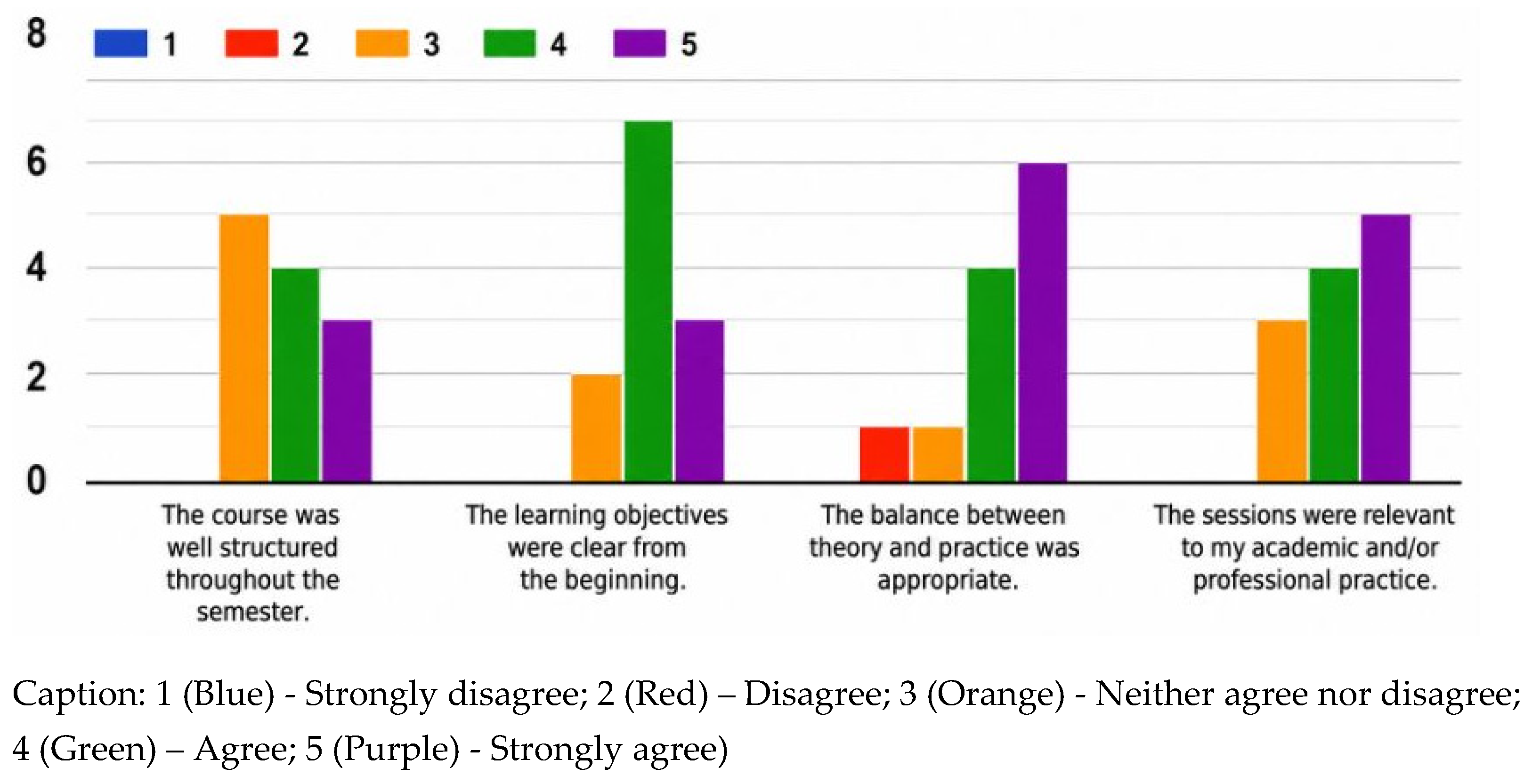
For each statement, responses were given on a 5-point Likert scale (1 = Strongly disagree; 5 = Strongly agree). The results are presented in Figure 1 and summarised numerically in Table 2.
Figure 1.
Course Organisation and Structure: participants’ perspective.
Table 2.
Frequencies and percentages for course organisation and structure (n = 12).
Thus, regarding the first question, the majority (n = 7) agreed/strongly agreed with the statement, considering that the course was well structured throughout the semester. The majority of participants (n = 10) also agreed/strongly agreed that the learning objectives were clear from the outset; the same was true regarding agreement on the balance between theory and practice, which they mostly considered appropriate (n = 10), as well as regarding the final question, where nine of the participants agreed/strongly agreed that the sessions were relevant to their academic and/or professional practice.
When asked “To what extent was the content covered relevant to your training?”, 11 of the participants considered it relevant or very relevant.
Regarding whether they feel they have a better understanding of instructional design models and the principles of UDL following the training, most participants (n = 8) felt they did, whilst four felt this was only partially the case.
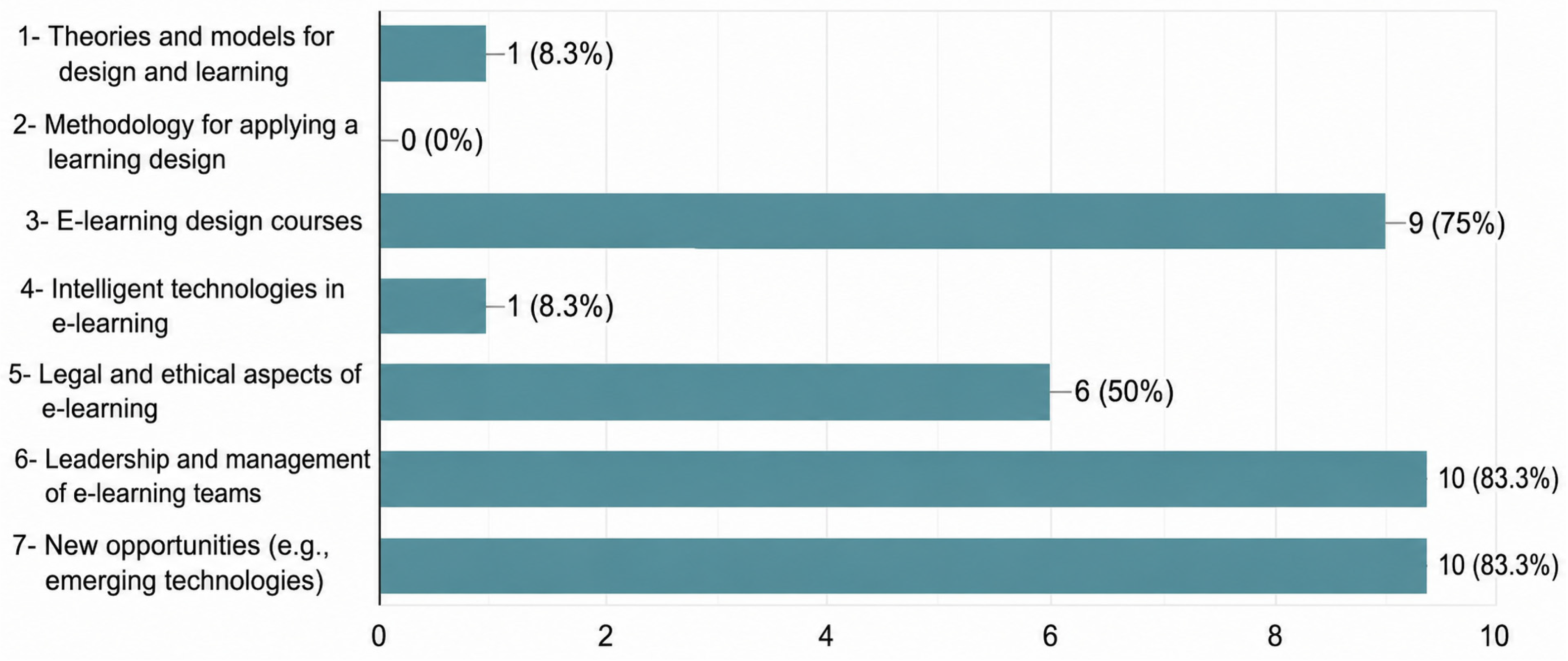
As regards the modules that contributed most to the participants’ learning, Figure 2 shows that the most frequently selected modules were Module 6 and Module 7, each chosen by 10 participants (83.3%), followed by Module 3, selected by nine participants (75.0%), and Module 5, selected by six participants (50.0%). Each participant could select up to three options. The modules and the main references underlying their content were:
Figure 2.
The contribution of the modules to learning: participants’ perspective.
- Module 1—Theories for instructional design of quality digital learning [5,6,7,8,9,10,11,12].
- Module 2—Models and methods and the ability to apply appropriate, contextualised pedagogical design in designing innovative, engaging and quality e-courses and resources [13,14,15,16].
- Module 3—E-learning quality standards and ability to apply them in e-learning design (courses, learning activities and resources) [17,18,19,20].
- Module 4—Smart technologies in the development of e-learning resources [21,22,23,24,25,26,27,28,29,30].
- Module 5—Legal and ethical aspects of e-learning design [31,32,33].
- Module 6—Leadership and team management of e-learning design [34,35,36].
- Module 7—New (self)-assessment opportunities [37,38,39,40,41,42,43,44,45,46,47,48].
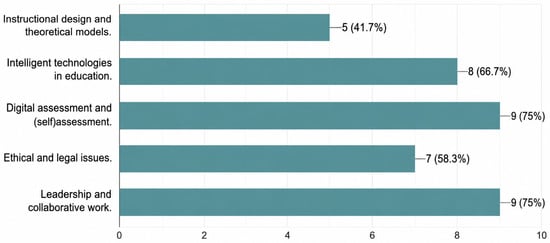
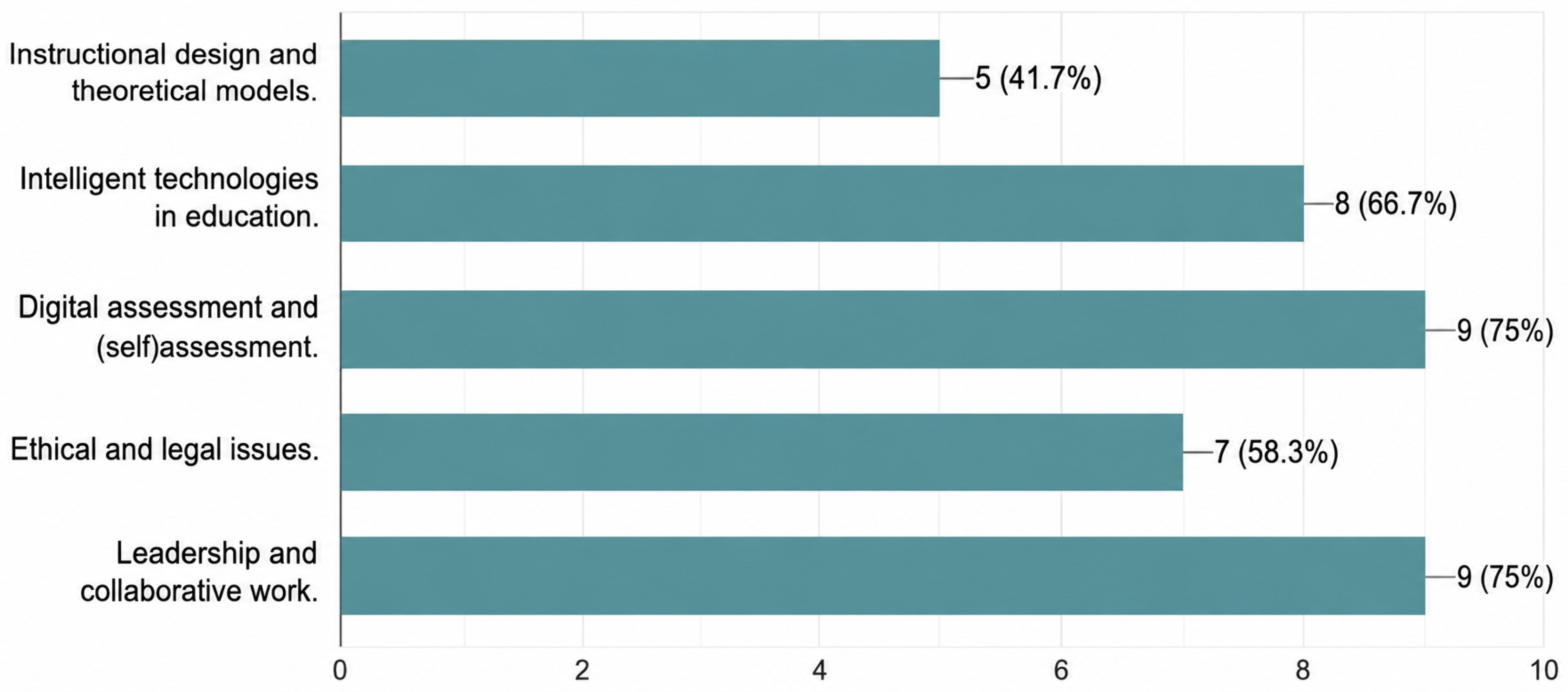
Regarding the module content that contributed most to learning, the most selected topics were leadership and collaborative work (n = 9; 75.0%) and digital assessment and self-assessment (n = 9; 75.0%), followed by smart technologies in education (n = 8; 66.7%), ethical and legal issues (n = 7; 58.3%) and instructional design and theoretical models (n = 5; 41.7%). Figure 3 and Table 3 report these findings in English and with precise numerical values.
Figure 3.
Module content that contributed most to learning.
Table 3.
Module content perceived as contributing most to learning (n = 12).
When asked whether they had had the opportunity to apply the knowledge they had acquired in real or simulated contexts, seven participants replied in the affirmative, four replied that this had happened to some extent, and only one participant replied in the negative.
About the question “Do you feel prepared to design inclusive and accessible digital resources?”, the same pattern emerged: eight participants answered yes, and four said it had happened to some extent.
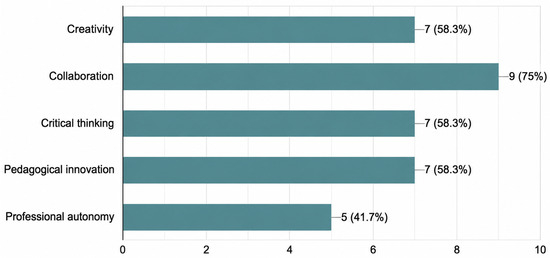
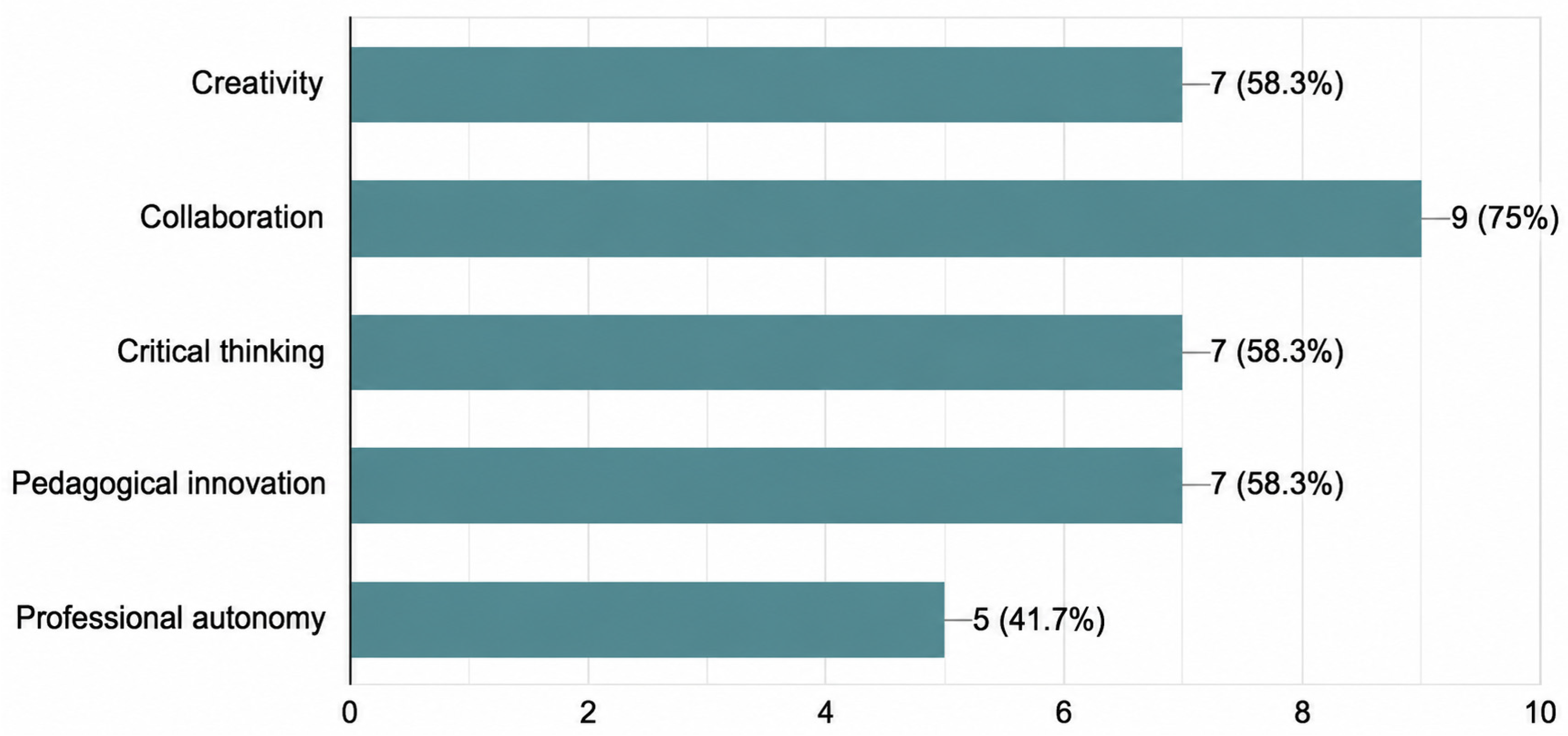
Finally, about the skills promoted by the proposed activities, particularly the synchronous ones, collaboration was the most often selected skill (n = 9; 75.0%), followed by creativity, critical reflection and pedagogical innovation (each n = 7; 58.3%), and professional autonomy (n = 5; 41.7%) (Figure 4).
Figure 4.
Skills developed through the activities proposed in the modules.
3.2. Universal Design for Learning
Two questions were asked regarding UDL. In response to the first question, “Did the course enable you to understand and apply the principles of Universal Design for Learning?”, the majority replied that this was partially the case (n = 6), five participants replied that this was fully the case, and only one participant replied that this was only to a small extent. In response to the second question, “Do you consider it important that this type of training continues to be offered to higher education students?”, almost all participants (n = 11) answered in the affirmative.
3.3. Resources, Support and Online Portal
About the Portal, all participants considered it useful or very useful. In this section, participants were asked to rate the following statements on a scale of 1 to 5 (where 1 is the lowest score and 5 the highest):
- Access to digital materials and resources.
- Clarity of the trainers’ guidance.
- Answers to queries and pedagogical support during the course.
The three questions were mostly rated 4 or 5. More specifically, for the first question, eight participants scored 4/5; for the second question, nine also scored 4/5; and for the third question, all participants scored 4/5.
3.4. Overall Assessment of the Module and Impact of the Course
In this section, five questions were asked. The first four were closed-ended, and the fifth was open-ended.
Regarding the first question, “Was the teaching methodology (lecture-based, practical, collaborative and independent work) appropriate?”, most participants (n = 9) answered yes. Similarly, regarding the question “Was the support provided by the tutors effective throughout the course?”, the majority answered yes (n = 11), with only one participant answering, “At times”. As for the question “Overall, how would you rate the qualification course in design for digital learning?”, half of the participants (n = 6) answered “excellent”, four answered “good”, and two answered “satisfactory”. And regarding the question “Did the course have an impact on your creative thinking and your ability to design inclusive learning experiences?”, all participants answered yes, except for two who answered “partially”.
3.5. Contribution to the Personal and Academic Development of Trainees
The analysis of the responses to the open-ended questions was conducted using an interpretative approach, drawing on the principles of content analysis as a systematic process of identifying, categorising, and interpreting meanings [11,12]. The responses were analysed inductively, allowing thematic categories (Table 4) to emerge from the discursive patterns observed in the corpus. Participants’ responses were assigned alphanumeric codes (P1–P12) to ensure anonymity and confidentiality. Analytical rigour was supported through transparent coding procedures, category review, internal consistency checks and the inclusion of representative textual excerpts [11,12].
Table 4.
Emerging categories from open-ended responses.
Analysis of responses consistently shows that participants perceive the course as a space to broaden and deepen their knowledge, highlighting the opportunity to engage with new content and perspectives. This is evident in statements such as “learning more about certain subjects, which I hadn’t expected to explore in depth so soon” (P1) and “delving deeper into the content offered was undoubtedly necessary and extremely interesting” (P11). These comments recognise the course’s educational value as a catalyst for conceptual and intellectual growth.
At the same time, the development of pedagogical and professional skills is clear, particularly in assessment, leadership, and the pedagogical use of technology. Participants mention a reconfiguration of their professional conceptions, as seen in “I developed a different view of what it means to be a leader” (P2) and in “I now understand the importance of self-assessment, constructive feedback and the use of more inclusive methods” (P12), or in the need for greater pedagogical awareness prior to designing digital experiences, expressed as “awareness before developing e-learning courses” (P6). These statements reveal a critical engagement with the content and its application to future professional contexts.
About the development of critical, creative and reflective thinking, this emerges repeatedly, associated with processes of awareness-raising and identity construction. Some participants highlight a shift in attitude towards learning, as evidenced in “I feel I am leaving this module more aware, better prepared and with a more human and pedagogical view of what it really means to assess for learning” (P7). Others highlight the importance of the pedagogical reflection promoted throughout the training programme, emphasising both the need to rethink assessment processes, notably through “reflection on what it really means to assess for learning” (P12), as well as the development of skills associated with creative thinking, particularly mobilised “during the practical activities” (P2), highlighting a training process geared towards the critical examination of practices and the promotion of more creative and reflective approaches.
Collaborative learning is also a key focus, with references to cooperation, sharing and understanding others’ perspectives. This is evident in statements such as “it allowed me to work as a team with my colleagues, to understand more about their point of view” (P9) and “the way we had to cooperate with colleagues was a great way to understand their way of thinking” (P10), leading us to conclude that the relational context of the course was perceived as a factor that enhanced learning.
Regarding the appreciation of educational technology, this is evident in how participants reframe their understanding of the role of technology in the educational process. The reference to “a new perspective on the importance of digital technologies in education” (P8) and to a “more attentive perception of virtual learning” (P5) reveals a move beyond a merely instrumental view, centred on the technical use of tools. This shift is reinforced by the emphasis on the “responsible use of digital media” and the “design of interactive activities” (P11), pointing towards a pedagogical and critical appropriation of technology as a mediator of learning.
3.6. Suggestions for Improvement for Future Editions of the Course
The analysis of suggestions for improvement revealed several critical areas that point to opportunities for pedagogical and organisational refinement (Table 5).
Table 5.
Categories of suggestions for future editions of the course.
These suggestions focus primarily on the structural, methodological, and operational aspects of the course, revealing a reflective and demanding attitude among the participants, consistent with the profile of trainees involved in a training process.
Regarding suggestions for improvement, participants noted aspects of the course’s pedagogical and structural organisation. Key highlights include the need for better time distribution and greater clarity in module presentation, as seen in comments such as “less spacing of free periods and more interleaving between autonomous study and teacher-led sessions” (P10) or “more sessions, one theoretical and one practical” (P2). Furthermore, references to the need for “having all modules available on the platform” (P11) or “improving module organisation” (P5) suggest that, while the general structure was deemed appropriate, there were moments of less clarity regarding the sequence, articulation, or timing of the content.
To address the need for a more balanced time distribution, future editions of extracurricular training will restructure the calendar to reduce long gaps between free periods while simultaneously increasing the frequency of mandatory sessions. Specifically, it was concluded that the “flipped classroom” model could be applied more rigorously, where periods of autonomous study on the platform are immediately followed by synchronous sessions. This will ensure that participants have a structured space to clarify doubts emerging from their independent work, maintaining a consistent learning momentum throughout the semester.
Methodological diversification and strengthening the practical component also emerge as recurring needs. Participants suggest including more applied activities, “using case studies that better bridge theory and practice” (P11), and concrete examples, as evidenced by expressions such as “a greater presence of practical and applied examples” (P12) and the “development of different practical activities” (P5).
Furthermore, the practical component will be expanded to include a library of real-world pedagogical challenges, such as adapting a STEM module for students with diverse sensory needs, enabling trainees to apply UDL principles in a simulated setting. By incorporating more diverse and applied examples, the course will transition from purely conceptual training to a hands-on workshop format that better reflects the daily complexities of inclusive teaching.
Regarding pedagogical resources, constructive criticism arose concerning the availability and organisation of materials, as well as the need for linguistic and multimodal diversification. This is evident in comments such as “support material that is not yet available in Portuguese” (P4) or “less text and more practice” (P9). These observations underline the importance of accessibility and clarity of resources in the learning process.
Concerning the relevance of interaction and peer sharing, there are suggestions for creating formal collaboration spaces. References to informal initiatives, such as the WhatsApp group, highlight a felt need for structured communication: “it could be interesting if the course itself encouraged or structured more formal sharing spaces” (P12). There was also a call for greater “appreciation of moments for sharing among participants” (P11), suggesting that the social dimension of learning is perceived as a structural element of the formative experience.
As previewed in the planned e-learning platform and in response to the participants’ call for formal sharing spaces, the online portal integrates structured ‘Communities of Practice’ (CoP). Moving beyond informal messaging apps, these internal forums facilitate peer-review cycles where trainees can share their resource designs for constructive feedback. This formalisation of the social dimension of learning aims to cultivate a sustainable professional network that persists beyond the course’s duration, fostering a culture of collaborative innovation among future and current educators.
4. Discussion
The findings indicate that the course was perceived as relevant and pedagogically coherent, particularly in relation to leadership, collaboration, digital assessment and the development of inclusive digital resources. These results are consistent with the UDL assumption that inclusive learning design requires flexible planning, accessible resources and multiple ways for learners to engage with content and demonstrate learning [4,5,6]. However, the findings are evidence of perceived learning and perceived preparedness rather than as direct evidence of impact on students with special educational needs or on long-term professional practice.
The partial nature of several participants’ reported gains in UDL understanding and application is particularly important. It suggests that UDL is conceptually demanding and that trainees may need more sustained opportunities to translate theoretical principles into accessible learning resources. This supports the participants’ suggestions for case studies, flipped-classroom sequencing, practical workshops and communities of practice. These mechanisms can strengthen the transfer from conceptual understanding to applied instructional design.
The results also highlight the value of collaborative learning. Collaboration was the most frequently selected skill promoted by the activities, and qualitative excerpts showed that peer interaction helped participants understand different perspectives. This finding aligns with a view of teacher education as a socially situated process in which professional judgement develops through dialogue, shared design and reflection.
At the same time, the results require a balanced interpretation. The generally positive ratings indicate satisfaction with the course organisation, resources, and support, but they do not demonstrate measurable learning gains, changes in classroom practice, or effects on learners with special educational needs. For this reason, claims about transformation, scalability and replicability have been moderated and are presented as possibilities requiring further empirical testing rather than as established outcomes.
The suggestions for improvement are therefore analytically relevant. They indicate that the next iterations of the course should strengthen the practical component, diversify resources, ensure all materials are available in the online portal, and create formal communities of practice. These improvements are directly linked to participants’ feedback and to the project’s evolution toward a more accessible, practice-oriented, and collaborative training model.
Overall, the discussion shows that the course has value as a contextualised Erasmus+ teacher-education initiative, but its contribution should be understood within the limits of a small, course-based evaluation. Its strongest contribution lies in documenting how trainees perceive the relationship between instructional design, UDL, digital technologies and inclusive practice, and in identifying concrete design improvements for future editions.
Limitations and Future Research
This study has several limitations. First, the sample was very small (n = 12) and drawn from a single course context, which limits generalizability. Second, the data are based mainly on self-reported perceptions and do not include pre/post-measures, a control or comparison group, or independent assessment of learning outcomes. Third, the study does not provide direct evidence of impact on students with special educational needs, community engagement, creative thinking development over time or long-term professional practice. Fourth, the course-based and project-linked evaluation may have introduced selection and social-desirability biases.
Future research should therefore include larger and more diverse samples, longitudinal follow-up, pre/post-measures of UDL knowledge and instructional design competence, analysis of learning products created by trainees, and evidence from classroom implementation. Comparative studies across the partner countries would also help examine how institutional, cultural and technological contexts influence the transferability of the training model.
5. Conclusions
The revised findings suggest that the IM-PRO-IN-DE course offers relevant and promising training experience for introducing current and future teachers to instructional design for inclusive digital learning. Participants valued the course structure, pedagogical support, digital resources, and opportunities for collaboration, and reported perceived gains in understanding instructional design, UDL, and inclusive resource design.
The study’s practical implications are nevertheless specific rather than universal. The use of active methodologies and associated digital technologies is recommended in several studies and articles [49,50,51,52,53,54], so future editions should include more structured case studies, more systematic flipped-classroom sequencing, multilingual and multimodal resources, and formal communities of practice that support peer review and collaborative design. These recommendations are grounded in participants’ feedback and provide actionable directions for improving the course.
Because the evidence is based on a small, single-course, self-report evaluation, the course should be described as a promising and contextually valuable initiative rather than as definitively transformative or broadly replicable. Further empirical research is needed to examine learning gains, classroom transfer and longer-term effects on inclusive educational practice.
Author Contributions
Conceptualization, V.G., E.M., P.V. and I.F.-R.; methodology, V.G., E.M., P.V. and I.F.-R.; software, V.G.; validation, V.G., E.M., P.V. and I.F.-R.; formal analysis, V.G., E.M., P.V. and I.F.-R.; investigation, V.G., E.M., P.V. and I.F.-R.; resources, V.G., E.M., P.V. and I.F.-R.; data curation, V.G., E.M., P.V. and I.F.-R.; writing—original draft preparation, V.G. and E.M.; writing—review and editing, V.G., E.M., P.V. and I.F.-R.; visualization, V.G., E.M., P.V. and I.F.-R.; supervision, V.G.; project administration, V.G.; funding acquisition, V.G. All authors have read and agreed to the published version of the manuscript.
Funding
This work was developed within the Erasmus+ IM-PRO-IN-DE project, “Improvement of digitalisation competences of recent and future teachers by development of advanced training on instructional design of digital training”. APC and CHF costs will be assumed by guest editors.
Institutional Review Board Statement
The study was conducted in accordance with the Declaration of Helsinki and approved by the competent Ethics Committee of Erasmus+ IM-PRO-IN-DE (Agreement number: 2023-1-BG01-KA220-HED-000155494) on 3 November 2023.
Informed Consent Statement
Informed consent was obtained from all subjects involved in the study: “I declare that I have been informed about the objectives and conditions of participation in this research. I feel fully informed and agree to participate in this study voluntarily, authorizing the use of my data exclusively for research purposes under the conditions previously presented.” For further information, please access the GDPR (General Data Protection Regulation): https://eur-lex.europa.eu/legal-content/EN/TXT/HTML/?uri=CELEX:32016R0679 (accessed on 5 December 2025).
Data Availability Statement
The data presented in this study are available on request from the corresponding author due to legal obligations under data protection regulations (GDPR).
Acknowledgments
During the preparation of this manuscript/study, the authors (VG, EM, PV and IF-R) used DeepL for the purposes of helping with translation. The authors have reviewed and edited the output and take full responsibility for the content of this publication.
Conflicts of Interest
The authors declare no conflicts of interest. Other members of the project had no role in the design of the study; in the collection, analyses, or interpretation of data; in the writing of the manuscript; or in the decision to publish the results.
References
- Sánchez-Fuentes, S. Universal Design for Learning. Practical Guide for Teachers; Narcea: Madrid, Spain, 2023; pp. 1–200. [Google Scholar]
- United Nations. Transforming Our World: The 2030 Agenda for Sustainable Development; United Nations: New York, NY, USA, 2015; pp. 1–35. [Google Scholar]
- UNESCO. Global Education Monitoring Report 2023: Technology in Education: A Tool on Whose Terms? UNESCO: Paris, France, 2023; pp. 1–435. [Google Scholar]
- Takacs, S.; Zhang, J. Universal Design for Learning: A Practical Guide; Centre for Teaching, Learning, and Innovation. Justice Institute of British Columbia: New Westminster, BC, Canada, 2020; pp. 1–20. [Google Scholar]
- Meyer, A.; Rose, D.H.; Gordon, D. Universal Design for Learning: Theory and Practice; CAST Professional Publishing: Boston, MA, USA, 2014. [Google Scholar]
- Center for Applied Special Technology (CAST). Universal Design for Learning Guidelines 3.0: Rationale for Updates; CAST: Wakefield, MA, USA, 2024; pp. 1–45. [Google Scholar]
- Freire, P. Pedagogy of the Oppressed; Continuum: New York, NY, USA, 1970; pp. 1–183. [Google Scholar]
- Mezirow, J. Transformative Dimensions of Adult Learning; Jossey-Bass: San Francisco, CA, USA, 1991; pp. 1–247. [Google Scholar]
- IM-PRO-IN-DE “Improvement of Digitalisation Competences of Recent and Future Teachers by Development of Advanced Training on Instructional Design of Digital Training”. Available online: https://instructional-design.eu/ (accessed on 1 March 2026).
- Piscalho, I.; Colaço, S.; Seixas, S.; Silva, F. Conjunto de Materiais: Educação Inclusiva. Módulo 3: Desenho Universal para a Aprendizagem; Ministério da Educação/Direção-Geral da Educação: Lisboa, Portugal, 2022; pp. 1–50. [Google Scholar]
- Franco, M.L.P.B. Análise de Conteúdo, 5th ed.; Alínea: Campinas, Brazil, 2021; pp. 1–110. [Google Scholar]
- Bardin, L. Análise de Conteúdo; Edições: Lisboa, Portugal, 2011; Volume 70, pp. 1–280. [Google Scholar]
- Branch, R.M. Instructional Design: The ADDIE Approach; Springer: New York, NY, USA, 2009; pp. 1–203. [Google Scholar]
- European Commission. Directive (EU) 2019/882 of the European Parliament and of the Council of 17 April 2019 on the accessibility requirements for products and services. Off. J. Eur. Union 2019, 70–115. Available online: https://eur-lex.europa.eu/eli/dir/2019/882/oj/eng (accessed on 2 April 2026).
- Díaz, J. Virtual world as a complement to hybrid and mobile learning. Int. J. Emerg. Technol. Learn. (iJET) 2020, 15, 267–274. Available online: https://online-journals.org/index.php/i-jet/article/view/14393 (accessed on 2 April 2026). [CrossRef] [Scilit]
- García Aretio, L. Digital Education: Theoretical Framework and Didactic Strategies; UNED: Madrid, Spain, 2023; pp. 1–300. [Google Scholar]
- National Institute of Educational Technologies and Teacher Training (INTEF). Annex F of the UNE 71362/2017 Standard: Quality Criteria for Digital Education; INTEF: Madrid, Spain, 2020; pp. 1–15. [Google Scholar]
- Maré, S.; Mutezo, A.T. The effectiveness of e-tutoring in an open and distance e-learning environment: Evidence from the University of South Africa. Open Learn. J. Open Distance e-Learn. 2021, 36, 164–180. [Google Scholar] [CrossRef] [Scilit]
- Massuga, F.; Soares, S.; Dias, S.L. El Papel del Tutor en la Enseñanza de la Educación a Distancia: Una Revisión Sistemática Sobre el Enfoque de Competencias. RED Rev. Educ. Distancia 2021, 21, 1–26. [Google Scholar] [CrossRef] [Scilit]
- Senadheera, V.V.; Ediriweera, D.S.; Rupasinghe, T.P. Instructional design models for digital learning in higher education—A scoping review. J. Learn. Dev. 2024, 11, 15–26. [Google Scholar] [CrossRef] [Scilit]
- González-Morales, L. Metodología para el Diseño Instruccional en la Modalidad b-Learning Desde la Comunicación Educativa; Razón y Palabra: Quito, Ecuador, 2017; pp. 32–50. Available online: https://www.redalyc.org/pdf/1995/199553113004.pdf (accessed on 2 April 2026).
- Muñoz, G.F.R. Enseñanza híbrida y transformación digital en la educación: Integración de tecnología y metodología. Rev. Investig. Tecnol. Inf. 2024, 12, 48–55. Available online: https://dialnet.unirioja.es/descarga/articulo/10342359.pdf (accessed on 2 April 2026).
- Tirado, M.A. Decoding Universal Design for Learning: What Empirical Evidence Supports It? Supervisión 21: Madrid, Spain, 2023; pp. 1–39. [Google Scholar]
- Bean, C. The Accidental Instructional Designer: Learning Design for the Digital Age, 2nd ed.; ATD Press: Alexandria, VA, USA, 2023; pp. 1–250. [Google Scholar]
- Bearman, M.; Nieminen, J.H.; Ajjawi, R. Designing Assessment in a Digital World: An Organising Framework; Assessment & Evaluation in Higher Education: Abingdon, UK, 2022; pp. 291–304. [Google Scholar]
- Betlej, A.; Danileviča, A. Learning Technologies for People with Mild Intellectual Disabilities: From Digital Exclusion to Inclusive E-education in Network Society. Int. J. Res. e-Learn. 2022, 8, 1–20. [Google Scholar] [CrossRef] [Scilit]
- Mudhol, A. Innovative Assessment Methods for Measuring Practical Skills in Higher Education; Atlantis Press: Dordrecht, The Netherlands, 2024; pp. 78–91. [Google Scholar]
- Nesterenko, I. Principais Benefícios da Utilização de Tecnologias Inteligentes na Educação; Mukachevo State University: Mukachevo, Ukraine, 2023; pp. 31–39. [Google Scholar]
- Omonayajo, B.; Al-Turjman, F.; Cavus, N. Tecnologias Interativas e Inovadoras Para a Educação Inteligente; Computer Science and Information Systems: Belgrade, Serbia, 2022; pp. 1161–1182. [Google Scholar]
- OECD. OECD Digital Education Outlook 2023: Towards an Effective Digital Education Ecosystem; OECD Publishing: Paris, France, 2023; pp. 1–250. [Google Scholar]
- OECD. Digital Education Outlook 2023: Empurrando as Fronteiras Com Inteligência Artificial, Blockchain e Robôs; OECD Publishing: Paris, France, 2023; pp. 1–100. [Google Scholar]
- OECD. Flexibilidade e Autonomia Curriculares: Promover um Ambiente de Aprendizagem Próspero; OECD Publishing: Paris, France, 2024; pp. 1–180. [Google Scholar]
- Vincent-Lancrin, S. Smart Education Technology: How It Might Transform Teaching (and Learning). N. Engl. J. Public Policy 2022, 34, 5. Available online: https://scholarworks.umb.edu/nejpp/vol34/iss1/5 (accessed on 2 April 2026).
- UNESCO. Guia Para o uso da Inteligência Artificial Generativa na Educação e na Investigação; UNESCO: Paris, France, 2023; pp. 1–50. [Google Scholar]
- UNESCO. Inteligência Artificial na Educação: A UNESCO Promove Competências-Chave Para Professores e Alunos; UNESCO: Paris, France, 2023; pp. 1–15. [Google Scholar]
- UNESCO. Em Sala de Aula: A IA Deve Permanecer no Lugar; O Correio da UNESCO: Paris, France, 2023; pp. 1–12. [Google Scholar]
- Kuner, C.; Bygrave, L.A.; Docksey, C.; Drechsler, L. O Regulamento Geral Sobre a Proteção de Dados (RGPD) da UE: Um Comentário; Oxford University Press: Oxford, UK, 2020; pp. 1–1424. [Google Scholar]
- Moscon, V. Liberdade Académica, Direitos de Autor e Acesso a Trabalhos Académicos: Uma Perspetiva Comparada; Springer: Berlin/Heidelberg, Germany, 2014; pp. 1–30. [Google Scholar]
- Smith, J.; Johnson, K. A Ética da Privacidade de Dados na Educação; Revista de Ética Educacional: New York, NY, USA, 2023; pp. 45–60. [Google Scholar]
- Brown, J.S.; Conner, M. The New Social Learning: A Guide to Leveraging Social Media for Learning; ATD Press: Alexandria, VA, USA, 2010; pp. 1–256. [Google Scholar]
- Allen, M.W. Michael Allen’s Guide to e-Learning, 2nd ed.; Wiley: Hoboken, NJ, USA, 2016; pp. 1–400. [Google Scholar]
- Thalheimer, W. Performance-Focused Learner Surveys; Work-Learning Press: Somerville, MA, USA, 2016; pp. 1–150. [Google Scholar]
- Good, J. Serving Students with Special Needs Better: How Digital Technology Can Help; OECD Publishing: Paris, France, 2021; pp. 123–142. [Google Scholar]
- D’Mello, S.K. Improving Student Engagement in and with Digital Learning Technologies; OECD Publishing: Paris, France, 2021; pp. 79–104. [Google Scholar]
- Ferrarini, R.; Saheb, D.; Torres, P. Metodologias Ativas e Tecnologias Digitais: Aproximações e Distinções; Revista Educação em Questão: Natal, Brazil, 2019; pp. 1–30. [Google Scholar]
- Filatro, A.; Cavalcanti, C.C. Metodologias Inovativas na Educação Presencial a Distância e Corporativa; Saraiva Educação: São Paulo, Brazil, 2018; pp. 1–250. [Google Scholar]
- Gonçalves, V. COVIDados a Inovar e a Reinventar o Processo de Ensino-Aprendizagem com TIC; Pedagogia em Ação: Belo Horizonte, Brazil, 2020; pp. 43–53. [Google Scholar]
- Google. Google Workspace for Education; Google: Mountain View, CA, USA, 2024; pp. 1–5. [Google Scholar]
- Moya, E.C. Using Active Methodologies: The Students’ View; Procedia-Social and Behavioral Sciences: Amsterdam, The Netherlands, 2017; pp. 672–677. [Google Scholar]
- Microsoft. Prepare-se Para o Futuro do Trabalho Com o Microsoft Teams; Microsoft: Redmond, WA, USA, 2024; pp. 1–10. [Google Scholar]
- Rajabpour, A. Teachers’ Perception of Advantages and Disadvantages of Kahoot! Engl. Linguist. Res. 2021, 10, 49. [Google Scholar] [CrossRef] [Scilit]
- Silva, L.; Loureiro, A.C.; Magoni, F.; Gonçalves, V. Active Methodologies and Digital Technologies in Learning: A Systematic Literature Review; CISTI: Madrid, Spain, 2022; pp. 1–5. [Google Scholar]
- Valente, J.A.; Almeida, M.E.B.; Geraldini, A.F.S. Metodologias ativas: Das concepções às práticas em distintos níveis de ensino. Rev. Diálogo Educ. 2017, 17, 455–478. [Google Scholar] [CrossRef] [Scilit]
- Yot-Dominguéz, C.; Marcelo, C. University students’ self-regulated learning using digital technologies. Int. J. Educ. Technol. High. Educ. 2017, 14, 38. [Google Scholar] [CrossRef] [Scilit]

Disclaimer/Publisher’s Note: The statements, opinions and data contained in all publications are solely those of the individual author(s) and contributor(s) and not of MDPI and/or the editor(s). MDPI and/or the editor(s) disclaim responsibility for any injury to people or property resulting from any ideas, methods, instructions or products referred to in the content. |
© 2026 by the authors. Licensee MDPI, Basel, Switzerland. This article is an open access article distributed under the terms and conditions of the Creative Commons Attribution (CC BY) license.