


Abstract
This systematic review and meta-analysis aimed to investigate the effectiveness of exercise interventions in regulating inflammatory biomarkers among individuals with musculoskeletal pain. A comprehensive search of MEDLINE, CINAHL, Web of Science, Cochrane Library, and Google Scholar was conducted from inception to November 2024. Only randomized controlled trials (RCTs) published in English that examined the effects of exercise on inflammatory markers—such as C-reactive protein (CRP), interleukins (ILs), and tumor necrosis factor-alpha (TNF-α)—were included. Twenty-three RCTs involving 1128 participants met the inclusion criteria. Meta-analysis of four studies indicated that isokinetic exercise significantly reduced CRP (MD = −0.40, 95% CI: −0.44 to −0.36, p < 0.01, I2 = 0%), IL-6 (MD = −1.59, 95% CI: −2.61 to −0.56, p < 0.01, I2 = 97%), and TNF-α (MD = −4.24, 95% CI: −5.13 to −3.36, p < 0.01, I2 = 90%) levels compared to general exercise. These findings suggest that exercise, particularly isokinetic exercise, may reduce systemic inflammation in patients with musculoskeletal pain and provide therapeutic effects beyond mechanical improvement. The review followed PRISMA guidelines and was registered on PROSPERO (CRD42024500081).
1. Introduction
Musculoskeletal pain is one of the most prevalent health conditions, affecting individuals across all age groups and significantly impacting daily function and quality of life (QoL). It encompasses a range of disorders, including osteoarthritis (OA), rheumatoid arthritis (RA), chronic low-back pain (CLBP), fibromyalgia (FM), and other degenerative or inflammatory conditions affecting the joints, muscles, and connective tissues. The global burden of musculoskeletal pain is substantial, leading to high healthcare costs, loss of productivity, and increased disability rates [1,2]. Managing this condition requires a multimodal approach that includes pharmacological treatments, lifestyle modifications, and physical interventions. Among these strategies, exercise therapy has emerged as a cornerstone for pain management and rehabilitation [3,4].
The role of exercise in alleviating musculoskeletal pain is well documented; beyond its mechanical and neuromuscular benefits, exercise is increasingly recognized for its systemic effects, particularly in regulating inflammation [5,6]. Recent research has highlighted the potential of exercise to modulate inflammatory processes, which are often implicated in the pathophysiology of musculoskeletal disorders [7]. Chronic inflammation is a key contributor to pain and tissue damage in musculoskeletal conditions such as OA, RA, and tendinopathies. A range of inflammatory markers and related substances, including interleukins (ILs), tumor necrosis factor-alpha (TNF-α), and C-reactive protein (CRP), have been frequently reported as elevated in these populations [8,9,10].
In addition, immunomodulatory cytokines such as IL-1β, IL-10, IL-17, IL-2, and interferon-gamma (IFN-γ) are also frequently assessed in clinical trials to reflect the status of inflammation. For example, IL-1β, IL-17, and IFN-γ are pro-inflammatory cytokines. Elevated levels of these substances are commonly observed in joint inflammation, cartilage degradation, chronic pain, autoimmune diseases, and various forms of arthritis [11,12,13]. On the other hand, IL-10 is an anti-inflammatory cytokine that inhibits the production of pro-inflammatory mediators, and higher IL-10 levels are associated with reductions in chronic inflammation [14]. IL-2 is a regulatory cytokine that helps modulate immune activity and maintain inflammatory balance [15].
In musculoskeletal pain and arthritis, while conventional treatments such as nonsteroidal anti-inflammatory drugs (NSAIDs) and disease-modifying antirheumatic drugs (DMARDs) aim to control inflammation, they often come with potential side effects and limited long-term efficacy. Exercise, as a non-pharmacological intervention, presents a promising alternative or complementary approach. It is hypothesized that regular physical activity influences inflammatory pathways by modulating immune responses, reducing oxidative stress, and enhancing anti-inflammatory cytokine release. However, despite the increasing interest in exercise-induced immunomodulation, the exact mechanisms by which different types of exercise influence inflammatory biomarkers remain unclear [7,16,17]. Understanding the relationship between exercise and inflammation is critical for optimizing rehabilitation strategies for individuals with musculoskeletal pain. Aerobic exercise, resistance training, isokinetic training, and core stabilization exercises have been investigated for their impact on inflammatory cytokines, but there remains a lack of consensus on which exercise modalities are most effective in reducing inflammation-associated pain [7,18].
Exercise is increasingly recognized for its systemic effects, including modulation of inflammatory pathways, and is hypothesized to exert both pro- and anti-inflammatory influences depending on context, intensity, duration, and targeted tissues [16,19,20]. Previous studies have examined the effects of exercise on inflammatory responses in healthy individuals, patients with metabolic syndrome, and postmenopausal women. For instance, Cerqueira et al. (2020) found that high-intensity exercise promotes the production of immune molecules such as CRP, IL-6, and IL-10, with more pronounced effects compared to moderate-intensity exercise [20]. Particularly for IL-6, its systemic elevation has been closely linked to eccentric and concentric exercise, highlighting its role as a contraction-induced myokine with metabolic and immunological functions [21]. Alizaei Yousefabadi et al. (2021) reported a significant reduction in TNF-α, CRP, and IL-8, along with an increase in the anti-inflammatory cytokine IL-10, after 12 weeks of exercise in patients with metabolic syndrome [22]. In postmenopausal women, exercise training was found to significantly reduce IL-6, TNF-α, and CRP while increasing adiponectin, a molecule that reduces both oxidative stress and serve as an anti-inflammatory protein [23]. Despite these findings, the direct impact of exercise on inflammatory markers in musculoskeletal pain populations remains an area of active investigation.
The primary objective of this review is to evaluate the effectiveness of exercise, via structured and time-limited exercise interventions, in altering inflammatory biomarker levels in individuals with musculoskeletal pain and to determine whether these changes correlate with clinical improvements in pain and function. By employing findings from randomized controlled trials (RCTs), we aim to study the variability in inflammatory marker levels in patients with musculoskeletal pain in response to various types of exercise interventions.
2. Materials and Methods
2.1. Protocol and Registration
This review was conducted according to the Preferred Reporting Items for Systematic Reviews and Meta-Analyses methodological guidelines [24] and the Cochrane Handbook [25], with PROSPERO registration number CRD42024500081. The study selection process is based on strict inclusion and exclusion criteria, ensuring the inclusion of high-quality RCTs that specifically assess inflammatory biomarker outcomes in response to exercise interventions. This review also employs meta-analytical techniques to quantify the effects of exercise on inflammation, providing a robust synthesis of available data [25].
2.2. Search Strategy
A search was conducted in MEDLINE (via PubMed), CINAHL, Web of Science, Cochrane Library, and Google Scholar (supplementary searches only) according to the search strategy listed in Appendix A. Boolean logic was applied where necessary to optimize search results. Google Scholar was used for supplementary searches to identify additional relevant studies. Manual searches of previously published reviews and the reference lists of retrieved studies were also performed. The literature search covered studies from inception to 15 November 2024, with inclusion restricted to English-language publications.
2.3. Inclusion Criteria
This systematic review included only RCTs involving patients with musculoskeletal pain, such as joint pain, arthritis, neck and back pain, or tendinopathy. Eligible interventions were structured, time-limited exercise programs, including aerobic training, resistance training, combined protocols, or other specific active exercise regimens. The primary outcomes were levels of inflammatory biomarkers and cytokines, including CRP, ILs, and TNF-α, matrix metalloproteinase (MMP), and other related immune molecules.
Trials were excluded if the interventions included diet, medication, or other passive treatments exclusively in either the experimental or control group only, making it difficult to reflect the effects of exercise. Studies with uncontrolled long-term lifestyle physical activity or community-based exercise programs, case–control studies, and observational studies were excluded. Studies were excluded if the subjects were post-surgical patients because one could not ascertain if the inflammatory factors were from musculoskeletal pain or surgery. Additionally, studies without outcomes related to inflammatory markers were also excluded.
Database search records were copied to the online platform Rayyan (https://www.rayyan.ai/, accessed on 10 December 2024) for duplication removal and study selection. Two reviewers screened all articles independently for inclusion and exclusion criteria followed by quality appraisal after study selection. Other reviewers contributed to further opinions for discussion where there were disagreements.
2.4. Data Extraction
Data were independently extracted by each reviewer for the demographic information of the subjects, their main diagnosis, and the specific inclusion and exclusion criteria applied. Detailed information regarding the intervention, including the type and frequency of exercises, was also collected. Furthermore, outcome measures at baseline and follow-up time points were extracted. For studies sharing similar outcome measures, the software Review Manager, version 5.4 (The Cochrane Collaboration, London, UK, 2020), was used to pool the result data with formal meta-analytical techniques for analysis. Mean difference (MD) was used as the effect measure for outcomes reported with the same unit or scale, while standardized mean difference (SMD) was applied for outcomes measured using different scales across studies. The 95% confidence intervals (CIs) and heterogeneity (I2) were calculated to quantify the effect size and consistency of the results.
2.5. Risk of Bias Assessment and Summary of Evidence
The included studies were assessed for risk of bias using the Cochrane risk-of-bias tool for randomized trials—version 2 (ROB2) tool [26]. Five domains are included in the ROB2 as bias arising from the randomization process, bias due to deviations from intended interventions, bias due to missing outcome data, bias in measurement of the outcome, and bias in selection of the reported result. Two reviewers independently assessed each included study, and any disagreements were resolved through discussion or consultation with other reviewers. The risk-of-bias judgment for the RCTs was considered as low risk of bias, some concerns, or high risk of bias in each domain [26].
After conducting the meta-analysis, the quality of evidence for each outcome was further assessed using the Grades of Recommendation, Assessment, Development, and Evaluation (GRADE) framework. The justifications of GRADE are based on potential study limitations, the consistency of effects, the precision of results, and the relevance (directness) of evidence, providing a comprehensive appraisal of the pooled evidence’s quality [25]. According to these domains, the GRADE system can justify the certainty or confidence in the evidence as a continuum of four categories, ranging from high, moderate, low, and very low [27].
3. Results
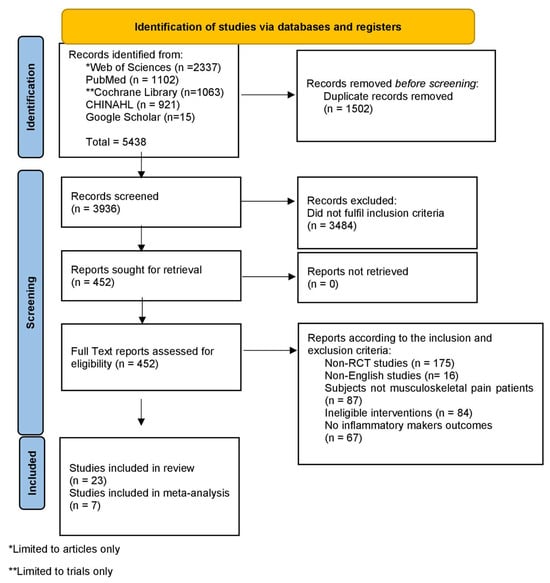
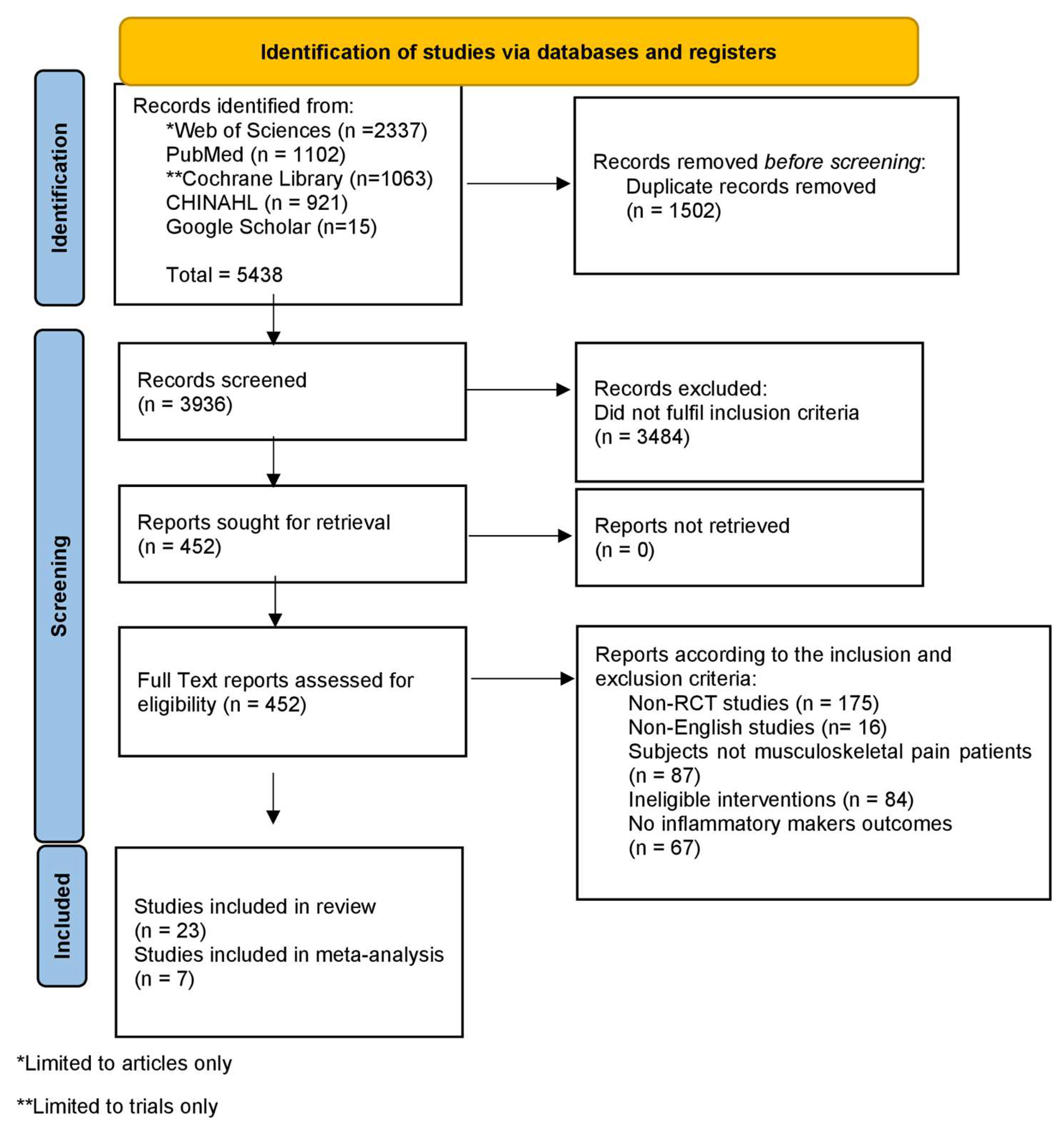
The database search initially retrieved a total of 5438 records. Of the 3936 records screened after duplicate removal, 3484 were excluded at the title and abstract level primarily due to study design (e.g., non-RCTs, reviews, protocols), irrelevant populations (e.g., non-musculoskeletal conditions), or interventions not involving structured exercise. Among the 452 full-text articles assessed for eligibility, exclusions were made for reasons including non-randomized design (n = 175), use of non-English language (n = 16), populations not experiencing musculoskeletal pain (n = 87), ineligible interventions (n = 84), and absence of inflammatory marker outcomes (n = 67). These decisions followed predefined eligibility criteria and were made through independent manual review. No AI-assisted tools were used during the screening or exclusion process. After screening and applying the inclusion criteria, 23 RCTs were selected for analysis in this systematic review (Figure 1) [28,29,30,31,32,33,34,35,36,37,38,39,40,41,42,43,44,45,46].
Figure 1.
PRISMA flowchart.
In total, the included studies involve 1128 subjects, with an age range of 18 to 80 years old. The characteristics of the included studies are shown in Table 1 and Table 2.
Table 1.
Characteristics of included studies.
Table 2.
Outcome measures and follow-up periods of included studies.
Among the included studies, six articles focused on patients with OA, most of which implemented resistance training, isometric, or whole-body electromyostimulation (WB-EMS) as primary interventions. Three studies addressed RA and utilized a range of modalities including aerobic walking, Tai Chi, and neural mobilization to manage systemic inflammation and joint stiffness. Two studies involving fibromyalgia adopted moderate-intensity aerobic exercises such as Nordic walking combined with stretching or strengthening. For chronic low-back pain and non-specific back pain, five studies employed core stabilization exercises, isokinetic trunk training, or McKenzie methods. Four studies targeted chronic neck pain, primarily using cervical isometric or resistance band exercises to improve posture and reduce pain. Two studies addressed tendinopathy, where eccentric and isokinetic loading were the dominant strategies. Lastly, one study on axial spondyloarthritis implemented a combined protocol of WB-EMS and isometric squats.
Across the 23 included RCTs, a diverse array of inflammatory biomarkers were assessed to evaluate the effects of exercise interventions. The most frequently measured markers were CRP (reported in 10 studies), TNF-α (12 studies), and IL-6 (10 studies). Several studies also examined IL-1β, IL-8, and MMP-3 as indicators of localized inflammation or tissue remodeling. In addition to pro-inflammatory cytokines, anti-inflammatory and regulatory markers such as IL-10, IL-2, IL-4, and IFN-γ were measured in four to six studies, providing insights into the immunomodulatory effects of exercise. Less commonly reported markers included Eotaxin, IP-10, PTX3, and resistin, which were explored in a small number of trials. A few studies also measured surrogate inflammatory indicators like erythrocyte sedimentation rate (ESR) and rheumatoid factor.
The included studies varied in follow-up periods, ranging from assessments conducted immediately after the intervention to those extending up to six months post-intervention. The majority of studies had follow-up periods between 4 and 12 weeks.
3.1. Risk of Bias Assessment
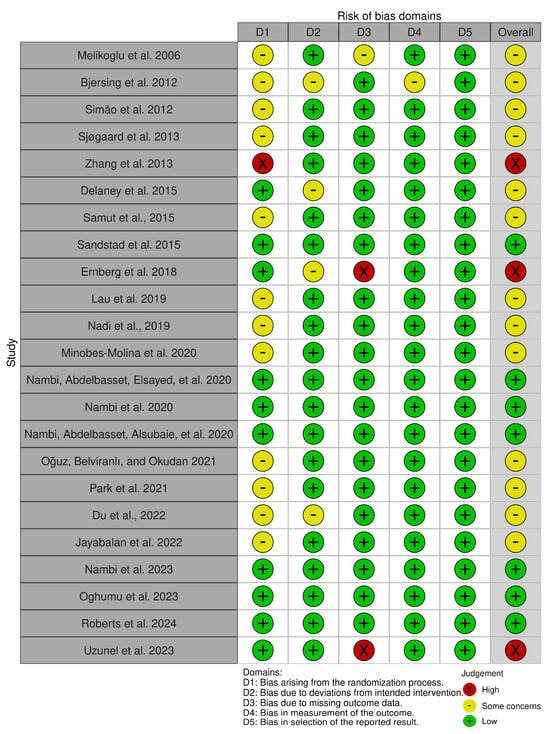
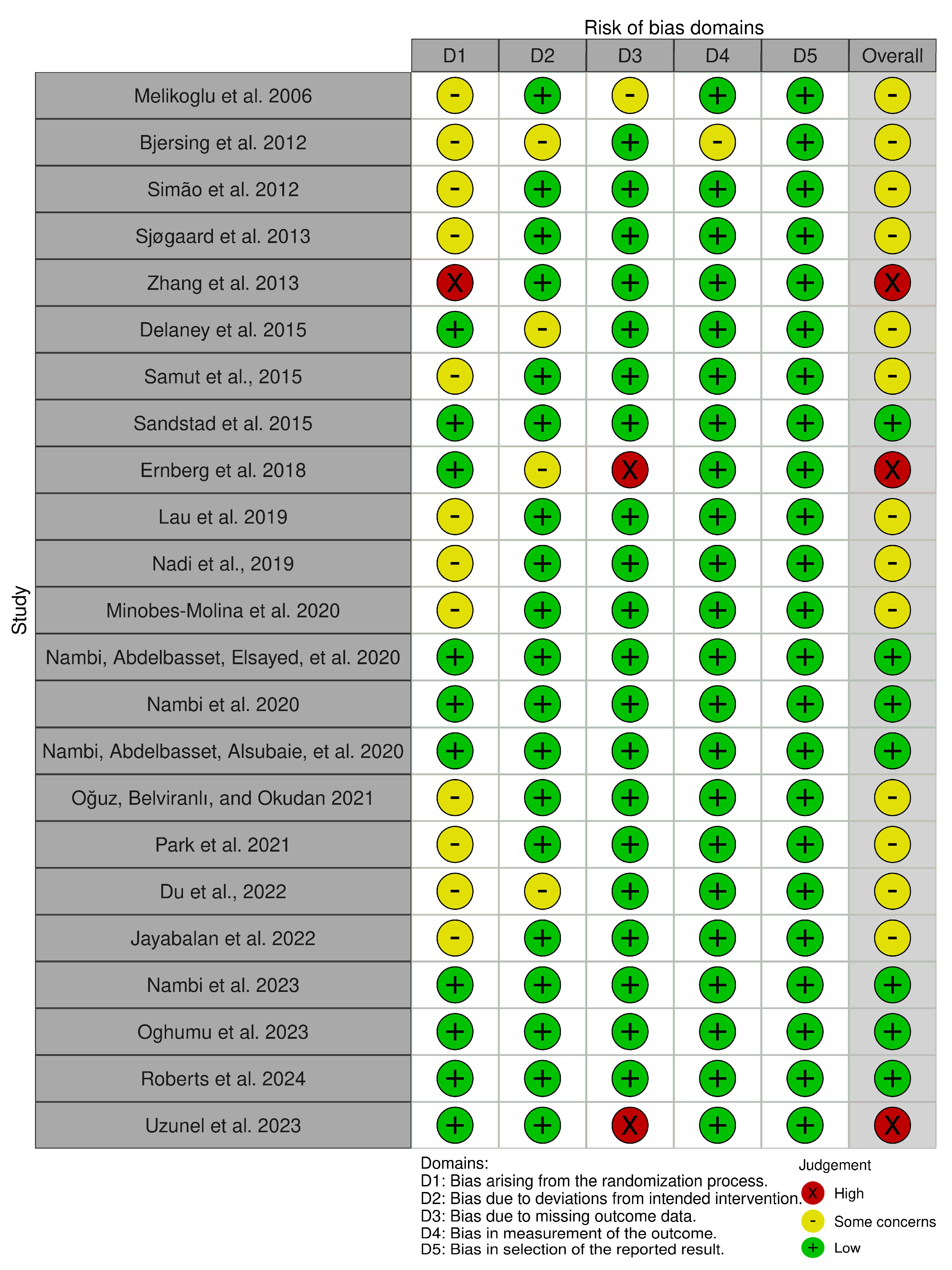
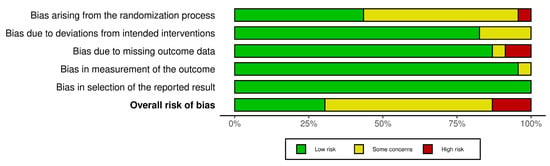
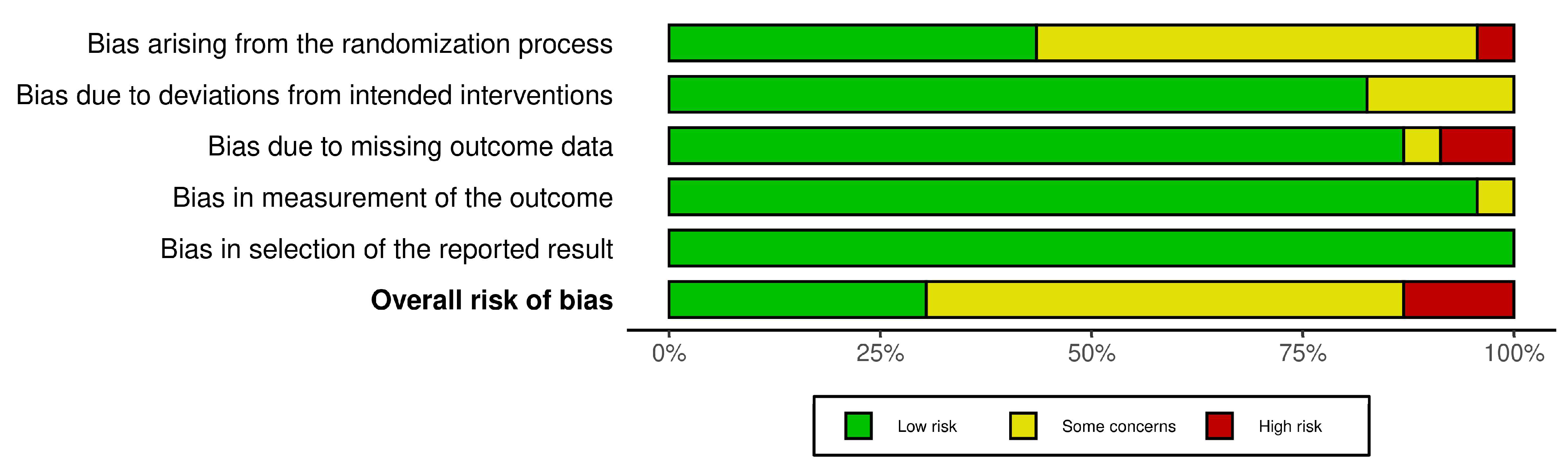
This systematic review assessed the risk of bias solely for biomarker outcomes, excluding other clinical outcomes. This limited approach may have introduced variability in the assessed risk of bias and study quality, as incorporating other clinical outcomes could have yielded different evaluations. Overall, 30.5% (7 out of 23) of the included studies were considered as having a low risk of bias, 56.5% (13) had some concerns, and 13% (3) were deemed to have a high risk of bias (Figure 2 and Figure 3).
Figure 2.
Risk of bias assessment.
Figure 3.
Risk of bias summary.
3.2. Meta-Analysis
Two sets of meta-analysis were conducted with random effects to pool MD for the studies sharing the same scale of outcome measures, to pool SMD for those with different scales with 95% Cis, and to estimate heterogeneity (I2, %).
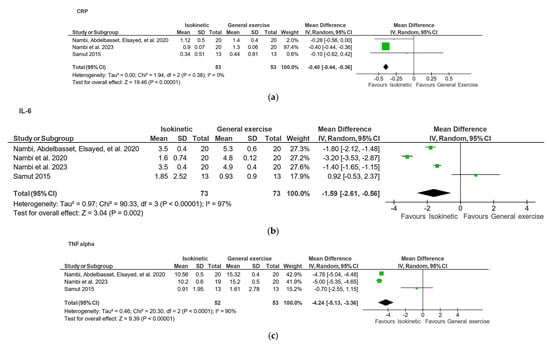
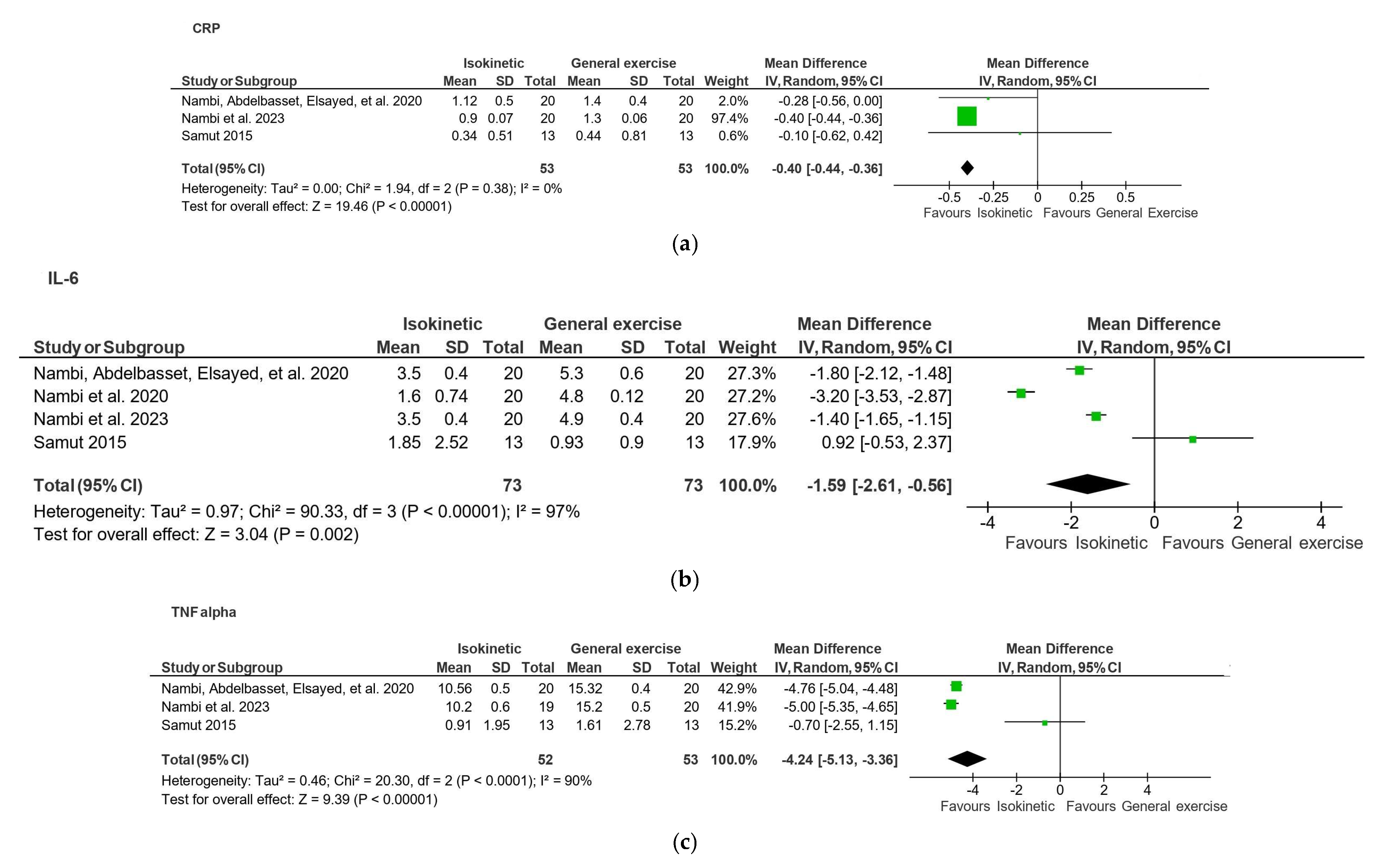
From four included studies (two on OA and two on chronic back pain) [34,39,41,45], isokinetic exercise was found significantly more effective in reducing CRP levels than general exercise at 4–6 weeks follow-up, with an MD of −0.40 (95% CI: −0.44 to −0.36, p < 0.01, I2 = 0%) (Figure 4a). Similarly, isokinetic exercise led to greater reductions in IL-6 levels (MD −1.59, 95% CI: −2.61 to −0.56, p < 0.01, I2 = 97%) and TNF-α levels (MD −4.24, 95% CI: −5.13 to −3.36, p < 0.01, I2 = 90%) compared to general exercise (Figure 4b,c).
Figure 4.
(a) A forest plot of the effect of isokinetic exercise and general exercise on CRP levels. (b) A forest plot of the effect of isokinetic exercise and general exercise on IL 6 levels. (c) A forest plot of the effect of isokinetic exercise and general exercise on TNF alpha levels.
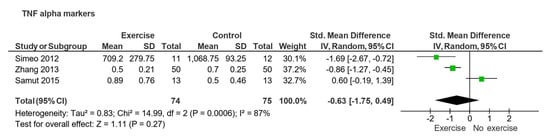
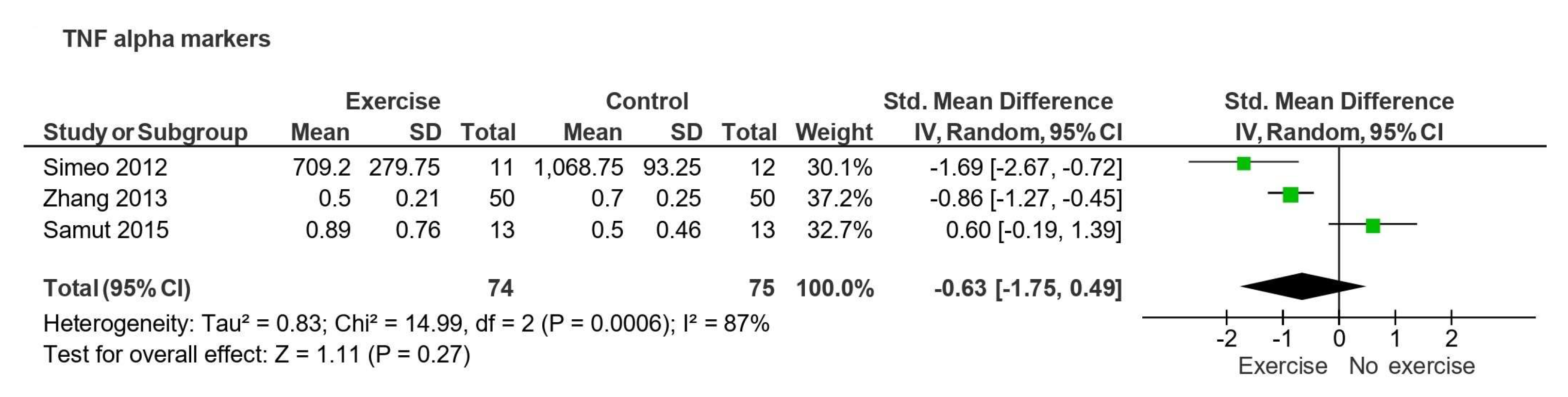
Three studies on patients with osteoarthritis compared active exercise to the control for TNF-α expression [30,32,34] with follow-up periods ranging from 4 to 12 weeks. The results showed no statistically significant effect (SMD = −0.63, 95% CI: −1.75 to 0.49, p = 0.27) and high heterogeneity (I2 = 87%) (Figure 5).
Figure 5.
Forest plot of effect of exercise on TNF levels.
3.3. GRADE Recommendations
The strength of evidence according to GRADE criteria generated by the GRADEpro website (https://www.gradepro.org/ accessed on 10 January 2025) is listed on Table 3.
Table 3.
GRADE recommendations.
According to the results of the meta-analysis, a high GRADE recommendation supports the effects of isokinetic exercise in significantly reducing CRP levels in patients with musculoskeletal pain compared with general exercise. However, the overall quality of the GRADE recommendations on the effect of isokinetic exercise in reducing TNF-α and IL-6 levels in patients with musculoskeletal pain compared with general exercise was considered low. For osteoarthritis, the GRADE recommendation was rated as very low quality, suggesting that exercise has no significant effect on TNF levels compared with the control, according to the meta-analysis results.
4. Discussion
We conducted a systematic review and meta-analysis to evaluate the effects of exercise on inflammatory markers in individuals with musculoskeletal pain. Over the last decade, researchers have performed similar reviews on the effects of exercise on inflammatory response in healthy individuals [20], patients with metabolic syndrome [22], and postmenopausal women [23].
The results from Cerqueira et al. (2020) suggest that exercise has a significant acute effect in promoting CRP, IL-6 and IL-10, with higher effects from intense exercise than moderate exercise [20]. In patients with metabolic syndrome, the results presented by Alizaei Yousefabadi (2021) [22] demonstrate a significant reduction in TNF-α, CRP, and IL-8 but an increase in IL-10 after a 12-week follow-up period. Khalafi, Malandish, and Rosenkranz (2021) reported that exercise training significantly reduced IL-6, TNF-α, and the acute-phase protein CRP and increased adiponectin when compared with controls in postmenopausal women [23]. Their included studies had follow-up periods ranging from 8 to 24 weeks.
Our review suggests that high GRADE level evidence indicates that isokinetic exercise is significantly more effective than general exercise in reducing CRP levels in patients with musculoskeletal pain. For IL-6 and TNF-α levels, similar effects were observed, but the level of evidence was low. These findings are based on a 4–6-week follow-up period. In contrast, very low GRADE level evidence suggests that exercise has no significant effect on TNF expressions in patients with OA.
There is a strong biological linkage between CRP and IL-6. When inflammation is triggered, IL-6 is released into circulation and stimulates the production of CRP and other acute-phase proteins in the liver. As a result, CRP levels in plasma typically rise in parallel with IL-6 concentrations during acute inflammation [47]. However, the differences in our findings primarily reflect variations in research quality and consistency among the included studies. The meta-analysis on CRP included three RCTs with consistent results and a low risk of bias. In contrast, although IL-6 showed a similar direction of effect, the associated meta-analysis involved four RCTs with substantial heterogeneity (I2 = 97%) and wide confidence intervals, resulting in a low-certainty GRADE rating. The discrepancy is due to differences in specific research quality and evidence grading rather than biological mechanisms.
The included studies featured a variety of exercise interventions, including aerobic exercise, strengthening exercises, balance exercises, joint mobility exercises, and high-intensity exercises. In contrast, the control or comparison groups received low-intensity exercise, general non-specific exercise, relaxation therapy, joint mobilization exercises, or no intervention (see Table 2). To ensure a fair comparison based on the principles of population, intervention, control, outcome, and follow-up period, we selected specific studies with relatively similar characteristics so only two sets of meta-analyses were established. Future research on the effects of exercise may need a consensus on a standardized comparison intervention, allowing for more precise evaluation of specific exercise effects.
Analysis revealed distinct correlation patterns between biomarkers and the severity of clinical symptoms. In patients with RA, CRP was reported to be significantly correlated with tender/swollen joint count and disability (r = 0.46–0.80) by Du Liang and Guo (2022) but the sample size was small (n = 20) [44]. In sciatica patients, several longitudinal studies reported moderate positive correlations for serum (r = 0.629) and biopsy (r = 0.65) TNF-α with pain level; severe pain (VAS > 4) was also shown to be significantly associated with increased high-sensitivity CRP levels (adjusted OR = 3.4 (95% CI, 1.1 to 10) [48]. In contrast, TNF-α, IL-6, and CRP levels were reported to have no or inconclusive evidence of correlation with pain in patients with chronic low-back pain and chronic whiplash-associated disorder [8]. Therefore, the levels of biomarkers maybe useful outcome measures to reflect the effects of exercise in certain musculoskeletal painful conditions, but apparently not specific for chronic pain conditions.
It is possible to perform an additional meta-analysis on three articles to calculate the effects of exercise on T cell inflammatory markers IL-2 and IL-4 from three of the included articles [39,41,45]. However, since these studies were published by the same research team and examined similar population groups, concerns regarding publication bias and generalizability arise. Another three included articles shared similar characteristics of studying the effect of core exercise compared with general exercise using IL-6 as an outcome measure [40,49,50]. Unfortunately, two of them did not provide sufficient statistical data (i.e., mean ± SD) of their results. In Minobes-Molina et al. [50] both study and control groups followed similar indistinguishable back strengthening exercise programs. Therefore, we did not further analyze their results.
Regarding the risk of bias in the included studies, the majority presented some concerns, primarily due to insufficient reporting on allocation concealment during the randomization process. However, because this review focused on objective inflammatory biomarker outcomes, the risk of bias related to deviations from intended interventions and outcome measurement was minimized. The use of validated laboratory methods for biomarker assessment further reduced the potential influence of participant or personnel blinding on the results.
A minority of studies exhibited a high risk of bias which could compromise the reliability of findings in those cases. The study conducted by Ernberg et al. (2018) reported significant missing data for cytokine analyses, with 15 participants excluded from the exercise group and 18 from the relaxation group due to incomplete data [36]. In the study conducted by Uzunel et al. (2023), a substantial proportion of pain-associated biomarker data (e.g., IL-6, calcitonin gene-related peptide (CGRP), substance P) were missing, with 25–30% of samples either not analyzed or excluded due to technical issues. Additionally, dropout rates were 15% in the exercise group and 20% in the spinal orthosis group [51]. In Zhang et al.’s (2013) study, the study’s allocation process (based on admission order) also complicates the reliability of its findings in the presence of any unreported missing data [32].
The included studies utilized a range of biomarkers beyond inflammatory markers, including metabolic and growth factors (IGF-1, glucose, insulin, HOMA-IR) to assess metabolic changes, matrix and cartilage proteins (COMP, proteoglycan) to evaluate cartilage health, and pain and stress modulation markers (β-endorphin, cortisol) to assess pain relief and stress response. In addition, clinical outcomes were measured to capture broader effects of exercise interventions on pain and function. These included pain and functional scores (VAS, NRS, WOMAC, Roland–Morris Disability Questionnaire), physical function metrics (pain-free walking distance, step count, isokinetic torque), quality of life assessments (DAS28, RAID), and muscle and joint measures (multifidus muscle thickness, joint range of motion, morning stiffness duration). As these non-inflammatory markers and clinical outcomes were outside the scope of this meta-analysis, they were not included.
Limitations
As this review specifically focused on biomarkers as outcome measures, the risk of bias assessment was tailored accordingly. It is important to note that the quality and risk of bias ratings of the included articles may differ if other clinical outcomes were considered. Notably, a significant number of included studies were conducted by Nambi’s research team [39,40,41,45,52]. While these studies were assessed as having a low risk of bias according to ROB 2, together they may introduce publication bias. Furthermore, the potential use of similar population subjects across these studies could limit the generalizability of the findings, as previously discussed. In addition, the majority of eligible studies, including those included in the meta-analysis, had small sample sizes. This may be attributed to the high cost of laboratory procedures required for biomarker measurements.
Another limitation of this review is that the meta-analyses were based primarily on short-term follow-up data (4–6 weeks), which may reflect early physiological responses to exercise rather than long-term adaptation effects. As such, the findings should be interpreted in the context of short-duration interventions, and future studies are needed to evaluate the sustained impact of exercise over longer periods. There was also variability in how included studies reported or controlled for the use of pain and anti-inflammatory medications. While many studies implemented exclusion criteria or required stable medication regimens, others lacked detailed reporting. As such medications may influence inflammatory biomarkers, this inconsistency could introduce potential confounding effects that were considered during the risk of bias assessment. The variability in biomarker measurements across different disease stages and due to varying laboratory techniques could introduce significant heterogeneity.
5. Conclusions
Our systematic review suggests that exercise training is effective in regulating the levels of inflammatory markers in patients with musculoskeletal pain. Specifically, isokinetic exercise appears to be particularly effective in reducing the acute-phase protein CRP. Exercise may also reduce the levels of TNF-α and IL-6, although the certainty of evidence for these outcomes is low due to inconsistency and imprecision. These findings suggest that future research on exercise interventions for musculoskeletal pain should consider systemic anti-inflammatory effects in addition to mechanical effects.
Author Contributions
C.N.L. and B.P.L.L. were responsible for the conception and design of the study, and data collection. N.E.J.W.W., S.H., and E.J.H.A. were involved in the screening process, data extraction, and the risk of bias assessment. C.N.L. and B.P.L.L. performed the data synthesis and statistical analysis. All authors contributed to the interpretation of findings, drafting, and critical revision of the manuscript. C.N.L. and B.P.L.L. provided supervision and take responsibility for the integrity of the work. All authors have read and agreed to the published version of the manuscript.
Funding
This research received no external funding.
Data Availability Statement
The data that support the findings of this study are available on reasonable request from the corresponding authors. It is a systematic review and does not involve primary patient data.
Conflicts of Interest
The authors declare no conflicts of interest.
Appendix A. Search Strings and Databases
- Medline (via PubMed)
(((pain) AND ((Hip) OR (Knee) OR (Ankle) OR (Shoulder) OR (Wrist) OR (Hand) OR (Spine) OR (Back) OR (Neck) OR (Arthritis) OR (Musculoskeletal) OR (Limb) OR (Tendon)))
AND
((“Exercise”[MeSH]) OR (Aerobic) OR (“Resistance Training”[MeSH]) OR (Combined Training) OR (“Physical Activity”) OR (“Exercise Therapy”[MeSH]) OR (“Physical Exertion”[MeSH]) OR (Training) OR (Muscle Strengthening) OR (Weight Lifting) OR (Endurance Training) OR (Strengthening Programme)))
AND
((“C-reactive protein”[MeSH]) OR (Interleukin) OR (Tumor Necrosis Factor) OR (“Biomarkers”[MeSH]) OR (“Inflammatory marker”) OR (“Biological marker”) OR (“Inflammation”[MeSH]) OR (“Cytokines”[MeSH]) OR (Serum) OR (Plasma) OR (Saliva))
- CINAHL (via EBSCOhost)
S1: pain
S2: hip OR knee OR ankle OR shoulder OR wrist OR hand OR spine OR back OR neck OR arthritis OR musculoskeletal OR limb
S3: tendon
S4: S2 OR S3
S5: exercise OR aerobic OR resistance training OR combined training OR physical activity OR exercise therapy OR physical exertion OR training OR muscle strengthening OR weight lifting OR endurance training OR strengthening programme
S6: c-reactive protein OR interleukin OR tumor necrosis factor OR biomarker OR inflammatory marker OR biological marker OR inflammation OR cytokine OR serum OR plasma OR saliva
S7: S1 AND S4 AND S5 AND S6
- Web of Science (WOS)
#1: (“pain”)
#2: (“hip” OR “knee” OR “ankle” OR “shoulder” OR “wrist” OR “hand” OR “spine” OR “back” OR “neck” OR “arthritis” OR “musculoskeletal” OR “limb” OR “tendon”)
#3: (“exercise” OR “aerobic” OR “resistance training” OR “combined training” OR “physical activity” OR “exercise therapy” OR “physical exertion” OR “training” OR “muscle strengthening” OR “weight lifting” OR “endurance training” OR “strengthening programme”)
#4: (“C-reactive protein” OR “interleukin” OR “tumor necrosis factor” OR “biomarker” OR “inflammatory marker” OR “biological marker” OR “inflammation” OR “cytokine” OR “serum” OR “plasma” OR “saliva”)
#1 AND #2 AND #3 AND #4
Limited to articles only
- Cochrane Library
pain AND Hip OR Knee OR Ankle OR Shoulder OR Wrist OR Hand OR Spine OR Back OR Neck OR Arthritis OR MSK OR Musculoskeletal OR Limb OR Tendon AND Exercise OR Aerobic OR Resistance Training OR Combined Training OR Physical Activity OR Exercise Therapy OR Physical Exertion OR Training OR Muscle Strengthening OR Weight Lifting OR Endurance Training OR Strengthening Programme AND C-Reactive Protein OR Interleukin OR Tumor Necrosis Factor OR Biomarker OR Inflammatory Marker OR Biological Marker OR Pro-inflammatory Marker OR Inflammation OR Cytokine OR Serum OR Plasma
limited to Trials
References
- Chen, X.; Coombes, B.K.; Sjøgaard, G.; Jun, D.; O’Leary, S.; Johnston, V. Workplace-Based Interventions for Neck Pain in Office Workers: Systematic Review and Meta-Analysis. Phys. Ther. 2018, 98, 40–62. [Google Scholar] [CrossRef] [Scilit]
- Moreira-Silva, I.; Teixeira, P.M.; Santos, R.; Abreu, S.; Moreira, C.; Mota, J. The Effects of Workplace Physical Activity Programs on Musculoskeletal Pain. Workplace Health Saf. 2016, 64, 210–222. [Google Scholar] [CrossRef] [Scilit] [PubMed]
- Rodrigues, E.V.; Gomes, A.R.S.; Tanhoffer, A.I.P.; Leite, N. Effects of Exercise on Pain of Musculoskeletal Disorders: A Systematic Review. Acta Ortopédica Bras. 2014, 22, 334–338. [Google Scholar] [CrossRef] [Scilit]
- Tan, L.; Cicuttini, F.M.; Fairley, J.; Romero, L.; Estee, M.; Hussain, S.M.; Urquhart, D.M. Does Aerobic Exercise Effect Pain Sensitisation in Individuals with Musculoskeletal Pain? A Systematic Review. BMC Musculoskelet. Disord. 2022, 23, 113. [Google Scholar] [CrossRef] [Scilit] [PubMed]
- Pedersen, B.K. Anti-inflammatory Effects of Exercise: Role in Diabetes and Cardiovascular Disease. Eur. J. Clin. Investig. 2017, 47, 600–611. [Google Scholar] [CrossRef] [Scilit]
- da Luz Scheffer, D.; Latini, A. Exercise-Induced Immune System Response: Anti-Inflammatory Status on Peripheral and Central Organs. Biochim. Biophys. Acta-Mol. Basis Dis. 2020, 1866, 165823. [Google Scholar] [CrossRef] [Scilit]
- Docherty, S.; Harley, R.; McAuley, J.J.; Crowe, L.A.N.; Pedret, C.; Kirwan, P.D.; Siebert, S.; Millar, N.L. The Effect of Exercise on Cytokines: Implications for Musculoskeletal Health: A Narrative Review. BMC Sports Sci. Med. Rehabil. 2022, 14, 5. [Google Scholar] [CrossRef] [Scilit]
- Canlı, K.; Billens, A.; Van Oosterwijck, J.; Meeus, M.; De Meulemeester, K. Systemic Cytokine Level Differences in Patients with Chronic Musculoskeletal Spinal Pain Compared to Healthy Controls and Its Association with Pain Severity: A Systematic Review. Pain Med. 2022, 23, 1947–1964. [Google Scholar] [CrossRef] [Scilit]
- Jrad, A.I.S.; Trad, M.; Bzeih, W.; El Hasbani, G.; Uthman, I. Role of Pro-Inflammatory Interleukins in Osteoarthritis: A Narrative Review. Connect. Tissue Res. 2023, 64, 238–247. [Google Scholar] [CrossRef] [Scilit]
- Balchin, C.; Tan, A.L.; Golding, J.; Bissell, L.-A.; Wilson, O.J.; McKenna, J.; Stavropoulos-Kalinoglou, A. Acute Effects of Exercise on Pain Symptoms, Clinical Inflammatory Markers and Inflammatory Cytokines in People with Rheumatoid Arthritis: A Systematic Literature Review. Ther. Adv. Musculoskelet. Dis. 2022, 14, 1–16. [Google Scholar] [CrossRef] [Scilit]
- Spel, L.; Martinon, F. Inflammasomes Contributing to Inflammation in Arthritis. Immunol. Rev. 2020, 294, 48–62. [Google Scholar] [CrossRef] [Scilit] [PubMed]
- Beringer, A.; Miossec, P. Systemic Effects of IL-17 in Inflammatory Arthritis. Nat. Rev. Rheumatol. 2019, 15, 491–501. [Google Scholar] [CrossRef] [Scilit]
- Ferrara, V.; Toti, A.; Ghelardini, C.; Mannelli, L.C. Interferon-Gamma and Neuropathy: Balance Between Pain and Neuroprotection. Neural Regen. Res. 2022, 17, 2700. [Google Scholar] [CrossRef] [Scilit] [PubMed]
- Ouyang, W.; O’Garra, A. IL-10 Family Cytokines IL-10 and IL-22: From Basic Science to Clinical Translation. Immunity 2019, 50, 871–891. [Google Scholar] [CrossRef] [Scilit] [PubMed]
- Waters, R.S.; Perry, J.S.A.; Han, S.; Bielekova, B.; Gedeon, T. The Effects of Interleukin-2 on Immune Response Regulation. Math. Med. Biol. A J. IMA 2018, 35, 79–119. [Google Scholar] [CrossRef] [Scilit]
- Metsios, G.S.; Moe, R.H.; Kitas, G.D. Exercise and Inflammation. Best Pract. Res. Clin. Rheumatol. 2020, 34, 101504. [Google Scholar] [CrossRef] [Scilit]
- Suzuki, K. Chronic Inflammation as an Immunological Abnormality and Effectiveness of Exercise. Biomolecules 2019, 9, 223. [Google Scholar] [CrossRef] [Scilit]
- Smith, B.E.; Hendrick, P.; Bateman, M.; Holden, S.; Littlewood, C.; Smith, T.O.; Logan, P. Musculoskeletal Pain and Exercise—Challenging Existing Paradigms and Introducing New. Br. J. Sports Med. 2019, 53, 907–912. [Google Scholar] [CrossRef] [Scilit]
- Rosa Neto, J.C.; Lira, F.S.; Oyama, L.M.; Zanchi, N.E.; Yamashita, A.S.; Batista, M.L.; Oller do Nascimento, C.M.; Seelaender, M. Exhaustive Exercise Causes an Anti-Inflammatory Effect in Skeletal Muscle and a pro-Inflammatory Effect in Adipose Tissue in Rats. Eur. J. Appl. Physiol. 2009, 106, 697. [Google Scholar] [CrossRef] [Scilit]
- Cerqueira, É.; Marinho, D.A.; Neiva, H.P.; Lourenço, O. Inflammatory Effects of High and Moderate Intensity Exercise—A Systematic Review. Front. Physiol. 2020, 10, 1550. [Google Scholar] [CrossRef] [Scilit]
- Pedersen, B.K. Muscle as a Secretory Organ. In Comprehensive Physiology; Wiley: Hoboken, NJ, USA, 2013; pp. 1337–1362. [Google Scholar] [CrossRef] [Scilit]
- Alizaei Yousefabadi, H.; Niyazi, A.; Alaee, S.; Fathi, M.; Mohammad Rahimi, G.R. Anti-Inflammatory Effects of Exercise on Metabolic Syndrome Patients: A Systematic Review and Meta-Analysis. Biol. Res. Nurs. 2021, 23, 280–292. [Google Scholar] [CrossRef] [Scilit] [PubMed]
- Khalafi, M.; Malandish, A.; Rosenkranz, S.K. The Impact of Exercise Training on Inflammatory Markers in Postmenopausal Women: A Systemic Review and Meta-Analysis. Exp. Gerontol. 2021, 150, 111398. [Google Scholar] [CrossRef] [Scilit]
- Moher, D.; Shamseer, L.; Clarke, M.; Ghersi, D.; Liberati, A.; Petticrew, M.; Shekelle, P.; Stewart, L.A. Preferred Reporting Items for Systematic Review and Meta-Analysis Protocols (PRISMA-P) 2015 Statement. Syst. Rev. 2015, 4, 1. [Google Scholar] [CrossRef]
- Higgins, J.; Thomas, J.; Chandler, J.; Cumpston, M.; Li, T.; Page, M.J.; Welch, V. Cochrane Handbook for Systematic Reviews of Interventions Version 6.0; Cochrane: London, UK, 2019. [Google Scholar]
- Higgins, J.P.T.; Savović, J.; Page, M.J.; Elbers, R.G.; Sterne, J.A.C. Chapter 8: Assessing Risk of Bias in a Randomized Trial [Last Updated October 2019]. In Cochrane Handbook for Systematic Reviews of Interventions Version 6.5; Higgins, J.P.T., Thomas, J., Chandler, J., Cumpston, M., Li, T., Page, M.J., Welch, V., Eds.; Cochrane: London, UK, 2024. [Google Scholar]
- Prasad, M. Introduction to the GRADE Tool for Rating Certainty in Evidence and Recommendations. Clin. Epidemiol. Glob. Health 2024, 25, 101484. [Google Scholar] [CrossRef] [Scilit]
- Melikoglu, M.A.; Karatay, S.; Senel, K.; Akcay, F. Association between Dynamic Exercise Therapy and IGF-1 and IGFBP-3 Concentrations in the Patients with Rheumatoid Arthritis. Rheumatol. Int. 2006, 26, 309–313. [Google Scholar] [CrossRef] [Scilit] [PubMed]
- Bjersing, J.L.; Dehlin, M.; Erlandsson, M.; Bokarewa, M.I.; Mannerkorpi, K. Changes in Pain and Insulin-like Growth Factor 1 in Fibromyalgia during Exercise: The Involvement of Cerebrospinal Inflammatory Factors and Neuropeptides. Arthritis Res. Ther. 2012, 14, R162. [Google Scholar] [CrossRef] [Scilit]
- Simão, A.P.; Avelar, N.C.; Tossige-Gomes, R.; Neves, C.D.; Mendonça, V.A.; Miranda, A.S.; Teixeira, M.M.; Teixeira, A.L.; Andrade, A.P.; Coimbra, C.C.; et al. Functional Performance and Inflammatory Cytokines after Squat Exercises and Whole-Body Vibration in Elderly Individuals with Knee Osteoarthritis. Arch. Phys. Med. Rehabil. 2012, 93, 1692–1700. [Google Scholar] [CrossRef] [Scilit]
- Sjøgaard, G.; Zebis, M.K.; Kiilerich, K.; Saltin, B.; Pilegaard, H. Exercise Training and Work Task Induced Metabolic and Stress-Related MRNA and Protein Responses in Myalgic Muscles. Biomed Res. Int. 2013, 2013, 984523. [Google Scholar] [CrossRef] [Scilit]
- ZHANG, S.-L.; LIU, H.-Q.; Xu, X.-Z.; ZHI, J.; GENG, J.-J.; CHEN, J. Effects of Exercise Therapy on Knee Joint Function and Synovial Fluid Cytokine Levels in Patients with Knee Osteoarthritis. Mol. Med. Rep. 2013, 7, 183–186. [Google Scholar] [CrossRef] [Scilit]
- Delaney, C.L.; Miller, M.D.; Allan, R.B.; Spark, J.I. The Impact of Different Supervised Exercise Regimens on Endothelial Function in Patients with Intermittent Claudication. Vascular 2015, 23, 561–569. [Google Scholar] [CrossRef] [Scilit]
- Samut, G.; Dinçer, F.; Özdemir, O. The Effect of Isokinetic and Aerobic Exercises on Serum Interleukin-6 and Tumor Necrosis Factor Alpha Levels, Pain, and Functional Activity in Patients with Knee Osteoarthritis. Mod. Rheumatol. 2015, 25, 919–924. [Google Scholar] [CrossRef] [Scilit]
- Sandstad, J.; Stensvold, D.; Hoff, M.; Nes, B.M.; Arbo, I.; Bye, A. The Effects of High Intensity Interval Training in Women with Rheumatic Disease: A Pilot Study. Eur. J. Appl. Physiol. 2015, 115, 2081–2089. [Google Scholar] [CrossRef] [Scilit] [PubMed]
- Ernberg, M.; Christidis, N.; Ghafouri, B.; Bileviciute-Ljungar, I.; Löfgren, M.; Bjersing, J.; Palstam, A.; Larsson, A.; Mannerkorpi, K.; Gerdle, B.; et al. Plasma Cytokine Levels in Fibromyalgia and Their Response to 15 Weeks of Progressive Resistance Exercise or Relaxation Therapy. Mediat. Inflamm. 2018, 2018, 3985154. [Google Scholar] [CrossRef] [Scilit]
- Lau, Y.N.; Ng, J.; Lee, S.Y.; Li, L.C.; Kwan, C.M.; Fan, S.M.; Leung, B.P.L.; Lo, C.N. A Brief Report on the Clinical Trial on Neural Mobilization Exercise for Joint Pain in Patients with Rheumatoid Arthritis. Z. Rheumatol. 2019, 78, 474–478. [Google Scholar] [CrossRef] [Scilit] [PubMed]
- Nadi, M.; Bambaeichi, E.; Marandi, S.M. Comparison of the Effect of Two Therapeutic Exercises on the Inflammatory and Physiological Conditions and Complications of Diabetic Neuropathy in Female Patients. Diabetes Metab. Syndr. Obes. Targets Ther. 2019, 12, 1493–1501. [Google Scholar] [CrossRef] [Scilit]
- Nambi, G.; Abdelbasset, W.; Alrawaili, S.; Elnegamy, T.; Abodonya, A.; Saleh, A.; Verma, A. Effects of Isokinetic Knee Muscle Training on Bone Morphogenetic Proteins and Inflammatory Biomarkers in Post-Traumatic Osteoarthritis after Anterior Cruciate Ligament Injury: A Randomized Trial. J. Rehabil. Med. 2020, 52, jrm00098. [Google Scholar] [CrossRef] [Scilit]
- Nambi, G.; Abdelbasset, W.K.; Alsubaie, S.F.; Moawd, S.A.; Verma, A.; Saleh, A.K.; Ataalla, N.N. Isokinetic Training—Its Radiographic and Inflammatory Effects on Chronic Low Back Pain: A Randomized Controlled Trial. Medicine 2020, 99, E23555. [Google Scholar] [CrossRef] [Scilit] [PubMed]
- Nambi, G.; Abdelbasset, W.K.; Elsayed, S.H.; Khalil, M.A.; Alrawaili, S.M.; Alsubaie, S.F. Comparative Effects of Virtual Reality Training and Sensory Motor Training on Bone Morphogenic Proteins and Inflammatory Biomarkers in Post-Traumatic Osteoarthritis. Sci. Rep. 2020, 10, 15864. [Google Scholar] [CrossRef] [Scilit]
- Oğuz, R.; Belviranlı, M.; Okudan, N. Effects of Exercise Training Alone and in Combination With Kinesio Taping on Pain, Functionality, and Biomarkers Related to the Cartilage Metabolism in Knee Osteoarthritis. Cartilage 2021, 13 (Suppl. S1), 1791S–1800S. [Google Scholar] [CrossRef] [Scilit]
- Park, S.; Min, S.; Park, S.H.; Yoo, J.; Jee, Y.S. Influence of Isometric Exercise Combined With Electromyostimulation on Inflammatory Cytokine Levels, Muscle Strength, and Knee Joint Function in Elderly Women With Early Knee Osteoarthritis. Front. Physiol. 2021, 12, 1–15. [Google Scholar] [CrossRef] [Scilit]
- Du, J.; Liang, C.; Guo, C. The Efficacy of Selected Tai Chi Movements and Hand Exercise for People with Rheumatoid Arthritis. Arch. Budo 2022, 18, 175–182. [Google Scholar]
- Nambi, G.; Alghadier, M.; Kashoo, F.Z.; Aldhafian, O.R.; Nwihadh, N.A.; Saleh, A.K.; Omar, M.A.; Hassan, T.G.T.; Ibrahim, M.N.A.; El Behairy, H.F.; et al. Effects of Virtual Reality Exercises versus Isokinetic Exercises in Comparison with Conventional Exercises on the Imaging Findings and Inflammatory Biomarker Changes in Soccer Players with Non-Specific Low Back Pain: A Randomized Controlled Trial. Int. J. Environ. Res. Public Health 2022, 20, 524. [Google Scholar] [CrossRef] [Scilit]
- Roberts, M.J.; Hamrouni, M.; Linsley, V.; Moorthy, A.; Bishop, N.C. Exercise as an Anti-Inflammatory Therapy in Axial Spondyloarthritis Therapeutic Intervention (EXTASI) Study: A Randomized Controlled Trial. Rheumatol. Adv. Pract. 2024, 8, rkae062. [Google Scholar] [CrossRef] [Scilit] [PubMed]
- Del Giudice, M.; Gangestad, S.W. Rethinking IL-6 and CRP: Why They Are More than Inflammatory Biomarkers, and Why It Matters. Brain. Behav. Immun. 2018, 70, 61–75. [Google Scholar] [CrossRef] [Scilit]
- Jungen, M.J.; ter Meulen, B.C.; van Osch, T.; Weinstein, H.C.; Ostelo, R.W.J.G. Inflammatory Biomarkers in Patients with Sciatica: A Systematic Review. BMC Musculoskelet. Disord. 2019, 20, 156. [Google Scholar] [CrossRef] [Scilit]
- Oghumu, S.N.; Okafor, U.A.C.; Salu, O.B.; Tella, B.A.; Nicholas Oghumu, S.; Okafor, U.A.C.; Salu, O.B.; Tella, B.A.; Oghumu, S.N.; Okafor, U.A.C.; et al. Effects of Lumbar Stabilization and Graded Activity Exercises on Selected Biochemical Mediators and Clinical Outcomes in Patients With Non-Specific Chronic Low Back Pain. Iran. Rehabil. J. 2023, 21, 663–694. [Google Scholar] [CrossRef] [Scilit]
- Minobes-Molina, E.; Nogués, M.R.; Giralt, M.; Casajuana, C.; de Souza, D.L.B.; Jerez-Roig, J.; Romeu, M. Effectiveness of Specific Stabilization Exercise Compared with Traditional Trunk Exercise in Women with Non-Specific Low Back Pain: A Pilot Randomized Controlled Trial. PeerJ 2020, 8, e10304. [Google Scholar] [CrossRef] [Scilit]
- Uzunel, E.; Kronhed, A.-C.G.; Alin, C.K.; Ahmed, A.S.; Wändell, P.; Salminen, H. The Effect of Group Training or Spinal Orthosis on Quality of Life and Potential Plasma Markers of Pain in Older Women With Osteoporosis. A Randomized Controlled Trial. Arch. Rehabil. Res. Clin. Transl. 2023, 5, 100297. [Google Scholar] [CrossRef] [Scilit]
- Nambi, G.; Abdelbasset, W.K.; Alrawaili, S.M.; Alsubaie, S.F.; Abodonya, A.M.; Saleh, A.K. Virtual Reality or Isokinetic Training; Its Effect on Pain, Kinesiophobia and Serum Stress Hormones in Chronic Low Back Pain: A Randomized Controlled Trial. Technol. Healh Care 2021, 29, 155–166. [Google Scholar] [CrossRef] [Scilit]

Disclaimer/Publisher’s Note: The statements, opinions and data contained in all publications are solely those of the individual author(s) and contributor(s) and not of MDPI and/or the editor(s). MDPI and/or the editor(s) disclaim responsibility for any injury to people or property resulting from any ideas, methods, instructions or products referred to in the content. |
© 2025 by the authors. Licensee MDPI, Basel, Switzerland. This article is an open access article distributed under the terms and conditions of the Creative Commons Attribution (CC BY) license (https://creativecommons.org/licenses/by/4.0/).