




Next Issue
Volume 13, December
Previous Issue
Volume 13, October


Sports, Volume 13, Issue 11 (November 2025) – 44 articles
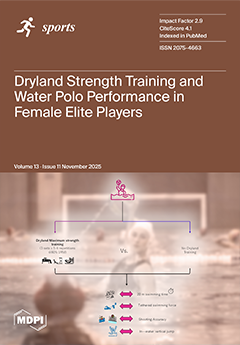
Cover Story (view full-size image): Twelve elite female water polo players completed a resistance training at 80% of one-repetition maximum (1RM; 3 sets x 5–6 repetitions) 15 minutes before an in-water session or participated in a control condition (no dryland session). After the dryland training and in-water warm-up, they underwent assessments of sprint swimming, tethered force, shooting accuracy and velocity, and in-water vertical jump. No differences were observed in any of the in-water performance tests between the dryland and control conditions. These findings suggest that high-load resistance exercise may be incorporated before technical or short duration efforts in elite female water polo sessions without detrimental effects on sport-specific performance. View this paper
  • Issues are regarded as officially published after their release is announced to the table of contents alert mailing list.
  • You may sign up for e-mail alerts to receive table of contents of newly released issues.
  • PDF is the official format for papers published in both, html and pdf forms. To view the papers in pdf format, click on the "PDF Full-text" link, and use the free Adobe Reader to open them.
Order results
Result details
Select all
Export citation of selected articles as:
14 pages, 2173 KB  
Article
Chronic Effects of a Dynamic Stretching and Core Stability Exercise Protocol on Physical Performance in U-16 Volleyball Players
by Annamaria Mancini, Loretta Francesca Cosco, Vincenzo Monda, Gian Pietro Emerenziani, Domenico Martone and Pasqualina Buono
Sports 2025, 13(11), 413; https://doi.org/10.3390/sports13110413 - 20 Nov 2025
Viewed by 471
Abstract
Background: Volleyball requires explosive jumps, agility, and upper and lower limb coordination. Dynamic stretching (DS) and core stability (CS) protocols are often used separately in training sessions, but little is known about their combined effects on the performance in adolescent players. This study [...] Read more.
Background: Volleyball requires explosive jumps, agility, and upper and lower limb coordination. Dynamic stretching (DS) and core stability (CS) protocols are often used separately in training sessions, but little is known about their combined effects on the performance in adolescent players. This study aimed to investigate the impact of a 12-week integrated DS and CS program (StretCor), in addition to standard training, on physical performance in U-16 volleyball players. Methods: Twenty-one volunteer players (15.1 ± 0.6 years) were randomly assigned to the Intervention Group (IG; n = 12) or Control Group (CG; n = 9). IG performed the StretCor protocol four times a week for twelve weeks in addition to standard volleyball training; CG continued standard volleyball training. Physical performance assessment included Countermovement Jump (CMJ), Vertec jump with run-up, isometric shoulder strength (ASH-I), dynamic balance (mSEBT), and agility (t-test) tests. Results: Significant group × time interactions (p < 0.05, η2 ranged: 0.20–0.90) were found for CMJ height and peak power, Vertec jump, ASH-I, mSEBT scores, and t-test performance. Post hoc analyses showed improvements in IG for CMJ height (+16.5%), Vertec jump (+10.2%), shoulder strength (+11–14%), balance across directions (+8–12%), and agility (−5.7% t-test time). No significant changes were observed in CG. Conclusions: The present study suggests that a 12 weeks of StretCor protocol training improves jump performance, agility, dynamic balance, and upper limb strength in U-16 volleyball players. These findings also support that StretCor protocol may be beneficial for the performance when incorporated into regular training programs for adolescent athletes. Full article
Show Figures

Figure 1

15 pages, 1161 KB  
Article
Effects of Leg-Length Discrepancy Compensation and Wedge Foot-Orthoses on Tensor Fasciae Latae EMG in Runners
by Ruben Sanchez-Gomez, Boon Peng Chang, Vitali Lipik, Paola Sanz-Wozniak, Dan Iulian Alexe, Jimena Garrido Cebrecos, Marta Martín Vega and Alvaro Gomez Carrion
Sports 2025, 13(11), 412; https://doi.org/10.3390/sports13110412 - 17 Nov 2025
Viewed by 612
Abstract
Aims: Structural lower limb-length discrepancies (LLLD) have been classically associated with the etiology of low back pain. However, their biomechanical effects on lower-limb muscle activity during running remain unclear. This pilot crossover study aimed to evaluate the influence of orthotic interventions—designed to compensate [...] Read more.
Aims: Structural lower limb-length discrepancies (LLLD) have been classically associated with the etiology of low back pain. However, their biomechanical effects on lower-limb muscle activity during running remain unclear. This pilot crossover study aimed to evaluate the influence of orthotic interventions—designed to compensate for LLLD and modify foot biomechanics—on the electromyographic (EMG) activity of the contralateral tensor fasciae latae (TFL) in healthy runners. Methods: A total of 41 recreational male and female runners (mean age 32.27 ± 6.09) with structural LLLD were recruited and classified as neutral (Ng), supinated (SPg), or pronated (PRg) based on their foot posture. Surface EMG activity of the TFL in the longer leg was recorded with specific surface electrodes while participants ran on a treadmill at a constant speed of 9 km/h for 3 min. Each subject randomly wore standard orthoses with 5 mm pronating (PRO), supinating (SUP) wedges or orthoses with a heel lift (TAL) to compensate for the shorter leg, alongside the baseline condition (SIN). Results: Perfect reliability (close to 1) was obtained for all measurements. A statistically significant reduction in TFL EMG activity was recorded in the Ng group: SIN 105.64 ± 50.6%MVC vs. PRO 100.16 ± 48.61%MVC (p < 0.05), and SIN vs. TAL 93.49 ± 15.88%MVC (p < 0.001). A significant reduction was also observed in the PRg group: SIN 91.82 ± 40.75%MVC vs. TAL 80.08 ± 31.75%MVC (p < 0.05). Conclusion: Orthotic compensation for LLLD and foot pronation modifications produced measurable changes in TFL EMG activity during running. These findings provide mechanistic insight into the interaction between limb-length asymmetry, foot biomechanics, and proximal muscle activation in runners, and may inform future studies on overuse injuries such as iliotibial band syndrome. Full article
Show Figures

Figure 1

20 pages, 482 KB  
Article
Training Load, Mileage, and Perceived Exertion as a Predictive Model of Injury and Illness in Women’s Soccer
by Corbit Franks, Andrew Yockey, Nicholas Bosley, Tyler Myers, Kaitlyn Armstrong, Melinda Valliant and Chip Wade
Sports 2025, 13(11), 411; https://doi.org/10.3390/sports13110411 - 17 Nov 2025
Viewed by 777
Abstract
This study examined the relationship between training load, mileage, and session rating of perceived exertion (s-RPE) as predictors of injury and illness in Division I women’s soccer players. Twenty-four athletes were monitored over a 13-week season including 69 athlete exposures (49 training sessions [...] Read more.
This study examined the relationship between training load, mileage, and session rating of perceived exertion (s-RPE) as predictors of injury and illness in Division I women’s soccer players. Twenty-four athletes were monitored over a 13-week season including 69 athlete exposures (49 training sessions and 20 matches). Internal and external load were measured during each athlete exposure. Player injury and illness status were documented daily by medical staff and categorized as healthy, medical attention, or time-loss. Associations between athlete exposures and injury/illness status were analyzed using a mixed-effects ordinal logistic regression model with player ID as a random intercept. A total of 1560 athlete observations were included. Higher daily mileage was associated with increased odds of injury or illness (OR = 1.67, 95% CI: 1.19–2.34). Training load was associated with reduced odds of injury or illness, with each unit increase lowering the odds by 42% (OR = 0.58, 95% CI: 0.41–0.83). Session-RPE was not significantly associated with injury or illness (OR = 0.96, 95% CI: 0.65–1.42). These findings indicate that accumulated mileage elevates injury and illness risk, while structured increases in training load enhance athlete resilience, and reduce injury and illness risk. Monitoring both internal and external workload provides performance staff with a practical approach to optimize training stress, augment recovery, and prepare athletes for the demands of competition in women’s soccer. Full article
Show Figures

Figure A1

12 pages, 229 KB  
Article
Are There Sex Differences in Lower-Limb Biomechanics and Muscle Activation During Rope Jumping in Muay Thai Athletes?
by Torsak Kaewjaratwilai, Niromlee Makaje and Monchai Chottidao
Sports 2025, 13(11), 410; https://doi.org/10.3390/sports13110410 - 13 Nov 2025
Viewed by 554
Abstract
Sex-related differences in lower-limb biomechanics and neuromuscular strategies during rope jumping remain underexplored, particularly in combat-sport athletes. This study investigated leg stiffness and muscle activation in ten female (22.8 ± 0.8 years) and ten male (22.9 ± 1.4 years) Muay Thai athletes. Participants [...] Read more.
Sex-related differences in lower-limb biomechanics and neuromuscular strategies during rope jumping remain underexplored, particularly in combat-sport athletes. This study investigated leg stiffness and muscle activation in ten female (22.8 ± 0.8 years) and ten male (22.9 ± 1.4 years) Muay Thai athletes. Participants performed rope skipping under three conditions: dominant leg, non-dominant leg, and double leg at 2.2 Hz. Ground reaction forces were recorded at 1000 Hz, center of mass displacement at 200 Hz, and electromyographic activity of the vastus lateralis, biceps femoris, tibialis anterior, and medial gastrocnemius at 3000 Hz. Vertical stiffness (Kvert) was calculated as the ratio of peak vertical force to displacement. Results showed no significant sex differences in peak ground reaction force (e.g., dominant leg: females 2.83 ± 0.42 vs. males 3.22 ± 0.57 kN; double leg: females 4.04 ± 0.83 vs. males 4.35 ± 0.73 kN; p > 0.05), vertical stiffness (females 17.02 ± 3.66 vs. males 16.21 ± 4.09 kN/m; p > 0.05), contact time (females 0.280 ± 0.03 vs. males 0.275 ± 0.05 s; p > 0.05), or flight time (females 0.205 ± 0.03 vs. males 0.245 ± 0.05 s; p > 0.05). In contrast, females exhibited significantly higher co-activation ratios during unilateral skipping, including BF/VL (0.76 ± 0.18 vs. 0.63 ± 0.10; p < 0.05) and TA/MG (0.38 ± 0.11 vs. 0.29 ± 0.07; p < 0.05), suggesting a neuromuscular strategy to enhance joint stability. These findings highlight rope jumping as a practical drill that can promote neuromuscular control and stability in Muay Thai training. Full article
(This article belongs to the Special Issue Neuromuscular Performance: Insights for Athletes and Beyond)
14 pages, 422 KB  
Article
Concussion Knowledge, Attitudes and Behaviours Among Australian Taekwondo Athletes: A Cross-Sectional Exploratory Study
by Daniel A. Brown, John Whitting, Zachary Crowley-McHattan, Mike Climstein and Luke Del Vecchio
Sports 2025, 13(11), 409; https://doi.org/10.3390/sports13110409 - 13 Nov 2025
Viewed by 413
Abstract
Background: Sport-related concussion (SRC) is a recognised public health concern, with combat sport athletes particularly vulnerable due to frequent head impacts. In Taekwondo, concussion incidence is comparable to other contact sports, yet underreporting and misconceptions may hinder safe management. Understanding knowledge, attitudes, and [...] Read more.
Background: Sport-related concussion (SRC) is a recognised public health concern, with combat sport athletes particularly vulnerable due to frequent head impacts. In Taekwondo, concussion incidence is comparable to other contact sports, yet underreporting and misconceptions may hinder safe management. Understanding knowledge, attitudes, and behaviours in this cohort is critical for athlete safety. Methods: This cross-sectional online survey was distributed to Australian Taekwondo athletes (AKA). Participants completed demographic, concussion history, and the Rosenbaum Concussion Knowledge and Attitudes Survey. Knowledge (CKI) and attitudes (CAI) indices were derived. Group differences were analysed using non-parametric tests, with associations between knowledge, attitudes, and reporting behaviours explored via correlation and logistic regression. Results: Athletes (n = 98) demonstrated good knowledge (mean CKI 19.8/25) and positive attitudes (mean CAI 61.6/75), though misconceptions remained. While 92% indicated they would seek medical attention, 21% reported returning to play the same day as a suspected concussion, and over 20% admitted to concealing symptoms. Higher CAI scores, but not CKI, were associated with safer reporting intentions. Conclusions: AKA showed strong knowledge and attitudes towards concussion; however, risky behaviours persisted. Attitudes, rather than knowledge, were more predictive of reporting behaviours, underscoring the need for interventions that strengthen positive attitudes and cultural support for symptom disclosure. Full article
Show Figures

Graphical abstract

14 pages, 1284 KB  
Article
Foot Morphology and Plantar Pressures in Elite Male Soccer Players—A Baropodometric On-Field Dynamic Assessment
by Pablo Vera-Ivars, Juan Vicente-Mampel, Oscar Fabregat-Andrés and Carlos Barrios
Sports 2025, 13(11), 408; https://doi.org/10.3390/sports13110408 - 13 Nov 2025
Viewed by 478
Abstract
Introduction: Numerous overuse injuries affecting the lower limbs of elite athletes have been associated with biomechanical alterations in plantar loading of the foot. This study aimed to analyze the plantar pressure distribution in elite male soccer players and its relationship with various morphological [...] Read more.
Introduction: Numerous overuse injuries affecting the lower limbs of elite athletes have been associated with biomechanical alterations in plantar loading of the foot. This study aimed to analyze the plantar pressure distribution in elite male soccer players and its relationship with various morphological and functional factors, including foot type, metatarsal and digital alignment, and on-field position. Material and Method: Dynamic foot pressure measurements were obtained from 21 soccer players who participated in the UEFA Champion League. The participants had an average age of 27 years, with an average height of 180.9 cm, weight of 76.9 kg, and BMI of 23.4. An insole system (BioFoot/IBV) with telemetry transmission was employed to record plantar loading patterns during normal gait and running. Results: During the support or contact phase, the central and medial metatarsal areas exhibited the highest peak pressure under both walking and running conditions. When walking, the right foot exerted 13–60% more pressure on the outer metatarsal and toe areas. The left foot experienced up to 13% more peak pressure in the middle metatarsal area. During running, the total pressure difference between the feet ranged from −8% to +19%. The right foot usually had more peak pressure on the heel and first toe. In players with valgus feet, the pressure in the central metatarsal area increased from 1086 kPa (walking) to 1490 kPa (running), representing a 37% increase. Conversely, in players with cavus-varus feet, the pressure in this central area increased from 877 kPa to 1804 kPa, a 105% increase. Conclusions: Foot morphology and playing position significantly influenced the plantar pressure patterns in elite soccer players. The central metatarsal region bears the highest load, particularly during running, with distinct variations across foot types and field positions. These findings highlight the need for individualized biomechanical assessments to prevent overuse injuries and optimize performance. Full article
Show Figures

Figure 1

11 pages, 232 KB  
Article
Seasonal Variations in Training Load, Sleep Parameters, and Hormonal Markers in Collegiate Male Rowers During the Off-Season
by Junta Iguchi, Masaki Takimoto, Kenji Kuzuhara, Tatsuya Hojo and Yoshihiko Fujisawa
Sports 2025, 13(11), 407; https://doi.org/10.3390/sports13110407 - 12 Nov 2025
Viewed by 558
Abstract
Background: Adequate sleep is essential for recovery and performance in athletes. Internal and external training loads closely relate to sleep, but few studies have examined their distinct off-season effects. This study investigated the relationships among training load, hormonal markers, and sleep parameters in [...] Read more.
Background: Adequate sleep is essential for recovery and performance in athletes. Internal and external training loads closely relate to sleep, but few studies have examined their distinct off-season effects. This study investigated the relationships among training load, hormonal markers, and sleep parameters in collegiate male rowers. Methods: Eleven rowers were monitored over 4 months (October 2022–January 2023). Internal load was assessed via session ratings of perceived exertion, external load by accelerometry-based indicators, sleep variables by actigraphy and the Pittsburgh Sleep Quality Index, and hormonal status via salivary cortisol and testosterone. Repeated-measures analysis of variance and correlation and regression analyses were applied. Results: Training load showed significant temporal variation (p < 0.01), with October having the highest intensity. Increased loads were associated with poorer sleep outcomes, including reduced total sleep time (p < 0.05), higher latency (p < 0.05), and decreased efficiency (p < 0.05). External load was linked to fragmentation indices (wake after sleep onset, awakenings; p < 0.05), whereas internal load correlated with improved efficiency in certain months (p < 0.05). Hormonal fluctuations, particularly cortisol and testosterone, also correlated with sleep parameters (p < 0.05). Conclusions: Internal and external loads exerted distinct influences on sleep, supporting the hypothesis that both must be monitored. Sleep duration and efficiency emerged as modifiable targets for optimizing recovery and performance in athletes. Full article
10 pages, 1057 KB  
Article
The Role of Cadence and Torque in Fatigue-Related Power Output Decline in Cycling’s Grand Monuments
by Alejandro Javaloyes, Jose Luis Sánchez-Jiménez, Iván Peña-González, Manuel Moya-Ramón and Manuel Mateo-March
Sports 2025, 13(11), 406; https://doi.org/10.3390/sports13110406 - 12 Nov 2025
Viewed by 703
Abstract
This study examined the effects of cadence and torque on fatigue-related power output (PO) decline in professional cyclists during the Five Monuments, comparing top-5 finishers with cyclists ranked from 6th to 30th. Retrospective data from 64 male cyclists (top-5 n = 14, top-30 [...] Read more.
This study examined the effects of cadence and torque on fatigue-related power output (PO) decline in professional cyclists during the Five Monuments, comparing top-5 finishers with cyclists ranked from 6th to 30th. Retrospective data from 64 male cyclists (top-5 n = 14, top-30 n = 42) in the 2021–2023 Five Monuments were analyzed. PO, cadence, and torque profiles were constructed for 10 s, 1 min, 5 min, and 20 min maximal mean power efforts and after 30–60 kJ·kg−1 workloads. Repeated-measures ANOVA assessed group differences, and Pearson correlations evaluated variable relationships under fatigue. Top-5 finishers exhibited higher PO (e.g., 20 min: p = 0.003; 60 kJ·kg−1: p < 0.001) and torque (e.g., 20 min at 60 kJ·kg−1: p < 0.001) compared to cyclists ranked 6th to 30th. They also displayed lower cadence during 10 s efforts at 50–60 kJ·kg−1 (p = 0.008). Top-5 cyclists maintained stable PO and torque beyond 60 kJ·kg−1, whereas the top-30 group showed significant declines (p < 0.001). Torque was strongly correlated with PO (r = 0.6–0.9, p < 0.001), while cadence showed a weaker correlation (r = 0.1–0.5). Top-5 cyclists show greater durability, sustaining higher torque and power output during prolonged efforts with minimal cadence changes. These biomechanical traits distinguish elite performers in the Five Monuments and underscore the value of training for torque sustainability and fatigue resistance. Full article
Show Figures

Figure 1

24 pages, 1648 KB  
Article
Normative Data for a Multi-Domain Concussion Assessment in the Female Community Sport of Ladies Gaelic Football
by Róisín Leahy, Keith D. Rochfort, Enda Whyte, Anthony P. Kontos, Michael W. Collins and Siobhán O'Connor
Sports 2025, 13(11), 405; https://doi.org/10.3390/sports13110405 - 12 Nov 2025
Viewed by 526
Abstract
Due to the highly individualised presentation of sport-related concussion (SRC), multi-domain assessments examining cognitive, migraine, vestibular, ocular, mood, sleep, and neck-related function have been suggested to assist clinicians with diagnosis, management, and rehabilitation. Normative data on such assessments for female, community players from [...] Read more.
Due to the highly individualised presentation of sport-related concussion (SRC), multi-domain assessments examining cognitive, migraine, vestibular, ocular, mood, sleep, and neck-related function have been suggested to assist clinicians with diagnosis, management, and rehabilitation. Normative data on such assessments for female, community players from countries outside the U.S. are needed. This study aimed to (i) describe normative data from community-level Ladies Gaelic Football players using a multi-domain assessment, and (ii) compare findings between adolescent and adult players. A total of 138 LGF players without SRC (101 adults, 37 adolescents) completed a multi-domain SRC assessment including Sport Concussion Assessment Tool 5th Edition, Concussion Clinical Profiles Screening, Vestibular/Ocular Motor Screening (VOMS), Immediate Post-Concussion Assessment and Cognitive Testing (ImPACT®), Patient Health Questionnaire-9, Generalised Anxiety Disorder-7, Pittsburgh Sleep Quality Index, Migraine Disability Assessment, and Neck Bournemouth Questionnaire, and neck dynamometry. Normative data were summarised using descriptive statistics, while differences in test scores between adolescents and adults were examined using parametric or non-parametric tests. While adolescents and adults scored similarly on most measures, adolescents scored worse on ImPACT® visual–motor speed (d = 0.09) and reaction time (r = 0.52), SCAT5 concentration (V = 0.38), total modified Balance Error Scoring System (r = 0.42), and CP Screen vestibular profile (r = 0.38) (p < 0.05). This is the first study to describe and compare normative data for multidomain SRC assessments in adolescent and adult female, community athletes. Differences in some tests between adolescents and adults highlight the need for demographic-specific normative data when interpreting post-SRC assessment results. Full article
(This article belongs to the Special Issue Sport-Related Concussion and Head Impact in Athletes)
Show Figures

Figure A1

15 pages, 491 KB  
Article
Acute Effects of a Multi-Ingredient Preworkout Supplement on Peak Torque and Muscle Excitation During an Isokinetic Fatigue Protocol
by Benjamin R. Connors, Clayton L. Camic, Andrew R. Jagim, Christopher M. Hill, Emerson Sebastião, Peter J. Chomentowski, Rachel A. Kowal and Matteo F. de Leon
Sports 2025, 13(11), 404; https://doi.org/10.3390/sports13110404 - 11 Nov 2025
Viewed by 576
Abstract
The primary purpose of this study was to examine the acute effects of a multi-ingredient preworkout supplement (MIPS) on isometric, concentric, and eccentric peak torque and electromyographic (EMG) responses of the leg extensors during a fatiguing isokinetic protocol. Thirteen male subjects (mean age [...] Read more.
The primary purpose of this study was to examine the acute effects of a multi-ingredient preworkout supplement (MIPS) on isometric, concentric, and eccentric peak torque and electromyographic (EMG) responses of the leg extensors during a fatiguing isokinetic protocol. Thirteen male subjects (mean age ± SD = 22.9 ± 2.2 years) were assigned in crossover fashion to ingest an MIPS or placebo before an isokinetic protocol that consisted of 30 maximal, concentric and eccentric muscle actions with EMG signals recorded from the vastus lateralis, rectus femoris, and vastus medialis muscles. Immediately before (PRE) and after (POST) the isokinetic fatigue protocol, subjects were assessed for isometric peak torque. The MIPS condition resulted in greater isometric (205 ± 48 vs. 185 ± 44 N·m, p = 0.04) and concentric (121 ± 34 vs. 103 ± 27 N·m, p = 0.015) torque values versus placebo (collapsed across time). For eccentric peak torque as well as EMG amplitude and frequency values, there were no significant (p > 0.05) interactions or main effects for each condition. These findings indicated that acute ingestion of the MIPS enhanced isometric and concentric peak torque of the leg extensors, which was not explained by changes in the EMG signal. Full article
Show Figures

Figure 1

10 pages, 379 KB  
Article
Size of Biceps Femoris Long Head Muscle Is Related to Running Economy in Male Recreational Runners
by Srivatsav Yaddanapudi, Harshvardhan Singh, John P. McCarthy, Bradley R. Newcomer and Gary R. Hunter
Sports 2025, 13(11), 403; https://doi.org/10.3390/sports13110403 - 11 Nov 2025
Viewed by 604
Abstract
Although the hamstring muscles play an important role in running, very little is known about the individual contributions of each hamstring muscle (biceps femorislong head, biceps femorisshort head, semitendinosus, and semimembranosus) toward running economy. As such, our study examined [...] Read more.
Although the hamstring muscles play an important role in running, very little is known about the individual contributions of each hamstring muscle (biceps femorislong head, biceps femorisshort head, semitendinosus, and semimembranosus) toward running economy. As such, our study examined all the muscles in the hamstring to provide insight into which muscles contribute the most to running economy. Such information can provide insight in designing precise exercise training programs for enhancing running performance. Secondary analysis from our cross-sectional study conducted on 23 male recreational runners examined the relationships between stretch shortening cycle potentiation (via leg press throw), running net VO2 (inverse of running economy) (at 11.3 km/h), and maximum cross-sectional area of biceps femorislong head, biceps femorisshort head, semitendinosus, and semimembranosus was assessed via magnetic resonance imaging. We obtained significant correlations between the maximum cross-sectional area of the biceps femorislong head and log10running net VO2 (r = −0.52; p < 0.05). Our multiple regression model showed that the maximum cross-sectional area of biceps femorislong head but not stretch shortening cycle potentiation predicted log10running net VO2 (r = −0.52; p < 0.01). We found no other relationship between any other hamstring muscles and log10running net VO2. Our findings provide preliminary evidence of the importance of the biceps femorislong head toward running economy. This may be due to the preferential activation of efficient slow twitch muscle fibers of the biceps femorislong head. Additionally, we noted that the biceps femorisshort head, semitendinosus, and semimembranosus muscles were not related to running economy in recreational male runners. Full article
Show Figures

Figure 1

12 pages, 558 KB  
Article
Performance Profiles: A New Approach Based on Training Focused on Physical Aspects Rather than Technical–Tactical Ones
by Amalia Campos-Redondo, Almudena Martínez-Sánchez, Pablo López-Sierra, Eduardo Chacón-Fernández and Javier García-Rubio
Sports 2025, 13(11), 402; https://doi.org/10.3390/sports13110402 - 10 Nov 2025
Viewed by 647
Abstract
This study aimed to identify distinct external load profiles of 23 semi-professional football players (22.52 ± 1.74 years) during four official matches (40 cases in total; 10 per match). Using GPS-based inertial technology WIMU PRO (Hudl, Lincoln, NE, USA), data were collected to [...] Read more.
This study aimed to identify distinct external load profiles of 23 semi-professional football players (22.52 ± 1.74 years) during four official matches (40 cases in total; 10 per match). Using GPS-based inertial technology WIMU PRO (Hudl, Lincoln, NE, USA), data were collected to analyze players’ physical performance. A principal component analysis (PCA) identified three performance profiles—“Total Player,” “Explosive Player,” and “Dynamic Player”—that together explained 70.08% of the variance. These profiles revealed that players may share similar physical characteristics despite occupying different on-field positions. Training players based on their physical performance profiles, rather than solely on their tactical roles, may enhance both individual development and overall team performance. This approach offers a novel framework for individualized conditioning in team sports. Full article
Show Figures

Figure 1

15 pages, 1122 KB  
Case Report
Training, Immunity, and Health in Elite Kayaking: A Longitudinal Study Monitoring a World-Class Marathon Paddler with Exercise-Induced Bronchoconstriction
by José Augusto Rodrigues dos Santos, Tiago Rama, Liliana Carina Baptista, Ana Isabel Padrão and Rodrigo Zacca
Sports 2025, 13(11), 401; https://doi.org/10.3390/sports13110401 - 7 Nov 2025
Viewed by 460
Abstract
Background: Exercise-induced bronchoconstriction (EIB) is common in athletes, being more frequent in outdoor endurance-based/long-distance sports. We followed a World-Class marathon paddler’s season with recurrent episodes of EIB, which intensified during cold exposure workouts. This unique immunophenotype profile during the season and its variations [...] Read more.
Background: Exercise-induced bronchoconstriction (EIB) is common in athletes, being more frequent in outdoor endurance-based/long-distance sports. We followed a World-Class marathon paddler’s season with recurrent episodes of EIB, which intensified during cold exposure workouts. This unique immunophenotype profile during the season and its variations were reflected in acute and chronic inflammatory markers. Methods: A longitudinal case study was conducted with blood sampling obtained from a single paddler after overnight fasting at three timepoints: T1 (beginning of season, after 15-day rest period), T2 (post-Winter National Championship), and T3 (post-Summer National Championship). Complete blood counts and lymphocyte immunophenotyping were performed using automated hematology analysis and multiparametric flow cytometry. Results: The total numbers of leukocytes (T1: 6.3; T2: 5.0; T3: 5.5 × 10⁹/L), neutrophils (3.1; 2.5; 2.8 × 10⁹/L), and lymphocytes (2.4; 1.8; 2.2 × 10⁹/L) declined between T1 and T2, followed by a partial recovery at T3. In contrast, monocyte counts exhibited the reverse pattern (0.41; 0.62; 0.31 × 10⁹/L). The two T cell subsets (αβ and γδ) remained relatively stable, showing only minor seasonal fluctuations. CD19+ B cells, initially at very low levels, increased steadily as the season progressed (0.05; 0.07; 0.16 × 10⁹/L). During T2, the proportion of memory lymphocytes (CD45RO+) rose, while naive cells (CD45RA+) declined; this trend was subsequently inverted at M3. Although the CD4+/CD8+ ratio varied over time, it consistently stayed below the normal reference range established for healthy controls (0.50; 0.83; 0.60 for T1, T2, and T3, respectively). Conclusions: The immune assessment of the World-Class marathon paddler revealed transient immunosuppression early in the season, marked by reduced neutrophils, a low CD4+/CD8+ ratio, and diminished CD19+ lymphocytes. Over time, immune parameters showed signs of recovery, indicating a temporary imbalance that did not impair the athlete’s physical performance. Conclusions: This case study of an elite marathon kayaker revealed transient immune fluctuations across a competitive season, including early immunosuppression (low neutrophils, CD4+/CD8+ ratio 0.50, and minimal CD19+ B cells) followed by partial recovery mid- and late-season. Despite persistently inverted CD4+/CD8+ ratios suggesting chronic immune dysregulation, the athlete maintained competitive performance, highlighting the temporary nature of these changes and emphasizing that regular immune monitoring can help optimize health and performance in elite athletes. Full article
(This article belongs to the Collection Human Physiology in Exercise, Health and Sports Performance)
Show Figures

Figure 1

14 pages, 1408 KB  
Article
Application of the Vienna Test System to Measure Training-Induced Changes in Choice Reaction Time in U20 Fencers: A 12-Week Training Program Pilot Study
by Lukass Edmunds Teteris, Sergejs Saulite, Renars Licis, Mara Greve and Behnam Boobani
Sports 2025, 13(11), 400; https://doi.org/10.3390/sports13110400 - 7 Nov 2025
Viewed by 783
Abstract
This pilot study examined the effects of a 12-week reaction training program on physical and cognitive performance (choice reaction) in U20 Latvian fencers. Five qualified right-handed male fencers (aged 14.8–18.6 years) completed the Vienna Test System choice reaction task at baseline and after [...] Read more.
This pilot study examined the effects of a 12-week reaction training program on physical and cognitive performance (choice reaction) in U20 Latvian fencers. Five qualified right-handed male fencers (aged 14.8–18.6 years) completed the Vienna Test System choice reaction task at baseline and after 12 weeks while cycling through five heart rate zones (1–5). Reaction speed (RS), motor speed (MS), choice reaction time (CR), and heart rate (HR) were recorded. Paired-sample t-tests indicated no significant group-level changes: RS (t = 1.46, p = 0.21, d = 0.65, 95% CI [−36.92, 118.92]), MS (t = 2.37, p = 0.07, d = 1.06, 95% CI [−3.14, 40.34]), CR (t = 1.70, p = 0.16, d = 0.76, 95% CI [−37.30, 156.26]), and HR (t = −2.69, p = 0.054, d = −1.20, 95% CI [−12.53, 0.17]). Individual responses revealed that three athletes improved CR in low- to moderate-intensity zones (−12.66% to −27.18%), whereas heart rate increased modestly (1.35% to 9.60%). Given the critical age for developing choice reaction, these findings should be considered as preliminary and exploratory, offering initial insights into how training might influence cognitive performance in young fencers and demonstrating that responses can differ across heart rate zones and among individuals. Full article
(This article belongs to the Special Issue Sport-Specific Testing and Training Methods in Youth)
Show Figures

Figure 1

18 pages, 430 KB  
Article
Physical Activity Levels and Barriers Among Young People with Mental Disorders: A Mixed Methods Analysis Supporting the Development of a National Sport Mental Health Clinic
by Daniel Vella Fondacaro, Paul Mansell, Michela Agius, Karl Apap Gatt, Nicole Borg, Roberto Galea, Catherine Gatt, Gertrude Fenech, Adrian Richard, Caroline Vassallo and Matthew Slater
Sports 2025, 13(11), 399; https://doi.org/10.3390/sports13110399 - 6 Nov 2025
Viewed by 769
Abstract
Background: While the positive relationship between mental health and physical activity (PA) is well established, numerous barriers are reported. This study analyzed PA levels and associated barriers in young people attending a national child and adolescent mental health service using a quantitatively driven [...] Read more.
Background: While the positive relationship between mental health and physical activity (PA) is well established, numerous barriers are reported. This study analyzed PA levels and associated barriers in young people attending a national child and adolescent mental health service using a quantitatively driven mixed methods design. Methods: From contacted patient families (n = 1284) meeting inclusion criteria, 23.67% (n = 304; age 12 to 18 years) completed a questionnaire (quantitative component/supplementary qualitative component). Statistical tests and thematic analysis were used to interpret data. Results: 57.24% (n = 174) of participants practiced PA/sport. Those in a sporting discipline did more PA overall, and males were almost twice as likely (OR = 1.98) to do PA/sports than females. PA levels were significantly different across mental disorder groups (highest in personality disorders and related traits, and lowest in disruptive behavioral or dissocial disorders). Participants supported the positive association between mental health and athletic performance, including the use of exercise prescriptions. Barriers to PA included excessive screentime, reduced mental health support/awareness, lack of appropriate facilities, financial difficulties, etc. Conclusion: Further research is needed. However, such results will serve to inform the development of the first documented sport mental health clinic for young people. Full article
Show Figures

Figure 1

24 pages, 1820 KB  
Article
Comparison of the Core Training and Mobility Training Effects on Basketball Athletic Performance in Young Players: A Comparative Experimental Study
by Alessandra Amato, Cristina Cortis, Matteo Tropea, Marco Politi, Andrea Fusco and Giuseppe Musumeci
Sports 2025, 13(11), 398; https://doi.org/10.3390/sports13110398 - 6 Nov 2025
Viewed by 1918
Abstract
This study compared the effects of core (CTG) or mobility training (MTG) on basketball-specific skills in youth players, focusing on dynamic balance. Both training modalities have a recognized role in enhancing performance, but few studies have examined their impact on this population. Thirty-one [...] Read more.
This study compared the effects of core (CTG) or mobility training (MTG) on basketball-specific skills in youth players, focusing on dynamic balance. Both training modalities have a recognized role in enhancing performance, but few studies have examined their impact on this population. Thirty-one young (age 14.71 ± 2.27 years) males were assigned to an 8-week CTG or MTG. Overhead Squat, Y-Balance Test, Agility T-Test, Sit-and-Reach, Functional Hop Tests, and the Balance Error Scoring System were assessed before (pre) and after (post) the intervention for both dominant (D) and non-dominant (ND) limbs. Both groups improved the postero-lateral direction of the Y-Balance Test for the D (CTG, MD [95% CIs] = −8.108 [−15.620, −0.595], p = 0.035; MTG, MD [95% CIs] = −15.234 [−23.512, −6.956], p = 0.024) and ND (CTG, MD [95% CIs] = −9.110 [−16.150, −2.070], p = 0.013; MTG MD [95% CIs] = −13.899 [−21.657, −6.141], p = 0.001) limb and the medial reach for D (CTG, MD [95% CIs] = −17.279 [−26.364, −8.194], p = 0.001; MTG, MD [95% CIs] = −22.050 [−32.061, −12.039], p = 0.03) and ND (CTG, MD [95% CIs] = −9.309 [−17.093, −1.526], p = 0.021; MTG, MD [95% CIs] = −13.614 [−22.190, −5.037], p = 0.003), the Overhead Squat Test (CTG, MD [95% CIs] = −3.059 [−3.797, −2.321], p = 0.001; MTG, MD [95% CIs] = −3.643 [−4.456, −2.830], p = 0.001), and Agility T-Test (CTG, MD [95% CIs] = 0.572 [0.072, 1.073], p = 0.026; MTG, MD [95% CIs] = 0.696 [0.145, 1.248], p = 0.024) skills. Only CTG showed a significant improvement (MD [95% CIs] = −8.294 [−16.162, −0.426], p = 0.04) in single-leg hop performance for the ND limb. No significant improvements were observed in static balance or flexibility. No time × group effect was found. Both interventions improved key basketball-specific motor abilities and could be added to the basketball training session without adverse effect. Full article
(This article belongs to the Special Issue Sport-Specific Testing and Training Methods in Youth)
Show Figures

Figure 1

9 pages, 205 KB  
Article
Is She or He the Key Player in Pickleball Mixed Doubles? A Pilot Study on Sex-Based Performance Profiles
by Alexandru Nicolae Ungureanu, Paolo Riccardo Brustio, Damiano Li Volsi and Corrado Lupo
Sports 2025, 13(11), 397; https://doi.org/10.3390/sports13110397 - 6 Nov 2025
Viewed by 343
Abstract
Pickleball is a recent sport, and very little scientific information exists on its match performance, especially for mixed doubles. Therefore, the aim of this study was to describe the performance profile in relation to sex differences in terms of shot outcome, margin of [...] Read more.
Pickleball is a recent sport, and very little scientific information exists on its match performance, especially for mixed doubles. Therefore, the aim of this study was to describe the performance profile in relation to sex differences in terms of shot outcome, margin of victory, and advantage. Seventeen elite mixed double matches from Professional Pickleball Association tours were analyzed, specifically considering the final as well as the penultimate shot with regard to the sex of the opponent who played it to analyze the inter-player dynamics between the opponents. Elite mixed pickleball matches have been characterized by 1:1.4 work-to-rest ratio, with rallies meanly lasting 10.6 s and separated by 11.4 s between them. Among the 1678 final shots analyzed, males played significantly fewer forced errors and more winners than females, especially when the penultimate shot was played by a female opponent. No sex differences emerged when the penultimate shot was played by a male opponent. Additionally, males played more winners both when leading and when winning the match. Mixed doubles pickleball matches appear to be partially influenced by sex-imbalanced game dynamics, with a higher number of winners played by males, particularly when the preceding shot is played by a female, suggesting that this format offers only moderate inclusivity between sexes. Full article
20 pages, 983 KB  
Article
Enhancing Visuospatial Working Memory and Motor Skills Through School-Based Coordination Training
by Pasqualina Forte, Elisa Pugliese, Giovanna Aquino, Carmela Matrisciano, Fabio Carlevaro, Francesca Magno, Daniele Magistro and Cristiana D’Anna
Sports 2025, 13(11), 396; https://doi.org/10.3390/sports13110396 - 6 Nov 2025
Cited by 1 | Viewed by 671
Abstract
The school-age period is a crucial time for the integrated development of cognitive and motor functions. Literature highlights that physical activity enhances executive functions, including visuospatial working memory (VSWM). In light of this evidence, this study investigated the effects of a school-based coordinative [...] Read more.
The school-age period is a crucial time for the integrated development of cognitive and motor functions. Literature highlights that physical activity enhances executive functions, including visuospatial working memory (VSWM). In light of this evidence, this study investigated the effects of a school-based coordinative motor intervention on VSWM and gross motor skills in primary school children. An experimental research trial was conducted involving 184 children aged 9–10 years (mean age = 9.5 years, SD = 0.50 years), with 51.1% girls, divided into an experimental group (EG; n = 110), and a control group (CG; n = 74). Randomisation was performed at the class level via sealed envelope extraction by an independent researcher, ensuring allocation concealment. Outcome assessors were blinded to group assignment. VMWM was assessed using BVS-Corsi-2, and gross motor skills were evaluated via the TGMD-3. The EG showed significant improvements in VSWM (Corsi Forward: p < 0.001, d = 1.12; Corsi Backward: p < 0.001, d = 1.40) and gross motor skills, including Total Gross Motor: p < 0.001, d = 1.58, as well as in locomotion (p < 0.001, d = 2.11) and ball skills score (p < 0.001, d = 1.34). These findings strongly endorse incorporating cognitively demanding physical activities into standard school programmes to support children’s overall development and demonstrate the practicality of implementing such programmes within existing educational settings. Full article
Show Figures

Figure 1

17 pages, 1355 KB  
Article
Effect of a 90-Minute Nap at Different Times of the Day on Physical Performance, Psycho-Cognitive Responses, and Perceived Recovery in Trained Youth Male Athletes
by Arwa Jebabli, Slaheddine Delleli, Nourhène Mahdi, Khouloud Ben Maaoui, Juan Del Coso, Hamdi Chtourou, Luca Paolo Ardigò and Ibrahim Ouergui
Sports 2025, 13(11), 395; https://doi.org/10.3390/sports13110395 - 6 Nov 2025
Viewed by 2907
Abstract
Napping is recognized as a strategy to enhance athletic performance. However, the optimal timing and duration for maximizing its benefits remain unclear. This study investigated the effects of a 90 min nap at different times on physical performance, psycho-cognitive responses, and perceived recovery [...] Read more.
Napping is recognized as a strategy to enhance athletic performance. However, the optimal timing and duration for maximizing its benefits remain unclear. This study investigated the effects of a 90 min nap at different times on physical performance, psycho-cognitive responses, and perceived recovery in trained youth male athletes. Fourteen athletes (18 ± 1 years) completed four conditions in a randomized crossover design: (1) No-nap-13h, (2) No-nap-15h, (3) Nap-13h, and (4) Nap-15h. After each condition, athletes performed a 5 m shuttle run test (5mSRT) and were assessed on best distance (BD), total distance (TD), and fatigue index (FI). Ratings of perceived exertion (RPE) were recorded after each 5mSRT repetition, whereas muscle soreness (DOMS) and recovery (PRS) were assessed post-test and 24 h later. The digit cancelation test (DCT), feeling scale (FS), Stanford Sleepiness Scale (SSS), and Hooper Questionnaire evaluated sleep quality and psycho-cognitive state. Results showed that the athletes felt greater sleepiness before Nap-15h and after Nap-13h versus the no-nap conditions. TD was higher in Nap-13h than Nap-15h (p = 0.001) and No-nap-15h (p = 0.0009). BD was higher in Nap-13h versus No-nap-15h and No-nap-13h, while RPE was higher in Nap-13h versus No-nap-13 h, Nap-15h, and No-nap-15h (all, p < 0.05). DCT scores were also higher in Nap-13h. No significant effects were found for FI, FS, or Hooper. In conclusion, a 90 min nap at 13:00 was more effective than a later nap or no nap in improving performance and recovery, suggesting benefits for afternoon training or competitions. Full article
Show Figures

Figure 1

12 pages, 668 KB  
Article
Effects of Combined Repeated Sprint and Large-Sided Game Training on Physical Performance in Elite U20 Soccer Players: A Randomised Controlled Trial
by Mehdi Ben Brahim, Bekir Erhan Orhan, Hussain Yasin and Shaher A. I. Shalfawi
Sports 2025, 13(11), 394; https://doi.org/10.3390/sports13110394 - 5 Nov 2025
Viewed by 937
Abstract
Background: The purpose of the present study was to investigate the impact of a combined Repeated Sprint Training (RST) with Large-Sided Soccer Games (LSSG) on soccer players’ physical performance indicators. Methods: A randomised controlled trial protocol was designed and implemented to examine the [...] Read more.
Background: The purpose of the present study was to investigate the impact of a combined Repeated Sprint Training (RST) with Large-Sided Soccer Games (LSSG) on soccer players’ physical performance indicators. Methods: A randomised controlled trial protocol was designed and implemented to examine the effects of an 8-week training programme on the physical performance of U20 national team soccer players. Participants were randomly assigned after matching them based on their pre-test results from a 30 m sprint to one of two groups: an experimental group (EG; n = 16) and a control group (CG; n = 10). The EG took part in two extra training sessions per week, which included RST and LSSG, whereas the CG stuck to their usual training routine. Sprint, Repeated sprint ability (RSA), vertical jump, the New Multi-Change of Direction Agility Test (NMAT), and the 15 m ball dribbling agility test performances were assessed. Results: The main findings from this study indicate that the EG showed statistically significant improvements in short sprint performance (5 m), vertical jump height (SJ and CMJ), agility (NMAT), RSA, and fatigue tolerance, with moderate to large effect sizes. The CG showed no statistically significant changes, though some small to moderate effect sizes were observed. Conclusions: The findings suggest that this hybrid method has the potential to produce improvements in specific performance domains, particularly agility and fatigue tolerance, beyond what may be expected from regular soccer training alone. Full article
Show Figures

Figure 1

12 pages, 695 KB  
Systematic Review
The Influence of Muscle Flexibility Training on Chronic Pain in Older Adults: An Exploratory Systematic Review
by Rodrigo Melenas, Raúl Antunes, Rui Matos, Diogo Monteiro, Nuno Amaro, Nuno Couto and Miguel Jacinto
Sports 2025, 13(11), 393; https://doi.org/10.3390/sports13110393 - 5 Nov 2025
Viewed by 937
Abstract
Background/Objectives: This exploratory systematic review aims to analyze the influence of isolated muscle flexibility training on the reduction of chronic pain symptoms in older adults aged 65 years or more. Articles were selected from the Web of Science, PubMed, and Scopus databases, using [...] Read more.
Background/Objectives: This exploratory systematic review aims to analyze the influence of isolated muscle flexibility training on the reduction of chronic pain symptoms in older adults aged 65 years or more. Articles were selected from the Web of Science, PubMed, and Scopus databases, using the EndNote software for reference management. The selection process followed the PICOS framework and the PRISMA 2020 guidelines, and the review protocol was registered in the PROSPERO database. Methods: The inclusion criteria comprised randomized controlled trials with participants aged 65 or older, evaluating the effect of flexibility training as a standalone intervention on chronic pain, and published in English or Portuguese. Studies were excluded if they involved multimodal training, did not specify participants’ ages, evaluated only acute or postoperative pain, or were not peer-reviewed articles. Results: From an initial pool of 1390 articles, only three met all criteria and were included in the final analysis. These studies—conducted in China (n = 2) and the United States (n = 1)—showed moderate methodological quality (PEDro score = 7/10). Two trials applied Proprioceptive Neuromuscular Facilitation (PNF) in participants with knee osteoarthritis, while the third compared a flexibility-based program to combined strength and aerobic training in a healthy elderly population. All studies reported significant reductions in chronic pain symptoms following flexibility training interventions. Conclusions: The reviewed evidence suggests that muscle flexibility training, particularly using techniques like PNF, may be a promising therapeutic strategy to mitigate specific chronic pain-related symptoms in older adults, particularly reductions in joint stiffness, movement discomfort, and pain intensity associated with osteoarthritis. However, the limited number of high-quality trials and heterogeneity in protocols and pain assessment tools highlight the need for further research. Full article
Show Figures

Figure 1

16 pages, 4967 KB  
Review
Protective Equipment in Football: A Review of History, Evolution, Materials, and Contemporary Use
by Marco Vecchiato, Luca Russo, Alberto Livio, Emanuele Zanardo, Mara Mezzalira, Emanuele Farina, Andrea Demeco and Stefano Palermi
Sports 2025, 13(11), 392; https://doi.org/10.3390/sports13110392 - 5 Nov 2025
Viewed by 872
Abstract
Football (soccer) is the world’s most widely played sport, but it carries a high incidence of traumatic injuries, particularly to the head, face, and lower limbs. Once regarded as a low-equipment discipline, the role of protective devices has expanded substantially in recent decades, [...] Read more.
Football (soccer) is the world’s most widely played sport, but it carries a high incidence of traumatic injuries, particularly to the head, face, and lower limbs. Once regarded as a low-equipment discipline, the role of protective devices has expanded substantially in recent decades, both in injury prevention and in return-to-play strategies. This review provides a comprehensive overview of the historical evolution, typology, and materials of football protective equipment, with additional focus on regulatory frameworks, cultural acceptance, and illustrative cases from elite athletes. Shin guards remain the only mandatory device, yet the use of facial masks, headgear, braces, and orthoses is increasing, particularly following high-profile injuries. Advances in carbon fiber composites, thermoplastics, viscoelastic foams, and additive manufacturing have enabled lightweight, customized devices that balance protection with comfort and adherence. Beyond biomechanics, psychological reassurance, esthetics, durability, and hygiene strongly influence player compliance and perception. Despite this progress, critical challenges remain. Football lacks standardized testing protocols, clear certification pathways, and longitudinal studies on long-term outcomes. Evidence is particularly limited for youth athletes and newer categories of equipment. Looking ahead, the integration of wearable technologies, systematic hygiene and durability testing, and sustainable materials could transform protective gear into multifunctional tools for safety, monitoring, and performance optimization. Protective equipment in football has thus evolved into a multidisciplinary field at the intersection of medicine, engineering, psychology, and regulation. Future advances will depend on stronger collaboration between clinicians, researchers, governing bodies, and manufacturers to ensure safe, effective, and widely accepted protective solutions at all levels of the game. Full article
Show Figures

Figure 1

18 pages, 1934 KB  
Article
Testing ACL-Reconstructed Football Players on the Field: An Algorithm to Assess Cutting Biomechanics Injury Risk Through Wearable Sensors
by Stefano Di Paolo, Marianna Viotto, Margherita Mendicino, Chiara Valastro, Alberto Grassi and Stefano Zaffagnini
Sports 2025, 13(11), 391; https://doi.org/10.3390/sports13110391 - 5 Nov 2025
Viewed by 760
Abstract
Anterior cruciate ligament (ACL) injuries in football mostly occur during defensive (pressing) cut maneuvers. Football-specific cutting movements are key to identifying dangerous biomechanics but hard to evaluate clinically. This study aimed to develop a practical field-based tool—Anterior Cruciate Ligament Injury Risk Profile Detection [...] Read more.
Anterior cruciate ligament (ACL) injuries in football mostly occur during defensive (pressing) cut maneuvers. Football-specific cutting movements are key to identifying dangerous biomechanics but hard to evaluate clinically. This study aimed to develop a practical field-based tool—Anterior Cruciate Ligament Injury Risk Profile Detection (ACL-IRD)—to assess ACL injury risk during return to sport (RTS). It was hypothesized that the ACL-IRD could detect ACL injury risk profiles after ACLR players had RTS clearance. Sixty-one footballers (21 ACLR, 40 healthy; 16.2 ± 2.2 years old, >14 months post-surgery) were tested on a regular football pitch. Players performed pre-planned (AGTT) and unplanned football-specific cut maneuvers simulating defensive pressing (FS deceiving action). Kinematic data were collected via eight wearable inertial sensors (MTw Awinda, Movella) on trunk and lower limbs. The ACL-IRD analyzed biomechanics in three risk categories, knee valgus collapse, sagittal knee loading, and trunk–pelvis imbalance, using thresholds from healthy players. A clinician-friendly, automatic report was generated. At-risk biomechanics were identified in 36–37/104 AGTT trials and 25–41/97 FS deceiving actions (at initial contact and peak knee flexion). Over 60% of risky trials involved the ACLR limb. Major risk factors were altered knee/hip flexion ratio, knee valgus, and hip abduction. The ACL-IRD is a novel, clinical-friendly tool designed to identify potential ACL injury risk profiles and is intended to support safer RTS decisions. Full article
Show Figures

Figure 1

14 pages, 1850 KB  
Article
Impact of Modified Competition Formats on Physical Performance in Under-14 Female Volleyball Players: The Role of Biological Maturity
by Ricardo André Birrento-Aguiar, Francisco Javier García-Angulo, Lucas Leonardo, José Manuel Palao-Andrés and Enrique Ortega-Toro
Sports 2025, 13(11), 390; https://doi.org/10.3390/sports13110390 - 5 Nov 2025
Viewed by 460
Abstract
The present study aimed to examine the influence of different competition models on the physical performance of under-14 female volleyball players, attending to biological maturity development. A quasi-experimental design was conducted involving 29 regional-level players (mean percentage of predicted adult height [PAH] = [...] Read more.
The present study aimed to examine the influence of different competition models on the physical performance of under-14 female volleyball players, attending to biological maturity development. A quasi-experimental design was conducted involving 29 regional-level players (mean percentage of predicted adult height [PAH] = 95.38%). Three tournament formats were implemented: Standard Tournament (ST) 1 followed official regulations; Modified Tournament 1 (MD1) featured modified rules including a reduced net height (from 2.10 m to 2.00 m), prohibition of jump serves, and a maximum of two consecutive serves per rotation; and Modified Tournament 2 (MD2) included all prior modifications alongside a reduced court size (from 9 × 9 m to 8 × 8 m). Performance metrics analyzed included the number of accelerations, decelerations, impacts, and jumps (total count, G-force, take-off, and landing characteristics). Measures were gathered using a local positioning system (LPS) device based on UWB technology and an inertial measurement (IMU; WIMU PROTM, Real Track Systems, Almeria, Spain). Significant differences were observed between the tournaments, with Modified Tournament 1 (MD1) and Modified Tournament 2 (MD2) showing higher values in accelerations (p = 0.005), decelerations (p = 0.005), impacts (p < 0.01), and jumps (p < 0.01) compared to Standard Tournament. Notably, the greatest improvements were found between Standard Tournaments (ST) and Modified Tournament 2 (MD2). These findings suggest that modified competition formats enhance kinematic performance in under-14 female volleyball players. The results support the need for age- and maturity-appropriate adjustments to competition regulations in youth volleyball. Full article
Show Figures

Figure 1

16 pages, 387 KB  
Article
Mindfulness and Emotional Intelligence as Predictors of Psychological Well-Being in Athletes with Disabilities
by Diana Reklaitiene and Jolita Vveinhardt
Sports 2025, 13(11), 389; https://doi.org/10.3390/sports13110389 - 5 Nov 2025
Viewed by 688
Abstract
Although athletes who have disabilities face unique challenges, little is known about the interaction between mindfulness and emotional intelligence in the context of their psychological self-feeling. This study is among the first to systematically examine how mindfulness and emotional intelligence are related to [...] Read more.
Although athletes who have disabilities face unique challenges, little is known about the interaction between mindfulness and emotional intelligence in the context of their psychological self-feeling. This study is among the first to systematically examine how mindfulness and emotional intelligence are related to stress, anxiety and depression in this population and to reveal the pathways through which the mediating effect of emotional intelligence manifests itself. A total of 95 athletes who have various types of disabilities were surveyed. The research instrument consisted of several scales: Depression, Anxiety, and Stress Scale (DASS-21), the Mindfulness Inventory for Sport (MIS), and the Emotional Intelligence Scale for Use in Sport (EIS). The data were analysed by employing descriptive statistical methods, performing correlation analysis, creating regression models, and through mediation analysis. Several significant trends were identified: professional athletes demonstrated higher mindfulness than amateurs, and higher education was associated with lower mindfulness and emotional intelligence. Mindfulness predicted better emotional competencies (B = 0.511, p < 0.001), which were related to lower levels of stress, anxiety, and depression (B = −0.310, p = 0.001), confirming a partial mediating effect (B = −0.158, 95% PI [−0.273; −0.065]). These findings add to the existing knowledge, demonstrating that in the context of sport for people with disabilities, mindfulness can improve mental health not only directly but also indirectly—through emotional intelligence. This study lays the foundation for individually tailored psychological interventions that would correspond to the specific needs of athletes who have disabilities. Full article
(This article belongs to the Special Issue Strategies to Improve Modifiable Factors of Athletic Success)
Show Figures

Figure 1

19 pages, 1083 KB  
Article
Effects of a Proprioceptive Training Program on Dynamic Balance and Neuromotor Performance in Adolescent Latin American Dancers
by Nicola Mancini, Siria Mancini, Miriana Ferrantino, Fiorenzo Moscatelli, Giovanni Messina, Marcellino Monda, Maria Ruberto, Paride Vasco, Claudia Casella, Francesco Paolo Colecchia, Antonietta Messina and Rita Polito
Sports 2025, 13(11), 388; https://doi.org/10.3390/sports13110388 - 4 Nov 2025
Viewed by 833
Abstract
Balance is a key determinant of movement quality and injury prevention in dance, yet targeted dynamic-balance training is rarely embedded in adolescent curricula. This controlled experimental study evaluated a 10-week proprioceptive add-on protocol integrated into Latin American dance practice on neuromotor performance in [...] Read more.
Balance is a key determinant of movement quality and injury prevention in dance, yet targeted dynamic-balance training is rarely embedded in adolescent curricula. This controlled experimental study evaluated a 10-week proprioceptive add-on protocol integrated into Latin American dance practice on neuromotor performance in adolescent female dancers. One hundred twenty-four participants were allocated to an experimental group (EG; n = 62) or a control group (CG; n = 62). Outcomes were the Y Balance Test (YBT; composite and inter-limb asymmetry), Pediatric Reach Test (PRT; anterior and lateral), Single-Leg Landing Stability Test (SLLST; time to stabilization), and countermovement jump (CMJ; bilateral and single-leg). The EG completed 25–30 min of progressive balance work twice weekly before class, while the CG continued standard technical training with matched volume. Compared with the CG, the EG showed clear pre–post improvements in YBT (bilateral composite increased; asymmetry decreased), PRT (anterior and lateral increased), CMJ (bilateral and right single-leg increased), and SLLST (time to stabilization decreased), with significant group × time interactions across domains. Specifically, improvements were significant for Y Balance Test composite scores (p < 0.001), Pediatric Reach Test (p ≤ 0.01), countermovement jump (p < 0.05), and time to stabilization (p ≤ 0.01), confirming robust within- and between-group effects. These findings indicate specific neuromotor adaptations attributable to the integrated protocol. Beyond performance enhancement, the proprioceptive program may contribute to injury prevention, better postural efficiency, and safer execution of complex dance movements in adolescent dancers. Full article
Show Figures

Figure 1

8 pages, 206 KB  
Article
Countermovement Jumps in Pre-School Children Aged 3 to 6 Years: How Much Can Arm Swing Help in Performance?
by Vilko Petrić, Jera Gregorc and Sanja Ljubičić
Sports 2025, 13(11), 387; https://doi.org/10.3390/sports13110387 - 4 Nov 2025
Viewed by 638
Abstract
Vertical jumping is a fundamental motor skill that develops rapidly in early childhood, yet the biomechanical contribution of arm swing in preschool-aged children remains unclear. This study aimed to investigate how arm swing influences countermovement jump (CMJ) performance in typically developing children aged [...] Read more.
Vertical jumping is a fundamental motor skill that develops rapidly in early childhood, yet the biomechanical contribution of arm swing in preschool-aged children remains unclear. This study aimed to investigate how arm swing influences countermovement jump (CMJ) performance in typically developing children aged 3 to 6 years. A total of 411 children (53.5% girls; mean age: 4.9 ± 1.1 years) from four European cities participated in this cross-sectional study. Each child completed five CMJs with and without arm swing using the Optojump system, measuring variables such as jump height, flight time, contact time, power, the reactive strength index (RSI), pace, and verticality. The results revealed a significant increase in jump height when using arm swing for both boys (+15%) and girls (+12.5%) (p < 0.001), yet power output, the RSI, pace, and verticality decreased significantly (p < 0.05). These findings suggest that preschool children are not yet biomechanically efficient in integrating arm movements into vertical jumping due to immature neuromuscular coordination. Although arm swing improves jump height, it does not enhance overall movement efficiency at this developmental stage. This study highlights the need for multidimensional and age-appropriate assessment protocols to better understand motor integration during early childhood. Full article
20 pages, 1616 KB  
Article
Cognitive Fatigue Disrupts Explosive Performance and Vigilance in Trained Individuals
by Andreas Stafylidis, Walter Staiano, Athanasios Mandroukas, Yiannis Michailidis, Lluis Raimon Salazar Bonet, Angelos E. Kyranoudis, Marco Romagnoli, Ana Ferri-Caruana and Thomas I. Metaxas
Sports 2025, 13(11), 386; https://doi.org/10.3390/sports13110386 - 4 Nov 2025
Viewed by 1149
Abstract
This study examined the effects of cognitive fatigue on repeated sprint ability (RSA), neuromuscular performance, and vigilance in physically active young adults (N = 28, 16 males, 12 females; mean age = 20.6 ± 1.4 years). Participants were randomly assigned to a mental [...] Read more.
This study examined the effects of cognitive fatigue on repeated sprint ability (RSA), neuromuscular performance, and vigilance in physically active young adults (N = 28, 16 males, 12 females; mean age = 20.6 ± 1.4 years). Participants were randomly assigned to a mental fatigue (MF) or control (CON) group and completed baseline and post-condition assessments following a cognitively demanding or neutral task. Repeated sprint performance significantly declined in the MF group, as shown by increased RSA mean time (Δ = 0.432 s, p < 0.001) and total time (Δ = 4.331 s, p < 0.001), with no statistically significant change observed in the CON group. Countermovement jump height remained unaffected; however, repeated jump ability showed impaired contact time (Δ = 0.084 s, p = 0.007) in the MF group. Psychomotor vigilance significantly deteriorated under mental fatigue, as evidenced by slower reaction times (Δ = 119.71 ms, p < 0.001) and increased lapses (Δ = 2.86, p < 0.001). Subjective ratings confirmed elevated perceived exertion (Δ = 0.79, p = 0.002) and mental fatigue (Δ = 8.00, p < 0.001) in the MF group, without changes in motivation. These findings may demonstrate that cognitive fatigue impairs both physical and cognitive performance, even in trained individuals. Full article
Show Figures

Figure 1

16 pages, 1166 KB  
Article
Real-Time Performance Prediction in Long-Distance Trail Running: A Practical Model Based on Terrain Difficulty and Pacing Variability
by Héctor Gutiérrez, Eduardo Piedrafita, Pablo Jesús Bascuas, Irela Arbonés, César Berzosa and Ana Vanessa Bataller-Cervero
Sports 2025, 13(11), 385; https://doi.org/10.3390/sports13110385 - 4 Nov 2025
Viewed by 727
Abstract
Trail running is a demanding endurance sport where performance prediction models often rely on laboratory testing or pre-race data, limiting their practical application. This study presents a real-time predictive model for marathon and ultra-trail races, based on variables recorded during the race, including [...] Read more.
Trail running is a demanding endurance sport where performance prediction models often rely on laboratory testing or pre-race data, limiting their practical application. This study presents a real-time predictive model for marathon and ultra-trail races, based on variables recorded during the race, including uphill/downhill pace-times, terrain difficulty coefficients, and partial rankings. A total of 947 runners from the ‘Trail Valle de Tena’ event (Spain) were analyzed to develop equations that estimate total race time using only the first third of the race. The model incorporates weighted time (WTn), pacing variability (WTVn,n+2), and checkpoint percentile rank (CPRn), showing strong predictive power (adjusted R2 > 0.95) across sexes and race modalities. These variables reflect the runner’s ability to both overcome elevation and maintain consistent pacing, offering insights into fatigue management and performance optimization. The model enables coaches and athletes to monitor race progression, adjust strategies in real time, and potentially reduce injury risk through better control of effort intensity. Unlike laboratory-based models, this approach is fully applicable in field conditions and does not require prior testing. Further validation in similar endurance events is recommended to confirm its utility as a practical tool for training and competition planning. Full article
Show Figures

Figure 1

10 pages, 510 KB  
Article
Stress-Induced “Immediate” Lactate (iBLC) Response Differences in Pubertal and Young Adult Soccer Players
by Ferenc Ihász, Ottó Vincze, Imre Soós, István Barthalos, Zoltán Alföldi, Anna Horváth Pápai, Ádám Balog and László Suszter
Sports 2025, 13(11), 384; https://doi.org/10.3390/sports13110384 - 4 Nov 2025
Viewed by 459
Abstract
Background: High-intensity physical activity elicits acute physiological responses across the metabolic, cardiovascular, respiratory, endocrine, immune, and neuromuscular systems. During recovery, multiple processes act to restore homeostasis and functional capacity. The aim of this study was to examine age- and position-related differences in [...] Read more.
Background: High-intensity physical activity elicits acute physiological responses across the metabolic, cardiovascular, respiratory, endocrine, immune, and neuromuscular systems. During recovery, multiple processes act to restore homeostasis and functional capacity. The aim of this study was to examine age- and position-related differences in cardiovascular and metabolic responses among youth soccer players. Methods: A total of 147 male academy soccer players were assessed, divided into four age groups (U15, U16, U17, U18/U19) and four playing positions (defenders, midfielders, forwards, goalkeepers). Results: Significant anthropometric and physiological differences were observed between age groups. Body height and weight increased progressively with age (p < 0.05), while body fat percentage was lower in younger compared to older cohorts (p < 0.001). Relative muscle mass did not differ significantly between groups. Absolute aerobic capacity (VO2max) was higher in U17–U19 compared to U15–U16 (p < 0.001). Heart rate at anaerobic threshold (HRAT) and maximal heart rate were greater in the younger groups (p ≤ 0.005). Immediate blood lactate (iBLC) and ΔiBLC were significantly higher in U15–U16 compared to U17–U19 (both p < 0.001). Position-specific analysis revealed higher iBLC in U15 defenders compared to U18/U19 defenders (p < 0.01), whereas no positional differences were observed in relative VO2max. Conclusions: These results are due to a carefully designed training program and frequent individual training sessions. Full article
Show Figures

Figure 1

Previous Issue
Next Issue
Back to TopTop
