Article

Mindfulness and Emotional Intelligence as Predictors of Psychological Well-Being in Athletes with Disabilities

by
Diana Reklaitiene
1 and
Jolita Vveinhardt
2,*
1
Department of Coaching Science, Lithuanian Sports University, 44221 Kaunas, Lithuania
2
Institute of Sport Science and Innovations, Lithuanian Sports University, 44221 Kaunas, Lithuania
*
Author to whom correspondence should be addressed.
Sports 2025, 13(11), 389; https://doi.org/10.3390/sports13110389

Submission received: 2 September 2025 / Revised: 10 October 2025 / Accepted: 22 October 2025 / Published: 5 November 2025
(This article belongs to the Special Issue Strategies to Improve Modifiable Factors of Athletic Success)

Abstract

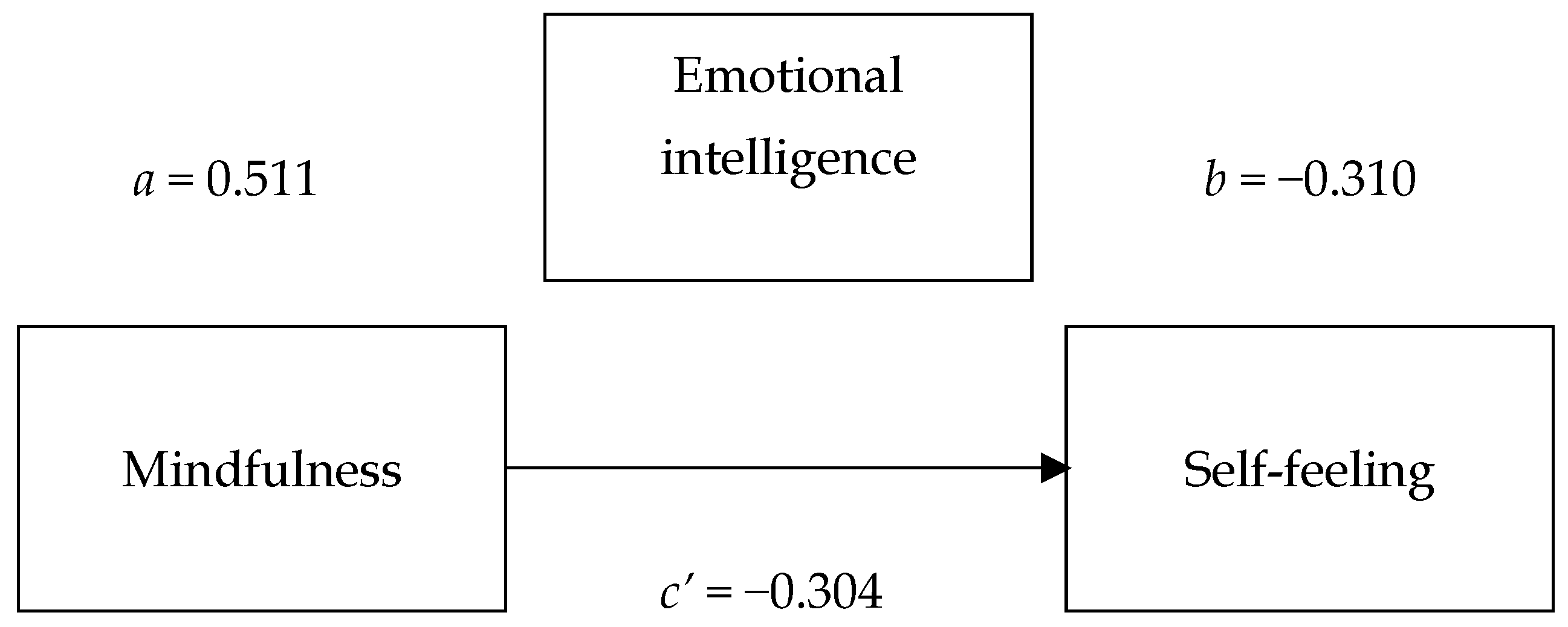
Although athletes who have disabilities face unique challenges, little is known about the interaction between mindfulness and emotional intelligence in the context of their psychological self-feeling. This study is among the first to systematically examine how mindfulness and emotional intelligence are related to stress, anxiety and depression in this population and to reveal the pathways through which the mediating effect of emotional intelligence manifests itself. A total of 95 athletes who have various types of disabilities were surveyed. The research instrument consisted of several scales: Depression, Anxiety, and Stress Scale (DASS-21), the Mindfulness Inventory for Sport (MIS), and the Emotional Intelligence Scale for Use in Sport (EIS). The data were analysed by employing descriptive statistical methods, performing correlation analysis, creating regression models, and through mediation analysis. Several significant trends were identified: professional athletes demonstrated higher mindfulness than amateurs, and higher education was associated with lower mindfulness and emotional intelligence. Mindfulness predicted better emotional competencies (B = 0.511, p < 0.001), which were related to lower levels of stress, anxiety, and depression (B = −0.310, p = 0.001), confirming a partial mediating effect (B = −0.158, 95% PI [−0.273; −0.065]). These findings add to the existing knowledge, demonstrating that in the context of sport for people with disabilities, mindfulness can improve mental health not only directly but also indirectly—through emotional intelligence. This study lays the foundation for individually tailored psychological interventions that would correspond to the specific needs of athletes who have disabilities.
Keywords: sport for people with disabilities; mindfulness; emotional intelligence; psychological self-feeling; psychological well-being sport for people with disabilities; mindfulness; emotional intelligence; psychological self-feeling; psychological well-being