


Abstract
This work characterizes oil film evolution and predicts the hydrostatic-to-hydrodynamic dominance transition in low-speed heavy-duty journal bearings under starved lubrication induced by insufficient inlet pressure, accounting for the thermo-viscous coupling effect. A thermo-viscous coupling model (TVCM) based on the Vogel equation is established and compared with the conventional constant viscosity model (CVM). Analyses are conducted with VG460, VG680, and VG1000 lubricants at rotational speeds of 10–50 rpm. Results show that the CVM systematically overestimates temperature rise and effective viscosity by neglecting the negative feedback among temperature rise, viscosity attenuation, and reduced heat generation, with deviations increasing with rotational speed and lubricant viscosity. Under insufficient oil supply, load-carrying capacity rises rapidly then stabilizes, reflecting the hydrostatic-to-hydrodynamic dominance transition. In the hydrodynamic-dominated stage, a dominance shift between hydrodynamic enhancement and thermal softening is identified: the peak load point marks the switching of dominant factors, and the corresponding critical speed decreases with rising lubricant viscosity. This transition is accompanied by a failure mode shift from global oil film breakdown to localized high-temperature adhesive wear and fatigue spalling. These findings provide a theoretical basis for formulating emergency speed limits and safe operation strategies for journal bearings under insufficient oil supply.
1. Introduction
Hydrostatic journal bearings are widely used as core supporting components in heavy rotating machinery due to their high load-carrying capacity, excellent vibration damping performance and stable operation [1,2]. Their load-carrying and vibration-suppression capabilities fundamentally rely on a stable oil film maintained by external pressure supply [3]. However, in long-distance centralized oil supply systems typically employed at industrial sites, issues such as pipeline pressure drop, filter clogging, and pump wear often cause insufficient inlet oil pressure. This insufficient inlet pressure substantially deteriorates bearing lubrication performance and increases the risk of premature failure [4].
As the key medium governing oil film behavior, lubricant performance is critically important for journal bearing reliability [5,6,7,8]. The theoretical analysis of oil film lubrication is rooted in the Reynolds equation [9,10]. Existing simulation studies can be divided into two categories: those employing the constant viscosity model (CVM) [11,12,13,14], which neglects temperature effects for computational efficiency; and those incorporating temperature effects to evaluate thermal impacts on lubrication [15,16,17,18]. However, in practical operating conditions, temperature dynamically regulates viscosity and lubrication performance: shear-induced heat generation within the oil film directly alters viscosity distribution, which in turn exerts a coupled influence on flow field characteristics, friction power consumption, and load-carrying capacity [19]. Therefore, accurate characterization of the thermo-viscous coupling effect is critical for reliable prediction of oil film lubrication characteristics and bearing service performance.
Currently, the thermo-viscous coupling model (TVCM) can be characterized using the Walther equation or Vogel equation [20,21]. Among them, the TVCM established based on the Vogel equation is generally recognized to more accurately reveal the intrinsic evolution law and better reflect actual operating conditions [22]. On the premise of TVCM accuracy, precise solution of the thermo-viscous coupling effect can be achieved through two-way iteration of the flow field and temperature field, which accurately captures the mutual regulation mechanism between fluid flow and heat transfer [23]. This provides a core theoretical framework for accurate prediction of oil film lubrication characteristics and bearing operational performance.
In recent years, extensive studies have been performed on the thermal behaviors and lubrication characteristics of oil films in bearings. Yang et al. [24] investigated the coupling effects of rotational speed and load on oil film temperature and bearing deformation using a fluid-solid interaction method, revealing the correlation rules among operating parameters, lubricant performance, and bearing structural deformation. Zhang et al. [25] focused on the comprehensive effects of thermal and elastic deformations on bearing lubrication performance, establishing a numerical model for high-speed, high-temperature-rise conditions and revealing the regulatory role of surface texture on oil film temperature distribution. Chauhan [17] conducted a systematic study on bearing thermal behavior by comparing three different lubricant grades, finding that oil film thermal characteristics are significantly affected by the synergistic effect of rotational speed and lubricant type.
Moreover, Kucinschi et al. [26] and Singla et al. [27] confirmed through combined experimental and simulation methods that oil film temperature evolution is mainly governed by rotational speed and lubricant type, and thermo-viscous coupling-induced temperature rise significantly accelerates lubricant aging and viscosity decay, consistent with Chauhan’s conclusions. Considering the synergistic evolution of temperature and flow fields, Zhang et al. [28] systematically studied temperature characteristics under high-speed, variable viscosity, and different load conditions, finding that oil film temperature increases sharply with rotational speed, and the influence of rotational speed on temperature rise is significantly greater than that of load. In contrast, Zhang et al. [29] focused on the influence of hydraulic oil viscosity on oil film pressure and temperature, analyzing the coupling effects of oil film thickness, rotational speed, and load on friction pair lubrication characteristics. Their results showed that excessive local temperature directly leads to oil film failure and lubricant deterioration, with rotational speed identified as the primary factor driving temperature elevation. Additionally, Yu et al. [30] found that rotational speed exerts the most significant influence on oil film temperature rise, followed by viscosity. They also observed that the rate of temperature increase is higher at low rotational speeds compared to high speeds. Further relevant studies have confirmed that the combined effects of shear stress and temperature rise accelerate lubricant oxidation and viscosity degradation, which in turn diminish oil film performance [31,32,33].
In addition to lubrication characteristics under sufficient oil supply, the performance degradation of bearings under starved lubrication caused by insufficient oil supply has also attracted extensive attention. Existing studies on starved lubrication are mostly focused on high-speed hydrodynamic journal bearings: through theoretical modeling and experimental verification, scholars have analyzed the influence of starvation degree on oil film distribution, load-carrying capacity, temperature field and dynamic stiffness of bearings, and revealed the direct correlation between oil supply flow rate and bearing operational stability [34,35]. For hydrostatic bearings, by contrast, relevant research mainly concentrates on local oil starvation failure at sealing edges, critical lubrication state identification and load compensation schemes under static pressure loss, with most attention paid to final failure phenomena and structural improvement measures [36,37].
Despite considerable progress in bearing oil film performance research, several important aspects remain to be further investigated. Firstly, most studies focus on high-speed or medium-speed conditions, with insufficient attention to low-speed heavy-duty conditions. Secondly, some low-speed studies do not fully consider the thermo-viscous coupling effect, and application of the CVM may fail to accurately reflect the actual oil film state under high eccentricity ratios. Most critically, few studies have explored the evolution law of hydrostatic-to-hydrodynamic dominance mode and corresponding failure modes under the combined conditions of low-speed heavy-duty and insufficient oil supply. Under normal oil supply conditions, hydrostatic pressure dominates load-carrying capacity, and the influence of rotational speed is minimal; however, under insufficient oil supply, the lubrication mechanism may undergo a fundamental change, which has not been systematically revealed.
In this study, we focus on the oil film multi-field evolution, lubricant performance response, and hydrostatic-to-hydrodynamic dominance transition of low-speed heavy-duty journal bearings under thermo-viscous coupling and insufficient oil supply. Targeting the practical low inlet pressure condition caused by long-distance pipeline pressure loss, filter clogging, and pump wear, a three-dimensional steady-state numerical simulation model incorporating the TVCM is established. By comparing the calculation results of the TVCM and CVM from theoretical, numerical, and physical perspectives, we clarify the necessity and core advantages of considering thermo-viscous coupling. Subsequently, the coupled effects of rotational speed and lubricant grade on oil film characteristic parameters are systematically explored via the “temperature–viscosity–friction–load-carrying capacity” multi-field analysis chain, to reveal the intrinsic coupling mechanism of oil film multi-field performance evolution and the response law of different lubricants to thermo-viscous coupling. Finally, we characterize the progressive process of hydrostatic-to-hydrodynamic dominance transition under insufficient oil supply, identify the critical speed for the dominance transition between hydrodynamic enhancement and thermal softening, and predict the corresponding failure evolution path, so as to provide a theoretical basis for the safe operation of journal bearings under insufficient oil supply conditions.
2. Theoretical Model and Method
2.1. Geometric Model
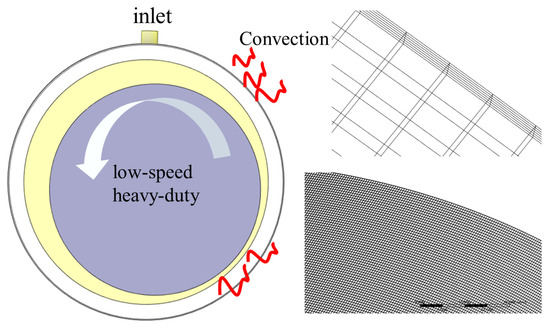
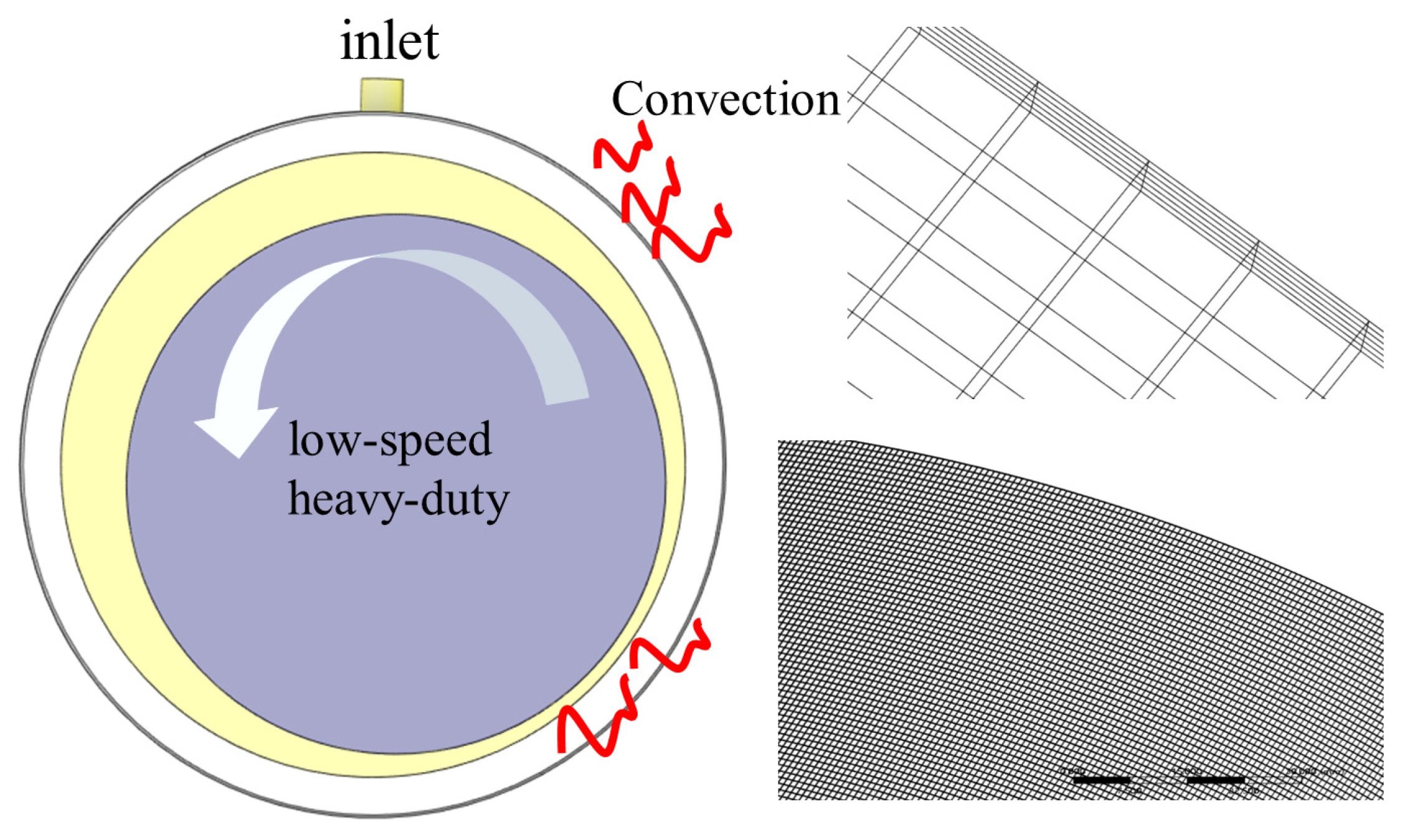
Table 1 presents the detailed geometric parameters of the bearing and oil film. Eccentricity ε is a core parameter governing the lubrication and load-carrying performance of journal bearings, directly influencing the thermo-viscous coupling strength of the oil film [16,18]. In this study, the bearing operates over the rotational speed range of 10–50 rpm under insufficient oil supply conditions. To simulate the eccentric state of the bearing under heavy load in starved lubrication, an eccentricity ratio of ε = 0.85 is adopted [6,38]. This parameter is chosen to replicate the target operating condition with insufficient supply pressure: the bearing remains in operation without suffering full oil film breakdown. The oil film domain was discretized using structured hexahedral meshes, as shown in Figure 1. To ensure the accuracy of the numerical results, a mesh independence study was conducted with three mesh schemes. Taking the maximum oil film temperature and load-carrying capacity as verification indicators, when the mesh number increases from 360,000 to 480,000, the relative deviations of both indicators are less than 1%. Considering both computational accuracy and efficiency, the finer mesh scheme with 480,000 elements was finally adopted. The mesh independence verification is presented in Figure S1.
Table 1.
Geometric parameters of the bearing.
Figure 1.
Oil film model and mesh.
2.2. Theoretical Model
Considering that low-speed heavy-duty hydrostatic bearings in industrial applications mostly operate under long-term stable conditions, a steady-state numerical model is adopted in this study, which is a classical and widely verified framework for bearing lubrication mechanism analysis [17,23].
2.2.1. Governing Equations
To focus on the core physical mechanism of oil film thermo-viscous coupling, and based on the thin-film lubrication theory and the characteristics of low-speed and high eccentricity ratio operating conditions, the following reasonable assumptions are proposed:
(1) The flow in the oil film is steady and incompressible laminar flow. Calculations show that the maximum Reynolds number (Re) is much lower than the critical Reynolds number for laminar, consistent with the laminar flow assumption;
(2) The lubricant is a Newtonian fluid, and the pressure-viscosity effect is neglected, as it is negligible compared to the temperature-viscosity effect under low-speed conditions;
(3) Only viscous shear heat generation is considered as the heat source, and radiation heat transfer is ignored;
Energy equation:
(4) The thermal conductivity and specific heat capacity of the lubricant are constant within the studied temperature range.
Based on the above assumptions, the flow and heat transfer of the lubricating oil film follow the following conservation equations [17,23]:
Continuity equation:
Momentum equations:
where ρ is the density of the lubricating oil, p is the pressure, and μ is the dynamic viscosity.
Energy equation:
where T is temperature, is specific heat capacity, and k is thermal conductivity. Φ is the viscous dissipation term, which characterizes the irreversible conversion of mechanical energy into heat due to fluid viscosity, representing the volumetric heat generation rate. It is the most critical internal heat source in the bearing oil film and is defined as:
The value of Φ is governed by the local viscosity and the velocity gradient tensor, forming the essential link between the flow field and the temperature field in the thermo-viscous coupling mechanism.
2.2.2. Viscosity Model
In this study, the Vogel equation is adopted to describe the viscosity-temperature characteristics of mineral lubricants (ISO VG460, VG680, VG1000), which has been widely verified to offer high prediction accuracy for mineral lubricating oil within the typical operating temperature range and is widely used in engineering applications [22,23]. In thin-film lubrication, treating lubricant viscosity as pressure-independent is reasonable under low-pressure regimes; the piezo-viscous effect becomes significant only when the lubricant is subjected to high pressures [7]. Given that the operating pressure in this study is relatively low, the pressure-induced viscosity variation is negligibly small compared to the temperature dependence characterized by the Vogel equation; hence the pressure-viscosity coupling is omitted [7,9]. The specific form of the Vogel equation is as follows:
where T is the absolute temperature; A, B, and C are fitting constants specific to each lubricant, and C is the Vogel characteristic temperature, which is far below the operating temperature range of this study. The values of these parameters are given in Table 2.
Table 2.
The Vogel equation parameters of lubricants.
Equations (1)–(4) constitute the TVCM used in this study. This model realizes complete two-way coupling among the flow field, temperature field, and viscosity field through the temperature-viscosity constitutive relationship (Equation (4)) and the viscous dissipation term Φ in the energy equation (Equation (3)).
2.2.3. Simulation Settings and Solution Methods
The numerical simulations were conducted using the ANSYS Fluent 2022. A pressure-based segregated solver was adopted to solve the governing equations, which is well suited for the low-speed incompressible laminar flow within the bearing oil film. The SIMPLE algorithm was employed for pressure-velocity coupling to ensure stable and efficient iterative convergence. For spatial discretization, the second-order upwind scheme was applied to both the momentum and energy equations to suppress numerical diffusion and guarantee computational accuracy.
The oil supply inlet is set as a pressure inlet at 313.15 K, with a gauge pressure of 0.3 MPa for starved lubrication cases and 0.8 MPa for the fully supplied baseline. The two axial ends are pressure outlets at 0 MPa gauge pressure with backflow suppression enabled. The oil film surface in contact with the rotating journal is set as a moving wall with a no-slip condition, all other wall surfaces are set as stationary no-slip walls and convective heat transfer with the ambient environment. The properties of the lubricant and additional simulation parameters are summarized in Table 3.
Table 3.
Fluid Properties and Operating Conditions.
A dual convergence criterion was adopted to ensure numerical reliability and avoid pseudo-convergence. The convergence criterion for the governing equations was set to 10−8, while all residuals were maintained below 10−6; the simulation is deemed converged when the relative variations in three monitored parameters—maximum oil film temperature, minimum oil film viscosity and load-carrying capacity—all stay below 1% over consecutive iterations. As demonstrated by the representative case of VG1000 at 50 rpm in Figure S5, this criterion effectively eliminates pseudo-convergence.
3. Results
3.1. Comparative Analysis of TVCM and CVM
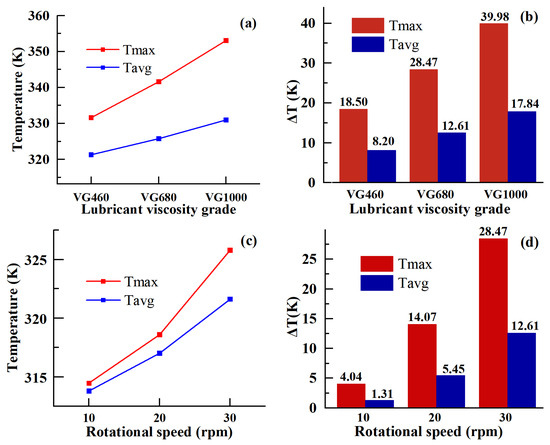
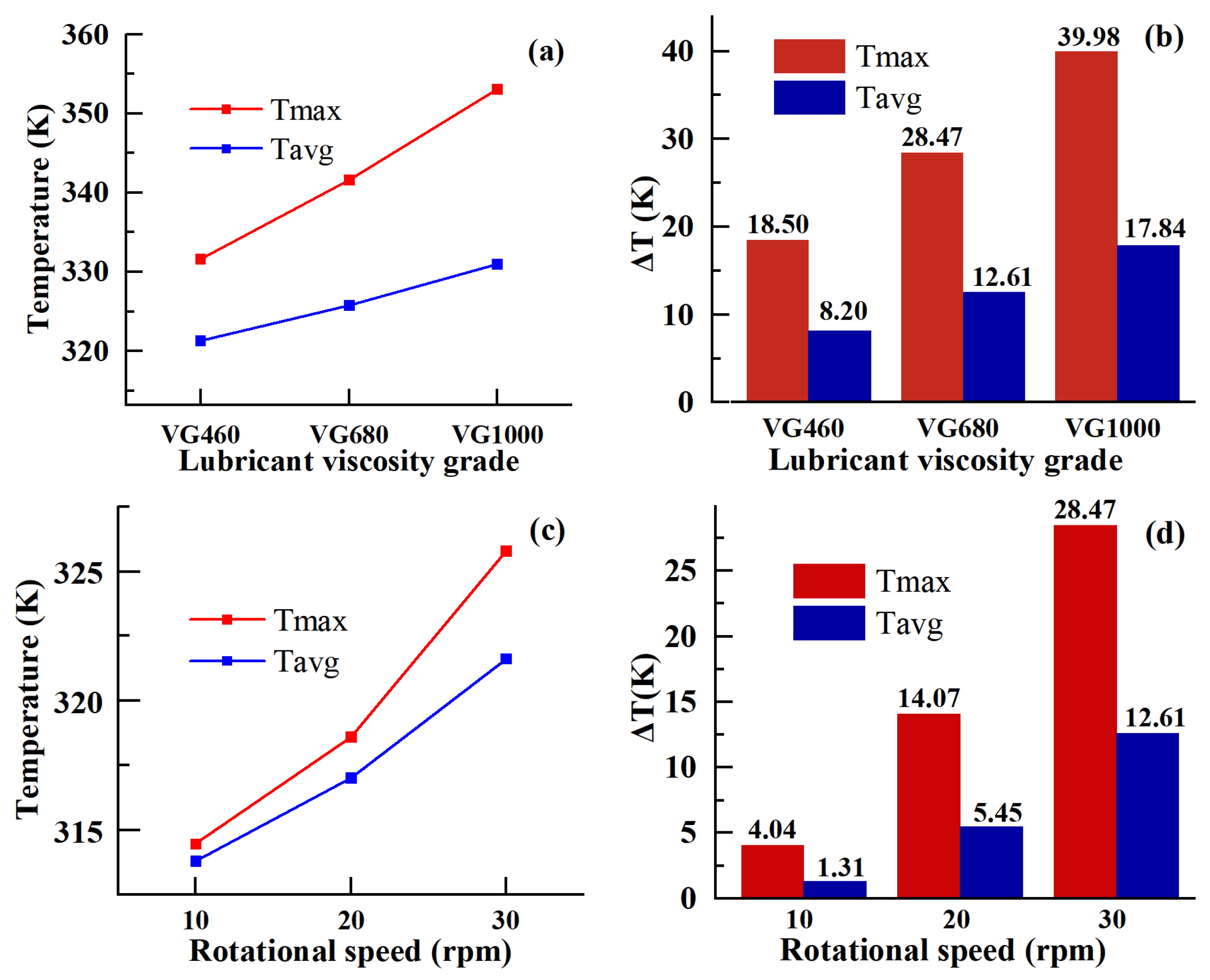
To quantitatively evaluate the bias caused by ignoring the temperature dependence of lubricating oil viscosity under low-speed conditions, this section compares the calculation results of the Constant Viscosity Model (CVM) and the dynamic Thermo-Viscous Coupling Model (TVCM) through three layers of analysis: theoretical deduction, numerical simulation, and physical mechanism. Figure 2 shows the calculation results of oil film temperature and temperature difference under the CVM framework. In this calculation, the dynamic viscosity of the lubricating oil is set as a constant independent of temperature, taking the initial viscosity value at the inlet temperature of 313.15 K (VG460: 0.389 Pa·s; VG680: 0.599 Pa·s; VG1000: 0.839 Pa·s), while other boundary conditions and physical parameters remain consistent.
Figure 2.
Oil film temperature variation: (a,b) Different lubricants at 30 rpm; (c,d) VG460 at varying rotational speeds.
According to the theory of viscous shear heating, the local heat generation rate Φ of the oil film satisfies Φ ∝ μγ2, where μ is the dynamic viscosity and γ is the shear rate. This relationship is well supported by the simulation results.
However, this linear temperature rise trend predicted by the CVM deviates from existing experimental and numerical conclusions [27,30]. As rotational speed increases beyond a certain level, the temperature rise tends to level off rather than increase linearly. The root cause of this contradiction lies in the inherent limitation of the CVM’s constant-viscosity assumption when predicting the lubrication flow field of hydrostatic bearings: owing to the wedge-shaped geometry of the hydrostatic bearing oil film, a high-shear flow field forms in the minimum-film-thickness region, and intensified shear interaction leads to a significant increase in local heat generation. The resulting temperature increase triggers a nonlinear decrease in lubricant viscosity, which in turn reduces the shear stress (τ = μγ) and suppresses further heat generation, forming a negative-feedback mechanism of “temperature rise-viscosity reduction-heat generation suppression.” By treating viscosity as constant, the CVM ignores this coupling process and cannot capture the temperature-rise suppression effect, thereby overestimating both the heat generation rate and the temperature rise of the oil film. Take the bearing operating condition lubricated with VG680 oil as an example. Figure S2 presents the contour maps of oil film temperature and viscosity fields predicted by the CVM and the TVCM. The TVCM effectively captures the decreasing trend of oil film viscosity induced by rising temperature, as well as the spatial gradient distribution of viscosity. In contrast, this feature is entirely absent in the prediction results of the CVM, further highlighting the inherent limitations of the CVM method.
From an engineering perspective, if the CVM is adopted while ignoring the thermo-viscous coupling effect, the effective viscosity of the oil film in the high-shear load-bearing region will be substantially overestimated, which is likely to conceal potential early failure risks such as oil film rupture and local wear [1]. In contrast, by coupling the Reynolds equation and the energy equation, the TVCM more accurately captures the underlying physics of multi-field coupling in the oil film, and its calculation results are more consistent with actual operating conditions. Therefore, all subsequent analyses of the lubricant’s intrinsic response will be based on the TVCM.
3.2. Oil Film Multi-Parameter Evolution Under Starved Lubrication
Oil film temperature is a core factor governing the operational stability, lubrication reliability, and service life of journal bearings. It directly dominates the initiation and evolution of the thermo-viscous coupling effect, exerting a cascading influence on oil film viscosity, friction characteristics, and load-carrying capacity.
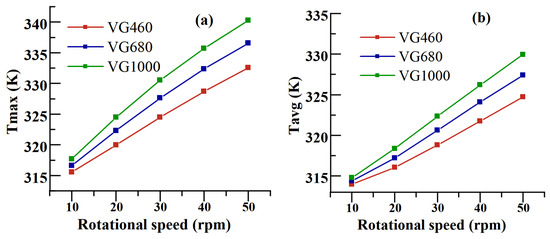
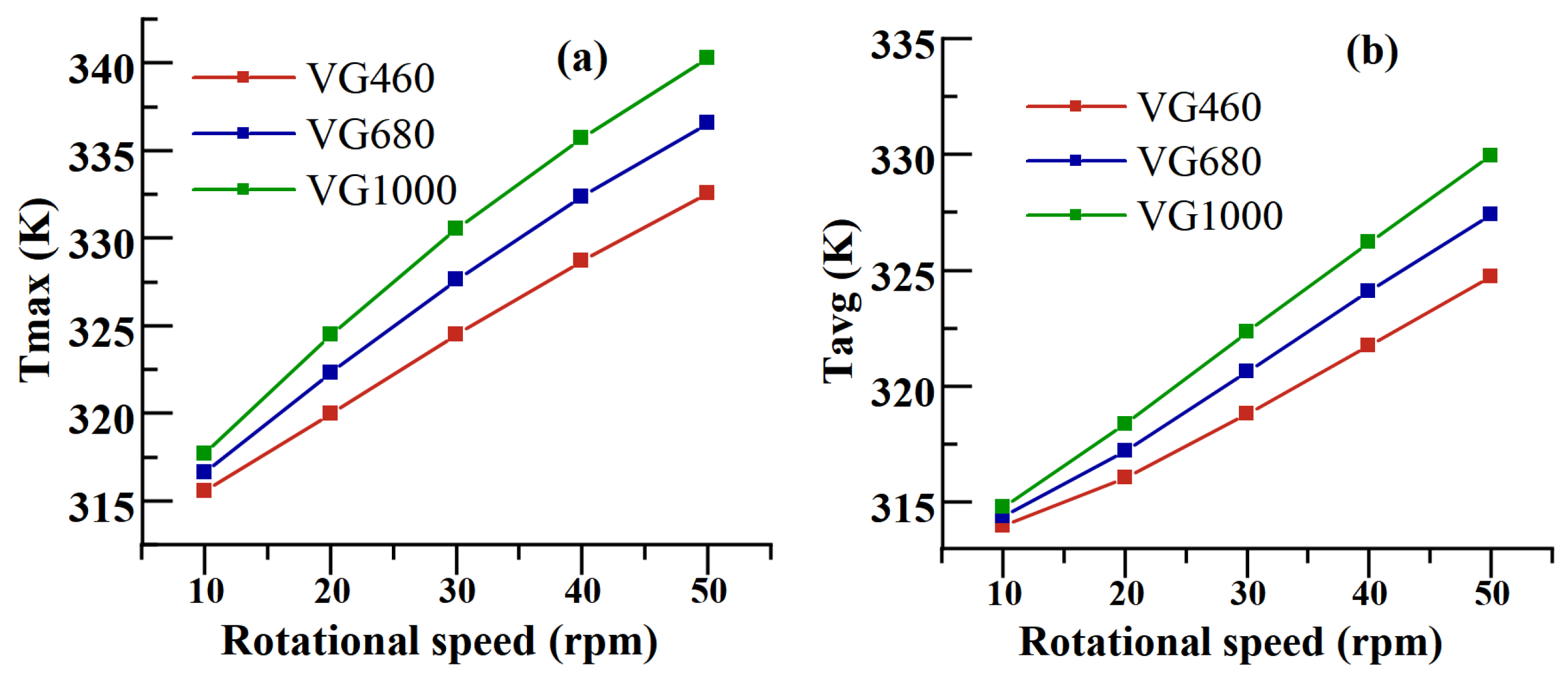
Figure 3 presents the temperature variation curves of lubricating oils with different viscosity grades at various rotational speeds. It can be observed that, at the same rotational speed, there is a significant positive correlation between the initial viscosity grade of the lubricating oil and the temperature rise amplitude. The primary reason is that, under the same shear rate, an increase in initial viscosity generates greater shear stress, which in turn leads to more intense viscous dissipation; therefore, high-viscosity lubricants exhibit a more pronounced thermal load amplification effect. Further analysis shows that regardless of the viscosity grade of the lubricating oil, both the maximum oil film temperature and the average temperature increase with the rotational speed. The essence of this law stems from the strong coupling correlation between the viscous shear heat generation rate and the rotational speed. The increase in rotational speed will significantly increase the oil film shear rate, and the increase in shear rate will directly intensify the intensity of viscous dissipation heat generation, ultimately leading to a continuous rise in oil film temperature.
Figure 3.
(a) Maximum oil film temperature (Tmax) versus rotational speed; (b) Average oil film temperature (Tavg) versus rotational speed.
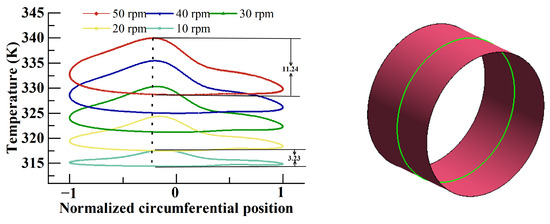
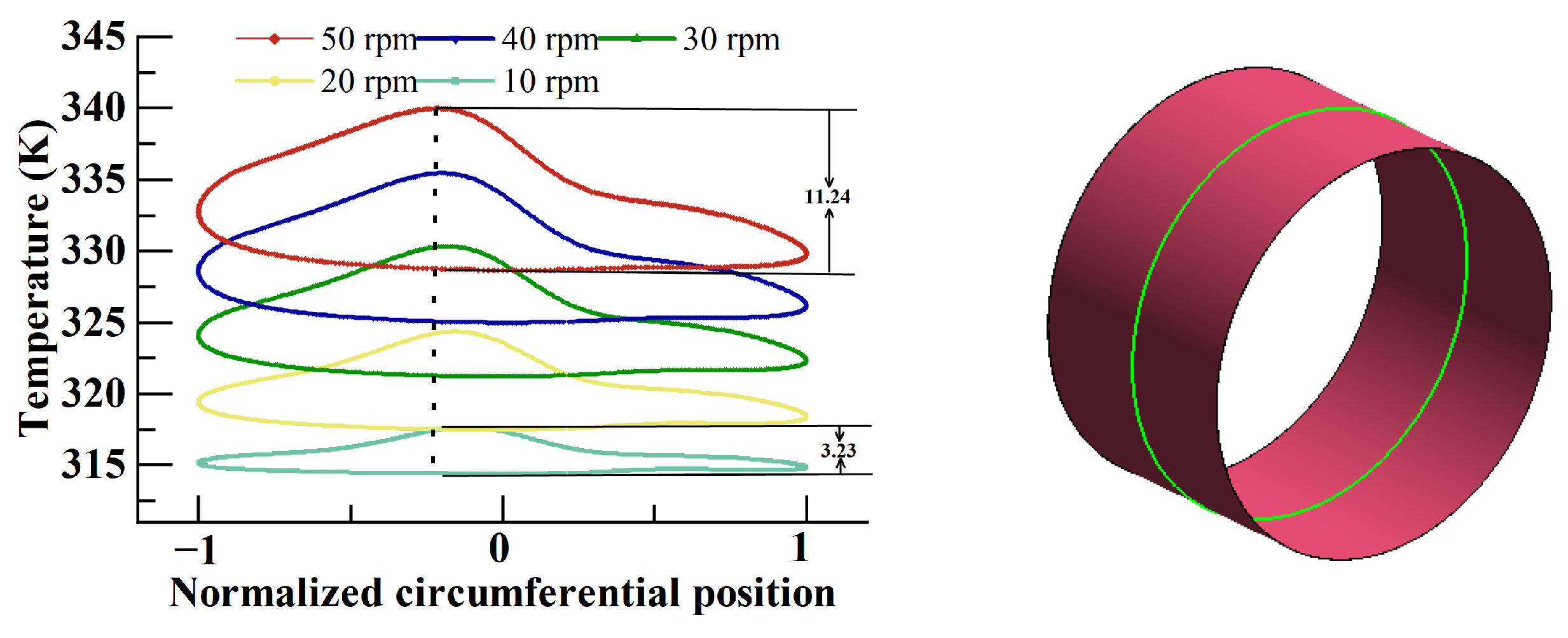
For a deeper analysis of the temperature field evolution, Figure 4 presents the circumferential temperature distribution along the central line of the oil film wall for VG1000 lubricating oil at various rotational speeds. In the plot, the horizontal axis represents the normalized circumferential coordinate ranging from −1 to 1, which corresponds to a complete loop along the circular path. The results reveal a significant increase in temperature non-uniformity with speed. The maximum circumferential temperature difference rises sharply from 3.23 K at 10 rpm to 11.24 K at 50 rpm, representing a 248% increase. Concurrently, the location of the maximum temperature point shifts within the convergent region. This dramatic change is primarily attributed to the nonlinear increase in shear heating intensity. At low speed (10 rpm), the heat generation rate is low and effectively balanced by thermal diffusion, maintaining a minimal temperature gradient. As speed increases to 50 rpm, the shear heating rate in the wedge-shaped convergent region surges. The generated heat cannot be dissipated promptly, leading to substantial heat accumulation. This accumulation not only greatly expands the circumferential temperature difference and the area of the high-temperature zone but also alters the local heat generation characteristics, thereby shifting the point of peak temperature.
Figure 4.
Circumferential temperature distribution profile of VG1000 at different rotational speeds.
The essence of oil film temperature field evolution lies in the dynamic balance between shear heat generation and heat diffusion: under low-speed conditions, the fluid velocity is low, leading to inherent weakness in convective heat dissipation capacity and easy heat accumulation, which is the core premise for the temperature rise with increasing rotational speed. The increase in rotational speed causes the shear rate to increase linearly and the heat generation rate to grow nonlinearly; the thermal load amplification effect of high-viscosity lubricating oils further intensifies the temperature rise. As a strong core area of heat sources, the wedge-shaped convergent region of the oil film is the direct cause of the maximum temperature gradient and the shift in the maximum temperature point. The evolution law of this temperature field lays a foundation for the subsequent analysis of the oil film viscosity field, friction power consumption, and load-carrying capacity. Meanwhile, the above data also indicate the importance of balancing the trade-off between rotational speed improvement and temperature rise in practical engineering applications, so as to avoid oil film failure caused by excessive local temperature rise and abnormal temperature gradient, and even local bearing wear and other problems.
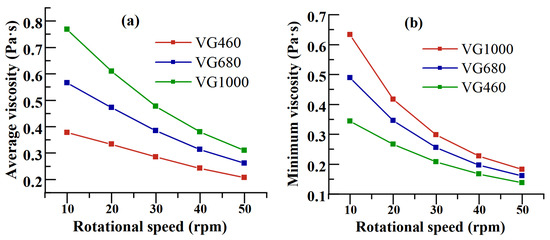
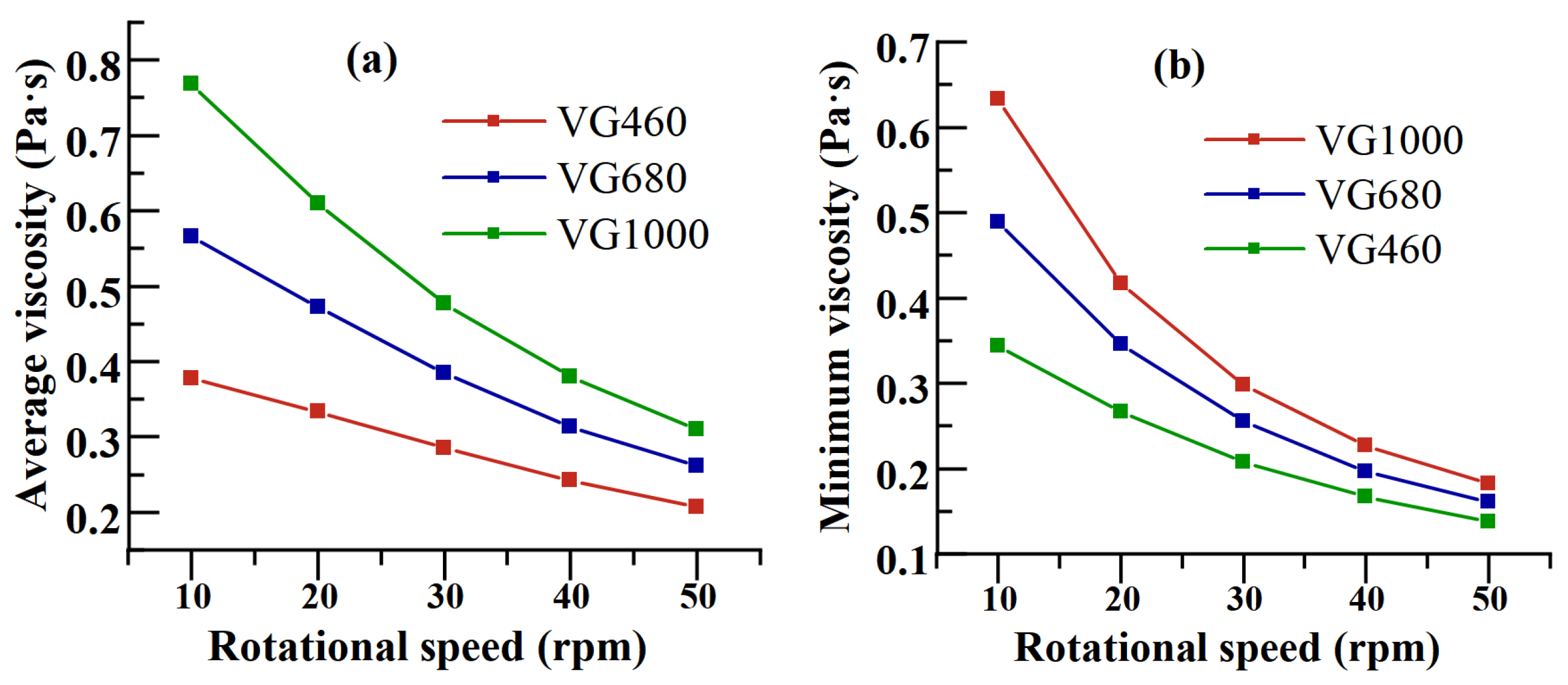
The load-carrying capacity of the oil film essentially relies on the viscous support effect of the lubricating oil. Figure 5 characterizes the dynamic attenuation behavior of the viscosity field. At 50 rpm, the average operating viscosity of VG460 is 0.207 Pa·s, corresponding to 53.2% of its initial viscosity (0.389 Pa·s), a reduction of 46.8%. The corresponding value for VG680 is 0.261 Pa·s, or 43.6% of its initial viscosity (0.599 Pa·s), representing a reduction of 56.4%. For VG1000, the average operating viscosity is 0.310 Pa·s, equivalent to 36.9% of its initial viscosity (0.839 Pa·s), with a reduction as high as 63.0%. The reduction in the local minimum viscosity is even more pronounced. In particular, the minimum viscosity of VG1000 at 50 rpm is only 0.182 Pa·s, corresponding to 21.7% of its initial viscosity.
Figure 5.
Viscosity of lubricants at different rotational speeds. (a) Average viscosity; (b) Minimum viscosity.
This attenuation pattern is consistent with the evolution of the temperature field, and its underlying mechanism can be summarized in two aspects. The first is the temperature-dominated viscosity–temperature response. An increase in rotational speed intensifies shear heating within the oil film, and lubricants with higher initial viscosity, such as VG1000, exhibit a stronger thermal-load amplification effect, resulting in a greater temperature rise in the oil film.
An increase in temperature directly reduces viscosity, leading to nonlinear attenuation; this is the fundamental reason for the viscosity decrease with increasing rotational speed. The second is the effect of non-uniform shear rate distribution: in the wedge-shaped convergent region of the oil film, the “high-shear, high-temperature-rise” characteristics are more pronounced, and the temperature reaches its maximum. Consequently, the local minimum viscosity decreases much more than the average viscosity. Figure S3 presents the circumferential viscosity distribution at the centerline of lubricants with various viscosity grades at 50 rpm, further confirming this observation.
It is worth noting that although the absolute working viscosity of VG1000 (the average viscosity after the influence of thermo-viscous coupling under actual operating conditions) is still the highest, the “effective viscosity ratio” tends to maximum attenuation ratio: the initial viscosity ratio of VG1000 to VG680 is about 1.40 (0.839/0.599), while it decreases to 1.19 (0.31/0.261) under the condition of 50 rpm, which indicates that the “effective viscosity gain” of high-viscosity lubricating oil shrinks sharply in high-temperature environments.
From the perspective of micro-mechanism, high-viscosity lubricating oils have longer molecular chains and stronger intermolecular forces. An increase in temperature causes the molecular chains to undergo untangling, and the intermolecular forces weaken accordingly. Therefore, their viscosity-temperature sensitivity is significantly higher than that of medium and low-viscosity lubricating oils, which is also the core micro reason for the higher viscosity attenuation ratio of high-viscosity lubricating oils under the same working conditions.
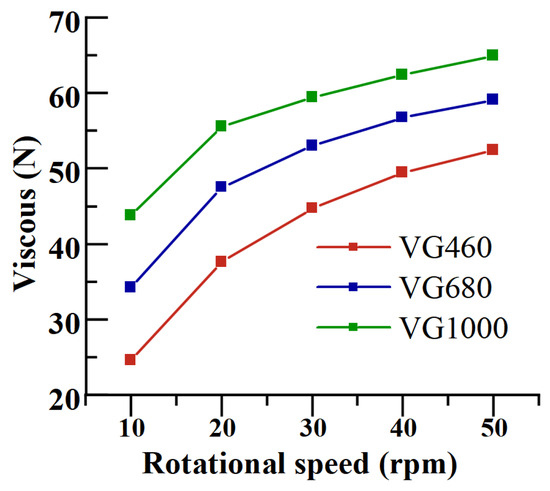
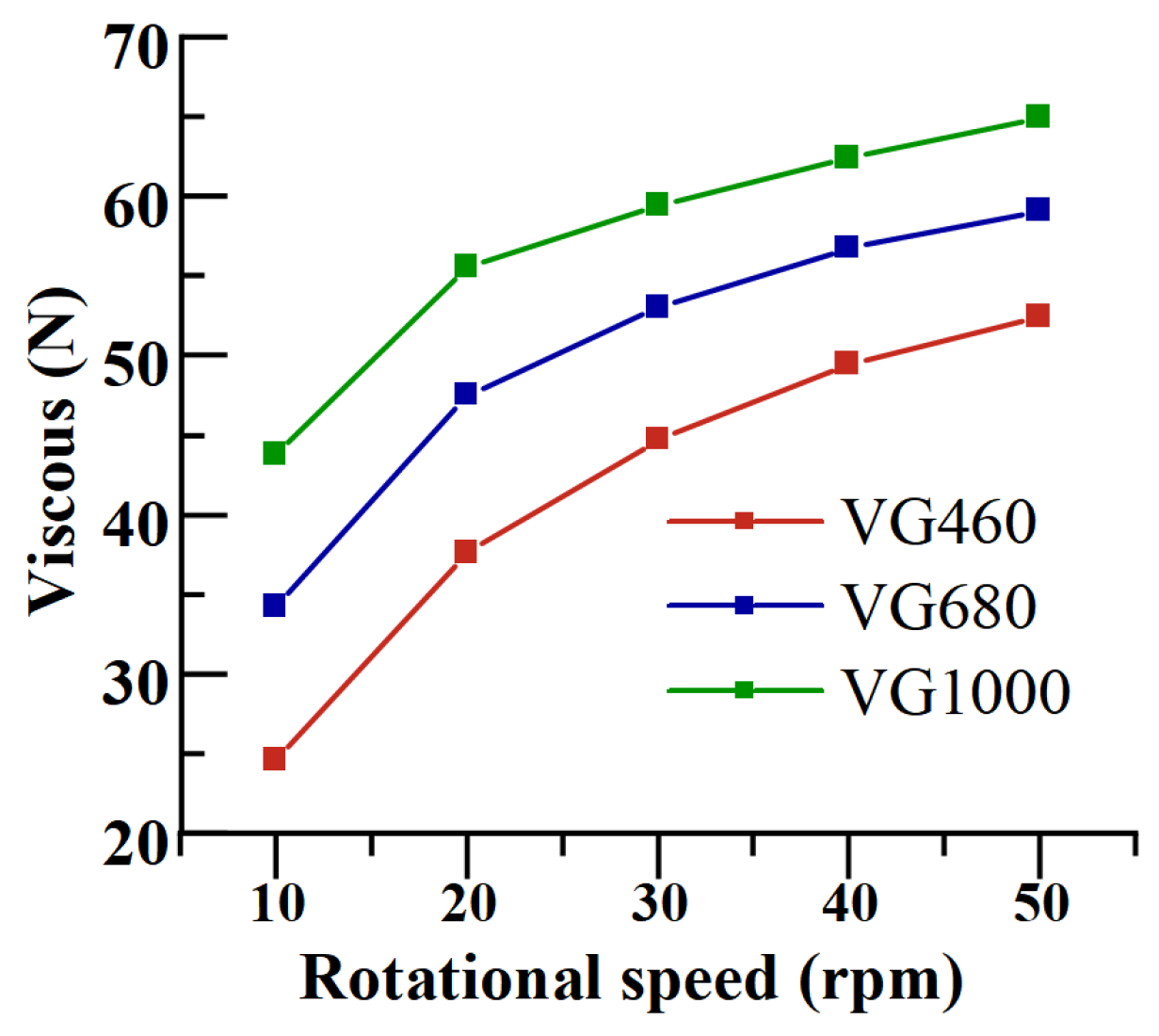
The magnitude of viscous force reflects frictional power consumption and reveals the self-regulation behavior induced by thermo-viscous coupling. Figure 6 plots the viscous force versus rotational speed for lubricants of different viscosity grades. The viscous force rises nonlinearly with increasing speed, and higher-viscosity lubricants produce larger frictional resistance at identical rotational speeds. As summarized in Figure S4, the growth rate of viscous force declines obviously with the increase in lubricant viscosity.
Figure 6.
Viscous force of lubricants at different rotational speeds.
This phenomenon arises from remarkable temperature elevation and viscosity attenuation of high-viscosity oils. The reduced viscosity weakens shear stress and partially counteracts the growing shear rate, and higher-viscosity lubricants suffer more severe thermal thinning, leading to a slower increase in viscous force [39]. This inherent self-regulation mechanism restrains the growth of frictional power loss under low-speed and heavy-load conditions, and improves the operational stability of bearings.
3.3. Load-Carrying Capacity Evolution and Dominance Transition Between Hydrodynamic Enhancement and Thermal Softening
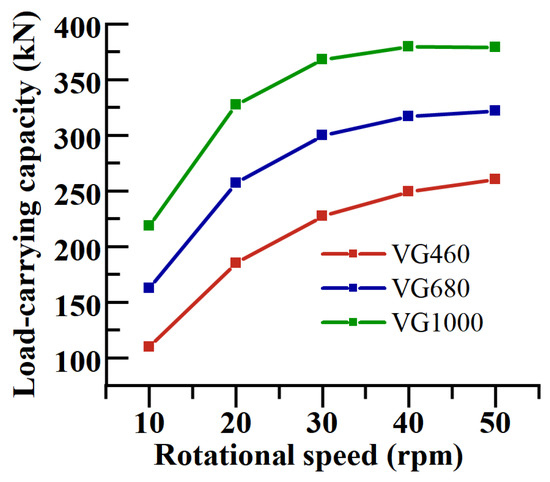
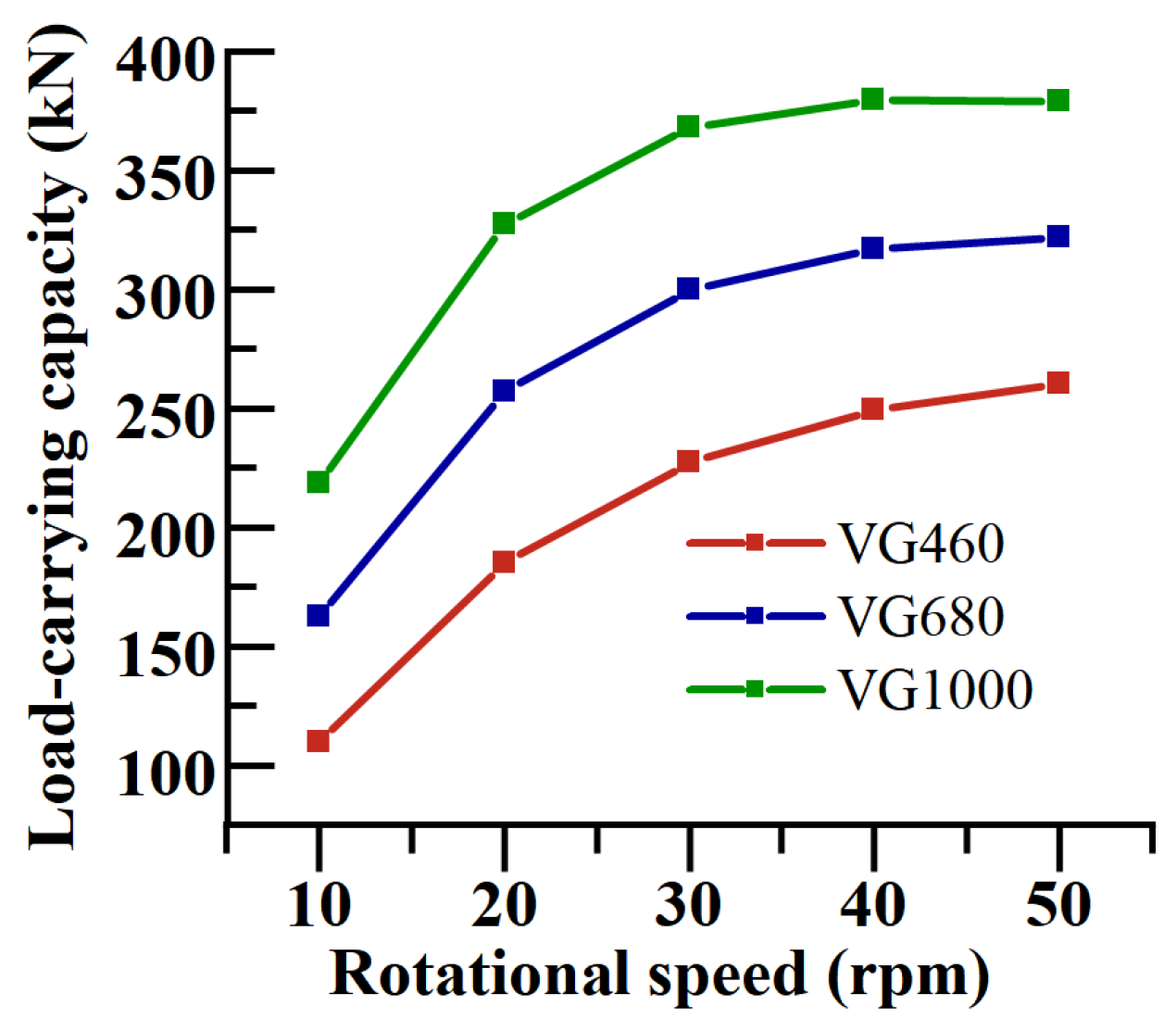
Figure 7 illustrates how bearing load-carrying capacity varies with rotational speed for three lubricants under insufficient oil supply. The load-carrying capacity first increases rapidly in a near-linear fashion, followed by a gradual growth slowdown and eventual stabilization. This trend deviates markedly from the classic behavior of hydrostatic bearings under full oil supply. For conventional fully supplied hydrostatic bearings, load capacity is dominated by hydrostatic pressure, and the hydrodynamic contribution remains limited at low speeds. As rotational speed rises, the induced temperature rise causes significant viscosity attenuation; this negative effect outweighs the minor hydrodynamic enhancement, leading to a net decrease in load-carrying capacity [40]. In contrast, the opposite trend observed in this study clearly demonstrates a fundamental shift in the bearing’s dominant lubrication mechanism under insufficient oil supply conditions.
Figure 7.
Load-carrying capacity of lubricants at different rotational speeds.
The detailed load-carrying capacity data across different rotational speeds are provided in Table S1. In the range of 10–30 rpm, load-carrying capacity rises rapidly, which is dominated by the continuous enhancement of hydrodynamic effects. Insufficient inlet pressure greatly lowers the load contribution from hydrostatic pressure, and the wedge-shaped convergent region formed by journal eccentricity becomes the main load-bearing area. Increasing rotational speed intensifies fluid shear within this region and generates considerable hydrodynamic pressure, which effectively compensates for the weakened hydrostatic support. Accordingly, load-carrying capacity increases rapidly with rotational speed in this stage.
Within the 30–50 rpm range, load-carrying capacity enters a plateau phase with a sharply reduced growth rate. This slowdown results from the dynamic competition between two counteracting effects: hydrodynamic enhancement and thermal softening. Rising rotational speed strengthens fluid shear in the convergent wedge and tends to boost hydrodynamic load capacity, while intensified shear heating triggers significant viscosity attenuation via thermo-viscous coupling—the average viscosity of VG1000, for example, decreases by 63.0% at 50 rpm—which weakens the buildup of hydrodynamic pressure. The mutual counteraction of these two effects eventually slows the growth of load-carrying capacity.
Notably, VG1000 reaches a peak load-carrying capacity of around 380 kN at 40 rpm and declines slightly at 50 rpm. This observation confirms that for high-viscosity lubricants, thermal softening begins to prevail over hydrodynamic enhancement and becomes the dominant factor in load-carrying capacity evolution above this critical speed.
The above evolution trends of load-carrying capacity provide direct quantitative evidence for the hydrostatic-to-hydrodynamic dominance transition under insufficient oil supply conditions. Under normal oil supply conditions, the hydrostatic effect dominates the load-carrying capacity of such low-speed heavy-duty bearings, and the hydrodynamic contribution remains very limited in the low-speed range [41]. An increase in rotational speed only reduces load-carrying capacity via viscosity attenuation. In contrast, in this study, the load-carrying capacities of the three lubricants increased by 73.6% (VG1000), 98.6% (VG680), and 137.8% (VG460), respectively, in the 10–50 rpm range. This opposite trend strongly indicates that under insufficient oil supply conditions, the bearing has transitioned from hydrostatic-dominated to hydrodynamic-dominated lubrication. the hydrostatic contribution from the supply pressure is no longer the primary load-bearing source, and the supply pressure mainly functions to replenish lubricant and maintain oil film continuity, and no longer serves as the primary load-bearing source.
Based on the inflection points of the load-carrying capacity growth rate, the critical transition speeds between hydrodynamic enhancement dominance and thermal softening dominance for different viscosity grades of lubricants can be tentatively identified: for VG1000, this transition appears to occur at approximately 40 rpm, corresponding to the peak load-carrying capacity point where the thermal softening effect begins to outweigh the hydrodynamic pressure gain; for VG680, it is estimated to be around 50 rpm, where the growth rate of load-carrying capacity approaches zero and the hydrodynamic pressure gain reaches a dynamic balance with the thermal softening effect; and for VG460, the critical speed is projected to be above 50 rpm, as the thermal softening effect has not yet outweighed the hydrodynamic pressure gain within the studied speed range, and the load-carrying capacity still maintains a steady increasing trend. This negative correlation between critical transition speed and lubricant viscosity can be attributed to the faster shear heat generation rate of high-viscosity oils, which leads to an earlier onset of significant thermal softening.
Based on the coupled analysis of hydrostatic and hydrodynamic load-sharing mechanisms, it can be predicted that under degraded yet continuously sustained lubrication conditions characterized by partial supply pressure decay, the failure evolution of a hydrostatic bearing will deviate substantially from that under nominal supply conditions. This deviation arises because the bearing shifts from hydrostatic to hydrodynamic dominance once the supply pressure drops below a certain level, and further undergoes an internal transition from hydrodynamic enhancement to thermal softening dominance as rotational speed increases.
Specifically, when the rotational speed is below a critical threshold, the bearing operates primarily in a hydrodynamic full-film regime; however, insufficient hydrostatic compensation reduces the minimum film thickness, making localized asperity contact and mild wear more likely at low speeds. As the speed approaches this threshold, hydrodynamic effects peak, placing the bearing in its optimal load-carrying range, albeit with markedly increased viscous dissipation and thermal load. Beyond this threshold, thermal softening becomes dominant and reduces the load-carrying capacity of the oil film. For a bearing operating under a constant external load, this reduction in load capacity will cause an increase in working eccentricity and a corresponding decrease in minimum film thickness, which may eventually push the lubrication regime into mixed/boundary lubrication. When the film thickness decreases to the same order of magnitude as the composite surface roughness, the lubrication regime transitions from full-film to mixed/boundary lubrication. Under these conditions, the predominant failure modes are expected to be localized adhesive wear and fatigue spalling, rather than the catastrophic global film collapse typical of fully starved hydrostatic operation.
This mechanistic framework clarifies the distinct failure pathways of hydrostatic bearings under sustained but degraded lubrication states, addresses a gap in conventional safety assessments that predominantly assume either normal or total oil starvation conditions, and provides a theoretical basis for early fault warning, risk quantification, and emergency operational management. Practically, when the on-site oil supply pressure monitoring system detects an abnormal pressure drop, engineers can refer to the negative correlation between critical transition speed and lubricant viscosity, and combine the in-service lubricant grade to set a reasonable operating speed threshold, so as to avoid the risk of load capacity decline and lubrication failure caused by thermal softening dominance.
4. Conclusions
This study focuses on low-speed heavy-duty hydrostatic journal bearings under insufficient oil supply, a common industrial condition caused by pipeline pressure drops and filter clogging. A steady-state thermo-viscous coupling model (TVCM) based on the Vogel equation was established at an eccentricity ratio of ε = 0.85 and compared with the conventional constant viscosity model (CVM). The multi-field evolution of oil film temperature, viscosity, viscous force and load-carrying capacity was systematically analyzed for VG460, VG680, and VG1000 lubricants over the 10–50 rpm speed range, to reveal the multi-stage evolution mechanism of lubrication dominance under starved lubrication conditions.
The results show that the constant viscosity model significantly overestimates oil film temperature rise and effective viscosity by neglecting the negative feedback chain of “temperature rise–viscosity attenuation–heat generation inhibition”, and the deviation increases monotonically with rotational speed and initial lubricant viscosity, being most prominent in the high-shear wedge-shaped convergent region. Under thermo-viscous coupling, high-viscosity lubricants exhibit a pronounced thermal load amplification effect, with more severe localized viscosity attenuation in the wedge region, which sharply reduces the effective viscosity advantage of high-viscosity oils. Under insufficient oil supply, the bearing undergoes an overall hydrostatic-to-hydrodynamic dominance transition, and the load-carrying capacity presents a unique trend of “rapid increase followed by stabilization”, which is opposite to the monotonically decreasing trend of conventional hydrostatic bearings with adequate oil supply. Within the hydrodynamic-dominated stage, there exists a further dominance transition between hydrodynamic enhancement and thermal softening: below the critical speed, hydrodynamic pressure enhancement dominates load-carrying capacity growth, while above the critical speed, thermal softening becomes the governing factor, and this critical transition speed decreases with increasing lubricant viscosity. This lubrication mechanism transition changes the dominant failure mode of the bearing from global oil film breakdown to localized high-temperature adhesive wear and fatigue spalling, providing a theoretical basis for delimiting safe operating ranges and formulating emergency speed limit strategies for bearings with different lubricant grades under insufficient oil supply conditions.
It should be noted that the critical speed values in this work are obtained under fixed supply pressure and constant ambient temperature. In actual industrial scenarios, factors such as different starved oil supply pressures, varying ambient temperature and dynamic external load will jointly affect the bearing lubrication state. A more precise operation strategy requires a comprehensive systematic study considering multi-parameter coupling and experimental validation, which will be carried out in our follow-up work.
Supplementary Materials
The following supporting information can be downloaded at: https://www.mdpi.com/article/10.3390/lubricants14080294/s1, Figure S1: mesh independence verification; Figure S2: Contour of oil film temperature and viscosity fields for VG680 lubricant at 30 rpm; Figure S3: Circumferential viscosity distribution at 50 rpm; Figure S4: Comparison of viscous forces at 10 rpm and 50 rpm; Figure S5: Residual evolution curves and monitored profiles of key parameters for the representative case of VG1000 lubricant operating at 50 rpm; Table S1: Load-carrying capacity of three lubricants at different rotational speeds.
Author Contributions
Author Contributions: Conceptualization, Z.L. and D.W.; methodology, Z.L. and X.L.; software, H.W. and R.T.; validation, X.L., H.W. and R.T.; formal analysis, Z.L. and X.L.; investigation, H.W. and R.T.; resources, D.W. and Z.L.; data curation, H.W. and R.T.; writing—original draft preparation, Z.L. and X.L.; writing—review and editing, D.W., Z.L. and X.L.; visualization, H.W. and R.T.; supervision, Z.L. and D.W.; project administration, Z.L.; funding acquisition, D.W. and Z.L. All authors have read and agreed to the published version of the manuscript.
Funding
This research and its publications were funded by the Shandong Province Higher Education Institutions Marine Vessel Special Motor Key Technology Development and Component Manufacturing University-Enterprise Collaborative Innovation Center (grant number PT2025KJS005) and the Specialized Intelligent Manufacturing Engineering Laboratory (grant number PT2025KJS002).
Data Availability Statement
The original contributions presented in this study are included in the article/Supplementary Material. Further inquiries can be directed to the corresponding authors.
Conflicts of Interest
The authors declare no conflicts of interest.
References
- Chen, D.; Cui, Y.; Sun, K.; Fan, J.; Cheng, K. Coupling effect of partial composite texture and thermal effect on the performance of hydrostatic bearing. Lubr. Sci. 2024, 36, 407–419. [Google Scholar] [CrossRef] [Scilit]
- Liu, T.; Bei, Z.; Wang, H.; Duan, R.; Chen, F.; Zhang, J. Study on microgroove working surface in hydrostatic bearing for oil film heat suppression. Appl. Therm. Eng. 2025, 266, 125618. [Google Scholar] [CrossRef] [Scilit]
- Michalec, M.; Svoboda, P.; Křupka, I.; Hartl, M. A review of the design and optimization of large-scale hydrostatic bearing systems. Eng. Sci. Technol. An. Int. J. 2021, 24, 936–958. [Google Scholar] [CrossRef] [Scilit]
- Poddar, S.; Tandon, N. Study of oil starvation in journal bearing using acoustic emission and vibration measurement techniques. J. Tribol. 2020, 142, 121801. [Google Scholar] [CrossRef] [Scilit]
- Tijani, M.E.H.; Rodriguez, G.J.O.; Ramirez, M.; Poulsen, J.L.; Spoelstra, S. Selection of lubricant oils for high temperature heat pumps: A review and selection methodology guidelines. Appl. Therm. Eng. 2025, 273, 126483. [Google Scholar] [CrossRef] [Scilit]
- Wang, J.; Huang, J.; Jiang, S.; Kouediatouka, A.N.; Liu, Q.; Dong, G. Analysis of maximum radial load capacity of hydrostatic journal bearing considering supply pressure limitation by a novel method. Tribol. Int. 2023, 184, 108484. [Google Scholar] [CrossRef] [Scilit]
- Mouassa, A.; Boucherit, H.; Bou-Saïd, B.; Lahmar, M.; Bensouilah, H.; Ellagoune, S. Steady-state behavior of finite compliant journal bearing using a piezoviscous polar fluid as lubricant. Mech. Ind. 2015, 16, 608. [Google Scholar] [CrossRef] [Scilit]
- Zhang, C.; Zhang, X.; Dong, P.; Zhang, H.; Zheng, Z.; Zhang, J.; Xu, B. Composite thermal oil film lubrication model for hybrid journal bearings. Tribol. Int. 2024, 194, 109556. [Google Scholar] [CrossRef] [Scilit]
- Erhunmwun, İ.; Akpobı, J. Viscosity Change and its Effect on Pressure Distribution in Hydrodynamically Lubricated Journal Bearing. Int. J. Comput. Exp. Sci. Eng. 2019, 5, 56–60. [Google Scholar] [CrossRef] [Scilit]
- Hutton, J.F.; Jackson, K.P.; Williamson, B.P. The effects of lubricant rheology on the performance of journal bearings. ASLE Trans. 1986, 29, 52–60. [Google Scholar] [CrossRef] [Scilit]
- Hemmati, F.; Miraskari, M.; Gadala, M.S. Dynamic analysis of short and long journal bearings in laminar and turbulent regimes, application in critical shaft stiffness determination. Appl. Math. Model. 2017, 48, 451–475. [Google Scholar] [CrossRef] [Scilit]
- Wang, Y.; Azam, A.; Zhang, G.; Dorgham, A.; Liu, Y.; Wilson, M.C.T.; Neville, A. Understanding the mechanism of load-carrying capacity between parallel rough surfaces through a deterministic mixed lubrication model. Lubricants 2022, 10, 12. [Google Scholar] [CrossRef] [Scilit]
- Wang, C.; Wu, J.; Cheng, J.; Zhang, S.; Zhang, K. Elasto-hydrodynamic lubrication of the journal bearing system with a relief groove in the scroll compressor: Simulation and experiment. Tribol. Int. 2022, 165, 107252. [Google Scholar] [CrossRef] [Scilit]
- Chen, Y.; Shi, X.; Wang, X.; Wang, H.; Yu, C.; Sun, Y. Multi-objective analysis design of spiral groove conical bearing considering cavitation effects. Results Eng. 2022, 15, 100582. [Google Scholar] [CrossRef] [Scilit]
- Liang, F.; Xu, Q.; Zhou, M. A novel quasi-3D thermodynamic model of oil film bearing with non-Newtonian and temperature-viscosity effects. Ind. Lubr. Tribol. 2017, 69, 638–644. [Google Scholar] [CrossRef] [Scilit]
- Yun, Y.; Zhao, B.; Sun, J.; Pu, K.; Huang, B. Analysis of lubrication performance and flow field for lead-bismuth bearings considering the temperature-viscosity effect. Proc. Inst. Mech. Eng. Part J. J. Eng. Tribol. 2024, 238, 272–290. [Google Scholar] [CrossRef] [Scilit]
- Chauhan, A.; Sehgal, R.; Sharma, R.K. Thermohydrodynamic analysis of elliptical journal bearing with different grade oils. Tribol. Int. 2010, 43, 1970–1977. [Google Scholar] [CrossRef] [Scilit]
- Dong, J.; Wen, H.; Zhu, J.; Guo, J.; Zong, C. Analysis of thermo-hydrodynamic lubrication of three-lobe semi-floating ring bearing considering temperature-viscosity effect and static pressure flow. Lubricants 2024, 12, 140. [Google Scholar] [CrossRef] [Scilit]
- Li, Q.; Zhang, S.; Wang, Y.; Xu, W.; Wang, Z. Investigations of the three-dimensional temperature field of journal bearings considering conjugate heat transfer and cavitation. Ind. Lubr. Tribol. 2019, 71, 109–118. [Google Scholar] [CrossRef] [Scilit]
- Hughes, W.F.; Osterle, F. Temperature effects in journal bearing lubrication. ASLE Trans. 1958, 1, 210–212. [Google Scholar] [CrossRef] [Scilit]
- Sun, J.; Zhu, X.; Zhang, L.; Wang, X.; Wang, C.; Wang, H.; Zhao, X. Effect of surface roughness, viscosity-pressure relationship and elastic deformation on lubrication performance of misaligned journal bearings. Ind. Lubr. Tribol. 2014, 66, 337–345. [Google Scholar] [CrossRef] [Scilit]
- Kamat, H.; Kini, C.R.; Shenoy, S.B. Effect of cavitation and temperature on fluid film bearing using CFD and FSI technique: A review. Arch. Comput. Methods Eng. 2023, 30, 1623–1636. [Google Scholar] [CrossRef] [Scilit]
- Guo, Z.L.; Hirano, T.; Kirk, R.G. Application of CFD analysis for rotating machinery—Part I: Hydrodynamic, hydrostatic bearings and squeeze film damper. J. Eng. Gas. Turbines Power 2005, 127, 445–451. [Google Scholar] [CrossRef] [Scilit]
- Yang, X.; Yang, C.; Liu, H.; Li, Q.; Chen, Y.; Liu, S. Multi-physics coupling effect on morphology evolution and lubrication characteristics of oil film in hydrostatic thrust bearing. AIP Adv. 2025, 15, 105326. [Google Scholar] [CrossRef] [Scilit]
- Zhang, Y.; Chen, G.; Wang, L. Effects of thermal and elastic deformations on lubricating properties of the textured journal bearing. Adv. Mech. Eng. 2019, 11, 1687814019883790. [Google Scholar] [CrossRef] [Scilit]
- Kucinschi, B.; Fillon, M. An experimental study of transient thermal effects in a plain journal bearing. J. Tribol. 1999, 121, 327–332. [Google Scholar] [CrossRef] [Scilit]
- Singla, A.; Kumar, A.; Bala, S.; Singh, P.; Chauhan, A. Thermo-hydrodynamic analysis on temperature profile of circular journal bearing using computational fluid dynamics. In Proceedings of the 2014 Recent Advances in Engineering and Computational Sciences (RAECS), Chandigarh, India, 6–8 March 2014; pp. 1–6. [Google Scholar] [CrossRef] [Scilit]
- Zhang, Y.; Kong, P.; Feng, Y.; Guo, L. Hot oil carrying characteristic about hydrostatic bearing oil film of heavy vertical lathe in high speed. Ind. Lubr. Tribol. 2019, 71, 126–132. [Google Scholar] [CrossRef] [Scilit]
- Zhang, X.; Wu, H.; Chen, C.; Wang, D.; Li, S. Oil film lubrication state analysis of piston pair in piston pump based on coupling characteristics of the fluid thermal structure. Eng. Fail. Anal. 2022, 140, 106521. [Google Scholar] [CrossRef] [Scilit]
- Yu, X.; Feng, Y.; Gao, W.; Shi, G.; Li, S.; Chen, M.; Zhang, R.; Wang, J.; Jia, W.; Jiao, J.; et al. Study on lubrication performance of hydrostatic clearance oil film considering multi-factor coupling. Int. J. Hydrogen Energy 2022, 47, 40083–40098. [Google Scholar] [CrossRef] [Scilit]
- Liu, H.; Chen, Y.; Guo, Y.; Shi, Y.; Li, D.; Chen, X.-Q. Coupling study on quasi-static and mixed thermal elastohydrodynamic lubrication behavior of precision high-speed machine spindle bearing with spinning. Machines 2024, 12, 325. [Google Scholar] [CrossRef] [Scilit]
- Zhang, Y.Q.; Sun, J.C.; Kong, P.R.; Kong, X.B.; Yu, X.D. Research on the oil film temperature field of hydrostatic bearing with variable viscosity dynamic simulation and experiment. Proc. Inst. Mech. Eng. Part J. J. Eng. Tribol. 2019, 233, 1763–1772. [Google Scholar] [CrossRef] [Scilit]
- Osara, J.A.; Chatra, S.; Lugt, P.M. Grease material properties from first principles thermodynamics. Lubr. Sci. 2024, 36, 36–50. [Google Scholar] [CrossRef] [Scilit]
- Zhang, K.; Yagi, K. Refined hydrodynamic lubrication model with a high-accuracy numerical algorithm for starved lubrication with free surfaces. Tribol. Lett. 2023, 71, 122. [Google Scholar] [CrossRef] [Scilit]
- Li, H.; Niu, J. Effect of texture on hydrodynamic journal bearing performance under starvation lubrication. Surf. Topogr. Metrol. Prop. 2023, 11, 015008. [Google Scholar] [CrossRef] [Scilit]
- Ni, S.; Zhang, Y.; Quan, Z. Study on oil starvation at the oil seal edge of the oil film of hydrostatic bearing with double rectangular cavity. Ind. Lubr. Tribol. 2022, 74, 943–949. [Google Scholar] [CrossRef] [Scilit]
- Zhang, Y.; Tao, J.; Ni, S.; Zhao, R. Mechanical performance analysis of hydrostatic thrust bearing under microbevel parameters. Recent Pat. Eng. 2025, 19, E240223214025. [Google Scholar] [CrossRef] [Scilit]
- Sharma, S.C.; Sinhasan, R.; Jain, S.C.; Singh, N.; Singh, S.K. Performance of hydrostatic/hybrid journal bearings with unconventional recess geometries. Tribol. Trans. 1998, 41, 375–381. [Google Scholar] [CrossRef] [Scilit]
- Yu, X.; Wang, Y.; Zhou, D.; Wu, G.; Zhou, W.J.; Bi, H. Heat transfer characteristics of high speed and heavy load hydrostatic bearing. IEEE Access 2019, 7, 110770–110780. [Google Scholar] [CrossRef] [Scilit]
- Deligant, M.; Podevin, P.; Descombes, G. CFD model for turbocharger journal bearing performances. Appl. Therm. Eng. 2011, 31, 811–819. [Google Scholar] [CrossRef] [Scilit]
- Zhang, S.; Yang, D.; Li, G.; Cheng, Y.; Li, J.; Zhao, F.; Song, W. Carrying capacity of spherical hydrostatic bearings including dynamic pressure. Lubricants 2024, 12, 346. [Google Scholar] [CrossRef] [Scilit]

Disclaimer/Publisher’s Note: The statements, opinions and data contained in all publications are solely those of the individual author(s) and contributor(s) and not of MDPI and/or the editor(s). MDPI and/or the editor(s) disclaim responsibility for any injury to people or property resulting from any ideas, methods, instructions or products referred to in the content. |
© 2026 by the authors. Licensee MDPI, Basel, Switzerland. This article is an open access article distributed under the terms and conditions of the Creative Commons Attribution (CC BY) license.