


Abstract
Laser surface texturing (LST) was used to process circular patterns on silicon nitride (Si3N4) ceramic. The surface wettability of un-textured and textured Si3N4 ceramic was studied. It was found that all samples were hydrophilic. The hydrophilicity of the textured Si3N4 ceramic with a smaller interval was weaker. Effect of the interval on the tribological performance of Si3N4 ceramic was investigated under different reciprocating frequencies. As the reciprocating frequency increased, the coefficient of friction (COF) of Si3N4 ceramic showed an overall upward trend. And the COFs of textured Si3N4 ceramic were higher. At the reciprocating frequency of 0.5 Hz, the COFs of textured samples with different intervals were relatively close. At higher reciprocating frequency, the difference in COF gradually increased. This can be attributed to the change in lubrication state that occurs during the frictional process. Debris and plough were found at surface of all samples, and the original surface was cleaner. The surface damage of textured samples was more severe than that of un-textured samples. EDS analysis on the wear area was performed. The wear rate of the frictional pair at the interval of 250 μm was higher. It was consistent with the more significant wear marks on the surface of the Si3N4 ceramic at this interval. There were significant differences in the frictional process between un-textured and textured samples. For the un-textured surface, the debris was mainly concentrated at the edges of the friction trajectory. In contrast, textured patterns had the function of storing lubricant, while also generating micro-shear effects on debris and improving the status of lubrication, resulting in more complex frictional process.
1. Introduction
Silicon nitride (Si3N4) ceramic is widely used in the fields of aerospace, photonic circuits and biomedicine due to the high hardness, high strength, high toughness and good physicochemical stability [1,2,3,4,5]. As a structural ceramic material with outstanding comprehensive properties, Si3N4 ceramic has been extensively utilized in industrial as components [6,7,8]. In practical applications, structural ceramic components typically bear and transmit loads through surface contact. Under this working condition, the tribological performance of materials is crucial for the reliability and environmental adaptability of the components. Surface modification is an effective way to improve the friction and wear characteristics of the material surface. For hard and brittle ceramic materials, traditional machining methods are not suitable, and the processes of coating [9] and etching [10] are complex and costly. In comparison, laser surface texturing (LST) has strong adaptability to materials and no tool wear. It also has the advantages of convenience and economic benefits. LST is considered as an ideal method for improving the tribological performance of ceramic materials through surface modification [11,12]. For components serving in the lubrication environment, LST can also control the surface wettability of materials to better adapt to the working condition [13].
Many researchers have reported the effect of LST on the tribological performance of ceramic materials. Jing et al. [14] applied LST to process rectangular patterns on alumina ceramic. It was found that the introduction of textured patterns was beneficial for improving the hydrophobicity of the surface and the stability of the process of friction. Chen et al. [15] compared the effects of groove patterns on the friction and wear characteristics of silicon carbide ceramic in different environments. Results indicated that the coefficient of friction (COF) and wear rate of the textured surface increased under dry friction. When the tests were performed under water lubrication, the situation was the opposite. Zhang et al. [16] studied the process of friction on textured surface with squamous patterns on silicon carbide ceramic. Friction tests showed that the particle and abrasive wear were avoided due to the formation of interfacial film and the capture effect of textured patterns on debris. Liu et al. [17] proved that the COF of the textured surface on zirconia ceramic was lower than the original surface. This study also indicated that COF reduced as a result of the formation of the lubricating film on the hydrophilic surface. There is usually no need to consider the textured surface wettability under dry friction [18]. However, lubrication is very common in practical applications. It is important to consider the influence of surface wettability on tribological performance.
For Si3N4 ceramic, current researches mainly focus on the studies of the friction properties of un-textured [19] and textured surfaces with dimple [11,20,21] and polygon [22] patterns under different environments. Previous study has confirmed that the friction properties of Si3N4 ceramic are significantly affected by the difference in surface wettability of textured patterns under lubrication [23]. At present, the main lubricating media are oil and water. The tribological performance of LST on Si3N4 ceramic under biological solution lubrication is rarely reported. This paper applied LST to perform circular ring patterns on Si3N4 ceramic. Effect of textured patterns on the surface wettability of the material was investigated. The tribological behavior of the textured surface was analyzed. The changes of COF and wear rate were also studied. The friction and wear mechanisms of Si3N4 ceramic with different textured surface under lubricating environment were discussed. This work provides a reference for improving the tribological performance of structural ceramics and promoting their application in the field of biomedical field. It also offers new design ideas for optimizing the performance of biomedical ceramic through LST.
2. Materials and Methods
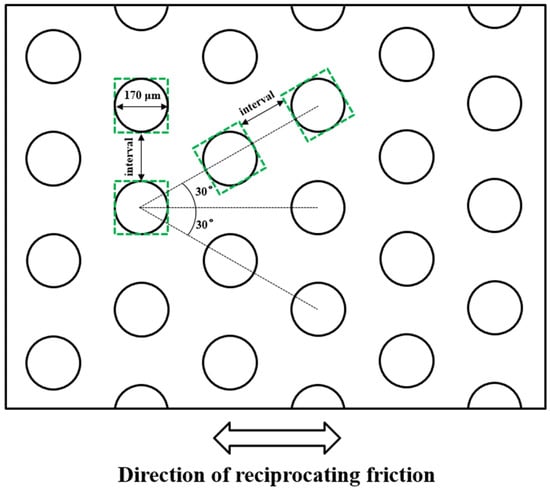
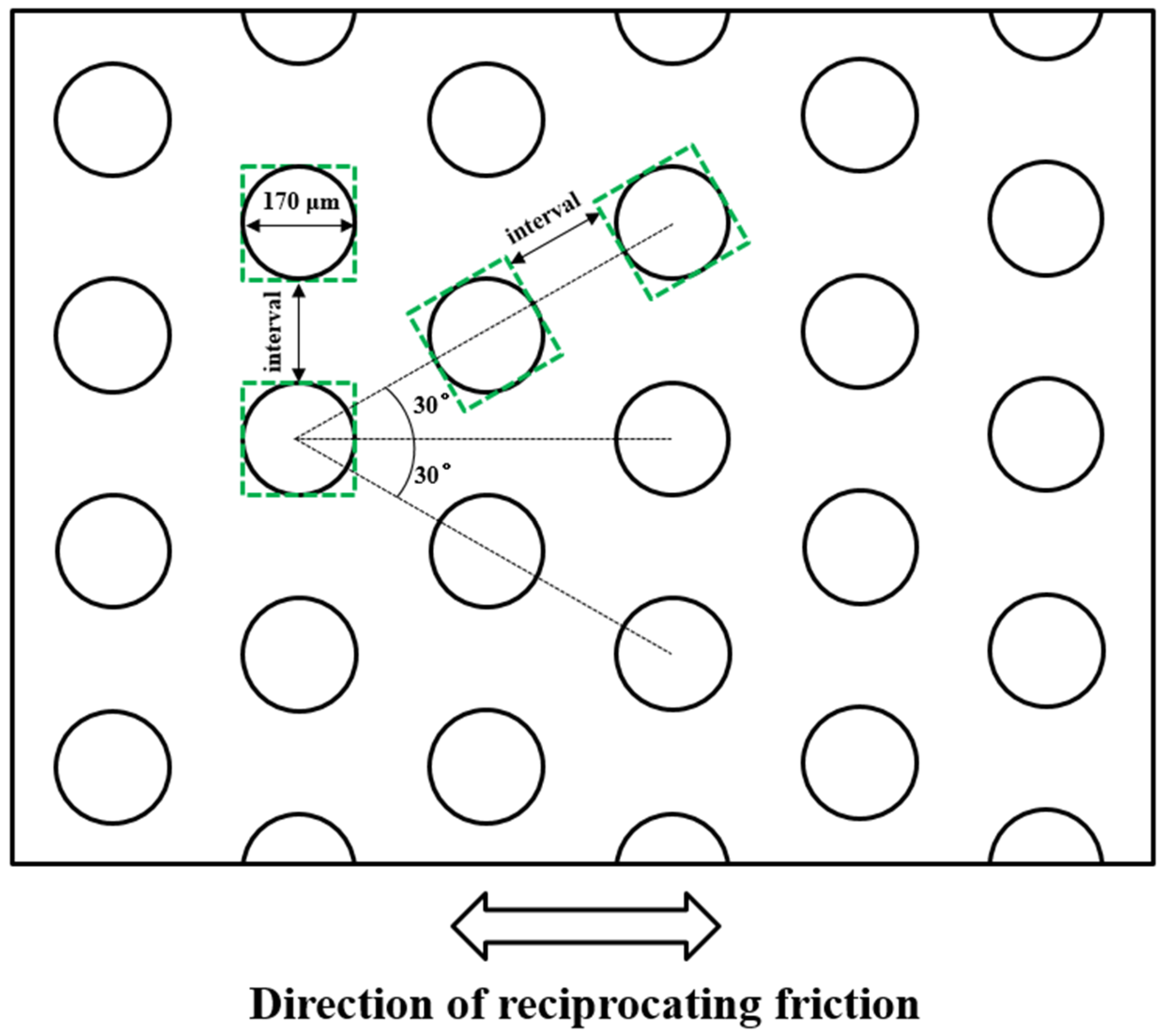
The Si3N4 ceramic with the dimension of 15 mm × 20 mm × 5 mm (Shenzhen Hard Precision Ceramic Co., LTD., Shenzhen, China) was used as the material for LST and friction tests. Figure 1 shows the schematic diagram of textured patterns on the surface of Si3N4 ceramic. Vertically, each textured pattern is evenly arranged at designated intervals. The patterns in each column are tilted at a 30° angle, and the spacing is consistent with the vertical direction. The patterns are composed of a series of circular rings with different intervals. LST was performed by the picosecond laser (SLPL-1064-50, Beijing Shenglei Technology Co., Ltd., Beijing, China). The pulse width was 10 ps and the wavelength was 1064 nm. The diameter of the focused spot was about 17 μm. The laser power for LST was set as 9 W with the repetition frequency of 100 kHz. For the individual circular ring, the scanning speed was 200 mm/s and the scanning times was 20. Si3N4 ceramic before and after LST was ultrasonically cleaned in alcohol for 20 min. The sample with un-textured patterns was represented as Original. The textured samples with different intervals of 150 μm, 250 μm and 350 μm were abbreviated as CR-150, CR-250 and CR-350, respectively.
Figure 1.
The schematic diagram of textured patterns with circular rings on Si3N4 ceramic surface.
The surface wettability on the Si3N4 ceramic was examined by the contact angle (CA) meter (CA500, Beidou Precision Instrument Co., Ltd., Dongguan, China), using the sessile drop method with 5 μL hyaluronic acid (HA, molecular weight of 1.5~2.5 × 10⁶, Macklin Inc., Shanghai, China) dissolved in phosphate buffer saline (PBS, Macklin Inc., Shanghai, China). The final concentration of HA was 4.5 mg/mL. HA is the key component of the lubricating fluid found in human joints [24]. Using HA as a lubricant helps to partially replicate the body’s physiological environment, offering valuable insights for clinical trials based on friction and wear testing. Unlike traditional mineral oil or deionized water, HA more accurately represents the true lubrication conditions of biological friction systems, aligning this study with the trends in biological tribology research. The friction tests were conducted on the reciprocating friction machine (MS-M9000, Lanzhou Huahui Instrument Technology Co., Ltd., Lanzhou, China) under HA lubrication. The frictional pair was the YG6 cemented carbide (WC) ball with the diameter of 6 mm. For each sample, the loading force was 10 N with the different reciprocating frequencies at 0.5 Hz, 1.5 Hz, and 2.5 Hz. The sliding distance was 5 mm and the testing time was 30 min. The wear rate (WR) of the frictional pair can be calculated by the following formula [25]:
where V is the wear volume of the WC ball (mm3), F is the loading force (N), and L is the sliding distance (m). The WR of WC ball corresponding to Original, CR-150, CR-250 and CR-350 are abbreviated as WRO, WR-150, WR-250, WR-350, respectively. The morphology of the frictional area was characterized by scanning electron microscopy (SEM, ZEM20Pro, ZEPTOOLS, Tongling, China). The chemical compositions were analyzed by energy dispersive spectroscopy (EDS) integrated with SEM.
3. Results and Discussion
3.1. Surface Wettability of Un-Textured and Textured Si3N4 Ceramic
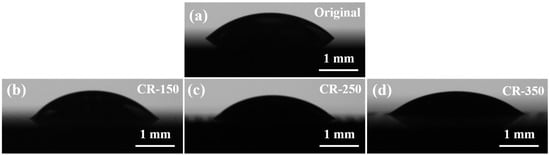
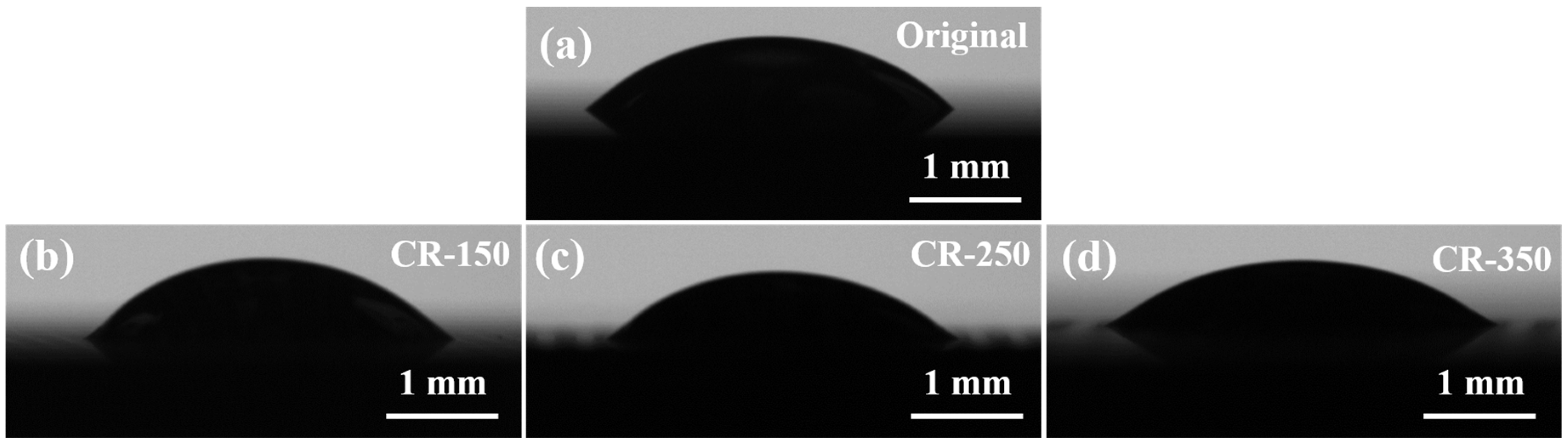
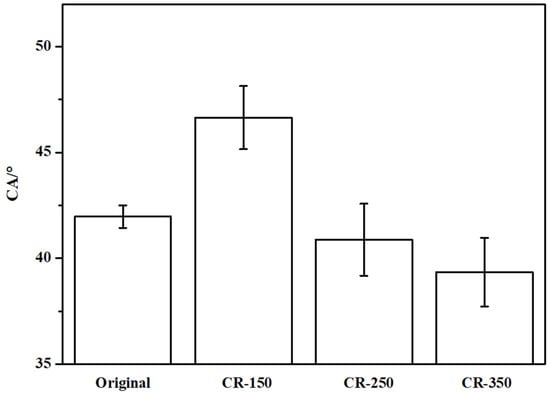
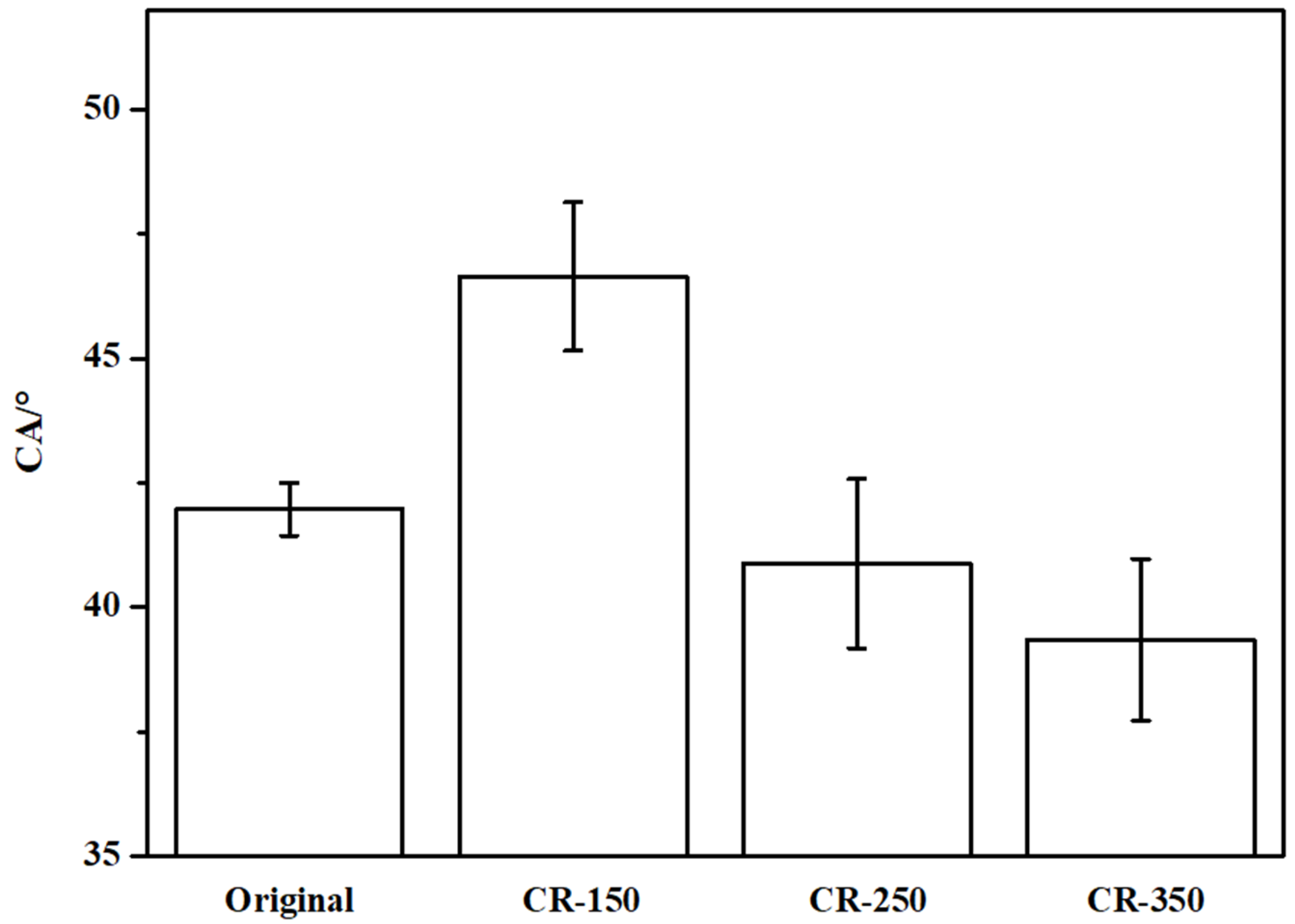
Figure 2 shows the wetting state of HA on the surface of Si3N4 ceramic. It can be observed that both the original and textured surface of Si3N4 ceramic exhibited hydrophilicity, but there were differences in the surface wettability of HA. The quantitative characterization of surface wettability of materials is shown in Figure 3. The CA of Original was 41.96 ± 0.53°. When the interval of the textured patterns was 150 μm, the CA increased to 46.65 ± 1.49°. It meant that the introduction of textured patterns weakened the hydrophilicity of the material surface. But this phenomenon only existed at smaller interval of textured patterns. As the interval increased, the CA continued to decrease. The values of CA at the interval of 250 μm and 350 μm were close, which were 40.87 ± 1.70° and 39.34 ± 1.63°, respectively. There were also close to the CA of the un-textured Si3N4 ceramic. The phenomenon that the CA decreased with the increase of the texture interval on the surface of Si3N4 ceramic reflected the transformation process of the wetting state of HA. The textured patterns with smaller interval were denser, and the droplet was more difficult to fully enter the texture. At this time, air was trapped in the area covered by the droplet. In the condition, the liquid was in contact with the raised top of the textured patterns and trapped air. The repulsion of air to droplet was greater than that of solid surface, so the presence of trapped air enhanced the hydrophobicity of the surface [26]. Therefore, the measured CA was higher than that of the original surface. With the increase in the interval of the textured patterns, the texture density at per unit area decreased. The droplet was easier to penetrate into the texture patterns under the combined action of gravity and capillary force. As the actual contact area between liquid and solid increased, the CA gradually returned to the value close to the original surface, and the hydrophilicity was enhanced. In addition, LST was usually accompanied by chemical surface modification [27], which could also have a certain impact on the surface energy of the material. However, the interval, as a geometric factor, dominated and determined the overall trend of the CA variation with textured patterns. This approach differed from altering the surface morphology of metal materials by adjusting laser processing parameters [28,29]. In this study, the laser processing parameters were used to control the distribution of textured surface patterns exclusively by varying the interval. Changes in the surface chemical composition were kept within a minimum range. Therefore, the CA primarily influenced by the geometric factor alone.
Figure 2.
The wetting state of HA on the surface of Si3N4 ceramic: (a) Original, (b) CR-150, (c) CR-250 and (d) CR-350.
Figure 3.
CA of Si3N4 ceramic with different surface features.
3.2. COF of Un-Textured and Textured Si3N4 Ceramic
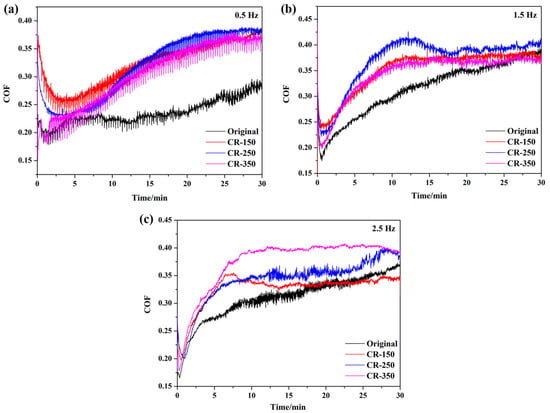
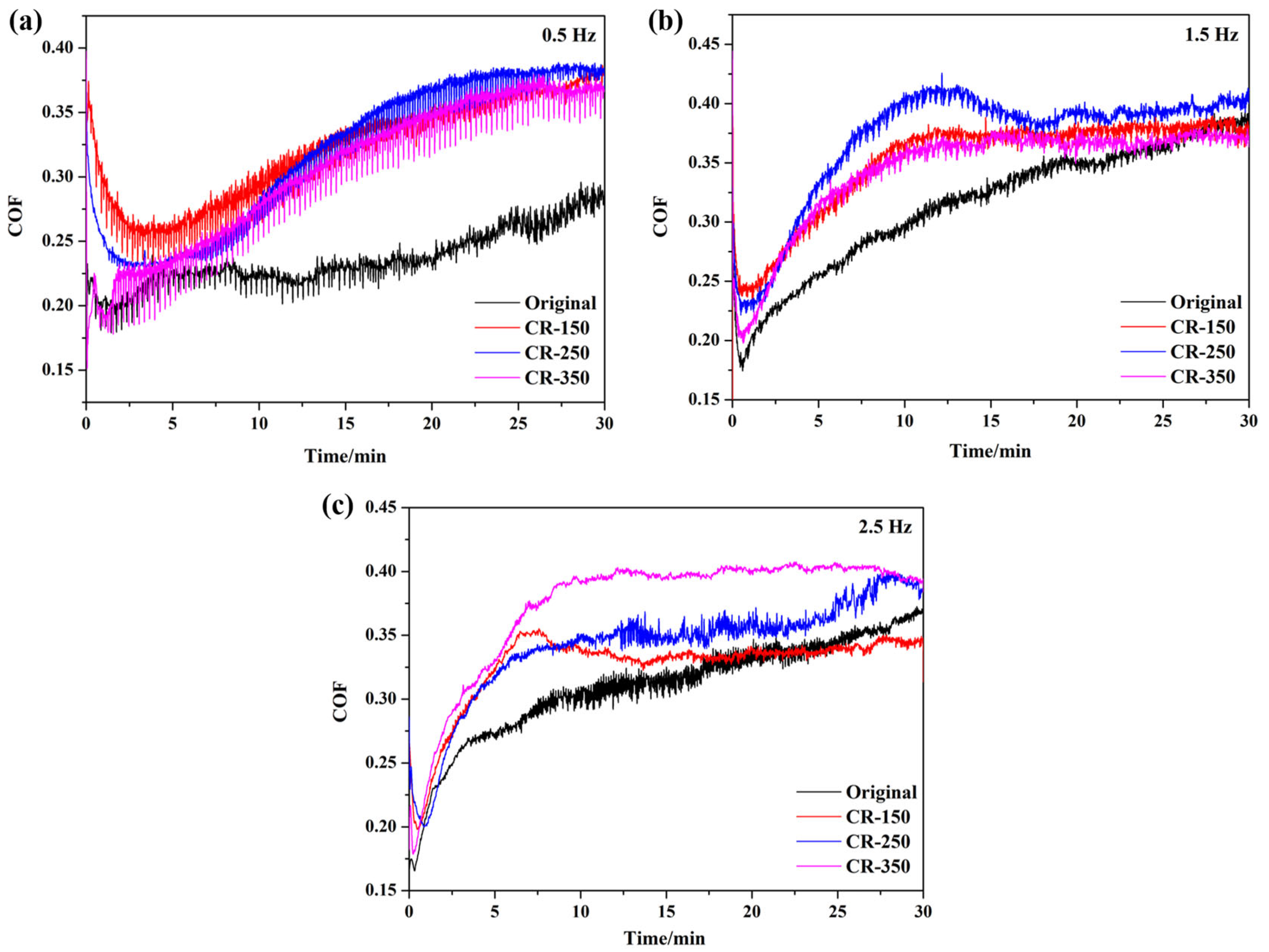
Figure 4 shows the COF of Si3N4 ceramic with different surface features as a function of the sliding time. When the reciprocating frequency was 0.5 Hz (Figure 4a), COFs of both un-textured and textured samples gradually increased. COF of Si3N4 ceramic with textured patterns was relatively close and all higher than that of materials without texture. The higher COF values of textured samples also existed at reciprocating frequencies of 1.5 Hz (Figure 4b) and 2.5 Hz (Figure 4c). Increasing the COF of the material surface through LST is an important direction in tribology [30,31]. Under liquid lubrication condition, COFs of textured surface were higher, reflecting the negative effect of textured patterns on the formation and maintenance of lubricating films. During the frictional process, a continuous lubrication film could form on the contact area of the original surface. It was beneficial for separating the surface of the solid, so that friction mainly occurred inside the fluid, resulting in the lower COF. Although the lubricant was stored in the textured patterns introduced by LST theoretically, it actually damaged the continuity of the lubricating film. Due to the low reciprocating frequency, the lubricant had sufficient time to redistribute between the textured patterns and the contact area. In addition, the differences in the ability of textured patterns to accommodate debris were not fully utilized. The influences of the interval on the frictional process were also minimized. The surface wettability and interval had little effect on the COF of textured samples.
Figure 4.
COF of Si3N4 ceramic with different surface features as a function of the sliding time: (a) 0.5 Hz, (b) 1.5 Hz and (c) 2.5 Hz.
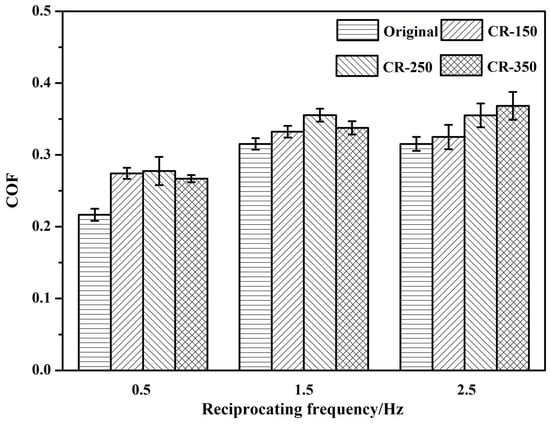
As the reciprocating frequency increased to 1.5 Hz (Figure 4b), the COF of Original continued to increase in the frictional process, but the COFs of CR-150, CR-250 and CR-350 were more stable. The surface of the un-textured sample mainly relied on continuous fluid dynamic pressure effects to maintain a lubricating film during reciprocating motion [32]. It was sensitive to the changes in the frictional velocity. As the reserve of frictional medium, textured patterns could timely replenish lubricant when the reciprocating frequency increased, maintaining a relatively stable COF. The COF values of samples under different reciprocating frequencies are presented in Figure 5. Different from the COFs of textured samples at 0.5Hz, COF increased and then decreased with the increase of the interval between the textured patterns. When the interval was small, the density of textured patterns at per unit area was higher. During the reciprocating friction, the microfluidic dynamic pressure effect was generated more easily at the denser texture edges. And the lubricant formed the local high-pressure zone in the textured gaps, making a certain load-bearing contribution to the contact interface. At the same time, the distribution of lubricant in the contact area with the smaller interval was relatively uniform. The probability of direct contact between solids was reduced, resulting in a lower level of COF. As the interval increased, the density of textured patterns at per unit area decreased. Although CR-250 exhibited better wettability than CR-150, the decrease in the density of textured patterns led to the weakening of the microfluidic dynamic pressure effect. Therefore, the load-bearing capacity decreased and the COF increased. As the interval continued to increase, the textured surface approached the mixed state of the original surface and the discrete patterns. Although the contribution of fluid dynamic pressure from a single textured pattern was limited, the proportion of smooth areas increased and the load-bearing capacity was restored. The destructive effect of textured patterns was weakened, and the flow resistance of the lubricant in smooth areas was reduced. The overall lubrication state was improved, and the COF decreased. When the reciprocating frequency increased to 2.5 Hz (Figure 4c), the COF of Original was still the lowest, and the COFs of textured samples increased with the increase of the interval. Under higher reciprocating condition, the low friction state close to full film lubrication was achieved on the original surface of materials. The destructive effect of textured patterns on fluid dynamic pressure became the dominant factor affecting COF. It was increased with the increase of interval. At this time, it was relatively difficult to replenish the lubricating fluid in time, so the COFs increased with the increase in the interval of textured patterns.
Figure 5.
COF of Si3N4 ceramic with different surface features under different reciprocating frequencies.
The effect of surface wettability on the coefficient of friction clearly depended on reciprocating frequency, indicating a shift in the dominant mechanisms under different lubrication conditions. At a low reciprocating frequency of 0.5 Hz, there was no notable difference in the coefficient of friction across various textured intervals. This was mainly because HA molecules had enough time to form a complete fluid dynamic pressure lubrication film at the interface of the frictional pair. In this case, the lubrication state was primarily governed by the rheological properties of the HA solution rather than surface wettability. However, as the reciprocating frequency increased, the coefficient of friction became more sensitive. The reduced contact time in the local friction area led to a thinner lubricating film, making the effect of surface wettability on the friction coefficient more significant.
3.3. Wear Morphology of Un-Textured and Textured Si3N4 Ceramic
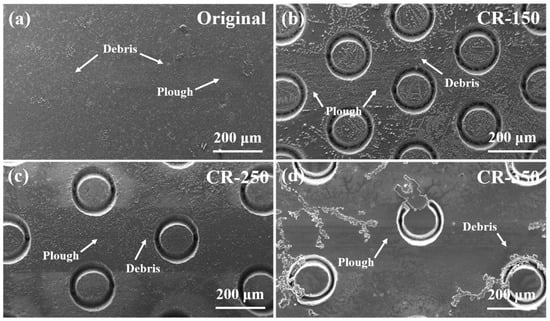
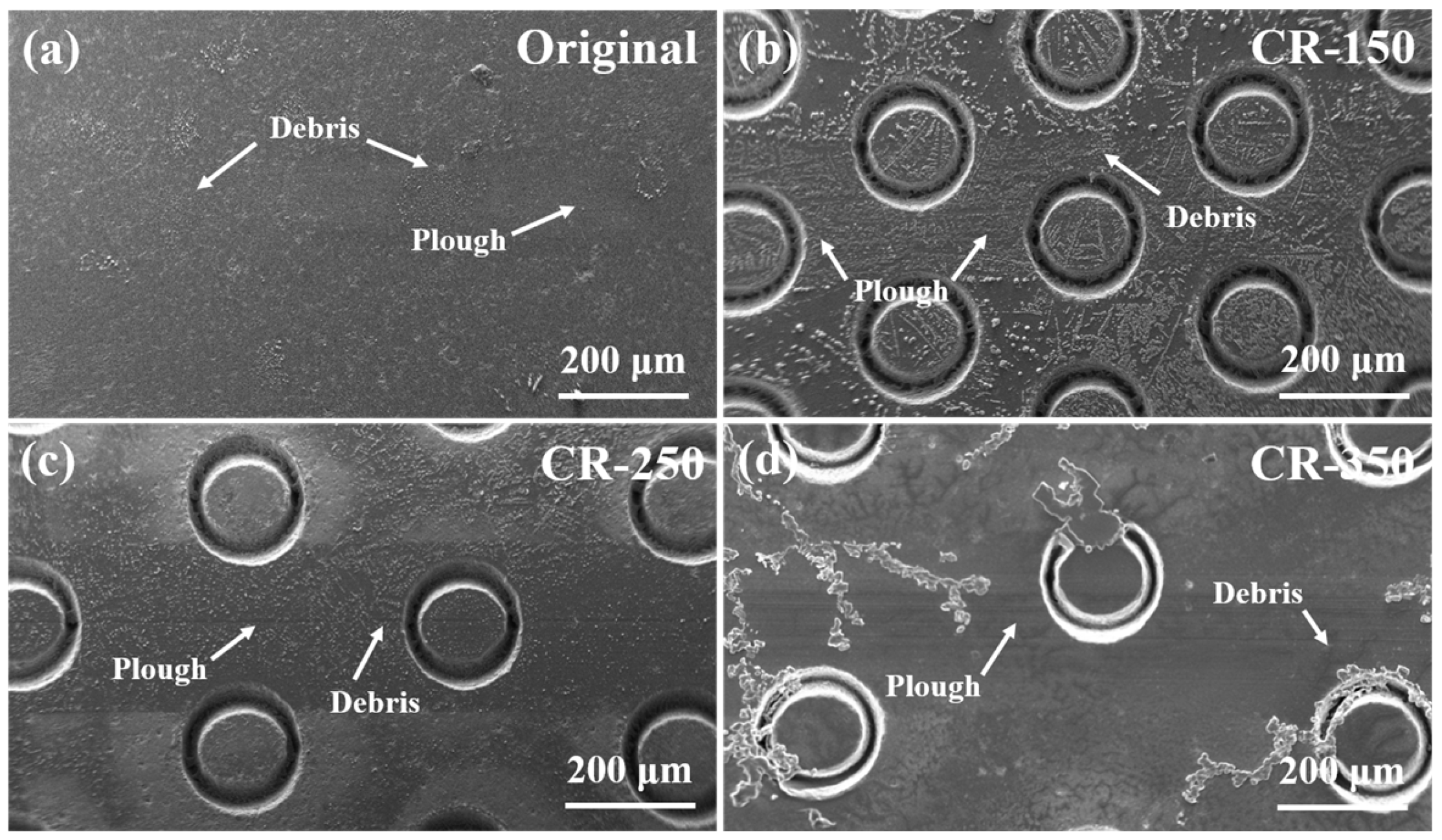
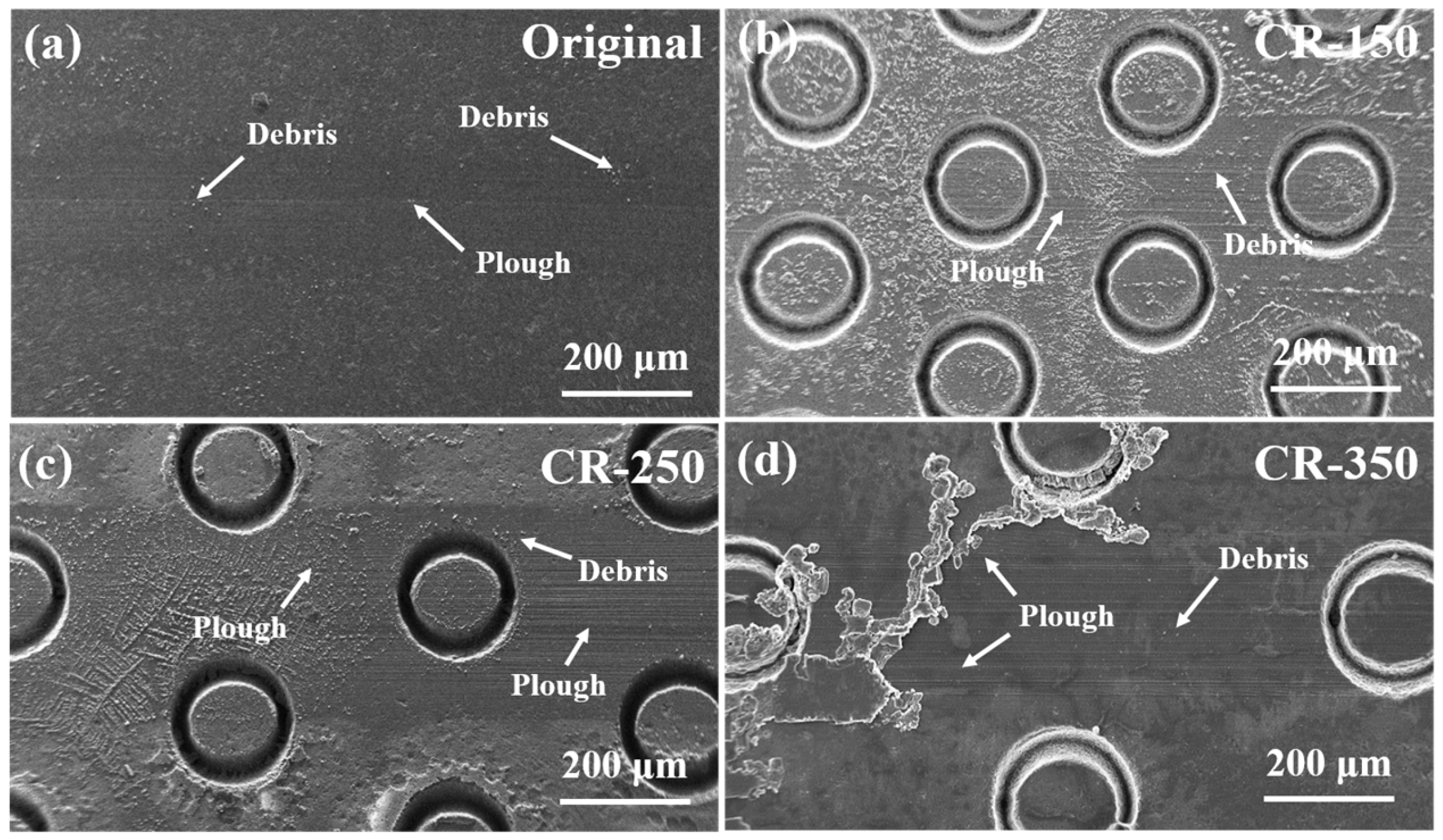
Figure 6 shows SEM of wear morphology of un-textured and textured Si3N4 ceramic at the reciprocating frequency of 0.5 Hz. It can be seen that a small amount of debris and slight plough existed on the original surface of the un-textured material (Figure 6a). In contrast, the textured surface exhibited more severe friction damage (Figure 6b–d). These conditions can also be found in the wear morphology of Si3N4 ceramic at the higher reciprocating frequencies. The distribution of the contact pressure on the original surface was relatively uniform, avoiding local stress concentration [33]. At the same time, it was conducive to the formation and maintenance of the lubricating film, which could effectively isolate the solid surface and suppress the ploughing effect of the frictional pair, resulting in only slight ploughing marks. LST introduced regularly arranged textured patterns on the surface of materials. The contour of the texture edge generated cutting effects during the reciprocating friction, transforming the slight sliding wear of the original surface into texture induced mechanical damage. It was worth to mention that the surface wettability of CR-150 was weaker, which might be one of the reasons for its more severe surface friction compared to CR-250 and CR-350.
Figure 6.
SEM of wear morphology of un-textured and textured Si3N4 ceramic at the reciprocating frequency of 0.5 Hz: (a) Original; (b) CR-150; (c) CR-250; (d) CR-350.
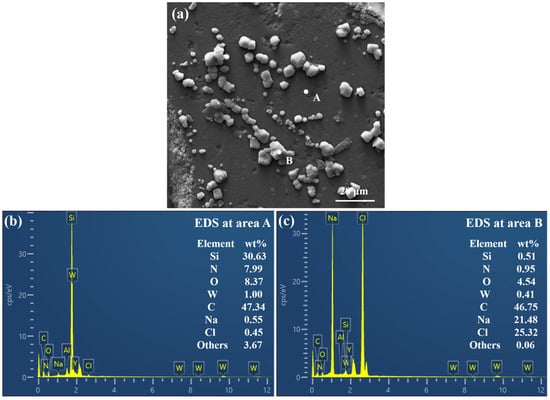
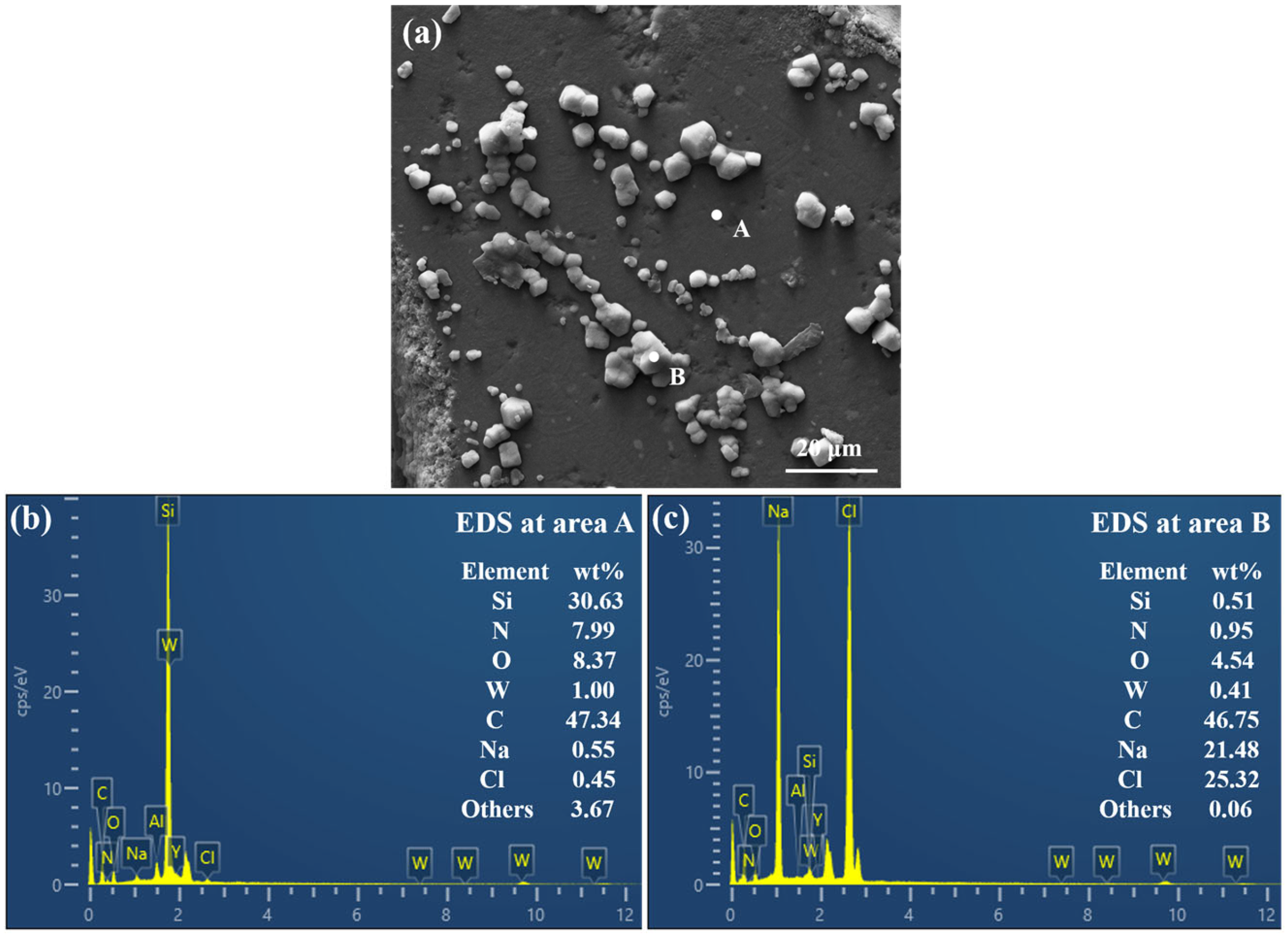
As the reciprocating frequency increased to 1.5 Hz (Figure 7) and 2.5 Hz (Figure 8), the surface wear of all test samples was more severe. The increase in reciprocating frequency meant the increase in frictional sliding speed, theoretically promoting the formation of fluid dynamic pressure lubrication film. However, in the actual reciprocating motion, the motion time of a single stroke was shortened as the reciprocating frequency increased. The lubricating film undergone a periodic cycle from establishment to rupture at the moment of reversal. At this point, the lubricating film had not yet reached the steady-state thickness, resulting in insufficient accumulation of dynamic pressure effects. In addition, higher reciprocating motion increased the number of cycles at per unit time. The frequency of alternating contact stress on the surface of material increased, resulting in the higher kinetic energy and flow ability of the debris [34]. The residence time of the debris in the contact area was shortened, and the erosion and grinding effects on the surface became more severe, accelerating the wear of the material surface. In consideration of the fact that the textured pattern was composed of the central solid circle and a peripheral hollow ring, the former suffered varying degrees of damage at different friction reciprocating frequencies. It was obvious that the part of the central solid circular of the CR-250 (Figure 6c, Figure 7c and Figure 8c) had more severe wear than the CR-150 (Figure 6b, Figure 7b and Figure 8b) and CR-350 (Figure 6d, Figure 7d and Figure 8d) at the reciprocating frequency from 0.5 Hz to 2.5 Hz. There were relatively narrow and interconnected smooth surface between individual textured patterns with smaller interval of 150 μm. The fluid dynamic lubrication film might partially establish and maintain a certain degree of continuity in the texture gaps. Under the condition of larger interval of 350 μm, the number of textured patterns was less. The smooth areas between textures occupied the majority of the contact zone, allowing for the full formation of a continuous lubricating film [35]. In comparison with these intervals, although the textured surface with medium interval of 250 μm cut the continuous lubricating film into discontinuous areas, the interval was not sufficient to completely rebuild the lubricating film between adjacent textures. This might cause severe fluctuations in the solid-liquid contact state in the contact area, exacerbating the wear on the surface of the material. Figure 9 presents EDS analysis of CR-150 at the reciprocating frequency of 1.5 Hz. It can be seen that area A corresponded to the material matrix, primarily made up of silicon and nitrogen. The presence of oxygen likely originated from the SiOX thin layer formed due to material oxidation during the LST process. Compared with area A, the levels of silicon, nitrogen, and oxygen element at area B noticeably decreased. The contents of carbon and tungsten in both areas remained relatively unchanged, suggesting that the frictional pair debris was evenly spread along the friction path. It was worth noting that the contents of sodium and chlorine at area B significantly increased. Given that the lubrication medium used was a PBS/HA solution, this increase was attributed to residual lubricating fluid present in the debris.
Figure 7.
SEM of wear morphology of un-textured and textured Si3N4 ceramic at the reciprocating frequency of 1.5 Hz: (a) Original; (b) CR-150; (c) CR-250; (d) CR-350.
Figure 8.
SEM of wear morphology of un-textured and textured Si3N4 ceramic at the reciprocating frequency of 2.5 Hz: (a) Original; (b) CR-150; (c) CR-250; (d) CR-350.
Figure 9.
EDS analysis of CR-150 at the reciprocating frequency of 1.5 Hz: (a) SEM of the detected area; (b) EDS at area A; (c) EDS at area B.
3.4. Wear Rate of Un-Textured and Textured Si3N4 Ceramic
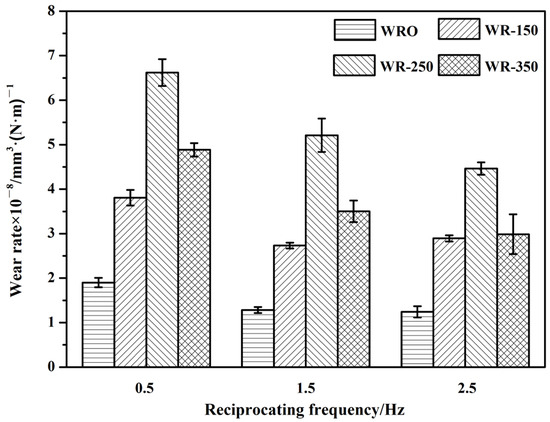
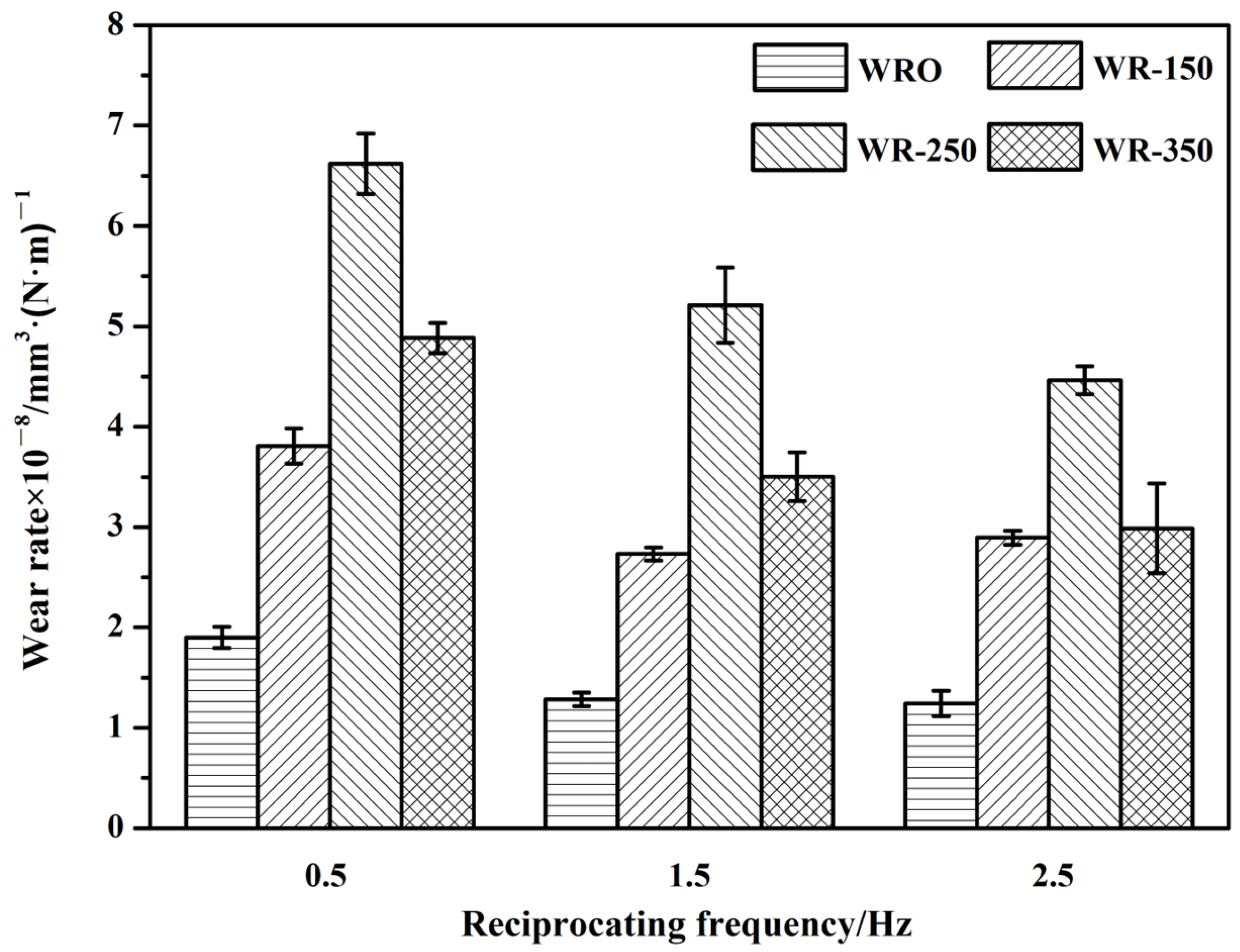
Figure 10 shows the wear rate of the WC ball corresponding to different surface features of Si3N4 ceramic under different reciprocating frequency. Under liquid lubrication, WRO was relatively low, while WR-150, WR-250 and WR-350 presented a trend of increasing and then decreasing with the increase of interval. This phenomenon existed in the reciprocating frequency from 0.5 Hz to 2.5 Hz. The complete and stable hydrodynamic lubricating film formed on the un-textured material due to the continuous surface. The film effectively isolated the solid surface, significantly reducing the probability of direct contact between materials and suppressing the wear rate at a lower level. The introduction of textured surface disrupted the continuity of the lubricating film. The distribution of textured patterns with smaller interval of 150 μm was dense. Although the liquid was hindered to some extent during flow, the high density distribution of textured patterns made the distribution of lubricant in the contact area relatively uniform. Therefore, the lubricating film still maintained a certain degree of continuity, and the degree of wear rate was controllable. As the interval increased to 250 μm, the number of textured patterns decreased. The cutting effect on the continuous lubricating film became significant. The bearing capacity of fluid dynamic pressure decreased. At the same time, the cyclic grinding of debris between solids led to the peak value in the wear rate. It corresponded to the more severe wear morphology observed in the samples with the interval of 250 μm in Figure 5, Figure 6 and Figure 7. When the interval increased to 350 μm, the distribution of textured patterns became more sparse. The smooth area occupied the vast majority of the contact area between solids. The continuous lubricating film could be established more easily and maintained more stably. The bearing effect of fluid dynamic pressure was significantly restored. Textured patterns only existed as local lubricant reserve areas and had limited interference with the overall lubrication. The debris was not easily re-drawn into the contact interface, and the wear rate decreased accordingly. It was worth to mention that the wear rate of all samples decreased as the reciprocating frequency increased, but WR-150 slightly increased in the range of 0.5 Hz to 2.5 Hz. It might be caused by the weaker hydrophilicity of the samples at this time. The lubricant had sufficient time to spread on the surface of the material and penetrated the textured patterns at the reciprocating frequency of 0.5 Hz and 1.5 Hz. As the frequency increased to 2.5 Hz, the residence time of the lubricant in the contact area decreased. The adhesion between the material surface and the rapidly flowing lubricant was insufficient to overcome inertial forces [36], resulting in a weakening of the lubricant storage function of the textured patterns under dynamic conditions. Therefore, WR-150 not continued to decrease, but rather increased slightly.
Figure 10.
Wear rate of the WC ball corresponding to different surface features of Si3N4 ceramic under different reciprocating frequency.
3.5. Frictional Process of Un-Textured and Textured Si3N4 Ceramic
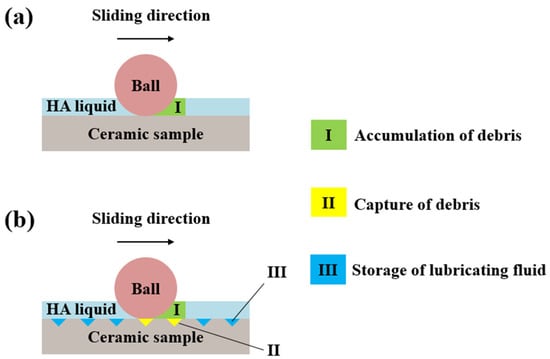
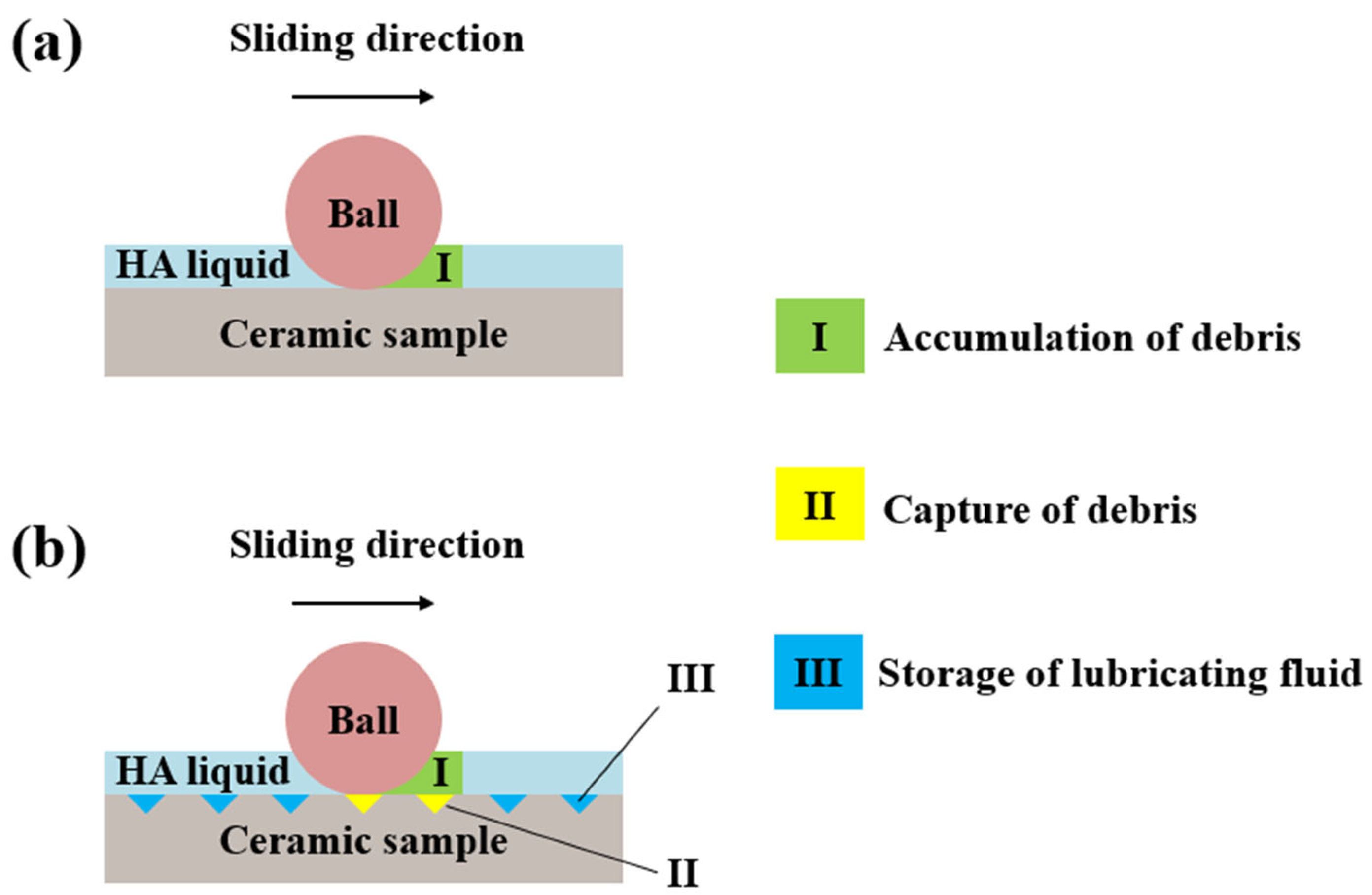
Figure 11 shows schematic diagram of the frictional process on the Si3N4 ceramic. As for the un-textured surface (Figure 11a), the debris generated at the contact interface mainly migrates and accumulates towards the edge of the friction trajectory, under the combined action of fluid dynamic pressure and mechanical pushing. The smooth surface is conducive to the formation of a continuous hydrodynamic lubrication film with uniform distribution of lubricant and low flow resistance. Once debris is generated, it is quickly carried away from the contact area. Therefore, the overall surface of the material remains relatively clean. For the textured samples (Figure 11b), the debris generated during the sliding process is easily captured by the textured patterns. This mechanism aims to isolate debris to protect the contact interface, but it triggers complex follow-up effects in actual dynamic processes. Part of the debris is subjected to repeated rolling and shearing in subsequent reciprocating cycles, resulting in finer particles that are easily distributed on the friction trajectory. The denser textured patterns have more groove volume as the lubricant storage areas, which can make up for the weak hydrophobicity of the material surface to a certain extent. At lower reciprocating frequency, the occurrence of lubrication deficiency is delayed by the larger storage areas. However, the dense textured patterns enhance the shear dissipation and gas-liquid interface oscillation of the lubricant at higher frequencies. The stored lubricant is difficult to transport to the contact core, resulting in the increase of the COF. With the increase in the interval of textured patterns, the hydrophilicity of the surface is enhanced. At this time, the stronger adsorption of the lubricant on the material surface leads to an increase in residual liquid at the friction area. Within the grooves of the textured patterns, the lubricant is pulled from the edges toward the center of contact due to the normal stress difference in the HA solution, partially offsetting lubricant loss caused by the contact of micro convex bodies. This mechanism is consistent with the viscoelastic lubrication behavior of HA in joint synovial fluid [37]. Additionally, the textured patterns can raise the local concentration of HA through geometric confinement effects, encouraging the formation of multiple adsorption layers. It helps create a continuous molecular barrier within the contact area’s adsorption layer [38], thereby decreasing the extent of direct solid-to-solid contact.
Figure 11.
Schematic diagram of the frictional process on the Si3N4 ceramic: (a) un-textured surface, (b) textured surface.
4. Conclusions
In the present work, circular patterns were performed on Si3N4 ceramic by LST. Effect of the interval on the surface wettability, COFs of materials was studied. The wear morphology and wear rate between un-textured and textured samples were investigated. The characteristics of the frictional process were also analyzed. Both un-textured and textured Si3N4 ceramic were hydrophilic. The hydrophilicity of the surface was relatively weak at the interval of 150 μm. As the interval between the textured patterns increased, the CA of the textured surface gradually decreased and approached that of the original surface. It could be attributed to the fact that air was more easier trapped at the denser textured surface during the liquid wetting process. Textured patterns with larger intervals facilitate liquid penetration, resulting in better hydrophilicity of the material surface. COFs of textured samples were higher than those of un-textured samples within the range of reciprocating frequency from 0.5 Hz to 1.5 Hz. At the reciprocating frequency of 0.5 Hz, the effect of the interval on the COF was not significant. COF increased as the reciprocating frequency increased. And the COF of the textured surface with different intervals changed more obviously. As the reciprocating frequency increased, the frictional marks on the surface of the samples became greater, and the surface of the textured surface was more severely damaged. Plough and debris were observed in all samples. The surface of textured Si3N4 ceramic with the interval of 250 μm was the most serious. This might be caused by the significant destruction of the continuous lubrication film and the decline of the bearing capacity of fluid dynamic pressure under the interval. The EDS analysis results indicated that the presence of residual PBS/HA in the debris on the surface of the material. The main differences between the frictional process of un-textured and textured surface are whether it has the function of capturing debris and storing lubricant fluid. The former results in finer debris on the textured surface, while the latter leads to more residual liquid on the material surface. Textured patterns have a promoting effect on improving the distribution of lubricating fluid and the formation of liquid adsorption layers on material surfaces during friction process.
Author Contributions
Conceptualization and methodology, H.-J.W.; validation and investigation, J.W., B.W., D.-L.W. and H.-X.G.; writing—original draft preparation, H.-J.W.; writing—review and editing, H.-J.W. and B.W.; supervision, H.-J.W.; project administration and funding acquisition, H.-J.W. and Y.-X.G. All authors have read and agreed to the published version of the manuscript.
Funding
This work was supported by the Key Scientific Research Platforms and Projects of Ordinary Universities in Guangdong Province (2025ZDZX3060), Tri-level Talents Development Project of Zhuhai College of Science and Technology, Guangdong Basic and Applied Basic Research Foundation (2024A1515011064, 2025A1515011533), Experimental Teaching Demonstration Center for Industrial Robots (2024003), Innovation Training Project for College Students of Zhuhai College of Science and Technology (S202513684029S).
Data Availability Statement
The original contributions presented in this study are included in the article. Further inquiries can be directed to the corresponding author.
Conflicts of Interest
The authors declare no conflicts of interest.
References
- Chen, F.; Sun, X.; Fang, B.; Yan, K.; Hong, J.; Yan, B. Tribological behavior and electrical insulation properties of micro-and nanoscale graphene/β-Si3N4 whisker-reinforced Si3N4 ceramics at low temperature. J. Mater. Res. Technol. 2025, 36, 1813–1821. [Google Scholar] [CrossRef] [Scilit]
- Liu, J.; Huang, G.; Wang, R.N.; He, J.; Raja, A.S.; Liu, T.; Engelsen, N.J.; Kippenberg, T.J. High-yield, wafer-scale fabrication of ultralow-loss, dispersion-engineered silicon nitride photonic circuits. Nat. Com. 2021, 12, 2236. [Google Scholar] [CrossRef] [Scilit]
- Shi, Y.; He, Q.; Wang, A.; Ren, Y.; Wang, J.; Wang, H.; Wang, W.; Fu, Z. Effect of additive content on texture evolution and mechanical properties of Si3N4 ceramics prepared by hot pressing. Mater. Sci. Eng. A 2024, 898, 146348. [Google Scholar] [CrossRef] [Scilit]
- Du, X.; Lee, S.S.; Blugan, G.; Ferguson, S.J. Silicon nitride as a biomedical material: An overview. Inter. J. Mol. Sci. 2022, 23, 6551. [Google Scholar] [CrossRef] [Scilit] [PubMed]
- Filho, L.C.; Fu, L.; Engqvist, H.; Xia, W.; Persson, C. Wear performance of a novel silicon nitride ceramic for biomedical applications. Bio. Mater. Dev. 2023, 1, 990–999. [Google Scholar] [CrossRef] [Scilit]
- Huang, L.; Dong, Y.; Wang, Z.; Zhang, D.; Yu, Z. Study on the effect of multi-walled carbon nanotube (MWCNT) addition on the microstructure, mechanical and cutting performance of silicon nitride ceramic tools. Inter. J. Ref. Met. Hard Mater. 2024, 125, 106907. [Google Scholar] [CrossRef] [Scilit]
- Wang, P.; Li, S.; Wu, Y.; Zhao, J. Research on calculation of allowable radial load of silicon nitride full ceramic ball bearing. J. Mech. Sci. Technol. 2024, 38, 6757–6767. [Google Scholar] [CrossRef] [Scilit]
- Lou, Z.; He, J.; Liu, Y.; Zhu, H.; Zeng, X.; Abid, Z. Silicon nitride bioceramics with TiC additives: Excellent mechanical properties, cytocompatibility, and antibacterial properties. J. Func. Biomater. 2026, 17, 20. [Google Scholar] [CrossRef] [Scilit]
- Bai, L.; Wan, S.; Yi, G.; Sun, H. Exploring the influences of the counterpart materials on friction and wear behaviors of atmospheric plasma-sprayed YSZ coating. Ceram. Inter. 2022, 48, 29601–29613. [Google Scholar] [CrossRef] [Scilit]
- Lee, S.J.; Kim, C.L. Effects of the etching process on the surface, friction and wear characteristics of silicone rubber coated with micro-sized ceramic particles. Soft Mat. 2024, 7, 1467–1474. [Google Scholar] [CrossRef] [Scilit] [PubMed]
- Yan, S.; Wei, C.; Zou, H.; Chen, J.; Li, Y.; Shen, T.; Wang, A.; Sui, T.; Lin, B. Fabrication and tribological characterization of laser textured engineering ceramics: Si3N4, SiC and ZrO2. Ceram. Inter. 2021, 47, 13789–13805. [Google Scholar] [CrossRef] [Scilit]
- Wang, H.J.; Lin, H.T.; Zhou, F.; Chu, R.; Guo, K.K.; Wu, H.D.; Liu, Y. Friction and wear performances of Si3N4 ceramic matrix composites: A review from the perspectives of doped phase, layered structure design, and laser surface texturing. Int. J. Appl. Ceram. Technol. 2023, 20, 2661–2680. [Google Scholar] [CrossRef] [Scilit]
- Silva, E.; Lopes, A.; Miranda, G. Ceramics surface design by laser texturing: A review on structures and functionalities. Adv. Mater. Interf. 2025, 12, e00302. [Google Scholar] [CrossRef] [Scilit]
- Jing, X.; Xia, Y.; Zheng, S.; Yang, C.; Qi, H.; Jaffery, S.H.I. Effect of surface modification on wettability and tribology by laser texturing in Al2O3. Appl. Opt. 2021, 60, 4434–4442. [Google Scholar] [CrossRef] [Scilit] [PubMed]
- Chen, X.; Wang, C.; Jiang, J.; Ji, C.; Feng, S.; Yang, C.; Xiang, Z.; Long, Y. Effect of picosecond laser texturing on the friction behavior of silicon carbide in hybrid ceramic bearings under dry and water lubrication. Ceram. Inter. 2023, 49, 29857–29869. [Google Scholar] [CrossRef] [Scilit]
- Zhang, N.; Ma, J.; Li, Z.; Zhan, X.; Zheng, Q.; Gao, J.; Liu, Y. Tribological behavior of squamous textured SiC sliding against graphite under mixed lubrication. J. Manuf. Proc. 2023, 108, 639–652. [Google Scholar] [CrossRef] [Scilit]
- Liu, Y.; Wang, G.; Jia, F.; Jiang, X.; Jiang, N.; Wang, C.; Lin, Z. Improvements in wettability and tribological behavior of zirconia artificial teeth using surface micro-textures. Materials 2025, 18, 3117. [Google Scholar] [CrossRef] [Scilit]
- Jing, X.; Wang, J.; Li, J.; Chen, Y.; Wang, F.; Jaffery, S.H.I. Tribological behavior of zirconia ceramic with micro-channels produced by nanosecond laser. Mater. Today Commun. 2023, 36, 106670. [Google Scholar] [CrossRef] [Scilit]
- Wei, C.; Huang, S.; Li, S.; Wang, Y.; Sun, J.; Wang, K. Effects of sliding friction angle and load on the friction and wear properties of silicon nitride ceramics under dry friction. Indus. Lub. Tribol. 2025, 77, 1370–1379. [Google Scholar] [CrossRef] [Scilit]
- Yamakiri, H.; Sasaki, S.; Kurita, T.; Kasashima, N. Effects of laser surface texturing on friction behavior of silicon nitride under lubrication with water. Tribol. Inter. 2011, 44, 579–584. [Google Scholar] [CrossRef] [Scilit]
- Yang, Q.; Wu, T.; Wang, L.; Wang, Y.; Chen, Y.; Chen, L.; Lou, D.; Cheng, J.; Liu, D. Laser-induced gradient microstructures on Si3N4 ceramics and their wettability analysis. Mater. Chem. Phys. 2021, 270, 124749. [Google Scholar] [CrossRef] [Scilit]
- Wang, H.J.; Wang, B.T.; Zhou, F.; Guo, K.K.; Liu, Y.; Lin, H.T. Effect of laser surface texturing on friction performance and surface damage of silicon nitride ceramic. J. As. Ceram. Soc. 2024, 12, 184–193. [Google Scholar] [CrossRef] [Scilit]
- Wang, H.J.; Huang, J.D.; Wang, B.; Zhang, Y.; Wang, J. Study on the tribological behavior of laser surface texturing on silicon nitride ceramic under water lubrication. Lubricants 2025, 13, 21. [Google Scholar] [CrossRef] [Scilit]
- Su, C.-Y.; Lu, Y.-F.; Lu, Y.-C.; Huang, C.-H.; Fang, H.-W. Potential lubricating mechanism of hyaluronic acid for a reduction of albumin-mediated friction in the artificial joint system. Lubricants 2023, 11, 210. [Google Scholar] [CrossRef] [Scilit]
- Zhang, Z.; Deng, J.; Wang, R.; Sun, Q.; Meng, Y.; Wu, J. Tribological properties of TiO2-MoS2 soft-hard alternate films deposited by electrohydrodynamic atomization with a bionic mask. Collo. Surf. A 2022, 647, 128971. [Google Scholar] [CrossRef] [Scilit]
- Wang, H.J.; Huang, J.D.; Wang, B.; Zhang, Y.; Wang, J. Study on laser surface texturing and wettability control of silicon nitride ceramic. Micromachines 2025, 16, 819. [Google Scholar] [CrossRef] [Scilit]
- Yang, Q.; Lv, Z.; Wu, T.; Chen, Y.; Ren, X.; Cheng, J.; Lou, D.; Chen, L.; Zheng, Z.; Rui, Q.; et al. Formation mechanism of gradient wettability of Si3N4 ceramic surface induced using a femtosecond laser. Phys. Status Solidi. 2020, 217, 2000105. [Google Scholar] [CrossRef] [Scilit]
- Moradi, S.; Kamal, S.; Englezos, P.; Hatzikiriakos, S.G. Femtosecond laser irradiation of metallic surfaces: Effects of laser parameters on superhydrophobicity. Nanotechnology 2013, 24, 415302. [Google Scholar] [CrossRef] [Scilit]
- Ahmmed, K.M.T.; Ling, E.J.Y.; Servio, P.; Kietzig, A.M. Introducing a new optimization tool for femtosecond laser-induced surface texturing on titanium, stainless steel, aluminum and copper. Opt. Lasers Eng. 2015, 66, 258–268. [Google Scholar] [CrossRef] [Scilit]
- Dunn, A.; Wlodarczyk, K.L.; Carstensen, J.V.; Hansen, E.B.; Gabzdyl, J.; Harrison, P.M.; Shephard, J.D.; Hand, D.P. Laser surface texturing for high friction contacts. Appl. Surf. Sci. 2015, 357, 2313–2319. [Google Scholar] [CrossRef] [Scilit]
- Costa, H.L.; Schille, J.; Rosenkranz, A. Tailored surface textures to increase friction—A review. Friction 2022, 10, 1285–1304. [Google Scholar] [CrossRef] [Scilit]
- Walker, J.C.; Atkins, B. Boundary-lubricated dynamic-pressure sliding wear behavior of grade 250 cast iron. Tribol. Trans. 2026, 69, 142–149. [Google Scholar] [CrossRef] [Scilit]
- Niu, C.; Zhang, W.; Gao, T. Topology optimization of continuum structures for the uniformity of contact pressures. Struc. Multidiscip. Opt. 2019, 60, 185–210. [Google Scholar] [CrossRef] [Scilit]
- Li, C.J.; Hu, Y.X.; Li, H.B.; Zhou, J.W. Deciphering the dynamics of debris flows through basal stress responses in model experiments. Acta Geotech. 2025, 20, 1777–1794. [Google Scholar] [CrossRef] [Scilit]
- Rosenkranz, A.; Grützmacher, P.G.; Gachot, C.; Costa, H.L. Surface texturing in machine elements—A critical discussion for rolling and sliding contacts. Adv. Eng. Mater. 2019, 21, 1900194. [Google Scholar] [CrossRef] [Scilit]
- Komvopoulos, K. Adhesion and friction forces in microelectromechanical systems: Mechanisms, measurement, surface modification techniques, and adhesion theory. J. Adhes. Sci. Technol. 2003, 17, 477–517. [Google Scholar] [CrossRef] [Scilit]
- Seror, J.; Merkher, Y.; Kampf, N.; Collinson, L.; Day, A.J.; Maroudas, A.; Klein, J. Articular cartilage proteoglycans as boundary lubricants: Structure and frictional interaction of surface-attached hyaluronan and hyaluronan–aggrecan complexes. Biomacromolecules 2011, 12, 3432–3443. [Google Scholar] [CrossRef] [Scilit]
- Klein, J. Shear, friction, and lubrication forces between polymer-bearing surfaces. Annu. Rev. Mater. Sci. 1996, 26, 581–612. [Google Scholar] [CrossRef]
Disclaimer/Publisher’s Note: The statements, opinions and data contained in all publications are solely those of the individual author(s) and contributor(s) and not of MDPI and/or the editor(s). MDPI and/or the editor(s) disclaim responsibility for any injury to people or property resulting from any ideas, methods, instructions or products referred to in the content. |
© 2026 by the authors. Licensee MDPI, Basel, Switzerland. This article is an open access article distributed under the terms and conditions of the Creative Commons Attribution (CC BY) license.