


Abstract
Under complex friction conditions, base oils usually exhibit insufficient friction-reducing and anti-wear performance, poor shear resistance of the lubricating film, and weak interfacial adsorption stability. Herein, graphene oxide (GO) was surface-modified with the silane coupling agent KH550 and compounded with Ag nanoparticles to fabricate a silver/modified graphene oxide (Ag/KGO) composite lubricant additive. The microstructure and chemical characteristics of the Ag/KGO composite were characterized by SEM, XRD, FTIR, and Raman spectroscopy. Tribological tests performed on a Si3N4/GCr15 friction pair demonstrated that the lubricant containing 0.15 wt% Ag/KGO achieved the optimal tribological performance, with the average friction coefficient decreasing to 0.053, 51.8% lower than that of the base oil, and the wear scar width and depth decreasing by 34.5% and 75.7%, respectively. Molecular dynamics simulations revealed that Ag/KGO enhanced the interfacial adsorption strength and improved the shear stability of the lubricating film. Mechanism analysis indicated that KGO facilitated the formation of a stable lubricating film at the friction interface, while Ag nanoparticles acted as nano-bearings. Their synergistic effect reduced interfacial shear resistance and alleviated wear. These findings provide theoretical support for the design and development of high-performance composite lubricant additives.
1. Introduction
Lubricant additives are one of the key technical approaches for enhancing the friction-reducing and anti-wear properties of lubricating oils and improving the interfacial lubrication state [1,2]. However, under complex operating conditions, conventional additives still generally suffer from poor dispersion stability, insufficient interfacial adsorption capacity, and weak shear resistance, making it difficult to satisfy the application requirements of modern mechanical systems for high reliability, long service life, and efficient lubrication [3,4]. Therefore, the development of novel additives with excellent dispersibility, good interfacial compatibility, and efficient synergistic lubrication capability has become an important research direction in the field of lubricating materials.
Common functional additives can generally be classified into three main categories: metallic additives, metal oxide additives, and carbon-based additives. Among them, metallic additives are typically represented by silver (Ag) and copper (Cu) [5,6]; metal oxide additives mainly include zinc oxide (ZnO), titanium dioxide (TiO2), and aluminum oxide (Al2O3) [7,8]; and carbon-based additives include graphite, graphene, and graphene oxide [9,10]. Previous studies have shown that these additives can improve the tribological performance of lubricating oils. However, conventional single-component additives still exhibit significant limitations in practical applications. For instance, additive particles are prone to agglomeration and sedimentation in base oil, resulting in poor dispersion stability. In addition, some additives have difficulty forming a continuous and stable lubricating film at the friction interface, which restricts their friction-reducing and anti-wear performance [11,12]. Moreover, the weak interfacial adsorption between certain additives and base oils can further compromise their stability and service performance during long-term lubrication [13,14].
With the development of nanotechnology, lubricant additives have gradually evolved toward nanoscale, composite, and multifunctional designs [15,16]. Compared with conventional non-nanoscale additives, nanomaterials exhibit greater advantages in enhancing the shear resistance of lubricating films, improving the interfacial lubrication state, and strengthening friction-reducing and anti-wear performance because of their smaller size, larger specific surface area, and more active interfacial effects [17,18]. Nanoparticles are more likely to adsorb and deposit at the friction interface, thereby promoting the formation of protective films and reducing direct contact between friction pairs. At the same time, their high surface energy makes them prone to aggregation and sedimentation in base oils, which in turn weakens their dispersion stability and long-term lubrication performance [19,20]. Previous studies have shown that surface modification is one of the most effective strategies for improving the dispersion behavior of nanomaterials in base oils. For example, surface functionalization with silane coupling agents can enhance interfacial affinity and improve dispersion stability. However, the compatibility between the modified materials and the lubricating oil still plays a critical role in determining their effectiveness at the lubrication interface [21,22].
Among various nanomaterials, graphene oxide (GO) has shown great potential as a lubricant additive because of its two-dimensional layered structure, large specific surface area, and abundant surface functional groups [23,24,25]. Previous studies have demonstrated that GO can readily form a lubricating film with low shear strength at the friction interface, while its oxygen-containing functional groups, such as hydroxyl and epoxy groups, are also favorable for surface modification and composite functionalization, thereby effectively reducing friction resistance and wear [26,27]. However, the compatibility between GO and nonpolar base oils is relatively poor, and direct dispersion of GO in lubricating oils often leads to agglomeration and sedimentation, which adversely affects lubrication performance [28].
In contrast, Ag nanoparticles, as a typical class of metallic nano-additives, have attracted extensive attention because of their excellent chemical stability and remarkable potential for friction and wear reduction [29]. Existing studies have shown that Ag nanoparticles can improve the friction and wear behavior at the sliding interface, reduce interfacial shear resistance, and alleviate surface damage [30,31]. Nevertheless, single Ag nanoparticles also suffer from problems such as easy aggregation and insufficient stability, which to some extent limit the sustained effectiveness of their lubrication function [32]. Therefore, combining KGO with Ag nanoparticles offers a promising synergistic lubrication strategy by integrating the interfacial film-forming advantage of GO with the friction-reducing and anti-wear properties of Ag nanoparticles, thereby achieving both stable dispersion and efficient lubrication performance.
In recent years, ceramic-steel hybrid bearings composed of ceramic (Si3N4) and bearing steel (GCr15) have attracted increasing attention in various engineering fields. Compared with metallic homogeneous friction pairs, such heterogeneous contact interfaces exhibit significant differences in mechanical properties and surface characteristics, making them more susceptible to insufficient lubricating film stability, complex interfacial shear behavior, and aggravated local wear during friction. Meanwhile, ceramic-steel hybrid bearings impose higher requirements on the dispersion stability, interfacial adsorption capacity, and shear resistance of lubricant additives. Therefore, the development of high-performance composite lubricant additives suitable for Si3N4/GCr15 friction pairs is of great significance for improving the interfacial lubrication performance and service reliability of ceramic-steel hybrid bearings.
Based on this, graphene oxide was surface-modified with the silane coupling agent KH550 and further combined with Ag nanoparticles to develop a composite lubricant additive consisting of silver nanoparticles and modified graphene oxide, aiming to improve the dispersion behavior of the additive in the base oil and enhance its interfacial compatibility. The Ag/KGO lubricant fully exploits the synergistic advantages of two-dimensional layered materials and metallic nanoparticles in friction and wear reduction. In this work, the tribological behavior of Ag/KGO lubricant was systematically investigated under different loads, additive concentrations, and sliding frequencies. Combined with analyses of worn surface morphology and molecular dynamics simulations, its lubrication performance and underlying mechanisms were comprehensively discussed. The results of this study can provide experimental guidance for the design and development of high-performance lubricant additives for ceramic-steel hybrid bearings.
2. Materials and Methods
2.1. Materials
All reagents used in the experiments were of analytical grade or higher and were used without further purification. Graphene oxide (GO, 99.9%) was purchased from Shenzhen Suiheng Technology Co., Ltd. γ-Aminopropyltriethoxysilane (KH550), N,N-dimethylformamide (DMF, 99.8%), silver nitrate (AgNO3), and sodium citrate (Na3C6H5O7·2H2O) were purchased from Aladdin Reagent Co., Ltd. Aqueous ammonia (NH3·H2O) was obtained from Shanghai Macklin Biochemical Co., Ltd. Polyethylene glycol (PEG), used as the base oil, was purchased from Tianjin Damao Chemical Reagent Factory. The relevant parameters and basic information of the base oil are listed in Table 1. In this work, GO refers to unmodified graphene oxide, KGO refers to KH550-modified graphene oxide, and Ag/KGO refers to the silver/modified graphene oxide composite additive. In the tribological tests, these additives were dispersed into the PEG base oil to prepare the corresponding lubricant systems.
Table 1.
Main Parameters and Basic Information of the PEG Base Oil.
2.2. Preparation of Silver/Modified Graphene Oxide
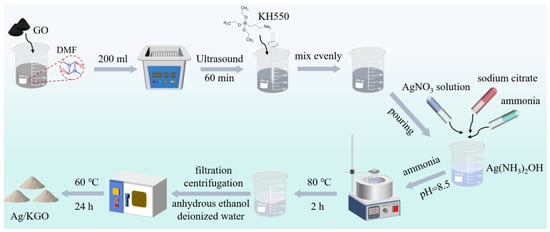
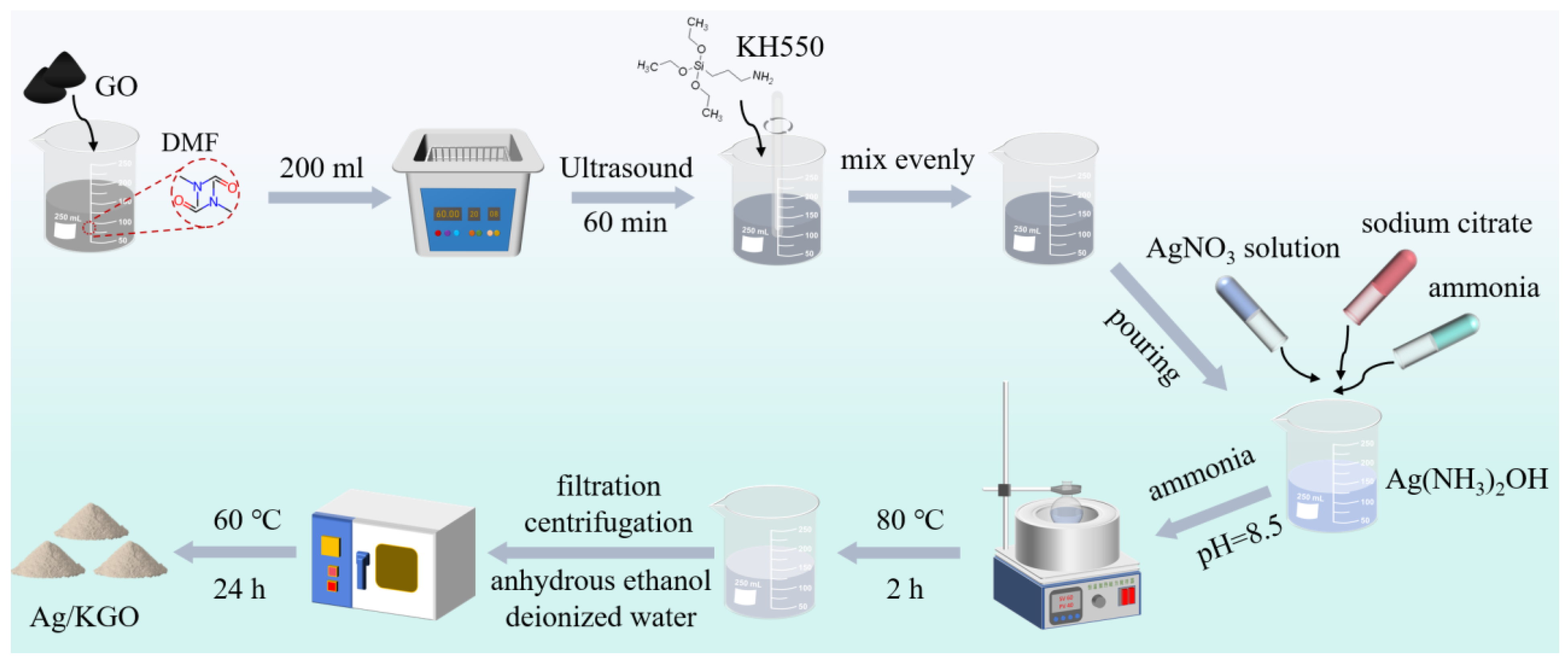
As shown in Figure 1, Ag/KGO composite nanoparticles were prepared by a one-step in situ synthesis method. First, 200 mg of GO was dispersed in 200 mL of DMF, and a uniform dispersion was obtained after ultrasonic treatment. Subsequently, pre-hydrolyzed KH550 was added to modify the GO surface under continuous stirring. Ammonia solution was then slowly added dropwise into 18 mL of 0.01 mol/L AgNO3 solution until the solution became clear and transparent. An appropriate amount of sodium citrate was introduced, and the solution was adjusted to a weakly alkaline condition to obtain the silver-ammonia solution. Thereafter, the as-prepared silver–ammonia solution was added to the GO dispersion, and the pH of the mixed solution was further adjusted to 8.5 with ammonia solution, followed by stirring in an oil bath at 80 °C. After the reaction was completed, the product was collected by filtration and centrifugation, and repeatedly washed with absolute ethanol and deionized water until the supernatant became completely clear. Finally, the product was vacuum-dried at 60 °C for 24 h to obtain Ag/KGO powder. The preparation procedure of KGO was identical to that described above, except that no silver-ammonia solution was added during the synthesis process.
Figure 1.
Schematic illustration of the preparation process of Ag/KGO composite nanoparticles.
2.3. Characterization and Testing Methods
A combination of characterization techniques was employed in this study to investigate the microstructure, chemical structure, dispersion behavior, and tribological properties of the Ag/KGO composite. To examine the effects of surface modification and composite formation on the morphological characteristics of the material, scanning electron microscopy (SEM, S-4800) was used to observe the surface morphology and microstructure of GO, KGO, and Ag/KGO composite powders. Fourier transform infrared spectroscopy (FTIR, Nicolet iS5) was used to characterize the changes in surface functional groups before and after GO modification, thereby confirming the successful grafting of KH550 onto the GO surface. Raman spectroscopy (HORIBA XploRA PLUS) was employed to analyze the structural characteristics of GO, KGO, and Ag/KGO composite powders, with particular emphasis on the structural evolution during the formation of the Ag/KGO composite. Based on the variations in the D and G bands, the degree of structural defects and the changes in graphitic structure were further evaluated. X-ray diffraction (XRD, Shimadzu XRD-7000) was used to characterize the crystal structure of the composite and to verify the effective incorporation of Ag nanoparticles onto the KGO surface. In addition, the dispersion stability of GO, KGO, and Ag/KGO additives in the PEG base oil was evaluated by the gravity sedimentation method, and their wettability on the GCr15 substrate was measured using a contact angle analyzer (DataPhysics OCA 15Pro).
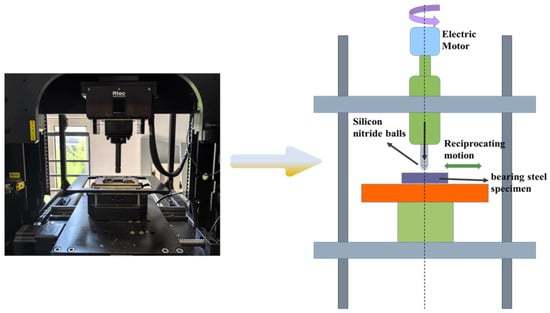
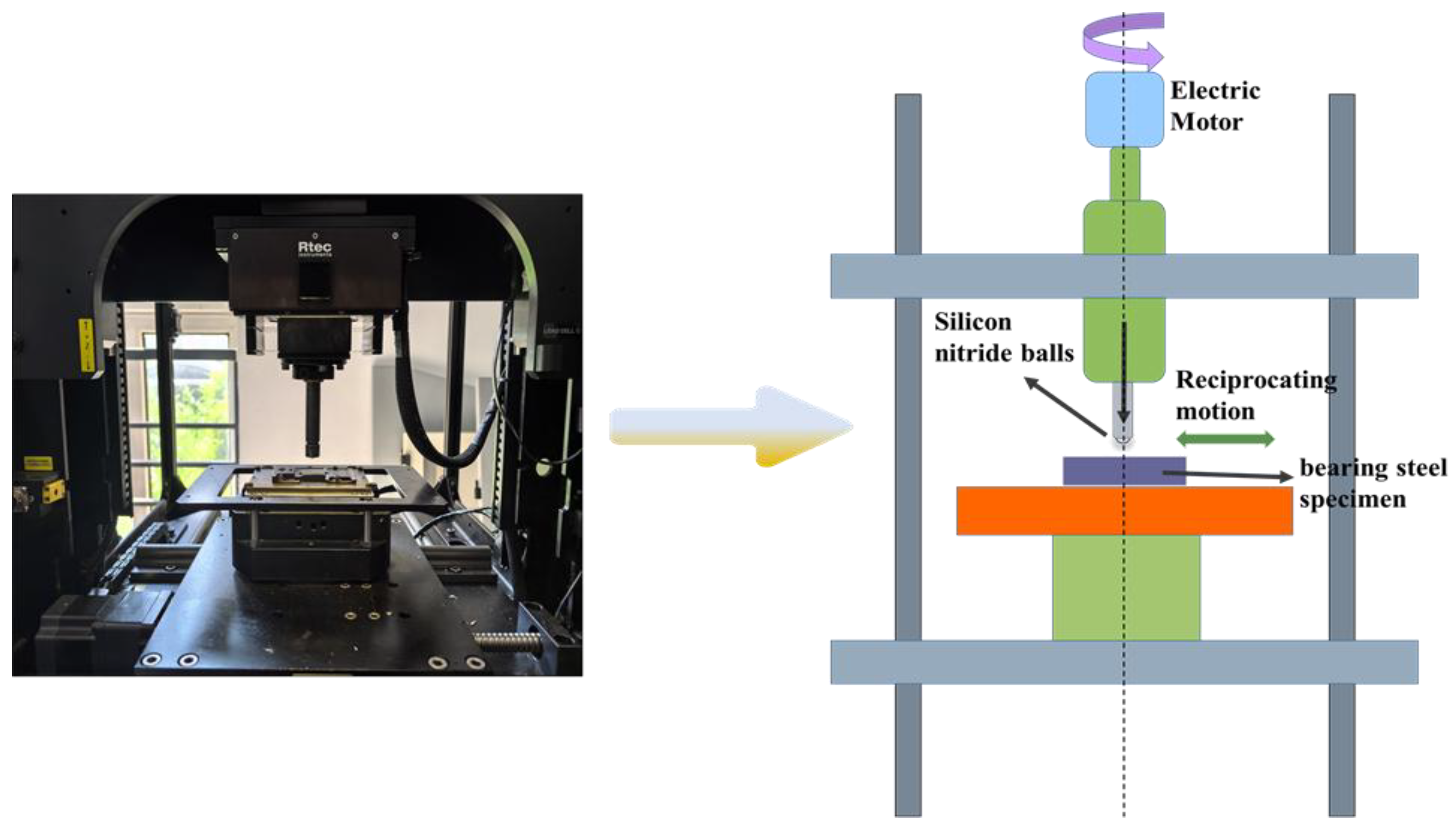
Before tribological testing, the required amounts of GO, KGO, or Ag/KGO were added to the PEG base oil according to the designed mass fractions, followed by mechanical stirring and ultrasonic dispersion to obtain uniform suspensions. To evaluate the lubrication performance of the Ag/KGO composite additive, reciprocating tribological tests were carried out using an Rtec-MFT5000 multifunctional tribometer, and a schematic illustration of the test setup and working principle is shown in Figure 2. A Si3N4/GCr15 friction pair was employed, in which a ball-shaped Si3N4 specimen served as the upper sample and a plate-shaped GCr15 specimen served as the lower sample. The detailed test conditions, including additive type, applied load, mass fraction, and sliding frequency, are listed in Table 2. For each test condition, the tribological test was repeated three times under identical conditions to ensure the reliability and reproducibility of the results, and the reported friction coefficient and wear data were expressed as the average values of three measurements.
Figure 2.
Schematic illustration of the tribological test setup and testing principle.
Table 2.
Experimental scheme.
After the tribological tests, the elemental composition of the worn surfaces was analyzed by energy-dispersive spectroscopy (EDS, Oxford Instruments X-Max 80) to explore the characteristics of the interfacial adsorption film or reaction film formed during friction. Combined with the morphological evolution of the wear scars, the friction-reducing and anti-wear effects of the Ag/KGO composite additive were further clarified. In the simulation section, corresponding lubrication system models were established based on molecular dynamics, followed by shear simulation analysis. By calculating parameters such as adsorption energy, shear stress, and shear deformation, the interfacial adsorption behavior and shear-resistance characteristics of the Ag/KGO composite additive at the molecular scale were revealed, thereby providing theoretical support for the experimental results.
3. Results and Discussion
3.1. Structural Characterization of Ag/KGO
To verify the successful preparation of Ag/KGO composite nanoparticles and to clarify the effects of KH550 modification and Ag nanoparticle incorporation on the structure and morphology of the materials, GO, KGO, and Ag/KGO were systematically characterized.
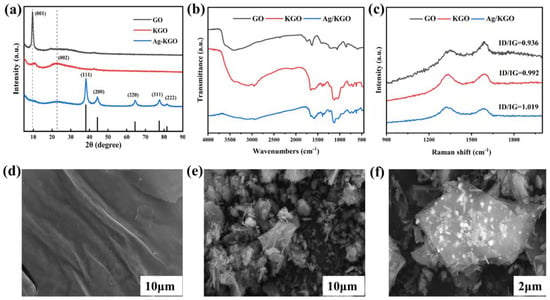
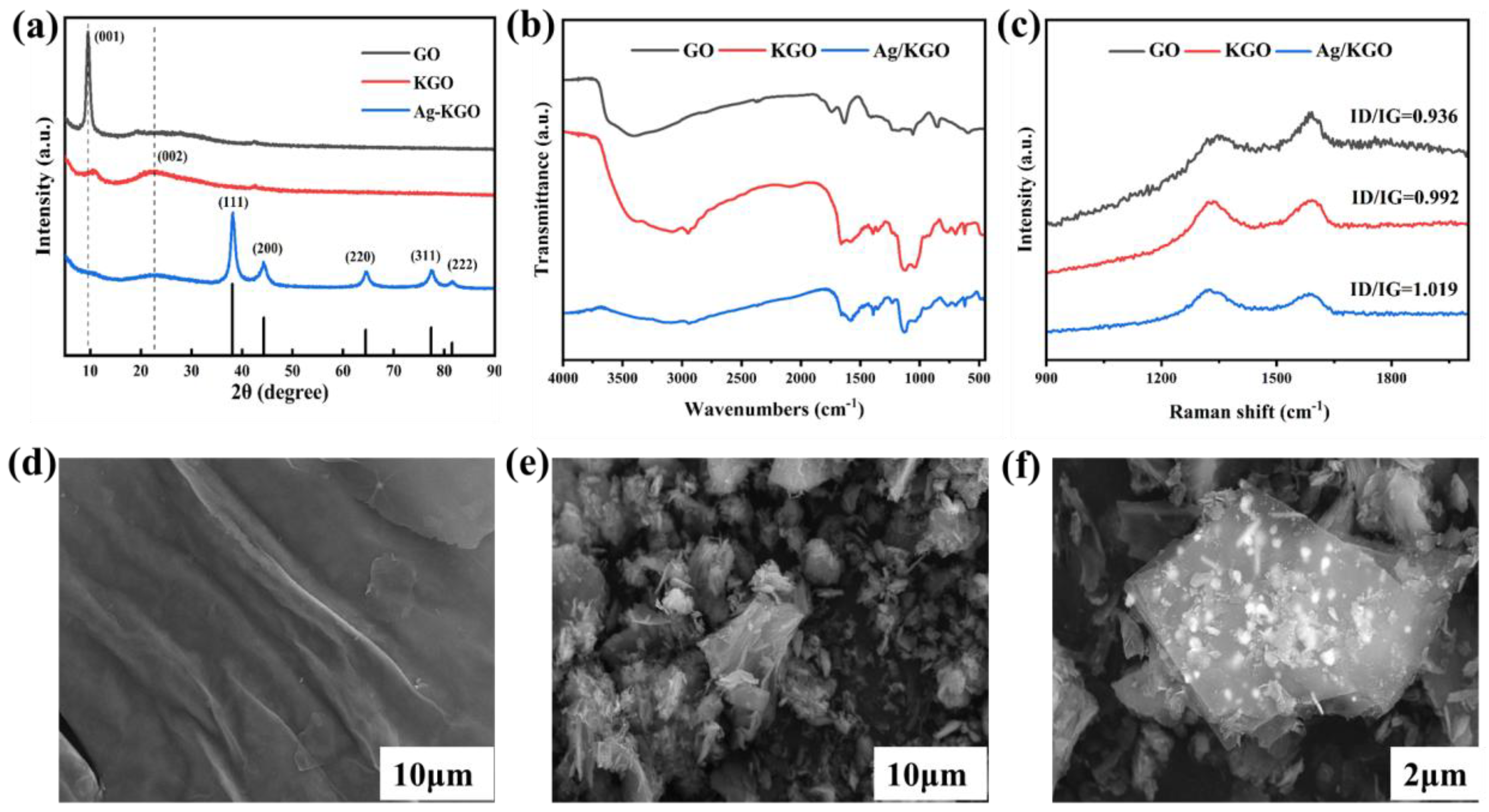
The XRD results are shown in Figure 3a. GO exhibits a distinct (001) diffraction peak at 2θ = 9.6°, corresponding to an interlayer spacing of approximately 0.92 nm, indicating that the introduction of oxygen-containing functional groups during oxidation enlarged the graphite interlayer distance. After modification with KH550, the (001) peak of KGO shifts to 10.66°, and the interlayer spacing decreases to 0.83 nm. Meanwhile, the reduced peak intensity and broadened peak shape suggest that silane grafting and crosslinking altered the stacking state of GO nanosheets and decreased their structural order. In addition, the appearance of a new peak near 22° indicates the formation of a characteristic phase associated with a siloxane structure [33,34]. After further incorporation of Ag nanoparticles, Ag/KGO shows distinct diffraction peaks at 38.1°, 44.3°, 64.4°, 77.4°, and 81.5°, which correspond to the (111), (200), (220), (311), and (222) crystal planes of metallic Ag, respectively, confirming that Ag nanoparticles were successfully deposited onto the KGO surface.
Figure 3.
Structural characterization and morphology of GO, KGO, and Ag/KGO: (a) XRD patterns; (b) FTIR spectra; (c) Raman spectra; (d–f) SEM images of GO, KGO, and Ag/KGO.
The FTIR results are shown in Figure 3b. GO exhibits characteristic absorption peaks at approximately 3400, 1720, 1620, 1220, and 1050 cm−1, corresponding to O-H, C=O, C=C, C-OH, and C-O-C groups, respectively, indicating the presence of abundant oxygen-containing functional groups on its surface. After modification, KGO shows characteristic absorption bands near 1100 cm−1 assigned to Si-O-Si and Si-O-C, together with absorption bands related to -NH2/-NH- in the range of 1550–1650 cm−1, demonstrating that KH550 was successfully grafted onto the GO surface [35]. After compounding with Ag nanoparticles, the characteristic absorption peaks of Ag/KGO become generally weaker, while the Si-O-related peak is still retained, indicating that the composite process did not destroy the main structure of KGO [36].
The Raman spectra are shown in Figure 3c. All three samples display typical D and G bands, and the ID/IG ratio increases from 0.936 for GO to 0.992 for KGO and 1.019 for Ag/KGO. This result indicates that KH550 modification and the introduction of Ag nanoparticles increased the number of defect sites and reduced the structural order of the nanosheet framework.
The SEM results are also presented in Figure 3. Specifically, Figure 3d–f correspond to the microstructures of GO, KGO, and Ag/KGO, respectively. As shown in Figure 3d, GO exhibits a typical wrinkled sheet-like structure. After KH550 modification, the KGO shown in Figure 3e displays increased sheet fragmentation, deeper wrinkles, and a rougher surface, suggesting that the intercalation and crosslinking effects of silane molecules altered the interlayer stacking mode of GO. In Figure 3f, Ag/KGO exhibits a denser crumpled multilayer structure with obvious particle attachment on the nanosheet surface, indicating that Ag nanoparticles formed a particle-sheet composite structure on the KGO surface.
Taken together, the XRD, FTIR, Raman, and SEM results demonstrate that KH550 effectively modified the surface of GO and promoted the incorporation of Ag nanoparticles onto the KGO surface, ultimately leading to the successful preparation of Ag/KGO composite nanoparticles. This structure provides a solid basis for their stable dispersion in lubricating oil and their synergistic friction-reducing and anti-wear effects.
3.2. Dispersion Stability of the Composite Lubricant
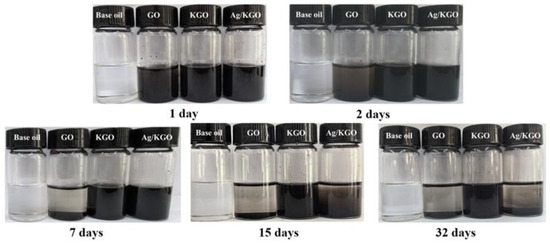
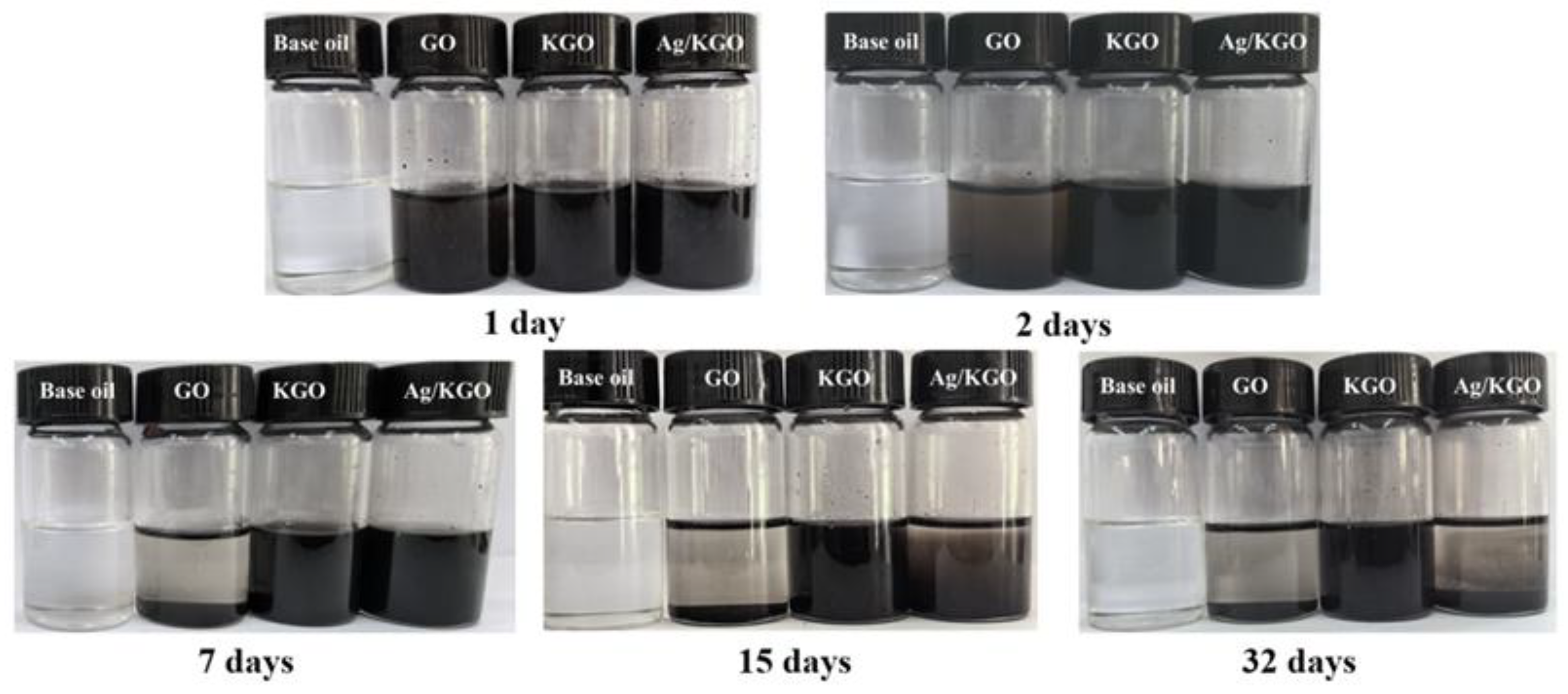
The dispersion stability of the three additives in the base oil was evaluated by the gravity sedimentation method, and the results are shown in Figure 4. As the standing time increased, the differences in stability among the samples became progressively more apparent. GO exhibited sedimentation first, with obvious deposits appearing at the bottom after 2 days. After 7 days, phase separation became more severe, and by 15 days, the upper liquid had become nearly clear, indicating poor dispersion stability. In contrast, KGO showed much better long-term dispersion performance. Even after standing for 32 days, no obvious sedimentation or stratification was observed, indicating that KH550 surface modification effectively improved the interfacial compatibility between GO and the base oil and suppressed particle agglomeration. The dispersion stability of the Ag/KGO composite was intermediate between those of GO and KGO. It remained well suspended during the first 7 days, with only slight sedimentation observed after 15 days, and its overall stability after 32 days was still significantly better than that of GO.
Figure 4.
Dispersion stability of base oil and lubricating oils with different additives at different standing times.
Overall, KH550 surface modification markedly improved the dispersion stability of GO in the base oil, and the Ag/KGO composite additive also exhibited good dispersion stability, providing a basis for the stable performance of its subsequent tribological properties.
3.3. Wettability of the Composite Lubricant
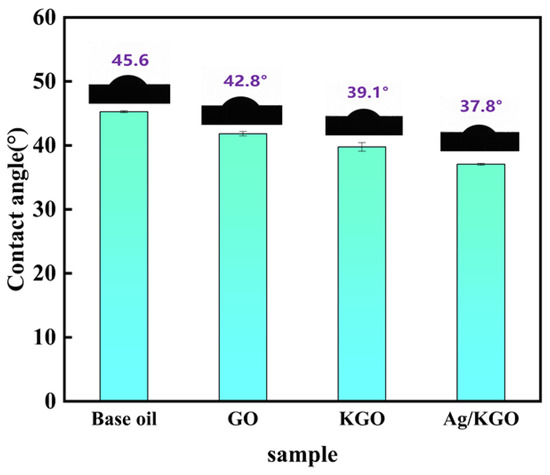
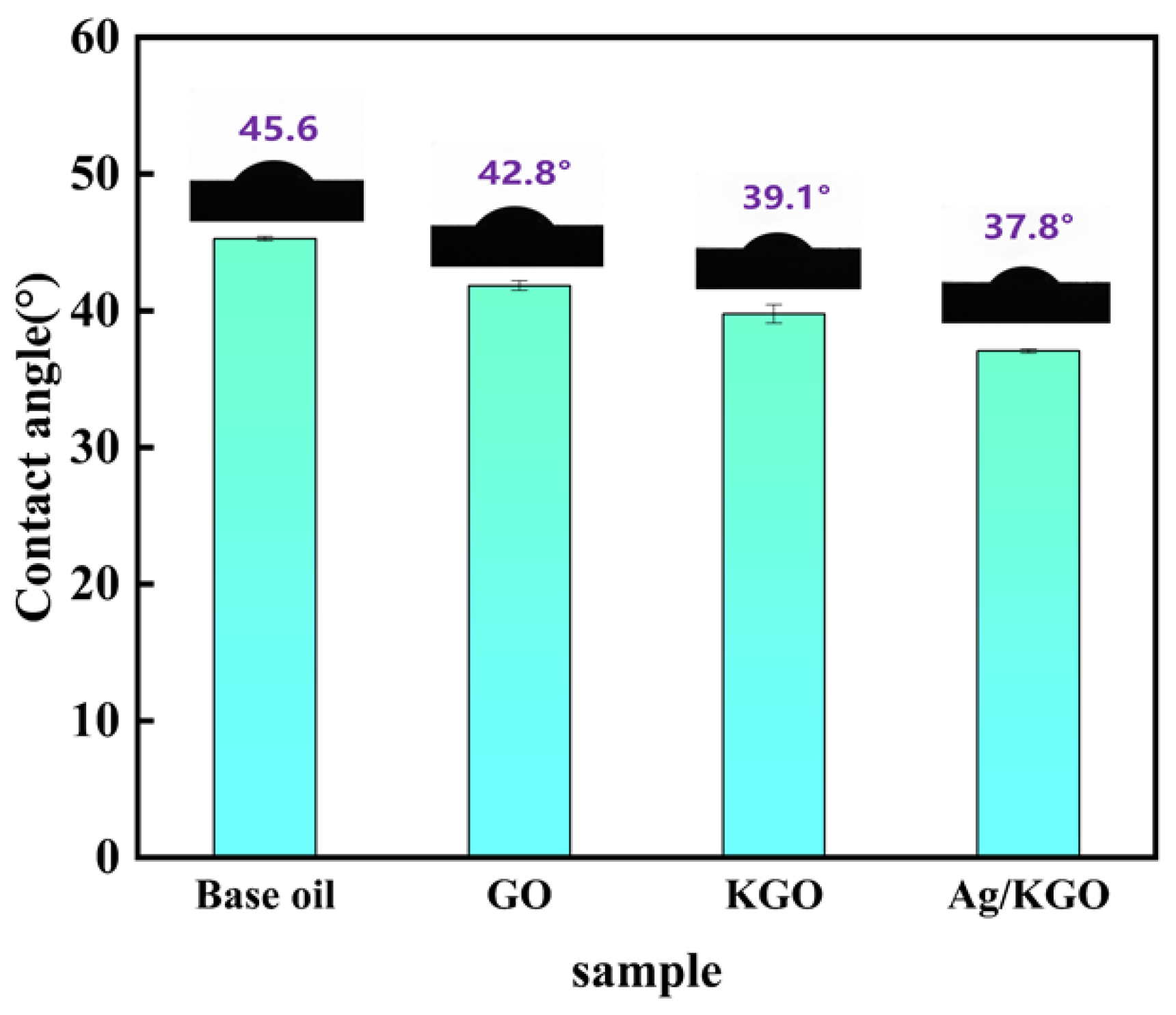
To evaluate the influence of different nano-additives on the interfacial wettability of the base oil, the static contact angles of the base oil and the lubricants containing GO, KGO, and Ag/KGO on the GCr15 substrate were measured, and the results are shown in Figure 5. The contact angle of the base oil was 45.6°. After the addition of GO, KGO, and Ag/KGO, the contact angles decreased to 42.8°, 39.1°, and 37.8°, respectively, indicating that all nano-additives improved the wettability of the lubricating oil on the metal surface, among which the Ag/KGO composite additive exhibited the most pronounced effect.
Figure 5.
Contact angles of base oil and lubricating oils with different additives on GCr15 substrates.
The improvement in wettability is mainly attributed to the enhanced solid-liquid interfacial interaction introduced by the nano-additives [37]. GO contains abundant oxygen-containing functional groups on its surface, which can improve its adsorption capacity toward the metal surface. KGO is enriched with polar amino functional groups that increase the surface energy state and promote interaction with polar media. In Ag/KGO, the synergistic effect between Ag nanoparticles and the KGO support further optimizes the interfacial state, resulting in the smallest contact angle and the best wettability.
Overall, surface modification and composite structure design can effectively improve the interfacial wettability of lubricating oil, thereby providing favorable conditions for the formation of a uniform and stable lubricating film at the friction interface.
3.4. Tribological Analysis of the Composite Lubricating Oil
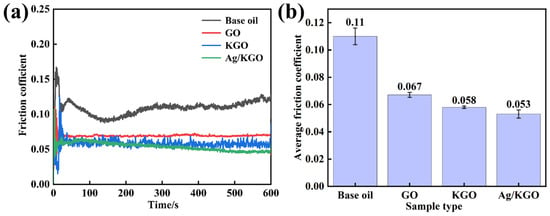
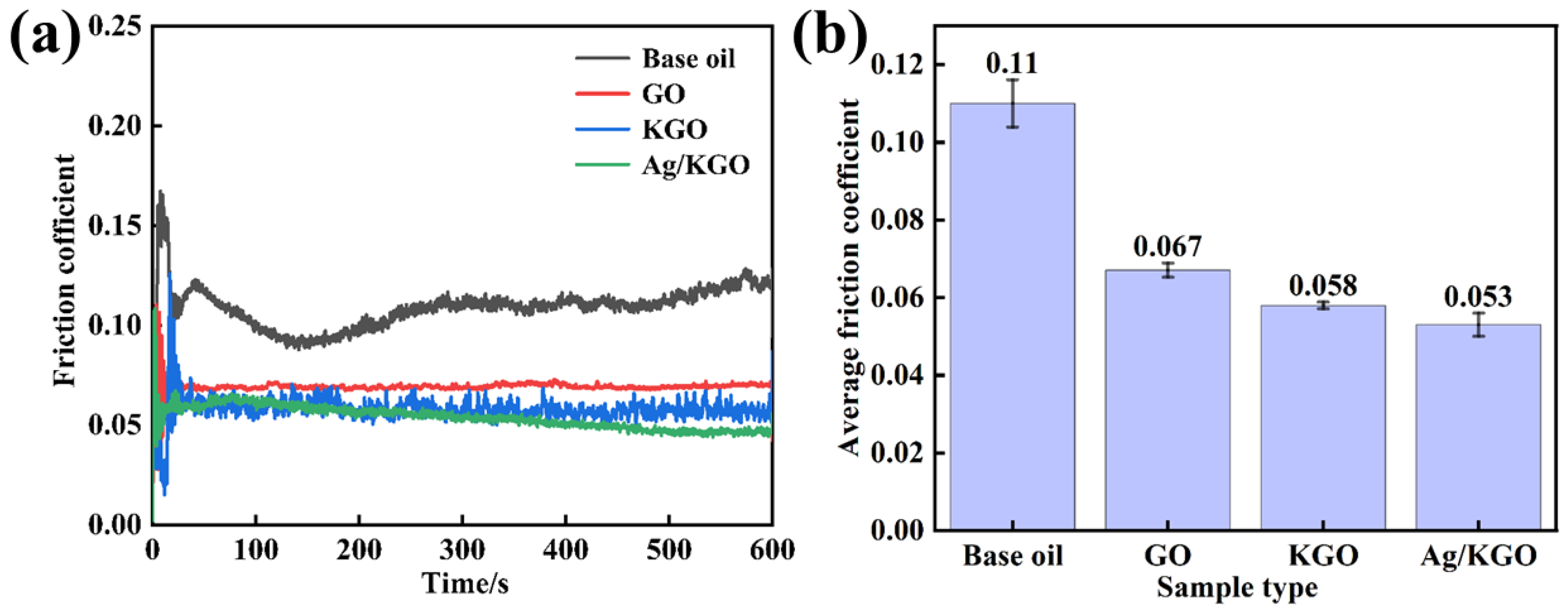
The tribological properties of the base oil and the lubricants containing GO, KGO, and Ag/KGO were evaluated under the conditions of a normal load of 20 N, an additive concentration of 0.15 wt%, a reciprocating frequency of 2 Hz, and a Si3N4/GCr15 friction pair. The results are presented in Figure 6.
Figure 6.
Tribological properties of base oil and lubricating oils with different additives: (a) friction coefficient curves; (b) average friction coefficients.
As shown in Figure 6a, the base oil exhibits a relatively high friction coefficient, accompanied by pronounced fluctuations at the initial stage of sliding. After the addition of GO, KGO, and Ag/KGO, the friction coefficients of the lubricants all decrease significantly, and the stability of the friction curves is also improved. Among them, the lubricant containing Ag/KGO exhibits the lowest friction coefficient and the smallest fluctuations, indicating the best friction-reducing performance.
As shown in Figure 6b, the average friction coefficients of the base oil and the lubricants containing GO, KGO, and Ag/KGO are 0.11, 0.067, 0.058, and 0.053, respectively. Compared with the base oil, the average friction coefficient of the Ag/KGO lubricant is reduced by 51.8%, demonstrating that the incorporation of Ag/KGO effectively enhances the friction-reducing performance. This improvement can be attributed to the fact that GO nanosheets can form a low-shear lubricating layer at the friction interface, thereby reducing friction. KGO improves the dispersion stability and interfacial compatibility of the base oil, which facilitates the formation of a more uniform lubricating film. Furthermore, the synergistic effect between Ag nanoparticles and KGO further enhances the stability and load-carrying capacity of the lubricating film.
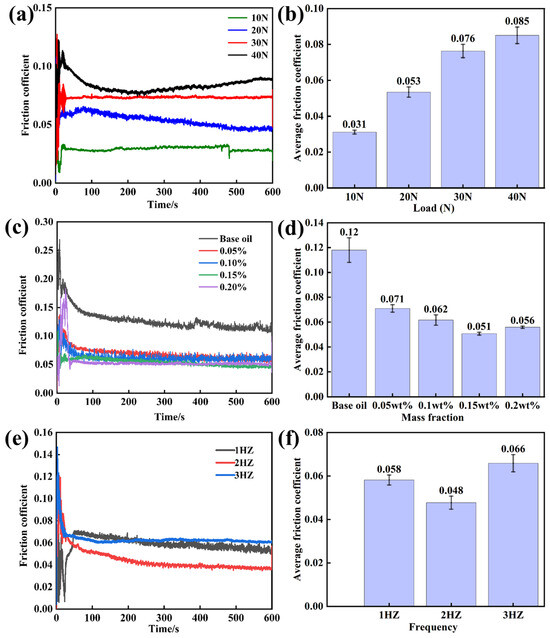
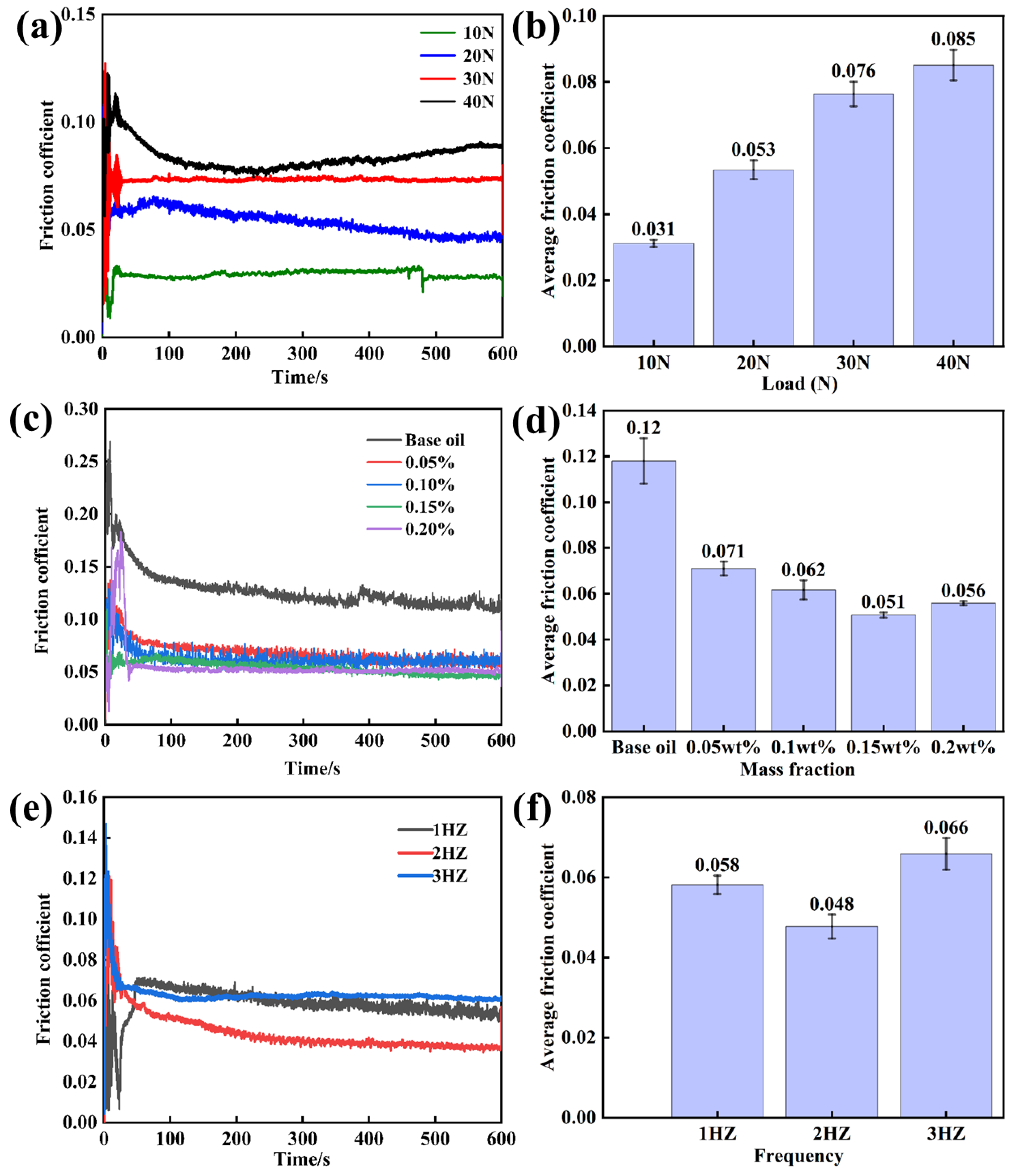
Figure 7 illustrates the effects of normal load, additive concentration, and reciprocating frequency on the tribological performance of the lubricant containing the Ag/KGO additive. Figure 7a,b present the friction coefficient curves and the corresponding average friction coefficients under different loads, respectively, where the additive concentration was 0.15 wt%, the reciprocating frequency was 2 Hz, and the wear scar length was 10 mm.
Figure 7.
Effects of load, additive concentration, and sliding frequency on the tribological properties of lubricating oil containing Ag/KGO additive: (a,b) different loads; (c,d) different additive concentrations; (e,f) different sliding frequencies.
As shown in Figure 7a, the friction coefficient curves remain relatively stable under all load conditions, but the friction coefficient gradually increases with increasing load. Figure 7b further shows that the average friction coefficient exhibits the same upward trend as the load increases. This behavior is mainly attributed to the fact that a higher load enlarges the real contact area and simultaneously intensifies the contact stress and shear action at the friction interface, thereby weakening the stability of the lubricating film and leading to increased friction resistance.
Figure 7c,d show the friction coefficient curves and the corresponding average friction coefficients of lubricants containing different concentrations of the Ag/KGO additive, respectively, under a normal load of 20 N, a reciprocating frequency of 2 Hz, and a wear scar length of 10 mm. As shown in Figure 7c, the friction coefficients of the Ag/KGO-containing lubricants are significantly lower than that of the base oil, and the stability of the friction curves is also improved. As the additive concentration increases from 0.05 wt% to 0.20 wt%, the friction coefficient first decreases and then increases, reaching the minimum value at 0.15 wt%. Figure 7d shows that the average friction coefficient follows the same trend, indicating that an appropriate amount of Ag/KGO can effectively improve the interfacial lubrication state, whereas excessive addition tends to impair the lubrication performance.
Figure 7e,f present the friction coefficient curves and the corresponding average friction coefficients of the lubricants containing Ag/KGO under different reciprocating frequencies, respectively, where the normal load was 20 N, the additive concentration was 0.15 wt%, and the wear scar length was 10 mm. As shown in Figure 7e, under reciprocating frequencies of 1, 2, and 3 Hz, the friction coefficient exhibits a certain fluctuation at the initial stage and then gradually stabilizes. Among these conditions, the friction coefficient is lower and the curve is smoother at 2 Hz. Figure 7f further indicates that the average friction coefficient first decreases and then increases with increasing reciprocating frequency, suggesting that a moderate sliding frequency is more favorable for improving the interfacial lubrication state and promoting the formation of a stable lubricating film.
3.5. Wear Scar Analysis
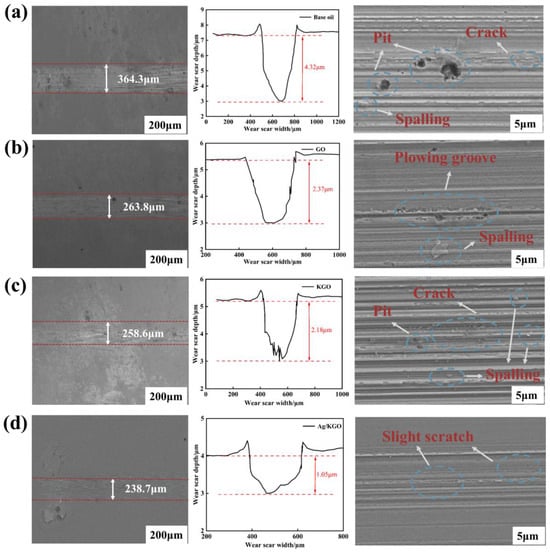
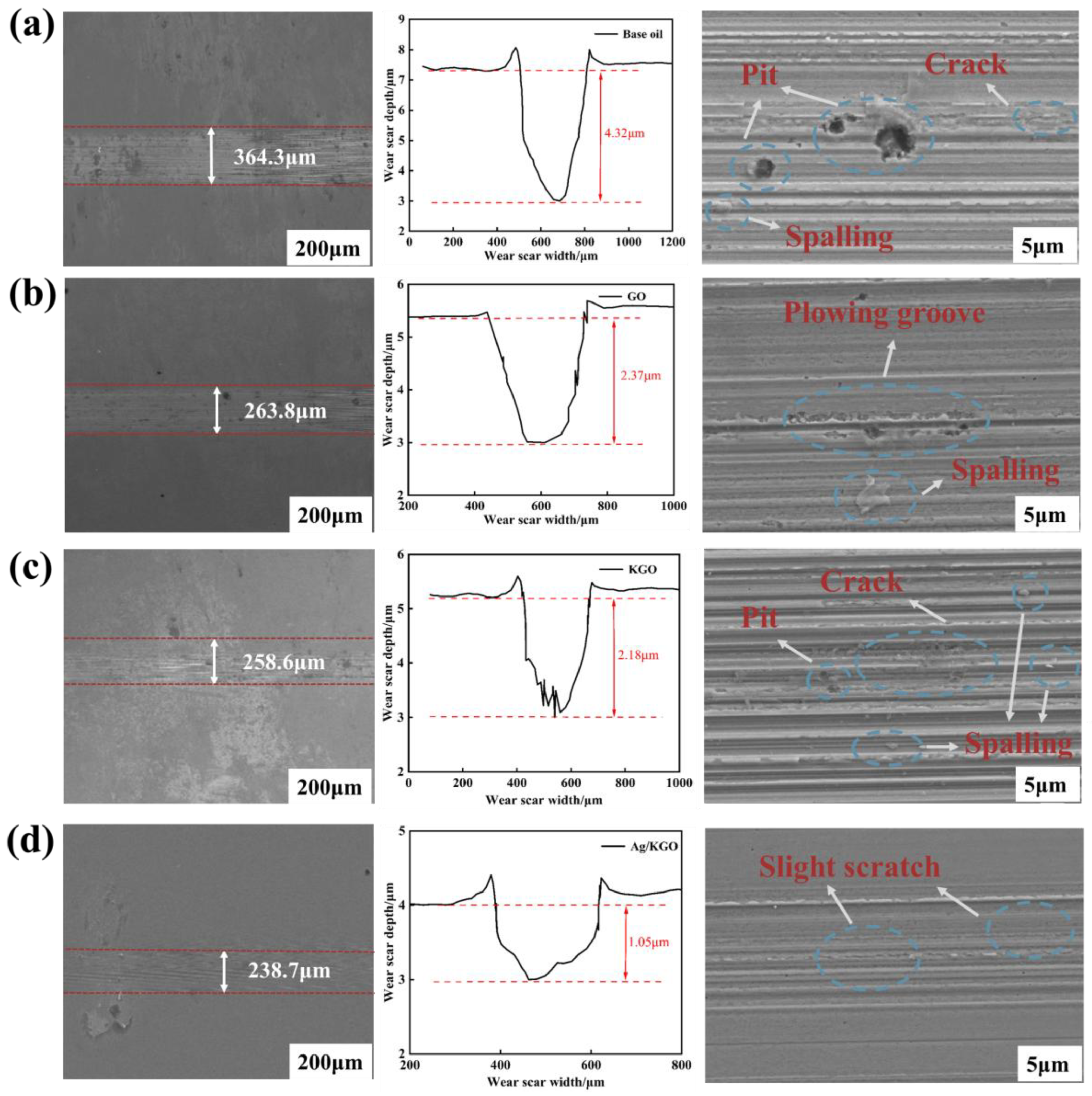
Under reciprocating sliding of the Si3N4/GCr15 friction pair, the wear scar morphologies, cross-sectional profiles, and microscopic features corresponding to different lubricants are shown in Figure 8. Figure 8a presents the wear scar obtained with the base oil, with a wear scar width and depth of 364.3 μm and 4.32 μm, respectively. Pronounced ploughing grooves, cracks, spalling, and pitting can be clearly observed on the worn surface, indicating the relatively poor anti-wear capability of the base oil. Figure 8b shows the wear scar lubricated by the GO-containing oil, with a width and depth of 263.8 μm and 2.37 μm, respectively. Compared with the base oil, the surface damage is alleviated to some extent, although ploughing grooves and local spalling are still visible, suggesting that GO provides a certain friction- and wear-reducing effect, but the improvement remains limited. Figure 8c shows the wear scar lubricated by the KGO-containing oil, with a width and depth of 258.6 μm and 2.18 μm, respectively. The worn surface is smoother than that obtained with GO, although a small number of cracks, pits, and local spalling are still present, indicating that surface modification enhances the interaction between the material and the friction interface and effectively improves the anti-wear performance. Figure 8d presents the wear scar lubricated by the Ag/KGO-containing oil, for which the wear scar width and depth are only 238.7 μm and 1.05 μm, representing reductions of 34.5% and 75.7%, respectively, compared with the base oil. Meanwhile, the worn surface becomes much smoother and flatter, with only a few slight scratches observed, demonstrating the best friction-reducing and anti-wear performance.
Figure 8.
Wear scar morphologies, cross-sectional profiles, and surface microfeatures of GCr15 surfaces lubricated with different oils: (a) base oil; (b) GO; (c) KGO; (d) Ag/KGO.
Based on the wear scar dimensions, cross-sectional profiles, and surface micromorphologies, it can be concluded that the Ag/KGO lubricant is more conducive to the formation of a more stable and effective interfacial lubricating layer at the friction interface, thereby significantly alleviating surface wear and damage.
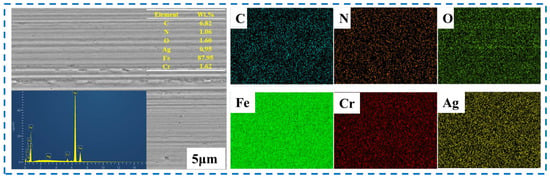
Figure 9 shows the EDS elemental mapping results and elemental contents of the worn GCr15 surface lubricated with the Ag/KGO additive. Elements including C, N, O, Fe, Cr, and Ag were detected in the wear scar region. Among them, Fe exhibits the highest content, reaching 87.95 wt%, indicating that the worn area is still mainly dominated by substrate elements. The presence of C, N, O, and Ag further suggests that additive-derived species participated in the interfacial friction process and remained on the worn surface after sliding. Ag is relatively uniformly distributed without obvious large-scale agglomeration, indicating that Ag-containing species were involved in the interfacial process. The relatively continuous distribution of C suggests that graphene-derived species were adsorbed onto the rubbing surface and contributed to the formation of an interfacial adsorption layer. The presence of O and N implies that oxygen- and nitrogen-containing adsorbed species and/or tribochemical products may exist at the interface, which is beneficial for enhancing interfacial adhesion.
Figure 9.
EDS elemental mapping of the worn GCr15 surface lubricated with the Ag/KGO additive.
Based on the EDS mapping results, it can be inferred that the Ag/KGO additive participated in the interfacial process during friction and contributed to the formation of a relatively continuous interfacial layer on the worn surface. Combined with the improved wear morphology and reduced wear depth and width, these results indicate that such an interfacial layer is beneficial for stabilizing the lubricating interface and enhancing the anti-wear performance of the friction pair.
3.6. Molecular Dynamics Simulation
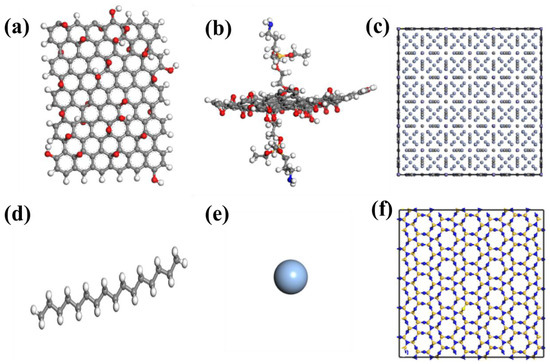
To reveal the lubrication mechanism of the composite additive-containing lubricant at the microscopic level, molecular dynamics models of the base oil and lubricants containing GO, KGO, and the Ag/KGO composite additive were established, and shear simulations were performed. Figure 10 shows the structural configurations of the individual components in the model, where (a) GO, (b) KGO, (c) the Si3N4 structure, (d) the base oil, (e) Ag nanoparticles, and (f) the GCr15 structure.
Figure 10.
Molecular structure models of different components used in the molecular dynamics shear simulation: (a) graphene oxide; (b) modified graphene oxide; (c) silicon nitride; (d) lubricant molecule; (e) Ag nanoparticle; (f) bearing steel structure.
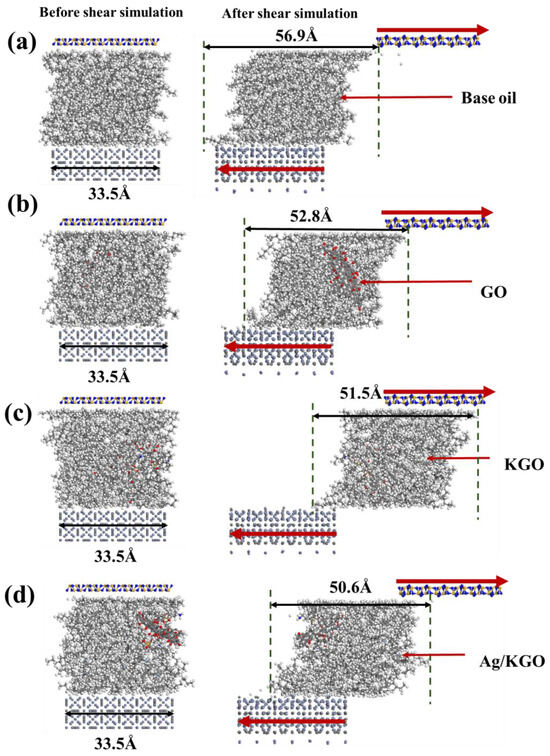
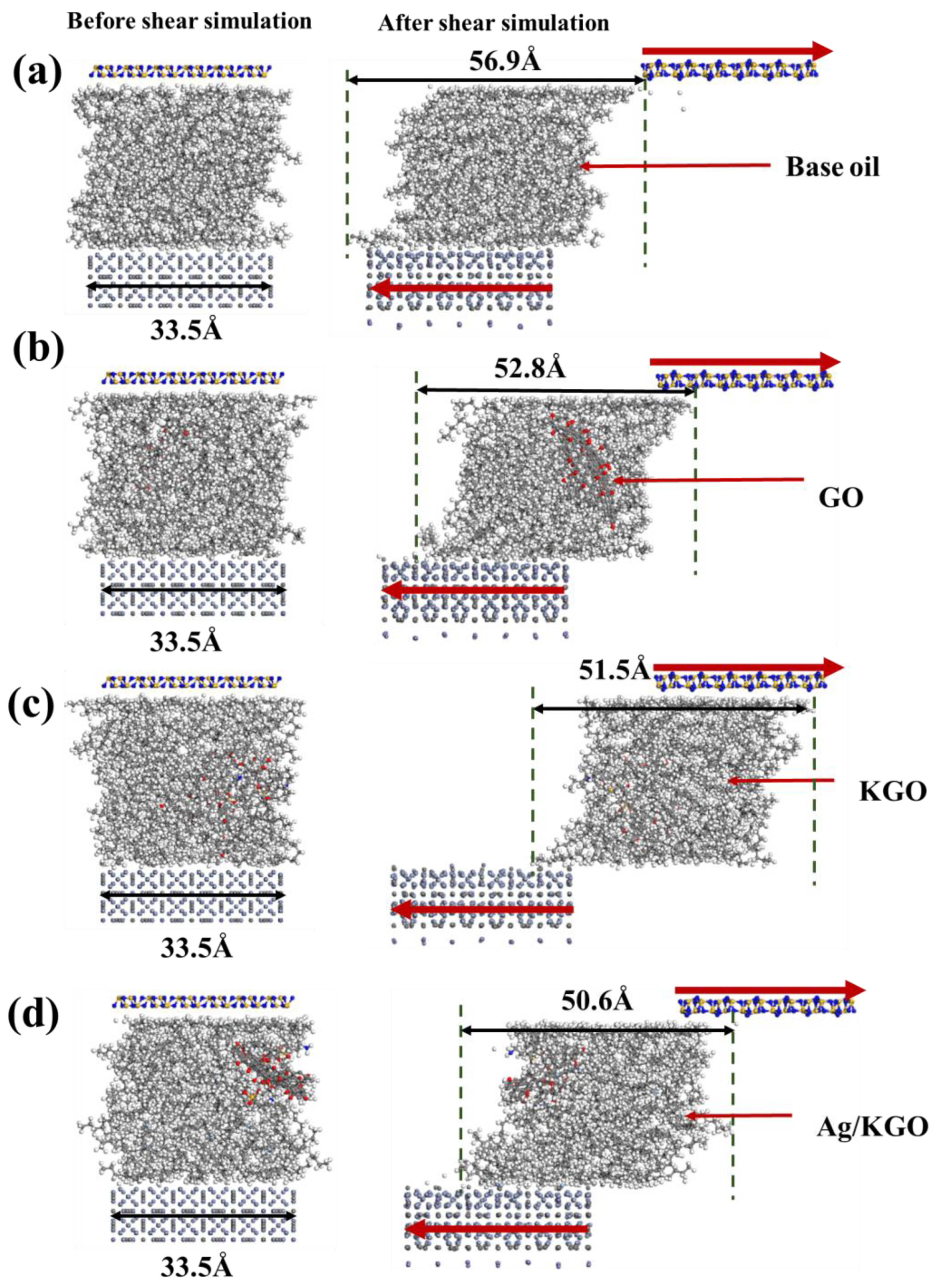
Figure 11a–d present the deformation of the base oil and the lubricants containing GO, KGO, and Ag/KGO before and after shear, respectively. For the base oil, the oil film length increases from 33.5 Å to 56.9 Å after shear, corresponding to a shear deformation of 23.4 Å, indicating that the oil film undergoes severe deformation under shear. After the addition of GO, the shear deformation decreases to 19.3 Å, suggesting that the shear resistance of the oil film is improved. For KGO, the shear deformation is further reduced to 18.0 Å, indicating that surface modification enhances the structural stability of the lubricating film. The Ag/KGO-containing lubricant exhibits the smallest shear deformation, only 17.1 Å, demonstrating that it can form a more stable lubricating film. These results indicate that the introduction of additives can effectively reduce the shear deformation of the oil film, among which Ag/KGO shows the most pronounced effect, thereby confirming its important role in improving the interfacial shear resistance as a lubricant additive.
Figure 11.
Deformation changes of different lubrication systems before and after shear simulation: (a) base oil; (b) GO; (c) KGO; (d) Ag/KGO.
Analysis of the energy evolution during shear reveals significant differences in the interaction energy between the friction interface and the lubricants with different additives, as summarized in Table 3. The interaction energy of the base oil is −1400.47 kJ/mol. After the addition of GO, the interaction energy decreases to −2634.41 kJ/mol, while that of KGO further decreases to −2767.09 kJ/mol. For the Ag/KGO-containing lubricant, the interaction energy reaches −3646.69 kJ/mol. The progressive increase in the absolute value of the interaction energy indicates that the introduction of additives enhances the interaction between the lubricant components and the friction interface, among which the lubricant containing the Ag/KGO composite additive exhibits the strongest interfacial binding ability [38].
Table 3.
Energy parameters of different lubrication systems during shear simulation.
From the perspective of molecular structure, the oxygen-containing functional groups on the GO surface, such as hydroxyl and epoxy groups, enhance its polar adsorption toward both base oil molecules and the friction surface. The Si-O-Si and Si-O-C bonds formed on the KGO surface improve the structural stability of the nanosheets and strengthen the interfacial compatibility and adsorption capacity. After the introduction of Ag nanoparticles, the Ag/KGO-containing system shows a further increase in interfacial interaction, which may be related to the cooperative participation of Ag-containing species and modified graphene oxides [39]. As a result, the Ag/KGO composite additive shows greater potential to stabilize the lubricating interface during friction, which is beneficial for improving the load-carrying capacity and anti-wear performance of the lubricant [40].
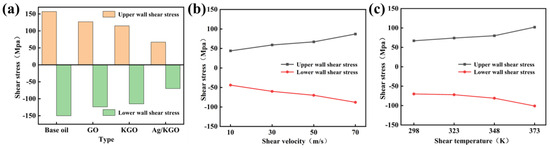
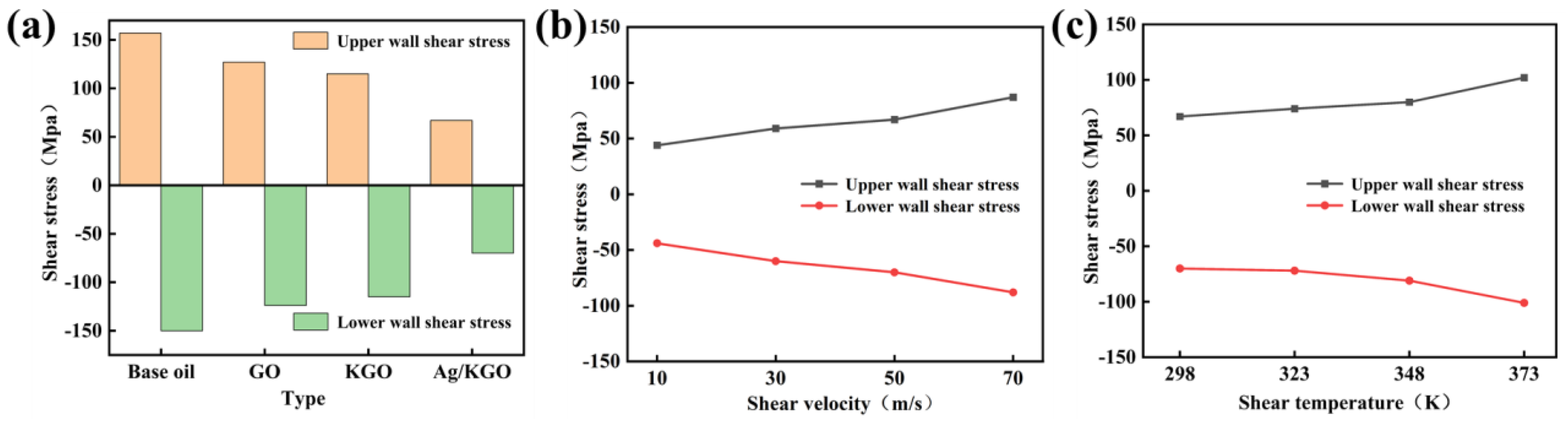
To analyze the effects of shear velocity and shear temperature on interfacial dynamic behavior, Figure 12a presents the variations in the shear stress on the upper and lower walls for different lubricants. It can be seen that, compared with the base oil and the lubricants containing GO and KGO, the lubricant containing Ag/KGO exhibits the smallest absolute values of shear stress on both the upper and lower walls, indicating the best performance in reducing interfacial shear. Relative to the base oil, the addition of GO decreases the wall shear stress to some extent, while KGO leads to a further reduction. The most pronounced decrease is observed for Ag/KGO, demonstrating its superior shear-resistance performance.
Figure 12.
Analysis of upper and lower wall shear stresses: (a) different lubrication systems; (b) different shear velocities; (c) different shear temperatures.
Figure 12b shows the variation in the shear stress on the upper and lower walls of the Ag/KGO lubricant under different shear velocities. As the shear velocity increases from 10 m/s to 70 m/s, the wall shear stress gradually increases, indicating that a higher shear velocity intensifies the interfacial shear action and causes the lubricating film to bear a greater shear load.
Figure 12c presents the variation in the shear stress on the upper and lower walls of the Ag/KGO lubricant under different shear temperatures. As the temperature increases from 298 K to 373 K, the wall shear stress also gradually increases, suggesting that elevated temperature similarly aggravates the interfacial shear effect and is unfavorable for maintaining a stable lubrication state.
Taken together, the results in Figure 12a–c indicate that the composition of the lubrication system, shear velocity, and shear temperature all exert significant influences on the interfacial shear stress. Among them, the Ag/KGO lubricant exhibits the lowest absolute wall shear stress, demonstrating a more pronounced advantage in improving the shear resistance of the lubrication system.
3.7. Lubrication Mechanism of the Composite Lubricating Oil
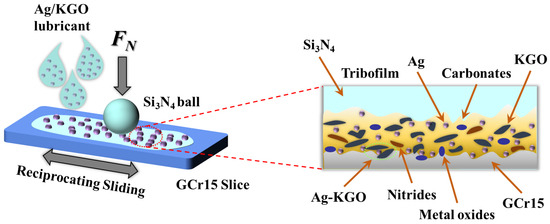
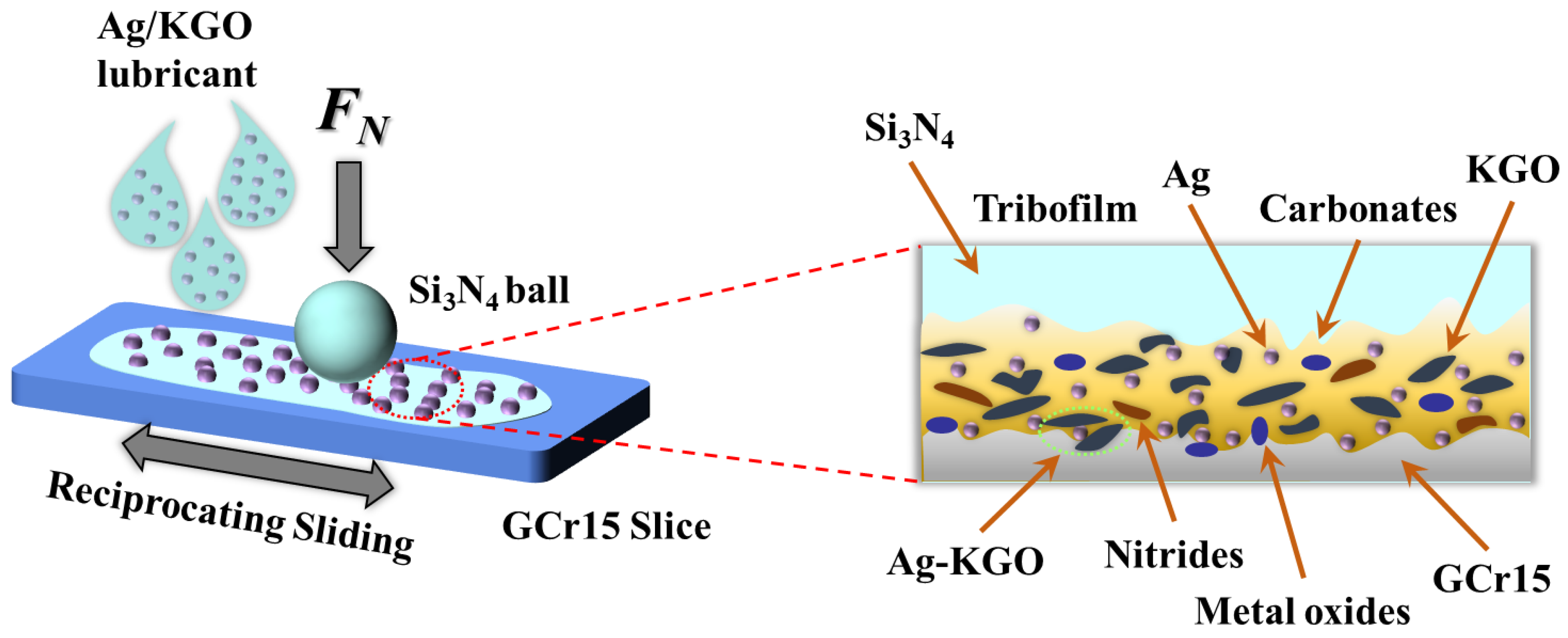
Based on the experimental results, molecular dynamics simulations, and previous literature reports, the lubrication mechanism of the Ag/KGO composite additive can be reasonably interpreted, as illustrated in Figure 13. It should be noted that Figure 13 is only a simplified schematic diagram used to intuitively display the lubrication principle, rather than reflecting the real bonding state between Ag nanoparticles and KGO. In the actual composite system, Ag nanoparticles and graphene oxide form stable interfacial combination through multiple interactions, including Ag-O coordination bonds, electrostatic adsorption, van der Waals forces and interfacial charge transfer [41]. Its outstanding lubrication performance is mainly attributed to the interfacial film-forming effect of KGO nanosheets, the possible nano-bearing and mending effects of Ag nanoparticles, and the combined contribution of interfacial adsorption and tribochemical products formed during friction [42].
Figure 13.
Schematic illustration of the lubrication mechanism of the Ag/KGO composite additive at the friction interface.
During friction, KGO can adsorb onto and spread across the rubbing surface by virtue of its two-dimensional lamellar structure, forming a relatively continuous low-shear lubricating film. This film reduces direct contact between the friction pairs and lowers the interfacial shear resistance. After being dispersed at the contact interface, Ag nanoparticles can act as nano-bearings, converting part of the sliding friction into rolling friction. Meanwhile, under load, Ag nanoparticles can effectively fill surface micro-pits and defects, thereby providing a certain repairing effect on the worn region [43]. As friction proceeds, Ag/KGO, together with interfacial reaction products such as metal oxides, carbonates, and nitrides, contributes to the formation of a relatively stable interfacial adsorption/reaction layer, which further enhances the load-carrying capacity and structural stability of the lubricating interface. This interpretation is consistent with previous reports on silver-based and graphene-based lubricant additives.
Therefore, the Ag/KGO composite additive effectively improves the tribological performance of the friction interface through the synergistic effects of interfacial film formation, nano-bearing action, defect filling and repair, and reaction-film protection, thereby exhibiting excellent friction-reducing and anti-wear performance.
4. Conclusions
In this study, GO was surface-modified with KH550 and further combined with Ag nanoparticles to successfully prepare an Ag/KGO composite lubricant additive. The results demonstrate that KGO exhibits good dispersion stability, while the lubricant containing Ag/KGO shows superior interfacial wettability. When the Ag/KGO concentration was 0.15 wt%, the lubricant achieved the optimal overall performance, with the average friction coefficient reduced by 51.8% compared with the base oil, and the wear scar width and depth decreased by 34.5% and 75.7%, respectively, indicating excellent friction-reducing and anti-wear properties. Experimental characterization and molecular dynamics simulations further reveal that the Ag/KGO lubricant possesses stronger interfacial interactions and better shear resistance. Its lubrication mechanism is mainly attributed to the synergistic effects of the film-forming lubrication of KGO nanosheets, the nano-bearing and defect-filling/repairing functions of Ag nanoparticles, and the participation of interfacial reaction products, which together reduce interfacial shear resistance and enhance the stability of the lubricating interface. Therefore, the Ag/KGO composite additive can effectively improve the tribological performance and lubrication stability of the base oil, providing a theoretical basis for the design and application of high-performance lubricant additives.
Author Contributions
Conceptualization and supervision, J.S.; writing-original draft preparation, Z.J., who also performed the experiments; software guidance, S.L. (Songhua Li); laboratory experimental guidance, L.Z.; language polishing and overall layout revision, S.L. (Shiqi Li); review and overall supervision, Z.Y. All authors have read and agreed to the published version of the manuscript.
Funding
National Program on Key Basic Research Project: 2024YFB3410201-4.
Data Availability Statement
The data supporting the findings of this study are available from the corresponding author upon reasonable request.
Conflicts of Interest
The authors declare no conflicts of interest.
References
- Zhao, J.; Huang, Y.; He, Y.; Shi, Y. Nanolubricant additives: A review. Friction 2021, 9, 891–917. [Google Scholar]
- Wang, B.; Qiu, F.; Barber, G.C.; Zou, Q.; Wang, J.; Guo, S.; Yuan, Y.; Jiang, Q. Role of nano-sized materials as lubricant additives in friction and wear reduction: A review. Wear 2022, 490–491, 204206. [Google Scholar] [CrossRef] [Scilit]
- Peng, H.; Zhang, Y.; Shangguan, L.; Zhao, M.; Li, B.; Yang, L.; Liu, Y. Review of Failure Mechanisms of Steel Wire Ropes Under Heavy-Load Conditions and the Anti-Friction Effects of Gel-like Grease. Gels 2025, 11, 900. [Google Scholar] [CrossRef] [Scilit] [PubMed]
- Ashraf, A.; Shafi, W.K.; Haq, M.I.U.; Raina, A. Dispersion stability of nano additives in lubricating oils—An overview of mechanisms, theories and methodologies. Tribol.-Mater. Surf. Interfaces 2022, 16, 34–56. [Google Scholar] [CrossRef] [Scilit]
- Kumara, C.; Luo, H.; Leonard, D.N.; Meyer, H.M.; Qu, J. Organic-Modified Silver Nanoparticles as Lubricant Additives. ACS Appl. Mater. Interfaces 2017, 9, 37227–37237. [Google Scholar] [CrossRef] [Scilit]
- Borda, F.L.G.; de Oliveira, S.J.R.; Lazaro, L.M.S.M.; Leiróz, A.J.K. Experimental investigation of the tribological behavior of lubricants with additive containing copper nanoparticles. Tribol. Int. 2018, 117, 52–58. [Google Scholar] [CrossRef] [Scilit]
- Hernández Battez, A.; González, R.; Viesca, J.L.; Fernández, J.E.; Díaz Fernández, J.M.; Machado, A.; Chou, R.; Riba, J. CuO, ZrO2 and ZnO nanoparticles as antiwear additive in oil lubricants. Wear 2008, 265, 422–428. [Google Scholar] [CrossRef] [Scilit]
- Luo, T.; Wei, X.; Zhao, H.; Cai, G.; Zheng, X. Tribology properties of Al2O3/TiO2 nanocomposites as lubricant additives. Ceram. Int. 2014, 40, 10103–10109. [Google Scholar] [CrossRef] [Scilit]
- Prasannakumar, P.; Sankarannair, S.; Prasad, G.; H., H.K.P.; S., P.; P., V.; S., S.; Shanmugam, R. Bio-based additives in lubricants: Addressing challenges and leveraging for improved performance toward sustainable lubrication. Biomass Convers. Biorefinery 2025, 15, 17969–17997. [Google Scholar] [CrossRef] [Scilit]
- Ali, M.K.A.; Abdelkareem, M.A.; Elagouz, A.; Hou, X. Nanolubricant additives. In Nanotechnology in the Automotive Industry; Elsevier: Amsterdam, The Netherlands, 2022; pp. 675–711. [Google Scholar]
- Mariño, F.; del Río, J.M.L.; López, E.R.; Fernández, J. Chemically modified nanomaterials as lubricant additive: Time stability, friction, and wear. J. Mol. Liq. 2023, 382, 121913. [Google Scholar] [CrossRef] [Scilit]
- Stefan-Henningsen, E.; Roberts, N.; Kiani, A. Enhancing tribological performance: A comprehensive review of graphene-based additives in lubricating greases. Results Eng. 2025, 25, 104551. [Google Scholar] [CrossRef] [Scilit]
- Bai, Y.; Chen, Q.; Lang, X.; Liang, Y.; Zhang, M.; Yu, Q.; Cai, M.; Zhou, F.; Liu, W. Dispersion stability and tribological behavior of nanocomposite supramolecular gel lubricants and molecular dynamic simulation. Tribol. Int. 2024, 191, 109150. [Google Scholar] [CrossRef] [Scilit]
- Aroor, G.; Khan, M.A.; Shetty, A.R.; Rai, R.; Ganesha, H.; Navada, M.K. From chemistry to performance: How nano additives are transforming bio-lubricants for enhanced tribological applications. J. Mol. Liq. 2025, 425, 127242. [Google Scholar] [CrossRef] [Scilit]
- Nasser, K.; Guimarey, M.J.G.; Pereira, N.d.M. Recent studies on nanomaterials as additives to lubricants under electrified conditions for tribology. Lubricants 2024, 13, 2. [Google Scholar] [CrossRef] [Scilit]
- Azman, N.F.; Samion, S. Dispersion stability and lubrication mechanism of nanolubricants: A review. Int. J. Precis. Eng. Manuf.-Green Technol. 2019, 6, 393–414. [Google Scholar] [CrossRef] [Scilit]
- Xiao, N.; Wu, C.; Yang, K.; Tang, J. Progress of multidimensional nano-additives under dry/liquid wear: A review. Lubricants 2024, 12, 332. [Google Scholar] [CrossRef] [Scilit]
- Ojaomo, K.E.; Samion, S.; Yusop, M.Z.M. Nano Bio-lubricant as a sustainable Trend in Tribology towards Environmental Stability: Opportunities and challenges. Evergreen 2024, 11, 253–274. [Google Scholar] [CrossRef] [Scilit]
- Patra, B.B.; Aher, S.S.; Kumar, A.; Kumar, A.; Kumar, A.; Thangavel, S.; Gupta, A. Role of lubrication in electrical systems: Challenges and emerging solutions. In Performance Characterization of Lubricants; CRC Press: Boca Raton, FL, USA, 2024; pp. 162–176. [Google Scholar]
- A, A.S.; Onu, P.; A, A.A.; Lawal, S.L. A mini review on aerospace engineering: Lubrication challenges and innovation tribology. In Proceedings of the 2024 International Conference on Science, Engineering and Business for Driving Sustainable Development Goals (SEB4SDG), Omu-Aran, Nigeria, 2-4 April 2024. [Google Scholar]
- Bawa’neh, H.; Albiss, B.A.; Ocak, Y.S. Improving tribological performance of lubricating oil using functionalized nanodiamonds as an additive material. RSC Adv. 2025, 15, 26766–26775. [Google Scholar] [CrossRef] [Scilit]
- Pal, R.K.; Suhane, A. Sustainable Bio-Lubricants from Vegetable Oils: Chemical Modification and Waste-Derived Nanoparticles—A Review. J. Tribol. 2026, 148, 030802. [Google Scholar] [CrossRef] [Scilit]
- Wakchaure, M.B.; Menezes, P.L. Advances in the tribological performance of graphene oxide and its composites. Materials 2025, 18, 3587. [Google Scholar] [CrossRef] [Scilit]
- Duan, L.; Li, J.; Duan, H. Nanomaterials for lubricating oil application: A review. Friction 2023, 11, 647–684. [Google Scholar] [CrossRef] [Scilit]
- Jafari, A.; Majdoub, M.; Sengottuvelu, D.; Ucak-Astarlioglu, M.G.; Al-Ostaz, A.; Nouranian, S. Tribological properties of synthetic and biosourced lubricants enhanced by graphene and its derivatives: A review. ACS Omega 2024, 9, 50868–50893. [Google Scholar] [CrossRef] [Scilit] [PubMed]
- Tang, Q.; Wu, Q.-Y.; Gu, L. Ultra− fast and stable dispersion of graphene oxide in lubricant oil toward excellent tribological property. Tribol. Int. 2024, 192, 109214. [Google Scholar] [CrossRef] [Scilit]
- Gupta, B.; Kumar, N.; Titovich, K.A.; Ivanovich, K.V.; Vyacheslavovich, S.A.; Dash, S. Lubrication properties of chemically aged reduced graphene-oxide additives. Surf. Interfaces 2017, 7, 6–13. [Google Scholar] [CrossRef] [Scilit]
- Chen, Y.; Renner, P.; Liang, H. Dispersion of nanoparticles in lubricating oil: A critical review. Lubricants 2019, 7, 7. [Google Scholar] [CrossRef] [Scilit]
- Wang, J.; Zhuang, W.; Liang, W.; Yan, T.; Li, T.; Zhang, L.; Li, S. Inorganic nanomaterial lubricant additives for base fluids, to improve tribological performance: Recent developments. Friction 2022, 10, 645–676. [Google Scholar] [CrossRef] [Scilit]
- Chinnachamy, R.; Durairaj, V.; Saravanamuthu, M.; Rajagopal, V. Evaluation of the effect of silver nanoparticles on the tribological and thermophysical properties of bio-lubricants. Proc. Inst. Mech. Eng. Part E J. Process Mech. Eng. 2023, 237, 410–417. [Google Scholar] [CrossRef] [Scilit]
- Liang, H.; Li, J.; Bu, Y. Molecular dynamics simulations of nanoparticles as lubricant additives: A review. Comput. Mater. Sci. 2025, 259, 114174. [Google Scholar] [CrossRef] [Scilit]
- Ahmed Abdalglil Mustafa, W.; Dassenoy, F.; Sarno, M.; Senatore, A. A review on potentials and challenges of nanolubricants as promising lubricants for electric vehicles. Lubr. Sci. 2022, 34, 1–29. [Google Scholar] [CrossRef] [Scilit]
- Zhang, X.; Zhou, S.; Zhou, H.; Li, D. The effect of the modification of graphene oxide with γ-aminopropyltriethoxysilane (KH550) on the properties and hydration of cement. Constr. Build. Mater. 2022, 322, 126497. [Google Scholar] [CrossRef] [Scilit]
- Huskić, M.; Bolka, S.; Vesel, A.; Mozetič, M.; Anžlovar, A.; Vizintin, A.; Žagar, E. One-step surface modification of graphene oxide and influence of its particle size on the properties of graphene oxide/epoxy resin nanocomposites. Eur. Polym. J. 2018, 101, 211–217. [Google Scholar] [CrossRef] [Scilit]
- Prodan, D.; Moldovan, M.; Furtos, G.; Saroși, C.; Filip, M.; Perhaița, I.; Carpa, R.; Popa, M.; Cuc, S.; Varvara, S.; et al. Synthesis and characterization of some graphene oxide powders used as additives in hydraulic mortars. Appl. Sci. 2021, 11, 11330. [Google Scholar] [CrossRef] [Scilit]
- Vimalanathan, B.; Thiyagarajan, D.; Mary, R.N.; Sachidanandam, M.; Ignacimuthu, S.; Gnanasampanthapandian, D.; Rajasingh, J.; Palaniyandi, K. Composites of reduced graphene oxide based on silver nanoparticles and their effect on breast cancer stem cells. Bioengineering 2025, 12, 508. [Google Scholar] [CrossRef] [Scilit]
- Zhong, F.; He, Y.; Wang, P.; Chen, C.; Lin, Y.; Wu, Y.; Chen, J. Self-assembled graphene oxide-graphene hybrids for enhancing the corrosion resistance of waterborne epoxy coating. Appl. Surf. Sci. 2019, 488, 801–812. [Google Scholar] [CrossRef] [Scilit]
- Li, J.; Chen, D.; Sun, K.; Pan, R.; Tang, Y. Molecular dynamics simulation and experimental study of the rheological performance of graphene lubricant oil. Diam. Relat. Mater. 2024, 141, 110721. [Google Scholar] [CrossRef] [Scilit]
- Peng, X.; Jing, H.; Yu, L.; Wu, Z.; Su, C.; Ji, Z.; Shu, J.; Tang, H.; Xia, M.; Xia, X.; et al. Tribological Behavior and Mechanism of Silane-Bridged h-BN/MoS2 Hybrid Filling Epoxy Solid Lubricant Coatings. Nanomaterials 2025, 15, 401. [Google Scholar] [CrossRef] [Scilit] [PubMed]
- Yang, K.; Xiong, Y.; Wu, G.; Lin, H.; Tang, J.; Wu, C.; Chen, H.; Wang, Y. Multi-dimensional nano-additives for their superlubricity: Tribological behaviors and lubrication mechanisms. Adv. Mater. Interfaces 2025, 12, 2400796. [Google Scholar] [CrossRef] [Scilit]
- Yin, X.; Zhang, D.; Pang, H.; Zhang, B.; Liu, D. The Combined Use of Simulation and Friction and Wear Experiments in the Research of Green Lubricants. Lubricants 2025, 13, 259. [Google Scholar] [CrossRef] [Scilit]
- Xie, H.; Jiang, B.; Dai, J.; Peng, C.; Li, C.; Li, Q.; Pan, F. Tribological behaviors of graphene and graphene oxide as water-based lubricant additives for magnesium alloy/steel contacts. Materials 2018, 11, 206. [Google Scholar] [CrossRef] [Scilit]
- Wang, L.; Gong, P.; Li, W.; Luo, T.; Cao, B. Mono-dispersed Ag/Graphene nanocomposite as lubricant additive to reduce friction and wear. Tribol. Int. 2020, 146, 106228. [Google Scholar] [CrossRef] [Scilit]

Disclaimer/Publisher’s Note: The statements, opinions and data contained in all publications are solely those of the individual author(s) and contributor(s) and not of MDPI and/or the editor(s). MDPI and/or the editor(s) disclaim responsibility for any injury to people or property resulting from any ideas, methods, instructions or products referred to in the content. |
© 2026 by the authors. Licensee MDPI, Basel, Switzerland. This article is an open access article distributed under the terms and conditions of the Creative Commons Attribution (CC BY) license.