


Abstract
Active magnetic levitation bearings incorporate backup bearings that support the rotor during a breakdown, allowing it to maintain its circular movement despite the loss of magnetic force. This safeguards both the stator of the magnetic levitation bearing and the motor stator from harm. Research reveals that ball bearings are susceptible to failure mechanisms, including raceway wear and scoring. The principal cause is the unregulated motion of the rolling parts, which are divided by the cage, once wear manifests, resulting in raceway lag. This leads to significant contact deformation between the rolling elements and the raceway, along with prolonged cumulative impacts between the rolling elements and the cage. Cage-free bearings prevent collisions between the cage and rolling elements; yet, the orbital motion of the rolling elements in these bearings demonstrates a level of independence and randomness relative to traditional caged ball bearings. This presents considerable obstacles to attaining standard orbital motion in cage-free ball bearings. Despite advancements in technology that have largely elucidated the non-linear motion dynamics of ball bearings, several critical hurdles in behavioral characterization persist. This work presents a thorough review of the non-linear motion behavior of ball bearings and the methodologies for their multi-body dynamic characterization. This report proposes future research topics to improve the design of high-performance bearings and augment their reliability.
1. Introduction
The equipment manufacturing industry and its eight principal sectors hold a significant strategic role within the dual themes of ‘the rise of a great nation’ and ‘equipping China.’ Bearings, being essential components, are pivotal in this manufacturing sector. Serving as the ‘joints’ of industrial machinery, bearings are crucial in establishing the functioning, quality, and reliability of diverse equipment and host items. Subsequent to the 2019 release of the European Green Deal, President Xi Jinping proclaimed China’s ‘dual carbon’ targets at the 75th UN General Assembly: reaching peak carbon emissions by 2030 and attaining carbon neutrality by 2060 [1,2]. Confronted with the opportunities and challenges of the new industrial revolution, industrialized nations like the United States, Germany, Japan, and Sweden have designated environmentally sustainable, frictionless, lubrication-free, and lightweight high-performance bearings as strategic development objectives for the 21st century. In this context, high-tech industries such as aircraft, petroleum transportation, ultra-high-speed precision machining, and robotics have established new technical specifications for sophisticated bearing systems. Figure 1 illustrates the selected application domains.
Figure 1.
Applicable fields of bearing systems. (a) Energy Transport Sector; (b) The field of all-electric engines; (c) New Energy Vehicle Sector; (d) Precision Machining Sector.
The design, manufacturing, and associated research and development of bearings represent a fundamental industry within a country’s mechanical engineering sector. Bearings not only offer vital support for rotating components but also significantly impact national economies, infrastructure development, and the defense and aerospace sectors. While China dominates the global market in bearing consumption volume, it remains well behind Japan, the United States, Sweden, and Germany regarding modern bearing design and manufacturing technology, especially in accuracy standards. In the next five years, global sales of bearings, as essential components, are anticipated to increase significantly due to the growth of electric vehicle ownership and the introduction of new automotive manufacturers [3]. Preliminary estimates suggest that 30% of bearing sales presently cater to the automotive industry. As worldwide emphasis on sustainability and energy consumption escalates, this fundamental industry will reach new pinnacles through the innovation and manufacture of energy-efficient and eco-friendly bearings.
Magnetic bearings, now a prominent product in the competitive bearing market, are extensively utilized across several critical sectors, including industry, healthcare, aerospace, and energy and environmental protection. In comparison to conventional bearings, they provide benefits including non-contact functionality, wear-free operation, and lubrication-free upkeep, establishing them as a key focus for future research. Nonetheless, the principal disadvantages of magnetic levitation bearings cannot be disregarded. Magnetic levitation bearings are inherently open-loop unstable systems; specifically, they must sustain rotation at operational conditions with a rotational speed of at least 100,000 rpm and an axial load capacity of no less than 800 N. Therefore, they must depend on real-time closed-loop control (utilizing micrometre-level displacement feedback) to provide steady levitation. This imposes significant requirements on the robustness, processing capacity, and response velocity of the control algorithms. Moreover, magnetic levitation bearings exhibit considerable sensitivity to rotor imbalance and impose strict environmental conditions, requiring temperature and humidity to be maintained as consistently as feasible. Mechanical wear transpires during the start-up and shutdown phases. During these phases, or in instances of failure, inadequate control system response, or power supply interruption, the rotor shifts from its balanced position and contacts the protective bearing. The load is then transmitted directly from the rotor to the inner ring of the protective bearing, subsequently through the rolling elements to the outer ring, and ultimately supported by the bearing housing or structural components. Thus, frequent starts and stops expedite the deterioration of the protecting bearing, requiring regular replacement [4,5].
During the initial phases of the industry, protective bearings utilized traditional caged ball bearings. Engineered to support the load of a descending rotor, these bearings possessed reduced cage pockets and insufficient internal clearance to allow for thermal expansion. As a result, the rotational friction torque necessary for the protective bearing significantly escalated, ultimately causing the inner ring to weld to the rotor, as depicted in Figure 2. As a result, traditional caged protecting bearings demonstrate restricted operating longevity. Destructive testing reveals failure occurs within 200 s under initial uniform acceleration settings of 6000 rad/min [6,7].
Figure 2.
Rotor damage caused by failure of protective bearings.
Due to continuous technical developments in magnetic levitation bearing system components by specialists and researchers, cage-less ball bearings have progressively gained visibility and attracted heightened interest from scholars in related disciplines [8,9]. In contrast to traditional caged protected bearings, cage-less ball bearings may support a larger quantity of rolling parts. This allows the bearing to support a greater radial load during rotor descent, while concurrently diminishing the unit load on each rolling element. As a result, contact heating between the rolling elements and raceways is reduced. The lack of a cage allows these bearings to swiftly dissipate torsional loads transferred from the rotor to the inner ring during rotor drop incidents, fulfilling essential technological requirements. Cage-less ball bearings have been widely utilized as protective bearings in magnetic levitation bearing systems [10]. Nevertheless, when operational conditions and usage cycles escalate, new technical obstacles have arisen. In the absence of a cage to govern the motion of rolling elements, their orbital patterns become erratic. This results in heightened contact friction among neighboring rolling elements, leading to faults such as rolling element wear failure and raceway scratches. These abnormalities significantly hinder proper bearing functionality, as demonstrated in Figure 3.
Figure 3.
Ball bearings without cages and their failure modes. (a) Cage-less ball bearings; (b) Rolling element wear failure; (c) Raceway defects.
Despite extensive theoretical and experimental investigations by numerous scholars into the failure of protective bearings in magnetic levitation systems, the bearing industry has not yet fully addressed, from a mechanistic standpoint, issues such as alterations in bearing operational behavior following contact between adjacent rolling elements and the cage, or among the rolling elements themselves. This circumstance considerably restricts the use of magnetic levitation bearings. Therefore, investigation on protective bearings for magnetic levitation systems must be conducted in the subsequent domains:
Proposing a principle for regulating the non-contact of rolling parts in ball bearings. The origins of the orbital and rotational movements of rolling elements arise from the regulation of the bearing raceways. By engineering ball bearing raceways to reduce both the likelihood and intensity of friction among rolling elements, a novel strategy can be developed to broaden the application range of ball bearings, while simultaneously improving their longevity and dependability; this technique can proficiently address friction-related challenges within bearing components.
The formulation of a theoretical framework for the dynamic properties of ball bearing components. Ball bearings are essential elements that safeguard the stator from harm after an abrupt power loss in an active magnetic bearing, during which the rotor descends. Their performance is a crucial determinant for prolonging the operational lifespan of active magnetic bearings. Adjacent rolling elements must minimize collisions and maintain a consistent rotational speed at the same place in each revolution, hence maintaining stable inner ring motion. The application of ball bearings can only advance through the proper resolution of the aforementioned challenges. Thus, investigating the dynamic behavior of rolling elements and strategies to augment inner ring stability via their configuration will offer essential technical solutions for enhancing the service life and performance of active magnetic bearing systems, aiming to advance China’s R&D capabilities in the bearing industry to a higher echelon.
The problem of collisions and cumulative collisions among neighboring rolling elements in ball bearings. During bearing operation, especially at start-up, the rolling parts apply pressure on each other, leading to collisions and subsequent cumulative impacts. This results in a marked increase in the rotating friction torque of the bearing, producing substantial heat and causing rapid welding between the inner ring and the rotor. This is especially pertinent when examining the drag forces generated by the lubricating oil film; the impact of oil film flow on rolling element contact far surpasses that of the interaction between the rolling elements and the raceways, and is more likely to influence bearing performance.
This study reviews studies on the non-linear motion behavior of ball bearings and methodologies for multi-body dynamics analysis in response to the aforementioned significant challenges. This study possesses considerable theoretical significance and practical engineering ramifications for improving the operational accuracy, dependability, and service conditions of active magnetic bearings.
2. Research Status on Analysis Methods for Non-Linear Motion Behaviour in Ball Bearings
2.1. Experimental Study on Non-Linear Motion Behaviour of Ball Bearings
The experimental observation and characterization of the non-linear motion behavior of rolling bearings represent a fundamental approach for examining ball bearing kinematics. Currently, researchers globally classify the characterization of bearing non-linear motion behavior into two principal methodologies: indirect characterization and direct measurement, as depicted in Figure 4.
Figure 4.
The sound pressure level measures the collision of the rolling elements with the cage.
Indirect characterization is the analysis of the non-linear motion behavior patterns of rolling elements through the measurement of the overall motion performance parameters of bearings. This is accomplished by acquiring auditory, optical, electrical, and vibrational information for the examination of rolling elements. Yan Haipeng and colleagues [11] from Hebei University of Science and Technology improved a pre-existing bearing vibration testing apparatus by integrating acoustic pressure sensors to quantify radiated noise pressure levels. This defined the relationship between the fractal motion collision behavior of rolling elements and cage interactions, together with the associated fluctuations in acoustic pressure levels.
Shiyuan E et al. [12] executed adaptable alterations to the test rig after evaluating multi-directional external excitation modalities. This allowed the measured data to delineate the vibration-induced life deterioration of rolling elements under combined load conditions characteristic of real operating situations. Wen Baogang and colleagues from Dalian University of Technology characterized non-linear motion behavior resulting from unstable cage motion by monitoring and analyzing fluctuations in eddy current signals [13]. Kumar S. A. et al. [14] conducted vibration studies to gather pertinent information. By merging the aberrant frequency composition of the visualization interface platform with spectral computations, they enabled real-time characterization of abnormal rolling element operating frequencies due to bearing failures, supporting prompt decision-making [15]. To reduce experimental error, researchers at Zhejiang University, under the leadership of Chi Yongwei, optimized the vibration signal transmission process through pertinent algorithms, consequently improving the accuracy of the subsequently analyzed rolling element data [16]. Researcher Tian Shengli from Chongqing University adapted a conventional loading equipment into a magnetorheological fluid dynamic loading system. This facilitates real-time simulation of thermally induced preload forces due to bearing heating, hence more precisely characterizing the rolling behavior of Fractal motion arising from thermal effects on rolling elements and raceways. Researcher Pan Benliu from Henan University of Science and Technology examined the dynamic properties between rolling elements and raceways with diverse topographies under high-speed operation conditions [17]. He developed an innovative test setup for dynamic characteristic evaluation, yielding insights for future high-speed bearing performance assessments. Han Q. et al. [18] characterized the time-dependent stiffness and vibrational patterns of rolling elements subjected to combined loads by conducting experiments on the radial-axial stiffness gradient ratio, using contact angle variation curves and amplitude data. Direct experimental assessment of rolling elements Non-linear motion behavior is categorized into two primary types: optical calibration (as depicted in Figure 5) and electromagnetic measurement.
Figure 5.
High-speed photography captures the principle of reflective points of rolling elements.
In notable studies on optical calibration, researchers such as Zhao Yanling [19] from Harbin University of Science and Technology determined the coordinates of rolling element centers by analyzing multiple reflections recorded by a high-speed camera, thus supplying data for subsequent calculations of orbital angular velocity.
Ariyoshi K. S. et al. [20] utilized one-dimensional calibration to delineate the trajectory curve of a bearing rolling element during pure rolling motion. Subsequently, they conducted one-dimensional calibration mapping on the identical rolling element after the bearing had revolved for a designated period. This facilitated the recognition of diverse non-linear motion behaviors displayed by the rolling part during operation, as depicted in Figure 6.
Figure 6.
One-dimensional calibration principle of Fractal motion behavior of rolling elements.
Boness R. J. [21] and colleagues quantified the rotational angle and orientation of rolling elements by analyzing their trajectories through light spot generation, thereby creating a series of continuous dynamic images to evaluate Non-linear Motion Behaviour. Domestic researcher Gao Xiang [22], acknowledging the autonomy of Non-linear motion behaviour for each rolling element in a bearing, suggested an enhanced one-dimensional calibration measuring technique. This method facilitates real-time regression of calibrated rolling element orientation data, hence minimizing dynamic errors during calibration.
Concerning the electromagnetic assessment of rolling elements Only a limited number of scholars have undertaken preliminary investigations into non-linear motion behavior due to the necessity for specialized processing of the rolling parts. Significant research encompasses: Hirano F. et al. [23] magnetized rolling elements and compared the excitation current signals produced during each junction of magnetic flux lines with theoretical dynamic patterns, analyzing non-linear motion behavior due to slippage and differential sliding. Kawakita K. et al. [24] aimed to enhance signal accuracy by strategically putting three sets of Hall elements within the cage, thereby reducing their distance to the rolling element to minimize measurement error. This design facilitated the concurrent detection of excitation forces in three directions, enabling dynamic monitoring of the rolling element’s three-degree-of-freedom non-linear motion behavior.
This Table 1 summarizes the characteristics of indirect characterization and direct measurement of ball bearings, based on the analysis in Section 2.1.
Table 1.
A Comparison of the Experimental Characteristics of Non-linear Motion Behaviour in Ball Bearings.
This work analyzes the literature to compare the experimental approaches for characterizing the non-linear motion behavior of three bearing types across three dimensions: resolution, measurement capacity, and application. The findings are as follows:
- Indirect experimental characterization: The resolution is comparatively low; it cannot directly capture the individual motion trajectories and poses of rolling elements, but can only indirectly infer patterns of non-linear behavior from the overall signal. Measurement capabilities encompass multiple parameters such as vibration, noise, and load, and can be adapted for both normal operating conditions and fault condition monitoring. These methods provide extensive applicability, necessitating no modifications to the bearing itself, with low testing costs and straightforward operation, rendering them suitable for on-site engineering and routine laboratory testing; however, they cannot achieve precise measurement of microscopic motion.
- Direct experimental characterization—optical calibration: Exceptional resolution, adept at accurately capturing microscopic dynamic information, including rolling element coordinates, trajectories, and poses, with intuitive visual measurement; robust measurement capability, enabling direct assessment of diverse non-linear motion behaviors, with high data reliability; limited applicability; stringent requirements for experimental environment and equipment; more appropriate for laboratory static load, low-speed, or medium-to-low-speed condition measurements; challenging filming and data processing under high-speed, heavy-load conditions; intricate operational procedures.
- Direct Experimental Characterization—Electromagnetic Measurement: Medium resolution, enabling dynamic monitoring of rolling element motion across three degrees of freedom, with rapid signal response; highly specialized measurement capabilities, particularly proficient in capturing common non-linear behaviors such as slippage and differential sliding; limited applicability, necessitating specific magnetization treatment of the rolling elements; challenging to modify and expensive; predominantly utilized for early-stage specialized experimental research; difficult to implement on a large-scale engineering basis; appropriate for precise mechanistic analysis in the laboratory.
To attain enhanced indirect characterization, Ball Bearings must sequentially undergo structural modeling, motion behavior modeling, and digital modeling.
2.2. Study on the Correlation Between Non-Linear Motion Behaviour of Ball Bearings and Bearing Structure
As the diversity of bearing operating settings and specialized service conditions expands, current bearing constructions are inadequate in adapting to and fulfilling the escalating demands. Creating innovative bearings that modify the contact arrangement between the raceway and rolling parts to diminish the incidence of Non-linear Motion Behaviour has become a crucial element of bearing research and development [25]. As bearing raceways are reengineered, the associated contact patterns between rolling elements and raceways, as well as wear mechanisms, likewise experience alterations. This then modifies the likelihood of Non-linear Motion Behaviour manifesting [26,27,28]. At now, researchers worldwide have undertaken the following investigations into bearing structure optimization.
Chinese scholar Xu Tao and colleagues [29] optimized bearing raceways, concentrating on the regulation of friction torque, based on the idea of rolling friction force equilibrium, as depicted in Figure 7. The optimized raceway structure regulates collisions between rolling elements and neighboring components by means of displacement, hence structurally reducing the likelihood of non-linear motion behavior.
Figure 7.
Less non smooth behavior based on friction balance theory.
Hou Xinxin and colleagues from Harbin University of Science and Technology developed two unique variable-speed surfaces. From a stress management standpoint, they performed comparative evaluations from both longitudinal and transverse perspectives, investigating the impact of various surface geometries on the likelihood of Non-linear Motion Behaviour in rolling elements [30]. Qin Sheng et al. [31], affiliated with the same institution as Hou, optimized bearing raceway structures by modifying the rolling element’s radius of gyration. This minimized collisions among neighboring rolling elements, thereby reducing the incidence of Non-linear Motion Behaviour. Zmarzly P. et al. [32] aimed to optimize the friction of rolling elements and their motion states. They conducted experimental research by gradually modifying the curvature radius of bearing raceways and the dimensions of rolling elements, examining enhancements in Non-linear Motion Behaviour following optimization. This method offers design concepts and research methodologies for specialized bearings adapted to certain operating circumstances. Ursache C. [33] and colleagues sought to fundamentally enhance the dynamic and static load capacities of bearings by utilizing the Particle Swarm Optimization (PSO) algorithm to optimize the dimensions and structure of rolling elements and the diameters of inner ring groove bottoms, thereby improving operational stability. Agrawal A. et al. [34] modified the contact configuration between rolling elements and raceways by employing spatial geometry concepts to transition from two-point contact to four-point contact through dual elliptical raceways. Through integrated mechanism analysis and experimental evaluation, they determined optimal operating conditions for raceways with varying ellipticity while minimising sliding rates between rolling elements and raceways. Korolev A.A. et al. [35] concentrated on minimizing the friction torque between rolling elements and raceways. The curvature of the inner and outer rings was augmented by 20°, thereby restricting the allowable displacement range of the bearing rolling elements. This method reduced vibration amplitude while increasing bearing rotational speed, as depicted in Figure 8.
Figure 8.
Increasing the curvature of the inner and outer rings reduces non smooth behavior.
Halpin J.D. [36] and associates developed a totally symmetrical double-arch four-point contact raceway bearing, characterized by curved contact surfaces at the four contact points. Nonetheless, theoretical investigation indicated that this bearing is inappropriate for functioning under combined radial and axial loads. These conditions exacerbate occurrences of rolling element spin and differential sliding, resulting in bearing instability, as depicted in Figure 9.
Figure 9.
Less change in contact mode, non smooth bearing behavior.
Leblanc A. [37] and colleagues utilized Harris’s deformation coordination theory for the structural optimization of bearing raceways. Through the integration of enhanced four-point contact raceways, they examined the beneficial application scenarios of the bearing, determining its special suitability for situations with bigger radii. They noted that when the load increases, the likelihood of sliding friction in the rolling parts diminishes, leading to a reduction in occurrences of Non-linear Motion Behaviour within the bearing. Zhou Gang [38] and colleagues mechanically altered the ADB bearing [39] introduced by Kono Bearing Co. of Japan in 2010. By preserving the ball center radius of the rolling element, they facilitated a significant enhancement in friction at particular structural locations, thereby guaranteeing the rotational stability of the rolling elements. Foreign researcher Hamrock B. J. [40,41] examined the adverse effects of centrifugal forces on bearing contact angles, which intensify non-linear motion behaviors, including rolling element slippage. By incorporating the principle of gyroscopic torque generation, he optimized the entire raceway into a bilaterally symmetrical arch form resembling a leaf. Research indicated that this adjustment altered the interaction between rolling parts and the raceway from two points to three points. Theoretical calculations suggest that this design enhances the bearing outer ring’s ability to distribute loads caused by excessive centrifugal forces during high-speed operation. To mitigate the inevitable slippage failure under high-speed, light-load conditions, Sun Xue et al. [42] altered the outer raceway into a three-leaf track with elastic damping. This tri-lobed wave configuration effectively inhibits superfluous slippage of rolling elements. Experimental tests revealed the bearing’s capacity to diminish superfluous vibration. Figure 10 illustrates a comparison between the three-leaf wave structure raceway and a regular raceway.
Figure 10.
Comparison diagram of three lobe wave structure raceway and conventional raceway.
Wang Xiaoyang et al. [43] transformed the raceway into a complex, high-curvature groove by adjusting the equivalent contact curvature radius between the rolling elements and the bearing raceway, relying entirely on modifications to the groove curvature. Through theoretical calculations and experimental experiments, they collectively confirmed that the stress distribution between the rolling elements and the raceway was markedly enhanced after this adjustment. The analysis of the cited literature reveals that contemporary research aimed at mitigating the occurrence of non-linear motion behavior in bearings predominantly centers on regulating the contact angle, force, and radius between rolling elements and raceways. This offers an optimized strategy for raceway enhancement and the associated theoretical framework to tackle the challenges of neighboring rolling element collisions and cumulative impact in cage-less ball bearings.In summary, Table 2 encapsulates a comparison of the characteristics of literature about the modification of bearing structures to affect non-linear motion.
Table 2.
A Comparative Review of the Correlation Between the Non-linear Motion Behaviour of Ball Bearings and Bearing Structure.
Upon concluding the structural modeling, the researchers employed pertinent methodologies from mechanics, kinematics, and dynamics to examine the non-linear motion characteristics of the bearings.
2.3. Research on Theoretical Modelling of Non-Linear Motion Behaviour in Ball Bearings
Researchers have systematically enhanced the modeling and mechanism analysis of the non-linear motion behavior in bearings, stemming from the motion coupling between the inner and outer rings and rolling elements, through experiments and foundational scientific understanding [44,45,46,47,48]. The theoretical modeling of bearing non-linear motion behavior originated in 1978, when Sunnersjö C. [49] noted that the rolling elements, functioning as supports between the inner and outer rings, had periodic fluctuations during operation. This resulted in the creation of a variable compliance periodic model, which was experimentally examined to assess the impacts of rotational speed and rolling element mass on the model. Subsequently, While M.F. [50] and his team determined that displacement during rolling element-raceway contact generates non-linear motion behavior. Utilizing theoretical and practical approaches, they established that high-frequency regions arise at locations where rolling elements enter or exit the load zone. Expanding on Sunnersjö C.’s research, Gad E.H. [51] generally referred to the excitation frequencies that provoke chaotic behavior in bearings as rolling frequencies.
Expanding on the foundational research of previous generations, the reasons of non-linear motion behavior in bearings were systematically classified into three principal categories: radial clearance, dynamic eccentric displacement of rolling parts, and time-varying bearing stiffness. Radial clearance is commonly implemented in practical applications to avert excessive heating of bearings. This also amplifies the susceptibility of rolling element motion to external loads, hence elevating the likelihood of non-linear motion behavior. Continuous technological advancement has led to progressively larger working speeds of bearing systems, hence attracting heightened scholarly attention to the fractal motion vibrations caused by radial clearance [52]. Gupta K. [53,54] developed a fractal motion dynamic model for a rigid rotor system and performed calculations, demonstrating that radial clearance can elicit harmonic, sub-harmonic, and chaotic responses in bearings. It was established, in conjunction with experimental studies, that increased radial clearance results in more unstable bearing motion and produces a higher frequency of fractal motion vibrations. Guyader J.L. [55] utilized experimental research to illustrate that the existence of radial clearance in the bearings of a rotor system generates two forms of motion fractals, consequently propelling the system towards chaotic behavior. Kappaganthu K. et al. [56] developed a fractal motion dynamics model for bearings that includes radial clearance, examining its relationship with vibration bifurcation routes and chaotic evolution inside the rotor system. Li Y. [57] and colleagues formulated a generalized fractal motion dynamics model for ball bearing rotor systems. Relevant bearing data were integrated to construct steady-state vibration response models, revealing the strong link between radial clearance and the likelihood of bearing non-linear motion behavior.
While examining the unconventional vibrations caused by radial clearance in bearings, advancements in experimental and simulation methodologies have allowed certain researchers to ascertain that the dynamic eccentric displacement of rolling elements during bearing operation produces dynamic unbalanced forces on the raceway. This dynamic imbalanced force is a notable contributor to non-linear motion behavior in bearings [58,59]. Sticher F. [60] developed a fractal motion dynamic model that correlates bearing unbalanced forces with rotor displacement, illustrating that unbalanced forces can provoke quasi-periodic, multi-periodic, and single-periodic rotor motions. Zhang X. [61] utilized a wave modeling technique to address bearing imbalance forces, integrating it with the rotor system’s vibration model through Fractal motion dynamics. This demonstrated a significant link between the real-time width of the system’s fractal motion vibration instability region and the fluctuation frequency of the unbalanced forces. Amarnath M. [62] devised a fractal motion dynamic analysis approach to address bearing imbalanced forces in rigid structures. Research indicated a significant association between bearing vibration and rolling frequency, along with the ratio of fundamental frequency to rotational frequency produced by imbalanced forces.
The non-linear motion behavior resulting from time-varying stiffness in ball bearings has existed since their creation. In 1979, M.F. defined bearing stiffness as the ratio of external load to the relative displacement between the inner and outer rings. Nevertheless, advancements in science and technology, coupled with enhancements in fundamental disciplines and theories, have demonstrated that this definition inadequately addresses Non-linear Motion Behavior induced by time-varying loads stemming from time-varying displacement. As a result, scholars Sheng X [63] and Gunduz A [64] enhanced this methodology. They replaced the displacement of the inner and outer rings with relative displacement and, based on the finite difference method, established a comprehensive stiffness matrix for bearings. Nonetheless, a thorough assessment indicated that the matrix model was solely usable under minimal load conditions. Jain S.C. [65] synthesized significant research to produce a novel bearing parameter, the bearing restoring force, which defines stiffness variation and characterizes radial clearance changes over entire cycles.
The attributes of the literature about theoretical modeling of the non-linear motion behavior of ball bearings are encapsulated in Table 3.
Table 3.
A Comparative Analysis of the Characteristics of Literature on Theoretical Modelling of Non-linear Motion Behaviour in Ball Bearings.
The theoretical model for bearing non-linear motion behavior is intricate and time-dependent, posing considerable difficulties in analyzing the complex dynamic performance during actual bearing operation. This obstructs direct modeling and analysis, requiring the incorporation of contemporary computational analysis and visualization approaches. These technologies, based on core theoretical models, offer a digital framework to aid researchers in analyzing the intricate non-linear motion behavior of bearings.
2.4. Digital Research into Non-Linear Motion Behaviour in Ball Bearings
The swift progression of computer hardware and software technologies, together with the extensive implementation of digital visualization techniques, has propelled study into the non-linear motion behavior of ball bearings beyond just theoretical or experimental investigations, or their amalgamation. Research on visualizing and forecasting non-linear motion behavior by combining sensor data under bearing service settings has increasingly gained significance in the bearing business. Researchers have systematically adapted to modern advancements by utilizing pertinent digital simulation analysis tools to model and evaluate bearings under actual working situations.
The inception of computer analytic systems for bearing non-linear motion behavior dates to 1979. Professor Gupta [66] and his team developed the ADORE bearing analysis software, systematically including numerous aspects to tackle non-linear motion behavior caused by rolling element heating and deformation. This study established a robust platform for future researchers in the development and application of digital analysis software for bearings. Domestic researchers, particularly Deng Sier [67], amalgamated lubrication properties with the contact states of bearing components to formulate digital dynamic modeling. They performed high-precision simulations using the ADAMS platform. In 2016, Professor Wang Liqin [68] developed the digital software READ for analyzing slippage and heating in aircraft bearings, facilitating the simulation and characterization of non-linear motion behavior under diverse structural parameters and operating situations. SKF Bearing Sweden partnered with PELAB to create a bearing simulation software package to tackle the problem of simulating six-degree-of-freedom fractal motion dynamics for three-dimensional rolling element models. This software verifies data initially optimized during simulation, facilitating the characterization of bearing non-linear motion behavior.
The development of digital simulation analysis software addresses complex applied mathematical problems, such as non-convergence in theoretical model solutions; yet, it fails to deliver real-time input to analysts concerning abrupt bearing circumstances. As a result, recent years have witnessed researchers focusing on the investigation of full-lifecycle digital twin systems for bearings to tackle challenges in real-time monitoring throughout operation. To guarantee that the digital twin system appropriately represents the uncertainty of Non-linear Motion Behaviour, it is essential to attain high fidelity in the bearing digital twin model [69]. Researcher Wang Yanqing [70] from Shandong University developed a bearing surface morphology simulation approach grounded in fractal theory, as depicted in Figure 11. This offers a precise visualization modeling method for examining the non-linear motion behavior driven by differences in contact stiffness due to bearing surface wear.
Figure 11.
Bearing surface topography simulation method.
Researcher Gu Wei [71] developed a digital twin virtual entity model for ball bearings that encompasses their full lifecycle, focusing on the non-linear motion behavior across five degrees of freedom under fatigue failure. This study presents a research approach for analyzing the dynamic effects on bearing performance as subsurface fractures progress from commencement to a critical stage during operation. Employing the constructed model, comprehensive studies were performed on fatigue failure data from bearings subjected to diverse operating settings and occurrence scenarios, as depicted in Figure 12.
Figure 12.
A virtual virtual mock-up of the full life cycle digital twin of a rolling bearing.
Researcher Jin Jiaxing [72] tackled the deficiency of multi-condition fault data for bearings by developing fault twin models for ball bearings under diverse operating situations utilizing finite element analysis software. Utilizing an enhanced Wasserstein GAN algorithm, he accomplished feature fusion between twin data and real data, thus offering precise data support for rolling bearing fault prediction. Researcher Yang Ningning [73] created a virtual reality interactive model for diagnosing bearing faults, focusing on the characteristic representation mechanism of pitting-flawed bearings, thus facilitating the characterization of the health information of actual bearings. Liu Chang and colleagues [74] created a digital twin approach for diagnosing faults in train bearings. Utilizing quantified health data as a reference point, they refined the Fractal motion dynamic model of the train bearing through virtual reality mapping to produce data that more accurately reflects reality. Farah et al. [75] examined the influence of lubrication on the non-linear motion behavior of bearings and formulated fractal motion equations that dictate contact pressure and oil film thickness, grounded in EHL and EDEM theories. By creating a dynamic digital twin model and conducting iterative computations, they derived comparable quantitative values. This method can now partially replace real operational conditions as a source of data collecting, as demonstrated in Figure 13.
Figure 13.
A digital twin model for non smooth behavior of bearings considering lubrication.
The attributes of the literature of the digital analysis of the non-linear motion behavior of ball bearings are encapsulated in Table 4.
Table 4.
A Comparative Analysis of the Characteristics of Literature on the Digital Study of Non-linear Motion Behaviour in Ball Bearings.
3. Research Status on Multi-Body Dynamics Theory and Methods for Ball Bearings
Advancements in bearing technology and methodologies for analyzing non-linear motion behavior have established multibody dynamics as the principal theoretical framework for precisely investigating the interactions among bearing inner and outer rings, rolling elements, and cages, along with the mechanisms that initiate and develop non-linear motion behavior. Specialized multibody dynamics theories and associated research approaches have been established to tackle certain non-linear motion behaviors, including mutual contact and collision among components, under diverse operating situations.
In the initial phases of multibody dynamics development, pioneering researchers like Gupta modeled and examined contact forces between rolling elements and raceways, establishing the theoretical foundation for later investigations on intricate operating circumstances. Tu Wenbing et al. [76] examined the fractal motion of multibody contact involving rolling elements, inner rings, and outer rings. Acknowledging the challenge of directly obtaining operational noise characteristics of bearings, they developed a three-degree-of-freedom multibody dynamics model to simulate the slippage of rolling elements in relation to the inner and outer ring raceways. This model enables the extraction of vibrational characteristic frequencies during fractal motion in bearing behavior. Shi Shouzhou et al. [77] formulated a multibody dynamics model integrating the bearing outer ring, high-pressure rotor (the principal rotating element in a steam or gas turbine that drives the high-pressure cylinder), and flexible support. This model, derived from a theoretical investigation of frequency modulation related to the failure characteristics of the bearing outer ring under rotor imbalance coupling, offers a theoretical foundation for examining instantaneous contact forces between any rolling elements and the bearing outer ring. Questa Harry et al. [78] provided a multibody dynamics model for non-rigid linear bearings that incorporates lubrication, functioning under the conditions of electrified vehicle powertrains. This model includes increases in contact deflection resulting from elastohydrodynamic forces of the lubricant film. Computational studies demonstrate that a 68 Nm hub motor, functioning at speeds of up to 21,000 rpm, may achieve a bearing oil film thickness of 4.15 µm. The lubricating oil coating enhances contact deflection between rolling elements and raceways, resulting in velocity-dependent increases in contact stiffness due to fractal motion. Li Feng et al. [79] examined slippage phenomena between rolling elements and raceways in deep groove ball bearings subjected to frequent oscillatory circumstances. They formulated multibody dynamics equations for both components and characterized rolling element slippage configurations utilizing pertinent techniques. Jain S. et al. [80] formulated a multibody dynamics model that regulates the posture of rolling elements through raceway interaction, integrating the influences of centrifugal and gyroscopic forces on contact. They conducted a mathematical analysis of slippage variables under various operating settings, offering theoretical direction for regulating rolling element slippage and alleviating fractal motion bearing behavior during actual operation. Han Qinkai et al. [81] formulated a multibody dynamics model for the contact between rolling elements and raceways under varying load circumstances. This partially rectified the existing inadequacies in the computation of sliding friction forces between the two components. To assure accuracy, they utilized a relative velocity model to formulate a piecewise function for the sliding friction force, precisely delineating the changing contact dynamics between the rolling element and the raceway.
The aforementioned research examine multibody dynamics issues involving rolling elements and raceways, or all three components, including inner and outer rings, without incurring raceway damage. However, if raceway damage occurs and leads to minor structural changes, the multibody dynamics modeling strategy and research methodology must also adapt. Typically, bearing research modeling integrates vibration excitation to replicate supplementary vibration sources. Behzad M et al. [82] examined the process of random excitation produced by rolling element-raceway contact, developing a vibration-excited multibody dynamics model that demonstrates non-linear motion behavior between the two entities. By integrating vibration signal analysis techniques, they characterized the eigenvalues generated by stochastic excitation forces on rolling elements during vibration studies and assessed their influence on bearing operational stability. Xiang Ling et al. [83] formulated a multibody dynamics model for Fractal motion excitation between raceways and rolling elements, taking into account the influence of Fractal motion oil film forces on contact stiffness. The researchers examined recurrence issues of fractal motion in the multibody model by varying clearance depth and rotational speed, utilizing graphical analysis to characterize the non-linear motion behavior exhibited in bearing response. Researcher Guan Zhenzhen [84] integrated fractal motion excitation from variable stiffness into the multibody dynamics model of the bearing-raceway interaction. Furthermore, the quantity of load-bearing rolling elements was incorporated as a parameter in the multibody model. Ultimately, numerical simulation techniques were utilized to assess model stability and the interrelations among different parameters. Nakhaeinejad M [85] created a three-degree-of-freedom multibody dynamics model for bearings that includes rolling element gyroscopes and centrifugal excitation effects. This model, in conjunction with experimental research, investigated the fractal motion link between clearance geometry dimensions and the tangential slip produced between rolling elements and the inner/outer rings. Yan Changfeng [86] developed a multibody dynamics model that thoroughly accounts for contact deformation and variations in contact stiffness caused by changes in oil film thickness, emphasizing minute contact deformation excitation between rolling elements and raceways. The model’s correctness was validated by juxtaposing the results of vibration eigenvalue analysis with data from pure dry friction vibrations. S Singh et al. [87] created a pulsed excitation multibody dynamics model to simulate the interaction between various bearing raceways and rolling parts, aiming to clarify the process underlying fractal motion bearing vibrations. Cao Hongrui et al. [88,89,90] developed an unbalanced impact excitation multibody dynamics model for bearing rolling elements and raceways, examining the temporal fluctuations in the approach quantity concerning the raceway contact load direction during rolling element damage.
Besides the interaction between rolling elements and the inner/outer rings, bearings also demonstrate multibody dynamics phenomena, including contact, friction, and collisions among rolling elements and the cage. The amount and type of these contact forces differ from those on the racetrack, leading to variations in modeling and study approaches. Researcher Zhang Yanlong [91] examined the persistent intermittent collision vibrations between bearing rolling parts and the cage, developing a multibody dynamics model for bearing stick-slip intermittent vibrations. He employed Fractal motion analysis techniques to investigate how variations in stick-slip patterns under diverse operating situations modify the distinctive behavior. Yuan Qianqian et al. formulated an analogous oil film contact multibody dynamics model that incorporates stochastic cage motion. This delineated the stochastic clearance collision process between the bearing and cage, examining the impact of cage pocket geometry on the overall slip probability. Yu Qingfeng [92] conducted a comprehensive analysis of the forces exerted on the cage, developing a multibody dynamics model for the rolling parts and the cage that integrates stress and strain considerations. Joint visualization simulations with Abaqus and CABA3D offered theoretical insights for the subsequent design of high-speed deep groove ball bearing cages for future energy vehicles. Researcher Tu Wenbing [93] created a multibody dynamics model incorporating a rolling element-cage pocket interaction, predicated on the frequency and distribution of collision forces. This model examined the dynamic contact characteristics resulting from structural clearance and investigated the non-linear motion behavior of bearings through stability theory. To forecast slippage behavior between rolling elements and raceways in angular contact ball bearings, researcher Han Qinkai [94] devised a spatial three-dimensional discontinuous elastic contact multibody dynamics model, therefore improving the precision of characterizing rolling element slippage. Yao Tingqiang et al. compared the intermittent contact behavior between bearing rolling parts and the cage to a crank-slider mechanism. Utilizing this method, they formulated a corresponding multibody dynamics model to ascertain the slip behavior of rolling elements by examining the fractal motion trajectory of the geometric center of the inner ring.
The theoretical framework and methodological advancements for multibody dynamics research in bearings are rather well-defined. Researchers have suggested relevant analytical approaches and procedures for both rolling element-raceway contact and rolling element-cage interaction. In the case of the cage-less ball bearings examined in this study, the rolling elements are not constrained by a cage, and their rotation and gyroscopic effects may considerably affect the dynamic behavior of the rolling bearings. This paper summarizes the research in Table 5 to clarify whether it considers the consequences of the absence of a cage-imposed limitation on the rolling elements.
Table 5.
Classification Table for Multibody Dynamics Studies of Bearings.
Table 5 illustrates that, while certain literature has examined the influence of rolling element spin and gyroscopic effects on the dynamic behavior of ball bearings, it fails to address the discrepancies among multiple rolling elements simultaneously; thus, substantial limitations persist in employing these methodologies to model and resolve issues related to cage-less ball bearings.
4. Research Status on Non-Linear Motion Behaviour of Ball Bearings
4.1. Current Status of Active Magnetic Bearing Protection Applications
Active Magnetic Bearings (AMBs) are an innovative use of medium-to-high-speed bearings, prompting novel research avenues in associated equipment and theoretical paradigms [95]. In comparison to traditional bearings, AMBs provide the following benefits: they are lubrication-free and non-contact with the stator, thereby exhibiting ecologically favorable characteristics. Utilizing magnetic force phenomena, AMBs may function across medium to ultra-high speeds, under ultra-low to high temperatures, and in severe settings detrimental to human health. Their applications encompass several high-precision domains, including artificial heart pumps, centrifugal compressors, and aero-engines [96,97]. In practical applications, AMBs correspond with national energy development objectives for energy conservation and emissions mitigation. As a result, they are increasingly supplanting traditional bearings in central air conditioning systems and variable-frequency chillers [98,99].
Notwithstanding their exceptional performance, AMBs exhibit a significant deficiency: during atypical power failure incidents, the high-velocity rotating rotor collides with the inner ring of the protecting bearing, producing considerable shock forces and differential rolling. This may result in immediate sintering between the rotor and the inner ring. Thus, improving impact resistance and swiftly dissipating the torsional forces generated by the rotor are critical research targets for AMB protected bearings, especially in prolonging their operational lives. Presently utilized protective bearings primarily utilize traditional ball bearings with cages. Although these provide a degree of protection, they are susceptible to cage fracture under extreme impact and significant torsional pressures, which poses a danger of inner ring-rotor sintering [100,101,102]. In response to these challenges, many researchers have undertaken pertinent studies on AMB protecting bearings. Prashad et al. [103] performed specialized study aimed at improving the impact resistance of protective bearings, recommending the implementation of double-row ball bearings to mitigate radial stresses. They validated the wear and friction torque properties of the proposed solution according to pertinent theoretical frameworks. Zhu Yili et al. [104] investigated the implications of the dual-row rolling bearing concept for bearing housing design and spatial configuration. They noted that dual-row bearings impose considerable spatial limitations, greatly restricting their applicability and operational parameters. Researcher Yu Chengtao [105] spearheaded a team in the development of an automatically gap-eliminating AMBs protecting bearing. The objective was to swiftly adjust to the severe operating circumstances after rotor drop, hence minimizing bearing heat production. Nonetheless, it possesses the same limitation as double-row ball bearings: restricted use in practical contexts. To overcome the restricted versatility of current specialized protective bearings, researchers have suggested utilizing cage-less ball bearings as protected bearings for AMBs to fulfill essential criteria and improve adaptability [106].
4.2. Research Status on Non-Linear Motion Behaviour of Cage-Free Ball Bearings
Cage-free ball bearings have increasingly garnered the interest of researchers due to their superior suitability compared to conventional bearings for application as protective bearings in active magnetic bearings (AMBs). Researchers have therefore examined their performance attributes and the non-linear motion behavior seen upon the removal of the cage, differentiating them from traditional bearings. Helfert et al. [107] utilized high-speed photography and image recognition techniques to calibrate the positions of rolling elements and inner rings at a rotor frequency of 150 Hz, in order to examine the correlation between rolling element revolution and inner ring stability in Non-linear Motion Behaviour. It was found that bearing instability occurs due to the rolling element’s revolution stabilization time being three times greater than that of the inner ring. The R&D team of Japan Kūyu Bearings [108] has developed a uniquely shaped raceway ball bearing that operates without a cage, yet performs comparably to one. The designers integrated externally recessed deceleration pits into the inner raceway of the bearing’s outer ring; as the balls enter these pits, they inherently decelerate, thus augmenting the distance between them and the preceding ball. Subsequently, they executed a sequence of performance evaluations under completely unloaded conditions. The test findings demonstrated that the new bearing necessitates far less torsional torque than traditional ball bearings and has relatively high-temperature endurance; nevertheless, no comprehensive explanation or justification of the underlying mechanism was offered. Nie Aonan et al. [109] examined the mechanism and experimental behavior of fractal motion generated by collisions in fully complemented non-caged ball bearings. Research indicated that friction-generated heat in the bearing inner ring may induce contact deformation, causing relative sliding between rolling elements and raceways, which can ultimately lead to bearing failure. Halmine et al. [110,111] developed a two-degree-of-freedom fractal motion dynamics model for rolling element friction loss to examine the effect of surface undulations on the non-linear motion behavior of bearings. Algorithmic solutions revealed that exhibiting Non-linear Motion Behaviour is substantially correlated with the relative velocity of rolling elements in relation to the raceway. Cage-less ball bearings demonstrate more stable operation and decreased non-linear motion behavior during deceleration compared to traditional ball bearings. Kärkkäinen et al. [112] introduced a damping model for non-uniform normal contact between rolling elements and the raceway in cage-less ball bearings, considering rotor drop, as depicted in Figure 14. The established model was divided and resolved utilizing the Runge-Kutta method to examine the origins of non-linear motion behavior resulting from non-uniform normal contact between rolling parts and the raceway.
Figure 14.
Non-uniform normal contact damping model.
Neisi et al. [113] developed a two-degree-of-freedom spring-damper model for cages-free bearings, accounting for the radial vibration characteristics under rotor impact loads. Utilizing Hertzian contact theory, they delineated the internal contact configuration between the rolling elements and raceways in cage-free ball bearings. Their findings indicated that subsequent to rotor impact, the radial force exerted on the rolling parts through the inner ring becomes non-uniform, resulting in localized stresses. This results in heightened local deformation of the bearing raceway and ensuing operational instability. SUN et al. [114] examined the dynamic correlation between the stiffness of cages-free bearings and the rotation of rolling parts. By integrating this with the vibration attributes of the inner ring, they elucidated the origins of instability caused by the contact stiffness model, thereby offering theoretical validation for the application of cage-free ball bearings as protective bearings for AMBs. Jarroux et al. [115,116] performed theoretical characterization and practical studies on the non-linear motion behavior of caged ball bearings impacted on the inner ring after rotor drop. Research suggests that irregular distribution of rolling elements may lead to sustained mass imbalance in the rotor system during lengthy operation on the protecting bearing, often resulting in non-linear motion behavior. Cole et al. [117] examined the effects of load fluctuations on friction forces in the inner ring system of cage-less ball bearings during rotor drop events, characterizing non-linear motion behavior through a correlation model when the bearing possesses just two degrees of freedom. Zhil’nikov et al. [118], leveraging traditional raceway-controlled rolling element theory, introduced a methodology for determining the friction torque of cage-less ball bearings under axial preload. This method employs adjustments in contact angle and contact ellipse parameters, as depicted in Figure 15. They additionally contrasted the computed maximum friction torque during operation with experimental findings for cage-less ball bearings subjected to varying axial loads.
Figure 15.
Research process for friction torque of ball bearings without cages.
Townsend et al. [119] conducted an experimental analysis of the sources of friction torque due to fractal motion between the rolling elements and raceways in cage-less ball bearings. The results demonstrated that, under the assumption of an initial uniform distribution of rolling elements, this torque arises from lubricant flow and the relative sliding between the rolling elements and raceways. Jones et al. [120] investigated the service life of cage-less ball bearings by utilizing experimental friction torque measurements in a vacuum setting to expand the applicability of these bearings. Kingsbury et al. [121] utilized high-speed object capture and image recognition methods to record the deflection of rolling parts in cage-less ball bearings. Their observations indicated that the rotational deflection of rolling elements was less than that of conventional ball bearings, indirectly suggesting that cage-less ball bearings provide comparatively stable performance under specific operational settings. Li Yanfu et al. [122] proposed the axial friction angle to examine the pure rolling mechanism of cage-less ball bearings. They developed a computation model based on the axial friction angle for the raceway generatrix of cage-less bearings, investigating the correlation between the magnitude of the axial friction angle and the fractal motion rolling of rolling elements in both axial and radial directions. This indicated that radial clearance and raceway generatrix can be employed to restrict superfluous displacement of rolling elements. Moreover, the models referenced in the literature have been classified based on their relevance to rolling elements in cage-less bearings and encapsulated in Table 6.
Table 6.
Classification of Applicability of Theoretical Models for Rolling Elements of Cage-free Ball Bearings.
5. Conclusions
An examination of the present literature indicates that contemporary research on the non-linear motion behavior of ball bearings and the methodologies for their multi-body dynamics analysis encounters several primary challenges:
- Direct observation of the non-linear motion behavior of rolling parts in cage-less ball bearings is challenging through experimentation, leading to objective constraints in the research.
During operation, the rolling elements of caged ball bearings often display many non-linear motion behaviors, including spinning, rotation, slippage, differential sliding, and gyroscopic effects. Moreover, without the positional constraints afforded by a cage, the movement of the rolling pieces becomes exceedingly erratic, and their orientation variations are more intricate. Thus, performing in-situ, direct experimental observations of such non-linear motion behaviors is far more difficult than with traditional caged ball bearings. At now, the majority of researchers, both nationally and worldwide, utilize indirect characterization methods, including acoustic, vibration, and eddy current approaches. By aggregating comprehensive bearing operating signals, they infer the influence of rolling element motion patterns on bearing performance; yet, this methodology does not offer an intuitive representation of the real-time motion state of individual rolling elements. As of now, there are no comprehensive studies on direct observation techniques or experimental protocols on the non-linear behaviors of rolling elements in caged ball bearings, including spin, rotation, slippage, and multi-degree-of-freedom attitude alterations. As a result, verifying the processes of non-linear motion behavior intuitively proves challenging, leading to a substantial objective deficiency in research in this domain.
- 2.
- Existing multi-body dynamics models lack adaptability, and their application to caged ball bearings faces numerous objective constraints.
Current multi-body dynamics theories and modeling techniques for ball bearings mostly concentrate on traditional caged bearings, emphasizing the contact attributes between rolling elements and the inner and outer rings, along with the associated non-linear behavior. Direct application of such models to caged ball bearings entails considerable constraints. Cage-less bearings cannot enforce uniform orbital constraints on all rolling elements; the motion of individual rolling elements is highly stochastic, and the frequency and diversity of non-linear movements significantly surpass those of conventional bearings, complicating the ability of existing models to accurately represent these random motion characteristics. Conversely, traditional bearings solely entail normal contact between rolling elements and the cage, while cage-less ball bearings may experience collisions between adjacent rolling elements in both normal and radial directions. These collisions lead to six-degree-of-freedom attitude transformations, and current modeling techniques fail to deliver a thorough analysis of this multi-directional contact and multi-degree-of-freedom transformation. Additionally, in situations where contact between raceways and rolling elements alters stiffness and induces slight deformations, existing models have not incorporated non-smooth treatment or segmented modeling of the contact process. This leads to numerical calculation findings diverging from actual operating conditions, making it impossible to effectively analyze bearing operational stability issues.
- 3.
- The challenge of controlling rolling element collisions remains unresolved, limiting the scope of engineering applications for cage-less ball bearings
Under actual operating conditions, caged-less ball bearings lack the separation afforded by a cage, rendering adjacent rolling elements very vulnerable to direct collisions and the potential for continuous cumulative impacts. This not only intensifies wear between the rolling elements and raceways but also generates substantial vibration and heat, markedly reducing the bearing’s service life and severely constraining its applicability in intricate operating conditions such as high-speed, heavy-load, and high-precision environments. Achieving dynamic regulation of rolling element orbital speeds via structural optimization and raceway design, thus minimizing direct collisions between adjacent rolling elements at the source and preventing cumulative, continuous collisions, constitutes a fundamental technical challenge in the structural design and performance optimization of cage-less ball bearings that necessitates urgent resolution. Currently, no viable and comprehensive solution has been developed.
- 4.
- Gaps exist in research on multi-field coupling effects and operating condition adaptability, and the theoretical research framework is incomplete
Contemporary studies on the non-linear motion characteristics of cage-less ball bearings primarily emphasize experimental evaluations of contact friction forces and torques among bearing elements, whereas theoretical investigations are centered on essential performance factors, including load-carrying capacity and operational stability. Comprehensive and thorough investigations into the thermal displacement and thermal deformation induced by friction and heat generation from collisions between neighboring rolling elements, as well as their effects on the overall performance and non-linear motion behavior of the bearing, have yet to be undertaken; Moreover, in contrast to traditional caged ball bearings, the fundamental operating parameters and ideal application contexts for cage-less bearings are still ambiguous. A thorough comparative investigation is also lacking for critical factors such as the evolutionary patterns and extent of changes in various non-linear motion behaviors of rolling elements after the removal of cage limitations. Substantial research deficiencies persist in this domain, hindering theoretical research from effectively informing engineering selection and practical implementation.
6. Discussions
Despite the existing deficiencies in research on the non-linear motion behavior of ball bearings and the methodologies for their multi-body dynamics analysis, practical applications across several domains remain viable and present fresh research opportunities.
- 1.
- Application of ball bearings as protective bearings for electromagnetic bearings (AMBs)
Cage-less ball bearings, characterized by its streamlined design, elevated temperature resilience, and robust adaptation to harsh operational environments, represent the ideal selection for protective bearings in electromagnetic systems. By analyzing non-linear motion behavior and multi-body dynamics, the stability of rolling element motion may be accurately regulated, thus reducing failure risks such as collisions and slippage. This renders them appropriate for fulfilling the protective needs of electromagnetic bearings in industries such as aerospace, high-speed centrifuges, and advanced CNC machine tools, ensuring secure cushioning for rotor systems during sudden power failures or destabilization and free-fall, thereby improving the operational reliability and longevity of the entire equipment.
- 2.
- Bearings for High-Speed, Vacuum and High-Temperature Special Operating Conditions
In specific applications like aeroengine auxiliary systems, spacecraft attitude control systems, vacuum sealing devices, and high-temperature industrial furnace transmission elements, traditional caged bearings are susceptible to cage deformation, wear, and seizure; cage-less ball bearings can circumvent these issues. By optimizing bearing structures and raceway designs via multi-body dynamics analysis, and by managing the vibration and wear induced by the non-linear motion of rolling elements, these bearings can function stably under extreme conditions, thereby addressing a market need for specialized bearings tailored for such rigorous applications.
- 3.
- Optimisation and Upgrading of High-Precision, Low-Vibration Transmission Equipment
Through meticulous examination of non-linear behavior mechanisms—such as spinning, rotation, and differential sliding of rolling elements—and the optimization of multi-body dynamics models and bearing fit parameters, caged ball bearings can be utilized in equipment with stringent vibration and noise specifications, including precision instruments, high-end medical devices, and precision reducers. This mitigates vibration interference resulting from erratic rolling element motion, improves operating accuracy and stability, while streamlining bearing designs and reducing long-term maintenance expenses.
- 4.
- Development of Bearing Fault Early Warning and Health Monitoring Systems
By analyzing the relationship between non-linear motion behavior and vibration, sound pressure, and eddy current signals, and employing multi-body dynamics simulation to create a fault characteristic database, specialized online bearing health monitoring and fault prediction systems can be developed. These technologies provide the immediate detection of nascent problems, including rolling element collisions, slippage, and wear, hence permitting the early forecasting of bearing failure hazards. They are appropriate for extensive continuous-operation machinery, including rail transport, wind power apparatus, heavy machinery, and other large-scale continuous-operation systems, thus minimizing losses from unanticipated downtime.
Considering the observational challenges and modeling constraints in current research, the domains of ball bearing non-linear motion behavior and multi-body dynamics present the following focused future research directions that merge theoretical importance with engineering relevance, thus addressing existing research deficiencies:
- 1.
- Research and development of experimental techniques for the direct observation of rolling element non-linear motion behaviour
Future research will concentrate on creating direct observation techniques for rolling elements in cage-less ball bearings to overcome the constraints of current indirect characterization methods. We intend to create miniaturized, non-invasive in-situ observation systems by merging many technologies, including high-speed photography, micro- and nano-sensing, optical calibration, and electromagnetic tracking. These technologies will provide real-time visual observation of non-linear behaviors, including rolling element spin, rotation, slippage, and six-degree-of-freedom attitude alterations, while creating a specialized experimental testing platform to furnish intuitive empirical proof for mechanistic study.
- 2.
- Construction of a highly adaptable multi-body dynamics model specifically for caged-less bearings
We have developed a multi-body dynamics model specifically designed for cage-less structures, overcoming the adaption constraints of traditional caged-bearing models. This model comprehensively incorporates fundamental features such the stochastic motion attributes of rolling elements, multi-directional interactions and collisions among neighboring rolling elements, six degrees of freedom in orientation shifts, and dynamic fluctuations in contact stiffness. Through the integration of non-smooth handling, segmented solutions for contact processes, and multi-field coupling algorithms, we have improved the model’s computational accuracy and adaptability to operational conditions, facilitating precise simulation and prediction of bearing operational stability and service life.
Author Contributions
Conceptualization, J.Z.; Software, E.Z.; Investigation, Y.Z.; validation, Y.Z., X.G. and L.G.; Writing—original draft, J.Z. All authors have read and agreed to the published version of the manuscript.
Funding
This work was financially supported by the Jilin Provincial Department of Education Scientific Research Project (JJKH20251825KJ) and Jilin Tiedao University Doctoral Research Start-up Fund.
Data Availability Statement
The original contributions presented in this study are included in the article. Further inquiries can be directed to the corresponding author.
Conflicts of Interest
Author Jingwei Zhang and Enwen Zhou were employed by the company Goertek Inc. Postdoctoral Research Station, Goertek Co., Ltd. The remaining authors declare that the research was conducted in the absence of any commercial or financial relationships that could be construed as a potential conflict of interest.
References
- Zhang, J.; Zhang, Y.; Zhou, E.; Wang, Y.; Liu, Z.; Zhao, Y. Research on multi-body dynamic model of automatic discrete system for protection bearing without cage. Nonlinear Dyn. 2023, 111, 20869–20897. [Google Scholar] [CrossRef] [Scilit]
- Guo, Y.; Zhou, Z.; Li, M.; Wang, X.; Lv, P.; Yu, S. The Line Protection for Outgoing Lines of New Energy Power Stations Based on the Equivalent Parameter of Line-to-Ground Admittance. IET Gener. Transm. Distrib. 2025, 19, e70053. [Google Scholar] [CrossRef] [Scilit]
- Zheng, P.; Wei, S.; Dou, P.; Gao, X.; Wu, M.; Lei, Y. High-accuracy ultrasonic measurement of oil film thickness in sliding bearings considering surface thin coating. Tribol. Int. 2025, 202, 110343. [Google Scholar] [CrossRef] [Scilit]
- Bhowmik, P.; Saha, S.; Bagchi, S.; Sarker, K.; Rout, P.K.; Guerrero, J.M. A novel dual-layer cascaded torque control mechanism for the improved drivetrain performance for electric vehicles. Electr. Eng. 2025, 107, 1093–1109. [Google Scholar] [CrossRef] [Scilit]
- Fan, Z.; Wang, Y.; Liu, F.; Xi, F.; Duan, D.; Cai, Z.; Zhang, Y.; Si, S. Numerical simulation algorithm for aero-engine system stability based on complex network dynamics. Nonlinear Dyn. 2026, 114, 234. [Google Scholar] [CrossRef] [Scilit]
- Ranjan, G.; Narsakka, J.; Choudhury, T.; Nevaranta, N.; Sopanen, J. Method for evaluating stresses and fatigue life of a coupled multi-shaft rotor supported by active magnetic bearings in dropdown events. Nonlinear Dyn. 2025, 113, 17705–17724. [Google Scholar] [CrossRef] [Scilit]
- Chen, X.; Gan, X.; Ren, G. Nonlinear responses and bifurcations of a rotor-bearing system supported by squeeze-film damper with retainer spring subjected to base excitations. Nonlinear Dyn. 2020, 102, 2143–2177. [Google Scholar] [CrossRef] [Scilit]
- Zhang, W.; Zhu, H. Radial Magnetic Bearings: An Overview. Results Phys. 2017, 7, 3756–3766. [Google Scholar] [CrossRef] [Scilit]
- Aenis, M.; Knopf, E.; Nordmann, R. Active Magnetic Bearings for the Identification and Fault Diagnosis in Turbomachinery. Mechatronics 2002, 12, 1011–1021. [Google Scholar] [CrossRef] [Scilit]
- Hutterer, M.; Schrödl, M. Modeling and Mu-Synthesis Control of a Flexible Rotor Stabilized by Active Magnetic Bearings Including Current-Free Control. J. Sound Vib. 2023, 546, 117439. [Google Scholar] [CrossRef] [Scilit]
- Duquesne, R.; Nelias, D.; Morterolle, S.; Ancey-Rocchi, S. Study of load distribution and ellipse truncation for angular contact pitch bearings-blade assembly subjected to external loads. Tribol. Int. 2025, 204, 110495. [Google Scholar] [CrossRef] [Scilit]
- Wang, Y.; Shiyuan, E. Design and Research of Bearing Reliability Test Bed Based on Multi-Dimensional Vibration Loading. J. Phys. Conf. Ser. 2021, 2101, 012045. [Google Scholar] [CrossRef] [Scilit]
- Yang, C.; Hu, A.; Wu, D.; Bai, X.; Johanning, L. Big multi-step motion and mooring load forecasting of fish cage using a novel hybrid model based on Bi-SLSTM neural network. Aquac. Eng. 2025, 111, 102601. [Google Scholar] [CrossRef] [Scilit]
- Wei, H.; Cai, G.; Liu, Z.; Wang, S. A Fusion Non-Convex Group Sparsity Difference Method and Its Application in Rolling Bearing Fault Diagnosis. Meas. Sci. Technol. 2024, 35, 025123. [Google Scholar] [CrossRef] [Scilit]
- Yao, J.; Liang, W.; Duan, L.; Quyang, Y.; Wang, Z.; Wei, B. Non-contact intelligent diagnosis method for key components in energy equipment based on acoustic signal and deep learning. Appl. Energy 2025, 398, 126380. [Google Scholar] [CrossRef] [Scilit]
- Tian, S.; Gao, S.; Wang, Z.; Chen, X. A cutting load simulation system for testing high-speed motorised spindles with high-pressure water jets. Measurement 2025, 249, 117009. [Google Scholar] [CrossRef] [Scilit]
- Baskerville, W.; Holder, K.; Chen, P.; LaDouceur, E.E.B. Hamartoma affecting ampullary electroreceptors and epitheliotropic lymphoma in a captive electric eel Electrophorus varii. Dis. Aquat. Org. 2023, 156, 81–87. [Google Scholar] [CrossRef] [Scilit] [PubMed]
- Yun, X.; Han, Q.; Wen, B.; Hao, X. Dynamic Stiffness and Vibration Analysis Model of Angular Contact Ball Bearing Considering Vibration and Friction State Variation. J. Vibroeng. 2022, 24, 221–255. [Google Scholar] [CrossRef] [Scilit]
- Pinel, S.; Signer, H.R.; Zaretsky, E.V. Design and Operating Characteristics of High-Speed, Small-Bore Cylindrical-Roller Bearings. Tribol. Trans. 2000, 44, 70–78. [Google Scholar] [CrossRef] [Scilit]
- Kawakita, K.; Ariyoshi, S. The Actual Motion and the Contact Angle of a Ball in a Deep Groove Ball-Bearing II: Shaft Speed Ni = 100 rev min−1; Thrust Load Fa = 600, 800 and 1000 N. Wear 1987, 117, 251–262. [Google Scholar] [CrossRef] [Scilit]
- Gentle, C.R.; Boness, R.J. Prediction of Ball Motion in High-Speed Thrust-Loaded Ball Bearings. J. Lubr. Technol. 1976, 98, 463–469. [Google Scholar] [CrossRef] [Scilit]
- Deng, S.; Chen, S.; Pu, M. Effect of balls’ quantities, preload and raceway diameters on rotation accuracy and vibration of rigid rotor-bearing system based on nonlinear dynamic model. Int. J. Non-Linear Mech. 2024, 166, 104821. [Google Scholar] [CrossRef] [Scilit]
- Hirano, F. Motion of a Ball in Angular-Contact Ball Bearing. ASLE Trans. 1965, 8, 425–434. [Google Scholar] [CrossRef] [Scilit]
- Ariyoshi, S.; Kawakita, K.; Hirano, F. The Performance of a New Measuring Method for Three-Dimensional Ball Motion in a Ball-Bearing. Wear 1983, 92, 13–23. [Google Scholar] [CrossRef] [Scilit]
- Gu, L.; Guenat, E.; Schiffmann, J. A Review of Grooved Dynamic Gas Bearings. Appl. Mech. Rev. 2020, 72, 010802. [Google Scholar] [CrossRef] [Scilit]
- Breńkacz, Ł.; Żywica, G.; Drosińska-Komor, M. The Experimental Determination of Bearings Dynamic Coefficients in a Wide Range of Rotational Speeds, Taking into Account the Resonance and Hydrodynamic Instability. In Dynamical Systems in Applications; Springer International Publishing: Cham, Switzerland, 2018. [Google Scholar] [CrossRef] [Scilit]
- Xiao, Z.; Yang, G.; Shi, Z.; Yu, S. Behavior of a Magnetically Suspended Rotor Dropped into Auxiliary Bearings. In Proceedings of the 21st International Conference on Nuclear Engineering, Chengdu, China, 29 July–2 August 2013. [Google Scholar] [CrossRef] [Scilit]
- Xu, L.X.; Li, Y.G. Modeling of a Deep-Groove Ball Bearing with Waviness Defects in Planar Multibody System. Multibody Syst. Dyn. 2015, 33, 229–258. [Google Scholar] [CrossRef] [Scilit]
- Tu, W.; Lou, Y.; Liu, C.; Yu, W. Thermodynamic real-time coupling modeling and thermal characteristic analysis of angular contact ball bearings under combined loads. Acta Mech. Sin. 2026, 42, 524765. [Google Scholar] [CrossRef] [Scilit]
- Qi, Q.; Ren, S.; Wang, C.; Chen, Z.; Jia, X.; Peng, X. Thermodynamic performance optimization of two-stage hydraulic-driven piston hydrogen compressors based on variable speed control method. Int. J. Hydrogen Energy 2025, 145, 205–214. [Google Scholar] [CrossRef] [Scilit]
- Xiao, C.; Chang, S. Numerical simulation of droplet impingement on supercooled curved surface based on lattice Boltzmann method. Phys. Fluids 2025, 37, 093353. [Google Scholar] [CrossRef] [Scilit]
- Zmarzly, P. Experimental Assessment of Influence of the Ball Bearing Raceway Curvature Ratio on the Level of Vibration. Commun. Sci. Lett. Univ. Zilina 2020, 22, 103–111. [Google Scholar] [CrossRef] [Scilit]
- Ursache, C.; Barili, A.; Tudose, L.; Tudose, C. Optimal Design of Self-Retaining Full Complement Cylindrical Roller Bearings. IOP Conf. Ser. Mater. Sci. Eng. 2019, 659, 012065. [Google Scholar] [CrossRef] [Scilit]
- Singh, A.P.; Agrawal, A.; Joshi, D. Contact Mechanics Studies for an Elliptical Curvature Deep Groove Ball Bearing Using Continuum Solid Modeling Based on FEM Simulation Approach. Mater. Sci. 2016, 13, 1–11. Available online: https://www.semanticscholar.org/paper/Contact-Mechanics-Studies-for-an-Elliptical-Deep-on-Singh-Agrawal/f08d78dc933590c4da15f6ef6e5adaa07b9501fc (accessed on 2 April 2026).
- Korolev, A.; Korolev, A. Influence of Geometrical Parameters of the Working Surface of the Bearing Raceway on Its Operability. J. Frict. Wear 2015, 36, 189–192. [Google Scholar] [CrossRef] [Scilit]
- Halpin, J.D.; Tran, A.N. An Analytical Model of Four-Point Contact Rolling Element Ball Bearings. J. Tribol. 2016, 138, 031404. [Google Scholar] [CrossRef] [Scilit]
- Leblanc, A.; Nelias, D. Ball Motion and Sliding Friction in a Four-Contact-Point Ball Bearing. J. Tribol. 2007, 129, 801–808. [Google Scholar] [CrossRef] [Scilit]
- Zhao, Y.; Zhou, G.; Wang, Q. Discrete Dynamics of Balls in Cageless Ball Bearings. Symmetry 2022, 14, 2242. [Google Scholar] [CrossRef] [Scilit]
- Rowe, W.B. Hydrostatic, Aerostatic and Hybrid Bearing Design; Elsevier: Amsterdam, The Netherlands, 2012; pp. 97–99. [Google Scholar] [CrossRef] [Scilit]
- Hamrock, B.J.; Anderson, W.J. Analysis of an Arched Outer-Race Ball Bearing Considering Centrifugal Forces. J. Tribol. 1973, 95, 265–271. [Google Scholar] [CrossRef] [Scilit]
- Hamrock, B.J. Ball Motion and Sliding Friction in an Arched Outer Race Ball Bearing. J. Tribol. 1975, 97, 202–210. [Google Scholar] [CrossRef] [Scilit]
- Li, G.; Cao, S.; Ouyang, X.; Hou, Y. Vibration reduction characteristics of elastic support dry friction dampers in a dual-rotor system under maneuvering flight. Int. J. Non-Linear Mech. 2025, 173, 105041. [Google Scholar] [CrossRef] [Scilit]
- Darul, L.; Touret, T.; Changenet, C.; Ville, F. Power Losses of Oil-Jet Lubricated Ball Bearings with Limited Applied Load: Part 1—Theoretical Analysis. Tribol. Trans. 2023, 66, 801–808. [Google Scholar] [CrossRef] [Scilit]
- Sun, T.; Yin, C.; Zheng, H.; Dong, Y. An unsupervised framework for dynamic health indicator construction and its application in rolling bearing prognostics. Reliab. Eng. Syst. Saf. 2025, 260, 111039. [Google Scholar] [CrossRef] [Scilit]
- Zhang, K.; Wang, M.; Zhang, Y.; Chen, Q.; Tang, T.; Feng, K. Wear performance evaluation of journal bearings in wind turbine gearbox. Int. J. Mech. Sci. 2025, 297–298, 110346. [Google Scholar] [CrossRef] [Scilit]
- Yu, S.; Fu, K.; Wu, X.; Zhang, X.; Luo, K.; Fan, C.; Chen, Y. Advancing spacecraft safety and longevity: A review of guided waves-based structural health monitoring. Reliab. Eng. Syst. Saf. 2025, 254, 110586. [Google Scholar] [CrossRef] [Scilit]
- Li, B.; Chow, M.Y.; Tipsuwan, Y.; Hung, J.C. Neural-network-based motor rolling bearing fault diagnosis. IEEE Trans. Ind. Electron. 2000, 47, 1060–1069. [Google Scholar] [CrossRef] [Scilit]
- Aman, R.; Rizwan, M.; Kumar, A. A novel deep learning framework for PV module thermal condition monitoring. Electr. Eng. 2025, 107, 7085–7101. [Google Scholar] [CrossRef] [Scilit]
- Sunnersjö, C. Varying Compliance Vibrations of Ball Bearings. J. Sound Vib. 1978, 58, 363–373. [Google Scholar] [CrossRef] [Scilit]
- While, M.F. Rolling Element Bearing Vibration Transfer Characteristics: Effect of Stiffness. J. Appl. Mech. 1979, 46, 677–684. [Google Scholar] [CrossRef] [Scilit]
- Fukata, S.; Gad, E.H.; Kondou, T.; Ayabe, T.; Tamura, H. On the Radial Vibration of Ball Bearings: Computer Simulation. Bull. JSME 1985, 28, 899–904. [Google Scholar] [CrossRef] [Scilit]
- Zhang, R.; Song, C.; Zhou, Y.; Tan, J.; Zeng, Z. Tribodynamic behavior of a novel double bearing layout for the main shaft system of wind turbines. Tribol. Int. 2025, 204, 110496. [Google Scholar] [CrossRef] [Scilit]
- Tiwari, M.; Gupta, K.; Prakash, O. Dynamic Response of an Unbalanced Rotor Supported on Ball Bearings. J. Sound Vib. 2000, 238, 757–779. [Google Scholar] [CrossRef] [Scilit]
- Tiwari, M.; Gupta, K.; Prakash, O. Effect of Radial Internal Clearance of a Ball Bearing on the Dynamics of a Balanced Horizontal Rotor. J. Sound Vib. 2000, 238, 723–756. [Google Scholar] [CrossRef] [Scilit]
- Mevel, B.; Guyader, J.-L. Experiments on Routes to Chaos in Ball Bearings. J. Sound Vib. 2008, 318, 549–564. [Google Scholar] [CrossRef] [Scilit]
- Kappaganthu, K.; Nataraj, C. Nonlinear Modeling and Analysis of a Rolling Element Bearing with a Clearance. Commun. Nonlinear Sci. Numer. Simul. 2011, 16, 4134–4145. [Google Scholar] [CrossRef] [Scilit]
- Li, Y.; Cao, H.; Niu, L.; Jin, X. A General Method for the Dynamic Modeling of Ball Bearing–Rotor Systems. J. Manuf. Sci. Eng. 2015, 137, 021016. [Google Scholar] [CrossRef] [Scilit]
- Sharma, A.; Amarnath, M.; Kankar, P. Effect of Unbalanced Rotor on the Dynamics of Cylindrical Roller Bearings. In Proceedings of the 9th IFToMM International Conference on Rotor Dynamics; Springer International Publishing: Cham, Switzerland, 2015; pp. 1653–1663. [Google Scholar] [CrossRef] [Scilit]
- Patra, P.; Saran, V.H.; Harsha, S.P. Non-Linear Dynamic Response Analysis of Cylindrical Roller Bearings Due to Rotational Speed. Proc. Inst. Mech. Eng. Part K J. Multi-Body Dyn. 2019, 233, 379–390. [Google Scholar] [CrossRef] [Scilit]
- El-Saeidy, F.M.; Sticher, F. Dynamics of a Rigid Rotor Linear/Nonlinear Bearings System Subject to Rotating Unbalance and Base Excitations. J. Vib. Control 2010, 16, 403–438. [Google Scholar] [CrossRef] [Scilit]
- Zhang, X.; Han, Q.; Peng, Z.; Chu, F. Stability Analysis of a Rotor–Bearing System with Time-Varying Bearing Stiffness Dwitho Finite Number of Balls and Unbalanced Force. J. Sound Vib. 2013, 332, 6768–6784. [Google Scholar] [CrossRef] [Scilit]
- Yadav, H.; Pandya, D. Non-Linear Dynamic Analysis of Cylindrical Roller Bearing. Procedia Eng. 2017, 173, 1878–1885. [Google Scholar] [CrossRef] [Scilit]
- Sheng, X.; Li, B.; Wu, Z.; Li, H. Calculation of Ball Bearing Speed-Varying Stiffness. Mech. Mach. Theory 2014, 81, 166–180. [Google Scholar] [CrossRef] [Scilit]
- Gunduz, A.; Singh, R. Stiffness Matrix Formulation for Double Row Angular Contact Ball Bearings: Analytical Development and Validation. J. Sound Vib. 2013, 332, 5898–5916. [Google Scholar] [CrossRef] [Scilit]
- Upadhyay, S.H.; Harsha, S.P.; Jain, S. Analysis of Nonlinear Phenomena in High Speed Ball Bearings Due to Radial Clearance and Unbalanced Rotor Effects. J. Vib. Control 2010, 16, 65–88. [Google Scholar] [CrossRef] [Scilit]
- Gupta, P. Dynamics of Rolling-Element Bearings—Part IV: Ball Bearing Results. J. Lubr. Technol. 1979, 101, 319–326. [Google Scholar] [CrossRef] [Scilit]
- Slimak, T.; Zwlfer, A.; Todorov, B.; Rixen, D. A machine learning approach to simulate flexible body dynamics. Multibody Syst. Dyn. 2025, 64, 515–541. [Google Scholar] [CrossRef] [Scilit]
- Wang, B.; Yang, X.; Hou, B.; Li, Y.; Chen, Y.; Peng, X. Performance analysis and structural optimization of VL-type hydraulic reciprocating seal in a deep-sea hydraulic system. Ocean Eng. 2025, 328, 121048. [Google Scholar] [CrossRef] [Scilit]
- Luo, W.; Hu, T.; Zhang, C.; Wei, Y. Digital Twin for CNC Machine Tool: Modeling and Using Strategy. J. Ambient Intell. Humaniz. Comput. 2019, 10, 1129–1140. [Google Scholar] [CrossRef] [Scilit]
- Roh, G.; Jeon, C.H.; Shim, C.S.; Park, J.; Kang, D.; Lee, Y.J. Digital twin models for management of key performance of prestressed concrete bridges. Eng. Struct. 2026, 346, 121686. [Google Scholar] [CrossRef] [Scilit]
- Huang, S.; Li, T.; Wang, Y.; He, W.; Xu, S.; Cao, H. A Novel Digital Twin Framework with Hardware-in-the-Loop for Engine withems. IEEE Trans. Intell. Transp. Syst. 2025, 26, 6451–6462. [Google Scholar] [CrossRef] [Scilit]
- Yang, X.; Li, H.; Yuan, H. Integrating textual data and knowledge graphs for intelligent fault diagnosis in railway operational equipment. Appl. Intell. 2026, 56, 11. [Google Scholar] [CrossRef] [Scilit]
- Chen, L.; Zhu, J.; Wang, G. Facility service balance problem with information feedback mechanism in the virtual–real interaction network. J. Saf. Sci. Resil. 2025, 6, 100191. [Google Scholar] [CrossRef] [Scilit]
- Liu, C.; He, D.; Wei, Z.; He, C.; Lao, Z.; Shan, S. Personalized Fault Diagnosis of Ball Bearings in Trains Based on Digital Twin. Meas. Sci. Technol. 2023, 34, 125131. [Google Scholar] [CrossRef] [Scilit]
- Farah, S.O.; Guessasma, M.; Bellenger, E. Digital Twin by DEM for Ball Bearing Operating under EHD Conditions. Mech. Ind. 2020, 21, 506. [Google Scholar] [CrossRef] [Scilit]
- Atef, M.M.; Khair-Eldeen, W.; Yan, J.; Nassef, M.G.A. A nonlinear dynamic analysis of skidding behavior in Ball Bearings using lubricant traction coefficients and cage flexibility. Tribol. Int. 2024, 197, 109756. [Google Scholar] [CrossRef] [Scilit]
- Zeng, Q.; Liu, Y.; Du, W.; Jiang, L.; Yu, W. Dynamic characteristic analysis of a gear-rotor-bearing coupling system considering bearing fit. Nonlinear Dyn. 2025, 113, 2131–2154. [Google Scholar] [CrossRef] [Scilit]
- Questa, H.; Mohammadpour, M.; Theodossiades, S.; Garner, C.; Bewsher, S.; Offner, G. Tribodynamic Modelling of High-Speed Rolling Element Bearings in Flexible Multi-Body Environments. Machines 2023, 11, 93. [Google Scholar] [CrossRef] [Scilit]
- Zhang, J.; Qiu, M.; Dong, Y.; Yang, C. Investigation of skidding characteristics of high-speed cylindrical roller bearings based on the improved ADORE model with thermal analysis and lubricant distribution. Tribol. Int. 2025, 204, 110523. [Google Scholar] [CrossRef] [Scilit]
- Jain, S. Skidding and Fault Detection in the Bearings of Wind-Turbine Gearboxes. Ph.D. Dissertation, University of Cambridge, Cambridge, UK, 2013. Available online: https://www3.eng.cam.ac.uk/~hemh1/theses/PhDThesisSJain.pdf (accessed on 1 March 2026).
- Tang, Y.; Li, B.; Li, J.; Ding, Y.; Zeng, X.; Cao, J. Modeling apparent permeability of coal: Incorporation of slippage effect and gas pressure decline Available to Purchase. Phys. Fluids 2025, 37, 053605. [Google Scholar] [CrossRef] [Scilit]
- Behzad, M.; Bastami, A.R.; Mba, D. A New Model for Estimating Vibrations Generated in the Defective Rolling Element Bearings. J. Vib. Acoust. 2011, 133, 041011. [Google Scholar] [CrossRef] [Scilit]
- Xiang, L.; Hu, A.; Hou, L.; Xiong, Y.; Xing, J. Nonlinear Coupled Dynamics of an Asymmetric Double-Disc Rotor-Bearing System Under Rub-Impact and Oil-Film Forces. Appl. Math. Model. 2016, 40, 4505–4523. [Google Scholar] [CrossRef] [Scilit]
- Tian, Y.; Lou, Y.; Ou, J.; Huang, X.; Sun, Z. Fault diagnostic method based on transfer dynamic deep learning for few shot temporal–spatial correlation industry process. Can. J. Chem. Eng. 2025, 103, 3853–3876. [Google Scholar] [CrossRef] [Scilit]
- Nakhaeinejad, M.; Bryant, M.D. Dynamic Modeling of Rolling Element Bearings with Surface Contact Defects Using Bond Graphs. J. Tribol. 2011, 133, 011102. [Google Scholar] [CrossRef] [Scilit]
- Stainer, F.; Gadermaier, B.; Wilkening, H.M.R. Local and Long-Range Li+ Diffusion in Li3InCl6: Impact of Preparation Method on Ion Dynamics. Chem. Mater. 2025, 37, 2650–2663. [Google Scholar] [CrossRef] [Scilit]
- Singh, S.; Köpke, U.G.; Howard, C.Q.; Petersen, D. Analyses of Contact Forces and Vibration Response for a Defective Rolling Element Bearing Using an Explicit Dynamics Finite Element Model. J. Sound Vib. 2014, 333, 5356–5377. [Google Scholar] [CrossRef] [Scilit]
- Doğan, B.K.; Dal, A.; Karaçay, T. Modeling hybrid polymer ball bearing with elastoplastic contact model and its nonlinear dynamic response. Arch. Appl. Mech. 2025, 95, 66. [Google Scholar] [CrossRef] [Scilit]
- Niu, L.; Cao, H.; He, Z.; Li, Y. An Investigation on the Occurrence of Stable Cage Whirl Motions in Ball Bearings Based on Dynamic Simulations. Tribol. Int. 2016, 103, 12–24. [Google Scholar] [CrossRef] [Scilit]
- Niu, L.; Cao, H.; He, Z. A Systematic Study of Ball Passing Frequencies Based on Dynamic Modeling of Rolling Ball Bearings With Localized Surface Defects. J. Sound Vib. 2015, 357, 207–232. [Google Scholar] [CrossRef] [Scilit]
- Wang, T.; Cui, T.; Zhang, F. Experimental study on dynamic misfire characteristics of CI engine during cold start. Energy 2025, 335, 137951. [Google Scholar] [CrossRef] [Scilit]
- Li, J.; Shi, Z.; Wei, Y.; Huang, H.; Yan, C.; Li, X.; Xu, Y.; Liu, J. A novel eventdriven impact signal model for deep groove ball bearings with innerrace defects. Eng. Fail. Anal. 2026, 186, 110559. [Google Scholar] [CrossRef] [Scilit]
- Lu, X.; Yao, X.; Jiang, Q.; Shen, Y.; Xu, F.; Zhu, Q. Remaining useful life prediction model of cross-domain rolling bearing via dynamic hybrid domain adaptation and attention contrastive learning. Comput. Ind. 2025, 164, 104172. [Google Scholar] [CrossRef] [Scilit]
- Zhang, L. Novel nonlinear fatigue damage model based on dynamic action coefficient with three factors. Int. J. Fatigue 2026, 206, 109451. [Google Scholar] [CrossRef] [Scilit]
- Srinivas, R.S.; Tiwari, R.; Kannababu, C. Application of Active Magnetic Bearings in Flexible Rotordynamic Systems—A State-of-the-Art Review. Mech. Syst. Signal Process. 2018, 106, 537–572. [Google Scholar] [CrossRef] [Scilit]
- Schweitzer, G.; Maslen, E.H.; Bleuler, H.; Cole, M.; Traxler, A. Magnetic Bearings: Theory, Design, and Application to Rotating Machinery; Springer: Berlin/Heidelberg, Germany, 2009; pp. 55–62. [Google Scholar] [CrossRef] [Scilit]
- Zhu, D.; Pang, X.; Wang, D.; Qiu, M.; Liu, D.; Dong, Y.; Xu, B. Dynamic Analysis of Vertical Magnetic Suspension System Rotor Dropping to Protective Bearing with Different Structural Parameters. Int. J. Precis. Eng. Manuf. 2025, 26, 133–155. [Google Scholar] [CrossRef] [Scilit]
- Wu, J.; Zhang, H.; Xiao, E.; Liang, T.; Zou, X.; Sun, J.; Fan, C.; Zhang, Z. Driver abnormal behavior detection enabled self-powered magnetic suspension hybrid wristband and AI for smart transportation. Energy Convers. Manag. 2025, 326, 119485. [Google Scholar] [CrossRef] [Scilit]
- Shahgholi, M.; Awrejcewicz, J. Vibration control of a parametrically excited asymmetrical rotor-active magnetic bearings system with oil-film effect. Educ. Assess. Eval. Account. 2025, 113, 17855–17881. [Google Scholar] [CrossRef] [Scilit]
- Anders, J.; Leslie, P.; Stacke, L.-E. Rotor Drop Simulations and Validation with Focus on Internal Contact Mechanisms of Hybrid Ball Bearings. In Proceedings of the ASME Turbo Expo: Turbine Technical Conference and Exposition, San Antonio, TX, USA, 3–7 June 2013. [Google Scholar] [CrossRef] [Scilit]
- Su, Y.; Gu, Y.; Keogh, P.S.; Yu, S.; Ren, G. Nonlinear Dynamic Simulation and Parametric Analysis of a Rotor-AMB-TDB System Experiencing Strong Base Shock Excitations. Mech. Mach. Theory 2021, 155, 104071. [Google Scholar] [CrossRef] [Scilit]
- Cao, J.; Allaire, P.P.; Dimond, T.; Rensburg, J.J.J.V.; Klatt, C. Rotor Drop Analyses and Auxiliary Bearing System Optimization for AMB Supported Rotor/Experimental Validation–Part II: Experiment and Optimization. In Proceedings of the 15th International Symposium on Magnetic Bearings (ISMB15), Kitakyushu, Japan, 3–6 August 2016; pp. 819–825. Available online: https://www.zhangqiaokeyan.com/academic-conference-foreign_meeting-244674_thesis/0705018617538.html (accessed on 1 March 2026).
- Prashad, H. A Theoretical Approach to Evaluating the Performance Characteristics of Double-Decker High-Precision Bearings. Tribotest 2004, 10, 251–263. [Google Scholar] [CrossRef] [Scilit]
- Ransom, D.; Masala, A.; Moore, J.; Vannini, G.; Camatti, M. Numerical and Experimental Simulation of a Vertical High Speed Motorcompressor Rotor Drop onto Catcher Bearings. J. Syst. Des. Dyn. 2009, 3, 596–606. [Google Scholar] [CrossRef] [Scilit]
- Dutta, D.; Biswas, P.K.; Gupta, S.; Debnath, S.; Boumaiza, A.; Ahmad, F. Advanced Analytical and Empirical Control Strategies for Active Magnetic Bearing Systems. IEEE Access 2025, 13, 103613–103626. [Google Scholar] [CrossRef] [Scilit]
- Wang, J.; Jin, J.; Zhang, T.; Chai, B.X.; Pietro, A.D.; Georgakopoulos, D. Leveraging Auxiliary Task Relevance for Enhanced Bearing Fault Diagnosis Through Curriculum Meta-Learning. IEEE Sens. J. 2025, 25, 22467–22478. [Google Scholar] [CrossRef] [Scilit]
- Helfert, M. Analysis of Anti-Friction Bearings by Means of High-Speed Videography. Experimental Analysis of the Retainer Bearing Behavior after Touchdown of a Magnetically Suspended Rotor. Tribol. Schmier. 2008, 55, 10–15. [Google Scholar]
- Hu, Y.; Wang, Y.; Cheng, C.; Wang, C.; Yao, F. A FBG tactile sensor with rolling ball device for surface feature measurement and recognition. Opt. Fiber Technol. 2025, 94, 104342. [Google Scholar] [CrossRef] [Scilit]
- Hassan, M.; Ahad, M.A.; Ali, Q.; Ishfaq, S. Detailed modeling and robust control of a Multi-Axis active magnetic bearing system. J. Braz. Soc. Mech. Sci. Eng. 2026, 48, 217. [Google Scholar] [CrossRef] [Scilit]
- Halminen, O.; Aceituno, J.F.; Escalona, J.L.; Sopanen, J.; Mikkola, A. Models for Dynamic Analysis of Backup Ball Bearings of an AMB-System. Mech. Syst. Signal Process. 2017, 95, 324–344. [Google Scholar] [CrossRef] [Scilit]
- Halminen, O.; Kärkkäinen, A.; Sopanen, J.; Mikkola, A. Active Magnetic Bearing-Supported Rotor with Misaligned Cageless Backup Bearings: A Dropdown Event Simulation Model. Mech. Syst. Signal Process. 2015, 50, 692–705. [Google Scholar] [CrossRef] [Scilit]
- Kärkkäinen, A.; Sopanen, J.; Mikkola, A. Dynamic Simulation of a Flexible Rotor During Drop on Retainer Bearings. J. Sound Vib. 2007, 306, 601–617. [Google Scholar] [CrossRef] [Scilit]
- Neisi, N.; Sikanen, E.; Heikkinen, J.E.; Sopanen, J. Stress Analysis of a Touchdown Bearing Having an Artificial Crack. In Proceedings of the ASME International Design Engineering Technical Conferences and Computers and Information in Engineering Conference, Cleveland, OH, USA, 6–9 August 2017. [Google Scholar] [CrossRef] [Scilit]
- Sun, G.; Palazzolo, A.; Provenza, A.; Montague, G. Detailed Ball Bearing Model for Magnetic Suspension Auxiliary Service. J. Sound Vib. 2004, 269, 933–963. [Google Scholar] [CrossRef] [Scilit]
- Jarroux, C.; Mahfoud, J.; Dufour, R.; Legrand, F.; Alban, A. Investigations on the Dynamic Behaviour of an On-Board Rotor-AMB System with Touchdown Bearing Contacts: Modelling and Experimentation. Mech. Syst. Signal Process. 2021, 159, 107787. [Google Scholar] [CrossRef] [Scilit]
- Jarroux, C.; Dufour, R.; Mahfoud, J.; Defoy, B.; Delgado, A. Touchdown Bearing Models for Rotor-AMB Systems. J. Sound Vib. 2019, 440, 51–69. [Google Scholar] [CrossRef] [Scilit]
- Cole, M.; Keogh, P.; Burrows, C. The Dynamic Behavior of a Rolling Element Auxiliary Bearing Following Rotor Impact. J. Tribol. 2002, 124, 406–413. [Google Scholar] [CrossRef] [Scilit]
- Zhil’nikov, E.; Balyakin, V.; Lavrin, A. A Method for Calculating the Frictional Moment in Cageless Bearings. J. Frict. Wear 2018, 39, 400–404. [Google Scholar] [CrossRef] [Scilit]
- Townsend, D.P.; Allen, C.W.; Zaretsky, E.V. Friction Losses in a Lubricated Thrust-Loaded Cageless Angular-Contact Bearing. No. E-7284. Available online: https://www.researchgate.net/publication/23614201_Friction_losses_in_a_lubricated_thrust-loaded_cageless_angular-contact_bearing (accessed on 1 March 2026).
- Jones, W.R., Jr. Long Term Performance of a Retainerless Bearing Cartridge with an Oozing Flow Lubricator for Spacecraft Applications. 1997. Available online: https://www.researchgate.net/publication/24289746_Long_Term_Performance_of_a_Retainerless_Bearing_Cartridge_with_an_Oozing_Flow_Lubricator_for_Spacecraft_Applications (accessed on 1 March 2026).
- Kingsbury, E. Ball-Ball Load Carrying Capacity in Retainerless Angular-Contact Bearings. J. Lubr. Tech. 1982, 104, 327–329. [Google Scholar] [CrossRef] [Scilit]
- Chandrakala, C.B.; Karumanchi, S.S.; Raghudathesh, G.P. Ball bearing fault detection using an acoustic based machine learning approach. Sci. Rep. 2026, 16, 3845. [Google Scholar] [CrossRef] [Scilit] [PubMed]
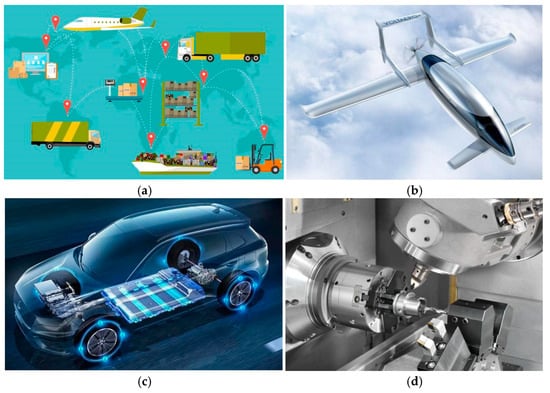
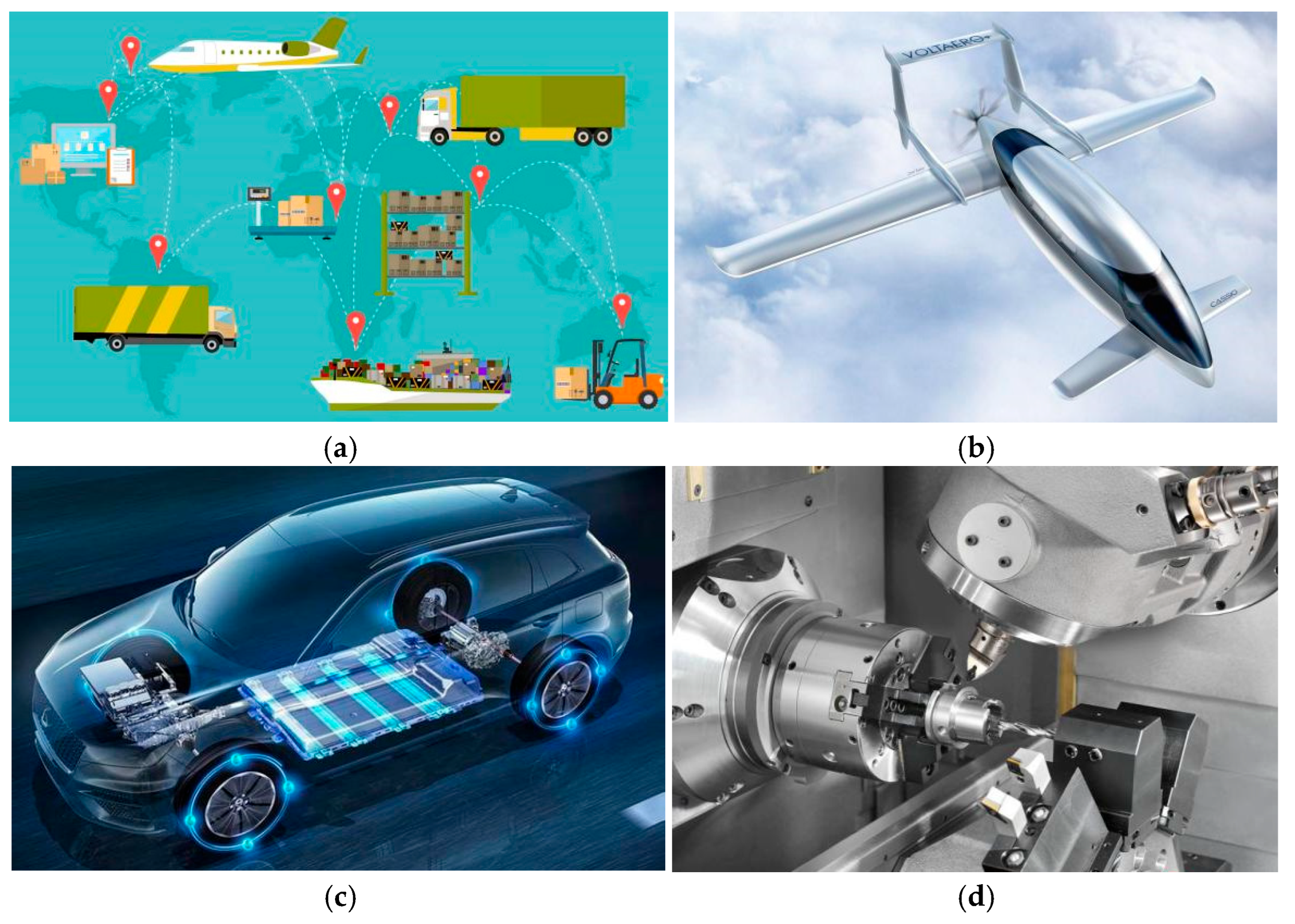
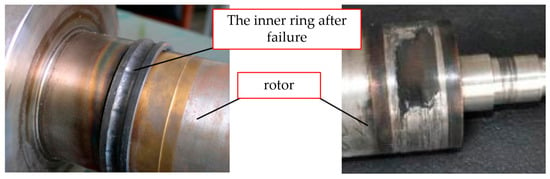
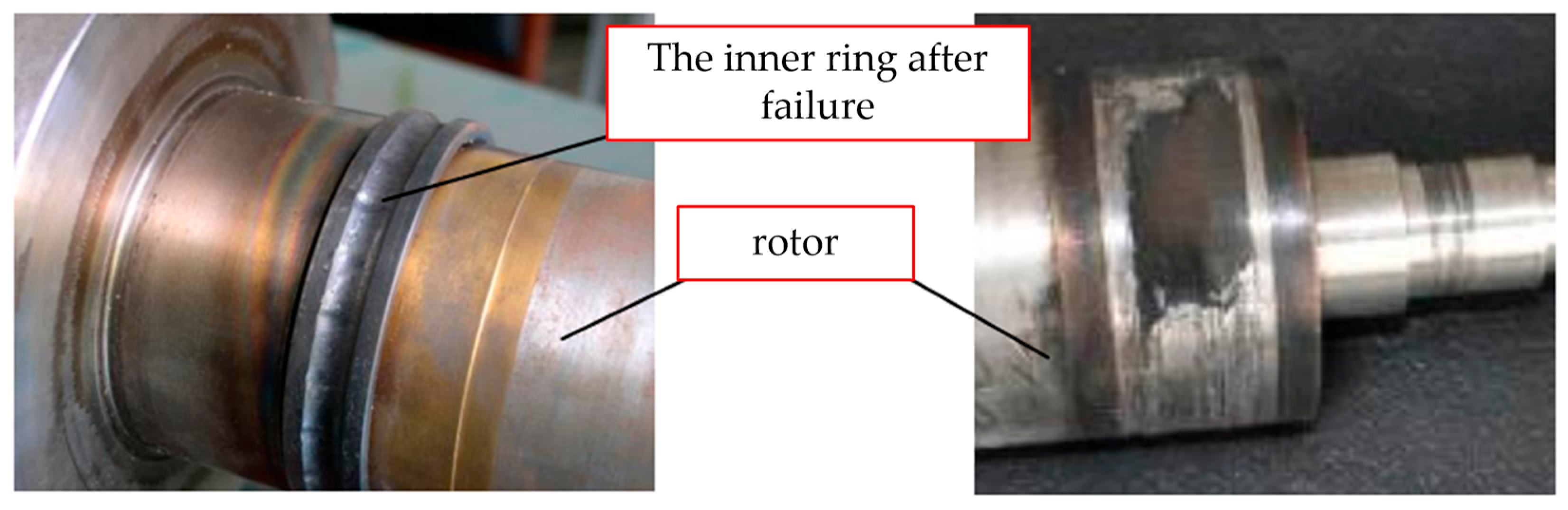
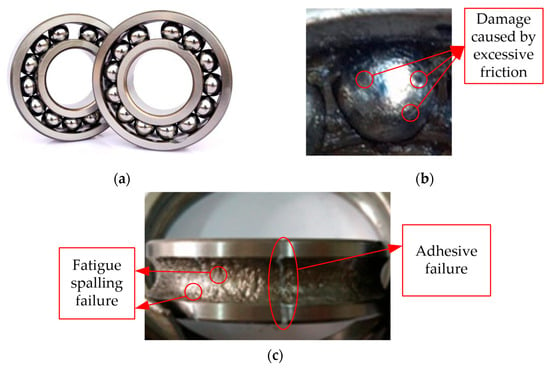
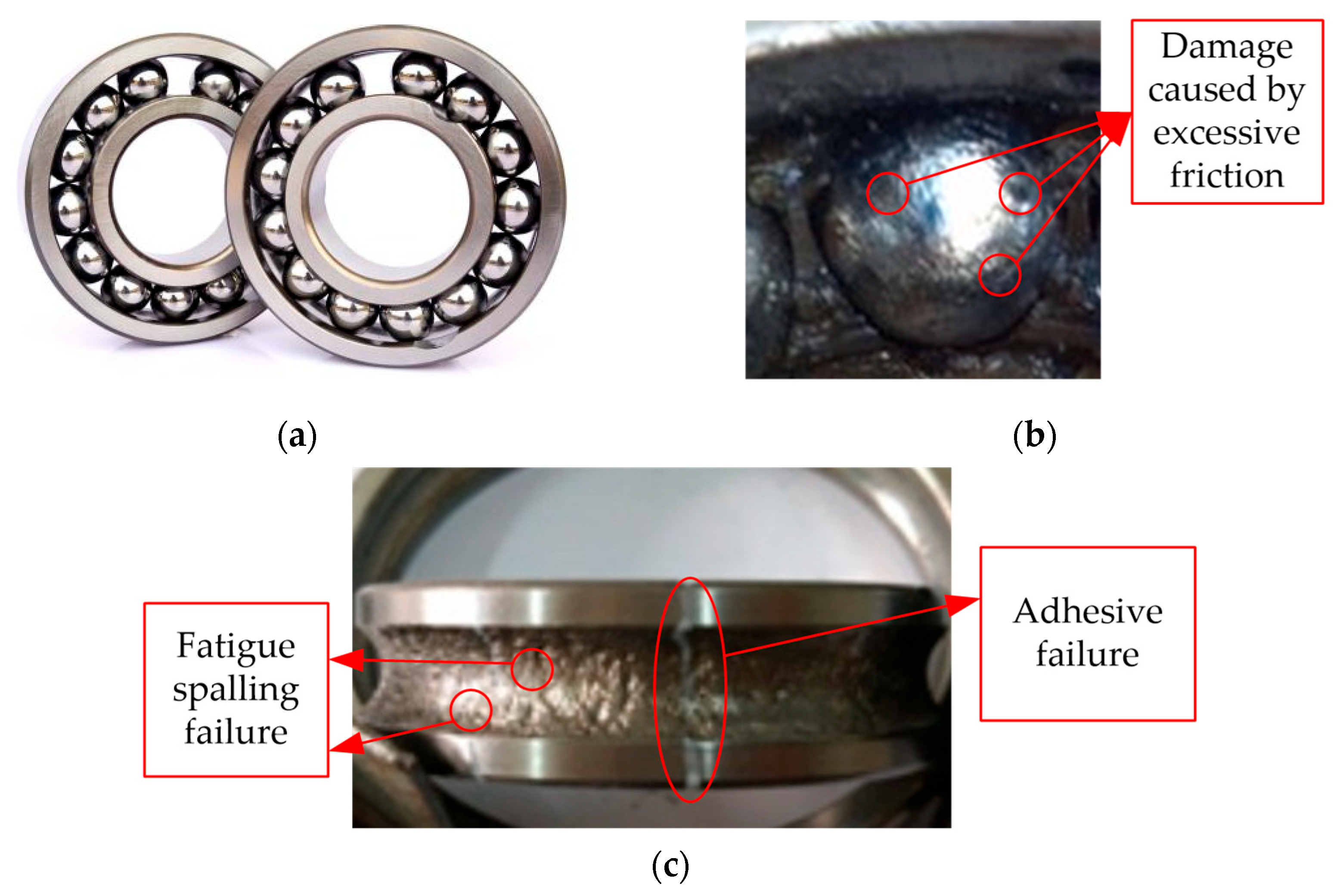
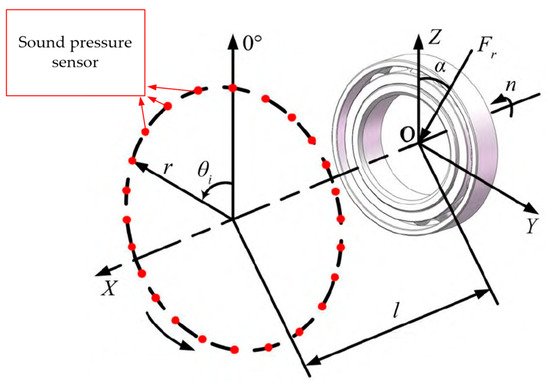
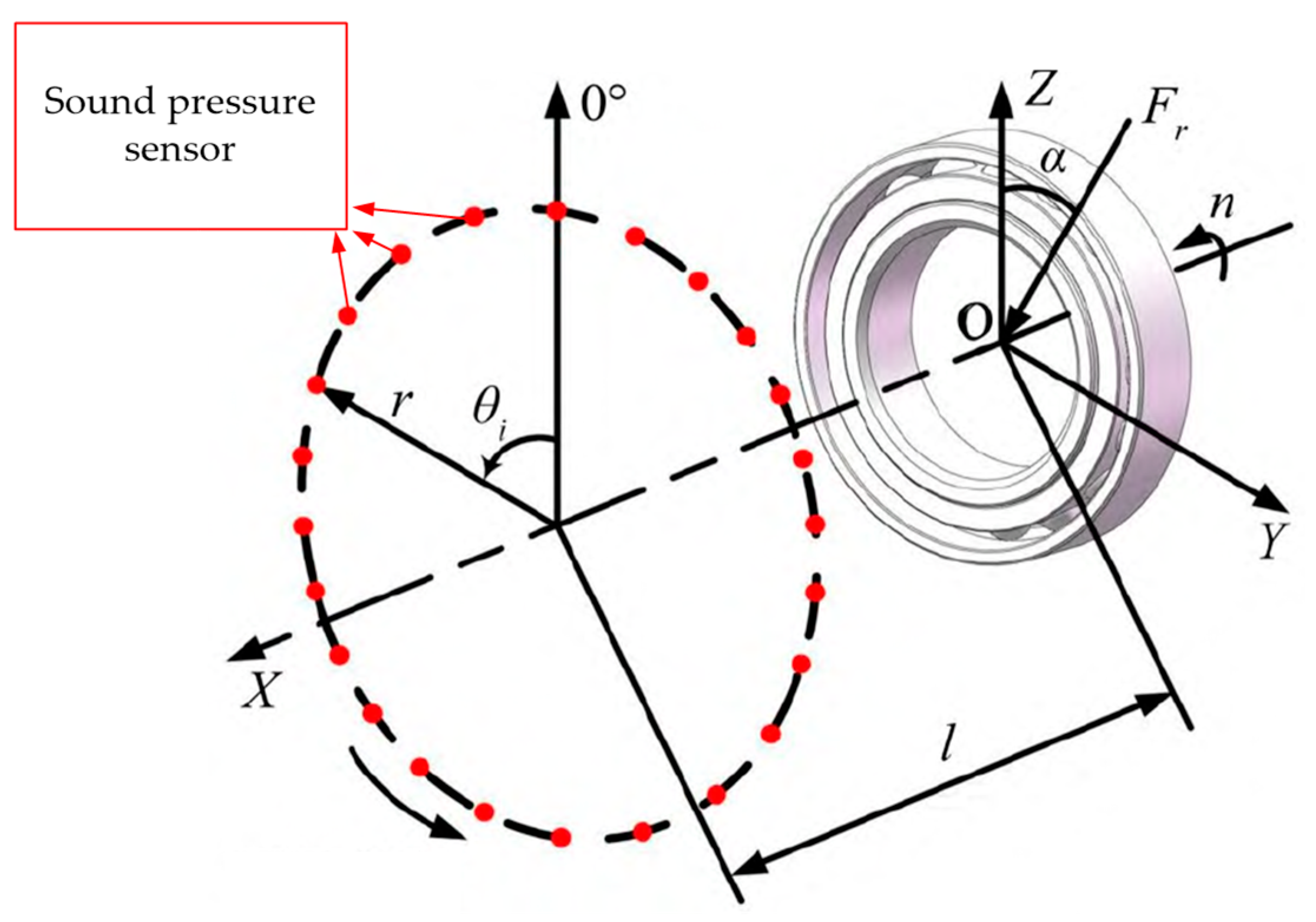
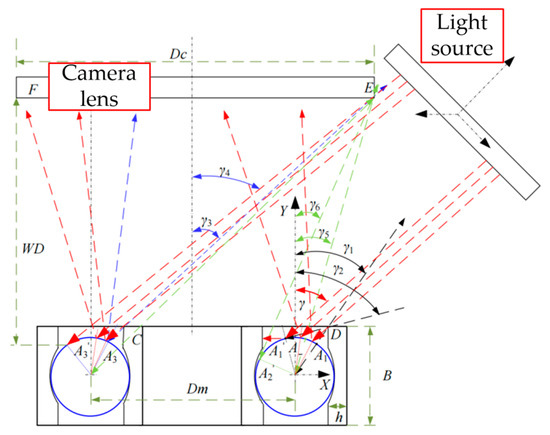
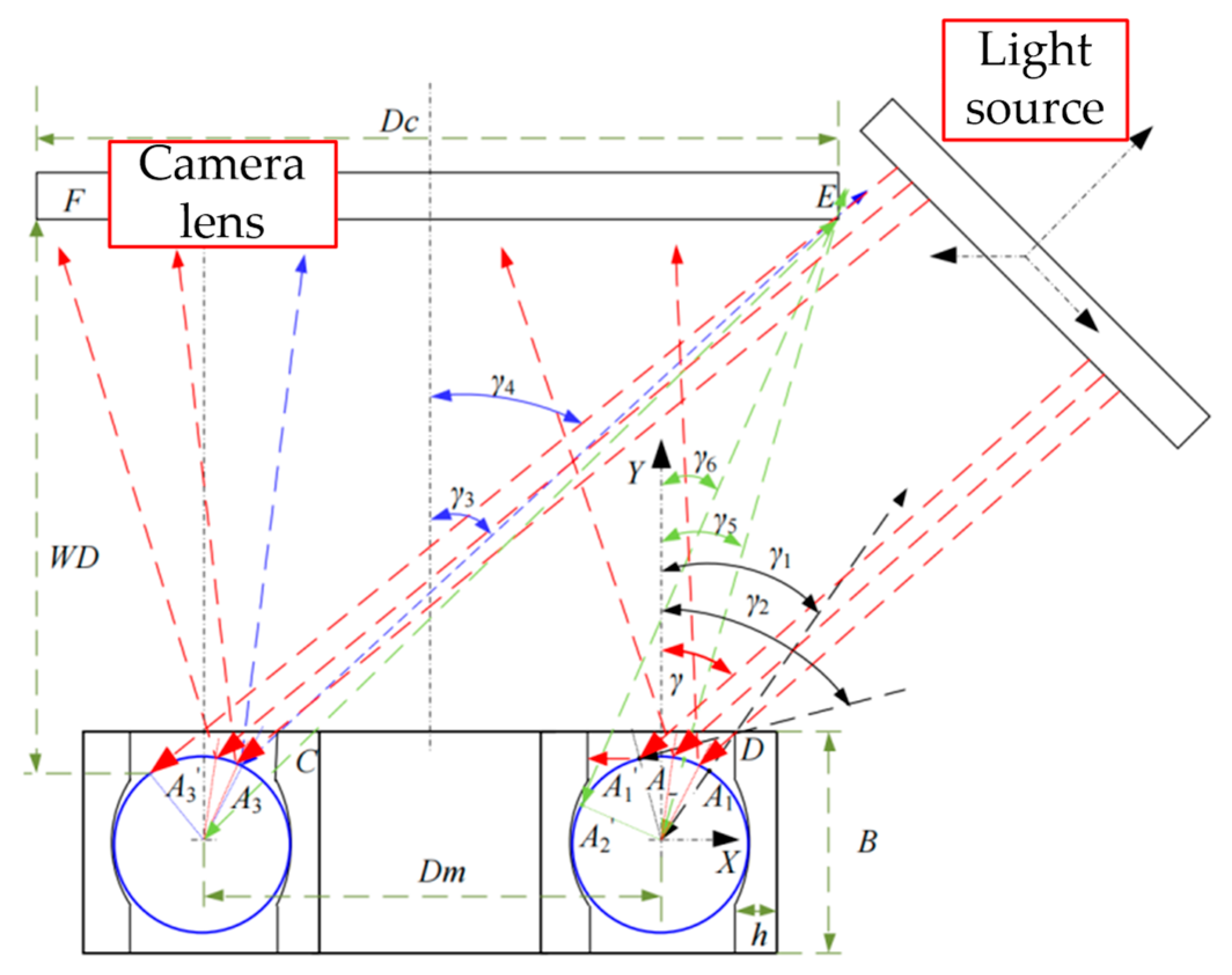
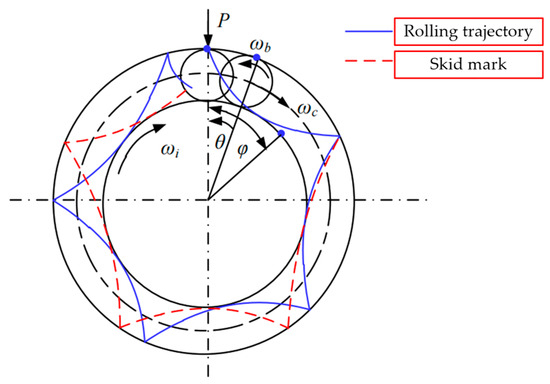
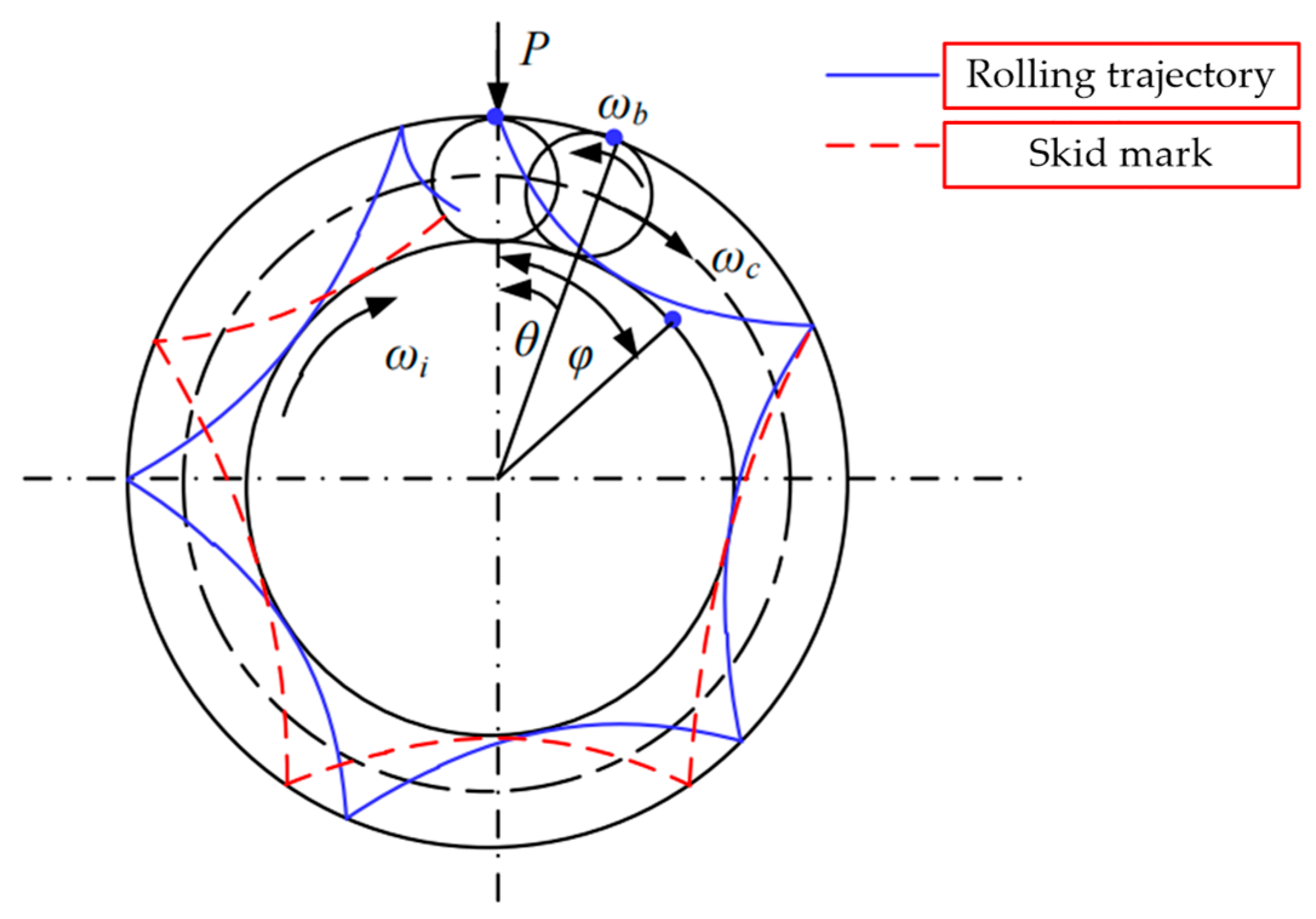
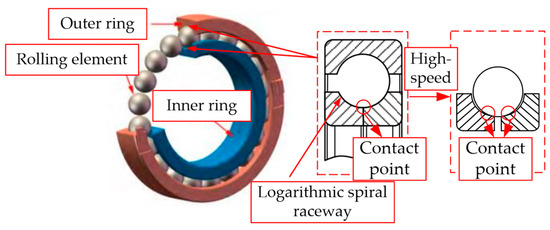
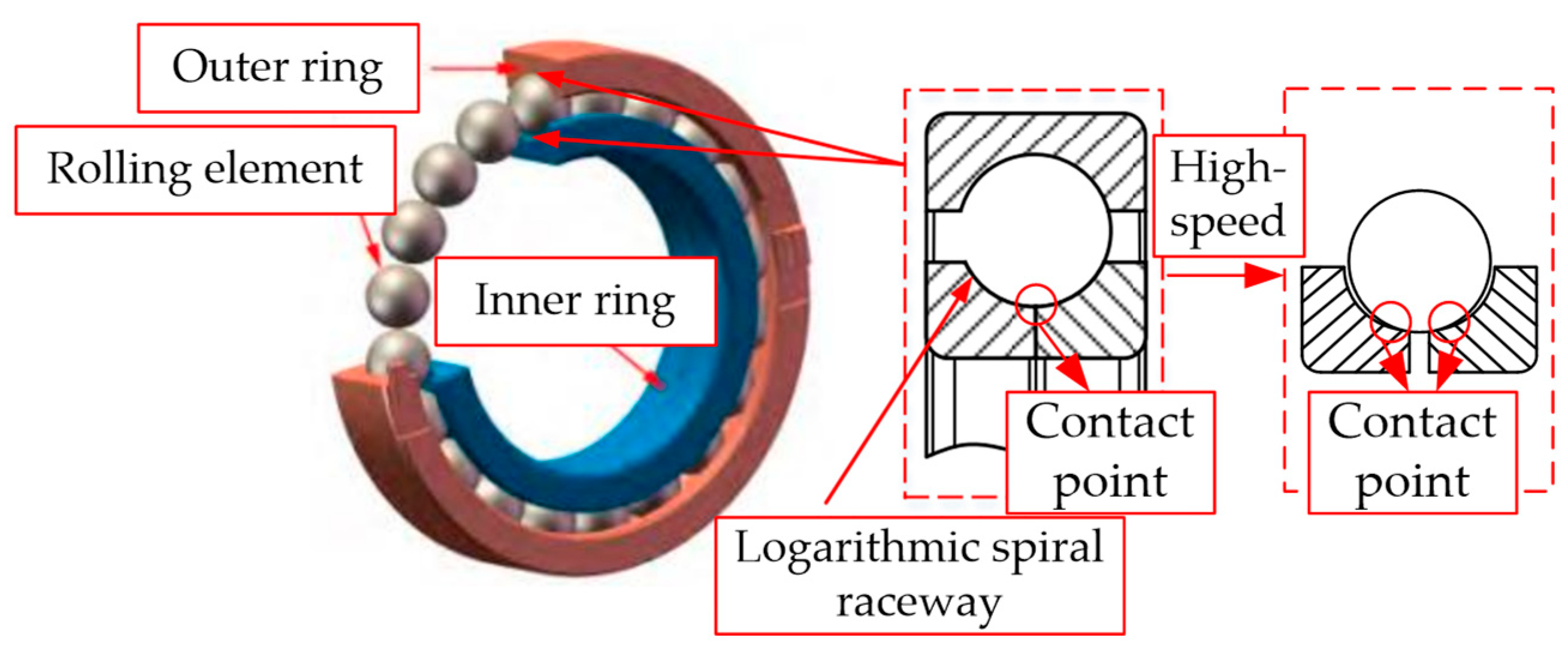
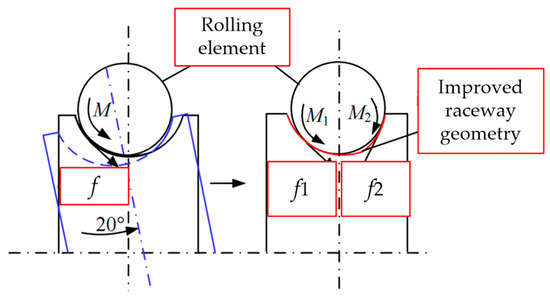
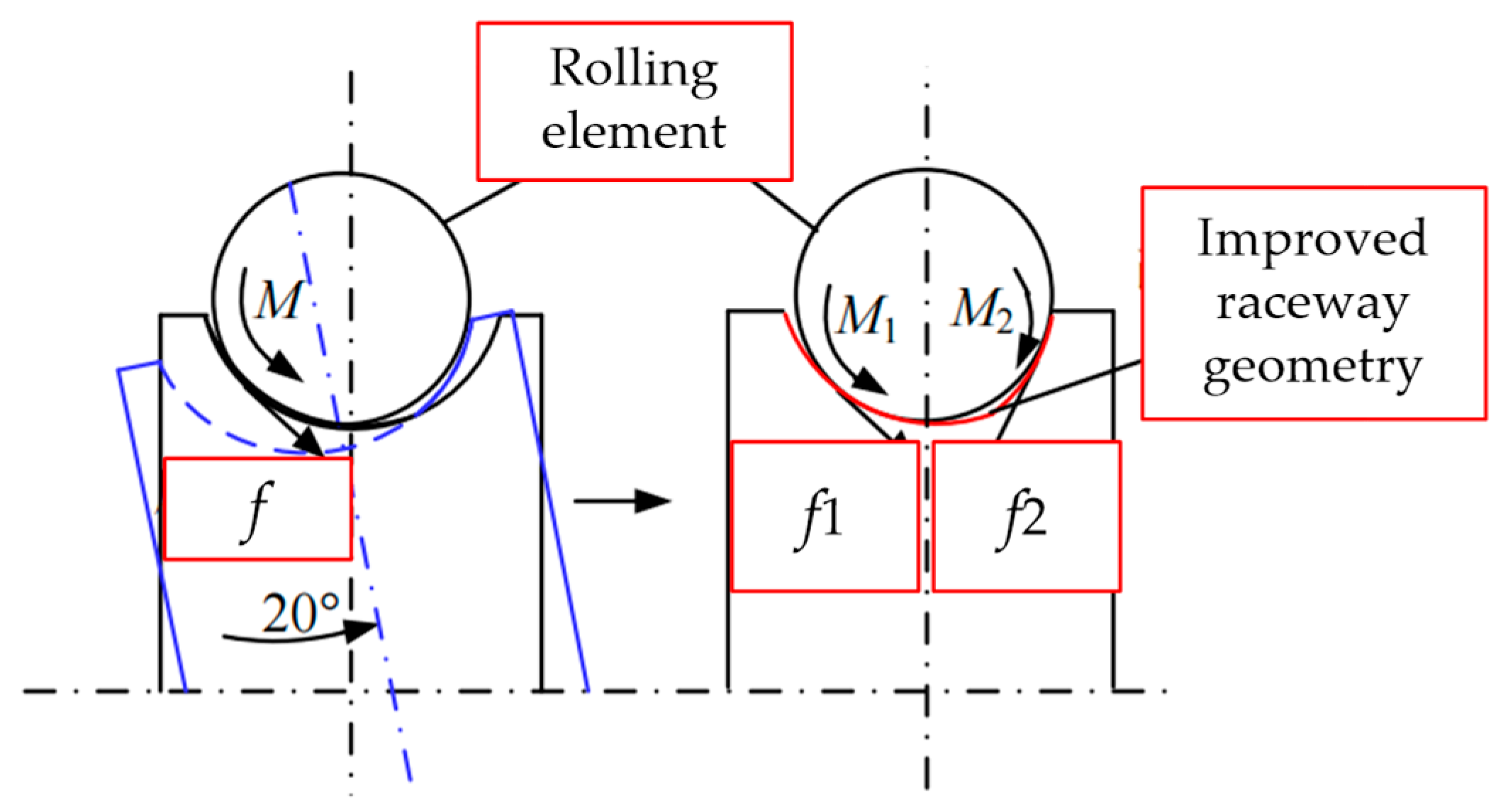
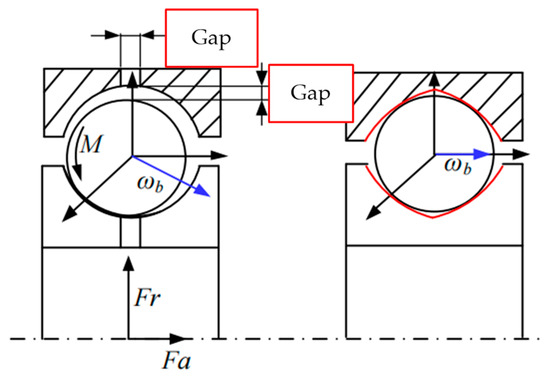
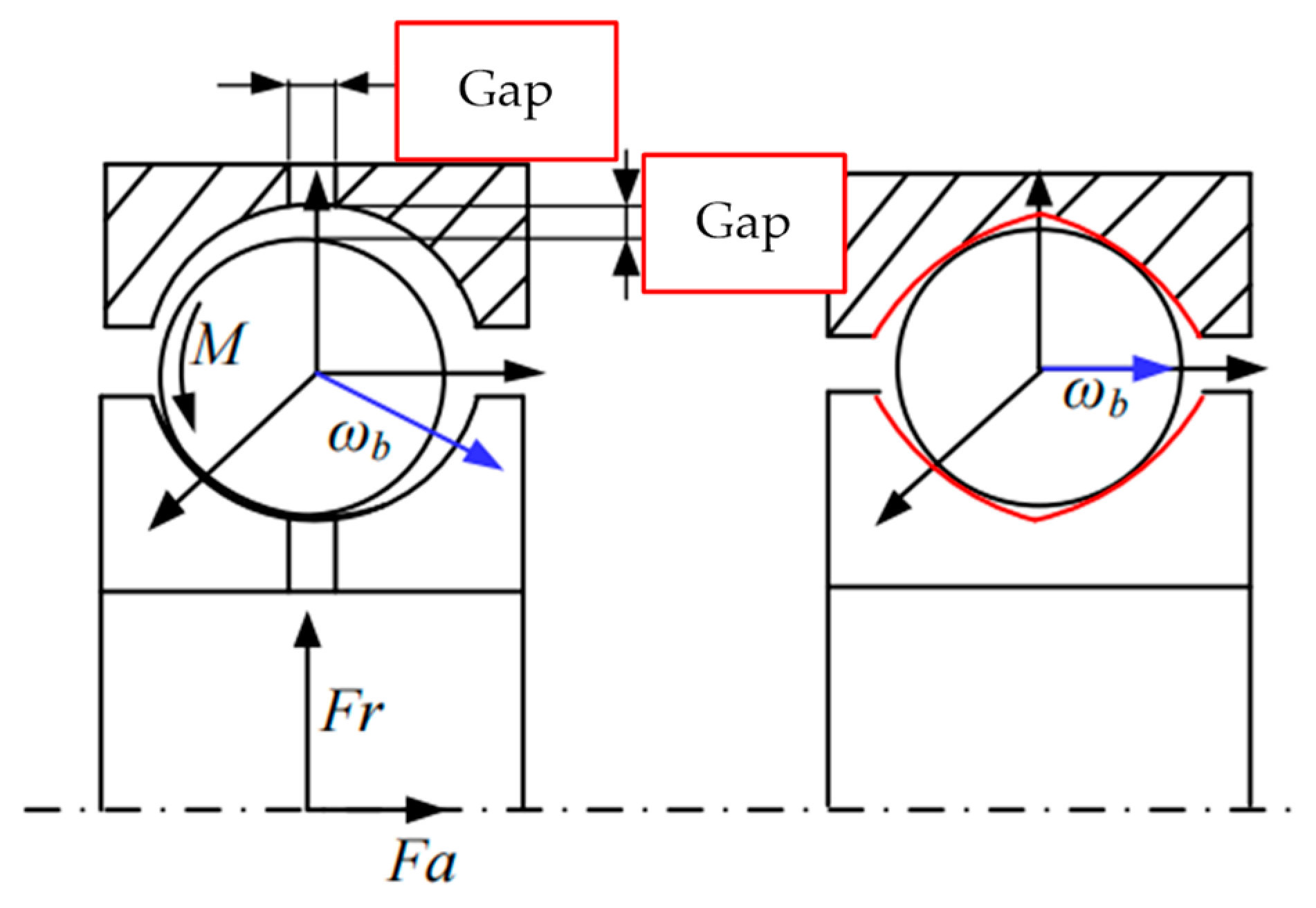
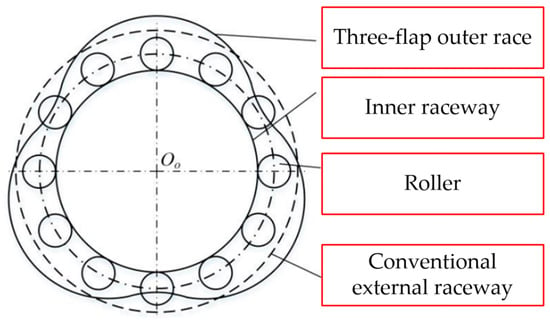
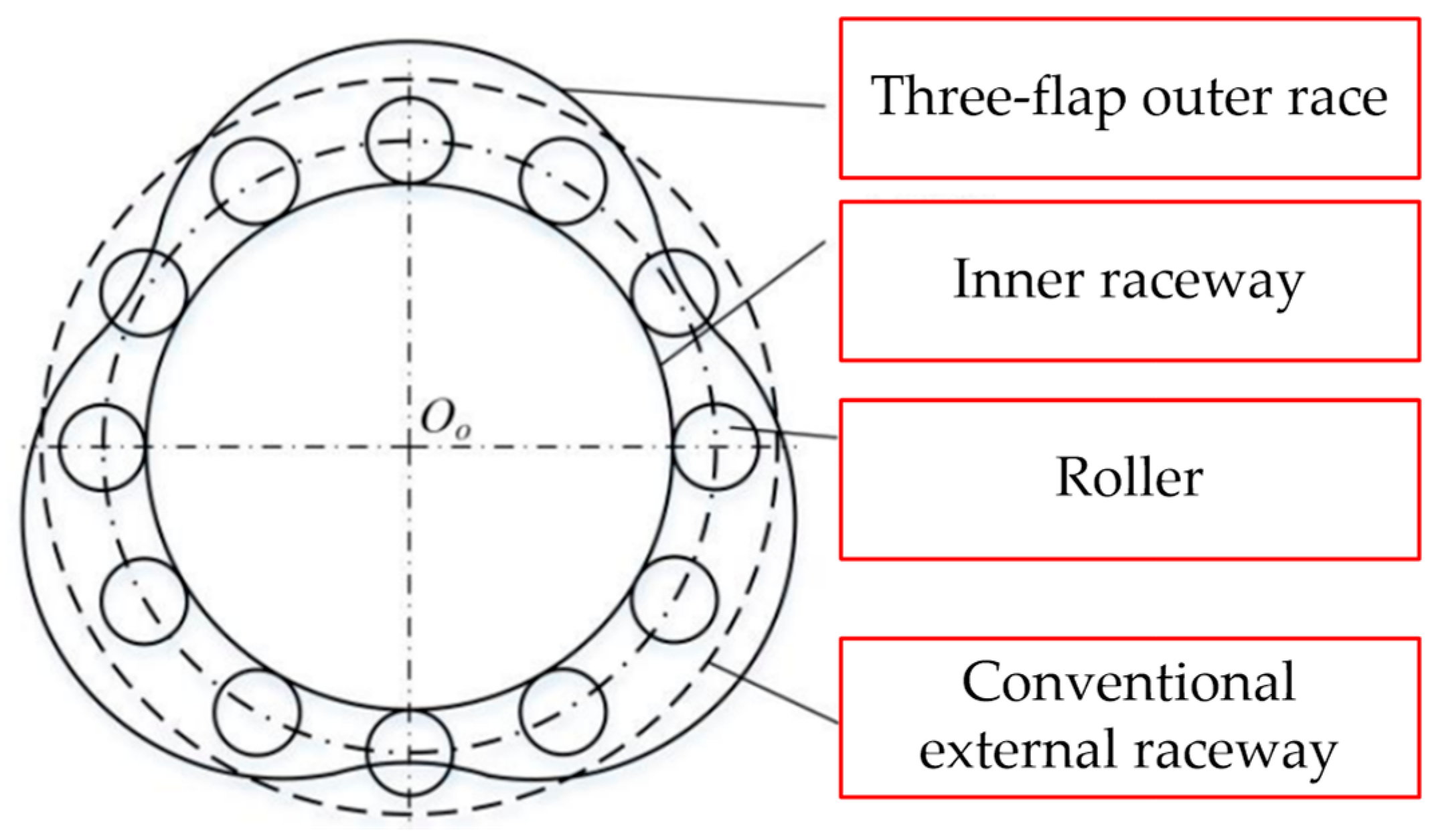
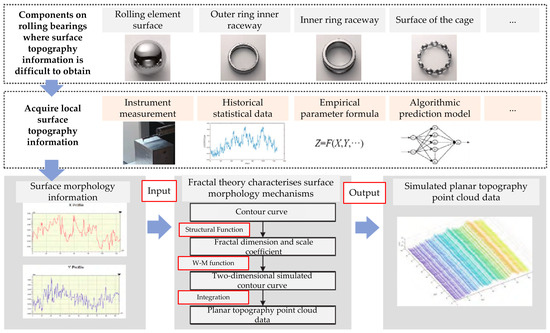
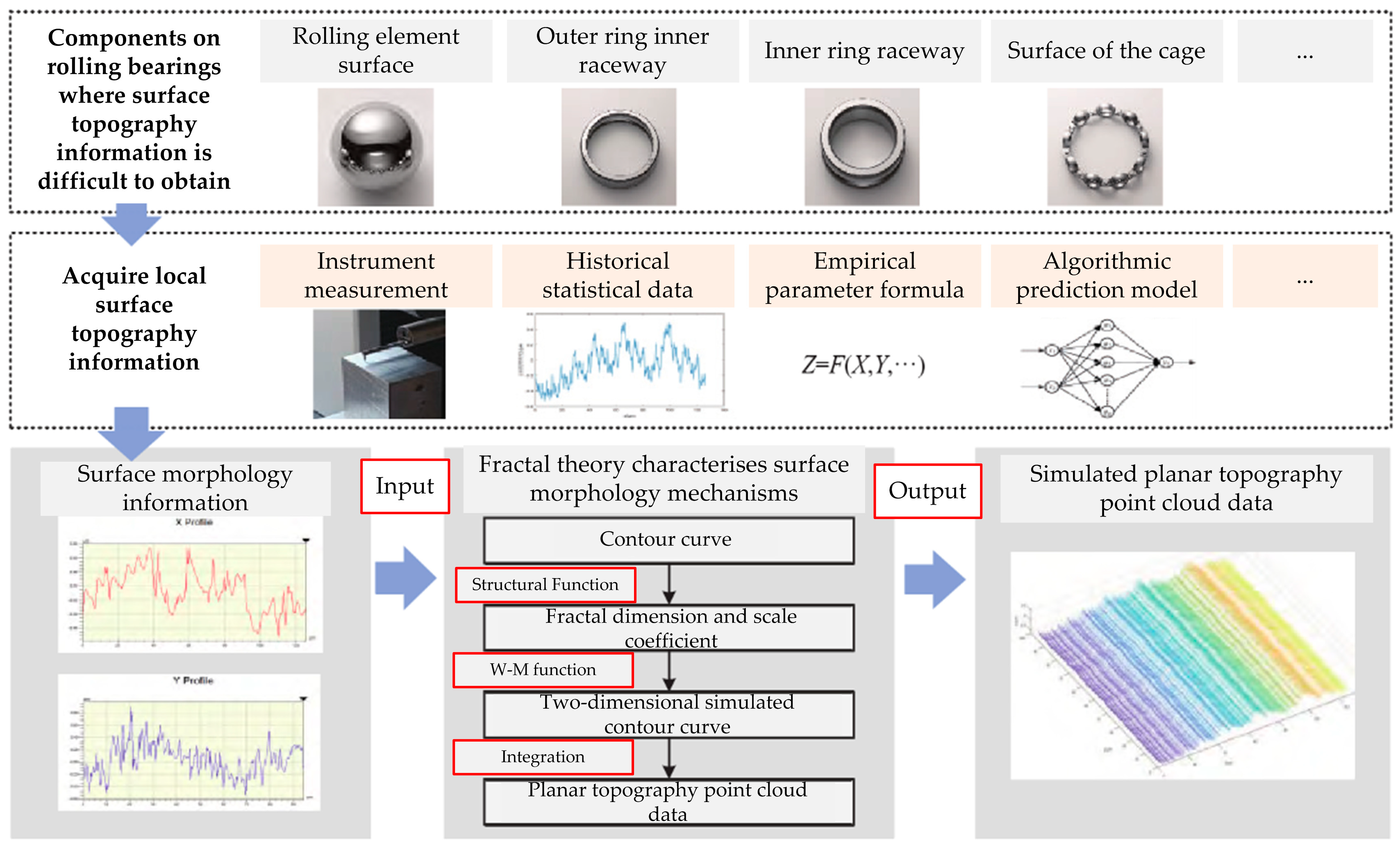
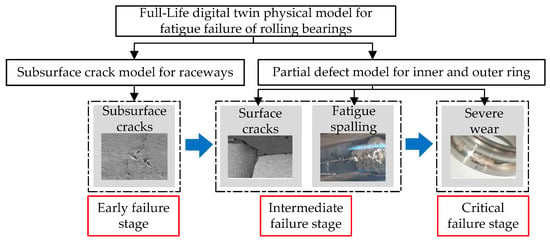
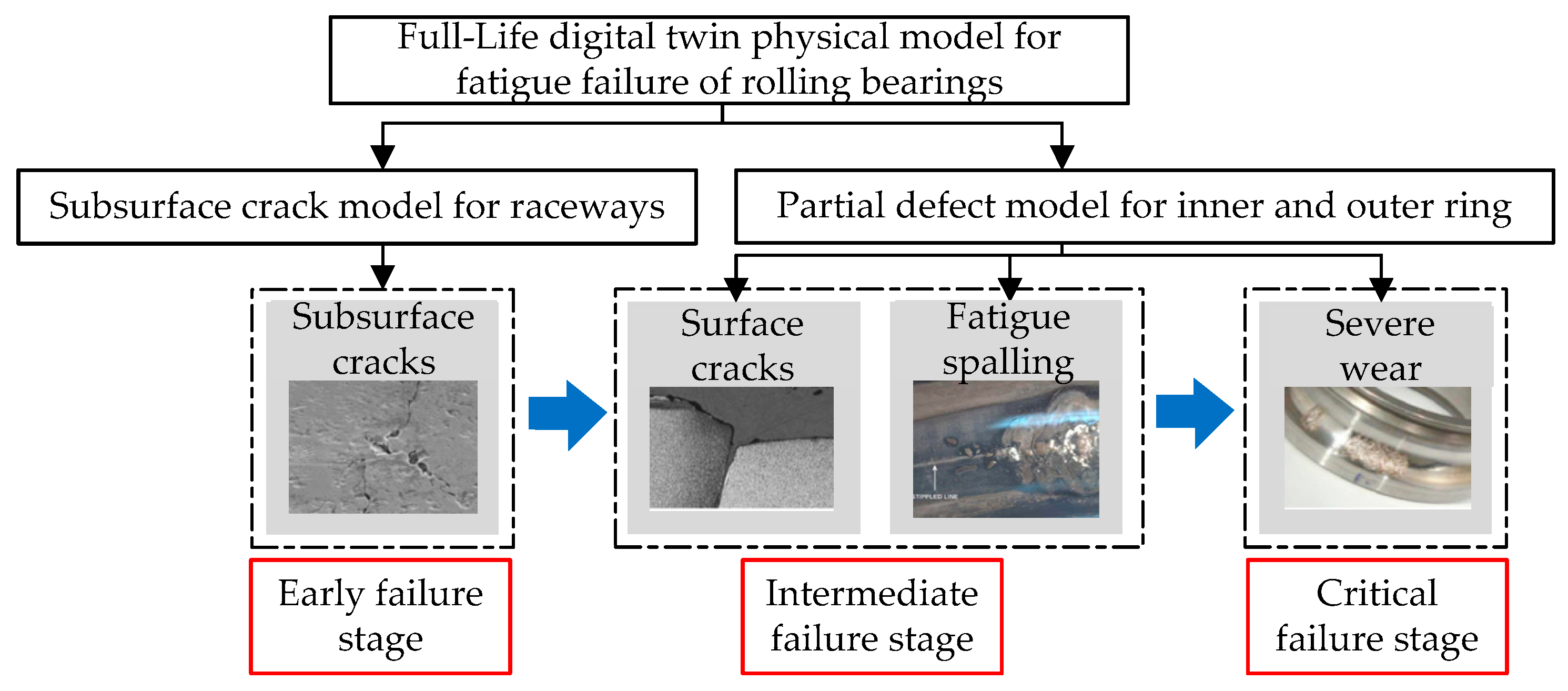
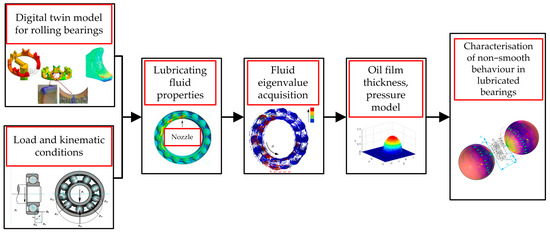
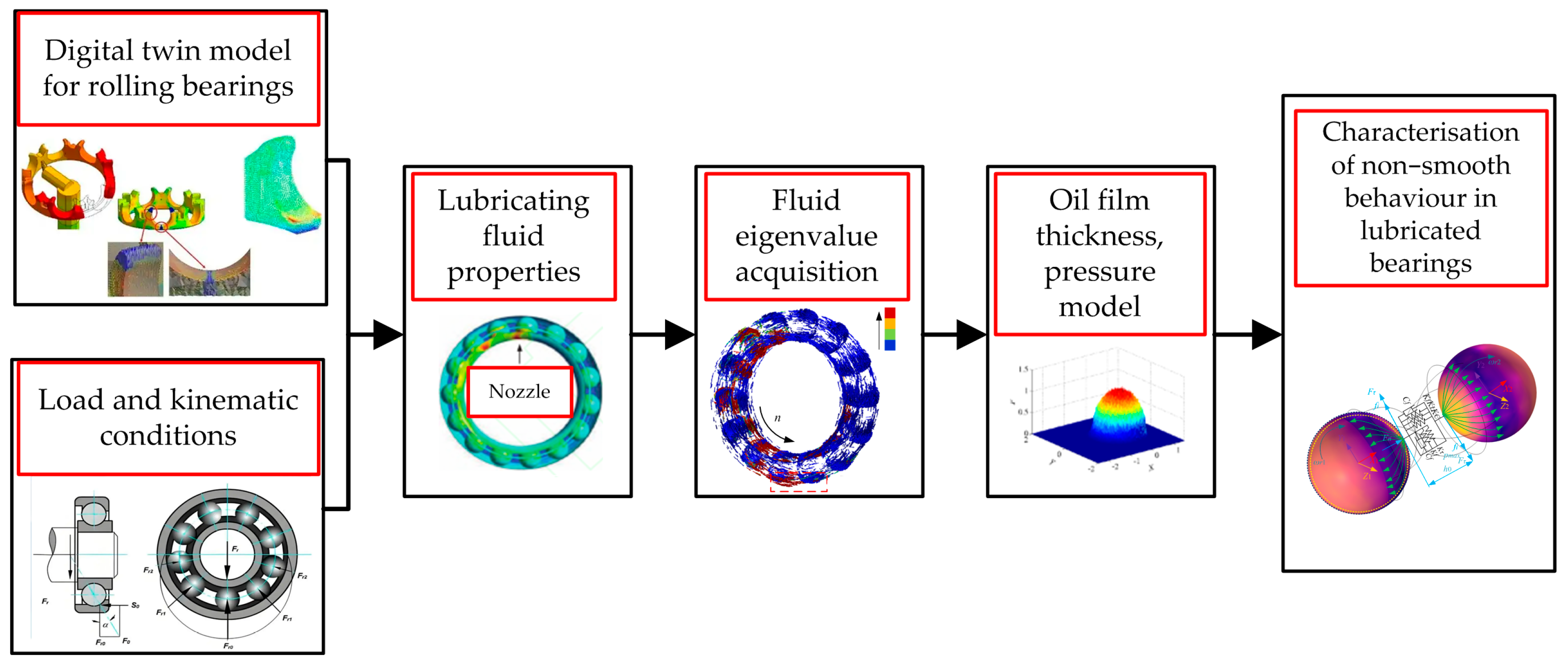
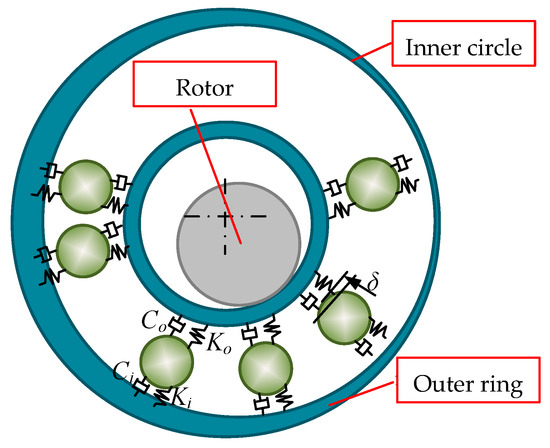
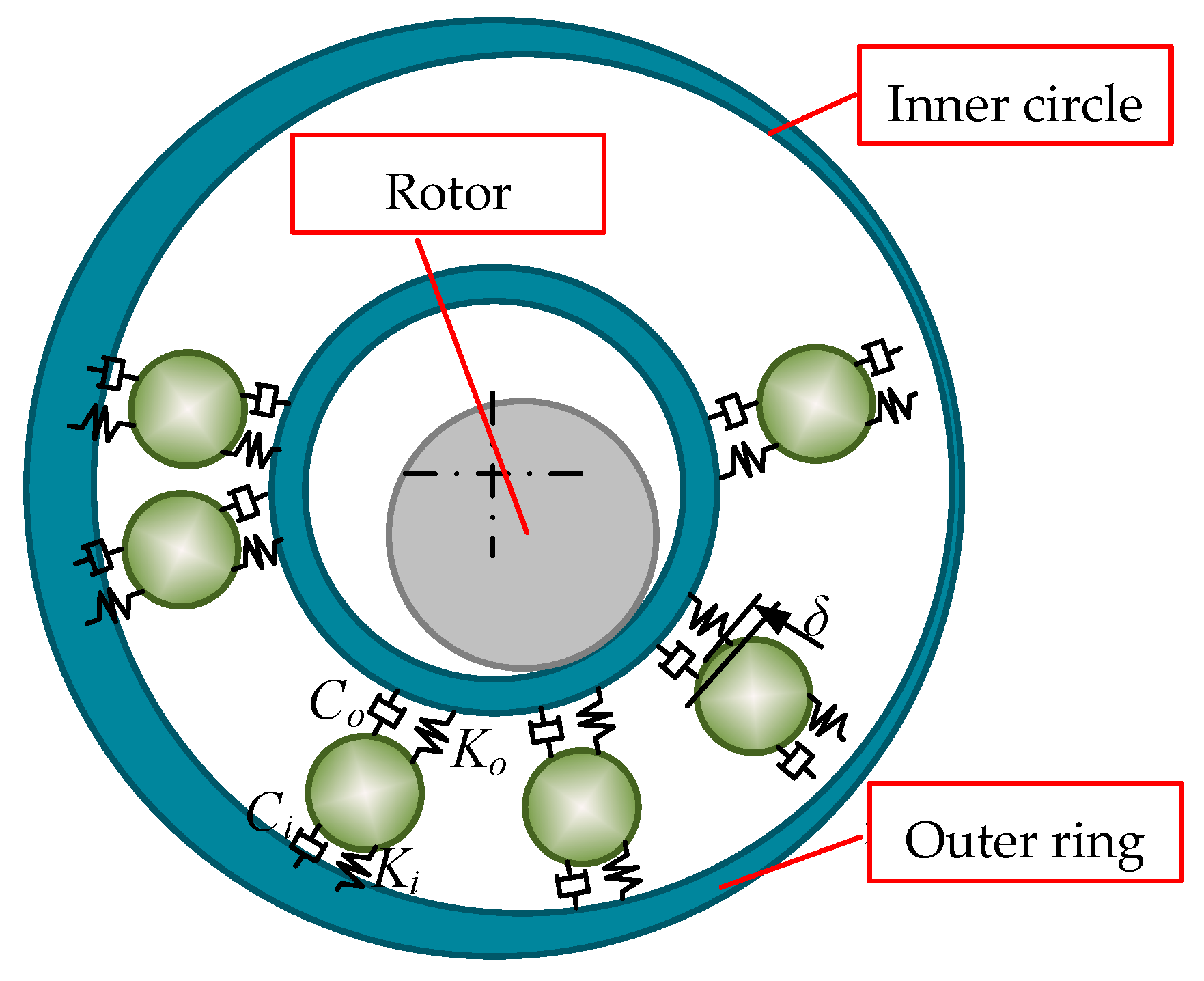
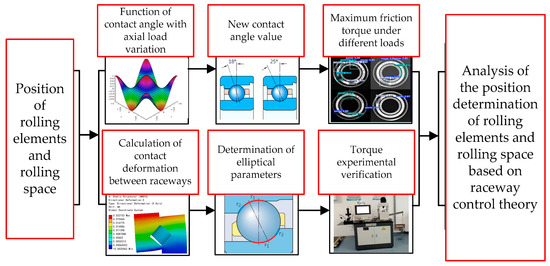
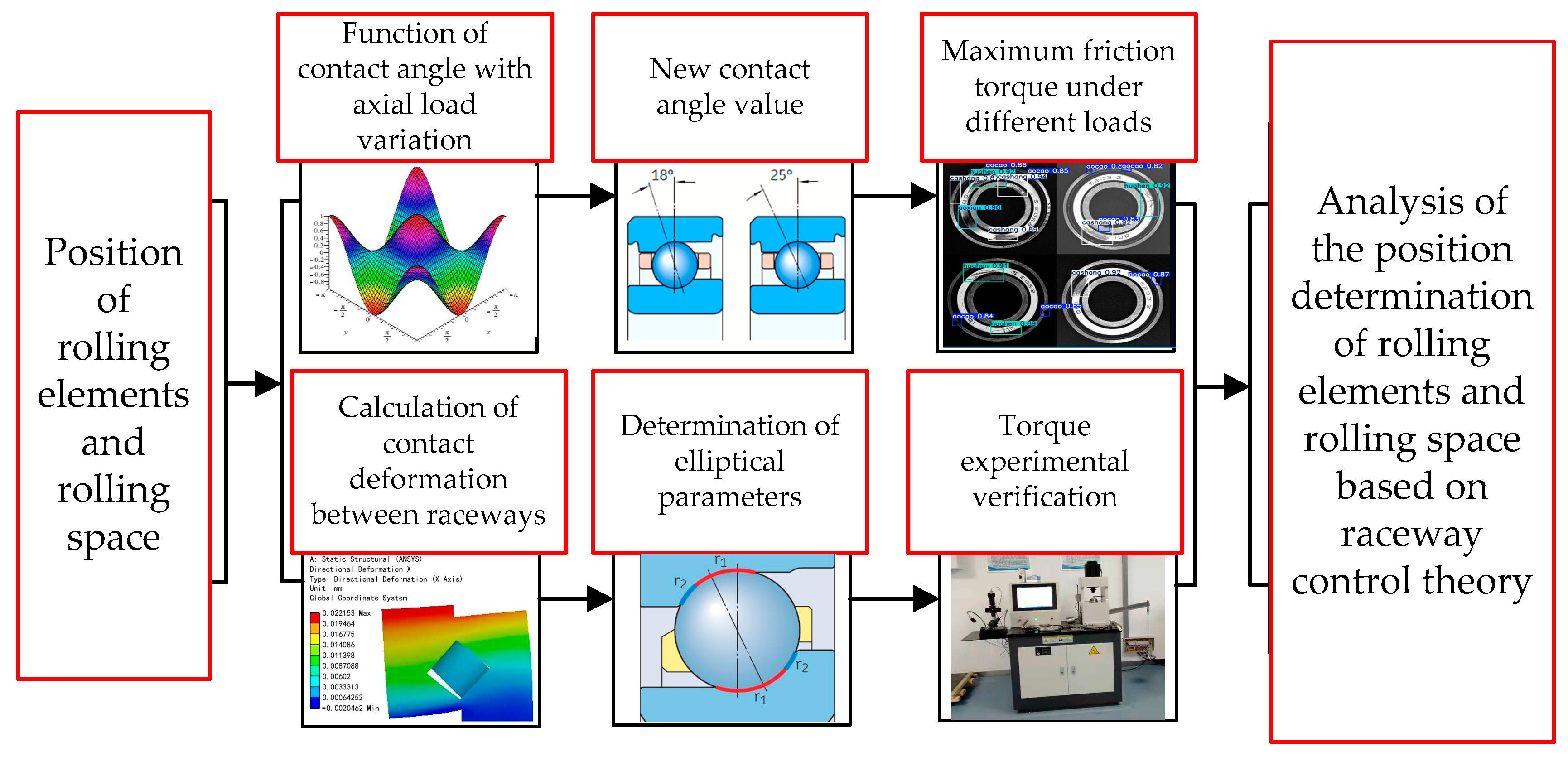

Disclaimer/Publisher’s Note: The statements, opinions and data contained in all publications are solely those of the individual author(s) and contributor(s) and not of MDPI and/or the editor(s). MDPI and/or the editor(s) disclaim responsibility for any injury to people or property resulting from any ideas, methods, instructions or products referred to in the content. |
© 2026 by the authors. Licensee MDPI, Basel, Switzerland. This article is an open access article distributed under the terms and conditions of the Creative Commons Attribution (CC BY) license.