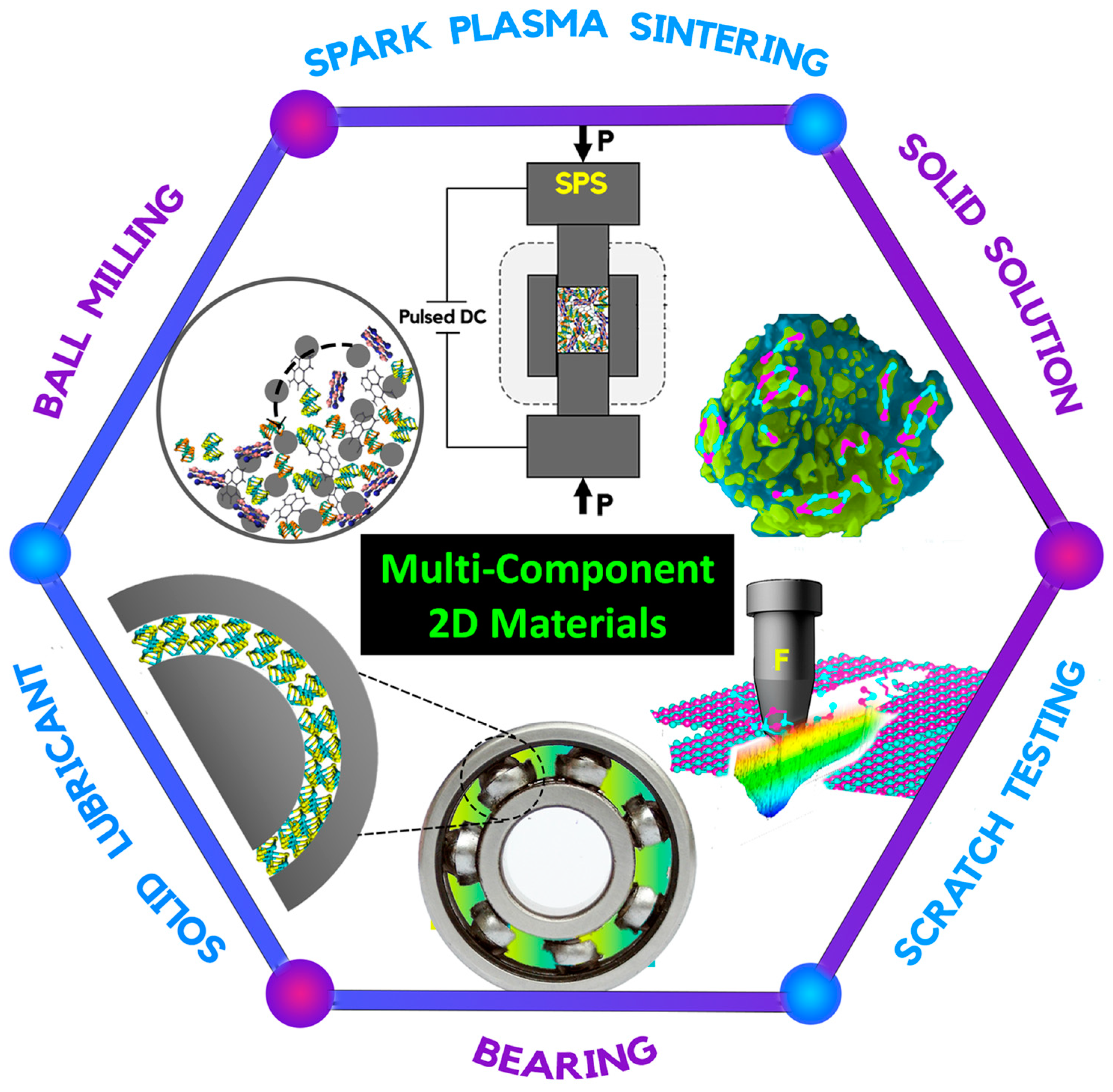
Synergistic Effect of Spark Plasma Sintering Driven Solid-Solution Phases on Scratch Resistance in Two-Dimensional Materials

 ,
,  and
and 
Abstract
Share and Cite
Agarwal, V.; Nisar, A.; Sukumaran, A.K.; Lou, L.; Mohammed, S.M.A.K. Synergistic Effect of Spark Plasma Sintering Driven Solid-Solution Phases on Scratch Resistance in Two-Dimensional Materials. Lubricants 2024, 12, 31. https://doi.org/10.3390/lubricants12020031
Agarwal V, Nisar A, Sukumaran AK, Lou L, Mohammed SMAK. Synergistic Effect of Spark Plasma Sintering Driven Solid-Solution Phases on Scratch Resistance in Two-Dimensional Materials. Lubricants. 2024; 12(2):31. https://doi.org/10.3390/lubricants12020031
Chicago/Turabian StyleAgarwal, Varad, Ambreen Nisar, Abhijith K. Sukumaran, Lihua Lou, and Sohail M. A. K. Mohammed. 2024. "Synergistic Effect of Spark Plasma Sintering Driven Solid-Solution Phases on Scratch Resistance in Two-Dimensional Materials" Lubricants 12, no. 2: 31. https://doi.org/10.3390/lubricants12020031
APA StyleAgarwal, V., Nisar, A., Sukumaran, A. K., Lou, L., & Mohammed, S. M. A. K. (2024). Synergistic Effect of Spark Plasma Sintering Driven Solid-Solution Phases on Scratch Resistance in Two-Dimensional Materials. Lubricants, 12(2), 31. https://doi.org/10.3390/lubricants12020031