


Abstract
Background: Obesity is a multifactorial chronic disease involving multiple organs, devices, and systems involving important changes in the stomatognathic system, such as in the orofacial muscles, temporomandibular joint, cheeks, nose, jaw, maxilla, oral cavity, lips, teeth, tongue, hard/soft palate, larynx, and pharynx. Patients with obesity indicated for bariatric surgery reportedly presented with abnormalities in the structures and function of the stomatognathic apparatus. This occurs through the accumulation of adipose tissue in the oral cavity and pharyngeal and laryngeal regions. Therefore, this systematic review aimed to elucidate the changes occurring in the stomatognathic system of patients with obesity after undergoing bariatric surgery. Method: Information was searched based on the equations developed with the descriptors obtained in DECS and MESH using the PRISMA methodology. Studies published between 2010 and October 2021 in databases including PubMed, ProQuest, Scielo, Dialnet, EBSCO, and Springer Link were considered. Results: Eighty articles met the inclusion criteria after evaluating the articles, thereby allowing for the determination of the morphophysiological correlation of the stomatognathic system with the population studied. At the morphological or structural level, changes were observed in the face, nose, cheeks, maxilla, jaw, lips, oral cavity, teeth, tongue, palate, temporomandibular joint, neck, muscles, head, shoulders, larynx, and pharynx. At the morphological level, the main changes occurred in, and the most information was obtained from, the labial structures, teeth, muscles, pharynx, and larynx. Physiological changes were in breathing, phonation, chewing, and swallowing, thereby revealing the imbalance in basic and vital functions. Conclusions: Analyzing the changes and structures of obese patients and candidates for bariatric surgery revealed that, in the preoperative period, the evidence is clear owing to the presence of a wide range of information. However, the information is more limited regarding the postoperative period; thus, further research focusing on characterization of the system postoperatively is warranted.
1. Introduction
The stomatognathic system is an integrated and coordinated morpho-functional unit comprising skeletal, muscular, angiological, nervous, glandular, and dental structures organized around the occipito-atloidal, atlantoaxial, cervical vertebral, temporomandibular, dento-dental in occlusion, and dentoalveolar joints, which are organically ligated and functionally related to the digestive, respiratory, phonological, and facial aesthetic expression systems. Consequently, this system is associated with the senses of taste, touch, balance, and orientation. It intervenes in functions of suction, oral digestion (mastication, salivation, tasting, and degradation of carbohydrates), swallowing, verbal communication (phonological modulation, articulation of sounds, speech, and whistles), oral sexuality (smiling, laughing, orofacial gesticulation, and kissing, among other aesthetic-affective manifestations), alternate breathing, and vital defense (coughing, expectorating, sneezing, yawning, sighing, and exhalation and vomiting), which are considered essential for an individual’s survival [1].
Obesity has become a 21st century problem, as well as one of the fastest growing health problems worldwide [2,3]. Currently, it is one of the most important and concerning public health conditions, which is why it has become a priority [4]. According to the Center for Disease Control and Prevention, obesity is defined as “weight above what is adequate or considered healthy given the height of each subject”. Concurrently, it defines it as a chronic disease requiring timely medical care, thereby limiting the activities of daily living. Its main characteristic is excessive accumulation of body fat that has harmful effects on health. However, it is considered a treatable disease [3,5,6].
According to statistics from the World Health Organization (WHO), in 2005, 1.6 billion people aged > 15 years were classified as overweight and 400 million were classified as obese [7]. Currently, there are approximately 1200 million people in the world with problems related to overweight and obesity [8]. This constitutes evidence of high levels of prevalence of the disease, which affects approximately 23% of the adult population of Latin America and the Caribbean, or ~140 million people [9].
However, the Colombian Ministry of Health and Social Protection (MinSalud) estimates that the prevalence of overweight people in Colombia is approximately 56.4% and, thus, it is considered a public health problem for the country. Based on data provided by the same entity, it is predicted that, by the year 2030, 1 out of 2 adults will be obese, and 1 in 4 adults will have severe obesity [10,11]. However, obesity is a preventable disease, and it can be addressed through multidisciplinary intervention, which includes allowing the interaction of several professionals during treatment, involving diet, physical exercise, and pharmacological treatment [12]. However, the combination of eating, sports, and medicinal habits is sometimes not effective or successful. Therefore, patients resort to extreme alternatives, such as bariatric surgery, since it provides an effective solution to the problem in order to reduce food intake and nutrient absorption. This is despite the fact that the procedure includes invasive surgical intervention in the digestive system [2,13]. It is necessary to clarify that not everyone is an ideal candidate for the procedure, even though bariatric surgery is a reliable method for long-term weight loss. Candidates must at least be adults, with a body mass index (BMI) ≥ 40 kg/m2 or with a BMI between 35 and 39.9 kg/m2 and a severe associated comorbidity [12,13].
Historically, bariatric surgery emerged in the United States in the 1950s. It was the pioneering country in the American continent, followed by Brazil, the second country in the world to perform more bariatric surgeries, with approximately 80,000 surgeries per year [4,14]. For this approach, it must be highlighted that a suitable bariatric technique must primarily be very safe; i.e., with a morbidity of <10% and a mortality of <1%. Second, such a technique must be able to cause the loss of at least 50% of the additional weight, which must be maintained for a period of approximately 5 years, thereby improving the patient’s quality of life. It should be noted that there are three techniques for performing these interventions (malabsorptive, restrictive, and mixed) [15]. The restrictive technique consists of reducing the capacity of the stomach and preventing the passage of food. However, over time, this technique forces patients to undergo a reintervention. The malabsorptive technique reduces the capacity of the stomach by half, producing crossover with the intestine, so that there is a malabsorption of nutrients from food, forcing the patient into restrictive control after surgery. The mixed technique has a restrictive and somewhat malabsorptive character, which allows it to be a well-tolerated procedure, without the patient presenting long-term complications or requiring reintervention [16]. Another technique used to address this problem is sleeve gastrectomy (SG) (the malabsorptive type), and it has been the most commonly performed technique in the world, and in Colombia, since 2004, followed by the Roux-en-Y gastric bypass (RYGB) (the mixed type) [17].
In conclusion, it is important to highlight that, despite the many benefits of making use of this procedure, there are also various changes and anomalies in the structures and functioning of the different systems, including the stomatognathic system [18,19]. The literature and the investigated studies make it clear that these anomalies severely compromise the entire stomatognathic system due to the accumulation of adipose tissue in the oral cavity and in the pharyngeal and laryngeal regions [19], with the adiposity of these regions being the etiology responsible for the changes in these large and important structures of the patient, thus compromising morphology and physiology [20]. Considering the arguments and findings previously revealed, the following research question arises: how are the stomatognathic systems of obese patients, and those of obese patients with bariatric surgery, characterized?
2. Materials and Methods
This review was performed following the parameters proposed by the PRISMA methodology. For this, the databases were identified, and thesauruses were defined in the search for information. The studies were also selected based on inclusion and exclusion criteria that facilitated the assessment of the studies’ quality and reliability and that, eventually, allowed answering the research question posed [21,22,23].
The PICO tool was used to construct the research question. This tool was employed owing to the fact that it is used to improve the specificity and conceptual clarity of the clinical problems to be studied, as well as to perform searches with greater quality and precision, which allows for the collection of pertinent and accurate data to answer the problem question [24,25].
2.1. Research Question
In accordance with the theme established for the research, the components of the PICO strategy shown in Table 1 were established, resulting in the following research question: how are the stomatognathic systems of obese patients, and those of obese patients with bariatric surgery, characterized?
Table 1.
Research Question.
2.1.1. Inclusion Criteria
- Overweight subjects, those with obesity or morbid obesity, or those who had undergone bariatric surgery
- A publication time window of 10 years;
- Articles focused on the evaluation of aspects related to the distal airways, upper airways, lower airways, stomatognathic system (morphology and physiology), respiratory system, masticatory system, and swallowing mechanics;
- Studies conducted with humans;
- Full-text articles;
- Free-access articles and current DOIs.
2.1.2. Exclusion Criteria
- Articles with DOIs that were not current within the databases for download;
- Research with a time window of >10 years;
- Articles that were not related to human beings;
- Grey literature, such as theses, white books, research and project reports, annual or activity reports, conference proceedings, preprints, working papers, newsletters, technical reports, recommendations and technical standards, patents, technical notes, data and statistics, presentations, field notes, laboratory research books, abstracts, academic courseware, lecture notes, and evaluations, were excluded.
2.2. Sources of Information
The key terms were selected from the Descriptors in Health Sciences (DECS) and the Medical Subject Headings (MESH) (see Table 2).
Table 2.
DECS and MESH descriptors.
2.2.1. Search Strategies
A search strategy was developed with the aid of trained institutional professional librarians from la Universidad Simón Bolívar, Colombia, and la Universidad de Pamplona, Colombia.
Subsequently, the search equations were designed with the terms found. These equations were created using the logical operators AND/OR/NOT and symbols such as “” and (). The information search was conducted in PubMed, ProQuest, Scielo, Dialnet, EBSCO, and Springer Link in the English language (see Table 3).
Table 3.
Search equations.
2.2.2. Characteristics of the Studies
Initially, the interventions and the respective descriptions of the treatment therapy were classified. Likewise, these interventions were compared from the perspective of the control and experimental groups—based on the characteristics of the therapies—including the model, the technique (if applicable), whether they involved group or individual interventions, the characteristics of the sessions (number of sessions and frequency and duration of each session), the effectiveness and benefit of therapies, the intervention protocol, randomization, and the characteristics of the participants.
Additionally, the characteristics of the therapists and evaluators of the results, the follow-up in time after the interventions, and the findings of the studies were identified. In cases of missing or unclear data, emails were sent requesting the additional information.
2.3. Selection and Analysis
Initially, a preliminary selection of studies based on a review of inclusion criteria, population characteristics, type of study, and year was taken into consideration. Subsequently, a registration table was filled out independently in Excel, prepared by the authors, in which the key elements of each of the selected studies were specified. The process used in the identification, screening, eligibility, and inclusion of articles is briefly described, following the structure proposed by the PRISMA statement [26].
3. Results
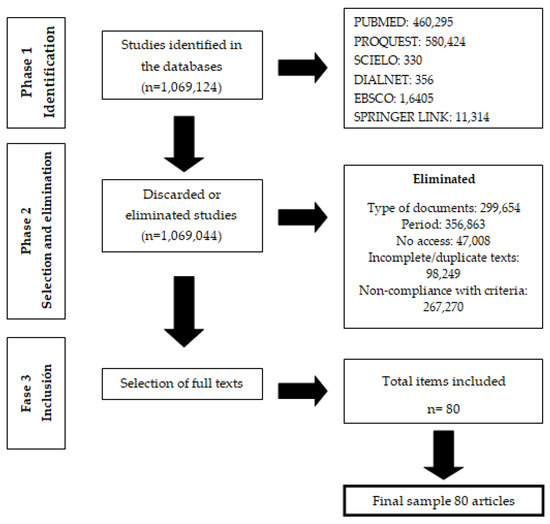
The eligibility criteria were determined following the order established in the methodology by developing each of the phases of the PRISMA flowchart (Figure 1).
Figure 1.
PRISM diagram.
3.1. Identification Phase
The search was performed in the databases PubMed, ProQuest, Scielo, Dialnet, EBSCO, and Springer Link, according to the crosses of variables constructed from DECS and MESH keywords. Then, the following filters were applied: type of document, time window, full or duplicate text, articles without access, and non-compliance with criteria. Finally, articles were selected to obtain the final sample of 80 articles that were used in this investigation (See Table 4).
Table 4.
Filters applied.
3.2. Selection and Elimination Phase
The initial selection of the research articles was carried out through the preliminary reading of the titles, summaries, and, later, the introduction, allowing the identification of the most relevant articles regarding the subject under investigation, with a total of 80 selected articles. The results for each variable crossing in English are listed below (see Table 5) for the six PubMed, ProQuest, Scielo, Dialnet, EBSCO, and Springer Link databases.
Table 5.
Results of the English language crosses in the databases.
In the first search, 17 crosses were made in English between the different variables, resulting in 26 articles from PubMed, 24 from ProQuest, 16 from Scielo, 3 from Dialnet, 5 from EBSCO, and 6 from Springer Link, for a total of 80 items.
3.3. Inclusion Phase
The selection proceeded after reading the titles and the summaries of the articles, and they were analyzed in their entirety with a complete read-through, applying criteria that allowed a selection that, thus, made it possible to obtain those that clearly answered the question posed initially. The selection corresponded to a final sample of 80 articles (See Table 6).
Table 6.
Study selection.
Table 7 shows the characterization of the stomatognathic system from its morphological changes.
Table 7.
Characterization of the stomatognathic system (morphological changes).
Table 8 presents the characterization of the stomatognathic system from its physiological changes.
Table 8.
Characterization of the stomatognathic system (physiological changes).
4. Discussion
The stomatognathic system (SS) is also called the masticatory apparatus (MA), and the word “stomatognathic” originates from the Greek “stoma” (mouth) and “gnathos” (jaw). The stomatognathic system refers to structures that are anatomically and functionally linked [51] to processes related to vital functions, such as breathing, sucking, chewing, and swallowing, and social functions, such as phonation and articulation [78], and these are integrated by different structures that allow the development of each function in a harmonious and balanced way [38,41]. First, there are bony structures, such as the skull, facial bones, hyoid bone, larynx, maxilla, mandible, and bony palate. There are also muscular structures, such as the muscles for mastication and facial expression and the muscles of the tongue, soft palate, pharynx, and neck, as well as other structures, such as the head, nose, oral cavity, teeth, and shoulders [29].
Based on the above, any change or alteration in any of the bodily structures can lead to its imbalance and this will simultaneously have an effect on the performance of its functions, thereby generating a negative influence on people’s daily lives [48]. Currently, studies demonstrate that obesity is the etiology of these structural and physiological changes, given that obese patients present excessive accumulations of adipose tissue in regions that have direct effects [19,75]. To reduce the dysfunctions associated with obesity, these patients undergo surgical interventions, including bariatric surgery, which appears to have a positive impact. However, if a patient does not receive an intervention for existing alterations, the alterations reportedly persist and even worsen [39,50].
Within the investigated databases, it is possible to provide details on the characterization of the SSs of patients with obesity and post-bariatric surgery. In terms of the facial features, patients with obesity may present an asymmetry, with differences in measurements of the middle and lower thirds of the face [18,30], as well as in the corners of the lips in the habitual position and when the subjects smile [70]. A flattened nose, with a possible deviated septum and turbinate hypertrophy caused by the narrowing of the nostrils, may trigger these patients to become oral breathers and affect other SS functions [36,52]. Hypotonic cheeks, with slight sagging on one side and dysfunction in performing requested exercises, such as inflating, retracting, and sucking, may also be present [18]. However, other authors state that the cheek hypertonia of the patients included in their studies was attributable to continuous food intake, an argument contradicted by theory, as it has been determined that obese patients do not perform the chewing phase correctly and have preferences to swallow food whole [30,54].
Atretic maxilla is evidenced when the hard palate is arched or vaulted and the soft palate, for its part, is increased in length and reduced in mobility, as well as being characterized by mobility alterations in the mandible, with rotation of the mandibular angle [34], and repercussions related to the presence of noises from the temporomandibular joint. Lips show the presence of dryness and are contracted during the swallowing process. In the usual state, they do not present a lip seal, their tone is decreased [54,72], and they exhibit dysfunction when performing requested praxias (protruding, retracting, and lateralizing to both sides) [18]. The upper lip, for its part, is short and hypo-functional, and the lower lip is observed to have great volume [30].
Regarding the oral cavity, a study based on the Mallampati scale—which is useful for analyzing air obstructions that prevent its passage from the nose and mouth to the lower respiratory tract—reported that the results obtained by these patients were Class III (indicating visualization of only the soft palate and uvula) and Class IV (indicating visualization only of the hard palate) [20], states that may indicate the appearance of obstructive sleep apnea [34]. Authors emphasize that the results of this scale in the case of a post-bariatric patient will remain unchanged, since such changes only depend on the gradual loss and reduction of the BMI, as structures such as the larynx and pharynx in obese patients are affected through the accumulation of fat in the respiratory tract, thickening and narrowing the lateral walls and obstructing the nasopharyngeal mechanics (adenotonsillar hypertrophy), which is why pharyngeal collapse can occur [20,36,81].
Dental wear is the gradual loss of tooth substance without the involvement of the caries process or interference from the action of microorganisms or trauma. Changes in lifestyle, diet, and behavior play a fundamental role in this process. Patients with obesity usually consume unhealthy diets and, therefore, have an oral profile including loss of teeth [54], erosion, attrition, abrasion, and dental fraction [58], as well as other characteristics independent of their diet, such as dental caries, periodontitis [2,32,66], open bite, and upper teeth protrusion [30]. Patients undergoing RYGB present recurrent acidity in the oral cavity compared to those undergoing SG, affecting dental erosion, periodontal disease, and hypersensitivity [2,58].
The orofacial muscles are crucial for the performance of stomatognathic functions that are relevant to health and quality of life. Therefore, for example, problems may arise in chewing and in the manipulation and propulsion of the food bolus during swallowing if performance is affected [74]. In the case of patients with obesity, their musculatures will be perceived as hypotonic with hyperfunction of the mentalis muscle and tension during swallowing [30], excessive contraction of the orbicularis oris [54], and hypotonicity of the temporalis muscle [70]. Regarding the musculature of the tongue, some studies register an increased tone [52,70]; however, most studies agree that it is hypotonic [30,54,72]. In addition, an increase in volume and an abnormal position, called “cloaked or low tongue”, or sometimes interposed between the dental arches [18,20,54], can be observed.
Finally, structures such as the head, neck, and shoulders are also highlighted within the information obtained from the studies, since functional harmony between them is necessary to ensure that each of the functions involved in the SS is correctly developed. When patients with obesity accumulate fat, the circumference of their neck increases, which is considered an anthropometric predictor of the severity of obstructive sleep apnea syndrome and of a possible collapse of the upper airway [42,52]. In addition, these patients adopt a head tilt and hyperflexion posture, with one shoulder more inclined relative to the other [30].
Undoubtedly, the results obtained reflect a broad characterization of the functions of the SS in obesity. Before bariatric surgery, patients with obesity suffer from respiratory disorders, such as alveolar hypoventilation and obstructive sleep apnea [63], apnea being a condition that has been reported on multiple occasions with a wide variety of evidence in scientific articles [13,18,20,44,57,60,82]. The respiratory mode of obese patients is oral because of the numerous structural changes; a chronic nasal obstruction is possibly maintained, thereby leading to attempts to restore the function that is vital for the patient’s survival and, consequently, affecting physiological breathing [18,36]. Likewise, there is an insufficient ability to perceive odors from the environment [30]. In addition to this, the collapse in the structures that make up the upper airway [42] may lead to respiratory failure and other lung diseases, such as asthma [20]. When there is an obstruction of the flow of air coming from the pulmonary complex, the vibration of the vocal folds and the number of times per second in which they must vibrate are affected, which is known as a decreased fundamental frequency. Phonorespiratory incoordination occurs because of poor air support as a result of affected lung capacity, which leads to alterations in vocal mechanics [52].
Episodes of snoring are frequent and are the result of limitations related to and increases in respiratory effort, causing hypoventilation or slow breathing and generating sleep interruption, also known as apnea [36]. Likewise, patients experience moderate dyspnea or a feeling of shortness of breath [44], which can, in extreme circumstances, trigger hypoxia, decreased oxygen supply to various tissues, or low desaturation [57] and reduced residual lung capacity. This indicates inadequate chest expansion and can, therefore, affect normal respiratory function [76]. Obstructive sleep apnea persists even after bariatric surgery; however, the development of adult respiratory distress syndrome is also possible [61]. In contrast, some bibliographic bases show the existence of a significant reduction in the rate of obstructive sleep apnea and hypopnea by ≥50% and of nocturnal episodes to <20 events per hour, which can be characterized as adequate or within a range of possible normality [57].
In the phonatory field, one study reports, through a speech evaluation, an air leak during the emission of phonemes, with mandibular deviation during spontaneous speech [70], as well as a short maximum phonation time, justified because ventilatory pressures are lower than expected during inspiration and expiration, causing a reduction in respiratory muscle strength, lung capacity, and respiratory reserve volume [11]. Obese patients present with fatigue and phonatory dysfunction because of the dehydration of the mucosa of the area, generating altered vocal qualities (strangled, hoarse, and gasping voice), the presence of murmurs, vocal instability, nervousness, and prosodic alteration of speech or vocal brightness [52]. However, these patients do not report significant improvements in the maximum phonation time after undergoing the surgical procedure [11].
The masticatory patterns of patients with obesity undergoing bariatric surgery are strongly affected. The characteristics are maintained before and after bariatric surgery, which means that the masticatory dysfunction does not change and is persistent. This dysfunction is caused by dental alterations, the cause of which is, theoretically, the high level of recurrent acidity in the oral cavity, which causes caries, erosion, or loss of teeth and dental hypersensitivity [2], as well as, simultaneously, a weak bite force. There is also a chronic unilateral preference [18,73] and mild mucosa in the dehydrated area [40], without a crushing phase, according to the food bolus [18], and hypotonicity, or low muscle tone, in the lips and tongue [28]. Chewing speed is also affected [69,70], and some patients show the ability to taste outside the normal parameters or decreased ability to taste [30] and low production of saliva or hyposalivation, which leads to difficulty in moistening and macerating food adequately and satisfactorily [40].
The swallowing function of patients with obesity, like the other vital functions, is also affected owing to the tension in the facial muscles and the abnormal position of the tongue during chewing (hooded or lowered tongue). The information that suggests that obese patients swallow repeatedly or abnormally is new, with alterations of 50% for swallowing solid consistencies and 25% for swallowing liquid consistencies [18]. The mucosa that converges in the process of swallowing food is dehydrated [4]. The swallowing pattern is classified as having low efficiency because of repeated swallowing of the bolus or multiple swallows [18]. These changes make it difficult to propel the food orally, in addition to the existence of pharyngeal, nasal, or palatal obstructions [30]. Patients may also show food residues in the oral cavity [70], a large food bolus construct [27,31], gastroesophageal reflux disease [32,44,83], and oropharyngeal dysphagia (OFD) [55], a symptom that refers to the difficulty in forming or moving the food bolus toward the pharyngeal wall or toward the esophagus and which is concurrently related to difficulty in oral propulsion. OFD causes alterations in safety (possible aspiration pneumonia) and efficacy (dehydration and malnutrition), thereby increasing the morbidity and mortality of individuals experiencing this condition and, consequently, deteriorating their quality of life [46,73]. Other features of the swallowing function in obese patients include esophagitis or inflammation, which damages the duct that extends from the throat to the stomach [83], and binge eating disorder or compulsive behavior through binge eating, where the main characteristic is loss of control over what is eaten [43,71]. The swallowing reflex is well coordinated with breathing patterns in normal humans. However, patients with obstructive sleep apnea syndrome may have a swallowing disorder that reflects abnormal nerve and muscle function in the suprapharynx [34].
Furthermore, the observation that patients with obesity have a nutcracker-shaped esophagus is frequently related to an anomaly or to hypercontractile motor disorder with characteristically high amplitude waves in the distal esophagus—the main symptoms being chest pain and dysphagia [81]. All the abovementioned alterations are categorized under the terms “swallowing dysfunction” and “adapted swallowing”. Theory defines adapted or atypical swallowing as an alteration in the oral phase of swallowing that is characterized by the inadequate position of the tongue and other structures of the oral cavity and that appears when there is an alteration in the form and function of the same. This altered pattern is observed when the structures of the oral cavity have to adapt as a consequence of a structural or functional alteration [60]. Sensations of choking or stagnation [18], gastroesophageal reflux [2,18], and binge eating disorder [43,71] are alterations that, according to theory, continue to present even after the postoperative period, which indicates that swallowing dysfunction persists after bariatric surgery.
In addition, the reviewed studies show the mechanical effects of obesity on pulmonary physiology and the function of adipose tissue, this latter being an endocrine organ that produces systemic inflammation and affects central respiratory control [49]. Patients with morbid obesity show increased total, airway, peripheral, and tissue system resistance, even though they do not show limitations in expiratory flow or reduced respiratory muscle strength [63]. The already mentioned mechanical effects on the respiratory system can trigger dyspnea, wheezing, and cough, thereby becoming a morbidity of the respiratory system [47]. Major respiratory complications of obesity are considered to include increased ventilatory demand, increased effort in breathing, respiratory muscle inefficiency, and decreased respiratory compliance [48].
Changes in respiratory system compliance and lung volumes can negatively affect pulmonary gas exchange and lead to upper airway obstruction and sleep-disordered breathing. Therefore, the perioperative period should be carefully observed [82]. Among other things, decreased functional residual capacity, decreased expiratory reserve volume, decreased compliance, and increased resistance of the respiratory system imply breathing with low lung volume, promoting airway closure in dependent lung zones with consequent abnormalities in gas exchange, even though the capacity of the lungs to diffuse carbon monoxide is normal or increased [83].
Obesity is characterized by increased systemic and pulmonary blood volume (pulmonary vascular congestion). The concomitant abnormal diffusion of the alveolar membrane suggests subclinical interstitial edema. In this setting, functional abnormalities should encompass the entire distal lung, including the airways [38]. These abnormalities are caused by the reduction in lung volume at rest; however, airway inflammation, vascular congestion, and/or concomitant intrinsic airway disease may occur [41]. A study of obese women demonstrated that the airways are characterized by hyperreactivity. Bronchial hyperreactivity is an exaggerated response of the bronchial mucosa and is the cause of bronchospasm. Some of the agents that can trigger bronchial hyperreactivity are respiratory infections, substances present in the environment, such as pollen or smoke, and certain drugs [72].
Global dysfunction of the distal lung (alveolar membrane and distal airways) is associated with pulmonary vascular congestion and failure to reach the high-output state of obesity. Pulmonary vascular congestion and consequent fluid transudation and/or alterations in alveolar-capillary membrane structure can be considered as often unrecognized causes of airway dysfunction in obesity [41].
One study describes the phenotype of pulmonary dysfunction in obesity as reduced functional residual capacity (FRC) with airway narrowing, distal respiratory dysfunction, and bronchodilator response [38]. The repercussions of obesity on respiratory function are associated, above all, with the restrictive alteration caused by excess adipose tissue. Increased fat in the chest and abdomen can shift the elastic equilibrium point between the chest and lungs, thereby reducing FRC [42]. Obesity also significantly interferes with respiratory function by decreasing lung volume, particularly expiratory reserve volume, and FRC [84].
For this reason, bariatric surgery effectively reduces neck and waist circumference, increases peak ventilatory pressures, improves sleep architecture, and reduces sleep-disordered breathing, specifically obstructive sleep apnea, in patients with severe obesity [80].
5. Conclusions
There are compromises that negatively affect the harmonious and joint form of the morphological and physiological unit that is the stomatognathic system (SS) in patients with obesity, which are due to an imbalance caused by the concentrated accumulation of adipose tissue characteristic of a BMI ≥ 40 kg/m2 or between 35 and 39.9 kg/m2 above that established for normality according to an individual’s height.
Breathing, chewing, and swallowing are the functions of the stomatognathic system in patients with obesity that provided the most information during the evidence search process. Most of the articles investigated coincided in specific information, which allowed the broad characterization of each of these functions and, in the same way, of those structural alterations that play a significant role in said functions. The most cited were lip dysfunction; cloaked tongue, or lingual and cheek hypotonia; lip hypotonia with no lip seal; the presence of periodontitis; dysfunction in the width and height of the hard palate; and, finally, thickening of the lateral walls of the pharynx.
Swallowing dysfunctions caused by gastroesophageal reflux may vary according to the bariatric procedure performed. If the patient undergoes RYGB, acid reflux will decrease, given the implications of the procedure, unlike if they undergo SG, which favors an increase in acid reflux in these patients and, simultaneously, the alteration of the stomatognathic system (SS) at the morphological level.
The information evidenced within the literature reflects the need to develop and implement multidisciplinary work with obese patients before and after they undergo bariatric surgery, given that the alterations of the stomatognathic system, if not treated in the preoperative period, may persist and even worse, thereby negatively impacting these patients’ quality of life.
After performing an exhaustive search on the stomatognathic system in patients with obesity before and after surgery and analyzing all the information obtained on the structural and functional alterations of this system, we noted that there is ample and clear evidence regarding the condition of obese patients who are candidates for bariatric surgery. However, when considering post-bariatric patients in relation to the stomatognathic system, the information changes and shows great limitations. Certainly, in this case, the data obtained were scarce.
It is evident how interest in bariatric surgery has grown in recent years. The number of bariatric surgeons has been progressively increasing, along with the number of patients undergoing these surgeries, which highlights considerable positive impacts on weight loss, metabolic control, and self-esteem, among others. However, many other diseases in obese patients that compromise this population’s quality of life, such as those of the SS, have been forgotten, and there is a lack of knowledge about the advantages of this surgery for the SS.
Considering the abovementioned information, the greatest contribution of this review would be to arouse interest in the evaluation of patients with obesity before and after surgery beyond weight control. A comprehensive and multidisciplinary evaluation should be performed that includes breathing, chewing, and swallowing as basic functions to be analyzed, thereby allowing patients to have a great opportunity to improve their quality of life.
Author Contributions
Conceptualization: G.F.G.-B., A.P.B.-M., V.C.-T. and G.P.-R.; Investigation: G.F.G.-B., A.P.B.-M., V.C.-T. and G.P.-R.; Methodology: C.S.-P., R.O.-B. and M.C.B.; Writing—original draft: G.F.G.-B., A.P.B.-M., V.C.-T., G.P.-R., C.S.-P., R.O.-B., M.C.B., D.R.-P. and V.B.; Writing—review and editing: G.F.G.-B., A.P.B.-M., V.C.-T., G.P.-R., C.S.-P., R.O.-B., M.C.B., D.R.-P. and V.B.; Funding acquisition: D.R.-P. and V.B. All authors have read and agreed to the published version of the manuscript.
Funding
(1) Ministerio de Ciencia, Tecnología e Innovación-Colombia and La Universidad Simón Bolívar-Colombia Joint Grant for strengthening health science, technology, and innovation for ongoing projects with young talent and regional impact. Call # 874-2020; Grant number (Contrato): No. 462, 2021. (2) Internal funds for research strengthening from Universidad Simón Bolívar, Vicerrectoría de Investigación, Extensión e Innovación, Barranquilla, Colombia.
Institutional Review Board Statement
Not applicable.
Informed Consent Statement
Not applicable.
Data Availability Statement
Not applicable.
Conflicts of Interest
The authors declare no conflict of interest.
References
- Barreto, J.F. Sistema estomatognático y esquema corporal. Colomb. Méd. 1999, 30, 173–180. [Google Scholar]
- Karlsson, L.; Carlsson, J.; Jenneborg, K.; Kjaeldgaard, M. Perceived oral health in patients after bariatric surgery using oral health-related quality of life measures. Clin. Exp. Dent. Res. 2018, 4, 230–240. [Google Scholar] [CrossRef] [Scilit] [PubMed]
- Nettle, D.; Andrews, C.; Bateson, M. Food insecurity as a driver of obesity in humans: The insurance hypothesis. Behav. Brain Sci. 2017, 40, e105. [Google Scholar] [CrossRef] [Scilit] [PubMed]
- Globus, I.; Kissileff, H.R.; Hamm, J.D.; Herzog, M.; Mitchell, J.E.; Latzer, Y. Comparison of interview to questionnaire for assessment of eating disorders after bariatric surgery. J. Clin. Med. 2021, 10, 1174. [Google Scholar] [CrossRef] [Scilit]
- Cadena, E. Obesidad un Factor de Riesgo en el COVID-19; Ministerio de Salud y Protección Social: Bogotá, Colombia, 2021. [Google Scholar]
- Camhi, S.M.; Must, A.; Gona, P.N.; Hankinson, A.; Odegaard, A.; Reis, J.; Gunderson, E.P.; Jacobs, D.R.; Carnethon, M.R. Duration and stability of metabolically healthy obesity over 30 years. Int. J. Obes. 2019, 43, 1803–1810. [Google Scholar] [CrossRef] [Scilit]
- De Lorenzo, A.; Gratteri, S.; Gualtieri, P.; Cammarano, A.; Bertucci, P.; Di Renzo, L. Why primary obesity is a disease? J. Transl. Med. 2019, 17, 169. [Google Scholar] [CrossRef] [Scilit]
- Malo Serrano, M.; Castillo, N.; Pajita, D. La obesidad en el mundo. Anal. Fac. Med. 2017, 78, 173–178. [Google Scholar] [CrossRef] [Scilit]
- Bates, J.H.T.; Peters, U.; Daphtary, N.; MacLean, E.S.; Hodgdon, K.; Kaminsky, D.A.; Bhatawadekar, S.; Dixon, A.E. Altered airway mechanics in the context of obesity and asthma. J. Appl. Physiol. 2021, 130, 36–47. [Google Scholar] [CrossRef] [Scilit]
- Valero, P.; Souki, A.; Arráiz Rodríguez, N.J.; Prieto Fuenmayor, C.; Cano-Ponce, C.; Acosta Martínez, J.; Chávez Castillo, M.; Sánchez, M.E.; Anderson Vásquez, H.E.; Plua Marcillo, W.; et al. Aspectos Básicos en Obesidad; Ediciones Universidad Simón Bolívar: Barranquilla, Colombia, 2018. [Google Scholar]
- Fonseca, A.L.F.; Salgado, W.; Dantas, O. Maximum phonation time in people with obesity not submitted or submitted to bariatric surgery. J. Obes. 2019, 2019, 5903621. [Google Scholar] [CrossRef] [Scilit]
- Tomasini, K.; Ziegler, B.; Sanchez, P.R.S.; da Silva Junior, D.P.; Thomé, P.R.; Dalcin, P.T.R. Dyspnea perception during the inspiratory resistive loads test in obese subjects waiting bariatric surgery. Sci. Rep. 2020, 10, 8023. [Google Scholar] [CrossRef] [Scilit]
- Carpio, C.; Santiago, A.; García de Lorenzo, A.; Álvarez-Sala, R. Función pulmonar y obesidad. Nutr. Hosp. 2014, 30, 1054–1062. [Google Scholar] [PubMed]
- Mashaqi, S.; Steffen, K.; Crosby, R.; Garcia, L. The impact of bariatric surgery on sleep disordered breathing parameters from overnight polysomnography and home sleep apnea test. Cureus 2018, 10, e2593. [Google Scholar] [CrossRef] [Scilit] [PubMed]
- Victor Taba, J.; Oliveira Suzuki, M.; do Nascimento, F.S.; Ryuchi Iuamoto, L.; Hsing, W.T.; Zumerkorn Pipek, L.; Andraus, W. The development of feeding and eating disorders after bariatric surgery: A systematic review and meta-analysis. Nutrients 2021, 13, 2396. [Google Scholar] [CrossRef] [Scilit] [PubMed]
- Benzerouk, F.; Djerada, Z.; Bertin, E.; Barrière, S.; Gierski, F.; Kaladjian, A. Contributions of emotional overload, emotion dysregulation, and impulsivity to eating patterns in obese patients with binge eating disorder and seeking bariatric surgery. Nutrients 2020, 12, 3099. [Google Scholar] [CrossRef] [Scilit]
- Maluenda, G.F. Cirugía bariátrica. Rev. Med. Clin. Condes 2012, 23, 180–188. [Google Scholar]
- Del Negro, C.A.; Funk, G.D.; Feldman, J.L. Breathing matters. Nat. Rev. Neurosci. 2021, 19, 351–367. [Google Scholar] [CrossRef] [Scilit]
- Andrade Rocha, A.C.; De Souza Conceição, N.O.; Mangili Toni, L.D. Chewing and swallowing in obese individuals referred to bariatric surgery/gastroplasty—A pilot study. Rev. CEFAC 2021, 221, e8519. [Google Scholar]
- Crummy, A.; Piper, A.; Naughton, M.T. Obesity and the lung: 2·Obesity and sleep-disordered breathing. Thorax 2008, 63, 38–746. [Google Scholar] [CrossRef] [Scilit]
- Souza, N.; Guedes, Z.C.F. Mastigação e deglutição de crianças e adolescentes obesos. Rev. CEFAC 2016, 18, 1340–1347. [Google Scholar] [CrossRef] [Scilit]
- Mores, R.; Delgado, S.E.; Martins, N.F.; Anderle, P.; Longaray, C.; Pasqualeto, V.M.; Berbert, M.B. Caracterização dos distúrbios de sono, ronco e alterações do sistema estomatognático de obesos candidatos à Cirurgia Bariátrica. Rev. Bras. Obes. Nutr. Emagrecimento 2017, 11, 64–74. [Google Scholar]
- Red Para la Lectoescritura Inicial de Centroamérica y el Caribe. Diseño y Realización de Revisiones Sistemáticas. Una Guía de Formación para Investigadores de Lectoescritura Inicial (LEI); Ediciones RedLEI: Guatemala, 2021; Available online: https://red-lei.org/wp-content/uploads/2021/03/Directrices-de-Revisiones-Sistematicas.pdf (accessed on 2 February 2022).
- Beltrán, O.A. Revisiones sistemáticas de la literature. Rev. Colomb. Gastroenterol. 2005, 20, 60–69. [Google Scholar]
- Gonzalez de Dios, J.; Balaguer Santamaría, A. Valoración crítica de artículos científicos. Parte 2: Revisiones sistemáticas y metaanálisis. FAPap Monogr. 2021, 6, 14–26. [Google Scholar]
- Landa-Ramírez, E.; Arredondo-Pantaleón, A. Herramienta Pico para la formulación y búsqueda de preguntas clínicamente relevantes en la psicooncología basada en la evidencia. Psicooncología 2014, 11, 259–270. [Google Scholar] [CrossRef] [Scilit]
- Pergunta, D. Estrategia Pico para la construcción de la pregunta de investigación y la búsqueda de evidencias. Rev. Latino Enfermagem. 2007, 15. Available online: https://www.researchgate.net/publication/283522391_Estrategia_pico_para_la_construccion_de_la_pregunta_de_investigacion_y_la_bsqueda_de_evidencias (accessed on 2 February 2022).
- Urrútia, G.; Bonfill, X. Declaración PRISMA: Una propuesta para mejorar la publicación de revisiones sistemáticas y metaanálisis. Med. Clín. 2012, 135, 507–511. [Google Scholar] [CrossRef] [Scilit]
- García, C.M.; del Castillo, M.D.M. Plan de cuidados estandarizado en cirugía bariátrica. NURE Investig. Rev. Cien. Enferm. 2006, 20, 4. [Google Scholar]
- Pachón Salem, L.E. Formulación de criterios para registrar posición lingual en pacientes con deglución atípica mediante Glumap. Areté 2016, 16, 109–120. [Google Scholar]
- Fuenzalida, R.; Hernández-Mosqueira, C.; Serey, J.P. Alteraciones Estructurales y Funcionales del Sistema Estomatognático: Manejo fonoaudiológico. Areté 2017, 17, 29–35. [Google Scholar] [CrossRef] [Scilit]
- Bolzan Berlese, D.; Copetti, F.; Maciel Weimmann, A.R.; Fabtinel Fontana, P.; Bonfanti Haeffner, L.S. Atividade dos Músculos Masseter e Temporal em Relação às Características Miofuncionais das Funções de Mastigação e deglutição em obesos. Distúrbios Comun. 2012, 24, 215–221. [Google Scholar]
- Mosquim, V.; Foratoti Junior, G.A.; Saory Hissano, W.; Wang y, L.; de Carvalho Sales Peres, S.H. Obesidade, cirurgia bariátrica e O impactO na saúde bucal: RevisãO de literature. Rev. Salusvita 2019, 38, 117–132. [Google Scholar]
- Teramoto, S.; Sudo, E.; Matsuse, T.; Ohga, E.; Ishii, T.; Ouch, Y.; Fukuchi, Y. Impaired swallowing reflex in patients with obstructive sleep apnea syndrome. Chest 1999, 116, 17–21. [Google Scholar] [CrossRef] [Scilit] [PubMed]
- Godlewski, A.E.; Veyrune, J.L.; Nicolas, E.; Ciangura, C.A.; Chaussain, C.C.; Czernichow, S.; Basdevant, A.; Hennequin, M. Effect of dental status on changes in mastication in patients with obesity following bariatric surgery. PLoS ONE 2011, 6, e22324. [Google Scholar] [CrossRef] [Scilit] [PubMed]
- Zicari, A.M.; Marzo, G.; Rugiano, A.; Celani, C.; Carbone, M.P.; Tecco, S.; Duse, M. Habitual snoring and atopic state: Correlations with respiratory function and teeth occlusion. BMC Pediatrics 2012, 12, 175. [Google Scholar] [CrossRef] [Scilit] [PubMed]
- Marin, G.; Gamez, A.S.; Molinari, N.; Kacimi, D.; Vachier, I.; Paganin, F.; Chanez, P.; Bourdin, A. Distal airway impairment in obese normoreactive women. BioMed Res. Int. 2013, 2013, 707856. [Google Scholar] [CrossRef] [Scilit]
- Oppenheimer, B.W.; Berger, K.I.; Segal, L.N.; Stabile, A.; Coles, K.D.; Parikh, M.; Goldring, R.M. Airway dysfunction in obesity: Response to voluntary restoration of end expiratory lung volume. PLoS ONE 2014, 9, e88015. [Google Scholar] [CrossRef] [Scilit]
- Pouwels, S.; Smeenk, F.W.; Manschot, L.; Lascaris, B.; Nienhuijs, S.; Bouwman, R.A.; Buise, M.P. Perioperative respiratory care in obese patients undergoing bariatric surgery: Implications for clinical practice. Respir. Med. 2016, 117, 73–80. [Google Scholar] [CrossRef] [Scilit]
- Tulek, A.; Mulic, A.; Hogset, M.; Utheim, T.P.; Sehic, A. Therapeutic strategies for dry mouth management with emphasis on electrostimulation as a treatment option. Int. J. Dent. 2021, 2021, 6043488. [Google Scholar] [CrossRef] [Scilit]
- Oppenheimer, B.W.; Berger, K.I.; Ali, S.; Segal, L.N.; Donnino, R.; Katz, S.; Parikh, M.; Goldring, R.M. Pulmonary vascular congestion: A mechanism for distal lung unit dysfunction in obesity. PLoS ONE 2016, 11, e0152769. [Google Scholar] [CrossRef] [Scilit]
- de Felício, C.M.; da Silva Dias, F.V.; Trawitzki, L.V.V. Obstructive sleep apnea: Focus on myofunctional therapy. Nat. Sci. Sleep 2018, 10, 271–286. [Google Scholar] [CrossRef] [Scilit]
- Cella, S.; Fei, L.; D’Amico, R.; Giardiello, C.; Allaria, A.; Cotrufo, P. Binge eating disorder and related features in bariatric surgery candidates. Open Med. 2019, 14, 407–415. [Google Scholar] [CrossRef] [Scilit]
- Pizzorni, N.; Radovanovic, D.; Pecis, M.; Lorusso, R.; Annoni, F.; Bartorelli, A.; Rizzi, M.; Schindler, A.; Santus, P. Dysphagia symptoms in obstructive sleep apnea: Prevalence and clinical correlates. Respir. Res. 2021, 22, 117. [Google Scholar] [CrossRef] [Scilit] [PubMed]
- Torrente-Sánchez, M.J.; Ferer-Márquez, M.; Estébanez-Ferrero, B.; Jiménez-Lasserrotte, M.D.; Ruiz-Muelle, A.; Ventura-Miranda, M.I.; Dobarrio-Sanz, I.; Granero-Molina, J. Social support for people with morbid obesity in a bariatric surgery programme: A qualitative descriptive study. Int. J. Environ. Res. Public Health 2021, 18, 6530. [Google Scholar] [CrossRef] [Scilit] [PubMed]
- Womble, J.T.; McQuade, V.L.; Ihrie, M.D.; Ingram, J.L. Imbalanced coagulation in the airway of Type-2 high asthma with comorbid obesity. J. Asthma Allergy 2021, 14, 967–980. [Google Scholar] [CrossRef] [Scilit] [PubMed]
- Deane, S.; Thomson, A. Obesity and the pulmonologist. Arch. Dis. Child. 2006, 91, 188–191. [Google Scholar] [CrossRef] [Scilit]
- Parameswaran, K.; Todd, D.C.; Soth, M. Altered respiratory physiology in obesity. Can. Respir. J. 2006, 13, 203–210. [Google Scholar] [CrossRef] [Scilit]
- Zammit, C.; Liddicoat, H.; Moonsie, I.; Makker, H. Obesity and respiratory diseases. Int. J. Gen. Med. 2012, 3, 335–343. [Google Scholar]
- Porhomayon, J.; Papadakos, P.; Singh, A.; Nader, N.D. Alteration in respiratory physiology in obesity for anesthesia-critical care physician. HSR Proc. Intens. Care Cardiovasc. Anesth. 2011, 3, 109–118. [Google Scholar]
- Mizraji, M.; Freese, A.M.; Bianchi, R. Sistema estomatognático. Actas Odontológicas 2012, 9, 35–47. [Google Scholar]
- Rocha de Souza, L.B.; Medeiros Pereira, R.; Marques Dos Santos, M.; Almeida Godoy, C.M. Fundamental frequency, phonation maximum time and vocal complaints in morbidly obese women. Arq. Bras. Cir. Dig. 2014, 27, 43–46. [Google Scholar] [CrossRef] [Scilit]
- Huseini, M.; Wood, G.C.; Seiler, J.; Argyropoulos, G.; Irving, B.A.; Gerhard, G.S.; Benotti, P.; Still, C.; Rolston, D. Gastrointestinal symptoms in morbid obesity. Front. Med. 2014, 1, 49. [Google Scholar] [CrossRef] [Scilit]
- Braude Canterji, M.; Miranda Correa, S.P.; Vargas, G.S.; Ruttkay Pereira, J.L.; Finard, S.A. Intervenção fonoaudiológica na cirurgia bariátrica do idoso: Relato De Caso. Arq. Bras. Cir. Dig. 2015, 28, 86–87. [Google Scholar]
- Hodgson, L.E.; Murphy, P.B.; Hart, N. Respiratory management of the obese patient undergoing surgery. J. Thorac. Dis. 2015, 7, 943–952. [Google Scholar] [PubMed]
- Nath, A.; Yewale, S.; Tran, T.; Brebbia, J.S.; Shope, T.R.; Koch, T.R. Dysphagia after vertical sleeve gastrectomy: Evaluation of risk factors and assessment of endoscopic intervention. World J. Gastroenterol. 2016, 22, 10371–10379. [Google Scholar] [CrossRef] [Scilit] [PubMed]
- Wickerts, L.; Forsberg, S.; Bouvier, F.; Jakobsson, J. Monitoring respiration and oxygen saturation in patients during the first night after elective bariatric surgery: A cohort study. F1000 Res. 2017, 6, 735. [Google Scholar] [CrossRef] [Scilit]
- Schwartz, M.W.; Seeley, R.J.; Zeltser, L.M.; Drewnowski, A.; Ravussin, E.; Redman, L.M.; Leibel, R.L. Obesity pathogenesis: An endocrine society scientific statement. Endocr. Rev. 2017, 38, 267–296. [Google Scholar] [CrossRef] [Scilit]
- Simões da Rocha, M.R.; Souza, S.; Moraes da Costa, C.; Bertelli Merino, D.F.; de Lima Montebelo, M.I.; Pazzianotto-Forti, R.J. Airway positive pressure vs. exercises with inspiratory loading focused on pulmonary and respiratory muscular functions in the postoperative period of bariatric surgery. Arq. Bras. Cir. Dig. 2018, 31, e1363. [Google Scholar]
- Jehan, S.; Myers, A.K.; Zizi, F.; Pandi-Perumal, S.R.; Jean-Louis, G.; McFarlane, S.I. Obesity, obstructive sleep apnea and type 2 diabetes mellitus: Epidemiology and pathophysiologic insights. Sleep Med. Disord. Int. J. 2018, 2, 52–58. [Google Scholar]
- Meurgey, J.H.; Brown, R.; Woroszyl-Chrusciel, A.; Steier, J. Peri-operative treatment of sleep-disordered breathing and outcomes in bariatric patients. J. Thorac. Dis. 2018, 10, S144–S152. [Google Scholar] [CrossRef] [Scilit]
- Mokhlesi, B.; Masa, J.F.; Brozek, J.L.; Gurubhagavatula, I.; Murphy, P.B.; Piper, A.J.; Tulaimat, A.; Afshar, M.; Balachandran, J.S.; Dweik, R.A.; et al. Evaluation and management of obesity hypoventilation syndrome. An official American Thoracic Society clinical practice guideline. Am. J. Respir. Crit. Care Med. 2019, 200, e6–e24. [Google Scholar] [CrossRef] [Scilit]
- Sant’Anna, M.; Carvalhal, R.F.; Oliveira, F.; Zin, W.A.; Lopes, A.J.; Lugon, R.J.; Guimarães, F.S. Mecânica respiratória de pacientes com obesidade morbid. J. Bras. Pneumol. 2019, 45, e20180311. [Google Scholar] [CrossRef] [Scilit]
- Jaruvongvanich, V.; Matar, R.; Ravi, K.; Murad, M.H.; Vantanasiri, K.; Wongjarupong, N.; Ungprasert, P.; Vargas, E.J.; Maselli, D.B.; Prokop, L.J.; et al. Esophageal pathophysiologic changes and adenocarcinoma after bariatric surgery: A systematic review and meta-analysis. Clin. Transl. Gastroenterol. 2020, 11, e00225. [Google Scholar] [CrossRef] [Scilit] [PubMed]
- Dantas Giglio, L.; Felício, C.M.D.; Voi Trawitzki, L. Orofacial functions and forces in male and female healthy young and adults. Codas 2020, 32, e20190045. [Google Scholar] [CrossRef] [Scilit] [PubMed]
- Franco, R.; Barlattani, A., Jr.; Perrone, M.A.; Basili, M.; Miranda, M.; Costacurta, M.; Gualtieri, P.; Pujia, A.; Merra, G.; Bollero, P. Obesity, bariatric surgery and periodontal disease: A literature update. Eur. Rev. Med. Pharmacol. Sci. 2020, 24, 5036–5045. [Google Scholar] [PubMed]
- García-Delgado, Y.; López-Madrazo-Hernández, M.J.; Alvarado-Martel, D.; Miranda-Calderín, G.; Ugarte-Lopetegui, A.; González-Medina, R.A.; Wägner, A.M. Prehabilitation for Bariatric Surgery: A Randomized, Controlled Trial Protocol and Pilot Study. Nutrients 2021, 13, 2903. [Google Scholar] [CrossRef] [Scilit]
- Berlese, D.B.; Fontana, P.F.F.; Botton, L.; Weimnann, A.R.M.; Haeffner, L.S. Características miofuncionais de obesos respiradores orais e nasais. Rev. Codas 2012, 17, 171–176. [Google Scholar] [CrossRef] [Scilit]
- Marques Gonçalves, R.D.F.; Zimberg Chehter, E. Masticatory profile of morbidly obese patients undergoing gastroplasty/Perfil mastigatorio de obesos morbidos submetidos a gastroplastia. Rev. CEFAC 2012, 14, 489–498. [Google Scholar]
- Silva, A.S.; Tanigute, C.C.; Tessitore, A. A necessidade da avaliação fonoaudiológica no protocolo de pacientes candidatos à cirurgia bariátrica. Rev. CEFAC 2014, 16, 1655–1668. [Google Scholar] [CrossRef] [Scilit]
- Pd Azevedo, A.; Cd Santos, C.; Cd Fonseca, D. Transtorno da compulsão alimentar periódica. Arch. Clin. Psychiatry 2004, 31, 170–172. [Google Scholar] [CrossRef] [Scilit]
- Gonçalves, M.; Zimberg, E. Speech therapy intervention in morbidly obese undergoing fobi-capell gastroplasty method. ABCD. Arq. Bras. Cir. Dig. 2016, 29, 43–47. [Google Scholar] [CrossRef] [Scilit]
- Álvarez Hernández, J. Disfagia Orofaríngea: Soluciones Multidisciplinares; Hospital Universitario Príncipe de Asturias: Madrid, Spain, 2018. [Google Scholar]
- Xavier Torres, G.M.; Hernandez Alvez, C. Physiology of exercise in orofacial motricity: Knowledge about the issue. Rev. CEFAC 2019, 21, e14318. [Google Scholar] [CrossRef] [Scilit]
- Duarte Aznar, F.; Aznar, F.D.; Lauris, J.R.; Adami Chaim, E.; Cazzo, E.; Sales-Peres, S.H. Dental wear and tooth loss in morbid obese patients after bariatric surgery. Arq. Bras. Cir. Dig. 2019, 32, e1458. [Google Scholar] [CrossRef] [Scilit] [PubMed]
- Silva Gebara, T.; Mocelin Polli, G.; Wanderbroocke, A.C. Eating and bariatric surgery: Social representations of obese people. Psicol. Ciência Profissão 2021, 41, e222795. [Google Scholar]
- Lemme, E.M.O.; Alvariz, A.C.; Pereira, G.L. Esophageal functional disorders in the pre-operatory evaluation of bariatric surgery. Arq. Gastroenterol. 2021, 58, 190–194. [Google Scholar] [CrossRef] [Scilit] [PubMed]
- Dantas Lima, A.C.D.; Costa Albuquerque, R.; Andrade Cunha, D.A.; Dantas Lima, C.; Henrique Lima, S.J.; Justino Silva, H. Relation of sensory processing and stomatognical system of oral respiratory children. Codas 2021, 34, e20200251. [Google Scholar]
- Mafort, T.T.; Rufino, R.; Costa, C.H.; Lopes, A.J. Obesity: Systemic and pulmonary complications, biochemical abnormalities, and impairment of lung function. Multidiscip. Respir. Med. 2016, 11, 28. [Google Scholar] [CrossRef] [Scilit] [PubMed]
- Aguiar, I.C.; Freitas, W.R.; Santos, I.R.; Apostolico, N.; Nacif, S.R.; Urbano, J.J.; Fonsêca, N.T.; Thuler, F.R.; Ilias, E.J.; Kassab, P.; et al. Obstructive sleep apnea and pulmonary function in patients with severe obesity before and after bariatric surgery: A randomized clinical trial. Multidiscip. Respir. Med. 2014, 9, 43. [Google Scholar] [CrossRef] [Scilit]
- Villa, M.P.; Evangelisti, M.; Martella, S.; Barreto, M.; Del Pozzo, M. Can myofunctional therapy increase tongue tone and reduce symptoms in children with sleep-disordered breathing? Sleep Breath 2017, 21, 1025–1032. [Google Scholar] [CrossRef] [Scilit]
- Caparroz, F.; Campanholo, M.; Stefanini, R.; Vidigal, T.; Haddad, L.; Bittencourt, L.R.; Tufik, S.; Haddad, F. Laryngopharyngeal reflux and dysphagia in patients with obstructive sleep apnea: Is there an association? Sleep Breath 2019, 23, 619–626. [Google Scholar] [CrossRef] [Scilit]
- Kristo, I.; Paireder, M.; Jomrich, G.; Felsenreich, D.M.; Fischer, M.; Hennerbichler, F.P.; Langer, F.B.; Prager, G.; Schoppmann, S.F. Silent gastroesophageal reflux disease in patients with morbid obesity prior to primary metabolic surgery. Obes. Surg. 2020, 30, 4885–4891. [Google Scholar] [CrossRef] [Scilit]
- Sandoval-Munoz, C.P.; Haidar, Z.S. Neuro-Muscular Dentistry: The “diamond’ concept of electro-stimulation potential for stomato-gnathic and oro-dental conditions. Head Face Med. 2021, 17, 2. [Google Scholar] [CrossRef] [Scilit]

Publisher’s Note: MDPI stays neutral with regard to jurisdictional claims in published maps and institutional affiliations. |
© 2022 by the authors. Licensee MDPI, Basel, Switzerland. This article is an open access article distributed under the terms and conditions of the Creative Commons Attribution (CC BY) license (https://creativecommons.org/licenses/by/4.0/).