


Abstract
Light is a critical environmental factor influencing the growth, development, productivity, and nutritional quality of watercress (Nasturtium officinale) in controlled environments. This review examines how light intensity, spectrum, and photoperiod affect watercress physiology, biomass production, morphology, photosynthesis, and accumulation of health-promoting phytochemicals including glucosinolates, phenethyl isothiocyanate (PEITC), chlorophyll a, chlorophyll b, carotenoids (β-carotene, lutein, and zeaxanthin), phenolic compounds, flavonoids (quercetin and kaempferol), and vitamin C (ascorbic acid). Published studies investigating varying light regimes, including irradiance, blue and red wavelengths and photoperiods, were evaluated, considering interactions with temperature, carbon dioxide, water, and nutrient availability. The findings indicate that insufficient light can restrict photosynthesis and biomass accumulation, whereas excessive irradiance may cause photoinhibition and reduced physiological performance, amongst other factors. Light quality also strongly influences plant morphology, photosynthetic activity, and nutritional composition, while photoperiod contributes to growth and developmental regulation. Notably, a red-to-blue LED ratio of 7:3 (7R:3B) produces the highest stem length, shoot fresh and dry weight. Other studies have shown that a 50:50 red-to-white LED combination enhances fresh biomass accumulation and photosynthetic performance, whereas green light promotes vitamin C and phenolic compound accumulation. Supplemental blue light increases carotenoid concentrations but may reduce vitamin C levels. Under an equivalent daily light integral, a 12-h photoperiod maximized instantaneous photosynthetic rates, while a 20-h photoperiod produced the highest mean biomass; however, biomass differences between photoperiod treatments were not statistically significant. Overall, successful watercress production requires lighting strategies that optimize light intensity, spectral composition and photoperiod in conjunction with temperature, nutrient availability and water supply to maximize growth, yield and nutritional quality. Future research should prioritize dynamic, cultivar-specific, and precision lighting approaches integrated with environmental controls to improve resource-use efficiency and consistently produce high-quality watercress.
1. Introduction
Light is a major environmental factor regulating photosynthesis, carbon assimilation and plant growth. Photosynthesis converts light energy into chemical energy, which is subsequently used to support plant development and biomass production. In controlled-environment agriculture, light is particularly important because its intensity, spectral composition, and duration can be adjusted to regulate plant growth and development [1].
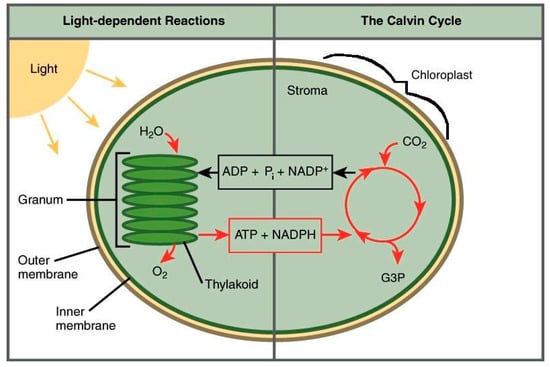
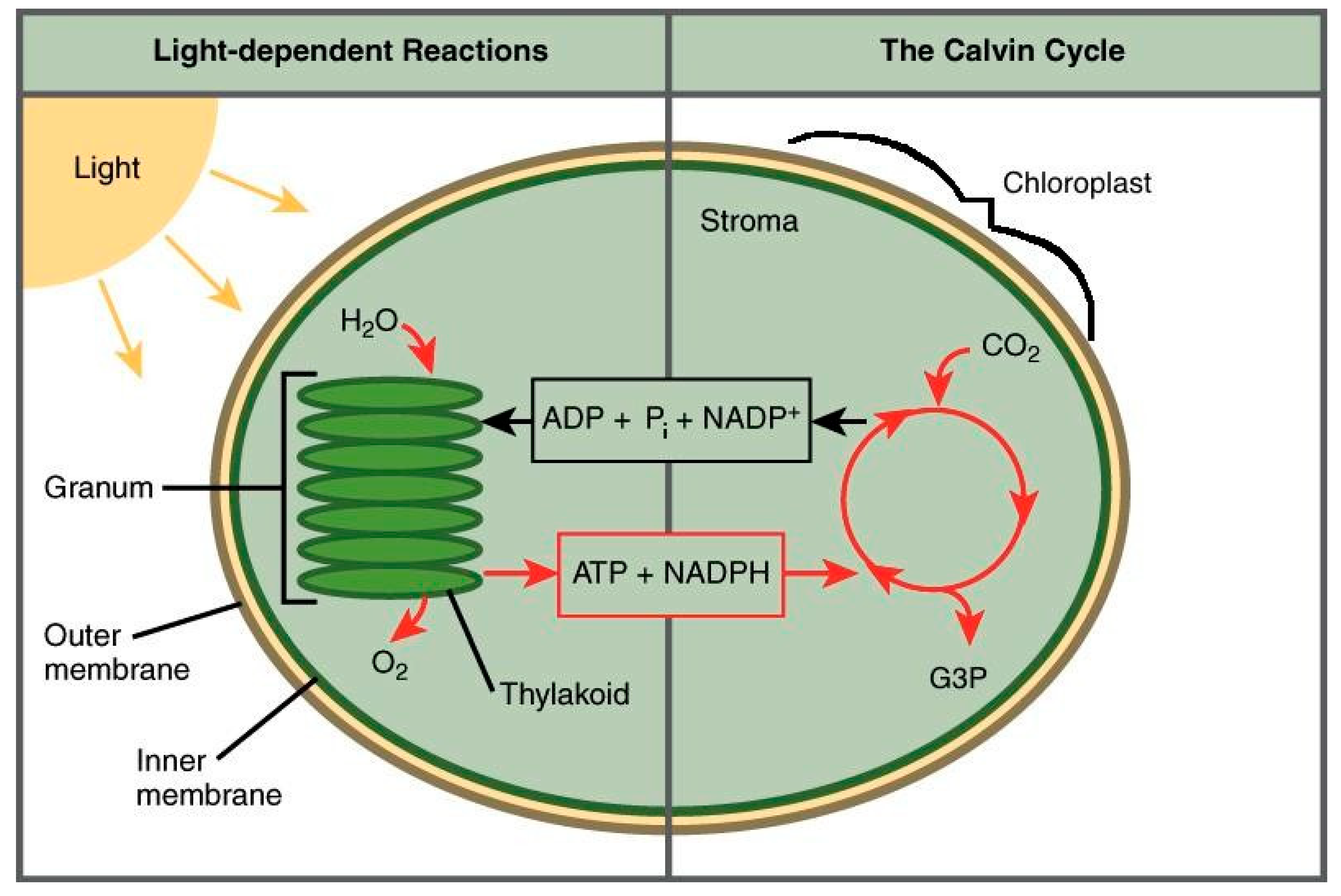
Consequently, light intensity is an important factor in maximizing watercress yield and growth. Insufficient light can restrict photosynthetic activity and biomass accumulation, whereas excessive irradiance may cause photoinhibition and reduce photosynthetic efficiency [1,2]. Crop productivity is therefore strongly dependent on photosynthetic performance, which can be impaired by either insufficient or excessive light as shown in Figure 1.
Figure 1.
Overview of photosynthesis. Reproduced from [3].
Plants primarily use photosynthetically active radiation (PAR), corresponding to wavelengths of approximately 400–700 nm, for photosynthesis. As light intensity increases from low levels, the photosynthetic rate generally increases until a saturation point is reached. Plants can adjust to changes in light availability through several mechanisms, including the dissipation of excess excitation energy, adjustments in light-harvesting capacity and changes in chloroplast positioning. These responses enable plants to optimize light capture while minimizing photodamage under fluctuating light conditions [2]. In watercress, responses to light availability can also involve changes in biomass allocation and leaf morphology [4]. Plants grown under low-light conditions have been reported to produce less biomass and smaller roots than those grown under higher light intensity, while developing larger leaves that may improve light interception [4]. These findings suggest that watercress can respond to limited light through morphological adjustments as well as changes in growth.
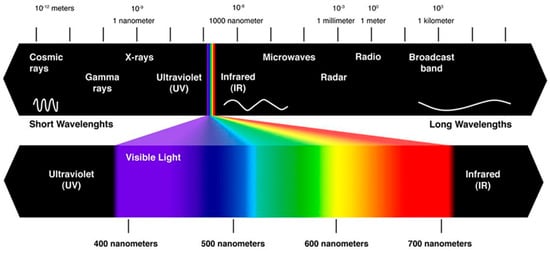
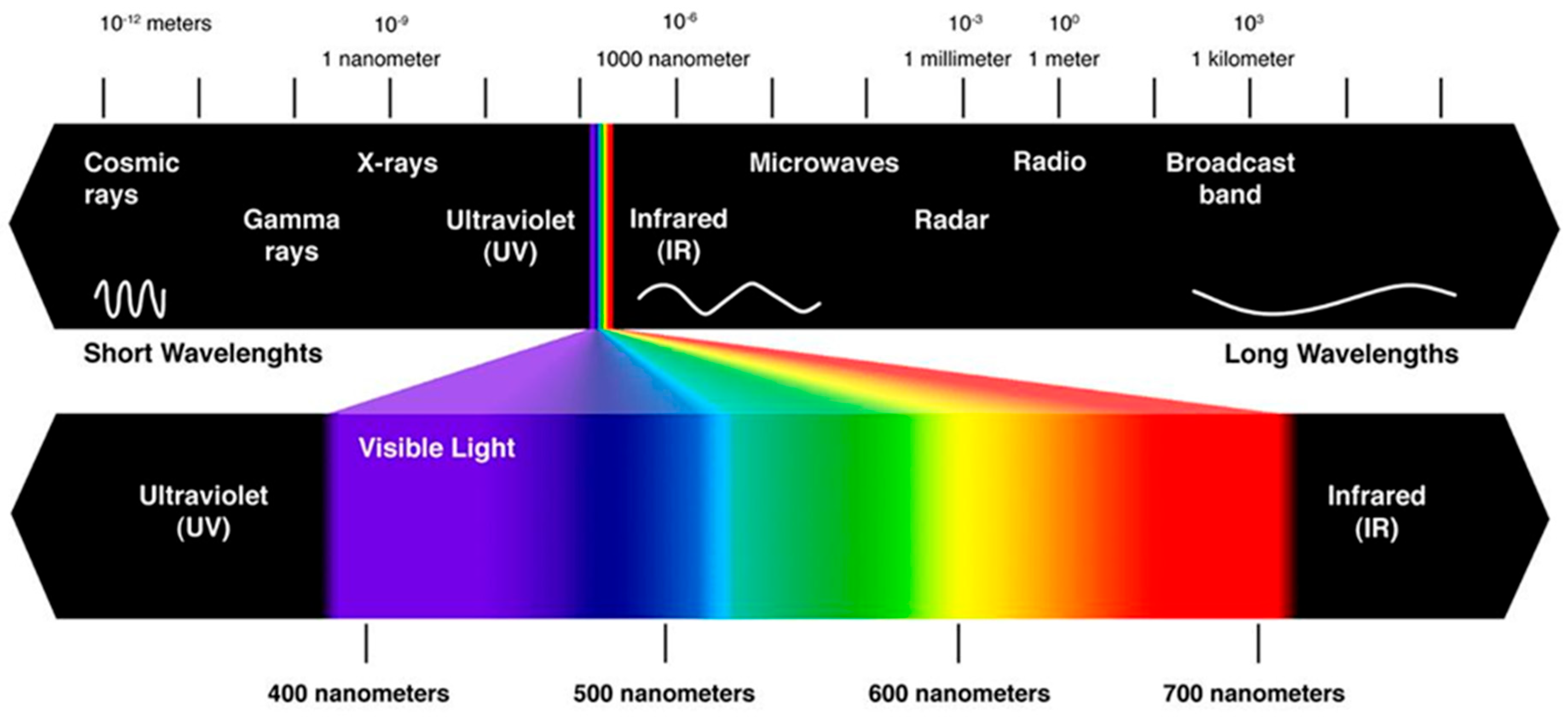
These findings suggest that watercress can acclimate to low light partly through morphological changes rather than through maintenance of photosynthetic activity alone [4]. In CEA, light spectral quality, defined as the distribution of wavelengths across the electromagnetic spectrum (Figure 2), influences photosynthesis, plant morphology, and metabolite production, making it a key tool for optimizing crop growth and quality [2].
Figure 2.
The electromagnetic spectrum illustrating the wavelength ranges of different types of electromagnetic radiation. Adapted from [5].
Light intensity can therefore have substantial effects on watercress growth and biomass accumulation. Under low-light conditions, reduced energy availability limits photosynthesis and carbohydrate production, potentially resulting in slower growth, pale leaves, and reduced biomass. Conversely, excessive light can cause photoinhibition and reduce photosynthetic efficiency [6]. The duration and consistency of light exposure are also important. Plants exposed to a stable light regime can achieve greater biomass than those exposed to intermittent or frequently disrupted lighting schedules, indicating that both light intensity and photoperiod influence plant productivity and quality [6,7]. In watercress, light availability can influence morphological traits such as leaf size, stem length, and fresh and dry biomass. The daily light integral (DLI) and mean daily light intensity (MLI) have been investigated as factors affecting watercress growth under hydroponic conditions [8]. Although temperature had a stronger effect on fresh biomass than light availability in that study, increasing DLI promoted dry-mass accumulation.
Higher DLI also influenced plant height, branching, and photosynthetic efficiency, although these responses depended on temperature [8]. Other studies have similarly shown that increasing light intensity can produce shorter but more robust and nutritionally valuable plants [6]. Thus, optimizing both light intensity and photoperiod may be important for maximizing fresh biomass, leaf development, and overall watercress productivity [6,9]. Beyond optimizing environmental conditions such as light, the choice of production system is also critical for improving crop productivity and resource-use efficiency.
Soilless production systems, including hydroponics and aquaponics, provide alternative approaches for crop cultivation in regions affected by poor soil quality, limited water availability, restricted land resources or environmental constraints. These systems can provide controlled growing conditions while improving water-use efficiency. Hydroponic, aquaponic, and soil-based cultivation systems for watercress were compared using a completely randomized design with five replications [10]. Watercress grown in hydroponic and aquaponic systems showed greater plant height, leaf development, root length and overall growth than plants grown in soil. The soilless systems also used less water, highlighting their potential for more resource-efficient production. However, soil-grown plants showed higher chlorophyll concentrations and greater levels of some minerals, including zinc and iron, whereas plants cultivated in soilless systems had higher concentrations of carotenoids, protein, and proline [10].
Despite advances in CEA, the interactive effects of light intensity and photoperiod on watercress growth and physiological performance remain incompletely characterized across cultivation conditions [2,4]. Although previous studies have investigated light intensity, photoperiod and daily light integral, their effects on biomass accumulation and photosynthetic responses vary with temperature and other environmental factors [8]. Furthermore, the extent to which optimized lighting regimes improve both productivity and nutritional quality under controlled soilless cultivation requires further investigation [1]. The potential of AI-regulated growing systems to identify and maintain optimal lighting conditions for watercress production also warrants evaluation. This study therefore aims to address these gaps by evaluating the effects of light intensity and photoperiod on watercress growth and productivity under controlled cultivation conditions.
Collectively, these findings indicate that both light availability and cultivation system are important determinants of watercress productivity. Understanding how light intensity and photoperiod interact with soilless cultivation conditions may therefore help identify production regimes that maximize biomass accumulation while improving resource-use efficiency. Such optimization is particularly relevant for controlled-environment production, where light and other environmental variables can be precisely regulated.
2. Effects of Light Spectrum on Watercress Growth, Photosynthesis and Nutritional Quality
The spectral composition of LED lighting influences plant growth, photosynthetic performance and nutritional quality. In addition to providing the energy required for photosynthesis, light regulates plant development, metabolism and responses to environmental conditions [11,12,13,14]. These effects depend on both wavelength and the relative proportions of different wavelengths. In watercress, a 50:50 mixture of red and white LED light promoted greater fresh biomass, stem elongation and photosynthetic performance than either light source alone [15], while a red-to-blue ratio of 7:3 also enhanced growth and photosynthetic activity [16]. Together, these findings indicate that appropriate combinations of wavelengths can improve watercress growth and photosynthetic performance.
Spectral composition can, however, affect growth and nutritional traits differently. Different LED treatments altered glucosinolate accumulation but produced similar levels of phenolic compounds, sugars, and photosynthetic pigments [17]. Thus, changes in one class of phytochemicals do not necessarily coincide with changes in other nutritional components. Similarly, the effects of mixed spectra are not necessarily additive. The balance between red and blue light also influences leaf development and chlorophyll accumulation. Blue light has been associated with increased chlorophyll production in watercress, whereas spectra containing a greater proportion of red light have promoted leaf expansion and overall growth [18]. Greater leaf production was observed when red light exceeded blue light, supporting a role for red light in promoting leaf development [19].
3. Photoperiod Effects on Watercress Growth
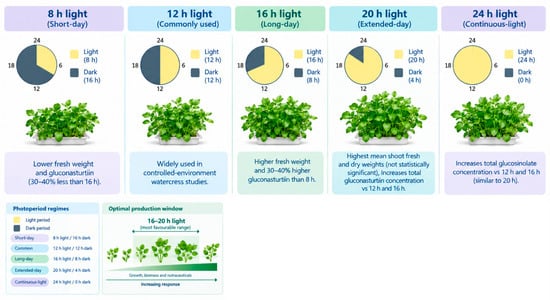
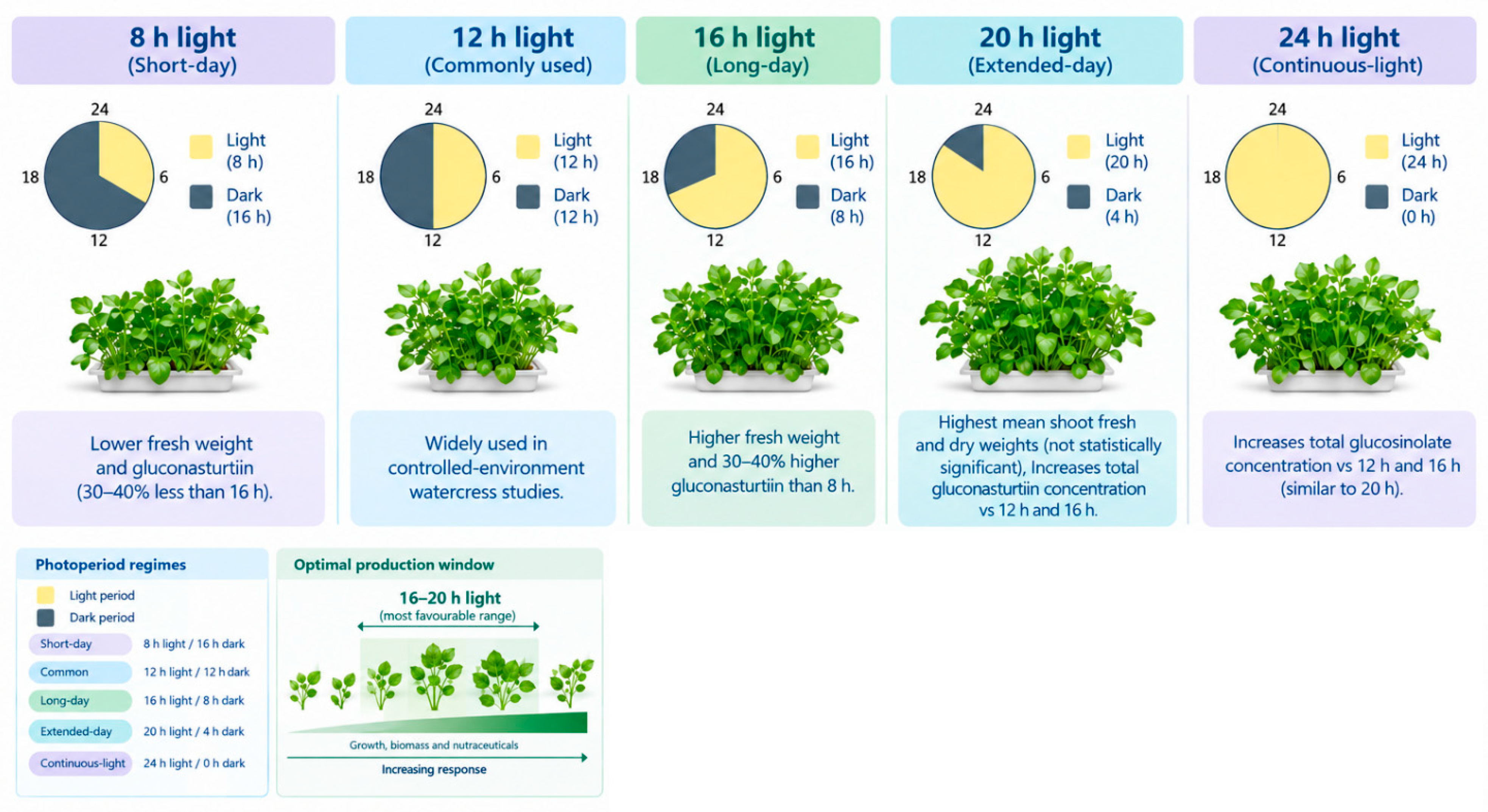
Photoperiod refers to the duration of light exposure within a 24-h period and is an important factor regulating plant growth and development, as shown in Figure 3. A plant-factory experiment investigated watercress growth under photoperiods of 12, 16, 20 and 24 h at light intensities of 266, 200, 160 and 133 µmol m−2 s−1, respectively [20]. Light intensity was adjusted so that all treatments received the same DLI. This design enabled comparison of shorter periods of higher-intensity light with longer periods of lower-intensity light while maintaining the same total daily light exposure. The 12-h treatment produced the highest instantaneous net photosynthetic rate and stomatal conductance, whereas the 20-h treatment produced the highest mean shoot fresh and dry weights. However, differences in biomass among photoperiod treatments were not statistically significant. Another study suggests that shorter photoperiods can provide high photosynthetic activity through greater light intensity [21]. Under short-day photoperiods, submergence caused watercress stems to elongate much more rapidly during the dark period than during the light period, suggesting a role for the plant’s circadian rhythm. Thus, watercress performance cannot be predicted from photoperiod alone and should instead be considered in relation to light intensity and total DLI treatments. Collectively, these findings indicate that photoperiod influences watercress growth within a broader environmental context that includes light intensity, spectrum and temperature.
Figure 3.
Evidence-supported photoperiod range for watercress production. Adapted from [16].
Flowering represents an important photo-periodic response because watercress is primarily cultivated for its 161 edible leaves and stems. Watercress has been classified as a long-day species, with flowering promoted under longer photoperiods [22]. The study also showed that plants grown under long-day conditions developed greater main-stem internode elongation and fewer branches than plants grown under short days, whereas the number of pinnae per leaf was not significantly affected by day length. These morphological responses are relevant to commercial production because compact, highly branched plants may be preferable for fresh market harvest, whereas longer internodes may be advantageous when watercress is propagated from cuttings. Variation in flowering time has also been documented, with a late-flowering strain selected for breeding, indicating that flowering responses are influenced by both genotype and photoperiod [22]. Consequently, growers producing watercress primarily for leaves may benefit from selecting late-flowering genotypes and scheduling harvest before extensive stem elongation and flowering occurs. Although longer photoperiods can promote biomass production, they should be managed carefully because excessively long days can promote the transition from compact vegetative growth to reproductive development.
As shown in Table 1, optimizing yield under controlled-environment conditions requires balancing photoperiod with DLI, light intensity, spectrum, temperature, crop quality and energy use. Watercress responses to DLI can vary with temperature, and predictive models have been developed to help growers estimate crop performance while accounting for production and energy costs [8]. Light spectrum is also an important consideration, as an appropriate combination of red and blue light improved watercress biomass and photosynthetic activity under a fixed photoperiod [16]. Similarly, indoor vertical-farm cultivation has been associated with high leafy yield and an improved glucosinolate profile, supporting the suitability of watercress for controlled-environment production [23].
Table 1.
Effect of Light intensity versus photoperiod.
Therefore, photoperiod should be optimized as part of an integrated lighting and environmental management strategy rather than treated as an independent determinant of productivity. An appropriate photoperiod should provide an adequate DLI at an efficient light intensity while combining with a balanced light spectrum and suitable temperature. Monitoring biomass, branching, internode elongation and flowering can further help identify conditions that maximize marketable yield. Such an integrated approach may improve watercress productivity and crop quality without relying on increasing photoperiod as the sole means of enhancing yield.
4. Effects of Light Spectrum on Nutritional Quality of Watercress
Light spectrum can modulate the nutritional and phytochemical composition of watercress [25]. Three combinations of red, blue, and green LED light were evaluated, with a higher proportion of red light promoting overall crop growth, whereas a higher proportion of green light increased certain nutritional components, including vitamin C and phenolic compounds [23,26].
In another study, different watercress varieties were grown under normal lighting and additional blue light. The varieties differed in plant size, nutritional composition and sugar content. Additional blue light consistently increased carotenoid concentrations but decreased vitamin C content, demonstrating that blue light does not improve all nutritional components of watercress [23].
Chlorophyll is a central component of photosynthesis, enabling plants to absorb light and convert light energy into chemical energy. Consequently, changes in light conditions in indoor farming systems can influence chlorophyll production. A previous study found that greater light availability improved watercress growth and biomass accumulation across a range of light intensities, from very low light to sunlight [4].
However, variation in light intensity did not significantly affect chlorophyll content. Instead, watercress appeared to adapt to low light by producing broader leaves that could capture more light rather than by increasing chlorophyll production [4].
Carotenoids contribute to light harvesting during photosynthesis and protect plants from excess light. Because light intensity and spectral composition can influence photosynthetic pigments, changes in these conditions may alter carotenoid accumulation in watercress. Additional blue LED lighting increased carotenoid concentrations, particularly lutein, in an evaluation of 32 watercress varieties grown under standard LED lighting with supplemental blue light [23].
However, plants exposed to additional blue light had lower vitamin C concentrations and biomass. These findings indicate that blue light can enhance carotenoid accumulation in watercress but may simultaneously reduce other nutritional characteristics, such as vitamin C content, and therefore may not improve overall nutritional quality [23].
Phenolic compounds are important secondary metabolites in watercress and contribute to its antioxidant and other biological activities [26]. Their accumulation is influenced by environmental factors, including light. A study investigated the effects of different LED colors on the nutritional composition of watercress and found that red, blue and green light affected glucosinolate concentrations and increased biomass but had relatively little effect on phenolic compounds [23]. Phenolic responses to LED lighting vary with plant species and light conditions [27]. In peas and microgreens, LED lighting influenced phenolic and flavonoid concentrations, with white light producing the highest phenolic content in peas and blue light producing the highest flavonoid content in microgreens [28]. These findings indicate that the effects of LED lighting on phenolic compounds are dependent on both the crop and the specific lighting treatment.
Light conditions can influence antioxidant activity in leafy vegetables. Different LED light colors have been shown to influence antioxidant production in lettuce, suggesting that LED lighting can be used to modify antioxidant compounds in leafy vegetables [29].
Light quality can influence glucosinolate accumulation in watercress. Different combinations of LED light colors have been shown to affect both plant growth and glucosinolate content [16]. In watercress, exposure to red light has been associated with increased glucosinolate concentrations, which are regulated in part by jasmonic acid and salicylic acid, phytohormones involved in plant defense responses [29,30]. Watercress grown in a vertical farming system under LED lighting has been reported to contain higher glucosinolate concentrations than watercress grown outdoors [23].
Thus, manipulating the spectral composition of artificial lighting provides a potential means of modifying the nutritional characteristics of watercress in controlled-environment production systems. Overall, it influences different components of watercress nutritional quality, but responses are not uniform across nutritional traits. These findings highlight the need to optimize lighting conditions according to the specific nutritional and production characteristics targeted in watercress cultivation.
5. Interaction Between Light and Other Environmental Factors
Light and temperature interact to influence watercress growth and nutritional quality. A study found that watercress grown under long-day lighting produced greater fresh weight and contained 30–40% more gluconasturtiin than plants grown under short days [31]. Under long-day conditions, cooler temperatures of 10–15 °C increased the gluconasturtiin concentration by at least 50% compared with temperatures of 20–25 °C. However, the cooler temperatures also reduced fresh weight. These findings demonstrate that conditions that increase the concentration of beneficial compounds do not necessarily maximize yield. Light and temperature should therefore be managed according to the production objective. Moderate temperatures may be preferable when rapid growth and yield are prioritized, whereas cooler temperatures combined with longer photoperiods may be useful when increasing glucosinolate content is the primary objective.
Higher light levels generally increase photosynthesis, leaf temperature and transpiration, thereby increasing plant water requirements. Under water-limited conditions, stomatal closure can reduce water loss but also restrict carbon dioxide uptake and photosynthesis. Watercress is a semi-aquatic plant and is well suited to hydroponic production; however, nutrient solutions must remain adequately circulated and oxygenated. Alizaeh et al. [10] found that hydroponically and aquaponically grown watercress used less water and had 256 times greater water-use efficiency than soil-grown plants. Thus, lighting should be coordinated with water availability, nutrient-solution circulation, root-zone oxygenation and humidity to minimize water stress and support efficient watercress growth.
Light availability influences both nutrient uptake and nutrient utilization. Increasing nutrient concentrations under low-light conditions does not necessarily increase growth because plants may lack sufficient photosynthetic activity to use the additional nutrients. Conversely, stronger or longer lighting can increase growth and nutrient demand [32]. Excessively concentrated nutrient solutions can restrict water and nutrient uptake by reducing the osmotic potential of the solution, while high salt concentrations can also induce ionic stress and nutrient imbalances. The combined effects of nutrient-solution concentration and short-term continuous lighting on yield, quality, and energy efficiency have been investigated in aeroponically grown lettuce [18]. Although this study was not conducted on watercress, it illustrates the importance of coordinating nutrient availability with lighting conditions. Watercress genotypes also differ in phosphorus uptake and use efficiency [33]. Therefore, nutrient concentrations for watercress may need to be adjusted according to light intensity, photoperiod, growth stage and genotype.
Carbon dioxide is required for photosynthesis and influences how effectively plants use available light. Increasing light intensity may have limited benefits when carbon dioxide becomes depleted within a closed cultivation facility. In lettuce, carbon dioxide concentration, light intensity, and air speed have been found to interactively influence photosynthesis, growth, transpiration, and light-use efficiency [34].
Carbon dioxide enrichment has also been found to improve the growth, yield, and light-use efficiency of lettuce grown under artificial lighting [35].
Because these studies were conducted on lettuce rather than watercress, their treatment levels should not be directly applied to watercress. Nevertheless, they indicate that increasing light without sufficient carbon dioxide may result in inefficient electricity use, whereas carbon dioxide enrichment under weak lighting may provide limited benefits. Further research is therefore required to determine suitable combinations of carbon dioxide concentration and lighting for watercress production.
Humidity can modify plant responses to light by influencing water loss from leaves to the surrounding air. Low humidity combined with high light intensity can increase transpiration and promote stomatal closure, thereby reducing carbon dioxide uptake and photosynthesis. Conversely, excessively high humidity can reduce transpiration and the movement of nutrients such as calcium through the plant. Daily light integral and vapour-pressure deficit, an indicator of atmospheric moisture conditions influenced by temperature and humidity, have been found to affect lettuce responses differently [36].
High vapour-pressure deficit has been found to reduce stomatal opening, photosynthesis, nutrient accumulation, yield, and water-use efficiency in protected vegetable production [37].
Although these studies were not conducted on watercress, they demonstrate the importance of coordinating light, humidity, airflow, temperature and water supply to maintain appropriate transpiration and leaf development.
6. LED Lighting Technologies for Watercress Production
The spectral composition of LED lighting is particularly important because different wavelengths regulate distinct aspects of plant physiology. Red and blue light are strongly absorbed by chlorophyll a and b and can therefore support efficient photosynthetic performance [38]. Blue light also influences stomatal opening, chlorophyll accumulation, plant architecture and secondary metabolism. Replacing 10% or 25% of red light with white light reduced excessive stem elongation and increased leaf size, biomass, and chlorophyll content [9].
Light combinations can also outperform individual wavelengths. Similarly, watercress grown hydroponically under 70% red and 30% blue light showed a gradual decline in photosynthetic performance as light intensity decreased, further demonstrating the dependence of photosynthesis on light availability [20]. Collectively, these findings indicate that no single spectral ratio is likely to optimize all production objectives, and that effective LED management requires coordinated optimization of spectrum, intensity, and photoperiod. As shown in Table 2, the 7R:3B spectrum performed favorably under the specific experimental conditions used for watercress cultivation. However, it should not be considered an optimal spectrum for leafy greens generally, as responses may vary among different leafy green species and even across different watercress production systems.
Table 2.
Comparison of Light Spectrums across Leafy Greens.
7. Effects of Light Stress on Watercress
Excess light occurs when irradiance exceeds the level that can be efficiently utilized for photosynthesis, potentially damaging plant tissues and inducing abiotic stress [42,43,44]. Excessive light can reduce photosynthetic performance and impair plant growth and development. In watercress, excessive exposure to blue light has also been associated with reduced vitamin C and glucose concentrations, potentially diminishing some aspects of nutritional quality [45]. However, certain microorganisms can enhance plant tolerance to excess light by protecting photosynthetically active organs and modulating hormones involved in stress responses [46].
Photoinhibition is a decline in photosynthetic efficiency that occurs when irradiance exceeds a plant’s capacity to dissipate or utilize absorbed energy. It remains an important framework for interpreting light-induced stress in plants [47]. Photoinhibition occurs when the rate of photodamage to photosystem II (PSII) exceeds the plant’s capacity for repair, with stress becoming more severe when damage cannot be adequately repaired [48]. This imbalance is exacerbated under high irradiance, when excess absorbed energy promotes the formation of reactive oxygen species that can disrupt PSII reaction centers and activate protective mechanisms that limit oxidative damage [49].
Photoinhibition can constrain photosynthesis in both aquatic and terrestrial crops and can be influenced by environmental factors beyond light intensity alone [50]. This is particularly relevant to watercress, which can be cultivated in aquatic environments such as hydroponic systems. Understanding the interaction between irradiance, spectral composition and photoprotective responses is therefore important for optimizing artificial lighting in watercress production. Further research is needed to determine the light intensities and spectral compositions at which photoprotective mechanisms become insufficient and photoinhibition occurs.
8. Future Research Directions
Further research is needed to develop recommendations specifically for watercress, since much of the available evidence is derived from lettuce and other leafy vegetables. Future studies should examine how different watercress genotypes respond to combinations of light spectrum, intensity and photoperiod together with temperature, humidity, carbon dioxide concentration, water availability and nutrient concentration. A study demonstrated substantial variation among 32 wild watercress accessions, indicating that some genotypes may be particularly suitable for indoor production and biofortification [24].
Future research should also investigate dynamic lighting strategies that respond to watercress age, canopy development, electricity costs or sensor-derived information. Other important considerations include light uniformity, taste, texture, phytochemical composition, postharvest quality, disease development and overall environmental impact. Integrating suitable watercress genotypes with automated lighting and environmental control could improve yield, nutritional quality and resource-use efficiency while enabling more precise and sustainable controlled-environment production.
9. Conclusions
Light intensity, spectral composition and photoperiod jointly shape watercress growth, photosynthetic performance and nutritional quality under controlled-environment agriculture. The reviewed evidence indicates that optimal lighting depends on the production objective, as light regimes that maximize biomass may not maximize phytochemical accumulation. These responses are further modified by genotype and environmental conditions, highlighting the limitations of universal lighting recommendations. Future research should prioritize cultivar-specific, dynamic LED strategies that integrate lighting with environmental controls to balance productivity, nutritional quality and energy efficiency.
Author Contributions
Conceptualization, T.N. and H.H.M.; literature survey, preparing the manuscript, figures, and tables, H.H.M., L.A.B., O.E.A. and H.A.A.; editing and revision, T.N.; funding, T.N. All authors have read and agreed to the published version of the manuscript.
Funding
This work was supported by the Evans Allens Grant: 220902-206002-3100.
Institutional Review Board Statement
Not applicable.
Informed Consent Statement
Not applicable.
Data Availability Statement
No new data were created or analyzed in this study. Data sharing is to this article.
Acknowledgments
The authors gratefully acknowledge the support provided by the Agricultural Department at KYSU, for facilitating this review.
Conflicts of Interest
The authors declare no conflicts of interest.
Abbreviations
The following abbreviations are used in this manuscript:
| DLI | Daily Light Intensity |
| LED | Light emitting diode |
| PAR | Photosynthetically Active Radiation |
| PPFD | Photosynthetic Photon Flux Density |
| PSII | photosystem II |
References
- Shafiq, I.; Hussain, S.; Raza, M.A.; Iqbal, N.; Asghar, M.A.; Raza, A.; Fan, Y.; Mumtaz, M.; Shoaib, M.; Ansar, M.; et al. Crop photosynthetic response to light quality and light intensity. J. Integr. Agric. 2021, 20, 4–23. [Google Scholar] [CrossRef] [Scilit]
- Wimalasekera, R. Effect of light intensity on photosynthesis. In Photosynthesis, Productivity and Environmental Stress; Wiley-Blackwell: Hoboken, NJ, USA, 2019; pp. 65–73. [Google Scholar] [CrossRef] [Scilit]
- Gan, P.; Liu, F.; Li, R.; Wang, S.; Luo, J. Chloroplasts—Beyond energy capture and carbon fixation: Tuning of photosynthesis in response to chilling stress. Int. J. Mol. Sci. 2019, 20, 5046. [Google Scholar] [CrossRef] [Scilit] [PubMed]
- Going, B.; Simpson, J.; Even, T. The influence of light on the growth of watercress (Nasturtium officinale R. Br.). Hydrobiologia 2008, 607, 75–85. [Google Scholar] [CrossRef] [Scilit]
- AlboPepper. What Is PAR Light? (Photosynthetically Active Radiation): Spectral Quality of Horticultural Lamps & LEDs. Available online: https://albopepper.com/PAR-light-spectral-quality-in-horticulture.php (accessed on 17 August 2026).
- Liu, K.; Gao, M.; Jiang, H.; Ou, S.; Li, X.; He, R.; Li, Y.; Liu, H. Light intensity and photoperiod affect growth and nutritional quality of Brassica microgreens. Molecules 2022, 27, 883. [Google Scholar] [CrossRef] [Scilit] [PubMed]
- Warner, R.; Wu, B.-S.; MacPherson, S.; Lefsrud, M. How the distribution of photon delivery impacts crops in indoor plant environments: A review. Sustainability 2023, 15, 4645. [Google Scholar] [CrossRef] [Scilit]
- Walters, K.J.; Lopez, R.G. Modeling growth and development of hydroponically grown dill, parsley, and watercress in response to photosynthetic daily light integral and mean daily temperature. PLoS ONE 2021, 16, e0248662. [Google Scholar] [CrossRef] [Scilit] [PubMed]
- Mizushima, S. Spindly growth of watercress observed under the monochromatic light of a red light-emitting diode improved with slight changes in light quality using white light-emitting diode. J. Appl. Hortic. 2022, 24, 275–277. [Google Scholar] [CrossRef] [Scilit]
- Alizaeh, P.; Sodaeizade, H.; Arani, A.M.; Hakimzadeh, M.A. Comparing yield, nutrient uptake and water use efficiency of Nasturtium officinale cultivated in aquaponic, hydroponic, and soil systems. Heliyon 2025, 11, e42339. [Google Scholar] [CrossRef] [Scilit] [PubMed]
- Wu, W.; Chen, L.; Liang, R.; Huang, S.; Li, X.; Huang, B.; Luo, H.; Zhang, M.; Wang, X.; Zhu, H. The role of light in regulating plant growth, development and sugar metabolism: A review. Front. Plant Sci. 2025, 15, 1507628. [Google Scholar] [CrossRef] [Scilit] [PubMed]
- Kochetova, G.; Avercheva, O.; Bassarskaya, E.M.; Zhigalova, T. Light quality as a driver of photosynthetic apparatus development. Biophys. Rev. 2022, 14, 779–803. [Google Scholar] [CrossRef] [Scilit] [PubMed]
- Paradiso, R.; Proietti, S. Light-Quality Manipulation to Control Plant Growth and Photomorphogenesis in Greenhouse Horticulture: The State of the Art and the Opportunities of Modern LED Systems. J. Plant Growth Regul. 2021, 41, 742–780. [Google Scholar] [CrossRef] [Scilit]
- Wei, Y.; Wang, S.; Yu, D. The Role of Light Quality in Regulating Early Seedling Development. Plants 2023, 12, 2746. [Google Scholar] [CrossRef] [Scilit] [PubMed]
- Mizushima, S. Effects of the ratio of red to white light using light-emitting diodes on the growth of watercress. Hortic. Res. 2020, 19, 399–405. [Google Scholar] [CrossRef] [Scilit]
- Choi, J.; Bok, G.; Lee, H.; Do, H.; Park, H.-M. Effect of Red and Blue LED Ratio on Growth and Glucosinolate Contents of Watercress (Nasturtium officinale) in a Plant Factory. Korean J. Hortic. Sci. Technol. 2020, 38, 474–486. [Google Scholar] [CrossRef] [Scilit]
- Klimek-Szczykutowicz, M.; Prokopiuk, B.; Dziurka, K.; Pawłowska, B.; Ekiert, H.; Szopa, A. The influence of different wavelengths of LED light on the production of glucosinolates and phenolic compounds and the antioxidant potential in in vitro cultures of Nasturtium officinale (watercress). Plant Cell Tissue Organ Cult. (PCTOC) 2021, 149, 113–122. [Google Scholar] [CrossRef] [Scilit]
- Zhang, H.; Huo, T.; Yu, W.; Yang, W. Effects of red–blue light ratio on seedling growth and specialized metabolism in tissue-cultured Nauclea officinalis. Front. Plant Sci. 2026, 17, 1818221. [Google Scholar] [CrossRef] [Scilit] [PubMed]
- Da Rocha, P.S.G.; Canova, D.V.; Girelli, G.A. HYDROPONIC CULTURE OF CRESS UNDER DIFFERENT LIGHT INTENSITIES WITH LED’S. J. Agric. Sci. Res. 2023, 3, 2–9. [Google Scholar] [CrossRef] [Scilit]
- Lam, V.P.; Choi, J.; Park, J. Enhancing Growth and Glucosinolate Accumulation in Watercress (Nasturtium officinale L.) by Regulating Light Intensity and Photoperiod in Plant Factories. Agriculture 2021, 11, 723. [Google Scholar] [CrossRef] [Scilit]
- Müller, J.T.; van Veen, H.; Bartylla, M.M.; Akman, M.; Pedersen, O.; Sun, P.; Schuurink, R.C.; Takeuchi, J.; Todoroki, Y.; Weig, A.R.; et al. Keeping the shoot above water–submergence triggers antithetical growth responses in stems and petioles of watercress (Nasturtium officinale). New Phytol. 2021, 229, 140–155. [Google Scholar] [CrossRef] [Scilit] [PubMed]
- Bleasdale, J.K.A. The flowering and growth of watercress (Nasturtium officinale R. Br.). J. Hortic. Sci. 1964, 39, 277–283. [Google Scholar] [CrossRef] [Scilit]
- Qian, Y.; Hibbert, L.E.; Milner, S.; Katz, E.; Kliebenstein, D.J.; Taylor, G. Improved yield and health benefits of watercress grown in an indoor vertical farm. Sci. Hortic. 2022, 300, 111068. [Google Scholar] [CrossRef] [Scilit]
- Qian, Y.; Katz, E.; Kliebenstein, D.J.; Taylor, G. Breeding indoor watercress for enhanced crop biofortification: Harnessing natural variation of wild germplasm. Front. Plant Sci. 2025, 16, 1602171. [Google Scholar] [CrossRef] [Scilit] [PubMed]
- Murshudova, B.; Öz, G.C. The Effect of Light Spectrum on Plant Secondary Metabolites: Biochemical Steering, Molecular Mechanisms, and current approaches. In International Studies in Biology; Serüven Publishing: Çankaya, Turkey, 2026; p. 73. Available online: https://www.seruvenyayinevi.com/Webkontrol/uploads/Fck/biyologymart2026.pdf#page=73 (accessed on 17 August 2026).
- Zeb, A. Phenolic profile and antioxidant potential of wild watercress (Nasturtium officinale L.). SpringerPlus 2015, 4, 714. [Google Scholar] [CrossRef] [Scilit] [PubMed]
- Al Murad, M.; Razi, K.; Jeong, B.R.; Samy, P.M.A.; Muneer, S. Light emitting diodes (LEDs) as agricultural lighting: Impact and its potential on improving physiology, flowering, and secondary metabolites of crops. Sustainability 2021, 13, 1985. [Google Scholar] [CrossRef] [Scilit]
- Pavlović, S.; Aydın, B.; Aytar, E.C.; Gümrükçüoğlu, A.; Krstić, N.; Vidović, N.; Knez, M. Effects of LED light treatments on the bioactive composition and functional properties of pea (Pisum sativum L.) microgreens: A comparative analysis with sprouts. Front. Plant Sci. 2026, 17, 1834435. [Google Scholar] [CrossRef] [Scilit] [PubMed]
- Mohamed, S.J.; Rihan, H.Z.; Aljafer, N.; Fuller, M.P. The impact of light spectrum and intensity on the growth, physiology, and antioxidant activity of lettuce (Lactuca sativa L.). Plants 2021, 10, 2162. [Google Scholar] [CrossRef] [Scilit] [PubMed]
- Carotti, L.; Pistillo, A.; Zauli, I.; Meneghello, D.; Martin, M.; Pennisi, G.; Gianquinto, G.; Orsini, F. Improving water use efficiency in vertical farming: Effects of growing systems, far-red radiation and planting density on lettuce cultivation. Agric. Water Manag. 2023, 285, 108365. [Google Scholar] [CrossRef] [Scilit]
- Engelen-Eigles, G.; Holden, G.; Cohen, J.D.; Gardner, G. The effect of temperature photoperiod, and light quality on gluconasturtiin concentration in watercress (Nasturtium officinale R.Br.). J. Agric. Food Chem. 2006, 54, 328–334. [Google Scholar] [CrossRef] [Scilit] [PubMed]
- Hibbert, L.E.; Qian, Y.; Smith, H.K.; Milner, S.; Katz, E.; Kliebenstein, D.J.; Taylor, G. Making watercress (Nasturtium officinale) cropping sustainable: Genomic insights into enhanced phosphorus—Use efficiency in an aquatic crop. Front. Plant Sci. 2024, 14, 1279823. [Google Scholar] [CrossRef] [Scilit] [PubMed]
- Kusuma, P.; Pattison, P.M.; Bugbee, B. From physics to fixtures to food: Current and potential LED efficacy. Hortic. Res. 2020, 7, 56. [Google Scholar] [CrossRef] [Scilit] [PubMed]
- Ahmed, H.A.; Tong, Y.; Li, L.; Sahari, S.Q.; Almogahed, A.M.; Cheng, R. Integrative effects of CO2 concentration, illumination intensity and air speed on the growth, gas exchange and light use efficiency of lettuce plants grown under artificial lighting. Horticulturae 2022, 8, 270. [Google Scholar] [CrossRef] [Scilit]
- Chen, D.; Mei, Y.; Liu, Q.; Wu, Y.; Yang, Z. Carbon dioxide enrichment promoted the growth, yield, and light-use efficiency of lettuce in a plant factory with artificial lighting. Agron. J. 2021, 113, 5196–5206. [Google Scholar] [CrossRef] [Scilit]
- Amitrano, C.; Rouphael, Y.; Pannico, A.; De Pascale, S.; De Micco, V. Reducing the evaporative demand improves photosynthesis and water use efficiency of indoor cultivated lettuce. Agronomy 2021, 11, 1396. [Google Scholar] [CrossRef] [Scilit]
- Yu, X.; Zhang, Y.; Zhao, X.; Li, J. Systemic effects of the vapor pressure deficit on the physiology and productivity of protected vegetables. Veg. Res. 2023, 3, 20. [Google Scholar] [CrossRef] [Scilit]
- Menicucci, F.; Marino, G.; Sillo, F.; Carli, A.; Nascimento, L.B.D.S.; Detti, C.; Centritto, M.; Brunetti, C.; Balestrini, R. Blue and red LEDs modulate polyphenol production in Precoce and Tardiva cultivars of Cichorium intybus L. Front. Plant Sci. 2025, 16, 1529804. [Google Scholar] [CrossRef] [Scilit] [PubMed]
- Naznin, M.T.; Lefsrud, M.; Gravel, V.; Azad, M.O.K. Blue Light added with Red LEDs Enhance GrowthCharacteristics, Pigments Content, and Antioxidant Capacity in Lettuce, Spinach, Kale, Basil, andSweet Pepper in a Controlled Environment. Plants 2019, 8, 93. [Google Scholar] [CrossRef] [Scilit] [PubMed]
- Kong, Y.; Masabni, J.; Niu, G. Temperature and Light Spectrum Differently AffectGrowth, Morphology, and Leaf Mineral Content of Two Indoor-Grown LeafyVegetables. Horticulturae 2023, 9, 331. [Google Scholar] [CrossRef] [Scilit]
- Ertani, A.; Esposito, M.; Caira, S.; Riahi, J.; Colombani, C.; Scaloni, A.; Paradiso, R.; Bulgari, R. Blue-enriched LED light modulates biochemical and proteomic traits without affecting yield in indoor-grown cress microgreens. Front. Plant Sci. 2026, 17, 1814329. [Google Scholar] [CrossRef] [Scilit] [PubMed]
- Shi, Y.; Ke, X.; Yang, X.; Liu, Y.; Hou, X. Plants response to light stress. J. Genet. Genom. 2022, 49, 735–747. [Google Scholar] [CrossRef] [Scilit] [PubMed]
- Sharma, N.; Nagar, S.; Thakur, M.; Suriyakumar, P.; Kataria, S.; Shanker, A.; Landi, M.; Anand, A. Photosystems under high light stress: Throwing light on mechanism and adaptation. Photosynthetica 2023, 61, 250–263. [Google Scholar] [CrossRef] [Scilit] [PubMed]
- Zhang, M.; Ming, Y.; Wang, H.-B.; Jin, H.-L. Strategies for adaptation to high light in plants. aBIOTECH 2024, 5, 381–393. [Google Scholar] [CrossRef] [Scilit] [PubMed]
- Villano, F.; Balestrini, R.; Nerva, L.; Chitarra, W. Harnessing microbes as sun cream agains high light stress. New Phytol. 2024, 245, 450–457. [Google Scholar] [CrossRef] [Scilit] [PubMed]
- Sonoike, K. Photoinhibition and protection of photosystem I. Plant Cell Physiol. 2025, 66, 1562–1574. [Google Scholar] [CrossRef] [Scilit] [PubMed]
- Didaran, F.; Kordrostami, M.; Ghasemi-Soloklui, A.A.; Pashkovskiy, P.; Kreslavski, V.; Kuznetsov, V.; Allakhverdiev, S.I. The mechanisms of photoinhibition and repair in plants under high light conditions and interplay with abiotic stressors. J. Photochem. Photobiol. B Biol. 2024, 259, 113004. [Google Scholar] [CrossRef] [Scilit] [PubMed]
- Bhutta, M.A.; Bibi, A.; Ahmad, N.H.; Kanwal, S.; Amjad, Z.; Rehman, H.; Farooq, U.; Khalid, M.N.; Nayab, S. Molecular Mechanisms of Photoinhibition in Plants: A Review. Sarhad J. Agric. 2023, 39, 340–345. [Google Scholar] [CrossRef] [Scilit]
- Nawrocki, W.; Liu, X.; Raber, B.; Hu, C.; De Vitry, C.; Bennett, D.I.G.; Croce, R. Molecular origins of induction and loss of photoinhibition-related energy dissipation qI. Sci. Adv. 2021, 7, eabj0055. [Google Scholar] [CrossRef] [Scilit] [PubMed]
- Baker, N.R.; Nogués, S.; Allen, D.J. Photosynthesis and photoinhibition. In Seminar Series-Society for Experimental Biology; Cambridge University Press: Cambridge, UK, 1997; Volume 64, pp. 95–112. [Google Scholar]

Disclaimer/Publisher’s Note: The statements, opinions and data contained in all publications are solely those of the individual author(s) and contributor(s) and not of MDPI and/or the editor(s). MDPI and/or the editor(s) disclaim responsibility for any injury to people or property resulting from any ideas, methods, instructions or products referred to in the content. |
© 2026 by the authors. Licensee MDPI, Basel, Switzerland. This article is an open access article distributed under the terms and conditions of the Creative Commons Attribution (CC BY) license.