


Abstract
Background: Robotic rehabilitation systems for upper-limb stroke rehabilitation have been developed across diverse robotic platforms, yet cross-study comparisons remain challenging due to heterogeneous system designs and classification approaches. This brief narrative review proposes a paradigm-driven framework, categorizing robotic rehabilitation systems based on underlying therapeutic interaction principles (e.g., mirror, bimanual, mirror–bimanual hybrid) rather than implementation modality alone. Methods: A structured MEDLINE/PubMed literature search was performed to identify representative studies describing robotic system characteristics, rehabilitation task structures, clinical outcomes, and mechanistic insights within mirror, bimanual, and hybrid rehabilitation paradigms. Findings: Among the reviewed studies, mirror-based systems emphasize sensory representation and interhemispheric modulation, whereas bimanual systems target coordination and motor learning through bilateral interaction. Hybrid systems integrate these approaches by combining mirrored feedback with active bilateral engagement. Emerging neuroimaging evidence, particularly resting-state fMRI, may help relate clinical improvements to neural network changes, providing a mechanism-informed perspective on rehabilitation outcomes. Conclusions: This review highlights substantial progress in robotic upper-limb stroke rehabilitation, with current systems increasingly integrating multimodal feedback and task-oriented interaction within mirror, bimanual, and hybrid rehabilitation paradigms. Limitations include variability across studies due to differences in robotic system implementation, task design, duration, stroke chronicity, and patient engagement.
1. Introduction
This brief narrative review investigates robotic upper-limb stroke rehabilitation through the lens of three rehabilitation paradigms: mirror therapy, bimanual training, and mirror–bimanual hybrid therapy. By organizing robotic rehabilitation systems according to these therapeutic paradigms, this review was conducted to identify persistent limitations and highlight opportunities for future research.
The global burden of stroke continues to increase, remaining the third leading cause of adult disability worldwide [1]. An estimated 12 million individuals experience a first-time stroke globally each year [2]. Up to 80–90% of stroke survivors experience some degree of hemiparesis [3], with persistent upper-limb and hand impairment persisting beyond six months in as many as 65% of patients [1]. Because distal upper-limb function is essential for activities of daily living (ADL) and independent living, its recovery remains one of the greatest and most persistent challenges in post-stroke rehabilitation.
Stroke results from interruption of cerebral blood flow caused by ischemic or hemorrhagic injury, resulting in neuronal damage that frequently affects motor pathways responsible for upper-limb movement and coordination. The lesion location and severity affect survivors differently, with common symptoms including weakness, impaired motor control, abnormal muscle tone, and loss of functional limb use. Motor recovery depends on a combination of spontaneous biological processes and activity-dependent neuroplasticity, providing the rationale for repetitive, task-oriented rehabilitation approaches that promote motor relearning and functional recovery [1,2,4].
Clinical rehabilitation aims to promote motor recovery through task-specific training [5]. However, conventional therapy is often limited by clinical resources, therapist availability, and patient fatigue, and these may contribute to suboptimal outcomes. This has motivated a growing interest in robotic rehabilitation approaches to address these in a controlled and repeatable manner.
Robotic rehabilitation systems for upper-limb stroke rehabilitation have expanded over the past two decades. Physical and virtual robotic devices have been developed to target individual segments or the entire upper-limb. These systems include end-effector robots that interact with the limb through a distal contact point, exoskeletons that align with anatomical joints, and wearable or soft robotic devices designed to improve comfort and portability. Advances in sensing, control, gamification, and human–robot interfaces have further enabled passive, active, and assist-as-needed strategies to promote active patient engagement [2,6].
Despite significant technological progress, the clinical impact of robotic rehabilitation remains under investigation. Many studies report improvements in motor impairment following robotic rehabilitation. However, differences in robotic implementation, rehabilitation strategy, participant characteristics, and study design complicate direct comparison across studies. Moreover, several robotic interventions demonstrate efficacy comparable to dose-matched conventional therapy, highlighting the importance of task design and rehabilitation strategy in addition to robotic hardware [7,8,9,10]. To address these challenges, this review adopts a paradigm-oriented perspective that complements conventional hardware- and modality-based classifications by emphasizing therapeutic interaction principles and rehabilitation task structure.
2. Materials and Methods
This manuscript presents a brief structured narrative review that qualitatively examines therapeutic interaction principles, robotic system implementations, and rehabilitation strategies employed in upper-limb stroke rehabilitation. As such, the objective was to identify representative studies illustrating major rehabilitation paradigms, robotic system implementations, and therapeutic interaction strategies rather than to perform an exhaustive systematic evidence synthesis. Consequently, formal risk-of-bias assessment, evidence grading, and meta-analysis were outside the scope of this review. To improve consistency and transparency, studies were identified using predefined search terms and explicit inclusion and exclusion criteria, and were selected according to their relevance to the proposed paradigm-oriented framework.
A structured literature search of MEDLINE/PubMed was performed between November 2025 and April 2026 using the following search strategy:
- (Robot OR Robotic) AND (Bimanual OR Mirrored OR Mirror) AND (Rehabilitation OR Therapy OR Training) AND (“upper extremity” OR “upper limb” OR “arm” OR “hand”) AND (stroke OR “cerebrovascular accident” OR CVA)
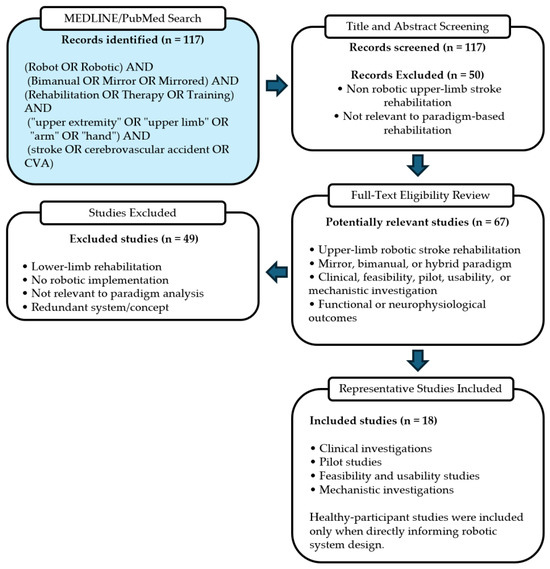
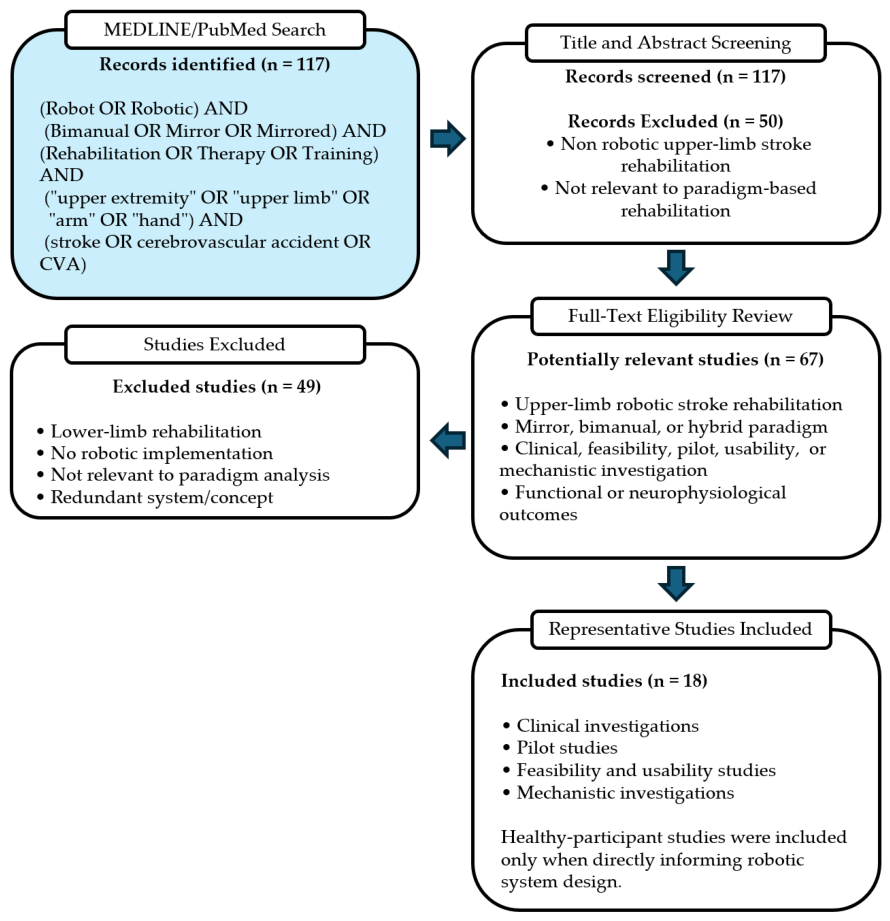
The search identified 117 records (Figure 1). Titles and abstracts were screened for relevance to the mirror, bimanual, and hybrid rehabilitation paradigms. This resulted in 67 potentially relevant studies. Full-text eligibility assessment was then performed according to predefined inclusion and exclusion criteria.
Figure 1.
Structured literature search and study selection workflow used for this brief narrative review. A MEDLINE/PubMed search identified representative studies of robotic upper-limb stroke rehabilitation systems. Screening was performed according to predefined inclusion and exclusion criteria. Additional references cited elsewhere in the manuscript provide broader clinical, engineering, methodological, and neurophysiological background and were not part of the structured study selection process.
Studies were included if they:
- investigated robotic upper-limb stroke rehabilitation systems;
- implemented mirror, bimanual, or hybrid rehabilitation paradigms;
- reported clinical, pilot, feasibility, usability, or mechanistic investigations relevant to robotic rehabilitation system design;
- reported functional, behavioral, or neurophysiological outcome measures.
Studies were excluded if they:
- focused exclusively on lower-limb rehabilitation;
- lacked robotic implementation;
- were not directly relevant to the rehabilitation paradigms examined in this review;
- represented redundant systems or repeated concepts without additional technical or clinical contribution.
Studies were selected based upon relevance to the proposed paradigm framework and comparative objectives of this review, resulting in 18 representative studies selected for qualitative analysis. These were intended to capture representative examples of mirror, bimanual, and hybrid rehabilitation paradigms across diverse robotic implementations, rather than to comprehensively represent the entirety of the robotic stroke rehabilitation literature. Feasibility and usability studies involving healthy participants were retained when they evaluated robotic control strategies, human–robot interaction, or rehabilitation task implementation directly relevant to upper-limb stroke rehabilitation systems.
Additional references cited throughout the manuscript provide broader clinical, engineering, methodological, and neurophysiological background and were not part of the structured search and selection process. Key terminology used throughout the review is summarized in Table A1.
3. Review Results
3.1. Prior Review Papers
Several review papers have examined robotic upper-limb stroke rehabilitation from complementary clinical and engineering perspectives. A large-scale meta-analysis of robotic rehabilitation reported statistically significant improvements in upper-limb capacity [1]. An engineering-oriented review has proposed structured robotic system taxonomies based on actuation methods, assistance paradigms, and control strategies [2]. Scoping reviews have mapped multi-technology systems yielding more favorable motor and functional outcomes [4]. Systematic reviews of mirror therapy have suggested modest improvements and potential neural correlates involving motor and associative cortical regions [11]. Consequently, these reviews establish the clinical and engineering context for the paradigm-oriented perspective presented in this review.
3.2. Methods of Evaluation
Common clinical outcome metrics include standardized clinical scales such as the Fugl-Meyer Assessment of the Upper Extremity (FMA-UE) and the Action Research Arm Test (ARAT). These standardized outcome measures evaluate complementary domains of motor impairment and functional task performance.
Although relatively few robotic rehabilitation studies incorporate neuroimaging, emerging evidence suggests that these techniques may provide complementary information regarding neural activity associated with rehabilitation and motor recovery [12,13,14]. Resting-state fMRI, EEG-based connectivity measures, and related approaches permit assessment of functional connectivity, cortical activation patterns, and interhemispheric communication [12,13,14,15,16,17]. Robotic rehabilitation systems, irrespective of classification framework, differ in how they structure sensory feedback, motor interaction, and rehabilitation tasks, and may therefore be associated with differing patterns of neural activation and functional connectivity. Preliminary neuroimaging studies have reported changes in interhemispheric connectivity and motor-network activation associated with robotic rehabilitation [13,14]. While current evidence remains limited and largely exploratory, these approaches may provide a mechanism-informed perspective that complements traditional clinical outcome scales and may help guide future robotic rehabilitation system design. However, as of writing, these findings should be interpreted as preliminary observations rather than clinically validated mechanisms of recovery.
3.3. Paradigm Framework
Existing reviews of robotic upper-limb stroke rehabilitation systems frequently classify systems according to implementation modality, such as exoskeletons, end-effectors, gloves, or virtual reality platforms. These classifications provide valuable engineering insights into robotic architecture, control strategies, sensing, feedback mechanisms, and system implementation. However, systems sharing similar hardware characteristics may employ substantially different rehabilitation strategies and task structures.
The paradigm-oriented framework proposed in this review is intended to complement rather than replace implementation-based classifications. Rather than emphasizing hardware architecture, it organizes robotic rehabilitation systems according to their underlying therapeutic interaction principles. As summarized in Table A2, mirror paradigms emphasize mirrored reaching, grasping, and finger-exercise tasks, bimanual paradigms focus on coordinated bilateral interaction and object manipulation, and hybrid paradigms integrate these approaches within task-oriented rehabilitation. Table A3 compares these complementary organizational frameworks and highlights the distinct focus of the paradigm-driven classification proposed in this review.
Emerging developments—including adaptive, intention-driven, AI-assisted, and shared-control systems—are likely to further blur traditional classification boundaries and may require continued refinement of paradigm definitions. Rather than replacing existing engineering classifications, the proposed framework provides a complementary rehabilitation-oriented perspective through which heterogeneous robotic systems may be compared according to their therapeutic interaction principles. Future work should evaluate whether paradigm-oriented classification improves study comparison, clinical interpretation, or rehabilitation system design relative to existing implementation-based classification schemes.
3.3.1. Control Strategies
Robotic rehabilitation systems commonly implement passive, active, active-assisted, or adaptive control strategies depending on rehabilitation goals and patient impairment levels. Passive systems guide limb movement without voluntary user effort, emphasizing repetitive movement and proprioceptive input. Active systems require the user to generate independent movement, while active-assisted systems provide robotic assistance only when necessary to complete a movement or maintain task performance. For example, during a reaching task, an active-assisted robot may support the arm only if the user cannot successfully reach the target independently [10,18]. Adaptive systems extend this approach by dynamically adjusting the level of assistance according to patient performance, coordination accuracy, fatigue, or task completion. For example, if a patient demonstrates improved movement accuracy and strength over successive sessions, the robotic system may progressively reduce assistance or increase task difficulty to maintain an appropriate rehabilitation challenge [19].
Across paradigms, control strategies were closely linked to therapeutic tasks and interaction goals. Mirror-based systems commonly employ synchronized contralateral-driven passive or active-assisted control, in which movement of the unaffected limb guided assisted movement of the affected limb [20,21]. In contrast, bimanual systems more commonly emphasized coordinated bilateral control strategies, real-time synchronized active-assisted or adaptive control to promote active interlimb coordination [10,22]. Building on this, mirror–bimanual hybrid systems increasingly combined adaptive assistance with multimodal feedback to integrate task-oriented rehabilitation with a virtual environment [19,23]. Taken together, these findings suggest that robotic control strategies are not independent of rehabilitation paradigm, but are selected to meet therapeutic objectives, and patient needs.
3.3.2. Robotic Architecture and Feedback Modalities
The reviewed systems utilized diverse robotic architectures, including glove-based devices, end-effector systems, and upper-extremity exoskeletons, which were often integrated with virtual or VR-based rehabilitation environments. Glove-based systems most commonly emphasized distal hand rehabilitation, finger actuation, and grasp–release interaction, supporting fine motor training and hand-focused ADL tasks [24,25]. End-effector and exoskeleton systems more frequently supported bilateral reaching and task-oriented multi-joint coordination for the upper-limb [10,26]. Although exoskeleton systems enabled richer physical interaction and coordinated movement of the upper-extremity beyond the hand alone, they also introduced greater complexity in setup, calibration, and supervision requirements.
Feedback modalities similarly varied paradigms. Mirror and bimanual paradigms, though differing in task structure and implementation, depend on synchronized visual and proprioceptive feedback to maintain sensory congruence between perceived and executed movement of the affected and unaffected limbs [20]. Virtual and VR-based systems enable gamified task-oriented rehabilitation through virtual environments and task-oriented feedback, in response to physical interaction with robotic controllers and systems. Physical robotic systems provide proprioceptive and haptic feedback through direct actuation of the affected limb [13,27]. Mirror–bimanual hybrid systems increasingly combined gamified, proprioceptive, and task-oriented feedback within multimodal rehabilitation environments [19,23,28]. Across paradigms, feedback modalities were selected to support specific sensory and motor interaction goals, ranging from visual embodiment in virtual or VR-based systems to synchronized proprioceptive and haptic feedback in physically actuated robotic platforms.
3.3.3. Human–Robot Interaction and Task Design
Human–robot interaction emerged as a major factor influencing usability, engagement, and rehabilitation outcomes across paradigms. Early robotic rehabilitation systems often emphasized repetitive symmetric movement tasks or trajectory-following protocols to evaluate coordination and synchronization performance under controlled conditions. More recent systems increasingly incorporated task-oriented interaction, gamification, and tasks inspired by activities of daily living. These include object manipulation, coordinated reach and grasping, and bilateral cooperative tasks [18,26,27,29]. These designs aim to encourage user engagement, participation, and repetition while improving transfer to ADL.
These designs varied significantly across paradigms. Mirror-based systems generally emphasized synchronized sensory feedback and passive control, whereas bimanual paradigms emphasized active bilateral coordination and cooperative interaction with active or active-assisted methods to perform ADL-inspired tasks. Mirror–bimanual hybrid systems increasingly integrated adaptive assistance with virtual and VR-based environments to create multimodal rehabilitation environments. However, greater technical sophistication did not consistently correspond to superior rehabilitation outcomes, suggesting that the effectiveness of robotic rehabilitation may depend more strongly on how motor interaction, feedback, and task demands are structured than on system complexity alone. As a result, emerging system designs reflect a balance between engineering sophistication, clinical practicality, and the need for sustained patient engagement during long-term rehabilitation.
3.4. Examples of Robotic Implementation
Robotic upper-limb rehabilitation systems are implemented through a combination of physical and virtual technologies. Physical robotic systems include exoskeletons, end-effector devices, and actuated soft gloves, which provide direct actuation of the affected limb through assistive, passive, or coupled control strategies under defined constraints [10,18,20,21,24,25]. Virtual system environments include screen-based or head-mounted VR displays to provide task feedback, rehabilitation structure, and gamified interaction [9,13,30].
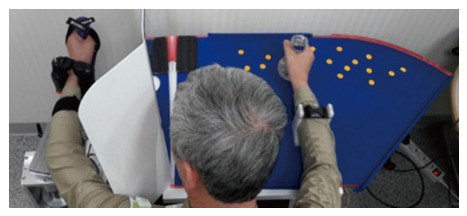
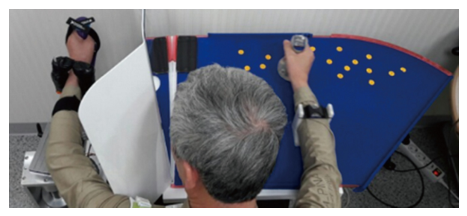
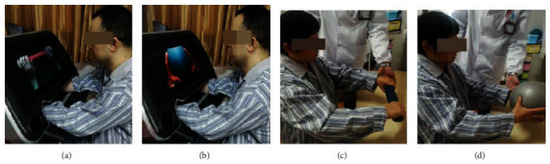
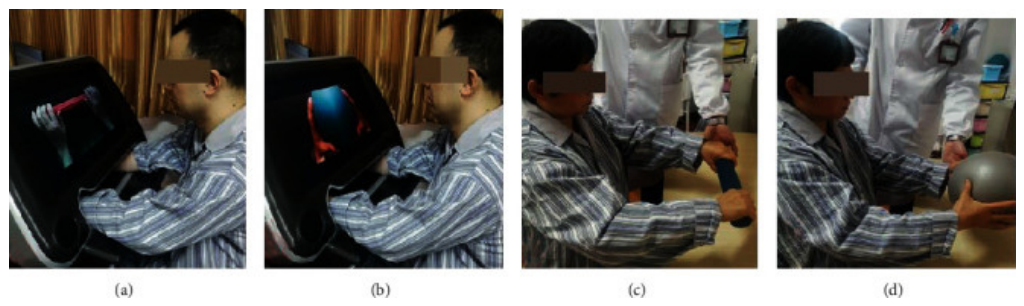
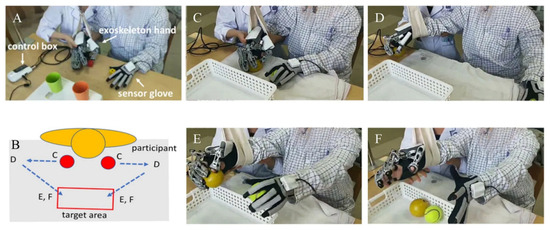
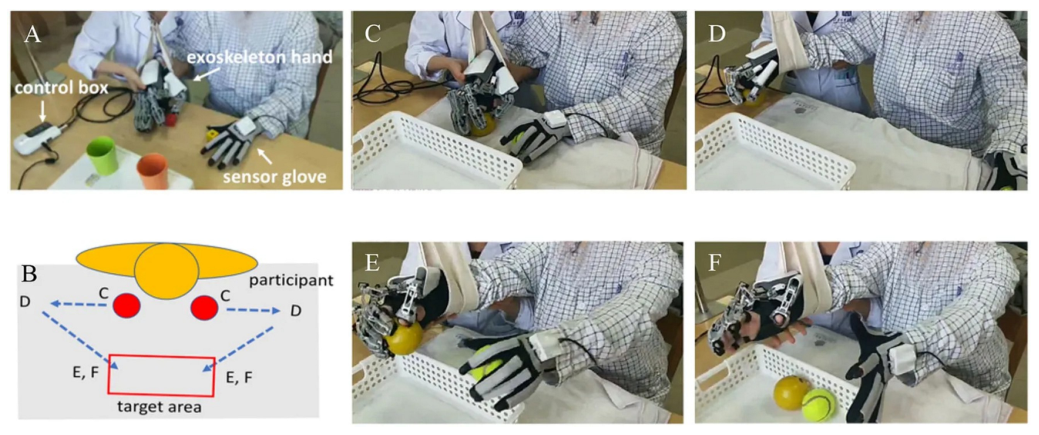
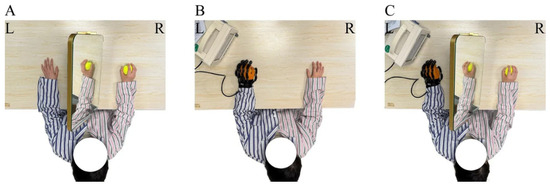
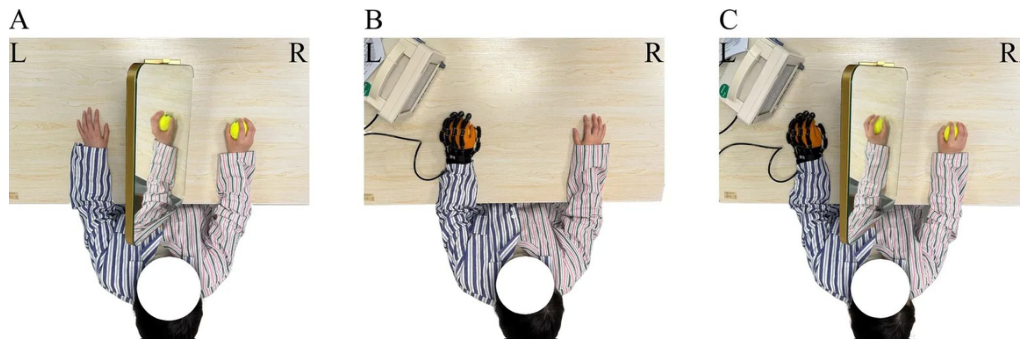
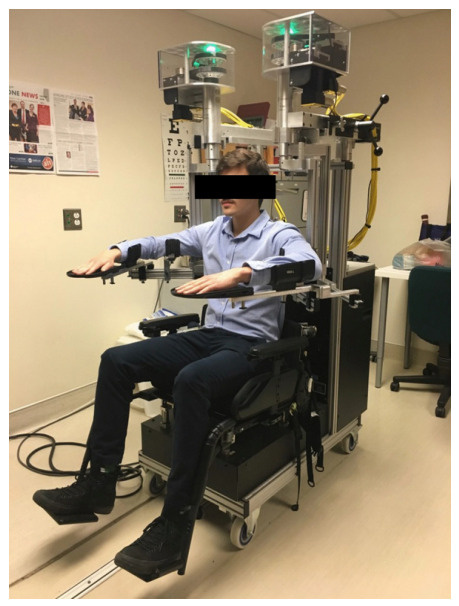
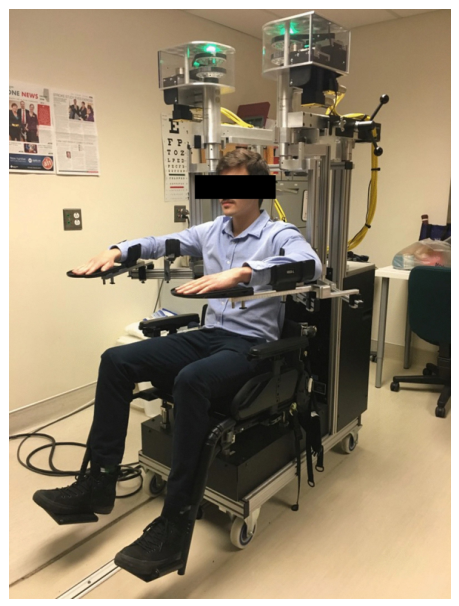
More recent work has focused on integrated robotic systems, combining physical actuation with virtual environments for task-oriented rehabilitation [19,27,29]. Representative examples are illustrated in Figure 2, Figure 3, Figure 4, Figure 5 and Figure 6, demonstrating how mirror, bimanual, and hybrid rehabilitation paradigms may be realized using diverse robotic architectures and interaction modalities. Figure 2 and Figure 5 depict mirror rehabilitation systems, Figure 4 and Figure 6 illustrate bimanual systems, and Figure 3 presents a mirror–bimanual hybrid implementation. Collectively, these examples demonstrate that similar therapeutic paradigms may be implemented using substantially different robotic hardware, while comparable hardware platforms may support different rehabilitation paradigms. Table A4 summarizes the representative studies included in this review.
Figure 2.
Representative robotic mirror therapy system. A chronic stroke participant performs robotic mirror therapy by moving the unaffected (right) arm while the affected (left) arm is symmetrically actuated by a two-axis robotic device. Reproduced from [20], © Author(s), under CC BY-NC 4.0 license.
Figure 3.
Representative mirror–bimanual hybrid rehabilitation tasks. (a,b) Associated Mirror Therapy (AMT), demonstrating cylinder rolling and ball manipulation tasks. (c,d) Conventional bimanual training performing the corresponding rehabilitation tasks. Reproduced from [9], © Author(s) 2021, licensed under CC BY 4.0.
Figure 4.
Representative robotic bimanual rehabilitation system. (A) Exoskeleton robotic device used for robot-assisted bimanual therapy (RBMT). (B) Representative movement trajectory recorded during RBMT, with the red circle indicating the starting position. (C–F) Example sequence of a ball grasp-and-release task performed using the RBMT system. Reproduced from [10], © Author(s) 2022, licensed under CC BY 4.0.
Figure 5.
Representative robotic mirror system configurations. (A) Conventional mirror therapy. (B) Robot-assisted glove therapy using the Yisheng SY-HR06 system. (C) Combined mirror therapy and robot-assisted glove training. Reproduced from [25], © Author(s) 2025, licensed under CC BY 4.0.
Figure 6.
Kinarm robotic exoskeleton used for upper-limb bimanual rehabilitation. Frontal view of the robotic platform. Reproduced from [31], © Author(s) 2021, licensed under CC BY 4.0.
In the three following sections we discuss the three main paradigms of robotic upper-limb stroke rehabilitation systems, including robotic mirrored therapy, robotic bimanual therapy, and mirror–bimanual hybrid therapy systems.
3.5. Robotic Mirrored Therapy Systems
Robotic mirror therapy systems commonly implement contralateral mapping strategies in which movement of the unaffected limb controls mirrored movement or feedback for the affected limb. Across studies, implementations ranged from glove-based distal hand systems to upper-extremity exoskeletons and VR-integrated platforms [20,21,24,27,32]. Glove-based systems commonly emphasized finger-level actuation and fine motor rehabilitation, whereas exoskeleton and integrated systems more commonly supported multi-joint coordination and task-oriented interaction.
The reviewed literature consists primarily of feasibility, pilot, and early clinical studies, with fewer randomized or larger cohort studies. Feasibility studies generally demonstrated acceptable usability, synchronization performance, and patient tolerability [24,27], while pilot and clinical studies reported improvements in upper-limb motor outcomes, including FMA-UE scores, task-specific performance, and user-reported functional measures [13,21]. Studies incorporating multimodal feedback or glove-based distal hand actuation more frequently reported improvements in fine motor control and hand-related outcomes [21,25].
While some randomized investigations demonstrated greater improvements compared with mirror-only or single-modality interventions [21,25], others reported gains comparable to conventional rehabilitation, particularly over shorter intervention periods [30]. Neuroimaging findings, though limited, suggested that mirror-based robotic paradigms may influence interhemispheric connectivity and motor-network activation [13,14].
3.6. Robotic Bimanual Therapy Systems
Robotic bimanual systems covered by this review were primarily developed to support coordinated bilateral movement tasks. Early engineering and feasibility investigations frequently involved healthy participants to quantify synchronization, muscle unloading, and kinematic consistency before clinical deployment. Bilateral exoskeletons can provide richer multi-joint support and more realistic cooperative tasks, but they also introduce complexity, user burden, and cost [10,18,22,26,29,31].
Across pilot and early clinical studies, bimanual robotic interventions have generally been well tolerated and have produced improvements in impairment and performance measures such as FMA-UE. In some cases, bimanual training appears particularly beneficial for facilitating distal hand recovery or improving bilateral movement consistency, while in others the primary benefit is a reduction in motor impairment [10,22].
The available evidence for larger studies suggests that robotic bimanual therapy can improve outcomes, with benefits appearing most consistently in specific domains such as distal limb recovery and functional task performance across outcome measures [10]. However, this is not universal as active-assisted bilateral training does not consistently improve motor learning or transfer compared with conventional bilateral training [18]. Similarly, augmented force-coupling does not always outperform bilateral visual-feedback conditions [22]. Collectively, these findings suggest that the effectiveness of robotic bimanual therapy depends not only on bilateral participation itself, but also on how coordination demands and active motor engagement are structured within the task.
3.7. Mirror–Bimanual Hybrid Systems
Robotic mirror–bimanual hybrid systems remain relatively early in development, with the current literature consisting primarily of usability, feasibility, pilot, and early mechanistic investigations [9,19,23,33]. These systems integrate mirrored visual feedback with coordinated bilateral robotic interaction, introducing increased complexity in synchronization, control, and task design compared with mirror-only or bimanual-only paradigms. Feasibility studies generally demonstrated acceptable bilateral coordination performance, inter-limb synchronization, and error tracking during task performance [19].
Early clinical studies suggested that hybrid interventions may improve distal motor recovery and functional arm use, with some randomized comparisons reporting greater gains than bimanual robotic training alone, particularly among individuals with more severe motor impairment [9,23]. Mechanistic investigations incorporating EEG-based cortical coupling measures further suggested that hybrid paradigms may influence interhemispheric communication during coordinated task execution [33]. Immersive and multimodal platforms introduce considerations related to setup burden, calibration complexity, and user tolerability [19]. Direct comparison remains limited because of differences in intervention protocols and system implementation.
4. Discussion
4.1. Robotic Mirrored Therapy Systems
The reviewed literature suggests that integrating mirrored visual feedback with proprioceptive or haptic interaction may provide additional sensorimotor input beyond visual illusion alone. This may partly explain why some robotic glove-based and multimodal systems have reported improvements in distal motor function and fine motor engagement, with these platforms providing synchronized sensory feedback during grasp and finger-level interaction [21,25]. Virtual-only systems may emphasize flexibility, gamification, and task repetition, although they provide different forms of sensory interaction compared with physically actuated robotic platforms.
Within the reviewed studies, mirror-based systems often emphasized distal hand rehabilitation and task-oriented interaction. This may reflect the clinical importance of hand function for independence and activities of daily living, as well as the relative difficulty of restoring fine motor coordination after stroke [34]. However, substantial heterogeneity in intervention duration, task complexity, and study design complicates direct comparison across systems. The predominance of feasibility and pilot studies in the reviewed literature further limits conclusions regarding long-term efficacy and generalizability. The reviewed studies suggest that robotic mirror therapy may extend conventional mirror therapy by integrating visual remapping with physical movement and proprioceptive feedback.
4.2. Robotic Bimanual Therapy Systems
Robotic bimanual therapy differs from mirror-based paradigms by emphasizing coordinated bilateral interaction rather than contralateral sensory representation alone. Across the literature selected, the central therapeutic principle was the promotion of interlimb coordination through synchronized or cooperative task execution. Several early implementations employed symmetric movement tasks, such as simultaneous reaching or coordinated trajectory following, which facilitated bilateral engagement and enabled controlled evaluation of synchronization and motor performance [18,22]. However, simplified tasks may have limited functional relevance, as many activities of daily living (e.g., buttoning a shirt, opening a drawer) require complementary rather than identical limb actions [28].
Several newer robotic rehabilitation systems have incorporated task-oriented and skill-based interaction, where performance depends on timing, coordination accuracy, and active bilateral participation rather than strict movement symmetry. This may reflect emerging emphasis on motor learning and functional task execution within robotic rehabilitation. Importantly, the reviewed findings suggest that preserving active coordination demands may influence motor learning outcomes. Studies examining active-assisted and force-coupled paradigms indicate that increased assistance does not necessarily improve motor learning, retention, or transfer [18,22]. This observation is consistent with broader rehabilitation robotics perspectives emphasizing active participation as a key component of motor learning [35].
Several reviewed studies have reported improvements in upper-limb impairment, distal motor function, and coordinated task performance, although outcomes varied substantially with system design, training intensity, and patient characteristics [10,22]. Taken together, these findings position robotic bimanual therapy as a coordination-driven rehabilitation paradigm in which task structure and interaction strategy may influence recovery as strongly as the robotic hardware itself.
4.3. Mirror–Bimanual Hybrid Systems
Robotic mirror–bimanual hybrid systems represent an emerging rehabilitation paradigm that attempts to integrate the sensory representation mechanisms of mirror therapy with the coordination-driven task interaction of bimanual training. Rather than treating mirrored feedback and bilateral movement as separate therapeutic components, these systems combine visual remapping, robotic assistance, and coordinated task execution within a unified framework.
Within reviewed hybrid implementations, emphasis has been placed on task-oriented and multimodal interaction. Systems incorporating synchronized reaching, grasping, trajectory tracking, and object manipulation illustrate how hybrid rehabilitation environments may combine sensory feedback with coordinated functional tasks rather than movement repetition alone [9,23]. Preliminary mechanistic findings have suggested that hybrid paradigms may influence cortical coupling and interhemispheric communication during bilateral task execution [33].
To surmise, the reviewed studies suggest that hybrid systems may facilitate sensory representation, bilateral coordination, and task-oriented interaction within immersive rehabilitation environments, with the potential to promote motor recovery while providing a promising framework for integrating rehabilitation principles with functional robotic systems.
4.4. Technical Design Considerations
Although this review primarily focuses on rehabilitation paradigms rather than engineering classification, several technical considerations emerged repeatedly across the reviewed studies and influenced the practical implementation of mirror, bimanual, and hybrid systems. These differences included variations in robotic architecture, degrees of freedom, assistance characteristics, feedback modalities, and intervention delivery, consistent with recent evidence describing substantial variation in device features and programme parameters [1].
System setup, calibration, and therapist involvement may also represent practical implementation considerations [1,28]. Depending on their design, some systems may require preparation, individualized fitting, or therapist involvement, which should be considered when evaluating their use outside specialized clinical settings.
Exoskeleton-based systems can support interaction across multiple joints, although their configurations and intervention characteristics vary substantially across implementations [1]. These implementation characteristics may therefore need to be considered when evaluating usability and patient–robot interaction. The design of rehabilitation systems may require balancing technical capability, practicality, and end-user safety. Portability and requirements for supervision may also affect the suitability of individual systems for deployment outside of clinical settings [28].
Future studies would benefit from clearer reporting of device characteristics, intervention parameters, and clinical delivery conditions to support comparison across heterogeneous systems [1,36].
Across the reviewed studies, these considerations suggest that the evaluation of robotic rehabilitation systems should balance technical capability with clinical practicality and therapeutic relevance. Engineering design should therefore remain aligned with principles such as active engagement, task specificity, training intensity, and motor coordination rather than being evaluated solely according to technological sophistication [35].
4.5. Comparative Paradigm Discussion
Direct comparison of robotic rehabilitation outcomes remains challenging due to substantial heterogeneity in robotic system implementation, intervention characteristics, and study design (Table A5), consistent with previous systematic reviews of robot-assisted upper-limb rehabilitation [1,37,38]. The included studies differed substantially in participant populations, intervention duration, robotic implementation, outcome measures, and study design. Therefore, given the heterogeneity observed within the included studies, quantitative comparison or statistical synthesis across paradigms was not considered appropriate within the scope of this narrative review. Consequently, the present review emphasizes qualitative comparison of therapeutic interaction principles, rehabilitation strategies, and representative clinical findings. Accordingly, similarities and differences discussed throughout this review should be interpreted as comparisons of therapeutic interaction principles rather than direct comparisons of clinical effectiveness. Within the included studies, variation was observed with respect to stroke chronicity and baseline impairment, intervention duration, training intensity, and therapy dose. These factors may contribute to study variability in reported clinical outcomes and findings.
Patient characteristics may also affect interpretations. With this in mind, several reviewed studies have suggested that baseline motor capacity may influence response to robotic rehabilitation [36]. The timing of intervention following stroke represents another potential source of variability, as recovery trajectories differ across acute, subacute, and chronic populations [34,36]. Consequently, apparent differences between mirror, bimanual, and hybrid rehabilitation paradigms may partly reflect variation in patient selection, intervention dosage, and study methodology rather than differences attributable to the therapeutic paradigm itself.
The included studies feature feasibility, pilot, or early-stage investigations utilizing relatively small cohorts with short intervention durations and follow-up. While these studies provide valuable information regarding usability, safety, and preliminary efficacy, they may limit the ability to detect clinically meaningful differences between rehabilitation approaches. These factors may limit interpretation of comparative findings and reduce confidence in generalizing outcomes across patient populations and rehabilitation settings.
In accordance with this manuscript’s scope, these findings should be interpreted as a qualitative synthesis of representative rehabilitation paradigms rather than a comprehensive survey of all robotic stroke rehabilitation systems. However, this suggests that organizing robotic rehabilitation systems through a paradigm-oriented framework may offer complementary insights into robotic system implementations and therapeutic outcomes. The present framework therefore aims to complement, rather than replace, existing engineering- or hardware-based classifications by emphasizing therapeutic interaction as an additional dimension for organizing robotic rehabilitation systems. Current evidence does not support the conclusion that paradigm analysis is superior. Rather, clinical outcomes are likely to depend on the interaction between rehabilitation paradigm, stroke chronicity, impairment severity, robotic system implementation, task structure, and intervention dose [36,37].
4.6. Emerging Technologies and Future Research Directions
Recent advances in intelligent rehabilitation robotics increasingly utilize artificial intelligence, adaptive control, and multimodal sensing to support more individualized rehabilitation while preserving active patient participation [39,40]. Recent work has emphasized assist-as-needed control, reinforcement learning, and closed-loop adaptation as mechanisms for dynamically adjusting robotic assistance according to patient performance rather than delivering fixed assistance [39,41]. Similarly, multimodal sensing—including wearable sensors, physiological monitoring, and brain–computer interfaces—may improve intention detection, human–robot interaction, and responsive rehabilitation environments [40,42,43]. Emerging developments—including digital twins [40], Transformer-based motion generation [44], and other advanced machine learning architectures—highlight the potential for patient-specific trajectory planning and adaptive robotic control, although these technologies remain at relatively early stages of clinical translation.
Importantly, these technological developments appear to influence implementation rather than redefine rehabilitation paradigms. Accordingly, future intelligent robotic systems are likely to remain compatible with the mirror, bimanual, and hybrid paradigms proposed in this review while incorporating more adaptive implementation strategies. Recent reviews suggest that artificial intelligence primarily enhances rehabilitation through individualized assistance, adaptive task progression, therapist-informed decision support, and enhanced motor learning rather than introducing fundamentally new therapeutic principles [39,40,41,45]. Consequently, emerging intelligent technologies may be viewed as complementary tools capable of strengthening mirror, bimanual, and hybrid rehabilitation paradigms through improved personalization, responsiveness, and patient engagement while preserving their underlying therapeutic interaction principles. Rather than constituting new rehabilitation paradigms, these technologies appear to provide sophisticated methods for implementing and personalizing established therapeutic interaction principles.
Further clinical translation will require greater methodological standardization in addition to continued technological development. Future studies would benefit from standardized reporting guidelines, common benchmarking datasets, reproducible software frameworks, standardized evaluation protocols, and larger clinical studies to facilitate comparison across heterogeneous rehabilitation systems [1,4,39]. Furthermore, future investigations should systematically evaluate how patient characteristics—including stroke chronicity, impairment severity, intervention dosage, and task design—influence therapeutic response within individual rehabilitation paradigms [36]. The comparison presented in Table A5 illustrates the substantial heterogeneity across the reviewed literature, underscoring the need for standardized reporting practices and evaluation protocols. Greater methodological consistency may improve reproducibility while facilitating more meaningful comparison between heterogeneous robotic rehabilitation systems. Collectively, these developments suggest that future progress in rehabilitation robotics will depend not only on advances in intelligent robotic technologies but also on their integration within therapeutic paradigms that preserve active engagement, task specificity, and coordinated motor interaction.
5. Conclusions
This brief narrative review highlights substantial progress in robotic upper-limb stroke rehabilitation, with current systems increasingly integrating multimodal feedback and task-oriented interaction within mirror, bimanual, and hybrid rehabilitation paradigms. Emerging evidence suggests that rehabilitation outcomes may depend not only on robotic hardware implementation, but also on how sensory feedback, bilateral coordination, and task interaction are structured within the rehabilitation environment. In this context, the proposed paradigm-oriented framework complements implementation-based classifications by facilitating comparison of therapeutic interaction principles, rehabilitation strategies, and task structure across heterogeneous robotic systems. Because this manuscript was intentionally structured as a narrative review, the findings should be interpreted as a qualitative comparison of representative rehabilitation paradigms rather than a quantitative assessment of treatment efficacy.
Despite encouraging findings, future studies should address several limitations that continue to restrict widespread clinical translation. Outcome variability across studies remains substantial due to differences in robotic system implementation, task design, intervention duration, and assistance strategy. In addition, many systems require intensive therapist supervision, complex setup, and hardware-specific architectures, limiting accessibility, portability, and long-term deployment. Given the importance of high-dose and repetitive rehabilitation during early post-stroke recovery [46], these constraints remain important barriers to sustained rehabilitation delivery and home-based implementation.
The reviewed literature also suggests that patient engagement, task structure, and multimodal interaction are increasingly central to rehabilitation system design. Gamified and task-oriented environments may improve participation and repetition, while hybrid and multimodal paradigms may provide opportunities to integrate sensory representation, bilateral coordination, and embodied interaction within a task-based rehabilitation environment. However, increasing technical sophistication alone does not consistently correspond to improved rehabilitation outcomes, emphasizing the importance of clinically practical and interaction-focused system design. Additionally, neuroimaging approaches such as resting-state fMRI may provide important opportunities for mechanism-informed rehabilitation by enabling quantitative assessment of cortical reorganization, functional connectivity, and rehabilitation-associated neural adaptation during robotic rehabilitation.
Finally, future development of low-cost, modular, and reproducible robotic systems utilizing standardized software frameworks and open-source development platforms, including ROS2 and publicly accessible repositories such as GitHub (online version), may further improve interoperability, reproducibility, and collaborative development across the field.
Together, the reviewed evidence suggests these developments may facilitate more accessible, clinically relevant, and mechanism-informed robotic rehabilitation systems and strategies to improve upper-limb recovery following stroke.
Funding
This research received no external funding.
Data Availability Statement
No new data were created or analyzed in this study. Data sharing is not applicable to this article.
Conflicts of Interest
The authors declare no conflict of interest.
Abbreviations
The following abbreviations are used in this manuscript:
| ROS2 | Robot operating system 2 |
| FMA-UE | Fugl-Meyer Upper Extremity |
| ARAT | Action Research Arm Test |
| ADL | Activities of Daily Living |
| rs-fMRI | Resting state fMRI |
| FC | Functional connectivity |
Appendix A
Table A1.
Key terminology and definitions referenced throughout this review.
Table A2.
Conceptual comparison of the rehabilitation paradigms discussed in this review. This framework summarizes the primary therapeutic interaction principle, representative rehabilitation tasks, dominant feedback mechanisms, and principal rehabilitation emphasis associated with each paradigm. This is intended as a conceptual organizational framework rather than a rigid taxonomy and overlap between paradigms may occur in practice.
Table A3.
Comparison of complementary classification frameworks for robotic upper-limb rehabilitation systems. Existing reviews commonly classify systems according to hardware architecture or implementation modality. The paradigm framework proposed complements these approaches by emphasizing therapeutic interaction principles and rehabilitation task structure rather than engineering implementation alone.
Table A4.
Summary of the representative studies included in this review, organized according to rehabilitation paradigm. The table highlights differences in therapeutic principles, robotic system implementation, feedback modalities, rehabilitation tasks, and reported outcome measures across the reviewed literature.
Table A5.
This table illustrates substantial heterogeneity across the reviewed literature, including factors such as cohort sizes and participant populations, and intervention duration and dosing. In several cases, important descriptors such as stroke chronicity, impairment severity, and intervention dosage were incompletely reported and are presented as described.
References
- Boardsworth, K.; Rashid, U.; Olsen, S.; Rodriguez-Ramirez, E.; Browne, W.; Alder, G.; Signal, N. Upper limb robotic rehabilitation following stroke: A systematic review and meta-analysis investigating efficacy and the influence of device features and program parameters. J. Neuroeng. Rehabil. 2025, 22, 164. [Google Scholar] [CrossRef] [Scilit] [PubMed]
- Gonçalves, A.; Silva, M.F.; Mendonça, H.; Rocha, C.D. A Review of Robotic Interfaces for Post-Stroke Upper-Limb Rehabilitation: Assistance Types, Actuation Methods, and Control Mechanisms. Robotics 2025, 14, 141. [Google Scholar] [CrossRef] [Scilit]
- Cauraugh, J.H.; Kang, N. Bimanual Movements and Chronic Stroke Rehabilitation: Looking Back and Looking Forward. Appl. Sci. 2021, 11, 10858. [Google Scholar] [CrossRef] [Scilit]
- Choukou, M.-A.; Mbabaali, S.; Bani Hani, J.; Cooke, C. Haptic-Enabled Hand Rehabilitation in Stroke Patients: A Scoping Review. Appl. Sci. 2021, 11, 3712. [Google Scholar] [CrossRef] [Scilit]
- Ranzani, R.; Lambercy, O.; Metzger, J.-C.; Califfi, A.; Regazzi, S.; Dinacci, D.; Petrillo, C.; Rossi, P.; Conti, F.M.; Gassert, R. Neurocognitive robot-assisted rehabilitation of hand function: A randomized control trial on motor recovery in subacute stroke. J. Neuroeng. Rehabil. 2020, 17, 115. [Google Scholar] [CrossRef] [Scilit] [PubMed]
- Yue, Z.; Zhang, X.; Wang, J. Hand Rehabilitation Robotics on Poststroke Motor Recovery. Behav. Neurol. 2017, 2017, 3908135. [Google Scholar] [CrossRef] [Scilit] [PubMed]
- Wen, X.; Li, L.; Li, X.; Zha, H.; Liu, Z.; Peng, Y.; Liu, X.; Liu, H.; Yang, Q.; Wang, J. Therapeutic Role of Additional Mirror Therapy on the Recovery of Upper Extremity Motor Function after Stroke: A Single-Blind, Randomized Controlled Trial. Neural Plast. 2022, 2022, 8966920. [Google Scholar] [CrossRef] [Scilit] [PubMed]
- Chen, Y.W.; Li, K.Y.; Lin, C.H.; Hung, P.H.; Lai, H.T.; Wu, C.Y. The effect of sequential combination of mirror therapy and robot-assisted therapy on motor function, daily function, and self-efficacy after stroke. Sci. Rep. 2023, 13, 16841. [Google Scholar] [CrossRef] [Scilit] [PubMed]
- Zhuang, J.Y.; Ding, L.; Shu, B.B.; Chen, D.; Jia, J. Associated Mirror Therapy Enhances Motor Recovery of the Upper Extremity and Daily Function after Stroke: A Randomized Control Study. Neural Plast. 2021, 2021, 7266263. [Google Scholar] [CrossRef] [Scilit] [PubMed]
- Ma, D.; Li, X.; Xu, Q.; Yang, F.; Feng, Y.; Wang, W.; Huang, J.-J.; Pei, Y.-C.; Pan, Y. Robot-Assisted Bimanual Training Improves Hand Function in Patients with Subacute Stroke: A Randomized Controlled Pilot Study. Front. Neurol. 2022, 13, 884261. [Google Scholar] [CrossRef] [Scilit] [PubMed]
- Nogueira, N.G.d.H.M.; Parma, J.O.; Leão, S.E.S.d.A.; Sales, I.d.S.; Macedo, L.C.; Galvão, A.C.D.R.; de Oliveira, D.C.; Murça, T.M.; Fernandes, L.A.; Junqueira, C.; et al. Mirror therapy in upper limb motor recovery and activities of daily living, and its neural correlates in stroke individuals: A systematic review and meta-analysis. Brain Res. Bull. 2021, 177, 217–238. [Google Scholar] [CrossRef] [Scilit] [PubMed]
- Nasrallah, F.A.; Mohamed, A.Z.; Yap, H.K.; Lai, H.S.; Yeow, C.H.; Lim, J.H. Effect of proprioceptive stimulation using a soft robotic glove on motor activation and brain connectivity in stroke survivors. J. Neural Eng. 2022, 18, 066049. [Google Scholar] [CrossRef] [Scilit] [PubMed]
- Mekbib, D.B.; Debeli, D.K.; Zhang, L.; Fang, S.; Shao, Y.; Yang, W.; Han, J.; Jiang, H.; Zhu, J.; Zhao, Z.; et al. A novel fully immersive virtual reality environment for upper extremity rehabilitation in patients with stroke. Ann. N. Y. Acad. Sci. 2021, 1493, 75–89. [Google Scholar] [CrossRef] [Scilit] [PubMed]
- Ding, L.; Zhang, K.; Wang, X.; Tong, S.; Guo, X.; Jia, J. Functional Reorganization of White Matter Supporting the Transhemispheric Mechanism of Mirror Therapy After Stroke: A Multimodal MRI Study. IEEE Trans. Neural Syst. Rehabil. Eng. 2025, 33, 1126–1134. [Google Scholar] [CrossRef] [Scilit] [PubMed]
- Zhang, K.; Ding, L.; Wang, X.; Zhuang, J.; Tong, S.; Jia, J.; Guo, X. Evidence of mirror therapy for recruitment of ipsilateral motor pathways in stroke recovery: A resting fMRI study. Neurotherapeutics 2024, 21, e00320. [Google Scholar] [CrossRef] [Scilit] [PubMed]
- Nunes, J.D.; Vourvopoulos, A.; Blanco-Mora, D.A.; Jorge, C.; Fernandes, J.-C.; Bermudez i Badia, S.; Figueiredo, P. Brain activation by a VR-based motor imagery and observation task: An fMRI study. PLoS ONE 2023, 18, e0291528. [Google Scholar] [CrossRef] [Scilit] [PubMed]
- Butet, S.; Fleury, M.; Duché, Q.; Bannier, E.; Lioi, G.; di Covella, L.S.; Bars, E.L.-L.; Lécuyer, A.; Maurel, P.; Bonan, I. EEG-fMRI neurofeedback versus motor imagery after stroke, a randomized controlled trial. J. Neuroeng. Rehabil. 2025, 22, 67. [Google Scholar] [CrossRef] [Scilit] [PubMed]
- Yeganeh Doost, M.; Herman, B.; Denis, A.; Sapin, J.; Galinski, D.; Riga, A.; Laloux, P.; Bihin, B.; Vandermeeren, Y. Bimanual motor skill learning and robotic assistance for chronic hemiparetic stroke: A randomized controlled trial. Neural Regen. Res. 2021, 16, 1566–1573. [Google Scholar] [CrossRef] [Scilit] [PubMed]
- Nisar, H.; Annamraju, S.; Deka, S.A.; Horowitz, A.; Stipanovic, D.M. Robotic mirror therapy for stroke rehabilitation through virtual activities of daily living. Comput. Struct. Biotechnol. J. 2024, 24, 126–135. [Google Scholar] [CrossRef] [Scilit] [PubMed]
- Nam, H.S.; Koh, S.; Beom, J.; Kim, Y.J.; Park, J.W.; Koh, E.-S.; Chung, S.G.; Kim, S. Recovery of Proprioception in the Upper Extremity by Robotic Mirror Therapy: A Clinical Pilot Study for Proof of Concept. J. Korean Med. Sci. 2017, 32, 1568–1575. [Google Scholar] [CrossRef] [Scilit] [PubMed]
- Hung, J.-W.; Chen, Y.J.; Wu, W.-C.; Chou, C.-X.; Chang, H.-F.; Yu, M.-Y.; Chen, P.-C.; Guo, T.-M. Botulinum toxin A combining with robot-assisted bimanual therapy integrating mirror therapy versus botulinum toxin A combining with robot-assisted bimanual therapy in patients with post-stroke spastic fingers: A randomized controlled pilot trial. J. Neuroeng. Rehabil. 2025, 22, 224. [Google Scholar] [CrossRef] [Scilit] [PubMed]
- Larssen, B.C.; Denyer, R.; Tehrani, M.K.; Rajendran, A.; Menon, C.; Boyd, L. The impact of bimanual reach training with augmented position sense feedback on post-stroke upper limb somatosensory and motor impairment. J. Neuroeng. Rehabil. 2025, 22, 260. [Google Scholar] [CrossRef] [Scilit] [PubMed]
- Hung, J.-W.; Yen, C.-L.; Chang, K.-C.; Chiang, W.-C.; Chuang, I.-C.; Pong, Y.-P.; Wu, W.-C.; Wu, C.-Y. A Pilot Randomized Controlled Trial of Botulinum Toxin Treatment Combined with Robot-Assisted Therapy, Mirror Therapy, or Active Control Treatment in Patients with Spasticity Following Stroke. Toxins 2022, 14, 415. [Google Scholar] [CrossRef] [Scilit] [PubMed]
- Chen, X.; Gong, L.; Wei, L.; Yeh, S.-C.; Da Xu, L.; Zheng, L.; Zou, Z. A Wearable Hand Rehabilitation System with Soft Gloves. IEEE Trans. Ind. Inform. 2021, 17, 943–952. [Google Scholar] [CrossRef] [Scilit]
- Qian, J.; Liang, C.; Liu, R.; Yu, J.; Yang, T.; Bai, D. Combination of robot-assisted glove and mirror therapy improves upper limb motor function in subacute stroke patients: A randomized controlled pilot study. Front. Neurol. 2025, 16, 1602896. [Google Scholar] [CrossRef] [Scilit] [PubMed]
- Kwok, T.M.; Yu, H. A Novel Bilateral Underactuated Upper Limb Exoskeleton for Post-Stroke Bimanual ADL Training. IEEE Trans. Neural Syst. Rehabil. Eng. 2024, 32, 3299–3309. [Google Scholar] [CrossRef] [Scilit] [PubMed]
- Rominger, J.; de Mongeot, L.B.; Boehm, J.; Lieb, A.; Baur, D.; Ziemann, U.; Masia, L.; Haeufle, D. Supporting Functional Tasks in Bi-Manual Robotic Mirror Therapy by Coupling Upper Limb Movements Based on Virtual Reality. In Proceedings of the 2024 10th IEEE RAS/EMBS International Conference for Biomedical Robotics and Biomechatronics (BioRob), Heidelberg, Germany, 1–4 September 2024. [Google Scholar]
- Proulx, C.E.; Higgins, J.; Gagnon, D.H. Occupational therapists’ evaluation of the perceived usability and utility of wearable soft robotic exoskeleton gloves for hand function rehabilitation following a stroke. Disabil. Rehabil. Assist Technol. 2023, 18, 953–962. [Google Scholar] [CrossRef] [Scilit] [PubMed]
- Burdea, G.; Kim, N.; Polistico, K.; Kadaru, A.; Grampurohit, N.; Hundal, J.; Pollack, S. Robotic Table and Serious Games for Integrative Rehabilitation in the Early Poststroke Phase: Two Case Reports. JMIR Rehabil. Assist Technol. 2022, 9, e26990. [Google Scholar] [CrossRef] [Scilit] [PubMed]
- Wu, X.; Qiao, X.; Xie, Y.; Yang, Q.; An, W.; Xia, L.; Li, J.; Lu, X. Rehabilitation training robot using mirror therapy for the upper and lower limb after stroke: A prospective cohort study. J. Neuroeng. Rehabil. 2025, 22, 54. [Google Scholar] [CrossRef] [Scilit] [PubMed]
- Keeling, A.B.; Piitz, M.; Semrau, J.A.; Hill, M.D.; Scott, S.H.; Dukelow, S.P. Robot enhanced stroke therapy optimizes rehabilitation (RESTORE): A pilot study. J. Neuroeng. Rehabil. 2021, 18, 10. [Google Scholar] [CrossRef] [Scilit] [PubMed]
- Kenzie, J.M.; Semrau, J.A.; Findlater, S.E.; Yu, A.Y.; Desai, J.A.; Herter, T.M.; Hill, M.D.; Scott, S.H.; Dukelow, S.P. Localization of Impaired Kinesthetic Processing Post-stroke. Front. Hum. Neurosci. 2016, 10, 505. [Google Scholar] [CrossRef] [Scilit] [PubMed]
- Huang, J.J.; Pei, Y.C.; Chen, Y.Y.; Tseng, S.S.; Hung, J.W. Bilateral Sensorimotor Cortical Communication Modulated by Multiple Hand Training in Stroke Participants: A Single Training Session Pilot Study. Bioengineering 2022, 9, 727. [Google Scholar] [CrossRef] [Scilit] [PubMed]
- Langhorne, P.; Bernhardt, J.; Kwakkel, G. Stroke rehabilitation. Lancet 2011, 377, 1693–1702. [Google Scholar] [CrossRef] [Scilit] [PubMed]
- Krebs, H.I.; Volpe, B.; Hogan, N. A working model of stroke recovery from rehabilitation robotics practitioners. J. Neuroeng. Rehabil. 2009, 6, 6. [Google Scholar] [CrossRef] [Scilit] [PubMed]
- De Iaco, L.; Veerbeek, J.M.; Ket, J.C.F.; Kwakkel, G. Upper Limb Robots for Recovery of Motor Arm Function in Patients with Stroke: A Systematic Review and Meta-Analysis. Neurology 2024, 103, e209495. [Google Scholar] [CrossRef] [Scilit] [PubMed]
- Mehrholz, J.; Pohl, M.; Platz, T.; Kugler, J.; Elsner, B. Electromechanical and robot-assisted arm training for improving activities of daily living, arm function, and arm muscle strength after stroke. Cochrane Database Syst. Rev. 2018, 9, CD006876. [Google Scholar] [CrossRef] [Scilit] [PubMed]
- Veerbeek, J.M.; Langbroek-Amersfoort, A.C.; van Wegen, E.E.; Meskers, C.G.; Kwakkel, G. Effects of Robot-Assisted Therapy for the Upper Limb After Stroke. Neurorehabilit. Neural Repair 2017, 31, 107–121. [Google Scholar] [CrossRef] [Scilit] [PubMed]
- Al Tawil, A.; Mohd Hashim, S.H.; Aburub, A.; Darabseh, M.Z.; Premusz, V.; Hock, M. Machine learning-based adaptive personalization in virtual reality stroke rehabilitation: A systematic review. Front. Rehabil. Sci. 2026, 7, 1827658. [Google Scholar] [CrossRef] [Scilit] [PubMed]
- Awamleh, M.; Hamad, M.; Jariri, A.; Selim, M. Artificial intelligence in stroke management: From prevention to treatment. Digit Health 2026, 12, 20552076261433849. [Google Scholar] [CrossRef] [Scilit] [PubMed]
- Xu, W.; Lai, N.Y.G.; Wong, K.H.; Azam, H.; Yang, W. Post-stroke lower limb rehabilitation: A comparative study between exoskeleton robots and traditional gait training. J. Neuroeng. Rehabil. 2026, 23, 205. [Google Scholar] [CrossRef] [Scilit] [PubMed]
- Cheng, Y.; Guo, X.; Dong, L.; Deng, Q.; Qiu, M.; Luo, Z. Advancing stroke rehabilitation: The potential and challenges of closed-loop brain-computer interface technology. Front. Neurol. 2026, 17, 1861673. [Google Scholar] [CrossRef] [Scilit] [PubMed]
- Li, Y.; Yi, R.; Hu, Z. Brain-computer interface technology for motor rehabilitation in severe stroke: A narrative review. Front. Bioeng. Biotechnol. 2026, 14, 1822784. [Google Scholar] [CrossRef] [Scilit] [PubMed]
- Khan, M.F.; Khan, N.A.; Hussain, F.; Jamwal, P.K.; Hussain, S. Transformer-Based Modular Motion Generation Through Shoulder-Arm Decoupling for Upper Limb Rehabilitation. IEEE Trans. BioMed Eng. 2026, 1–11. [Google Scholar] [CrossRef] [Scilit] [PubMed]
- Taghi, Z.; Serrien, D.J.; Fonseca, L.; Deshpande, N. A narrative review of AI-driven stroke rehabilitation systems through the lens of human motor learning. Front. Neurol. 2026, 17, 1800204. [Google Scholar] [CrossRef] [Scilit] [PubMed]
- Zeiler, S.R.; Krakauer, J.W. The interaction between training and plasticity in the poststroke brain. Curr. Opin. Neurol. 2013, 26, 609–616. [Google Scholar] [CrossRef] [Scilit] [PubMed]
Disclaimer/Publisher’s Note: The statements, opinions and data contained in all publications are solely those of the individual author(s) and contributor(s) and not of MDPI and/or the editor(s). MDPI and/or the editor(s) disclaim responsibility for any injury to people or property resulting from any ideas, methods, instructions or products referred to in the content. |
© 2026 by the authors. Licensee MDPI, Basel, Switzerland. This article is an open access article distributed under the terms and conditions of the Creative Commons Attribution (CC BY) license.