


Abstract
To address the high physical demands faced by personnel engaged in power maintenance operations, this study develops a hip assistive exoskeleton capable of state recognition between level-ground walking and transmission tower climbing. The mechanical structure of the exoskeleton is designed based on motion data analysis of human level-ground walking and tower climbing activities. A dynamic model of the human lower limb is conducted to support state-based torque control of the actuators. To accommodate different locomotion scenarios, a control strategy based on a hierarchical finite state machine (HFSM) is proposed to achieve adaptive state recognition and enable the exoskeleton to provide state-specific torque output. State recognition and transition experiments, alongside laboratory and field transmission tower climbing experiments, are conducted. The results show that the exoskeleton can reliably recognize transitions between walking and climbing, providing effective assistance during transmission tower climbing operations. Furthermore, laboratory and field transmission tower climbing experiments show that exoskeleton assistance reduces integrated EMG (IEMG), root mean square (RMS) and maximum absolute value (MAXABS) values of the biceps femoris (BF), rectus femoris (RF), and vastus medialis (VM), demonstrating the effectiveness of the exoskeleton.
1. Introduction
With the rapid development of power infrastructure, transmission tower climbing in power maintenance operations has imposed increasingly stringent requirements on operational efficiency and safety. At present, tower climbing operations are still mainly performed manually [1]. In practical operations, workers typically first walk on the ground to reach the work site and then climb the transmission tower to carry out maintenance tasks [2,3]. During this process, particularly during the climbing stage, maintenance personnel experience considerable physical exertion and are prone to fatigue, which may lead to potential safety hazards. Therefore, it is urgently necessary to introduce assistive equipment to reduce the physical burden on maintenance personnel [4,5].
In current research, several robots specifically designed for transmission tower climbing have been developed [6]. However, these robots generally suffer from limitations such as slow climbing speed, poor obstacle-crossing capability, and insufficient adaptability of the end-effector fixation mechanisms, and most of them remain at the experimental stage [7]. In contrast, exoskeletons rely on human–machine collaboration mechanisms, which effectively avoid the limitations of fully automated robots and demonstrate significant potential in assisting transmission tower climbing operations.
As a human–machine interaction device, an exoskeleton can operate in complex real-world environments [8,9], perceive the user’s motion intention [10], and apply assistive torque at the joints [11] to reduce the user’s physical exertion. As a result, exoskeletons have been widely applied in various fields, including healthcare [12], military applications [13], and industry [14]. Bao et al. [15] developed a semi-active electro-hydraulically driven lower-limb exoskeleton, which effectively reduced the physical exertion during walking by regulating joint damping through an assisted electro-hydraulic drive. He et al. [16] designed a passive variable-stiffness lower-limb exoskeleton that adopted a purely passive stiffness regulation method, significantly improving the human–machine interaction performance of the system. Zhou et al. [17] proposed a multi-degree-of-freedom assistive lower-limb exoskeleton robot and verified the motion stability of the multi-degree-of-freedom design through relevant experiments.
However, there are still relatively few studies on exoskeletons for assisting transmission tower climbing. Moreover, existing exoskeletons still face challenges such as relatively high weight and control strategies that are not suitable for tower climbing applications.
In practical operations, power maintenance personnel typically need to first walk on level ground to reach the work site and then perform transmission tower climbing operations. These two locomotion modes differ significantly, which requires the exoskeleton to possess motion recognition capability in order to adapt to the assistive requirements of different movement scenarios. As an algorithm commonly used for modeling and control of discrete-event systems, the finite state machine (FSM) features a clear logical structure and robust state transitions, and has become a typical architectural choice for managing synchronized human–machine motion. The reliability of FSM-based control has been well demonstrated in numerous studies. Hayami et al. [18] developed a closed-loop functional electrical stimulation scheme based on an FSM model, which enables precise and synchronized muscle timing control. Qi et al. [19] proposed a hierarchical support vector machine learning recognition algorithm based on FSM–HSVM, effectively improving the stability and efficiency of exoskeleton motion mode recognition. Dal Prete et al. [20] introduced statistical methods and Bayesian optimization to dynamically adjust FSM thresholds, and this control method significantly improved the accuracy of transition detection across different users and exoskeleton systems. For transmission tower climbing tasks, our research team previously proposed a neural network–FSM hybrid control strategy that effectively decomposes the climbing process into discrete and controllable phases. Experimental results demonstrated that this method can alleviate musculoskeletal fatigue in maintenance personnel [21].
Based on the above research, this study develops a second-generation lower-limb exoskeleton for climbing assistance, with the following main improvements. In terms of structural design, the hardware system of the second-generation prototype is integrated, and the mass of the back housing is further reduced, thereby achieving overall system lightweighting. In terms of control, considering the practical operational requirement that maintenance personnel need to switch between level-ground walking and transmission tower climbing, this study proposes an exoskeleton state recognition and transition control strategy based on the hierarchical finite state machine (HFSM), extending beyond first-generation exoskeletons designed only for climbing. A dynamic model of the human lower limb is developed to support state-dependent torque control of the actuators. Based on the HFSM, the exoskeleton can effectively recognize level-ground walking and tower climbing states and provide adaptive assistive torque control across different locomotion scenarios.
2. Materials and Methods
2.1. Kinematic Analysis of Walking and Climbing
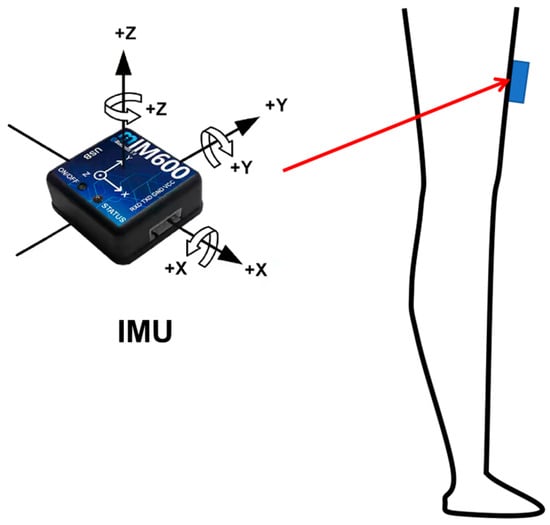
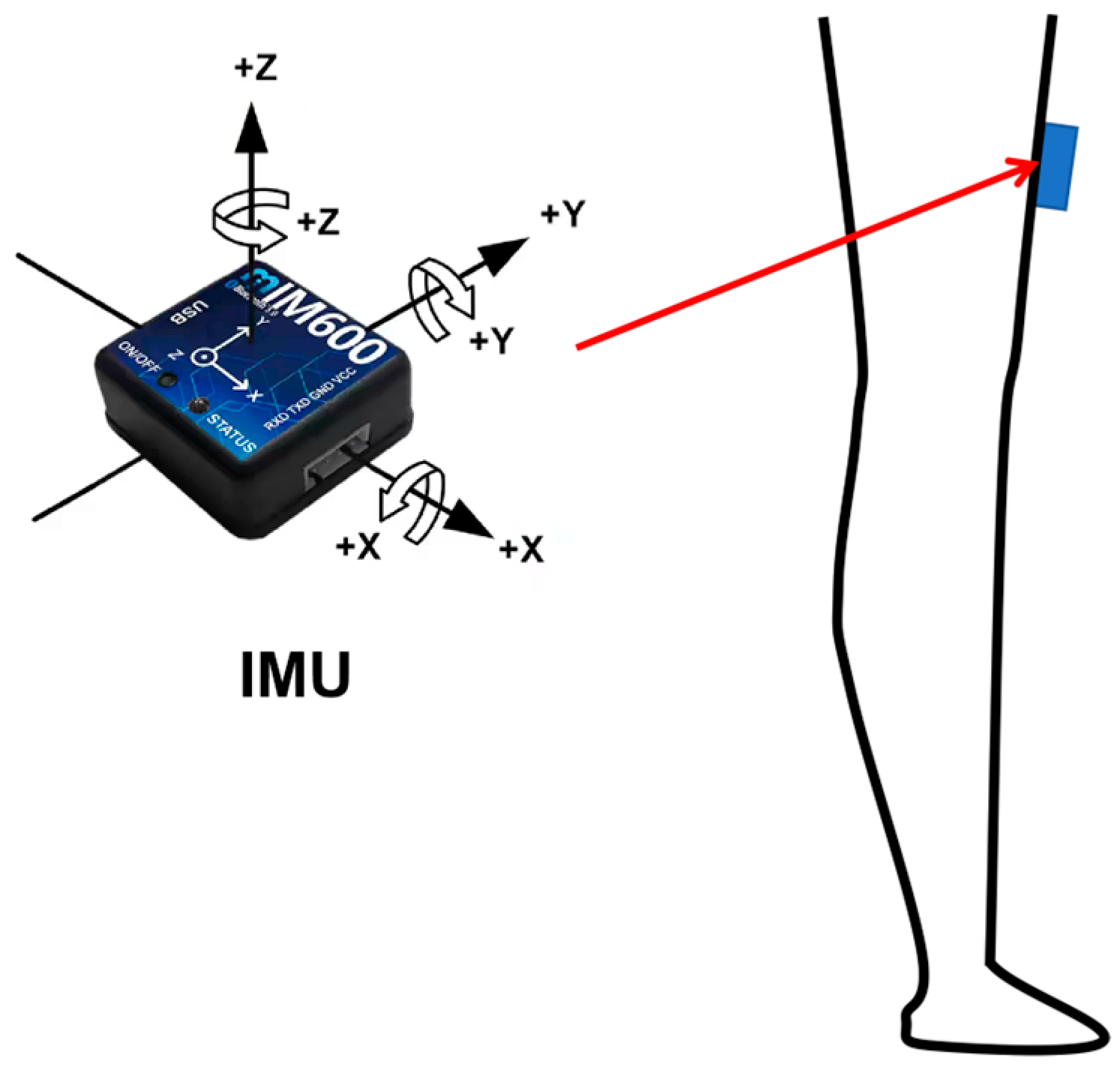
Since maintenance operations involve two scenarios, namely level-ground walking and transmission tower climbing, the design of the exoskeleton must accommodate both locomotion scenarios. Therefore, a kinematic analysis of the lower limbs during level-ground walking was first conducted, followed by the kinematic analysis of transmission tower climbing to guide the design of the exoskeleton, ensuring that the developed lower-limb exoskeleton achieves good adaptability. In this study, motion posture data during level-ground walking and transmission tower climbing were collected using an IMU mounted on each subject’s right thigh for kinematic analysis at a sampling frequency of 250 Hz. Six healthy adult subjects with electrical work experience were recruited, and the acquired IMU data were subsequently normalized and averaged. The variation ranges of the human hip joint angle during these two locomotion scenarios, collected in our experiments, are shown in Table 1. The placement of the IMU sensor in the data collection is shown in Figure 1. Compared with level-ground walking, the operator’s hip joint can reach a much larger flexion angle in the sagittal plane. Due to the conical and triangular structure of the transmission tower, the kinematics of tower climbing differ significantly from those of stair ascent, with the operator’s hip joint simultaneously exhibiting a certain degree of internal and external rotation.
Table 1.
The range of motion of the hip joint.
Figure 1.
IMU sensor placement.
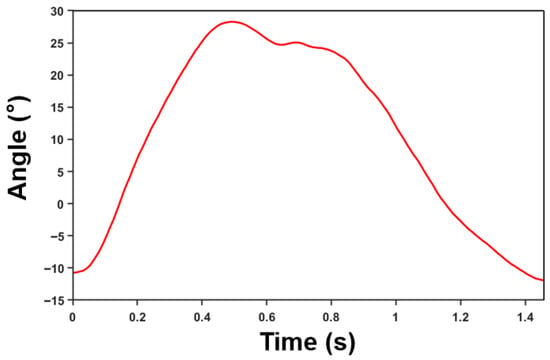
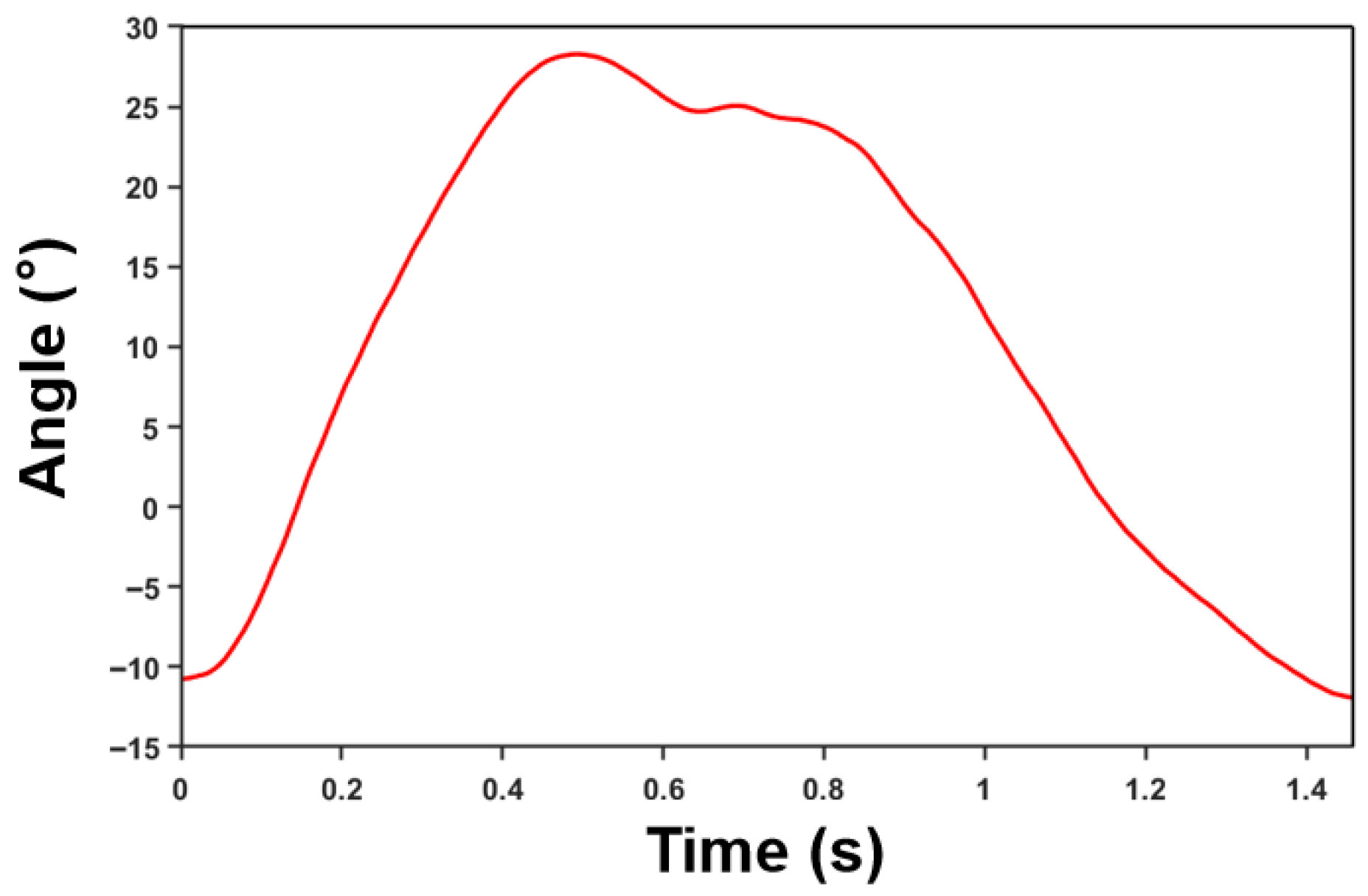
For level-ground walking, researchers typically divide the motion into gait cycles. A gait cycle is defined as the complete motion process starting from the heel strike of one foot to the next heel strike of the same foot, which consists of a stance phase and a swing phase. The stance phase refers to the period from the initial ground contact of the reference foot to the moment it leaves the ground, while the swing phase refers to the period from when the reference foot leaves the ground to when it contacts the ground again. During level-ground walking, the variation in the human hip joint angle in the sagittal plane over one gait cycle, derived from the collected data, is shown in Figure 2.
Figure 2.
Sagittal-plane hip joint angle variation during level-ground walking.
Compared with level-ground walking, the maximum flexion angle of the human hip joint in the sagittal plane during transmission tower climbing increases significantly. In addition, due to the ladder-like structure of transmission towers, maintenance personnel must climb upward at a specific inclination, and the hip joint is also accompanied by a certain degree of internal and external rotation during the climbing process.
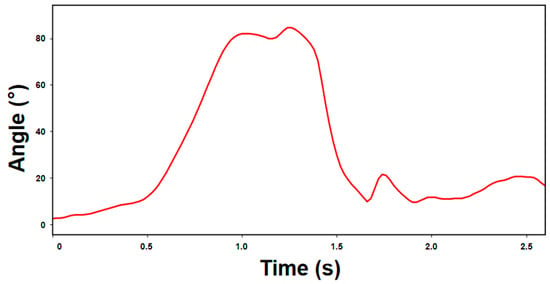
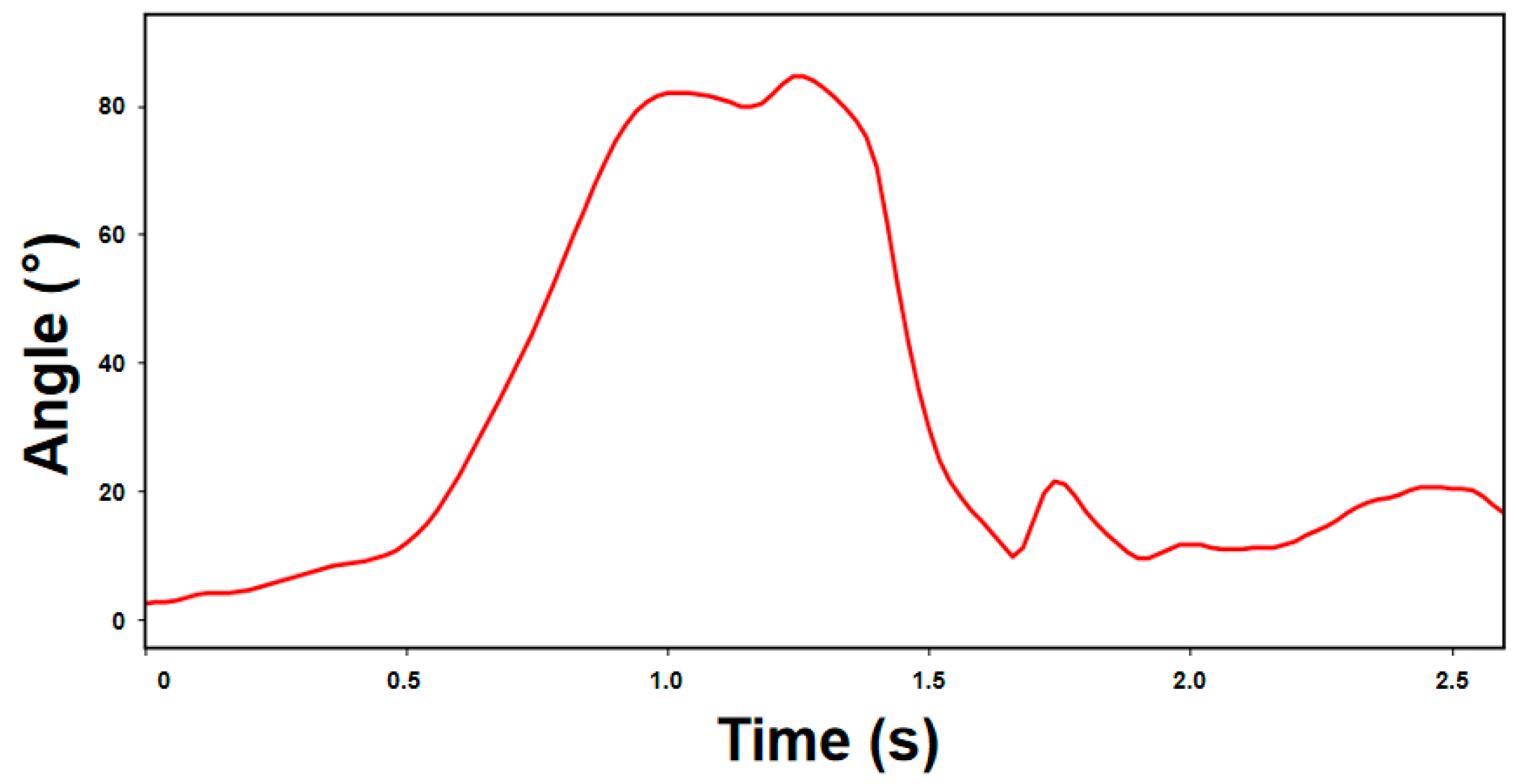
The transmission tower climbing motion of personnel in power maintenance operations can be divided into four phases: supporting phase, swing phase, holding phase, and lifting phase. In the supporting phase, the leg remains upright and the foot stands on the tower step to support the body. In the swing phase, the leg is lifted and the hip joint flexes to search for the next foothold. In the holding phase, the wearer steps on the tower step in preparation for upward climbing. In the lifting phase, the hip joint extends to drive the body upward. During the climbing process, the variation in the hip joint angle in the sagittal plane over one cycle, derived from the collected data, is shown in Figure 3.
Figure 3.
Sagittal-plane hip joint angle variation during transmission tower climbing.
2.2. Structural and Hardware Design
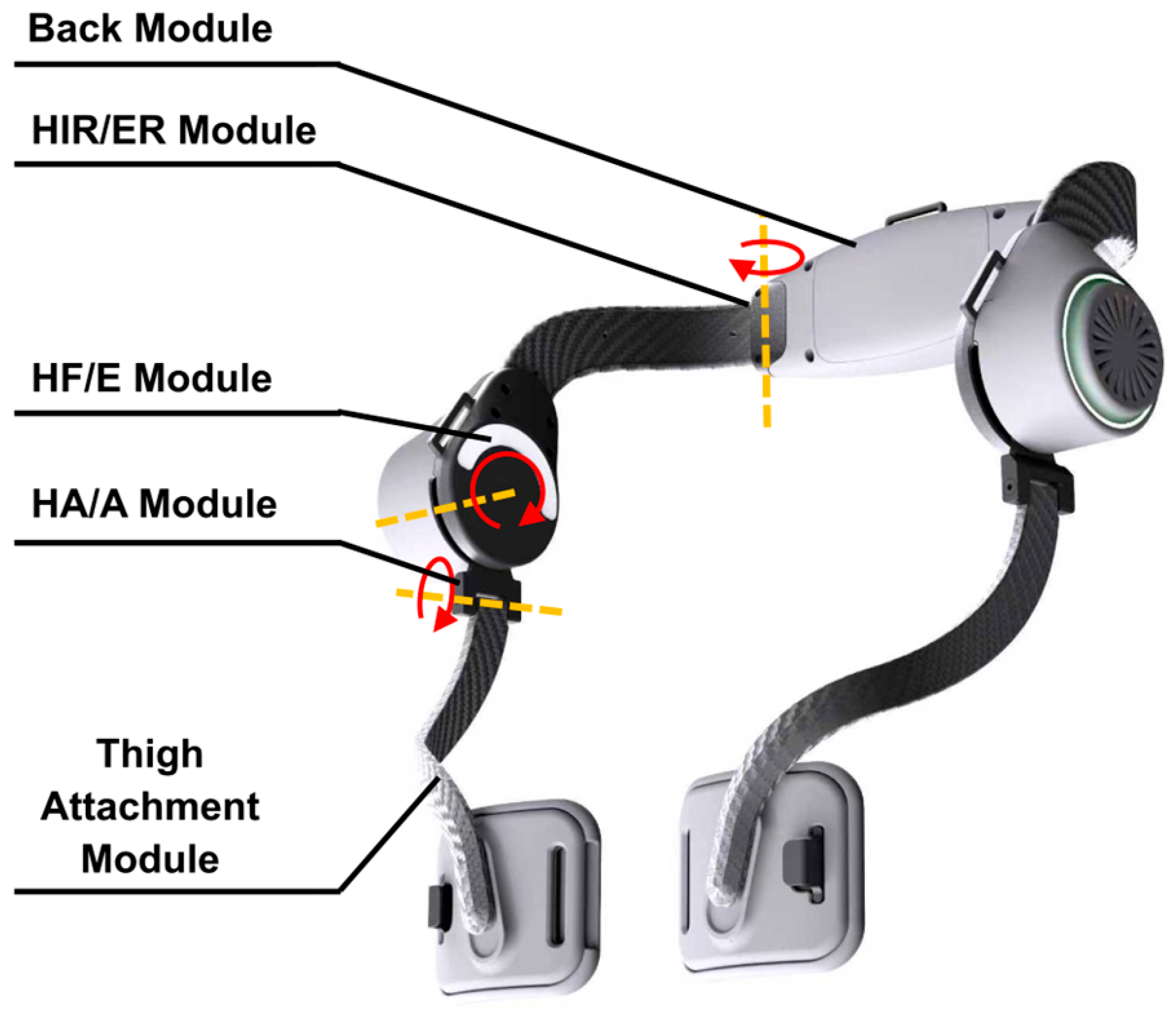
In terms of structural design, guided by the above kinematic analysis of maintenance personnel during level-ground walking and transmission tower climbing, a unilateral three-degree-of-freedom hip assistive exoskeleton was optimized and designed based on the first-generation prototype. Among these degrees of freedom, the hip flexion/extension degree of freedom, which accounts for the majority of the motion, was configured as an active degree of freedom driven by electric actuators, while the adduction/abduction and internal/external rotation degrees of freedom were designed as passive degrees of freedom.
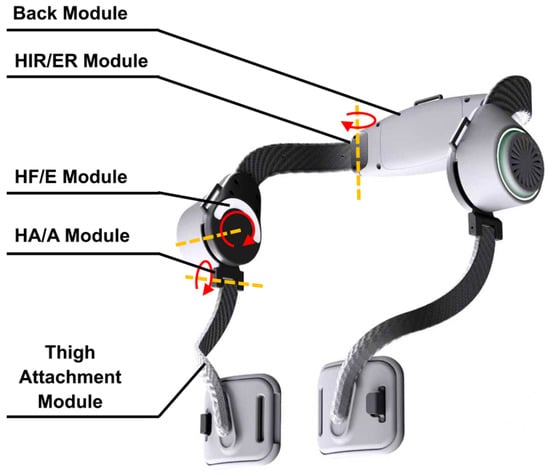
The overall structure of the exoskeleton consists of a back control module, a hip flexion/extension (HF/E) module, a hip adduction/abduction (HA/A) module, a hip internal/external rotation (HIR/ER) module, and a thigh attachment module. Compared with the first-generation prototype, the second-generation prototype adopts an integrated hardware design and further reduces the mass of the back housing, thereby achieving overall system lightweighting. The main structure of the exoskeleton is constructed using resin composites, while key load-bearing components are fabricated from 7075 aluminum alloy. Each actuator weighs 550 g, bringing the total mass of the exoskeleton to merely 3 kg. The structural design of the hip exoskeleton is illustrated in Figure 4.
Figure 4.
The structural design of the hip exoskeleton.
In terms of hardware design, the exoskeleton is powered by a 24 V, 5 Ah lithium battery, enabling up to 3 h of continuous operation. A LubanCat controller serves as the main control unit, while Quanzhibo actuators (Wuxi Quanzhibo Technology Co., Ltd., Wuxi, China) with integrated encoders are used for actuation.
2.3. Dynamic Modeling of Human Lower Limb
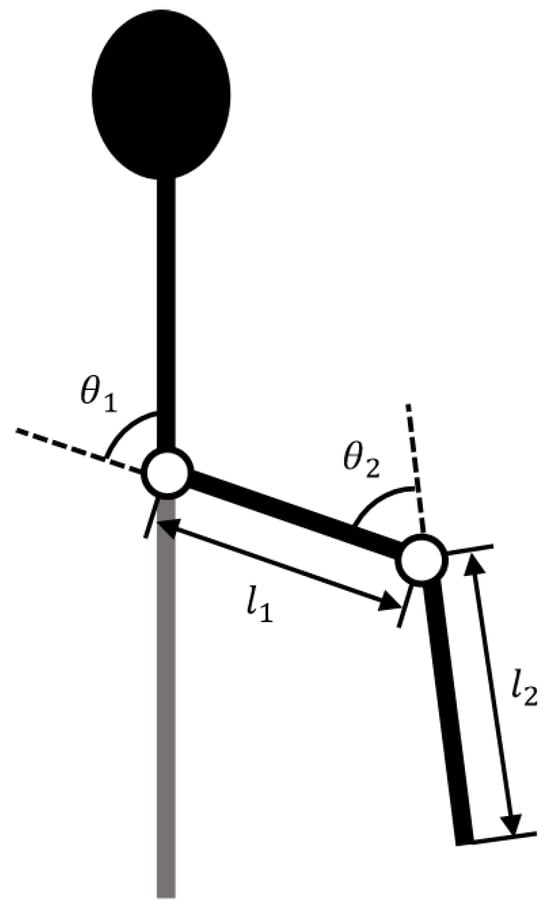
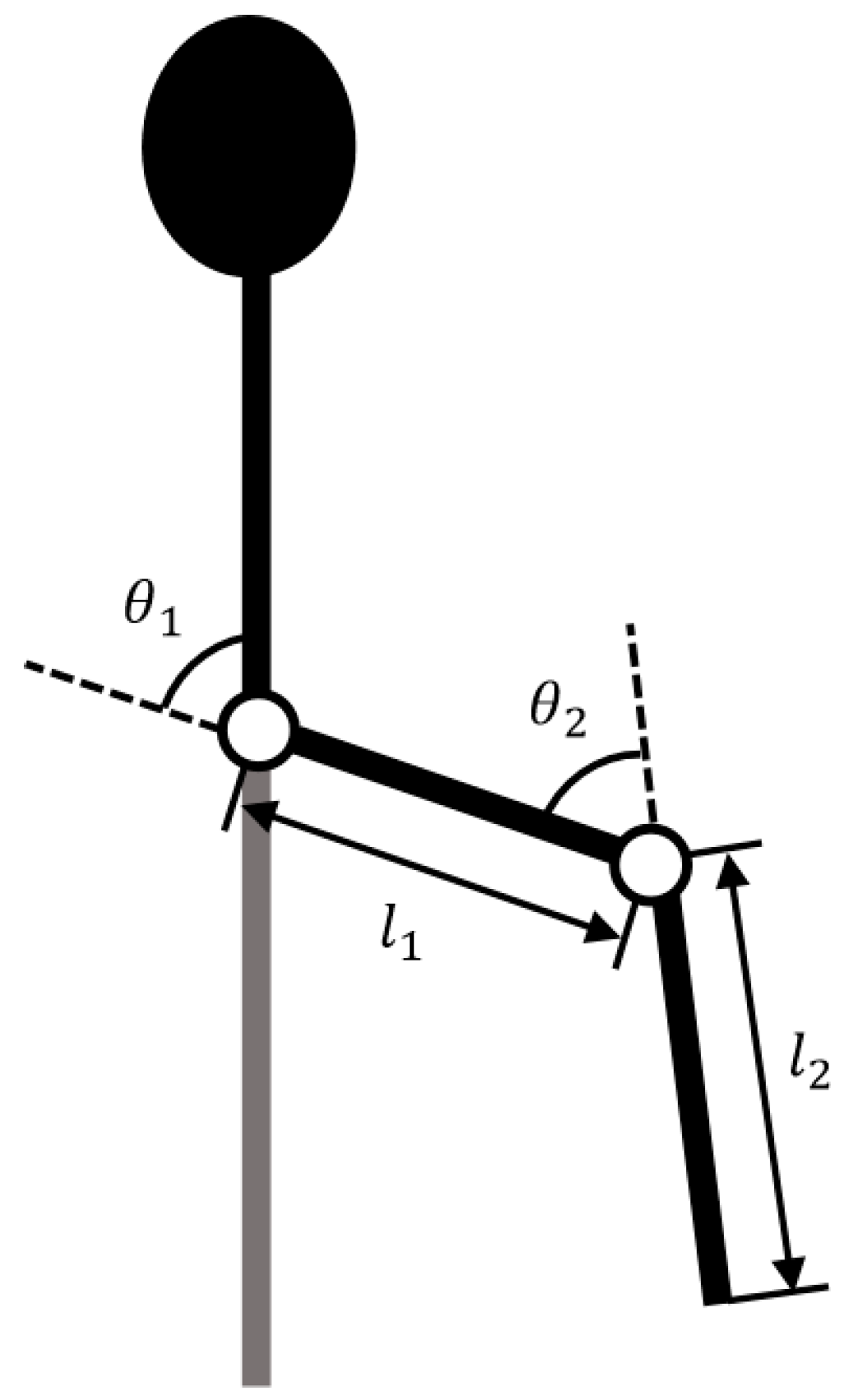
Given that the mass of the exoskeleton component around human thigh is negligible relative to the human thigh, and considering that the primary motion of the lower limbs during walking and climbing occurs in the sagittal plane, a dynamic model of the human lower limb in the sagittal plane during the swing phase was developed using the Lagrangian method to provide a reference for assistive torque. To simplify the modeling process, the ankle joint degree of freedom was neglected, and the thigh and shank were modeled as homogeneous rigid links. The schematic of the human lower limb dynamic model is shown in Figure 5. In the model, and denote the hip and knee joint angles in the sagittal plane; and denote the lengths of the thigh and shank; and denote the masses of the thigh and shank.
Figure 5.
Dynamic model of human lower limb.
The dynamic model of the unilateral human lower limb can be expressed as follows:
where , , denote the joint position, velocity, and acceleration vectors; denotes the inertia matrix; denotes the Coriolis and centrifugal matrix; denotes the gravity vector.
The matrices , and can be expressed as follows:
2.4. HFSM-Based Control Strategy
An FSM is an algorithmic framework commonly used for modeling and control of discrete-event systems. Its core elements include states, events, actions, and transitions. The operating process of a system can be divided into a finite number of states, and transitions between these states occur when specific conditions are satisfied. However, for the primary scenarios of walking and climbing in power maintenance tasks considered in this study, the control problem inherently involves both high-level motion states and their corresponding sub-states, leading to an excessive number of states in a conventional single-layer FSM, which significantly increases transition complexity and makes the system difficult to manage. To address this issue, a more structured control framework is required. The HFSM is an extension of the FSM that addresses the complexity arising from an excessive number of states. By classifying and organizing states into hierarchical levels, the HFSM reduces the number of direct transitions between states. The control architecture therefore consists of a main state machine and sub-state machines. The main state machine detects whether the transition conditions are satisfied and switches to the corresponding sub-state machine when the conditions are met. Within the sub-state machine, the states can be further subdivided into more specific states.
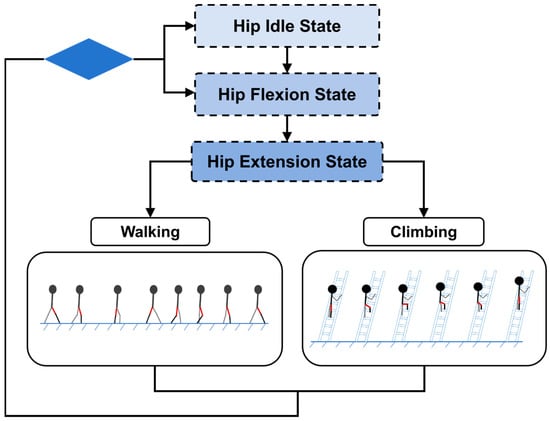
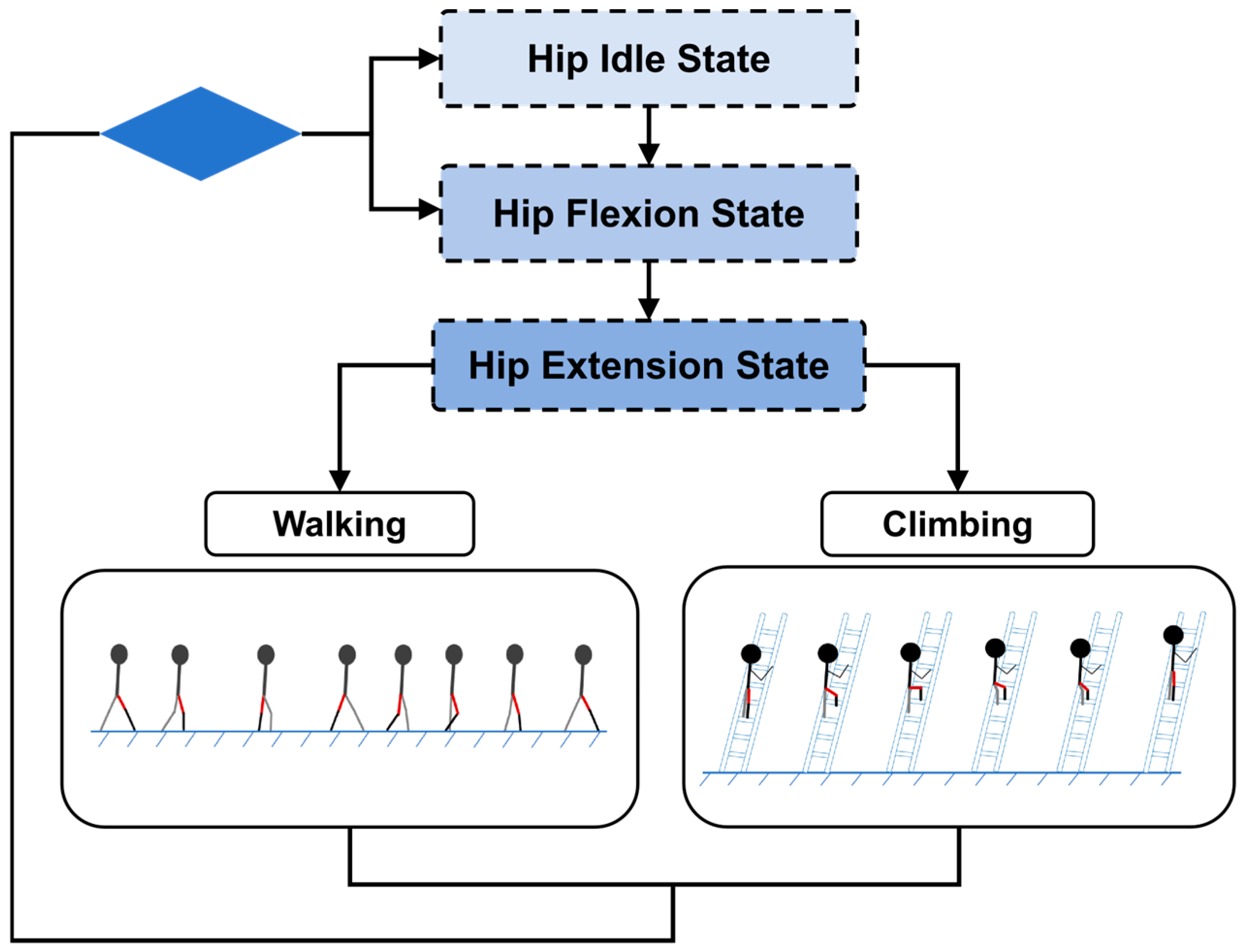
In this study, an HFSM-based exoskeleton state recognition and transition control strategy is proposed. In this strategy, the main state machine is used to identify the motion direction of the human hip joint based on hip joint angle and angle velocity and includes three states: Hip Idle State, Hip Flexion State, and Hip Extension State.
To distinguish between different states, threshold-based criteria are introduced. Specifically, when the absolute value of the angular velocity exceeds a predefined threshold, the system transitions from the Hip Idle State to either the Hip Flexion State or the Hip Extension State. The target state is determined by the sign of the angular velocity. Conversely, when the absolute value of the angular velocity falls below, the system transitions back to the Hip Idle State. Within the flexion and extension states, the motion is further divided into multiple phase states. The flexion state is subdivided into several phase states according to predefined hip joint angle intervals. For the extension state, due to the significant difference in the maximum hip flexion angle between walking and climbing, it is further divided into two locomotion sub-states—walking and climbing, using a sub-state machine. Each locomotion sub-state is then further subdivided into several phase states according to the hip extension angle range. The high-level states, sub-states, and the phase states defined are listed in Table 2.
Table 2.
States of HFSM.
In this study, since the hip joint actuator angle of the exoskeleton closely corresponds to the human hip joint angle, the encoder data from the actuators were used for state determination, with a frequency of 167 Hz. In order to prevent misclassification, the exoskeleton performs a state transition only when three consecutive state determination results are identical and the transition complies with the continuity of human motion; otherwise, the exoskeleton retains the previous stable state. The actuators are set to active assistance mode (AA Mode) in Hip Flexion State, Climbing Hip Extension State Phase 2 and Walking Hip Extension State Phase 2, while in all other states the actuators are set to passive-following mode (PF Mode). In the AA Mode, the actuators actively output torque according to the detected motion state to assist the hip joint. Specifically, in the Hip Flexion State, the exoskeleton outputs assistive torque based on the dynamic model established in Section 2.3, whereas in Climbing Hip Extension State Phase 2 and Walking Hip Extension State Phase 2, it provides distinct constant torque for each state. In the PF Mode, the actuators track the human motion and only compensates for mechanical inertia and friction without providing additional assistance.
The actuator used in this study can provide real-time feedback of actuator rotation angle and output torque. Based on the recognition results of the hierarchical state machine, the control system dynamically adjusts the actuator control parameters to achieve adaptive and differentiated assistance across different locomotion stages. The control strategy proposed in this study is illustrated in Figure 6.
Figure 6.
HFSM-based control strategy of exoskeleton.
2.5. Experimental Design
This study comprises three kinds of experiments: state recognition and transition experiments, laboratory transmission tower climbing experiments and field transmission tower climbing experiments. The state recognition and transition experiments are conducted to verify the effectiveness of the proposed control strategy. Given that transmission tower climbing is the primary motion scenario addressed in this study, the assistance performance of the exoskeleton was evaluated specifically under this scenario using a combination of laboratory and field transmission tower climbing experiments.
A total of 8 healthy subjects were recruited for this study. Subjects S1–S5 took part in state recognition and transition experiments and laboratory transmission tower climbing experiments, while subjects S6–S8, who are all power maintenance workers, participated in field transmission tower climbing experiments. The formations of all subjects, along with their involvement in each experiment, are summarized in Table 3. Before the formal test, all subjects completed 30 min of familiarization training with the exoskeleton system to reduce the adaptation effect on the test results. All subjects provided written informed consent prior to the experiments, which were approved by the Local Ethics Committee of Wuhan University.
Table 3.
Information about subjects.
2.5.1. State Recognition and Transition Experiments Design
In the experiment, a ladder was used to simulate the footholds of a transmission tower. The subjects were required to complete a full motion sequence at approximately consistent movement speeds, including level-ground walking, climbing up the ladder, climbing down the ladder, and returning to level-ground walking. Under the same starting and ending point conditions, each subject conducted 20 repeated trials. During the experiments, the motion state identifiers of the state machine were recorded through the host computer control software.
To quantitatively evaluate the reliability and stability of the proposed hierarchical state machine-based motion state recognition and transition strategy, actuator angles, actuator torques, and state transitions of the state machine were recorded. For each subject, the mean success rates and standard deviations (STDs) of walking and climbing state recognition, as well as those of the transition between walking and climbing, were calculated.
2.5.2. Transmission Tower Climbing Experiments Design
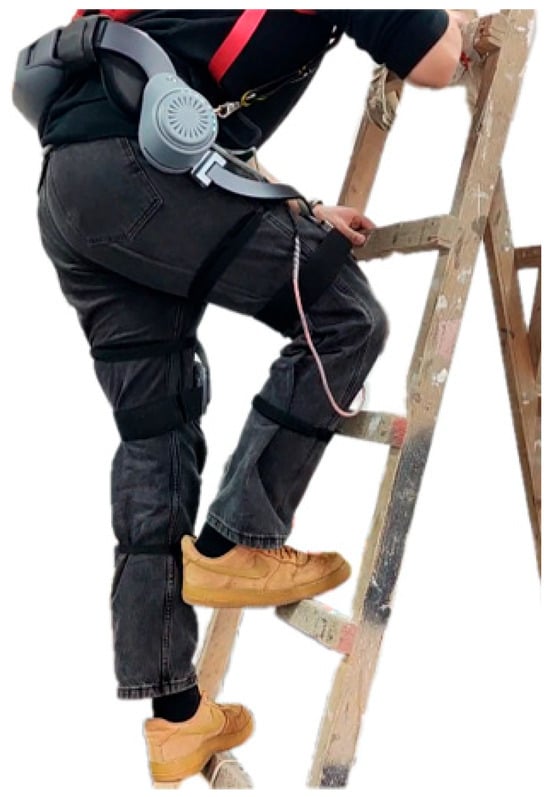
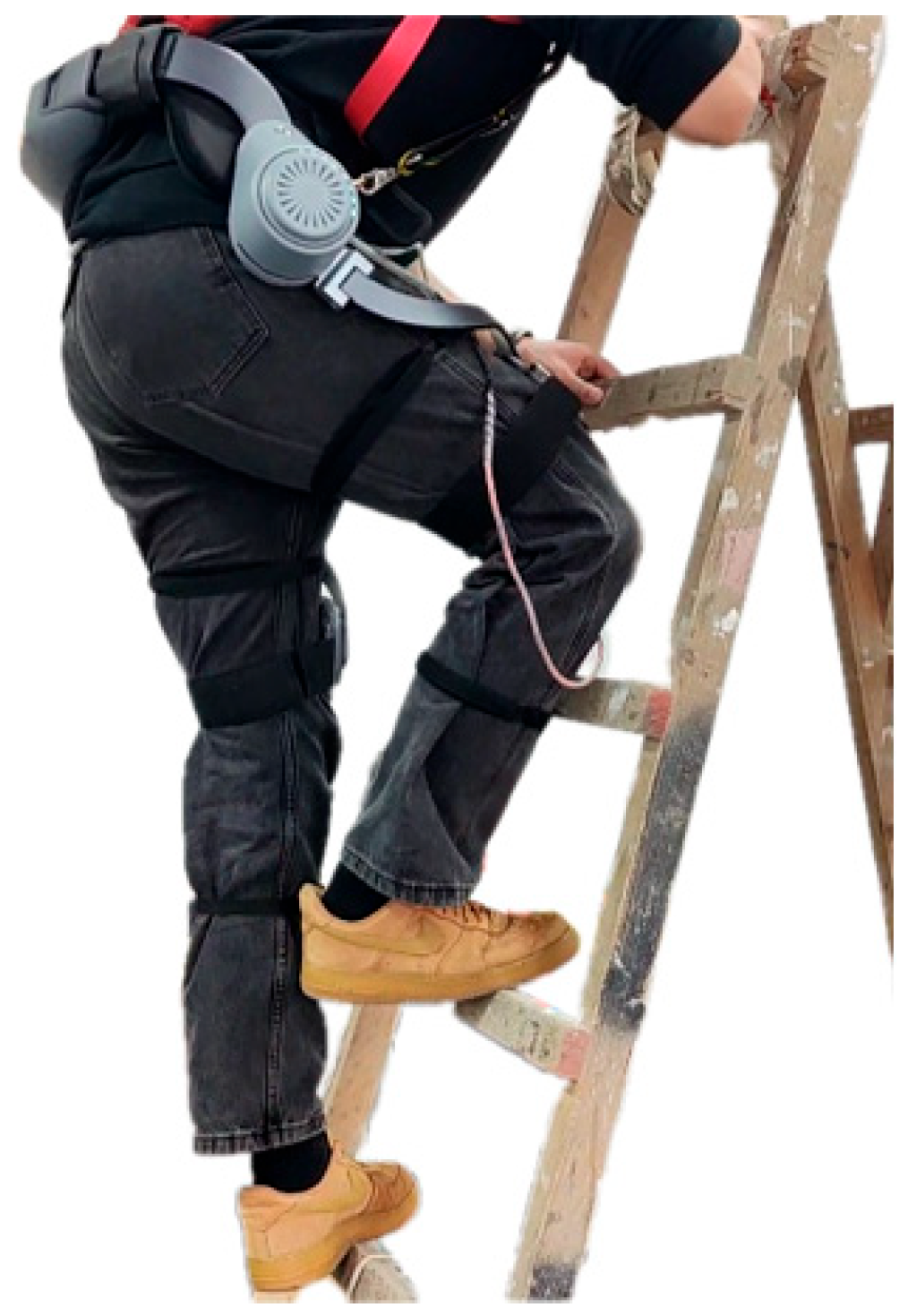
The laboratory experiments were conducted under controlled laboratory conditions, where the subject alternately climbed a ladder with both legs, as shown in Figure 7. The experiments were divided into two groups: the powered-on exoskeleton condition and the powered-off exoskeleton condition. In both conditions, the subjects wore the exoskeleton to establish a controlled comparison and eliminate the influence of external factors. During the experiments, the climbing motions were not performed continuously; instead, each condition consisted of five repeated trials.
Figure 7.
Schematic of laboratory experiment.
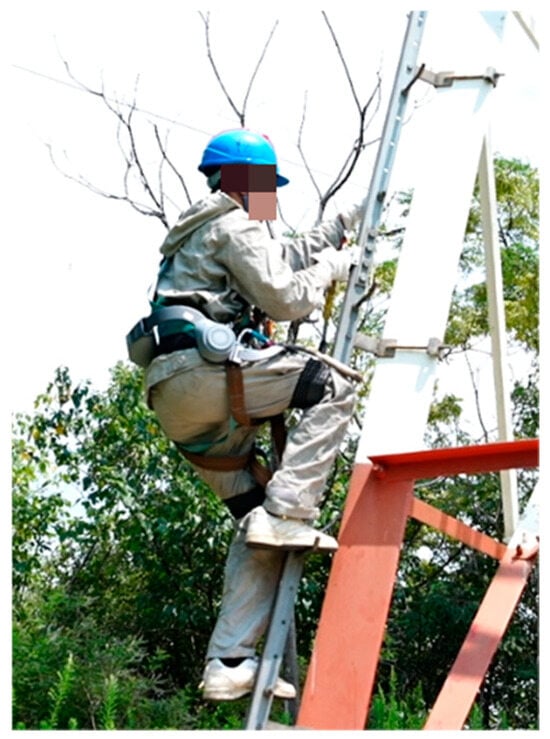
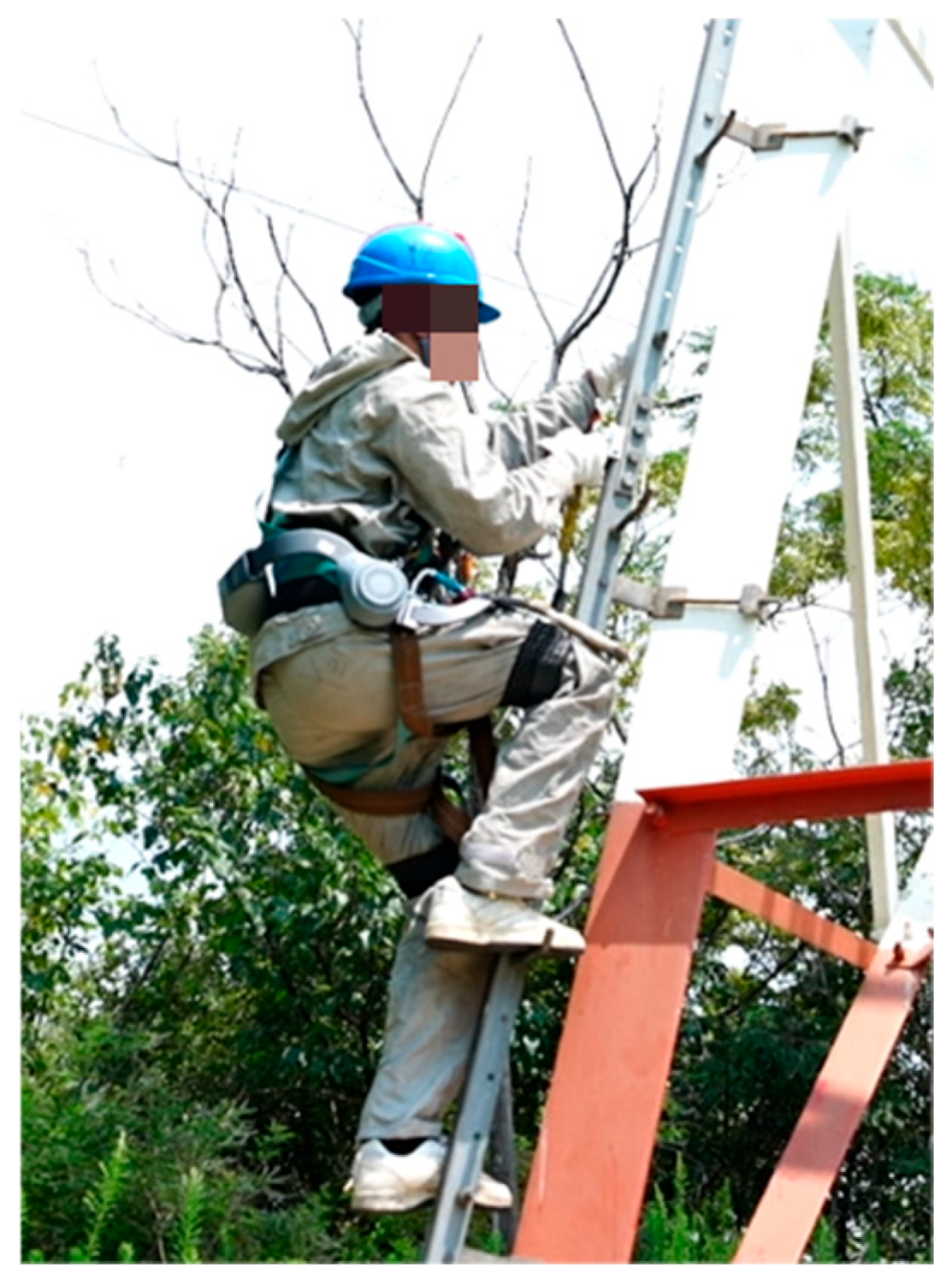
The field experiments were conducted in an actual transmission tower operation environment, where the subjects alternately climbed the tower with both legs, as shown in Figure 8. Similar to the laboratory experiments, the experiments were conducted under two conditions: the powered-on exoskeleton condition and the powered-off exoskeleton condition. During the experiments, the climbing motions were not performed continuously, and five trials were conducted for each condition.
Figure 8.
Schematic of field experiment.
To minimize order effects and fatigue, trials under powered-on and powered-off exoskeleton conditions were conducted in a randomized alternating manner for all subjects in both laboratory and field experiments, with sufficient rest between trials.
Both the laboratory experiments and the field experiments employed sEMG to evaluate the assistance effect of the exoskeleton [22,23]. sEMG signals reflect the electrical activity of muscle motor units, and their amplitude is positively correlated with muscle contraction intensity. Previous studies indicate that the muscles primarily involved in lower-limb climbing include the gluteus maximus, hamstrings, and quadriceps femoris (responsible for knee extension). To avoid interference caused by exoskeleton placement on the recorded signals, this study focused on acquiring sEMG signals from the biceps femoris (BF), rectus femoris (RF), and vastus medialis (VM) of the lower limb. Prior to testing, the subjects’ skin was cleaned with alcohol to remove keratin and oils, thereby reducing skin impedance and minimizing external noise. The sEMG signals were collected using the Zhiyunwei wireless EMG system (Shanghai Jingchang Industrial Co., Ltd., Shanghai, China) at a sampling frequency of 1000 Hz.
During climbing, the collected sEMG signals may contain noise due to factors such as subcutaneous fat, muscle fatigue, and external interference, necessitating preprocessing. The preprocessing procedure was as follows: first, a band-pass filter from 30 Hz to 450 Hz was applied; next, the signal was full-wave rectified; finally, the root mean square (RMS), integrated EMG (IEMG)and maximum absolute value (MAXABS) values were calculated [20].
RMS represents the root mean square of the sEMG signal, reflecting the temporal variation in signal amplitude with good real-time performance. Its calculation formula is as follows:
where represents the start time of the time interval, represents the end time of the time interval. In this study, the interval corresponds to the muscle activation phase of each motion cycle, during which the target muscles actively generate force. The represents the raw sEMG signal at time .
IEMG refers to the integral of the absolute value of the sEMG signal within a time window, representing the cumulative discharge of motor units during muscle activity over a period, thereby reflecting the intensity of muscle electrical activity. Its calculation formula is as follows:
where the variables follow the same definitions as those in Equation (5). To ensure consistency and comparability across trials, the duration of the selected time length for IEMG calculation is kept uniform across all segments.
MAXABS represents the peak instantaneous muscle activation and indicates the maximum contraction intensity of the muscle.
The mean values of these parameters were first calculated for each of the five repetitions in each trial for every subject. The relative change rates between conditions with and without the exoskeleton were then computed for each participant based on these mean values. The change rate was defined as follows:
Finally, the mean change rates and the standard deviations of the change rates across all participants were calculated to evaluate the effect of the exoskeleton on upper-limb muscle activation.
To better illustrate the assistance effect of the exoskeleton in the field experiments, the variation in the RMS of sEMG signals over a single climbing motion was analyzed was additionally calculated and presented.
3. Results
3.1. State Recognition and Transition Experiments
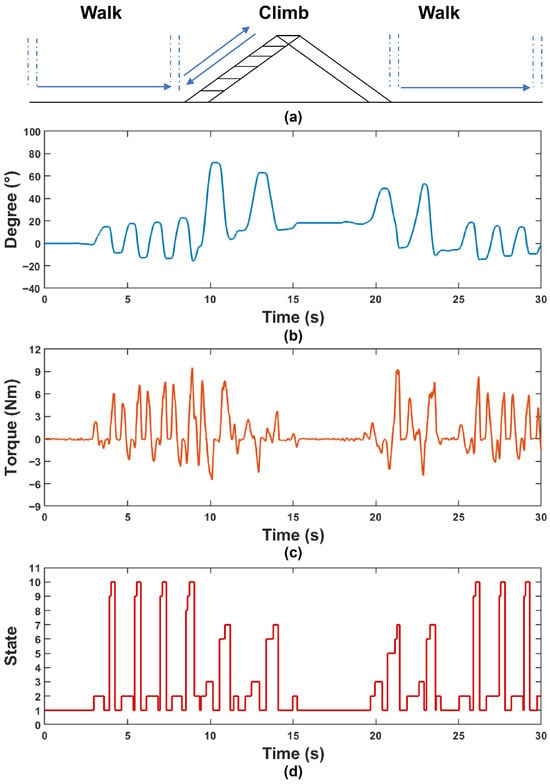
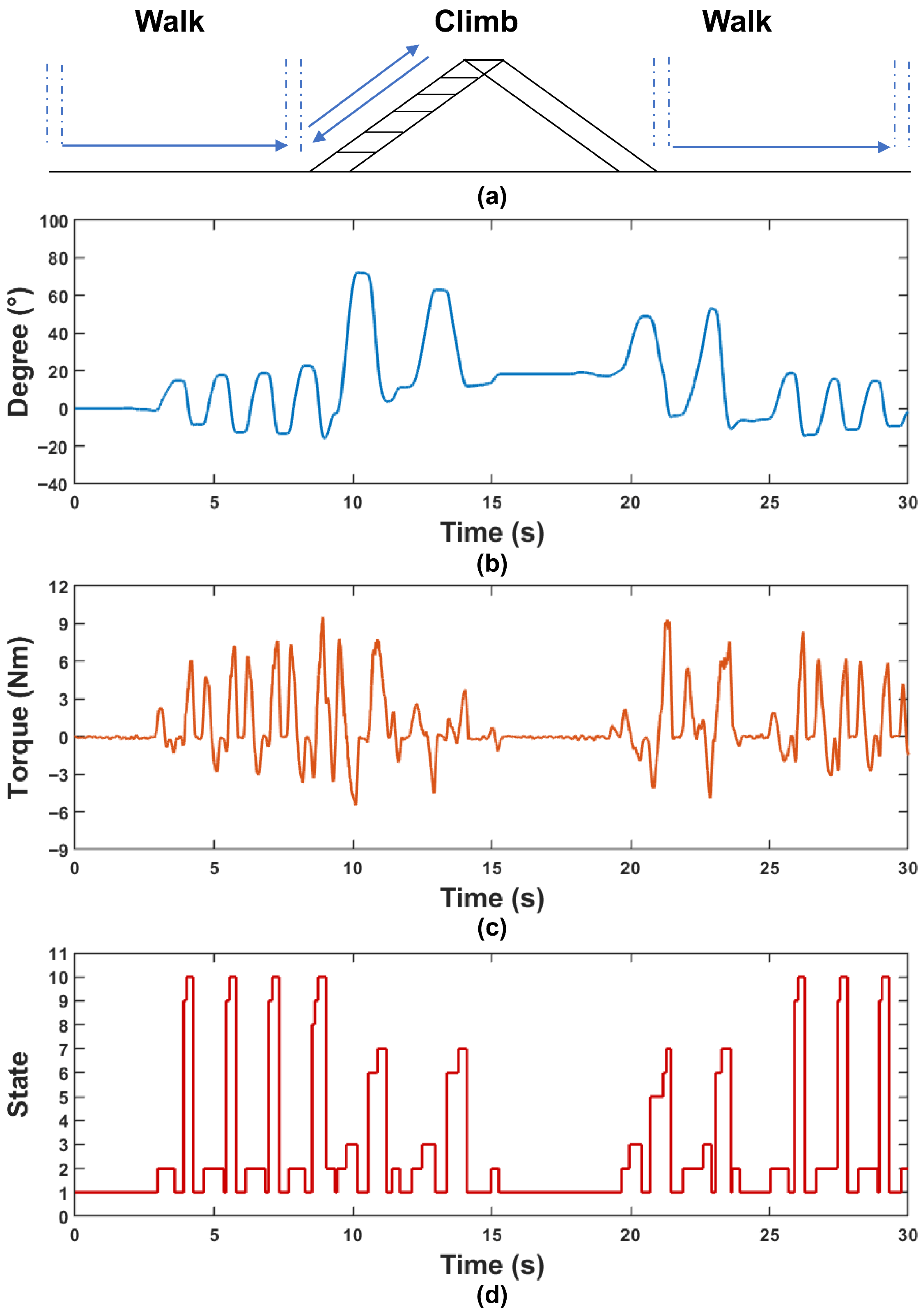
The results of one representative trial are presented in Figure 9 and the numbers in the state diagram correspond to the states listed in Table 4.
Figure 9.
Schematic and result of field experiment: (a) schematic of experimental procedure; (b) actuator output angle on one side of exoskeleton; (c) actuator output torque; (d) state changes of HFSM.
Table 4.
The corresponding numbers to the states in the state diagram.
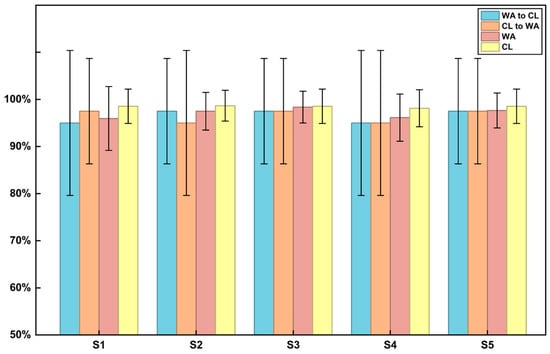
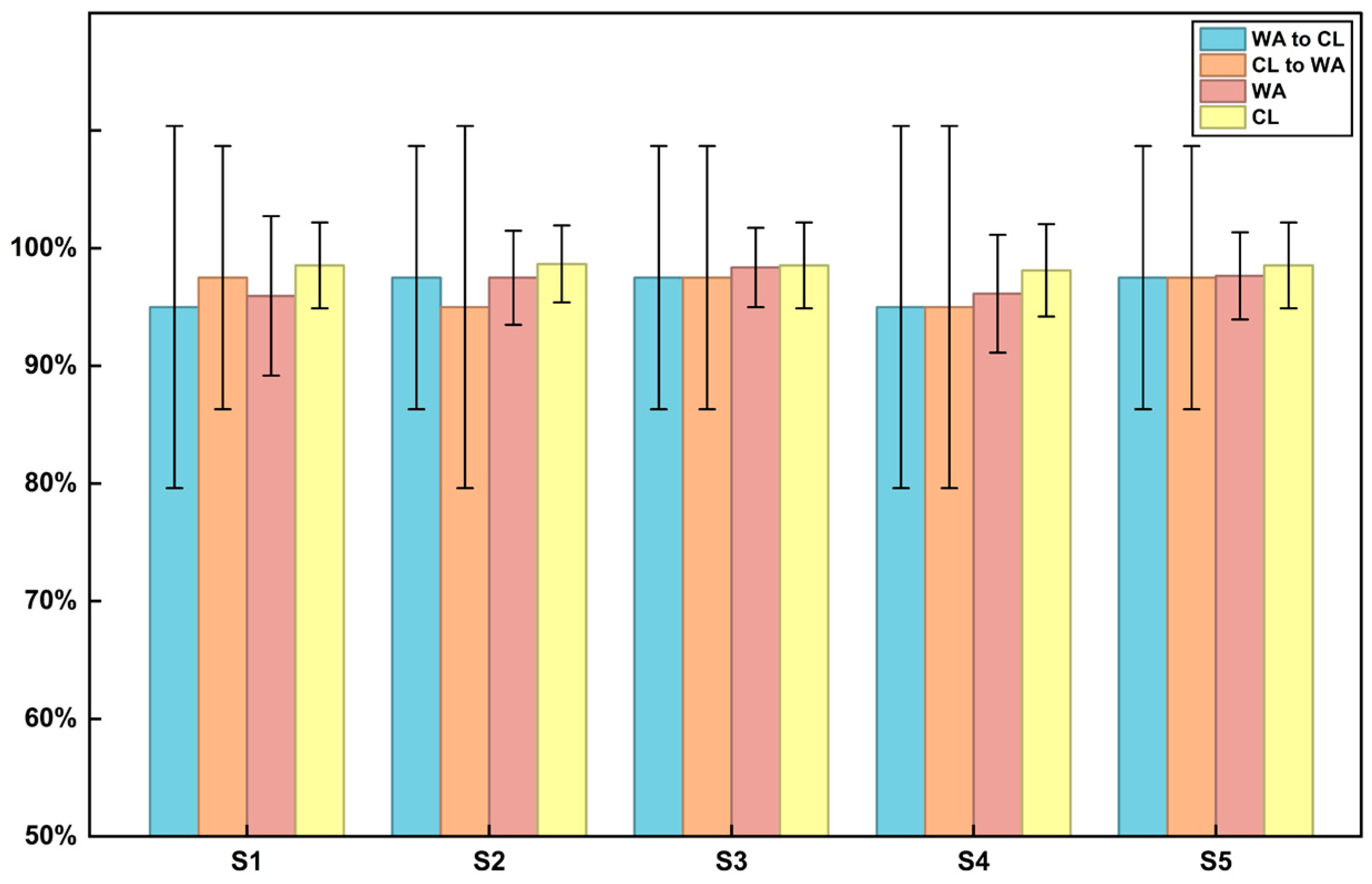
The mean success rates and STD of recognizing the two states (level-ground walking and climbing) and transition between them were evaluated for each subject, and the results are summarized in Figure 10. The experimental results indicate that the exoskeleton can effectively recognize each state and accurately identify the transitions of the user between level walking and climbing.
Figure 10.
The results of state recognition and transition.
3.2. Transmission Tower Climbing Experiments
3.2.1. Laboratory Experiments
To account for potential errors in individual trials, each subject performed five climbing trials per condition, and the experimental data are presented in Table 5.
Table 5.
Statistical sEMG signal data of laboratory experiments.
As shown in the table, the RMS, IEMG, and MAXABS values of multiple muscles were markedly reduced under exoskeleton assistance. These results demonstrate that the exoskeleton effectively decreased muscle activation levels during climbing tasks under controlled experimental conditions.
3.2.2. Field Experiments
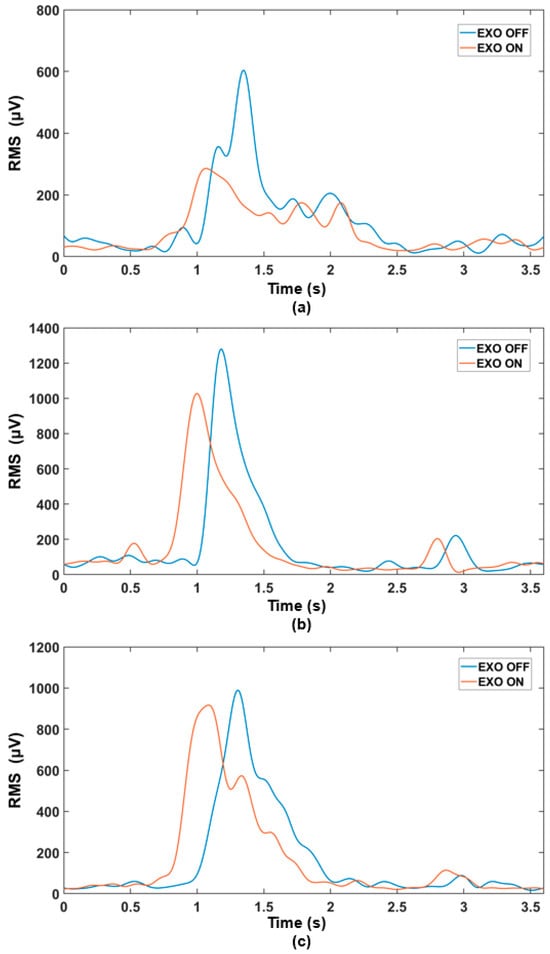
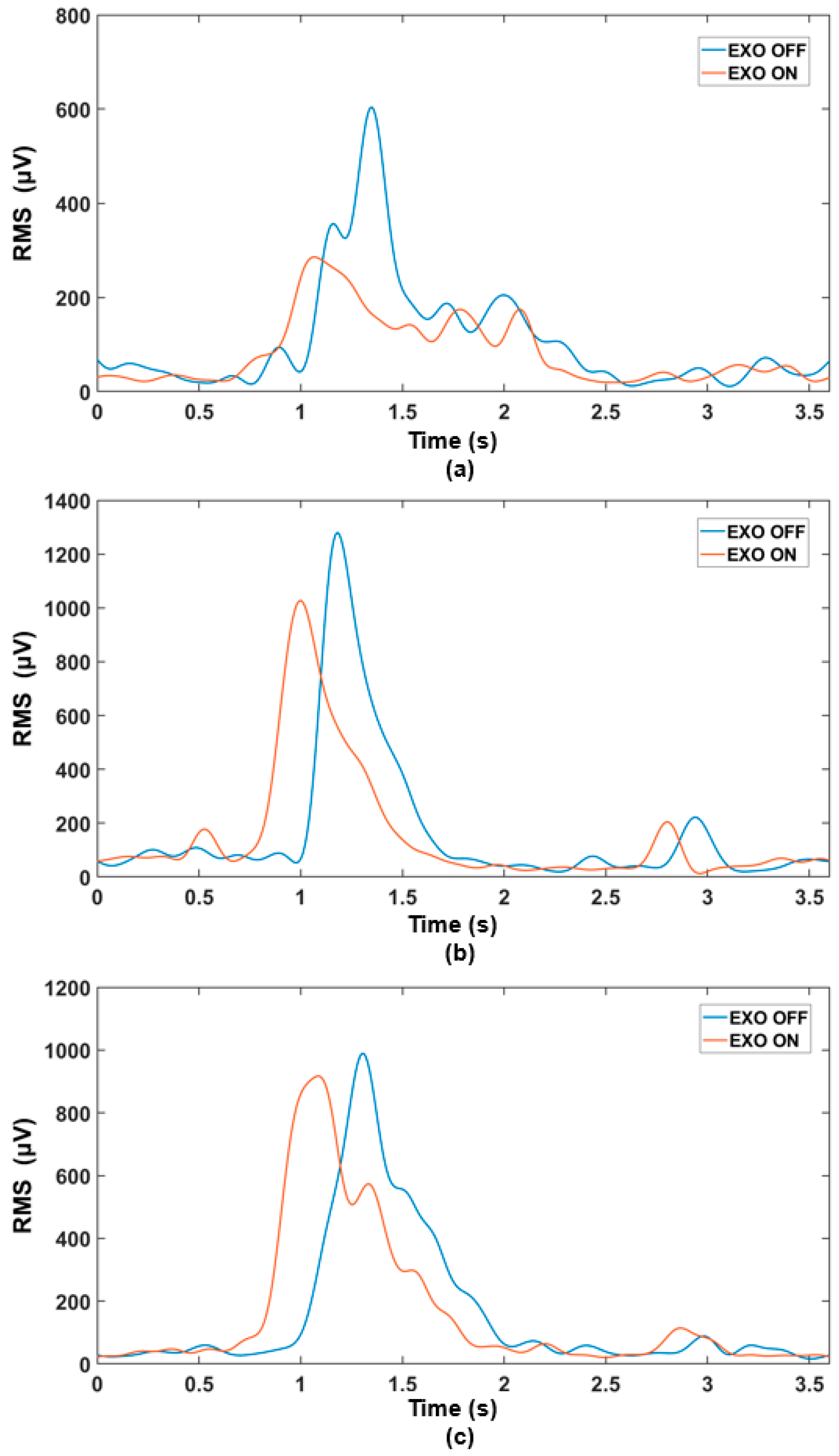
To better illustrate the exoskeleton’s assistive effect, the variation in the RMS of sEMG signals over a single climbing motion was analyzed based on the field data, and the results are shown in Figure 11.
Figure 11.
RMS variations in sEMG signals in the subject’s right leg during a single climbing motion: (a) RMS of the BF; (b) RMS of the RF; (c) RMS of the VM.
Compared to the powered-off condition, the powered-on exoskeleton significantly reduced the RMS values of the BF, RF, and VM, indicating decreased muscular effort and effective assistance.
Similar to the simulation experiments, the subject performed five climbing trials in each group. The average values of the IEMG and RMS of the sEMG signals obtained from the five trials were calculated. The experimental results are presented in Table 6.
Table 6.
Statistical sEMG signal data of field experiments.
As shown in the table, the RMS, IEMG, and MAXABS values of multiple muscles were all reduced under exoskeleton assistance. These findings indicate that the exoskeleton effectively alleviated muscular effort during climbing tasks in real-world conditions.
4. Discussion and Conclusions
In this study, a hip assistive exoskeleton capable of transitioning between level-ground walking and tower climbing states was designed. Building upon an improved mechanical structure, a control strategy based on a HFSM was proposed to enable recognition and transition between the user’s walking and climbing states. The experimental results indicate that the exoskeleton system can accurately identify the user’s current movement state and provide corresponding assistive torque for each state. Regarding climbing assistance, the exoskeleton effectively reduced the RMS, IEMG and MAXABS of the relevant muscles, which is expected to enhance the safety of tower climbing operations and reduce the risk of accidents caused by fatigue.
In future work, we will improve the control strategy by incorporating advanced control methods to better cope with the complex conditions of power maintenance tasks, so that the exoskeleton can deliver more precise assistance in different movement states. Meanwhile, we will also consider introducing more comprehensive evaluation metrics, such as metabolic cost, to provide a more comprehensive evaluation of the exoskeleton’s performance. In addition, we acknowledge that the current experimental sample size is relatively limited. In future studies, more participants will be recruited to further validate the effectiveness and generalizability of the proposed system.
Author Contributions
Conceptualization: M.L. and J.Y.; methodology: M.L. and J.Y.; software: M.L., J.Y., H.C. and H.H.; validation: Y.L. (Yalun Liu), Y.L. (Yanlong Liu) and W.X.; formal analysis: H.C.; investigation: M.L., J.Y. and H.C.; resources: H.H. and H.L.; data curation: H.H.; writing—original draft preparation: M.L., J.Y., Y.L. (Yalun Liu) and W.X.; writing—review and editing: H.C., H.H., Y.L. (Yalun Liu) and Y.L. (Yanlong Liu); visualization: Y.L. (Yanlong Liu); supervision: Z.G.; project administration: Z.G.; funding acquisition: Z.G. All authors have read and agreed to the published version of the manuscript.
Funding
This research was funded by the Science and Technology Project of State Grid Hubei Electric Power Co., Ltd. (Grant No. 521520240009) and the Key Research and Development Program of Hubei Province (Grant No. 2024BCB007).
Data Availability Statement
The data presented in this study are available on request from the corresponding author.
Conflicts of Interest
Authors Ming Li, Haoyuan Chen and Hongwei Hu are employed by the State Grid Hubei Electric Power Co., Ltd., Extra High Voltage Company. The remaining authors declare that the research was conducted in the absence of any commercial or financial relationships that could be construed as a potential conflict of interest.
References
- Liu, Z.; Zhang, F.; Yu, J.; Gao, K.; Ma, W. Research on Key Technologies in ±1100 kV Ultra-high Voltage DC Transmission. High Volt. 2018, 3, 279–288. [Google Scholar] [CrossRef] [Scilit]
- Li, M. Exploration and Practice of Intelligent Operation and Maintenance of Long-Distance Ultra-High Voltage Underground Cables Supported by Digital Twin Technology. In Proceedings of the 2023 International Conference on Integrated Intelligence and Communication Systems (ICIICS), Kalaburagi, India, 24–25 November 2023; IEEE: Piscataway, NJ, USA, 2023; pp. 1–6. [Google Scholar]
- Li, P.; Wang, J.; Wu, C.; Zhang, S.; Cheng, H.; Dong, M.; Yang, K.; Du, J. Operation and Monitoring Technology of Ultra-High Voltage Transformer Equipment. IET Conf. Proc. 2022, 2021, 2186–2190. [Google Scholar] [CrossRef] [Scilit]
- Chen, Y.; Fang, Z.; Liu, S.; Wang, Y.; Zhong, C.; Cai, C.; Zhang, Y.; Wei, Y.; Wang, Z. A Soft-Robotic Gripper for Ultra-High-Voltage Transmission Line Operations. In Proceedings of the 2020 IEEE 4th Conference on Energy Internet and Energy System Integration (EI2), Wuhan, China, 30 October–1 November 2020; IEEE: Piscataway, NJ, USA, 2020; pp. 788–793. [Google Scholar]
- Chen, Y.; Wang, Y.; Tang, X.; Wu, K.; Wu, S.; Guo, R.; Feng, Y.; Dong, E. Intelligent Power Distribution Live-line Operation Robot Systems Based on Stereo Camera. High Volt. 2023, 8, 1306–1318. [Google Scholar] [CrossRef] [Scilit]
- Jiang, T.; Huang, Y.; Shi, L.; Feng, W.; Zhang, W. Design and Research of Segmented-Stepping Tower CUmbing Robot. Mach. Des. Res. 2024, 40, 1–6. [Google Scholar] [CrossRef]
- Lu, J.; Du, H.; Liu, Y.; Zhu, W.; You, J. Research on Small Quadruped Climbing Robot for Power Transmission Tower. In Proceedings of the 2023 42nd Chinese Control Conference (CCC), Tianjin, China, 24–26 July 2023; IEEE: Piscataway, NJ, USA, 2023; pp. 4586–4590. [Google Scholar]
- Siviy, C.; Baker, L.M.; Quinlivan, B.T.; Porciuncula, F.; Swaminathan, K.; Awad, L.N.; Walsh, C.J. Opportunities and Challenges in the Development of Exoskeletons for Locomotor Assistance. Nat. Biomed. Eng. 2023, 7, 456–472. [Google Scholar] [CrossRef] [Scilit] [PubMed]
- Slade, P.; Kochenderfer, M.J.; Delp, S.L.; Collins, S.H. Personalizing Exoskeleton Assistance While Walking in the Real World. Nature 2022, 610, 277–282. [Google Scholar] [CrossRef] [Scilit] [PubMed]
- Vélez-Guerrero, M.A.; Callejas-Cuervo, M.; Mazzoleni, S. Artificial Intelligence-Based Wearable Robotic Exoskeletons for Upper Limb Rehabilitation: A Review. Sensors 2021, 21, 2146. [Google Scholar] [CrossRef] [Scilit] [PubMed]
- Tang, X.; Wang, X.; Ji, X.; Zhou, Y.; Yang, J.; Wei, Y.; Zhang, W. A Wearable Lower Limb Exoskeleton: Reducing the Energy Cost of Human Movement. Micromachines 2022, 13, 900. [Google Scholar] [CrossRef] [Scilit] [PubMed]
- Guo, Y.; Deng, K.; Huang, L.; He, M.; Zhang, M. Current Research Status of Active-Assist Lower Limb Rehabilitation Exoskeleton Robots. J. Mech. Transm. 2025, 49, 161–176. [Google Scholar] [CrossRef]
- Jie, X.; Zhou, L.; Si, Y. Overview on Development Status and Key Technologies of Military Powered Exoskeleton. Ordnance Ind. Autom. 2022, 41, 14–20. [Google Scholar]
- Wu, Y.; Li, P.; Zhang, Z.; Ning, F.; Sun, K.; Qiu, Y. Research on exoskeleton robots based on various professional technologies and market orientation—Taking industrial exoskeleton robots as an example. East China Sci. Technol. 2024, 12, 48–50. [Google Scholar]
- Bao, Y.; Yang, B.; Sun, M.; Wang, Z.; Fang, L.; Ouyang, X. Design and Control of a Semi-active Electro-hydraulic Lower Limb Exoskeleton Robot for Load-bearing Augmentation. J. Mech. Eng. 2025, 61, 185–195. [Google Scholar]
- He, Y.; Yan, W.; Luo, D. Design and Simulation of a Passive Variable Stiffness Lower-Extremity Exoskeleton. Manuf. Autom. 2025, 47, 17–24. [Google Scholar]
- Zhou, C.; Meng, Q.; Zhang, X.; Cao, Y.; Zheng, Y. Design and Analysis of a Multi-DOF Gait Assisted Lower Exoskeleton Robot. Mech. Sci. Technol. Aerosp. Eng. 2025. [Google Scholar] [CrossRef]
- Hayami, N.; Williams, H.E.; Shibagaki, K.; Vette, A.H.; Suzuki, Y.; Nakazawa, K.; Nomura, T.; Milosevic, M. Development and Validation of a Closed-Loop Functional Electrical Stimulation-Based Controller for Gait Rehabilitation Using a Finite State Machine Model. IEEE Trans. Neural Syst. Rehabil. Eng. 2022, 30, 1642–1651. [Google Scholar] [CrossRef] [Scilit] [PubMed]
- Qi, Z.; Song, Q.; Liu, Y.; Guo, C. Fsm-Hsvm-Based Locomotion Mode Recognition for Exoskeleton Robot. Appl. Sci. 2022, 12, 5483. [Google Scholar] [CrossRef] [Scilit]
- Li, M.; Yin, H.; Yang, Z.; Hu, H.; Chen, H.; Fu, Z.; Yang, X.; Guo, Z. The Design and Application of an Assistive Hip Joint Exoskeleton for Tower Climbing. Sensors 2024, 24, 7513. [Google Scholar] [CrossRef] [Scilit] [PubMed]
- Prete, A.D.; Orhan, Z.Ö.; Bolotnikova, A.; Gandolla, M.; Ijspeert, A.; Bouri, M. Locomotion Mode Transitions: Tackling System- and User-Specific Variability in Lower-Limb Exoskeletons. arXiv 2024, arXiv:2411.12573. [Google Scholar] [CrossRef] [Scilit]
- Divekar, N.V.; Thomas, G.C.; Yerva, A.R.; Frame, H.B.; Gregg, R.D. A Versatile Knee Exoskeleton Mitigates Quadriceps Fatigue in Lifting, Lowering, and Carrying Tasks. Sci. Robot. 2024, 9, eadr8282. [Google Scholar] [CrossRef] [Scilit] [PubMed]
- Xiong, J.; Zhang, Y.; Leng, Y.; Xian, H.; Chen, C.; Wu, Y.; Zhuang, W.; Chen, X.; Fu, C. Future Hip Angle Guided Control: A Concise and Explicit Assistance Framework for Hip Exoskeleton. IEEE/ASME Trans. Mechatron. 2026, 1–12. [Google Scholar] [CrossRef] [Scilit]

Disclaimer/Publisher’s Note: The statements, opinions and data contained in all publications are solely those of the individual author(s) and contributor(s) and not of MDPI and/or the editor(s). MDPI and/or the editor(s) disclaim responsibility for any injury to people or property resulting from any ideas, methods, instructions or products referred to in the content. |
© 2026 by the authors. Licensee MDPI, Basel, Switzerland. This article is an open access article distributed under the terms and conditions of the Creative Commons Attribution (CC BY) license.