


Abstract
Comprehensive mineralogical and technological investigations of tin-bearing weathering crusts from the Syrymbet deposit (Northern Kazakhstan), characterized by low tin grades and a high degree of mineral dispersion, are presented. The particle-size distribution, mineralogical composition, chemical composition, and the distribution of tin among size fractions and processing products were studied. The results show that the majority of tin is associated with the fine-grained clay fraction, which contains up to 70%–74% of the total metal inventory. Conventional hydrocycloning and gravity concentration methods were found to be ineffective due to the fine dissemination and encapsulation of tin mineralization, with more than 99% of the tin reporting to gravity separation tailings. In the untreated material, tin mineralization is predominantly represented by cassiterite, as confirmed by electron microscopy and energy-dispersive X-ray microanalysis. Thermal activation at 450 °C under oxygen-free conditions was shown to induce profound transformation of the original cassiterite mineralization. Cassiterite was not detected in the thermally activated products; instead, newly formed multiphase aggregates containing tin, bismuth, iron, silicon, aluminum, carbon, and oxygen were identified. These aggregates exhibit characteristic film-globular morphologies ranging in size from 1–3 to 100–200 μm. As a result of thermal treatment, tin concentrations in the thermal products increased to 1500–1864 g/t, corresponding to ore-grade levels. The obtained results demonstrate the potential of thermal activation as an effective approach for the utilization of previously low-grade tin-bearing weathering crusts and for expanding the tin mineral resource base of Kazakhstan.
1. Introduction
Tin plays an important role in various industries, including the aerospace industry, military industry, automotive manufacturing, food industry, electrical engineering, and others. The world’s tin reserves are mainly concentrated in five major regions: Southeast Asia (Myanmar, Thailand, Malaysia, and Indonesia), South China, Bolivia and Southern Peru, Western Europe, and the Russian Far East. According to estimates, by the end of 2024, the global tin reserves amounted to 4.2 million metric tons, of which nearly 24% were located in China [1].
Among the promising rare-metal regions of Kazakhstan, the Kokshetau region is of particular importance. In recent years, it has evolved from a low-potential area into a tin-bearing metallogenic province with a real mineral resource base for the developing tin industry of the Republic. The greisen type of tin deposits is one of the most widespread in Kazakhstan, with its most extensive development occurring in Northern Kazakhstan [2]. However, only after the discovery of the Syrymbet deposit did this deposit type acquire industrial significance. With the increasing demand for tin in high-technology industries, refractory ores, including the weathering crusts of the Syrymbet deposit, have become especially important [3].
Discovered in 1985 and still not commissioned for industrial operation, the Syrymbet deposit is the largest tin deposit in Kazakhstan and throughout Central Asia [4,5]. It is characterized by complex mineralogy and a fine-dispersed distribution of valuable components [6]. According to the results of geological exploration carried out in 2025, the tin reserves of the deposit were estimated at 286,000 tons, while the copper reserves were revised downward to 55,000 tons. The development of an efficient beneficiation method for processing the weathering crusts and extracting tin from this deposit would contribute to expanding the country’s mineral resource base and meeting the growing global demand for this raw material [7].
The Syrymbet deposit is characterized by a significant volume of tin-bearing clayey weathering crusts in which tin occurs in halo concentrations ranging from 10–20 to 100–150 g/t. Visually, these ores differ only slightly from the host rocks and, during mining operations, will inevitably be disposed of together with overburden material.
Despite previous studies [8,9] devoted to the beneficiation of tin ores from the Syrymbet deposit, the processing of fine-grained tin-bearing weathering crusts remains insufficiently investigated. Published studies have primarily focused on conventional gravity and hydraulic beneficiation methods, the efficiency of which is significantly reduced due to the fine dissemination and encapsulation of cassiterite mineralization. Therefore, the development of alternative approaches capable of improving tin recovery from such materials is of considerable scientific and practical importance.
One promising approach is thermal activation, which can induce structural and phase transformations in the mineral matter and alter the characteristics of finely dispersed tin mineralization. However, the effects of thermal treatment on the mineralogical characteristics of the weathering crusts of the Syrymbet deposit and their implications for subsequent tin recovery have not yet been comprehensively investigated. Therefore, the present study aims to evaluate the mineralogical and technological characteristics of tin-bearing weathering crusts from the Syrymbet deposit, investigate the mineralogical transformations induced by thermal activation, and assess the potential of this approach for the utilization of low-grade tin-bearing raw materials.
2. Geological Setting, Structure and Mineralization of the Study Area
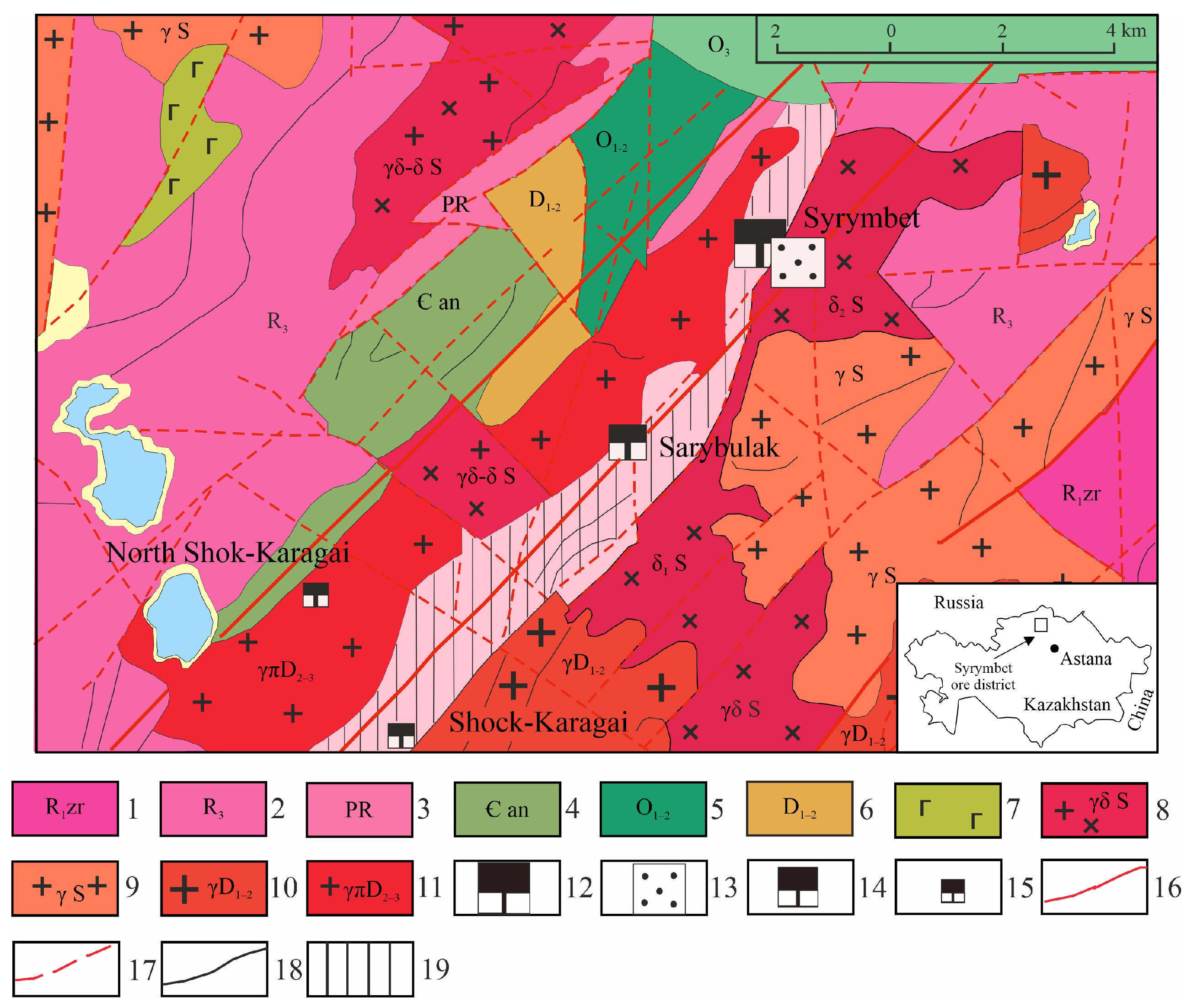
The Syrymbet deposit is located within the Central Ore District of the North Kazakhstan Ore Province, which is characterized by the occurrence of large uranium, gold, and rare-metal deposits [10]. The tin-bearing zones of the deposit are confined to the Volodarsky deep-fault zone in the area of the northwestern contact between the Syrymbet granite-porphyry intrusion (γπD2–3) and the sandstone-shale and carbonate formations of the Sharyk Formation (Figure 1) [11].
The ore field is represented by a block elongated in the northeastern direction, measuring approximately 2 × 9 km. The economic mineralization has been traced along strike for 3000 m with an average thickness of 100 m. The mineralization extends to a depth of 820 m. Three structural-morphological types of ore bodies are distinguished: (1) linear stockworks, (2) mineralized domes, and (3) vein-like bodies [12].
The deposit consists of mineralized ladder-stockwork-type zones with veinlet-disseminated mineralization occurring within Paleozoic terrigenous-sedimentary rocks and the granite massif. These zones are controlled by halos of hydrothermally altered rocks (greisen-type alteration), including biotitization, tourmalinization, fluorite alteration, and sulfidization. The mineralization does not extend beyond the boundaries of the altered rocks. It has been traced over a distance of 3 km with a width of 100–150 m and evaluated to depths of 330 m and more. Indicators of tin mineralization along the strike of the zone have been identified over a distance of up to 30 km [6].
During the Mesozoic–Cenozoic period, the deposit area underwent intense supergene alteration and denudation processes. As a result, clayey weathering crusts (kaolinite–montmorillonite–hydromica type), reaching a thickness of 48–50 m, were formed together with deluvial tin placers [13].
Two types of ores are distinguished at the deposit: hypogene and hypergene ores. Among the primary ores, cassiterite and stannite-cassiterite mineralogical types are recognized, with tin contents reaching 1% or more and averaging 0.312%. The tin content in the weathering crust varies from 0.199 to 2.335%, averaging 0.337%, which is slightly higher than in the primary ores [12].
Within the Syrymbet deposit, three natural ore types are distinguished according to their formation conditions and localization: primary ores, weathering crust ores, and unconsolidated deposits [14].
Ores hosted in bedrock are predominantly cassiterite ores associated with wolframite, scheelite, columbite, as well as sulfides and arsenides of iron, lead, zinc, and bismuth. The average tin content in the ores is 0.312%. The principal associated components include tungsten, beryllium, bismuth, and others [15].
The weathering crust is developed throughout the entire deposit area and has been traced for 4000 m along strike, with thicknesses ranging from 10 m to 100 m. Its average thickness within the deposit contour is approximately 50 m. The thickest weathering crust zones have a linear pattern with a northeastern strike and generally follow the configuration of the northeastern contact of the granite-porphyry body and the primary ore zone [16]. The weathering crusts were formed as a result of supergene alteration of granitoids. They contain kaolinite, hydromicas, and secondary iron oxides and are classified as hydromica–quartz–kaolinite type with a high content of micaceous minerals (up to 35%), represented predominantly by hydromicas [17].
The weathering crusts are characterized by a high degree of mineral matter dispersion, which significantly complicates beneficiation processes. Tin contents vary from 0.199 to 2.335%, averaging 0.365%, which is higher than in the primary ores [18].
Figure 1.
Geology of the Syrymbet ore field (simplified). 1—Zerendy series: gneisses, amphibolites, and crystalline schists; 2—Sharyk suite: carbonaceous-clayey and siliceous-clayey shales, sandstones, and limestones; 3—interbedded sequence of quartzites, quartz sandstones, siltstones, and limestone lenses; 4—Andreyevka suite: quartz sandstones, clay shales, and shale interbeds; 5—tuffaceous sandstones, siltstones, and siliceous argillites; 6—felsic volcanic rocks; 7—gabbros and gabbro-diabases; 8—granodiorites, granites, and quartz diorites; 9—biotite and biotite–hornblende granites; 10—coarse-grained, locally porphyritic leucocratic biotite granites (phase I intrusion); 11—granite porphyries and quartz porphyries; 12—giant and large tin deposits; 13–15—tin deposits: 13—large, 14—medium-sized, 15—small; 16—regional tectonic faults (first-order); 17—local tectonic faults (second-order); 18—lithological contacts; 19—Syrymbet tin-bearing zone [19,20].
3. Materials and Methods
The study was carried out on two samples of clayey-lumpy weathering crusts of natural particle size (without preliminary crushing), collected from drill core samples.
The first sample (Sample 1) is characterized by a white color with a slight yellowish-brown shade and preserves relic structures of the original altered rocks. The material is clayey-lumpy in texture. The sample weight was 97.2 kg.
The second sample (Sample 2) consists of ferruginized cherry-red sandy quartz material. In appearance, it resembles material from the oxidation zone of sulfide ores, commonly referred to as an iron cap (gossan). The sample weight was 32.60 kg.
Sample processing was carried out at the LLP CRIC-NTC laboratory according to the developed technological flowsheet shown in Figure 2. The two samples were treated independently, with no mixing between them. After weighing and moisture determination, the feed sample was fed into a wet autogenous grinding mill (MMS-1 OP, Stankotekhnika, LLC, Penza, Penza Oblast, Russia), where the material underwent intensive disintegration for 1.5 h. As a result of the autogenous grinding process, the material was separated into three size fractions: 5 mm, −5 + 2 mm, and a sandy-clayey fraction of the −2 + 0 mm size class (Figure 3).
All investigations reported in this study were conducted on the −2 + 0 mm size fraction obtained after autogenous grinding. The use of the original material without additional crushing and grinding made it possible to obtain reliable data characterizing the behavior of the raw material in its natural granulometric state.
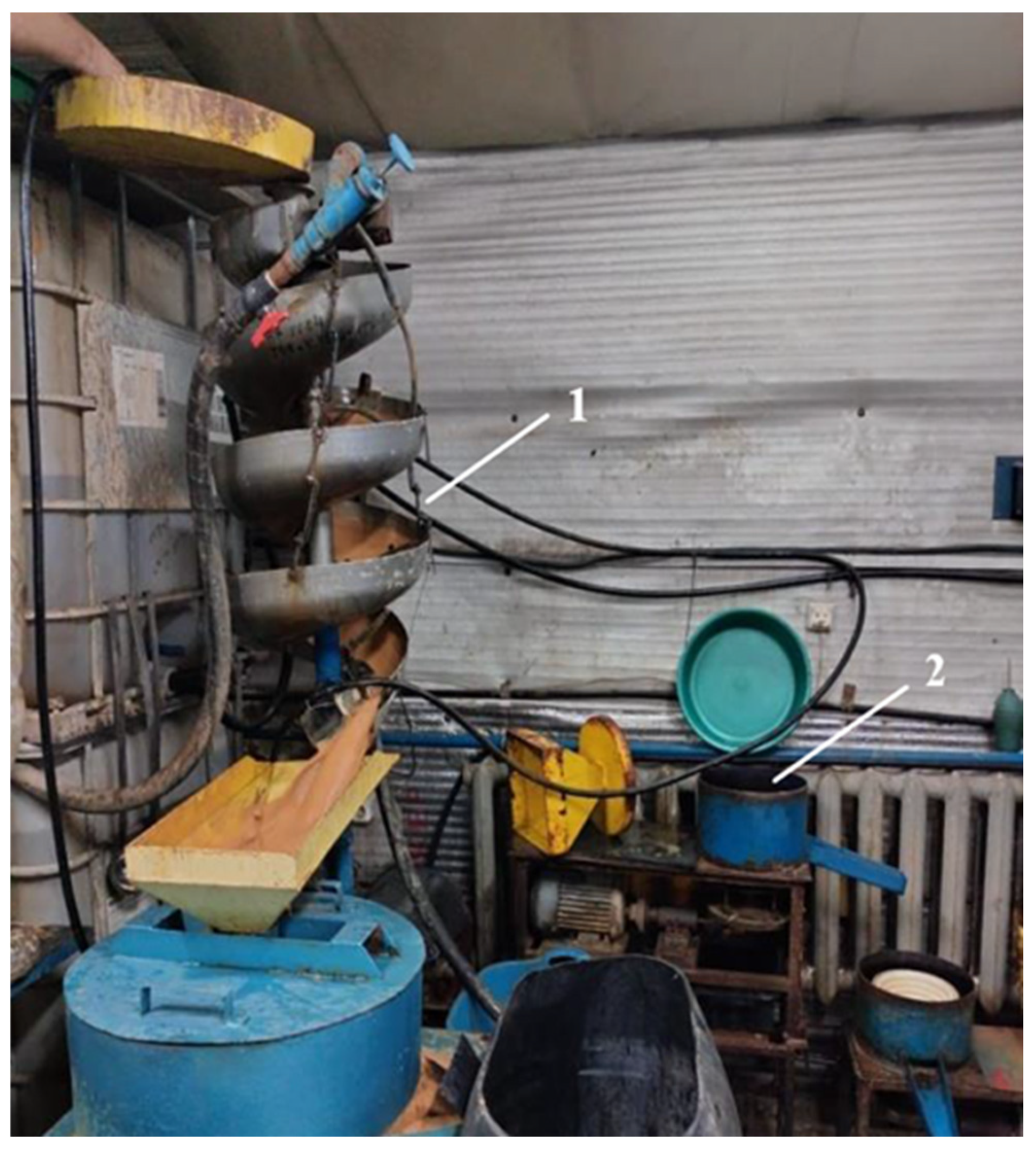
The coarse-grained fractions (+5 mm and −5 + 2 mm) were submitted for chemical analysis, whereas the sand–clay fraction of the −2 + 0 mm size class was subjected to hydrocycloning (Modernized Laboratory Hydrocyclone Unit GL-M, TsNIGRI, Moscow, USSR) (Figure 4) to separate the sandy and clay components. The resulting products were processed separately by gravity separation using a vibrating spiral separator (SV-500, Acorn, Moscow, Russia) and a centrifugal concentrator (instrument developed by Baisbekov et al., Patent No. 19406) [21] (Figure 5). The obtained concentrates were subsequently upgraded under a microscope, after which a mineralogical study of cassiterite was carried out.
During the processing of the clayey-clastic weathering crust material in a wet autogenous grinding mill (WAGM), effective disintegration of the material and removal of clay coatings from the surfaces of mineral grains occurred over an experimentally determined processing period. The cleaning of mineral surfaces was achieved through mutual abrasion of particles and the impact action of rock fragments under autogenous grinding conditions.
The processing time in the WAGM was determined based on the results of previous studies of similar clayey-clastic weathering crust materials. The selected operating conditions ensured a sufficient degree of disintegration of the feed material and liberation of mineral aggregates while minimizing overgrinding of valuable mineral grains.
The sandy fraction was subjected to gravity separation using a vibrating spiral separator to produce a rough concentrate and tailings. The resulting rough concentrate was further cleaned in a centrifugal concentrator to obtain a cleaner concentrate (CC) and cleaner tailings (CT). The tailings from spiral separation were also treated in a centrifugal concentrator [22], producing a centrifugal concentrator concentrate (CCC) and final tailings (FT).
The clay fraction was processed directly in a centrifugal concentrator and separated into a centrifugal concentrator concentrate (CCC) and tailings.
Quantitative determination of fine-dispersed tin in the tailings products was carried out using large bulk samples weighing 500–1000 g. The investigations were performed using a thermoactivator, which promotes the coarsening of dispersed particles and the transfer of part of the material into a gaseous state (“volatile fractions”), thereby increasing the reliability of assessing the content of fine-dispersed forms of rare metals.
Thermal activation was carried out using a specialized laboratory device, the thermoactivator (an original instrument developed by V.V. Peregudov; the patenting process is currently underway) [23]. This device is designed for the metallothermal extraction of fine-dispersed metal forms from ore materials whose particles cannot be effectively recovered or detected by conventional geological sample analysis methods. The principle of the method is based on thermal treatment of the investigated material, resulting in the coarsening of fine-dispersed metallic particles and the transfer of metals into the gaseous phase. Subsequent determination of metal content is performed using standard analytical methods, including atomic absorption, fire assay, and other analytical techniques.
The content of tin in the beneficiation products was determined at the accredited laboratory of Eco-Lux LLP. Sample preparation involved acid digestion using a mixture of concentrated HF, HCl, and HNO3 with the addition of aqua regia (HNO3:HCl = 1:3) to ensure complete dissolution of noble metals. Tin was determined by inductively coupled plasma optical emission spectrometry (ICP-OES) using an iCAP 7000 Series spectrometer (Thermo Fisher Scientific, Swindon, UK). Tin emission was measured at the most sensitive wavelength of 189.9 nm (or alternatively at 224.6 nm). The detection limit for tin was 0.1 g/t. Accuracy was verified by spike recovery tests using certified reference materials (CRMs) of ore composition. Calibration was performed using standard solutions.
Figure 2.
Metallurgical process flow sheet for tin-bearing weathering crusts of the Syrymbet deposit [22]. Abbreviations: WAGM—wet autogenous grinding mill; CCC—centrifugal concentrator concentrate; CC—cleaner concentrate; CT—cleaner tailings; FT—final tailings.
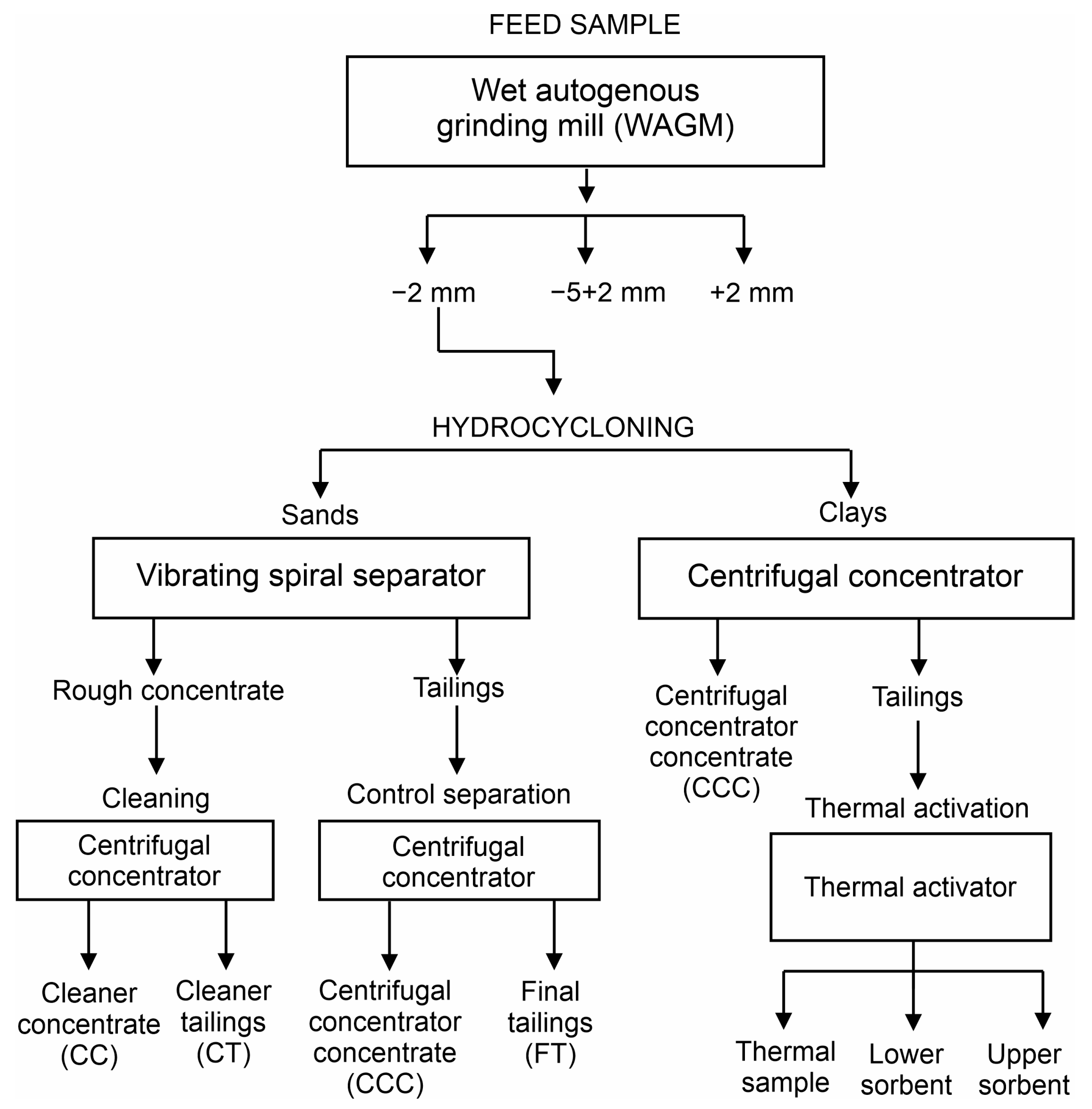
Figure 3.
Wet autogenous grinding mill (WAGM) used for the deep disintegration of tin-bearing material.
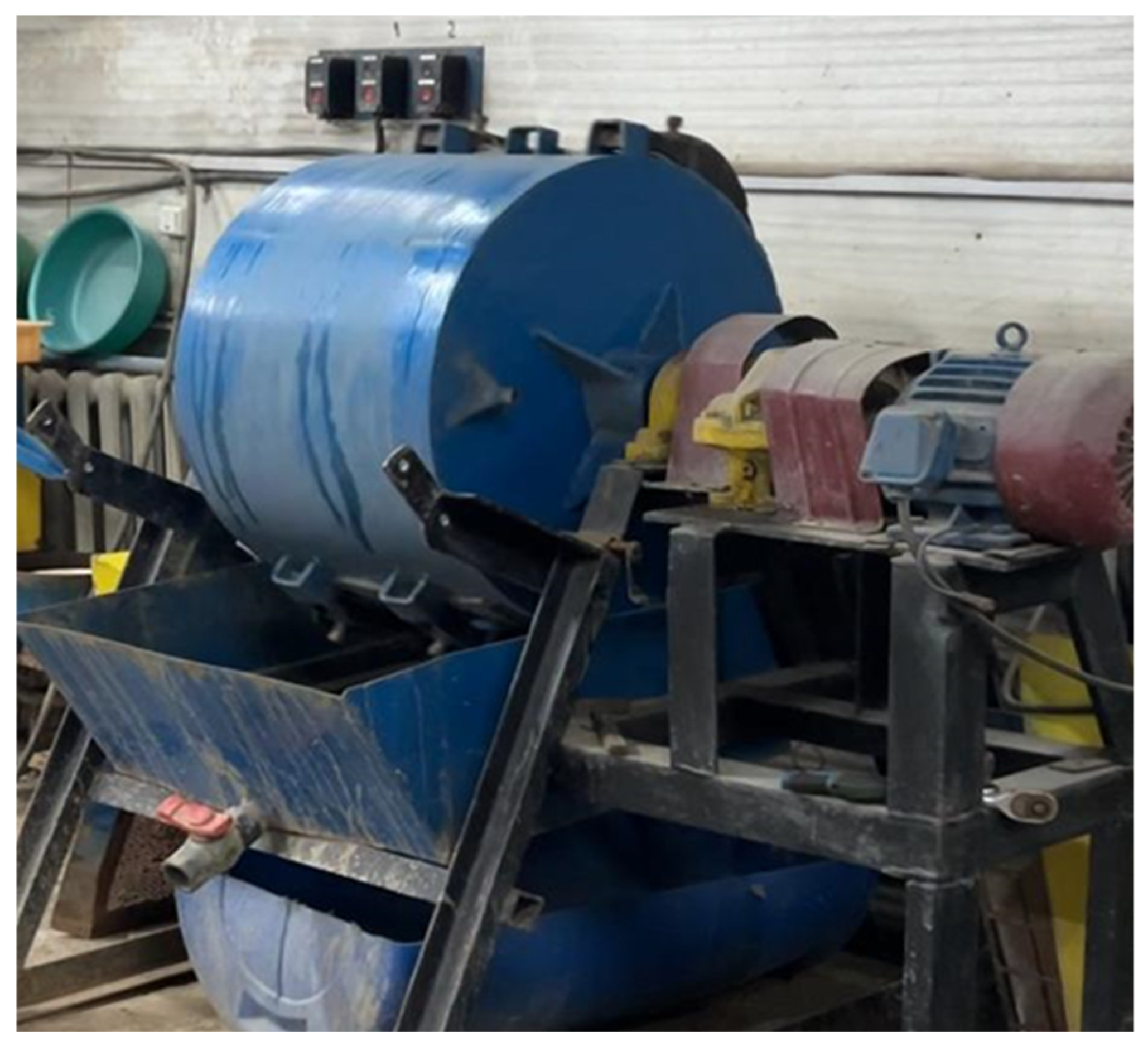
Figure 4.
Hydrocyclone unit used for the separation of the sandy-clayey fraction into sands and clayey overflow.
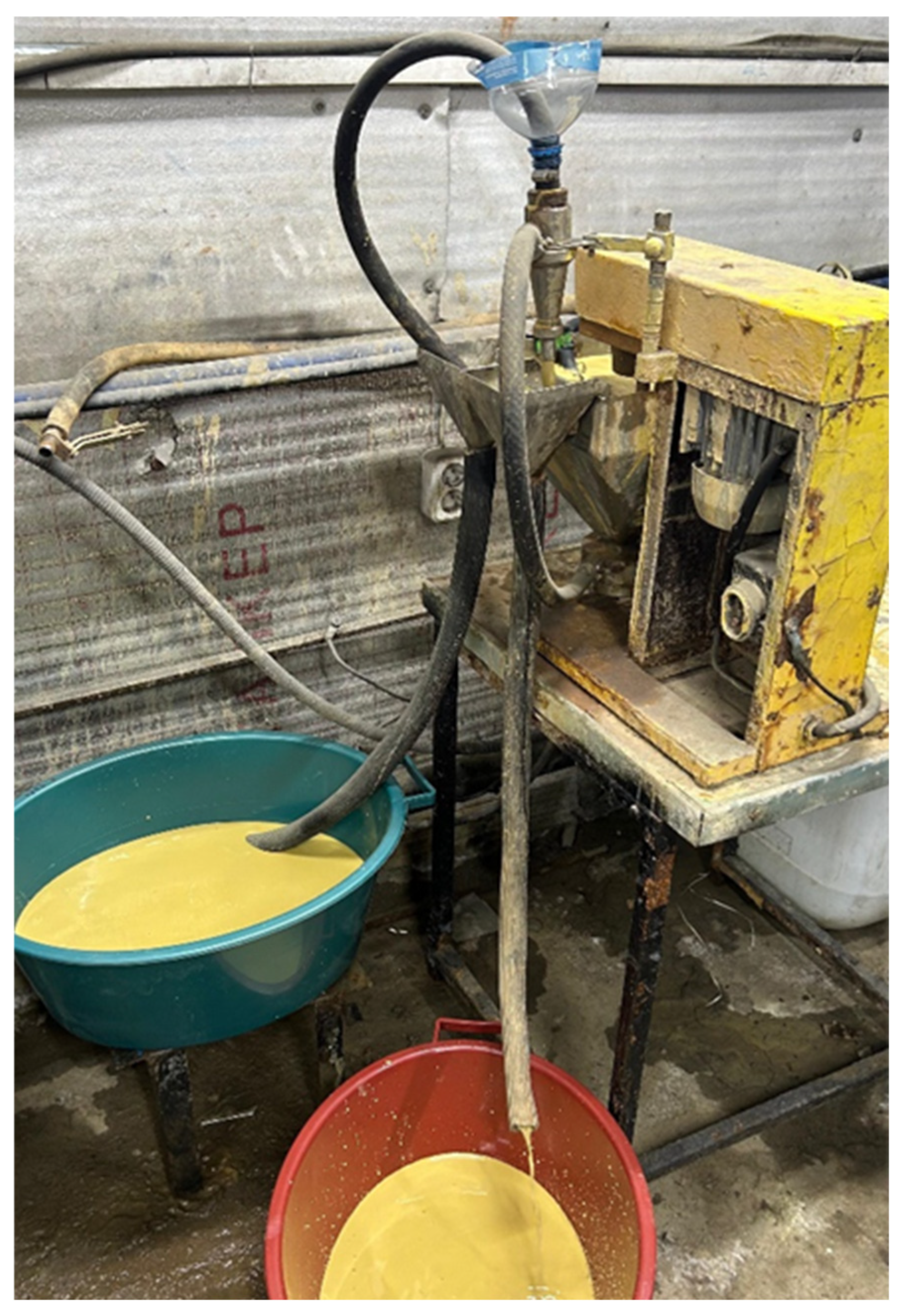
Figure 5.
Gravity separation unit (1—vibrating spiral separator and 2—centrifugal concentrator).
Electron probe microanalysis (EPMA), including elemental mapping and point EDS microanalysis, was carried out using JEOL JXA-8230 Electron Probe Microanalyzer (JEOL Ltd., Tokyo, Japan) and JEOL Superprobe 733 (JXA-733) electron probe microanalyzers. All observations and microanalyses were carried out at an accelerating voltage of 20 kV. Scanning electron microscopy (SEM) investigations were conducted in the back-scattered electron (BSE) imaging mode. The operating conditions for electron probe microanalysis (EPMA) were as follows: point energy-dispersive spectroscopy (EDS) analyses were performed at a probe current not exceeding 5 nA, with a dead time below 22%, process time T3, and a count rate not exceeding 10,000 CPS.
Stereoscopic observations were carried out using an MBS-9 binocular microscope (LOMO (Leningrad Optical-Mechanical Association), Leningrad, USSR).
4. Results
4.1. Particle Size Distribution and Distribution of Tin Among Size Fractions After Wet Autogenous Grinding Mill (WAGM)
The particle size distribution and tin distribution among the fractions after WAGM are presented in Table 1 and Table 2. The sand–clay size fraction predominates (77%–80%) and contains more than half of the total tin. Tin contents are at halo levels, ranging from 29 to 109 g/t, and are relatively uniformly distributed throughout the samples, indicating a finely disseminated mode of occurrence of the tin mineralization.
Table 1.
Mass yield and tin distribution in the size fractions obtained after WAGM.
Table 2.
Samples 1 and 2. Mass yield and tin distribution in hydrocyclone products.
Hydrocycloning of the sandy-clayey size fraction (−2 + 0 mm) made it possible to separately investigate the distribution of tin in the sand and clay fractions.
It was established that a significant portion of tin is associated with the fine-dispersed clay fraction of the investigated material and is transferred into the hydrocyclone overflow. The low tin contents can be classified as halo concentrations and indicate that the tin mineralization occurs predominantly in a finely dispersed and disseminated form.
4.2. Mineral Composition of Hydrocyclone Products
The mineralogical composition of the hydrocyclone products is presented in Table 3 (Sample 1) and Table 4 (Sample 2). The mineralogical composition was determined by semi-quantitative X-ray phase analysis, while the chemical composition was determined by electron probe X-ray spectral analysis. The cassiterite content in these fractions is below 3%; therefore, it is below the detection limit of X-ray diffraction (XRD).
Table 3.
Sample 1. Mineral composition of hydrocyclone clays and sands according to X-ray phase analysis data.
Table 4.
Sample 2. Mineral composition of hydrocyclone clays and sands according to X-ray phase analysis data.
According to the results of the X-ray diffraction analysis of the hydrocyclone products, significant differences were identified in the mineral composition of the clay and sand fractions of the investigated samples. Comparison of the results shows that the hydrocyclone effectively separates quartz sand in both samples; however, the degree of enrichment of the clay fraction in clay minerals differs substantially. In Sample 1, the clay product is enriched in smectite and kaolinite, whereas in Sample 2 the clay fraction consists predominantly of quartz with minor amounts of mica, albite, and goethite. These findings indicate differences in the original mineral composition of the investigated materials and in their behavior during hydrocyclone separation.
4.3. Experimental Investigations
The results of tin analyses of the gravity separation products obtained using a centrifugal concentrator, as well as those of the thermal activation of tailings, are presented in Table 5 and Table 6.
Table 5.
Sample 1. Mass yield and tin grade and distribution in gravity separation and thermal activation products.
Table 6.
Sample 2. Mass yield and tin grade and distribution in gravity separation and thermal activation products.
The results presented in Table 5 and Table 6 indicate that tin is predominantly associated with the low-density clay fraction. It was established that the majority of tin in both the sandy and clay fractions reports to the final tailings. Thus, up to 99.2% of the tin is concentrated in the hydrocyclone sand tailings. These findings indicate that tin occurs predominantly in a finely disseminated and refractory form, which cannot be efficiently recovered by conventional gravity concentration methods at a particle size range of −2 + 0 mm. A similar pattern is observed for the clay fraction, where virtually all of the tin (99.79%) is likewise concentrated in the tailings.
The application of thermal activation significantly improved both the tin grade and recovery. In the sandy fraction, the tin content in the thermal products reached 1500 g/t, with more than 90% of the metal concentrated in the thermally treated sample. A similar redistribution pattern was observed in the clay fraction, with the thermal product exhibiting the highest tin concentration and accounting for the predominant proportion of the recovered metal.
4.4. Mineralogy
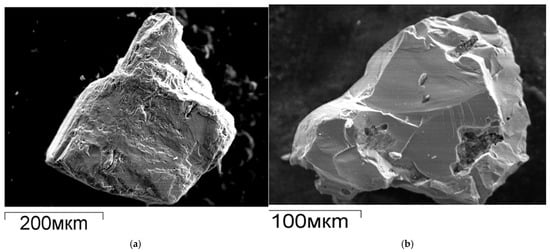
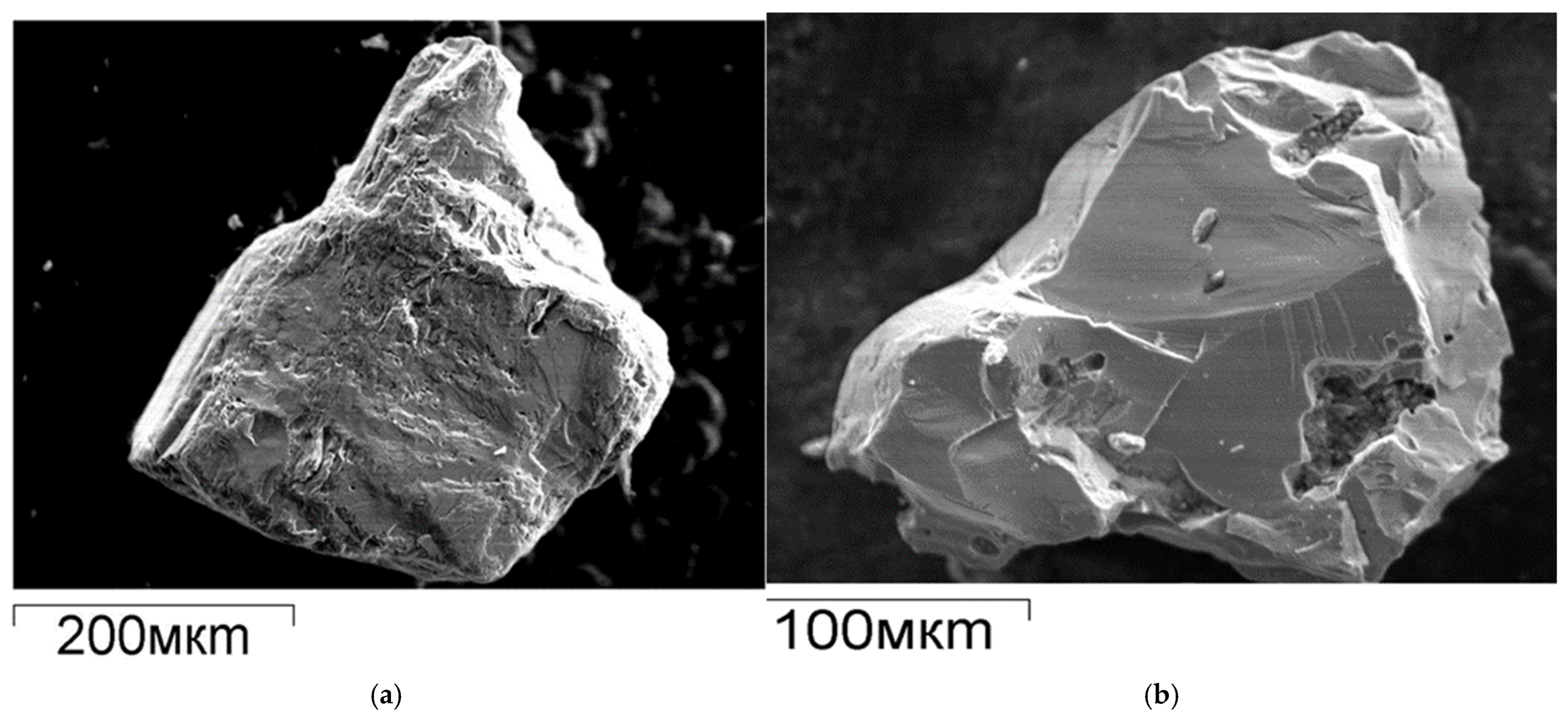
Concentrates obtained from the vibrating spiral separator and centrifugal concentrator were investigated for both the untreated and thermally activated materials. According to the results of electron probe microanalysis (EPMA) of these concentrates, significant changes in the mode of occurrence of tin were identified following thermal treatment. Cassiterite occurs as only a few isolated grains in the samples. Scanning electron microscope (SEM) images and microanalytical data showed that the cassiterite grain is characterized by an irregular angular shape, a rough surface texture, and evidence of mechanical breakage. According to the EDS results, the grain contains 67.48 wt.% Sn and 32.52 wt.% O, which is consistent with the theoretical composition of cassiterite (SnO2). The preserved morphology of the grain suggests minimal alteration during gravity concentration (Figure 6a).
Figure 6.
Secondary electron images (SEI) of cassiterite grains in CC: (a) Sample 1. CC. Composition, weight, %: Sn—67.48, O—32.52; (b) Sample 2. CC. Composition weight, %: Sn—84.84, O—15.16.
The micrograph shows a cassiterite grain with relatively smooth faces and well-developed cleavage planes. The results of the point EDS analysis indicate a high tin content (84.84 wt.%), suggesting a high degree of purity of the mineral phase. The grain is characterized by a dense structure and the absence of noticeable inclusions of foreign minerals within the analyzed area (Figure 6b). Detailed results of secondary electron imaging (SEI) and local energy-dispersive X-ray spectroscopy (EDS) analyses are provided in the Supplementary Materials (Figure S1a–d).
To determine the composition of tin-bearing phases in the cleaner concentrate, electron probe microanalysis (EPMA) was performed on selected mineral grains. The resulting chemical and elemental composition data are summarized in Table 7 and Table 8.
Table 7.
Elemental composition of the cleaner concentrate (Sample 1).
Table 8.
Elemental composition of the cleaner concentrate (Sample 2).
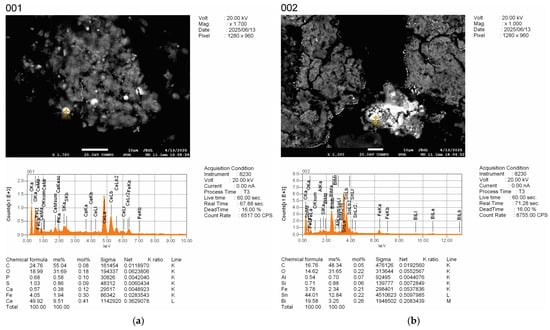
Figure 7 shows representative tin-bearing formations identified in the upgraded concentrates after thermal activation of the material at 450 °C under oxygen-free conditions. In backscattered electron (BSE) images, these phases appear light gray, indicating the presence of elements with high atomic numbers, primarily tin. The results of local energy-dispersive spectroscopy (EDS) analyses reveal that these formations possess a complex multiphase composition containing tin, oxygen, iron, silicon, aluminum, calcium, and other elements.
Figure 7.
(a,b) Tin-bearing multiphase aggregates in thermally activated products of the Syrymbet deposit weathering crust: BSE images and results of local EDS analyses.
The tin content in the analyzed areas reaches 44–50 wt.%, which is significantly higher than that observed in the untreated material. The morphology of these phases is characterized by aggregate and film-globular textures, typical of material redistribution processes occurring during thermal treatment. Such formations are absent in the feed samples and are generated exclusively as a result of thermal activation, indicating a profound transformation of the original cassiterite mineralization (Figure 6 and Figure 7) [7,24].
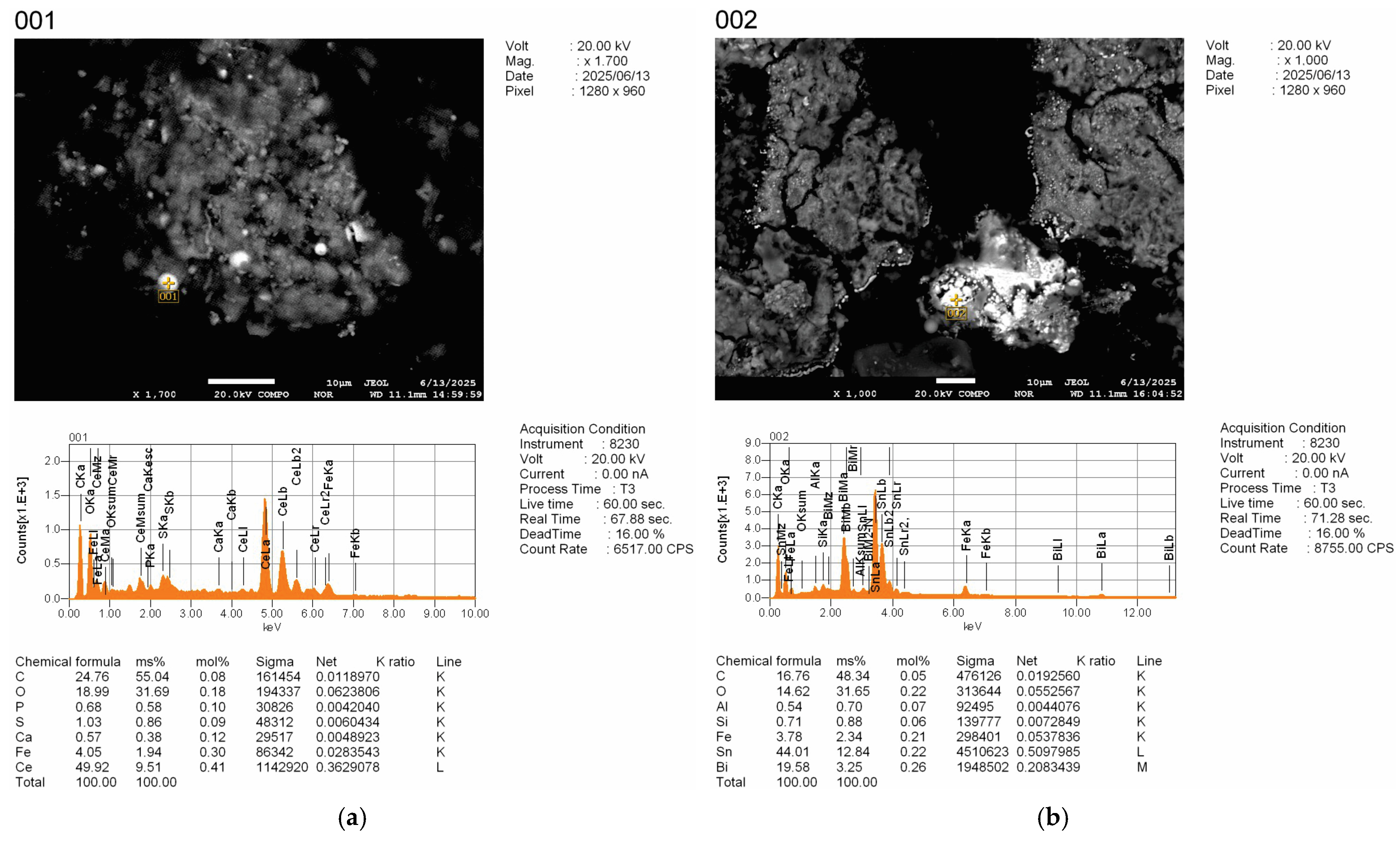
Additional information on the morphology and chemical composition of individual mineral grains obtained by scanning electron microscopy coupled with energy-dispersive spectroscopy (SEM–EDS) is presented in Figure 6. The investigated particles are characterized by a complex multicomponent composition and a heterogeneous distribution of mineral phases.
The particle shown in Figure 7a is represented by an irregularly shaped aggregate with a fine-grained surface texture. According to the EDS analysis, the grain is composed predominantly of oxygen, silicon, and aluminum, with subordinate amounts of iron, calcium, and cerium (Ce). The presence of the rare-earth element cerium suggests either the occurrence of accessory rare-earth minerals or local enrichment of a rare-earth-bearing phase within the investigated grain.
The particle shown in Figure 7b exhibits a heterogeneous structure and contains a high-contrast area characterized by elevated electron density. EDS analysis revealed the presence of oxygen, silicon, aluminum, iron, and bismuth (Bi). The concentration of bismuth within the brightest regions of the image may indicate the presence of an independent bismuth-bearing mineral phase or its enrichment within a complex mineral aggregate. These results confirm the complex polymineralic nature of the investigated particle. Detailed SEM–EDS analytical data are provided in the Supplementary Materials (Figures S1–S9).
5. Discussion
The obtained results indicate that the main challenge in processing the tin-bearing weathering crusts of the Syrymbet deposit is associated not so much with the low metal content as with the mineralogical form of tin and its distribution within the ore mass. The investigations demonstrated that tin mineralization is characterized by a high degree of dispersion and a close association with clay minerals, which significantly reduces the efficiency of conventional beneficiation methods.
Particle-size analysis revealed the predominance of sandy-clayey material in the −2 + 0 mm size fraction, which contains more than half of the total tin inventory. Following hydrocycloning, 70%–74% of the metal is concentrated in the clay fraction, indicating that tin occurs predominantly in a finely dispersed state. This distribution is consistent with the supergene nature of the studied ores and highlights the significant role of weathering processes in the redistribution of tin mineralization.
The results of gravity concentration demonstrated extremely low tin recovery. More than 99% of the metal remains in the final tailings of both the sandy and clay fractions. This finding suggests that a substantial proportion of tin occurs as about 1 µm and smaller particles that cannot be efficiently recovered by conventional gravity methods. Furthermore, the occurrence of tin-bearing phases within the clay fraction suggests their association with clay–silicate material, which may limit the efficiency of conventional gravity separation methods.
Mineralogical investigations confirmed that cassiterite is the principal tin-bearing mineral in the untreated material. However, thermal activation at 450 °C under oxygen-free conditions resulted in significant changes in its structural state. Cassiterite was not identified in the thermally activated products; instead, new tin-bearing aggregates (Figure 7, Supplementary Materials (Figures S1–S9)) of complex composition were formed. These phases exhibit film-globular morphologies and contain, in addition to tin, iron, bismuth, silicon, aluminum, carbon, and oxygen.
Of particular interest is the fact that the tin content in the thermal products reaches 1500–1864 g/t, which is substantially higher than in the original material. The results indicate that thermal activation altered the distribution pattern of tin and promoted local tin enrichment in specific regions of the material. Comparison of the obtained compositions with data from the International Mineralogical Association (IMA) and the Mindat database revealed no complete analogues among currently recognized mineral species. This observation suggests the possible formation of previously undescribed phases or products resulting from the thermal transformation of cassiterite.
Overall, the conducted investigations demonstrate that conventional beneficiation schemes do not provide efficient tin recovery from the weathering crusts of the Syrymbet deposit. At the same time, thermal activation promotes significant tin enrichment and alters its mineralogical forms, thereby opening new prospects for the processing of refractory ores and warranting further investigation into the structural characteristics of the newly formed tin-bearing phases.
5.1. Comparison of the Identified Phases with Valid Mineral Species
SEM–EDS investigation of the Syrymbet weathering crust material thermally activated at 450 °C revealed several groups of phases enriched in Fe, Sn, Bi, and Ce. Comparison of the obtained compositions with valid mineral species listed in the IMA and Mindat databases demonstrated that none of the investigated phases fully correspond to any officially recognized mineral. This finding indicates the complex nature of phase transformations occurring during thermal activation and highlights the need for further characterization using X-ray diffraction and electron crystallography.
5.1.1. Fe–Sn-Bearing Phases
The Fe–Sn group is represented by phases containing high tin concentrations (48.77–71.27 wt.%) and subordinate iron contents (1.16–1.77 wt.%). Compositionally, these phases are most similar to cassiterite (SnO2), the principal tin-bearing mineral in the Syrymbet ores [25,26]. However, the investigated phases contain carbon and exhibit variable oxygen contents, distinguishing them from the stoichiometric composition of cassiterite.
Among the known Fe–Sn minerals, natanite, Fe2+Sn4+(OH)6 [27,28], and jeanbandyite, Fe3+Sn(OH)5O [27,29], represent the closest analogues. Nevertheless, the iron concentrations in the studied phases are substantially lower than those required for these mineral species, precluding their direct identification.
Therefore, the identified Fe–Sn phases represent tin-bearing compounds that are compositionally related to cassiterite but differ due to the presence of carbon and iron. No valid Fe–Sn–C–O mineral species with component ratios comparable to those observed in the present study have been identified. These phases are therefore interpreted as products of cassiterite transformation during thermal activation.
5.1.2. Ce-Bearing Phase
A cerium-dominant phase containing approximately 50 wt.% Ce was identified. In addition to cerium, significant amounts of carbon and oxygen are present. The closest mineralogical analogues are members of the bastnäsite-(Ce), parisite-(Ce), and synchysite-(Ce) groups [30,31,32,33].
The similarity is reflected in the dominance of cerium, the presence of carbon and oxygen, and the occurrence of calcium. However, fluorine, an essential structural constituent of bastnäsite- and parisite-group minerals, was not detected in the investigated phase. Furthermore, the observed Ce–C–O ratios differ significantly from those of known rare-earth fluorocarbonates.
Accordingly, the identified phase cannot be assigned to any known bastnäsite- or parisite-group mineral. It likely represents either a transformation product of rare-earth carbonates or a previously undescribed cerium-bearing carbonate phase formed under thermal treatment conditions.
5.1.3. Bi–Sn-Bearing Phases
The most unusual phases belong to the Bi–Sn system and form a distinct compositional group. Within this group, Sn-dominant, Bi-dominant, and intermediate varieties can be distinguished.
The closest known mineral analogues include cassiterite (SnO2) [26,34], romarchite (SnO) [35], and bismutite (Bi2O2CO3) [36,37]. However, none of these minerals contain both bismuth and tin in concentrations comparable to those observed in the investigated phases.
Of particular interest is the presence of a continuous compositional transition between the Bi-rich and Sn-rich varieties. This feature may indicate component substitution processes, intimate intergrowths of multiple mineral phases, or the formation of independent thermally induced tin–bismuth compounds.
A search of the Mindat and IMA databases revealed no valid mineral species that satisfactorily match the Bi–Sn–C–O compositions identified in this study. Consequently, this group represents the most promising target for further mineralogical investigation and requires additional characterization using X-ray diffraction, electron diffraction, and high-resolution microscopy techniques.
Overall, the SEM–EDS results demonstrate that thermal activation at 450 °C induces profound transformation of the original cassiterite mineralization, resulting in the formation of a complex assemblage of previously unobserved tin-, bismuth-, and cerium-bearing phases. The formation of these phases is likely responsible for the substantial enrichment of tin in the thermal products and may have important implications for the development of new processing technologies for tin-bearing weathering crust ores. Detailed SEM–EDS analytical data and BSE images are provided in the Supplementary Materials (Figures S1–S9).
6. Conclusions
The tin-bearing weathering crusts of the Syrymbet deposit are characterized by background-level tin concentrations and a high degree of mineral dispersion, which significantly complicates their processing using conventional beneficiation methods.
The majority of tin is concentrated in the fine-grained clay fraction, which contains up to 70%–74% of the total metal inventory. This distribution indicates a close association of tin mineralization with products of supergene alteration.
Hydrocycloning and gravity separation proved ineffective for tin recovery. More than 99% of the metal reports to the beneficiation tailings, reflecting the fine dissemination and encapsulation of tin-bearing phases within the host matrix.
Mineralogical investigations demonstrated that tin in the untreated material is predominantly hosted by cassiterite. Following thermal activation at 450 °C under oxygen-free conditions, cassiterite is no longer detected and is replaced by newly formed multiphase tin-bearing aggregates of complex composition.
Thermal activation results in a substantial increase in tin concentration within the processing products. Tin contents in the thermal products reach 1500–1864 g/t, corresponding to economically significant grades and indicating the potential conversion of background-level concentrations into potentially ore-grade material.
The Fe–Sn-, Bi–Sn-, and Ce-bearing phases identified in the thermally activated products have no complete analogues among currently recognized mineral species. This finding indicates complex phase transformations during thermal treatment and highlights the need for further investigation using X-ray diffraction and electron crystallography.
The obtained results demonstrate the high potential of thermal activation for the utilization of previously low-grade tin-bearing weathering crusts and for expanding the tin mineral resource base of the Republic of Kazakhstan.
Supplementary Materials
The following supporting information can be downloaded at: https://www.mdpi.com/article/10.3390/min16070708/s1, Figure S1: Secondary electron (SEI) images of representative cassiterite grains recovered from gravity concentration products; Figure S2: BSE image and EDS spectrum of Fe–O–C aggregate; Figure S3: BSE image and EDS spectrum of Sn–O–C phase; Figure S4: BSE image and EDS spectrum of Ce-dominated phase; Figure S5: BSE image and EDS spectrum of Ce-dominated phase; Figure S6:BSE image and EDS spectrum of Ce-dominated phase; Figure S7: BSE image and EDS spectrum of Sn–O–C phase; Figure S8: BSE image and EDS spectrum of Sn–O–C phase; Figure S9: BSE image and EDS spectrum of Sn–Bi–O–C phase; Figure S10: BSE image and EDS spectrum of Sn–O–C aggregate.
Author Contributions
Conceptualization, M.K., V.P. and B.S.; methodology, V.P.; software, V.P.; validation, K.T., Y.A. and D.M.; formal analysis, M.K.; investigation, M.K. and V.P.; resources, V.P.; data curation, M.K. and B.S.; writing—original draft preparation, M.K. and V.P.; writing—review and editing, M.K., V.P. and B.S.; visualization, D.M.; supervision, M.K.; project administration, M.K.; funding acquisition, M.K. All authors have read and agreed to the published version of the manuscript.
Funding
This research was funded by the Science Committee of the Ministry of Science and Higher Education of the Republic of Kazakhstan (Grant No. AP22684080: Development of technology for enrichment of tin-containing weathering crusts of the rare metal deposit Syrymbet).
Data Availability Statement
The original contributions presented in the study are included in the article. Further inquiries can be directed to the corresponding author.
Conflicts of Interest
The authors declare no conflicts of interest.
References
- Chu, Y.; Liu, M.; Jiang, M.; Lei, Y.; Wang, X. Analysis of China’s tin industry: Current state and developmental recommendations. Green Smart Miner. Eng. 2025, 2, 278–284. [Google Scholar] [CrossRef] [Scilit]
- Kurmangazhina, M.M.; Arshamov, Y.K.; Antonenko, A.A. Tin deposits of the Kokshetau ore district and prospects for expanding the mineral resource base of tin in the region. Tr. Univ. 2023, 3, 199–205. (In Russian) [Google Scholar] [CrossRef] [Scilit]
- Zorin, Y.M. Syrymbet Tin Deposit in the Kokchetav Region of the Republic of Kazakhstan: Results of Detailed Exploration of Tin-Bearing Weathering Crusts and Preliminary Exploration of Primary Ores; Nedra State Enterprise: Kokshetau, Kazakhstan, 1996; 351p. (In Russian) [Google Scholar]
- Ponomarenko, T.V.; Larichkin, F.D.; Sidorov, D.V. Assessment of prospects for establishing a tin industry in the Republic of Kazakhstan. J. Min. Inst. 2016, 221, 742–748. (In Russian) [Google Scholar]
- Ponomarenko, T.V. Prospects for the revival of the tin industry in Russia within the framework of Russian–Kazakh cooperation. In Economy of Russia in Modern Conditions: Ways of Innovative Development and Increasing Competitiveness; Publishing House of Saint Petersburg Mining University: St. Petersburg, Russia, 2017; pp. 30–34. (In Russian) [Google Scholar]
- Kurmangazhina, M.M. Some features of tin ore mineralization formation at the Syrymbet deposit. Tr. Univ. 2023, 1, 95–99. (In Russian) [Google Scholar] [CrossRef] [Scilit]
- Babuk, A.V.; Galyutin, A.Y.; Golikov, V.V.; Anisimov, I.S. Investigation of the Material Composition of Tin-Bearing Ore from the Central Area of the Syrymbet Deposit. Obogashchenie Rud 2008, 1, 24–29. (In Russian) [Google Scholar]
- Fedotov, P.K.; Senchenko, A.E.; Fedotov, K.V.; Burdonov, A.E. The Kazakhstan deposit tin-bearing ore processing technology. Benef. Technol. 2017, 1, 8–14. (In Russian) [Google Scholar] [CrossRef] [Scilit]
- Babuk, A.V.; Galyutin, A.Y.; Golikov, V.V.; Kuskov, V.B. Ore preparation processes and dressability studies with regard to the Syrymbet deposit tin-bearing ore. Benef. Technol. 2009, 4, 11–14. (In Russian) [Google Scholar]
- Kuzovenko, A.I. Material Composition and Natural Types of Tin Ores of the Syrymbet Deposit. Proc. Natl. Acad. Sci. Repub. Kazakhstan 2005, 6, 62–72. (In Russian) [Google Scholar]
- Kuzovenko, A.I. Geological Structure and Formation Features of the Syrymbet Tin Deposit in Northern Kazakhstan. Ph.D. Thesis, Satbayev Kazakh National Research Technical University, Almaty, Kazakhstan, 2004. (In Russian) [Google Scholar]
- Gubaidulin, F.G.; Laumulin, T.M.; Serykh, V.I.; Gulyaev, A.P. Greisen type tin deposits in Northern Kazakhstan and its prospects. Geol. Kazakhstan 1994, 4, 36–46. (In Russian) [Google Scholar]
- Issayeva, L.; Togizov, K.; Duczmal-Czernikiewicz, A.; Muratkhanov, D.; Kurmangazhina, M. Ore-controlling factors as the basis for delineating prospective areas within the Syrymbet rare-metal deposit, Northern Kazakhstan. Min. Miner. Depos. 2022, 16, 14–21. [Google Scholar] [CrossRef] [Scilit]
- Kuzovenko, A.I. Geological and Technological Mapping of Ores from the Syrymbet Tin Deposit. Geol. Miner. Resour. Prot. 2002, 3, 224–227. (In Russian) [Google Scholar]
- Omirserikov, M.S.; Issaeva, L.D. Influence of the thermal field of rare-metal ore formation (on the example of the Sarymbet deposit). Izv. Natl. Acad. Sci. Repub. Kaz. Geol. Ser. 2013, 1, 9–15. (In Russian) [Google Scholar]
- Aksholakov, E.B.; Togizov, K.S. Distribution Patterns of Rare-Earth Deposits in the Weathering Crusts of Kazakhstan; Publishing House of the National Academy of Sciences of the Republic of Kazakhstan: Almaty, Kazakhstan, 2019; Volume I, pp. 12–16. ISBN 978-601-323-145-7. (In Russian) [Google Scholar]
- Peregudov, V.V. Protocol on Testing of Tin in Two Samples of Tin-Bearing Weathering Crusts of the Syrymbet Deposit; JSC Tin One Mining (Berkut Mining): Almaty, Kazakhstan, 2024; 35p. (In Russian) [Google Scholar]
- Laumullin, T.M.; Gubaidulin, F.G.; Gulyaev, A.P.; Serykh, V.I. Rare and rare-earth metal deposits of Kazakhstan. In Handbook, 2nd ed.; Information and Analytical Center for Geology and Mineral Resources: Almaty, Kazakhstan, 2015; 270p. (In Russian) [Google Scholar]
- Togizov, K.; Issaeva, L.; Muratkhanov, D.; Kurmangazhina, M.; Swęd, M.; Duczmal-Czernikiewicz, A. Rare earth elements in the Shok-Karagay ore fields (Syrymbet ore district, Northern Kazakhstan) and visualization of deposits using GIS. Minerals 2023, 13, 1458. [Google Scholar] [CrossRef] [Scilit]
- Bespaev, K.A.; Miroshnichenko, L.A. (Eds.) Atlas of Mineral Deposit Models; Institute of Geological Sciences Named after K.I. Satpayev: Almaty, Kazakhstan, 2004; 140p. (In Russian) [Google Scholar]
- Baisbekov, S.; Madjanova, D.; Baisbekov, Z.S.; Sagnayev, A.S.; Peregudov, V.V. Centrifugal Concentrator. Patent of the Republic of Kazakhstan No. 19406, 15 November 2010. [Google Scholar]
- Shautenov, M.R.; Peregudov, V.V.; Ozhogin, G.A. New high-performance vibro-centrifugal bowl apparatus. In Proceedings of the IX Congress of Mineral Processors of CIS Countries, Moscow, Russia, 26–28 February 2013; pp. 670–672. [Google Scholar]
- Peregudov, V.V. Thermoactivator. Patent of the Republic of Kazakhstan No. 7613, 25 November 2022. [Google Scholar]
- Seregin, P.S.; Popov, V.A.; Tsemekhman, L.S. New Methods for Processing Zinc-, Tin-, and Lead-Bearing Materials. Tsvetnye Met. 2010, 10, 27–33. (In Russian) [Google Scholar]
- Anthony, J.W.; Bideaux, R.A.; Bladh, K.W.; Nichols, M.C. Handbook of Mineralogy; Mineral Data Publishing: Tucson, AZ, USA, 2005. [Google Scholar]
- Cassiterite. Available online: https://www.mindat.org/min-917.html (accessed on 17 June 2026).
- Betterton, J.; Green, D.I.; Jewson, C.; Spratt, J.; Tandy, P. The Composition and Structure of Jeanbandyite and Natanite. Mineral. Mag. 1998, 62, 707–712. [Google Scholar] [CrossRef] [Scilit]
- Natanite. Available online: https://www.mindat.org/min-2847.html (accessed on 17 June 2026).
- Jeanbandyite. Available online: https://www.mindat.org/min-2084.html (accessed on 17 June 2026).
- Frost, R.L.; Dickfos, M.J. Raman Spectroscopy of Halogen-Containing Carbonates. J. Raman Spectrosc. 2007, 38, 1516–1522. [Google Scholar] [CrossRef] [Scilit]
- Bastnäsite-(Ce). Available online: https://www.mindat.org/min-560.html (accessed on 17 June 2026).
- Parisite-(Ce). Available online: https://www.mindat.org/min-3120.html (accessed on 17 June 2026).
- Synchysite-(Ce). Available online: https://www.mindat.org/min-3853.html (accessed on 17 June 2026).
- Mathur, R.; Powell, W.; Yao, J.; Guimaraes, F.; Cheng, Y.; Godfrey, L.; Tornos, F.; Killick, D.; Stephens, J.; Mao, J.; et al. Global Sn Isotope Compositions of Cassiterite Identify the Magmatic–Hydrothermal Evolution of Tin Ore Systems. Geosciences 2025, 15, 28. [Google Scholar] [CrossRef] [Scilit]
- Romarchite. Available online: https://www.mindat.org/min-3442.html (accessed on 17 June 2026).
- Grice, J.D. A Solution to the Crystal Structures of Bismutite and Beyerite. Can. Mineral. 2002, 40, 693–698. [Google Scholar] [CrossRef] [Scilit]
- Bismutite. Available online: https://www.mindat.org/min-687.html (accessed on 17 June 2026).

Disclaimer/Publisher’s Note: The statements, opinions and data contained in all publications are solely those of the individual author(s) and contributor(s) and not of MDPI and/or the editor(s). MDPI and/or the editor(s) disclaim responsibility for any injury to people or property resulting from any ideas, methods, instructions or products referred to in the content. |
© 2026 by the authors. Licensee MDPI, Basel, Switzerland. This article is an open access article distributed under the terms and conditions of the Creative Commons Attribution (CC BY) license.