


Abstract
Mechanically activated pyrite plays an important role in gold extraction and coal utilization, but its reactivity may change markedly during storage. This study investigates how air deactivation during storage affects the crystal structure and subsequent thermal decomposition behavior of mechanically activated pyrite. Pyrite was mechanically activated and then stored in air for 0, 7 and 180 days. X-ray diffraction (XRD) combined with Rietveld refinement was used to characterize variations in lattice parameters and unit-cell-related structural features, while non-isothermal thermogravimetric–differential scanning calorimetry (TG-DSC) under an argon atmosphere, together with the Flynn–Wall–Ozawa (FWO) method, was applied to evaluate the decomposition kinetics. Air deactivation induced a non-monotonic evolution of lattice parameters and unit-cell volume, which is attributed to combined effects of residual stress relaxation and air-induced surface-related modification during storage. All samples exhibited two mass-loss stages during heating, reflecting stepwise thermal decomposition, and their decomposition behavior varied systematically with deactivation time. The apparent activation energy depended on both conversion fraction and deactivation degree, and nucleation-and-growth-type mechanisms were found to dominate the decomposition process, with their relative contributions evolving with storage time. These results clarify how prior air-deactivation history influences the structural evolution and subsequent thermal decomposition behavior of mechanically activated pyrite and provide useful insight for its storage and utilization in related processes.
1. Introduction
Pyrite is the main gold-bearing sulfide mineral in many natural gold deposits, where gold commonly occurs as submicroscopic inclusions or is finely disseminated within the pyrite matrix [1,2]. This encapsulation makes it difficult to extract gold with conventional cyanidation, and various pretreatment technologies have been developed to break down the pyrite structure and expose the gold. Among them, mechanical activation has attracted considerable attention as an effective, low-cost pretreatment route that can enhance mineral reactivity and improve the recovery of valuable metals [3,4,5,6,7]. By introducing structural defects, reducing particle size, and increasing specific surface area, mechanical activation promotes contact between leaching agents and the target phases and modifies the crystal structure and physicochemical properties of sulfide minerals. Pyrite is also a major inorganic sulfur phase in many coals, and its decomposition behavior plays an important role in sulfur release and ash formation during coal pyrolysis and combustion. Therefore, understanding how mechanically activated pyrite evolves during storage and subsequent heating is relevant both for gold extraction circuits and for coal utilization processes.
Mechanical activation is essentially a process of transforming mechanical energy into stored defect energy and, locally, into heat at micro-contact points, where temperatures can be extremely high [8,9]. As a result, activated pyrite is driven into a high-energy, metastable state characterized by internal stress, lattice distortion and a high density of defects. At the same time, the poor thermal stability of pyrite means that partial thermal decomposition and oxidation may occur at these micro-contact points, generating numerous active sites on the surface. After grinding, activated pyrite is usually exposed to air during storage, transport and handling. Under these conditions, relaxation of internal stress, air-induced surface-related modification and surface reactions can gradually change its structure and reactivity, leading to deactivation. From both a scientific and an industrial point of view, it is therefore important to clarify the causes and processes of pyrite deactivation in air and how they influence its subsequent thermal decomposition behavior.
Previous studies have shown that mechanical activation can markedly alter the physical properties, surface structure, and subsequent reactivity of pyrite, and can also significantly influence its thermal decomposition behavior and kinetic characteristics [10,11]. These findings established the importance of mechanical activation itself in determining the later behavior of pyrite. In addition, earlier work also showed that the enhanced activity produced by mechanical activation may gradually decrease during subsequent exposure, indicating that deactivation after activation is a real and relevant process for mechanically activated pyrite [12]. However, these studies mainly focused on the activation effect itself or on the decomposition response measured after activation.
More recent studies have further shown that pyrite exposed to air or oxygen-containing environments may undergo time-dependent surface oxidation and surface-species evolution [13,14], and that the physicochemical state of pyrite after mechanochemical treatment is closely related to the surrounding atmosphere [15,16]. Related studies also suggest that mechanically treated pyrite is not structurally static, but may continue to evolve through surface oxidation and other physicochemical changes during subsequent exposure [17,18]. These findings provide an important background for understanding the possible evolution of activated pyrite during storage in air.
Nevertheless, how prior air exposure after activation further alters the structural state of pyrite and influences its subsequent thermal decomposition behavior remains insufficiently clarified. To address this issue, the present study focuses specifically on the post-activation air-storage stage and its effect on the subsequent thermal decomposition of mechanically activated pyrite. Samples with different deactivation histories were obtained by storing mechanically activated pyrite in air for 0, 7, and 180 d. XRD combined with Rietveld refinement was used to characterize the evolution of lattice parameters and related structural features, while non-isothermal TG–DSC under argon atmosphere and the Flynn–Wall–Ozawa iso-conversional method were employed to analyze the decomposition kinetics. Unlike previous studies that mainly emphasized the role of activation itself, this work aims to clarify the relationship between prior air-deactivation history, structural evolution, and stage-dependent thermal decomposition behavior under inert heating conditions.
2. Materials and Methods
2.1. Sample Preparation
Natural pyrite was first mechanically crushed and sieved to obtain a product with a particle size finer than 200 mesh. The powder was washed with 1 mol·L−1 hydrochloric acid to remove surface impurities and then rinsed thoroughly with flowing deionized water until neutral. The cleaned pyrite was dried and subsequently subjected to mechanical activation in a planetary ball mill (QM3SP2, Nanjing Nanda Instrument Factory, Nanjing, China). The activation conditions were ball-to-powder mass ratio of 20:1, rotation speed of 200 rpm, and activation time of 1 h.
After activation, the pyrite powder was transferred into a three-gas incubator (PH-1-A, Wuxi Puhe Biopharmaceutical Technology Co., Ltd., Wuxi, China) with a controlled atmosphere to induce deactivation in air. The oxygen concentration was maintained at 21% ± 0.5% and the carbon dioxide concentration at 1% ± 0.1%, with nitrogen as the balance gas. The temperature was kept at 28 ± 3 °C. Samples stored for 0, 7 and 180 days were taken as test materials and denoted as 0#, 1# and 2#, respectively, corresponding to increasing degrees of air deactivation.
2.2. X-Ray Diffraction Analysis
X-ray diffraction (XRD) was employed to characterize the crystal structure of pyrite with different deactivation degrees. Diffraction patterns were recorded using a D8 ADVANCE diffractometer (X’Pert, Bruker AXS GMBH, Germany) with Cu Kα radiation (λ = 0.15406 nm) operated at 40 kV and 40 mA. Data were collected over a 2θ range of 25~85° with a scan rate of 3°·min−1.
The diffraction peak positions and the refined structural parameters were used to evaluate structural variations among the samples [19,20]. Profile fitting and Rietveld refinement were performed on all recorded patterns using MDI Jade Pro software in order to accurately determine the lattice parameters and related crystallographic characteristics [21]. The resulting cell parameters, interplanar spacings and unit-cell volume were compared among samples 0#, 1# and 2# to evaluate the effect of air deactivation on the crystal structure of mechanically activated pyrite.
The unit-cell deformation index η was used to characterize the relative lattice deformation between samples with different deactivation degrees. It is defined as
where a is the lattice constant (Å), t is the deactivation time (d), and m and n denote the sample numbers being compared.
2.3. Thermogravimetric Analysis and Kinetic Method
The thermal decomposition behavior of the three pyrite samples was investigated by simultaneous thermogravimetric–differential scanning calorimetry (TG-DSC) using a SDT Q600 instrument (TA Instruments, New Castle, DE, USA). Approximately 5~10 mg of sample was placed in an alumina crucible. Measurements were carried out under a flowing high-purity argon atmosphere at a flow rate of 100 mL·min−1. The samples had been pre-exposed to air during deactivation storage, so oxygen-containing species were already present in the samples before TG-DSC testing. No additional oxygen was introduced during the argon-protected thermal analysis. The samples were heated from room temperature to 1000 °C at linear heating rates of 5, 10, 15 and 20 °C·min−1.
In an inert atmosphere, the overall thermal decomposition of pyrite can be expressed as
where x represents the non-stoichiometry of the intermediate sulfide phase Fe1−xS, and n is negatively correlated with the ambient temperature; higher temperatures generally result in smaller n.
According to the theory of solid-state reaction kinetics for non-isothermal processes, the decomposition kinetics of a solid can be written as
where α is the conversion fraction (reaction progress) in the heterogeneous system, t is time (min), k is the apparent rate constant, and f(α) is the differential form of the reaction mechanism function.
Assuming a constant linear heating rate , Equation (3) can be rewritten by substituting dt = dT/βi and combining with the Arrhenius relationship
to give the non-isothermal kinetic equation
where A is the pre-exponential factor (min−1), E is the apparent activation energy (J·mol−1), βi is the heating rate (K·min−1), T is the absolute temperature (K), and R is the gas constant (8.314 J·mol−1·K−1). Integrating Equation (5) between α = 0 and α and between T0 and T (T0 is the initial temperature of thermal decomposition) yields the integral form
where G(α) is the integral form of the reaction mechanism function. Equations (5) and (6) are the differential and integral forms of non-isothermal solid-state reaction kinetics based on mass loss data.
Among the various integral methods, the Flynn–Wall–Ozawa (FWO) iso-conversional method was selected in this study because it allows the activation energy to be determined without assuming a specific reaction mechanism, thereby avoiding errors related to an incorrect choice of f(α). The FWO method can be expressed as
In this work, the FWO method was applied to calculate the kinetic parameters of the thermal decomposition of pyrite with different deactivation degrees by using the linear relationship between lg βi and 1/T at fixed conversion fractions in the range 0.05~0.95.
Generative artificial intelligence (AI) tools were used only for language editing of the manuscript (grammar and style). No data, codes, figures, study design, analyses or scientific conclusions were generated by or modified using AI tools.
3. Results
3.1. Evolution of Crystal Structure During Air Deactivation
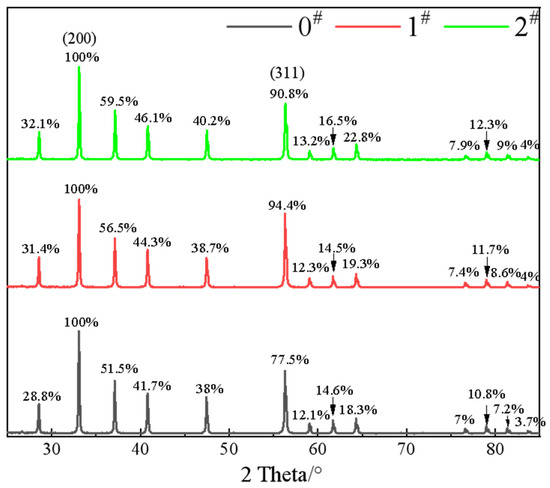
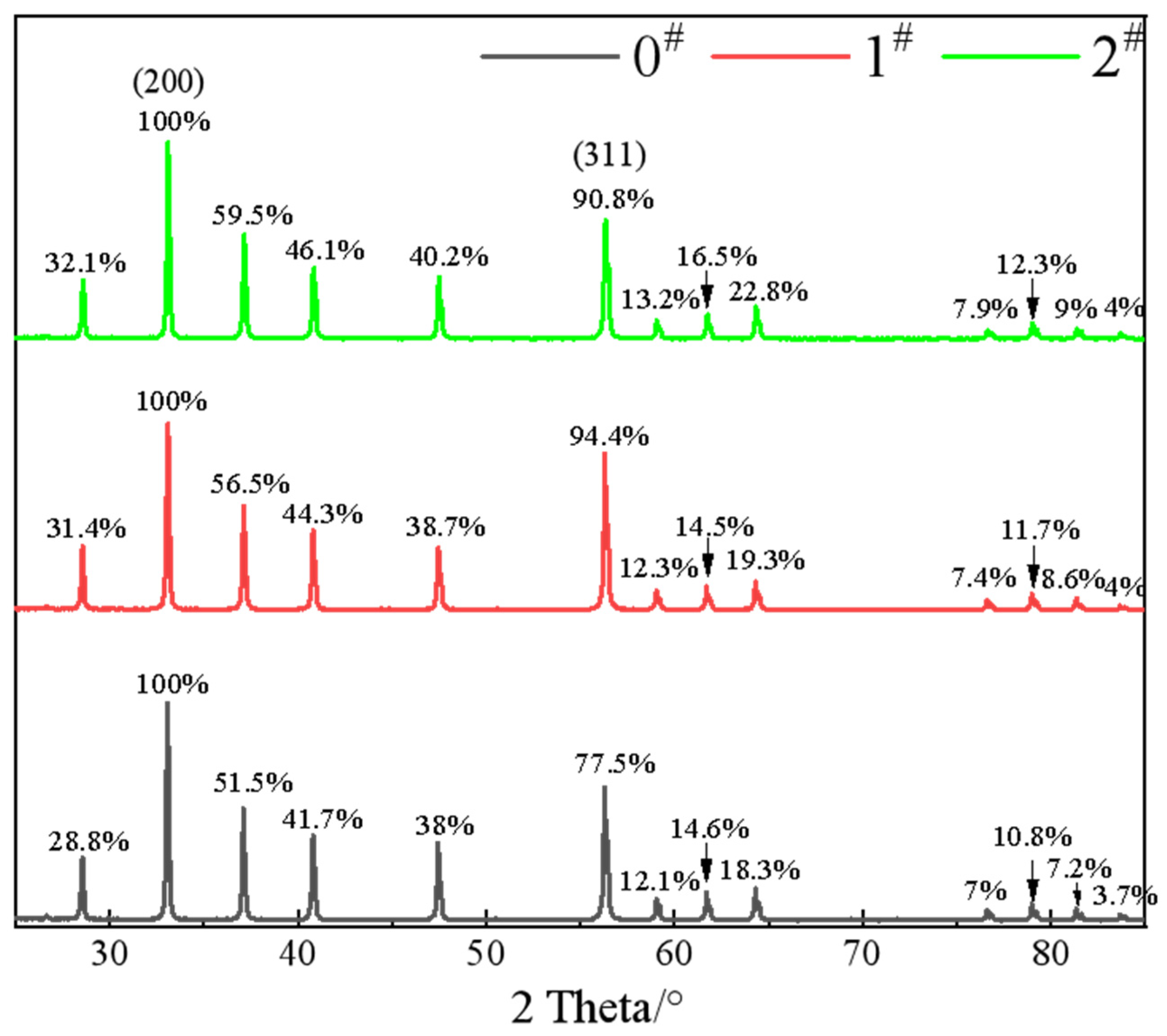
The XRD patterns of pyrite samples with different air-deactivation times are shown in Figure 1. All samples retain the characteristic reflections of pyrite, indicating that the main crystal structure is preserved after mechanical activation and subsequent storage in air. At the same time, slight but detectable shifts in characteristic peak positions are observed among samples 0#, 1# and 2#, suggesting that the crystal structure evolves with deactivation time.
Figure 1.
XRD patterns of pyrite with different degrees of deactivation. (0#, Freshly activated pyrite; 1#, deactivation for 7 d; 2#, deactivation for 180 d).
Freshly activated pyrite (0#) shows slight deviations in characteristic peak positions relative to the reference pattern. After 7 days of air exposure (1#), the characteristic peaks shift slightly toward lower 2θ values. At the same time, the refined lattice parameters and unit-cell volume increase. These changes suggest partial relaxation of the mechanically disturbed structure after activation. When the deactivation time is extended to 180 days (2#), the characteristic peaks move back slightly toward higher 2θ values. Meanwhile, the refined lattice parameters decrease relative to sample 1#. This result indicates that the initial structural relaxation is followed by a second stage of structural adjustment during prolonged exposure in air.
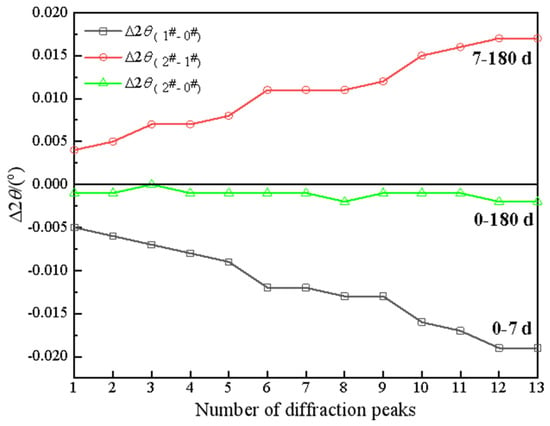
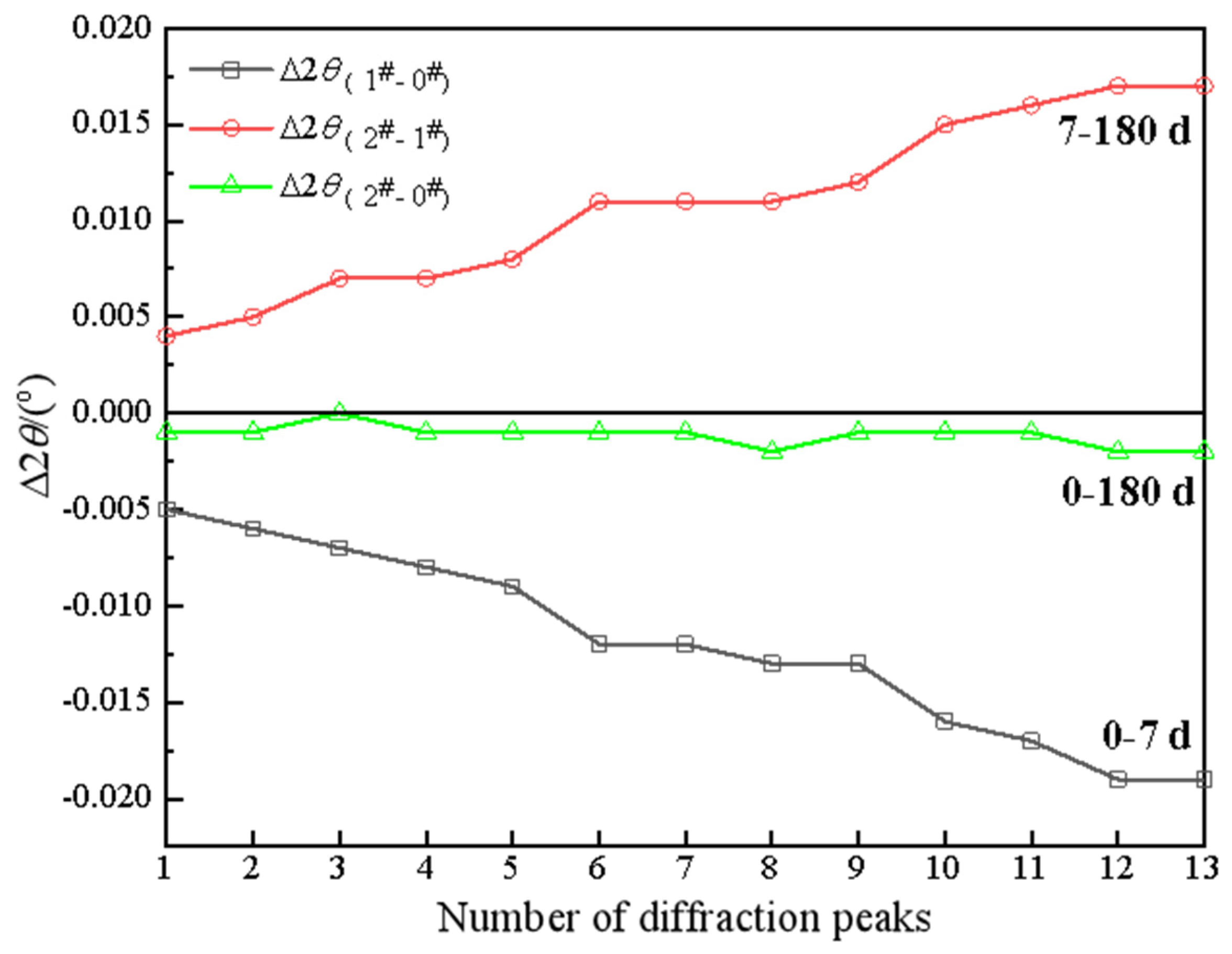
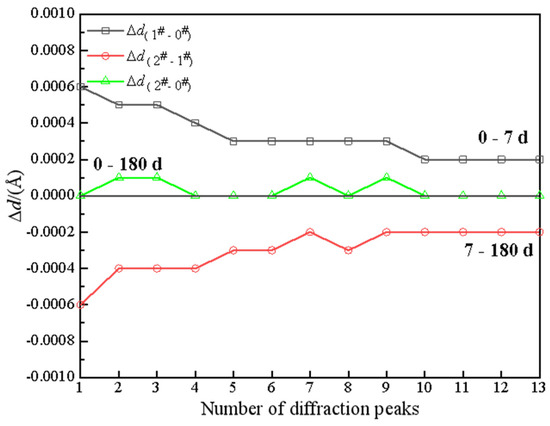
The evolution of peak position and interplanar spacing (d-spacing) with deactivation time (Figure 2 and Figure 3) further supports this two-stage behavior. During the initial 0–7 d period, characteristic peaks shift slightly toward lower angles and the corresponding d-spacing increases, consistent with unit-cell expansion associated mainly with stress relaxation after mechanical activation. In the subsequent 7–180 d period, the peak positions move back slightly toward higher angles and the d-spacing decreases, indicating a partial reversal of the initial expansion and the development of a more heterogeneous structural state during prolonged storage in air.
Figure 2.
Variation curves of the relative peak position of pyrite with different deactivation degrees.
Figure 3.
Variation curve of relative interplanar spacing of pyrite with different deactivation degrees.
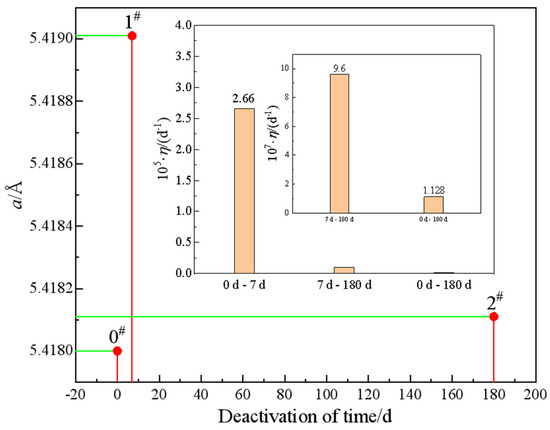
Figure 4 presents the relationship between lattice parameters, cell deformation index, and deactivation time. The lattice parameters first increase and then decrease with increasing deactivation time, confirming the non-monotonic character of the structural evolution. The cell deformation index (η), calculated according to Equation (1), also shows that the structural change is more pronounced during the initial deactivation stage compared to during the later stage. This result indicates that pyrite undergoes rapid structural adjustment shortly after mechanical activation, followed by a slower and more gradual evolution during prolonged air exposure.
Figure 4.
Relationship between cell parameters (a), cell deformation index (η) and deactivation time.
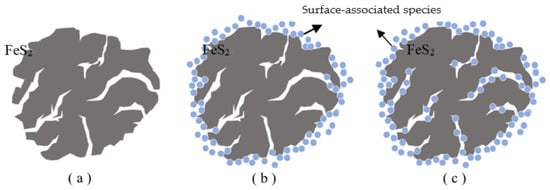
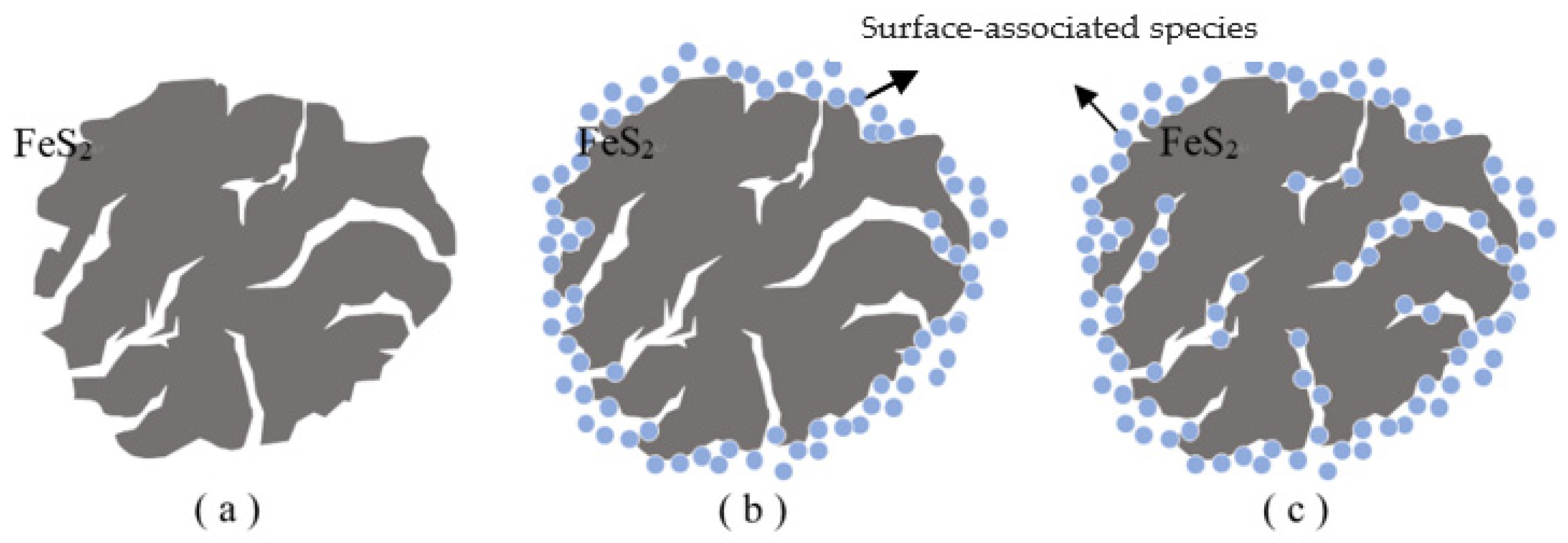
Based on the above results, the deactivation of mechanically activated pyrite in air can be understood as a two-stage process. In the early stage, the release of residual stress promotes partial recovery of the mechanically disturbed structure. In the later stage, continued air exposure is associated with a deviation from the initial relaxed state, which may be related to surface-related modification during storage. Figure 5 presents a schematic illustration of the proposed structural evolution of mechanically activated pyrite during air deactivation. Overall, air deactivation is not a simple monotonic relaxation process, but a progressive structural evolution from a highly strained activated state toward a more passivated condition, which is expected to affect the subsequent thermal decomposition behavior measured under an inert atmosphere.
Figure 5.
Schematic illustration of the proposed evolution pathway of mechanically activated pyrite during air deactivation. (a) Freshly activated pyrite; (b) pyrite after 7 d of air deactivation; (c) pyrite after 180 d of air deactivation.
3.2. Thermogravimetric Analysis
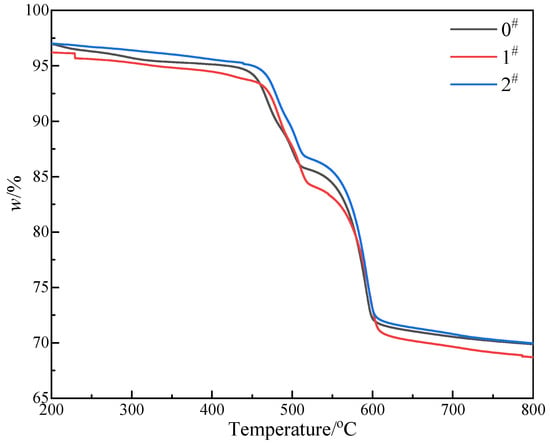
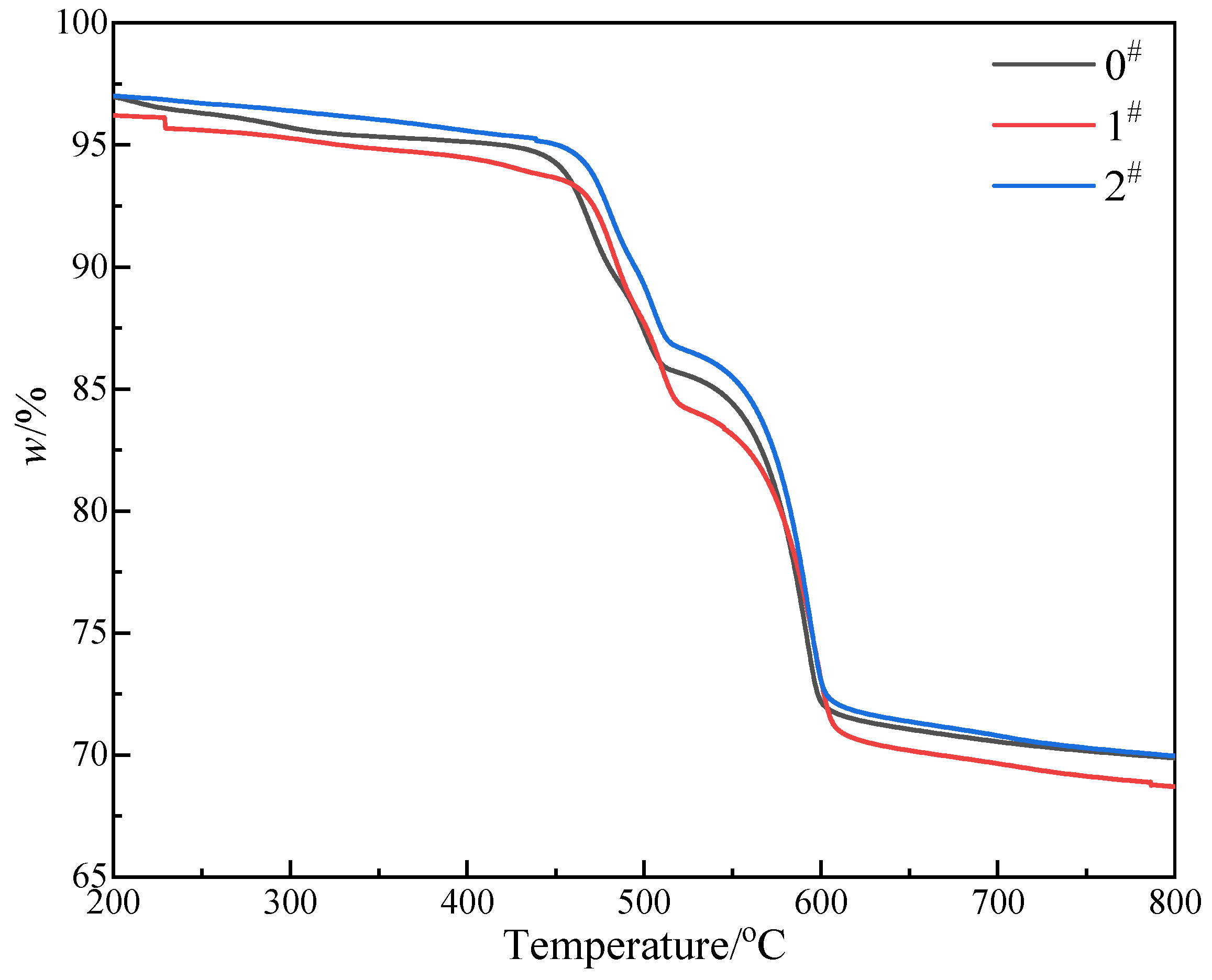
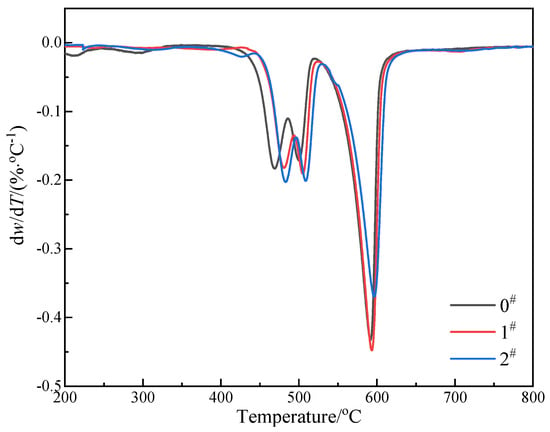
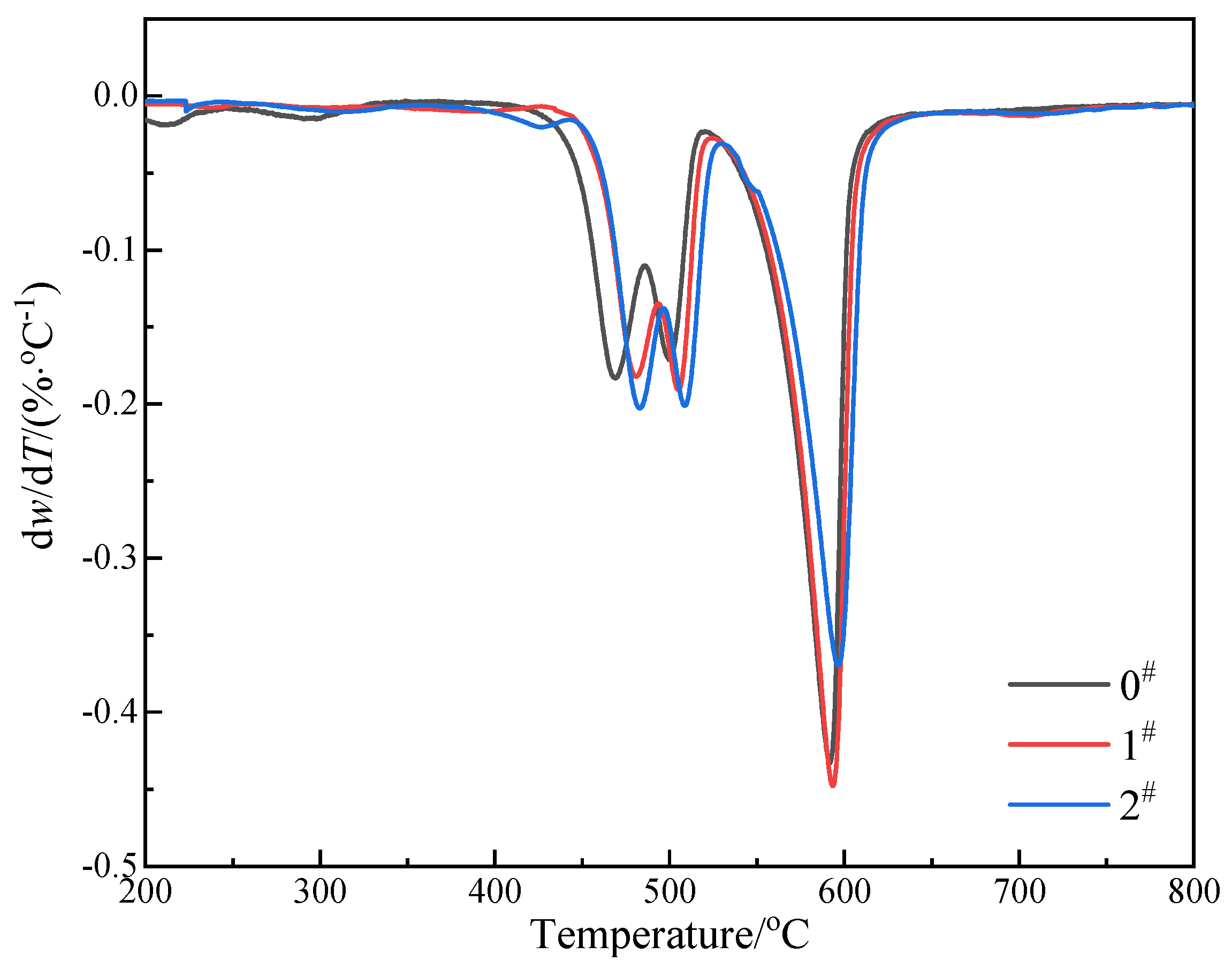
Thermogravimetric analysis was used to evaluate the thermal stability of pyrite with three different deactivation degrees after mechanical activation. The TG curves of the three samples at a heating rate of 5 °C·min−1 are shown in Figure 6. All three curves can be divided into two mass-loss stages, and a shoulder is observed in each curve, indicating that the decomposition proceeds through multiple overlapping steps. This multistage behavior is likely related to the different bond strengths of S–S and Fe–S in pyrite. However, this feature has often been simplified or overlooked in previous studies on the pyrolysis kinetics of pyrite. The corresponding DTG curves (Figure 7) exhibit two medium-intensity peaks and one strong peak during heating, further supporting the presence of multiple reactions within the first mass-loss stage.
Figure 6.
TG curves of three samples (5 °C·min−1).
Figure 7.
DTG curves of three samples (5 °C·min−1).
Representative TG–DTG curves for samples 0#, 1#, and 2# at different heating rates are presented in Figure A1, Figure A2 and Figure A3 (Appendix A), while the characteristic thermal parameters extracted from these curves are summarized in Table 1. In the first stage of thermal decomposition, the temperature range is approximately 380–560 °C and the mass loss is about 11%, which is slightly lower than that in the second stage. This value roughly corresponds to a loss of about two-fifths of the sulfur atoms, and two DTG peaks appear between 450 and 530 °C. The second mass-loss stage occurs in the range of about 520–690 °C, with the main DTG peak appearing at around 595–620 °C, and the decomposition tends to level off above 620 °C. The total mass loss of pyrite with the three deactivation degrees is about 25%, which is close to the theoretical value of 26.67% corresponding to the loss of one sulfur atom when FeS2 is converted to FeS. When the temperature exceeds 620 °C, a slow additional mass loss is still observed, indicating that desulfurization continues and that a relatively stable FeS phase is eventually formed [22].
Table 1.
TG and DTG data of pyrite with three degrees of deactivation at different heating rates.
Previous studies have shown that the thermal decomposition of pyrite under inert atmospheres generally involves stepwise sulfur loss and the formation of pyrrhotite-related products [23,24]. In the present work, the TG–DTG curves in Figure A1, Figure A2 and Figure A3 together with the characteristic temperatures summarized in Table 1 show that increasing the deactivation time shifts the onset and peak temperatures of decomposition to higher values, especially in the initial mass-loss stage. This indicates that prior air deactivation affects the subsequent decomposition behavior of mechanically activated pyrite. Previous studies have suggested that the transformation of pyrite to pyrrhotite may proceed through different pathways under different conditions, including direct desulfurization and routes involving oxygen-related intermediate reactions [25]. However, under the inert atmosphere used in the present work, and in the absence of direct phase evidence for intermediate products, the current results do not allow for a definitive distinction between these possible pathways.
The structure of sample 0#, which remained in a freshly mechanically activated state, contained abundant defects, residual stress, and highly reactive sites. Under these conditions, the onset of decomposition occurs at relatively lower temperatures. For sample 1#, partial stress relaxation during storage in air reduces the reactivity of the mechanically disturbed structure, so a higher temperature is required to initiate decomposition. For sample 2#, prolonged air exposure is associated with stronger structural heterogeneity and a more pronounced passivation effect before heating, which further delays the onset of decomposition. Therefore, the progressive increase in decomposition temperature from 0# to 2# can be more reasonably attributed to the structural evolution induced by prior air deactivation than to a single specific reaction pathway. These results are consistent with the XRD observations and indicate that the air-deactivation history established during storage has an important influence on the subsequent thermal decomposition behavior measured under an inert atmosphere.
3.3. Non-Isothermal Decomposition Kinetics
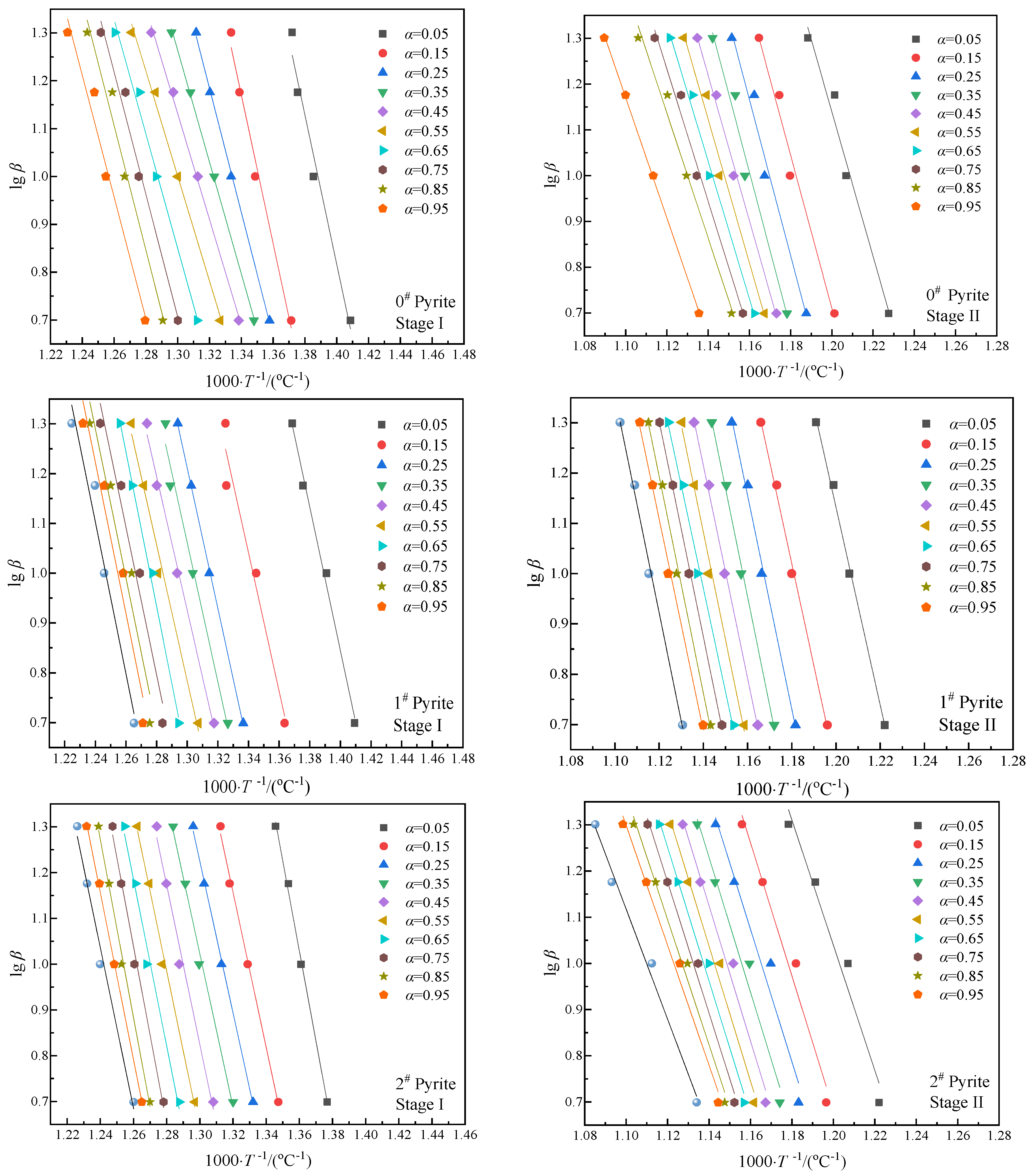
To further clarify the effect of air deactivation on the decomposition kinetics of pyrite, the non-isothermal TG data obtained at four heating rates (5–20 °C·min−1) were analyzed using the Flynn–Wall–Ozawa (FWO) iso-conversional method [26,27,28,29]. For each fixed conversion fraction α, plots of lg βi versus 1000/T were constructed according to Equation (7), and the apparent activation energy E(α) was calculated from the slope. The representative FWO fitting plots are shown in Figure A4 (Appendix A), whereas the calculated activation energies and correlation coefficients are summarized in Table 2.
Table 2.
Activation energy values (E) and goodness of fit (R2) for the three samples.
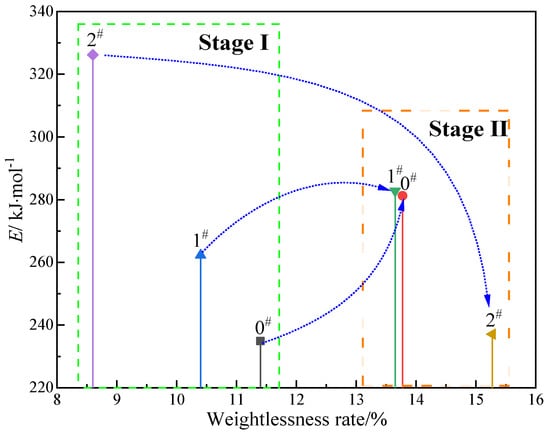
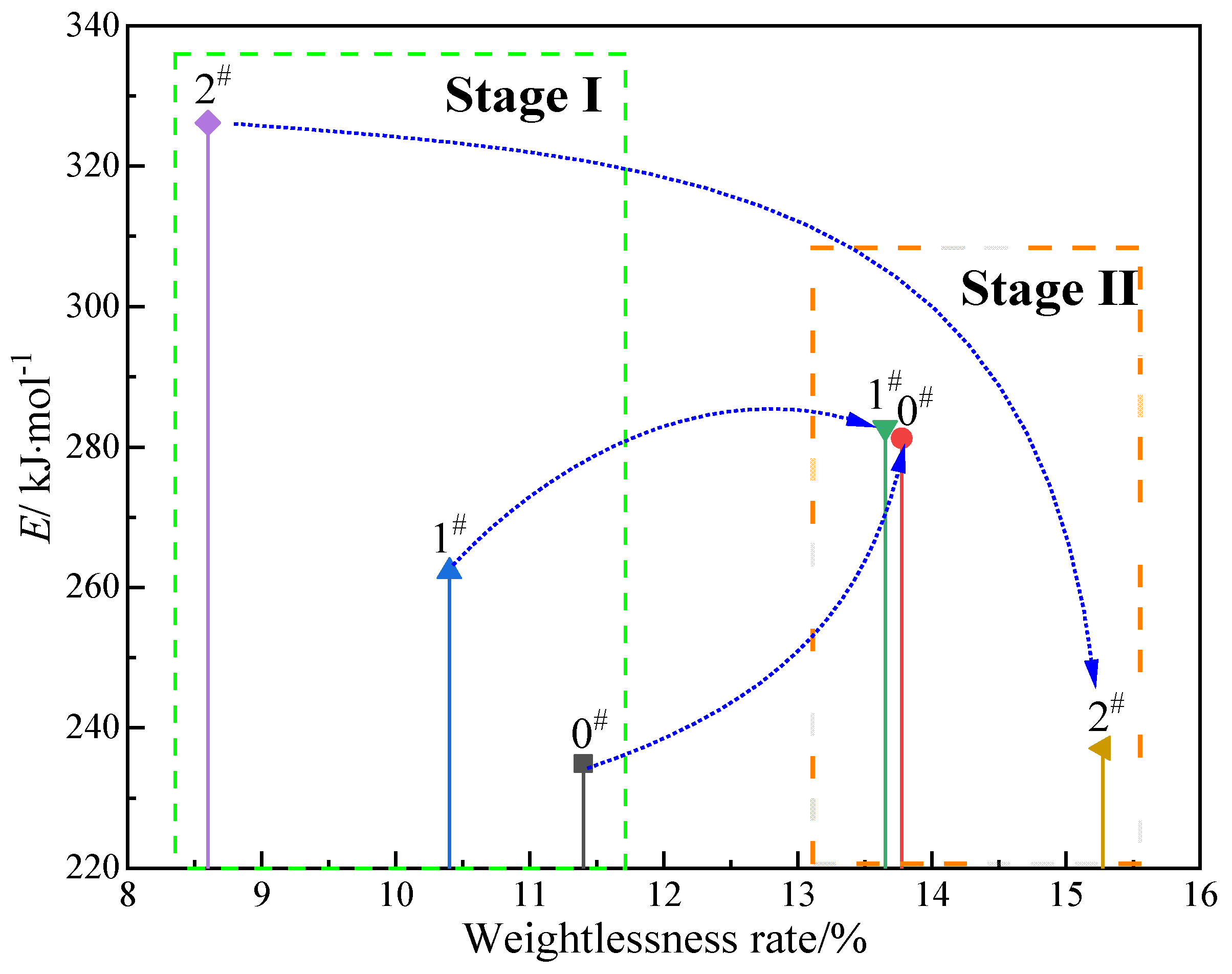
The dependence of E(α) on conversion for samples 0#, 1# and 2# in the two mass-loss stages is presented in Figure 8. In the first mass-loss stage, the activation energies follow the order 2# > 1# > 0# over the whole conversion range, indicating that the initial thermal decomposition becomes progressively more difficult with increasing deactivation time. This trend can be understood by considering the gradual release of mechanochemically stored energy during air exposure together with the structural changes induced during deactivation. Freshly activated pyrite (0#) contains abundant lattice defects, residual stress, and highly reactive sites which favor the onset of decomposition at relatively low temperatures. As deactivation proceeds, part of this mechanically disturbed state is relaxed, and the structure becomes less reactive in the initial stage of heating. In addition, prolonged air exposure is associated with surface-related modification and increased structural heterogeneity, which may partially block or redistribute the most reactive sites. As a result, higher temperatures are required to initiate decomposition, and the apparent activation energy increases, especially for sample 2#.
Figure 8.
Apparent activation energy E(α) as a function of conversion fraction for samples 0#, 1# and 2# in stages I and II.
In the second mass-loss stage, the behavior of the three samples differs from that in the first stage. The activation energies of samples 0# and 1# increase to similar values, whereas that of sample 2# decreases and becomes the lowest among the three. This inversion suggests that the effect of prolonged air deactivation is stage-dependent. After the initial decomposition has started, the more heterogeneous structure of sample 2# may facilitate the development of new reaction interfaces and accelerate subsequent transformation steps, thereby lowering the apparent activation energy in stage II. In contrast, samples 0# and 1#, which experienced less prolonged deactivation, show relatively less pronounced structural modification before heating, and their decomposition in this temperature interval remains comparatively less favorable.
Overall, the FWO analysis shows that air deactivation exerts a dual influence on the thermal decomposition of mechanically activated pyrite. In the initial decomposition stage, deactivation tends to reduce reactivity and increase the apparent energy barrier, whereas in the later stage, the effect becomes dependent on the structural state established during prior storage in air. This kinetic behavior is consistent with the non-monotonic structural evolution revealed by XRD and with the multistep mass-loss characteristics observed in the TG–DTG curves.
3.4. Kinetic Model Analysis
To complement the FWO iso-conversional analysis, the most probable solid-state reaction models were identified using a master-plot approach based on Equation (8). For each sample and decomposition stage, the preferred model was selected by comparing the fitting results of the candidate mechanism functions, with priority given to the model showing a slope closest to −1 and the highest R2. The candidate mechanism functions and the detailed screening results are provided in Table A1 and Table A2 (Appendix A), and the resulting most probable models are summarized in Table 3.
Table 3.
Most probable kinetic models of pyrite with different deactivation degrees in the two thermal decomposition stages.
The kinetic analysis indicates that the thermal decomposition of mechanically activated pyrite is mainly governed by nucleation-related processes, although the dominant behavior varies with deactivation history and decomposition stage. For sample 0#, both stage I and stage II are characterized by random nucleation and subsequent growth, suggesting that freshly activated pyrite retains a structurally disturbed state that provides abundant sites for reaction initiation.
For sample 1#, the first stage is characterized by random nucleation, whereas the second stage is best described by an exponential-function rule, indicating a progressively decelerating reaction behavior. This result suggests that short-term air exposure partially relaxes the mechanically disturbed structure and reduces the contribution of highly reactive regions during subsequent decomposition.
For sample 2#, which experienced the longest air deactivation, the first stage is best described by an autocatalytic model with dendritic nucleation, whereas the second stage returns to a nucleation-and-growth-controlled process. This behavior indicates that prolonged air deactivation leads to a more heterogeneous starting state, in which the initiation of decomposition becomes more sensitive to locally developed reaction interfaces.
Overall, the kinetic modeling results support a stage-dependent decomposition behavior that evolves with prior air deactivation history. Freshly activated pyrite mainly decomposes through nucleation and growth, whereas air exposure progressively modifies the preferred decomposition pathway, especially in the initial decomposition stage. This interpretation is consistent with the structural evolution revealed by XRD and with the TG–DTG characteristics observed under an inert atmosphere.
4. Conclusions
In this work, the air deactivation during storage and the subsequent thermal decomposition behavior of mechanically activated pyrite were systematically investigated, and the following conclusions can be drawn.
(1) XRD analysis together with the calculated cell-deformation index indicates that the structural evolution of mechanically activated pyrite during storage in air proceeds in two stages. In the early stage, partial relaxation of the mechanically disturbed structure is dominant, as reflected by the increase in lattice parameters and interplanar spacing. In the later stage, prolonged air exposure is associated with a deviation from this initial relaxed state, indicating that the overall deactivation process is non-monotonic rather than a simple continuous relaxation.
(2) For all deactivation degrees and heating rates, the thermal decomposition of pyrite under inert atmosphere proceeds through two mass-loss stages, and the kinetic behavior is closely related to the prior deactivation history. In the first stage, the apparent activation energies of samples 0#, 1# and 2# are 234.90, 262.29 and 326.16 kJ·mol−1, respectively, indicating that increasing deactivation time suppresses the initial decomposition reactivity. In the second stage, the corresponding activation energies are 281.23, 282.76 and 237.09 kJ·mol−1, respectively, showing that the effect of air deactivation is stage-dependent. The most probable kinetic models are mainly of nucleation-and-growth type, although noticeable differences exist among samples and decomposition stages.
(3) The present results demonstrate that prior air exposure after mechanical activation can significantly affect both the structural state and the subsequent thermal decomposition behavior of pyrite. In particular, the air-deactivation history is closely associated with the two-stage structural evolution observed during storage and with the stage-dependent kinetic response during subsequent heating. These findings provide useful insight into storage-related reactivity changes in pyrite and may help in evaluating its behavior in processes related to gold extraction and coal utilization.
Author Contributions
Conceptualization, H.Y. and Y.C.; Methodology, L.T. and G.C.; Software, Y.C. and J.X.; Validation, H.Y. and L.T.; Formal Analysis, Y.C. and J.X.; Investigation, Y.C., G.C. and J.X.; Resources, H.Y.; Data Curation, Y.C.; Writing—Original Draft Preparation, Y.C.; Writing—Review and Editing, H.Y., Y.C. and J.X.; Supervision, H.Y.; Project Administration, H.Y.; Funding Acquisition, H.Y. All authors have read and agreed to the published version of the manuscript.
Funding
This study was financially supported by China Postdoctoral Science Foundation [2025M773595]; the National Natural Science Foundation of China [52274348]; the Initiation and Cultivation Project of Young Teachers in Northeastern University [N25XQD017]; the Postdoctoral Research Foundation of Northeastern University [20250315]; Fundamental Research Funds for the Central Universities [N25ZLE002]; the Basic Ability Enhancement Program for Young and Middle-Aged Teachers of Guangxi [2022KY0337].
Data Availability Statement
All data supporting the findings of this study are contained within the article.
Conflicts of Interest
The authors declare no conflicts of interest. The funders had no role in the design of this study; in the collection, analyses, or interpretation of data; in the writing of the manuscript; or in the decision to publish the results.
Appendix A
This appendix provides the detailed supporting results referred to in the main text, including TG–DTG curves, representative FWO plots, the full list of candidate kinetic mechanism functions, and the complete fitting results for kinetic model selection.
Table A1.
Forty commonly used kinetic mechanism functions G(α) evaluated in the master-plot analysis.
Table A2.
Complete fitting results of lg G(α) versus lg βi for all candidate kinetic mechanism functions, including slope and correlation coefficient (R2) values for the two decomposition stages of samples 0#, 1#, and 2#.
Figure A1, Figure A2 and Figure A3 present the TG–DTG curves of samples 0#, 1#, and 2# at different heating rates. The characteristic thermal parameters derived from these curves are summarized in Table 1 of the main text.
Figure A1.
TG-DTG curves of 0# pyrite at different heating rates.
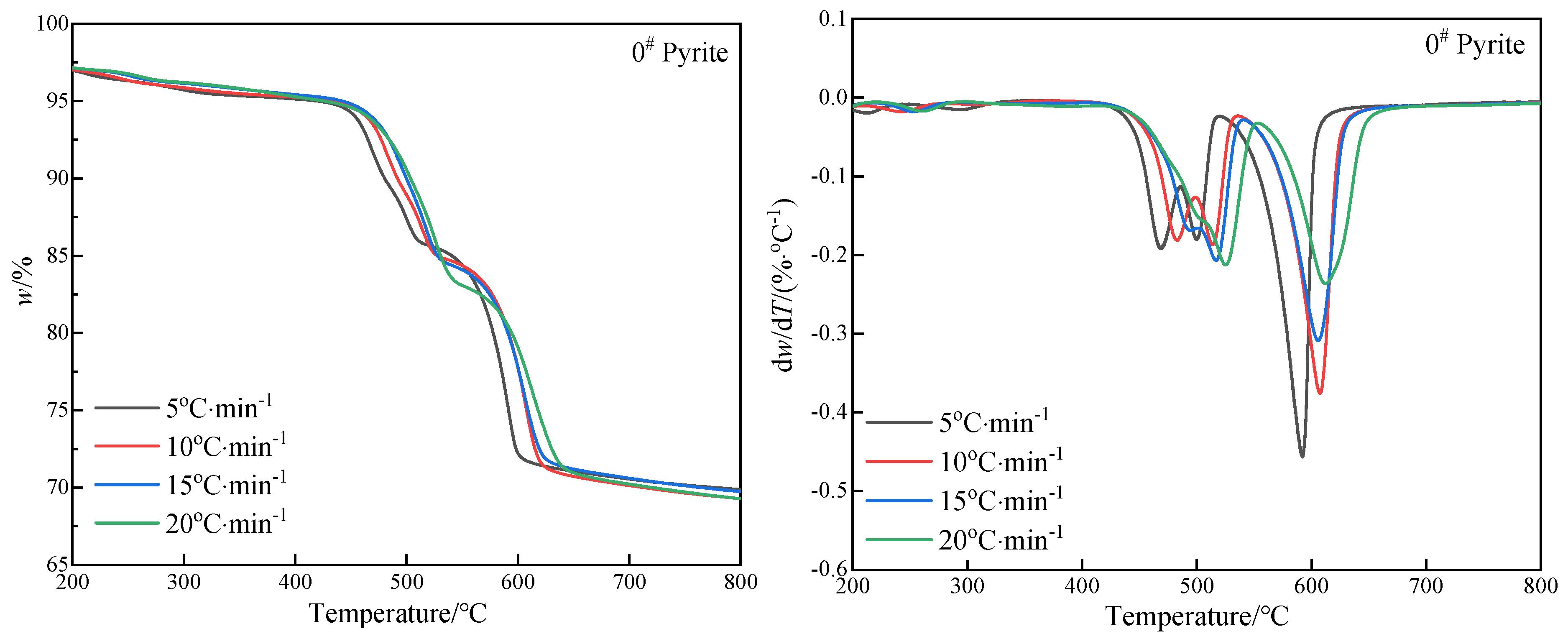
Figure A2.
TG-DTG curves of 1# pyrite at different heating rates.
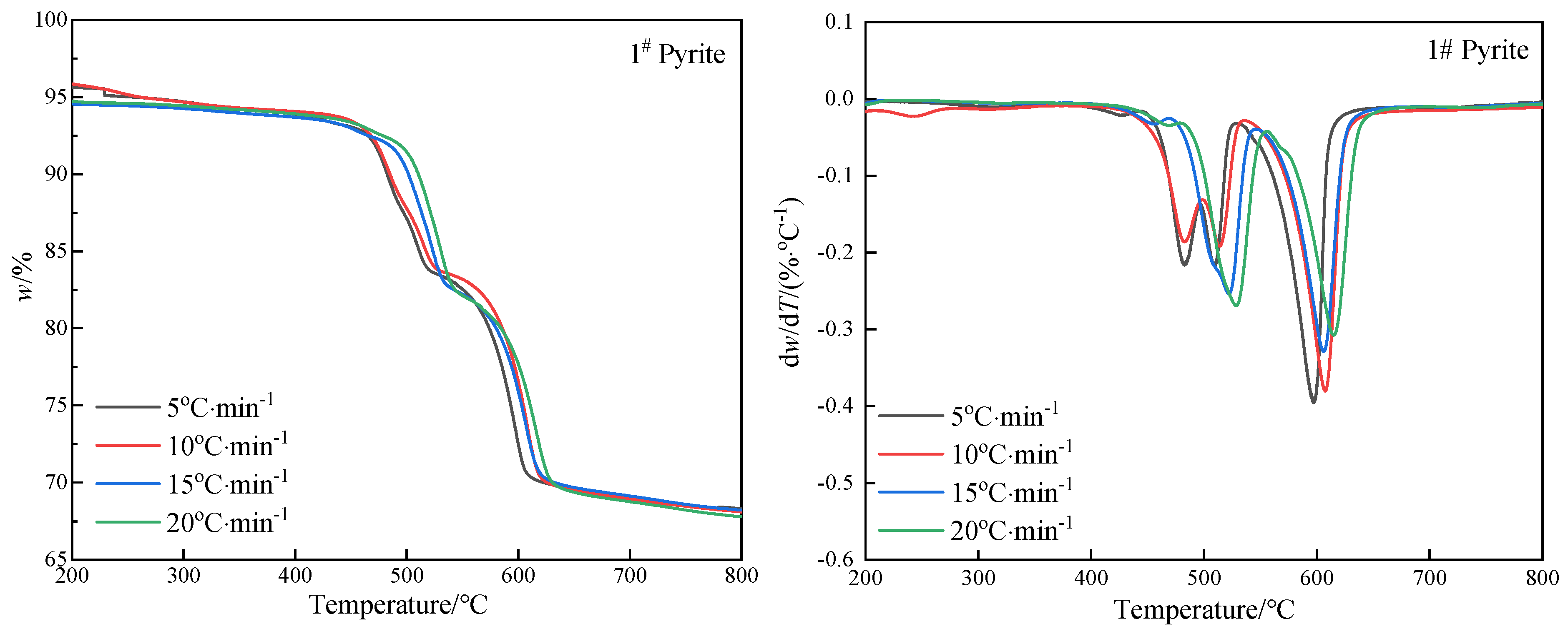
Figure A3.
TG-DTG curves of 2# pyrite at different heating rates.
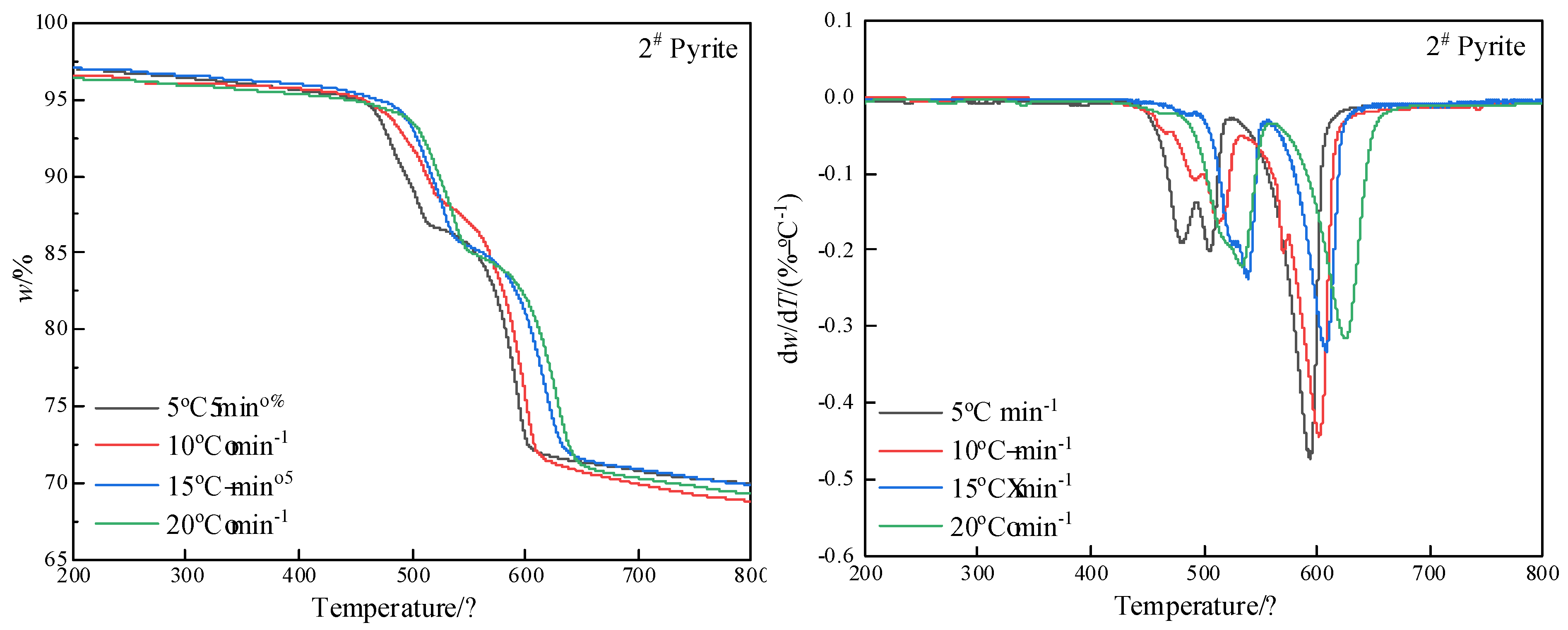
Figure A4.
Plots of lg βi versus 1000·T−1 for all samples at different conversion fractions.
References
- Dmitrijeva, M.; Cook, N.J.; Ehrig, K.; Ciobanu, C.L.; Metcalfe, A.V.; Kamenetsky, M.; Kamenetsky, V.S.; Gilbert, S. Multivariate Statistical Analysis of Trace Elements in Pyrite: Prediction, Bias and Artefacts in Defining Mineral Signatures. Minerals 2020, 10, 61. [Google Scholar] [CrossRef] [Scilit]
- Large, R.R.; Maslennikov, V.V. Invisible Gold Paragenesis and Geochemistry in Pyrite from Orogenic and Sediment-Hosted Gold Deposits. Minerals 2020, 10, 339. [Google Scholar] [CrossRef] [Scilit]
- Li, C.; Wan, J.; Sun, H.; Li, L. Investigation on the activation of coal gangue by a new compound method. J. Hazard. Mater. 2010, 179, 515–520. [Google Scholar] [CrossRef] [Scilit] [PubMed]
- Akhgar, B.N.; Pourghahramani, P. Impact of mechanical activation and mechanochemical activation on natural pyrite dissolution. Hydrometallurgy 2015, 153, 83–87. [Google Scholar] [CrossRef] [Scilit]
- Zheng, X.F.; Cao, S.T.; Nie, Z.Y.; Chen, J.H.; Ling, W.B.; Liu, L.Z.; Pan, X.; Yang, H.Y.; Xia, J.L. Impact of mechanical activation on bioleaching of pyrite: A DFT study. Miner. Eng. 2020, 148, 106209. [Google Scholar] [CrossRef] [Scilit]
- Pourghahramani, P.; Akhgar, B.N. Characterization of structural changes of mechanically activated natural pyrite using XRD line profile analysis. Int. J. Miner. Process. 2015, 134, 23–28. [Google Scholar] [CrossRef] [Scilit]
- Akhgar, B.N.; Pourghahramani, P. Microstructural characterization of pyrite during mechanical activation by using rietveld and XRD line profile analysis. In Proceedings of the 24th International Mining Congress of Turkey (IMCET 2015), Antalya, Turkey, 14–17 April 2015. [Google Scholar]
- Uporov, S.A.; Mitrofanov, V.Y.; Fedorova, O.M.; Fishman, A.Y. Magnetic properties of mechanically activated SmMnO3 powders. J. Mater. Sci. 2013, 48, 7673–7678. [Google Scholar] [CrossRef] [Scilit]
- Achimovičová, M.; Baláž, P. Kinetics of the leaching of mechanically activated berthierite, boulangerite and franckeite. Phys. Chem. Miner. 2008, 35, 95–101. [Google Scholar] [CrossRef] [Scilit]
- Hu, H.; Chen, Q.; Yin, Z.; Zhang, P.; Zou, J.; Che, H. Study on the kinetics of thermal decomposition of mechanically activated pyrites. Thermochim. Acta 2002, 389, 79–83. [Google Scholar] [CrossRef] [Scilit]
- Zou, J.P.; Yin, Z.L.; Chen, Q.Y.; Zhang, P.M. Characterization of physical properties and surfacial structure of activated pyrite. Hunan Nonferrous Met. 2001, 17, 36–39. [Google Scholar] [CrossRef]
- Zou, J.P.; Yin, Z.L.; Chen, Q.Y.; Zhang, P.M. Activation and Expiration of Mechanically Activated Pyrite. Chin. J. Nonferrous Met. 2002, 12, 201–204. [Google Scholar] [CrossRef]
- Poot, J.; Felten, A.; Colaux, J.L.; Gouttebaron, R.; Lepêcheur, G.; Rochez, G.; Yans, J. Experimental timing of pyrite oxidation under various leaching conditions: Consequences for rates of weathering in geological profiles. Environ. Earth Sci. 2024, 83, 9. [Google Scholar] [CrossRef] [Scilit]
- Galvez-Martinez, S.; Pérez-Dieste, V.; Sanchez-Arenillas, M.; Escudero, C.; Mateo-Martí, E. L-cystine adsorption on a pyrite (100) surface exposed to O2 and CO2 atmospheres by near-ambient pressure X-ray photoelectron spectroscopy (NAP-XPS). Appl. Surf. Sci. 2025, 681, 161536. [Google Scholar] [CrossRef] [Scilit]
- Wu, C.; Su, L.; Zhang, B.; Wang, X.; Wang, M.; Zhang, J.; Wang, Q. Ball milling of pyrite in air to significantly promote the Fenton reaction: A mechanistic study. J. Hazard. Mater. 2024, 480, 136081. [Google Scholar] [CrossRef] [Scilit]
- Wen, Z.; Shi, X.; Sui, H.; Zhang, M.; Zhang, L.; Gu, Y.; Feng, Q.; Ma, K.; Zhang, N.; Wang, M.; et al. Air oxidation behavior of wet-mechanochemically synthesized pyrite FeS2: Fenton performance regulated by Fe species, sulfur vacancy and crystal facet ratio. Chem. Eng. J. 2025, 509, 161166. [Google Scholar] [CrossRef] [Scilit]
- Paneva, D.; Mitova, D.; Manova, E.; Kolev, H.; Kunev, B.; Mitov, I. Study of initial stage of mechanochemical transformation in pyrite. J. Min. Metall. Sect. B Metall. 2007, 43B, 57–70. [Google Scholar] [CrossRef] [Scilit]
- Godočíková, E.; Baláž, P.; Bastl, Z.; Brabec, L. Spectroscopic study of the surface oxidation of mechanically activated sulphides. Appl. Surf. Sci. 2002, 200, 36–47. [Google Scholar] [CrossRef] [Scilit]
- Bunaciu, A.A.; Udriştioiu Egabriela Aboul-Enein, H.Y. X-Ray Diffraction: Instrumentation and Applications. Crit. Rev. Anal. Chem. 2015, 45, 289–299. [Google Scholar] [CrossRef] [Scilit]
- Nath, D.; Singh, F.; Das, R. X-ray diffraction analysis by Williamson-Hall, Halder-Wagner and size-strain plot methods of CdSe nanoparticles- a comparative study. Mater. Chem. Phys. 2020, 239, 122021. [Google Scholar] [CrossRef] [Scilit]
- Li, J.; Hitch, M. Characterization of the microstructure of mechanically-activated olivine using X-ray diffraction pattern analysis. Miner. Eng. 2016, 86, 24–33. [Google Scholar] [CrossRef] [Scilit]
- Xu, H.W.; Guo, X.F.; Seaman, L.A.; Harrison, A.J.; Obrey, S.J.; Page, K. Thermal desulfurization of pyrite: An in situ high-T neutron diffraction and DTA-TGA study. J. Mater. Res. 2019, 34, 3243–3253. [Google Scholar] [CrossRef] [Scilit]
- Koohestani, B.; Darban, A.K.; Mokhtari, P.; Darezereshki, E.; Yilmaz, E.; Yilmaz, E. Influence of hydrofluoric acid leaching and roasting on mineralogical phase transformation of pyrite in sulfidic mine tailings. Minerals 2020, 10, 513. [Google Scholar] [CrossRef] [Scilit]
- Chen, Y.H.; Chen, Y.H.; Hsu, W.D.; Chang, Y.C.; Sheu, H.S.; Lee, J.J.; Lin, S.K. Using the high-temperature phase transition of iron sulfide minerals as an indicator of fault slip temperature. Sci. Rep. 2019, 9, 7950. [Google Scholar] [CrossRef] [Scilit] [PubMed]
- Li, H.Y.; Zhang, S.H. Detection of mineralogical changes in pyrite using measurements of temperature-dependence susceptibilities. Chin. J. Geophys. 2005, 48, 1454–1461. [Google Scholar] [CrossRef] [Scilit]
- Jovičić, M.C.; Radičević, R.Ž.; Budinski-Simendić, J.K. Curing of alkyds based on semi-drying oils with melamine resin. J. Therm. Anal. Calorim. 2008, 94, 143–150. [Google Scholar] [CrossRef] [Scilit]
- Gabilondo, N.; López, M.; Ramos, J.A.; Echeverría, J.M.; Mondragon, I. Curing kinetics of amine and sodium hydroxide catalyzed phenol-formaldehyde resins. J. Therm. Anal. Calorim. 2007, 90, 229–236. [Google Scholar] [CrossRef] [Scilit]
- Vyazovkin, S.; Burnham, A.K.; Criado, J.M.; Pérez-Maqueda, L.A.; Popescu, C.; Sbirrazzuoli, N. ICTAC Kinetics Committee recommendations for performing kinetic computations on thermal analysis data. Thermochim. Acta 2011, 520, 1–19. [Google Scholar] [CrossRef] [Scilit]
- Han, S.; Jang, Y.C.; Choi, Y.S.; Choi, S.K. Thermogravimetric kinetic study of automobile shredder residue (ASR) pyrolysis. Energies 2020, 13, 1451. [Google Scholar] [CrossRef] [Scilit]

Disclaimer/Publisher’s Note: The statements, opinions and data contained in all publications are solely those of the individual author(s) and contributor(s) and not of MDPI and/or the editor(s). MDPI and/or the editor(s) disclaim responsibility for any injury to people or property resulting from any ideas, methods, instructions or products referred to in the content. |
© 2026 by the authors. Licensee MDPI, Basel, Switzerland. This article is an open access article distributed under the terms and conditions of the Creative Commons Attribution (CC BY) license.