


Abstract
The subduction polarity of the Mongol–Okhotsk Ocean (MOO) during the Mesozoic remains contentious, with competing models advocating for southward, northward, or bidirectional subduction. The Xifengshan area in the northern Great Xing’an Range, located south of the Mongol–Okhotsk suture, preserves Early–Middle Jurassic calc-alkaline intrusions, which provides important constraints on this debate. We present zircon U–Pb ages, whole-rock geochemistry, and Lu–Hf isotopes for diorite, granodiorite, and monzogranite from this area. Zircon U–Pb dating yields ages of 178–173 Ma, defining a short-lived magmatic pulse. The suite is calc-alkaline, enriched in LILE and depleted in Nb–Ta–Ti, typical of arc magmas. The diorite represents the most mantle-proximal preserved end-member of the system and records substantial mantle input from a slab-modified mantle wedge. Geochemical trends (increasing Rb/Th, decreasing Sr with differentiation) reflect plagioclase-dominated fractional crystallization with minor AFC. Local adakitic-like signatures are better interpreted as differentiation-related effects than as direct evidence for slab melting. Zircon εHf(t) values (+1.62 to +11.55) and TDM1 ages (363–772 Ma) are greater than the crystallization ages, indicating substantial juvenile input together with the variable involvement of previously accreted crustal components. We suggest that mantle wedge-derived magmas modified by slab-related components triggered the partial melting of the arc crust, whereas subsequent intracrustal differentiation produced the observed intrusive sequence. The continental arc system provides robust evidence for the southeastward subduction of the MOO during the Early–Middle Jurassic, resolving the long-standing polarity controversy.
1. Introduction
The Mongol–Okhotsk Ocean (MOO) was a major Late Paleozoic–Mesozoic oceanic domain that separated the Siberian Craton from the Mongolia–North China continent, and its subduction polarity and closure history remain among the most debated issues in Northeast Asian tectonics. Competing models propose southward/southeastward subduction beneath the Mongolia–North China side, northward subduction toward the Siberian Craton, or bidirectional subduction involving opposite-dipping oceanic slabs [1,2,3,4,5,6]. The timing of final closure is equally disputed, with estimates ranging from Late Triassic to Late Jurassic, and the spatial extent of its tectonic influence on the southern suture margin remains poorly constrained [1,2,3,4,5,6]. These uncertainties hinder a unified understanding of Mesozoic plate interactions and crustal evolution in Northeast Asia.
Northeast Asia lies at the junction of the Central Asian Orogenic Belt (CAOB) and the Paleo-Pacific tectonic domain, making it a natural laboratory for investigating plate interactions and arc–continental crust accretion [7,8]. The MOO separated the Siberian Craton from the Mongolia–North China continent during the Late Paleozoic–Mesozoic, and its evolution profoundly influenced regional tectono-magmatic patterns [5,9,10,11]. Recent studies increasingly suggest that the closure of the MOO was diachronous along strike, with different segments closing at different times and possibly under different kinematic regimes [1,2,3]. Such interpretations are mainly based on the spatial–temporal distribution of arc magmatism [6,12,13,14,15,16,17,18,19,20], sedimentary and detrital zircon records [1,2,3,4], paleomagnetic reconstructions [5,6], and structural relationships along the suture zone [4,9,10,11]. Therefore, magmatic records from different sectors of the southern suture margin are essential for testing whether late-stage MOO evolution was governed by a single subduction polarity or by more complex, segment-dependent processes.
The northern Great Xing’an Range, located at the junction between the Erguna and Xing’an blocks adjacent to the southern Mongol–Okhotsk suture, is critical for evaluating MOO evolution [6,12,13,14,15,16,17,18]. Previous studies suggest that Early–Middle Jurassic (ca. 190–160 Ma) magmatism in the region relates to MOO subduction [8,19,20]. For example, Wang et al. (2024) [20] documented Early Jurassic active continental margin magmatism in the Erguna block related to southward subduction, while Deng et al. (2019) [19] reported Late Jurassic subduction-related ore-forming magmatism in the eastern Great Xing’an Range. However, existing work has focused mainly on the eastern range or central Erguna block, whereas the Xifengshan area lacks systematic petrological and geochemical petrological, geochemical, and isotopic data [18]. Consequently, it remains unclear whether a complete subduction-related magmatic arc developed in Xifengshan, what the magma source characteristics are, and how magmatism was coupled with late-stage MOO evolution.
Thus, despite recent advances in constraining MOO closure [1,2,3], a pronounced spatial gap persists in the late-stage magmatic record along the southern suture margin, particularly in the Xifengshan area, where integrated chronological–geochemical–isotopic evidence remains lacking [18]. This deficiency prevents the rigorous testing of several key questions: (1) whether Early–Middle Jurassic magmatism in Xifengshan records the terminal southward subduction of the MOO or reflects far-field Paleo-Pacific influences; (2) whether slab–mantle interactions can be recognized in the magmatic sequence (e.g., the presence of a mantle-influenced dioritic end-member and its genetic link with the associated felsic rocks); and (3) whether intermediate–felsic intrusions resulted from juvenile arc crust melting, slab melt contributions, or fractional crystallization/AFC processes and whether “adakitic” signatures should be interpreted as source features or differentiation effects [20,21,22]. Addressing these issues is important not only for establishing the magmatic arc framework of Xifengshan but also for understanding how terminal ocean closure, slab-modified mantle input, and juvenile crustal reworking interact during continental arc evolution.
In this study, we present integrated whole-rock geochemistry, zircon U–Pb geochronology, and Lu–Hf isotopic analyses for Early–Middle Jurassic intrusions from the Xifengshan area. Our objectives are to (1) constrain the timing and spatial distribution of magmatism; (2) identify geochemical evidence for slab–mantle interaction and test for the presence of a dioritic end-member; (3) constrain the source characteristics and evolutionary mechanisms of intermediate–felsic rocks and assess the origin of “adakitic” features; and (4) assess whether the Xifengshan intrusive suite records a continental arc response to the terminal southward subduction of the MOO in the context of diachronous closure models [2,3]. These results provide new petrological constraints on Early–Middle Jurassic magmatic evolution along the southern Mongol–Okhotsk suture and advance our understanding of arc–continental crust accretion in Northeast Asia [7,8].
2. Regional Geological Setting
Tectonically, the Xing’an Massif is situated in the eastern segment of the CAOB (Figure 1a). It is bounded to the north by the Erguna block across the Xinlin–Xiguite suture zone (Figure 1b) and to the south by the Songnen block, separated by the Hegenshan–Heihe suture zone [1,23]. Since the Proterozoic, the Xing’an Massif and its surrounding regions have been influenced by the Paleo-Asian Ocean, MOO, and Circum-Pacific tectonic domains, resulting in a composite evolutionary history characterized by multiple tectono-magmatic events [23,24].
Figure 1.
Tectonic framework map of the Xifengshan area (a), regional tectonic location map (b), and geological map of the study area (c).
The study area is located at the northeastern tip of the Xing’an Massif (Figure 1b). Stratigraphic units are well exposed and include Paleozoic Silurian, Devonian, and Carboniferous–Permian successions; Mesozoic Jurassic and Cretaceous strata; and Cenozoic Paleogene–Neogene deposits and Quaternary sediments (Figure 1c). The main Paleozoic units relevant to the Jurassic intrusive suite include the Woduhe Formation, which is composed mainly of silty slate and feldspathic lithic sandstone; the Genhe Formation, which consists mainly of siltstone, mudstone, and tuff; the Baoligaomiao Formation, composed of andesite, andesitic tuff, tuffaceous fine sandstone, and silty graywacke; the Longjiang Formation, composed of amphibole andesite, andesite, and dacite; and the Xifengshan volcanic rocks, which are dominated by andesite and andesitic volcaniclastic rocks. These units constitute the principal country rock assemblages of the Jurassic intrusions and provide the geological framework for evaluating magma emplacement and possible wall–rock interactions. Regionally, the structural framework is dominated by NE-trending structures, and both faults and igneous bodies are predominantly distributed along NE-oriented belts.
Igneous rocks are widely developed in the study area and are dominated by Mesozoic intrusions. Of these, Early Jurassic granitic magmatism was the most intense. Intrusive bodies commonly occur as batholiths and extensively intrude in the Silurian and Devonian strata. In contrast, Early Cretaceous intrusions are smaller in outcrop scale, mostly occurring as stocks and mainly intruding Paleozoic strata. The spatial–temporal distribution of these magmatic events is closely related to the evolution of the Mongol–Okhotsk tectonic domain, providing an essential regional framework for discussing the composition of the Early–Middle Jurassic magmatic arc and its constraints on the southward subduction of the MOO.
Mesozoic intrusions in the study area can be divided into two principal magmatic stages at 186–172 Ma and ~118 Ma, corresponding to the Early Jurassic and Early Cretaceous, respectively [1,2,3,4]. Early Jurassic intrusions are widespread and form a discontinuous NE-trending belt. From northwest to southeast, the lithologies comprise quartz diorite, monzogranite, granodiorite, and diorite. These intrusions generally display uniform mineral grain sizes and are dominated by medium- to medium–coarse-grained textures, indicating relatively stable crystallization conditions.
In contrast, Early Cretaceous intrusions are limited in exposure and typically intrude the earlier lithologic units. They are dominated by diorite and are characterized by overall finer grain sizes, with mainly medium- to fine-grained textures, implying pronounced differences in crystallization conditions and magmatic evolution relative to the Early Jurassic magmatic episode.
The Early Jurassic intrusive suite in the Xifengshan area is composed mainly of granodiorite, biotite granodiorite, diorite, and monzogranite. These intrusions are concentrated mainly in the central part of the study area, where they collectively define a NE–NNE-trending belt. They were emplaced into Paleozoic strata, including the Woduhe Formation, Genhe Formation, and Baoligaomiao Formation, and occur as batholiths, stocks, and dike-like bodies. The granodiorite is mainly exposed in the eastern part of the area and commonly contains dioritic enclaves, shows variable degrees of potassic alteration, and is widely cut by intermediate–mafic dikes. Diorite occurs only locally south of the Xinsheng Second Team in the central part of the study area, whereas monzogranite is mainly exposed in the northwestern part, around Xinan Village and the Huapiyao nursery area. Biotite granodiorite is widely distributed in the southwestern, central, and eastern parts of the study area and is locally cut by later granitic to dioritic dikes, indicating multistage magma emplacement and replenishment. These field relationships show that the Early Jurassic intrusions form a spatially coherent arc-related intrusive assemblage and provide an important geological framework for interpreting magma evolution in the Xifengshan area.
3. Analytical Methods
Fresh rock samples of the Early Jurassic granodiorite, biotite granodiorite, diorite, and monzogranite were collected for whole-rock geochemical analyses and zircon separation. Four samples were selected for zircon U–Pb dating and in situ Lu–Hf isotopic analyses (Figure 1). For each dated sample, five subsamples were analyzed for whole-rock geochemistry.
Approximately 20 kg of fresh material was collected for each sample. After washing with water and air-drying, the samples were crushed to 80 mesh. Zircons were separated using standard procedures, including gravity concentration, strong magnetic separation, electromagnetic separation, and alcohol-assisted fine panning. Subsequently, zircon grains were handpicked under a binocular microscope. Zircon separation, mounting, and cathodoluminescence (CL) imaging were conducted at the laboratory of the Hebei Institute of Regional Geological and Mineral Resources Survey.
Zircon U–Pb geochronology was conducted at the Isotope Laboratory of the Tianjin Center, China Geological Survey. In situ U–Pb and Lu–Hf isotopic analyses were performed using a laser ablation multi-collector inductively coupled plasma mass spectrometry system (LA-MC-ICP-MS). The MC-ICP-MS instrument was a Thermo Fisher Neptune (Thermo Fisher Scientific, Waltham, MA, USA). Operating conditions, analytical procedures, and data reduction followed the protocols described by Li et al. (2009) [25].
Whole-rock major and trace elements were analyzed at the laboratory of the Shenyang Institute of Geology and Mineral Resources, Ministry of Natural Resources. Major elements were determined by X-ray fluorescence spectrometry (XRF), with analytical precision of 1%–5%. Trace elements were measured by ICP-MS, with typical analytical uncertainties exceeding 10%.
4. Petrography
The Early Jurassic intrusive suite of the Xifengshan area comprises granodiorite, biotite granodiorite, diorite, and monzogranite. The detailed petrographic characteristics of the representative rock types are described below.
Granodiorite (TK05TW1): The rock is gray to grayish white, with a fine- to medium-grained granitic texture and a massive structure (Figure 2a,b). It is mainly composed of plagioclase (~63%), quartz (~30%), biotite (~7%), and minor alkali feldspar (~5%). Plagioclase is mostly grayish white, with subhedral tabular to broad tabular grains with grain sizes of 1.0–4.0 mm. Quartz occurs as colorless, anhedral granular grains (0.8–2.0 mm). Biotite forms brown, irregular flakes (0.8–1.5 mm). Alkali feldspar is mainly subhedral tabular to anhedral granular, dominated by microcline, with grain sizes of 1–3 mm.
Figure 2.
Field photographs and photomicrographs of the granodiorite, biotite granodiorite, diorite, and monzogranite from the Xifengshan area, northern segment of the Greater Xing’an Range. (a) Field photographs of the granodiorite; (b) Photomicrographs of the granodiorite; (c) Field photographs of the biotite granodiorite; (d) Photomicrographs of the biotite granodiorite; (e) Field photographs of the diorite; (f) Photomicrographs of the diorite; (g) Field photographs of the monzogranite; (h) Photomicrographs of the monzogranite. Abbreviations: Q, quartz; Hb, hornblende; Pl, plagioclase; Kf, K-feldspar; Bt, biotite.
Biotite granodiorite (TK06TW4): The rock is grayish white, with a fine- to medium-grained granitic texture and a massive structure (Figure 2c,d). The principal mineral assemblage comprises plagioclase (~45%), quartz (~30%), alkali feldspar (~15%), and biotite (~10%). Plagioclase occurs as euhedral to subhedral tabular grains with well-developed polysynthetic twinning (0.5–3.0 mm). Quartz is anhedral, granular, and locally shows weak undulose extinction (0.3–0.8 mm). Amphibole is yellow–green and subhedral prismatic (0.4–4.6 mm). Biotite is mostly yellow–brown and locally replaced by chlorite along grain margins (0.3–2.1 mm). Alkali feldspar is anhedral granular microcline (1–3.5 mm). Dioritic enclaves are common in this rock and typically occur as elliptical bodies of variable sizes near the margins of the intrusion, potentially reflecting unmixing/immiscibility during the evolution of the felsic magma [26].
Diorite (TK08TW1): The rock is dark gray to gray–black and shows a fine- to medium-grained granitic texture and a massive structure (Figure 2e,f). It is mainly composed of plagioclase (~52%), amphibole (~40%), and biotite (~5%). Plagioclase occurs as grayish white, subhedral, elongated tabular grains, commonly with pronounced sericitization, with grain sizes of 0.4–2.0 mm. Quartz is colorless, anhedral, and granular (0.3–1.0 mm). Biotite forms yellow–brown flakes with grain sizes of 0.2–5.2 mm. Amphibole occurs as yellow–green prismatic grains (0.6–3.6 mm).
Monzogranite (TK30TW1): The rock is light pink and exhibits a coarse–medium- to medium–fine-grained granitic texture and a massive structure (Figure 2g,h). It is mainly composed of plagioclase (~35%), alkali feldspar (~35%), quartz (~25%), and biotite (~5%). Plagioclase occurs as grayish white subhedral tabular to broad tabular grains (2.0–5.0 mm). Alkali feldspar is light pink, subhedral, and broad tabular to anhedral granular (3.0–8.0 mm). Quartz occurs as colorless, anhedral granular grains (1.5–3.0 mm). Biotite is commonly yellow–brown and occurs as irregular flakes or fine flake aggregates (1.0–2.5 mm).
In summary, the Early Jurassic intrusions in the study area comprise a granodiorite–biotite granodiorite–diorite–monzogranite assemblage. The rocks generally display fine- to medium-grained granitic textures and massive structures, with mineral assemblages dominated by plagioclase, quartz, amphibole, and biotite. Substantial variation in mafic mineral content reflects differences in magma sources and the extent of crystallization differentiation. The widespread occurrence of dioritic enclaves, intermediate–mafic dikes, and multistage dike swarms indicates repeated magma replenishment and interaction during magmatic evolution, consistent with emplacement in an arc-related intrusive system.
5. Zircon U–Pb Results
To constrain the emplacement ages of the intrusions in the Xifengshan area, LA analyzed four representative samples (granodiorite, diorite, and monzogranite) for MC-ICP-MS zircon U–Pb geochronology. Prior to isotopic analyses, CL imaging was conducted to characterize the zircon internal structures. Representative CL images are shown in Figure 3, and the U–Pb analytical results are presented in Table S1 and Figure 4.
Figure 3.
Cathodoluminescence (CL) images of zircons from the Early–Middle Jurassic arc magmatic rocks in the Xifengshan area, northern Greater Xing’an Range. Analytical spots for U–Pb dating (yellow circles) and in situ Hf isotope analyses (blue dashed circles) are marked, together with the corresponding εHf(t) values. (a) TK05TW1, granodiorite; (b) TK06TW1, granodiorite; (c) TK08TW1, diorite; (d) TK30TW1, monzogranite. The numbers in the figure represent the laser ablation spots. Data are listed in Table S1.
Figure 4.
Zircon U–Pb concordia diagrams for the Early–Middle Jurassic arc magmatic rocks from the Xifengshan area, northern segment of the Greater Xing’an Range. (a) TK05TW1, granodiorite; (b) TK06TW1, granodiorite; (c) TK08TW1, diorite; (d) TK30TW1, monzogranite. Error ellipses on the concordia diagrams are shown at the 1σ level, and weighted mean ages are reported with uncertainties at the 95% confidence level.
Xifengshan Pluton (TK05TW1) is a granodiorite, collected from the eastern side of Xifengshan Township (50°33′52″ N, 126°58′32″ E). Zircons are mostly white, 100–300 μm in size, and occur mainly as short prismatic to subrounded grains, with length/width ratios of 2:1 to 1:1. CL images (Figure 3a) show well-developed, bright oscillatory zoning in most zircons, and some grains display core–mantle structures.
Twenty-five analytical spots yield Th/U ratios of 0.38–0.73. The apparent 206Pb/238U ages range from 173 to 180 Ma and are tightly clustered on the concordia diagram (Figure 4a). The weighted mean 206Pb/238U age is 176 ± 1 Ma (MSWD = 0.69). These zircons are interpreted as magmatic in origin, and the age is taken to represent the pluton’s emplacement (crystallization) age, corresponding to the Early Jurassic.
Xinsheng Erdui Pluton (TK06TW1) is a granodiorite, collected from the Xinsheng Erdui area (50°34′43″ N, 126°50′54″ E). Zircons are white, mostly subrounded to short prismatic, with length/width ratios of 2:1 to 1:1 (locally up to 3:1) and grain sizes of 200–400 μm. CL images (Figure 3b) show prominent oscillatory zoning and core–mantle structures.
Twenty-five analytical spots yield Th/U ratios of 0.30–0.66. The 206Pb/238U apparent ages range from 174 to 182 Ma, showing good coherence on the concordia plot (Figure 4b). The weighted mean 206Pb/238U age is 178 ± 1 Ma (MSWD = 0.80). The zircons are interpreted to be magmatic, and the age represents the emplacement age of the intrusion, also within the Early Jurassic.
Southern Xinsheng Erdui Pluton (TK08TW1) is a diorite, collected south of Xinsheng Erdui (50°33′52″ N, 126°50′40″ E). Zircons are white and mainly subrounded to short prismatic, with length/width ratios of 1.5:1 to 1:1 (locally up to 2:1) and sizes of 150–350 μm. CL images (Figure 3c) show clear oscillatory zoning and core–mantle structures.
Twenty-five analytical spots yield Th/U ratios of 0.30–0.91. The 206Pb/238U apparent ages range from 175 to 179 Ma and cluster tightly on the concordia diagram (Figure 4c). The weighted mean 206Pb/238U age is 177 ± 1 Ma (MSWD = 0.43). These zircons are interpreted as magmatic, and the age is regarded as the emplacement age of the diorite, belonging to the Early Jurassic.
Chengzhongshan Pluton (TK30TW1) is a monzogranite, collected from the western side of Chengzhongshan (50°38′20″ N, 126°54′40″ E). Zircons are white to pale yellowish white, with mostly short to elongate prismatic grains, with length/width ratios of 3:1 to 2:1 (locally up to 4:1) and sizes of 100–200 μm. The CL images (Figure 3d) show dense oscillatory zoning and core–mantle structures.
Thirty analytical spots from sample TK30TW1 yield Th/U ratios of 0.24–0.88. Of these, twenty-four spots define a coherent population with 206Pb/238U apparent ages of 169–177 Ma and show good consistency on the concordia diagram (Figure 4d). The weighted mean 206Pb/238U age of this main population is 173 ± 1 Ma (MSWD = 0.98), which is interpreted as the emplacement age of the monzogranite and indicates a Middle Jurassic magmatic event. In addition, six zircons yield a concordant age of 311 ± 3 Ma, significantly older than the host intrusion. These older grains are therefore interpreted as inherited or captured zircons, most likely derived from pre-existing Late Carboniferous magmatic rocks in the region and incorporated during the ascent or emplacement of the Jurassic magma [27]. Overall, the age data indicate that the Chengzhongshan monzogranite was emplaced at 173 ± 1 Ma, whereas the minor ~311 Ma zircon population records limited inheritance from earlier crustal materials rather than the crystallization age of the intrusion.
6. Whole-Rock Geochemical Characteristics
To systematically investigate the whole-rock geochemical characteristics of the Early Jurassic intrusions and to infer their tectonic setting, 20 samples representing different lithologies and localities were collected from the study area. The analytical results for major and trace elements are presented in Table S2.
6.1. Major-Element Characteristics
The Xifengshan Pluton Granodiorite (TK05TW1) is characterized by relatively high content of SiO2 (63.28%–64.39%), Na2O (3.71%–3.88%), K2O (2.30%–2.39%), and Al2O3 (15.11%–15.61%), but low TiO2 (0.69%–0.76%) and P2O5 (0.14%–0.16%). Total alkalis (ALK; Na2O + K2O) range from 6.02% to 6.21%, and TFeO ranges from 5.12% to 5.79%. The Rittmann index σ = 1.78–1.82, suggesting a calc-alkaline affinity. These samples have Mg# = 44–46, A/NK = 1.74–1.78, and Na2O/K2O = 1.56–1.68, indicating a distinct sodic character. On the (Na2O + K2O)–SiO2 diagram (Figure 5a), the samples are plotted in the granodiorite field, and, on the magmatic-series discrimination diagrams, they fall within the calc-alkaline field (Figure 5b). The A/CNK ratios (0.95–1.01) indicate mainly metaluminous compositions (four samples), with one sample being weakly peraluminous (Figure 5c).
Figure 5.
(a) Rock classification diagrams for the Early–Middle Jurassic arc magmatic rocks in the Xifengshan area, northern Greater Xing’an Range (modified after [28]); (b) TFeO/MgO vs. SiO2 diagram (modified after [29]); and (c) A/NK–A/CNK diagram. Data sources (Tables S2 and S3) from [18,20,30,31,32,33,34,35,36] and this study.
The Xinsheng Erdui Pluton Biotite Granodiorite (TK06TW4) displays relatively high SiO2 (61.75%–62.81%), Al2O3 (15.96%–16.24%), and Na2O (3.82%–3.93%), with comparatively low TiO2 (0.73%–0.77%) and P2O5 (0.20%–0.23%). ALK ranges from 5.95% to 6.10% and TFeO from 5.28% to 5.59%. The Rittmann index σ = 1.84–1.95 indicates a calc-alkaline series. These rocks yield Mg# = 48–49, A/NK = 1.83–1.86, and Na2O/K2O = 1.78–1.82, all of which reflect a sodic affinity. On the (Na2O + K2O)–SiO2 diagram (Figure 5a), most samples are plotted in the diorite–granodiorite field, and all fall within the calc-alkaline domain on the series discrimination diagrams (Figure 5b). The A/CNK ratios (0.95–0.97) indicate an overall metaluminous composition (Figure 5c).
The Southern Xinsheng Erdui Pluton Diorite (TK08TW1) is characterized by relatively low SiO2 (51.74%–53.24%), Na2O (2.82%–2.96%), and K2O (1.04%–1.13%), but elevated Al2O3 (14.64%–15.07%), MgO (7.37%–7.79%), and TiO2 (1.51%–1.58%), with P2O5 = 0.27%–0.28%. The rocks show Mg# values of 56–57, indicating a pronounced Mg-rich character. The Rittmann index σ = 1.52–1.79 suggests a calc-alkaline affinity. They also show high A/NK ratios of 2.48–2.53 and Na2O/K2O ratios of 2.50–2.75, reflecting a strong sodic signature. On the (Na2O + K2O)–SiO2 diagram, the samples fall within the gabbro-diorite field (Figure 5a) and are plotted in the calc-alkaline field on the series discrimination diagrams (Figure 5b). Their A/CNK ratios of 0.85–0.89 indicate metaluminous compositions (Figure 5c).
The Chengzhongshan Pluton Monzogranite (TK30TW1) shows high SiO2 (69.70%–70.53%), Na2O (4.58%–4.74%), K2O (2.30%–2.79%), and Al2O3 (15.22%–15.47%), but low MgO (0.50%–0.70%), TiO2 (0.37%–0.39%), and P2O5 (0.14%–0.16%). ALK ranges from 7.04% to 7.44%, whereas TFeO is low (2.62%–2.87%). The Rittmann index σ = 1.84–2.07 indicates a calc-alkaline series (Figure 5a). The samples have Mg# = 25–34, A/NK = 1.43–1.50, and Na2O/K2O = 1.65–2.06, suggesting a clear sodic affinity. On the (Na2O + K2O)–SiO2 diagram (Figure 5a), they are plotted within the granite field, and the A/CNK ratios of 1.11–1.14 indicate a peraluminous composition (Figure 5c).
Based on the major-element geochemical characteristics, the Xifengshan granitoid suite shows the following features. (1) SiO2 content increases systematically with lithological evolution (Figure 5a), from 51.74 wt% in diorite to 70.53 wt% in monzogranite, although intermediate compositions are underrepresented, indicating a genetically linked but incompletely sampled differentiation sequence. (2) The suite as a whole belongs to a calc-alkaline, sodic magma series (Figure 5b). All samples cluster within the calc-alkaline field on the TFeO/MgO–SiO2 diagram and display Na2O/K2O ratios of 1.56–2.75 (average ~1.96), reflecting a pronounced sodic affinity. (3) Aluminum saturation indices show a limited range, with A/CNK = 0.85–1.14, evolving from metaluminous to weakly peraluminous, suggesting a gradual increase in aluminum saturation during magma evolution (Figure 5c). (4) Major elements exhibit systematic covariation trends. With increasing SiO2, Na2O, ALK, and Al2O3, the content of MgO, total iron (TFe2O3), and CaO decreases progressively, indicating pronounced fractional crystallization, accompanied by evolution from a mostly mantle-proximal preserved end-member toward more felsic granitic compositions.
6.2. Trace Elements
Total REE content of granodiorite from the Xifengshan pluton (TK05TW1) (ΣREE) is overall low, ranging within (115.98–128.39) × 10−6, with an average of 121.36 × 10⁻⁶. The rocks show strong light REE (LREE)–heavy REE (HREE) fractionation, with LREE/HREE ratios of 11.38–12.06 and (La/Yb)n values of 12.09–13.90. Eu anomalies are insignificant, with δEu = 0.89–0.91, indicating weak negative Eu anomalies.
The ΣREE content of biotite granodiorite from the Xinsheng Erdui pluton (TK06TW4) ranges within (95.34–123.89) × 10−6 (average 113.45 × 10⁻⁶). LREE–HREE fractionation is moderate, with LREE/HREE = 8.80–10.43 and (La/Yb)n = 8.11–10.76, showing LREE-enriched patterns. (La/Sm)n values of 2.77–3.58 indicate pronounced fractionation between LREE and middle REE (MREE), whereas (Gd/Yb)n values of 1.43–1.55 suggest weak MREE–HREE fractionation. δEu ranges from 0.82 to 0.91, reflecting weak negative Eu anomalies.
The ΣREE content of diorite from the southern Xinsheng Erdui pluton (TK08TW1) is (116.35–120.76) × 10−6 (average 117.82 × 10⁻⁶). LREE–HREE fractionation is moderate, with LREE/HREE = 6.56–6.90 and (La/Yb)n = 5.71–6.44, also showing LREE-enriched patterns. (La/Sm)n values of 2.20–2.49 indicate clear LREE–MREE fractionation, whereas (Gd/Yb)n values of 1.24–1.30 suggest weak MREE–HREE fractionation. δEu values of 0.78–0.83 indicate weak negative Eu anomalies.
The monzogranite from the Chengzhongshan pluton (TK30TW1) shows the lowest ΣREE content, ranging from 80.53 × 10⁻⁶ to 93.96 × 10⁻⁶ (average 86.95 × 10⁻⁶). LREE–HREE fractionation is pronounced, with LREE/HREE = 10.83–13.66 and (La/Yb)n = 10.69–16.69. Eu anomalies vary more widely (δEu = 0.84–1.01), and most samples display weak negative Eu anomalies or no significant Eu anomaly, whereas a few samples exhibit slight positive Eu anomalies.
Integrating the REE and trace-element geochemical characteristics, the Early–Middle Jurassic magmatic rocks from the Xifengshan area are characterized by right-inclined chondrite-normalized REE patterns, with the relative enrichment of LREEs and depletion of HREEs (Figure 6b). Primitive mantle-normalized spider diagrams show the systematic enrichment of large-ion lithophile elements (LILE; e.g., Rb, K, Ba, Th, U, and Sr) and the pronounced depletion of high-field-strength elements (HFSEs; e.g., Nb, Ta, and Ti) (Figure 6a), which are typical of subduction-related magmatic rocks [37,38].
Figure 6.
(a) Primitive mantle-normalized trace-element spider diagrams for the Early–Middle Jurassic arc magmatic rocks from the Xifengshan area, northern Greater Xing’an Range (normalization values after [39]) and (b) chondrite-normalized rare earth element (REE) patterns (normalization values after [40]). Data sources (Tables S2 and S3) from [18,20,30,31,32,33,34,35,36] and this study.
Eu anomalies evolve from consistently negative values in the diorite and granodiorite toward weakly negative, or locally slightly positive, anomalies in the monzogranite. This trend suggests that plagioclase-dominated fractional crystallization progressively weakened during magma evolution and that plagioclase retention and/or magma recharge may have occurred during certain stages. The marked Ti depletion is likely related to the fractionation of Fe–Ti oxides (e.g., ilmenite) during magma differentiation.
7. Zircon Lu–Hf Isotopes
In this study, in situ zircon Lu–Hf isotopic analyses were performed on the magmatic suite from the Xifengshan area. The analyzed samples included TK05TW1, TK06TW4, TK08TW1, and TK30TW1. Initial Hf isotopic ratios for zircons were corrected to the initial values using the zircon U–Pb crystallization ages of each sample. Detailed analytical results are provided in Supplementary Table S4.
The zircon Lu–Hf isotopic results indicate that samples TK05TW1, TK06TW4, TK08TW1, and TK30TW1 have broadly similar Hf isotopic compositions. Their initial zircon 176Hf/177Hf ratios [(176Hf/177Hf)i] range from 0.282764 to 0.282905 for TK05TW1, 0.282744 to 0.282887 for TK06TW4, 0.282713 to 0.282893 for TK08TW1, and 0.282736 to 0.282993 for TK30TW1. Overall, these values define a narrow range, suggesting a broadly consistent magma source for the suite.
For TK05TW1, the zircon εHf(t = 176 Ma) values range from +3.51 to +8.50, with corresponding single-stage model ages (TDM1) of 485–687 Ma. For TK06TW4, the zircon εHf(t = 178 Ma) values are +2.88 to +7.91, and the TDM1 values are 512–711 Ma. For TK08TW1, the zircon εHf(t = 177 Ma) values range from +1.62 to +7.96, with TDM1 of 522–772 Ma. For TK30TW1, the zircon εHf(t = 173 Ma) values are +2.42 to +11.55, and the TDM1 values are 363–726 Ma.
Overall, the zircon TDM1 models show a systematic decrease across the southern Xinsheng Erdui pluton → Xinsheng Erdui pluton → Xifengshan pluton → Chengzhongshan pluton, and, in all samples, the TDM1 values are significantly greater than the corresponding zircon crystallization ages (Figure 7). In Figure 7 and Tables S3 and S4, the studied samples overlap closely with previously reported Early–Middle Jurassic magmatic rocks from the Erguna–Xing’an massifs (gray dots), exhibiting the common feature of TDM1 > crystallization age, indicating that the Xifengshan Early–Middle Jurassic intrusions represent an integral component of coeval regional magmatism. The generally positive zircon εHf(t) values indicate substantial juvenile input in the magma source, whereas the older TDM1 model ages suggest that these juvenile signatures were not derived solely from newly extracted mantle materials but likely involved previously accreted crustal components.
Figure 7.
Relationship between zircon Hf isotopic compositions and their ages for the Early–Middle Jurassic magmatic rocks. CAOB, Central Asian Orogenic Belt; YFTB, Yanshan Fold-and-Thrust Belt [41]. Data sources (Tables S4 and S5) from [18,20,30,31,32,33,34,35,36] and this study.
8. Discussion
8.1. Timing of Magmatism
Previous studies have shown that the Xing’an Massif hosts widespread Late Triassic to Early Jurassic magmatic rocks, accompanied by coeval mantle-derived mafic magmatism. These results have substantially improved our understanding of the Mesozoic tectono-magmatic evolution of the Xing’an Massif.
The Early–Middle Jurassic intrusions in the study area constitute an important component of the Mesozoic magmatic activity in the Xing’an Massif. As described above, zircons from the four analyzed samples exhibit clear magmatic characteristics, indicating that their U–Pb ages accurately reflect the crystallization ages of the host intrusions. Specifically, the granodiorite from the Xifengshan pluton (TK05TW1) yields a 206Pb/238U weighted mean age of 176 ± 1 Ma (n = 25), representing an Early Jurassic crystallization age. The biotite granodiorite from the Xinsheng Erdui pluton (TK06TW4) yields a 206Pb/238U weighted mean age of 178 ± 1 Ma (n = 25), further indicating Early Jurassic emplacement. The diorite from the southern Xinsheng Erdui pluton (TK08TW1) yields a 206Pb/238U weighted mean age of 177 ± 1 Ma (n = 25), suggesting Early Jurassic crystallization. The monzogranite from the Chengzhongshan pluton (TK30TW1) yields a 206Pb/238U weighted mean age of 173 ± 1 Ma (n = 25), representing a Middle Jurassic crystallization age.
These four intrusive lithologies are spatially clustered and temporally closely overlapping. Their systematic progression from dioritic to granitic compositions suggests a close genetic relationship, and they are best interpreted as products of a genetically linked magmatic system with compositional gaps that evolved under a broadly consistent tectonic setting during the Early–Middle Jurassic.
8.2. Petrogenesis
The Xifengshan area preserves a coherent Early–Middle Jurassic arc-related intrusive assemblage, including the granodiorite of the Xifengshan pluton, the biotite granodiorite of the Xinsheng Erdui pluton, the diorite of the southern Xinsheng Erdui pluton, and the monzogranite of the Chengzhongshan pluton. These intrusions were emplaced within a narrowly constrained time interval (~173–178 Ma) and display broadly comparable in major-element chemistry, trace-element and REE characteristics, and zircon Lu–Hf isotopic compositions, collectively implying a close petrogenetic affinity and formation within a unified tectono-thermal event.
Integrating geochemical and isotopic evidence, these intrusions are best interpreted as a genetically linked magmatic series with compositional gaps, initiated by mantle-derived mafic parental magma and subsequently modified by variable degrees of AFC [42] during ascent and differentiation. Based on the petrographic and geochemical characteristics, the arc magmatic system can be further divided into three main evolutionary stages.
However, the available whole-rock dataset does not define a fully continuous compositional spectrum. Instead, the samples cluster at ~52%–53% SiO2 (diorite), ~63%–64% SiO2 (granodiorite), and ~69%–70% SiO2 (monzogranite), with intermediate compositions underrepresented. In this study, the term “evolutionary series” therefore refers to a genetically linked magmatic system with compositional gaps, rather than to a continuously sampled SiO2 array. The coherent major- and trace-element covariation trends, common arc-like geochemical signatures, and broadly similar zircon Lu–Hf isotopic characteristics support derivation from a shared parental system modified by fractional crystallization with variable AFC. The compositional gaps may reflect the limited exposure and sampling of intermediate lithologies, the sequestration of intermediate melts as crystal mush/cumulate components at depth, and/or episodic recharge and melt extraction in open-system arc magma chambers [43,44].
The whole-rock major- and trace-element data collectively indicate that the Early–Middle Jurassic intrusive suite of the Xifengshan area formed in a subduction-related arc setting. The rocks are uniformly calc-alkaline and sodic, show systematic enrichment in LILEs and depletion in HFSEs, and define coherent geochemical variation from Mg-rich diorite to more felsic granodioritic and monzogranitic compositions. Although intermediate lithologies are underrepresented, the major-element covariation trends are consistent with a genetically linked intrusive suite that evolved through progressive magmatic differentiation. These features provide an important geochemical framework for interpreting the Xifengshan rocks as part of an Early–Middle Jurassic continental arc magmatic system related to the subduction of the MOO lithosphere [37,38].
8.2.1. Diorite
The diorite from the southern Xinsheng Erdui pluton (sample TK08TW1) is characterized by relatively low SiO2 (51.74%–53.24%), relatively high Al2O3 (14.64%–15.07%), and elevated MgO (7.37%–7.79%), with Mg# values of 56–57. In addition, it contains relatively high Cr (102–108 ppm) and Ni (39–42 ppm). Overall, it represents the most mafic and most mantle-influenced lithology within the Xifengshan intrusive suite. On the K2O–SiO2 diagram, the samples are plotted within the calc-alkaline field.
The diorites display clear subduction-related arc geochemical signatures, including enrichment in LILEs (e.g., Rb, Ba, and Sr) and depletion in HFSEs (e.g., Nb, Ta, and Ti), indicating the involvement of slab-derived components in magma generation. Their relatively flat HREE segments ((Gd/Yb)N ≈ 1.5–1.7) and low Yb content (~1.6 ppm) suggest residual amphibole rather than garnet in the source, whereas their relatively high Mg#, Cr, and Ni content indicates substantial mantle input. In addition, their moderate Sr/Y ratios (~20–25) and relatively high Y and Yb content do not support derivation as direct slab melts but are more consistent with melts generated from a mantle wedge modified by slab-derived materials.
Taken together, the petrographic, geochemical, and isotopic characteristics suggest that these rocks record interactions between slab-derived components and mantle wedge peridotite in a convergent margin setting. The zircon εHf(t) values range from +1.62 to +7.96, with corresponding TDM1 model ages of 522–772 Ma, indicating substantial juvenile input in the magma source, together with variable involvement of previously accreted crustal components [7]. These diorites therefore represent the most mantle-proximal preserved end-member of the Xifengshan arc system and likely provided the thermal and material input necessary to trigger the partial melting of the overlying juvenile arc crust and the subsequent generation of more evolved felsic magmas.
8.2.2. Granodiorite
Granodiorites from the Xifengshan and Xinsheng Erdui plutons (samples TK05TW1 and TK06TW4) are characterized by relatively high SiO2 (63.8%–64.4%) and Al2O3 (~15.5%), with Na2O/K2O ratios > 1, collectively indicating a sodic calc-alkaline affinity. Relative to the diorite, they display markedly lower MgO (2.1%–2.5%) and Mg# (44–49) and reduced Cr and Ni content, suggesting that the magma underwent significant fractional crystallization of ferromagnesian phases dominated by pyroxene and amphibole during evolution.
Their trace-element characteristics also show enrichment in LILEs and depletion in HFSEs, consistent with formation in a subduction-related tectonic setting. Their moderate Sr content (494–529 ppm) and Sr/Y ratios of ~30–35, together with relatively low Y and Yb concentrations and insignificant Eu anomalies, distinguish them from typical slab melt-derived adakites characterized by high Sr/Y [21].
The zircon εHf(t) values range from +3.51 to +8.50, with TDM1 model ages of 485–687 Ma, broadly consistent with those of the diorite but slightly younger overall. These isotopic characteristics indicate substantial juvenile input in the magma source, while also suggesting the involvement of previously accreted crustal components. Integrating major-element, trace-element, and isotopic constraints, these granodiorites are more plausibly interpreted as intermediate products genetically linked to a mantle-influenced mafic parental magma, generated through substantial fractional crystallization during ascent, accompanied by limited crustal assimilation [45]. Their Mg# values are higher than those of melts produced solely by the partial melting of mafic sources (commonly < 45), implying continued mantle replenishment and/or magma mixing during evolution [46].
The systematic increase in SiO2, Na2O, total alkalis, and Al2O3, together with decreasing MgO, TFe2O3, and CaO, indicates that magma evolution was strongly influenced by fractional crystallization. In parallel, the REE and trace-element patterns show persistent LREE enrichment, weakly negative Eu anomalies, and marked Nb–Ta–Ti depletion, suggesting that crystal fractionation proceeded within a subduction-related magmatic system that retained a clear arc signature throughout its evolution [37,38]. The transition from Mg-rich diorite to granodiorite and monzogranite is therefore best interpreted as the result of differentiation from a mantle-influenced parental magma, rather than representing unrelated intrusive episodes.
8.2.3. Monzogranite
The monzogranite from the Chengzhongshan pluton (TK30TW1) exhibits the highest SiO2 (69.7%–70.5%) and K2O (~2.7%) and the lowest MgO (0.5–0.7%), Mg# (25–34), and Cr–Ni content, representing the most felsic end-member of the magmatic system. A pronounced negative Eu anomaly indicates strong plagioclase-dominated fractional crystallization.
Its zircon εHf(t) values vary widely (+2.42 to +11.55), and the TDM1 model ages can be as young as ~363 Ma, distinctly younger than those of the other intrusions. These isotopic features suggest a dominantly juvenile source signature but also indicate greater source heterogeneity and the variable involvement of previously accreted crustal components during magma generation and evolution [42]. Although the monzogranite displays clear intracrustal differentiation signatures, its overall positive εHf(t) values indicate that juvenile accreted materials remained important in the source, rather than the magma being derived predominantly from an old, stabilized continental basement.
This implies the more substantial assimilation of juvenile crustal materials during its formation, consistent with an intensified AFC process. Although the monzogranite displays clear intracrustal differentiation signatures, its overall positive εHf(t) values still suggest that the ultimate source was dominated by juvenile accreted crust rather than old, stabilized continental crust.
The REE and trace-element data are fully compatible with the major-element variation trends and support a coherent differentiation sequence with compositional gaps from Mg-rich diorite to more felsic granodioritic and monzogranitic rocks. Collectively, these geochemical features suggest that magma evolution was jointly controlled by mantle-derived input, slab-related modification of the source, and subsequent differentiation processes within an arc-related magmatic system.
Overall, the Xifengshan arc records a genetically linked but incompletely preserved differentiation sequence, initiated by mantle-influenced mafic magma and evolving from a diorite end-member through sodic granodiorite to monzogranite. This sequence reflects progressively enhanced magma–crust interaction under a Middle Jurassic subduction regime.
8.3. Tectonic Setting and Petrogenetic Mechanisms of the Xifengshan Arc System
The geochemical characteristics further suggest that the Xifengshan intrusive suite was generated through variable contributions from a slab-modified mantle source, crust–mantle interaction, and subsequent magma differentiation. In particular, the Mg-rich diorite preserves the clearest evidence for mantle input, whereas the more evolved granodioritic and monzogranitic rocks record progressive intracrustal differentiation and limited assimilation. In this context, the geochemical transition across the suite reflects the combined effects of mantle-derived recharge, partial melting of the juvenile arc crust, and fractional crystallization/AFC processes during the emplacement and evolution of the arc-related magmatic system.
The Early–Middle Jurassic (~173–178 Ma) magmatic event in the Xifengshan area occurred in the northeastern part of the Xing’an Massif, immediately south of the Mongol–Okhotsk suture. Its spatiotemporal position is broadly consistent with the coeval convergence between the Siberian Craton and the Mongolia–North China blocks, as indicated by regional paleomagnetic constraints [2,47]. Considering the ongoing debate regarding subduction polarity, the short-lived, coherent suite of calc-alkaline intrusions developed on the southern side of the suture was used to evaluate constraints on the southeastward subduction of the MOO lithosphere.
The geochemical characteristics of the Xifengshan intrusive suite are consistent with generation in an active continental margin setting. Their magma sources likely involved variable contributions from a slab-modified mantle wedge, juvenile crustal materials, and crust–mantle interaction, providing an important basis for evaluating the evolution of the arc magmatic system in response to the southward subduction of the MOO lithosphere.
On the other hand, Figure 8 shows that Th/La is relatively high under low Sm/La conditions and that the data display a degree of dispersion toward an upper-crustal end-member within a limited range [48] (Figure 8). Rather than treating this feature as direct evidence for the large-scale addition of sediment melts, a more robust interpretation is that, upon a baseline dominated by a juvenile arc crust, the magmatic system was overprinted by limited inputs from subducted sediments and/or variable degrees of AFC during magma ascent and residence, thus producing a subtle shift toward an upper-crustal component [49,50]. In addition, the combination of low Lu/Hf and relatively high Th/La and Th/Yb in Figure 8c,d suggests a contribution that is more consistent with a continental crustal signature than with oceanic crust contamination [8,18]. Consequently, from a source-tracing perspective, Figure 8 constrains the Xifengshan magmatic system to be dominated by the remelting of the juvenile arc crust/lower crust, with only minor superposed contributions from subducted sediments and/or crustal contamination. This source-level inference provides a prerequisite for interpreting the system as a continental arc on the overriding plate, which is geometrically compatible with the southeastward subduction polarity of the MOO lithosphere.
Figure 8.
Th/La vs. Nb/La and Sm/La ((a,b), modified from [48]). Lu/Hf vs. Th/La and Th/Yb ((c,d), after [51]). Light gray represents oceanic arc magmas with pelagic sediment input, and light yellow represents continental arc magmas with terrigenous sediment input. Data sources from [18,20,30,31,32,33,34,35,36] and this study.
Mafic magmatic enclaves are widespread in the diorites, indicating the involvement of mantle-derived magma and magma mixing during their formation [52,53]. In subduction systems, hydrous mafic magmas not only provide heat but can also deliver volatiles that depress the solidus of the lower crust and enhance the melting efficiency, thereby triggering the partial melting of the pre-existing arc crust/lower crust [54,55,56,57]. In the study area, the dioritic end-member is characterized by relatively low SiO2 (>52%), high MgO (>5%), and the enrichment of compatible elements such as Cr and Ni, and it shows a geochemical affinity to Mg-rich andesitic rocks in subduction settings [58,59,60]. Thus, it represents the most mantle-proximal end-member of the system and plausibly acted as a “trigger” by supplying both thermal energy and volatiles to the crustal melting system.
With respect to process-based criteria, the samples define coherent differentiation arrays on the SiO2–P2O5 and SiO2–Zr diagrams (Figure 9c,d), which are more consistent with an evolutionary sequence generated within a single magmatic system than with the simple mixing of multiple end-members [43]. In addition, the decrease in Zr at high SiO2 (>65%) (Figure 9b) reflects the onset of zircon saturation, recording intensive late-stage differentiation [61]. Eu–Rb modeling (Figure 9a) further supports melt extraction from a crystal framework and allows comparison with the evolutionary processes documented for high-silica granites from Southern Tibet and the PRB [44,62]. Therefore, Figure 9 collectively demonstrates—through three complementary lines of evidence (differentiation trajectories, zircon saturation, and melt extraction)—that the Xifengshan magmatic sequence represents a system that was initiated by mantle input and subsequently evolved continuously at the arc crust scale. This system’s behavior is consistent with a continental arc scenario involving coupling between a subduction-metasomatized mantle wedge and the overlying arc crust, thus providing process-level support for the southeastward subduction polarity of the MOO lithosphere.
Figure 9.
Eu–Rb relationship diagram (a) illustrating the evolution of diorite melts toward granodioritic to monzogranitic compositions through assimilation–fractional crystallization (AFC) and/or fractional crystallization (FC). The initial composition used in the fractionation model is Rb = 132 ppm and Eu = 1.20 ppm, and the calculation follows the Rayleigh fractionation equations after [53,63,64]. (b) Whole-rock Zr content versus SiO2 (wt.%). (c,d) Relationships between P2O5 (wt.%), Zr (ppm), and SiO2 (wt.%) (redrawn after [43]). Solid curves based on Rhyolite-MELTS simulations [65] are constrained by zircon-saturated samples from the Menglian Batholith, whereas dashed curves for PRB plutonic rocks and associated Rhyolite-MELTS simulations follow the H2O content reported by [44]. Data sources from [18,20,30,31,32,33,34,35,36] and this study.
The systematic covariation of Rb, Sr, and Th with SiO2 provides direct constraints on the differentiation path. Sr decreases with increasing SiO2, indicating the efficient removal of plagioclase (and potentially associated accessory phases), whereas Rb and Th increase rapidly with SiO2, consistent with the enrichment of strongly incompatible elements in residual melts during crystal fractionation [55,66]. This coupled response—Sr depletion accompanied by incompatible element enrichment—is a diagnostic feature of differentiation dominated by strong fractional crystallization.
Correspondingly, the stepwise covariation among Rb, Th, and Sr (Figure 10), in combination with an increase in (La-N/Yb-N) with progressive differentiation (Figure 6), suggests that—within a framework dominated by fractional crystallization—the magmatic system was further overprinted by variable degrees of AFC, thus producing scatter along the differentiation trajectories [49,57]. The locally elevated Sr/Y and related “adakitic” features observed in the Xifengshan magmatic sequence should, therefore, be preferentially interpreted in terms of magmatic evolution processes, rather than invoking direct slab melting.
Figure 10.
Plots of Rb (a), Sr (b), and Th (c) versus SiO2 (wt.%) for the Early–Middle Jurassic arc magmatic rocks from the Xifengshan area, northern Greater Xing’an Range. Data sources from [18,20,30,31,32,33,34,35,36] and this study.
The classical “adakite” concept emphasizes control of Sr/Y by the melting of a young slab and/or high-pressure residual minerals (e.g., garnet) in the source region [21]. However, an increasing body of work has demonstrated that high Sr/Y and high La/Yb “adakitic signatures” are not unique to slab melts. They can also be generated within arc lower crust/arc–crustal magma chambers through hydrous fractional crystallization and crystal melt separation processes. The preferential partitioning of Y and HREEs into amphiboles (potentially accompanied by further Y-REE removal by accessory phases such as titanite and apatite) can drive Y (and HREEs) to decrease more rapidly than Sr—while Sr is already declining due to plagioclase crystallization—thus amplifying Sr/Y in the residual melt as a process-driven signal [67,68]. Accordingly, the relatively high Sr/Y values in this area are better explained as differentiation effects developed during the intense evolution of mantle-influenced arc magmas in mid- to shallow-crustal reservoirs, involving amphibole ± accessory-phase fractionation and superposed AFC/crystal melt segregation, rather than as evidence for a high-pressure garnet-bearing source or direct slab melting.
By integrating source tracing (Figure 8), system-scale differentiation and melt behavior (Figure 10), and covariation constraints on fractional crystallization/AFC (Figure 6 and Figure 10), a process model for the Xifengshan area can be proposed as follows. Slab-derived inputs (dehydration fluids with a minor sediment component) metasomatized the mantle wedge and promoted the generation of hydrous mafic magmas (Figure 11①) [53,69]. These magmas, represented by a dioritic end-member, which is the most mantle-proximal preserved lithology in the suite, delivered heat and volatiles into the lower crust and induced the partial melting of the arc crust/lower crust (Figure 11②) [55,57]. Although the dioritic end-member constitutes only a small proportion of the exposed rocks (<5%) at the present emplacement level and no typical ultramafic–mafic cumulates are observed in the field, its role as a trigger and recharge component does not require the preservation of large-scale cumulate bodies. Instead, it is expressed mainly through the thermal and volatile input that promoted crustal melting and subsequent evolution [62,70].
Figure 11.
Schematic model for continental crust formation and evolution in the Xifengshan area, northern Greater Xing’an Range (after [53,69]). ① Fluids/melts released from the subducting slab transport volatiles and highly incompatible elements into the deep mantle wedge; ② mantle-derived magmas underplate and/or accumulate at the base of the lower crust; ③ dioritic magmas evolve into granodioritic magmas through AFC processes (assimilation, mixing, and fractional crystallization) within the middle crust; ④ intracrustal partial melting and magma mixing further operate in the continental crust, and high-silica granites are generated from granodioritic magmas in the shallow crust via melt extraction and crystal accumulation.
Subsequently, during crustal storage and evolution, gabbro–dioritic magmas progressively evolved toward granodioritic to monzogranitic melts through fractional crystallization accompanied by AFC (Figure 11③–④). This pathway plausibly accounts for the volumetrically dominant granodiorite–monzogranite assemblage within the batholithic system. Thus, Figure 11 integrates “juvenile arc crust dominance (Figure 8)–mantle triggering and system differentiation (Figure 10)–fractionation/AFC trajectories (Figure 6 and Figure 10)” into a coherent continental arc evolutionary record with preserved compositional gaps along the southern margin of the suture. This record is temporally consistent with regional convergence at ~173–178 Ma [2,47] and is geometrically compatible with expectations that an overriding-plate continental arc should develop south of the suture under the southeastward subduction polarity of the MOO lithosphere. Accordingly, it provides a more internally consistent constraint on the southeastward subduction of the MOO slab and the associated magmatic response in the northern segment of the Greater Xing’an Range.
In summary, the Early–Middle Jurassic (~173–178 Ma) calc-alkaline intrusive suite sequence of the Xifengshan area lies south of the Mongol–Okhotsk suture and records a temporally focused continental arc magmatic pulse, offering a critical test of the subduction polarity. The diorite is characterized by relatively high MgO–Mg#, elevated Cr–Ni, and arc-like enrichment in LILEs coupled with strong Nb–Ta–Ti depletion, indicating substantial mantle input and source modification by slab-derived components within an overriding-plate continental arc setting. Zircon εHf(t) values predominantly indicate substantial juvenile input in the magma source, whereas the corresponding TDM1 model ages suggest that these juvenile signatures were at least partly carried by previously accreted crustal components, rather than by exclusively newly extracted mantle materials. Taken together, the Hf isotopic data argue against the dominant remelting of an old, stabilized basement and are more consistent with a source dominated by juvenile accreted materials south of the suture. Notably, locally “adakitic” Sr/Y signatures covary with strong differentiation trends (Sr decreases whereas Rb–Th increase with rising SiO2) and are, therefore, more plausibly interpreted as process effects rather than signals of slab melting or garnet residues. Combined with its spatiotemporal context and the source process constraints, the magmatism in the Xifengshan area supports the southeastward subduction of the MOO lithosphere during the Early–Middle Jurassic and places the arc front along the northern margin of the Xing’an Massif.
9. Conclusions
The zircon U–Pb ages of the Xifengshan calc-alkaline intrusive suite, including biotite granodiorite (178 ± 1 Ma), diorite (177 ± 1 Ma), granodiorite (176 ± 1 Ma), and monzogranite (173 ± 1 Ma), indicate a short-lived Early–Middle Jurassic (~172–178 Ma) magmatic pulse. Although intermediate lithologies are underrepresented, these rocks constitute a genetically linked intrusive assemblage with compositional gaps, extending from dioritic to felsic granitic compositions.
The whole-rock geochemistry is characterized by calc-alkaline affinity, enrichment in LILEs (e.g., Rb, Th, and K), and depletion in HFSEs (e.g., Nb, Ta, and Ti), consistent with a subduction-related continental arc setting. The diorite (TK08TW1) is characterized by relatively high MgO–Mg#, elevated Cr–Ni content, and arc-like trace-element distributions, indicating substantial mantle input from a slab-modified mantle wedge rather than direct slab melting.
Systematic increases in Rb and Th and decreases in Sr with increasing SiO2 indicate that magma evolution was dominated by plagioclase-controlled fractional crystallization, with additional contributions from amphibole and accessory-phase fractionation and variable AFC. The locally elevated Sr/Y values are therefore better interpreted as differentiation-related effects rather than as direct evidence for slab melting.
The zircon εHf(t) values (+1.62 to +11.55) indicate substantial juvenile input in the magma source, whereas the TDM1 model ages (363–772 Ma) suggest the variable involvement of previously accreted crustal components rather than an exclusively juvenile end-member. Taken together, the Xifengshan intrusive suite records a short-lived continental arc magmatic event involving mantle wedge input, remelting of the juvenile arc crust, and intracrustal differentiation and is consistent with the southeastward subduction of the Mongol–Okhotsk Ocean during the Early–Middle Jurassic.
Supplementary Materials
The following supporting information can be downloaded at https://www.mdpi.com/article/10.3390/min16040403/s1. Table S1. Zircon U–Pb isotopic data of the Early–Middle Jurassic intrusive rocks of this study. Table S2. Major (wt.%) and trace element (ppm) contents of the Early–Middle Jurassic intrusive rocks of this study. Table S3. Major (wt.%) and trace element (ppm) contents of the Early-Middle Jurassic igneous rocks from the Erguna Block and the Xing’an Block, NE China. Table S4. Zircon Hf isotopic data of the Early–Middle Jurassic intrusive rocks of this study. Table S5. Zircon Hf isotopic data from Early Jurassic igneous rocks in the Erguna Block, NE China [18,20,29,30,31,32,33,34,35].
Author Contributions
W.-B.W.: writing—original draft. J.-Y.D.: review and editing. J.-S.C.: conceptualization. Y.-J.Z.: software, funding acquisition. Y.W.: supervision. B.L.: data curation. All authors have read and agreed to the published version of the manuscript.
Funding
Regional Geological Survey of the Northern Segment of the Greater Khingan Metallogenic Belt (No. DD202402079); China Geological Survey Project (No. DD20242884); the funding project of Northeast Geological S&T Innovation Center of China Geological Survey (No. QCJJ2023-25); Liaoning Provincial Science and Technology Plan Project (No. 2024-BS-302).
Data Availability Statement
Data are contained within the Supplementary Materials.
Acknowledgments
The authors thank Tu Jiarun from the Tianjin Center of the China Geological Survey for his assistance with zircon U–Pb dating and Lu–Hf isotope analysis.
Conflicts of Interest
The authors declare no conflicts of interest.
Abbreviations
The following abbreviations are used in this manuscript:
| AFC | Assimilation–fractional crystallization |
| ALK | Total alkalis (Na2O + K2O) |
| A/CNK | Molar Al2O3/(CaO + Na2O + K2O) |
| A/NK | Molar Al2O3/(Na2O + K2O) |
| CAOB | Central Asian Orogenic Belt |
| CL | Cathodoluminescence |
| FC | Fractional crystallization |
| HFSE | High-field-strength element |
| HMA | High-Mg andesite |
| LA-MC-ICP-MS | Laser ablation multi-collector inductively coupled plasma mass spectrometry |
| LILE | Large-ion lithophile element |
| Mg# | Magnesium number |
| MOO | Mongol–Okhotsk Ocean |
| MSWD | Mean square weighted deviation |
| REE | Rare earth element |
| ΣREE | Total REEs |
| (La/Yb)n and (Gd/Yb)n | Chondrite-normalized REE ratios |
| δEu (Eu/Eu*) | Eu anomaly |
| Sr/Y | Strontium/yttrium ratio |
| TDM1 | Single-stage depleted mantle model age |
| εHf(t) | Epsilon hafnium at time t |
| U–Pb | Uranium–lead |
References
- Zhao, P.; Xu, B.; Chen, Y. Evolution and final closure of the Mongol-Okhotsk Ocean. Sci. China Earth Sci. 2023, 66, 2497–2513. [Google Scholar] [CrossRef] [Scilit]
- Zhao, Z.; Li, S.; Zhang, L. Depositional responses to the Mongol-Okhotsk Ocean closure in the central area of the Great Xing’an Range: Insights into thrust faults and foreland basins. J. Earth Sci. 2024, 35, 797–808. [Google Scholar] [CrossRef] [Scilit]
- Chen, L.; Liang, C.; Neubauer, F.; Song, J.; Cao, Q.; Cao, J.; Han, X. Nature and multi-stage evolution of the Mongol-Okhotsk Ocean: New insights from the sedimentary record in the Mohe Basin. Earth-Sci. Rev. 2024, 254, 104794. [Google Scholar] [CrossRef] [Scilit]
- Fritzell, E.H.; Bull, A.L.; Shephard, G.E. Closure of the Mongol–Okhotsk Ocean: Insights from seismic tomography and numerical modelling. Earth Planet. Sci. Lett. 2016, 445, 1–12. [Google Scholar] [CrossRef] [Scilit]
- Van der Voo, R.; van Hinsbergen, D.J.J.; Domeier, M.; Spakman, W.; Torsvik, T.H. Latest Jurassic–earliest Cretaceous closure of the Mongol-Okhotsk Ocean: A paleomagnetic and seismological-tomographic analysis. In Late Jurassic Margin of Laurasia—A Record of Faulting Accommodating Plate Rotation; Anderson, T.H., Didenko, A.N., Johnson, C.L., Khanchuk, A.I., MacDonald, J.H., Jr., Eds.; Geological Society of America Special Paper 513; Geological Society of America: Boulder, CO, USA, 2015; pp. 589–606. [Google Scholar]
- Yi, Z.; Meert, J.G. A closure of the Mongol-Okhotsk Ocean by the Middle Jurassic: Reconciliation of paleomagnetic and geological evidence. Geophys. Res. Lett. 2020, 47, e2020GL088235. [Google Scholar] [CrossRef] [Scilit]
- Wu, F.Y.; Sun, D.Y.; Ge, W.C.; Zhang, Y.B.; Grant, M.L.; Wilde, S.A.; Jahn, B.-M. Geochronology of the Phanerozoic granitoids in northeastern China. J. Asian Earth Sci. 2011, 41, 1–30. [Google Scholar] [CrossRef] [Scilit]
- Li, Y.; Xu, W.L.; Tang, J.; Sun, C. Geochronology and geochemistry of Mesozoic intrusive rocks in the Xing’an Massif of NE China: Implications for the evolution and spatial extent of the Mongol–Okhotsk tectonic regime. Lithos 2018, 304–307, 57–73. [Google Scholar] [CrossRef] [Scilit]
- Zonenshain, L.P.; Kuzmin, M.I.; Natapov, L.M. Plate Tectonic Synthesis; American Geophysical Union Geodynamics Series 21; American Geophysical Union: Washington, DC, USA, 1990; pp. 1–242. [Google Scholar]
- Zorin, Y.A. Geodynamics of the western part of the Mongolia–Okhotsk collisional belt, Trans-Baikal region (Russia) and Mongolia. Tectonophysics 1999, 306, 33–56. [Google Scholar] [CrossRef] [Scilit]
- Kelty, T.K.; Yin, A.; Dash, B.; Gehrels, G.E.; Ribeiro, A.E. Detrital-zircon geochronology of Paleozoic sedimentary rocks in the Hangay-Hentey Basin, north-central Mongolia: Implications for the tectonic evolution of the Mongol-Okhotsk Ocean in central Asia. Tectonophysics 2008, 451, 290–311. [Google Scholar] [CrossRef] [Scilit]
- Sun, D.Y.; Gou, J.; Wang, T.H.; Ren, Y.S.; Liu, Y.J.; Guo, H.Y.; Liu, X.M.; Hu, Z.C. Geochronological and geochemical constraints on the Erguna Massif basement, NE China—Subduction history of the Mongol-Okhotsk oceanic crust. Int. Geol. Rev. 2013, 55, 1801–1816. [Google Scholar] [CrossRef] [Scilit]
- Xu, W.L.; Wang, F.; Pei, F.P.; Meng, E.; Tang, J.; Xu, M.J.; Wang, W. Mesozoic tectonic regimes and regional ore-forming background in NE China: Constraints from spatial and temporal variations of Mesozoic volcanic rock associations. Acta Petrol. Sin. 2013, 29, 339–353, (In Chinese with English abstract). [Google Scholar]
- Khanchuk, A.I.; Didenko, A.N.; Popeko, L.I.; Sorokin, A.A.; Shevchenko, B.F. Structure and evolution of the Mongol-Okhotsk orogenic belt. In The Central Asian Orogenic Belt: Geology, Evolution, Tectonics, and Models; Kröner, A., Ed.; Borntraeger: Stuttgart, Germany, 2015; pp. 211–234. [Google Scholar]
- McDannell, K.T.; Zeitler, P.K.; Idleman, B.D. Relict topography within the Hangay Mountains in central Mongolia: Quantifying long-term exhumation and relief change in an old landscape. Tectonics 2018, 37, 2531–2558. [Google Scholar] [CrossRef] [Scilit]
- Meng, Q.R.; Wu, G.L.; Fan, L.G.; Wei, H.H.; Wang, E. Late Triassic uplift, magmatism and extension of the northern North China block: Mantle signatures in the surface. Earth Planet. Sci. Lett. 2020, 547, 116451. [Google Scholar] [CrossRef] [Scilit]
- Sorokin, A.A.; Zaika, V.A.; Kovach, V.P.; Kotov, A.B.; Xu, W.; Yang, H. Timing of closure of the eastern Mongol-Okhotsk Ocean: Constraints from U–Pb and Hf isotopic data of detrital zircons from metasediments along the Dzhagdy Transect. Gondwana Res. 2020, 81, 58–78. [Google Scholar] [CrossRef] [Scilit]
- Kan, J.; Qin, K.-Z.; Wang, L.; Hui, K.-X.; Han, R.; Evans, N.J.; Meng, Z.-J. Paleozoic and Mesozoic magmatism in the Gaodi porphyry Mo–Cu deposit: Implications for the evolution of the Mongol-Okhotsk Ocean in the northern Great Xing’an Range, NE China. Gondwana Res. 2023, 124, 77–99. [Google Scholar] [CrossRef] [Scilit]
- Deng, C.; Sun, D.; Han, J.; Chen, H.; Li, G.; Xiao, B.; Li, R.; Feng, Y.; Li, C.; Lu, S. Late-stage southwards subduction of the Mongol-Okhotsk oceanic slab and implications for porphyry Cu–Mo mineralization: Constraints from igneous rocks associated with the Fukeshan deposit, NE China. Lithos 2019, 326, 341–357. [Google Scholar] [CrossRef] [Scilit]
- Wang, Y.; Zhao, Y.; Shui, X.; Tao, Z. Petrogenesis of the Early Jurassic–Early Cretaceous adakite-like rocks in the Erguna Block, NE China: Implications for the tectonic evolution of the Mongol–Okhotsk Ocean. Minerals 2024, 14, 725. [Google Scholar] [CrossRef] [Scilit]
- Defant, M.J.; Drummond, M.S. Derivation of some modern arc magmas by melting of young subducted lithosphere. Nature 1990, 347, 662–665. [Google Scholar] [CrossRef] [Scilit]
- Griffin, W.L.; Pearson, N.J.; Belousova, E.A.; Jackson, S.E.; van Achterbergh, E.; O’Reilly, S.Y.; Shee, S.R. The Hf isotope composition of cratonic mantle: LAM-MC-ICPMS analysis of zircon megacrysts in kimberlites. Geochim. Cosmochim. Acta 2000, 64, 133–147. [Google Scholar] [CrossRef] [Scilit]
- Li, W.L.; Yang, X.P.; Qian, C.; Li, C.L.; Lü, M.Q.; Cheng, Z.X.; Wang, L.J. Composition of the Fukeshan magmatic arc in the northern Great Xing’an Range: Constraints on the southward subduction of the Mongol-Okhotsk oceanic plate. Earth Sci. Front. 2022, 29, 146–163, (In Chinese with English abstract). [Google Scholar]
- Xu, W.L.; Pei, F.P.; Wang, F.; Meng, E.; Ji, W.Q.; Yang, D.B.; Wang, W. Spatial–temporal relationships of Mesozoic volcanic rocks in NE China: Constraints on tectonic overprinting and transformations between multiple tectonic regimes. J. Asian Earth Sci. 2013, 74, 167–193. [Google Scholar] [CrossRef] [Scilit]
- Li, H.K.; Geng, J.Z.; Hao, S.; Zhang, Y.Q.; Li, H.M. Study on the determination of zircon U–Pb isotopic ages by laser ablation multi-collector inductively coupled plasma mass spectrometry (LA-MC-ICP-MS). Acta Mineral. Sin. 2009, S1, 600–601, (In Chinese with English abstract). [Google Scholar]
- Pan, G.; Liu, B.S.; Li, Y.C. Genesis of dioritic enclaves in Late Ordovician granitoids from the Yichun area, NE China. China Geol. 2002, 4, 364–368, (In Chinese with English abstract). [Google Scholar]
- Liu, B.; Jin, S.; Ma, M.; Li, L.; Xie, Z.; Wang, J. Petrogenesis of the Baoligaomiao volcanic rocks in the Abaga Banner, Inner Mongolia: Implications for evolution of the eastern Paleo Asian Ocean. Earth Sci. 2023, 48, 3312–3326, (In Chinese with English abstract). [Google Scholar]
- Winchester, J.A.; Floyd, P.A. Geochemical discrimination of different magma series and their differentiation products using immobile elements. Chem. Geol. 1977, 20, 325–343. [Google Scholar] [CrossRef] [Scilit]
- Miyashiro, A. Volcanic Rock Series in Island Arcs and Active Continental Margins. Am. J. Sci. 1974, 274, 321–355. [Google Scholar] [CrossRef] [Scilit]
- Mao, A.; Sun, D.; Gou, J.; Zheng, H. Genesis of Early–Middle Jurassic intrusive rocks in the Erguna Block (NE China) in response to the late-stage southward subduction of the Mongol–Okhotsk oceanic plate: Constraints from geochemistry and zircon U–Pb geochronology and Lu–Hf isotopes. Minerals 2020, 10, 372. [Google Scholar] [CrossRef] [Scilit]
- Tang, J.; Xu, W.L.; Wang, F.; Zhao, S.; Wang, W. Early Mesozoic southward subduction history of the Mongol–Okhotsk oceanic plate: Evidence from geochronology and geochemistry of Early Mesozoic intrusive rocks in the Erguna Massif, NE China. Gondwana Res. 2016, 31, 218–240. [Google Scholar] [CrossRef] [Scilit]
- Wang, W.; Tang, J.; Xu, W.L.; Wang, F. Geochronology and geochemistry of Early Jurassic volcanic rocks in the Erguna Massif, Northeast China: Petrogenesis and implications for the tectonic evolution of the Mongol-Okhotsk suture belt. Lithos 2015, 218–219, 73–86. [Google Scholar] [CrossRef] [Scilit]
- Gou, J.; Sun, D.Y.; Ren, Y.S.; Hou, X.G.; Yang, D.G. Geochemical and Hf isotopic compositions of Late Triassic–Early Jurassic intrusions of the Erguna Block, Northeast China: Petrogenesis and tectonic implications. Int. Geol. Rev. 2017, 59, 347–367. [Google Scholar] [CrossRef] [Scilit]
- Liu, H.C.; Li, Y.L.; He, H.Y.; Huangfu, P.P.; Liu, Y.Z. Two-phase southward subduction of the Mongol-Okhotsk oceanic plate constrained by Permian–Jurassic granitoids in the Erguna and Xing’an massifs (NE China). Lithos 2018, 304–307, 347–361. [Google Scholar] [CrossRef] [Scilit]
- Luo, N.G.; Gao, L.F.; Zhang, J. U–Pb age and geochemical characteristics of the Early Jurassic monzogranite in Yili area, northern Great Hinggan Mountains, and their tectonic implications. Geol. Rev. 2021, 67, 1649–1669, (In Chinese with English abstract). [Google Scholar]
- Hu, X.; Ding, Z.; Yao, S.; He, M.; Shen, J.; Zhu, B.; Chen, B. Geochronology and Sr–Nd–Hf isotopes of the Mesozoic granitoids from the Great Xing’an and Lesser Xing’an ranges: Implications for petrogenesis and tectonic evolution in NE China. Geol. J. 2016, 51, 1–20. [Google Scholar] [CrossRef] [Scilit]
- Pearce, J.A.; Peate, D.W. Tectonic setting of basic volcanic rocks determined using trace element analyses. Annu. Rev. Earth Planet. Sci. 1995, 23, 251–285. [Google Scholar] [CrossRef]
- Jian, P.; Liu, D.-Y.; Zhang, Q.; Zhang, F.-Q.; Shi, Y.-R.; Shi, G.-H.; Zhang, L.-Q.; Tao, H. SHRIMP dating of ophiolite and leucocratic rocks within ophiolite. Earth Sci. Front. 2003, 10, 439–456, (In Chinese with English abstract). [Google Scholar]
- McDonough, W.F.; Sun, S.-S.; Ringwood, A.F.; Jagoutz, E.; Hofmann, A.W. Potassium, rubidium, and cesium in the Earth and Moon and the evolution of the mantle of the Earth. Geochim. Cosmochim. Acta 1992, 56, 1001–1012. [Google Scholar] [CrossRef] [Scilit]
- Taylor, S.R.; McLennan, S.M. The Continental Crust: Its Composition and Evolution; Blackwell Scientific Publications: Oxford, UK, 1985; p. 312. [Google Scholar]
- Yang, J.H.; Wu, F.Y.; Shao, J.; Simon, A.W.; Xie, L.W.; Liu, X.M. Constraints on the timing of uplift of the Yanshan Fold and Thrust Belt, North China. Earth Planet. Sci. Lett. 2006, 246, 336–352. [Google Scholar] [CrossRef] [Scilit]
- DePaolo, D.J. Trace element and isotopic effects of combined wallrock assimilation and fractional crystallization. Earth Planet. Sci. Lett. 1981, 53, 189–202. [Google Scholar] [CrossRef] [Scilit]
- Lee, C.-T.A.; Lee, T.-C.; Wu, C.-T. Modeling the compositional evolution of recharging, evacuating, and fractionating (REFC) magma chambers: Implications for differentiation of arc magmas. Geochim. Cosmochim. Acta 2014, 143, 8–22. [Google Scholar] [CrossRef] [Scilit]
- Lee, C.-T.A.; Morton, D.M. High silica granites: Terminal porosity and crystal settling in shallow magma chambers. Earth Planet. Sci. Lett. 2015, 409, 23–31. [Google Scholar] [CrossRef] [Scilit]
- Castillo, P.R. Petrology and geochemistry of Camiguin Island, southern Philippines: Insights to the source of adakites and other lavas in a complex arc setting. Contrib. Mineral. Petrol. 1999, 134, 33–51. [Google Scholar] [CrossRef] [Scilit]
- Rapp, R.P.; Shimizu, N.; Norman, M.D. Reaction between slab-derived melt and peridotite in the mantle wedge: Experimental constraints at 3.8 GPa. Chem. Geol. 1999, 160, 335–356. [Google Scholar] [CrossRef] [Scilit]
- Ren, Q.; Zhang, S.; Wu, Y.; Yang, T.; Gao, Y.; Turbold, S.; Zhao, H.; Wu, H.; Li, H.; Fu, H.; et al. New Late Jurassic to Early Cretaceous paleomagnetic results from North China and southern Mongolia and their implications for the evolution of the Mongol-Okhotsk suture. J. Geophys. Res. Solid Earth 2018, 123, 370–398. [Google Scholar] [CrossRef] [Scilit]
- Plank, T. The chemical composition of subducting sediments. In Treatise on Geochemistry, 2nd ed.; Holland, H.D., Turekian, K.K., Eds.; Elsevier: Oxford, UK, 2014; Volume 4, pp. 607–629. [Google Scholar]
- Sui, Z.M.; Ge, W.C.; Wu, F.Y.; Zhang, J.H.; Xu, X.C.; Cheng, R.Y. Zircon U–Pb ages, geochemistry and petrogenesis of Jurassic granites in northeastern part of the Da Hinggan Mountains. Acta Petrol. Sin. 2007, 23, 461–480, (In Chinese with English abstract). [Google Scholar]
- Yin, J.Y.; Xiao, W.J.; Spencer, C.J.; Sun, M.; Chen, W.; Huang, H.Q.; Yuan, C.; Zhang, Y.Y.; Tao, Z.L.; Huang, H.; et al. The role and significance of juvenile sediments in the formation of A-type granites, West Junggar oceanic arc (NW China): Zircon Hf–O isotopic perspectives. GSA Bull. 2020, 133, 1560–1574. [Google Scholar] [CrossRef] [Scilit]
- Zhao, L.; Guo, F.; Fan, W.; Huang, M. Roles of subducted pelagic and terrigenous sediments in Early Jurassic mafic magmatism in NE China: Constraints on the architecture of Paleo-Pacific subduction zone. J. Geophys. Res. Solid Earth 2019, 124, 2525–2550. [Google Scholar] [CrossRef] [Scilit]
- Niu, M.L.; Wen, F.L.; Yan, Z.; Wu, O.; Li, X.C.; Sun, Y.; Li, C. Early Paleozoic magma mixing in the Lajishan tectonic belt of South Qilian: An example from the Machang Pluton. Acta Petrol. Sin. 2021, 37, 2364–2384, (In Chinese with English abstract). [Google Scholar]
- Zhu, R.-Z.; Lai, S.-C.; Fowler, M.; Xie, J.-C.; Glynn, S.M. A microcosm of modern crust formation: Evidence from zircon ages, Hf–O and Nd–Sr isotopes and bulk geochemistry of the Menglian Batholith, SE Tibet. Chem. Geol. 2023, 618, 121276. [Google Scholar] [CrossRef] [Scilit]
- Rapp, R.P.; Watson, E.B. Dehydration melting of metabasalt at 8–32 kbar: Implications for continental growth and crust–mantle recycling. J. Petrol. 1995, 36, 891–931. [Google Scholar] [CrossRef] [Scilit]
- Grove, T.L.; Elkins-Tanton, L.T.; Parman, S.W.; Chatterjee, N.; Müntener, O.; Gaetani, G.A. Fractional crystallization and mantle-melting controls on calc-alkaline differentiation trends. Contrib. Mineral. Petrol. 2003, 145, 515–533. [Google Scholar] [CrossRef] [Scilit]
- Rapp, R.P. Experimental constraints on the origin of compositional variations in the adakite–TTG–sanukitoid–HMA family of granitoids. In EGS–AGU–EUG Joint Assembly; European Geosciences Union: Vienna, Austria, 2003; Abstract 8123. [Google Scholar]
- Castro, A. The dual origin of I-type granites: The contribution from experiments. Geol. Soc. Lond. Spec. Publ. 2020, 491, 101–145. [Google Scholar] [CrossRef] [Scilit]
- Yogodzinski, G.M.; Volynets, O.N.; Koloskov, A.V.; Seliverstov, N.I.; Matvenkov, V.V. Magnesian andesites and the subduction component in a strongly calc-alkaline series at Piip Volcano, far western Aleutians. J. Petrol. 1994, 35, 163–204. [Google Scholar] [CrossRef] [Scilit]
- Furukawa, Y.; Tatsumi, Y. Melting of a subducting slab and production of high-Mg andesite magmas: Unusual magmatism in SW Japan at 13–15 Ma. Geophys. Res. Lett. 1999, 26, 2271–2274. [Google Scholar] [CrossRef] [Scilit]
- Tatsumi, Y. High-Mg andesites in the Setouchi volcanic belt, SW Japan: Analogy to Archean magmatism and continental crust formation? Annu. Rev. Earth Planet. Sci. 2006, 34, 467–499. [Google Scholar] [CrossRef] [Scilit]
- Zheng, S.S.; Xu, X.S. Petrogenesis of Late Cretaceous volcanic-plutonic complex from Xiaoxiong Caldera in East Zhejiang. Acta Petrol. Sin. 2021, 37, 3712–3734, (In Chinese with English abstract). [Google Scholar]
- Jagoutz, O.; Kelemen, P.B. Role of arc processes in the formation of continental crust. Annu. Rev. Earth Planet. Sci. 2015, 43, 121–144. [Google Scholar] [CrossRef] [Scilit]
- Rayleigh, J.W.S. Theoretical considerations respecting the separation of gases by diffusion and similar processes. Philos. Mag. 1896, 42, 77–107. [Google Scholar] [CrossRef] [Scilit]
- Albarede, F. Introduction to Geochemical Modeling; Cambridge University Press: New York, NY, USA, 1995; p. 543. [Google Scholar]
- Gualda, G.A.R.; Ghiorso, M.S.; Lemons, R.V.; Carley, T.L. Rhyolite-MELTS: A modified calibration of MELTS optimized for silica-rich, fluid-bearing magmatic systems. J. Petrol. 2012, 53, 875–890. [Google Scholar] [CrossRef] [Scilit]
- Yi, J.; Wang, Y.; Zhang, L.; Li, S. Early–Middle Jurassic magmatism in the Northern Great Xing’an Range: Constraints on magma differentiation and Mongol–Okhotsk Ocean subduction. Lithos 2025, 516–517, 108215. [Google Scholar]
- Moyen, J.-F. High Sr/Y and La/Yb ratios: The meaning of the “adakitic signature”. Lithos 2009, 112, 556–574. [Google Scholar] [CrossRef] [Scilit]
- Castillo, P.R. Adakite petrogenesis. Lithos 2012, 134–135, 304–316. [Google Scholar] [CrossRef] [Scilit]
- Yang, F.; Yin, J.; Xiao, W.; Fowler, M.; Kerr, A.C.; Tao, Z.; Chen, W.; Chen, Y. Early Cretaceous continental arc magmatism in the Wakhan Corridor, South Pamir: Mantle evolution and geodynamic processes during flat subduction of the Neo-Tethyan oceanic slab. GSA Bull. 2024, 136, 4175–4194. [Google Scholar] [CrossRef] [Scilit]
- Jagoutz, O.; Schmidt, M.W. The formation and bulk composition of modern juvenile continental crust: The Kohistan arc. Chem. Geol. 2012, 298–299, 79–96. [Google Scholar] [CrossRef] [Scilit]
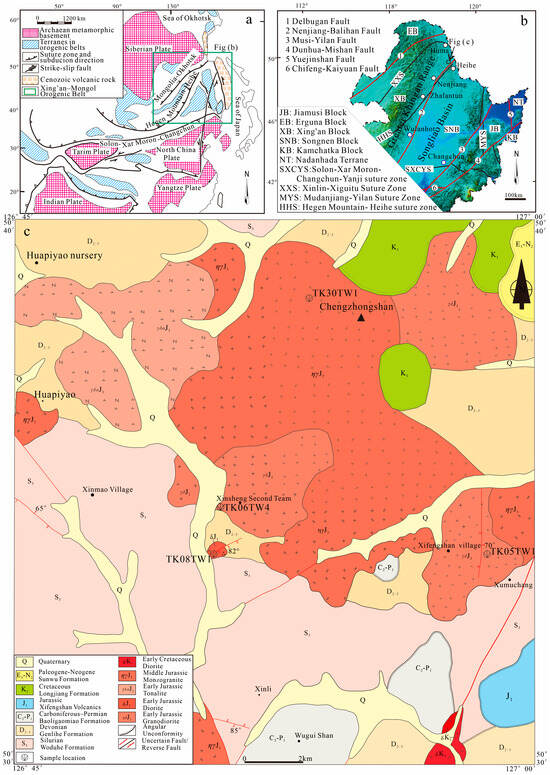
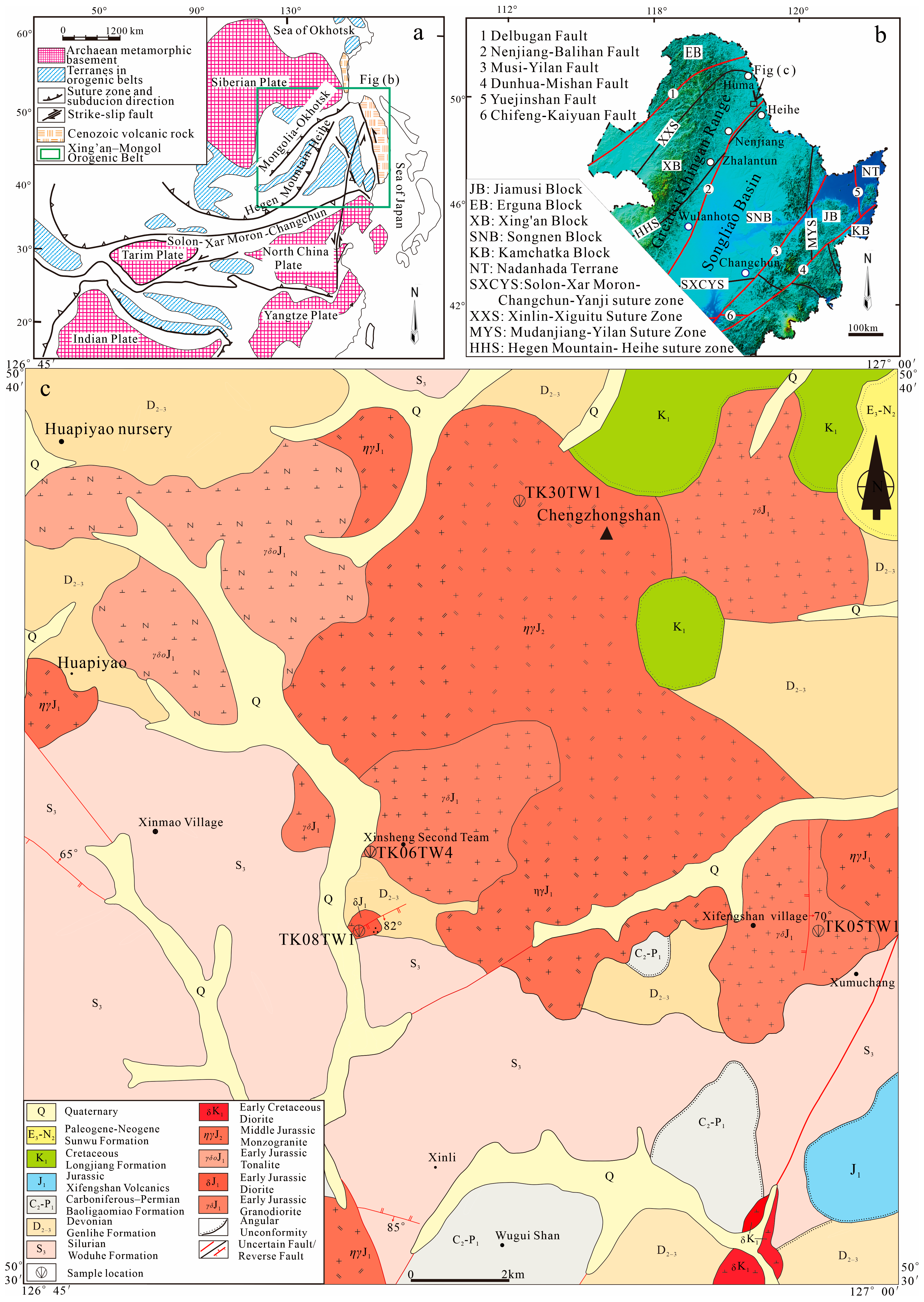
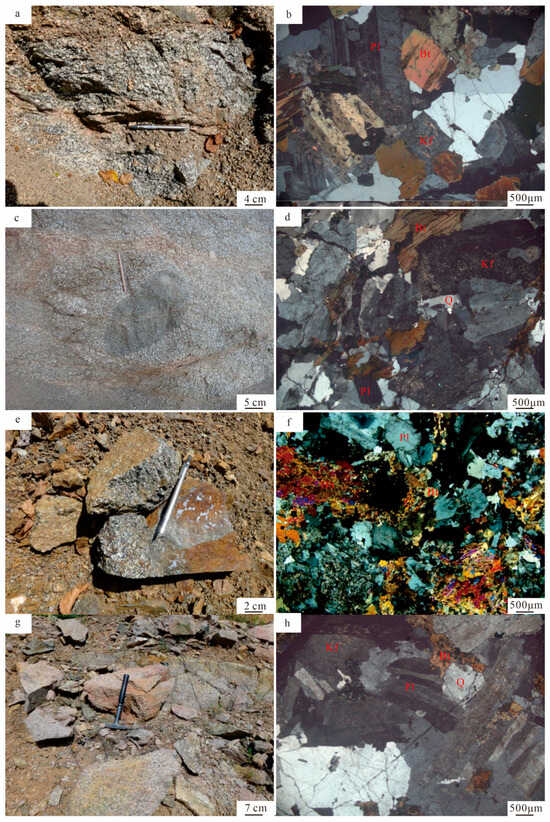
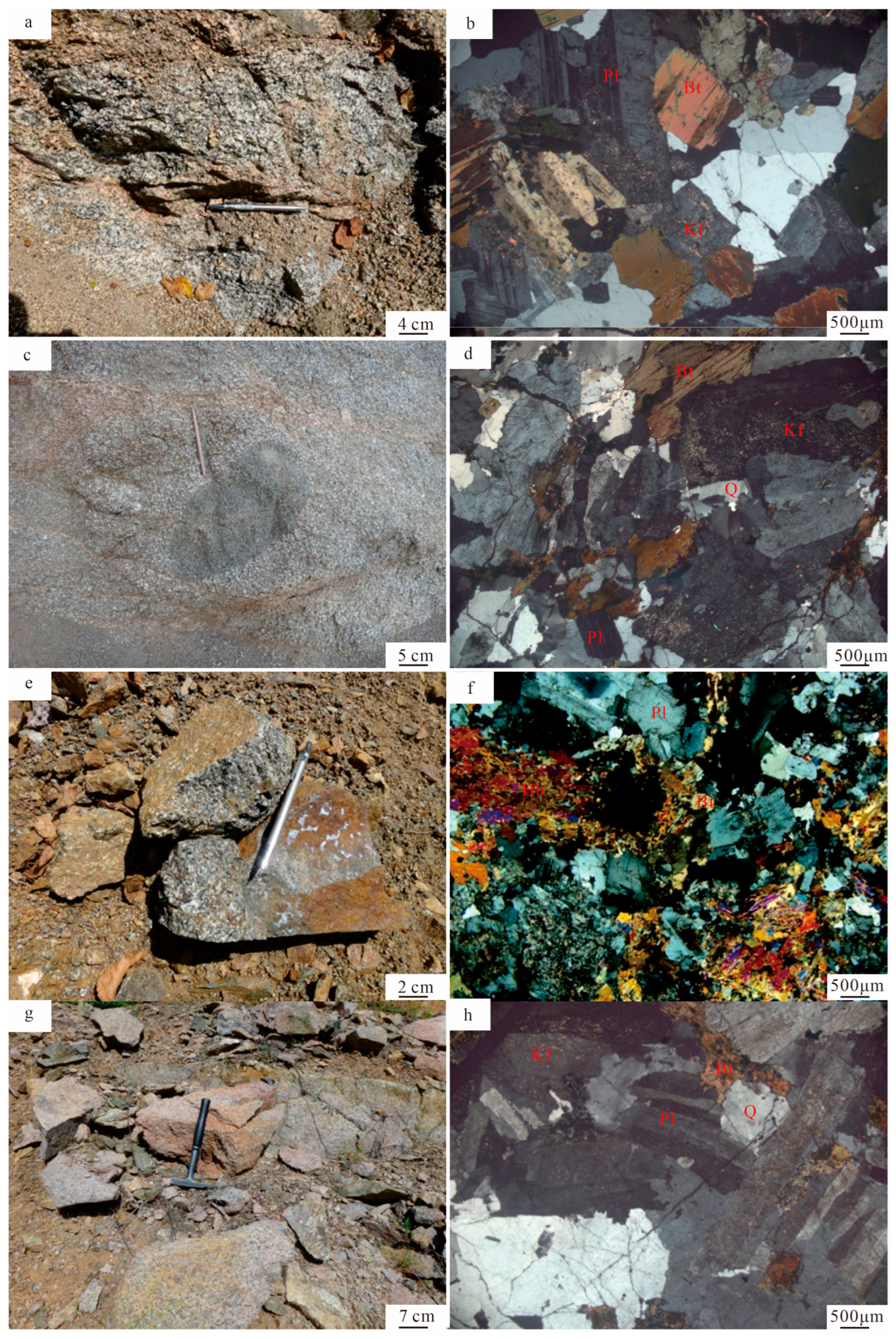
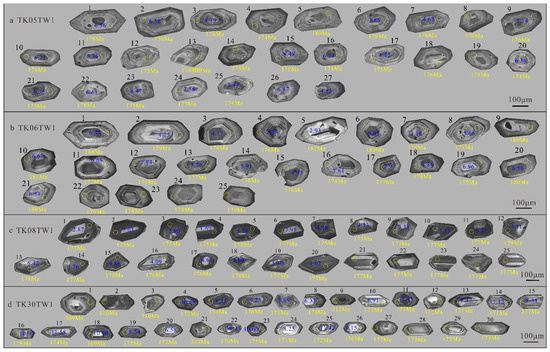
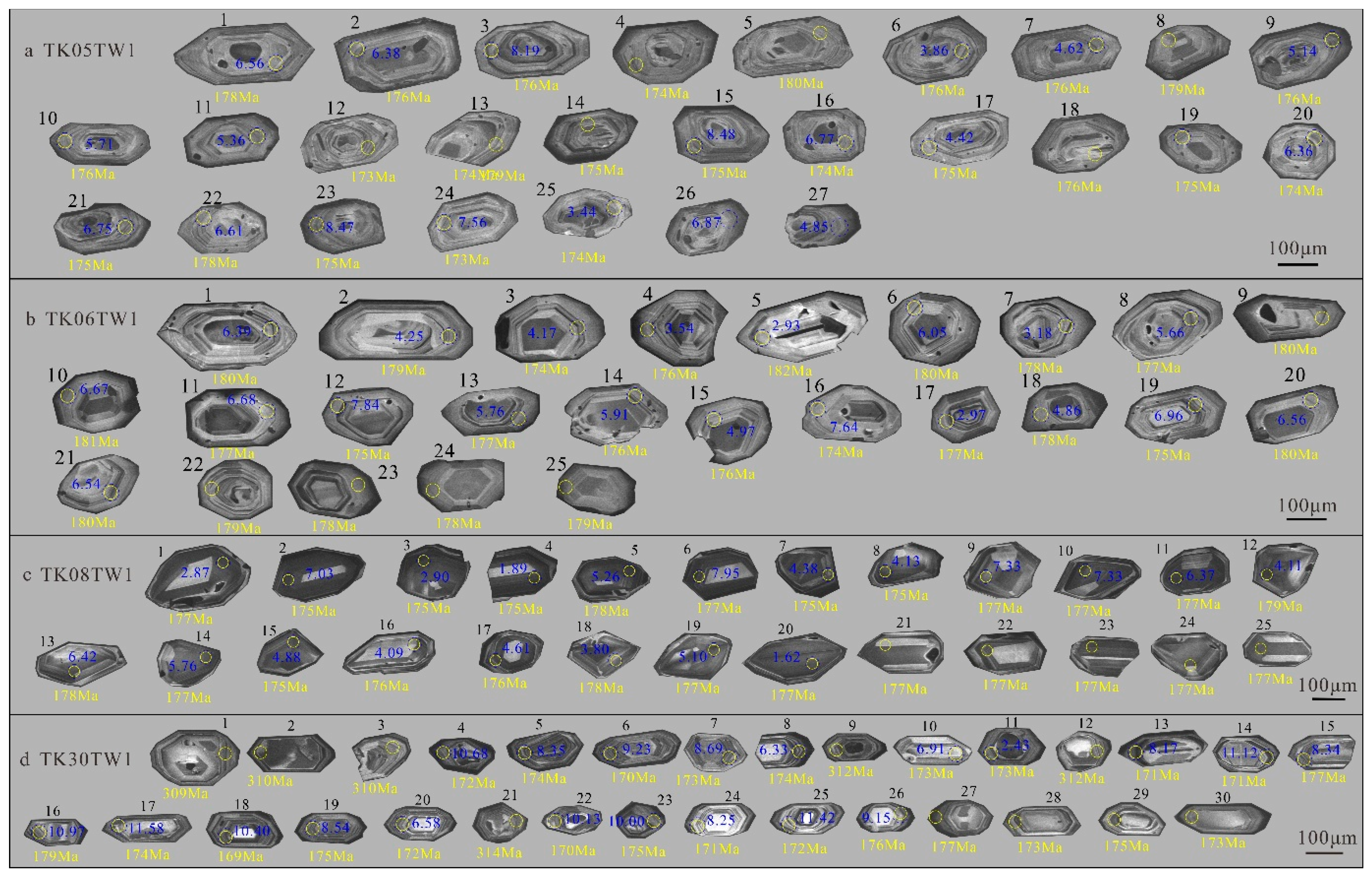
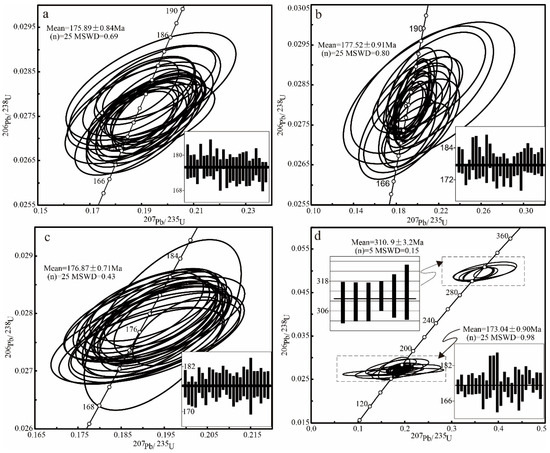
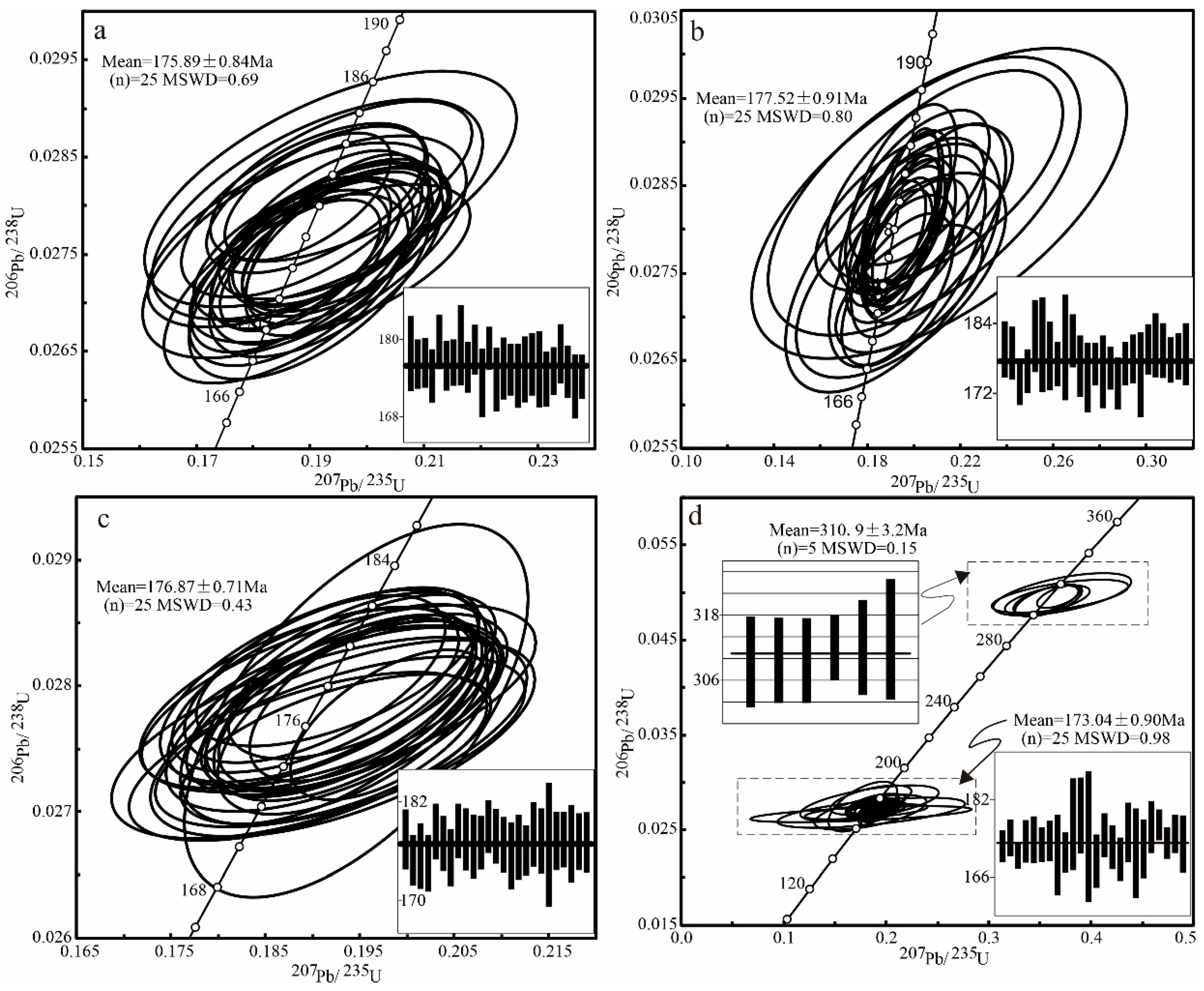
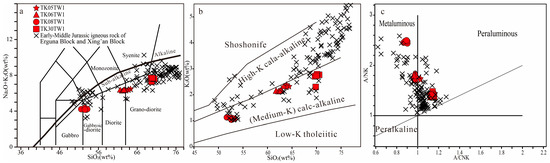
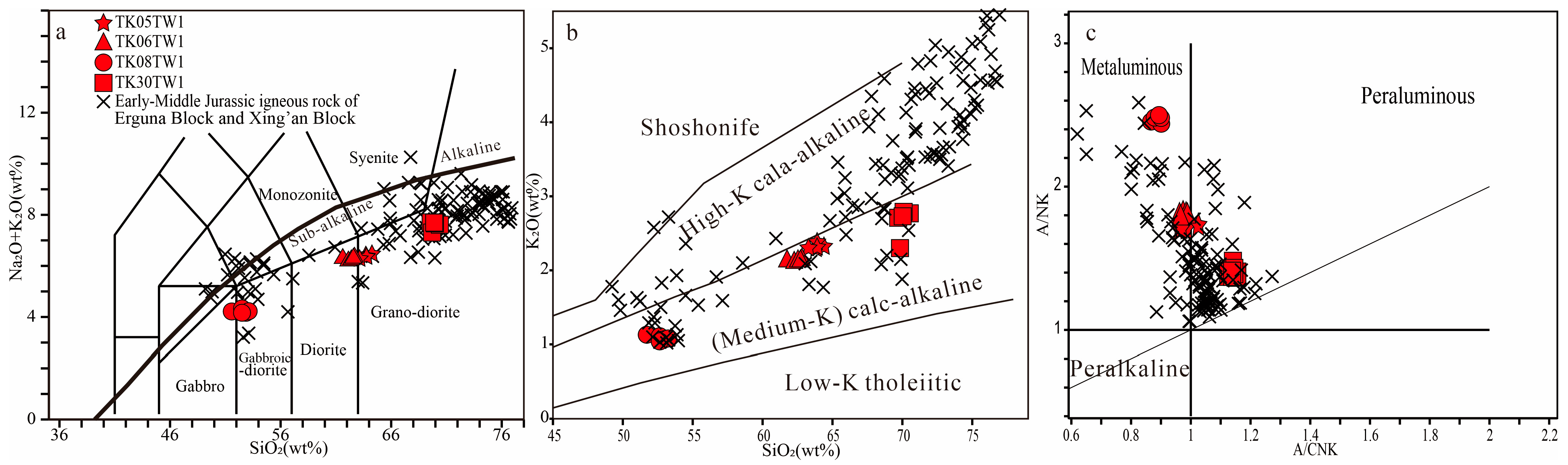
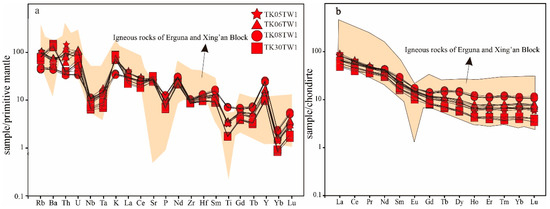
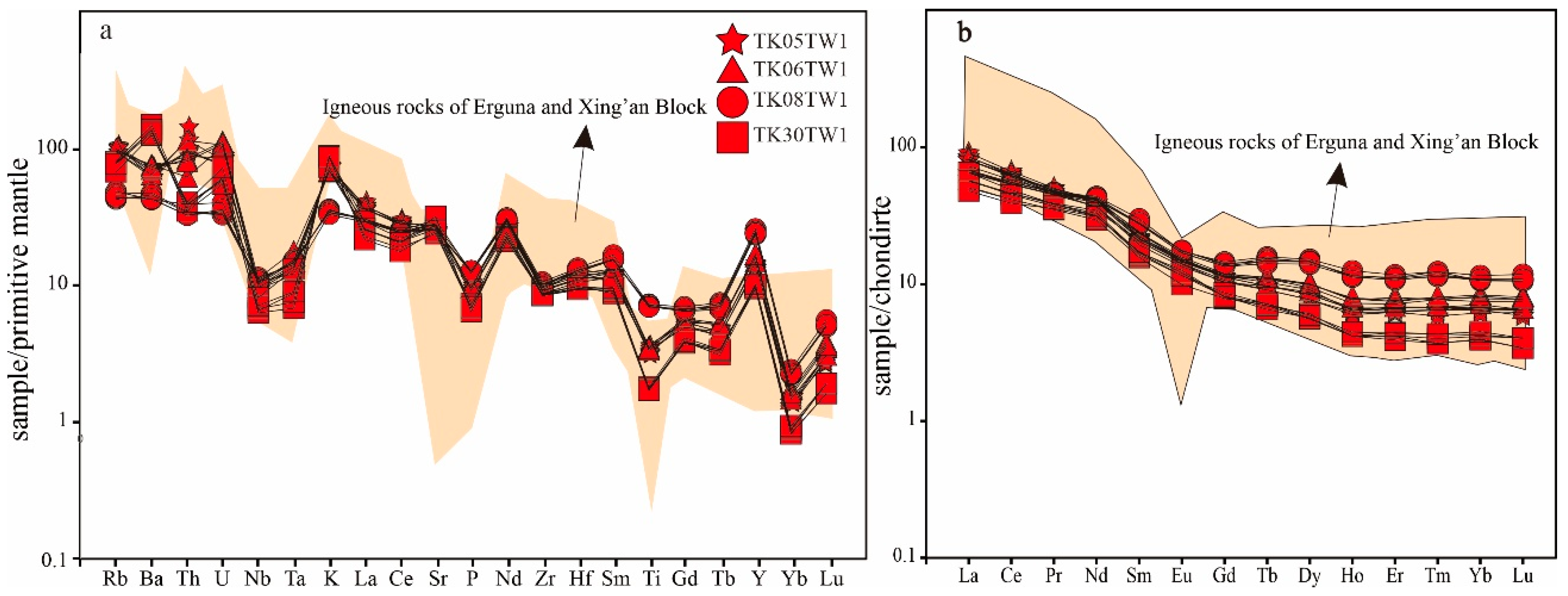
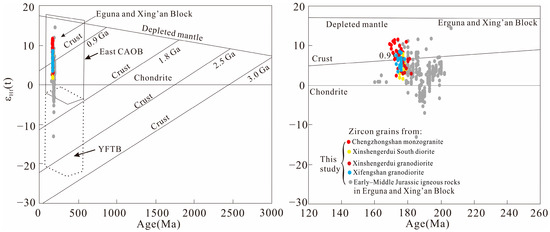
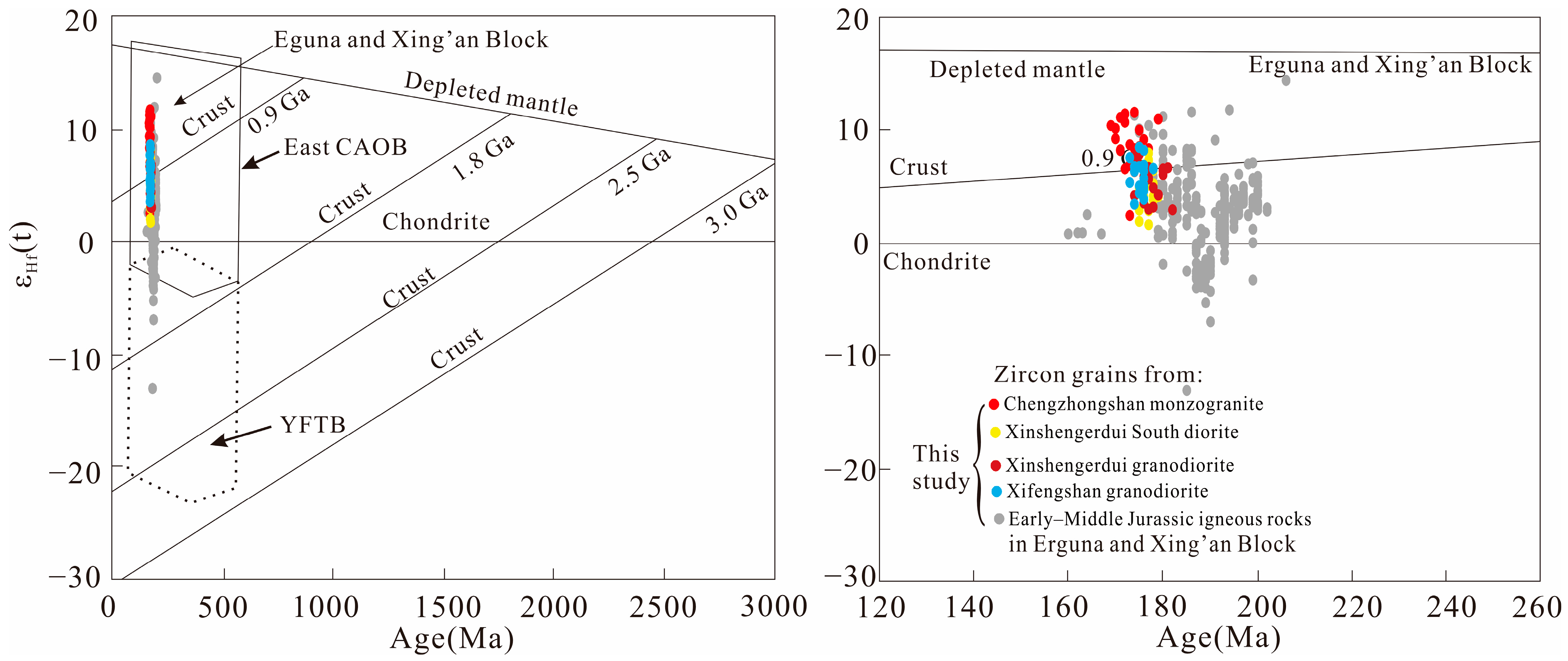
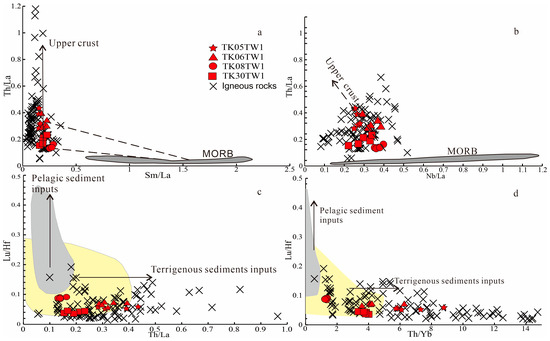
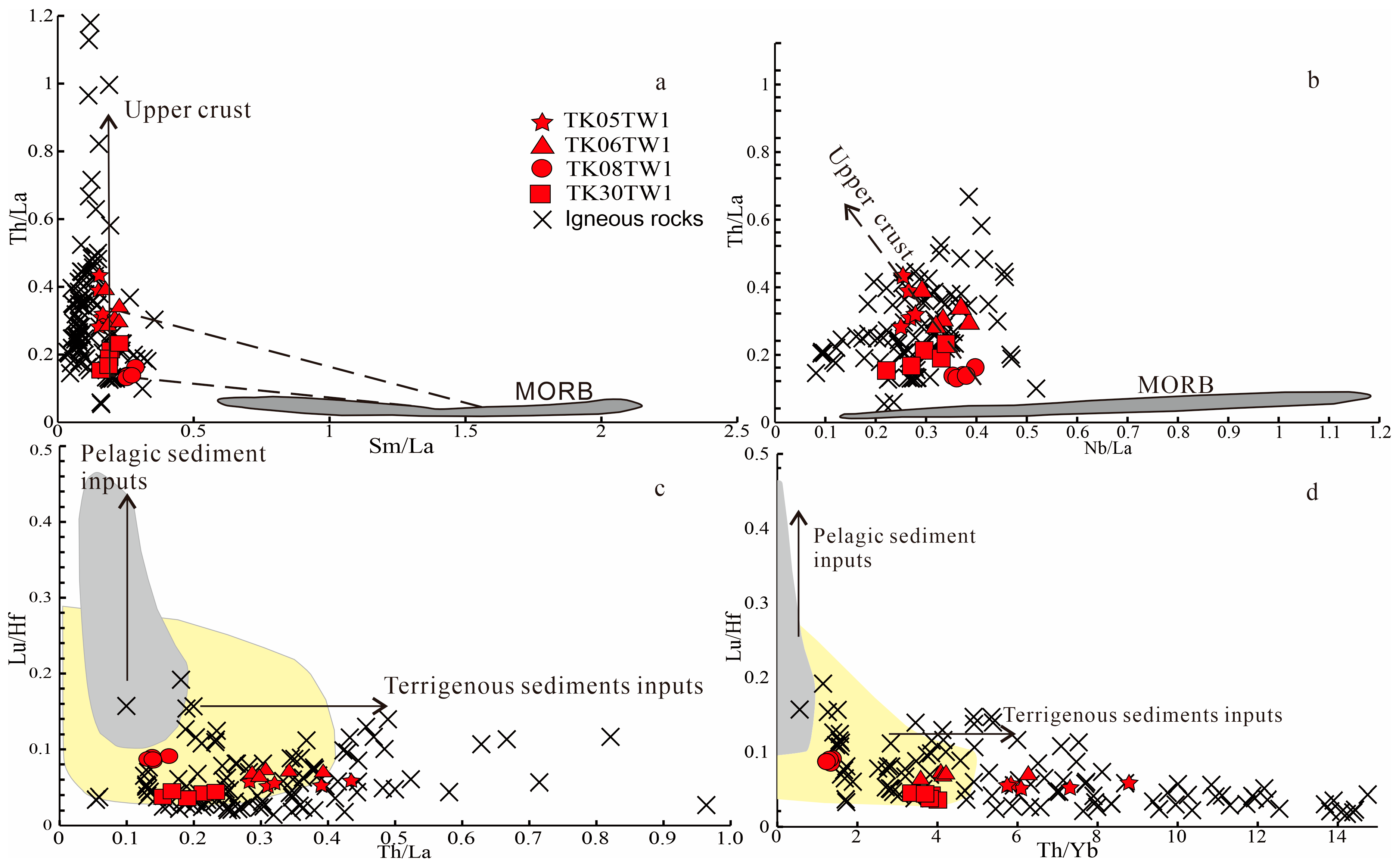
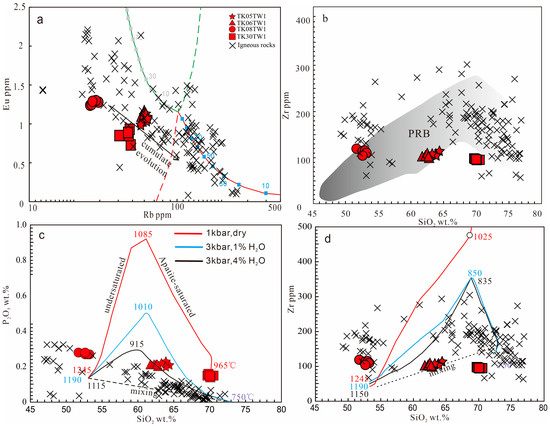
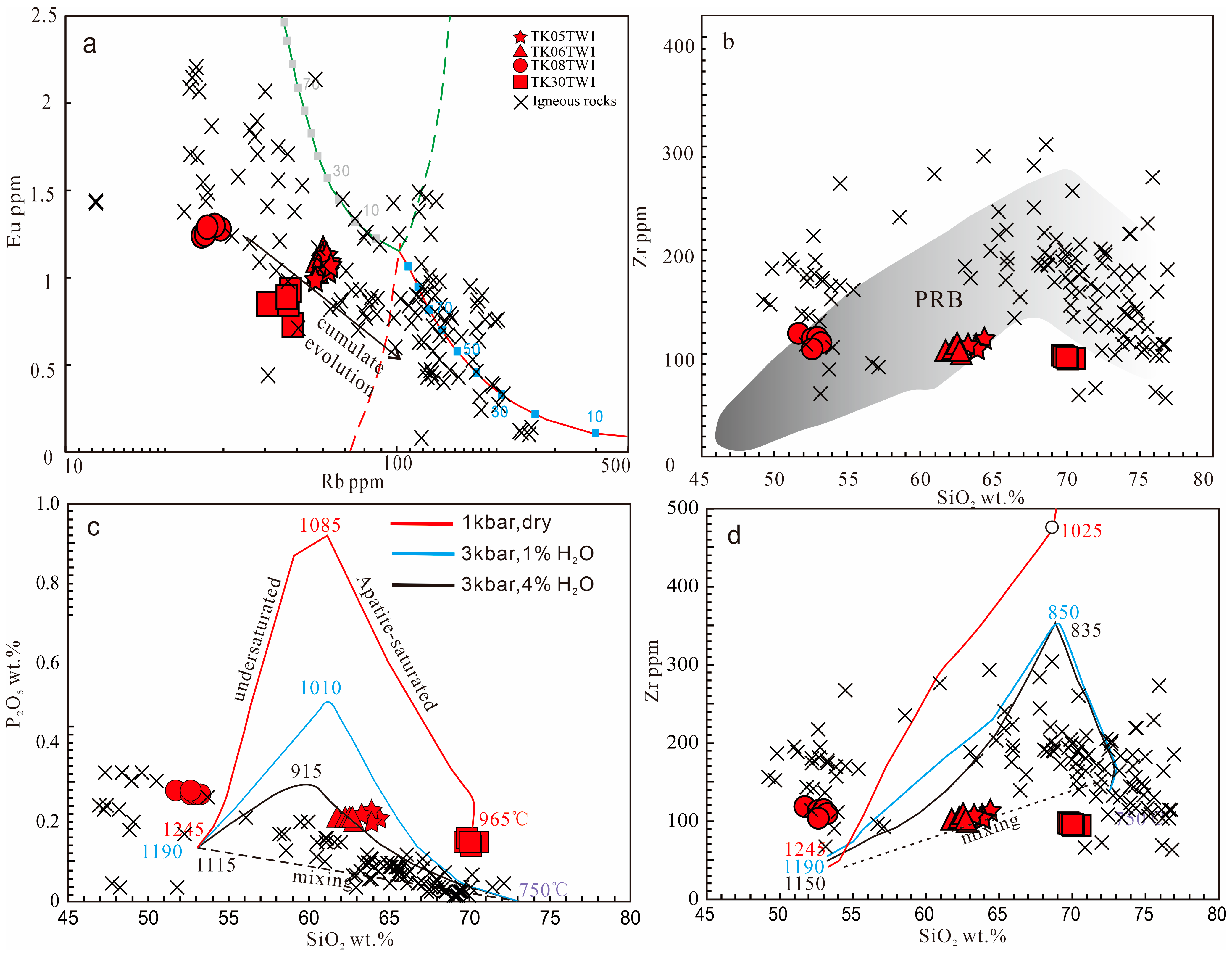
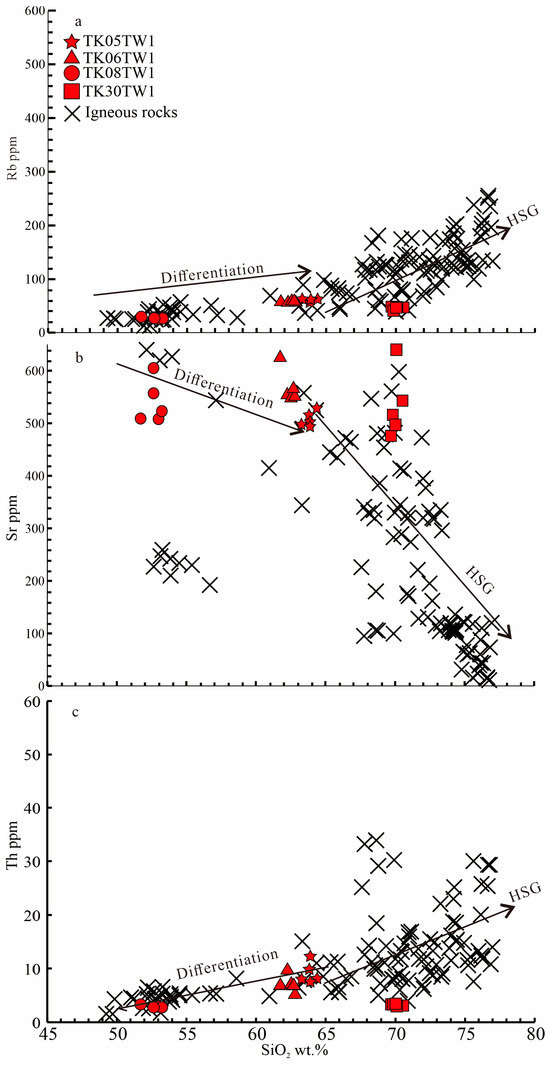
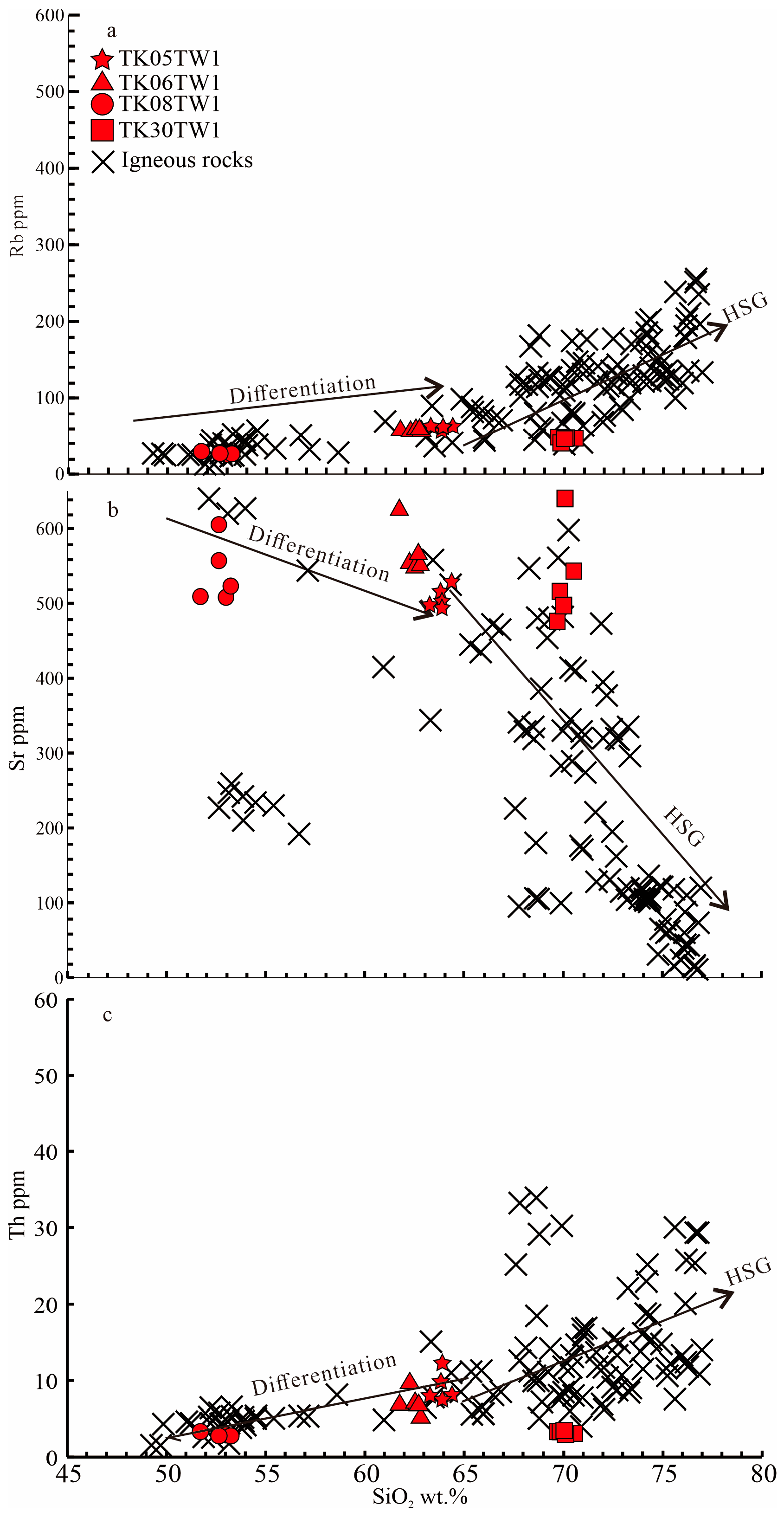
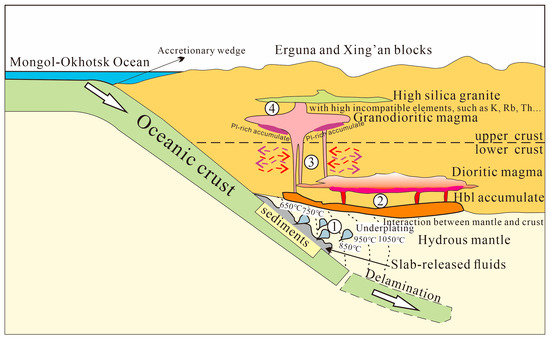
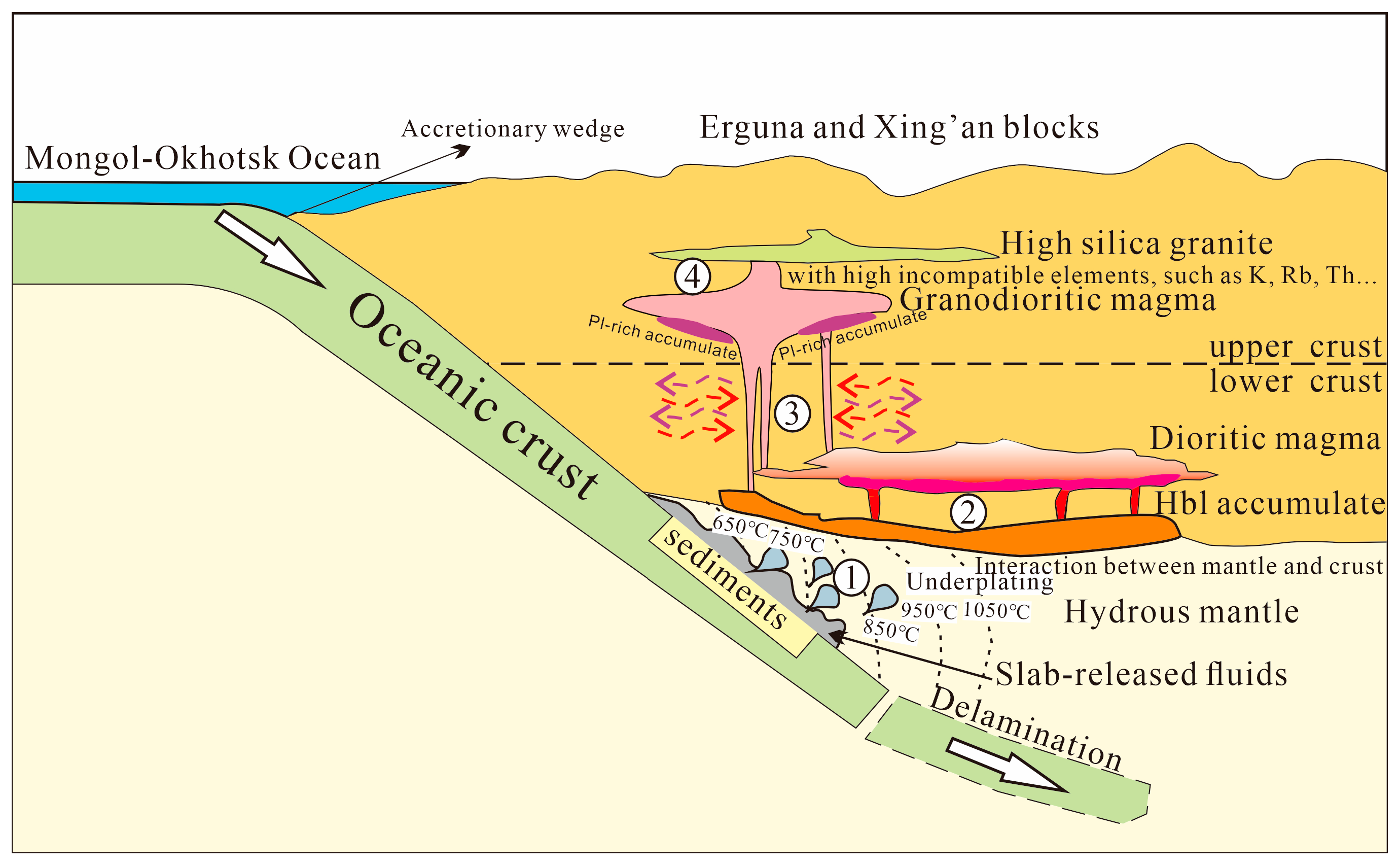
Disclaimer/Publisher’s Note: The statements, opinions and data contained in all publications are solely those of the individual author(s) and contributor(s) and not of MDPI and/or the editor(s). MDPI and/or the editor(s) disclaim responsibility for any injury to people or property resulting from any ideas, methods, instructions or products referred to in the content. |
© 2026 by the authors. Licensee MDPI, Basel, Switzerland. This article is an open access article distributed under the terms and conditions of the Creative Commons Attribution (CC BY) license.