


Abstract
Chromite beneficiation tailings (CBTs) represent a significant environmental challenge, while simultaneously containing valuable metals that remain largely unrecovered. In this study, a sequential thermochemical–hydrometallurgical route was investigated for selective chromium extraction and the enrichment of platinum group metals (PGMs) from CBTs generated at the Donskoy Mining and Processing Plant. Alkaline sintering with Na2CO3 at 1000 °C followed by aqueous leaching enabled the transfer of up to 98%–99% of chromium into solution. The resulting residue was enriched in non-ferrous metals, rare earth elements, and PGMs. Subsequent sulfation roasting and water leaching promoted the dissolution of magnesium, nickel, and rare earth elements, while platinum and palladium remained predominantly in the solid phase, due to their low solubility under the applied conditions. Microstructural analysis using SEM–EPMA revealed that PGMs are selectively concentrated in Ni-bearing micro-inclusions, with local platinum content reaching up to 3.8 wt.% in Ni-rich regions. The proposed sequential processing strategy enables efficient chromium recovery and significant PGM enrichment in the residual phase, demonstrating the potential of CBTs as a secondary resource for integrated metal recovery.
1. Introduction
The global chromite mineral resource base is characterized by a high degree of geographical concentration. Approximately 84% of the world’s proven chromite reserves are located in South Africa, Kazakhstan, and Zimbabwe; about 4% are found in India, Finland, the Philippines, Turkey, and Albania; while the remaining 12% are distributed among other countries (Table 1) [1,2,3,4,5,6,7].
Table 1.
Distribution of global chromite ore production by country.
The large-scale exploitation of high-grade chromite deposits and the intensive development of beneficiation technologies inevitably lead to the generation of significant volumes of industrial waste [8,9]. During the crushing, grinding, and beneficiation of chromite ores, a substantial portion of fine-grained material is transferred into sludge fractions, which are typically not involved in further processing stages [10].
Chromite sludge generated during the beneficiation and processing of chromium-bearing ores represents a complex multicomponent industrial waste containing valuable metals, including chromium, iron, and aluminum (Table 2). Their long-term accumulation poses a serious environmental challenge, primarily due to the potential formation and migration of toxic hexavalent chromium, Cr(VI), into the surrounding environment.
Table 2.
Chemical compositions of chromite sludge from different countries.
At the Donskoy Mining and Processing Plant, approximately 900 thousand tons of sludge waste is generated annually during the crushing and grinding of chromite ores from the Kempirsai deposits [16]. To date, the total volume of accumulated chromite sludge exceeds 14.5 million tons, with chromium oxide contents reaching up to 35 wt.% [16].
In the context of increasingly stringent environmental regulations and the growing global emphasis on sustainable and circular mineral production, the development of efficient and environmentally safe technologies for chromite sludge processing is increasingly important. At the same time, such waste should not be regarded solely as an environmental liability but also as promising secondary raw materials.
Beneficiation wastes may be considered complex-type raw materials, a fact which significantly enhances the relevance of research aimed at developing effective processing methods, primarily for additional chromium recovery and the production of high-value marketable products [17]. Chromium is widely used in metallurgical, refractory, chemical, and high-technology industries, and the global demand continues to grow amid high supply risks. Since 2006, China has remained the world’s largest consumer of chromium resources, accounting for more than one-third of global chromite ore consumption. In contrast, China’s domestic chromite reserves and production represent only about 0.1% and less than 2% of the global total, respectively, resulting in an external dependency of approximately 95% [18]. Moreover, chromium demand in Japan, South Korea, and the United States is expected to continue increasing in the coming years [19]. Under these conditions, the recovery of chromium from beneficiation wastes is not only resource-efficient but also strategically significant.
In recent years, both industrial and natural chromium-containing materials, such as chromite ores, concentrates, beneficiation tailings, and smelting slags, have increasingly been considered as potential sources not only of chromium but also of platinum group metals (PGMs). This interest is driven by the wide availability of such materials and the presence of valuable components, including platinum, palladium, rhodium, iridium, ruthenium, and osmium, which may occur in trace concentrations.
The recovery of PGMs from primary ores is commonly achieved through flotation, a mineral processing technique based on differences in mineral surface hydrophobicity and wettability [20,21,22]. However, in the case of chromite beneficiation tailings, PGMs are often present in extremely low concentrations and are finely dispersed within complex mineral matrices, which significantly reduces the efficiency of conventional flotation methods. Several studies have investigated alternative processing routes, including roasting followed by acid leaching and adsorption techniques for PGM recovery from chromite tailings [23].
Nevertheless, the processing of chromite materials is significantly complicated by their high chemical and thermal stability, as well as their tendency to form refractory and insoluble spinel phases. Conventional pyrometallurgical approaches, when applied without stages of complex chemical activation, do not ensure the efficient recovery of PGMs [24,25,26,27]. Selective hydrometallurgical approaches, including sorption-based separation and controlled phase interactions, have been widely investigated for the recovery of valuable elements from complex mineral and hydromineral raw materials [28,29,30,31]. Thermochemical treatment combined with subsequent leaching has also been explored for processing tailings associated with PGM mining. In particular, ammonium sulfate roasting has been proposed as a low-cost thermochemical method for the extraction of major elements from PGM-related tailings, enabling the partial dissolution of Al, Ca, Fe, Si, Cr, and Mg [32]. However, these approaches mainly focus on the extraction of bulk elements rather than the selective concentration of platinum group metals.
As a result, specialized processing methods are required to enhance the extraction and concentration of platinum group metals that are incorporated into crystal lattices, associated with carbonaceous clusters, or present in other mineralogical forms inaccessible to direct recovery.
A significant portion of PGMs is not recovered in conventional chromite processing flowsheets and is instead lost to beneficiation tailings and sludges. Given the large-scale production of chromite ores and the high degree of geographical concentration of the industry, even low PGM contents in industrial materials may represent a potentially valuable secondary resource.
In this study, a sequential thermochemical–hydrometallurgical route involving alkaline sintering followed by sulfation roasting was investigated for selective chromium extraction and the enrichment of PGMs from chromite beneficiation tailings.
2. Materials and Methods
2.1. Experimental Procedures
To perform alkali roasting of chromite beneficiation tailings, a charge mixture was prepared based on the calculated proportions of components. The CBTs were mixed with sodium carbonate in an amount of 120–130 wt.% relative to the mass of CBTs. A starch paste was used as a binder to improve the mechanical strength of the green pellets. The mixture was thoroughly homogenized in a laboratory ball mill and subsequently pelletized under a pressure of 5 MPa using a hydraulic press. The obtained cylindrical pellets had a diameter of approximately 2 cm and a height of about 4 cm.
The pelleted samples were roasted at 1000 °C for 120 min in a Nabertherm muffle furnace equipped with an oxygen supply system to maintain an oxidizing atmosphere inside the chamber.
Before leaching, the sintered products were ground in a porcelain ball mill to a particle size of −0.1 mm. Leaching of the roasted samples was carried out in water at 80 °C with a liquid-to-solid (L/S) ratio of 4:1.
To perform sulfation roasting, the solid residue was mixed with concentrated sulfuric acid (96%), thoroughly homogenized, and loaded into a tubular rotary furnace (ST-1200RG). Sulfation roasting was carried out in the temperature range of 500–800 °C, with a holding time of 60 min at each temperature. The off-gas was discharged through a wet gas scrubbing system, ensuring the capture of sulfur-containing compounds and preventing contamination of the working environment.
After water leaching and separation, the solid residue was leached in a Na2O solution with a concentration of 300 g/L at 80 °C for 2 h.
2.2. Methods
The samples were analyzed for their major and minor metal content. The chemical composition was determined using an inductively coupled plasma optical emission spectrometer (ICP-OES), Optima 2000 DV (PerkinElmer, Waltham, MA, USA). The instrument was calibrated and its performance verified in accordance with standard procedures, as confirmed by a valid verification certificate issued by an accredited laboratory. Measurements were carried out within the certified wavelength range of 180–782 nm with an accuracy of ±5%. Microstructural and elemental analyses were performed using a JEOL JXA-8230 Electron Probe MicroAnalyzer (JEOL Ltd., Tokyo, Japan). All micrographs were taken in backscattered electron image mode.
All observations and microanalyses were performed at an accelerated voltage of 20 kV. The EPMA conditions were as follows.
EDS:
Probe Current: not higher than 5 nA.
Dead Time: not higher than 17%.
Process Time: T3.
Count Rate: not higher than 5000 CPS.
WDS:
Probe Current: not higher than 20 nA.
Step (L): 50 mkm.
Time: 400 ms.
X-ray signals were processed, and the corresponding results were prepared using EPMA software Version 1.6.0.4 with corresponding ZAF corrections using Zafdll Version 1.1.2.9.
3. Results and Discussion
3.1. Raw Materials
Samples of chromite beneficiation tailings (CBTs) were collected from the Donskoy Mining and Processing Plant (DMPP). The chemical composition of the CBTs, in wt.%, was as follows: Cr2O3 19.34; Fe2O3 9.45; NiO 0.44; Co3O4 0.03; ZnO 0.015; MgO 35.07; SiO2 31.86; Al2O3 2.21; TiO2 0.21; and Pt 0.05 ppm.
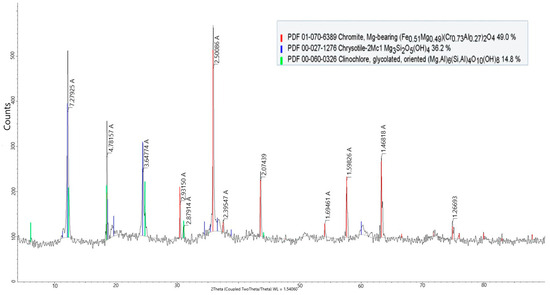
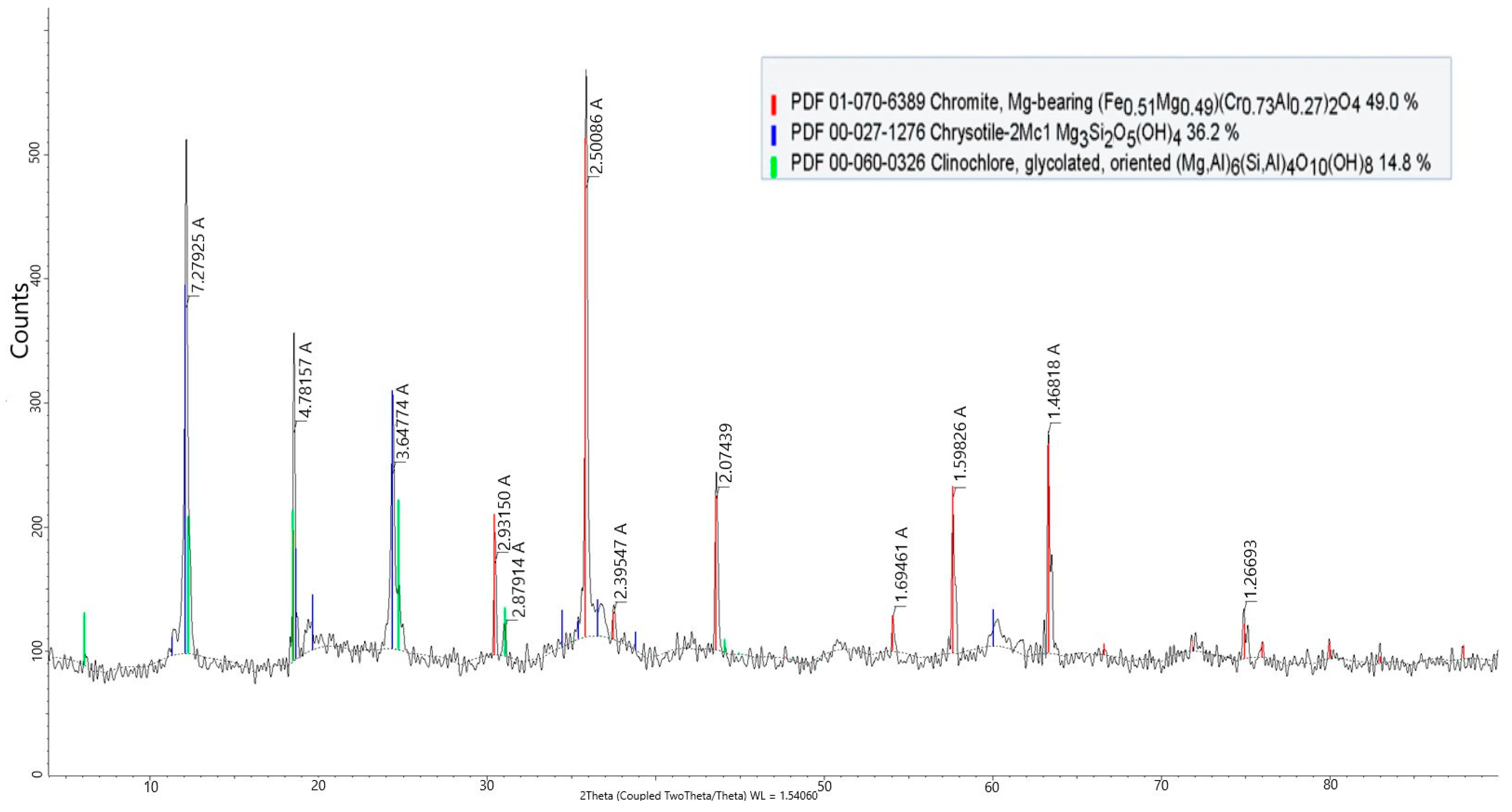
The XRD results showed that the CBTs consisted predominantly of chemically stable mineral phases, with chromite (49%) as the major component, accompanied by chrysotile (36%) and clinochlore (14.8%) (Figure 1).
Figure 1.
X-ray diffraction pattern of CBT showing dominant phases: chromite, chrysotile, and clinochlore.
3.2. CBT Sintering
In this study, CBTs generated at the Donskoy Mining and Processing Plant were subjected to sintering in order to modify their phase composition and enable chromium extraction into an alkaline solution. The optimization of the sintering parameters aimed at maximizing chromium recovery has been reported previously [13]. The experimental procedure and detailed conditions are described in Section 2. Under the selected conditions (1000 °C, Na2CO3 addition of 120%–130% of the stoichiometric requirement, 120 min), up to 98% of chromium was transferred into solution during the subsequent aqueous leaching.
3.3. Sulfation Roasting
The solid residue, enriched in non-ferrous metals, rare earth elements (REEs), and platinum group metals (PGMs), was further subjected to sulfation roasting in order to convert these elements into leachable sulfate forms. Sulfiding and sulfation roasting have been shown to significantly affect the phase composition and metal redistribution in metallurgical residues, enhancing the selectivity of subsequent leaching processes.
A sulfated material (sinter) with the following composition was obtained (wt.%): Na2O 15.1; Cr2O3 0.245; Fe2O3 9.624; NiO 0.47; Co3O4 0.029; ZnO 0.015; MgO 45.9; SiO2 22.9; Al2O3 2.49; TiO2 0.21; ΣREEs 0.026.
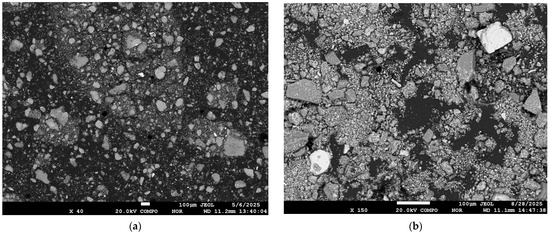
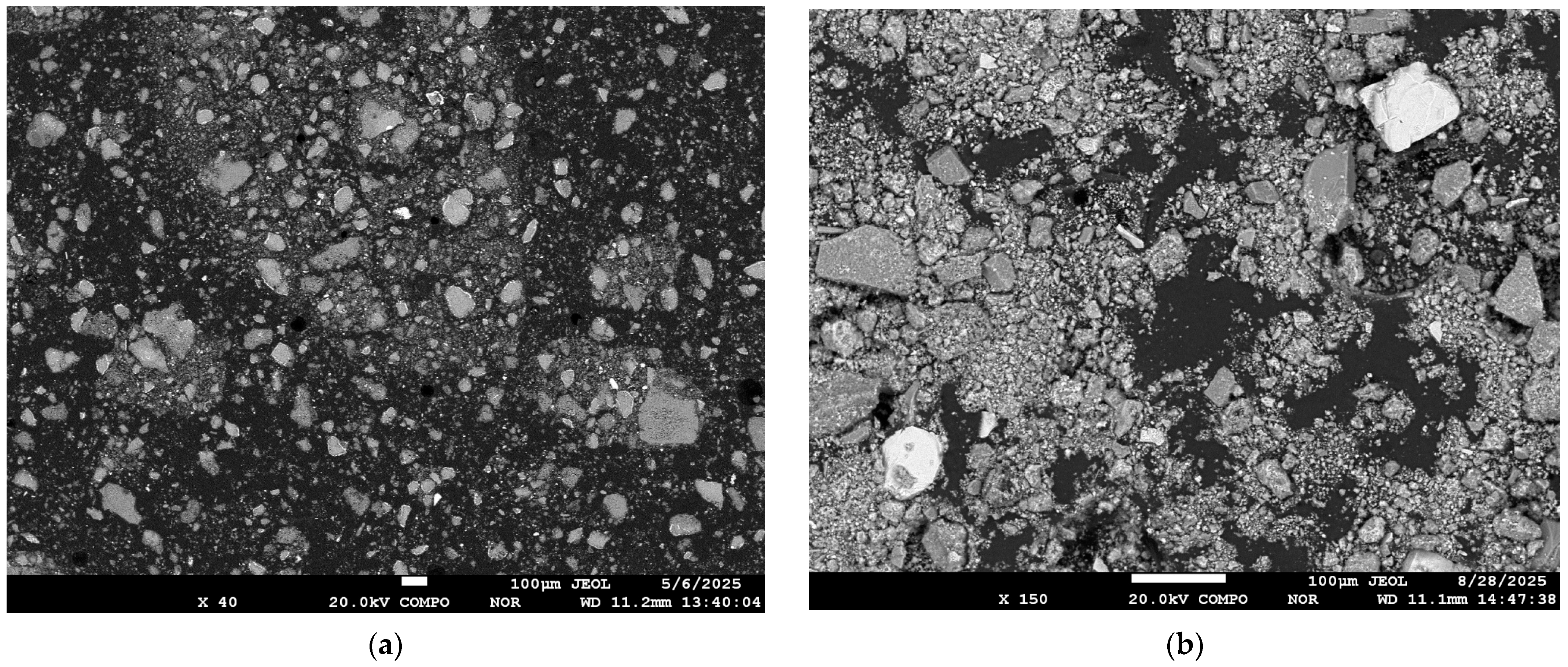
The micrograph of the sinter after sulfation roasting is shown in Figure 2a. The micrograph taken at a magnification of ×40 demonstrates that the material structure has undergone significant changes. The matrix acquired a porous character, which is associated with sulfate formation and the release of a gaseous phase during roasting. The destruction of dense grains and the formation of fine dispersed fragments can be observed, leading to an increase in the specific surface area and facilitating subsequent leaching. The bright inclusions visible in the image correspond to residual heavy fractions. Sulfation roasting enables the conversion of REEs and magnesium into soluble compounds. The presence of a disrupted porous structure confirms the high reactivity of the cake and its readiness for subsequent selective leaching. Thus, conditions were created for the efficient recovery of PGMs and associated non-ferrous metals from the previously enriched cake while maintaining stream separation: chromium is recovered into solution at the sintering stage, whereas PGMs and REEs are retained in the solid residue after sulfation roasting and leaching.
Figure 2.
The micrograph of the (a) sinter after sulfation roasting and the (b) solid residue (cake) after the water leaching of sulfated sinter.
The sinter was subsequently leached via water leaching at 80 °C. A leaching residue with the following composition was obtained (wt.%): Na2O 2.642, Cr2O3 0.197; Fe2O3 3.728; NiO 0.143; ZnO 0.006; MgO 3.65; SiO2 53.525; Al2O3 1.256; TiO2 0.747.
Magnesium, non-ferrous metals, and REEs were transferred into the solution. Stable oxide phases, including chromium-bearing spinels and PGMs, remained in the solid residue (cake). The latter do not dissolve due to their low solubility and their tendency to concentrate in the solid phase.
The micrograph taken at ×150 magnification (Figure 2b) clearly shows a loose finely fragmented structure with porous regions. During water washing, sulfates of alkaline earth and transition elements were removed from the material.
This morphology indicates that sulfation roasting promotes the destruction of the initially dense oxide matrix and the transformation of part of the components into a more dispersed state, thereby facilitating subsequent leaching.
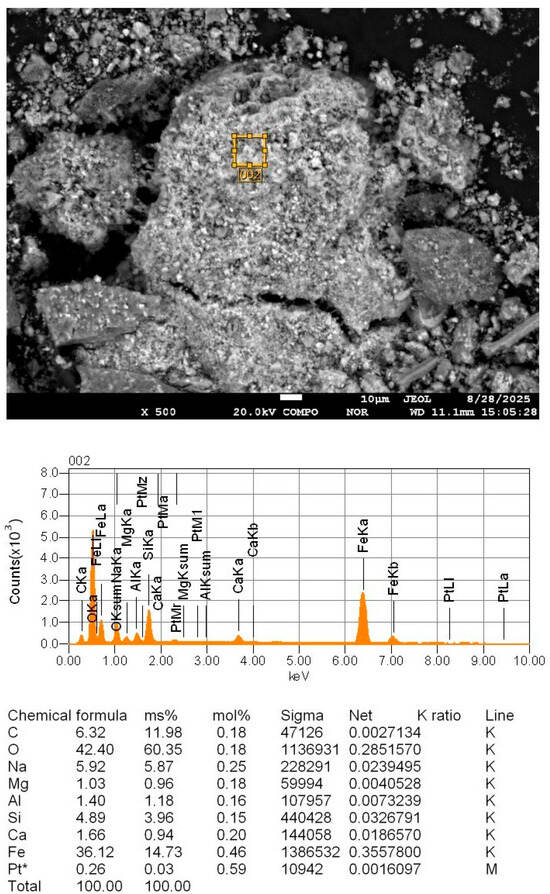
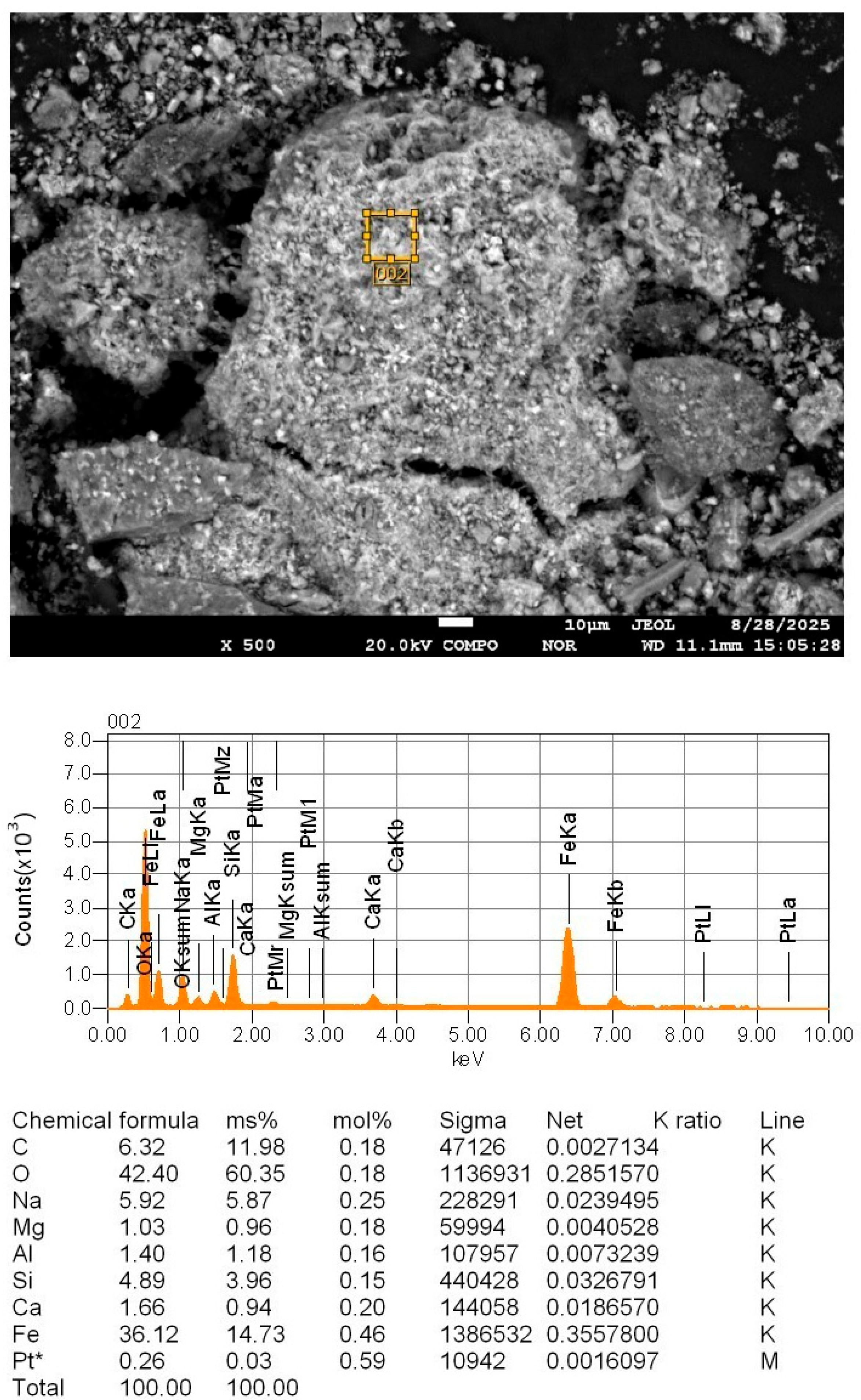
During a detailed investigation of the cake formed after the stages of sintering, sulfation roasting, and subsequent water leaching, energy-dispersive X-ray spectroscopy (EDS) was performed at ×500 magnification on selected areas (Figure 3).
Figure 3.
EDS microanalysis of a selected area (yellow square) of the cake after water leaching of the sinter. (*—indicates semi-quantitative results).
In the obtained micrograph, the area selected for microanalysis is highlighted in yellow. The cake was mainly composed of oxide phases of iron, sodium, and silicon, with minor inclusions of aluminum and calcium. The most significant result was the detection of trace amounts of platinum group metals in the solid phase, with a platinum content of approximately 0.3 wt.%. A similar surface composition was observed in other areas of the EDS microanalysis.
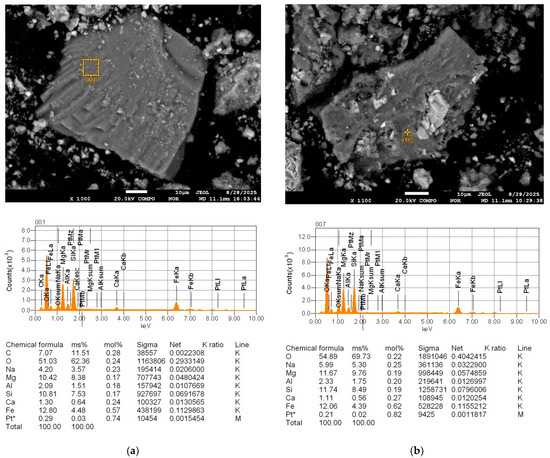
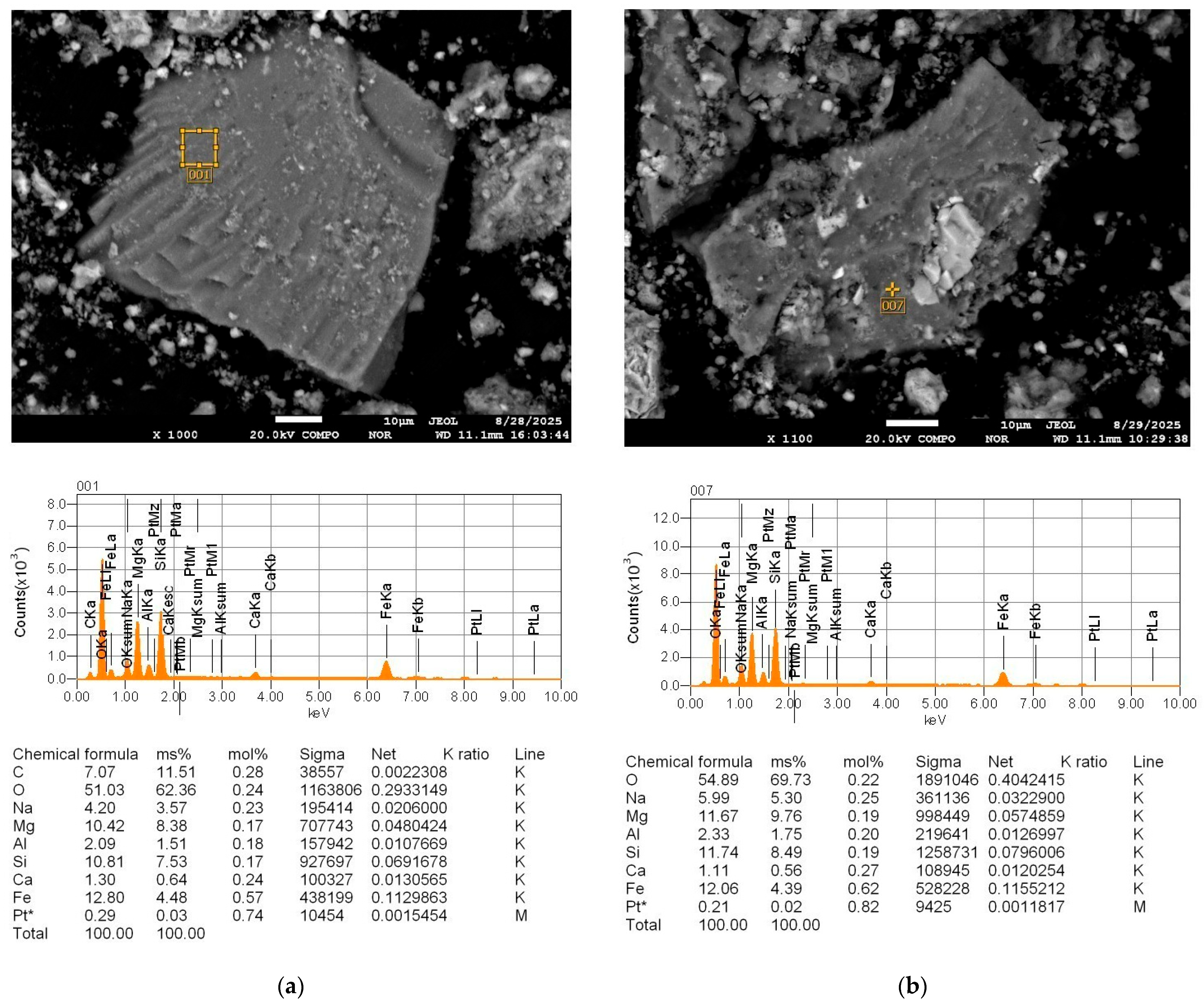
At a magnification of ×1100, the chemical composition of the selected yellow zones was also analyzed (Figure 4a,b).
Figure 4.
EDS microanalysis of a selected area of the cake after water leaching of the sinter: (a) area (yellow square) 1; (b) point 1 (yellow point). (*—indicates semi-quantitative results).
Trace amounts of platinum (~0.21–0.29 wt.%) were detected within the structure (Figure 4a,b), confirming its resistance to sintering, sulfation roasting, and water leaching. Overall, the platinum content in the cake varied within the range of 0.16–0.29 wt.%, depending on the local zone, indicating heterogeneous distribution and local enrichment of platinum in specific areas.
The conducted investigations confirm that during sintering, nearly all chromium was transferred into solution (up to 99%), while associated components (Mg, Ni, and REEs) were also predominantly converted into soluble forms after sulfation roasting and subsequent water leaching. In contrast to the aforementioned elements, platinum remained in the solid phase, due to its low solubility and high stability under the applied technological conditions. This resulted in a relative enrichment of the cake in platinum compared to the initial sludge (0.005 g/t Pt → locally up to 0.29 wt.%).
As a result of the developed processing scheme, the cake becomes a valuable platinum-containing product suitable for further concentration and metallurgical recovery.
3.4. Leaching
Selective alkaline leaching has been widely applied in hydrometallurgical processing to dissolve base metal components while retaining platinum group metals in the solid residue. Previous studies have shown that alkaline media can effectively leach gangue and base metal phases, thereby facilitating PGM enrichment in the leach residue [33,34,35,36]. The cake was leached in a Na2O solution with a concentration of 300 g/L at 80 °C for 2 h. After water leaching of the sinter, a cake with the following composition was obtained (wt.%): Na2O 3.693; Cr2O3 0.25; Fe2O3 18.689; NiO 0.385; ZnO 0.015; MgO 3.65; SiO2 42.398; Al2O3 2.261; TiO2 0.56. The cake contained 37.46 ppm Pt and 6.14 ppm Pd. The Pt content increased from 0.05 ppm in the raw CBT to 37.46 ppm in the final residue, corresponding to an enrichment factor of approximately 749. This increase is attributed to the progressive removal of chromium, magnesium, and other leachable components during sequential processing, which resulted in the concentration of platinum in the final solid residue.
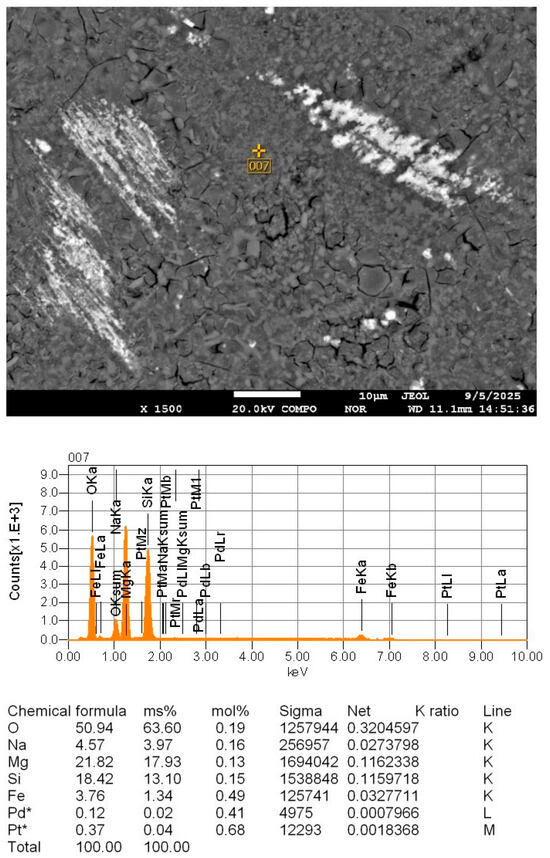
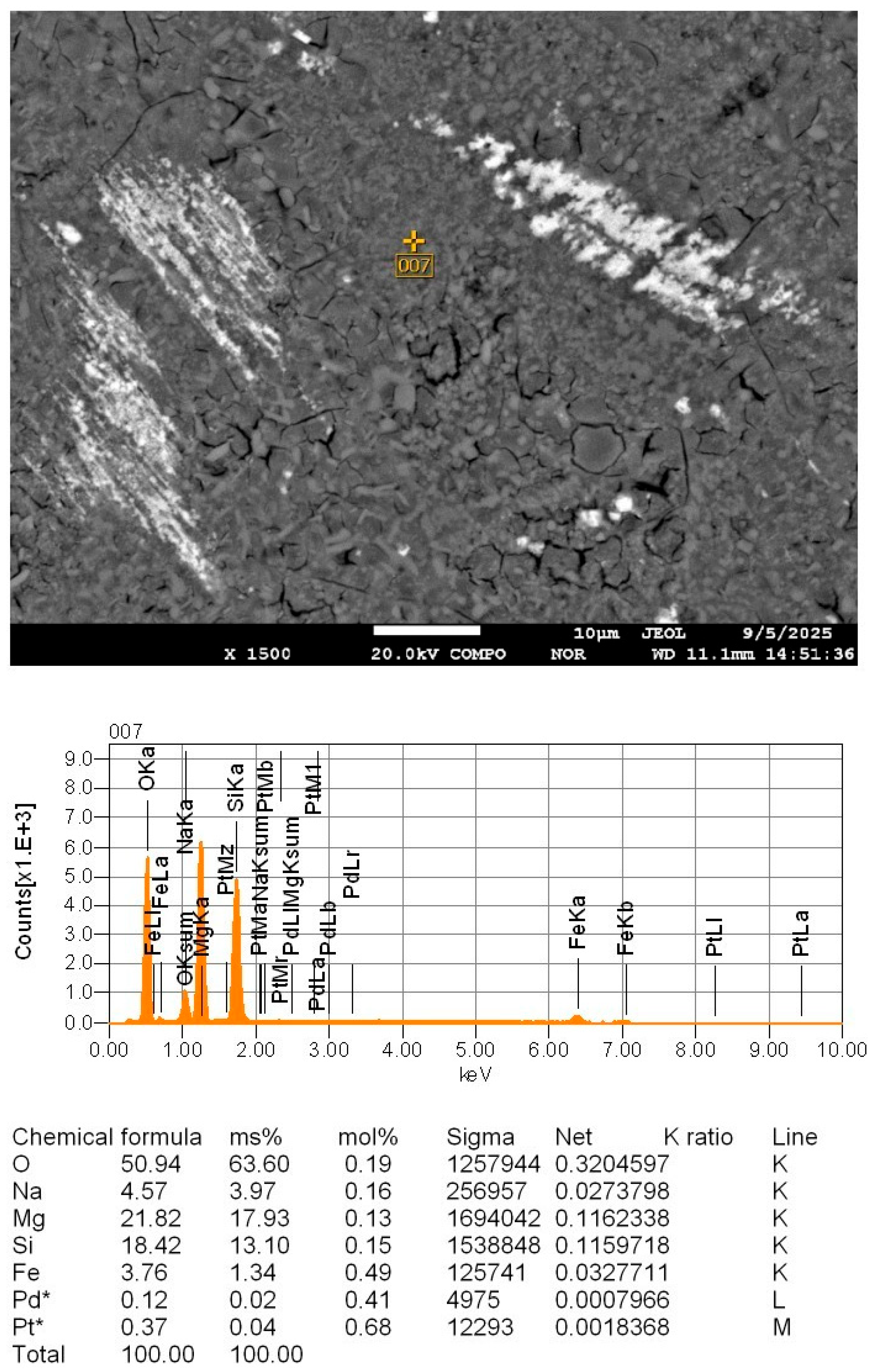
At a magnification of ×1500, the micrograph highlights an analyzed point predominantly composed of magnesium and silicon oxide phases (Figure 5).
Figure 5.
EDS microanalysis of a selected point of the cake after water leaching of the sinter. (*—indicates semi-quantitative results).
The presence of trace amounts of Pt (0.37 wt.%) confirmed that platinum group metals were retained in the cake after NaOH treatment. A similar surface composition was observed in other points of the EDS microanalysis.
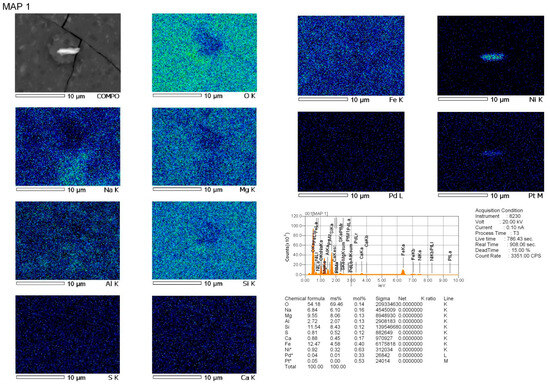
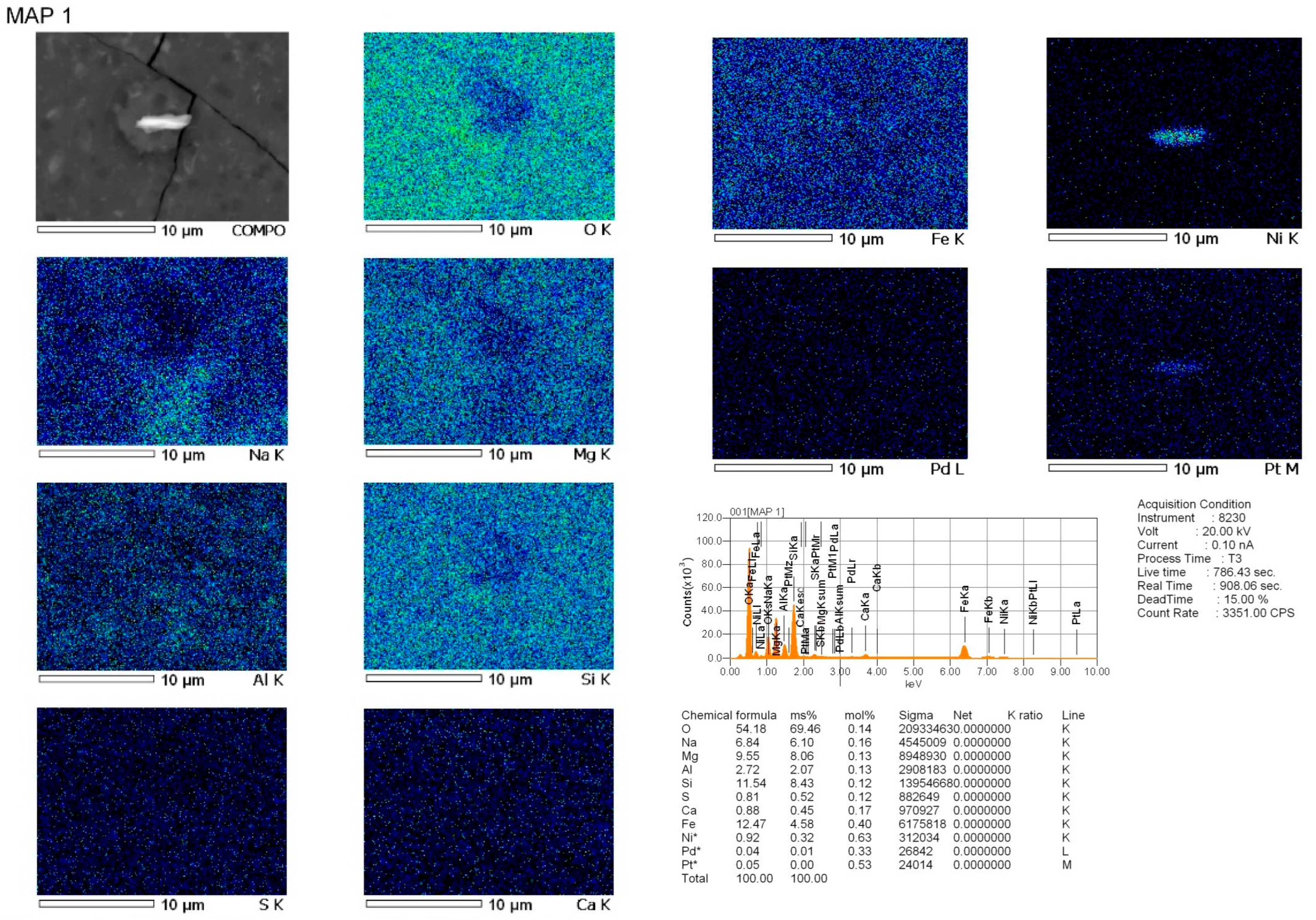
Element mapping of the leached cake was performed via EDS (Figure 6). Oxygen, silicon, and magnesium were uniformly distributed throughout the sample, forming the oxide–silicate matrix of the cake.
Figure 6.
Elemental mapping of the leached cake (*—indicates semi-quantitative results).
In contrast, the mapping revealed discrete zones of local enrichment in nickel and platinum. To investigate this localized enrichment in greater detail, the highlighted area was subjected to point analysis (Figure 7).
Figure 7.
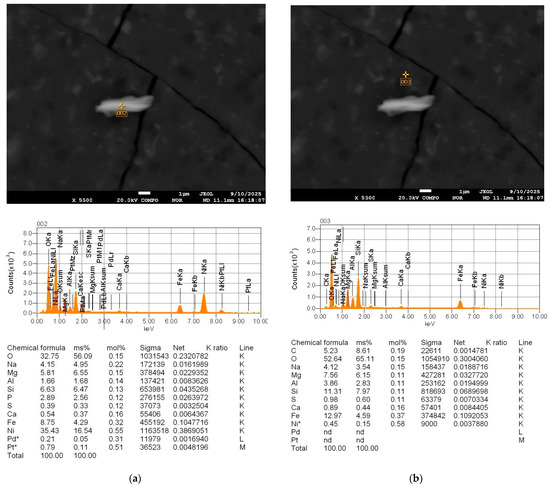
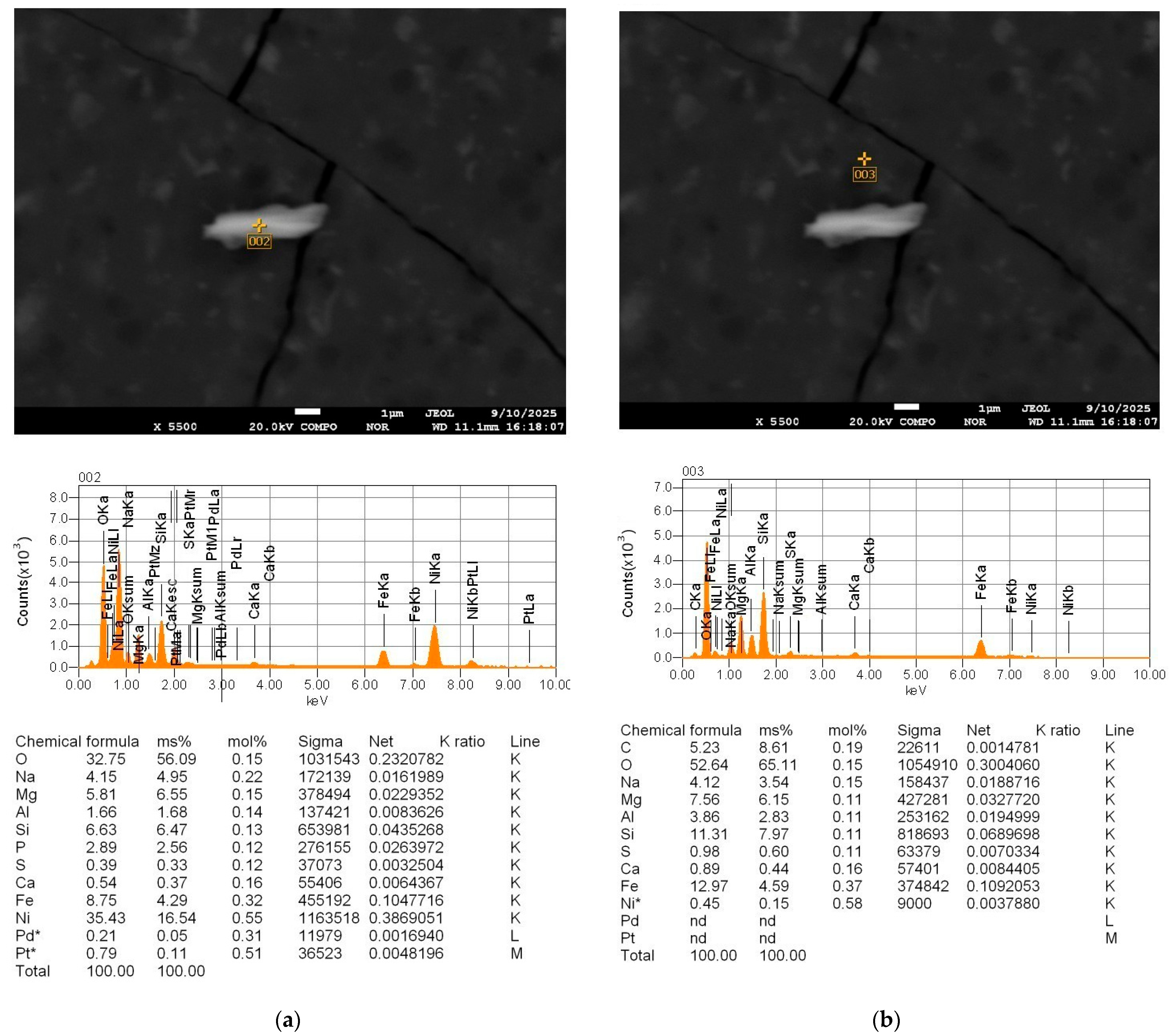
EDS microanalysis of Ni-containing particles. (a) Point 1; (b) point 2. (*—indicates semi-quantitative results).
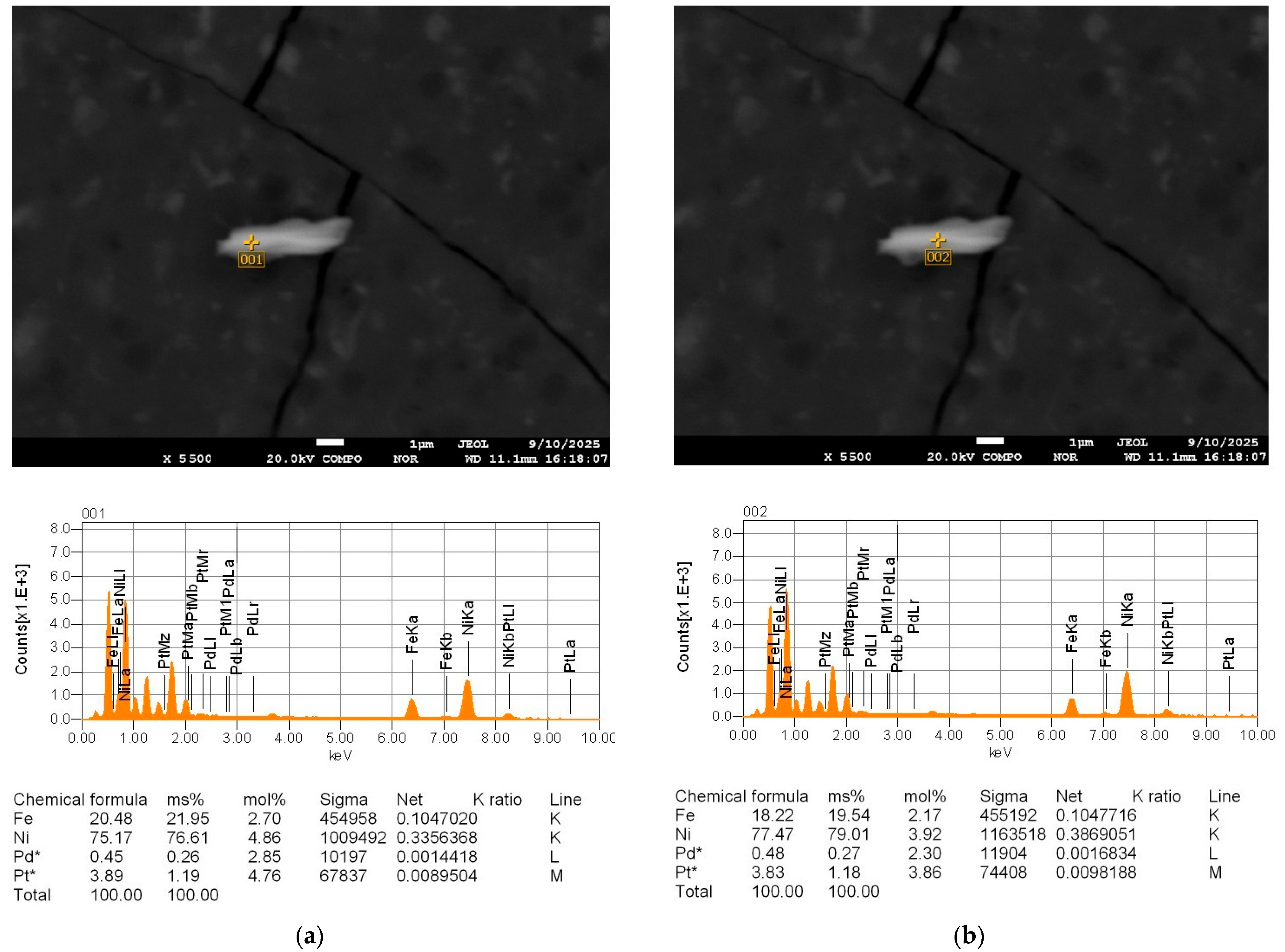
At a magnification of ×5500, the micrograph highlights an analysis zone where the chemical composition was determined via EDS (Figure 7a). The relatively low contents of Mg and Si at this point confirmed that the analyzed area did not correspond to the Mg–Si–O matrix phase but represented a distinct inclusion. The inclusion was dominated by a nickel-containing phase (Ni ≈ 35.43 wt.%). Trace amounts of Pt (0.79 wt.%) and Pd (0.21 wt.%) were also detected, indicating the formation of platinum group metal micro-inclusions associated with nickel, which was consistent with the elemental mapping results. Nickel-containing particles thus can be considered as preferential sites for the concentration of Pt and Pd.
In Figure 7b, point 2, located outside the Ni-containing particle, there is no detectable Pt or Pd. This confirms the discrete localized nature of platinum group metal enrichment and the absence of its uniform incorporation into the matrix phase.
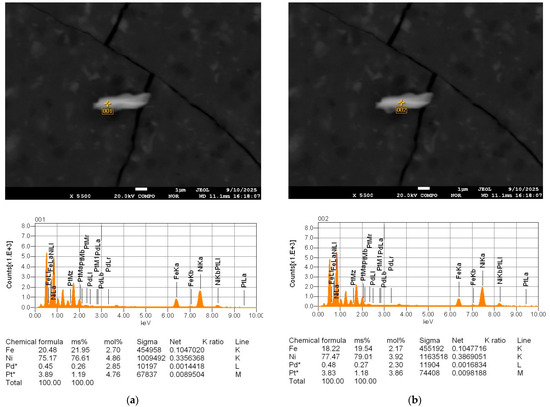
In Figure 8a,b, light matrix elements were deliberately excluded, as they could statistically affect the measured Pt and Pd contents. This exclusion allowed the true ratio of Pt and Pd to Ni within the inclusion to be determined.
Figure 8.
EDS microanalysis of Ni-containing particles (light matrix elements excluded). (a) Point 1; (b) point 2. (*—indicates semi-quantitative results).
Platinum was detected at approximately 3.8 wt.% and Pd at ~0.5 wt.%, with nickel dominating the composition (77–79 wt.%). Thus, the platinum content in these localized Ni-rich inclusions can reach up to 3.8 wt.%.
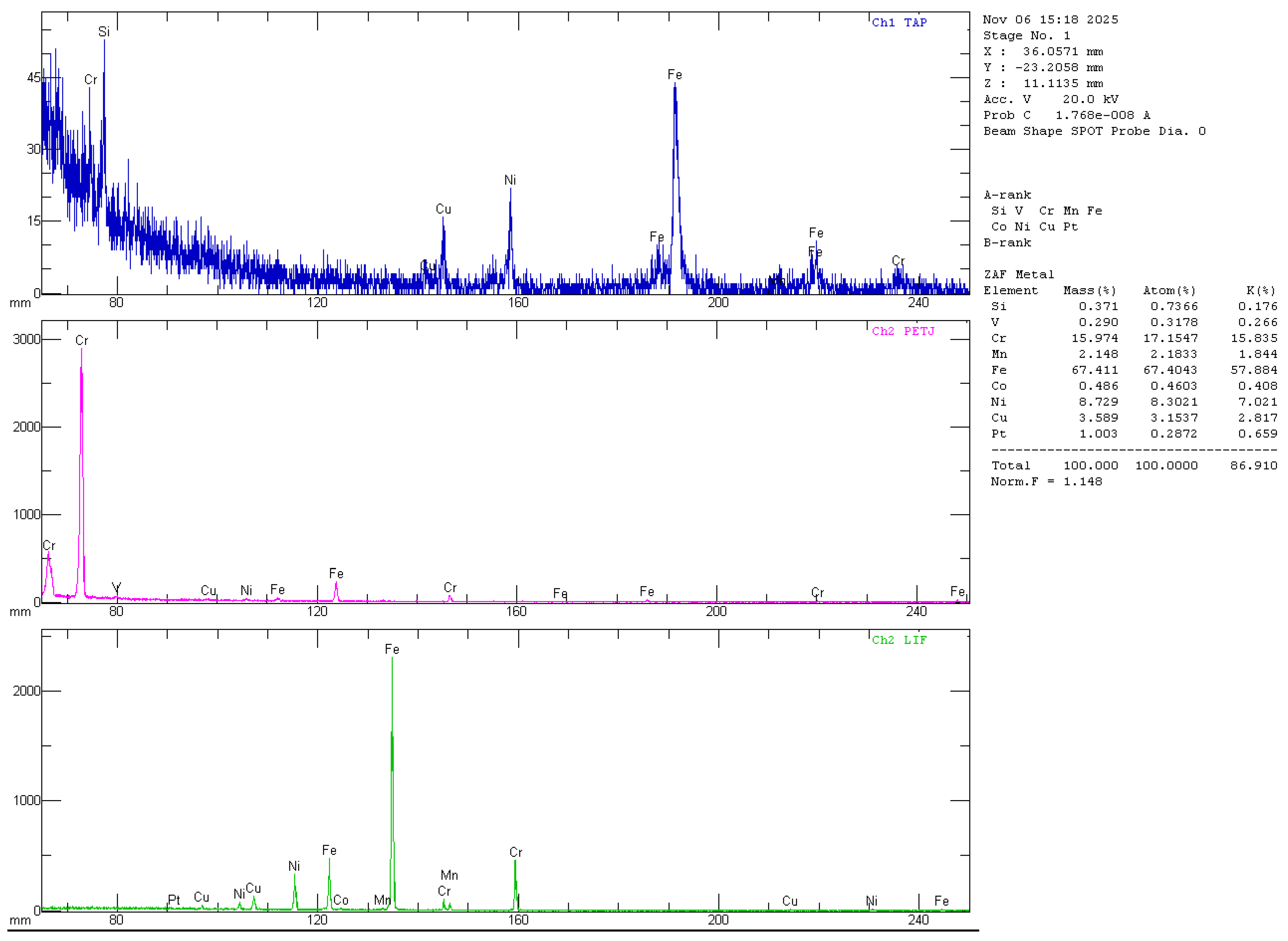
The spectrum indicates the presence of Fe, Cr, Ni, Cu, and Pt (Figure 9). Iron and chromium dominate the matrix, while nickel is locally enriched. Platinum is detected in trace amounts and is associated with Ni-containing regions, confirming the selective retention of PGMs in the solid residue after leaching.
Figure 9.
Representative WDS spectra of the analyzed area of the cake after water leaching of the sinter.
Thus, the morphological and elemental analyses of the cake after leaching demonstrated that the distribution of valuable components was selective. The analyses revealed elevated concentrations of Pt and Pd in association with Ni, confirming the stable retention of platinum group metals in the solid residue.
Nickel-containing particles in other points of the cake were also analyzed, with additional results given in Appendix A.
4. Conclusions
In this study, a sequential processing route for chromite beneficiation tailings (CBTs) from the Donskoy Mining and Processing Plant was investigated with the aim of selective chromium extraction and the subsequent concentration of platinum group metals (PGMs). The proposed scheme combines alkaline sintering, aqueous leaching, sulfation roasting, and water leaching, enabling an effective separation of valuable components into distinct processing streams.
Alkaline sintering with Na2CO3 at 1000 °C followed by aqueous leaching resulted in the transfer of up to 98%–99% of chromium into solution, confirming the high efficiency of the selected conditions and the successful modification of the chromite phase composition. The solid residue obtained after chromium leaching was enriched in non-ferrous metals, rare earth elements, and platinum group metals.
Subsequent sulfation roasting and water leaching facilitated the conversion of magnesium, nickel, and rare earth elements into soluble forms, while platinum group metals remained predominantly in the solid phase due to their low solubility and high stability under the applied processing conditions. Microstructural and EDS analyses demonstrated that Pt and Pd are not uniformly distributed within the cake but are selectively concentrated in localized nickel-containing inclusions.
Local EDS measurements revealed platinum contents reaching up to 3.8 wt.% in Ni-rich micro-inclusions, whereas areas outside these inclusions showed no detectable Pt or Pd. This confirms that nickel-containing phases act as preferential collectors for platinum group metals during the applied processing sequence. As a result, the final cake represents a valuable platinum-bearing product suitable for further concentration and metallurgical recovery.
Overall, the results demonstrate that chromite beneficiation tailings can be effectively transformed from an environmentally problematic waste into a secondary resource for both chromium recovery and platinum group metal concentration. The proposed approach provides a promising basis for the integrated and resource-efficient processing of industrial chromite materials.
Author Contributions
Conceptualization, R.A. and B.S.; methodology, N.A.; validation, N.A. and A.; formal analysis, Y.A.; investigation, N.B. and V.P.; resources, R.A.; writing—original draft preparation, N.A.; writing—review and editing, B.S.; supervision, R.A. and N.A.; project administration, R.A.; funding acquisition, R.A. All authors have read and agreed to the published version of the manuscript.
Funding
This work was carried out with the financial support of the Committee of Science of the Ministry of Education and Science of the Republic of Kazakhstan under grant funding No. AP23489732.
Institutional Review Board Statement
Not applicable.
Informed Consent Statement
Not applicable.
Data Availability Statement
Data are contained within the article.
Conflicts of Interest
The authors declare no conflicts of interest.
Appendix A
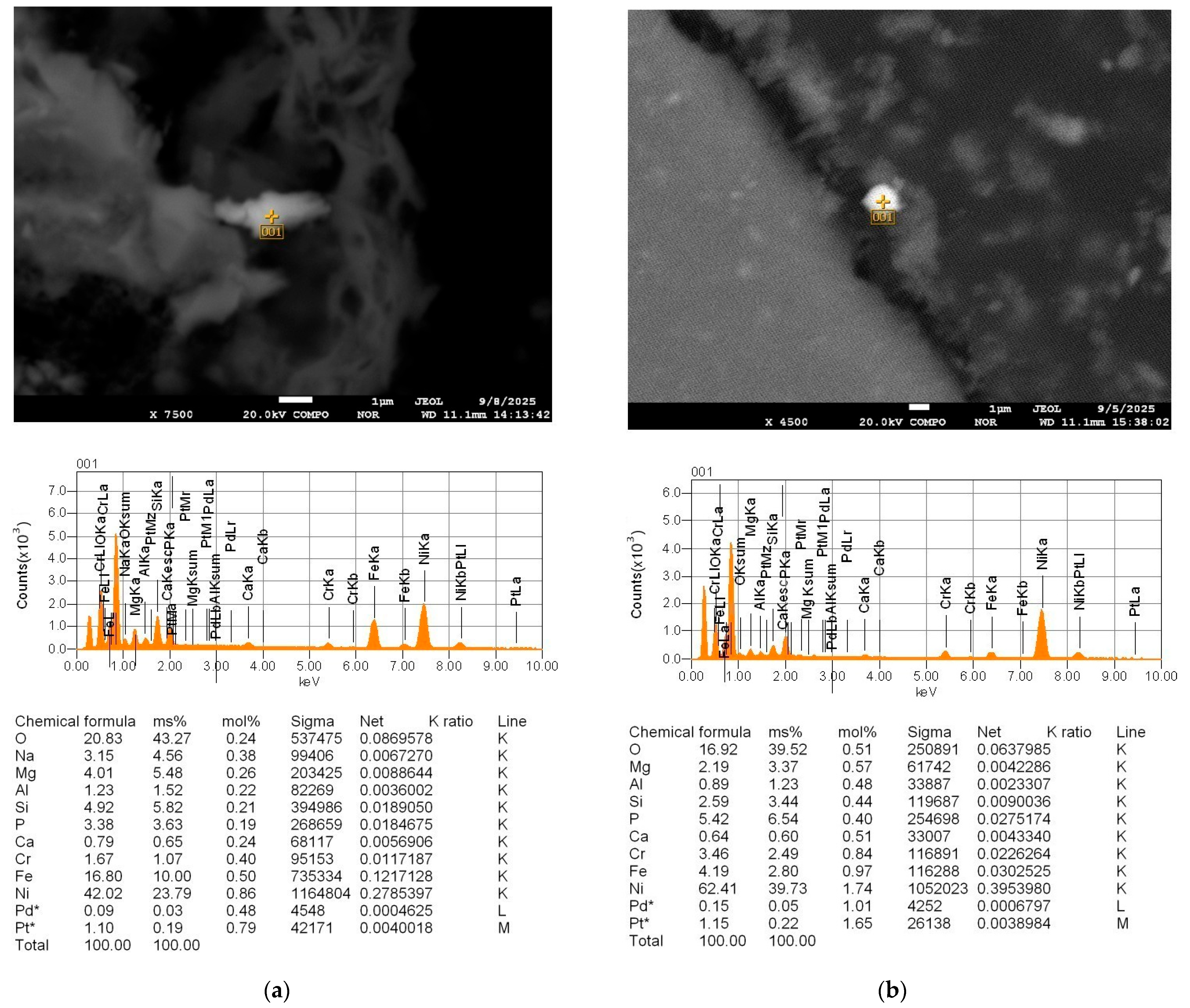
Nickel-containing particles in other points of the cake were also analyzed.
According to the results shown in Figure A1a, the analyzed inclusion contains 42.02% Ni and 1.1% Pt, while in Figure A1b, Ni reaches 62.41% and Pt 1.15%, representing the maximum observed values in this sample.
Figure A1.
Local EDS image of the cake after water leaching of the sinter. (a) Point 1; (b) Point 2. (*—indicates semi-quantitative results).
References
- U.S. Geological Survey. Mineral Commodity Summaries; U.S. Geological Survey: Reston, VA, USA, 2024.
- Prasad, U. Chapter 4–Metallic Mineral Deposits. In Economic Geology, Economic Mineral Deposits, 2nd ed.; CBS Publication: Delhi, India, 2013; p. 48. [Google Scholar]
- Nafziger, R.H. A Review of the Deposits and Beneficiation of Lower-Grade Chromite. J. S. Afr. Inst. Min. Metall. 1982, 82, 205–226. [Google Scholar]
- Iblaminov, R. Geochemistry of Chromium Ore Genesis. Vestn. Perm. Univ. Geol. 2023, 22, 364. [Google Scholar] [CrossRef] [Scilit]
- Bespaev, H.; Kenzhaliev, B.; Tastanov, Y. Mineralogical Classification of Chromite Ores from Kempirsai, Kazakhstan. Geol. Min. J. Kaz. 2020, 2, 53–61. (In Russian) [Google Scholar]
- Zhakupov, A.; Tastanov, Y.; Abenov, T. Classification of Chromite Ore Based on Spinel Grain Size. Int. J. Miner. Process. 2022, 10, 49–57. [Google Scholar]
- Kumar, C.R.; Murthy, Y.R.; Bhoja, S.K. Chapter 3—Chromite ore beneficiation: Prospects and challenges. In Mineral Processing; Elsevier: Amsterdam, The Netherlands, 2023; pp. 79–116. [Google Scholar] [CrossRef] [Scilit]
- Lim, B.; Alorro, R.D. Technospheric Mining of Mine Wastes: A Review of Applications and Challenges. Sustain. Chem. 2021, 2, 686–706. [Google Scholar] [CrossRef] [Scilit]
- Tastanov, Y.; Serzhanova, N.; Ultarakova, A.; Sadykov, N.; Yerzhanova, Z.; Tastanova, A. Recycling of Chrome-Containing Waste from a Mining and Processing Plant to Produce Industrial Products. Processes 2023, 11, 1659. [Google Scholar] [CrossRef] [Scilit]
- Kuldeev, E.I.; Bondarenko, I.V.; Temirova, S.S. Promising ways to increase raw material base of the chrome industry of the metallurgical industry of the Kazakhstan. Complex Use Miner. Resour. 2020, 2, 64–70. [Google Scholar] [CrossRef] [Scilit]
- Aras, A.; Taner, H.A. Investigation of chromite ore beneficiation possibilities with different gravity concentrators. Min.-Geol.-Pet. Eng. Bull. 2023, 38, 127–134. [Google Scholar] [CrossRef] [Scilit]
- Amer, A.M.; Ibrahim, I.A. Leaching of a low grade Egyptian chromite ore. Hydrometallurgy 1996, 43, 307–316. [Google Scholar] [CrossRef] [Scilit]
- Akhmadiyeva, N.; Abdulvaliyev, R.; Gladyshev, S.; Sukurov, B.; Abikak, Y.; Manapova, A.; Bakhytuly, N. Optimizing Technological Parameters for Chromium Extraction from Chromite Ore Beneficiation Tailings. Minerals 2025, 15, 555. [Google Scholar] [CrossRef] [Scilit]
- Hu, S.; Wang, D.; Li, X.; Zhao, W.; Qu, T.; Wang, Y. Enrichment Characteristics of Cr in Chromium Slag after Pre-Reduction and Melting/Magnetic Separation Treatment. Materials 2021, 14, 4937. [Google Scholar] [CrossRef] [Scilit] [PubMed] [PubMed Central]
- Yu, H.; Song, S.; Cromarty, R.; Hang, G.; Hu, Q.; Zhang, W.; Liu, D.; Xue, Z. Recycling of chromium sludge to promote aggregation and growth of metal during self-reduction of nickel laterite ore. Metall. Res. Technol. 2022, 119, 110. [Google Scholar] [CrossRef] [Scilit]
- Report on the Planned Activity for the Feasibility Study “Construction of a Flotation Section for Tailings Beneficiation at the Concentration Plant for Sludge Processing, Donskoy Mining and Processing Plant, Khromtau”. Khromtau, Kazakhstan: Donskoy MPP—Branch of JSC “TNK Kazchrome”, 2021. Available online: https://share.google/fLcQeyW1zgRiOQG7s (accessed on 9 April 2026). (In Russian)
- Li, X.; Zhang, H.; Zhou, X.; Zhong, W. Research on the evolution of the global import and export competition network of chromium resources from the perspective of the whole industrial chain. Resour. Policy 2022, 79, 102987. [Google Scholar] [CrossRef] [Scilit]
- CBC Chromium Market Analysis and Price Forecast in October 2023. CBC Metal Network. Available online: https://en.cbcie.com/report/677055.html (accessed on 9 April 2026).
- Ying, Z.; Liu, S.; Wei, Q.; Ren, X. A pilot scale test study with theoretical justification of reaction mechanism for the recovery of chromium(VI) based on solvent extraction using novel centrifugal extractors. Hydrometallurgy 2024, 223, 106210. [Google Scholar] [CrossRef] [Scilit]
- Carelse, C.; Manuel, M.; Chetty, D.; Taguta, J.; Safari, M.; Youlton, K. The flotation behaviour of liberated Platinum Group minerals in Platreef ore under reduced reagent conditions. Miner. Eng. 2022, 190, 107913. [Google Scholar] [CrossRef] [Scilit]
- Baloyi, N.P.; Nheta, W.; Sibanda, V.; Safari, M. Mineralogical Insights into PGM Recovery from Middle Group (1–4) Chromite Tailings. Minerals 2024, 14, 924. [Google Scholar] [CrossRef] [Scilit]
- Mphahlele, H.; Fosso-Kankeu, E. Recovery of PGMs from Chromite Tailings and Selective Adsorption. In Proceedings of the 28th LISBON International Conference on Science, Engineering, Technology and Healthcare (SETH-24), Lisbon, Portugal, 16–18 December 2024; pp. 27–34. Available online: https://uruae.org/siteadmin/upload/3340UR1224112.pdf (accessed on 9 April 2026).
- Abdulvaliyev, R.; Abikak, Y.; Akhmadiyeva, N.; Gladyshev, S.; Manapova, A.; Kasymzhanova, A. Towards Sustainable Processing of Chromite Resources: A Review of Methods for Magnesium and Platinum-Group Metal Extraction. Inorganics 2025, 13, 353. [Google Scholar] [CrossRef] [Scilit]
- Ibraev, I.K.; Ibraeva, O.T.; Aitkenov, N.B. An Annealing-Free Method for Processing High-Moisture Iron-Containing Sludge of Metallurgical Production. Complex Use Miner. Resour. 2025, 333, 59–70. [Google Scholar] [CrossRef] [Scilit]
- Pašava, J.; Knesl, I.; Vymazalova, A.; Vavřin, I.; Gurskaya, L.I.; Kolantsev, L.R. Geochemistry and Mineralogy of Platinum-Group Elements (PGE) in Chromites from Centralnoye I, Polar Urals, Russia. Geosci. Front. 2011, 2, 81–85. [Google Scholar] [CrossRef] [Scilit]
- Legendre, O.; Auge, T. Mineralogy of Platinum-Group Mineral Inclusions in Chromitites from Different Ophiolite Complexes. In Metallogeny of Basic and Ultrabasic Rocks; Gallagher, M.J., Ixer, R.A., Neary, C.R., Prichard, H.M., Eds.; Springer: Amsterdam, The Netherlands, 1986; pp. 361–372. [Google Scholar]
- Garuti, G.; Pushkarev, E.; Zaccarini, F. Composition and Paragenesis of Pt-Alloys from Chromitites of the Ural-Alaskan-Type. Can. Mineral. 2002, 40, 357–376. [Google Scholar] [CrossRef] [Scilit]
- Karshyga, Z.; Yersaiynova, A.; Yessengaziyev, A.; Orynbayev, B.; Kvyatkovskaya, M.; Silachyov, I. Synthesis of Manganese Oxide Sorbent for the Extraction of Lithium from Hydromineral Raw Materials. Materials 2023, 16, 7548. [Google Scholar] [CrossRef] [Scilit] [PubMed]
- Yersaiynova, A.A.; Karshyga, Z.B.; Kenzhaliyev, B.K.; Sukurov, B.M.; Yessengaziyev, A.M.; Orynbayev, B.M. Adsorption Equilibrium of Lithium Sorption Process Using Synthesized Inorganic Sorbents. Results Eng. 2025, 27, 106720. [Google Scholar] [CrossRef] [Scilit]
- Yessengaziyev, A.M.; Toishybek, A.M.; Mukangaliyeva, A.O.; Abdyldayev, N.N.; Yersaiynova, A.A. Study of the leaching process for dust chamber sublimates followed by the extraction of niobium and zirconium into solution. Complex Use Miner. Resour. 2024, 331, 117–126. [Google Scholar] [CrossRef] [Scilit]
- Kvyatkovskiy, S.A.; Kozhakhmetov, S.M.; Semenova, A.S.; Dyussebekova, M.A.; Shakhalov, A.A. Hydrothermal treatment of sinters containing thiosalts of non-ferrous metals. Complex Use Miner. Resour. 2025, 335, 42–49. [Google Scholar] [CrossRef] [Scilit]
- Mohamed, S.; van der Merwe, E.M.; Altermann, W.; Doucet, F.J. Process development for elemental recovery from PGM tailings by thermochemical treatment: Preliminary major element extraction studies using ammonium sulphate as extracting agent. Waste Manag. 2016, 50, 334–345. [Google Scholar] [CrossRef] [Scilit] [PubMed]
- Sokolovskaya, L.; Kvyatkovskiy, S.; Kozhakhmetov, S.; Semenova, A.; Sukurov, B.; Dyussebekova, M.; Shakhalov, A. Slag after smelting of anode mud: Role of sulphiding sintering. Minerals 2024, 14, 781. [Google Scholar] [CrossRef] [Scilit]
- Gibson, B.A.K.K.; Nwaila, G.; Manzi, M.; Ghorbani, Y.; Ndlovu, S.; Petersen, J. The valorisation of platinum group metals from flotation tailings: A review of challenges and opportunities. Miner. Eng. 2023, 201, 108216. [Google Scholar] [CrossRef] [Scilit]
- Zheng, H.; Ding, Y.; Wen, Q.; Liu, B.; Zhang, S. Separation and purification of platinum group metals from aqueous solution: Recent developments and industrial applications. Resour. Conserv. Recycl. 2021, 167, 105417. [Google Scholar] [CrossRef] [Scilit]
- Mpinga, C.N.; Eksteen, J.J.; Aldrich, C.; Dyer, L. Direct leach approaches to Platinum Group Metal (PGM) ores and concentrates: A review. Miner. Eng. 2015, 78, 93–113. [Google Scholar] [CrossRef] [Scilit]

Disclaimer/Publisher’s Note: The statements, opinions and data contained in all publications are solely those of the individual author(s) and contributor(s) and not of MDPI and/or the editor(s). MDPI and/or the editor(s) disclaim responsibility for any injury to people or property resulting from any ideas, methods, instructions or products referred to in the content. |
© 2026 by the authors. Licensee MDPI, Basel, Switzerland. This article is an open access article distributed under the terms and conditions of the Creative Commons Attribution (CC BY) license.