


Abstract
Phosphatic bioclastic laminae distributed along bedding planes have been recently discovered within the Jurassic Lianggaoshan Formation shale in the eastern Sichuan Basin. However, their characteristics and potential as shale oil and gas reservoirs remain unclear. To reveal their microscopic pore structure characteristics and development model, this study focuses on samples of phosphatic bioclastic laminae obtained from drilling cores in the Fuxing area of eastern Sichuan. A multi-scale analytical approach was employed, integrating micro-X-ray fluorescence spectroscopy (μ-XRF), field emission scanning electron microscopy (FE-SEM), nitrogen adsorption, nuclear magnetic resonance (NMR), and geochemical analyses. The results indicate that the phosphatic bioclastic laminae are primarily composed of apatite and calcite and formed in a low-energy, anoxic, semi-deep to deep lacustrine environment. They exhibit an average total porosity of 4.84% and an average TOC of 1.99 mg/g. It is 14.7% and 17.8% higher than the clay laminae, and 255.9% and 109.57% higher than the calcareous bioclastic laminae. The pore system is dominated by mesopores and macropores, encompassing multiple pore types including dissolution pores, interparticle pores, interlayer pores, organic matter-hosted pores, and micro-fractures. Notably, a well-connected nanometer-scale pore network developed within fish bone fragments contributes substantially to the storage space. These intervals integrate high organic matter richness with superior reservoir properties, demonstrating typical “source-reservoir integration” characteristics. Their pore structure is synergistically regulated by sedimentary–diagenetic processes, with a core mechanism of primary biogenic pore foundation–late diagenetic dissolution enhancement–micro-fracture connectivity. This study systematically elucidates, for the first time, the reservoir formation mechanism of the phosphatic bioclast-rich laminae in the Lianggaoshan Formation. It confirms their potential as “geological-engineering” dual sweet spots for shale oil and gas exploration, providing a new basis for sweet spot prediction and exploration deployment targeting similar phosphatic bioclastic laminae in the Sichuan Basin and analogous regions.
1. Introduction
Shale oil and gas, as important components of unconventional hydrocarbon resources, have become a key replacement field in global energy exploration and development, with their exploration breakthroughs holding significant strategic implications for ensuring energy security [1,2,3,4,5,6,7]. The reservoir properties of shale formations exhibit pronounced heterogeneity, where microscopic pore structure, mineral composition, and organic matter characteristics are key factors controlling shale storage capacity and producibility. The formation and evolution of these attributes are closely constrained by the original sedimentary fabric and subsequent diagenetic evolution [8,9,10,11,12,13]. Therefore, accurately identifying favorable reservoir intervals in shale and systematically clarifying their formation mechanisms and controlling factors are fundamental prerequisites for the efficient exploration and development of shale oil and gas.
Traditional shale research has largely focused on the influence of common components such as clay minerals, quartz, and carbonate minerals on reservoir quality [14,15,16]. In recent years, with advancements in analytical techniques, special lithological components such as bioclast-rich laminae have gradually attracted attention due to their positive impact on reservoir physical properties. Existing studies have confirmed that siliceous and calcareous bioclasts can resist compaction through rigid frameworks or form secondary pores through subsequent dissolution, significantly enhancing the storage space of shale [17,18,19]. However, the role of phosphatic bioclasts (e.g., fish bones, coprolites) in the formation of shale reservoirs remains poorly understood. Phosphatic bioclastic laminae typically form under specific paleoenvironmental conditions (e.g., high productivity, anoxic water bodies). Their unique mineral composition dominated by apatite and structural characteristics may exert a special influence on pore development and preservation, potentially representing a yet underrecognized class of promising intervals.
The Upper Triassic to Middle Jurassic in the eastern Sichuan Basin hosts multiple sets of organic-rich shales, which are key target intervals for shale oil and gas exploration in China [20,21,22,23]. Among these, the Lianggaoshan Formation shales commonly exhibit laminated structures, with various lamina types already identified, including clay-rich, felsic, and calcareous bioclast laminae. Recently, phosphatic bioclastic laminae distributed along bedding planes have been newly discovered in core samples from the Lianggaoshan Formation in the Fuxing area of eastern Sichuan. This provides a new and important research target for in-depth investigation of shale reservoir heterogeneity and favorable interval prediction in this region.
Based on this, this study focuses on the newly discovered phosphatic bioclastic laminae in the Lianggaoshan Formation of the Fuxing area, eastern Sichuan. Integrating core observation, μ-XRF, large thin-section petrography, FE-SEM, QEMSCAN, and other techniques (e.g., nitrogen adsorption, NMR, geochemical analyses). It focuses on four key aspects: (1) multi-scale characterization of the mineral-pore structure; (2) revealing sedimentary–diagenetic evolution and its control on pore development; (3) clarifying geochemical characteristics and oil-bearing potential; (4) establishment of a diagenetic evolution conceptual model for the phosphatic bioclastic laminae. The research findings aim to deepen the understanding of the formation mechanisms of shale reservoirs in the Lianggaoshan Formation and provide new scientific support for sweet spot prediction and exploration deployment of shale oil and gas in the Sichuan Basin and analogous geological settings.
2. Geological Background
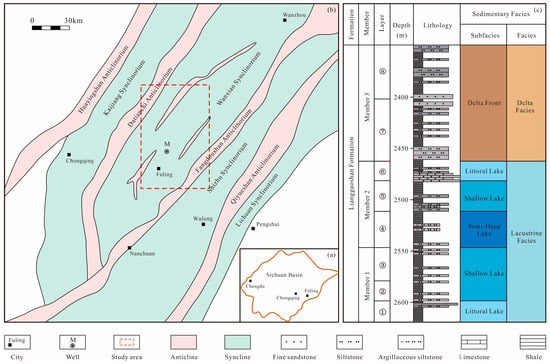
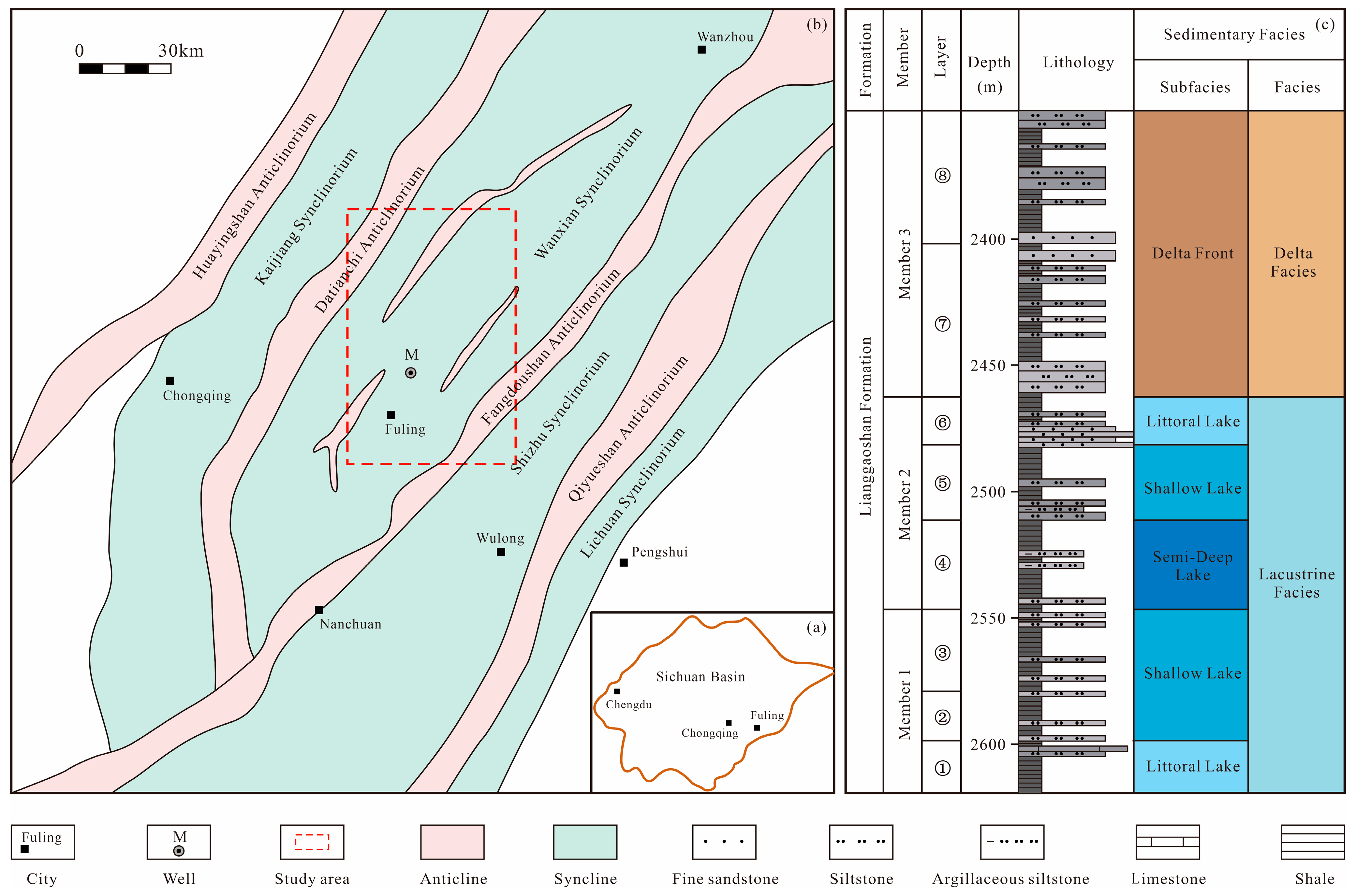
The study area is located in the Fuxing region of the eastern Sichuan Basin (Figure 1a). It is situated on the northwestern margin of the Yangtze Paraplatform and belongs to a typical composite basin that has undergone modification by multiple phases of tectonic activity (Figure 1b). Since the Sinian period, the basin has developed an extremely thick marine to continental sedimentary sequence [24]. During the Middle to Late Triassic, influenced by the evolution of the Tethyan tectonic domain and the activity of the Qinling orogenic belt, the basin gradually transitioned from a marine environment to a continental basin, entering a developmental stage dominated by lacustrine–deltaic sedimentary systems [25,26,27,28].
Figure 1.
Tectonic location of the eastern Sichuan area and stratigraphic column of the J2l2 [20]. (a) Outline of the Sichuan Basin; (b) Tectonic location of the eastern Sichuan areac; (c) Stratigraphic column of the Lianggaoshan Formation.
The target interval of this study is the Middle Jurassic Lianggaoshan Formation, an important continental siliciclastic and shale assemblage formed under this tectonic framework [25]. During the deposition of the Lianggaoshan Formation, the study area was in a subsidence stage of the basin. The paleoclimate was warm and humid, with an extensive lake basin characterized by relatively deep water (approximately 80–150 m [27]) (Figure 1c). The sedimentation rate was 0.08–0.12 mm/a [28], the burial depth was 2800–3500 m [20], and the formation temperature during the late diagenetic stage was 120–150 °C [25]. The stable tectonic setting and favorable paleoclimatic conditions were conducive to the deposition of fine-grained sediments and the preservation of organic matter. The second member of the Lianggaoshan Formation (J2l2) is the primary shale-bearing interval. Its lithology is predominantly gray-black and black shale, interbedded with thin layers of siltstone and fine sandstone. Well-developed horizontal laminations are ubiquitous, reflecting weak hydrodynamic sedimentary conditions of lacustrine still water [29,30,31]. Low sedimentation rate and deep-water environment facilitate the preservation of organic matter and bioclasts, while moderate burial depth and formation temperature promote the generation of acidic fluids and the development of secondary pores. Previous studies have identified clay-rich dark laminae, felsic-rich light-colored laminae, and laminae rich in calcareous bioclasts within this interval. The newly discovered phosphatic bioclastic laminae in the core from the J2l2 in the Fuxing region further enriches the lithological types of this shale sequence. This discovery indicates the possible occurrence of periodic high biological productivity events and specific paleoenvironmental conditions during the depositional period.
3. Samples and Methods
3.1. Samples
The samples for this study were collected from 33 core segments (each approximately 10 cm in length) of the J2l2 from Well M in the Fuxing area, eastern Sichuan Basin. Systematic macroscopic core observation and detailed microscopic characterization revealed that the shale in this well ubiquitously exhibits laminated structures. In addition to the previously identified clay-rich, felsic-rich, and calcareous bioclast-rich laminae, this study newly identified two core segments containing bedding-parallel phosphatic bioclastic laminae. These segments are located at depths of 2561.86~2561.96 m and 2576.32~2576.37 m in Well M (middle part of the J2l2), with thicknesses of 10 cm and 5 cm, respectively. The two samples containing the phosphatic bioclastic laminae were processed and analyzed according to the following protocol: (1) each core sample was longitudinally sectioned to obtain a flat, macroscopically even surface. This surface was subjected to µ-XRF elemental mapping, and a large-format thin section (5 mm × 7 mm × 0.03 mm) was prepared for petrographic observation. (2) From the sectioned core material, three 4 mm thick slabs, each dominated by a single phosphatic lamina, were prepared using a numerically controlled pulse wire-cutting system with a corundum-abrasive filament. Each slab was subsequently subdivided parallel to the bedding into three subsamples for dedicated analyses: the first subsample was analyzed in its original state (without solvent extraction or immersion) through integrated helium porosity measurement, 2D NMR fluid porosity analysis, and low-pressure nitrogen physisorption to determine total porosity, pore-size distribution, and NMR-derived oil saturation; the second subsample was analyzed using a combination of FE-SEM, QEMSCAN automated mineralogy, and organic maceral identification to obtain macro- to micro-scale information on organic–inorganic composition and pore-fracture structure; the third subsample was subjected to TOC (Total Organic Carbon) and Rock-Eval pyrolysis analyses to evaluate hydrocarbon-generating potential.
3.2. Experimental Methods
3.2.1. Micro-X-Ray Fluorescence (µ-XRF) Spectroscopy
Micro-XRF elemental mapping was performed using a Bruker M4 TORNADO PLUS µ-XRF spectrometer (Bruker, Berlin, Germany) based on energy-dispersive principles. The analysis utilizes a micron-sized X-ray spot to excite the sample, enabling high-resolution in situ elemental imaging for fine compositional characterization. The sectioned core sample was placed flat on a motorized three-axis stage. After selecting the area of interest, the stage was computer-controlled to move with micron precision. The analysis was conducted under operating conditions of 50 kV accelerating voltage, 600 µA beam current, and a scanning step size of 15 µm.
3.2.2. Large-Format Thin Section Petrography
A large-format thin section (6 cm × 5 cm) was prepared. Petrographic observation was conducted using a Zeiss Axio Scope A1 polarizing transmission-reflected light microscope (Zeiss, Jena, Germany) to identify the mineral composition and textural features of the laminae, with a specific focus on characterizing the microscopic attributes of the phosphatic laminae.
3.2.3. Scanning Electron Microscopy with Energy Dispersive X-Ray Spectroscopy (SEM-EDS)
Micro-morphological observation and semi-quantitative chemical analysis were conducted using a Zeiss Merlin Compact field emission scanning electron microscope (Zeiss, Oberkochen, Germany; maximum resolution: 1 nm) equipped with an Oxford X-Max N20 EDS detector (Oxford Instruments, Abingdon, Oxfordshire, UK). The FE-SEM was operated at an accelerating voltage of 2 kV and a working distance of 4 mm. Sample preparation involved trimming a 1 cm3 block, which was subsequently analyzed after carbon coating for conductivity.
3.2.4. QEMSCAN Analysis
Automated mineralogical analysis was performed using a QEMSCAN 650F system, which integrates a scanning electron microscope with dual XFlash EDS detectors (Bruker, Berlin, Germany). An argon-ion-polished sample block was placed in the sample chamber. The system combines X-ray spectroscopy and backscattered electron (BSE) imaging to generate false-color mineral assemblage maps, elemental content data, and mineral phase distribution maps. The analysis was performed at a pixel resolution of 1 µm, with an electron beam voltage of 15 kV and a spot size of 6.5.
3.2.5. Petrophysical Experiments
(1) Porosity and Permeability Measurement: Porosity and permeability were measured using a PDP-200 pulse-decay permeameter–porosimeter (Core Laboratories, Houston, TX, USA) on 4 mm thick slab samples after solvent extraction (to remove hydrocarbons); (2) Nitrogen Adsorption Analysis: Low-pressure nitrogen physisorption analysis was performed using an ASAP 2460 fully automated gas adsorption analyzer (Micromeritics, Norcross, GA, USA). Samples were degassed prior to analysis. Adsorption–desorption isotherms were measured at 77 K. The Brunauer–Emmett–Teller (BET) model was applied to calculate specific surface area, and the Density Functional Theory (DFT) model was used to derive pore size distributions. (3) Two-Dimensional Nuclear Magnetic Resonance (NMR): A MicroMR20-025V low-field NMR core analyzer (Niumag, Suzhou, China) was employed. Analysis was performed on cylindrical plugs after they underwent solvent extraction to remove resident oil and were then resaturated with brine. Both T2 relaxation spectra and T1–T2 two-dimensional maps were acquired. These data were interpreted to characterize pore structure, identify fluid types, and determine fluid saturations.
3.2.6. Geochemical Experiments
(1) Total Organic Carbon (TOC) Determination: Samples were ground to 200 mesh. Inorganic carbonates were removed by treating the powdered samples with 6 mol/L HCl in a 60 °C water bath for over 12 h. The residues were rinsed with deionized water to a neutral pH, dried at 60 °C, and then analyzed using a Leco CS-230 carbon-sulfur analyzer (Leco Corporation, St Joseph, MI, USA). The relative standard deviation for this analysis was less than 5%. (2) Rock-Eval Pyrolysis: A Rock-Eval 6 instrument (Vinci Technologies, Rueil-Malmaison, France) was used. Approximately 100 mg of crushed sample was heated in a helium atmosphere: held at 300 °C for 3 min, then ramped to 650 °C at 25 °C/min, and held at 650 °C for 1 min. Parameters S1 (free hydrocarbons) and S2 (hydrocarbons generated from kerogen cracking) were recorded. The Hydrogen Index (HI) was calculated as HI = (S2/TOC) × 100. (3) Organic Maceral Identification and Vitrinite Reflectance Measurement: Polished particulate blocks were analyzed under a Zeiss Axio Scope A1 polarizing microscope equipped with a microphotometer. Organic maceral compositions were determined by point counting (over 500 points per sample, with analytical precision better than 10%). Vitrinite reflectance (Ro) was measured on at least 50 randomly selected vitrinite particles per sample.
4. Results and Discussion
4.1. Multi-Scale Characteristics of the Mineral-Pore Structure in Phosphatic Bioclastic Laminae
4.1.1. Multi-Scale Mineral Composition Characteristics Based on Core-Large Thin Section-μ-XRF-QEMSCAN Analysis
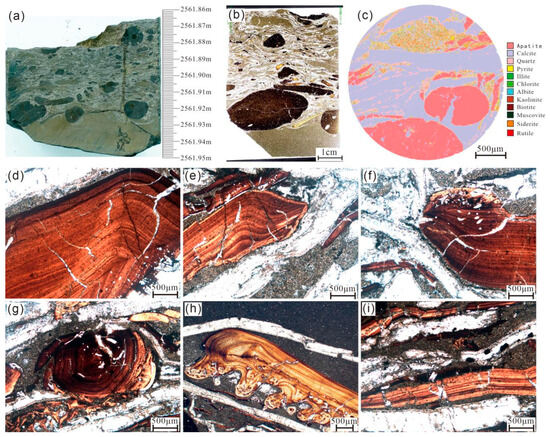
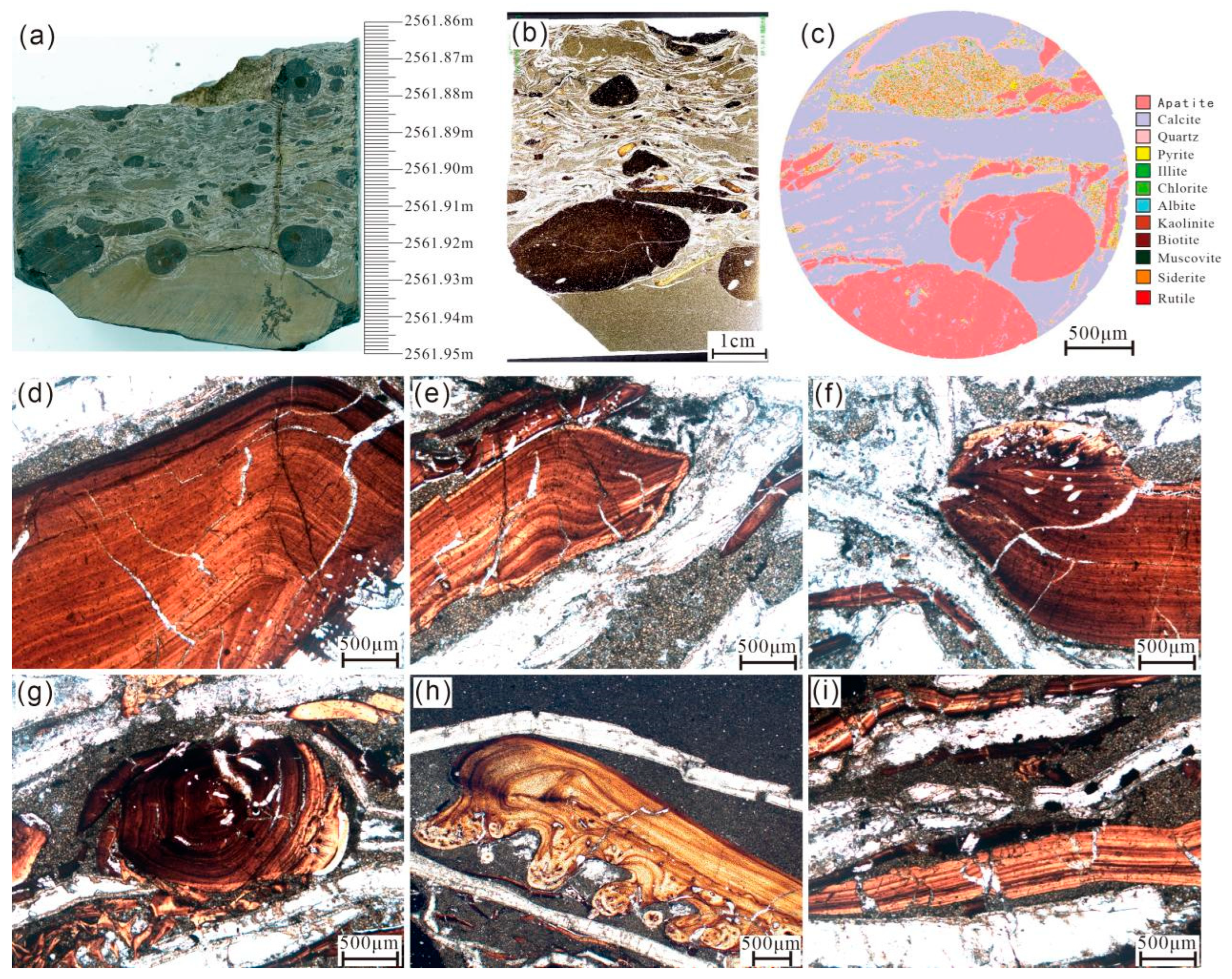
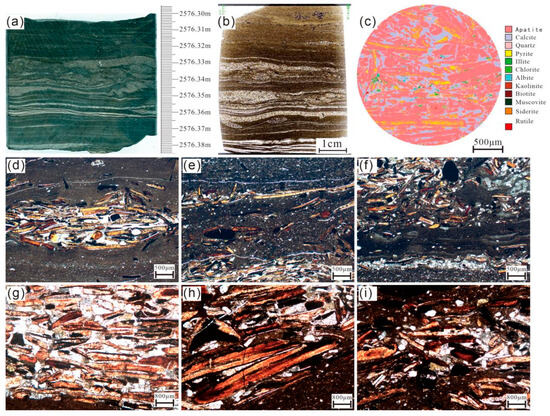
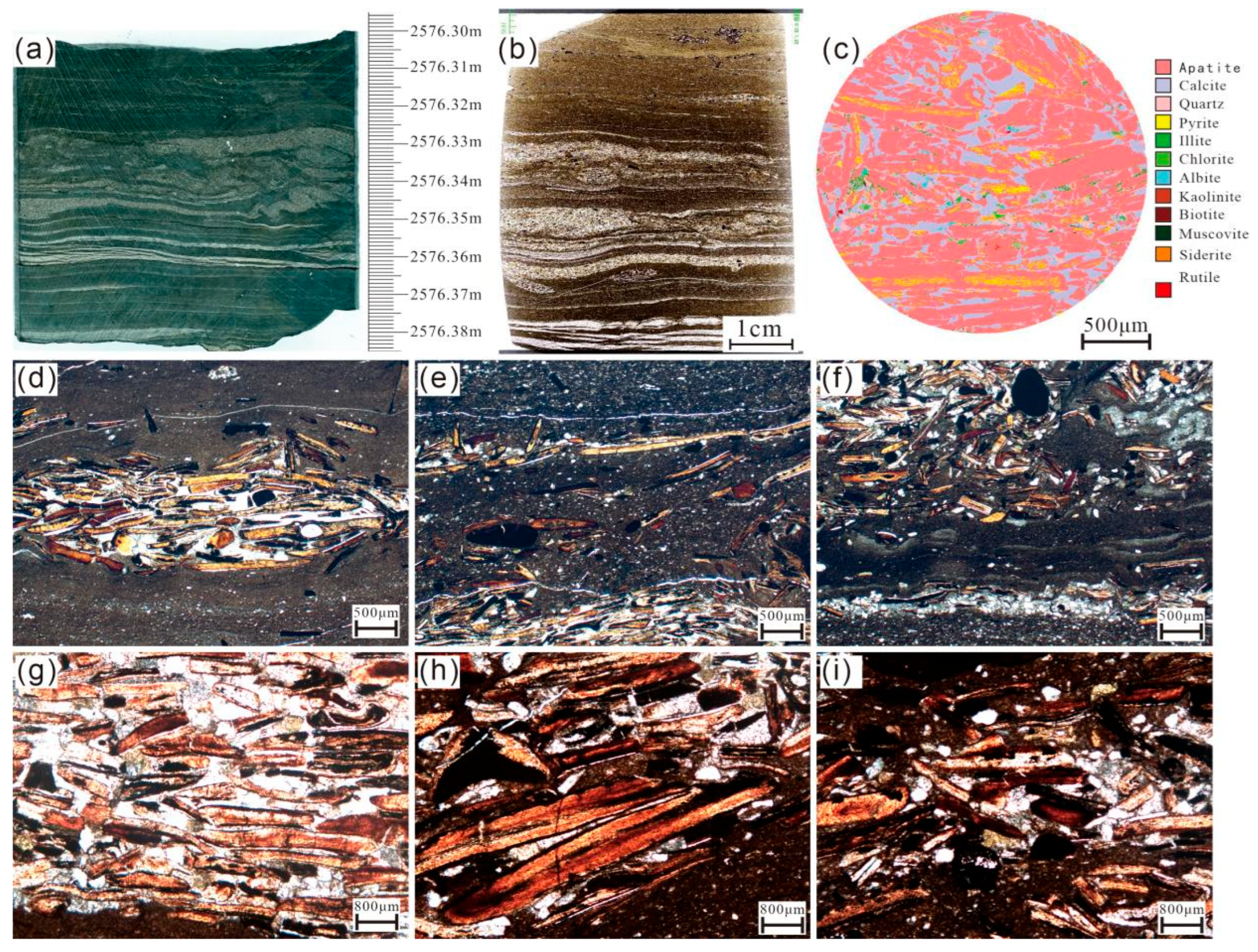
Core and thin-section observations reveal two typical structural types within the phosphatic bioclastic laminae: (1) gravel-bearing bioclastic muddy structure (Type A, 2561.86~2561.96 m): bioclasts such as coprolites, fish bone fragments, and shell debris are sub-parallel to bedding and slightly oriented, with particle sizes ranging from 0.2 to 3.5 cm, showing a basal cementation fabric. The coprolites appear gray-black, spindle-shaped, or elliptical, containing incompletely digested plant and animal residues. Fish bone fragments exhibit concentric growth rings and are interbedded with shell debris (Figure 2). (2) Lamellar structure (Type B, 2576.32~2576.37 m): this type consists of alternating light-colored bioclast-rich layers and dark-colored clay-rich layers. The bioclast-rich layers are dominated by fish bone fragments and minor shell debris, occurring in banded or clustered aggregates, with intergranular spaces filled by calcite and felsic detritus. The clay-rich layers display horizontal and wavy bedding, with local gravity-flow sedimentary structures (Figure 3). Both structural types indicate a low-energy, reducing depositional environment, conducive to the preservation of organic matter and biological structures.
Figure 2.
Core, thin-section, and QEMSCAN images of Type A phosphatic bioclastic laminae in the J2l2, eastern Sichuan. (a) Core photograph; (b) Large thin-section scan; (c) QEMSCAN mineral map; (d–i) Fish bone fragments and shells.
Figure 3.
Core, thin-section, and QEMSCAN images of Type B phosphatic bioclastic laminae in the J2l2, eastern Sichuan. (a) Core photograph; (b) Large thin-section scan; (c) QEMSCAN mineral map; (d–f) Interbedding of fish bone fragment laminae and clay-rich laminae; (g–i) Fish bone fragments and shells.
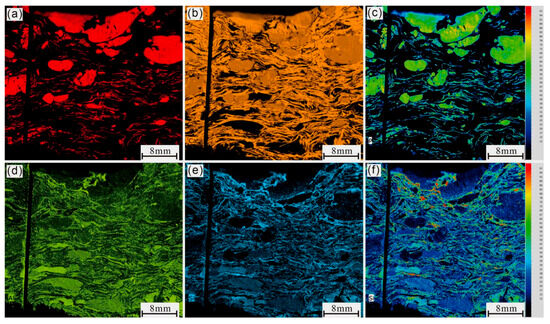
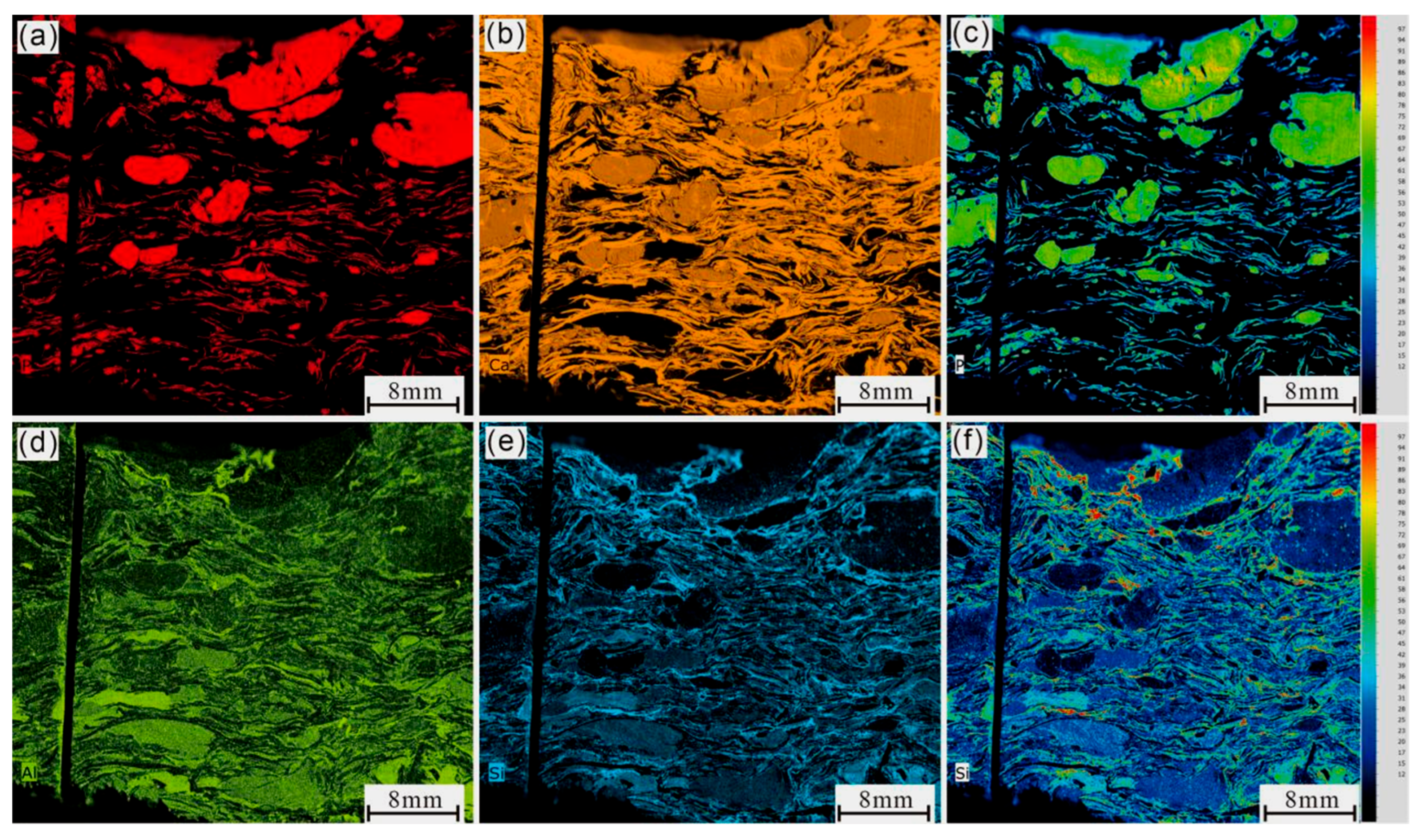
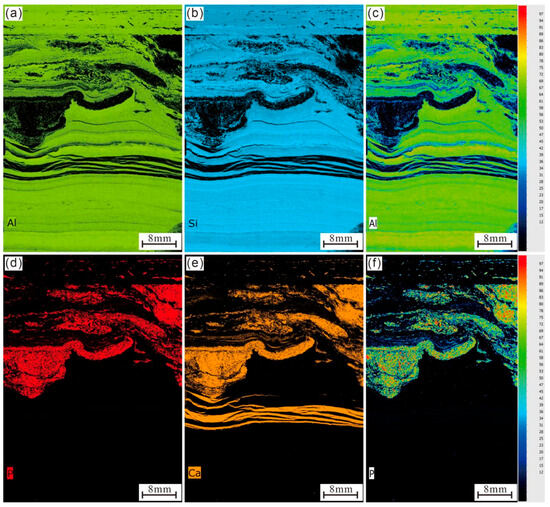
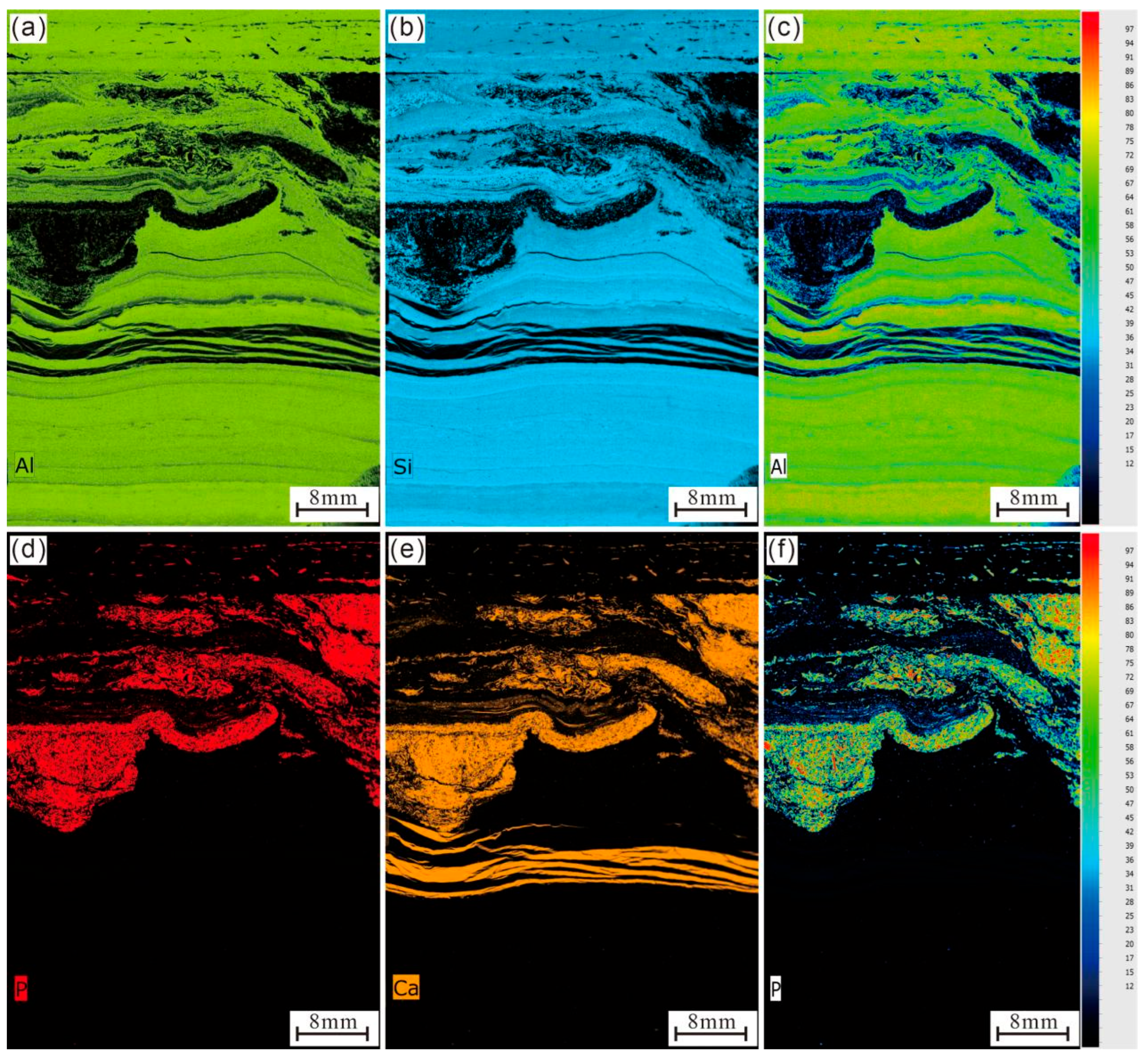
μ-XRF elemental mapping shows significant enrichment of P, Ca, and Si elements within the phosphatic bioclastic laminae (Figure 4 and Figure 5). The distribution of P is highly consistent with the spatial locations of bioclasts (e.g., fish bones, coprolites), and its enrichment characteristics are consistent with the distribution of apatite. The P content is highest at the center of the laminae and gradually decreases towards both sides, exhibiting a clear bed-controlled pattern. Ca is enriched in shell fragments, corresponding to the calcite mineral, and its distribution pattern aligns with the orientation of the bioclasts, further evidencing the phenomenon of directional alignment during deposition. Si and Al are enriched within the clay-rich laminae, reflecting the presence of illite and quartz. Their distribution is closely associated with lamina boundaries, indicating a clear cyclicity in material input.
Figure 4.
μ-XRF results of Type A phosphatic bioclastic laminae in the J2l2, eastern Sichuan. (a) Distribution map of P; (b) Distribution map of Ca; (c) Heat map of P; (d) Distribution map of Al; (e) Distribution map of Si; (f) Heat map of Si.
Figure 5.
μ-XRF results of Type A phosphatic bioclastic laminae in the J2l2, eastern Sichuan. (a) Distribution map of Al; (b) Distribution map of Si; (c) Heat map of Al; (d) Distribution map of P; (e) Distribution map of Ca; (f) Heat map of P.
This QEMSCAN analysis utilized the standard mineral library built into the iExplorer software (version 5.3) to complete mineral phase identification, and the results indicate that the phosphatic bioclastic laminae are composed predominantly of apatite (33.12–68.49%, avg. 42.31%), with subordinate amounts of calcite (2.36–48.30%, avg. 18.61%), clay minerals (1.08–49.07%, avg. 19.68%), and quartz (5.59–16.82%, avg. 11.74%) (Figure 2c and Figure 3c). The mineral composition is consistent with the elemental distribution, further confirming that the phosphatic bioclastic laminae are dominated by apatite and exhibit both biogenic and chemical sedimentary characteristics. Notably, significant differences in mineral composition exist between the two lamina types: the gravel-bearing bioclastic muddy texture (Type A) generally has higher apatite content (avg. 51.23%), whereas the laminated texture (Type B) has relatively higher clay mineral content (avg. 26.45%), reflecting subtle differences in depositional environment and hydrodynamic conditions [32,33,34].
Multi-scale mineral analysis suggests that the phosphatic bioclastic laminae developed in a lacustrine basin depositional setting, where bioclasts (coprolites, fish bones, shells) accumulated and were well-preserved close to their original location. The coupled distribution of P and Ca elements with bioclasts, and the corresponding enrichment of Si and Al with clay-rich laminae, reveal a cyclicity in material input from both biological activity and terrigenous detritus. Fluctuations in hydrodynamic conditions during deposition controlled the development of the different lamina types [28].
4.1.2. Multi-Scale Pore Structure Characteristics and Oil-Bearing Potential
Porosity measurement results show that the phosphatic bioclastic laminae have a total porosity of 4.84%, which is significantly higher than that of the clay-rich laminae (4.22%), calcareous bioclast-rich laminae (1.36%), and felsic-rich laminae (1.69%). This discrepancy is primarily attributed to differences in mineral composition and diagenetic processes: apatite and calcite are susceptible to dissolution, generating secondary porosity, while nanometer-scale pores within bioclasts also contribute significantly to the storage space.
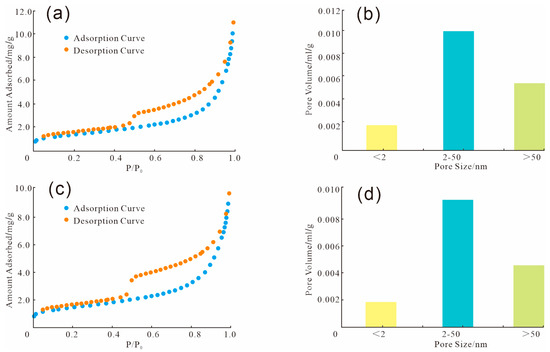
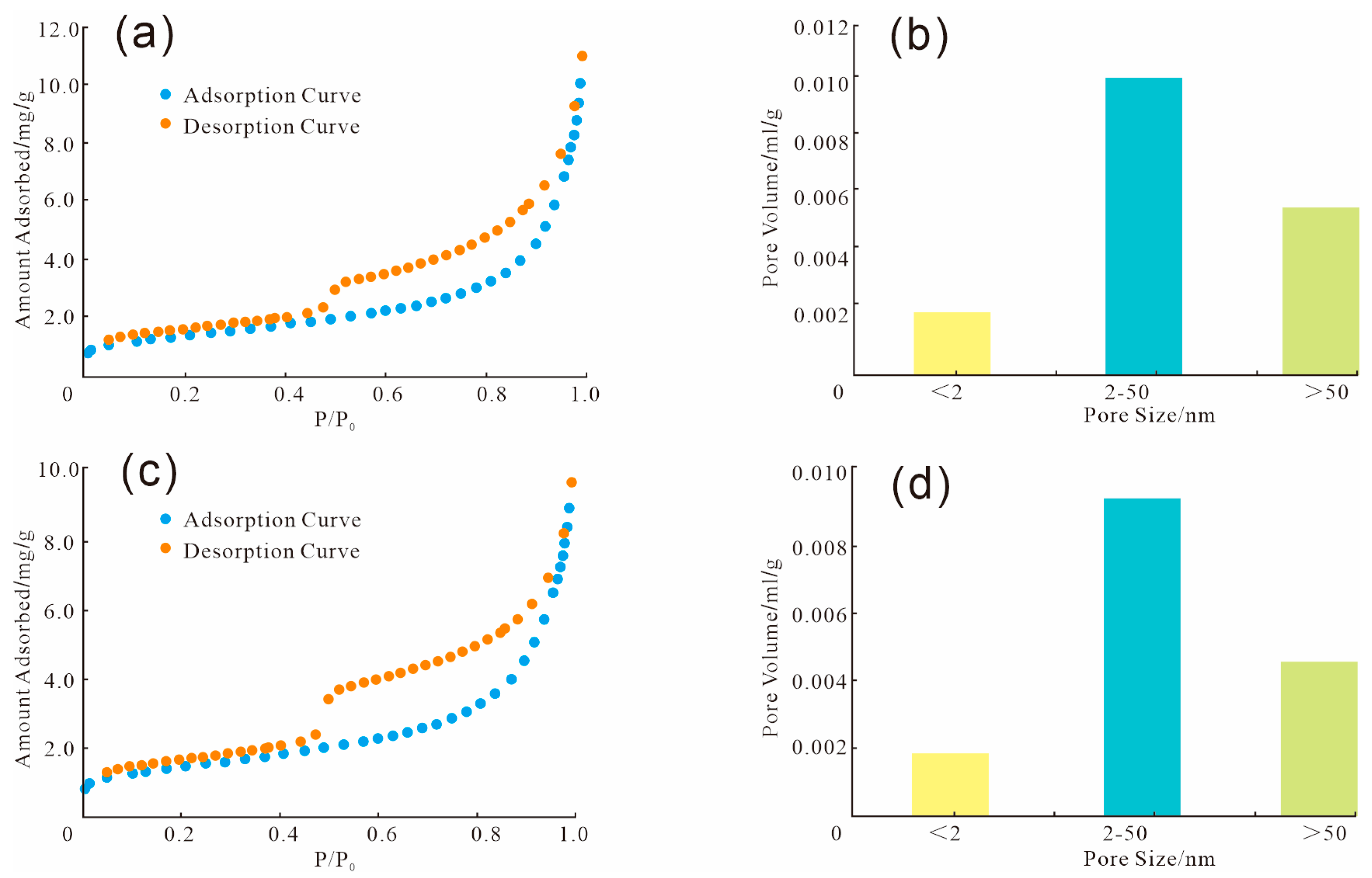
Nitrogen adsorption analysis indicates that the pores within the phosphatic bioclastic laminae are predominantly mesopores (2–50 nm) and macropores (>50 nm). Mesopores account for 56.41%–58.99% of the pore volume, and macropores constitute 28.72%–31.69%. Micropores (<2 nm) represent a relatively smaller fraction, approximately 10.30%–14.59%. The adsorption–desorption isotherms exhibit a Type IV shape with an H3-type hysteresis loop, suggesting that the pore morphology is dominated by ink-bottle and slit-shaped pores. This is associated with a complex assemblage of dissolution pores, interlayer pores, and organic matter-hosted pores (Figure 6). A pronounced hysteresis loop is observed in the relative pressure (P/P0) range of 0.45–0.95, indicating the presence of numerous ink-bottle-shaped pores, which are of significant importance for hydrocarbon storage and migration.
Figure 6.
Nitrogen adsorption–desorption isotherms of phosphatic bioclastic laminae in the J2l2, eastern Sichuan. (a) Isothermal adsorption curve, Type A; (b) Pore size distribution, Type A; (c) Isothermal adsorption curve, Type B; (d) Pore size distribution, Type B.
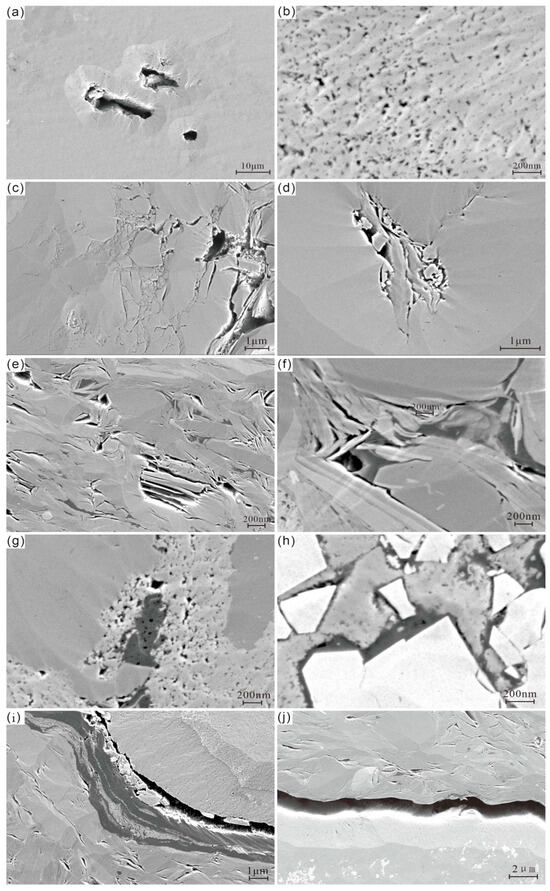
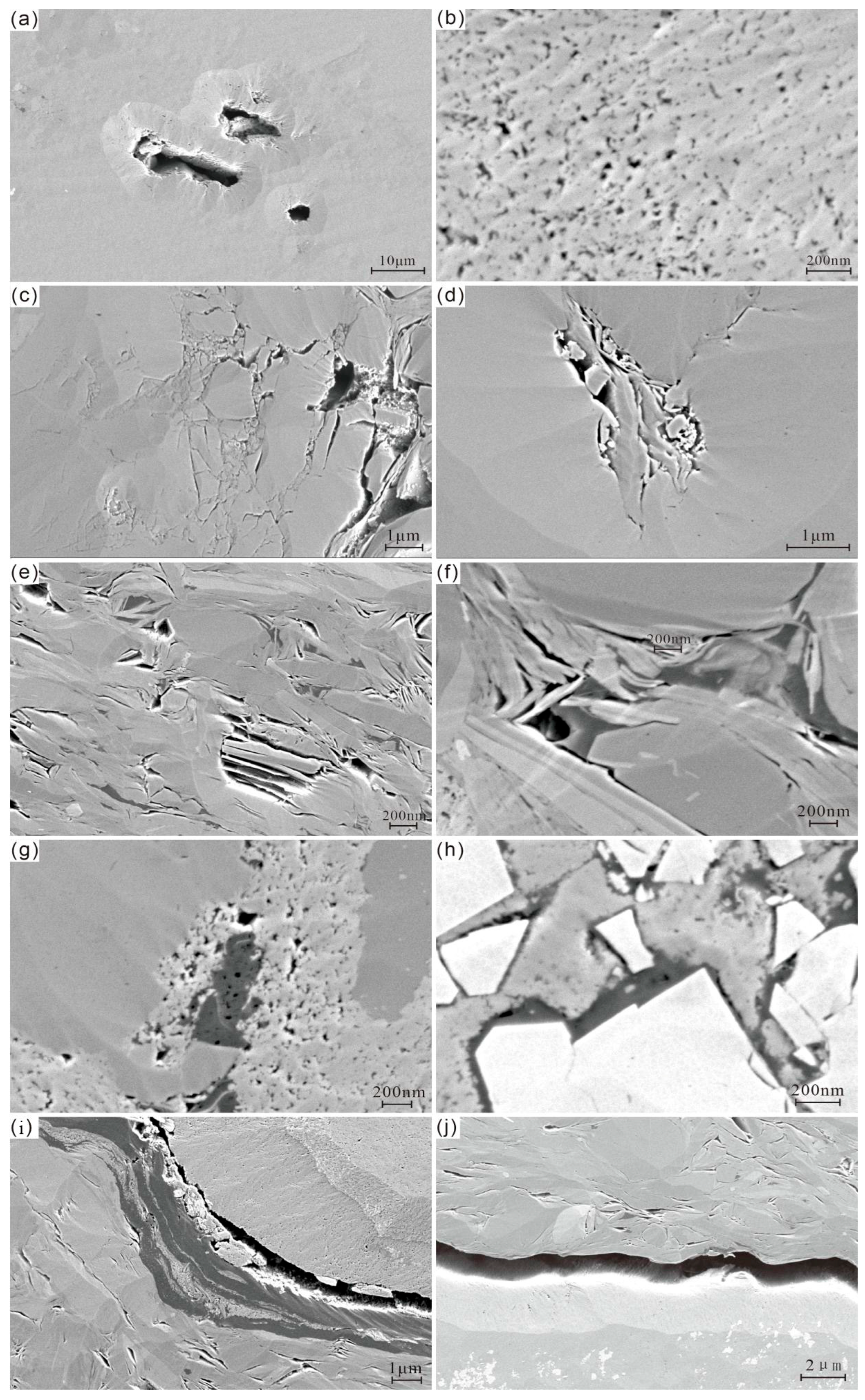
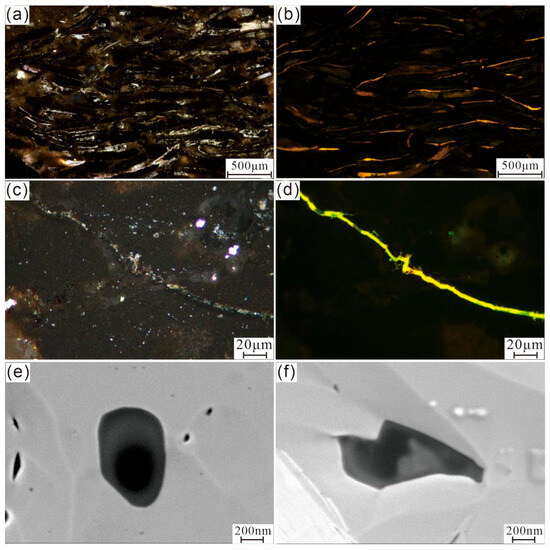
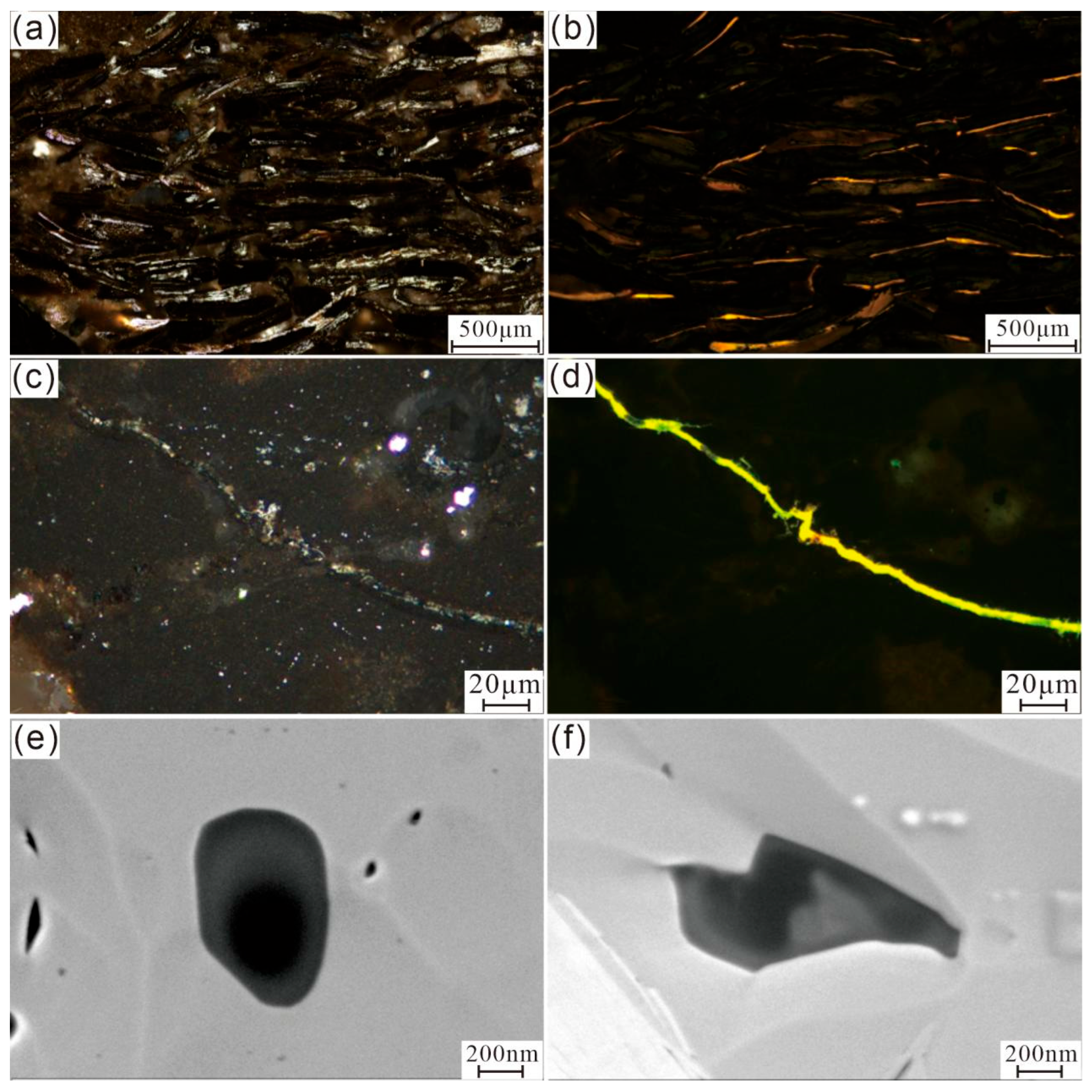
Various pore types were identified via field-emission scanning electron microscopy (FE-SEM) observations (Figure 7). (1) Dissolution pores: These pores are developed within and along the edges of apatite and calcite grains, with pore sizes ranging from 20 nm to 20 μm and irregular morphologies. Intragranular dissolution pores exhibit circular or irregular shapes, while grain-edge dissolution pores are serrated or embayed (Figure 7a,b). Their formation is associated with the dissolution of acidic fluids generated during organic matter maturation. (2) Intergranular pores: Distributed between bioclasts (e.g., fish bones, shell fragments) and clay minerals, or among pyrite grains, these pores have sizes of 50 nm to 5 μm and are mostly triangular or polygonal (Figure 7c,d), reflecting the characteristics of the original sedimentary fabric. (3) Interlayer pores: Abundant nanometer-scale pores (2–50 nm) are developed within the interlayers of clay minerals such as illite, contributing significantly to the total pore volume (Figure 7e,f). The presence of residual oil was observed within some of these pores, effectively corroborating the resident oil saturation measured by NMR. (4) Organic matter pores: Occurring within organic matter, these pores range in size from 10 to 200 nm and display diverse morphologies (e.g., spongy, bubble-like) (Figure 7g,h). Their development is related to hydrocarbon generation and expulsion during the thermal evolution of organic matter. (5) Micro-fractures: Including intergranular edge fractures, micro-fractures, and interlayer fractures, these features have widths of less than 1 μm and extension lengths up to several tens of micrometers (Figure 7i,j). Some fractures contain oil traces (Figure 8a–d), serving as both reservoir spaces and hydrocarbon migration pathways. Notably, a large number of nanoscale pores (20–200 nm) are developed within fish bone fragments. These pores are predominantly distributed along the residual organic matter after collagen decomposition, with circular or elliptical morphologies. They form a continuous micro–nano pore network with good connectivity, which significantly enhances the reservoir capacity of the laminae.
Figure 7.
Pore characteristics of phosphatic bioclastic laminae in the J2l2, eastern Sichuan. (a,b) Dissolution pores; (c,d) Interparticle pores; (e,f) Interlayer pores; (g,h) Organic matter pores; (i,j) Micro-fractures.
Figure 8.
Organic petrology and resident oil field-emission scanning electron microscopy (FE-SEM) micrographs of phosphatic bioclastic laminae in the J2l2, eastern Sichuan area. (a) Laminae of Type A, Oil immersion reflected light; (b) Laminae of Type B, Oil immersion fluorescence; (c) Laminae of Type B, Oil immersion reflected light; (d) Laminae of Type B, Oil immersion fluorescence; (e) Laminae of Type A, SEM image of resident oil; (f) Laminae of Type B, SEM image of resident oil.
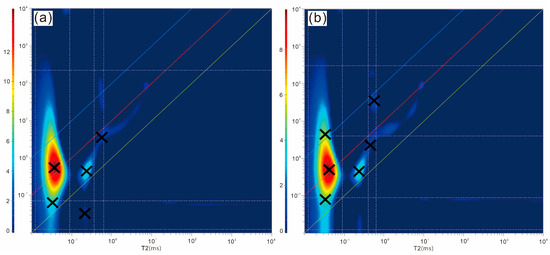
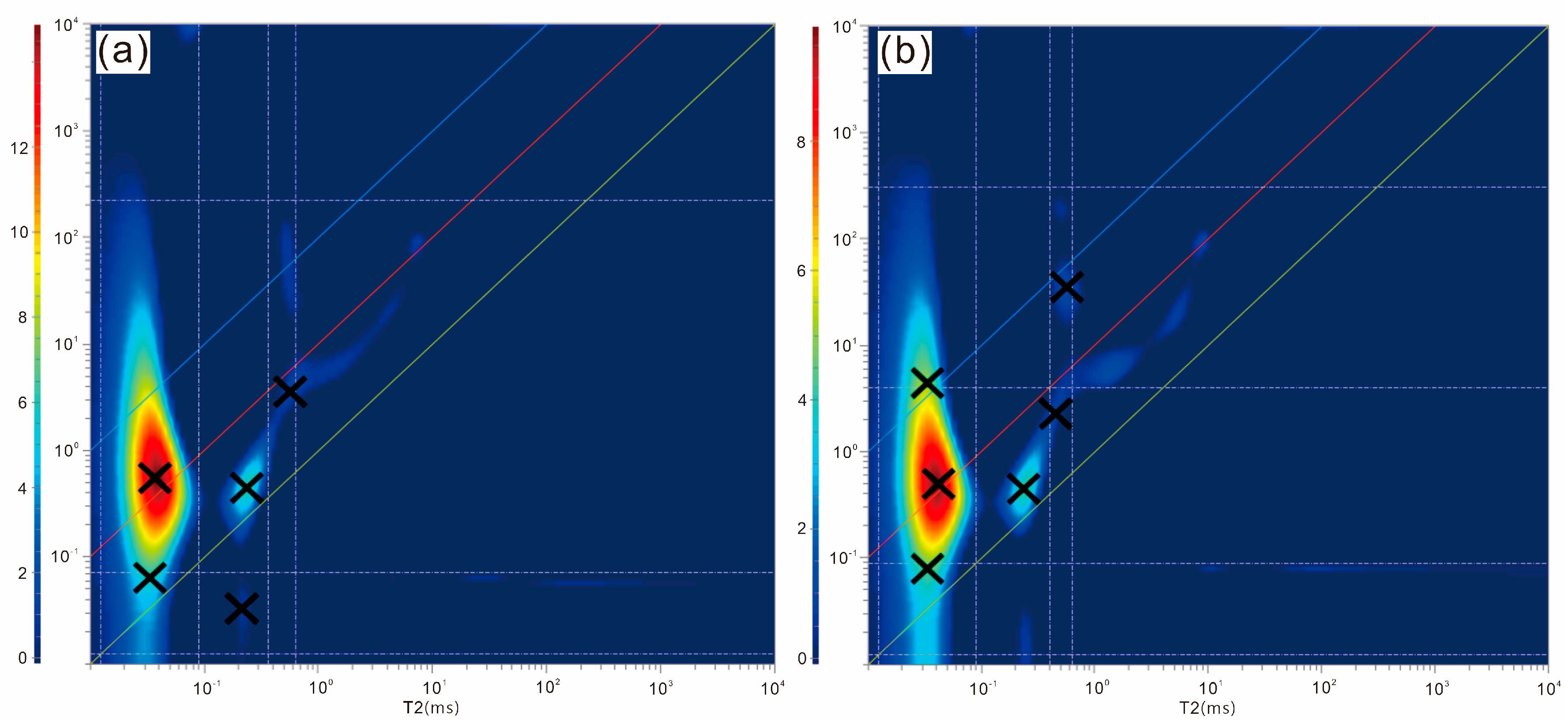
NMR analysis shows that the T2 spectrum exhibits a bimodal distribution. The front peak (T2 < 10 ms) corresponds to clay-bound fluid, while the rear peak (T2 > 10 ms) corresponds to movable fluid. The oil content ranges from 1.55 to 1.65 mg/g (avg. 1.60 mg/g), which is significantly higher than that of calcareous bioclastic laminae (1.01%), and felsic laminae (0.92%) (Figure 9). The T2 cutoff value is approximately 10 ms, indicating small pore sizes, a high content of bound fluid, and a low proportion of movable fluid. This finding is consistent with the observation of residual oil in pores under FE-SEM (Figure 8e,f). The relaxation time distribution indicates that the dominant pore throat radii are concentrated between 2 and 200 nm, aligning with the nitrogen adsorption results.
Figure 9.
Two-dimensional NMR maps of phosphatic bioclastic laminae in the J2l2, eastern Sichuan. (a) Laminae of Type A, Oil content 1.55 mg/g; (b) Laminae of Type B, Oil content 1.65 mg/g.
Organic petrography analysis reveals that the fluorescent organic matter within the laminae is predominantly bright yellow, indicating a relatively high hydrocarbon maturity. The widespread presence of resident oil, primarily located within dissolution pores, interparticle pores, and micro-fractures (Figure 8), shows a high degree of coincidence with the pore network. This suggests that hydrocarbons mainly reside within the secondary pore system. Vitrinite reflectance (Ro) ranges from 1.32% to 1.58% (avg. 1.45%), placing the samples in the high maturity stage and confirming good hydrocarbon generation potential.
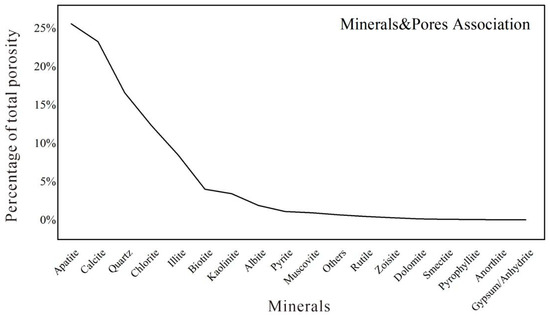
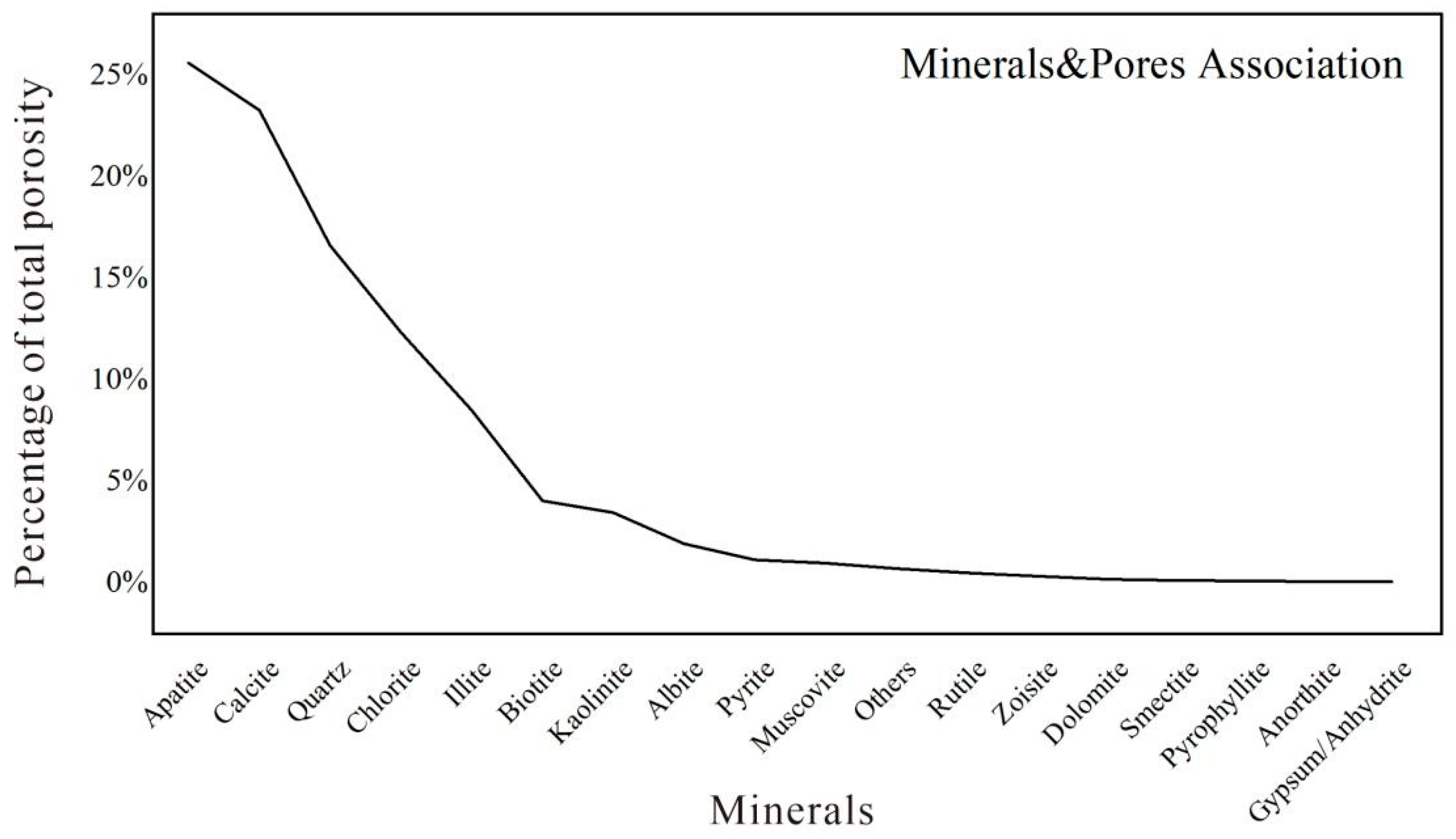
Integrated FESEM-QEMSCAN analysis clarifies the coupling relationship between minerals and porosity development: apatite and calcite contribute the most to the development of dissolution pores and interparticle pores (Figure 10). These minerals not only provide primary pore space but are also prone to dissolution by acidic fluids during diagenesis, forming secondary porosity. Diagenetic sequence analysis indicates that early carbonate cementation reduced primary porosity to some extent. However, acidic fluids generated during subsequent organic matter maturation led to selective dissolution of carbonate and phosphate minerals, creating an abundant secondary pore system. This diagenesis–hydrocarbon generation coupling is a key factor contributing to the relatively high porosity observed in the phosphatic bioclastic laminae [35,36,37].
Figure 10.
Contribution of different minerals to porosity based on QEMSCAN analysis.
4.1.3. Geochemical Characteristics
Total Organic Carbon (TOC) content tests show that the TOC content of phosphatic bioclastic laminae ranges from 1.27% to 2.71% (with an average of 1.99%), which is higher than that of clay laminae (1.69%), calcareous bioclastic laminae (0.95%), and felsic laminae (0.43%). Organic matter distribution exhibits obvious layer-controlled characteristics: TOC content is the highest in bioclast-enriched intervals and gradually decreases toward clay laminae, indicating that phosphatic bioclastic laminae are important carriers for organic matter preservation.
Rock-Eval pyrolysis results show S2 values of 1.58–2.34 mg HC/g rock and a Hydrogen Index (HI) ranging from 125 to 185 mg HC/g TOC, indicating that the organic matter is predominantly Type III kerogen. Tmax values range from 424 to 446 °C, consistent with vitrinite reflectance data, indicating that the organic matter is in a high maturity stage. The Potential Index (PI) ranges from 0.45 to 0.6, suggesting the primary generation of condensate and wet gas and confirming that the source rock has undergone effective hydrocarbon expulsion.
In summary, phosphatic bioclastic laminae possess dual attributes of medium-quality, gas-prone source rock and effective reservoir. Their organic matter abundance meets the criteria of effective source rocks (average TOC: 1.99%, HI: 125~185 mg HC/g TOC), providing a sufficient material basis for hydrocarbon generation. Additionally, the superior pore structure (average porosity: 4.84%, average oil content: 1.60 mg/g) and moderate organic matter maturity (average Ro: 1.45%) ensure substantial condensate oil and wet gas generation (Table 1), making them a favorable target for shale oil and gas exploration due to the “source-reservoir integration” characteristic.
Table 1.
The physical properties and organic geochemical of different types of shale lamina samples in the second member of the Jurassic Lianggaoshan Formation, Eastern Sichuan Basin.
4.2. Controls of Sedimentary–Diagenetic Processes on Bioclast-Rich Laminae
4.2.1. Burial Environment and Provenance of Phosphatic Bioclastic Laminae
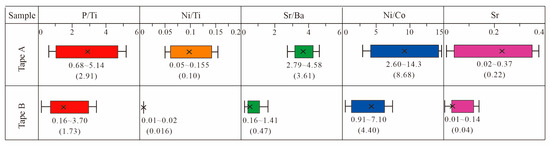
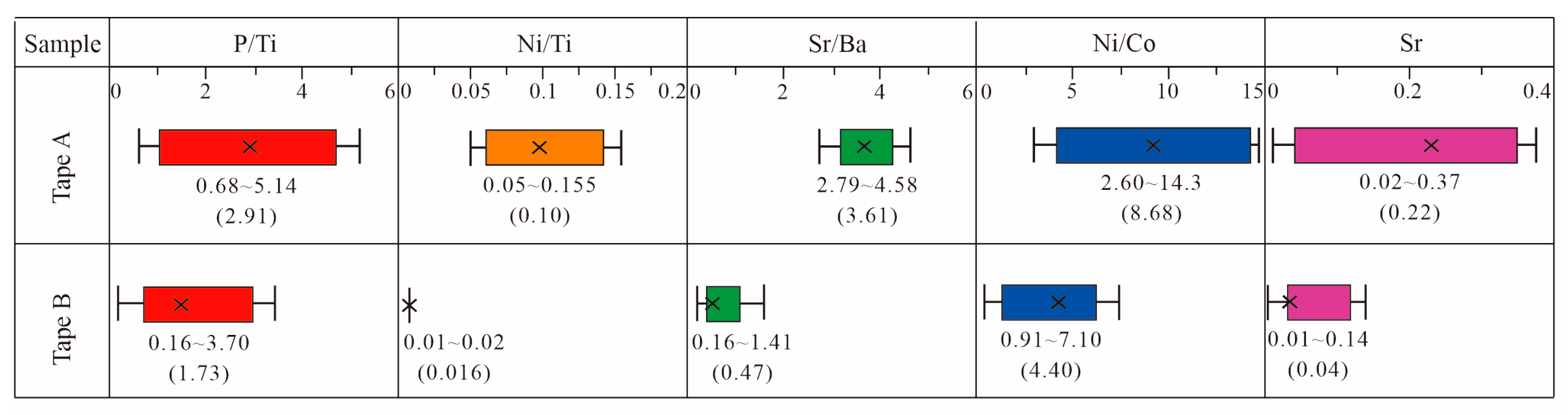
XRF-based element ratios were used to decipher the paleoenvironmental background of phosphatic bioclastic layers (Figure 11). XRF point-scanning analyses with a 1 cm interval were conducted on phosphatic intervals, revealing the following geochemical characteristics for Type A phosphatic bioclastic laminae: P/Ti ratios range from 0.68 to 5.14 (avg. 2.91), Ni/Co ratios from 2.60 to 14.30 (avg. 8.68), Sr/Ba ratios from 2.79 to 4.58 (avg. 4.61), and Sr contents from 0.02% to 0.37% (avg. 0.22%). In contrast, the corresponding indices for Type B phosphatic bioclastic laminae are as follows: P/Ti ratios of 0.16–3.70 (avg. 1.73), Ni/Co ratios of 0.91–7.10 (avg. 4.40), Sr/Ba ratios of 0.16–1.41 (avg. 0.47), and Sr contents of 0.01%–0.14% (avg. 0.04%).
Figure 11.
XRF analysis results of phosphatic bioclastic laminae in the J2l2, eastern Sichuan.
The differences in these geochemical indicators hold significant paleoenvironmental implications [38,39,40,41,42]. The P/Ti ratio is a sensitive proxy for paleoproductivity, with higher values indicating nutrient-rich surface waters and high biological productivity [39]. The Ni/Co ratio serves as an indicator of redox conditions, where values greater than 7 typically suggest anoxic environments [41]. The Sr/Ba ratio and Sr content reflect water salinity and distance from the shoreline, with higher values representing more saline conditions and deposition farther offshore [42]. Based on this, it is inferred that Type A phosphatic laminae formed under conditions of higher paleoproductivity, more intense water column anoxia, and a depositional location closer to the lake basin center compared to Type B. Morphological analysis of coprolites and fish bone fragments offers a unique perspective on the paleoecosystem. The coprolites are mostly spindle-shaped or elliptical, with smooth surfaces and well-preserved internal structures, indicating a quiet, low-energy depositional environment. Based on their size and morphology, the fish that produced these coprolites are estimated to have been 0.5 to 1.5 m in length, representing medium to large-sized fish [43]. The microstructure of fish bone fragments displays distinct growth rings, reflecting pronounced seasonal variations during the organism’s life. Taxonomic identification of shell fossils indicates a predominance of lacustrine bivalves, with complete and minimally abraded shells, further confirming the weak hydrodynamic sedimentary conditions of the lacustrine basin [44].
Comprehensive analysis indicates that phosphatic bioclastic laminae formed in a semi-deep to deep lacustrine, low-energy reducing environment. The material source was dominated by near-autochthonous bioclastic accumulation. High paleoproductivity, anoxic conditions, and saline waters collectively facilitated the enrichment and preservation of phosphorus and organic matter.
4.2.2. Formation Process and Pore Evolution of the Phosphatic Bioclastic Laminae
Laminae record specific depositional processes, and varying depositional environments can give rise to laminae with distinct structural and textural characteristics. The J2l2 was deposited in the study area under the influence of the Paleo-Tethys Ocean closure and associated collisional orogenesis. At that time, the region was in the maximum flooding period of a lacustrine depression basin, developing a shale-dominated sedimentary system [27,31]. The vertical succession of laminae in the core from Well M reflects, to some extent, the periodic environmental fluctuations in the study area. During warm and humid periods, as the lake level continuously rose, intermittent upwelling along the basin margin likely transported nutrients from deeper waters to the shallow, photic zone. This provided conditions for algal blooms and fueled the proliferation of organisms such as fish and shellfish. After these organisms died, high-density components were rapidly deposited to form phosphatic bioclasts. These components include apatite fish bone fragments, coprolites (long axis: 0.2–3.5 cm) with undigested residues, and calcite shell fossils. At this stage, the lake basin was in an undercompensated shallow-sublacustrine environment, where the sedimentation rate was lower than the subsidence rate. Bioclasts accumulated rapidly and exhibited a “bedding-parallel and slightly oriented” arrangement. The surface oxic-bottom weak reducing stratification, resulting from lake water stratification induced by temperature differences, inhibited aerobic microbial decomposition. Additionally, the high-salinity aqueous environment, as mentioned earlier, exerted a certain “protective effect” on apatite, enabling the well preservation of nanoscale pores within fish bones and inclusions in coprolites, while clay minerals underwent rapid cementation and consolidation. Under cold and arid conditions, biological activity weakened, input of biological shells decreased, and fine-grained clay was deposited, forming argillaceous laminae.
The aforementioned formation process fundamentally controlled the pore development and evolution of phosphatic bioclastic laminae, which can be summarized into three key mechanisms: (1) the intrinsic nanoscale pore system of bioclasts (especially fish bones and coprolites) provided important primary reservoir space for the reservoir; (2) the diagenetic–hydrocarbon generation coupling process profoundly modified the pore structure: early compaction and cementation reduced some primary pores. However, during the peak hydrocarbon generation stage of organic matter, the generated acidic fluids extensively and selectively dissolved apatite and calcite. This formed numerous secondary dissolution pores and significantly increased total porosity; (3) interlayer pores generated by clay mineral transformation (e.g., illitization) enhanced the abundance of nanoscale pores; (4) brittle fracturing under an abnormal high-pressure system formed a micro-fracture system including grain-edge fractures and interlayer fractures. Thesemicro-fracturees not only serve as effective reservoir space themselves but also improve the connectivity between primary pores, dissolution pores, interlayer pores, and organic matter pores, constructing a cross-layer connected multi-scale pore-fracture network. In summary, through the triple mechanism of “primary biological pore foundation + late diagenetic dissolution pore enhancement +micro-fractures system connectivity,” phosphatic bioclastic laminae have developed a superior pore structure, emerging as geological–engineering dual sweet spots for shale oil and gas.
4.3. Development Model of Phosphatic Bioclastic Laminae
Based on the formation process and pore evolution mechanism, this study proposes a diagenetic evolution conceptual model for phosphatic bioclastic laminae and has constructed a unique “source-reservoir” coupling development model. Founded on the rhythmic interbedding of organic-rich clay and bioclastic laminae (intercalations), this model achieves the spatiotemporal coupling of “superior hydrocarbon generation” (efficient hydrocarbon generation) and “superior reservoir quality” (efficient storage capacity).
4.3.1. Early Diagenetic Stage (Ro = 0.7%–1.0%)
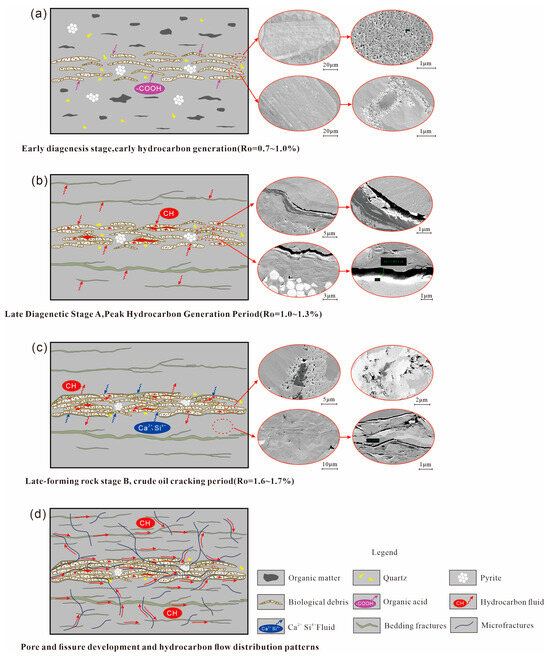
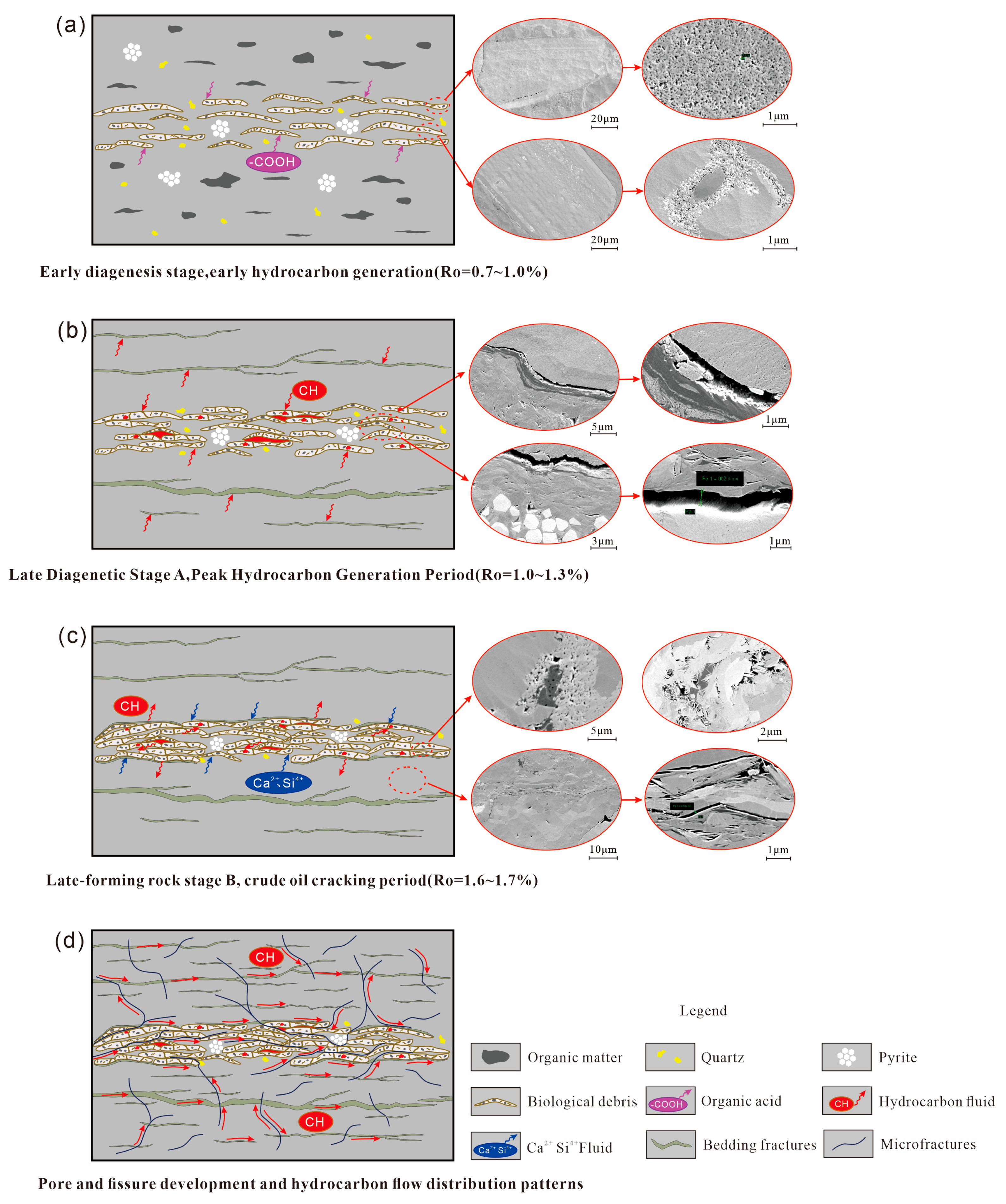
During this stage, organic matter is in the early stage of hydrocarbon generation, and clay minerals are dominated by smectite. Organic matter and clay minerals form organic–clay complexes via van der Waals forces and hydrogen bonding, creating a flocculated microstructure during deposition [45,46]. The release of interlayer water during the transformation of smectite to illite creates a weakly acidic environment in the pore fluids [47]. Bioclasts (e.g., shells, fish bones) are oriented within the muddy matrix due to gravitational settling, forming an interbedded structure of millimeter-scale laminae and centimeter-scale beds. Within the clay-rich laminae, primary interparticle pores are partially preserved due to the flocculated packing of mineral grains, with total porosity ranging from 2.57% to 6.50% (avg. 4.22%). With increasing burial depth, organic acids expelled alongside hydrocarbons enter the pore system and preferentially dissolve the calcareous shells of bioclasts. This generates dissolution pores 10–50 μm in diameter, occurring both within bioclast particles and extending along their edges to form honeycomb-like dissolution structures (Figure 12a).
Figure 12.
Evolutionary model and development pattern of phosphatic bioclastic laminae in the J2l2, eastern Sichuan. (a) Early Diagenetic Stage; (b) Late Diagenetic Stage A; (c) Late Diagenetic Stage B; (d) Pore and fissure development and hydrocarbon flow.
4.3.2. Late Diagenetic Stage A (Ro = 1.0%–1.3%)
This stage corresponds to the peak hydrocarbon generation period, where kerogen thermal degradation produces large amounts of liquid hydrocarbons and wet gas. The release of structurally bound water during the transformation of smectite to illite occurs synchronously with hydrocarbon generation, leading to a rapid increase in pore fluid pressure. The combined effects of volume expansion from hydrocarbon generation and water release from smectite dehydration create an overpressure system [48]. Overpressure accumulation induces brittle rock fracturing, forming three types of micro-fractures. These include centimeter-scale interlayer fractures along lamina boundaries, 5–20 μm wide grain-boundary fractures surrounding bioclasts, and grid-like shrinkage fractures from clay mineral dehydration. Driven by overpressure, this fracture network continuously propagates, effectively mitigating the compaction stress from the overlying strata (Figure 12b).
4.3.3. Late Diagenetic Stage B (Ro = 1.6%–1.7%)
Organic matter entered the crude oil cracking stage, where smectite-to-illite transformation was completed, releasing all interlayer structural water and alkaline diagenetic fluids enriched in Ca2+ and Si4+. These fluids migrate extensively along the interfaces between bioclast-rich laminae and clay-rich beds. They induce gradual infilling and cementation of early-formed dissolution and interparticle pores by authigenic minerals (e.g., calcite, quartz). This significantly increases rock density [49]. Methane generated from oil cracking creates abundant nanometer-scale organic pores within the organic matter. Residual organic acids interacting with CO2 produced from thermal degradation form enlarged dissolution pores along bioclast edges and within clay mineral interlayers [50,51]. Furthermore, after the complete transformation of smectite to illite, oriented interlayer fractures (10–50 nm wide) form between the sheet-like crystals. The combined action of tectonic stress and overpressure promotes the further development of the micro-fracture system. Interlayer fractures extend continuously along lamina boundaries for several centimeters; grain-boundary fractures form annular networks around bioclasts; and shrinkage fractures create grid-like micro-fissures during clay dehydration. These fractures interconnect with organic and dissolution pores, establishing a three-dimensional flow network. In clay-rich laminae, organic matter content is low and mineral transformation is weak. Thus, primary flocculation pores (0.5–2 μm) and micro-fractures are largely preserved. They form a “rigid-flexible” interbedded structure with heavily cemented bioclast-rich layers (Figure 12c). The phosphatic bioclastic laminae developed through this model not only ensure oil-bearing potential but also enhance flow capacity through the fracture network, constituting a geological + engineering dual sweet spot (Figure 12d).
5. Conclusions
- (1)
- Phosphatic bioclastic laminae in the Lianggaoshan Formation of the Fuxing area, eastern Sichuan Basin, are dominated by apatite (avg. 42.31%) and calcite (avg. 18.61%), with two structural types identified: gravel-bearing bioclastic argillite and typical laminae. The average total porosity is 4.84%, significantly higher than that of other lamina types. Pores are predominantly mesopores and macropores, including dissolution pores, intergranular pores, interlayer pores, organic pores, and micro-fractures. Among these, the nanoscale pore network within fish bone fragments makes a prominent contribution to the reservoir space.
- (2)
- The phosphatic bioclastic laminae exhibit characteristics of both a high-quality source rock and an effective reservoir: an average TOC content of 1.99%, an average oil content of 1.60 mg/g, Type III-dominant kerogen, and an average vitrinite reflectance (Ro) of 1.45%, indicating a high maturity stage. NMR analysis suggests favorable fluid mobility within the pores, demonstrating good production potential and presenting typical “source-reservoir integration” features.
- (3)
- The phosphatic bioclastic laminae formed in a low-energy, anoxic, high-salinity environment within a semi-deep to deep lacustrine setting, controlled by periodic paleoproductivity fluctuations. Their superior pore structure is shaped by a triple mechanism: “foundation by primary biogenic pores, porosity enhancement by late diagenetic dissolution, and connectivity via a micro-fracture network”. Crucially, the selective dissolution of apatite and calcite by acidic fluids generated through diagenesis–hydrocarbon generation coupling is the key process.
- (4)
- A conceptual model of diagenetic evolution for the phosphatic bioclastic laminae has been established. During burial evolution, organic-rich clay layers and phosphatic bioclastic laminae interact through organic matter hydrocarbon generation, mineral transformation, fluid–rock interactions, and overpressure-induced fracturing. This process constructs a three-dimensional storage and flow network of interconnected pores and fractures, exhibiting the characteristic of synergistic coupling between “superior generation” and “superior storage”. This model provides a core geological basis for sweet spot prediction in shale oil and gas exploration, and is applicable to other areas of the Sichuan Basin with similar geological settings, which clarifies the application value of the model in regions with analogous geological backgrounds within the Sichuan Basin.
Author Contributions
Conceptualization, W.C. and T.B.; methodology, C.Z., D.W. and M.L.; software, B.W. and H.L.; literature search and selection, Y.Z. and W.Z.; data curation, Y.Z. and R.F.; writing—original draft preparation, C.Z. and W.C.; writing—review and editing, C.Z., W.C. and Z.W.; supervision, W.C.; project administration, C.Z. All authors have read and agreed to the published version of the manuscript.
Funding
This research was funded by the National Natural Science Foundation of China (Grant No. 42302177, U2244208).
Data Availability Statement
The original contributions presented in this study are included in the article. Further inquiries can be directed to the corresponding author.
Acknowledgments
The authors thank the journal editors and anonymous reviewers for their constructive comments.
Conflicts of Interest
Cong Zhang, Weikun Chen, Yuan Zhang, Tenger Borjigin, Wenren Zeng, Haohan Li, Ronghui Fang and Zi Wang are employees of Oil & Gas Survey, China Geological Survey. Boran Wang is employee of CNOOC China Limited, Liu Tianjin Branch. Daojun Wang and Miaomiao are employees of Sinopec Exploration Company. The paper reflects the views of the scientists and not the company.
References
- Zou, C.N.; Yang, Z. Progress in China’s Unconventional Oil & Gas Exploration and Development and Theoretical Technologies. Acta Geol. Sin. 2015, 89, 938–971. [Google Scholar]
- Abrams, M.A.; Thomas, D. Geochemical evaluation of oil and gas samples from the Upper Devonian and Mississippian reservoirs Southern Anadarko Basin Oklahoma and its implication for the Woodford Shale unconventional play. Mar. Pet. Geol. 2020, 112, 101043. [Google Scholar] [CrossRef] [Scilit]
- Guo, X.S.; Wang, E.Z.; Ma, X.X.; Li, M.W.; Qian, M.H.; Cao, T.T.; Li, Z.M.; Chu, J.J. Lacustrine shale oil systems in China: Advances in characterization methods and resource accumulation models. Earth-Sci. Rev. 2025, 270, 105256. [Google Scholar] [CrossRef] [Scilit]
- Sun, L.D.; Liu, H.; He, W.Y.; Li, G.X.; Zhang, S.C.; Zhu, R.K.; Jin, X.; Meng, S.W.; Jiang, H. An analysis of major scientific problems and research paths of Gulong shale oil in Daqing Oilfield, NE China. Pet. Explor. Dev. 2021, 48, 527–540. [Google Scholar] [CrossRef] [Scilit]
- Jia, C.Z.; Pang, X.Q.; Song, Y. Whole petroleum system and ordered distribution pattern of conventional and unconventional oil and gas reservoirs. Pet. Sci. 2023, 20, 1–19. [Google Scholar] [CrossRef] [Scilit]
- Nasee, M.T. Spectral decomposition’ application images early-Cretaceous tectonically-controlled shallow-marine unconventional shale gas-bearing resources, SW-Asian Indus rift basin: Inverted velocity and density structural simulations. Phys. Chem. Earth 2025, 139, 103947. [Google Scholar] [CrossRef] [Scilit]
- Ahmed, A.; Khan, T.; Mustapha, K.A.; Jahandad, S. Novel insights into the conventional and unconventional hydrocarbon potential of the Sembar Formation, Southern Indus Basin, Pakistan: A multi-analytical and basin modeling approach. J. Asian Earth Sci. 2025, 293, 106794. [Google Scholar] [CrossRef] [Scilit]
- Li, J.J.; You, H.; Zhang, X.W.; Zhao, S.P.; Jiang, F.J.; Feng, G.Q.; Su, Y.; Zhang, Y.W.; Xue, J.H. Influence of shale reservoir properties on shale oil mobility and its mechanism. Energy Geosci. 2024, 5, 100329. [Google Scholar] [CrossRef] [Scilit]
- Awan, R.S.; Liu, B.; Yasin, Q.; Wood, D.A.; Rahim, H.U.; Gul, M.A.; Ali, S.; Iltaf, K.H.; Khan, A. Paleoenvironmental conditions and key drivers of organic matter accumulation in the early cretaceous Talhar Shale, Lower Indus Basin, Pakistan. J. Asian Earth Sci. 2025, 292, 106716. [Google Scholar] [CrossRef] [Scilit]
- Nwankwo, I.V.; Dejam, M.; Quillinan, S.A. A critical review of experimental and theoretical studies on shale geomechanical and deformation properties, fluid flow behavior, and coupled flow and geomechanics effects during production. Int. J. Coal Geol. 2025, 306, 104777. [Google Scholar] [CrossRef] [Scilit]
- Schulz, H.M.; Yang, S.Y.; Schovsbo, N.H.; Rybacki, E.; Ghanizadeh, A.; Bernard, S.; Mahlstedt, N.; Krüger, M.; Amann-Hildebrandt, A.; Krooss, B.M.; et al. The Furongian to Lower Ordovician Alum Shale Formation in conventional and unconventional petroleum systems in the Baltic Basin—A review. Earth-Sci. Rev. 2021, 218, 103674. [Google Scholar] [CrossRef] [Scilit]
- Qian, Y.J.; Gao, P.; Fang, X.L.; Sun, F.R.; Cai, Y.D.; Zhou, Y.F. Microstructure Characterization Techniques for Shale Reservoirs: A Review. Front. Earth Sci. 2022, 10, 930474. [Google Scholar] [CrossRef] [Scilit]
- Jia, L.X. Research Progress and Challenges of Shale Oil Reservoir Characteristics. Sci. J. Tech. 2025, 7, 219–223. [Google Scholar] [CrossRef] [Scilit]
- Xu, L.L.; Pan, R.F.; Hu, H.Y.; Meng, J.H. Contribution of Various Shale Components to Pore System: Insights from Attributes Analysis. J. Mar. Sci. Eng. 2023, 11, 1327. [Google Scholar] [CrossRef] [Scilit]
- Lu, M.J.; Ding, R.; Yang, F.; He, W.J.; Zhang, L.Y. Comprehensive Characterization of Shale Components and Pore Structures: An Analysis from Micro- to Nanoscale Perspectives. J. Energ. Eng. 2025, 151, EYENG-5864. [Google Scholar] [CrossRef] [Scilit]
- ElBehery, A.K.; El-Shafei, M.K.; Farouk, S. Reservoir quality evaluation of the Middle Miocene Hammam Faraun member: Shale type discrimination and well log analysis in the offshore Esh El Mallaha area, southern Gulf of Suez, Egypt. J. Afr. Earth Sci. 2025, 229, 105697. [Google Scholar] [CrossRef] [Scilit]
- Rao, Q.R.; He, Z.L.; Dong, T.; Wang, W.Q.; Qang, X.Y.; Rao, L.Q.; Wang, T.; Huang, L.W. Pore and fracture characteristics and diagenetic evolution mechanisms of low-maturity lacustrine shales from the Paleogene Shahejie Formation in the Jiyang Depression, Bohai Bay Basin, Eastern China. Mar. Petrol. Geol. 2024, 170, 107154. [Google Scholar] [CrossRef] [Scilit]
- Górniak, K. The occurrence of clay in pore space of impure chalk: An approach from high resolution petrographic studies of the Outer Carpathian marls (Poland). Mar. Pet. Geol. 2017, 88, 785–797. [Google Scholar] [CrossRef] [Scilit]
- Nie, H.K.; Liu, Q.Y.; Li, P.; Ding, J.H.; Sun, C.X.; Zhai, C.B.; Zhao, J.H.; Jin, Z.J.; Dang, W. Quartz types, formation mechanism, and its effect on shale oil and gas enrichment: A review. Earth-Sci. Rev. 2025, 261, 105011. [Google Scholar] [CrossRef] [Scilit]
- Wang, P.W.; Liu, Z.B.; Zhang, D.W.; Li, X.; Liu, H.T.; Zhou, L.; Li, P. Source rock and reservoir qualities of middle Jurassic Lianggaoshan lacustrine shale at fuxing area, Sichuan Basin: Implication for shale-oil enrichment. Unconv. Resour. 2023, 3, 37–43. [Google Scholar] [CrossRef] [Scilit]
- Wei, M.Y.; Chen, W.; Wang, X.Z.; Bao, Z.D.; Zeng, D.M.; Kang, J.H.; Li, Y.; Liu, K.M.; Huo, F. Organic lithofacies and its reservoir characteristics of lacustrine shales of the Dongyuemiao Member in the Jurassic Ziliujing Formation, eastern Sichuan Basin. J. Palaeogeogr. 2026, 15, 100309. [Google Scholar] [CrossRef] [Scilit]
- Kang, J.H.; Wang, X.Z.; Huo, F.; Zeng, D.M.; Li, Y.; Huang, Z.S.; Zhu, Y.Q.; Xie, S.Y.; Yang, Y.R.; Yang, Y.M. Changes in lake sedimentary environment and characteristics of organic matter enrichment under the influence of geological events: The lower Jurassic (Sinemurian-Toarcian) organic-rich shale, Sichuan Basin, Upper Yangtze Plate. Mar. Petrol. Geol. 2025, 177, 107390. [Google Scholar] [CrossRef] [Scilit]
- Guo, X.S.; Huang, R.C.; Zhang, D.W.; Li, S.J.; Shen, B.J.; Liu, T.J. Hydrocarbon accumulation and orderly distribution of whole petroleum system in marine carbonate rocks of Sichuan Basin, SW China. Pet. Explor. Dev. 2024, 51, 852–869. [Google Scholar] [CrossRef] [Scilit]
- Jiang, S.; Tang, X.L.; Cai, D.S.; Xue, G.; He, Z.L.; Long, S.X.; Peng, Y.M.; Gao, B.; Xu, Z.Y.; Dahdah, N. Comparison of marine, transitional, and lacustrine shales: A case study from the Sichuan Basin in China. J. Pet. Sci. Eng. 2017, 150, 334–347. [Google Scholar] [CrossRef] [Scilit]
- Hong, H.T.; Qin, C.Y.; Zhang, S.M.; Zhang, Z.J.; Wang, X.J.; Li, N.; Cheng, D.W.; Tang, W.B. Early–middle Jurassic source to sink evolution and its tectonic significance in the northeastern Sichuan Basin. Front. Earth Sci. 2023, 11, 1231694. [Google Scholar] [CrossRef] [Scilit]
- Zhang, R.G.; Luan, J.H.; Chen, Y.; Chen, F.; Liu, Y.W. Tectonic Characteristics of the East Sichuan Basin and Regional Tectonic Evolution Characteristics of Regional Tectonic Belt. Earth Environ. Sci. 2020, 558, 032009. [Google Scholar] [CrossRef] [Scilit]
- Tang, W.B.; Zhang, S.W.; Cheng, D.W.; Georgia, P.P.; Zhang, Z.J.; Hong, H.T.; Yu, K.; Hou, M.C.; Chen, A.Q. Sedimentary response to Jurassic intracontinental orogenic process in Qinling Orogenic Belt: New insights from detrital zircon geochronology and heavy minerals in the Northeastern Sichuan Basin, SW China. Palaeogeogr. Palaeoclimatol. Palaeoecol. 2026, 681, 113359. [Google Scholar] [CrossRef] [Scilit]
- Cheng, D.W.; Zhang, Z.J.; Hong, H.T.; Zhang, S.M.; Qin, C.Y.; Yuan, X.J.; Zhang, B.; Zhou, C.M.; Deng, Q.J. Sequence structure, sedimentary evolution and their controlling factors of the Jurassic Lianggaoshan Formation in the East Sichuan Basin, SW China. Pet. Explor. Dev. 2023, 50, 293–305. [Google Scholar] [CrossRef] [Scilit]
- Chang, J.Q.; Fan, X.D.; Jiang, Z.X.; Wang, X.M.; Chen, L.; Li, J.T.; Zhu, L.; Wan, C.X.; Chen, Z.X. Differential impact of clay minerals and organic matter on pore structure and its fractal characteristics of marine and continental shales in China. Appl. Clay Sci. 2022, 60, 174–189. [Google Scholar] [CrossRef] [Scilit]
- Wang, X.Y.; Jin, Z.K.; Zhao, J.H.; Zhu, Y.X.; Hu, Z.Q.; Liu, G.X.; Jiang, T.; Wang, H.; Li, S.; Shi, S.T. Depositional environment and organic matter accumulation of Lower Jurassic nonmarine fine-grained deposits in the Yuanba Area, Sichuan Basin, SW China. Mar. Petrol. Geol. 2020, 116, 104352. [Google Scholar] [CrossRef] [Scilit]
- Boulton, S.J.; VanDeVelde, J.H.; Grimes, S.T. Palaeoenvironmental and tectonic significance of Miocene lacustrine and palustrine carbonates (Aït Kandoula Formation) in the Ouarzazate Foreland Basin, Morocco. Sediment. Geol. 2019, 383, 195–215. [Google Scholar] [CrossRef] [Scilit]
- Liang, C.; Cao, Y.C.; Liu, K.Y.; Jiang, Z.X.; Wu, J.; Hao, F. Diagenetic variation at the lamina scale in lacustrine organic-rich shales: Implications for hydrocarbon migration and accumulation. Geochim. Cosmochim. Acta 2018, 229, 112–128. [Google Scholar] [CrossRef] [Scilit]
- Dill, H.G. Kaolin: Soil, rock and ore: From the mineral to the magmatic, sedimentary and metamorphic environments. Earth-Sci. Rev. 2016, 161, 16–129. [Google Scholar] [CrossRef] [Scilit]
- Li, M.Y.; Wu, S.T.; Hu, S.Y.; Zhu, R.K.; Meng, S.W.; Yang, J.R. Lamination Texture and Its Effects on Reservoir and Geochemical Properties of the Palaeogene Kongdian Formation in the Cangdong Sag, Bohai Bay Basin, China. Minerals 2021, 11, 1360. [Google Scholar] [CrossRef] [Scilit]
- Polgári, M.; Hein, J.R.; Bíró, L.; Gyollai, I.; Németh, T.; Sajgó, C.; Fekete, J.; Schwark, L.; Pál-Molnár, E.; Hámor-Vidó, M.; et al. Mineral and chemostratigraphy of a Toarcian black shale hosting Mn-carbonate microbialites (Úrkút, Hungary). Palaeogeogr. Palaeoclimatol. Palaeoecol. 2016, 459, 99–120. [Google Scholar] [CrossRef] [Scilit]
- Li, B.; Goldberg, K. Diagenesis and reservoir quality of Cambrian carbonates in the Tarim Basin, northwestern China. J. Asian Earth Sci. 2022, 223, 104972. [Google Scholar] [CrossRef] [Scilit]
- Pang, W.J.; Li, J.; Zhou, S.X.; Liu, L.L.; Li, Y.Y.; Wang, H.; Chen, G.R. Origin, Distribution, and Influential Factors of Organic Acids in Deep and Ultradeep Clastic Reservoirs within the Fukang Sag of the Junggar Basin. ACS Omega 2024, 9, 49480–49493. [Google Scholar] [CrossRef] [Scilit]
- Meyers, P.A. Organic geochemical proxies of paleoceanographic, paleolimnologic, and paleoclimatic processes. Org. Geochem 1997, 27, 213–250. [Google Scholar] [CrossRef] [Scilit]
- Zhao, L.; Li, Y.; Zou, C.J.; Zhao, S.Z.; Wu, C.R. Paleoenvironmental characteristics and organic matter enrichment mechanisms of the upper Ordovician-lower Silurian organic-rich black shales in the Yangtze foreland basin, South China. Front. Earth Sci. 2023, 11, 1237495. [Google Scholar] [CrossRef] [Scilit]
- Yu, W.; Wang, F.; Gong, L.; Hu, J.L.; Ma, Z.R.; Wang, J.; Xiao, Y.X. Paleoenvironmental, Paleoclimatic, and Tectonic Implications of the Yanghugou Formation in the Western Margin of the Ordos Basin, China: Evidence from Palynology and Elemental Geochemical Characteristics. Minerals 2024, 14, 32. [Google Scholar] [CrossRef] [Scilit]
- Fan, Q.S.; Xia, G.Q.; Li, G.J.; Yi, H.S. Analytical Methods and Research Progress of Redox Conditions in the Paleo-Ocean. Acta Sedimentol. Sin. 2022, 40, 1151–1171. [Google Scholar]
- Wang, A.H.; Wang, Z.H.; Liu, J.K.; Xu, N.C.; Li, H.L. The Sr/Ba ratio response to salinity in clastic sediments of the Yangtze River Delta. Chem. Geol. 2021, 559, 119923. [Google Scholar] [CrossRef] [Scilit]
- Chipman, M.; Grey, M.; Pufahl, P.K. Coprolites from a brackish ecosystem in the Pennsylvanian Joggins Formation, Nova Scotia, Canada and their palaeoecological implications. Palaeogeogr. Palaeoclimatol. Palaeoecol. 2020, 538, 109407. [Google Scholar] [CrossRef] [Scilit]
- You, J.Y.; Zhou, X.H.; Yang, Y.Y.; Zhang, P.P.; Yang, G.L.; Liang, Z.Z.; Li, J. Enlightenment of fish coprolites characteristics on the Late Triassic lake ecosystems: A case study of the Chang 7 member in the southern Ordos Basin. Acta Mineral. Sin. 2024, 44, 1–10. [Google Scholar]
- Ling, K.; Wang, Z.Y.; Zhang, C.H.; Dong, L. Coupled Evolution of Clay Minerals and Organic Matter During Diagenesis: Mechanisms of Smectite Illitization in Organic-Rich Shale. Processes 2025, 13, 2966. [Google Scholar] [CrossRef] [Scilit]
- Xu, S.; Zhao, T.X.; Cui, X.Q.; Cai, J.G. Organic-inorganic interactions of clay minerals and organic matter: Action mechanism and analysis techniques. Adv. Geo-Energy Res. 2024, 14, 161–164. [Google Scholar] [CrossRef] [Scilit]
- Lothe, A.E.; Arnt, G.; Roli, O.A.; Stenebråten, T.; Kristiansen, T.G. Simulations of the effect of smectite-to-illite transition in shales on permeability and overpressures using a stochastic approach, a Norwegian margin case study. Basin Res. 2024, 36, 12815. [Google Scholar] [CrossRef] [Scilit]
- Zhao, J.Z.; Li, J.; Xu, Z.Y. Advances in the origin of overpressures in sedimentary basins. Pet. Res. 2018, 3, 1–24. [Google Scholar] [CrossRef] [Scilit]
- Xie, W.D.; Wang, M.; Wang, H.; Ma, R.Y.; Duan, H.Y. Diagenesis of shale and its control on pore structure, a case study from typical marine, transitional and continental shales. Front. Earth Sci. 2021, 15, 378–394. [Google Scholar] [CrossRef] [Scilit]
- Guo, H.J.; Jia, W.L.; He, R.L.; Yu, C.L.; Song, J.Z.; Peng, P.A. Distinct evolution trends of nanometer-scale pores displayed by the pyrolysis of organic matter-rich lacustrine shales: Implications for the pore development mechanisms. Mar. Pet. Geol. 2020, 121, 104622. [Google Scholar] [CrossRef] [Scilit]
- Xu, Z.; Wang, L.L.; Cai, S.Y.; Zhang, J.Z.; Li, Y.; Wu, C.J.; Zhao, Y.; Xiao, Q.L. Effects of Hydrocarbon Generation on the Occurrence of Organic Nanopores during Thermal Maturity of Organic Matters. Earth Sci. 2024, 49, 3292–3305. [Google Scholar]

Disclaimer/Publisher’s Note: The statements, opinions and data contained in all publications are solely those of the individual author(s) and contributor(s) and not of MDPI and/or the editor(s). MDPI and/or the editor(s) disclaim responsibility for any injury to people or property resulting from any ideas, methods, instructions or products referred to in the content. |
© 2026 by the authors. Licensee MDPI, Basel, Switzerland. This article is an open access article distributed under the terms and conditions of the Creative Commons Attribution (CC BY) license.