Article

Mineralogical and Diagenetic Controls on Reservoir Quality in Mixed Sedimentary Systems: Neogene Youshashan Formation, Western Qaidam Basin

1
Sanya Yazhou Bay Science and Technology City Administration Bureau, Sanya 572025, China
2
Hainan Institute, China University of Geosciences (Beijing), Sanya 572025, China
3
School of Ocean Sciences, China University of Geosciences, Beijing 100083, China
*
Authors to whom correspondence should be addressed.
Minerals 2026, 16(3), 296; https://doi.org/10.3390/min16030296
Submission received: 20 January 2026 / Revised: 28 February 2026 / Accepted: 9 March 2026 / Published: 11 March 2026

Abstract

Reservoir quality in shallow lacustrine-mixed siliciclastic–carbonate systems is commonly governed by mineral assemblages and diagenetic modification. Here we investigate the Neogene Youshashan Formation (Oil Groups III–V) in the Nanyishan area, western Qaidam Basin, to quantify mineralogical and diagenetic controls on pore systems and flow. We integrate whole-rock XRD and log-derived mineral profiles with thin-section/SEM petrography, NMR T2 spectra, mercury injection capillary pressure (MICP), and a water-drop test. Dissolution-related pores and dolomitization-related intercrystalline pores dominate the pore space, whereas cementation and clay-related filling/coating locally restrict pore throats and connectivity. Algal limestones (average porosity 23.17% and permeability 54.3 mD; MICP r50 = 0.085 μm) show better reservoir quality than dolomitic rocks (average porosity 17.24% and permeability 15.13 mD; MICP r50 = 0.039 μm), consistent with more effective pore throat networks. In Oil Group III (Well NQ2-6-2), higher dolomite content is generally associated with higher porosity but shows no systematic relationship with permeability, highlighting the primacy of connected pore throats. Water-drop behaviors (beading, semi-beading, infiltration) provide a rapid, semi-quantitative screening indicator when interpreted together with pore throat metrics, and support a four-class reservoir-typing scheme (Types I–III and non-reservoir) for sweet-spot identification in mixed lacustrine reservoirs.

1. Introduction

Lacustrine carbonates, among the most widespread continental carbonate rocks, have become important hydrocarbon reservoirs worldwide. Major discoveries in the Lower Cretaceous pre-salt succession of the Santos Basin (Brazil), the Paleogene Qianjiang Formation in the Jianghan Basin (China), and the Paleogene–Neogene strata of the Qaidam Basin (China) highlight their exploration potential [1,2,3]. Compared with marine counterparts, lacustrine carbonate reservoirs—especially those formed in mixed siliciclastic–carbonate systems—commonly exhibit rapid lateral facies changes and highly variable mineral assemblages. Such complexity reflects the combined influences of terrigenous influx, biological activity (e.g., algae), and chemical precipitation [4,5,6]. Although these mixed systems are promising exploration targets, pronounced heterogeneity remains a major obstacle to reliable reservoir characterization [7]. Therefore, clarifying the linkage between sedimentary genesis and reservoir quality evolution is essential for reducing exploration risk and for identifying “sweet spots” within mixed lacustrine reservoirs [8,9].
Among lacustrine carbonates, algal limestone (microbialite) reservoirs are of particular interest because of their biologically mediated fabrics and highly heterogeneous pore systems. Unlike conventional granular limestones, algal limestones commonly develop an initial rigid framework produced by microbial growth and related metabolic processes, providing primary storage space [8,9,10,11,12,13]. In addition, the degradation of algal organic matter may generate distinctive pore types (e.g., fenestral and framework pores) and create localized acidic microenvironments that promote subsequent dissolution. However, the preservation of this biogenic pore space is unpredictable because it is readily overprinted by multiple diagenetic processes, including dolomitization, dissolution, and cementation. Consequently, understanding how microbial fabrics interact with diagenetic fluid flow to shape final pore architecture and reservoir quality remains a key scientific challenge.
The Western Depression of the Qaidam Basin, northwestern China, is a typical Cenozoic saline lacustrine basin with abundant carbonate resources [14]. In recent years, improved exploration techniques have enhanced prediction and drilling performance for algal limestone reservoirs in this region, leading to new exploration breakthroughs [15,16]. The Nanyishan structural belt—one of the key targets in the northwestern Qaidam Basin—has been extensively investigated in terms of lithological genesis, reservoir characteristics, and depositional models [17,18,19,20,21,22]. However, most previous studies emphasized the deeper Paleogene strata or relied on macroscopic accumulation models. By contrast, Neogene algal limestone reservoirs deposited in shallow-lake mixed sedimentary settings remain less constrained, particularly regarding microscale pore evolution and the quantitative effects of differential diagenesis on reservoir quality [23].
To address these knowledge gaps, this study investigates the Neogene Youshashan Formation in the Nanyishan area using core samples from selected intervals of four cored wells (NQ3-1, NQ22-06, NV16-2, and NQ2-6-2). By integrating centimeter-scale core description, thin-section petrography, X-ray diffraction (XRD), mercury injection capillary pressure (MICP), we aim to (1) clarify the lithological and mineralogical characteristics of algal limestone reservoirs in a mixed sedimentary setting; (2) quantitatively characterize pore throat heterogeneity; and (3) elucidate reservoir development and evolution mechanisms jointly controlled by biochemical sedimentation and diagenesis. The results provide geological constraints for Neogene hydrocarbon exploration in the northwestern Qaidam Basin and offer broader implications for lacustrine reservoirs in mixed sedimentary systems.

2. Geological Setting

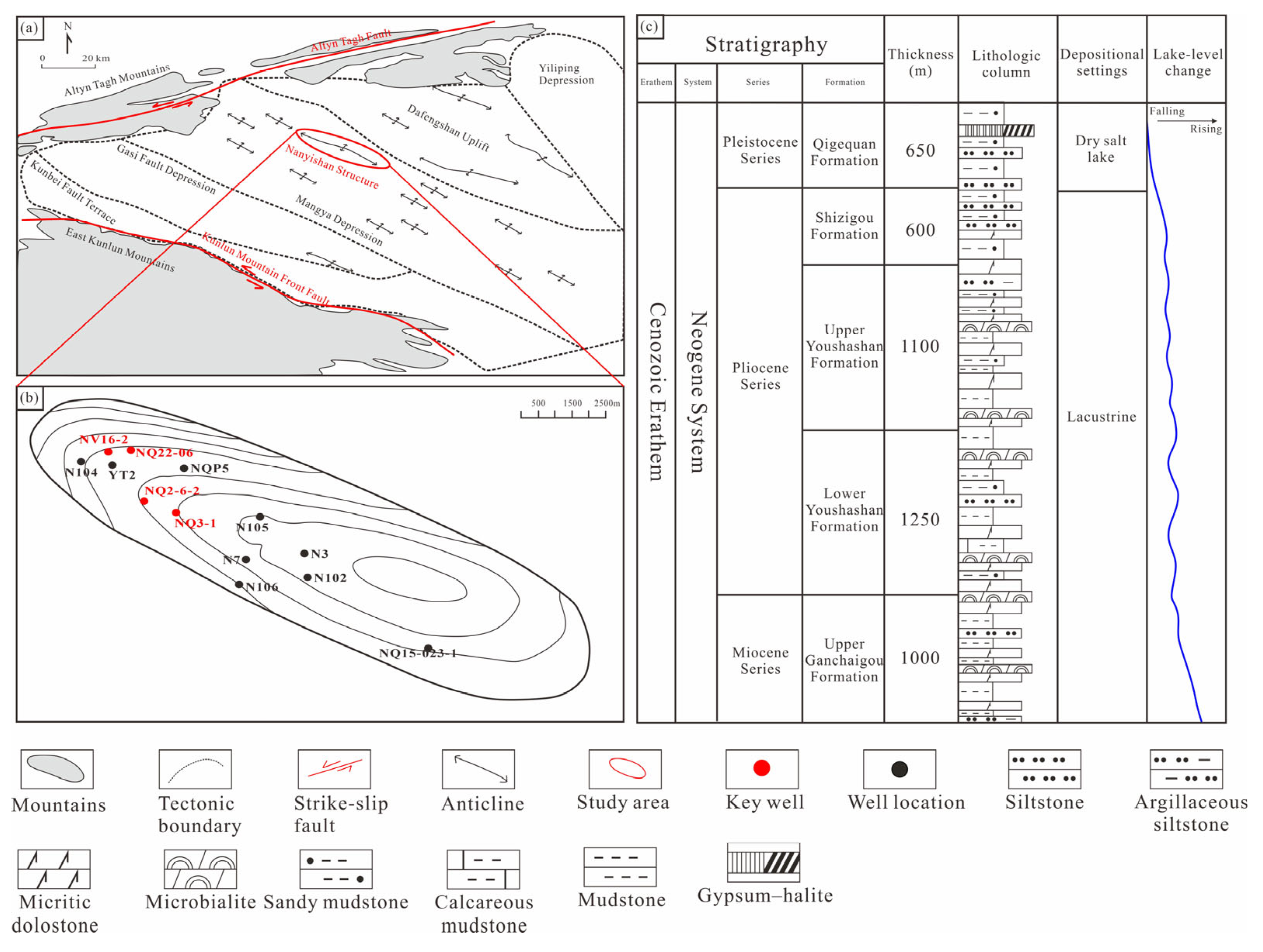
The Qaidam Basin is a massive intermontane rift-depression basin in the northeastern Qinghai–Tibet Plateau, the evolution of which has been controlled by the far-field compressional effects of the India–Eurasia collision [24,25,26]. This study focuses on the Nanyishan structural belt within the Western Depression, which manifests as a large-scale, inherited nose-like uplift controlled by northwest–southeast trending reverse faults [27] (Figure 1a,b). This long-term paleo-uplift setting created a persistent topographic high, providing optimal shallow-water conditions for carbonate production.
The Neogene stratigraphy in the study area is well-developed, comprising, in ascending order, the Upper Ganchaigou, Lower Youshashan, Upper Youshashan, and Shizigou Formations (Figure 1c). The primary targets of this investigation are the Lower Youshashan (N21) and Upper Youshashan (N22) Formations. These intervals represent a critical evolutionary stage characterized by a dramatic shift from a semi-arid to an arid climate and a continuous increase in water salinity. During this period, persistent high-frequency lake-level fluctuations governed the development of a distinctive mixed sedimentary system. Terrigenous clastics (silt, mud) introduced during flooding periods frequently intercalated and mixed with chemical and biochemical carbonates precipitated during arid intervals [13,28]. Notably, the warm, saline, and relatively clear-water environment over the Nanyishan paleo-high promoted extensive algal blooms, resulting in the deposition of multi-stage superimposed algal limestones. The lithology is highly complex, primarily consisting of algal limestone, grainstone, micritic limestone, calcareous siltstone, and mudstone, which together constitute a reservoir framework with strong heterogeneity.

3. Materials and Methods

3.1. Sampling Strategy and Data Sources

The core samples analyzed in this study were collected from the Neogene Youshashan Formation (N21–N22) in the Nanyishan area. A systematic centimeter-scale core description was conducted on 747.28 m of continuous cores from four key cored wells (NQ3-1, NQ22-06, NV16-2, and NQ2-6-2). These wells were selected because their continuous cored intervals provide representative records of typical mixed carbonate–clastic successions and reservoir-bearing sections in the study area.
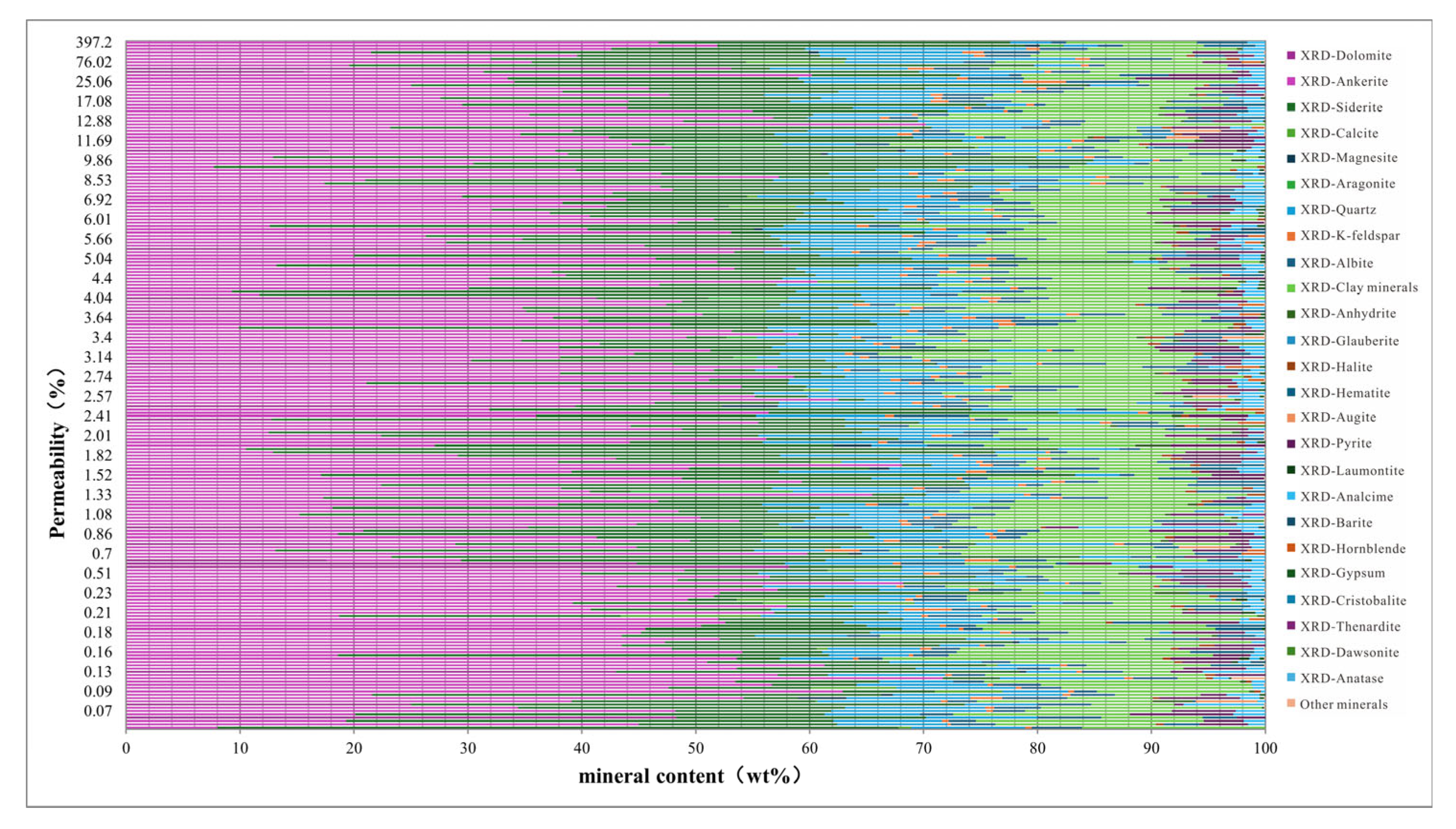
The datasets used in this study comprise two main components: (1) laboratory-generated data produced by the authors based on core sampling and testing, including measurements from a total of 253 samples (covering the target reservoir intervals), which form the basis for thin-section petrography, pore structure characterization, and related statistical analyses; and (2) datasets provided by the Qinghai Oilfield Company, including whole-rock XRD mineral-composition data spanning a broader stratigraphic range (Oil Groups I–VIII) and lithology-scanning wireline log-derived mineral-content data. The company-provided datasets were mainly used for interval-scale mineralogical comparison, depiction of vertical trends, and figure preparation, and were compared with the authors’ sample-based results for consistency checks where applicable.

3.2. Petrography and Mineralogical Composition

To characterize petrological features and diagenetic alterations, casting thin sections were prepared. All thin sections were impregnated with blue epoxy resin to visualize pore space and stained with Alizarin Red-S to distinguish calcite from dolomite. Petrographic observations were conducted using a polarizing microscope (ZEISS Imager. A2, ZEISS, Oberkochen, Germany) to identify rock textures, mineral compositions, and pore types.
A total of 253 whole-rock XRD datasets used for statistical analyses in this study were generated by the authors through measurements on the investigated samples, forming the basis for sample-scale mineralogical statistics and correlation analyses. To support interval-scale and inter-well comparisons, an extended company database—including additional XRD records and lithology-scanning wireline log-derived mineral-content data provided by the Qinghai Oilfield Company, Dunhuang, China—was also incorporated. These company-provided datasets were mainly used to depict vertical mineralogical variations and inter-well differences and to prepare the corresponding figures. For consistency, mineral categories from the company datasets were harmonized with the mineral groupings adopted in this study prior to comparative analyses.

3.3. Pore Structure Characterization

A multiscale integration approach was employed to quantitatively characterize pore throat systems:
Mercury Injection Capillary Pressure (MICP): High-pressure MICP tests were performed using an AutoPore IV 9520 porosimeter (Micromeritics Instrument Corporation, Norcross, GA, USA). Measurements followed the national standard GB/T 29171—2012 (Determination of Rock Capillary Pressure Curves), with a pore throat radius resolution of 0.001 μm [29].
Nuclear Magnetic Resonance (NMR): NMR measurements were conducted using a RecCore-3010 spectrometer (PetroChina Research Institute of Petroleum Exploration & Development, Langfang, China). The tests followed the industry standard SY/T 6490—2014 (Specification for Laboratory Measurement of NMR of Rock Samples) to evaluate full-scale pore structure characteristics [30].

4. Results

4.1. Lithological and Mineralogical Characteristics

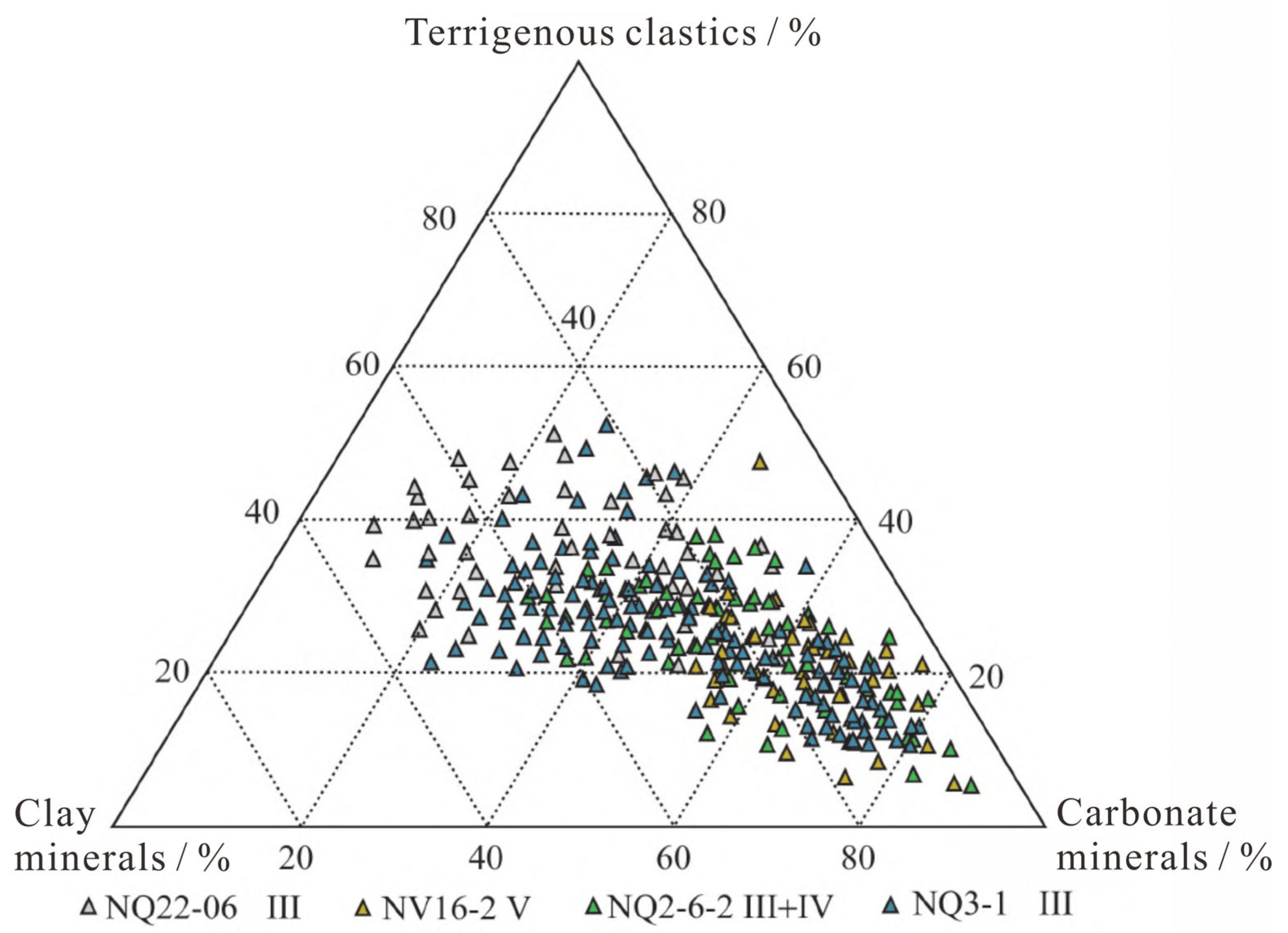
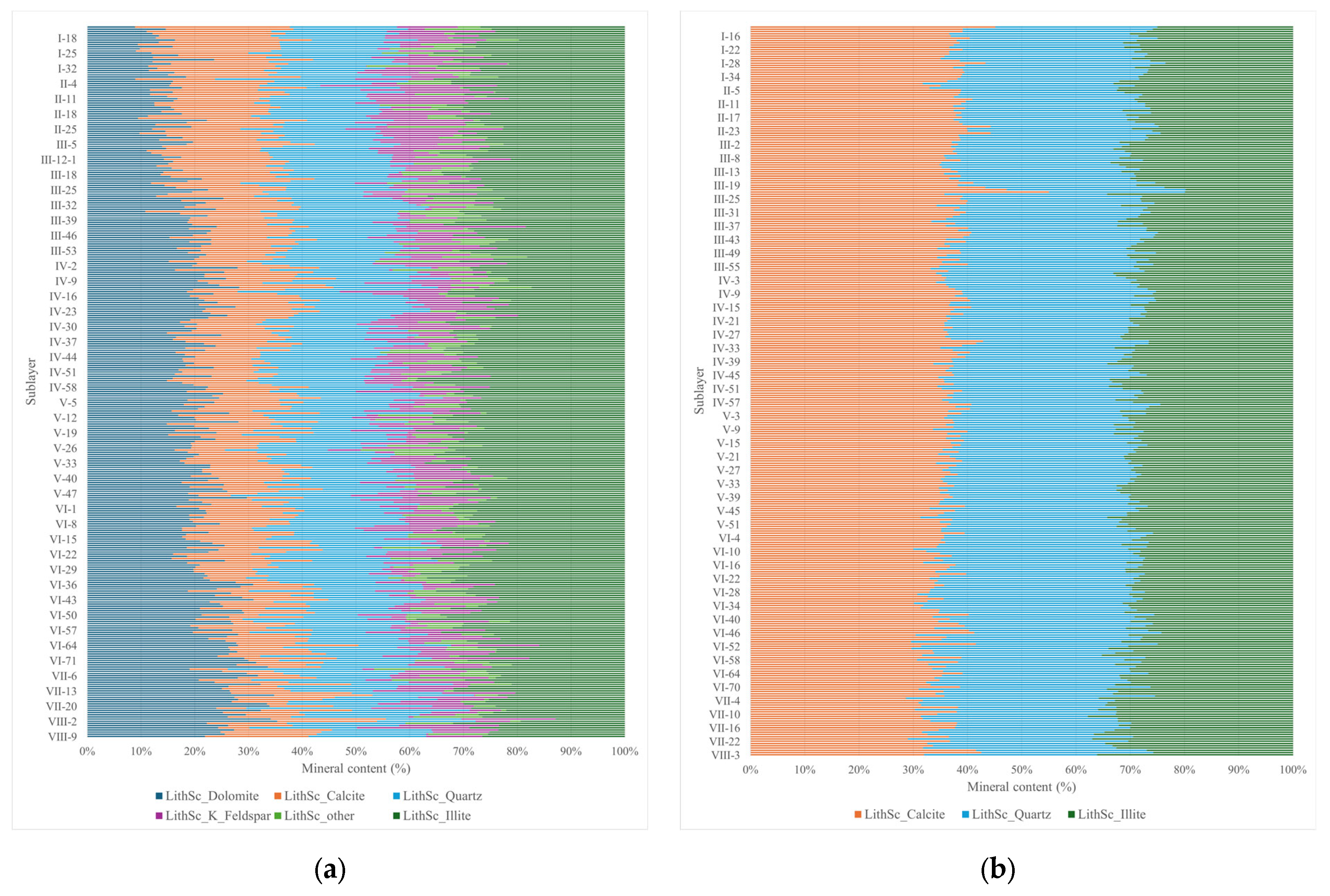
Combining the regional geological context with lithological similarities, the reservoir rocks were categorized into four primary types to highlight the mixed sedimentary characteristics: algal limestone, dolomitic rock, mudstone, and sandstone. The ternary diagram of mineral composition (Figure 2) clearly demonstrates significant mixed sedimentation; there are virtually no pure carbonates, mudstones, or sandstones, indicating a pervasive hybridization of components. This mixed-sediment signature is further supported by lithology-scanning log-derived mineral-content bar charts from two representative wells spanning Oil Groups I–VIII (Figure 3). The sublayer-based profiles show that carbonate, clay, and terrigenous components commonly coexist within individual sublayers, and intervals representing unmixed end members are essentially absent.
According to whole-rock X-ray diffraction (XRD) analysis, the mineral composition is dominated by carbonate minerals (calcite, dolomite, and ankerite), with a total mass fraction ranging from 4.7% to 85% (average 40.2%). In contrast, the proportions of clay minerals and terrigenous clastics are relatively lower, with average mass fractions of 27.8% and 23.2%, respectively. Stratigraphically, the mineral distribution in Oil Group III exhibits a higher degree of dispersion compared to that in Oil Groups IV + V, reflecting stronger heterogeneity in the upper interval (Table 1).

4.2. Rock Texture and Micro-Fabrics

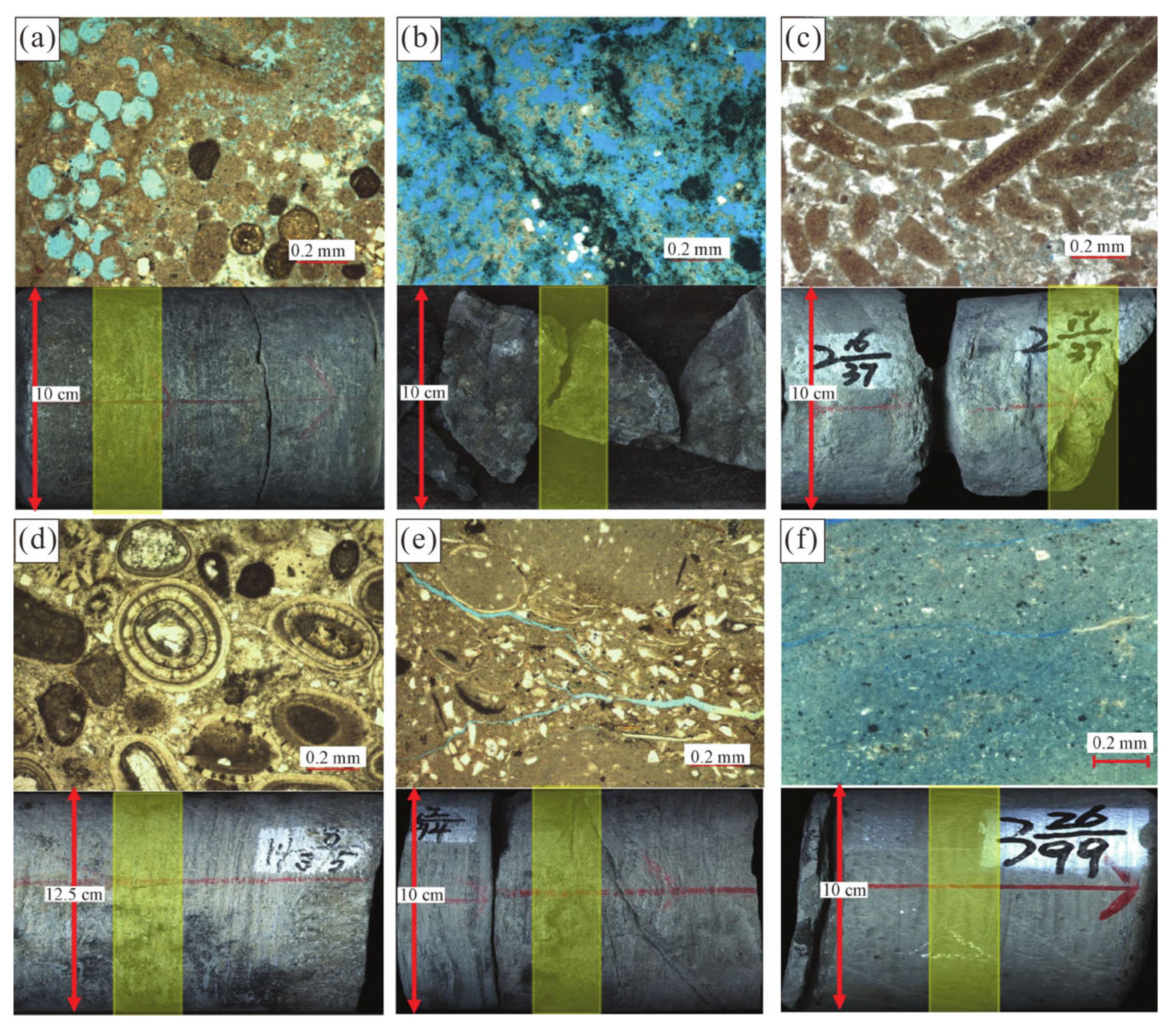
Detailed centimeter-scale core descriptions and thin section analyses of key intervals from the four new wells reveal that high-quality reservoirs are predominantly composed of algal limestone and dolomitic rock, with occasional centimeter-scale sandy interlayers and lenticular muddy bands. Algal limestones typically exhibit gray, light gray, or grayish-yellow colors and display diverse sedimentary structures. Based on macroscopic core appearance, they are classified into stromatolitic limestone, thrombolitic limestone, and oncolitic/clotted limestone. Dolomitic rocks are further categorized based on composition into sandy micritic dolomite, granular micritic limestone, and micritic limestone. Microscopic identification further clarifies the distinct textural components: algal limestones are primarily composed of algal peloids and intraclasts, followed by algal filaments, clots, algal debris, and binding fabrics; whereas dolomitic rocks mainly consist of grains (including gravels, sand-sized clasts, ooids, peloids, bioclasts, and plant debris), micritic matrix, and cements.
Specific microscopic features vary significantly among the algal limestone sub-facies. Stromatolitic limestone is dominated by algal peloids and intraclasts (content > 50%), where the intraclasts are irregular, mostly elongated, and composed of micritic calcite and clay minerals (Figure 4a). Thrombolitic limestone is characterized by developed algal filaments and binding fabrics, with terrigenous clastic grains mixed within the matrix and irregular intraclasts locally observed (Figure 4b). Oncolitic/clotted limestone exhibits distinct algal filament fabrics under the microscope, with inter-clot spaces filled by intraclasts, terrigenous silt, micritic calcite, and clay minerals (Figure 4c).
For the dolomitic and mixed facies, sandy micritic dolomite features patchily distributed ooids (~20%), which are mostly superficial ooids with nuclei composed of terrigenous minerals or calcite intraclasts (Figure 4d). Granular micritic limestone is dominated by granular textures (~40%), with minor amounts of bioclasts (shells) and felsic debris locally visible (Figure 4e). Micritic limestone is characterized by a dominant micritic texture (~30%), where micritic calcite is uniformly distributed alongside clay minerals and scattered pyrite (Figure 4f).

4.3. Diagenetic Features and Pore Modification

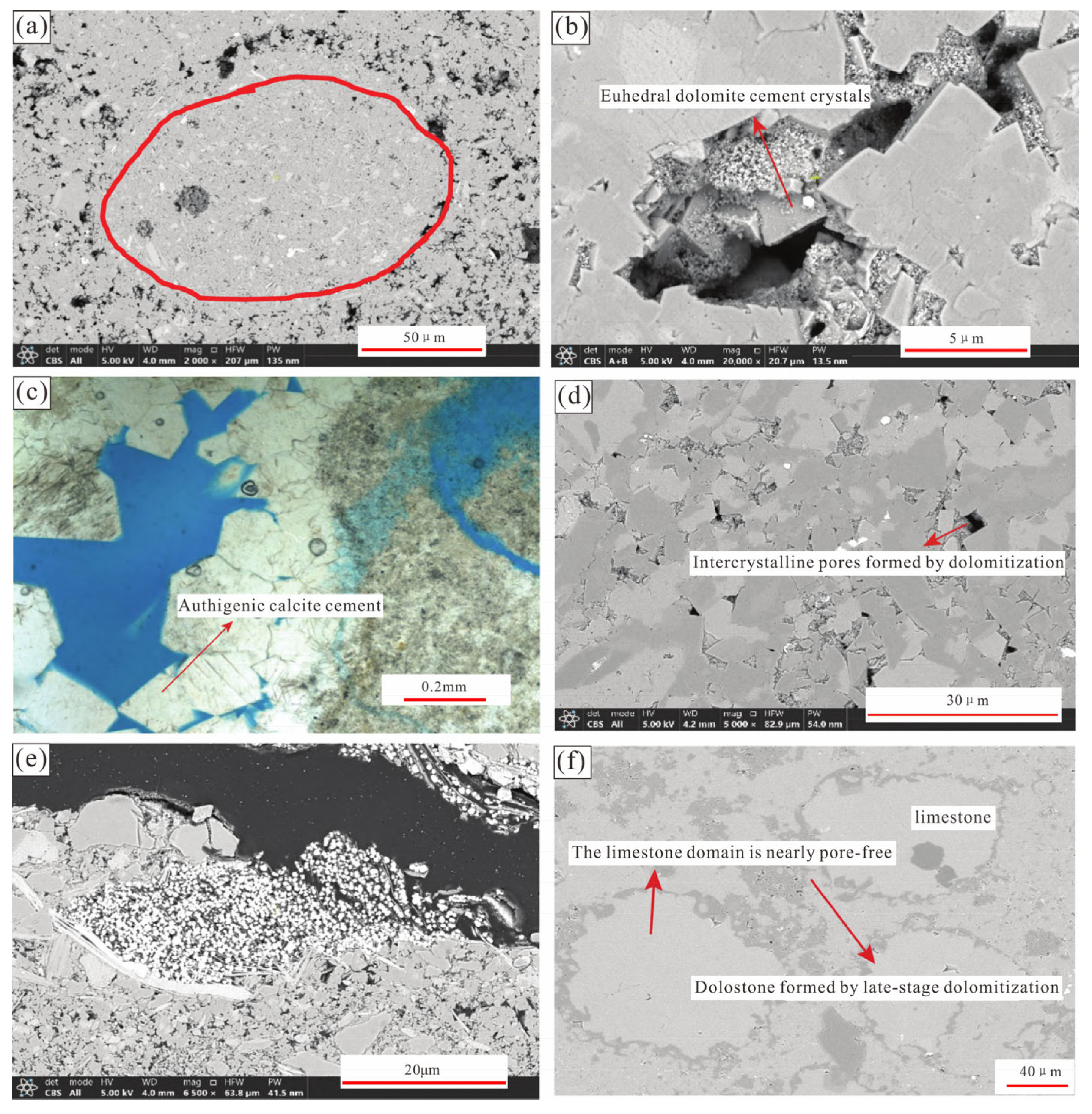
In addition to the primary textures and micro-fabrics described above, thin-section and SEM observations indicate that the reservoirs experienced pervasive diagenetic modification, which directly affected pore development and preservation. To facilitate comparison with the quantitative pore structure and petrophysical results presented in the next section, the key microscopic diagenetic features are summarized below (Figure 5).
Thin-section microscopy and SEM observations document a suite of diagenetic features in the algal limestone reservoirs, which are closely associated with pore formation, pore preservation, and local pore-filling (Figure 5). Dissolution is widespread and is commonly developed along bioclast margins, producing dissolution-related pores with irregular boundaries (Figure 5a). In some dissolution pores, euhedral dolomite cement occurs and is locally accompanied by framboidal pyrite and clay minerals, indicating that multiple authigenic phases may coexist within the same pore space (Figure 5b). Authigenic calcite cement is also observed within dissolution pores in cast thin sections, where the pore margins and infilling relationships can be clearly recognized (Figure 5c).
Dolomitization-related intercrystalline pores are locally preserved between dolomite crystals and appear as micron-scale pore networks in SEM images (Figure 5d). In addition, intercrystalline pores within framboidal pyrite aggregates are observed and commonly occur together with platy illite, suggesting that pore space may be partially occupied and/or modified by clay-related phases at the microscale (Figure 5e). At the margins of algal limestone, late-stage dolomitization forms dolostone domains characterized by micron-scale intercrystalline pores, whereas the adjacent limestone domains are nearly pore-free, highlighting pronounced heterogeneity at the fabric/domain scale (Figure 5f).
These microscopic observations provide direct petrographic evidence for pore generation and pore-filling processes, and they serve as an important basis for interpreting the quantitative pore throat distributions and petrophysical variations discussed in the following section.

4.4. Pore Structure and Petrophysical Properties

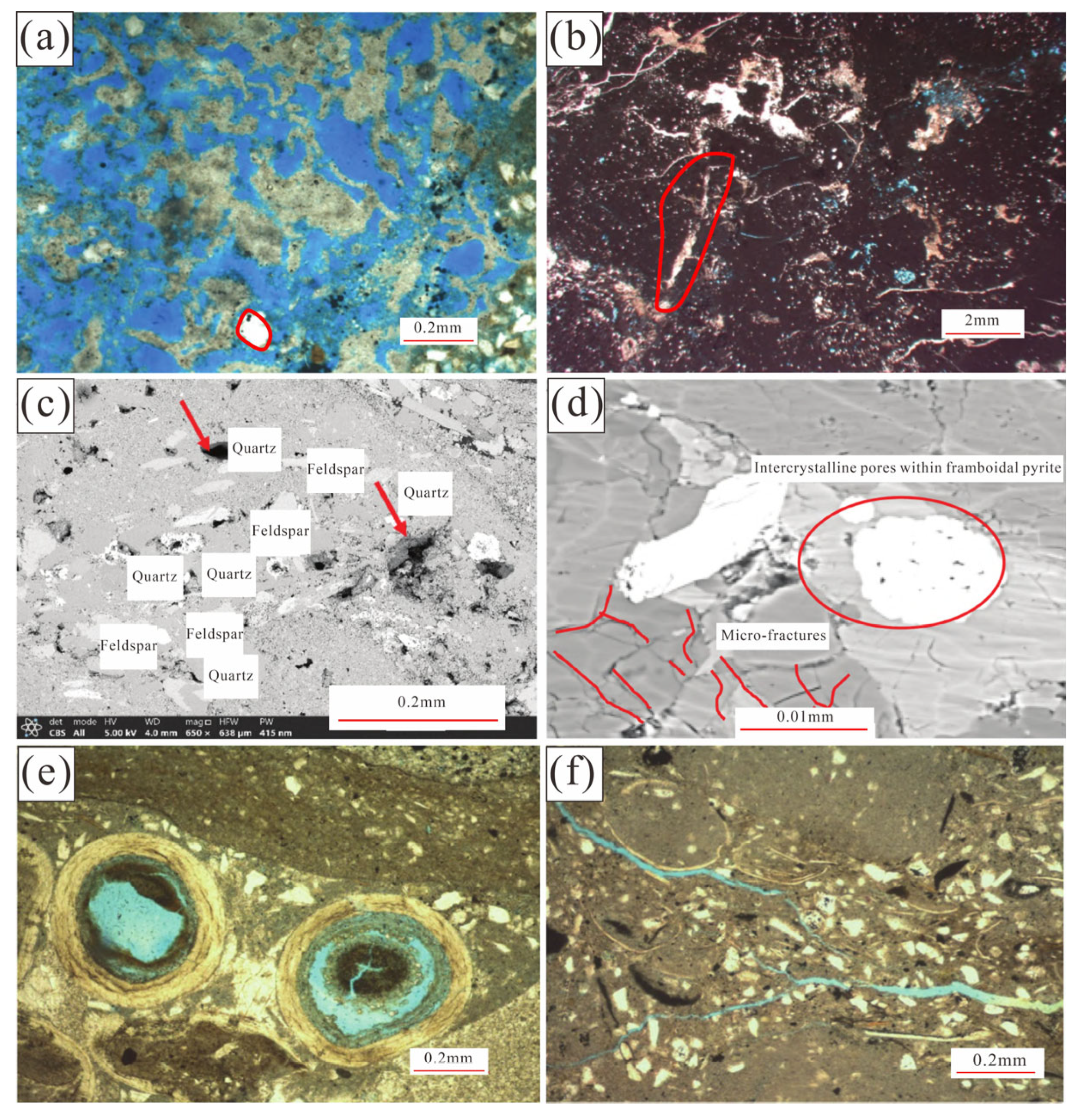
Thin-section observations and SEM images indicate that reservoir space in the Youshashan Formation is dominated by dissolution pores and intercrystalline pores, accompanied by subordinate microfractures and intergranular pores (Figure 6). In algal limestones, dissolution pores are widely developed and are commonly associated with calcite dissolution. These pores occur together with binding fabrics formed by algal filaments, and are locally accompanied by intraclasts. Powdery pyrite is unevenly distributed within the matrix, and its occurrence is commonly observed adjacent to pore-bearing fabrics. In addition, intercrystalline dissolution pores related to dolomitization are locally present, and some pores show partial filling by organic matter, suggesting heterogeneous pore-filling features at the microscopic scale. Microfractures are frequently observed within cavities of stromatolitic structures; however, many of them are partly occluded by sparry calcite cement. Overall, dissolution and intercrystalline pores constitute the principal reservoir space, whereas pore and fracture apertures are locally reduced where cement occlusion is developed and/or where pores occur within clay-bearing matrices.
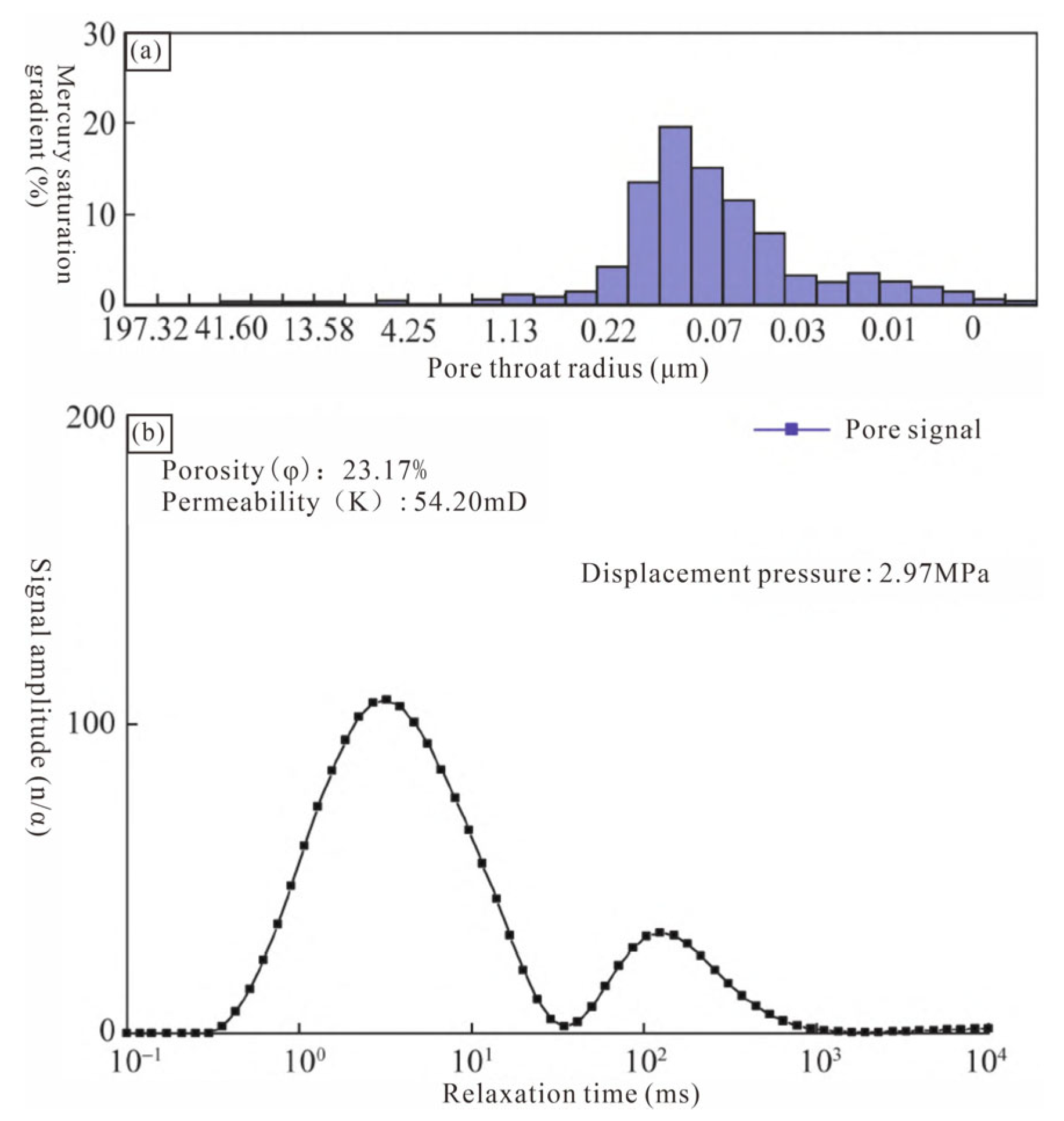
NMR and MICP datasets further document lithology-dependent pore throat characteristics and petrophysical responses. For algal limestone samples, the pore throat radius distribution spans 0.01–0.22 μm, and the median saturation pore throat radius (r50) is 0.085 μm, consistent with a fine-throat pore system. These samples are characterized by high porosity and medium permeability, with an average porosity of 23.17% and permeability of 54.3 mD. The corresponding MICP curves show a relatively low displacement pressure (2.97 MPa) and a distinct mercury-intrusion plateau (Figure 7), reflecting a comparatively stable intrusion behavior over a certain pressure range. The NMR T2 spectra display a pronounced bimodal pattern; the prominent right peak indicates a relatively higher contribution of larger pores compared with the smaller-pore population.
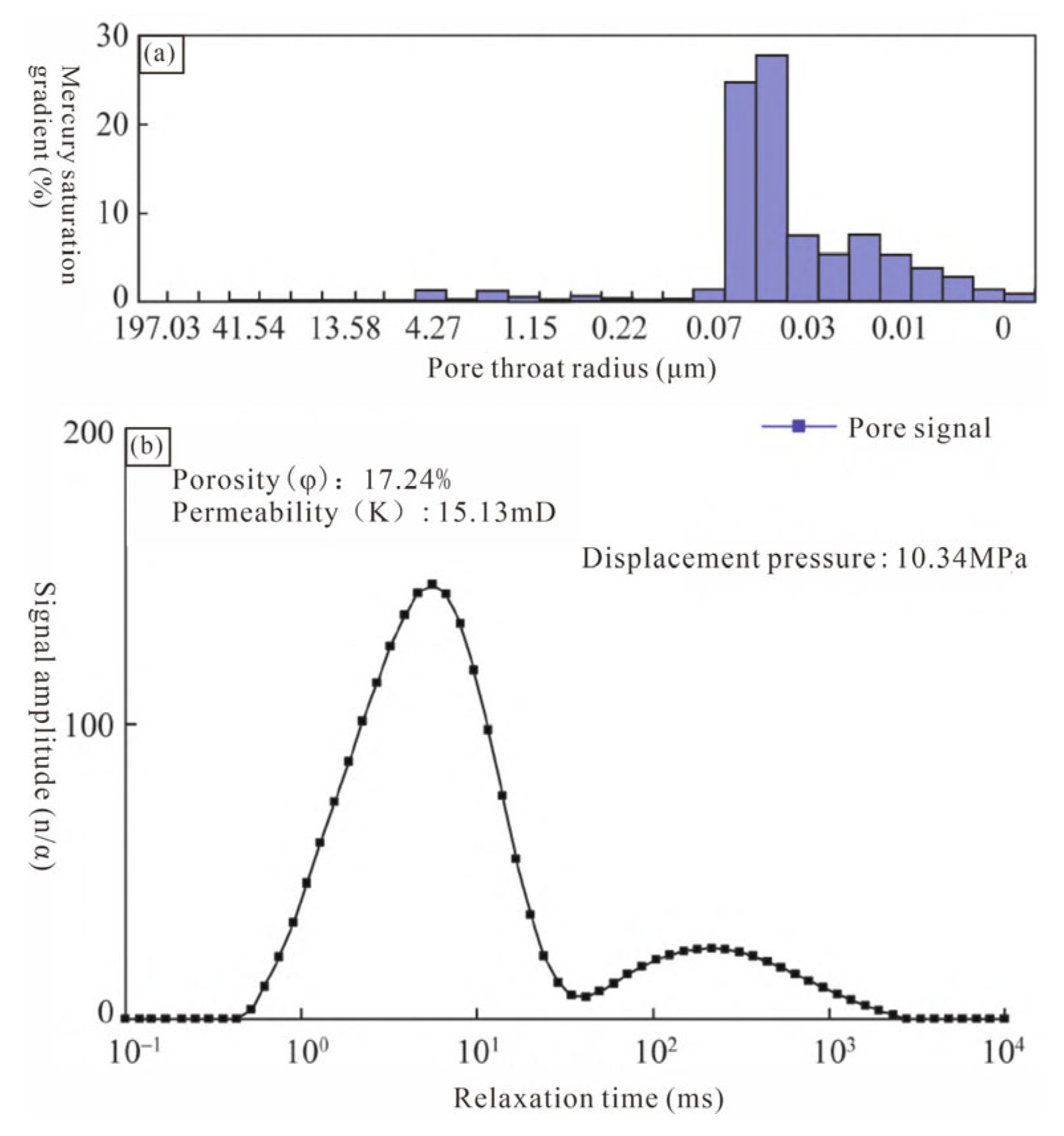
In comparison, dolomitic rocks exhibit a narrower and overall finer pore throat distribution, concentrated at 0.02–0.07 μm, with an r50 of 0.039 μm, consistent with micro-throats. They show medium porosity and low permeability, with a porosity of 17.24% and permeability of 15.13 mD. Their MICP curves display a markedly higher displacement pressure (10.34 MPa) and a steeper intrusion trend (Figure 8), consistent with a pore system requiring higher entry pressures and exhibiting poorer pore throat sorting characteristics. Under comparable saturation conditions, mercury withdrawal efficiencies are relatively high, indicating a relatively strong mercury extrusion response. The NMR T2 spectra remain bimodal; however, the second (right) peak has a much lower amplitude, indicating a reduced proportion of larger pores. Taken together, algal limestones tend to possess comparatively larger pores and throats than dolomitic rocks, whereas dolomitic rocks are dominated by finer pore throat systems.
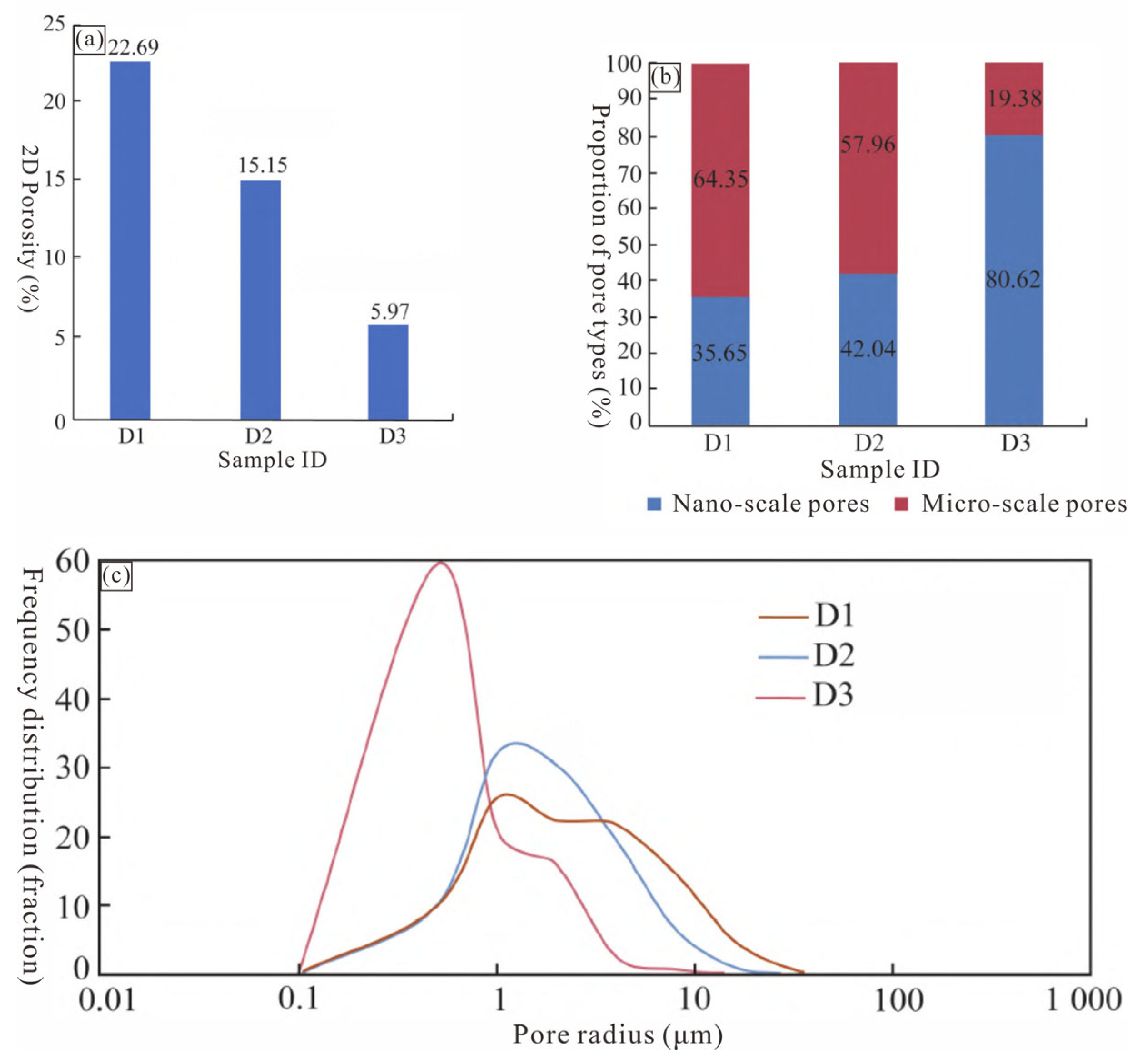
Building upon thin-section/SEM observations and the quantitative characterization provided by NMR and MICP, an additional image-based approach was applied to further constrain pore abundance and pore-type contributions across representative lithologies. Specifically, 2D areal porosity and pore-size components were quantified for three representative samples (D1 algal limestone, D2 micritic limestone, and D3 sandy dolomite). In addition, core-surface drop tests were conducted to document macroscopic wetting/oiliness responses, and the observations were compared with mineralogical compositions and petrophysical parameters for the NQ2-6-2 interval.
Image-based quantification reveals pronounced contrasts in 2D areal porosity and pore-type composition among the three lithologies (Figure 9). D1 (algal limestone) exhibits the highest 2D areal porosity (22.69%), with pores dominated by micron-scale dissolution-related components (64.35%). In contrast, D3 (sandy dolomite) shows substantially lower 2D areal porosity (5.97%) and is dominated by nanoscale intercrystalline pores (80.62%). D2 (micritic limestone) displays intermediate values in both 2D areal porosity and pore-type proportions relative to D1 and D3. Moreover, although D3 shows a relatively larger average pore radius (likely influenced by sporadic larger pores), its 2D areal porosity remains approximately one-third of that of D2, indicating a markedly lower overall pore-area proportion in the dolomitic sample set.
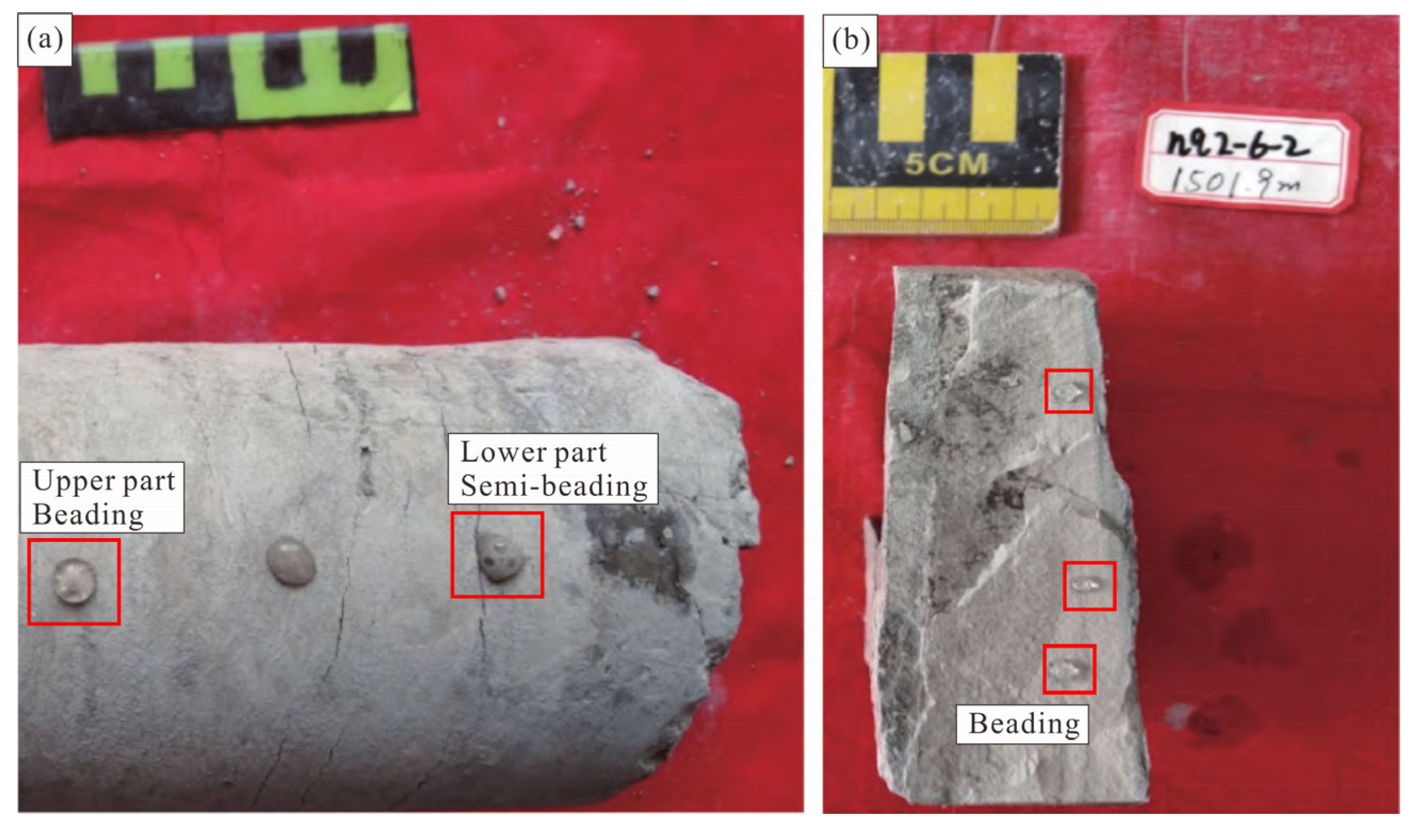
During centimeter-scale core description of the cored interval, a water-drop test was conducted and documented in combination with core oil-show observations. Under comparable hydrocarbon charging conditions at the same stratigraphic position, the water-drop response is considered to reflect variations in petrophysical properties among samples. The observed droplet behaviors can be grouped into beading (droplet remains strongly spherical), semi-beading, and infiltration behaviors (permeable–slowly permeable to rapid infiltration). Samples showing beading generally exhibit stronger oil shows, whereas samples showing infiltration (permeable–slowly permeable to rapid infiltration) tend to display weak or no oil shows and indicate relatively poorer reservoir quality.
A clear correspondence is observed between droplet behavior and clay content. In Figure 10a, the upper part with lower clay content shows a beading response, whereas the lower part with higher clay content shows a semi-beading response. In Figure 10b, where the clay content is extremely low, the droplet response is consistently beading across the interval.
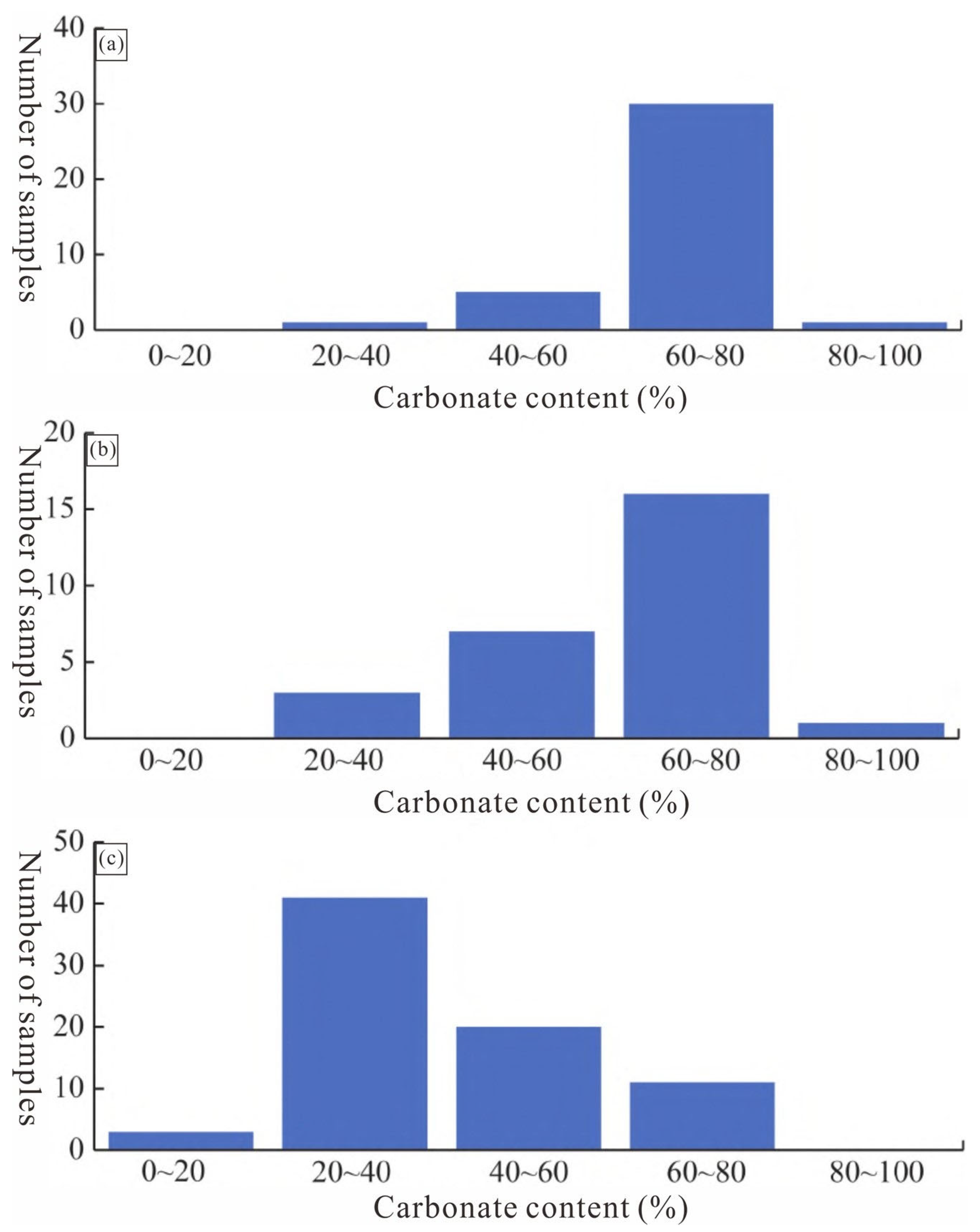
Combined with the core description of Well NQ2-6-2 and the whole-rock XRD results, oil-show intensity exhibits an apparent positive correlation with carbonate content (Figure 11). Samples displaying beading commonly have carbonate contents >80%. Samples displaying semi-beading generally have carbonate contents ≥50%, and most of them are >60%. Samples showing permeable–slowly permeable infiltration typically have carbonate contents ≤60%, and most are <40%.
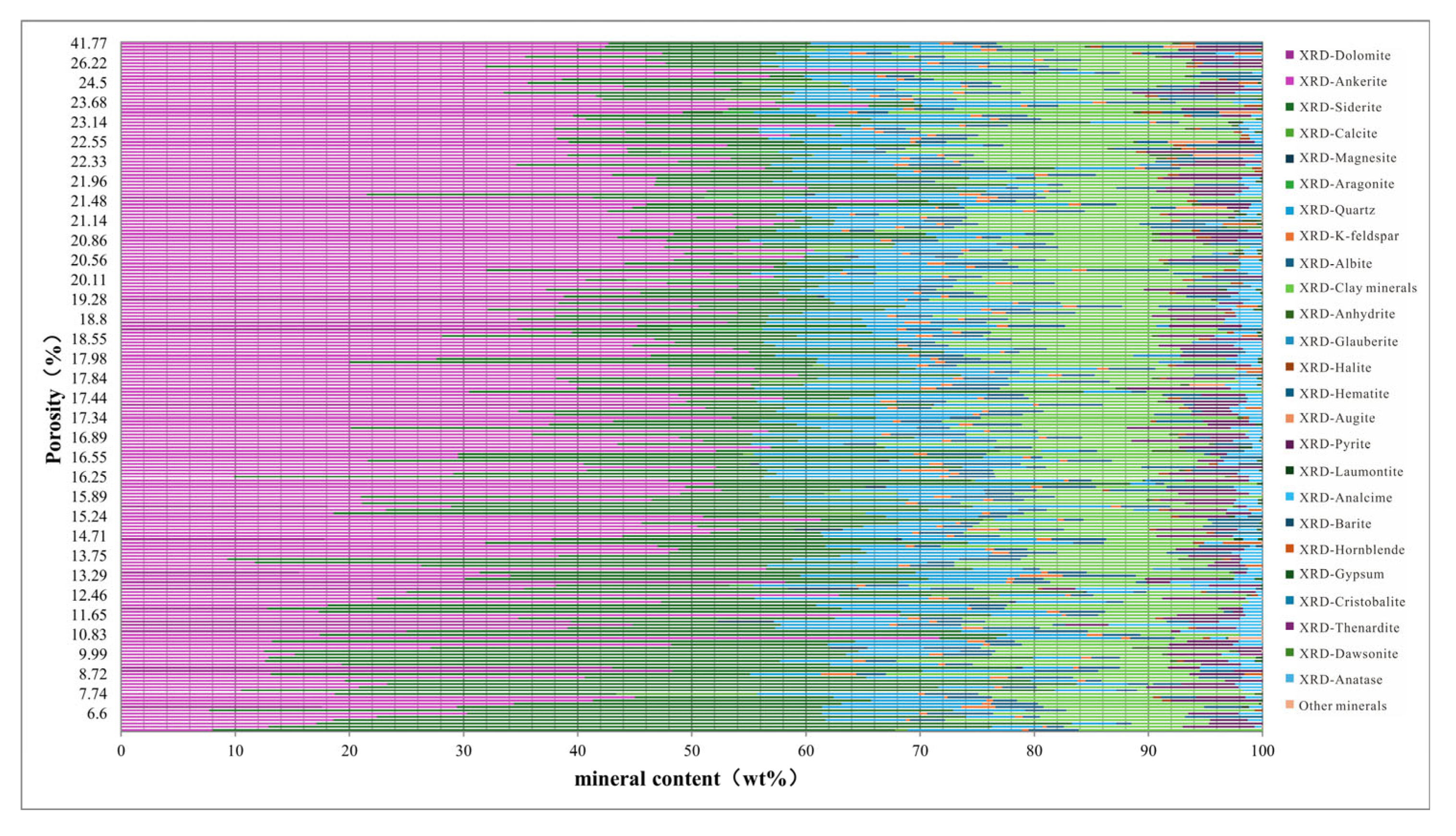
Building on the water-drop test observations and the quantitative petrophysical results, we further evaluated the mineralogical control on reservoir properties using samples from Oil Group III in Well NQ2-6-2. The relationships between whole-rock XRD-derived dolomite content and porosity/permeability are illustrated in Figure 12 and Figure 13. Overall, dolomite content shows a positive association with porosity (Figure 12). The maximum porosity reaches 24.85% at a dolomite content of approximately 52%, whereas samples with porosity around 15% typically contain ≤20% dolomite. In general, dolomite-enriched samples tend to exhibit higher porosity; however, a few data points deviate from the overall trend, which is likely related to sample-scale heterogeneity and analytical/statistical uncertainty.
In contrast, no clear relationship is observed between dolomite content and permeability (Figure 13). Permeability values are widely scattered across the full range of dolomite contents, without a systematic increase or decrease with dolomite abundance, indicating that dolomite content alone provides limited predictive power for permeability within this dataset.

5. Discussion

5.1. Lithological and Mineralogical Controls on Reservoir Heterogeneity

The algal limestone reservoirs in the Nanyishan area were deposited in a mixed sedimentary setting, resulting in pronounced variability in lithology and mineral assemblages. Such variability provides a first-order framework for understanding reservoir heterogeneity observed in pore structure and petrophysical properties. In general, carbonate-rich intervals tend to exhibit better reservoir quality than clay-rich or siliciclastic-dominated intervals, consistent with the stronger sensitivity of carbonate fabrics to dissolution and dolomitization compared to terrigenous components.
Whole-rock XRD results further indicate that mineral composition alone does not translate into petrophysical properties in a uniform manner. For Oil Group III in Well NQ2-6-2, samples with higher dolomite proportions commonly show higher porosity, whereas permeability remains widely scattered across the same dolomite range. This decoupling suggests that dolomite enrichment may preferentially increase pore volume (porosity), while permeability is more strongly governed by pore throat size distribution and connectivity. Therefore, lithology and mineralogy provide necessary—but not sufficient—constraints on reservoir quality; pore-network architecture ultimately controls flow capacity.

5.2. Diagenetic Processes and Pore Evolution: Constructive vs. Destructive Effects

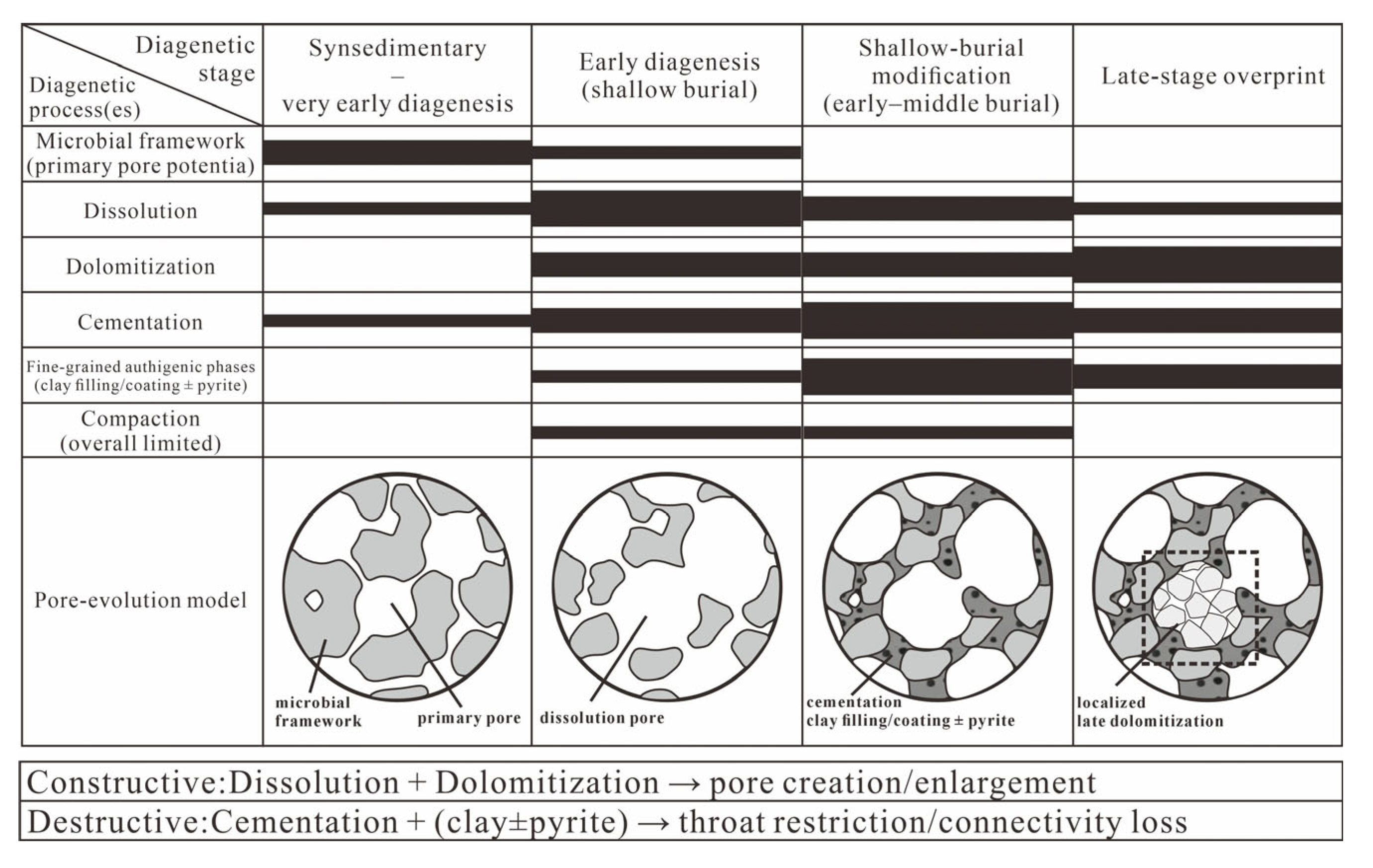
Microscopic observations (thin sections and SEM) document multiple diagenetic processes that collectively shape the pore system, including dissolution, dolomitization, cementation, and minor compaction. From the perspective of reservoir quality, dissolution and dolomitization primarily act as constructive processes by generating and/or preserving pore space, whereas cementation and clay-related filling/coating act as destructive processes by occupying pores and restricting pore throats. In line with the diagenetic-stage framework summarized in Figure 14—synsedimentary to very early diagenesis, early diagenesis (shallow burial), shallow-burial modification (early–middle burial), and late-stage overprint—these processes exert distinct controls on pore creation, preservation, and connectivity through time.
During synsedimentary to very early diagenesis, early depositional fabrics provide a relatively rigid primary framework and preserve a certain primary pore potential. With the onset of early diagenesis under shallow burial, dissolution becomes widespread, including dissolution along bioclast margins and dissolution of carbonate minerals and locally unstable components, which creates irregular dissolution pores and locally enlarges pre-existing voids, thereby increasing effective pore volume. In parallel, dolomitization commonly produces intercrystalline pores between dolomite crystals, so that dissolution + dolomitization collectively represent constructive diagenesis that promotes pore creation and/or enlargement. However, dolomitization-related porosity does not necessarily translate into high permeability, because intercrystalline pore networks may be dominated by micron- to submicron-scale throats and can be partially modified by later pore-lining and/or pore-filling phases.
During shallow-burial modification (early–middle burial) and subsequent late-stage overprint, destructive processes become increasingly important. Cementation is ubiquitous and involves multiple authigenic minerals (e.g., dolomite cement, calcite cement, pyrite, and clay minerals), while fine-grained authigenic phases (clay filling/coating commonly with pyrite) progressively occupy pore space, reduce effective pore throat radii, and impair connectivity [31,32]. Under the shallow-burial conditions of the study area, compaction is likely limited overall, but localized compaction and fabric tightening may still contribute to pore throat restriction in some samples. Taken together, the stage-dependent competition between constructive (dissolution/dolomitization) and destructive (cementation and fine-grained filling/coating phases, with minor compaction) diagenesis provides a mechanistic basis for the observed variability in pore structure and petrophysical performance among lithofacies (Figure 14).

5.3. Integrating Water-Drop Test Observations with Pore Structure Metrics

The water-drop test provides a rapid macroscopic indicator of near-surface infiltration behavior that can be compared with quantitative pore structure parameters. In the studied algal limestone reservoirs, “beading” behavior is typically associated with better reservoir quality, whereas “semi-beading” and “infiltration” behaviors correspond to poorer reservoir quality. This pattern is consistent with the notion that high-quality samples tend to have more favorable pore connectivity and larger effective pore throats, thereby exhibiting weaker capillary imbibition and slower penetration of the droplet. Conversely, clay-rich or tighter pore networks may show stronger capillary suction and enhanced wetting/imbibition, leading to more rapid infiltration and infiltration-like behavior.
Importantly, the water-drop response should be interpreted together with pore–throat metrics (e.g., mean pore throat radius and pore-size fractions), rather than mineral composition alone. This integrated interpretation helps explain why permeability may remain low even in samples with elevated dolomite content: permeability is primarily constrained by the connected pore throat network, which can be significantly reduced by cementation and clay-related filling/coating.

5.4. Reservoir Typing and Implications for Quality Prediction

Given the multi-factor controls on reservoir development, an integrated reservoir-typing scheme is necessary for practical evaluation and prediction. Based on the Results (Section 4.1, Section 4.2, Section 4.3 and Section 4.4), the primary controlling factors in the Nanyishan algal limestone reservoirs include lithology, mineral composition (carbonate and dolomite contents), and diagenetic modification, which together determine pore structure and petrophysical properties. To provide a concise and reproducible classification, we selected key indicators including lithology, water-drop response, carbonate mineral content, dolomite content, porosity, permeability, and mean pore throat radius, and established a four-class evaluation scheme (Table 2).
This classification highlights that reservoir quality is controlled by the coupled effects of mineral assemblage, diagenetic pore generation, and pore throat connectivity. In particular, high dolomite abundance may enhance porosity, but permeability improvement requires sufficiently large and connected pore throats, which can be compromised by cementation and clay-related pore modification.

6. Conclusions

(1)
The Youshashan Formation (Oil Groups III–V) in the Nanyishan area records shallow lacustrine-mixed siliciclastic–carbonate deposition, producing strong lithological and mineralogical heterogeneity.
(2)
Reservoir space is dominated by dissolution-related and intercrystalline pores, and lithology controls pore throat effectiveness, as reflected by MICP-derived r50 differences between algal limestones and dolomitic rocks.
(3)
Dissolution/dolomitization enhances pore volume, whereas cementation and clay-related filling/coating restrict pore throats and connectivity, providing a mechanistic basis for porosity–permeability decoupling in dolomite-rich samples.
(4)
The water-drop test (classified as beading, semi-beading, and infiltration) is a rapid, semi-quantitative indicator that should be integrated with porosity, permeability, carbonate/dolomite contents, and mean pore throat radius to support reservoir typing and sweet-spot prediction.

Author Contributions

Conceptualization, S.Y. and Q.L.; methodology, Q.L.; software, S.Y.; validation, S.Y., Q.L. and J.W.; formal analysis, S.Y.; investigation, J.W.; resources, Q.L.; data curation, J.W.; writing—original draft preparation, S.Y.; writing—review and editing, S.Y.; visualization, S.Y.; supervision, Q.L.; project administration, Q.L.; funding acquisition, Q.L. All authors have read and agreed to the published version of the manuscript.

Funding

This research was funded by the Key Project of the National Natural Science Foundation of China, grant number 42230816.

Data Availability Statement

The original contributions presented in the study are included in the article, further inquiries can be directed to the corresponding author.

Conflicts of Interest

The authors declare no conflicts of interest.

Abbreviations

micro-CTMicro-Computed Tomography
MICPMercury Injection Capillary Pressure
NMRNuclear Magnetic Resonance
r50Median saturation pore throat radius (corresponding to 50% mercury saturation in MICP-derived pore throat distribution)
SEMScanning Electron Microscopy
T2Transverse relaxation time (NMR T2 spectrum)
XRDX-ray Diffraction

References

  1. Basso, M.; Belila, A.M.P.; Chinelatto, G.F.; da Ponte Souza, J.P.; Vidal, A.C. Sedimentology and Petrophysical Analysis of Pre-Salt Lacustrine Carbonate Reservoir from the Santos Basin, Southeast Brazil. Int. J. Earth Sci. 2021, 110, 2573–2595. [Google Scholar] [CrossRef]
  2. Hou, Y.; Wang, F.; He, S.; Dong, T.; Wu, S. Properties and Shale Oil Potential of Saline Lacustrine Shales in the Qianjiang Depression, Jianghan Basin, China. Mar. Pet. Geol. 2017, 86, 1173–1190. [Google Scholar] [CrossRef]
  3. Chen, Q.; Zhang, D.; Wang, J.; Zhao, F.; Liu, Y.; Zhang, Z.; Sun, X.; Huang, C.; Bai, Y. Geochemical Characteristics of Carbonate Rocks in a Salinized Lacustrine Basin: A Case Study from Oligocene Formation in the Qaidam Basin, Northwestern China. Carbonates Evaporites 2020, 35, 40. [Google Scholar] [CrossRef]
  4. Mount, J.F. Mixing of Siliciclastic and Carbonate Sediments in Shallow Shelf Environments. Geology 1984, 12, 432–435. [Google Scholar] [CrossRef]
  5. Chiarella, D.; Longhitano, S.G.; Tropeano, M. Types of mixing and heterogeneities in siliciclastic–carbonate sediments. Sediment. Geol. 2017, 352, 87–101. [Google Scholar] [CrossRef]
  6. Zuffa, G.G. Hybrid arenites: Their composition and classification. J. Sediment. Petrol. 1980, 50, 21–29. [Google Scholar]
  7. Wu, H.; Liu, H.; Wang, L.; Gui, L.; Yang, C.; Wang, L. Mixed Carbonate-Siliciclastic Reservoir Characterization and Hydrocarbon Accumulation Process of the Ganchaigou Area in the Western Qaidam Basin, Tibet Plateau. Carbonates Evaporites 2022, 37, 26. [Google Scholar] [CrossRef]
  8. Al Haddad, S.; Mancini, E.A. Reservoir Characterization, Modeling, and Evaluation of Upper Jurassic Smackover Microbial Carbonate and Associated Facies in Little Cedar Creek Field, Southwest Alabama, Eastern Gulf Coastal Plain of the United States. AAPG Bull. 2013, 97, 2059–2083. [Google Scholar] [CrossRef]
  9. Wang, P.; Wang, G.; Chen, Y.; Hao, F.; Yang, X.; Hu, F.; Zhou, L.; Yi, Y.; Yang, G.; Wang, X.; et al. Formation and Preservation of Ultra-Deep High-Quality Dolomite Reservoirs under the Coupling of Sedimentation and Diagenesis in the Central Tarim Basin, NW China. Mar. Pet. Geol. 2023, 149, 106084. [Google Scholar] [CrossRef]
  10. Burne, R.V.; Moore, L.S. Microbialites: Organosedimentary Deposits of Benthic Microbial Communities. PALAIOS 1987, 2, 241–254. [Google Scholar] [CrossRef]
  11. Bosence, D. A Genetic Classification of Carbonate Platforms Based on Their Basinal and Tectonic Settings in the Cenozoic. Sediment. Geol. 2005, 175, 49–72. [Google Scholar] [CrossRef]
  12. Riding, R. Microbial carbonates: The geological record of calcified bacterial–algal mats and biofilms. Sedimentology 2000, 47, 179–214. [Google Scholar] [CrossRef]
  13. Chagas, A.A.P.; Webb, G.E.; Burne, R.V.; Southam, G. Modern lacustrine microbialites: Towards a synthesis of aqueous and carbonate geochemistry and mineralogy. Earth-Sci. Rev. 2016, 162, 338–363. [Google Scholar] [CrossRef]
  14. Wang, J.; Zhang, D.; Yi, D.; Yuan, J.; Shi, Y.; Ma, X.; Gao, Y.; Zhang, P.; Wang, P. Depositional characteristics and facies model of lacustrine carbonate rocks in the upper member of lower Ganchaigou Formation in western Qaidam Basin. Lithol. Reserv. 2018, 30, 1–13. [Google Scholar] [CrossRef]
  15. Liu, X.; Wang, X.; Liu, Y.; Zhang, J.; Liu, J.; Liu, Q. Current status and development direction of seismic prospecting technology of continental shale oil in China. Acta Pet. 2023, 44, 2270–2285. [Google Scholar] [CrossRef]
  16. Wang, Y.; Zhang, J.; Zhao, S.; Tan, W.; Wang, Y. Comprehensive Evaluation of Rolling Development Targets for Algal Limestone Reservoirs in the Mature Oilfield Area of Southwestern Qaidam Basin. In Proceedings of the SPG/SEG 2020 Nanjing International Geophysical Conference (in Chinese), Nanjing, China, 13–16 September 2020; pp. 699–702. [Google Scholar]
  17. Dang, Y.; Shou, J.; Li, J.; Shao, W.; Liu, Y. Study on the Characteristics and Exploration Target Evaluation of Algal Limestone Oil and Gas Reservoirs in the Qaidam Basin; PetroChina Qinghai Oilfield Branch: Mangya, China, 2006. [Google Scholar]
  18. Ren, X.; Wei, J.; Kang, Y.; Zhang, C. Charateristics and Genetic Analysis on Algal Limestone Reservoirs, Nanyishan, Western Qaidam Basin. Acta Sedimentol. Sin. 2006, 24, 217–222. [Google Scholar] [CrossRef]
  19. Zhang, X.; Zhang, S.; Gou, Y.; Cao, L.; Wang, P.; Cui, J.; Wu, L.; Wu, K. Characteristics and Origin Analysis of Lacustrine Dolomites in the Lower Ganchaigou Formation, Western Qaidam Basin. Acta Sedimentol. Sin. 2019, 37, 785–797. [Google Scholar] [CrossRef]
  20. Cui, J.; Mao, J.; Chen, D.; Shi, Q.; Li, Y.; Xia, X. Reservoir characteristics of Paleogene lacustrine carbonate rocks in western Qaidam Basin. Lithol. Reserv. 2022, 34, 45–53. [Google Scholar] [CrossRef]
  21. Shou, J.; Shao, W.; Chen, Z.; Shen, A. Lithological types and distribution features of Tertiary algal-limestone in Chaixi area Qaidam Basin. Pet. Explor. Dev. 2003, 30, 37–39. [Google Scholar]
  22. Zhang, Q.; Yang, Q.; Zhang, X.; Zhang, Y.; Jia, Q. The Reservoir Characteristic of Xiayoushashan Formation in the Fengxi structure of DaFeng mountain. Xinjiang Geol. 2014, 32, 505–508. [Google Scholar]
  23. Li, Q.; Li, Q. Diagenesis and its effects on the reservoir of Leikoupo Formation in Longmendong area of Southwestern Sichuan. Sci. Technol. Eng. 2019, 19, 103–112. [Google Scholar]
  24. Chen, Y.; Xia, X.; Zhao, J.; Cui, J.; Qiao, B.; Zhao, D.; Gao, H.; Wang, Y.; Tan, L. Sedimentary Characteristics and Formation Mechanisms of Neogene Algal Limestone in Western Qaidam Basin. Acta Sedimentol. Sin. 2022, 40, 1323–1334. [Google Scholar] [CrossRef]
  25. Fang, X.; Zhang, Y. Cenozoic sediments and tectonic evolution in the western Qaidam basin. Geol. Explor. 2014, 50, 28–36. [Google Scholar] [CrossRef]
  26. Zhao, F.; Sun, D.; Yan, C.; Zhang, X.; Sun, S.; Ni, X.; Cheng, Y. Meso-cenozoic tectonic evolution of Qaidam Basin and its relationship with oil and gas accumulation. Nat. Gas Geosci. 2013, 24, 940–947. [Google Scholar]
  27. Yu, D.; Zhang, Y.; Hou, X.; Xing, E.; Wang, L.; Li, K. Formation and evolution of Nanyishan Structure and its control on hydrocarbon accumulation in western Qaidam Basin. Fault-Block Oil Gas Field 2017, 24, 740–744. [Google Scholar] [CrossRef]
  28. Lawson, M.; Sitgreaves, J.; Rasbury, T.; Wooton, K.; Esch, W.; Marcon, V.; Henares, S.; Konstantinou, A.; Kneller, E.; Gombosi, D.; et al. New age and lake chemistry constraints on the Aptian pre-salt carbonates of the central South Atlantic. GSA Bull. 2023, 135, 595–607. [Google Scholar] [CrossRef]
  29. GB/T 29171-2012; Rock Capillary Pressure Measurement. China Standards Press: Beijing, China, 2012.
  30. SY/T 6490-2014; Laboratory Measurement of Capillary Pressure in Reservoir Rocks. Petroleum Industry Press: Beijing, China, 2014.
  31. Tosca, N.J.; Wright, V.P. Diagenetic pathways linked to labile Mg-clays in lacustrine carbonate reservoirs: A model for the origin of secondary porosity in the Cretaceous pre-salt Barra Velha Formation, offshore Brazil. Geol. Soc. Lond. Spec. Publ. 2015, 435, 33–46. [Google Scholar] [CrossRef]
  32. Schrank, A.B.S.; Dos Santos, T.; Altenhofen, S.D.; Freitas, W.; Cembrani, E.; Haubert, T.; Dalla Vecchia, F.; Barili, R.; Rodrigues, A.G.; Maraschin, A.; et al. Interactions between Clays and Carbonates in the Aptian Pre-Salt Reservoirs of Santos Basin, Eastern Brazilian Margin. Minerals 2024, 14, 191. [Google Scholar] [CrossRef]
Figure 1. Location of the study area and the stratigraphic column: (a) Tectonic map of the western Qaidam Basin; (b) geological distribution and key well locations in the study area; (c) stratigraphic column of the Neogene System in the study area.
Minerals 16 00296 g001
Figure 2. Triangular diagram of main minerals in III-V oil group of Youshashan Formation.
Minerals 16 00296 g002
Figure 3. Lithology-scanning log-derived mineral contents for Oil Groups I–VIII in two representative wells from the Nanyishan area: (a) Well NQ15-023-1; (b) Well NQ3-1. The y-axis lists stratigraphic sublayers (e.g., I-15 denotes Oil Group I, sublayer 15), and the x-axis shows mineral content (%, log-derived).
Minerals 16 00296 g003
Figure 4. Characteristics of structural components of algal limestone reservoirs in the Youshashan Formation, Nanyishan area: (a) Stromatolitic limestone, NQ2-6-2, 1068.7 m; (b) thrombolitic limestone, NQ22-06, 1062.6 m; (c) oncolitic/clotted limestone, NQ2-6-2, 1068.3 m; (d) sandy micritic dolomite, NQ2-6-2, 1369.8 m; (e) granular micritic limestone, NQ22-06, 1383.5 m; (f) micritic limestone, NQ22-06, 1043.3 m. The yellow vertical bands on the core indicate the sampling positions corresponding to the thin sections.
Minerals 16 00296 g004
Figure 5. Representative diagenetic features and pore modification in the algal limestone reservoirs of the Youshashan Formation (Oil Groups III–V). (a) Dissolution pore developed along the margin of a bioclast (SEM; sample NQ3-1 S, 1985.1 m). (b) Euhedral dolomite cement within a dissolution pore, associated with framboidal pyrite and clay minerals (SEM; NQ3-1 S, 1985.1 m). (c) Authigenic calcite cement within a dissolution pore (blue epoxy–impregnated cast thin section; sample NQ22-06 S, 1136.46 m). (d) Intercrystalline pores formed after dolomitization (SEM; NQ3-1 S, 1985.1 m). (e) Intercrystalline pores within framboidal pyrite aggregates associated with platy illite (SEM; NQ3-1 S, 1985.1 m). (f) Late-stage dolomitization along the algal limestone margin forming dolostone with micron-scale intercrystalline pores; the limestone domain is nearly pore-free (SEM; NQ3-1 S, 1985.1 m). Scale bars are shown in each panel.
Minerals 16 00296 g005
Figure 6. Reservoir space types of algal limestone reservoirs in the Youshashan Formation, Nanyishan area: (a) Algal limestone, dissolution pores, NQ22-06, 1223.8 m; (b) algal limestone, microfractures, NQ2-6-2, 1117.8 m; (c) algal limestone, intergranular pores, NQ3-1, 1761.8 m, SEM image; (d) micritic dolomitic limestone, intercrystalline pores and microfractures, NQ22-06, 1167.6 m, SEM image; (e) micritic limestone, dissolution pores, NQ2-6-2, 1369.4 m, casting thin section; (f) granular micritic limestone, micropores formed within bioclast shells, NQ2-6-2, 1383.4 m, casting thin section.
Minerals 16 00296 g006
Figure 7. Pore structure characteristics of the algal limestone sample: (a) Pore throat radius distribution histogram and MICP curve; (b) mercury intrusion capillary pressure (MICP) curves.
Minerals 16 00296 g007
Figure 8. Pore structure characteristics of the dolomitic rock sample: (a) Pore throat radius distribution histogram and MICP curve; (b) mercury intrusion capillary pressure (MICP) curves.
Minerals 16 00296 g008
Figure 9. Image-based quantitative pore metrics of representative lithologies (D1–D3): (a) Histogram plot of 2D areal porosity for representative samples. (b) Bar chart showing the proportional contribution of pore-size components (e.g., nano- vs. microscale pores) derived from image analysis. (c) Distribution curves of equivalent pore radii for representative samples based on image-derived pore measurements. D1: algal limestone; D2: micritic limestone; D3: sandy dolomite.
Minerals 16 00296 g009
Figure 10. Core photographs showing water-drop tests on algal limestone reservoirs: (a) Massive argillaceous dolomitic limestone, NQ3-1, 1691.5 m; (b) grayish-white massive dolomitic limestone, NQ2-6-2, 1501.9 m.
Minerals 16 00296 g010
Figure 11. Carbonate-content distribution of samples with different water-drop test responses in Well NQ2-6-2: (a) beading, (b) semi-beading, and (c) infiltration (permeable–slow infiltration).
Minerals 16 00296 g011
Figure 12. Relationship between mineral content and porosity in Oil Group III of NQ2-6-2.
Minerals 16 00296 g012
Figure 13. Relationship between mineral content and permeability in Oil Group III of NQ2-6-2.
Minerals 16 00296 g013
Figure 14. Diagenetic evolution sequence and pore evolution model of the mixed sedimentary system in the study area.
Minerals 16 00296 g014
Table 1. Representative whole-rock mineral compositions (wt%) determined by X-ray diffraction (XRD) for selected samples from Oil Groups III–V of the Youshashan Formation.
Sample IDLithologyDepth
/m
Oil
Group
Mineral Content (wt%)
CarbonatesClasticsClaysOthers
DolomiteAnkeriteCalciteQuartzK-
Feldspar
AlbiteClay MineralsPyriteAnalcimeAnhydrite
NQ3-1-1Algal limestone946.3III0.010.571.35.40.01.89.30.01.60.0
NQ3-1-2Algal limestone813.3III0.036.019.311.30.86.617.95.21.50.8
NQ3-1-3Micritic limestone671.7III0.06.424.813.21.34.541.22.21.54.0
NQ22-06-1Algal limestone1111.4III0.025.059.34.10.01.14.82.00.60.0
NQ22-06-2Limestone1247.9III25.00.010.515.71.55.732.50.03.91.1
NQ22-06-3Mudstone1235.8III20.20.05.013.60.04.447.67.40.01.1
NQ2-6-2-1Algal limestone1086.5III0.047.330.57.90.01.511.10.01.20.0
NQ2-6-2-2Grainstone1369.4IV0.013.938.610.20.93.428.72.02.30.0
NQ2-6-2-3Micritic dolostone1370.1IV0.040.624.710.81.65.711.00.01.70.0
NV16-2Argillaceous dolomitic
limestone
1777.8V33.80.020.722.41.38.47.94.11.00.0
Table 2. Reservoir classification scheme for Oil Groups III–V of the Youshashan Formation in the Nanyishan area.
CriteriaType IType IIType IIINon-Reservoir
LithologyAlgal limestone + Dolomitic limestoneDolomitic limestone + Algal limestoneDolomitic limestoneCalcareous siltstone + Mudstone
Water-drop testBeadingBeadingSemi-beadingInfiltration
Carbonate minerals (%)>8065–8055–65<55
Dolomite content (%)>7040–70<40<40
Petrophysical propertiesAverage permeability
(mD)
>30.5–3<0.5≈0
Average porosity
(%)
≥2010–205–10<5
Mean pore throat radius
(μm)
≥0.30.05–0.30.01–0.05<0.01
EvaluationGoodModeratePoorNon-reservoir
Disclaimer/Publisher’s Note: The statements, opinions and data contained in all publications are solely those of the individual author(s) and contributor(s) and not of MDPI and/or the editor(s). MDPI and/or the editor(s) disclaim responsibility for any injury to people or property resulting from any ideas, methods, instructions or products referred to in the content.