


Abstract
Bentonite serves as a critical engineered barrier in deep geological repositories, necessitating a reliable description of its temperature-dependent water retention behavior. This study determined soil water retention curves (SWRCs) for four bentonites (Sab65, GMZ, B75 powder, B75 pellet) along drying/wetting paths at 20–80 °C using vapor equilibrium technique, spanning a suction range of 5–300 MPa. All exhibit S-shaped SWRCs. Higher temperature systematically reduces water content at given suction, shifting SWRCs downward; this effect weakens at high suction where adsorption dominates. Material responses differ: Sab65 shows highest water content at low suction but strongest decrease at high suction and elevated temperature. Drying-wetting hysteresis is material-dependent. The van Genuchten (VG) model reproduced the drying-path SWRCs with high accuracy. The fitted parameter α increased with temperature (particularly for Sab65 and B75), whereas n showed only minor changes, indicating that heating primarily shifts the SWRC along the suction axis while the overall curve shape remains broadly similar. These findings elucidate the synergistic effects of temperature, mineralogy, and form on bentonite retention, thereby providing essential insights for the long-term performance assessment of engineered barriers under thermal conditions.
1. Introduction
Bentonite, a clay material dominated by smectite (mainly montmorillonite), has been widely recognized as a key engineered barrier material in deep geological repositories for high-level radioactive waste, owing to its low hydraulic conductivity, strong swelling capacity, and favorable radionuclide retention properties [1,2]. In many repository designs, bentonite serves as a buffer or backfill material around waste canisters and it is anticipated to function under coupled thermo-hydro-mechanical (THM) conditions. These conditions include heat generated by radioactive decay, hydration from surrounding host rock, and stress changes during repository evolution [3,4,5]. Notably, Finland’s Posiva ONKALO project represents the most advanced deep geological repository program for spent nuclear fuel to date; an operating license application was submitted in December 2021 and is under regulatory review [6]. An accurate description of the hydraulic behavior of bentonite over a wide range of temperatures is therefore essential for assessing buffer hydration, suction evolution, swelling pressure development, and long-term repository performance.
To quantitatively characterize such hydraulic behavior, the soil water retention curve (SWRC) is widely used to describe the relationship between water content (or degree of saturation) and suction, and it is a fundamental component in modeling unsaturated flow and coupled THM behavior of soils. Classical empirical formulations, such as the van Genuchten (VG) model, are widely used because they provide a simple yet flexible representation of retention behavior over a wide suction range [7,8]. Other empirical or semi-empirical models have also been proposed, including the Brooks and Corey model, which characterizes soil water retention using an air-entry value and a pore-size distribution index and has been widely applied to coarse-grained and structured soils [9,10]. More recently, physico-chemical approaches have been developed to better capture the water retention mechanisms of expansive clays, including models that explicitly account for adsorption and diffuse double-layer effects at high suctions [11,12].
Nevertheless, the distinctive microstructural features of expansive clays such as bentonite often lead to complex retention behavior that challenges many conventional modeling assumptions. Water retention in bentonite is strongly governed by mineralogical composition, pore structure, and microfabric, leading to behavior that differs markedly from that of non-expansive soils [13,14]. In particular, the coexistence of inter-aggregate macropores and intra-aggregate micropores makes water retention strongly dependent on suction level and hydraulic path (drying versus wetting), often leading to pronounced hysteresis [14].
Consistent with this understanding, numerous experimental studies have demonstrated that bentonites with different montmorillonite contents, exchangeable cation compositions, and initial structures may exhibit substantially different water retention capacities, especially in the low to intermediate suction range where capillary water and weakly adsorbed water dominate [2]. At higher suctions, water retention is increasingly controlled by adsorption and interlayer hydration mechanisms, and differences among bentonites may become less pronounced or even change in ranking [12,14]. Moreover, the physical form of bentonite (e.g., powder, block, or pellets) affects pore connectivity and void structure, which in turn modifies the material’s water retention and hydraulic hysteresis. Experimental studies on pellet–powder bentonite systems have shown that pelletization mainly influences water retention at low suction, while its effect diminishes at high suction levels [15,16].
Beyond mineralogical and structural influences, temperature further complicates the water retention behavior of bentonite. Physico-chemically, higher temperatures lower the surface tension of water and diminish water–solid interactions—such as adsorption forces and interlayer hydration—typically leading to a reduction in water retention capacity [5,17,18]. Experimental investigations on compacted bentonites have consistently reported a downward shift in the SWRC with increasing temperature, with the temperature effect being more pronounced at low suction and progressively attenuated at high suction [19,20]. Recent studies further indicate that moisture–temperature coupling can significantly alter pore structure evolution and water retention behavior under thermal loading [11]. These findings suggest that temperature mainly affects weakly bound water, whereas strongly adsorbed water at high suction is less sensitive to thermal variations.
Despite these advances, several gaps remain in the current understanding of temperature-dependent water retention behavior of bentonites. Most existing studies focus on a single bentonite type or a limited temperature range, which restricts direct comparison of material-dependent temperature effects. Moreover, systematic investigations combining multiple bentonites with different mineralogical compositions and material forms under identical experimental protocols remain scarce. In addition, although the VG model is widely used to describe bentonite SWRCs, its parameters are essentially empirical descriptors. Their physical interpretation becomes less straightforward at very high suctions where retention is increasingly governed by adsorption and interlayer hydration rather than capillarity. In particular, linking α to a capillarity-based air-entry (or characteristic suction) is debated, and interpreting n strictly as a pore-size distribution index is also limited for expansive clays [21].
In this study, the temperature-dependent soil water retention behavior of several bentonites (Sab65, GMZ, B75, and B75 pellet) is investigated over a wide suction range. Soil suction was controlled using the vapor equilibrium technique (VET) with different saturated salt solutions, enabling water retention measurements under controlled thermo-hygrometric conditions [22]. Both drying and wetting paths were examined to characterize hysteresis behavior. The objectives of this work are to: (i) compare the intrinsic water retention characteristics of different bentonites as influenced by mineralogical composition and material form; (ii) quantify the effect of temperature on drying-path water retention and water contents at representative suction levels; (iii) analyze drying–wetting hysteresis and its material dependence; and (iv) apply the VG model to fit the measured SWRCs and discuss the physical significance and temperature sensitivity of the fitted parameters. The results provide experimental evidence and modeling insights for the assessment of bentonite barrier performance under repository-relevant thermal conditions.
2. Materials and Methods
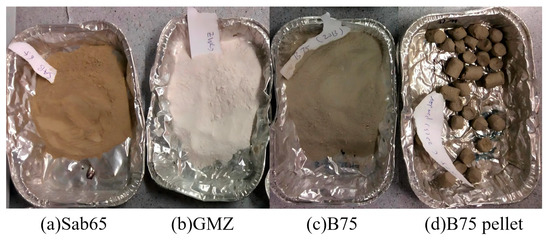
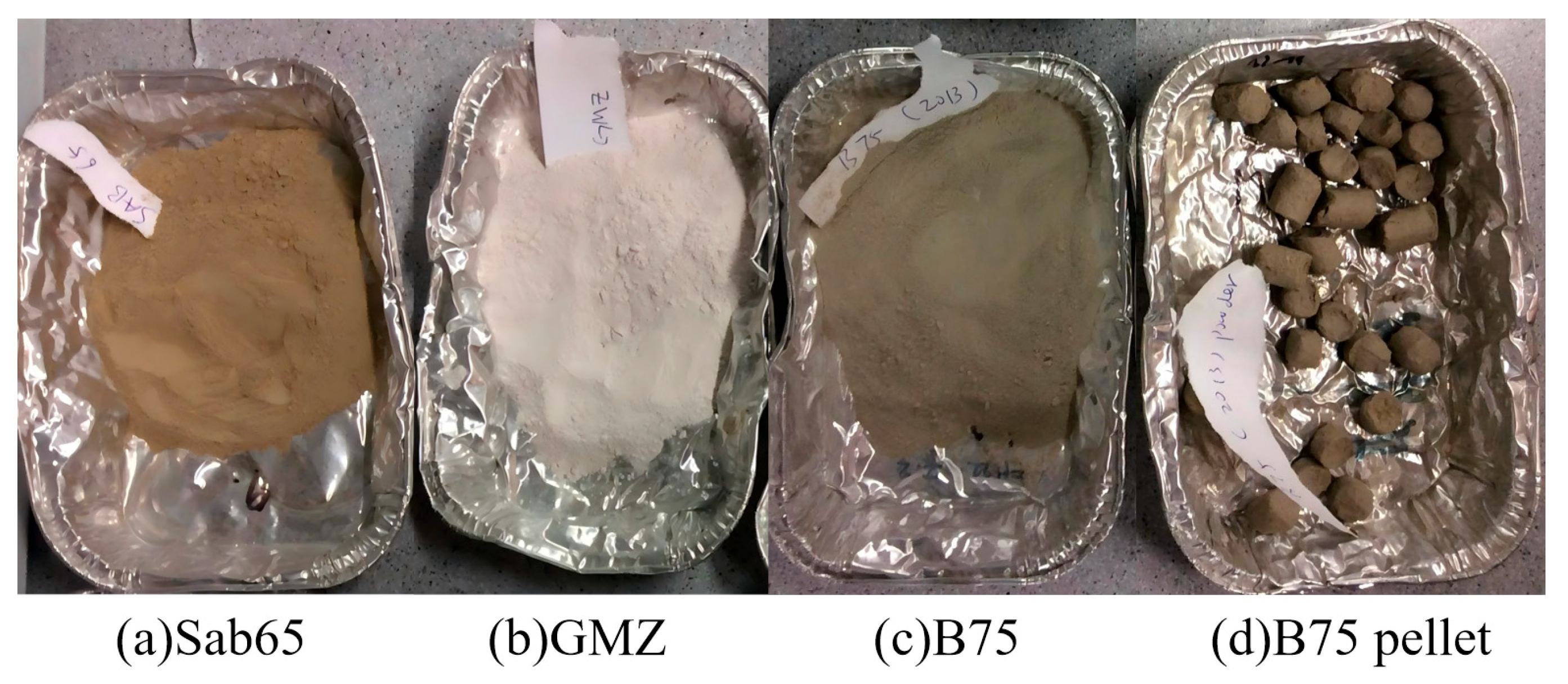
The materials investigated in this study include three European bentonites (Sab65, B75 powder, and B75 pellet) and one Chinese bentonite (GMZ), as illustrated in Figure 1. These materials exhibit distinct mineralogical compositions and microstructural characteristics and are therefore suitable for comparative investigation of water retention behavior under thermal effects.
Figure 1.
Photographs of the bentonites investigated in this study: (a) Sab65, (b) GMZ, (c) B75 powder, and (d) B75 pellet.
Sab65 (Na-activated Sabenil 65) is a commercial sodium bentonite widely used as a reference expansive clay in laboratory studies. It is characterized by a high smectite (montmorillonite) content and strong swelling capacity, resulting from well-developed interlayer hydration and a large specific surface area. Sab65 exhibits relatively high contents of Al2O3 and Fe2O3, together with a notable Na2O content (2.03 wt.%), reflecting its sodium-activated nature [23]. These mineralogical and chemical features contribute to its strong water retention capacity and pronounced suction-dependent behavior. Owing to its stable and well-documented properties, Sab65 has frequently been employed as a benchmark material in studies focusing on soil–water retention behavior, hydraulic hysteresis, and microstructural control mechanisms in compacted bentonites [14,16].
The Czech bentonite B75 was extracted from the Černý vrch deposit in the northwestern region of the Czech Republic and was supplied in powder form. Compared with highly active sodium bentonites such as MX80 or Sab65, B75 generally exhibits intermediate activity. The chemical composition of B75 indicates relatively high contents of SiO2 (51.91 wt.%) and CaCO3 (11.71 wt.%), together with lower Na2O content, reflecting its Ca–Mg type montmorillonite nature [12]. These characteristics result in a comparatively lower swelling capacity and water retention ability than sodium bentonites. Owing to its well-characterized mineralogical composition and pore structure, B75 has been widely used in experimental studies addressing soil water retention, microstructure evolution, and thermo-hydro-mechanical behavior of expansive clays [24,25,26].
In addition to the powder form, a pelletized form of B75 bentonite (B75 pellet) was also investigated. The pellets were produced by compacting B75 powder into granules of controlled size. Pelletization introduces technological and packing voids, leading to a pore structure that differs from that of the powder material. Such structural modifications have been shown to affect water retention behavior, particularly in the low suction range dominated by capillary effects, whereas their influence diminishes at high suction levels where adsorption mechanisms prevail [12,15,27].
The GMZ bentonite used in this study was sourced from Gaomiaozi town, Xinghe County, Inner Mongolia Autonomous Region, China, and has been selected as a candidate buffer and backfill material for the Chinese high-level radioactive waste geological disposal program. GMZ bentonite is dominated by montmorillonite (approximately 70%), with quartz, feldspar, and clinoptilolite as accessory minerals. It exhibits a high liquid limit (approximately 276%), a plastic limit of about 37%, and a specific gravity of solids close to 2.66. Due to its favorable swelling properties and well-documented thermo-hydro-mechanical behavior, GMZ bentonite has been extensively investigated under various thermal and hydraulic conditions [19,28,29,30].
3. Methods
3.1. Determination of SWRCs Using Vapor Equilibrium Technique
The soil water retention curves (SWRCs) were determined using the vapor equilibrium method, which allows precise control of suction over a wide range, particularly under high suction conditions [12,13,16].
In this method, relative humidity (RH) inside sealed desiccators was controlled by different saturated salt solutions, following the recommendations of OIML (1996) [31]. Under isothermal conditions, the total suction imposed by each salt solution is uniquely related to the relative humidity through Kelvin’s equation:
where is the total suction (MPa), is the universal gas constant (8.314462 J·mol−1·K−1), is the absolute temperature (K), is the density of water (kg·m−3), is the molecular mass of water vapor (18.016 g·mol−1), and RH is the relative humidity defined as the ratio of vapor partial pressure to saturation vapor pressure.
Different saturated salt solutions were employed to generate controlled suction levels covering low, intermediate, and high suction ranges. The relative humidity and corresponding suction values for each salt solution at the investigated temperatures were calculated according to Kelvin’s equation, taking into account the temperature dependence of water vapor pressure. The detailed correspondence between salt solutions and suction at various temperatures is summarized in Table 1.
Table 1.
Saturated salt solutions employed for suction control using the vapor equilibrium method [31].
Prior to testing, bentonite samples were oven-dried at 105 °C for at least 24 h and then gently disaggregated into small irregular fragments with masses ranging from approximately 0.8 to 1.5 g. The specimens were placed in desiccators without lateral confinement, allowing free swelling during wetting. All desiccators were maintained at controlled temperatures.
During equilibration, the specimens were weighed weekly. Thermodynamic equilibrium was considered to have been reached when the relative change in specimen mass was less than 0.001 g for three consecutive weighings. Depending on the imposed suction level, equilibrium typically required several weeks to months, which is consistent with previous studies using the vapor equilibrium method [5,12].
Once equilibrium was achieved, the water content of the specimens was determined gravimetrically. The obtained equilibrium water contents were then used to construct the SWRCs for both drying and wetting paths. Drying paths were obtained by progressively decreasing the relative humidity, whereas wetting paths were established by stepwise increasing the relative humidity from high to low suction levels.
Considering the small specimen size and the associated uncertainty in volume determination, the potential uncertainty in calculated void ratio and degree of saturation was estimated following established calibration procedures reported in the literature [13]. These uncertainties were taken into account in the interpretation of the SWRC results.
3.2. Van Genuchten Model
The experimental SWRCs were described using the Van Genuchten (VG) model, which has been widely applied to characterize the water retention behavior of unsaturated soils due to its flexibility and high fitting accuracy [8,14,32]. In the VG formulation, the relationship between volumetric water content and suction is expressed as:
where is the volumetric water content, is the saturated water content, is the residual water content, and is the soil suction. The parameters , , and are empirical fitting coefficients that control the shape of the SWRC. Parameter α acts as a scaling parameter along the suction axis, controlling the characteristic suction level at which the soil transitions from a near-saturated state to a desaturated state. Although is sometimes associated with the air-entry suction, this correspondence is not exact and depends on the shape parameters and ; therefore, α is more appropriately interpreted as a suction-axis scaling or location parameter rather than a strict inverse air-entry value [8,32].
Parameter n primarily governs the steepness of the SWRC in the transition zone and is commonly related to the pore-size distribution of the soil. Larger values of indicate a steeper desaturation process and a more concentrated pore-size distribution, whereas smaller values correspond to a more gradual transition from saturation to residual conditions. Parameter m controls the overall curvature of the SWRC. In this study, the commonly adopted Van Genuchten–Mualem constraint was employed, whereby:
This constraint reduces the number of independent fitting parameters and ensures consistency with the Mualem hydraulic conductivity formulation [7,8].
The VG model parameters were obtained by nonlinear regression fitting of the experimental SWRC data for each bentonite, temperature, and hydraulic path. The goodness of fit between the predicted water contents and the measured water contents was evaluated using the coefficient of determination ().
The coefficient of determination was calculated as:
where is the number of experimental data points, and is the mean of the measured water contents.
4. Results and Discussion
4.1. Effect of Material and Path on Water Retention Behavior
4.1.1. Overall Characteristics of Drying- and Wetting-Path Soil Water Retention Curves of Different Bentonites
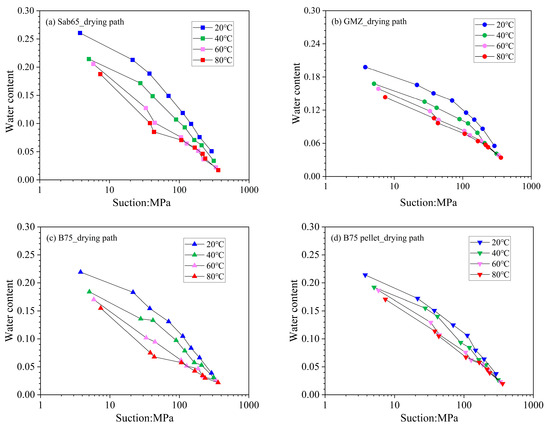
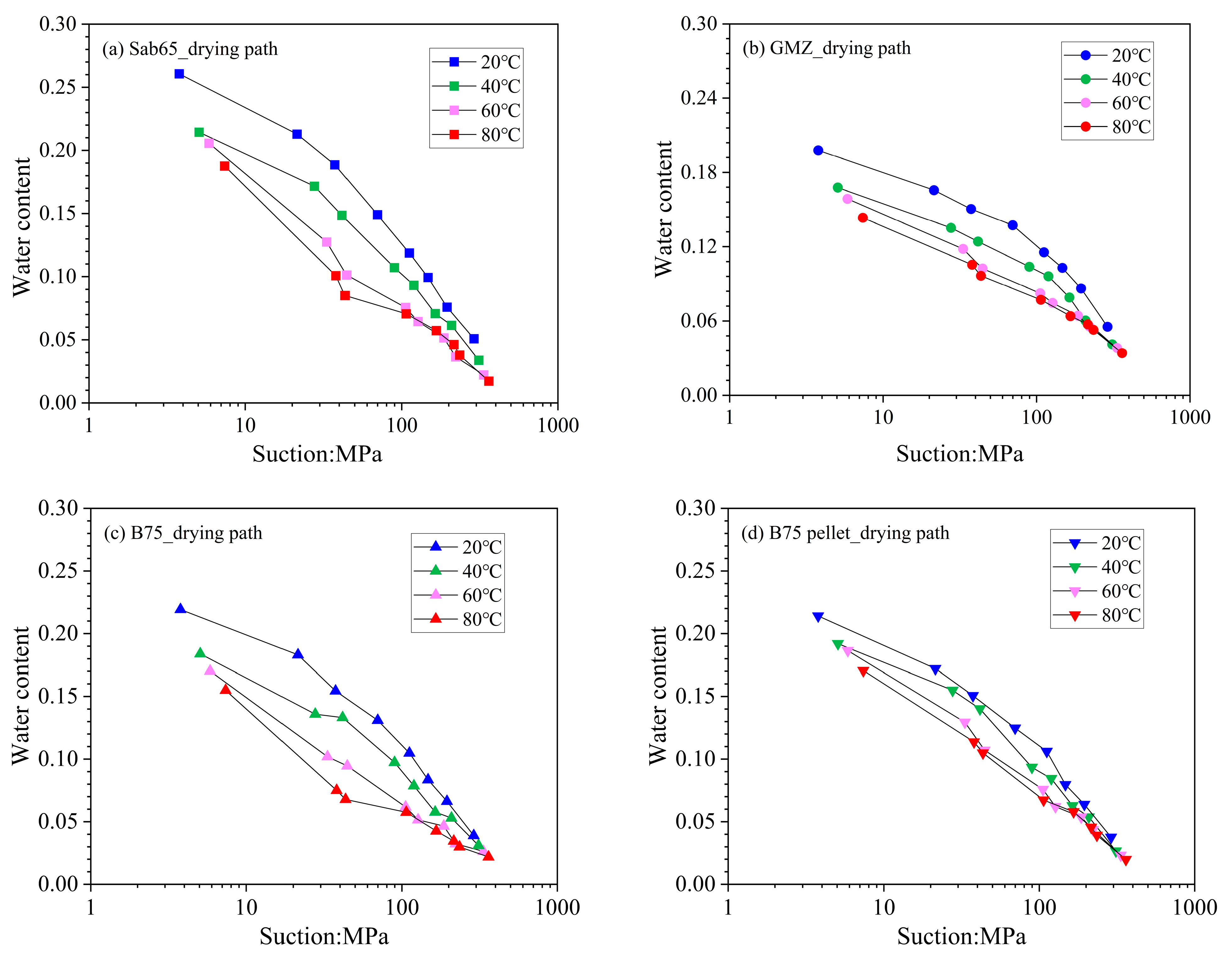
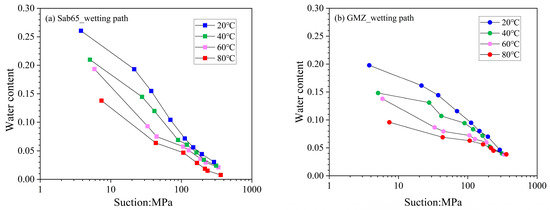
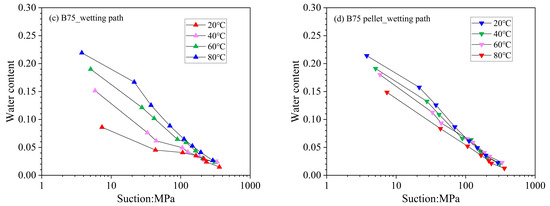
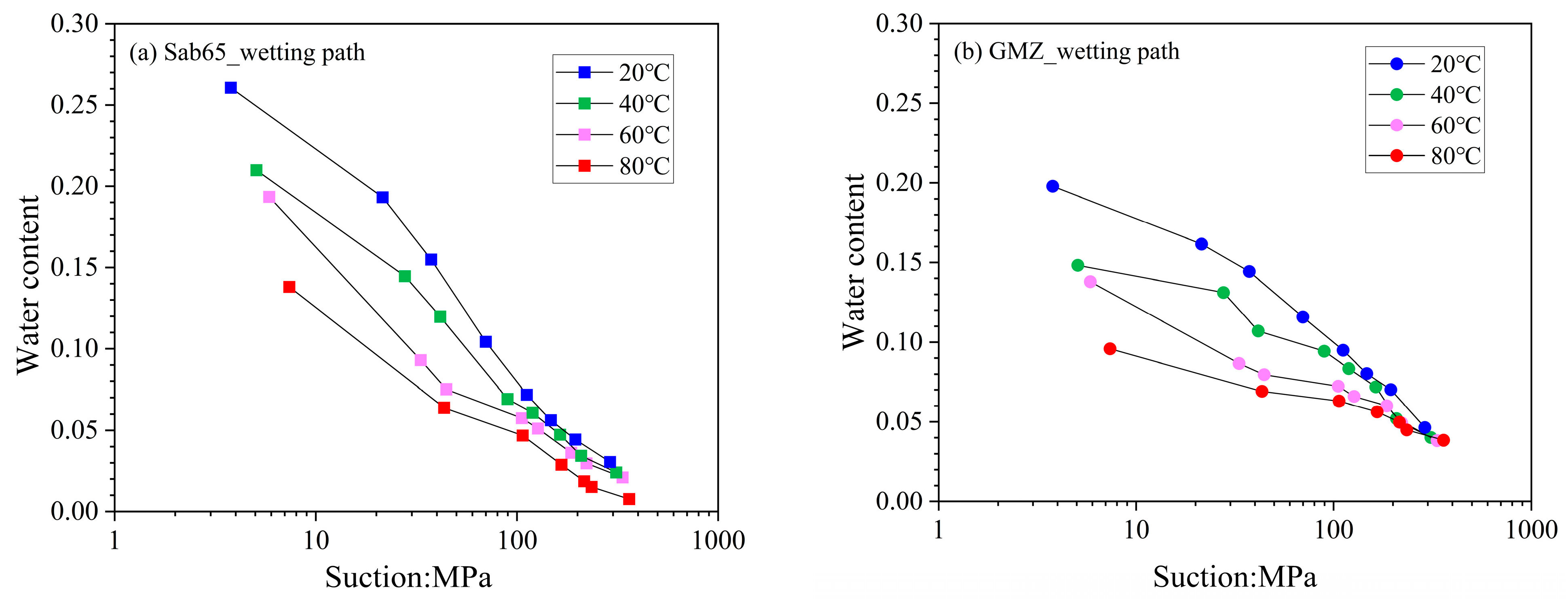
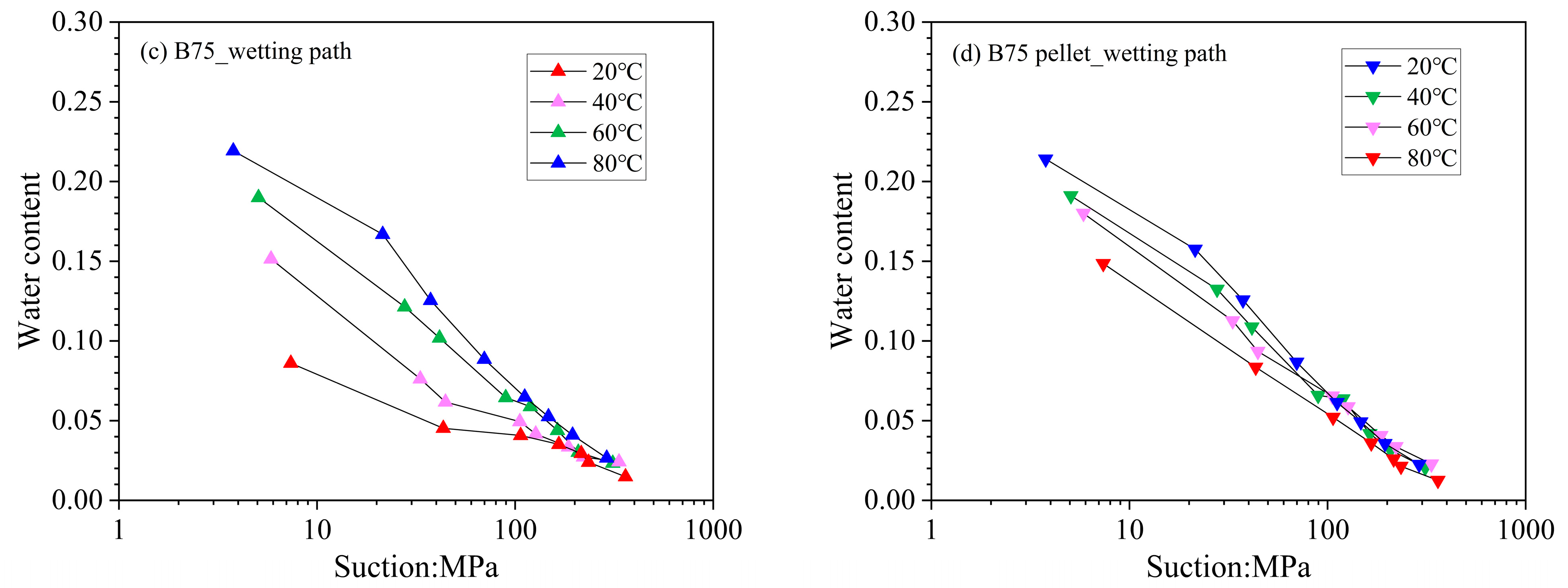
Figure 2 and Figure 3 show the drying-path and wetting-path soil water retention curves (SWRCs) of Sab65, GMZ, B75 powder, and B75 pellet at temperatures ranging from 20 to 80 °C. Regardless of temperature or hydraulic path, all bentonites exhibit typical S-shaped SWRCs over the investigated high suction range (approximately 5–300 MPa), which is characteristic of bentonites. For all materials, the gravimetric water content decreases monotonically with increasing suction, reflecting a progressive transition in retention mechanisms from capillarity-dominated behavior at lower suctions to adsorption-controlled behavior at higher suctions [14,33].
Figure 2.
Drying-path soil water retention curves of different bentonites at various temperatures: (a) Sab65, (b) GMZ, (c) B75, and (d) B75 pellet.
Figure 3.
Wetting-path soil water retention curves of different bentonites at various temperatures: (a) Sab65, (b) GMZ, (c) B75, and (d) B75 pellet.
The samples consistently exhibit higher water retention at 20 °C, whereas significantly lower water contents are obtained at 80 °C, indicating a systematic reduction in overall water-holding capacity with increasing temperature. At relatively low suctions, differences among the SWRCs measured at different temperatures are most pronounced, suggesting that retention is dominated by capillary water and weakly adsorbed water, which are more temperature sensitive. As suction increases further, the discrepancies between curves measured at different temperatures progressively diminish, suggesting that under high suction conditions water is increasingly dominated by strongly adsorbed water or interlayer water, whose desorption behavior exhibits a much weaker temperature dependence. Similar temperature-dependent retention behavior has been reported for compacted bentonites, indicating that temperature effects are more significant at low suction and gradually attenuate at high suction levels [12].
4.1.2. Influence of Mineralogical Composition on Water Retention Behavior of Different Bentonites
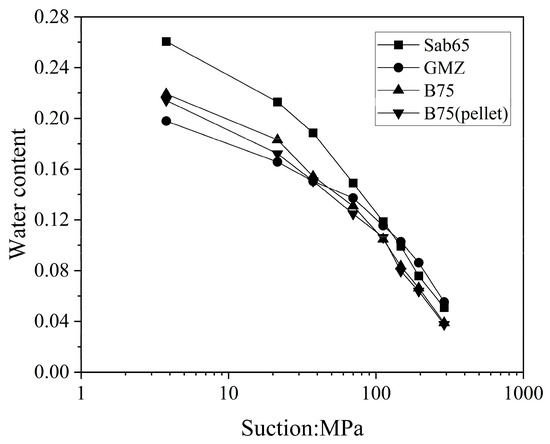
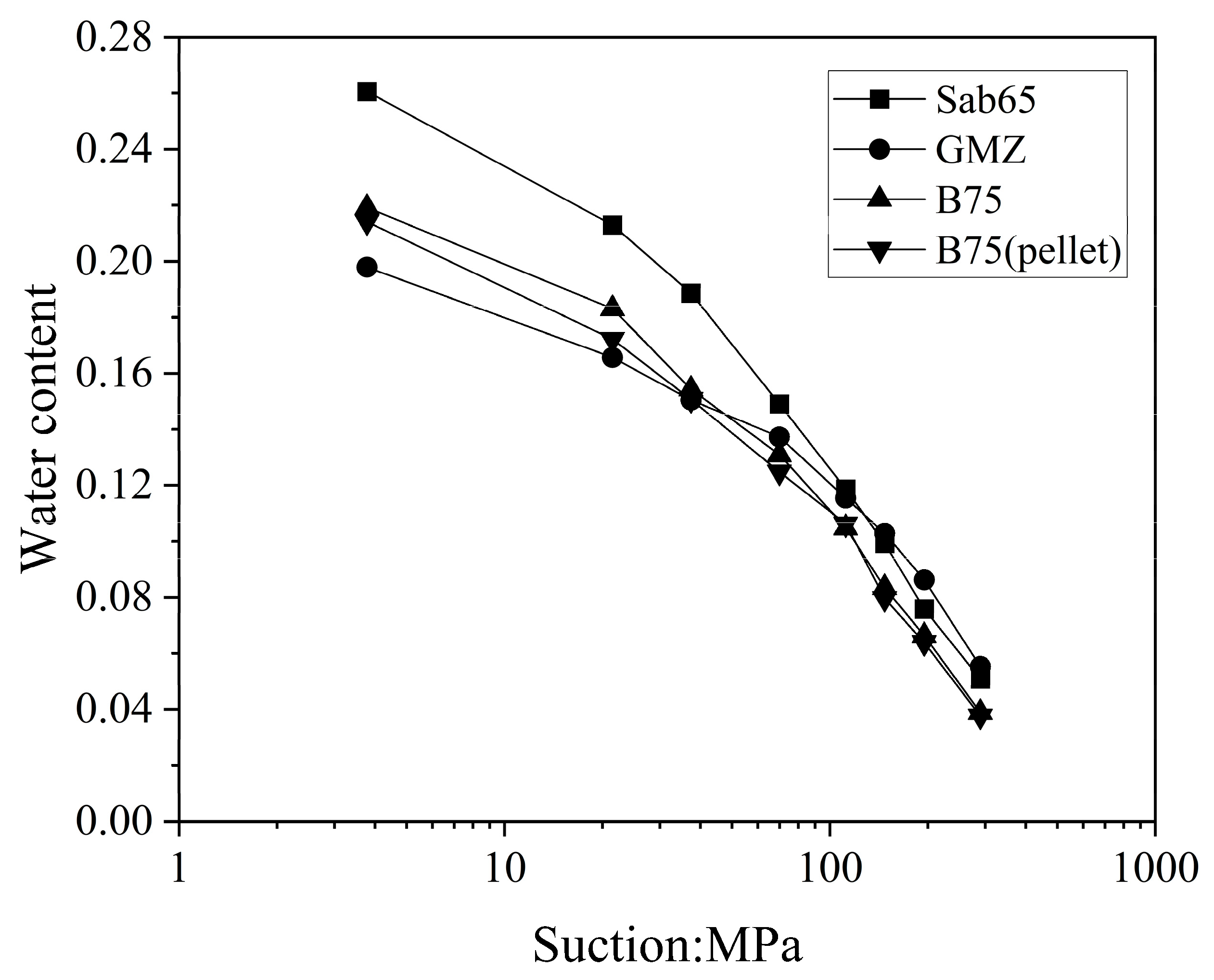
As shown in Figure 4, under identical temperature conditions (20 °C taken as a representative case), the drying-path soil water retention curves (SWRCs) of different bentonites exhibit pronounced differences, highlighting the dominant control of mineralogical composition and microstructural features on water retention behavior. Over the low-to-intermediate suction range (approximately 3–100 MPa), Sab65 consistently exhibits the highest water contents, indicating the strongest retention capacity. By contrast, GMZ, B75 powder, and B75 pellet show substantially lower water contents within this suction interval, although their relative ranking is suction-dependent. For example, GMZ tends to be the lowest at the lowest suction steps (approximately 3–30 MPa), whereas B75 pellet can become comparable to or lower than GMZ as suction increases (approximately 100–300 MPa). This indicates that, under low suction conditions, the ability to retain free water and weakly bound water differs markedly among bentonites.
Figure 4.
Comparison of drying-path soil water retention curves of different bentonites (Sab65, GMZ, B75 powder and B75 pellet) at 20 °C.
The higher water retention capacity of Sab65 at low suction can likely be attributed primarily to its higher montmorillonite content and enhanced interlayer hydration capacity. Previous studies have demonstrated that bentonites with higher montmorillonite contents generally possess extended specific surface areas and more robust interlayer adsorption, thereby retaining more water at relatively low suction during the drying process [16]. In contrast, GMZ bentonite exhibits lower water contents at the same suction levels, a phenomenon linked to its mineralogical composition and exchangeable cation characteristics. Comparative studies between GMZ and highly expansive bentonites such as MX-80 have shown that, although GMZ is also montmorillonite-dominated, differences in interlayer structure and hydration behavior result in a relatively lower overall water retention capacity [34].
With increasing suction, the differences in water content among the bentonites gradually decrease, and the drying-path SWRCs tend to converge in the high suction range. This suggests that under high suction, water primarily exists as strongly adsorbed layers on clay mineral surfaces and within interlayers. Consequently, retention behavior is predominantly governed by mineral–water interactions, rendering the macroscopic structure and initial pore characteristics less influential. Similar convergence behavior at high suction has been reported in previous studies on compacted bentonites [14].
A comparison between B75 powder and B75 pellet further highlights the influence of material form on water retention behavior. Across the entire suction range, B75 pellet exhibits systematically lower water contents than B75 powder, with the difference being more pronounced at low suction levels. This behavior may be attributed to technological and packing voids introduced during pelletization, which promote water drainage from macropores during drying and reduce water retention at low suction. Previous investigations on pellet–powder bentonite systems have reported that pelletization primarily affects water retention in the low suction range. At high suction levels, however, water retention is increasingly governed by intra-aggregate micropores, leading to diminished differences between pelletized and powdered materials [15].
Overall, differences in drying-path water retention among bentonites are mainly expressed in the low to intermediate suction range and are jointly controlled by montmorillonite content, interlayer hydration capacity, and material form. At high suction, where adsorbed water dominates, water retention behavior among different bentonites tends to converge. These observations are consistent with previous findings on the mineralogical control of water retention in compacted bentonites.
4.1.3. Drying–Wetting Hysteresis and Material Dependence
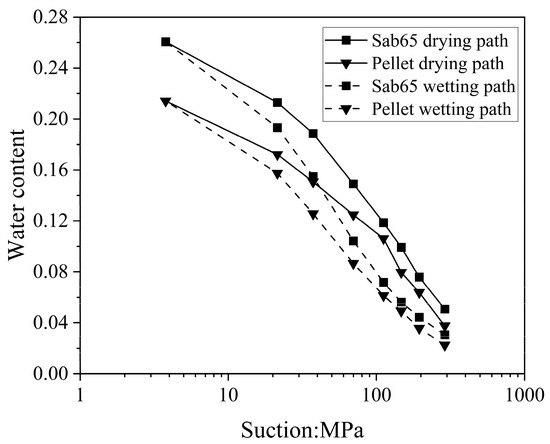
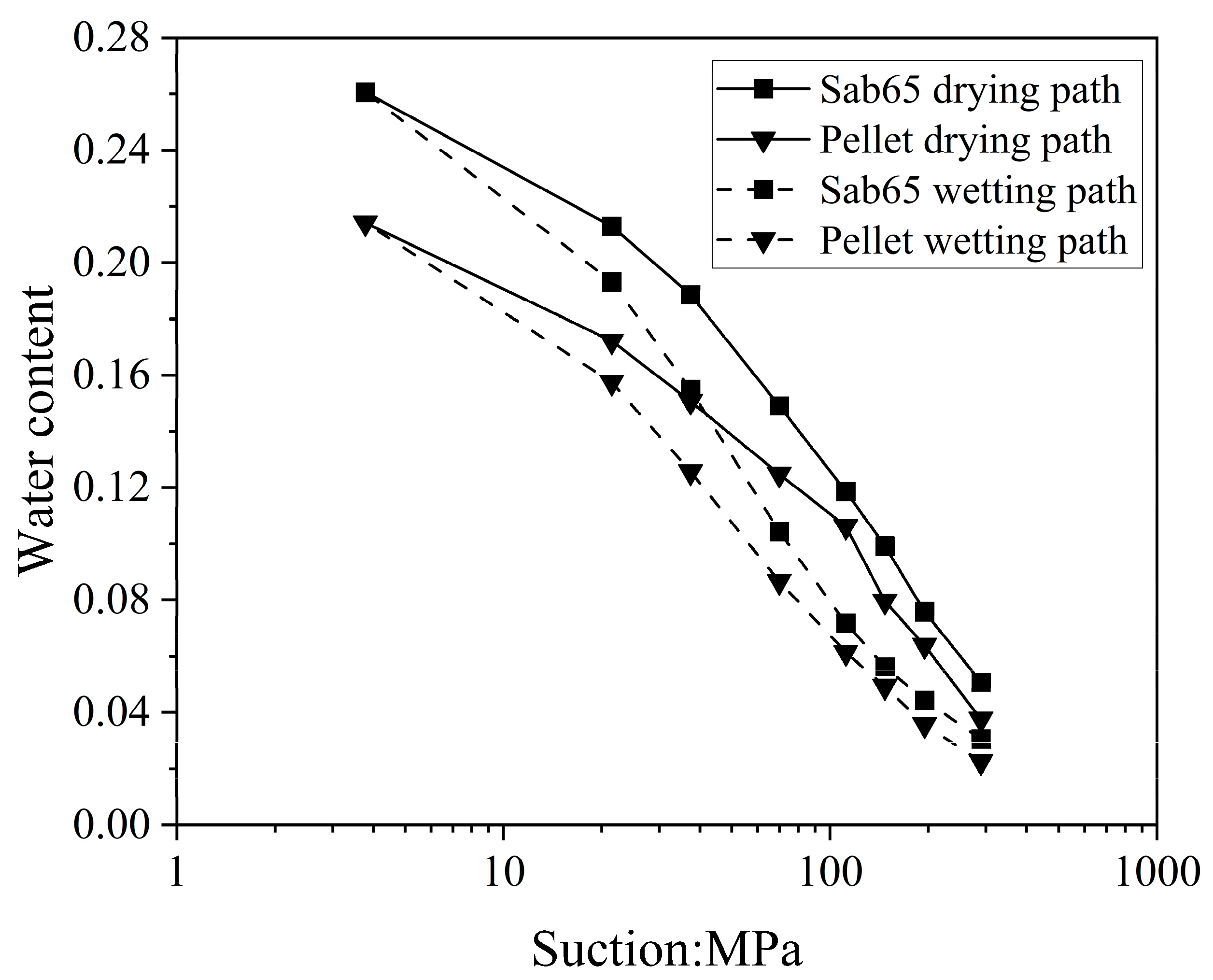
Sab65 and B75 pellet bentonites were selected as representative materials to analyze drying–wetting hysteresis at 20 °C. As shown in Figure 5, pronounced hysteresis is observed between the drying- and wetting-path soil water retention curves for both materials. At a given suction, the water content along the drying path is consistently higher than that along the wetting path, exemplifying a distinct path-dependent retention behavior during dehydration and rehydration. Similar drying–wetting hysteresis has been widely reported for compacted bentonites and other fine-grained soils [12,14].
Figure 5.
Drying- and wetting-path soil water retention curves of Sab65 and B75 pellet bentonites at 20 °C.
The magnitude of hysteresis is highly sensitive to the suction range. In the low to intermediate suction regime, a distinct separation between the drying and wetting paths is observed for both materials, whereas the hysteresis progressively diminishes as suction increases. This behavior is closely linked to the prevailing water retention mechanisms at different suction levels. At low suction, water is mainly stored in inter-aggregate macropores. In this state, drainage and imbibition processes are governed by pore geometry, connectivity, and contact angle effects, thereby leading to asymmetric drying and wetting responses. Conversely, at high suction, water retention is dominated by strongly adsorbed layers within intra-aggregate micropores and clay interlayer spaces. Under such conditions, water migration becomes less dependent on the hydraulic path, resulting in a gradual convergence of the drying- and wetting-path SWRCs. This observation is consistent with previous studies on water retention mechanisms of compacted bentonites at high suction levels [14,16].
A pronounced material dependence is also evident in the hysteretic behavior. Compared with B75 pellet, Sab65 exhibits a wider separation between the drying and wetting paths over the entire suction range, suggesting a more pronounced hysteresis effect. This difference may be attributed to the higher montmorillonite content and more developed pore structure of Sab65, which intensify the path dependence of water migration during the drying–wetting cycles. In contrast, B75 pellets exhibit relatively limited hysteresis. This is likely due to the more homogeneous pore structure induced by pelletization, which restricts macropore connectivity and attenuates capillarity-controlled hysteresis at low suction. Similar conclusions have been reported for pellet–powder bentonite systems, where pelletization mainly affects water retention at low suction, while its influence becomes negligible at high suction levels [15]. Overall, the results indicate that drying–wetting hysteresis of bentonite is synergistically controlled by suction level and material properties, with mineralogical composition and microstructural features playing a key role in determining hysteresis intensity.
4.2. Effect of Temperature on Water Retention Behavior
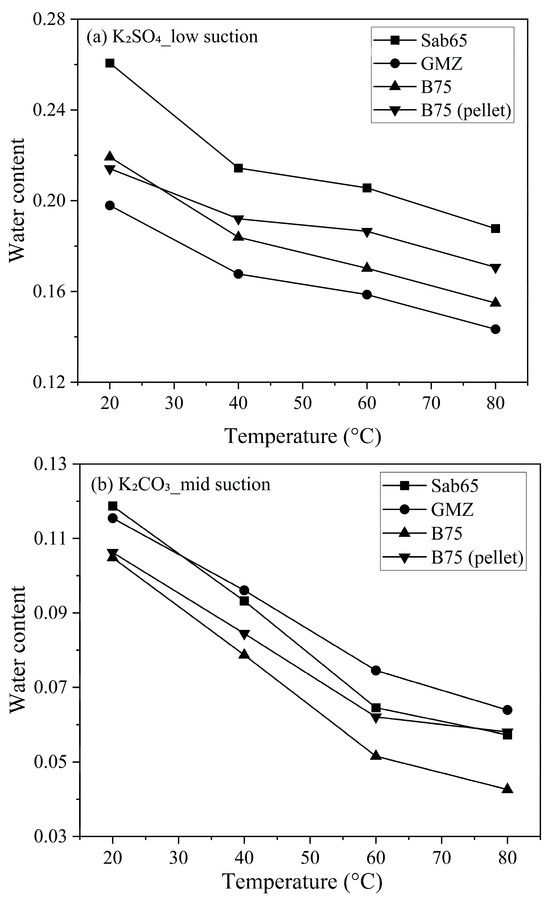
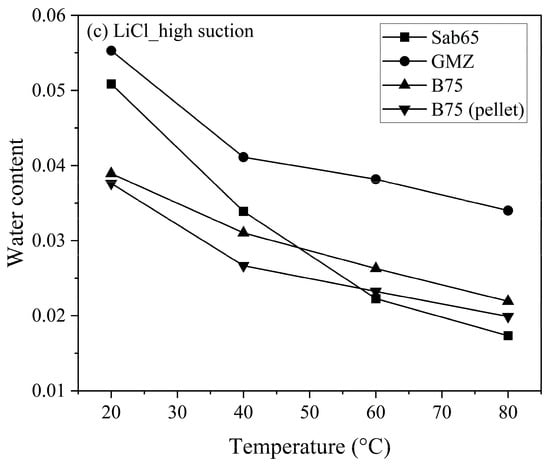
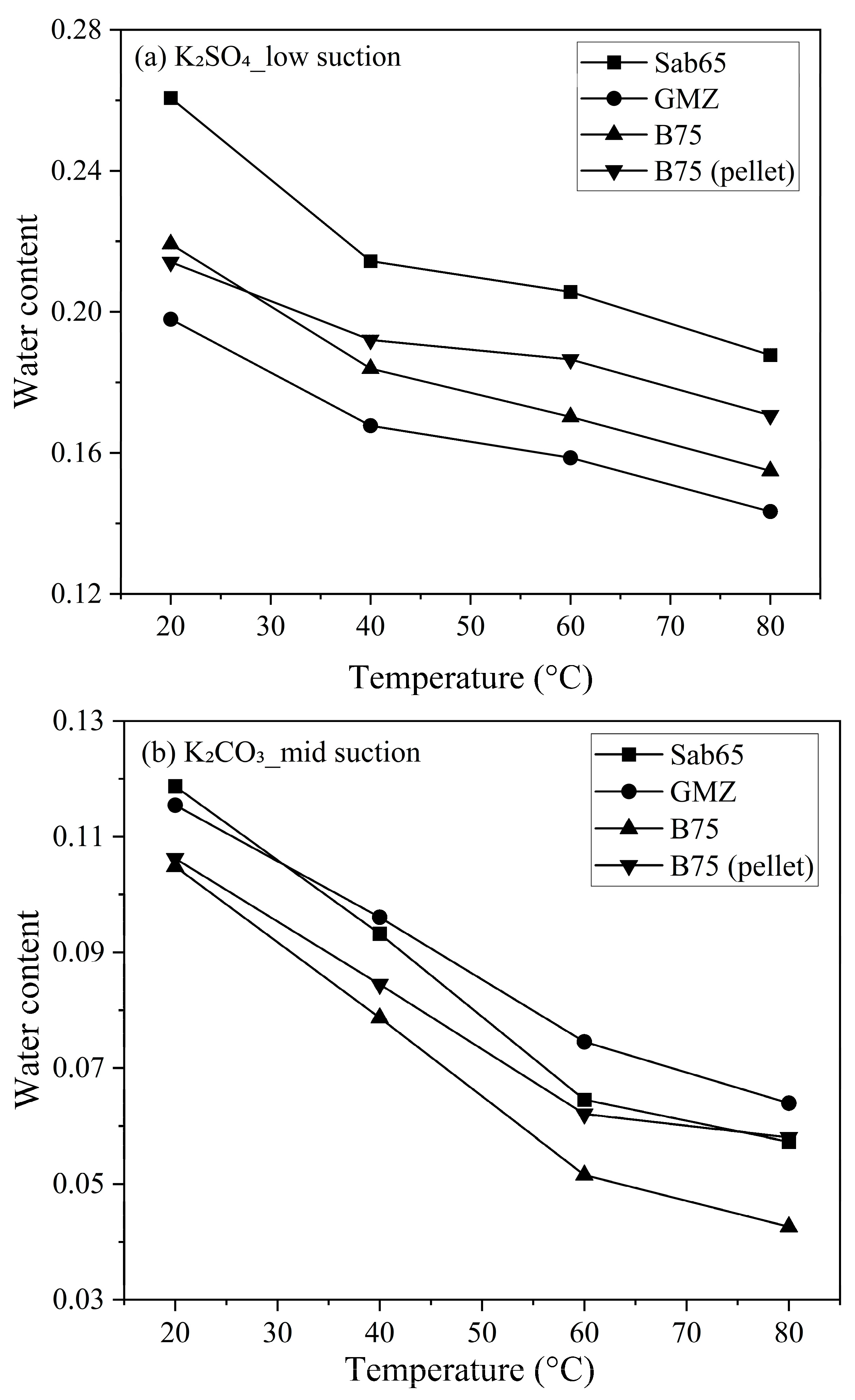
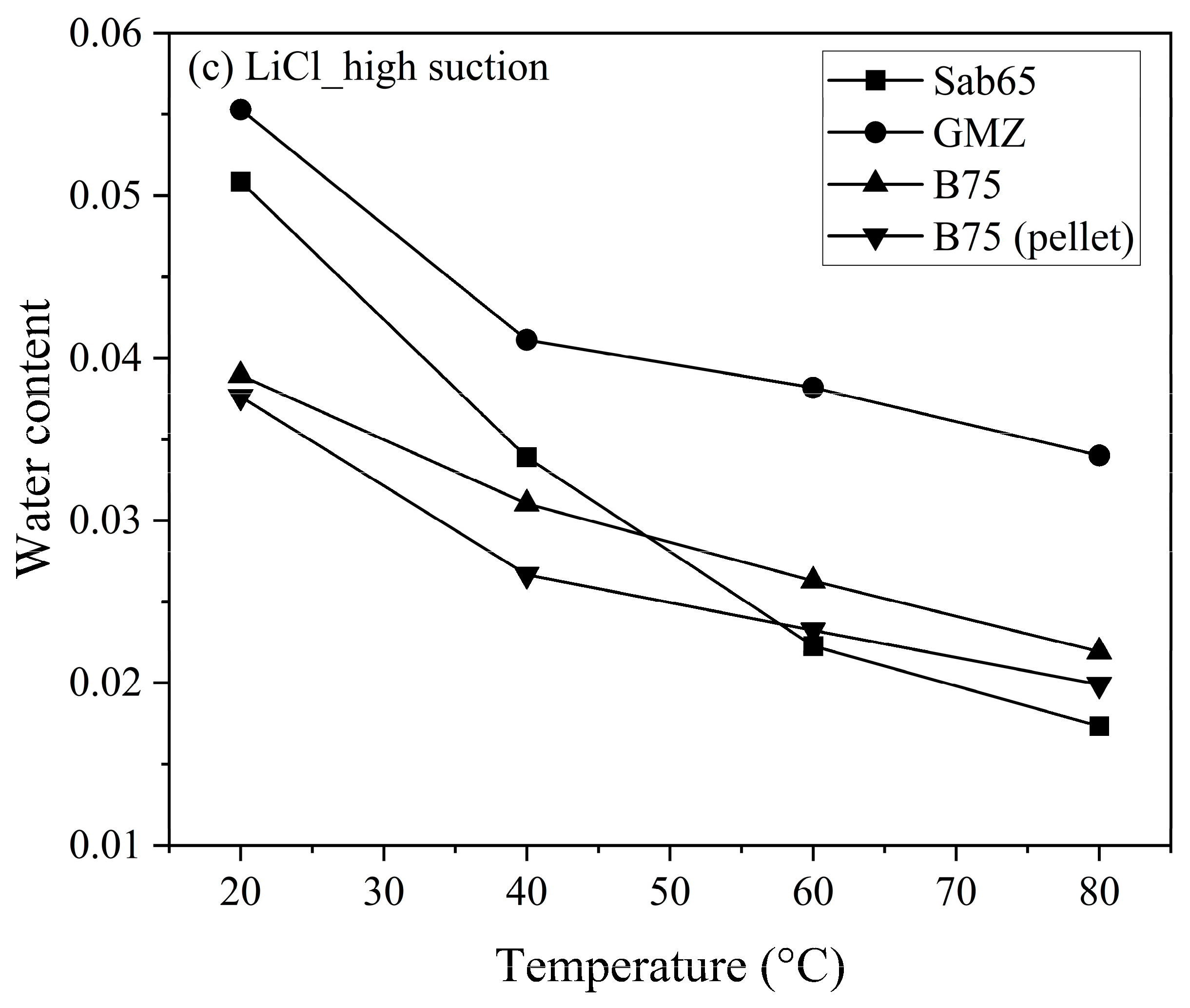
The drying-path soil water retention curves of all investigated bentonites exhibit pronounced temperature dependence. As shown in Figure 6, at a given suction level, the water content of each bentonite decreases systematically with increasing temperature, indicating that elevated temperature is unfavorable for water retention. This temperature-induced downward shift in the SWRCs is consistently observed for all materials and is particularly pronounced in the low to intermediate suction ranges. Despite the pronounced influence of temperature, stable differences in water retention capacity among the bentonites persist, yet their manifestation varies with the suction range. Within the low to intermediate suction range, the relative ranking of water retention capacity among the different bentonites remains generally consistent. In contrast, under high-suction conditions (Figure 6c), the ranking may change due to differences in temperature sensitivity among the materials. A quantitative comparison is provided below.
Figure 6.
Variation in water content with temperature at constant suction for different bentonites under selected saturated salt environments: (a) K2SO4 (low suction); (b) K2CO3 (intermediate suction); and (c) LiCl (high suction).
Notably, the response of different bentonites to temperature varies between low- and high-suction domains. With increasing temperature, the water contents of all bentonites decrease. At low suction Figure 6a, Sab65 consistently exhibits the highest water content over the entire temperature range, whereas GMZ shows the lowest values, reflecting substantial differences in the ability of bentonites to retain free and weakly adsorbed water. In contrast, in the high-suction conditions Figure 6c, Sab65 displays a more pronounced temperature-induced decrease and tends to exhibit lower water contents than the other materials at elevated temperatures (60–80 °C) over part of the high-suction range, indicating a markedly different temperature response compared with that observed at low suction. For example, its water content decreases from w = 0.05 at 20 °C to w = 0.02 at 80 °C (a 60% reduction), whereas GMZ, B75 powder, and B75 pellet decrease from 0.06 to 0.03 (50%), 0.04 to 0.02 (50%), and 0.04 to 0.02 (50%), respectively.
From a mechanistic perspective, water retained at high suction predominantly exists as adsorbed water and interlayer water. Consequently, temperature effects are mainly manifested through a reduction in adsorption free energy and a weakening of interlayer hydration. The pronounced decrease in water content of Sab65 with increasing temperature in this suction domain suggests that, under ambient conditions, Sab65 retains a relatively larger fraction of temperature-sensitive weakly bound water, which becomes more readily desorbed upon heating. At elevated temperatures, the equilibrium water content of Sab65 decreases to the lowest level among the studied bentonites, indicating a higher thermal sensitivity of its adsorbed and interlayer water. This behavior may be associated with differences in mineralogical composition and the stability of interlayer hydration, which can be influenced by exchangeable cations [35]. However, quantitative indicators (e.g., CEC, specific surface area, and exchangeable cation proportions) were not measured in this study; therefore, this interpretation remains qualitative. In contrast, GMZ maintains relatively higher water contents at high suction, implying greater thermal stability of its adsorbed water. These observations are consistent with previous studies on the thermo-hydro-mechanical behavior of bentonites [12,36].
4.3. Model Prediction
4.3.1. Performance of the VG Model in Fitting SWRCs
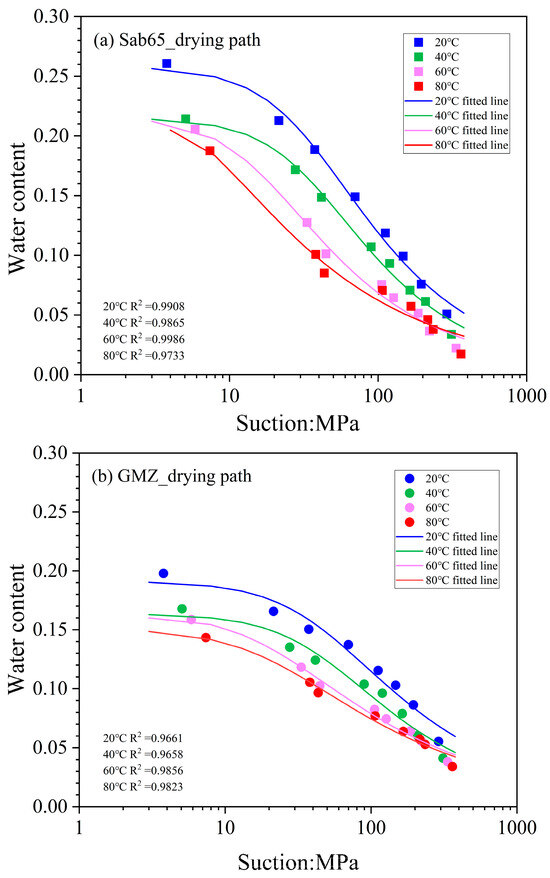
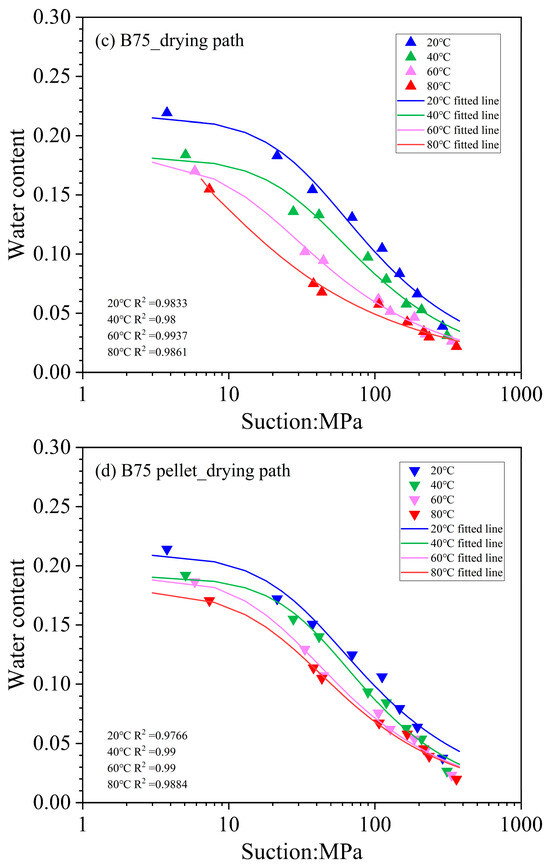
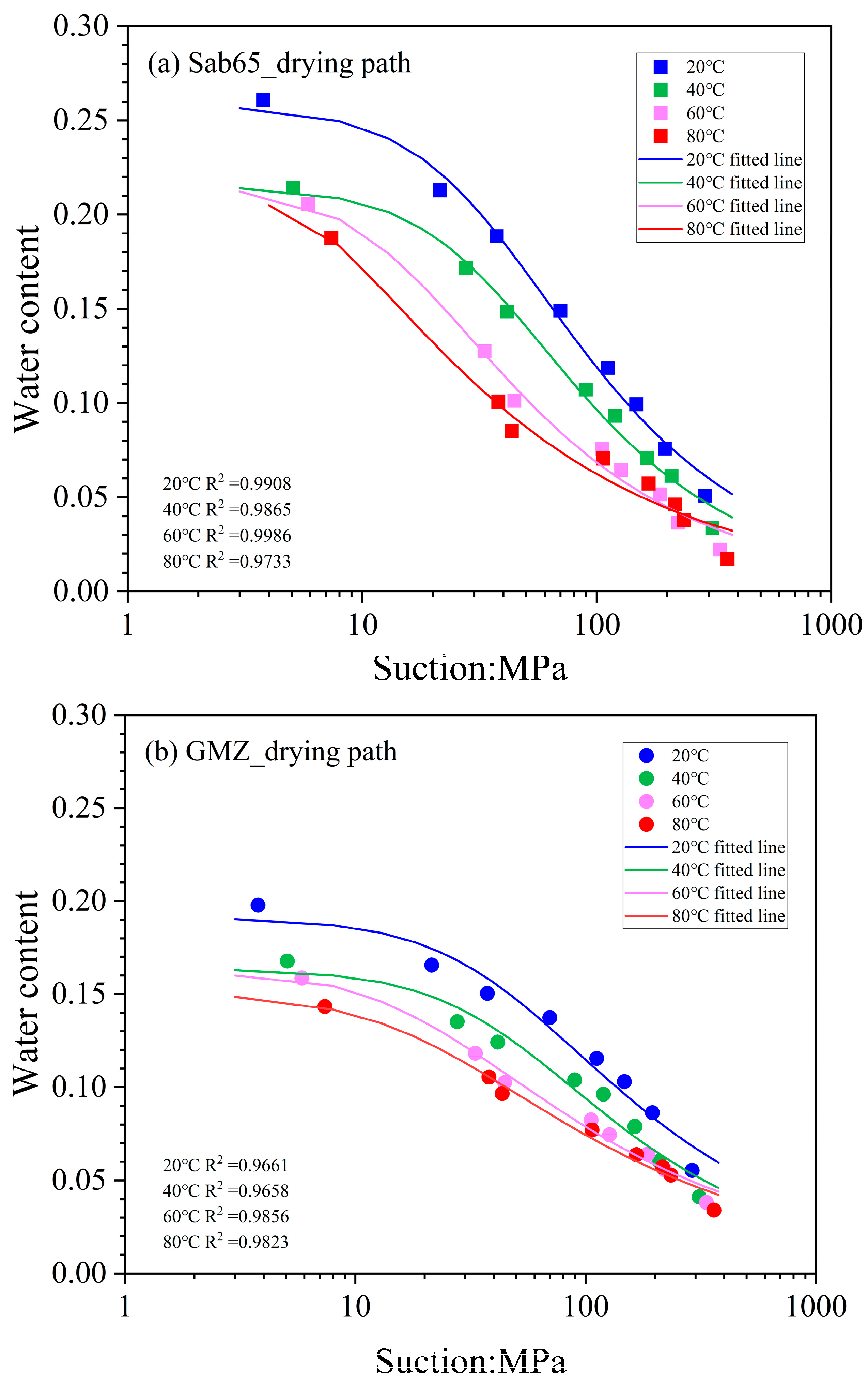
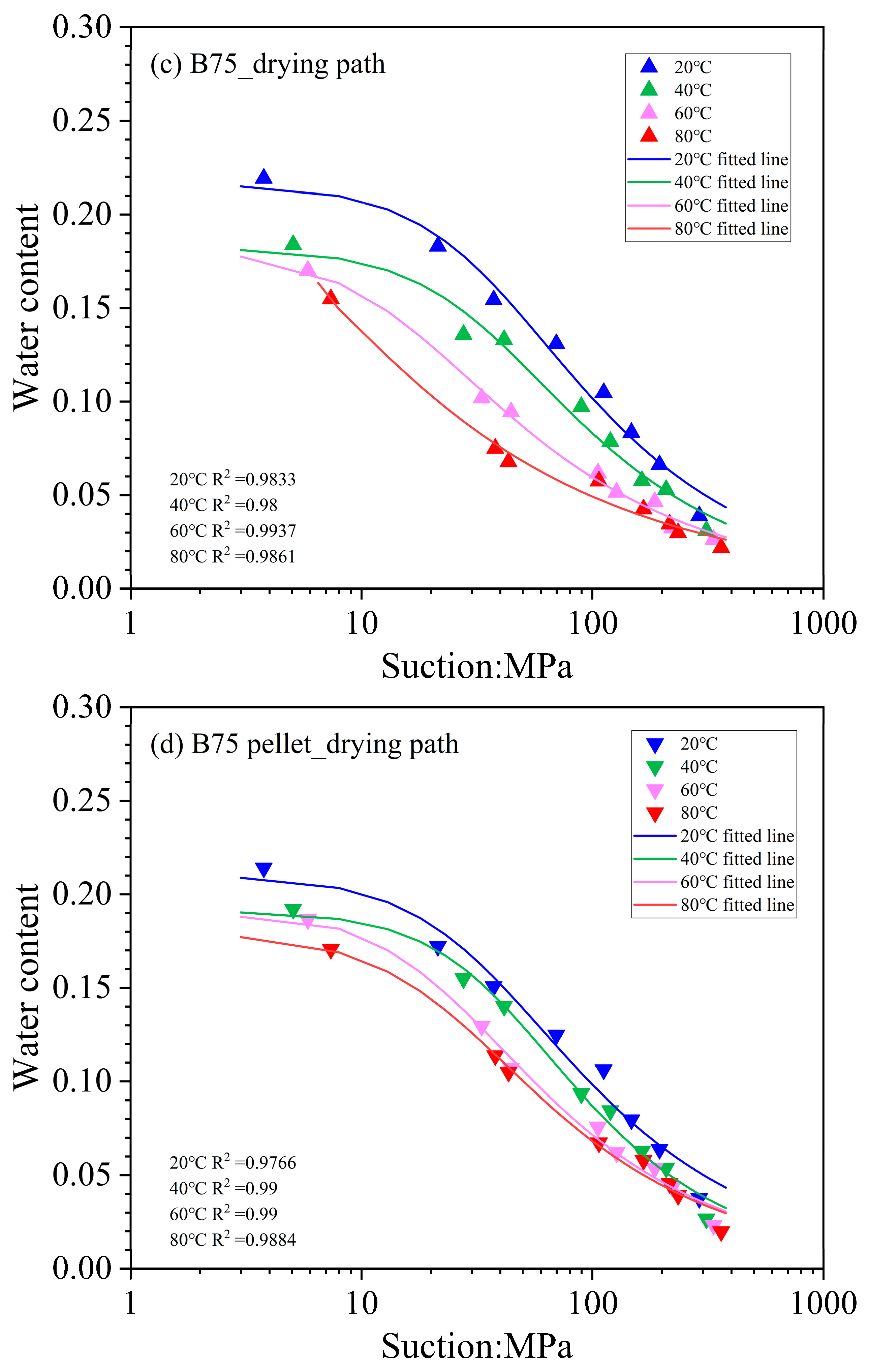
To quantitatively describe the water retention behavior of different bentonites, the VG model was applied to fit the experimentally determined soil water retention curves (SWRCs) along the drying path. Figure 7 shows the experimental data together with the corresponding VG model fits for Sab65, GMZ, B75, and B75 pellet at different temperature.
Figure 7.
Experimental drying-path soil water retention curves and VG model fits for (a) Sab65, (b) GMZ, (c) B75, and (d) B75 pellet.
The results demonstrate that the VG model provides an excellent description of the measured SWRCs over the entire investigated suction range. The fitted curves closely follow the experimental data both in the low-suction domain, where water content decreases gradually, and in the intermediate-to-high suction range, where a rapid reduction in water content is observed. No systematic deviation between the fitted curves and the measured points can be identified. The coefficients of determination (R2) obtained for all bentonites are close to unity (approximately 0.97–0.99), confirming the high quality of the model fitting.
Distinct disparities among the fitted curves reflect the intrinsic, material-dependent water retention characteristics. Sab65 exhibits consistently elevated water contents throughout the investigated suction range, whereas GMZ and B75, including its pelletized form, show comparatively lower retention capacities. These contrasts are effectively captured by the VG model through distinct parameter sets, indicating its capability to reproduce both the overall shape and the relative position of the SWRCs for different bentonites.
Overall, the VG model is validated as a reliable tool for simulating the SWRCs of various bentonites at a constant temperature. Furthermore, it provides a rigorous basis for subsequent analyses of thermal effects and the parametric evolution under varying temperatures.
4.3.2. Temperature Dependence of VG Parameters
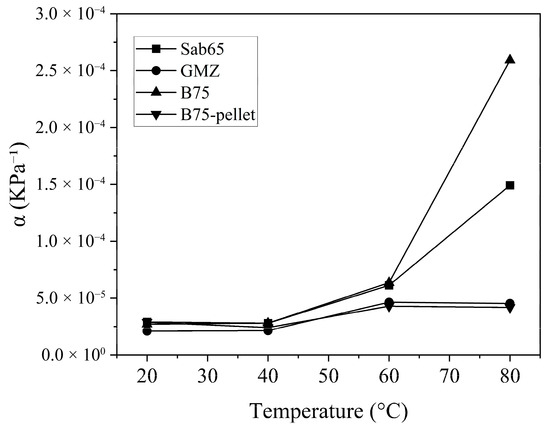
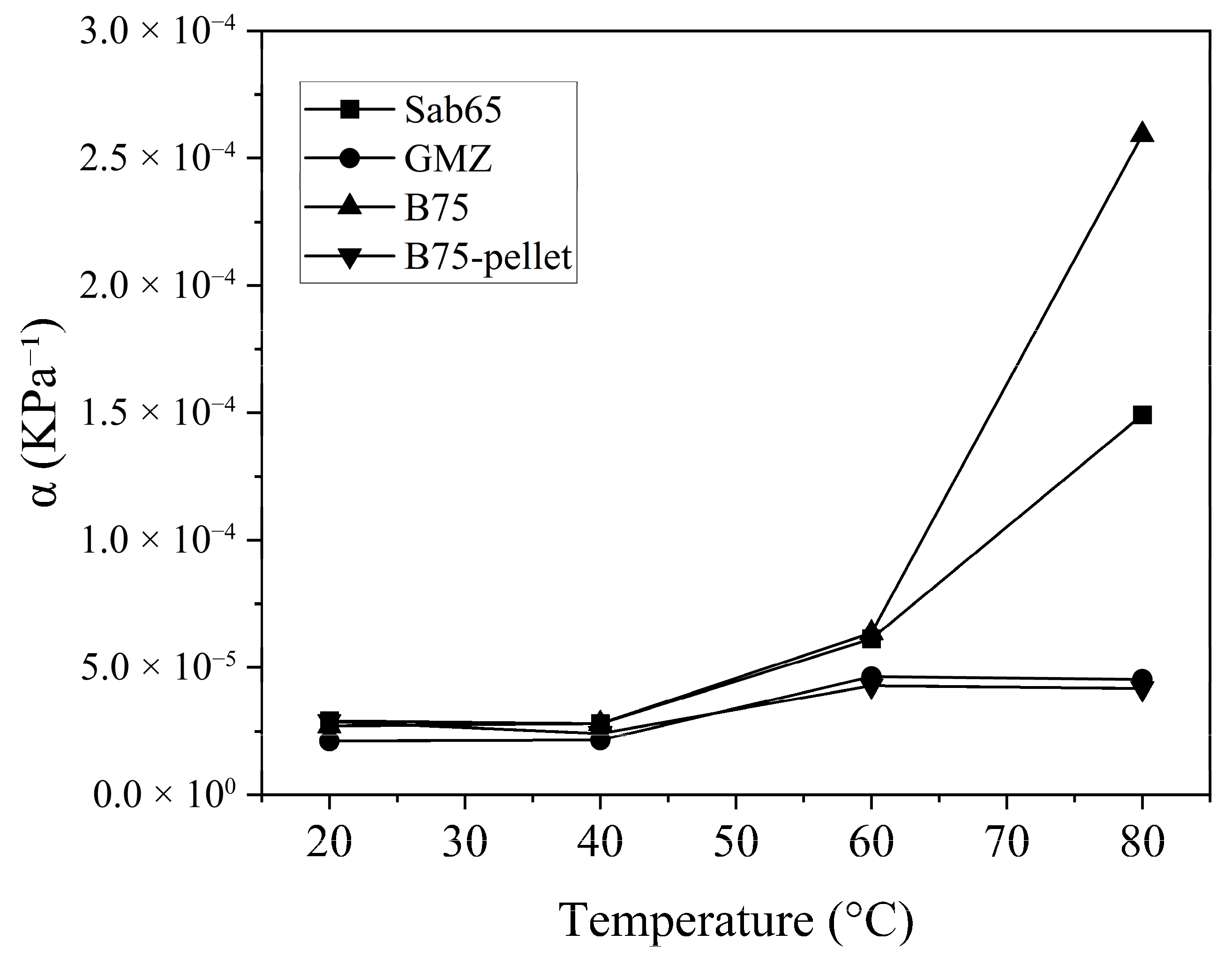
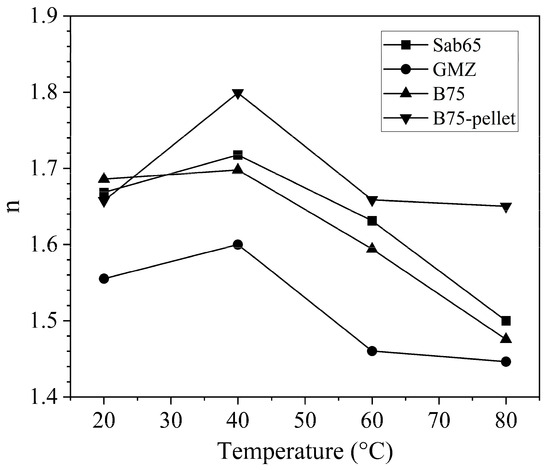
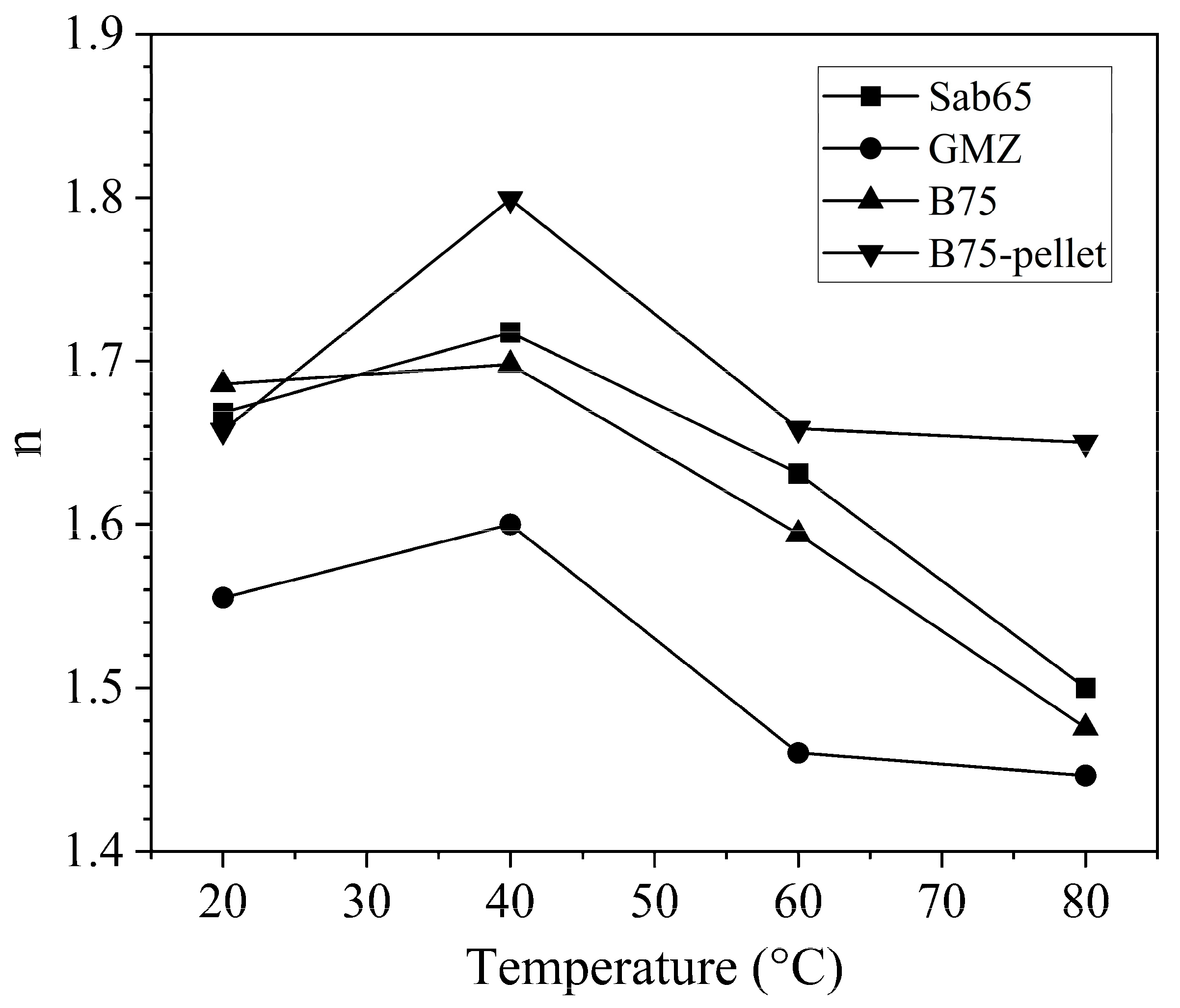
To further quantify the impact of temperature on water retention behavior, the VG model was employed to fit the experimental data. This section discusses the evolution of the fitting parameters α and n, and their physical implications across different bentonite types and material forms (powder vs. pellet). Fitting results for the drying and wetting paths are summarized in Table 2 and Table 3, and the temperature-dependent trends are illustrated in Figure 8 and Figure 9.
Table 2.
Fitted VG parameter α (kPa−1) for different bentonites at various temperatures along the drying paths.
Table 3.
Fitted VG parameter α (kPa−1) for different bentonites at various temperatures along the wetting paths.
Figure 8.
Temperature dependence of the VG parameter α for different bentonites along the drying path.
Figure 9.
Variation in the VG parameter n with temperature for different bentonites along the drying path.
In the VG framework, the fitted parameters (α, n, θs, θr) are empirical descriptors used to reproduce the measured SWRC shape, rather than mechanistic parameters derived from the underlying retention processes. This limitation is particularly relevant for expansive bentonites at very high suctions and elevated temperatures, where water retention is increasingly governed by adsorption and interlayer hydration rather than capillarity. Consequently, α (kPa−1) should not be interpreted as a physically unique “air-entry value” for these materials; instead, it is used here as a curve-scaling parameter that characterizes the horizontal position of the fitted SWRC [37]. An increase in α indicates a leftward shift in the fitted SWRC along the suction axis and implies lower water contents at the same suction.
As shown in Table 2 and Table 3, α shows an overall increasing tendency with temperature. Some scatter and non-monotonic variations are observed for specific cases (e.g., Sab65_wet). This behavior is likely related to the limited identifiability and interdependence of VG parameters in regression: α and n are often correlated and can partially compensate each other, so α may not vary strictly monotonically with temperature in every case [38]. For Sab65 and B75 powder, α remains relatively stable between 20 and 40 °C but undergoes a sharp increase in the 60–80 °C range. Notably, the α value of B75 at 80 °C (2.59 × 10⁻⁴ kPa−1) is nearly an order of magnitude higher than that at 20 °C (2.71 × 10⁻⁵ kPa−1), representing the highest thermal sensitivity among the tested samples.
Mechanistically, the increase in α signifies a substantial reduction in the characteristic suction required for dehydration. This behavior can be primarily attributed to two factors: (i) the reduction in the surface tension of water at elevated temperatures, which facilitates capillary water drainage; and (ii) the decrease in adsorption free energy, which destabilizes hydration films on montmorillonite surfaces [36,39]. In contrast, the response of α in GMZ bentonite and B75 pellets is much more attenuated, indicating superior thermal stability of their water-retention capacity. For the pelletized form, this stability likely stems from its hierarchical pore structure, in which intra-aggregate micropores provide a more shielded environment for adsorbed water compared to loose powder materials [5].
The parameter n is the VG shape parameter that controls the steepness and sharpness of the SWRC [8]. Unlike α, n exhibits significantly smaller variations with temperature (see Figure 9 and Table 4 and Table 5). For most materials, n follows a weak non-monotonic trend, slightly increasing up to 40 °C and then gradually decreasing at 80 °C. For example, the n value of Sab65 increases from 1.67 at 20 °C to 1.72 at 40 °C, before decreasing to approximately 1.50 at 80 °C. This indicates that, within the investigated temperature range, the overall SWRC shape remains broadly similar. By contrast, the temperature effect is mainly reflected in changes in α, which mainly results in a shift in the SWRC along the suction axis. This observation is consistent with the findings of previous studies, which reported that for highly expansive clays, temperature effects are predominantly hydraulic, being mainly associated with changes in fluid properties rather than with structural reorganization [37].
Table 4.
Fitted VG parameter n for different bentonites at various temperatures along the drying paths.
Table 5.
Fitted VG parameter n for different bentonites at various temperatures along the wetting paths.
5. Conclusions
This study systematically investigates the temperature-dependent water retention behavior of four bentonites using vapor equilibrium measurements along both drying and wetting paths. The findings establish a comprehensive experimental basis for quantifying thermal effects on SWRCs over a wide suction range and to assess material- and form-dependent differences. In addition, VG model fitting was used to evaluate the predictive capability of a widely adopted retention model and to interpret how key fitting parameters respond to temperature.
- Using the vapor equilibrium technique, drying- and wetting-path SWRCs of Sab65, GMZ, B75 powder and B75 pellet were determined over ~5–300 MPa and 20–80 °C; all materials show typical S-shaped curves characteristic of expansive clays.
- Elevated temperatures induce a systematic reduction in equilibrium water content at constant suction, manifesting as a downward shift in the SWRCs. The thermal effect is strongest at low–intermediate suction and becomes progressively weaker at high suction, consistent with a transition from capillary/weakly bound water to adsorption/interlayer-controlled retention.
- The thermal response exhibits marked material dependence: Sab65 shows the highest retention at low suction across temperatures but exhibits a relatively stronger decrease at high suction under elevated temperatures, whereas GMZ remains comparatively stable at high suction.
- Pronounced drying–wetting hysteresis is observed across all materials, underscoring the influence of hydraulic path. The magnitude of this hysteresis is contingent upon both bentonite mineralogy and material form.
- The VG model accurately reproduces drying-path SWRCs at 20 °C (R2 ≈ 0.97–0.99). The fitted parameters indicate that α is the primary temperature-sensitive parameter (increasing with temperature), while n changes only slightly, implying that heating mainly shifts the characteristic suction rather than fundamentally changing curve steepness.
Author Contributions
Conceptualization, H.S.; methodology, X.F.; investigation, X.F., L.L.; resources, H.S.; data curation, X.F., L.L.; writing—original draft preparation, X.F., H.S.; writing—review and editing, H.S.; supervision, H.S.; project administration, H.S.; funding acquisition, H.S. All authors have read and agreed to the published version of the manuscript.
Funding
This research was funded by the National Sciences Foundation of China No. 42207170, NanHaiXinXing project Grant No. NHXXRCXM202363, Supported by the Hainan Province Science and Technology Special Fund, Grant NO: ZDYF2023GXJS011, and Research Startup Funding from the Hainan Institute of Zhejiang University (No. 0206-6602-A12202).
Data Availability Statement
The data presented in this study are available from the corresponding author upon request.
Acknowledgments
The authors are grateful to the reviewers for their valuable suggestions.
Conflicts of Interest
The authors declare no conflicts of interest.
References
- Ab, S.K. Long-term safety for the final repository for spent nuclear fuel at Forsmark. Main Rep. SR Site Proj. 2018, 1, 276. [Google Scholar]
- Pusch, R.; Karnland, O. Physico/chemical stability of smectite clays. Eng. Geol. 1996, 41, 73–85. [Google Scholar] [CrossRef] [Scilit]
- Cui, Y.-J. On the hydro-mechanical behavior of MX80 bentonite-based materials. J. Rock Mech. Geotech. Eng. 2017, 9, 565–574. [Google Scholar] [CrossRef] [Scilit]
- Gens, A.; Sánchez, M.; Guimarães, L.d.N.; Alonso, E.; Lloret, A.; Olivella, S.; Villar, M.; Huertas, F. A full-scale in situ heating test for high-level nuclear waste disposal: Observations, analysis and interpretation. Géotechnique 2009, 59, 377–399. [Google Scholar] [CrossRef] [Scilit]
- Tang, A.-M.; Cui, Y.-J.; Barnel, N. Thermo-mechanical behavior of a compacted swelling clay. Géotechnique 2008, 58, 45–54. [Google Scholar] [CrossRef] [Scilit]
- Arentsen, M.; van Est, R. The Future of Radioactive Waste Governance: Lessons from Europe; Springer Nature: Wiesbaden, Germany, 2023. [Google Scholar]
- Mualem, Y. A new model for predicting the hydraulic conductivity of unsaturated porous media. Water Resour. Res. 1976, 12, 513–522. [Google Scholar] [CrossRef] [Scilit]
- Van Genuchten, M.T. A closed-form equation for predicting the hydraulic conductivity of unsaturated soils. Soil Sci. Soc. Am. J. 1980, 44, 892–898. [Google Scholar] [CrossRef] [Scilit]
- Brooks, R.H. Hydraulic Properties of Porous Media; Colorado State University: Fort Collins, CO, USA, 1965. [Google Scholar]
- Lenhard, R.; Parker, J.; Mishra, S. On the correspondence between Brooks-Corey and van Genuchten models. J. Irrig. Drain. Eng. 1989, 115, 744–751. [Google Scholar] [CrossRef] [Scilit]
- Li, X.; Li, X.; Liu, Z.; Chen, L.; Zhen, C.; Li, T.; Ma, H. Double porosity water retention model for bentonite-based clays with deformation considered. Sādhanā 2023, 48, 243. [Google Scholar] [CrossRef] [Scilit]
- Sun, H.; Mašín, D.; Najser, J.; Neděla, V.; Navrátilová, E. Bentonite microstructure and saturation evolution in wetting–drying cycles evaluated using ESEM, MIP and WRC measurements. Géotechnique 2019, 69, 713–726. [Google Scholar] [CrossRef] [Scilit]
- Delage, P.; Howat, M.; Cui, Y. The relationship between suction and swelling properties in a heavily compacted unsaturated clay. Eng. Geol. 1998, 50, 31–48. [Google Scholar] [CrossRef] [Scilit]
- Romero, E.; Della Vecchia, G.; Jommi, C. An insight into the water retention properties of compacted clayey soils. Géotechnique 2011, 61, 313–328. [Google Scholar] [CrossRef] [Scilit]
- Molinero-Guerra, A.; Delage, P.; Cui, Y.-J.; Mokni, N.; Tang, A.M.; Aimedieu, P.; Bernier, F.; Bornert, M. Water-retention properties and microstructure changes of a bentonite pellet upon wetting/drying; application to radioactive waste disposal. Géotechnique 2020, 70, 199–209. [Google Scholar] [CrossRef] [Scilit]
- Villar, M. Water retention of two natural compacted bentonites. Clays Clay Miner. 2007, 55, 311–322. [Google Scholar] [CrossRef] [Scilit]
- Villar, M.V.; Lloret, A. Influence of temperature on the hydro-mechanical behavior of a compacted bentonite. Appl. Clay Sci. 2004, 26, 337–350. [Google Scholar] [CrossRef] [Scilit]
- Lu, Y.; McCartney, J.S. Temperature effects on adsorption and capillarity water retention mechanisms in constrained unsaturated soils. Acta Geotech. 2024, 19, 6467–6482. [Google Scholar] [CrossRef] [Scilit]
- Ni, H.; Liu, J.; Zhang, Q.; Ma, L.; Guo, J.; Mao, X. Water retention behavior and double porosity model study of GMZ bentonite considering temperature effects. Eng. Geol. 2022, 304, 106695. [Google Scholar] [CrossRef] [Scilit]
- Wan, M.; Ye, W.-M.; Chen, Y.; Cui, Y.-J.; Wang, J. Influence of temperature on the water retention properties of compacted GMZ01 bentonite. Environ. Earth Sci. 2015, 73, 4053–4061. [Google Scholar] [CrossRef] [Scilit]
- Vahedifard, F.; Cao, T.D.; Thota, S.K.; Ghazanfari, E. Nonisothermal models for soil–water retention curve. J. Geotech. Geoenvironmental Eng. 2018, 144, 04018061. [Google Scholar] [CrossRef] [Scilit]
- Greenspan, L. Humidity fixed points of binary saturated aqueous solutions. J. Res. Natl. Bur. Stand. Sect. A Phys. Chem. 1977, 81, 89. [Google Scholar] [CrossRef] [Scilit]
- Hausmannova, L.; Vasicek, R. Measuring hydraulic conductivity and swelling pressure under high hydraulic gradients. Geol. Soc. 2014, 400, 293–301. [Google Scholar] [CrossRef] [Scilit]
- Abed, A.A.; Sołowski, W.T. A study on how to couple thermo-hydro-mechanical behavior of unsaturated soils: Physical equations, numerical implementation and examples. Comput. Geotech. 2017, 92, 132–155. [Google Scholar] [CrossRef] [Scilit]
- Scaringi, G.; Mašín, D.; Najser, J.; Koudelka, T.; Krejčí, T.; Kruis, J. Behavior of Bentonite Under Nuclear Waste Repository Conditions: Insights from a Thermo-hydro-mechanical Model Based on Hypoplasticity. In International Association for Engineering Geology and the Environment; Springer: Berlin/Heidelberg, Germany, 2023; pp. 231–246. [Google Scholar]
- Sun, H.; Mašín, D.; Najser, J.; Scaringi, G. Water retention of a bentonite for deep geological radioactive waste repositories: High-temperature experiments and thermodynamic modeling. Eng. Geol. 2020, 269, 105549. [Google Scholar] [CrossRef] [Scilit]
- Guerra, A.M.; Cui, Y.-J.; He, Y.; Delage, P.; Mokni, N.; Tang, A.M.; Aimedieu, P.; Bornert, M.; Bernier, F. Characterization of water retention, compressibility and swelling properties of a pellet/powder bentonite mixture. Eng. Geol. 2019, 248, 14–21. [Google Scholar] [CrossRef] [Scilit]
- Chen, Y.-g.; Sun, Z.; Cui, Y.-j.; Ye, W.-m.; Liu, Q.-h. Effect of cement solutions on the swelling pressure of compacted GMZ bentonite at different temperatures. Constr. Build. Mater. 2019, 229, 116872. [Google Scholar] [CrossRef] [Scilit]
- Yang, G.; Liu, J.; Liu, Y.; Zhou, R.; Chen, P. Soil-water characteristics and prediction model of GMZ bentonite under the coupled effects of multiple factors. Bull. Eng. Geol. Environ. 2026, 85, 69. [Google Scholar] [CrossRef] [Scilit]
- Ye, W.; Shi, L.; Olivella, S.; Zhu, J. Simulation of a hydromechanical mock-up test on GMZ01 bentonite with double structure approach. Eur. J. Environ. Civ. Eng. 2018, 22, s364–s380. [Google Scholar] [CrossRef] [Scilit]
- L’Organisation Internationale de Métrologie Légale. The scale of relative humidity of air certified against saturated salt solutions. In International Recommendation, OIML; OIML: Paris, France, 1996. [Google Scholar]
- Durner, W. Hydraulic conductivity estimation for soils with heterogeneous pore structure. Water Resour. Res. 1994, 30, 211–223. [Google Scholar] [CrossRef] [Scilit]
- Tuller, M.; Or, D.; Hillel, D. Retention of water in soil and the soil water characteristic curve. Encycl. Soils Environ. 2004, 4, 278–289. [Google Scholar]
- Karnland, O.; Olsson, S.; Nilsson, U. Mineralogy and Sealing Properties of Various Bentonites and Smectite-Rich Clay Materials; Technical Report TR-06-30; Swedish Nuclear Fuel and Waste Management Co.: Stockholm, Sweden, 2006. [Google Scholar]
- Yang, T.; Chu, C.; Zhang, Y.; Zhang, Z.; Wan, J. Molecular Dynamics Simulation of Clay Mineral–Water Interfaces: Temperature-Dependent Structural, Dynamical, and Mechanical Properties. Water 2025, 17, 347. [Google Scholar] [CrossRef] [Scilit]
- Villar, M.; Gómez-Espina, R. Effect of temperature on the water retention capacity of FEBEX and MX-80 bentonites. In Unsaturated Soils; Advances in Geo-Engineering; CRC Press: Boca Raton, FL, USA, 2008; pp. 273–278. [Google Scholar]
- Hodnett, M.; Tomasella, J. Marked differences between van Genuchten soil water-retention parameters for temperate and tropical soils: A new water-retention pedo-transfer functions developed for tropical soils. Geoderma 2002, 108, 155–180. [Google Scholar] [CrossRef] [Scilit]
- Peche, A.; Houben, G.; Altfelder, S. Approximation of van Genuchten Parameter Ranges from Hydraulic Conductivity Data. Groundwater 2024, 62, 469–479. [Google Scholar] [CrossRef] [Scilit] [PubMed]
- Yang, X.; You, X. Estimating parameters of van Genuchten model for soil water retention curve by intelligent algorithms. Appl. Math. Inf. Sci. 2013, 7, 1977. [Google Scholar] [CrossRef] [Scilit]

Disclaimer/Publisher’s Note: The statements, opinions and data contained in all publications are solely those of the individual author(s) and contributor(s) and not of MDPI and/or the editor(s). MDPI and/or the editor(s) disclaim responsibility for any injury to people or property resulting from any ideas, methods, instructions or products referred to in the content. |
© 2026 by the authors. Licensee MDPI, Basel, Switzerland. This article is an open access article distributed under the terms and conditions of the Creative Commons Attribution (CC BY) license.