Next Article in Journal
Thermal Effects on Soil Water Retention Curves of Bentonites: Experiments and Modelling
Previous Article in Journal
Depositional Age and Reworking Processes of the Gongyiming Banded Iron Formation, Inner Mongolia Province, China
 
 
Due to scheduled maintenance work on our servers, there may be short service disruptions on this website between 11:00 and 12:00 CEST on March 28th.
Article

Influence of Particle Agglomeration on the Spectral Characteristics of Hematite and the Underlying Mechanisms

School of Resources and Civil Engineering, Northeastern University, Shenyang 110819, China
*
Author to whom correspondence should be addressed.
Minerals 2026, 16(2), 190; https://doi.org/10.3390/min16020190
Submission received: 27 December 2025 / Revised: 3 February 2026 / Accepted: 9 February 2026 / Published: 10 February 2026
(This article belongs to the Section Mineral Exploration Methods and Applications)

Abstract

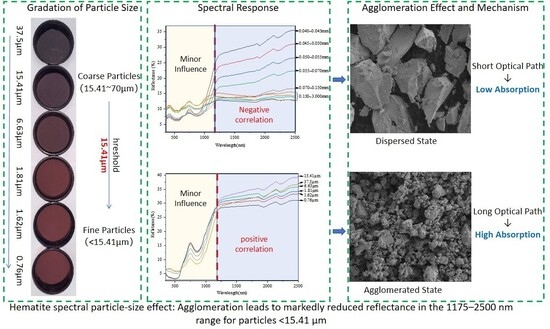
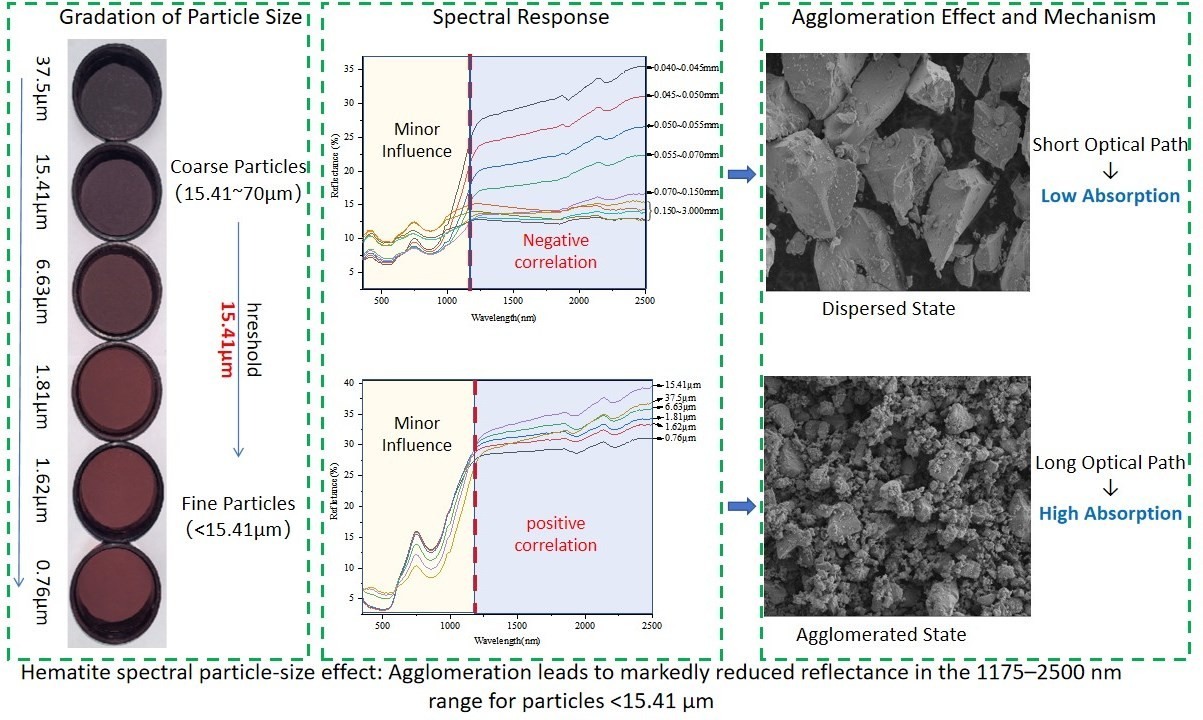
The spectral characteristics of hematite are critical for its remote sensing identification and inversion, but these characteristics are significantly influenced by particle size. Previous studies have primarily focused on particle size ranges (>40 µm) that have already been investigated and generally concluded that spectral reflectance in the near-infrared (NIR) band increases as particle size decreases. However, the potential “reversal” of this trend—specifically, a decrease in reflectance with decreasing particle size due to agglomeration effects—and its underlying mechanism at the micron and sub-micron scales remain unclear. To address this issue, six distinct particle size grades targeting the ultrafine scale were systematically prepared from high-purity hematite, with average diameters ranging from 37.5 µm down to 0.76 µm. Reflectance spectroscopy measurements were conducted to analyze spectral variations across the 350~2500 nm wavelength range. The experimental results showed that particle size had little influence on reflectance within the 350~1175 nm wavelength range. In contrast, significant dependence on particle size was observed in the 1175~2500 nm range, where a reversal of the reflectance trend occurred at a critical particle size of 15.41 µm. Specifically, reflectance increased with decreasing particle size above 15.41 µm. However, reflectance decreases dramatically when particle size falls below 15.41 µm due to increased agglomeration. This contrasts with the trend reported in previous studies. Mechanism analysis revealed that, within the 350~1175 nm range, the high complex refractive index of hematite resulted in minimal influence of particle size on reflectance. In the range of 1175~2500 nm, reflectance increased with decreasing particle size when the particle size exceeded 15.41 µm, a behavior primarily governed by particle scattering effects. Conversely, when the particle size decreased below 15.41 µm, the reflectance declined significantly with a further reduction in particle size, demonstrating a distinct trend reversal. This phenomenon is attributed to the low complex refractive index of hematite combined with a dramatic increase in particle aggregation effects as particle size decreases. These factors collectively increase the equivalent optical path length and intensify multiple absorption, leading to the observed decrease in reflectance. This study establishes the key control of agglomeration effects on the spectral behavior of fine hematite particles, providing crucial theoretical and experimental foundations for advancing high-precision, quantitative remote sensing inversion.

Graphical Abstract

1. Introduction

As one of the most widely distributed iron oxides in nature, hematite (α-Fe2O3) serves not only as a crucial raw material for the steel industry but also plays a pivotal role as a key indicator in environmental science, pedology, sedimentology, ore deposit geology, and planetary geology. The broad applicability of hematite is rooted in its stable α-phase crystal structure, the rich redox properties of its iron ions, and its diverse micro-morphologies that can be modulated synthetically. In nature, it is primarily formed via the oxidation and dehydration of iron compounds, serving as a pivotal pigment mineral and magnetic carrier mineral in numerous sedimentary rocks and soils. It is important to note that hematite is not the sole form of iron oxide; under specific conditions, it can transform into magnetite (Fe3O4), maghemite (γ-Fe2O3) and other iron oxides under specific conditions. Moreover, the advent of sophisticated synthetic methodologies has paved the way for the meticulous fabrication of hematite nanoparticles, exhibiting bespoke morphologies such as cubic, spindle-like, or hollow structures [1]. The precise control of these microstructures exerts a profound influence on their macroscopic properties. For instance, α-Fe2O3 nanoparticles with cubic or quasi-spherical morphologies exhibit relatively low coercivity, rendering them potentially valuable for data storage and magnetic fluids. Conversely, ε-Fe2O3 nanoparticles synthesized via a surface-induced phase-transition strategy exhibit ultrahigh coercivity, rendering them suitable for high-frequency microwave devices and permanent magnet materials [2]. Moreover, due to their excellent biocompatibility and functionalizable surfaces, hematite nanoparticles with hollow or porous structures exhibit significant potential in biomedical applications such as targeted drug delivery, magnetic resonance imaging (MRI) contrast agents, and tumor hyperthermia [3]. Consequently, the in-depth understanding and regulation of hematite particle size, morphology, aggregation state, and their corresponding physical properties (including optical and magnetic properties) have evolved into a critical interdisciplinary frontier, serving as a nexus among geology, materials science, environmental engineering, and biomedical research. Furthermore, with the rapid advancement of hyperspectral remote sensing technology, hematite has become a critical diagnostic target for identifying iron-stained alteration, inverting surface mineralogy, and even detecting minerals on the Martian surface, owing to its distinct spectral features. These features are characterized by strong absorption bands near 550 nm and 850 nm, attributed to crystal field transitions of Fe3+, along with a reflectance peak around 750 nm [4,5].
The spectral characteristics of minerals are significantly influenced by various factors in both practical remote sensing detection and laboratory spectral measurements, with particle size being a critical and non-negligible factor. Consequently, a series of studies have been conducted by scholars to investigate the influence of particle size on the spectral characteristics of minerals. Orofino et al. [6] conducted reflectance spectra tests on olivine of different particle sizes. Li et al. [7] analyzed surface sediments with varying particle sizes from a specific region. Carli [8] measured the reflectance spectra of glasses composed of four different igneous compositions with particle sizes ranging from 20~250 µm. Milliken et al. [9] investigated nontronite and volcanic glass. Okin et al. [10] analyzed soils from the Mojave Desert within the 0.3~1.05 mm size range. Zhang et al. [11] tested the absorbance of soils with particle sizes between 80 and 250 µm. Wu et al. [12] analyzed the reflectance spectra of five types of dry soils across a particle size range of 0.044~8 mm. Mancarella et al. [13] undertook studies on enstatite and diopside within the 50~425 µm size range, and Su et al. [14] measured the reflectance spectra of ammonium chloride with different particle sizes. Tanya [15] performed reflectance spectra tests on sodium nitrate of varying particle sizes. The results all consistently showed that, within the visible and near-infrared wavelength ranges, spectral reflectance is negatively correlated with particle size—that is, reflectance increases as particle size decreases. These studies have firmly established the general consensus that “a decrease in particle size leads to an increase in reflectance”.
To further reveal the influencing physical mechanism of particle size on spectral characteristics of minerals, various theories are referenced, such as volume scattering, surface scattering, Beer’s law and Mie scattering, etc. Cooper [16] analyzed the physical state and reflectance spectra of clay minerals with particle sizes ranging from 0 to 250 µm. They proposed that the decreasing absorption intensity of hydroxyl groups and water associated with particle size is primarily caused by the enhancement of surface scattering and weakening of volume scattering. Noda [17] reveals that the increasing reflectance of rock powder samples containing iron oxide minerals with particle sizes ranging 0~500 µm associated with decreasing particle size is mainly due to the increase in surface scattering. Zhang et al. [18] used scattering theory to explain the increase in reflectance observed for various types of coal with decreasing particle size. Wang et al. [19] and Liu et al. [20] both used Beer’s law to explain the negative correlation between the reflectance spectra of Banded iron formation (BIF) hematite and high-grade hematite with particle sizes of 0~4 mm. However, the surface scattering and multiple scattering effects caused by the reduction in particle size is ignored by Beer’s law. Furthermore, Mustard et al. [21] analyzed the visible to near-infrared reflectance spectra of olivine with particle sizes ranging from 0 to 25 µm. They found the reflectance spectrum of olivine increases gradually with decreasing particle size. They also simulated this phenomenon quantitatively based on MIE scattering theory. The extant literature demonstrates that prevailing theories possess a certain degree of explanatory power with regard to the negative correlation between mineral particle size and reflectance. However, it should be noted that these theories are not without their limitations.
It is noteworthy that as particle size decreases further, particularly to micron and sub-micron scales, the spectral behavior of minerals exhibits anomalies contrary to the conventional trend. Wang et al. [22] investigated chlorite within the 0~60 µm particle size range and reported that its spectral reflectance decreases with reduced particle size, showing a positive correlation. However, it should be noted that no conclusive explanation was provided for this behavior. In a similar vein, Mustard et al. [21] observed a decrease in reflectance with diminishing particle size for quartz in the 0~25 nm range. This phenomenon proved difficult to model using conventional scattering theory. These observations suggest that when particle size falls below a certain critical range, interactions other than conventional scattering may dominate the optical behavior between light and particles. This may lead to a reversal of the reflectance particle size relationship from negative to positive correlation. However, the existing studies have inadequately addressed the spectral response mechanisms of ultrafine particles, particularly hematite. The fundamental explanations for these mechanisms remain unclear, and the importance of intrinsic optical parameters such as the complex refractive index of minerals have not been adequately emphasized in theoretical interpretations.
To address the issues outlined above, this study builds on previous research into larger particles (>40 µm) by investigating the effects of agglomeration in the ultrafine regime. To systematically examine how particle agglomeration governs spectral behavior, a set of six finely graded hematite samples (0.76~37.5 µm) was prepared. Spectroscopic measurements across 350~2500 nm were combined with an analysis based on the complex refractive index and optical scattering/absorption theory. Particular emphasis was placed on clarifying the role of agglomeration in modulating the spectral response. This study aims to establish a direct link between particle agglomeration and spectral characteristics. This will provide a more systematic experimental and theoretical foundation for the high-precision remote sensing identification and particle-size retrieval of hematite.

2. Experiments

2.1. Sample Collection and Size Fraction Design

The reflectance spectra of different minerals exhibit distinct features, such as the positions and shapes of absorption valleys and reflection peaks, which are determined primarily by their chemical composition. In the event of a sample containing multiple minerals, the measured spectrum will represent a composite signal of the individual spectral signatures of the minerals present. In such cases, any observed variation in particle size could be attributed to the differential responses of the constituent minerals to changes in size. Therefore, in order to circumvent the potential interference arising from mineralogical complexity, this study utilized high-purity single-mineral samples. This methodological approach facilitates the modulation of variables, thereby enabling a lucid elucidation of the independent effects of particle size and agglomeration state on the spectral characteristics of hematite. The sample was collected from a typical hematite deposit in Anshan City, Liaoning Province, China. Chemical analysis confirmed a purity level of 97.4%, with the presence of quartz recorded at only 1.8%. Quartz, a transparent mineral, displays no discernible spectral characteristics within the 350~2500 nm range. Moreover, given its low complex refractive index, its effect on the spectral characteristics of hematite is negligible.
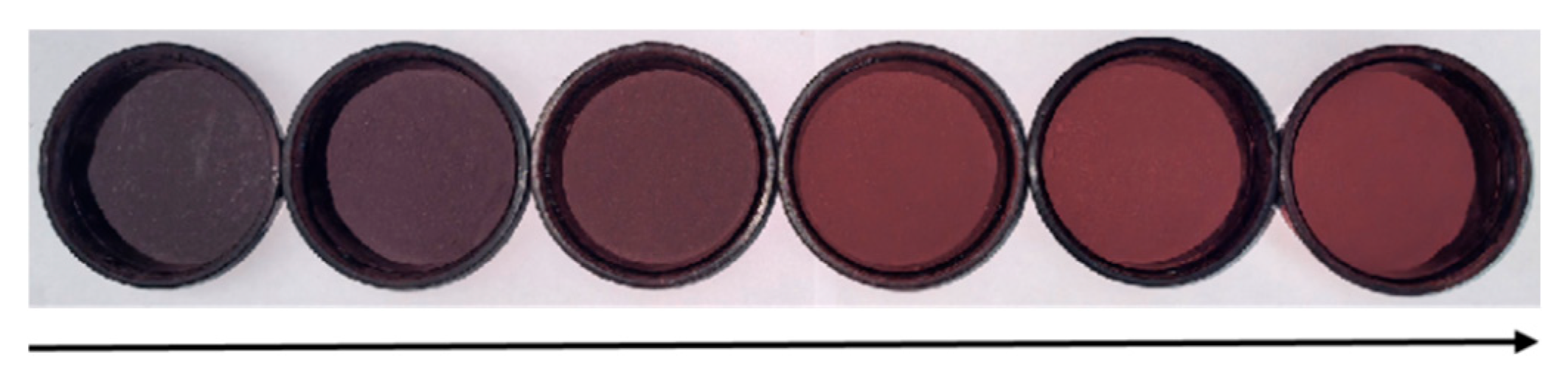
This study was designed to build on prior research [23], which has thoroughly characterized the reflectance variations of hematite across the 350~2500 nm spectrum for particle sizes exceeding 40 µm. The present study focuses on the sub-40 µm range, with a total of six particle-size grades prepared. For the first particle size fraction (35~40 µm) in this study, samples were prepared using a sieving method. Firstly, the raw samples were comminuted via mechanical crushing; subsequently, the crushed mineral particles were placed on a standard sieve with an aperture of 40 µm, with another standard sieve of 35 µm aperture placed underneath it. Under gentle vibration, a graded sieving process from coarse to fine particles was performed to obtain the 35~40 µm fraction. When the target particle size becomes too small, effective classification by traditional sieving becomes difficult due to agglomeration of the particles. Therefore, a time-controlled grinding method was adopted for the subsequent five finer size fractions. First, the entire sample was sieved to below 35 µm and five equal portions were taken. Subsequently, each of these was then ground separately in the same ball mill, with identical rotational speed and ball-to-powder ratios, but with different, precisely controlled grinding durations. The particle size attained a near-constant level once the grinding duration exceeded 590 s. Consequently, this study employed samples subjected to grinding times of 20 s, 70 s, 300 s, 420 s, and 590 s. These prepared samples were all contained within a circular black sample holder (5 cm in depth, 7 cm in diameter), presented in Figure 1.
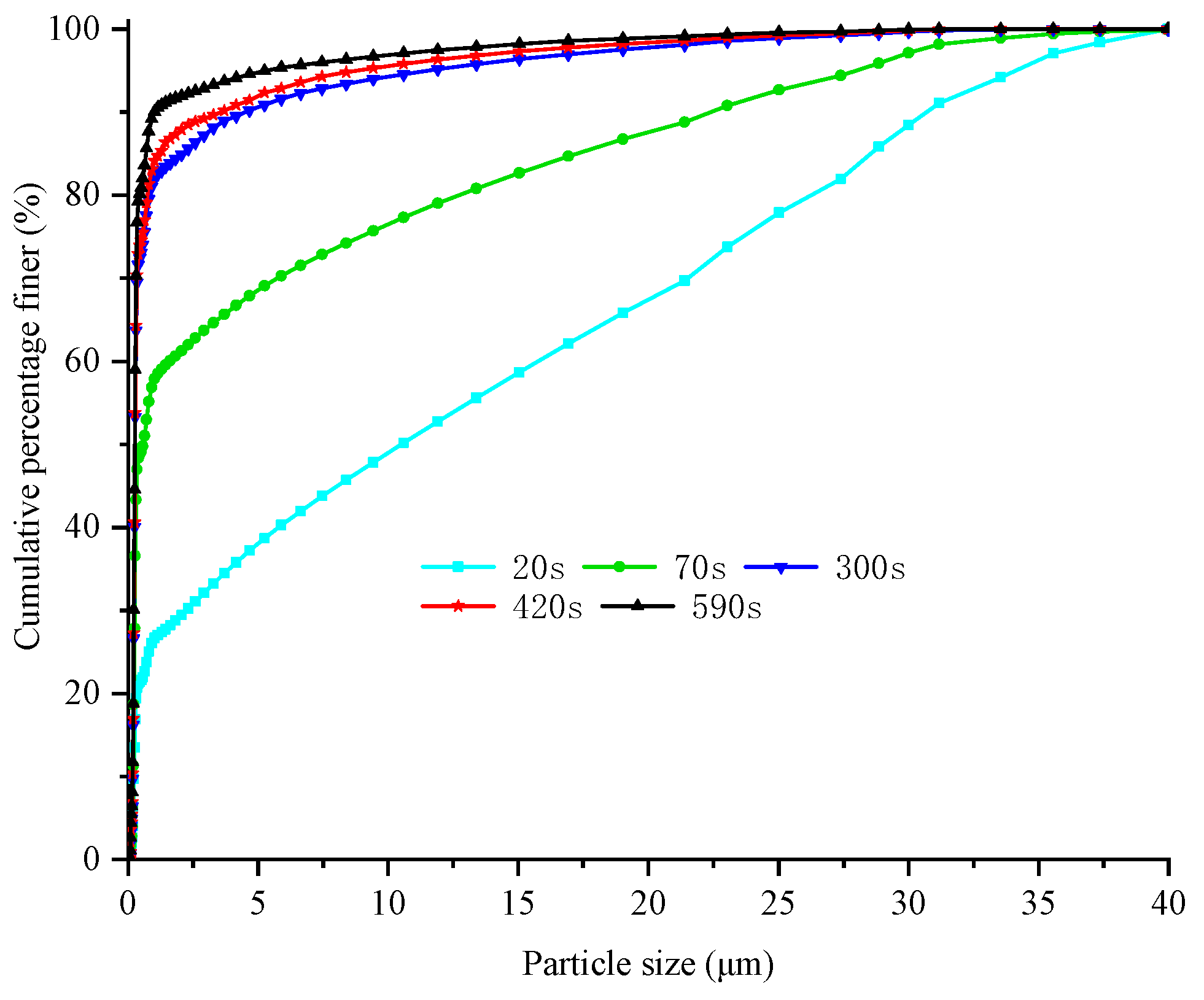
The analysis of the cumulative particle size distribution and mean particle size of the ground samples was conducted using a Bettersize2600 laser particle size analyzer ((Dandong Bettersize Instruments Ltd., Dandong, China)). Prior to measurement, the samples were ultrasonically dispersed in anhydrous ethanol for three minutes to minimize the effect of agglomeration. Each sample was measured three times and the average values are shown in Figure 2. The figure shows particle size on the x-axis and the cumulative percentage of particles finer than the corresponding size on the y-axis. As shown in Figure 2, longer grinding times lead to a gradual increase in the proportion of fine particles and a corresponding decrease in the mean particle size. The primary particle-size distribution interval (D90, i.e., the size below which 90% of particles fall) and the mean particle size of the prepared samples are summarized in Table 1.

2.2. Spectral Testing

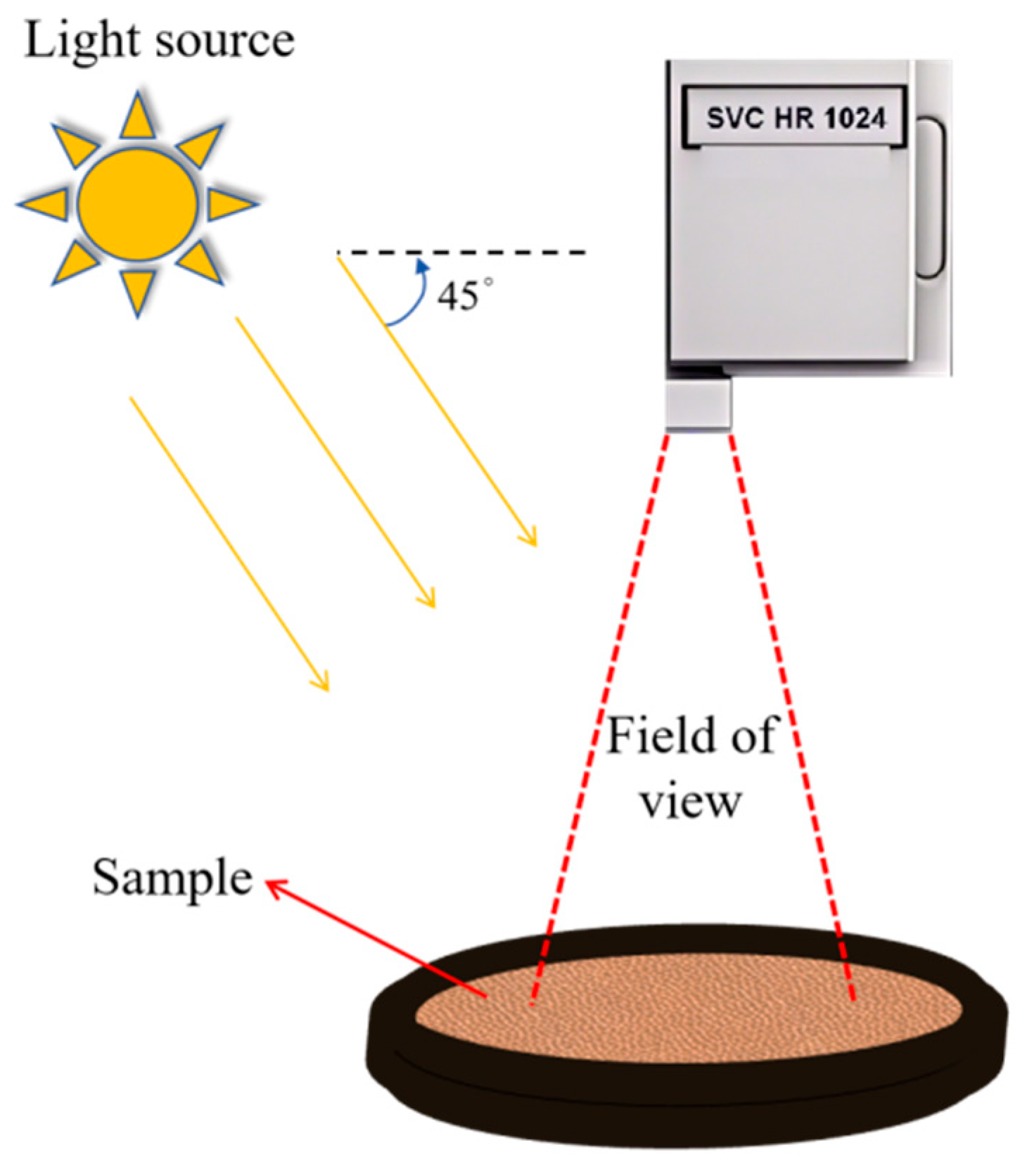
The spectral testing for the prepared experimental samples was conducted using a portable field spectrometer (SVC HR-1024, Spectra Vista Corporation, Poughkeepsie, NY, USA). The wavelength range of the spectrometer is 350~2500 nm, with 1024 bands. The spectral resolution is 3.5 nm in the range of 350~1000 nm, 9.5 nm in the range of 1000~1850 nm, and 6.5 nm in the range of 1850~2500 nm, with a minimum integration time of 1 millisecond, and the wavelength accuracy is ±1 nm. The standard deviation of reflectance obtained from ten consecutive measurements on a standard white reference panel was less than 0.5%, with repeatability better than ±1% across the 350~2500 nm range. Before the start and after the end of each measurement sequence, calibration was performed using the standard reference white board matched with the instrument to correct for light source fluctuation and instrumental response drift. To ensure experimental stability and avoid interference from wind or clouds, all measurements were conducted in a thermostatically controlled and dark laboratory. A halogen lamp served as the sole light source. Throughout the observations, the indoor temperature was kept at 20 ± 2 °C and the relative humidity at 21 ± 1%. During the spectral testing, the sample was placed horizontally, and the angle between the illumination direction and horizontal direction is set as 45°. The distance between the halogen lamp and the sample center was 65 cm, and the lens of the spectrometer was positioned vertically 40 cm above the sample, as shown in Figure 3.
Since natural minerals may contain water, which introduces absorption features at around 1400 and 1900 nm and generally reduces overall reflectance [24,25], potentially affecting subsequent analysis, all prepared samples were dried before measurement to eliminate moisture interference. For this purpose, each sample was placed in a constant-temperature drying oven and dried continuously at 105 °C for 24 h. Then, it was transferred to a desiccator to cool to room temperature prior to spectral acquisition. Prior to measurement, a standardized preparation protocol was followed for all samples placed in the sample holder, to minimize the effects of variations in bulk density and surface morphology on spectral measurements. First, the powder was gently poured into the holder until it slightly exceeded the rim. The holder was then shaken lightly to allow the powder to settle naturally and become stable. Subsequently, a flat glass plate was drawn horizontally across the top of the holder in a single pass to remove any excess powder and create a level surface. Three reflectance spectra were collected for each sample, with the sample being rotated through 90° between each measurement. The standard deviation of the three replicate measurements across the 350~2500 nm range was less than 0.5% for all samples, indicating good sample surface homogeneity and measurement stability. Finally, the arithmetic mean of the three spectral curves was taken as the final reflectance spectrum of the sample for subsequent analysis.

3. Results and Discussion

3.1. Analysis of Hematite Spectral Characteristics

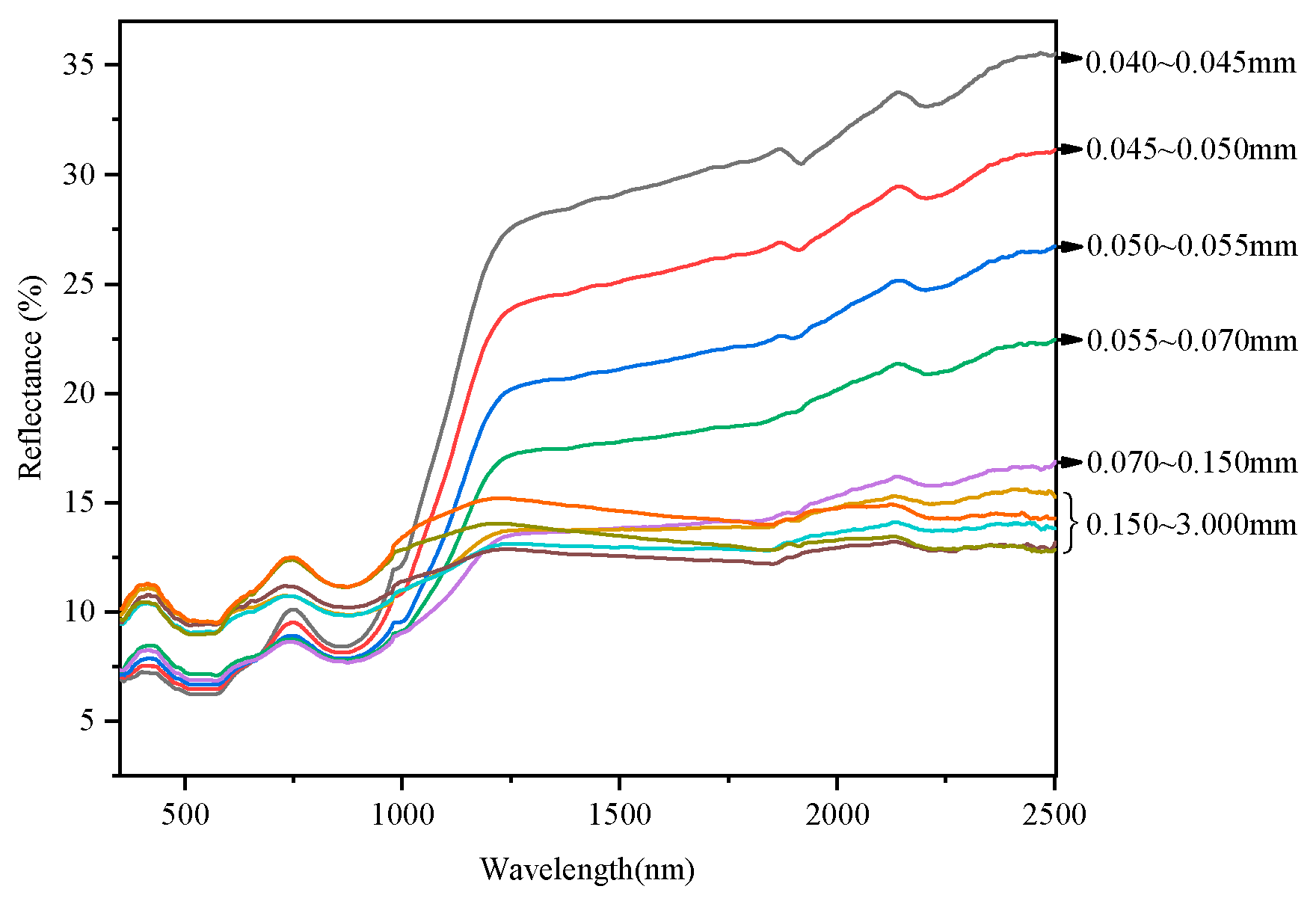
Previous studies on hematite spectral characteristics within the 40~3000 µm range have clearly demonstrated (Figure 4) that across the 150~3000 µm particle size fraction, the spectral curves of hematite intersect at various wavelengths due to shadowing effects. With no clear regularity observed between reflectance and particle size. In the range of 40~150 µm, hematite exhibits distinct spectral responses to particle size variations across different wavelengths due to differences in its complex refractive index. Within the 350~588 nm wavelength range, where the extinction coefficient is relatively high, a decrease in particle size allows absorption to become the dominant effect, leading to a reduction in reflectance. Within the 707~2500 nm wavelength range, the complex refractive index is relatively low. As the particle size decreases, both volume scattering and surface scattering are enhanced, leading to an increase in reflectance [23].
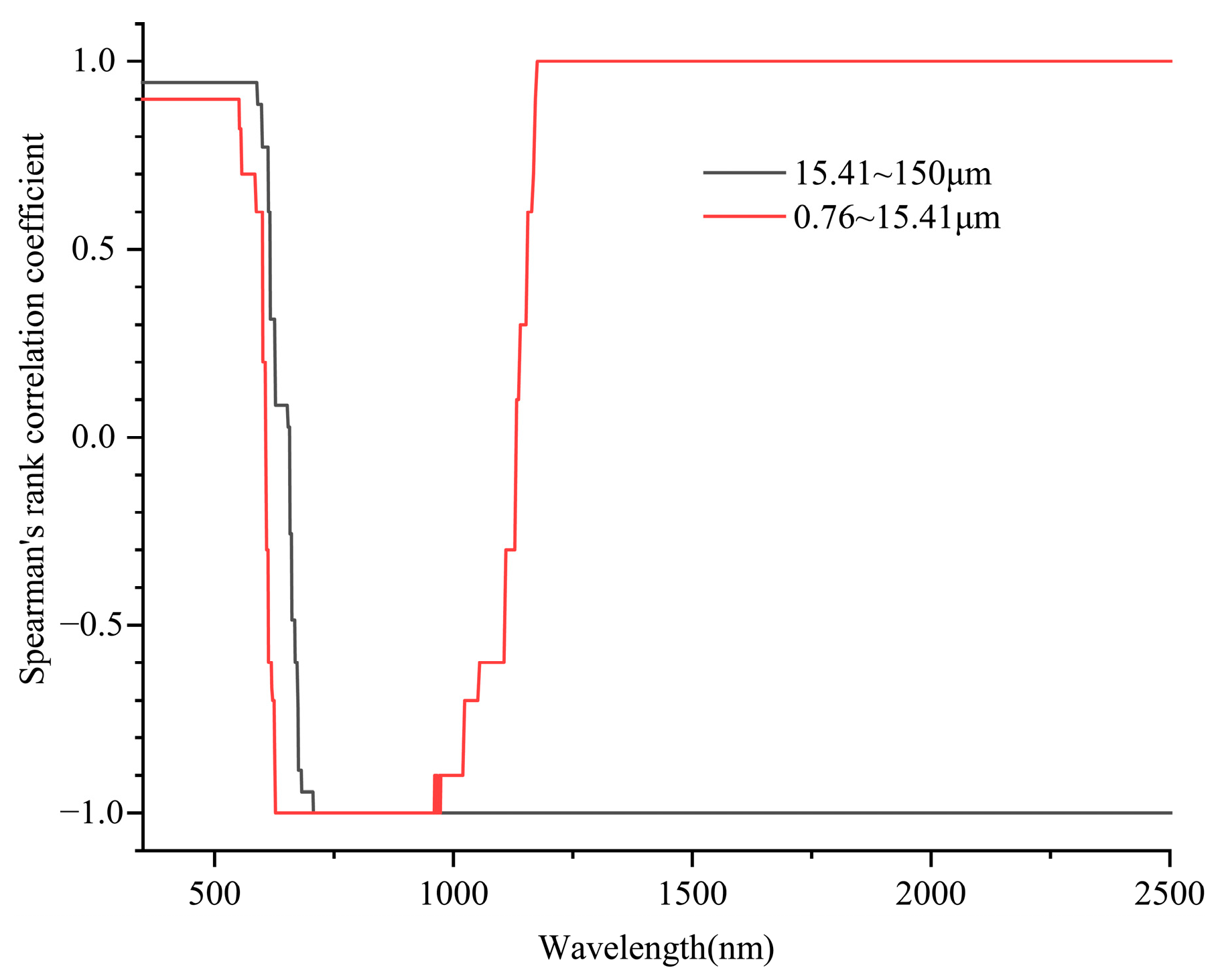
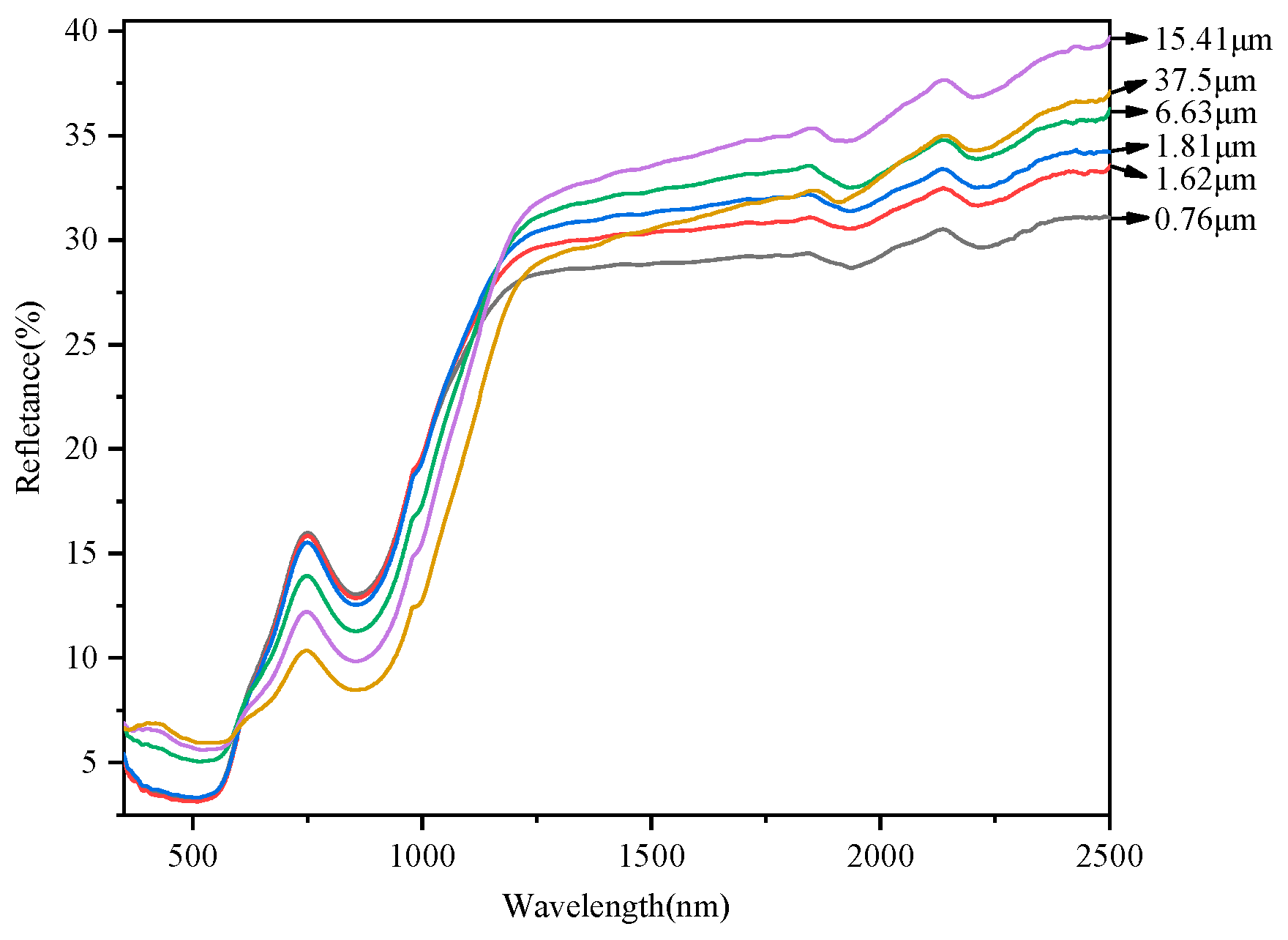
The results of the present study are illustrated in Figure 5. The relationship between reflectance and particle size varies significantly across different wavelengths. For particles larger than 15.41 µm, the variation in reflectance with decreasing particle size aligns with the patterns reported in previous studies (Figure 4). However, for particles smaller than 15.41 µm, an inverse trend is observed: reflectance no longer increases but instead decreases as the particle size is reduced further. In order to further understand the influence of particle size on the reflectance spectrum of hematite, the Spearman rank correlation coefficient (ρ) between particle size and reflectance was calculated, as shown in Figure 6 [26].
It is evident from the reflectance curves and correlation coefficient distribution that, when the particle size is below 15.41 µm, hematite displays distinct spectral behaviors across different wavelength ranges, as detailed below:
(1)
Absorption bands at 530 nm and 850 nm are clearly visible in the spectral curves of different particle sizes, which are attributed to the electronic transitions of Fe3+ [27]. Additionally, a weak absorption feature has been observed in the sample spectra near 2200 nm, this can be attributable to the association of OH with Fe3+ [28].
(2)
In the range of 350~550 nm, the reflectance of hematite decreases with decreasing particle size, exhibiting a positive Spearman rank correlation coefficient of 0.9. This trend aligns with the reflectance variation pattern observed in the larger particle size interval (15.41~150 µm). In this particle size range, the maximum difference in reflectance occurs at the wavelength of 411.7 nm, reaching 3.0% of the total reflectance. Additionally, spectral reflectance from larger particle sizes reveals a distinct reflection peak at approximately 420 nm. This peak is attributed to selective absorption within the blue-violet spectral region by Fe3+ electronic transitions in the hematite crystal structure, whereas absorption near 420 nm is relatively weaker, consequently giving rise to the reflection feature. However, this characteristic gradually diminishes with decreasing particle size.
(3)
In the range of 627~960 nm, the reflectance of hematite increases with decreasing particle size, exhibiting a negative Spearman rank correlation coefficient of −0.99. This trend also aligns with the reflectance variation pattern observed in the larger particle size interval (15.41~150 µm). In this particle size range, the maximum difference in reflectance occurs at the wavelength of 960 nm, reaching 3.9% of the total reflectance. It is worth noting that a pronounced reflection peak is observed at 750 nm, with its reflectance increasing as the particle size decreases. Consequently, smaller hematite particles exhibit a more pronounced red color (as shown in Figure 1). As the mean particle size decreased from 37.5 µm to 1.81 µm, the reflectance at 750 nm increased from 10.3% to 16.0%, representing a rise of nearly 6% and thus a notable variation. A further reduction in size from 1.81 µm to 0.76 µm resulted in only marginal changes in reflectance. At this juncture, the reduction in particle size to a smaller scale became challenging due to the occurrence of particle agglomeration. These observations suggest that when hematite is ground below approximately 2 µm for use as a red pigment, the red color saturates, representing an optimal range [29,30].
(4)
Within the 1175~2500 nm wavelength range, previous studies have clearly demonstrated a significant negative correlation (−0.99) between reflectance and particle size for larger particles (Figure 6). However, the present study reveals that when the particle size falls below 15.41 µm, reflectance follows a contrary pattern. The reflectance of hematite decreases with decreasing particle size, exhibiting a positive Spearman rank correlation coefficient of 0.99. Furthermore, the extent of reflectance reduction increased gradually with longer wavelengths. As the particle size was reduced from 15.41 µm to 0.76 µm, the maximum difference in reflectance occurs at the wavelength of 2500 nm, reaching 8.7% of the total reflectance.
As demonstrated by the experimental results previously presented, the impact of particle size on the reflectance spectrum of hematite undergoes a reversal within the 1175~2500 nm band when the particle size falls below 15.41 µm, thereby shifting from a negative to a positive correlation. This critical size of 15.41 µm can therefore be identified as a transition point.

3.2. Mechanism Analysis

The reflectance of minerals varies significantly with particle size, which primarily influences their spectral characteristics through surface scattering, volume scattering, and absorption [31,32]. For hematite particles larger than 15.41 µm in the near-infrared band, the decrease in particle size enhances both surface scattering and volume scattering, resulting in higher reflectance compared with coarser particles. Consequently, scattering effects are the principal mechanism governing the near-infrared spectral behavior of hematite when the particle size exceeds 15.41 µm. However, when the particle size falls below 15.41 µm, the relationship between reflectance and particle size within the 1175~2500 nm range reverses—that is, reflectance decreases rather than increases with further reduction in particle size. The question therefore arises as to what mechanism causes this anomalous behavior. If the decrease in reflectance was primarily due to finer powders being more loosely packed or having rougher surfaces, this would produce a similar, non-selective reduction across the entire wavelength range. However, our data clearly show that, within the 627~960 nm band, reflectance increases significantly as particle size decreases. This finding clearly corroborates the well-established theory that smaller particles scatter more effectively. In the 1175~2500 nm band, a sharp decline in reflectance only occurs when the particle size falls below a critical threshold. This phenomenon cannot be explained by uniform, wavelength-independent changes in the macroscopic physical state of the powders. It is therefore hypothesized that a decrease in particle size leads to agglomeration, which gives rise to this observed behavior.
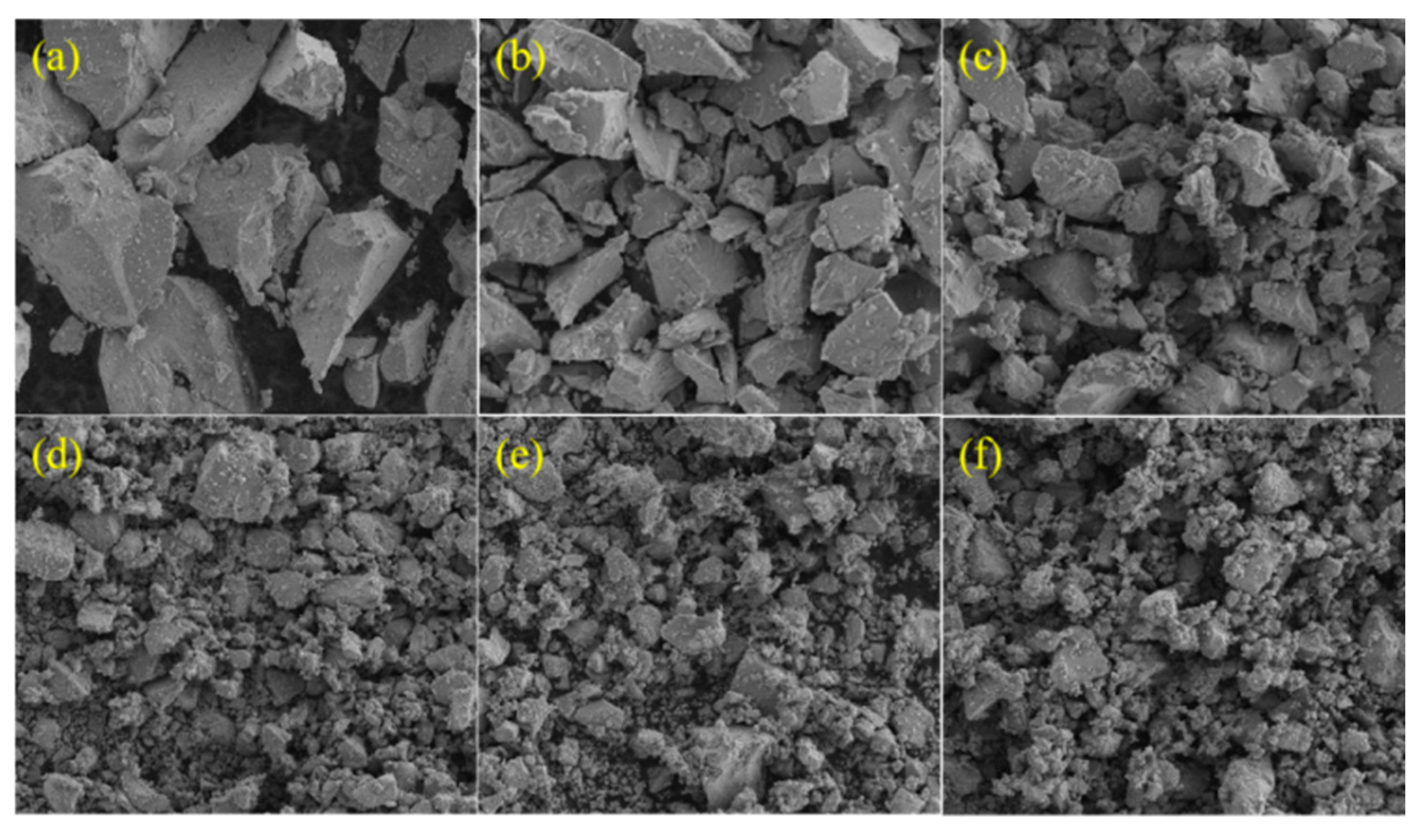
In order to verify the aforementioned hypothesis, microscopic analysis was carried out on hematite with different particle sizes using scanning electron microscopy (SEM), as shown in Figure 7. The SEM images of hematite with different particle sizes clearly reveal a significant evolution in particle morphology as well as enhanced agglomeration behavior with decreasing particle size. At a particle size of 37.5 µm, the hematite particles exhibit an irregular, blocky morphology with distinct edges and largely independent structures, exhibiting minimal agglomeration. When the particle size is reduced to 15.41 µm, the particles retain an irregular, angular shape but begin to display localized contacts. As the particle size further decreases to 6.63 µm, the particle morphology gradually becomes more uniform, with some regions showing quasi-spherical structures. Initial agglomeration is observed, with particles forming chain-like or clustered aggregates. As the reduction in particle size (less than 1.81 µm) continues, the particles adopt a more consistent, nearly spherical morphology, and significant agglomeration occurs, leading to the formation of dense clustered structures. This series of changes indicates that as the particle size of hematite decreases, its morphology transitions progressively from irregular large blocks to regular spherical forms, and the agglomeration behavior becomes increasingly evident with decreasing particle size.
In order to quantitatively assess the degree of agglomeration, scanning electron microscope (SEM) images of the samples (with particle sizes ≤ 6.63 µm) were analyzed using Image J software (v1.53q) to measure the dimensions of representative agglomerates. Their size ranges and mean sizes are presented in Table 2. The analysis shows that, as the primary particle size decreased from 6.63 µm to 0.76 µm, the average agglomerate size increased from 1.85 µm to 3.20 µm. This clearly confirms the marked intensification of the agglomeration effect with decreasing particle size.
In order to quantitatively characterize the microstructural changes induced by decreasing particle size in the agglomeration state, the specific surface area and pore-structure parameters of samples from each size fraction were determined using the nitrogen adsorption method with a specific surface area and porosity analyzer. The results are summarized in Table 3.
As shown in Table 3, the specific surface area increased monotonically from 0.28 m2/g to 3.40 m2/g as the particle size of the samples decreased from 37.5 µm to 0.76 µm, which aligns perfectly with the theoretical expectation for particle size reduction. In contrast, the variation in mean pore size exhibited a non-monotonic trend. When the particle size was reduced from 37.5 µm to 6.63 µm, the mean pore size decreased from 21.66 nm to 16.26 nm, while the pore volume remained largely unchanged. However, as the particle size was reduced further to 1.81 µm and below, the mean pore size gradually increased to 18.85 nm, accompanied by a pronounced rise in pore volume. This behavior is consistent with the SEM observations described earlier (Figure 7) and can be interpreted based on the characteristics of the underlying pore structure. At relatively large particle sizes (>6.63 µm), the particles remain well dispersed with negligible agglomeration (Figure 7a–c) and the detected pores are predominantly inter-particle voids. As the particle size decreases and the specific surface area increases, the particles pack more densely, resulting in a decline in the average pore size. When particle size falls within the micrometer and submicrometer range (<1.81 µm), pronounced agglomeration becomes prevalent (Figure 7d–f). Fine primary particles aggregate to form larger, loosely packed secondary particles (agglomerates). Under these conditions, measured porosity originates not only from inter-particle voids, but also from larger inter-agglomerate spaces. The formation of agglomerates significantly increases the characteristic pore size within the powder system, leading to an increase in the measured average pore size, or a “reversal” trend. The observed trend in pore-structural parameters provides quantitative structural evidence, independent of morphological observation, of the severe agglomeration of ultrafine hematite particles, which intensifies with decreasing particle size. This finding further validates the mechanism proposed above. In the near-infrared region, it is precisely this larger, looser structure resulting from agglomeration that substantially extends the effective optical path and enhances absorption within the medium.
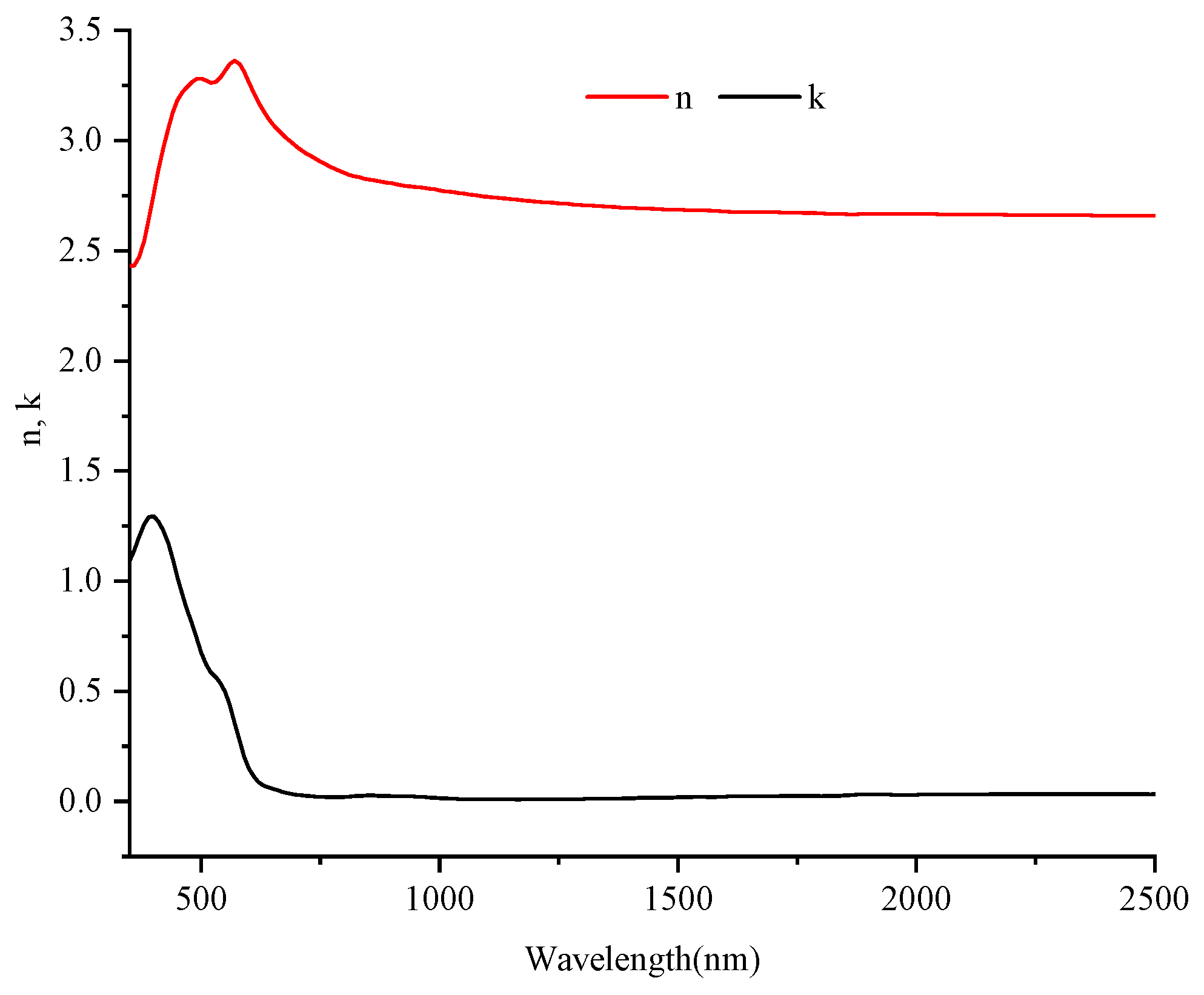
These results demonstrate that agglomeration is responsible for the opposite reflectance behaviors observed in hematite across the 1175~2500 nm wavelength range when comparing particles smaller than 15.41 µm with those larger than 15.41 µm. However, it should be noted that within the 350~550 nm and 627~960 nm wavelength ranges, the variation in reflectance remains consistent with that observed in hematite particles larger than 15.41 µm and appears unaffected by agglomeration effects. This behavior can be attributed to differences in the complex refractive index of hematite across these spectral bands. The complex refractive index ( n ˜ = n + i k , n: refractive index, k: extinction coefficient) of minerals plays a critical role in determining the reflection and refraction of light at mineral surfaces. According to Fresnel’s laws, the intensity of light reflected from a mineral surface (R) can be expressed as follows:
R = ( n 1 ) 2 + k 2 ( n + 1 ) 2 + k 2
As illustrated by the aforementioned equation, the reflection of light at mineral surfaces and its refraction into the mineral interior are primarily determined by the complex refractive index. Specifically, the reflection intensity (R) at the mineral surface increases with both the refractive index (n) and the extinction coefficient (k). This indicates that greater surface reflection occurs with higher values of either the refractive index or the extinction coefficient, thereby reducing the intensity of light available for refraction into the mineral interior (1 − R) to undergo volume scattering processes. The absorption of light refracted into the mineral interior is governed by the Lambert–Beer law [33]:
I = I 0 e K d
where I denotes the transmitted light intensity, I0 denotes the incident light intensity, K denotes the absorption coefficient, and d denotes the actual propagation distance of light through the medium. The absorption coefficient K is expressed as a function of the wavelength (λ) and extinction coefficient ( K = 4 π k / λ ), which demonstrates that light absorption by the mineral increases with larger extinction coefficients or longer propagation paths. The above relationship indicates that for a given mineral, smaller particle sizes facilitate greater penetration of incident light through surface particles, resulting in increased light intensity reaching the interior of the particle layer.
As elucidated in the preceding analysis, the spectral characteristics of hematite are influenced by particle size to varying extents across different wavelengths. This phenomenon is primarily attributed to the particle size, complex refractive index, and agglomeration effects. Therefore, the complex refractive index of the hematite used in this study was determined by spectroscopic ellipsometry, with the results shown in Figure 8. Specifically, within the wavelength range of 350~570 nm, a sharp increase in the refractive index is observed, rising from 2.43 to 3.36, followed by a gradual decline and eventual stabilization between 570 and 2500 nm. Within the 350~640 nm band, the extinction coefficient remains relatively high, while between 400 and 640 nm it decreases sharply from 1.29 to 0.06. Within the 640 nm to 2500 nm, the extinction coefficient remains low and stabilizes.
(1)
For hematite particles smaller than 15.41 µm, the relationship between reflectance and particle size varies significantly across different wavelengths. Specifically, within the 350~550 nm range, a strong positive correlation is observed between reflectance and particle size. Due to the high refractive index and extinction coefficient of hematite, incident light is unable to penetrate the surface particles in accordance with Fresnel’s law. Although agglomeration is present, light cannot enter the interior of the agglomerates. Consequently, the optical phenomena are predominantly confined to the mineral surface and are governed primarily by reflection and absorption. As described by the Kubelka–Munk theory and demonstrated in Equation (3) [34], the reflectance of granular media is predominantly influenced by the mineral’s absorption coefficient and the intensity of its scattering. Changes in the particle size result in alterations to these parameters, thereby causing variations in reflectance.
R = 1 + K S ( K S ) 2 + 2 K S
where R denotes the reflectance of a sample with infinite thickness (where light cannot penetrate the material), K denotes the absorption coefficient, S denotes the scattering coefficient.
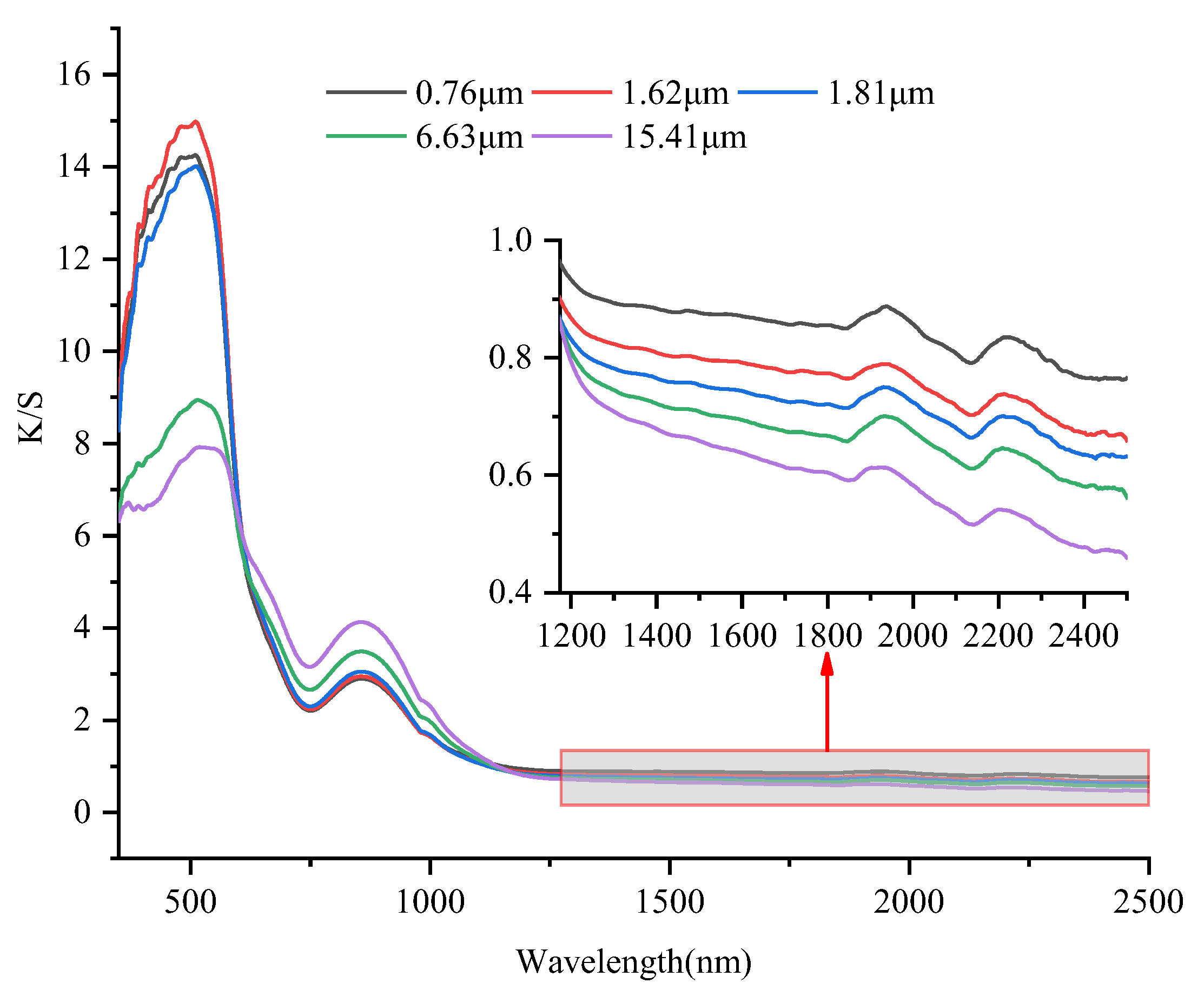
The K/S values of hematite with different particle sizes were calculated according to Equation (3), and the results are shown in Figure 9. Within the 350~550 nm band, the K/S value increases with decreasing particle size, indicating that absorption dominates the optical behavior. This phenomenon is attributed to the high complex refractive index of hematite, which confines optical interactions to the surface. As the particle size of hematite decreases, the specific surface area increases. It is evident that, given the high extinction coefficient within this specific wavelength range, there is a notable enhancement in light absorption by the particles. Consequently, surface-dominated absorption becomes the predominant optical process, leading to a strong positive correlation between reflectance and particle size. However, due to the high extinction coefficient, the overall variation in reflectance remains limited.
Within the 627~960 nm wavelength range, a negative correlation is observed between reflectance and particle size. The decreases in the K/S value with decreasing particle size signifies the predominance of scattering effects. This phenomenon can be attributed to the moderately high refractive index of hematite (2.8~3.1) within this wavelength interval. When incident light reaches the sample surface, the majority of the light is reflected or absorbed at the surface in accordance with Fresnel’s law, with only a minor fraction penetrating into the particles. Consequently, within this wavelength band, the influence of agglomeration on incident light is minimal. With the reduction in hematite particle size, the higher particle density within the observation field gives rise to an increased density of reflective surfaces. It is evident that, in comparison with the 350~550 nm band, the extinction coefficient is considerably lower. This results in a reduction in absorption and an enhancement in surface scattering [35,36]. Consequently, the predominance of surface scattering results in a negative correlation between reflectance and particle size. Furthermore, a reflection peak for iron is observed at 750 nm, which becomes more pronounced with decreasing particle size, resulting in a more intense red coloration of hematite. The wavelength ranges of 550~627 nm and 960~1175 nm represent transitional regions, within which the spectral curves of different particle sizes intersect, and no clear correlation between reflectance and particle size.
(2)
Within the 1175~2500 nm range, the correlation between hematite reflectance and particle size exhibits an anomalous variation pattern, characterized by a decrease in reflectance as particle size decreases. Within this spectral interval, a significant reduction in the extinction coefficient of hematite is observed. According to scattering theory, both volume and surface scattering should be enhanced as particle size decreases, resulting in increased reflectance. However, experimental findings demonstrate an opposing trend. As indicated by the K/S values, a gradual increase is observed with decreasing particle size, suggesting that light absorption becomes progressively enhanced and ultimately dominates.
During the mechanical crushing of hematite, the reduction in particle size increases surface energy and enhances interparticle interactions (e.g., van der Waals forces). This promotes the formation of loose, porous aggregates. These aggregates are characterized by an increased equivalent particle size and a more intricate internal structure. Hematite particles are distinguished by their non-spherical morphology, a property that results in an enlarged specific surface area. During the dry grinding process under investigation in this study, intense external mechanical forces cause interparticle collisions, resulting in mutual adhesion and subsequent particle agglomeration [37,38] (Figure 8). Owing to the significantly lower extinction coefficient of hematite in the near-infrared band compared to the visible band, a greater proportion of incident light is refracted into the interior of the particle layer when it reaches the mineral surface, in accordance with Fresnel’s law. Collectively, optical interactions occur not only at the surface, but also with agglomerates. The interior of the agglomerates contains numerous void structures ranging in size from the micron to the nanometer scale. This results in a bulk architecture that is more porous than that of monodisperse particles. This porous framework causes light to scatter multiple times at the air–mineral interfaces, substantially prolonging the optical path length and enhancing energy absorption [39,40]. As the size of the particles decreases, the aggregation effect becomes more pronounced, leading to increased light absorption. The combined effects of these factors result in a decrease in reflectance with decreasing particle size for hematite samples smaller than 15.41 µm in the near-infrared wavelength range.
To further clarify the discrepancies between the findings of this study and the traditional understandings, a qualitative comparative analysis was conducted between the experimental results and classical optical models. For samples with particle sizes larger than 15.41 µm, the observed increase in reflectance within the 1175~2500 nm spectral region as particle size decreases can be well rationalized by Mie scattering theory and the volume-scattering model based on the Beer–Lambert law. Specifically, a reduction in particle size elevates the specific surface area and the number of scattering interfaces, thereby enhancing reflectance [21]. However, for particles smaller than 15.41 µm, the experimentally observed trend of decreasing reflectance with increasing particle size is inconsistent with the predictions of the classical scattering models described above. This contradiction suggests that the dominant physical processes governing spectral response differ at the micrometer and sub-micrometer scales. Conventional models fail to account for the strong inter-particle interactions or agglomeration effects. Ultrafine particles form dense agglomerates whose formation causes light to undergo multiple scattering within a complex pore network. This substantially extends the effective optical path. Meanwhile, the dramatic increase in mineral–air interfaces within the agglomerates not only increases scattering events, but also enhances light absorption. The Kubelka–Munk theory, which was applied in this study, provides a reasonable explanation for this transition. Although the K-M model is a simplified approach, the K/S parameter (Figure 9) accurately reflects the absorption and scattering properties of the medium. In spectral bands where reflectance reversal occurs, the increase in the K/S parameter with decreasing particle size clearly shows that the rate of absorption enhancement is greater than the rate of scattering enhancement. This ultimately leads to a decrease in reflectance. This quantitative trend cannot be produced by classical scattering models. Nevertheless, the K-M model has certain limitations. Specifically, it fails to resolve the internal structure of agglomerates and their microscopic effects on light propagation. Furthermore, this model fails to establish quantitative relationships between the apparent parameters K and S, and the intrinsic optical constants or structural parameters of the sample. To achieve a more precise mechanistic understanding and quantitative correlation, future studies could integrate more sophisticated radiative transfer models, such as the Hapke model. Incorporating descriptors of the agglomeration state of particles, such as agglomerate size and porosity, as input parameters would allow for the quantitative fitting of the spectral reversal phenomena observed in this study. This approach would provide a more robust verification of the physical mechanism of agglomeration effects and enable parametric inversion.
In summary, the influence of particle size on the spectral characteristics of hematite varies markedly across different wavelength bands for particle sizes below 15.41 µm, and the underlying mechanisms governing these effects are distinctly different. In the range of 350~550 nm, the complex refractive index of hematite is relatively high, leading to surface absorption predominating. Consequently, agglomeration effects have little influence, and reflectance increases slightly as particle size decreases. Within the wavelength range of 627~960 nm, the relatively high refractive index, coupled with a significantly reduced extinction coefficient, enhances surface scattering. Consequently, the influence of agglomeration effects is negligible, resulting in a negative correlation between reflectance and particle size. In the range of 1175~2500 nm, the refractive index and extinction coefficient are further reduced. This enables incident light to penetration of incident light into the particle layer and its interaction with the particles. However, the agglomeration effect intensifies markedly as particle size decreases. This extends the effective optical path and enhances multiple absorption, ultimately decreasing reflectance with decreasing particle size.

3.3. Discussion

This study systematically elucidates the mechanisms underlying the influences of particle size and agglomeration on the spectral characteristics of high-purity hematite under idealized laboratory conditions with fixed viewing geometry. Contrary to predictions from classical scattering theory, it demonstrated that the agglomeration of ultrafine particles can induce a reversal in near-infrared reflectance trends. This mechanistic understanding holds important implications for mineral identification and inversion in hyperspectral remote sensing, as well as in fields such as Mars exploration and planetary science. Nevertheless, it should be acknowledged that the present study has certain limitations.
Firstly, it should be noted that this study employed high-purity hematite samples sourced from a single origin, and that the study was conducted under dry conditions with fixed viewing geometry. This design was adopted to exert strict variable control and reveal the inherent influence of particle size and agglomeration on the spectral characteristics of hematite. The aim was to clarify the underlying mechanisms. However, in natural environments, hematite often coexists with other minerals, and variations in its crystallinity, impurity content, moisture content and particle shape are common. These factors influence spectral characteristics, which can result in discrepancies between the field observations and the findings of this study with regard to the spectral-reversal critical size, agglomeration intensity and magnitude of reflectance change. Under natural conditions, the combined effects of the aforementioned environmental and mineralogical factors may cause the spectral-reversal threshold to shift or manifest as a transition interval rather than a discrete, well-defined critical value. It should also be noted that the value of 15.41 µm corresponds to the statistically averaged particle size of size fraction 2, which was prepared for this experiment and is influenced by the width of the particle size distribution. This implies that the measured spectrum is a composite response from particles spanning a relatively broad size range. Consequently, for monodisperse hematite particles, the intrinsic physical critical size responsible for spectral reversal is likely to be smaller than the value observed in this experiment.
Secondly, this study was performed using a fixed viewing geometry, which is a design intended to eliminate interference from variable observation angles. In practical remote sensing scenarios, however, both solar incidence and satellite viewing angles vary. Since surface reflectance depends on the angle of observation, and surfaces composed of particles of distinct sizes and agglomeration states have different microscopic scattering properties, their bidirectional reflectance distribution function (BRDF) may also differ in principle. However, the key finding of this study—that the agglomeration of ultrafine particles leads to a reversal of near-infrared reflectance trends, contrary to classical scattering theory—is a phenomenon dominated by a volume-scattering mechanism driven by a prolonged internal optical path length and strengthened absorption. This effect, which originates from changes in the internal structure, is probably less sensitive to the viewing angle than surface scattering. In other words, although absolute reflectance values may vary with angle, we anticipate that the relative trend of reflectance reduction induced by agglomeration will remain consistent across different viewing geometries. Nevertheless, the angular sensitivity of this phenomenon requires further experimental verification.
The most critical challenge arises from the complexity of natural scenes. The Earth’s surface comprises multiple minerals, vegetation, moisture and organic matter. Spectral mixing effects can dilute, broaden or obscure the diagnostic spectral features of individual minerals, making it exceedingly difficult to extract precise particle-size information from composite spectra. The reflectance-reversal threshold and its magnitude observed in this study may shift or become less pronounced within mixed pixels due to variations in endmember abundances. Consequently, this work’s core value lies in providing a qualitative mechanistic interpretation and theoretical framework rather than directly applicable quantitative inversion parameters.
In summary, the limitations of this study define the scope of its conclusions. It establishes the critical physical principle that agglomeration can induce a reversal in spectral trends. However, the application of this principle to realistic geological and environmental remote sensing requires bridging multiple gaps: from ideal single-mineral systems to complex mixed pixels, from fixed geometries to multiangle observations, and from dry conditions to hydrated environments. Future work should focus on: (1) Applying this mechanistic framework to hematite of different origins, purity, and occurrence states, as well as to other analogous mineral systems, to test its universality; (2) Developing spectral mixing models that incorporate agglomeration effects, and advancing spectral unmixing methods capable of extracting agglomeration features from composite signals; (3) Performing multiangle spectral experiments and modeling, coupled with the analysis of key environmental factors such as water content; (4) Conducting case studies and application-oriented validation in real-world scenarios, thereby translating laboratory based mechanistic insights into practical remote sensing applications.

4. Conclusions

This study investigated the properties of hematite by conducting visible–near-infrared (VNIR) spectral measurements on a series of ultrafine particle size samples and analyzing their spectral characteristics. In combination with the microscopic morphological features of fine hematite particles, the influence of agglomeration on hematite spectra and its underlying mechanisms were elucidated. The main findings and conclusions are as follows:
(1)
The results reveal that, within the 1175~2500 nm range, the spectral behavior of hematite exhibits a fundamental reversal at a critical particle size of 15.41 µm. This size also marks the threshold at which significant agglomeration effects begin to occur. For particles larger than this threshold, reflectance increases with decreasing particle size, whereas for particles smaller than 15.41 µm, however, a fundamental reversal was observed: reflectance decreased significantly with decreasing particle size, with a maximum reduction of 8.7% being exhibited. In contrast, within the 350~1175 nm wavelength range, the influence of particle size on reflectance was found to be minimal.
(2)
The differential mechanisms governing the relationship between reflectance and particle size for hematite particles smaller than 15.41 µm across distinct spectral bands were elucidated. Within the 350~1175 nm wavelength range, where agglomeration has only limited influence, the high complex refractive index of hematite results in surface absorption and scattering predominating. In contrast, within the 1175~2500 nm wavelength range, the complex refractive index of hematite is lower. As validated by Kubelka–Munk theory, SEM observations, and porosity analysis, the anomalous reflectance variation in this region is primarily attributed to the agglomeration of ultrafine hematite particles.
(3)
This study elucidated the intrinsic physical mechanism by which agglomeration affects the near-infrared spectra of hematite. As the particle size decreases to the micrometer scale and below, particles are prompted to agglomerate into compact clusters due to increased surface energy. The abundant micro-scale and nano-scale voids within these clusters prolong the effective optical path and intensify multiple absorption. Concurrently, the augmented specific surface area serves to augment the absorption capacity. The combined effect of these factors is a reduction in near-infrared reflectance.
This study systematically elucidates the complexity and underlying physical mechanisms of the spectral effects induced by the agglomeration of hematite particles, addressing the limitations of conventional scattering models in explaining positive correlation phenomena. The study has significant implications and application prospects in multiple fields, including hyperspectral remote sensing for mineral identification and inversion, Mars exploration, planetary science, and industrial and materials science. However, the study also has certain limitations. The experiments were conducted under idealized conditions using a single, high-purity hematite sample in a dry environment with fixed viewing geometry, without accounting for spectral mixing effects or multi-angle observations, which are ubiquitous in natural scenarios. Furthermore, the mechanistic interpretation primarily relies on qualitative analysis based on classical optical theories. These limitations define the scope of applicability of the conclusions derived herein, and point to directions for future research aimed at validation under more realistic natural conditions, the development of quantitative models and more in-depth applied studies.

Author Contributions

Writing—original draft preparation, R.D.; writing—review & editing, S.L., and L.W.; supervision, W.Y. and R.D.; funding acquisition, S.L. All authors have read and agreed to the published version of the manuscript.

Funding

This research was funded by the National Natural Science Foundation of China (Grant No. 41771404).

Data Availability Statement

Data are contained within the article.

Acknowledgments

We are grateful to the Analytical Testing Centre of the Northeastern University Research Institute for the measurement of the hematite content.

Conflicts of Interest

The authors declare no conflicts of interest.

References

  1. Tadic, M.; Lazovic, J.; Panjan, M.; Tadic, B.V.; Lalatonne, Y. Low-coercivity behavior and biomedical potential of cube-like and rounded hematite (α-Fe2O3) nanoparticles: Insights from hydrothermal synthesis. Mater. Sci. Eng. B 2025, 317, 118204. [Google Scholar] [CrossRef]
  2. Tadic, M.; Milosevic, I.; Kralj, S.; Hanzel, D.; Barudzija, T.; Motte, L.; Makovec, D. Surface-induced reversal of a phase transformation for the synthesis of ε-Fe2O3 nanoparticles with high coercivity. Acta Mater. 2020, 188, 16–22. [Google Scholar] [CrossRef]
  3. Tadic, M.; Panjan, M.; Lalatone, Y.; Milosevic, I.; Tadic, B.V.; Lazovic, J. Magnetic properties, phase evolution, hollow structure and biomedical application of hematite (α-Fe2O3) and QUAIPH. Adv. Powder Technol. 2022, 33, 103847. [Google Scholar] [CrossRef]
  4. Glotch, T.D.; Christensen, P.R.; Sharp, T.G. Fresnel modeling of hematite crystal surfaces and application to martian hematite spherules. Icarus 2006, 181, 408–418. [Google Scholar] [CrossRef]
  5. Glotch, T.D.; Morris, R.V.; Christensen, P.R.; Sharp, T.G. Effect of precursor mineralogy on the thermal infrared emission spectra of hematite: Application to Martian hematite mineralization. J. Geophys. Res. Planets 2004, 109, E07003. [Google Scholar] [CrossRef]
  6. Orofino, V.; Politi, R.; Blanco, A.; Fonti, S. Diffuse reflectance of altered olivine grains: Remote sensing detection and implications for Mars studies. Planet. Space Sci. 2006, 54, 784–793. [Google Scholar] [CrossRef]
  7. Li, X.Y.; Fan, P.P. Study on characteristic spectrum and multiple classifier fusion with different particle size in marine sediments. IEEE Access 2020, 8, 157151–157160. [Google Scholar] [CrossRef]
  8. Carli, C.; Roush, T.L.; Pedrazzi, G.; Capaccioni, F. Visible and Near-Infrared (VNIR) reflectance spectroscopy of glassy igneous material: Spectral variation, retrieving optical constants and particle sizes by Hapke model. Icarus 2016, 266, 267–278. [Google Scholar] [CrossRef]
  9. Milliken, R.E.; Mustard, J.F. Estimating the water content of hydrated minerals using reflectance spectroscopy: II. Effects of particle size. Icarus 2007, 189, 574–588. [Google Scholar] [CrossRef]
  10. Okin, G.S.; Painter, T.H. Effect of grain size on remotely sensed spectral reflectance of sandy desert surfaces. Remote Sens. Environ. 2004, 89, 272–280. [Google Scholar] [CrossRef]
  11. Zhang, L.; Zhang, R. Effect of Soil Moisture and Particle Size on Soil Total Phosphorus Estimation by Near-Infrared Spectroscopy. Pol. J. Environ. Stud. 2017, 26, 395–401. [Google Scholar] [CrossRef] [PubMed]
  12. Wu, C.Y.; Jacobson, A.R.; Laba, M.; Baveye, P.C. Accounting for surface roughness effects in the near-infrared reflectance sensing of soils. Geoderma 2009, 152, 171–180. [Google Scholar] [CrossRef]
  13. Mancarella, F.; Orofino, V.; Blanco, A.; D’Elia, M.; Fonti, S. The role of particle size in the laboratory reflectance spectra of pyroxenes: The case of the 670-nm minor feature. Planet. Space Sci. 2015, 117, 96–105. [Google Scholar] [CrossRef]
  14. Su, Y.F.; Myers, T.L.; Brauer, C.S.; Blake, T.A.; Forland, B.M.; Szecsody, J.E.; Johnson, T.J. Infrared reflectance spectra: Effects of particle size, provenance and preparation. In Optics and Photonics for Counterterrorism, Crime Fighting, and Defence X; and Optical Materials and Biomaterials in Security and Defence Systems Technology XI; SPIE: Bellingham, WA, USA, 2014; Volume 9253, pp. 20–27. [Google Scholar]
  15. Myers, T.L.; Brauer, C.S.; Su, Y.F.; Blake, T.A.; Johnson, T.J.; Richardson, R.L. The influence of particle size on infrared reflectance spectra. In Algorithms and Technologies for Multispectral, Hyperspectral, and Ultraspectral Imagery XX; SPIE: Bellingham, WA, USA, 2014; Volume 9088, pp. 61–68. [Google Scholar]
  16. Cooper, C.D.; Mustard, J.F. Effects of very fine particle size on reflectance spectra of smectite and palagonitic soil. Icarus 1999, 142, 557–570. [Google Scholar] [CrossRef]
  17. Noda, S.; Yamaguchi, Y. Estimation of surface iron oxide abundance with suppression of grain size and topography effects. Ore Geol. Rev. 2017, 83, 312–320. [Google Scholar] [CrossRef]
  18. Zhang, C.; Liu, S.J.; Yi, W.H.; Xie, Z.C.; Liu, B.X.; Yue, H. Effect of Granularity on the Characteristics of Visible-Near Infrared Spectra of Different Coal Particles. Spectrosc. Spectr. Anal. 2022, 42, 3858–3863. [Google Scholar]
  19. Wang, D.; Liu, S.J.; Qi, Y.X.; Liu, H.Q. Effect of Particle Size on Reflectance Spectra of Anshan lron Ore. Spectrosc. Spectr. Anal. 2021, 41, 1513–1518. [Google Scholar]
  20. Liu, H.Q.; Liu, S.J.; Ding, R.B. Effect of Particle Size on Visible-Near Infrared Spectral of High Grade Hematite. Met. Mine 2022, 4, 158–162. [Google Scholar]
  21. Mustard, J.; Hays, J. Effects of Hyperfine Particles on Reflectance Spectra from 0.3 to 25 µm. Icarus 1997, 125, 145–163. [Google Scholar] [CrossRef]
  22. Wang, Y.X.; Wu, J.; Zhou, L.G.; Hou, L.G.; Wang, D.; Cao, M. Mineral Spectrum Change Analysis under the Conditions of Different Particle Size. Spectrosc. Spectr. Anal. 2015, 35, 803–808. [Google Scholar]
  23. Ding, R.B.; Liu, S.J.; Wei, L.H.; Liu, H.Q.; Yi, W.H. Collaborative impact of complex refractive indices and particle sizes on the reflectance spectra of minerals. Appl. Opt. 2025, 64, 8765–8776. [Google Scholar] [CrossRef]
  24. Weidong, L.; Baret, F.; Xingfa, G.; Qingxi, T.; Lanfen, Z.; Bing, Z. Relating soil surface moisture to reflectance. Remote Sens. Environ. 2002, 81, 238–246. [Google Scholar] [CrossRef]
  25. Kaleita, A.L.; Tian, L.F.; Hirschi, M.C. Relationship between soil moisture content and soil surface reflectance. Trans. ASAE 2005, 48, 1979–1986. [Google Scholar] [CrossRef]
  26. Wang, T. Infrared small target detection based on spearman rank correlation coefficient. Sci. Technol. Eng. 2017, 17, 234–238. [Google Scholar]
  27. Hunt, G.R. Spectral signatures of particulate minerals in the visible and near infrared. Geophysics 1977, 42, 501–513. [Google Scholar] [CrossRef]
  28. Clark, R.N.; King, T.V.V.; Klejwa, M.; Swayze, G.A.; Vergo, N. High spectral resolution reflectance spectroscopy of minerals. J. Geophys. Res. 1990, 95, 12653–12680. [Google Scholar] [CrossRef]
  29. Demarchis, L.; Sordello, F.; Minella, M.; Minero, C. Tailored properties of hematite particles with different size and shape. Dye. Pigment. 2015, 115, 204–210. [Google Scholar] [CrossRef]
  30. Wang, J.; White, W.B.; Adair, J.H. Optical properties of hydrothermally synthesized hematite particulate pigments. J. Am. Ceram. Soc. 2005, 88, 3449–3454. [Google Scholar] [CrossRef]
  31. Céline, V.; Papini, M. Diffuse reflection spectroscopy study of granular materials and their mixtures in the mid-infrared spectral range. Vib. Spectrosc. 1999, 21, 17–26. [Google Scholar] [CrossRef]
  32. Korb, A.R.; Salisbury, J.W.; D’Aria, D.M. Thermal-infrared remote sensing and Kirchhoff’s law: 2. Field measurements. J. Geophys. Res. Solid Earth 1999, 104, 15339–15350. [Google Scholar] [CrossRef]
  33. Gordon, H.R. Can the Lambert-Beer law be applied to the diffuse attenuation coefficient of ocean water? Limnol. Oceanogr. 1989, 34, 1389–1409. [Google Scholar] [CrossRef]
  34. Kubelka, P. New Contributions to the Optics of Intensely Light-Scattering Materials. Part I. J. Opt. Soc. Am. 1948, 38, 448–457. [Google Scholar] [CrossRef]
  35. Sadeghi, M.; Babaeian, E.; Tuller, M.; Jones, S.B. Particle size effects on soil reflectance explained by an analytical radiative transfer model. Remote Sens. Environ. 2018, 210, 375–386. [Google Scholar] [CrossRef]
  36. Zou, W.; Yeo, S.Y. New methods for the identification of malachite pigments with varying particle sizes used in ancient Chinese murals by spectroscopic techniques. Dye. Pigment. 2024, 226, 112111. [Google Scholar] [CrossRef]
  37. Hakim, L.F.; Portman, J.L.; Casper, M.D.; Weimer, A.W. Aggregation behavior of nanoparticles in fluidized beds. Powder Technol. 2005, 160, 149–160. [Google Scholar] [CrossRef]
  38. He, Y.T.; Wan, J.; Tokunaga, T. Kinetic stability of hematite nanoparticles: The effect of particle sizes. J. Nanoparticle Res. 2008, 10, 321–332. [Google Scholar] [CrossRef]
  39. Tamanai, A.; Vogt, J.; Huck, C.; Mick, U.; Zimmermann, S.; Tazaki, R.; Mutschke, H.; Pucci, A. Experimental verification of agglomeration effects in infrared spectra on micron-sized particles. Astron. Astrophys. 2018, 619, A110. [Google Scholar] [CrossRef]
  40. Tamanai, A.; Mutschke, H.; Blum, J.; Neuhäuser, R. Experimental infrared spectroscopic measurement of light extinction for agglomerate dust grains. J. Quant. Spectrosc. Radiat. Transf. 2006, 100, 373–381. [Google Scholar] [CrossRef]
Figure 1. Hematite samples with different particle sizes (the direction of the arrow indicates the direction of decreasing particle size).
Minerals 16 00190 g001
Figure 2. Cumulative particle size distribution of ground hematite samples.
Minerals 16 00190 g002
Figure 3. Schematic diagram of the observation geometry during spectral testing.
Minerals 16 00190 g003
Figure 4. Spectral curves of hematite with particle size ranging from 0.04 to 3 mm.
Minerals 16 00190 g004
Figure 5. Spectral curves of hematite with particle size less than 37.5 µm.
Minerals 16 00190 g005
Figure 6. Correlation distribution of hematite spectral reflectance with different particle sizes.
Minerals 16 00190 g006
Figure 7. SEM images of hematite with particle size less than 37.5 µm ((a) 37.5 µm, (b) 15.41 µm, (c) 6.63 µm, (d) 1.81 µm, (e) 1.62 µm, (f) 0.76 µm).
Minerals 16 00190 g007
Figure 8. Complex refractive index spectrum of hematite (n: refractive index, k: extinction coefficient).
Minerals 16 00190 g008
Figure 9. K/S value curves of hematite with particle size less than 15.41 µm.
Minerals 16 00190 g009
Table 1. Particle sizes of Hematite.
Particle Size No.D90 (µm)Mean Particle Size (µm)
135~4037.5
21~30.515.41
30.2~226.63
40.1~4.71.81
50.1~3.51.62
60.1~10.76
Table 2. Analysis of aggregate sizes for ultrafine hematite particles.
Particle Size (µm)Aggregate Size Range (µm)Mean Aggregate Size (µm)
6.631.18~2.111.85
1.811.28~2.281.87
1.621.31~2.591.97
0.761.55~5.923.20
Table 3. Specific surface area and pore structure parameters of hematite samples with different particle sizes.
Sample Particle Size (µm)Specific Surface Area (m2/g)Pore Volume (cm3/g)Mean Pore Size (nm)
37.500.280.001521.66
15.410.510.002620.51
6.630.950.003916.26
1.812.270.009016.67
1.622.620.010517.28
0.763.400.016018.85
Disclaimer/Publisher’s Note: The statements, opinions and data contained in all publications are solely those of the individual author(s) and contributor(s) and not of MDPI and/or the editor(s). MDPI and/or the editor(s) disclaim responsibility for any injury to people or property resulting from any ideas, methods, instructions or products referred to in the content.