Article

Thermal Effects on Soil Water Retention Curves of Bentonites: Experiments and Modelling


1
Hainan Institute, Zhejiang University, Sanya 572025, China
2
Ocean College, Zhejiang University, Zhoushan 316021, China
*
Author to whom correspondence should be addressed.
Minerals 2026, 16(2), 191; https://doi.org/10.3390/min16020191
Submission received: 18 January 2026 / Revised: 5 February 2026 / Accepted: 9 February 2026 / Published: 11 February 2026
(This article belongs to the Section Clays and Engineered Mineral Materials)

Abstract

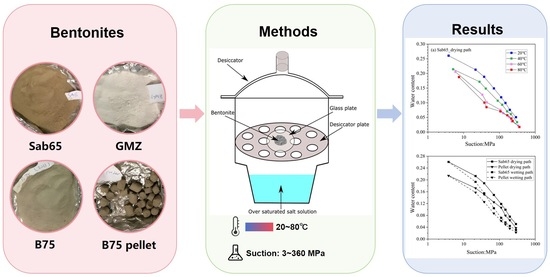
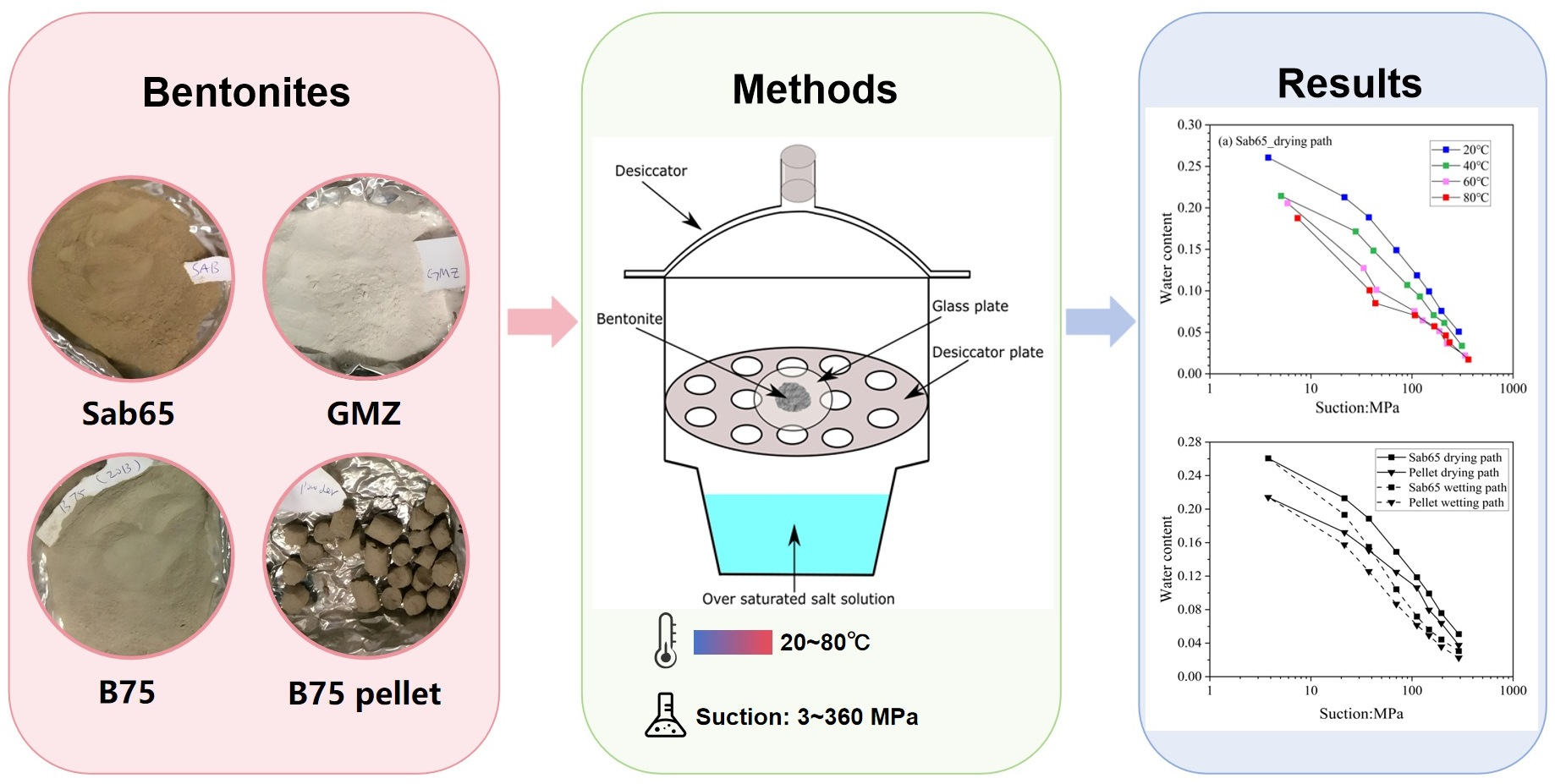
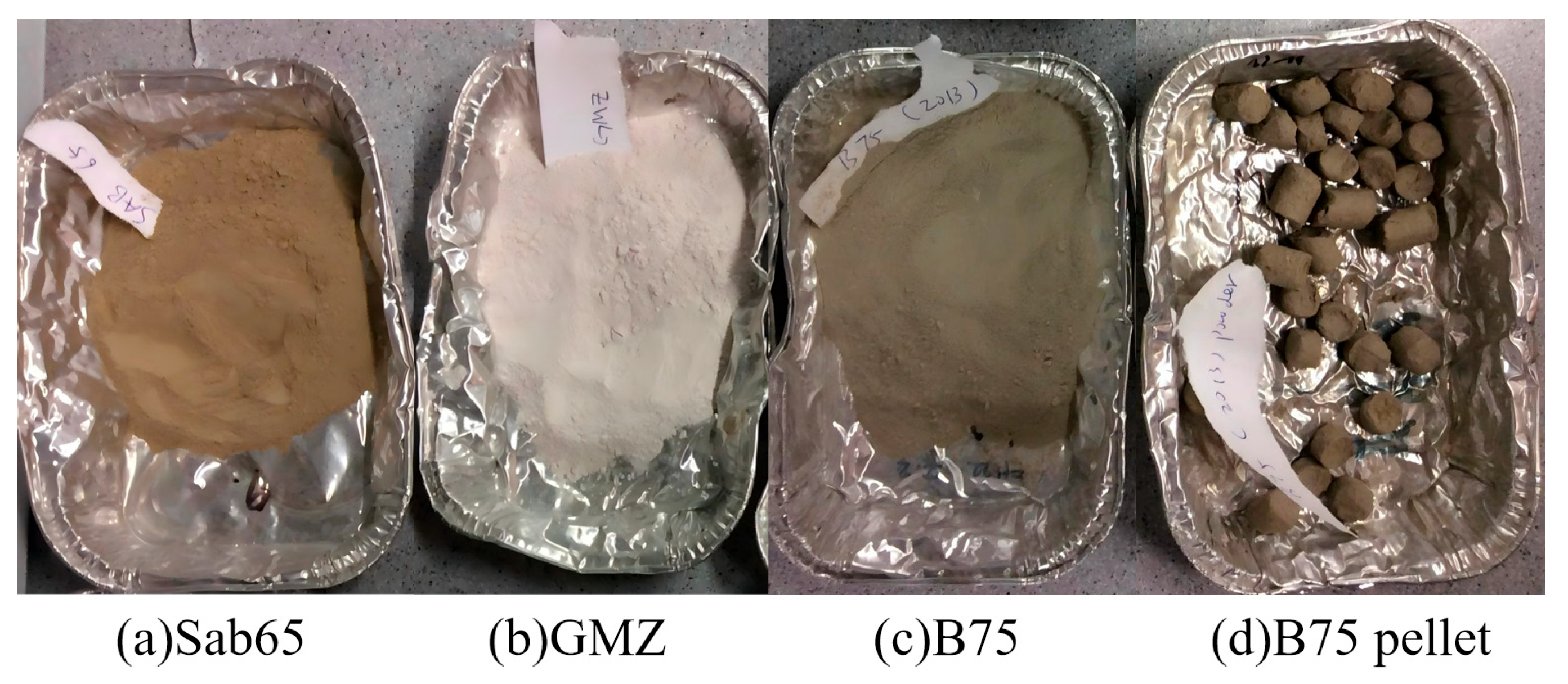
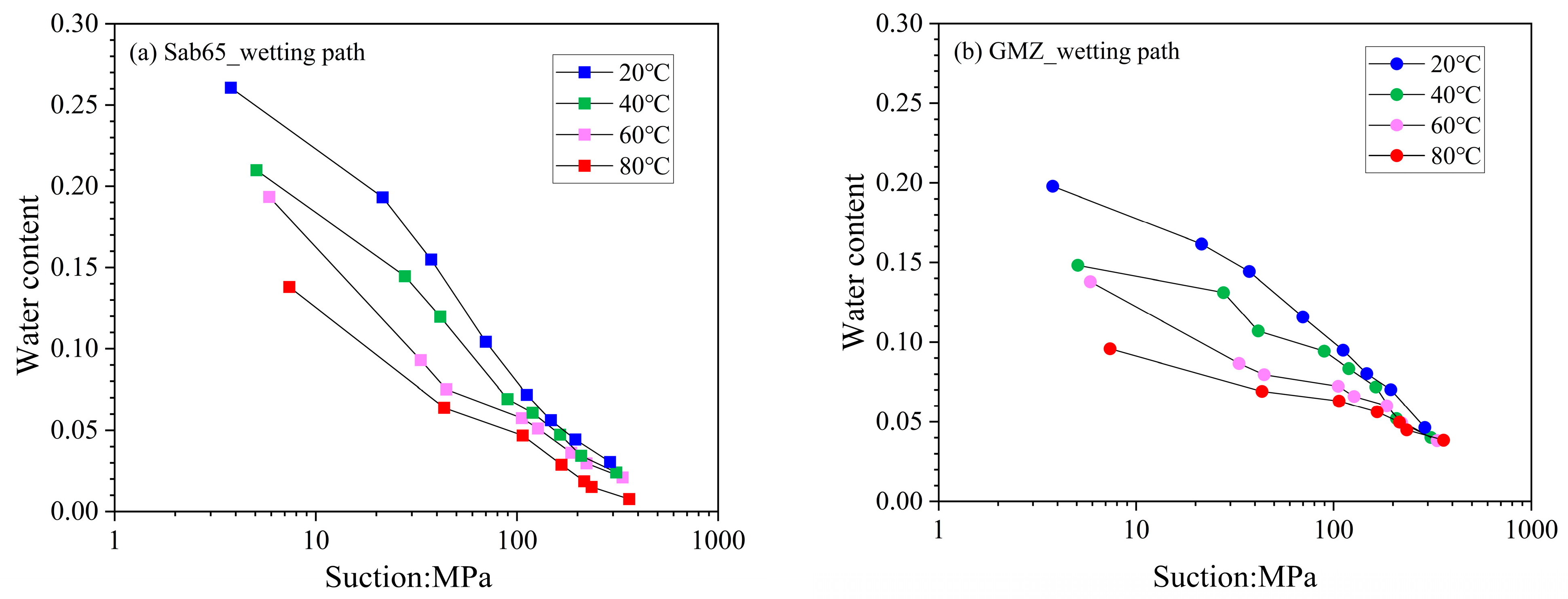
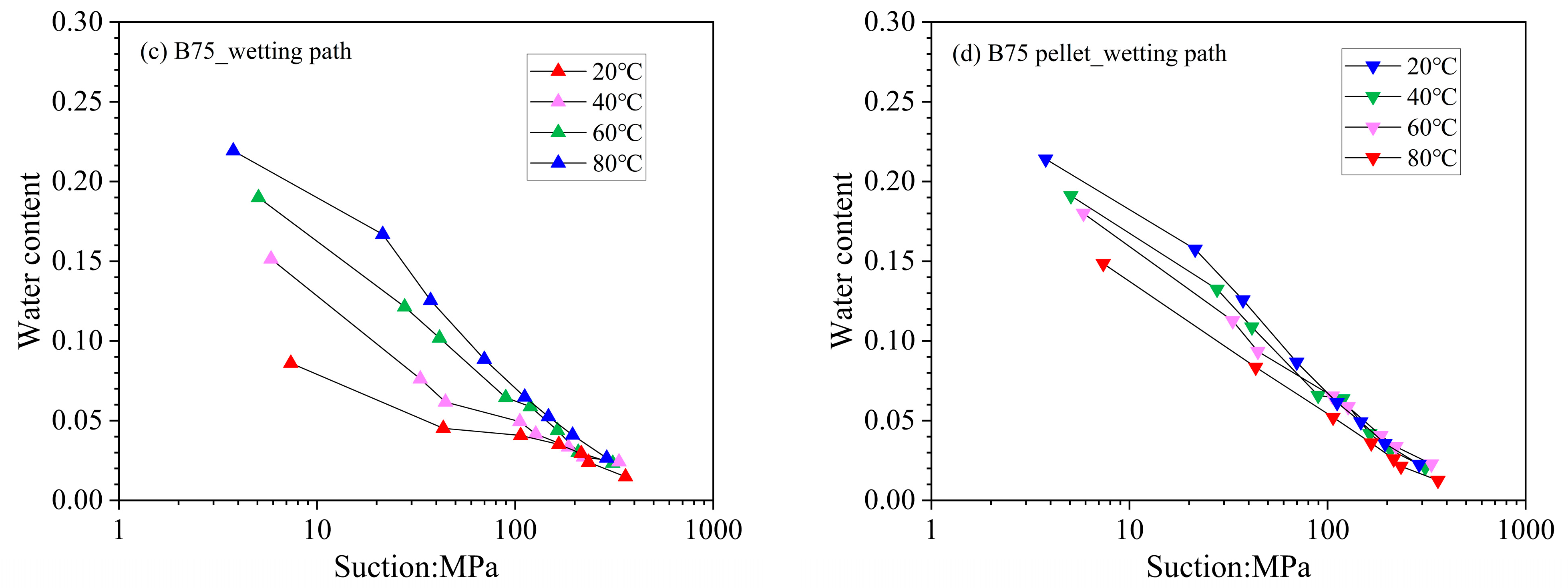
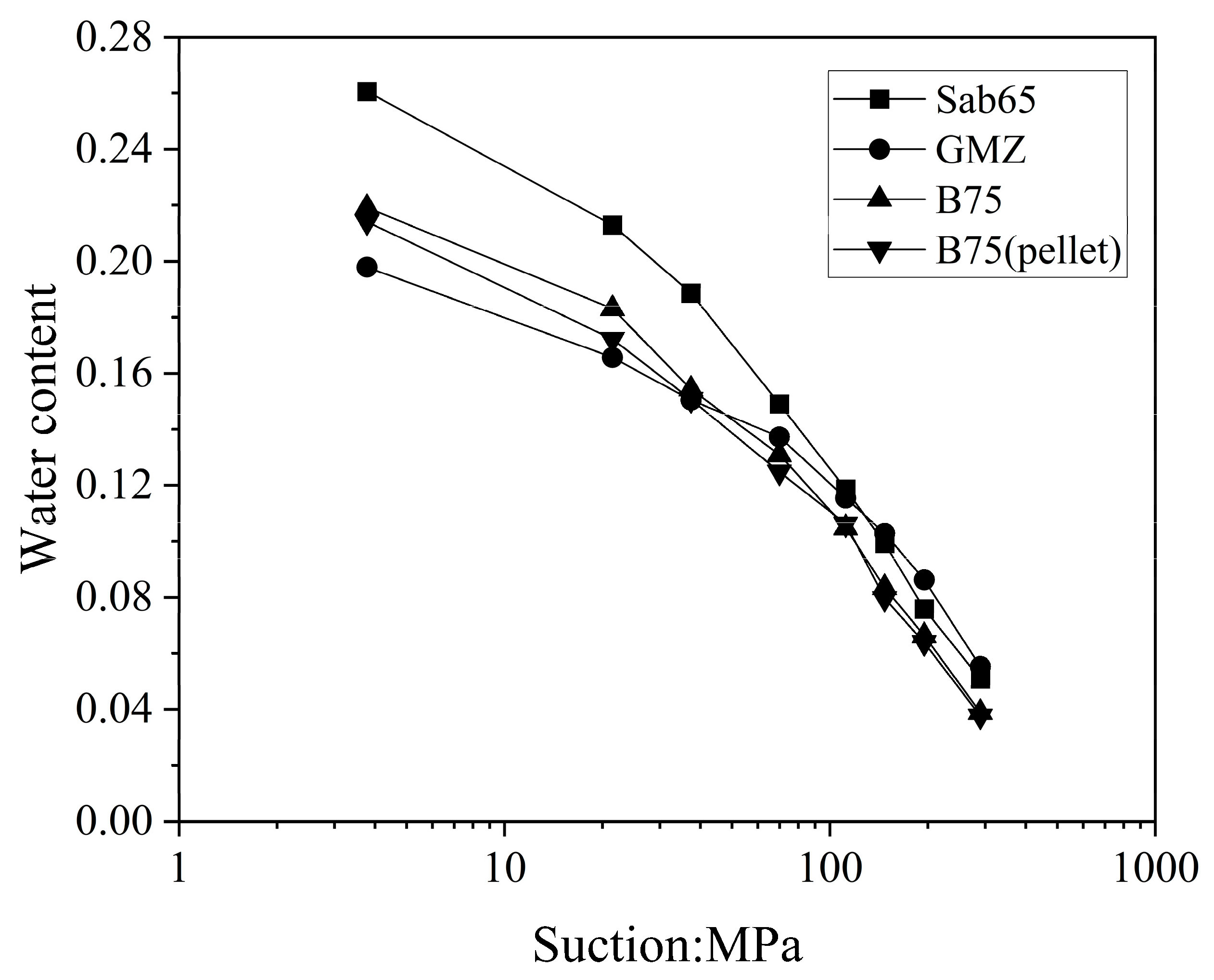
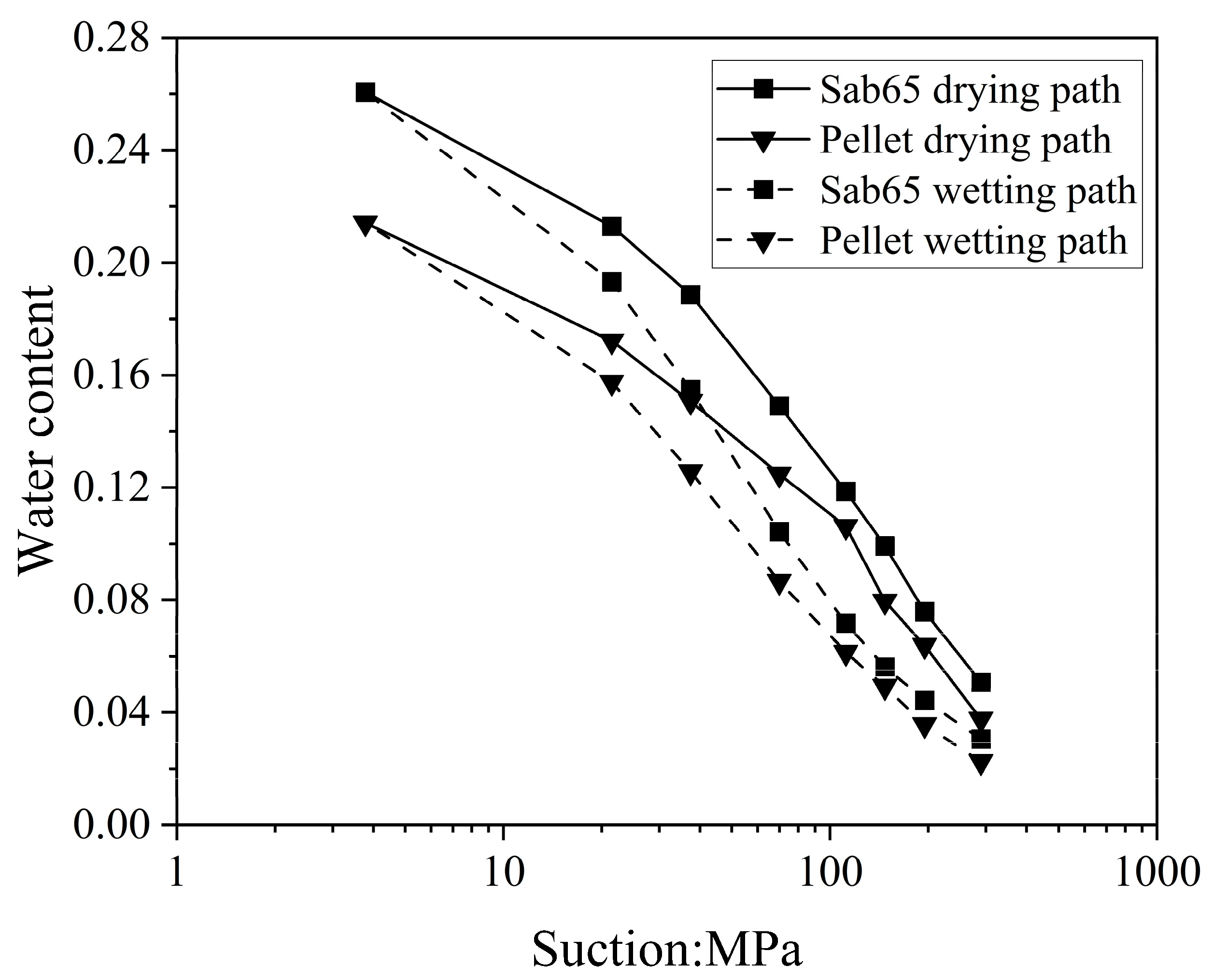
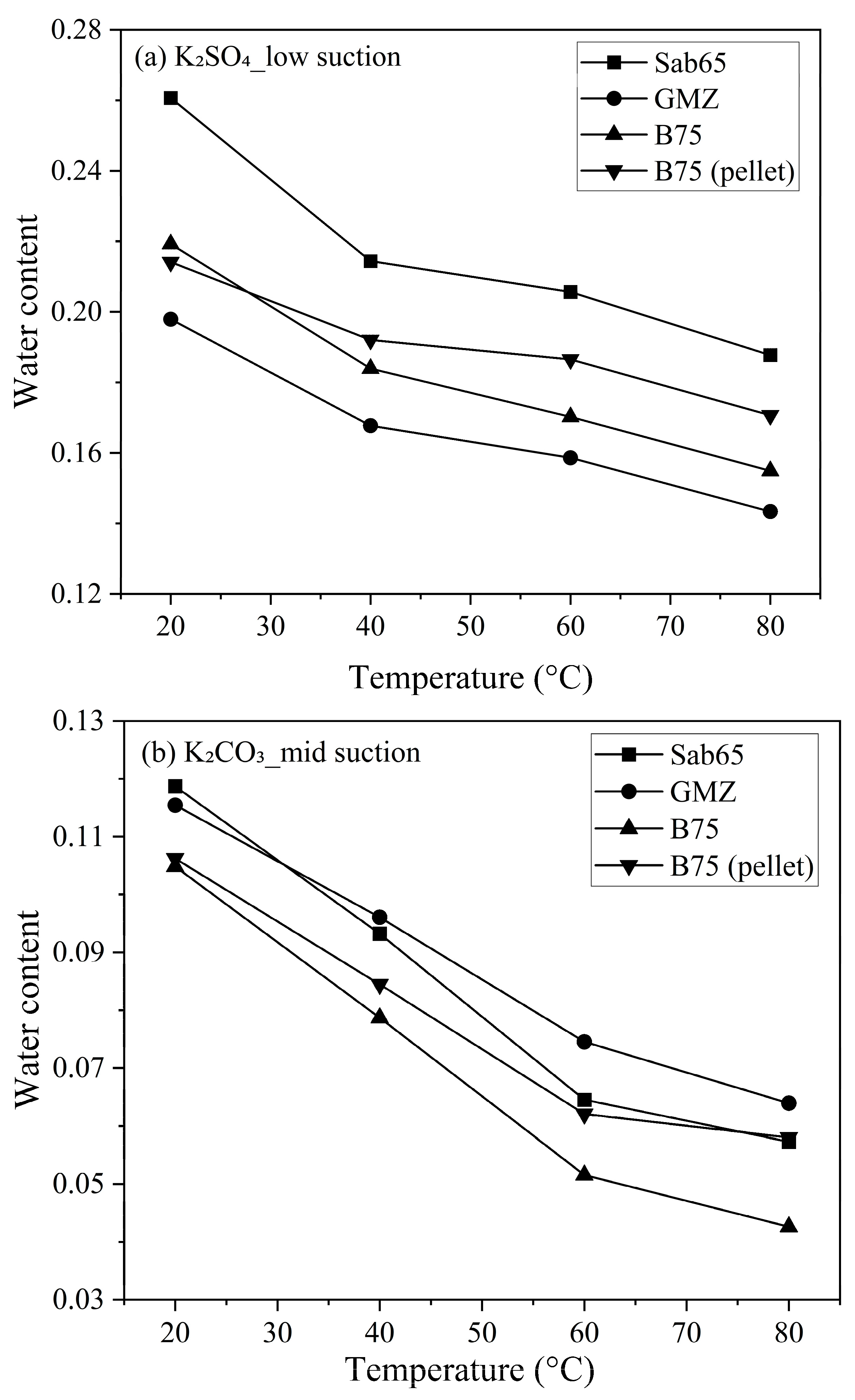
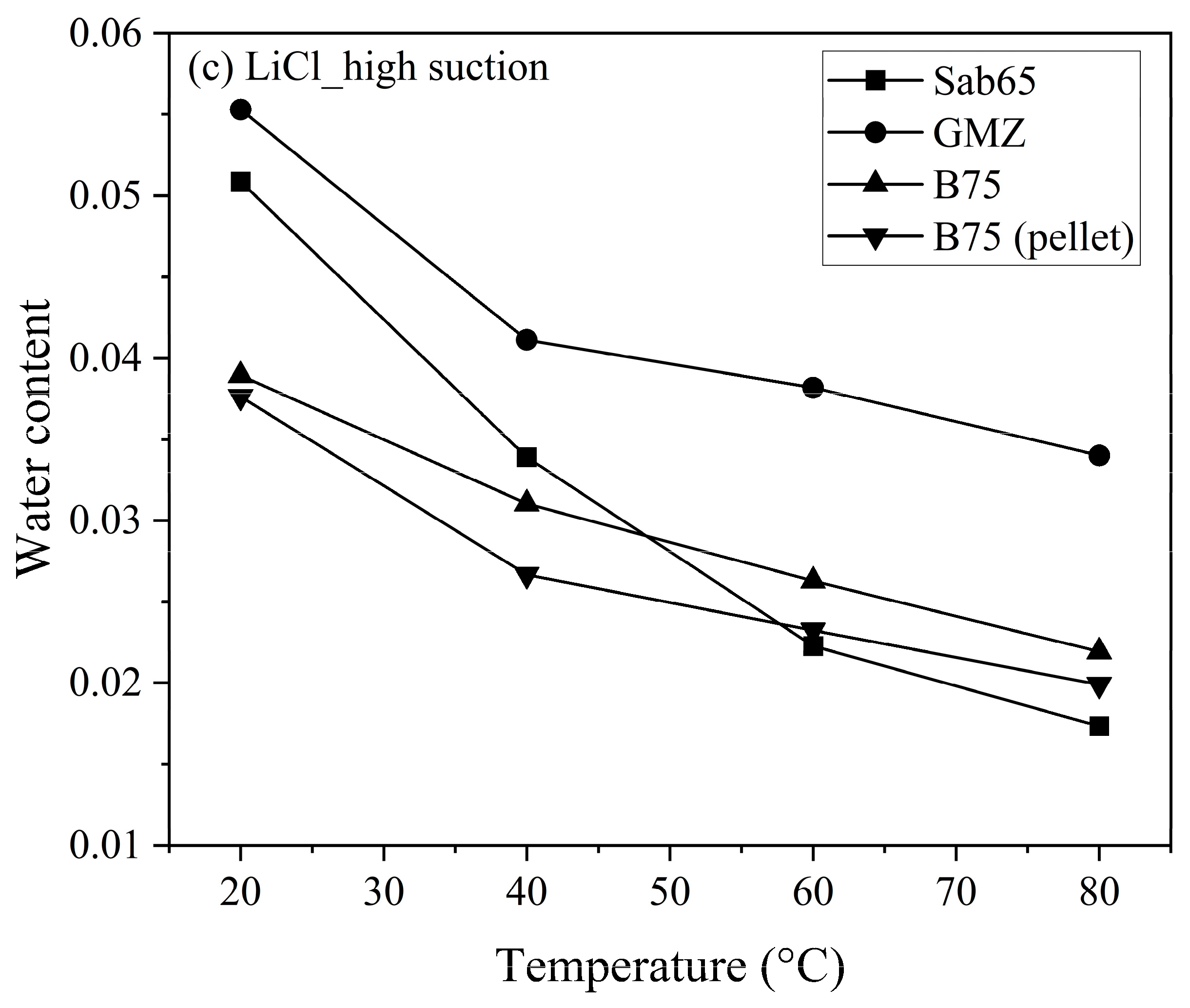
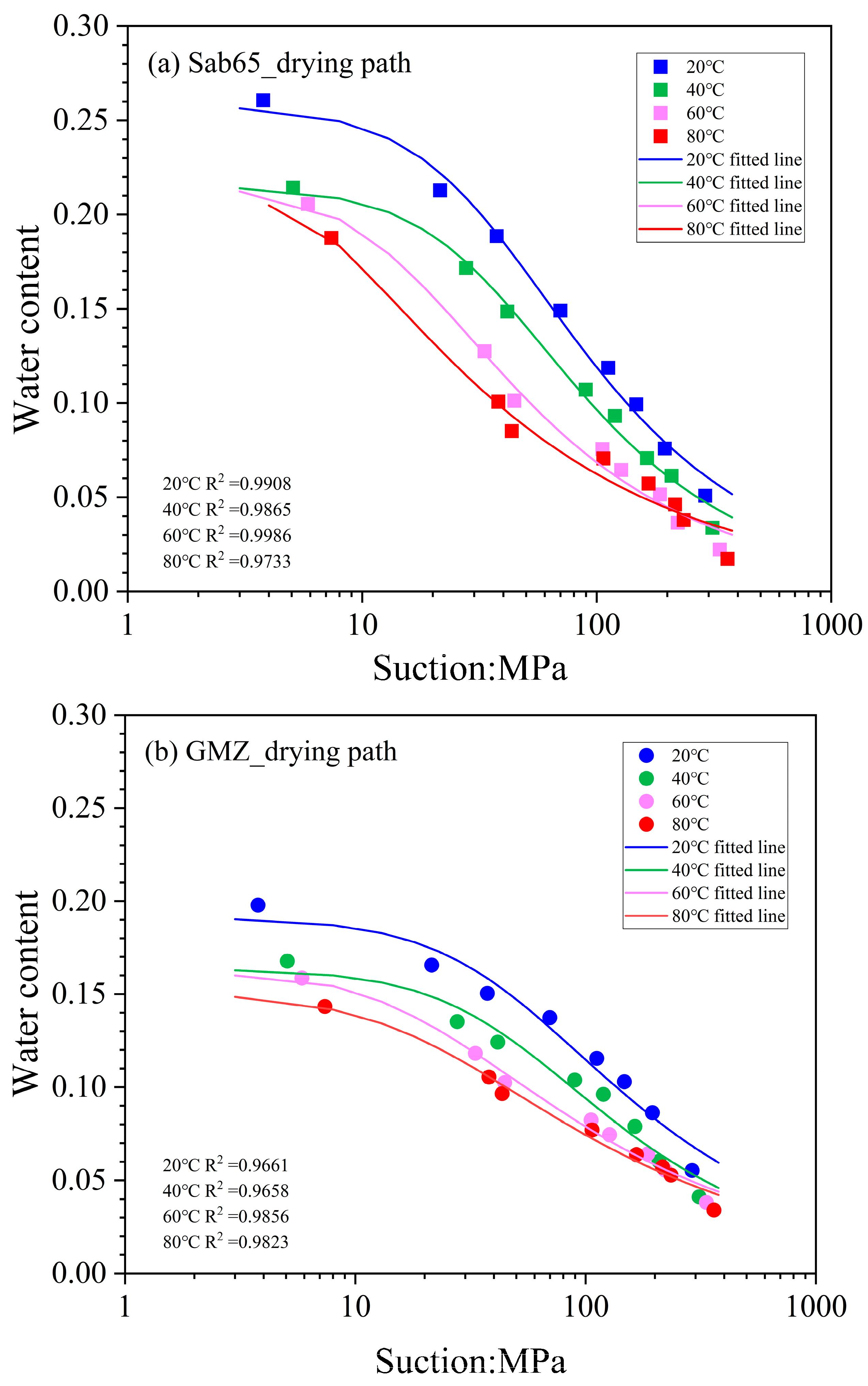
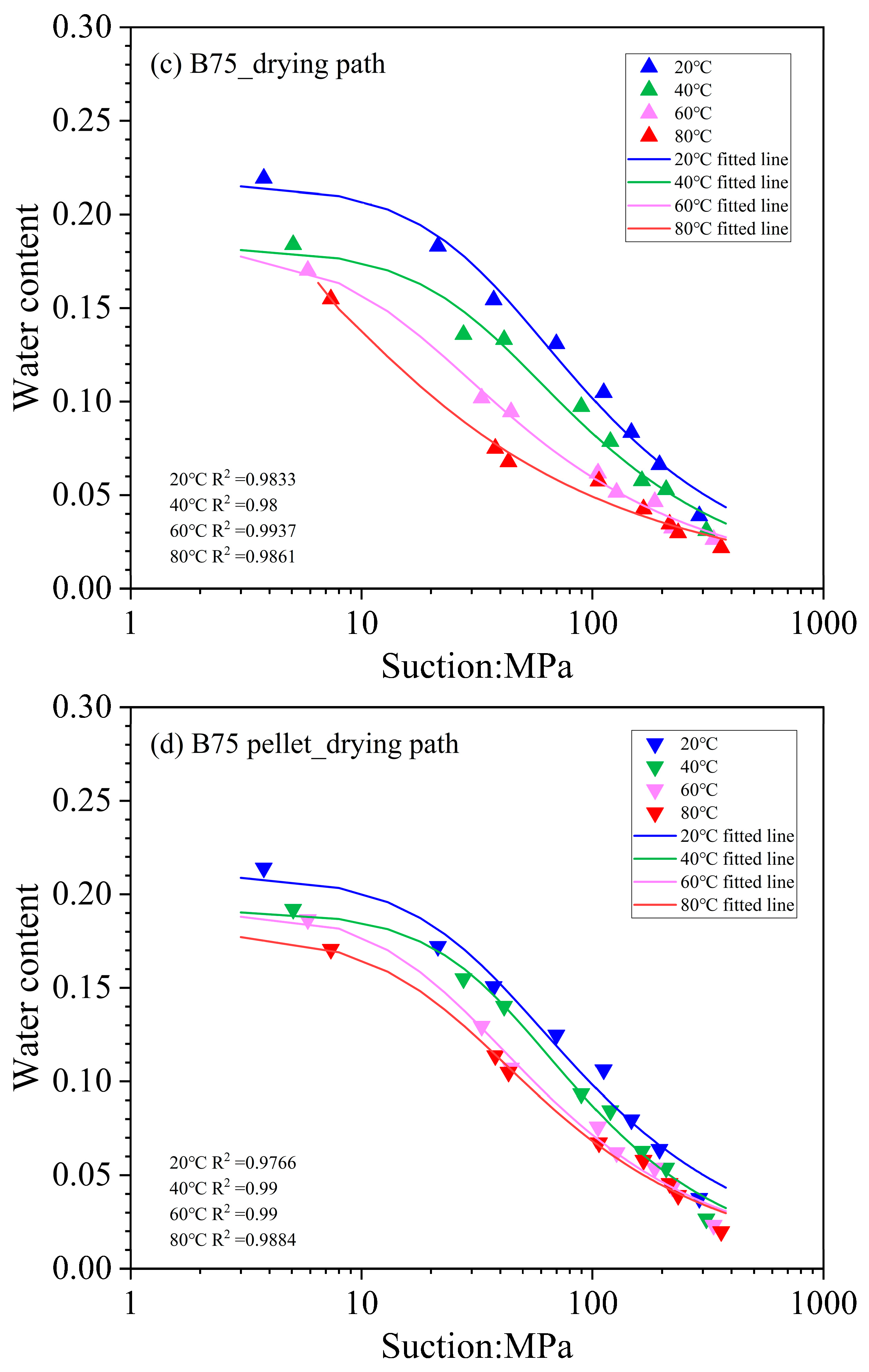
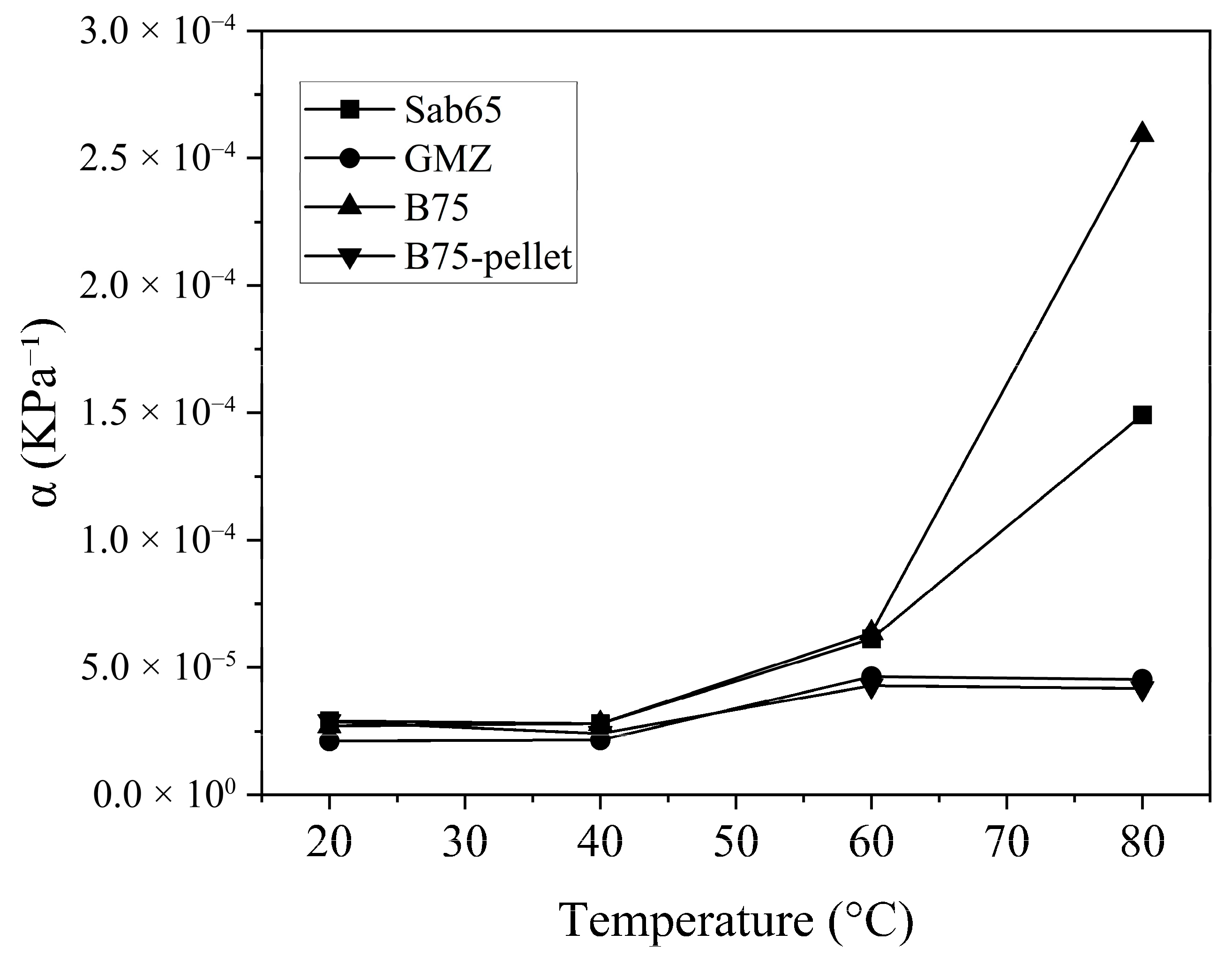
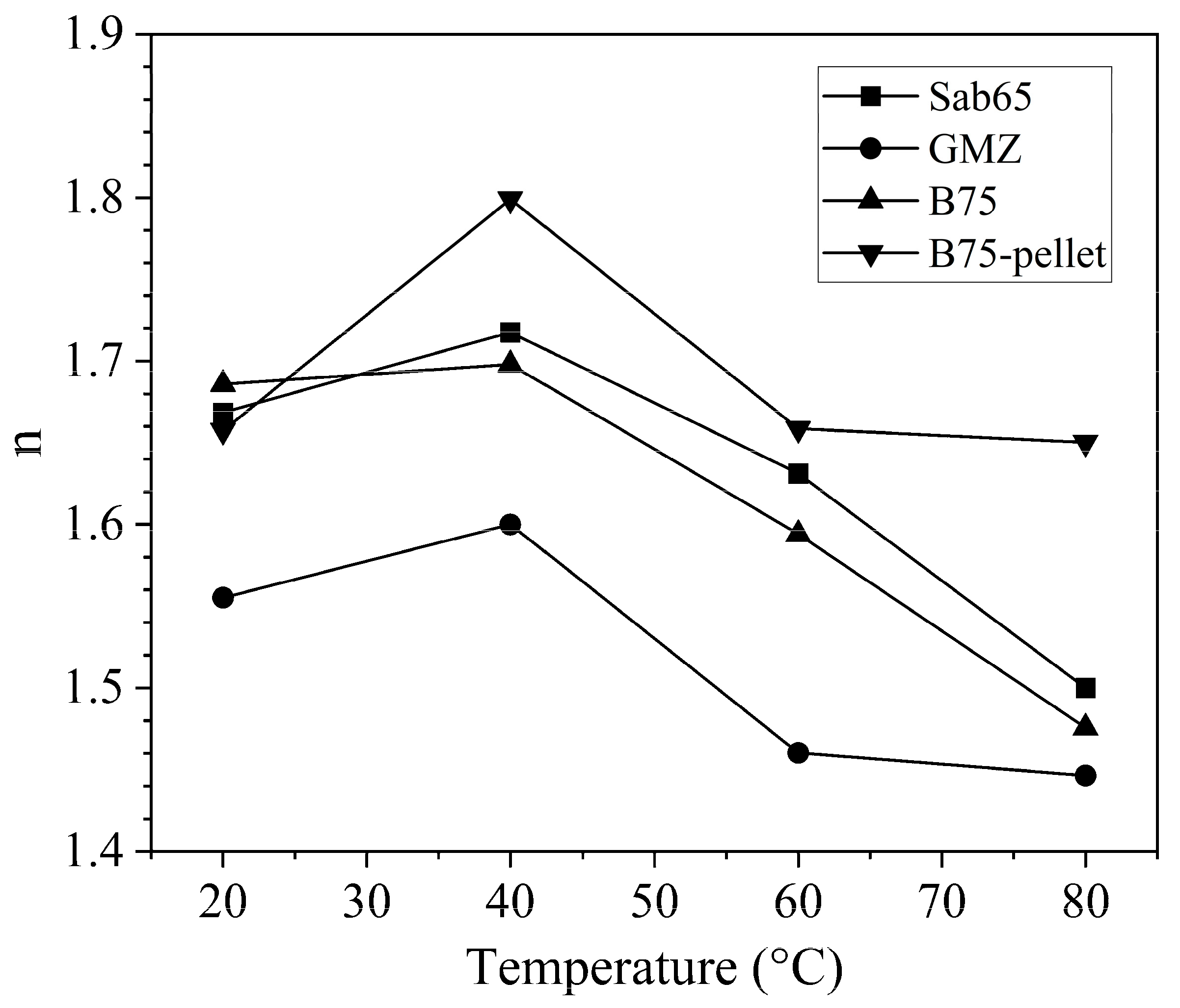
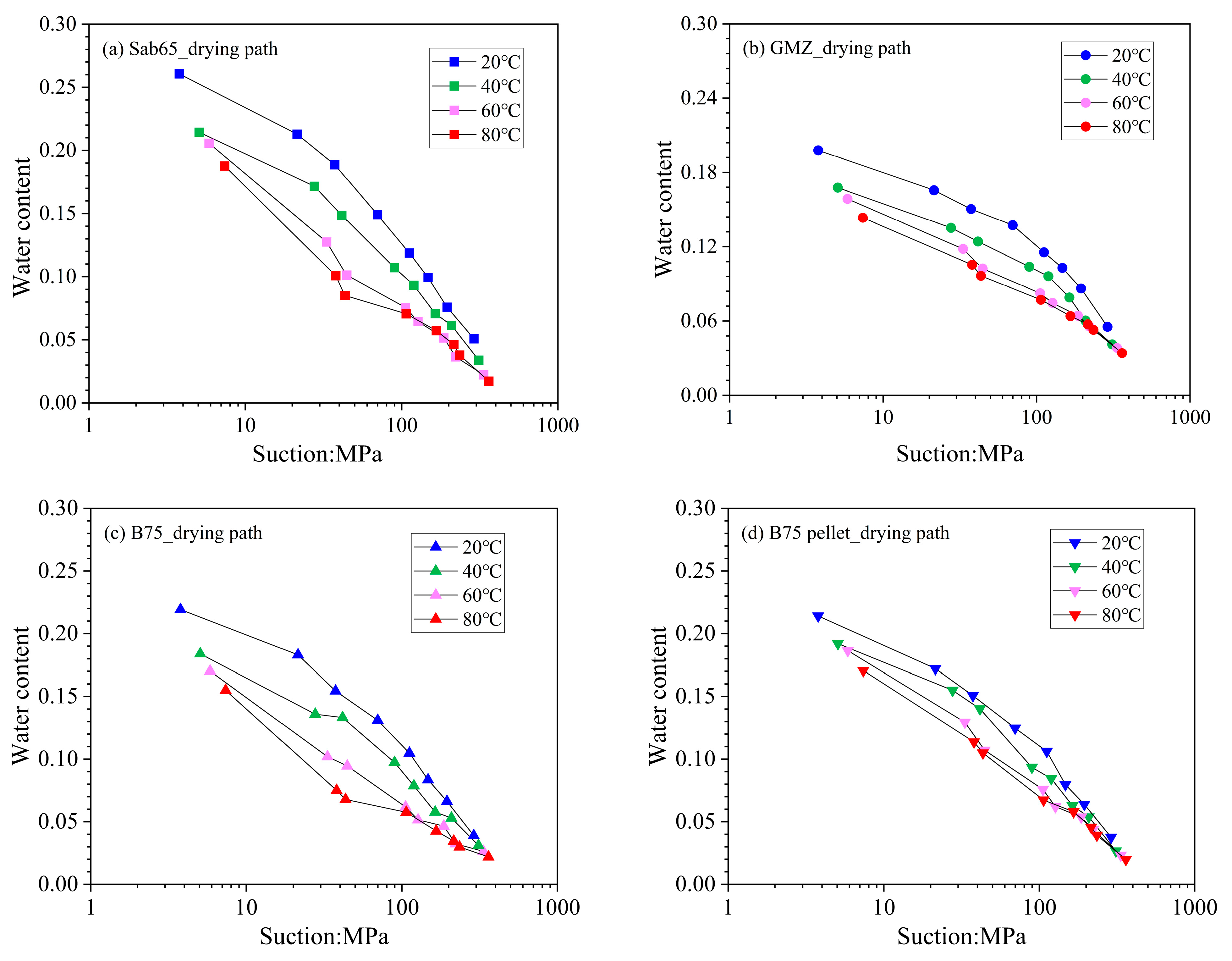
Bentonite serves as a critical engineered barrier in deep geological repositories, necessitating a reliable description of its temperature-dependent water retention behavior. This study determined soil water retention curves (SWRCs) for four bentonites (Sab65, GMZ, B75 powder, B75 pellet) along drying/wetting paths at 20–80 °C using vapor equilibrium technique, spanning a suction range of 5–300 MPa. All exhibit S-shaped SWRCs. Higher temperature systematically reduces water content at given suction, shifting SWRCs downward; this effect weakens at high suction where adsorption dominates. Material responses differ: Sab65 shows highest water content at low suction but strongest decrease at high suction and elevated temperature. Drying-wetting hysteresis is material-dependent. The van Genuchten (VG) model reproduced the drying-path SWRCs with high accuracy. The fitted parameter α increased with temperature (particularly for Sab65 and B75), whereas n showed only minor changes, indicating that heating primarily shifts the SWRC along the suction axis while the overall curve shape remains broadly similar. These findings elucidate the synergistic effects of temperature, mineralogy, and form on bentonite retention, thereby providing essential insights for the long-term performance assessment of engineered barriers under thermal conditions.
Keywords: bentonite; soil water retention curve (SWRC); thermal effect; van Genuchten (VG) model bentonite; soil water retention curve (SWRC); thermal effect; van Genuchten (VG) model
Graphical Abstract