


Abstract
Although mining activities are economically essential, they have led to significant environmental contamination, particularly in northern Chile. The discharge of untreated tailings has impacted coastal and soil ecosystems. This analysis investigates the biosorption and desorption of copper using the dried biomass of Lessonia berteroana, a brown alga, focusing on its reuse over multiple cycles. Biosorption experiments were conducted using synthetic copper sulfate solutions and real leachates (PLS) obtained from historically contaminated soils, obtaining maximum uptakes of 66.1 and 41.1 mg/g, respectively. In addition, four isotherm models—Langmuir, Freundlich, Temkin, and Dubinin–Radushkevich (D–R)—were applied to describe equilibrium behavior. In synthetic systems, the Langmuir model described the data better. In the real matrix, the D–R model showed superior performance, indicating a more heterogeneous mechanism and a lower adsorption capacity. Desorption experiments, fundamental to evaluating the recyclability capacity of biosorbents, used HCl, HNO3, H2SO4, and C6H8O7 as desorbing agents. These experiments showed high initial efficiency (>95%) for all desorbents, and regeneration remained consistent over five cycles. In real PLS systems, nitric and citric acids maintained high desorption efficiencies with minimal degradation of biosorbent capacity. This study highlights the potential of L. berteroana as a sustainable biosorbent for copper recovery in both controlled and real-world applications, supporting its integration into circular economy strategies for mine-impacted environments.
1. Introduction
Mining constitutes an economic backbone for numerous countries worldwide, including Chile, where the exploitation of metallic and non-metallic minerals, such as copper, iodine, and lithium, is one of the main productive drivers [1]. This sector provides fundamental inputs for social development and contributes to growth in the communities in which it is developed. However, throughout its history, mining has also generated several negative changes in the natural environment, whether through direct actions or through neglect linked to non-compliance or absence of environmental regulations. A relevant example is the intense mining activity in the Atacama region of Chile, where one of the most recognized and prolonged cases of marine coastal contamination by mining in modern history was produced [2]. Throughout much of the 20th century, over 280 million tons of tailings were released into the Salado River basin, resulting in significant chemical and landscape changes in the area [3].
On the other hand, the biosorption process utilizes certain types of biomasses as biosorbents to sequester both organic and inorganic contaminants [4]. These biomasses can bind and concentrate specific ions present in aqueous solutions, thanks primarily due to the affinity between the adsorbate and the biosorbent [5]. The biosorption of metals has been widely explored from a mechanistic perspective, demonstrating the ability of biomass to carry out the removal or recovery of various metals. The literature emphasizes the use of monometallic solutions at defined concentrations or in mixtures with established proportions. These experiments have elucidated many of the phenomena that occur during biosorption and have determined the operating conditions that are most favorable to biosorption, which are specific to metal–biosorbent interactions [6]. Considering the environmental impact caused by mining and the need for more sustainable remediation technologies, it becomes essential to assess how biosorption compares to conventional metal removal methods. Traditional techniques such as chemical precipitation, ion exchange, and membrane filtration have been widely used, but they often suffer from high operational costs, sludge generation, and limited efficiency at low metal concentrations. In contrast, biosorption offers advantages such as low cost, high efficiency under mild conditions, minimal environmental impact, and the potential for biosorbent regeneration and metal recovery [7,8,9].
Similar to ion exchange processes, the desorption mechanism involves the elution of sorbates by adding a small amount of an appropriate agent, resulting in a solution with a high concentration of the species of interest in a smaller fraction of the initial volume. Commonly used extraction solutions include relatively inexpensive acids such as HCl, HNO3, and H2SO4, which, by lowering the pH of the medium, cause the metals to detach from the biomass surfaces [10,11]. A biosorption process considers not only the metal uptake phase but also the desorption and biosorbent regeneration stages. Regenerating sorbents for reuse in multiple cycles requires that the desorbents be harmless to the physicochemical structure of the biomass [12].
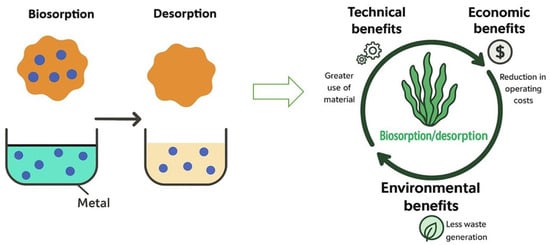
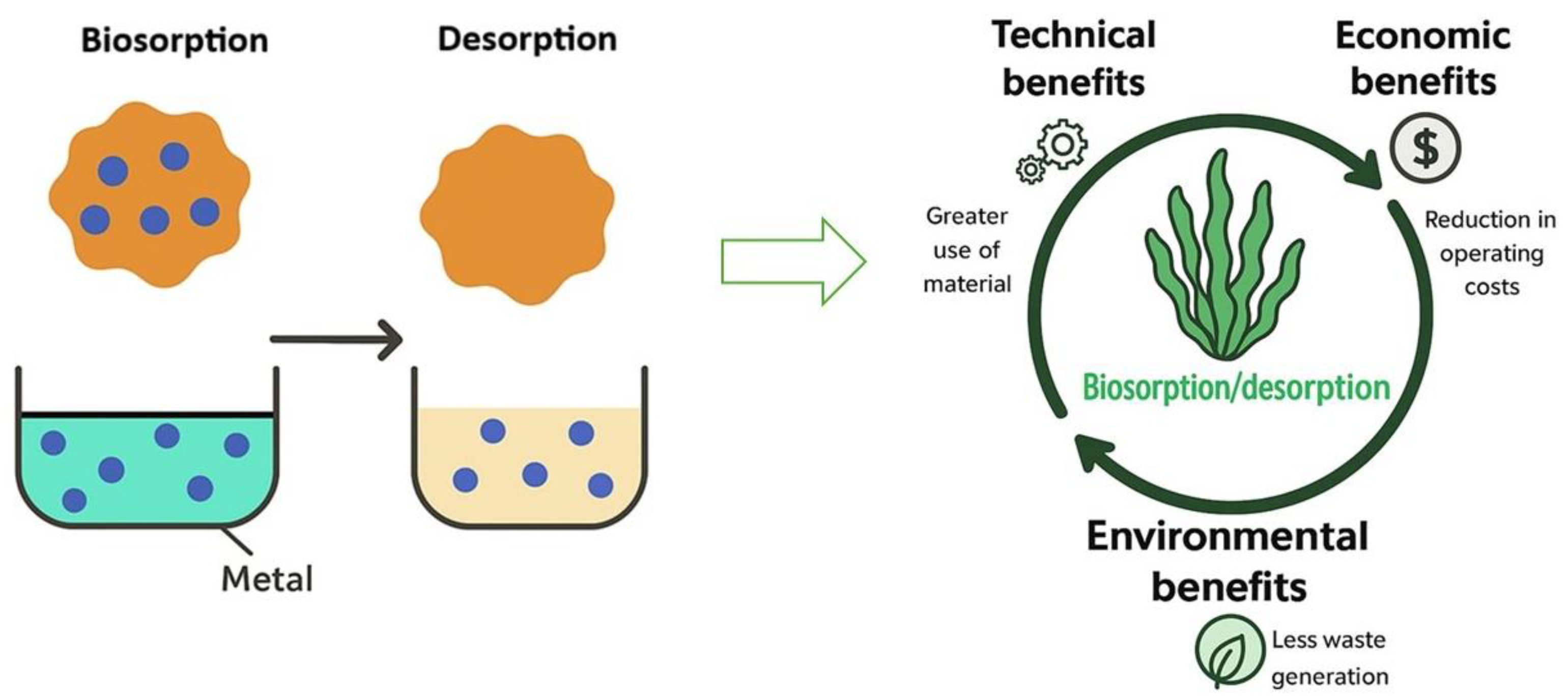
The reuse of an adsorbent material depends on an efficient desorption or regeneration process, which allows breaking the adsorbent-adsorbate interaction without compromising the structural integrity of the material during successive adsorption cycles. This factor is influenced by the nature of the adsorbent, the characteristics of the contaminant, and the interaction between them. Figure 1 illustrates the biosorption/desorption cycle, emphasizing not only the technical mechanism of metal removal and recovery but also the associated benefits of biomass reuse. The diagram highlights how the regeneration of the biosorbent enables greater material efficiency, reduced operating costs, and a decrease in waste generation, which altogether contribute to the sustainability of the process. This representation reinforces the idea that biosorption is not limited to a single use event but rather constitutes a cyclic and integrative approach that couples environmental, technical, and economic advantages.
Figure 1.
Conceptual processing of metallurgical effluents by biosorption and benefits of this biotreatment.
In this context, biosorption emerges as a promising technology to mitigate pollution generated by mine tailings. Using biological materials, such as algae or bacteria, it is possible to adsorb and recover heavy metals present in tailings deposits and mining wastewater that have impacted the coastal zone. This technique would not only allow the recovery of valuable metals but would also contribute to the environmental rehabilitation of affected areas such as Chañaral, where the accumulation of mining waste has seriously altered marine ecosystems. Biosorption, being an environmentally friendly and low-cost option, represents a sustainable way to deal with historical mining pollution and prevent future environmental impacts. This research aimed to compare the efficiency of different adsorbents in the reuse of algal biomass for copper adsorption and desorption over multiple cycles. To optimize copper recovery and assess biomass resistance, both organic and inorganic desorbing agents were tested to analyze their impact on the reusability and stability of the adsorption/desorption cycles.
2. Materials and Methods
2.1. Soil Contaminated and Alga Biomass
The soil sample used in this study for the biosorption tests with real hydrometallurgical solutions was obtained and analyzed according to Cortés et al. [13].
Biomass of the brown alga species Lessonia berteroana was used in this research. It was collected on the coast of Chañaral, Atacama, Chile, at a center authorized for collecting this marine species. The alga, once collected, was washed with distilled water to remove adhered remains and left to dry in an oven at 60 °C for 12 h.
Fourier transform infrared spectroscopy (FTIR) was used to characterize the chemical groups in the biomass (Jasco FT/IR-4600, Tokyo, Japan). The analysis showed the presence of ionizable groups (carboxyl, hydroxyl, and amino) capable of interacting with protons or metal ions. The main FTIR bands associated with these functional groups correspond to those previously reported by other authors [14,15].
The algae were analyzed by scanning electron microscopy (Carl Zeiss EVO MA10, Jena, Germany) coupled with energy dispersive spectroscopy (EDS) (Oxford instruments x-act, Abingdon, UK).
Before use in biosorption assays, the biomass was incubated in 0.2 M CaCl2 at a 1/20 g/mL ratio at pH 5 for 8 h with constant stirring at 500 rpm. After activation, the biomass was dried at 60 °C for 12 h. This activation promotes ionic exchange between the anionic chemical groups of the biomass and the metallic cations of the solution.
2.2. Leaching of Contaminated Soil
Leaching of copper from the contaminated soil was performed with 500 mL of seawater filtered to 0.2 μm, a water resource available near the contaminated sites. The composition of the seawater is shown in Table 1.
Table 1.
Main components of seawater used in the leaching experiments.
The leaching of the contaminated soil was carried out with a soil/leachant ratio of 1:10 g/mL under mechanical agitation at 200 rpm for 30 min. The pH was adjusted at the beginning to 4 using a 0.5 M sulfuric acid solution (Merck KGaA, Darmstadt, Germany).
After leaching, all the solids remaining were separated by vacuum filtration, and the filtrates were chemically analyzed by atomic absorption spectrometry (AAS) (Agilent Technologies 240FS AA, Santa Clara, CA, USA) for copper determination.
2.3. Batch Biosorption
In a first approach, a kinetic study of the biosorption process was carried out using 250 mg/L Cu (CuSO4·5H2O solutions) (Merck KGaA, Darmstadt, Germany) at defined times of 5, 20, 60, 90, 120, and 150 min, 1 g/L biomass, and pH 3. This kinetic study of biosorption aimed to determine the time required for the system to reach equilibrium and the rate of binding of the ions to the external and internal active biosorbent centers.
Subsequently, in a second approach, batch biosorption experiments were carried out incorporating tailings leachates as a copper source to study the equilibrium. The copper concentrations used in the second stage for both solutions were 20, 40, 80, 250, and 500 mg/L. 1 g/L biomass, pH 3, 100 rpm stirring, room temperature, and a contact time of 1 h to construct isotherms. Finally, the solution was filtered, and the copper was chemically analyzed by AAS.
The experimental metal biosorption, (mg/g), was calculated from the mass balance of the sorption system (Equation (1)):
where V is the volume of the solution (L), W is the amount of dry biomass (g), Ci and Cf are the initial and final concentrations of the metal (mg/L), respectively.
2.4. Adsorption Equilibrium Models
The biosorption equilibrium was studied by using the physical and chemical models Freundlich, Langmuir, Temkin, and Dubinin–Radushkevich. These expressions were used to determine the modeled uptake (), which in each case was compared with the experimental copper uptake. Table 2 shows the models studied, their formulas, adjustable parameters, and main assumptions. Some parameters were considered non-adjustable, as they are physical constants or empirical data. The temperature () was set according to the experimental setup, i.e., 293 K, while the universal gas constant () was taken as 8314 J/mol/K. The solubility of the adsorbate () is 203,000 mg/L, which corresponds to solubility of copper sulfate [16].
Table 2.
Adsorption models, adjustable parameters, and key assumptions. In all equations, denotes metal concentration at the equilibrium.
To analyze the biosorption results using adsorption models, the equilibrium parameters (Table 2) were determined by the least squares method. The differences between qexp and qmod were considered as denoted in Equation (2). Where qexp is the experimental metal uptake, qmod is the modeled uptake, and corresponds to the mean of experimental uptake.
2.5. Desorption
To evaluate the desorption and regeneration capacity of biomass, experiments were conducted using two copper-containing solutions: a synthetic copper sulfate solution (CuSO4) and a real leaching solution (PLS) with the desorbing agents HCl 0.1 M, H2SO4 0.05 M, HNO3 0.1 M, and C6H8O7 0.1 M. First, desorption tests were carried out with biomass previously loaded with CuSO4, adding 25 mL of desorbing agent and shaking the samples at 100 rpm for 30, 60, and 90 min, to determine the optimal desorption time. From these results, five consecutive adsorption–desorption cycles were performed using CuSO4 to evaluate the regeneration efficiency of the biosorbent. Finally, regeneration tests were carried out using the PLS solution, applying the optimal desorption conditions previously established, to analyze the behavior of the biomass against a real effluent. The yield of reused biomass in each cycle was evaluated by calculating the regeneration efficiency (RE%) using Equation (3) [12,23].
qd and q0 indicate the adsorption capacity of the adsorbent after regeneration and at the beginning, respectively. is calculated with Equation (1), assuming that is zero.
The biosorbent was washed with distilled water and dried at 60 °C before undergoing a new sorption/desorption cycle, with a total of five cycles evaluated.
3. Results and Discussion
3.1. Sampling and Characterization of Contaminated Soil
From the chemical analysis of the contaminated soil, the composition of the main metallic species is shown in Table 3 [13]. The metals were classified according to their abundance into major and minor elements. Among the primary metals, the most abundant ores are iron and copper, with 84 and 32 g/kg, respectively. Minor metals, expressed in mg/kg, are mainly represented by lead and silver.
Table 3.
Chemical composition of the main elements present in the contaminated soil of Caleta Palito [13].
The soil from the Caleta Palito area (E 334282.27, N 7092392.62, elevation 28 m above sea level) exhibited a greenish-yellowish color. The top 3 cm were discarded to remove any potential interfering substances present at the sampling location. The sampled area lacked vegetation, possibly due to the high levels of copper and other elements in the soil, as well as its proximity to the coast in an arid region.
In the sampled soil, copper is uniquely present as Cu2Cl(OH)3 (atacamite), a secondary oxide that can be easily leached with water. The other species composing soil are rock-forming minerals such as illite, quartz, and natrojarosite (Table 4), which have low solubility. Silicates contribute to 75% of the crystalline fraction.
Table 4.
Main minerals composing the contaminated soil analyzed by XRD.
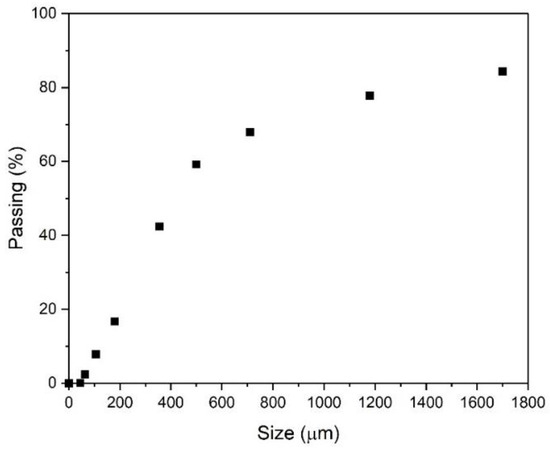
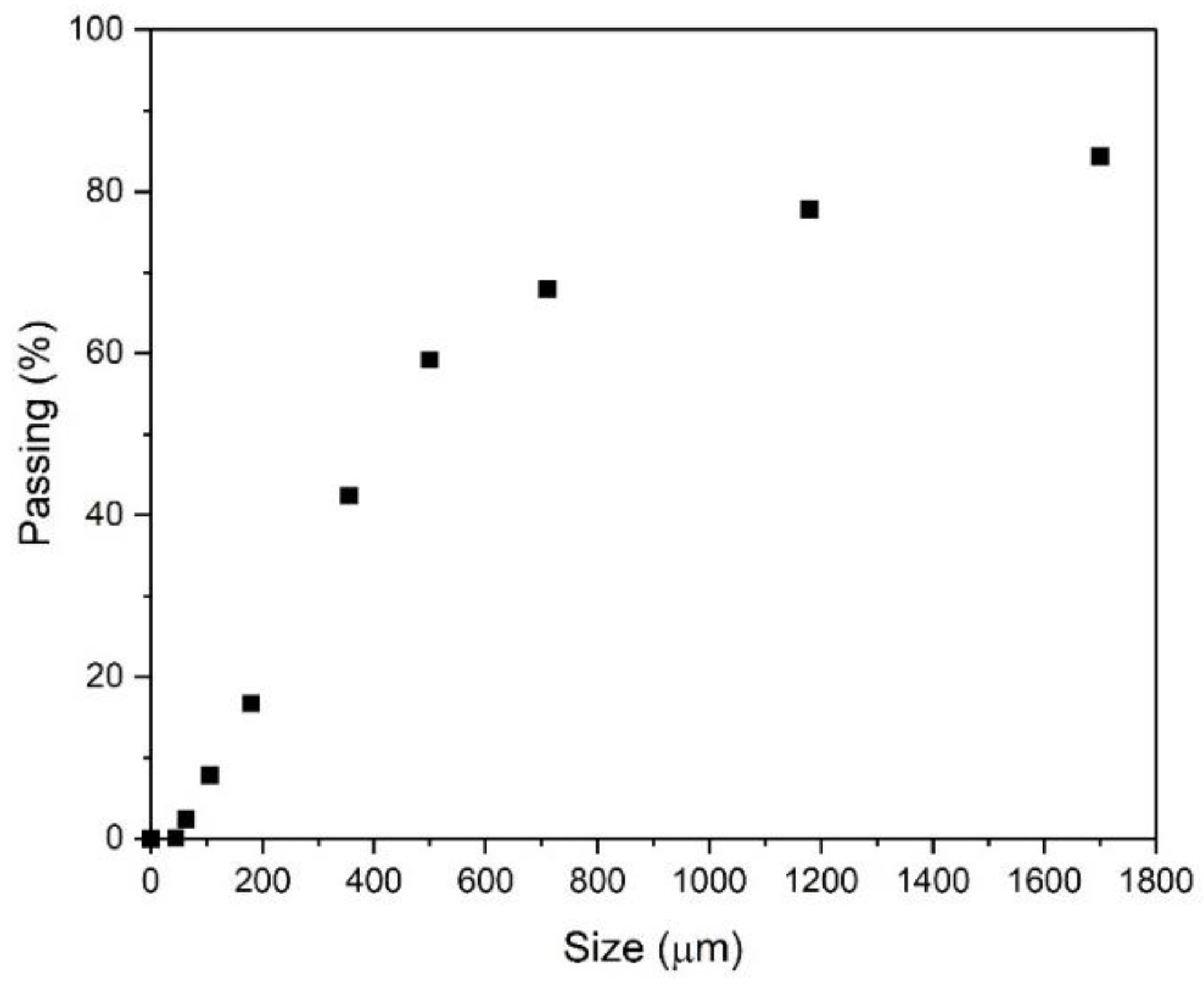
The granulometry analysis shows that approximately 50% of the soil has a particle size of about 400 μm (Figure 2), indicating that this soil is a fine material, which guided the decision to treat it subsequently by agitated leaching.
Figure 2.
Granulometry of contaminated soil in Caleta Palito. D50 resulted in about 400 µm particle size. Markers indicate the cumulative mesh passing fraction.
3.2. Copper Dissolution from Contaminated Soil by Leaching
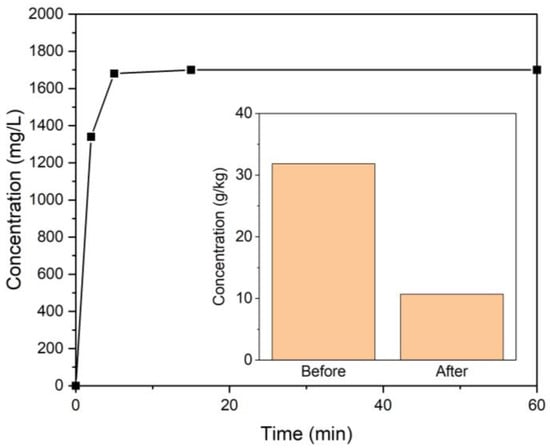
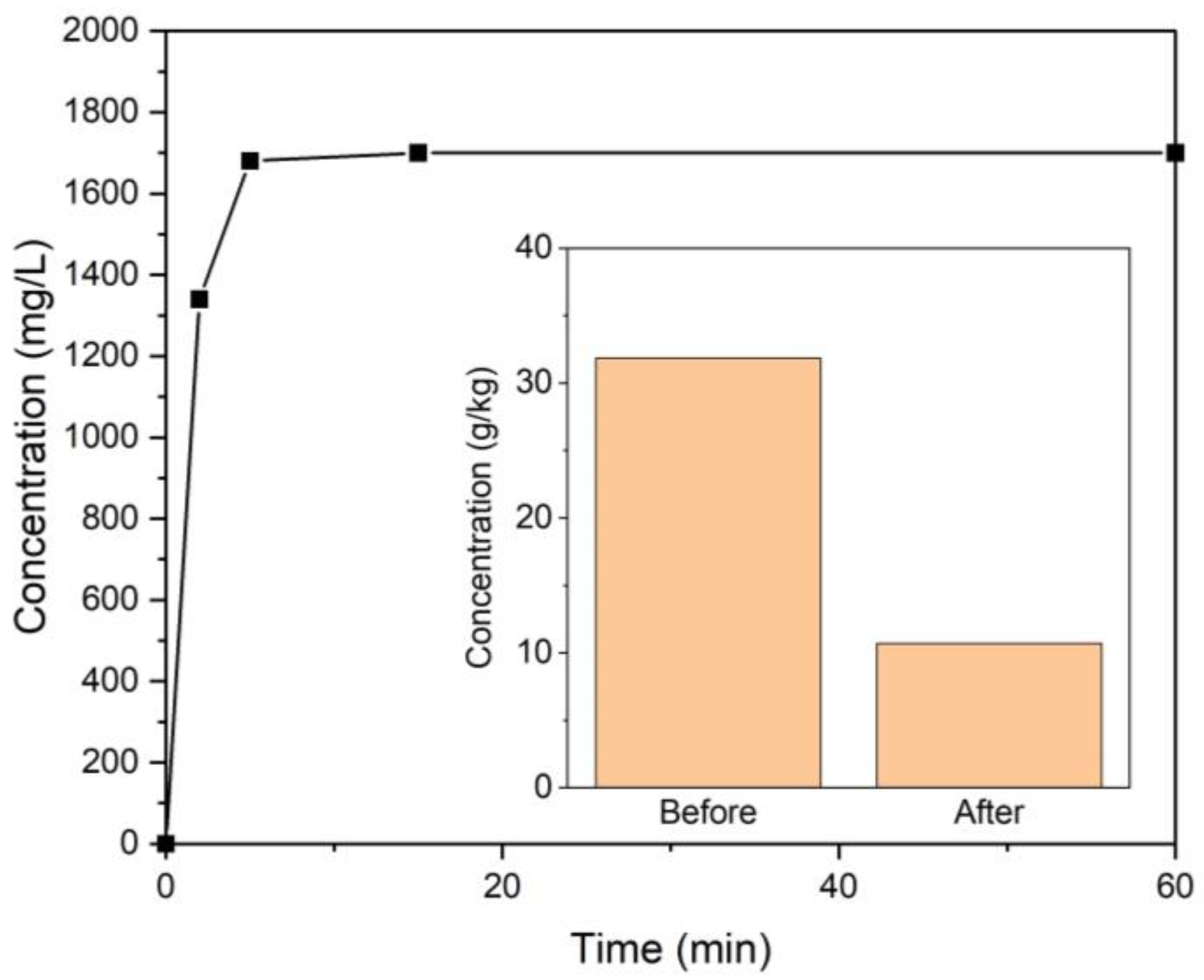
The leaching kinetics of contaminated soil is shown in Figure 3, working with seawater at pH 4 and a solid/liquid ratio of 1/10 kg/L. A rapid increase in copper concentration is observed in the first 10 min, reaching approximately 1.7 g/L. Subsequently, the system enters an equilibrium phase where the Cu concentration stabilizes, suggesting that most of the leachable copper is released in the initial stage. This behavior is characteristic of a process controlled by rapid metal availability at the particle surface or by initial diffusion into the liquid medium. Stabilization means that the transport or limiting reaction mechanisms are slower or that accessible copper has been exhausted under constant experimental conditions.
Figure 3.
Leaching kinetics of the contaminated soil using seawater at pH 4, with a solid/liquid ratio of 1/10 kg/L. Markers denote Cu concentration in the solution. The inset graph represents the Cu concentration before and after 30 min leaching in the soil.
The effectiveness of the leaching process in reducing the copper concentration in the treated material using parameters that do not significantly modify the initial conditions, such as pH, and using seawater as the leaching agent resource in short supply. Before treatment, the copper concentration reached approximately 30 g/kg, while after 30 min of leaching, it decreased significantly to about 10 g/kg. This reduction of more than 65% highlights the potential of the process to efficiently recover copper and contributes to the remediation of contaminated soils. These results reinforce the feasibility of applying this method in a circular economy model by integrating metal recovery with improving the environmental quality of soils affected by mining activities.
3.3. FTIR and SEM-EDS
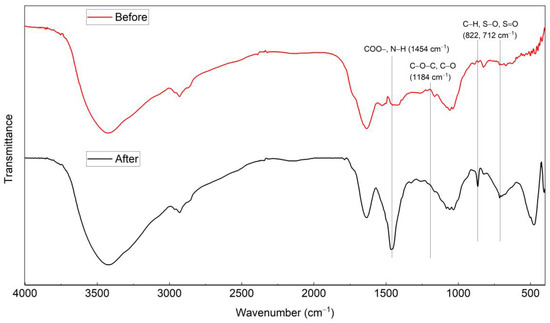
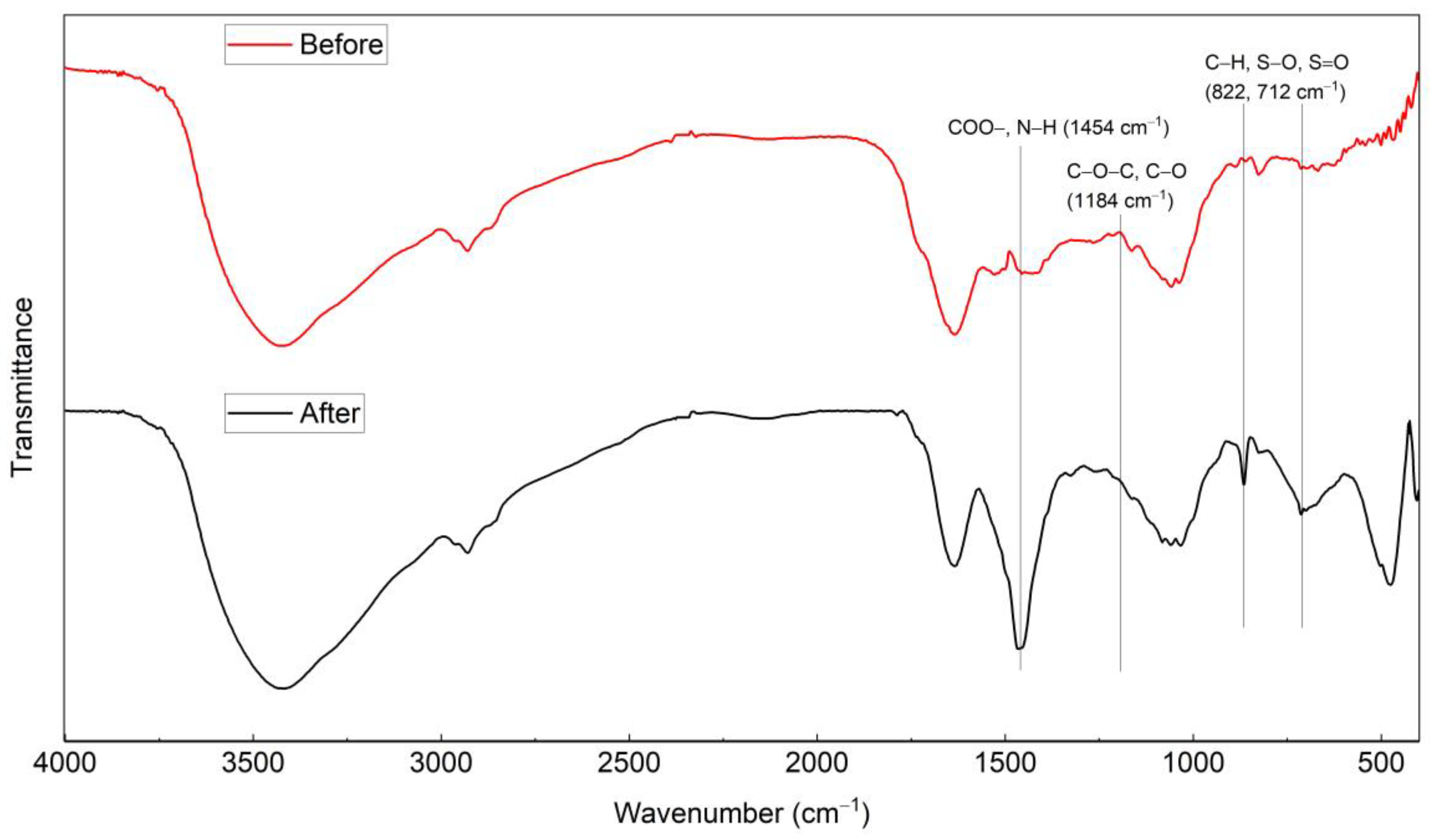
Fourier transform infrared spectroscopy (FTIR) was used to identify the functional groups present in the biomass of the alga Lessonia berteroana before and after the copper biosorption process, to determine the active sites responsible for the metal-biomass interaction. When comparing both spectra, significant variations are evident in several regions, indicating the direct participation of specific functional groups in metal uptake (Figure 4). The biomass used contains chemical groups with elements such as oxygen, nitrogen, sulfur, and phosphorus (O–, N–, S–, and P–), which are found in functional structures such as carboxyl, amine, hydroxyl, and sulfate groups, all of which are recognized for their affinity to bind heavy metals. These functional groups are mainly present in algal cell wall components, which include structural polysaccharides such as fucoidan and alginate, whose involvement in biosorption processes has been extensively documented in previous studies [15,24,25,26].
Figure 4.
FTIR spectra of Lessonia berteroana biomass before and after copper biosorption.
In the region between 3400 and 3200 cm−1, a broad band attributed to the stretching of the O–H bonds of the hydroxyl and N–H groups of amines or amides is observed. The bands located between 2920 and 2850 cm−1 correspond to the stretching of C–H bonds present in aliphatic chains, typical of lipid compounds or polysaccharides. These signals do not show significant changes after biosorption, indicating that these groups are not primarily involved in the interaction process with copper. The other region relevant in the structure of algae biomass is between 1730 and 1630 cm−1, where a band characteristic of the stretching of the C=O bond is located, belonging to carboxylic groups, amides, or even to the retained structural water.
In the region between 1540 and 1400 cm−1, associated with the deformations of the N–H bond (amide II band) and the symmetric stretching of the carboxylate groups (COO–), noticeable changes are observed after biosorption. This suggests that both proteins and carbohydrates present in the algal cell wall are actively involved in copper retention. In the region between 1240 and 1000 cm−1, corresponding to the stretching of C–O–C and C–O bonds of polysaccharides such as alginates and sulfonates, alterations are also detected after the biosorption process. These modifications indicate that these polysaccharide compounds, abundant in brown algae, contribute to the interaction with metal ions. Finally, in the 875–600 cm−1 region, subtle structural changes are evident, which reinforces the idea that biosorption induces molecular variations in the biological matrix, associated with the coupling of copper with specific groups. Similar results have been reported by other authors, who observed shifts in these characteristic bands following the interaction of metals with algal-derived biomaterials. This confirms the involvement of functional groups such as carboxyls, hydroxyls, and amides in the biosorption process [24,27].
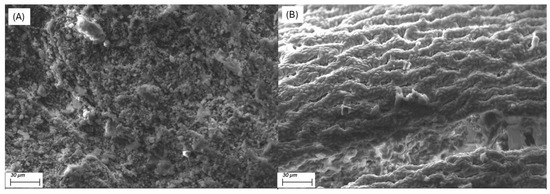
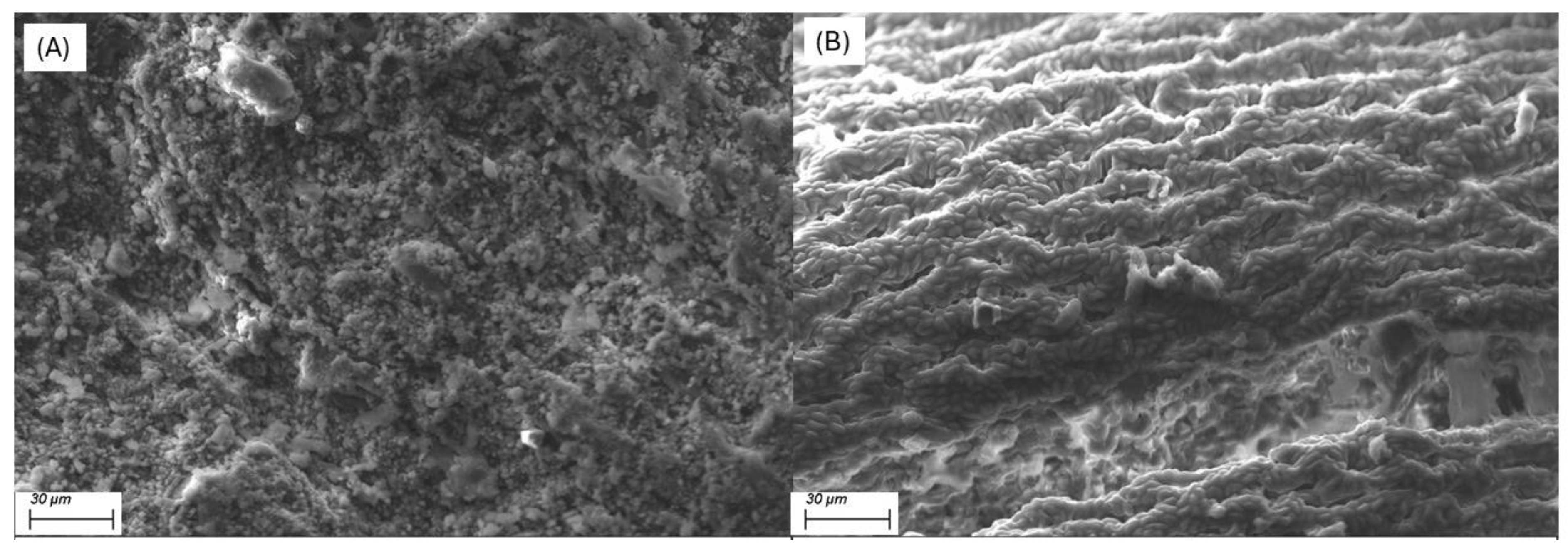
Figure 5 shows SEM micrographs of the algae surface before (A) and after (B) the copper biosorption process. In Figure 5A, corresponding to natural algae, an irregular, rough, and porous surface is observed. This surface is characterized by an amorphous structure typical of untreated biomass, composed of organic materials such as polysaccharides and proteins. Traditionally, a pretreatment of biomass is carried out by washing with 0.2 M CaCl2 for promoting the partial removal of these free polymers, which contribute to the observed roughness. In contrast, Figure 5B reveals significant changes after copper adsorption, evidencing a more ordered, stratified, and compact surface, suggesting an effective interaction between the functional groups of the algal cell wall and the metal ions, as well as the absence of free polymers previously removed during conditioning, which allows us to observe mainly the structural cell surface directly involved in the biosorption process.
Figure 5.
SEM image of alga: (A) before biosorption, pretreatment with 0.2M CaCl2, and (B) after biosorption for synthetic solution at 250 mg/L Cu, pH 3 and 1 g/L biomass.
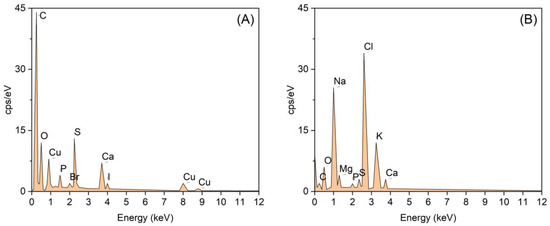
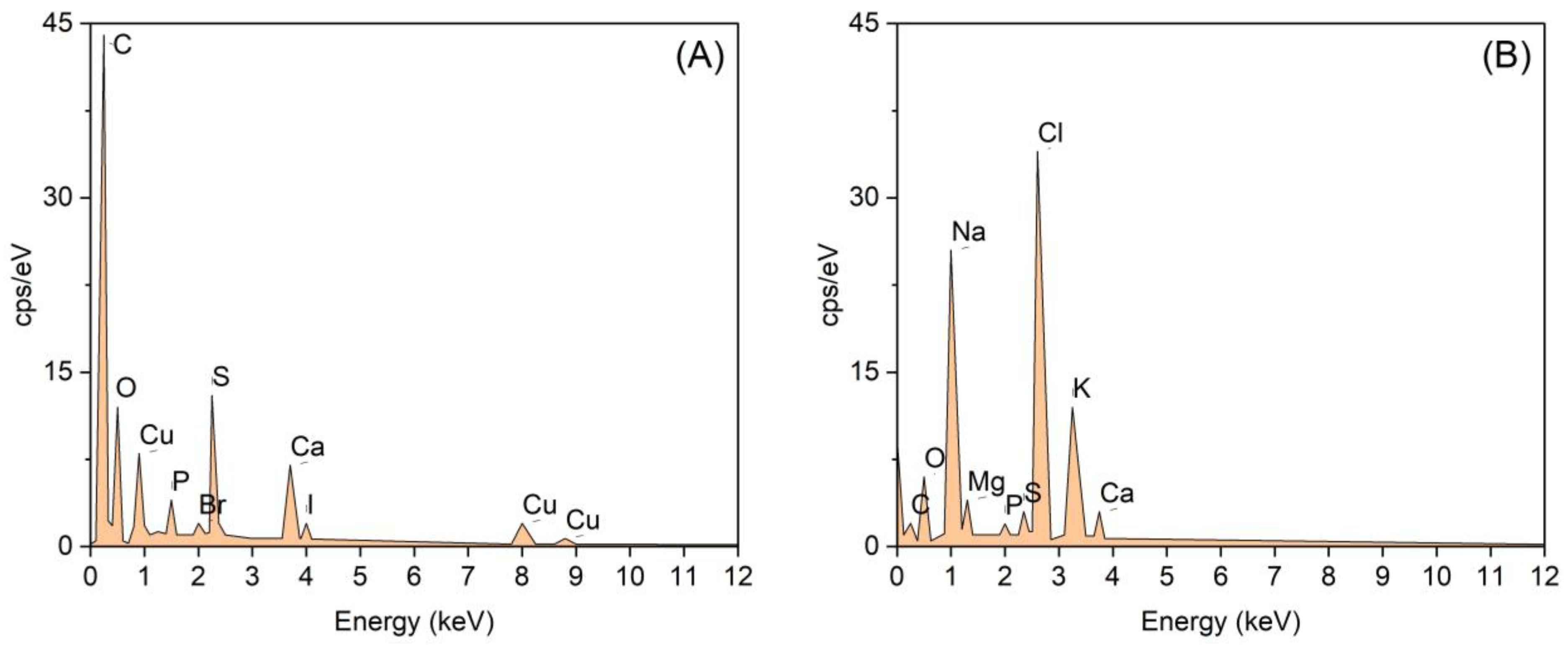
Figure 6 presents the EDS spectra of Lessonia berteroana before (A) and after (B) copper biosorption. In spectrum (A), corresponding to the untreated algae, major elements such as carbon (C), oxygen (O), sodium (Na), magnesium (Mg), potassium (K), calcium (Ca), sulfur (S) and chlorine (Cl), which are common in the elemental composition of marine biomass, are identified. In the spectrum (B), after biosorption, there is a clear and significant appearance of peaks corresponding to copper, which evidences the adhesion of the metal on the algae surface. In addition, there is a relative decrease in the intensity of other elements, such as Na and Mg, suggesting a possible ion exchange mechanism during biosorption. The presence of bromine (Br) is also detected, possibly associated with residues of the reaction medium or with the natural structure of the algae. These results confirm the effective adsorption of copper on the biomass.
Figure 6.
EDS spectra of L. berteroana (A) before the adsorption of copper, and (B) after the adsorption of copper.
3.4. Biosorption Kinetics of Synthetic Solution
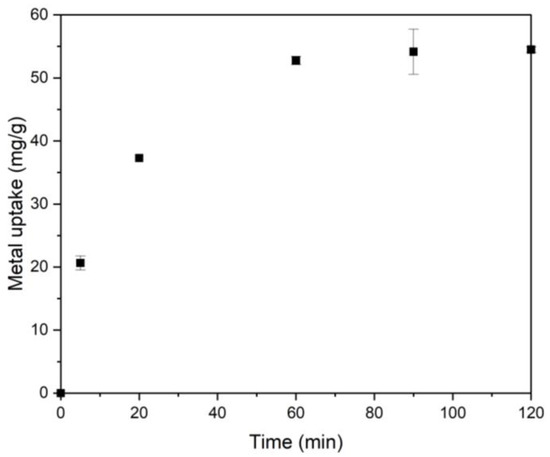
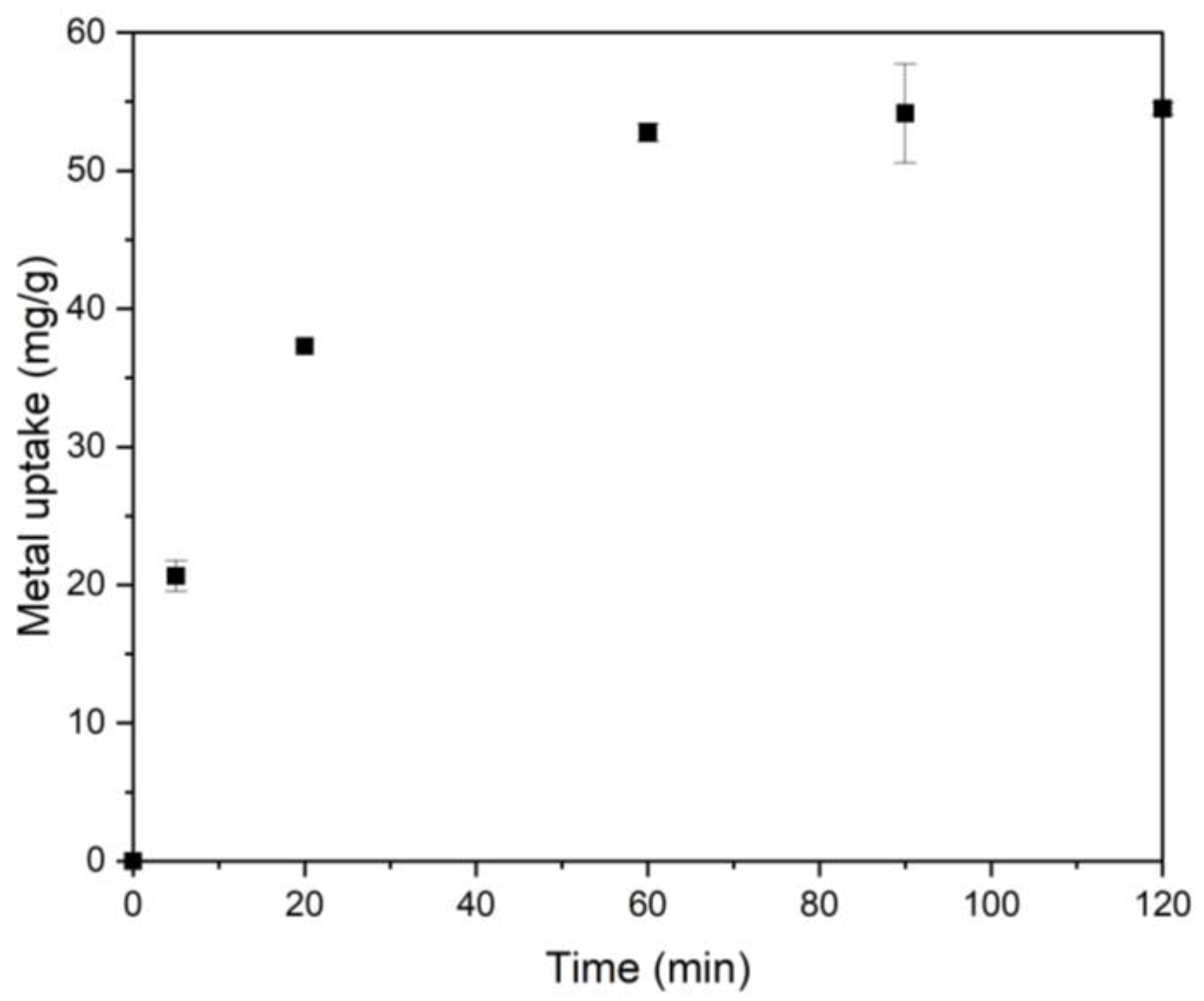
To study the effect of contact time on copper biosorption, kinetics were analyzed for up to 120 min using L. berteroana algae biomass in a copper sulfate solution at pH 3, with an initial biomass concentration of 1 g/L. The results show a progressive increase in copper uptake over time, reaching a maximum biosorption in 60 min with equals to 54 mg/g (Figure 7). This behavior suggests that the biomass has high affinity for copper ions, especially in the early stages of the process, where the biosorption rate is more pronounced. Data demonstrate the potential of L. berteroana as an effective biosorbent for copper recovery in pure solutions. Some authors observed the same response working with other brown algae for copper recovery, where the saturation equilibrium was reached after approximately 60 min, demonstrating that biosorption is, in general, a fast process [28,29].
Figure 7.
Copper biosorption kinetics of Lessonia berteroana for synthetic solution at 250 mg/L Cu, pH 3 and 1 g/L biomass. Markers are the means of duplicate runs, and error bars represent the standard deviation.
3.5. Equilibrium Isotherms
The characterization of adsorption equilibrium is crucial to understanding the mechanism by which adsorbates interact with the adsorbent surface. Adsorption isotherms quantify adsorbent capacity, evaluating solute affinity, and predicting behavior under varying conditions, thereby supporting the design and optimization of copper removal processes.
In this study, the four isotherm models applied were Langmuir, Freundlich, Temkin, and Dubinin–Radushkevich (D–R). The Langmuir and Freundlich models, which are two-parameter models, are widely used in biosorption studies [15,24,30], while the Temkin and D–R models provide additional insights, such as adsorption energy and mechanism that complement the analysis [31,32]. The dominant adsorption type, adsorbent capacity, and process feasibility in real-world applications were evaluated by comparing the model fits to experimental data obtained from both CuSO4 solution and PLS.
3.5.1. Equilibrium in CuSO4 Solution
In this stage, the copper biosorption capacity of biomass with copper sulfate solution was evaluated, aiming to establish a comparative basis against more complex matrices. The use of pure solutions eliminates interference from other ions present in real solutions, determining the specific affinity of biomass for copper under ideal conditions.
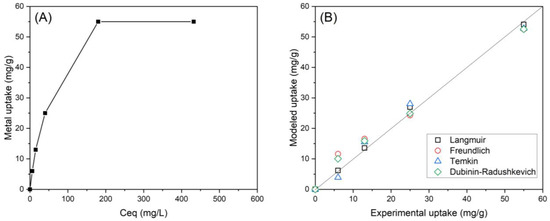
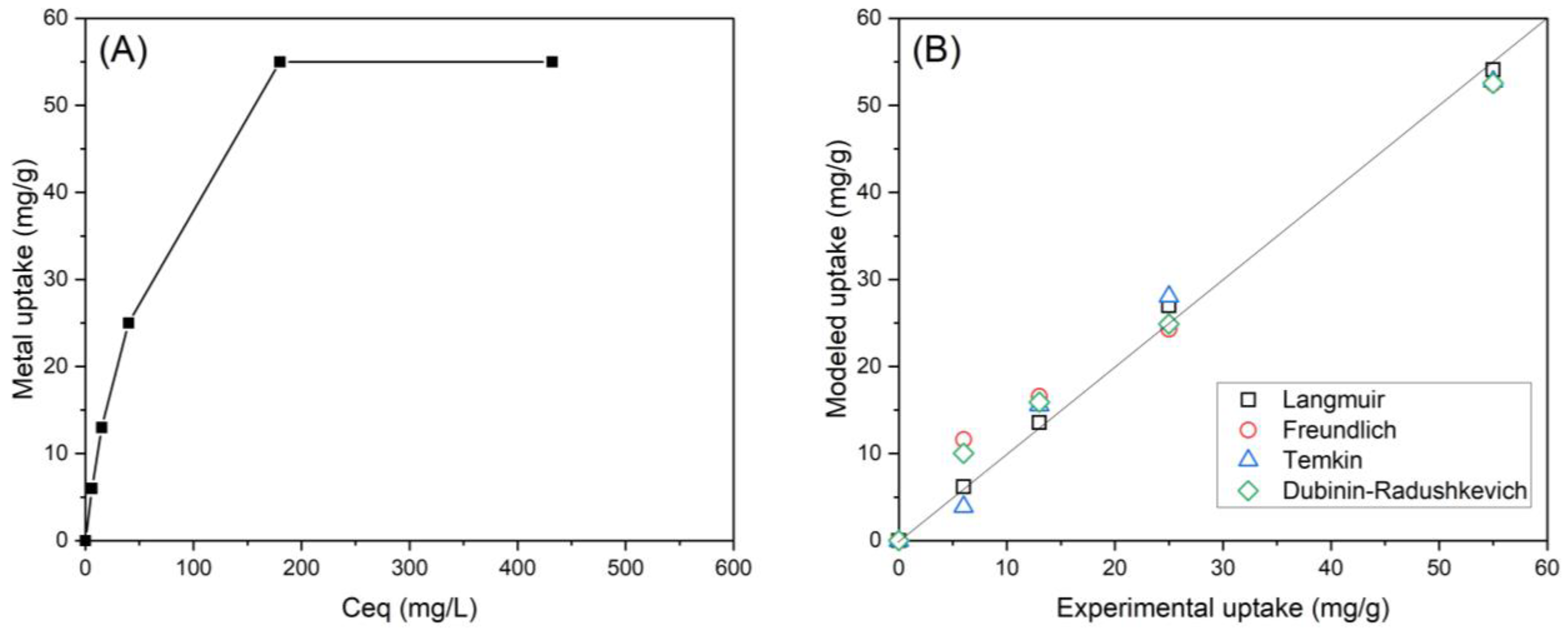
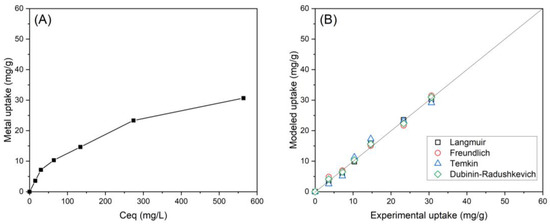
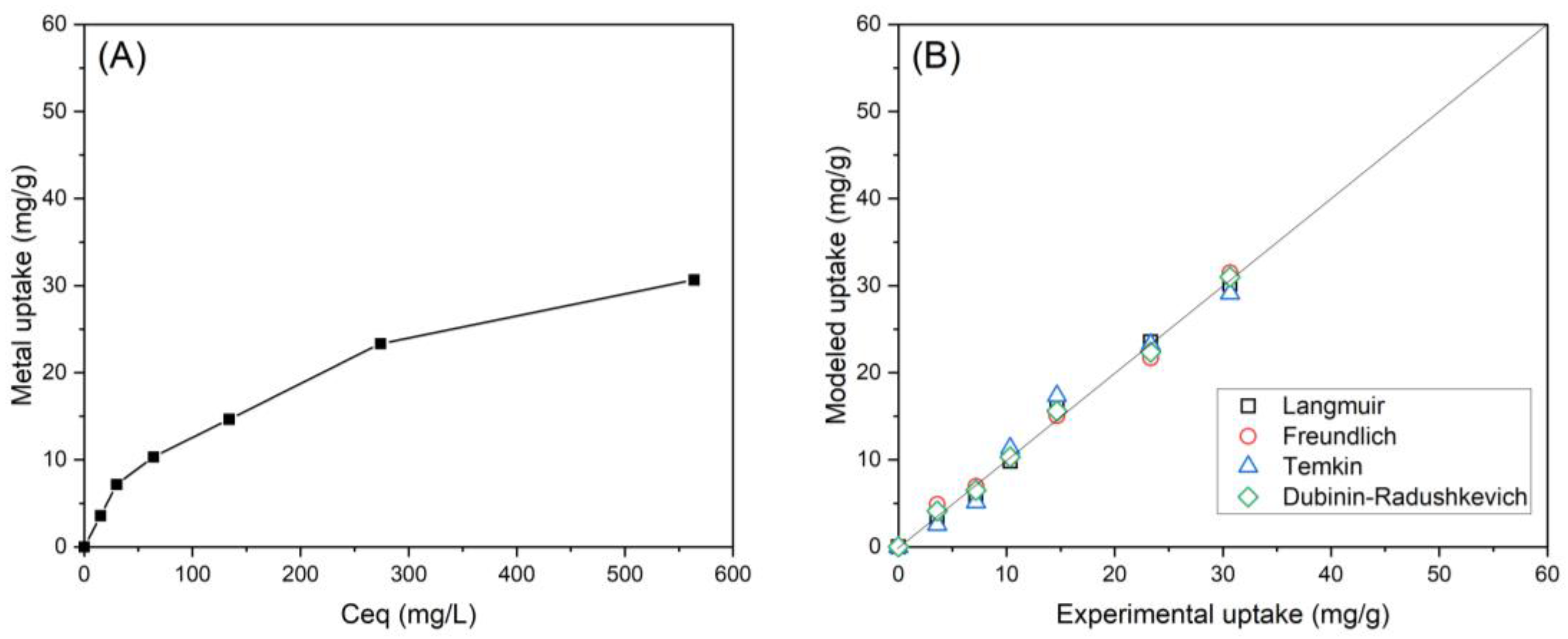
Figure 8A presents the equilibrium data obtained for biosorption with different CuSO4 solutions. As the copper concentration increases, algal uptake capacity increases until its surface chemical groups are saturated, which, according to observations, occurs at around 200 mg/L, with adsorption levels of 55 mg per gram of biomass. This suggests the theoretical limit of the copper loading that L. berteroana may efficiently treat in effluents.
Figure 8.
(A) Equilibrium data (points) of copper biosorption at different concentrations of CuSO4 solution for 1 h, with a biomass concentration of 1 g/L and pH 3. (B) Comparison between experimental (markers) and modeled uptake values using Langmuir, Freundlich, Temkin, and Dubinin–Radushkevich isotherm models. Diagonal represents an ideal trend.
The experimental metal uptakes were compared with those obtained by fitted isotherm models (Figure 8B). The closer the points on the central diagonal are, the greater capacity of the evaluated model to represent the biosorption process, which is also quantified by the determination coefficient (R2). The values of the fitted model parameters and the fitting coefficients obtained in this study, along with their comparison with data from other brown algae Cu biosorption studies in the literature, are detailed in Table 5.
Table 5.
Fitting parameters of copper biosorption models using brown algae-based biosorbents for synthetic solutions.
The Langmuir isotherm best describes the interaction process between copper and the biomass of L. berteroana (R2 = 0.981), suggesting that adsorption from a monometallic source is governed by a homogeneous surface, i.e., supporting sites of non-varied affinities, and in a layer without interaction between sorbates, which is reasonable because there are no other metallic species in the solution. The fitted parameters demonstrated a theoretical gap to reach the saturation, with a maximum uptake of 66.09 mg/g. denotes a high affinity of biomass for copper, which modulates the steep initial slope. When values are confronted with other brown macroalgae performances, the of L. berteroana is lower than those reported for other brown alga biosorbents such as Durvillaea antarctica (117.56 mg/g) and Cystoseria indica (94.71 mg/g), and similar to those of species such as Lessonia nigrescens (60.37 mg/g) and Undaria pinnatifida (78.86 mg/g). However, the affinity levels are higher, indicating a greater capacity to adsorb more quickly. The differences in the maximum uptake can be explained by the variability in the chemical composition of the biomass, even being all brown algae, its pretreatment, and the experimental conditions used.
Regarding the Freundlich model, it provides a lower fit (R2 = 0.900), which would denote that metal biosorption is led by a homogeneous surface without sorbate interactions. The value of = 2.57 that indicates the intensity of adsorption, confirms that the process is favorable and an effective physicochemical adsorption. However, this value is lower than those reported for C. indica ( = 4.037), indicating a lower affinity or heterogeneity of active sites in L. berteroana under the conditions evaluated.
The Temkin model (R2 = 0.957) suggests that Cu-biomass interactions are relevant and that the adsorption energy decreases with surface coverage. This is consistent with natural materials such as algae, whose surface contains active sites with different energy affinities. The parameter = 12.17 kJ/mol reinforces the predominance of physicochemical interactions in the process and being greater than for other biomasses, it denotes a lower uptake capacity under the energy assumptions of the Temkin expression.
Finally, the Dubinin–Radushkevich (D–R) model (R2 = 0.929) shows a moderate fit and allows estimating the average adsorption energy (Equation (4)), = 11.8 kJ/mol. This value suggests a predominant chemical adsorption mechanism, exceeding the commonly accepted threshold of 8 kJ/mol that classifies physical and chemical processes.
Overall, the results suggest that copper biosorption from synthetic solutions is favorable, and can be adequately described by the Langmuir model, which suggests an energetically homogeneous adsorption surface and the formation of a monolayer. However, the energy value obtained from the D–R model shows that the copper retention mechanism exhibits a significant contribution from chemical ion exchange, furthermore, surface heterogeneity and energetic effects contribute, explaining the fit also observed with the Temkin and Freundlich models [19,36].
Although Lessonia berteroana does not exhibit the highest copper removal capacity among the brown algae reported in the literature, its relevance relies on a combination of different criteria such as adsorption behavior and applicability. The biomass showed a good fit to different adsorption isotherm models, indicating predictable biosorption behavior. Moreover, L. berteroana is an abundant macroalga along the Chilean coast and possess a high growth-rate. In a sustainable remediation, the process feasibility and resource availability are as relevant as equilibrium parameters like maximum adsorption capacity and affinity levels.
3.5.2. Equilibrium in Real Solutions (PLS)
After evaluating the copper biosorption behavior under controlled conditions—i.e., isolating the effect of third-metal ions on the biomass—the equilibrium was studied using actual hydrometallurgical solutions derived from contaminated soils, which present a more complex matrix due to the coexistence of multiple ions.
Figure 9A shows the equilibrium profile obtained by adsorbing copper from a soil leachate. Unlike biosorption with pure CuSO4 solution, in the case of PLS, the maximum uptake is almost half (32 mg/g), and the biomass does not exhibit copper saturation of its sites, as evidenced by the progressive increase in uptake. This behavior is attributed to the complex ionic composition of the leachate, where the presence of several coexisting metal ions, such as Fe, Al, Mg, among others leads to competitive interactions for the available adsorption sites, thereby reducing the effective copper uptake (). The comparison between synthetic and real systems not only provides insight into the potential of biomass for copper removal but also identifies the challenges associated with ionic interference in multicomponent solutions.
Figure 9.
(A) Equilibrium data (points) of copper biosorption at different concentrations of PLS for 1 h with a biomass concentration of 1 g/L and pH 3. (B) Comparison between experimental (markers) and modeled uptake values using Langmuir, Freundlich, Temkin, and Dubinin–Radushkevich isotherm models. Diagonal represents an ideal trend.
Figure 9B shows the fit of these models to the experimental data obtained for copper biosorption at a biomass concentration of 1 g/L and a pH 3, during a 1 h contact period, in the copper biosorption system using PLS. Of all the models studied, the Dubinin–Radushkevich model provided the best statistical fit (R2 = 0.997), indicating an excellent ability to describe the behavior of the system. With this model, the average adsorption energy calculated was = 9.1 kJ/mol, suggesting that the process could be at the threshold between a physical and chemical mechanism (>8 kJ/mol), tending towards a chemical-type adsorption. In comparison, the Langmuir model also showed a good fit (R2 = 0.990). This model estimates a maximum adsorption capacity = 41.05 mg/g and an affinity constant = 19.7 L/g. The lower adsorption capacity observed in the PLS system compared to the synthetic solution system could be due to ionic competition and the matrix complexity of the PLS.
The Freundlich model, with R2 = 0.993, also provides a good description of the system, suggesting surface heterogeneity and possible multilayer formation, with = 1.945, indicative of favorable adsorption. For its part, the Temkin model describes the process less well (R2 = 0.979), with a heat of adsorption constant = 18,944 J/mol, indicating a significant interaction between the adsorbate and the adsorbent.
Comparing these results with those obtained for synthetic solutions, it is observed that for CuSO4, the best fit was presented by the Langmuir model (R2 = 0.981), with a higher maximum capacity of 66.02 mg/g. In contrast, for PLS, the best fit was the D–R model (R2 = 0.997), suggesting that this semiempirical model could better describe the adsorption phenomena in complex and porous matrices such as those found in real solutions.
The value of was higher in the synthetic solution (11.8 kJ/mol) than in the real PLS leachate (9.1 kJ/mol), suggesting that in CuSO4 the adsorption mechanism tends more towards a chemisorption, with a higher interaction energy between the adsorbate and copper. In PLS, although the process is governed chemically, it is less intense, possibly due to the presence of other ions or compounds in the leachate matrix competing for active sites.
Although a real solution reduces copper adsorption capacity, the behavior of Lessonia berteroana remains competitive with that of other previously evaluated brown algae. Furthermore, the excellent fit of the D–R model in PLS reinforces its applicability for complex systems, where ionic competition and chemical diversity of the medium challenge the classical assumptions of adsorption models.
3.6. Desorption and Biosorbent Regeneration
The regeneration of sorbents is essential for their reuse in multiple cycles and depends mainly on the pH and effectiveness of the desorbing agent. Selecting a suitable eluent is therefore critical to optimizing regeneration efficiency. From an environmental and economic standpoint, regeneration capacity is a key consideration in adsorbent applicability, as it enables material reuse, reduces operational costs, and minimizes waste generation. This contributes to more sustainable and efficient contaminant removal in aqueous systems.
3.6.1. Desorption in Synthetic Solutions
To evaluate the regeneration capacity of the biosorbent Lessonia berteroana, four desorbing agents were tested: hydrochloric (HCl), nitric (HNO3), sulfuric (H2SO4), and citric acid (C6H8O7). The latter corresponds to a biodegradable organic acid, which is less aggressive and has a reduced environmental impact, and whose use has been reported only sparingly in the literature for copper desorption from algal biomasses.
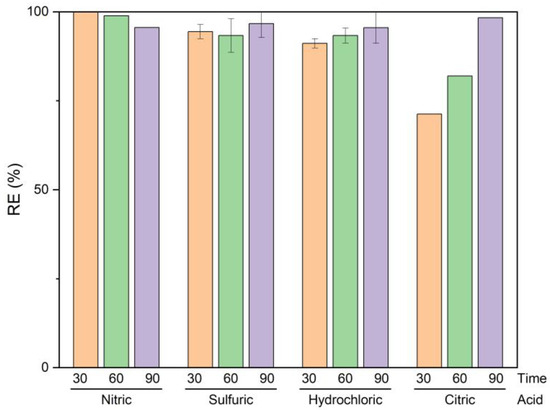
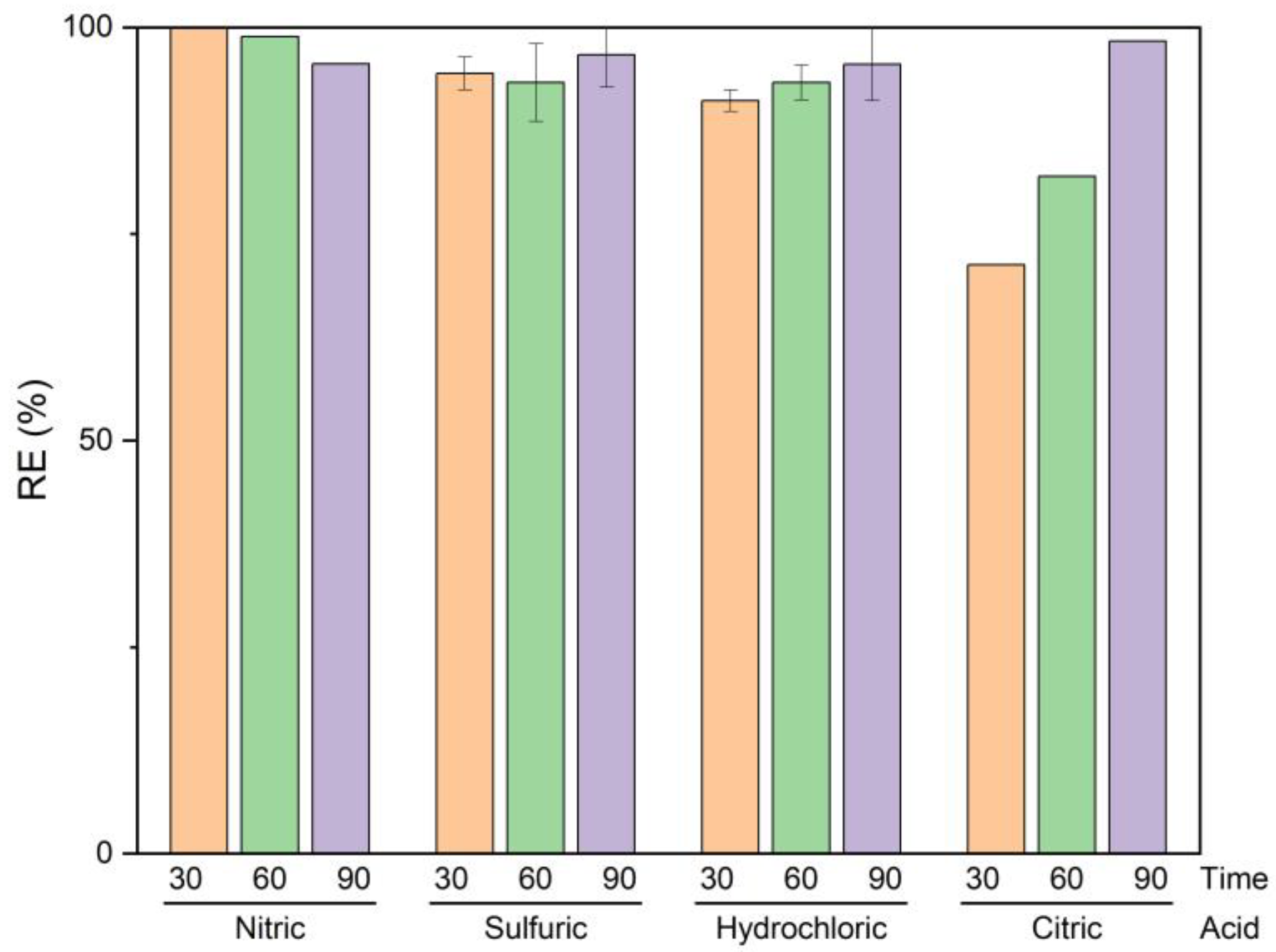
In the regeneration study, at contact times of 30, 60, and 90 min, a general tendency to increase efficiency with increasing time was observed, except for nitric acid (Figure 10). Sulfuric and hydrochloric acids showed an ascending and sustained response, reaching their maximum efficiencies at the end of the evaluated period, indicating a favorable and consistent interaction with the regenerated material. For its part, citric acid—considered less aggressive and less explored in these contexts—shows positive behavior, with a significant increase in efficiency, positioning itself as a promising alternative. In contrast, nitric acid, despite achieving good levels of regeneration at initial times, shows a slight decrease in efficacy as contact time is prolonged. This phenomenon could be attributed to its strong oxidizing character, which would induce surface passivation processes or the formation of secondary compounds on the material, limiting the exposure of active sites and, consequently, reducing its regenerative capacity.
Figure 10.
Regeneration efficiency of Lessonia berteroana loaded with a synthetic solution, using different desorption agents and contact times. Values are the means of duplicate runs and error bars represent the standard deviation. In the case of nitric and citric acids, the experiments were single runs.
The observed desorption behavior is partially aligned with previous studies, which report that acid desorbents primarily act by protonating the biosorbent surface, thereby facilitating the release of adsorbed metal ions [12]. An investigation on biochar as an adsorbent evaluated HNO3, H2SO4, and HCl desorption at various concentrations (0.1, 0.5, 1 M), finding similar efficiencies, with nitric acid slightly outperforming others. Higher concentrations slightly improved efficiency, but 0.1 M was recommended to prevent material degradation in successive cycles [29]. Do Nascimento et al. [37] evaluated the desorption capacity of silver and copper ions from the algae Sargassum filipendula using different various acids. Nitric acid proved to be effective in the desorption of both metals, achieving over 90% under optimal conditions and biomass retained its adsorption capacity after multiple adsorption–desorption cycles, suggesting its potential for reuse in heavy metal water treatment.
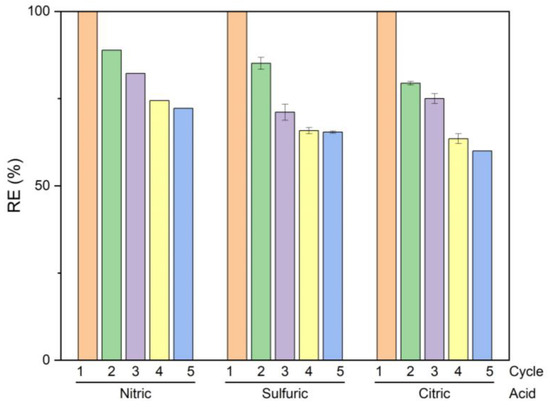
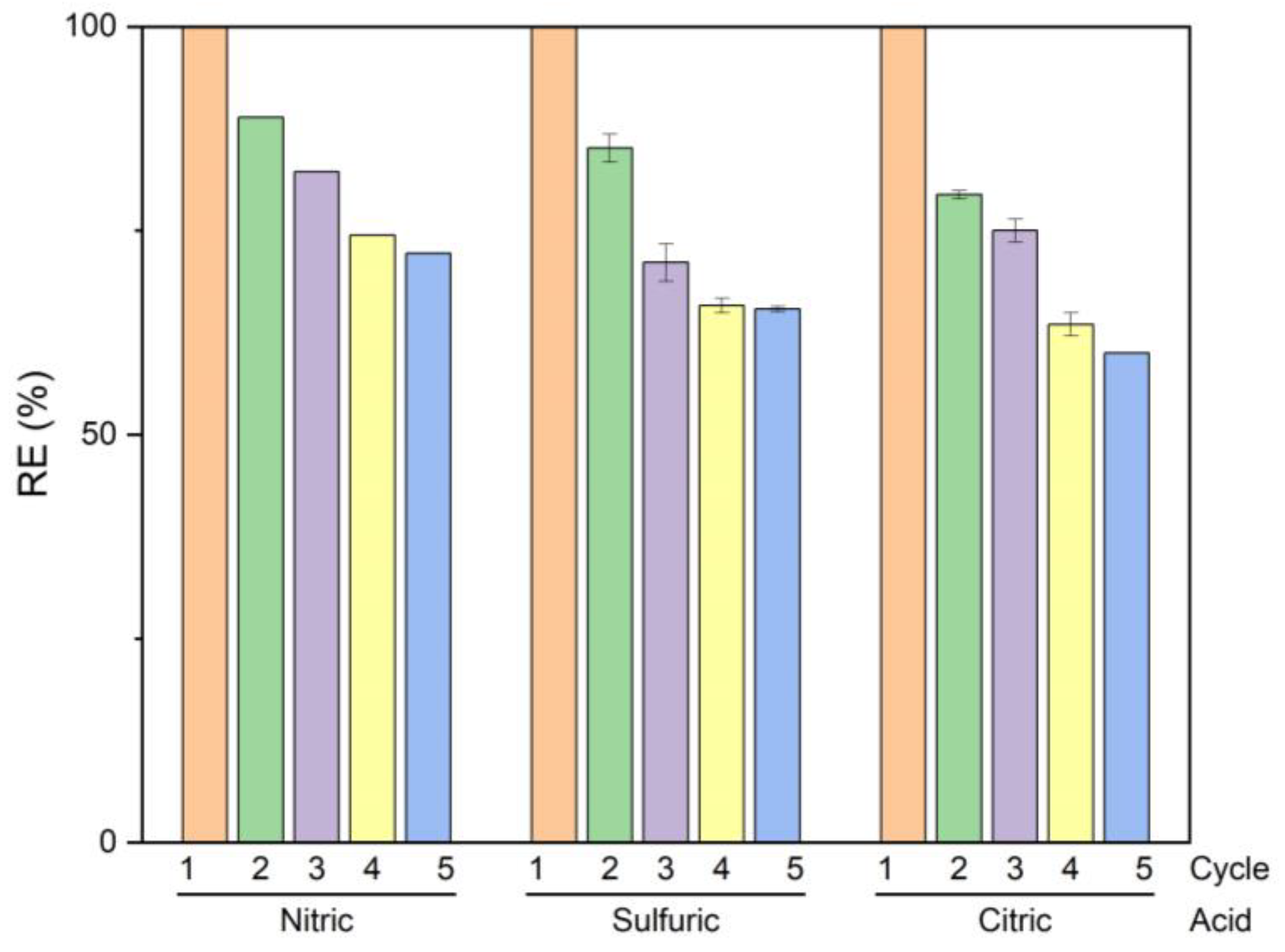
The reusability of L. berteroana was evaluated through five consecutive copper biosorption/desorption cycles, using synthetic solutions of CuSO4 and different desorbing agents (nitric, sulfuric, and citric acid). As shown in Figure 11, all agents enabled efficient initial desorption, with yields of 100% in the first cycle, indicating a high affinity of the alga for copper and the effectiveness of the desorbents used. However, a decreasing trend in regeneration efficiency was observed as the number of cycles increased, being more pronounced in the case of citric acid, which reached 58% efficiency in the fifth cycle. This behavior suggests that, although the biomass presents a good regeneration capacity, the number of effective reuses is conditioned by the type of desorbent agent and possible structural alterations of the adsorbent material with successive use.
Figure 11.
Regeneration efficiency of Lessonia berteroana algae during five biosorption/desorption cycles for different desorption agents for synthetic solution (CuSO4). Values are the means of duplicate runs and error bars represent the standard deviation. In the case of nitric acids, the experiments were single runs.
Taking into account the contact time and number of cycles per desorbing agent, it can be concluded that both the chemical nature of the desorbent and the number of regeneration cycles are determining factors in the efficiency of the process. Together, these results support the use of HNO3 as the most robust desorbent for the regeneration of biomass saturated with copper, although citric acid could be considered as a green option in applications where sustainability takes precedence over absolute efficiency.
3.6.2. Desorption in Real Solutions (PLS)
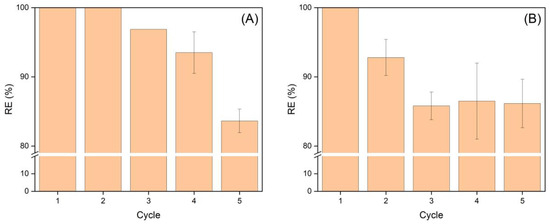
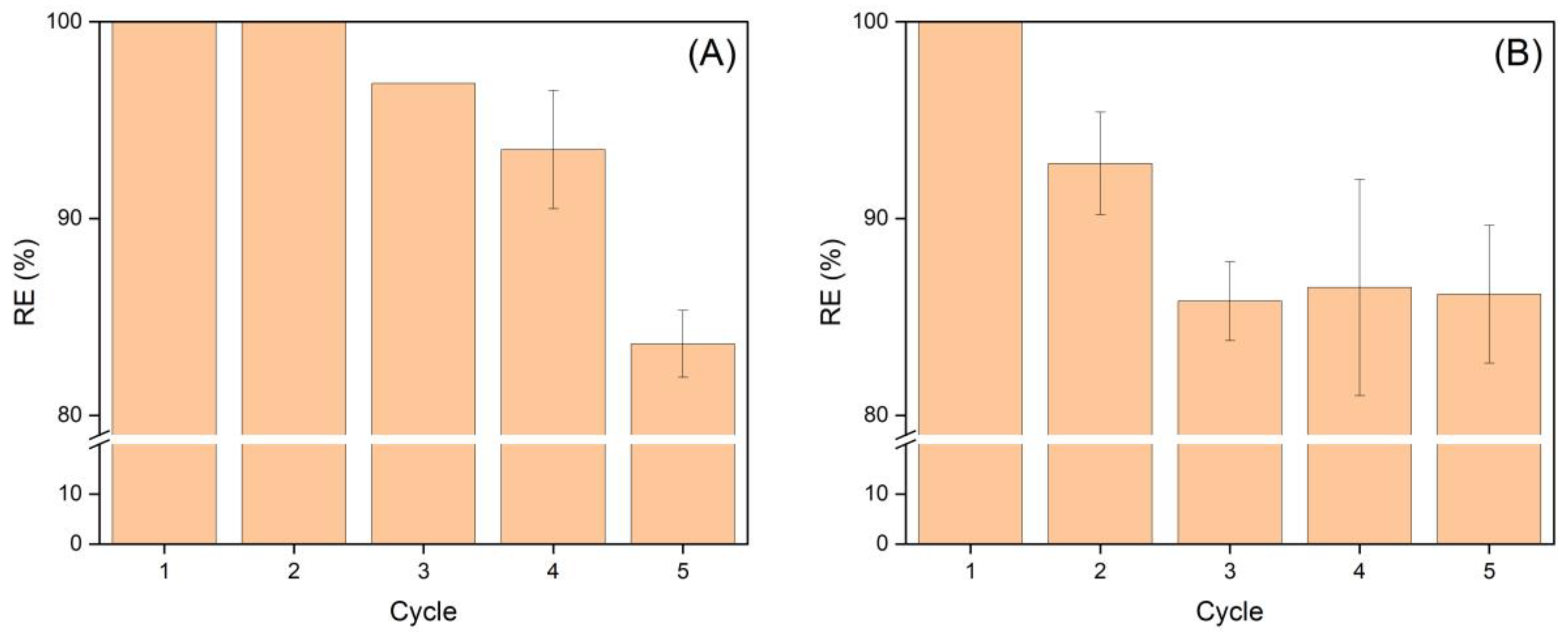
The regeneration of Lessonia berteroana after five cycles of biosorption/desorption of copper from real solutions (PLS) using nitric acid and citric acid is shown in Figure 12. Both desorbents allowed a high desorption efficiency in the first cycle (100%), which evidences the excellent initial capacity of the algae to release the previously adsorbed copper. Throughout the cycles, a progressive decrease in efficiency was observed, reaching approximately 85% in the fifth cycle with nitric acid and 86% with citric acid. However, the decrease with nitric acid becomes more favorable, as efficiency remains more stable between cycles 2 to 4, compared to citric acid, where efficiency loss occurs more steadily. This suggests a greater ability of nitric acid to preserve the functionality of the biomaterial during successive reuses.
Figure 12.
Regeneration efficiency of Lessonia berteroana during five biosorption/desorption cycles for different desorption agents for actual solution (PLS). (A) Nitric and (B) Citric acid. Values are the means of duplicate runs and error bars represent the standard deviation.
It should be noted that there is scarce evidence in the literature on the behavior of algae in successive cycles with real solutions, as these studies tend to be more complex due to the variability of the matrices and the presence of interferents. In solutions from real mining processes, this type of research is still incipient, so this study represents a significant advance in understanding the performance of the biosorbent under conditions more representative of the industrial environment. In addition, the results obtained are relevant for the projection of the scaling up of the process, as they demonstrate the relative stability of the algae in multiple cycles and its potential application as a sustainable strategy for the recovery of metals in real mining contexts, thus contributing to cleaner practices aligned with the principles of the circular economy.
When comparing the efficiency of the copper adsorption/desorption process between CuSO4 solution and real solutions (PLS), it is evident that nitric and citric acid allow effective biomass regeneration in both cases, especially during the first cycles. However, in synthetic solutions, the three acids studied (nitric, sulfuric, and citric) present initial efficiencies above 95% but show a more pronounced decrease after the third cycle, with citric acid standing out as the least effective in this environment. On the other hand, in real solutions, although the maximum sustained efficiency observed in synthetic media is not reached, the desorbents maintain more stable yields throughout the cycles, with less loss of regenerative capacity. This could be attributed to the higher complexity of the PLS matrix, which moderates desorption kinetics while also reducing the chemical attrition of the biosorbent. Overall, the results indicate that nitric acid is the more robust desorbent in both types of solutions, while citric acid offers a more environmentally friendly and stable option, especially in real matrices.
4. Conclusions
The biomass of the brown alga Lessonia berteroana demonstrated a significant capacity and affinity for copper biosorption from both synthetic (CuSO4) and real (PLS) solutions from soils contaminated by mining activities. Isotherm analysis indicated that the Langmuir model adequately described the system in synthetic solutions. In contrast, the Dubinin–Radushkevich model better represented the real matrix, showing a more heterogeneous surface area and reduced adsorption capacity in the presence of interferents.
Desorption tests with HCl, HNO3, H2SO4, and citric acid showed high initial efficiencies, and the biosorbent was found to be reusable in at least five consecutive cycles. Nitric acid maintained the highest stability in regeneration efficiency, while citric acid, although less efficient in prolonged cycles, could represent a viable ecological alternative, especially in real solutions.
The functional groups of the biomass involved in the biosorption were identified by FTIR analysis; hydroxyl, carbonyl, and sulfonate groups showed binding with copper ions. This spectroscopic evidence supports the results obtained in equilibrium and regeneration tests, confirming that L. berteroana biomass is not only effective but also structurally suitable for repeated applications in real systems.
The results support the potential of using this biomass as a sustainable solution for the recovery of metals in complex matrices, contributing to environmental remediation strategies aligned with the principles of the circular economy.
From a scalability perspective, the use of L. berteroana biomass as a biosorbent requires careful consideration of resource availability, space requirements and process configuration. Although batch systems are suitable for bench-scale evaluations and provide valuable insight into adsorption mechanisms, large-scale applications would likely require continuous or semi-continuous configurations to ensure operational feasibility. In this context, the progressive saturation of active sites and the gradual loss of adsorption capacity after multiple regeneration cycles represent critical factors that must be addressed. Process scalability will therefore depend on the balance between biomass availability, regeneration efficiency, residence time and replacement rates, as well as on the selection of an appropriate reactor design. These aspects highlight the need for further studies focused on pilot-scale operation and long-term performance to define realistic operating conditions for industrial or environmental applications.
Author Contributions
Conceptualization, J.I.O.; Methodology, S.C. and L.-s.W.-P.; Formal analysis, S.C., L.-s.W.-P. and J.I.O.; Investigation, S.C.; Resources, L.-s.W.-P. and J.I.O.; Writing—original draft, S.C. and J.I.O.; Visualization, J.I.O.; Supervision, J.I.O.; Project administration, J.I.O.; Funding acquisition, J.I.O. All authors have read and agreed to the published version of the manuscript.
Funding
This research was funded by Agencia Nacional de Investigación y Desarrollo grant number Anillo ACT210027 and PhD scholarship 21200227.
Data Availability Statement
The original contributions presented in this study are included in the article. Further inquiries can be directed to the corresponding author.
Acknowledgments
The authors would like to thank ANID for its support. Sonia Cortés acknowledges ANID, as well as the infrastructure and economic support provided by the Programa de Doctorado en Ingeniería de Procesos de Minerales, Universidad de Antofagasta. The authors thank the Department of Geological Sciences at UCN for providing internship infrastructure. The authors thank the MAINI Scientific equipment unit of UCN for the microscopy access. The authors would like to thank the SEM and TEM technical support of the Electron Microscopy Unit, un Core Facility-ZEISS Reference Center of the Universidad Austral de Chile.
Conflicts of Interest
The authors declare no conflict of interest.
References
- COCHILCO. Proyección de la Demanda de Agua en la Minería del Cobre 2023–2034; Comisión Chilena Del Cobre: Santiago, Chile, 2024. [Google Scholar]
- Cortés, M. La Muerte Gris de Chañaral; Impresos Plaza: Chañaral, Chile, 2010. [Google Scholar]
- Andrade, S.; Moffett, J.; Correa, J.A. Distribution of Dissolved Species and Suspended Particulate Copper in an Intertidal Ecosystem Affected by Copper Mine Tailings in Northern Chile. Mar. Chem. 2006, 101, 203–212. [Google Scholar] [CrossRef] [Scilit]
- Priya, A.K.; Gnanasekaran, L.; Dutta, K.; Rajendran, S.; Balakrishnan, D.; Soto-Moscoso, M. Biosorption of Heavy Metals by Microorganisms: Evaluation of Different Underlying Mechanisms. Chemosphere 2022, 307, 135957. [Google Scholar] [CrossRef] [Scilit]
- Ordóñez, J.I.; Cortés, S.; Maluenda, P.; Soto, I. Biosorption of Heavy Metals with Algae: Critical Review of Its Application in Real Effluents. Sustainability 2023, 15, 5521. [Google Scholar] [CrossRef] [Scilit]
- Ordóñez, J.I.; Mercado, A.; Wong-Pinto, L.; Cortés, S.I. Bioremediation of Mining Waste and Other Copper-Containing Effluents by Biosorption. In Bioremediation of Toxic Metal(loid)s; Malik, A., Kidwai, M.K., Garg, V.K., Eds.; CRC Press: Boca Raton, FL, USA, 2022; ISBN 9781032135779. [Google Scholar]
- Baysal, Z.; Çinar, E.; Bulut, Y.; Alkan, H.; Dogru, M. Equilibrium and Thermodynamic Studies on Biosorption of Pb(II) onto Candida albicans Biomass. J. Hazard. Mater. 2009, 161, 62–67. [Google Scholar] [CrossRef] [Scilit]
- Sathishkumar, M.; Mahadevan, A.; Vijayaraghavan, K.; Pavagadhi, S.; Balasubramanian, R. Green Recovery of Gold through Biosorption, Biocrystallization, and Pyro-Crystallization. Ind. Eng. Chem. Res. 2010, 49, 7129–7135. [Google Scholar] [CrossRef] [Scilit]
- Selatnia, A.; Madani, A.; Bakhti, M.Z.; Kertous, L.; Mansouri, Y.; Yous, R. Biosorption of Ni2+ from Aqueous Solution by a NaOH-Treated Bacterial Dead Streptomyces rimosus Biomass. Miner. Eng. 2004, 17, 903–911. [Google Scholar] [CrossRef] [Scilit]
- Vilar, V.; Botelho, C.; Boaventura, R. Copper Desorption from Gelidium Algal Biomass. Water Res. 2007, 41, 1569–1579. [Google Scholar] [CrossRef] [Scilit]
- Kuyucak, N.; Volesky, B. Desorption of Cobalt-laden Algal Biosorbent. Biotechnol. Bioeng. 1989, 33, 815–822. [Google Scholar] [CrossRef] [Scilit]
- Chatterjee, A.; Abraham, J. Desorption of Heavy Metals from Metal Loaded Sorbents and E-Wastes: A Review. Biotechnol. Lett. 2019, 41, 319–333. [Google Scholar] [CrossRef] [Scilit]
- Cortés, S.; Maluenda-León, P.; Wong-Pinto, L.; Ordóñez, J.I. Hydrometallurgical Processing of Mining-Impacted Soils: A Preliminary Study to Recover Copper Salts by Leaching with Seawater and Crystallization. Hydrometallurgy 2024, 225, 106267. [Google Scholar] [CrossRef] [Scilit]
- He, J.; Chen, J.P. A Comprehensive Review on Biosorption of Heavy Metals by Algal Biomass: Materials, Performances, Chemistry, and Modeling Simulation Tools. Bioresour. Technol. 2014, 160, 67–78. [Google Scholar] [CrossRef] [Scilit] [PubMed]
- Cortés, S.; Soto, E.E.; Ordóñez, J.I. Recovery of Copper from Leached Tailing Solutions by Biosorption. Minerals 2020, 10, 158. [Google Scholar] [CrossRef] [Scilit]
- ILO-WHO International Chemical Safety Cards (ICSCs): Copper Sulfate (Anhydrous). 2026. Available online: https://chemicalsafety.ilo.org/dyn/icsc/showcard.display?p_lang=en&p_card_id=0751&p_version=2 (accessed on 9 January 2026).
- Foo, K.Y.; Hameed, B.H. Insights into the Modeling of Adsorption Isotherm Systems. Chem. Eng. J. 2010, 156, 2–10. [Google Scholar] [CrossRef] [Scilit]
- Faruque, M.O.; Uddin, S.; Hossain, M.M.; Hossain, S.M.Z.; Shafiquzzaman, M.; Razzak, S.A. A Comprehensive Review on Microalgae-Driven Heavy Metals Removal from Industrial Wastewater Using Living and Nonliving Microalgae. J. Hazard. Mater. Adv. 2024, 16, 100492. [Google Scholar] [CrossRef] [Scilit]
- Wang, J.; Guo, X. Adsorption Isotherm Models: Classification, Physical Meaning, Application and Solving Method. Chemosphere 2020, 258, 127279. [Google Scholar] [CrossRef] [Scilit]
- Indhumathi, P.; Sathiyaraj, S.; Koelmel, J.P.; Shoba, S.U.; Jayabalakrishnan, C.; Saravanabhavan, M. The Efficient Removal of Heavy Metal Ions from Industry Effluents Using Waste Biomass as Low-Cost Adsorbent: Thermodynamic and Kinetic Models. Z. Für Phys. Chem. 2018, 232, 527–543. [Google Scholar] [CrossRef]
- Esmaeili, A.; Beni, A.A. Biosorption of Nickel and Cobalt from Plant Effluent by Sargassum glaucescens Nanoparticles at New Membrane Reactor. Int. J. Environ. Sci. Technol. 2015, 12, 2055–2064. [Google Scholar] [CrossRef] [Scilit]
- Tavana, M.; Pahlavanzadeh, H.; Zarei, M.J. The Novel Usage of Dead Biomass of Green Algae of Schizomeris leibleinii for Biosorption of Copper(II) from Aqueous Solutions: Equilibrium, Kinetics and Thermodynamics. J. Environ. Chem. Eng. 2020, 8, 104272. [Google Scholar] [CrossRef] [Scilit]
- Alcalde-Garcia, F.; Prasher, S.; Kaliaguine, S.; Tavares, J.R.; Dumont, M.-J. Desorption Strategies and Reusability of Biopolymeric Adsorbents and Semisynthetic Derivatives in Hydrogel and Hydrogel Composites Used in Adsorption Processes. ACS Eng. Au 2023, 3, 443–460. [Google Scholar] [CrossRef] [Scilit]
- Cid, H.A.; Flores, M.I.; Pizarro, J.F.; Castillo, X.A.; Barros, D.E.; Moreno-Piraján, J.C.; Ortiz, C.A. Mechanisms of Cu2+ Biosorption on Lessonia nigrescens Dead Biomass: Functional Groups Interactions and Morphological Characterization. J. Environ. Chem. Eng. 2018, 6, 2696–2704. [Google Scholar] [CrossRef] [Scilit]
- Raize, O.; Argaman, Y.; Yannai, S. Mechanisms of Biosorption of Different Heavy Metals by Brown Marine Macroalgae. Biotechnol. Bioeng. 2004, 87, 451–458. [Google Scholar] [CrossRef] [Scilit]
- Mata, Y.N.; Blázquez, M.L.; Ballester, A.; González, F.; Muñoz, J.A. Characterization of the Biosorption of Cadmium, Lead and Copper with the Brown Alga Fucus vesiculosus. J. Hazard. Mater. 2008, 158, 316–323. [Google Scholar] [CrossRef] [Scilit]
- Kleinübing, S.J.; Vieira, R.S.; Beppu, M.M.; Guibal, E.; Silva, M.G.C. da Characterization and Evaluation of Copper and Nickel Biosorption on Acidic Algae Sargassum filipendula. Mater. Res. 2010, 13, 541–550. [Google Scholar] [CrossRef] [Scilit]
- Kuzuhara, S.; Kudo, K.; Terakado, O. Biosorption of Cu(II) Ions by Kelps, Large Brown Algae Seaweeds, Saccharina japonica and Saccharina sculpera. J. Sustain. Metall. 2018, 4, 455–460. [Google Scholar] [CrossRef] [Scilit]
- Do Nascimento, W.J.; Da Silva, M.G.C.; Vieira, M.G.A. Competitive Biosorption of Cu2+ and Ag+ Ions on Brown Macro-Algae Waste: Kinetic and Ion-Exchange Studies. Environ. Sci. Pollut. Res. 2019, 26, 23416–23428. [Google Scholar] [CrossRef] [Scilit] [PubMed]
- Liu, Y.; Liu, Y.-J. Biosorption Isotherms, Kinetics and Thermodynamics. Sep. Purif. Technol. 2008, 61, 229–242. [Google Scholar] [CrossRef] [Scilit]
- Asl, S.H.; Ahmadi, M.; Ghiasvand, M.; Tardast, A.; Katal, R. Artificial Neural Network (ANN) Approach for Modeling of Cr(VI) Adsorption from Aqueous Solution by Zeolite Prepared from Raw Fly Ash (ZFA). J. Ind. Eng. Chem. 2013, 19, 1044–1055. [Google Scholar] [CrossRef] [Scilit]
- Elgarahy, A.M.; Elwakeel, K.Z.; Mohammad, S.H.; Elshoubaky, G.A. Multifunctional Eco-Friendly Sorbent Based on Marine Brown Algae and Bivalve Shells for Subsequent Uptake of Congo Red Dye and Copper(II) Ions. J. Environ. Chem. Eng. 2020, 8, 103915. [Google Scholar] [CrossRef] [Scilit]
- Cid, H.; Ortiz, C.; Pizarro, J.; Barros, D.; Castillo, X.; Giraldo, L.; Moreno-Piraján, J.C. Characterization of Copper (II) Biosorption by Brown Algae Durvillaea antarctica Dead Biomass. Adsorption 2015, 21, 645–658. [Google Scholar] [CrossRef] [Scilit]
- Akbari, M.; Hallajisani, A.; Keshtkar, A.R.; Shahbeig, H.; Ali Ghorbanian, S. Equilibrium and Kinetic Study and Modeling of Cu(II) and Co(II) Synergistic Biosorption from Cu(II)-Co(II) Single and Binary Mixtures on Brown Algae C. Indica. J. Environ. Chem. Eng. 2015, 3, 140–149. [Google Scholar] [CrossRef] [Scilit]
- Chen, Z.; Ma, W.; Han, M. Biosorption of Nickel and Copper onto Treated Alga (Undaria pinnatifida): Application of Isotherm and Kinetic Models. J. Hazard. Mater. 2008, 155, 327–333. [Google Scholar] [CrossRef] [Scilit] [PubMed]
- Chabani, M.; Amrane, A.; Bensmaili, A. Kinetic Modelling of the Adsorption of Nitrates by Ion Exchange Resin. Chem. Eng. J. 2006, 125, 111–117. [Google Scholar] [CrossRef] [Scilit]
- Do Nascimento, W.J.; Landers, R.; Gurgel Carlos da Silva, M.; Vieira, M.G.A. Equilibrium and Desorption Studies of the Competitive Binary Biosorption of Silver(I) and Copper(II) Ions on Brown Algae Waste. J. Environ. Chem. Eng. 2021, 9, 104840. [Google Scholar] [CrossRef] [Scilit]

Disclaimer/Publisher’s Note: The statements, opinions and data contained in all publications are solely those of the individual author(s) and contributor(s) and not of MDPI and/or the editor(s). MDPI and/or the editor(s) disclaim responsibility for any injury to people or property resulting from any ideas, methods, instructions or products referred to in the content. |
© 2026 by the authors. Licensee MDPI, Basel, Switzerland. This article is an open access article distributed under the terms and conditions of the Creative Commons Attribution (CC BY) license.