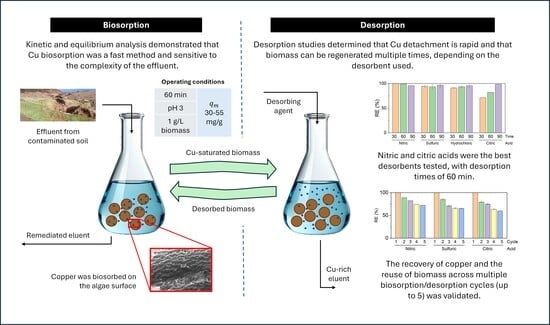
Study of Biosorption/Desorption of Copper from Solutions Leached from Soils Contaminated by Mining Activity Using Lessonia berteroana Alga Biomass



Abstract
1. Introduction
2. Materials and Methods
2.1. Soil Contaminated and Alga Biomass
2.2. Leaching of Contaminated Soil
2.3. Batch Biosorption
2.4. Adsorption Equilibrium Models
2.5. Desorption
3. Results and Discussion
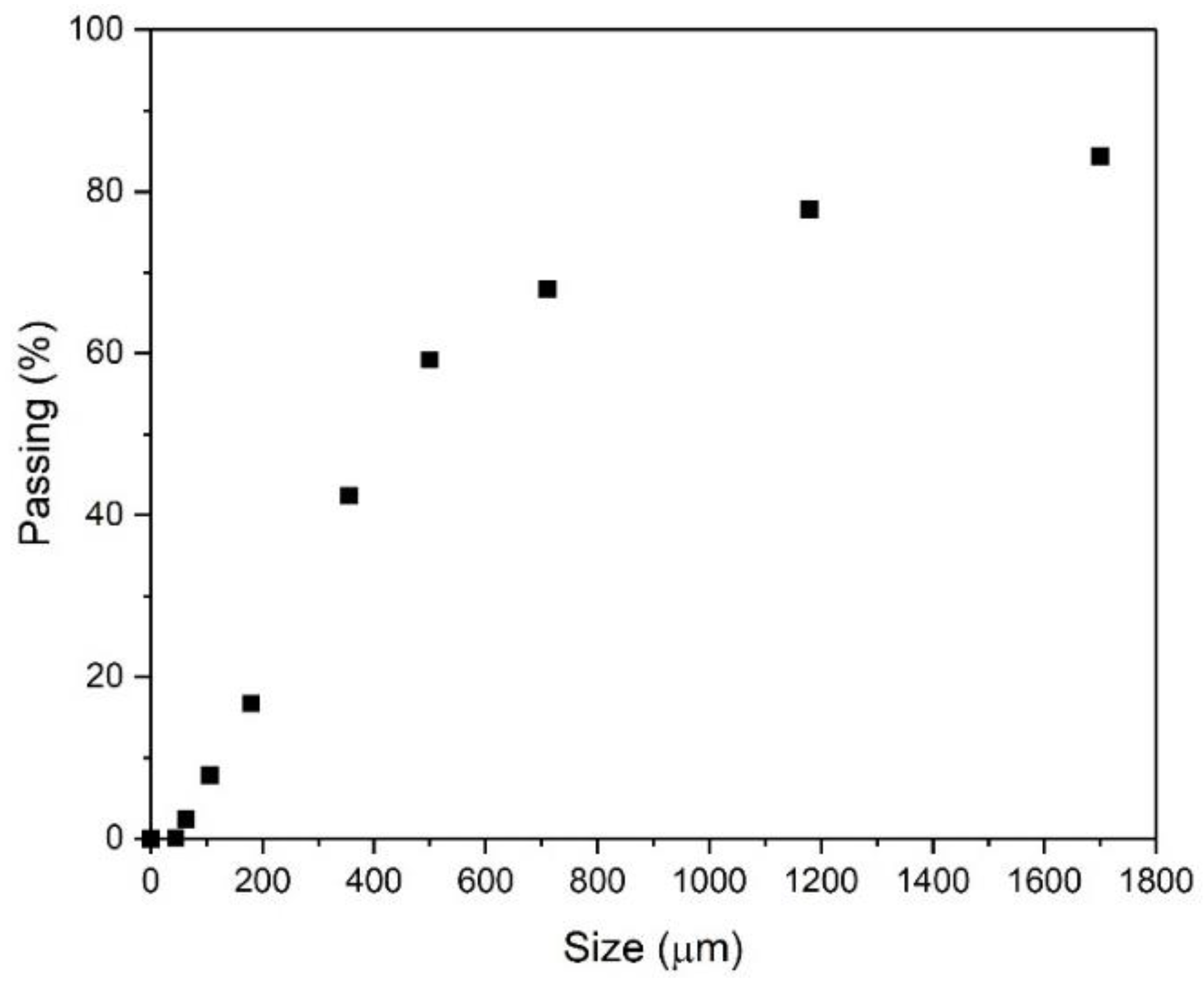
3.1. Sampling and Characterization of Contaminated Soil
3.2. Copper Dissolution from Contaminated Soil by Leaching
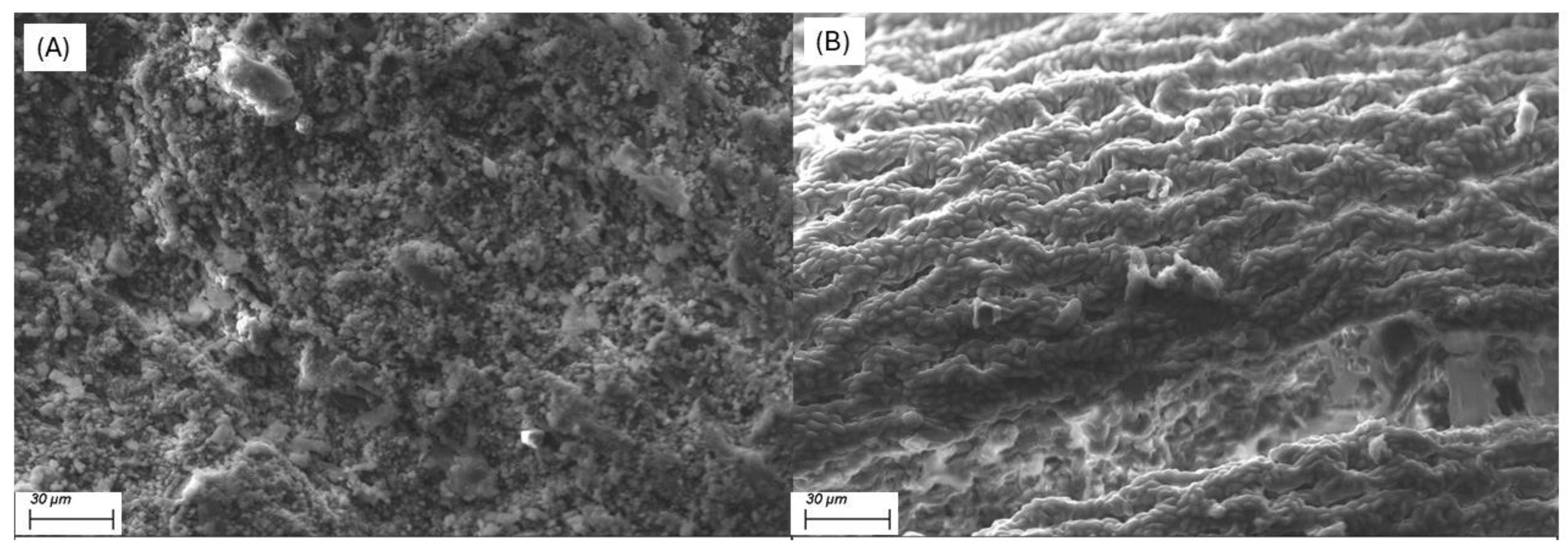
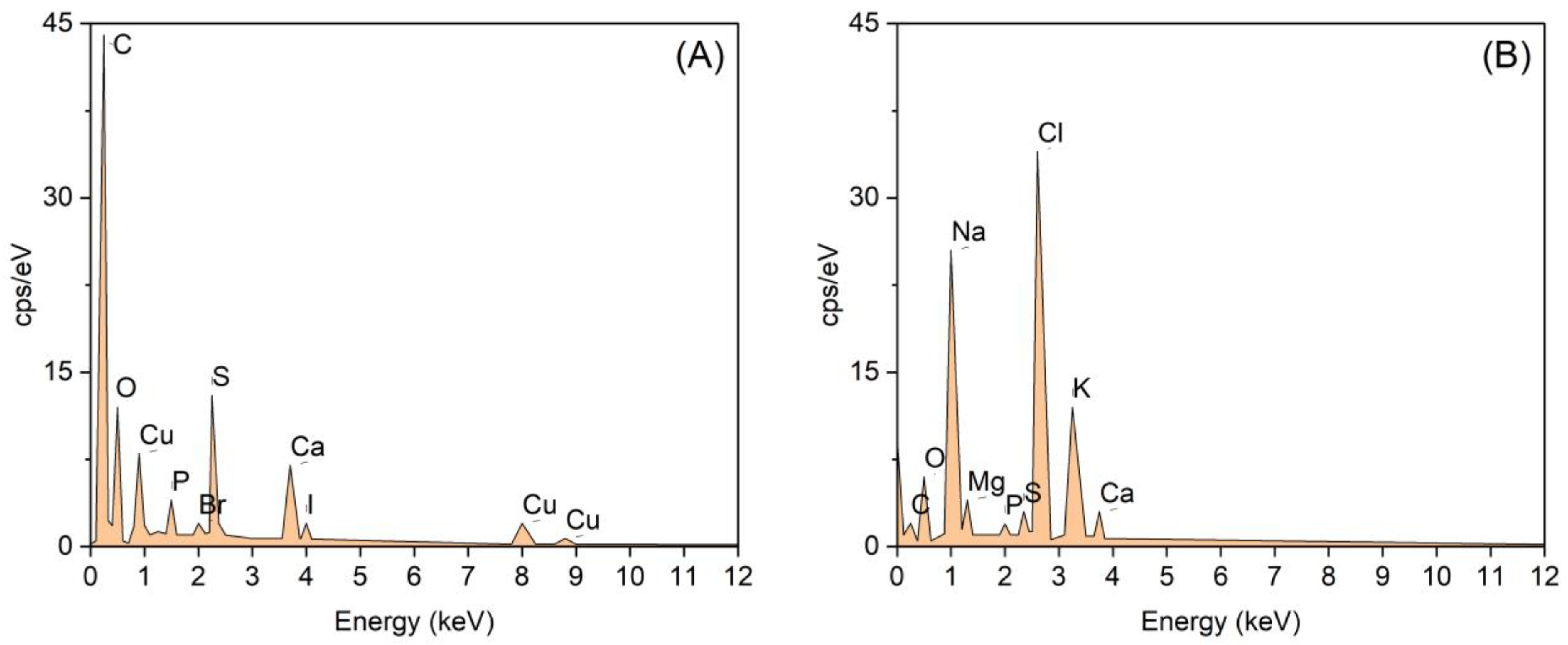
3.3. FTIR and SEM-EDS
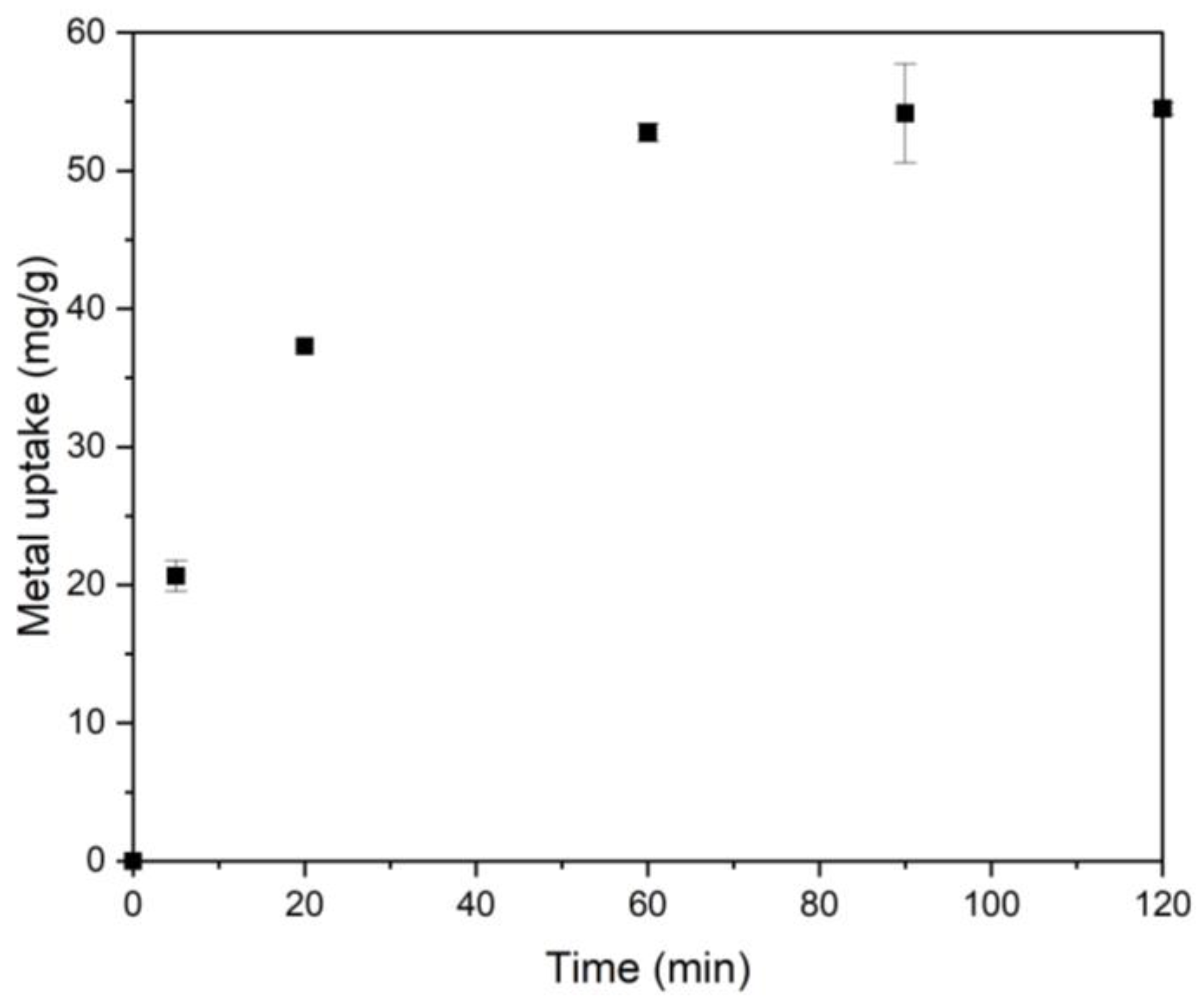
3.4. Biosorption Kinetics of Synthetic Solution
3.5. Equilibrium Isotherms
3.5.1. Equilibrium in CuSO4 Solution
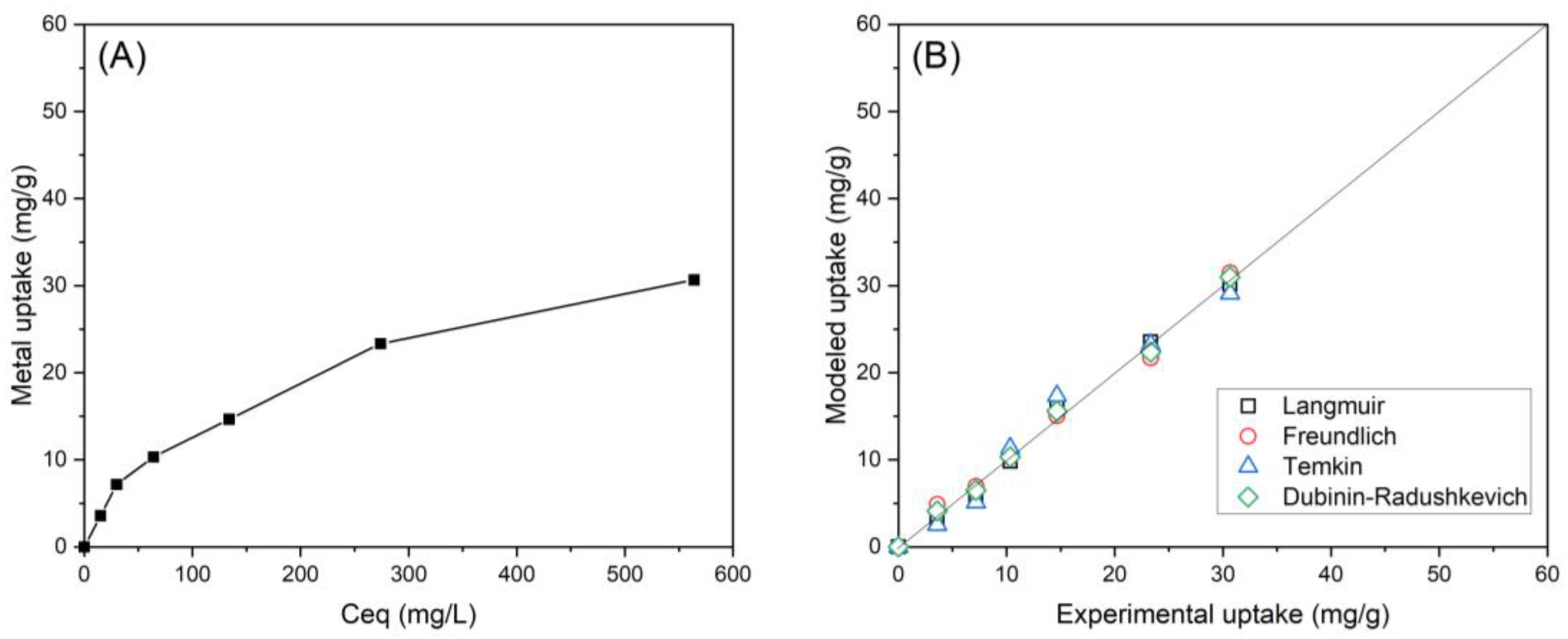
3.5.2. Equilibrium in Real Solutions (PLS)
3.6. Desorption and Biosorbent Regeneration
3.6.1. Desorption in Synthetic Solutions
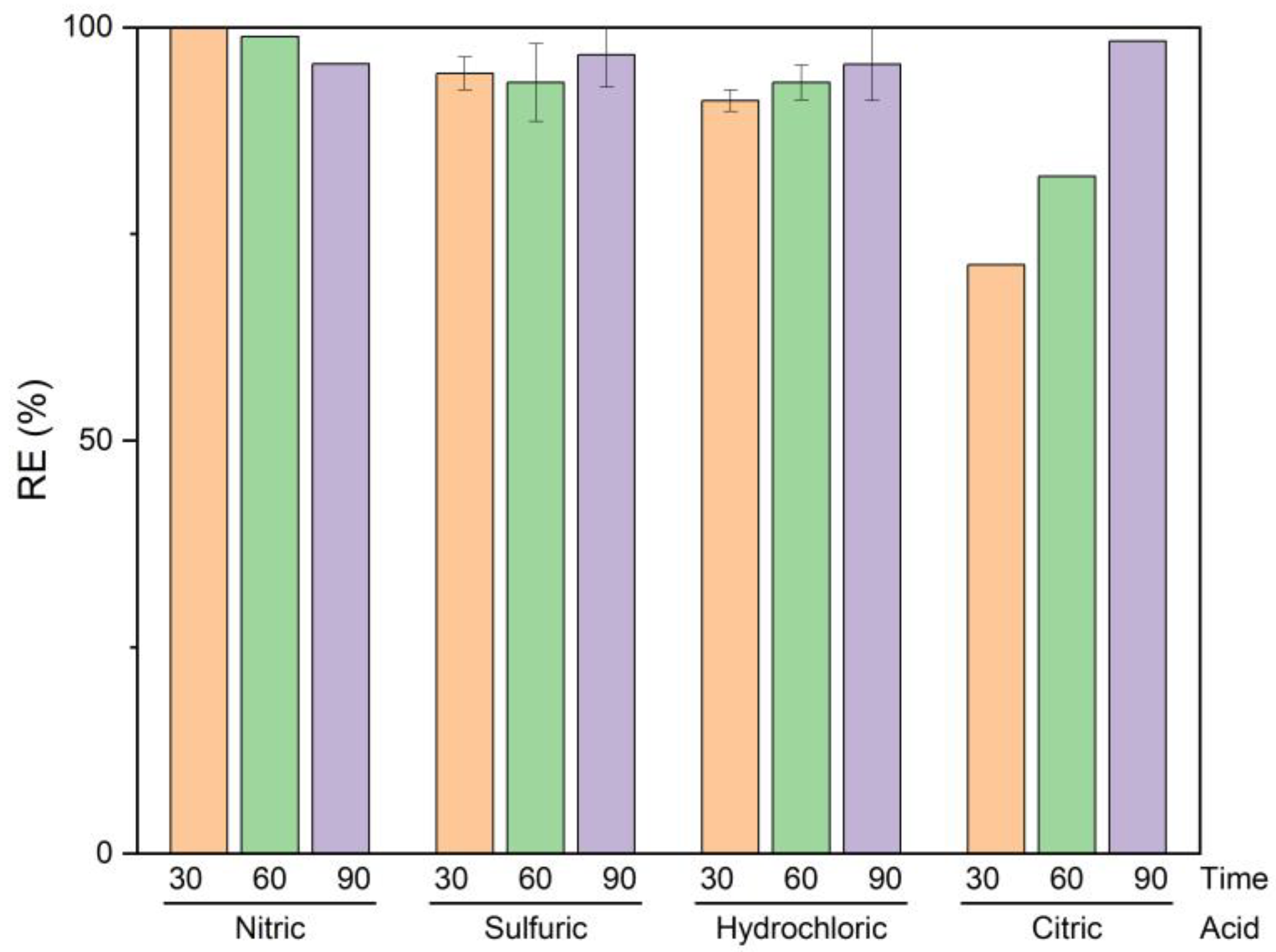
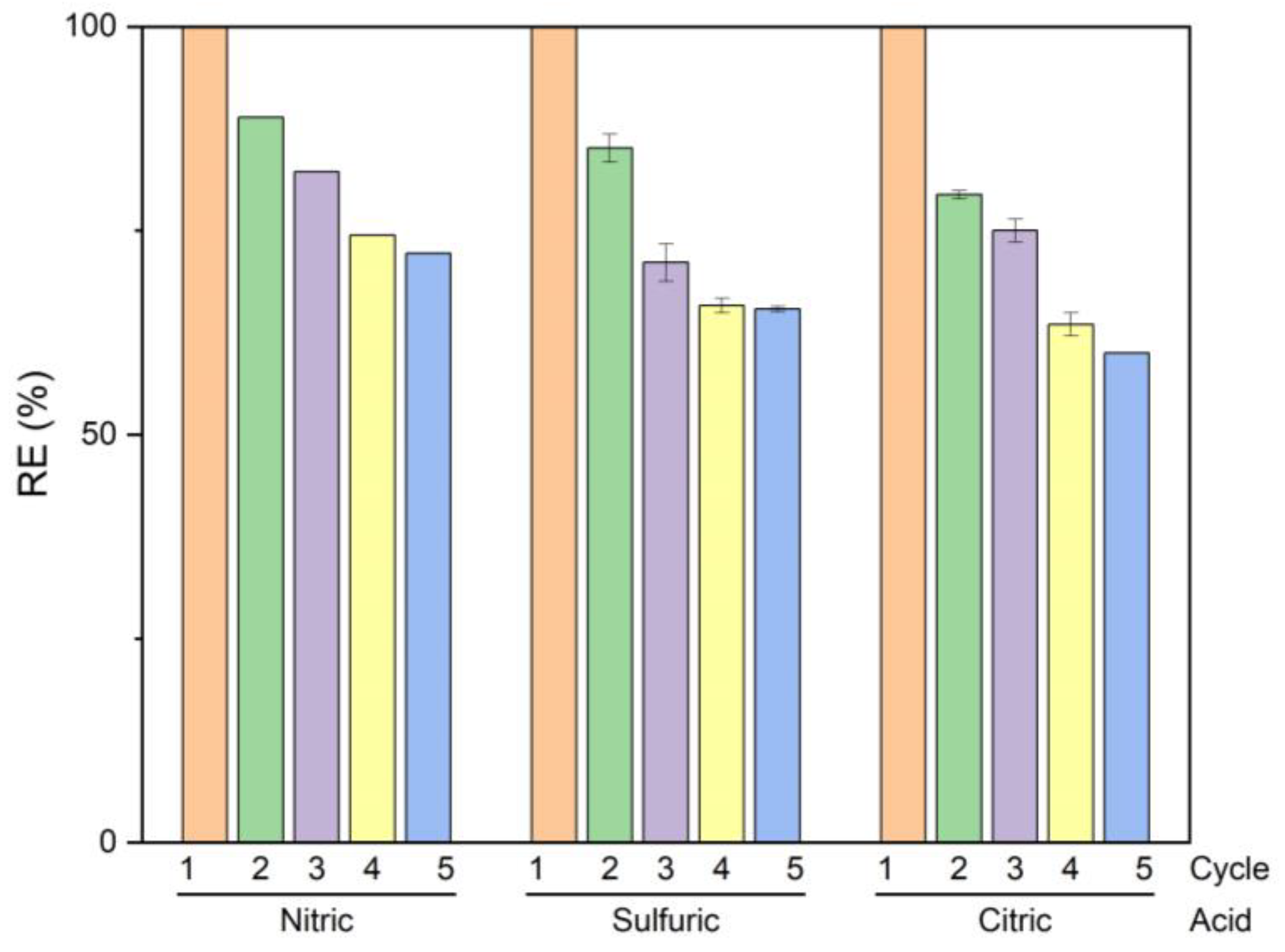
3.6.2. Desorption in Real Solutions (PLS)
4. Conclusions
Author Contributions
Funding
Data Availability Statement
Acknowledgments
Conflicts of Interest
References
- COCHILCO. Proyección de la Demanda de Agua en la Minería del Cobre 2023–2034; Comisión Chilena Del Cobre: Santiago, Chile, 2024. [Google Scholar]
- Cortés, M. La Muerte Gris de Chañaral; Impresos Plaza: Chañaral, Chile, 2010. [Google Scholar]
- Andrade, S.; Moffett, J.; Correa, J.A. Distribution of Dissolved Species and Suspended Particulate Copper in an Intertidal Ecosystem Affected by Copper Mine Tailings in Northern Chile. Mar. Chem. 2006, 101, 203–212. [Google Scholar] [CrossRef] [Scilit]
- Priya, A.K.; Gnanasekaran, L.; Dutta, K.; Rajendran, S.; Balakrishnan, D.; Soto-Moscoso, M. Biosorption of Heavy Metals by Microorganisms: Evaluation of Different Underlying Mechanisms. Chemosphere 2022, 307, 135957. [Google Scholar] [CrossRef] [Scilit]
- Ordóñez, J.I.; Cortés, S.; Maluenda, P.; Soto, I. Biosorption of Heavy Metals with Algae: Critical Review of Its Application in Real Effluents. Sustainability 2023, 15, 5521. [Google Scholar] [CrossRef] [Scilit]
- Ordóñez, J.I.; Mercado, A.; Wong-Pinto, L.; Cortés, S.I. Bioremediation of Mining Waste and Other Copper-Containing Effluents by Biosorption. In Bioremediation of Toxic Metal(loid)s; Malik, A., Kidwai, M.K., Garg, V.K., Eds.; CRC Press: Boca Raton, FL, USA, 2022; ISBN 9781032135779. [Google Scholar]
- Baysal, Z.; Çinar, E.; Bulut, Y.; Alkan, H.; Dogru, M. Equilibrium and Thermodynamic Studies on Biosorption of Pb(II) onto Candida albicans Biomass. J. Hazard. Mater. 2009, 161, 62–67. [Google Scholar] [CrossRef] [Scilit]
- Sathishkumar, M.; Mahadevan, A.; Vijayaraghavan, K.; Pavagadhi, S.; Balasubramanian, R. Green Recovery of Gold through Biosorption, Biocrystallization, and Pyro-Crystallization. Ind. Eng. Chem. Res. 2010, 49, 7129–7135. [Google Scholar] [CrossRef] [Scilit]
- Selatnia, A.; Madani, A.; Bakhti, M.Z.; Kertous, L.; Mansouri, Y.; Yous, R. Biosorption of Ni2+ from Aqueous Solution by a NaOH-Treated Bacterial Dead Streptomyces rimosus Biomass. Miner. Eng. 2004, 17, 903–911. [Google Scholar] [CrossRef] [Scilit]
- Vilar, V.; Botelho, C.; Boaventura, R. Copper Desorption from Gelidium Algal Biomass. Water Res. 2007, 41, 1569–1579. [Google Scholar] [CrossRef] [Scilit]
- Kuyucak, N.; Volesky, B. Desorption of Cobalt-laden Algal Biosorbent. Biotechnol. Bioeng. 1989, 33, 815–822. [Google Scholar] [CrossRef] [Scilit]
- Chatterjee, A.; Abraham, J. Desorption of Heavy Metals from Metal Loaded Sorbents and E-Wastes: A Review. Biotechnol. Lett. 2019, 41, 319–333. [Google Scholar] [CrossRef] [Scilit]
- Cortés, S.; Maluenda-León, P.; Wong-Pinto, L.; Ordóñez, J.I. Hydrometallurgical Processing of Mining-Impacted Soils: A Preliminary Study to Recover Copper Salts by Leaching with Seawater and Crystallization. Hydrometallurgy 2024, 225, 106267. [Google Scholar] [CrossRef] [Scilit]
- He, J.; Chen, J.P. A Comprehensive Review on Biosorption of Heavy Metals by Algal Biomass: Materials, Performances, Chemistry, and Modeling Simulation Tools. Bioresour. Technol. 2014, 160, 67–78. [Google Scholar] [CrossRef] [Scilit] [PubMed]
- Cortés, S.; Soto, E.E.; Ordóñez, J.I. Recovery of Copper from Leached Tailing Solutions by Biosorption. Minerals 2020, 10, 158. [Google Scholar] [CrossRef] [Scilit]
- ILO-WHO International Chemical Safety Cards (ICSCs): Copper Sulfate (Anhydrous). 2026. Available online: https://chemicalsafety.ilo.org/dyn/icsc/showcard.display?p_lang=en&p_card_id=0751&p_version=2 (accessed on 9 January 2026).
- Foo, K.Y.; Hameed, B.H. Insights into the Modeling of Adsorption Isotherm Systems. Chem. Eng. J. 2010, 156, 2–10. [Google Scholar] [CrossRef] [Scilit]
- Faruque, M.O.; Uddin, S.; Hossain, M.M.; Hossain, S.M.Z.; Shafiquzzaman, M.; Razzak, S.A. A Comprehensive Review on Microalgae-Driven Heavy Metals Removal from Industrial Wastewater Using Living and Nonliving Microalgae. J. Hazard. Mater. Adv. 2024, 16, 100492. [Google Scholar] [CrossRef] [Scilit]
- Wang, J.; Guo, X. Adsorption Isotherm Models: Classification, Physical Meaning, Application and Solving Method. Chemosphere 2020, 258, 127279. [Google Scholar] [CrossRef] [Scilit]
- Indhumathi, P.; Sathiyaraj, S.; Koelmel, J.P.; Shoba, S.U.; Jayabalakrishnan, C.; Saravanabhavan, M. The Efficient Removal of Heavy Metal Ions from Industry Effluents Using Waste Biomass as Low-Cost Adsorbent: Thermodynamic and Kinetic Models. Z. Für Phys. Chem. 2018, 232, 527–543. [Google Scholar] [CrossRef]
- Esmaeili, A.; Beni, A.A. Biosorption of Nickel and Cobalt from Plant Effluent by Sargassum glaucescens Nanoparticles at New Membrane Reactor. Int. J. Environ. Sci. Technol. 2015, 12, 2055–2064. [Google Scholar] [CrossRef] [Scilit]
- Tavana, M.; Pahlavanzadeh, H.; Zarei, M.J. The Novel Usage of Dead Biomass of Green Algae of Schizomeris leibleinii for Biosorption of Copper(II) from Aqueous Solutions: Equilibrium, Kinetics and Thermodynamics. J. Environ. Chem. Eng. 2020, 8, 104272. [Google Scholar] [CrossRef] [Scilit]
- Alcalde-Garcia, F.; Prasher, S.; Kaliaguine, S.; Tavares, J.R.; Dumont, M.-J. Desorption Strategies and Reusability of Biopolymeric Adsorbents and Semisynthetic Derivatives in Hydrogel and Hydrogel Composites Used in Adsorption Processes. ACS Eng. Au 2023, 3, 443–460. [Google Scholar] [CrossRef] [Scilit]
- Cid, H.A.; Flores, M.I.; Pizarro, J.F.; Castillo, X.A.; Barros, D.E.; Moreno-Piraján, J.C.; Ortiz, C.A. Mechanisms of Cu2+ Biosorption on Lessonia nigrescens Dead Biomass: Functional Groups Interactions and Morphological Characterization. J. Environ. Chem. Eng. 2018, 6, 2696–2704. [Google Scholar] [CrossRef] [Scilit]
- Raize, O.; Argaman, Y.; Yannai, S. Mechanisms of Biosorption of Different Heavy Metals by Brown Marine Macroalgae. Biotechnol. Bioeng. 2004, 87, 451–458. [Google Scholar] [CrossRef] [Scilit]
- Mata, Y.N.; Blázquez, M.L.; Ballester, A.; González, F.; Muñoz, J.A. Characterization of the Biosorption of Cadmium, Lead and Copper with the Brown Alga Fucus vesiculosus. J. Hazard. Mater. 2008, 158, 316–323. [Google Scholar] [CrossRef] [Scilit]
- Kleinübing, S.J.; Vieira, R.S.; Beppu, M.M.; Guibal, E.; Silva, M.G.C. da Characterization and Evaluation of Copper and Nickel Biosorption on Acidic Algae Sargassum filipendula. Mater. Res. 2010, 13, 541–550. [Google Scholar] [CrossRef] [Scilit]
- Kuzuhara, S.; Kudo, K.; Terakado, O. Biosorption of Cu(II) Ions by Kelps, Large Brown Algae Seaweeds, Saccharina japonica and Saccharina sculpera. J. Sustain. Metall. 2018, 4, 455–460. [Google Scholar] [CrossRef] [Scilit]
- Do Nascimento, W.J.; Da Silva, M.G.C.; Vieira, M.G.A. Competitive Biosorption of Cu2+ and Ag+ Ions on Brown Macro-Algae Waste: Kinetic and Ion-Exchange Studies. Environ. Sci. Pollut. Res. 2019, 26, 23416–23428. [Google Scholar] [CrossRef] [Scilit] [PubMed]
- Liu, Y.; Liu, Y.-J. Biosorption Isotherms, Kinetics and Thermodynamics. Sep. Purif. Technol. 2008, 61, 229–242. [Google Scholar] [CrossRef] [Scilit]
- Asl, S.H.; Ahmadi, M.; Ghiasvand, M.; Tardast, A.; Katal, R. Artificial Neural Network (ANN) Approach for Modeling of Cr(VI) Adsorption from Aqueous Solution by Zeolite Prepared from Raw Fly Ash (ZFA). J. Ind. Eng. Chem. 2013, 19, 1044–1055. [Google Scholar] [CrossRef] [Scilit]
- Elgarahy, A.M.; Elwakeel, K.Z.; Mohammad, S.H.; Elshoubaky, G.A. Multifunctional Eco-Friendly Sorbent Based on Marine Brown Algae and Bivalve Shells for Subsequent Uptake of Congo Red Dye and Copper(II) Ions. J. Environ. Chem. Eng. 2020, 8, 103915. [Google Scholar] [CrossRef] [Scilit]
- Cid, H.; Ortiz, C.; Pizarro, J.; Barros, D.; Castillo, X.; Giraldo, L.; Moreno-Piraján, J.C. Characterization of Copper (II) Biosorption by Brown Algae Durvillaea antarctica Dead Biomass. Adsorption 2015, 21, 645–658. [Google Scholar] [CrossRef] [Scilit]
- Akbari, M.; Hallajisani, A.; Keshtkar, A.R.; Shahbeig, H.; Ali Ghorbanian, S. Equilibrium and Kinetic Study and Modeling of Cu(II) and Co(II) Synergistic Biosorption from Cu(II)-Co(II) Single and Binary Mixtures on Brown Algae C. Indica. J. Environ. Chem. Eng. 2015, 3, 140–149. [Google Scholar] [CrossRef] [Scilit]
- Chen, Z.; Ma, W.; Han, M. Biosorption of Nickel and Copper onto Treated Alga (Undaria pinnatifida): Application of Isotherm and Kinetic Models. J. Hazard. Mater. 2008, 155, 327–333. [Google Scholar] [CrossRef] [Scilit] [PubMed]
- Chabani, M.; Amrane, A.; Bensmaili, A. Kinetic Modelling of the Adsorption of Nitrates by Ion Exchange Resin. Chem. Eng. J. 2006, 125, 111–117. [Google Scholar] [CrossRef] [Scilit]
- Do Nascimento, W.J.; Landers, R.; Gurgel Carlos da Silva, M.; Vieira, M.G.A. Equilibrium and Desorption Studies of the Competitive Binary Biosorption of Silver(I) and Copper(II) Ions on Brown Algae Waste. J. Environ. Chem. Eng. 2021, 9, 104840. [Google Scholar] [CrossRef] [Scilit]



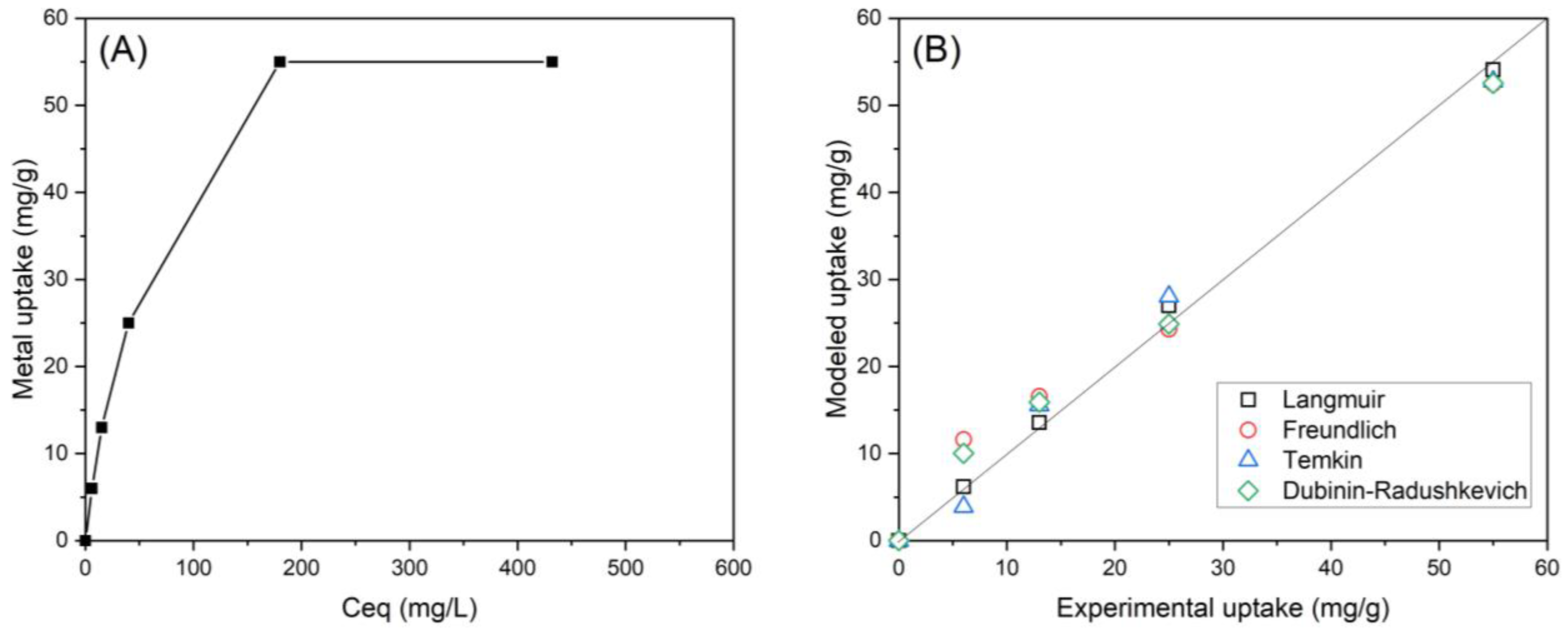



| Component | Concentration (kg/m3) |
|---|---|
| Cl | 19.7 |
| Na | 11.1 |
| SO4 | 2.66 |
| Mg | 1.58 |
| K | 0.36 |
| NO3 | 0.21 |
| Ca | 0.17 |
| B | 0.16 |
| CO3 | 0.15 |
| ClO4 | 0.12 |
| pH | 7.25 |
| Models | Formula | Adjustable Parameters | Main Assumptions | Refs. |
|---|---|---|---|---|
| Freundlich | (L/g) and n are the Freundlich constants. | Multi-layer adsorption on heterogeneous surfaces. The adsorbed molecules interact. | [17] | |
| Langmuir | (mg/g) is the maximum adsorption capacity. (L/mg) is the affinity of the biosorbent for the metal. | Mono-layer adsorption on homogeneous surface with equivalent adsorption sites. | [18,19] | |
| Temkin | (L/g) and (J/mol) are the Temkin constants. | Multi-layer adsorption with interactions between adsorbed molecules. The adsorption energy is uniformly distributed. | [20] | |
| Dubinin– Radushkevich | (mg/g) is the maximum adsorption capacity. (mol2/kJ2) is the D–R model constant. | Distribution of pores in adsorbent follows the Gaussian energy distribution. | [21,22] |
| Major Elements | Fe | Cu | Al | Mg | Mo | As | Zn |
|---|---|---|---|---|---|---|---|
| Composition (g/kg) | 84.1 | 31.9 | 4.04 | 1.30 | 0.30 | 0.25 | 0.22 |
| Trace Elements | Pb | Ag | Ni | Cr | Se | Hg | Cd |
| Composition (mg/kg) | 36.3 | 18.5 | 13.9 | 12.4 | 12.4 | <1.3 | 0.95 |
| Name | Formula | Content (%) |
|---|---|---|
| Illite | (K,H3O)Al2Si3AlO10(OH)2 | 40.2 |
| Quartz | SiO2 | 19.5 |
| Kaolinite-1A | Al2Si2O5(OH)4 | 8.9 |
| Gypsum | CaSO4·2H2O | 8.8 |
| Pyrite | FeS2 | 8.4 |
| Natrojarosite | NaFe3(SO4)2(OH)6 | 5.2 |
| Atacamite | Cu2Cl(OH)3 | 4.4 |
| Rhomboclase | (H5O2)Fe(SO4)2(H2O)2 | 3.6 |
| Tourmaline | Na3Fe9Al18B9Si18O81(OH)12 | 0.9 |
| Models | Ref. | ||||||||||||
|---|---|---|---|---|---|---|---|---|---|---|---|---|---|
| Langmuir | Freundlich | Temkin | Dubinin–Radushkevich | ||||||||||
| Biosorbent | , mg/g | L/mg | R2 | , L/g | R2 | , L/g | , kJ/mol | R2 | , mg/g | (107), mol2/J2 | R2 | ||
| Lessonia nigrescens | 60.39 | 57.21 | 0.955 | 1.96 | 27.70 | 0.897 | - | - | - | - | - | - | [24] |
| Durvillaea antarctica | 117.59 | 47.04 | 0.878 | 0.81 | 3.19 | 0.883 | - | - | - | 91.53 | 0.60 | 0.974 | [33] |
| Cystoseria indica | 94.71 | 19.07 | 0.996 | 4.04 | 30.48 | 0.838 | 9.34 | 0.18 | 0.993 | - | - | - | [34] |
| Undaria pinnatifida | 78.80 | 0.46 | 0.965 | 1.52 | 6.65 | 0.947 | 0.001 | 0.14 | 0.982 | - | - | - | [35] |
| Lessonia berteroana | 66.09 | 69.92 | 0.981 | 2.57 | 0.46 | 0.900 | 226.28 | 12.17 | 0.957 | 156.37 | 0.004 | 0.929 | This study |
| Lessonia berteroana * | 41.30 | 19.70 | 0.990 | 1.95 | 0.16 | 0.993 | 62.46 | 18.94 | 0.979 | 108.69 | 0.006 | 0.997 | This study |
Disclaimer/Publisher’s Note: The statements, opinions and data contained in all publications are solely those of the individual author(s) and contributor(s) and not of MDPI and/or the editor(s). MDPI and/or the editor(s) disclaim responsibility for any injury to people or property resulting from any ideas, methods, instructions or products referred to in the content. |
© 2026 by the authors. Licensee MDPI, Basel, Switzerland. This article is an open access article distributed under the terms and conditions of the Creative Commons Attribution (CC BY) license.
Share and Cite
Cortés, S.; Wong-Pinto, L.-s.; Ordóñez, J.I. Study of Biosorption/Desorption of Copper from Solutions Leached from Soils Contaminated by Mining Activity Using Lessonia berteroana Alga Biomass. Minerals 2026, 16, 88. https://doi.org/10.3390/min16010088
Cortés S, Wong-Pinto L-s, Ordóñez JI. Study of Biosorption/Desorption of Copper from Solutions Leached from Soils Contaminated by Mining Activity Using Lessonia berteroana Alga Biomass. Minerals. 2026; 16(1):88. https://doi.org/10.3390/min16010088
Chicago/Turabian StyleCortés, Sonia, Liey-si Wong-Pinto, and Javier I. Ordóñez. 2026. "Study of Biosorption/Desorption of Copper from Solutions Leached from Soils Contaminated by Mining Activity Using Lessonia berteroana Alga Biomass" Minerals 16, no. 1: 88. https://doi.org/10.3390/min16010088
APA StyleCortés, S., Wong-Pinto, L.-s., & Ordóñez, J. I. (2026). Study of Biosorption/Desorption of Copper from Solutions Leached from Soils Contaminated by Mining Activity Using Lessonia berteroana Alga Biomass. Minerals, 16(1), 88. https://doi.org/10.3390/min16010088