
Article

Direct Production of Na2WO4-Based Salt by Scheelite Smelting

1
School of Metallurgical Engineering, Jiangxi University of Science and Technology, Ganzhou 341000, China
2
Gannan Laboratory, Ganzhou 341000, China
Minerals 2026, 16(1), 90; https://doi.org/10.3390/min16010090
Submission received: 21 December 2025 / Revised: 9 January 2026 / Accepted: 13 January 2026 / Published: 17 January 2026

Abstract

Tungsten is one of the critical materials with important applications in many areas. Electrolysis of Na2WO4-based salt is a short and green process for the production of tungsten metal and alloys. The conventional process for producing Na2WO4 is expensive and time-consuming. Scheelite (CaWO4) is becoming the most important resource for the extraction of tungsten. Based on thermodynamic calculations and phase equilibrium studies, a novel process is proposed to prepare Na2WO4-based salt directly from scheelite through a high-temperature process. By reacting with silica and sodium oxide, immiscible layers of liquid salt and slag are formed from scheelite between 1200 and 1300 °C. High-density salt containing Na2WO4 is separated from the silicate slag, which is composed of impurities and fluxes. The effects of fluxing agents, smelting temperature, and reaction time on the direct yield of WO3 and purity of sodium tungsten are investigated in combination with thermodynamic calculations and high-temperature experiments. The salt containing up to 99% Na2WO4 is obtained directly in a single process, which can be used for the production of other tungsten chemicals. This study provides a novel research method and detailed information to produce low-cost sodium tungstate directly from scheelite.

1. Introduction

Tungsten is considered a critical raw material in many countries due to its important applications in hard alloys, military equipment, industrial catalysis, and the aerospace, nuclear, energy, and information technology industries [1,2,3,4]. Scheelite (CaWO4) and wolframite ((Fe,Mn)WO4) are the most important W-containing minerals for the production of tungsten [5,6,7,8]. In the conventional process, tungsten is leached from concentrates of scheelite, wolframite, or their mixtures using an aqueous solution of sodium carbonate or sodium hydroxide to obtain a W-containing solution. The impurities in the solution are removed, and pure ammonium paratungstate (APT), (NH4)10(H2W12O42)·4H2O, is obtained as an intermediate compound, which can be used to produce final products such as metallic tungsten and tungsten carbide [5,6,7,8]. Leaching tungsten from its minerals requires an autoclaving process at pressures between 1.2 and 2.6 atm and temperatures around 200 °C. Great excesses of reagents are consumed, which are difficult to recover. Over 25 tons of high-salinity wastewater is generated per ton of APT product in the process, which incurs high investment and operation costs [5,9].
Different approaches have been suggested to overcome the problems associated with the conventional soda leaching process. Orefice et al. [10] used a solvometallurgical solution of 2 mol L−1 HClaq in ethylene glycol to extract tungsten from scheelite, and over 95% recovery was achieved for low-grade minerals. Xu and Zhao [11] used Na2O and SiO2 to react with wolframite at 1050–1200 °C for 60 min. Over 99% of tungsten was recovered by leaching the resulting materials. Although different decomposition agents and conditions were applied, APT was still the intermediate product to be used for further processing. A green and short process was proposed to produce tungsten metal and alloys without APT [12,13,14,15,16,17]. The first step was to prepare tungstate-containing salt at temperatures above 1100 °C. The salt was then used to produce tungsten metal or alloys by reduction or electrolysis at high temperatures [14,15,16,17]. In these studies, Na2CO3, NaCl, and SiO2 were used to react with tungsten minerals. Two immiscible liquids were formed: low-density salt containing Na2O, NaCl, and WO3 and slag containing Na2O, SiO2, and impurities from tungsten minerals. The WO3 content in the salt is approximately 30%, which has limited applications due to high Na2O and NaCl contents.
A phase equilibrium study on a Na2O-WO3 system shows that a series of sodium tungstate Na2WO4, Na2W2O7, Na2W4O13, and Na2W6O19 is present containing WO3 from 79 to 95.8 wt% [18]. Sodium tungstate has been used in many areas such as coated electrodes for electrocatalysis and as a fire retardant for fabrics [19], energy storage [20], and raw materials for other tungsten products [21,22]. However, the synthesis of sodium tungstate from APT is a long process with high cost. Recent studies [23,24] indicate that sodium tungstate Na2WO4 can be formed at high temperatures when both Na2O and SiO2 are present. Low-density silicate-based slag is immiscible with the high-density sodium tungstate. High-purity sodium tungstate containing up to 79.8 wt% WO3 was obtained by smelting wolframite at 1100–1300 °C [24]. The wolframite ore, which is easily concentrated and decomposed, is gradually declining and scheelite is becoming the dominant tungsten resource [25,26]. The different composition of scheelite compared with wolframite requires different decomposition conditions and results in a different slag composition. The present study focuses on a fundamental investigation of the smelting of scheelite concentrate in air. FactSage 8.4 [27] was used to predict the reactions between the scheelite and decomposition reagents. The effects of Na2CO3, SiO2, temperature, and reaction time on the distribution of the elements between salt and slag were investigated by high-temperature experiments.

2. Materials and Methods

The scheelite concentrate used in the present study was supplied by Chongyi Zhangyuan Tungsten Co., Ltd (Ganzhou, China). and the composition is given in Table 1. The size of the scheelite concentrate was smaller than 0.075 mm. Analytical-grade sodium carbonate and silicon dioxide were employed as decomposition and flux reagents for the smelting of scheelite. In addition to CaO and WO3, small amounts of Fe2O3, MnO, SiO2, sulphur, and arsenic are also present in the scheelite. Sulphur and arsenic are presented as SO3 and As2O3 for presentation purposes.
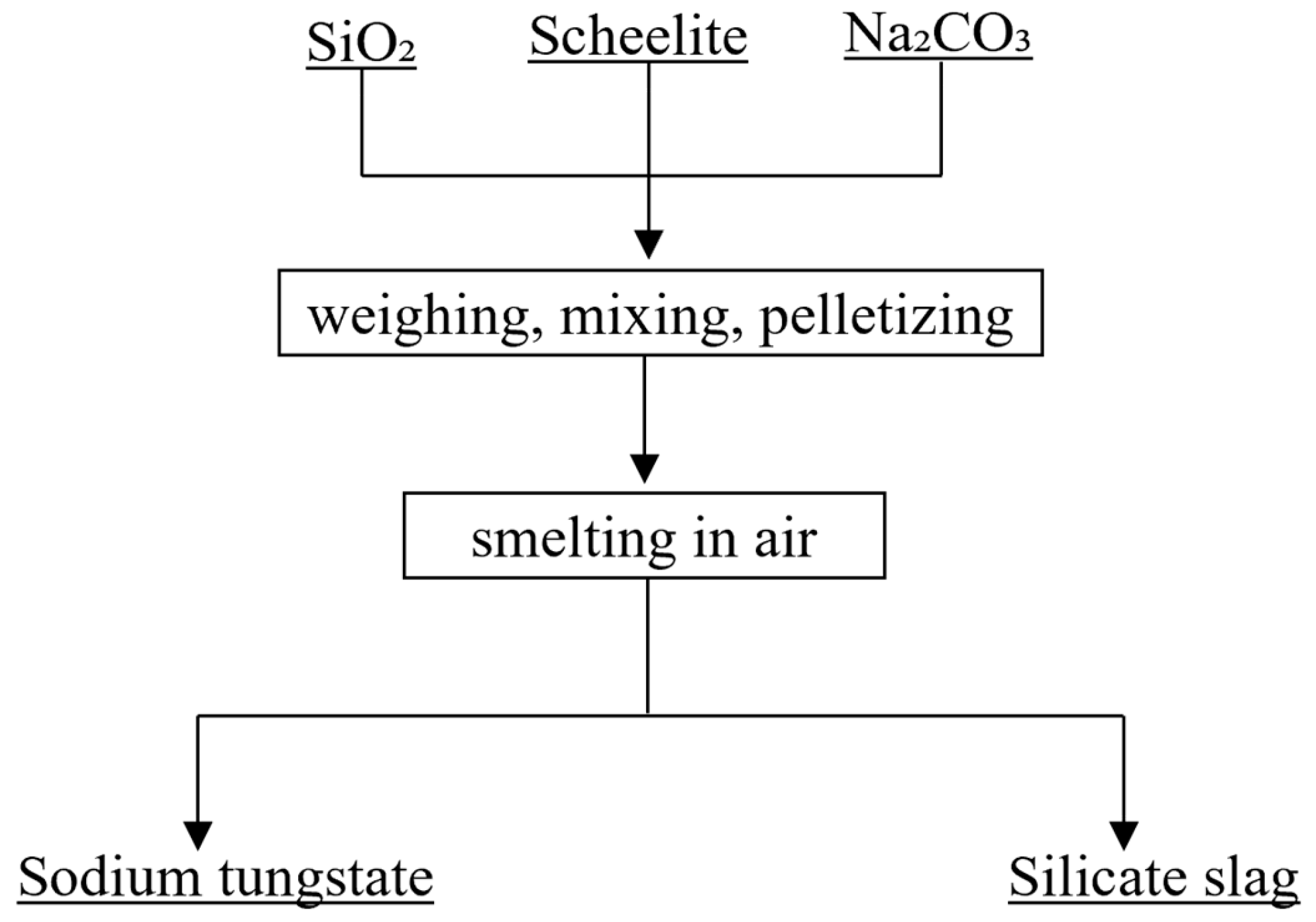
The flow chart of the scheelite smelting experiment is shown in Figure 1. As per the experimental design, the required masses of scheelite, sodium carbonate, and silica were weighed and thoroughly mixed in an agate mortar. Following uniform mixing, the mixture was pelletized using a tableting press and placed in an alumina crucible (inner diameter 30 mm, height 60 mm). The crucible was then placed in a muffle furnace under an air atmosphere. The furnace was heated at a rate of 10 °C/min to the predetermined temperature and held isothermally for a specified duration. Upon reaction completion, the crucible was cooled in the furnace and cracked to obtain the samples. The silicate slag and the salt were carefully separated and ground for compositional analysis. The compositions of the silicate slag and the salt were analyzed by a PANalytical Axios X-ray fluorescence spectrometer (PANalytical B.V., Almelo, The Netherlands) where the samples were prepared by the fusion bead method.
FactSage 8.4 was used to predict possible reactions as a base for the experimental plan. The databases of “FactPS”, “FToxid”, and “FTsalt” were selected in the “Equilib” module. The solution phases selected in the calculations included “FToxide-SLAGB”, “FToxide-SPINC”, “FToxide-MeO_A”, “FToxide-Mel_A”, “FToxide-OlivA”, and “FToxid-NAShA”.

3. Results and Discussion

Thermodynamic calculations by FactSage show that, at high temperatures, WO3 from scheelite reacts with Na2O from Na2CO3 to form liquid Na2WO4 (melting point 698 °C [18]), while CaO in scheelite combines with SiO2 and Na2O to form a molten slag. The immiscible salt and slag both remain in a liquid state and separate into two layers due to their density difference. The density of Na2WO4 is 4.18 g/cm3 [27] and the densities of the slags are 2.42–2.58 g/cm3, estimated from the partial molar density of individual oxides. The lower-density slag floats on top of the higher-density salt. The Na2O from the thermal decomposition of Na2CO3 serves two functions in the smelting process. On one hand, Na2O reacts with WO3 to form Na2WO4. On the other hand, Na2O dissolves into the slag to decrease its liquidus temperature.

3.1. Thermodynamic Calculations for High Temperature Smelting

Based on the chemical composition of the scheelite shown in Table 1, thermodynamic calculations were performed using FactSage 8.4 to predict the phase changes with varying experimental parameters. The starting material is 100 g of scheelite (Ore) with different amounts of Na2O and SiO2. Additions of Na2O or SiO2 are represented as Na2O/Ore or SiO2/Ore, respectively. In the results of the FactSage calculations, most of the sulphur is present in the “Slag-liq” phase as “Na2SO4” and most of the arsenic is present as a compound “Na3AsO4_solid”. Tungsten is not included in the “Slag-liq” phase of the current database. All tungsten is present as compounds including liquid “Na2WO4” or solid “MWO4” where M = Ca, Fe, or Mn. Na3AsO4 is assumed to behave as a salt like Na2WO4. In the following sections associated with the FactSage calculations, the weight of “Salt” includes both Na2WO4 and Na3AsO4.
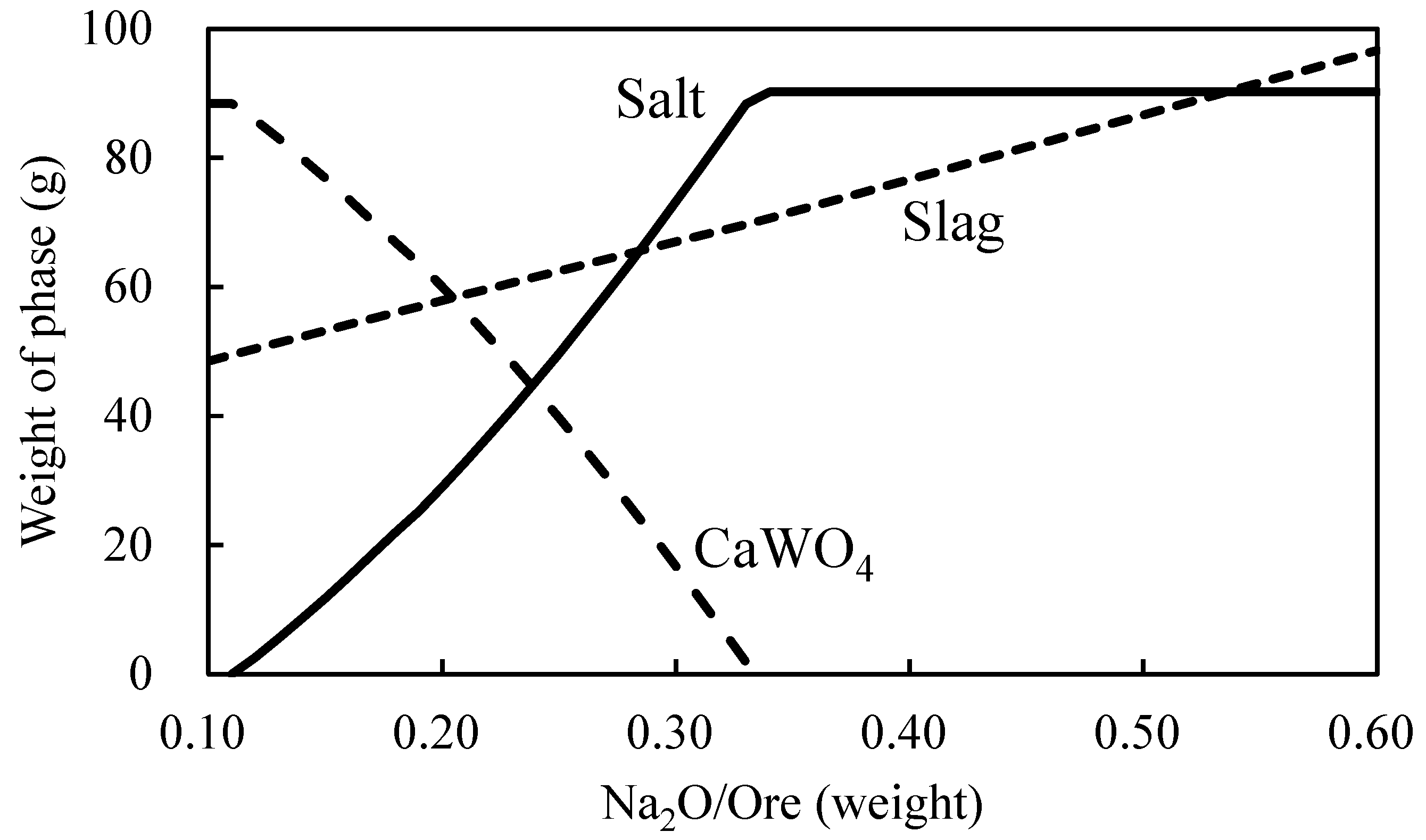
Figure 2 shows the weights of the phases as a function of Na2O/Ore ratio at 1200 °C and SiO2/Ore = 0.3. With increasing Na2O/Ore, CaWO4 decomposes continuously. CaO goes to slag and WO3 goes to salt. The weight of CaWO4 decreases rapidly and the weight of salt increases rapidly with increasing Na2O/Ore. When Na2O/Ore reaches approximately 0.34, the CaWO4 is completely decomposed, and the salt reaches a maximum. All excess Na2O dissolves into liquid slag, resulting in a continuous increase in slag weight. According to the thermodynamic calculations, 34 g of Na2O is sufficient to decompose the scheelite at 1200 °C and a SiO2/Ore ratio of 0.3. When temperature and SiO2/Ore ratio vary, the minimum Na2O required to decompose the scheelite will also change.
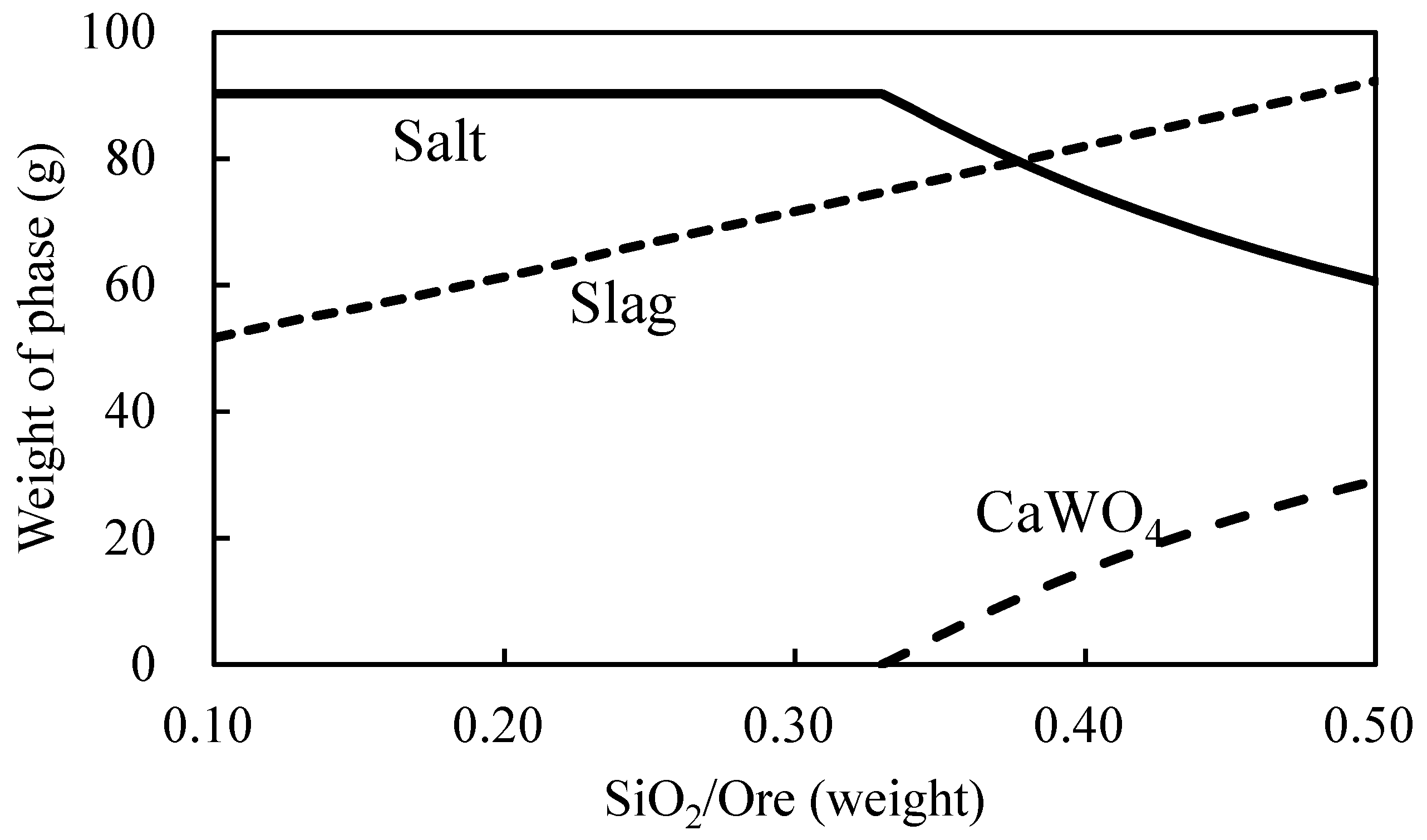
SiO2 is a key slag-forming component which absorbs the CaO from the decomposition of scheelite. Na2O is a necessary component in the slag to lower the liquidus temperature. As shown in Figure 3, the weight of salt remains constant when the SiO2/Ore ratio is between 0.1 and 0.33. The weight of slag increases with increasing SiO2/Ore ratio as all SiO2 is present in the slag. However, when the SiO2/Ore ratio exceeds 0.33, the CaWO4 starts to be stable and the weight of salt decreases with increasing SiO2/Ore ratio. The reason is that SiO2 and WO3 always have competitive reactions with Na2O. The amount of Na2O is fixed in the reaction system, and excess SiO2 reacting with Na2O impairs scheelite decomposition. It can be seen from Figure 3 that when the SiO2/Ore ratio is above 0.33, the weight of salt decreases and the weight of CaWO4 increases with increasing SiO2/Ore. 0.33 is the maximum SiO2/Ore ratio in the present conditions to ensure the complete decomposition of scheelite.
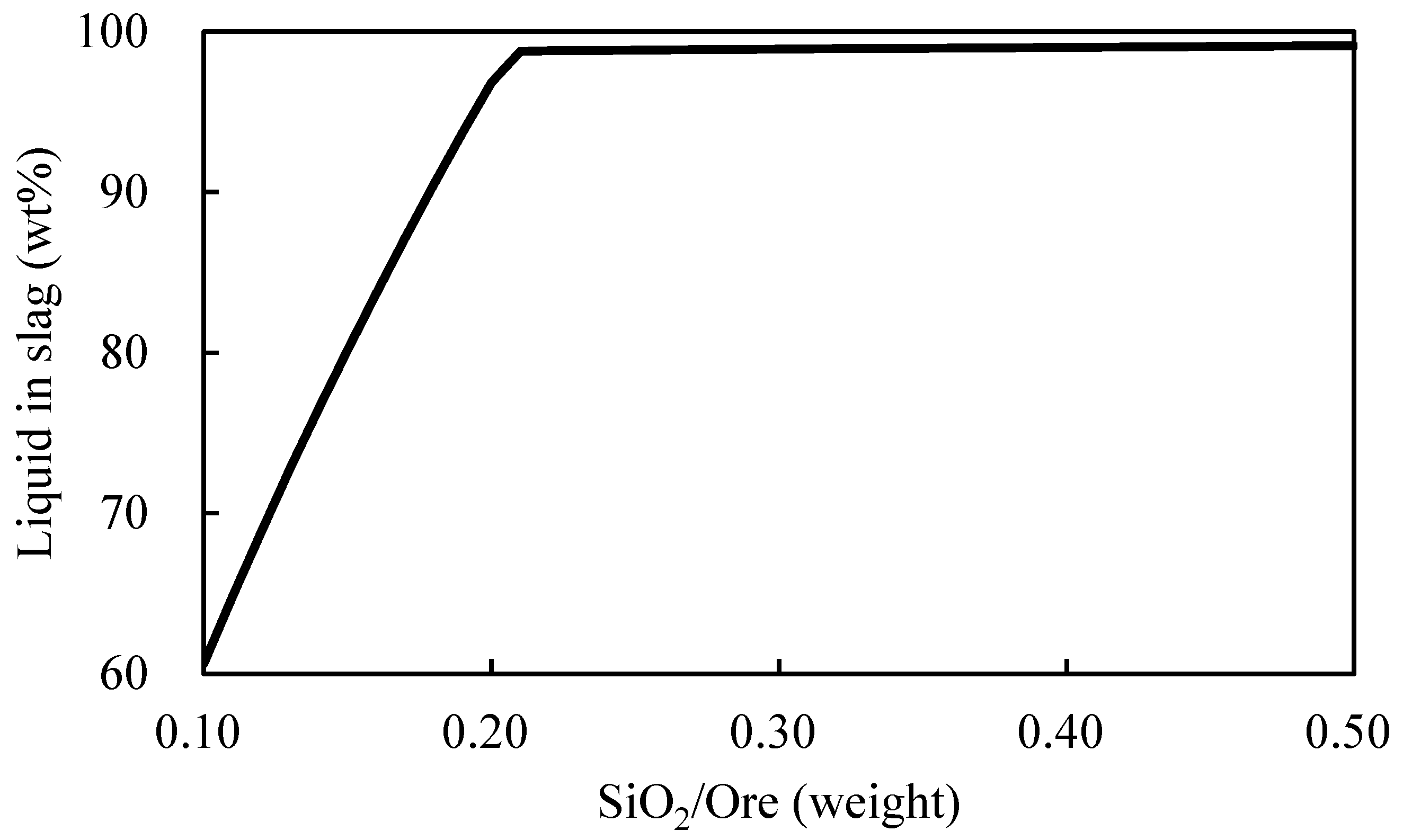
The salt is always a liquid due to its low melting point. Complete separation of the slag from the salt requires a liquid slag as the solid phase in the slag can increase the viscosity significantly. Figure 4 shows that the proportion of liquid phase in the slag increases with SiO2/Ore and reaches a maximum of 99 wt% at a SiO2/Ore ratio of 0.21. Solid MeO (solid solution of CaO with small amounts of Fe2O3, Mn2O3, and Na2O) is always present in the slag as a primary phase. The results shown in Figure 3 and Figure 4 identify an optimum SiO2/Ore ratio between 0.21 and 0.33 to ensure a liquid slag and avoid the formation of CaWO4.

3.2. Experimental Results

Based on the thermodynamic predictions and preliminary experiments, the detailed experimental plan is shown in Table 2, including variable parameters such as the weights of scheelite (ore), Na2CO3, and SiO2, in addition to temperature, and reaction time. Na2O/Ore ratio is also presented in the table for easy calculations as CO2 will leave the condensed system at high temperatures. According to the conditions set in Table 2, the effect of each variable parameter is discussed when other variables are fixed. For example, the effect of Na2CO3 addition is discussed at 1200 °C for 60 min with 6 g SiO2 addition (C1, C3, C4, C10, and C11). It can be seen from the table that the Na2O/Ore and SiO2/Ore ratios used in the experiments are all higher than those predicted by Factsage 8.4 shown in Figure 2, Figure 3 and Figure 4. The preliminary experiments show that more Na2O and SiO2 is required to form two clear layers of liquid slag and salt. The current databases in FactSage 8.4 cannot accurately predict the actual reactions in WO3-containing systems.
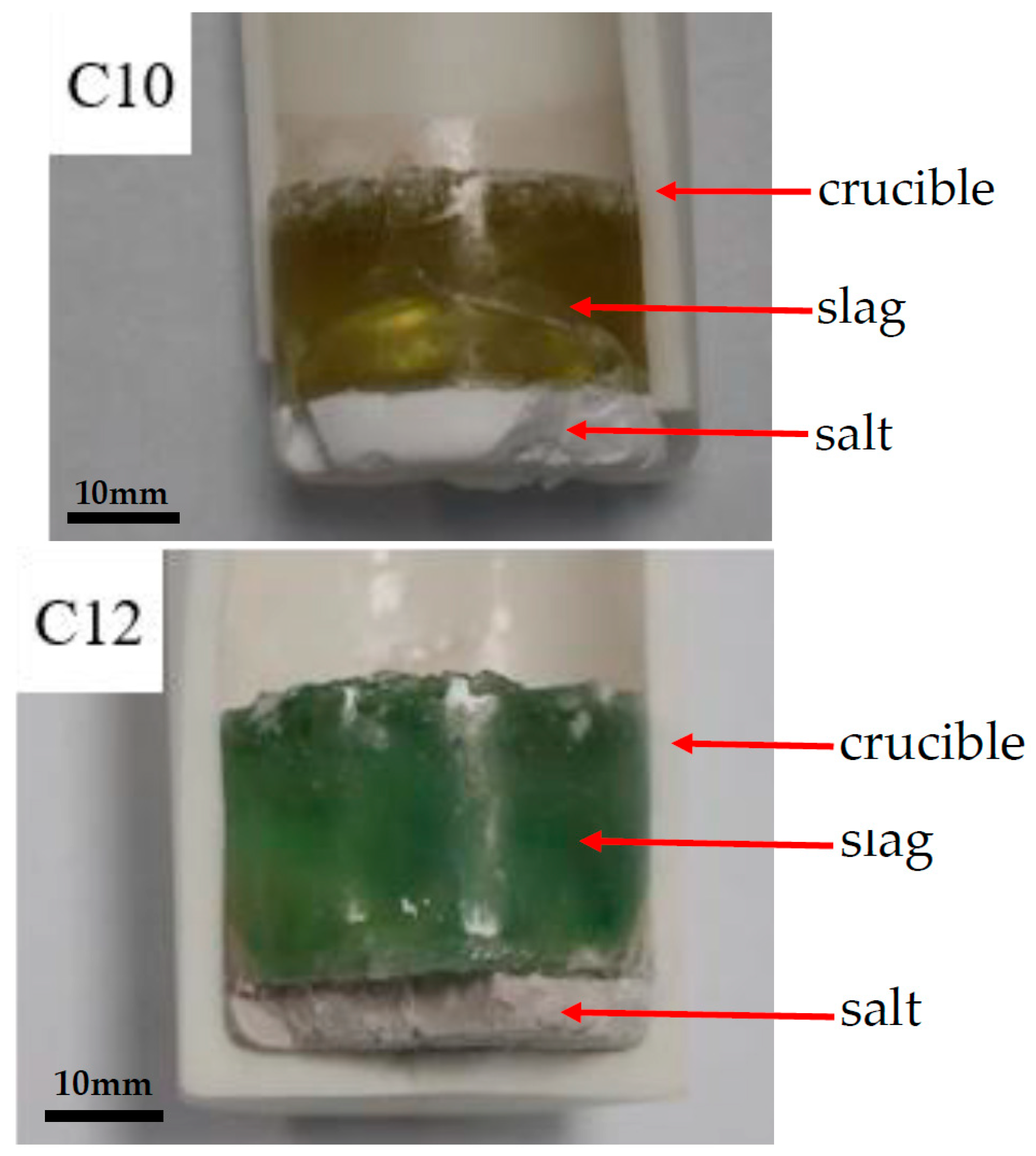
After high-temperature smelting, it is observed that in all experiments, slag and salt were clearly separated into two layers. Figure 5 shows typical macroscopic photographs of the samples after high-temperature smelting. Low-density slag on the top has a high viscosity where the liquid has been converted to glass. The slag and salt show a clear boundary, which makes it easy to distinguish between the two phases. No significant reactions are observed between the sample and the alumina crucible. The amount of salt appears to be the same in C10 and C12 samples. More slag is present in C12 than in C10, and the different colors between the slags indicate their difference in composition.
The compositions of the slag and salt analyzed by XRF are listed in Table 3 and Table 4, respectively. The weights of the slag and salt were determined by mass balance. The direct yield of WO3 collected in salt is calculated by the following formula:
D i r e c t   y i e l d   o f   W O 3 = M a s s   o f   W O 3   i n   s a l t M a s s   o f   W O 3   i n   t u n g s t e n   o r e × 100 %
It can be seen from the tables that CaO, Na2O, SiO2, and WO3 are the major components of the slag, and Na2O and WO3 are the major components of the salt. All iron, manganese, and arsenic are present in the slag, and all sulphur is present in the salt. WO3 content in the salt is in the range of 72.8–78.6 wt%, which is much higher than that (≈30% WO3) in the tungsten salts extracted by Na2CO3, NaCl, and SiO2 [12,13,14,15,16,17]. Small amounts of CaO and SiO2 are also present in the salt. Direct yield of WO3 and salt composition as a function of experimental variables are discussed in the following sections. It can be seen from Table 3 that 6.7–14.9 wt% WO3 is present in the slag. The direct yield of WO3 calculated according to Equation (1) is up to 91.5%. Direct yield of WO3 is not the only measure for optimum conditions. It can be seen from Table 4 that the direct yields of WO3 are 91.5 and 91.3 in C10 and C11, respectively. However, CaO contents are 2.8 and 6.2 wt% in C10 and C11, respectively. The purity of Na2WO4 is significantly reduced in the presence of CaO. If the purity of Na2WO4 is the target, C7 seems to be an optimum condition where CaO and SiO2 contents are low (0.2 wt%) and the direct yield of WO3 is reasonable (84.3%).
Water leaching the smelting slag at 90 °C can reduce the WO3 content in the residue as low as 0.5 wt%. The solution containing WO3 can be treated in a traditional process to recover tungsten. The overall recovery of tungsten in both salt and solution is above 99%.
In the current database of FactSage 8.4, the FToxide-SLAGB phase does not include WO3. It can be seen from Table 3 that 6.4–14.9 wt% WO3 is present in the slag. On the other hand, the sodium tungstate is a Na2WO4 compound with a constant composition. Table 4 shows that the Na2O/WO3 ratio varies in salt and other oxides such as CaO, SiO2, and SO3 are also present. The different compositions of slag and salt between FactSage predictions and measurements can explain why the experimental results to be discussed below may not be the same as the calculations. The FactSage database needs to be further optimized using accurate experimental data.

3.2.1. Effect of Na2O/Ore Mass Ratio on Direct Yield of WO3 and Salt Composition

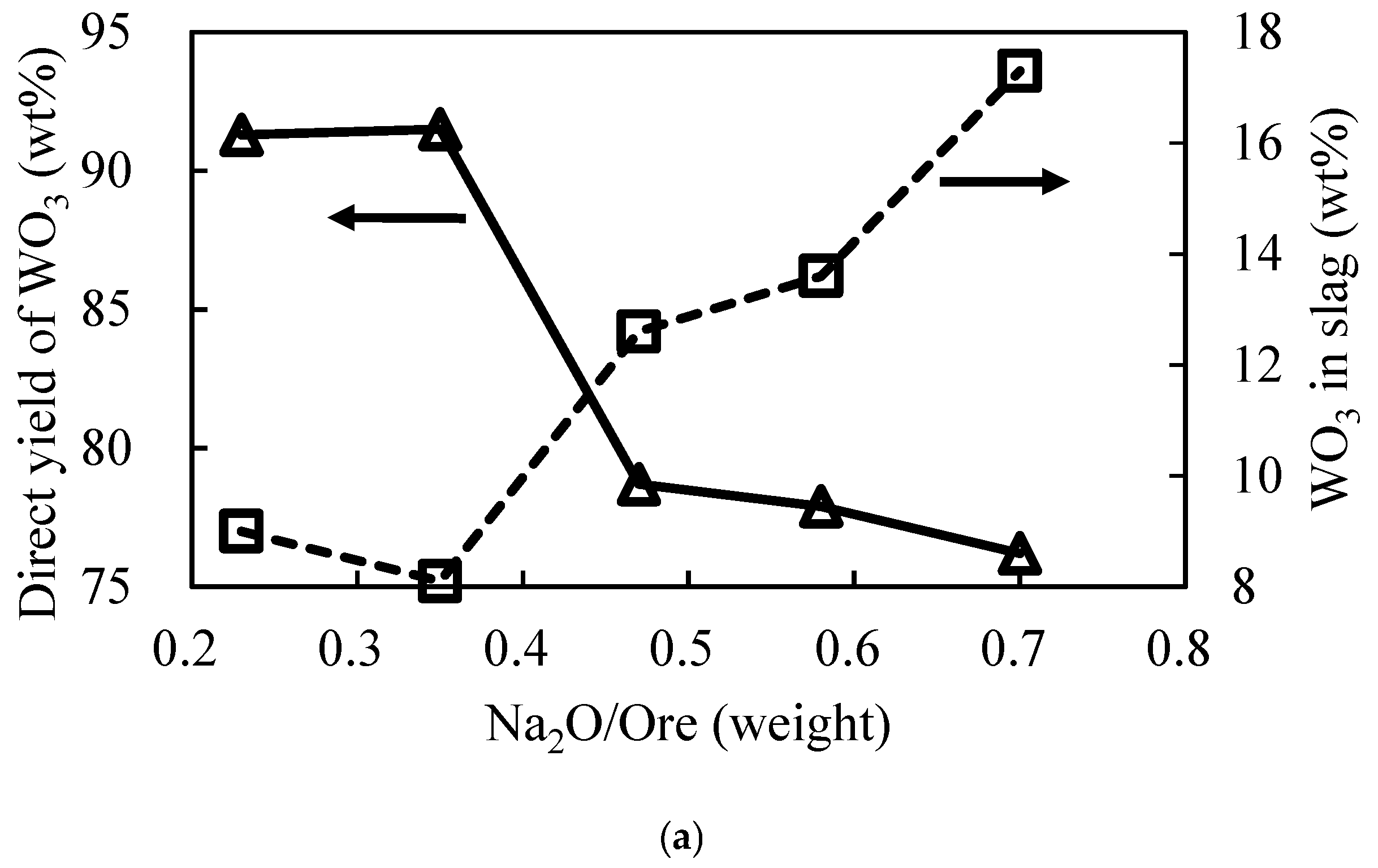
Figure 6 shows the effects of the Na2O/Ore ratio on the direct yield of WO3 and major components in salt (SiO2/Ore mass ratio = 0.6, 1200 °C, 60 min). As shown in Figure 6a, the direct yield of WO3 slightly increases with Na2O/Ore below 0.35 and then decreases with increasing Na2O/Ore. At a Na2O/Ore ratio of 0.7, the direct yield of WO3 decreased to 76.2%. The WO3 content remained in the slag shows an opposite trend to the direct yield of WO3 with increasing Na2O/Ore.
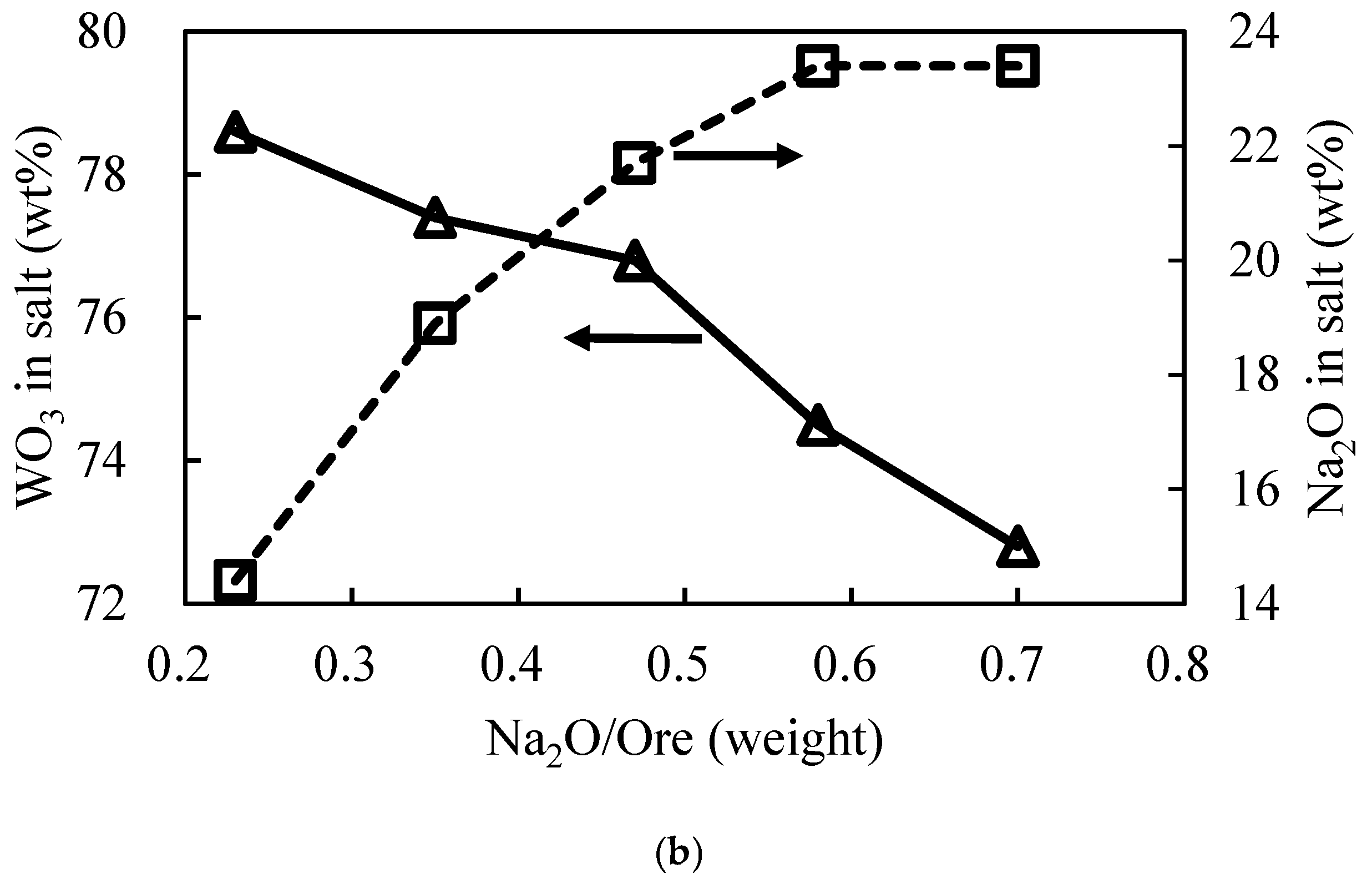
Figure 6b shows that in the salt, Na2O increases and WO3 decreases with increasing Na2O/Ore. When Na2O/Ore increases from 0.23 to 0.7, the WO3 content in salt decreases from 78.6 to 72.8 wt%. It was shown in Figure 2 that 100% WO3 can be recovered theoretically when the Na2O/Ore ratio is above 0.34. The experimental results shown in Figure 6a confirm that a maximum recovery of WO3 can be reached at a Na2O/Ore ratio of 0.35. However, the maximum recovery of WO3 is only 91.5% due to the loss of soluble WO3 in slag. Different from FactSage predictions, an increase in Na2O/Ore ratio above 0.35 decreases the direct yield of WO3 as a result of decreased WO3 content in the salt.
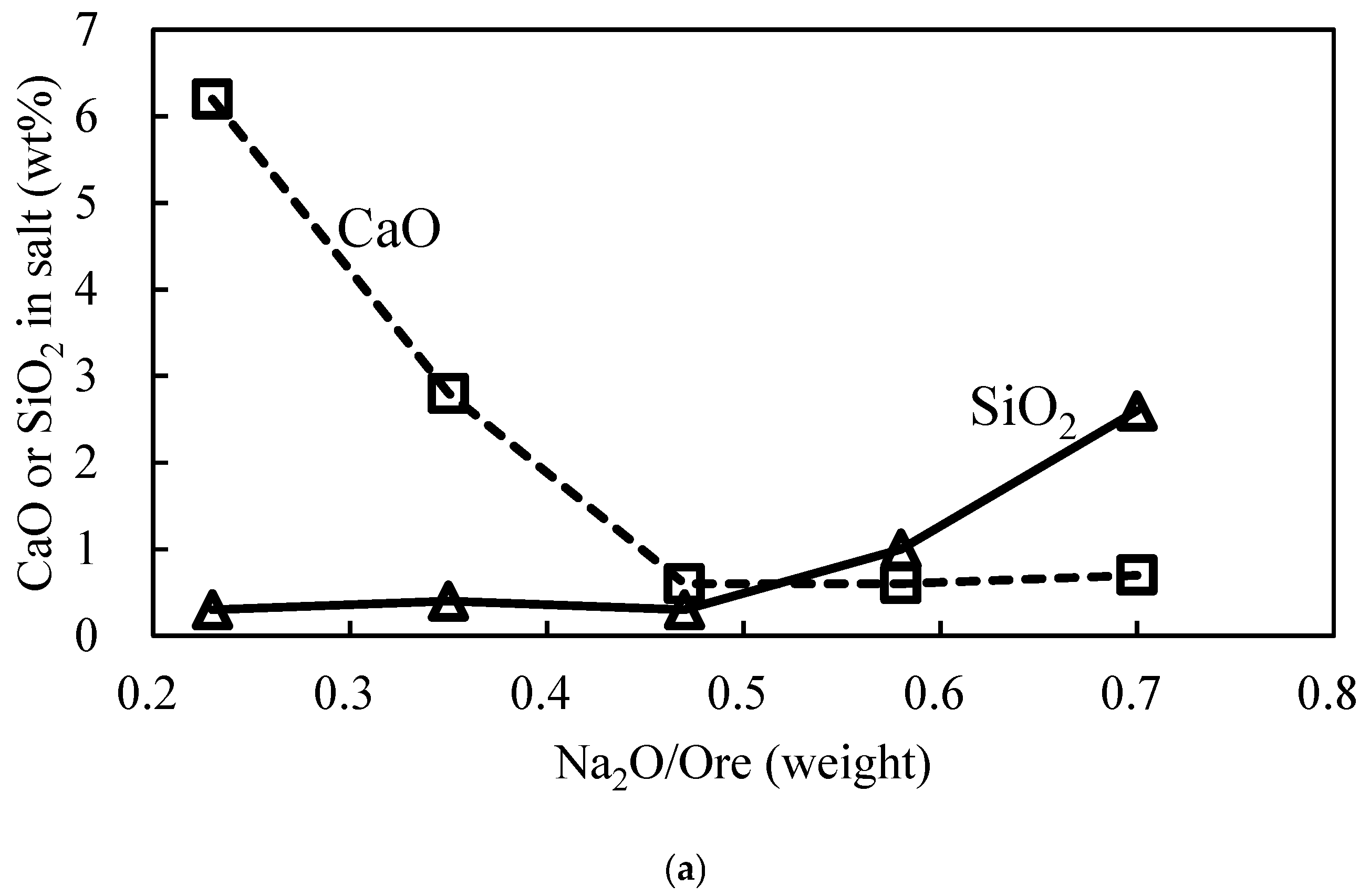
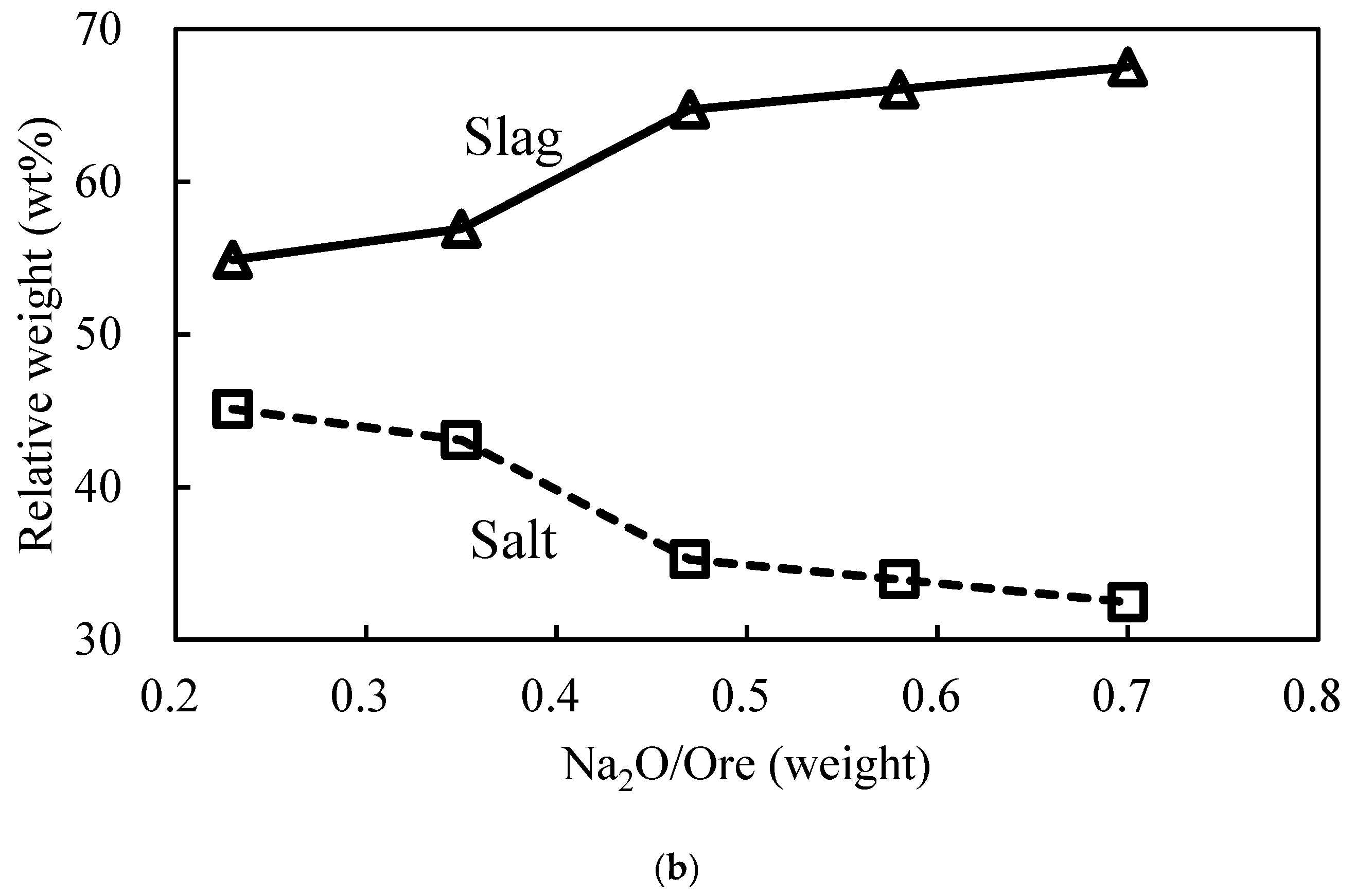
CaO and SiO2 contents in the salt are shown in Figure 7a as a function of Na2O/Ore ratio. At low Na2O/Ore ratios of 0.23 and 0.35, up to 6.2 wt% CaO is present in the salt. The salt is composed of both Na2WO4 and CaWO4. WO3 in CaWO4 (80.5 wt%) is higher than that in Na2WO4 (78.9 wt%). A decrease in WO3 in salt with an increase in Na2O/Ore ratio from 0.23 to 0.47 (Figure 6b) is a result of conversion from CaWO4 to Na2WO4. Above a Na2O/Ore ratio of 0.47, SiO2 content in salt increases with increasing Na2O/Ore ratio accompanying a decrease in WO3 and an increase in Na2O in the salt (Figure 6b). Figure 7b shows that the weight of salt decreases and the weight of slag increases with increasing Na2O/Ore ratio. This indicates that more Na2O is dissolved in the slag than in the salt. It is concluded from Figure 6 and Figure 7 that, if CaO in salt is not an issue and a high direct yield of WO3 is important, a Na2O/Ore ratio of 0.23 is sufficient, which also reduces the cost of the reagent.
An ideal reaction to describe the decomposition of scheelite by sodium oxide in the presence of silica can be shown as the following equation, which is the case predicted by FactSage.
CaWO4 + Na2O + SiO2 → Na2WO4 (salt) + CaO-Na2O-SiO2 (slag)
However, it is seen from Figure 6 and Figure 7 that not only WO3 is present in the slag, but also CaO and SiO2 are present in the salt. Both products, salt and slag, are different between the experiments and predictions. The actual chemical reaction can be represented by the following equation.
CaWO4 + Na2O + SiO2 → Na2O-WO3-CaO-SiO2 (salt) + CaO-Na2O-SiO2-WO3 (slag)
When the amounts of reactants CaWO4 and SiO2 are constant, excess Na2O moves CaO and WO3 from salt to slag. More Na2O enters the slag than the salt, resulting in an increased slag/salt weight ratio.

3.2.2. Effect of SiO2/Ore Mass Ratio on Direct Yield of WO3 and Salt Composition

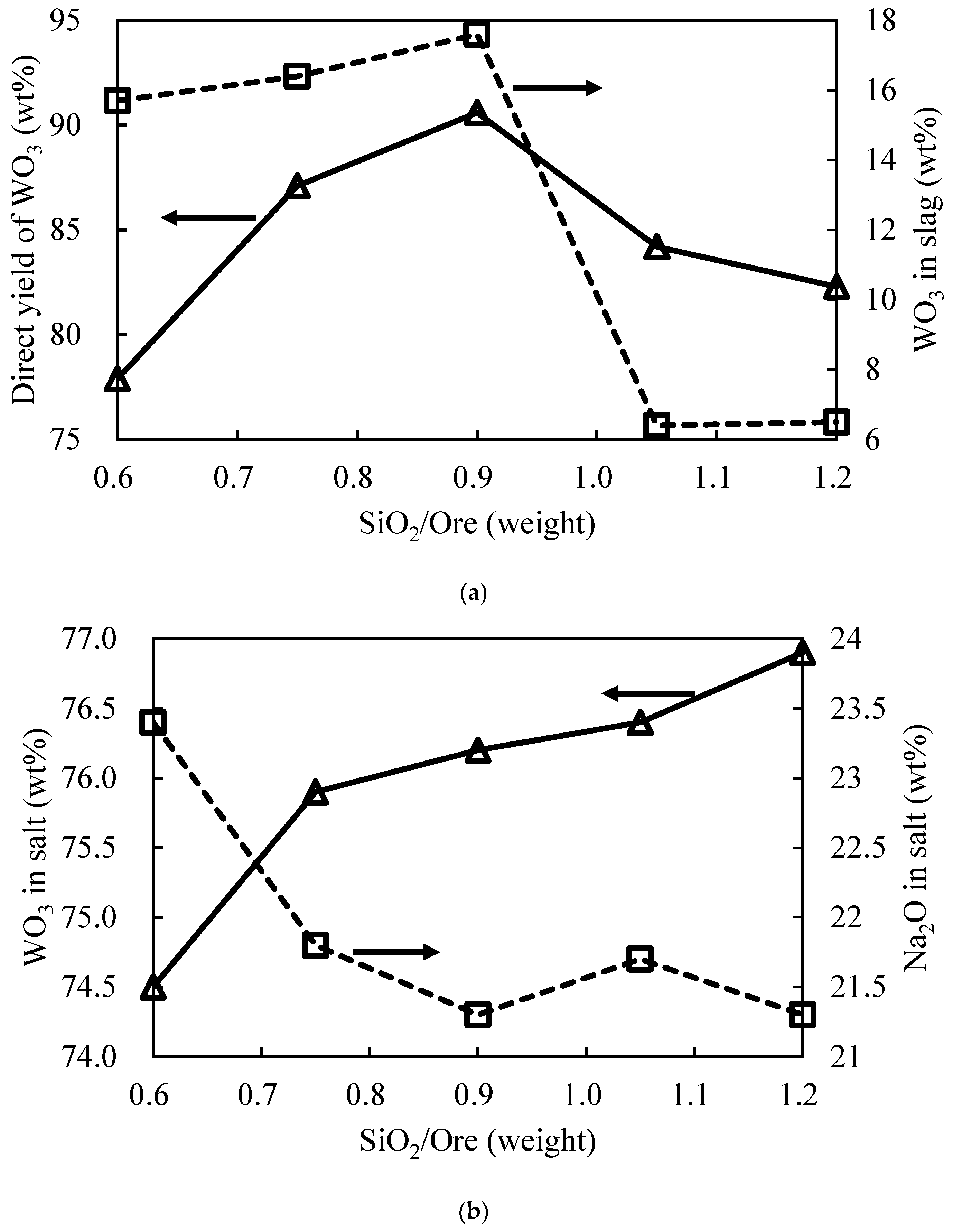
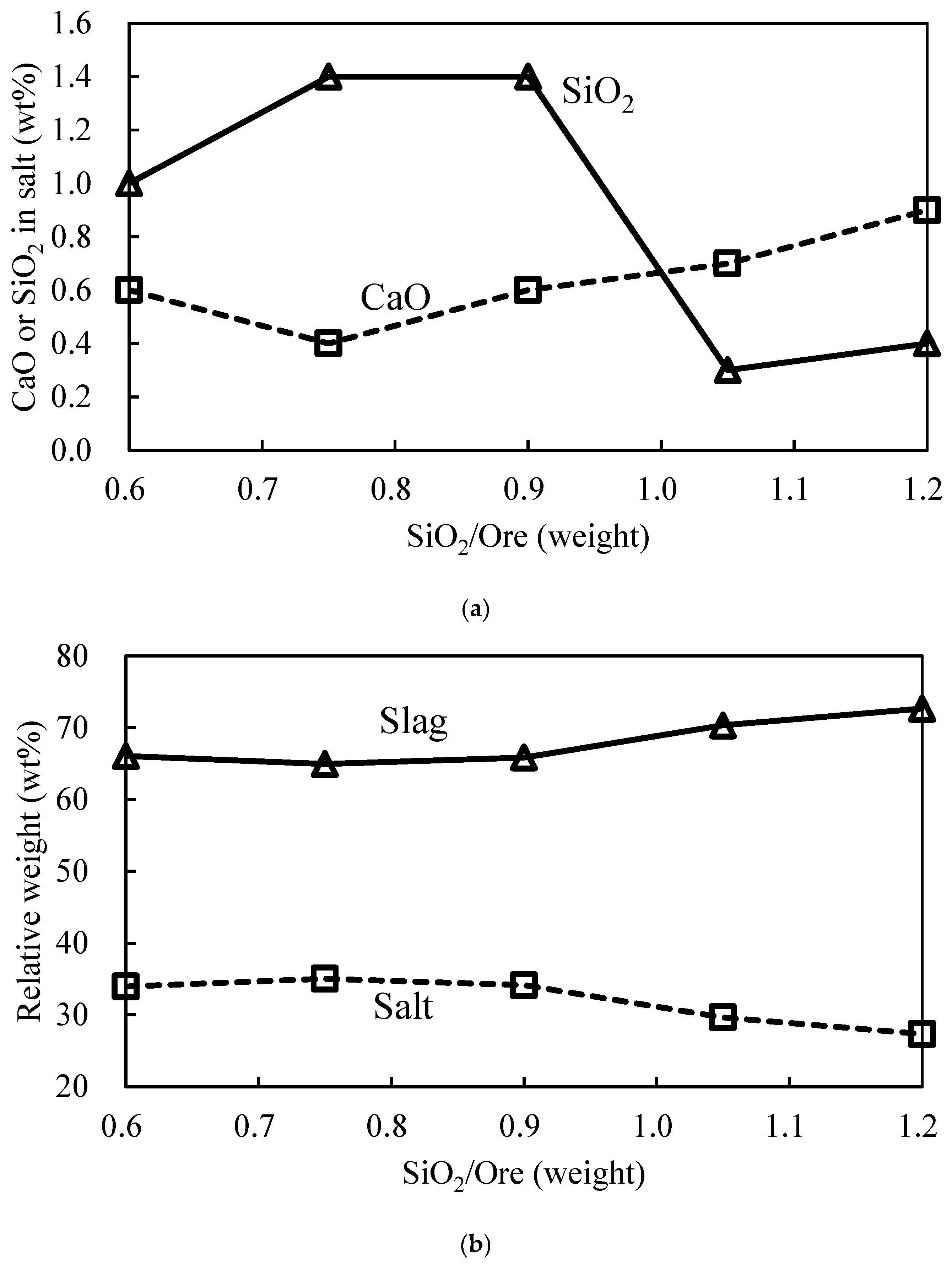
Figure 8 shows the effect of SiO2/Ore mass ratio on the direct yield of WO3 and major components in salt at a fixed Na2O/Ore mass ratio of 0.58, at 1200 °C for 60 min. As shown in Figure 6a, as the SiO2/Ore ratio increases, the direct yield of WO3 first increases rapidly and then decreases slowly. It is shown in Figure 6a that the WO3 content in slag shows an opposite trend to the direct yield of WO3 with increasing Na2O/Ore, which is not the case, as shown in Figure 8a. The reasons can be explained by Figure 8b and Figure 9b. It can be seen from Figure 8b that the WO3 content in salt continuously increases with an increasing SiO2/Ore ratio. Increased SiO2 absorbs more Na2O into the slag resulting in a lower Na2O in the salt. Figure 9b shows that the weight of salt increases with increasing SiO2/Ore ratio when the SiO2/Ore ratio is in the range between 0.6 and 0.9. An increase in the direct yield of WO3 is the result of a high WO3 content in salt and salt weight at a SiO2/Ore ratio from 0.6 to 0.9. Different from the expectation, it can be seen from Figure 9a that increasing SiO2 addition does not always increase the SiO2 content in salt. After reaching a maximum of 1.4 wt%, the SiO2 content in salt decreases to 0.3 wt% when the SiO2/Ore ratio increases from 0.75 to 1.05. A SiO2/Ore ratio of 0.9 seems to be an optimum value where the direct yield of WO3 and WO3 content in salt are around 90% and 76 wt%, respectively. The CaO content in salt, shown in Figure 9a, varies in a small range between 0.4 and 0.9 wt%. As predicted in Figure 3, increased SiO2 results in the formation of CaWO4, which dissolves in the salt, raising the CaO content.
FactSage predictions show in Figure 3 and Figure 4 that, at 1200 °C and a Na2O/Ore mass ratio of 0.35, all tungsten can be recovered in salt when the SiO2/Ore ratio is in the range of 0.21 to 33. However, experimental results shown in Figure 8a demonstrate that a maximum tungsten recovery of 90.6% is obtained at a SiO2/Ore ratio of 0.9, which is much higher than that predicted by FactSage. This indicates that FactSage can predict certain reaction trends to support the experimental plan. Reliable predictions by the thermodynamic model require an advanced database optimized by accurate experimental data.

3.2.3. Effect of Temperature on Direct Yield of WO3 and Salt Composition

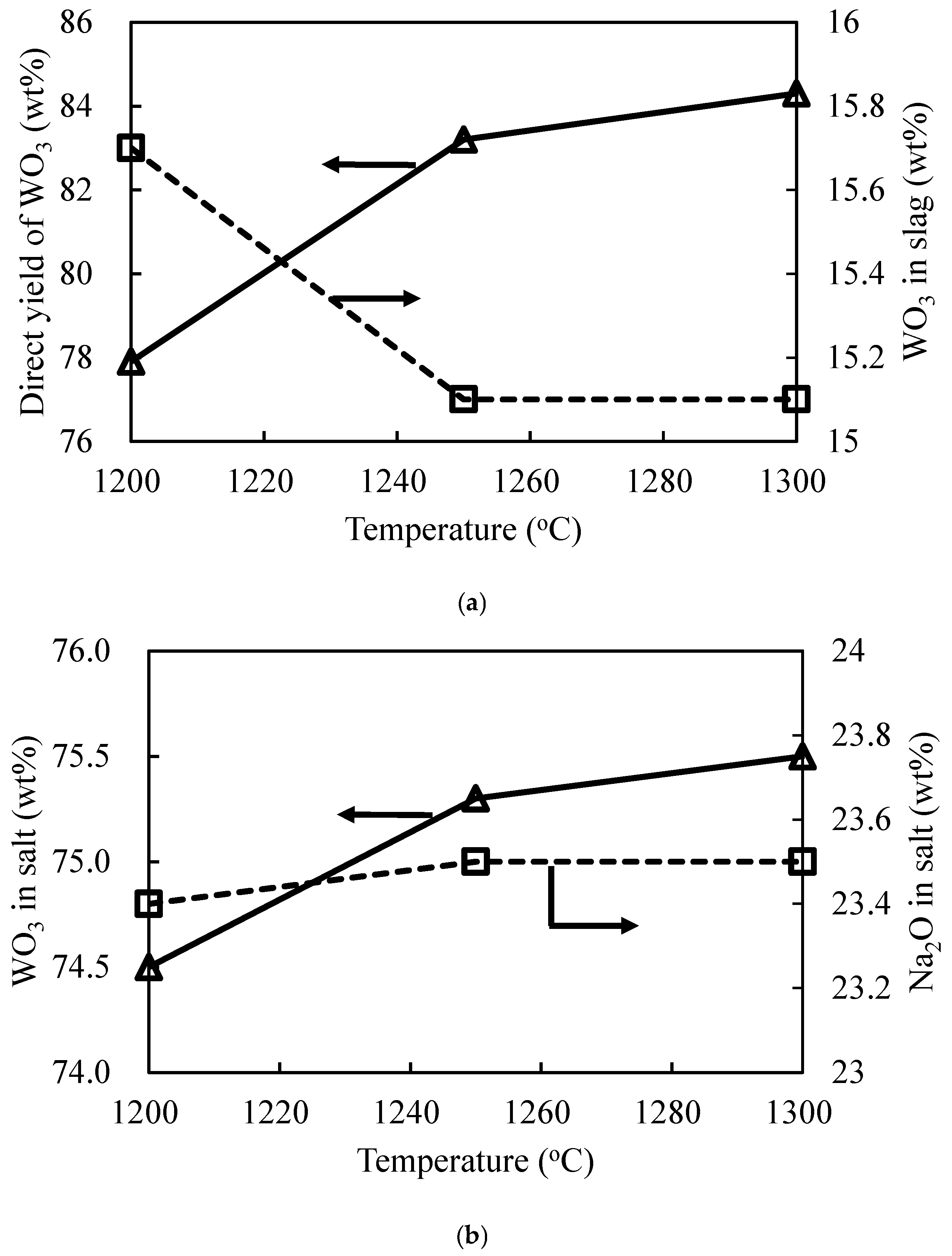
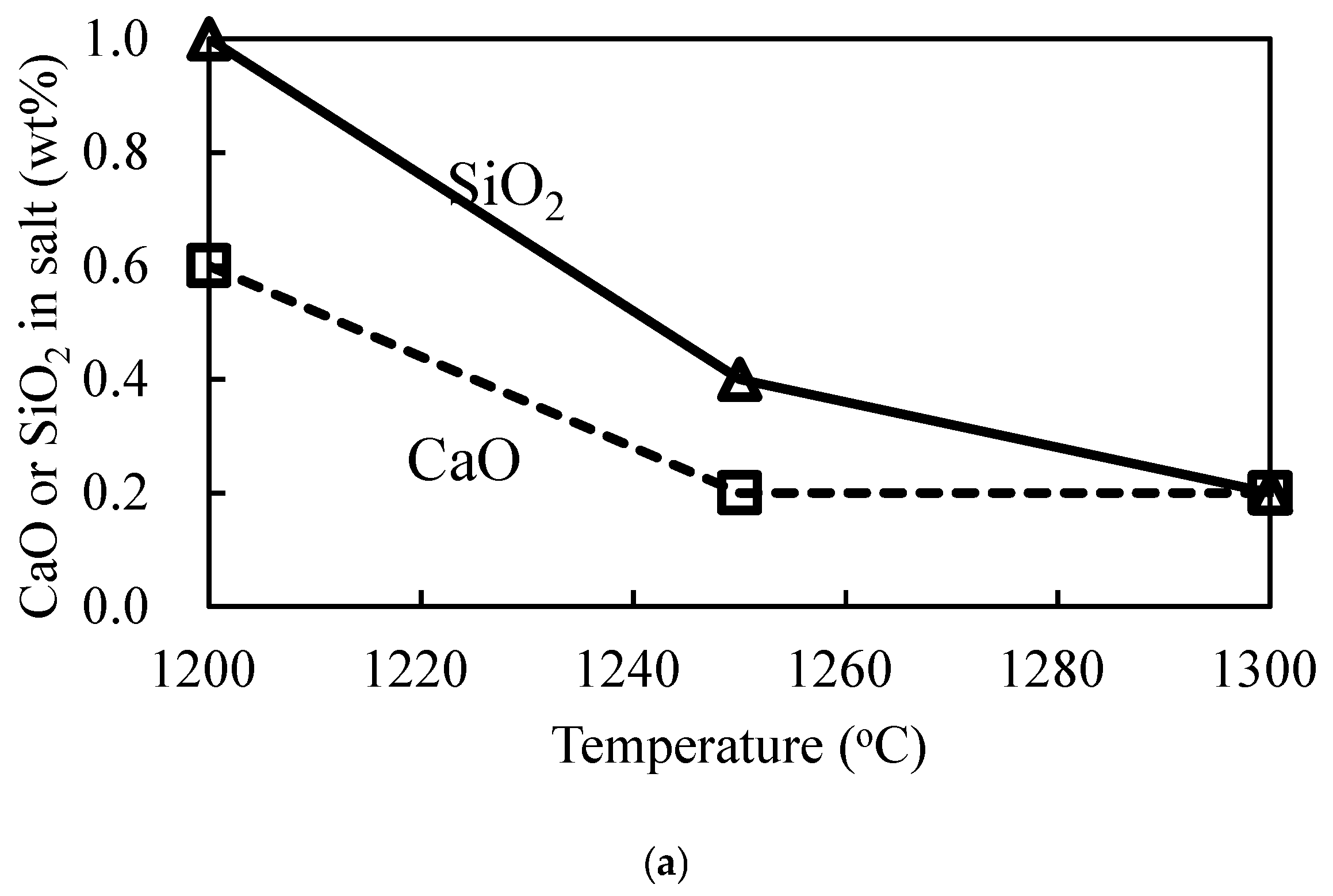
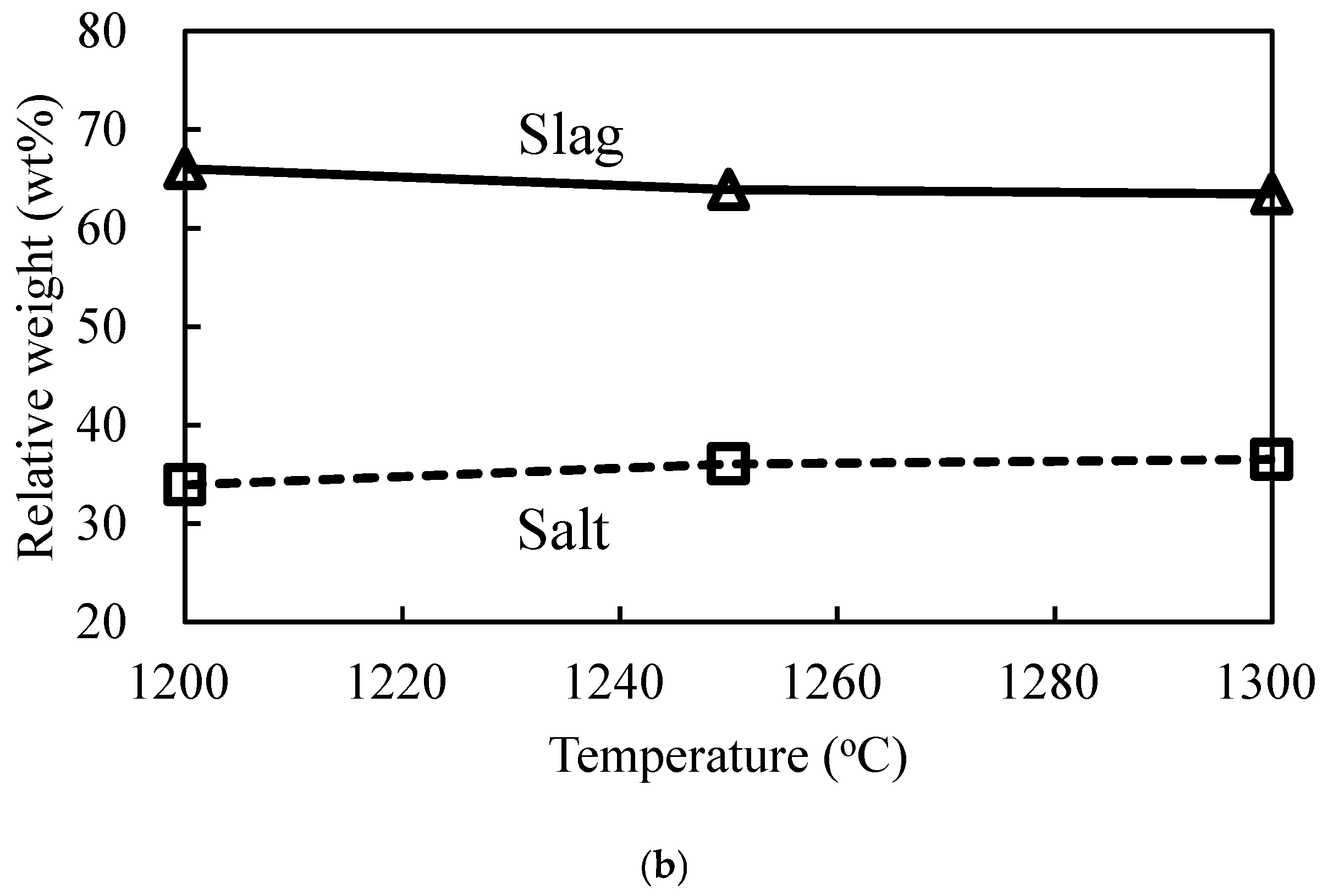
Figure 10 shows the effects of temperature on the direct yield of WO3 and major components in salt (Na2O/Ore mass ratio = 0.58, SiO2/Ore mass ratio = 0.6, reaction time = 60 min). Increasing the temperature from 1200 °C to 1250 °C significantly increases the direct yield of WO3 from 77.9 to 83.2%. Further increase in temperature to 1300 °C only slightly increases the direct yield of WO3 from 83.2% to 84.3%. On the other hand, both WO3 and Na2O contents in salt increase with increasing temperature, but the increment in WO3 is more significant than Na2O. Figure 11 shows that SiO2 and CaO contents in salt decrease with increasing temperature. The weight of salt increases slightly with increasing temperature, as shown in Figure 11b. Considering the direct yield of WO3, the purity of sodium tungstate, and energy consumption, 1250 °C seems to be an optimum temperature for economic purposes.

3.2.4. Effect of Reaction Time on Direct Yield of WO3 and Salt Composition

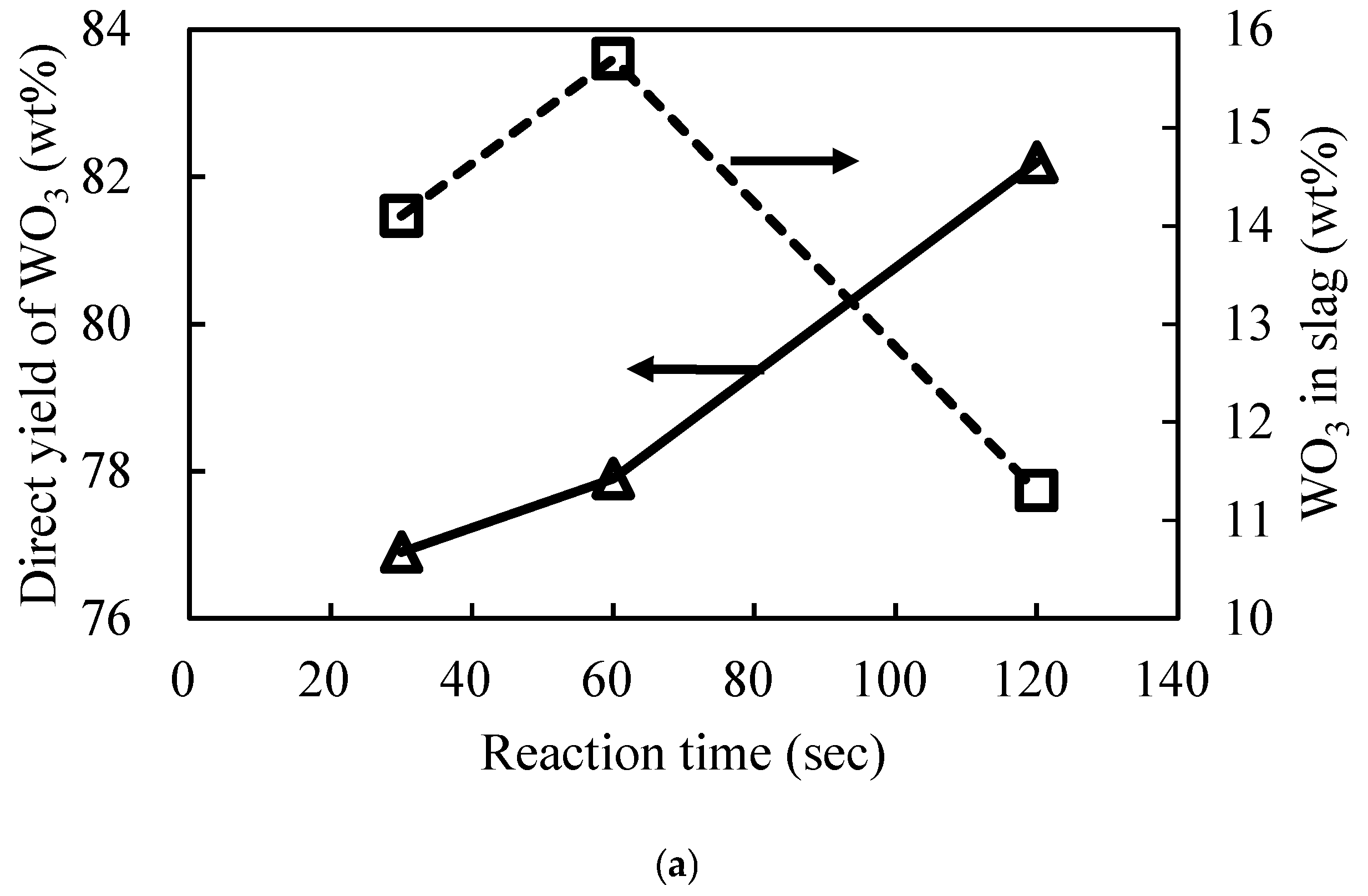
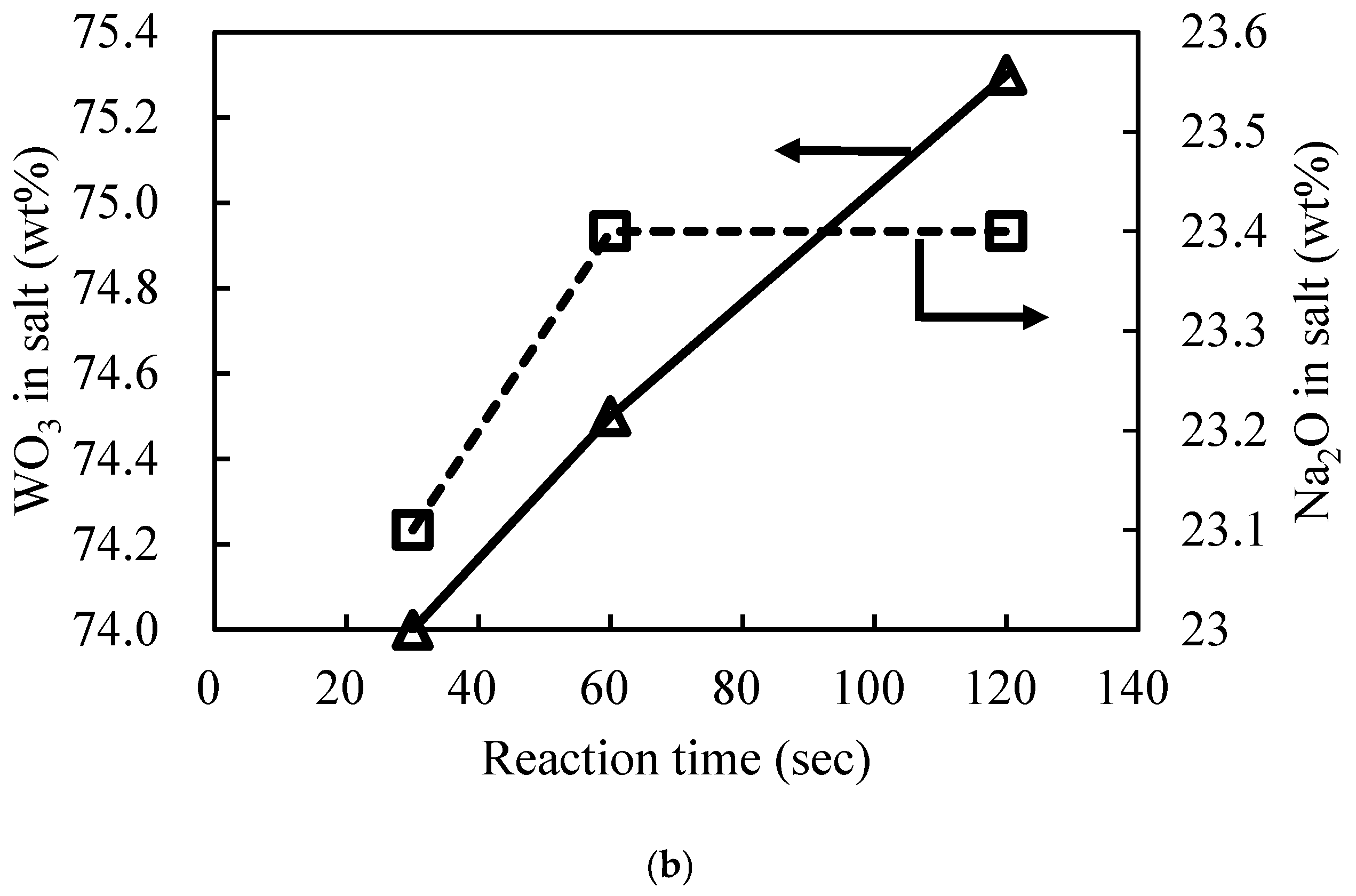
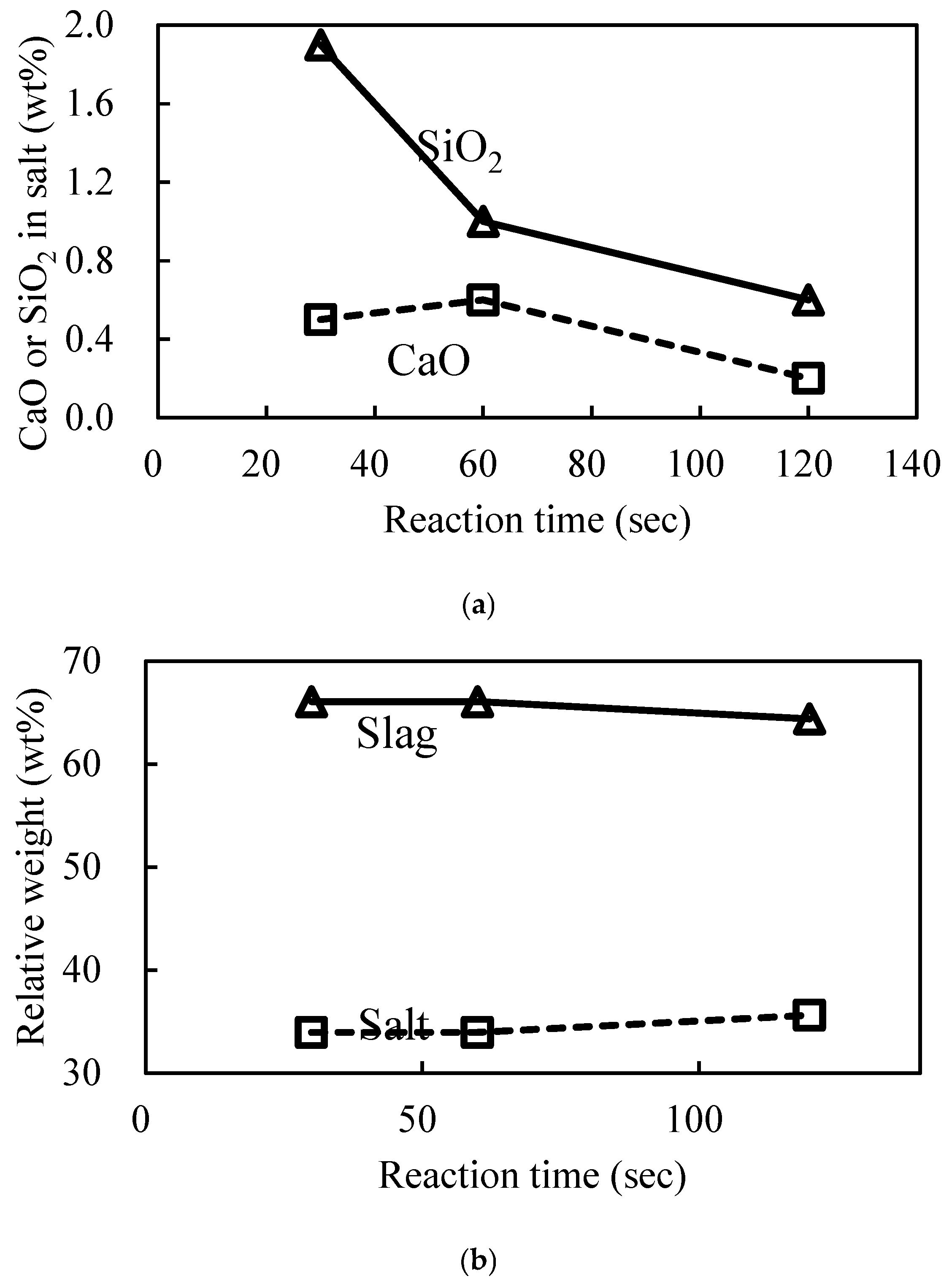
The effect of reaction time on the direct yield of WO3 and major components in salt is shown in Figure 12, where Na2O/Ore mass ratio = 0.58, SiO2/Ore mass ratio = 0.6, reaction temperature = 1200 °C. The direct yield of WO3 and WO3 content in salt increase continuously with increasing reaction time. Extending the reaction time from 30 min to 120 min increases the direct yield of WO3 from 76.9% to 82.2% and raises the WO3 content in salt from 74% to 75.2%. Appropriately extending the reaction time facilitates the separation of slag from salt. The impurities, CaO and SiO2 contents in salt, show a decreasing trend with increasing reaction time, as shown in Figure 13a. A slight increase in salt weight is also observed with increasing reaction time, as shown in Figure 13b. Overall, a 120 min reaction time at 1200 °C seems to be necessary to achieve a high direct yield of WO3 and a high WO3 content in salt. At high temperatures such as 1250 °C, a short reaction time could be sufficient, which needs to be confirmed in the future.

4. Conclusions

High-temperature experiments for extracting tungsten from scheelite were conducted in air to systematically investigate the effects of Na2O/Ore mass ratio, SiO2/Ore mass ratio, reaction temperature, and reaction time on the direct yield of WO3 and the WO3 content in salt. FactSage 8.4 was used to predict high-temperature reactions, which assisted the experimental plan.
In the scheelite smelting process, Na2O and SiO2 were used to decompose scheelite and produce Na2WO4-based salt directly. WO3 content in the salt is in the range of 72.8–78.6 wt%, which corresponds to 92.3%–99.6% Na2WO4. Iron, manganese, and arsenic from scheelite are all reported to be present in the slag, together with CaO, Na2O, and SiO2. All sulphur and small amounts of CaO and SiO2 are present in salt. A minimum Na2O/Ore was required to fully decompose CaWO4. However, excess Na2O decreased the direct yield of WO3 and WO3 content in salt. An optimum SiO2/Ore range of 0.9 was determined to obtain 90% direct yield of WO3 and 76.2 wt% WO3 in salt. Both the direct yield of WO3 in salt and the WO3 content in salt increase with increasing temperature. Extending the reaction time can increase the direct yield of WO3 and WO3 content in salt.
Comprehensively considering the direct yield and purity of sodium tungstate, and the energy consumption and productivity, the optimal conditions for scheelite smelting are recommended to be a Na2O/Ore mass ratio of 0.3–0.4, a SiO2/Ore mass ratio of 0.9, 1250 °C, and 120 min. This study provides a novel research method and detailed information for the production of low-cost sodium tungstate directly from scheelite.

Funding

This research was supported by the start-up funding provided by Jiangxi University of Science and Technology.

Data Availability Statement

Data will be made available upon request.

Acknowledgments

The author would like to thank Liqiang Xu for carrying out high-temperature experiments and preparing the samples for XRF analysis.

Conflicts of Interest

The author declares no conflicts of interest.

References

  1. Gislev, M.; Grohol, M.; Mathieux, F.; Ardente, F.; Bobba, S.; Nuss, P. European Commission: Report on Critical Raw Materials and the Circular Economy; Publications Office of the European Union: Luxembourg, 2018. [Google Scholar]
  2. Zhu, X.; Li, X.; Zhang, H.; Huang, J. International market power analysis of China’s tungsten export market—From the perspective of tungsten export policies. Resour. Policy 2019, 61, 643–652. [Google Scholar] [CrossRef]
  3. Zhao, W.; Zhou, M.; Li, Y.; Zhao, Z.; Gao, J. Genetic types, mineralization styles, and geodynamic settings of Mesozoic tungsten deposits in South China. J. Asian Earth Sci. 2017, 137, 109–140. [Google Scholar] [CrossRef]
  4. Yang, Q.; Yang, J.; Yang, H.; Ni, G.; Ruan, J. Synthesis of ultrafine WC-10Co composite powders with carbon boat added and densification by sinter-HIP. Int. J. Refract. Met. Hard Mater. 2017, 62, 104–109. [Google Scholar] [CrossRef]
  5. Shen, L.; Li, X.; Lindberg, D.; Taskinen, P. Tungsten extractive metallurgy: A review of processes and their challenges for sustainability. Miner. Eng. 2019, 142, 105934. [Google Scholar] [CrossRef]
  6. Gedgagov, E.I.; Besser, A.D.; Yanakov, V.Y.; Smolyarchuk, V.P. Analyzing the raw materials market and methods for processing tungsten concentrates to obtain competitive products. Theor. Found. Chem. Eng. 2009, 43, 529. [Google Scholar] [CrossRef]
  7. Premchand. Processing of low grade tungsten ore concentrates by hydrometallurgical route with particular reference to India. Bull. Mater. Sci. 1996, 19, 295. [Google Scholar] [CrossRef]
  8. Gaur, R.S. Modern Hydrometallurgical Production Methods for Tungsten. JOM 2006, 58, 45–49. [Google Scholar] [CrossRef]
  9. Furberg, A.; Arvidsson, R.; Molander, S. Environmental Life Cycle Assessment of Cemented Carbide (WC-Co) Production. J. Clean. Prod. 2019, 209, 1126–1138. [Google Scholar] [CrossRef]
  10. Orefice, M.; Nguyen, V.T.; Raiguel, S.; Jones, P.T.; Binnemans, K. Solvometallurgical Process for the Recovery of Tungsten from Scheelite. Ind. Eng. Chem. Res. 2022, 61, 754–764. [Google Scholar] [CrossRef]
  11. Xu, L.; Zhao, B. Extraction of Sodium Tungstate from Tungsten Ore by Pyrometallurgical Smelting. Metals 2023, 13, 312. [Google Scholar] [CrossRef]
  12. Stemprok, M. Geological significance of immiscibility in fused silicate systems containing tungsten and molybdenum. Int. Geol. Rev. 1975, 17, 1306–1316. [Google Scholar] [CrossRef]
  13. Gomes, J.M.; Raddatz, A.E.; Carnahan, T.G. Preparation of tungsten carbide by gas sparging tungstate melts. JOM 1985, 37, 29–32. [Google Scholar] [CrossRef]
  14. Malyshev, V.V.; Gab, A.I. Resource-saving methods for recycling waste tungsten carbide-cobalt cermets and extraction of tungsten from tungsten concentrates. Theor. Found. Chem. Eng. 2007, 41, 436–441. [Google Scholar] [CrossRef]
  15. Gostishchev, V.V.; Boiko, V.F. Obtaining Tungsten Powder from the Scheelite Concentrate in ion melts. Theor. Found. Chem. Eng. 2008, 42, 728–730. [Google Scholar] [CrossRef]
  16. Gostishchev, V.V.; Ri, K.; Ri, E.K.; Seredyuk, A.V. Preparation of tin and tungsten from mineral concentrates in ionic melts. Metallurgist 2015, 59, 526–534. [Google Scholar] [CrossRef]
  17. Malyshev, V.V.; Uskova, N.N.; Gab, A.I. High-temperature selective extraction of Tungsten from Tungsten concentrates in ionic melts. Russ. J. Inorg. Chem. 2002, 47, 1622–1623. [Google Scholar]
  18. Zhao, B.; Su, K.; Ma, X. Phase Equilibria in the Na2O-WO3 System. Ceram. Int. 2022, 48, 15098–15104. [Google Scholar] [CrossRef]
  19. Gadalla, A.M.; Abadir, M.F.; Kasem, M.J.; Salem, F.T. Kinetics of pyrolysis of some fire retardants and treated fabrics. AlChE J. 1984, 30, 50–55. [Google Scholar] [CrossRef]
  20. Razali, N.A.M.; Salleh, W.N.W.; Aziz, F.; Lau, W.J.; Yusof, N.; Ismail, A.F. Synthesis and Characterization of Sodium Tungstate: Investigation of Energy Storage Mechanism Effect and Its Photocatalytic Application. AIP Conf. Proc. 2022, 2610, 020006. [Google Scholar] [CrossRef]
  21. Bobanova, Z.I.; Grabco, D.Z.; Danitse, Z.; Mirgorodskaya, Y.; Dikusar, A.I. Electrodeposition and properties of an iron-tungsten alloy. Surf. Eng. Appl. Electrochem. 2007, 43, 239–247. [Google Scholar] [CrossRef]
  22. Dauletbakova, A.; Baimbetov, B.; Tazhiyev, Y.; Moldabayeva, G. Investigation of the Electrodialysis of Sodium Tungstate Solutions for the Production of Tungstic Acid. Appl. Sci. 2025, 15, 7033. [Google Scholar] [CrossRef]
  23. Zhao, B.; Su, K.; Ma, X. Experimental Determination of Phase Equilibria in the Na2O-SiO2-WO3 System. Metals 2021, 11, 2014. [Google Scholar] [CrossRef]
  24. Xu, L.; Zhao, B. A fundamental study on the preparation of sodium tungstate from wolframite via the smelting process. Metals 2024, 14, 299. [Google Scholar] [CrossRef]
  25. Xue, Z. Current Situation and Research Progress of Tungsten Ore Development and Utilization. Adv. Geosci. 2025, 15, 382–391. [Google Scholar] [CrossRef]
  26. Yu, J.; Yang, Y.; Chen, Q.; Chen, S.; Chen, X.; Zhang, R. Deposit Types, Spatial Distribution, Development, and Utilization of Tungsten Deposits in China. Acta Geosci. Sin. 2025, 46, 945–953. [Google Scholar]
  27. Bale, C.W.; Bélisle, E.; Chartrand, P.; Decterov, S.A.; Eriksson, G.; Gheribi, A.E.; Hack, K.; Jung, I.H.; Kang, Y.B.; Melançon, J.; et al. FactSage thermodynamic software and databases 2010–2016. Calphad 2016, 55, 35–53. [Google Scholar] [CrossRef]
Figure 1. Flow chart of the scheelite smelting experiment.
Minerals 16 00090 g001
Figure 2. Effect of Na2O on the weight of phases calculated by Factsage 8.4, with 100 g ore shown in Table 1, 1200 °C in air, SiO2/Ore = 0.3.
Minerals 16 00090 g002
Figure 3. Effect of SiO2 on the weight of phases calculated by Factsage 8.4, with 100 g ore as shown in Table 1, 1200 °C in air, Na2O/Ore = 0.35.
Minerals 16 00090 g003
Figure 4. Effect of SiO2 on percentage of liquid in slag calculated by Factsage 8.4, with 100 g ore as shown in Table 1, 1200 °C in air, Na2O/Ore = 0.35.
Minerals 16 00090 g004
Figure 5. Typical macroscopic photographs of slow-cooled samples after smelting at 1200 °C in air.
Minerals 16 00090 g005
Figure 6. Effect of Na2O/Ore on direct yield of tungsten and major components in salt after smelting at 1200 °C for 60 min, with SiO2/Ore = 0.3: (a) direct yield of WO3 and WO3 in slag, (b) WO3 and Na2O contents in salt. The symbols are experimental data shown in Table 3 and Table 4 and the lines are the trends of the data.
Minerals 16 00090 g006aMinerals 16 00090 g006b
Figure 7. CaO and SiO2 contents in salt (a) and relative weight of salt and slag (b) as a function of Na2O/Ore ratio, at SiO2/Ore = 0.3, 1200 °C, and 60 min. The symbols are experimental data shown in Table 3 and Table 4 and the lines are the trends of the data.
Minerals 16 00090 g007aMinerals 16 00090 g007b
Figure 8. Effect of SiO2/Ore on direct yield of tungsten and major components in salt after smelting at 1200 °C for 60 min, with Na2O/Ore = 0.58: (a) direct yield of WO3 and WO3 in slag, (b) WO3 and Na2O contents in salt. The symbols are experimental data shown in Table 3 and Table 4 and the lines are the trends of the data.
Minerals 16 00090 g008
Figure 9. Effect of SiO2/Ore on CaO and SiO2 contents in salt (a) and relative weight of salt and slag (b) at a fixed Na2O/Ore = 0.58, 1200 °C, for 60 min. The symbols are experimental data shown in Table 3 and Table 4 and the lines are the trends of the data.
Minerals 16 00090 g009
Figure 10. Effect of temperature on direct yield of tungsten and major components in salt after smelting for 60 min, with Na2O/Ore = 0.58, SiO2/Ore = 0.3: (a) direct yield of WO3 and WO3 in slag, (b) Na2O and WO3 contents in salt. The symbols are experimental data shown in Table 3 and Table 4 and the lines are the trends of the data.
Minerals 16 00090 g010
Figure 11. Effect of temperature on (a) CaO and SiO2 contents in salt and (b) relative weight of salt and slag, Na2O/Ore = 0.58, SiO2/Ore = 0.3, for 60 min. The symbols are experimental data shown in Table 3 and Table 4 and the lines are the trends of the data.
Minerals 16 00090 g011aMinerals 16 00090 g011b
Figure 12. Effect of reaction time on (a) direct yield of WO3 and WO3 in slag, (b) Na2O and WO3 contents in salt, where Na2O/Ore = 0.58, SiO2/Ore = 0.3, for 60 min. The symbols are experimental data shown in Table 3 and Table 4 and the lines are the trends of the data.
Minerals 16 00090 g012aMinerals 16 00090 g012b
Figure 13. Effect of reaction time on (a) CaO and SiO2 contents in salt and (b) relative weight of salt and slag, where Na2O/Ore = 0.58, SiO2/Ore = 0.3, for 60 min. The symbols are experimental data shown in Table 3 and Table 4 and the lines are the trends of the data.
Minerals 16 00090 g013
Table 1. Composition of scheelite used in this study, measured by XRF (wt%).
WO3CaOFe2O3MnOSO3As2O3SiO2
71.224.10.50.20.70.23.1
Table 2. Experimental conditions for scheelite smelting in air.
NumberOre (g)Temp (°C)Time (min)Na2CO3 (g)SiO2 (g)Na2O/Ore
C1101200601060.58
C2101200601090.58
C310120060860.47
C4101200601260.70
C5101200301060.58
C61012001201060.58
C7101300601060.58
C8101250601060.58
C910120060107.50.58
C1010120060660.35
C1110120060460.23
C12101200601010.50.58
C131012006010120.58
Table 3. Weight and composition (wt%) of slag.
Exp. No.Weight (g)WO3CaOFe2O3MnOSO3As2O3SiO2Na2O
C114.413.614.00.40.10.00.243.328.4
C216.46.712.40.50.10.00.256.124.0
C313.412.615.20.50.10.00.247.024.4
C415.614.913.20.50.10.00.239.331.8
C514.414.114.10.50.10.00.242.728.3
C614.111.314.80.50.10.00.244.528.6
C713.910.814.90.50.10.00.245.328.2
C814.010.914.80.50.10.00.244.928.6
C915.29.013.70.50.10.00.250.725.8
C1011.18.116.70.60.10.00.356.617.6
C1110.19.015.70.70.10.00.362.411.8
C1218.56.411.10.40.10.00.258.323.5
C1320.26.510.20.40.10.00.260.721.9
Table 4. Weight and composition (wt%) of salt and direct yield of WO3.
Exp. No.Weight (g)WO3CaOFe2O3MnOSO3As2O3SiO2Na2ODirect Yield of WO3 (%)
C17.474.50.60.00.00.50.01.023.477.9
C28.576.20.60.00.00.50.01.421.390.6
C37.376.80.60.00.00.60.00.321.778.7
C47.572.80.70.00.00.50.02.623.476.2
C57.474.00.50.00.00.50.01.923.176.9
C67.875.30.20.00.00.50.00.623.482.2
C78.075.50.20.00.00.60.00.223.584.3
C87.975.30.20.00.00.60.00.423.583.2
C98.275.90.40.00.00.50.01.421.887.1
C108.477.42.80.00.00.50.00.418.991.5
C118.378.66.20.00.00.50.00.314.491.3
C127.876.40.70.40.00.50.00.321.784.2
C137.676.90.90.00.00.50.00.421.382.3
Disclaimer/Publisher’s Note: The statements, opinions and data contained in all publications are solely those of the individual author(s) and contributor(s) and not of MDPI and/or the editor(s). MDPI and/or the editor(s) disclaim responsibility for any injury to people or property resulting from any ideas, methods, instructions or products referred to in the content.