Article

Spatial–Temporal Difference of Urban Carbon Budget and Carbon Compensation Optimization Partition from the Perspective of Spatial Planning


1
Research Institute of Climatic and Environmental Governance, School of Geographic Science, Nanjing University of Information Science and Technology, Nanjing 210044, China
2
Institute for Disaster Risk Management, School of Geographic Science, Nanjing University of Information Science and Technology, Nanjing 210044, China
3
School of Architecture and Urban Planning, Nanjing University, Nanjing 210044, China
*
Author to whom correspondence should be addressed.
Land 2025, 14(2), 414; https://doi.org/10.3390/land14020414
Submission received: 24 December 2024 / Revised: 26 January 2025 / Accepted: 27 January 2025 / Published: 17 February 2025
(This article belongs to the Section Land Use, Impact Assessment and Sustainability)

Abstract

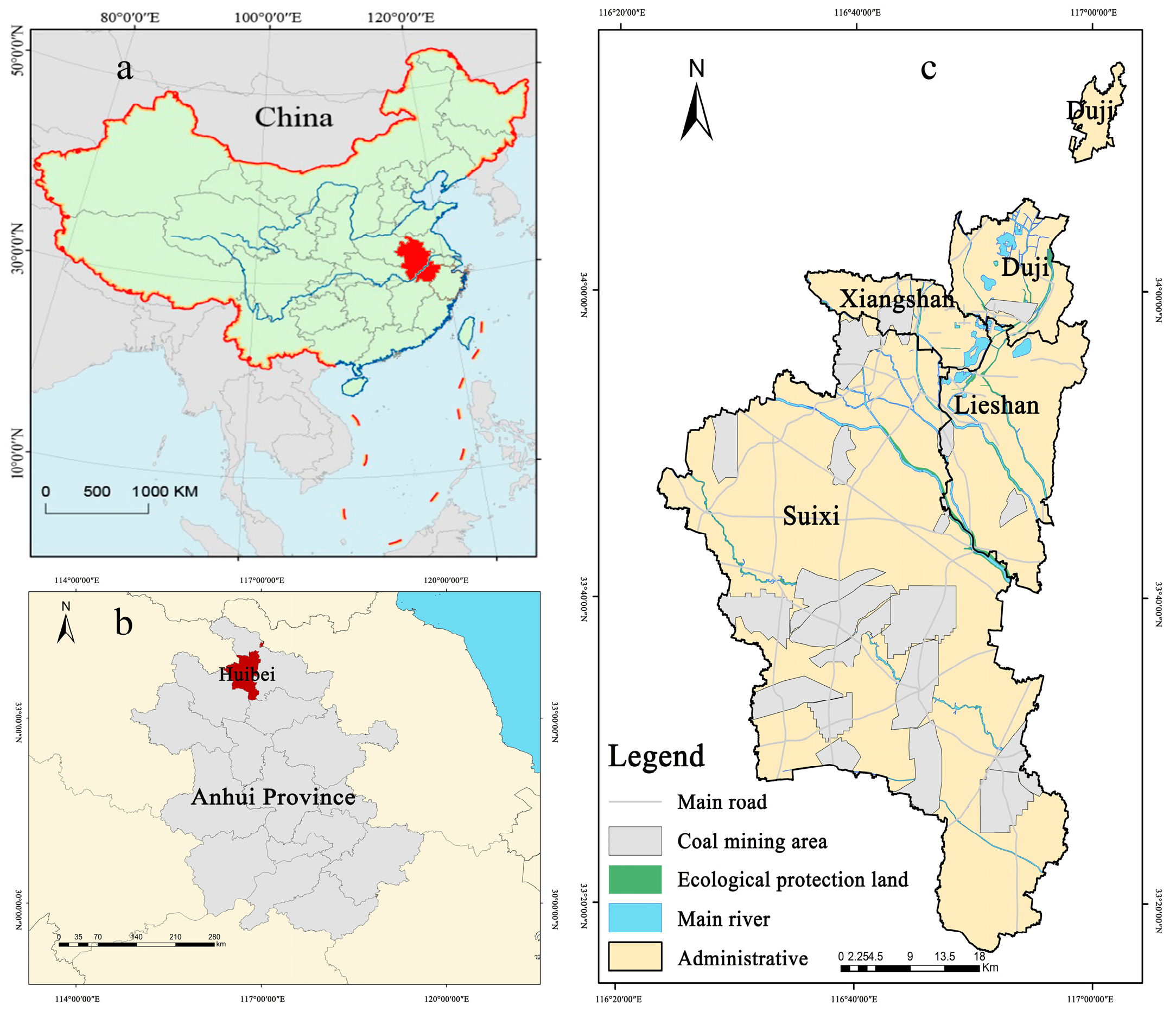
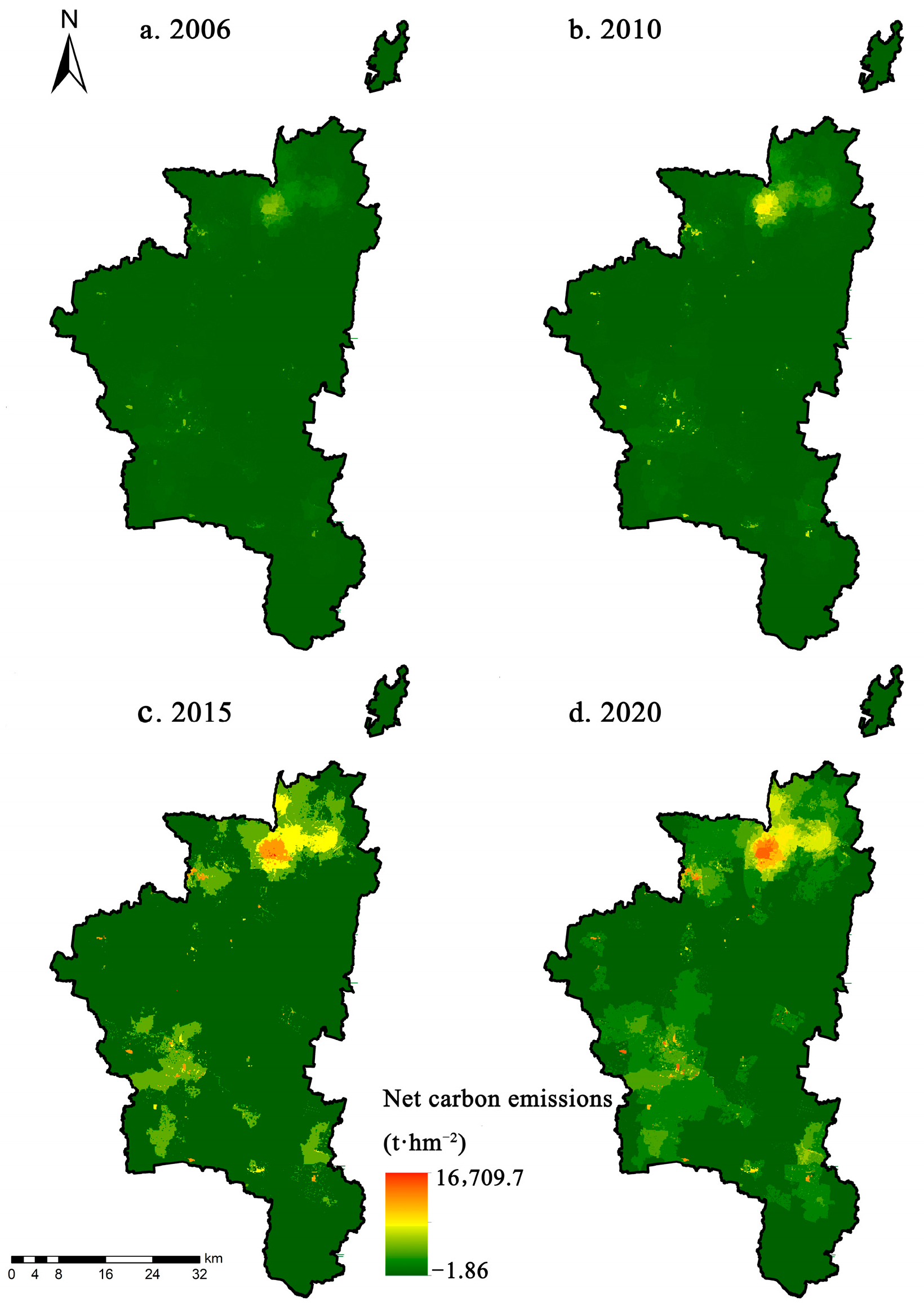
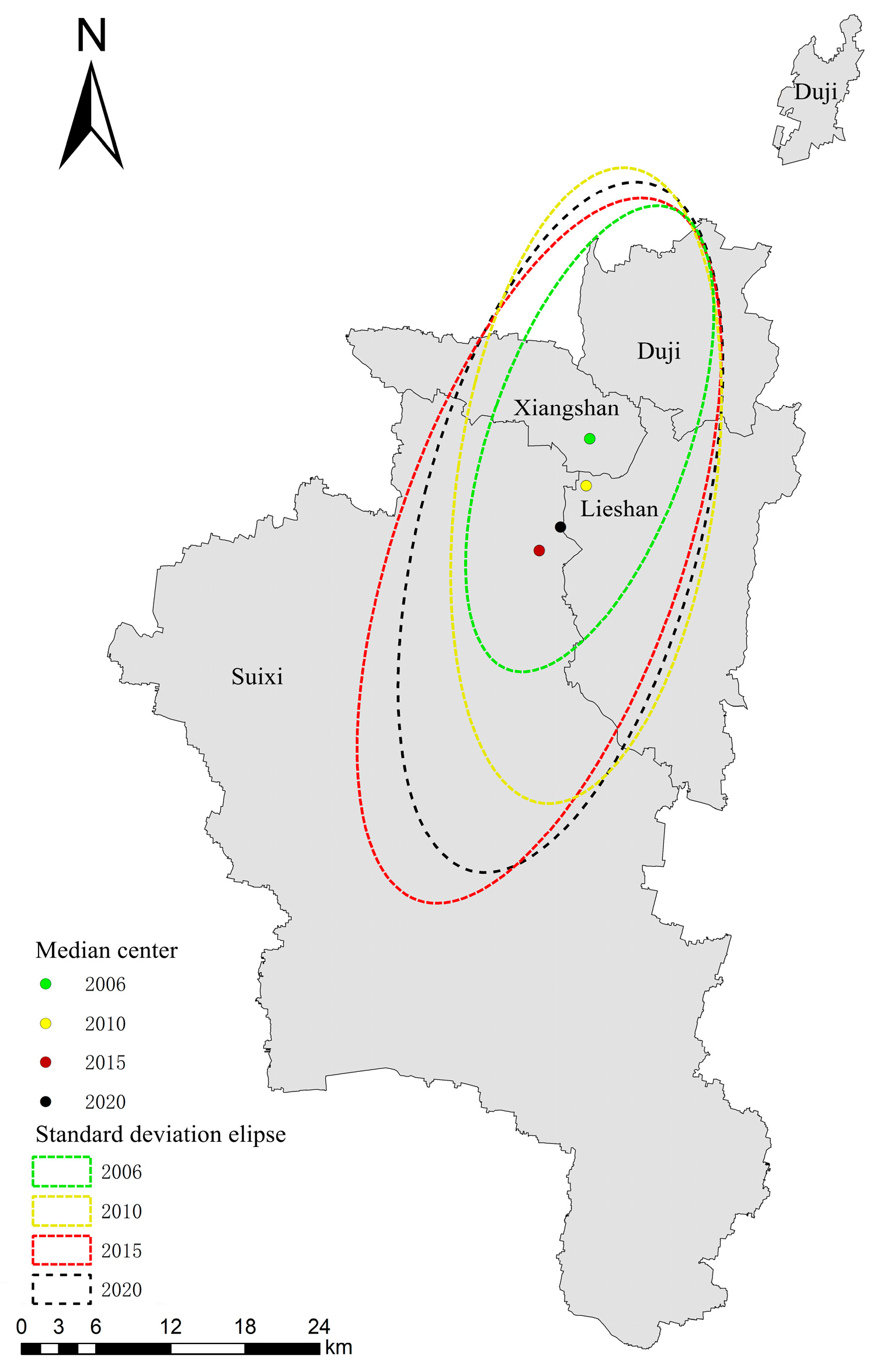
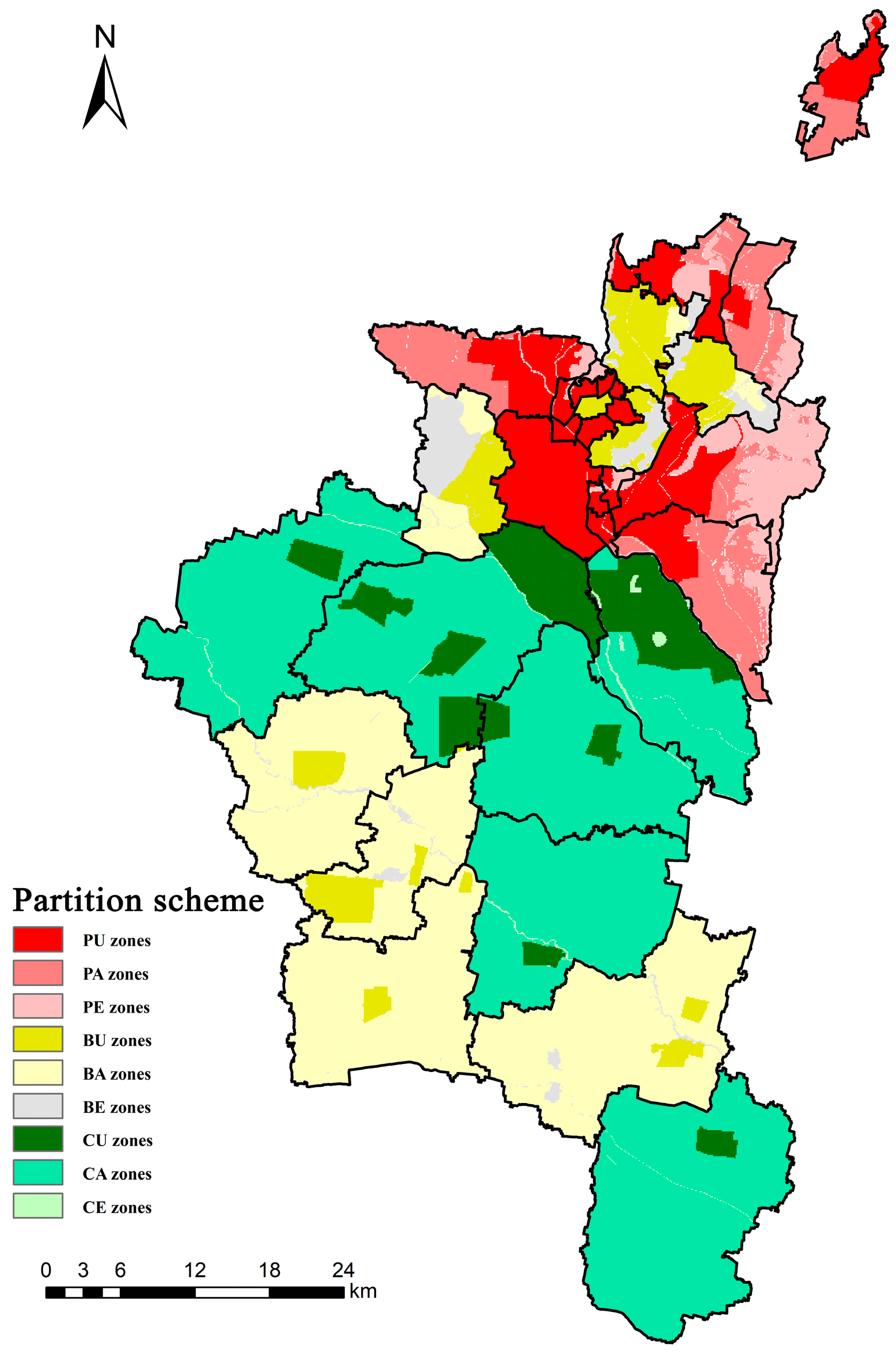
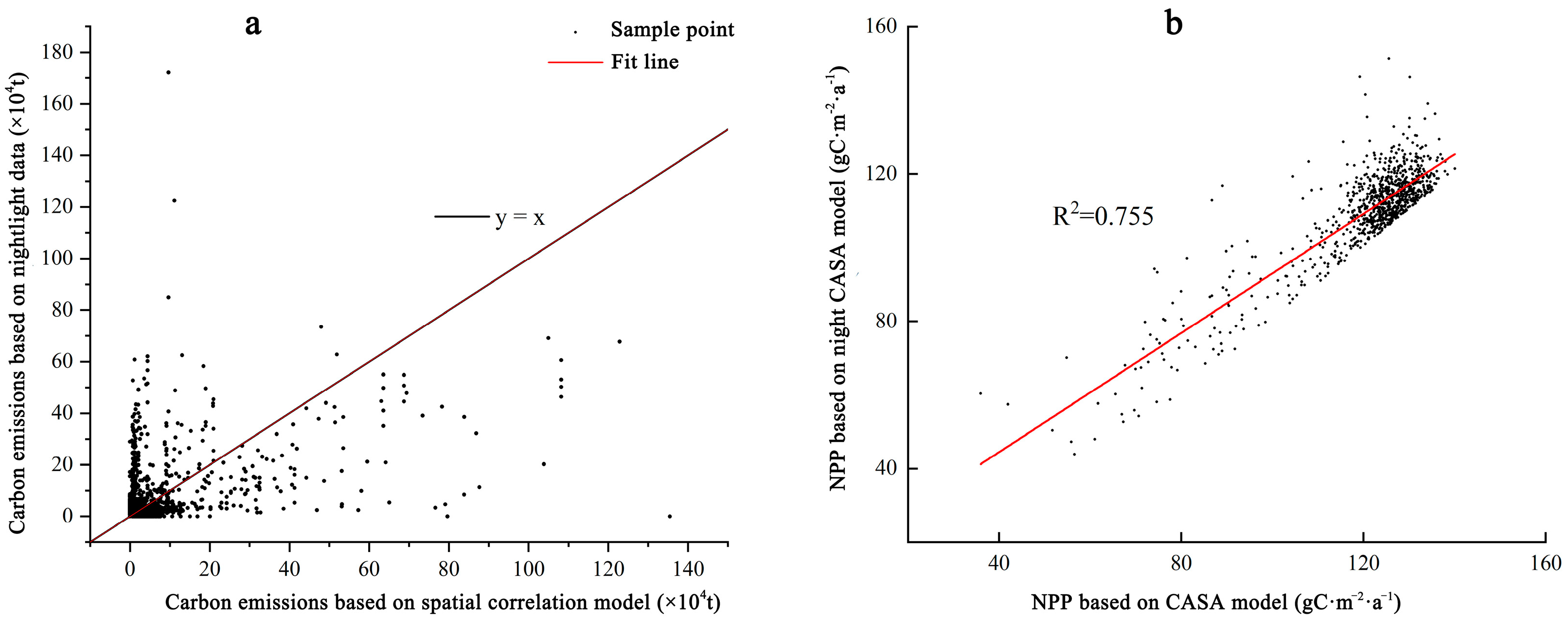
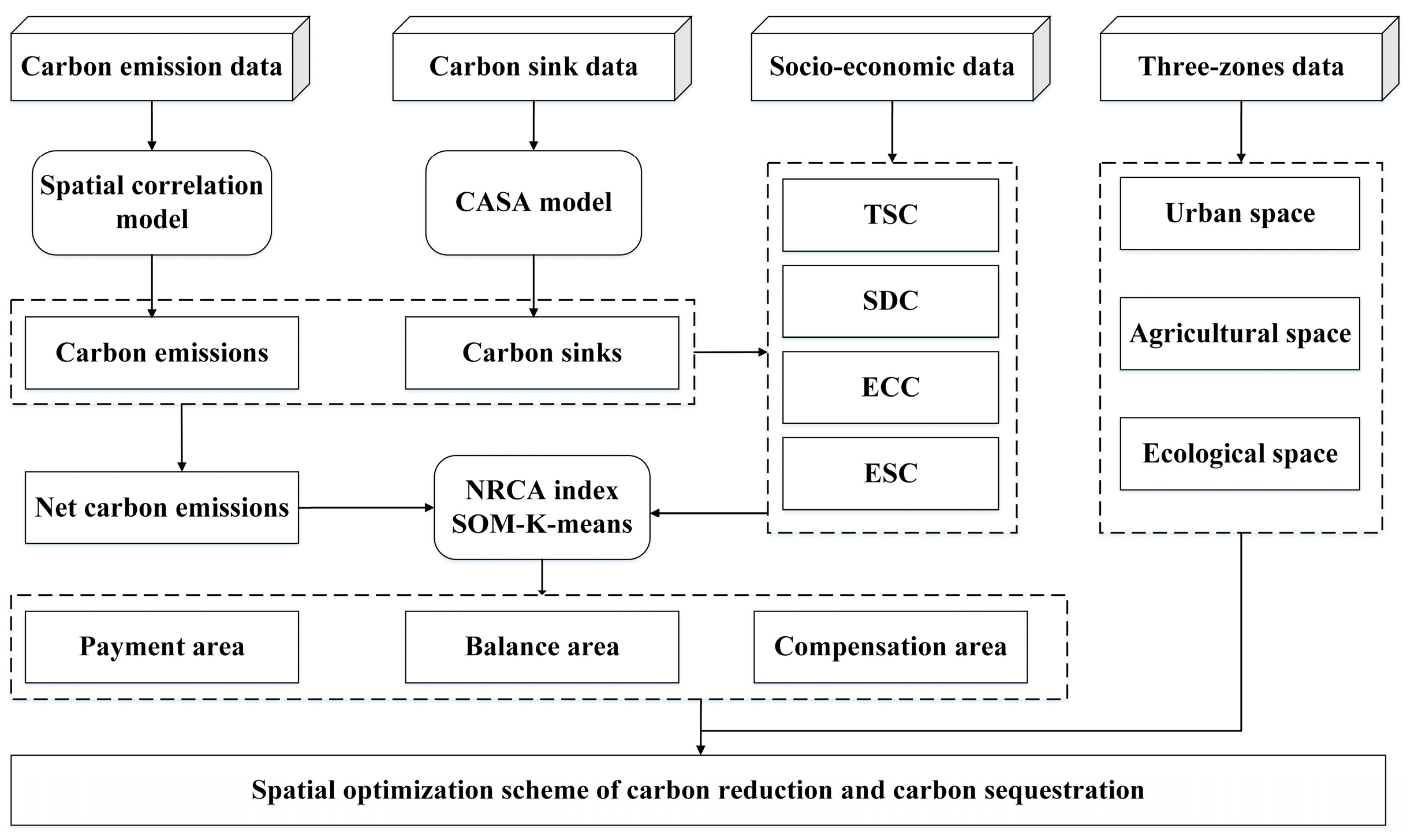
Spatial planning, recognized as a systematic policy instrument for regional development and governance, plays a crucial role in achieving carbon peak and carbon neutrality. This study establishes a framework for carbon sources/sinks estimation and carbon compensation optimization and conducts empirical research in a representative coal resource-based city. We analyzed the spatial–temporal distribution characteristics of net carbon emissions in Huaibei from 2006 to 2020 using a spatial correlation model and an improved Carnegie–Ames–Stanford approach (CASA). Then, we applied the normalized revealed comparative advantage (NRCA) index and the SOM-K-means clustering model to categorize the carbon pattern into payment, balance, and compensation areas. These areas were further integrated with the “Three-zones and Three-lines” to reclassify nine spatial partition optimization types. Finally, we proposed a targeted emission reduction and sink enhancement optimization scheme. We found that urban carbon emissions and carbon sinks exhibit a significant mismatch, with the net carbon emission intensity reaching 166.76–383.27 t·hm−2 from 2006 to 2020, showing a rapid increase followed by stabilization. The high-value area, centered in Xiangshan District, exhibits a circularly decreasing spatial characteristic, gradually extending to the central city of Suixi County. In the optimized payment area, the level of the carbon emission contributive coefficient surpasses the ecological support coefficient (3.92 < ECC < 6.04, 2.09 < ESC < 3.58). The optimized space in the balance area type is primarily situated in mining subsidence areas, leading to a lower overall level (0.42 < ECC < 0.57, 0.49 < ESC < 1.13). The optimized space in the compensation area type (2.24 < ECC < 3.25, 4.59 < ESC < 5.69) requires economic or non-economic compensation from the payment area. The study combines the “Three-zones and Three-lines” with the results of carbon compensation to formulate an urban emission reduction and sink enhancement program, which not only helps to consolidate the theory of low-carbon cities but also effectively promotes the realization of the regional carbon peak goal.
Keywords: carbon budget; carbon compensation; spatial optimization partition; spatial planning; “Three-zones and Three-lines” carbon budget; carbon compensation; spatial optimization partition; spatial planning; “Three-zones and Three-lines”