


Abstract
The dynamic growth of tourism in Serbia has significantly reshaped the spatial structure of destinations, raising important issues related to sustainable development and spatial management. This study aims to examine the perceived effectiveness of spatial planning in tourism, based on tourists’ assessments of plan implementation and its visible implications for sustainable development. The research was conducted in Serbia in 2025 using a mixed-method approach, combining quantitative and qualitative analysis based on a survey of 208 valid respondents. The quantitative analysis included Spearman’s rank correlation and Z-test to examine relationships between variables and differences in attitudes, while qualitative insights were derived from open-ended responses. The results indicate a statistically significant positive correlation between the perceived implementation of spatial plans and the level of tourism development (Rs = 0.283, p < 0.001). However, the findings also reveal that 41.3% of respondents believe that tourism is only slightly considered in spatial plans, while 45.19% express negative attitudes toward the integration of tourism into planning processes. The study identifies key challenges, including weak cross-sector coordination, insufficient integration of tourism into spatial plans, and limited involvement of local communities. These findings highlight a critical gap between formal planning frameworks and their practical implementation. The main contribution of this research lies in providing empirical evidence from the perspective of tourists, a stakeholder group often overlooked in spatial planning studies, thereby addressing a gap in the literature on tourism–planning integration in Serbia. The results suggest that improving institutional coordination, strengthening participatory planning, and enhancing monitoring mechanisms are essential for achieving sustainable tourism development. The study offers targeted policy implications for aligning spatial planning with tourism development goals while preserving natural and cultural resources.
1. Introduction
Tourism is a complex socio-economic activity that both shapes and depends on the space in which it develops, including its natural and anthropogenic resources. The dynamic development of tourism in recent decades has led to significant changes in the spatial structure of destinations. These changes often result in pressure on carrying capacity, degradation of natural resources, and conflicts over land use [1,2]. Numerous studies indicate that inadequate tourism management can have negative consequences for the environment, as well as for the social and cultural values of local communities [3,4,5,6]. As a response to these challenges, spatial planning becomes a crucial tool for guiding tourism activities towards sustainable development, establishing a balance between economic benefits, space conservation, and improving the quality of life for local residents [7,8,9,10]. Spatial planning in tourism increasingly incorporates integrative and participatory approaches, which involve cooperation between different sectors, levels of governance, and interest groups [4,11,12]. Given that tourism requires the use of space with limited capacities, planning must consider factors such as carrying capacity assessments, the preservation of natural resources, and the reduction in negative impacts on the socio-economic dimension of local communities. While strategic documents such as Agenda 2030 and national tourism strategies provide an important policy framework, they primarily define normative goals rather than offering empirical evidence on implementation outcomes. Therefore, this study relies on academic research to interpret these frameworks and assess their practical realization in the context of tourism development [13,14,15,16].
Although there are numerous theoretical models that emphasize the importance of spatial planning, in practice, there is often a lack of alignment between planning documents and their implementation. Petrović et al. (2023) [17] emphasize that spatial plans at the national level in Serbia often suffer from inconsistent application, leading to haphazard development of tourist destinations, space degradation, and a reduction in market competitiveness. Similar conclusions are drawn by Milijić et al. (2017) [18] and Cvetković et al. (2023) [19], who point out that local spatial plans often do not include mechanisms for monitoring and evaluating the implementation of planned measures, which further complicates the achievement of sustainable tourism goals.
Despite the growing body of international research on tourism and spatial planning, empirical evidence from Southeast Europe remains limited, particularly regarding how the outcomes of spatial planning are perceived by end users of tourist destinations. Existing studies in Serbia predominantly focus on institutional frameworks, policy documents, and strategic objectives, while offering limited insight into whether the implementation of spatial plans is visible and meaningful in everyday tourism experiences. As a result, the perspective of tourists as direct users of space remains largely overlooked.
However, despite the existence of a strategic and regulatory framework, practice often reveals weaknesses in implementing spatial plans. In many cases, tourism development deviates from planning guidelines, resulting in spatial imbalances, uncontrolled construction, and disruptions to the environmental and functional identity of destinations, particularly in mountainous and rural areas of Serbia [20]. The lack of participation from local communities and weak monitoring further complicates the implementation of sustainable spatial planning models [21].
The aim of this paper is to examine the perceived effectiveness of spatial planning in the context of tourism development in Serbia, focusing on tourists’ assessments of plan implementation and its visible implications for sustainable development. The study is based on a mixed-method approach using a survey of tourists visiting selected destinations in Serbia, combining quantitative statistical analysis with qualitative insights from open-ended responses. The main contribution of this research lies in providing perception-based empirical evidence from the perspective of tourists, thereby bridging the gap between formal spatial planning frameworks and their practical visibility in tourism destinations.
In this research, the effectiveness of spatial planning is operationalized through tourists’ perceptions of the extent to which spatial plans are implemented and their visible effects on tourism development and sustainability. These perceptions are reflected in assessments of infrastructure quality, spatial organization, preservation of natural and cultural resources, and perceived coordination among stakeholders. While perception-based indicators do not directly measure institutional planning performance, they provide valuable insight into how planning outcomes are experienced in practice by users of tourist space.
By focusing on tourists’ perceptions, this study contributes to a more nuanced understanding of how spatial planning functions in practice and how its outcomes are experienced within real tourism settings. This study introduces a perception-based framework for evaluating spatial planning effectiveness in tourism development, shifting the focus from institutional and policy-based assessments to tourists as end users of space. Unlike previous research in Serbia, which primarily examines planning documents and governance structures, this study provides empirical evidence on how spatial planning outcomes are perceived and experienced in real tourism settings. This user-based perspective contributes to a better understanding of the implementation gap between formal planning frameworks and their visible effects in destinations.
2. Literature Review
2.1. Tourism, Space, and Sustainable Development
Tourism is widely conceptualized as a multidimensional activity that directly interacts with space, influencing land use, resource allocation, and socio-economic structures of destinations [22,23]. At the same time, the development of tourism in a given destination and its long-term sustainability depend on the success of adequate spatial planning and the implementation of plans in practice. In this regard, one of the key theoretical frameworks for studying the relationship between tourism and spatial planning is the concept of sustainable tourism. According to the sustainable tourism development model [24], tourism should be developed in a way that minimizes negative ecological, social, and cultural effects, while simultaneously contributing to the economic benefit of local communities, all in a responsible and sustainable manner. This approach is often integrated into spatial plans that balance tourism development with the protection of space and its natural and cultural resources.
2.2. Spatial Planning and Tourism Governance: International Evidence
The increasing connection between tourism and spatial planning is the subject of numerous studies globally. Theoretical research emphasizes that tourism, as an activity reliant on natural and cultural resources, requires a planned approach to reduce negative effects such as environmental degradation, excessive urbanization, and pollution [25]. For example, research conducted in Spain highlights the importance of integrating sustainable practices into spatial planning for coastal areas to preserve ecosystems and avoid excessive infrastructural interventions [26]. Similar studies in Nordic countries show that proper tourism planning can contribute to the revitalization of rural areas through the promotion of ecotourism and the development of infrastructure that meets the needs of both local populations and tourists [27]. In Italy, spatial planning in tourism focuses on preserving cultural landscapes and aligning tourism development with sustainability principles, particularly in sensitive areas such as rural spaces and protected natural reserves [28].
Recent international research further emphasizes the importance of integrated governance and spatial planning in tourism destinations. According to Sarantakou (2023) [29], effective tourism planning requires the integration of spatial, environmental, and socio-economic dimensions to support sustainable destination development. Similarly, Papageorgiou (2025) [30] argues that tourism planning must increasingly address climate change adaptation and destination resilience through integrated spatial planning approaches. Recent studies also highlight that participatory planning and stakeholder engagement contribute significantly to the long-term sustainability and competitiveness of tourism destinations [31,32].
2.3. Spatial Planning and Tourism Development in Serbia
Empirical research in Serbia indicates persistent challenges in aligning spatial planning with tourism development. Studies highlight weak institutional coordination, inconsistent implementation of spatial plans, and limited stakeholder participation as key barriers to sustainable tourism development, particularly in mountainous and rural destinations [18,33,34]. While strategic frameworks formally recognize sustainability principles.
Similar implementation challenges have been reported in several European countries. Studies conducted in Croatia, Slovenia, and Portugal indicate that weak institutional coordination and fragmented governance structures remain among the most significant barriers to sustainable tourism planning and implementation [35,36,37].
These findings provide a basis for examining key constructs in this study, particularly cross-sector coordination, integration of tourism into spatial planning, and the role of institutional mechanisms in plan implementation. Based on this, it can be expected that insufficient coordination and weak integration of tourism into planning processes negatively affect the perceived effectiveness of spatial planning in tourism development.
The place and importance of tourism in sustainable development have become a global priority [38]. According to the sustainable tourism model, the objectives of tourism must be aligned with ecological, social, and economic goals, and spatial plans play a key role in this. In Serbia, the Strategy for Tourism Development of the Republic of Serbia (2021–2025) sets the framework for integrating sustainable practices into tourism, with a particular focus on the preservation of natural resources and balancing urbanization with tourism development [39].
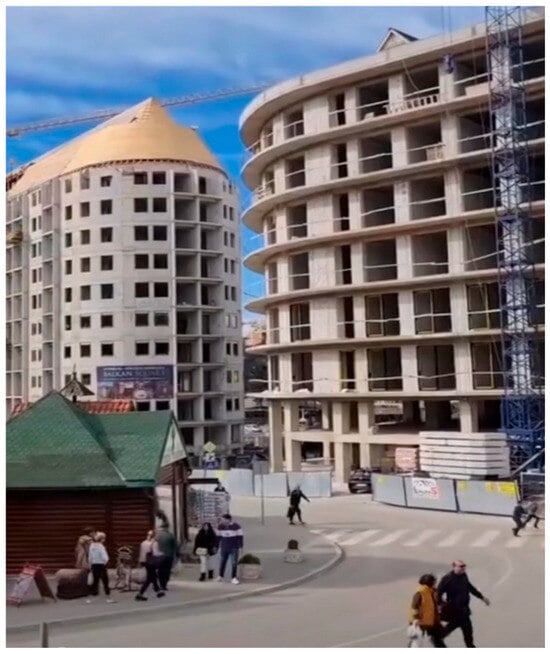
Although there are regulations at the national level in Serbia that deal with spatial planning in tourism, the implementation and efficiency of these plans in practice are debatable. According to the research by [40], there is a lack of coordination between different sectors, which slows down the realization of long-term strategies. Implementation problems most often arise due to misalignment between plans at different management levels (local, regional, national) and the absence of clear mechanisms for monitoring, controlling, and overseeing their implementation. This concept can best be seen in Figure 1 and Figure 2.
Figure 1.
Intensive tourism development in Zlatibor. Source: A. Marić Stanković, 8 April 2025.
Figure 2.
Spatial pressure and construction density in Zlatibor. Source: A. Marić Stanković, 8 April 2025.
In addition, stakeholder participation, particularly the involvement of local communities, is frequently highlighted as a critical factor in achieving sustainable tourism outcomes. Previous studies suggest that limited participation reduces transparency and weakens the implementation of planning measures, leading to lower perceived effectiveness among users of space [41].
According to Nikolić et al. (2021) [34], the key challenge in Serbia is the lack of capacity for implementing spatial planning in tourism at the local level, which is why many spatial plans are not implemented in practice. In addition, the pressure from private investments on certain tourist destinations often creates conflicts with the goals of sustainable development. Similarly, the research by Vukasović and Todić (2024) [42] shows that the distribution of responsibilities for tourism across different management levels can cause division in spatial planning, making it difficult to achieve aligned goals among various public sector bodies. Similar coordination problems were identified in a study conducted in Montenegro [43] (Petrović et al., 2022), where decentralized administration led to misaligned policies regarding tourism development, particularly in coastal areas. Perception-based approaches are widely used in tourism research to evaluate destination quality, planning outcomes, and stakeholder satisfaction [12,44,45]. Perception-based evaluation has become an increasingly important methodological approach in tourism studies. Recent research demonstrates that tourists’ perceptions provide valuable indicators of destination quality, sustainability performance, and planning effectiveness, particularly in destinations experiencing rapid tourism growth [12,46]. Such approaches complement traditional institutional assessments by incorporating the experiences of tourism space users.
Such approaches provide valuable insights into how planning measures are experienced in practice, although they are limited in assessing formal institutional performance. Tourists, as temporary users of space, can reliably evaluate visible aspects such as infrastructure quality, environmental conditions, and overall destination organization, but may have limited insight into regulatory processes and governance structures. Despite these limitations, perception-based data remain an important tool for understanding the practical effectiveness of spatial planning in tourism contexts.
The presented images illustrate visible spatial pressure in one of Serbia’s most visited mountain destinations, reflecting the tension between rapid tourism development and spatial planning control mechanisms. The main spatial planning problem visible in Figure 1 and Figure 2 is the excessive density of construction in the central area of Zlatibor. The concentration of large accommodation buildings, limited open space and the altered silhouette of the city indicate strong spatial pressure caused by intensive tourism development and insufficient implementation of planning controls.
A review of the literature shows that there is growing research attention on understanding the connection between tourism and spatial planning, but in practice, challenges in implementing spatial plans remain. Sustainable tourism requires thorough coordination between sectors and levels of government, as well as adaptation of plans to the specific characteristics of each region. While certain international initiatives and strategic documents, such as Agenda 2030 and the European Strategy for Sustainable Tourism, provide guidelines for future development, local specifics and implementation issues remain key challenges for Serbia and other countries in the region.
Although existing studies provide valuable insights into institutional and planning challenges in Serbia, limited attention has been given to how the implementation of spatial plans is perceived by tourists as end users of space. As a result, there is insufficient empirical evidence linking formal planning frameworks with their visible outcomes in tourism destinations from a user-based perspective. This gap provides the basis for the hypotheses developed in the following section.
3. Materials and Methods
3.1. Study Area
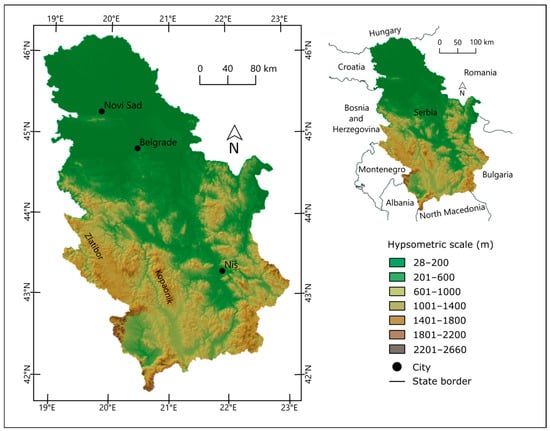
Serbia is located in Southeast Europe, in the central part of the Balkan Peninsula, and represents an important tourism destination characterized by diverse natural and cultural resources. The country includes a wide range of tourism regions, from mountain resorts and protected natural areas to major urban and cultural centers. The present study focuses on selected tourism destinations that represent different forms of tourism development and spatial planning contexts in Serbia. This research includes the mountain destinations of Zlatibor and Kopaonik, which are among the country’s most visited tourism areas and have experienced intensive tourism-related construction and infrastructure expansion in recent decades, as well as the urban destinations of Belgrade, Novi Sad, and Niš, which serve as major cultural, administrative, and tourism centers. The selected destinations provide a representative geographical coverage of Serbia and reflect different spatial planning challenges associated with tourism development. Figure 3 presents the geographical location of the study area and the destinations included in the research.
Figure 3.
Study area and surveyed destinations in Serbia.
3.2. Spatial Scope of the Study
The research is based on both qualitative and quantitative approaches, using a survey questionnaire as the main instrument for data collection. The quantitative part of the research focuses on analyzing tourists’ opinions on the efficiency of spatial planning and its impact on tourism development, while the qualitative part provides deeper insight into subjective opinions and views through the analysis of open-ended questions. The research sample consists of tourists visiting destinations in Serbia, who participated in the survey via the internet, online questionnaires, and social media platforms.
3.3. Sample and Data Collection
The study sample consisted of tourists who visited destinations in Serbia and participated in an online survey distributed via social media platforms (Facebook, Instagram, and LinkedIn), as well as through the Serbian tour operator Euroturs, in order to increase sample diversity and include different groups of respondents.
A non-probability convenience sampling method was applied based on voluntary participation. A total of 219 respondents participated in the survey, of which 208 valid questionnaires were included in the analysis.
The final sample size of 208 respondents was determined by voluntary participation within a non-probability convenience sampling approach, rather than through a predefined sampling design. In line with this approach, the sample is not intended to be statistically representative of the overall tourist population in Serbia. However, considering the exploratory and perception-based nature of the study, the sample enables the identification of indicative patterns and relationships between key variables. The applied non-parametric statistical methods (Spearman correlation and Z-test) are appropriate for this type of data and research design. Accordingly, the findings should be interpreted as reflecting perception-based trends within the observed sample, rather than as generalizable conclusions at the population level. The inclusion criterion required respondents to have visited at least one tourist destination in Serbia within the previous 12 months. The sample comprised 116 females (56%) and 92 males (44%). Most respondents were urban residents (78.8%, n = 164), while 21.2% (n = 44) were from rural areas. The largest age group was 25–34 years (39.4%). A non-probability convenience sampling approach was applied, which is commonly used in perception-based tourism research. While this method allows access to a geographically dispersed population of tourists, it may result in a higher representation of younger and digitally active respondents. To address this limitation, the findings are interpreted as indicative of perceived trends rather than representative of the entire tourist population.
3.4. Structure of the Questionnaire
For data collection, a survey questionnaire was used, consisting of three sections:
Demographic Questions: The first two questions focus on the basic demographic characteristics of the participants (gender and age group), allowing for sample analysis based on relevant sociodemographic factors. These demographic variables were additionally used as control variables in the statistical analysis to examine potential differences between subgroups.
Questions on Tourists’ Opinions and Perceptions: Questions about the perception of tourism development in Serbia in the context of spatial planning. Participants assess the current level of tourism development, its impact on economic development, and the efficiency of spatial plan implementation.
Questions on Spatial Planning Perceptions: This section includes questions about tourists’ knowledge of spatial plans, the effectiveness of their implementation, and potential conflicts between tourism and spatial planning. Perceptions are measured on a Likert scale (from 1—“strongly disagree” to 5—“strongly agree”). These questions focus on the role of spatial planning in tourism development, the quality of plan implementation, and alignment with sustainable tourism goals. Open-ended responses were analyzed using thematic content analysis. The analysis involved coding responses, identifying recurring themes, and grouping them into conceptual categories related to perceptions of spatial planning and tourism development. The coding process was conducted manually, and consistency of categorization was checked to ensure reliability of interpretation.
The questionnaire was designed to capture perceptions rather than objective knowledge of spatial planning processes, focusing on respondents’ subjective assessments of visible planning outcomes, coordination, and destination organization. As such, the items were formulated to reflect experiential judgment instead of institutional or regulatory expertise.
3.5. Statistical Analysis and Hypothesis Testing
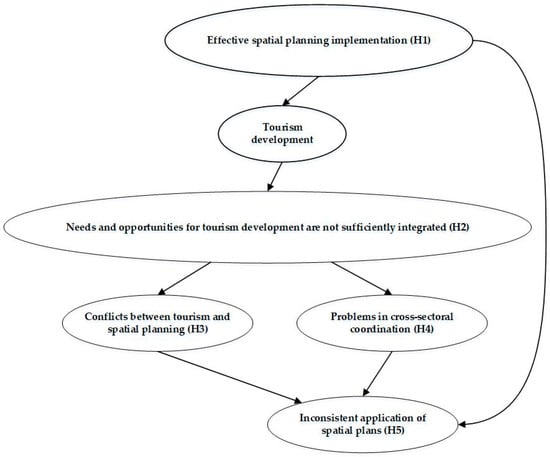
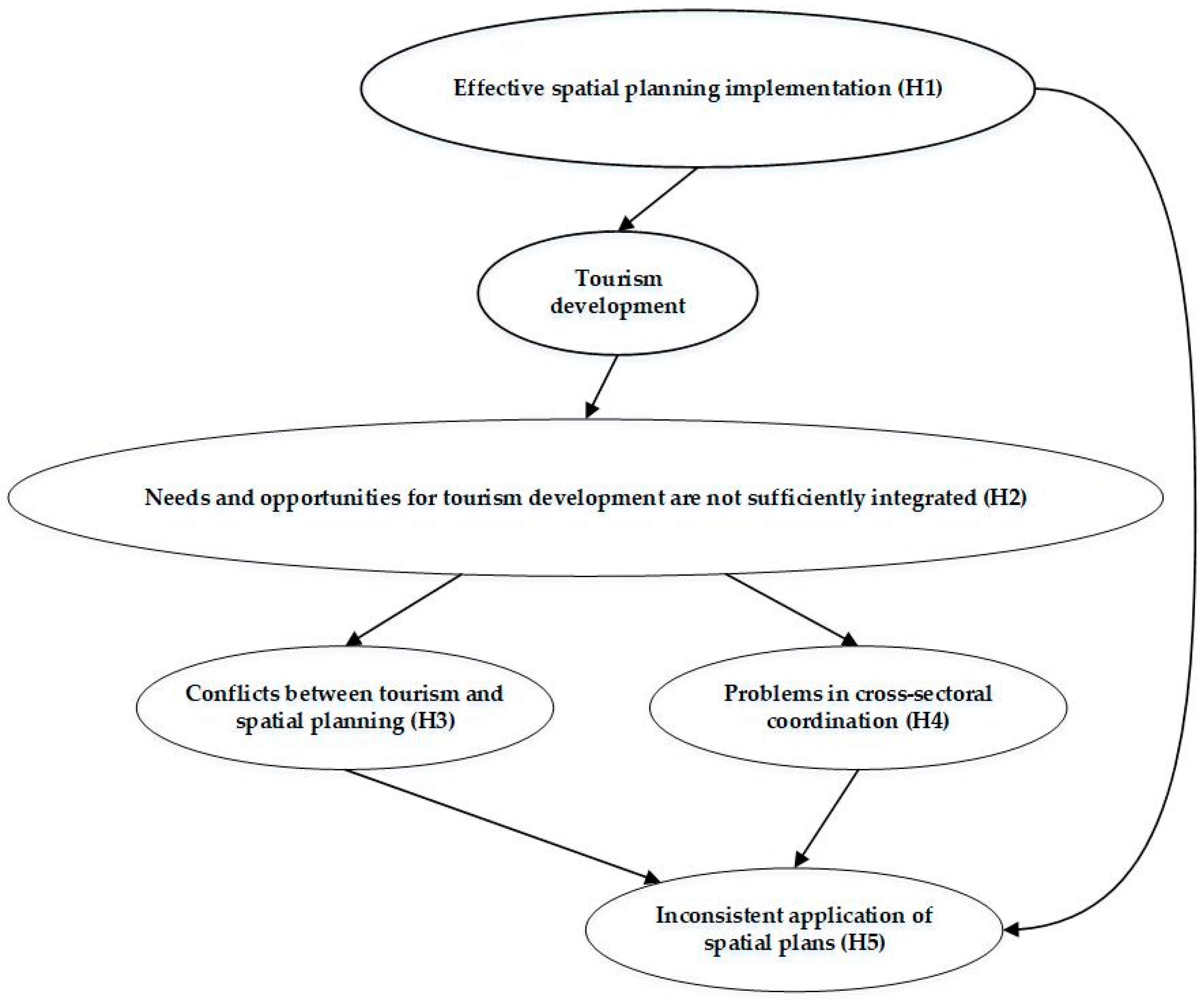
Based on the research objectives and questionnaire analysis, statistical methods were applied to provide a detailed examination of the relationship between tourism and spatial planning. Hypotheses were set to test various impacts, including socio-demographic factors, tourists’ perception of whether spatial plans are actually implemented in the development of tourist destinations, and the risk of unplanned tourism development. The hypothesis diagram (Figure 4) illustrates the conceptual framework of the research, representing the hypothesis and the interrelationships between the key concepts and problems defined within the research framework.
Figure 4.
Conceptual Framework of Hypotheses: Spatial Planning and Tourism Development.
For testing Hypothesis 1, the Spearman rank correlation coefficient was used to establish the correlation between defined variables. In addition to correlation coefficients, effect sizes were considered to provide a more robust interpretation of the relationships. This test is especially suitable for assessing the strength and direction of relationships between variables when no linear relationship is assumed, and data are not necessarily normally distributed, which is often the case in studies with small samples or nonlinear relationships. Considering the objective of testing Hypothesis 1, which is focused on identifying a monotonic relationship between variables, the Spearman coefficient is an appropriate tool for precise analysis in the context of this study.
For testing Hypothesis 2, the Z-test was used to compare the percentage of positive and negative attitudes of respondents. Gender, age group, and urban/rural residence were included as control variables to reduce potential confounding effects and to enable subgroup comparisons. The same method was applied to analyze conflicts between tourism and spatial planning as outlined in Hypothesis 3. The Spearman rank correlation coefficient was used for testing Hypothesis 4 to establish the connection between spatial planning and sustainable development, in relation to coordination between sectors. The same approach was applied for testing Hypothesis 5, which relates to the application and effectiveness of spatial plans and their effects on tourism.
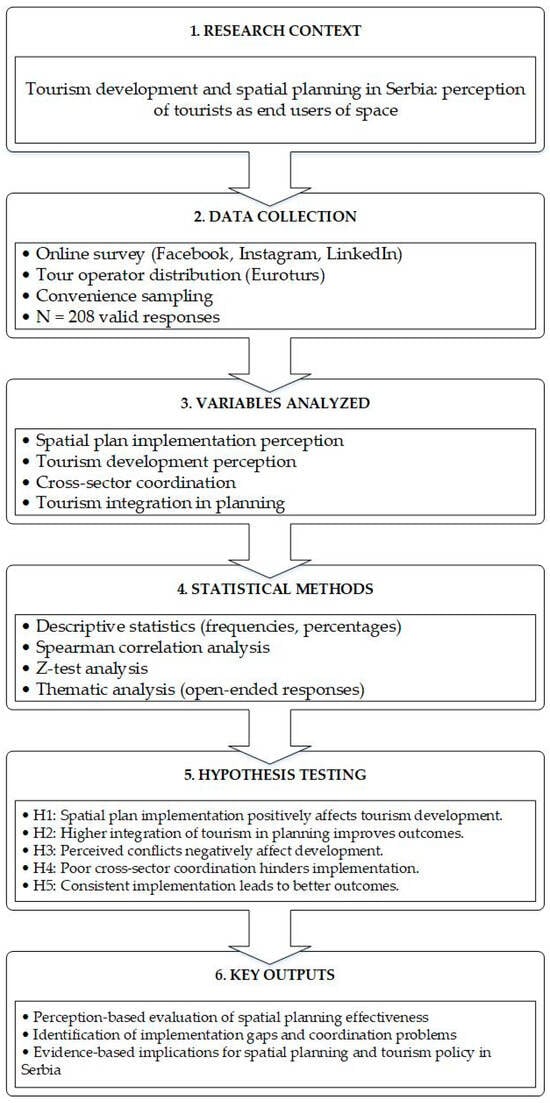
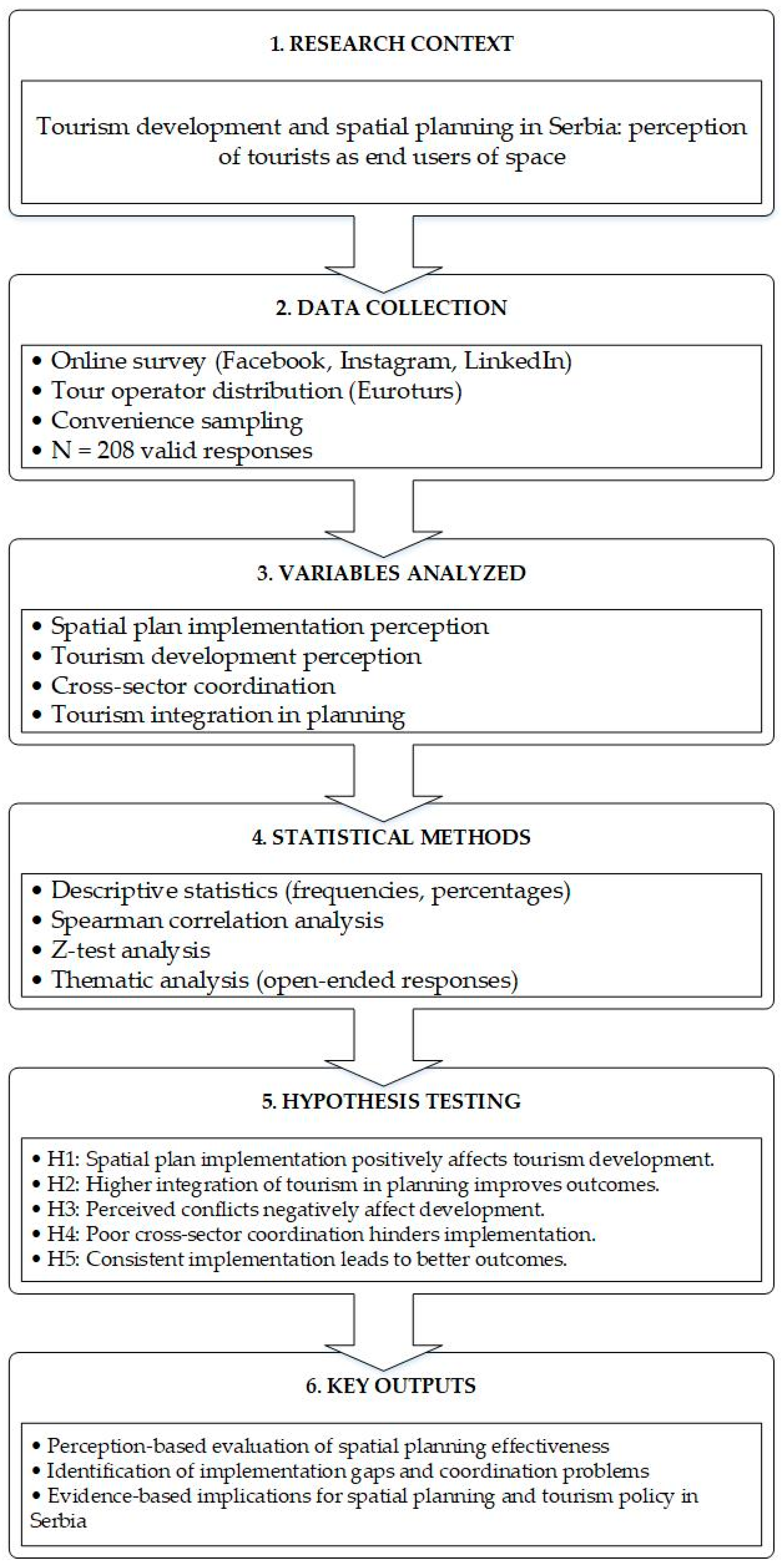
For testing Hypothesis 1, two questions were considered: “How would you rate the current level of tourism development in Serbia?” (Question 4) and “What do you think about the extent to which adopted spatial plans are adhered to in Serbia?” (Question 8). This linking of questions tested the hypothesis regarding the connection between the perception of tourism development (Question 4) and belief in the effectiveness of spatial plan implementation (Question 8). If survey participants believed that spatial plans are implemented effectively, they might also consider that tourism development positively impacts economic development, which is clearly seen in the results. Statistical results of the tested hypotheses and applied statistical methods will be presented in the following sections of the paper. (The Likert scale questionnaire is provided in Appendix A.) For the Z-test analyses, moderate (neutral) responses were excluded to enable a clearer contrast between predominantly negative and positive attitudes. However, the relatively small size of the positive response group in certain variables represents a limitation. The study follows a structured analytical framework that connects data collection, variable construction, statistical testing, and interpretation of perception-based outcomes, as illustrated in Figure 5. Given the non-probability sampling approach, the statistical analysis focuses on identifying relationships between variables within the observed sample, rather than on making population-level inferences.
Figure 5.
Methodological and analytical framework of the study.
4. Results
In order to ensure a clear distinction between descriptive results and their interpretation, this section presents only the empirical findings, while their broader meaning and implications are discussed in the following section. Additionally, special attention is given to the treatment of neutral (moderate) and not sure responses, which are reported separately and are not included in binary comparisons unless explicitly stated.
The respondents were asked questions regarding the connection, correlation, and factors related to tourism and spatial planning. Table 1 presents the relationship between the perceived efficiency of spatial plan implementation and the level of tourism development in the Republic of Serbia.
Table 1.
Correlation Between the Level of Tourism Development and the Efficiency of Spatial Planning in the Republic of Serbia.
The analysis revealed a statistically significant positive correlation between the perceived implementation of spatial plans and the evaluation of tourism development (Rs = 0.283, p < 0.001). These results indicate a weak but statistically significant positive relationship between the perceived implementation of spatial plans and the level of tourism development, suggesting a limited association between these variables.
Table 2 presents respondents’ assessments of the extent to which tourism development needs are incorporated into spatial plans. The largest share of respondents selected “moderately” (49.5%), followed by “slightly” (41.3%), while smaller proportions selected “not at all” (3.8%) and “to a great extent” (5.3%). Table 3 presents the results of the Z-test comparing negative and positive attitudes toward the inclusion of tourism in spatial planning.
Table 2.
To What Extent Are the Needs and Possibilities of Tourism Development Taken Into Account in Spatial Planning?
Table 3.
Tourists’ Attitudes Toward the Needs and Opportunities of Tourism Development in Spatial Planning.
The Z-test (Table 3) results indicate a statistically significant difference between negative and positive attitudes toward the inclusion of tourism development needs in spatial planning (Z = 9.790, p < 0.001). Neutral responses were excluded from the Z-test in order to enable clearer comparison between clearly expressed positive and negative attitudes. However, this approach may introduce distributional bias and therefore results are interpreted with caution.
In addition to the quantitative results, the qualitative analysis of open-ended responses provided further insight into respondents’ perceptions of spatial planning in tourism. Several recurring themes were identified through thematic content analysis.
One of the most frequently mentioned themes relates to perceived overconstruction and uncontrolled development in tourist destinations, particularly in mountain areas, which respondents associate with weak implementation of spatial plans. A second theme highlights insufficient coordination among key stakeholders, including local authorities, tourism organizations, and private investors. Respondents often pointed to a lack of clear planning direction and inconsistencies in development priorities.
A third recurring theme concerns limited awareness and transparency of spatial planning processes. Many respondents indicated that planning decisions are not sufficiently visible or communicated to the public, which corresponds to the high proportion of not sure responses identified in the survey results. Finally, several responses emphasized the need for greater involvement of local communities in decision-making processes related to tourism development.
These qualitative findings support and complement the quantitative results, particularly those related to perceived weak implementation of spatial plans, limited coordination, and a high level of uncertainty among respondents, thus indicating a consistent pattern between quantitative results and qualitative insights.
This finding indicates that the majority of respondents do not have a clearly formed opinion or are not sufficiently informed about the relationship between tourism and spatial planning, which is reflected in the dominant choice of answer “I am not sure” (71.15%). Such a result may indicate a low level of public awareness of the mutual dependence of these areas, as well as insufficient visibility of planning processes in the context of tourism development. Most respondents selected not sure (71.15%), while 20.67% indicated that conflicts exist and 8.17% that they do not. As shown in Table 4, most respondents selected “not sure” (71.15%), while 20.67% indicated that conflicts exist and 8.17% that they do not. Appendix B presents the results of the Z-test comparing responses regarding the existence of conflicts.
Table 4.
Presents respondents’ perceptions of the existence of conflicts between tourism and spatial planning.
Appendix B presents the results of the Z-test comparing the proportion of respondents who believe that conflicts exist (Yes) and those who believe they do not (No). The analysis shows a statistically significant difference (Z = 3.989, p < 0.001), with a higher proportion of respondents indicating the existence of conflicts (23.08%) compared to those who do not (8.17%). However, it is important to emphasize that a large majority of respondents (71.15%) selected not sure. These responses were not included in the Z-test, and their high share limits the interpretability of the results. Therefore, the findings should be interpreted with caution, as the dominance of uncertainty suggests limited awareness or insufficient information among respondents regarding conflicts between tourism and spatial planning.
Table 5 presents Spearman correlation coefficients between attitudes toward spatial planning and perceptions of cross-sector coordination problems.
Table 5.
The relationship between the importance of spatial planning for sustainable tourism development and the perceived problems with cross-sector coordination.
The correlation analysis (Table 5) revealed statistically significant positive associations between respondents’ perceptions of the importance of spatial planning for sustainable tourism development and their assessments of coordination-related challenges. The strongest correlations were observed for the lack of a shared vision among stakeholders (Rs = 0.465, p < 0.001) and the misalignment of development goals (Rs = 0.431, p < 0.001). The only statement that did not show a significant correlation relates to the role of the tourism development concept in the overall sector development (Rs = 0.101, p = 0.145), suggesting that respondents do not directly associate this with spatial planning.
Table 6 presents the relationships between perceptions of spatial plan implementation and attitudes toward their role in tourism development (Hypothesis H5).
Table 6.
Inconsistencies in spatial plan implementation affecting tourism development.
The analysis identified both positive and negative correlations between perceptions of spatial plan implementation and attitudes toward their role in tourism development. Statistically significant positive correlations were observed for the integration of tourism amenities into spatial plans and perceived coordination between tourism initiatives and spatial planning, while one negative correlation was identified regarding the alignment of long-term tourism development goals and perceived adherence to adopted plans.
5. Discussion
This study provides perception-based insights into the relationship between spatial planning and tourism development in Serbia, with a particular focus on how planning practices are experienced by tourists as end users of space. The findings highlight a persistent gap between formal planning frameworks and their visible outcomes in tourism destinations, especially in contexts characterized by institutional fragmentation and limited coordination.
The results indicate a weak but statistically significant positive correlation between the perceived implementation of spatial plans and the level of tourism development. This suggests that, although a relationship exists, its strength is limited and should be interpreted with caution, as it reflects only a modest association between the observed variables. This study aligns with similar research conducted in other countries, such as the work of Baltaoglu et al. (2025) in Turkey [47], which suggests that integrated spatial plans that take into account the protection of natural resources, cultural heritage, and infrastructure positively contribute to sustainable tourism. These findings suggest that improved coordination between the planning and tourism sectors may contribute to tourism development, although the observed relationship remains relatively weak and should be interpreted with caution.
Research conducted in Italy (Spadaro et al., 2023) [31] and Spain (Ivars-Baidal et al., 2013) [48] indicates that non-compliance with spatial plans [18]. Therefore, the findings provide partial support for Hypothesis H2, suggesting that tourism is recognized within spatial planning documents, but that its integration remains limited, inconsistent, and insufficiently operationalized in practice. The findings related to the integration of tourism development needs into spatial planning indicate a predominantly moderate to limited level of consideration, rather than a complete absence of integration. The high proportion of neutral evaluations suggests that tourism is partially recognized within spatial plans, but not systematically or consistently integrated.
The analysis of respondents’ attitudes shows a significant positive correlation between opinions on the contribution of spatial planning and perceptions of problems in cross-sector cooperation. At first glance, this relationship may appear counterintuitive, as stronger agreement with the importance of spatial planning is associated with a higher perception of coordination problems. This finding reflects a high level of expectation and critical awareness among respondents, rather than indicating that spatial planning itself generates coordination problems. In this context, stronger agreement with the importance of spatial planning appears to be associated with a more critical evaluation of its implementation in practice. The analysis of perceived conflicts between tourism development and spatial planning reveals a high level of uncertainty among respondents, as reflected in the dominant share of “not sure” responses. Rather than indicating clearly perceived conflicts, these findings point to limited awareness or visibility of planning-related tensions among tourists. This suggests that potential conflicts may exist at institutional or governance levels but remain largely invisible to end users of tourist space. Therefore, Hypothesis H3 should be interpreted as only partially supported from a perception-based perspective. Given the high proportion of neutral and “not sure” responses, the confirmation of Hypothesis H3 should be interpreted with caution and regarded as only partially supported from a perception-based perspective rather than as definitive evidence of objectively perceived conflicts.
These findings support hypothesis H4 and indicate that stronger positive attitudes toward spatial planning often align with more critical views on its implementation. This contradiction suggests that better-coordinated planning can contribute to improved implementation of existing plans, which is crucial for the sustainable development of tourism.
Table 6 presents the results related to Hypothesis H5, examining the relationship between perceptions of spatial plan implementation and attitudes toward their role in tourism development (Questions 15–22 in Appendix A). A negative correlation was found between attitudes regarding the need to align long-term tourism development goals with spatial planning and opinions on the level of adherence to adopted spatial plans (Rs = −0.144, p = 0.039). This result suggests that respondents who strongly support aligning tourism goals with spatial planning simultaneously hold a more critical view of the consistency in implementing these plans in practice. Conversely, significant positive correlations were observed between the perception of adequate integration of tourism amenities into spatial plans and the opinions on their respect and consideration of tourism needs (Rs = 0.294, p < 0.001). Similarly, there is a positive relationship between attitudes regarding the coordination of tourism initiatives and spatial planning and the perception of adopted plans’ implementation (Rs = 0.361, p < 0.001), suggesting that better coordination may contribute to more consistent plan implementation (Table 7). Furthermore, the involvement of local communities in spatial planning processes is significantly associated with perceptions of consistent plan implementation and their adaptation to tourism needs (Rs = 0.289, p < 0.001). Both positive and negative correlations are observed, indicating varying relationships between specific aspects of spatial planning and perceived implementation. Based on the results, better coordination between sectors contributes to the more consistent implementation of spatial plans. Respondents who support the alignment of spatial planning goals with tourism development also point out problems in implementation. These findings are generally consistent with Hypothesis H5, as it indicates that improved coordination is key to the effective implementation of plans in practice and that shortcomings in this area can hinder the achievement of sustainable tourism development goals. The mixed pattern of correlations related to spatial plan implementation reflects inconsistencies in how planning instruments are perceived across different dimensions of tourism development.
Table 7.
Confirmation of hypotheses and key statistical values in the analysis of spatial planning and tourism.
The results of this research can be compared with the practices of spatial planning in Italy and Spain in terms of challenges and achievements in implementation. Although numerous studies confirm the importance of integrated spatial planning in the sustainable development of tourism, there is a noticeable gap in the literature regarding the analysis of specific issues with spatial plan implementation, particularly in the context of Serbia. While integrated spatial plans in Italy [31] and Spain [48]. have shown significant success in reducing uncontrolled construction and improving tourism sustainability, our results indicate a significant institutional gap in Serbia that hinders effective implementation. Unlike these contexts, this study emphasizes the role of perception and awareness among tourists, which represents an additional dimension in evaluating spatial planning effectiveness.
The improvement of sustainable tourism in Serbia inevitably depends on a high-quality spatial planning system that enables a balance between the developmental needs of the tourism sector and environmental protection. Spatial planning represents the primary instrument in integrated management of tourist destinations, especially in the context of mass tourism and the increasing saturation of certain tourist areas [49]. Inadequate control in planning and infrastructure construction in some tourist zones in Serbia leads to the degradation of natural and cultural assets, pointing to the necessity of applying sustainable practices at all stages of spatial development. According to Mirković Svitlica (2021) [49], achieving sustainability in tourism requires more than a classic top-down planning model. It is necessary to incorporate a “place-making” approach, which involves the active participation of local communities in decision-making processes. In this way, the identity of destinations is enhanced, the acceptance of development plans is increased, and the long-term sustainability of tourism offerings is ensured. On the other hand, Stojanović (2011) [50] points out that spatial planning in Serbia is still insufficiently aligned with international sustainable tourism standards. The author emphasizes that Serbia often lacks the application of tools such as defining the carrying capacities of tourist destinations, conducting environmental impact assessments, and systematic zoning, leading to the overexploitation of natural resources. He highlights that planning control is necessary for the integrated management of tourist areas, especially in protected natural areas and national parks, where tourism pressure is increasingly pronounced. Both authors agree on the need for institutional strengthening of spatial planning capacities in Serbia. It is important that national and local tourism strategies are aligned with the principles of sustainable development and include all relevant stakeholders, from the tourism industry and public authorities to local communities and non-governmental organizations. Another significant element arising from the analysis of these works is the role of spatial planning in ensuring balanced regional development. In Serbia, there is a territorial imbalance in tourism development, where certain regions, such as mountain areas and spa centers, are subject to intensive construction, while other areas are neglected. Therefore, as noted by Stojanović (2011) [50], it is necessary to apply a differential approach model in spatial planning, which will enable the optimal use of resources while preserving local specificities and the sustainability of ecosystems. Considering all the above, it can be concluded that spatial planning in Serbia needs to overcome the traditional approach, which often favors economic profit at the expense of environmental protection. In order for tourism to truly serve sustainable development, it is essential to implement integrated planning that includes coherent policies, the application of ecological standards, and the active participation of the local population in decision-making [49,50,51]. Only through such a strategy is it possible to ensure that tourism in Serbia contributes to economic development, the preservation of cultural heritage, and the protection of natural resources.
Overall, the findings indicate that spatial planning plays a visible but uneven role in tourism development in Serbia. While certain planning outcomes are recognized and positively perceived, broader issues related to coordination, strategic integration, and stakeholder involvement remain insufficiently reflected at the level of user experience. These results underscore the need for more coherent and better-coordinated planning approaches in order to achieve sustainable tourism development.
- Strengthening institutional coordination: It is necessary to develop more efficient coordination mechanisms between different sectors and levels of government to ensure consistent and synchronized implementation of spatial plans. This includes enhancing cooperation between local authorities, tourism organizations, urban planners, and environmental protection services.
- Training and education of key stakeholders: It is essential to organize training sessions for representatives of local authorities, urban planners, investors, and experts in environmental protection to improve their understanding of the role of spatial plans in the sustainable development of tourism. This also includes education on integrated spatial planning methods and their benefits for the long-term development of tourism.
- Implementation of comprehensive strategies for sustainable tourism: Authorities should develop clear and concrete strategies that integrate tourism with spatial planning, taking into account ecological, cultural, and infrastructural aspects. These strategies should include specific measures to reduce uncontrolled construction and improve ecological sustainability.
- Increasing transparency and public participation: It is important to enable greater participation of local communities, tourism organizations, and the general public in the planning process to achieve greater transparency in decision-making and broader acceptance of spatial plans.
- Monitoring and evaluation of implementation: The introduction of mechanisms for regular monitoring and evaluation of the implementation of spatial plans is necessary to identify problems at an early stage and to take timely corrective action. This includes establishing systems for collecting and analyzing data on the effectiveness of plan implementation.
These steps can significantly contribute to the more efficient implementation of spatial plans and the achievement of sustainable tourism development in Serbia. This study has several limitations. First, the study relied on a non-probability convenience sample based on voluntary participation, which limits the representativeness of the findings. As a result, the conclusions should be interpreted as indicative of perception-based tendencies rather than as generalizable to the entire tourist population. Second, the use of social media platforms may have influenced the structure of respondents. Third, tourists may have limited knowledge of spatial planning processes, as reflected in the high proportion of neutral and “not sure” responses. Finally, the use of multiple statistical tests increases the risk of Type I error. These limitations suggest that the findings should be interpreted with caution. Based on the empirical findings, particularly the identified coordination issues, limited awareness, and inconsistencies in implementation, the following recommendations are proposed.
Overall, the findings indicate that spatial planning plays a visible but uneven role in tourism development in Serbia, as perceived by tourists. While certain planning outcomes are recognized and positively evaluated, broader issues related to coordination, strategic integration, and stakeholder involvement remain insufficiently apparent at the level of user experience. These results underscore the importance of improving.
6. Conclusions
This study examined the relationship between spatial planning and tourism development in Serbia from the perspective of tourists, emphasizing how planning practices and their implementation are experienced in real tourism settings. The findings suggest that spatial planning is recognized as an important factor in destination development, but its effectiveness is perceived as uneven and insufficiently coordinated across key dimensions. In particular, the results reveal a limited integration of tourism within spatial planning processes, as well as weak visibility of coordination and stakeholder involvement. These insights point to a clear gap between formal planning frameworks and their practical manifestation in tourism destinations. The study has several limitations. The use of an online convenience sample may introduce bias, while respondents’ limited knowledge of spatial planning processes is reflected in the high proportion of neutral and uncertain responses. Additionally, the reliance on bivariate statistical methods limits causal interpretation.
Based on the findings, several key implications can be identified. The most important priority is strengthening cross-sector coordination, as the results consistently indicate misalignment of goals and a lack of shared vision. Second, increasing stakeholder awareness and education is necessary, given the high level of uncertainty observed among respondents. Third, enhancing participatory planning processes, particularly through greater involvement of local communities, can contribute to more effective implementation. Finally, the introduction of systematic monitoring and evaluation mechanisms is essential to ensure the consistent application of spatial plans in practice.
These findings suggest that improving coordination, awareness, and implementation mechanisms is essential for achieving sustainable tourism development in Serbia. Overall, the study contributes to a better understanding of how spatial planning outcomes are perceived in practice, highlighting the importance of aligning institutional processes with user-based experiences. Strengthening coordination, transparency, and stakeholder engagement is essential for improving the effectiveness of spatial planning in tourism development.
Recommendations for Future Research
Based on our research, it is recommended to expand the sample of respondents to include key actors in the spatial planning process, such as representatives of local authorities, investors, urban planners, and environmental protection experts. Representatives of local authorities can provide insight into administrative processes, legislative frameworks, and challenges in plan implementation at the local level. Investors, on the other hand, can shed light on commercial pressures, market conditions, and financial aspects that affect the sustainability of plans. Urban planners can contribute technical aspects of urban design, spatial analysis, and the integration of innovations into planning processes, while environmental experts can offer analyses related to sustainability, conservation of natural resources, and minimizing negative ecological impacts. By combining these perspectives, a comprehensive understanding of the challenges and opportunities in implementing spatial plans in Serbia can be achieved. This approach would enable a deeper understanding of the interaction between different sectors and the identification of key obstacles to more efficient plan implementation. Given that this research shows that the majority of respondents do not have a clearly formed opinion or are not sufficiently informed about the relationship between tourism and spatial planning, as reflected in the dominant selection of the response “not sure” (71.15%), this pronounced uncertainty can be interpreted as an indicator of an information gap between professional actors in spatial planning and the general public, including tourists as end users of space.
Such a situation opens up opportunities for improving communication and education in the field of sustainable tourism development and spatial planning. Accordingly, the implementation of various educational and participatory activities could be considered, such as science-popular lectures, workshops, and informational campaigns, as well as strengthening cooperation between tourists and relevant stakeholders, including tourism organizations, local authorities, and spatial planning institutions.
In this way, a better understanding of planning practices could be fostered, along with more active involvement of space users in the processes of sustainable management of tourism destinations.
In addition, future research could focus on analyzing existing tourism strategies to identify opportunities for improving intersectoral cooperation and implementing sustainable tourism practices. These recommendations can contribute to better coordination in the implementation of spatial plans, which would have a significant impact on the long-term sustainable development of tourism in Serbia.
For further studies, particular attention should be given to concrete cases where there is a mismatch between spatial planning and tourism development, as well as to the possibilities for overcoming these mismatches through better intersectoral coordination. It is recommended to include various stakeholder groups, especially those closely linked to spatial planning processes, as well as tourists. This approach would allow for a more detailed analysis of the causes of conflicts between tourism and spatial planning, which could contribute to more precise definitions of solutions for better alignment between these areas in the future.
Author Contributions
Conceptualization, M.M. (Milan Milovanović), A.M.S. and J.V.; methodology, D.P.; validation, D.P., M.B. and N.G.; formal analysis, A.M.S. and M.M. (Milan Miletić); investigation, J.Ž. and M.M. (Milan Milovanović); data curation, J.V.; writing—original draft preparation, A.M.S. and M.M. (Milan Milovanović); writing—review and editing, M.B. and N.G.; visualization, A.M.S. and J.V.; supervision, M.B. and N.G. All authors have read and agreed to the published version of the manuscript.
Funding
This research received no external funding.
Data Availability Statement
The original contributions presented in the study are included in the article; further inquiries can be directed to the corresponding author.
Acknowledgments
This paper is supported by the Ministry of Science, Technological Development and Innovation of the Republic of Serbia (Contract Nos. 451-03-34/2026-03/200124 and 660-01-0008/2025-03/91). The author, Milan Miletić, gratefully acknowledges the support of the Ministry of Science, Technological Development, and Innovation of the Republic of Serbia through their scholarship program (Contract number: 451-03-1150/2023-03/3231; Annexes to the contract: 451-03-1002/2024-03/3231; 451-03-12/2025-03/3231; 451-03-4/2026-03/3231).
Conflicts of Interest
The authors declare no conflicts of interest.
Appendix A
Table A1.
Likert scale.
Appendix B
Table A2.
Are Negative Attitudes More Prevalent Than Positive Ones on This Issue?
References
- Nichols, E.; Steinmetz, J.D.; Vollset, S.E.; Fukutaki, K.; Chalek, J.; Abd-Allah, F.; Abdoli, A.; Abualhasan, A.; Abu-Gharbieh, E.; Akram, T.T.; et al. Estimation of the Global Prevalence of Dementia in 2019 and Forecasted Prevalence in 2050: An Analysis for the Global Burden of Disease Study 2019. Lancet Public Health 2022, 7, e105–e125. [Google Scholar] [CrossRef] [PubMed]
- Saarinen, E. History of Western Philosophy: From Socrates to Marx [In Finnish: Länsimaisen Filosofian Historia Huipulta Huipulle Sokrateesta Marxiin]; Werner Söderström Ltd.: Helsinki, Finland, 2022. [Google Scholar]
- Briassoulis, H. Sustainable Tourism and the Question of the Commons. Ann. Tour. Res. 2002, 29, 1065–1085. [Google Scholar] [CrossRef] [Scilit]
- Dredge, D.; Jamal, T. Progress in Tourism Planning and Policy: A Post-Structural Perspective on Knowledge Production. Tour. Manag. 2015, 51, 285–297. [Google Scholar] [CrossRef] [Scilit]
- Jenkins, J.; Dredge, D.; Taplin, J. Destination Planning and Policy: Process and Practice. In Destination Marketing and Management: Theories and Applications; CABI: Wallingford, UK, 2011; pp. 21–38. [Google Scholar]
- Baloch, Q.B.; Shah, S.N.; Iqbal, N.; Sheeraz, M.; Asadullah, M.; Mahar, S.; Khan, A.U. Impact of Tourism Development upon Environmental Sustainability: A Suggested Framework for Sustainable Ecotourism. Environ. Sci. Pollut. Res. 2023, 30, 5917–5930. [Google Scholar] [CrossRef] [Scilit]
- Getz, D. Tourism Planning and Destination Life Cycle. Ann. Tour. Res. 1992, 19, 752–770. [Google Scholar] [CrossRef] [Scilit]
- Bramwell, B.; Lane, B. Critical Research on the Governance of Tourism and Sustainability. J. Sustain. Tour. 2011, 19, 411–421. [Google Scholar] [CrossRef] [Scilit]
- Blanco-Cerradelo, L.; Diéguez-Castrillón, M.I.; Fraiz-Brea, J.A.; Gueimonde-Canto, A. Protected Areas and Tourism Resources: Toward Sustainable Management. Land 2022, 11, 2059. [Google Scholar] [CrossRef] [Scilit]
- Ijatuyi, E.J.; Yessoufou, K.; Patrick, H.O. Sustainable Tourism and Green Space: Exploring How Green Spaces and Natural Attractions Contribute to Local Tourism Economies and Revenue Generation in Gauteng Province. Discov. Sustain. 2025, 6, 236. [Google Scholar] [CrossRef] [Scilit]
- Graizbord, B.; González Granillo, J.L. Urban Growth and Environmental Concerns: The Venture of the Greater Mexico City Metropolitan Area. Politics Policy 2019, 47, 178–206. [Google Scholar] [CrossRef] [Scilit]
- Neger, M.; Rahid, A.O.; Jamil, M.A.A.; Nour, H.I.A.; Bipasha, S.N. Evaluating the Determinants of Sustainable Tourists’ Perceptions and Tourist Well-Being in Bangladesh. Discov. Sustain. 2026, 7, 321. [Google Scholar] [CrossRef] [Scilit]
- Inskeep, E. Environmental Planning for Tourism. Ann. Tour. Res. 1987, 14, 118–135. [Google Scholar] [CrossRef] [Scilit]
- Bushell, R.; McCool, S.F. Tourism as a Tool for Conservation and Support of Protected Areas: Setting the Agenda; CAB International: Wallingford, UK, 2007. [Google Scholar]
- Job, H.; Becken, S.; Lane, B. Protected Areas in a Neoliberal World and the Role of Tourism in Supporting Conservation and Sustainable Development. In Protected Areas, Sustainable Tourism and Neo-Liberal Governance Policies; Routledge: London, UK, 2020; pp. 1–22. [Google Scholar]
- Önder, I.; Zekan, B. Urban Tourism Development in Europe: A Double-Edged Sword for the Cities? In Routledge Handbook of Tourism Cities; Routledge: London, UK, 2020; pp. 425–435. [Google Scholar]
- Petrović, M.D.; Milovanović, I.; Gajić, T.; Kholina, V.N.; Vujičić, M.; Blešić, I.; Đoković, F.; Radovanović, M.M.; Ćurčić, N.B.; Rahmat, A.F.; et al. The Degree of Environmental Risk and Attractiveness as a Criterion for Visiting a Tourist Destination. Sustainability 2023, 15, 14215. [Google Scholar] [CrossRef] [Scilit]
- Milijić, S.; Micić, S.; Maksin, M. Retrospective of and Prospects for the Development and Strategic Planning of Tourism in the Mountain Regions of Serbia. Spatium 2017, 37, 42–48. [Google Scholar] [CrossRef] [Scilit]
- Cvetković, M.; Brankov, J.; Ćurčić, N.; Pavlović, S.; Dobričić, M.; Tretiakova, T.N. Protected Natural Areas and Ecotourism—Priority Strategies for Future Development in Selected Serbian Case Studies. Sustainability 2023, 15, 15621. [Google Scholar] [CrossRef] [Scilit]
- Terzić, A.; Vuković, A.J.; Petrevska, B. Seasonality and Rurality—Second Homes and Tourism in Rural Areas of Serbia. Econ. Agric. 2024, 71, 1191–1207. [Google Scholar] [CrossRef] [Scilit]
- Maričić, T.; Cvetinović, M.; Bolay, J.C. Participatory Planning in the Urban Development of Post-Socialist Serbia. In A Support to Urban Development Process; EPFL CODEV & IAUS: Lausanne, Switzerland, 2018; pp. 1–28. [Google Scholar]
- Papageorgiou, M. Coastal and Marine Tourism: A Challenging Factor in Marine Spatial Planning. Ocean Coast. Manag. 2016, 129, 44–48. [Google Scholar] [CrossRef] [Scilit]
- Nunna, T.S.P.; Banerjee, A. Understanding the Impact of Tourism on Spatial Growth for Sustainable Development of Tourist Destinations through the Measure of Land Use Efficiency. Eur. Spat. Res. Policy 2022, 29, 193–217. [Google Scholar] [CrossRef] [Scilit]
- Sharpley, R. Tourism, Sustainable Development and the Theoretical Divide: 20 Years On. J. Sustain. Tour. 2020, 28, 1932–1946. [Google Scholar] [CrossRef] [Scilit]
- Gwartney, J.; Lawson, R.; Hall, J.; Murphy, R. Economic Freedom of the World—2021 Annual Report; Institute of Economic Affairs: London, UK, 2021. [Google Scholar]
- Becerra, J.A.L.; González, M.D.C.P. Toward a More Integrated Approach to Planning and Implementing Local Development Policies to Tackle Rural Depopulation in Empty Spain. J. Urban Plan. Dev. 2025, 151, 04024056. [Google Scholar] [CrossRef] [Scilit]
- Tervo-Kankare, K.; Kaján, E.; Saarinen, J. Costs and Benefits of Environmental Change: Tourism Industry’s Responses in Arctic Finland. In Tourism in Changing Natural Environments; Routledge: London, UK, 2020; pp. 10–31. [Google Scholar]
- Romano, B.; Zullo, F.; Fiorini, L.; Marucci, A. Illegal Building in Italy: Too Complex a Problem for National Land Policy? Cities 2021, 112, 103159. [Google Scholar] [CrossRef] [Scilit]
- Sarantakou, E. Contemporary challenges in destination planning: A geographical typology approach. Geographies 2023, 3, 687–708. [Google Scholar] [CrossRef] [Scilit]
- Papageorgiou, M. Spatial planning for tourism destinations resilient to climate change. Tour. Hosp. 2025, 6, 8. [Google Scholar] [CrossRef] [Scilit]
- Spadaro, I.; Pirlone, F.; Bruno, F.; Saba, G.; Poggio, B.; Bruzzone, S. Stakeholder participation in planning of a sustainable and competitive tourism destination: The Genoa integrated action plan. Sustainability 2023, 15, 5005. [Google Scholar] [CrossRef] [Scilit]
- Al Mahrizi, A.S.K.; Gray, T.; Gregory-Smith, D.; Stead, S.M. The role of stakeholder participation in Oman’s tourism planning system. Tour. Plan. Dev. 2024, 21, 881–916. [Google Scholar] [CrossRef] [Scilit]
- Ristić, D.; Vukoičić, D.; Milinčić, M. Tourism and Sustainable Development of Rural Settlements in Protected Areas—Example NP Kopaonik (Serbia). Land Use Policy 2019, 89, 104231. [Google Scholar] [CrossRef] [Scilit]
- Nikolić, D.S.; Pantić, M.D.; Jokić, V.T. Urban and Spatial Planning: Pragmatic Considerations for Plan Implementation Improvements (A Case Study of the City of Bor). SAGE Open 2021, 11, 2158244021994554. [Google Scholar] [CrossRef] [Scilit]
- Mihalic, T. Conceptualising overtourism: A sustainability approach. Ann. Tour. Res. 2020, 84, 103025. [Google Scholar] [CrossRef] [Scilit]
- Aldao, C.; Mihalic, T.A. New frontiers in travel motivation and social media: The case of Longyearbyen, the High Arctic. Sustainability 2020, 12, 5905. [Google Scholar] [CrossRef] [Scilit]
- Romão, J. From (un) sustainable to regenerative tourism planning and management. In Economic Geography of Tourism; Springer Nature: Cham, Switzerland, 2025; pp. 207–226. [Google Scholar]
- United Nations. Sustainable Development Goals. Available online: https://sdgs.un.org/goals (accessed on 18 March 2025).
- Ministry of Trade, Tourism, and Telecommunications. Strategy for Tourism Development of the Republic of Serbia (2021–2025) [In Serbian: Strategija Razvoja Turizma Republike Srbije 2021–2025]; Ministry of Trade, Tourism, and Telecommunications: Belgrade, Serbia, 2021. Available online: https://mto.gov.rs/extfile/sr/207/strategija.pdf (accessed on 18 March 2026).
- Radosavljević, U.; Đorđević, A.; Živković, J.; Lalović, K.; Đukanović, Z. Educational Projects for Linking Place Branding and Urban Planning in Serbia. Eur. Plan. Stud. 2020, 28, 1431–1451. [Google Scholar] [CrossRef] [Scilit]
- Špirić, A.; Đukić, A. Tensions of Urban Development in Post-Socialist City: The Case Study of Community-Based Initiatives for Preservation and Transformation of Open Public Space in Banjaluka. In Keeping up with Technologies to Imagine and Build Together Sustainable, Inclusive, and Beautiful Cities: Proceedings of the 8th International Academic Conference on Places and Technologies; University of Belgrade, Faculty of Architecture: Belgrade, Serbia, 2024; pp. 221–229. [Google Scholar]
- Vukasović, V.; Todić, D. Environmental Law in Serbia; Kluwer Law International: Alphen aan den Rijn, The Netherlands, 2024. [Google Scholar]
- Petrović, M.; Šoja Janković, S.; Savić, B.; Tomić, V.; Cvijanović, V.; Perović, N. Forecasting Tomato Prices on Markets in the Republic of Serbia Using the ARIMA Model. In Proceedings of the XIII International Scientific Agricultural Symposium “Agrosym 2022”, Jahorina, Bosnia and Herzegovina, 6–9 October 2022; p. 462. [Google Scholar]
- Shang, F.; Goh, H.C.; Masud, M.M. Stakeholder Perceptions of Tourism’s Impacts on the Ecological Environment of Island Destinations Based on a Systematic Review and Meta-Analysis. Sci. Rep. 2025, 15, 23306. [Google Scholar] [CrossRef] [Scilit]
- Wattanacharoensil, W.; Stettler, J. Residents’ Perceptions of Tourism Impacts and Regulatory Measures: The Case of Lucerne’s Urban Destination. Int. J. Tour. Cities 2026, 12, 99–116. [Google Scholar] [CrossRef] [Scilit]
- Velikova, E.; Denizova, V. Developing an Energy Index for Well-Being Destinations: The Case of Petrich, Bulgaria. Tour. Hosp. 2026, 7, 85. [Google Scholar] [CrossRef] [Scilit]
- Baltaoglu, S. Prospects of Marine Spatial Planning in the Marine Areas of Türkiye. Reg. Stud. Mar. Sci. 2025, 81, 103997. [Google Scholar]
- Ivars-Baidal, J.; Rodriguez-Sanchez, I.; Vera-Rebollo, J.F. The Evolution of Mass Tourism Destinations: New Approaches beyond Deterministic Models in Benidorm (Spain). Tour. Manag. 2013, 34, 184–195. [Google Scholar] [CrossRef] [Scilit]
- Mirković Svitlica, A. The Importance of Spatial Planning for Sustainable Tourism Development [In Serbian: Značaj prostornog planiranja za održivi razvoj turizma]. In Proceedings of the 11th Scientific and Professional Conference with International Participation: Planning and Normative Protection of Space and Environment [In Serbian: Zbornik Radova Jedanaestog Naučno-stručnog Skupa sa Međunarodnim Učešćem: Planska i Normativna Zaštita Prostora i Životne Sredine], Vršac, Serbia, 28–30 October 2021; pp. 133–137. [Google Scholar]
- Stojanović, V. Tourism and Sustainable Development [In Serbian: Turizam i Održivi Razvoj]; Faculty of Sciences, Department of Geography, Tourism and Hotel Management: Novi Sad, Serbia, 2011. [Google Scholar]
- Marić Stanković, A.; Vesić, M.; Pavlović, S.; Bratić, M.; Anđelković, Ž.; Lukić, A. Prospects for Sustainable Tourism in Mountain Protected Areas: A Case Study of Southeastern Serbia. Mt. Res. Dev. 2024, 44, R26–R34. [Google Scholar] [CrossRef] [Scilit]



Disclaimer/Publisher’s Note: The statements, opinions and data contained in all publications are solely those of the individual author(s) and contributor(s) and not of MDPI and/or the editor(s). MDPI and/or the editor(s) disclaim responsibility for any injury to people or property resulting from any ideas, methods, instructions or products referred to in the content. |
© 2026 by the authors. Licensee MDPI, Basel, Switzerland. This article is an open access article distributed under the terms and conditions of the Creative Commons Attribution (CC BY) license.