


Abstract
Integrated landscape (bioregional, territorial) management (ILM) is a model for place-based planning and development that integrates values of healthy nature, regenerative economies, human well-being, and social solidarity. This review paper analyzes the support system for ILM to achieve transformative change, highlighting 20 dimensions in five support sub-systems. Though landscape partnerships (LPs) are now widespread, they have little coordinated support to form and have weak capacities, inadequate long-term operational funding, and limited cultural resonance. Landscape programs have proliferated and gained notable system-level support, but LP coalitions and alliances are just emerging, and there is little coordinated provision of LP support services. Despite widespread developments in the knowledge base, methods, and tools for local ILM design, there is little coordinated system support and limited dedicated work on data and IT, impact assessment, or strategic research. Landscape finance tools and business engagement with LPs are being explored, but economic valuation is inadequate, and little financing has shifted to coordinated landscape investments. In public policy, professional planners and international policy frameworks are adopting ILM, but government policies and tenure systems provide sparse support. High-leverage actions can accelerate progress in each dimension. But to fully realize the transformative potential of ILM will require more coherent support strategies.
1. Introduction
Both countries and communities today are challenged by the interconnected polycrisis of food and water insecurity, climate change, deforestation and biodiversity loss, land and resource degradation, inequality and social fragmentation, and acute conflicts between agricultural and other resource-based production and ecosystem protection. Ecological degradation in turn undermines long-term economic development and productivity. In response, growing evidence demonstrates how ecological restoration, agricultural production, social welfare and inclusion, and regenerative economies can be mutually reinforcing, at multiple scales [1].
Yet most strategic planning in public, private and civic sectors remains sectorally siloed, even where their strategies seriously undermine one another. The spatial relations between different land uses and ecological flows are usually ignored. The role of local people in decision-making about their own place is often marginalized. And planning horizons are short-term. These limitations and other drivers (see Section 2.1 and Appendix B) have prompted growing interest in an integrated landscape approach (ILA) to local development, governance, and planning.
1.1. Potential of Integrated Landscape Approaches to Address the Polycrisis
ILA offers a paradigm of place-based planning and development that aims to fully integrate values of healthy nature, regenerative economies, human well-being and social solidarity. This approach aligns with broader movements towards more participatory development that seek to ensure local agency, transparency, and accountability. ILA provides a framework through which ecological integrity, economic rationality, and cultural values can be reconciled, and assets of nature and society managed to sustain collective prosperity.
The landscape movement encompasses many overlapping concepts and communities of practice that follow different paths which are not yet standardized. In 2022, Scherr [2] documented over 100 similar management concepts, with variations in language and practices over time. ‘Integrated landscape management’ (ILM) refers to the implementation of holistic landscape approaches by locally-led, long-term partnerships of stakeholders from agriculture, nature conservation, health, and other sectors, and was chosen in 2012 as an umbrella term by the 75+ diverse organizational partners of the Landscapes for People, Food and Nature initiative. The terms ILA, jurisdictional landscape development, bioregional development, territorial development, ecoagriculture, and foodscape all have similar meanings, with slightly different entry points (food, biodiversity, et al.) driving their efforts. The term ‘4 Returns’ refers to both the holistic outcomes of ILM–healthy nature, human well-being, regenerative economy, and inspiration–and to Commonland’s [3] methodology for implementing ILM. Appendix A provides detailed definitions. For simplicity, this article mainly uses the terms landscape and integrated landscape management, but the other terms are implied unless specified.
The focus of ILM is on the socioecological unit of the landscape, and on spatially-targeted action pursuing goals defined by local people. A “landscape” is defined more by its function and coherence than by its area. A landscape is large enough to accommodate natural systems and deliver environmental, social, and economic impact, and small enough to be effectively managed by the people who use the land. The meso-scale ‘landscape partnership’ (LP) provides a bridge between community-based organizations and governance levels, private sector actors and institutions operating at macro-scales, thus linking ‘bottom-up’ with ‘top-down’ action.
ILM can be understood as efforts to rebuild and sustain a type of commons: shared ecological and social assets whose benefits extend widely across society, regardless of land ownership [4,5]. Inclusive landscape governance offers a means of restoring social trust, reducing systemic risk, and creating enduring public value. ILM’s regenerative framing repositions the relationship of people and nature, and people with one another: healthy nature and ecosystems and sustainable economic activities are seen not as separate goals to be maximized, but as critical foundations for long-term well-being of communities. ILM also plays a role in broader place-based solutions for climate and food systems [6], ecosystem restoration [7], nature-based solutions [8], and rural-urban linkages [9].
1.2. A Landscape Transformation Support System: Advancing Theory and Practice
ILM represents a paradigmatic shift. Thus, extending its use requires multi-scale action to design and institutionalize a robust support system aligned with its values and processes, and that mitigates factors that block its success. Because most institutions in place today were structured historically around narrowly defined sector priorities, usually within an extractive socioeconomic model, building such support demands not just incremental adjustments, but transformative system change, with fundamental shifts in functions, architecture and practices [10,11,12].
Most literature on ILM focuses on the process, methods and experience of action in the field, rather than systematic analysis of enabling institutions. This ‘sense-making’ paper puts forward the first comprehensive, multi-dimensional framework for transformative landscape system change for ILM and LPs. Using this framework, it reviews evidence from both peer-reviewed and grey literature on the organic development of five supporting sub-systems over the last 25 years. Drawing from that assessment it identifies key gaps and priorities in the support system that must be addressed if ILM is to successfully expand over the next 25 years.
1.3. Objectives and Organization of the Paper
This article draws on selected academic literature, rigorous reports and the informed judgement of the authors to outline the emergent institutional support system for ILM. The aim is to foster inquiry, dialogue and learning towards the design of a more robust system of transformative support for regenerative landscapes. We seek to bridge the gap between theory and application, to guide and inspire more evidence-based recommendations for systemic transformation so that ILM can be an effective strategy to address the global polycrisis. The paper defines the indicators of a robust support system, describes their current state, and proposes additional research needed to design strategies for catalyzing system change, and to track progress. It provides the basis for a theory of change for ILM, and a foundational “mapping” of the subsystems.
Section 2 provides a background overview of the developing field of ILM. Section 3 describes the methodology and proposes a framework for a robust landscape transformation support system. Section 4 describes three enabling sub-systems supporting ILM implementation, and Section 5 two enabling sub-systems of finance and policy. Section 6 summarizes key findings on the state of 20 dimensions of the support system and their strengths and challenges, and proposes high-leverage actions that could accelerate their development. Section 7 presents conclusions and recommendations for further research to mature the field and advance ILM for thriving regenerative landscapes in the next 25 years.
2. Background: The Evolution of Integrated Landscape Management
To understand the current support system for ILM, and factors important for improving its design, it is useful to review how the field of landscape management has evolved. This section provides a brief overview of the motivations driving ILM, the history of its development, key features of LPs, and the evidence of impact. Appendix B, Appendix C, Appendix D and Appendix E provide more details.
2.1. Motivations for Pursuing ILM
Interest in ILM has been driven by five main factors. The first is widespread dissatisfaction with current sectorialized models of development and planning that ignore natural systems, even while ecosystem degradation and climate change have become major constraints on economic development, food security, human well-being, and planetary health [13,14,15,16,17]. ILM explicitly addresses interconnected challenges and considers developing and protecting ecological assets as collective investments in stability and prosperity [18,19,20].
The second factor is the widespread resentment of local communities and jurisdictions to the imposition by national governments and outside corporations of development plans in their territories that degrade their resources and ignore local people’s priorities. In response, movements for food autonomy, territorial sovereignty, and Indigenous self-determination have gained momentum. LPs provide inclusive spaces where local actors can participate in decisions about land use and resource allocation, rebuilding social legitimacy and collective capacity [21].
The third driver is scientific advances and new technologies that provide tools that facilitate ILM, such as GIS and ecological monitoring, and resource management systems that enable synergies among landscape goals. For example, many agroecology, agroforestry, and diversified cropping systems demonstrate that ecological restoration and agricultural productivity can be mutually reinforcing, generating shared benefits at multiple scales [1] (see refs in Section 4.3.1).
The fourth motivation for ILM is shifting paradigms of development, economics, and sustainability towards nexus approaches that connect water, energy, food, and biodiversity to pursue human well-being within planetary boundaries [22,23]. ILM provides territorial and governance frameworks to realize these principles in practice [24,25,26,27].
Fifth, as central governments have struggled to address complex socioecological challenges, communities, producer groups, and municipal authorities have devised landscape governance mechanisms [28,29,30,31]. In these laboratories of adaptive governance, collective norms and institutions create value and manage shared resources for the public good as well as private benefits [21].
2.2. Historical Trajectories and Strands of Integrated Landscape Approaches
Integrated landscape approaches arose to overcome systemic tensions in multifunctional landscapes between agricultural production, mining, and timber extraction; natural ecosystems; and human settlements. Many historical and current indigenous and community-based systems have demonstrated how human presence can enhance biodiversity while supporting livelihoods [32,33,34,35,36]. The modern theory of ILM drew from concepts of land ethics [37,38], regional planning [39,40], ‘design with nature’ [41], ecological planning and landscape ecology [42,43], holistic systems theory [44,45], resilience and social–ecological systems [5,46,47,48,49,50], sustainability science [51,52,53], and the regenerative development movement [54].
Applied movements advancing ILM include permaculture [55], integrated natural resource management [56,57], model forests [58], ecoagriculture [59,60], integrated land-use planning [61], integrated rural development [62], community-based conservation and development [63,64,65], climate-smart territories [66], and climate-smart landscapes [67,68]. By the 2000s, formal organizations were widely adopting ILA [27,69,70]. See more details in Appendix C.
2.3. Key Features of ILM and Landscape Partnerships
“Integrated landscape management” is an umbrella term, inclusive of the many communities of practice in the landscape movement. They share some overarching principles: a multi-stakeholder and cross-sectorial partnership; a long-term vision for development; aligned land use practices; spatial planning; and aligned policies and markets (adapted from [69]).
Participatory decision-making underlies ILM [61,69]. Through facilitated dialogue and collaborative action, LPs foster a shared understanding of the landscape; a shared vision, strategy, and action plan for landscape transformation; financing and implementation of the action plan; and learning and impact assessment to inform adaptive management [26]. While doing so, they must actively foster social inclusion, for example of youth, women, Indigenous peoples, and the economically disadvantaged, while managing evolving power dynamics [71,72].
LPs commonly begin informally as platforms for stakeholders to share concerns, learn, and identify possible solutions. Mature LPs shift from fragmented initiatives to institutionalized platforms capable of systemic impact, with rules, collaborative agreements, and secure legal status [73], with diverse features [74]. The types of institutional support needed by LPs are influenced by their form and structure of governance, level of maturity, type of boundary, thematic entry points, type of convener, and links with other LPs (see Appendix D.2 Table A1). See more details on ILM principles and processes in Appendix D.1 and Appendix D.2.
2.4. The Impacts of ILM and Landscape Partnerships
Assessing the systemic and long-term impacts of ILM and LPs poses significant methodological and practical challenges [75,76]. By design, these approaches address complex socioecological systems that evolve over long periods and across multiple spatial and institutional scales. Their impacts often emerge indirectly—through changes in governance, relationships, and behaviors—rather than as immediate, measurable outcomes [76]. Attributing observed changes in land use, ecosystem health, or livelihoods to a specific landscape initiative is complicated by the multitude of interacting drivers, external influences, and parallel interventions operating within the same territory [77,78]. Issues of legitimacy of actors, violence, and corruption may limit impact. Initiatives often fail to understand and address underlying issues of power, politics, values and justice [79].
Still, positive impacts were found in comparative surveys of 104 integrated landscape initiatives across Latin America and the Caribbean [80]. Recent case studies with more rigorous assessments of holistic impact have shown benefits in 14 integrated territorial initiatives [81], and in Ghana [82,83], Mexico [84], Spain [85], Kenya [86], Indonesia [87], and Ecuador [88]. There is active debate—though still little systematic evidence—about the specific political, social, and institutional contexts in which ILM can be most successful and how the collective agenda can avoid being co-opted by dominant actors.
See more details on evidence on ILM impact in Appendix E.
3. Methodology
Scholars of socioecological transformation emphasize that lasting change requires not just leadership or scaling new practices, but the development of ‘systemic support architectures’ which include the enabling institutions, platforms, capacities, financial mechanisms, learning systems, and coordination structures that enable whole systems to shift direction [89,90,91,92]. Analyses of such system changes have been conducted in fields such as mission-driven innovation [93], energy and water transitions [94,95], climate governance [96], and science–policy systems [97,98].
This paper applies a comparable systemic lens to landscape and bioregional regeneration [99,100]. Waddell and Potzin [101] distinguish three phases of transformative system change: systems experimentation, innovating and exploring novel assemblages that question status quo assumptions and address the transformational need; systems re-design, through which larger-scale processes of diverse stakeholders come together to co-design and implement structures needed to scale successful prototypes; and systems optimization, through which the enabling environment supports widespread adoption of the innovations and their ongoing incremental improvements.
The paper’s authors are senior and mid-career professionals who have been deeply engaged in scholarship and program leadership related to ILM and systems change for several decades. Using a reflexive historical research approach [102,103], the co-authors met regularly to review, discuss, debate and converge on constructing and applying a framework for high-level assessment of the global landscape transformation support system. The methodology has five parts:
- (1)
- A synthetic overview of ILM, based on a targeted selection of academic and grey literature [104]. This spanned theoretical and practical contributions addressing systemic factors that drive interest and adoption of ILM; the evolution of collaborative landscape approaches; the main features of ILM; and the evidence of impacts of ILM. Details of the overview are provided in Appendix B, Appendix C, Appendix D and Appendix E with a summary in Section 2.
- (2)
- Specification of key dimensions of a robust support system that would enable widespread transformation to impactful integrated landscape action and governance. This was adapted from analyses by working groups for the scaling and transformation strategy of 1000 Landscapes for 1 Billion People (1000 Landscapes) [105]. This global collaborative was formed in 2019 to enable at least 1000 LPs worldwide to deliver solutions for landscape regeneration by 2030. The 1000 Landscapes theory of change identified three broad types of support required for thriving landscapes [106]:
- Access to locally adaptable tools, services, resources, software, data, and networks that accelerate their actions, strengthen their governance and inclusion, empower them to collaboratively strategize goals and transformation strategies, and enable them to finance and implement action.
- Abundant financing to support on-the-ground action through projects and coordinated investments aligned with landscape action plans (from inclusive assistance and grants, incentives, and public/private/civic finance mechanisms).
- Key institutions actively enabling the success of LPs (governments, legislatures, land and resource rights, markets and businesses, and research).
1000 Landscapes’ design teams and scaling working group were composed of over 50 seasoned professionals, including all the co-authors, from a spectrum of organizations– international and domestic NGOs, multilateral agencies, technology innovators, and LP network facilitators. They identified potential functions of LPs in regeneration, potential contributions of actors outside the LPs, and factors outside LP control requiring allies to influence or mitigate impact. They qualitatively assessed the current state of support to LPs across 12 ‘transformation pathways’, proposed strategies for intervention, and described critical assumptions, illustrative activities, and aspirational 2030 and 2050 outcomes [107,108].
To refine the conceptual framework for a landscape transformation support system, the authors prioritized 20 dimensions, drawing upon and expanding the framework previously developed by 1000 Landscapes. The 20 dimensions are in five sub-systems: landscape partnerships; landscape development programs; knowledge, tools, and resources for ILM; economics, business, and finance; and public policy. Figure 1 illustrates this comprehensive multi-scale support system.
Figure 1.
The five sub-systems and 20 dimensions of a global support system for ILM.
- (3)
- Overview of the state of those 20 dimensions, based on published peer-reviewed and gray literature. This included studies of the Global Review of the Landscapes for People, Food and Nature initiative 2011–2020 [109], the 1000 Landscapes/Regen10 white paper on transforming food systems through regenerative landscapes [6], and the ‘theory of change’ collaborative assessment of the design teams and scaling strategy task force of 1000 Landscapes [107,108]. The paper describes the general state of each of 20 dimensions of the landscape support system globally, including three sub-systems on LPs, programs and know-how (Section 4) and two sub-systems on enabling economics and policy (Section 5). The analysis does not address the variation in how well different types of LPs, in different regions, are served.
- (4)
- An assessment of the change in support systems over the past 25 years and highleverage actions to accelerate systemic change, based on the co-authors’ expert judgment. This involved constructing a qualitative scale of changes in the state of each dimension, specifically: limited experimentation with innovative solutions; widespread experimentation, but little system re-design; widespread experimentation plus coordinated efforts to re-design support systems; and widespread re-designed support systems. The authors systematically and iteratively scored and discussed each dimension on the four-point scale, until they reached convergence. For each dimension, they specified high-leverage actions to accelerate development of the landscape support system, drawing on 1000 Landscapes analyses and insights from work of the Intergovernmental Science-Policy Platform on Biodiversity and Ecosystem Services [92].
- (5)
- A reflection on priority areas for research and development of support systems in the next 25 years. This analysis draws not only on the assessments above, but also on the authors’ field experience, analyses and observations in ILM over the past 25 years in more than 60 landscapes in over 40 countries with EcoAgriculture Partners (2002–2024), and learnings with partners advancing ILM in landscape networks, the Landscapes for People, Food and Nature initiative (2011–2020), and 1000 Landscapes (2019-present).
4. Overview of the Landscape Support System: Implementing ILM
This section presents our findings on the three support sub-systems focused on implementing ILM on the ground: the local multi-stakeholder LPs, the landscape programs assisting them, and the availability and access of knowledge, methods, and tools for effective implementation.
4.1. State of Landscape Partnerships
A well-developed landscape support system has, as its foundation, a strong sub-system of long-term LPs on the ground, wherever needed to address the polycrisis. Below, we assess progress over the past 25 years as assessed on four dimensions: their formation; their capacities for action; operational funding; and the rise of culture, norms, and values among the citizenry that facilitate landscape collaboration.
4.1.1. Formation of LPs
The Landscapes for People, Food and Nature (LPFN) continental reviews documented more than 450 integrated landscape initiatives (ILIs) between 2013–2017 that jointly pursued goals for agriculture, environment and human well-being. The reviews reported 87 ILIs in 33 sub-Saharan African countries [28], 104 ILIs across 21 countries in Latin America and the Caribbean [29], 166 ILIs in South and Southeast Asia [30], and more than 300 initiatives in Europe, with 71 examined in depth [31]. A subsequent global synthesis of this database [110] added another 23 European landscape cases. In the United States, the Network for Landscape Conservation documented 122 LPs in 2018 [111]. In 2024, Regen10 mapped over 200 LPs worldwide with a focus on regenerative agriculture [112]. The nearly 100 partners of the 1000 Landscapes for 1 Billion People (1000 Landscapes) initiative collectively supported several hundred LPs in 2024.
Indigenous Peoples manage or hold tenure rights to a roughly estimated 25% of the world’s land [113]. The LandMark platform mapped about a third of global land held or used by Indigenous Peoples and local communities [114], though not all have integrated territorial governance and planning. Meanwhile, corporate and jurisdictional disclosure platforms have mapped nearly 300 landscape initiatives, signaling widening private-sector participation [115]. Because many LPs begin informally and evolve over time, all the above tallies are conservative underestimates.
4.1.2. Capacities for ILM Implementation
While financial and policy transformations are essential to unlock the potential of landscape approaches, real change ultimately depends on strong local capacities to implement them on the ground. Those most affected must understand what ILM is and how to pursue it and develop the collective skills to make it work. Local leaders need capabilities in negotiation, consensus-building, coordination, adaptive management, and securing sustainable financing [116,117]. Yet experiences reported from LPFN, 1000 Landscapes, and the Model Forest Networks show that capacity gaps remain a major bottleneck to scaling ILM, especially for integrated governance and systems thinking [118,119,120,121].
Valuable training materials and training programs have been developed, such as by the Global Landscapes Forum and Commonland. 1000 Landscapes partners are collaboratively developing an interactive training-of-trainers model to empower local leaders, with open-access content for ‘best practice’ Landscape Learning modules [122]. A Landscape Learning Network is under development [123].
Building a community-engaged learning and innovation system that reaches actors in the field requires accessible and equitable funding models. That includes deliberate investment in strengthening community-based organizations that anchor ILM processes, such as farmer associations, cooperatives, and Indigenous groups. Meanwhile, embedding education for ILM into academic and professional learning systems is essential not only to broaden reach but also to deepen practice and improve outcomes where ILM is already taking root. This would involve incorporating foundational knowledge of ILM into university curricula and developing an accredited cadre of professionals in ILM, both of which are now quite limited. None of the above elements is well-advanced.
4.1.3. Operational Funds for LPs
An acute bottleneck for LPs is the lack of sustained operational and ‘process’ funding, apart from the (much larger) funding needed for implementation of the partners’ action plans. Key roles in these multistakeholder platforms include coordination, facilitation, governance, and monitoring. Yet these functions mostly rely on small, short-term grants or limited allocations from project budgets. Many community-based and Indigenous organizations—those closest to implementation—remain excluded from funding streams that favor large international NGOs which often lack local presence or continuity. This weakens their capacity to function as credible governance intermediaries or investment platforms over time [105,124].
Recognizing that LPs require core operational support, partners of 1000 Landscapes are piloting landscape development grant funds—long-term, flexible funding models that can support governance, planning, facilitation, and monitoring across the LP lifecycle [106]. To inform this, a costing study is underway by the International Partnership for the Satoyama Initiative and 1000 Landscapes, with their partners, to estimate the true cost of long-term implementation of ILM across diverse social-ecological contexts. The study seeks to clarify costs and cost drivers, by scale and maturity of the LP, so funders can better align support with actual needs.
4.1.4. Culture, Norms, and Values Supporting ILM
Some cultural shifts are ripening conditions for communities, planners and policymakers to embrace ILM. A growing focus on local policy and action, higher confidence in local actors, and perceptions of tangible results from local activism fuel interest in ILM [125]. In turn, LP leaders can enrich planning and decision-making and forge shared pride in their landscape by tapping into community culture, local interpretations of history, traditions and values. Work on ‘the return of inspiration’ by Commonland shows how ILM can plant seeds of hope for a better future and give people a sense of purpose [126].
Many broad trends in the culture—such as extreme individualism and competition, short-termism, extraction, and xenophobia—operate powerfully against the values of ILM. Yet, a host of other trends and movements share an affinity with ILM and can become allies of LPs, e.g., indigenous rights, nature rights, farmer empowerment, climate action, sustainable cities, multi-value agriculture certification, biocultural landscape designations, and business support for sustainability (e.g., ESG, B Corp). These movements also demonstrate creative ways to ignite cultural engagement and expression that can support ILM from within, such as through art, music, dance, film, prizes (e.g., Equator Prize, UNESCO), museum exhibitions, and inspired storytelling. By engaging faith-based communities, promoting engaged/informed journalism through local voices, and influencing public school curricula, LPs and their allies can amplify solidarity, placemaking, stewardship and similar values. But little systemic strategy has developed to foster these links.
4.2. State of Landscape Programs
A strong landscape support system includes a sub-system of well-organized programs to assist LPs. Below we assess three dimensions of the evolution of this sub-system over the past 25 years: programs to develop and support LPs, LP alliances and networks, and widely available, coordinated LP support services.
4.2.1. Programs to Develop and Support LPs
Numerous LPs arose independently, and developed organically, as responses to local problems or conflicts. For many others, landscape development programs have been important catalysts and supporters. Today’s most prominent programs are organized by international NGOs or social enterprises with an environmental “entry point,” such as Climate-KIC, Commonland, Conservation International, IUCN, The Nature Conservancy, RECOFTC, Tropenbos International, and WWF. But many NGOs whose priority was historically agriculture are also now embracing landscape approaches, like CABI, IDH–Sustainable Trade Initiative, Rainforest Alliance, SNV, Rikolto, and Solidaridad. Many bioregional initiatives are promoted by organizations like Bioregional Weaving Labs, BioFi and the Design School for Regenerating Earth.
Some private companies and company alliances have promoted LPs, as have a few farmer cooperatives. Groups like the Governors’ Climate and Forest Task Force are promoting jurisdictional landscape initiatives. Various UN agencies support landscape alliances, such as UNESCO World Heritage Sites and Biosphere Reserves, and the UNDP- implemented Global Environment Facility (GEF) Small Grants Programme, which has funded more than 27,000 community-based and landscape projects in 136 countries since 1992 [127] (UNDP, 2021). Related UN mechanisms—including FAO’s Forest and Landscape Restoration Mechanism, UN-REDD landscape initiatives, and UNEP’s support for the UN Decade on Ecosystem Restoration—also provide technical and catalytic funding to strengthen local and territorial partnerships.
A number of countries have set up ILM programs (designated as landscapes, bioregions, bio-districts, watersheds, seascapes or other terms), usually with an environmental, climate or territorial development entry point. Examples are Brazil, Costa Rica, Ethiopia, Indonesia, Ireland, Peru, Scotland, South Africa, and the U.S. For example, in Brazil, the Protected Area Mosaics program, under the National System of Nature Conservation Units, promotes integrated, participatory management of clusters of protected areas and their buffer zones, aligning biodiversity conservation and regional development through multi-stakeholder governance councils [128,129].
Costa Rica demonstrates how a national program can institutionalize the landscape approach. Its National Biological Corridors Program, coordinated by the National System of Conservation Areas under the Ministry of Environment and Energy, was created in 2006 through Executive Decree No. 40043-MINAE The program integrates ecological, social, and productive dimensions under a participatory governance framework designed to reconcile conservation, livelihoods, and sustainable territorial development. By 2025, Costa Rica had developed 54 multifunctional biological corridors, engaging over 1,500 institutional and community actors, with more than one-third of the country’s territory forming an interconnected mosaic [130,131]. Its innovative Territorial Councils have the potential to play deeper LP functions.
4.2.2. Networks and Alliances of LPs
A notable institutional innovation has been the formation of coalitions and networks of LPs for knowledge-sharing and policy advocacy. These have diverse models of network governance, recruitment, and service to members. Some formed organically and were then institutionalized, as in the case of Landcare Australia, which originated in the state of Victoria in 1986 with farmers, landholders, and conservationists in response to soil erosion and salinity, and then grew into a nationwide publicly supported program [132,133]. Other coalitions were fostered externally, such as the International Model Forest Network launched in 1992 by the Government of Canada, which has evolved into a decentralized set of regional self-governed networks encompassing more than 60 LPs in 35 countries working in over 73 million hectares [134].
Subnational government networks connect territorial authorities around integrated, multisector agendas, including United Cities and Local Governments (representing 240,000+ local and regional governments in 140 countries), Regions4 (50+ regional governments in 22 countries), and the Assembly of European Regions (~140 regions across ~30 countries) [135,136,137]. Alliances of Indigenous territories in the Amazon, Indonesia, Mesoamerica, Australia, and North America defend land and resource rights and influence national and global policies [138,139,140].
The Aland Foundation, launched in 2021, promotes land regeneration initiatives on the Iberian Peninsula [141]. The Kenya Landscape Actors Platform (KenLAP), formed in 2023 by landscape leaders with a history of informal collaboration, now encompasses more than 100 LPs in three ecoregions of the country [142]. The Network for Landscape Conservation in the U.S. has more than 100 members and affiliates [143]. Common Ground, a coalition formed in 2022 by civil society leaders from across India to promote decentralized landscape action and supportive policy, finance, and markets, is active in over 60 landscapes [144]. The network of Regenerative Production Landscape Collaboratives connects cotton-producing landscapes [145]. Bioregional alliances and platforms—such as Regenerate Cascadia, the Bioregional Learning Centre (South Devon), and the European Forest Institute’s Bioregions Facility—convene actors across ecological regions [145,146,147].
4.2.3. Support Services for LPs Widely Available and Well-Coordinated
A well-developed landscape support system would provide LPs and landscape leaders with ongoing access to key services. These would include technical advice and training on landscape design and governance; facilitation services; guidance on business development; advisory services on financial assessment, strategy and finance mobilization; training; landscape-friendly design of green and gray infrastructure; data and information technology; and legal services. Service providers might include government agencies, farmer organizations, educational institutions, private consultants, local NGOs or businesses. But these providers require training and experience that explicitly addresses the needs of LPs and ILM. Provider certification systems may be needed to ensure that expertise. Coordination among providers would be critical to build a coherent and efficient institutional ecosystem.
Landscape-related consultancy services for businesses, financial institutions, international NGOs and donors are emerging, but there are only a few examples of organized service provision for LPs. The Sustainable Finance Coalition in southern Africa advises LPs on landscape finance. Some territorial governments are coordinating service provision [81]. The Nature Conservancy’s Foodscape program is designing an advisory service. 1000 Landscapes is exploring strategies to build a cadre of landscape facilitators and finance advisors.
4.3. State of Knowledge, Tools, and Data for Implementing ILM
The third critical sub-system to support implementation is well-developed, locally adaptable and accessible knowledge on the ‘how’ of ILM. The analysis below assesses progress over the past 25 years in five key dimensions: the knowledge base on interventions for regenerative landscapes; methods and tools to guide implementation; availability of relevant data systems and information technology; impact assessment; and ILM-focused research institutions.
4.3.1. Knowledge Base on Interventions for Regenerative Landscapes
ILM challenges the notion that optimizing certain landscape goals at the expense of other key values is an acceptable pathway for development. Rather, every landscape needs to deliver a range of benefits for a variety of stakeholders through co-design at the whole-landscape scale, which reduces trade-offs and generates synergies. To do so requires knowledge about landscape-friendly agricultural production, aligned gray-green infrastructure, nature conservation practices, institutional innovations, spatial planning, market innovations and incentives, and public policies.
There is already extensive literature on such solutions [88,117,148]. For example, a review of 104 studies in five systems of agroecological intensification [149] found many cases of significant positive co-benefits for yield and ecosystem services. A review of 98 meta-analyses and 5160 original comparative studies of biodiversity-friendly agricultural practices (e.g., agroforestry, holistic grazing, rainwater harvesting) found that more than half involved no yield trade-off or yields increased [150]. Another meta-analysis of 24 studies of multiple farm-level diversification strategies in 11 countries, across 2655 farms, found that these created more positive outcomes social (e.g., human well-being, yields, and food security) and environmental (e.g., biodiversity, ecosystem services, and reduced environmental externalities) outcomes than individual management strategies alone [151].
Research on habitat connectivity has shown ingenious methods and spatial patterns to protect biodiversity in landscapes dominated by production and settlements [152,153]. Advances in watershed monitoring have revealed ways to target strict protection in smaller areas and demonstrated agricultural, forestry and fishery practices that have more benign effects on water flow and quality, or even enhance ‘green water’ and ‘green infrastructure’ for water and other ecosystem services [154,155]. One meta-analysis concluded that working landscapes require at least 20% of their land in native habitat to sustain biodiversity [156], though some sensitive species require much more. More nature-friendly designs have been developed for built infrastructure [157,158,159]. Some trade-offs are more difficult to manage, such as with mining and oil and gas, but even in these cases, landscape-wide compensation practices, biodiversity offsets and other solutions can significantly mitigate harm [160,161]. Nonetheless, huge knowledge gaps remain, and little of the existing knowledge base on potential landscape interventions is available in a usable, accessible, and locally adaptable form to LPs.
4.3.2. Methods, Tools, and Guidance for ILM
Methods, tools, and guidance for ILM planning, governance, and implementation have advanced considerably. EcoAgriculture Partners [162] developed a set of tools for landscape practitioners and, with IDH, produced a guide for practitioners [163]. Buck et al. [164] synthesized guidance on how to design and build partnerships for landscape stewardship. Kusters et al. developed a framework and tool to foster participatory planning, monitoring, and evaluation of landscape initiatives [165], and guidance for facilitating inclusive landscape governance [166]. 1000 Landscapes synthesized methods being used by partner organizations to produce a “Practical Guide for Integrated Landscape Management’ [26] and Commonland produced a technical guide for 4Returns [3].
The 1000 Landscapes initiative developed an open-access platform for tool-sharing, and in 2021 conducted a review of tools for ILM, assessing which were robust and which remained under-developed. The strongest were compiled in the 1000 Landscapes Tools Guide [167]. Reed et al. [168] produced a methods toolbox for integrated landscape approaches, for tropical contexts. Tools and guides for bioregional development have also been produced [169,170,171], and a review of spatial and digital tools for ILM [172]. The UNCBD (via UNU-IAS) produced a guide for integrated landscape approaches [173]. UNCCD [174] has a primer for ILA tools to manage urban–rural linkages. The Landscapes for the Future project offers resource materials on its website [175]. Overall, useful resources are available for the early phases of partnership development, landscape assessment and participatory action planning, but guidance is weak for long-term strategy development, financing and policy. Tool inter-operability also remains weak.
4.3.3. Data Systems and Information Technology for ILM
There are now extensive spatially explicit global datasets, remote sensing images and other resources from UN, CGIAR, and government agencies that can be accessed digitally. However, the state of data and data management systems for use in ILM remains inadequate. Data quality is often either lacking or not reliable for landscape-scale planning. Many data systems are inaccessible–not user-friendly, prohibitively expensive, or designed to meet the needs of one stakeholder group. LPs typically do not have the expertise or resources to integrate different data layers for integrated planning, design, or monitoring. The 1000 Landscapes open-access digital platform, Terraso, is working to identify and develop solutions to overcome these limitations [176].
Emerging agentic artificial intelligence (AI) systems. capable of reasoning across complex datasets, generating plans, and orchestrating tool use, show promise to amplify the effectiveness of individuals or small groups engaged in land-use planning, monitoring and evaluation, and ecosystem regeneration. Already, machine-learning models can integrate multimodal data streams from satellite imagery and climate projections to socioeconomic indicators. These can be used to support threat assessment, planning, and decision-making at scales previously out of reach for local actors [177]. Yet, heralded use cases, such as near-real-time land-cover classification, ecosystem digital twins, and multi-objective land-use optimization, are still concentrated in research programs, government initiatives, or pilots run by well-resourced organizations. They are not accessible or user friendly to communities on the ground constrained by uneven internet access, limited technical capacity, and costs of data infrastructure. Moreover, models trained predominantly on global datasets can ignore local ecological knowledge and the political and cultural dimensions of governance. Without safeguards, AI risks reinforcing power asymmetries by privileging actors with technical expertise or proprietary platforms.
Practical use of information technology by LPs will require investment in local capacity-building, open-source and low-bandwidth tools, and participatory design processes that embed community priorities from the start.
4.3.4. Impact Assessment and Evidence
The development and implementation of landscape measures that assess impact and generate evidence for learning and adaptation have made disjointed progress. Collaborators in EcoAgriculture Partners’ International Landscape Measures project 2006–2009 identified impact assessment as a priority for landscape leaders and allies [178]. Given the practical difficulties and cost for local LPs to manage data for comprehensive assessment across the economic, ecological, social and governance objectives of ILM, the group promoted an approach centered on locally defined indicators and methods. A CIFOR-ICRAF holistic meta-assessment framework for landscapes also emphasized that assessment and MEL should be a community-engaged and participatory enterprise [179]. Sayer et al.’s principles include engaging stakeholders in measuring landscape performance [180], as does the International Partnership for Satoyama Initiative’s socioecological indicators toolkit [181]. A Landscape Measures Tool developed by EcoAgriculture used a simple locally adapted framework, participatory methods, and qualitative, spatial, and limited quantitative data [182].
Local actors often express concern about assessment methods that prioritize the information needs of external actors to empower themselves in negotiations over land and markets. But there is growing demand for impact assessment information from actors like businesses, finance, and governments. More structured approaches are being developed to meet the dual needs of local and external actors, such as Commonland’s 4 Returns Indicators framework and the Gold Standard for private sector investment in landscapes. The LandScale landscape assessment framework enables partners to co-develop a baseline, serves as a monitoring and evaluation tool, and validates credible claims by landscape partners, including private sector [183]. Jansen and Kalas developed and tested an impact methodology for GEF projects [184]. Regen10’s Outcomes Framework [112] has made progress in linking farm and landscape scales for regenerative agriculture assessments, as has LandScale’s Regenerative Agriculture Assessment Lens. Interest in landscape certification has not yet been translated to practical metrics. Overall, while there is increasing use of various methods, uptake remains limited.
4.3.5. Research Support for ILM and LPs
CATIE (Tropical Agricultural Research and Higher Education Center) began applied research on integrated territorial and landscape management in the 1980s, and the World Agroforestry Center (ICRAF), Sustainable Agriculture and Natural Resources Management Collaborative Research Program (SANREM-CRSP), RECOFTC, and CSIRO followed in the 1990s and 2000s. The Landscapes for People, Food and Nature initiative, 2011–2020, organized comparative studies on different dimensions of ILM [185], of which 12 were published in peer-reviewed journals. The International Partnership for Satoyama Initiative (IPSI) network, begun in 2010, organizes landscape research collaboration among its partners.
The past decade saw new international research programs in direct collaboration with LPs. CIFOR- ICRAF’s COLANDS project “Collaborating to Operationalise Landscape Approaches for Nature, Development and Sustainability” (ongoing since 2018) organized in-depth comparative research across landscapes in three countries. CATIE and CIAT advanced case research on ‘Climate-Smart Territories’. The CGIAR Living Landscapes program is documenting change processes across landscapes linked to nature parks in 22 countries, supported by the UK Department for International Development. International NGOs like Tropenbos International, EcoAgriculture Partners, and the Earth Innovation Institute have studied LPs to design effective ILM implementation tools. 1000 Landscapes, with Regen10, proposes a network of ‘focal landscapes’ to enable in-depth, long-term analysis of LPs, their action plans and impacts [186].
In 2025, the CGIAR launched a flagship research program on Multifunctional Landscapes. Many universities and research centers have programs related to ILM, including Gottingen University, Hohenheim University, Indiana University, Purdue University, UCLA, the University of British Columbia, the University of Edinburgh, and Wageningen University. A coalition of researchers has proposed a new ‘landscape transition science’ [79]. CABI, in partnership with 1000 Landscapes, will begin publishing a new scientific journal on ILM in 2026, linking science and practice. Still, much more applied research is needed on whole-landscape management and design that explicitly generates knowledge that LPs and landscape program developers can apply.
5. Overview of the Landscape Support System: Finance and Policy
This section presents our findings on the two enabling sub-systems of landscape economics, business and finance, and public policy supporting ILM and LPs.
5.1. State of Landscape Economics, Business, and Finance
For holistic landscape regeneration strategies to be viable over the long-term requires that economics, business, and finance be much more aligned with ILM goals and processes. This section describes how systems alignment has evolved over the past 25 years in four key dimensions: economic valuation methods, business engagement with LPs, flows of financing for integrated landscape investment, and tools for landscape finance.
5.1.1. Economic Valuation That Understands and Incentivizes ILM
Unlocking investment in multifunctional landscapes requires valuation methods that capture their full economic, ecological, and social contributions. Standard cost-benefit analysis often overlooks key benefits such as improved ecosystem health, climate resilience, and social cohesion. A systems lens reveals the need for tools that account for the longer-term value of system integrity and reflect the complexity and interconnectedness of landscapes, especially when decisions involve multiple sectors and stakeholders. To be most effective, valuation frameworks must be embedded in inclusive governance processes that ensure local priorities, knowledge, and definitions of value shape how investment decisions are made [13,187].
One example is the economic valuation method developed by KPMG in collaboration with Commonland [188]. Building on the 4 Returns Framework, this approach assesses landscape restoration across four dimensions: financial capital, natural capital, social capital, and inspiration. It accounts not only for monetizable returns like long-term profits but also for changes in biodiversity, soil and water quality, community well-being, education, and the emotional value of restored landscapes. This kind of holistic valuation enables coordinated financial strategies and development of cost-sharing and revenue models that align public and private capital toward shared outcomes.
Spatial finance analysis makes it possible to direct financial resources more efficiently to specific places and risks. Landscape-scale natural capital valuation (NCV) and risk assessment can strengthen such spatial targeting by tying ecosystem-service value, degradation trends, and risk hotspots directly to investment prioritization and project performance management, based on historical project-related changes in land-use. An example is the Asian Infrastructure Investment Bank’s application, with government counterparts, of the Arcadis/EBRD NCV model [189]. This method can bridge gray and green infrastructure design to account for non-financial indicators of return and build greater physical climate and natural resiliency. However, none of these new valuation methods is wel known and their adoption is very limited.
5.1.2. Business Engagement with Landscape Partnerships
Business engagement in LPs is gaining momentum. Firms are recognizing that systemic risks such as deforestation, climate change, watershed degradation, labor rights violations, and biodiversity loss cannot be addressed through conventional supply chain approaches alone [190]. Others see long-term business viability as inseparable from the health of ecosystems and communities [191,192,193]. To meet zero-deforestation and regenerative agriculture commitments, businesses have joined forces, such as through the Forest Allies organized by Rainforest Alliance [194], the World Business Council for Sustainable Development’s (WBCSD) Roadmap to Nature-Positive Food Systems [195], the Consumer Goods Forum Forest Positive Coalition [196] and Tropical Forest Alliance [197]. Regulatory pressure—notably the European Union’s Deforestation Regulation–is reinforcing this trend. The number of company-supported landscape and jurisdictional initiatives grew sevenfold from 2016 to 2022 [198]. Of over 1000 companies, with nearly USD 80 billion in potential impacts, who disclosed forest-related risks in 2023, 36% linked transition plans to jurisdictional or landscape initiatives [115].
Reporting and accountability frameworks are beginning to mainstream landscape approaches. The ISEAL Alliance is clarifying “what constitutes a landscape investment” through its maturity framework; and standards such as the Taskforce on Nature-related Financial Disclosures (TNFD) and the Science-Based Targets Network (SBTN) are encouraging companies to measure and disclose landscape-scale dependencies and impacts.
Companies engage in LPs in multiple roles, as co-investors, supply chain actors, data providers, policy advocates, and governance participants [29,199]. However, participation remains uneven due to misaligned time horizons, uncertainty over returns, inadequate metrics, and institutional capacity constraints [73,124,200]. Competitive market logics sometimes clash with the sociopolitical processes governing landscapes, complicating incentive alignment. Local actors are often wary that businesses will co-opt LPs to secure their own sourcing goals rather than contributing to a shared landscape vision. New initiatives are equipping businesses to move from passive stakeholders to active co-creators of regenerative and inclusive landscapes, such as helping LPs and companies structure blended “landscape investment portfolios” [201,202].
5.1.3. Financial Flows to Integrated Landscape Investment
Current finance systems remain poorly suited to the scale and type of investment required for landscape transformation [124]. Aligning public, concessional, and commercial finance around common goals requires long-term commitments and robust governance capacity. Yet most funding continues to flow through fragmented, single-sector projects rather than through coordinated, landscape-wide strategies [199]. Finance is short-term and project- based, misaligned with the long-term nature of ecosystem regeneration and inclusive development [73]. LPs often lack legal status, investment readiness, or visibility within conventional finance channels [203]. Financiers, in turn, have few tools or models for evaluating opportunities through a systems lens or for engaging in participatory, place-based investment. Structural barriers such as rigid risk frameworks, disconnected mandates, and short funding horizons limit the orchestration of capital across sectors, institutions, and timeframes [204,205,206].
As a result, current flows into investments aligned with landscape action plans remain limited and concentrated in a small number of pilot programs and grant-funded initiatives. The Global Environment Facility (GEF) has financed more than 300 landscape and integrated natural resource management programs since 2015 through its Integrated Programs [207]. The Green Climate Fund (GCF), the largest multilateral climate fund supporting developing countries with climate mitigation and adaptation, now has a portfolio of more than 300 approved projects totaling nearly USD 18 billion in GCF resources—and the Fund is increasing investment in sustainable landscape and jurisdictional programs as part of its broader climate finance strategy [208]. The World Bank’s PROGREEN Global Partnership for Sustainable and Resilient Landscapes has mobilized about USD 209 million across 60 countries [209], while the International Fund for Agricultural Development. Bilateral donors—especially Germany (BMZ/KfW), the Netherlands (DGIS), Switzerland (SDC), the UK (FCDO), and the US (USAID)—have been pivotal supporters of landscape initiatives through multilateral and blended-finance channels [210]. UN agencies including FAO, UNDP, and UNESCO also finance territorial and landscape programs linking biodiversity, climate, and livelihoods [10,211].
Governments in Kenya, Indonesia, Mexico, Costa Rica and Colombia have begun to channel domestic budgetary resources, environmental funds, and fiscal transfers toward landscape programs [212,213]. National development banks and public–private investment facilities—such as Indonesia’s Environmental Fund (BPDLH), Kenya’s National Environment Trust Fund, and Brazil’s Amazon Fund—are also financing landscape restoration, sustainable agriculture, and local governance strengthening. On the local scale, regional development agencies, producer cooperatives, and Indigenous or community-led funds increasingly serve as co-financiers of landscape initiatives, leveraging public subsidies, value-chain investments, and philanthropic resources to sustain implementation over time.
Despite this progress, only a small fraction of total financial flows reaches locally prioritized landscape investments. Much of the available capital is disbursed through international NGOs, project management units, or sectoral government ministries rather than through place-based mechanisms or LPs. Closing this gap will require not only scaling financial commitments but also investing in the institutional and fiduciary capacities of LPs and territorial backbone organizations to manage finance transparently, aggregate projects, and report systemic outcomes.
5.1.4. Financial Tools and Mechanisms for Landscape Investing
Encouragingly, new financial mechanisms and tools are emerging to provide a more coherent system for channeling capital toward regenerative, inclusive landscape investment [214]. The Taskforce on Nature-related Financial Disclosures (TNFD) mainstreams spatially explicit data on risk and dependencies, pushing financial institutions and corporations to account for nature-related and systemic risks with a place-based approach. Emerging mechanisms, such as landscape bonds, blended-finance platforms, and bioregional financing facilities, are aggregating capital and managing risk across portfolios and territories [124,215]. The Landscape Resilience Fund, initiated by WWF and South Pole, blends philanthropic and private capital to support smallholder adaptation [216]. These funds channel finance through trusted LP structures, enabling more transparent, inclusive, and adaptive decision-making. Meanwhile, specialized, entities that provide coordination, facilitation, and investment-readiness support to multi-stakeholder platforms are emerging as a critical institutional innovation. These differ from general conveners in that they maintain permanent, professional teams dedicated to brokering relationships between capital providers and LPs, managing shared data systems, and aligning finance with landscape strategies [217].
Complementing these innovations is a growing set of tools and design frameworks to help LPs access, structure, and manage finance aligned with local priorities. The Landscape Finance Accelerator (LFA), developed by 1000 Landscapes, helps LPs translate multi-stakeholder action plans into coherent investment portfolios that bundle diverse, complementary projects—spanning restoration, agroecology, water, and enterprise—into investable pipelines attractive to blended finance. Pilots in Peru, Malawi, Vietnam, Colombia, and Mexico demonstrate how this approach can increase capital alignment and reduce transaction costs [187].
5.2. State of Public Policy Supporting ILM
National and state government policies play a critical catalytic role in the success and scaling of ILM and LPs. This section reviews the state of four key dimensions of the policy sub-system: public policies that support LPs and ILM, engagement of planning professionals in ILM, tenure rules supporting ILM, and international policy support.
5.2.1. Public Policy in Support of Landscape Partnerships and Action Plans
In most countries, current policies have a neutral or negative impact on ILM and LPs. Local landscape initiatives and strategies are invisible or ignored in policy processes. Government responsibilities are met through sectoral ministries of agriculture, water, environment, and finance, whose priorities may conflict and whose mandates may overlap but without coherent cross-sectoral action [16]. Public policies, planning, and budgets are fragmented and siloed. Most LPs lack formal legal status, and government agencies do not incentivize LPs to mobilize or collaborate with them. Few technical, legal, or financial public services are available for LPs. Public sector action in landscapes is disconnected from private-sector action.
Several international reviews have proposed policy responses to address these constraints [218,219,220,221]. These responses include: designating a lead agency responsible for serving LPs and advising public and civil society policies and programs; government landscape policies, programs and budgets that support LP-generated action and investment plans; policy coherence across ministries; and mobilizing whole-of-society support for landscape strategies, including markets, finance, digital infrastructure and education. More governments are increasing policy integration, particularly around food systems, and have become more responsive to local policy inputs with decentralization and strong sub-national governments. However, while some countries have put in place ambitious public programs to promote LPs, none has yet adopted a coherent set of policies. Most policymakers are still unaware of ILM and LPs and their potential.
5.2.2. Engagement of Planning Professionals in ILM
ILM offers planners a stakeholder-engaged approach to incorporate issues of land degradation, climate change and attendant nexus issues into public sector plans and budgets. Indeed, regional, state and local planning professionals have begun working with collaborative frameworks and participatory tools that facilitate cross-sectoral, multi-actor regenerative planning across jurisdictions and scales (e.g., [222]). Particularly in European and North American contexts, conventional ‘siloed’ or sectoral approaches to planning are giving way to more integrated and collaborative planning, with land use, water and forest planning drawing upon the deeper experience of urban and regional planners with participatory methods. Engagement is more robust where governments develop legal frameworks for community-engaged planning and planning professionals are tasked to address challenges related to power imbalances and inclusivity [223].
With the broader shift toward sustainable development, planners are being challenged to rigorously examine effective ways to develop the knowledge, skills, and values they need in their practice [224]. Tanzania’s Landscape Climate Smart Agriculture (LCSA) program offers a notable example of planners from different sectors (crop, horticulture, water, forest and municipal sector) working together. From 2017 to 2020 they shared experience and methods in two pilot jurisdictional landscapes to foster the preparation of integrated landscape strategies and action plans, and to design and implement a capacity-strengthening curriculum to build their competencies in LCSA planning [225]. In the Antananarivo region of Madagascar, a multi-sector group of planners applied a territorial approach to integrating crop, fishery and forest management that improved local access to food and fuel within the city and across nine districts [81]. LPs can be integrated into jurisdictional planning processes; for example, the Lari LP has offered knowledge and inspiration to Kiambu District planning in Kenya for nearly two decades [86,106].
5.2.3. Tenure Rules Supporting ILM
Property rights define which stakeholders can access, use, and benefit from natural resources and ecosystem service. Tenure security, whether individual or communal, is usually a pre-condition for investment in sustainable landscape management. Landscape governance includes the procedures, policies, processes and institutions by which land, property and other natural resources are managed. Because landscapes comprise multiple ecological niches and land uses, as well as diverse, and often overlapping, jurisdictions for land, resource and ecosystem management, tenure-related factors can pose challenges and conflicts for ILM [5,113].
LPs offer a valuable platform for multi-stakeholder dialogue and negotiation to find locally-adapted solutions [110,226]. However, the constraints and opportunities around tenure and property rights for ILM have been little studied or addressed systematically in public policy. Major gaps identified in a 2019 scoping study [227] include: a robust analytical framework for analysis and action; in-depth comparative case studies that explore property rights solutions negotiated by LPs; practical tools for LPs to evaluate and negotiate property rights issues; and models for ethical collaboration between indigenous/local communities and international companies/investors.
5.2.4. International Policy Support for ILM
Over the past two decades, landscape approaches have been discussed and promoted internationally as a mechanism to meet needs on the ground at the landscape scale and to manage multi-level institutional and resourcing dynamics across scales. ILM has been endorsed formally by the UN conventions on climate change [228] (UNFCCC, 2016), combating desertification/land degradation [229,230], and biological diversity [231], as well as by the UN High-Level Political Forum of the SDGs [232], the UN Decade on Ecosystem Restoration [126], UN Habitat [233], the United Nations General Assembly [234], the climate adaptation report published by the Intergovernmental Panel on Climate Change [235], and strategies of the coalition of Regional Governments [136]. Operationalizing these policies with member countries has been slow, but official guidance to do so is starting to emerge (e.g., [173,236]).
6. Summary of Key Findings: State of the Landscape Transformation Support System and Opportunities for Accelerating Its Development
This section synthesizes our key findings on the state of the support system for landscape transformation, suggests leveraging actions that can accelerate development of each dimension of the system, and discusses the challenges for alignment across the system.
6.1. State of the Support System for Landscape Transformation
Table 1 summarizes the key findings from the authors’ assessment of changes over the past 25 years in the 20 key dimensions of ILM support needed for scaling and transformational impact. For each dimension we discuss some advances that have been made, current challenges and gaps, evolutions in this dimension since 2000, and finally recommended high leverage actions.
Table 1.
20 Dimensions of a support system for integrated landscape management: Evolution and high-leverage actions.
There has been extensive experimentation plus advances in system-wide re-design in only one dimension of the landscape support system: programs to promote LPs. There has been widespread experimentation, but with little coordinated system re-design, in another 10 of the 20 dimensions. In the other dimensions there has been minimal experimentation with ILM support systems.
The five sub-systems vary considerably in their progress. Though landscape partnerships are now widespread, they receive little coordinated support to form and generally have weak capacities for ILM, have limited long-term operational funding, and limited support from the broader culture. Landscape development programs have seen widespread experimentation, plus some coordinated system re-design for programs promoting LPs. There is active experimentation with LP coalitions and alliances, but little experimentation with LP support services. Despite widespread advances in the knowledge base, methods, and tools for local ILM design, there is little coordinated system re-design to support LPs, and only nascent efforts to develop data systems and IT for LPs. Despite improved methods there is limited impact assessment. Research is poorly organized to support ILM and LPs.
For landscape finance, business and economics there has been considerable experimentation with tools and business engagement with LPs. But there is little coordinated system re-design, little shift in financial flows towards integrated landscape investment, and minimal use of economic valuation methods that reflect the goals of ILM. In public policy, professional planners and international policy frameworks are widely promoting ILM. But there has been little experimentation with government policies, or adaptation of tenure rules to enable the goals of ILM. In none of the five sub-systems are the component dimensions well-integrated.
While acknowledging that transformative system change typically requires a generation or two, there are clearly major barriers to systemic transformation to ILM. For example, local LPs are not actively advocating for support services. Most are not aware of the potential for such support; others express concern that ‘top-down’ support will prioritize outside interests or have too many ‘strings attached’. Meanwhile, most policy, business, knowledge and other institutions are unfamiliar with LPs or do not consider them to be attractive partners. LPs may prioritize having allies ‘unblock’ constraints or help local actors navigate the risks and opportunities of external market forces and actors. Better understanding of such barriers could advance system re-design.
6.2. High-Leverage Actions to Accelerate Dimensions of ILM Support
The last column in Table 1 proposes high-leverage actions to accelerate development of each dimension of the support system. These can build on existing progress, knowledge and experience to overcome the identified gaps and challenges. Leaders in policy, business, finance, philanthropy, civil society, and science can promote and fund these actions in ways fitting their role and expertise. The critical requirement is that all apply an integrated landscape approach and seek opportunities to implement their specialized work in collaboration with LPs and with landscape-coordinating organizations.
6.3. Promoting and Aligning System-Wide Change
The authors were surprised to find that, despite impressive experimentation and innovation in ILM, there is so little system-level re-design in more than half of the dimensions of landscape support. Coordination among initiatives is limited; and projects and programs operate in isolation. There is no coherent institutional infrastructure for scaling ILM. Yet the above leveraging actions would be most effective if interlinked, providing catalytic momentum for one another, with coherence among the sub- systems. Major system change will likely require more deliberate orchestration to align efforts [100].
Who is in a position and has the legitimacy to mobilize systemic change? Public policymakers could do more to support system redesign. For example, the national ‘landscape agency’ proposed by Sethi and Scherr [220] could not only coordinate public programs to align with LP action plans but also mobilize support systems. World Bank or UN agencies could help countries institutionalize landscape support efforts. Professional planners could more actively incorporate ILM into their planning models and building coalitions.
A more coherent landscape movement could define which dimensions most need attention and co-design system support together with LPs and LP alliances. For example, facilitated regional dialogues organized by the Landscapes for People, Food and Nature initiative in Africa and Mesoamerica produced regional Landscape Action Plans [237,238] that inspired landscape leaders and programs. The 1000 Landscapes platform, through its nearly 100 collaborating partners, has begun advancing some of the above leveraging actions through its working groups, responding to priorities of partners.
7. Conclusions and Recommendations: Advancing the Support System for Landscape Transformation
The high-leverage actions in Table 1 suggest many ways to promote impactful landscape, bioregional and territorial development, building on the experience and learnings from widespread experimentation and advances in system re-design. But the movement is still in an early stage of development and faces headwinds for implementation at scale. Major disruptive forces pose new challenges and opportunities, such as AI, pandemics, and political and financial realignment. Strategic action will be required to advance transformative change and unlock systemic barriers, to fully realize the potential of LPs and ILM to serve people, communities, and ecosystems over the next generation. Both deeper theoretical development and action research will be critical for all 20 dimensions of the support system to strengthen landscape partnerships and to design more effective enabling finance and policy. This paper provides a conceptual framework and an expert-informed baseline analysis to guide this work within the broader thinking on socioecological systems change.
7.1. Strengthening Support Systems for Implementing ILM
Our review suggests four priority areas for research on support systems for implementing ILM and LPs. A central challenge is the design of ambitious yet realistic landscape regeneration strategies that are long-term, landscape-wide, multi-sector, and multi-objective. Local knowledge needs to be integrated with formal evidence of trends and potential changes in markets, demography, ecosystems, climate, and finance. More user-friendly tools and data are needed to guide transformation thinking and scenario development and to connect technical specialists with local communities. More scientific research and technical innovation is needed to design synergistic interventions for holistic outcomes and long-term resilience.
While research on landscape governance has provided a foundation for successful integrated landscape action, there are major gaps in understanding governance options in different contexts. The working hypothesis that ILM benefits and fosters democratic processes relies on assumptions about how a landscape approach is planned, implemented and evaluated, and remains insufficiently researched. Since ILM is a multi-generational process, power dynamics and democratic trends will change over time, as will disagreements, tensions and different voices and influences in a place. More innovative guidance and tools can equip leaders with strategies to navigate these changes, e.g., role playing, conflict management, alliance and coalition building and partnership agreements.
Landscape impact assessments are essential to advance the knowledge base of landscape approaches, capacity-strengthening efforts, and adaptive learning and program design. There have been advances in thinking through the process and indicators for landscape-scale impact assessments that inform the transition to healthy and resilient landscapes. But it has been difficult to finance holistic assessments that are meaningfully integrated and can be sustained to inform collaborative planning and action over longer time frames. Action-oriented research is needed to develop a new generation of lower-cost methods to generate insightful learning for LPs and for support institutions, and to advance the field.
Education and training is a cross-cutting enabler of ILM, but little studied. Capacities of landscape leaders could be strengthened through technical and professional training, institutional programs, higher education and community-based learning. Education could foster a broad understanding of ILM among actors in enabling institutions–government agencies, research institutions, financial partners, and the private sector. Communities of practice and collaborative learning networks could benefit actors in research, education, and training, enabling practitioners in diverse contexts to share experiences, refine and adapt tools, and co-create new and more effective approaches for ILM in practice.
7.2. Strengthening Support Systems for Landscape Finance and Policy
Much more analysis and action research are needed to advance enabling finance and policy. A critical frontier is the realignment of financial and economic systems and tools with the long-term, place-based needs of ILM. This requires orchestration of philanthropic, public, and private investment into coherent landscape portfolios of activities and projects that coordinate risk-taking, concessional and commercial capital. Sustained funding must be found for LP operations. Communities of practice can connect financiers, LPs, intermediaries and researchers to co-develop practical tools, metrics, and governance models. Such groups can explore how mechanisms like blended funds, guarantee facilities, and regenerative investment vehicles shape capital flows, support resiliency, and landscape outcomes. Aligning ILM with the wider systemic finance community, including nature-positive investment and impact transparency, would be vital. Platforms like 1000 Landscapes and TransCap could promote joint learning, co-design, and experimentation to redefine value, risk, and accountability across all forms of capital.
The progress of LPs will remain limited without the right governmental support. It is important to generate evidence that will enable policymakers to act, document the tangible benefits and economics of ILM to address the holistic needs of their constituents, mitigate multiple risks, and build long-term resilience. For that, it is essential to develop landscape policy labs, in partnership with universities and research institutions, to document and evaluate policy innovations, understand the true costs of integrated interventions, adapt policy design to specific contexts, and generate technical policy guidance. Research findings could be communicated through peer-to-peer exchanges among economists, policymakers, parliamentarians, political party leaders, and LP coalitions, and through case-based storytelling.
7.3. Conclusion: Advancing a Robust Landscape Transformation Support System
ILM could be an important solution to the polycrisis and to reimagining holistic regeneration, grounding action and resiliency in local realities. However, the current constellation of development institutions–with their short-term frameworks, emphasis on optimizing selected goals for dominant stakeholders, and limited space for local voices–cannot meet the needs of ILM and LPs. Our analysis found widespread, if disconnected, experimentation with new models for community organization, field programs, knowledge systems, economic structures, and policy. These have laid the foundation for a re-designed support system. But new analysis and innovation is required to accelerate landscape systems transformation, especially in four areas.
Integral to successful ILM is stakeholder alignment around landscape valuation and commitments to landscape stewardship. This requires a learning mindset to integrate across multiple knowledge systems. Meanwhile, the landscape movement needs to assess ways to communicate and engage more closely and effectively with aligned movements of community-led development, ecological restoration, regenerative economy, inclusive governance, and Indigenous Peoples.
More strategic collaborative action and systems orchestration is required to mobilize the changes needed in existing institutions and the design of new institutions, services, and resources to achieve impact at local, national and global scales. Actor networks must have the legitimacy and capacity to steward and orchestrate the evolution of these systems, and mechanisms to track system change. The research community can accompany these efforts, including, for example, more detailed and analytical systems mapping and comparative cross-learning around system design.
The ILM community can also learn more from related development paradigms and movements that are growing, evolving and unfolding. Examples are bioeconomy and just transitions, both called for through the Brazil and South Africa G20 Presidencies, as well as the emerging fields of systemic, place-based finance, and integrated climate adaptation. Meanwhile, landscape champions will need to adapt their regeneration strategies in response to emerging developments by more powerful and better-financed public and private sector actors. New thinking is needed on how these broader trends will affect ways that people engage and make decisions and how to balance top-down and bottom-up change.
A systematic stock-taking is needed to identify priority research questions. This could build on the conceptual framework outlined in this paper. For example, how can interdependence between production and nature be evaluated and enhanced? How can natural and built infrastructure be better aligned? How can the viability of the mix of objectives in landscape initiatives be evaluated? How can this knowledge be translated into practical tools for local landscape design and planning? How can new methods for analyzing trade-offs and synergies be practically applied by LPs? Through what institutional mechanisms can critical support services be made available to CSOs, NGOs, and governments? Together, engaged researchers and the landscape movement could foster more university partnerships and spearhead the development of think tanks dedicated to advancing the field and to connecting knowledge, policy, and practice.
Author Contributions
Conceptualization: All co-authors; Methodology: Led by S.J.S. and L.E.B.; contributions by all co-authors; Literature Review: S.J.S. (alliances, research support, policy), S.S. (historical trajectories, landscape finance, and business), L.E.B. (historical trajectories, achievement and challenges, priorities for action), and J.C.R. (motivations for ILM, landscape economics, finance, and business); Formal Analysis: All co-authors; Writing—Original Draft Preparation: All co-authors; Writing—Review and Editing: S.J.S., B.G., and L.E.B.; Project Administration, S.J.S.; other categories not applicable. All authors have read and agreed to the published version of the manuscript.
Funding
The authors received no external funding for the preparation of this article.
Data Availability Statement
Data sharing is not applicable.
Acknowledgments
The authors greatly appreciate all they have learned from collaboration with the partners of the Landscapes for People, Food and Nature initiative, the 1000 Landscapes for 1 Billion People initiative, and EcoAgriculture Partners. We are especially grateful for the valuable and insightful comments on an earlier draft by Tom Derr, Michael Keller, Cargele Masso, Jules Pretty, James Reed, Bhushan H. Sethi, Steve Waddell, and Daniel Zimmer. This article is dedicated to the memory of our colleague Thomas Miewald, Hub director of the 1000 Landscapes for 1 Billion People 2023–2025, originally a co-author, who passed away in August 2025.
Conflicts of Interest
The authors declare no conflicts of interest.
Correction Statement
This article has been republished with minor corrections to add references 240 and 251, revise some references and resolve spelling and grammatical errors. These changes do not affect the scientific content of the article.
Appendix A. Definitions
4 Returns: A term used by Commonland and partners to describe the holistic benefits from integrated landscape management: inspiration (increased connection to the landscape, motivating stewardship), human well-being (strengthened communities, including health, nutrition, food and water security, and social resilience), healthy nature (including biodiversity, ecosystem functions, and resilience), and regenerative economies (long-term economic resilience and prosperity of communities, farmers, and businesses) [3].
Bioregional Development: A community-led approach to social and economic progress, closely related to ILM, that organizes systems around the natural and cultural features of a specific bioregion. This process prioritizes local resources, governance, and knowledge to promote resilience and self-sufficiency, with the goal of creating systems that align human life with the natural environment, fostering sustainability and a sense of place [147].
Landscape: A “socio-ecological” area including interconnected natural and human-altered lands and waters. It is shaped by distinct natural processes, historical events, economic activities, and social and cultural practices. A landscape can include rivers, forests, and mountains as well as farms, cities, settlements, and other land uses, all influenced by the way people and nature interact over time. There are many terms with similar meanings, such as seascapes, territories, bioregions, and watersheds. The scale is bigger than a community though generally smaller than a province or state, often over 100,000 hectares in order to encompass key ecological, economic, or social features and processes. But landscape boundaries are defined by their stakeholders and may be much smaller or range to millions of hectares and may evolve over time [6].
Landscape Approach: A framework or way of thinking that acknowledges the interconnectedness of natural and human systems within a defined area to achieve multiple, often competing, social, economic, and environmental objectives [61].
Integrated Landscape Management (ILM): Operationalizing the landscape approach through governance strategies that attempt to reconcile multiple and conflicting land-use claims to harmonize the needs of people and the environment and establish more sustainable and equitable multi-functional landscapes. Multi-stakeholder platforms use inclusive, collaborative, and adaptive strategies to develop shared goals and take coordinated action to achieve desired landscape outcomes [75,239,240].
Jurisdictional Landscape Development. A form of integrated landscape management where administrative and political boundaries, such as a state or a district, are used to define the scope of action, with high-level government involvement to coordinate policies, implement projects, and enforce accountability across the region [241,242].
Territorial Development: Integrated multi-sector development across a specific territory, guided by a spatial vision of the desirable future and supported by strategic investments in physical infrastructure and environmental management [243]. Closely related to ILM, territorial development has a socio-political entry point [244], reflecting an effort for regions to control their own development processes.
Regenerative Landscape: A landscape that reflects the enhanced vitality of ecosystems, economies, and communities that have moved from extractive to regenerative models of development. Guided by the principles of interconnectedness, diversity, and reciprocity, regenerative landscapes help nature and people thrive as interconnected systems, inspiring future generations to steward the living world while creating conditions for life to flourish [6].
Landscape Partnership: A long-term, intersectoral and multistakeholder collaborative whose members work together towards a regenerative landscape. Related terms include territorial alliance, bioregional partnership, landscape platform, and integrated landscape initiative. All these partnerships take a wide range of forms [26].
Appendix B. Motivations for Pursuing ILM
Expanding interest in ILM has been driven by a combination of both ‘push’ and ‘pull’ factors: dissatisfaction with development models that ignore escalating ecological and economic threats to human well-being; institutional fragmentation and the erosion of collective capacity; advances in science, knowledge, and technology; shifting paradigms in development, economics, and sustainability; and the emergence and sustenance of collaborative and localized governance.
Appendix B.1. Dissatisfaction with Development Models That Ignore Escalating Ecological and Economic Threats to Human Well-Being
Ecosystem degradation and loss have become a primary constraint on sustainable development [13]. Declining water quality and availability now affect agricultural production, industrial growth, and urban expansion, particularly in transboundary basins and peri-urban areas, where land use decisions upstream influence the welfare of downstream communities [14]. Food and nutrition insecurity, and impoverishment have grown as land degradation, climate variability, and volatile markets undermine livelihoods and national food systems [15,17]. Climate change intensifies these pressures, exposing the limitations of fragmented and reactive planning. The resulting losses, ranging from crop failure to infrastructure damage and heightened disaster spending have become a significant fiscal burden.
But current government structures and planning processes are inadequate to address these interconnected challenges. Most continue to organize responsibilities through sectoral ministries, agriculture, water, environment, and finance, whose priorities often conflict and whose mandates may overlap without coherent actions [16]. Urban and rural development remain largely decoupled despite their deep interdependence through flows of labor, goods, and ecosystem services [174]. This fragmentation creates blind spots where systemic risks are left unmanaged. Complex feedback among food, energy, water, and climate systems means that interventions generate new vulnerabilities rather than resolve existing ones.
In response, integrated, climate-smart landscape strategies could generate ecological resilience, regenerative economic development and measurable economic savings through avoided costs. Restoring ecological assets through ILM can be a collective investment in national stability and prosperity [18,19,20,209].
Appendix B.2. Resistance of Local Communities and Jurisdictions to External Control
In many settings, distrust of public institutions and large corporations has intensified as communities experience displacement and loss of control over local resources. In response, movements for territorial sovereignty, food autonomy, and Indigenous self-determination have gained momentum. LPs provide inclusive spaces where local actors can participate in decisions about land use and resource allocation, helping to rebuild social legitimacy and collective capacity. These arrangements represent not only a new governance form but also renewal of a reimagined ‘commons’ as a social institution [245].
Appendix B.3. Advances in Science, Knowledge, and Technology
Scientific advances and new technologies have been key enablers of ILM. Research on socioecological systems has deepened the understanding of how economic activity depends on ecological integrity and how land degradation undermines long-term productivity [1]. Agroecology, agroforestry, and diversified cropping systems demonstrate that ecological restoration and agricultural productivity can be mutually reinforcing, generating shared benefits at multiple scales.
The rapid development of geospatial and digital tools, remote sensing, satellite monitoring, GIS, and large-scale data analysis has made it possible to map ecological change and better understand the interactions between environmental, social, and financial systems. Such information reveals how unmanaged systemic risks, such as climate-induced crop losses or soil erosion, ripple through supply chains and fiscal systems. The transformative potential of science, knowledge and technology lies in being embedded within participatory systems that value local ownership, transparency, and accountability.
Appendix B.4. Shifting Institutional and Knowledge Paradigms Responding to Shocks
A further driver of ILM lies in the changing dominant paradigms of development, economics, and sustainability. Policymakers and scholars increasingly view climate change, biodiversity loss, and water scarcity not as isolated problems, but as interlinked systemic risks that threaten the stability of societies and economies. Nexus approaches that connect water, energy, food, and biodiversity are reshaping national and international policy dialogues. Traditional valuation and planning methods are no longer seen as sufficient to respond to the root causes [13,14].
The nexus is part of a broader re-conceptualization of economic development models to pursue a concept of human well-being within planetary boundaries [22,23]. The emergence of frameworks for bioeconomy, circular economy, regenerative development, and post-growth has created openings for new forms of integrated planning. The G20 process, particularly Brazil’s 2024 declaration, emphasized the potential for aligning economic transformation with ecological regeneration with a framing around the bioeconomy and a clear focus on equity. This has continued with South Africa’s G20 agenda. ILM provides a territorial and governance framework through which these principles can be realized in practice, by integrating the management of shared natural assets into systems of production and investment [24,25,26,27,28].
Appendix B.5. Emergence of Collaborative and Localized Governance
Landscape initiatives are increasingly recognized as laboratories of adaptive governance and as processes of “commoning” where collective norms and institutions are intentionally created to manage shared resources for the public good [21]. This reinforces the view of landscape governance as essential social infrastructure that links vertical coordination between national policy and local implementation with horizontal cooperation across sectors and stakeholder groups. In contexts where central governments have struggled to address complex socioecological challenges, communities, producer groups, and municipal authorities have developed new mechanisms for coordination and social inclusion. Watershed associations, model forest alliances, and local food policy councils illustrate how participatory structures can combine inclusiveness with practical problem-solving. The challenges of operational funding, conflicts of interest, and equity concerns are difficult to address in what are often informal and emerging processes. Nevertheless, the growing number of locally rooted and collaborative governance arrangements represents both a response to institutional weakness and a source of innovation [28,29,30,31].
Appendix C. Historical Trajectories and Strands of Integrated Landscape Approaches
Holistic landscape regeneration had its roots in indigenous and traditional community-based governance. In the past century, integrated landscape approaches arose in response to systemic tensions in multifunctional landscapes. Expansion of intensive agricultural production, mining, and timber extraction threatened forests and biodiversity and diverted resources from local food systems, while settlements and infrastructure disrupted watershed functions. These modern movements fostered the rise and institutionalization of ILM.
Appendix C.1. Indigenous and Community-Based Governance Traditions
Indigenous and community-based systems have long demonstrated that human presence can sustain biodiversity while supporting livelihoods. Rooted in reciprocity, relationality, and responsibility for place, they contrast sharply with monarchical and colonial systems that prioritized extraction. Commons-based systems of forest, pasture, or fisheries governance similarly embody integrative logics of stewardship [32,33,34,35,36]. These traditions provide foundational models for ILM, blending its cultural, ecological, and economic dimensions.
Appendix C.2. Influential Modern Movements
Early ecological thinkers like Humboldt in 1807 [37] and Leopold in 1949 [38] stressed interconnected land ethics, while Geddes in 1915 [39] and Mumford in 1938 [40] pioneered regional planning. McHarg’s Design with Nature in 1969 [41] foreshadowed GIS-based ecological planning, and landscape ecology in the 1980s [42,43] provided analytical tools for spatial mosaics. The regionalist movement in urban planning in the US considered the integration of green spaces, and promoted cross-sectoral planning with housing and transportation, along with equity planning [21]. Systems theorists such as Odum [44] and Capra [45] encouraged holistic development strategies
Applied movements included permaculture [55], Integrated Natural Resource Management [56], Model Forests [58], ecoagriculture [59,60], and integrated land-use planning. Integrated Rural Development programs promoted multi-sectoral planning, though often criticized as technocratic and top-down [62,246]. The development of community-based conservation has influenced the fields of ecology and conservation, emphasizing the need to work more at the systems level and engage and benefit local communities [63,65].
Sustainable development, popularized by the Brundtland Report [247] (World Commission on Environment and Development, 1987), emphasized balancing economic, social, and environmental goals, but often assumed systems could be stabilized. The regenerative movement arose in critique, stressing that socioecological systems are dynamic and must be renewed rather than sustained. Regeneration reframes the production–restoration divide as a cycle of renewal [54]. Work expanded to apply landscape approaches for regenerative agriculture and food systems (e.g., [6,219]).
Attention to social issues and social inclusion also grew. Pretty et al. [4] showed how farmer groups expanded beyond production to environmental stewardship and collective action. In parallel, the resilience and social–ecological systems literature [5,46,47,48,49] emphasized scale, institutional mismatches, and adaptive governance. Sustainability science [51,52,53] positioned landscapes as integrative arenas linking knowledge to action. CATIE, ICRAF, and Tropenbos developed the concept and approach for ‘climate-smart territories’ [66]; and FAO and the World Bank for ‘climate-smart landscapes’ [67].
Appendix C.3. The Rise and Mainstreaming of ILM
By the 2000s–2010s, organizations began explicitly adopting integrated landscape approaches [69,70]. The Landscapes for People, Food and Nature (LPFN) initiative (2011–2020) helped popularize ILM, convening 75 international partner organizations, including farmer networks, under a shared framework. Led by EcoAgriculture Partners, Biodiversity International, Conservation International, FAO, IFAD, Govt Netherlands, Solidaridad, UNEP, World Bank and World Resources Institute, LPFN advanced ILM through global and regional dialogues, action plans, and influential publications [185,237,238].
Sayer et al.’s articulation in 2013 of 10 core principles of landscape management [61] inspired initiatives across the extensive IUCN conservation community and beyond. The Global Landscapes Forum (GLF), launched by CIFOR-ICRAF and its partners, built a global partnership network and hosted major events that raised the visibility and legitimacy of ILM. Today, the concept of ILM has been institutionalized through multilateral funds (Global Environment Facility, Green Climate Fund, the World Bank), global frameworks (SDGs, UN Decade on Ecosystem Restoration), national policies, and philanthropic strategies. However, while many international and national actors now support landscape-level planning and investment, they do not always extend this support to the collaborative LPs that make ILM effective in practice.
Appendix D. Key Features of ILM and Landscape Partnerships
Below is a brief overview of the basic principles of ILM and the organization and process of LPs.
Appendix D.1. Principles of ILM
“Integrated landscape management” is an umbrella term, inclusive of the many diverse communities of practice in the landscape movement. Despite varying focus and features among them, they share some overarching principles:
- A multi-stakeholder and cross-sectorial partnership or platform for long-term learning, negotiation, and coordinated action, assisted by trusted facilitators
- A long-term vision for development defined by stakeholders for the landscape, encompassing regenerative economy, human well-being, healthy nature, and inspiration for a better future that reflects local context, culture, and participatory input
- Adoption of agricultural, conservation, and other land-use systems and practices that generate economic, environmental, and social benefits aligned with the landscape vision
- Spatial planning to ensure that different land uses and practices across the landscape—in natural habitats, regenerative production areas, and human settlements– have positive ecological and economic synergies
- Policies, market, and financial developments that support integrated strategies for economic goals, social well-being, and environmental stewardship, emphasizing long-term resilience, holistic risk management, and holistic valuation of landscape benefits (adapted from [69]).
Appendix D.2. Organization and Process of Landscape Partnerships
ILM fosters a process of collaborative action to guide landscape partners in developing and realizing their vision for regeneration. The LP is responsible for facilitating four processes: a shared understanding of the landscape; a shared vision, strategy, and action plan for landscape transformation; and implementation of the action plan; and learning and impact assessment to inform adaptive management (Figure 1) [26]. This process is iterative, responding to local dynamics as these evolve over time. A landscape initiative may be considered ‘mature’ when it meets core criteria around scale, governance, collective goals and actions, and monitoring [201].
Participatory decision-making underlies ILM [61,69]. Managing power dynamics is essential for any successful LP, and where there are major power imbalances among stakeholder groups, special facilitation tools are needed [71,72]. Where powerful external actors disrupt collaborative action, LPs may need to secure strong external allies to remain viable [246]. This approach is easiest to establish in more democratic societies and can advance democratic norms and practices. While ILA is difficult in authoritarian contexts [248,249], LPs have sometimes emerged and thrived in authoritarian settings in an adapted form [70].
A critical function of LPs is to build trust among stakeholders, creating the social capital needed for sustained collaboration [71,72]. Many LPs help forge connections and act as technical and/or political information brokers between local actors and those at higher scales, or promote financial investments [164].
There is no one way to organize LPs; each partnership is unique. LPs commonly begin informally as platforms or forums for bringing together different stakeholders to share concerns, learn, identify possible solutions, and eventually pursue common goals through joint action. The motivation for forming LPs may be to address chronic conflict among stakeholders, to overcome common problems facing stakeholders, to mobilize new partners to meet specific goals, or deepen place-based identity. Brouwer et al. [73] describe ways in which multi- stakeholder partnerships evolve from fragmented initiatives into institutionalized platforms capable of systemic impact.
Some LPs formally organize through rules, agreements, carefully specified roles and responsibilities, and secure legal status. Indigenous territories may have the advantage of existing territorial governance, which already designates actors responsible for different dimensions of development [6]. Farmer and producer organizations have mobilized a small but growing number of LPs [250]. Other qualifiers of landscape initiatives are described by Waeber, et al. [74].
Key factors that distinguish LPs are noted in Appendix D.2 Table A1 These factors also affect the institutional support they need, the way such support would be most effectively designed, and who should provide it. While these distinctions are important, Section 4 and Section 5 does not get into that level of analysis.
Table A1.
Features of LPs that influence the design of support systems.
Appendix D.3. Challenges and Barriers
Even well-organized LPs face significant barriers to impact. The composition of actors within LPs matters; there is often-outsized influence of stakeholders who, by choice, remain disengaged, yet continue to shape land-use dynamics. There is active debate, but little systematic evidence, about the specific political, social, and institutional contexts in which ILM can be most successful. Emerging concerns are the risk of ILM being co-opted by private sector actors, and the risk that government support will lead to political capture. In some landscapes where outside funding is important, local people may be heard, but their ideas are not acted upon, a kind of ‘performative planning’. In other places, ‘exploitative planning’ is observed, where government actors involve local people in planning but not implementation. Reporting from the field also confirms salient issues of legitimacy of actors, violence and corruption.
Appendix E. The Impact of ILM and Landscape Partnerships
As the pursuit of ILM is motivated by the failures of conventional approaches described above, the approach per se does not need to be ‘proven’. But it is still vitally important to measure the tangible impacts of using ILM to inform adaptive management by local stakeholders and design of impactful support programs.
Appendix E.1. Challenges of Evaluating ILM and LPs
Assessing the systemic and long-term impacts of landscape approaches poses significant methodological and practical challenges [75,76]. By design, these approaches address complex socioecological systems that evolve over long periods and across multiple spatial and institutional scales. Their impacts often emerge indirectly—through changes in governance, relationships, and behaviors—rather than as immediate, measurable outcomes. LPs still in the early phases of partnership establishment and planning may not yet be generating major land use or economic impacts. Traditional monitoring and evaluation frameworks, oriented toward project-level and short-term results, struggle to capture these nonlinear and cumulative processes of transformation. Moreover, attributing observed changes in land use, ecosystem health, or livelihoods to a specific landscape initiative is complicated by the multitude of interacting drivers, external influences, and parallel interventions operating within the same territory [77].
Long-term studies that clearly correlate initial governance and partnership efforts with systemic landscape improvements are rare. Such assessments require sustained data collection, process documentation, institutional continuity, and stakeholder engagement—conditions that are difficult to maintain within short-term funding cycles and shifting political priorities [78]. As a result, evidence on the effectiveness of landscape approaches remains fragmented, localized, and often anecdotal.
Appendix E.2. Emerging Evidence of Impact
Despite these challenges, findings have demonstrated ILM’s potential to strengthen critical processes, such as governance, multi-stakeholder coordination, reconciliation of objectives, collective planning, coordinated investment and conflict resolution. Carmenta et al. [80], based on an analysis of 104 Integrated Landscape Initiatives across Latin America and the Caribbean, found that more integrated initiatives showed stronger performance across agriculture, conservation, livelihoods, and coordination outcomes. A stocktaking of integrated territorial initiatives by the Territorial Partnership for Development documented a range of positive impacts in 14 landscapes [81]. A study of the impacts of integrated GEF projects [251] found important benefits from their integrated strategy.
Case studies from both peer-reviewed studies and gray literature provide more rigorous assessments of holistic impacts on local economies, nature, human well-being and inspiration. Evidence from the Western Wildlife Corridor in northern Ghana showed that inclusive, multi-stakeholder processes effectively mediated land-use conflicts and fostered shared visions for sustainable governance [82,83]. In Mexico’s Sierra de Tapalpa, the Paisaje Biocultural Sierra Volcánica illustrates the integrative potential of ILM, aligning economic, social, and ecological priorities among agribusinesses, community organizations, and local institutions to jointly address real estate expansion, water scarcity, deforestation, and wildfire challenges while maintaining ecosystem connectivity [84]. Similar achievements were observed in the AlVelAl (Spain) and Lari (Kenya) landscape initiatives [85,86]. In Indonesia, marine protected areas governed through participatory and equitable approaches achieve significantly higher fishable levels than those relying on top-down enforcement [87]. A comparative historical research approach demonstrated how different elements of ILM contributed to scaling agroforestry across landscapes in the Amazon Basin and the Andes Mountains in Ecuador [88].
References
- Intergovernmental Science-Policy Platform on Biodiversity and Ecosystem Services (IPBES). Global Assessment Report on Biodiversity and Ecosystem Services; Brondízio, E.S., Settele, J., Díaz, S., Ngo, H.T., Eds.; IPBES Secretariat: Bonn, Germany, 2019. [Google Scholar] [CrossRef]
- Scherr, S.J. A Landscape by Any Other Name. SaraShares Blog, EcoAgriculture Partners. 6 January 2022. Available online: https://www.linkedin.com/pulse/landscape-any-other-name-sara-scherr/ (accessed on 29 October 2025).
- Commonland. The 4 Returns Framework: A Systemic Approach to Landscape Restoration. Available online: https://commonland.com/4-returns-framework/ (accessed on 29 October 2025).
- Pretty, J. Agri-Culture: Reconnecting People, Land and Nature, 2nd ed.; Routledge: London, UK, 2022. [Google Scholar]
- Ostrom, E. Governing the Commons: The Evolution of Institutions for Collective Action; Cambridge University Press: Cambridge, UK, 1990. [Google Scholar]
- Scherr, S.; Buck, L.; Granados, B. A Strategy for Transforming Food Systems Through Regenerative Landscapes; EcoAgriculture Partners on Behalf of 1000 Landscapes for 1 Billion People, and Meridian Institute on Behalf of Regen10: Washington, DC, USA, 2025; Available online: https://landscapes.global/wp-content/uploads/2025/10/1000L-Regen10-A-Strategy-for-Transforming-Food-Systems-through-Regenerative-Landscapes-report.pdf (accessed on 29 October 2025).
- Nishi, M.; Subramanian, S.M. Landscape Approaches to Ecosystem Restoration Lessons Learned from Managing Socio-Ecological Production Landscapes & Seascapes; UNU-IAS Policy Brief No. 44; United Nations University: Shibuya, Japan, 2023. [Google Scholar]
- Den Dekker-Arlain, J.; Frantzeskaki, N.; Wijsman, K.; Rojas-Marchini, F. Towards a Decolonial Planning Praxis for Nature-Based Solutions: Bridging Inclusive Planning of NBS in Cities with Decolonial Thinking through a Systematic Literature Review. Environ. Sci. Policy 2025, 174, 104260. [Google Scholar] [CrossRef] [Scilit]
- Frantzeskaki, N.; McPhearson, T.; Kabisch, N. Urban sustainability science: Prospects for innovations through a system’s perspective, relational and transformations approaches. Ambio 2021, 50, 1650–1658. [Google Scholar] [CrossRef] [Scilit] [PubMed]
- Gates, E.F.; Vidueira, P. Evaluative Inquiry for Systemic Change; SAGE Publications: Thousand Oaks, CA, USA, 2025; ISBN 9781071960257. [Google Scholar]
- Intergovernmental Science-Policy Platform on Biodiversity and Ecosystem Services (IPBES). Report of the Plenary of the Intergovernmental Science-Policy Platform on Biodiversity and Ecosystem Services on the Work of Its Eleventh Session; IPBES: Bonn, Germany, 2025. [Google Scholar]
- von Preussen, A.; Bu, D.; Oppenheim, J.; Khan, M.; Creed, Z. Literature Review on Systems Change: Insights from Different Disciplines, Traditions and Theorists; Systemiq and SUN Institute for Environment and Sustainability: London, UK, 2025; Available online: https://www.systemiq.earth/reports/downloads/Systemiq-Blue_Whale_Inquiry-Literature_Review_on_System_Change_EN.pdf (accessed on 29 October 2025).
- Dasgupta, P. The Economics of Biodiversity: The Dasgupta Review; HM Treasury: London, UK, 2021. Available online: https://assets.publishing.service.gov.uk/media/602e92b2e90e07660f807b47/The_Economics_of_Biodiversity_The_Dasgupta_Review_Full_Report.pdf (accessed on 29 October 2025).
- Mazzucato, M.; Okonjo-Iweala, N.; Rockström, J.; Shanmugaratnam, T. The Economics of Water: Valuing the Hydrological Cycle as a Global Common Good; Global Commission on the Economics of Water: Paris, France, 2024. [Google Scholar]
- High Level Panel of Experts on Food Security and Nutrition (HLPE). Agroecological and Other Innovative Approaches for Sustainable Agriculture and Food Systems That Enhance Food Security and Nutrition; HLPE Report No. 14; FAO on Behalf of the Committee on World Food Security: Rome, Italy, 2019; Available online: https://www.fao.org/3/ca5602en/ca5602en.pdf (accessed on 29 October 2025).
- Intergovernmental Science-Policy Platform on Biodiversity and Ecosystem Services (IPBES). Summary for Policymakers of the Thematic Assessment Report on the Underlying Causes of Biodiversity Loss and the Determinants of Transformative Change and Options for Achieving the 2050 Vision for Biodiversity; O’Brien, K., Garibaldi, L., Agrawal, A., Bennett, E., Biggs, O., Calderón Contreras, R., Carr, E., Frantzeskaki, N., Gosnell, H., Gurung, J., et al., Eds.; IPBES Secretariat: Bonn, Germany, 2024. [Google Scholar] [CrossRef]
- United Nations Environment Programme (UNEP). Avoiding Future Famines: Strengthening the Ecological Foundation of Food Security Through Sustainable Food Systems; UNEP, IFAD, World Bank, World Food Programme: Nairobi, Kenya, 2012. [Google Scholar]
- Organisation for Economic Co-Operation and Development (OECD). A Territorial Approach to the Sustainable Development Goals: Synthesis Report; OECD Publishing: Paris, France, 2020; Available online: https://www.oecd.org/en/publications/a-territorial-approach-to-the-sustainable-development-goals_e86fa715-en.html (accessed on 29 October 2025).
- Food and Agriculture Organization of the United Nations (FAO). Integrated Landscape Management for Sustainable Food and Agriculture; FAO: Rome, Italy, 2023. [Google Scholar]
- International Fund for Agricultural Development (IFAD); NDC Partnership. White Paper: An Integrated Investment Framework for Climate-Adaptive and Water-Resilient Food Systems; IFAD: Rome, Italy, 2023. [Google Scholar]
- Šestáková, A.; Plichtová, J. Contemporary commons: Sharing and managing common-pool resources in the 21st century. Hum. Aff. 2019, 29, 74–86. [Google Scholar] [CrossRef] [Scilit]
- Kallis, G. Post-Growth: The Science of Wellbeing within Planetary Boundaries. Lancet Planet. Health 2025, 9, e62–e78. [Google Scholar] [CrossRef] [Scilit]
- Kenter, J.O.; Martino, S.; Buckton, S.J.; Waddock, S.; Agarwal, B.; Anger-Kraavi, A.; Costanza, R.; Hejnowicz, A.P.; Jones, P.; Lafayette, J.O.; et al. Ten Principles for Transforming Economics in a Time of Global Crises. Nat. Sustain. 2025, 8, 837–847. [Google Scholar] [CrossRef] [Scilit]
- Group of Twenty (G20). G20 Rio de Janeiro Leaders’ Declaration; Group of Twenty (G20): Rio de Janeiro, Brazil, 2024. Available online: https://www.gov.br/planalto/pt-br/media/18-11-2024-declaracao-de-lideres-g20.pdf (accessed on 29 October 2025).
- Freeman, O.E.; Duguma, L.A.; Minang, P.A. Operationalizing the Integrated Landscape Approach in Practice. Ecol. Soc. 2015, 20, 24. [Google Scholar] [CrossRef] [Scilit]
- 1000 Landscapes for 1 Billion People (1000 Landscapes). A Practical Guide to Integrated Landscape Management; EcoAgriculture Partners on Behalf of 1000 Landscapes for 1 Billion People: Washington, DC, USA, 2022; Available online: https://landscapes.global/wp-content/uploads/2022/12/ILM_Practical_Guide_DEC22.pdf (accessed on 12 December 2025).
- United Nations Development Programme (UNDP). Territorial Approaches to Sustainable Development: Strengthening Local Governance for Integrated Climate and Nature Action; UNDP: New York, NY, USA, 2022. [Google Scholar]
- Milder, J.C.; Hart, A.K.; Dobie, P.; Minai, J.; Zaleski, C. Integrated landscape initiatives for African agriculture, development, and conservation: A region-wide assessment. World Dev. 2014, 54, 68–80. [Google Scholar] [CrossRef] [Scilit]
- Estrada-Carmona, N.; Hart, A.K.; DeClerck, F.A.J.; Harvey, C.A.; Milder, J.C. Integrated Landscape Management for Agriculture, Rural Livelihoods, and Ecosystem Conservation: An Assessment of Experience from Latin America and the Caribbean. Landscape Urban Plan. 2014, 129, 1–11. [Google Scholar] [CrossRef] [Scilit]
- Zanzanaini, C.; Tran, B.; Singh, C.; Hart, A.K.; Milder, J.C.; DeClerck, F.A.J. Integrated Landscape Initiatives for Agriculture, Livelihoods and Ecosystem Conservation: An Assessment of Experiences from South and Southeast Asia. Landscape Urban Plan. 2017, 165, 11–21. [Google Scholar] [CrossRef] [Scilit]
- García-Martín, M.; Bieling, C.; Hart, A.K.; Plieninger, T. Integrated landscape initiatives in Europe: Multi-sector collaboration in multi-functional landscapes. Land Use Policy 2016, 58, 43–53. [Google Scholar] [CrossRef] [Scilit]
- Berkes, F.; Folke, C. Linking Social and Ecological Systems for Resilience and Sustainability. In Linking Social and Ecological Systems: Management Practices and Social Mechanisms for Building Resilience; Berkes, F., Folke, C., Colding, J., Eds.; Cambridge University Press: New York, NY, USA, 1998; p. 27. [Google Scholar]
- Altieri, M.A. Agroecology: The Science of Sustainable Agriculture, 2nd ed.; Westview Press: Boulder, CO, USA, 2004. [Google Scholar]
- Anderson, E.N. Everyone Eats: Understanding Food and Culture; New York University Press: New York, NY, USA, 2005. [Google Scholar]
- Toledo, V.M.; Barrera-Bassols, N. La Memoria Biocultural: La Importancia Ecológica de las Sabidurías Tradicionales; Icaria Editorial: Barcelona, Spain, 2008. [Google Scholar]
- Mistry, J.; Berardi, A. Bridging Indigenous and scientific knowledge. In The Routledge Handbook of Indigenous Peoples and Conservation; Garnett, S.T., Rhea, Z.M., Walker, D., Eds.; Routledge: London, UK, 2016; pp. 100–112. [Google Scholar]
- von Humboldt, A. Essai sur la Géographie des Plantes; Chez Levrault, Schoell et Compagnie: Paris, France, 1807. [Google Scholar]
- Leopold, A. A Sand County Almanac and Sketches Here and There; Oxford University Press: New York, NY, USA, 1949. [Google Scholar]
- Geddes, P. Cities in Evolution: An Introduction to the Town Planning Movement and to the Study of Civics; Williams & Norgate: London, UK, 1915. [Google Scholar]
- Mumford, L. The Culture of Cities; Harcourt, Brace and Company: New York, NY, USA, 1938. [Google Scholar]
- McHarg, I.L. Design with Nature; Doubleday & Company: Garden City, NY, USA, 1969. [Google Scholar]
- Forman, R.T.T.; Godron, M. Landscape Ecology; John Wiley & Sons: New York, NY, USA, 1986. [Google Scholar]
- Turner, M.G. Landscape ecology: The effect of pattern on process. Annu. Rev. Ecol. Syst. 1989, 20, 171–197. [Google Scholar] [CrossRef]
- Odum, H.T. Systems Ecology: An Introduction; John Wiley & Sons: New York, NY, USA, 1983. [Google Scholar]
- Capra, F. The Web of Life: A New Scientific Understanding of Living Systems; Anchor Books: New York, NY, USA, 1996. [Google Scholar]
- Folke, C.; Carpenter, S.; Elmqvist, T.; Gunderson, L.; Holling, C.S.; Walker, B. Resilience and Sustainable Development: Building Adaptive Capacity in a World of Transformations. Ambio 2002, 31, 437–440. [Google Scholar] [CrossRef] [PubMed]
- Adger, W.N. Social and ecological resilience: Are they related? Prog. Hum. Geogr. 2000, 24, 347–364. [Google Scholar] [CrossRef] [Scilit]
- Walker, B.; Holling, C.S.; Carpenter, S.R.; Kinzig, A. Resilience, adaptability and transformability in social–ecological systems. Ecol. Soc. 2004, 9, 5. [Google Scholar] [CrossRef] [Scilit]
- Biggs, R.; Schlüter, M.; Biggs, D.; Bohensky, E.L.; BurnSilver, S.; Cundill, G.; Dakos, V.; Daw, T.M.; Evans, L.S.; Kotschy, K.; et al. Toward principles for enhancing the resilience of ecosystem services. Annu. Rev. Environ. Resour. 2012, 37, 421–448. [Google Scholar] [CrossRef] [Scilit]
- Stokols, D.; Perez Lejano, R.; Hipp, J. Enhancing the resilience of human–environment systems: A social ecological perspective. Ecol. Soc. 2013, 18, 7. [Google Scholar] [CrossRef] [Scilit]
- Kates, R.W.; Clark, W.C.; Corell, R.; Hall, J.M.; Jaeger, C.C.; Lowe, I.; McCarthy, J.J.; Schellnhuber, H.J.; Bolin, B.; Dickson, N.M.; et al. Sustainability science. Science 2001, 292, 641–642. [Google Scholar] [CrossRef] [Scilit]
- Clark, W.C.; Dickson, N.M. Sustainability science: The emerging research program. Proc. Natl. Acad. Sci. USA 2003, 100, 8059–8061. [Google Scholar] [CrossRef] [Scilit]
- Wu, J. Landscape ecology, cross-disciplinarity, and sustainability science. Landsc. Ecol. 2006, 21, 1–4. [Google Scholar] [CrossRef] [Scilit]
- Mang, P.; Reed, B. Designing from place: A regenerative framework and methodology. Build. Res. Inf. 2012, 40, 23–38. [Google Scholar] [CrossRef] [Scilit]
- Mollison, B.; Holmgren, D. Permaculture One: A Perennial Agriculture for Human Settlements; Tagari Publications: Melbourne, Australia, 1978. [Google Scholar]
- Campbell, B.M.; Sayer, J.A.; Frost, P.; Vermeulen, S.J.; Ruiz Pérez, M.; Cunningham, A.B.; Prabhu, R. Assessing the performance of natural resource systems. Conserv. Ecol. 2001, 5, 22. [Google Scholar]
- Tengberg, A.; Valencia, S. Ecosystem Services and Landscapes: A Practical Guide for Decision-Makers; Food and Agriculture Organization of the United Nations (FAO): Rome, Italy, 2018; Available online: https://www.fao.org/3/i8399en/I8399EN.pdf (accessed on 29 October 2025).
- Besseau, P.; Dansou, K.; Johnson, F. The Model Forest Approach to Sustainable Forest Management; International Model Forest Network Secretariat: Ottawa, ON, Canada, 2002. [Google Scholar]
- McNeely, J.A.; Scherr, S.J. Ecoagriculture: Strategies to Feed the World and Save Wild Biodiversity; Island Press: Washington, DC, USA, 2003. [Google Scholar]
- Scherr, S.J.; McNeely, J.A. Biodiversity conservation and agricultural sustainability: Towards a new paradigm of ecoagriculture landscapes. Philos. Trans. R. Soc. B 2008, 363, 477–494. [Google Scholar] [CrossRef] [Scilit] [PubMed]
- Sayer, J.; Sunderland, T.; Ghazoul, J.; Pfund, J.-L.; Sheil, D.; Meijaard, E.; Venter, M.; Boedhihartono, A.K.; Day, M.; Garcia, C.; et al. Ten principles for a landscape approach to reconciling agriculture, conservation, and other competing land uses. Proc. Natl. Acad. Sci. USA 2013, 110, 8349–8356. [Google Scholar] [CrossRef] [Scilit] [PubMed]
- Chambers, R. Rural Development: Putting the Last First; Routledge: London, UK, 1983. [Google Scholar] [CrossRef] [Scilit]
- Berkes, F. Rethinking community-based conservation. Conserv. Biol. 2004, 18, 621–630. [Google Scholar] [CrossRef] [Scilit]
- Buck, L.; Scherr, S.J. Framework for Integrating Conservation and Development: Insights from CARE–WWF Alliance Experience in Mozambique, Tanzania and Nepal; CARE International: Washington, DC, USA, 2019; Available online: https://peoplefoodandnature.org/wp-content/uploads/2019/09/CARE-WWF-Typology-Report-final_6-7-19-1.pdf (accessed on 25 October 2025).
- Western, D.; Wright, R.M. The case for community-based conservation. In Natural Connections: Perspectives in Community-Based Conservation; Western, D., Wright, R.M., Strum, S.C., Eds.; Island Press: Washington, DC, USA, 1994; pp. 3–20. [Google Scholar]
- Louman, B.; Campos-Arce, J.; Mercado, L.; Imbach, P.; Bouroncle, C.; Finegan, B.; Martínez Mendoza, C.; Villalobos, R.; Medellín, C.; Villanueva, C.; et al. Climate-Smart Territories (CST): An integrated approach to food security, ecosystem services, and climate change in rural areas. In Climate-Smart Landscapes: Multifunctionality in Practice; Minang, P.A., van Noordwijk, M., Freeman, O.E., Mbow, C., de Leeuw, J., Catacutan, D., Eds.; World Agroforestry Centre (ICRAF): Nairobi, Kenya, 2015; pp. 75–88. [Google Scholar]
- FAO. Climate-Smart Agriculture Sourcebook, 2nd ed.; Food and Agriculture Organization of the United Nations: Rome, Italy, 2017; Available online: https://www.fao.org/climate-smart-agriculture-sourcebook/en/ (accessed on 29 October 2025).
- Harvey, C.A.; Chacón, M.; Donatti, C.I.; Garen, E.; Hannah, L.; Andrade, A.; Bede, L.; Brown, D.; Calle, A.; Chará, J.; et al. Climate-smart landscapes: Opportunities and challenges for integrating adaptation and mitigation in tropical agriculture. Conserv. Lett. 2014, 7, 77–90. [Google Scholar] [CrossRef] [Scilit]
- Scherr, S.J.; Shames, S.; Friedman, R. Defining Integrated Landscape Management for Policymakers; EcoAgriculture Partners: Washington, DC, USA, 2013; Available online: https://api.ecoagriculture.org/uploads/Defining_IL_Mfor_Policy_Makers_1_3113e52665.pdf (accessed on 29 October 2025).
- Reed, J.; van Vianen, J.; Deakin, E.L.; Barlow, J.; Sunderland, T. Integrated landscape approaches to managing social and environmental issues in the tropics: Learning from the past to guide the future. Glob. Change Biol. 2016, 22, 2540–2554. [Google Scholar] [CrossRef] [Scilit]
- McDougall, C.L.; Leeuwis, C.; Bhattarai, T.; Maharjan, M.R.; Jiggins, J. Engaging women and the poor: Adaptive collaborative governance of community forests in Nepal. Agric. Hum. Values 2013, 30, 569–585. [Google Scholar] [CrossRef] [Scilit]
- Zafra-Calvo, N.; Altmann, B.A.; Chowdhury, K.; Cortés-Capano, G.; Flinzberger, L.; Heindorf, C.; Huber, J.; Jay, M.; Kmoch, L.M.; Polas, A.B.; et al. Engaging with Justice in Integrated Landscape Approaches. Ecol. Soc. 2025, 30, 6. [Google Scholar] [CrossRef] [Scilit]
- Brouwer, H.; Woodhill, J.; Hemmati, M.; Verhoosel, K.; van Vugt, S. The MSP Guide: How to Design and Facilitate Multi-Stakeholder Partnerships, 3rd ed.; Practical Action Publishing: Rugby, UK, 2019. [Google Scholar]
- Waeber, P.O.; Carmenta, R.; Estrada-Carmona, N.; Garcia, C.; Falk, T.; Fellay, A.; Ghazoul, J.; Reed, J.; Willemen, L.; Zhang, W.; et al. Structuring the complexity of integrated landscape approaches into selectable, scalable, and measurable attributes. Environ. Sci. Policy 2023, 147, 67–77. [Google Scholar] [CrossRef] [Scilit]
- Reed, J.; Ickowitz, A.; Chervier, C.; Djoudi, H.; Moombe, K.; Ros-Tonen, M.A.F.; Yanou, M.; Yuliani, L.; Sunderland, T. Integrated landscape approaches in the tropics: A brief stock-take. Land Use Policy 2020, 99, 104822. [Google Scholar] [CrossRef] [Scilit]
- Macdonald, K.; Diprose, R.; Grabs, J.; Schleifer, P.; Alger, J.; Bahruddin, B.; Brandão, J.; Cashore, B.; Chandra, A.; Cisneros, P.; et al. Jurisdictional approaches to sustainable agro-commodity governance: The state of knowledge and future research directions. Earth Syst. Gov. 2024, 22, 100227. [Google Scholar] [CrossRef] [Scilit]
- Ratner, B.D.; Larson, A.M.; Sarmiento Barletti, J.P.; ElDidi, H.; Catacutan, D.; Flintan, F.; Suhardiman, D.; Falk, T.; Meinzen-Dick, R. Multistakeholder platforms for natural resource governance: Lessons from eight landscape-level cases. Ecol. Soc. 2022, 27, 2. [Google Scholar] [CrossRef] [Scilit]
- Reed, J.; van Vianen, J.; Barlow, J.; Sunderland, T. Have integrated landscape approaches reconciled societal and environmental issues in the tropics? Land Use Policy 2017, 63, 481–492. [Google Scholar] [CrossRef] [Scilit]
- Langston, J.D.; Sanders, A.; Riggs, R.A.; Afiff, S.A.; Astuti, R.; Boedhihartono, A.K.; Chakori, S.; Dwisatrio, B.; Griffin, C.; Grigg, N.J.; et al. Landscape Transition Science: Relational Praxis for Continuous Learning. Ecol. Soc. 2025, 30, 53. [Google Scholar] [CrossRef] [Scilit]
- Carmenta, R.; Coomes, D.A.; DeClerck, F.A.J.; Hart, A.K.; Harvey, C.A.; Milder, J.; Reed, J.; Vira, B.; Estrada-Carmona, N. Characterizing and evaluating integrated landscape initiatives. One Earth 2020, 2, 174–187. [Google Scholar] [CrossRef] [Scilit]
- Forster, T.; Penagos, A.; Scherr, S.J.; Buck, L.E.; Ramirez, E. Territorial Approaches for Sustainable Development: Stocktaking on Territorial Approaches—Experiences and Lessons; GIZ GmbH: Bonn, Germany, 2021; Available online: https://www.giz.de/de/downloads/giz2023-en-territorial-approaches-sustainable-development.pdf (accessed on 29 October 2025).
- Reed, J.; Ros-Tonen, M.A.F.; Adeyanju, S.; Arimiyaw, A.W.; Asubonteng, K.; Baatuwie, B.N.; Bayala, E.R.C.; Tom-Dery, D.; Ickowitz, A.; Issaka, Y.B.; et al. From conflict to collaboration through inclusive landscape governance: Evidence from a contested landscape in Ghana. Glob. Environ. Change 2024, 88, 102909. [Google Scholar] [CrossRef] [Scilit]
- Bayala, E.R.C.; Ros-Tonen, M.; Sunderland, T.; Djoudi, H.; Reed, J. Farmer–Fulani pastoralist conflicts in northern Ghana: Are integrated landscape approaches the way forward? For. Trees Livelihoods 2023, 32, 63–89. [Google Scholar] [CrossRef] [Scilit]
- Rojas, G.; Ramos, J.C.; Yamauchi Levy, M.; Machado, S. Sierra Volcánica Biocultural Landscape: Collective Action for a Regenerative Landscape Transition; Rainforest Alliance and EcoAgriculture Partners, on behalf of 1000 Landscapes for 1 Billion People: Washington, DC, USA, 2025. [Google Scholar]
- Gutierrez, V.; Ploeg, P.; Bajraktari, F.; Thomson, G.; Visseren-Hamakers, I.; Roth, D. Building bridges for inspired action: On landscape restoration and social alliances. Ecol. Solut. Evid. 2023, 4, e12205. [Google Scholar] [CrossRef] [Scilit]
- Kuria, D.; Muiru, N.; Nyanjui, C.; Kariara, J. Lari Landscape, Kenya, a 30-year-old partnership that originated through local community mobilization, has catalyzed the development of food system enterprises. In A Strategy for Transforming Food Systems Through Regenerative Landscapes; Scherr, S.J., Buck, L.E., Granados, B., Eds.; EcoAgriculture Partners and Meridian Institute: Washington, DC, USA, 2025. [Google Scholar]
- Fidler, R.Y.; Ahmadia, G.N.; Cox, C.; Glew, L.; Handayani, C.; Mahajan, S.L.; Mascia, M.B.; Pakiding, F.; Andradi-Brown, D.A.; Campbell, S.J.; et al. Participation, not penalties: Community involvement and equitable governance contribute to more effective multiuse protected areas. Sci. Adv. 2022, 8, eabl8929. [Google Scholar] [CrossRef] [Scilit]
- Buck, L.; Scherr, S.; Trujillo, L.; Mechan, J.; Fleming, M. Using integrated landscape management to scale agroforestry: Examples from Ecuador. Sustain. Sci. 2020, 15, 1401–1415. [Google Scholar] [CrossRef] [Scilit]
- Wolfram, M. Conceptualizing urban transformative capacity: A framework for research and policy. Cities 2016, 51, 121–130. [Google Scholar] [CrossRef] [Scilit]
- Patterson, J.J.; Thaler, T.; Hoffmann, S.; Hughes, S.; Oels, A.; Chu, E.; Mert, A.; Huitema, D. Political feasibility of sustainable transformation: The role of institutional and governance capacities. Glob. Environ. Change 2018, 31, 1–9. [Google Scholar] [CrossRef] [Scilit]
- Folke, C.; Polasky, S.; Rockström, J.; Galaz, V.; Westley, F.; Lamont, M.; Scheffer, M.; Österblom, H.; Carpenter, S.R.; Chapin, F.S., III; et al. Our Future in the Anthropocene Biosphere. Ambio 2021, 50, 834–869. [Google Scholar] [CrossRef] [Scilit] [PubMed]
- Chan, K.M.A.; Boyd, D.R.; Gould, R.K.; Jetzkowitz, J.; Liu, J.; Muraca, B.; Naidoo, R.; Olmsted, P.; Satterfield, T.; Selomane, O.; et al. Levers and Leverage Points for Pathways to Sustainability. People Nat. 2020, 2, 693–717. [Google Scholar] [CrossRef] [Scilit]
- Mazzucato, M. Mission-oriented innovation policies: Challenges and opportunities. Ind. Corp. Change 2018, 27, 803–815. [Google Scholar] [CrossRef] [Scilit]
- Kivimaa, P.; Kern, F.; Flanagan, K.; Howlett, M.; Tepperman, J.; Ala-Mantila, S. Transforming governance regimes for innovation and sustainability: A strategic approach. Res. Policy 2019, 48, 103–116. [Google Scholar] [CrossRef] [Scilit]
- Köhler, J.; Geels, F.W.; Kern, F.; Markard, J.; Onsongo, E.; Wieczorek, A.; Alkemade, F.; Avelino, F.; Bergek, A.; Boons, F.; et al. An agenda for sustainability transitions research: State of the art and future directions. Environ. Innov. Soc. Transit. 2019, 31, 1–32. [Google Scholar] [CrossRef] [Scilit]
- Meadowcroft, J. Climate Change Governance; World Bank: Washington, DC, USA, 2009; Available online: https://papers.ssrn.com/sol3/papers.cfm?abstract_id=1407959 (accessed on 29 October 2025).
- Cash, D.W.; Clark, W.C.; Alcock, F.; Dickson, N.M.; Eckley, N.; Guston, D.H.; Jäger, J.; Mitchell, R.B. Knowledge systems for sustainable development. Proc. Natl. Acad. Sci. USA 2003, 100, 8086–8091. [Google Scholar] [CrossRef] [Scilit]
- Clark, W.C.; van Kerkhoff, L.; Lebel, L.; Gallopin, G.C. Crafting usable knowledge for sustainable development. Proc. Natl. Acad. Sci. USA 2016, 113, 4570–4578. [Google Scholar] [CrossRef] [Scilit]
- Glendell, M.; Hare, M.; Waylen, K.A.; Adams, K.; Boucher, J.L.; Gagkas, Z.; Gimona, A.; Martino, S.; Matthews, K.B.; Polhill, J.G. Systems thinking and modelling to support transformative change: Key lessons from inter-disciplinary analysis of socio-ecological systems in applied land systems research. Discov. Sustain. 2025, 6, 231. [Google Scholar] [CrossRef] [Scilit]
- Waddock, S.; Waddell, S. Five core dimensions of purposeful system transformation. J. Manag. Glob. Sustain. 2021, 9, 4. [Google Scholar] [CrossRef] [Scilit]
- Waddell, S.; Polzin, F. Systems Change Isn’t One Thing. Financing Should Reflect That. Stanford Social Innovation Review, 21 October 2024. [CrossRef]
- Olmos-Vega, F.M.; Stalmeijer, R.E.; Varpio, L.; Kahlke, R. A practical guide to reflexivity in qualitative research: AMEE Guide No. 149. Med. Teach. 2023, 45, 241–251. [Google Scholar] [CrossRef] [Scilit] [PubMed]
- Ahmed, A. What can we learn from history? Competing approaches to historical methodology and the Weberian alternative of reflexive understanding. Polity 2022, 54, 734–763. [Google Scholar] [CrossRef] [Scilit]
- Mills, A.J.; Durepos, G.; Wiebe, E. (Eds.) Instrumental case study. In Encyclopedia of Case Study Research; SAGE Publications: Thousand Oaks, CA, USA, 2010; pp. 474–475. [Google Scholar] [CrossRef] [Scilit]
- 1000 Landscapes for 1 Billion People. Available online: https://landscapes.global/event/accelerating-finance-for-thriving-landscapes/ (accessed on 29 October 2025).
- 1000 Landscapes for 1 Billion People (1000 Landscapes). 1000 Landscapes for 1 Billion People Scaling and Delivery Co-Design Workshop, June 2024, Report; 1000 Landscapes for 1 Billion People: Washington, DC, USA, 2024; unpublished. [Google Scholar]
- 1000 Landscapes for 1 Billion People (1000 Landscapes). 1000 Landscapes Theory of Transformation Intervention Pathways; Report; 1000 Landscapes for 1 Billion People: Washington, DC, USA, 2023; unpublished. [Google Scholar]
- 1000 Landscapes for 1 Billion People (1000 Landscapes). 1000 Landscapes for 1 Billion People Scaling Strategy to 2030; Draft Report; 1000 Landscapes for 1 Billion People: Washington, DC, USA, 2023; unpublished. [Google Scholar]
- Landscapes for People, Food and Nature (LPFN). Published Journal Articles Commissioned by the Global Review of Landscapes for People, Food and Nature. 2020. Available online: https://www.peoplefoodandnature.org (accessed on 29 October 2025).
- Estrada-Carmona, N.; Hart, A.K.; DeClerck, F.A.J.; Harvey, C.A.; Milder, J.C.; Chaplin-Kramer, R. Integrated Landscape Management for Agriculture, Food Systems, and Climate: A Review of Progress and Challenges. Curr. Opin. Environ. Sustain. 2021, 47, 100–113. [Google Scholar] [CrossRef] [Scilit]
- Peterson, J.; Bateson, E. Assessing the State of Landscape Conservation Initiatives in North America; Network for Landscape Conservation: Washington, DC, USA, 2018; Available online: https://landscapeconservation.org/wp-content/uploads/2018/04/NLC-2017-Survey-Report_Final-Report.pdf (accessed on 29 October 2025).
- Regen10. Regenerative Agriculture Outcomes Framework. Available online: https://regen10.org/outcomes-framework/ (accessed on 29 October 2025).
- Garnett, S.T.; Burgess, N.D.; Fa, J.E.; Fernández-Llamazares, Á.; Molnár, Z.; Robinson, C.J.; Watson, J.E.M.; Zander, K.K.; Austin, B.; Brondizio, E.S.; et al. A spatial overview of the global importance of Indigenous lands for conservation. Nat. Sustain. 2018, 1, 369–374. [Google Scholar] [CrossRef] [Scilit]
- LandMark. Percent of Country Held by Indigenous Peoples and Local Communities (Data File); LandMark: The Global Platform of Indigenous and Community Lands. 2025. Available online: https://www.landmarkmap.org (accessed on 29 October 2025).
- CDP. Meeting Nature Goals: Landscape and Jurisdictional Approaches; CDP: London, UK, 2023; Available online: https://www.cdp.net (accessed on 29 October 2025).
- van Oosten, C.; Runhaar, H.; Arts, B. Capable to govern landscape restoration? Exploring landscape governance capabilities, based on literature and stakeholder perceptions. Land Use Policy 2021, 104, 104020. [Google Scholar] [CrossRef] [Scilit]
- Estrada-Carmona, N.; Carmenta, R.; Reed, J.; Betemariam, E.; DeClerck, F.; Falk, T.; Hart, A.K.; Jones, S.K.; Kleinschroth, F.; McCartney, M.; et al. Reconciling conservation and development requires enhanced integration and broader aims: A cross-continental assessment of landscape approaches. One Earth 2024, 7, 1858–1873. [Google Scholar] [CrossRef] [Scilit]
- Bayala, E.R.C.; Ros-Tonen, M.A.F.; Yanou, M.P.; Djoudi, H.; Reed, J.; Sunderland, T. Towards more inclusive community landscape governance: Drivers and assessment indicators in northern Ghana. For. Policy Econ. 2024, 159, 103138. [Google Scholar] [CrossRef] [Scilit]
- Sarmiento Barletti, J.P.; Larson, A.M.; Heise Vigil, N. Organizing for transformation? How and why organizers plan their multi-stakeholder forums. Int. For. Rev. 2021, 23, 9–23. [Google Scholar] [CrossRef] [Scilit]
- Adeyanju, S.; O’Connor, A.; Addoah, T.; Bayala, E.; Djoudi, H.; Moombe, K.; Reed, J.; Ros-Tonen, M.; Siangulube, F.; Sikanwe, A.; et al. Learning from community-based natural resource management (CBNRM) in Ghana and Zambia: Lessons for integrated landscape approaches. Int. For. Rev. 2021, 23, 343–356. [Google Scholar] [CrossRef] [Scilit]
- Reed, J.; Chervier, C.; Borah, J.R.; Gumbo, D.; Moombe, K.B.; Mbanga, T.M.; O’Connor, A.; Siangulube, F.; Yanou, M.; Sunderland, T. Co-producing theory of change to operationalize integrated landscape approaches. Sustain. Sci. 2023, 18, 839–855. [Google Scholar] [CrossRef] [Scilit] [PubMed]
- 1000 Landscapes for 1 Billion People. Learning Modules for Integrated Landscape Management (ILM). 2024. Available online: https://landscapes.global/capacity-strengthening-for-landscape-leadership-learning-modules-for-ilm/ (accessed on 29 October 2025).
- Miewald, T. Towards Design of a Regenerative Landscape Learning Network; Report; 1000 Landscapes and Regen10: Washington, DC, USA, 2024. [Google Scholar]
- Shames, S.; Scherr, S.J. Mobilizing Finance Across Sectors and Projects to Achieve Sustainable Landscapes: Emerging Models; EcoAgriculture Partners: Washington, DC, USA, 2020; Available online: https://ecoagriculture.org/publication/mobilizing-finance-across-sectors-and-projects-to-achieve-sustainable-landscapes/ (accessed on 29 September 2025).
- Martínez-Gil, M.; Gómez-Quiroga, A.; López-Zaragoza, C. Cultural movements and local governance for regenerative landscapes in Spain and Latin America. Sustain. Sci. 2024, 19, 2153–2171. [Google Scholar]
- Dudley, N.; Baker, C.; Chatterton, P.; Ferwerda, W.H.; Gutierrez, V.; Madgwick, J. The 4 Returns Framework for Landscape Restoration; UN Decade on Ecosystem Restoration Report; Commonland: Amsterdam, The Netherlands; Wetlands International: Ede, The Netherlands; Landscape Finance Lab: Vienna, Austria; IUCN Commission on Ecosystem Management: Gland, Switzerland, 2021. [Google Scholar]
- UNDP. The GEF Small Grants Programme: Results Report 2020–2021. United Nations Development Programme. 2021. Available online: https://www.undp.org/publications/gef-small-grants-programme-results-report-2020-2021 (accessed on 29 October 2025).
- Brasil. Lei n.º 9.985, de 18 de julho de 2000. Institui o Sistema Nacional de Unidades de Conservação da Natureza (SNUC) e dá outras providências. Diário Oficial da União, 19 July 2000. Available online: https://www.planalto.gov.br/ccivil_03/leis/l9985.htm (accessed on 26 October 2025).
- Rede de Mosaicos de Áreas Protegidas. O que é a REMAP? Available online: https://redemosaicos.com.br/rede-de-mosaicos/ (accessed on 26 October 2025).
- Sistema Nacional de Áreas de Conservación (SINAC). Corredores Biológicos. Available online: https://www.sinac.go.cr/es/correbiolo/paginas/default.aspx (accessed on 29 October 2025).
- Sancho Rodríguez, J. Corredores biológicos de Costa Rica: Estrategia de conservación participativa. Rev. Trimest. Act. Ambient. 2021, 280, 14–17. Available online: https://www.ambientico.una.ac.cr/wp-content/uploads/tainacan-items/5/37027/004-Sancho.pdf (accessed on 29 October 2025).
- Campbell, A. Landcare: Communities Shaping the Land and the Future; Allen & Unwin: Sydney, Australia, 1994. [Google Scholar]
- Curtis, A.; De Lacy, T. Landcare, stewardship and sustainable agriculture in Australia. Environ. Values 1998, 7, 59–78. [Google Scholar] [CrossRef] [Scilit]
- International Model Forest Network (IMFN). About the IMFN; IMFN Secretariat: Ottawa, ON, Canada, 2023; Available online: https://imfn.net (accessed on 17 December 2025).
- United Cities and Local Governments (UCLG). About UCLG; United Cities and Local Governments (UCLG): Barcelona, Spain, 2023; Available online: https://www.uclg.org (accessed on 29 October 2025).
- Regions4 Sustainable Development. Post-2020 Biodiversity Framework: The Role of Regions and Local Governments; Regions4 Sustainable Development Secretariat: Vitoria-Gasteiz, Spain, 2021; Available online: https://www.regions4.org/publications/post-2020-biodiversity-framework/ (accessed on 29 October 2025).
- Assembly of European Regions (AER). About AER; AER: Strasbourg, France, 2024; Available online: https://aer.eu (accessed on 29 October 2025).
- Coordinator of Indigenous Organizations of the Amazon Basin (COICA). Defending the Amazon: Annual Report 2022; COICA: Quito, Ecuador, 2022; Available online: https://coicamazonia.org/ (accessed on 29 October 2025).
- Aliansi Masyarakat Adat Nusantara (AMAN). Annual Report 2023; AMAN: Jakarta, Indonesia, 2023; Available online: https://aman.or.id/ (accessed on 29 October 2025).
- NDN Collective. Annual Impact Report; NDN Collective: Rapid City, SD, USA, 2023; Available online: https://ndncollective.org/impact-reports/ (accessed on 29 October 2025).
- Aland Foundation. About the Aland Foundation; Aland Foundation: Amsterdam, The Netherlands, 2023; Available online: https://www.alandfoundation.org (accessed on 29 October 2025).
- Kenya Landscape Actors Platform (KenLAP). KenLAP Platform Overview; KenLAP: Nairobi, Kenya, 2024. [Google Scholar]
- Network for Landscape Conservation (NLC). About the Network. 2024. Available online: https://www.landscapeconservation.org (accessed on 29 October 2025).
- Common Ground India. Common Ground India: Platform Overview. 2023. Available online: https://www.commongroundindia.org (accessed on 17 December 2025).
- Textile Exchange. Regenerative Production Landscape Collaboratives: Overview. 2024. Available online: https://textileexchange.org (accessed on 17 December 2025).
- Regenerate Cascadia. Bioregional Activation Framework. 2023. Available online: https://regeneratecascadia.org/bioregional-activation/ (accessed on 17 December 2025).
- Bioregional Learning Centre. Pillars and Practices: A Bioregional Approach; Bioregional Learning Centre: Totnes, UK, 2021; Available online: https://www.bioregion.org.uk/pillars (accessed on 17 December 2025).
- European Forest Institute (EFI). Bioregions Facility; EFI: Barcelona, Spain, 2024; Available online: https://efi.int/bioregions (accessed on 17 December 2025).
- Garbach, K.; Milder, J.C.; DeClerck, F.A.J.; Montenegro de Wit, M.; Driscoll, L.; Gemmill-Herren, B. Examining multi-functionality for crop yield and ecosystem services in five systems of agroecological intensification. Int. J. Agric. Sustain. 2017, 15, 11–28. [Google Scholar] [CrossRef] [Scilit]
- Tamburini, G.; Bommarco, R.; Wanger, T.C.; Kremen, C.; van der Heijden, M.G.A.; Liebman, M.; Hallin, S. Agricultural diversification promotes multiple ecosystem services without compromising yield. Sci. Adv. 2020, 6, eaba1715. [Google Scholar] [CrossRef] [Scilit]
- Rasmussen, L.V.; Grass, I.; Mehrabi, Z.; Smith, O.M.; Bezner-Kerr, R.; Blesh, J.; Garibaldi, L.A.; Isaac, M.E.; Kennedy, C.M.; Wittman, H.; et al. Joint environmental and social benefits from diversified agriculture. Science 2024, 383, 87–93. [Google Scholar] [CrossRef] [Scilit]
- Plieninger, T.; Muñoz-Rojas, J.; Buck, L.; Scherr, S. Agroforestry for sustainable landscape management. Sustain. Sci. 2020, 15, 1255–1266. [Google Scholar] [CrossRef] [Scilit]
- Nair, P.K.R.; Kumar, B.M.; Nair, V.D. Agroforestry for biodiversity conservation. In An Introduction to Agroforestry; Springer: Cham, Switzerland, 2021. [Google Scholar] [CrossRef] [Scilit]
- Seijger, C.; Kleinschmit, D.; Schmidt-Vogt, D.; Mehmood-Ul-Hassan, M.; Martius, C. Water and sectoral policies in agriculture–forest frontiers: An expanded interdisciplinary research approach. Ambio 2021, 50, 2311–2321. [Google Scholar] [CrossRef] [Scilit] [PubMed]
- Nisbet, T.R.; Andreucci, M.-B.; De Vreese, R.; Högbom, L.; Kay, S.; Kelly-Quinn, M.; Leonardi, A.; Lyubenova, M.I.; Ovando Pol, P.; Quinteiro, P.; et al. Forest green infrastructure to protect water quality: A step-by-step guide for payment schemes. In Green Infrastructure and Climate Change Adaptation: Function, Implementation and Governance; Nakamura, F., Ed.; Springer: Singapore, 2022; pp. 105–131. [Google Scholar] [CrossRef] [Scilit]
- Garibaldi, L.A.; Oddi, F.J.; Miguez, F.E.; Bartomeus, I.; Orr, M.C.; Jobbágy, E.G.; Kremen, C.; Schulte, L.A.; Hughes, A.C.; Bagnato, C.; et al. Working landscapes need at least 20% native habitat. Conserv. Lett. 2021, 14, e12773. [Google Scholar] [CrossRef] [Scilit]
- Browder, G.; Ozment, S.; Bescos, I.R.; Gartner, T.; Lange, G.-M. Integrating Green and Gray: Creating Next-Generation Infrastructure; World Bank & World Resources Institute: Washington, DC, USA, 2019; Available online: https://openknowledge.worldbank.org/handle/10986/31430 (accessed on 29 October 2025).
- IUCN. Nature-Based Solutions for Water Management: A Primer; IUCN: Gland, Switzerland, 2020; Available online: https://portals.iucn.org/library/node/49163 (accessed on 29 October 2025).
- World Bank. Designing Nature-Based Solutions for a Sustainable Future; World Bank: Washington, DC, USA, 2021; Available online: https://openknowledge.worldbank.org/handle/10986/36680 (accessed on 29 October 2025).
- Bull, J.W.; Sonter, L.; Gordon, A.; ten Kate, K. Biodiversity offsets in theory and practice. Oryx 2013, 47, 369–380. Available online: https://www.cambridge.org/core/services/aop-cambridge-core/content/view/EDBF70717C273662B6D8EE0876370095/S003060531200172Xa.pdf/biodiversity-offsets-in-theory-and-practice.pdf (accessed on 29 October 2025). [CrossRef] [Scilit]
- IUCN. Global Standard for Nature-Based Solutions: A User-Friendly Framework for the Verification, Design and Scaling Up of NbS, 2nd ed.; IUCN: Gland, Switzerland, 2021; Available online: https://portals.iucn.org/library/node/48532 (accessed on 30 October 2025).
- EcoAgriculture Partners. Tools for Implementing Integrated Landscape Management; EcoAgriculture Partners: Washington, DC, USA, 2018; Available online: https://ecoagriculture.org/resources/tools-for-implementing-integrated-landscape-management/ (accessed on 30 October 2025).
- Heiner, K.; Buck, L.; Gross, L.; Hart, A.; Stam, N. Public–Private–Civic Partnerships for Sustainable Landscapes: A Practical Guide for Conveners; EcoAgriculture Partners and IDH: Washington, DC, USA, 2017; Available online: https://ecoagriculture.org/publication/public-private-civic-partnerships-for-sustainable-landscapes/ (accessed on 30 October 2025).
- Buck, L.; Scherr, S.; Planicka, C.; Heiner, K. Building partnerships for landscape stewardship. In The Science and Practice of Landscape Stewardship; Plieninger, T., Bieling, C., Eds.; Cambridge University Press: Cambridge, UK, 2017; pp. 57–77. [Google Scholar] [CrossRef] [Scilit]
- Kusters, K.; Buck, L.; de Graaf, M.; Minang, P.; van Oosten, C.; Zagt, R. Participatory planning, monitoring and evaluation of multi-stakeholder platforms in integrated landscape initiatives. Environ. Manag. 2018, 62, 170–181. [Google Scholar] [CrossRef] [Scilit]
- Kusters, K.; de Graaf, M.; Buck, L.; Galido, K.; Maindo, A.; Mendoza, H.; Nghi, T.; Purwanto, E.; Zagt, R. Inclusive landscape governance for sustainable development: Assessment methodology and lessons for civil society organizations. Land 2020, 9, 128. [Google Scholar] [CrossRef] [Scilit]
- 1000 Landscapes for 1 Billion People. A Practical Guide to Integrated Landscape Management; EcoAgriculture Partners: Washington, DC, USA, 2022. on Behalf of 1000 Landscapes for 1 Billion People. Available online: https://landscapes.global/wp-content/uploads/2022/10/ILM_Tool_Guide.pdf (accessed on 29 October 2025).
- Reed, J.; Borah, J.R.; Chervier, C.; Langston, J.; Moeliono, M.; O’Connor, A.; Yuliani, E.L.; Sunderland, T.C.H. A Methods Toolbox for Integrated Landscape Approaches. In Operationalizing Integrated Landscape Approaches in the Tropics; Center for International Forestry Research (CIFOR): Bogor, Indonesia, 2020; Available online: https://www.cifor-icraf.org/knowledge/publication/7806/ (accessed on 29 October 2025).
- Bioregional Learning Centre. What is a bioregion? In Pillars and Practices; Bioregional Learning Centre: Totnes, UK, 2021; Available online: https://www.bioregion.org.uk/what-is-a-bioregion (accessed on 30 October 2025).
- Regenerate Cascadia. Vision & Initiatives. 2023. Available online: https://regeneratecascadia.org/about/our-organization/https://www.regeneratecascadia.org/ (accessed on 30 October 2025).
- Global Ecovillage Network (GEN). The Ecovillage Design Education Curriculum; Global Ecovillage Network. 2022. Available online: https://ecovillage.org (accessed on 30 October 2025).
- Ros-Tonen, M.A.F.; Willemen, L.; McCall, M.K. Spatial tools for integrated and inclusive landscape governance: Toward a new research agenda. Environ. Manag. 2021, 68, 611–618. [Google Scholar] [CrossRef] [Scilit]
- UNU Institute for the Advanced Study of Sustainability (UNU-IAS); Institute for Global Environmental Strategies (IGES). Using Landscape Approaches in National Biodiversity Strategy and Action Planning. 2023. Available online: https://unu.edu/sites/default/files/2024-01/Using%20Landscape%20Approaches%20in%20NBSAP%27s_Ver.2.pdf (accessed on 29 October 2025).
- United Nations Convention to Combat Desertification (UNCCD); United Nations Human Settlements Programme (UN-Habitat). Primer on Urban–Rural Linkages and Land; UNCCD and UN-Habitat: Bonn, Germany, 2024; Available online: https://unhabitat.org/sites/default/files/2024/12/unccd-un-habitat_primer_on_urban-rural_linkages_and_land_web.pdf (accessed on 29 October 2025).
- Landscapes for the Future. 2025. Available online: https://landscapesfuture.org (accessed on 30 October 2025).
- Terraso. Available online: https://www.terraso.org (accessed on 29 October 2025).
- Awashra, L. Artificial Intelligence for Landscape Resilience: Emerging Tools for Participatory Planning and Decision-Making; CGIAR Digital Innovation Initiative Discussion Paper No. 12; Alliance of Bioversity International and CIAT: Nairobi, Kenya, 2025. [Google Scholar]
- Buck, L.; Milder, J.; Gavin, T.; Mukherjee, I. Understanding Ecoagriculture: A Framework for Measuring Landscape Performance; EcoAgriculture Partners Discussion Paper No. 2; EcoAgriculture Partners: Washington, DC, USA, 2006; Available online: https://ecoagriculture.org/publication/understanding-ecoagriculture-a-framework-for-measuring-landscape-performance/ (accessed on 30 October 2025).
- LaManna, J.A.; van Noordwijk, M.; Ros-Tonen, M.A.F. Meta-Assessment Framework for Integrated Landscape Monitoring and Learning; CIFOR-ICRAF Working Paper No. 421; CIFOR-ICRAF: Bogor, Indonesia, 2024; Available online: https://www.cifor-icraf.org/knowledge/publication/9081/ (accessed on 30 October 2025).
- Sayer, J.; Maginnis, S.; Buck, L.; Scherr, S. Learning from Landscapes; ArborVitae Special Issue; IUCN Forest Conservation Programme: Gland, Switzerland, 2008. [Google Scholar]
- UNU-IAS; Bioversity International; IGES; United Nations Development Programme (UNDP). Toolkit for the Indicators of Resilience in Socio-Ecological Production Landscapes and Seascapes (SEPLS). 2014. Available online: https://satoyama-initiative.org/toolkit-for-the-indicators-of-resilience-in-socio-ecological-production-landscapes-and-seascapes-sepls/ (accessed on 30 October 2025).
- Buck, L.; Kozar, R.; Recha, J.; Desalegn, A.; Planicka, C.; Hart, A. A Landscape Perspective on Monitoring and Evaluation for Sustainable Land Management: Trainers’ Manual; EcoAgriculture Partners: Washington, DC, USA, 2014; Available online: https://ecoagriculture.org/publication/a-landscape-perspective-on-monitoring-and-evaluation-for-sustainable-land-management/ (accessed on 30 October 2025).
- LandScale. LandScale Assessment Framework; Rainforest Alliance: New York, NY, USA; Conservation International: Arlington, VA, USA; Verra: Washington, DC, USA, 2020; Available online: https://www.jaresourcehub.org/wp-content/uploads/2020/12/LandScale-Framework_V0.2_Oct2020-2.pdf (accessed on 29 September 2025).
- Jansen, L.J.M.; Kalas, P.P. Customised methodology to assess and measure effectiveness of integrated landscape management-relevant multi-stakeholder transformative governance, incorporating rights-based planning and tenure aspects, applied in Kenya, Nigeria, and Viet Nam. Sustainability 2024, 16, 9312. [Google Scholar] [CrossRef] [Scilit]
- Landscapes for People, Food and Nature (LPFN). Introducing the Global Review. Landscapes for People, Food and Nature Blog, 6 February 2016. Available online: https://landscapes.org/introducing-the-global-review/ (accessed on 20 October 2025).
- Miewald, T.; Agnes, C.; Bora, S.; Dunlop, K.; Foster, V.; Granados, B.; Henderson, S.; Masso, C.; Scherr, S.J.; Solis-Rojas, C. Creating a Network of Focal Landscapes: A Concept Note; 1000 Landscapes for 1 Billion People and Regen10: Washington, DC, USA, 2024. [Google Scholar]
- Ramos, J.C.; Bruner, A.; Summers, P.; Berardo, K.; Espinoza, W.; Chong, B.; Encomenderos, I. Lessons Learned from the Landscape Finance Accelerator in Alto Mayo, Peru; on Behalf of 1000 Landscapes for 1 Billion People; EcoAgriculture Partners and Conservation International: Washington, DC, USA, 2025; Available online: https://landscapes.global/wp-content/uploads/2025/05/Alto-Mayo-Lessons-Learned-v3c-English.pdf (accessed on 20 October 2025).
- Bertels, J.; Ferwerda, W. Calculating the Value of 4 Returns of Large-Scale Holistic Landscape Restoration. Commonland and KPMG. 2020. Available online: https://www.commonland.com/wp-content/uploads/2020/10/Commonland-Landscape-Valuation-Report.pdf (accessed on 29 October 2025).
- Gupta, A.S. Natural Capital Valuation: A Tool to Incorporate Nature while Designing Development Projects; Asian Infrastructure Investment Bank: Beijing, China, 2024. [Google Scholar]
- Grey, D.; Garrick, D.; Blackmore, D.; Kelman, J.; Muller, M.; Sadoff, C. Water security and sustainable growth. Oxf. Rev. Econ. Policy 2016, 32, 133–152. [Google Scholar] [CrossRef] [Scilit]
- Kissinger, G.; Brasser, A.; Gross, L. Scoping Study: Reducing Risk in Agricultural Supply Chains Through Landscape Approaches. Landscapes for People, Food and Nature. 2013. Available online: https://landscapes.org/scoping-study-reducing-risk-in-agricultural-supply-chains-through-landscape-approaches/ (accessed on 20 October 2025).
- Scherr, S.J.; Shames, S.; Gross, L.; Borges, M.A.; Bos, G.; Brasser, A. Business for Sustainable Landscapes: An Action Agenda for Sustainable Development; on Behalf of the Landscapes for People, Food and Nature; EcoAgriculture Partners and IUCN: Washington, DC, USA, 2017; Available online: https://ecoagriculture.org/publication/business-for-sustainable-landscapes/ (accessed on 20 October 2025).
- Climate Investment Funds. Engaging the Private Sector in Climate-Resilient Landscape Investments; CIF Learning Paper. 2020. Available online: https://www.biocarbonfund-isfl.org/sites/default/files/2020-04/116412.pdf (accessed on 29 October 2025).
- Rainforest Alliance. Forest Allies: Business Collaboration for Landscape and Community Action; Rainforest Alliance: New York, NY, USA, 2021; Available online: https://www.rainforest-alliance.org/business/forest-allies/ (accessed on 29 October 2025).
- World Business Council for Sustainable Development (WBCSD). Roadmap to Nature-Positive: Foundations for the Transition in Food and Agriculture; World Business Council for Sustainable Development: Geneva, Switzerland, 2023; Available online: https://www.wbcsd.org/Programs/Food-and-Nature/Food-Land-Use/Nature-Positive (accessed on 29 October 2025).
- The Consumer Goods Forum Forest Positive Coalition. Landscape Strategy. 2021. Available online: https://www.theconsumergoodsforum.com/wp-content/uploads/2021/11/FPC-Landscape-Strategy-2021.pdf (accessed on 29 September 2025).
- Tropical Forest Alliance. The Role of the Private Sector in Jurisdictional Approaches: A Case Study Synthesis; World Economic Forum: Geneva, Switzerland, 2020; Available online: https://www.tropicalforestalliance.org/en/resources/the-role-of-the-private-sector-in-jurisdictional-approaches/ (accessed on 29 September 2025).
- World Economic Forum; Tropical Forest Alliance. Forests for Climate: Scaling Up Forest Conservation to Reach Net Zero; World Economic Forum: Geneva, Switzerland, 2022; Available online: https://www.weforum.org/reports/forests-for-climate-scaling-up-forest-conservation-to-reach-net-zero/ (accessed on 29 September 2025).
- Giger, M.; Liniger, H.; MacAlister, C.; Schwilch, G.; Studer, R. Private Sector Engagement in Sustainable Land Management; WOCAT: Bern, Switzerland; FAO: Rome, Italy; UNCCD: Bonn, Germany, 2019; Available online: https://wocat.net/documents/1191/Promoting_sustainable_land_management_through_evidence-based_decision_support.pdf (accessed on 29 September 2025).
- Global Green Growth Institute (GGGI). Mobilizing Private Investment for Green Growth: A Practical Guide for Policymakers and Practitioners; GGGI: Seoul, Republic of Korea, 2021; Available online: https://gggi.org/publication/mobilizing-private-investment-for-green-growth/ (accessed on 29 September 2025).
- ISEAL Alliance. ISEAL Landscape Standard 2024: Advancing Credible Landscape-Level Sustainability Claims; ISEAL Alliance: London, UK, 2024; Available online: https://isealalliance.org/get-involved/resources/landscape-guidance-and-roadmap-companies-2022-2024 (accessed on 29 September 2025).
- Scherr, S.J.; Buck, L.E.; Becqué, R.; Moeller, C.; Agnes, C.; Keller, M. Landscape Collaboration for Regenerative Food Systems: Towards an Action Agenda; Meridian Institute, on Behalf of Regen10, and EcoAgriculture Partners, on Behalf of 1000 Landscapes for 1 Billion People: Washington, DC, USA, 2023; Available online: https://landscapes.global/wp-content/uploads/2023/12/Regen10-1000LandscapesReport-Final.pdf (accessed on 29 September 2025).
- EcoAgriculture Partners; 1000 Landscapes for 1 Billion People. Accelerating Finance for Thriving Landscapes: Global Dialogue Series Summary Report. 2023. Available online: https://landscapes.global/event/accelerating-finance-for-thriving-landscapes/ (accessed on 29 September 2025).
- Hamilton, L.; Scherr, S.J.; Zimmer, D. (Eds.) Toward Systemic Change in Landscape Finance: 11 Areas for Collaborative Action; on Behalf of 1000 Landscapes for 1 Billion People; EcoAgriculture Partners: Washington, DC, USA, 2023; Available online: https://landscapes.global/wp-content/uploads/2023/12/1000L-Landscape-Finance-Report-v2-single-pages.pdf (accessed on 29 October 2025).
- World Bank. Scaling Up Landscape Approaches for Nature, Climate and People; World Bank, Environment and Natural Resources Global Practice: Washington, DC, USA, 2019; Available online: https://documents.worldbank.org/en/publication/documents-reports/documentdetail/451161562095524098/scaling-up-landscape-approaches-for-nature-climate-and-people (accessed on 29 September 2025).
- Inter-American Development Bank (IDB). Blended Finance in Latin America and the Caribbean: Opportunities for Scaling Up Sustainable Investments; IDB: Washington, DC, USA, 2020; Available online: https://www.global-solutions-initiative.org/wp-content/uploads/2025/03/TF03_ST_05__IBlended_Finance66e1c83ddef4f.pdf (accessed on 29 September 2025).
- Global Environment Facility (GEF). GEF-8 Integrated Programs Portfolio Overview; GEF: Washington, DC, USA, 2024; Available online: https://www.thegef.org/what-we-do/topics/integrated-programs (accessed on 29 September 2025).
- Green Climate Fund. Record-Breaking Green Climate Fund Board Meeting Approves USD 1.225 Billion New Projects and Reforms; Green Climate Fund: Incheon City, Republic of Korea, 2025; Available online: https://www.greenclimate.fund/news/record-breaking-green-climate-fund-board-meeting-approves-usd-1225-billion-new-projects-reforms (accessed on 29 October 2025).
- World Bank Group. PROGREEN Annual Report 2024: Global Partnership for Sustainable and Resilient Landscapes; World Bank: Washington, DC, USA, 2024; Available online: https://thedocs.worldbank.org/en/doc/e2a07374775e7d38ca569d880aaa0e6d-0320052024/original/PROGREEN-Annual-Report-2024.pdf (accessed on 29 September 2025).
- Organisation for Economic Co-operation and Development (OECD). Development Co-Operation Report 2023: Debating the Aid System; OECD Publishing: Paris, France, 2023. [Google Scholar] [CrossRef] [Scilit]
- UNDP. Nature, Climate and Development: Delivering Integrated Solutions; United Nations Development Programme: New York, NY, USA, 2024. [Google Scholar]
- Inter-American Development Bank (IDB). Sustainability Report 2020; Inter-American Development Bank: Washington, DC, USA, 2021; Available online: https://publications.iadb.org/en/inter-american-development-bank-sustainability-report-2020 (accessed on 29 October 2025).
- OECD. The Climate Action Monitor 2023: Providing Information to Monitor Progress Towards Net Zero; OECD Publishing: Paris, France, 2023; Available online: https://www.oecd.org/en/publications/2023/11/the-climate-action-monitor-2023_d9ee6e77.html (accessed on 29 October 2025).
- Daggers, J.; Hannant, A.; Jay, J. Systemic investing for social change. Stanford Social Innovation Review, 12 December 2023. Available online: https://ssir.org/articles/entry/systemic_investing_for_social_change (accessed on 29 September 2025).
- BioFi. Bioregional Financing Facilities: Reimagining Finance to Regenerate Our Planet. 2024. Available online: https://biofi.earth (accessed on 29 September 2025).
- WWF; South Pole. Landscape Resilience Fund: Investing in Climate-Resilient Landscapes. 2021. Available online: https://www.landscaperesiliencefund.org (accessed on 29 September 2025).
- Fumi, A.; Jay, J. Financial Backbones: Capital Orchestration for Systems Transformation; SSRN Working Paper Series. 2025. Available online: https://www.researchgate.net/publication/395411314_Financial_Backbones_Capital_Orchestration_for_Systems_Transformation (accessed on 29 September 2025).
- Gutierrez, V.; Palmegiani, I.; Long, I.; Bakhtary, H.; Ferwerda, W. Advancing Landscape and Seascape Restoration: The Case for Policy Coherence and Good Practice Sharing; UN Decade for Ecosystem Restoration; Commonland; Climate Focus. 2025. Available online: https://climatefocus.com/wp-content/uploads/2025/10/Advancing-LS-Restoration_The-Case-for-Policy-Coherence-and-Good-Practice-Sharing_25.pdf (accessed on 29 September 2025).
- Scherr, S.J.; Ramos, J.; Shames, S.; Buck, L.; Sethi, B.H.; DeFries, R. Public Policy to Support Landscape and Seascape Partnerships: Meeting Sustainable Development Goals Through Collaborative Territorial Action (White Paper); EcoAgriculture Partners; GALLOP Initiative; Cornell University, Columbia University: Washington, DC, USA, 2022. [Google Scholar]
- Sethi, B.H.; Scherr, S.J. Building a Thriving Economy and Sustainable Development Through an Integrated Landscape Strategy: A Vision for Government Policymakers; Executive Summary; GALLOP Initiative and1000 Landscapes for 1 Billion People: Washington, DC, USA, 2025. [Google Scholar]
- Territorial Perspectives for Development (TP4D). Territorial Approaches for Sustainable Development: White Paper for Policy Formulation and Project Implementation; UN-Habitat: Nairobi, Kenya, 2023; Available online: https://www.donorplatform.org/wp-content/uploads/2024/02/TP4D_2023_White_Paper_Territorial_Approaches-en-mid.pdf (accessed on 29 September 2025).
- Smithwick, E.A.H.; Baka, J.; Bird, D.; Blaszczak-Boxe, C.; Cole, C.A.; Fuentes, J.D.; Gergel, S.E.; Glenna, L.L.; Grady, C.; Hunt, C.A.; et al. Regenerative Landscape Design: An Integrative Framework to Enhance Sustainability Planning. Ecol. Soc. 2023, 28, 5. [Google Scholar] [CrossRef] [Scilit]
- Sebunya, J.; Gichuki, A. The impact of participatory planning on sustainable development: A literature review. J. Strateg. Manag. 2024, 4, 1–9. [Google Scholar] [CrossRef] [Scilit]
- Ziafati Bafarasat, A.; Baker, M.; Cheshmehzangi, A.; Goodspeed, R.; Scott, M. Planning competencies and transformative pedagogy for sustainable development. Progress in Planning 2025, 200, 100996. [Google Scholar] [CrossRef] [Scilit]
- Buck, L.; Recha, J.; Baijukya, F.; Njuguna, C.; Rasmussen, R.; Markslag, L.; Barr, Z. A Landscape Approach to Climate-Smart Agriculture (LCSA) Planning: Training of Trainers Course; EcoAgriculture Partners: Washington, DC, USA, 2021; Available online: https://ecoagriculture.org/lcsa (accessed on 29 October 2025).
- Biloa, A.C.E.; Gaarde, I. Promoting inclusive land governance through multi-stakeholder platforms for successful land policy reforms in Africa. Afr. J. Land Policy Geospat. Sci. 2024, 7, 289–304. [Google Scholar] [CrossRef]
- Buck, L.; Scherr, S.; Chami, B.; Goldman, M.; Lawrence, T.; Mecham, J.; Nevers, E.; Thomas, R. Exploring Property Rights and Tenure in Integrated Landscape Management; EcoAgriculture Partners, On behalf of the Landscapes for People, Food and Nature Initiative: Washington, DC, USA, 2019; Available online: https://peoplefoodandnature.org/wp-content/uploads/2019/06/Exploring-Property-Rights-and-Tenure-in-ILM-June-2019-webfinal.pdf (accessed on 29 October 2025).
- United Nations Framework Convention on Climate Change (UNFCCC). Paris Agreement; United Nations: New York, NY, USA, 2016; Available online: https://unfccc.int/process-and-meetings/the-paris-agreement/the-paris-agreement (accessed on 29 October 2025).
- Orr, A.L.; Cowie, V.M.; Castillo Sanchez, P.; Chasek, N.D.; Crossman, A.; Erlewein, G.; van Velthuizen, H. Scientific Conceptual Framework for Land Degradation Neutrality: A Report of the Science-Policy Interface; United Nations Convention to Combat Desertification (UNCCD): Bonn, Germany, 2017; Available online: https://www.unccd.int/resources/reports/scientific-conceptual-framework-land-degradation-neutrality-report-science-policy (accessed on 29 October 2025).
- United Nations Convention to Combat Desertification (UNCCD). The Global Land Outlook (GLO): Full Report; UNCCD Secretariat: Bonn, Germany, 2017; Available online: https://www.unccd.int/resources/global-land-outlook (accessed on 29 October 2025).
- Convention on Biological Diversity (CBD). Cancun Declaration on Mainstreaming the Conservation and Sustainable Use of Biodiversity for Well-Being. In Proceedings of the Thirteenth Meeting of the Conference of the Parties to the Convention on Biological Diversity (COP 13), Cancún, Mexico, 2–17 December 2016; Available online: https://www.cbd.int/cop/cop-13/hls/cancun%20declaration-en.pdf (accessed on 29 October 2025).
- High-Level Political Forum of the United Nations (HLPF). Transformation Towards Sustainable and Resilient Societies. In Proceedings of the 2018 High-Level Political Forum on Sustainable Development (E/2018/67); United Nations Department of Economic and Social Affairs: New York, NY, USA, 2019; Available online: https://hlpf.un.org/2018 (accessed on 29 October 2025).
- UN-Habitat. Urban–Rural Linkages: Guiding Principles–Framework for Action to Advance Integrated Territorial Development; United Nations Human Settlements Programme (UN-Habitat): Nairobi, Kenya, 2019; Available online: https://unhabitat.org/urban-rural-linkages-guiding-principles (accessed on 29 October 2025).
- United Nations. Transforming Our World: The 2030 Agenda for Sustainable Development; Resolution Adopted by the General Assembly on 25 September 2015 (A/RES/70/1); United Nations: New York, NY, USA, 2015; Available online: https://www.un.org/en/development/desa/population/migration/generalassembly/docs/globalcompact/A_RES_70_1_E.pdf (accessed on 29 October 2025).
- Intergovernmental Panel on Climate Change (IPCC). Climate Change 2022: Impacts, Adaptation and Vulnerability; Contribution of Working Group II to the Sixth Assessment Report of the Intergovernmental Panel on Climate Change; Pörtner, H.-O., Roberts, D.C., Tignor, M., Poloczanska, E.S., Mintenbeck, K., Alegría, A., Craig, M., Langsdorf, S., Löschke, S., Möller, V., et al., Eds.; Cambridge University Press: Cambridge, UK, 2022. [Google Scholar] [CrossRef] [Scilit]
- Shames, S.; Ramos, J.C.; Scherr, S.J.; Wolfs, E.; Schep, S.; Duinmeijer, C.C.; Robinson, P. Lessons Learned from Integrated Landscape Finance to Advance the Global Biodiversity Framework: Review of Experience and Recommendations for National Biodiversity Strategies and Action Plans and National Biodiversity Finance Plans; EcoAgriculture Partners: Washington, DC, USA; Wolfs Company | Grant Thornton: Utrecht, The Netherlands, 2023. [Google Scholar]
- Landscapes for People, Food and Nature (LPFN). African Landscapes Action Plan, Phase 2; Landscapes for People, Food and Nature. 2019. Available online: https://peoplefoodandnature.org/publication/africanactionplan/the-african-landscapes-action-plan-phase-2/ (accessed on 15 November 2025).
- Solidaridad Network. Mesoamerican leaders promote integrated landscape management. Solidaridad Network News, 29 August 2018. Available online: https://www.solidaridadnetwork.org/news/mesoamerican-leaders-promote-integrated-landscape-management/ (accessed on 15 November 2025).
- Denier, L.; Scherr, S.J.; Shames, S.; Chatterton, P.; Hovani, L.; Stam, N. The Little Sustainable Landscapes Book: Achieving Sustainable Development Through Integrated Landscape Management; Global Canopy Programme: Oxford, UK, 2015; Available online: https://globalcanopy.org/publications/the-little-sustainable-landscapes-book/ (accessed on 15 November 2025).
- 1000 Landscapes for 1 Billion People (1000 Landscapes). Shared Vision for Thriving Landscapes; 1000 Landscapes for 1 Billion People Initiative: Washington, DC, USA, 2025. [Google Scholar]
- Boyd, W.; Stickler, C.; Seymour, F. Jurisdictional approaches to sustainable development: Principles and practice. Annu. Rev. Environ. Resour. 2021, 46, 343–371. [Google Scholar] [CrossRef] [Scilit]
- WWF. Landscape and Jurisdictional Approaches Sourcebook: A Guide for Practitioners and Policymakers; WWF: Gland, Switzerland, 2020; Available online: https://assets.worldwildlife.org/www-prd/documents/1nsjzhwyrw_25_2381_NBS_and_LA_JA_Discussion_Document_FINAL_052025_DD.pdf (accessed on 29 October 2025).
- Schejtman, A.; Berdegué, J. Rural Territorial Development; Documento de Trabajo No. 4, Programa Dinámicas Territoriales Rurales; Rimisp—Centro Latinoamericano para el Desarrollo Rural: Santiago, Chile, 2004; Available online: https://rimisp.org/wp-content/files_mf/13663830272004_schejtman_berdegue_rural_territorial_development.pdf (accessed on 29 October 2025).
- Scherr, S.J. Landscapes, territories and the challenge of merging socio-ecological and socio-political strategies for sustainable development. People, Food and Nature Blog, 22 March 2018.
- Miewald, T. Supporting Landscape Partnerships Through a Landscape Learning Network: Understanding the Needs of Landscape Partnerships; 1000 Landscapes for 1 Billion People and Regen10: Washington, DC, USA, 2024. [Google Scholar]
- Bauman, J.F. Planning and the public interest. In Introduction to Planning History in the United States; Krueckeberg, D.A., Ed.; Routledge: New York, NY, USA, 1983; pp. 170–189. [Google Scholar]
- World Commission on Environment and Development (WCED). Our Common Future; Oxford University Press: Oxford, UK, 1987. [Google Scholar]
- Deneke, T.; Kassa, H.; Wubneh, W. Power and participation in landscape restoration: Lessons from multi-stakeholder platforms in Ethiopia. Land Use Policy 2023, 136, 106964. [Google Scholar] [CrossRef] [Scilit]
- Forsyth, T.; Springate-Baginski, O. Are landscape approaches possible under authoritarianism? Multi-stakeholder governance and social transformation in Myanmar. Environmental Science & Policy 2021, 124, 359–369. [Google Scholar] [CrossRef] [Scilit]
- Hart, A.K.; McMichael, P.; Milder, J.C.; Scherr, S.J. Multi-functional landscapes from the grassroots? The role of rural producer movements. Agric. Hum. Values 2016, 33, 305–322. [Google Scholar] [CrossRef] [Scilit]
- Global Environment Facility (GEF). Combating Land Degradation in Production Landscapes: Learning from GEF Projects Applying Integrated Approaches; Global Environment Facility: Washington, DC, USA, 2014. [Google Scholar]
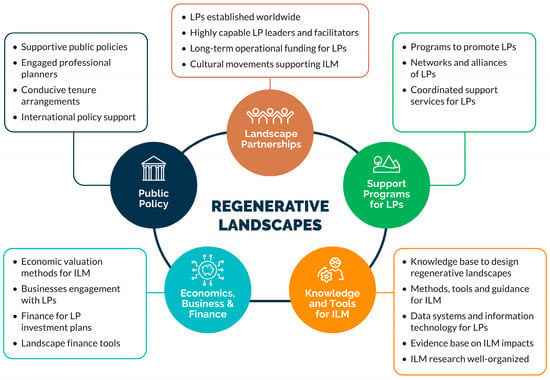
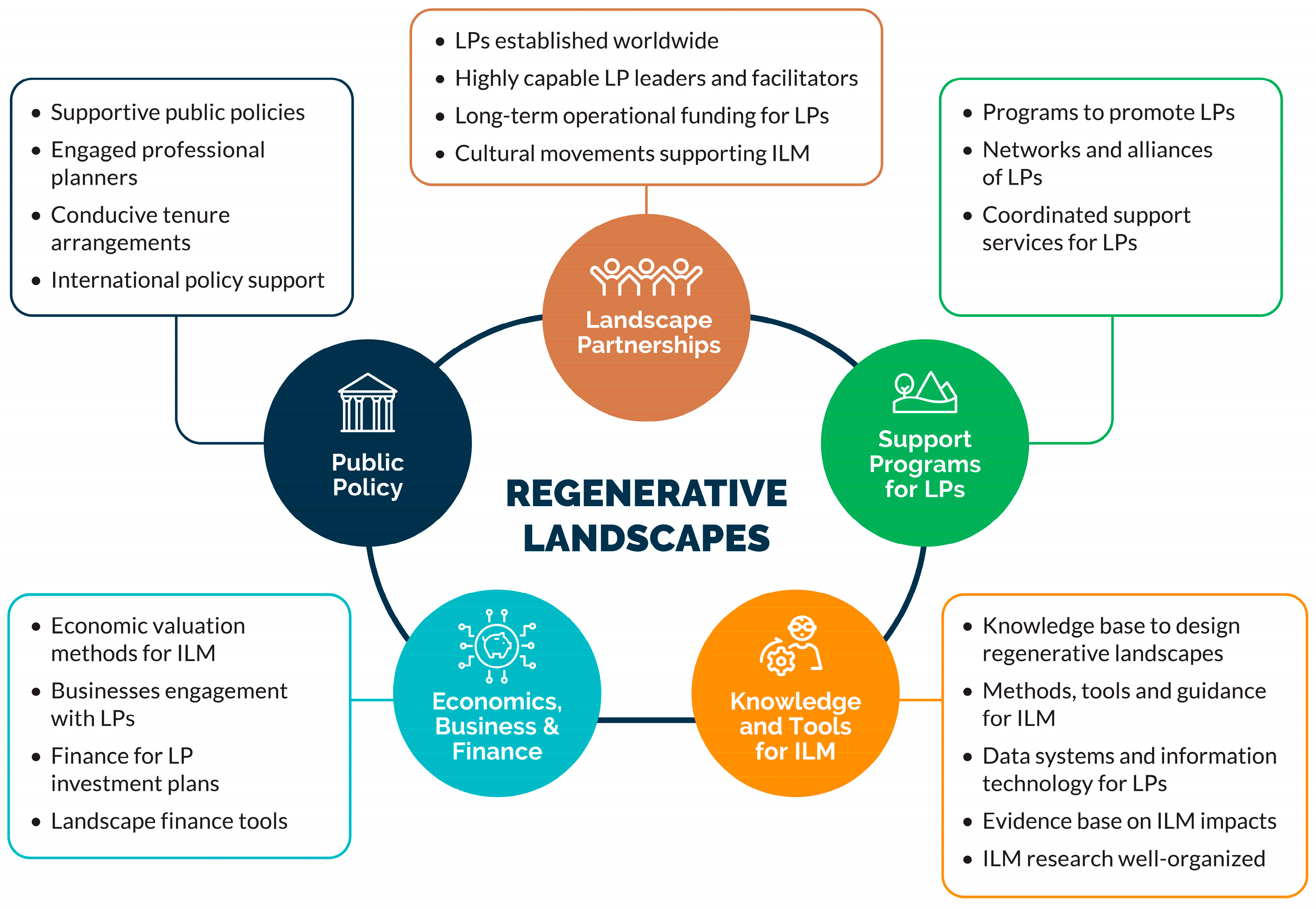





















Disclaimer/Publisher’s Note: The statements, opinions and data contained in all publications are solely those of the individual author(s) and contributor(s) and not of MDPI and/or the editor(s). MDPI and/or the editor(s) disclaim responsibility for any injury to people or property resulting from any ideas, methods, instructions or products referred to in the content. |
© 2026 by the authors. Licensee MDPI, Basel, Switzerland. This article is an open access article distributed under the terms and conditions of the Creative Commons Attribution (CC BY) license.