


Abstract
Understanding residents’ perceptions of ecosystem services (ES) and ecosystem disservices (EDS) is crucial for protected areas governance. This study, conducted in China’s Three-River-Source National Park (TNP), employed participatory rural appraisal and household questionnaires to examine local cognitive patterns of ES and EDS, along with their socio-spatial heterogeneity and perceived synergies and trade-offs among them. The key findings are as follows: (1) Cultural services received the highest scores, followed by regulating services, whereas provisioning services, especially food provisioning, were rated as relatively inadequate. Safety threats were considered the most severe EDS. Overall, a Matthew Effect emerged: services with high current perception scores showed an improving trend, while those with low scores deteriorated. (2) Spatially, ES/EDS evaluation scores exhibited a “core zone < general control zone < peripheral zone” gradient. Socio-demographic and economic factors also influenced residents’ perceptions; women and the elderly were especially more concerned about food and energy supply shortages and safety issues. (3) The relationships among the various ES and EDS are primarily synergistic rather than trade-offs. Specifically, gains in regulating services were associated with enhanced cultural services, while declines in provisioning services and intensified safety threats coincided with the deterioration of material EDS. These findings offer a scientific basis for managing protected areas in high-altitude, ecologically fragile regions and provide practical insights for balancing ecological conservation with community development.
1. Introduction
Ecosystems can simultaneously bring both beneficial and harmful impacts to humans. The former is referred to as ecosystem services (ES) [1], while the latter is termed ecosystem disservices (EDS) [2]. However, these two are not simply opposites but are interconnected and jointly influence human well-being [3,4,5]. On the one hand, the same ecosystem can produce both positive and negative outcomes across different dimensions [6,7,8]. For example, urban vegetation provides aesthetic and cultural benefits while also potentially fostering mosquito breeding. On the other hand, different groups often hold contrasting attitudes toward the same ecological process [9]. For instance, regarding wildlife in protected areas, researchers may emphasize the positive value of biodiversity, whereas local residents may be more concerned about the losses incurred to their livelihoods [10]. This indicates that the assessment of ES and EDS depends not only on the ecosystem itself but also closely relates to human perceptions and value judgments [11].
In contrast, current research exhibits two imbalances: First, there is a greater emphasis on services than on disservices. As of October 2025, the Web of Science Core Collection contains over 61,000 publications related to ES, while only 343 focus on EDS. Second, there is a stronger focus on objectivity than on subjectivity. A substantial body of research relies on remote sensing data, statistical records, and biophysical models for objective assessment [12,13,14]. However, such approaches often fail to capture the specific impacts of ecosystem changes on household and individual well-being [15]. Furthermore, due to issues such as limited model generalizability and data accuracy, the results often deviate from residents’ actual experiences [16]. These imbalances constrain a comprehensive understanding of socio-ecological systems and may lead to ecological management policies that diverge from actual needs [2].
This issue is particularly prominent in the management of global protected areas. Most of these regions are located in remote areas with relatively underdeveloped economies, and they have long faced tensions between national ecological goals and community well-being. Some of the negative impacts of ecological conservation are also disproportionately borne by local communities [17]. Research indicates that the influence of EDS on human behavior may far exceed that of ES [18,19,20]. The local residents’ perceptions of both directly affect their acceptance of management measures and may even hinder the progress of conservation efforts, leading to conflicts [21]. In recent years, research on ES based on residents’ subjective perceptions has gradually emerged. This research covers aspects such as the perception of service supply and demand [22,23], evaluations of importance and satisfaction [24,25], trade-offs and synergies [26], and the relationship with well-being [27,28]. The findings have become important bases for bridging objective knowledge gaps and promoting inclusive policies. Yet there are still deficiencies in existing research: Firstly, most studies analyze ES and EDS in isolation [29], failing to incorporate them into a unified framework to explore their interactions. Secondly, insufficient attention has been paid to the dynamic evolution of residents’ perceptions. Thirdly, there is limited investigation into how sociocultural factors such as cultural beliefs, livelihood approaches, and policy interventions interact with spatial zoning and demographic characteristics to influence perceptual differences.
The Three-River-Source National Park (TNP), as a core area of the ecological security barrier on the Qinghai–Tibet Plateau, has had its ecological value extensively confirmed by objective research [30,31]. However, the lived experiences, perceptions, and attitudinal feedback of local residents in the conservation process have long been overlooked. Based on this, this study integrates environmental psychology with social-ecological system theory, and focuses on residents’ subjective perceptions to specifically address the following questions:
(1) What are the cognitive characteristics of residents regarding key ES and EDS, including their perceptions of the current status and changing trends of these ES and EDS?
(2) How do residents’ perceptions of ES and EDS vary across spatial areas and among groups with different socio-demographic backgrounds, and what are the underlying drivers of these variations?
(3) What characterizes the relations within and between ES/EDS. Are they primarily trade-offs or synergies?
2. Research Methodology and Data Sources
2.1. Study Area
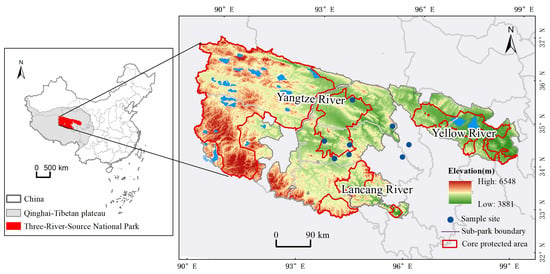
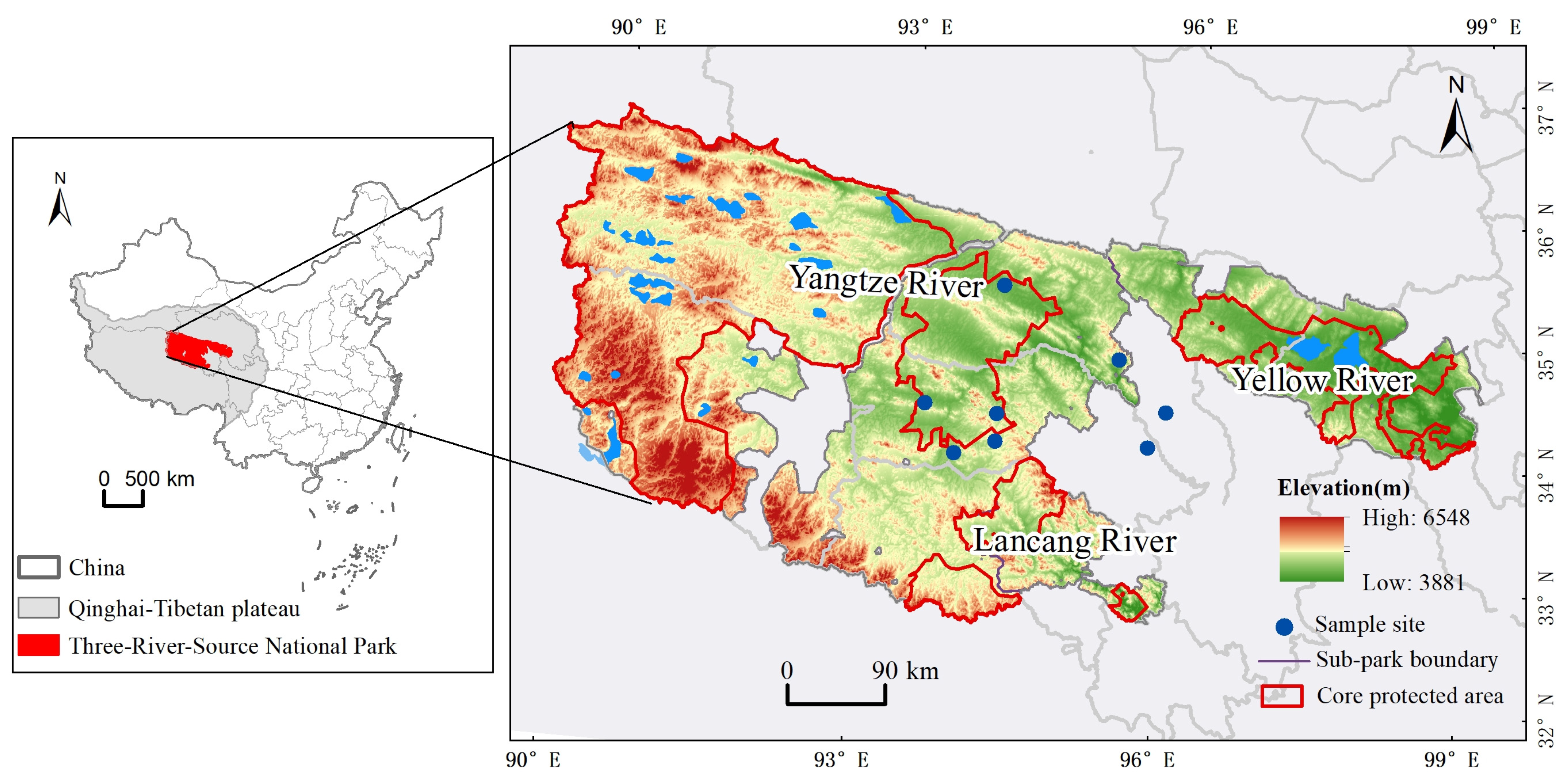
TNP, one of China’s earliest national park pilot projects, is located in the interior of the Qinghai–Tibet Plateau (Figure 1). As the headwaters of the Yangtze, Yellow, and Lancang Rivers, it is commonly known as “China’s Water Tower” [32]. The region delivers vital ecosystem services, including water conservation and climate regulation, that support ecological security across central and eastern China and extend environmental benefits to Southeast Asia, affirming its strategic role in Asia’s ecological system. Encompassing 190,700 km2 with an average elevation exceeding 4500 m, TNP features high-altitude mountainous landscapes and a diversity of ecosystems, including glaciers, snow-capped peaks, grasslands, wetlands, and deserts. These ecosystems offer vital habitats for endemic and endangered species, such as Panthera uncia, Pantholops hodgsonii, and Bos mutus [33].
Figure 1.
Location of the Three-River-Source National Park.
The area is sparsely populated, with more than 97% of residents belonging to Tibetan communities whose livelihoods remain closely tied to natural resources. The establishment of the national park has not only strengthened the protection of the ecosystem’s authenticity and integrity but also profoundly transformed local residents’ production and lifestyles. At present, the park employs a zoning strategy with “core zone,” where human activities are strictly limited, and “general control zone,” which allow restricted subsistence use [34]. The “peripheral areas” surrounding the national park are not subject to these restrictions. TNP is administratively divided into three river-source sectors, including the Yangtze, Yellow, and Lancang source areas. Among these, the Yangtze River Source area is the largest and has the most fragile ecosystem, making it typical and representative of TNP. Therefore, this area was selected as the study area.
2.2. Classification and Concepts of ES and EDS
Ecosystem services (ES) refer to the benefits that people obtain from ecosystems. Currently, the academic community generally adopts the MA classification framework, which includes provisioning, regulating, supporting, and cultural services [35]. Among these, supporting services (such as nutrient cycling and carbon storage) are mostly internal processes within ecosystems and are difficult to quantify and assess through residents’ subjective perceptions. Following relevant literature [36,37], they are excluded from this study. Considering local socioeconomic characteristics, five ES types were selected: two provisioning services (food provisioning, FPES; energy provisioning, EPES), two regulating services (water conservation, WCES; soil retention, SRES), and one cultural service (aesthetic and recreational value, ARES).
Ecosystem disservices (EDS) are defined as “the perceived or actual negative impacts of ecosystem functions, processes, and attributes on human well-being” by Shackleton [2]. At present, the classification systems of EDS are diverse. Lyytimäki et al. categorized EDS into aesthetic, safety, health, economic, and mobility issues [3]; Escobedo et al. grouped them into financial costs, social nuisances, and environmental pollution [38]; and Vaz et al. suggested five types: health, material, security and safety, cultural and aesthetic, and leisure and recreation [39]. Although no unified system exists, common EDS types often include health-related issues (such as disease transmission, allergens), economic and property losses (such as soil degradation, crop damage, infrastructure loss), safety threats (such as floods, storm damage, wildlife conflicts), and negative aesthetic or cultural perceptions (such as unpleasant vegetation, negative cultural meanings). Based on existing classifications and combined with local conditions, preliminary surveys, and interviews with residents and managers in TNP, this study focuses on four key EDS types: material disservices, including predation on livestock (PLEDS), wild herbivore competition for grassland (WHEDS), and reduction in livestock holdings (RLEDS); health disservices including zoonotic diseases (ZDEDS) and livestock illnesses (LIEDS); safety disservices primarily wildlife attacks on humans (WAEDS) and cultural disservices such as environmental pollution (EPEDS). This approach of adopting a classic framework with localized adjustments not only ensures the compatibility of this study with international counterparts, but also guarantees that the classification conforms to the core ecological characteristics of the study area.
2.3. Data Sources
This study adopted the Participatory Rural Appraisal (PRA) method and conducted a questionnaire survey in July 2025. A multi-stage mixed sampling strategy was employed to maximize the geographical distribution breadth of the sample. In the first stage, research areas were selected through a combination of stratified and purposive sampling methods. Specifically, excluding the uninhabited area of Kekexili, representative and accessible towns and townships were chosen from each stratum based on the spatial functional planning of the Yangtze River Source Region, as detailed in Table 1. The survey locations comprehensively covered all villages in the core zone and all townships in the general control zone (within Zhiduo and Qumalai counties), while the nearest township to this region was selected as the peripheral zone. In the second stage, due to the vast territory, sparse population, and challenging accessibility of the pastoral regions on the plateau, traditional random sampling was difficult to implement. Therefore, convenience sampling was adopted. Researchers conducted one-on-one interviews with all accessible pastoral households with adults present during the survey period within the village settlements. However, constrained by survey accessibility, the sample was predominantly drawn from herders residing in village settlements and surrounding areas with relatively convenient transportation, resulting in insufficient coverage of those in extremely remote areas. This has led to a certain bias in the sample characteristics, such as spatial distribution and production-living patterns.
Table 1.
Sample source and distribution.
The survey content and procedure were as follows: (1) Questionnaire introduction. Researchers explained the purpose of the study, introduced their own identity, assured respondents of confidentiality and academic use only, and obtained oral informed consent. (2) Collection of demographic and socioeconomic information. Data included gender, age, ethnicity, education level, household size, and living standards. Since local livelihoods do not rely solely on cash income and involve numerous transfer payments (nearly 50 types such as ecological subsidies, education allowances, and subsistence subsidies), living standard was used as an economic indicator to avoid confusion between cash income and poverty level. Respondents rated their household living standard as 1 (below the village average), 2 (medium), or 3 (above the village average). (3) Assessment of ES and EDS status and trends. Current perceptions of ES/EDS were measured using a 5-point Likert scale, where ES ranged from “very poor” to “very good”, and EDS from “very severe” to “very good”, with higher scores indicating better conditions. Trends were assessed using a 3-point scale based on Zu et al. [40], where 1 represented worse than 10 years ago, 2 represented no change, and 3 represented better. Each ES/EDS item included a clear definition to ensure local relevance. (4) Open-ended discussion. Respondents were asked about the specific connections between ES/EDS and their household or personal life, providing qualitative insights for deeper analysis. As most residents communicate in Tibetan, all questionnaire content was translated on-site by volunteers familiar with the local language and cultural context. Investigators recorded respondents’ answers and verified the information immediately after each interview, which helped ensure high-quality data. A total of 163 questionnaires were distributed in this survey, with 160 valid responses collected, resulting in an effective recovery rate of 98.3%.
2.4. Research Methods
Data analysis was performed using SPSS 27.0. Prior to conducting further data analysis, the internal consistency of the scales was assessed using Cronbach’s α, and the appropriateness of the data for subsequent analysis was checked using the KMO test.
2.4.1. Descriptive Analysis
Descriptive analysis is the first step in the statistical analysis of social surveys. It involves analyzing the collected data to obtain various quantitative characteristics that reflect objective phenomena and to predict subsequent outcomes [41]. In this study, descriptive statistics were applied to residents’ perceptions of various ES/EDS factors, comparing the differences between the core zone, general control zone, and peripheral zone of the national park.
Pmij denotes the perception index of respondent i in region j for service type m; n represents the number of respondents in region j; Pmj indicates the perception index of the m-th type of ES/EDS among respondents in region j.
2.4.2. Current Perception–Trend Perception Matrix
To address the common limitation of relying solely on static cross-sectional data in previous research, and drawing on the study by Aldana-Domínguez et al. [42], this paper introduces a two-dimensional “current perception–trend perception” matrix. This framework comprehensively assesses residents’ evaluations of both the present status and dynamic trends of various ecosystem services ES and EDS. In this matrix, the static current perception of ES and EDS is plotted on the horizontal axis, while the dynamic trend perception is represented on the vertical axis, dividing all elements into four quadrants: Quadrant I (Advantage zone): Good current status with improving trends; Quadrant II (Transitional zone): Poor current status but improving trends; Quadrant III (Degraded zone): Poor current status with continuing deterioration; Quadrant IV (At-Risk zone): Good current status but worsening trends.
2.4.3. Multiple Regression Model
To quantify the intensity and direction of the impact of residents’ socio-demographic characteristics on their perception of ES/EDS and to clarify the differential roles of these characteristics, this study adopts multiple linear regression analysis. This model can effectively reveal the average marginal effects of each independent variable on the perception level [27,29]. The dependent variables were the perception indices of ES/EDS status and trends, while the independent variables included five socio-demographic factors: age, gender, education level, household size, and living standard. The basic form of the linear regression model is presented as follows:
where Y denotes the perception score of ES/EDS; β0 is the intercept; β1, β2, …, βk are the regression coefficients corresponding to independent variables X1, X2, …, Xk; and ε denotes the random error term.
2.4.4. Trade-Off and Synergy Analysis
Trade-offs and synergies characterize the interrelationships among different ecosystem services: the former denotes a scenario where the enhancement of one service induces the degradation of another, while the latter refers to a situation where two services undergo concurrent improvement or deterioration. Using Spearman’s coefficient correlation intensity to classify trade-off and synergy intensity levels. Generally, if the correlation coefficient is positive upon passing the significance test, it indicates a perceived synergistic relationship between two ecosystem services; conversely, it is considered a trade-off relationship. The specific formula is as follows:
ρ represents the intensity of the trade-off/synergy type; di is the rank difference in the i-th pair of data; is the sum of squares of all rank differences; n is the number of data pairs.
3. Results
For the reliability test, the Cronbach’s α was 0.901 for the current perception scale and 0.785 for the trend perception scale. For validity, the KMO values were 0.880 and 0.744 for the respective scales, and both were significant at the 0.000 level. These results indicate that the questionnaire possesses good overall reliability and validity, demonstrating high dependability.
3.1. Basic Characteristics of Respondents
All respondents were of Tibetan ethnicity. Their demographic characteristics are presented in Table 2. In terms of gender distribution, males accounted for 54.4% and females for 45.6%. During the household visits, male heads of households were usually prioritized for interviews due to the local sociocultural context. However, since the survey was conducted in summer, many men were often away from home for herding or social activities, which consequently prevented the proportion of female respondents from becoming too low.
Table 2.
Demographic and economic information of respondents.
The age distribution of respondents was relatively balanced. However, the overall education level was low, with 64.4% of respondents having attained only primary school education or less. The sample was predominantly composed of middle-aged and older adults. Regarding household size, most families consisted of 1–5 members, while households with six or more members accounted for 16.9%. In terms of self-assessed living standards, 25.6% rated their households as “below the village average”, while 15.0% reported being “above the village average”.
3.2. Residents’ Perceptions of the Current and Trends of ES and EDS
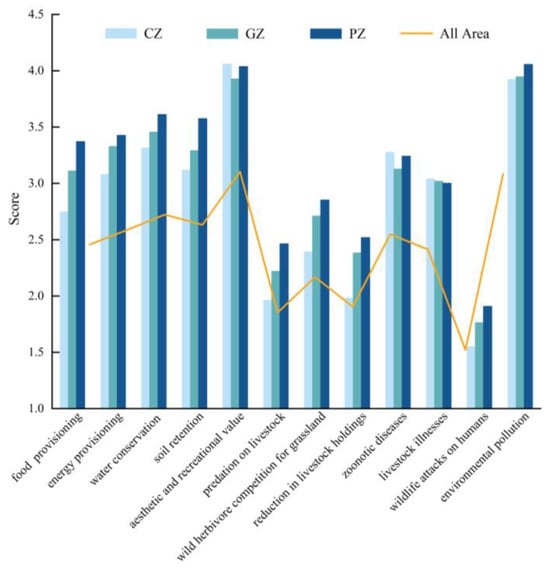
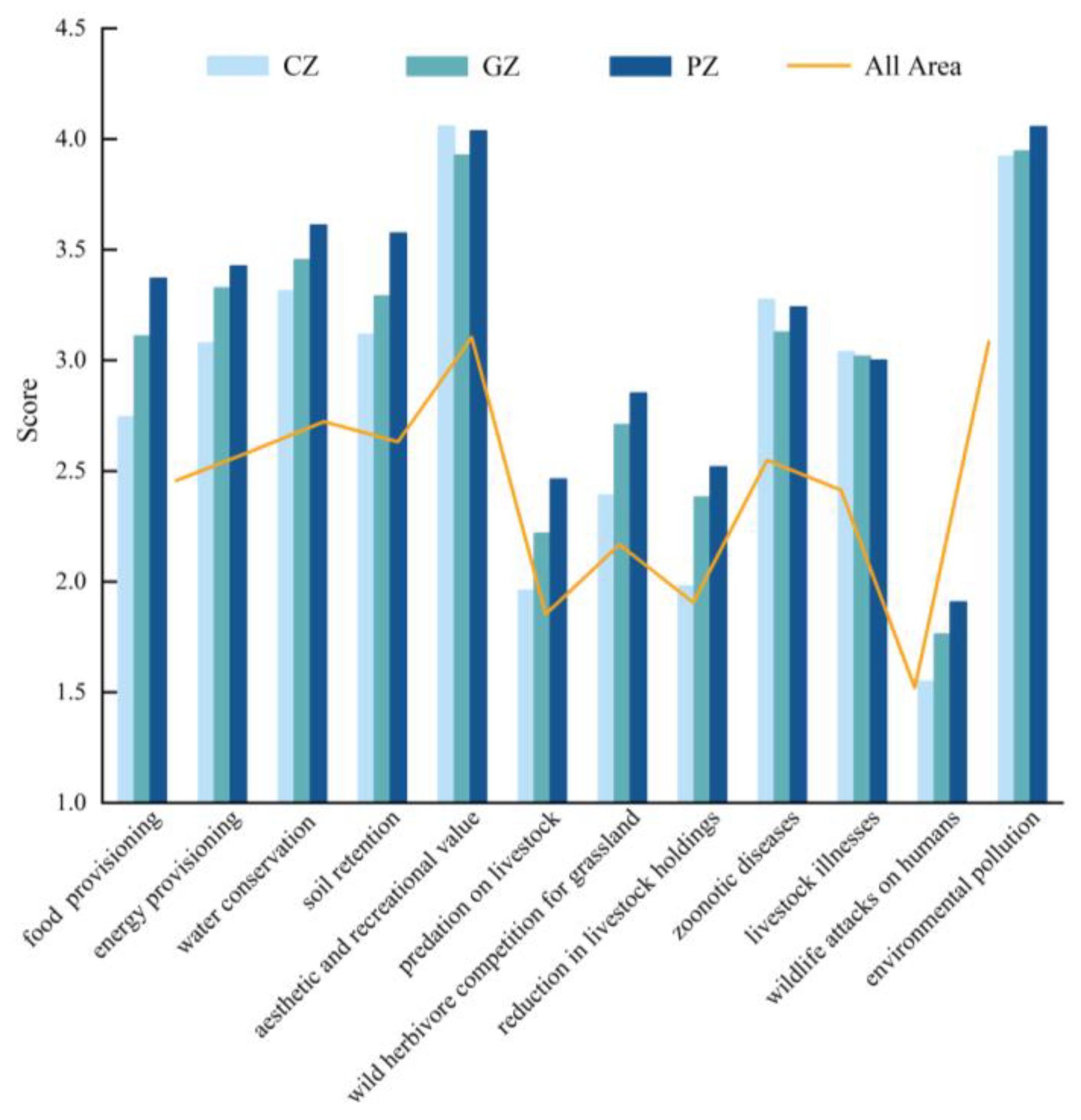
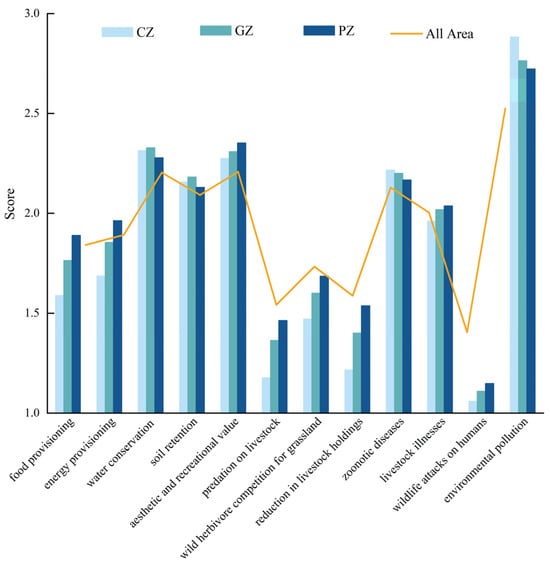
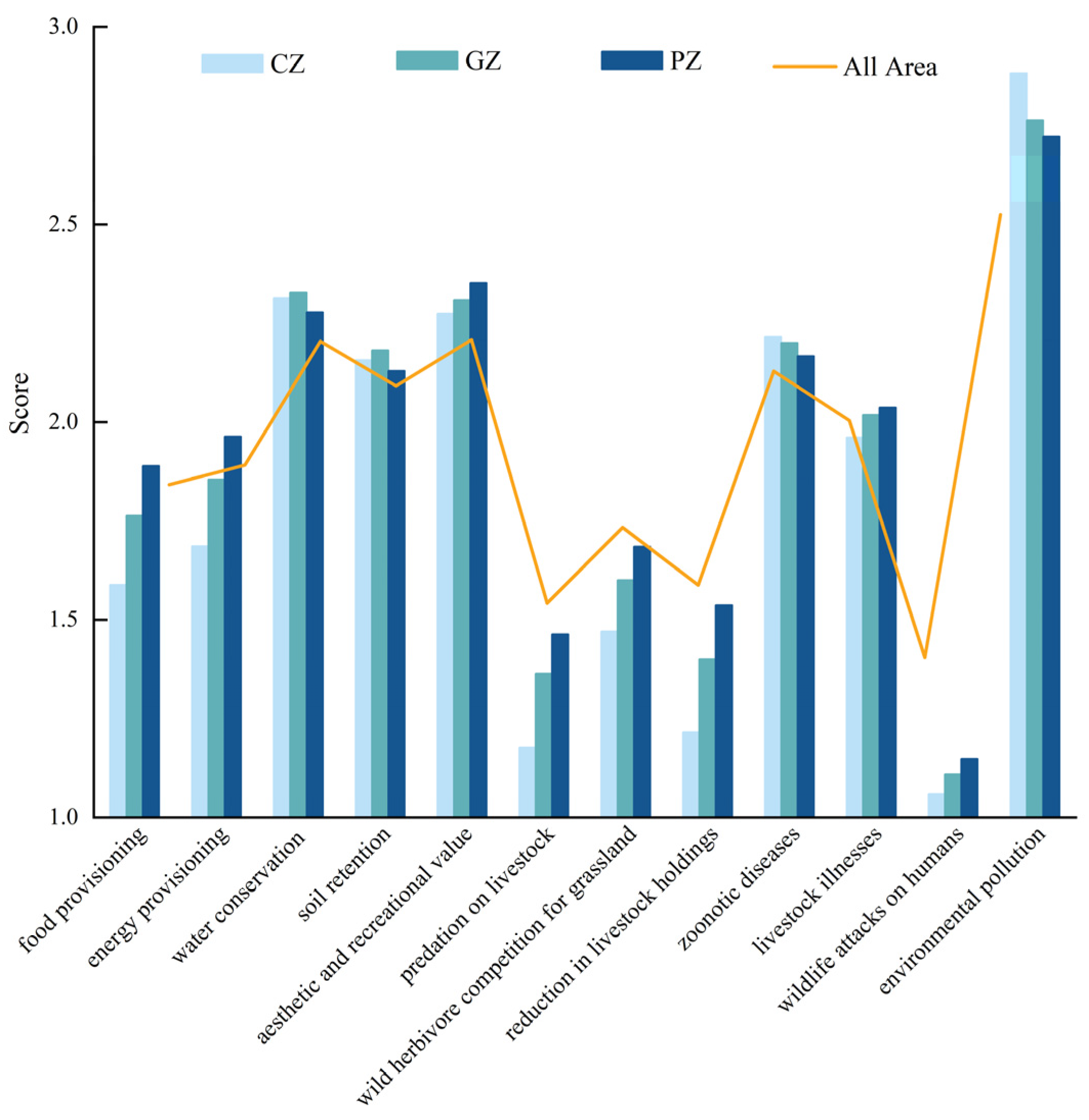
According to the survey results, as shown in Figure 2 and Figure 3, residents’ perceptions and changing trends regarding ES and EDS are as follows.
Figure 2.
Residents’ Perceptions of the Current.
Figure 3.
Residents’ Perceptions of the Trends.
In terms of current evaluation, among ES, cultural services scored the highest (4.01), followed by regulating services, with water conservation scored 3.46 and soil retention scored 3.33. Provisioning services were rated lowest, particularly food provisioning (3.08) and energy provisioning (3.27). Spatially, both provisioning and regulating services showed a consistent pattern: core zone < general control zone < peripheral zone. Notably, food provisioning in the core zone scored below 3, indicating a perceived deficient status. Among EDS, environmental pollution scored highest (3.98), reflecting residents’ view that this issue has significantly improved and is now positively evaluated. For health EDS, zoonotic diseases scored slightly higher (3.21) than livestock illnesses (3.02). All other EDS scored below 3: livestock predation by wildlife scored 2.22, reduction in livestock holdings scored 2.29, and competition for grassland by wild herbivores scored 2.67. Safety EDS received the lowest score (1.74), indicating that concerns over personal safety are the most prominent EDS issue. Regional comparisons show that, except for health EDS which showed no significant differences across zones, all other EDS exhibited the pattern: core zone < general control zone < peripheral zone. This indicates that residents in the core zone perceived the most severe negative impacts of EDS, while those in the peripheral zone perceived the least severe ones.
Regarding perceived trends, most notable improvements were in environmental pollution (2.8), indicating broad recognition of its improvement over the past decade. Cultural services scored 2.31, showing steady improvement. Among regulating services, water conservation (2.3) improved more than soil retention (2.17). For health-related EDS, zoonotic diseases showed some improvement (2.19), while common livestock diseases improved only marginally (2.00). In contrast, several indicators showed deteriorating trends, all scoring below the threshold (2), ranked by severity: wildlife attacks on humans (1.11), reduced livestock holdings (1.38), livestock predation by wildlife (1.43), competition for grassland by wild herbivores (1.67), food provisioning (1.75), and energy provisioning (1.84). Spatial analysis of perceived trends shows that, residents in the core zone show significantly higher recognition only for environmental pollution improvement compared to other regions. For provisioning ES and material EDS, the perceived changes follow a pattern of core zone < general control zone < peripheral zone, while little variation was observed across the three regions in the dimensions of regulating ES, cultural ES, health EDS, and safety EDS.
3.3. Influence of Social Factors on Residents’ Perceptions
Multiple linear regression was employed to analyze the effects of gender, age, household size, education level, and living standard on residents’ perceptions of ES and EDS. The variance inflation factor (VIF) for each variable ranged between 1.04 and 2.54, indicating no multicollinearity issues in the model. Specific regression results are presented in Table 3, with the main findings as follows:
Table 3.
Social factors analysis of residents’ perceptions.
Regarding gender, women showed significantly stronger perceptions than men regarding food provisioning (current: β = −0.17 *, trend: β = −0.163 *), energy provisioning (current: β = −0.178 *, trend: β = −0.196 *), and safety threats (current: β = −0.163 *). For age, a significant negative correlation was observed with food provisioning (current: β = −0.234 *, trend: β = −0.316 **) and reduction in livestock holdings (current: β = −0.319 **, trend: β = −0.317 **), indicating that older residents perceive resource shortages and economic losses more negatively. Education level was positively correlated with perceptions of regulating services, such as water conservation (current: β = 0.283 *) and soil retention (trend: β = 0.284 *), suggesting that higher education levels are associated with more positive evaluations of the status and improvement of regulating services. Living standard had a positive influence on multiple ES and EDS perceptions, including food provisioning (current: β = 0.206 *) and cultural services (current: β = 0.269 *) among ES, as well as material-related EDS such as livestock predation by wildlife (current: β = 0.167 *) and reduction in livestock holdings (current: β = 0.165 *). It also positively influenced health-related EDS, including zoonotic diseases (current: β = 0.397 *, trend: β = 0.214 *) and livestock health (current: β = 0.382 *), along with current perceptions of environmental pollution (current: β = 0.16 *). In contrast, household size showed no significant correlation with any services or disservices.
3.4. Matrix Analysis of Residents’ Perceptions: Current Status vs. Trends of ES/EDS
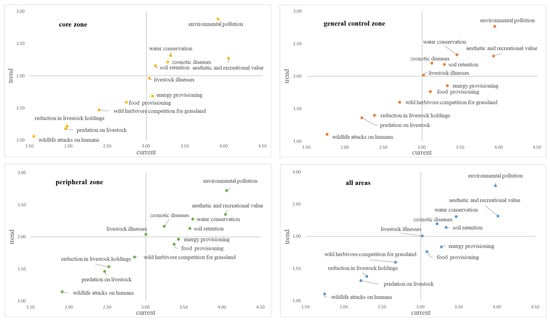
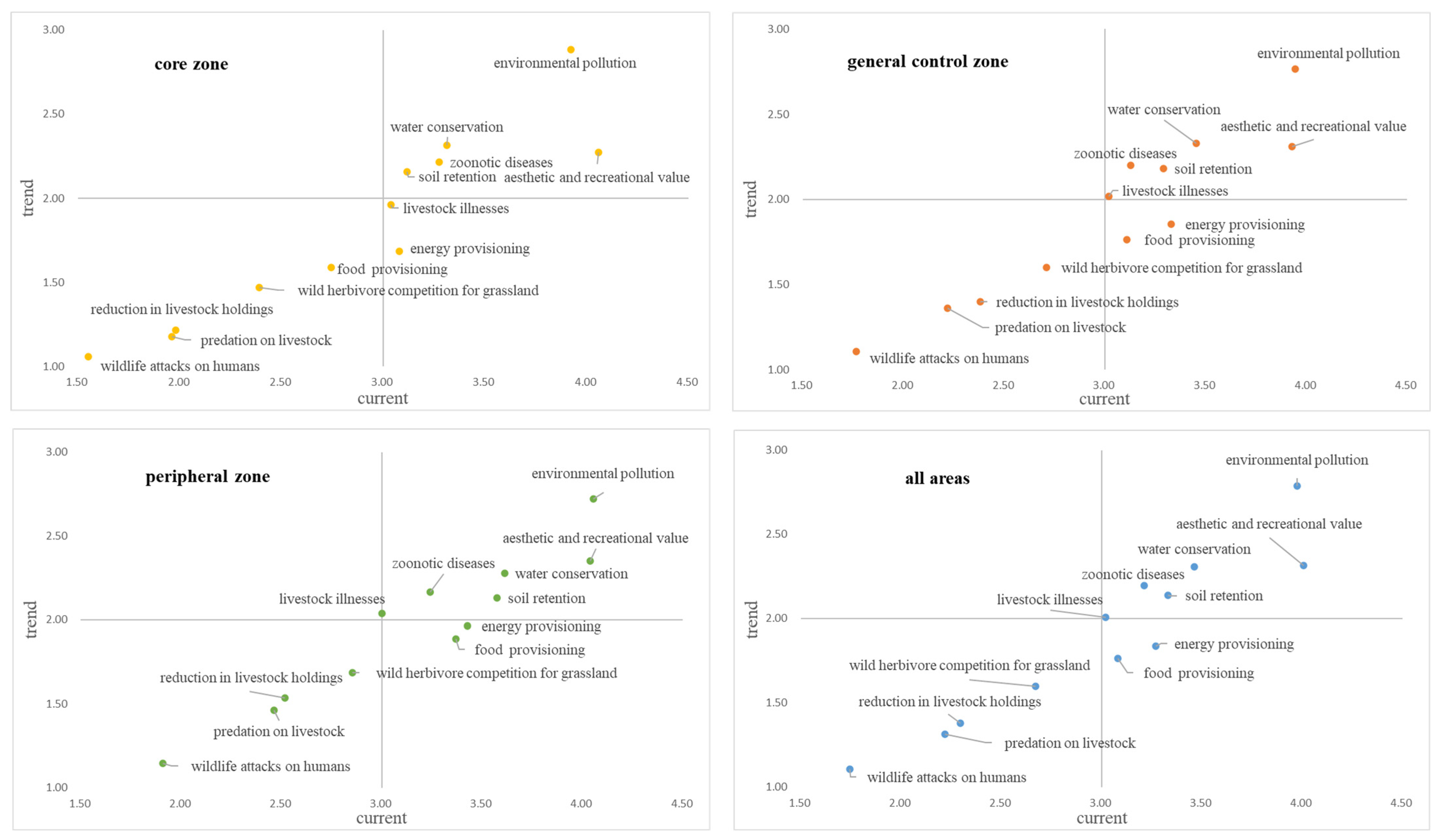
The four-quadrant analysis reveals the following patterns (Figure 4): Indicators located in Quadrant I (Advantage zone) include cultural ES, regulating ES, cultural EDS, and zoonotic health EDS. This indicates that residents in the three functional zones were relatively satisfied with the current status of these services and believed they were continuously improving. Livestock health EDS, positioned near the axis intersection, suggests residents hold a neutral evaluation of its current status with a limited perception of improvement. Indicators primarily found in Quadrant III (Degraded zone) include safety threats and most material EDS, reflecting residents’ view that these issues are both prominent and worsening. Food provisioning services in the general control and peripheral zones fall into Quadrant IV (At-Risk zone), indicating that despite currently adequate supply, residents perceive a gradual decline in provisioning capacity. Notably, in the core zone, this indicator has shifted into Quadrant III, revealing a more severe situation of supply shortage.
Figure 4.
Residents’ perceptions: current–trend matrix.
From a regional comparison perspective, the distribution patterns across the three functional zones are generally similar without significant divergence. Overall, a common trend is observed: Services that are already in good condition continue to improve, while those that were initially insufficient show further deterioration.
3.5. Analysis of Trade-Offs and Synergies
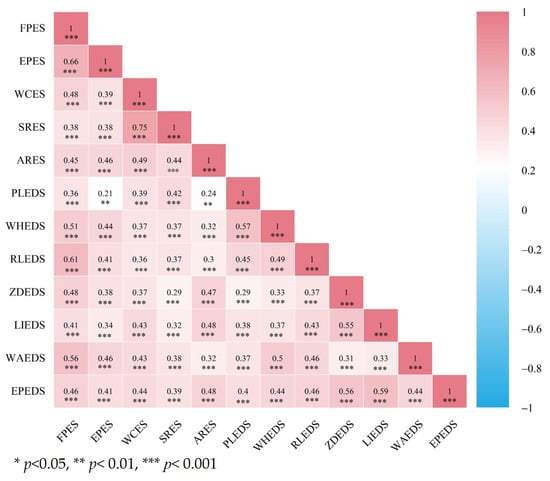
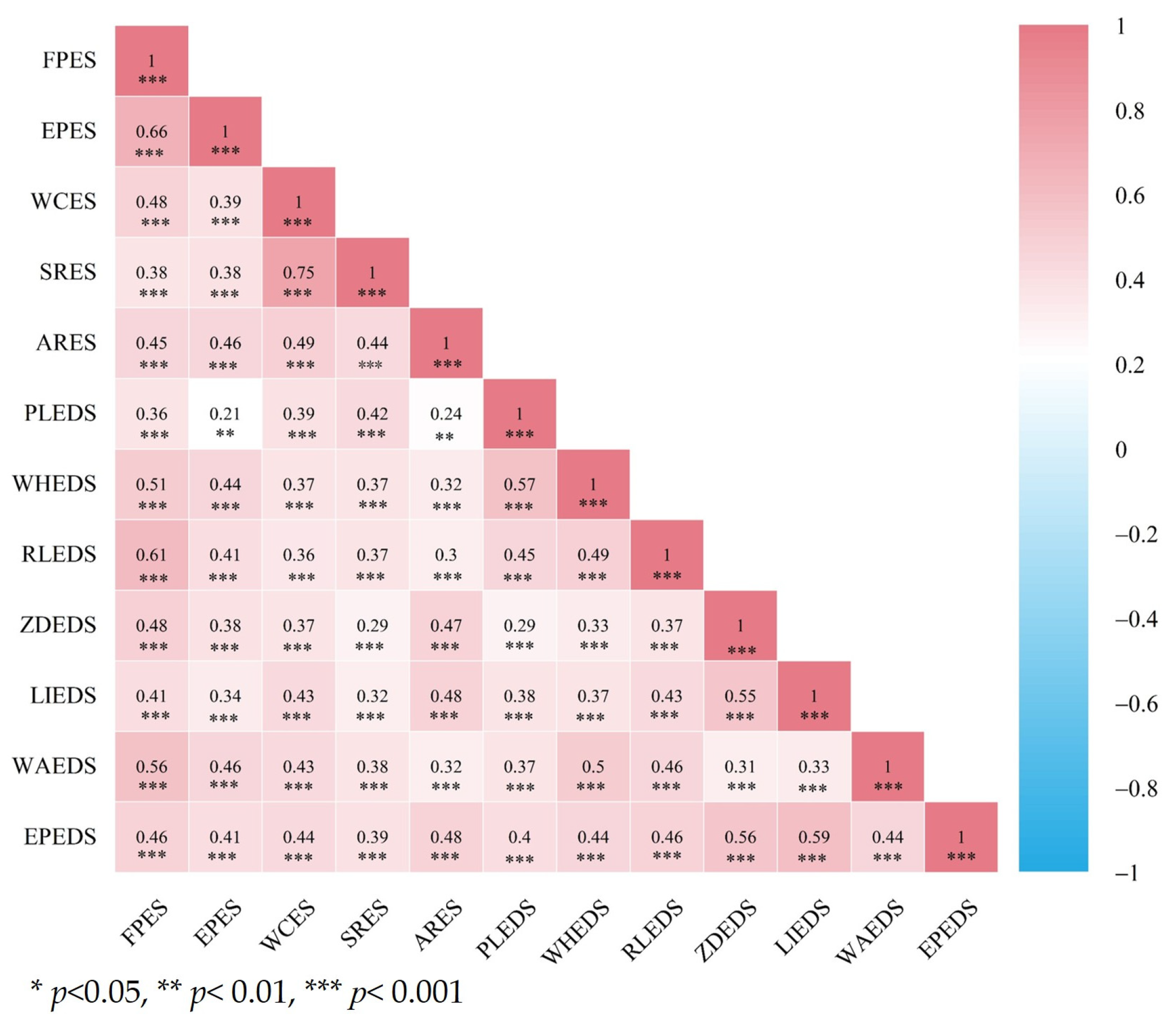
At the level of current perceptions (Figure 5), significant synergistic relationships were commonly observed between various ES and EDS. In addition to the strong synergies within each major service category, notable synergies were identified between the EDS of reduction in livestock holdings and safety EDS and the ES of food provisioning, as well as between health EDS and environmental pollution EDS.
Figure 5.
Perceived trade-offs and synergies of current.
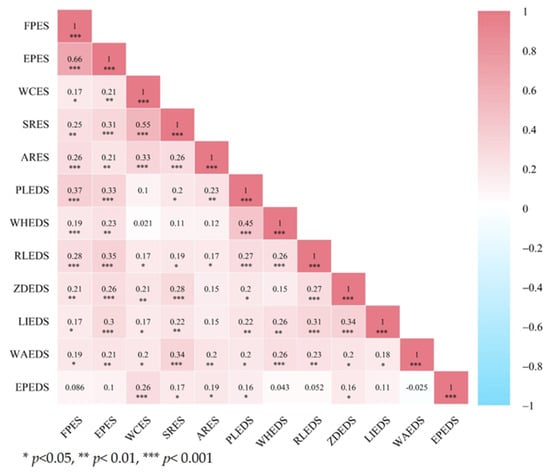
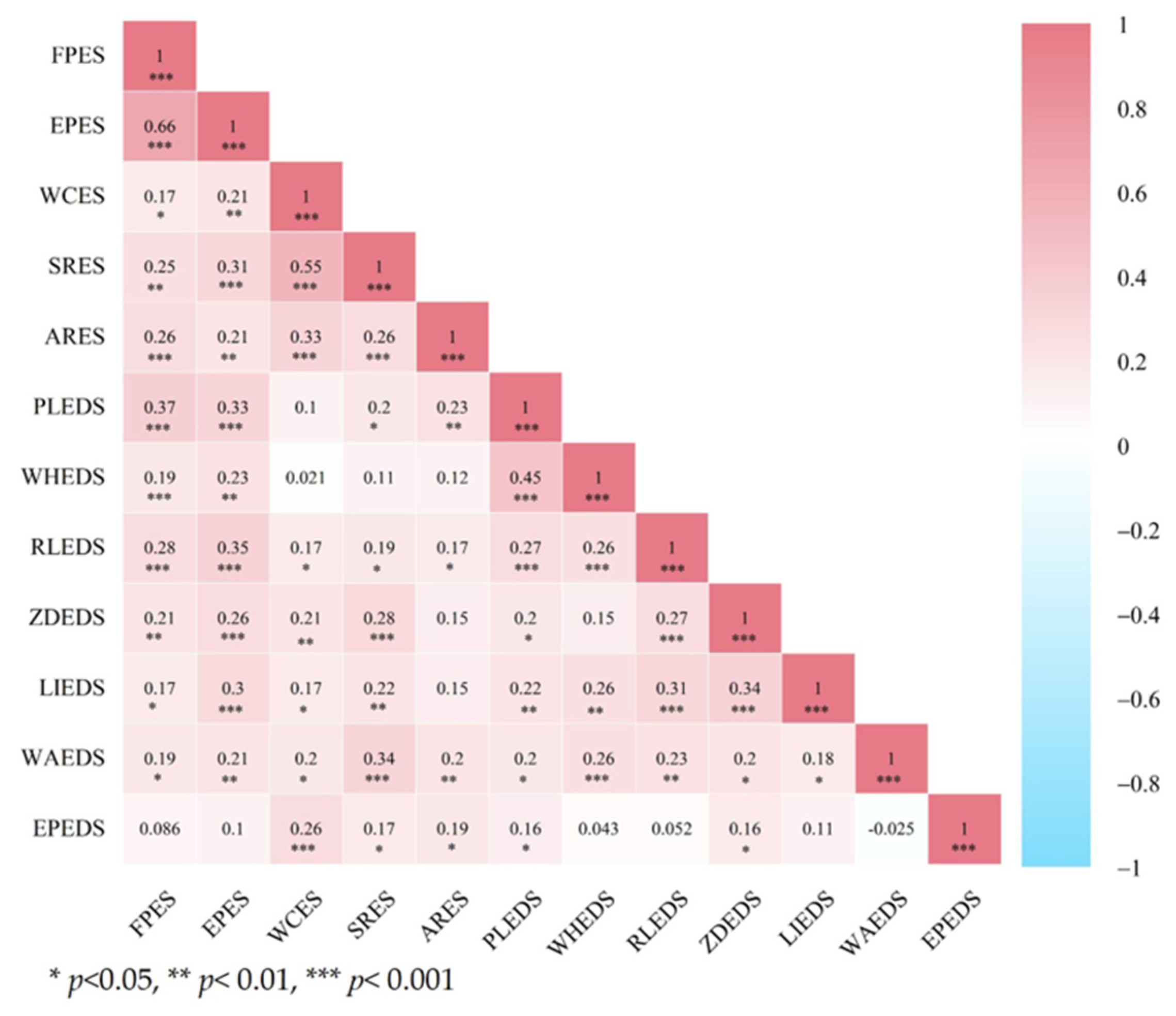
Regarding perceived trends (Figure 6), synergies continued to dominate most inter-service relationships. Beyond the significant synergies within service categories, clear synergistic relationships were observed between provisioning ES and material EDS, between livestock health EDS and reduction in livestock holdings EDS, and between regulating ES and material EDS.
Figure 6.
Perceived trade-offs and synergies of trends.
4. Discussion
4.1. Characteristics of Residents’ Perceptions of ES and EDS
Residents in pastoral areas are able to identify a diverse range of ES and EDS, as their well-being is closely tied to the living environment they depend on [43]. The study found that residents of TNP rated cultural services the highest and generally perceived them as continuously improving, consistent with research from multiple protected areas globally [24,44,45,46]. This underscores cultural services as one of the most critical and cherished functions of protected areas, occupying a central position in their integrated value. During field surveys, although many residents could not speak Mandarin, they accurately used the terms “national park” and “environmental protection.” Cultural elements such as grassland landscapes and sacred mountain beliefs were frequently mentioned, reflecting the important role of cultural ecosystem services as intangible, non-material elements in the pastoral plateau area. These services not only carry residents’ spiritual connection to their ancestral lands but also indicate high recognition of the national park’s ecological conservation efforts at the cultural and spiritual level.
Regarding regulating services, although they have traditionally been difficult for residents to directly perceive and evaluate due to their microscopic nature such as soil formation and water cycling [47] and have received low ratings from residents in other national parks such as Wuyishan National Park [48], this study shows that their recognition level was second only to that of cultural services. This finding is consistent with the results of Ke et al. [24] in Yunnan, China, which stems from herders’ long-term dependence on grassland ecosystems and their heightened sensitivity to changes in these systems. Many residents explicitly acknowledged improvements in soil and water conservation functions. For example, one respondent stated, “In the past, when it was windy, the sand on the street was so thick that you couldn’t see people clearly, but this rarely happens now,” indirectly confirming the practical effectiveness of grassland ecological restoration. Such observable positive changes are consistently reinforced through daily experiences, fostering stable and positive perceptions of ecological improvement among residents.
However, provisioning services were generally rated lower, with food provisioning in the core zone falling below the critical threshold, similar to findings from the Northeast China Tiger and Leopard National Park under comparable policy management [25]. Insufficient food provisioning directly affects residents’ basic living needs. To some extent, policies such as ecological compensation and the ecological ranger program have alleviated livelihood pressures through financial support, enabling residents to purchase food to offset supply shortages. Nevertheless, some residents still expressed psychological and practical discomfort with the changes to traditional grazing practices. Similar psychological gaps have been reported in ecological conservation projects in Inner Mongolia, China [49].
Material EDS mainly manifested as significant contraction in livestock herds. During the 1980s and 1990s, ecological degradation in the Three-River-Source region, driven by climate change and overgrazing, prompted the national government to implement grazing bans and grassland-livestock balance policies [33]. In recent years, some herder households have faced labor shortages due to reasons such as moving to urban areas to accompany their children for education, leading them to voluntarily abandon pastoralism. Concurrently, rapid recovery of wildlife populations, including snow leopards and wolves, has resulted in increasingly frequent attacks on yaks. Under the combined effects of rigid policy constraints, voluntary exit of herders, and wildlife attacks, yak numbers have continued to decline, while sheep have nearly disappeared. This phenomenon is particularly pronounced in the core zone but relatively milder in the general control and peripheral zones.
The study revealed that safety EDS has become the most prominent ecosystem disservice issue in TNP. Safety perceptions profoundly influence residents’ subjective well-being [50]. Local residents face escalating threats from attacks by large wildlife such as Tibetan brown bears (Ursus arctos pruinosus). Although only a minority directly encounter such conflicts, the consequences are fatal, and the spread of related information through social media has intensified psychological fear among the community. Some residents noted, “In previous years, we could harvest caterpillar cordyceps (a prized medicinal fungus) until the end of June, but this year we had to stop around June 10th—not because there was no Cordyceps, but because we feared bear attacks.” Thus, safety threats not only pose direct life risks but also cause significant economic losses. Unlike residents in regions such as Nepal or Kenya, who may resort to retaliatory hunting [51,52], the stringent conservation policies in China and the traditional ecological values of its residents often lead them to adopt passive avoidance strategies instead. These sudden, high-consequence incidents are assigned greater weight in residents’ perceptions, leading to an amplified sense of security threat over time.
Overall, the general evaluation of ecosystem services in TNP is rated lower than that in other non-ethnic-minority regions of China [53] and some other minority areas [24]. From the temporal perspective of residents’ perceptions, the trend exhibits a pronounced Matthew effect: high-value services such as regulating and cultural services continue to improve, while services related to safety threats, material losses, and food provisioning are further deteriorating. This phenomenon arises from the combined effect of management priorities and psychological mechanisms. On one hand, the governance aims of TNP prioritize ecological security and core functions, such as water conservation and biodiversity protection. Consequently, policy and resource allocation tend to favor areas related to cultural and regulatory ecosystem services [34,48]. For instance, measures like ecological restoration projects and environmental education campaigns tend to create a positive feedback loop within communities, characterized by “protection—visible outcomes—enhanced recognition.” On the other hand, the amplifying effect of residents’ psychological perceptions cannot be overlooked. Objectively existing issues, such as the contraction of traditional livelihoods due to stringent conservation measures and the increase in human–wildlife conflicts during ecological restoration, are closely tied to residents’ livelihoods and safety. These issues are assigned greater weight in residents’ cognition. At the same time, standardized and fixed compensation measures (ecological compensation funds and ecological management wages) as well as ex-post compensations (various insurance payouts), although they secure basic livelihoods, are implemented in a universal and static manner. This makes it difficult to adapt to continuously evolving dynamic risks, causing such negative experiences to be persistently amplified into stable negative perceptions. This increasingly pronounced divergence poses a severe challenge to the long-term sustainability of ecological conservation in the national park [54,55].
4.2. Influence of Socio-Demographic and Spatial Factors
On the spatial dimension, provisioning and regulating ES, as well as material and safety EDS, all exhibited a gradient pattern of core zone < general control zone < peripheral zone. This is essentially the combined result of protection intensity, inherent ecological vulnerability, and human activity interference. It also reflects a positive correlation between protection intensity and livelihood pressure on local communities. In the Yangtze River source region, the core zone had suffered severe ecological degradation and accumulated considerable “historical ecological debts” due to overgrazing, climate change and other factors before its designation as a protected area [32]. Considering the changing trends, the ecology of the core zone has improved remarkably after years of stringent protection. However, given its extremely poor initial state, the recovery process remains long-term and gradual. Consequently, the absolute value of its regulating services may still be lower than that of the peripheral areas with better inherent ecological conditions, which is consistent with remote sensing data [31]. Meanwhile, the more rigorous management and control measures in the core zone have restricted traditional activities such as grazing, weakening certain supply services; the rapid growth in the number of wild animals has also intensified human–wildlife conflicts, further exacerbating safety risks and economic pressures. The general control zone and peripheral areas have experienced less ecological degradation, face lower recovery challenges, and are subject to gradually relaxed restrictions on human activities, resulting in a sequential increase in ecosystem service levels.
Nevertheless, this current gradient distribution does not indicate the failure of protection efforts, instead, it is a natural outcome shaped by differentiated regional protection goals, ecological foundations, and human activity patterns under the implementation of science-based zonal management and control. For highly vulnerable ecosystems, even with the strictest protection measures in place, the full restoration of their functions requires a much longer timeframe than anticipated, which underscores the necessity and long-term nature of continuously strengthening the protection of the core zone [31]. For highly vulnerable ecosystems, even with the strictest protection measures in place, the full restoration of their functions requires a much longer timeframe than anticipated, which underscores the necessity and long-term nature of continuously strengthening the protection of the core zone. In contrast, cultural and health-related services show no significant differences across the three zones. This uniformity reflects the pervasive nature of health risks throughout the ecosystem, while the consistent perception of cultural services demonstrates their role as spiritual bonds that transcend physical boundaries and management policies.
While environmental perception is a collective phenomenon [27], numerous studies have revealed significant differences in residents’ views and cognition of ecosystems, emphasizing the importance of examining individual perceptions rather than treating herders as a homogeneous stakeholder group [56]. Aligning with some studies [57,58]. In TNP, women are more sensitive to food and energy provisioning as well as safety threats. This relates to the traditional Tibetan household division of labor, where women have long been responsible for food preparation and fuel collection (primarily yak dung). From biological and psychological perspectives, women also naturally exhibit higher sensitivity to safety concerns. Older residents, particularly the elderly, show greater concern over reduced food supply and livestock herd contraction, closely linked to their long-term dependence on natural resources. Higher-educated residents demonstrate stronger recognition of regulating services and livestock health, suggesting that education enhances understanding of ecosystem complexity and interconnections—a finding consistent with studies from Ecuador and Nigeria [43,59]. Groups with higher living standards rated multiple ES and EDS more positively, indicating a stronger capacity to cope with ecological risks. This also highlights the greater vulnerability of lower-income groups when facing ecosystem service degradation. Notably, household size showed no significant correlation with perceptions of any service. This finding differs from previous studies [37], as interviews revealed many herders attributed food shortages directly to grazing bans and wildlife attacks rather than family size. These external factors reduced respondents’ psychological inclination to link supply shortages to household size, thereby weakening the statistical power of the correlation analysis.
4.3. Synergistic Relationships Between ES and EDS
This study reveals an absence of trade-offs among ES and EDS in this region, instead demonstrating strong synergistic effects. In TNP, the highest correlation existed between food and energy provisioning, both centered around yaks—providing meat and milk as food, while dung serves as a traditional energy source. As yak numbers decline, the supply of dung-based energy is also affected, though this pressure has been partially mitigated by adopting new energy products like solar power. Concurrently, the improvement in regulating service functions has enhanced the quality of the grassland landscape, thereby driving the elevation of cultural service value. This aligns with the findings reported by Dave et al. in Madagascar [60]. Among EDS, various damages also exhibited significant synergies. As mentioned earlier, the intensification of human–wildlife conflicts not only exacerbates material EDS but also escalates safety threats. This synergistic relationship is even more pronounced in residents’ perceptions of the trends in ES and EDS.
Overall, higher service levels generally corresponded to lower disservice severity, suggesting that enhanced ecological functions can synergistically improve multiple services rather than creating substitution relationships. In TNP, field evidence indicates that in certain regions, maintaining an appropriate livestock population has not led to ecological degradation. As one interviewee noted, “grass doesn’t grow tall enough without yak grazing”, suggesting that moderate grazing may deliver both ecological and livelihood benefits. This observation aligns with existing research: Ren et al. demonstrated in the Hulun Buir grassland that moderate grazing serves as an effective strategy for restoring degraded rangelands [61], while Wang et al. found that low-intensity grazing helps maintain species diversity and community stability on the Qinghai–Tibet Plateau [62]. The local knowledge derived from long-term community practices provides valuable practical guidance for striking a balance between ecological conservation and the sustainable use of resources.
This synergistic outcome is similar to the research findings from ethnic minority regions in Xinjiang, China, and a certain wetland in Hainan Province [26,63]. Yet it differs notably from the coexistence of trade-offs and synergies observed in objective assessments based on biophysical mechanisms [64,65,66]. This discrepancy does not imply the absence of objective ecological trade-offs in the region, but rather reflects differences in evaluation scales and focal points. Objective assessments based on models and remote sensing typically concentrate on the direct effects of micro-level land-use changes. For example, converting grassland to cropland may enhance provisioning services in the short term but often leads to a decline in regulating services, revealing a substitutional relationship. In contrast, residents’ perceptions are not directly tied to specific land-use changes but are shaped by the overall impact of the ecosystem on human well-being. Particularly in the ecologically sensitive Three-River-Source region, any disturbance causing a decline in a single service is often associated in residents’ cognition with synchronous changes in multiple services, resulting in a perceived “spillover effect.” This leads to a more holistic judgment that tends to manifest as either a “win-win” or “lose-lose” outcome. This distinction highlights the unique value of systematically incorporating residents’ subjective perceptions into ecological policy assessments. Such an approach not only reveals social-psychological feedback and local knowledge that objective models struggle to capture but also reflects the true pathways and intensities of ecological changes’ impacts on community well-being.
4.4. Recommendations
(1) Establish a collaborative governance mechanism. It is essential to acknowledge the coexistence of ES and EDS in TNP, prioritize residents’ demands for ES and their tolerance of EDS, and promote dynamic policy adjustments based on ecological impacts, community opportunities, and social pressures. Traditional ecological knowledge should be integrated with modern scientific approaches to construct community co-management systems and enhance residents’ participation in decision-making processes.
(2) Strengthen targeted community support. Promote the use of applicable clean energy sources and technologies to alleviate the energy-gathering burden on women and enhance their daily safety. Develop light-physical roles suitable for the elderly, such as community patrols and traditional handicrafts, and provide flexible home-based employment opportunities for women, including the production and sale of handicrafts. Priority should be given to recruiting individuals from low-income households to ensure their basic needs are met, diversify their income sources, and reduce the vulnerability of these groups to EDS.
(3) Innovate human–wildlife conflict management. Explore locally tailored, acceptable, and effective mitigation measures aligned with the region’s geography, religious beliefs, and cultural practices. For instance, promote the legal use of protective tools like bear spray in designated areas to enhance residents’ self-defense capabilities. Building upon existing loss compensation mechanisms, protective infrastructure, monitoring systems, and community education, further strengthen scientific support, community co-management initiatives, and policy innovation to achieve sustainable coexistence between humans and nature.
(4) Enhance scientific research support. Focus on studying ecosystem service thresholds to scientifically identify the impacts of human activities like ecotourism and climate change (particularly the warming and moistening trend in the Three Rivers Source region). Thoroughly assess whether the current ecological status results from under-protection or over-protection. For instance, if grassland recovery remains slow in core zones, evaluate whether extending grazing bans is necessary to promote restoration or if moderate grazing should be permitted to restart the positive “grass-livestock-soil” cycle through trampling and manure fertilization. Scientifically determine balance points for wildlife conservation and management, clarifying population control mechanisms to prevent excessive conservation from continuously pressuring community livelihoods. Apply research findings to develop differentiated policies, avoiding one-size-fits-all approaches and ensuring “prohibition where necessary, permission where appropriate.”
4.5. Limitations and Future Research
(1) Perceptual subjectivity and methodological limitations. Residents’ perceptions of ecosystem services are inherently subjective and susceptible to external factors such as climate change and economic fluctuations, which making them difficult to use as the sole basis for decision-making [67,68]. Additionally, this study has two methodological limitations: first, constructing a traditional sampling frame is challenging in the highly mobile pastoral area. While the convenience sampling method adopted at the household level is practically feasible, it restricts the generalizability of statistical inferences. Moreover, the final sample size obtained is not sufficiently large, which should be a key area for improvement in future research; second, despite women accounting for 45.6% of respondents, the survey strategy centered on male household heads may introduce potential gender perspective bias. Future research should integrate machine learning and artificial intelligence technologies, combine multi-scale ecological data with social survey data, and establish a dynamic and multi-dimensional monitoring platform to bridge the gap between subjective and objective perceptions [69]. Meanwhile, it is recommended to optimize the sampling plan based on the actual conditions of pastoral areas, moderately expand the sample size while ensuring the feasibility of the survey, and adopt a more gender-balanced survey strategy to further enhance the representativeness and comprehensiveness of the research conclusions.
(2) Incompleteness of the indicator system. The current evaluation framework has not fully incorporated certain ecologically significant elements with distinct regional characteristics. For instance, Cordyceps sinensis—a vital source of cash income for residents—has been excluded from supply service indicators due to its spatial heterogeneity. The ecological roles of species such as marmots and pikas within ecological cycles remain unclear, making their classification as either ES or EDS challenging. Future efforts should focus on developing a more comprehensive ES/EDS indicator system tailored to local realities, thereby enhancing the systematicity and representativeness of research.
(3) The universality of the conclusions requires further validation. The findings of this study are influenced by factors such as the unique ecological fragility of TNP and the Tibetan cultural context. Their applicability across different contexts warrants further verification. Subsequent research should employ a multidisciplinary theoretical framework encompassing ecology, geography, sociology, and psychology to conduct in-depth analyses of the complex relationship between stakeholders and ecosystem services from multi-level and multi-scale perspectives. This approach will strengthen the effective integration between scientific understanding and policy implementation.
5. Conclusions
This study takes TNP as a case study. It employs questionnaires and in-depth interviews to systematically examine residents’ perceptions of ES and EDS, delineating their current status, changing trends, and intrinsic relationships. The main conclusions are as follows:
(1) Residents’ perceptions of ES and EDS showed significant divergence. Cultural services received the highest ratings, followed by regulating services, while provisioning services were rated relatively low. Safety threats and material losses were the EDS issues of greatest concern to residents. Spatially, ES/EDS evaluation scores exhibited a “core zone < general control zone < peripheral zone” gradient. Furthermore, services with high current perception scores showed an improving trend, while those with low scores deteriorated, reflecting a perceptual Matthew effect of “the rich get richer, the poor get poorer.”
(2) Socio-demographic and economic factors significantly influenced perceptions. Women were more concerned about food and energy provisioning and safety issues; older residents were more sensitive to food shortages and reduced livestock numbers; higher-educated groups recognize regulatory services and health improvements more; living standards are positively correlated with perceptions of multiple ES and EDS. These findings suggest that ecological conservation and livelihood policies should prioritize group differences and develop more targeted, stratified support strategies.
(3) The relationships among the various ES and EDS are primarily synergistic rather than trade-offs in TNP. Improvements in regulating services enhanced cultural services, declines in provisioning services were linked to material losses, and material losses were accompanied by safety issues. Future management needs to develop diverse strategies to comprehensively enhance ES while effectively reducing EDS damage, thereby improving resident well-being.
Author Contributions
Conceptualization, A.L. and H.X.; methodology, A.L.; software, A.L.; validation, H.X. and A.L.; formal analysis, A.L.; investigation, A.L. and H.X.; resources, H.X. and A.L.; data curation, A.L., Y.W. and X.W.; writing—original draft preparation, A.L.; writing—review and editing, H.X. and J.Z.; visualization, A.L.; supervision, H.X. and J.Z.; project administration, A.L. and H.X.; funding acquisition, A.L. All authors have read and agreed to the published version of the manuscript.
Funding
This research was funded by the National Natural Science Foundation of China, grant number 42361038 and 42271251; Leading Talent of Qinghai Province’s “Kunlun Talents • High-End Innovation and Entrepreneurship Talent Program” (2022, 2024); The 2021 Qinghai Provincial Special Talent Program (Category A) Project: “Talent-Driven International Ecotourism Destination Development Project”; and the Social Science Foundation of Qinghai Province, China, grant number 24QN079.
Institutional Review Board Statement
Not applicable.
Data Availability Statement
The data used in the current study are available from the corresponding authors on reasonable request.
Acknowledgments
The authors are grateful to all survey participants, including questionnaire distributors and respondents.
Conflicts of Interest
The authors declare no conflicts of interest.
References
- Costanza, R.; de Groot, R.; Braat, L.; Kubiszewski, I.; Fioramonti, L.; Sutton, P.; Farber, S.; Grasso, M. Twenty years of ecosystem services: How far have we come and how far do we still need to go? Ecosyst. Serv. 2017, 28, 1–16. [Google Scholar] [CrossRef] [Scilit]
- Shackleton, C.M.; Ruwanza, S.; Sinasson Sanni, G.K.; Bennett, S.; De Lacy, P.; Modipa, R.; Mtati, N.; Sachikonye, M.; Thondhlana, G. Unpacking Pandora’s box: Understanding and categorising ecosystem disservices for environmental management and human wellbeing. Ecosystems 2016, 19, 587–600. [Google Scholar] [CrossRef] [Scilit]
- Lyytimäki, J.; Sipilä, M. Hopping on one leg-The challenge of ecosystem disservices for urban green management. Urban For. Urban Green. 2009, 8, 309–315. [Google Scholar] [CrossRef] [Scilit]
- Veibiakkim, R.; Shkaruba, A.; Sepp, K. A systematic review of urban ecosystem disservices and their evaluation: Key findings and implications. Environ. Sustain. Indic. 2025, 26, 100612. [Google Scholar] [CrossRef] [Scilit]
- Blanco, J.; Sourdril, A.; Deconchat, M.; Barnaud, C.; Cristobal, M.S.; Andrieu, E. How farmers feel about trees: Perceptions of ecosystem services and disservices associated with rural forests in southwestern France. Ecosyst. Serv. 2020, 42, 101066. [Google Scholar] [CrossRef] [Scilit]
- Guo, R.Z.; Song, Y.B.; Dong, M. Progress and prospects of ecosystem disservices: An updated literature review. Sustainability 2022, 14, 10396. [Google Scholar] [CrossRef] [Scilit]
- Wu, S.; Li, B.V.; Li, S. Classifying ecosystem disservices and valuating their effects—A case study of Beijing, China. Ecol. Indic. 2021, 129, 107977. [Google Scholar] [CrossRef] [Scilit]
- Anderson, C.C.; Metzemacher, A.; Adem Esmail, B. Boxes of rain: A systematic review on the classes and frameworks of ecosystem disservices. Ambio 2025, 54, 1431–1449. [Google Scholar] [CrossRef] [Scilit]
- Ma, B.; Lei, S. Research progress and prospect of human and wildlife coexistence. Acta Ecol. Sin. 2024, 44, 885–892. [Google Scholar]
- Herd-Hoare, S.; Shackleton, C.M. Ecosystem disservices matter when valuing ecosystem benefits from small-scale arable agriculture. Ecosyst. Serv. 2020, 46, 101201. [Google Scholar] [CrossRef] [Scilit]
- Soto, J.R.; Escobedo, F.J.; Khachatryan, H.; Adams, D.C. Consumer demand for urban forest ecosystem services and disservices: Examining trade-offs using choice experiments and best-worst scaling. Ecosyst. Serv. 2018, 29, 31–39. [Google Scholar] [CrossRef] [Scilit]
- Bai, Y.; Ochuodho, T.O.; Yang, J.; Agyeman, D.A. Bundles and hotspots of multiple ecosystem services for optimized land management in Kentucky, United States. Land 2021, 10, 69. [Google Scholar] [CrossRef] [Scilit]
- Ouyang, X.; Luo, X. Models for assessing urban ecosystem services: Status and outlooks. Sustainability 2022, 14, 4725. [Google Scholar] [CrossRef] [Scilit]
- Falco, F.L.; Feitelson, E.; Dayan, T. Spatial scale mismatches in the EU agri-biodiversity conservation policy: The case for a shift to landscape-scale design. Land 2021, 10, 846. [Google Scholar] [CrossRef] [Scilit]
- Grêt-Regamey, A.; Weibel, B.; Bagstad, K.J.; Ferrari, M.; Geneletti, D.; Klug, H.; Schirpke, U.; Tappeiner, U. On the effects of scale for ecosystem services mapping. PLoS ONE 2014, 9, e112601. [Google Scholar] [CrossRef] [Scilit] [PubMed]
- Saunders, M.E. Conceptual ambiguity hinders measurement and management of ecosystem disservices. J. Appl. Ecol. 2020, 57, 1840–1846. [Google Scholar] [CrossRef] [Scilit]
- Anderson, L.E. Ecosystem Disservices and Poverty. Available online: www.inesad.edu.bo (accessed on 16 September 2011).
- Blanco, J.; Sourdril, A.; Deconchat, M.; Ladet, S.; Andrieu, E. Social drivers of rural forest dynamics: A multi-scale approach combining ethnography, geomatics and mental-model analysis. Landsc. Urban Plan. 2018, 188, 132–142. [Google Scholar] [CrossRef] [Scilit]
- O’Farrell, P.; Donaldson, J.; Hoffman, M. The influence of ecosystem goods and services on livestock-management practices on the Bokkeveld Plateau, South Africa. Agric. Ecosyst. Environ. 2007, 122, 312–324. [Google Scholar] [CrossRef] [Scilit]
- Friess, D. Ecosystem services and disservices of mangrove forests: Insights from historical colonial observations. Forests 2016, 7, 183. [Google Scholar] [CrossRef] [Scilit]
- He, S.; Wei, Y. Why agree to a forest easement? Perception of the residents about the adaptation of the conservation easement in Qianjiangyuan National Park. Forests 2023, 14, 872. [Google Scholar] [CrossRef] [Scilit]
- He, W.; Wang, H.; Liu, G.; Bai, Y.; Xue, S.; Fang, Z.; Xiao, Y.; Wang, Y.; Wang, W. Can ecosystem services supply match local residents’ perception? Linking macro-ESs and micro-individual perceptions in the Yellow River Basin. J. Environ. Manag. 2025, 374, 124116. [Google Scholar] [CrossRef] [Scilit]
- Xu, J.; Ma, W.; Zhao, L.; Cai, Y.; Shi, X. Study on ecosystem services supply-demand matches based on local perception in Wolong Nature Reserve. Acta Ecol. Sin. 2025, 15, 1756. [Google Scholar]
- Ke, Y.; Bai, Y.; Ali, M.; Ashraf, A.; Li, M.; Li, B. Exploring residents’ perceptions of ecosystem services in nature reserves to guide protection and management. Ecol. Indic. 2024, 158, 111535. [Google Scholar] [CrossRef] [Scilit]
- Qin, H.; Wang, H.; Rajat, P. Exploring the perception differences and influencing factors of ecosystem services among residents in Northeast China Tiger and Leopard National Park. Land 2025, 14, 659. [Google Scholar] [CrossRef] [Scilit]
- Hou, Z.; Fang, X.; Zhang, Y.; Duan, Y.; Yang, H. Study on residents’ perception of ecosystem services and their trade-offs and synergies in Xiaohai Lagoon, Hainan Province. Wetl. Sci. 2025, 23, 274–284. [Google Scholar]
- Wang, X.; Zhao, X. Farmers’ perception and choice preference of grassland ecosystem services: Evidence from the northeastern region of the Qinghai-Tibet Plateau. Land Use Policy 2023, 132, 106768. [Google Scholar] [CrossRef] [Scilit]
- Wang, Y.; Sun, J.; Liu, C.; Liu, L. Exploring the nexus between perceived ecosystem services and well-being of rural residents in a mountainous area, China. Appl. Geogr. 2024, 164, 103215. [Google Scholar] [CrossRef] [Scilit]
- Ferrari, G.C.P.; Mason, K.; Robertson, A.; Castro, I. Not all birds of the same feather: A systematic review of ecosystem services and disservices in horticulture. Austral Ecol. 2025, 50, e70110. [Google Scholar] [CrossRef] [Scilit]
- Feng, X.; Zhao, L.; Ma, T.; Zhao, Z.; Hu, B. Scale effects on ecosystem service interactions and driving factors in the Three River Source Basin: Insights and management implications. Water 2024, 16, 3425. [Google Scholar] [CrossRef] [Scilit]
- Wang, Y.; Xue, H.; Li, A.; Ma, X.; Sun, A.; Zhang, J. Spatio-temporal differentiation and influencing factors of ecosystem health in Three-River-Source National Park. Ecol. Indic. 2025, 171, 113183. [Google Scholar] [CrossRef] [Scilit]
- Liu, X.; Zhang, J.; Zhu, X.; Pan, Y.; Liu, Y.; Zhang, D.; Lin, Z. Spatiotemporal changes in vegetation coverage and its driving factors in the Three-River Headwaters Region during 2000–2011. J. Geogr. Sci. 2014, 24, 288–302. [Google Scholar] [CrossRef] [Scilit]
- Fu, M.; Tian, J.; Ren, Y.; Li, J.; Liu, W.; Zhu, Y. Functional zoning and space management of three-river-source national park. J. Geogr. Sci. 2019, 29, 2069–2084. [Google Scholar] [CrossRef] [Scilit]
- Tao, J.; Zhang, J.; Yang, L.; Ma, X.B.; Li, A.Q. Conceptual evolution and methodological innovation of national park zoning at home and abroad. Natl. Park 2025, 3, 30–39. [Google Scholar]
- Reid, W.V.; Mooney, H.A.; Dasgupta, P.; Dietz, T.; Duraiappah, A.K.; Hassan, R.; Kasperson, R. Ecosystems and Human Well-Being-Synthesis: A Report of the Millennium Ecosystem Assessment; Island Press: Washington, DC, USA, 2005. [Google Scholar]
- Zhao, L.; Hao, C.; Song, Y.; Wang, Y.; Zhang, W.; Huang, Y.; Liang, T. Basic Principles of Gross Ecosystem Product (GEP) Accounting. J. Resour. Ecol. 2022, 13, 501–510. [Google Scholar] [CrossRef] [Scilit]
- Gouwakinnou, G.N.; Biaou, S.; Vodouhe, F.G.; Tovihessi, M.S.; Awessou, B.K.; Biaou, H.S.S. Local perceptions and factors determining ecosystem-services identification around two forest reserves in northern Benin. J. Ethnobiol. Ethnomed. 2019, 15, 61. [Google Scholar] [CrossRef] [Scilit]
- Escobedo, F.J.; Kroeger, T.; Wagner, J.E. Urban forests and pollution mitigation: Analyzing ecosystem services and disservices. Environ. Pollut. 2011, 159, 2078–2087. [Google Scholar] [CrossRef] [Scilit]
- Vaz, A.S.; Kueffer, C.; Kull, C.A.; Richardson, D.M.; Vicente, J.R.; Kühn, I.; Schröter, M.; Hauck, J.; Bonn, A.; Honrado, J.P. Integrating ecosystem services and disservices: Insights from plant invasions. Ecosyst. Serv. 2017, 23, 94–107. [Google Scholar] [CrossRef] [Scilit]
- Zu, Y.; Tang, H.; Chen, Y.; Yao, G.; Chen, Y.; Chen, Y. Perception of human well-being and ecosystem services by Tibetans in the dry valleys of the Three-Parallel-Rivers Area. Mt. Res. 2024, 42, 483–495. [Google Scholar]
- Depickère, S.; Kurths, J.; Ramírez-Ávila, G.M. Scientometric Analysis of the Chaos Journal (1991–2019): From Descriptive Statistics to Complex Networks Viewpoints. Chaos 2021, 31, 043105. [Google Scholar] [CrossRef] [Scilit]
- Aldana-Domínguez, J.; Palomo, I.; Arellana, J.; Gómez de la Rosa, C. Unpacking the Complexity of Nature’s Contributions to Human Well-Being: Lessons to Transform the Barranquilla Metropolitan Area into a BiodiverCity. Ecosyst. People 2022, 18, 430–446. [Google Scholar] [CrossRef] [Scilit]
- Aguado, M.; González, J.A.; Bellott, K.S.; López-Santiago, C.; Montes, C. Exploring subjective well-being and ecosystem services perception along a rural–urban gradient in the high Andes of Ecuador. Ecosyst. Serv. 2018, 34, 1–10. [Google Scholar] [CrossRef] [Scilit]
- Wang, P.; Li, N.; He, Y.; He, Y. Evaluation of cultural ecosystem service functions in national parks from the perspective of benefits of community residents. Land 2022, 11, 1566. [Google Scholar] [CrossRef] [Scilit]
- Kong, I.; Sarmiento, F.O. Utilizing a crowdsourced phrasal lexicon to identify cultural ecosystem services in El Cajas National Park, Ecuador. Ecosyst. Serv. 2022, 56, 101437. [Google Scholar] [CrossRef] [Scilit]
- Bronzes, A.; Hein, L.; Groeneveld, R.; Pulatov, A. A comparison of valuation methods for cultural ecosystem services: The case of Ugam-Chatkal National Park, Uzbekistan. One Ecosyst. 2022, 7, e108556. [Google Scholar]
- Raymond, C.M.; Bryan, B.A.; MacDonald, D.H.; Cast, A.; Strathearn, S.; Grandgirard, A.; Kalivas, T. Mapping Community Values for Natural Capital and Ecosystem Services. Ecol. Econ. 2009, 68, 1301–1315. [Google Scholar] [CrossRef] [Scilit]
- He, S.; Gallagher, L.; Su, Y.; Wang, L.; Cheng, H. Identification and assessment of ecosystem services for protected area planning: A case in rural communities of Wuyishan national park pilot. Ecosyst. Serv. 2018, 31, 169–180. [Google Scholar] [CrossRef] [Scilit]
- Li, W.; Huntsinger, L. China’s grassland contract policy and its impacts on herder ability to benefit in Inner Mongolia: Tragic feedbacks. Ecol. Soc. 2011, 16, 25. [Google Scholar] [CrossRef] [Scilit]
- Sreetheran, M.; Van Den Bosch, C.C.K. A socio-ecological exploration of fear of crime in urban green spaces—A systematic review. Urban For. Urban Green. 2014, 13, 1–18. [Google Scholar] [CrossRef] [Scilit]
- Aryal, A.; Brunton, D.; Ji, W.; Barraclough, R.K.; Raubenheimer, D. Human–carnivore conflict: Ecological and economical sustainability of predation on livestock by snow leopard and other carnivores in the Himalaya. Sustain. Sci. 2014, 9, 321–329. [Google Scholar] [CrossRef] [Scilit]
- Ogada, M.O.; Woodroffe, R.; Oguge, N.O.; Frank, L.G. Limiting depredation by African carnivores: The role of livestock husbandry. Conserv. Biol. 2003, 17, 1521–1530. [Google Scholar] [CrossRef] [Scilit]
- Li, D.H.; Zhang, X.Y.; Wang, Y.; Zhang, X.; Li, L.; Lu, L. Evolution process of ecosystem services and the trade-off synergy in Xin’an River Basin. Acta Ecol. Sin. 2021, 41, 6981–6993. [Google Scholar]
- Oldekop, J.A.; Holmes, G.; Harris, W.E.; Evans, K.L. A global assessment of the social and conservation outcomes of protected areas. Conserv. Biol. 2016, 30, 133–141. [Google Scholar] [CrossRef] [Scilit]
- Bennett, N.J.; Roth, R.; Klain, S.C.; Chan, K.; Christie, P.; Clark, D.A.; Wyborn, C. Conservation social science: Understanding and integrating human dimensions to improve conservation. Biol. Conserv. 2017, 205, 93–108. [Google Scholar] [CrossRef] [Scilit]
- Vanclay, F. Social principles for agricultural extension to assist in the promotion of natural resource management. Aust. J. Exp. Agric. 2004, 44, 213–222. [Google Scholar] [CrossRef] [Scilit]
- Hu, J. Study on the Regulation of Water Supply Service Flow in the Ili River Valley Based on Supply-Demand Relation. Ph.D. Thesis, Xinjiang Agricultural University, Ürümqi, China, 2024. [Google Scholar]
- Matavel, C.; Kächele, H.; Steinke, J.; Rybak, C.; Hoffmann, H.; Salavessa, J.; Müller, K. Effect of passive solar drying on food security in rural Mozambique. Sci. Rep. 2022, 12, 17154. [Google Scholar] [CrossRef] [Scilit]
- Adeyemi, O.; Chirwa, P.W.; Babalola, F.D. Assessing local people’s perceptions and preference for ecosystem services to support management planning in Omo Biosphere Reserve, Nigeria. Environ. Dev. 2022, 43, 100738. [Google Scholar] [CrossRef] [Scilit]
- Dave, R.; Tompkins, E.L.; Schreckenberg, K. Forest ecosystem services derived by smallholder farmers in northwestern Madagascar: Storm hazard mitigation and participation in forest management. For. Policy Econ. 2017, 84, 72–82. [Google Scholar] [CrossRef] [Scilit]
- Ren, H.; Xie, J.; Ke, Y.; Yu, Q.; Lkhagva, A.; Liu, M. Moderate grazing weakens legacy effects of grazing history on primary productivity and biodiversity in a meadow grassland. Agric. Ecosyst. Environ. 2024, 362, 108825. [Google Scholar] [CrossRef] [Scilit]
- Wang, X.; Wang, Z.; Miao, H.; Zhang, C.; Zou, H.; Yang, Y.; Liu, J. Appropriate livestock grazing alleviates the loss of plant diversity and maintains community resistance in alpine meadows. J. Environ. Manag. 2024, 351, 119850. [Google Scholar] [CrossRef] [Scilit]
- Ji, W.; Ma, Y.; Li, L.; Liu, M.; Wei, H. Ecosystem Supporting Services Can Directly and Indirectly Affect the Well-Being of Ethnic Minority Rural Residents: A Case Study in the Oasis Region of Western China. Agriculture 2025, 15, 1756. [Google Scholar] [CrossRef] [Scilit]
- Raudsepp-Hearne, C.; Peterson, G.D.; Bennett, E.M. Ecosystem service bundles for analyzing tradeoffs in diverse landscapes. Proc. Natl. Acad. Sci. USA 2010, 107, 5242–5247. [Google Scholar] [CrossRef] [Scilit]
- Chen, S.; Li, G.; Zhuo, Y.; Xu, Z.; Ye, Y.; Thorn, J.P.; Marchant, R. Trade-offs and synergies of ecosystem services in the Yangtze River Delta, China: Response to urbanizing variation. Urban Ecosyst. 2022, 25, 313–328. [Google Scholar] [CrossRef] [Scilit]
- Fan, X.; Xu, W.; Zang, Z.; Ouyang, Z. Representativeness of China’s protected areas in conserving its diverse terrestrial ecosystems. Ecosyst. Health Sustain. 2023, 9, 0029. [Google Scholar] [CrossRef] [Scilit]
- Wang, B.; Tang, H.; Xu, Y. Integrating ecosystem services and human well-being into management practices: Insights from a mountain-basin area, China. Ecosyst. Serv. 2017, 27, 58–69. [Google Scholar] [CrossRef] [Scilit]
- Zhang, S.; Adam, M.; Ghafar, N.A. How satisfaction research contributes to the optimization of urban green space design—A global perspective bibliometric analysis from 2001 to 2024. Land 2024, 13, 1912. [Google Scholar] [CrossRef] [Scilit]
- Musakwa, W.; Mpofu, E.; Nyathi, N.A. Local community perceptions on landscape change, ecosystem services, climate change and livelihoods in Gonarezhou National Park, Zimbabwe. Sustainability 2020, 12, 4610. [Google Scholar] [CrossRef] [Scilit]

Disclaimer/Publisher’s Note: The statements, opinions and data contained in all publications are solely those of the individual author(s) and contributor(s) and not of MDPI and/or the editor(s). MDPI and/or the editor(s) disclaim responsibility for any injury to people or property resulting from any ideas, methods, instructions or products referred to in the content. |
© 2026 by the authors. Licensee MDPI, Basel, Switzerland. This article is an open access article distributed under the terms and conditions of the Creative Commons Attribution (CC BY) license.