


Abstract
In this study, the contamination of two drinking water catchments in Australia by per- and polyfluoroalkyl substances (PFAS) was investigated. PFASs in water and sediment were found at hazardous concentrations in waterways affected by transport accidents 24 and 33 years earlier. The exact cause(s) of the PFAS pollution remains unclear due to large data gaps. Both locations experienced burning fuel tankers suppressed using PFAS foam. PFAS contamination of a Blue Mountains water supply triggered the closure of two drinking water reservoirs 3–5 km downstream of the accident site. PFAS contamination of Central Coast’s Ourimbah Creek was concentrated in two floodplain wetlands adjacent to the accident site. The Ourimbah PFAS-affected wetlands are within 500 m of a drinking water groundwater bore field and 1.2 km from a raw water offtake used as part of Central Coast’s drinking water supply. The Blue Mountains contamination has impaired the Blue Mountains World Heritage Area, with perfluorooctane sulfonate (PFOS) exceeding aquatic ecosystem protection guidelines by 100 times. The mean PFOSs in stream water near the area of the Blue Mountains road accident were 2.16 µg L−1 and 213.3 µg kg−1 in stream sediment. This research demonstrates how spillages of small quantities of PFASs can cause major harm due to their extreme persistence, and their levels have exceedance of environmental and health guidelines for decades, with major adverse implications for drinking water supplies and conservation areas.
1. Introduction
Over recent decades, there has been a growing global concern that a group of synthetic chemicals, per- and polyfluoroalkyl substances (PFASs), which are used in thousands of different products across the globe, are harmful to human health and to biota in the natural environment [1]. PFAS chemicals are known to resist degradation, bioaccumulate in humans and wildlife [1,2] with multiyear half-lives in people, and are associated with many adverse health effects [2,3,4]. Firefighting foam, using PFAS as a surfactant, is often classified as aqueous film-forming foam (AFFF) [5], with popular formulations using perfluorooctane sulfonate (PFOS), a type of PFAS [6]. AFFFs are particularly valued for their heat resistance, and have helped firefighters create foam ‘blankets’ that can coat burning materials and are particularly effective at helping to smother flammable liquid fires [7]. PFOS firefighting foams were widely used in civil and military firefighting applications until the early 2000s [6]. In 2002, the Organisation for Economic Co-operation and Development (OECD) [8] provided a detailed hazard assessment of PFOS, which was a landmark publication. It documented the then-available information on PFOS accumulation in humans and wildlife, including laboratory toxicology studies and human health studies investigating the effects of exposure to the chemical [8]. Global PFOS production increased in the 1970s and 1980s, then plateaued in the 1990s, before steeply declining after 2000 [9]. The 3M company was one of the world’s largest manufacturers of PFOS chemicals, and the United States Environmental Protection Agency (USEPA) announced in May 2000 that 3M was to phase out production of PFOS [10]. The USEPA [10] advised:
‘3M data supplied to EPA indicated that these chemicals are very persistent in the environment, have a strong tendency to accumulate in human and animal tissues and could potentially pose a risk to human health and the environment over the long term.’[10]
In Australia, from the 1970s until the early- to mid-2000s, the main AFFF product used for flammable fire suppression by military and fire authorities was 3M Lightwater, which contained PFOS and perfluorooctanoic acid (PFOA) [11]. NSW Fire and Rescue (FRNSW) advised:
‘FRNSW ceased using AFFF containing PFOS and PFOA as active ingredients in 2007. The firefighting foam now used by FRNSW does not contain PFAS’.[12]
Waste products from AFFF firefighting activities, often from controlled fire-suppression training activities, were generally not treated before their release to the environment [13]. Many of the PFAS contamination investigations involving AFFF fire suppression foam have been conducted at civil and military facilities that regularly conduct training exercises using PFAS-based foams [14,15]. The Australian Government acknowledged that the use, disposal and storage of AFFF products was a major contributor to the contamination of the environment at 28 key military locations [16]. Civil usage of AFFF was widespread across multiple government and volunteer firefighting facilities across Australia. For example, the Fiskville Training College, a facility run by the Victorian Country Fire Authority, has been identified as a major site of PFAS contamination [17].
There have been several accidental releases of PFAS to the environment from AFFF usage that were not a result of training activities. One of the largest spills occurred on 8 June 2000 at Toronto Airport, Canada. The spill was triggered by a malfunctioning fire alarm that triggered the release of 22,000 L of AFFF, which contained PFOSs that were mixed with 450,000 L of water [18,19]. Two days after the spill, the most highly contaminated site contained 2,210,000 ng L−1 of PFOSs, 49,600 ng L−1 of PFHxS (per-fluorohexane sulfonic acid) and 11,300 ng L−1 of PFOA [18]. The effects of this spill were investigated by Awad et al. [19], who documented the changes in water and sediment PFAS content over nine years following the spill. A large accidental spill of AFFF occurred when 460,000 L of AFFF were used in 2015 to control a fire started by an explosion in a petrochemical storage facility in the Port of Santos, São Paulo, Brazil. Waterways affected by the spill were monitored for 1 year. The sediment study reported PFAS concentrations up to 15,931 ng kg−1, falling after 6 months to 595 ng kg−1. The researchers found it difficult to isolate the effects of the original spill due to several other known and potential PFAS spillages having occurred in a very complex port location [5].
The exposure of the US population to a range of PFAS concentrations in public drinking water supplies was investigated by Andrews and Naidenko. They estimated that over 200 million people had more than 1 ng L−1 (PFOS and PFOA) in their drinking water supplies, and that 45 million people had 10 ng L−1 (PFOS and PFOA) in their water supply, with 3.8 million people having 20 ng L−1 [20]. The first Australia-wide study of PFAS in drinking water tested 62 samples, from 34 locations, in 2010. That study investigated PFAS from seven sampling points across Sydney Water’s drinking water network, with concentrations ranging from undetectable levels in Marrickville to the most elevated results in Richmond for PFOS (1.46–3.32 ng L−1) and PFOA (5.17–9.66 ng L−1) [21]. Samples from the North Richmond supply, which is the only Sydney Water supply that extracts and treats raw water from a river (Hawkesbury-Nepean River) had elevated PFOA and PFHxS, and recorded a maximum PFOS of 6 ng L−1 [22].
Despite the identification of elevated PFAS at different points in their Metropolitan Sydney supply [21], Sydney Water only began routinely testing its drinking water in June 2024 [23]. Since then, self-reported testing of Sydney Water’s ten water supply systems reported that the PFOS concentration was greatest in the Blue Mountains drinking water supply, where it was 16.4 ng L−1 in June 2024 [24]. The Blue Mountains PFAS concentration (from June 2024) appears to have the highest concentration for a major Australian public water supply when compared to the national Australian study sampled in 2010 [21]. In contrast, Melbourne Water [25] is Australia’s second biggest drinking water supplier to more than 4 million people, and their PFAS testing claims:
‘Our 2024–2025 testing has not detected PFAS in the source water supply (PFOS, PFHxS, PFOA and PFBS were all <2 ng/L).’[25]
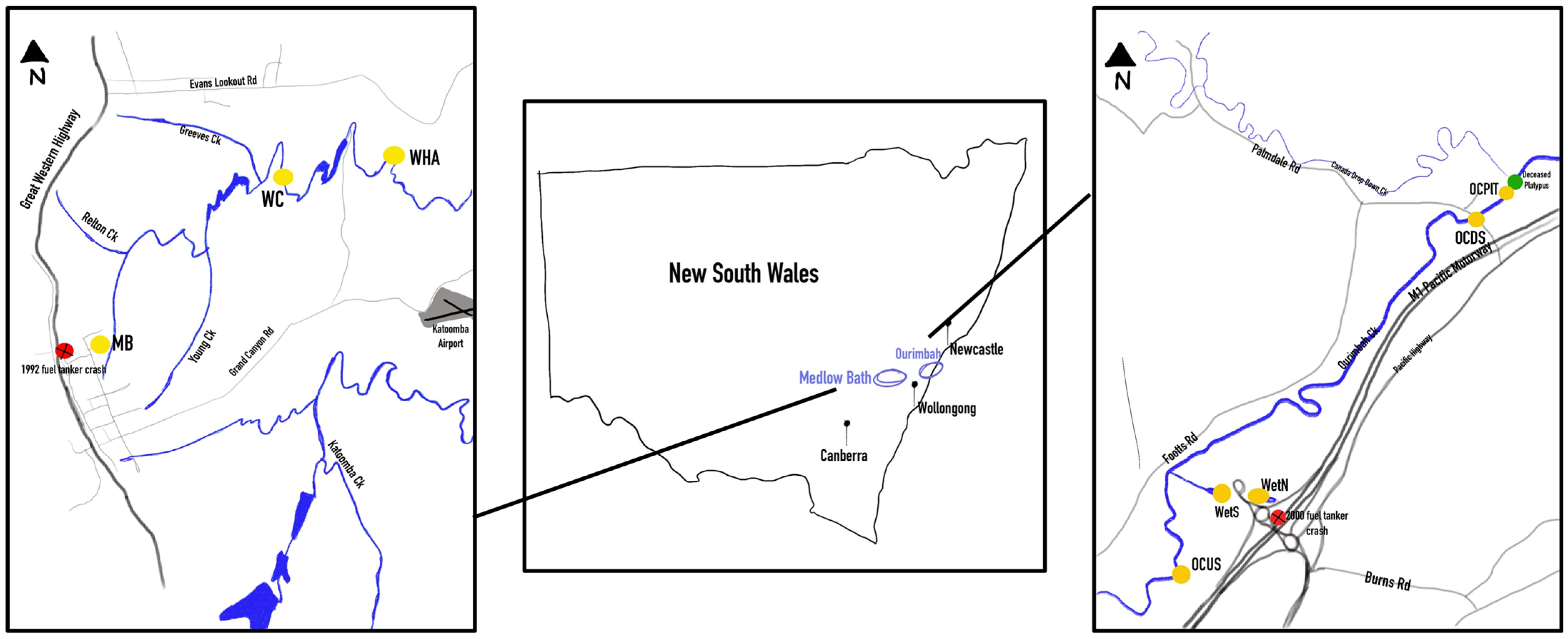
The source of the PFAS contamination in the Blue Mountains water supply was investigated in mid-to-late 2024 by multiple parties [26,27]. The exact source and timing of the PFAS contamination in the water supply is not known with complete certainty due to data gaps [26] and the potential multiple sources of PFAS contamination in all global environments [28]. FRNSW records provide an incident report (number 411251) [26] and provide details involving a fuel tanker crash on the Great Western Highway at Medlow Bath that ignited, causing a major fire incident, on 23 September 1992 [26,27]. Water samples collected by the senior author from a small, unnamed, stream in the township of Medlow Bath in September 2024 (Figure 1) were tested and found to contain highly elevated PFAS [29]. The small urban stream was directly in a flow line downstream of the site of the 1992 truck crash [23,26].
Figure 1.
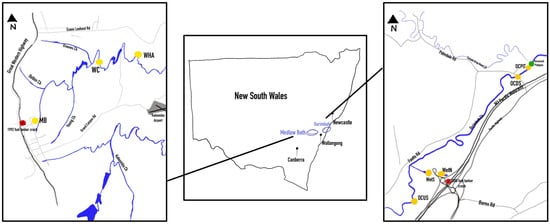
Map of study areas. The Medlow Bath and Blue Mountains World Heritage Area study area is in the left panel, and the Ourimbah study area is in the right panel. The centre panel shows the position of the two study areas in relation to NSW. Sampling sites are indicated in yellow symbols with site codes (Table 1 contains further sampling site details). Red symbols show the location of fuel tanker accidents. The green symbol marks the location of platypuses containing PFAS [25] (Ourimbah map).
Ourimbah Creek, in the Central Coast of NSW (Figure 1), is located about 107 km north-east of Medlow Bath, where a 40,000 L fuel tanker accident on 8 December 2000 resulted in a major fire, which was suppressed using water mixed with AFFF [30]. Additionally, leachate leaking from a landfill site in the headwaters of Ourimbah Creek was investigated in 2024 and found to contain PFAS, and low-to-moderate concentrations of PFAS were detected in several sampling sites along Ourimbah Creek further downstream [31,32]. An earlier investigation of PFAS in the livers of dead platypuses across NSW collected in 2021–2023 found the second highest result in a platypus (PFOS liver concentration 740 µg kg−1) collected from Ourimbah Creek (Figure 1). The site of the Ourimbah Creek accident and fire was about 1.8 km upstream of the location where the PFAS-contaminated platypus was collected [33]. Ourimbah Creek supplies both groundwater from a bore field on the adjoining floodplain and surface water harvesting of raw water as part of the Central Coast water supply [34].
The current study was conducted following an Australian multi-media search for single-vehicle traffic accidents and fires that were suppressed with PFAS foam and may have contaminated drinking water supplies in high-conservation-value environments. We aimed to investigate the residual PFAS content of water and sediment in streams and wetlands in two drinking water supply catchments that we suspected were exposed to PFAS foam runoff more than 24–33 years prior to our collection of samples in October 2024 [27,30]. Major data gaps reduce our ability to know many details about the source(s) and timing of the current PFAS pollution that was investigated [26]. Both locations saw major highway accidents involving burning tankers, where large volumes of flammable materials contaminated both water catchments. Each accident and fire was controlled using PFAS fire-suppression foam [26,27,30]. The waterways and adjoining terrestrial lands, particularly in the Blue Mountains World Heritage Area, also have globally significant conservation and biodiversity values [35]. This is in addition to human health considerations, as they represent important drinking water supply catchments [1]. The current study sought to document the long-lasting effects of major flammable material accidents and fires using PFAS.
The investigation of AFFF usage in fire suppression in single-occurrence accidents triggering multi-decade contamination plumes in drinking water catchments with high environmental values, as documented in this study, appears to be a novel research topic. The current study appears unique as it investigates two individual PFAS spills in two different drinking water catchments of high conservation value, more than two decades after the spillages.
2. Materials and Methods
2.1. Blue Mountains Study Area
In August 2024, Sydney Water announced that the Blue Mountains water supply contained an elevated concentration of PFAS [27,29]. The initial information provided by Sydney Water to the community was based on treated water samples collected from their Cascade Water Filtration Plant on 25 June 2024, with PFOS concentrations of 16.4 ng L−1 in the Katoomba supply and 15.5 ng L−1 in the Blackheath supply [24,36]. Further information was later released by WaterNSW [37], the NSW government-owned water utility that is responsible for managing the storage dam infrastructure and supplying raw water to customers, with Sydney Water being their major customer [38]. WaterNSW identified that the PFAS contamination in the Blue Mountains water supply affected two small water supply reservoirs (the Medlow Dam and the Greaves Creek Dam) located between Blackheath and Katoomba. Both reservoirs were initially tested by WaterNSW in July 2024, with 54.8 ng L−1 of PFOS measured in Medlow Dam, and further downstream, Greaves Creek dam contained 33.5 ng L−1 [37]. These reservoirs supply raw water as part of Sydney Water’s Blue Mountains water supply system [24]. The Blue Mountains system supplies drinking water to the upper Blue Mountains area in the Katoomba, Blackheath and nearby townships (including Leura, Wentworth Falls and Mount Victoria). The exact population served by this water system has not been provided by the water utility but has been estimated at 40,000 [39].
The duration and source of the PFAS contamination in these two water reservoirs and in the Blue Mountains drinking water supply is not known due to a lack of monitoring data [24]. WaterNSW identified a major traffic accident that ignited large volumes of highly flammable fuel as a potential source of contamination [26]. According to the FRNSW incident report, an accident occurred on 23 September 1992 and involved a fuel tanker carrying 40,800 L of petrol travelling on the Great Western Highway. The fuel tanker crashed into a road barrier in the small township of Medlow Bath, rolled onto its side and caught fire [22]. Photographs of the incident show an intense blaze with firefighters using water and AFFF running off from the site [23]. The AFFF and water flowed into a small unnamed urban creek within the small Medlow Bath township, with a population of 569 [40]. The accident happened within a small drinking water catchment. Further downstream, the unnamed creek in Medlow Bath flows into Adams Creek, the major inflow to the first of two water reservoirs, Medlow Dam (Figure 1).
Downstream of the Blue Mountains water supply catchment area and the two water storages (Medlow Dam and Greaves Creek Dam), the main waterway, Greaves Creek, flows into the Blue Mountains National Park protected conservation area (Figure 1). This national park, and seven other adjoining conservation areas, together form the Greater Blue Mountains World Heritage Area (GBMWHA), which is a conservation area containing important biodiversity and other natural environmental values that the United Nations Educational, Scientific and Cultural Organization (UNESCO) have declared have universal significance [35].
2.2. Ourimbah Creek Study Area
Ourimbah Creek is used to supply raw surface water and groundwater that is treated for drinking water. It is part of the Central Coast Council water supply that serves a population of about 350,000. Untreated surface water is extracted from Ourimbah Creek at the Ourimbah Creek weir, and an array of groundwater pumps on the nearby Ourimbah Creek floodplain have been installed to extract an emergency supply of groundwater in periods of water shortages (Figure 1; Table 1) [34]. Ourimbah has an urban population of 4019 [41]. The M1 motorway forms part of the watershed boundary of Ourimbah Creek, with the great majority of the urban development outside of the Ourimbah Creek hydrological catchment. The weir is also less than 2 km distance downstream (Table 1) from the site of a major petrol tanker accident. The NSW Fire Brigade’s 2000/2001 Annual Report described this as a major incident in which a fuel tanker crash ignited and caused a fire on 8 December 2000 at the Ourimbah motorway interchange (Figure 1; Table 1) [30]. Similar to Medlow Bath, the accident was a major incident and required the use of AFFF and water to suppress the burning fuel. The accident was very close to the Ourimbah bore field containing an array of groundwater pumps about 150 to 400 metres downstream from the site of the fuel tanker accident (Figure 1; Table 1). Another contributing source of PFAS in Ourimbah Creek is from landfill leachate that seeps into the headwaters of Ourimbah Creek about 20 km upstream of where the platypus was collected [31,32].
Table 1.
Location and summary details of study sampling sites. Local government area (LGA), downstream (DS), upstream (US), creek (Ck), not applicable (NA).
2.3. Water and Sediment Collection
The current study is a cross-sectional, exploratory evaluation. The majority of the water and sediment samples in this study were collected at the same time, from seven of the eight sampling sites, each on one occasion, in October and November 2025 (Figure 1; Table 1). Four of the sampling sites were also sampled earlier. MB was sampled twice for water in 2024, and WC was sampled once for water in 2024. WetN and WetS were sampled once in January 2025 for both water and sediment. The sampling site OCPLT was only sampled for creek sediment on a single occasion (Table 1). For samples collected in October 2025, at all sampling sites (except OCPLT), three random samples of surface water and streambed sediment were collected. Each replicate water and sediment sample was treated as an independent sample. The water samples were collected from three different points along the edge of the waterway over a 10–50 metre reach using new and unused plastic sample bottles, supplied by Envirolab, specifically for testing PFAS in water samples. Sediment samples were collected from the streambed at a wadable depth within each waterway in a zone of accumulated fine sediment. The sediment collection methods followed the approach recommended by the Australian & New Zealand Guidelines for Fresh & Marine Water [34]. Samples were collected by hand, using gloves, in clean and unused plastic sampling containers, supplied by the Envirolab laboratory, specifically for the purpose of collecting sediment samples for PFAS testing. As for water samples, the sediment samples were immediately placed in an insulated container. Samples were chilled for transport and storage.
2.4. Water and Sediment PFAS Testing
The detection of PFAS in water and sediment samples was conducted by Envirolab, Chatswood NSW, a commercial National Association of Testing Authorities (NATA)-accredited laboratory for the determination of commonly found PFASs. The water and sediment samples were kept cool (<5 °C) and transported within 5 days to the laboratory. This included PFOS, PFOA, perfluoro-butanesulfonic acid (PFBS) and PFHxS. PFAS was measured through solid-phase extraction and liquid chromatography–tandem mass spectrometry. In accordance with NATA accreditation and in compliance with the Australian PFAS National Environmental Management Plan 3.0 [42], the analytical laboratory used multiple quality assurance measures. These included testing of laboratory duplicate samples for 10% of samples, laboratory blank matrix test samples, recoveries from blank samples and surrogate matrix spikes. All laboratory testing was conducted in accordance with Australian PFAS-testing requirements [42,43]. The laboratory detection limits, also referred to as the ‘limits of reporting’ (LORs), for PFAS testing were 10 ng for water samples L−1 and 100 ng kg−1 for sediment samples.
2.5. PFAS Guidelines
Water and sediment PFAS results were compared to the current Australian and New Zealand PFAS guidelines. Several guidelines are contained within the Australian Government’s PFAS National Environmental Management Plan (PFAS NEMP) version 3.0, which was released in March 2025 [43]. The PFAS NEMP is endorsed by the heads of the Australian and New Zealand environment protection authorities (EPAs) and advocates cooperation with local, state, territory and national governments. For the current study, the NEMP 3.0 guidelines address ecological freshwater guidelines. As PFOS bioaccumulates, the 99% species protection level for PFOS (<0.23 ng L−1) and PFOA (<19,000 ng L−1) is appropriate, particularly for areas of high conservation value. NEMP also contains soil PFAS guidelines for residential locations with garden/accessible soil (PFOS and PFHxS < 3000 ng kg−1, respectively) [43]. For PFAS in drinking water, the Australian Drinking Water Guidelines (ADWGs) by the National Health and Medical Research Council (NHMRC) represent new PFAS guidelines, which were released in June 2025 [44]. The ADWG limits are <8 ng L−1 for PFOS, <30 ng L−1 for PFHxS, <200 ng L−1 for PFOA and <1000 ng L−1 for PFBS [44].
2.6. Statistical Analysis
All statistical analyses were performed using Microsoft Excel. Variations in PFAS concentrations in water and sediment were compared according to the location of sample collection (seven water sites and eight sediment sites). Variation in the concentration of PFHxS, PFOS, PFBS and PFOA, according to sampling site, was evaluated using ANOVA. p-values of less than 0.05 were considered significant.
3. Results and Discussion
3.1. PFAS
3.1.1. Surface Water PFAS
A total of 28 water samples collected from streams or wetlands were tested for PFAS (Table 2). The concentration of the four types of PFAS tested all varied highly significantly (<0.0001) according to sampling site (Table 2). They were mostly collected from surface water downstream of fuel tanker fires that used PFAS foam as part of fire suppression. Measurable amounts (≥10 ng L−1) of PFAS were detected in 22 of the 28 surface water samples. The most frequently detected PFAS in the water samples was PFHxS (detected in 22 samples), followed by PFOS (21 samples), PFOA (9 samples), and PFBS (8 samples), which was the least frequently detected.
Table 2.
F-statistics and associated probabilities from analyses of variance in water PFAS by sampling site. Means (standard errors of means) are provided. Results are in ng L−1. LOR is limit of reporting.
The most concentrated PFAS results, in water samples, was at the MB sampling site on an unnamed urban creek that is closest to the site of the 1992 Medlow Bath petrol tanker fire. MB contained the most elevated forms of PFAS (PFHxS, PFOS, PFOA). Water from this site contained the most concentrated PFAS, with a mean PFOS concentration of 2160 ng L−1 and a maximum of 2400 ng L−1. The MB site also contained the second most concentrated PFHxS in water (mean 1028 ng L−1). Water samples were collected from two sampling sites in Greaves Creek (WC, WHA) downstream of the MB site (Table 2). Both of these sites only contained detectable concentrations of PFHxS (mean 30 and 20 ng L−1, respectively) and PFOS (mean 35 and 25 ng L−1, respectively).
The wetland sampling site (WetS), located near the site of the December 2000 Ourimbah petrol tanker accident, had the second largest PFAS concentration found in water samples in this study (Table 2). Water from this wetland contained PFHxS (mean 327 ng L−1), PFOS (mean 105 ng L−1), PFBS (mean 33 ng L−1) and PFOA (mean 32.5 ng L−1). Water collected from the second Ourimbah wetland (WetN) was less contaminated but still contained PFOA (mean 40 ng L−1), PFHxS (mean 36 ng L−1) and PFOS (mean 35 ng L−1). PFAS was not found at detectable concentrations in water samples collected from either sampling site in Ourimbah Creek.
3.1.2. Comparison of Results with PFAS Drinking Water Guidelines
All water samples collected at the MB site in the Blue Mountains drinking water catchment exceeded both the PFOS and PFHxS drinking water guidelines (Table 3). The mean PFOS result, 2160 ng L−1, was 270 times the PFOS drinking water guidelines (<8 ng L−1) [44]. Similarly, the mean PFHxS result at this site (1028 ng L−1) was more than 30 times greater than the drinking water guidelines (<30 ng L−1). Further downstream, the WC site was between the Medlow Dam and the Greaves Creek Dam. All samples collected from this site recorded much smaller PFAS results than the MB site, but all failed to meet the PFOS or PFHxS drinking water guidelines. In the Ourimbah Creek study area, water samples collected from the two wetlands (WetN and WetS) near the site of the truck accident, also frequently exceeded the PFAS drinking water guidelines for PFOS and PFHxS.
Table 3.
Comparison of mean PFOS and PFHxS water sample results at the seven water sampling sites with ADWG [44]. The proportion of replicate samples that exceeded the guideline are provided. The results are in red if 100% of samples exceeded the guideline, green if no samples exceeded, and amber for intermediate results. The mean results are divided by the guideline. If the mean result exceeds the guidelines, it is also shaded red. Medlow Bath and Greaves Creek sites (MB, WC and WHA). Ourimbah Creek sites (WetN, WetS, OCUS, OCDS). See Table 1 for site details.
3.1.3. Comparison of Results to PFAS Aquatic Ecosystem Guidelines
The majority of water samples tested for this study exceeded the PFOS guideline for protection of 99% of freshwater aquatic species (Table 4) [43]. The most highly contaminated site, with a mean PFOS concentration of 2160 ng L−1, was the MB site within the township of Medlow Bath, in the Blue Mountains study area. The PFOS concentration in water collected from this site exceeded the 99% species protection guidelines (<0.23 ng L−1) by more than 9000 times. All samples from the two sampling sites further downstream (WC and WHA) also exceeded the 99% PFOS species protection guidelines. The Greaves Creek site furthest downstream (WHA) was within the Blue Mountains National Park, also part of the GBMWHA. The mean PFOS concentration at this site (25 ng L−1) was more than 100 times higher than the 99% protection PFOS guideline [43]. This was despite the PFOS concentration being 95% less than it was further upstream at the MB site. All samples collected at the MB site also exceeded the 95% species protection guidelines for PFOS (<130 ng L−1), despite those guidelines being more than 500 times larger than the 99% protection level.
Table 4.
Comparison of PFOS and PFOA water sample results at the seven sampling sites with Australian ecological guideline results NEMP [43] at 99% and 95% levels of species protection. The proportion of samples that exceeded the guidelines are provided at each site (% fail). The results are red where 100% of samples exceeded the guidelines, green if no samples exceeded the guidelines, and amber for intermediate results. The mean result is divided by the guidelines. If the mean result exceeds the guideline, it is also shaded red. Medlow Bath and Greaves Creek sites (MB, WC and WHA). Ourimbah Creek sites (WetN, WetS, OCUS, OCDS). See Table 1 for site details.
The majority of water samples collected from the two wetlands in the Ourimbah study area exceeded the freshwater ecosystem PFOS 99% species protection guidelines (Table 4). However, in the nearby two sampling sites in Ourimbah Creek (OCUS, OCDS), PFOS was not detected in water samples. PFOA was not detected in samples in this study at concentrations above the 99% aquatic ecosystem guidelines (<19,000 ng L−1).
3.1.4. PFAS Sediment Results
A total of 28 sediment samples collected from streams or wetlands were tested for PFAS (Table 5 and Table 6). The concentration of the three abundant types of PFAS tested in sediment samples varied highly significantly (<0.0001) for PFHxS, PFOS and PFOA, according to the sampling site (Table 5). They were collected at the same waterway sampling sites used for the collection of the water samples. An additional site was sampled exclusively for sediment (OCPLT) and was located in Ourimbah Creek, 200 m downstream of OCDS, positioned closely to the location where a platypus containing elevated PFOS in its liver was discovered [33].
Table 5.
F-statistics and associated probabilities from analyses of variance of sediment PFAS by sampling site. Means (standard errors of means) are provided. Results in ng kg−1. LOR is limit of reporting.
Table 6.
Comparison of mean PFOS and mean PFOA sediment sample results (ng kg−1) from the eight sampling sites with NEMP 3.0 [43] for categories ‘all land-uses’ and ‘ecological guidelines for soil’ (<3000 ng kg−1), Medlow Bath and Greaves Creek sites (MB, WC and WHA). The results are red where 100% of samples exceeded the guidelines, green if no samples exceeded the guidelines, and amber for intermediate results. The mean result is divided by the guidelines. If the mean result exceeds the guideline, it is also shaded red. Ourimbah Creek sites (WetN, WetS, OCUS, OCDS and OCPLT). See Table 1 for site details.
We detected measurable amounts (≥100 ng kg−1) of PFAS in 22 of the 28 waterway sediment samples. The most frequently detected PFAS in sediment was PFOS (22 of 26 samples), followed by PFHxS (12 of 28 samples), with PFBS and PFOA found in only 9 and 8 sediment samples, respectively.
The most highly concentrated PFAS detected in sediment samples was found at the Medlow Bath (MB) sampling site, in an unnamed creek, located an estimated 420 m downstream of the 1992 petrol tanker accident and fire. This site contained the most elevated concentrations of PFAS (PFHxS, PFOS, PFOA) in the sediment, compared to other sites in this study. The sediment tested from this site contained PFOS ranging from 120,000 to 310,000 ng kg −1 with a mean concentration of 213,333 ng kg−1 and PFHxS with a mean of 13,633 ng kg −1. Sediment samples tested from this site also recorded PFBS (mean 633 ng kg−1) and PFOA (mean 1066 ng kg−1).
Sediment samples were also collected at two sampling sites in Greaves Creek (WC, WHA) downstream of the site MB. Sediment from both Greaves Creek sites contained detectable concentrations of PFOS ranging from a mean of 1200 at WC to 525 ng kg−1 at WHA.
The sediment in the wetland (WetS) near the Ourimbah petrol tanker accident contained PFHxS (mean 5758 ng kg−1), PFBS (mean 850 ng kg−1), PFOS (mean 9210 ng kg−1) and PFOA (mean 404 ng kg−1). Sediment collected from the second wetland (WetN) contained the second most concentrated PFOS in sediment collected for this study (mean PFOS 10,317 ng L−1). PFAS was not found at detectable concentrations in sediment samples collected from two of the sampling sites on Ourimbah Creek closest to the petrol tanker crash. An additional site 200 m further downstream, in a known platypus habitat (OCPLT), recorded PFOS in sediment samples (mean 567 ng kg−1).
The majority of sediment samples collected from the sampling sites nearest to the two truck incidents (MB, WetN and WetS) exceeded the PFOS guideline of <3000 ng kg−1, which applies for both ‘ecological guidelines for soil’ and ‘all land-uses’ [45]. The mean PFOS result from the Medlow Bath sediment samples (213,333 ng kg−1) was more than 70 times the sediment guidelines. The sediment samples from the two Ourimbah wetlands recorded mean PFOS concentrations that were 3.1 to 3.4 times the guidelines (Table 6).
3.2. PFAS Contamination Persists for Decades After Fire Suppression
The findings from this study reveal that relatively small and isolated spillages of PFAS from AFFF used to extinguish petrol tanker fires can contribute to long-lasting and harmful contamination plumes. Although substantial data gaps exist, as a result of AFFF use, the 1992 Medlow Bath spillage was likely to be the major source of PFAS contamination of two water reservoirs. The impaired water quality was supplied by the regional drinking water system serving an estimated 40,000 people [39] in the Blue Mountains. The most heavily impacted reservoir, Medlow Dam, about 2.6 km downstream of the site of the 1992 fire and PFAS spillage probably contains the highest PFOS content (43 to 82 ng L−1) of any large metropolitan Australian drinking water reservoir. The two reservoirs (Medlow Dam and Greaves Creek Dam) have not supplied water since the contamination was reported in mid-to-late 2024 [23,37]. Despite being part of Sydney Water’s water supply system and Australia’s largest domestic water supply utility, PFAS contamination was not detected in catchment waterways, reservoirs and treated water supply for more than three decades after the truck accident [23]. Shortly after the contamination was discovered in the two reservoirs, an alternative supply of raw water for the Blue Mountains was sourced from cleaner sources. In late 2024 to early 2025, an upgrade to the Cascade Water Filtration Plant was installed. This included a granular-activated carbon (GAC) filter in tandem with an ion exchange resin treatment system to scrub PFAS from the drinking water [45]. Both treatment systems are popular technologies for the removal of PFAS from drinking water supplies [46].
The most highly enriched PFAS contamination in this study was the sediment collected from the stream bed of the unnamed waterway flowing through public land within the Medlow Bath township. The stream was about 450 m below the location of the 1992 fuel tanker fire (Figure 1). At this sampling site, the stream flowed through an urban-modified upland peat swamp. These swamps are listed as an endangered ecological community under Australia’s Environment Protection and Biodiversity Conservation Act 1999 (Commonwealth) due to their unique biodiversity values, limited distribution and vulnerability to human impacts [47,48]. The peat swamps contain deep organic sediments that may have retained elevated concentrations of PFAS for more than three decades. The enriched organic content, which is typical of peat swamp sediments [47], likely enabled PFAS molecules to bond in the creek sediment, as Sphagnum peat materials have been reported to strongly bond with PFAS [49]. This stream flows within 10 m of several residential backyards. This provides a potential pathway of human PFAS exposure given the elevated PFAS content and the proximity to urban properties. The sediment at this site contained a mean PFOS content of 213,333 ng kg−1, which exceeded the Australian NEMP 3.0 guidelines [43] for all land uses (above 3000 ng kg−1) by more than 70 times. Researchers have demonstrated how backyard food production, such as growing vegetables [50] or keeping hens for backyard egg production in soil containing PFAS, can mobilise soil PFAS into human diets [51]. A more detailed assessment of human-health risk for residential properties adjoining the contaminated stream could survey backyard food production, measure PFAS in foods and estimate daily PFAS content in diets [52].
The Ourimbah PFAS contamination documented in this study also occurred within a drinking water catchment. The site of the Ourimbah truck fire and two PFAS-affected wetlands are approximately a 200–500 m distance from an array of several groundwater pumps in a bore field used to supply raw water in times of drought and water shortages [34]. PFAS in groundwater has caused the contamination of many drinking water supplies across the globe [53]. Surface water is also routinely harvested for the Central Coast water supply from Ourimbah Creek at an offtake structure about 1.8 km downstream from the site of the truck fire and the suspected PFAS spill. In contrast to the Blue Mountain PFAS contamination, the residual pollution at Ourimbah appears to be restricted to two wetlands near the site of the petrol tanker accident that occurred 25 years earlier [30]. The water samples collected from Ourimbah Creek did not contain any PFASs, but this may not be broadly representative of the waterway. The local water utility tested Ourimbah Creek, near our study area, from November 2024 to November 2025, and reported the detection of PFAS on 15 of 17 occasions, ranging between 1 and 6 ng L−1 [31]. The most frequently detected form detected by the water utility was PFHxS, with 13 detections [31]. In contrast to the Blue Mountains water supply [24], the Central Coast Council has not reported any measurable PFAS in their drinking water supply [54].
The water quality in the upper reaches of Ourimbah Creek has been affected by a second PFAS source due to a leaking landfill site about 20 km upstream of our Ourimbah study area [31,32]. Leachate from domestic waste landfill is a well-known potential source of PFAS [55]. The landfill leachate and multiple sites along Ourimbah Creek have been monitored regularly since November 2024, with PFAS concentrations in the leachate-affected area reaching as high as 111 ng L−1 (PFOS), 643 ng L−1 (PFOA) and 643 ng L−1 (PFHxS) [31,32].
It has been difficult to find comparative case studies from similar, relatively small-scale spillages, amounting to about 1000 L of AFFF, of PFAS runoff from isolated incidents where AFFF was used for the suppression of flammable liquid fires. Most locations of substantial PFAS contamination of waterways affected by AFFF fire-suppressant foam are found in airports, firefighting training sites and military facilities, where frequent training exercises repeatedly use PFAS foam [6,7,17]. Investigations of PFAS contamination from AFFF spillages not caused by training activities are less common. For example, a series of three spillages of PFAS materials were released at Toronto Airport, Canada [19]. The volumes of PFAS liquid released to the environment at Toronto Airport were very large; 48,000 L were released in an aircraft emergency, 22,000 L were released in an accidental release, and a smaller unknown quantity was released in a third incident [19]. Information from FRNSW indicate that 1000 L of AFFF concentrate was used in the fire suppression of the Ourimbah petrol tanker accident and fire [56]. There are no records available for the volume of AFFF used in the Medlow Bath 1992 incident, although it has been confirmed that AFFF was used to help extinguish the fire [26].
3.3. Residual PFAS Contamination in Stream/Wetland Sediment
Our results compared the relative content of PFAS in waterway sediment to that in the water column. The PFOS in the current study was broadly about 100 times more concentrated in stream sediment than it was in stream or wetland water. Such highly concentrated PFOS in sediment, compared to water, is much greater than the amount recorded in the Toronto Airport spillage. The PFOS content of the most highly contaminated waterway site two years after the accidental spill at Toronto Airport was only 18.8 times more concentrated in the sediment (13,000 ng kg−1) than in the water column (690 ng L−1) [19]. Six years later, the 2009 PFOS concentration in the water at this Toronto site had fallen to 290 ng L−1, but the 2009 sediment content remained identical to that in 2003 (13,000 ng kg−1). The 2009 sediment content was 44.8 times more concentrated than the water content [19]. It is likely that the concentration of PFAS in the water column of the Medlow Bath and Ourimbah waterways was potentially much greater in previous years, but a lack of PFAS testing from 1992 to 2024 prevents the temporal analysis of PFAS in sediment and water. The Medlow Bath sediment at the MB site appears to have an unusually concentrated PFAS content (maximum 310,000 ng kg−1) in sediment compared to waterways affected by the Toronto Airport spillage [19].
3.4. Implications of PFAS Contamination on Biota
Whilst elevated PFOS was found in a platypus collected from Ourimbah Creek [33] about 1820 m downstream from the site of the fuel tanker fire, we have insufficient information to determine whether the PFOS contamination of the platypus is causally linked to the December 2000 tanker fire and AFFF runoff. Similarly, insufficient information is available to attribute the leaking landfill leachate in Ourimbah Creek headwaters to the PFOS found in the platypus. We did not detect any PFAS in Ourimbah Creek immediately downstream of the flow pathways from the two contaminated wetlands, but we did detect PFAS in Ourimbah Creek sediment samples collected from the stream bed close to the platypus collection site. The feeding behaviour of platypuses likely contributes to their PFOS bioaccumulation as they incidentally ingest sediment as they predate and consume aquatic invertebrates in and amongst freshwater stream benthos [57]. Further investigation of PFAS in food webs at sites of known contamination, particularly in areas of known biodiversity, such as threatened ecological communities, is recommended.
This study reveals that PFAS contamination originating in urban Medlow Bath extends downstream of the drinking water catchment and reservoirs and enters a high-conservation-value area, the UNESCO GBMWHA [35]. This study recorded PFOS (25 ng L−1) and PFHxS (20 ng L−1) in Greaves Creek water (WHA), just below the entry point to the GBMWHA. The mean PFOS concentration in Greaves Creek, in the GBMWHA, exceeds the current Australian PFOS aquatic ecosystem guidelines by 109 times [43]. Further investigation into the magnitude of PFAS contamination and the potential harm to biota in aquatic and terrestrial ecosystems within this conservation area is recommended. The PFAS contamination of waterways in the Blue Mountains and Ourimbah case studies has important long-term ecological implications. As global knowledge about PFAS contamination continues to reveal its bioaccumulation in wildlife across most global environments [1,58], there are many unanswered questions about the implications of the PFAS in both locations in this study. This is particularly important for the biota within the GBMWHA [35], one of the world’s most important conservation areas. It is likely that the conservation outlook for many ecosystems in this reserve could be impaired by PFAS. Further research is recommended into the levels of PFAS in biota at different trophic levels in waterways and nearby terrestrial areas that have potentially been exposed to the PFAS plume from Medlow Bath.
4. Conclusions
Our research documents PFAS contamination of water and stream sediment in two drinking water supply catchments that also contain substantial environmental conservation value (e.g., UNESCO natural world heritage, endangered species and communities and platypuses). We conclude that the PFAS pollution was probably caused by two similar, but separate, fuel tanker traffic accidents and fires, involving 40,000 and 40,800 L of burning fuel and suppression using AFFFs. We acknowledge that there remains uncertainty about the exact causation and timing of the PFAS contamination due to a lack of data. In both cases, residual PFAS pollution was recorded at hazardous concentrations to both human health and aquatic ecosystems, despite the spillages occurring more than 24 and 33 years earlier. This reinforces the highly persistent nature of PFAS contamination. We documented the greatest PFAS concentrations in both locations in the waterway sediment nearest to the crash sites. We recommend that future PFAS pollution studies of waterways collect both water and river/wetland sediment samples. At both study areas, PFAS pollution in sensitive drinking water catchments remained undetected for decades [56]. There is no information that the PFAS from the Ourimbah accident contamination affected the Central Coast drinking water supply. In contrast, the PFAS contamination of the Blue Mountains water supply was revealed in mid-2024. Questions remain as to how PFAS in the Medlow Bath catchment and Blue Mountains water supply remained undetected for more than 30 years after the truck accident and 14.5 years after PFAS was measured in other parts of the Sydney drinking water network. We recommend that PFAS testing of drinking water and raw water in drinking water catchments and reservoirs is routinely conducted, particularly if there has been known use of PFAS, including single events where AFFF was used in fire suppression. To Sydney Water’s credit, once their monitoring discovered PFAS in Blue Mountains drinking water, the utility acted promptly to reduce the PFAS in the drinking water supply. It is unlikely that PFAS contamination of waterways in the Blue Mountains World Heritage Area can be similarly decontaminated.
Author Contributions
Conceptualisation, A.-M.G., K.G.W. and I.A.W.; methodology, A.-M.G., K.G.W. and I.A.W.; formal analysis, I.A.W.; investigation, K.G.W. and I.A.W.; resources, K.G.W., I.A.W.; data curation, I.A.W.; the original draft preparation, I.A.W. and C.M.; review and editing, A.-M.G., C.M., K.G.W. and I.A.W.; visualisation, I.A.W. and K.G.W.; supervision, A.-M.G. and I.A.W.; project administration, I.A.W.; funding acquisition, I.A.W. and K.G.W. All authors have read and agreed to the published version of the manuscript.
Funding
This research received no external funding.
Data Availability Statement
The original contributions presented in this study are included in the article. Further inquiries can be directed to the corresponding author.
Acknowledgments
Thanks to Sue Cusbert and Michael Franklin (WSU) for their technical assistance with this project. Thanks to Michelle Ryan (WSU) for her planning and testing of platypuses for PFAS with K.G.W., which revealed the PFAS-contaminated platypus in Ourimbah Creek. The authors have reviewed and edited the output and take full responsibility for the content of this publication.
Conflicts of Interest
The authors declare no conflicts of interest.
Abbreviations
The following abbreviations are used in this manuscript:
| ABC | Australian Broadcasting Corporation |
| ADWG | Australian Drinking Water Guidelines |
| AFFF | Aqueous film-forming foam |
| EPA | NSW Environment Protection Authority |
| FRNSW | Fire and Rescue New South Wales |
| GBMWHA | Greater Blue Mountains World Heritage Area |
| LOR | Limit of reporting |
| NEMP | PFAS National Environmental Management Plan 3.0 |
| NSW | New South Wales |
| PFAS | Per- and polyfluoroalkyl substances |
| PFBS | Perfluorobutane sulfonic acid |
| PFOA | Perfluorooctanoic acid |
| PFOS | Perfluorooctane sulfonate |
| PFHxS | Perfluorohexane sulfonate |
| UNESCO | United Nations Agency for Education, Science, and Culture |
| USEPA | United States Environmental Protection Agency |
| WSU | Western Sydney University |
References
- De Silva, A.O.; Armitage, J.M.; Bruton, T.A.; Dassuncao, C.; Heiger-Bernays, W.; Hu, X.C.; Kärrman, A.; Kelly, B.; Ng, C.; Robuck, A.; et al. PFAS Exposure Pathways for Humans and Wildlife: A Synthesis of Current Knowledge and Key Gaps in Understanding. Environ. Toxicol. Chem. 2021, 40, 631–657. [Google Scholar] [CrossRef] [Scilit] [PubMed]
- The Lancet. Editorial: Forever chemicals: The persistent effects of perfluoroalkyl and polyfluoroalkyl substances on human health. eBioMedicine 2023, 95, 104806. [Google Scholar] [CrossRef] [Scilit] [PubMed]
- Fenton, S.E.; Ducatman, A.; Boobis, A.; DeWitt, J.C.; Lau, C.; Ng, C.; Smith, J.S.; Roberts, S.M. Per- and Polyfluoroalkyl Substance Toxicity and Human Health Review: Current State of Knowledge and Strategies for Informing Future Research. Environ. Toxicol. Chem. 2021, 40, 606–630. [Google Scholar] [CrossRef] [Scilit] [PubMed]
- U.S. Department of Health and Human Services. Agency for Toxic Substances and Disease Registry. Toxicological Profile for Perfluoroalkyls. 2021. Available online: https://www.atsdr.cdc.gov/toxprofiles/tp200.pdf (accessed on 23 December 2025).
- Miranda, D.A.; Abessa, M.S.D.; Moreira, L.B.; Maranho, L.A.; Oliveira, L.G.; Benskin, J.P.; Leonel, J. Spatial and temporal distribution of perfluoroalkyl substances (PFAS) detected after an aqueous film forming foam (AFFF) spill. Mar. Pollut. Bull. 2024, 204, 116561. [Google Scholar] [CrossRef] [Scilit]
- Rotander, A.; Toms, L.M.; Aylward, L.; Kay, M.; Mueller, J.F. Elevated levels of PFOS and PFHxS in firefighters exposed to aqueous film forming foam (AFFF). Environ. Int. 2015, 82, 28–34. [Google Scholar] [CrossRef] [Scilit]
- Jahura, F.T.; Mazumder, N.U.; Hossain, M.T.; Kasebi, A.; Girase, A.; Ormond, R.B. Exploring the prospects and challenges of fluorine-free firefighting foams (F3) as alternatives to aqueous film-forming foams (AFFF): A review. ACS Omega 2024, 9, 37430–37444. [Google Scholar] [CrossRef] [Scilit]
- OECD. Hazard Assessment of Perfluorooctane Sulfonate (PFOS) and Its Salts. Joint Meeting of the Chemicals Committee and The Working Party on Chemicals, Pesticides and Biotechnology. Organisation for Economic Cooperation and Development. 2002. Available online: https://www.regulations.gov/document/EPA-HQ-OPPT-2002-0043-0023 (accessed on 29 December 2025).
- Paul, A.G.; Jones, K.C.; Sweetman, A.J. A first global production emissions, and environmental inventory for perfluorooctane sulfonate. Environ. Sci. Technol. 2009, 43, 386−392. [Google Scholar] [CrossRef] [Scilit]
- United States Environmental Protection Agency (USEPA). EPA and 3M Announce Phase-Out of PFOS. News Release. Tuesday 16 May 2000. Available online: https://www.epa.gov/archive/epapages/newsroom_archive/newsreleases/33aa946e6cb11f35852568e1005246b4.html (accessed on 29 December 2025).
- Australian Government. Report—Part A. Inquiry into Firefighting Foam Contamination. RAAF Base Williamtown. 2016. Available online: https://www.aph.gov.au/Parliamentary_Business/Committees/Senate/Foreign_Affairs_Defence_and_Trade/ADF_facilities/Report_part_A (accessed on 29 December 2025).
- FRNSW. Fire and Rescue NSW. PFAS Environmental Investigation. 2025. Available online: https://www.fire.nsw.gov.au/page.php?id=9170 (accessed on 29 December 2025).
- Moody, C.A.; Hebert, G.N.; Strauss, S.H.; Field, J.A. Occurrence and persistence of perfluorooctanesulfonate and other perfluorinated surfactants in groundwater at a fire-training area at Wurtsmith Air Force Base. J. Environ. Monit. 2003, 5, 341–345. [Google Scholar] [CrossRef] [Scilit]
- Kulkarni, P.R.; Andrzejczyk, N.E.; Gavaskar, A.; Cartwright, A.; Adamson, D.T.; Cook, J.; Newell, C.J. Characteristics of aqueous film forming foam (AFFF) sites impacted with per- and polyfluoroalkyl substances (PFAS): A 37-site study. Water Res. 2025, 285, 124124. [Google Scholar] [CrossRef] [Scilit]
- Hagen, T.G.; De Nola, G.; Lane, A.; Woodworth, J. Australian case studies involving exposure to PFOS. In Human and Ecological Risk Assessment Risk Assessment: Theory and Practice; Paustenbach, D.J., Feinberg, K., Eds.; John Wiley & Sons, Inc: Hoboken, NJ, USA, 2024; Volume 1, pp. 1051–1090. ISBN 9781119551102. [Google Scholar]
- Australian Government. PFAS Investigation and Management Plan. 2025. Available online: https://www.defence.gov.au/about/locations-property/pfas (accessed on 29 December 2025).
- Hawkins, B. Mick Tisbury 12-Year Fight to Protect Firefighters. ABC. 2022. Available online: https://www.abc.net.au/news/2022-09-26/mick-tisbury-12-year-fight-to-protect-firefighters/101392332 (accessed on 29 December 2025).
- Moody, C.A.; Martin, J.W.; Kwan, W.C.; Muir, D.C.G.; Mabury, S.A. Monitoring Perfluorinated Surfactants in Biota and Surface Water Samples Following an Accidental Release of Fire-Fighting Foam into Etobicoke Creek. Environ. Sci. Technol. 2002, 36, 545–551. [Google Scholar] [CrossRef] [Scilit]
- Awad, E.; Zhang, X.; Bhavsar, S.P.; Petro, S.; Crozier, P.W.; Reiner, E.J.; Fletcher, R.; Tittlemier, S.A.; Braekevelt, E. Long-term environmental fate of perfluorinated compounds after accidental release at Toronto airport. Environ. Sci. Technol. 2011, 45, 8081−8089. [Google Scholar] [CrossRef] [Scilit]
- Andrews, D.Q.; Naidenko, O.V. Population-Wide Exposure to Per- and Polyfluoroalkyl Substances from Drinking Water in the United States. Environ. Sci. Technol. Lett. 2020, 7, 931–936. [Google Scholar] [CrossRef] [Scilit]
- Thompson, J.; Eaglesham, G.; Mueller, J. Concentrations of PFOS, PFOA and other perfluorinated alkyl acids in Australian drinking water. Chemosphere 2011, 83, 1320–1325. [Google Scholar] [CrossRef] [Scilit] [PubMed]
- Hua, L.; Donald, W.A. Assessment of per- and polyfluoroalkyl substances in Sydney drinking water. Chemosphere 2025, 385, 144611. [Google Scholar] [CrossRef] [Scilit] [PubMed]
- Gregory, X. PFAS ‘Forever Chemicals’ Found in Water Filtration Plants and Platypus Livers in NSW. ABC. 20 August 2024. Available online: https://www.abc.net.au/news/2024-08-20/australia-forever-chemicals-pfas-drinking-water-platypus/104244072 (accessed on 29 December 2025).
- Sydney Water. PFAS Monitoring Results. 2025. Available online: https://www.sydneywater.com.au/water-the-environment/how-we-manage-sydneys-water/safe-drinking-water/water-analysis/pfas-and-drinking-water/pfas-monitoring-results.html (accessed on 16 December 2025).
- Melbourne Water. Monitoring for PFAS in Our Water Supply Catchments. 2025. Available online: https://www.melbournewater.com.au/water-and-environment/water-management/water-quality/water-quality-testing/monitoring-pfas-our (accessed on 29 December 2025).
- WaterNSW. Lake Medlow and Lake Greaves, Blue Mountains Catchment Assessment. 2025. Available online: https://www.waternsw.com.au/__data/assets/pdf_file/0004/264559/WaterNSW_Technical-Memo_PFAS-Initial-Investigation-2025.pdf (accessed on 29 December 2025).
- Kidd, J.; Gregory, X. Likely Sources of ‘Forever Chemicals’ Found in Blue Mountains Drinking Water Catchment Revealed. ABC. 16 May 2025. Available online: https://www.abc.net.au/news/2025-05-16/nsw-pfas-chemicals-blue-mountains-water-report/105300768 (accessed on 28 January 2026).
- Abunada, Z.; Alazaiza, M.Y.D.; Bashir, M.J.K. An Overview of Per- and Polyfluoroalkyl Substances (PFAS) in the Environment: Source, Fate, Risk and Regulations. Water 2020, 12, 3590. [Google Scholar] [CrossRef] [Scilit]
- Sydney Morning Herald; Cubby, B.; Fellner, C. ‘White Hot’: Cancer-Linked Chemicals Flowing into Dam at 50 Times Safe Level. 2024. Available online: https://www.smh.com.au/national/nsw/white-hot-cancer-linked-chemicals-flowing-into-dam-at-50-times-safe-level-20240916-p5kay1.html (accessed on 16 December 2025).
- NSW Fire Brigades 2000/2001 Annual Report. 2001. Available online: https://www.fire.nsw.gov.au/__data/assets/pdf_file/0009/1125/annual_report_2000_01.pdf (accessed on 16 December 2025).
- Central Coast Council. PFAS Monitoring Results. August 2024–November 2025 Ourimbah Catchment. 2025. Available online: https://www.centralcoast.nsw.gov.au/sites/default/files/2025-11/ourimbah_creek_catchment_-_pfas_monitoring_results_aug2024-nov2025.pdf (accessed on 28 December 2025).
- NSW EPA. Water Quality Monitoring in the Upper Ourimbah Creek Catchment. 2025. Available online: https://www.epa.nsw.gov.au/Working-together/Community-engagement/updates-on-issues/Mangrove-Mountain-Landfill/water-quality (accessed on 16 December 2025).
- Warwick, K.; Wright, I.A.; Whinfield, J.; Reynolds, J.K.; Ryan, M.M. First report of accumulation of perfluorooctane sulfonate (PFOS) in platypuses (Ornithorhynchus anatinus) in New South Wales, Australia. Environ. Sci. Pollut. Res. Int. 2024, 31, 51037–51042. [Google Scholar] [CrossRef] [Scilit]
- Central Coast Water Supply System. 2020. Available online: https://cdn.centralcoast.nsw.gov.au/sites/default/files/Central_Coast_Water_Supply_Brochure_-_March_2020.pdf (accessed on 16 December 2025).
- UNESCO. Greater Blue Mountains Area. Available online: https://whc.unesco.org/en/list/917/ (accessed on 17 December 2025).
- Cubby, B.; Fellner, C. ‘Forever chemicals’ across Sydney’s drinking water catchment. Sydney Morning Herald. 20 August 2024. Available online: https://www.smh.com.au/national/nsw/forever-chemicals-across-sydney-s-drinking-water-catchment-20240819-p5k3gi.html (accessed on 20 December 2025).
- NSW Parliament. Select Committee on PFAS Contamination in Waterways and Drinking Water Supplies Throughout New South Wales. Report 1. 11 September 2025. PFAS contamination in waterways and drinking water supplies throughout New South Wales. Available online: https://www.parliament.nsw.gov.au/lcdocs/inquiries/3076/Report%20No%201%20-%20Select%20Committee%20on%20PFAS%20-%20Final%20version%20-%2011%20September%202025.pdf (accessed on 20 December 2025).
- WaterNSW. About Us. 2025. Available online: https://www.waternsw.com.au/about-us (accessed on 29 December 2025).
- Gregory, X. PFAS Blood Results Cause Concern as Blue Mountains Residents Push for Testing. 13 February 2025. ABC. Available online: https://www.abc.net.au/news/2025-02-13/pfas-blue-mountains-blood-testing/104917304 (accessed on 28 December 2025).
- Australian Bureau of Statistics. Medlow Bath 2021 All Persons Census. Quickstats. 2025. Available online: https://www.abs.gov.au/census/find-census-data/quickstats/2021/UCL121074 (accessed on 28 December 2025).
- Australian Bureau of Statistics. Ourimbah 2021 All Persons Census. Quickstats. 2025. Available online: https://abs.gov.au/census/find-census-data/quickstats/2021/SAL13114 (accessed on 30 December 2025).
- Australian Government. PFAS National Environmental Management Plan 3.0. 2025. Available online: https://www.dcceew.gov.au/environment/protection/publications/pfas-nemp-3 (accessed on 29 December 2025).
- Australian & New Zealand Guidelines for Fresh & Marine Water Quality. Available online: https://www.waterquality.gov.au/guidelines/anz-fresh-marine (accessed on 17 December 2025).
- National Health and Medical Research Council (NHMRC) Updated Australian Drinking Water Guidelines. 2025. Available online: https://www.nhmrc.gov.au/about-us/news-centre/updated-australian-drinking-water-guidelines (accessed on 29 December 2025).
- Gregory, X. New Mobile Treatment System to Remove PFAS from Drinking Water After ‘Forever Chemicals’ Found in Blue Mountains Dams. 2 December 2024. ABC. 2024. Available online: https://www.abc.net.au/news/2024-12-03/multi-million-pfas-mobile-system-nsw-cascade-water-plant/104674212 (accessed on 29 December 2025).
- Jafarinejad, S. A mini-review of full-scale drinking water treatment plants for per-and polyfluoroalkyl substances (PFAS) removal: Possible solutions and future directions. Sustainability 2025, 17, 451. [Google Scholar] [CrossRef] [Scilit]
- Benson, D.; Baird, I.R.C. Vegetation, fauna and groundwater interrelations in low nutrient temperate montane peat swamps in the upper Blue Mountains, New South Wales. Cunninghamia 2012, 12, 267–307. [Google Scholar] [CrossRef] [Scilit]
- Carroll, R.; Reynolds, J.K.; Wright, I.A. Geochemical signature of urbanisation in Blue Mountains Upland Swamps. Sci. Total Environ. 2020, 699, 134393. [Google Scholar] [CrossRef] [Scilit]
- Lasters, R.; Groffen, T.; Eens, M.; Bervoets, L. Per- and polyfluoroalkyl substances (PFAS) in homegrown crops: Accumulation and human risk assessment. Chemosphere 2024, 364, 143208. [Google Scholar] [CrossRef] [Scilit]
- Campos-Pereira, H.; Makselon, J.; Kleja, D.B.; Prater, I.; Kögel-Knabner, I.; Ahrens, L.; Gustafsson, J.P. Binding of per- and polyfluoroalkyl substances (PFASs) by organic soil materials with different structural composition—Charge- and concentration-dependent sorption behavior. Chemosphere 2022, 297, 134167. [Google Scholar] [CrossRef] [Scilit]
- Arvaniti, O.S.; Gerokonstantis, D.T.; Bouzoukas, C.; Aloupi, M.; Gkotsis, G.; Konomi, A.; Mastrotheodoraki, A.; Iliopoulou, A.; Kostakis, M.; Dasenaki, M.; et al. Occurrence of per- and polyfluoroalkyl substances, pesticides, pharmaceuticals, and heavy metals in Greek backyard chicken eggs and estimation of the consumption risk. Sci. Total Environ. 2025, 998, 180253. [Google Scholar] [CrossRef] [Scilit]
- Brown, J.B.; Conder, J.M.; Arblaster, J.A.; Higgins, C.P. Assessing Human Health Risks from Per- and Polyfluoroalkyl Substance (PFAS)-Impacted Vegetable Consumption: A Tiered Modeling Approach. Environ. Sci. Technol. 2020, 54, 15202–15214. [Google Scholar] [CrossRef] [Scilit]
- Sadia, M.; Kunz, M.; Ter Laak, T.; De Jonge, M.; Schriks, M.; van Wezel, A.P. Forever legacies? Profiling historical PFAS contamination and current influence on groundwater used for drinking water. Sci. Total Environ. 2023, 890, 164420. [Google Scholar] [CrossRef] [Scilit]
- Central Coast Council. Quarterly Summary of Drinking Water Quality July–September 2025. 2025. Available online: https://www.centralcoast.nsw.gov.au/sites/default/files/2025-11/Quarterly%20summary%20of%20drinking%20water%20quality%20Jul%20-%20Sept%202025.pdf (accessed on 30 December 2025).
- Masoner, J.R.; Kolpin, D.W.; Cozzarelli, I.M.; Smalling, K.L.; Bolyard, S.C.; Field, J.A.; Furlong, E.T.; Gray, J.L.; Lozinski, D.; Reinhart, D.; et al. Landfill leachate contributes per-/poly-fluoroalkyl substances (PFAS) and pharmaceuticals to municipal wastewater. Environ. Sci. Water Res. Technol. 2020, 6, 1300–1311. [Google Scholar] [CrossRef] [Scilit]
- Connick, F. ‘Absolutely Horrified’: Community Left in the Dark About PFAS Contamination. 6 February 2026. ABC. Available online: https://www.abc.net.au/news/2026-02-07/pfas-contamination-investigation-ourimbah-creek-catchment-nsw/106037472 (accessed on 8 February 2026).
- Grant, T.R. Platypus, 4th ed.; CSIRO Publishing: Collingwood, Australia, 2007. [Google Scholar]
- Giesy, J.; Kannan, K. Global distribution of perfluoroctane sulfonate in wildlife. Environ. Sci. Technol. 2001, 35, 1339–1342. [Google Scholar] [CrossRef] [Scilit]

Disclaimer/Publisher’s Note: The statements, opinions and data contained in all publications are solely those of the individual author(s) and contributor(s) and not of MDPI and/or the editor(s). MDPI and/or the editor(s) disclaim responsibility for any injury to people or property resulting from any ideas, methods, instructions or products referred to in the content. |
© 2026 by the authors. Licensee MDPI, Basel, Switzerland. This article is an open access article distributed under the terms and conditions of the Creative Commons Attribution (CC BY) license.