


Abstract
The synergistic impacts of land use/land cover (LULC) transformations and weather pattern variabilities (WPV) represent a primary driver of hydro-geological instability, threatening agricultural productivity, soil conservation, and water quality. Disentangling the discrete contributions of these stressors to runoff and sediment yield (SY) remains a significant challenge, particularly in complex, confluence-proximal watersheds lacking major hydraulic regulations. This study investigates the Tirumakudalu Narasipura watershed in Karnataka, India, an agriculturally intensive system undergoing rapid peri-urbanization. Leveraging the process-based geospatial interface of the Water Erosion Prediction Project (GeoWEPP), we analyzed hydrological responses over a 24-year period (2000–2023) and projected future trajectories through 2030. To overcome the traditional constraints of GeoWEPP, which was developed for small-scale watersheds (<260 ha), we present a novel upscaling framework utilizing a multi-site multivariate temporal calibration of hydrological response variables to exploit its process-based precision in capturing distributed soil erosion and landscape heterogeneity. This approach is further reinforced by an ancillary data validation to minimize error propagation while model-upscaling. Our findings reveal projected increases in runoff and SY of 14.69% and 49.23%, respectively, between 2000 and 2030. Notably, the sub-decadal acceleration from 2023 to 2030 (17.32% for runoff and 18.51% for SY) underscores a shifting dominance where LULC-driven surface modifications now outweigh climatic variance in forcing hydrologic change. Furthermore, the study quantifies how anthropogenic interventions such as strategic crop selection, tillage intensity, and irrigation regimes act as critical determinants of topsoil preservation. These results provide a scalable, economically feasible framework for precision land stewardship and sustainable watershed management in rapidly developing tropical landscapes.
1. Introduction
Weather pattern variability (WPV) and land-use/land-cover (LULC) change are the major drivers that alter watershed response [1]. Understanding how their individual and combined effects influence runoff and sediment yield (SY) is therefore essential for policy- and decision-makers in identifying optimal water-management and land-management strategies that effectively reduce soil loss [2,3,4]. Variation in the frequency and intensity of precipitation, temperature regimes, soil-moisture dynamics, and evapotranspiration, together with shifts in land cover, substantially affect infiltration processes [5], peak-flow behavior, and flood recurrence [6,7]. As these changes might cause direct effects on flow regimes, causing extreme flood or drought events, increased or decreased sediment load would further emphasize the need for hydrologic assessment [8,9]. Although several studies have separately investigated the roles of LULC change [1,10] and WPV [11,12] on runoff and sediment load, recent work has increasingly focused on quantifying the distinct hydrologic “signals’’ these drivers imprint on watershed processes [13,14,15]. This paradigm shift is partly driven by the need for researchers and decision-makers to understand the consequences these drivers have on the hydrologic response for optimal water management, so as to formulate the best agricultural management practices to reduce soil erosion [2,3]. It was indicated in the literature that although many studies were conducted on the impact of weather variations associated with water resources, research regarding the combined effect on the sediment load of rivers was rare [16].
Different investigation methodologies, hydrological modeling [1], conceptual approaches [17], the empirical universal soil loss equation [18], and experimental [19] and analytical approaches [20] were employed for the analysis. Among these computational platforms, the process-based simulation model approach is adopted in this study because such models integrate weather, physiography, best management practices, and water-resource dynamics, providing a robust environment for evaluating complex agro-ecosystems [21]. While the variable infiltration capacity model [22] is a robust process-based framework used for regional water-balance studies, it often lacks the mechanistic resolution required to resolve sediment dynamics. In contrast to the USLE model, which is an empirical or lumped approach, the process-based model framework explicitly represents the physical interactions among weather, soil, topography, and land management, enabling clearer attribution between parameters and real-world hydrological responses. Effective soil erosion modeling requires the integration of complex topographic, vegetative, pedological, and climatic variables [23]. In high-relief terrains, topography and precipitation intensity are the primary drivers of hydro-geological instability. The Water Erosion Prediction Project (WEPP) addresses these complexities as a process-based framework, enabling the precise estimation of soil loss and the evaluation of field- and small-catchment-scale conservation strategies across diverse management scenarios [24]. The model is built on the steady-state sediment continuity equation and simulates rill and inter-rill erosion processes by integrating hillslope-scale physics with a spatially distributed topographic interface [25], enabling the precise attribution of sediment yield to localized anthropogenic interventions, such as specific tillage and irrigation strategies, which are critical for evaluating agricultural watersheds undergoing urban expansion. Hydrologic responses to LULC change and weather fluctuations are inherently scale-dependent, making region-specific and sub-watershed-level analyses critical for sustainable land management and conservation strategies [26]. Despite extensive research, quantifying these impacts remains challenging due to the intricate interactions between vegetation, localized management, and soil erosion, which is a global concern that degrades land productivity and water quality [27].
Therefore, the geospatial variant (GeoWEPP) of the WEPP model was employed in our study to process and analyze raster-based datasets, facilitating efficient spatial analysis to assess the watershed response [28]. By design, the model was intended for application in small agricultural watersheds (up to 260 ha ≈ 1 mile2) to study the interactions between hillslope and channel processes; however, its ability to represent spatial variability in soil and land surface characteristics makes WEPP particularly suitable for this study. As most small-scale erosion models are inadequate for watershed-scale management applications, upscaling of the WEPP framework is necessary for regional assessments. In this study, the model was upscaled to a ~700 km2 watershed by discretizing the watershed into multiple sub-watersheds using topographic information and applying a novel multi-site, multivariate temporal calibration approach based on hydrological response variables. Further, the watershed-routing approach embedded in the WEPP model to simulate runoff and soil loss makes it well suited for scaling the analysis to the spatial extent required.
A key advantage of GeoWEPP [29] is that it integrates the distributed, process-based WEPP [24,25] model, enabling the use of spatial inputs such as a digital elevation model (DEM), LULC, etc. This allows for explicit consideration of spatial heterogeneity in both runoff generation and soil erosion. This framework enables a systematic assessment of both onsite and offsite erosion impacts and is well aligned with the objectives of this study. This capability is especially valuable for the Tirumakudalu Narasipura (T.N. Pura) watershed in Karnataka, India, an agriculturally dominated region experiencing urban expansion, where these drivers exert strong and interconnected influences on landscape and channel processes. WEPP provides an appropriate modeling platform to quantify these individual and combined effects to better understand the evolving watershed response.
The WEPP model [30] is a process-based, distributed, and continuous computer simulation model [25] developed to enhance erosion prediction technology over the empirical USLE model. An advantage of WEPP over other existing models is that the SL and deposition of sediment are estimated spatially along a profile. The model can simulate SL at hillslope and watershed processes by solving the steady-state sediment continuity equation using the Newton–Raphson method, calculating detachment or deposition at points down a slope profile [24]. In a watershed configuration, hydrological outputs are first simulated at each hillslope prior to channel routing. After hillslope processes (infiltration, runoff generation, and sediment detachment) are computed, the simulated runoff, SL, and SY are transferred to the watershed module through the H*_pass.txt pass file. The same processes are computed for the watershed module, along with channel routing. These fluxes are then routed through the channel network until they reach the watershed outlet.
It forecasts daily runoff, soil erosion, and SY across various temporal and spatial scales [31], from individual storm events to long-term studies of hillslopes and watersheds. WEPP incorporates daily weather conditions, soil properties, plant growth, and sediment dynamics, making spatial predictions along representative hillslope profiles within small watersheds [32,33]. The model requires four principal inputs for hillslope analysis: weather, slope characteristics, soil properties, and management practices, alongside additional channel data for watershed assessments [33]. WEPP computes inter-rill and rill erosion as a function of sediment detachment and transport [34]. The infiltration process is being calculated using the modified Green–Ampt–Mein–Larson equation. The peak runoff rate and duration are determined through overland flow routing based on kinematic approximations of physical parameters, including slope steepness and length, surface roughness, soil texture, and rainfall distribution.
The demand for a spatially distributed erosion prediction model capable of integrating larger, more detailed datasets [35], typically managed using geographic information systems (GIS), has catalyzed the development of the geospatial interface for WEPP (GeoWEPP) [29]. This study used GeoWEPP to assess soil erosion spatially, facilitating ‘hot spot’ identification. It automates the preparation of WEPP model inputs through a GIS-based interface, executes the WEPP hillslope and watershed model, and analyzes the resulting output. Hereafter, the model is referred to simply as WEPP throughout the manuscript for clarity and consistency.
Because there is no widely accepted method for attributing the increase/decrease of runoff and SY due to LULC change, intense agricultural management practices, as well as WPV, we proposed a structured modeling approach in which combined and isolated impacts of LULC change, WPV, and localized agricultural management practices were quantified to study their effects on hydrological response from 2000 to the near future (2030) in the agriculturally dominated watershed of Karnataka, India. This research has focused on the T. N. Pura watershed, which is dominated agriculturally and has a reserve forest now suffering from population increases and reduced water availability. This study further works to formulate management practices for soil-erosion mitigation based on model-derived evidence.
The primary goal of this work is to project future LULC change and to quantify the associated impacts on soil loss. This is achieved through a set of structured research objectives: (i) upscale the WEPP model from its conventional plot or small-watershed scale to the intended extent considered in this study; (ii) evaluate the influence of LULC change and WPV on runoff and SY, and to quantify these impacts under the future scenarios; and (iii) assess the different agricultural management practices followed to formulate management practices that can mitigate soil loss beyond structural measures. To support these objectives, a scalable WEPP-based modeling framework has been deployed in case studies. A detailed methodological workflow is presented in the following section.
2. Study Area
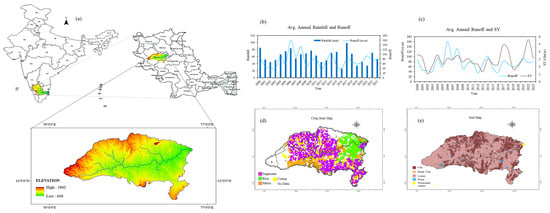
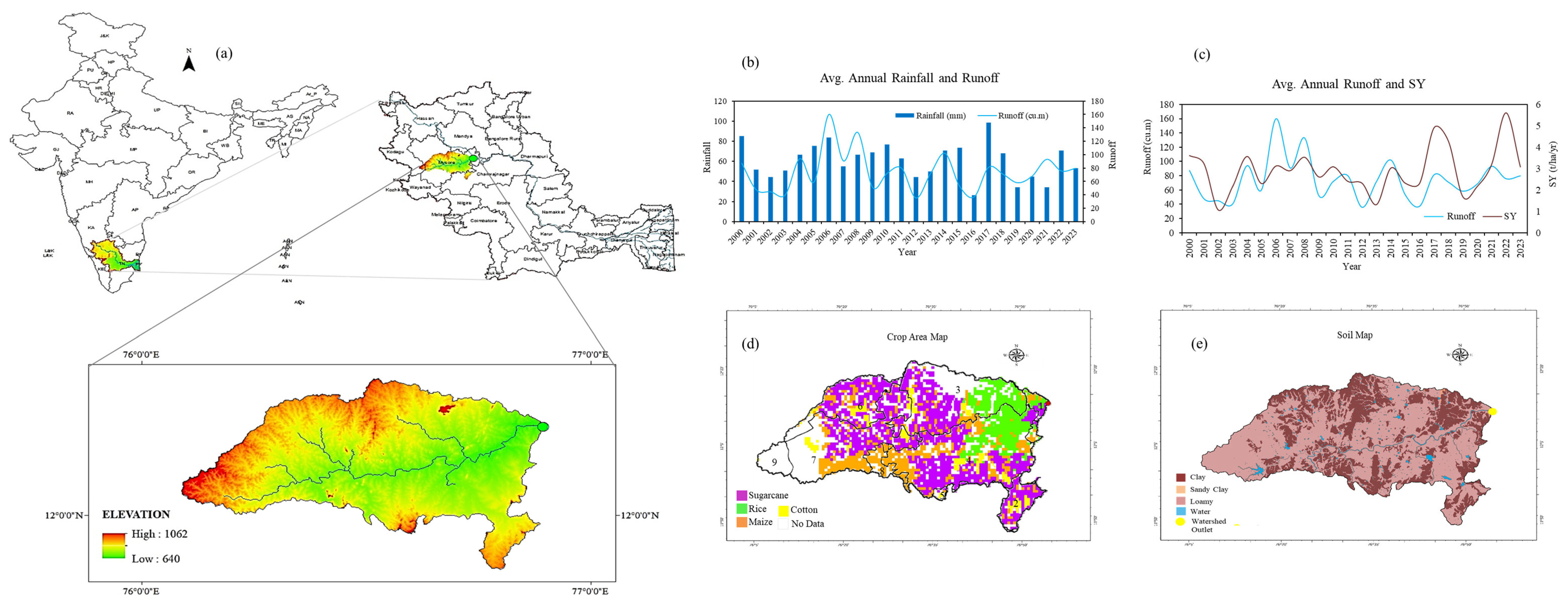
As shown in Figure 1, the T.N. Pura watershed is a sub-watershed on the Kabini River, situated above the confluence of the Kabini and Cauvery Rivers with an area of approximately 700 km2. The study area spans from 11°51′00″ N to 12°22′00″ N and 76°05′00″ E to 76°55′00″ E, with the T.N. Pura gauging station (outlet) located at 12°13′49″ N, 76°53′40″ E; hence, the watershed is named the T.N. Pura watershed. It is composed of three districts—Kodagu (9% of total area), Mysore (68%), and Chamarajanagar (21%)—and nine taluks: T.N.Pura, Chimarajanagara, Mysuru, Nanjangud, Gundlupet, Hunsur, Heggadadevanakote, Saraguru, and Ponnampete. The watershed is characterized by the undulating terrain of the South Karnataka Plateau, featuring a well-defined elevation gradient that descends from 1062 m in the western uplands to 640 m at the fluvial confluence. The geomorphology is dominated by a pediment–pediplain complex with slope gradients ranging from 0 to 32%. Uneven terrain forces a dendritic drainage pattern that terminates at the Kabini–Cauvery junction.
Figure 1.
(a) T.N. Pura watershed, a sub-watershed of Kabini River Basin, Karnataka, India, with elevation ranging from 640 m to 1062 m; (b) average (Avg.) annual variation of rainfall and runoff; (c) average annual variation runoff and SY; (d) crop distribution map showing sub-watersheds numbered 1–9 from the outlet to the upstream; and (e) soil type and distribution of the analysis region.
The watershed is located within a semi-arid climatic zone and exhibits a distinct bimodal rainfall regime. Precipitation is primarily governed by the Southwest Monsoon (June–September), with a secondary contribution from the Northeast Monsoon (October–December), resulting in annual rainfall of approximately 800 mm. Air temperatures across the basin vary from 10 °C to 40 °C. The watershed is free from major reservoir infrastructure.
Agricultural activity dominates the area, with three distinct cropping seasons: Kharif (June–September), Rabi (October–March), and Zaid (March–June). The principal soil types found in the watershed are clay, loam, and sandy clay soils suitable for the cultivation of crops like rice, coconut, cabbage, soybean, maize, tomato, sugarcane, and cotton. Rainwater, groundwater, and canal irrigation serve as the sources of irrigation. Local populations employ water-storage ponds in agricultural fields as a water conservation strategy. These ponds, apart from acting as an alternate source of irrigation during summer, are also used for aquaculture.
3. Materials and Methods
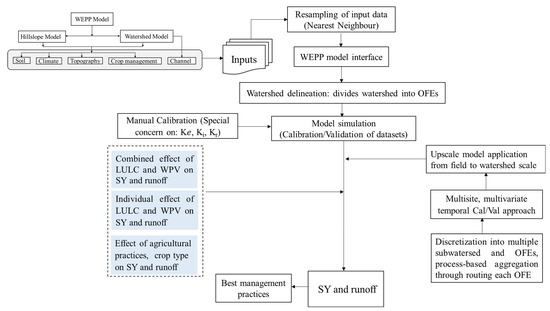
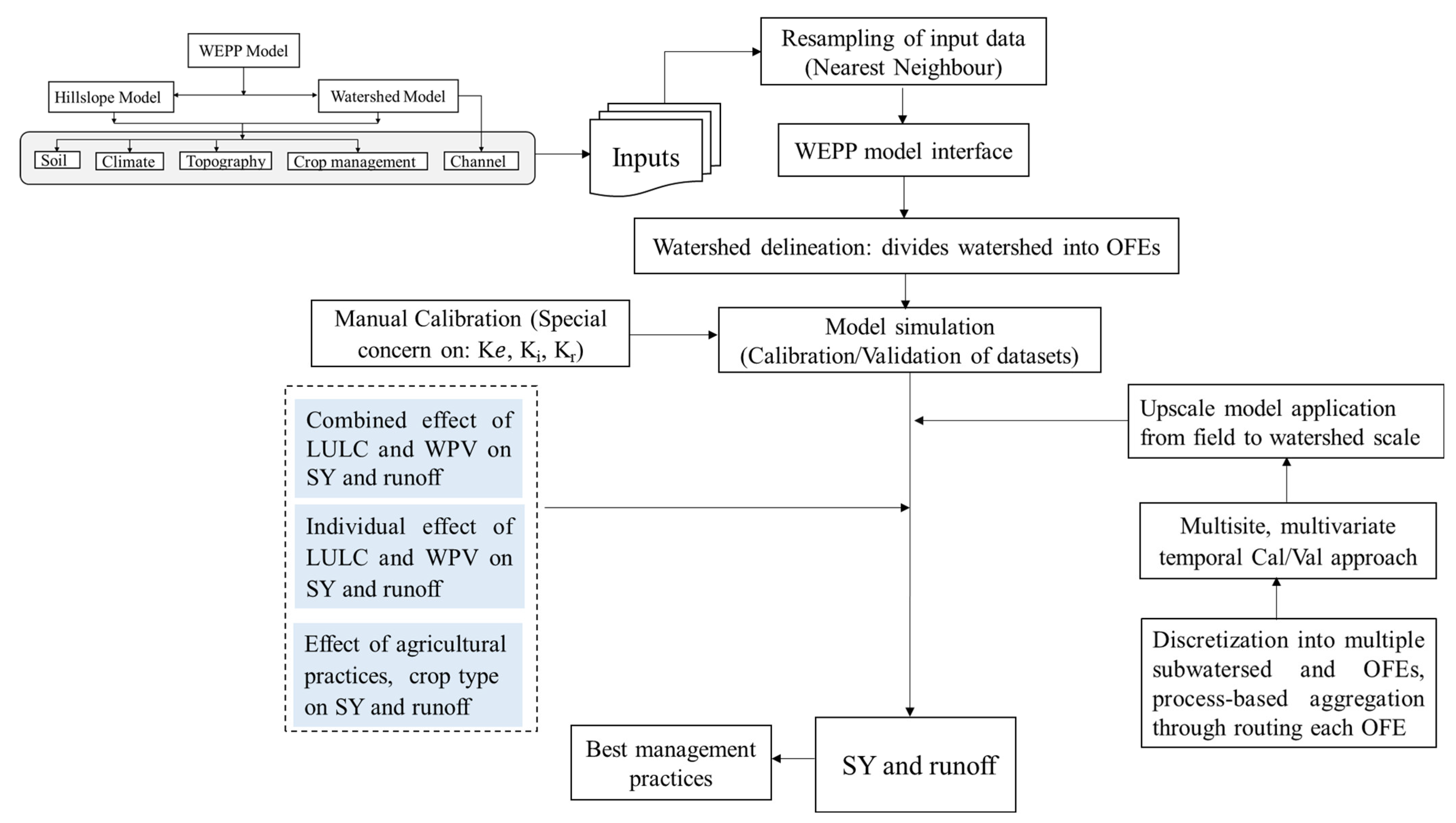
The generalized methodological framework is illustrated in Figure 2, with detailed descriptions of each component provided in the subsequent sections.
Figure 2.
Detailed methodological framework followed and the corresponding items of inputs/outputs. The step with the dashed border indicates a procedure that is carried out only after the model has been set up and upscaled.
3.1. Data Collection
Monthly cloud-free Landsat 7 Collection 2 Level 2 imagery from the year 2000 to 2023, path 144 and row 52, was downloaded from the United States Geological Survey’s (USGS) Earth Explorer (https://earthexplorer.usgs.gov/) (last accessed date on 11 March 2026) and used for land-use analysis. The daily runoff, sediment load, and weather data variables (e.g., rainfall, temperature, windspeed, etc.) for the year 2000–2023 are obtained from the T.N. Pura gauging station, India Water Resources Information System (India-WRIS). Soil data at 1000 m spatial resolution and in situ crop details were collected by communicating with Karnataka-KWRIS officials. Irrigated and rainfed crop rotation information [36] was acquired from a global irrigated area mapping, GIAM (https://waterdata.iwmi.org/applications/giam2000/) (last accessed date on 11 March 2026). The cropland and irrigation data are obtained from the global product GFSAD1000, Global Food Security Support Analysis Data, with 1000 m resolution. The Indian Meteorological Department daily gridded data of 0.25° × 0.25° resolution was used for rainfall from 2000 to 2023. The topographic information is derived from the SRTM-DEM (Shuttle Radar Topography Mission Digital Elevation Model) global data. The slope and aspect information were derived from the SRTM-DEM data at 30 m resolution. The crop yield and crop specification data were obtained from the Directorate of Economics and Statistics (https://www.data.gov.in/ministrydepartment/Directorate%20of%20Economics%20and%20Statistics%20(DES) (last accessed date on 11 March 2026)) and Agri-Farming (https://www.agrifarming.in/district-wise-crop-production-in-karnataka-list-of-crops-grown-in-karnataka (last accessed date on 11 March 2026)).
3.2. LULC Classification
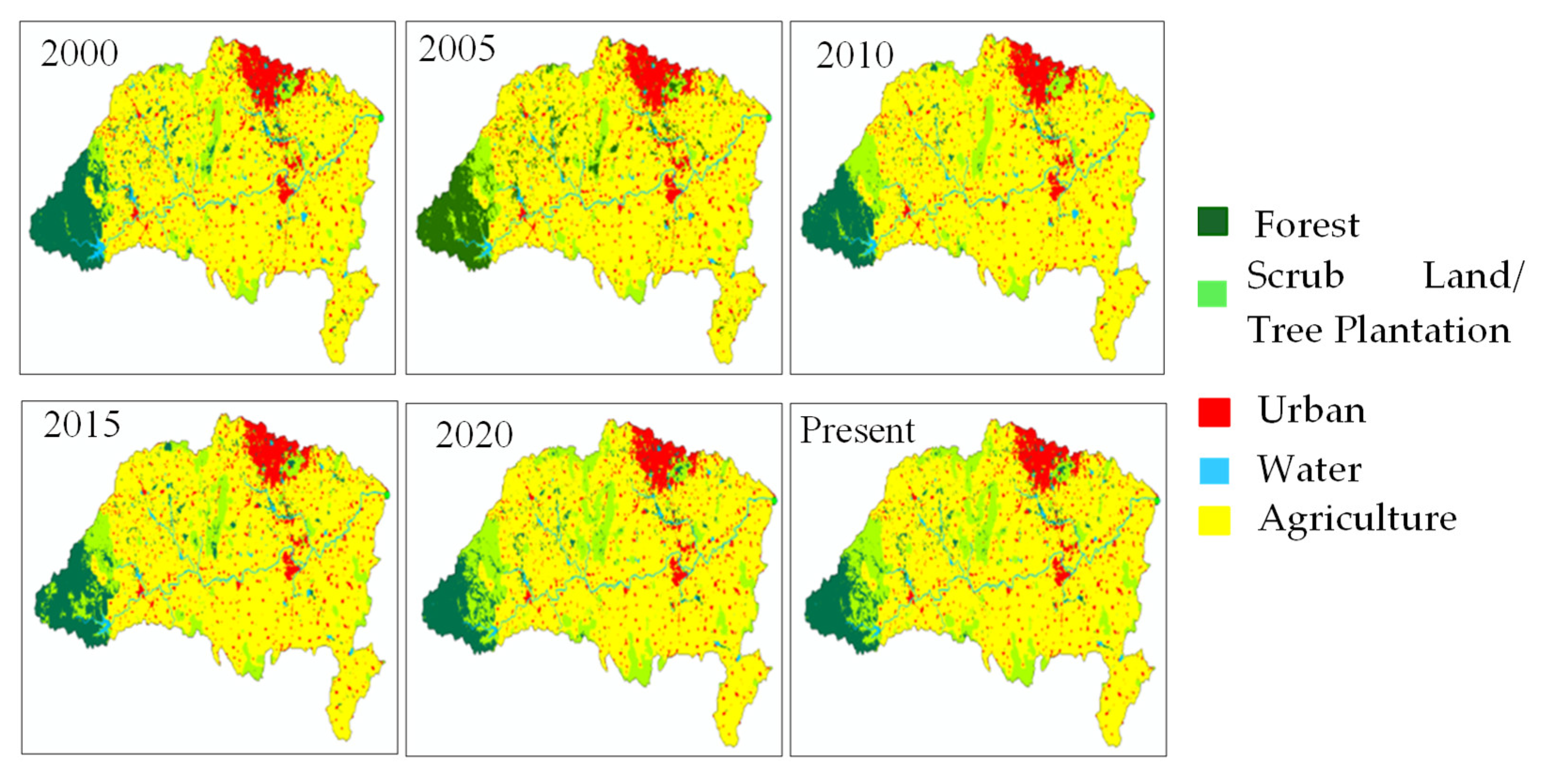
The LULC change analysis is performed using the supervised classification technique of maximum likelihood classification (MLC). This technique was adopted because it is robust, flexible, and highly reliable [37]. The Landsat 7 images for the years 2000, 2005, 2010, 2015, 2020, and present (2023, as the data are available to this date only during this study) were utilized for categorizing land use into five classes: (i) waterbody, (ii) urban, (iii) forest, (iv) scrub land/tree plantation, and (v) agricultural land. The LULC map from the year 2000 was used as a base map to evaluate the changes in subsequent years. The dense forest, open forest, and reserve forest areas are included in the forest class. The industrial area, urban and rural settlements, bare lands, and open grounds are included in the urban class. The scrub lands, open tree planted areas, and recreational centers such as parks and grassed playgrounds are classified into a single class called scrub land/tree plantation. A Google Earth image was used as reference for the generation of 200 training and accuracy assessment sample data points (for each class). LULC classification is performed every month over a year and averaged to obtain an annual LULC map, and the procedure was repeated at an interval of five years [38] to obtain and preserve the variability over the months through the year. The kappa coefficient and overall accuracy of the classified image ranged from 0.82–0.87 and 85–92%, respectively [39]. The LULC classified images for the quinquennial years from 2000–2023, shown in Figure 3, are used as model inputs for runoff and soil loss (SL) simulation.
Figure 3.
LULC classification for the years 2000, 2005, 2010, 2015, 2020, and present (2023).
3.3. LULC near Future Projection
Predicting future LULC based on current (2023) LULC classes is difficult due to the influence of physical, socio-economic, and weather factors. Future projection of LULC is performed using the cellular automata Markov chain (CAMC)-ANN modeling framework [15,40]. This methodology is selected primarily because it is grounded in Bayesian statistics, aligning with the approach employed for LULC classification in this study. Given that both methods were developed within a Bayesian framework, the resulting projections are expected to be robust and reliable. Furthermore, this hybrid methodology integrates CAMC-ANN techniques that capture spatio-temporal dynamics during the LULC projection process [37]. The Markov model is a stochastic approach where the future land-use predictions are based on the present state of an individual pixel. However, it is not particularly adept at interpreting spatial information. In contrast, the cellular automata (CA) model considers both the direction and spatial characteristics of the LULC changes. This model operates on the principle of proximity, meaning that the state change of a pixel is influenced not only by its previous state but also by the states of neighboring pixels [40]. This implies that pixels in close proximity to a specific land-use class are more susceptible to change, as constrained by the transition probability matrix derived from the MC model. This matrix explains the likelihood or the probability of a specific pixel transitioning from one class to another.
Future LULC change is simulated considering the influencing factors—biophysical and socio-economic features, i.e., slope, distance from rivers/water bodies, elevation, proximity to roads, and the spread of urban areas [41]—to prepare the transition map. The LULC change is predicted using the CAMC-ANN model for the year 2030. A model needs to be capable of predicting future changes, especially when there are no data available for validating it. So, before prediction of 2030 LULC, the model was evaluated by predicting the LULC map for the year 2023 and the accuracy assessment results are presented in Table 1. To train and calibrate the model, LULC changes during the years 2010–2015 and 2015–2020 are analyzed. The transition probability matrix, change detection map, and transition area matrix (Table 2) are obtained from the Markov chain model. This transition probability matrix was fed to the CA model for LULC prediction for the intended year. The projected LULC of the year 2023 is compared with the LULC classified image of the same year for validation. The predictive power of the model is evaluated using kappa statistics: Klocation, Kno, and Kquantity [42].
Table 1.
Accuracy assessment of predicted and classified reference LULC images for the year 2023.
Table 2.
Transition area matrix (km2) from 2023 to 2030.
3.4. Performance Evaluation of the WEPP Model
WEPP Model Set-Up and Calibration
The WEPP model input files are generated as described in the user document (https://www.ars.usda.gov/midwest-area/west-lafayette-in/national-soil-erosion-research/docs/wepp/wepp-model-documentation/ (last accessed date on 11 March 2026)). Model default values are used for the plant-specific parameters. However, crop-specific parameters for rice, sugarcane, and cotton were gathered from the available literature [34,43,44,45,46]. Observed meteorological data from the gauging station were used to parameterize the CLImate GENerator (CLIGEN), a stochastic weather generator designed to produce daily climatic variables such as precipitation, maximum–minimum temperature, etc. CLIGEN further derives sub-daily storm characteristics, including rainfall intensity, storm duration, and time to peak, which are essential inputs for process-based hydrological models such as WEPP [24].
The calibration and validation periods were defined using a data-splitting approach. Two-thirds (2000–2015) of the available dataset (2000–2023) were utilized for model calibration, while the remaining one-third (years: 2016–2023) was reserved for model validation using observed runoff and sediment yield. Guided by sensitivity analyses in the existing literature (e.g., [47]), calibration in our research work focused on adjusting effective hydraulic conductivity (Ke), critical shear stress (τc) initial saturation, and rill (Kr) and inter-rill (Ki) erodibilities. Model calibration was performed through iterative parameter adjustment, with performance evaluated against NSE and PBIAS criteria recommended by Moriasi et al. (2007) [48]. Crop yield data served as ancillary calibration and validation for upscaling. The model’s performance was assessed using statistical metrics: Pearson’s correlation coefficient, Nash–Sutcliffe efficiency (NSE), percent bias (P-bias), and root mean square error (RMSE), based oncomparition between simulated and observed data (Table 3).
Table 3.
Calibration and validation statistics for simulated and observed monthly runoff.
The WEPP model was developed and applied for smaller watersheds of size 0.5 to 29 ha [35]. Upscaling of the WEPP model runoff and SY simulation is performed by hillslope delineation and channel identification [23]. The DEM is used to delineate the watershed into nine sub-watersheds accordingly. These sub-watersheds were delineated into hillslopes and channels. The hillslopes are the smallest possible representation of the watershed that contributes to the channel. A hillslope is further categorized into overland flow elements (OFEs): the homogeneous regions of soil and crops.
To build connectivity among the sub-watersheds and reduce the error aggregation of the output variables, temporal and multi-site calibration [49] was performed for the hydrological variables and validated at the watershed outlet for runoff and SY (as data are available only at the outlet). The model is upscaled by overland flow routing through each of the OFEs—hillslope—of a sub-watershed and connected to the runoff at the outlet. In the sub-watershed, the independent hillslope outputs were integrated and routed through the channel network to the outlet, preserving the spatial heterogeneity of the landscape, and runoff and sediment yield outputs were subsequently aggregated to obtain watershed-scale responses. This hierarchical modeling approach preserves localized hydrological and erosion processes while ensuring physically consistent upscaling to the entire watershed domain. Model parameters were adjusted to achieve the desired output at the watershed outlet; this may compromise the real intra-watershed behavior. To ensure accurate modeling of sub-watershed behavior, ancillary data such as crop yields were used for calibration and validation [50]. Crop yield data were not used for direct calibration of the WEPP model. Model calibration and validation were performed using observed runoff and sediment yield at the watershed outlet, whereas crop yield information was used only as a qualitative indicator to assess the consistency of simulated hydrological and erosion responses with regional agricultural conditions while upscaling the model.
Model results are analyzed to study the impact of LULC and WPV on runoff and SY. The future SL was also simulated from future LULC and weather inputs. The future weather data (precipitation, maximum–minimum temperature, wind speed, rainfall intensity, storm duration, and time to peak) inputs are generated by the CLIGEN component of the WEPP model for the analysis. The individual and combined impacts of LULC and WPV on these output variables are evaluated to study which component has the most influence on these variables.
Earlier studies examined the effects of weather and LULC changes on runoff at a larger catchment scale. Research on soil erosion has typically focused on either the combined or individual impacts of these factors on runoff and soil erosion. However, such studies often overlook the agricultural dimension when considering both influences. This research aims to (i) evaluate the individual and combined effects of LULC and WPV for current and near-future scenarios at the sub-watershed scale and (ii) quantify SL resulting from agricultural practices to develop management practices for reducing soil erosion. The model analyzes the SL spatially [51,52] for the given land management. Hence, the impact of existing management practices on SL is being analyzed for the watershed. Based on the simulated results, practical soil conservation approaches are formulated. The model was calibrated and validated for the crop yield at the sub-watershed level to study the SL variability, as the SY and runoff data are available only at the outlet. Then, the SL at the sub-watersheds is simulated with different management practices to arrive at conservational practices to be followed to minimize SL.
3.5. Evaluation of Impact of LULC and Weather on Hydrologic Variables
Earlier studies by Mukesh Kumar et al., 2022; Sreedevi et al., 2022; and Mukundan et al., 2013 [13,53,54], either focus on the combined or individual effects of LULC and/or WPV on hydrologic variables at a regional or catchment scale, without considering the agricultural practices followed in that watershed. This study concentrates on both the individual and combined impacts of LULC and WPV on runoff and SY. To assess the individual effects of LULC and WPV on runoff and SY separately, the one-factor-at-a-time approach was adopted, in which one driver was varied while the other was kept constant. The analysis was performed at five-year intervals, with each interval treated as a separate scenario (see Section 3 Table 4), and their individual contributions are described in columns 6 and 8 [55]. Either weather or LULC parameters are changed for the analysis period from 2000–2023 and the near future. However, for S16, only data from 2020 to 2023 were available; therefore, this period was used with the assumption that it sufficiently represents the LULC and WPV dynamics and can be projected forward for the future scenario. To obtain the inter-annual variations of LULC and WPV for 2005, the value from the year 2001–2005 is used, and a similar method is used for all other scenarios. The runoff and SY for a year were simulated, and for the next simulation, one of the variables was changed and the other one was kept constant, so when the second scenario (S2) was subtracted from the first, the effect of the changed variable was obtained. For example, if the simulation for S2 is performed by changing the LULC to the year 2005 from 2000, we know how much LULC change contributes to runoff and SY generation when S2 is subtracted from S1. Runoff and SY simulation results are tabulated in Table 4. From the table, we can conclude which factor influences [55] runoff and SY production, and we can focus our decision-making process.
Table 4.
Results from different scenarios for runoff and SY simulations.
3.6. Evaluation of Impact of Agricultural Management on Hydrologic Variables
Following watershed delineation, the WEPP model was applied to quantify hydrologic responses under alternative crop and tillage configurations at the sub-watershed scale. The agricultural practices were simulated by defining unique management sequence files (∗.man) that dictate the crop type, cover dynamics, etc. In the T.N. Pura watershed, these simulations account for the mechanical impact of specific implements used in Indian smallholder and semi-mechanized systems. The SY produced under each treatment was evaluated relative to the prevailing management system. Through personal communication with KWRIS officials, it was found that the conventional tillage, primarily conducted using country ploughs or mold-board ploughs and spike-tooth harrows, was a commonly adopted tillage practice, so it was designated as the baseline condition. Simulations were carried out for four major crops—rice, cotton, maize, and sugarcane—with a combination of three tillage operations: tandem disk, drill with a single-disk opener, and conventional and spike-tooth harrow.
We analyze each of these management practices for each crop type, which directly influence the surface roughness, infiltration, runoff generation, and soil detachment. The results are analyzed to recommend the best or the most conservative management practice. Using the simulation results, the recommendations are formulated to reduce the SY.
4. Results and Discussion
4.1. Land Use and Land Cover Change and Prediction
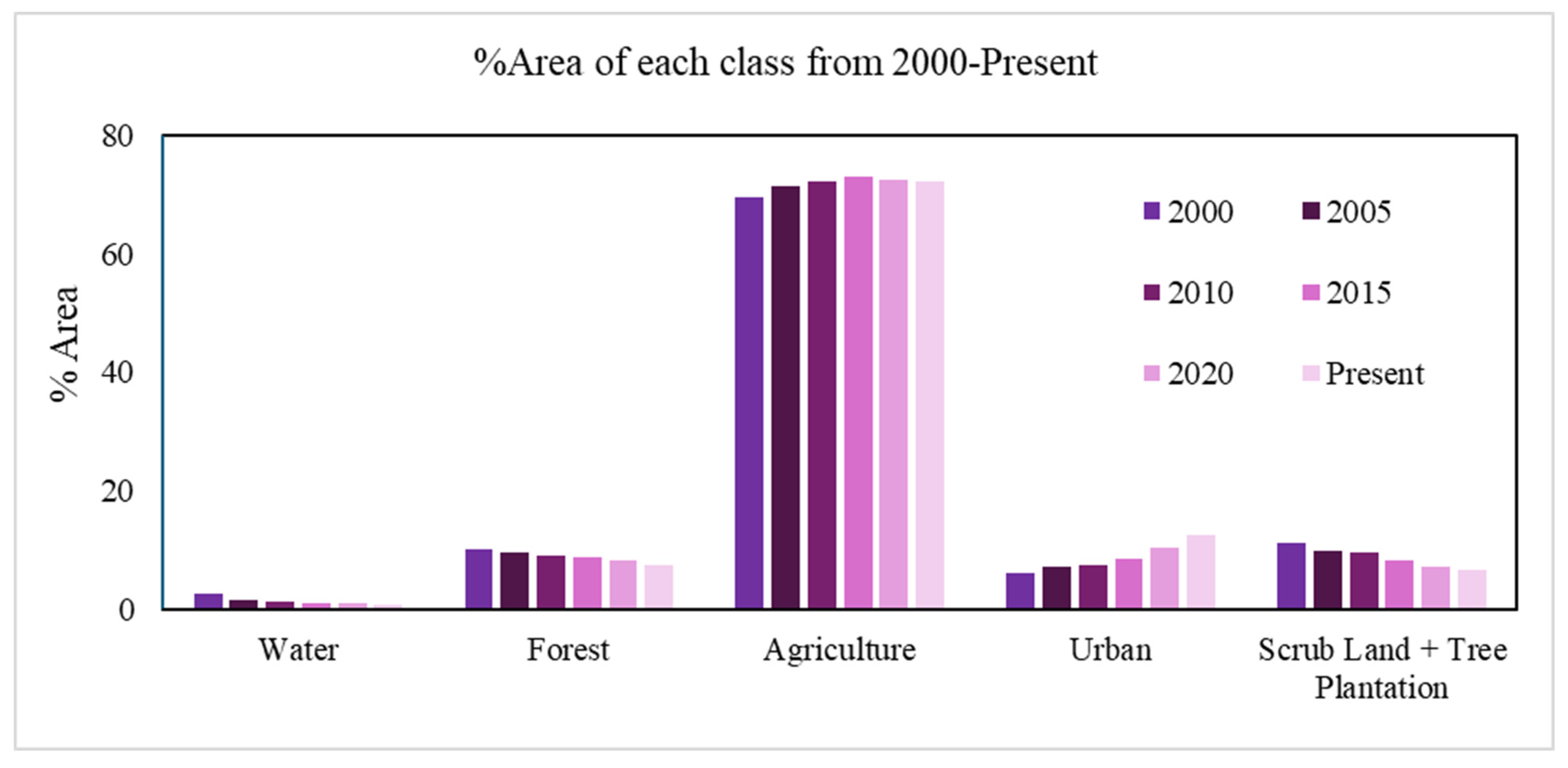
Five LULC classes are studied to analyze the changes that have occurred over the years 2000, 2005, 2010, 2015, 2020, and present in the watershed. It is found that agricultural land was the dominant class of this region, having 69.37% of the total area, followed by the scrub land/tree plantation class of 11.28%, with 10.37% for the forest class and 6.21% of the area for the urban class in the year 2000. The statistical analysis conducted for five LULC maps indicated that there was an increase in agricultural land cover by 3.61% from 2000 to 2015 and a decrease of 0.85% for the present scenario. The analysis indicates that the urban class has expanded nearly twofold from 2000 to the present. Therefore, the decrease in agricultural land cover can be attributed to an increase in uncontrolled (or unplanned) urbanization witnessed near the river course and road from the LULC classified map presented in Figure 3. The forest cover seen in western parts of the watershed declined by 2.72% over the years. This may be due to the increase in the tourism sector in the basin and the increase in the conversion of forest land to scrub land/tree plantations. However, there are some NGOs and government bodies taking initiatives to rejuvenate the Cauvery River Basin (CRB) through the “Cauvery Calling” program, which is gaining momentum. Scrub land/tree plantation area decreased from 11.28% to 6.68% of the total watershed area. Figure 4 reveals the LULC trajectories, where the forest, water, and scrub land/tree plantation classes exhibited a consistent decline, and the urban areas showed a significant and continuous expansion. Agricultural land followed an increasing trend until 2015, after which it decreased in the year 2020 and remained stable. Due to the continuous expansion of urban regions, agricultural lands also started to decline after 2015. Although a 0.85% loss of agricultural land may seem minimal, it has a significant impact on agricultural produce yields. So, planned infrastructure and industrial development are necessary to maintain a sustainable environment. The water area varies over the years. It was 2.77% of the total basin area in the year 2000, and now it is only 1% of the total area. There is a need to improve the water storage area very significantly to restore fertility, to meet the water demand of the watershed, and to protect from meteorological drought. More water retention structures need to be installed. The observed 2.72% decline in forest cover is primarily driven by the expansion of urban areas and agricultural land, as well as the conversion of forested land to scrub/tree plantation land. Loss of these forests and scrub/tree plantation landcover likely contributes to increases in SL and SY. The agricultural practices, cropping pattern, and irrigation type that are used also have an impact on runoff generation and SL, which will be discussed in the following sections of this paper.
Figure 4.
LULC change in class % in T.N. Pura watershed.
Figure 4 indicates a consistent expansion of urban areas, reflecting increased impervious surface cover that restricts infiltration and reduces natural groundwater recharge. The positive trend of an increase in impervious regions results in the production of high runoff, which may be a causal factor for increased SY over the years. This urban growth is closely associated with population increase, higher population density, and intensified anthropogenic activity. Changes in transportation patterns linked to socioeconomic conditions further contribute to environmental stress, including air quality degradation. The expansion of built-up areas exerts indirect pressure on surrounding forest, water, and scrub land ecosystems, leading to their progressive decline. These land-use transformations collectively influence watershed hydrology by altering runoff generation, infiltration capacity, and sediment transport processes.
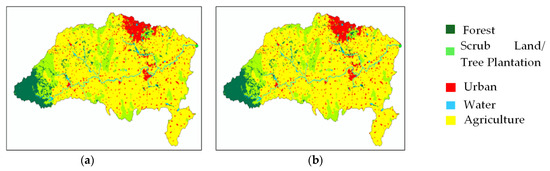
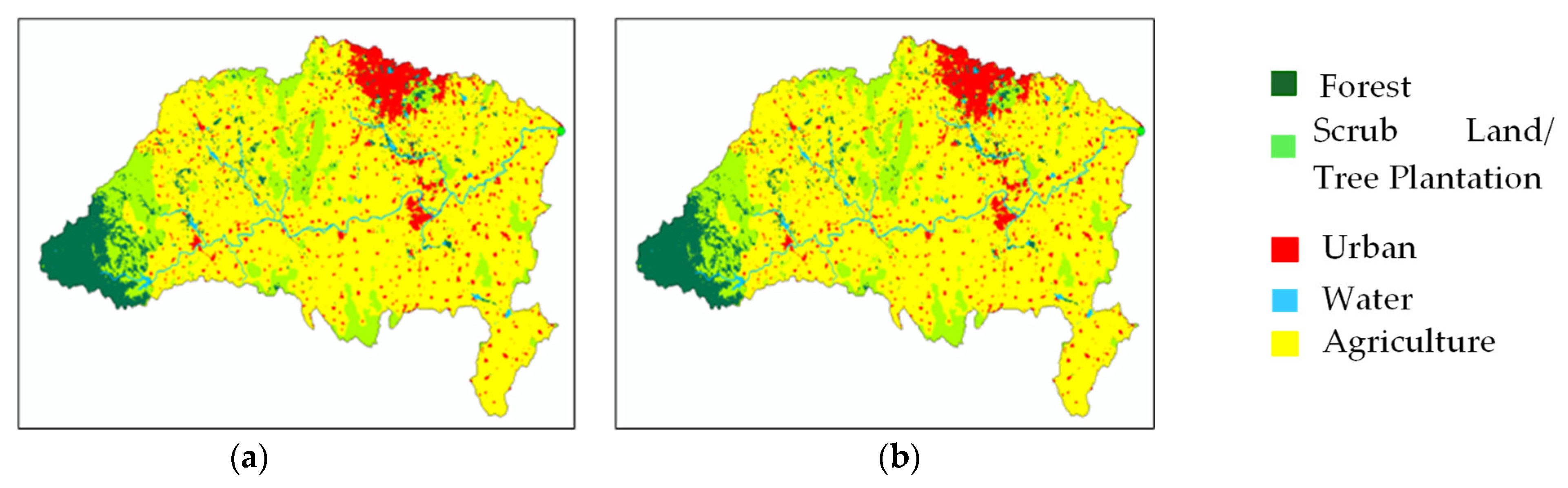
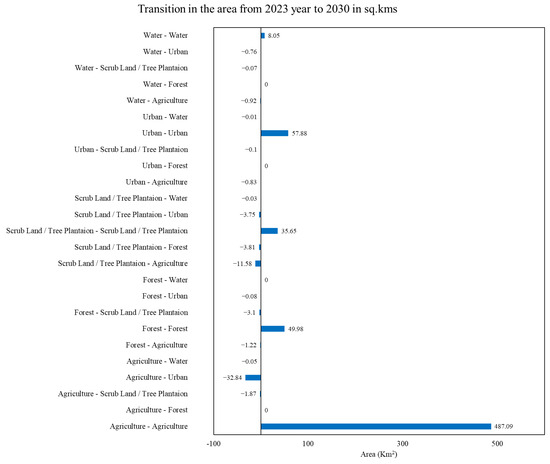
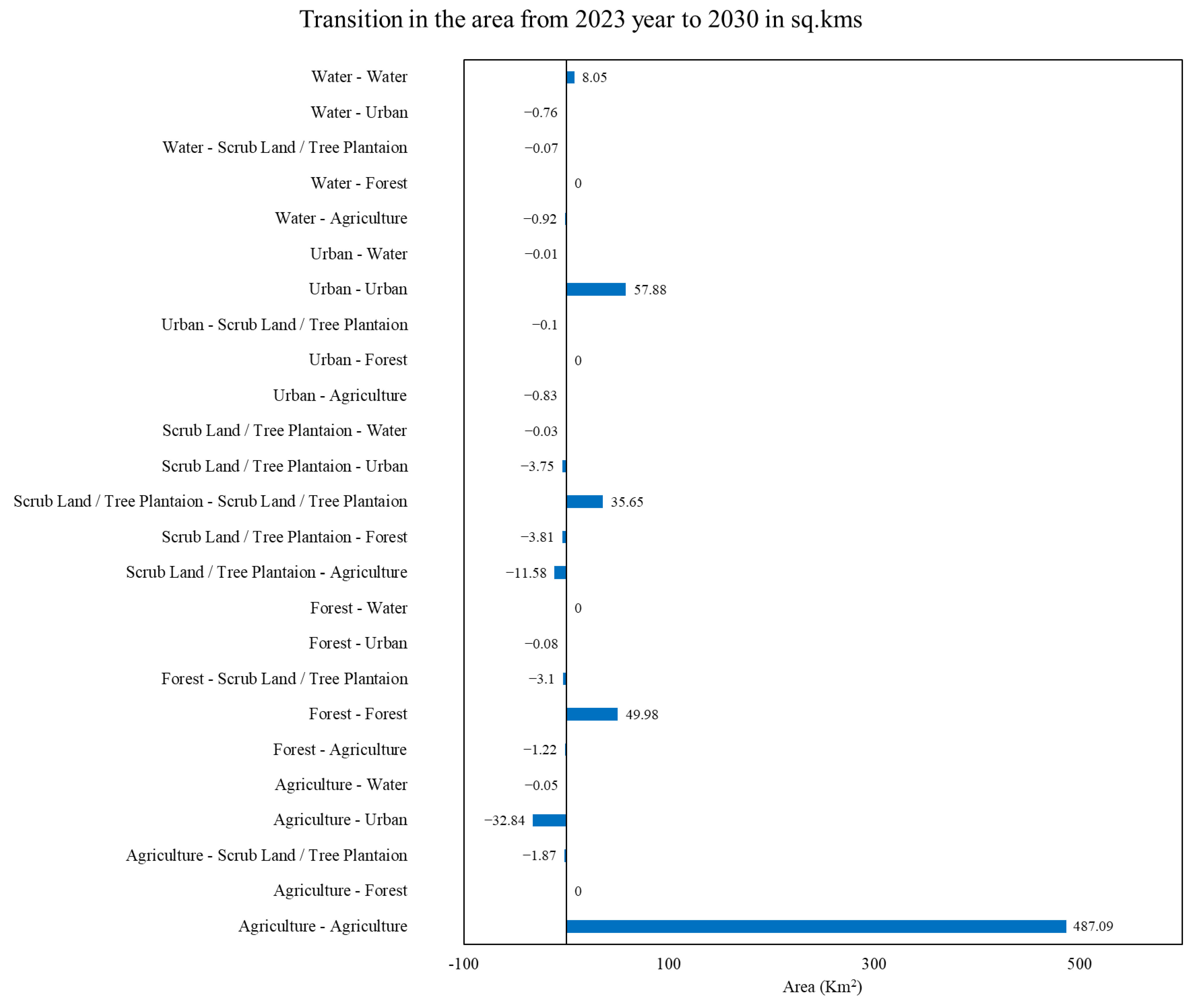
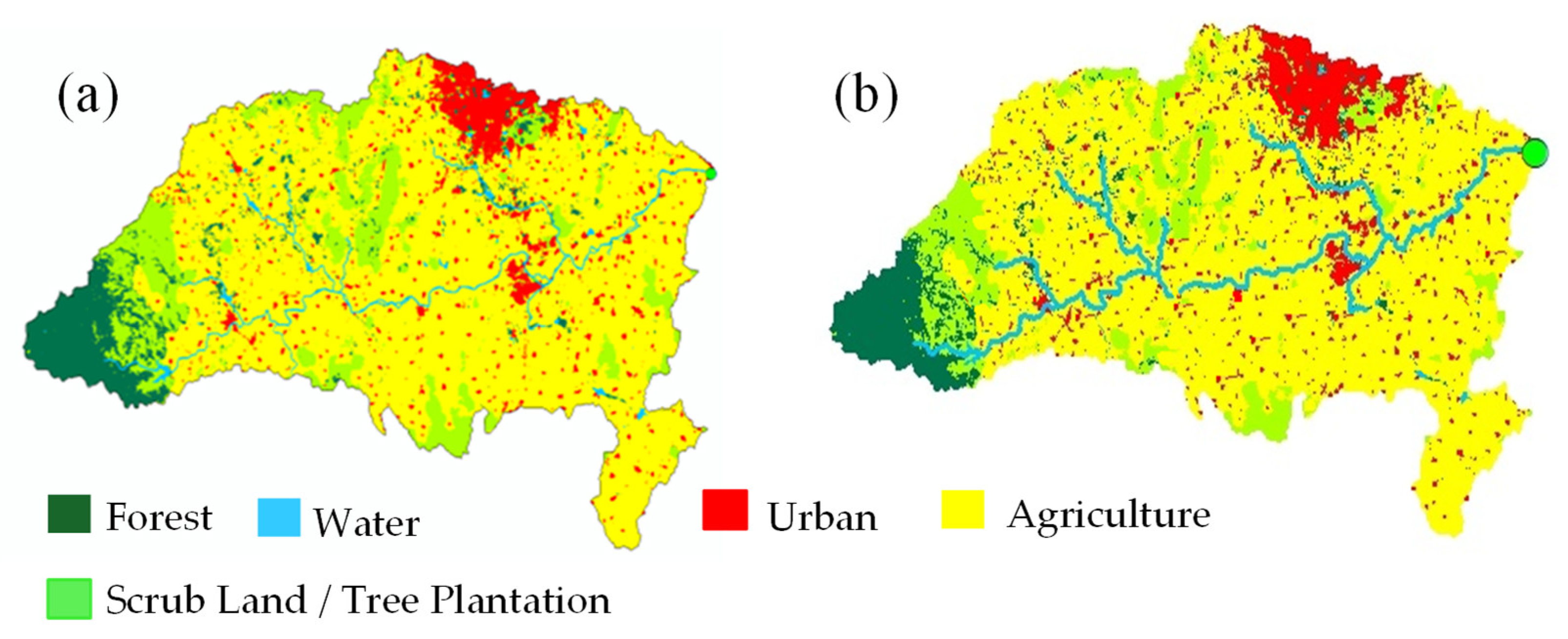
Prediction of future LULC conditions helps us to formulate short-term future mitigation plans. The predicted and classified LULC maps for the classified reference year are shown in Figure 5. The accuracies of the prediction and the reference image are compared in Table 1. The overall kappa statistics [56] were calculated for the predicted LULC, yielding the following values: kappa: 0.85; Klocation: 0.992; and Kno: 0.94. These values are in good agreement with the study conducted by [39]. From this it can be concluded that the model predicts LULC classes very well, and so the model can plausibly perform equally well for future projections. The transition of LULC classes from the current year to the future year of 2030 is explained in Table 2 and in Figure 6, where the rows of the transition area matrix represent the current year, and the columns represent the future LULC classes. The table is read in the following fashion: the agricultural class pixels (or areas) from row 2 (current year) have been converted to urban class areas (column 3) of 32.84 km2 in the future. The change in land-use class areas from the current year to the future is presented in Figure 7. The analysis of the projected LULC map (Figure 7b) indicates an increase of 1.05% in the urban class. Though it might seem to be a minimal percentage increase from the current year to 2030, it is a significant increase compared to the year 2000. A minimal increase of approximately 0.03% was observed in the forest class, primarily resulting from the conversion of scrub land pixels. A decline in agricultural and scrub/tree plantation areas has been observed, with a notable conversion of agricultural land to urban land. Concurrently, scrub land/tree plantation areas have contributed equally to the expansion of both agricultural and urban classes. The rapid increase in urban areas is concerning, as it may adversely impact the exploitation of natural resources within the region, resulting in a greater expanse of impervious surfaces. This transformation is likely to enhance runoff generation, leading to the degradation of nutrient-rich soil layers, particularly given that this watershed is predominantly characterized by agricultural land.
Figure 5.
(a) Present classified reference and (b) predicted 2023 LULC map.
Figure 6.
Representation of class-wise transition in area from 2023 to 2030. (Negative values indicate the magnitude of area lost by a given land-use class between 2023 and 2030).
Figure 7.
(a) Classified LULC classes for the year 2023 and (b) projected LULC map for the near-future year 2030.
4.2. Runoff and SY Simulation Analysis Using WEPP Model
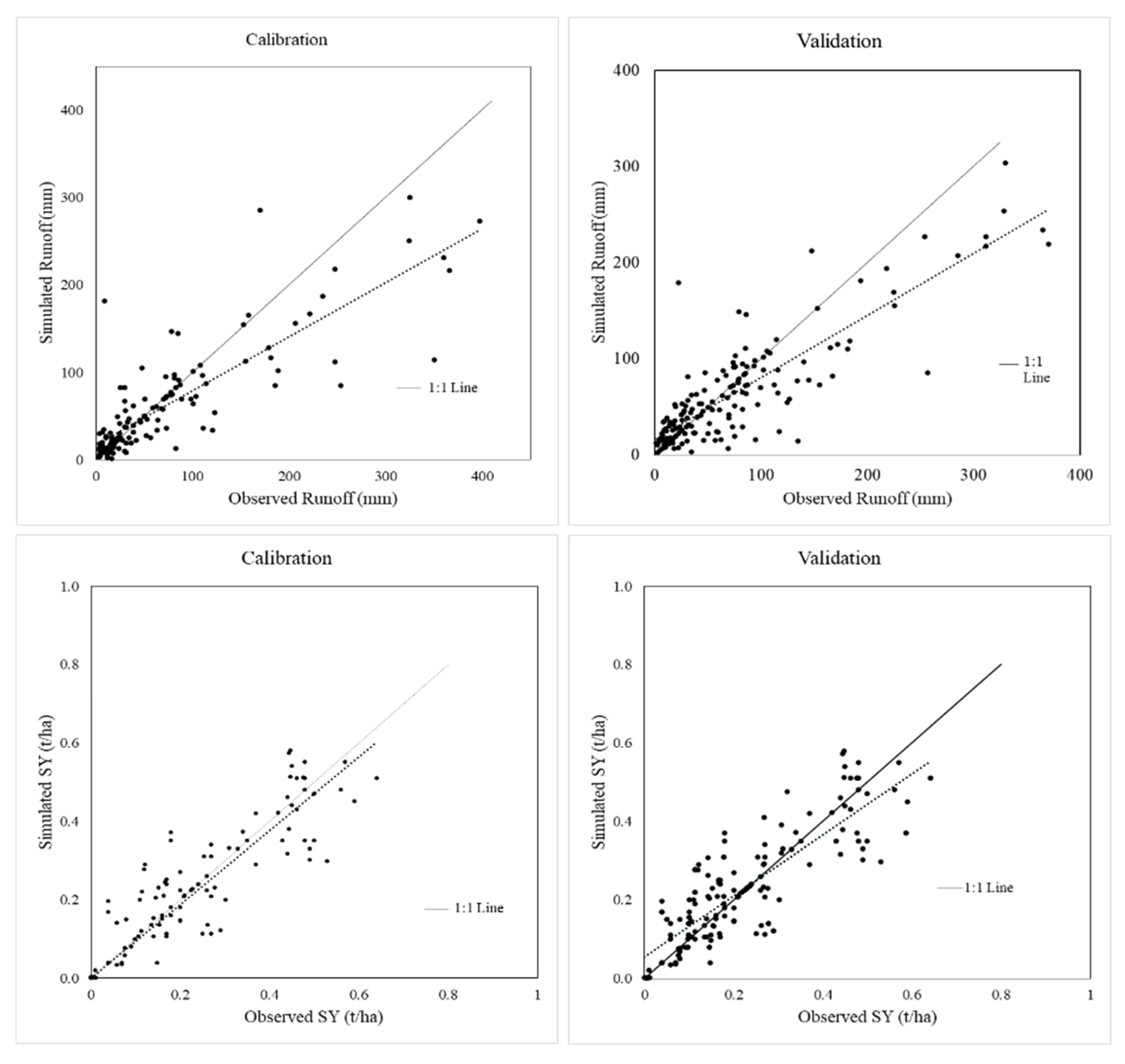
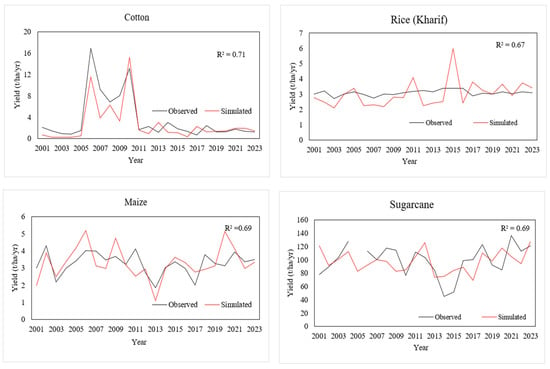
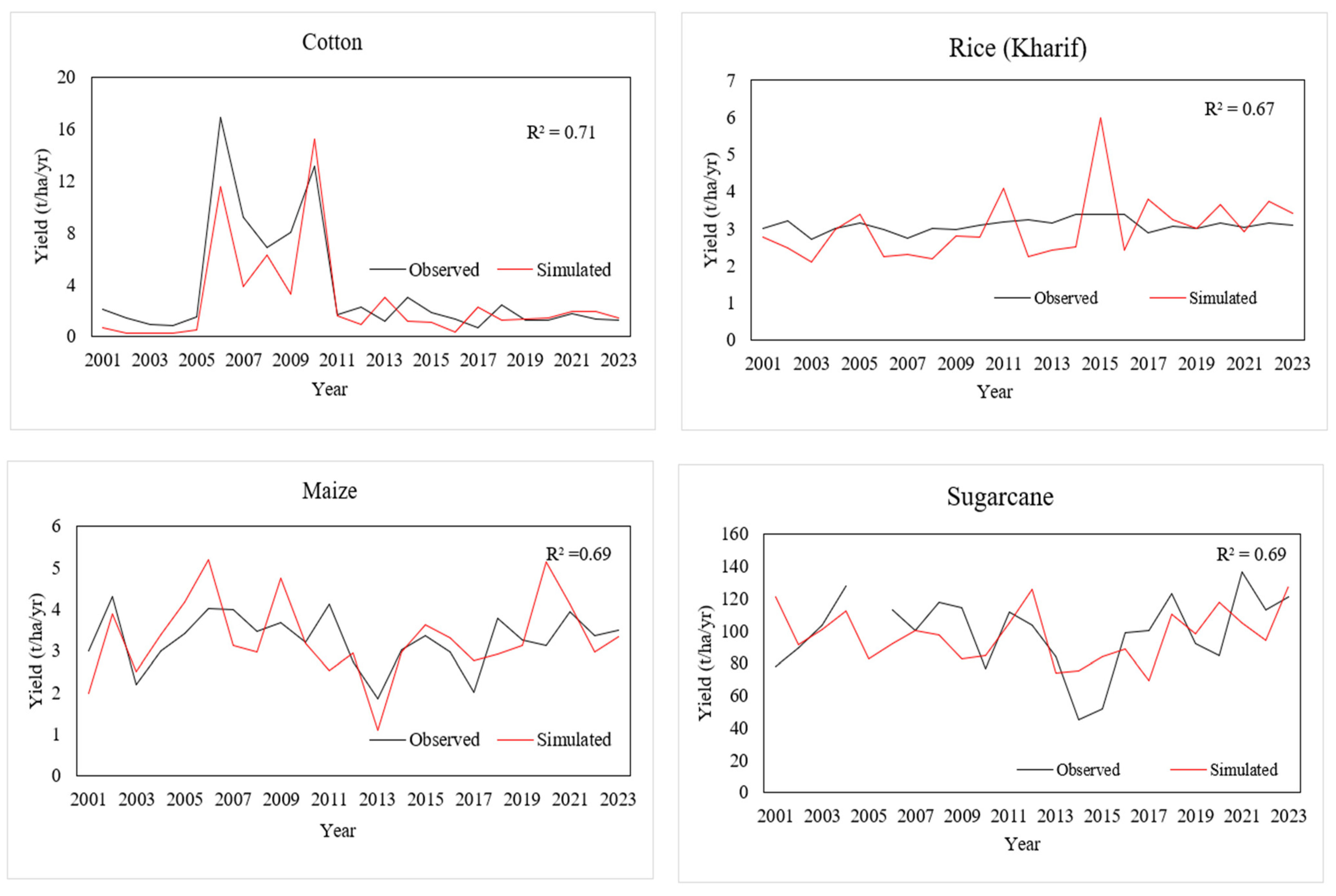
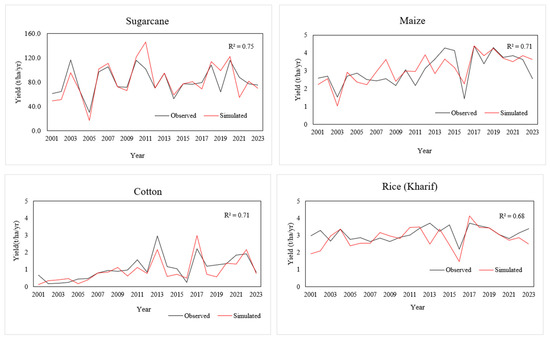
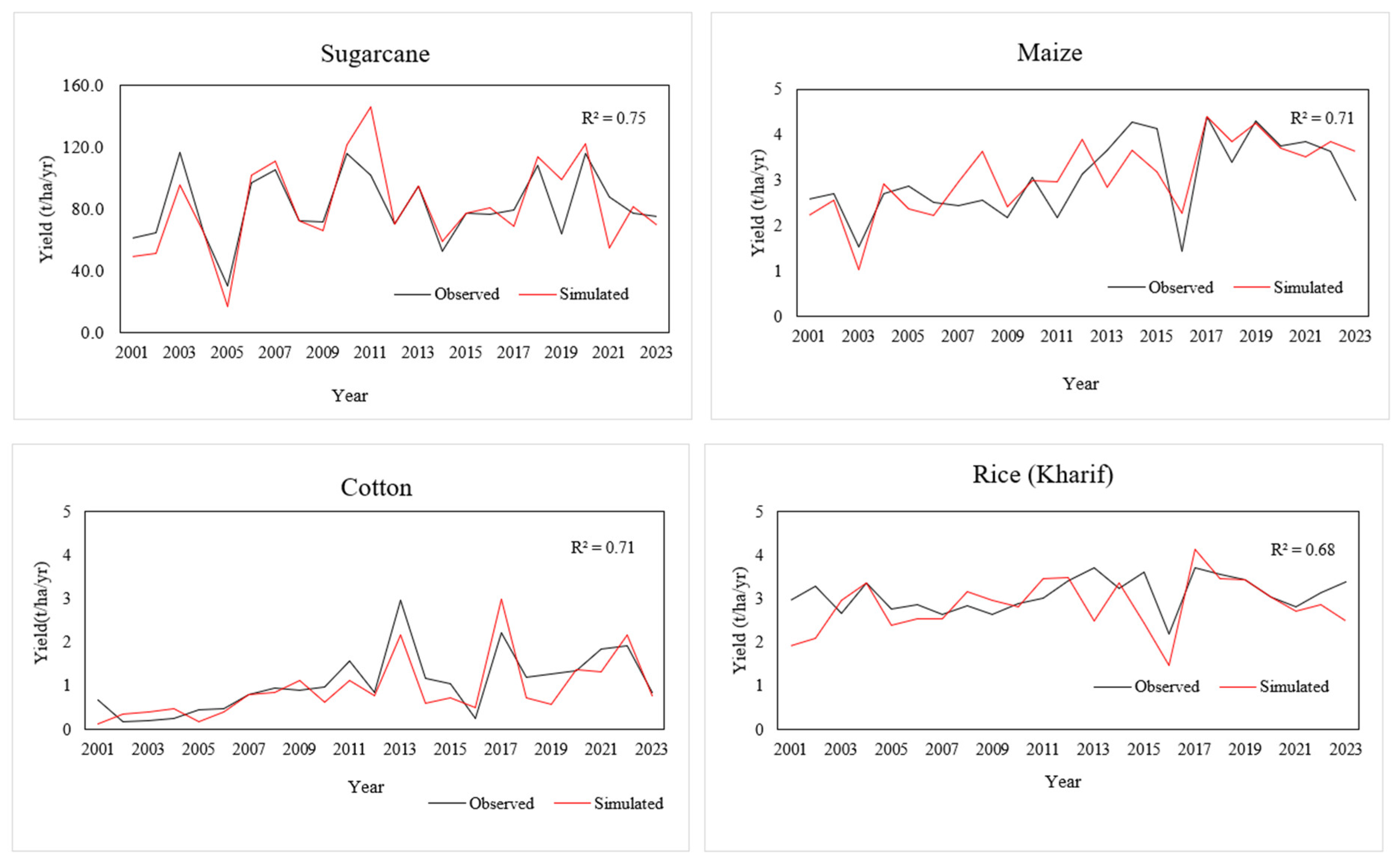
A WEPP model simulation is conducted to estimate runoff and SY. Calibration and validation results are illustrated in Figure 8. Although daily runoff and SY data were collected, inconsistencies in the dataset limited their suitability for reliable event-scale calibration. Therefore, to ensure data continuity and robustness, calibration was performed at the monthly scale, which yielded satisfactory results (Table 3). The results of ancillary data used for sub-watershed calibration/validation are presented in Figure 9 and Figure 10. The annual crop yield data were available at the district level, so the simulated taluk-level crop yield was aggregated to the district level for the analysis.
Figure 8.
Calibration (2000–2015) and validation (2016–2023) plots for simulated and observed monthly runoff and SY. (Note: Solid line = 1:1; dotted lines = intercepts).
Figure 9.
Calibration (2000–2015) and validation (2016–2023) plots for simulated and observed annual crop yield for Mysore district.
Figure 10.
Calibration (2000–2015) and validation (2016–2023) plots for simulated and observed annual crop yield for Chamarajanagar district.
The model’s prediction of crop yield was in good agreement, with coefficient of determination (R2) values ranging from 0.69–0.75 for different crops. Crop yield model simulations for the Chamarajanagar district show a better fit compared to the Mysore district, potentially because Chamarajanagar represents a smaller portion (21%) of the watershed area and exhibits less variability in LULC classes. The predominance of agricultural land within the Chamarajanagar study area may contribute to more accurate crop yield simulation results. The model tends to under-predict the higher-magnitude runoff and SY and overestimate the values of smaller events; the same trend is exhibited in both the calibration and validation phases, in accordance with Nearing M.A., 1998 [57]. When there is a continuous or hiatus rainfall event, the saturation of soil will alter accordingly, so this might have affected the wetting front formation. This phenomenon of redistribution of soil moisture or soil saturation is not effectively captured in the model [58], and thus under- and overestimation of runoff and SY are observed. The statistical evaluation of the model’s performance is tabulated in Table 3. Statistical analysis using Student’s t-tests demonstrated that the simulated and observed runoff and SY values are significantly similar at the 95% confidence level.
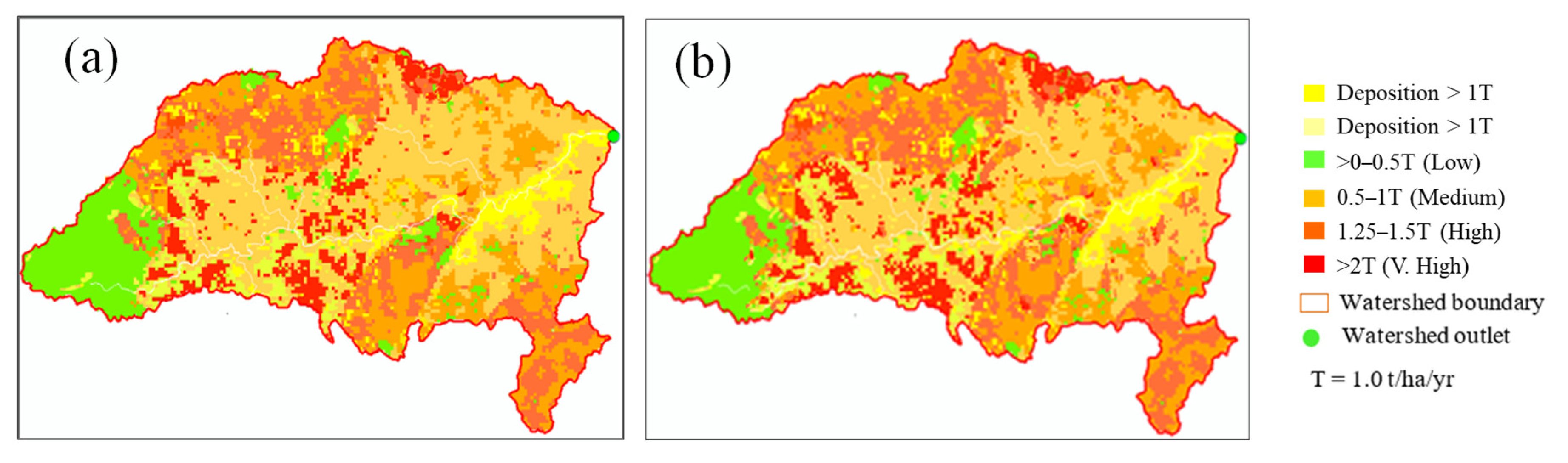
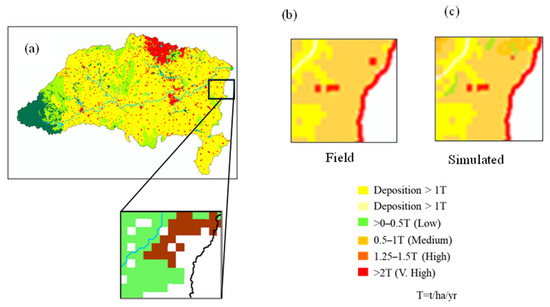
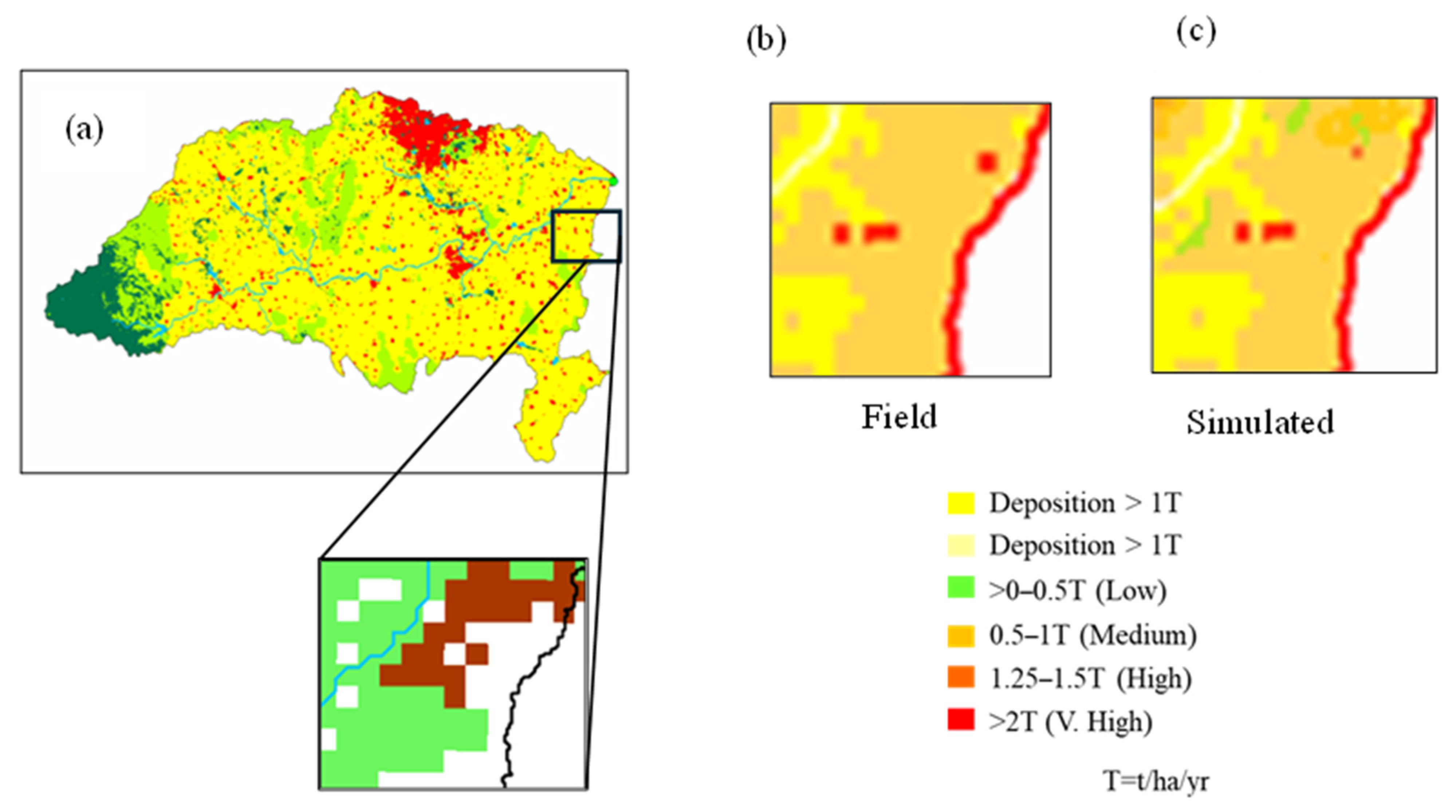
The analysis revealed that runoff generation was highly sensitive to initial saturation level and effective hydraulic conductivity. At the same time, SY was influenced by critical shear stress (varying from 1.5–6 N/m2), as well as rill and inter-rill erodibilities (0.001–0.006 s/m2 and 1 × 10⁶–1.2 × 10⁷ Kg·s/m−4, respectively) [59]. It was also found that the calibration of ancillary data provides information showing that crop parameters, such as in-row plant spacing and initial cover crop, were sensitive to runoff and SY; the leaf area index (LAI) is sensitive to SY and crop yield. These findings are consistent with previously reported results [47]. The simulation results reflect the individual and combined influences of LULC changes and WPV. Furthermore, the predominant agricultural practices in the region exert a substantial influence on both runoff and SL, underscoring the area’s agricultural character. Spatial SL across the watershed during the simulation period has been averaged and is depicted in Figure 11a. The SL is categorized into four distinct levels: low, medium, high, and very high. These categories, as shown in Figure 11, are based on the results of the present study. It is seen that forest and scrub land/tree plantation classes produced a predicted SL of 0–0.5 t/ha/yr. These land classes are characterized by denser vegetation and the presence of tall and old trees which contribute to greater soil stability, thereby reducing susceptibility to erosion. The lower levels of soil erosion might be due to tourism activities or human disturbances and open forested land without any crop cover. Analysis of the LULC maps from 2000 to 2023, along with future projections, reveals an expansion of urban areas. This trend suggests ongoing construction activities and landscape development, leading to the expansion of barren land. Such changes likely represent a primary cause for the observed shift towards higher SL classes (from low–medium to high–very high) [60]. Although these areas tend to experience higher runoff, the extensive disturbance of the land surface also results in increased erosion. When the SL maps from Figure 11a,b are overlaid, it is evident that areas with high and very high SL have expanded, while regions experiencing low to medium SL have diminished in the future scenario. This increase in SL can be attributed to intensified anthropogenic activities within the watershed. Regions with flat or near-zero slopes tend to experience soil deposition. However, due to land-use changes and encroachment, these areas have been converted into low-to-medium-SL zones.
Figure 11.
(a) Average annual SL from 2000–2023 and (b) simulated SL for the future year 2030.
Light and dark shades of yellow were given to those regions of soil deposition in Figure 10. Deposition of sediment predominantly occurs near water pixels, as these regions have depressions or flat terrain. Additionally, soil deposition is evident in certain parts of the forest class. The deposition is observed near flood plains or regions where slope is zero near the river course. In the agriculture class, deposition is found mainly because of artificial depressions made by farmers to create boundaries between plots or temporary field water storage structures.
It is observed that more than 0.5 t/ha/year of SL predominantly occurs in the agricultural and urban regions. This implies that agricultural management practices play a major role in soil detachment. Therefore, the impact of agricultural practices and management activities on runoff and SY generation were assessed. Notably, the no-till practice was not included in the simulation, as it is not commonly practiced in the study area. Its potential contribution to soil erosion control is addressed in the subsequent section of this paper.
4.3. Assessment of Individual and Combined Impact of LULC and Weather on Hydrologic Variables
The analysis of annual rainfall data reveals that there is a weakly increasing trend from 2000 to 2030. When it is quinquennially analyzed using the innovative trend analysis method and Sen’s slope test, the results further confirm that the trend is event-driven rather than gradual. Statistical testing at the 90% confidence level suggests the trend is borderline significant, reflecting the dominance of interannual variability over sustained long-term change. Consequently, the analysis utilized five-year steps to examine the temporal variability of watershed management practices.
For the future soil loss (SL) simulations corresponding to the 2030 scenario, both projected LULC and future weather inputs were incorporated. The future weather dataset was generated using the CLIGEN weather generator component of the WEPP model. CLIGEN produces daily weather sequences based on long-term historical statistics of precipitation and other meteorological variables.
The generated future weather inputs include daily precipitation, maximum and minimum temperature, wind speed, rainfall intensity, storm duration, and time to peak. These parameters are statistically consistent with the observed weather data, while reflecting the identified rainfall trend in the region. Therefore, the 2030 simulations incorporate both projected land-use changes and statistically generated future weather variability derived from historical weather characteristics.
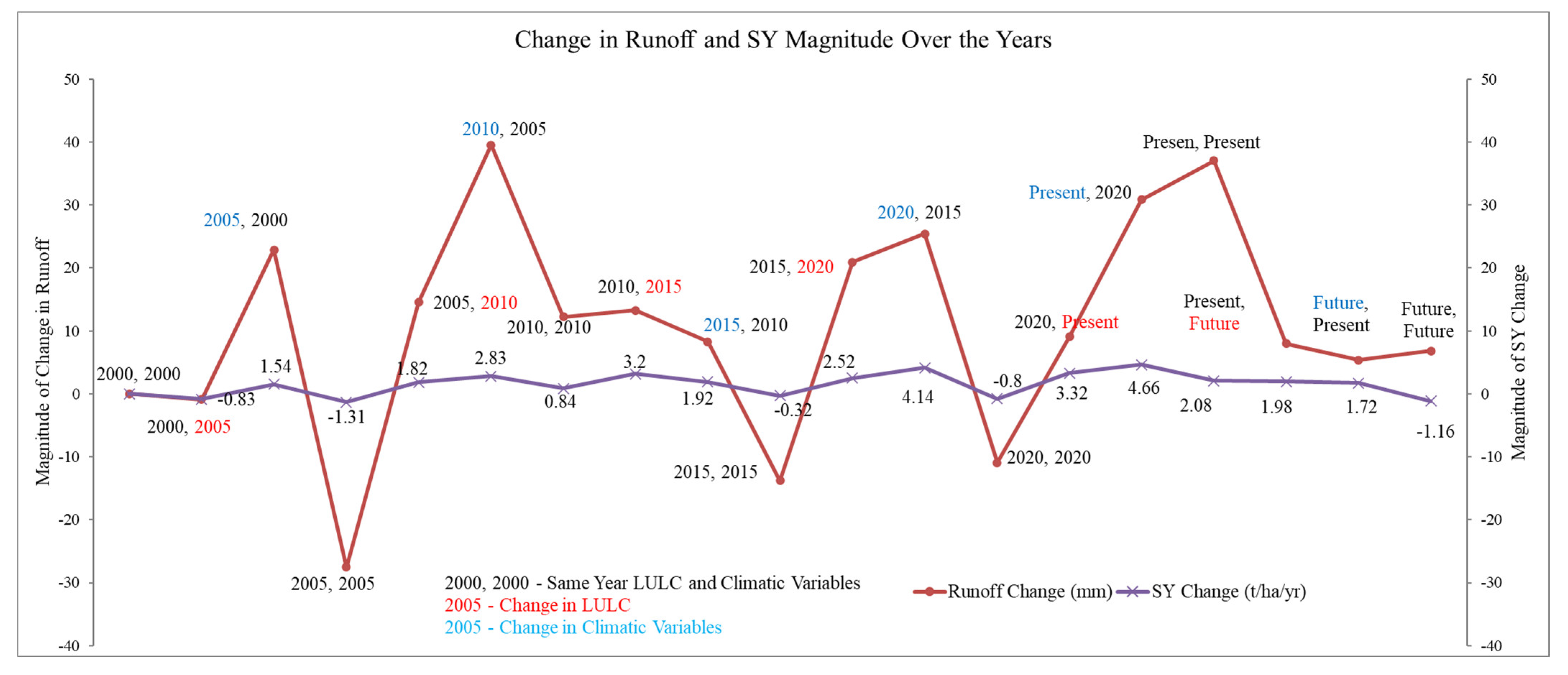
Table 4 provides insight into the changes in runoff and SY due to alterations in LULC or weather factors. For scenarios S1–S3, change in the weather variable increased runoff by 22.87 mm due to LULC; similarly, change due to the weather variable led to an increase in SY production by approximately 1.54 t/ha/yr when compared to the change in LULC. In contrast, for scenarios S7 to S9, the influence of LULC appears to be more significant than that of WPV. The runoff and SY changes for each scenario are explained in Figure 12. From the plot we can infer that changes in LULC and weather variables affect runoff and SY, while the impact of LULC seems to be increasing compared to WPV. From Table 4, it is evident that both weather and LULC factors have substantial impacts on runoff and SY. Although the effects of both factors are prominent throughout the simulation period, changes due to LULC change are becoming more pronounced than those driven by weather in terms of SY. While weather factors have influenced runoff and SY since the year 2000, the impact of WPV has largely been overshadowed by the effects of LULC [61] in the later period of 2010. Although a marginal increase in rainfall was observed, the expansion of anthropogenic land-use categories remained the most prominent driver of change over the analysis period. This suggests that the watershed’s hydrological response is increasingly dominated by surface modifications rather than subtle shifts in precipitation patterns. The increasing effect of LULC is evident from Figure 4 because of the increase in urban classes from 2010 and depletion in other class pixels. Furthermore, Figure 1c illustrates instances where lower runoff events in late 2010 resulted in higher sediment yield compared to higher runoff events before 2010. This disparity underscores the growing influence of anthropogenic activities on the watershed’s hydrology. It suggests a critical shift from a climate-driven system to one increasingly LULC-driven, where surface modifications such as increased imperviousness and reduced vegetative buffering, as well as intensive agricultural practices, dictate the magnitude of hydrological response more than rainfall depth alone. In the future the runoff will increase to 100.13 mm and SY to 3.97 t/ha/yr. While the numerical variation in values may appear minimal, their effects on soil erosion, soil fertility, and crop yield are profound, thereby necessitating more in-depth exploration. The percentage increases in runoff and SY from 2000 to the future are predicted to be 14.69% and 49.23% respectively. This drastic increase in 25–30 years is alarming and is cause for concern.
Figure 12.
Runoff and SY change over the years. (Note: The negative sign represents the direction of impact. It does not mean that runoff or SY values are negative, and only the absolute value was considered for the analysis.).
4.4. Impact of Agricultural Practices Followed in India on Runoff and SY Production
The WEPP model was used to study the effectiveness of crop and agricultural tillage practices on runoff and SL. Rice, maize, sugarcane, and cotton crops with the tillage instruments tandem disk, drill with single-disk opener, and spike-tooth harrow were used for the simulation. In the absence of field-scale erosion measurements, this analysis is based on model simulations. The results presented in Table 5 demonstrate that SL from rice and sugarcane cultivation was substantially higher than from maize and cotton. This elevated erosion can be attributed to the tillage practices commonly employed in the study region: conventional tillage with country plough or mold-board plough for rice, and spike-tooth harrow operations for sugarcane, both of which create greater soil disturbance and reduce surface protection. In addition, it was found that apart from spike-tooth harrow, tandem-disk tillage practices generated more SY compared to single-disk opener drills. A decrease in SY was noticed for the crops with the single-disk opener drill as tillage equipment. Rice and sugarcane are planted in areas with a slope of 12–19%, where any type of tillage practice would produce high SY. When we compare maize and cotton, maize with all three tillage practices produces moderately lower SL than cotton. As most of these crops are planted in regions with slope < 10%, mild slope conditions might still have some impact on the modeling results. These are not water-intensive crops when compared to sugarcane and rice, so the soil has a free board to infiltrate the incoming water before overland flow begins. Hence, there is comparatively less SY expected. Further, rice cultivation in the T.N. Pura watershed follows a puddled transplanting system. This involves intensive wet tillage (puddling) at the onset of a monsoon to create an impermeable layer for water ponding. This practice intentionally destroys soil aggregates, creating a saturated, fluid slurry. The high simulated soil losses occur because this preparation phase coincides with peak monsoonal intensity. In WEPP, the combination of a low critical shear stress for puddled soils and the lack of crop canopy results in high sediment detachment.
Table 5.
Simulated SL over the watershed for different crops and tillage practices.
Apart from the agricultural management practice, plant root systems [62] also play a major role in reducing SY. The non-water-intensive crops like maize and cotton have fibrous and tap root systems, respectively. Fibrous roots are more effective in soil erosion control compared to tap-rooted plants, as they help in binding/holding the soil. Because rice crops grow in ponded conditions until harvest and are located in sloping regions, these crops experience very high to high SL even though they have fibrous roots. So, we can conclude that apart from crop type and tillage practices, the root system also has implications for increases or decreases in SL and SY, as it develops a micro-topography in the soil which has a significant impact on rill initiation and runoff generation.
To reduce the SY, we tested a case where the water-intensive crops were surrounded with a buffer of non-water-intensive crops. While simulating this scenario, soil erosion significantly decreased, and changes in erosion classes were also visible. Figure 13a depicts the in-situ crop found; Figure 13b is the corresponding SL map for the existing crops and management practice; and Figure 13c shows the SL variability when a maize crop is being cultivated beside a rice crop. Initially, when the rice crop is being grown beside sugarcane, very high–high-category SL is observed. When the cropping pattern is changed to rice and maize, the regions surrounded by rice crops which experienced very high–high SL changed to high–medium SL, and in some pixels, the 0.25–0.5 t/ha/yr SL category is also observed. From this, we can visualize the shift from the very high–high to the medium–low erosion category when the cropping pattern is changed.
Figure 13.
Demonstration of soil loss (SL) reduction through strategic crop placement. (a) Enlarged LULC map showing baseline crop distribution: rice (brown) and sugarcane (green); (b) annual simulated SL map for the baseline scenario where rice is surrounded by sugarcane; and (c) annual simulated SL map for the alternative scenario where rice is surrounded by maize, illustrating reduced erosion intensity.
Based on the findings, the following guidelines for erosion control are recommended:
- Cultivating crops with lower water requirements (cotton, maize) alongside water-intensive crops (rice, sugarcane) with a buffer zone helps to reduce SL (Figure 12), and eventually SY. This could be an alternative and beneficial solution for farmers to reduce erosion instead of replacing the staple cereal (rice) of this region.
- Intense tillage makes soil less cohesive and more susceptible to erosion, so grass buffers or fibrous root crops with no or low–medium tillage practice is recommended;
- It is seen that the increase in SY is much harmonized with the increase in agricultural lands and urban areas. Cultivation on greater slope gradients results in higher SL.
- The analysis considers the crop yield at the sub-watershed level, so we can use this tool for decision-making to choose crop rotation pattern to maximize crop yield.
- Additionally, planting trees (such as coconut, mango, etc.) at the boundaries of the field yields profit to farmers, as these are perennial plants that also prevent soil from eroding.
- Afforestation is a strategy for restoring soil health and fertility; however, the selection of tree species must align with the hydrological and soil characteristics of the region. Otherwise, improper species selection could exacerbate the situation.
- Preservation of existing forest cover is essential for maintaining ecological stability. Policy frameworks should also account for the influence of anthropogenic activities on ecosystem functioning, as supported by findings from Dey and Mishra (2017) [63].
- Excavation of soil in riverine areas requires stringent oversight, and unauthorized or unlawful sand mining should be curtailed.
- Promoting millet cultivation is recommended, as millets demand significantly less irrigation and serve as a climate-adaptive, drought-tolerant, and nutrient-dense substitute for rice [64].
- Water bodies should be effectively interconnected to mitigate flooding, which in turn reduces soil erosion and the subsequent risks of landslides and other related consequences [8]. While preparing master plans, be they regional or zonal, care must be taken not to disturb water bodies.
- Strict maintenance of tourist and religious activities along the riverbanks should be undertaken to reduce solid wastes like cloths, plastics, etc. A CRB report in 2017 indicated that tourism activity like boating affects aquatic ecosystems and damages riverbanks, and the propellers in motorized boats re-suspend sediment, making the quality of water doubtful. Thus, eco-tourism must be encouraged.
- Strict laws/restrictions should be implemented for any developmental activity around water bodies such as lakes, ponds, tanks, wells, etc., with at least a 1 km buffer width, and special notice/concern should be given while planning industrial set-up [65].
- Implement a river regulatory zone (RRZ) similar to coastal regulatory zones. The RRZ should specify a clause on river encroachment and a way to prevent and clear it.
5. Conclusions
This study highlights how ongoing WPV and LULC changes continue to shape the hydrological response of the watershed. The hydrological response in the T.N. Pura watershed is in close agreement with other studies conducted in the semi-arid regions of Southern India. For instance, research in the Netravathi River basin and parts of the Western Ghats [54] has reported similar sensitivities to WPV and LULC changes, where an increase in built-up area led to a proportional rise in peak runoff. Similarly, in the Karso watershed (Damodar Barakar catchment), soil loss is primarily driven by intensive tillage [47]. Our results indicate that the T.N. Pura region is influenced by these factors and follows regional trends; its specific geomorphology at the Kabini–Cauvery confluence amplifies sediment delivery, confirming the regional particularity of our conclusions. In this work, an upscaled WEPP modeling framework was implemented to quantify these changes and evaluate their impacts on soil loss and runoff. The approach demonstrated the value of a structured, multisite, multivariate calibration method and showed how future LULC change scenarios may shape watershed responses. The model exhibited satisfactory performance during both the calibration and validation phases based on standard statistical evaluation metrics. However, sediment yield was predicted accurately compared to runoff, indicating a limitation in the model’s ability to accurately represent hydrological responses under high-flow conditions. Although daily runoff and SY data were collected, inconsistencies in the dataset limited their suitability for reliable event-scale calibration. Therefore, to ensure data continuity and robustness, calibration was performed at the monthly scale, which yielded satisfactory results (Table 3). Addressing this limitation in future work through improved representation of high-flow processes would enhance model reliability, particularly for applications in humid and high-rainfall regions. This study demonstrates that the T.N. Pura watersheds undergoing a critical transition where LULC changes outweigh the influence of WPV in forcing hydrologic change. Human-driven expansion, especially urban growth and agricultural intensification, remains a major driver of altered hydrological behavior. The impact assessment shows gradual increases in runoff and sediment yield (SY) between 2000 and 2030 of about 14.69% and 49.23%. However, the changes after 2015 become more pronounced. The projected rises in runoff and SY from the present (2023) to 2030 are notably steeper, reaching 17.32% and 18.51%.
Except sub-watersheds 9 and 5, the soil loss in other watersheds is observed to vary from medium to very high in category, which is evident from Figure 1 and Figure 3, as they are dominated by forest and scrub land/tree plantations, which contribute 0–0.5 t/ha/year. Because sediment generation was largely controlled by land-use patterns rather than isolated sub-watershed behavior, the study focused on watershed-scale conservation and management strategies rather than sub-watershed-specific interventions. To prevent these accelerated changes and to protect both land resources and the economic well-being of farmers, several management practices have been recommended. While the specific measures may vary from place to place, the basic principles outlined here are broadly applicable across soils in the country. However, the exact combination of practices will depend on local conditions, and different mixes of solutions may be required for individual farms or ecological zones.
The current WEPP framework exhibits limitations in simulating sub-surface soil moisture redistribution and saturation dynamics. Because these lateral flow processes are simplified, the water balance components may be inadequately represented during prolonged monsoon periods. Consequently, this leads to a localized underestimation of runoff and introduces uncertainty in simulating the hydro-thermal requirements for rice production. However, as soil saturation is a critical driver of sediment detachment in puddled systems, future research will prioritize the integration of enhanced subsurface modules. This refinement is essential to capture the complex saturation–excess runoff mechanisms inherent to the Cauvery River basin.
Author Contributions
Conceptualization: V.S.P., N.K.D., H.Y. and D.C.F.; Methodology: V.S.P., N.K.D., H.Y., D.C.F. and B.A.E.; Software: V.S.P., H.Y., A.K.W. and D.C.F.; Validation: V.S.P. and H.Y.; Formal Analysis: V.S.P. and H.Y.; Investigation, V.S.P., N.K.D., H.Y., A.K.W. and D.C.F.; Resources: N.K.D., C.S.R. and B.A.E.; Data Curation: V.S.P., H.Y. and A.K.W.; Writing—Original Draft: V.S.P., N.K.D., H.Y., D.C.F., C.S.R. and B.A.E.; Writing—Review and Editing: V.S.P., N.K.D., H.Y. and A.K.W.; Visualization: V.S.P. and H.Y.; Supervision: N.K.D., H.Y., D.C.F., C.S.R. and B.A.E.; Project Administration: N.K.D., H.Y., D.C.F., C.S.R. and B.A.E.; Funding Acquisition: N.K.D. and B.A.E. All authors have read and agreed to the published version of the manuscript.
Funding
This research was funded by the Anusandhan National Research Foundation (ANRF)—Science & Engineering Research Board (SERB)—Overseas Visiting Doctoral Fellowship (OVDF) Scheme 2023, India, grant number SB/S9/Z-03/2017-XVIII (2023).
Data Availability Statement
The original contributions presented in this study are included in the article. Further inquiries can be directed to the corresponding author.
Conflicts of Interest
The authors declare no conflict of interest.
References
- Li, Z.; Liu, W.Z.; Zhang, X.C.; Zheng, F.L. Impacts of land use change and climate variability on hydrology in an agricultural catchment on the Loess Plateau of China. J. Hydrol. 2009, 377, 35–42. [Google Scholar] [CrossRef] [Scilit]
- Sun, G.; McNulty, S.G.; Lu, J.; Amatya, D.M.; Liang, Y.; Kolka, R.K. Regional annual water yield from forest lands and its response to potential deforestation across the southeastern United States. J. Hydrol. 2005, 308, 258–268. [Google Scholar] [CrossRef] [Scilit]
- Xiong, M.; Xu, Q.X.; Yuan, J. Analysis of multi-factors affecting sediment load in the Three Gorges Reservoir. Quat. Int. 2009, 208, 76–84. [Google Scholar] [CrossRef] [Scilit]
- Li, Z.; Fang, H. Impacts of climate change on water erosion: A review. Earth-Sci. Rev. 2016, 163, 94–117. [Google Scholar] [CrossRef] [Scilit]
- Chow, V.T.; Maidment, D.R.; Mays, L.W. Applied Hydrology; McGraw-Hill Book Company: Columbus, OH, USA, 1988; ISBN 0-07-010810-2. [Google Scholar]
- Brath, A.; Montanari, A.; Moretti, G. Assessing the effect on flood frequency of land use change via hydrological simulation (with uncertainty). J. Hydrol. 2006, 324, 141–153. [Google Scholar] [CrossRef] [Scilit]
- Wang, G.X.; Zhang, Y.; Liu, G.M.; Chen, L. Impact of land-use change on hydrological processes in the Maying River basin, China. Sci. China Ser. D Earth Sci. 2006, 49, 1098–1110. [Google Scholar] [CrossRef] [Scilit]
- Poesen, J.W.A.; Hooke, J.M. Erosion, flooding and channel management in Mediterranean environments of southern Europe. Prog. Phys. Geogr. 1997, 21, 157–199. [Google Scholar] [CrossRef] [Scilit]
- Dosdogru, F.; Kalin, L.; Wang, R.; Yen, H. Potential impacts of land use/cover and climate changes on ecologically relevant flows. J. Hydrol. 2020, 584, 124654. [Google Scholar] [CrossRef] [Scilit]
- Ramachandra, T.V.; Nagar, N.; Vinay, S.; Aithal, B.H. Modelling hydrologic regime of Lakshmanatirtha watershed, Cauvery River. In Proceedings of the 2014 IEEE Global Humanitarian Technology Conference—South Asia Satellite (GHTC-SAS), Trivandrum, India, 26–27 September 2014; pp. 64–71. [Google Scholar]
- Ma, X.; Lu, X.X.; Van Noordwijk, M.; Li, J.T.; Xu, J.C. Attribution of climate change, vegetation restoration, and engineering measures to the reduction of suspended sediment in the Kejie catchment, southwest China. Hydrol. Earth Syst. Sci. 2014, 18, 1979–1994. [Google Scholar] [CrossRef] [Scilit]
- Garg, V.; Nikam, B.R.; Thakur, P.K.; Aggarwal, S.P.; Gupta, P.K.; Srivastav, S.K. Human-induced land use land cover change and its impact on hydrology. HydroResearch 2019, 1, 48–56. [Google Scholar] [CrossRef] [Scilit]
- Mukundan, R.; Pradhanang, S.M.; Schneiderman, E.M.; Pierson, D.C.; Anandhi, A.; Zion, M.S.; Matonse, A.H.; Lounsbury, D.G.; Steenhuis, T.S. Suspended sediment source areas and future climate impact on soil erosion and sediment yield in a New York City water supply watershed, USA. Geomorphology 2013, 183, 110–119. [Google Scholar] [CrossRef] [Scilit]
- Chawla, I.; Mujumdar, P.P. Isolating the impacts of land use and climate change on streamflow. Hydrol. Earth Syst. Sci. 2015, 19, 3633–3651. [Google Scholar] [CrossRef] [Scilit]
- Sinha, R.K.; Eldho, T.I.; Subimal, G. Assessing the impacts of land cover and climate on runoff and sediment yield of a river basin. Hydrol. Sci. J. 2020, 65, 2097–2115. [Google Scholar] [CrossRef] [Scilit]
- Intergovernmental Panel on Climate Change (IPCC). Climate Change: Impacts, Adaptation and Vulnerability; Contribution of Working Group II to the Fourth Assessment Report of IPCC; Cambridge University Press: Cambridge, UK, 2007. [Google Scholar]
- Sun, G.; Alstad, K.; Chen, J.; Chen, S.; Ford, C.R.; Lin, G.; Liu, C.; Lu, N.; McNulty, S.G.; Miao, H.; et al. A general predictive model for estimating monthly ecosystem evapotranspiration. Ecohydrology 2011, 4, 245–255. [Google Scholar] [CrossRef] [Scilit]
- Wischmeier, W.H.; Smith, D.D. Predicting Rainfall Erosion Losses: A Guide to Conservation Planning; Agriculture Handbook No. 537; U.S. Department of Agriculture: Washington, DC, USA, 1978.
- Liu, B.Y.; Nearing, M.A.; Shi, P.H.; Jia, Z.W. Slope length effects on soil loss for steep slopes. Soil Sci. Soc. Am. J. 2004, 68, 1758–1763. [Google Scholar] [CrossRef] [Scilit]
- Zheng, H.; Zhang, L.; Zhu, R.; Liu, C.; Sato, Y.; Fukushima, Y. Responses of streamflow to climate and land surface change in the headwaters of the Yellow River Basin. Water Resour. Res. 2009, 45, W00A19. [Google Scholar] [CrossRef] [Scilit]
- Legesse, D.; Vallet-Coulomb, C.; Gasse, F. Hydrological response of a catchment to climate and land use changes in Tropical Africa: Case study South Central Ethiopia. J. Hydrol. 2003, 275, 67–85. [Google Scholar] [CrossRef] [Scilit]
- Liang, X.; Lettenmaier, D.P. A simple hydrologically based model of land surface water and energy fluxes for general circulation models. J. Geophys. Res. Atmos. 1994, 99, 14415–14428. [Google Scholar] [CrossRef] [Scilit]
- Amore, E.; Modica, C.; Nearing, M.A.; Santoro, V.C. Scale effect in USLE and WEPP application for soil erosion computation from three Sicilian basins. J. Hydrol. 2004, 293, 100–114. [Google Scholar] [CrossRef]
- Flanagan, D.C.; Nearing, M.A. USDA-Water Erosion Prediction Project: Technical Documentation; NSERL Rep. No. 10; National Soil Erosion Research Laboratory: West Lafayette, IN, USA, 1995.
- Nearing, M.A.; Foster, G.R.; Lane, L.J.; Frinker, S.C. A process-based soil erosion model for USDA-Water Erosion Prediction Project Technology. Trans. ASAE 1989, 32, 1587–1593. [Google Scholar] [CrossRef] [Scilit]
- Lahmer, W.; Pfutzner, B.; Becker, A. Assessment of land use and climate change impacts on the mesoscale. Phys. Chem. Earth Part B 2001, 26, 565–575. [Google Scholar] [CrossRef] [Scilit]
- Momm, H.G.; Wells, R.R.; ElKadiri, R.; Seever, T.; Yoder, D.; McGehee, R.P.; Bingner, R.L.; Darnault, C.J.G. Isoerodent surfaces of the continental US for conservation planning with the RUSLE2 water erosion model. CATENA 2025, 253, 108879. [Google Scholar] [CrossRef] [Scilit]
- Yen, H.; Ponnambalam, V.S.; Flanagan, D.C.; Renschler, C.S.; Srivastava, A.; Williams, M.R. WEPP-COMPARE: A web-based decision support system for comprehensive land management and soil erosion assessment. Environ. Model. Softw. 2025, 193, 106643. [Google Scholar] [CrossRef] [Scilit]
- Renschler, C.S. Designing geo-spatial interfaces to scale process models: The GeoWEPP approach. Hydrol. Process. 2003, 17, 1005–1017. [Google Scholar] [CrossRef] [Scilit]
- Laflen, J.M.; Lane, L.J.; Foster, G.R. WEPP: A new generation of erosion prediction technology. J. Soil Water Conserv. 1991, 46, 34–38. [Google Scholar] [CrossRef] [Scilit]
- Kumar, R.; Lone, M.A.; Singh, V.P. Temporal Simulation of Sediment Yield Using WEPP Model in Dal Catchment of Temperate Region of Kashmir Valley, India: Case Study. J. Hydrol. Eng. 2021, 26, 05021006. [Google Scholar] [CrossRef] [Scilit]
- Laflen, J.M.; Elliot, W.J.; Flanagan, D.C.; Meyer, C.R.; Nearing, M.A. WEPP—Predicting water erosion using a process-based model. J. Soil Water Conserv. 1997, 52, 96–102. [Google Scholar] [CrossRef] [Scilit]
- Baffaut, C.; Nearing, M.A.; Ascough, J.C., II; Liu, B.Y. The WEPP watershed model: II. Sensitivity analysis and discretization on small watersheds. Trans. ASAE 1997, 40, 935–943. [Google Scholar] [CrossRef] [Scilit]
- Ascough, J.C., II; Deer-Ascough, L.A.; Weesies, G.A. CPIDS: A plant parameter selection programme for erosion prediction modeling. Comput. Electron. Agric. 1998, 20, 263–276. [Google Scholar] [CrossRef] [Scilit]
- Cochrane, T.A.; Flanagan, D.C. Assessing water erosion in small watershed using WEPP with GIS and Digital Elevation Models. J. Soil Water Conserv. 1999, 54, 678–685. [Google Scholar] [CrossRef] [Scilit]
- Thenkabail, P.S.; Biradar, C.M.; Turral, H.; Noojipady, P.; Li, Y.J.; Vithanage, J.; Dheeravath, V.; Velpuri, M.; Schull, M.; Cai, X.L.; et al. An Irrigated Area Map of the World, Derived from Remote Sensing; Research Report 105; International Water Management Institute: Colombo, Sri Lanka, 2019. [Google Scholar]
- Sadhwani, K.; Eldho, T.I.; Jha, M.K.; Karmakar, S. Effects of Dynamic Land Use/Land Cover Change on Flow and Sediment Yield in a Monsoon-Dominated Tropical Watershed. Water 2022, 14, 3666. [Google Scholar] [CrossRef] [Scilit]
- Chowdhury, M.S. GIS based method for mapping actual LULC by combining seasonal LULCs. MethodsX 2023, 11, 102472. [Google Scholar] [CrossRef] [Scilit]
- Omar, N.Q.; Ahamad, M.S.S.; Hussin, W.M.A.W.; Samat, N.; Ahmad, S.Z.B. Markov CA, multi regression, and multiple decision making for modeling historical changes in Kirkuk City, Iraq. J. Indian Soc. Remote Sens. 2014, 42, 165–178. [Google Scholar] [CrossRef] [Scilit]
- Ghosh, P.; Mukhopadhyay, A.; Chanda, A.; Mondal, P.; Akhand, A.; Mukherjee, S.; Nayak, S.K.; Ghosh, S.; Mitra, D.; Ghosh, T.; et al. Application of Cellular automata and Markov-chain model in geospatial environmental modeling—A review. Remote Sens. Appl. Soc. Environ. 2017, 5, 64–77. [Google Scholar] [CrossRef] [Scilit]
- Gidey, E.; Dikinya, O.; Sebego, R.; Segosebe, E.; Zenebe, A. Cellular automata and Markov Chain (CA_Markov) model-based predictions of future land use and land cover scenarios (2015–2033) in Raya, northern Ethiopia. Model. Earth Syst. Environ. 2017, 3, 1245–1262. [Google Scholar] [CrossRef] [Scilit]
- Singh, S.K.; Mustak, S.; Srivastava, P.K.; Szabó, S.; Islam, T. Predicting Spatial and Decadal LULC Changes Through Cellular Automata Markov Chain Models Using Earth Observation Datasets and Geo-information. Environ. Process. 2015, 2, 61–78. [Google Scholar] [CrossRef] [Scilit]
- Deer-Ascough, L.A.; Weesies, G.A.; Ascough, J.C., II; Laflen, J.M. Plant parameter database for erosion prediction models. Appl. Eng. Agric. 1995, 11, 659–666. [Google Scholar] [CrossRef] [Scilit]
- Pandey, A.; Chowdary, V.M.; Mal, B.C.; Billib, M. Application of the WEPP model for prioritization and evaluation of best management practices in an Indian watershed. Hydrol. Process. 2009, 23, 2997–3005. [Google Scholar] [CrossRef] [Scilit]
- Singh, R.K.; Panda, R.K.; Satapathy, K.K.; Ngachan, S.V. Simulation of runoff and sediment yield from a hilly watershed in the eastern Himalaya, India using the WEPP model. J. Hydrol. 2011, 405, 261–276. [Google Scholar] [CrossRef] [Scilit]
- Murari, K.K.; Mahato, S.; Jayaraman, T.; Swaminathan, M. Extreme Temperatures and Crop Yields in Karnataka, India. Rev. Agrar. Stud. 2018, 8, 92–114. [Google Scholar] [CrossRef] [Scilit]
- Pandey, A.; Chowdary, V.M.; Mal, B.C.; Billib, M. Runoff and sediment yield modeling from a small agricultural watershed in India using the WEPP model. J. Hydrol. 2008, 348, 305–319. [Google Scholar] [CrossRef] [Scilit]
- Moriasi, D.N.; Arnold, J.G.; Van Liew, M.W.; Bingner, R.L.; Harmel, R.D.; Veith, T.L. Model evaluation guidelines for systematic quantification of accuracy in watershed simulations. Trans. ASABE 2007, 50, 885–900. [Google Scholar] [CrossRef] [Scilit]
- Xue, X.; Zhang, K.; Hong, Y.; Gourley, J.J.; Kellogg, W.; McPherson, R.A.; Wan, Z.; Austin, B. New Multisite Cascading Calibration Approach for Hydrological Models: Case Study in the Red River Basin Using the VIC Model. J. Hydrol. Eng. 2016, 21, 05015019. [Google Scholar] [CrossRef] [Scilit]
- Yen, H.; White, M.J.; Arnold, J.G.; Keitzer, S.C.; Johnson, M.V.V.; Atwood, J.D.; Daggupati, P.; Herbert, M.E.; Sowa, S.P.; Ludsin, S.A.; et al. Western Lake Erie Basin: Soft-data-constrained, NHD Plus resolution watershed modeling and exploration of applicable conservation scenarios. Sci. Total Environ. 2016, 569–570, 1265–1281. [Google Scholar] [CrossRef] [Scilit]
- Dun, S.; Wu, J.Q.; Frankenberger, J.R.; Flanagan, D.C.; McCool, D.K. Applying online WEPP to assess forest watershed hydrology. Trans. ASABE 2013, 56, 581–590. [Google Scholar] [CrossRef] [Scilit]
- McCool, D.K.; Dun, S.; Wu, J.Q.; Elliot, W.J.; Brooks, E.S. Seasonal change of WEPP erodibility parameters for two fallow plots on a Palouse silt loam. Trans. ASABE 2013, 56, 711–718. [Google Scholar] [CrossRef] [Scilit]
- Kumar, M.; Denis, D.M.; Kundu, A.; Joshi, N.; Suryavanshi, S. Understanding land use/land cover and climate change impacts on hydrological components of Usri watershed, India. Appl. Water Sci. 2022, 12, 39. [Google Scholar] [CrossRef] [Scilit]
- Sreedevi, S.; Eldho, T.I.; Jayasankar, T. Physically-based distributed modelling of the hydrology and soil erosion under changes in landuse and climate of a humid tropical river basin. CATENA 2022, 217, 106427. [Google Scholar] [CrossRef] [Scilit]
- Yin, J.; He, F.; Xiong, Y.J.; Qiu, G.Y. Effects of land use/land cover and climate changes on surface runoff in a semi-humid and semi-arid transition zone in northwest China. Hydrol. Earth Syst. Sci. 2017, 21, 183–196. [Google Scholar] [CrossRef] [Scilit]
- Foody, G.M. Status of land cover classification accuracy assessment. Remote Sens. Environ. 2002, 80, 185–201. [Google Scholar] [CrossRef] [Scilit]
- Nearing, M.A. Why soil erosion models over-predict small soil losses and under-predict large soil losses. CATENA 1998, 32, 15–22. [Google Scholar] [CrossRef] [Scilit]
- Stone, J.J.; Lane, L.J.; Shirley, E.D.; Hernandez, M. Chapter 4. Hillslope Surface Hydrolo. In USDA-Water Erosion Prediction Project: Technical Documentation; NSERL Rep. No. 10; National Soil Erosion Research Laboratory: West Lafayette, IN, USA, 1995. [Google Scholar]
- Flanagan, D.C.; Frankenberger, J.R.; Ascough, J.C., II. WEPP: Model use, calibration and validation. Trans. ASABE 2012, 55, 1463–1477. [Google Scholar] [CrossRef] [Scilit]
- Mondal, A.; Khare, D.; Kundu, S.; Meena, P.K.; Mishra, P.K.; Shukla, R. Impact of climate change on future soil erosion in different slope, land use, and soil-type conditions in a part of the Narmada River Basin, India. J. Hydrol. Eng. 2015, 20, C5014003. [Google Scholar] [CrossRef] [Scilit]
- Mengistu, B.D.; Melesse, A.M.; McClain, M.E. Watershed scale application of WEPP and EROSION 3D models for assessment of potential sediment source areas and runoff flux in the Mara River Basin, Kenya. CATENA 2012, 95, 63–72. [Google Scholar] [CrossRef] [Scilit]
- Sun, J.; Pei, L.; Cao, Y.; Zhang, N.; Wu, F.; Li, P. Effects of Different Crop Root Systems on Soil Detachment by Concentrated Flow on the Loess Plateau in China. Water 2022, 14, 772. [Google Scholar] [CrossRef] [Scilit]
- Dey, P.; Mishra, A. Separating the impacts of climate change and human activities on streamflow: A review of methodologies and critical assumptions. J. Hydrol. 2017, 548, 365–380. [Google Scholar] [CrossRef] [Scilit]
- Bandyopadhyay, T.; Muthamilarasan, M.; Prasad, M. Millets for Next Generation Climate-Smart Agriculture. Front. Plant Sci. 2017, 8, 1266. [Google Scholar] [CrossRef] [Scilit] [PubMed]
- Gopal, B.; Goel, U.; Chauhan, M.; Bansal, R.; Khuman, S.C. Regulation of Human Activities Along Rivers and Lakes; Background Document for the Proposed Notification on River Regulation Zone; National River Conservation Directorate, Ministry of Environment and Forest, Government of India: New Delhi, India, 2002.

Disclaimer/Publisher’s Note: The statements, opinions and data contained in all publications are solely those of the individual author(s) and contributor(s) and not of MDPI and/or the editor(s). MDPI and/or the editor(s) disclaim responsibility for any injury to people or property resulting from any ideas, methods, instructions or products referred to in the content. |
© 2026 by the authors. Licensee MDPI, Basel, Switzerland. This article is an open access article distributed under the terms and conditions of the Creative Commons Attribution (CC BY) license.