


Abstract
With the increasing depletion of shallow resources, marine-based mineral resources in coastal and continental shelf areas are poised to become a new frontier for resource development. However, ions in brine solutions undergo complex water-rock interactions with rocks, affecting the engineering stability of marine-based rock masses. This study addresses engineering safety concerns arising from the long-term coupled effects of brine erosion and confining pressure on rocks during seabed mineral resource extraction. Using red sandstone as the research subject, it investigates the evolution of its mechanical properties under complex brine-erosion conditions. Experiments involved immersing red sandstone specimens in simulated seabed brine solutions for erosion cycles of 14, 21, and 35 days. Triaxial compression tests were conducted under confining pressures of 5 MPa, 10 MPa, and 15 MPa to systematically analyze the effects of erosion duration and confining pressure on rock strength, deformation, energy characteristics, and failure modes. Results indicate that brine erosion significantly reduces the strength and elastic modulus of red sandstone, but the effect is not simply linear. Instead, it follows a trend of initial slight strengthening followed by significant deterioration. During short-term erosion (21 days), some mechanical parameters slightly recovered, potentially due to temporary filling of fractures by brine ions. After long-term erosion (35 days), all mechanical properties markedly declined. This study aims to reveal the triaxial mechanical properties and energy evolution patterns of red sandstone under multi-ionic brine erosion, providing crucial experimental evidence for designing safe isolation layers and evaluating long-term stability in seabed mining.
1. Introduction
In recent years, with the increasing depletion of surface and shallow mineral resources, coastal and continental shelf seabed mineral resources have emerged as untapped new resources, offering promising prospects as a new direction for mineral resource development [1]. Currently, over 100 seabed mines worldwide are in operation [2,3], including the iron ore mine off Newfoundland, Canada; the tin mine in Cornwall, UK; as well as China’s Sanshan Island gold mine [4] and Longkou coal mine [5]. However, during seabed mining, the ore body is overlain by seawater, with the mining space separated from seawater solely by a safety isolation layer [6]. Any deformation or failure of the overlying strata could lead to seawater intrusion, causing catastrophic consequences. The bedrock environment along coastal and submarine areas is extremely complex [7]: Seawater infiltrates through rock fractures into the safety isolation layer, where it undergoes continuous evaporation and concentration due to geothermal effects, forming brines with mineralization levels far exceeding those of seawater [8]. This brine is rich in ions such as K+, Na+, Mg2+, Ca2+, Cl−, and SO42−, which undergo complex hydration reactions with the rock. These reactions alter the mineral composition and microstructure of the rock, thereby affecting its mechanical properties and weakening the water-blocking capacity of the safety isolation layer. Therefore, an in-depth investigation into the evolution of rock mechanical properties under brine erosion holds significant theoretical value and engineering guidance for the safe exploitation of seabed mineral resources.
In recent years, scholars both domestically and internationally have conducted extensive research on the influence of water on the mechanical properties of rock. Studies indicate that water’s deteriorating effect on sandstone is a significant factor in triggering geological hazards such as tunnel water inrushes [9,10] and landslides [11]. The compressive strength, tensile strength [12], and internal friction coefficient [13] of water-bearing sandstone all exhibit a marked downward trend. Regarding the influence of water content, Zhangcun et al. [14] observed that the uniaxial compressive strength of sandstone decreases exponentially with increasing water content, accompanied by reductions in acoustic emission counts and cumulative energy. Geng et al. [15] reached similar conclusions. Zhang Chunhui et al. [16] observed that water exerts a more pronounced effect on sandstone modulus and triaxial peak strength below 60% saturation, with the rate of change slowing beyond 60%, consistent with findings by Liang and Tang et al. [17]. Zhangcun et al. [18] also observed an exponential decrease in sandstone tensile strength with increasing saturation. Chen et al. [19] demonstrated, through true triaxial tests, that internal elastic strain energy gradually diminishes with rising water content, indicating a significant influence of moisture on the rock-burst characteristics of red sandstone. Wang et al. [20] observed that the triaxial compressive strength and total strain energy of saturated specimens decreased by approximately 30% and 35%, respectively, compared to dry specimens. Zhou et al. [21,22] investigated the effect of moisture content on quasi-static fracture behavior in sandstone, finding that fracture toughness and crack propagation velocity markedly decreased with increasing moisture content. Regarding the effects of dry-wet cycling [23,24,25,26,27,28], Zhao et al. [24] observed substantial decreases in both uniaxial compressive strength and elastic modulus of sandstone with increasing cycle numbers. Li et al. [25] noted that strength and deformation properties declined with cycling, though the rate of decline gradually slowed. Zhao et al. [27] indicated that the first 10 dry-wet cycles exerted a greater impact on the mechanical properties of red sandstone. Hua et al. [26] observed that both fracture toughness parameters KIIC and KIC decreased with cycle number, with KIIC degradation consistently exceeding that of KIC. Cui et al. [29] employed a PFC2D discrete element model to determine that the first dry-wet cycle inflicted the most damage. Regarding chemical solution erosion, Yang et al. [30] found that brine erosion reduces sandstone permeability and elastic modulus, though the degradation mechanisms differ among various brine solutions. Lin et al. [31] revealed the evolutionary mechanism linking the micro-pore structure of brine-eroded sandstone to macro-scale mechanical failure. Ranjith et al. [32] observed that the presence of NaCl in pore fluids increased sandstone strength, while Rathnaweera et al. [33] found uniaxial compressive strength decreased after 10% NaCl solution erosion, with higher concentrations exhibiting increased strength. Han et al. [34] investigated the mechanical properties of sandstone after chemical solution erosion by Na2SO4 and NaHCO3, concluding that chemical corrosion induces a transition from brittle to ductile behavior in sandstone. Ma Xingchen et al. [35] observed greater damage and deterioration in sandstone exposed to acidic Na2SO4 solutions compared to NaOH solutions. Yang Shengqi et al. [36] demonstrated that after wet-dry cycling in a NaCl environment, sandstone exhibited reduced peak strength, internal friction angle, cohesion, and elastic modulus compared to its dry state. Regarding degradation mechanisms, Chen Sili et al. [37] employed CT identification technology to analyze the micro-mechanisms of sandstone damage evolution. Feng Xiating et al. [38] discovered that hydrochemical and hydrolytic actions can chemically react with rock minerals, reducing surface energy associated with crack initiation and leading to localized rock damage and decreased ultimate strength. Miao et al. [39] observed that acidic solutions induce chemical reactions between certain minerals in granite and solution ions, altering mineral grain size, shape, and rock microstructure. Heggheim et al. [40] discussed the weakening mechanism of limestone by Ca2+-rich artificial brine through chemical dissolution and precipitation processes. Li Shucai et al. [41] analyzed crack initiation, evolution, and propagation at the microscopic level under varying stress states and groundwater pressure conditions. Wang Yixian et al. [42] observed that water action significantly influences rock fracture indicators with a time-dependent effect. Bruno and Nakagawa et al. [43] found that pore water pressure exerts a bidirectional effect on crack propagation and breakthrough.
Advanced detection technologies provide powerful support for revealing the microscopic evolution within rocks. For instance, computed tomography (CT) technology can non-destructively reconstruct the internal fracture networks of rocks [44,45]. Meanwhile, scanning electron microscopy (SEM) technology offers unique advantages in characterizing microscopic morphological changes induced by environmental erosion, as it can directly capture mineral spalling or pore-filling phenomena caused by salt crystallization pressure [46]. Furthermore, by integrating X-ray diffraction (XRD) analysis, researchers can quantitatively identify the kinetic processes, such as hydrolysis and ion exchange of feldspar and iron-bearing minerals during chemical erosion, thereby determining the phase changes that dominate the damage [47,48]. These cutting-edge technologies not only reveal the universal laws of rock fracture evolution under extreme physical fields but also provide a critical methodological reference for the study of seabed rock masses situated in complex brine environments [49,50,51].
A review of existing research reveals that while the deteriorating effect of water on sandstone mechanical properties is widely recognized, several gaps remain: most studies focus on the erosion effects of single-ion solutions, with limited investigation into the combined effects of complex brine solutions. Comparative studies on how different brine solutions impact sandstone mechanical properties are insufficient, and the mechanisms and differences in ion interactions remain unclear. Research on the mechanical response characteristics of sandstone under confining pressure following brine erosion is relatively scarce, while triaxial stress conditions more closely approximate the actual loading conditions experienced by rock in underground engineering.
Given this, this study investigates red sandstone by immersing standard cylindrical specimens in a composite brine solution for three immersion cycles: 14 days, 21 days, and 35 days. Through conventional triaxial compression tests, this study systematically investigates the evolution patterns of mechanical properties—including peak strength, elastic modulus, deformation characteristics, and failure modes—in red sandstone after brine solution erosion. It also analyzes the influence of confining pressure on the mechanical properties of brine-eroded red sandstone. The research findings provide a scientific basis for rationally determining the thickness of safety isolation layers in seabed mineral resource extraction. They also hold significant reference value for evaluating the long-term stability of subsea tunnels and other underwater engineering projects.
2. Materials and Methods
2.1. Test Rock Samples
The experiment utilized red sandstone from Yueyang area in Hunan Province, China. Mineral composition analysis revealed it primarily consists of quartz, feldspar, and other mineral clasts, along with siliceous rock and slate fragments. The clasts exhibit a rounded-subangular overall shape, with quartz, feldspar, and rock fragments comprising approximately 55:25:20 by volume. The cementing material (approximately 15% content) is primarily calcite, followed by quartz and minor iron-bearing minerals, distributed as intergranular filling. The cementation type is pore-type, with a granular support mechanism.
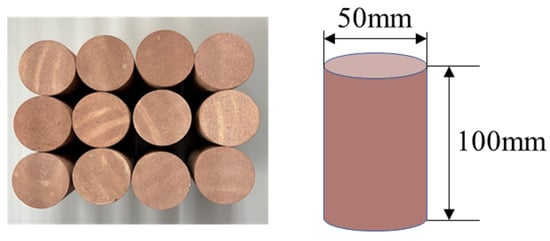
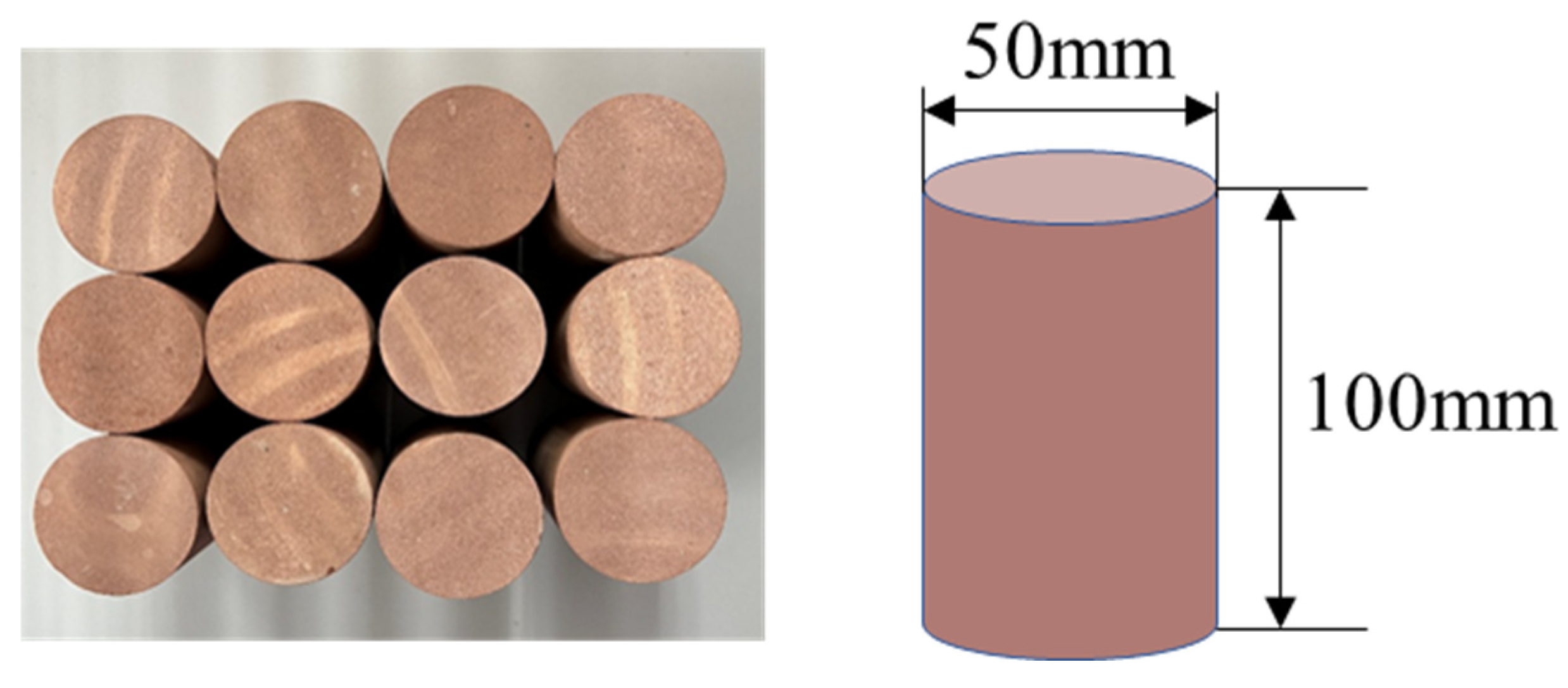
To minimize the impact of sample variability on experimental stability, all specimens were sourced from a single rock block exhibiting uniform grain size, excellent homogeneity, and no significant bedding fractures. Following the standard procedure outlined in the ISRM (International Society for Rock Mechanics) recommended guidelines, the specimens were processed into cylindrical blocks with a diameter of 50 mm and a height of 100 mm through cutting and grinding, with dimensional tolerances of ±0.5 mm. After measuring the dimensions, mass, and wave velocity of all specimens, rocks with significant variability were discarded. Specimens with similar dimensions, mass, and wave velocity were selected for testing to ensure the reliability of experimental data. The rock specimens are shown in Figure 1.
Figure 1.
Image of rock sample.
2.2. Brine Preparation
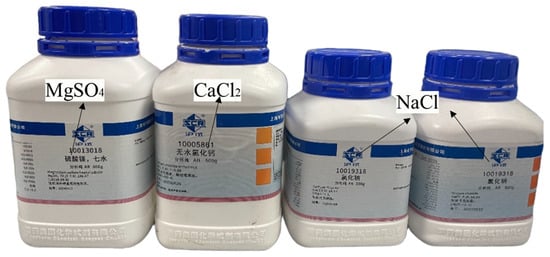
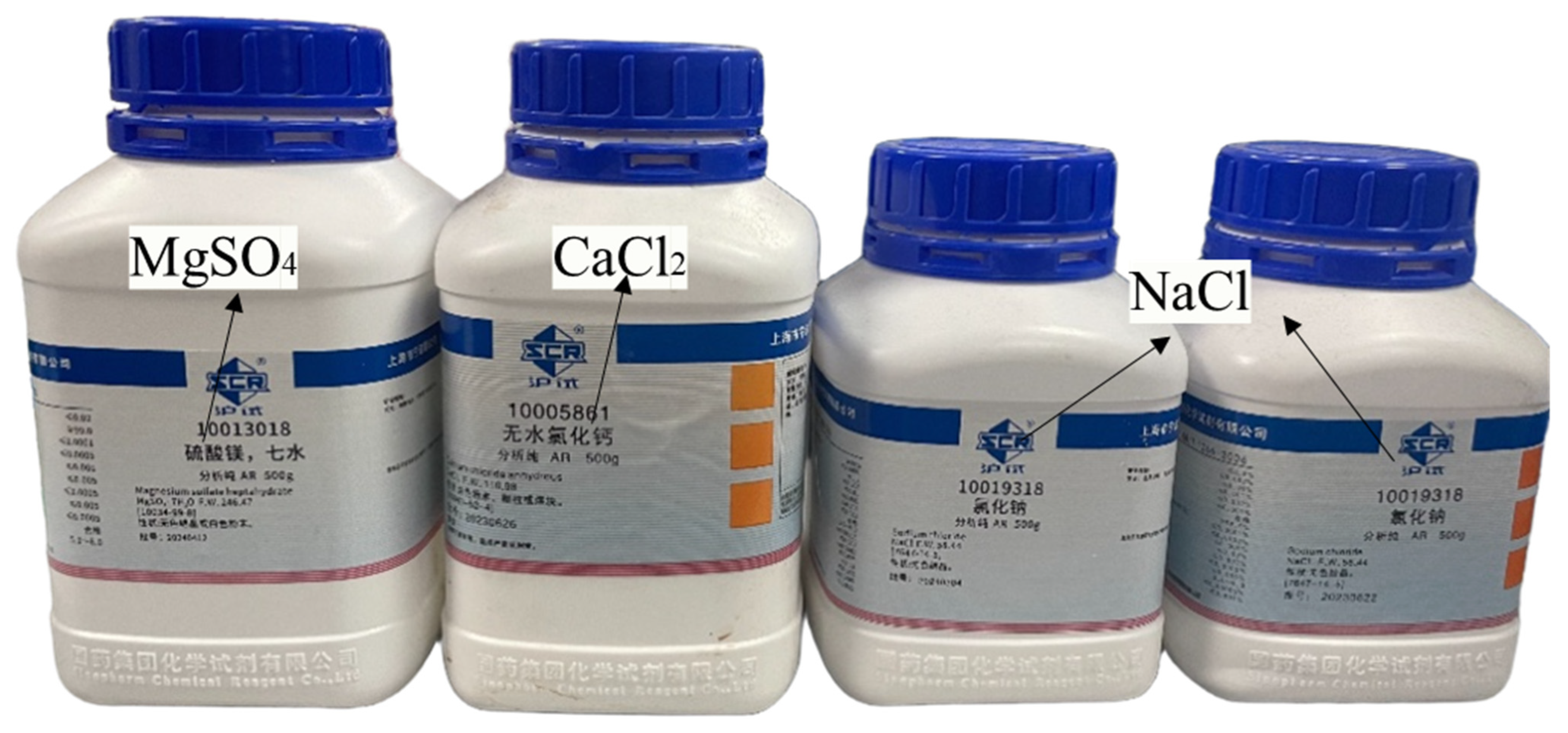
The brine primarily contains sodium ions, chloride ions, magnesium ions, sulfate ions, and calcium ions. Based on the composition of the underground brine, a brine solution was prepared in the laboratory. The preparation of the simulated brine solution is based on the hydrochemical characteristics of groundwater in typical seabed mines in China, such as the Sanshan Island Gold Mine. The matching is shown in Table 1. Considering the interference from ionic components in tap water, distilled water was used for solution preparation. The primary chemical constituents of the brine are NaCl, MgSO4, and CaCl2, with immersion times of 14, 21, and 35 days, respectively. The specific ratios are detailed in Table 1. The chemical reagents used to prepare the brine solution included magnesium sulfate, calcium chloride, and sodium chloride, as shown in Figure 2.
Table 1.
Solution mixing ratios.
Figure 2.
Chemical reagents for preparing different brine solutions.
2.3. Test Equipment and Test Plan
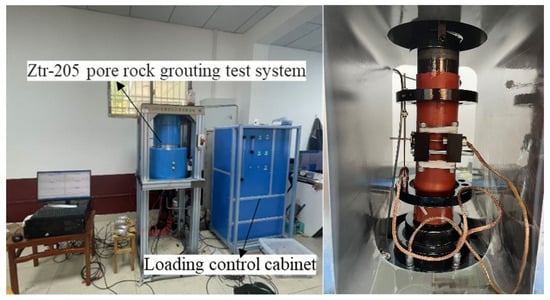
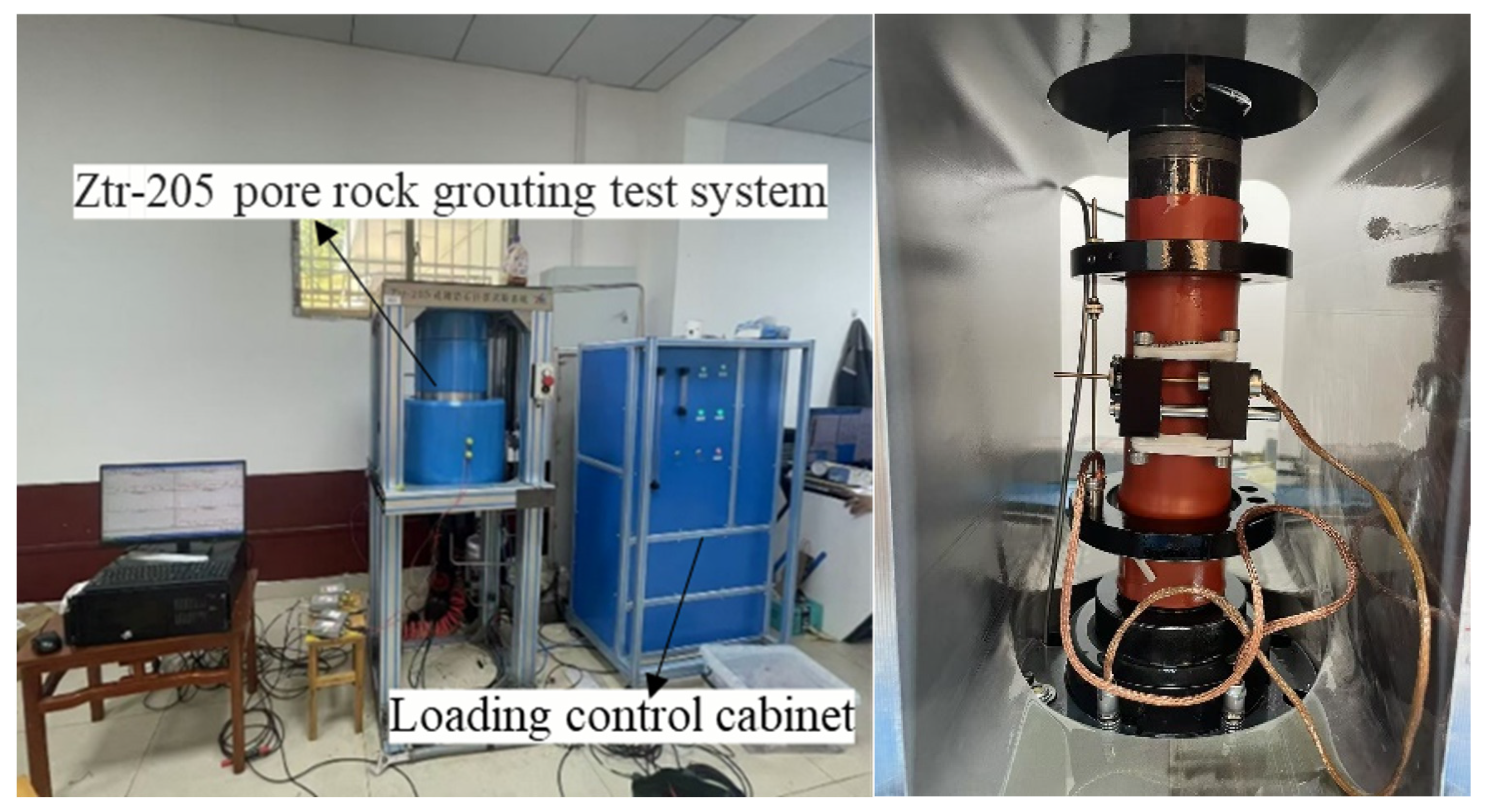
To accurately reflect the influence of seawater brine on the mechanical properties of ore and rock under actual natural geological conditions, conventional triaxial static loading tests were conducted on rock specimens eroded by different brine compositions. All experiments were performed using the ZTR-205 Rock Mechanics Comprehensive Testing System at Hunan University of Science and Technology, China, as shown in Figure 3. The system primarily consists of a mainframe, a pressure chamber, a self-balancing piston, a load sensor, astrain sensor, a hydraulic power unit, and a control system.
Figure 3.
ZTR-205 porous rock grouting test system.
To investigate the strength and deformation characteristics of red sandstone under varying conditions, conventional triaxial compression tests were conducted on specimens in either a dry state or after immersion in a brine solution for different durations. Confining pressure levels were set at 5 MPa, 10 MPa, and 15 MPa. For subsequent identification, specimens were numbered prior to testing. Taking ‘L-5-2-1’ as an example, ‘L’ represents the brine group, ‘5’ represents the confining pressure of 5 MPa, and ‘2’ represents the leaching time of 2 weeks (14 days), ‘1’ represents the specimen number. Key steps included: specimen encapsulation and sealing; installation of displacement and acoustic emission sensors; preloading and data zeroing; application and maintenance of set confining pressure; loading at 0.3 mm/min displacement rate with simultaneous acoustic emission signal acquisition until specimen failure; and final unloading and data retrieval.
3. Analysis of Test Results
3.1. Analysis of Mechanical Property Influences
3.1.1. Stress–Strain Curve
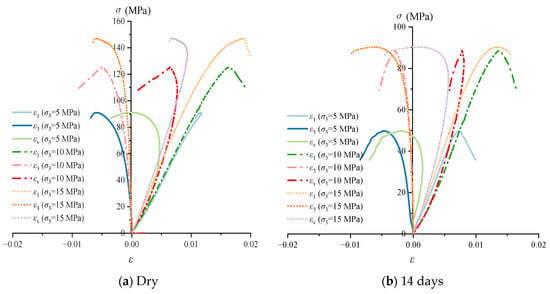
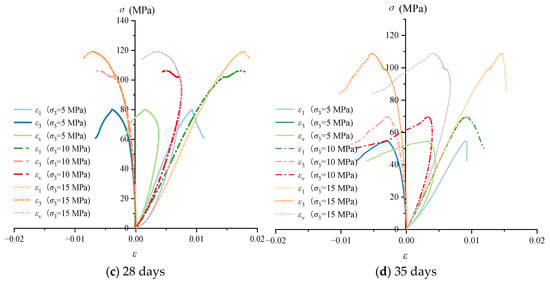
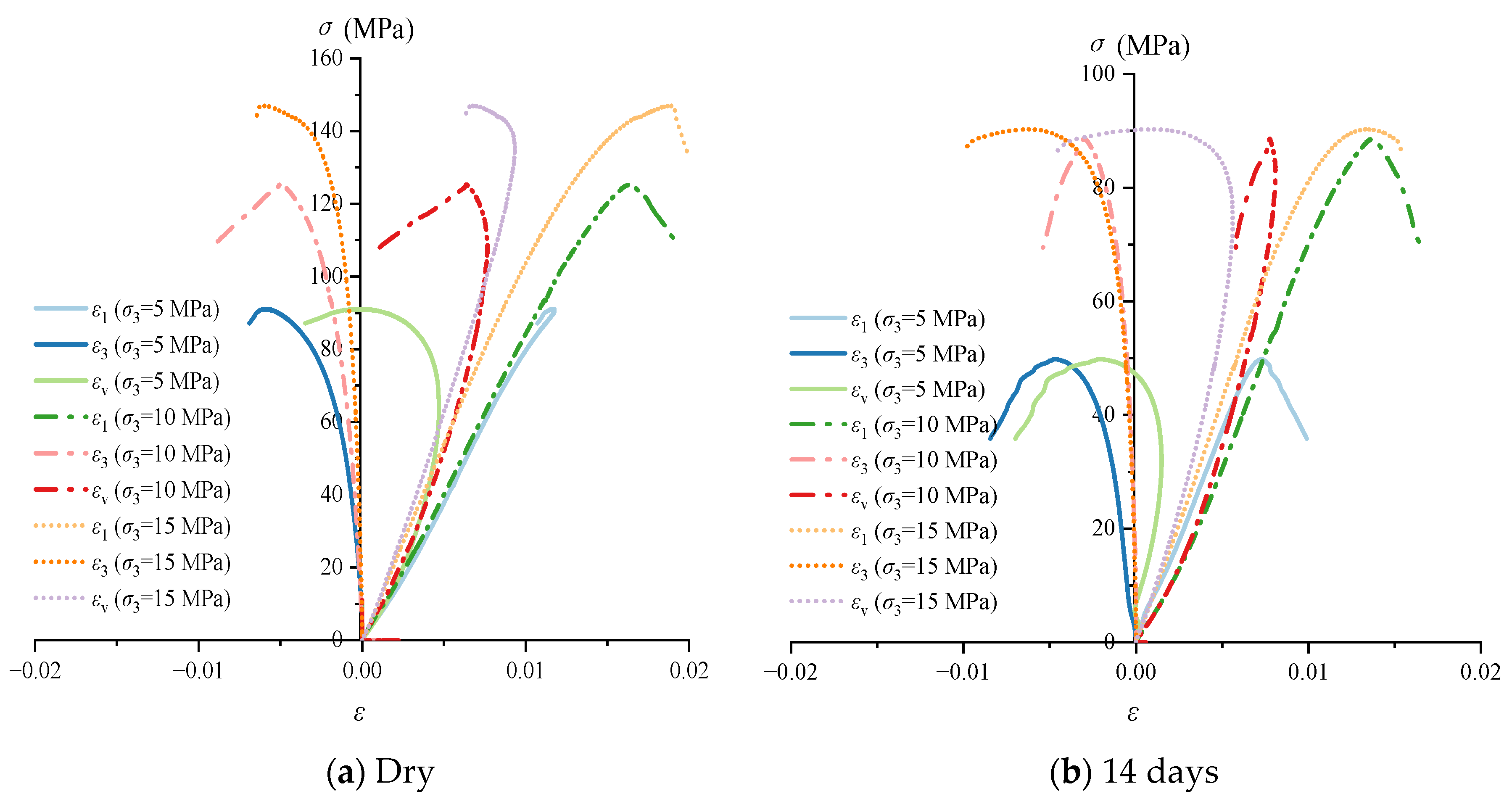
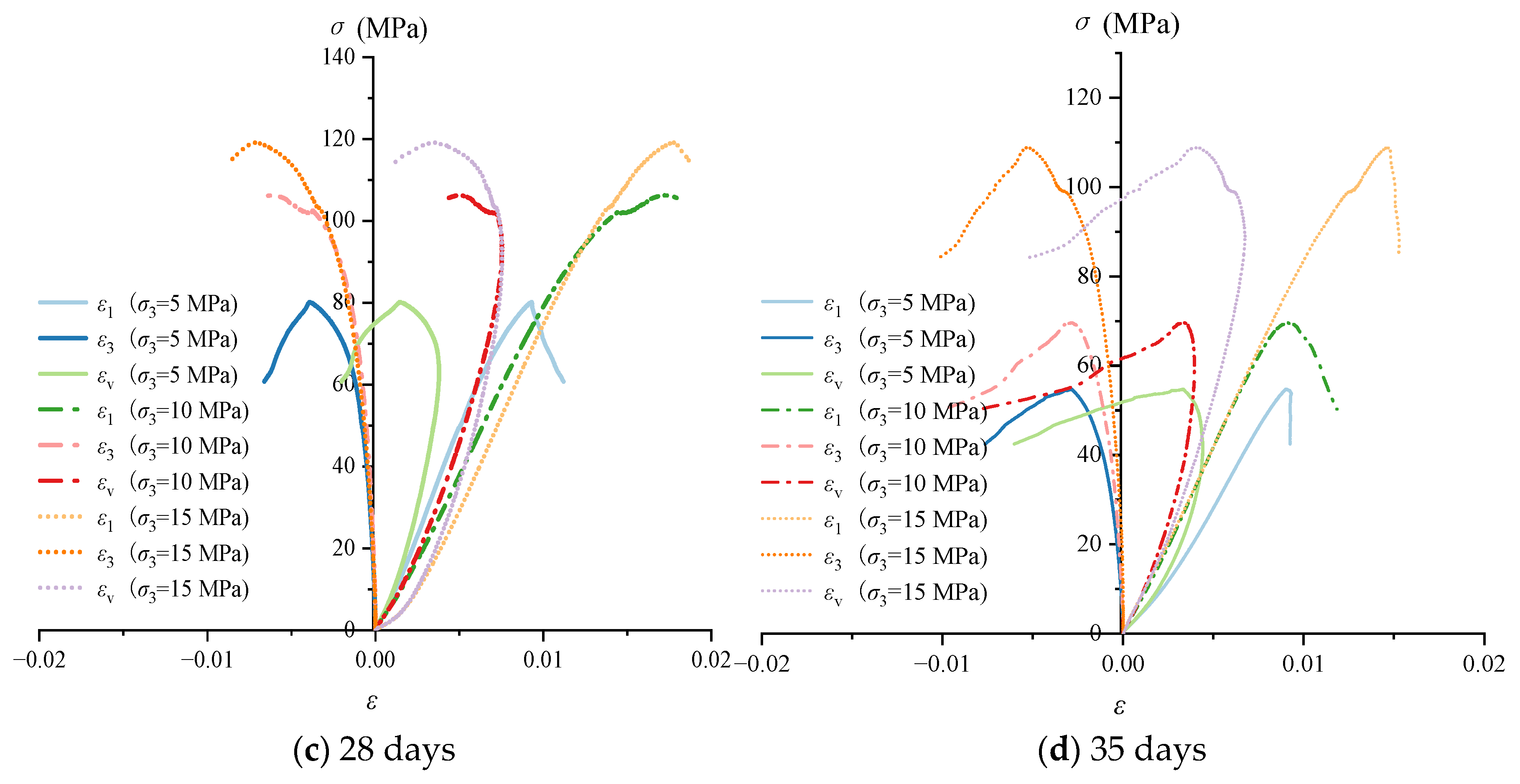
The conventional triaxial stress–strain curves of dry and brine-soaked red sandstone under various confining pressures are shown in Figure 4. As depicted, both sets of tests exhibit similar stress–strain curves before peak triaxial stress, which can be divided into the following segments: crack consolidation, elastic deformation, stable crack propagation, and unstable crack propagation leading to failure. Simultaneously, due to the presence of confining pressure, pre-existing internal fractures within the specimens compacted more rapidly during initial loading. Consequently, the consolidation phase exhibited a relatively brief duration in the curves. Upon entering the elastic phase, the curves demonstrated near-linear growth, with the slope of the curve increasing as the confining pressure rose. As axial deviatoric stress is further applied, the specimen enters the crack stable propagation stage. During this phase, the curve’s ascent becomes markedly flatter, exhibiting distinct yield characteristics. Subsequently, crack growth and propagation occur until failure is reached upon achieving peak strength.
Figure 4.
Stress–strain curves for red sandstone at different confining pressure levels during drying and brine erosion.
In contrast, compared to dry specimens, brine-soaked specimens exhibit a significantly reduced elastic stage. This indicates that under brine erosion, rock fractures develop more readily, leading to pronounced plastic deformation at lower stress levels and prolonging the unstable fracture-propagation stage. Concurrently, it is clearly observable that both the peak strength and peak strain at failure are markedly reduced in brine-soaked specimens relative to dry specimens.
Based on the influence relationship observed in the stress–strain curves of red sandstone subjected to brine dissolution, it can be determined that under identical dissolution durations, an increase in confining pressure leads to a steeper slope in the stress–strain curve. Consequently, both the peak stress and peak strain at failure correspondingly increase. Simultaneously, at low confining pressures, the post-peak phase of the stress–strain curve exhibits a rapid decline, indicating predominantly brittle failure. As confining pressure increases, the failure mode gradually transitions from brittle to ductile, with the post-peak decline becoming more gradual. This demonstrates that increased confining pressure significantly enhances the load-bearing capacity of brine-eroded specimens. The following details the variation patterns of strength and deformation parameters in brine-eroded red sandstone under changing confining pressure.
3.1.2. Characteristics of Deformation Parameters in Red Sandstone Eroded by Brine
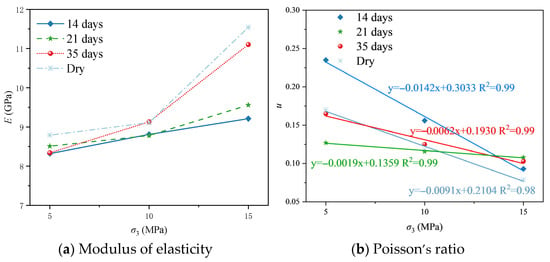
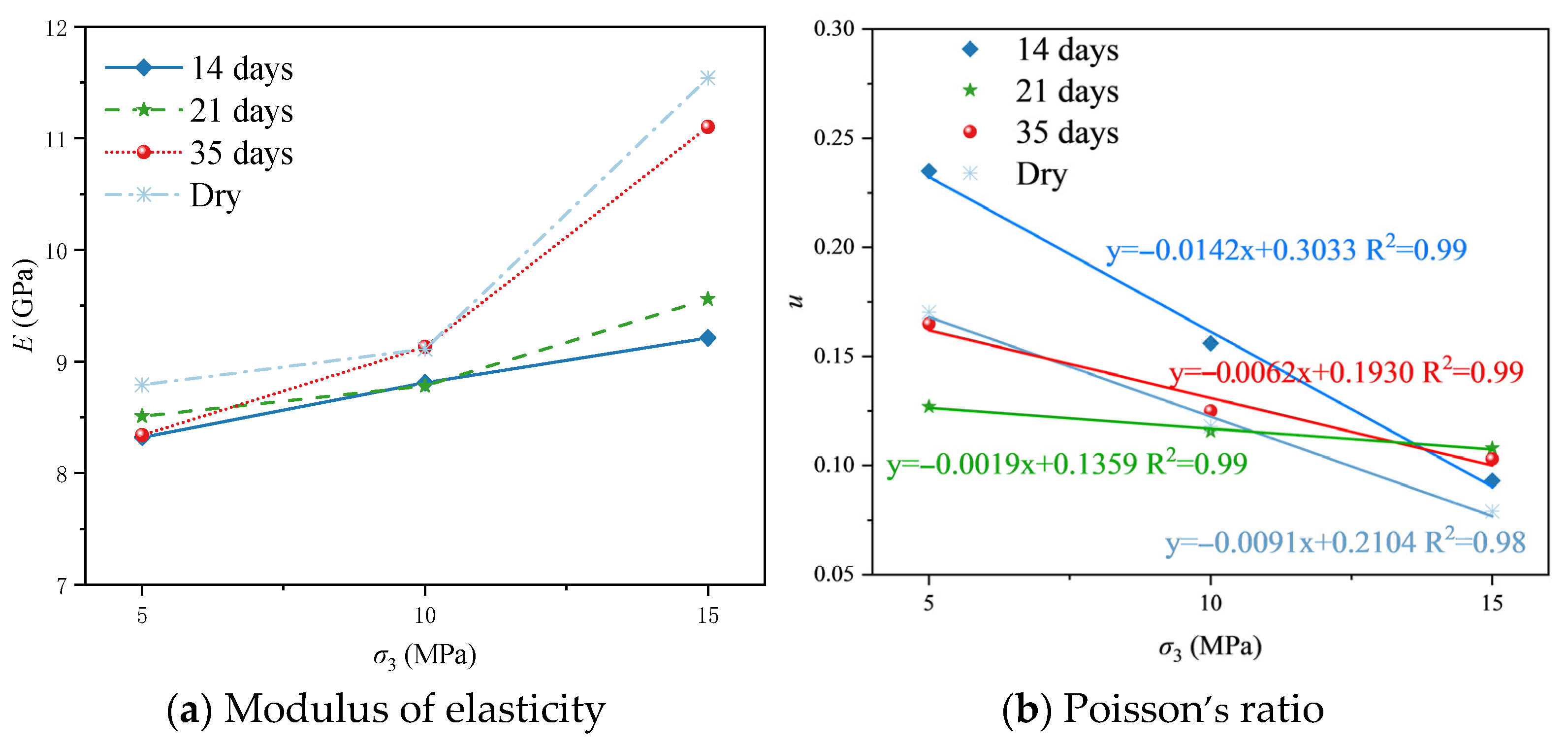
Figure 5 shows the curves depicting the effects of confining pressure on the elastic modulus and Poisson’s ratio of brine-eroded red sandstone specimens at different erosion durations. Similar to dry specimens, the elastic modulus of brine-eroded red sandstone exhibits a nonlinear increase with increasing confining pressure. Moreover, the elastic modulus of specimens eroded for different durations is significantly lower than that of dry specimens, indicating that components in the brine cause the rock particle structure to become more loosely packed, thereby reducing the specimen’s elastic modulus. Regarding erosion duration, the elastic modulus of the 21-day-eroded specimens increased compared to the 14-day-eroded specimens, while the 35-day-eroded specimens exhibited a significant decrease in elastic modulus. This suggests that certain components in the brine initially strengthen the rock structure by affecting its porosity during the early stages of erosion, leading to an increase in elastic modulus (Figure 5a). However, as erosion time increases, salt corrosion and pore-water pressure cause the development of internal fractures and the dissolution of rock minerals, ultimately reducing the elastic modulus.
Figure 5.
Variation curves of elastic modulus and Poisson’s ratio in brine-eroded red Sandstone with bearing pressure.
Figure 5b illustrates the variation relationship between the Poisson’s ratio of brine-soaked specimens and confining pressure. A significant linear correlation exists between Poisson’s ratio and confining pressure. Analysis of the fitted curves reveals that specimens with different soaking durations exhibit a linear decrease in Poisson’s ratio as confining pressure increases. The linear equation is as follows:
3.1.3. Characteristics of Strength Parameters in Red Sandstone Eroded by Brine
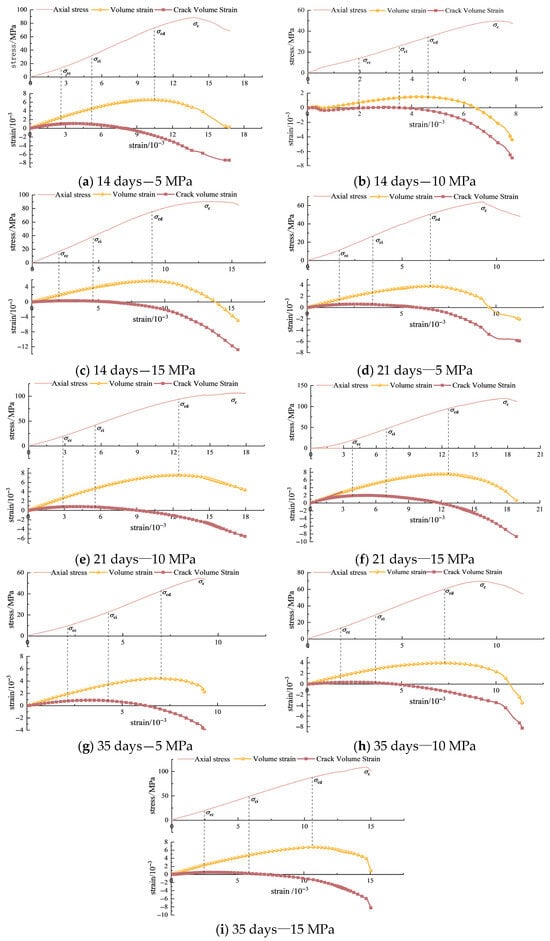
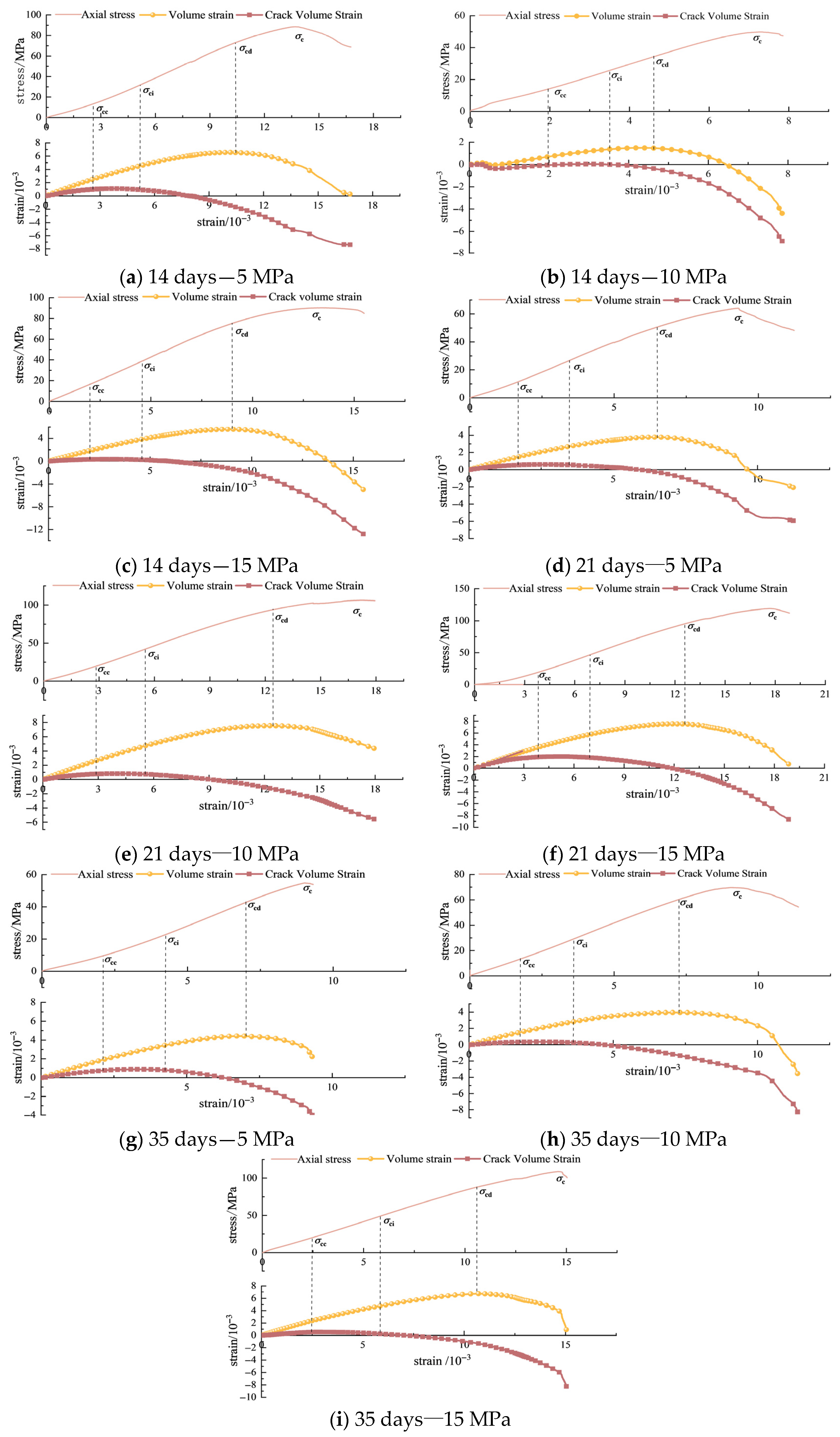
Figure 6 shows the characteristic stress intervals classified according to the crack volume strain model, along with stress–strain curves, for red sandstone specimens in conventional triaxial tests. Table 2 presents the characteristic stress values during compression of red sandstone specimens subjected to brine immersion for 14, 21, and 35 days. Statistical analysis of the tables indicates that the closure stress of brine-eroded specimens reflects the closure behavior of internal microcracks during the initial loading phase. This stress range spans 9.66–21.54 MPa with an average value of 15.51 MPa, and the σcc/σc ratio ranges from 0.16 to 0.23. The cracking stress marks the critical point where microcracks within the rock begin to propagate, ranging from 22.83 to 46.63 MPa with an average of 34.04 MPa. The σci/σc ratio ranges from 0.36 to 0.52. Damage stress reflects the critical state of rapid microcrack propagation within the rock, ranging from 34.43 to 95.24 MPa with an average of 68.16 MPa, and a σcd/σc ratio ranging from 0.69 to 0.88. Peak stress represents the maximum stress the rock can withstand, with a range of 49.83–119.26 MPa and an average value of 83.49 MPa. The data indicate that compared to dry specimens, brine-eroded specimens exhibit greater fluctuations in characteristic stresses. However, the ratios of these characteristic stresses generally align with patterns observed in literature studies.
Figure 6.
Stress–strain versus volumetric strain and crack volumetric strain relationship curves for brine-corroded specimens.
Table 2.
Statistical summary of characteristic stresses for brine-eroded specimens.
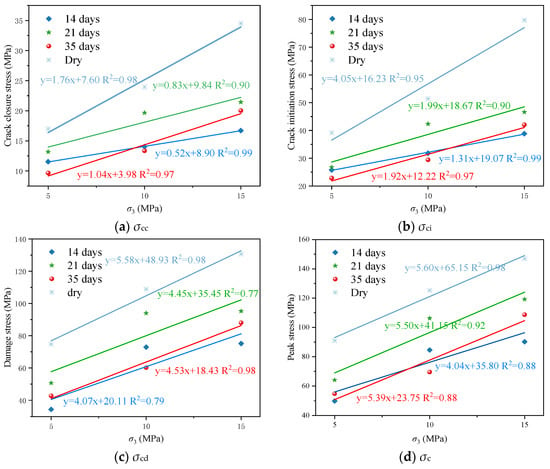
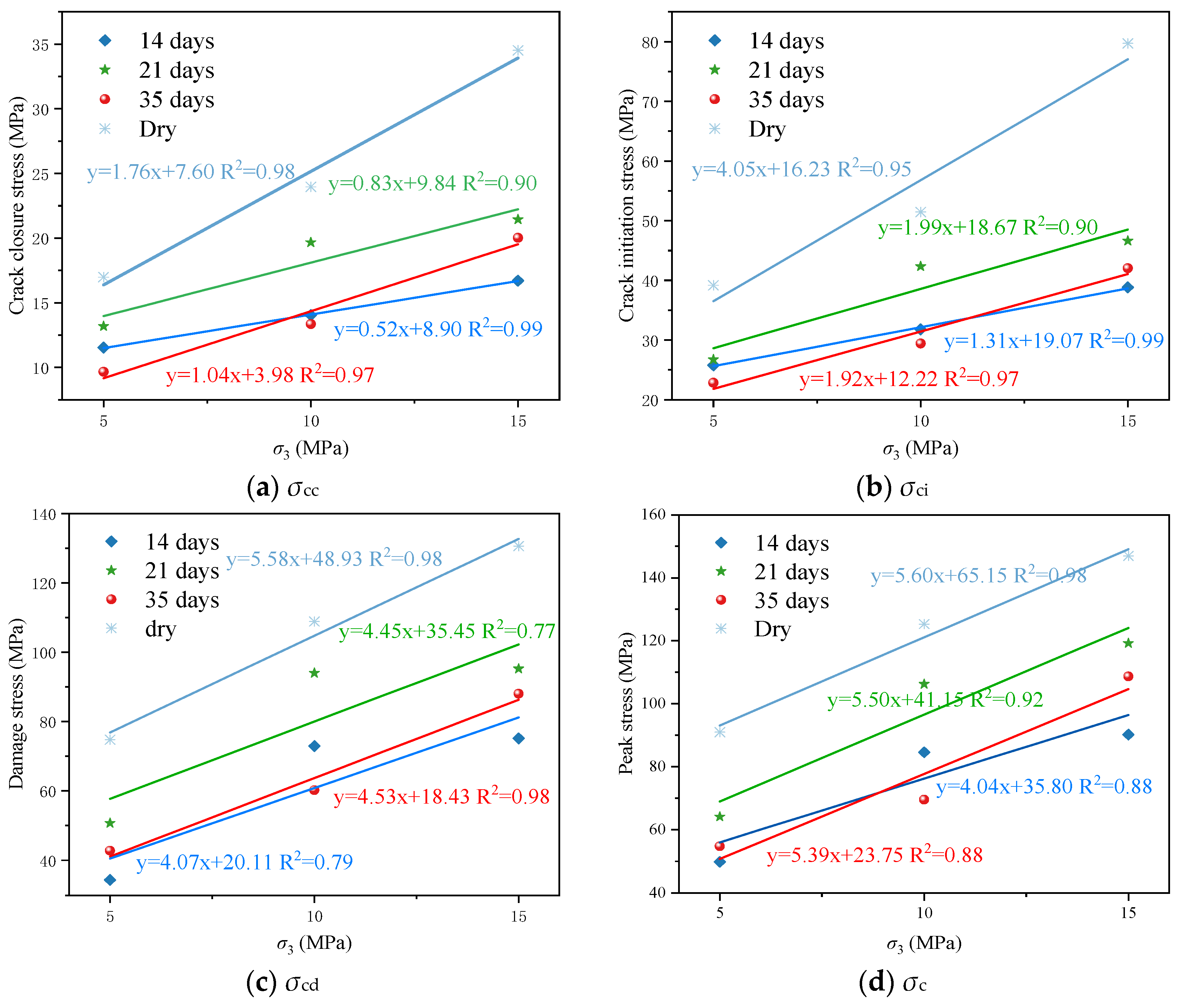
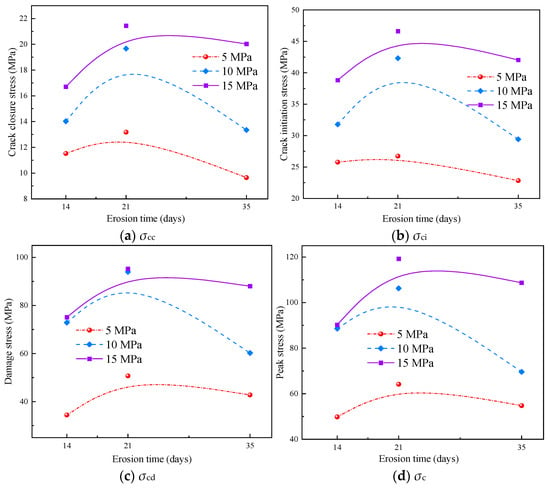
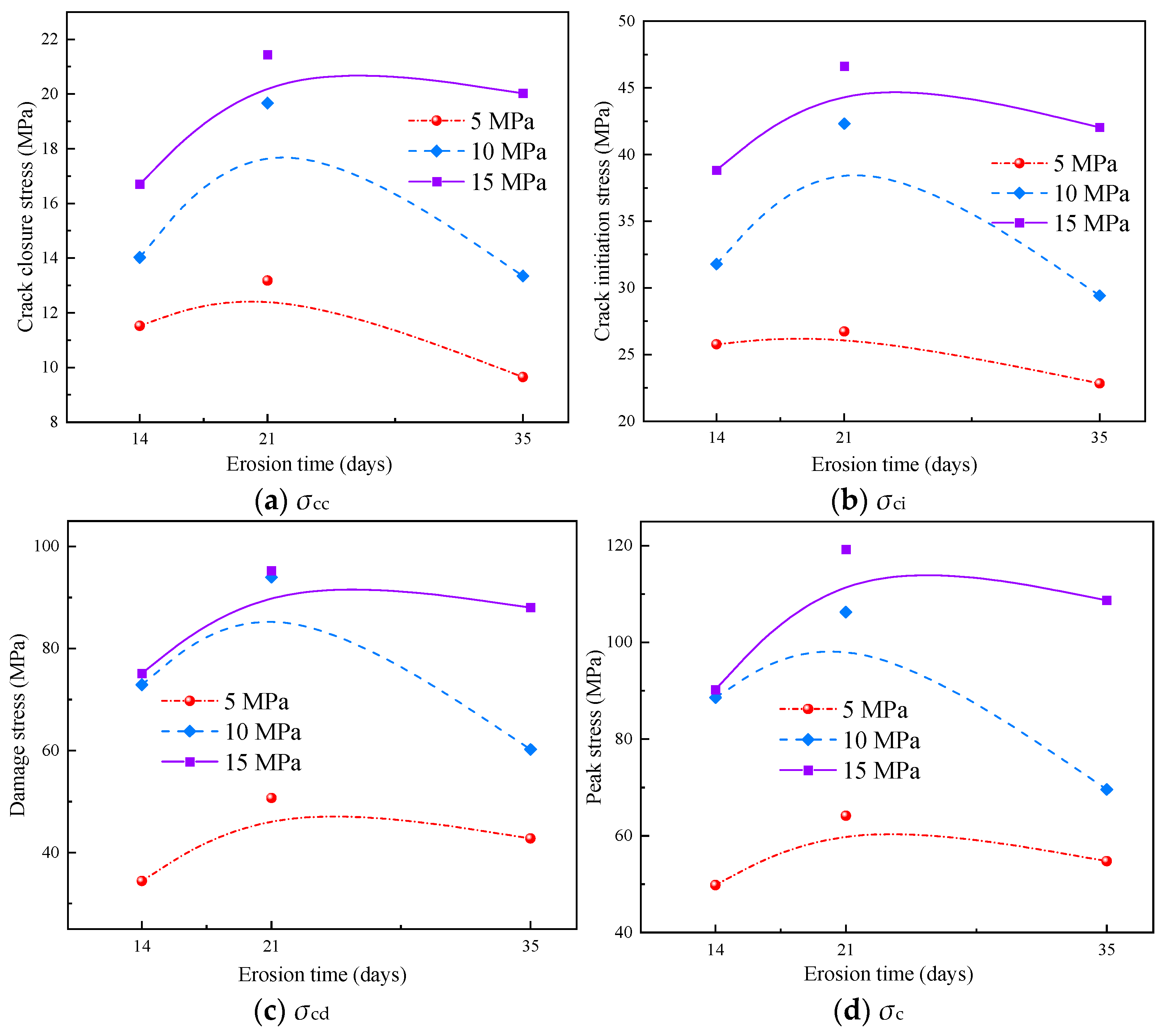
Based on Table 2, the relationship curves between the crack-closure stress, initiation stress, damage stress, and peak stress of brine-corroded specimens and the confining pressure are plotted in Figure 7. The relationship curve showing the effect of corrosion time on the characteristic strength of brine-corroded sandstone is presented in Figure 8.
Figure 7.
Relationship between characteristic stress and confining pressure in brine-eroded specimens.
Figure 8.
Variation of characteristic stress in brine-eroded specimens with erosion time.
As shown in Figure 7, the closure stress, initiation stress, damage stress, and peak stress of the red sandstone specimens after brine erosion were significantly lower than those of the dry specimens, exhibiting different linear growth rates with confining pressure. As shown in Figure 8, all characteristic stresses exhibit identical variation patterns with immersion duration. When immersion duration increased from 14 to 21 days, the specimen’s crack-closure stress, initiation stress, damage stress, and peak stress all showed an upward trend. However, when the immersion time increased from 21 to 35 days, the crack closure stress, crack initiation stress, damage stress, and peak stress all decreased. This indicates that, between 14 and 21 days of immersion, the pore structure of the rock undergoing brine erosion alters. Concurrently, components within the brine may undergo physicochemical reactions with the rock. These changes lead to modifications in the rock’s structure and an enhancement of its physical properties. However, between 21 and 35 days, the ionic components of the brine may cause chemical erosion, and increased pore pressure due to water absorption by the rock may lead to the development of existing fractures or the formation of new ones. Simultaneously, prolonged solution erosion causes the dissolution of rock particles, all of which accelerate rock deterioration and result in a decrease in strength. In addition, based on the analysis of the stress–strain curves in Figure 6, the residual strength values for each experimental condition were extracted. The results show that as the confining pressure increases from 5 MPa to 15 MPa, the residual strength significantly improves; moreover, the rate of increase in residual strength for the 35-day erosion group is higher than that of the dry group, indicating that long-term erosion significantly enhances the ductile characteristics of the rock.
The Mohr–Coulomb criterion is of great significance for understanding the failure behavior of rock materials under different stress states. According to the Mohr–Coulomb strength theory, the relationship between the peak stress intensity and the confining pressure under conventional triaxial compression can be expressed by the following formula:
where c is the cohesion and φ is the internal friction angle.
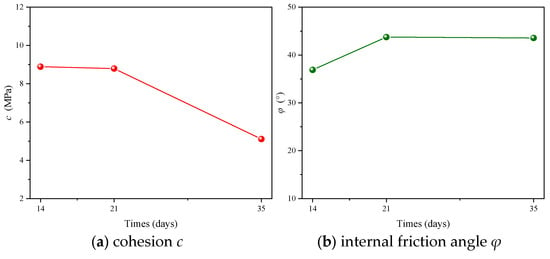
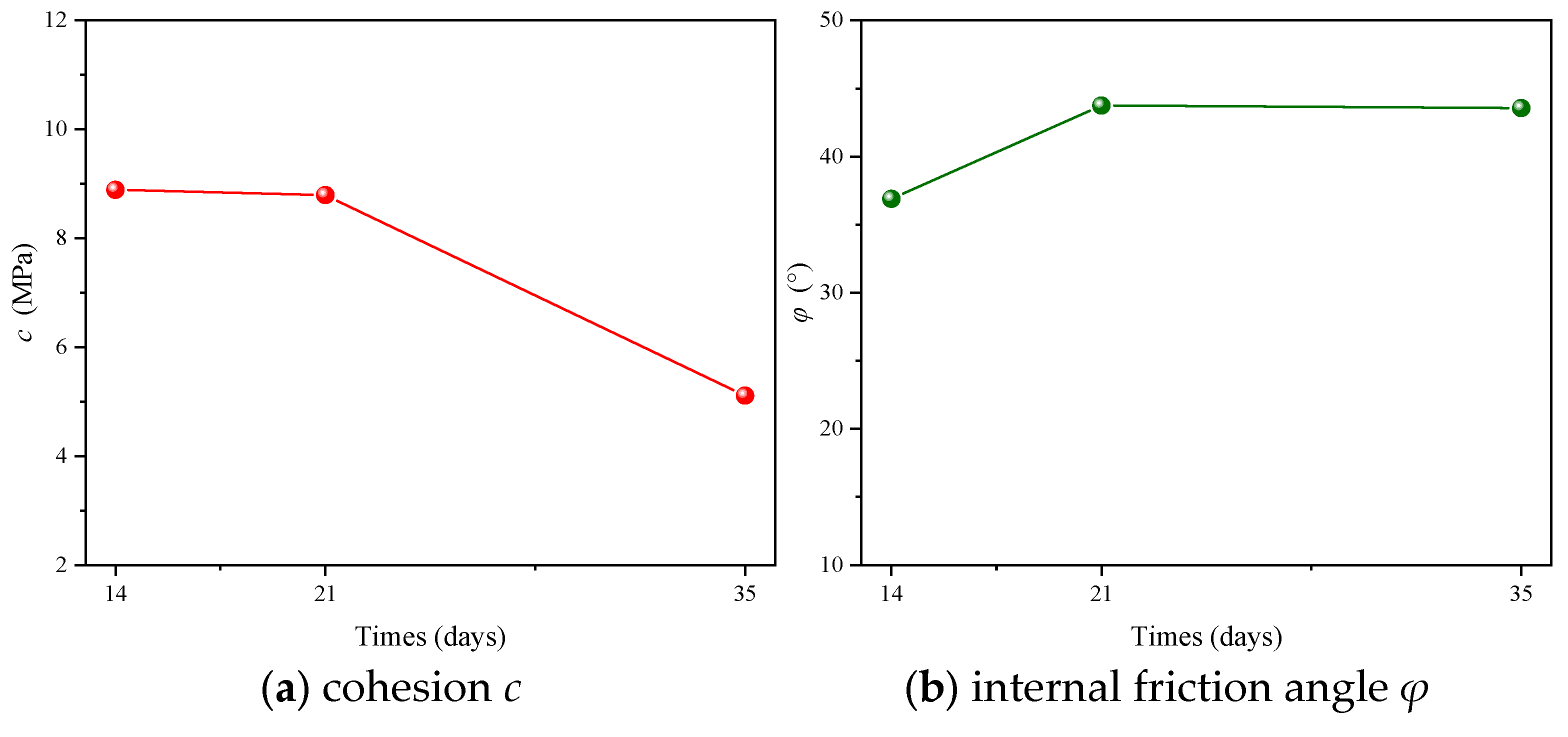
Based on the linear fitting of the above formula, the cohesion c and internal friction angle φ of the dry red sandstone were calculated, as shown in Figure 9. From Figure 9a, it can be observed that the cohesion c exhibits a gradually decreasing trend with the increase in immersion duration. When the immersion time increases from 14 to 21 days, the cohesion c decreases from 8.89 MPa to 8.79 MPa, representing a relatively insignificant reduction. However, when the immersion duration increases from 21 to 35 days, the cohesion c shows a significant decline, dropping from 8.79 MPa to 5.11 MPa. Figure 9b presents the variation law of the internal friction angle φ with respect to immersion time. As the immersion duration increases from 14 to 21 days, the internal friction angle φ increases, whereas when the immersion duration further extends to 35 days, the internal friction angle remains nearly constant.
Figure 9.
Mohr-coulomb strength parameters.
3.2. Energy Characteristics Analysis
3.2.1. Energy Evolution Characteristics
According to thermodynamic theory, rock specimens undergo deformation and failure under the work performed by external forces. Assuming no heat or mass exchange occurs between the interior of the rock and the external environment, the majority of the total input energy generated by the work of external forces is stored within the specimen in the form of elastic strain energy, while the remaining energy is converted into dissipated strain energy through plastic deformation and internal damage. From this, it follows that:
where UFP, UEP, and UDP are the total input energy density, the elastic strain energy density, and the dissipated strain energy density, respectively, in MJ/m3.
In the experimental process, the total input energy UFP can be considered as the sum of the work performed in the directions of the principal stresses. The work done by each principal stress can be obtained by integrating the area under the stress–strain curve:
where σ1, σ2, σ3 are the maximum, intermediate, and minimum principal stresses, respectively, MPa; and ε1, ε2, ε3 are the maximum, intermediate, and minimum principal strains, respectively.
At the same time, by introducing the generalized Hooke’s law from the theory of elasticity, the expression for the elastic strain energy UEP can be obtained:
where E is the elastic modulus in GPa, and ν is Poisson’s ratio.
Under conventional triaxial compression conditions, the relationship between the principal stresses is σ1 > σ2 = σ3. Therefore, the expression can be simplified as follows:
By substituting Equations (4) and (6) into Equation (3), we obtain:
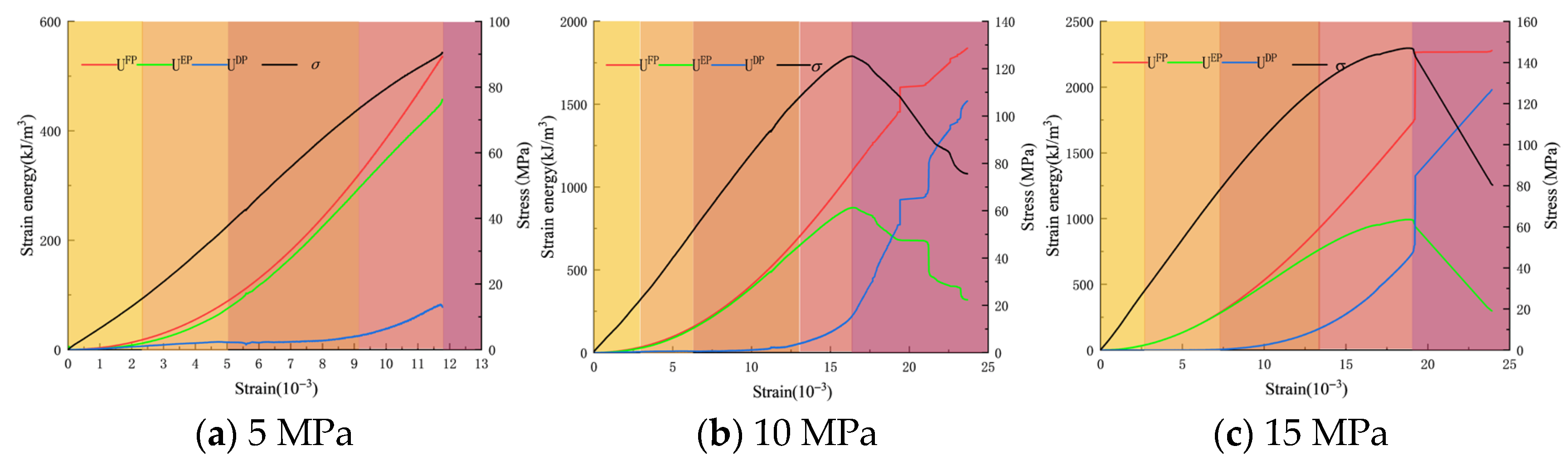
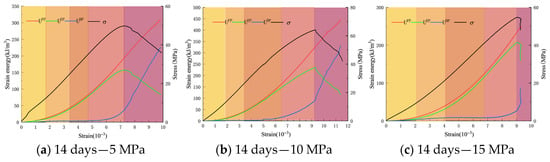
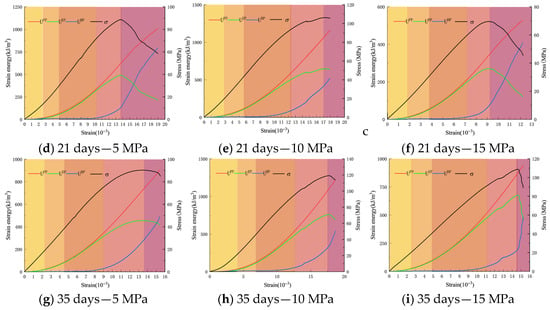
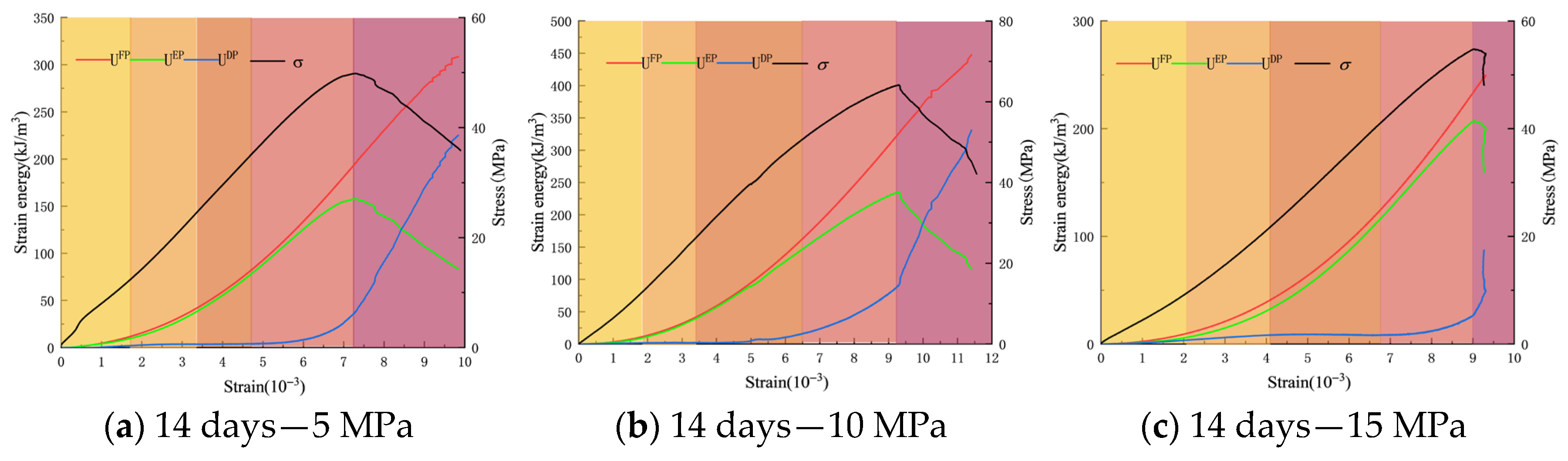
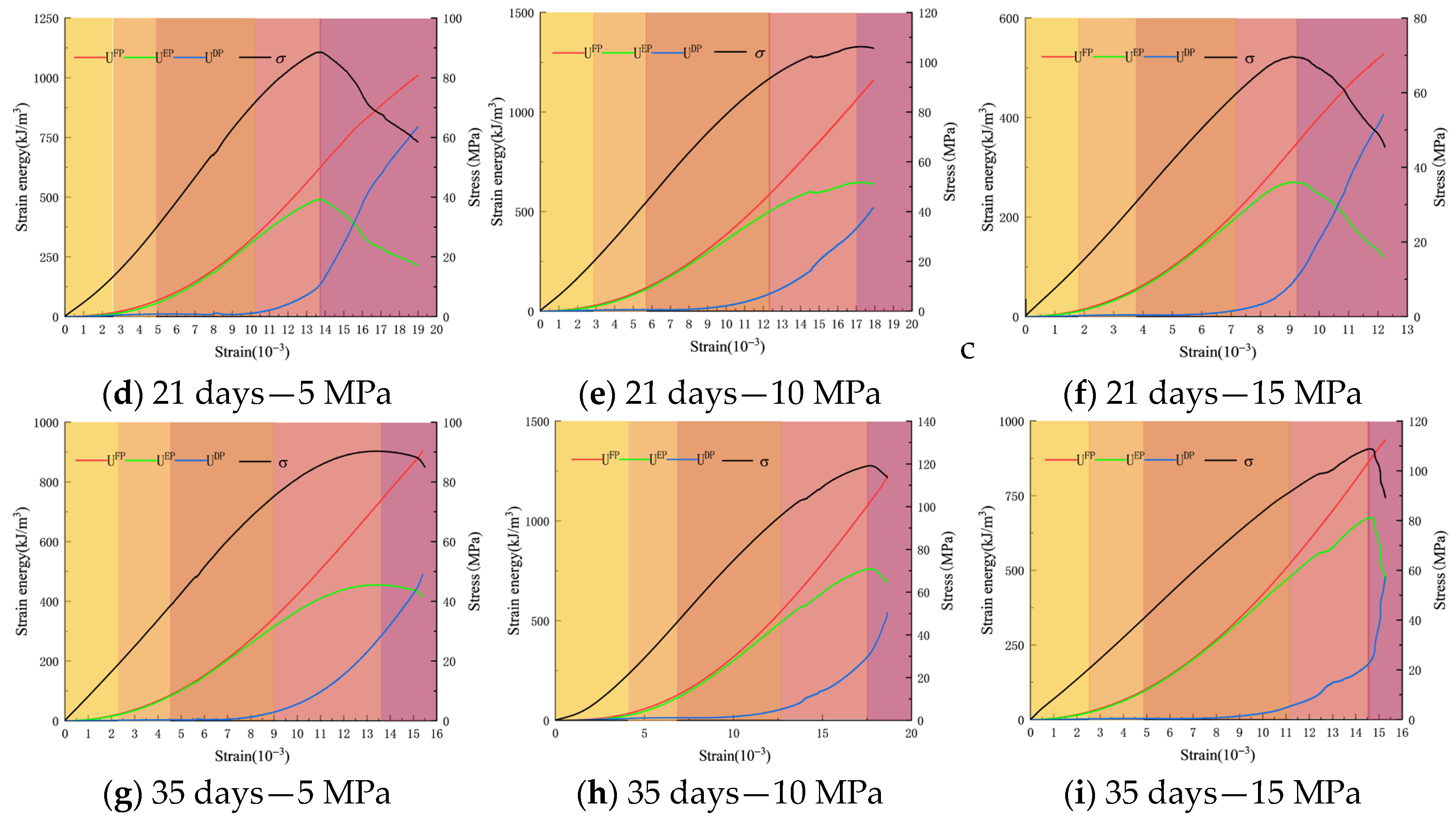
As shown in Figure 10 and Figure 11, the total input energy density gradually increases with increasing axial strain throughout the compression test. Under various confining pressure conditions, the elastic strain energy density exhibits an upward trend with increasing axial strain prior to reaching peak strength, followed by a sharp decline thereafter. Overall, it shows an initial rise followed by a decrease as axial strain increases. In contrast, the dissipated energy density continuously increases with increasing axial strain and rises sharply after peak strength.
Figure 10.
Relationship between axial strain and dry specimens UFP, UEP, and UDP.
Figure 11.
Relationship between axial strain and brine-corroded specimens UFP, UEP, and UDP.
Under triaxial compression conditions, the stress–strain curve of sandstone exhibits a slower decline after failure. The elastic strain energy stored within the rock does not instantaneously release all at once to dissipate the energy required for specimen failure. Instead, it is gradually released and dissipated, leading to progressive fracturing and ultimately overall instability and failure. This indicates that confining pressure enhances the rock’s capacity to store elastic strain energy and exerts a certain degree of suppression on the release of elastic strain energy after failure. Consequently, confining pressure plays a promoting role in increasing the rock’s failure strength.
3.2.2. Relationship Between Energy Density and Confining Pressure in Brine-Eroded Specimens
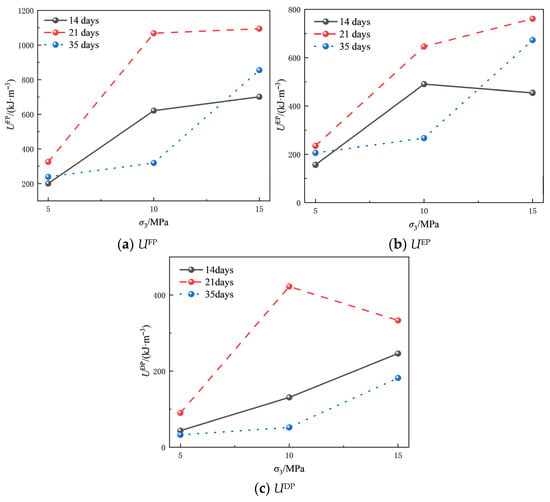
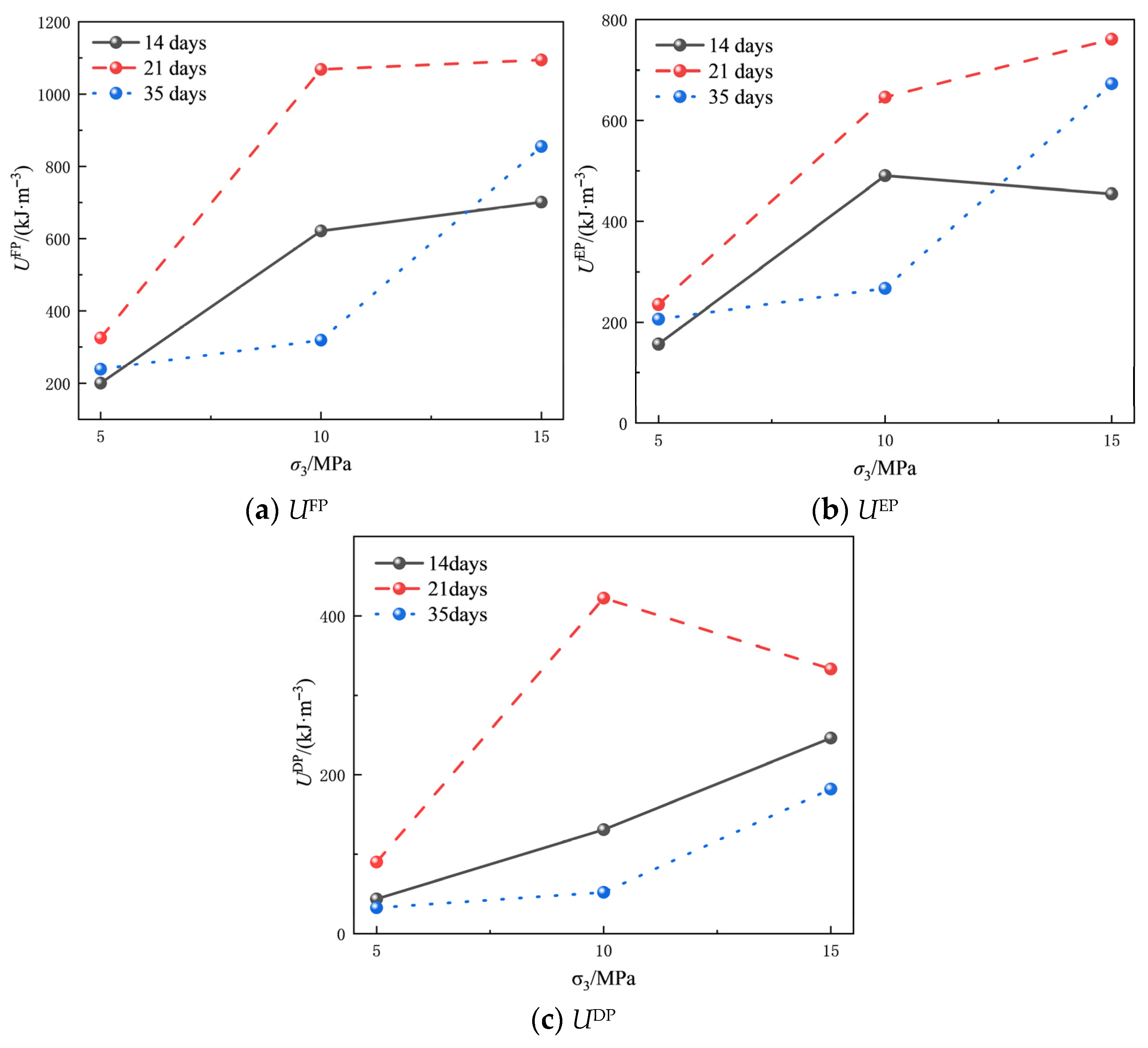
Based on Figure 11, the UFP, UEP, and UDP values for red sandstone specimens subjected to different brine immersion durations are obtained and presented in Table 3. The relationship curves between UFP, UEP, and UDP versus confining pressure were plotted according to the table, as shown in Figure 12.
Table 3.
Input energy, elastic strain energy, and dissipated strain energy density at peak points for brine group specimens under different confining pressures and erosion durations.
Figure 12.
Relationship between UFP, UEP, and UDP versus confining pressure for brine-eroded specimens.
As shown in Figure 12, the UFP at specimen failure increases with increasing confining pressure for different immersion durations (14 days, 21 days, and 35 days). The UEP generally increases with increasing confining pressure. However, the UEP of the 14-day-etched specimen decreases when confining pressure rises from 10 MPa to 15 MPa, dropping from 490.58 kJ·m−3 to 454.66 kJ·m−3, a decrease of 7.32%. The UDP also generally increases with increasing confining pressure. However, the UDP of specimens eroded for 21 days decreased when the confining pressure increased from 10 MPa to 15 MPa, dropping from 422.17 kJ·m−3 to 333.01 kJ·m−3, a decrease of 21.12%.
Test results indicate that increased confining pressure enhances rock strength, elastic modulus, and dissipated strain energy, leading to increases in UFP, UEP, and UDP with rising confining pressure (except for UFP after 14 days of weathering and UDP after 21 days of weathering). Simultaneously, this reflects differing mechanisms influencing rock energy characteristics under varying erosion durations. Erosion duration modulates the effect of confining pressure on enhancing UFP, UEP, and UDP. During shorter erosion periods, confining pressure significantly boosts peak input energy. However, with prolonged erosion, severely weakened rock structures limit the effectiveness of confining pressure in enhancing UFP, UEP, and UDP.
3.3. Damage Characteristic Analysis
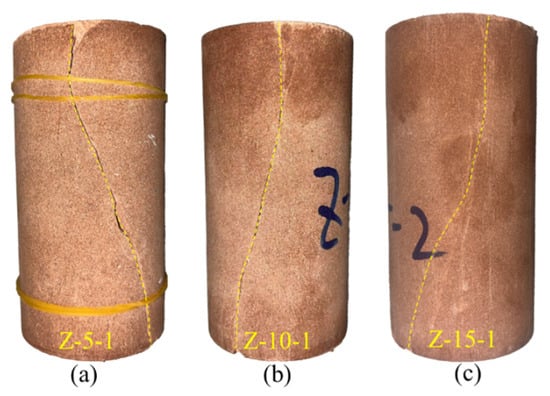
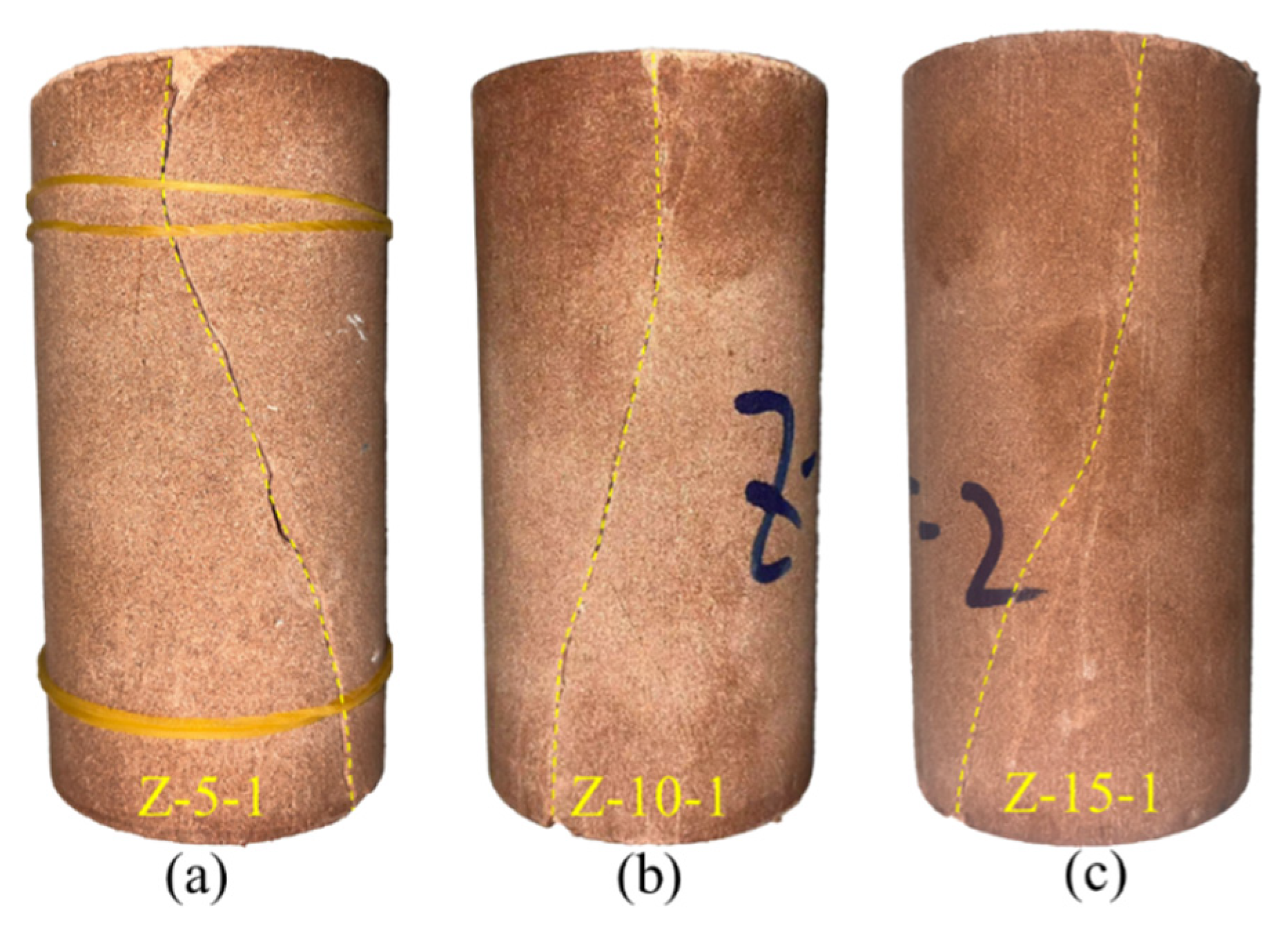
Figure 13 shows the failure patterns of dry red sandstone under different confining pressures. The dotted lines in the figure represent the direction of the cracks. As seen in the figure, under conventional triaxial compression, the specimen exhibits a diagonal primary crack on its surface at failure, which is a typical characteristic of shear failure. Simultaneously, at lower confining pressures (σ3 = 5 MPa), the specimen surface exhibits not only a single diagonal primary shear crack but also localized tensile cracks near the upper and lower end faces. This occurs because at lower confining pressures, the rock’s ability to resist tensile deformation is reduced, leading to combined shear-tensile cracking failure. At higher confining pressures (σ3 = 10 MPa, 15 MPa), the rock surface developed a single shear crack penetrating both ends. This indicates that increased confining pressure suppressed tensile crack propagation, promoting shear slip. Consequently, the specimen failure mode gradually shifted from combined shear-tensile failure to pure shear failure. Simultaneously, increased confining pressure significantly enhances the load-bearing capacity and deformation capability of sandstone specimens. Shear stress on the specimen’s inclined cross-section progressively exceeds its shear strength, ultimately leading to oblique shear failure along the inclined weak plane.
Figure 13.
Failure characteristics of dry red sandstone specimens.
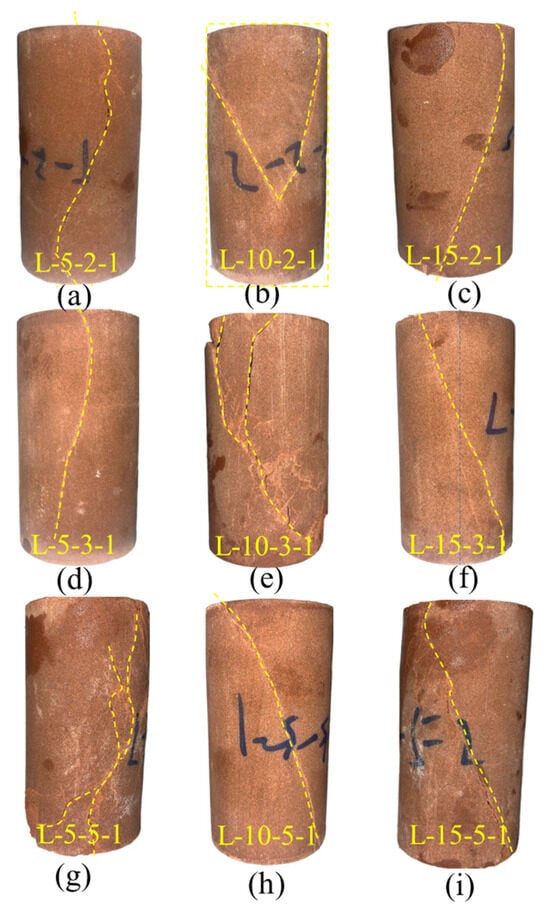
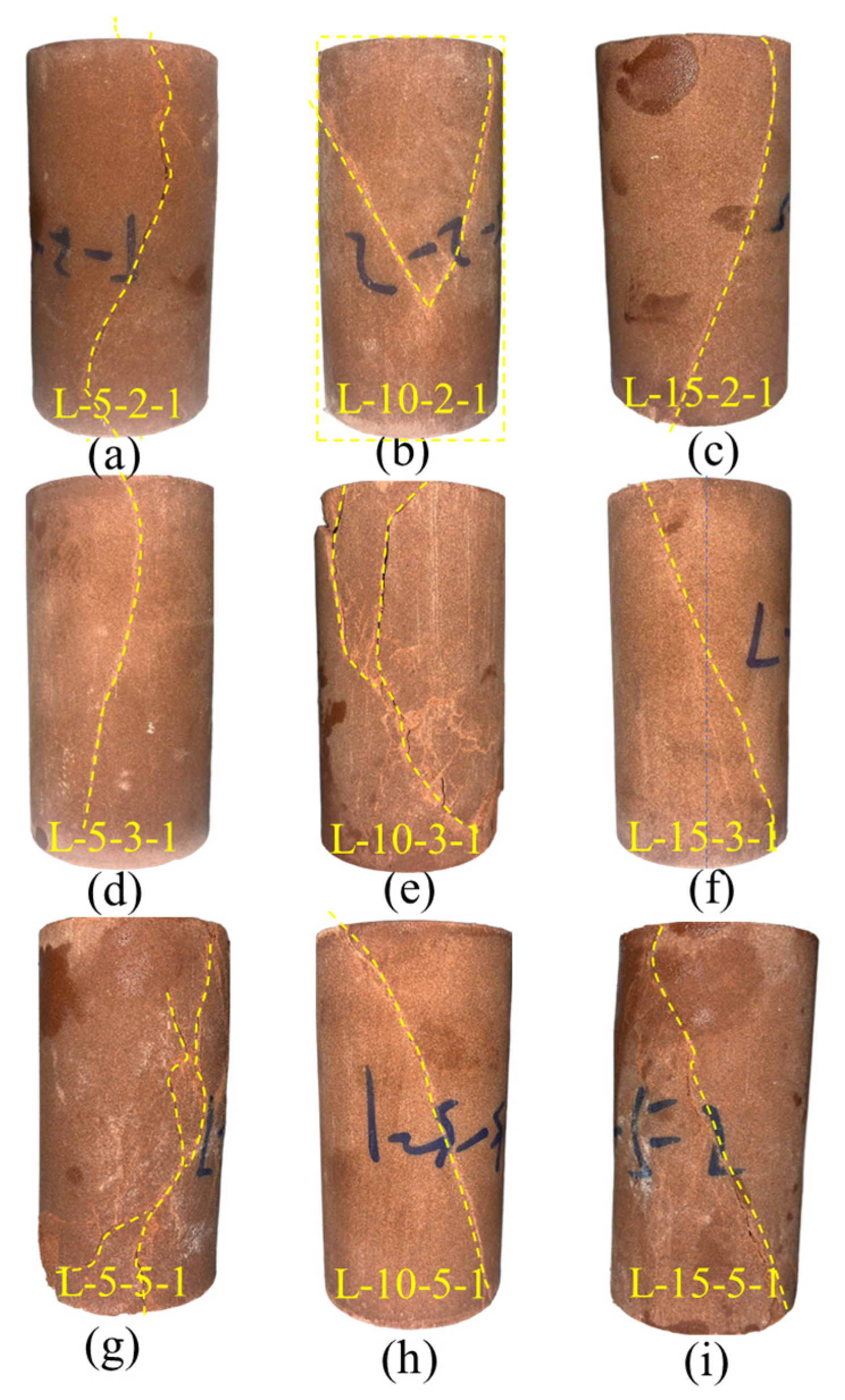
Figure 14 shows the failure patterns of red sandstone specimens after different durations of brine immersion. The figures reveal that shear failure remains the predominant failure mode, accompanied by minor tensile failure under low confining pressure. The failure patterns of brine-immersed sandstone exhibit significant differences across varying immersion durations.
Figure 14.
Failure characteristics of brine-eroded red sandstone specimens.
For specimens eroded for 14 days, the fracture surface exhibited fewer cracks with a relatively simple crack distribution. Under 5 MPa confining pressure, the specimen developed only one continuous oblique primary crack, with tensile crack characteristics observed at both ends (Figure 14a). At 10 MPa confining pressure, specimens exhibited distinct X-shaped conjugate inclined-plane shear failure, with cracks propagating diagonally downward along the axial direction from both ends (Figure 14b). At 15 MPa confining pressure, specimens displayed uniaxial inclined-plane shear failure (Figure 14c). At this stage, brine penetration depth was limited, with localized microcrack development occurring but without significantly altering the overall structure.
For specimens subjected to 21 days of immersion, the number of cracks increased, and their width slightly expanded. Under 5 MPa confining pressure, specimens primarily exhibited characteristics of combined shear-tensile failure. The ends displayed tensile cracks that extended diagonally downward, forming a main crack that traversed the specimen (Figure 14d). At 10 MPa confining pressure, specimens exhibited an additional propagating crack alongside the diagonal primary crack, with visible spalling at the ends (Figure 14e). At 15 MPa confining pressure, only a single diagonal primary crack traversed the specimen (Figure 14f). Here, brine penetration depth increased, but ionic components in the brine may have formed salt crystals that filled the cracks.
After 35 days of immersion, at low confining pressure (5 MPa), numerous secondary cracks appeared near the primary fracture surface. Rock debris shedding was observed at the specimen edges during compression. As confining pressure increased, the failure mode progressively shifted from combined shear tension failure to shear failure (Figure 14g,h). At this stage, as the duration of immersion increased, brine permeated along the initial cracks, leading to crack expansion and branching. Simultaneously, prolonged immersion caused granularization and softening of the specimen ends.
4. Discussion
4.1. Mechanical Properties and Deterioration Mechanism of Sandstone Under Brine Erosion
This study conducted conventional triaxial compression tests on red sandstone after brine erosion, revealing the evolution patterns of rock mechanical properties under the coupled effects of complex brine environments and confining pressure. Compared to previous studies that primarily focused on single solutions or pure water, the composite brine solution used in this experiment more closely approximates the actual chemical environment of marine-based, high-salinity brines. Consequently, the research findings are more directly applicable to marine-based engineering projects.
Test results indicate that the effect of brine erosion on the mechanical properties of red sandstone does not follow a simple linear deterioration process. Instead, it exhibits a complex pattern characterized by initial slight strengthening followed by significant degradation. Specifically, specimens eroded for 21 days showed increases in peak strength, elastic modulus, and characteristic stresses (such as cracking initiation stress and damage stress) compared to those eroded for 14 days. This phenomenon may be attributed to the migration and precipitation of specific ions (e.g., Ca2+, Mg2+) within rock microfractures, temporarily filling pores or inducing weak cementation. This resembles the observation by Ranjith et al. that NaCl solutions can increase sandstone strength under certain conditions. However, when immersion extended to 35 days, all mechanical parameters exhibited a significant decline. This confirms the dominant role of long-term chemical corrosion and physical degradation: continuous dissolution and exchange reactions of brine ions weaken intergranular cementation, while pore-water pressure effects and salt crystallization-dissolution cycles accelerate microfracture expansion, ultimately weakening the overall rock structure. This non-monotonic variation underscores the importance of considering erosion duration—for instance, relying solely on short-term erosion tests may overestimate long-term rock stability.
Bearing pressure exerts a suppressing and regulating effect on brine-induced erosion damage in this study. Although brine erosion reduces the overall strength of the rock, an increase in bearing pressure still significantly enhances the peak strength, elastic modulus, and energy storage capacity (UEP) of the eroded specimens. This stems from the confining pressure’s effect on microcrack closure and its constraint on shear slip, resulting in a flatter post-peak phase of the stress–strain curve. The failure mode shifts from brittle tensile-shear combined failure at low confining pressures to pure shear failure at higher confining pressures. This indicates that confining pressure remains a critical factor in maintaining rock mass bearing capacity even under chemically corrosive environments. However, this study also found that when exposure time is excessively long (e.g., 35 days) and rock damage is severe, the enhancement effect of confining pressure on energy parameters (such as UEP and UDP) becomes limited. This indicates that severely degraded rock exhibits reduced sensitivity to confining pressure in its mechanical properties.
In terms of failure mode, brine dissolution not only reduces rock strength but also alters its fracturing microprocess. As leaching duration increases, primary fractures become more tortuous during specimen failure, while secondary fracture networks develop more extensively. Distinct particle spalling and softening occur at fracture ends. This occurs because brine permeates along primary fractures and mineral boundaries, preferentially corroding cement and soluble minerals. This creates additional weak surfaces and heterogeneous pathways, facilitating fracture deflection and branching during propagation. This evolution from a “single through-crack” to a “complex network crack” failure morphology macroscopically confirms that brine accelerates the accumulation and connectivity of internal damage within the rock.
4.2. Based on the SEM Microscopic Characteristics
The non-monotonic mechanical response observed on day 21 suggests a potential competitive relationship between strengthening and deterioration mechanisms. On one hand, the multi-ion brine (rich in Ca2+ and Mg2+) interacts with the calcite cement within the red sandstone. This may trigger short-term chemical precipitation or mineral regeneration at the grain boundaries, forming composite salt precipitates that increase the compactness of the cement and provide additional bonding strength. Simultaneously, tiny salt crystals initially formed within the fractures may act as temporary bridges, effectively reducing the initial porosity. However, as the immersion duration extends to 35 days, the cumulative effect of salt crystallization pressure and the continuous dissolution of primary minerals outweighs these temporary strengthening effects, leading to a significant decline in structural integrity. The chemical reaction equations are as follows:
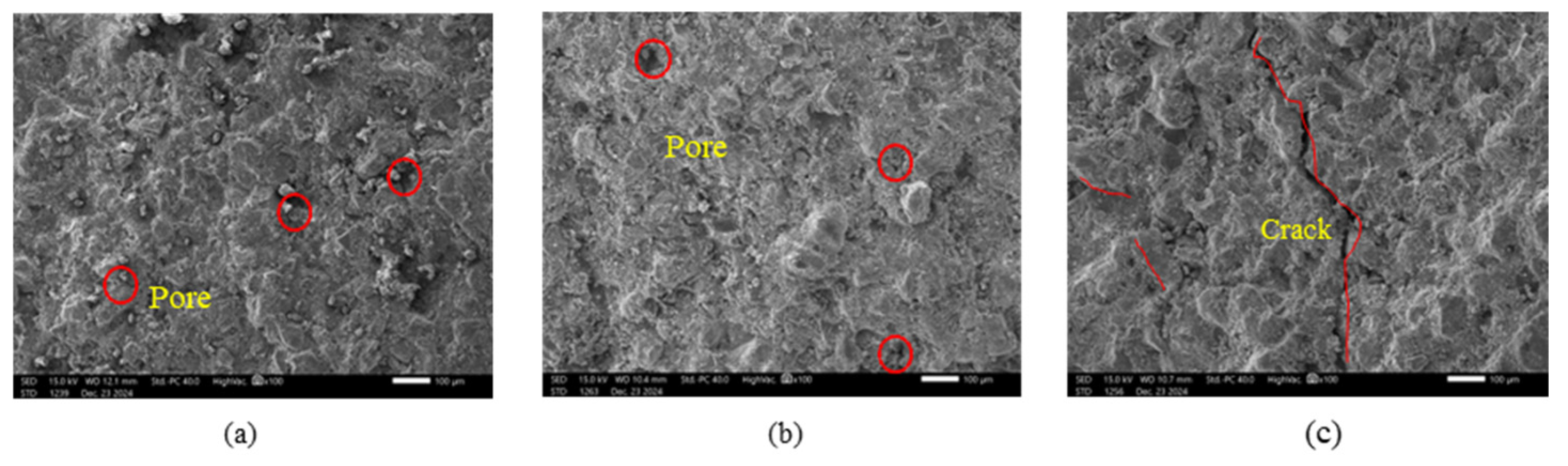
To further elucidate the microscopic mechanisms of rock damage, SEM was employed to observe the microstructural characteristics of brine-eroded sandstone after uniaxial compression failure. Figure 15 illustrates the microscopic features of the red sandstone following immersion in the brine solution. At 100× magnification, the image for the 21-day immersion period shows significantly fewer cracks and pores compared to the 14-day and 35-day groups. This indicates that micro-fractures were partially filled by salt crystals and secondary mineral precipitates, which enhanced the initial stiffness of the rock. As shown in the figure, no large cracks or pores are yet visible in this stage. However, as the immersion duration increases to 35 days, the pores within the rock expand significantly, manifesting as a honeycomb-like porous structure.
Figure 15.
Microscopic characteristics of red sandstone after brine erosion: (a) 14 days; (b) 21 days; (c) 35 days.
Consequently, microscopic observations confirm that the non-linear mechanical response of the red sandstone is governed by the evolution of internal micro-fractures. During this process, early-stage ionic precipitation provides a temporary reinforcing effect, whereas long-term chemical dissolution leads to structural degradation.
4.3. Limitations and Future Prospects
The innovation of this study lies in its systematic investigation of the coupled effects between long-term erosion by multi-ionic composite brines and triaxial stress conditions, addressing the current research gap where studies predominantly focus on single solutions or uniaxial conditions. The findings provide critical parameters and theoretical foundations for designing safe isolation layer thicknesses and assessing long-term stability in seabed mineral resource extraction. For instance, designs must fully account for strength degradation caused by prolonged brine corrosion while evaluating actual rock bearing capacity at different mining depths (corresponding to varying confining pressures). Practical applications require parameter calibration based on hydrochemical analyses specific to each mining site.
Despite the insights gained from this study, we acknowledge several limitations that should be addressed in future research. Firstly, although the selected immersion durations of 14, 21, and 35 days successfully identified a non-monotonic mechanical response, the time intervals were relatively coarse. Future studies should incorporate finer temporal resolution to precisely pinpoint the peak strengthening point and the exact onset of rapid structural degradation. Secondly, this research primarily focused on the macroscopic mechanical response and energy evolution during the post-immersion loading phase. However, the rock already accumulates initial chemical damage energy during the brine erosion process itself. Due to current experimental constraints, we were unable to perform real-time monitoring or quantitative isolation of this initial damage energy. Future work will combine high-precision microscopic characterization, such as in-situ CT scanning and acoustic emission, to quantify the impact of initial chemical damage on the overall energy conversion efficiency.
In summary, this study demonstrates that the influence of marine brine environments on rock mechanical properties results from the combined effects of chemical corrosion, physical softening, and confining pressure constraints. Future research may further integrate microstructural analysis to quantitatively elucidate the interaction mechanisms of different ions on specific mineral surfaces. Additionally, fluid–solid coupling tests considering osmotic pressure and stress coupling should be conducted to more accurately predict the long-term stability of rock masses in marine-based engineering structures.
5. Conclusions
This study systematically analyzed the effects of brine dissolution on the strength, deformation, energy characteristics, and failure modes of red sandstone through conventional triaxial compression tests conducted under varying dissolution cycles (14 days, 21 days, 35 days) and confining pressure levels (5 MPa, 10 MPa, 15 MPa). The following conclusions were drawn:
- (1)
- As the duration of brine immersion increases, the mechanical properties of red sandstone—including compressive strength and elastic modulus—exhibit varying degrees of decline compared to dry specimens, indicating that the deteriorating effects of brine immersion on rock cannot be overlooked.
- (2)
- Brine ionic solutions exert a significant influence on the energy evolution characteristics of red sandstone. As immersion time increases, the total input strain energy, elastic strain energy, and dissipated strain energy of red sandstone all decrease to varying degrees compared to dry specimens. The energy storage and dissipation capacity of red sandstone exhibits a trend of initial enhancement followed by weakening. Initial immersion may strengthen the rock structure through chemical reactions, but over time, chemical corrosion and microcrack propagation lead to a significant decline in the rock’s energy dissipation capacity.
- (3)
- In conventional triaxial compression tests, confining pressure significantly enhances the energy storage capacity of red sandstone, particularly at high confining pressures where peak input energy density, elastic strain energy density, and dissipated energy density all increase. However, brine-eroded rocks exhibit significantly lower energy storage capacity than dry rocks under identical confining pressures, indicating that brine erosion markedly affects the rock’s energy dissipation effects.
- (4)
- Confining pressure significantly enhances the shear strength of red sandstone, inhibits tensile crack propagation, and promotes a transition toward a single shear failure mode. As confining pressure increases, the failure mode shifts from a combined shear-tension failure to a pure shear failure, with failure surfaces becoming more concentrated.
Author Contributions
Methodology, Y.W.; Investigation, Z.P.; Resources, J.Z.; Writing, review, and editing, Z.Z., X.L. and K.P.; Funding acquisition, K.P. All authors have read and agreed to the published version of the manuscript.
Funding
This work was funded by the National Key Research and Development Program of China—023 Key Special Project (No. 2023YFC2907400), the National Natural Science Foundation of China (No. 52474120), he Deep Earth Probe and Mineral Resources Exploration-National Science and Technology Major Project (NO. 2025ZD1010903), the Hunan Provincial Natural Science Foundation for Distinguished Young Scholars (No. 2023JJ10072) and the Fundamental Research Funds for the Central Universities (NO. 2023CXQD045).
Data Availability Statement
The original contributions presented in this study are included in the article. Further inquiries can be directed to the corresponding author.
Acknowledgments
The authors thank the editor and anonymous reviewers for their valuable advice.
Conflicts of Interest
Author Zhonghui Zhang was employed by the company Shandong Gold Group Co., Ltd. Author Jiaqi Zhou was employed by the company Changchun gold research institute Co., Ltd. The remaining authors declare that the research was conducted in the absence of any commercial or financial relationships that could be construed as a potential conflict of interest.
References
- Zhou, J.G.; Chen, X.J.; Liu, B.L. Current Status and Potential of Global Cephalopod Resource Development and Utilization. Mar. Fish. 2008, 3, 268–275. [Google Scholar] [CrossRef]
- Zhang, X.A. Marine Mineral Resources Exploration Work Cannot Wait Any Longer. Chin. Geol. 1990, 10, 28–30. [Google Scholar]
- Zheng, M.Z.; Liu, Y.; Li, M.J.; Qiu, J. Current Status and Trends in Marine Resource Development and Utilization in China. Mar. Dev. Manag. 2013, 30, 13–16. [Google Scholar]
- Li, X.B.; Liu, Z.X.; Peng, K.; Zhao, G.Y.; Peng, S.Q. Rock Mechanics Theory and Practice in Coastal Bedrock Mining of Metal Ore Deposits. J. Rock Mech. Eng. 2010, 29, 1945–1953. [Google Scholar]
- Zhang, Q.Z.; Xing, T.H.; Zheng, X.I.; Jiang, Z.Z.; Guo, W. Practice of Soft Rock Control Technology in Undersea Mining Areas. Coal Sci. Technol. 2015, 3, 43–46. [Google Scholar] [CrossRef]
- Liu, Z.X.; Han, K.W.; Yang, S.; Liu, Y.-X. Fractal Evolution Mechanism of Rock Fractures in Seabed Mining of Metal Deposits. J. Cent. South Univ. 2020, 27, 1320–1333. [Google Scholar] [CrossRef] [Scilit]
- Peng, K.; Li, X.B.; Peng, S.Q.; Liu, Z.X.; Zhao, G.Y. Structural Optimization Selection of Subsea Frame-Type Mining Areas Based on Response Surface Methodology. J. Cent. South Univ. (Nat. Sci. Ed.) 2011, 42, 2417–2422. [Google Scholar]
- Li, G.Q.; Ma, F.S.; Meng, Z.P. Analysis of Connectivity Between Submarine Metal Mines and Overlying Seawater in the Xinli Mining Area. J. Cent. South Univ. (Nat. Sci. Ed.) 2012, 43, 3938–3945. [Google Scholar]
- Zhao, J.; Tan, Z.; Wang, X.; Zhou, Z.; Li, G. Engineering characteristics of water-bearing weakly cemented sandstone and dewatering technology in tunnel excavation. Tunn. Undergr. Space Technol. 2022, 121, 104316. [Google Scholar] [CrossRef] [Scilit]
- Zhang, Q.; Tong, Z.; Shen, D.; Luo, Z.; Ding, W.; Xu, H. Mechanism investigation on water and mud inrush disasters when Wangjiazhai tunnel passing through the Tertiary water-rich sandstone strata. Environ. Earth Sci. 2024, 83, 479. [Google Scholar] [CrossRef] [Scilit]
- Wu, Q.; Liu, Y.; Tang, H.; Kang, J.; Wang, L.; Li, C.; Wang, D.; Liu, Z. Experimental study of the influence of wetting and drying cycles on the strength of intact rock samples from a red stratum in the Three Gorges Reservoir area. Eng. Geol. 2023, 314, 107013. [Google Scholar] [CrossRef] [Scilit]
- Yao, H.Y.; Zhang, Z.H.; Zhu, Z.H.; Shi, Y.C.; Li, Y. Experimental Study on the Effect of Alternating Wetting and Drying on the Mechanical Properties of Sandstone. Rock Soil Mech. 2010, 31, 3704–3708+3714. [Google Scholar] [CrossRef]
- Noël, C.; Baud, P.; Violay, M. Effect of water on sandstone’s fracture toughness and frictional parameters: Brittle strength constraints. Int. J. Rock Mech. Min. Sci. Géoméch. Abstr. 2021, 147, 104916. [Google Scholar] [CrossRef] [Scilit]
- Zhang, C.; Gao, J.Y.; Wu, R.Z.; Shi, X.T.; Wang, F.T.; Wang, X.J.; Han, P.H. Uniaxial Compressive Fracturing Characteristics and Weakening Mechanism of Sandstone Under Water Saturation Effects. J. China Univ. Min. Technol. 2024, 53, 1117–1131. [Google Scholar] [CrossRef]
- Geng, J.S.; Cao, L.W. Failure analysis of water-bearing sandstone using acoustic emission and energy dissipation. Eng. Fract. Mech. 2020, 231, 107021. [Google Scholar] [CrossRef] [Scilit]
- Zhang, C.H.; Zhao, Q.S. Triaxial Tests on the Effects of Saturation on the Modulus and Strength of Sandstone. Rock Soil Mech. 2014, 35, 951–958. [Google Scholar] [CrossRef]
- Liang, X.; Tang, S.; Tang, C.; Hu, L.; Chen, F. Influence of Water on the Mechanical Properties and Failure Behaviors of Sandstone Under Triaxial Compression. Rock Mech. Rock Eng. 2022, 56, 1131–1162. [Google Scholar] [CrossRef] [Scilit]
- Zhang, C.; Wang, X.J.; Shi, X.T.; Zhao, Y.X.; Han, P.H.; Zhang, T. Splitting Characteristics of Sandstone and Mechanism of Water-Rock Interaction under Water Saturation Effects. J. Rock Mech. Eng. 2024, 43, 3722–3737. [Google Scholar] [CrossRef]
- Chen, K.Z.; Zhou, W.J.; Pan, Y.G.; Zhuo, Y.; Zheng, G. Characterization of true triaxial rock bursts in sandstones with different water contents. Front. Earth Sci. 2023, 10, 1087849. [Google Scholar] [CrossRef] [Scilit]
- Wang, J.C.; Wang, W.; Chen, G.Q.; Wang, Y. Effect of moisture content on the rockburst intensity of sandstones. Geomech. Geophys. Geo-Energy Geo-Resour. 2024, 10, 85. [Google Scholar] [CrossRef] [Scilit]
- Zhou, Z.L.; Cai, X.; Ma, D.; Chen, L.; Zhou, J. Effects of water content on fracture and mechanical behavior of sandstone with a low clay mineral content. Eng. Fract. Mech. 2018, 193, 47–65. [Google Scholar] [CrossRef] [Scilit]
- Li, H.R.; Qiao, Y.F.; Shen, R.X.; He, M.; Cheng, T.; Xiao, Y.; Tang, J. Effect of water on mechanical behavior and acoustic emission response of sandstone during loading process: Phenomenon and mechanism. Eng. Geol. 2021, 294, 106386. [Google Scholar] [CrossRef] [Scilit]
- Zhou, Z.; Cai, X.; Chen, L.; Cao, W.; Zhao, Y.; Xiong, C. Influence of cyclic wetting and drying on physical and dynamic compressive properties of sandstone. Eng. Geol. 2017, 220, 1–12. [Google Scholar] [CrossRef] [Scilit]
- Zhao, Y.B.; Yang, C.Q.; Qu, F.; Wu, Z.; Ding, K.; Liang, Z. Effect of Wet-Dry Cycles on the Mechanical Performances and Microstructure of Pisha Sandstone. Molecules 2023, 28, 2533. [Google Scholar] [CrossRef] [Scilit]
- Li, X.S.; Peng, K.; Peng, J.; Hou, D. Experimental investigation of cyclic wetting-drying effect on mechanical behavior of a medium-grained sandstone. Eng. Geol. 2021, 293, 106335. [Google Scholar] [CrossRef] [Scilit]
- Hua, W.; Dong, S.M.; Li, Y.F.; Wang, Q. Effect of cyclic wetting and drying on the pure mode II fracture toughness of sandstone. Eng. Fract. Mech. 2016, 153, 143–150. [Google Scholar] [CrossRef] [Scilit]
- Zhao, B.Y.; Li, Y.F.; Huang, W.; Yang, J.; Sun, J.; Li, W.; Zhang, L.; Zhang, L. Mechanical characteristics of red sandstone under cyclic wetting and drying. Environ. Earth Sci. 2021, 80, 738. [Google Scholar] [CrossRef] [Scilit]
- Huang, S.Y.; Wang, J.J.; Qiu, Z.F.; Kang, K. Effects of Cyclic Wetting-Drying Conditions on Elastic Modulus and Compressive Strength of Sandstone and Mudstone. Processes 2018, 6, 234. [Google Scholar] [CrossRef] [Scilit]
- Cui, Y.; Xue, L.; Xu, C.; Bu, F.; Zhai, M. Damage mechanism evolution of red sandstone under drying–wetting cycles: Experiment and discrete element modeling. Bull. Eng. Geol. Environ. 2024, 83, 96. [Google Scholar] [CrossRef] [Scilit]
- Yang, S.Q.; Xu, S.B.; Liu, Z. Experimental Study on Mechanical and Permeability Properties of Sandstone in Deep Brine Environments. J. Rock Mech. Eng. 2022, 41, 292–304. [Google Scholar] [CrossRef]
- Lin, Y.; Gao, F.; Zhou, K.; Gao, R.; Guo, H. Mechanical Properties and Statistical Damage Constitutive Model of Rock under a Coupled Chemical-Mechanical Condition. Geofluids 2019, 2019, 1. [Google Scholar] [CrossRef] [Scilit]
- Rathnaweera, T.; Ranjith, P.; Perera, M.; Lashin, A.; Al Arifi, N. Non-linear stress–strain behaviour of reservoir rock under brine saturation: An experimental study. Measurement 2015, 71, 56–72. [Google Scholar] [CrossRef] [Scilit]
- Rathnaweera, T.; Ranjith, P.; Perera, M. Salinity-dependent strength and stress–strain characteristics of reservoir rocks in deep saline aquifers: An experimental study. Fuel 2014, 122, 1–11. [Google Scholar] [CrossRef] [Scilit]
- Han, T.L.; Chen, Y.S.; Shi, J.P.; Ma, W.T. Experimental Study on the Effect of Hydrochemical Corrosion on the Mechanical Properties of Sandstone. J. Rock Mech. Eng. 2013, 32, 3064–3072. [Google Scholar]
- Ma, X.C.; Song, H.B.; An, X.L.; Wang, C.B.; Wang, X.J. Experimental Study on Damage and Creep Acoustic Emission of Red Sandstone Under Saltwater Wet-Dry Cycling. Geotech. Eng. Technol. 2024, 38, 351–357. [Google Scholar] [CrossRef]
- Yang, S.Q.; Jing, X.Q. Experimental Study on Physical and Mechanical Properties of Sandstone After Saltwater Wet-Dry Cycling. Chin. J. Geotech. Eng. 2023, 45, 2165–2171. [Google Scholar] [CrossRef]
- Chen, S.L.; Feng, X.; Zhou, H. Micro-damage Mechanism and Damage Variable Analysis of Sandstone Under Chemical Corrosion. Rock Soil Mech. 2004, 9, 1363–1367. [Google Scholar] [CrossRef]
- Feng, X.T.; Wang, C.Y.; Chen, S.L. Experimental and real-time observation of microfracturing processes in rocks subjected to environmental erosion. J. Rock Mech. Eng. 2002, 7, 935–939. [Google Scholar]
- Miao, S.; Cai, M.; Guo, Q.; Wang, P.; Liang, M. Damage effects and mechanisms in granite treated with acidic chemical solutions. Int. J. Rock Mech. Min. Sci. Géoméch. Abstr. 2016, 88, 77–86. [Google Scholar] [CrossRef] [Scilit]
- Heggheim, T.; Madland, M.; Risnes, R.; Austad, T. A chemical induced enhanced weakening of chalk by seawater. J. Pet. Sci. Eng. 2005, 46, 171–184. [Google Scholar] [CrossRef] [Scilit]
- Li, S.C.; Li, S.C.; Zhu, W.S.; Jian, H.; Wang, G. CT Real-Time Scanning Experimental Study on the Influence of Fracture Water on Fracture Propagation in Jointed Rock Masses. J. Rock Mech. Eng. 2004, 23, 3584–3590. [Google Scholar]
- Wang, Y.X.; Cao, P.; Chen, Y.; Wan, L.H.; Huang, Y.H.; Zhao, Y.L. Experimental Study on Fracture Mechanics Effects of Water Corrosion Damage in Expansive Soft Rocks. J. Cent. South Univ. (Nat. Sci. Ed.) 2011, 42, 1685–1691. [Google Scholar]
- Bruno, M.; Nakagawa, F. Pore pressure influence on tensile fracture propagation in sedimentary rock. Int. J. Rock Mech. Min. Sci. Géoméch. Abstr. 1991, 28, 261–273. [Google Scholar] [CrossRef] [Scilit]
- Li, X.; Zhu, L.; Liu, J.; Cao, Z.; Xue, Y.; Dang, F. Fracture evolution and mechanical deterioration of granite under cyclic thermal and liquid nitrogen cryogenic impact. Phys. Fluids 2025, 37, 0284662. [Google Scholar] [CrossRef] [Scilit]
- Xue, Y.; Li, X.; Wang, L.; Liu, Y.; Cao, X.; Zhang, Y. Mesoscopic damage enhancement in granite under cyclic liquid nitrogen shocks characterized by computed tomography and texture analysis. Int. J. Rock Mech. Min. Sci. Géoméch. Abstr. 2025, 194, 106217. [Google Scholar] [CrossRef] [Scilit]
- Peng, K.; Luo, K.; Wang, Y.; Luo, S.; Ma, T.; Mao, J.; Zhang, J. Stress wave propagation and energy characteristics of impact-damaged and water-soaked sandstone with different length-to-diameter ratios. J. Rock Mech. Geotech. Eng. 2025, in press. [Google Scholar] [CrossRef] [Scilit]
- Peng, K.; Liu, X.; Jing, M.; Wu, T.; Luo, K.; Luo, S. Impact-water interaction effects on mechanical and energy characteristics of granite during uniaxial compression. Geoenergy Sci. Eng. 2025, 254, 214033. [Google Scholar] [CrossRef] [Scilit]
- Peng, K.; Liu, X.; Yin, X.Y.; Zhang, Y.; Chang, Y.K.; Luo, S. Characteristics of stress thresholds of granite after triaxial dynamic impact treatment. J. Central South Univ. 2025, 32, 2553–2569. [Google Scholar] [CrossRef] [Scilit]
- Xu, N.; Wang, Y. Effect of Nanomaterials on Improving the Apparent Viscosity of Heavy Oil and the Environmental Evaluation of Reservoir Environment. Reserv. Sci. 2026, 2, 1–15. [Google Scholar] [CrossRef] [Scilit]
- Li, W.; Liao, J. Microscopic Analysis of Flow Resistance of Oil Displacement Fluid in Reservoir Fractures. Reserv. Sci. 2026, 2, 16–33. [Google Scholar] [CrossRef] [Scilit]
- Tahir, M.U.; Guo, S. Preliminary Investigation of Fracture Behavior during Carbon Dioxide Fracturing of Natural Hydrogen Reservoir with Hard-Core Imperfections. Reserv. Sci. 2026, 2, 34–51. [Google Scholar] [CrossRef] [Scilit]

Disclaimer/Publisher’s Note: The statements, opinions and data contained in all publications are solely those of the individual author(s) and contributor(s) and not of MDPI and/or the editor(s). MDPI and/or the editor(s) disclaim responsibility for any injury to people or property resulting from any ideas, methods, instructions or products referred to in the content. |
© 2026 by the authors. Licensee MDPI, Basel, Switzerland. This article is an open access article distributed under the terms and conditions of the Creative Commons Attribution (CC BY) license.