


Abstract
Neonicotinoid pesticides are persistent in aquatic environments, posing ecological risks. To address the limited removal efficiency of conventional soil infiltration systems, this study developed an electrochemically enhanced modular ecological infiltration system (MEIS) integrating iron–carbon micro-electrolysis to synergistically remove conventional pollutants (COD, NH3-N, TN, TP) and two typical neonicotinoids (NNs): imidacloprid (IMI) and imidaclothiz (IMIZ). Under optimized hydraulic loading (1.2 m3/(m2·d)), C/N ratio (3:1), and current density (0.016 mA/cm2), the system achieved high removal efficiencies for conventional pollutants (COD > 99%, NH3 N 99.8%, TN 81.7%, TP 85.4%). Notably, electrochemical enhancement significantly improved the removal of IMI and IMIZ to 78.1% and 69.1%, respectively, outperforming the non-electrified control. Adsorption kinetics indicated that the filler designed for autotrophic denitrification exhibited the highest adsorption capacity for both pesticides, with a chemisorption-dominated mechanism. Electrochemical enhancement likely enhanced the performance of MEIS by facilitating the release of anodic Fe2+ and the generation of reactive species, thereby achieving higher removal efficiencies for conventional pollutants and pesticides. This study presents an efficient and promising ecological technology for the treatment of pesticide-contaminated water, demonstrating strong initial performance and offering substantial potential for further optimization in terms of long-term stability.
1. Introduction
Since their emergence in the 1990s, neonicotinoid pesticides (NNs) have swiftly gained prominence as one of the most extensively utilized insecticides globally, primarily due to their exceptional efficacy and targeted insecticidal properties [1]. However, the extensive and long-term application of these compounds has resulted in pervasive contamination of aquatic environments, thereby imposing substantial risks on non-target organisms, including pollinators and aquatic invertebrates [2,3,4]. Imidacloprid (IMI) and imidaclothiz (IMIZ) are two prototypical NNs, both demonstrating substantial environmental persistence and stability. The moderate to high water solubility and resistance to hydrolysis of these compounds facilitate their migration into both groundwater and surface water, thereby posing prolonged exposure risks to non-target organisms, including pollinators and aquatic invertebrates [5,6]. The environmental persistence and bioaccumulation potential of these compounds emphasize the critical need for advanced remediation technologies.
From a physicochemical standpoint, adsorption is widely regarded as one of the most efficient techniques for the removal of neonicotinoid pesticides from aquatic environments. Activated carbon, widely recognized as an effective adsorbent, has been proven to efficiently eliminate such contaminants [7]; however, it is accompanied by significant challenges, including high operational costs and difficulties in regeneration. In recent years, biochar has increasingly attracted attention as a sustainable and economically viable alternative material. It exhibits superior adsorption capacity, significantly reducing IMI residue levels in soil [8], alleviating toxicity to soil organisms, and indirectly facilitating pollutant degradation by enhancing soil properties and the microbial environment [9].
Considering the widespread occurrence of emerging pollutants, such as neonicotinoid pesticides, which are characterized by persistence, resistance to degradation, and bio-inhibitory effects in aquatic ecosystems, the development of in situ purification technologies based on ecological processes has become increasingly critical. In this context, the traditional Soil Infiltration System (SIS), a wastewater treatment technology that mimics the natural wetland purification process, capitalizes on the synergistic interactions among the system’s matrix, plants, and enriched microbial communities to drive physical (filtration, adsorption), chemical (redox reactions, precipitation), and biological (microbial degradation, plant absorption) processes, thereby facilitating the comprehensive removal of various pollutants [10]. The system, characterized by advantages such as low construction and operational costs, ease of management, low energy consumption, and ecological landscape value, has found widespread application in the treatment of domestic wastewater, agricultural runoff, and certain industrial effluents [11]. While the SIS demonstrates effective removal of conventional pollutants such as nitrogen, phosphorus, and suspended solids, its treatment efficiency is significantly challenged by persistent and recalcitrant emerging contaminants, notably NNs.
Recent studies have substantiated the potential of electrochemical enhancement in constructed wetlands. Liu et al. [12] reported that electrolysis-integrated tidal-flow wetlands achieved an 89.7% removal rate of SMX at low temperatures by promoting Fe2+ release and fostering functional microbial enrichment, while Zhong et al. [13] observed that the biochar-electrochemistry synergy in wetlands enhanced BPA removal to 92.1% and optimized nitrogen removal. These findings substantiate the feasibility of electrochemical enhancement in micropollutant treatment, providing a solid foundation for the development of our MEIS system targeting IMI and IMIZ.
Iron–carbon micro-electrolysis (IC-ME), recognized as an efficient wastewater pretreatment technology, exhibits remarkable broad-spectrum pollutant removal capabilities. The underlying mechanism is based on a microgalvanic reaction occurring between iron and carbon in the liquid phase: iron at the anode undergoes electrochemical dissolution, producing Fe2+, while carbon at the cathode accepts electrons and facilitates the reduction of dissolved oxygen or hydrated hydrogen ions, thereby generating highly reactive intermediates, such as active hydrogen and hydrogen peroxide, in situ. This system effectively facilitates the degradation and mineralization of refractory organic compounds, including nitro and azo compounds, through the synergistic interactions of redox reactions, flocculation, and adsorption [14,15]. To enhance the stability and reaction efficiency of this process, an external electric field was employed to establish an electrochemical-assisted micro-electrolysis system, which facilitated the continuous polarization of the iron anode. This method significantly mitigates surface passivation, thereby guaranteeing the continuous dissolution of active iron [16]. Furthermore, the electric field promoted the direct migration and accumulation of pollutants on the electrode surface, thereby improving their interaction with active sites. This mechanism stimulated the formation of strong oxidative species, including hydroxyl radicals, thereby creating a synergistic degradation pathway that combines both oxidation and reduction processes [16,17]. The coupled system also served to regulate the redox potential, thereby optimizing the microbial growth environment, while simultaneously facilitating the conversion of refractory organic compounds into biodegradable small molecules and enhancing the synergistic efficacy of biological treatment [18].
This study presented the development of a highly modular and engineerable electrochemically enhanced ecological infiltration system, which, for the first time, seamlessly integrates a multifunctional filler fine filtration layer with an iron–carbon micro-electrolysis external electric field coupling reinforcement layer, facilitating the orderly and synergistic coordination of physical, chemical, biological, and electrochemical processes in both spatial and functional dimensions. This system is not merely a simple combination of technologies; rather, it optimizes operational parameters to facilitate the synergistic enhancement between the spontaneous micro-electrolysis effect and the external electric field, alleviating filler passivation and modulating microbial functions. In the end, it concurrently and efficiently removes conventional pollutants as well as two highly persistent neonicotinoid pesticides under conditions of low C/N ratio, offering a new technological approach for treating water contaminated with complex pesticide mixtures. The specific research objectives are as follows: (1) design and develop a modular ecological infiltration system (MEIS) tailored for engineering applications; (2) achieve the seamless integration of this system with iron–carbon micro-electrolysis and electrochemical enhancement processes to improve the removal efficiency of conventional pollutants; (3) systematically assess and optimize the system’s removal performance and operational stability in treating wastewater containing IMI and IMIZ. Through this comprehensive study, the research aims to offer both technical support and a theoretical foundation for the effective and stable management of neonicotinoid pesticide contamination.
2. Materials and Methods
2.1. Design and Construction of the Device
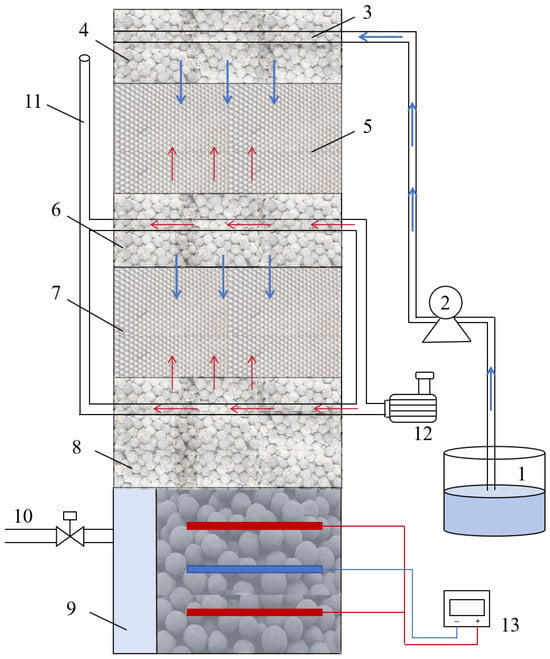
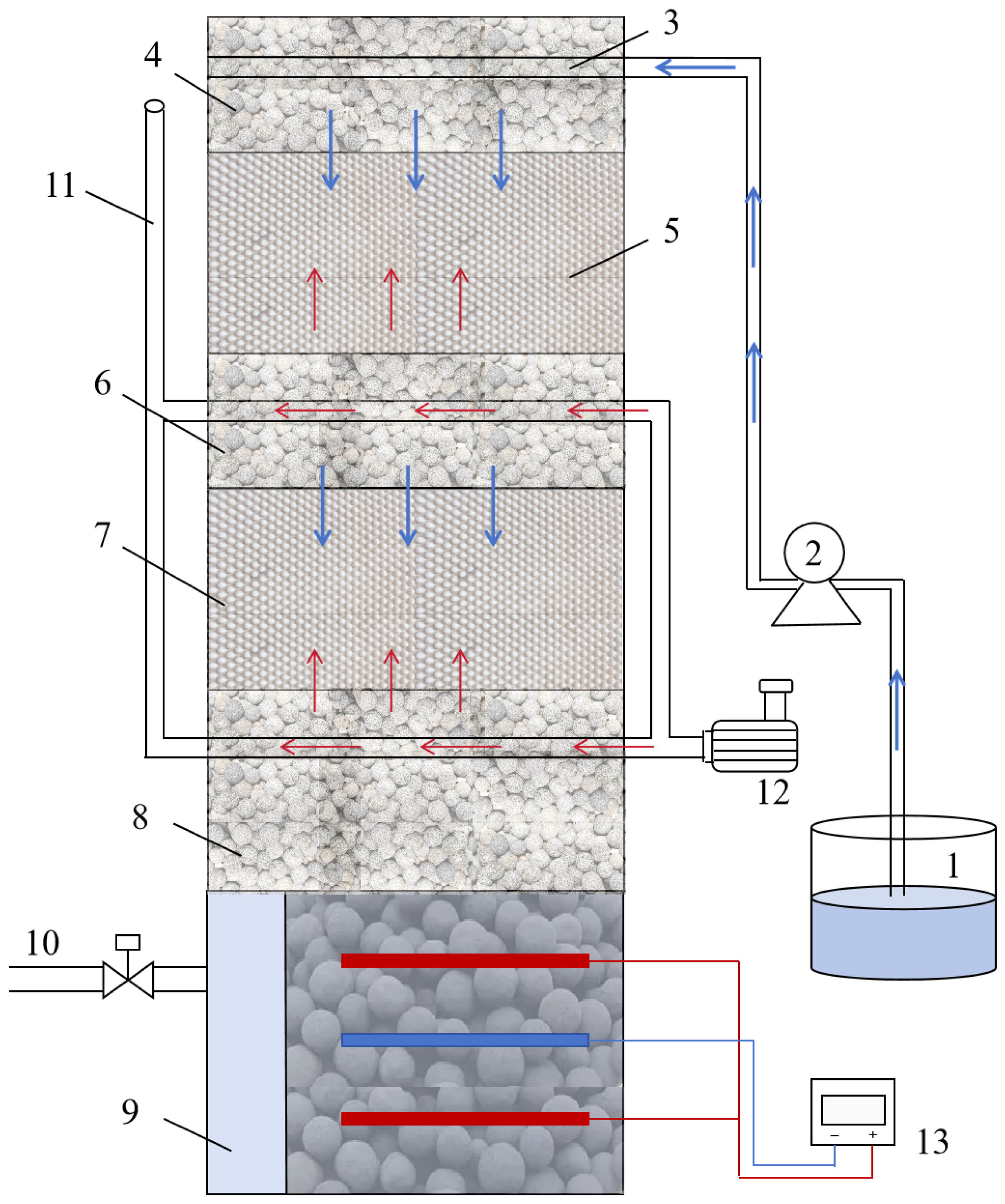
The primary structure of the laboratory-scale MEIS pilot system is constructed from acrylic, with dimensions of 35 cm (length) × 35 cm (width) × 180 cm (height). The system consists of six layers arranged from top to bottom, with the following respective thicknesses: distribution layer (20 cm), fine filtration layer 1 (30 cm), aeration layer 1 (20 cm), fine filtration layer 2 (30 cm), aeration layer 2 (30 cm), and electrochemically enhanced anaerobic layer (50 cm), as illustrated in the structural diagram in Figure 1.
Figure 1.
MEIS Device (1. Influent Reservoir, Blue arrows denote the direction of water flow; 2. Peristaltic Pump; 3. Distribution Pipe; 4. Distribution Layer; 5. Fine Filtration Layer 1; 6. Aeration Layer 1; 7. Fine Filtration Layer 2; 8. Aeration Layer 2; 9. Electrochemical Anaerobic Layer; 10. Effluent Pipe; 11. Aeration Pipe; 12. Electromagnetic Air Pump, Red arrows denote the direction of airflow; 13. DC Power Supply Equipment).
The distribution and aeration layers are primarily filled with media of varying particle sizes, including expanded clay (5–15 mm), quartz sand (2–5 mm), and volcanic rock (3–8 mm), with corresponding distribution pipes, aeration pipes, or ventilation pipes installed in each layer. The distribution layer primarily facilitates the even distribution of influent, preventing localized short-circuiting, and performs preliminary filtration of large, suspended particles via the pore spaces between media with varying particle sizes. The aeration layer establishes an alternating aerobic-anaerobic environment in the upper region through intermittent aeration, fostering the growth of aerobic functional microorganisms to promote ammonia nitrogen oxidation. Furthermore, oxygen consumption mitigates the influence of dissolved oxygen on the anaerobic micro-electrolysis reactions occurring at the bottom.
The fine filtration layer is composed of novel enhanced nitrogen removal and ammonia adsorption media (ND is primarily composed of high-purity quartz sand, which, after surface modification, supports a highly efficient nitrifying microbial community), autotrophic denitrification media (AD), and enhanced phosphorus removal media (PR is primarily composed of modified fly ash as the main raw material, with the addition of calcium-based binders for granulation and molding), with a particle size ratio of 1:1:2 (5 mm, 5 mm, and 1 mm, respectively). The total filling height is approximately 20 cm, and an additional 10 cm layer of fine river sand is placed on top, creating a composite filtration structure. The primary function of this layer is to remove pollutants from the wastewater through physical interception and adsorption processes.
The bottom-most layer of the system is the electrochemically enhanced anaerobic layer, which is filled with a mixture of iron–carbon micro-electrolysis materials and ceramic pellets. The layer is equipped with three electrode plates: iron anodes on both the upper and lower sides, and a graphite cathode positioned in the center. The electrode plates have dimensions of 25 cm × 25 cm × 3 mm, with a spacing of 15 cm between them.
2.2. Experimental Design
2.2.1. System Startup and Device Optimization
The experiment was carried out using a continuous flow operation mode, with upward flow for influent and downward flow for effluent. Simulated wastewater was prepared in a 150 L reservoir and pumped to the system’s distribution layer via a peristaltic pump set to a constant flow rate. The pump speed was precisely adjusted to achieve accurate control over the system’s hydraulic load and hydraulic retention time. The system was equipped with an electromagnetic air pump (power: 18 W, flow rate: 25 L·min−1, manufacturer: Xingcheng Aquarium Equipment Company, Guangdong, China), which operated under an intermittent aeration mode with a 48 h cycle. After 24 h of aeration, the aeration was paused for 24 h. Additionally, breathable pipes were placed beneath the aeration layer to prevent excessive dissolved oxygen levels in the bottom anaerobic zone. This long-cycle aeration not only maintained the anaerobic environment in the bottom electrochemical anaerobic layer to support the operational conditions for autotrophic denitrification, but the periodic aeration in the upper layers also ensured that the system’s overall oxygen demand was met. During the system startup phase, activated sludge was introduced for a 7-day microbial acclimatization period. After the effluent quality stabilized, samples were collected at fixed intervals each day to monitor water quality parameters. Once the system operation stabilized, the hydraulic load and influent carbon-to-nitrogen (C/N) ratio were adjusted to assess their effect on the removal efficiency of conventional pollutants, thereby identifying the optimal operational parameters. Building upon this, the target neonicotinoid pesticides, IMI and imidaclothiz (manufacturer: Yongguan Qiaodi Agricultural Technology Company, Zhengzhou, China), were introduced to further investigate the system’s removal efficiency for specific emerging pollutants.
2.2.2. Inlet Configuration
In this experiment, simulated wastewater was prepared in the laboratory, using tap water as the solvent. Sodium acetate (CH3COONa is produced by Shanghai Aladdin Biotechnology Company, Shanghai, China), ammonium chloride (NH4Cl was obtained from the same manufacturer as CH3COONa), sodium nitrate (NaNO3 was obtained from the same manufacturer as CH3COONa), and potassium dihydrogen phosphate (KH2PO4 was obtained from the same manufacturer as CH3COONa) were added as the primary pollutants, and the influent pH was adjusted to approximately 7.0 using dilute hydrochloric acid or sodium hydroxide solutions. The experiment employed two influent water qualities with high and low carbon-to-nitrogen (C/N) ratios. During the system startup and biofilm acclimation phases, high C/N influent was introduced to facilitate rapid microbial proliferation and system stabilization. Upon successful biofilm formation, the influent was switched to low C/N simulated wastewater, and target neonicotinoid pesticides, IMI and imidaclothiz (each at a concentration of 10 mg/L), were introduced to evaluate the system’s synergistic removal efficiency for conventional pollutants and specific emerging pollutants under low C/N conditions.
2.2.3. Experimental Design and Grouping
The experiment was conducted in June 2024 under controlled laboratory conditions at a constant temperature of 25 ± 1 °C. Following successful biofilm formation and optimization of operational parameters, influent conditions were set with a hydraulic load of 1.2 m3/(m2·d) and a low carbon-to-nitrogen ratio (C/N = 3:1), with COD, NH3-N, TN, and TP concentrations of 60 mg/L, 7 mg/L, 12 mg/L, and 0.5 mg/L, respectively. The current output of the DC power supply (Model IT6320 ITECH, South Burlington, VT, USA) in the electrochemical anaerobic layer was adjusted to establish four current intensity gradients (as detailed in Table A1), with each current condition running continuously for 14 days as an independent experimental setup. During each experimental condition, effluent samples were collected at fixed intervals every 48 h, and the concentrations of conventional pollutants (COD, NH3-N, TN, TP) as well as target pesticides (IMI and IMIZ) were analyzed.
2.3. Data Analysis
2.3.1. Determination of Pollutant Indicators
Following water sample collection, the samples were pre-treated with a 0.45 μm mixed cellulose filter membrane. Chemical oxygen demand (COD) was measured using the rapid digestion spectrophotometric method (HJ/T 399–2007 [19]). Ammonia nitrogen (NH3–N) concentration was quantified using the Nessler reagent spectrophotometric method (HJ 535–2009 [20]). Total nitrogen (TN) was quantified using the alkaline potassium persulfate digestion-UV spectrophotometric method (HJ 636–2012 [21]). Total phosphorus (TP) was analyzed using the ammonium molybdate spectrophotometric method (GB 11893–89 [22]). All water quality measurements were conducted in strict accordance with the relevant national standard methods. One-way analysis of variance (ANOVA) was employed to assess differences between experimental groups, with a significance level set at p < 0.05. Statistical analysis was conducted using SPSS 22.0 software.
The concentrations of IMI and imidaclothiz were quantitatively determined using high-performance liquid chromatography (HPLC) (Shimadzu, Tokyo, Japan). The analysis was conducted using a reversed-phase C18 column (Anpel, Shanghai, China) (4.6 mm × 250 mm, 5 μm), with the column temperature maintained at 35 °C. The mobile phase consisted of a mixture of water, acetonitrile, and 0.01% acetic acid (75:25, v/v), with separation performed under isocratic elution at a flow rate of 1.0 mL/min. Ultraviolet (UV) detector was performed at a wavelength of 270 nm, with a sample injection volume of 20 μL.
2.3.2. Adsorption Kinetics
In this study, batch equilibrium experiments were conducted for adsorption. The three principal fillers (ND, AD, and PR) of the fine filtration layer were accurately weighed (5.00 ± 0.01 g per sample) and placed into separate 150 mL conical flasks. To each flask, 100 mL of a mixed working solution containing IMI and IMIZ was added, with an initial concentration of 30 mg·L−1 for both pollutants. All flasks were placed on a thermostatic shaker and agitated at 25 ± 1 °C and 150 rpm.
After the experiments, the supernatant was filtered through a 0.22 μm cellulose acetate membrane, and the residual concentrations of IMI and IMIZ in the solution were determined using high-performance liquid chromatography (HPLC). All experiments were conducted in triplicate, with a blank control group (without adsorbent material) included to evaluate the adsorption by the container and the natural degradation of the pollutants. Recovery tests indicated that the recovery rates for both pesticides were >99%.
The adsorption amount of the two pesticides at time t, (mg·g−1), and the equilibrium adsorption amount, (mg·g−1), are calculated using the following equation:
where is the initial concentration (mg·L−1), is the concentration at time t (mg·L−1), is the equilibrium concentration (mg·L−1), is the volume of the solution (L), and is the mass of the adsorbent material (g).
The pseudo-first-order kinetic model assumes that the rate-limiting step in the adsorption process is the adsorption rate on the surface of the adsorbent. The equation is given by:
where is the pseudo-first-order adsorption rate constant.
The pseudo-second-order kinetic model incorporates chemical adsorption and postulates that the rate-limiting step is the diffusion of the adsorbate across the surface of the adsorbent. The corresponding equation is expressed as:
represents the pseudo-second-order adsorption rate constant.
The adsorption data were analyzed using the Freundlich and Langmuir isotherm models to explore the adsorption mechanism and capacity.
(1) The Freundlich isotherm model (commonly used to describe multilayer adsorption on heterogeneous surfaces):
where is the Freundlich adsorption coefficient, which is indicative of the system’s relative adsorption capacity, and is the nonlinear exponent, which reflects the adsorption intensity and heterogeneity of the system.
(2) The Langmuir isotherm model (commonly used to describe monolayer adsorption on homogeneous surfaces):
where is the theoretical maximum adsorption capacity (mg·g−1) and is the Langmuir affinity constant (L·mg−1), which reflects the adsorption energy.
(3) The linear distribution coefficient, , is defined as:
where is the linear adsorption coefficient (L·g−1), which is used to directly compare the adsorption capacities of various adsorbent materials.
The adsorption kinetic data were analyzed using both the pseudo-first-order and pseudo-second-order kinetic models to explore the adsorption rate and rate-limiting steps. All model fittings were carried out using the least squares method, with the goodness of fit evaluated by the coefficient of determination (R2).
3. Results and Discussion
3.1. System Biofilm Formation and Parameter Optimization
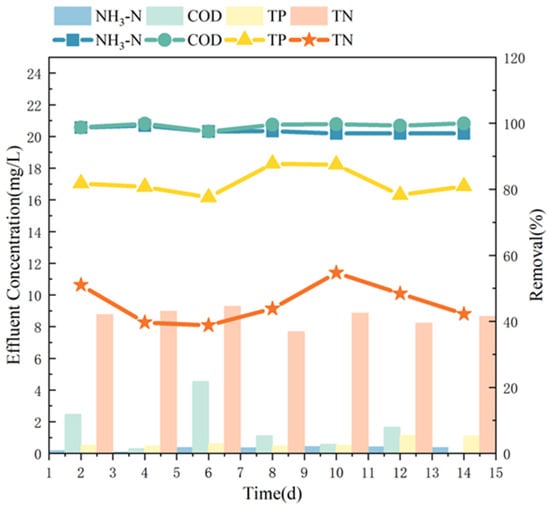
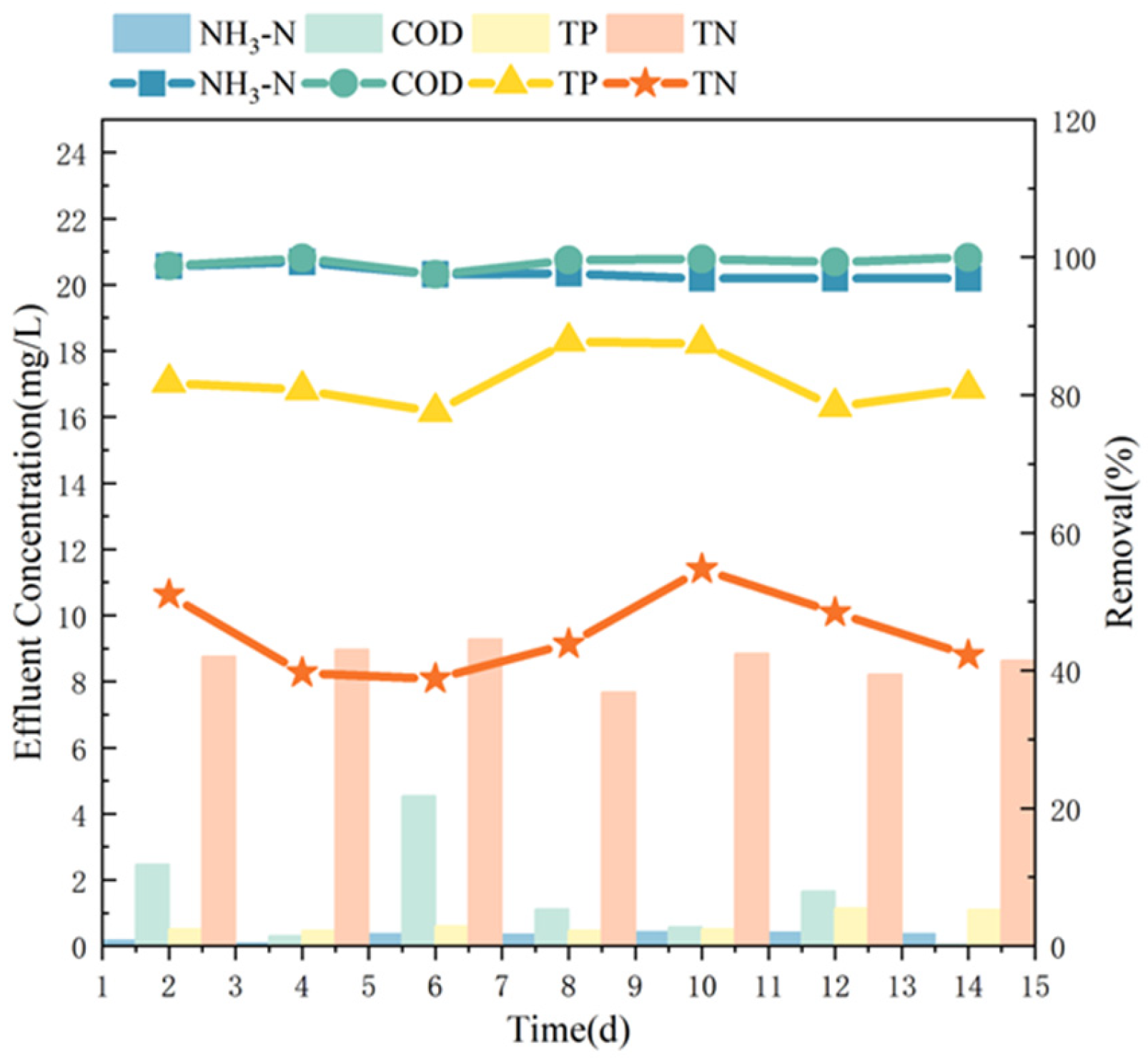
During the system startup phase, influent with a high carbon-to-nitrogen ratio (C/N = 15:1, COD = 300 mg/L, NH3-N = 15 mg/L, TN = 20 mg/L, TP = 3 mg/L) was used to provide a sufficient carbon source, promoting rapid microbial proliferation. Activated sludge from a municipal wastewater treatment plant was inoculated as the initial microbial inoculum to establish a diverse and resilient microbial community. The startup and biofilm acclimatization period lasted for approximately 30 days. Throughout this process, an adequate supply of organic carbon provided favorable conditions for the rapid proliferation of heterotrophic microorganisms, thereby significantly enhancing the colonization and maturation of the biofilm on the surface of the packing material [23]. Additionally, the high carbon-to-nitrogen ratio environment ensured that the denitrifying microbial community had access to sufficient electron donors, even in the early stages when nitrification had not yet been fully established, thereby effectively mitigating the limitations of nitrogen removal functionality caused by carbon source competition [24]. During this period, the removal efficiencies of key pollutants (COD, NH3-N, TN, TP) were regularly monitored. The system was deemed successfully started up and ready for subsequent parameter optimization experiments once the pollutant removal efficiencies plateaued, with relative standard deviations of less than 5% over five consecutive sampling cycles (i.e., after day 30, as illustrated in Figure 2). This stabilization signified the maturation of a functionally stable biofilm ecosystem, providing a robust biological foundation for the following investigations. Specifically, the COD removal efficiency remained consistently around 99%, signifying that the system’s capacity for efficient organic matter degradation had been thoroughly established. The NH3-N removal efficiency remained above 97.7%, reflecting the maturation and stable metabolic activity of the nitrifying microbial community. The removal efficiencies of TN and TP remained stable at 45.5% and 82.1%, respectively, indicating that the system had established foundational performance in simultaneous nitrogen and phosphorus removal. The stabilization of these parameters signified the completion of the initial biofilm formation phase, resulting in a biofilm system with a structurally complete and functionally stable framework, thereby establishing a robust microbiological foundation for subsequent in-depth investigations into the removal efficiency of emerging pollutants under electrochemical enhancement.
Figure 2.
Pollutant Parameters during the Biofilm Formation Phase (The bar chart represents the effluent concentration, while the line graph illustrates the removal efficiency).
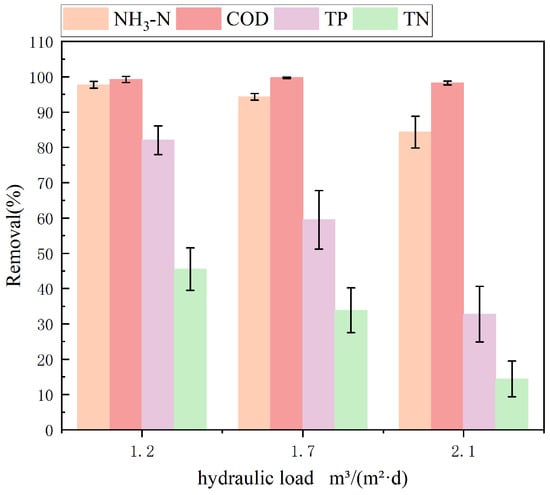
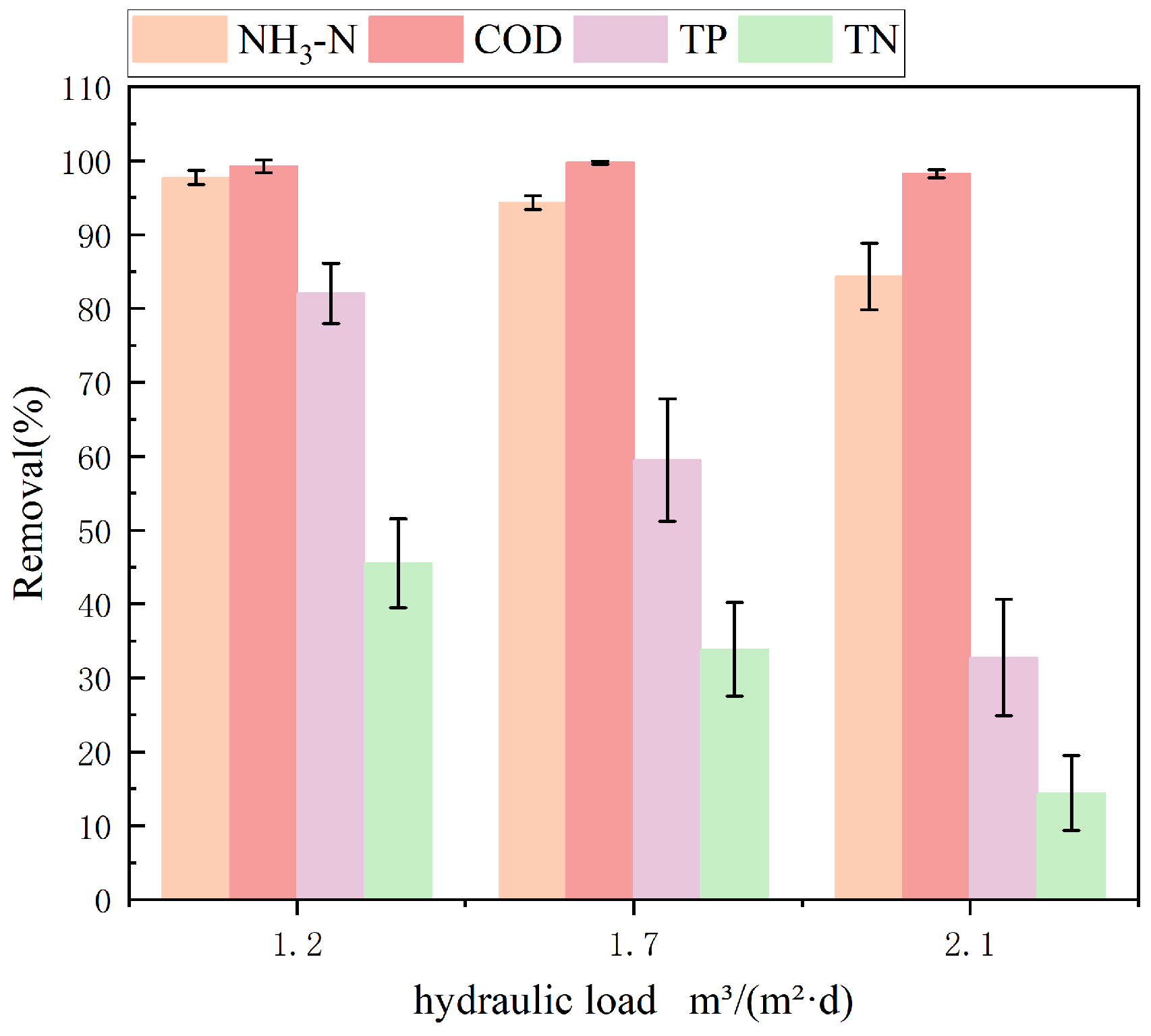
Following the successful attachment of the biofilm and the stabilization of the system’s operation, hydraulic loading was investigated for its effect on treatment performance, and system parameters were optimized. The influent composition and carbon-to-nitrogen ratio were kept constant, while the peristaltic pump speed was precisely adjusted. Hydraulic loading was set at three levels: 1.2, 1.7, and 2.1 m3/(m2·d), with the system’s maximum hydraulic loading reaching 2.5 m3/(m2·d). Each hydraulic loading condition was run continuously for 14 days, with influent and effluent samples being collected synchronously every 48 h at 8 PM. This sampling schedule ensured the temporal alignment and comparability of the water quality data. Through the analysis of key water quality parameters, including COD, NH3-N, TN, and TP, the pollutant removal performance of the ecological filtration system under various hydraulic loading conditions was comprehensively assessed. The corresponding experimental results are presented in Figure 3.
Figure 3.
Pollutant parameters under varying hydraulic loading conditions.
Analysis of the experimental data revealed that an increase in hydraulic loading exerted a significant inhibitory effect on the pollutant removal performance of the ecological filtration system. As the hydraulic loading was incrementally increased from 1.2 m3/(m2·d) to 2.1 m3/(m2·d), the removal efficiency of all monitored parameters exhibited a systematic decline. Specifically, the COD removal efficiency decreased from 99.32% to 98.26%, exhibiting minimal sensitivity to changes in hydraulic loading. The NH3-N removal efficiency decreased from 97.7% to 84.4%, representing a reduction of 13.3 percentage points, thereby indicating a marked inhibition of the ammonia nitrogen conversion process. The reduction in TN removal efficiency was particularly significant, dropping sharply from 45.5% to 14.4%. This marked decline is primarily attributed to the reduced hydraulic retention time (HRT) under elevated loading rates. The shortened HRT likely limits the contact time available for slow-growing denitrifying bacteria, hindering their ability to complete the multi-step denitrification process. Additionally, the increased hydraulic shear forces may intensify the washout of key microbial consortia and their extracellular enzymes, further diminishing the system’s nitrogen removal efficiency [25]. The TP removal efficiency also exhibited a notable decline, decreasing from 82.1% to 32.8%, thereby indicating a substantial reduction in the system’s phosphorus retention capacity. Based on the response of pollutant removal efficiency to variations in hydraulic loading, the optimal hydraulic loading for subsequent experimental runs was determined to be 1.2 m3/(m2·d).
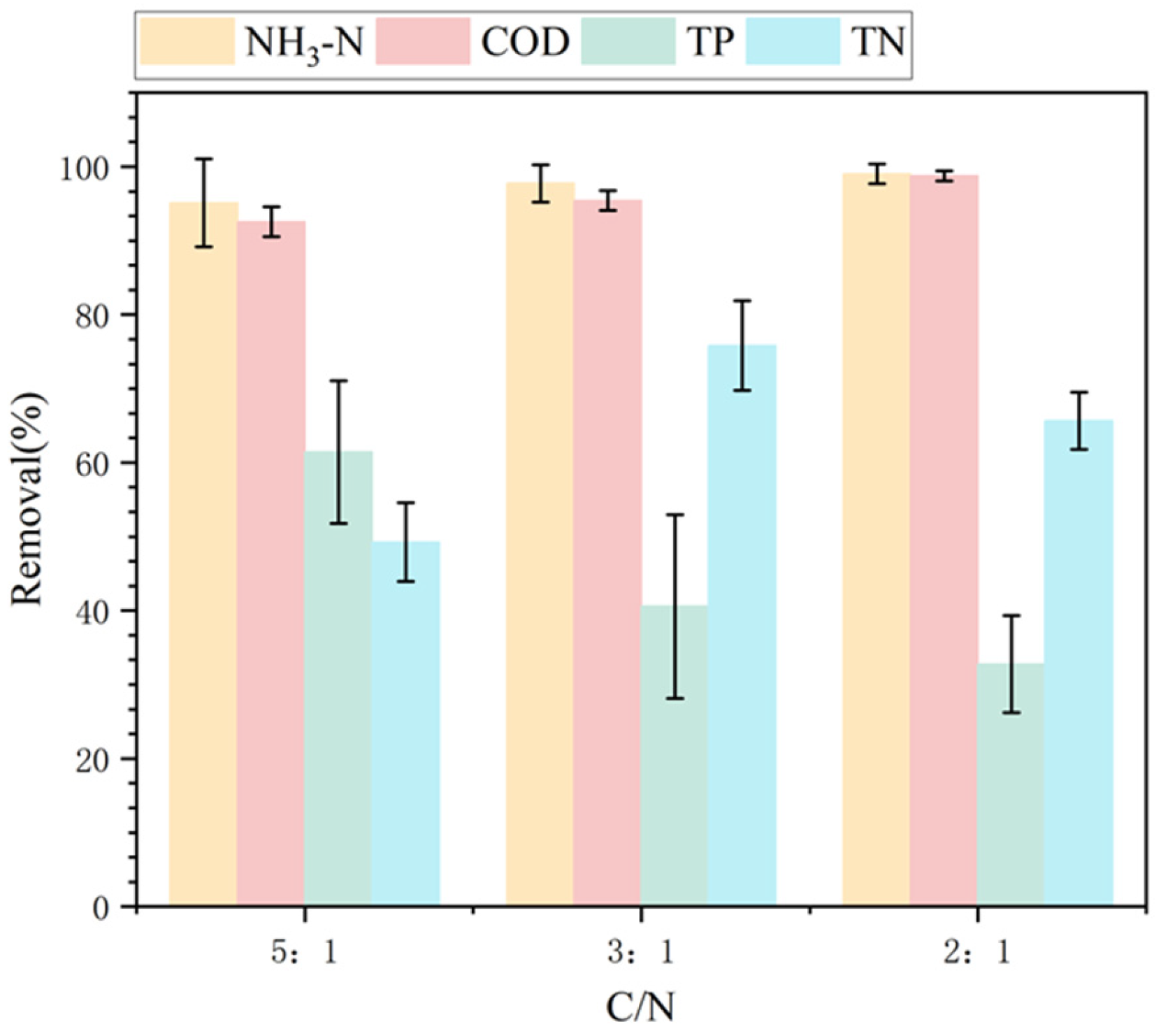
Building on the determination of the optimal hydraulic loading, the influence mechanism of influent C/N ratio on pollutant removal efficiency was further optimized.
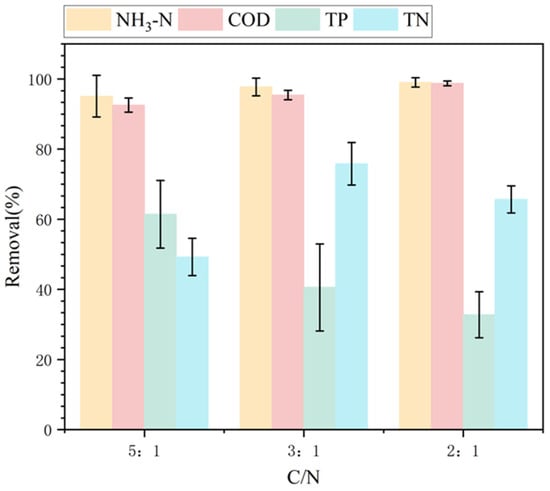
The experimental results (Figure 4) reveal that as the C/N ratio gradually decreased from 5:1 to 2:1, the system’s removal efficiency for various pollutants followed a consistent trend: the COD removal efficiency increased from 92.5% to 99.8%, indicating that the reduction in organic carbon sources markedly enhanced the utilization efficiency of the limited carbon by heterotrophic microorganisms. The NH3-N removal efficiency increased from 95.1% to 99.0%, reflecting that, under low-carbon conditions, the competition between nitrifying bacteria and heterotrophic microorganisms was reduced, thereby facilitating the ammonia oxidation process. The TN removal efficiency reached its peak of 75.8% at a C/N ratio of 3:1, but declined to 65.7% at a C/N ratio of 2:1. This trend indicates that a sufficient carbon source (C/N = 3:1) serves as an optimal electron donor for denitrification, while further carbon scarcity (C/N = 2:1) significantly restricts the denitrification capacity. The TP removal efficiency steadily decreased from an initial value of 61.4% to 32.8%, a trend primarily attributed to the gradual saturation of the packing material’s phosphorus adsorption capacity. During the initial stages of system operation, the abundant active sites on the surface of the packing material effectively removed phosphate from the water via physical adsorption and chemical precipitation. As the reaction progressed, the adsorption sites on the packing material’s surface became progressively occupied, while the diffusion resistance within the material increased, resulting in a significant decline in the adsorption rate and a limited regeneration capacity [26]. The results above indicate that during the treatment of wastewater with a low C/N ratio, the availability of carbon sources exerts a decisive influence on the metabolic pathways of various functional microbial communities. Based on these findings, a C/N ratio of 3:1 was determined to be the optimal influent ratio.
Figure 4.
Pollutant parameters under varying C/N ratios.
3.2. Electrochemical Enhancement of MEIS
3.2.1. NH3-N Removal
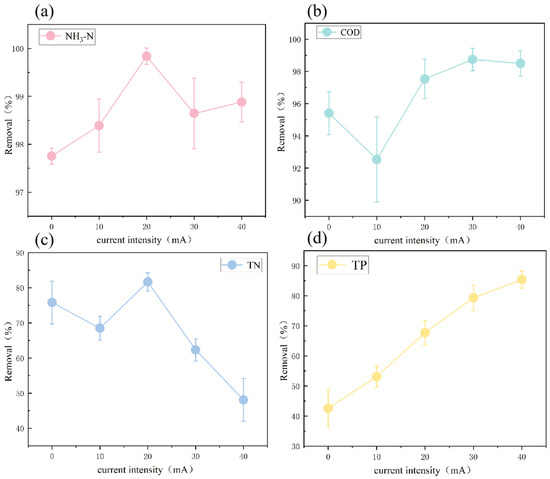
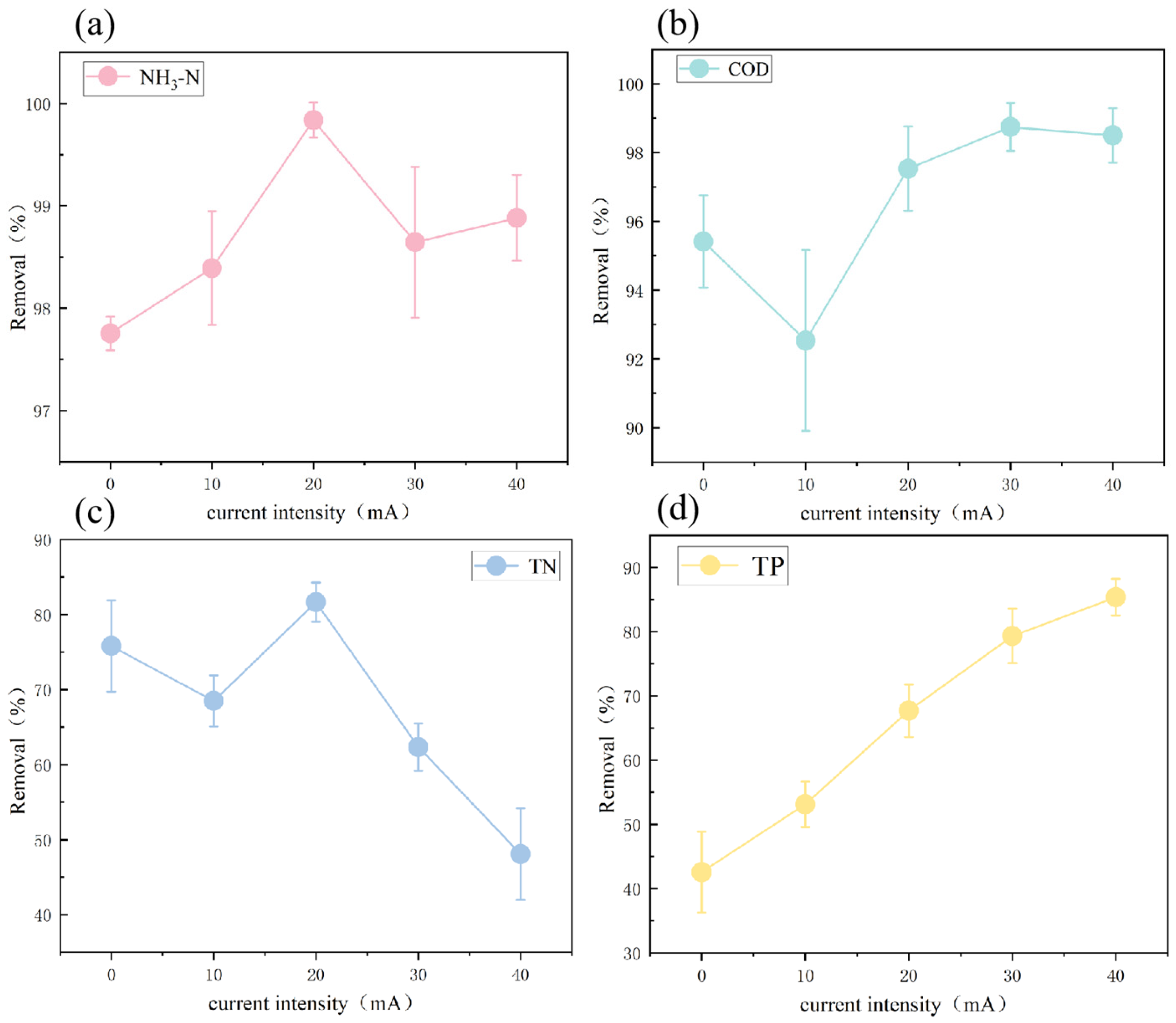
As illustrated in Figure 5a, electrochemical enhancement of the MEIS system significantly facilitates the removal of ammonia nitrogen (NH3-N), with the effectiveness exhibiting a non-monotonic trend: initially increasing with current intensity and then slightly decreasing. In the control group (where no current is applied), the NH3-N removal efficiency achieved 97.7%, predominantly relying on nitrification and the adsorption capacity of the filler material. Upon the application of a 0.008 mA/cm2 current density, the removal efficiency further improved, potentially as a result of the applied electric field. A moderate electric field has been reported to modulate microbial metabolism and community structure, for instance, by enhancing transmembrane transport, stimulating enzyme activity, or promoting the growth of electroactive species that contribute to nitrogen cycling [27]. Additionally, the direct electrochemical oxidation reaction at the anode further contributes to the removal of NH3-N, with the potential reaction pathway outlined below [28]:
Anode: 2NH3 + 6OH− → N2↑ + 6H2O + 6e−
Figure 5.
Removal Efficiency of Conventional Pollutants under Varying Current Intensities in the MEIS System ((a) NH3-N, (b) COD, (c) TN, (d) TP). Data points represent the average removal efficiencies measured during a 14-day stable operation period under each constant current condition.
Upon increasing the current density to 0.016 mA/cm2, the NH3-N removal efficiency reached its peak at 99.8%, suggesting that the optimal synergistic effect between biological enhancement and electrochemical oxidation was attained at this current level. Furthermore, the active species generated through the coupling of iron–carbon micro-electrolysis and the electric field, such as [H] and Fe2+, likely optimize the micro-ecosystem, thereby facilitating the enrichment of functional microorganisms. However, as the current density increased to 0.032 mA/cm2, the NH3-N removal efficiency slightly decreased, likely due to the inhibition or electrostimulation-induced damage to nitrifying bacteria, such as AOB and NOB, which impaired their biological activity [29]. Although the electrochemical oxidation effect was enhanced, it could not entirely offset the reduced biological nitrification, thus 0.016 mA/cm2 is identified as the optimal current density condition.
3.2.2. COD Removal
As illustrated in Figure 5b, as the current intensity increases, the system’s removal efficiency of COD showed a marked upward trend, suggesting that the electrochemical enhancement combined with iron–carbon micro-electrolysis contributes to a positive synergistic effect in organic matter degradation.
In the absence of applied current, the system developed a stable microbial community capable of effectively degrading COD. Upon the initial application of a relatively low current, the removal efficiency slightly declined compared to the control group, likely due to the current acting as an environmental stressor, which interfered with the activity of the pre-existing degrading microbial community, while the system remained in the transitional phase of community structure reconfiguration and functional acclimatization. As the current intensity continues to increase, the microbial community within the system undergoes adaptive succession, with microbial populations that are tolerant to and utilize the electric field gradually becoming the dominant species. Concurrently, the electrochemical effect intensified: zero-valent iron at the anode continuously released Fe2+ under the influence of the electric field, while the cathode generated highly reactive atomic hydrogen [H], both of which effectively degraded the organic structure through Fenton-like reactions, thereby improving the biodegradability of the wastewater [30,31]. Furthermore, the external electric field enhanced the micro-electrolysis process, promoting the electrophoretic migration of charged species and adsorption onto the electrode surface, while facilitating the hydrolysis of Fe2+/Fe3+, leading to the formation of hydroxide flocs with flocculating properties. This further enabled the capture and co-precipitation of colloidal and suspended organic matter [32]. Consequently, as the current density increased, electrochemical oxidation, micro-electrolysis reduction, electroadsorption, and flocculation-precipitation processes were synergistically enhanced, collectively driving the COD removal efficiency to follow a monotonically increasing trend.
3.2.3. TN Removal
As shown in Figure 5c, the system’s removal efficiency of total nitrogen (TN) exhibited a nonlinear trend of first increasing and then decreasing with increasing current intensity. As the current density intensity increased from 0 to 0.016 mA/cm2, the TN removal efficiency rose from 75.8% to 81.7%, suggesting that moderate electrochemical enhancement facilitated the nitrogen removal process. The promoting mechanism primarily involved: the current lowering the system’s redox potential, thereby creating a favorable environment for denitrification. Zero-valent iron at the anode continuously released Fe2+, serving as an electron donor to strengthen denitrification [33]. The flocs formed by the hydrolysis of Fe3+ were able to adsorb nitrogen-containing pollutants; moderate current also promoted the enrichment of functional microbial communities, such as Proteobacteria, and optimized the structure of the denitrifying microbial community [34].
However, as the current density intensity increased to 0.032 mA/cm2, the TN removal efficiency significantly declined. Excessively high current reduced the redox potential to below −250 mV (ORP < −250 mV), thereby inhibiting the activity of key denitrification enzymes [35,36]. Simultaneously, the current induced direct electrostimulatory toxicity in the microorganisms, leading to a reduction in community diversity and functional imbalance [29]. Additionally, a significant factor at 40 mA (current density 0.032 mA/cm2) may be the vigorous evolution of hydrogen gas at the cathode (2H+ + 2e− → H2). Excessive H2 bubble formation could physically compromise the integrity of the anodic biofilm or induce the sloughing of biomass from the electrode and filler surfaces, thereby detaching active denitrifying communities and resulting in a sharp decline in TN removal performance. An excessively high Fe2+ concentration also triggered side reactions, disrupting the normal metabolism of denitrifying bacteria [15].
In conclusion, electrochemical enhancement via MEIS demonstrated an “optimal current window”. Under the experimental conditions, 20 mA (current density of 0.016 mA/cm2) was identified as the optimal intensity, at which the electrochemical conditions and microbial activity were balanced, leading to an efficient synergy between biological nitrogen removal and electrochemical processes.
3.2.4. TP Removal
As depicted in Figure 5d, TP removal efficiency increased with current intensity, reaching a maximum of 85.4% in the electrically treated groups, significantly higher than in the non-electrified control. This phenomenon suggested that electrochemical enhancement effectively promotes phosphorus removal, with efficiency positively correlated to current intensity.
The continuous improvement in TP removal efficiency is mainly due to the enhanced precipitation and adsorption mechanisms driven by the synergistic effects of iron–carbon micro-electrolysis and electrochemical enhancement. As current intensity increased, zero-valent iron (ZVI) at the anode continuously released Fe2+ under the electric field, with part of the oxidized Fe3+ directly reacting with phosphate ions (PO43−) in the water to form insoluble FePO4 (Ksp = 1.3 × 10⁻²²), thus effectively immobilizing phosphorus in the system [15]. Additionally, Fe2+/Fe3+ released under weakly alkaline conditions in the system hydrolyzed to form Fe(OH)2 and Fe(OH)3 flocs, which have a high specific surface area and numerous adsorption sites, effectively removing dissolved and colloidal phosphorus from the water through surface complexation and entrapment [17]. Moreover, the introduction of current may modify the charge distribution on the packing material surface, thereby enhancing its electro-adsorption capacity for phosphate ions and further improving TP removal efficiency. Although TN removal efficiency decreased under 0.032 mA/cm2 due to microbial inhibition, TP removal efficiency continued to increase, further confirming that phosphorus removal in this coupled system is predominantly driven by electrochemically induced physicochemical processes.
3.3. Adsorption Experiments of IMI and IMIZ
3.3.1. Adsorption Kinetics
As depicted in Table A2 and Figure A1a,c, the adsorption kinetics of IMI and IMIZ on the three types of fillers attained equilibrium within approximately 50 h, displaying a characteristic two-phase behavior: the first phase (0–10 h) was characterized by rapid adsorption, followed by a second phase (10–50 h) where the adsorption rate slowed down and gradually approached equilibrium. Both pesticides exhibited similar kinetic trends throughout this process. The adsorption kinetic data, upon fitting, indicated that both the pseudo-first-order and pseudo-second-order models sufficiently described the process. However, the pseudo-second-order model consistently produced higher R2 values, which implied a substantial contribution from chemical interaction mechanisms in the adsorption process. Furthermore, the equilibrium adsorption capacity predicted by the pseudo-second-order model was in closer agreement with the experimentally observed values, further supporting the presence of mechanisms such as chemical bonding or electron transfer, as opposed to being exclusively governed by physical diffusion [37,38].
Regarding the equilibrium adsorption capacity (), AD filler demonstrated the highest adsorption capacity for both IMI and IMIZ, with values of 0.9185 mg·g−1 and 0.6715 mg·g−1, respectively. These values notably exceeded those of ND and PR fillers. This disparity could largely be attributed to the AD filler, which featured a more complex pore structure, a higher specific surface area, and a greater concentration of surface functional groups, thereby offering a larger number of active adsorption sites. These observations align with prior research, which correlated the adsorption capacity of porous materials with their physicochemical properties [39]. In contrast, the ND and PR fillers exhibited a weaker adsorption capacity for the pesticides, although they still showed some adsorption potential. The pseudo-second-order rate constant () for IMI is consistently higher than that for IMIZ across all three fillers, suggesting that IMI is more readily adsorbed by the adsorbent under identical conditions. The elevated polarity and water solubility of IMI enhance the efficiency of mass transfer at the filler-solution interface, fostering interactions with surface active sites, which in turn leads to stronger adsorption affinity and accelerated adsorption kinetics [40]. The observed phenomenon indicates that the adsorption behavior of pollutants in environmental media is governed not only by the structural and surface properties of the adsorbent but also by the molecular characteristics of the pollutants themselves. This conclusion aligns with previous studies on the adsorption mechanisms of organic pollutants in complex environmental matrices [41].
According to the particle diffusion model fitting results (Figure A1b,d), the adsorption process of IMI and IMIZ on the fillers could be categorized into three distinct stages: the first stage involves the liquid film diffusion phase, where IMI and IMIZ diffuse from the bulk liquid phase to the liquid film boundary at the filler surface. The second stage represents the intraparticle diffusion phase, where the pollutants continue to migrate through the filler’s porous structure toward the internal active sites. The third stage corresponds to the adsorption equilibrium phase, during which pollutant molecules bind to the surface functional groups or active sites of the filler, reaching dynamic equilibrium [42,43].
3.3.2. Adsorption Isotherms
In order to further examine the adsorption mechanisms and capacities of IMI and IMIZ on the three types of fillers, this study utilized the Freundlich and Langmuir models to analyze the adsorption equilibrium data, with the corresponding fitting parameters displayed in Table A3 and Figure A2.
The adsorption isotherm fitting results indicated that both the Freundlich and Langmuir models effectively described the adsorption behaviors of IMI and IMIZ on the three types of fillers (R2 > 0.87). The Langmuir model consistently demonstrated a higher goodness of fit, suggesting that the adsorption process is more consistent with the monolayer adsorption model, thereby implying that the filler surface likely contains specific active sites with a relatively uniform energy distribution [44]. IMI exhibited the highest theoretical maximum adsorption capacity () on the ND filler, while IMIZ demonstrated the optimal adsorption capacity () on the PR filler. This disparity implied a distinct selectivity of the different fillers towards the adsorption sites of the two pesticide types [40]. Notably, although the AD filler exhibited a rapid adsorption rate in the kinetics, its value was not the highest, potentially reflecting the efficient utilization of its adsorption sites prior to saturation. Furthermore, the elevated Langmuir affinity coefficient () of the AD provides additional evidence of the strong interaction between the filler and pesticide molecules, as the value is typically positively correlated with the binding energy or affinity between the adsorbate and adsorbent [39]. The Freundlich model parameters reveal the heterogeneity of the adsorbent surface. The value in the model (with n as the nonlinear index) serves as a critical parameter in determining whether the adsorption process is classified as favorable adsorption [38]. In this study, all values were found to be less than 1 (ranging from 0.415 to 0.730), suggesting that the adsorption of IMI and IMIZ on the three fillers is a thermodynamically favorable process. The AD filler exhibited the lowest values (IMI: 0.415; IMIZ: 0.437), indicative of the greatest surface heterogeneity and the most uneven distribution of adsorption site energies, leading to the most pronounced reduction in adsorption affinity as surface coverage increases [39]. The Freundlich constant () reflects the relative strength of adsorption capacity, with its trend consistent with that of the Langmuir affinity coefficient (). The AD filler demonstrated the highest value, further supporting its exceptional overall adsorption capacity for both neonicotinoid pesticides within the experimental concentration range [45].
The linear distribution coefficient () illustrates the distribution behavior of pollutants between the solid phase (filler) and the liquid phase (aqueous phase). As depicted in Figure A3, during the adsorption process, the values of the different fillers decreased as the equilibrium concentration increased, suggesting that the effective adsorption sites on the adsorbent surface progressively became saturated, resulting in a reduction in its per-unit adsorption capacity for the pollutants [46]. Throughout this process, competition among the adsorbates at elevated concentrations for the finite adsorption sites likely expedited the reduction in adsorption capacity. In comparison to the ND and PR, the AD demonstrated markedly higher values for both IMI and IMIZ, reflecting its superior adsorption affinity and enhanced solid–liquid partitioning capacity. This finding aligned with the previous adsorption kinetic results, which further substantiated that the AD had a larger specific surface area, a well-developed pore structure, and a rich array of surface functional groups, thereby offering more readily accessible active adsorption sites. Therefore, in the forthcoming removal experiments, the AD filler is anticipated to play a pivotal role in augmenting the adsorption and retention of neonicotinoid pesticides [9].
3.4. Synergistic Removal Efficiency Analysis of IMI and IMIZ by MEIS
Building upon the stable operation of the MEIS system, a mixed pesticide solution containing IMI and IMIZ at a concentration of 30 mg/L was introduced into the influent. Various operational conditions were systematically varied, and the pesticide concentration in the effluent was monitored to evaluate the long-term effects of different operational strategies on pesticide removal efficiency, as well as to assess the system’s resilience to shock loading.
3.4.1. Electrochemical Enhancement
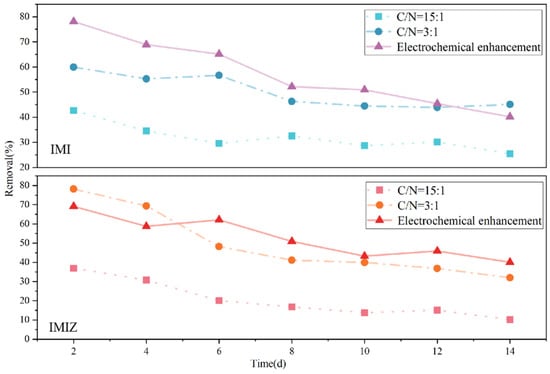
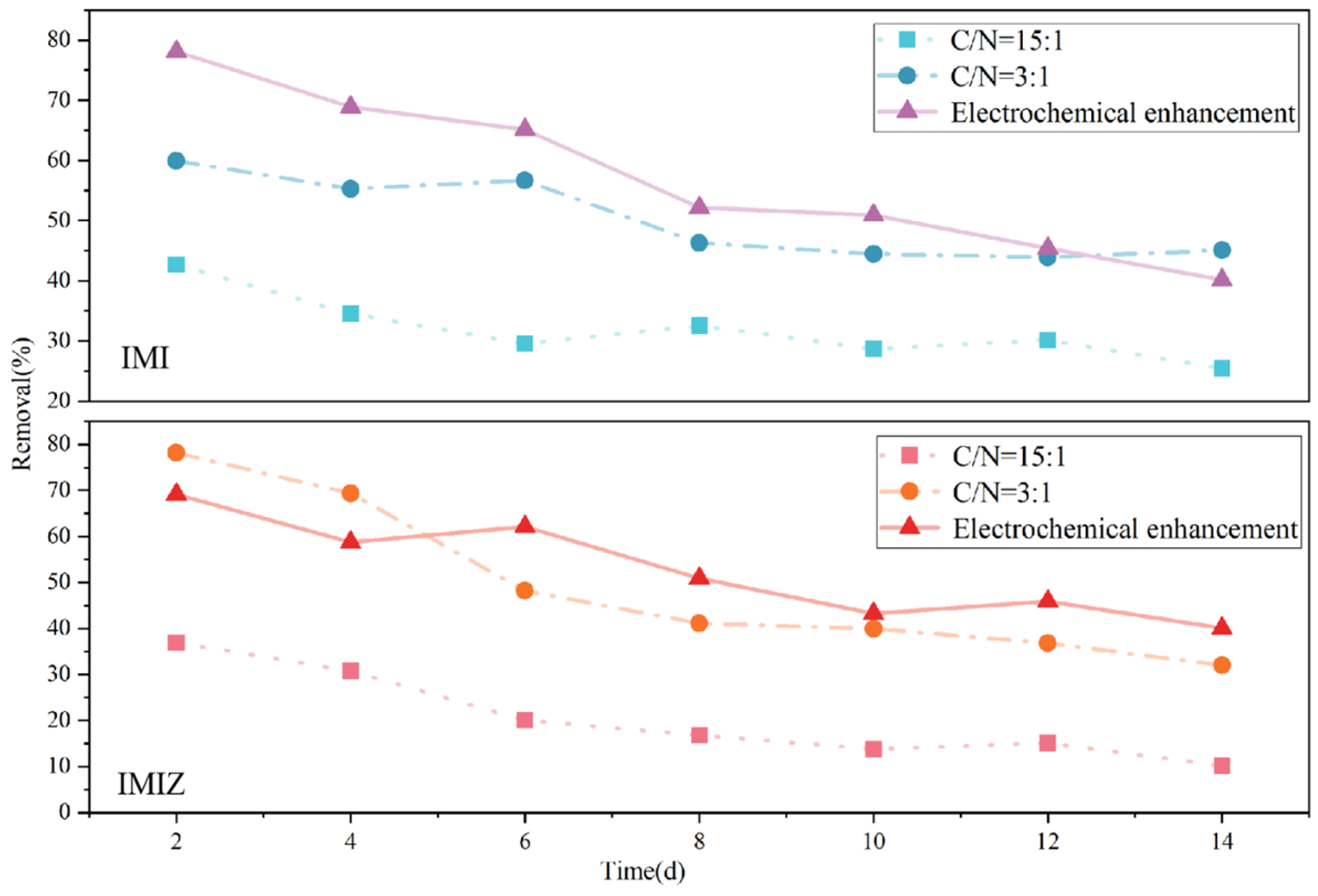
As shown in Figure 6, the electrochemically enhanced group exhibited the highest pesticide removal efficiency, with average removal rates of 57.27% for IMI and 52.87% for IMIZ, significantly outperforming the non-enhanced group. During the initial stages of operation, the removal rates of IMI and IMIZ under electrochemical enhancement conditions were 78.1% and 69.1%, respectively. This finding robustly supports the system’s rapid activation and high-efficiency removal capacity for neonicotinoid pesticides under electrochemical enhancement. The applied electric field likely facilitates the sustained activation of the iron–carbon micro-electrolysis material, triggering electrochemical reactions analogous to those reported in similar systems. Oxidation at the anode (Fe → Fe2+ + 2e−) is expected to promote continuous Fe2+ release, while reduction at the cathode (2H+ + 2e− → H2) may generate reactive hydrogen species (·H). Based on previous studies [47], such reactive species could potentially attack characteristic functional groups in NNs molecules, possibly leading to structural disruptions such as nitro group reduction or ring opening, thereby potentially reducing toxicity and enhancing biodegradability. However, direct detection of hydroxyl radicals, identification of ring-cleavage intermediates, or comprehensive microbial community sequencing were not performed in this study, and thus these mechanistic pathways remain to be fully verified. Simultaneously, the electric field facilitates the mass transfer of pollutants. Both IMI and IMIZ contain polar functional groups, imparting partial charges to them, and under the electric field’s influence, they are directed towards the respective electrode surfaces. This greatly enhances the contact efficiency between the pollutants and the active sites on the electrodes, as well as the reactive interface with the iron–carbon material, thereby alleviating the constraints imposed by mass transfer resistance on the degradation process [12]. Preliminary results from electrochemical enhancement for the removal of conventional pollutants suggest that a current density of 0.016 mA/cm2 represents the optimal parameter for the MEIS, enabling targeted modulation of microbial community structure and function within the anode biofilm, thereby enriching microbial populations with electroactive or pollutant-degrading capabilities. This, in turn, promotes the establishment and strengthening of a synergistic degradation pathway via biological oxidation and electrochemical reduction/oxidation. This observation has been corroborated by previous studies [35]. The research conducted by Saidi et al. [48] offered direct evidence that substantiated the universality of current modulation in improving system efficacy for the treatment of complex organic pollutants. Consequently, the bio-electrochemical synergistic mechanism serves as one of the primary pathways enabling the efficient transformation and removal of IMI and IMIZ in this system.
Figure 6.
Removal Efficiency of IMI and IMIZ by MEIS under Different Operating Conditions.
3.4.2. C/N of Influent
In the absence of electrochemical enhancement, the average removal rate in the low carbon-to-nitrogen ratio (C/N = 3:1) influent group was significantly higher than that in the high carbon-to-nitrogen ratio (C/N = 15:1) influent group, suggesting that lower carbon-to-nitrogen ratios enhance pesticide removal efficiency. As pesticides inherently contain organic carbon, an excessively high carbon-to-nitrogen ratio leads to an overabundance of organic carbon (measured as COD). On one hand, the excess dissolved organic carbon competes with pesticide molecules for the limited adsorption sites on the filler; on the other hand, the abundant carbon source fosters excessive proliferation of heterotrophic bacteria, disrupting the microbial community structure and potentially suppressing the growth of microorganisms with specific pesticide-degrading functions, thereby obstructing the biological degradation pathway of pesticides [9,49].
Although all three experimental groups demonstrated high pesticide removal efficiency in the initial phase, the removal efficiency for all groups steadily decreased over the 14-day operational period. In the electrochemical enhancement group, the IMI removal rate declined steadily from 78.1% on day 2 to 40.2%, whereas the IMIZ removal rate similarly decreased from 69.1% to 39.8%. IMI and IMIZ demonstrated high chemical stability and significant environmental persistence owing to the nitroimine groups in their molecular structures, which promoted their continuous accumulation on the filler surface within MEIS, progressively nearing adsorption saturation. According to the adsorption isotherm experiments, the theoretical maximum adsorption capacity () of the three functional fillers for IMI and IMIZ ranged from 2.45 to 3.64 mg·g−1. Under continuous influent conditions, the available adsorption sites on the filler surface diminished over time, leading to a gradual decline in its pollutant retention capacity. At high carbon-to-nitrogen ratios (C/N = 15:1), the excess dissolved organic matter competed with pesticide molecules for limited adsorption sites, further accelerating the depletion of adsorption capacity [8,39]. The continuous influx of high pesticide concentrations presented a significant threat to microbial communities, with well-documented toxic effects on nitrifying bacteria, denitrifying bacteria, and essential pesticide-degrading bacteria [50,51,52]. High organic loading environments tended to induce the over-proliferation of heterotrophic microorganisms, which competed for nutrients and living space, thereby displacing the ecological niches of functional degradation bacteria, and ultimately reducing their abundance and activity [53]. This was a key factor contributing to the significant decline in the removal efficiency of conventional pollutants following the addition of pesticides. As illustrated in Figure A4, the COD removal efficiency decreased from 99.0% before the addition of the reagent to 73.1%, while the removal efficiencies of TN and TP also demonstrated a gradual decline to varying extents. The introduction of high concentrations of neonicotinoid pesticides imposed substantial stress on both the structure and function of the microbial community within the system, consequently disturbing the inherent ecological balance and metabolic stability of the MEIS.
3.4.3. Hydraulic Loading Rate
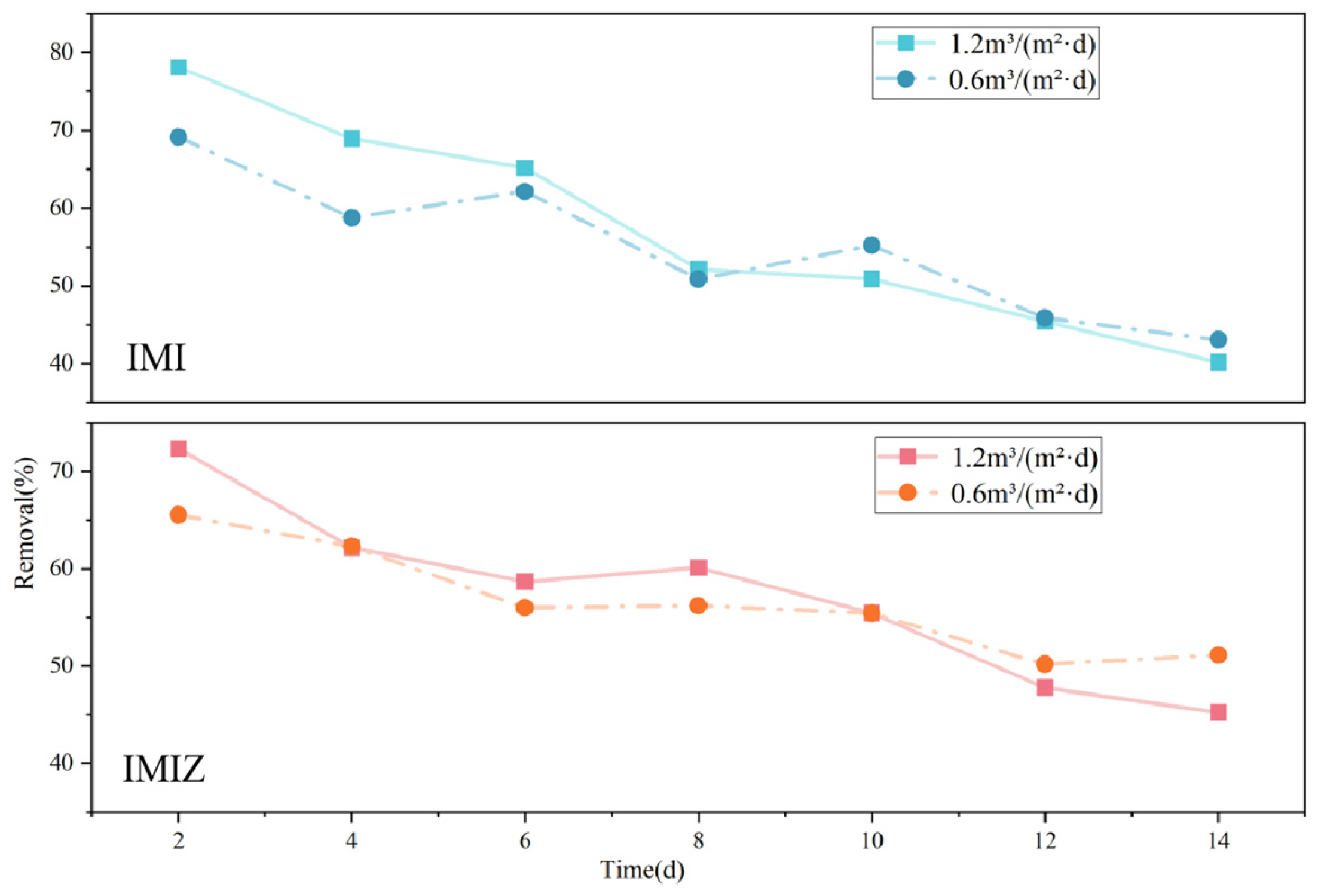
During the operation of the MEIS, the hydraulic loading rate (HLR) is a critical parameter that significantly influences pollutant removal efficiency. Conventional constructed wetland systems generally depend on natural processes, such as plant uptake, substrate adsorption, and microbial degradation, to achieve pollutant removal. The HLR in such systems is typically maintained at lower levels (0.1–0.5 m3/(m2·d)) to ensure sufficient hydraulic retention time (HRT) for effective treatment. Zheng et al. [18] investigated the treatment of saline tailwater in an iron–carbon micro-electrolysis-enhanced constructed wetland, applying a HLR of 0.2 m3/(m2·d). They observed that the system primarily facilitates pollutant removal through plant uptake, alongside flocculation, adsorption, and reduction processes driven by the iron–carbon micro-electrolysis. Li et al. [16] conducted an investigation into the removal of pharmaceuticals and personal care products (PPCPs) in constructed wetlands and observed that an increase in the HLR led to a significant decline in pollutant removal efficiency. This was primarily attributed to the reduced contact time, which hindered both biological degradation and adsorption processes. In most conventional constructed wetlands, the HRT typically ranges from 2 to 10 days, with both the design and operation dependent on the natural purification processes provided by common substrates and vegetation. However, MEIS developed in this study is not a conventional constructed wetland; rather, it represents a composite enhanced system that integrates a fine filtration layer incorporating novel functional fillers with an electrochemically enhanced iron–carbon micro-electrolysis layer. This system markedly improves mass transfer efficiency and reaction kinetics through the optimization of its multilayer structure, electrochemically driven reactions, and the synergistic effects of functional fillers. Consequently, it can sustain outstanding pollutant removal performance, even under high HLR. To further explore whether the decline in IMI and IMIZ removal efficiency over time is primarily caused by high HLR, this experiment was conducted under optimal electrochemical conditions (current density of 0.016 mA/cm2) and an influent carbon-to-nitrogen ratio (C/N = 3:1), while the HLR was reduced from 1.2 m3/(m2·d) to 0.6 m3/(m2·d) for comparative analysis. The results indicate that, during the 14-day operation period, a noticeable decline in efficiency was observed, although the rate of decline was relatively gradual (Figure A5). This result implies that although HLRs exert an influence on pesticide removal efficiency, they are not the predominant factor. In subsequent studies, we will systematically decrease HLR and increase hydraulic retention time to investigate the optimal hydraulic conditions necessary for the MEIS to attain stable removal efficiencies for IMI and IMIZ. Furthermore, we will determine the dynamic equilibrium point under the synergistic influence of adsorption and biodegradation, thus offering theoretical insights and parametric support for the long-term stable operation of this system in practical engineering applications.
3.4.4. Electrode Consumption and Service Life
The MEIS system operated through the synergistic interplay of iron–carbon micro-electrolysis and electrochemical enhancement, in which the iron anode underwent continuous dissolution under the influence of current (Fe → Fe2+ + 2e−), supplying a persistent source of Fe2+ to the system and facilitating pollutant removal. This study calculated the theoretical consumption of the iron anode under optimal current conditions (20 mA, corresponding to a current density of 0.016 mA/cm2).
In accordance with Faraday’s law of electrolysis, the dissolution of the iron anode (, g) can be determined using the following equation:
where: = current strength (A), set to 0.02 A in this study; = operation time (s), taken as 30 days of continuous operation (2.592 × 10⁶ s) as an example; = molar mass of iron (55.85 g/mol); n = number of electrons involved in the reaction; = Faraday’s constant (96,485 C/mol).
Substituting the values, the calculation yields:
Under the conditions of continuous operation for 30 days, the theoretical iron consumption is estimated to be approximately 15.0 g. The iron anode employed in this system measures 25 cm × 25 cm × 0.3 cm (density: 7.87 g/cm3) and had a mass of approximately 1.48 kg per plate. Based on Faraday’s law, the calculated theoretical iron consumption rate is approximately 0.5 g/day, which corresponds to a theoretical lifespan exceeding 8 years for a single anode. This suggests that the electrode material possesses an exceptionally long service life potential. Despite potential reductions in actual lifespan due to factors such as surface passivation, decreased current efficiency, or variations in water quality, the low cost of iron anodes and their ease of replacement render the system economically feasible and highly maintainable for prolonged operations. Additionally, the Fe2+ ions generated from anode dissolution perform multiple functions within the system: acting both as an active component in electrochemical reactions and as a flocculant to promote phosphate precipitation, while also serving as an electron donor to enhance the denitrification process. This enables a “waste-to-resource” multifunctional synergy, further enhancing the technology’s resource efficiency and environmental sustainability.
3.4.5. Limitations of MEIS
In order to assess the removal efficiency of MEIS for NNs, this study established influent pesticide concentrations exceeding typical environmental background levels, with the aim of simulating and evaluating the system’s long-term operational stability and tolerance under conditions of elevated organic pollution and combined toxicity. The observed reduction in the removal efficiency of IMI and IMIZ during prolonged operation (Figure 6) highlights a key limitation in the current MEIS design, primarily due to the saturation of adsorption capacity, particularly within the AD filler. Although electrochemical enhancement may mitigate short-term adsorption saturation of the filler by facilitating the continuous release of Fe2+ and the in situ generation of reactive species, adsorption remains the predominant process under high pesticide loading conditions in this experiment, resulting in a progressive decline in removal efficiency during extended operation. This suggests that the long-term stability of the system in effectively removing neonicotinoid pesticides at sustained high concentrations requires further enhancement, marking a critical area for optimization in future studies. Drawing upon analogies from electrochemical systems and analogous reactions documented in the literature, the specific degradation mechanisms of NNs are likely to involve hydroxyl radical generation, microbial community optimization, and specific ring cleavage pathways. These mechanisms warrant further validation and elucidation in forthcoming research.
4. Conclusions and Future Perspectives
This study introduced a MEIS by integrating iron–carbon micro-electrolysis with electrochemical enhancement technology, with the goal of augmenting the system’s synergistic removal efficiency for both conventional pollutants and neonicotinoid pesticides, specifically IMI and IMIZ. After optimizing the parameters, the system exhibited optimal performance under a hydraulic load of 1.2 m3/(m2·d), an influent C/N ratio of 3:1, and a current density of 0.032 mA/cm2, demonstrating stable and efficient removal of four conventional pollutants: COD, NH3-N, TN, and TP. Concurrently, electrochemical enhancement substantially enhanced the removal efficiency of MEIS for IMI and IMIZ, with maximum removal rates achieving 78.1% and 69.1%, respectively, thereby significantly surpassing the performance of the non-enhanced control group. In conclusion, the electrochemically enhanced MEIS developed in this study not only effectively removes conventional pollutants but also offers an efficient and low-secondary-pollution ecological treatment method for wastewater contaminated with persistent neonicotinoid pesticides. However, the long-term operational stability of this system necessitates further refinement. Future efforts should prioritize the development of modular systems incorporating periodic regeneration functions, which, through the integration of physical backwashing and electrochemical regeneration techniques, can effectively eliminate saturated filler materials and rejuvenate active sites, thereby substantially improving the system’s long-term performance stability under continuous high-load conditions. To overcome the limitations inherent in a single technology, it is suggested to explore the integration of MEIS with advanced oxidation processes, such as pre-ozonation or ultraviolet (UV) treatment, to improve the degradation efficiency of pesticides during pre-treatment. Alternatively, coupling MEIS with post-adsorption or membrane filtration units could establish a multi-barrier treatment process, thereby strengthening the system’s resilience to fluctuations in load. Upon the implementation of targeted improvements, this system is anticipated to exhibit enhanced potential for practical engineering applications in the treatment of pesticide-contaminated wastewater.
Author Contributions
Writing—original draft, writing—review and editing, Visualization, Software, Methodology, Investigation, Formal analysis, Data curation, Y.H.; writing—review and editing, C.B.; methodology, W.Z.; validation, H.Z. and Y.W.; visualization, X.X.; funding acquisition, L.M. All authors have read and agreed to the published version of the manuscript.
Funding
This work was supported by the National Key R&D Program of China (Project No. 2023YFC3706800), the Foundation of Key Laboratory of Yangtze River Water Environment, Ministry of Education (Tongji University).
Data Availability Statement
The original contributions presented in this study are included in the article. Further inquiries can be directed to the corresponding author.
Conflicts of Interest
The authors declare no conflicts of interest.
Abbreviations
The following abbreviations are used in this manuscript:
| MEIS | Modular ecological infiltration system |
| NNs | Neonicotinoids |
| IMI | Imidacloprid |
| IMIZ | Imidaclothiz |
| ND | Novel enhanced nitrogen removal and ammonia adsorption media |
| AD | Autotrophic denitrification media |
| PR | Enhanced phosphorus removal media |
Appendix A
Table A1.
Experimental Grouping and Electrical Current Parameters.
Table A2.
Adsorption kinetic parameters of IMI and IMIZ on three different fillers.
Table A3.
Adsorption isotherm parameters of IMI and IMIZ on three different fillers.
Figure A1.
The kinetic adsorption fitting curves and the particle diffusion model: (a,b) IMI; (c,d) IMIZ, (The orange, blue and green lines in (b,d) represent three distinct stages during the adsorption process of IMI and IMIZ, respectively).
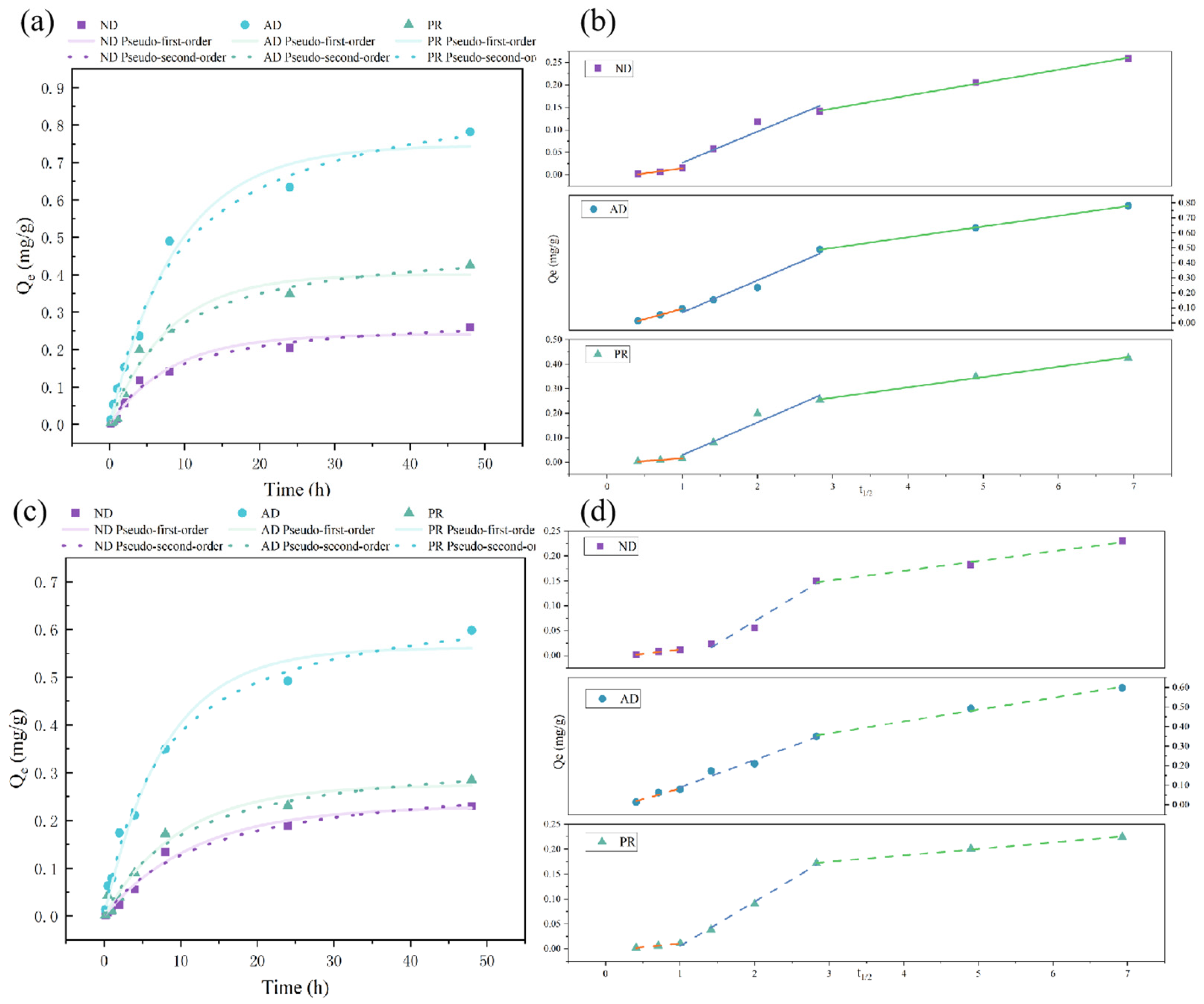
Figure A2.
The adsorption isotherm fitting curves of IMI and IMIZ on the three different fillers (IMI: (a–c); IMIZ: (d–f)).
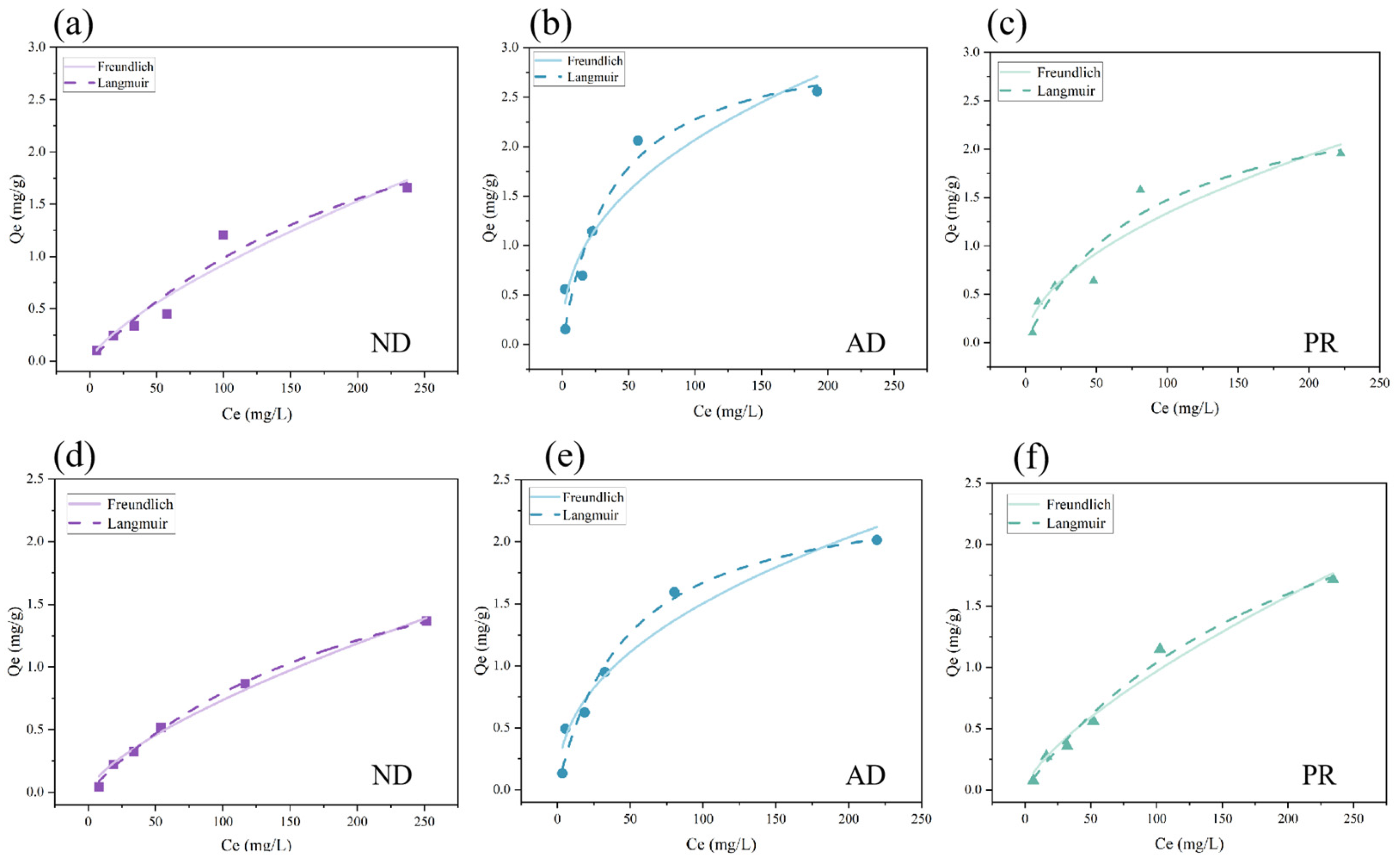
Figure A3.
Adsorption Distribution Coefficients () of IMI and IMIZ on the Three Different Fillers: ((a)-IMI; (b)-IMIZ).
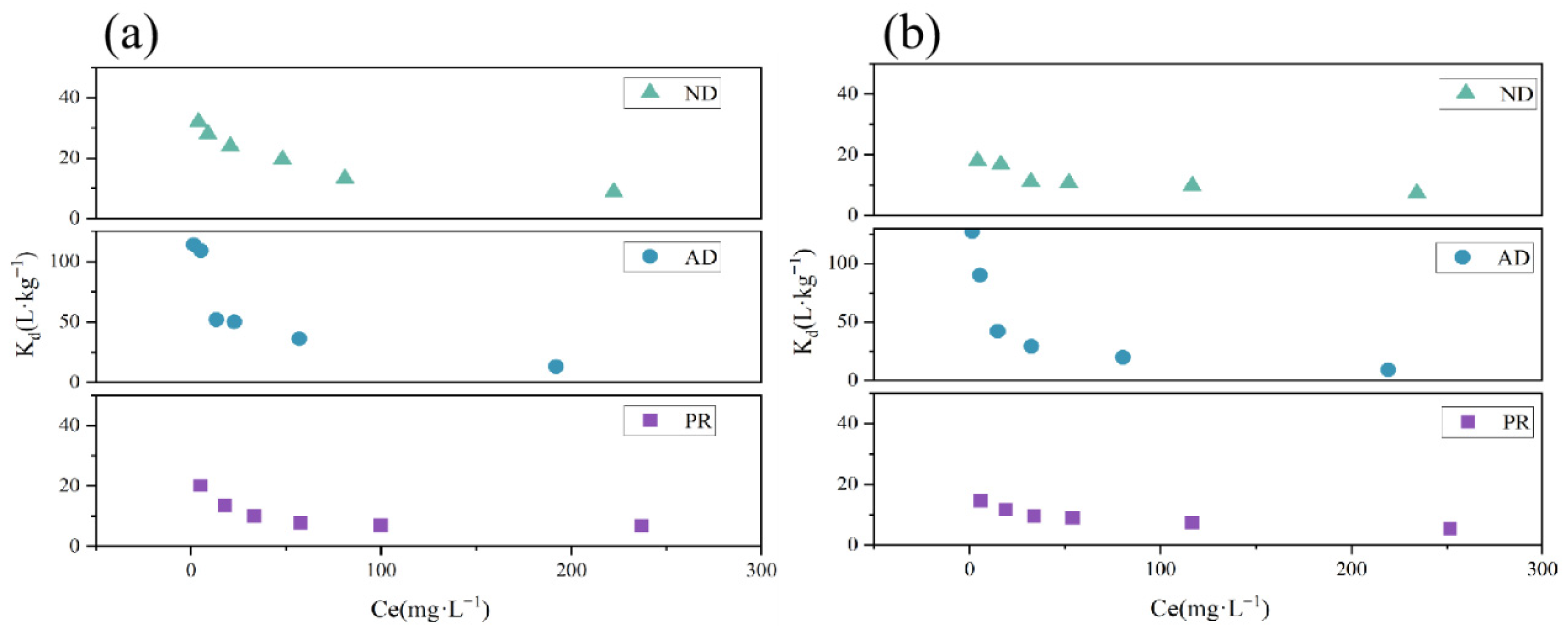
Figure A4.
Impact of Pesticide Addition on the Removal of Conventional Pollutants by MEIS.
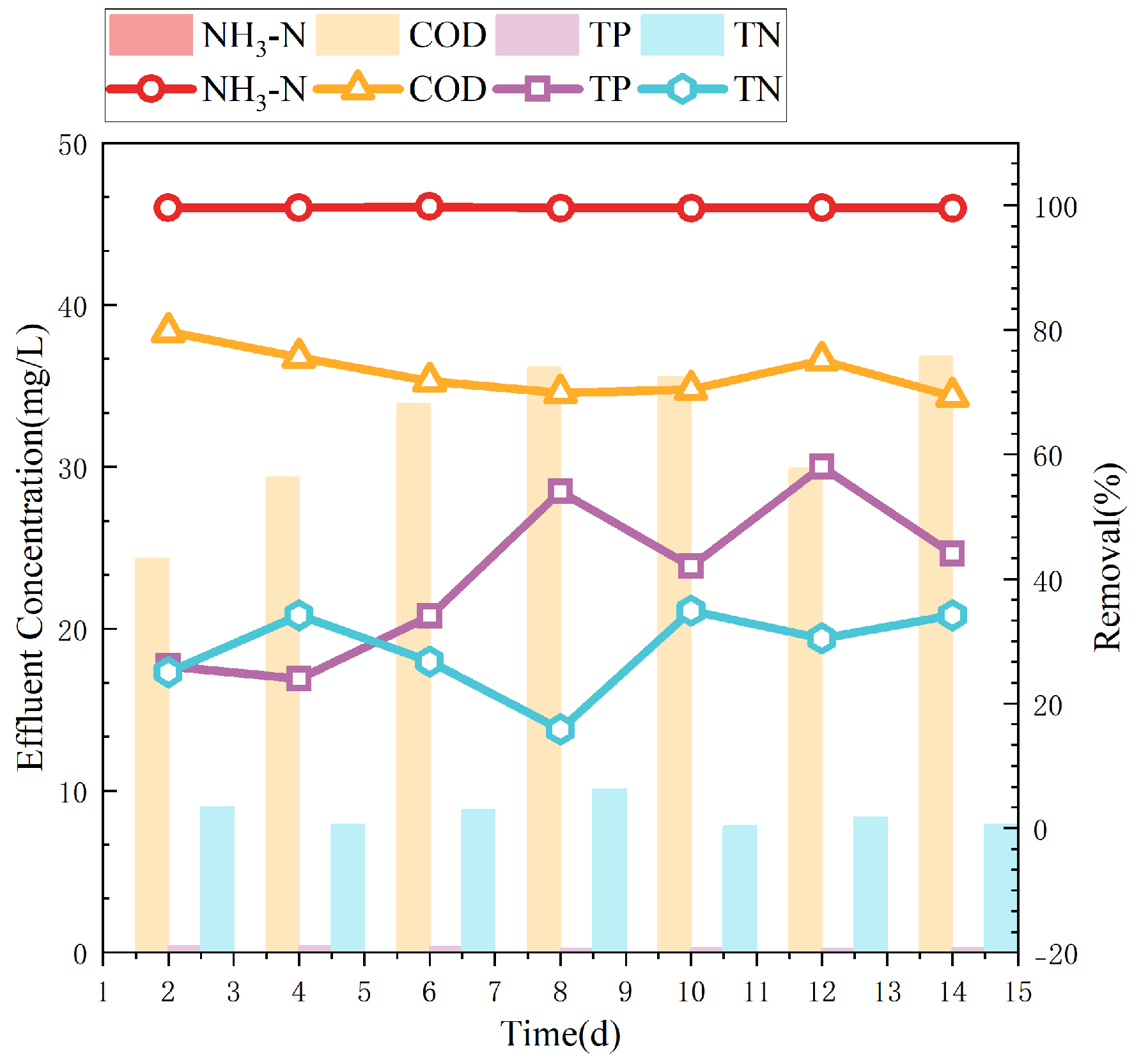
Figure A5.
Removal efficiencies of IMI and IMIZ by MEIS under different hydraulic loading conditions.
References
- Jeschke, P.; Nauen, R.; Schindler, M.; Elbert, A. Overview of the Status and Global Strategy for Neonicotinoids. J. Agric. Food Chem. 2011, 59, 2897–2908. [Google Scholar] [CrossRef] [Scilit]
- Morrissey, C.A.; Mineau, P.; Devries, J.H.; Sanchez-Bayo, F.; Liess, M.; Cavallaro, M.C.; Liber, K. Neonicotinoid contamination of global surface waters and associated risk to aquatic invertebrates: A review. Environ. Int. 2015, 74, 291–303. [Google Scholar] [CrossRef] [Scilit] [PubMed]
- Sgolastra, F.; Medrzycki, P.; Bortolotti, L.; Maini, S.; Porrini, C.; Simon-Delso, N.; Bosch, J. Bees and pesticide regulation: Lessons from the neonicotinoid experience. Biol. Conserv. 2020, 241, 108356. [Google Scholar] [CrossRef] [Scilit]
- Pisa, L.; Goulson, D.; Yang, E.C.; Gibbons, D.; Sánchez-Bayo, F.; Mitchell, E.; Aebi, A.; van der Sluijs, J.; MacQuarrie, C.J.K.; Giorio, C.; et al. An update of the Worldwide Integrated Assessment (WIA) on systemic insecticides. Part 2: Impacts on organisms and ecosystems. Environ. Sci. Pollut. Res. 2021, 28, 11749–11797. [Google Scholar] [CrossRef] [Scilit] [PubMed]
- Goulson, D. REVIEW: An overview of the environmental risks posed by neonicotinoid insecticides. J. Appl. Ecol. 2013, 50, 977–987. [Google Scholar] [CrossRef] [Scilit]
- Ma, C.; Liu, X.G.; Wu, X.H.; Dong, F.S.; Xu, J.; Zheng, Y.Q. Kinetics, mechanisms and toxicity of the degradation of imidaclothiz in soil and water. J. Hazard. Mater. 2021, 403, 124033. [Google Scholar] [CrossRef] [Scilit]
- Voorhees, J.P.; Anderson, B.S.; Phillips, B.M.; Tjeerdema, R.S. Carbon Treatment as a Method to Remove Imidacloprid from Agriculture Runoff. Bull. Environ. Contam. Toxicol. 2017, 99, 200–202. [Google Scholar] [CrossRef] [Scilit]
- Jin, J.; Kang, M.; Sun, K.; Pan, Z.; Wu, F.; Xing, B. Properties of biochar-amended soils and their sorption of imidacloprid, isoproturon, and atrazine. Sci. Total Environ. 2016, 550, 504–513. [Google Scholar] [CrossRef] [Scilit]
- Wei, J.; Wang, X.Y.; Tu, C.; Long, T.; Bu, Y.Q.; Wang, H.L.; Jeyakumar, P.; Jiang, J.L.; Deng, S.P. Remediation technologies for neonicotinoids in contaminated environments: Current state and future prospects. Environ. Int. 2023, 178, 108044. [Google Scholar] [CrossRef] [Scilit]
- Vymazal, J. Constructed Wetlands for Wastewater Treatment: Five Decades of Experience. Environ. Sci. Technol. 2011, 45, 61–69. [Google Scholar] [CrossRef] [Scilit]
- Arden, S.; Ma, X. Constructed wetlands for greywater recycle and reuse: A review. Sci. Total Environ. 2018, 630, 587–599. [Google Scholar] [CrossRef] [Scilit] [PubMed]
- Liu, Y.; Liu, X.H.; Wang, H.C.; Fang, Y.K.; Li, Z.L.; Lu, S.Y.; Wang, A.J. Performance and mechanism of SMX removal in an electrolysis-integrated tidal flow constructed wetland at low temperature. Chem. Eng. J. 2022, 434, 134494. [Google Scholar] [CrossRef] [Scilit]
- Zhong, L.; Yang, S.S.; Ding, J.; Wang, G.Y.; Chen, C.X.; Xie, G.J.; Xu, W.; Yuan, F.; Ren, N.Q. Enhanced nitrogen removal in an electrochemically coupled biochar-amended constructed wetland microcosms: The interactive effects of biochar and electrochemistry. Sci. Total Environ. 2021, 789, 147761. [Google Scholar] [CrossRef] [Scilit] [PubMed]
- Che, J.G.; Wan, J.B.; Huang, X.P.; Wu, R.W.; Liang, K. Pretreatment of piggery digestate wastewater by ferric-carbon micro-electrolysis under alkalescence condition. Korean J. Chem. Eng. 2017, 34, 2397–2405. [Google Scholar] [CrossRef] [Scilit]
- Li, X.; Jia, Y.; Qin, Y.; Zhou, M.; Sun, J. Iron-carbon microelectrolysis for wastewater remediation: Preparation, performance and interaction mechanisms. Chemosphere 2021, 278, 130483. [Google Scholar] [CrossRef] [Scilit]
- Li, X.; Cheng, M.Q.; Jiao, X.X.; Zhao, Z.M.; Zhang, Y.J.; Gao, X.Q. Advances in microbial electrochemistry-enhanced constructed wetlands. World J. Microbiol. Biotechnol. 2022, 38, 239. [Google Scholar] [CrossRef] [Scilit]
- Ju, X.X.; Wu, S.B.; Zhang, Y.S.; Dong, R.J. Intensified nitrogen and phosphorus removal in a novel electrolysis-integrated tidal flow constructed wetland system. Water Res. 2014, 59, 37–45. [Google Scholar] [CrossRef] [Scilit]
- Zheng, X.Y.; Jin, M.Q.; Zhou, X.; Chen, W.; Lu, D.; Zhang, Y.; Shao, X.Y. Enhanced removal mechanism of iron carbon micro-electrolysis constructed wetland on C, N, and P in salty permitted effluent of wastewater treatment plant. Sci. Total Environ. 2019, 649, 21–30. [Google Scholar] [CrossRef] [Scilit]
- HJ/T 399-2007; Water Quality—Determination of the Chemical Oxygen Demand—Fast Digestion-Spectrophotometric Method. National Environmental Protection Standard of China, Hebei Province Environmental Monitoring Centre Station: Shijiazhuang, China, 2007.
- HJ 535—2009; Water Quality—Determination of Ammonia Nitrogen Nessler’s Reagent Spectrophotometry. National Environmental Protection Standard of China, Shenyang Environmental Monitoring Centre Station: Shenyang, China, 2009.
- HJ 636–2012; Water Quality—Determination of Total Nitrogen-Alkaline Potassium Persulfate Digestion UV Spectrophotometric Method. National Environmental Protection Standard of China, Dalian Environmental Monitoring Centre Station: Dalian, China, 2012.
- GB 11893–89; Water Quality—Determination of Total Phosphorus—Ammonium Molybdate Spectrophotometric Method. National Environmental Protection Standard of China, Beijing and Shanghai Environmental Monitoring Centre Station: Beijing, China, 1989.
- Anjos, C.S.; Lima, R.N.; Porto, A.L.M. An overview of neonicotinoids: Biotransformation and biodegradation by microbiological processes. Environ. Sci. Pollut. Res. 2021, 28, 37082–37109. [Google Scholar] [CrossRef] [Scilit]
- Mao, W.; Yu, L.; Dong, Y. Research on the Application of High Carbon-to-Nitrogen Ratio Wastewater as Supplemental Carbon Source in Wastewater Treatment. Leather Manuf. Environ. 2025, 6, 66–68. [Google Scholar] [CrossRef]
- Cydzik-Kwiatkowska, A.; Wojnowska-Barya, I. Nitrogen-converting communities in aerobic granules at different hydraulic retention times (HRTs) and operational modes. World J. Microbiol. Biotechnol. 2015, 31, 75–83. [Google Scholar] [CrossRef] [Scilit]
- Usman, M.O.; Aturagaba, G.; Ntale, M.; Nyakairu, G.W. A review of adsorption techniques for removal of phosphates from wastewater. Water Sci. Technol. 2022, 86, 3113–3132. [Google Scholar] [CrossRef] [Scilit] [PubMed]
- Zhang, Z.M.; Li, Z.L.; Nan, J.; Ouyang, J.; Chen, X.Q.; Wang, H.C.; Wang, A.J. Evaluating advancements and opportunities in electro-assisted biodehalogenation of emerging halogenated contaminants. Bioresour. Technol. 2025, 419, 132011. [Google Scholar] [CrossRef] [Scilit] [PubMed]
- Du, X.; Li, Z.Y.; Xiao, M.Y.; Mo, Z.Y.; Wang, Z.H.; Li, X.H.; Yang, Y. An electro-oxidation reactor for treatment of nanofiltration concentrate towards zero liquid discharge. Sci. Total Environ. 2021, 783, 146990. [Google Scholar] [CrossRef] [Scilit] [PubMed]
- Chen, H.; Zhao, X.H.; Cheng, Y.Y.; Jiang, M.J.; Li, X.; Xue, G. Iron Robustly Stimulates Simultaneous Nitrification and Denitrification Under Aerobic Conditions. Environ. Sci. Technol. 2018, 52, 1404–1412. [Google Scholar] [CrossRef] [Scilit]
- Van der Zee, F.P.; Bisschops, I.A.E.; Lettinga, G.; Field, J.A. Activated carbon as an electron acceptor and redox mediator during the anaerobic biotransformation of azo dyes. Environ. Sci. Technol. 2003, 37, 402–408. [Google Scholar] [CrossRef] [Scilit]
- Xu, X.Y.; Cheng, Y.; Zhang, T.T.; Ji, F.Y.; Xu, X. Treatment of pharmaceutical wastewater using interior micro-electrolysis/Fenton oxidation-coagulation and biological degradation. Chemosphere 2016, 152, 23–30. [Google Scholar] [CrossRef] [Scilit]
- Zhang, X.B.; Dong, W.Y.; Sun, F.Y.; Yang, W.; Dong, J. Degradation efficiency and mechanism of azo dye RR2 by a novel ozone aerated internal micro-electrolysis filter. J. Hazard. Mater. 2014, 276, 77–87. [Google Scholar] [CrossRef] [Scilit]
- Liu, Y.; Wang, J. Reduction of nitrate by zero valent iron (ZVI)-based materials: A review. Sci. Total Environ. 2019, 671, 388–403. [Google Scholar] [CrossRef] [Scilit]
- Rago, L.; Zecchin, S.; Villa, F.; Goglio, A.; Corsini, A.; Cavalca, L.; Schievano, A. Bioelectrochemical Nitrogen fixation (e-BNF): Electro-stimulation of enriched biofilm communities drives autotrophic nitrogen and carbon fixation. Bioelectrochemistry 2018, 125, 105–115. [Google Scholar] [CrossRef] [Scilit]
- Chen, G.; Ma, L.; Zhang, R.; Bu, C.; Zhang, W.; Zhai, M.; Dunoma, K.U. Enhancing Infiltration System Via Iron-Carbon Micro-Electrolysis Combined With Electrochemical Intensification: Efficiency And Mechanisms Of Nitrogen And Phosphorus Removal. Water Air Soil Pollut. 2024, 235, 606. [Google Scholar] [CrossRef] [Scilit]
- Wang, H.; Lyu, W.; Hu, X.; Chen, L.; He, Q.; Zhang, W.; Song, J.; Wu, J. Effects of current intensities on the performances and microbial communities in a combined bio-electrochemical and sulfur autotrophic denitrification (CBSAD) system. Sci. Total Environ. 2019, 694, 133775. [Google Scholar] [CrossRef] [Scilit] [PubMed]
- Han, H.W.; Rafiq, M.K.; Zhou, T.Y.; Xu, R.; Masek, O.; Li, X.K. A critical review of clay-based composites with enhanced adsorption performance for metal and organic pollutants. J. Hazard. Mater. 2019, 369, 780–796. [Google Scholar] [CrossRef] [Scilit] [PubMed]
- Yang, Z.M.; Wang, Z.C.; Charoenkal, K.; Xu, Y.; Li, T.W.; Xu, T.Y.; Li, Q.; Sun, X.C.; Lin, S.; Cao, H.L. Enhanced imidacloprid adsorption using boron-modified biochar: Insights into molecular mechanisms and environmental stability. Chem. Eng. J. 2025, 505, 159729. [Google Scholar] [CrossRef] [Scilit]
- Zhang, P.; Sun, H.W.; Ren, C.; Min, L.J.; Zhang, H.M. Sorption mechanisms of neonicotinoids on biochars and the impact of deashing treatments on biochar structure and neonicotinoids sorption. Environ. Pollut. 2018, 234, 812–820. [Google Scholar] [CrossRef] [Scilit]
- Briceño, G.; Palma, G.; Schalchli, H.; Durán, P.; Llafquen, C.; Huenchupán, A.; Rodríguez-Rodríguez, C.; Diez, M.C. Adsorption-Desorption Behaviour of Imidacloprid, Thiamethoxam, and Clothianidin in Different Agricultural Soils. Agriculture 2025, 15, 1380. [Google Scholar] [CrossRef] [Scilit]
- Li, Y.; Li, Y.D.; Bi, G.H.; Ward, T.J.; Li, L. Adsorption and degradation of neonicotinoid insecticides in agricultural soils. Environ. Sci. Pollut. Res. 2023, 30, 47516–47526. [Google Scholar] [CrossRef] [Scilit]
- Ma, Y.F.; Li, P.; Yang, L.; Wu, L.; He, L.Y.; Gao, F.; Qi, X.B.; Zhang, Z.L. Iron/zinc and phosphoric acid modified sludge biochar as an efficient adsorbent for fluoroquinolones antibiotics removal. Ecotoxicol. Environ. Saf. 2020, 196, 4754–4768. [Google Scholar] [CrossRef] [Scilit]
- Xu, Y.; Liu, Y.G.; Liu, S.B.; Tan, X.F.; Zeng, G.M.; Zeng, W.; Ding, Y.; Cao, W.C.; Zheng, B.H. Enhanced adsorption of methylene blue by citric acid modification of biochar derived from water hyacinth (Eichornia crassipes). Environ. Sci. Pollut. Res. 2016, 23, 23606–23618. [Google Scholar] [CrossRef] [Scilit]
- Bensalah, J. Removal of the textile dyes by a resin adsorbent polymeric: Insight into optimization, kinetics and isotherms adsorption phenomenally. Inorg. Chem. Commun. 2024, 161, 111975. [Google Scholar] [CrossRef] [Scilit]
- Chen, Y.L.; Hassan, M.; Nuruzzaman, M.; Zhang, H.M.; Naidu, R.; Liu, Y.J.; Wang, L. Iron-modified biochar derived from sugarcane bagasse for adequate removal of aqueous imidacloprid: Sorption mechanism study. Environ. Sci. Pollut. Res. 2023, 30, 4754–4768. [Google Scholar] [CrossRef] [Scilit]
- Mandal, A.; Singh, N.; Purakayastha, T.J. Characterization of pesticide sorption behaviour of slow pyrolysis biochars as low cost adsorbent for atrazine and imidacloprid removal. Sci. Total Environ. 2017, 577, 376–385. [Google Scholar] [CrossRef] [Scilit] [PubMed]
- Shi, H.J.; Wang, W.; Mao, L.A.; Zhang, L.; Zhu, L.Z.; Wu, C.; Liu, X.A. Visible light photocatalytic degradation of pesticides and antibiotics by H3PO4-activated biochar combined with g-C3N4: Effects, mechanism, degradation pathway, and toxicity assessment. J. Environ. Manag. 2025, 380, 124929. [Google Scholar] [CrossRef] [Scilit] [PubMed]
- Saidi, N.; Erable, B.; Etchevery, L.; Cherif, A.; Chouchane, H. Enhanced bioelectrochemical degradation of Thiabendazole using biostimulated Tunisian hypersaline sediments: Kinetics, efficiency, and microbial community shifts. Front. Microbiol. 2025, 15, 1529841. [Google Scholar] [CrossRef] [Scilit] [PubMed]
- Guo, L.; Dai, Z.; Guo, J.; Yang, W.; Ge, F.; Dai, Y. Oligotrophic bacterium Hymenobacter latericoloratus CGMCC 16346 degrades the neonicotinoid imidacloprid in surface water. AMB Express 2020, 10, 7. [Google Scholar] [CrossRef] [Scilit]
- Wang, H.Z.; Ren, W.J.; Xu, Y.F.; Wang, X.; Ma, J.; Sun, Y.; Hu, W.B.; Chen, S.S.; Dai, S.X.; Song, J.Y.; et al. Long-term herbicide residues affect soil multifunctionality and the soil microbial community. Ecotoxicol. Environ. Saf. 2024, 283, 116783. [Google Scholar] [CrossRef] [Scilit]
- Sun, S.Y.; Hou, Y.N.; Wei, W.; Sharif, H.M.A.; Huang, C.; Ni, B.J.; Li, H.B.; Song, Y.Y.; Lu, C.C.; Han, Y.; et al. Perturbation of clopyralid on bio-denitrification and nitrite accumulation: Long-term performance and biological mechanism. Environ. Sci. Ecotechnol. 2022, 9, 100144. [Google Scholar] [CrossRef] [Scilit]
- Bachtsevani, E.; Kolovou, M.; Papadopoulou, E.S.; Karpouzas, D.G.; Nicol, G.W.; Hazard, C. Single Species Assays with Nitrifying Bacteria and Archaea for Assessing the Toxicity of Pesticides on Soil Microorganisms. Environ. Sci. Technol. 2025, 59, 20941–20953. [Google Scholar] [CrossRef] [Scilit]
- Sato, Y.; Hori, T.; Navarro, R.R.; Habe, H.; Yanagishita, H.; Ogata, A. Fine-scale monitoring of shifts in microbial community composition after high organic loading in a pilot-scale membrane bioreactor. J. Biosci. Bioeng. 2016, 121, 550–556. [Google Scholar] [CrossRef] [Scilit]
Disclaimer/Publisher’s Note: The statements, opinions and data contained in all publications are solely those of the individual author(s) and contributor(s) and not of MDPI and/or the editor(s). MDPI and/or the editor(s) disclaim responsibility for any injury to people or property resulting from any ideas, methods, instructions or products referred to in the content. |
© 2026 by the authors. Licensee MDPI, Basel, Switzerland. This article is an open access article distributed under the terms and conditions of the Creative Commons Attribution (CC BY) license.