
Article

Vegetation Dynamics and Atmospheric Glyoxal in Houston, Texas (2018–2022)

by
Salma Bibi
1,2,* and
Bernhard Rappenglück
1,2
1
Department of Earth and Atmospheric Sciences, University of Houston, Houston, TX 77204, USA
2
Institute for Climate and Atmospheric Science, University of Houston, Houston, TX 77204, USA
*
Author to whom correspondence should be addressed.
Atmosphere 2026, 17(1), 100; https://doi.org/10.3390/atmos17010100
Submission received: 20 November 2025 / Revised: 9 January 2026 / Accepted: 15 January 2026 / Published: 18 January 2026
(This article belongs to the Section Biosphere/Hydrosphere/Land–Atmosphere Interactions)

Abstract

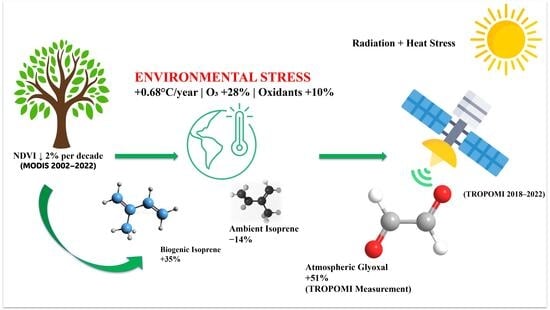
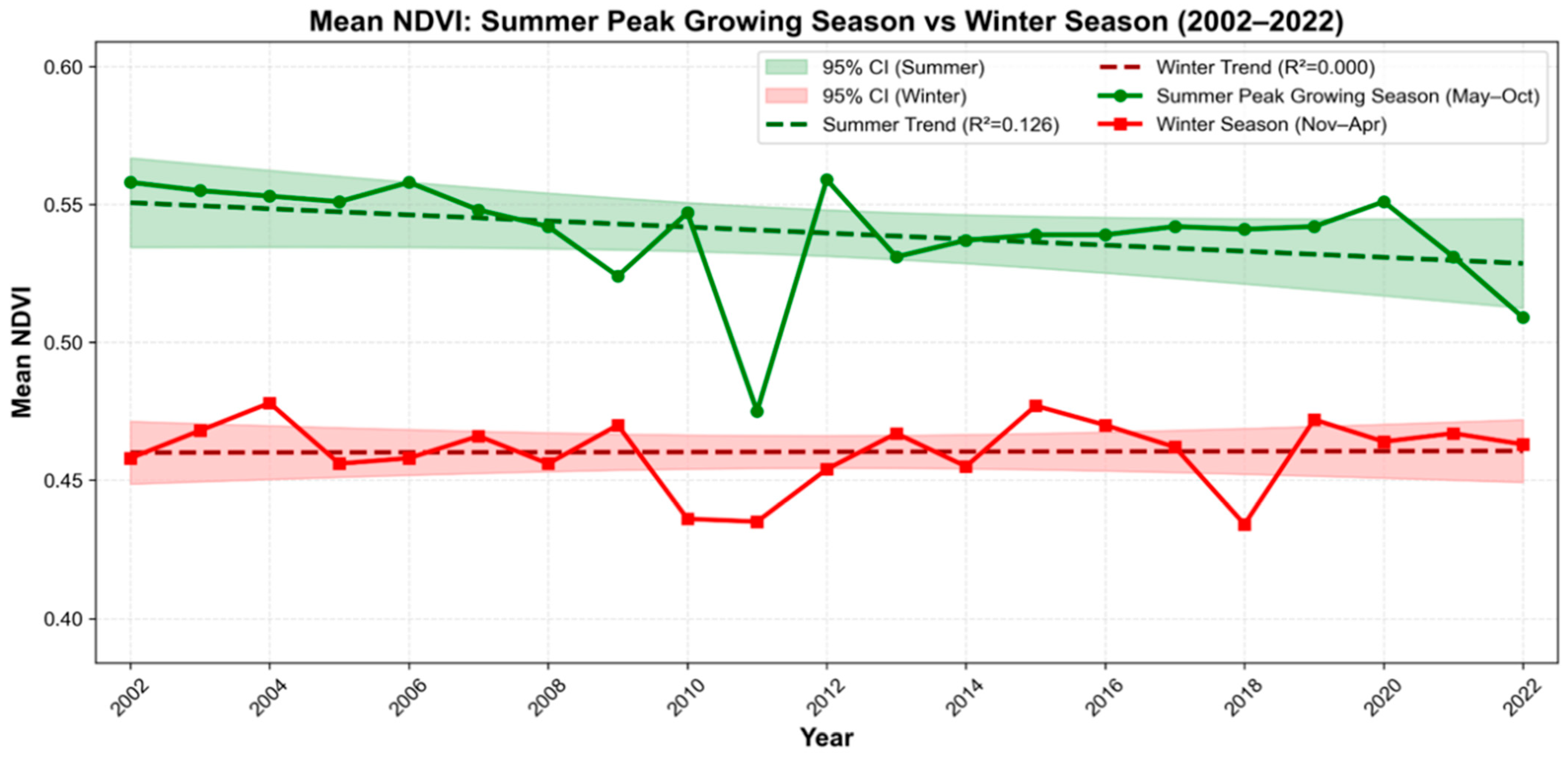
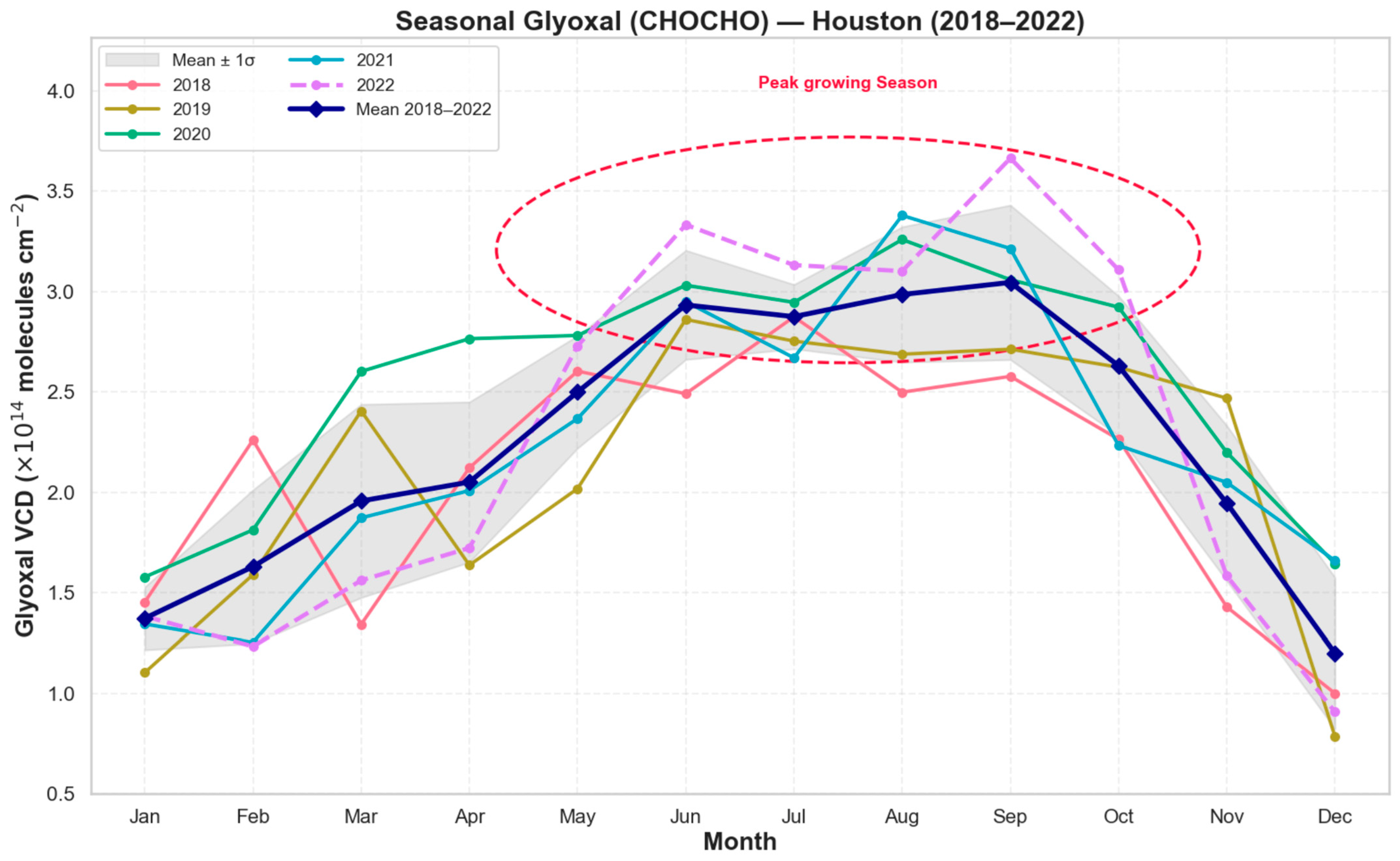
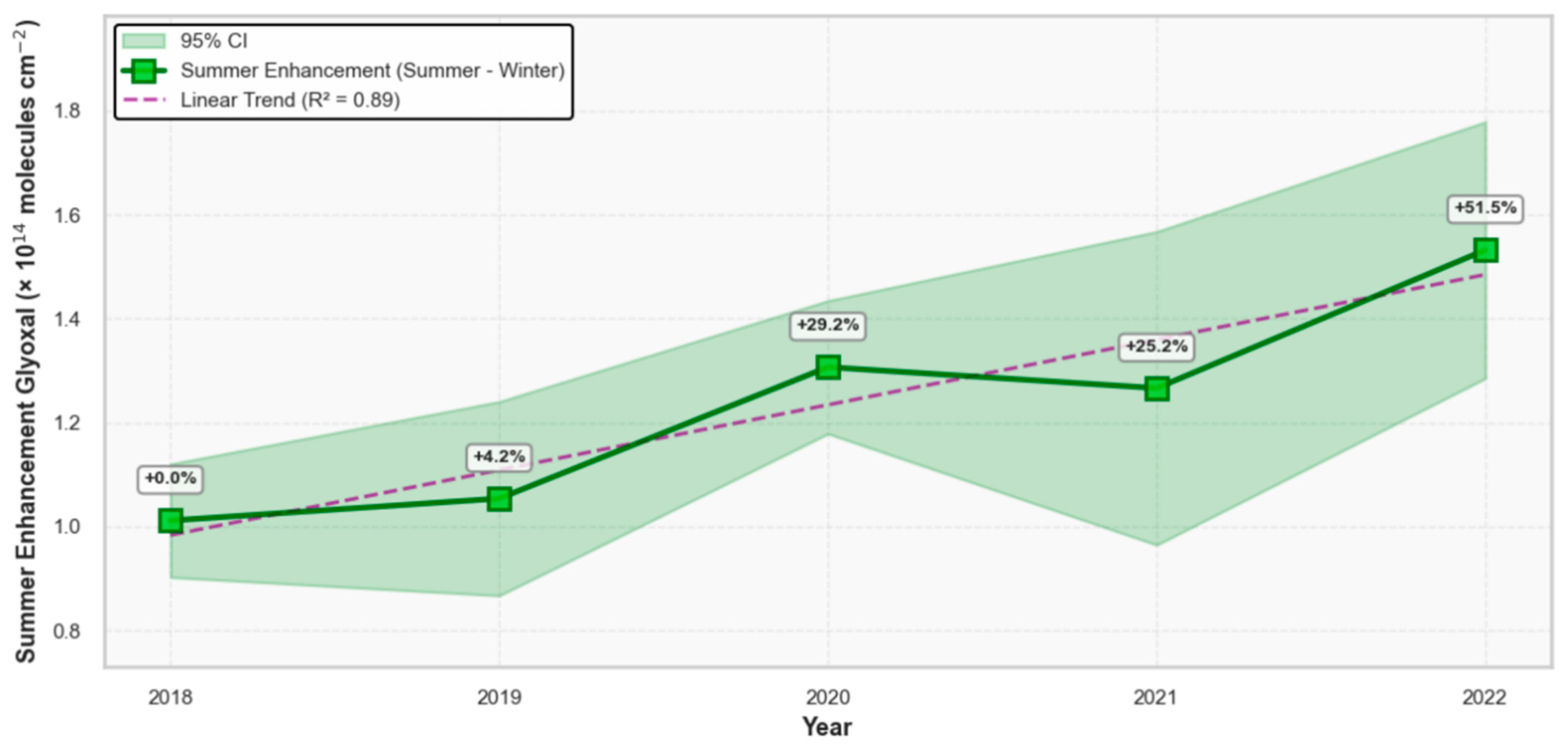
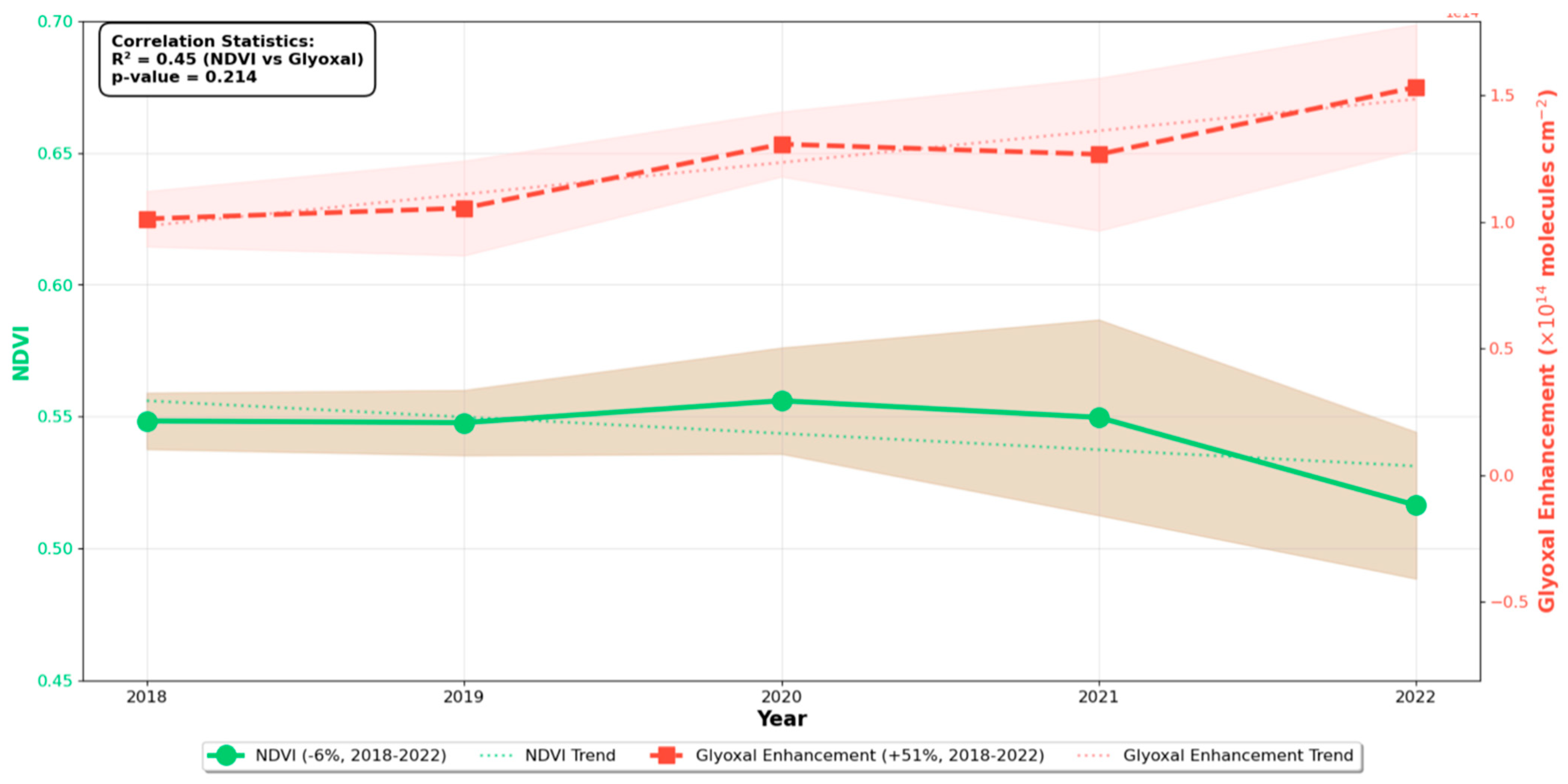
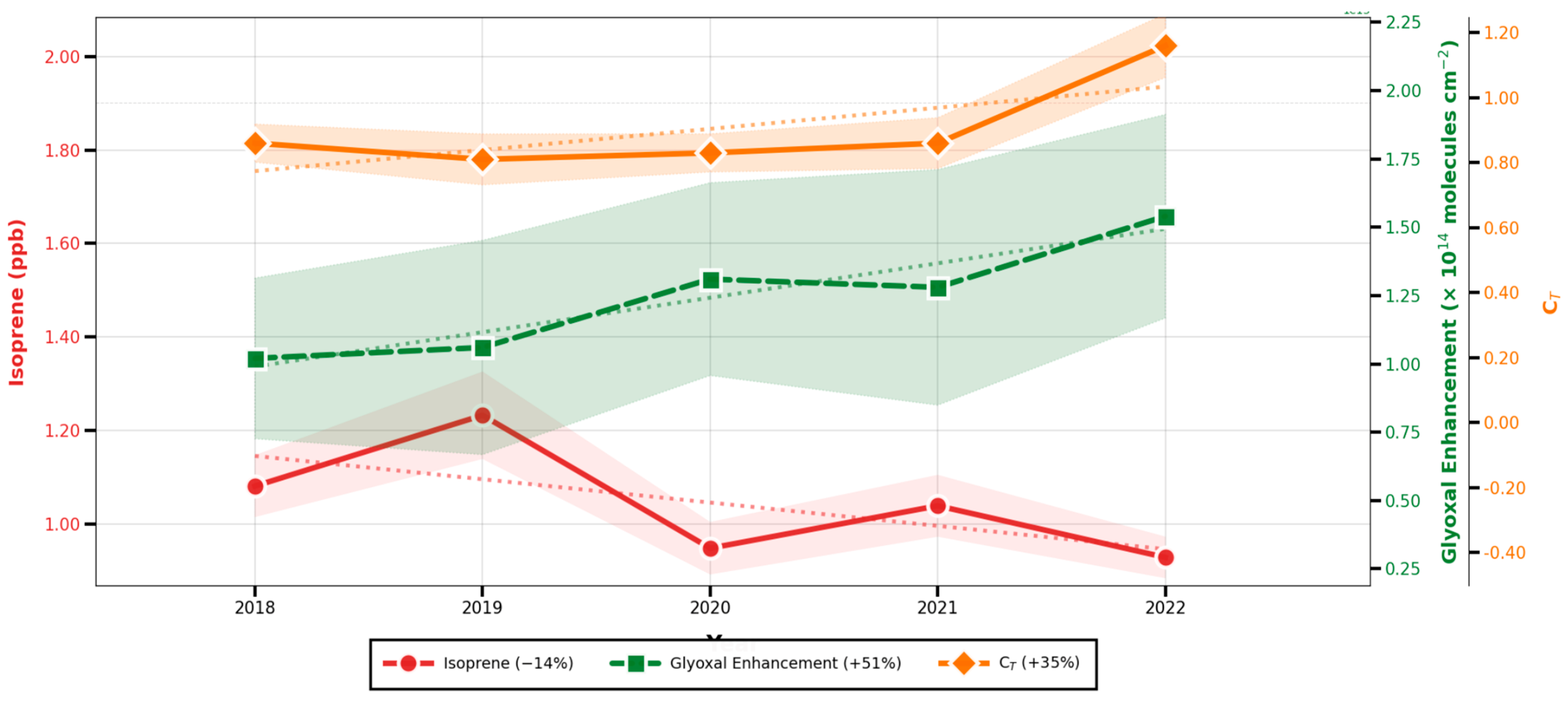
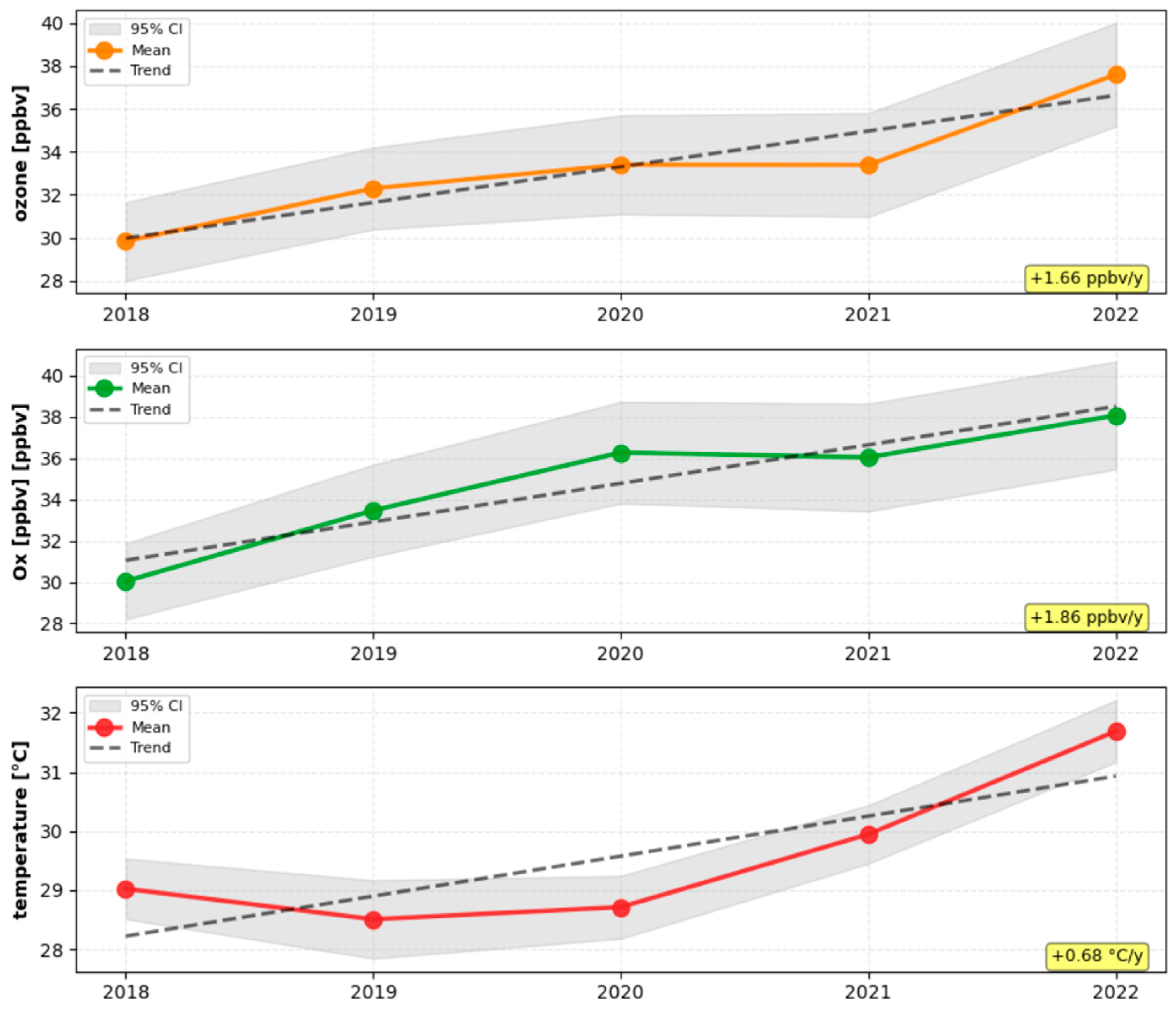
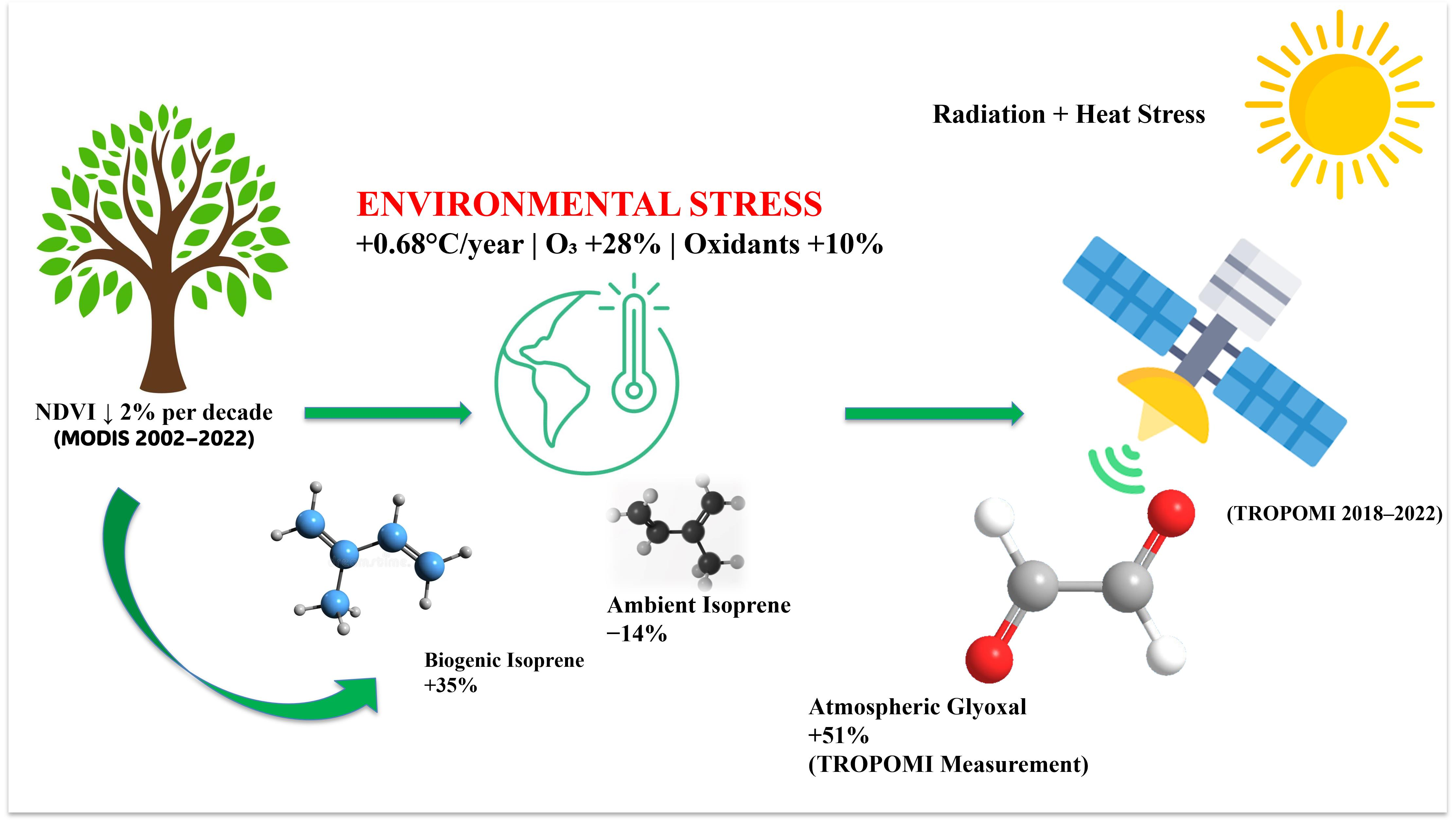
Twenty years of MODIS satellite data (2002–2022), TROPOMI glyoxal observations (2018–2022), and ground-based isoprene measurements were used to examine vegetation greenness (NDVI) and atmospheric glyoxal over Houston, Texas. Biogenically produced glyoxal grew by 51% between 2018 and 2022, despite a 2% per decade decrease in summer vegetation greenness and continued urbanization. Ambient mixing ratios of isoprene, the main biogenic glyoxal precursor, paradoxically dropped by 14% within the same time frame. Temperature (+0.68 °C/year), ozone (+28%), and photochemical oxidants all significantly increased over this time, according to analysis of concurrent environmental data. The results indicate that higher temperature-driven isoprene emissions (+35%) and accelerated photochemical oxidation (+10%) overcame the declining vegetation signal, resulting in net increases in atmospheric glyoxal. This suggests that Houston’s remaining flora is experiencing temperature-driven changes in biogenic volatile organic compound (VOC) emissions per unit area, even while its greenness has reduced.
Keywords: MODIS NDVI; TROPOMI glyoxal; isoprene emissions; photochemical oxidation MODIS NDVI; TROPOMI glyoxal; isoprene emissions; photochemical oxidation
Graphical Abstract