


Abstract
Combustion of aviation jet fuel emits a complex mixture of pollutants linked to adverse health outcomes among airport personnel and nearby communities. While epidemiological studies showed the detrimental effects of aviation-derived air pollutants on human health, the molecular mechanisms of the interactions of these pollutants with cellular biomolecules like proteins that drive the adverse health effects remain poorly understood. In this study, we performed molecular docking simulations of 272 pollutant–protein complexes using AutoDock Vina 1.2.7 to characterize the binding strength of the pollutants with the selected proteins. We selected 34 aviation-derived pollutants that constitute three chemical categories of pollutants: volatile organic compounds (VOCs), polyaromatic hydrocarbons (PAHs), and organophosphate esters (OPEs). Each pollutant was docked to eight proteins that play critical roles in endocrine, metabolic, transport, and neurophysiological functions, where functional disruption is implicated in disease. The effect of binding of multiple pollutants was analyzed. Our results indicate that aliphatic and monoaromatic VOCs display low (<6 kcal/mol) binding affinities while PAHs and organophosphate esters exhibit strong (>7 kcal/mol) binding affinities. Furthermore, the binding strength of PAHs exhibits a positive correlation with the increasing number of aromatic rings in the pollutants, ranging from nearly 7 kcal/mol for two aromatic rings to more than 15 kcal/mol for five aromatic rings. Analysis of intermolecular interactions showed that these interactions are predominantly stabilized by hydrophobic, pi-stacking, and hydrogen bonding interactions. Simultaneous docking of multiple pollutants revealed the increased binding strength of the resulting complexes, highlighting the detrimental effect of exposure to pollutant mixtures found in ambient air near airports. We provide a priority list of pollutants that regulatory authorities can use to further develop targeted mitigation strategies to protect the vulnerable personnel and communities near airports.
1. Introduction
Combustion of aviation fuels produces a diverse array of pollutants, including inorganic gases such as nitrogen oxides (NOx), sulfur oxides (SOx), and volatile and semivolatile organic compounds (VOCs/SVOCs), and particulate matter containing polyaromatic hydrocarbons (PAHs). Vapors from jet engine lubricating oils add organophosphate esters (OPEs) [1]. Epidemiological and meta-analysis studies have established correlations between short- and long-term exposure to these pollutants and cardiovascular [2], respiratory [3], and neurodegenerative diseases [4], including stroke, chronic obstructive pulmonary disease (COPD), ischemic heart disease, aggravation of asthma, and increased risk of lung cancer [5].
Exposure to aviation emissions is particularly relevant to ground crew and maintenance personnel who service aircraft on tarmacs and in hangars, as well as residents in communities residing in the vicinity of airports. Ground crew and aircraft maintenance personnel may experience heightened exposure levels due to direct contact with exhaust plumes and spillages, often in confined or poorly ventilated areas [1]. Analysis of indoor and outdoor air pollutants in residential areas in the vicinity of airports revealed up to 4.8-fold higher concentrations of all gaseous compounds and particulate matter when residences were downwind of the airport, and 7.5-fold higher particle number concentrations from overhead landing operations [6].
Adverse health effects of exposure to aviation-related emissions have been demonstrated in numerous studies [1]. Mechanistic studies are limited. In particular, knowledge of the molecular-level interactions between aviation-derived pollutants and proteins that are involved in critical physiological functions that may be impacted by aviation-derived air pollutant exposure is lacking. Increasing evidence suggests that interactions with persistent organic pollutants trigger alterations in the structure and function of proteins [7]. For example, PAHs are metabolically activated by cytochrome P450 to produce reactive oxygen species that lead to inflammation associated with asthma and COPD [8]. Pollutants such as VOCs, PAHs, and organophosphate esters have been shown to have endocrine disrupting effects leading to reduced fertility, negatively impacting reproductive health [9]. These studies provide important insights into the negative effects of these pollutants on health. However, the underlying molecular mechanisms, including structural changes due to interactions between aviation-derived pollutants and cellular proteins, that drive these detrimental health effects, remain largely uncharacterized.
One approach to address this knowledge gap is to use in silico molecular docking as in prior studies that have already been used to characterize the effect of binding of some environmental pollutants with selected proteins [10,11,12,13]. Docking studies showed the strong binding affinity of benzo-a-pyrene, released from cigarette smoke and fuel combustion, with selected proteins, highlighting the potential health effects of these interactions [11]. Integration of molecular docking and in vitro analyses to characterize the molecular interactions between phenolic pollutants and cytochrome p450 demonstrated the reliability of docking simulations based on the consistency between docking and experimental observations [13]. Organophosphates, widely recognized for their toxicity to the nervous system, can inhibit acetylcholinesterase, potentially influencing neurological and developmental disorders [14].
In this study, we identified air pollutants derived from aviation jet fuel combustion belonging to discrete chemical categories: VOCs, PAHs, and OPEs. We characterized the interaction of each of these three chemical categories of aviation-derived pollutants with target proteins whose functional disruption is implicated in disease. By examining a diverse range of protein–pollutant interactions and quantifying their binding affinities, we identified which pollutant–protein interactions pose the highest risk for function disruption. This study demonstrates how aviation-derived pollutants bind to cellular proteins and potentially disrupt the normal function of proteins, resulting in their potency to aggravate health. We present a list of pollutants that have a strong interaction effect with critical human proteins, which should prompt regulatory authorities to investigate the need to develop targeted mitigation strategies to address this health concern.
2. Methods
2.1. Identification of Target Proteins and Aviation-Derived Air Pollutants
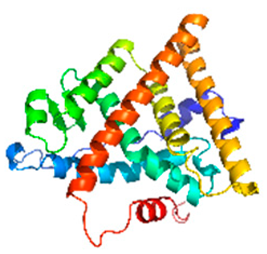
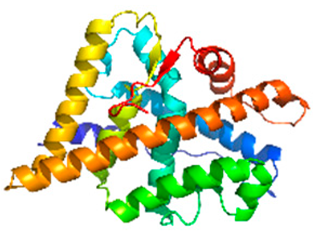
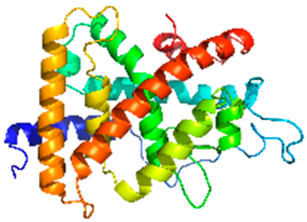
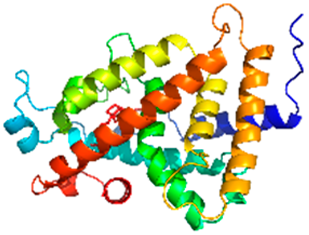
We performed a systematic analysis of the scientific literature to create a list of proteins which have been reported to interact with air pollutants such as VOCs, PAHs, particulate matter, and OPEs. We compiled >40 candidate proteins from peer-reviewed toxicology literature and databases linked to combustion derived VOCs, PAHs, or OPEs. We selected a subset of proteins from this list to identify proteins that perform discrete critical cellular and physiological functions, disruption of which is associated with disease states such as cancer, endocrine, cardiopulmonary diseases, and neurotoxicity, related to air pollution. Based on these criteria, we selected the final set of eight target proteins for investigation in this study (Table 1).
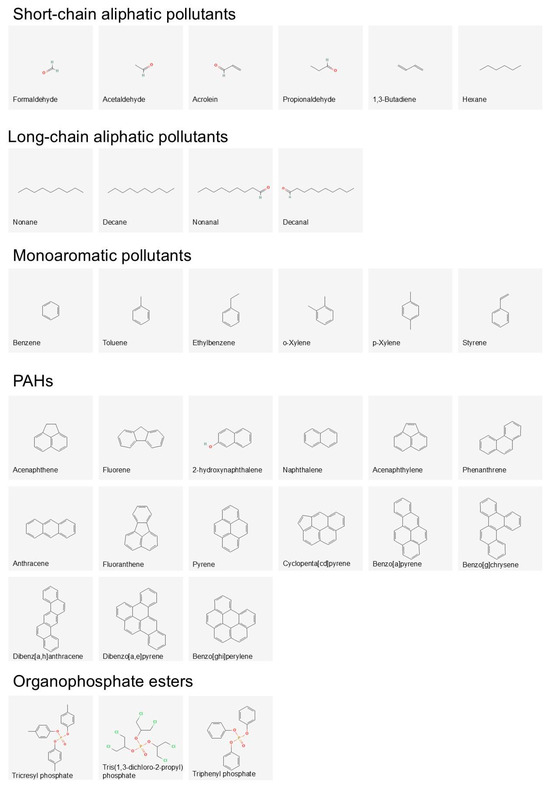
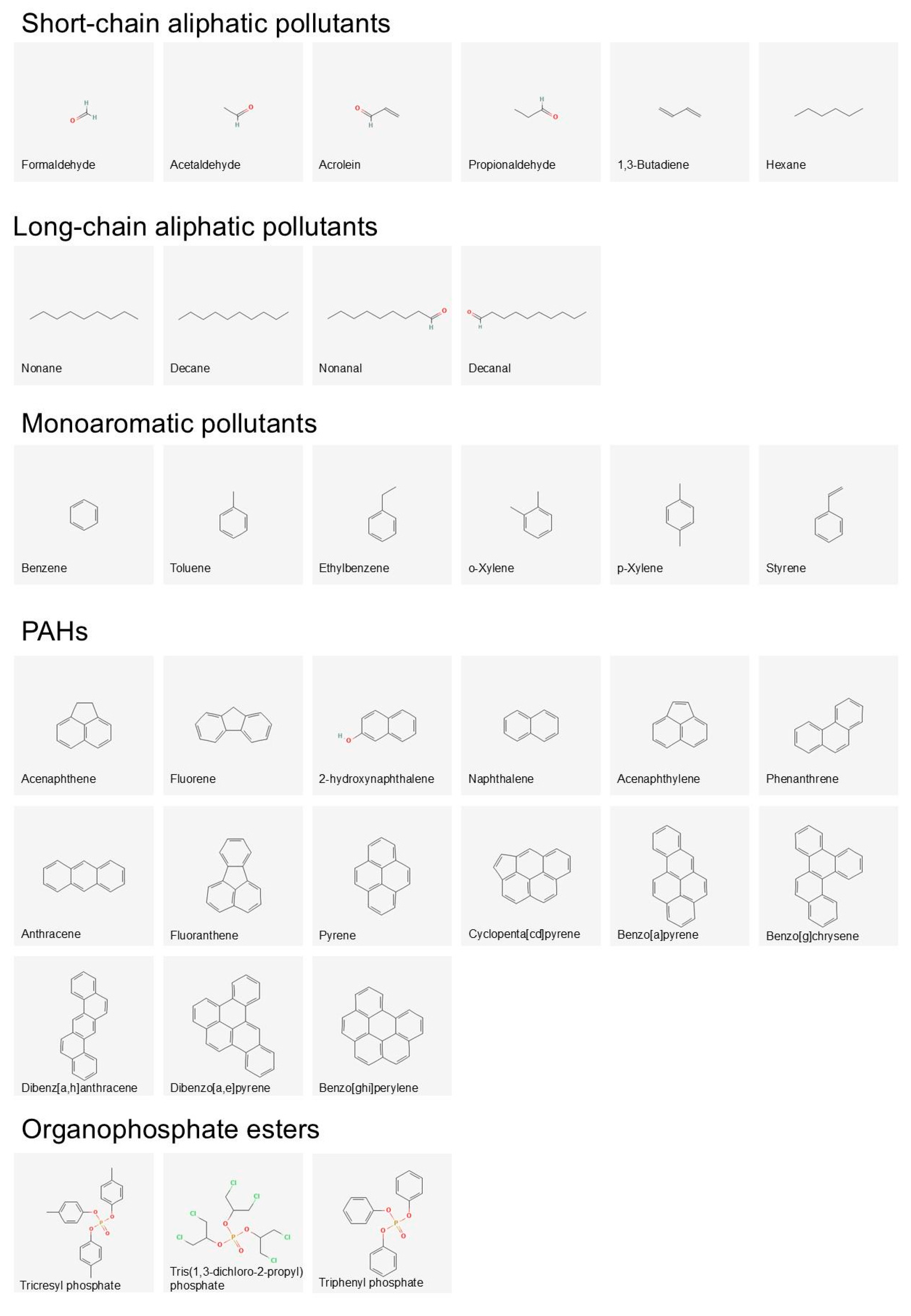
Pollutants derived from aviation fuel combustion were selected manually from a comprehensive search of scientific publications and government documents. We selected pollutant molecules in the following categories: VOCs, PAHs and organophosphates. The VOCs were further categorized into light chain hydrocarbons and included short-chain aliphatic (<C7), long-chain aliphatic (C8–C14), and monoaromatic pollutants (Figure 1). The heavy VOCs were selected due to their exclusive presence in aircraft-related emissions and absence in gasoline emissions [15]. The selected PAHs include an increasing number of aromatic rings, from one to five aromatic rings, enabling characterization of the effect of the number of rings on the strength of interactions with proteins [16].
Figure 1.
Aviation-derived air pollutants selected for molecular docking simulations.
Table 1.
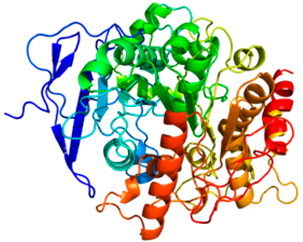
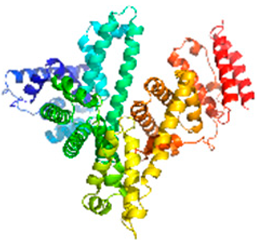
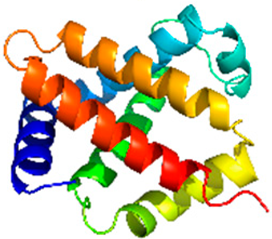
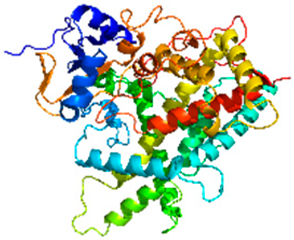
Target proteins selected for analysis of the effect of binding of jet fuel emission pollutants.
2.2. Molecular Docking Simulations
The three-dimensional structures of the selected pollutant compounds (Figure 1) were downloaded from PubChem (https://pubchem.ncbi.nlm.nih.gov/, accessed on 30 March 2025) in the SDF format. The ligands were converted to PDB format using PyMol [25]. The selected proteins (Table 1) were downloaded from the Protein Data Bank (PDB) database (https://www.rcsb.org/, accessed on 31 March 2025) in PDB format. The structures were processed to retain a single chain for further analyses. All waters were removed from the proteins, and polar hydrogens were added to all proteins. The heme prosthetic groups of Cytochrome P450 1A1 and the hemoglobin alpha chain were retained as part of the receptors in the docking simulations. All ligand and protein structures were processed using AutoDockTools-1.5.7, and the output pdbqt files were used for molecular docking. Each of the 34 ligands were docked with the eight proteins using AutoDock Vina 1.2.7 [26]. The grid box dimensions for each protein were set to 126 Å × 126 Å × 126 Å, with a spacing of 0.375 Å except CYP1A1, which was set to 40 Å × 40 Å × 40 Å. Three independent molecular docking simulations were performed for each protein–ligand complex. The lowest binding energy structures of each protein–ligand docking were used to calculate the averages of the triplicate simulations. Multiple-ligand docking simulations were performed by docking the androgen receptor, human serum albumin, and acetylcholinesterase with the following pairs of ligands: p-xylene and benzo-a-pyrene; tricresyl phosphate and benzo-a-pyrene; and p-xylene and tricresyl phosphate.
2.3. Determination of Protein–Pollutant Interactions
Intermolecular interactions between the selected protein–ligand complexes were determined using the protein–ligand interaction profiler (PLIP) [27]. Complexes with the highest binding affinity scores of the triplicate simulations were used for this analysis. Inter-molecular interactions between protein and ligand were visualized using PyMol [25] and ChimeraX 1.8 [28]. Intermolecular interactions were analyzed using in-house Python 3.0 and Bash scripts.
3. Results and Discussion
3.1. Selection of Pollutants and Proteins for Molecular Docking Analysis
Jet fuel combustion produces CO, CO2, NOx, SOx, and a variety of (S)VOCs, and particulate matter (PM), with particles containing PAHs, and organophosphates derived from lubricating oils. The chemical identities and concentration of pollutants vary based on fuel type, engine operating conditions [1], and seasons [29]. Table S1 shows the list of aviation-derived pollutants categorized based on their type, sampling location, and emission trends, where applicable, that were selected for further analysis. The pollutants include six light chain aliphatic VOCs, four heavy chain aliphatic VOCs, six monoaromatic VOCs, fifteen PAHs, and three OPEs produced during different stages of engine operation and have been observed at airports and in the vicinity of the airport environment [15,29,30,31].
A total of eight target proteins were selected for this analysis. The selected proteins are involved in diverse physiological functions in humans such as metabolism, transport, endocrine signaling, and neurological function. Changes to the structure or interaction with pollutants have been linked to a variety of cancers, asthma, chronic obstructive pulmonary disease (COPD), and cardiovascular diseases (last column of Table 1). In this study, we selected these proteins to characterize the effect of pollutant binding on endocrine and reproductive disorders, cancer, cardiovascular, pulmonary, and neurological disorders.
3.2. Binding Affinities of Pollutant–Protein Complexes
We performed molecular docking simulations to determine the binding strength of the 272 protein–ligand pairs (34 pollutants × 8 proteins) and characterize the molecular-level interactions that promote favorable binding. Table 2 shows the binding affinities calculated by averaging triplicate molecular docking simulations for each protein–ligand pair. The small standard deviations for the triplicate docking runs indicate the convergence of the simulations (Table S2). A comparison of the binding affinities in this study with the binding energies reported for some pollutant-protein pairs in previous studies showed similar affinities (Table S3), further validating the results. A comparison of the average binding affinities for each pollutant category (last column of Table 2) highlights the distinct binding characteristics of the different categories of the aviation-derived air pollutants. The light chain aliphatic VOCs displayed weak interactions, suggesting non-specific or transient interactions. The longer chain VOCs and the monoaromatic VOCs showed weak to moderate affinities, with the highest affinities observed for binding to human serum albumin (HSA) and cytochrome p450 1A1 (CYP1A1). These findings suggest that increased hydrocarbon chain length and aromatic character contribute to the enhanced interactions with target proteins. In contrast to the VOCs, all PAHs and OPEs displayed strong binding affinities with all target proteins.
Table 2.
Average binding affinity (kcal/mol) of the pollutant–protein complexes categorized into five defined pollutant categories (first column). The color spectrum indicates weak (<5 kcal/mol), medium (5–7 kcal/mol), and strong (>7 kcal/mol) binding represented in the gray, orange-green, and green-blue colors of the gray–orange–blue color spectrum.
The highest binding affinities were observed for high-molecular-weight PAHs, ranging from −8 kcal/mol to around −15 kcal/mol. Strong binding affinities were observed for all target proteins, with acetylcholinesterase, HSA, and CYP1A1 displaying the strongest effects. These strong interactions are consistent with the metabolic activation of PAHs by CYP1A1 [32] and the endocrine-disrupting potential observed for PAHs [16]. Our results demonstrate increased binding affinities with increasing number of aromatic rings in the PAHs, consistent with previous observations [33]. The organophosphate esters showed moderate to strong binding. Specifically, tricresyl phosphate and triphenyl phosphate (TPHP) displayed high affinity for all target proteins, while Tris(1,3-dichloro-2-propyl)phosphate (TDCIPP) showed weaker interactions. The binding characteristics of the OPEs are consistent with previous studies of organophosphate compounds from jet engine lubricants and pesticides with these functional groups [1,34,35]. These results underscore the disruptive properties of these interactions on the normal function of these proteins, contributing to adverse health effects.
The ubiquitous strong interactions of PAHs with all analyzed proteins demonstrate the profound effect of these pollutants on diverse physiological functions, leading to numerous harmful health effects. These include carcinogenicity due to PAHs interactions with HSA and CYP1A1, endocrine disruption due to interaction of PAHs and organophosphates with estrogen, androgen, and thyroid receptors, and neurotoxicity due to strong interactions of PAHs and organophosphates with the acetylcholinesterase enzyme. Strong interactions displayed by HSA for the diverse organic pollutants suggest that these compounds can be transported efficiently in the bloodstream and sequestered by these serum proteins. The favorable interactions of PAHs like benzo-a-pyrene with CYP1A1 further illustrate their potential metabolic transformation into intermediates that increase cancer risk. This is consistent with the observation of elevated lung cancer risk in individuals with occupational exposure to these pollutants [36].
3.3. Structural Interactions of High-Affinity Protein–Pollutant Complexes
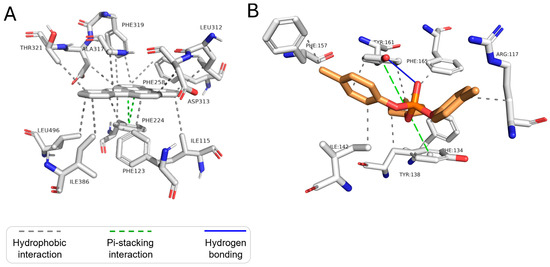
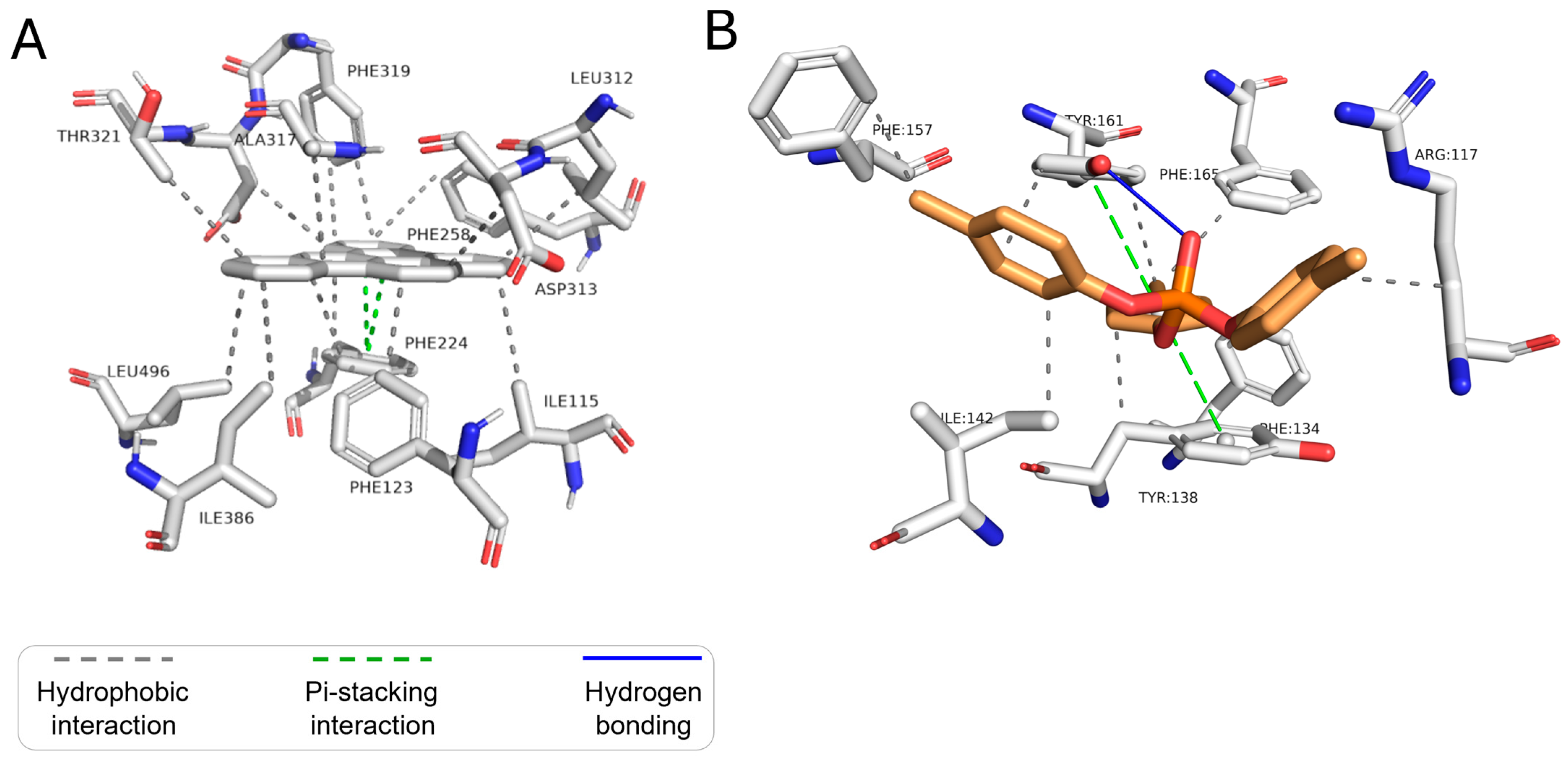
We performed the structural analysis of the aviation-derived pollutant–protein complexes displaying the highest binding affinities to characterize the types of intermolecular interactions that stabilize these complexes. Figure 2 shows the atomic-level interactions for CYP1A1 and HSA with dibenzo-ae-pyrene and tricresyl phosphate, respectively, which showed the strongest binding affinities for these pollutants. The pollutant-protein interactions were stabilized predominantly by hydrophobic interactions, as expected. Analysis of intermolecular interactions revealed that the complexes with the highest binding affinities are stabilized by hydrophobic, pi-stacking, and hydrogen bonding interactions (Table 3). These observations are consistent with the chemical properties of the ligand and highlight the significant impact these stable interactions can have on the normal function and downstream effect on the physiological functions of these proteins.
Figure 2.
Molecular interactions between aviation-derived pollutants and target proteins for (A) CYP 1A1 complexed with the PAH dibenzo-ae-pyrene (−17.6 kcal/mol) and (B) HSA complexed with the organophosphate ester tricresyl phosphate (−9.8 kcal/mol). Hydrogen bonding, hydrophobic, and pi-stacking interactions are shown in blue, gray, and green, respectively.
Table 3.
Inter-molecular interactions between selected pollutant–protein complexes that display strong binding affinities toward all target proteins.
Our docking simulation results demonstrate strong binding characteristics of pollutants commonly released during aviation fuel combustion with proteins involved in critical physiological functions in humans. In the ambient environment, the presence of a mixture of pollutants released in the emissions may influence the binding of more than one ligand to these critical proteins [37]. To assess the effect of the simultaneous binding of multiple pollutants to the target proteins, we performed molecular docking simulations of pairs of ligands, representing VOC-PAH, PAH-OPE, and VOC-OPE interactions, with three proteins—androgen receptor, acetylcholinesterase, and human serum albumin. The ligands representing the three pollutant categories were p-xylene (VOC), benzo-a-pyrene (PAH), and tricresyl phosphate (OPE). For all three pollutant pairs, docking the two pollutants simultaneously produced significantly higher calculated binding affinities than docking each pollutant individually (Table 4). The binding affinity of the two-ligand interactions showed significantly higher binding affinity (for example, −18 kcal/mol for androgen receptor binding to p-xylene and benzo-a-pyrene) relative to the individual pollutant docking (−6.7 and −13.3 kcal/mol for p-xylene and benzo-a-pyrene, respectively). These observations illustrate the potential health effects of exposure to mixtures of these pollutants. These results further highlight the need to perform toxicological studies to characterize the effect of multi-pollutant interactions. By correlating in silico binding affinities with in vivo toxicity profiles, regulatory authorities and public health practitioners can better identify which pollutants present the greatest risk and develop targeted mitigation or monitoring strategies to protect airport ground crews and nearby populations.
Table 4.
Comparison of the binding affinities of single vs. multi-pollutant binding for the androgen receptor, human serum albumin, and acetylcholinesterase. The pollutants are representative of the three pollutant categories—volatile organic compounds (VOCs), polyaromatic hydrocarbons (PAHs), and organophosphate esters (OPEs). The ligand identity is identified within parentheses.
4. Conclusions
Exposure to air pollutants derived from aviation jet fuel emissions poses a significant health risk for airport ground personnel, flight crew, passengers, and neighborhood communities. In this study, we performed a comprehensive characterization of the intermolecular interactions between eight proteins that perform critical physiological functions and a broad set of pollutants derived from aviation jet engine emissions. Among all pollutant categories analyzed, PAHs and organophosphate esters showed the strongest binding affinities, with the binding scores of PAHs displaying a positive correlation with the number of aromatic rings. These high-affinity complexes were dominated by hydrophobic and π–π stacking interactions, with polar groups like the phosphate moieties in OPEs stabilized by hydrogen bonding interactions. In the real world, individuals are exposed to mixtures of these pollutants, leading to health risks associated with simultaneous interactions of human proteins with multiple pollutants. Analysis of multiple pollutant interactions showed stronger interactions for the ligand pairs relative to individual ligands. Further experimental analysis of the toxicological effects is necessary for regulators and policymakers to make data-driven informed decisions to establish emission and exposure regulations for these pollutant classes.
The findings from this study suggest that emission standards should be stratified by pollutant class, particularly targeting high-affinity binders such as benzo-a-pyrene and PAHs with a larger number of aromatic rings such as fluoranthene, pyrene, cyclopenta-cd-pyrene, benzo-a-pyrene, benzo-g-chrysene, dibenz-ah-anthracene, dibenzo-ae-pyrene, and benzo-ghi-perylene, and organophosphate esters such as TCP and TPHP. A revision of occupational exposure limits (OELs) for ground personnel must be considered for the identified priority compounds. The aviation industry is increasing the use of sustainable/synthetic aviation fuels (SAFs). The increase in the use of SAFs will be significant at a number of airports in certain jurisdictions. In this context, the results from this and further experimental analyses can be used to inform the formulation and selection of SAFs that will minimize the production of especially hazardous combustion-derived pollutants released from the gradual replacement of conventional jet fuels with SAFs. Finally, this study underscores the urgent need for targeted toxicological and epidemiological studies to quantify the real-world risk of exposure to toxic and carcinogenic compounds in aircraft engine exhaust and to develop effective interventions to mitigate the health risks associated with chronic exposure to these hazardous pollutants.
Supplementary Materials
The following supporting information can be downloaded at https://www.mdpi.com/article/10.3390/atmos16080919/s1: Table S1. Organic pollutants released from aviation jet fuel combustion; Table S2. Standard deviations of the triplicate molecular docking simulations of the protein–pollutant complexes; Table S3. Binding affinities for air pollutant–protein interactions reported in the scientific literature; Figure S1. Binding sites for p-xylene (VOC) and benzo-a-pyrene (PAH) in acetylcholinesterase. The zoomed-in structure shows acetylcholinesterase using a cartoon representation. The two ligands are shown as sticks and colored from red to blue representing the top ten binding poses of the ligands. While p-xylene displays multiple binding sites, benzo-a-pyrene displays a single binding location in the structure [12,15,29,31,34,38,39,40,41,42].
Author Contributions
Conceptualization, C.N. and Y.N.; methodology, C.N.; software, C.N.; validation, C.N. and Y.N.; formal analysis, C.N.; investigation, C.N. and Y.N.; resources, C.N.; data curation, C.N.; writing—original draft preparation, C.N. and Y.N.; writing—review and editing, C.N. and Y.N.; visualization, C.N.; project administration, C.N. and Y.N. All authors have read and agreed to the published version of the manuscript.
Funding
This research received no external funding.
Institutional Review Board Statement
Not applicable.
Informed Consent Statement
Not applicable.
Data Availability Statement
Data is available upon request.
Conflicts of Interest
The authors declare no conflict of interest.
Abbreviations
AR, Androgen Receptor; COPD, Chronic Obstructive Pulmonary Disease; CO, Carbon Monoxide; CO2, Carbon Dioxide; CYP1A1, Cytochrome P450 Isoform 1A1; ER, Estrogen Receptor Alpha; HSA, Human Serum Albumin; NOx, Nitrogen Oxides; OPE, Organophosphate Ester; PAHs, Polycyclic Aromatic (polyaromatic) Hydrocarbons; PLIP, Protein–Ligand Interaction Profiler; PM, Particulate Matter; RMSD, Root-Mean-Square Deviation; SAF, Sustainable Aviation Fuel; SOx, Sulfur Oxides; TCP, Tricresylphosphate; TDCIPP, Tris(1,3-dichloro-2-propyl)-phosphate; TPHP, Triphenyl Phosphate; VOCs, Volatile Organic Compounds.
References
- Bendtsen, K.M.; Bengtsen, E.; Saber, A.T.; Vogel, U. A review of health effects associated with exposure to jet engine emissions in and around airports. Environ. Health 2021, 20, 10. [Google Scholar] [CrossRef] [Scilit] [PubMed]
- Zhang, K.; Brook, R.D.; Li, Y.; Rajagopalan, S.; Kim, J.B. Air Pollution, Built Environment, and Early Cardiovascular Disease. Circ. Res. 2023, 132, 1707–1724. [Google Scholar] [CrossRef] [Scilit] [PubMed]
- Sousa, A.C.; Pastorinho, M.R.; Masjedi, M.R.; Urrutia-Pereira, M.; Arrais, M.; Nunes, E.; To, T.; Ferreira, A.J.; Robalo-Cordeiro, C.; Borreg, C.; et al. Issue 1–‘Update on adverse respiratory effects of outdoor air pollution’ Part 2: Outdoor air pollution and respiratory diseases: Perspectives from Angola, Brazil, Canada, Iran, Mozambique and Portugal. Pulmonology 2022, 28, 376–395. [Google Scholar] [CrossRef] [Scilit] [PubMed]
- Dimakakou, E.; Johnston, H.J.; Streftaris, G.; Cherrie, J.W. Exposure to Environmental and Occupational Particulate Air Pollution as a Potential Contributor to Neurodegeneration and Diabetes: A Systematic Review of Epidemiological Research. Int. J. Environ. Res. Public Health 2018, 15, 1704. [Google Scholar] [CrossRef] [Scilit] [PubMed]
- How Air Pollution Affects Our Health. 2024. Available online: https://www.eea.europa.eu/en/topics/in-depth/air-pollution/eow-it-affects-our-health (accessed on 31 March 2025).
- Hudda, N.; Durant, L.W.; Fruin, S.A.; Durant, J.L. Impacts of Aviation Emissions on Near-Airport Residential Air Quality. Environ. Sci. Technol. 2020, 54, 8580–8588. [Google Scholar] [CrossRef] [Scilit]
- Nagar, N.; Saxena, H.; Pathak, A.; Mishra, A.; Poluri, K.M. A review on structural mechanisms of protein-persistent organic pollutant (POP) interactions. Chemosphere 2023, 332, 138877. [Google Scholar] [CrossRef] [Scilit]
- Låg, M.; Øvrevik, J.; Refsnes, M.; Holme, J.A. Potential role of polycyclic aromatic hydrocarbons in air pollution-induced non-malignant respiratory diseases. Respir. Res. 2020, 21, 299. [Google Scholar] [CrossRef] [Scilit]
- Plunk, E.C.; Richards, S.M. Endocrine-Disrupting Air Pollutants and Their Effects on the Hypothalamus-Pituitary-Gonadal Axis. Int. J. Mol. Sci. 2020, 21, 9191. [Google Scholar] [CrossRef] [Scilit]
- Liu, Z.; Liu, Y.; Zeng, G.; Shao, B.; Chen, M.; Li, Z.; Jiang, Y.; Liu, Y.; Zhang, Y.; Zhong, H. Application of molecular docking for the degradation of organic pollutants in the environmental remediation: A review. Chemosphere 2018, 203, 139–150. [Google Scholar] [CrossRef] [Scilit]
- Montero-Pérez, Y.; Pájaro-Castro, N.; Coronado-Posada, N.; Ahumedo-Monterrosa, M.; Olivero-Verbel, J. Human Target Proteins for Benzo(a)pyrene and Acetaminophen (And Its Metabolites): Insights from Inverse Molecular Docking and Molecular Dynamics Simulations. Sci. Pharm. 2024, 92, 55. [Google Scholar] [CrossRef] [Scilit]
- Chushak, Y.G.; Chapleau, R.R.; Frey, J.S.; Mauzy, C.A.; Gearhart, J.M. Identifying potential protein targets for toluene using a molecular similarity search, in silico docking and in vitro validation. Toxicol. Res. 2015, 4, 519–526. [Google Scholar] [CrossRef] [Scilit]
- Liu, L.; Cui, H.; Huang, Y.; Yan, H.; Zhou, Y.; Wan, Y. Molecular docking and in vitro evaluations reveal the role of human cytochrome P450 3A4 in the cross-coupling metabolism of phenolic xenobiotics. Environ. Res. 2023, 220, 115256. [Google Scholar] [CrossRef] [Scilit]
- Vincent-Hall, T.D.; Bergeron, J.G.; Eftim, S.E.; Lindahl, A.J.; Weinberger, K.R.; Haver, C.E.; Snow, S.J. Health effects of occupational exposure to jet fuels used in the military: A systematic review of the epidemiologic literature. Environ. Int. 2025, 196, 109278. [Google Scholar] [CrossRef] [Scilit]
- Mokalled, T.; Gérard, J.A.; Abboud, M.; Trocquet, C.; Nasreddine, R.; Person, V.; le Calvé, S. VOC tracers from aircraft activities at Beirut Rafic Hariri International Airport. Atmos. Pollut. Res. 2019, 10, 537–551. [Google Scholar] [CrossRef] [Scilit]
- Souza, T.L.; da Luz, J.Z.; Barreto Ldos, S.; de Oliveira Ribeiro, C.A.; Neto, F.F. Structure-based modeling to assess binding and endocrine disrupting potential of polycyclic aromatic hydrocarbons in Danio rerio. Chem.-Biol. Interact. 2024, 398, 111109. [Google Scholar] [CrossRef] [Scilit]
- Gearhart-Serna, L.M.; Davis, J.B.; Jolly, M.K.; Jayasundara, N.; Sauer, S.J.; Di Giulio, R.T.; Devi, G.R. A polycyclic aromatic hydrocarbon-enriched environmental chemical mixture enhances AhR, antiapoptotic signaling and a proliferative phenotype in breast cancer cells. Carcinogenesis 2020, 41, 1648–1659. [Google Scholar] [CrossRef] [Scilit] [PubMed]
- Darbre, P.D. Overview of air pollution and endocrine disorders. Int. J. Gen. Med. 2018, 11, 191–207. [Google Scholar] [CrossRef] [Scilit]
- Liu, J.; Zhao, K.; Qian, T.; Li, X.; Yi, W.; Pan, R.; Huang, Y.; Ji, Y.; Su, H. Association between ambient air pollution and thyroid hormones levels: A systematic review and meta-analysis. Sci. Total Environ. 2023, 904, 166780. [Google Scholar] [CrossRef] [Scilit]
- Janssens, W.; Decramer, M.; Mathieu, C.; Korf, H. Vitamin D and chronic obstructive pulmonary disease: Hype or reality? Lancet Respir. Med. 2013, 1, 804–812. [Google Scholar] [CrossRef] [Scilit]
- Xi, H.-J.; Wu, R.-P.; Liu, J.-J.; Zhang, L.-J.; Li, Z.-S. Role of acetylcholinesterase in lung cancer. Thorac. Cancer 2015, 6, 390–398. [Google Scholar] [CrossRef] [Scilit]
- Smith, J.W.; O’mEally, R.N.; Ng, D.K.; Chen, J.-G.; Kensler, T.W.; Cole, R.N.; Groopman, J.D. Biomonitoring of ambient outdoor air pollutant exposure in humans using targeted serum albumin adductomics. Chem. Res. Toxicol. 2021, 34, 1183–1196. [Google Scholar] [CrossRef] [Scilit]
- Hwang, J.; Kim, H.-J. Association of ambient air pollution with hemoglobin levels and anemia in the general population of Korean adults. BMC Public Health 2024, 24, 988. [Google Scholar] [CrossRef] [Scilit]
- Arlt, V.M.; Krais, A.M.; Godschalk, R.W.; Riffo-Vasquez, Y.; Mrizova, I.; Roufosse, C.A.; Corbin, C.; Shi, Q.; Frei, E.; Stiborova, M.; et al. Pulmonary Inflammation Impacts on CYP1A1-Mediated Respiratory Tract DNA Damage Induced by the Carcinogenic Air Pollutant Benzo[a]pyrene. Toxicol. Sci. 2015, 146, 213–225. [Google Scholar] [CrossRef] [Scilit]
- The PyMOL Molecular Graphics System, Version 3.0; Schrödinger LLC: Palo Alto, CA, USA, 2024.
- Eberhardt, J.; Santos-Martins, D.; Tillack, A.F.; Forli, S. AutoDock Vina 1.2.0: New Docking Methods, Expanded Force Field, and Python Bindings. J. Chem. Inf. Model. 2021, 61, 3891–3898. [Google Scholar] [CrossRef] [Scilit]
- Adasme, M.F.; Linnemann, K.L.; Bolz, S.N.; Kaiser, F.; Salentin, S.; Haupt, V.J.; Schroeder, M. PLIP 2021: Expanding the scope of the protein–ligand interaction profiler to DNA and RNA. Nucleic Acids Res. 2021, 49, W530–W534. [Google Scholar] [CrossRef] [Scilit]
- UCSF ChimeraX: Tools for Structure Building and Analysis-Meng-2023-Protein Science-Wiley Online Library. Available online: https://onlinelibrary.wiley.com/doi/10.1002/pro.4792 (accessed on 30 May 2025).
- Lai, C.-H.; Chuang, K.-Y.; Chang, J.-W. Characteristics of nano-/ultrafine particle-bound PAHs in ambient air at an international airport. Environ. Sci. Pollut. Res. 2013, 20, 1772–1780. [Google Scholar] [CrossRef] [Scilit]
- Anderson, B.E.; Chen, G.; Blake, D.R. Hydrocarbon emissions from a modern commercial airliner. Atmos. Environ. 2006, 40, 3601–3612. [Google Scholar] [CrossRef] [Scilit]
- Schürmann, G.; Schäfer, K.; Jahn, C.; Hoffmann, H.; Bauerfeind, M.; Fleuti, E.; Rappenglück, B. The impact of NOx, CO and VOC emissions on the air quality of Zurich airport. Atmos. Environ. 2007, 41, 103–118. [Google Scholar] [CrossRef] [Scilit]
- Shimada, T.; Fujii-Kuriyama, Y. Metabolic activation of polycyclic aromatic hydrocarbons to carcinogens by cytochromes P450 1A1 and1B1. Cancer Sci. 2004, 95, 1–6. [Google Scholar] [CrossRef] [Scilit]
- Rostamnezhad, F.; Hossein Fatemi, M. Comprehensive investigation of binding of some polycyclic aromatic hydrocarbons with bovine serum albumin: Spectroscopic and molecular docking studies. Bioorganic Chem. 2022, 120, 105656. [Google Scholar] [CrossRef] [Scilit]
- Harrison, V.; Mackenzie Ross, S.J. An emerging concern: Toxic fumes in airplane cabins. Cortex 2016, 74, 297–302. [Google Scholar] [CrossRef] [Scilit]
- Guo, Y.; Li, N. Network toxicology and molecular docking to investigative the non-acetylcholinesterase mechanisms and targets of cardiotoxicity injury induced by organophosphorus pesticides. Medicine 2024, 103, e39963. [Google Scholar] [CrossRef] [Scilit]
- Olsson, A.; Guha, N.; Bouaoun, L.; Kromhout, H.; Peters, S.; Siemiatycki, J.; Ho, V.; Gustavsson, P.; Boffetta, P.; Vermeulen, R.; et al. Occupational Exposure to Polycyclic Aromatic Hydrocarbons and Lung Cancer Risk: Results from a Pooled Analysis of Case–Control Studies (SYNERGY). Cancer Epidemiol. Biomark. Prev. 2022, 31, 1433–1441. [Google Scholar] [CrossRef] [Scilit]
- Carpenter, D.O.; Arcaro, K.; Spink, D.C. Understanding the human health effects of chemical mixtures. Environ. Health Perspect. 2002, 110, 25–42. [Google Scholar] [CrossRef] [Scilit]
- Andersen, M.H.G.; Saber, A.T.; Frederiksen, M.; Clausen, P.A.; Sejbaek, C.S.; Hemmingsen, C.H.; Ebbehøj, N.E.; Aimonen, K.; Koivisto, J.; Loft, S. Occupational Exposure and Markers of Genetic Damage, Systemic Inflammation and Lung Function: A Danish Cross-Sectional Study among Air Force Personnel. Sci. Rep. 2021, 11, 17998. [Google Scholar] [CrossRef] [Scilit] [PubMed]
- Anderson, B.E.; Branham, H.-S.; Hudgins, C.H.; Plant, J.V.; Ballenthin, J.O.; Miller, T.M.; Viggiano, A.A.; Blake, D.R.; Boudries, H.; Canagaratna, M. Experiment to Characterize Aircraft Volatile Aerosol and Trace-Species Emissions (EXCAVATE). NASA/TM-2005-213783, 1 August 2005. Available online: https://ntrs.nasa.gov/citations/20050214696 (accessed on 30 March 2025).
- Campo, L.; Buratti, M.; Fustinoni, S.; Cirla, P.E.; Martinotti, I.; Longhi, O.; Cavallo, D.; Foà, V. Evaluation of Exposure to PAHs in Asphalt Workers by Environmental and Biological Monitoring. Ann. N. Y. Acad. Sci. 2006, 1076, 405–420. [Google Scholar] [CrossRef] [Scilit]
- Fushimi, A.; Saitoh, K.; Fujitani, Y.; Takegawa, N. Identification of Jet Lubrication Oil as a Major Component of Aircraft Exhaust Nanoparticles. Atmos. Chem. Phys. 2019, 19, 6389–6399. [Google Scholar] [CrossRef] [Scilit]
- Shi, Q.; Guo, W.; Shen, Q.; Han, J.; Lei, L.; Chen, L.; Yang, L.; Feng, C.; Zhou, B. In Vitro Biolayer Interferometry Analysis of Acetylcholinesterase as a Potential Target of Aryl-Organophosphorus Flame-Retardants. J. Hazard. Mater. 2021, 409, 124999. [Google Scholar] [CrossRef] [Scilit]

Disclaimer/Publisher’s Note: The statements, opinions and data contained in all publications are solely those of the individual author(s) and contributor(s) and not of MDPI and/or the editor(s). MDPI and/or the editor(s) disclaim responsibility for any injury to people or property resulting from any ideas, methods, instructions or products referred to in the content. |
© 2025 by the authors. Licensee MDPI, Basel, Switzerland. This article is an open access article distributed under the terms and conditions of the Creative Commons Attribution (CC BY) license (https://creativecommons.org/licenses/by/4.0/).