Skip to Content

Cells, Volume 8, Issue 3

2019 March - 87 articles

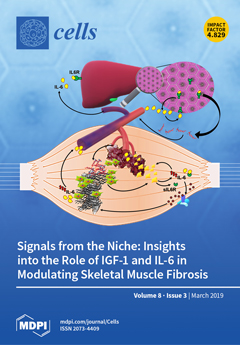
Cover Story: Fibrotic tissue deposition is generally associated with an altered interplay among the different cell components in muscle tissue, affecting regenerative processes. The expression of soluble mediators, including cytokines and growth factors, can modulate cell–cell communication, regulating critical steps of muscle healing, including regenerative fibrogenesis and myogenesis. In particular, IGF-1 and physiological levels of IL-6 play important roles in muscle regeneration, exerting a pro-myogenic activity, whereas elevated levels of IL-6 negatively impact muscle repair. Here, we focus on cellular and molecular mediators of skeletal muscle fibrosis and discuss how the altered expression of specific niche factors can impinge on the homeostatic mechanisms of tissue repair. View this paper.
  • Issues are regarded as officially published after their release is announced to the table of contents alert mailing list .
  • You may sign up for email alerts to receive table of contents of newly released issues.
  • PDF is the official format for papers published in both, html and pdf forms. To view the papers in pdf format, click on the "PDF Full-text" link, and use the free Adobe Reader to open them.

Articles (87)

  • Editorial
  • Open Access
9 Citations
4,500 Views
4 Pages

Emerging Cellular Therapies: T Cells and Beyond

  • Stephen Todryk,
  • Agnieszka Jozwik,
  • Julian de Havilland and
  • Joanna Hester

26 March 2019

Cellular therapies, including those based on T cells, are becoming approved options for clinicians treating a range of diseases. Cytotoxic T lymphocytes (CTLs) can be modified ex vivo to express receptors such as chimeric antigen receptors (CARs) or...

  • Article
  • Open Access
28 Citations
5,515 Views
15 Pages

IL-6, IL-12, and IL-23 STAT-Pathway Genetic Risk and Responsiveness of Lymphocytes in Patients with Multiple Sclerosis

  • Marina R. von Essen,
  • Helle B. Søndergaard,
  • Eva R.S. Petersen and
  • Finn Sellebjerg

26 March 2019

Multiple sclerosis (MS) is an immune-mediated demyelinating disease characterized by central nervous system (CNS) lymphocyte infiltration, abundant production of pro-inflammatory cytokines, and inappropriate activation of Th1 and Th17 cells, B cells,...

  • Review
  • Open Access
69 Citations
11,993 Views
27 Pages

Import of Non-Coding RNAs into Human Mitochondria: A Critical Review and Emerging Approaches

  • Damien Jeandard,
  • Anna Smirnova,
  • Ivan Tarassov,
  • Eric Barrey,
  • Alexandre Smirnov and
  • Nina Entelis

26 March 2019

Mitochondria harbor their own genetic system, yet critically depend on the import of a number of nuclear-encoded macromolecules to ensure their expression. In all eukaryotes, selected non-coding RNAs produced from the nuclear genome are partially red...

  • Article
  • Open Access
72 Citations
6,786 Views
20 Pages

25 March 2019

Human adipose-derived stem cells localize in the stromal-vascular portion, and can be ex vivo isolated using a combination of washing steps and enzymatic digestion. For this study, we undertook a histological evaluation of traditional fat graft compa...

  • Article
  • Open Access
23 Citations
7,297 Views
19 Pages

25 March 2019

This study was conducted to elucidate the involvement of the PINK1-Parkin pathway in ethanol-induced mitophagy among Sertoli cells (SCs). In the research, adult rats were given intraperitoneal injections of ethanol (5 gm/kg) and sacrificed at various...

  • Article
  • Open Access
41 Citations
8,629 Views
15 Pages

Novel Flavivirus Antiviral That Targets the Host Nuclear Transport Importin α/β1 Heterodimer

  • Sundy N. Y. Yang,
  • Sarah C. Atkinson,
  • Johanna E. Fraser,
  • Chunxiao Wang,
  • Belinda Maher,
  • Noelia Roman,
  • Jade K. Forwood,
  • Kylie M. Wagstaff,
  • Natalie A. Borg and
  • David A. Jans

24 March 2019

Dengue virus (DENV) threatens almost 70% of the world’s population, with no effective vaccine or therapeutic currently available. A key contributor to infection is nuclear localisation in the infected cell of DENV nonstructural protein 5 (NS5) throug...

  • Review
  • Open Access
34 Citations
11,456 Views
15 Pages

Recent Progress on the Localization of the Spindle Assembly Checkpoint Machinery to Kinetochores

  • Zhen Dou,
  • Diogjena Katerina Prifti,
  • Ping Gui,
  • Xing Liu,
  • Sabine Elowe and
  • Xuebiao Yao

23 March 2019

Faithful chromosome segregation during mitosis is crucial for maintaining genome stability. The spindle assembly checkpoint (SAC) is a surveillance mechanism that ensures accurate mitotic progression. Defective SAC signaling leads to premature sister...

  • Article
  • Open Access
33 Citations
5,935 Views
13 Pages

FM19G11-Loaded Gold Nanoparticles Enhance the Proliferation and Self-Renewal of Ependymal Stem Progenitor Cells Derived from ALS Mice

  • Stefania Marcuzzo,
  • Davide Isaia,
  • Silvia Bonanno,
  • Claudia Malacarne,
  • Paola Cavalcante,
  • Antonella Zacheo,
  • Valentino Laquintana,
  • Nunzio Denora,
  • Barbara Sanavio and
  • Pia Bernasconi
  • + 7 authors

23 March 2019

Amyotrophic lateral sclerosis (ALS) is a progressive neurodegenerative disease affecting motor neurons. In ALS mice, neurodegeneration is associated with the proliferative restorative attempts of ependymal stem progenitor cells (epSPCs) that normally...

  • Feature Paper
  • Review
  • Open Access
32 Citations
6,045 Views
17 Pages

C-Met as a Key Factor Responsible for Sustaining Undifferentiated Phenotype and Therapy Resistance in Renal Carcinomas

  • Paulina Marona,
  • Judyta Górka,
  • Jerzy Kotlinowski,
  • Marcin Majka,
  • Jolanta Jura and
  • Katarzyna Miekus

22 March 2019

C-Met tyrosine kinase receptor plays an important role under normal and pathological conditions. In tumor cells’ overexpression or incorrect activation of c-Met, this leads to stimulation of proliferation, survival and increase of motile activi...

  • Article
  • Open Access
24 Citations
7,765 Views
21 Pages

N-Glycomic and Transcriptomic Changes Associated with CDX1 mRNA Expression in Colorectal Cancer Cell Lines

  • Stephanie Holst,
  • Jennifer L. Wilding,
  • Kamila Koprowska,
  • Yoann Rombouts and
  • Manfred Wuhrer

22 March 2019

The caudal-related homeobox protein 1 (CDX1) is a transcription factor, which is important in the development, differentiation, and homeostasis of the gut. Although the involvement of CDX genes in the regulation of the expression levels of a few glyc...

  • Review
  • Open Access
19 Citations
7,144 Views
14 Pages

22 March 2019

Innate immune responses generate interferons, proinflammatory cytokines, complement activation, and natural killer (NK) cell response. Ultimately, this leads to the induction of a robust virus-specific adaptive immunity. Although the host innate immu...

  • Review
  • Open Access
46 Citations
8,681 Views
19 Pages

22 March 2019

This review explores the molecular mechanisms that may be responsible for mitochondrial retrograde signalling related metabolic reprogramming in cancer and host cells in the tumour microenvironment and provides a summary of recent updates with regard...

  • Article
  • Open Access
40 Citations
7,228 Views
20 Pages

CD44s Assembles Hyaluronan Coat on Filopodia and Extracellular Vesicles and Induces Tumorigenicity of MKN74 Gastric Carcinoma Cells

  • Kai Härkönen,
  • Sanna Oikari,
  • Heikki Kyykallio,
  • Janne Capra,
  • Sini Hakkola,
  • Kirsi Ketola,
  • Uma Thanigai Arasu,
  • George Daaboul,
  • Andrew Malloy and
  • Kirsi Rilla
  • + 4 authors

22 March 2019

CD44 is a multifunctional adhesion molecule typically upregulated in malignant, inflamed and injured tissues. Due to its ability to bind multiple ligands present in the tumor microenvironment, it promotes multiple cellular functions related to tumori...

  • Article
  • Open Access
65 Citations
8,956 Views
16 Pages

A New Targeted Lipidomics Approach Reveals Lipid Droplets in Liver, Muscle and Heart as a Repository for Diacylglycerol and Ceramide Species in Non-Alcoholic Fatty Liver

  • Christina Preuss,
  • Tomas Jelenik,
  • Kálmán Bódis,
  • Karsten Müssig,
  • Volker Burkart,
  • Julia Szendroedi,
  • Michael Roden and
  • Daniel F. Markgraf

22 March 2019

Obesity is frequently associated with excessive accumulation of lipids in ectopic tissue and presents a major risk factor for type 2 diabetes (T2D) and non-alcoholic fatty liver disease (NAFLD). Diacylglycerols (DAGs) and ceramides (CERs) were identi...

  • Article
  • Open Access
14 Citations
5,215 Views
16 Pages

21 March 2019

Aquaporin 2 (AQP2) mediates the osmotic water permeability of the kidney collecting duct in response to arginine vasopressin (VP) and is essential for body water homeostasis. VP effects on AQP2 occur via long-term alterations in AQP2 abundance and sh...

  • Article
  • Open Access
14 Citations
5,224 Views
17 Pages

21 March 2019

Lamin A is involved in many cellular functions due to its ability to bind chromatin and transcription factors and affect their properties. Mutations of LMNA gene encoding lamin A affect the differentiation capacity of stem cells, but the mechanisms o...

  • Perspective
  • Open Access
10 Citations
7,081 Views
12 Pages

21 March 2019

Nicotinamide mononucleotide adenylyltransferase (NMNAT), a key enzyme for NAD+ synthesis, is well known for its activity in neuronal survival and attenuation of Wallerian degeneration. Recent investigations in invertebrate models have, however, revea...

  • Article
  • Open Access
64 Citations
8,253 Views
12 Pages

Promethin Is a Conserved Seipin Partner Protein

  • Inês G. Castro,
  • Michal Eisenberg-Bord,
  • Elisa Persiani,
  • Justin J. Rochford,
  • Maya Schuldiner and
  • Maria Bohnert

21 March 2019

Seipin (BSCL2/SPG17) is a key factor in lipid droplet (LD) biology, and its dysfunction results in severe pathologies, including the fat storage disease Berardinelli-Seip congenital lipodystrophy type 2, as well as several neurological seipinopathies...

  • Article
  • Open Access
21 Citations
4,860 Views
16 Pages

Discovery of Small Molecules That Target Vascular Endothelial Growth Factor Receptor-2 Signalling Pathway Employing Molecular Modelling Studies

  • Shailima Rampogu,
  • Ayoung Baek,
  • Chanin Park,
  • Minky Son,
  • Shraddha Parate,
  • Saravanan Parameswaran,
  • Yohan Park,
  • Baji Shaik,
  • Ju Hyun Kim and
  • Keun Woo Lee
  • + 1 author

21 March 2019

Angiogenesis is defined as the formation of new blood vessels and is a key phenomenon manifested in a host of cancers during which tyrosine kinases play a crucial role. Vascular endothelial growth factor receptor-2 (VEGFR-2) is pivotal in cancer angi...

  • Review
  • Open Access
61 Citations
11,991 Views
20 Pages

21 March 2019

Vascular endothelial growth factor receptor 3 (VEGFR3) has been known for its involvement in tumor-associated lymphangiogenesis and lymphatic metastasis. The VEGFR3 signaling is stimulated by its main cognate ligand, vascular endothelial growth facto...

  • Review
  • Open Access
50 Citations
14,417 Views
15 Pages

Lamina Associated Domains and Gene Regulation in Development and Cancer

  • Silke J. A. Lochs,
  • Samy Kefalopoulou and
  • Jop Kind

21 March 2019

The nuclear lamina (NL) is a thin meshwork of filaments that lines the inner nuclear membrane, thereby providing a platform for chromatin binding and supporting genome organization. Genomic regions contacting the NL are lamina associated domains (LAD...

  • Feature Paper
  • Article
  • Open Access
11 Citations
5,554 Views
22 Pages

Untangling Extracellular Proteasome-Osteopontin Circuit Dynamics in Multiple Sclerosis

  • Chiara Dianzani,
  • Domizia Vecchio,
  • Nausicaa Clemente,
  • Annalisa Chiocchetti,
  • Filippo Martinelli Boneschi,
  • Daniela Galimberti,
  • Umberto Dianzani,
  • Cristoforo Comi,
  • Michele Mishto and
  • Juliane Liepe

20 March 2019

The function of proteasomes in extracellular space is still largely unknown. The extracellular proteasome-osteopontin circuit has recently been hypothesized to be part of the inflammatory machinery regulating relapse/remission phase alternation in mu...

  • Article
  • Open Access
64 Citations
5,836 Views
17 Pages

20 March 2019

Emodin is the main component of traditional Chinese medicines including rhubarb, Polygonum multiflorum, and Polygonum cuspidatum. It has confirmed hepatotoxicity and may be the main causative agent of liver damage associated with the above-mentioned...

  • Review
  • Open Access
309 Citations
18,117 Views
24 Pages

Cysteine Cathepsins and Their Extracellular Roles: Shaping the Microenvironment

  • Eva Vidak,
  • Urban Javoršek,
  • Matej Vizovišek and
  • Boris Turk

20 March 2019

For a long time, cysteine cathepsins were considered primarily as proteases crucial for nonspecific bulk proteolysis in the endolysosomal system. However, this view has dramatically changed, and cathepsins are now considered key players in many impor...

  • Article
  • Open Access
12 Citations
5,941 Views
21 Pages

19 March 2019

Few major histocompatibility complex (MHC)-based mate choice studies include all MHC genes at the inter-individual, sperm-egg, and mother-fetus recognition levels. We tested three hypotheses of female mate choice in a 17-year study of the giant panda...

  • Article
  • Open Access
133 Citations
10,074 Views
23 Pages

Effect of MSCs and MSC-Derived Extracellular Vesicles on Human Blood Coagulation

  • Denis N. Silachev,
  • Kirill V. Goryunov,
  • Margarita A. Shpilyuk,
  • Olga S. Beznoschenko,
  • Natalya Y. Morozova,
  • Elizaveta E. Kraevaya,
  • Vasily A. Popkov,
  • Irina B. Pevzner,
  • Ljubava D. Zorova and
  • Gennady T. Sukhikh
  • + 7 authors

19 March 2019

Mesenchymal stem cells (MSCs) have emerged as a potent therapeutic tool for the treatment of a number of pathologies, including immune pathologies. However, unwelcome effects of MSCs on blood coagulation have been reported, motivating us to explore t...

  • Feature Paper
  • Review
  • Open Access
18 Citations
7,132 Views
17 Pages

Microtubular and Nuclear Functions of γ-Tubulin: Are They LINCed?

  • Jana Chumová,
  • Hana Kourová,
  • Lucie Trögelová,
  • Petr Halada and
  • Pavla Binarová

19 March 2019

γ-Tubulin is a conserved member of the tubulin superfamily with a function in microtubule nucleation. Proteins of γ-tubulin complexes serve as nucleation templates as well as a majority of other proteins contributing to centrosomal and no...

  • Article
  • Open Access
76 Citations
8,706 Views
13 Pages

A Direct Effect of Sex Hormones on Epithelial Barrier Function in Inflammatory Bowel Disease Models

  • Janine van der Giessen,
  • C. Janneke van der Woude,
  • Maikel P. Peppelenbosch and
  • Gwenny M. Fuhler

19 March 2019

Background: Pregnancy is often described as an immune-tolerant state, and a disease modulatory role for pregnancy on inflammatory bowel disease (IBD) has been suggested. The direct effect of estrogen and progesterone on the intestinal epithelial barr...

  • Article
  • Open Access
68 Citations
12,980 Views
26 Pages

19 March 2019

The purpose of our study is to identify phosphorylated tau (p-tau) inhibitors. P-tau has recently received great interest as a potential drug target in Alzheimer’s disease (AD). The continuous failure of Aβ-targeted therapeutics recommends...

  • Article
  • Open Access
19 Citations
8,619 Views
17 Pages

3,5 Diiodo-l-Thyronine (T2) Promotes the Browning of White Adipose Tissue in High-Fat Diet-Induced Overweight Male Rats Housed at Thermoneutrality

  • Rosalba Senese,
  • Federica Cioffi,
  • Rita De Matteis,
  • Giuseppe Petito,
  • Pieter de Lange,
  • Elena Silvestri,
  • Assunta Lombardi,
  • Maria Moreno,
  • Fernando Goglia and
  • Antonia Lanni

18 March 2019

The conversion of white adipose cells into beige adipose cells is known as browning, a process affecting energy metabolism. It has been shown that 3,5 diiodo-l-thyronine (T2), an endogenous metabolite of thyroid hormones, stimulates energy expenditur...

  • Article
  • Open Access
76 Citations
11,064 Views
24 Pages

16 March 2019

Obesity has been shown to play a role in the pathogenesis of several forms of metabolic syndrome, including non-alcoholic fatty liver disease (NAFLD) and type 2 diabetes. Ursodeoxycholic acid (UDCA) has been shown to possess antioxidant and anti-infl...

  • Feature Paper
  • Article
  • Open Access
13 Citations
5,140 Views
15 Pages

Analysis of the Zn-Binding Domains of TRIM32, the E3 Ubiquitin Ligase Mutated in Limb Girdle Muscular Dystrophy 2H

  • Elisa Lazzari,
  • Medhat S. El-Halawany,
  • Matteo De March,
  • Floriana Valentino,
  • Francesco Cantatore,
  • Chiara Migliore,
  • Silvia Onesti and
  • Germana Meroni

16 March 2019

Members of the tripartite motif family of E3 ubiquitin ligases are characterized by the presence of a conserved N-terminal module composed of a RING domain followed by one or two B-box domains, a coiled-coil and a variable C-terminal region. The RING...

  • Feature Paper
  • Review
  • Open Access
63 Citations
8,398 Views
24 Pages

Drugging the Small GTPase Pathways in Cancer Treatment: Promises and Challenges

  • Néstor Prieto-Dominguez,
  • Christopher Parnell and
  • Yong Teng

16 March 2019

Small GTPases are a family of low molecular weight GTP-hydrolyzing enzymes that cycle between an inactive state when bound to GDP and an active state when associated to GTP. Small GTPases regulate key cellular processes (e.g., cell differentiation, p...

  • Review
  • Open Access
129 Citations
15,275 Views
18 Pages

The Emerging Roles of TERRA in Telomere Maintenance and Genome Stability

  • Nicole Bettin,
  • Claudio Oss Pegorar and
  • Emilio Cusanelli

15 March 2019

The finding that transcription occurs at chromosome ends has opened new fields of study on the roles of telomeric transcripts in chromosome end maintenance and genome stability. Indeed, the ends of chromosomes are required to be protected from activa...

  • Article
  • Open Access
27 Citations
6,318 Views
12 Pages

15 March 2019

The changes in telomere length and mitochondrial DNA copy number (mtDNAcn) are considered to be aging markers. However, many studies have provided contradictory or only fragmentary information about changes of these markers in animal models, due to i...

  • Article
  • Open Access
19 Citations
6,588 Views
13 Pages

Niclosamide Triggers Non-Canonical LC3 Lipidation

  • Yajun Liu,
  • Xia Luo,
  • Hao Shan,
  • Yuanyuan Fu,
  • Qianqian Gu,
  • Xueping Zheng,
  • Qi Dai,
  • Fan Xia,
  • Zhihua Zheng and
  • Min Li
  • + 3 authors

15 March 2019

Autophagy is a highly- evolutionarily-conserved catabolic pathway activated by various cellular stresses. Recently, non-canonical autophagy (NCA), which does not require all of the ATG proteins to form autophagosome or autophagosome-like structures,...

  • Review
  • Open Access
54 Citations
13,256 Views
9 Pages

Skeletal Muscle Lipid Droplets and the Athlete’s Paradox

  • Xuehan Li,
  • Zemin Li,
  • Minghua Zhao,
  • Yingxi Nie,
  • Pingsheng Liu,
  • Yili Zhu and
  • Xuelin Zhang

15 March 2019

The lipid droplet (LD) is an organelle enveloped by a monolayer phospholipid membrane with a core of neutral lipids, which is conserved from bacteria to humans. The available evidence suggests that the LD is essential to maintaining lipid homeostasis...

  • Article
  • Open Access
18 Citations
4,605 Views
19 Pages

Increased Levels of cAMP by the Calcium-Dependent Activation of Soluble Adenylyl Cyclase in Parkin-Mutant Fibroblasts

  • Paola Tanzarella,
  • Anna Ferretta,
  • Simona Nicol Barile,
  • Mariella Ancona,
  • Domenico De Rasmo,
  • Anna Signorile,
  • Sergio Papa,
  • Nazzareno Capitanio,
  • Consiglia Pacelli and
  • Tiziana Cocco

15 March 2019

Almost half of autosomal recessive early-onset parkinsonism has been associated with mutations in PARK2, coding for parkin, which plays an important role in mitochondria function and calcium homeostasis. Cyclic adenosine monophosphate (cAMP) is a maj...

  • Article
  • Open Access
10 Citations
4,926 Views
17 Pages

Lack of Small Intestinal Dysbiosis Following Long-Term Selective Inhibition of Cyclooxygenase-2 by Rofecoxib in the Rat

  • Bernadette Lázár,
  • Gábor B. Brenner,
  • András Makkos,
  • Mihály Balogh,
  • Szilvia B. László,
  • Mahmoud Al-Khrasani,
  • Barbara Hutka,
  • Emese Bató,
  • Eszter Ostorházi and
  • Zoltán S. Zádori
  • + 10 authors

15 March 2019

Intestinal dysbiosis is linked to numerous gastrointestinal disorders, including inflammatory bowel diseases. It is a question of debate if coxibs, selective inhibitors of cyclooxygenase (COX)-2, cause dysbiosis. Therefore, in the present study, we a...

  • Article
  • Open Access
34 Citations
4,458 Views
14 Pages

Hepatitis C Direct Acting Antivirals and Ribavirin Modify Lipid but not Glucose Parameters

  • Mary-Anne Doyle,
  • Chrissi Galanakis,
  • Erin Mulvihill,
  • Angela Crawley and
  • Curtis L. Cooper

15 March 2019

Chronic hepatitis C (HCV) infection perturbs lipid and glucose metabolism. The influence of direct acting antiviral (DAA) treatment and ribavirin on these measures was evaluated. Furthermore, the effect of HCV cure on these parameters was assessed. P...

  • Review
  • Open Access
21 Citations
7,332 Views
15 Pages

14 March 2019

Protein degradation is a pivotal process for eukaryotic development and homeostasis. The majority of proteins are degraded by the ubiquitin–proteasome system and by autophagy. Recent studies describe a crosstalk between these two main eukaryoti...

  • Review
  • Open Access
18 Citations
10,648 Views
30 Pages

14 March 2019

The mechanism that causes the Alzheimer’s disease (AD) pathologies, including amyloid plaque, neurofibrillary tangles, and neuron death, is not well understood due to the lack of robust study models for human brain. Three-dimensional organoid s...

  • Article
  • Open Access
17 Citations
5,871 Views
15 Pages

14 March 2019

The intracellular transport of receptor tyrosine kinases results in the differential activation of various signaling pathways. In this study, optogenetic stimulation of fibroblast growth factor receptor type 1 (FGFR1) was performed to study the effec...

  • Article
  • Open Access
3 Citations
3,738 Views
20 Pages

The Protein Tyrosine Phosphatase H1 PTPH1 Supports Proliferation of Keratinocytes and is a Target of the Human Papillomavirus Type 8 E6 Oncogene

  • Stefanie Taute,
  • Philipp Böhnke,
  • Jasmin Sprissler,
  • Stephanie Buchholz,
  • Martin Hufbauer,
  • Baki Akgül and
  • Gertrud Steger

14 March 2019

Human papillomaviruses (HPV) replicate their DNA in the suprabasal layer of the infected mucosa or skin. In order to create a suitable environment for vegetative viral DNA replication HPV delay differentiation and sustain keratinocyte proliferation t...

  • Review
  • Open Access
52 Citations
7,124 Views
12 Pages

Hyaluronan-Based Hydrogel Scaffolds for Limbal Stem Cell Transplantation: A Review

  • Mazyar Yazdani,
  • Aboulghassem Shahdadfar,
  • Catherine Joan Jackson and
  • Tor Paaske Utheim

14 March 2019

Hyaluronan (HA), also termed hyaluronic acid or hyaluronate, is a major component of the extracellular matrix. This non-sulfated glycosaminoglycan plays a key role in cell proliferation, growth, survival, polarization, and differentiation. The divers...

  • Review
  • Open Access
46 Citations
7,474 Views
14 Pages

CIDE Proteins in Human Health and Disease

  • Mark Slayton,
  • Abhishek Gupta,
  • Bijinu Balakrishnan and
  • Vishwajeet Puri

13 March 2019

Cell death-Inducing DNA Fragmentation Factor Alpha (DFFA)-like Effector (CIDE) proteins have emerged as lipid droplet-associated proteins that regulate fat metabolism. There are three members in the CIDE protein family—CIDEA, CIDEB, and CIDEC (...

  • Review
  • Open Access
37 Citations
6,536 Views
15 Pages

Tubulin βII and βIII Isoforms as the Regulators of VDAC Channel Permeability in Health and Disease

  • Marju Puurand,
  • Kersti Tepp,
  • Natalja Timohhina,
  • Jekaterina Aid,
  • Igor Shevchuk,
  • Vladimir Chekulayev and
  • Tuuli Kaambre

13 March 2019

In recent decades, there have been several models describing the relationships between the cytoskeleton and the bioenergetic function of the cell. The main player in these models is the voltage-dependent anion channel (VDAC), located in the mitochond...

  • Article
  • Open Access
19 Citations
8,409 Views
30 Pages

Emerin Is Required for Proper Nucleus Reassembly after Mitosis: Implications for New Pathogenetic Mechanisms for Laminopathies Detected in EDMD1 Patients

  • Magda Dubińska-Magiera,
  • Katarzyna Kozioł,
  • Magdalena Machowska,
  • Katarzyna Piekarowicz,
  • Daria Filipczak and
  • Ryszard Rzepecki

13 March 2019

Emerin is an essential LEM (LAP2, Emerin, MAN1) domain protein in metazoans and an integral membrane protein associated with inner and outer nuclear membranes. Mutations in the human EMD gene coding for emerin result in the rare genetic disorder: Eme...

  • Review
  • Open Access
49 Citations
9,231 Views
31 Pages

12 March 2019

The replication cycle of the liver-tropic hepatitis C virus (HCV) is tightly connected to the host lipid metabolism, during the virus entry, replication, assembly and egress stages, but also while the virus circulates in the bloodstream. This interpl...

of 2

Get Alerted

Add your email address to receive forthcoming issues of this journal.

XFacebookLinkedIn
Cells - ISSN 2073-4409