Article

Glycogen Granules Are Degraded by Non-Selective Autophagy in Nitrogen-Starved Komagataella phaffii


by
Nimna V. Wijewantha
1,
Ravinder Kumar
2,† and
Taras Y. Nazarko
1,2,*
1
Department of Biology, Georgia State University, Atlanta, GA 30303, USA
2
Section of Molecular Biology, Division of Biological Sciences, University of California, San Diego, La Jolla, CA 92093, USA
*
Author to whom correspondence should be addressed.
Current address: Department of Pathology and Laboratory Medicine, University of Tennessee Health Science Center, Memphis, TN 38163, USA.
Cells 2024, 13(6), 467; https://doi.org/10.3390/cells13060467
Submission received: 14 January 2024 / Revised: 3 March 2024 / Accepted: 6 March 2024 / Published: 7 March 2024
(This article belongs to the Special Issue Autophagy, Mitophagy and Disease)

Abstract

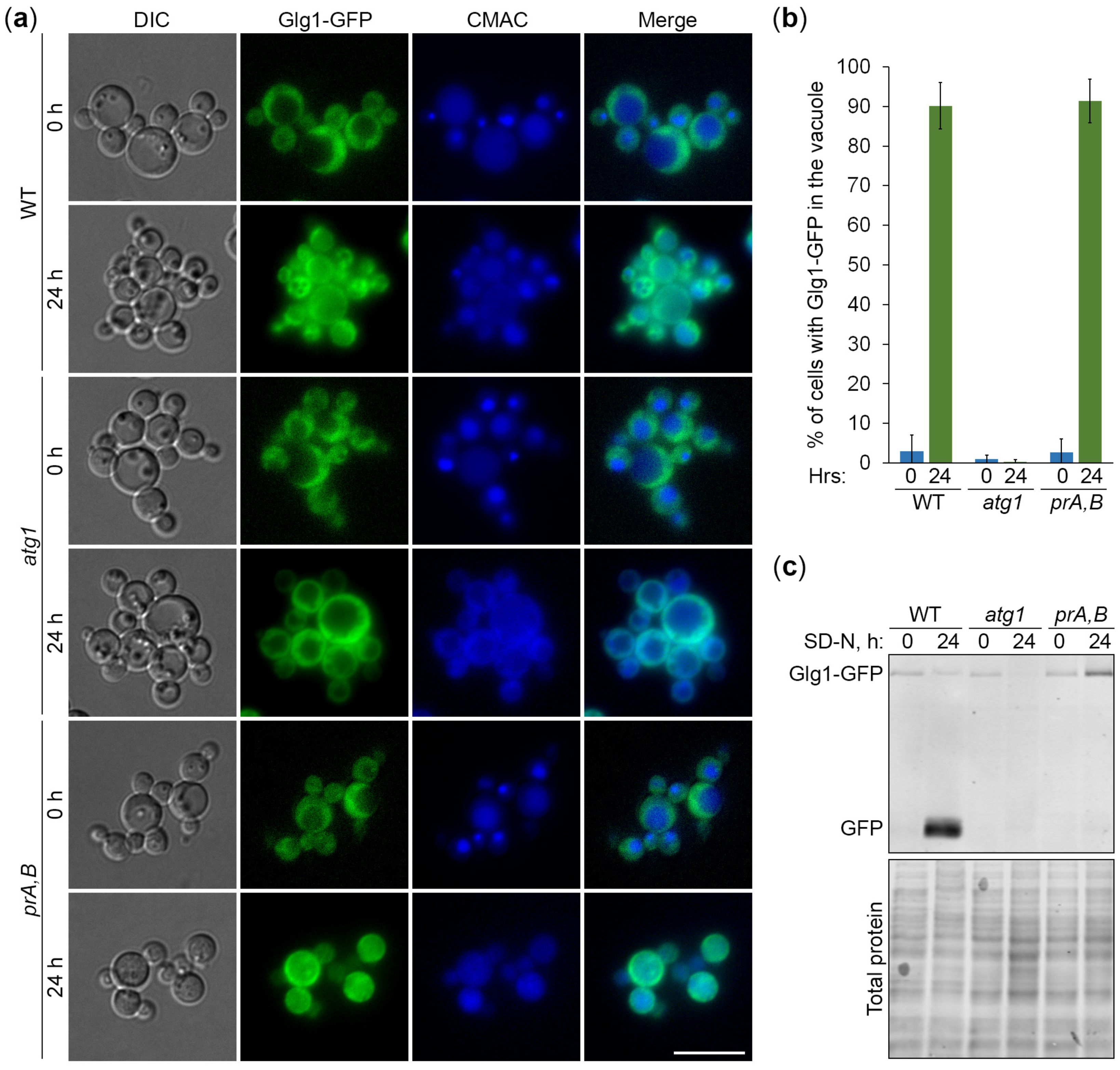
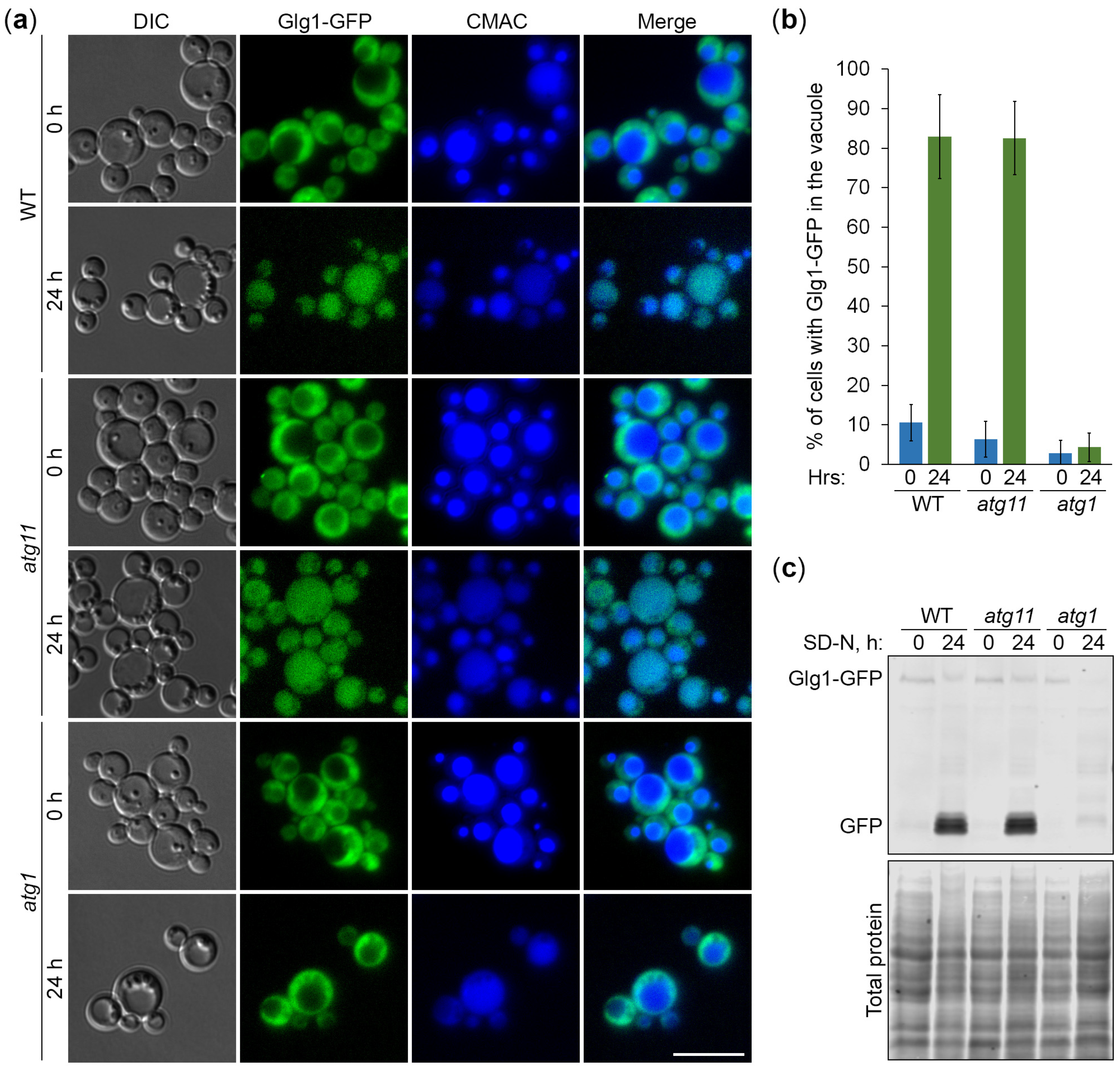
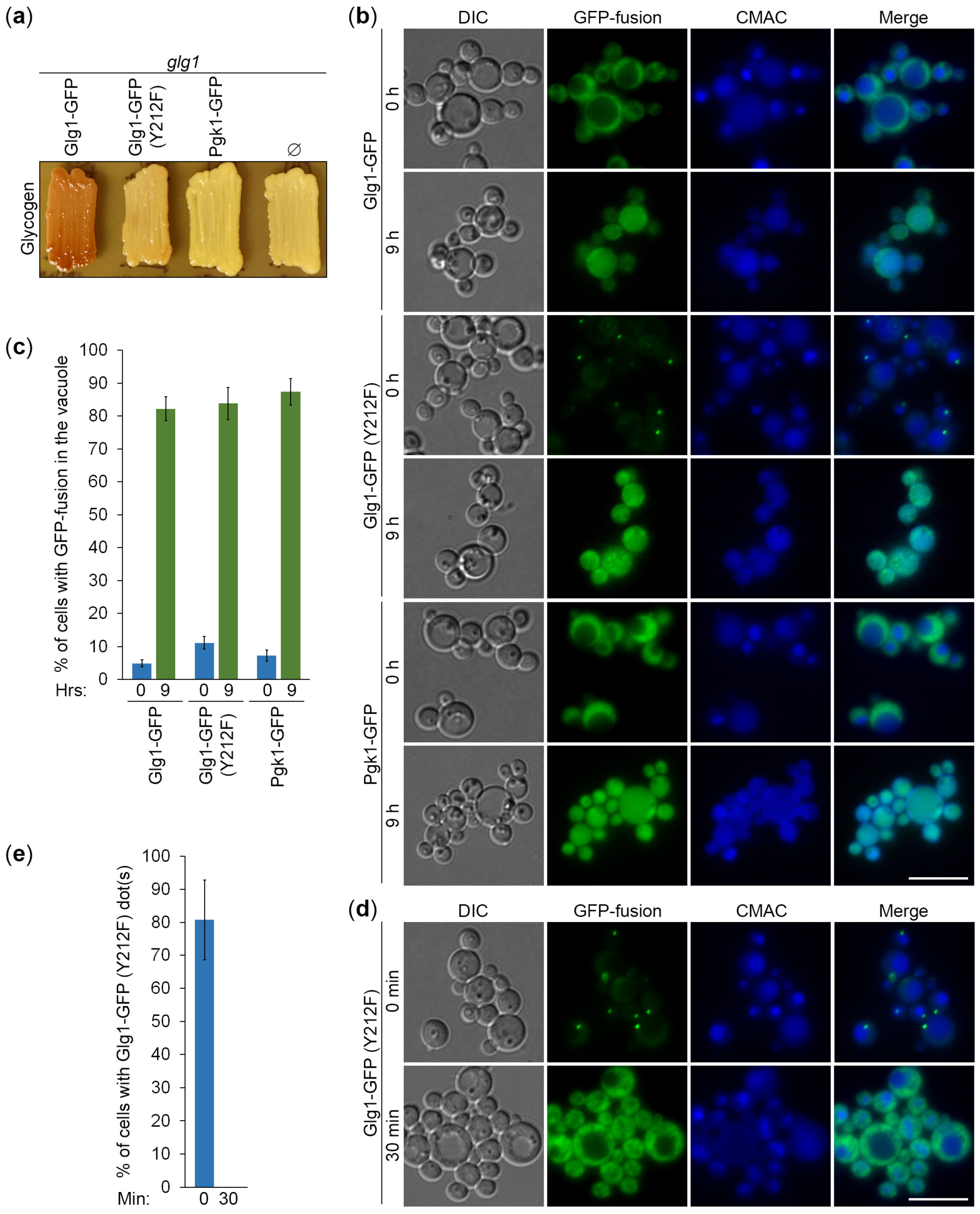
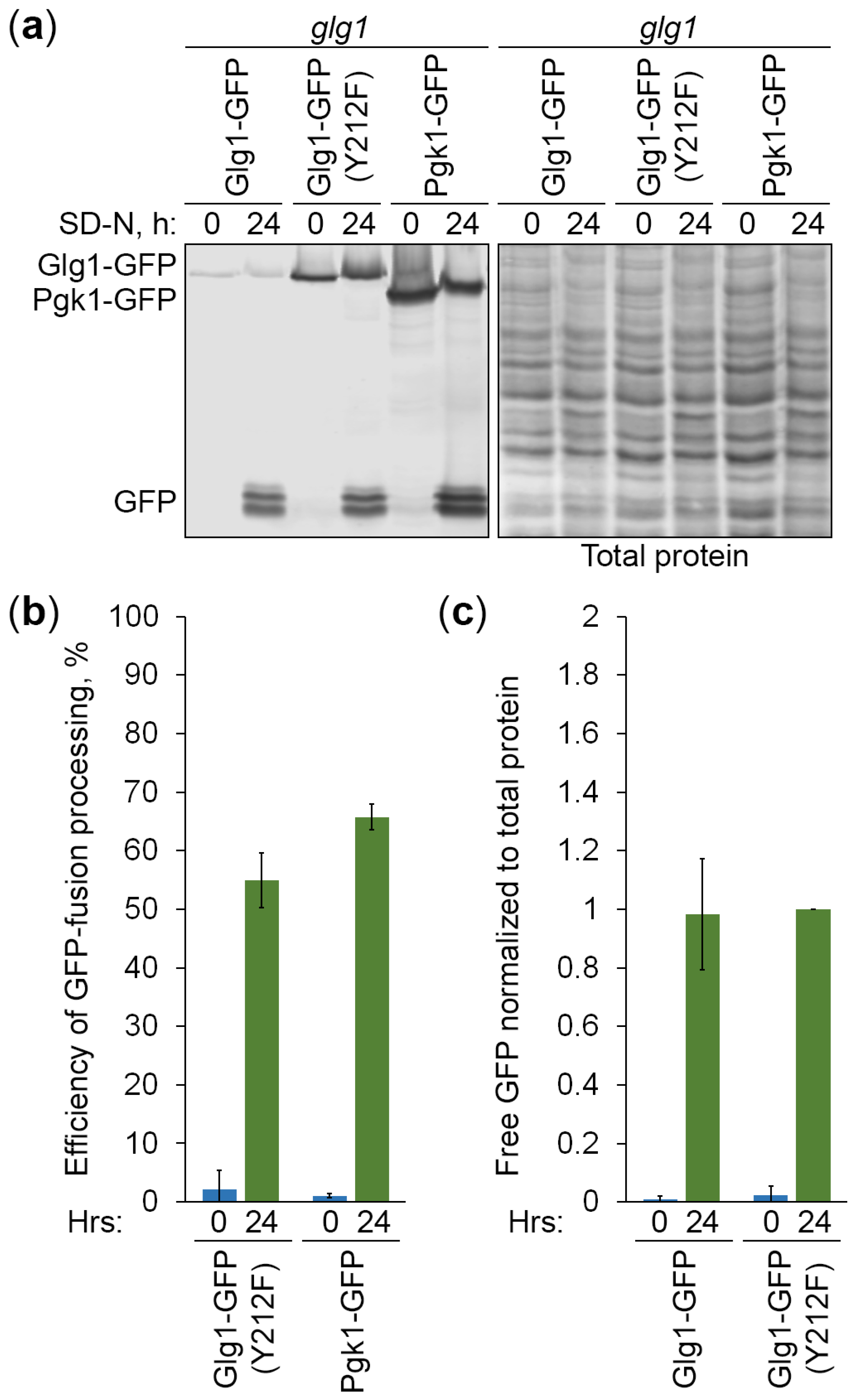
Autophagy was initially recognized as a bulk degradation process that randomly sequesters and degrades cytoplasmic material in lysosomes (vacuoles in yeast). In recent years, various types of selective autophagy have been discovered. Glycophagy, the selective autophagy of glycogen granules, is one of them. While autophagy of glycogen is an important contributor to Pompe disease, which is characterized by the lysosomal accumulation of glycogen, its selectivity is still a matter of debate. Here, we developed the Komagataella phaffii yeast as a simple model of glycogen autophagy under nitrogen starvation conditions to address the question of its selectivity. For this, we turned the self-glucosylating initiator of glycogen synthesis, Glg1, which is covalently bound to glycogen, into the Glg1-GFP autophagic reporter. Our results revealed that vacuolar delivery of Glg1-GFP and its processing to free GFP were strictly dependent on autophagic machinery and vacuolar proteolysis. Notably, this process was independent of Atg11, the scaffold protein common for many selective autophagy pathways. Importantly, the non-mutated Glg1-GFP (which synthesizes and marks glycogen) and mutated Glg1Y212F-GFP (which does not synthesize glycogen and is degraded by non-selective autophagy as cytosolic Pgk1-GFP) were equally well delivered to the vacuole and had similar levels of released GFP. Therefore, we concluded that glycogen autophagy is a non-selective process in K. phaffii yeast under nitrogen starvation conditions.
Keywords: autophagy; Glg1; glycogen; glycogen granules; glycophagy; Komagataella phaffii; non-selective autophagy; Pichia pastoris; selective autophagy; yeast autophagy; Glg1; glycogen; glycogen granules; glycophagy; Komagataella phaffii; non-selective autophagy; Pichia pastoris; selective autophagy; yeast