


Abstract
The Mediterranean Basin faces increasing risks from extreme weather events, particularly heat stress, which severely threatens the productivity of sensitive crops, like processing tomato (Solanum lycopersicum L.). This study evaluated the agronomic, physiological, quality, and economic performance of using Mater-Bi®-based biodegradable mulch films—varying in color (black and White/Black) and thickness (12 µm and 15 µm)—in two distinct Southern Italian pedoclimatic sites: Sicily and Campania. The aim was to define site-specific optimization strategies by comparing three biodegradable mulch film treatments, 12 µm (BDM12), 15 µm (BDM15), and Black/White (BDBW), against bare soil (BS). The results confirmed that biodegradable mulching enhances plant physiological status, such as chlorophyll and nitrogen balance index (NBI), and marketable yield compared to BS. The effectiveness of the films depended significantly on the environment. In Sicily, the BDBW (White/Black) film provided the maximum marketable yield (804.7 q ha−1), confirming its crucial role in mitigating high soil temperatures through radiation reflection. Conversely, in the more favorable Campanian environment, the thicker black film (BDN15) achieved the highest yield (867.3 q ha−1), indicating that microclimate stability is prioritized over heat mitigation under optimal conditions. Quality analysis showed high variability; while the Sicilian site generally favored color and antioxidant capacity, total soluble solids (°Brix) exhibited a trade-off. BDBW achieved the highest °Brix (6.1) in Sicily, while BS yielded the highest (6.03) in Campania, suggesting that slight water stress can concentrate sugars at the expense of total yield. The economic analysis demonstrated that the °Brix increase achieved with biodegradable films provided a net additional economic return superior to BS in both sites (up to +52.92% with BDBW). These findings suggest that the adoption of biodegradable mulching represents a key strategy for the sustainable intensification of processing tomato. Future cultivation strategies must mandatorily integrate the personalized selection of film color and thickness as a key element to synergistically maximize yield, quality, and economic return, tailored to the specific pedoclimatic conditions of each production site.
1. Introduction
The Mediterranean Basin, a vital agricultural hub and one of the world’s most important agro-food regions, has been identified as one of the most reactive regions to global climate change [1]. The frequent and intense occurrence of extreme weather events (heatwaves and/or altered precipitation) in this region poses significant risks to key sectors, including agriculture [2], health [3], and tourism [4].
Regarding crops, the impacts of climate change primarily involve a decline in production levels, reduced water availability, changes in crop phenology, and the expansion of the range of pests, diseases, and invasive species.
To mitigate the impacts of climate change, several agricultural practices have been adapted, such as adjusting and harvesting periods [5], shifts in cultivation zones [6], irrigation cooling [7], and adopting biodegradable mulching [8] as strategic responses to maintain crop resilience.
As reported by Hatfield et al. [9], temperatures exceeding optimal ranges represent one of the most detrimental environmental factors for agriculture. The physiological, morphological, and biochemical responses of plants to heat stress have been extensively studied [10,11,12], as have the associated yield losses caused by this abiotic stress [13].
The cultivation of processing tomato represents a cornerstone of the national economy and cultural heritage, particularly in Italy [14,15]. While tomato cultivation spans almost the entire country, the largest production of processing tomatoes is concentrated in the Central South, with the highest concentration of processing companies in Campania and agricultural production farms in Puglia, and in the North, particularly concentrated in the Emilia-Romagna region. In Sicily, processing tomato occupies an area of approximately 8000 ha, although the region hosts the largest production district for fresh-market tomatoes (45% of the national area) [16]. In Southern Italian regions, primarily Campania and Sicily, processing tomato cultivation is not only carried out mainly with high-performing varieties and hybrids but also includes landraces due to their connection to the territory and local gastronomy [17,18].
Tomato is a species particularly sensitive to temperature; an increase of just a few degrees above the optimal temperature range can result in reduced fruit setting and, consequently, lower fruit yield [19]. The optimal air temperature range for tomato production varies depending on the developmental stage. Specifically, reproduction has been observed to be severely impaired at diurnal temperatures exceeding 35 °C [20], and the mere exposure of flowers to diurnal temperatures above 40 °C for four hours causes flower drop [21].
Given the severity of the challenges posed by heat stress on cultivated crops, it is essential to implement effective mitigation strategies to ensure food security and sustainable agricultural practices. Although various approaches have been proposed, such as genetically modified crops resistant to heat stress, optimization of sowing or transplanting times to avoid heat extremes, or the use of osmoprotectants, their feasibility at national and farm scales must be considered. In this context, mulching emerges as a key agronomic strategy to directly counteract the aforementioned physiological constraints. By acting as a physical and thermal buffer, mulching, an agronomic technique known since the 1950s, has proven highly effective in improving the growth and yield conditions of many crops. It can modify soil temperature and mitigate the extreme fluctuations that lead to flower drop and impaired fruit set [22]. Furthermore, depending on its color, mulching can affect the radiative balance by absorbing or reflecting portions of solar radiation, thereby directly influencing the above-ground plant microclimate [23]. Importantly, numerous studies [24,25] also highlight the role of mulching in improving soil water content, as mulched soils tend to retain more water and provide greater water availability to crops throughout the growing season. By reducing soil evaporation through the interception of water vapor moving upward from deeper layers and by stabilizing moisture in the upper soil horizons, mulching contributes to improved plant transpiration and overall water-use efficiency.
Bucki and Siwek [26] reported that black LDPE film increases diurnal soil temperature by an average of 3–4 °C, while polypropylene (PP) film achieves an increase of 1–2 °C. Iacuzzi et al. [8] reported that black Mater-Bi® mulching films reduce daily thermal fluctuations compared to LDPE and bare soil.
Studies on mulched tomato report that plants cultivated on black or white mulch films have longer stems and a greater number of leaves [27,28,29,30,31]. Further, they report that biodegradable mulching improves the growth, yield, and fruit quality of processing tomato compared to plants grown with LDPE. Moreover, biodegradable mulching can be incorporated directly into the soil with almost zero environmental cost. The microbial community mineralizes the material into carbon dioxide, methane, water, and biomass, without the production of toxic substances [32].
Despite the growing interest in sustainable plasticulture, research often focuses on single-site assessments or general yield parameters, leaving a gap in understanding how film properties (thickness and color) interact with specific Mediterranean microclimates to influence plant physiology and economic returns. While recent studies have explored biodegradable alternatives [8], comprehensive multi-environment evaluations that integrate physiological status (e.g., NBI and chlorophyll) with high-resolution quality and economic analysis remain scarce. To address this, the present study evaluates the performance of Mater-Bi® films of different thicknesses and colors across two distinct pedoclimatic sites. The aim is to move beyond a simple performance comparison and define site-specific optimization strategies, providing a dual assessment of agronomic efficiency and economic sustainability for processing tomato farms.
2. Materials and Methods
2.1. Experimental Sites and Design
The research was conducted during the spring and summer of 2023 in two different regions of Southern Italy. An experimental site was in Sicily, in a farm around Castelvetrano (TP) at the “Campo Carboj” experimental farm belonging to the Region of Sicily’s Agricultural Development Agency (Ente di Sviluppo Agricolo, ESA) (37°35′18.0″ N, 12°53′44.0″ E). In contrast, the other experimental site was in Campania at the “Viscusi Bruno” private farm in Sant’Agata dei Goti (BN) (41°08′05.3″ N, 14°28′57.8″ E). The soils of the two experimental sites had different physiochemical properties, as reported in detail in Table 1. The geographic locations of the experimental sites are shown in Figure S1.
Table 1.
Chemical and physical properties of the experimental site soils.
The experimental randomized complete block design with three replications was a factorial combination, with the cultivation environment (Environment) as the first factor and the mulching film as the second factor (Mulch). In particular, the mulching treatments were (i) an experimental MaterBi® biodegradable black film, 12 μm in thickness (Novamont SpA, Novara, Italy), BDN12; (ii) a commercial black MaterBi® film, 15 μm in thickness (Novamont SpA, Novara, Italy), BDN15; (iii) an experimental MaterBi® biodegradable black and white film, 20 μm in thickness (Novamont SpA, Novara, Italy), BDBW; and (iv) bare soil, BS. The 20 μm thickness for the BDBW film was specifically chosen to guarantee the necessary mechanical resistance and full opacity required for the white-on-black co-extrusion, which typically requires a higher gauge than mono-layer black films. The width of all films was 1 m. MaterBi® (Novamont S.p.A., Novara, Italy) is reportedly one of the new prospective biodegradable polymers used in agriculture. It is a starch-based material certified as completely biodegradable in soil according to European standard EN 17033 [33]. This certification ensures that the material achieves at least 90% biodegradation within 24 months in soil; however, under Mediterranean conditions, the mechanical breakdown typically occurs shortly after the crop cycle, with complete microbial mineralization into CO2, water, and biomass following soil incorporation. This process avoids the accumulation of macro- and micro-plastics, mitigating long-term soil contamination compared to traditional polyethylene films. The BDN12 film contains a higher percentage of bio-based renewable materials than the BDN15 film. Mulch films were manually applied the day before transplanting. Transplanting took place on 15 May 2023 at the Sicilian site and on 23 April 2023 at the Campania site. A double-row planting pattern was adopted, with 1.70 m between twin rows and 0.40 m between plants within each row, resulting in a plant density of 3.3 plants m−2. The dimensions of each replicate plot were 15 m2.
2.2. Plant Material and Crop Management
The crop utilized was the processing tomato (Solanum lycopersicum (L.) Karsten ex Farx) variety “Riogrande” (Topseed). This is a determinate growth variety characterized by large, cylindrical-elongated berries that weigh approximately 70 g, with a productive cycle of around 110 days. Ripening is sequential, and the fruits exhibit excellent color and uniformity [34]. Regarding agronomic management, standard soil fertility management practices were adopted, including a basal fertilization applied in two stages. Before transplanting, an organo-mineral fertilizer (NP: 10-24) was applied, and at transplanting, diammonium phosphate (NP: 18-46) was used, for a total of 100 kg N ha−1. During the growing season, nitrogen was supplied via fertigation as ammonium nitrate (26%), calcium nitrate (15.5%), and potassium nitrate (13-0-46), totaling 250 kg N ha−1 applied in 7 split applications. In both experimental sites, irrigation was managed using a drip system, with 100% of the evapotranspiration calculated by the Hargreaves method [35] being returned. This irrigation strategy was chosen to maintain optimal water status and isolate the specific effects of the mulch films’ optical and thermal properties on plant physiology and yield, avoiding potential confounding effects derived from water stress. A micro-irrigation system was used to meet the water requirements, with emitters positioned in each row. For pest and disease management, the integrated control guidelines issued by the Sicilian and Campania Regions were followed. Throughout the entire cultivation cycle, manual weeding was performed for the non-mulched treatment (BS). Although the experiment was conducted over a single growing season (2023), the inclusion of two distinct pedoclimatic sites (Sicily and Campania) provides a robust multi-environment assessment of the mulch films’ performance under different heat-stress intensities. This “multi-site” approach partially compensates for the single-year limitation by exposing the same treatments to contrasting meteorological conditions, serving as a preliminary but high-resolution evaluation of these sustainable technologies.
2.3. Meteorological Data
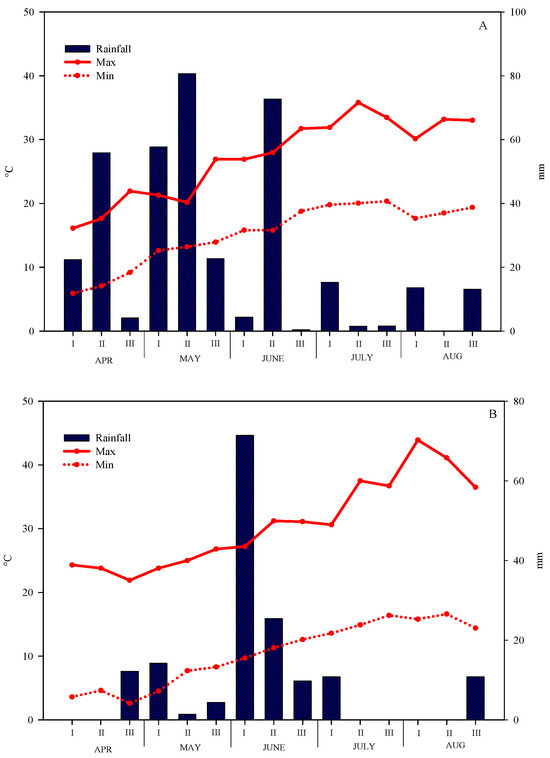
At the Sicilian experimental site, meteorological data were collected by an ATMOS 41 weather station (Meter Group, Pullman, WA, USA) located on-site. The ATMOS 41 station measures 12 meteorological variables, including air temperature, relative humidity, vapor pressure, barometric pressure, wind speed and direction, solar radiation, precipitation, and lightning. It was connected to a ZL6 datalogger (Meter Group, Pullman, WA, USA), specifically designed to collect data from environmental sensors. The datalogger transferred data to the Cloud via a Subscriber Identity Module (SIM). Its operation is powered by six NiMH batteries, which are recharged by solar cells (Figure 1A). For the Campania site, air temperature and rainfall data were collected at the meteorological station of Airola (BN) [36] (Figure 1B).
Figure 1.
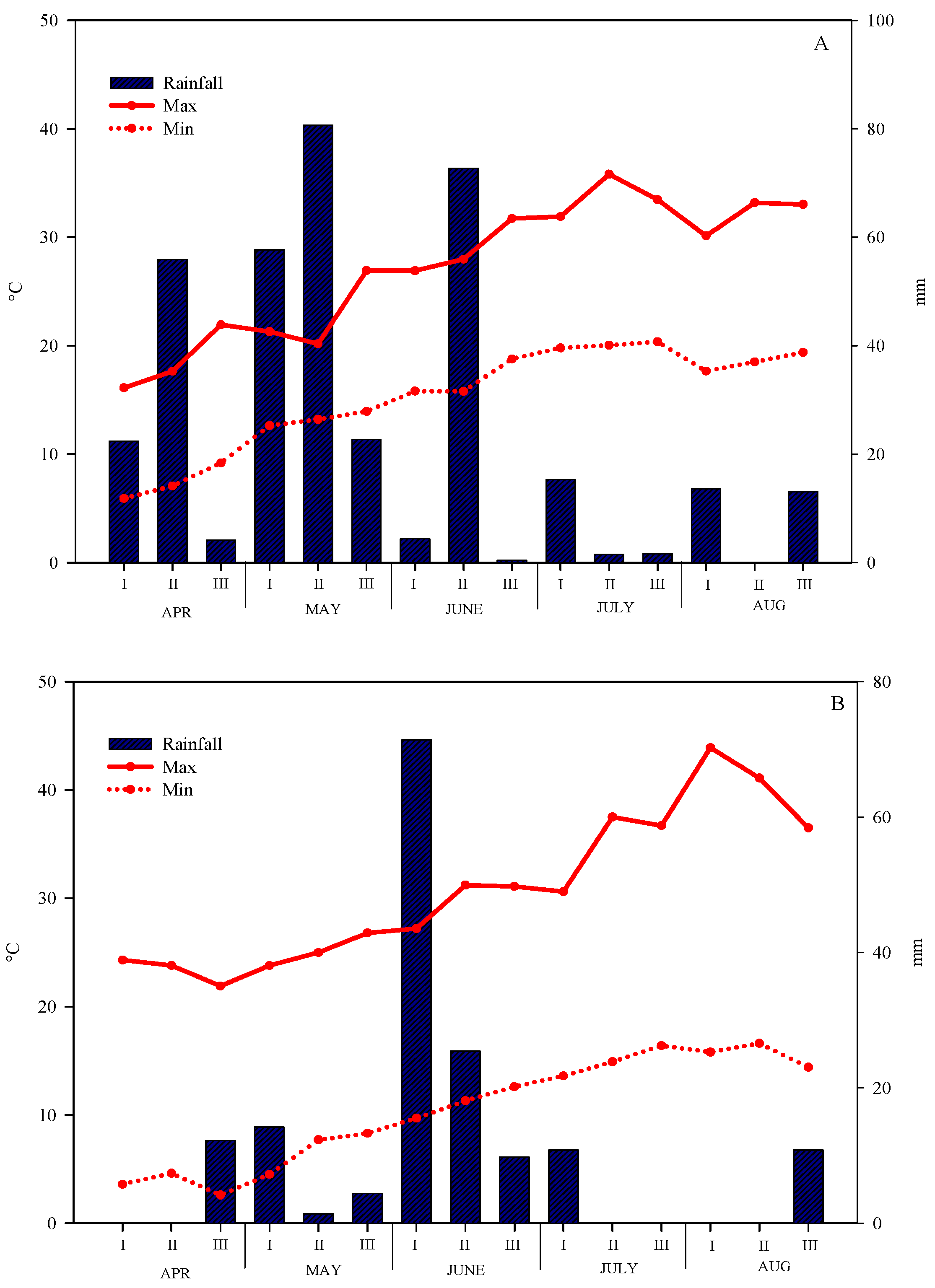
Ten-day values of rainfall and temperatures recorded at the “Viscusi Bruno” private farm in Sant’Agata dei Goti (A) and the “Campo Carboj” (B) experimental farm during the 2023 growing season.
The 2023 growing season in Sant’Agata was characterized by rainy events in late spring, with precipitation exceeding 80 mm in April, followed by extremely rainy months of May and June, with recorded rainfall of 161 and 77 mm, respectively (Figure 1A); the temperature trend followed that typical of a semi-arid climate environment [37]. Conversely, in Sicily, the climate was drier, with temperatures in line with the typical patterns of the spring and summer seasons for semi-arid Mediterranean climates, reaching maximum temperatures close to 45 °C, and there was scarce rainfall throughout the summer season, except for the first ten days of June when an exceptional 71.4 mm was recorded, representing approximately 65% of the total precipitation (Figure 1B).
2.4. Physiological Data
The chlorophyll, flavonoids, anthocyanins, and NBI content were measured using a Dualex 4 Scientific (Force A, Orsay, France) portable chlorophyll meter at Campo Carboj farm. For each plot, thirty fully grown leaves were used. The device automatically averaged these readings.
In Naples, the MPM-100 Multi Pigment Meter (ADC BioScientific Ltd., Hertfordshire, England) was used. This instrument measures chlorophyll content (T850 nm/T720 nm), anthocyanin content (F660 nm/F325 nm), flavonol content (F660 nm/F525 nm), and the nitrogen–flavonol index (NFI) (chlorophyll/flavonol).
2.5. Yield Data
Tomatoes were harvested on 25 August 2023 on the entire experimental plot (15 m2) in the Sicilian experimental site and on 18 August 2023 in Campania, on a 15 m−2 sampling area. Fruits were categorized as marketable and non-marketable (rotten and green) categories and then counted and weighed. To determine the percentage of fruit dry matter, a representative sample from each treatment and replicate harvest was weighed and then dried in an oven at 60 °C until a constant weight was achieved.
2.6. Analysis of Fruit Firmness, Colorimetry, and Total Soluble Solids
On a sample of ten marketable fruits per treatment and replication, color and firmness parameters were determined. CIElab color parameters (L*: brightness, between 0 (black), no reflection, and 100 (white); a*, chromatic parameter between −60 (green) and +60 (red); and b*, chromatic parameter between −60 (blue) and +60 (yellow)) were determined using a Chromameter CR-400 (Minolta Corporation, Ltd., Osaka, Japan). Coloration (C*) and hue angle (H°) were also calculated as follows:
C* = (a*2 + b*2)1/2; HUE = (arctan (b*/a*))
Fruit firmness was determined using a digital penetrometer with a 6 mm tip (Turoni srl, Forlì, Italy). Values were expressed in Newton (N). In fresh tomato juice, the total soluble solids (TSS) content was measured using a digital refractometer (Sinergica Soluzioni, DBR35, Pescara, Italy) and expressed in °Brix.
2.7. Qualitative Analysis
For each treatment and replicate, a sample of 10 tomato fruits was collected, frozen at −80 °C, and subsequently freeze-dried using a Crist Alpha 1–4 freeze-dryer (Osterode, Germany). These samples were used to determine hydrophilic and lipophilic antioxidant activity and total phenolic content. Carotenoid and ascorbic acid content were measured in fresh samples. Carotenoid pigments were measured in 1 g of fresh sample according to the method of Lichtenhaler and Wellburn [38]. Samples were extracted with ammoniacal acetone; the absorbance of the carotenoid solution was then measured at 470 nm with a spectrophotometer (Hach DR 2000, Hach Co., Loveland, CO, USA) and expressed as mg g−1 fresh weight (FW). The method of Kampfenkel et al. [39] was used to measure the total ascorbic acid content, expressed as milligrams of ascorbic acid per 100 g of fresh weight (FW).
Meanwhile, the total phenolic content was determined according to the procedure described by Singleton et al. [40] and expressed in milligrams of gallic acid per 100 g of dry weight (DW).
Analysis of antioxidant capacity was performed on 200 mg of freeze-dried tomato fruit extract, prepared using a freeze-dryer (Christ, Alpha 1–4, Osterode, Germany). Hydrophilic antioxidant activity (HAA) and lipophilic antioxidant activity (LAA) were evaluated using the N, N-dimethyl-p-phenylenediamine (DMPD) [41] and ABTS (2,2′-azinobis (3-ethylbenzothiazoline-6-sulfonic acid)) [42] methods, respectively. Values were expressed as mmol of ascorbic acid 100 g−1 DW for HAA and mmol of Trolox 100 g−1 DW for LAA.
One dried tomato sample per replicate was used to measure nitrate content using a Foss FIAstar 5000 continuous flow analyzer (FOSS Analytical AB, Box 70, SE-263 21 Höganäs, Sweden). This method is based on the reduction in nitrate to nitrite on a cadmium reducer [43]. The value was expressed as the percentage of nitrogen in nitric form (N-NO−3) on a dry weight basis.
The Kjeldahl method was employed to measure nitrogen concentration in the fruits; the value was then converted to protein content (N content × 6.25). Values were reported as a percentage (%) [44].
2.8. Economic Valuation of Marketable Yield
To convert these agronomic results into economic terms, yield was combined with a price model that considered soluble solids content. A base price of €142.50–€150 per ton was used in the 2023–2025 framework contracts [45,46]. Since soluble solids content (°Brix) is a critical quality factor influencing commercial value, we applied a linear premium scheme, based on a simplified economic model used in crop valuation studies [47,48]. The model was expressed as:
where Pi is the adjusted price for plots, P0 is the base price, Brixi represents the actual °Brix value, Brixref is the reference threshold (5.0 °Brix), and α is the premium coefficient (€2 per °Brix unit exceeding the reference threshold). The expected market value per hectare was then obtained by multiplying yield (t ha−1) by the adjusted price. While actual industry “quality tables” may apply non-linear adjustments and penalties, this model provides a transparent and reproducible estimate of economic returns. It should be noted that this analysis focuses on the differential revenue generated by yield and quality premiums; therefore, it does not account for variable production costs (e.g., mulch materials, labor, and machinery), representing a potential value-added estimation rather than a complete farm-scale profit and loss balance.
2.9. Statistical Analysis
All data were analyzed using analysis of variance (ANOVA) within a general linear model framework, considering site, treatment, and their interaction as fixed factors. Prior to ANOVA, the normality of the distributions and the homoscedasticity of the variances were verified using the Shapiro–Wilk and Levene tests, respectively. Mean separation was performed with Tukey’s HSD test at p < 0.05 [49]. For physiological parameters, a ranking procedure was applied before analysis to harmonize the datasets, given the entirely different measurement scales of the two instruments used in distinct environments. This approach ensured comparability and statistical robustness across experimental conditions [50,51].
3. Results
3.1. Plants’ Physiology
Treatment significantly affected both chlorophylls (F = 4.71, p = 0.017) and the nitrogen balance index (NBI; F = 6.71, p = 0.004), while the interaction between soil and treatment was significant only for anthocyanins (F = 9.02, p = 0.001) (Table 2).
Table 2.
Results of ANOVA (F values) for ranked physiological parameter (i.e., chlorophylls, flavonoids, anthocyanins, and NBI) from tomato plants at “Campo Carboj” and Sant’agata dei Goti” farms in the 2023 growing season.
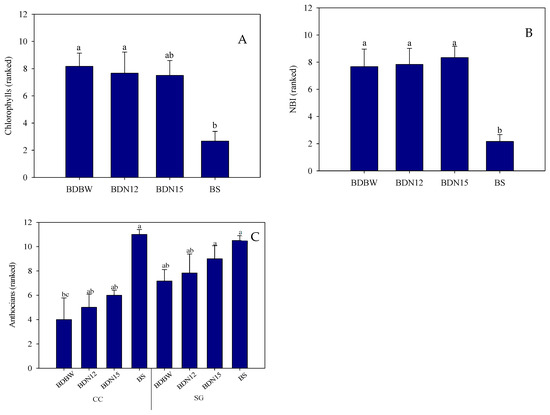
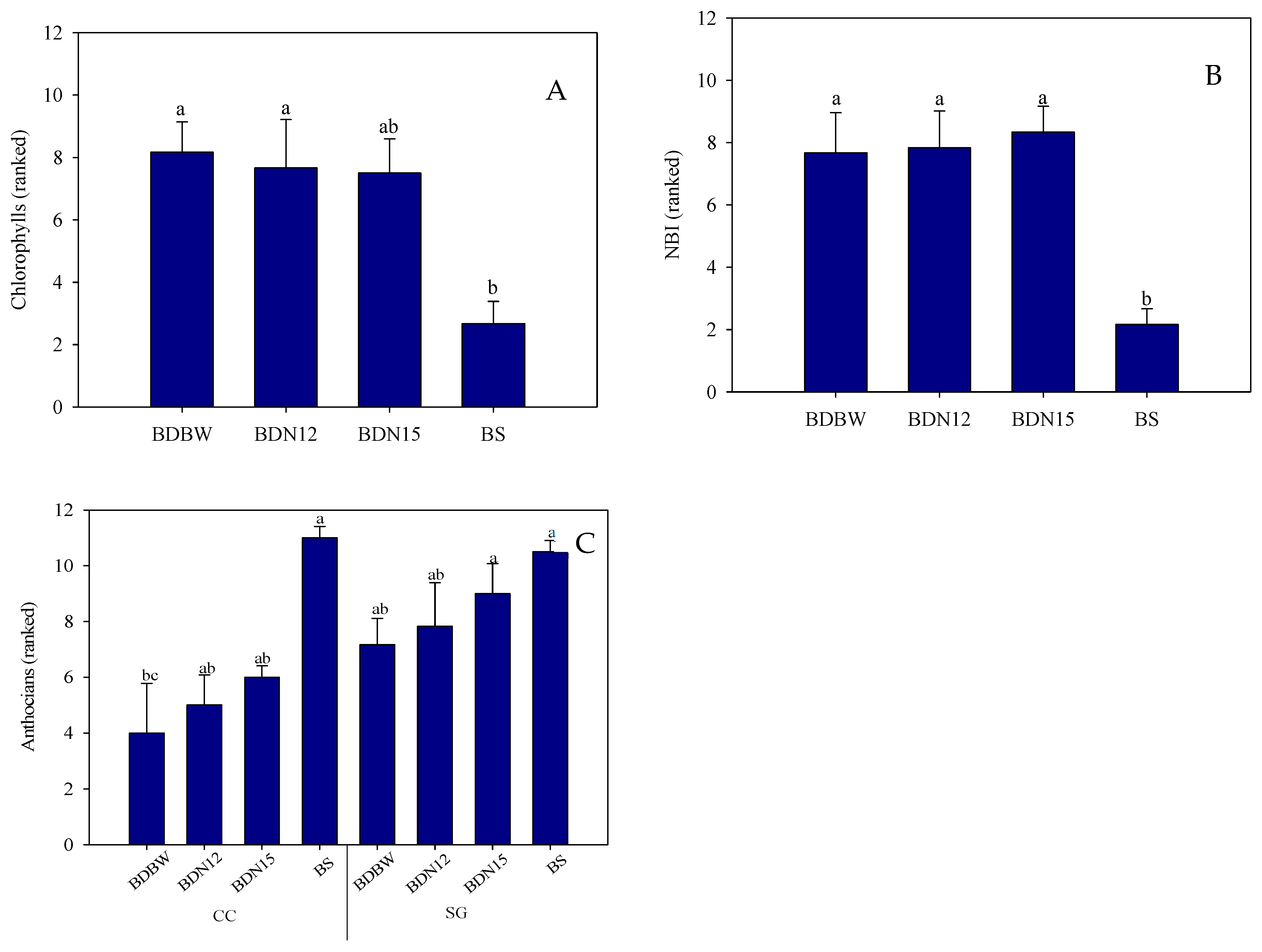
Plants under biodegradable mulching films showed the significantly highest chlorophyll content (mean rank around 7 and 8), with all mulched treatments being all statistically different from BS, except BDN15 (Figure 2A). A similar trend was observed for the NBI, where, in this case, BDN15 was also significantly different from BS (Figure 2B).
Figure 2.
Chlorophylls (A) and NBI (B) mean ranked values obtained from tomato plants at “Campo Carboj” and “S’Agata dei Goti” farms in the 2023 growing season. Anthocyanins (C) are the interaction between the site and mulching. For each group of means, bars marked by the same letter are not significantly different at p ≤ 0.05 (Tukey’s test). CC = Campo Carboj; SG = Sant’Agata; BDBW = biodegradable black and white film, 15 μm in thickness; BDN12 = biodegradable black film, 12 μm in thickness; BDN15 = biodegradable black and white film, 15 μm in thickness; BS = bare soil.
Regarding anthocyanin content, the highest values were recorded in both experimental sites for the bare soil (BS) treatment. However, in the Sant’Agata site, no significant differences were observed among any of the treatments, while at the Campo Carboj site, BS recorded higher values but did not differ significantly from BDN12 and BDN15 treatments (Figure 2C). Flavonoids were not significantly influenced by any factor (p > 0.05).
3.2. Yield
ANOVA highlighted a significant effect of the mulching factor for all parameters considered. Significant effects were also observed for the site factor and the environment × mulching interaction for all variables (fruit number, marketable yield, and non-marketable yield), with the exception of mean fruit weight (Table 3).
Table 3.
Output of the analysis of variance (ANOVA) for yield and yield components of tomato grown in the two experimental sites (Campo Carboj and Sant’Agata del Goti).
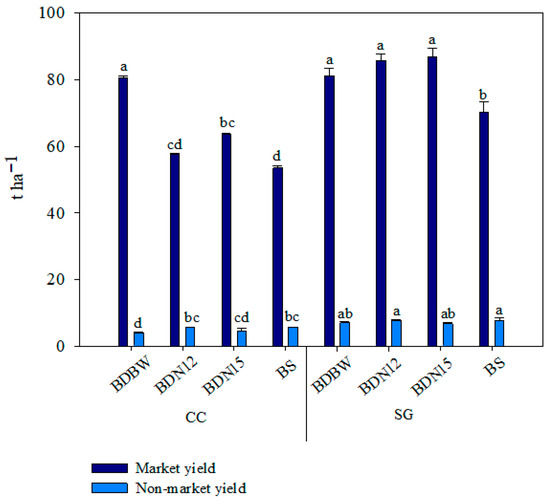
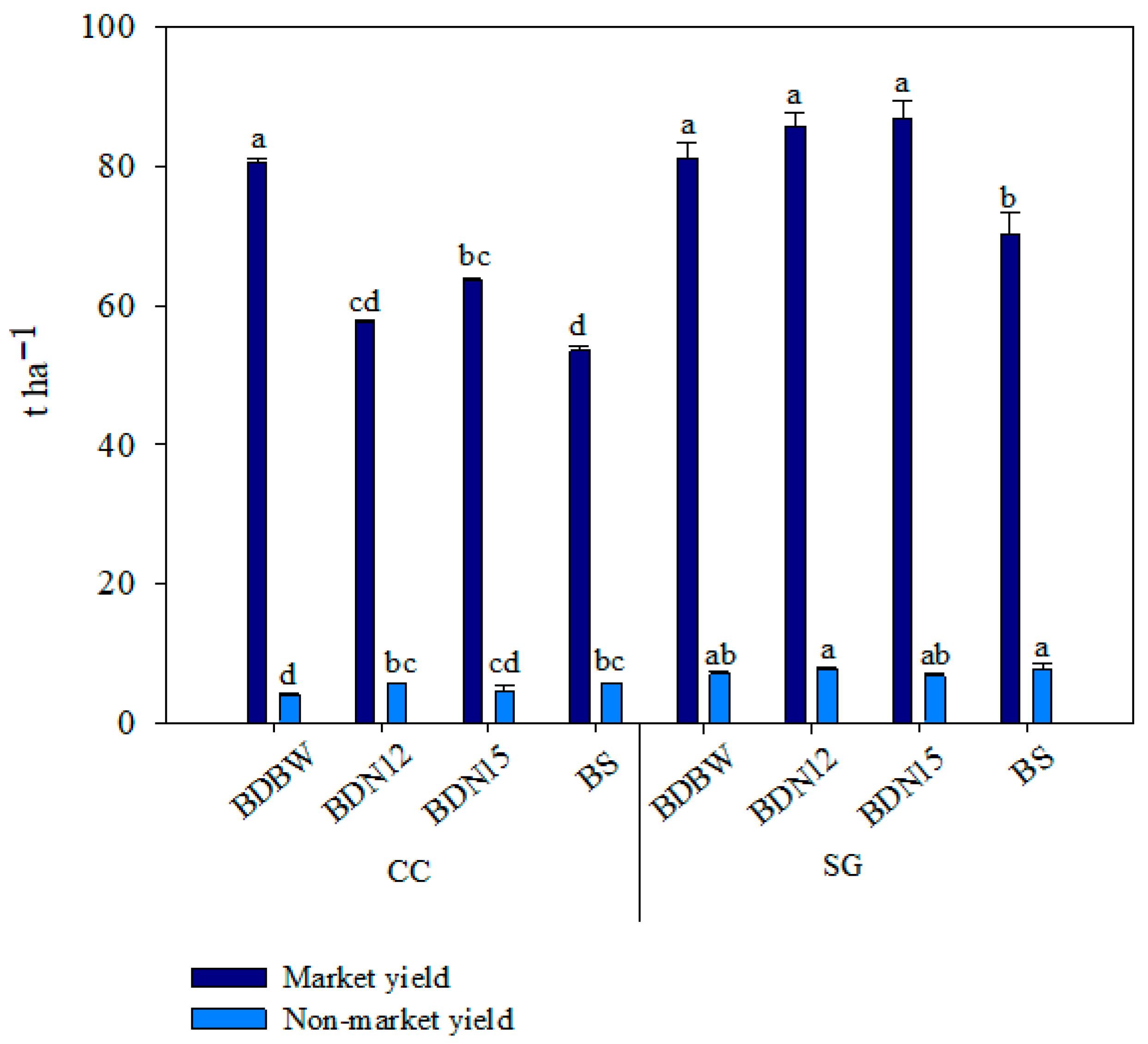
The highest marketable yield was obtained at the Sant’Agata site in all mulched treatments (which performed similarly to each other) and at the Carboj field site exclusively with the BDBW film. Conversely, the statistically lowest marketable yield was recorded in the bare soil (BS) treatment at the Carboj site. In fact, at the Carboj site, the absence of mulch (BS) led to a yield reduction of 25% compared to the average of the mulched treatments, while at Sant’Agata, the reduction was 11%. As for non-marketable yield, no significant differences were found between treatments at the Sant’Agata site, while the lowest values were measured at the Carboj site in the BDBW and BDN15 treatments, which showed comparable results (Figure 3). These results clearly establish the bare soil as a consistently inferior baseline, unequivocally quantifying the productivity gains provided by soil coverage in both environments.
Figure 3.
Influence of the environment × mulching interaction on marketable and non-marketable yield. For each data series, values with different letters are significantly different at p ≤ 0.05, according to Tukey’s test. Error bars represent standard error. CC = Campo Carboj; SG = Sant’Agata; BDBW = biodegradable black and white film, 15 μm in thickness; BDN12 = biodegradable black film, 12 μm in thickness; BDN15 = biodegradable black and white film, 15 μm in thickness; BS = bare soil.
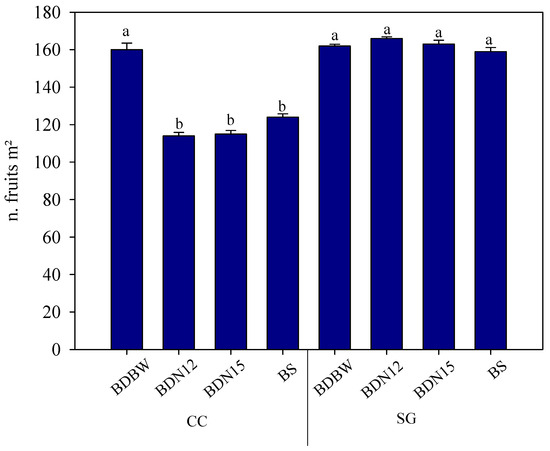
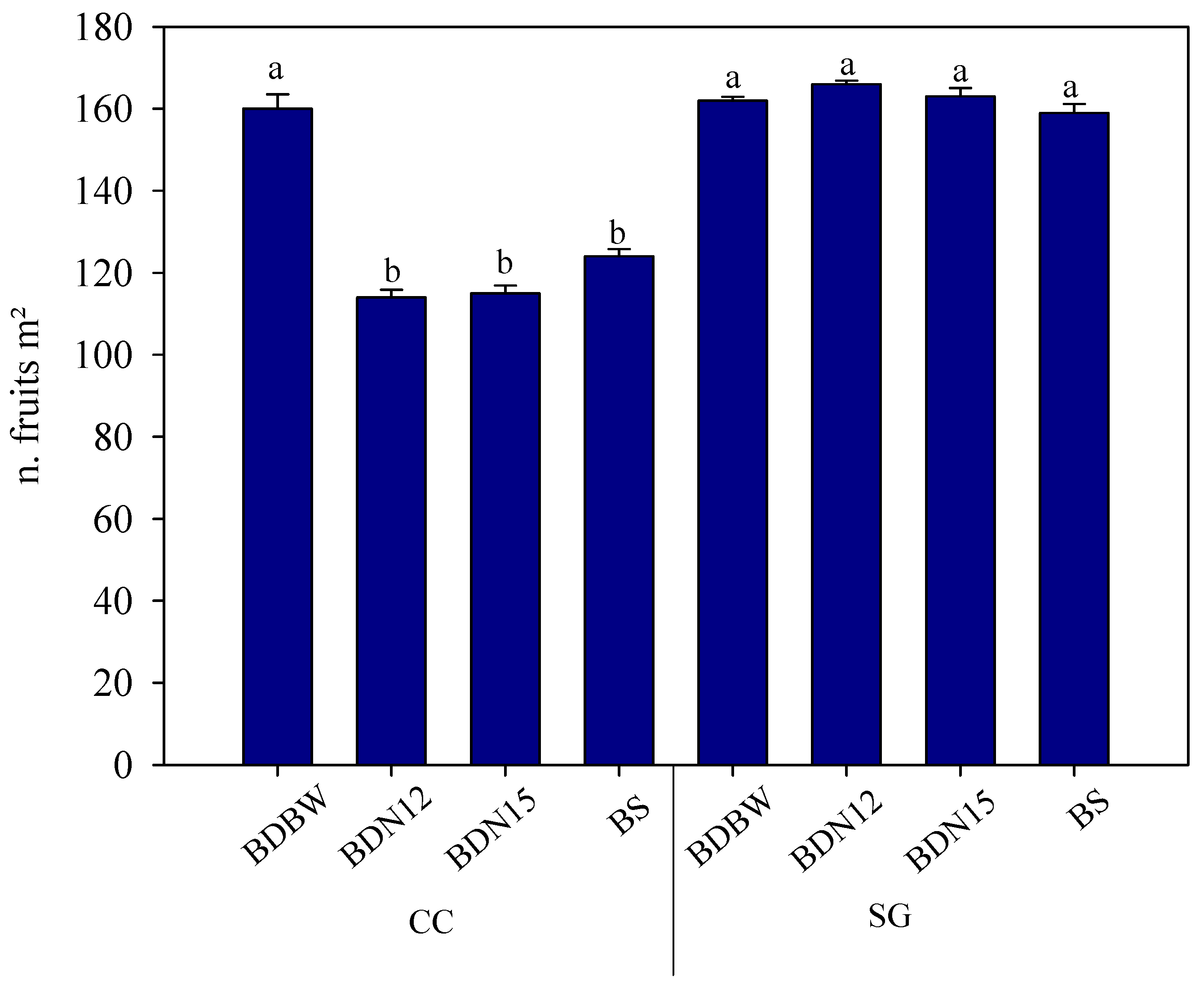
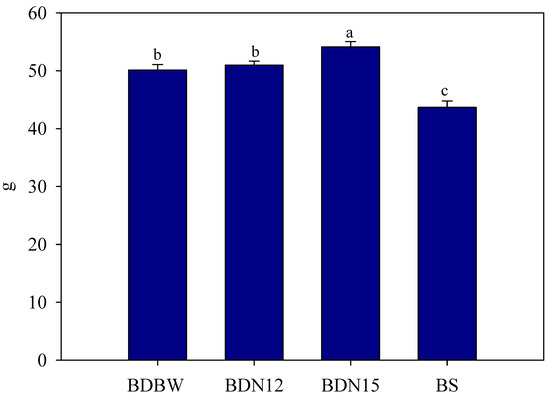
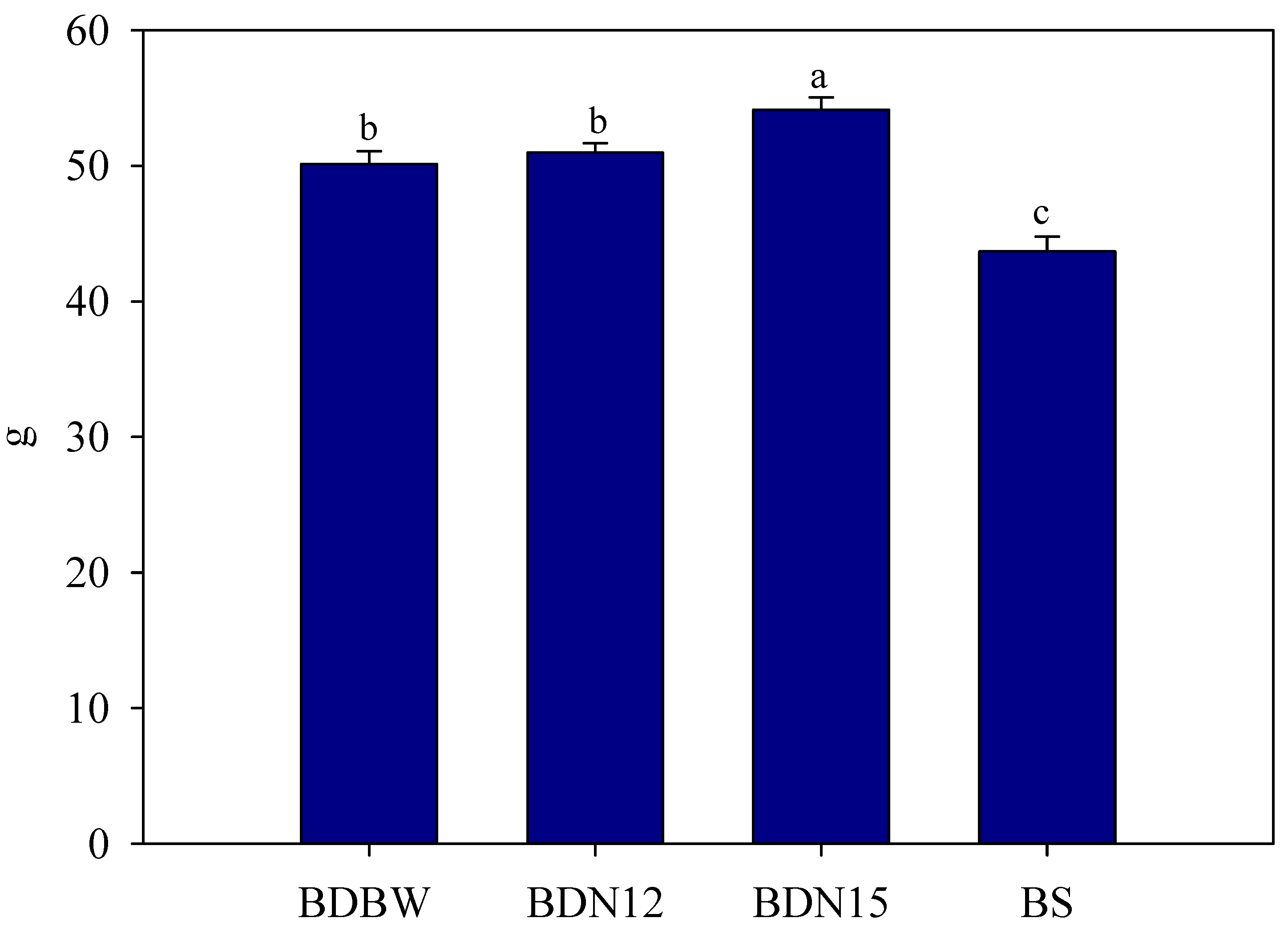
The number of fruits per square meter showed the same trend of marketable yield, with the lowest values recorded in BDN12, BDN15, and BS at the Carboj site, showing no statistical differences among them (Figure 4). Mean fruit weight was significantly affected only by the mulching factor; the highest mean weight was obtained when plants were mulched with BDN15, while the lowest weight occurred in the non-mulched plants (Figure 5).
Figure 4.
Influence of the environment x mulching interaction on the number of marketable. Values with different letters are significantly different at p ≤ 0.05, according to Tukey’s test. Error bars represent standard error. CC = Campo Carboj; SG = Sant’Agata; BDBW = biodegradable black and white film, 15 μm in thickness; BDN12 = biodegradable black film, 12 μm in thickness; BDN15 = biodegradable black and white film, 15 μm in thickness; BS = bare soil.
Figure 5.
Average fruit weight of tomato in the 2023 growing season. Values with different letters are significantly different at p ≤ 0.05, according to Tukey’s test. Error bars represent standard error.; BDBW = biodegradable black and white film, 15 μm in thickness; BDN12 = biodegradable black film, 12 μm in thickness; BDN15 = biodegradable black and white film, 15 μm in thickness; BS = bare soil.
3.3. Fruit Appearance and Quality Features
The environment significantly affected all color parameters considered, with consistently higher values recorded at the Campo Carboj site. Regarding the effect of mulching, significant differences were observed only for the chromatic coordinate a*, with higher values recorded under BDN12 and BDN15 mulching, which did not differ significantly from BDWB, and for the hue angle (H)*, with the highest values found in BS (Table 4).
Table 4.
Effect of environment and mulching on the color parameter of tomato fruits.
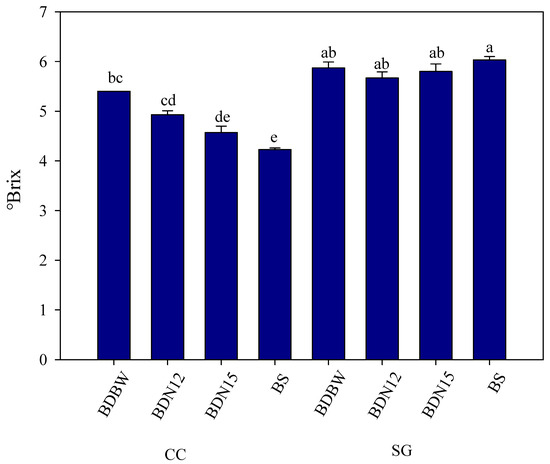
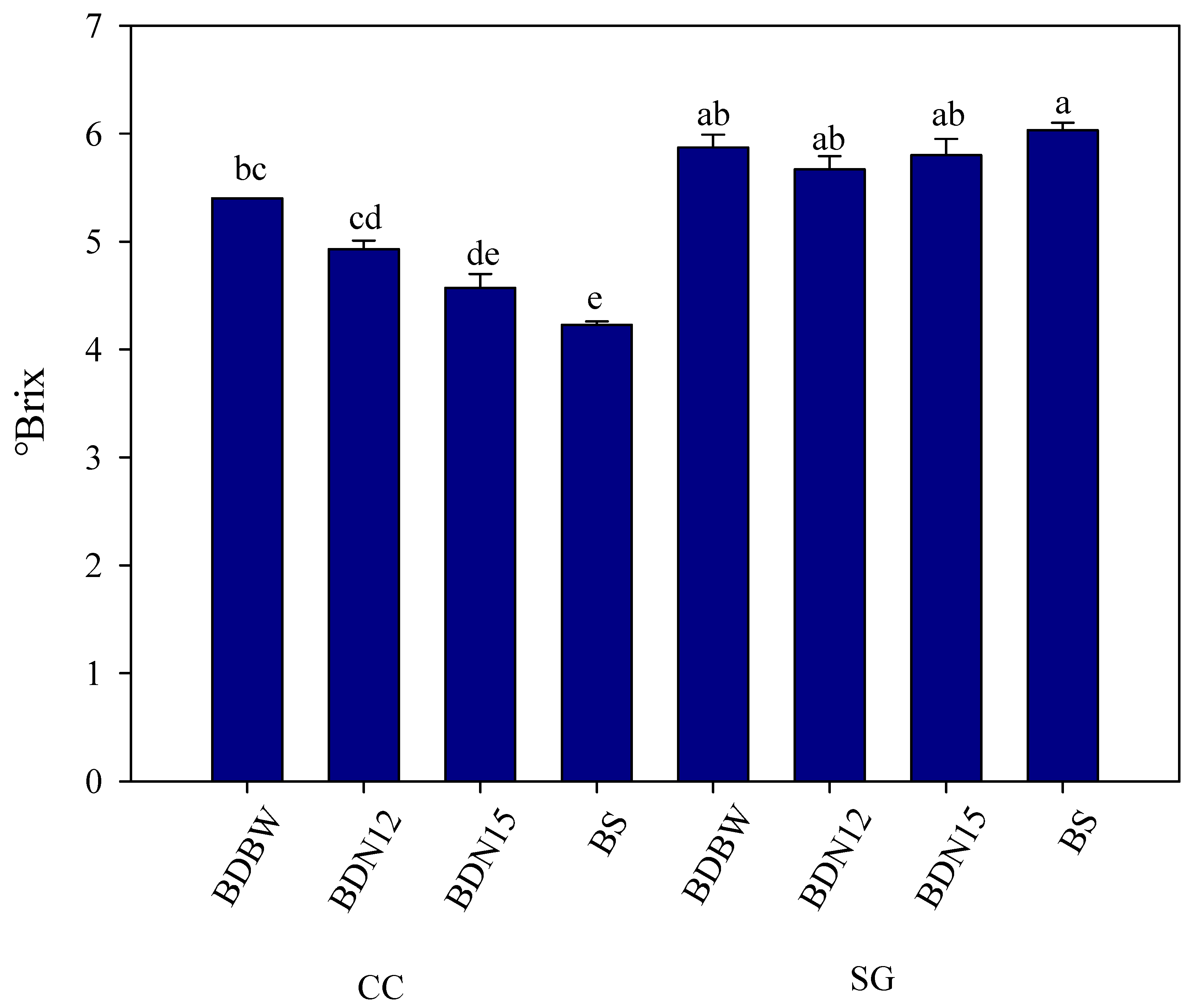
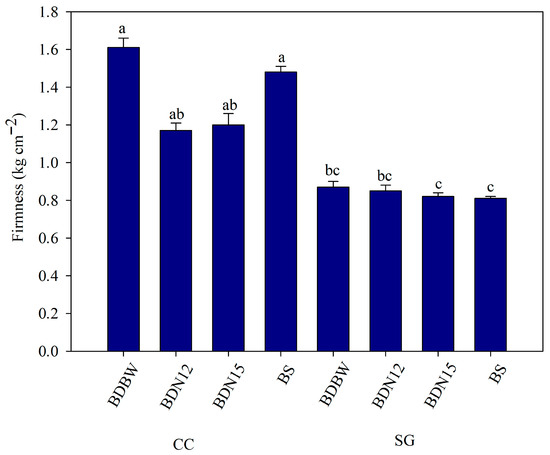
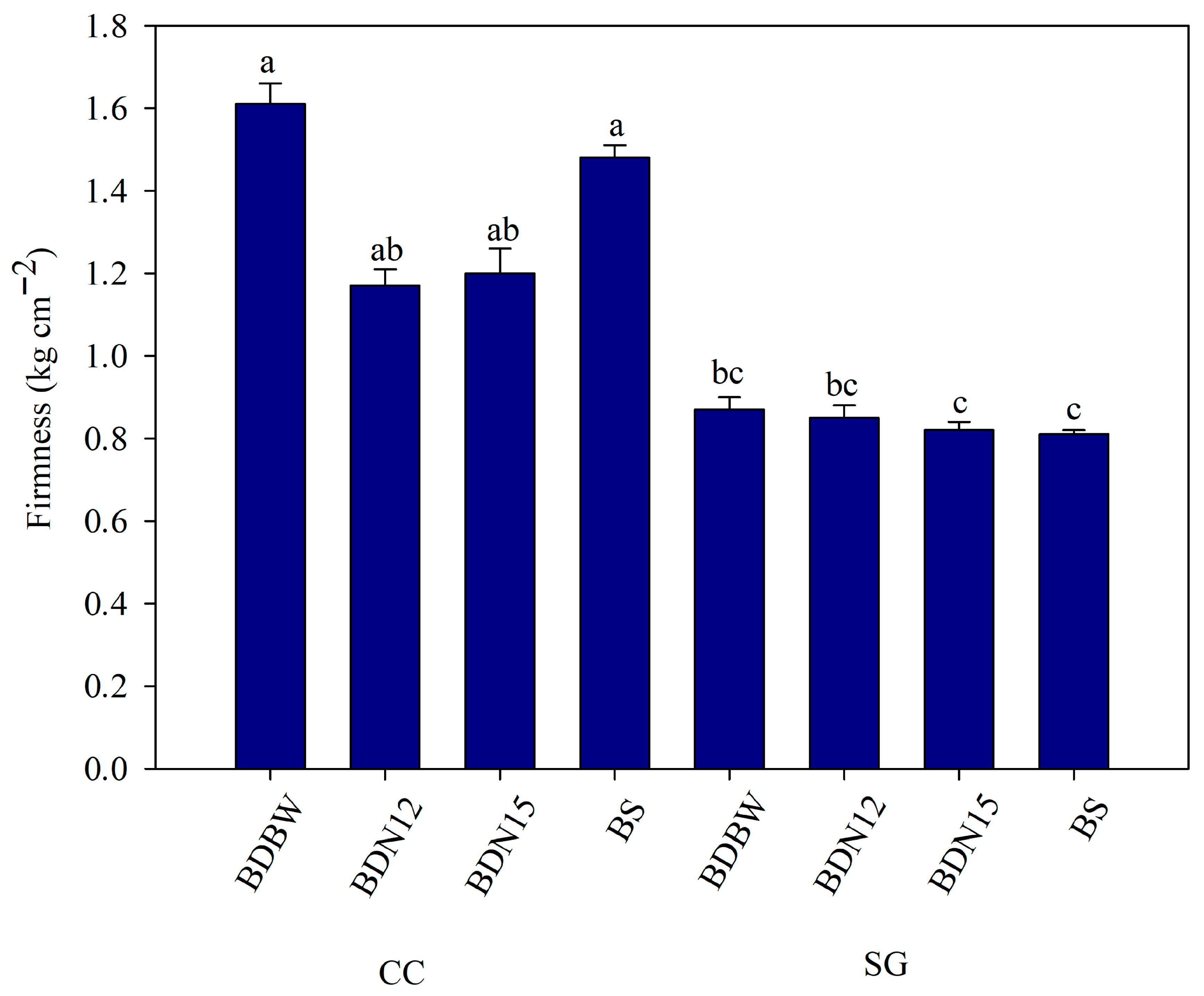
The environment × mulching interaction significantly affected total soluble solids (TSS) content (F = 9.89, p = 0.001) and fruit firmness (F = 13.74, p < 0.001). Regarding the soluble solids content (Figure 6), the highest values were recorded at the Sant’Agata site in the non-mulched plants (BS), although they remained statistically comparable to all mulching treatments within the same site. Conversely, the lowest values were observed in the non-mulched plants (BS) at the Campo Carboj site, but they were not different from BDN15 of the same site.
Figure 6.
Influence of the interaction environment × mulching type on tomato fruit total soluble solids. Values with different letters are significantly different at p ≤ 0.05, according to Tukey’s test. Error bars represent standard error. CC = Campo Carboj; SG = Sant’Agata; BDBW = biodegradable black and white film, 15 μm in thickness; BDN12 = biodegradable black film, 12 μm in thickness; BDN15 = biodegradable black and white film, 15 μm in thickness; BS = bare soil.
Tomato fruit firmness was higher at the Campo Carboj site in plants mulched with BDBW and in the BS treatment, and the lowest ones in the BS and BDN15 treatments were at the Sant’Agata site, but there were no significant differences between the treatments at each site (Figure 7).
Figure 7.
Influence of the interaction environment × mulching type on tomato fruit firmness. Values with different letters are significantly different at p ≤ 0.05, according to Tukey’s test. Error bars represent standard error. CC = Campo Carboj; SG = Sant’Agata; BDBW = biodegradable black and white film, 15 μm in thickness; BDN12 = biodegradable black film, 12 μm in thickness; BDN15 = biodegradable black and white film, 15 μm in thickness; BS = bare soil.
The environment × mulching film interaction significantly influenced fruit HAA and LAA, whereas lycopene and protein were affected by both experimental factors and vitamin C only by mulching; total phenols and carotenoids were not statistically affected by experimental factors (Table 5).
Table 5.
Output of the analysis of variance (ANOVA) for antioxidant properties and bioactive compounds of tomato grown in the two experimental sites (Campo Carboj and S’Agata del Goti).
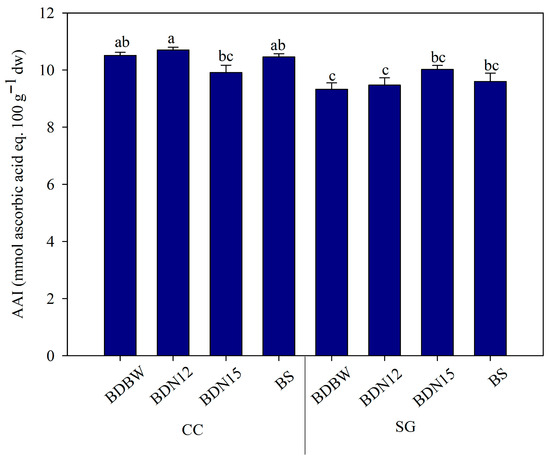
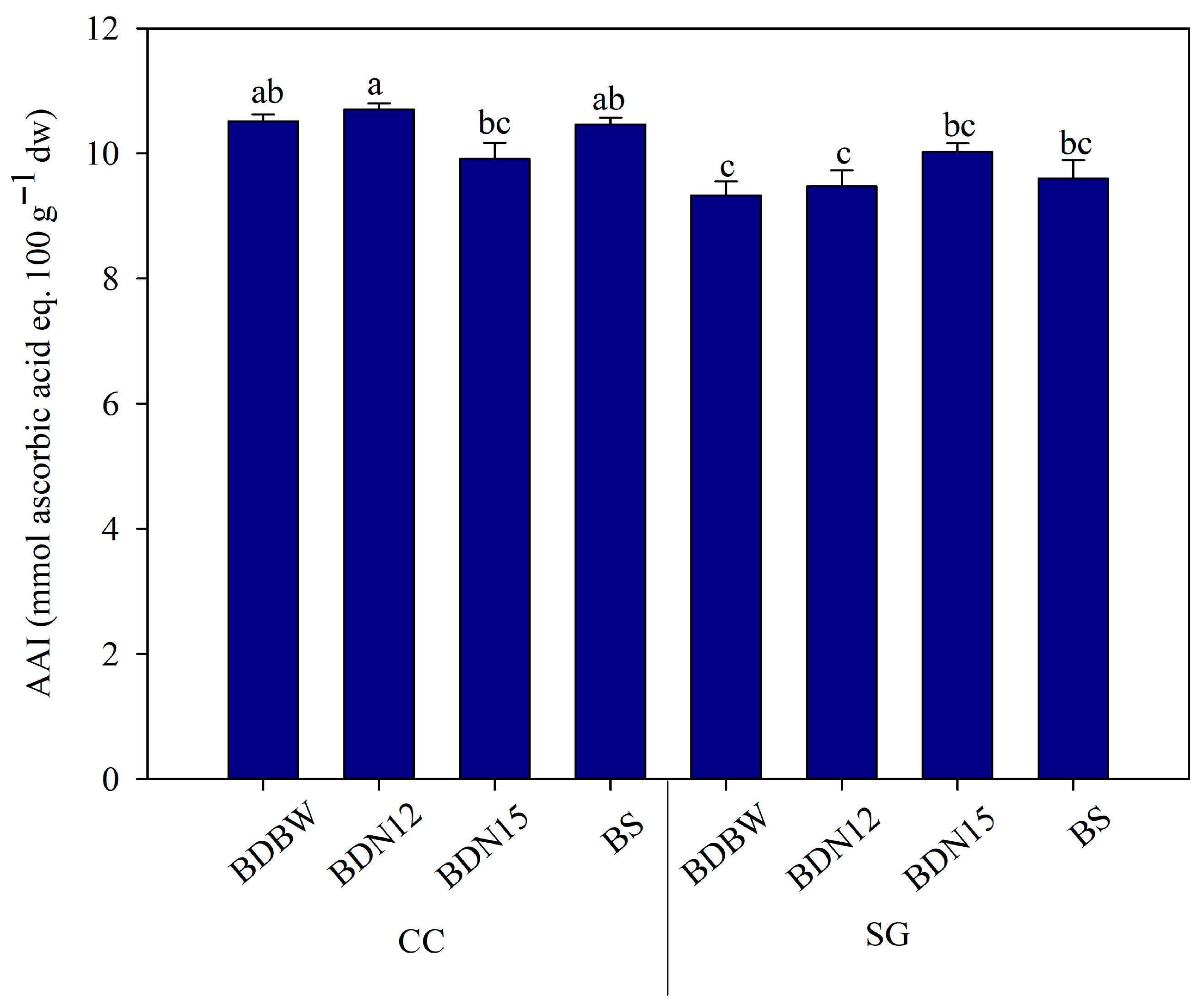
The highest HAA values were observed at the Campo Carboj site, with the maximum recorded under the BDN12 treatment, but it was significantly different only from BDN15. At the Sant’Agata site, however, none of the mulching treatments differed significantly from the control (BS) (Figure 8).
Figure 8.
Influence of the interaction environment × mulching on hydrophilic antioxidant activity (LAA). Values with different letters are significantly different at p ≤ 0.05, according to Tukey’s test. Bars represent standard error. CC = Campo Carboj; SG = Sant’Agata; BDBW = biodegradable black and white film, 15 μm in thickness; BDN12 = biodegradable black film, 12 μm in thickness; BDN15 = biodegradable black and white film, 15 μm in thickness; BS = bare soil.
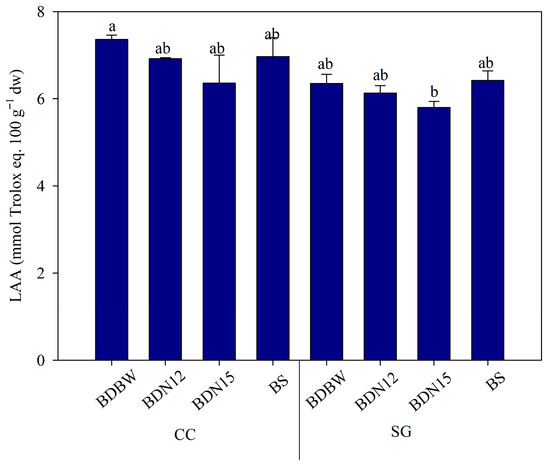
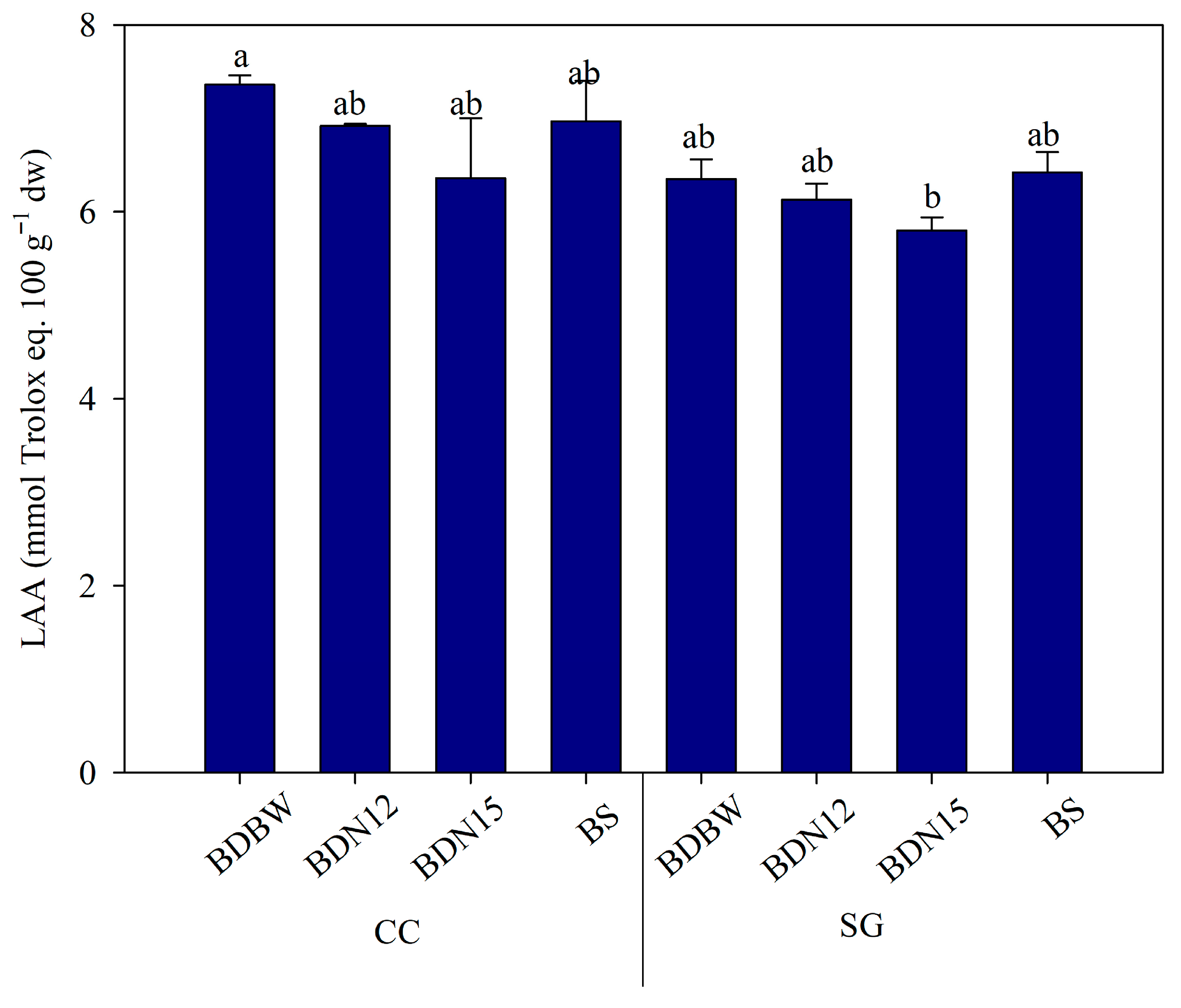
In contrast, lipophilic antioxidant activity (LAA) exhibited lower variability, with the highest value measured under the CC × BDBW combination and the lowest under SG × BDN15 (7.36 vs. 5.80 mmol Trolox equation 100 g−1 dw), the only treatments significantly different from each other. The remaining treatments showed intermediate values, without statistically significant differences (Figure 9).
Figure 9.
Influence of the interaction environment × mulching on lipophilic antioxidant activity (LAA). Values with different letters are significantly different at p ≤ 0.05, according to Tukey’s test. Bars represent standard error. CC = Campo Carboj; SG = Sant’Agata; BDBW = biodegradable black and white film, 15 μm in thickness; BDN12 = biodegradable black film, 12 μm in thickness; BDN15 = biodegradable black and white film, 15 μm in thickness; BS = bare soil.
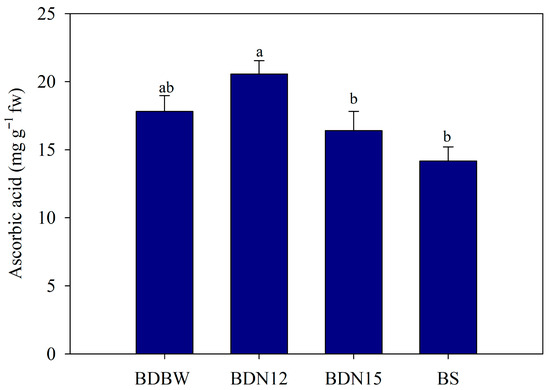
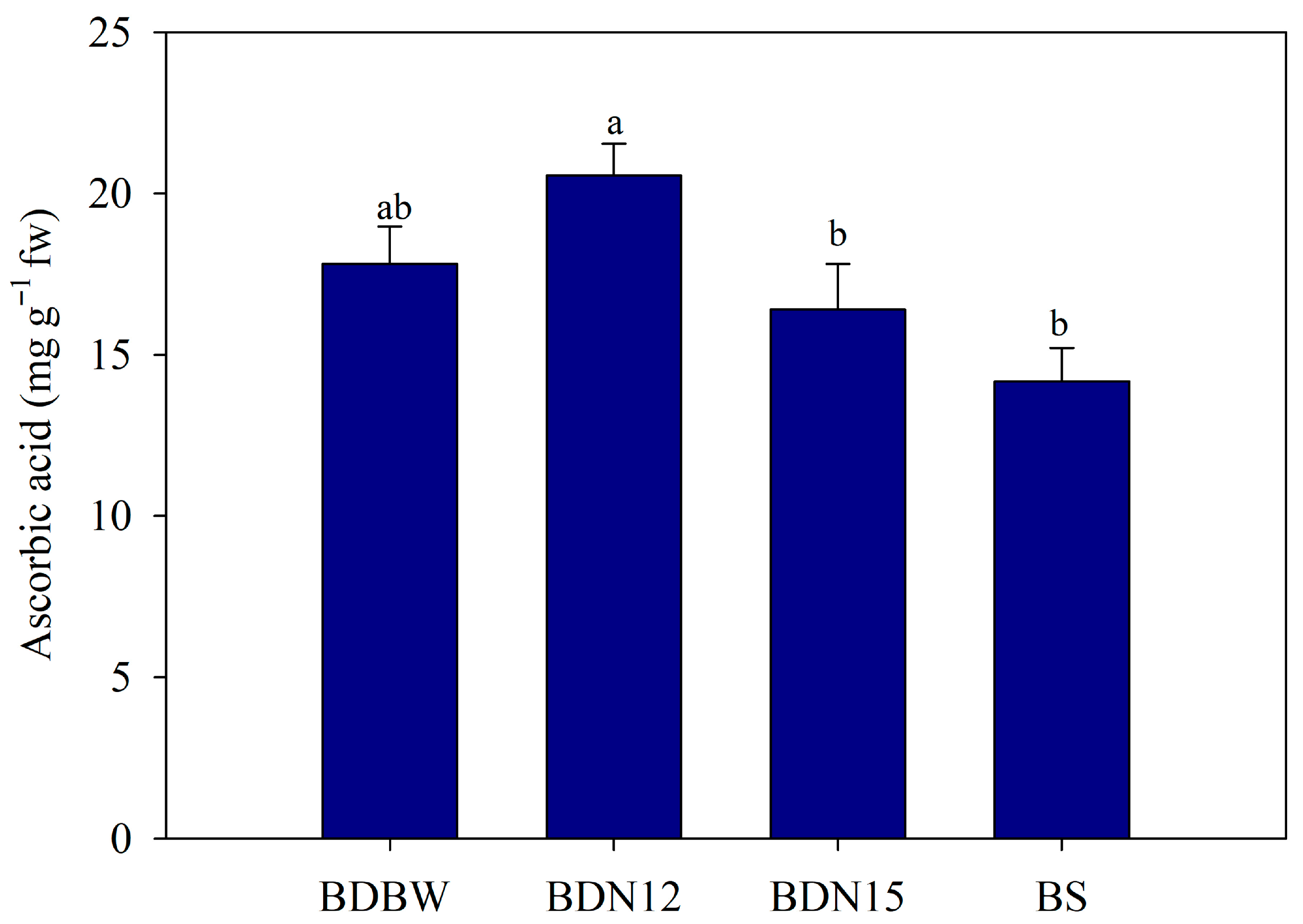
Regarding vitamin C content, the BDN12 treatment resulted in the highest levels in fruits (20.56 mg g−1 fw), and it was not different from BDBW; no significant differences were observed between BDN15 and the control (Figure 10).
Figure 10.
The main effect of mulching on tomato fruit ascorbic acid content. Values with different letters are significantly different at p ≤ 0.05, according to Tukey’s test. Bars represent standard error. BDBW = biodegradable black and white film, 15 μm in thickness; BDN12 = biodegradable black film, 12 μm in thickness; BDN15 = biodegradable black and white film, 15 μm in thickness; BS = bare soil.
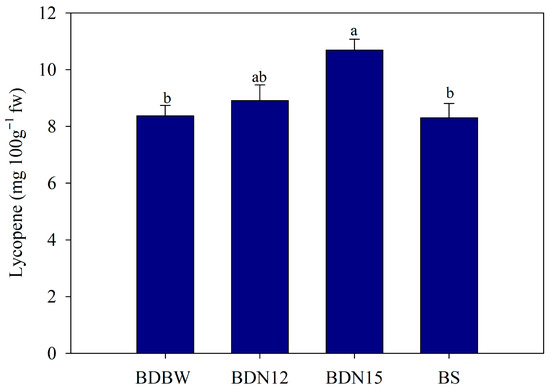
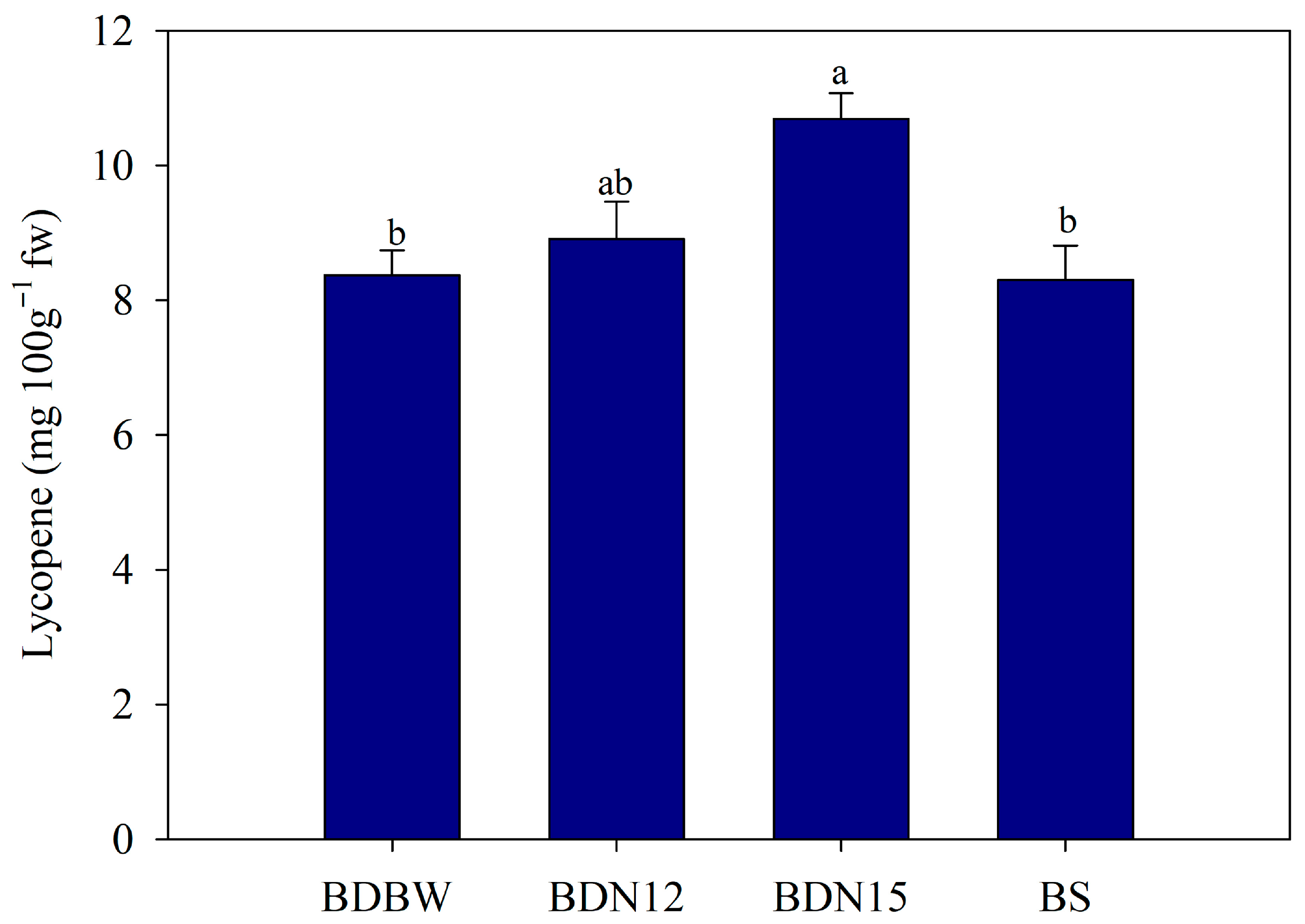
For lycopene, the highest concentrations were recorded at Campo Carboj, with BDN15 producing the maximum value (10.69 mg 100 g−1 fw), significantly different only from BDBW (Figure 11).
Figure 11.
The main effect of mulching on tomato fruit lycopene content. Values with different letters are significantly different at p ≤ 0.05, according to Tukey’s test. Bars represent standard error.; BDBW = biodegradable black and white film, 15 μm in thickness; BDN12 = biodegradable black film, 12 μm in thickness; BDN15 = biodegradable black and white film, 15 μm in thickness; BS = bare soil.
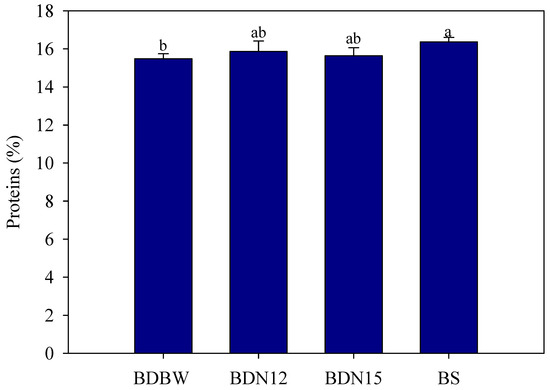
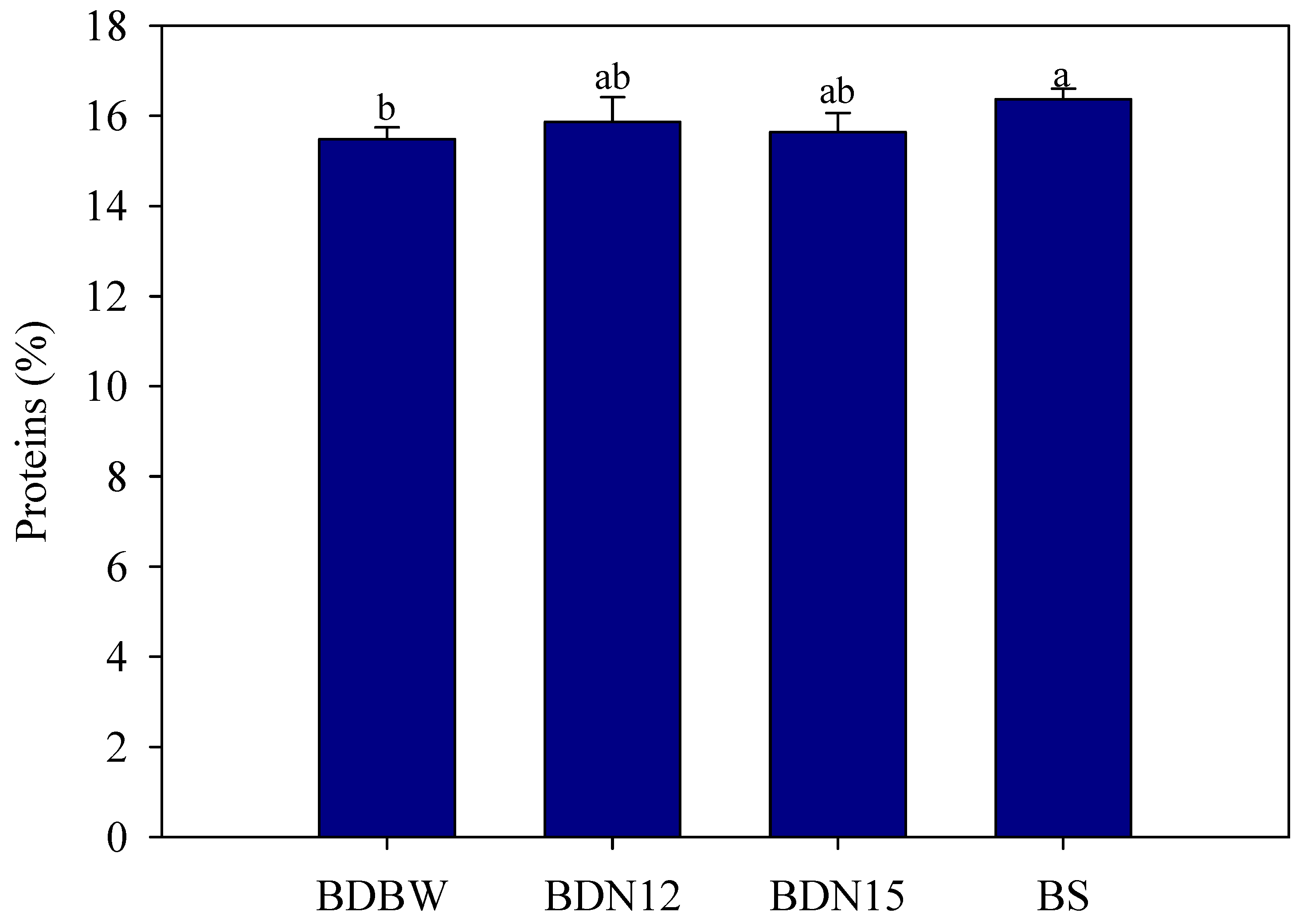
Finally, for protein content, plants grown under the control (BS) exhibited the highest value, but they were significantly different only from the BDBW treatment (Figure 12).
Figure 12.
The main effect of mulching on tomato fruit protein content. Values with different letters are significantly different at p ≤ 0.05, according to Tukey’s test. Bars represent standard error.; BDBW = biodegradable black and white film, 15 μm in thickness; BDN12 = biodegradable black film, 12 μm in thickness; BDN15 = biodegradable black and white film, 15 μm in thickness; BS = bare soil.
3.4. Marketable Yield: Economic Assessment
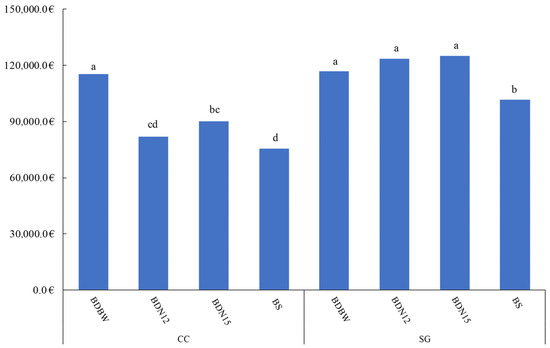
The economic analysis revealed marked differences among treatments and the environment. ANOVA showed highly significant effects of both environment (F = 201.9, p < 0.001) and treatment (F = 39.7, p < 0.001), as well as a strong environment x treatment interaction (F = 22.7, p < 0.001; Figure 11). Overall, the “Sant’ Agata” site consistently generated higher average revenues per hectare than “Carboj” (116,737.52 vs. 90,699.20 €, respectively) (Figure 13). Within the CC site, revenues ranged from approximately €75,418 (CC × BS) to €115,317 (CC × BDBW), with BDBW yielding significantly higher values, and they were not statistically different from the values of biodegradable mulching film in Sant’Agata. In both sites, BS showed the lowest values, but SG × BS was significantly higher than the corresponding treatment, as well as the BDN12, in the CC site. In Sicily, BDN15 showed intermediate performance.
Figure 13.
Mean revenue value of tomatoes per hectare according to the significant interaction between site and treatment in the 2023 growing season. For each group of means, bars marked by the same letter are not significantly different at p ≤ 0.05 (Tukey’s test). CC = Campo Carboj; SG = Sant’Agata; BDBW = biodegradable black and white film, 15 μm in thickness; BDN12 = biodegradable black film, 12 μm in thickness; BDN15 = biodegradable black and white film, 15 μm in thickness; BS = bare soil.
4. Discussion
4.1. Physiological Response and Microclimate Regulation
Creating an optimal microclimate around plants is currently a challenge for growers, as extreme weather events, like heatwaves, are compromising crop productivity. As is well known, nowadays, mulching is not only entrusted with the tasks of weed flora control and water saving but, based on experiences in diverse pedoclimatic contexts, it is also assigned the role of soil temperature regulation, improvement of microbial activity, pest management, reduction in wind erosion, and quantitative and qualitative improvement of production [52]. In two different pedoclimatic contexts of Southern Italy, the present work evaluated the agronomic performance of processing tomato by coupling the effect of Mater-Bi®-based biodegradable mulch films (BDMFs) with that of their color and thickness. As anticipated, the different mulch films improved the physiological parameters of the tomato plants. In particular, leaf chlorophyll content and the NBI [53], which represents the ratio between chlorophyll and flavonoid content in the leaves, were consistently higher in mulched plants compared to non-mulched plants. This increase in the NBI was primarily driven by the higher chlorophyll levels, as leaf flavonoid content did not show significant variations between treatments. This suggests that while mulching significantly boosted the primary photosynthetic metabolism, it did not trigger a differential secondary metabolic response in terms of flavonoid accumulation under the tested conditions. Indeed, Mo et al. [54] stated that improvement in soil moisture due to the mulching effect can increase chlorophyll pigments and thus their activity. Anthocyanins are common pigments in higher plants localized in the vacuoles of epidermal cells or those immediately beneath the adaxial epidermis. Their biosynthesis can be induced by biotic and abiotic stresses [55]. Some research suggests that the protective effects of anthocyanins are related to their ability, through screening and/or internal light entrapment, to reduce the amount of excessive solar radiation reaching the photosynthetic apparatus [56,57]. Consequently, due to the different reflection degrees of the mulch films, or to the different soil temperature under the films, the foliar anthocyanin content in the tomato plants was lower compared to plants grown without mulch. The same trend was observed in both experimental sites, highlighting that the BDWB film, due to its white coloration, allowed for a lower accumulation, as is known. Furthermore, the different thicknesses of the mulch films also had an effect, showing that a lower thickness resulted in lower biosynthesis.
4.2. Agronomic Performance and Yield Stability
The significant yield gap between BS and all mulched treatments confirms that, in Mediterranean environments, the absence of soil cover represents a severe limiting factor. The lower performance of BS is likely due to the lack of protection against soil water evaporation and the higher exposure of the root system to thermal fluctuations. As shown by our physiological data, plants on bare soil reached a “ceiling” of productivity much lower than mulched ones, primarily due to a reduced fruit set. This demonstrates that mulching is not just an “improvement” but a necessary requirement to achieve the genetic yield potential of processing tomatoes in these regions. The effect of mulching significantly influenced yields in both experimental environments. Marketable yield, average fruit weight, and fruit number per square meter were consistently higher in the mulched treatments. Specifically, while the interaction between environment and mulch type significantly influenced the overall yield, the average fruit weight was primarily affected by the mulching practice itself, showing more stability across different sites and film types. This suggests that once the root-zone environment is optimized through mulching, the individual fruit mass reaches a genetically determined threshold, making the number of fruits per plant the main driver of the yield fluctuations observed between the two environments. This fact is not only attributable to the absence of competition with weed flora [58], better utilization of water resources [59], or reduced thermal fluctuations in the upper soil layers [8] but also to the improvement of the microclimate around the plant. It has been reported by Halley et al. [60] that biodegradable mulch films, due to their composition, exhibit a certain degree of permeability, allowing heat to dissipate along the entire mulched area. This optimized microclimate directly supported the plant’s physiological vigor, as evidenced by the higher chlorophyll content and NBI levels recorded in the mulched treatments. From a physiological standpoint, the maintenance of a high photosynthetic efficiency during the critical reproductive stages is essential for reducing flower abortion and enhancing fruit set. In our study, the mulched plants, particularly those under the BDBW film in Sicily, likely benefited from reduced photo-inhibition and lower heat stress, allowing for a more efficient translocation of photo-assimilates toward the developing sinks (fruits). This explains why the yield increase was mainly driven by the number of fruits: the physiological stability provided by the films ensured a higher survival rate of the reproductive organs under the challenging Mediterranean conditions. It should be noted that while 100% ET restoration allowed for a clear characterization of the films’ properties, further research integrating biodegradable mulching with regulated deficit irrigation (RDI) strategies would be valuable to further enhance the sustainability of processing tomato production in water-scarce environments. Nevertheless, our results were consistent with those reported by Abduwaiti et al. [61] and Di Mola et al. [62], who obtained yields over 20% higher when tomato was grown with biodegradable films compared to bare soil (BS). Differences in yield were also observed between the different films used (color and thickness), according to the test environment. Regarding film color, it was noted that the BDWB (White/Black) film, in the Sicilian site, produced a significantly higher yield compared to the other mulched treatments (BDN12—BDN15). It is plausible to hypothesize that, due to the very high reflectance of the BDWB film, the soil temperature was lower than with black mulch or bare soil, making it ideal for cultivation areas characterized by thermal levels exceeding the optimum for tomato growth and reproduction. As reported by Tarara [63], diurnal soil temperatures at 10 cm beneath white mulch films can be about 4 °C lower than beneath black mulch films and about 1–2 °C lower than bare soil. Conversely, in Campania, where atmospheric temperatures were more contained and closer to optimal values for tomato development and reproduction, no significant yield differences were observed between the different colors. The same trend between the two black mulch films was also recorded in the Sicilian site, highlighting that yield is influenced not only by color but also by the thickness of the biodegradable mulch films. Indeed, as confirmed by Sekara et al. [29] in a tomato study comparing two Mater-Bi® biodegradable films of 12 and 15 μm, they obtained similar results. While the greater thickness of the BDBW film (20 μm) may have provided some additional thermal insulation and mechanical durability, the high reflectance (optical properties) of the white surface likely remained the primary physiological driver for the yield increase in the Sicilian site, as it directly mitigated heat stress during the sensitive fruit-set phase. Furthermore, as stated by Sekara et al. [29], Moreno and Moreno [64], and Chandra and Rustgi [65], the lower yield obtained with the BDN12 film can be explained by its lower thickness, which results in greater gas exchange and thus a lower soil temperature. It must be noted, however, that even though the BDN12 film recorded the lowest yields among the mulched treatments, it consistently favored a higher yield than BS in both environments. As described by Cirujeda et al. [66], this may be due to better soil thermal regulation and greater competition against weed flora compared to BS.
4.3. Fruit Quality and Phytochemical Content
In the context of the processing tomato agri-food chain, raw material quality is not just a commercial factor but a crucial element that determines its processing efficiency, final product yield, and ultimately, its nutritional and organoleptic value in the market. The quality parameters required by the sector—in particular, high Brix degree [67], fruit firmness [68], color intensity and lycopene content [69], and reduced incidence of defects [70]—are complexly influenced by genetics and, especially, by the agronomic practices adopted in the field. The results of the present research highlight, as reported by other authors [58,71,72,73], an improvement in production quality due to the use of biodegradable mulch films. Regarding fruit color, a very important parameter for both fresh consumption and industrial processing, it is primarily linked to the content of carotenoids in tomato [74]. In our study, a marked effect on fruit color was attributable to the pedoclimatic environment. In fact, for the parameters considered (L, a*, b*, C, and HUE), the values were consistently higher in the Sicilian site regardless of the mulch color or thickness. Analyzing the values of the a* coordinate more closely, which is linked to the red color and thus to the lycopene content of the fruits, mulching, and particularly the black color mulch, resulted in higher values. Conversely, the b* coordinate, though not significant, linked to the yellow color and thus to the beta-carotene content of the fruits, showed non-linear data in the two environments. It is, therefore, possible to hypothesize that the synthesis of these two biomolecules is influenced not only by the genetic component but especially by environmental factors, such as light and solar radiation [75,76]. The total soluble solids (TSS) content, measured in °Brix, represents the most critical quality parameter for tomatoes destined for industrial processing, as it directly influences yield efficiency, concentration, and flavor of the final product [30]. TSS are predominantly composed of sugars (fructose and glucose) and organic acids, whose synthesis and translocation are regulated by a complex interaction between genetics and environmental factors, particularly water availability and potassium nutrition [77,78]. In the two environments, this parameter did not show a linear trend across the studied treatments. In the Sicilian site, in agreement with studies by Morra et al. [30], Jia et al. [79], and Di Mola et al. [58], the highest values were obtained in the mulched treatments, and in particular, the highest value was recorded with the BDWB film. Conversely, in the Campania site, the highest values were obtained in the non-mulched soil (BS). In this case, the lower TSS content suggests that, under some conditions, the positive effect of mulching on yield does not necessarily translate into quality improvement, making it plausible that, in different environmental conditions, bare soil may have higher TSS due to water stress, which concentrates the sugars present in the fruit to a greater extent [80]. Another crucial quality attribute for processing tomato is fruit firmness, as it determines resistance to mechanical damage during harvesting, transport, and processing. In our study, firmness was influenced by both the pedoclimatic environment and by the application of the different biodegradable mulch films, suggesting that this parameter does not only depend on the mild water stresses induced in bare soil [58] but also on environmental (light, temperature), genetic, physiological, and cultural factors [81]. The success of processing tomato cultivation is not measured solely by yield but increasingly by the intrinsic quality of the fruit, which directly translates into the commercial and nutritional value of the processed product. In particular, hydrophilic and lipophilic antioxidant activity, vitamin C content, and fruit lycopene content represent key indicators for the processing industry and the consumer [82]. In our study, antioxidant activities (hydrophilic and lipophilic), vitamin C content, and lycopene content were influenced by the application of biodegradable films in the two respective environments, with higher contents for all recorded parameters in the Sicilian site. As reported by Frusciante et al. [83], Hart & Scott [84], and Morra et al. [30], the quantity and quality of phytochemicals present in tomato fruits, as well as yields, largely depend on environmental conditions, agronomic interventions, genotypes, and their interactions.
4.4. Economic Valuation and Environmental Sustainability
The agronomic effectiveness of cultural techniques must always be evaluated in terms of their economic sustainability. The results obtained in the field, which demonstrated a significant increase in °Brix with biodegradable mulch films, form the basis for an economic impact analysis aimed at justifying the adoption of this practice within the processing tomato supply chain. However, the true economic impact of quality improvement lies in the premium per fraction of Brix degree. Indeed, for every unit above the agreed threshold value (5 °Brix), the industry pays the grower a specific additional premium (2.00 €). This premium system is a direct and transparent incentive that reflects the energy savings and increased production efficiency the industry achieves thanks to a more concentrated raw material. A higher concentration of soluble solids in the fruit reduces the amount of water the industry must evaporate to produce concentrates or purees, optimizing energy use and machine time [85]. The economic analysis conducted quantified that the °Brix increase obtained in all mulched treatments with biodegradable films ensured an additional net economic return always superior to the non-mulched treatments (BS). Although this model does not include the cost of the mulch films and their mechanical laying, it is important to consider that biodegradable films eliminate the significant costs associated with the removal and disposal of traditional plastic films at the end of the cycle. Given the substantial yield and quality gains observed, the additional revenue per hectare likely outweighs the incremental investment required for biodegradable technology, confirming its economic viability for the grower. Specifically, the application of the BDWB film in the Sicilian site produced an economic increase of 52.92% compared to BS. In the Campania site, where there was no notable difference among the different biodegradable mulch films, the increase was 15.03%, 21.43%, and 23.00% for BDWB, BDN12, and BDN15, respectively. Therefore, biodegradable mulch films can represent the optimal trade-off between yield increase, qualitative improvement (°Brix), economic advantage deriving from processing efficiency, and sustainability in the management of agricultural residues.
Regarding the environmental behavior of the tested materials, although a quantitative assessment of the biodegradation rate in the soil was not within the primary scope of this agronomic study, visual observations were conducted after harvest. In both experimental sites, all Mater-Bi® films showed clear signs of fragmentation and loss of mechanical integrity, consistent with the behavior of soil-biodegradable films certified under the EN 17033 standard [33]. The higher temperatures and soil moisture levels in the Sicilian site, combined with its sub-alkaline soil reaction (pH 7.4), compared to the slightly acidic environment in Campania (pH 6.03), appeared to qualitatively accelerate the initial cracking of the films, as soil pH is a key factor influencing the composition and activity of the microbial communities responsible for polymer degradation. Although further specific studies are needed to quantify the chemical degradation kinetics under these contrasting environmental conditions, these observations confirm the suitability of BDMFs for different Mediterranean soil contexts.
5. Conclusions
This study evaluated the agronomic, physiological, quality, and economic effectiveness of using Mater-Bi®-based biodegradable mulch films for the cultivation of processing tomato in two distinct pedoclimatic contexts of Southern Italy. The results confirmed the high potential of biodegradable mulching as a mitigation strategy for processing tomato, offering a performance clearly superior to cultivation on bare soil (BS). From a physiological perspective, all mulch films consistently improved the plant’s physiological status (higher chlorophyll and NBI values), with a notable environment–treatment interaction for anthocyanins, suggesting a differential stress response depending on the microclimate. At the production level, the film’s effectiveness was found to be dependent on the environment–film interaction. In the hot and arid environment of Sicily, the BDBW (White/Black) film provided the maximum marketable yield, confirming its crucial role in reflecting radiation and mitigating high soil temperatures (as indicated by the lower anthocyanin concentration), making it ideal for areas at risk of heat stress. Conversely, in Campania, where temperatures were closer to the optimum, the thicker film (BDN15) recorded the highest yield, emphasizing that optimizing the microclimate under non-extreme conditions benefits from the greater stability offered by the thicker film. The quality analysis showed that the Sicilian environment favored an improvement in color parameters and higher lipophilic antioxidant activity (LAA), but the most critical quality parameter, the total soluble solids content (°Brix), revealed a non-linearity. BDBW achieved the highest value (6.1 °Brix) in Sicily, while BS showed the highest value in Campania (6.03 °Brix), suggesting that slight water stress in bare soil may induce greater sugar concentration under specific environmental conditions, at the expense of total yield. Despite this trade-off in Campania, the economic analysis unequivocally demonstrated that the °Brix increase obtained with all biodegradable films guaranteed an additional net economic return consistently superior to BS in both sites, amply justifying the adoption of this practice. Therefore, the adoption of biodegradable mulching is no longer solely a choice of sustainability but an economic and agro-ecological necessity for the processing tomato supply chain. Despite the significant insights provided, we acknowledge that this study is based on a single growing season (2023) and a single cultivar (Riogrande). Field experiments are inherently sensitive to year-specific weather fluctuations, such as the atypical spring rainfall observed in the Campania site. Therefore, our findings should be considered as a robust preliminary assessment. Further multi-year trials and the evaluation of different tomato hybrids will be essential to confirm the stability of these trends across different Mediterranean climate scenarios. Future cultivation strategies must mandatorily integrate the personalized selection of the film (color and thickness) as a key element to synergistically maximize yield, quality, and economic return based on the specific pedoclimatic conditions of each production site.
Supplementary Materials
The following supporting information can be downloaded at: https://www.mdpi.com/article/10.3390/agronomy16090879/s1, Figure S1: Geographic locations of the experimental sites.
Author Contributions
Conceptualization, M.M. and T.T.; methodology, T.T., I.d.M., N.I., M.M. and N.T.; software, L.O., M.S. and N.T.; validation, E.C., A.G., M.S. and N.T.; formal analysis, E.C., M.E.P., A.G. and N.T.; investigation, M.E.P., A.G. and M.S.; resources, M.M., T.T. and E.C.; data curation, N.I., I.d.M., L.O. and N.T.; writing—original draft preparation, N.I., I.d.M. and T.T.; writing—review and editing, N.I., I.d.M. and M.M.; visualization, M.E.P., E.C., M.S. and A.G.; supervision, M.M. and T.T.; project administration, M.M. and T.T. All authors have read and agreed to the published version of the manuscript.
Funding
This research received no external funding.
Data Availability Statement
The original contributions presented in this study are included in the article/Supplementary Material. Further inquiries can be directed to the corresponding author.
Acknowledgments
The authors would like to express their gratitude to Sabrina Nocerino, Daniele Todisco, and Roberto Maiello for their technical assistance in the laboratory and for their overall support throughout the study.
Conflicts of Interest
The authors declare no conflicts of interest.
References
- Giorgi, F.; Bi, X. Updated regional precipitation and temperature changes for the 21st century from ensembles of recent AOGCM simulations. Geophys. Res. Lett. 2005, 32, L21715. [Google Scholar] [CrossRef] [Scilit]
- Iglesias, A.; Mougou, R.; Moneo, M.; Quiroga, S. Towards adaptation of agriculture to climate change in the Mediterranean. Reg. Environ. Change 2011, 11, 159–166. [Google Scholar] [CrossRef] [Scilit]
- Linares, C.; Díaz, J.; Negev, M.; Martínez, G.S.; Kendrovski, V.; Semenza, J.C.; Paz, S. Impacts of climate change on the public health of the Mediterranean basin population-current situation, projections, preparedness and adaptation. Environ. Res. 2020, 182, 109107. [Google Scholar] [CrossRef] [Scilit]
- Moreno, A. Mediterranean tourism and climate (change): A survey-based study. Tour. Hosp. Plan. Dev. 2010, 7, 253–265. [Google Scholar] [CrossRef] [Scilit]
- Durán-Sandoval, D.; Uleri, F.; Durán-Romero, G.; López, A.M. Food, climate change, and the challenge of innovation. Encyclopedia 2023, 3, 839–852. [Google Scholar] [CrossRef] [Scilit]
- Faye, B.; Webber, H.; Gaiser, T.; Müller, C.; Zhang, Y.; Stella, T.; Latshang, S.; Gessler, F.; Seidel, S.J.; Siebert, S.; et al. Climate change impacts on European arable crop yields: Sensitivity to assumptions about rotations and residue management. Eur. J. Agron. 2023, 142, 126670. [Google Scholar] [CrossRef] [Scilit]
- Han, L.; Leng, G. Global irrigation cooling benefits for maize yield: The spatial–temporal patterns and possible mechanisms. J. Hydrol. 2025, 655, 132961. [Google Scholar] [CrossRef] [Scilit]
- Iacuzzi, N.; Tortorici, N.; Alaimo, F.; Cozzolino, E.; Sarno, M.; Mori, M.; Tuttolomondo, T. Biodegradable mulching films affect soil temperature and agronomic performance of open field eggplant in hot-arid environments. Ital. J. Agron. 2024, 19, 100025. [Google Scholar] [CrossRef] [Scilit]
- Hatfield, J.L.; Boote, K.J.; Kimball, B.A.; Ziska, L.H.; Izaurralde, R.C.; Ort, D.; Thomson, A.M.; Wolfe, D. Climate impacts on agriculture: Implications for crop production. Agron. J. 2011, 103, 351–370. [Google Scholar] [CrossRef] [Scilit]
- Mittler, R.; Finka, A.; Goloubinoff, P. How do plants feel the heat? Trends Biochem. Sci. 2012, 37, 118–125. [Google Scholar] [CrossRef] [Scilit]
- Bita, C.E.; Gerats, T. Plant tolerance to high temperature in a changing environment: Scientific fundamentals and production of heat stress-tolerant crops. Front. Plant Sci. 2013, 4, 273. [Google Scholar] [CrossRef] [Scilit]
- Ayankojo, I.T.; Morgan, K.T. Increasing air temperatures and its effects on growth and productivity of tomato in south Florida. Plants 2020, 9, 1245. [Google Scholar] [CrossRef] [Scilit]
- Porter, J.R.; Semenov, M.A. Crop responses to climatic variation. Philos. Trans. R. Soc. B Biol. Sci. 2005, 360, 2021–2035. [Google Scholar] [CrossRef] [Scilit]
- Fusco, G.M.; Burato, A.; Pentangelo, A.; Carillo, P.; Parisi, M. Processing tomato responses to plant-based biostimulants are modulated by environmental conditions. Physiol. Plant. 2025, 177, e70450. [Google Scholar] [CrossRef] [Scilit]
- Iacuzzi, N.; Tortorici, N.; Mosca, C.; Bondì, C.; Sarno, M.; Tuttolomondo, T. Crop Water Requirement Estimated with Data-Driven Models Improves the Reliability of CROPWAT 8.0 and the Water Footprint of Processing Tomato Grown in a Hot-Arid Environment. Agronomy 2025, 15, 1533. [Google Scholar] [CrossRef] [Scilit]
- ISTAT. Italian National Institute of Statistics. Available online: https://www.istat.it/storage/ASI/2024/capitoli/C13.pdf (accessed on 18 September 2025).
- Caruso, G.; De Pascale, S.; Cozzolino, E.; Cuciniello, A.; Cenvinzo, V.; Bonini, P.; Colla, G.; Rouphael, Y. Yield and nutritional quality of Vesuvian Piennolo tomato PDO as affected by farming system and biostimulant application. Agronomy 2019, 9, 505. [Google Scholar] [CrossRef] [Scilit]
- Iacuzzi, N.; Tuttolomondo, T.; Farruggia, D.; Tortorici, N.; Alaimo, F.; De Santis, D.; Sarno, M.; Di Miceli, G. A Two-Year Evaluation of Biostimulant Effects on Yield and Quality Parameters of Tomato Landrace ‘Pizzutello Delle Valli Ericine’ Cultivated Without Irrigation. J. Sustain. Agric. Environ. 2024, 3, e12117. [Google Scholar] [CrossRef] [Scilit]
- Peet, M.M.; Willits, D.; Gardner, R. Response of ovule development and post-pollen production processes in male-sterile tomatoes to chronic, sub-acute high temperature stress. J. Exp. Bot. 1997, 48, 101–111. [Google Scholar] [CrossRef] [Scilit]
- Berry, S.; Uddin, M. Effect of high temperature on fruit set in tomato cultivars and selected germplasm. HortScience 1988, 23, 606–608. [Google Scholar] [CrossRef] [Scilit]
- Ozores-Hampton, F.; Kiran, M.; McAvoy, G. Blossom drop, reduced fruit set and post-pollination disorders in tomato. In Institute of Food and Agricultural Sciences Extension; University of Florida: Gainesville, FL, USA, 2012. [Google Scholar] [CrossRef] [Scilit]
- Gao, H.; Yan, C.; Liu, Q.; Ding, W.; Chen, B.; Li, Z. Effects of plastic mulching and plastic residue on agricultural production: A meta-analysis. Sci. Total Environ. 2019, 651, 484–492. [Google Scholar] [CrossRef] [Scilit] [PubMed]
- Adamczewska-Sowińska, K.; Bykowy, J.; Jaworska, J. Effect of biodegradable mulch and different synthetic mulches on growth and yield of field-grown small-fruited tomato (Lycopersicon esculentum Mill.). Agriculture 2025, 15, 212. [Google Scholar] [CrossRef] [Scilit]
- Gao, Y.; Xie, Y.; Jiang, H.; Wu, B.; Niu, J. Soil water status and root distribution across the rooting zone in maize with plastic film mulching. Field Crop. Res. 2014, 156, 40–47. [Google Scholar] [CrossRef] [Scilit]
- Nie, J.; Dong, Z.; Zhang, Z.; Hou, Z.; Dong, J.; Liu, Y.; Wang, J.; Sun, Z. Productivity of straw-mulched skip row maize under semi-arid rainfed growing conditions in northeast China. Field Crop. Res. 2026, 337, 110253. [Google Scholar] [CrossRef] [Scilit]
- Bucki, P.; Siwek, P. Organic and non-organic mulches—Impact on environmental conditions, yield, and quality of Cucurbitaceae. Folia Hortic. 2019, 31, 129–145. [Google Scholar] [CrossRef] [Scilit]
- Decoteau, D.R. The emergence and early development of colored reflective plastic mulch technology in agriculture. In Recent Advances in Agriculture; Research Signpost: Thiruananthapuram, India, 2008; pp. 1–17. Available online: https://www.cabidigitallibrary.org/doi/full/10.5555/20093056797 (accessed on 18 January 2026).
- Mutoro, K. Effect of organic and inorganic mulching materials on tomato growth and development in western Kenya. Acad. Lett. 2021, 1131, 2–7. [Google Scholar] [CrossRef] [Scilit]
- Sękara, A.; Pokluda, R.; Cozzolino, E.; Del Piano, L.; Cuciniello, A.; Caruso, G. Plant growth, yield, and fruit quality of tomato affected by biodegradable and non-degradable mulches. Hortic. Sci. 2019, 46, 138–145. [Google Scholar] [CrossRef] [Scilit]
- Morra, L.; Cozzolino, E.; Salluzzo, A.; Modestia, F.; Bilotto, M.; Baiano, S.; del Piano, L. Plant growth, yields and fruit quality of processing tomato (Solanum lycopersicon L.) as affected by the combination of biodegradable mulching and digestate. Agronomy 2021, 11, 100. [Google Scholar] [CrossRef] [Scilit]
- Di Mola, I.; Ottaiano, L.; Cozzolino, E.; Marra, R.; Vitale, S.; Pironti, A.; Fiorentino, N.; Mori, M. Yield and Quality of Processing Tomato as Improved by Biostimulants Based on Trichoderma sp. and Ascophyllum nodosum and Biodegradable Mulching Films. Agronomy 2023, 13, 901. [Google Scholar] [CrossRef] [Scilit]
- Kapanen, A.; Schettini, E.; Vox, G.; Itävaara, M. Performance and environmental impact of biodegradable films in agriculture: A field study on protected cultivation. J. Polym. Environ. 2008, 16, 109–122. [Google Scholar] [CrossRef] [Scilit]
- EN 17033:2018; Plastics—Biodegradable Mulch Films for Use in Agriculture and Horticulture—Requirements and Test Methods. European Committee for Standardization: Brussels, Belgium, 2018. Available online: https://www.en-standard.eu/din-en-17033-plastics-biodegradable-mulch-films-for-use-in-agriculture-and-horticulture-requirements-and-test-methods/ (accessed on 18 January 2026).
- Top Seed. Rio Grande Product Page. Available online: https://www.topseed.info/product-page/rio-grande (accessed on 20 October 2025).
- Hargreaves, G.H.; Samani, Z.A. Reference crop evapotranspiration from temperature. Appl. Eng. Agric. 1985, 1, 96–99. [Google Scholar] [CrossRef] [Scilit]
- Regione Campania Agricoltura. Dati Agrometeo—Stazione di Airola (BN). Available online: https://agricoltura.regione.campania.it/meteo/agrometeo.htm (accessed on 19 August 2025).
- Rivas-Martínez, S.; Sánchez-Mata, D. Boreal Vegetation Series of North America. Plant Biosyst. 2011, 145, 208–219. [Google Scholar] [CrossRef] [Scilit]
- Lichtenthaler, H.K.; Wellburn, A.R. Determinations of Total Carotenoids and Chlorophylls a and b of Leaf Extracts in Different Solvents. Biochem. Soc. Trans. 1983, 11, 591–592. [Google Scholar] [CrossRef] [Scilit]
- Kampfenkel, K.; Van Montagu, M.; Inzé, D. Extraction and determination of ascorbate and dehydroascorbate from plant tissue. Anal. Biochem. 1995, 225, 165–167. [Google Scholar] [CrossRef] [Scilit] [PubMed]
- Singleton, V.L.; Orthofer, R.; Lamuela-Raventós, R.M. Analysis of total phenols and other oxidation substrates and antioxidants by means of Folin-Ciocalteu reagent. Methods Enzymol. 1999, 299, 152–178. [Google Scholar] [CrossRef] [Scilit]
- Fogliano, V.; Verde, V.; Randazzo, G.; Ritieni, A. Method for measuring antioxidant activity and its application to monitoring the antioxidant capacity of wines. J. Agric. Food Chem. 1999, 47, 1035–1040. [Google Scholar] [CrossRef] [Scilit] [PubMed]
- Re, R.; Pellegrini, N.; Proteggente, A.; Pannala, A.; Yang, M.; Rice-Evans, C. Antioxidant activity applying an improved ABTS radical cation decolorization assay. Free Radic. Biol. Med. 1999, 26, 1231–1237. [Google Scholar] [CrossRef] [Scilit]
- Sah, R.N. Nitrate-Nitrogen Determination—A Critical Review. Commun. Soil. Sci. Plant Anal. 1994, 25, 2841–2869. [Google Scholar] [CrossRef] [Scilit]
- Consentino, B.B.; Sabatino, L.; Vultaggio, L.; Rotino, G.L.; La Placa, G.G.; D’Anna, F.; Leto, C.; Iacuzzi, N.; De Pasquale, C. Grafting Eggplant Onto Underutilized Solanum Species and Biostimulatory Action of Azospirillum brasilense Modulate Growth, Yield, NUE and Nutritional and Functional Traits. Horticulturae 2022, 8, 722. [Google Scholar] [CrossRef] [Scilit]
- Confagricoltura. Report on Agriculture. 2025. Available online: https://www.confagricoltura.it/media/10188/AGRIcoltura100-RAPPORTO-2025-Reale-Mutua-Confagricoltura-.pdf (accessed on 18 January 2026).
- Sipcam. Technical Product Guide. 2024. Available online: https://www.sipcam.com/us/en/news/2023-2024-sipcam-agro-usa-ag-product-catalog (accessed on 18 January 2026).
- De Brito, A.; Campos, F.; Nascimento, A.; Corrêa, G.; Silva, F.; Teixeira, G.; Júnior, L. Determination of soluble solid content in market tomatoes using near-infrared spectroscopy. Food Control 2021, 125, 108068. [Google Scholar] [CrossRef] [Scilit]
- Kabaş, A.; Ercan, U.; Kabas, O.; Moiceanu, G. Prediction of total soluble solids content using tomato characteristics: Comparison artificial neural network vs. multiple linear regression. Appl. Sci. 2024, 14, 7741. [Google Scholar] [CrossRef] [Scilit]
- Gomez, K.A.; Gomez, A.A. Statistical Procedures for Agricultural Research; John Wiley & Sons: New York, NY, USA, 1984. [Google Scholar]
- Conover, W.J.; Tercero-Gómez, V.G.; Cordero-Franco, A.E. The sequential normal scores transformation. Seq. Anal. 2017, 36, 397–414. [Google Scholar] [CrossRef] [Scilit]
- Davis, M.L.; Huang, Y.; Wang, K. Rank normalization empowers a t-test for microbiome differential abundance analysis while controlling for false discoveries. Brief. Bioinform. 2021, 22, bbab059. [Google Scholar] [CrossRef] [Scilit] [PubMed]
- Dada, O.I.; Liyanage, T.U.H.; Chi, T.; Yu, L.; DeVetter, L.W.; Chen, S. Towards sustainable agroecosystems: A life cycle assessment review of soil-biodegradable and traditional plastic mulch films. Environ. Sci. Ecotechnol. 2025, 21, 100541. [Google Scholar] [CrossRef] [Scilit]
- Cartelat, A.; Cerovic, Z.G.; Goulas, Y.; Meyer, S.; Lelarge, C.; Prioul, J.L.; Moya, I. Optically assessed contents of leaf polyphenolics and chlorophyll as indicators of nitrogen deficiency in wheat (Triticum aestivum L.). Field Crop. Res. 2005, 91, 35–49. [Google Scholar] [CrossRef] [Scilit]
- Sun, T.; Li, G.; Ning, T.Y.; Zhang, Z.M.; Mi, Q.H.; Lal, R. Suitability of mulching with biodegradable film to moderate soil temperature and moisture and to increase photosynthesis and yield in peanut. Agric. Water Manag. 2018, 208, 214–223. [Google Scholar] [CrossRef] [Scilit]
- Gitelson, A.A.; Merzlyak, M.N.; Chivkunova, O.B. Optical properties and nondestructive estimation of anthocyanin content in plant leaves. Photochem. Photobiol. 2001, 74, 38–45. [Google Scholar] [CrossRef] [Scilit]
- Solovchenko, A.E.; Merzlyak, M.N. Screening of visible and UV radiation as a photoprotective mechanism in plants. Russ. J. Plant Physiol. 2008, 55, 719–737. [Google Scholar] [CrossRef] [Scilit]
- Steyn, W.J.; Wand, S.J.E.; Holcroft, D.M.; Jacobs, G. Anthocyanins in vegetative tissues: A proposed unified function in photoprotection. New Phytol. 2002, 155, 349–361. [Google Scholar] [CrossRef] [Scilit]
- Castro, Y.O.; Cavalieri, S.D.; Santos, M.P.; Golynski, A.; Nascimento, A.R. Integrated weed management on the processing tomato crop and tomato for consumption in natura. Sci. Electron. Arch. 2016, 15, 233–242. Available online: https://agris.fao.org/search/en/providers/122393/records/691dac8749e41686f7925d85 (accessed on 18 January 2026). [CrossRef] [Scilit]
- Zhang, X.; You, S.; Tian, Y.; Li, J. Comparison of plastic film, biodegradable paper and bio-based film mulching for summer tomato production: Soil properties, plant growth, fruit yield and fruit quality. Sci. Hortic. 2019, 249, 38–48. [Google Scholar] [CrossRef] [Scilit]
- Tan, Z.; Yi, Y.; Wang, H.; Zhou, W.; Yang, Y.; Wang, C. Physical and degradable properties of mulching films prepared from natural fibers and biodegradable polymers. Appl. Sci. 2016, 6, 147. [Google Scholar] [CrossRef] [Scilit]
- Abduwaiti, A.; Liu, X.; Yan, C.; Xue, Y.; Jin, T.; Wu, H.; He, P.; Bao, Z.; Liu, Q. Testing biodegradable films as alternatives to plastic-film mulching for enhancing the yield and economic benefits of processed tomato in Xinjiang Region. Sustainability 2021, 13, 3093. [Google Scholar] [CrossRef] [Scilit]
- Di Mola, I.; Cozzolino, E.; Ottaiano, L.; Riccardi, R.; Spigno, P.; Petriccione, M.; Fiorentino, N.; Fagnano, M.; Mori, M. Biodegradable mulching film vs. traditional polyethylene: Effects on yield and quality of San Marzano tomato fruits. Plants 2023, 12, 3203. [Google Scholar] [CrossRef] [Scilit]
- Tarara, J.M. Microclimate modification with plastic mulch. HortScience 2000, 35, 169–180. [Google Scholar] [CrossRef] [Scilit]
- Moreno, M.M.; Moreno, A. Effect of different biodegradable and polyethylene mulches on soil properties and production in a tomato crop. Sci. Hortic. 2008, 116, 256–263. [Google Scholar] [CrossRef] [Scilit]
- Chandra, R.; Rustgi, R. Biodegradable polymers. Prog. Polym. Sci. 1998, 23, 1273–1335. [Google Scholar] [CrossRef] [Scilit]
- Cirujeda, A.; Aibar, J.; Anzalone, A.; Martín-Closas, L.; Meco, R.; Moreno, M.M.; Pardo, A.; Pelacho, A.M.; Rojo, F.; Royo-Esnal, A.; et al. Biodegradable mulch instead of polyethylene for weed control of processing tomato production. Agron. Sustain. Dev. 2012, 32, 889–897. [Google Scholar] [CrossRef] [Scilit]
- Kleinhenz, M.D.; Bumgarner, N.R. Using Brix as an indicator of vegetable quality. Linking measured values to crop management. In Fact Sheet. Agriculture and Natural Resources; The Ohio State University: Columbus, OH, USA, 2012; Available online: https://u.osu.edu/vegprolab/files/2015/10/HYG_1650_12_0-1evpdsw.pdf (accessed on 18 January 2026).
- Jahanbakhshi, A.; Rasooli Sharabiani, V.; Heidarbeigi, K.; Kaveh, M.; Taghinezhad, E. Evaluation of engineering properties for waste control of tomato during harvesting and postharvesting. Food Sci. Nutr. 2019, 7, 1473–1481. [Google Scholar] [CrossRef] [Scilit]
- Brandt, S.; Pék, Z.; Barna, É.; Lugasi, A.; Helyes, L. Lycopene content and colour of ripening tomatoes as affected by environmental conditions. J. Sci. Food Agric. 2006, 86, 568–572. [Google Scholar] [CrossRef] [Scilit]
- Kabir, M.Y.; Díaz-Pérez, J.C. Calcium route in the plant and blossom-end rot incidence. Horticulturae 2025, 11, 807. [Google Scholar] [CrossRef] [Scilit]
- Cozzolino, E.; Di Mola, I.; Ottaiano, L.; Bilotto, M.; Petriccione, M.; Ferrara, E.; Mori, M.; Morra, L. Assessing yield and quality of melon (Cucumis melo L.) improved by biodegradable mulching film. Plants 2023, 12, 219. [Google Scholar] [CrossRef] [Scilit]
- Menossi, M.; Cisneros, M.; Alvarez, V.A.; Casalongué, C. Current and emerging biodegradable mulch films based on polysaccharide bio-composites. A review. Agron. Sustain. Dev. 2021, 41, 53. [Google Scholar] [CrossRef] [Scilit]
- Sellami, M.H.; Di Mola, I.; Ottaiano, L.; Cozzolino, E.; del Piano, L.; Mori, M. Evaluation of biodegradable mulch films on melon production and quality under Mediterranean field conditions. Agronomy 2024, 14, 2075. [Google Scholar] [CrossRef] [Scilit]
- Kim, D.S.; Choi, J.H.; Kim, S.; Lim, J.H. Prediction of carotenoid content in tomato fruit using a fluorescence screening method. Postharvest Biol. Technol. 2019, 156, 110917. [Google Scholar] [CrossRef] [Scilit]
- Lamont, W.J., Jr. Plastics: Modifying the microclimate for the production of vegetable crops. HortTechnology 2005, 15, 477–481. [Google Scholar] [CrossRef] [Scilit]
- Setyorini, D.; Sugito, Y.; Aini, N.; Yudho Tyasmoro, S. Lycopene, beta-carotene and productivity of tomato varieties at different shade levels under medium land of Indonesia. J. Appl. Hortic. 2018, 20, 92–96. [Google Scholar] [CrossRef] [Scilit]
- Burato, A.; Fusco, G.; Pentangelo, A.; Nicastro, R.; Modugno, A.; Di Covella, F.; Ronga, D.; Carillo, P.; Campi, P.; Parisi, M. Regulated deficit irrigation to boost processing tomato sustainability and fruit quality. Sustainability 2024, 16, 3798. [Google Scholar] [CrossRef] [Scilit]
- Ronga, D.; Pentangelo, A.; Parisi, M. Optimizing N fertilization to improve yield, technological and nutritional quality of tomato grown in high fertility soil conditions. Plants 2020, 9, 575. [Google Scholar] [CrossRef] [Scilit] [PubMed]
- Jia, H.; Wang, Z.; Zhang, J.; Li, W.; Ren, Z.; Jia, Z.; Wang, Q. Effects of biodegradable mulch on soil water and heat conditions, yield and quality of processing tomatoes by drip irrigation. J. Arid Land 2020, 12, 819–836. [Google Scholar] [CrossRef] [Scilit]
- Valencia, M.M.M.; Moreno, A.; Mancebo, I. Comparison of different mulch materials in a tomato (Solanum lycopersicum L.) crop. Span. J. Agric. Res. 2009, 7, 454–464. [Google Scholar] [CrossRef] [Scilit]
- Di Mola, I.; Cozzolino, E.; Ottaiano, L.; Duri, G.L.; Riccardi, R.; Spigno, P.; Leone, V.; Mori, M. The effect of novel biodegradable films on agronomic performance of zucchini squash grown under open-field and greenhouse conditions. Aust. J. Crop Sci. 2019, 13, 1810–1818. Available online: https://search.informit.org/doi/abs/10.3316/INFORMIT.932399586111253 (accessed on 18 January 2026).
- Kaur, C.; Kapoor, H.C. Antioxidants in fruits and vegetables—The millennium’s health. Int. J. Food Sci. Technol. 2001, 36, 703–725. [Google Scholar] [CrossRef] [Scilit]
- Frusciante, L.; Carli, P.; Ercolano, M.R.; Pernice, R.; Di Matteo, A.; Fogliano, V.; Pellegrini, N. Antioxidant nutritional quality of tomato. Mol. Nutr. Food Res. 2007, 51, 609–617. [Google Scholar] [CrossRef] [Scilit] [PubMed]
- Hart, D.J.; Scott, K.J. Development and evaluation of HPLC method for the analysis of carotenoids in foods and the measurement of the carotenoids content of vegetables and fruit commonly consumed in the UK. Food Chem. 1995, 54, 101–111. [Google Scholar] [CrossRef] [Scilit]
- Motamedzadegan, A.; Tabarestani, H.S. Tomato processing, quality, and nutrition. In Handbook of Vegetables and Vegetable Processing; Sinha, N.K., Ed.; Wiley-Blackwell: Ames, IA, USA, 2011; pp. 739–757. [Google Scholar] [CrossRef] [Scilit]

Disclaimer/Publisher’s Note: The statements, opinions and data contained in all publications are solely those of the individual author(s) and contributor(s) and not of MDPI and/or the editor(s). MDPI and/or the editor(s) disclaim responsibility for any injury to people or property resulting from any ideas, methods, instructions or products referred to in the content. |
© 2026 by the authors. Licensee MDPI, Basel, Switzerland. This article is an open access article distributed under the terms and conditions of the Creative Commons Attribution (CC BY) license.