1. Introduction
Biological invasions represent one of the major drivers of ecological and economic change in terrestrial ecosystems, particularly within agricultural landscapes. Invasive insect species can rapidly expand beyond their native ranges and establish populations in new environments where suitable hosts and climatic conditions are available. Such invasions may lead to significant economic losses, biodiversity alterations, and disruptions in ecosystem functioning [
1,
2,
3]. The increasing movement of goods and plant materials through global trade and transport networks has further accelerated the spread of invasive species worldwide, making the management of invasion pathways a critical challenge for agriculture and environmental protection [
4].
In recent decades, agroecosystems have become increasingly vulnerable to invasive insect pests, whose establishment and spread are strongly influenced by climate change and landscape structure. Rising temperatures and altered precipitation regimes may facilitate pest survival, reproduction, and dispersal, thereby increasing the risk of pest outbreaks in agricultural systems [
5]. At the same time, agricultural landscapes function as complex ecological systems in which insect populations interact with cultivated plants, natural habitats, and environmental conditions. Within these systems, insects may provide important ecosystem services such as pollination and biological control, but may also act as major pests affecting crop productivity and quality [
6,
7]. Understanding plant–insect interactions in agroecosystems is therefore essential for the development of sustainable and ecologically based pest management strategies [
8,
9].
Among the invasive Hemiptera affecting European ecosystems, the flatid planthopper
Metcalfa pruinosa (Say, 1830) has attracted increasing scientific attention due to its rapid spread and broad host range. Native to North America, this species was first reported in Europe in northern Italy and has since expanded across several European regions [
10,
11]. The species has demonstrated remarkable ecological adaptability, allowing it to colonize diverse habitats including urban green spaces, forest ecosystems, and agricultural environments [
11,
12].
M. pruinosa is considered a highly polyphagous insect capable of feeding on a wide range of host plants. Previous studies have documented numerous host species belonging to both woody and herbaceous taxa, including forest trees, ornamental plants, fruit trees, and field crops [
13,
14]. Feeding activity by nymphs is typically associated with the production of characteristic white filamentous wax secretions and honeydew excretion, which can promote the development of sooty mold and negatively affect plant physiological processes or commercial value [
15]. EPG (Electrical Penetration Graph) studies have confirmed active sap-feeding behavior in
M. pruinosa, supporting its capacity to affect host plants through sustained feeding [
16].
The species has become increasingly important as a pest in several agricultural systems, including vineyards, orchards, and ornamental plantings [
17]. In southeastern Europe, the geographical range of
M. pruinosa continues to expand, with reports indicating its presence in multiple countries and ecosystems [
12,
18]. In Romania, the species was first reported as an invasive pest in the western region of the country in 2010 and has subsequently been recorded on numerous host plants in both urban and agricultural environments [
19]. Later investigations confirmed the presence of a broad spectrum of host plants for
M. pruinosa within Romanian agroecosystems, including cultivated crops and ornamental plants [
20].
Urban and semi-natural environments may provide favorable habitats for the development and persistence of
M. pruinosa populations. Studies conducted in urban ecosystems have reported significant abundances of sap-feeding insects on ornamental and woody plant species, including maple (
Acer spp.), which commonly occur in both urban and forest habitats [
21]. More recent observations indicate that
M. pruinosa populations continue to expand in Romania and neighboring regions, confirming the species’ capacity for successful establishment and long-term persistence in diverse environments [
22].
In the case of
M. pruinosa, landscape composition and habitat connectivity have been shown to influence its distribution and population density, particularly at forest–crop interfaces. Agricultural landscapes, consisting of crop mosaics interspersed with semi-natural habitats such as forests and hedgerows, may support the occurrence and persistence of
M. pruinosa populations. These habitats may provide suitable conditions for both beneficial organisms and pest species, potentially influencing pest pressure in nearby crop systems [
23,
24].
The movement of organisms across habitat boundaries is commonly described as a spillover process, whereby populations established in one habitat disperse into adjacent habitats in response to resource availability and environmental conditions [
25,
26]. Forest ecosystems, in particular, may provide favorable environments for polyphagous insect species due to their structural complexity, diversity of woody host plants, and relatively stable microclimatic conditions.
In agricultural landscapes where forest habitats occur in close proximity to cultivated fields, the forest–crop interface may represent a critical transition zone for pest movement and establishment. For polyphagous invasive insects such as M. pruinosa, this interface may function not only as a boundary between natural and managed habitats but also as a spatial gradient of pest pressure, with potential consequences for crop infestation levels at increasing distances from the forest margin. However, empirical evidence linking within-forest population dynamics to crop-level infestation patterns across such gradients remains limited.
Recent modeling studies have also suggested that the potential distribution of
M. pruinosa may further expand under future climate scenarios, emphasizing the need for improved monitoring and management strategies for this species [
27]. In addition, the spatial configuration of host plant patches within landscapes has been shown to influence the regional abundance and dispersal dynamics of planthopper populations [
28].
Despite the growing body of literature on the biology, distribution, and host plant range of
M. pruinosa, relatively little attention has been given to its spatial dynamics at the interface between natural forest ecosystems and adjacent agricultural crops. Previous studies have documented the occurrence and spread of
M. pruinosa in orchard and mixed agricultural systems [
12], highlighting the role of habitat edges and interfaces in shaping its distribution. However, it remains unclear whether populations developing within forest habitats translate into measurable gradients of pest abundance, attack incidence, and infestation severity in neighboring crop systems. In this context, the present study provides species-specific, field-based evidence from an Eastern European agricultural landscape, while integrating multiple crop systems within a unified forest–crop gradient framework, thereby offering new insights into pest dynamics across habitat interfaces.
Therefore, the present study aimed to investigate the population dynamics of M. pruinosa along a forest–crop gradient in an agricultural landscape located in western Romania. Specifically, the objectives of this research were to:
- (i)
Assess the seasonal dynamics of adult and nymph populations within a deciduous forest ecosystem;
- (ii)
Evaluate distance-dependent patterns in pest abundance in crop systems located at increasing distances from the forest edge; and
- (iii)
Quantify crop-level attack incidence and severity across several cultivated host plants.
Rather than directly testing directional dispersal, this study focuses on quantifying spatial gradients in pest abundance across a forest–crop interface.
2. Materials and Methods
2.1. Study Area and Experimental Design
The study was conducted during the 2024–2025 growing seasons in an agricultural landscape located in western Romania, adjacent to a deciduous forest ecosystem known as Pădurea Verde, situated in the northern part of Timisoara (Timis County). The forest extends over approximately 700 ha and is characterized by flat topography at an altitude of approximately 90 m above sea level. The central geographic coordinates of the forest are 45°47′5″ N, 21°16′0″ E.
The forest vegetation is dominated by mixed deciduous tree species, including maple (Acer spp.), oak (Quercus spp.) or ash (Fraxinus excelsior L.) and shrub layer includes hawthorn (Crataegus monogyna) and blackthorn (Prunus spinosa L.), together with mosses, lichens, fungi, and herbaceous vegetation forming a diverse understory.
The climate of the study area is classified as temperate continental with moderate Mediterranean influences, typical for the western Romanian Plain. The long-term mean annual temperature in the Timisoara region is approximately 12.4 °C, while the mean annual precipitation is around 700–740 mm, with most rainfall occurring during late spring and early summer. During the study period (2024–2025), summer temperatures frequently exceeded 30 °C, occasionally surpassing 40 °C, while precipitation levels during the peak vegetation period were relatively low.
To investigate the spatial dynamics of
M. pruinosa, a forest–crop gradient sampling design was established. Within the forest ecosystem, 14 georeferenced observation points (OPs) were selected to monitor pest populations in the forest interior. Maple (
Acer spp.) was selected as a representative host species due to its known suitability for
M. pruinosa development [
13,
14,
20].
Adjacent agricultural systems were surveyed at three distances from the forest edge (50 m, 100 m, and 250 m) in order to evaluate potential pest spillover from the forest habitat into nearby managed crop systems. The surrounding crop systems included maize (Zea mays), soybean (Glycine max), tomato (Solanum lycopersicum), grapevine (Vitis vinifera), and apricot (Prunus armeniaca), representing both field crops and horticultural crops typical for the agricultural landscape surrounding the forest.
The sampling design followed a hierarchical structure. Crop sampling sites were located in different fields and crop locations surrounding the forest area, as indicated by their geographic coordinates (
Supplementary Table S1). Each crop–distance combination was represented by a distinct sampling site within the agricultural landscape. Within each site, one or more observation points were established, and measurements were conducted on individual plants and plant organs depending on the crop type. Each observation point (OP) was treated as the unit of replication, with repeated measurements collected across sampling dates at the same locations. Although measurements were repeated over time at the same observation points, models were fitted to evaluate overall distance-related trends across the gradient.
Distance categories (50, 100, and 250 m) were represented by sampling sites distributed across the agricultural landscape, depending on crop availability, and are therefore interpreted as spatial gradients rather than experimental treatments.
2.2. Monitoring of M. pruinosa Populations in the Forest Ecosystem
2.2.1. Adult Sampling
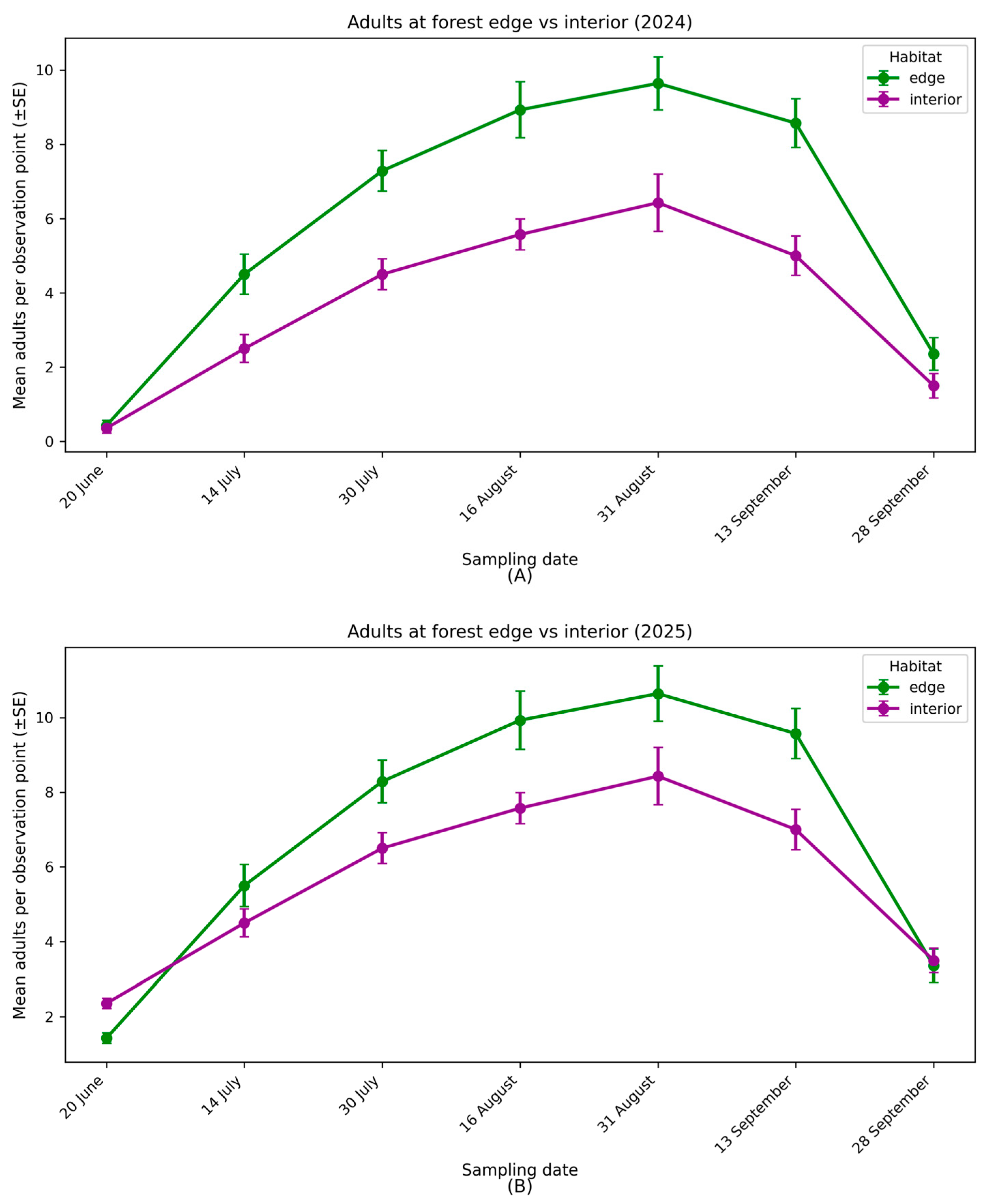
Adult populations of M. pruinosa were monitored from June to September in both study years. Observations were conducted at paired observation points located at the forest edge (0–20 m) and within the forest interior (200 m). The observation point (OP) was considered the unit of replication for all statistical analyses.
Adult activity was assessed using yellow sticky traps installed in the lower canopy zone near selected host trees. Traps were used to capture actively flying adults during the main dispersal period and were replaced at each sampling visit. Captured individuals were counted to quantify adult abundance at each observation point.
In addition to trap captures, direct visual observations were conducted during field inspections to confirm the presence of adults on vegetation near sampling points. Visual observations were used as a complementary method and were not included in the quantitative counts derived from traps, thereby avoiding double counting.
Sticky traps were standardized in color (yellow), size, and placement height within the vegetation, and were exposed for a consistent duration between sampling visits. Traps were inspected at two-week intervals and replaced every three weeks, or more frequently (every two weeks) under conditions of heavy rainfall. Trap placement varied depending on crop type: in maize at 170–180 cm height, in soybean approximately 45 cm above the canopy, in tomato approximately 10 cm above the foliage, in fruit trees at approximately 200 cm above ground, and in forest trees at the lower canopy level.
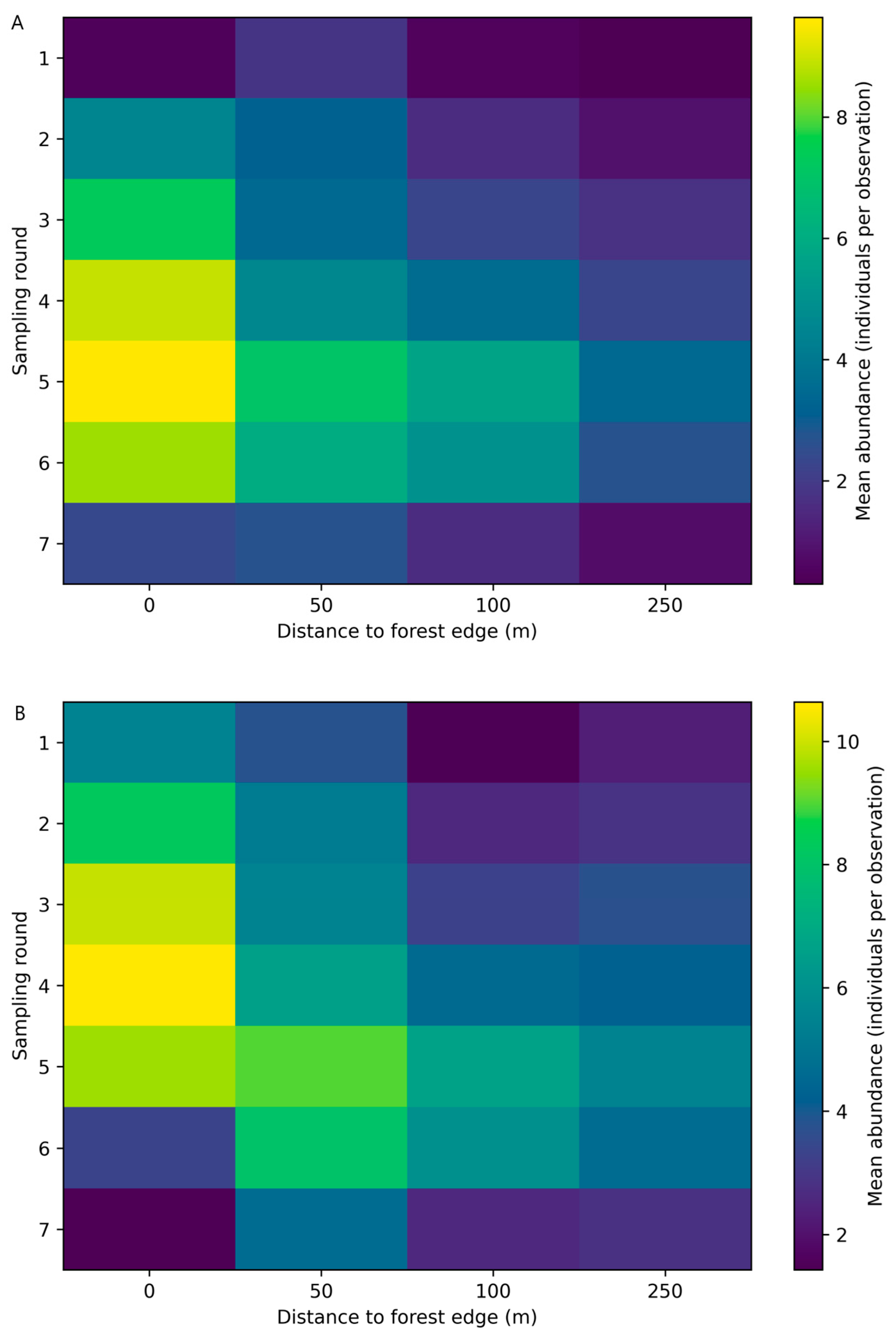
Seasonal cumulative adult abundance was calculated by summing adult counts across sampling dates for each observation point. These data were used to compare adult abundance between the forest edge and the forest interior and to evaluate the potential role of the forest ecosystem as a source habitat for surrounding agroecosystems.
Although adult abundance was assessed using a combination of sticky traps and direct visual observations, this approach may introduce potential detection bias. However, the same methodology was consistently applied across all observation points and sampling periods, allowing for reliable comparison of relative differences along the distance gradient.
2.2.2. Nymph Monitoring and Phenology
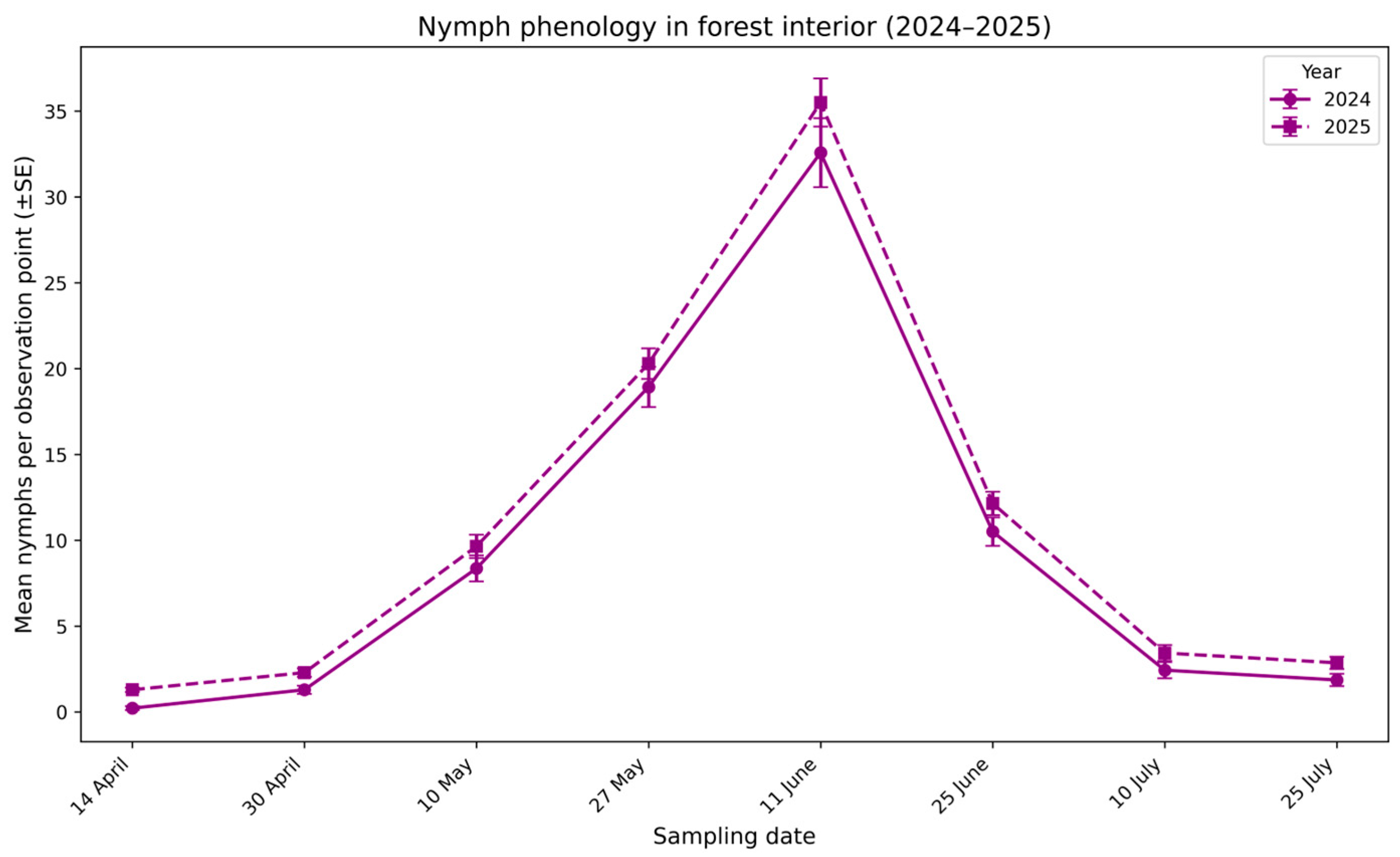
Nymphal stages of M. pruinosa were monitored in the forest interior (200 m) from April to July, corresponding to the known developmental period of immature stages.
At each observation point, four maple trees (Acer spp.) were selected as reference host plants due to their known suitability for M. pruinosa development. The same trees were monitored repeatedly throughout the study period.
Nymphs were detected through direct examination of host shoots, focusing on the lower vegetation layer and basal vegetation surrounding the selected trees. Approximately 4–6 shoots with visible symptoms of infestation were examined at each observation point in order to ensure reliable detection of nymphal presence. Because inspected shoots were selected based on visible infestation symptoms, these observations were used primarily to document seasonal phenology and local nymph occurrence, rather than to estimate absolute nymph density at stand level. Nymphs were identified based on the presence of characteristic white filamentous wax secretions and their aggregation on host shoots, as described for
M. pruinosa feeding behavior [
13,
15,
16].
Because the study was conducted within a natural forest ecosystem, no plant material was removed. Observations were performed in situ using a portable field microscope (Celestron MicroDirect 1080p, Celestron, Torrance, CA, USA; 10–220× magnification), allowing for the detection of nymphs while minimizing disturbance to the habitat.
Sampling visits were conducted approximately twice per month, enabling the documentation of seasonal phenology and the progression of nymphal stages during the vegetation period. At each sampling visit, new shoots were selected for examination rather than repeatedly assessing the same shoots over time.
2.3. Distance Gradient Sampling in Adjacent Crop Systems
To evaluate pest pressure in managed agroecosystems adjacent to the forest ecosystem, sampling was conducted in crop systems located at three distances from the forest edge: 50 m, 100 m, and 250 m. Sampling distances were selected to evaluate potential spillover effects from natural habitats into adjacent crop systems, a process frequently described in heterogeneous agricultural landscapes [
23,
24,
25,
26].
The monitored crops included maize, soybean, tomato, grapevine and apricot, representing common agricultural and horticultural crops cultivated in the surrounding landscape.
Within each crop system, observation points were established at the specified distances from the forest margin. Pest presence was evaluated during the vegetation period through direct field observations on representative plants or plant organs within each observation point. At each observation point, a standardized number of plants or plant organs was assessed depending on the crop type. For herbaceous crops (e.g., maize, soybean, tomato), observations were conducted on a defined number of individual plants, while for perennial crops (grapevine and fruit trees), assessments focused on selected shoots or plant organs. The sampling effort was kept consistent across distances and sampling dates within each crop system to allow for comparison of infestation levels.
Both adult and nymph stages (as active) were recorded when present. Sampling was conducted approximately twice per month during the vegetation season, allowing for the assessment of seasonal patterns and the evaluation of potential distance-dependent gradients in pest abundance relative to the forest edge.
2.4. Crop Damage Assessment
To quantify pest impact in crop systems, attack incidence and damage severity associated with
M. pruinosa were assessed on specific plant organs known to be susceptible to feeding (
Table 1). Within each crop system, observation points were established at the specified distances from the forest margin. Pest presence was evaluated during the vegetation period through direct field observations on crop-specific target organs within each observation point. Two repetitions were assessed for each crop × distance × year combination at each sampling date, with 50 plant organs examined per repetition. The assessed organ depended on crop type: ear for maize, pod for soybean, stem for tomato, cluster for grapevine, and fruit and shoot for apricot in incidence assessment; seasonal severity summaries for apricot were based on shoots only.
Attack incidence was calculated at each sampling visit as the percentage of assessed plant organs showing visible signs of infestation or feeding damage relative to the total number of organs examined at each observation point. Incidence values were first calculated per observation point and sampling date, and then averaged across sampling dates to obtain seasonal estimates for each distance and crop system [
28,
29,
30]. Standard errors were calculated based on variability among observation points. Incidence therefore reflects a relative measure of infestation intensity rather than cumulative counts across the entire sampling period.
Visual ordinal scales are widely used for assessing plant damage caused by pests or diseases because they allow for rapid field estimation of symptom intensity across multiple sampling units [
31,
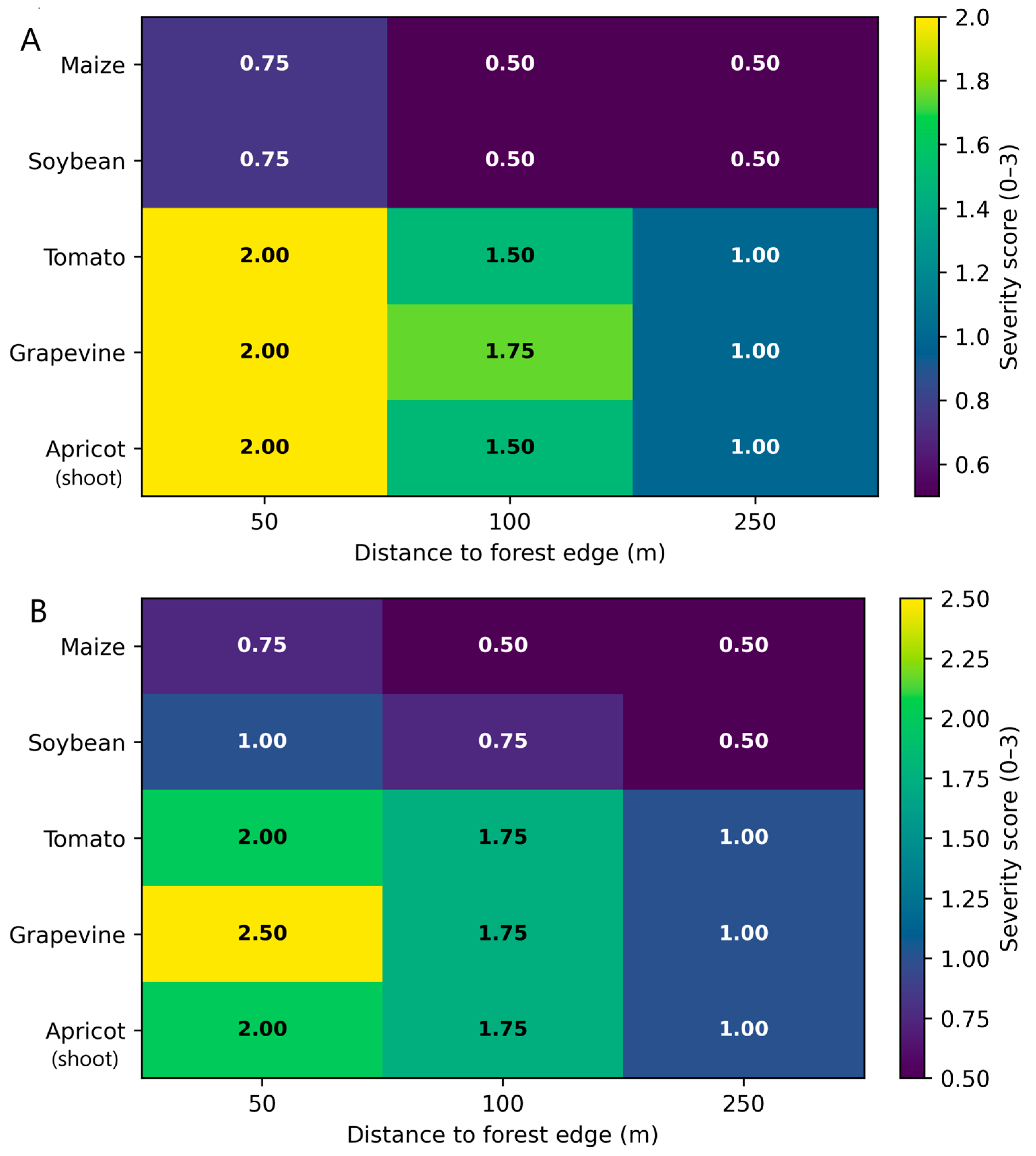
32]. In the present study, severity scores were recorded at the crop level for each sampling distance and study year and were used descriptively, rather than inferentially, to complement the statistically modeled incidence data. Damage severity was evaluated using a visual ordinal rating scale ranging from 0 to 3, where 0—no visible damage; 1—low infestation or minor feeding symptoms; 2—moderate infestation; 3—high infestation or severe feeding damage. Severity scores were assigned in the field using the same predefined criteria throughout the study period. No formal inter-observer calibration was performed, as assessments were conducted consistently by the same observer. Severity scores were recorded at the crop level for each sampling distance and study year and summarized as seasonal mean values for descriptive comparison and visualization.
2.5. Statistical Analyses
All statistical analyses were performed using R (R Core Team, Vienna, Austria).
2.5.1. Adult Abundance
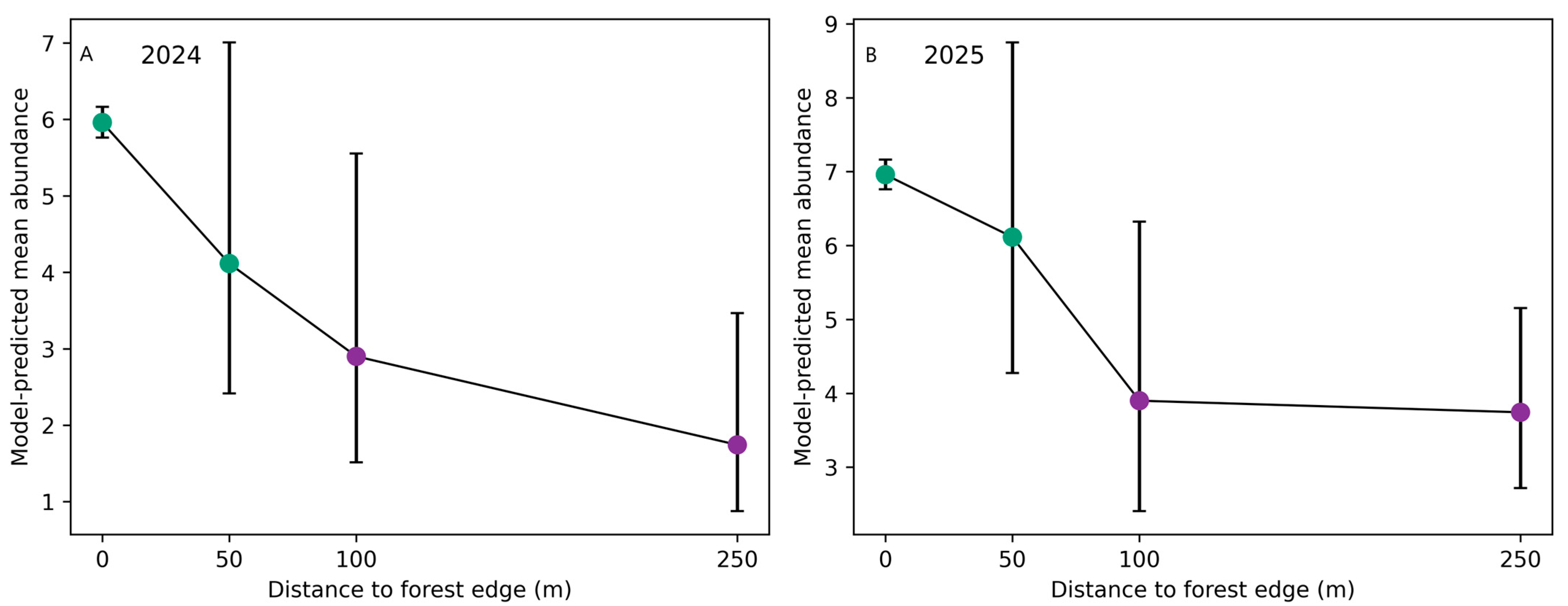
Differences in seasonal cumulative adult abundance between the forest edge and the forest interior were evaluated using the Wilcoxon paired test, as adult counts were paired by observation point. To analyze spatial patterns across the forest–crop gradient, adult abundance was further analyzed using generalized linear models with a negative binomial distribution, which accounts for overdispersion commonly observed in count data. Distance from the forest edge was included as the main explanatory variable. This approach was used to capture overall distance-related patterns in adult abundance along the gradient. Given the structure of the dataset, including variation in sampling across crop systems and observation points, the results are interpreted in terms of general spatial trends along the gradient. Differences among distance categories were evaluated using model-based Wald χ2 tests, followed by post hoc pairwise comparisons of model-estimated means.
2.5.2. Nymph Abundance
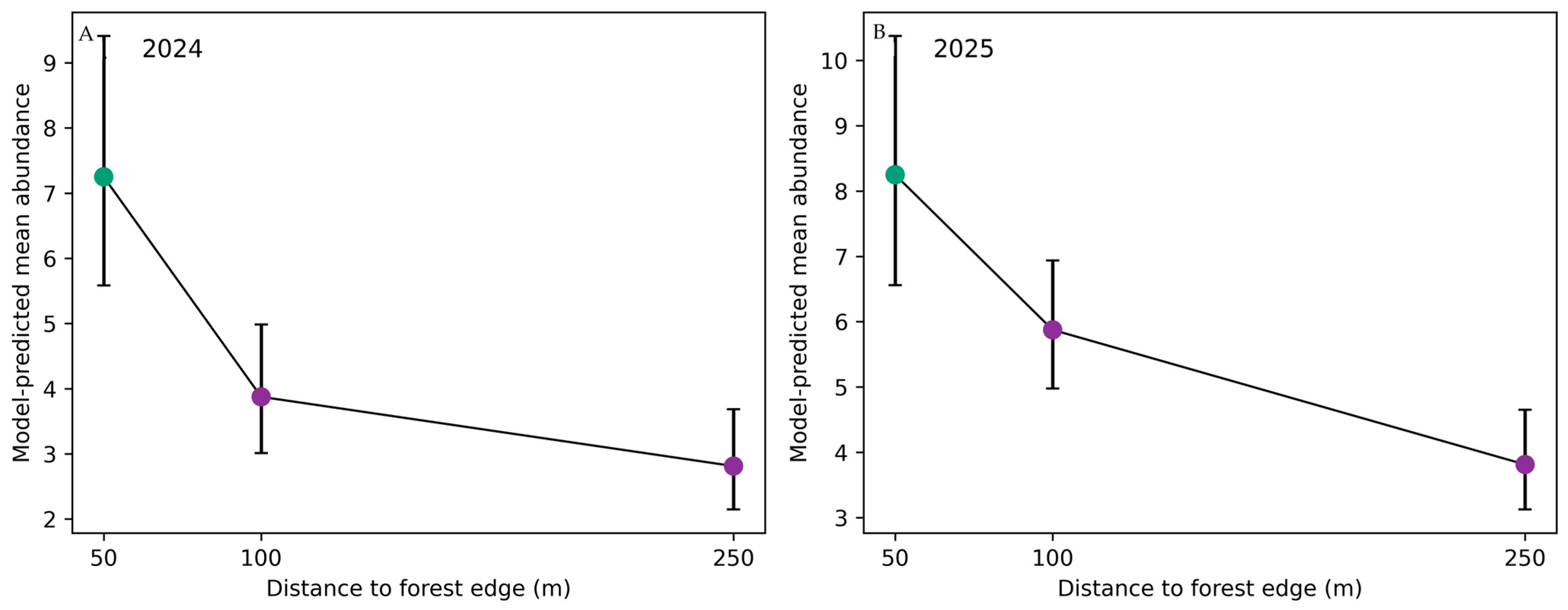
Nymph abundance across crop systems and distances was analyzed using negative binomial generalized linear models, with distance from the forest edge included as the main explanatory variable. Crop system was included as a categorical factor to account for differences among host plants. This approach allowed for the evaluation of distance-related patterns while considering variability among crop types.
2.5.3. Crop Attack Incidence
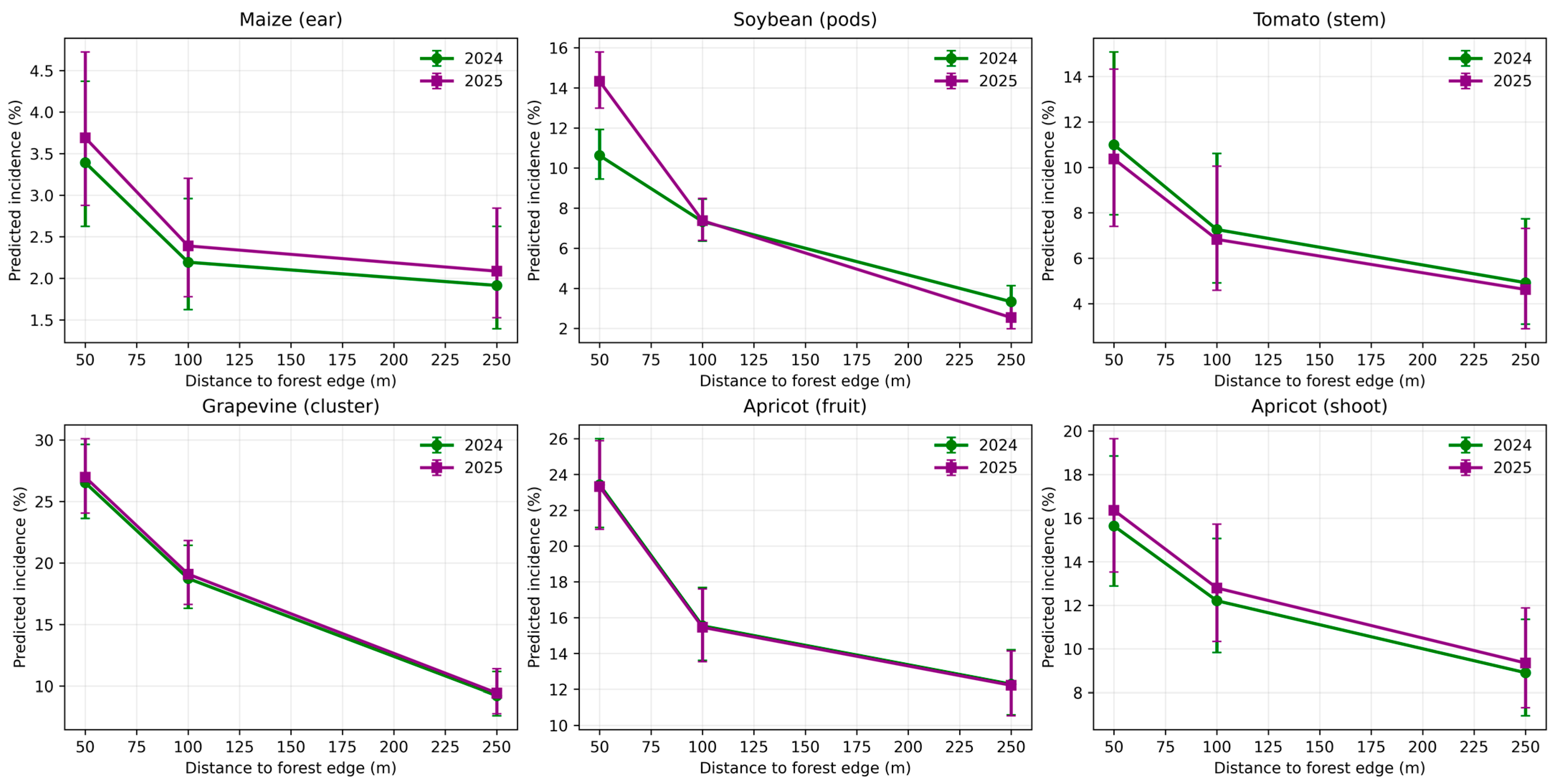
Attack incidence was analyzed as a proportional response using generalized linear models with a binomial error distribution and logit link function. Distance from the forest edge was included as the main explanatory variable, and crop system was included as a categorical factor to account for differences among host plants. Model-based predictions were used to estimate mean incidence values with associated 95% confidence intervals for each crop–distance combination.
2.6. Data Visualization
Graphical representations were produced in R using the ggplot2 package.
The following visualization approaches were used:
Line plots showing model-predicted abundance across distances;
Heatmaps illustrating temporal patterns in adult abundance across sampling rounds;
Multi-panel plots representing predicted attack incidence across crop systems;
Heatmaps summarizing seasonal damage severity scores.
In graphical representations, error bars correspond either to standard errors (SEs) of observed means or to 95% confidence intervals (CIs) of model-predicted means, depending on the statistical summary shown. Tables report model-based estimates together with their associated 95% confidence intervals (CIs).
4. Discussion
The present study examined the population dynamics of M. pruinosa along a forest–crop gradient in an agricultural landscape of western Romania. By combining observations from a deciduous forest ecosystem with monitoring in adjacent crop systems, the study identified consistent spatial associations between forest proximity and pest abundance. Persistent populations were recorded within the forest habitat, adult abundance declined with increasing distance from the forest edge, and crop-level incidence and severity generally followed the same spatial pattern. These findings are consistent with the view that forest–crop interfaces can structure pest pressure across agricultural landscapes, although the study does not directly demonstrate directional spillover or source–recipient dynamics.
4.1. Occurrence and Development of M. pruinosa in Forest Habitats
Natural and semi-natural habitats may influence pest population dynamics in surrounding agricultural systems by providing host plants, refuge, and favorable microclimatic conditions. Forest habitats, in particular, often contain diverse woody vegetation that may support polyphagous herbivores across multiple life stages [
21,
24,
33]. In the present study,
M. pruinosa was repeatedly recorded within the deciduous forest ecosystem in both years, with adults present during the activity period and nymphs detected in the forest interior.
The occurrence of nymphs within the forest interior is consistent with successful local development on forest host plants. Because immature stages of
M. pruinosa have limited mobility, their presence at 200 m inside the forest suggests that oviposition and subsequent nymphal development can occur within forest vegetation rather than only at the forest margin. This interpretation is in line with previous reports showing that
M. pruinosa can establish on a broad range of woody hosts in natural and semi-natural environments [
8,
9,
27]. In the present study area, maple (
Acer spp.) and other deciduous hosts present in the monitored stands may have contributed to this pattern, as similar trees have been reported among suitable hosts in other European regions [
18,
21].
At the same time, these observations should not be interpreted as evidence that all forest habitats function uniformly as population reservoirs. Forest stands may differ greatly in host composition, vegetation structure, moisture regime, and microclimate, all of which can affect insect survival and development [
34]. Thus, the present results support the possibility that this particular forest habitat can sustain local populations of
M. pruinosa, but broader generalization to all forest ecosystems would require comparative sampling across multiple forest types.
4.2. Spatial Patterns of Adult Abundance at the Forest Edge
A consistent result of the study was the higher abundance of adult
M. pruinosa at the forest edge than in the forest interior. This pattern was observed in both years and is compatible with ecological expectations for boundary zones in heterogeneous landscapes. Habitat edges often have high concentrations of mobile organisms because they combine resources, structural heterogeneity, and transitional microclimatic conditions from adjacent habitat types [
24,
25]. In agricultural mosaics, edges may therefore function as areas of elevated biological activity, where insects encounter multiple host plants and move between habitat patches [
21].
The higher adult abundance observed at the forest margin may reflect several non-exclusive mechanisms. First, edge habitats may provide access to both forest and crop-associated resources. Second, microclimatic conditions at edges, such as greater light exposure and warmer temperatures, may favor adult activity or detectability. Third, edge vegetation may include host plants of varying quality that may attract or concentrate mobile insect stages during the seasonal dispersal period. The present design does not distinguish among these mechanisms, but the repeated edge-associated peak suggests that the forest margin is an ecologically important zone for adult occurrence.
Adults were also detected repeatedly within the forest interior, indicating that
M. pruinosa does not remain restricted to boundary vegetation. This is consistent with the known mobility of adult planthoppers and with previous reports documenting the species in forest vegetation, unmanaged patches, and urban trees [
11,
20,
35].
However, detection of adults within forest interiors should not be interpreted as direct evidence of inward or outward net movement. Rather, it suggests that adults use multiple portions of the habitat mosaic.
This interpretation is consistent with previous reports showing that
M. pruinosa has expanded across European regions and has been recorded on a broad range of host plants in diverse habitats [
36]
4.3. Distance-Dependent Pest Pressure in Crop Systems
Across adjacent crop systems, both adult and nymph abundance decreased with increasing distance from the forest edge. This spatial pattern was consistent across years and is compatible with the idea that pest pressure is structured by proximity to semi-natural habitat. Similar distance-related gradients have been described in other habitat-interface studies, where insect abundance changes across short spatial scales due to variation in habitat structure, host availability, and edge-mediated environmental conditions [
21,
24,
25].
Importantly, however, the observed gradient should be interpreted as a distance-dependent association, not as direct proof of spillover from forest to crop habitat. Several alternative explanations may account for the same pattern. Crop sites closer to the forest may differ in exposure, humidity, plant vigor, or surrounding vegetation composition. They may also be more strongly influenced by unmanaged host plants at the interface or by local landscape heterogeneity not captured explicitly in the present design. Thus, although the results are consistent with the possibility that forest-adjacent areas contribute to elevated pest pressure, they do not demonstrate the direction, magnitude, or demographic consequences of movement between habitats.
The contrast between adults and nymphs is nevertheless ecologically informative. Adults were detected from the forest edge into crop systems, whereas nymphs within crops were concentrated primarily at shorter distances from the forest boundary. Because nymphs are relatively sedentary compared with adults, their distribution may reflect where oviposition occurred previously or where local host conditions favored successful development. This pattern is compatible with short-range concentration of reproductive activity near the forest boundary, but confirmation of that process would require direct movement or oviposition data.
The broad host range of
M. pruinosa likely contributes to these patterns by allowing the species to exploit multiple habitat types simultaneously [
9,
18,
27]. Polyphagy can facilitate persistence across heterogeneous landscapes, especially where woody vegetation, field crops, horticultural crops, and semi-natural habitats occur in close spatial proximity. Under such conditions, habitat interfaces may not operate as simple one-way sources, but rather as dynamic zones of resource use and local redistribution.
Climate change may further influence the distribution and abundance of invasive insect pests by increasing habitat suitability and extending periods of seasonal activity [
37]. For
M. pruinosa, model-based projections also suggest potential expansion under future environmental scenarios [
38]. In this broader context, understanding spatial associations in pest abundance across habitat interfaces may help frame future studies on pest dynamics in agricultural landscapes.
4.4. Crop-Level Impacts and Host Plant Interactions
The crop-level analyses showed that M. pruinosa infestation occurred across several cultivated hosts, including field crops, horticultural crops, and fruit trees. Incidence and seasonal severity were generally higher at sites closer to the forest edge, although the magnitude of this pattern varied among crops and plant organs. This variation suggests that crop-specific host suitability and organ-level susceptibility interact with distance-related landscape effects.
The observed host range is consistent with previous reports describing
M. pruinosa as a highly polyphagous species capable of exploiting numerous cultivated and non-cultivated plants [
9,
18,
27,
39,
40,
41,
42,
43]. In the present study, grapevine, apricot, tomato, soybean, and maize all showed measurable levels of infestation, but the intensity differed substantially among systems. Such variation likely reflects differences in host architecture, tissue suitability, phenology, and accessibility for feeding or oviposition. Thus, forest proximity alone does not explain crop-level infestation; host identity and crop-specific conditions also appear to influence the observed response.
Nymphal wax and honeydew deposits, together with feeding injury, are relevant not only because they indicate pest presence but also because they may reduce crop quality or marketability, especially in horticultural systems [
15]. In addition,
M. pruinosa has been associated with phytoplasma transmission under some conditions [
44]. The present study did not address pathogen transmission, and no inference should be made about disease spread in the monitored crops. Nonetheless, the repeated detection of high pest abundance and infestation near the forest boundary highlights where crop monitoring may be particularly warranted.
The results also point to the potential role of non-crop vegetation in sustaining populations that interact with cultivated plants. Similar patterns have been reported in urban and ornamental settings, where woody vegetation supports substantial populations of sap-feeding insects [
19,
45,
46]. In agricultural landscapes, such vegetation may contribute to local population continuity even when crop suitability varies seasonally.
4.5. Implications for Landscape-Level Pest Management
From a management perspective, the findings suggest that pest pressure may be spatially uneven within agricultural fields and may be elevated in areas located near forest margins. This has practical implications for surveillance and early detection. Rather than assuming homogeneous pressure across fields, monitoring programs may benefit from incorporating edge-oriented sampling, especially in landscapes where forests and crop systems occur in close contact.
At the same time, these results should not be interpreted as an argument for reducing or removing forest habitats. Forests provide multiple ecosystem services and may also support beneficial organisms, including natural enemies. The present study addressed only one pest species and did not quantify the balance between pest-related risks and broader ecological benefits. Thus, the practical implication is not that forests are inherently problematic for agriculture, but that forest–crop boundaries deserve targeted observation when evaluating pest dynamics in heterogeneous landscapes.
Ecologically based pest management increasingly emphasizes landscape structure, host connectivity, and cross-habitat processes [
21,
23,
47,
48]. The present study adds to that perspective by showing that pest pressure can vary systematically across short distances from a semi-natural habitat boundary. However, management recommendations should remain proportional to the evidence and should be refined by future work that directly measures movement, colonization, and demographic exchange among habitats.
4.6. Future Research Directions
Future research should test whether the patterns observed here remain consistent across multiple agricultural landscapes differing in forest composition, crop mosaics, and climatic conditions. Additional studies integrating microclimatic variables such as temperature, rainfall, humidity, and vegetation structure would help clarify the environmental factors associated with local variation in M. pruinosa abundance. Direct movement-based approaches would also be valuable for improving understanding of dispersal and colonization processes at forest–crop interfaces.
The present study should be interpreted in the context of several constraints. First, it was conducted within a single agricultural landscape in western Romania, and the observed patterns may therefore reflect local ecological conditions. Second, the distance categories represented an observational spatial gradient rather than a fully replicated experimental design. Third, movement, dispersal direction, and source–sink relationships were not measured directly. Accordingly, the reported patterns are best interpreted as evidence of spatial association between forest proximity and pest pressure, rather than direct proof of spillover.
Despite these constraints, the study documents a consistent forest–crop gradient in M. pruinosa abundance, incidence, and severity in relation to forest proximity across two consecutive years, providing a useful basis for future ecological and applied research in Romanian agroecosystems.