


Abstract
The global demand for Salvia miltiorrhiza Bunge in the botanical medicine market is steadily increasing. However, its production has long relied on asexual root propagation, making it highly susceptible to germplasm degradation. Transitioning to seed reproduction offers the advantage of genetic renewal, yet it is constrained by unstable seed vigor and slow seedling growth. In the present study, comprehensive physiological and microbiome analyses of S. miltiorrhiza seeds from 14 regions across 7 provinces in China were conducted to elucidate the association between the seed microbiome and vigor, and to identify plant growth-promoting (PGP) strains. The results demonstrated: (1) Seed physical traits and germination characteristics varied significantly across geographic origins. Seed vigor, exhibiting the highest coefficient of variation, served as a key parameter reflecting germination quality. (2) High-vigor seeds harbored distinct microbial communities characterized by higher diversity indices, greater network complexity, and the significant enrichment of potentially beneficial bacteria (e.g., Pseudomonas). (3) Through correlation-directed screening of isolated pure cultures, Pseudomonas mendocina P-6 and Enterobacter ludwigii BM-12 were identified as exhibiting robust, multi-trait PGP capacity. In planta validation showed that these two strains significantly promoted the growth of 1-month-old S. miltiorrhiza seedlings, increasing total fresh weight by 33.9–71.3%. This study reveals the microecological drivers of seed vigor and provides candidate strains for inoculant development, thereby supporting the sustainable, seed-based propagation of S. miltiorrhiza.
1. Introduction
Salvia miltiorrhiza Bunge is a perennial herb belonging to the genus Salvia in the Lamiaceae family. Its dried roots and rhizomes, used as traditional bulk Chinese medicinal materials, promote blood circulation to relieve pain. Modern medicine has confirmed that its bioactive components, including tanshinones and salvianolic acids, exert significant therapeutic effects on cardiovascular and cerebrovascular diseases [1,2,3]. Its standardized extracts have been listed by authoritative international institutions, such as the European Pharmacopoeia and the United States Pharmacopoeia, and they have been recognized as traditional medicines by the World Health Organization [4,5]. Such developments have enhanced demand for S. miltiorrhiza in the international pharmaceutical raw material market.
Currently, S. miltiorrhiza production is dominated by rhizome propagation, leading to issues such as germplasm degradation and unstable seedling quality, which restrict sustainable development of the industry [6]. Although seed propagation has advantages such as a high propagation coefficient and low cost, inconsistent germination and a long seedling establishment cycle are major bottlenecks. The seed microbiome may play a critical role in regulating germination consistency and seedling vigor, which could help overcome these bottlenecks. Therefore, ensuring S. miltiorrhiza seed germination stability and promoting rapid seedling development are essential for large-scale seed propagation in the herb.
Seed microbiota play essential roles in plants [7], and can affect seed germination, seedling establishment, and plant health through vertical transmission and horizontal transfer mechanisms [8,9]. Common seed microbiota include genera such as Bacillus, Pseudomonas, and Pantoea [10], which promote seed germination and plant growth via mechanisms such as hormone production, nitrogen fixation, phosphorus solubilization, and siderophore synthesis [11,12]. For example, Bacillus velezensis SQR9 can secrete the active protein bacillolysin, activate the IAA34-PUCHI signaling pathway in plants, and promote IAA secretion [13]. Studies have demonstrated that seed endophytes can also undergo vertical transmission and colonize progeny plants. For instance, genera such as Pseudomonas are specifically enriched as dominant communities during the maturation stage of rice seeds, and they are transmitted to the next generation of seedlings [14]. Therefore, studying the microbial community structure of S. miltiorrhiza seeds and elucidating its influence on seed germination could offer insights for improvement of S. miltiorrhiza seed germination and seedling growth.
However, current research on the seed microbiome still has significant limitations; specifically, there is a lack of correlation analyses linking microbial community composition with seed vigor, as well as insufficient differentiation between endophytic and epiphytic microbial niches. Seed microbial community composition is regulated largely by environmental factors and plant genotypes [15,16]. Notably, there are significant differences in the composition and function of seed endophytes and epiphytes [17]. Endophytes promote germination and enhance resistance by producing growth-promoting secondary metabolites [18], whereas epiphytes, although capable of carrying beneficial bacteria, may harbor potential pathogens that inhibit seed germination and seedling development [19]. Therefore, studying the microbial communities of different niches in S. miltiorrhiza seeds from various geographic provenances and clarifying the general functions of the microbial groups in different niches could reveal the impacts of S. miltiorrhiza seed microbiota on germination and provide a theoretical basis for screening efficient plant growth-promoting (PGP) strains and targeted regulation of S. miltiorrhiza seed microbiota.
To address these gaps, the present study tested the hypothesis that seed vigor is associated with distinct microbial community characteristics. To this end, S. miltiorrhiza seeds were collected from multiple provenances across China. Phenotypic determination was combined with high-throughput sequencing to investigate two key aspects: (1) the core microbes in S. miltiorrhiza seeds and the effects of geographic provenance on seed phenotype and microbial community assembly, and (2) the microbial characteristics of S. miltiorrhiza seeds with different vigor levels, followed by screening of PGP strains. By combining multi-provenance sampling, separate analyses of endophytic and epiphytic microbial communities, and a workflow from community correlation to strain validation, this study provides a scientific basis for optimizing S. miltiorrhiza cultivation techniques and improving seed germination performance.
2. Materials and Methods
2.1. Sample Collection and Isolation of Seed Endophytic and Epiphytic Bacteria
In January 2025, S. miltiorrhiza seeds were collected from 14 regions across seven provinces in China, which represent the main production areas of S. miltiorrhiza. For each region, Seeds from each region were collected from three spatially separated plots to serve as independent biological replicates. The collected seed samples were stored on ice and transported back to the laboratory. Epiphytic bacteria were collected following the method described by Bodenhausen N et al. [20]. Endophytic bacteria were isolated using the protocol established by Ren F et al. [21].
2.2. Determination of Physical and Germination-Related Traits and Seed Vigor Calculation of S. miltiorrhiza Seeds
2.2.1. Physical Traits
We selected S. miltiorrhiza seeds with intact seed coats and non-shrunken appearance. For each independent subsample (three subsamples per seed provenance), 20 seeds were randomly taken and arranged side by side along a straight line; the total length and total width of the 20 seeds were measured using vernier calipers, and the mean length and mean width per seed were calculated. This measurement was repeated three times for each subsample, and the average of the three replicates was used for subsequent analysis. The length-width ratio was then calculated based on the mean length and width. For 1000-seed weight, the quartering method was applied to each subsample to obtain 1000 seeds, which were then accurately weighed. The weighing was repeated three times per subsample, and the mean value was recorded.
2.2.2. Germination Traits
Plump S. miltiorrhiza seeds were selected and placed in Petri dishes lined with double-layered filter paper moistened with distilled water (50 seeds per dish). For each seed provenance, three independent Petri dishes were prepared as biological replicates. The seeds were incubated in a growth chamber under a 12 h light/12 h dark cycle, with a light intensity of 4950 Lx, temperature of 25 °C, and relative humidity of 75%. An appropriate amount of distilled water was sprayed daily, and the number of germinated and contaminated seeds was recorded. After 14 d, the germination rate, contamination rate, and germination index (GI) were calculated for each dish. For seedling growth measurements, five seedlings were randomly selected from each Petri dish. The root length and total seedling length of each selected seedling were measured, and the five seedlings from the same dish were pooled to determine total fresh weight and total dry weight. The mean root length, mean total length, and mean fresh/dry weight per seedling were then calculated for each dish. The vigor index (VI) was calculated as GI × mean fresh weight per seedling for each dish. All parameters were recorded at the dish level, and the three dishes per provenance were treated as independent replicates.
where Gt represents the number of germinated seeds on day t, and Dt represents the corresponding number of days.
where S denotes the seedling fresh weight on the 14th day of germination.
Germination rate (%) = (Number of germinated seeds/Total number of tested seeds) × 100%
Contamination rate (%) = (Number of contaminated seeds/Total number of tested seeds) × 100%
Germination Index (GI) = Σ (Gt/Dt),
Vigor Index (VI) = GI × S,
2.3. Analysis of Endophytic and Epiphytic Microbial Communities of S. miltiorrhiza Seeds
Epiphytic and endophytic bacterial samples from seeds collected in Section 2.1 were sent to Majorbio Bio-Pharm Technology Co., Ltd. (Shanghai, China) for 16S rDNA sequencing and ITS sequencing. A 0.2 g aliquot of each sample to be tested was weighed out, and microbial DNA was extracted using the DNeasy® PowerSoil® Pro Kit (QIAGEN, Hilden, Germany). The purity and concentration of sample DNA were determined with a NanoDrop 2000 ultra-micro spectrophotometer (Thermo Scientific, United States), and the integrity of the extracted DNA was further verified by 1% agarose gel electrophoresis. Sequencing was performed on an Illumina NextSeq2000 platform (Illumina, San Diego, USA). Specific primers with barcodes were synthesized according to the sample detection region for PCR amplification. For the amplification of the 16S rRNA gene of seed-associated bacteria, two rounds of primers targeting the V5−V7 region were selected: the first round primers were 799F (5′-AACMGGATTAGATACCCKG-3′) and 1392R (5′-ACGGGCGGTGTGTRC-3′), and the second round primers were 799F (5′-AACMGGATTAGATACCCKG-3′) and 1193R (5′-ACGTCATCCCCACCTTCC-3′). For the ITS amplification of rhizosphere soil fungi, primers targeting the ITS1−ITS2 region were used: ITS1F (5′-CTTGGTCATTTAGAGGAAGTAA-3′) and ITS2R (5′-GCTGCGTTCTTCATCGATGC-3′). Raw reads were processed using fastp (version 0.19.6) for quality control and FLASH (version 1.2.11) for merging; reads containing chloroplast or mitochondrial sequences were removed as contamination controls. To normalize sequencing depth, each sample was rarefied to 20,000 reads.
2.4. Isolation and Identification of S. miltiorrhiza Seed Epiphytic and Endophytic Bacteria
S. miltiorrhiza seeds were soaked in 10 mL sterile PBS, shaken for 15 min, and the rinse solution was serially diluted (10−1~10−3) for later use. After filtration with sterile gauze, seeds were immersed in 70% ethanol for 2 min, rinsed 3 times with sterile PBS, transferred to a sterile mortar, and ground into homogenate with 1 mL sterile PBS. The homogenate was transferred to a centrifuge tube; after standing for 10 min, the supernatant was collected and serially diluted (10−1~10−3). Both dilutions (surface rinse solution and endophytic homogenate) were spread on LB solid medium and CFC selective medium (3 replicates per dilution) and incubated upside down at 37 °C for 24–48 h. Typical colonies were purified by repeated streaking on LB solid medium; subsequently, the strains were identified using the primers 27F (5′-AGAGTTTGATCCTGGCTCAG-3′) and 1492R (5′-ACGGCTACCTTGTTACGACTT-3′).
2.5. PGP Trait Determination
2.5.1. In Vitro PGP Functional Study
All assays were performed with three independent replicates per strain. Inorganic and organic phosphorus solid media were used to determine the phosphate-solubilizing capacity of strains, the CAS medium method for siderophore production, and the Ashby medium method for nitrogen-fixing capacity. The ratio of clear zone diameter (D) to colony diameter (d) (D/d) was employed to evaluate the strength of phosphate-solubilizing and siderophore-producing abilities [22]. The Salkowski colorimetric method was used to determine the IAA-producing capacity of the strains [23].
2.5.2. PGP Capacity Evaluation of Strains on S. miltiorrhiza Seedlings
Nutrient soil:vermiculite:perlite = 3:1:1 (v/v/v) was mixed and loaded into 16 cm × 12 cm × 6 cm plastic seedling pots, with 12 seedlings per pot. Each treatment was applied to three independent pots. The experiment was arranged in a completely randomized design. The pots were placed in a plant growth chamber under controlled conditions: 25 °C, 12 h light/12 h dark photoperiod, 75% relative humidity, and light intensity of 4950 Lx. The individual plant was considered the experimental unit. At 2 weeks old, 3 mL bacterial suspension (OD600 = 0.5) was applied to the soil near seedling roots; the CK group received an equal volume of LB broth. At 6 weeks old, five seedlings were randomly selected from each pot, and each selected seedling was measured individually for shoot fresh weight, root fresh weight, and root-shoot ratio. Thus, for each treatment, a total of 15 plants (3 pots × 5 plants per pot) were measured as independent replicates.
2.6. Data Analysis
Statistical analysis and graphing of seed physical/germination traits and strain PGP performance were conducted using IBM SPSS Statistics 27 and GraphPad Prism (version 10.3.0), with one-way ANOVA for intergroup differences and Waller-Duncan test for multiple comparisons (p < 0.05). Microbial co-occurrence networks were constructed via Gephi (version 0.10.1). Metagenomic data were analyzed on Majorbio Cloud Platform (https://cloud.majorbio.com): Alpha diversity indices (ACE, Shannon, etc.) were calculated using mothur (version 1.48.5) [24] according to the standard algorithms implemented in the software to minimize the effect of uneven sequencing depth; all samples were rarefied to 20,000 reads prior to analysis. Differences in alpha diversity between groups were assessed using the Kruskal–Wallis test. PCoA based on Bray–Curtis distance combined with PERMANOVA assessed microbial community similarity and structural differences; LEfSe analysis [25] (LDA > 4, p < 0.05) identified genus-level significantly different microbial taxa between high- and low-vigor seeds. For correlation analysis, Spearman’s rank correlation matrix was computed using IBM SPSS Statistics 27 and visualized as a heatmap with GraphPad Prism. Species with Spearman |r| > 0.6 and p < 0.05 were selected for correlation network analysis [26].
3. Results
3.1. Differences in Physical Traits and Germination-Related Traits of S. miltiorrhiza Seeds
3.1.1. Seed Physical and Germination-Related Traits
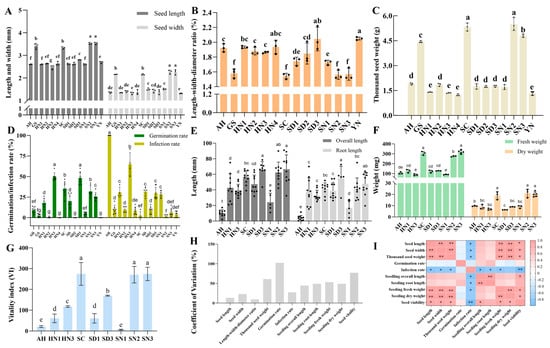
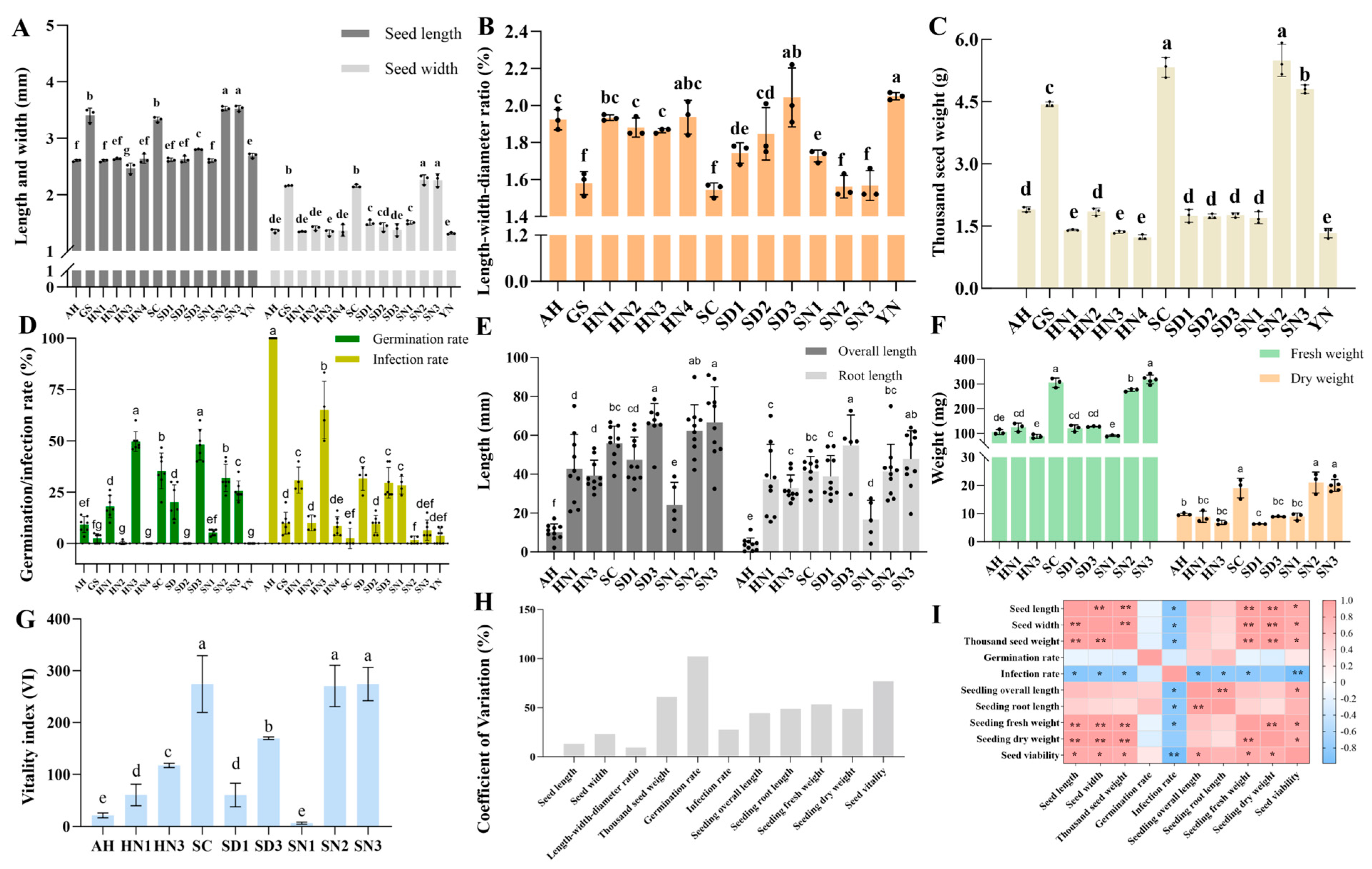
In the present study, seeds were collected from 14 production regions across seven provinces in China, including Shandong, Shaanxi, Henan, Anhui, Gansu, Sichuan, and Yunnan (Figure S1, Table S1). There were significant differences (p < 0.05) in physical traits (seed length, seed width, length-width ratio, and 1000-seed weight) and germination-related traits (germination rate, contamination rate, and seedling-related traits) among S. miltiorrhiza seeds from different origins (Figure 1). The highest germination rate was observed in the HN3 group (49.66%), whereas no germination occurred in the HN4, SD2, or YN groups. The AH group had the highest contamination value (100.00%), whereas the SN2 group had the lowest (1.67%) (Figure 1D). The SN3 group exhibited the highest fresh and dry weights (318.7 mg and 20.0 mg, respectively, per 5 seedlings), the SD3 group had the longest total length (66.2 mm), and the SN3 group had the longest root length (48.9 mm); in contrast, the AH group had the shortest total (10.2 mm) and root lengths (3.9 mm) (Figure 1E,F).
Figure 1.
Physical and germination traits of S. miltiorrhiza seeds from 14 geographic provenances. (A) Seed length and width; (B) Length-width ratio; (C) 1000-seed weight; (D) Contamination rate; (E) Total seedling length and root length at 14 days after germination; (F) Seedling fresh weight and dry weight at 14 days after germination; (G) Seed vigor index; (H) Coefficient of variation (CV) of each trait; (I) Correlation matrix among all traits. Data are presented as mean ± SD (n = 3 independent replicates per provenance). Different lowercase letters indicate significant differences at * p < 0.05 (one-way ANOVA with Waller-Duncan post-hoc test). Asterisks indicate significant correlations (* p < 0.05, ** p < 0.01; Spearman correlation).
3.1.2. Coefficient of Variation of Traits and Correlation Analysis
Degrees of variation in phenotypic traits among S. miltiorrhiza seeds from different geographic locations were evaluated quantitatively using the coefficient of variation (CV) (Figure 1H). Among the physical traits, 1000-seed weight exhibited the highest variation (CV = 61.07%), followed by seed width (CV = 23.22%) and seed length (CV = 13.33%). Seed vigor was calculated by integrating germination index and seedling fresh weight, according to Equation (4). Among the germination- and seedling-related traits, germination rate had the greatest variation (CV = 102.33%), followed by seed vigor index (CV = 77.09%). There were significant differences in seed vigor index among S. miltiorrhiza seeds (p < 0.05); the SN1 group had the lowest vigor index (21.48), whereas the SN3 group had the highest (274.42) (Figure 1D).
There was no significant correlation between germination rate and other indicators. Contamination rate had a significant negative correlation with seed size, 1000-seed weight, and other traits, whereas seedling weight was significantly positively correlated with seed size (Figure 1I). Seed vigor was significantly positively correlated with seed length, seed width, 1000-seed weight, total seedling length, fresh weight, and dry weight, and significantly negatively correlated with contamination rate (p < 0.05) (Figure 1I). Based on the seed vigor index, which exhibited a high coefficient of variation and showed significant correlations with multiple key indicators (Figure 1I), six representative seed groups were selected from the 14 provenances for subsequent microbiome sequencing. The three highest-vigor groups (SC, SN2, SN3) shared the top significance level (a) and were designated as the high-vigor group (HV). The low-vigor group was selected from three of the six regions with significance levels b–e (AH from Anhui, HN1 from Henan, and SD3 from Shandong) to avoid single-origin bias. Thus, groups SC, SN2, and SN3 were designated as high-vigor group (HV), and groups AH, HN1, and SD3 as low-vigor group (LV).
3.2. S. miltiorrhiza Seed Microbial Diversity
3.2.1. Bacterial and Fungal 16S rRNA and ITS2 Gene Sequencing Datasets
To investigate differences in endophytic and epiphytic microbiomes between S. miltiorrhiza seeds with varying vigor indices, bacterial and fungal 16S rRNA and ITS2 gene sequencing were performed. A total of 2,459,692 raw reads were obtained through bacterial 16S rRNA sequencing (Table S2), with each sample containing 41,519–69,043 sequences (mean = 57,493 bp) and sequence lengths ranging from 212 to 456 bp (Table S3). After sequence denoising, 17,502 amplicon sequence variants (ASVs) were generated, corresponding to 1,395,930 high-quality sequences with an average of 38,775 sequences per sample (Table S3). For fungal ITS sequencing, 2,949,696 raw reads were acquired (Table S2), with each sample containing 40,935–78,482 sequences (mean = 62,314 bp) with sequence lengths ranging from 200 to 534 bp (Table S3). Sequence denoising yielded 5652 ASVs and 2,128,747 high-quality sequences, with an average of 60,520 sequences per sample (Table S4). Rarefaction curves constructed based on the observed ASV (sobs index) indicated that all rarefaction curves for endophytic and epiphytic bacteria and fungi in S. miltiorrhiza seeds tended to plateau, demonstrating sufficient sequencing depth to cover the microbial communities in all samples and suitability for subsequent analyses (Figure S2).
3.2.2. Microbial Community Alpha and Beta Diversity
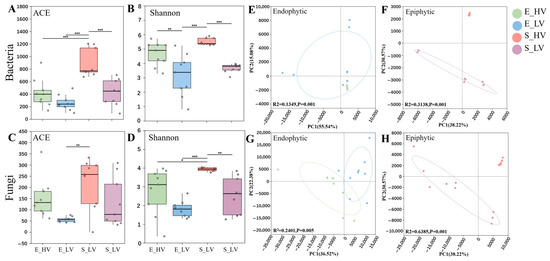
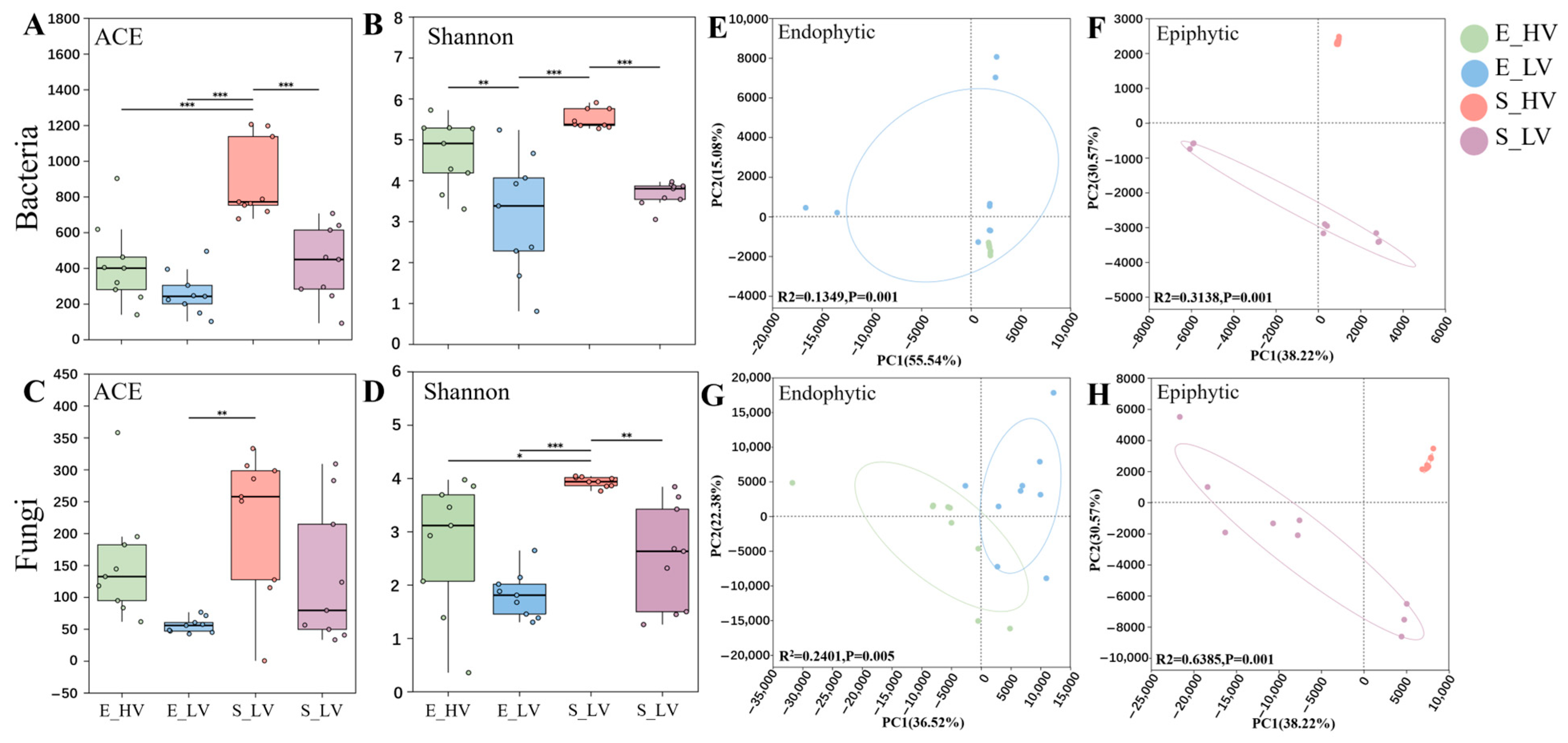
Alpha diversity analysis revealed that the ACE and Shannon indices of the HV seeds (both endophytic and epiphytic) were higher than those of the LV seeds to varying degrees (Figure 2A–D). Specifically, the ACE index of epiphytic bacteria was significantly higher, by 111.92%, whereas the Shannon indices of endophytic bacteria, epiphytic bacteria, and epiphytic fungi were significantly higher (by 40.28%, 43.30%, and 55.84%, respectively, p < 0.05). In addition, bacterial (endophytic/epiphytic, p = 0.001) and fungal (endophytic, p = 0.005; epiphytic, p = 0.001) community structure differed significantly between the high- and LV groups (Figure 2E–H). For the bacterial communities, the contribution rates of PC1 and PC2 were 55.53%/15.08% (endophytic) and 38.22%/30.57% (epiphytic), respectively; for the fungal communities, the contribution rates of PC1 and PC2 were 36.52%/80.80% (endophytic) and 22.38%/11.81% (epiphytic), respectively.
Figure 2.
Microbial diversity indices of S. miltiorrhiza seeds from HV and LV groups. (A) Bacterial ACE index; (B) Bacterial Shannon index; (C) Fungal ACE index; (D) Fungal Shannon index. Data are presented as boxplots (n = 3 per group). Asterisks indicate significant differences between HV and LV groups (Kruskal–Wallis test; * p < 0.05, ** p < 0.01, *** p < 0.001). Principal coordinate analysis (PCoA) of endophytic (E) and epiphytic (F) bacterial communities, and endophytic (G) and epiphytic (H) fungal communities. PCoA was based on Bray–Curtis distance; PERMANOVA (999 permutations) confirmed significant separation between HV and LV groups (p < 0.05).
3.2.3. Microbial Community Co-Occurrence Network Analysis
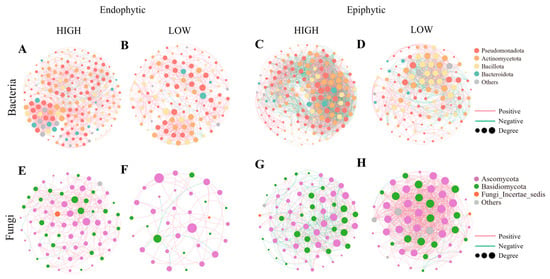
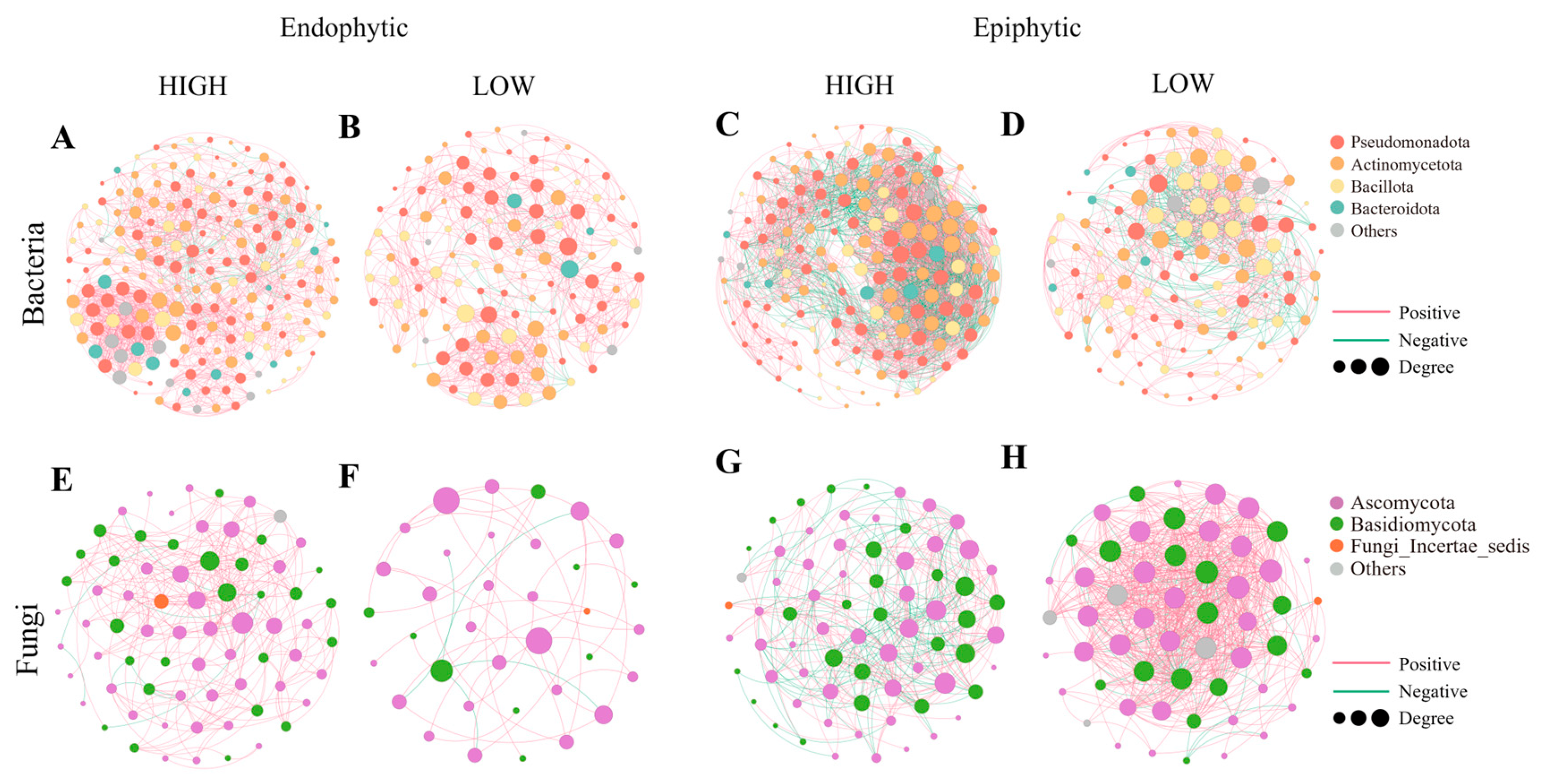
To assess the co-occurrence network characteristics of microbial communities and further analyze the impact of seed vigor on microbial community assembly, the average degree in the co-occurrence network was used as an indicator of network complexity (a higher average degree reflects higher network complexity). In the bacterial communities, the average degree of HV groups (endophytic bacteria: 14.459; epiphytic bacteria: 30.372) was higher than that of the LV groups (endophytic bacteria: 11.008; epiphytic bacteria: 14.054). For fungal communities, the average number of endophytic fungi in the HV (7.549) was higher than that in the LV groups (2.4), whereas the average number of epiphytic fungi in the HV (9.803) was lower than that in the LV groups (22.909) (Figure 3, Table S5).
Figure 3.
Co-occurrence network analysis of microbial communities in S. miltiorrhiza seeds. Networks are shown for endophytic bacteria in HV (A) and LV (B) groups; epiphytic bacteria in HV (C) and LV (D) groups; endophytic fungi in HV (E) and LV (F) groups; and epiphytic fungi in HV (G) and LV (H) groups. Red edges indicate positive correlations; green edges indicate negative correlations. Node size is proportional to node degree (number of connections). (|r| > 0.6, p < 0.05).
3.3. Seed Microbial Community Composition and Differential Analysis of High and Low Vigor Groups
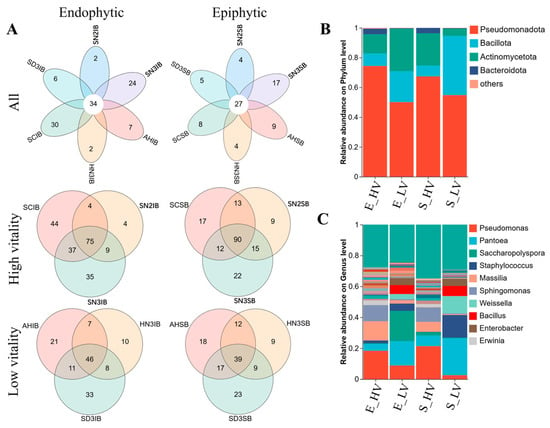
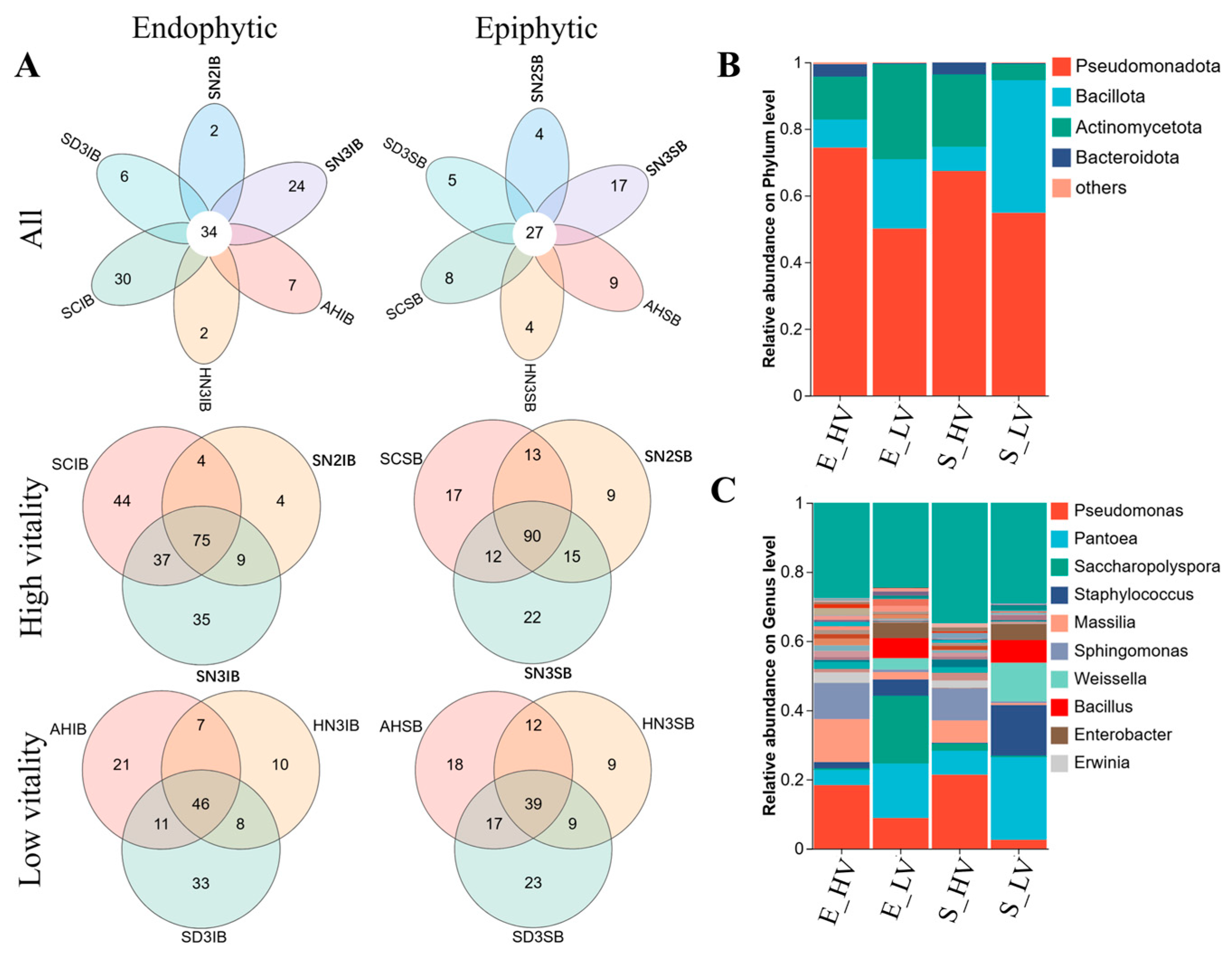
In the present study, we elucidated microbial community characteristics in S. miltiorrhiza seeds through phylum- and genus-level community structure analyses and Venn diversity analyses. The bacterial community in S. miltiorrhiza seeds was composed predominantly of four phyla: Pseudomonadota, Bacillota, Actinomycetota, and Bacteroidota. Among them, Pseudomonadota, Actinomycetota, and Bacillota were the core phyla in all seed samples. Compared with the LV group, the HV group exhibited significantly higher relative abundances of Pseudomonadota and Bacteroidota, whereas Bacillota abundance was significantly lower (Figure 4B). Venn analysis revealed that S. miltiorrhiza seeds had a core bacterial community, including 34 endophytic and 27 epiphytic bacterial genera (Figure 4A). The number of shared bacterial genera in the HV seeds was significantly higher, with 75 endophytic and 90 epiphytic bacterial genera, whereas the LV group had only 46 and 39, respectively. Among the shared bacterial genera in S. miltiorrhiza seeds, the dominant endophytic genera were Pseudomonas (22.23%), Pantoea (16.39%), and Massilia (11.78%), whereas the dominant epiphytic genera were Pantoea (24.63%), Pseudomonas (19.18%), and Staphylococcus (11.94%) (Figure S3). The dominant endophytic genera in the high vigor group were Pseudomonas (20.89%), Massilia (14.08%), and Sphingomonas (11.89%), whereas the dominant epiphytic genera were Pseudomonas (22.91%), Sphingomonas (9.95%), and Pantoea (7.41%). Conversely, the dominant endophytic genera in the LV group were Pantoea (22.64%), Pseudomonas (12.77%), and Bacillus (8.36%), whereas the dominant epiphytic genera were Pantoea (31.91%), Staphylococcus (19.61%), and Unclassified_f_Enterobacteriaceae (17.12%). Compared with the LV group, the HV group had significantly higher abundances of genera such as Pseudomonas, Massilia, and Sphingomonas, and significantly lower abundances of genera such as Pantoea, Staphylococcus, Bacillus, and Enterobacter (Figure 4C).
Figure 4.
Bacterial community composition and shared genera in S. miltiorrhiza seeds. (A) Venn diagrams showing core bacterial genera shared between endophytic and epiphytic compartments in all samples, as well as in HV and LV groups separately. (B) Phylum-level community composition in HV and LV seeds. (C) Genus-level community composition in HV and LV seeds.
The fungal community of S. miltiorrhiza seeds was predominantly composed of five phyla, including Ascomycota and Basidiomycota. Among them, Ascomycota and Basidiomycota were the core fungal phyla in all the seed samples. Compared to the LV group, the HV group exhibited significantly higher relative abundances of Basidiomycota and significantly lower abundances of Ascomycota in endophytic fungi (Figure S4B). Venn diversity analysis revealed that S. miltiorrhiza seeds shared a core fungal community, comprising 13 endophytic and 14 epiphytic fungal genera (Figure S4A). The number of fungal genera in the HV seeds was much higher than that in the LV seeds. The HV group contained 40 endophytic and 52 epiphytic fungal genera, whereas the LV group had only 13 and 15 genera, respectively (Figure S4A). Among the common fungal genera in S. miltiorrhiza seeds, the dominant endophytic fungi were Aspergillus (28.99%), Alternaria (28.38%), and Filobasidium (9.76%), whereas the dominant epiphytic fungi were Wallemia (22.09%), Aspergillus (20.90%), and Filobasidium (15.36%). The dominant endophytic genera in the HV group were Botrytis (27.32%), Alternaria (20.50%), and Filobasidium (14.47%), whereas the dominant epiphytic genera were Filobasidium (21.71%), Cladosporium (14.00%), and Vishniacozyma (13.09%). The dominant endophytic genera in the LV group were Aspergillus (46.66%), Alternaria (25.43%), and Fungi_gen_Incertae_sedis (11.19%), whereas the dominant epiphytic genera were Wallemia (37.96%), Aspergillus (29.48%), and Alternaria (12.33%). Compared to the LV group, the HV group had significantly higher abundance of fungal genera such as Filobasidium, Botrytis, Cladosporium, and Vishniacozyma, and significantly lower abundance of genera such as Aspergillus (Figure S4C).
3.4. Microbial Community LEfSe Analysis
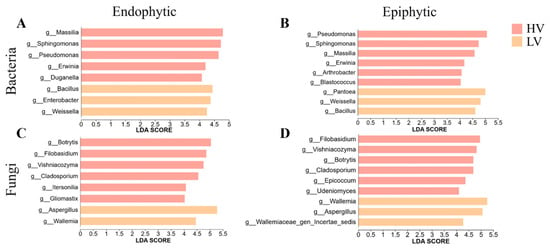
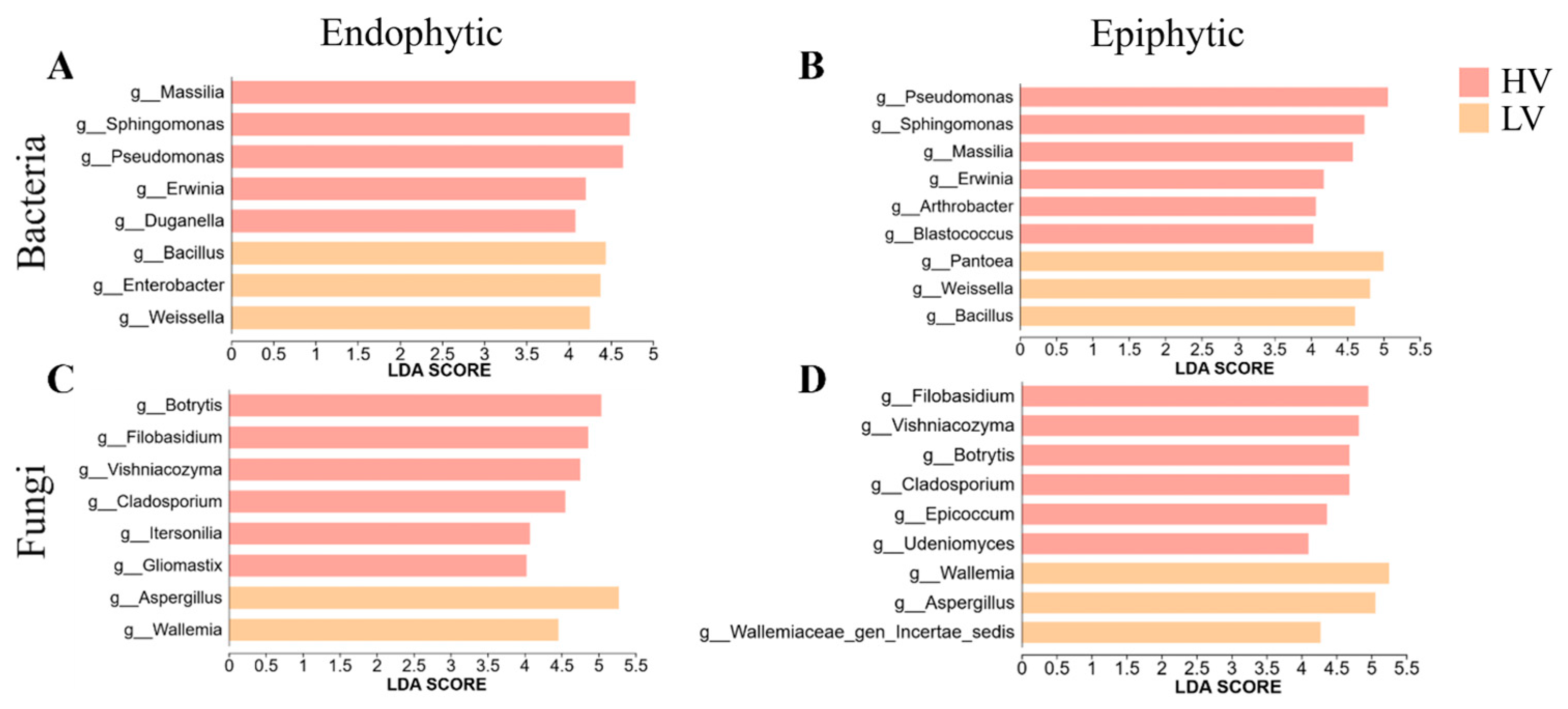
Microorganisms with LDA > 4 were screened out. The results showed that in the bacterial community, the HV group was significantly enriched in endophytic bacterial genera such as Massilia, Sphingomonas, and Pseudomonas, as well as epiphytic bacterial genera including Pseudomonas, Sphingomonas, and Massilia. In contrast, the LV group was significantly enriched in endophytic bacterial genera Bacillus, Enterobacter, and Weissella, and epiphytic bacterial genera Pantoea, Weissella, and Bacillus (Figure 5A,B).
Figure 5.
LEfSe analysis of microbial communities in S. miltiorrhiza seeds. (A) Endophytic bacteria; (B) Epiphytic bacteria; (C) Endophytic fungi; (D) Epiphytic fungi. The analysis identified microbial taxa significantly enriched in HV seeds compared with LV seeds (LDA > 4, p < 0.05). Bars represent LDA scores; longer bars indicate greater enrichment.
In the fungal community, the HV group was significantly enriched in endophytic fungal genera such as Botrytis, Filobasidium, and Vishniacozyma, as well as epiphytic fungal genera including Filobasidium, Vishniacozyma, and Botrytis. In contrast, the LV group was significantly enriched in endophytic fungal genera Aspergillus and Wallemia, and epiphytic fungal genera Wallemia, Aspergillus, and Wallemiaceae_gen_Incertae_sedis (Figure 5C,D).
3.5. Correlation Analysis of Germination Indicators and Microbial Abundance
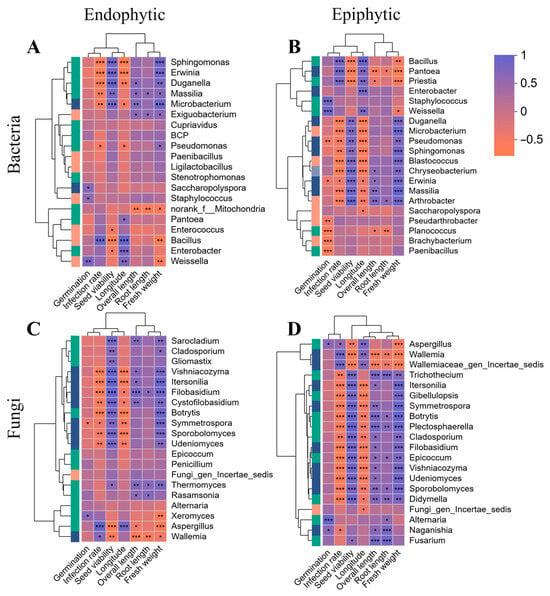
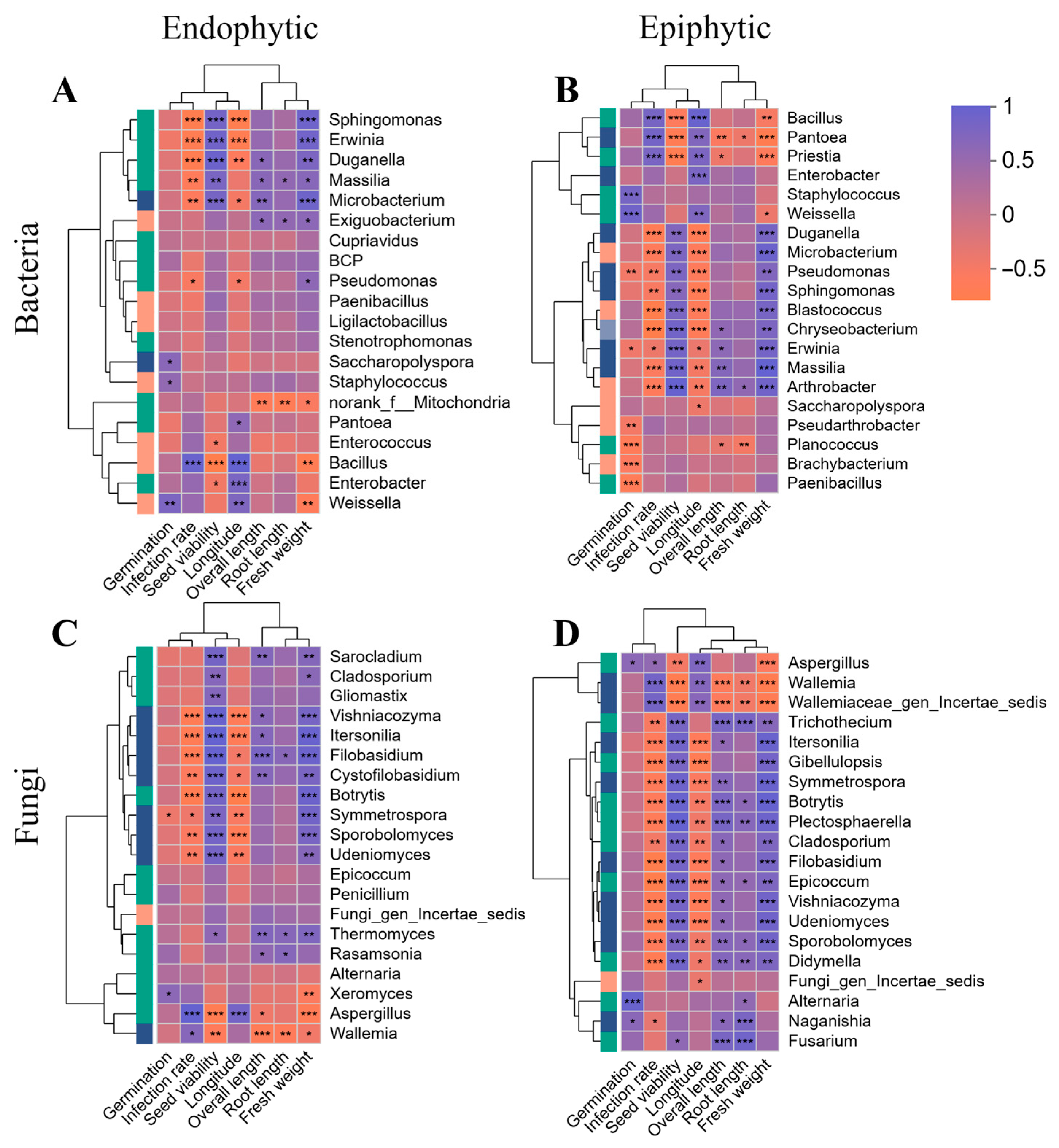
Correlation analysis of the top 20 genera by abundance revealed that the endophytic and epiphytic bacterial communities exhibited distinct correlation patterns with seed germination and growth indicators. In the endophytic bacterial community, three genera exhibited a positive correlation with germination rate, seven genera were positively correlated with seedling fresh weight, and three genera were negatively correlated. Among them, five genera (including Sphingomonas, Erwinia, and Massilia) were significantly positively correlated with seed vigor, whereas three genera (including Bacillus and Enterobacter) were significantly negatively correlated with seed vigor. In the epiphytic bacterial community, two genera were positively correlated with germination rate, six were negatively correlated with germination; nine genera were positively correlated with seedling fresh weight, whereas 4 were negatively correlated with seedling fresh weight. Within the community, nine genera (including Pseudomonas, Sphingomonas, and Massilia) were significantly positively correlated with seed vigor, whereas three genera (including Pantoea and Bacillus) were significantly negatively correlated with seed vigor. Both Sphingomonas and Massilia were significantly positively correlated with seed vigor in both the endophytic and epiphytic bacterial communities (Figure 6A,B).
Figure 6.
Correlation heatmap between germination traits and microbial community composition in S. miltiorrhiza seeds. Correlation of the top 20 most abundant taxa with germination traits: (A) endophytic bacteria, (B) epiphytic bacteria, (C) endophytic fungi, and (D) epiphytic fungi. “BCP” stands for Burkholderia-Caballeronia-Paraburkholderia. Asterisks indicate significant correlations (* p < 0.05, ** p < 0.01, *** p < 0.001; Spearman correlation).
In the endophytic fungal community, one genus was positively correlated with germination rate, one genus was negatively correlated with germination rate, 11 genera were positively correlated with seedling fresh weight, and three were negatively correlated with seedling fresh weight. Among them, 12 genera (including Vishniacozyma, Filobasidium, and Botrytis) were significantly and positively correlated with seed vigor, whereas Aspergillus and Wallemia were significantly and negatively correlated with seed vigor. In the epiphytic fungal community, three genera were positively correlated with germination rate, 13 genera had a positive correlation with seedling fresh weight, whereas three were negatively correlated with seedling fresh weight. Within the community, 14 genera (including Cladosporium, Botrytis, and Sporobolomyces) were significantly positively correlated with seed vigor, whereas three genera (including Aspergillus and Wallemia) were significantly negatively correlated with seed vigor. Vishniacozyma, Filobasidium, and Cladosporium were significantly positively correlated with seed vigor in both the endophytic and epiphytic fungal communities (Figure 6C,D).
3.6. Isolation, Identification, and Growth-Promoting Traits of Endophytic and Epiphytic Bacteria from S. miltiorrhiza Seeds
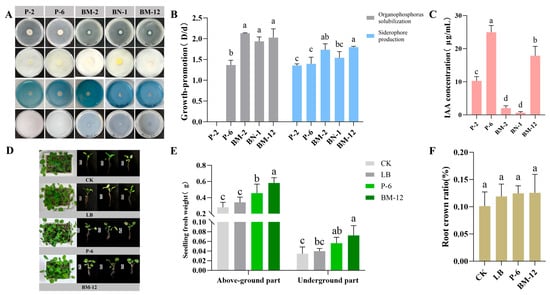
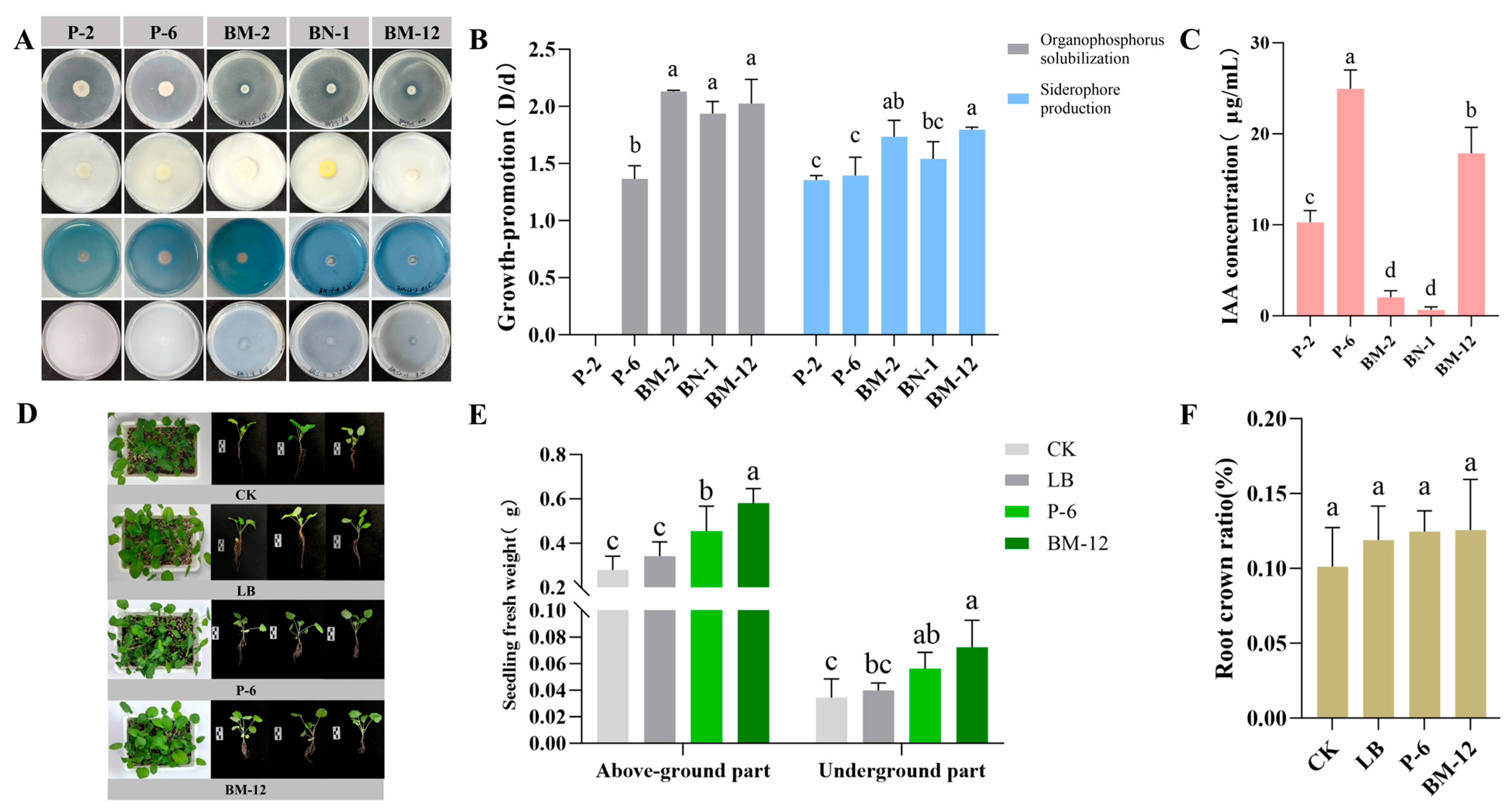
To further verify the effects of seed-associated microbes on seedling growth, 22 endophytic bacterial strains were isolated from S. miltiorrhiza seeds and purified. Using a two-step selection workflow, five representative strains were chosen for subsequent functional validation: first, based on their relatively high abundances in the seed microbial community; second, based on their significant positive or negative correlations with seed vigor indicators. The selected strains included Pseudomonas putida P-2, Pseudomonas mendocina P-6, Bacillus aryabhattai BM-2, Bacillus safensis BN-1, and Enterobacter ludwigii BM-12. All five strains exhibited siderophore production and nitrogen-fixing ability (Figure 7A,B). Strains BN-1 and BM-12 showed strong organic phosphorus solubilization capacity, whereas strain P-6 had the highest IAA production efficiency, with the IAA concentration in its fermentation broth reaching 24.97 μg/mL (Figure 7C). Based on these in vitro performance indicators (IAA production and phosphorus solubilization), strains P-6 and BM-12, which exhibited superior growth-promoting potential, were selected for pot experiments. The pot experiment showed that both selected strains significantly increased the growth of S. miltiorrhiza seedlings (Figure 7D). Compared with the LB group, the total fresh weight, underground parts, and aboveground parts of S. miltiorrhiza seedlings were increased by 33.9% and 71.3%, 41.0% and 81.4%, 33.1% and 70.1%, respectively (Figure 7E), and the root-shoot ratios increased by 4.7% and 5.3%, respectively (Figure 7F).
Figure 7.
Plant growth-promoting (PGP) traits of five bacterial strains and their effects on S. miltiorrhiza seedlings. (A,B) Phosphate solubilization, nitrogen fixation, and siderophore production; (C) IAA production; (D) Representative seedlings after strain treatment; (E) Shoot and root fresh weight; (F) Root/shoot ratio. The five strains were Pseudomonas putida P-2, Pseudomonas mendocina P-6, Bacillus aryabhattai BM-2, Bacillus safensis BN-1, and Enterobacter ludwigii BM-12. Data are presented as mean ± SD (n = 3 independent replicates). Different lowercase letters indicate significant differences at p < 0.05 (one-way ANOVA followed by Waller-Duncan test).
4. Discussion
4.1. Physical and Germination Traits of S. miltiorrhiza Seeds from Different Geographic Provenances Exhibit Significant Differences
Phenotypic analysis of S. miltiorrhiza seeds from 14 localities across seven provinces in China revealed significant differences in physical and germination traits across geographic provenances (Figure 1A–F). The magnitudes of the differences were quantified based on CV. Germination rate (CV = 102.33%) and 1000-seed weight (CV = 61.07%) exhibited particularly marked variations, which can be attributed to two main factors. Genotypic differences among S. miltiorrhiza provenances led to variations in the intrinsic morphological characteristics of the seeds [27]. Previous studies have demonstrated significant morphological differences among S. miltiorrhiza accessions with distinct genotypes. However, environmental factors such as soil fertility, moisture conditions, harvesting positions, and storage conditions can affect seed nutrient accumulation and plumpness significantly, thereby influencing seed germination traits [28,29,30].
In the present study, seed vigor differed significantly among S. miltiorrhiza seeds from different provenances (Figure 1G), ranging from 21.48 in the SN1 group to 274.42 in the SN3 group. This indicator effectively reflects the effect of geographic provenance on the comprehensive quality of seeds. Correlation analysis revealed that the vigor index was significantly and positively correlated with both seed morphological and seedling growth indicators. More importantly, seed vigor had a significant negative correlation with contamination rate (Figure 1I), suggesting a link between the seed-borne microbial community and germination failure or low vigor [19]. Notably, zero germination in groups HN4, SD2, and YN was primarily due to seed aging during storage, not dormancy. These batches were excluded to avoid sequencing non-viable tissues. Rapid viability tests (e.g., tetrazolium staining) were not performed. Instead, standard germination tests quantified vigor gradations, which helped minimize bias.
4.2. S. miltiorrhiza Seeds with Different Vigor Exhibit Significant Differences in Microbial Community Characteristics
Recent studies have shown that the seed microbiome, a key biological factor influencing plant life initiation, is closely correlated with host seed vigor [31]. Although seed microbiomes vary significantly across different plant species or cultivars, the seed-associated microbiome harbors a set of relatively functionally conserved core microbial taxa [32]. For instance, in major crops, such as rice [33], maize [34], and soybean [35], microbial genera, including Pseudomonas, Pantoea, Sphingomonas, and Alternaria, are largely the dominant taxa. In the present study, S. miltiorrhiza seeds shared these dominant genera with staple crops (Figure S3). consistent with the idea that these microbes may play key roles in the seed microecosystem.
In the present study, the microbial community of the HV S. miltiorrhiza seeds had unique characteristics, including higher endophytic microbial diversity, a distinct modular community structure, and more complex species interaction networks (Figure S4). These features were correlated with higher seed vigor. Specifically, HV seeds showed significantly superior Alpha diversity compared with LV seeds, particularly in endophytic bacterial, epiphytic bacterial, and epiphytic fungal communities (Figure 2C–F). Previous studies have reported that increased overall microbial richness is associated with community stability and functional output through functional complementarity and redundancy [36]. However, there is not necessarily a positive correlation between microbial diversity and community stability; some studies have found that high diversity can also lead to functional redundancy or competitive exclusion under certain conditions [37]. Higher alpha diversity was linked to greater network complexity in our study (Figure 3). A highly complex network may be associated with the maintenance of core functions, likely due to its modular structure [38]. This interpretation remains speculative, as network complexity does not directly measure functional resilience. One possibility is that the complex interaction network of endophytic microbes, being in a relatively closed system, might mainly regulate internal homeostasis, while epiphytic communities might handle external environmental responses. If so, this division would align with the concept of microecosystem resilience [39]. Notably and contrary to expectations, the complexity of the epiphytic fungal network in the LV group was higher than that of the HV group (Figure 3G,H). The epiphytic fungal network of the LV group contained a higher number of nodes but lacked hub structures. This “connected but hub-poor” pattern could tip the microecological balance, possibly relating to lower seed vigor. In contrast to the patterns observed for fungal networks, bacterial communities demonstrated more stable characteristics in the present study. The bacterial networks of HV seeds possessed higher complexity and more robust modular structures (Figure 3A–D), and these features were correlated with resistance to pathogens and maintenance of microenvironmental homeostasis, as suggested by previous work [40]. Therefore, the subsequent analyses in this study focused primarily on bacterial communities.
4.3. Abundance Differentiation of Bacterial Taxa in Salvia Miltiorrhiza Seeds Is Closely Associated with Seed Vigor
Although the dominant bacterial genera in high- and LV seeds were similar, they exhibited significant differences in abundance (Figure 4), and the differences were associated with variations in seed physiological status and metabolic potential. Among the genera, the absolute abundance of endophytic Pseudomonas and Sphingomonas in HV seeds was 2.03-fold and 9.16-fold higher, respectively, than in LV seeds, and the absolute abundance of epiphytic Pseudomonas was 7.90-fold higher in HV seeds. The absolute abundances of endophytic and epiphytic Pantoea in HV seeds were only 0.28-fold and 0.27-fold of those in LV seeds. Based on bacterial distribution across niches, we propose that their functions may have differentiated [41]. Pseudomonas was enriched significantly in both endophytic and epiphytic niches, demonstrating cross-niche colonization ability, and it may possess dual functions of endophytic growth-promotion and epiphytic antagonism, as supported by previous studies [12]. Sphingomonas was localized predominantly inside seeds, which was correlated with its potential internal regulatory roles. Notably, Pantoea, a genus with significant ecological functional duality, proliferated considerably in LV seeds. The ecological role of the genus is highly dependent on strain type; for example, Pantoea agglomerans includes both biocontrol and pathogenic strains [42]. We hypothesize that the dominance of Pantoea in LV seeds might reflect the predominance of specific pathogenic strains, which was associated with community imbalance [41]. However, this interpretation remains speculative and requires direct experimental validation (e.g., strain-level pathogenicity tests) in future studies.
In addition to the core genera with significant abundance differences at the genus level, correlation analysis revealed another group of key microorganisms; although they had low relative abundance in the overall community, they were highly correlated with seed vigor phenotypes. For instance, in the HV group, genera such as Massilia (Figure 6A,B), although not the most dominant taxa, showed a significant positive correlation between abundance and the seed vigor index. Massilia has been reported to promote seed germination and seedling vigor [43]. In contrast, enrichment of genera such as Weissella and Bacillus in the LV group was significantly correlated with decreased vigor. Such genera have been reported to inhibit the proliferation of neighboring microbes by secreting broad-spectrum bacteriocins [44], and their enrichment was associated with reduced diversity and niche imbalance in the seed microbial community. The genera constitute a “second tier” beyond the core microbial community. Their strong correlation with seed vigor raises the possibility that they participate in seed germination regulation through specific functions, such as metabolic complementarity or microenvironmental regulation.
4.4. Screening of Highly Efficient Strains and Their Regulation of Seedling Growth
Based on the differences in the association of microbial communities between high- and LV seeds, functional strains were isolated further and growth-promotion performance evaluation experiments were conducted. Five growth-promoting strains, including those belonging to the genera Pseudomonas and Enterobacter, were screened successfully (Figure 7). Nevertheless, it should be noted that our screening was limited to culturable strains, which represent only a subset of the seed-associated microbial community. Functional assays showed that the strains possess multiple growth-promoting capabilities, such as nitrogen fixation, phosphorus solubilization, siderophore production, and IAA secretion. Particularly striking is that the IAA yield of P. mendocina P-6 was as high as 24.97 μg/mL (Figure 7C), whereas B. safensis (BN-1) and E. ludwigii (BM-12) exhibited strong organic phosphorus solubilization capacity (Figure 7A,B). These results suggest that the isolated strains exhibit multiple growth-promoting mechanisms that may be associated with plant growth. Notably, the Pseudomonas and Enterobacter strains isolated in the present study have been identified as significantly enriched taxa in HV seeds and positively correlated with seed vigor in previous community analyses. In contrast, the genus Bacillus was negatively correlated with vigor at the community level. However, the phosphorus solubilization capacity of strain BN-1 highlights the high strain specificity of its microbial functions. Furthermore, while the present study highlights IAA production, gibberellins (GAs) are also well-recognized primary phytohormones that stimulate seed germination [45]. Although deep dormancy is not a typical limiting factor for S. miltiorrhiza seeds, evaluating the GA-synthesizing capacity of these isolates in future studies will help to fully elucidate their multifaceted growth-promoting mechanisms. These findings underscore the need to move from community correlation to strain-level functional validation, which enables more accurate identification of functional strains and avoids misjudgments based solely on community abundance data [46]. The functional assay results are consistent with previous findings that Pseudomonas [47,48] and Enterobacter [49] are common PGP rhizobacteria, further validating the effectiveness of strain screening in the present study. The host-adapted microorganisms, which are rigorously selected through seed-based screening, constitute valuable reservoirs for beneficial strains.
Pot-inoculation experiments were conducted to confirm the growth-promoting effects of the strains on living plants. Inoculation with strains P-6 and BM-12 exerted significant growth-promoting effects on both the aboveground and underground parts of S. miltiorrhiza seedlings (33.1–70.1% increase in aboveground fresh weight and 41.0–81.4% increase in underground fresh weight), demonstrating their great application potential in cultivating robust seedlings and accelerating seedling development. Such growth-promoting effects were accompanied by an increase in the root-shoot ratio (4.7–5.3% elevation), indicating that the strains were associated with increased aboveground growth and appeared to optimize resource allocation by prioritizing root development. It should be noted that these pot experiments were conducted in plant growth chambers under mild, controlled conditions. Whether the strains can adapt to field environments and maintain their growth-promoting effects under actual production conditions remains to be further validated.
The increased root-shoot ratio suggests improved resource allocation to roots, which is beneficial for water/nutrient uptake and, for medicinal plants like S. miltiorrhiza, may enhance root biomass yield. The strains may synergistically regulate the growth and development of different plant organs by secreting growth-regulating substances, such as IAA, achieving synergistic promotion of both aboveground and underground parts. Such balanced growth-promoting patterns not only enhance the competitive survival ability of seedlings in complex environments but also lay a solid foundation for high yield and quality of subsequent medicinal parts [50]. Future studies should investigate the genetic basis and metabolic pathways underlying these growth-promoting traits. Starting from seed microbial community analysis, this study isolated and functionally characterized the strains. These results provide candidate strains for microbial fertilizer development and experimental evidence linking seed microorganisms to seedling establishment.
5. Conclusions
In conclusion, this study demonstrates a robust association between the seed microbiome and the vigor of S. miltiorrhiza. The high-vigor phenotype is microecologically characterized by enhanced bacterial diversity, structural network stability, and the significant enrichment and dominance of beneficial taxa (e.g., Pseudomonas and Sphingomonas). Harnessing these insights, key PGP strains, notably P. mendocina P-6, were isolated and functionally validated. These strains exhibited multifaceted growth-promoting traits—including nitrogen fixation, phosphate solubilization, and IAA production—which effectively translated into a 33.9–71.3% increase in seedling fresh weight. The present study provides both a theoretical basis and promising microbial resources for inoculant development aimed at enhancing seedling quality. Future research will prioritize translating these microecological strategies into field-scale applications, ultimately mitigating germplasm degradation and ensuring the sustainable, seed-based cultivation of this crucial medicinal plant.
Supplementary Materials
The following supporting information can be downloaded at: https://www.mdpi.com/article/10.3390/agronomy16090874/s1, Figure S1. Distribution map of collection sites for S. miltiorrhiza seeds samples; Figure S2. Rarefaction curves and community profiles of the S. miltiorrhiza seed microbiome; Figure S3. Core microbiota composition in S. miltiorrhiza seeds; Figure S4. Venn Analysis and Microbial Species Distribution of Fungal Communities in S. miltiorrhiza seeds; Table S1. Information on collection sites for S. miltiorrhiza seeds samples; Table S2. Overview of microbiome sequencing data for S. miltiorrhiza seeds; Table S3. Statistics of microbiome sequencing data for S. miltiorrhiza seeds; Table S4. Post-denoising statistics of microbiome sequencing data for S. miltiorrhiza seeds; Table S5. Co-occurrence network properties of microbial communities in S. miltiorrhiza seeds.
Author Contributions
Formal analysis, Y.Z. and R.Z.; Investigation, Y.Z., R.Z., M.Y. and J.F.; Funding acquisition, L.W.; Validation, Y.Z. and P.Z.; Methodology, Y.Z., R.Z., J.F., R.L. and X.C.; Data curation, Y.Z., R.Z. and M.Y.; Visualization, Y.Z. and H.Y.; Writing—original draft, Y.Z.; Writing—review and editing, L.W., N.S. and Q.H.; Conceptualization, L.W.; Resources, G.K. and L.W. All authors have read and agreed to the published version of the manuscript.
Funding
This research was funded by the National Natural Science Foundation of China, grant numbers 82204553, 82204554 and 8231168637; Zhejiang Provincial Natural Science Foundation of China, grant number LQ23H280012; and Zhejiang Province “Three Rural and Nine Directions” Agricultural Science and Technology Cooperation Program Project, grant numbers 2024SNJF035 and 2025SNJF077.
Data Availability Statement
The data presented in this study are openly available in the NCBI Sequence Read Archive (SRA) under the accession number PRJNA1379227.
Acknowledgments
We appreciate the technical support from the Public Platform of Pharmaceutical Research Center, Academy of Chinese Medical Science, Zhejiang Chinese Medical University, and the seed microbial sequencing support from Majorbio Bio-Pharm Technology Co. Ltd.
Conflicts of Interest
The authors declare no conflicts of interest.
Abbreviations
The following abbreviations are used in this manuscript:
| PGP | plant growth-promoting |
| IAA | Indole-3-acetic acid |
| HV | high-vigor groups |
| LV | low-vigor groups |
References
- Jiang, Z.Q.; Gao, W.; Huang, L. Tanshinones, critical pharmacological components in Salvia miltiorrhiza. Front. Pharmacol. 2019, 10, 202. [Google Scholar] [CrossRef] [Scilit]
- Li, C.W.; Xu, R.; Zhang, M.L.; Chen, S.M.; Yao, Q.; Zheng, C.Y.; Wang, X.L.; Wen, X.R.; Xiao, X.H.; Wang, Y.H.; et al. Salvia miltiorrhiza water extract ameliorated cGAS-STING-mediated acute liver injury by blocking interaction between STING and TBK1. Chin. Herb. Med. 2025, 17, 768–778. [Google Scholar] [CrossRef] [Scilit]
- Shi, Q.; Liu, X.A.; Shengbu, M.; Jiaqiu, S.L.; Lai, X.R. Traditional chinese herbal medicine: Therapeutic potential in chronic obstructive pulmonary disease. Nat. Prod. Commun. 2024, 19, 1934578X241293922. [Google Scholar] [CrossRef] [Scilit]
- Villaescusa, L.; Zaragozá, C.; Zaragozá, F.; Tamargo, J. Herbal medicines for the treatment of cardiovascular diseases: Benefits and Risks—A narrative review. Int. J. Cardiol. 2023, 385, 44–52. [Google Scholar] [CrossRef] [Scilit]
- Chen, L.; Fu, G.; Hua, Q.; Zhu, H.Y.; Deng, Y.; Wu, W.; Zhao, Y.J.; Yang, X.Y.; Yang, B.S.; Zhou, Y.B.; et al. Efficacy of add-on danhong injection in patients with unstable angina pectoris: A double-blind, randomized, placebo-Controlled, multicenter clinical trial. J. Ethnopharmacol. 2022, 284, 114794. [Google Scholar] [CrossRef] [Scilit]
- Yao, S.C.; Jiang, Y.Y.; Ni, S.; Wang, L.; Feng, J.; Yang, R.W.; Yang, L.X.; Len, Q.Y.; Zhang, L. Development of a highly efficient virus-free regeneration system of Salvia miltiorrhiza from sichuan using apical meristem as explants. Plant Methods 2022, 18, 50. [Google Scholar] [CrossRef] [Scilit]
- Li, X.F.; Zheng, X.; Yadav, N.; Saha, S.; Salama, E.-S.; Li, X.K.; Wang, L.K.; Jeon, B.H. Rational management of the plant microbiome for the second green revolution. Plant Commun. 2024, 5, 100812. [Google Scholar] [CrossRef] [Scilit]
- Romão, I.R.; Do Carmo Gomes, J.; Silva, D.; Vilchez, J.I. The seed microbiota from an application perspective: An underexplored frontier in plant–microbe interactions. Crop Health 2025, 3, 12. [Google Scholar] [CrossRef] [Scilit]
- Krishnamoorthy, A.; Agarwal, T.; Kotamreddy, J.N.R.; Bhattacharya, R.; Mitra, A.; Maiti, T.K.; Maiti, M.K. Impact of seed-transmitted endophytic bacteria on intra- and inter-cultivar plant growth promotion modulated by certain sets of metabolites in rice crop. Microbiol. Res. 2020, 241, 126582. [Google Scholar] [CrossRef] [Scilit]
- Dai, Y.; Li, X.Y.; Wang, Y.; Li, C.X.; He, Y.; Lin, H.H.; Wang, T.; Ma, X.R. The differences and overlaps in the seed-resident microbiome of four Leguminous and three Gramineous forages. Microb. Biotechnol. 2020, 13, 1461–1476. [Google Scholar] [CrossRef] [Scilit]
- Benmrid, B.; Idbella, M.; Bonanomi, G.; Khourchi, S.; Gherardelli, M.; Bargaz, A.; Cherki, G. Drought-tolerant rhizobacterial consortia with diverse plant growth promoting traits enhance wheat and faba bean growth under water and low-P availability promising multi-Traits. BMC Microbiol. 2025, 25, 771. [Google Scholar] [CrossRef] [Scilit]
- Kramer, J.; Maréchal, S.; Figueiredo, A.R.T.; Kümmerli, R. Strain identity effects contribute more to Pseudomonas community functioning than strain interactions. ISME J. 2025, 19, wraf025. [Google Scholar] [CrossRef] [Scilit]
- Fu, Y.S.; Liu, Y.P.; Chen, Y.; Xiao, J.T.; Xie, Y.M.; Miao, Y.Z.; Xu, Z.H.; Zhang, N.; Xun, W.B.; Xuan, W.; et al. A rhizobacterium-secreted protein induces lateral root development through the IAA34-PUCHI pathway. Cell Rep. 2025, 44, 115414. [Google Scholar] [CrossRef] [Scilit]
- Kim, H.; Jeon, J.; Lee, K.K.; Lee, Y.-H. Longitudinal transmission of bacterial and fungal communities from seed to seed in rice. Commun. Biol. 2022, 5, 772. [Google Scholar] [CrossRef] [Scilit]
- Klaedtke, S.; Jacques, M.-A.; Raggi, L.; Préveaux, A.; Bonneau, S.; Negri, V.; Chable, V.; Barret, M. Terroir is a key driver of seed-associated microbial assemblages. Environ. Microbiol. 2016, 18, 1792–1804. [Google Scholar] [CrossRef] [Scilit]
- Morales Moreira, Z.P.; Helgason, B.L.; Germida, J.J. Crop, genotype, and field environmental conditions shape bacterial and fungal seed epiphytic microbiomes. Can. J. Microbiol. 2021, 67, 161–173. [Google Scholar] [CrossRef] [Scilit]
- Berg, G.; Raaijmakers, J.M. Saving Seed microbiomes. ISME J. 2018, 12, 1167–1170. [Google Scholar] [CrossRef] [Scilit]
- Hu, H.Y.; Geng, S.C.; Zhu, Y.Y.; He, X.H.; Pan, X.X.; Yang, M.Z. Seed-borne endophytes and their host effects. Microorganisms 2025, 13, 842. [Google Scholar] [CrossRef] [Scilit]
- Li, D.; Chen, W.M.; Luo, W.; Zhang, H.F.; Liu, Y.; Shu, D.T.; Wei, G.H. Seed microbiomes promote Astragalus Mongholicus seed germination through pathogen suppression and cellulose degradation. Microbiome 2025, 13, 23. [Google Scholar] [CrossRef] [Scilit]
- Bodenhausen, N.; Horton, M.W.; Bergelson, J. Bacterial communities associated with the leaves and the roots of Arabidopsis thaliana. PLoS ONE 2013, 8, e56329. [Google Scholar] [CrossRef] [Scilit]
- Ren, F.; Dong, W.; Yan, D.H. Organs, cultivars, soil, and fruit properties affect structure of endophytic mycobiota of pinggu peach trees. Microorganisms 2019, 7, 322. [Google Scholar] [CrossRef] [Scilit] [PubMed]
- Du, H.H.; Zhu, F.R.; Yang, M.; Guo, D.Q.; Zhao, S.X.; Li, Q.T.; Zhou, N. Isolation and identification of phosphatolytic bacteria in Paris polyphylla var. yunnanensis. China J. Chin. Mater. Medica 2021, 46, 915–922. [Google Scholar] [CrossRef]
- R, M.; T, M. Isolation and characterization of potassium solubilizing Aspergillus species isolated from saxum habitats and their effect on maize growth in different soil types. Geomicrobiol. J. 2021, 38, 672–685. [Google Scholar] [CrossRef] [Scilit]
- Schloss, P.D.; Westcott, S.L.; Ryabin, T.; Hall, J.R.; Hartmann, M.; Hollister, E.B.; Lesniewski, R.A.; Oakley, B.B.; Parks, D.H.; Robinson, C.J.; et al. Introducing mothur: Open-source, platform-independent, community-supported software for describing and comparing microbial communities. Appl. Environ. Microbiol. 2009, 75, 7537–7541. [Google Scholar] [CrossRef] [Scilit]
- Segata, N.; Izard, J.; Waldron, L.; Gevers, D.; Miropolsky, L.; Garrett, W.S.; Huttenhower, C. Metagenomic biomarker discovery and explanation. Genome Biol. 2011, 12, R60. [Google Scholar] [CrossRef] [Scilit]
- Fan, K.; Weisenhorn, P.; Gilbert, J.A.; Chu, H. Wheat Rhizosphere Harbors a Less Complex and More Stable Microbial Co-Occurrence Pattern than Bulk Soil. Soil Biol. Biochem. 2018, 125, 251–260. [Google Scholar] [CrossRef] [Scilit]
- Peng, L.; Ru, M.; Wang, B.Q.; Wang, Y.; Li, B.; Yu, J.; Liang, Z.S. Genetic diversity assessment of a germplasm collection of Salvia miltiorrhiza Bunge. based on morphology, ISSR and SRAP markers. Biochem. Syst. Ecol. 2014, 55, 84–92. [Google Scholar] [CrossRef] [Scilit]
- Vandelook, F.; van de Vyver, A.; Soltani, E. Intra-specific variation in relative embryo length and germination of wild Daucus carota across climate gradients in North America and Europe. Seed Sci. Res. 2024, 34, 207–217. [Google Scholar] [CrossRef] [Scilit]
- Kumar, V.; Tomar, B.S.; Singh, B.; Kumar, S. Effect of post-harvest ripening and drying methods on seed quality and storability in pumpkin cv Pusa Hybrid 1. Indian J. Agric. Sci. 2014, 84, 1144–1148. [Google Scholar] [CrossRef] [Scilit]
- Kandasamy, S.; Weerasuriya, N.; Gritsiouk, D.; Patterson, G.; Saldias, S.; Ali, S.; Lazarovits, G. Size variability in seed lot impact seed nutritional balance, seedling vigor, microbial composition and plant performance of common corn hybrids. Agronomy 2020, 10, 157. [Google Scholar] [CrossRef] [Scilit]
- Trivedi, P.; Leach, J.E.; Tringe, S.G.; Sa, T.; Singh, B.K. Plant-microbiome interactions: From community assembly to plant health. Nat. Rev. Microbiol. 2020, 18, 607–621. [Google Scholar] [CrossRef] [Scilit] [PubMed]
- Liu, Y.; Zuo, S.; Zou, Y.Y.; Wang, J.H.; Song, W. Investigation on diversity and population Succession dynamics of endophytic bacteria from seeds of maize (Zea Mays L., Nongda108) at different growth stages. Ann. Microbiol. 2013, 63, 71–79. [Google Scholar] [CrossRef] [Scilit]
- Zhang, X.X.; Ma, Y.N.; Wang, X.; Liao, K.J.; He, S.W.; Zhao, X.; Guo, H.B.; Zhao, D.F.; Wei, H.L. Dynamics of rice microbiomes reveal core vertically transmitted seed endophytes. Microbiome 2022, 10, 216. [Google Scholar] [CrossRef] [Scilit] [PubMed]
- Wallace, J.G. Maize seed endophytes. Mol. Plant Pathol. 2023, 24, 801–810. [Google Scholar] [CrossRef] [Scilit]
- Chandel, A.; Mann, R.; Kaur, J.; Tannenbaum, I.; Norton, S.; Edwards, J.; Spangenberg, G.; Sawbridge, T. Australian native Glycine clandestina seed microbiota hosts a more diverse bacterial community than the domesticated soybean Glycine max. Environ. Microbiome 2022, 17, 56. [Google Scholar] [CrossRef] [Scilit]
- Louca, S.; Polz, M.F.; Mazel, F.; Albright, M.B.N.; Huber, J.A.; O’Connor, M.I.; Ackermann, M.; Hahn, A.S.; Srivastava, D.S.; Crowe, S.A.; et al. Function and functional redundancy in microbial systems. Nat. Ecol. Evol. 2018, 2, 936–943. [Google Scholar] [CrossRef] [Scilit]
- Fujita, H.; Ushio, M.; Suzuki, K.; Abe, M.S.; Yamamichi, M.; Okazaki, Y.; Canarini, A.; Hayashi, I.; Fukushima, K.; Fukuda, S.; et al. Metagenomic Analysis of Ecological Niche Overlap and Community Collapse in Microbiome Dynamics. Front. Microbiol. 2023, 14, 1261137. [Google Scholar] [CrossRef] [Scilit]
- Wang, B.; Liang, Y.T.; Lian, K.Y.; Zhang, C.Y.; Han, M.; Wang, M.; Shao, H.B.; McMinn, A.; Wang, H.L. Correlation with viruses enhances network complexity and stability of co-occurrence prokaryotes across the oceans. mSystems 2025, 10, e0053925. [Google Scholar] [CrossRef] [Scilit]
- Li, J.; Xiang, X.; Li, W.J.; Jia, B.; Yang, W.L.; Wang, W.; Xu, C.T.; Yin, H.X.; Zhang, B.Y. Insights into tissue-specific and species-dependent divergence in endophytic microbial communities of two closely related halophytes Reaumuria kaschgarica and R. songarica. Plant Soil 2025, 517, 769–789. [Google Scholar] [CrossRef] [Scilit]
- Shu, X.; Liu, Y.P. Collaboration promotes stability: Insights from synComs study. Trends Microbiol. 2025, 33, 1046–1047. [Google Scholar] [CrossRef] [Scilit]
- Chen, H.M.; Wu, H.X.; Yan, B.; Zhao, H.G.; Liu, F.H.; Zhang, H.; Sheng, Q.; Miao, F.; Liang, Z.S. Core microbiome of medicinal plant Salvia miltiorrhiza seed: A rich reservoir of beneficial microbes for secondary metabolism? Int. J. Mol. Sci. 2018, 19, 672. [Google Scholar] [CrossRef] [Scilit]
- Lorenzi, A.S.; Bonatelli, M.L.; Chia, M.A.; Peressim, L.; Quecine, M.C. Opposite sides of Pantoea agglomerans and its associated commercial outlook. Microorganisms 2022, 10, 2072. [Google Scholar] [CrossRef] [Scilit]
- Guo, Y.Z.; Ding, X.M.; Yao, L.; Xu, D.M.; Zhao, Y.J.; Feng, F.Y.; Meng, J.Y. Isolation and identification of Massilia sp. B260 and its effect on seedling raising. Biotechnol. Bull. 2019, 35, 144. [Google Scholar] [CrossRef]
- Singh, J.K.; Devi, P.B.; Reddy, G.B.; Jaiswal, A.K.; Kavitake, D.; Shetty, P.H. Biosynthesis, classification, properties, and applications of Weissella bacteriocins. Front. Microbiol. 2024, 15, 1406904. [Google Scholar] [CrossRef] [Scilit] [PubMed]
- Tuan, P.A.; Kumar, R.; Rehal, P.K.; Toora, P.K.; Ayele, B.T. Molecular Mechanisms Underlying Abscisic Acid/Gibberellin Balance in the Control of Seed Dormancy and Germination in Cereals. Front. Plant Sci. 2018, 9, 668. [Google Scholar] [CrossRef] [Scilit] [PubMed]
- Wei, X.; Bai, X.; Cao, P.; Wang, G.; Han, J.; Zhang, Z. Bacillus and microalgae biofertilizers improved quality and biomass of Salvia miltiorrhiza by altering microbial communities. Chin. Herb. Med. 2023, 15, 45–56. [Google Scholar] [CrossRef] [Scilit]
- Alattas, H.; Glick, B.R.; Murphy, D.V.; Scott, C. Harnessing Pseudomonas spp. for sustainable plant crop protection. Front. Microbiol. 2024, 15, 1485197. [Google Scholar] [CrossRef] [Scilit]
- Omar, A.F.; Abdelmageed, A.H.A.; Al-Turki, A.; Aggag, A.M.; Rehan, M.; Abdelhameid, N.M. Assessment of the plant growth-promoting potential of three Pseudomonas and Pantoea isolates to promote pepper growth. Agronomy 2025, 15, 2419. [Google Scholar] [CrossRef] [Scilit]
- Saha, K.K.; Mandal, S.; Barman, A.; Mondal, S.; Chatterjee, S.; Mandal, N.C. Genomic insight of phosphate solubilization and plant growth promotion of two taxonomically distinct winter crops by Enterobacter sp. DRP3. J. Appl. Microbiol. 2024, 135, lxae146. [Google Scholar] [CrossRef] [Scilit]
- Zhou, L.Y.; Zhou, X.H.; He, Y.H.; Fu, Y.L.; Du, Z.G.; Lu, M.; Sun, X.Y.; Li, C.H.; Lu, C.Y.; Liu, R.Q.; et al. Global systematic review with meta-analysis shows that warming effects on terrestrial plant biomass allocation are influenced by precipitation and mycorrhizal association. Nat. Commun. 2022, 13, 4914. [Google Scholar] [CrossRef] [Scilit]
Disclaimer/Publisher’s Note: The statements, opinions and data contained in all publications are solely those of the individual author(s) and contributor(s) and not of MDPI and/or the editor(s). MDPI and/or the editor(s) disclaim responsibility for any injury to people or property resulting from any ideas, methods, instructions or products referred to in the content. |
© 2026 by the authors. Licensee MDPI, Basel, Switzerland. This article is an open access article distributed under the terms and conditions of the Creative Commons Attribution (CC BY) license.