


Abstract
Soil amendments are widely promoted to improve turfgrass performance and soil properties in suboptimal soil; however, their effectiveness under field-managed conditions remains unclear. Two concurrent field experiments (i.e., turfgrass and soil and reduced nitrogen) were conducted from August 2022 to November 2023 in Gainesville, FL, using a randomized complete block design to evaluate organic and biological amendments under standard and reduced nitrogen (N) fertilization. In the turfgrass and soil portion, treatments included granular humic + fertilizer, liquid humic + fertilizer, biochar + fertilizer, microbial inoculant + fertilizer, compost, natural fertilizer, fertilizer, and a non-treated control. In the reduced N experiment, fertilizer rates for all amendment combinations and the natural fertilizer were applied at 50% (12.2 kg N ha−1), while the full-rate fertilizer (24.4 kg N ha−1) and non-treated control were included for comparison. Treatments were applied to St. Augustinegrass (Stenotaphrum secundatum (Walt.) Kuntze) and zoysiagrass (Zoysia spp. Willd.) established on a sand-based root zone. Turfgrass performance was assessed using visual quality, normalized difference vegetation index, and percent green via digital image analysis. Soil properties were evaluated using physical, chemical, and biological parameters. Treatment responses varied by amendment type and N rate. All treatments improved turfgrass performance relative to the non-treated control, with compost producing the greatest improvements in turfgrass quality and soil properties, including organic matter, pH, and plant-available P, K, and Fe. Humic substances, biochar, and microbial inoculants primarily increased potentially mineralizable N but provided limited improvements in turfgrass performance compared with fertilizer alone. Nitrogen rate was the primary determinant of turfgrass performance, with full N treatments producing the highest quality. Although reduced N treatments improved turfgrass quality relative to the control, amendment additions did not consistently enhance turfgrass performance under reduced N conditions.
1. Introduction
Turfgrass systems constitute a major component of urban and suburban landscapes across the United States [1,2], providing a wide range of valuable ecosystem services, including erosion control, surface cooling, recreational functionality, and aesthetic enhancement [3]. In Florida, turfgrass is often established on disturbed or sand-based soils associated with residential and commercial developments [4,5]. These soils are typically low in organic matter (OM), possess limited cation exchange capacity (CEC), and exhibit reduced microbial activity [6], all of which contribute to inherently low fertility and limited nutrient retention.
Because of these soil constraints, frequent fertilizer applications are commonly required to maintain acceptable turfgrass quality. Nitrogen (N) is the most critical and often limiting nutrient in turf management, directly influencing shoot density, canopy color, and overall turf performance [7]. For example, recommended annual N application rates in Florida for St. Augustinegrass [Stenotaphrum secundatum (Walt.) Kuntze] and zoysiagrass (Zoysia spp. Willd.) can reach up to 293 kg ha−1 yr−1 and 220 kg ha−1 yr−1, respectively [8,9]. However, the combination of high N rates and sandy soil conditions with low nutrient retention creates a high risk of nitrate leaching and surface runoff, leading to nutrient inefficiency and potential environmental impacts [10,11]. These challenges underscore the need for management strategies that balance turfgrass performance with environmental sustainability.
Consequently, there is increasing interest in management practices that improve soil properties and nutrient-use efficiency while maintaining or enhancing turfgrass performance. Soil amendments such as humic substances, biochar, composts, and microbial inoculants have been proposed as tools to improve physical, chemical, and biological soil properties, with the potential to reduce fertilizer requirements in turfgrass systems [12,13]. Organic amendments that are rich in OM can not only improve soil fertility but also enhance grass seed germination and promote greater vegetative coverage, supporting denser, healthier turf canopies [14,15,16].
The benefits of OM extend across multiple soil functions. OM can improve key soil properties, including bulk density and water holding capacity (WHC), while also enhancing nutrient availability, adjusting soil pH, and increasing CEC, all of which contribute to sustained turfgrass growth and vigor [17,18,19]. Furthermore, the addition of humate to sand-based growing media has been shown to increase root length and root biomass of creeping bentgrass (Agrostis stolonifera L.), demonstrating positive effects on belowground development [20]. Similarly, high-rate compost applications (≈600 m3 ha−1) have been reported to substantially reduce soil bulk density and improve turfgrass cover, quality, and nutrient availability in compacted soils compared with tillage alone or non-amended controls [18].
These findings suggest that integrating organic amendments into turfgrass management can provide both immediate improvements in turf performance and longer-term enhancements in soil properties. By increasing soil fertility, structural stability, and microbial activity, amendments may help reduce reliance on synthetic fertilizers, improve nutrient-use efficiency, and support more sustainable turfgrass systems in sand-based and otherwise challenging soils.
Incorporating lower N fertilizer rates in combination with amendments represents a promising strategy for enhancing the sustainability of turfgrass management while reducing potential environmental impacts, such as nutrient leaching and greenhouse gas emissions. Although studies have evaluated the effects of individual soil amendments in turfgrass systems, few have examined their performance when applied alongside conventional fertilizers or their ability to sustain turfgrass quality under reduced N conditions. Previous research has emphasized that biological and organic products must be carefully evaluated under field conditions, as their efficacy can vary widely depending on soil type, turfgrass species, and management practices [21].
In light of these knowledge gaps, this study was designed with two primary objectives: (i) to evaluate the effects of selected amendments—applied either alone or in combination with fertilizer—on turfgrass quality, canopy development, and key soil properties, and (ii) to determine whether these amendments can maintain acceptable turfgrass performance under reduced N fertilization rates. By addressing these objectives, the study provides insight into the potential for integrated amendment–fertilizer strategies to support both turfgrass productivity and environmental sustainability in turfgrass systems.
2. Materials and Methods
2.1. Site Description and Maintenance
Two simultaneous field experiments were conducted on two turfgrass species at the Turfgrass Research Envirotron, University of Florida Institute of Food and Agricultural Sciences (UF/IFAS), Gainesville, FL, USA, spanning from August 2022 to November 2023. The experiments involved ‘CitraBlue’ St. Augustinegrass and ‘CitraZoy’ zoysiagrass, both of which were established in June 2022 using sod over a United States Golf Association (USGA) specification sand-based root zone [22]. This root zone was specifically selected to replicate the soil conditions commonly found in new construction and development sites in Florida, providing a realistic setting for evaluating turfgrass performance under field conditions [23].
Turfgrass management was standardized across both species. ‘CitraBlue’ St. Augustinegrass was mowed once per week at a height of 7.6 cm, while ‘CitraZoy’ zoysiagrass was mowed weekly at 5.1 cm, using a rotary mower with clippings returned to the turf to maintain nutrient cycling. Irrigation was applied uniformly at 3.8 cm per week during the growing season, except during periods when natural rainfall provided sufficient soil moisture. Throughout the entire experimental period, no pesticides were applied.
The two experiments were designed to address complementary research objectives and are referred to herein as the “Turfgrass and Soil” experiment and the “Reduced Nitrogen” experiment. The Turfgrass and Soil experiment focused on evaluating turfgrass quality, canopy development, and soil properties under various amendment and fertilizer treatments, while the Reduced Nitrogen experiment specifically examined the effects of combining amendments with lower N inputs on turfgrass performance. Together, these concurrent experiments provided a comprehensive assessment of management practices aimed at optimizing turfgrass health, productivity, and sustainability under Florida field conditions.
2.2. Treatments
2.2.1. Turfgrass and Soil
The experimental treatments were arranged in a randomized complete block design with three replications. The treatments included a combination of soil amendments and fertilizers designed to evaluate both individual and additive effects on turfgrass performance. Specifically, treatments consisted of granular humic (Humic DG™, The Andersons, Inc., Maumee, OH, USA) combined with (+) fertilizer (45-0-0), liquid humic (RhizoMate® HLC, J.R. Simplot Company, Boise, ID, USA) + fertilizer, biochar (Biochar DG™, The Andersons, Inc., Maumee, OH, USA) + fertilizer, microbial inoculant (SP-1™, DPH Biologicals, Princeton, IL, USA) + fertilizer, compost (Comand®, Life Soils, Winter Garden, FL, USA), natural fertilizer (6-4-0; Milorganite, Milwaukee, WI, USA), fertilizer alone, and a non-treated control. Granular humic, liquid humic, biochar, and microbial inoculant were applied according to the manufacturer’s label rates. Compost was applied at 41.1 m3 ha−1, while natural fertilizer and conventional fertilizer were applied at 24.4 kg N ha−1. Application schedules varied among treatments: all amendments (except compost) and fertilizers were applied monthly from May through September, whereas compost was applied only three times during the season—in May, July, and September. Treatments were maintained on the same experimental units throughout the study to evaluate potential cumulative or additive effects over time.
2.2.2. Reduced Nitrogen
For this portion of the study, treatments were arranged in a randomized complete block design with three replications. The treatment regimen was designed to evaluate the effects of combining amendments with a reduced fertilizer rate, as well as the effects of fertilizer alone, on turfgrass performance. Specifically, the treatments included granular humic + reduced fertilizer, liquid humic + reduced fertilizer, biochar + reduced fertilizer, microbial inoculant + reduced fertilizer, reduced fertilizer (1/2X), full-rate fertilizer (1X), and a non-treated control. Granular humic, liquid humic, biochar, and microbial inoculant were applied according to the manufacturer’s label rates. The reduced fertilizer and full-rate fertilizer were applied at 12.2 kg N ha−1 and 24.4 kg N ha−1, respectively, providing a comparison between a lower and standard N input. Treatments were applied monthly from May through September, maintaining consistent management on the same experimental units throughout the study to evaluate potential cumulative or additive effects of the amendments over time.
2.3. Data Collection
2.3.1. Turfgrass and Soil
Turfgrass quality and performance were evaluated on a monthly basis using a combination of visual and objective measurements to capture both aesthetic and functional attributes. Visual quality was rated on a 1–9 scale, where 1 indicated dead or brown turf, 9 represented ideal turf conditions, and 6 was considered the minimum acceptable standard [24]. Objective assessments included the normalized difference vegetation index (NDVI), measured with a RapidScan CS-45 sensor (Holland Scientific, Lincoln, NE, USA), which provided an indicator of canopy vigor and photosynthetic activity, and percent green cover (PGC), determined through digital image analysis to quantify turf canopy density and surface coverage [20].
In addition to turf quality metrics, soil physical properties were monitored monthly. Soil moisture was measured using a time-domain reflectance (TDR) sensor (FieldScout 350, Spectrum Technologies Inc., Aurora, IL, USA) equipped with 7.6 cm tines, while soil compaction was assessed using a digital soil penetrometer (Turf-Tec International, Tallahassee, FL, USA).
For soil analysis, samples were collected annually in November from a depth of 7.6 cm. Within each experimental unit, individual soil cores were combined and thoroughly homogenized to create a representative composite sample prior to laboratory analysis. A portion of each composite sample was submitted to a certified laboratory (Waters Agricultural Laboratories, Inc., Camilla, GA, USA) for detailed chemical analysis. Soil pH was measured in water, and cation exchange capacity (CEC) was calculated as the sum of exchangeable Ca2+, Mg2+, and K+ (cmolc/kg). Organic matter content (OM) was determined using the loss-on-ignition method, providing an estimate of the soil’s organic carbon pool. Plant-available nutrients, including phosphorus (P), potassium (K), sulfur (S), and iron (Fe), were quantified using Mehlich 3 extraction.
The remaining portion of each soil sample was air-dried and passed through a 2 mm sieve prior to further analyses. These processed samples were used to determine water holding capacity (WHC), potentially mineralizable carbon (PMC), and potentially mineralizable nitrogen (PMN) [20,25,26,27,28]. WHC provided an estimate of the soil’s ability to retain water available for plant uptake, which is a critical factor for turfgrass growth and stress tolerance. PMC was calculated as the cumulative CO2 evolved during a 14-day laboratory incubation, providing a measure of soil microbial respiration and activity. PMN was assessed using the same incubated soils by quantifying total inorganic N (ammonium and nitrate) before and after the 14-day incubation period, following extraction with 2 M KCl. PMC reflects the size and activity of the labile soil organic matter pool, integrating microbial activity and organic matter availability, while PMN indicates the quantity of N that can be mineralized and made available to plants during the incubation period. Together, PMC and PMN offer valuable insights into the soil’s N-supplying potential and overall fertility [25,26,27,28].
2.3.2. Reduced Nitrogen
Turfgrass quality and performance were assessed using the same methods as the Turfgrass and Soil portion of the study (Section 2.3.1). Parameters were evaluated on a monthly basis using visual quality ratings on a 1–9 scale (1 = dead or brown turf, 9 = optimal turf, and 6 = minimally acceptable) [24], NDVI measured with a RapidScan CS-45 sensor, and PGC quantified through digital image analysis [20]. Soil analysis and measurements were not conducted for this portion of the study.
2.4. Statistical Analysis
All collected data were analyzed using analysis of variance (ANOVA) with a repeated-measures design to account for temporal changes and correlations among observations over time (SAS, version 9.4, SAS Institute Inc., Cary, NC, USA). This approach allowed for the assessment of treatment effects while considering the variability introduced by repeated sampling across months and years. When the ANOVA indicated statistically significant effects, treatment means were compared using Fisher’s protected least significant difference (LSD) test at a significance level of p ≤ 0.05.
3. Results
3.1. Turfgrass and Soil
3.1.1. Turfgrass Quality
The ANOVA revealed a significant three-way interaction between grass species, treatment, and month nested within year [Month(Y)] for turfgrass visual quality (Table 1). This indicates that the effects of the treatments on visual quality varied not only between the two turfgrass species but also over time within each year, highlighting the dynamic response of turfgrass to management practices across the growing season.
Table 1.
Analysis of variance for turfgrass visual quality, normalized difference vegetation index (NDVI), and percent green cover (PGC) under the turfgrass and soil portion of the study.
Furthermore, a significant interaction between grass species, treatment, and year was observed for PGC, suggesting that the combination of species and treatment influenced canopy coverage differently across the two study years. Additionally, a significant two-way interaction between grass species and treatment was detected for NDVI, indicating that treatment effects on canopy vigor and greenness were species-dependent.
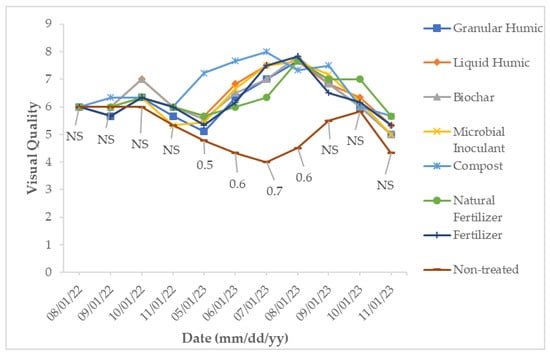
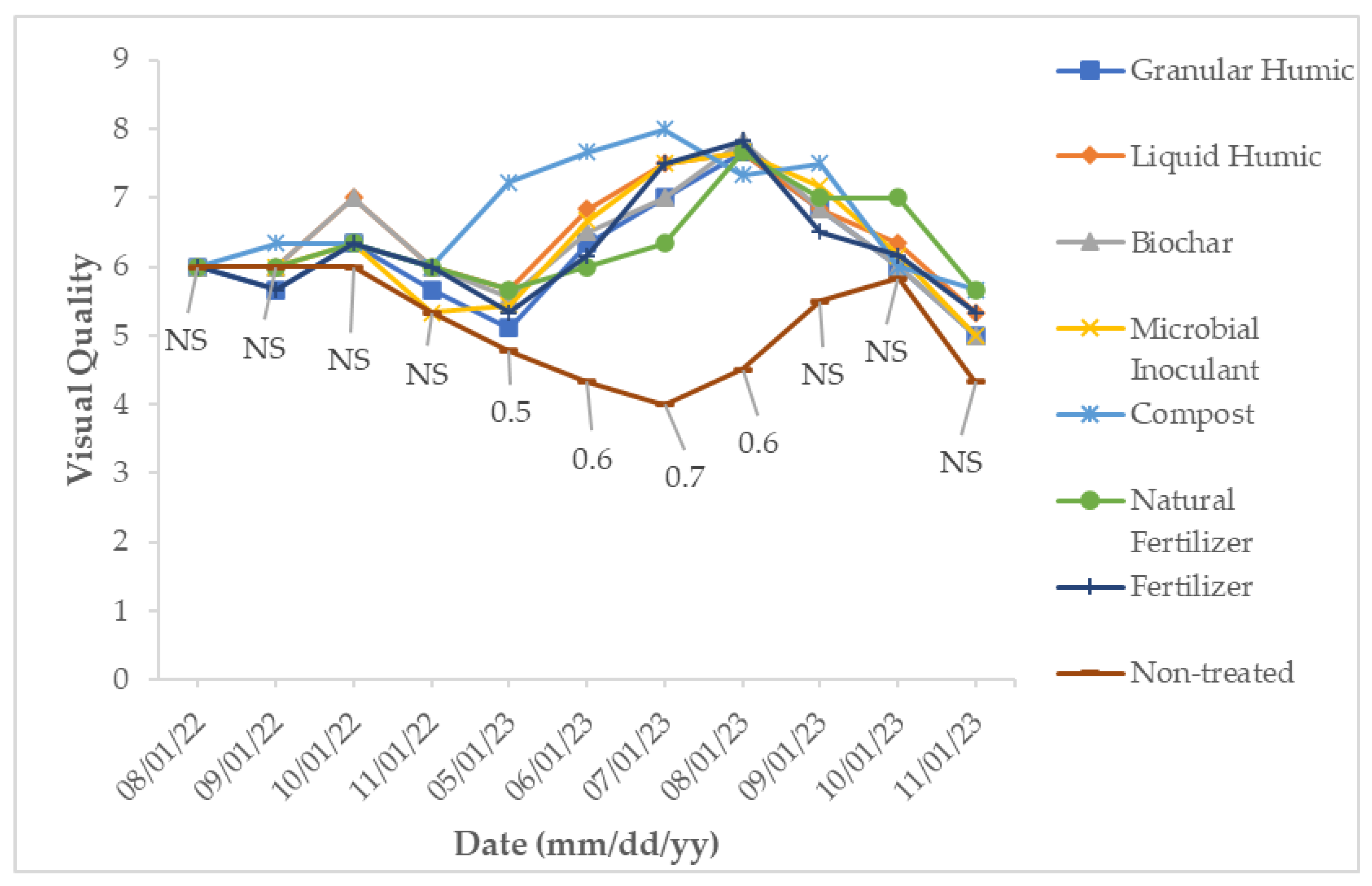
Overall, on dates when significant differences were observed, all treatment applications produced higher turfgrass visual quality compared to the non-treated control (Figure 1 and Figure 2). This indicates that the addition of organic amendments, microbial inoculants, biochar, or fertilizer consistently enhanced turfgrass appearance and overall canopy health relative to untreated plots.
Figure 1.
St. Augustinegrass visual quality (1–9 scale; 1 = dead or brown turf, 9 = ideal turf, 6 = minimally acceptable) in the turfgrass and soil portion of the study. Treatment mean comparisons were separated using Fisher’s protected least significant difference (LSD) at the p ≤ 0.05 level and were placed under treatment means for each rating date. NS, nonsignificant at the 0.05 probability level.
Figure 2.
Zoysiagrass visual quality (1–9 scale; 1 = dead or brown turf, 9 = ideal turf, 6 = minimally acceptable) in the turfgrass and soil portion of the study. Treatment mean comparisons were separated using Fisher’s protected least significant difference (LSD) at the p ≤ 0.05 level and were placed under treatment means for each rating date. NS, nonsignificant at the 0.05 probability level.
Notably, the compost treatment had a particularly strong effect on visual quality. For St. Augustinegrass, compost-treated plots showed superior visual ratings compared to all other treatments in May and June 2023. Similarly, for zoysiagrass, compost treatments outperformed the other treatments in September 2022 and July 2023. These observations suggest that compost provided a more pronounced benefit during certain seasonal periods, likely due to its contributions to soil fertility, moisture retention, and nutrient availability.
For the majority of the study period, all treatments, with the exception of the non-treated control, maintained turfgrass visual quality at or above the minimum acceptable threshold of 6. This demonstrates that the applied treatments were generally effective in sustaining functional and aesthetically acceptable turfgrass, while untreated plots consistently lagged behind in visual performance. Collectively, these findings highlight the value of using amendments and fertilizer management strategies to enhance turfgrass health and maintain quality under field conditions, with compost showing particular efficacy during specific seasonal windows.
For St. Augustinegrass, there were no significant differences among treatments for NDVI or PGC. Across the study period, NDVI values for St. Augustinegrass ranged from 0.67 to 0.70, while PGC values ranged from 75.7% to 81.8% in 2022 and 89.6% to 93.4% in 2023, reflecting generally high canopy density and greenness regardless of treatment.
In contrast, for zoysiagrass, treatment effects were observed. In 2022, PGC was significantly higher in all treatments (81.3–88.0%) compared to the non-treated control (73.5%), with the exception of the natural fertilizer treatment (80.4%). Similarly, NDVI values combined across years for zoysiagrass showed that all treatments (0.62–0.67) produced greater NDVI compared to the non-treated control (0.57). These results indicate that the applied amendments and fertilizers effectively enhanced canopy development in zoysiagrass, while St. Augustinegrass maintained consistently high NDVI and PGC regardless of treatment.
3.1.2. Soil Properties
The ANOVA indicated a significant three-way interaction between grass species, treatment, and year for soil moisture, as well as a significant two-way interaction between grass species and treatment for CEC (Table 2). These interactions suggest that the response of soil moisture and CEC to treatments varied depending on both turfgrass species and the year of study, highlighting the influence of species-specific growth characteristics and annual environmental conditions on soil properties. However, when the data were analyzed separately by year and by turfgrass species, no significant differences among treatments were detected for soil moisture, indicating that the observed overall interaction did not translate into consistent treatment effects at the individual species-year level.
Table 2.
Analysis of variance for soil moisture, compaction, water holding capacity (WHC), potentially mineralizable carbon (PMC), potentially mineralizable nitrogen (PMN), pH, organic matter (OM), and plant-available phosphorus (P), potassium (K), sulfur (S), and iron (Fe) under the turfgrass and soil portion of the study.
Significant treatment effects were observed for several soil properties, including OM, PMN, pH, and plant-available P, K, and Fe (Table 2). These results demonstrate that the applied amendments and fertilizers were effective in modifying soil fertility and nutrient availability. Conversely, no significant treatment effects were observed for soil WHC, PMC, or plant-available S, suggesting that these parameters were either less responsive to the treatment applied or more strongly influenced by inherent soil characteristics and environmental conditions rather than the treatment.
In terms of soil physical properties, applications of granular humic, liquid humic, biochar, compost, and fertilizer all reduced soil compaction relative to the non-treated control (Table 3), indicating that these amendments improved soil structure. Among the treatments, compost had the most pronounced effect on soil chemical properties, resulting in higher soil pH, greater OM, and increased concentrations of plant-available P, K, and Fe compared to all other treatments. The natural fertilizer treatment also enhanced plant-available Fe relative to most other amendments. Furthermore, compost also had a substantial impact on soil cation exchange capacity (CEC), with values ranging from 4.5 to 5.9 cmolc/kg, which were higher than those observed in all other treatments (1.8–3.0 cmolc/kg) across both St. Augustinegrass and zoysiagrass. This increase in CEC reflects the capacity of compost to enhance the soil’s nutrient-holding potential, likely through contributions of OM and improved soil structure.
Table 3.
Soil moisture, potentially mineralizable nitrogen (PMN), pH, organic matter (OM), and plant-available phosphorus (P), potassium (K), and iron (Fe) in the turfgrass and soil portion of the study, data combined across turfgrass species.
Regarding soil microbial activity and N dynamics, all treatments, except for the non-treated control, resulted in greater PMN compared to compost alone (Table 3). Additionally, liquid humic and microbial inoculant treatments significantly increased PMN relative to the non-treated control, suggesting that these amendments stimulated specific microbial activity and N mineralization in the soil. However, in terms of overall microbial activity, there was no significant treatment effect (Table 2).
3.2. Reduced Nitrogen
According to the ANOVA, there was a significant interaction between treatment and month nested within year for turfgrass visual quality, NDVI, and PGC (Table 4). This suggests that the effects of the applied amendments and fertilizers on turfgrass performance varied over time within each year. Additionally, a significant three-way interaction among grass species, treatment, and year was observed for NDVI, indicating that canopy greenness and density responded differently to treatments depending on both species and annual environmental conditions. Furthermore, a significant two-way interaction between grass species and treatment was detected for PGC, showing that the influence of management practices on turf canopy coverage was species-dependent.
Table 4.
Analysis of variance for turfgrass visual quality, normalized difference vegetation index (NDVI), and percent green cover (PGC) under the reduced nitrogen portion of the study.
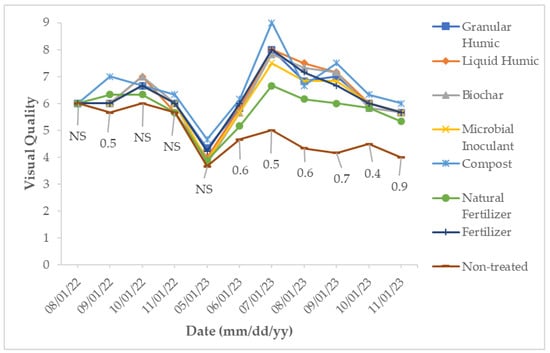
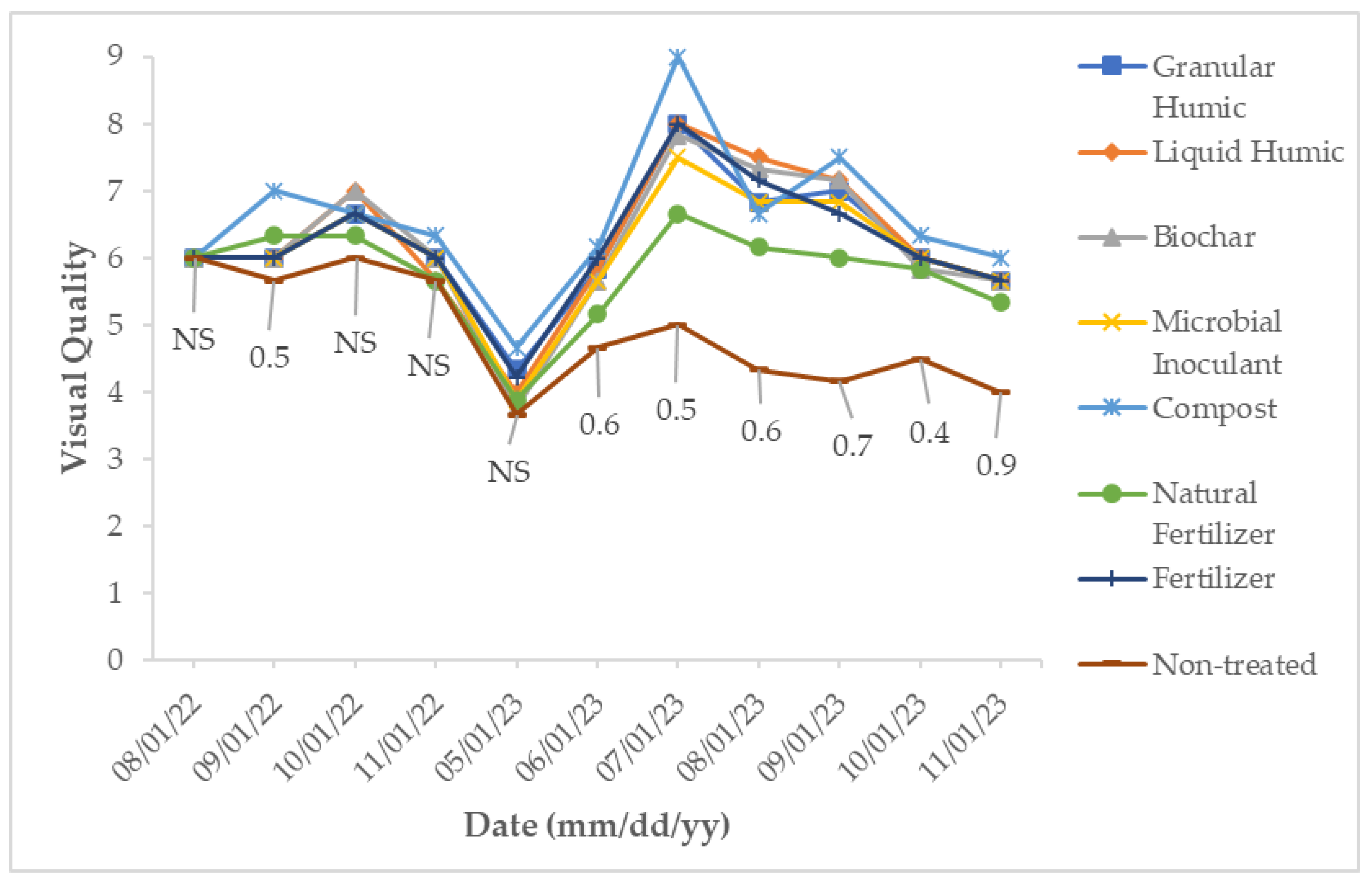
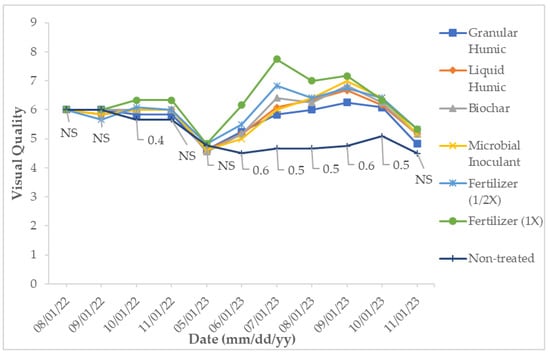
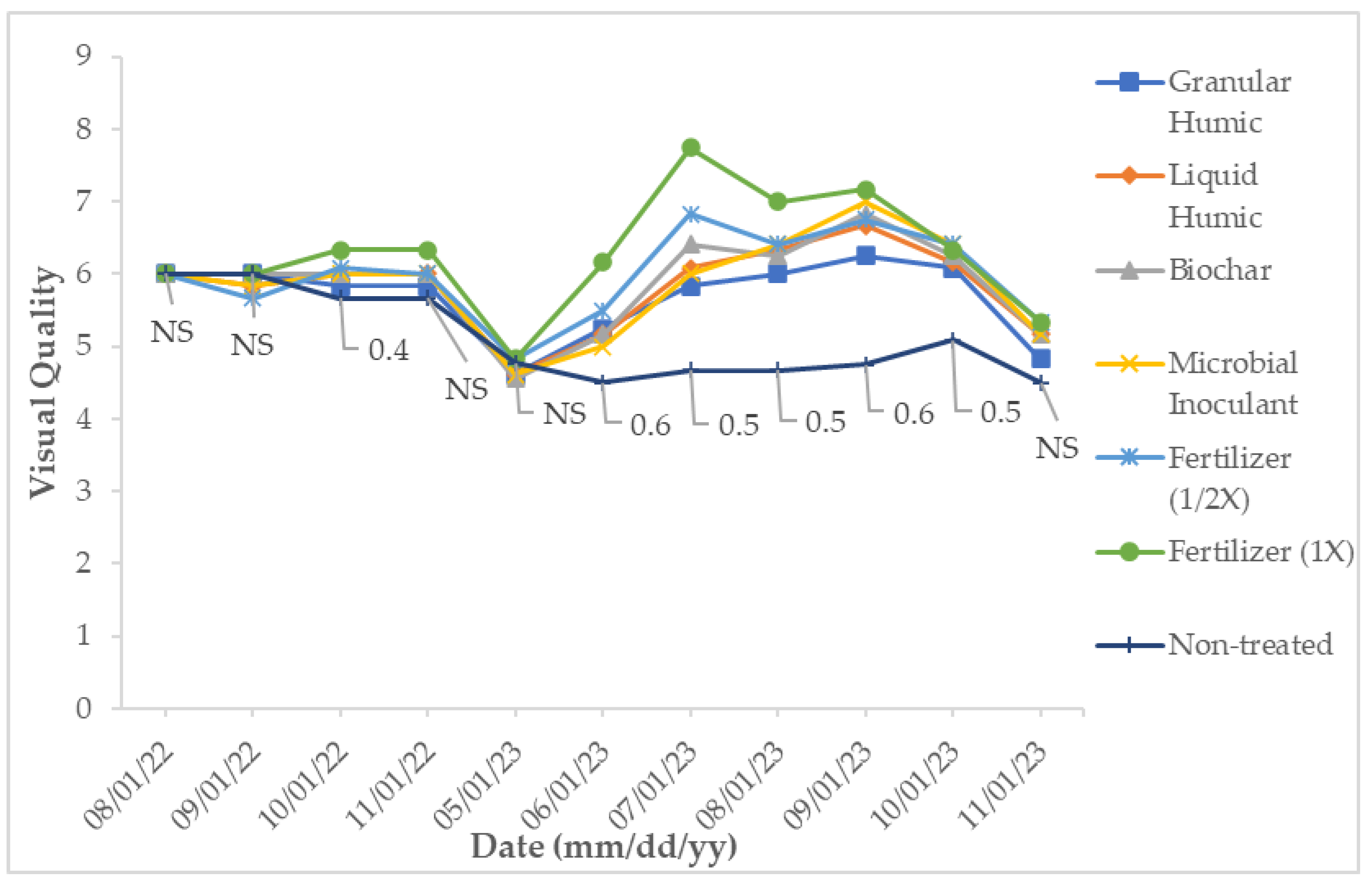
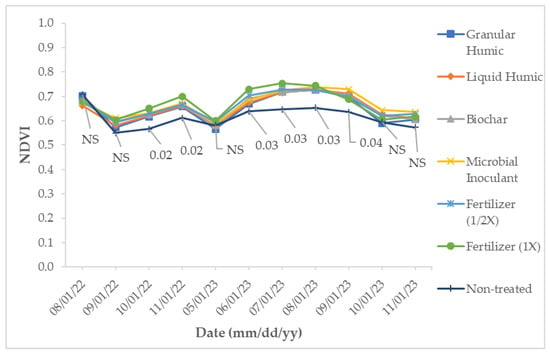
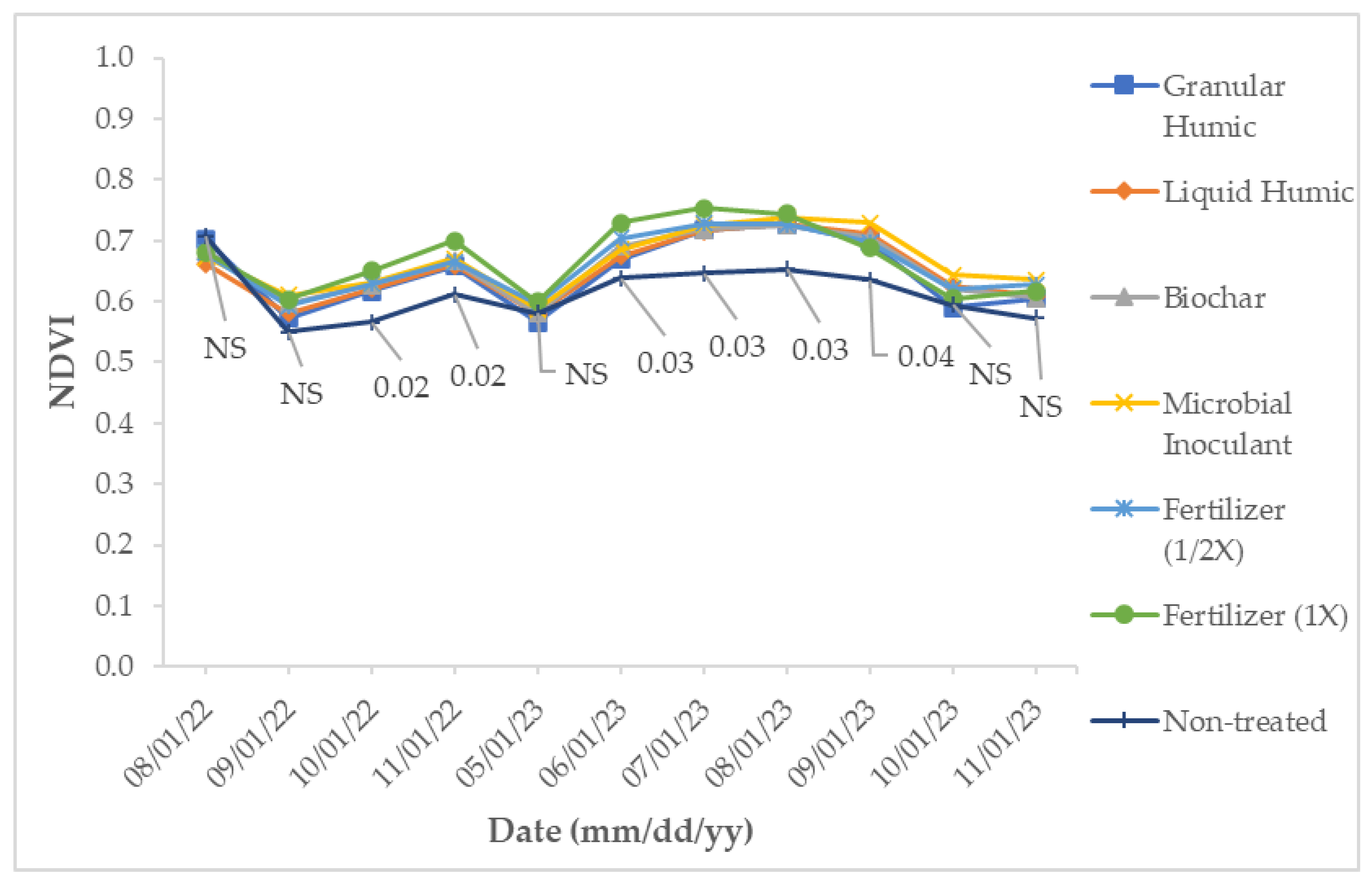
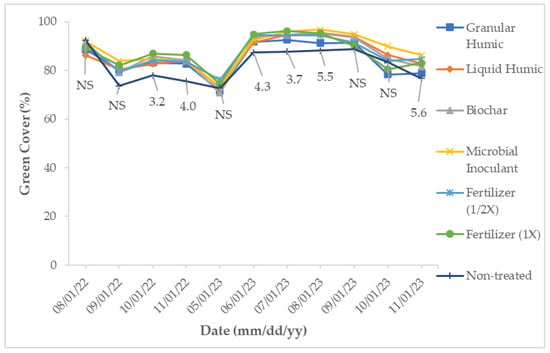
Across the study period, a clear pattern emerged in turfgrass performance metrics, including visual quality, NDVI, and PGC. Plots receiving the full rate of N consistently exhibited the highest turfgrass quality compared to all other treatments, demonstrating that adequate N availability remains a primary driver of turf vigor, canopy density, and overall aesthetic performance (Figure 3, Figure 4 and Figure 5). Treatments that combined an amendment with the reduced rate of N also improved turfgrass quality relative to the non-treated control. However, the addition of amendments did not result in further improvements in turfgrass quality beyond what was achieved with the reduced N rate alone.
Figure 3.
Turfgrass visual quality (1–9 scale; 1 = dead or brown turf, 9 = ideal turf, 6 = minimally acceptable) in the reduced nitrogen portion of the study, data combined across turfgrass species. Treatment mean comparisons were separated using Fisher’s protected least significant difference (LSD) at the p ≤ 0.05 level and were placed under treatment means for each rating date. NS, nonsignificant at the 0.05 probability level.
Figure 4.
Turfgrass normalized difference vegetation index (NDVI) in the reduced nitrogen portion of the study, data combined across turfgrass species. Treatment mean comparisons were separated using Fisher’s protected least significant difference (LSD) at the p ≤ 0.05 level and were placed under treatment means for each rating date. NS, nonsignificant at the 0.05 probability level.
Figure 5.
Turfgrass percent green cover in the reduced nitrogen portion of the study, data combined across turfgrass species. Treatment mean comparisons were separated using Fisher’s protected least significant difference (LSD) at the p ≤ 0.05 level and were placed under treatment means for each rating date. NS, nonsignificant at the 0.05 probability level.
When turfgrass species were analyzed individually, zoysiagrass exhibited patterns similar to those observed in the overall analysis. In 2023, all treatments increased NDVI values for zoysiagrass (0.58–0.63) compared to the non-treated control (0.53). Similarly, PGC was higher for all treatments (83.6–86.7%) except for the granular humic treatment (78.9%) relative to the non-treated control (74.0%). These results demonstrate that most treatments effectively improved canopy density, coverage, and greenness in zoysiagrass.
In contrast, St. Augustinegrass showed no significant differences among treatments for either NDVI or PGC, indicating that this species maintained canopy greenness and coverage regardless of treatment. Furthermore, as observed in the overall analysis, the addition of an amendment to the reduced rate of N did not produce additional improvements in NDVI or PGC for either species.
4. Discussion
4.1. Turfgrass and Soil
Results from the turfgrass and soil portion of the study demonstrated that both amendment and fertilizer applications generally improved turfgrass visual quality compared to the non-treated control, highlighting the importance of nutrient and amendment inputs for maintaining acceptable turf performance. Among the treatments, compost consistently produced the highest visual quality ratings during periods of active growth for both St. Augustinegrass and zoysiagrass. This enhanced performance is likely linked to compost’s strong influence on soil chemical properties observed in this study, a pattern that aligns with findings from previous research [15,29].
Compost application resulted in notable increases in soil OM, pH, and concentrations of plant-available nutrients. These improvements suggest that compost was more effective than other amendments at enhancing overall soil fertility within this sand-based root zone, which is naturally low in nutrient retention and OM. Similar responses in soil nutrient status and corresponding turfgrass performance following compost application have been previously reported [30], reinforcing its potential as a valuable soil amendment for turf systems.
It is important to note, however, that these results may be specific to the particular compost product used in this study. The nutrient composition, maturity, and microbial activity of compost can vary widely among products. Therefore, future research should evaluate additional certified compost sources to determine whether the beneficial effects observed here are broadly applicable across different compost types or unique to this product. Such studies would provide more robust guidance for turfgrass managers seeking to optimize soil fertility and maintain high-quality turf in sand-based systems.
In contrast, applications of humic substances, biochar, and microbial inoculants produced relatively modest effects on both soil properties and turfgrass performance [31]. While these treatments did increase PMN compared to the non-treated control, improvements in turfgrass visual quality and canopy performance were generally comparable to those achieved with fertilizer alone. These results are consistent with previous studies, which have reported variable responses to amendments, often influenced by factors such as application rate, source, and soil texture [32,33,34].
These findings suggest that while amendments like humic substances, biochar, and microbial inoculants can enhance microbial activity and nitrogen cycling in the soil, such benefits may not necessarily translate into short-term improvements in aboveground turfgrass performance when applied at standard label rates. This indicates that their primary value may lie in long-term soil quality or cumulative effects rather than immediate gains in canopy density, greenness, or visual quality.
Species-specific responses were also observed. Zoysiagrass showed measurable treatment effects for NDVI and PGC that were not evident in St. Augustinegrass, highlighting that turfgrass species can differ in their responsiveness to amendments and fertilizer management. These differences may be attributable to inherent growth patterns, nutrient uptake efficiency, or canopy architecture, suggesting that management strategies may need to be tailored to specific turfgrass species to maximize their effectiveness.
4.2. Reduced Nitrogen
Under reduced N conditions, turfgrass quality, NDVI, and PGC were largely determined by the rate of N applied rather than by the addition of amendments. Plots receiving full N rates consistently exhibited the highest turfgrass performance across all measured parameters, demonstrating the dominant role of N in supporting canopy growth, greenness, and overall visual quality. Reduced N treatments did improve turf quality relative to the non-treated control, indicating that even lower N inputs can sustain functional turf, but their performance consistently fell short of that observed under full N applications.
Importantly, the addition of humic substances, biochar, or microbial inoculants to the reduced N fertilizer did not result in further improvements in turfgrass quality, NDVI, or canopy development compared to the reduced N treatment alone. This outcome aligns with previous research demonstrating variable turf responses to humic products, where combining fertilizer with humic substances did not enhance recovery from stress or traffic compared to fertilizer-only applications [35].
These results suggest that the specific amendments evaluated in this study were not effective substitutes for N inputs. Furthermore, they did not enhance N-use efficiency sufficiently to allow for meaningful reductions in fertilizer rates without compromising turfgrass performance. While such amendments may influence soil microbial activity or nutrient cycling, their impact on aboveground turf quality under the conditions and application rates tested was limited. This emphasizes the critical importance of maintaining adequate N inputs to achieve optimal turfgrass growth, particularly in sand-based systems where nutrient retention is low.
5. Conclusions
This study demonstrates that amendments, fertilizer, or both are essential for maintaining acceptable turfgrass quality in sand-based systems, although the effectiveness of amendments varied. Compost consistently provided the greatest benefits, improving turfgrass visual quality and key soil properties, including OM, pH, and plant-available P, K, and Fe. However, these effects may be specific to the compost product evaluated, and future research should assess a broader range of certified compost sources to determine broader applicability.
In contrast, humic substances, biochar, and microbial inoculants primarily increased PMN but had limited impact on turfgrass visual quality, NDVI, or percent green cover compared with fertilizer alone. N rate remained the dominant factor influencing turfgrass performance. Although reduced N treatments improved turf quality relative to non-treated controls, the addition of amendments did not consistently enhance performance under reduced N conditions.
Overall, these findings highlight compost as an effective amendment for improving soil fertility and turfgrass quality, while other amendments may provide modest or long-term soil benefits without substantially increasing aboveground turf performance. Future studies should explore additional amendment types and application strategies to optimize turf management under reduced N regimes.
Author Contributions
Conceptualization, A.J.L.; methodology, A.J.L., N.R. and V.A.; software, A.J.L. and J.S.; validation, A.J.L., J.S., N.R. and V.A.; formal analysis, A.J.L. and J.S.; investigation, A.J.L., J.S., N.R. and V.A.; resources, A.J.L. and N.R.; data curation, A.J.L., N.R. and V.A.; writing—original draft preparation, A.J.L. and J.S.; writing—review and editing, A.J.L., J.S., N.R. and V.A.; visualization, A.J.L. and J.S.; supervision, A.J.L. and N.R.; project administration, A.J.L. and N.R.; funding acquisition, A.J.L. All authors have read and agreed to the published version of the manuscript.
Funding
This research received no external funding.
Data Availability Statement
Data are contained within the article.
Acknowledgments
The authors would like to thank The Andersons, Inc., DPH Biologicals, J.R. Simplot, and Life Soils for materials used in the experiments.
Conflicts of Interest
The authors declare no conflicts of interest.
Abbreviations
The following abbreviations are used in this manuscript:
| CEC | Cation exchange capacity |
| NDVI | Normalized difference vegetation index |
| OM | Organic matter |
| PGC | Percent green cover |
| PMC | Potentially mineralizable carbon |
| PMN | Potentially mineralizable nitrogen |
| WHC | Water holding capacity |
References
- Robbins, P.; Birkenholtz, T. Turfgrass Revolution: Measuring the Expansion of the American Lawn. Land Use Policy 2003, 20, 181–194. [Google Scholar] [CrossRef] [Scilit]
- Milesi, C.; Running, S.W.; Elvidge, C.D.; Dietz, J.B.; Tuttle, B.T.; Nemani, R.R. Mapping and Modeling the Biogeochemical Cycling of Turf Grasses in the United States. Environ. Manag. 2005, 36, 426–438. [Google Scholar] [CrossRef] [Scilit] [PubMed]
- Lindsey, A.J.; Schiavon, M.; Unruh, J.B.; Kenworthy, K. Urban Landscapes: Turfgrass Benefits. Grasses 2025, 4, 3. [Google Scholar] [CrossRef] [Scilit]
- Bigelow, C.A.; Soldat, D.J. Turfgrass Root Zones: Management, Construction Methods, Amendment Characterization, and Use. Available online: http://ouci.dntb.gov.ua/en/works/O4EXQd27/ (accessed on 31 December 2025).
- Morash, J.; Pamuru, S.T.; Lea-Cox, J.D.; Ristvey, A.G.; Davis, A.P.; Aydilek, A.H. Using Organic Amendments in Disturbed Soil to Enhance Soil Organic Matter, Nutrient Content and Turfgrass Establishment. Sci. Total Environ. 2024, 945, 174033. [Google Scholar] [CrossRef] [Scilit]
- Erickson, J.E.; Cisar, J.L.; Volin, J.C.; Snyder, G.H. Comparing Nitrogen Runoff and Leaching Between Newly Established St. Augustinegrass Turf and an Alternative Residential Landscape. Available online: https://www.researchgate.net/publication/238073168_Comparing_Nitrogen_Runoff_and_Leaching_Between_Newly_Established_St_Augustine_Grass_Turf_and_an_Alternative_Residential_Landscape (accessed on 31 December 2025).
- Shaddox, T.W. The Fate of Nitrogen Applied to Florida Turfgrass. Available online: https://edis.ifas.ufl.edu/publication/EP546 (accessed on 30 December 2025).
- Trenholm, L.E.; Schiavon, M.; Unruh, J.B.; Shaddox, T.W.; Kenworthy, K.E. St. Augustinegrass for Florida Lawns: ENH5 LH010, Rev. 8 2021. EDIS 2021, 4. [Google Scholar] [CrossRef] [Scilit]
- Unruh, J.B.; Schiavon, M.; Lindsey, A.J.; Kenworthy, K.E.; Trenholm, L.E. Zoysiagrass for Florida Lawns: ENH11 LH011, Rev. 5 2022. EDIS 2022, 3. [Google Scholar] [CrossRef] [Scilit]
- Laird, D.; Fleming, P.; Wang, B.; Horton, R.; Karlen, D. Biochar Impact on Nutrient Leaching from a Midwestern Agricultural Soil. Geoderma 2010, 158, 436–442. [Google Scholar] [CrossRef] [Scilit]
- Shaddox, T.W.; Unruh, J.B.; Trenholm, L.E. Nitrate Leaching from Soluble Nitrogen Applied to ‘Floratam’ St. Augustinegrass and Common Centipedegrass during Dormancy. Crop Sci. 2016, 56, 837–844. [Google Scholar] [CrossRef] [Scilit]
- Canellas, L.P.; Olivares, F.L.; Aguiar, N.O.; Jones, D.L.; Nebbioso, A.; Mazzei, P.; Piccolo, A. Humic and Fulvic Acids as Biostimulants in Horticulture. Sci. Hortic. 2015, 196, 15–27. [Google Scholar] [CrossRef] [Scilit]
- Nardi, S.; Schiavon, M.; Francioso, O. Chemical Structure and Biological Activity of Humic Substances Define Their Role as Plant Growth Promoters. Molecules 2021, 26, 2256. [Google Scholar] [CrossRef] [Scilit]
- Reinsch, C.T.; Admiraal, D.M.; Dvorak, B.I.; Cecrle, C.A.; Franti, T.G.; Stansbury, J.S. Yard Waste Compost as a Stormwater Protection Treatment for Construction Sites. Water Environ. Res. 2007, 79, 868–876. [Google Scholar] [CrossRef] [Scilit]
- Evanylo, G.K.; Porta, S.N.; Li, J.; Shan, D.; Goatley, J.M.; Maguire, R. Compost Practices for Improving Soil Properties and Turfgrass Establishment and Quality on a Disturbed Urban Soil. Compost. Sci. Util. 2016, 24, 136–145. [Google Scholar] [CrossRef] [Scilit]
- Owen, D.; Davis, A.P.; Aydilek, A.H. Compost for Permanent Vegetation Establishment and Erosion Control along Highway Embankments. J. Irrig. Drain. Eng. 2021, 147, 04021031. [Google Scholar] [CrossRef] [Scilit]
- Dunifon, S.N.; Evanylo, G.K.; Maguire, R.O.; Goatley, J.M., Jr. Soil Nutrient and Fescue (Festuca spp.) Responses to Compost and Hydroseed on a Disturbed Roadside. Compost. Sci. Util. 2011, 19, 147–151. [Google Scholar] [CrossRef] [Scilit]
- Schmid, C.J.; Murphy, J.A.; Murphy, S. Effect of Tillage and Compost Amendment on Turfgrass Establishment on a Compacted Sandy Loam. J. Soil Water Conserv. 2017, 72, 55–64. [Google Scholar] [CrossRef] [Scilit]
- Ferreiro, N.; Satti, P.; Gonzalez-Polo, M.; Mazzarino, M.J. Composts Promote Short-Term Rehabilitation in a Patagonian Roadside Affected by Tephra Deposition. Restor. Ecol. 2020, 28, 73–81. [Google Scholar] [CrossRef] [Scilit]
- Lindsey, A.J.; Thoms, A.W.; McDaniel, M.D.; Christians, N.E. Evaluation of Humic Fertilizers on a Sand-Based Creeping Bentgrass Putting Green. Crop Sci. 2021, 61, 3734–3745. [Google Scholar] [CrossRef] [Scilit]
- Griffin, W.; Habteselassie, M.; Martinez-Espinoza, A.D.; Raymer, P.; Sintim, H.; Pennisi, S. Evaluating the Impact of Two Biological Products on Soil Biological Health and Turfgrass Quality. Water Air Soil Pollut. 2023, 234, 656. [Google Scholar] [CrossRef] [Scilit]
- United State Golf Association. USGA Putting Green Construction Resources. Available online: https://www.usga.org/content/usga/home-page/course-care/specialty-articles/usga-putting-green-construction.html (accessed on 23 January 2026).
- Pearson, B. Soil Characteristics and Management Practices for Urban Residential Landscapes: ENH1218 EP479, 9 2013. EDIS 2013, 8. [Google Scholar] [CrossRef] [Scilit]
- Morris, K.; Shearman, R. NTEP Turfgrass Evaluation Guidelines; NTEP Turfgrass Evaluation Workshop: Beltsville, MD, USA, 1998. [Google Scholar]
- McDaniel, M.D.; Grandy, A.S.; Tiemann, L.K.; Weintraub, M.N. Crop Rotation Complexity Regulates the Decomposition of High and Low Quality Residues. Soil Biol. Biochem. 2014, 78, 243–254. [Google Scholar] [CrossRef] [Scilit]
- McDaniel, M.D.; Grandy, A.S. Soil Microbial Biomass and Function Are Altered by 12 Years of Crop Rotation. SOIL 2016, 2, 583–599. [Google Scholar] [CrossRef] [Scilit]
- De, M.; Riopel, J.A.; Cihacek, L.J.; Lawrinenko, M.; Baldwin-Kordick, R.; Hall, S.J.; McDaniel, M.D. Soil Health Recovery after Grassland Reestablishment on Cropland: The Effects of Time and Topographic Position. Soil Sci. Soc. Am. J. 2020, 84, 568–586. [Google Scholar] [CrossRef] [Scilit]
- Lindsey, A.J.; Thoms, A.W.; McDaniel, M.D.; Christians, N.E. Evaluation of Humic Fertilizers Applied at Full and Reduced Nitrogen Rates on Kentucky Bluegrass Quality and Soil Health. Agronomy 2021, 11, 395. [Google Scholar] [CrossRef] [Scilit]
- Al-Omran, A.; Ibrahim, A.; Alharbi, A. Effects of Biochar and Compost on Soil Physical Quality Indices. Commun. Soil Sci. Plant Anal. 2021, 52, 2482–2499. [Google Scholar] [CrossRef] [Scilit]
- Bero, N.J.; Soldat, D.J. Effect of topdressing of compost, compost tea, and various fertilizers on soil and lawn characteristics. Int. Turfgrass Soc. Res. J. 2022, 14, 110–120. [Google Scholar] [CrossRef] [Scilit]
- Deng, Z.; Wang, J.; Yan, Y.; Wang, J.; Shao, W.; Wu, Z. Biochar-Based Bacillus subtilis Inoculants Promote Plant Growth: Regulating Microbial Community to Improve Soil Properties. J. Environ. Manag. 2025, 373, 123534. [Google Scholar] [CrossRef] [Scilit]
- Dong, L.; Zhang, W.; Xiong, Y.; Zou, J.; Huang, Q.; Xu, X.; Ren, P.; Huang, G. Impact of Short-Term Organic Amendments Incorporation on Soil Structure and Hydrology in Semiarid Agricultural Lands. Int. Soil Water Conserv. Res. 2022, 10, 457–469. [Google Scholar] [CrossRef] [Scilit]
- Garbowski, T.; Bar-Michalczyk, D.; Charazińska, S.; Grabowska-Polanowska, B.; Kowalczyk, A.; Lochyński, P. An Overview of Natural Soil Amendments in Agriculture. Soil Tillage Res. 2023, 225, 105462. [Google Scholar] [CrossRef] [Scilit]
- Lipińska, H.; Adamczyk-Mucha, K.; Michalik-Śnieżek, M.; Krukow, E.; Lipiński, W.; Stamirowska-Krzaczek, E.; Kornas, R.; Zarzecka, M.; Kamińska, W.; Karbowniczek, P. Effect of Zeolite Amendment on Growth and Functional Performance of Turfgrass Species. Agronomy 2025, 15, 2554. [Google Scholar] [CrossRef] [Scilit]
- Lindsey, A.J.; Thoms, A.W.; Christians, N.E. Evaluation of Humic Fertilizers on Kentucky Bluegrass Subjected to Simulated Traffic. Agronomy 2021, 11, 611. [Google Scholar] [CrossRef] [Scilit]

Disclaimer/Publisher’s Note: The statements, opinions and data contained in all publications are solely those of the individual author(s) and contributor(s) and not of MDPI and/or the editor(s). MDPI and/or the editor(s) disclaim responsibility for any injury to people or property resulting from any ideas, methods, instructions or products referred to in the content. |
© 2026 by the authors. Licensee MDPI, Basel, Switzerland. This article is an open access article distributed under the terms and conditions of the Creative Commons Attribution (CC BY) license.