


Abstract
This study explored the patterns and mechanisms influencing changes in silage quality, mycotoxin accumulation, and microbial community structure in oat silage after lodging. Upright oat forage (control, CK), lodging oat forage (upper layer (UL), lower layer (LL), and mixed layers (MLs) were harvested at 0, 7, 25, and 45 days after lodging and ensiled for 60 days. The results showed that the dry matter (DM) and water-soluble carbohydrate (WSC) content decreased significantly (p < 0.05), whereas crude protein (CP) and fiber content increased significantly compared to upright oats (p < 0.05). The WSC and CP content in silage decreased with increasing lodging duration. The fiber content increased in late harvest after lodging. The risk of mycotoxin infection increased after lodging, with aflatoxin levels exceeding EU limits. The mycotoxins in UL silage were the lowest when lodging lasted for seven days. Lodging oat silage was dominated by Lactobacillus, and the Pseudomonas in the lodging group was less than 4%. The fungi in lodging oat silage was lower, and the UL (upper layer) treatment was the lowest when lodging for 7 days. Overall, the transfer of microorganisms, especially Plectosphaerella, Fusarium, Alternaria, Cladosporium, and Botryotrichum, from soil to silage following oat collapse is of interest. The results suggest the soil–plant microbial interactions and their effects on silage fermentation and mycotoxins in lodging oats.
1. Introduction
Oat (Avena sativa L.) forage is widely cultivated in the world and has the advantages of drought tolerance, high yield, rich nutrition, and good palatability [1,2]. It is also one of the advantageous fodder crops grown in the Qinghai–Tibetan Plateau and the winter fallow fields of southern China [3,4]. However, lodging has become a core issue affecting the harvest and production of oat forage due to frequent extreme weather events in recent years, such as strong winds and rainfall [3,5].
Scientists have conducted corresponding research on the selection and cultivation measures of anti-lodging varieties of oat forage [6,7], but lodging is still a serious problem in oat forage planting areas. After lodging, the spatial distribution of leaves and the structure of the canopy become disrupted. This reduces ventilation and light transmission efficiency, thereby lowering photosynthetic capacity [8,9]. At the same time, changes in the microenvironment of the canopy facilitate the colonization and infection by harmful microorganisms, promoting the metabolism and activity of mycotoxigenic fungi and increasing the risk of mycotoxin contamination of raw silage materials [10,11]. Furthermore, lodging can hinder the synthesis of photosynthetic products, resulting in insufficient nutrient accumulation in plants and reducing the levels of crude protein, soluble sugars, and other nutrients [12].
Existing studies have mostly focused on upright oat silage, mainly on the nutritional quality, fermentation quality [13], mycotoxins [14], and microbial community succession during the fermentation process of single [4,15,16] and mixed silage [17]. Currently, there are few reports on lodging oat silage, mainly focusing on lodging mechanisms and mitigation strategies [13,18]. However, the impacts of lodging on oat silage quality, mycotoxin levels, and microbial communities’ succession patterns have not yet been fully elucidated.
Soil microorganisms directly or indirectly affect plants, and the relationship between the two is very close [19]. Fusarium, a soil-borne pathogen, is a major source of plant diseases [20]. Furthermore, during the silage fermentation process, Fusarium metabolism produces multiple mycotoxins, directly impacting the safety and nutritional quality of silage [21]. Moreover, the effects of the soil–plant microbial symbiosis network on the quality and mycotoxins of fresh oat and silage after lodging remain unclear. We hypothesized that the timely harvesting and ensiling of lodged oats can effectively mitigate the loss of nutritional quality and significantly lower the risk of mycotoxin contamination. The objective of this study was to systematically evaluate the dynamic changes in chemical composition, fermentation quality, mycotoxin accumulation levels, and microbial community structure in silage after oat lodging, and to further clarify the regulatory effects of microbial communities on silage quality and mycotoxin production.
2. Materials and Methods
2.1. Overview of the Study Area
The sampling site with an average elevation of 478 m was conducted at the National Experimental Base for Grass Species (Xinjin, China), 103°45′ E, 30°29′ N. It has a subtropical humid monsoon climate, with an annual rainfall of 1.902 mm, a maximum temperature of 39.1 °C, a minimum temperature of 17.6 °C, an average relative humidity of 79%, and an average wind speed of 1.4 m s−1. (https://rp5.ru (accessed on 15 September 2023)).
2.2. Test Materials
Oat variety ‘Qinghai 444′ was used as the material, which was strip sown with 30 cm row spacing in October 2021 at 75 kg ha−1 within the plot covering an area of 15.3 m2 (3 m × 5.1 m). The base fertilizer was 60 kg ha−1 phosphate (containing 12% P2O5, Yunnan Linlian Chemical Fertilizer Joint Marketing Co., Ltd., Kunming, China), and an extra 70 kg ha−1 urea (containing 46% N, Yunnan Yuntianhua Co., Ltd., Kunming, China) was applied at the tillering stage. This study employed a 4 × 2 factorial design with a completely randomized arrangement. Eight treatment combinations were established in the same experimental field, comprising four lodging duration levels (D0d, D7d, D25d, and D45d) and two treatment methods (upright oats and lodged oats). Each treatment had three replicate fields, totaling 24 plots.
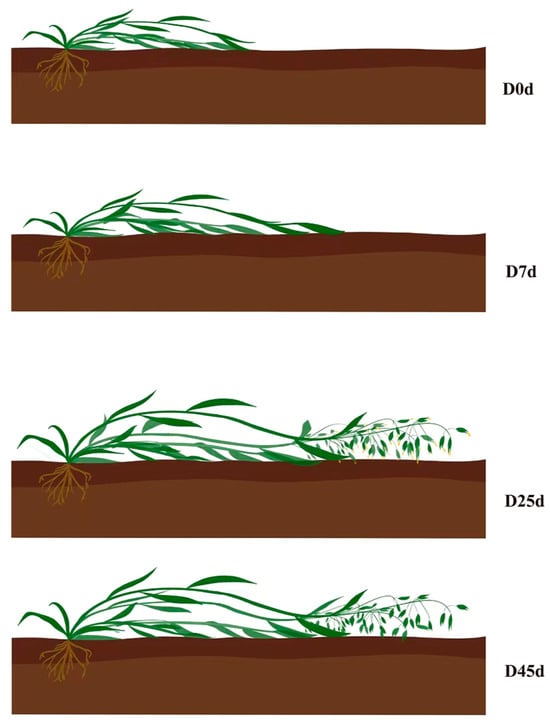
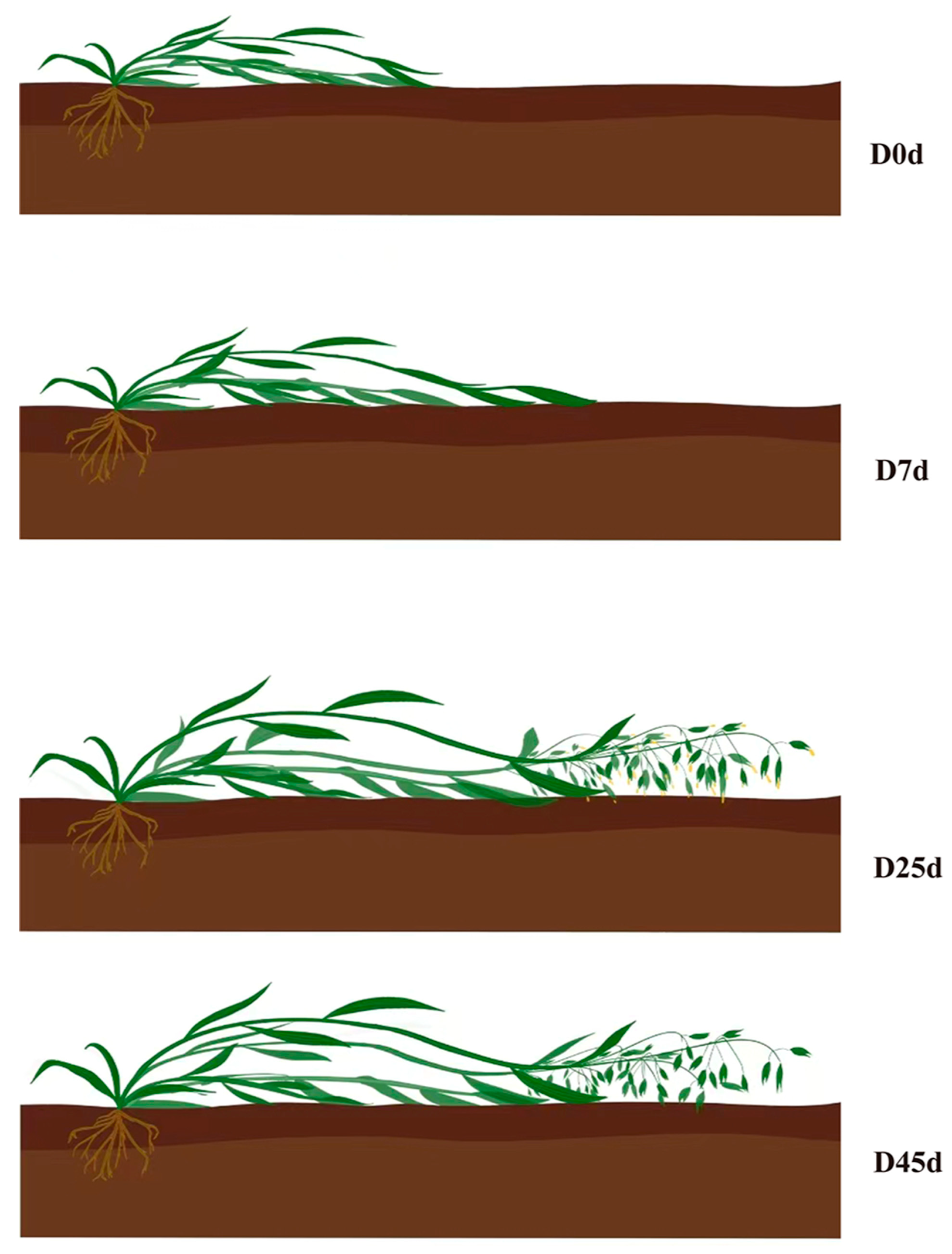
The lodging treatment was applied manually at the oat jointing stage. Stems were uniformly bent towards the ground at an angle of approximately 30°, ensuring that the basal internodes remained intact. Except for 12 plots treated as upright oats, the remaining 12 plots were artificially induced to lodging on 17 March 2022 as D0d for lodging oats treatments. The oat was harvested on 17 March 2022 (0 day of lodging/D0d), 24 March (7d of lodging/D7d), 11 April (25d of lodging/D25d), and 1 May (45d of lodging/D45d), respectively (Figure 1). The upright oats and lodging oats were harvested in the same day with leaving stubble at the height of 15 cm. A strip measuring 50 cm in width was left unsampled on all sides of each plot, to avoid variation.
Figure 1.
Lodging in oats at different stages. D0d: Jointing stage, 0 day of lodging; D7d: Heading stage, 7d of lodging; D25d: Flowering stage, 25d of lodging; D45d: Milk stage, 45d of lodging; 2.3 silage preparation.
At each harvest stage, upright oats (CK) and different levels (UL: the grass layer facing away from the soil; LL: the grass layer close to the soil; ML: upper and lower layer mixed) from lodging oats were harvested as silage materials for further processing. When making silage samples, soil samples (0–20 cm depth) were collected per plot using the five-point sampling method, then thoroughly mixed and subsampled to 500 g via the quartering method. Soil samples were placed in sterile self-sealing bags in an ice box and quickly brought back to the laboratory and stored in a refrigerator at −80 °C for soil microbial diversity determination (storage at −80 °C was intended to preserve nucleic acids for phylogenetic analyses rather than for culturable microbial counts). The fresh samples were chopped to shreds of 2 cm with a kneader immediately after mowing and mixed up afterward, then they were randomly weighed about 1000 g and put into sterile polyethylene plastic bags (26 cm × 35 cm), compacted, and vacuumed (DZQ-390, Anshengke, Quanzhou, China); each treatment was repeated to produce 3 silage bags, totaling 48 bags, which were fermented at room temperature. After 60 days, analyses were conducted on the chemical composition, fermentation quality, microbial counts, mycotoxins, and microbial communities.
2.3. Chemical Composition Determination of Silage
Dry matter loss (DM loss) was estimated based on the difference in the dry matter mass before and after ensiling. The silage samples were stored at −20 °C upon collection and later thawed for 24 h before being placed in a forced-air oven at 60 °C for 48 h to determine dry matter content. The dried samples were pulverized to pass them through a 1 mm sieve for the determination of nutritional quality [22]. Water-soluble carbohydrate (WSC) was determined by anthrone–sulfuric acid colorimetry (Suzhou Keming Biotechnology Co., Ltd., Suzhou, China) and crude protein (CP) by Kjeldahl nitrogen determination (Kjeltec™ 8000, FOSS, Hillerod, Denmark) [23]. Neutral detergent fiber (NDF) and acid detergent fiber (ADF) were determined by Van Soest detergent fiber [24] using Ankom 200 system (Ankom Technology Corporation, Macedon, NY, USA). The crude ash content (ash) was determined by singeing the sample in a muffle furnace (SX2-4-10, Shenyang, China) at 550 °C for approximately 4 h.
2.4. Determination of Fermentation Quality and Microbial Count
A 20 g silage sample was weighed into a self-sealing bag with 180 mL of distilled water. Then, we filtered it through double-layer gauze after oscillating on the rocking bed at 1000 r for 30 min at 4 °C. A pH meter (PHS3-C, Leici, Shanghai, China) is used to determine the pH value of the filtrate, and high-performance liquid chromatography (HPLC, KC-811, Shimadzu Co., Ltd., Kyoto, Japan) is used to determine the contents of lactic acid (LA), acetic acid (AA), propionic acid (PA), and butyric acid (BA) [22]. The phenol-sodium hypochlorite colorimetric method was used to determine the NH3-N as a percentage of total nitrogen (TN) content [25].
The microbial composition of the silage sample was determined by the plate counting method [26]. The number of lactic acid bacteria was cultured by MRS medium (CM 188, Land Bridge, Beijing, China) in an anaerobic incubator at 37 °C for 48 h; the number of yeasts and molds was cultured by Potato Dextrose Agar (PDA) medium (CM 123, Land Bridge, Beijing, China) in an aerobic incubator for 72 h, and the number of Enterobacteria was cultured by Crystalline Violet Neutral Red Bile Salt Agar medium (VRBA) (CM 115, Land Bridge, Beijing, China) in an aerobic incubator at 37 °C for 24 h. Plates with 30–300 bacteria colonies were selected for counting and calculated according to the following formula: cfu g−1 = average number of colonies on duplicate plates of the same dilution × multiple dilutions/number of grams of sample containing bacteria.
2.5. Mycotoxin Analysis
The contents of Aflatoxin B1 (AFB1), zearalenone (ZEA), vomitoxin (DON), T-2 toxin, and fumonisin were detected by enzyme-linked immunosorbent assay (ELISA) kit [27] (Prebon Biological Co., Ltd., Qingdao, China), and the operation procedure was described in the instruction manual of the kit.
2.6. Microbial Community Analysis
A 20 g silage sample was randomly weighed into a triangular flask containing 180 mL of sterile distilled water, and was shaken for 30 min on a rocking bed at 4 °C with a speed of 160 r min−1, then filtered through a double layer of sterile gauze; put the filtrate on centrifuge at 4 °C, 10,000 r min−1 for 10 min, and discarded the supernatant; finally, added 3 mL of sterile distilled water with a pipette gun and shook and mixed them up to make a mixture of bacterial liquid. Bacterial DNA was extracted by TIANamp Bacteria DNA Kit (DP302, TIANGEN Biotech Co., Ltd., Beijing, China), and the quality and purity of the extracted DNA were detected by 1% agarose gel electrophoresis. Qualified DNA samples were subjected to PCR amplification of the V4 region of the 16S rRNA gene with bacterial sequence-specific primer sequences 515F (5′-GTTTCGGTGCCAGCMGCCGCGGGTAA-3′) and 806R (5′-GCCAA TGGACTACHVGGGTWTCTAAT-3′).
The fungal DNA of lodging oat samples was extracted using the CTAB method. The ITS5 and ITS2 region was amplified by PCR using specific primers ITS5-1737F (5′-GGAAGTAAAAGTCGTAACAAGG-3′) and ITS2-2043R (5′-GCTGCGTTCTTCATCGATGC-3′). The PCR products were detected by 2% agarose gel electrophoresis. TruSeq DNA PCR Free Kits (Illumina, Inc., San Diego, CA, USA) was used to construct a library, and it was quantified by Qubit and Q-PCR. Finally, NovaSeq6000 (Illumina, Inc., San Diego, CA, USA) was used for practical sequencing after the library was qualified.
Sequence assembly of reads from each sample was performed using FLASH (v1.2.7) [28] and quality control was performed according to QIIME’s quality control program (v1.9.1) to obtain valid sequences [29]. Valid sequences of all samples were clustered and analyzed using Uparse v7.0.1001 software with 97% similarity threshold defined as an Operational Taxonomic Unit (OTU) [30], and sequences of OTUs of the samples were compared as well as species annotated through the RDP classifier Bayesian algorithm [31,32]. Alpha diversity was calculated using QIIME software (Version 1.9.1) and analyzed by R software (Version 2.15.3).
2.7. Statistical Analysis
The microbe populations were estimated as cfu/g and were log transformed prior to statistical analysis. The normal distribution of data errors and homoscedasticity of variances were tested using Quantile–Quantile plot and the general linear model (GLM) procedure of SPSS 25.0 (IBM Co., Armonk, NY, USA), respectively. The data of silage nutritional quality, fermentation quality, microbial counts, and mycotoxins were evaluated by two-way ANOVA with the model of Yij =μ + Ti + Dj + (T × D)ij + eij, where Yij is the response variable, μ is the overall mean, Ti represents the effects produced by different treatments of CK, UL, LL, and ML, Dj is the effect of lodging duration day at D0d, D7d, D25d, and D45d, and (T × D)ij is the effect of the interaction between treatment and days of lodging, and eij is the residual error. Tukey’s honestly significant difference (HSD) tests were used to compare the differences among treatment means and the significance was declared at p < 0.05.
Prior to conducting correlation analysis, the Shapiro–Wilk test was applied to evaluate the normality of all variables. The results revealed that the microbial abundance data violated the assumption of normality (Shapiro–Wilk test, p < 0.05), while the data pertaining to fermentation quality and mycotoxin-related parameters met this assumption (Shapiro–Wilk test, p > 0.05). Consequently, Spearman’s rank-order correlation analysis was performed to assess associations among variables (p < 0.05).
3. Results
3.1. Chemical Composition of Lodging Oat Silage
As shown in Table 1, the DM content in the lodging oat group was significantly lower than that in the CK, except at D7d (UL) and D45d. The WSC content of the lodging group was significantly lower than that of the CK (p < 0.05), except at D7 and D45 (ML). Except for LL at D7d and D25d, the CP content of the lodging group was significantly higher than that of the CK (p < 0.05). The NDF and ADF contents increased in the lodging oats, except at D45d. Compared with CK, the ash content was significantly lower in the lodging group at D0 and D7d (UL) (p < 0.05).
Table 1.
Chemical compositions of lodging oat silage for 60 Days.
As lodging duration increased, WSC and CP content in the lodging group decreased significantly, while DM, NDF, and ADF content showed an overall upward trend. Ash content gradually increased in the LL group with the increase in lodging duration. Additionally, DM loss was lowest on Day 7 in lodging groups. At D7d, the WSC and CP content in the lodging group showed no significant difference from the CK group. The NDF and ADF content remained relatively low at D0d and D7. The treatments (T), lodging duration (LD), and the interaction of treatments and lodging duration had significant effects on DM, WSC, CP, ADF, NDF, and ash content (p < 0.05).
3.2. Silage Fermentation Quality and Microbial Counts of Lodging Oats
As shown in Table 2, the pH in the LL group was significantly higher than that in the CK group (p < 0.05). At D7d, NH3-N/TN reached its lowest content in the UL group. The LA content of the lodging group was significantly lower than that of the CK group (p < 0.05). Moreover, the UL group had the highest LA content in the lodging group. No BA content was detected at D0d, while the LL group exhibited the highest BA content of the lodging groups at other lodging durations. No PA content was detected in any of the silage samples. There was no significant difference in pH of the UL groups within 7 days, but pH increased significantly as the duration of lodging prolonged (p < 0.05). The NH3-N/TN, AA, and BA content in the lodging groups continued to increase with prolonged lodging duration. Conversely, LA content decreased significantly as lodging duration increased (p < 0.05). The treatments (T), lodging duration (LD), and the interaction of treatments and lodging duration had significant effects on the pH, NH3-N/TN, LA, and BA content (p < 0.05).
Table 2.
Fermentation characteristics of lodging oat silage for 60 days.
As shown in Table 3, the LAB counts in the UL and ML groups at D0d and D7d were markedly lower than the CK (p < 0.05), whereas the LAB at D25d and D45d were significantly higher than the CK (p < 0.05). As the duration of lodging increased, the number of lactic acid bacteria in the UL silage was the highest at D0d, while the LL and ML silage exhibited significantly higher numbers at D0d and D7d than on the other days of lodging. Furthermore, the interaction between different treatments and the duration of lodging had a highly significant effect on the number of lactic acid bacteria (p < 0.001). Molds, yeasts, or enterobacteria were not identified in all silage samples.
Table 3.
Microbial composition of lodging oat silage for 60 days.
3.3. Characteristics of Mycotoxin Changes in Oat Silage After Lodging
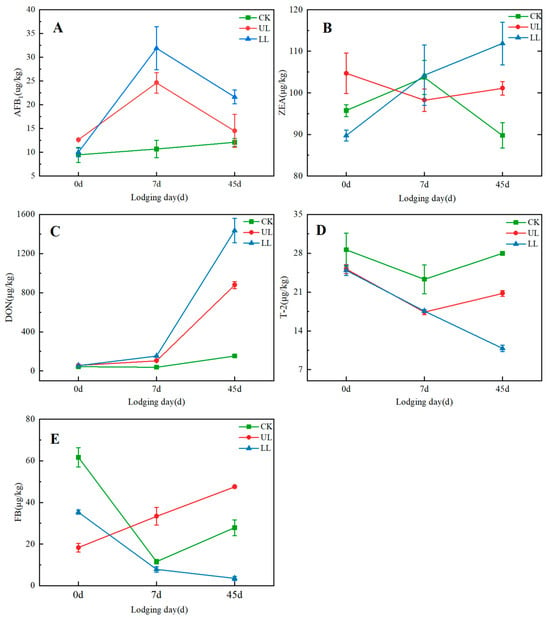
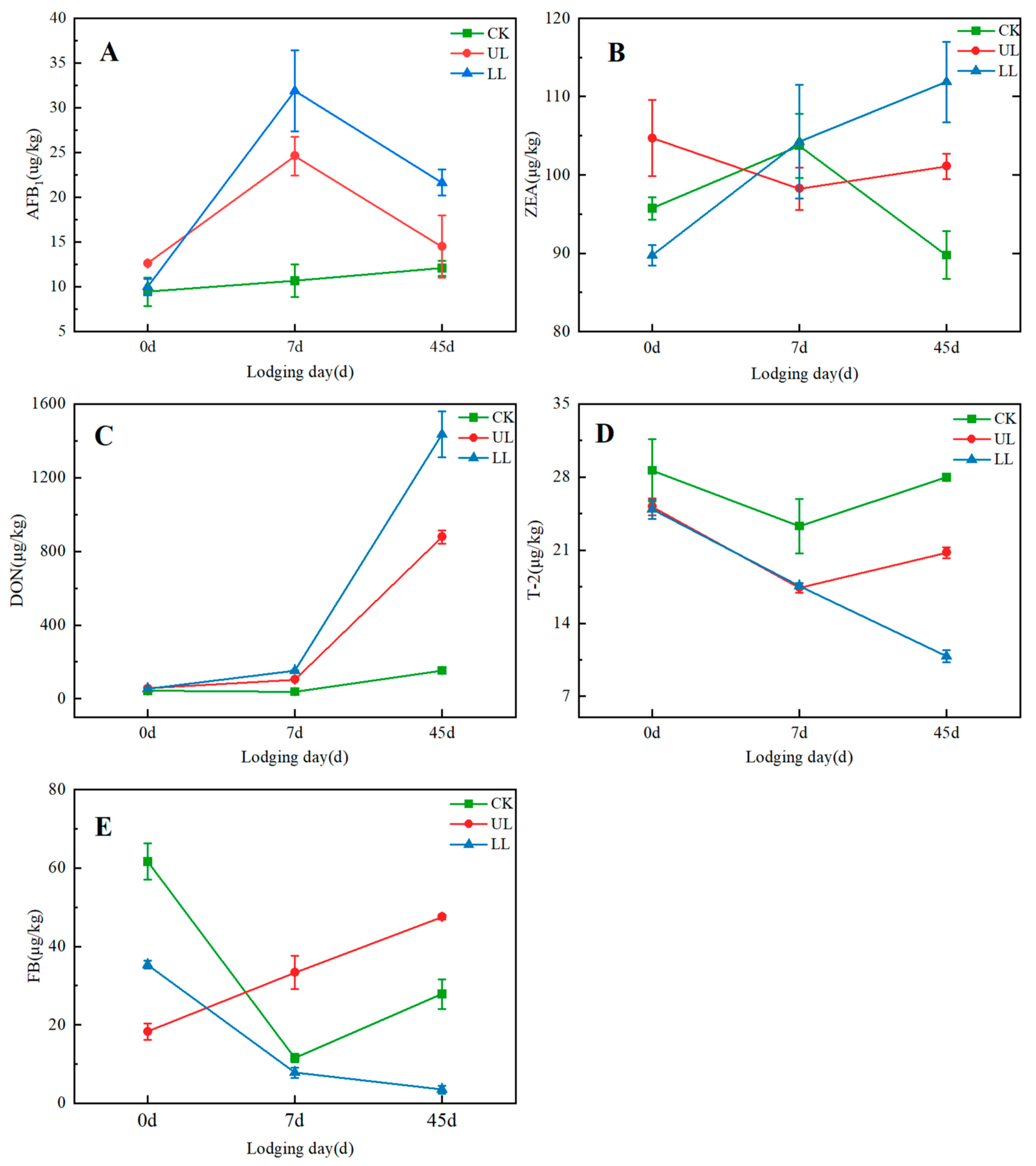
As shown in Figure 2, the concentrations of both AFB1 and DON in the lodging group were higher than in the CK group. The difference became more pronounced after D7d (p < 0.05). At D45d, the ZEA content of the lodging group was significantly higher than that of the CK group (p < 0.05). Conversely, T-2 toxin levels in the lodging group were lower than in the CK group. At D0d, FB content in the lodging group was significantly lower than in the CK group (p < 0.05). At D45, FB content in the lodged group was significantly lower than in the control group (p < 0.05). As lodging duration increased, AFB1 content in the lodging group initially rose and then fell. DON content in the lodging group significantly increased as lodging duration increased. Similarly, ZEA content in the LL group increased significantly with increasing lodging duration (p < 0.05). However, T-2 toxin content in the LL group significantly decreased as lodging duration increased (p < 0.05). T-2 toxin content in the UL group first decreased and then increased as lodging duration increased. Meanwhile, as lodging duration increased, FB content in the UL group significantly increased, while FB content in the LL group significantly decreased (p < 0.05).
Figure 2.
Mycotoxin concentration of lodging oat silage for 60 days. (A) AFB1 content; (B) ZEA content; (C) DON content; (D) T-2 content. (E) FB content. AFB1, Aflatoxin B1; ZEA, zearalenone; DON, vomitoxin; T-2, T-2 toxin; FB, fumonisin; CK, upright oats; UL, upper layer; LL, lower layer. Lodging duration 0d, 7d, 45d expressed 0, 7, 45 days of lodging, respectively.
3.4. Microbial Community Diversity of Oat Silage After Lodging
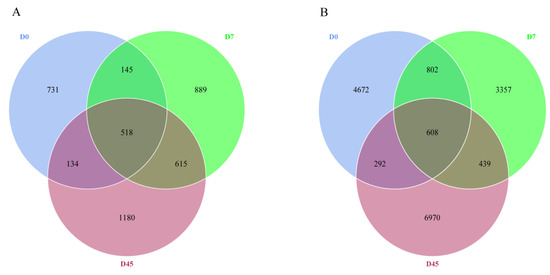
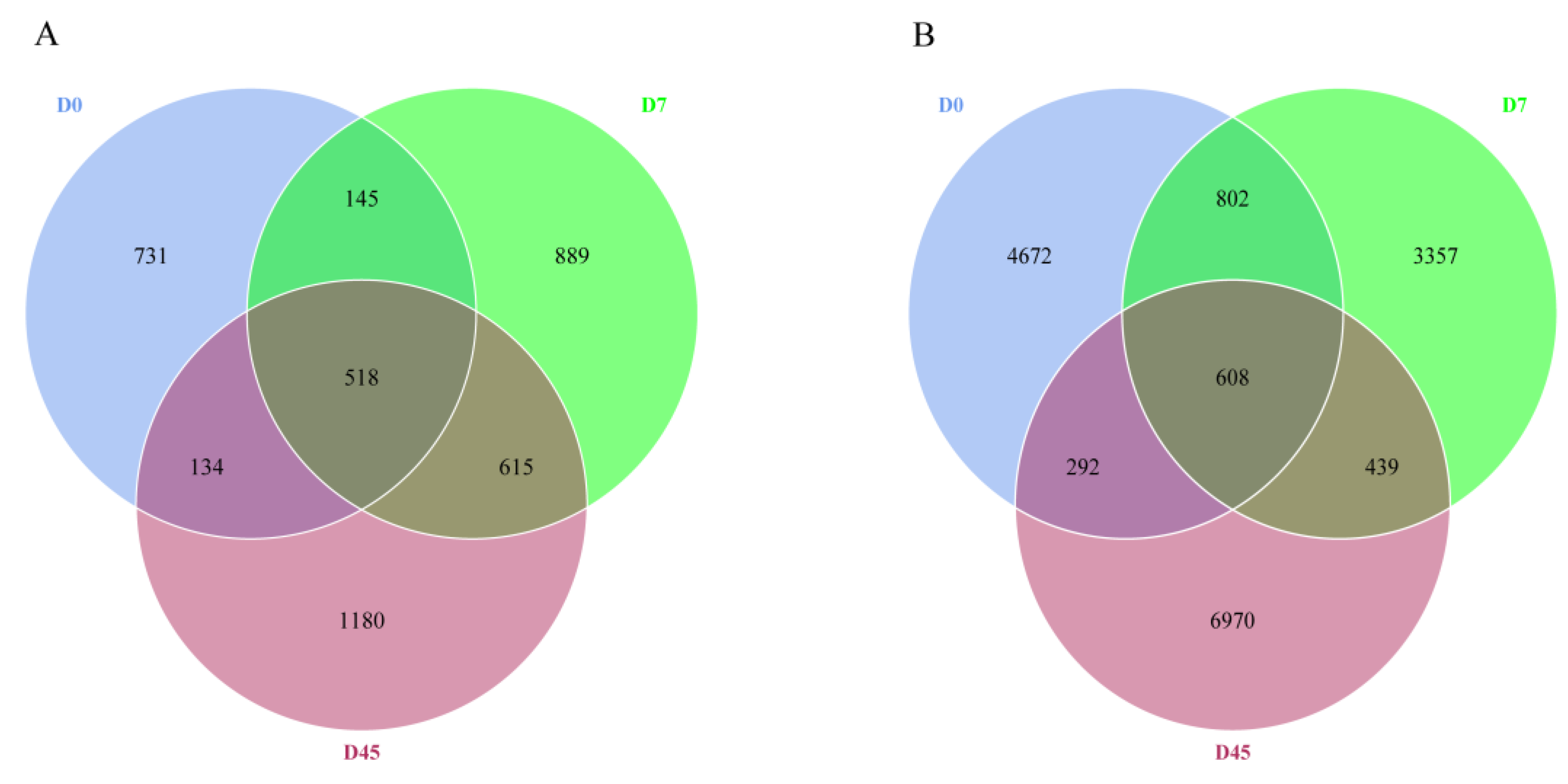
As shown in Figure 3, the numbers of bacterial and fungal OTUs shared by the D0d, D7d, and 45d groups were 518 and 608, respectively. The specific bacterial OTU numbers are 731, 889, and 1180, while the unique fungal OTU numbers are 4672, 3357, and 6970, respectively. As the lodging duration increased, the number of bacterial OTUs exhibited a statistically significant increase (p < 0.05). Conversely, the number of fungal OTUs demonstrated a fluctuating pattern, initially decreasing and subsequently increasing, with the lowest number of fungal OTUs observed in the D7d group.
Figure 3.
Venn diagram of microbial OTUs of oat silage after lodging for 60 days. (A) Bacteria; (B) fungi. CK, upright oats; UL, upper layer; LL, lower layer. Lodging duration 0d, 7d, 45d and D0, D7, D45 expressed 0, 7, 45 days of lodging, respectively.
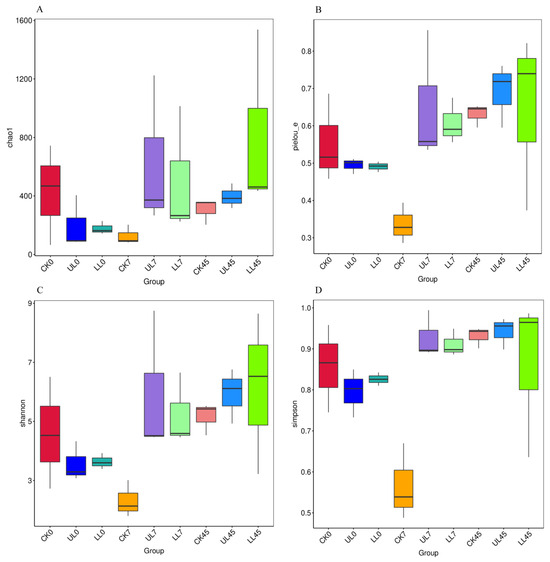
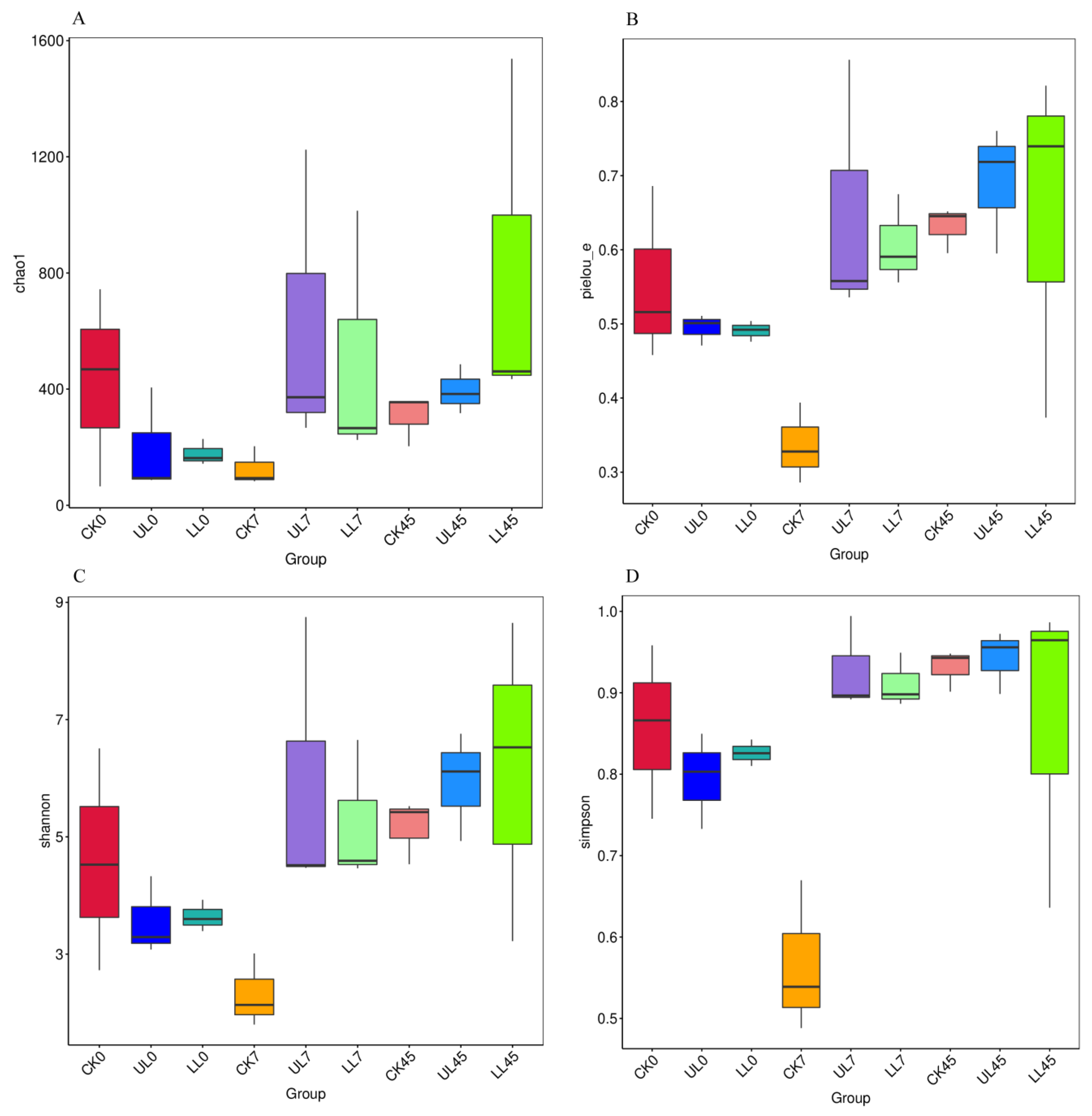
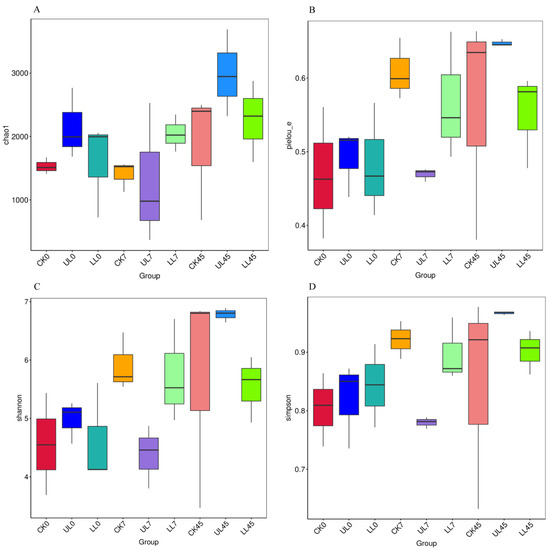
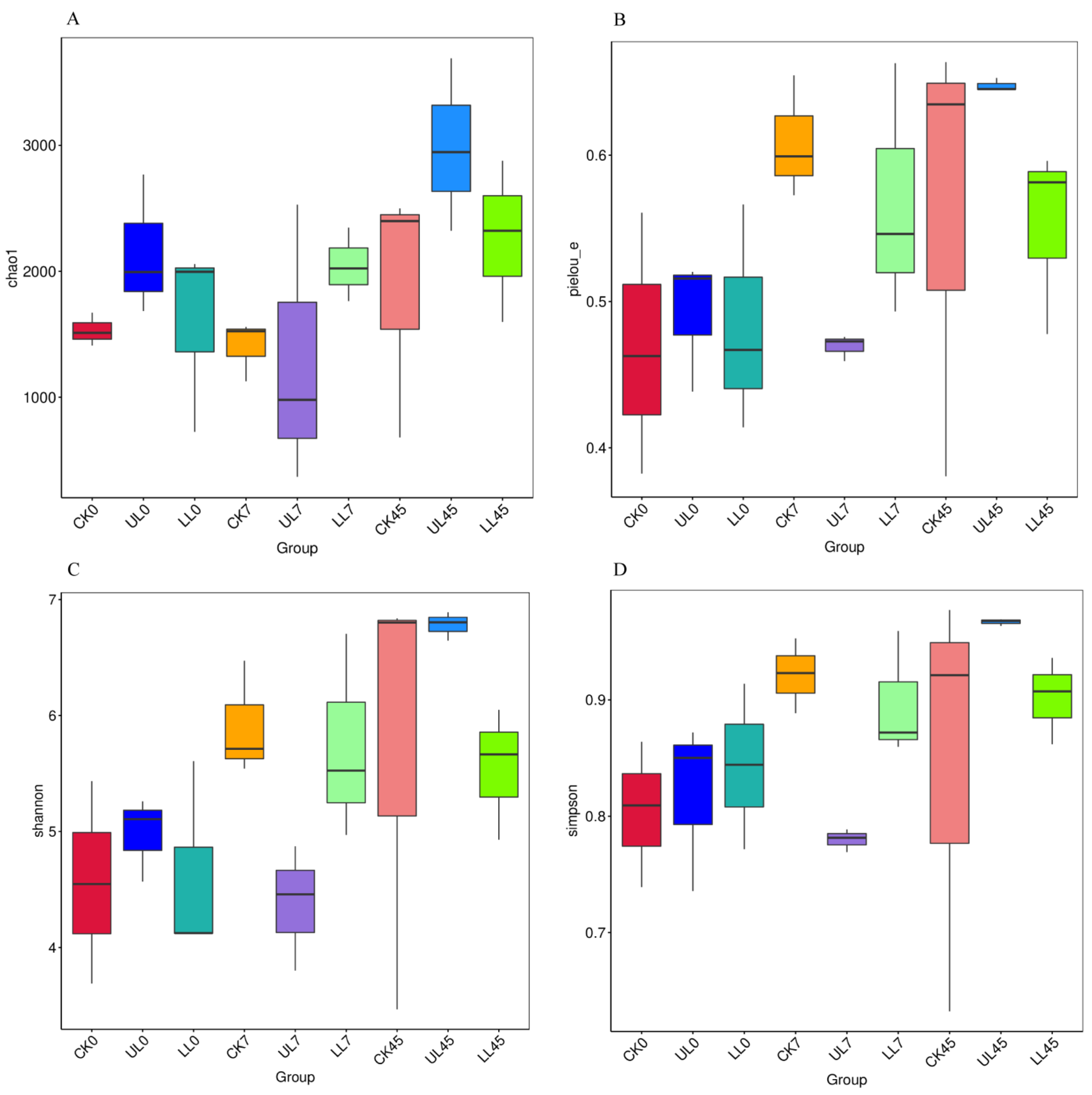
Alpha diversity in the lodging oat silage was evaluated using the Chao1, Pielou, Shannon, and Simpson indexes (Figure 3 and Figure 4). At D0d, the lodging group had lower bacterial diversity than the CK group. However, after D7d, the lodging group showed increased bacterial diversity compared to the CK group. The longer the lodging duration was, the greater the increase in bacterial diversity in the lodged group was. At D7d, the UL group had the lowest fungal diversity of all the groups, which was lower than in the CK group. With the exception of the UL group, fungal diversity in the lodging groups increased with prolonged lodging duration (Figure 5).
Figure 4.
Bacterial community alpha diversity of oat silage after lodging for 60 days. (A) Chao1; (B) Pielou; (C) Shannon; (D) Simpson. CK, upright oats; UL, upper layer; LL, lower layer. Lodging duration 0d, 7d, 45d, and D0, D7, D45 expressed 0, 7, 45 days of lodging, respectively.
Figure 5.
Fungal community alpha diversity of oat silage after lodging for 60 days. (A) Chao1; (B) Pielou; (C) Shannon; (D) Simpson. CK, upright oats; UL, upper layer; LL, lower layer. Lodging duration 0d, 7d, 45d and D0, D7, D45 expressed 0, 7, 45 days of lodging, respectively.
3.5. Microbial Community Composition of Oat Silage After Lodging
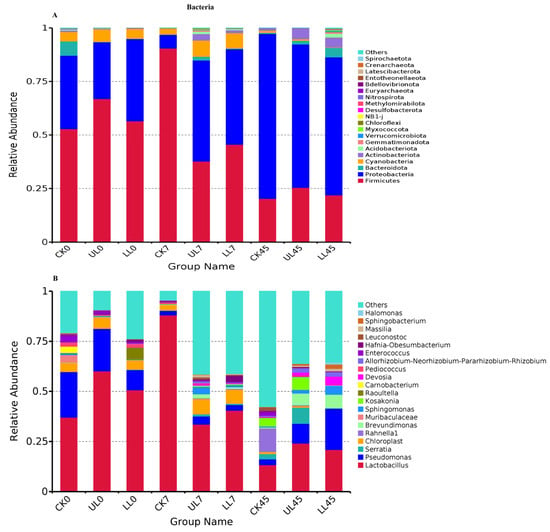
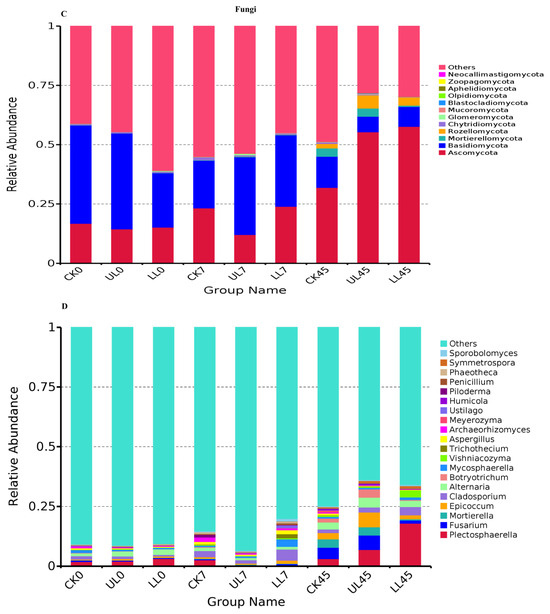
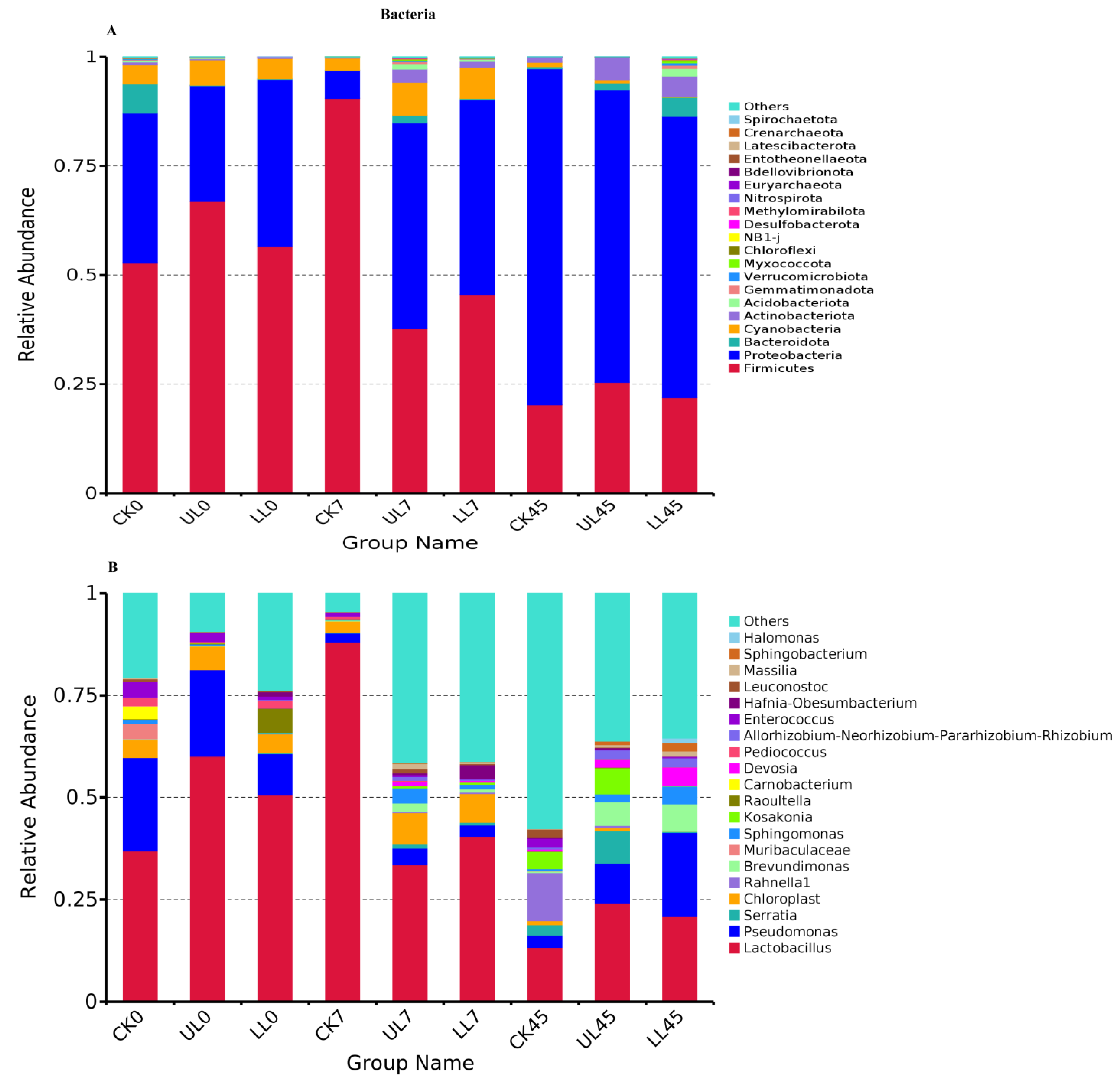
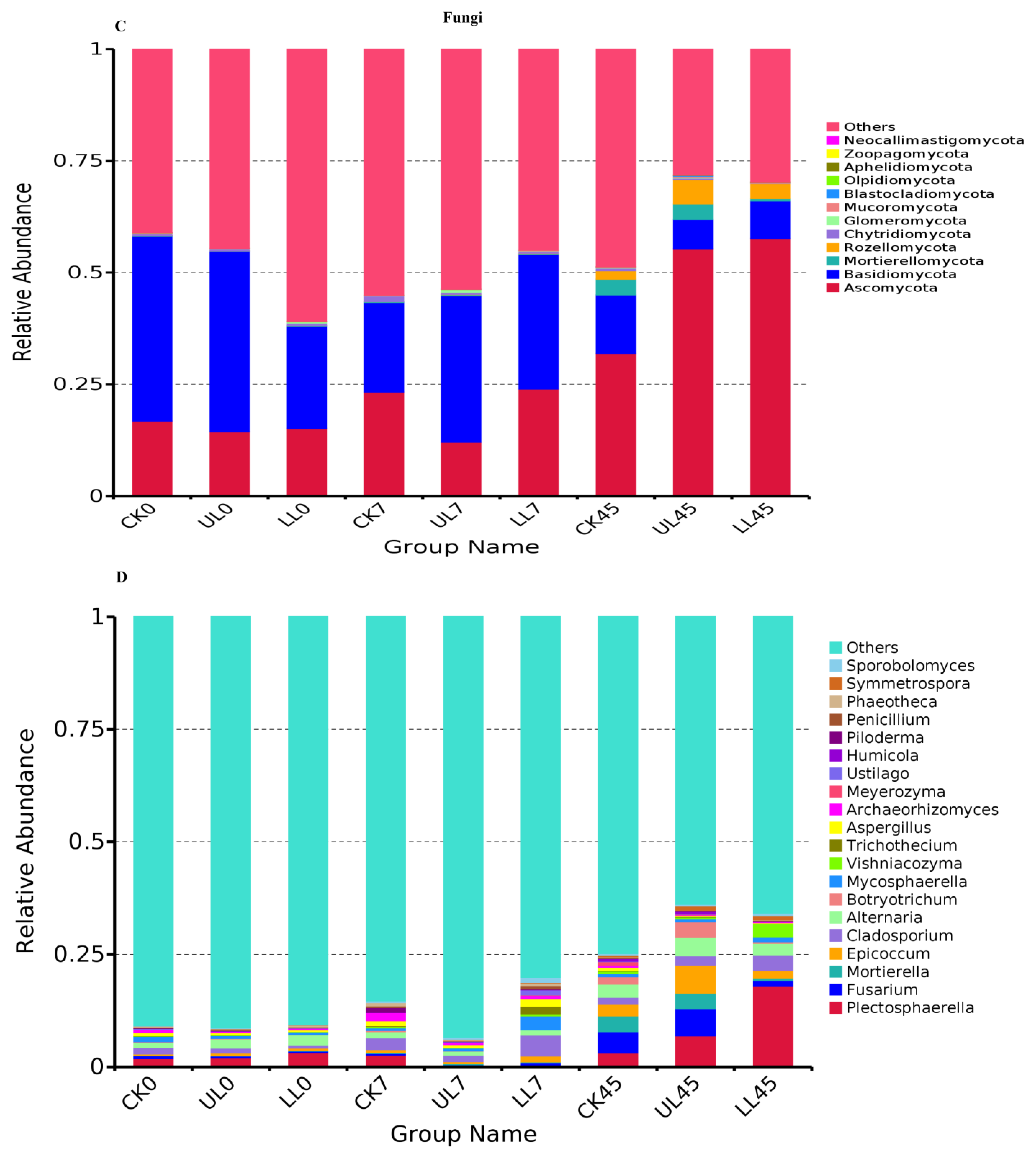
The bacterial community phylum and genus levels in lodging oat silage are shown in Figure 6A,C. Compared with CK, the relative abundance of Firmicutes (21.91%~66.90%), Proteobacteria (26.49%~66.96%), and Cyanobacteria (0.19%~7.60%) increased at D0d, and Bacteroidota (0.11%~4.36%) decreased. Firmicutes significantly decreased at D7d; Proteobacteria and Cyanobacteria increased in relative abundance. Proteobacteria became the dominant phylum and accounted for about 60% at D45d. Firmicutes showed a decreasing trend and Proteobacteria showed an increasing trend with duration lodging increases. At D0d, the relative abundance of Lactobacillus increased in the lodging group compared to CK. Conversely, the Pseudomonas and Hafnia-Obesumbacterium decreased. At D7d, the Lactobacillus in the lodging group decreased significantly. In contrast, the Pseudomonas, chloroplasts, Sphingomonas, and Hafnia-Obesumbacterium increased significantly. The Lactobacillus, Pseudomonas, Brevundimonas, and Devosia, as well as Allorhizobium-Neorhizobium-Pararhizobium-Rhizobium, of the lodging group increased significantly (p < 0.05) at D45d, while that of Rahnella1 decreased significantly. The Pseudomonas, Brevundimonas, and Devosia were observed to be lower in UL silage at D0d and D7d in comparison to D45d. As shown in Figure 6C, the fungal composition of the lodging group exhibited a comparable profile at D0d and D7d. There was an observable increase in Basidiomycota at D7d, as well as a notable surge in Ascomycota and Rozellomycota at D45d. As the duration lodging increased, the relative abundance of Ascomycota, Mortierellomycota, and Rozellomycota gradually increased, while Basidiomycota correspondingly decreased. As shown in Figure 6D, the fungal composition of the lodging and upright groups was similar, with relatively low abundance at D0d. The relative abundance of fungi in the UL silage was the lowest at D7d. At D45d, the Plectosphaerella and Cladosporium increased significantly as LL > UL > CK, while the Fusarium, Epicoccum, Alternaria, and Botryotrichum rose notably as UL > CK > LL. Additionally, the Vishniacozyma ex followed a similar pattern as LL > CK > UL. As the duration lodging increased, the fungal composition of the lodging group became more complex, with an overall increase in the relative abundance of Plectosphaerella, Fusarium, Mortierella, Epicoccum, Alternaria, and Botryotrichum.
Figure 6.
Relative abundance of microbial community composition of oat silage after lodging for 60 days. (A) Bacterial phylum level; (B) Bacterial genus level; (C) Fungal phylum level; (D) Fungal genus level. CK, upright oats; UL, upper layer; LL, lower layer. Lodging duration 0d, 7d, 45d and D0, D7, D45 expressed 0, 7, 45 days of lodging, respectively.
Table 4 shows the relative abundances of the six most abundant genera. The treatment, lodging duration, and the interaction between treatment and lodging duration had a significant impact on the abundance of Lactobacillus, Sphingomonas, and Serratia. The effects of treatment, lodging time, and their interaction were statistically significant on the relative abundance of Plectosphaerella, Mortierella, Epicoccum, Fusarium, and Aspergillus. In contrast, treatment showed no significant effect on Alternaria.
Table 4.
Relative abundances of the six most abundant genera among different lodging oat silage treatments (%).
3.6. Correlation Analysis of Soil Microbial Community Structure with Silage Microbial Community Structure
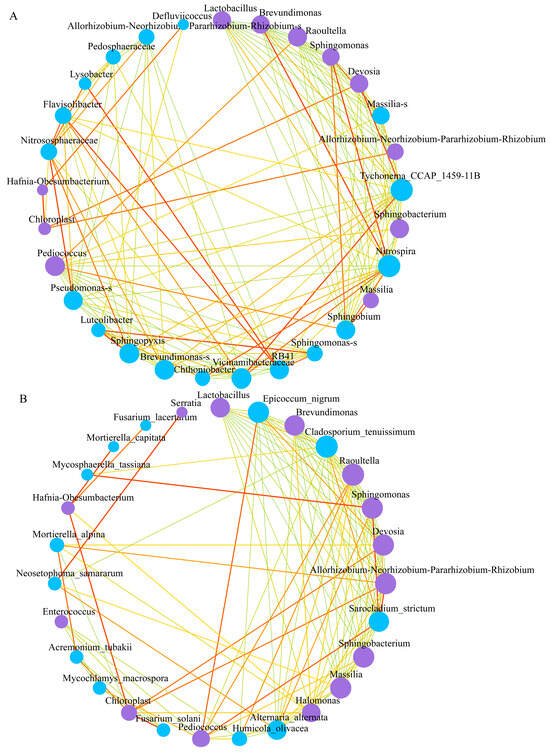
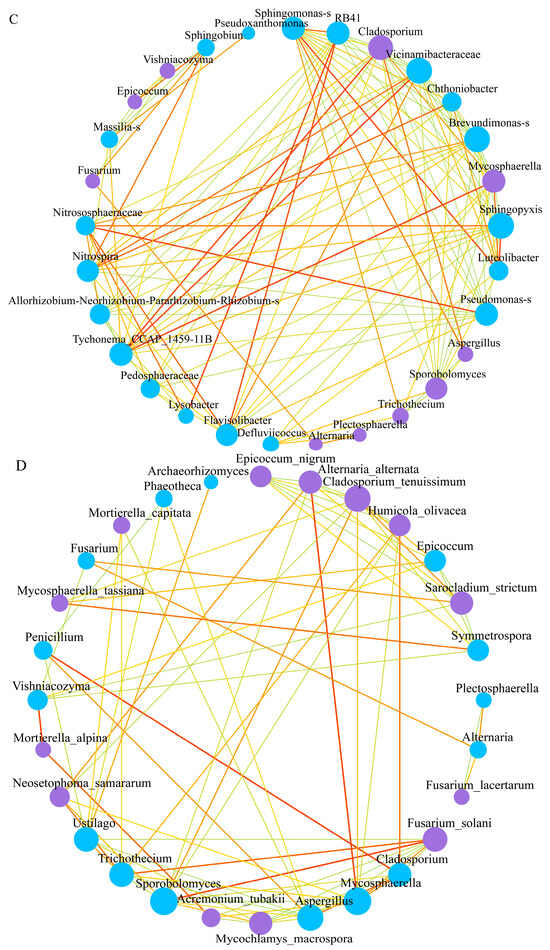
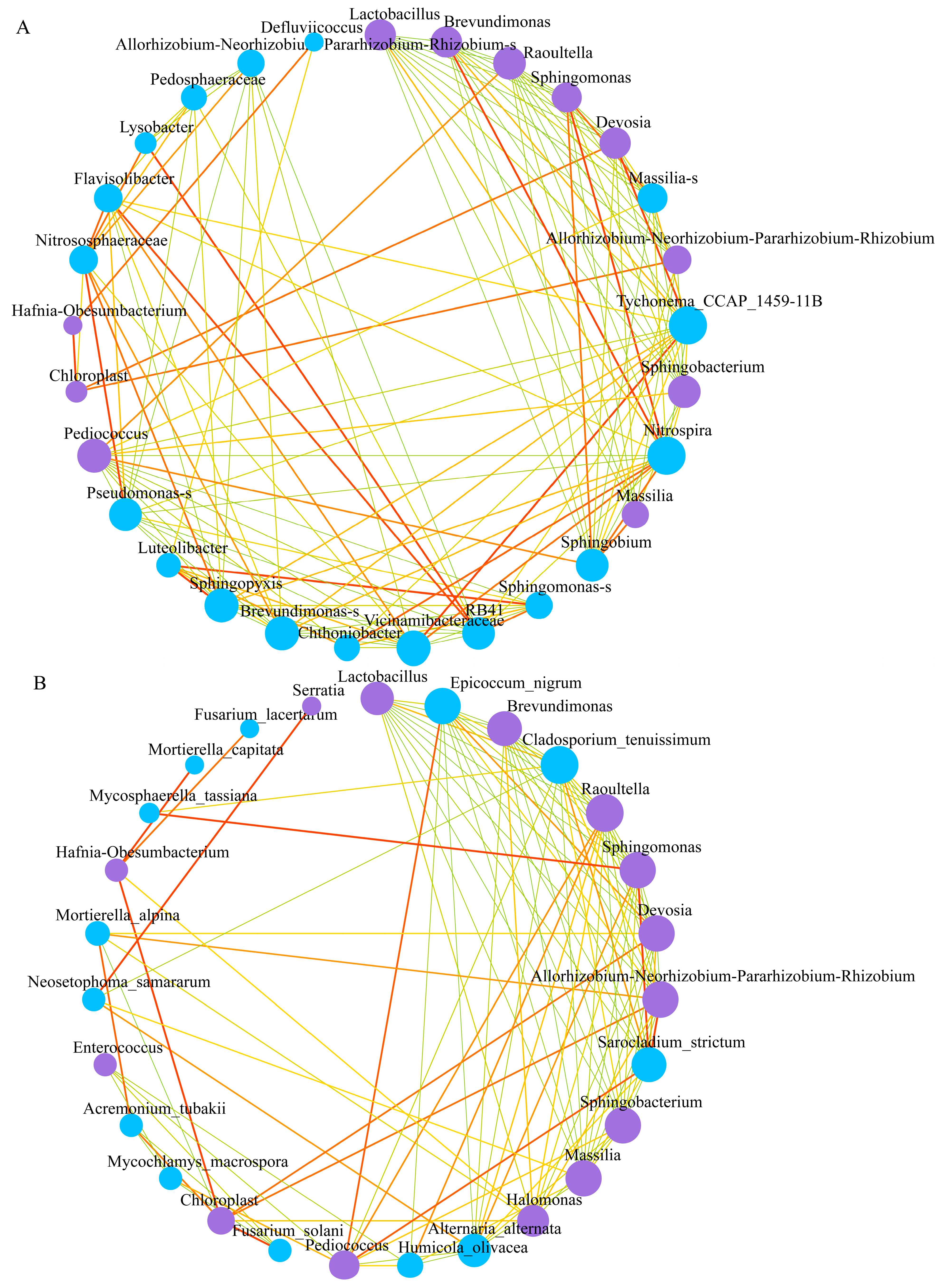
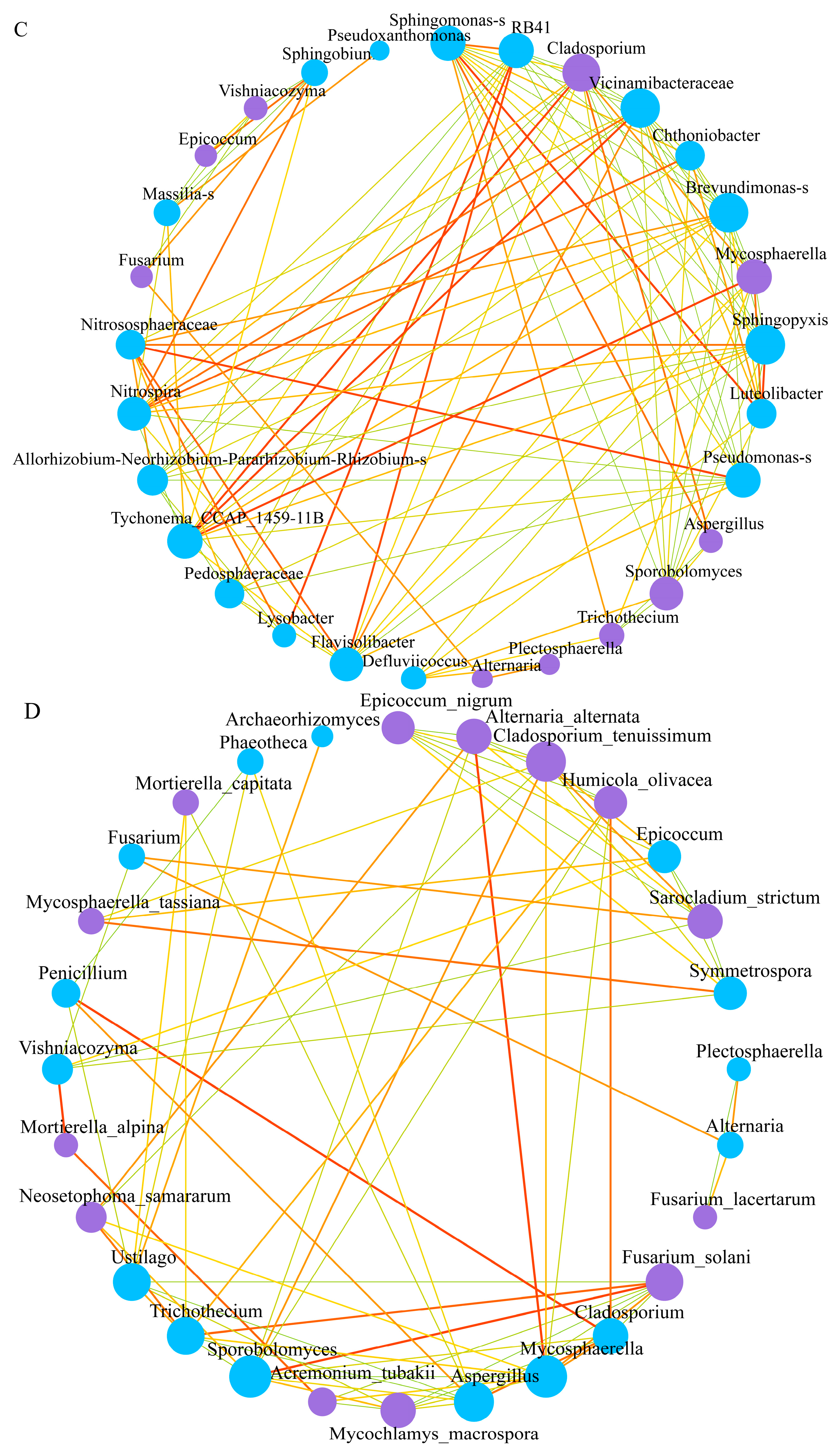
The correlation between soil bacteria and silage bacteria is shown in Figure 7A. The Sphingomonas, Brevundimonas, and Pseudomonas in soil showed a highly significant positive correlation with Pediococcus (p < 0.01). Nitrospira in soil showed a highly significant negative correlation with Pediococcus (p < 0.01). A highly significant negative correlation (p < 0.01) was found between Massilia and Sphingobacterium whereas Sphingobacterium in soil were significantly negatively correlated (p < 0.01). The correlation between soil fungi and silage bacteria is shown in Figure 7B, where Epicoccum_nigrum in soil showed a highly significant positive correlation (p < 0.01) with Raoultella and a highly significant negative correlation with Sphingomonas (p < 0.01), Sphingobacterium, and Massilia. Fusarium_solani in soil showed a significant positive correlation with Chloroplast (p < 0.05). The correlation between soil bacteria and silage fungi is shown in Figure 7C. The Sphingomonas in soil showed a significant negative correlation with Cladosporium, Mycosphaerella, and Aspergillus (p < 0.05). The Massilia in soil showed a highly significant negative correlation with Epicoccum and Vishniacozyma (p < 0.01). The Brevundimonas in soil showed a highly significant negative correlation with the Mycosphaerella (p < 0.01). The correlation between soil fungi and silage fungi is illustrated in Figure 7D. Fusarium_solani in soil showed a significant positive correlation with Cladosporium, Aspergillus, and Ustilago (p < 0.01). Sarocladium_strictum in soil showed a highly significant positive correlation with Symmetrospora (p < 0.01).
Figure 7.
Analysis of collinear network between lodging oat silage microorganisms and soil microorganisms. (A) The correlation analysis between soil bacteria and silage bacteria (purple circles represent silage bacteria, blue circles represent soil bacteria, red lines represent positive correlations, and green lines represent negative correlations). (B) The correlation analysis between soil fungi and silage bacteria (purple circles for silage bacteria, blue circles for soil fungi, green lines for positive correlation, red lines for negative correlation). (C) The correlation analysis between soil bacteria and silage fungi (purple circles for silage fungi, blue circles for soil bacteria, green lines for positive correlation, red lines for negative correlation). (D) The correlation analysis between soil fungi and silage fungi (purple circles represent soil fungi, blue circles represent silage fungi, green lines represent positive correlations, and red lines represent negative correlations).
3.7. Correlation Analysis of Microbial Communities with Fermentation Quality and Mycotoxins
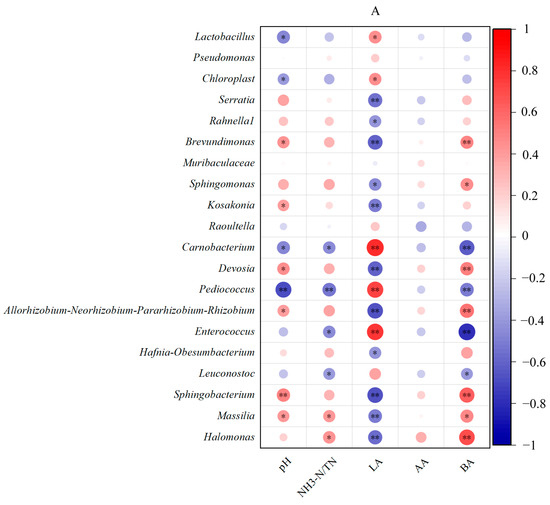
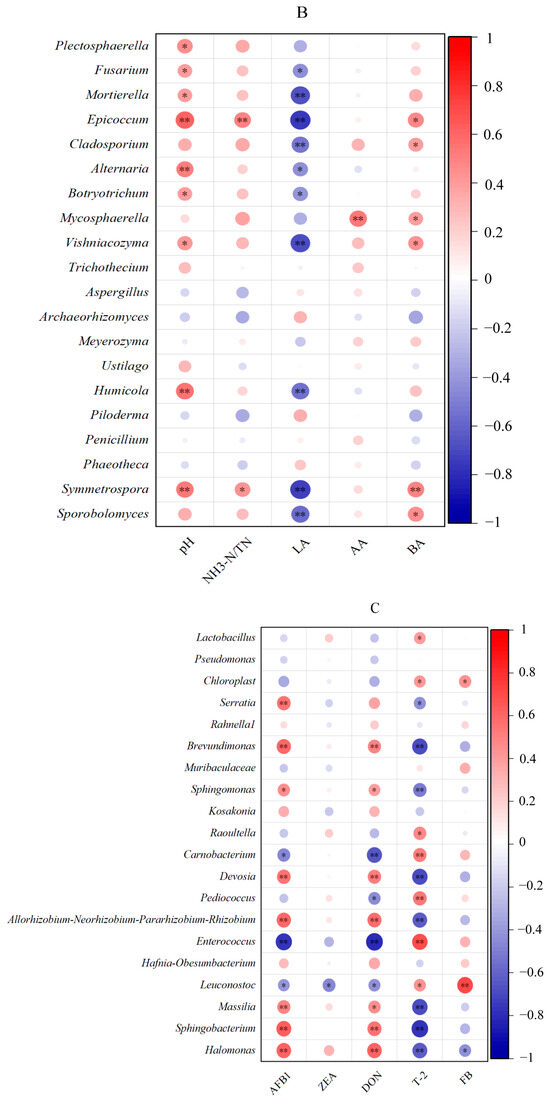
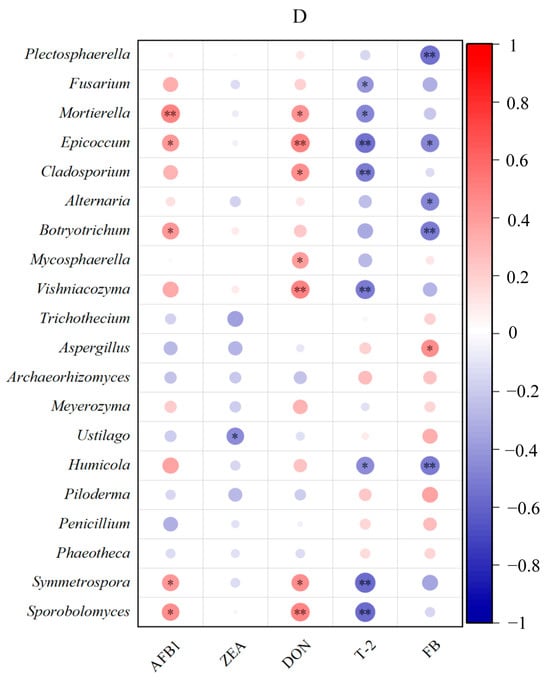
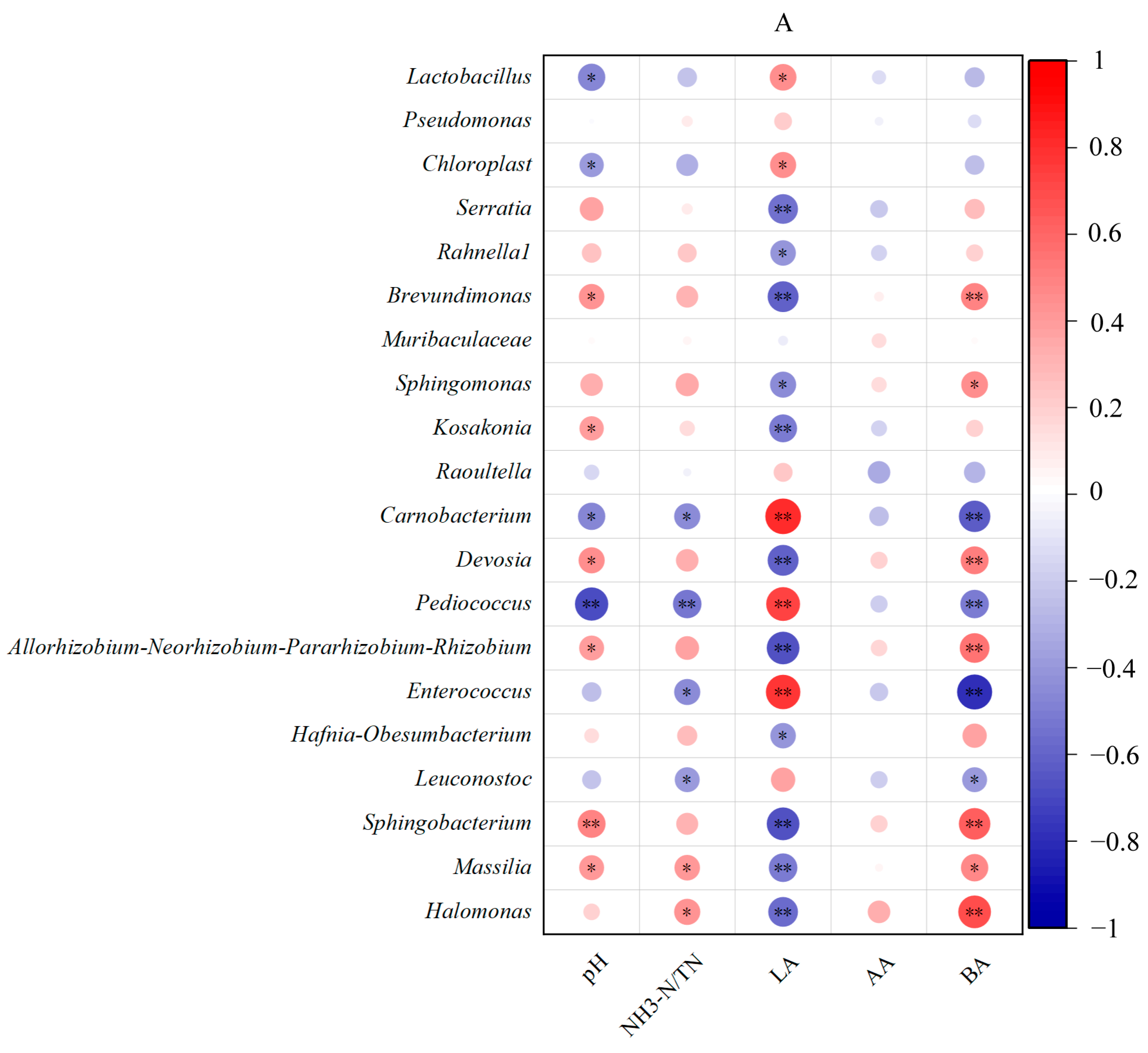
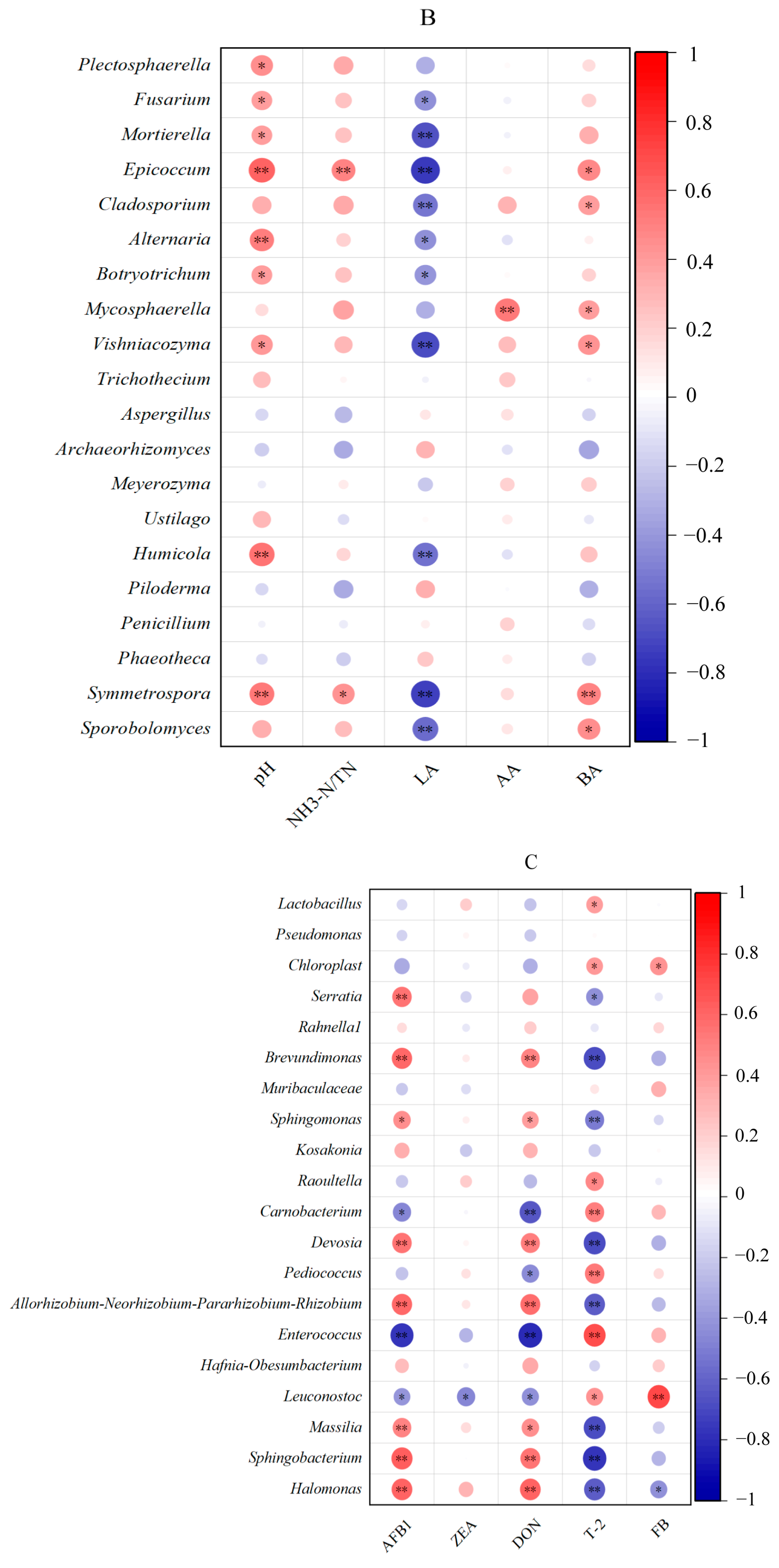
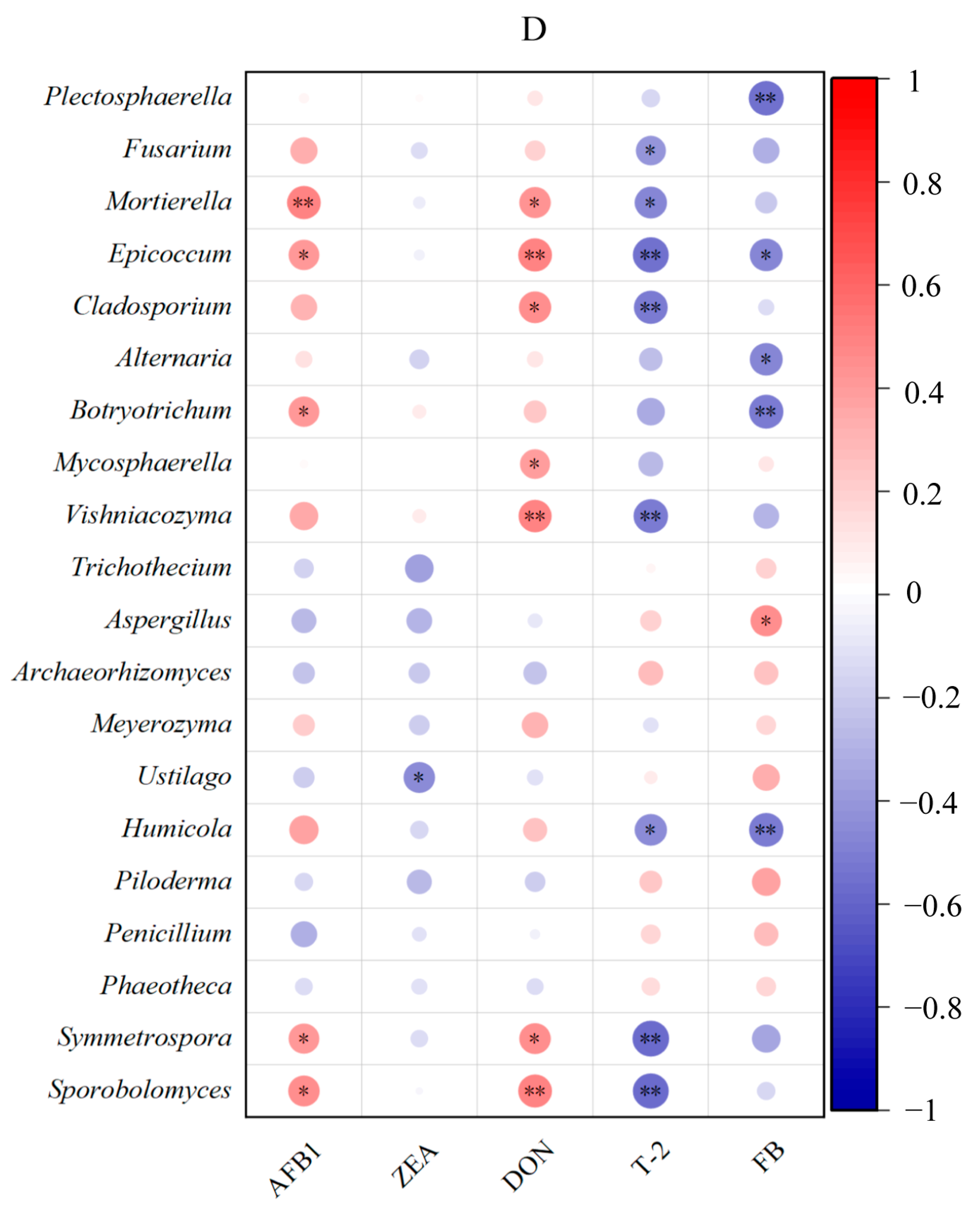
The correlation analysis of the major genera in the microbial community with fermentation quality and mycotoxins is shown in Figure 8. The pH was significantly negatively correlated with Lactobacillus and Chloroplast. NH3-N/TN was significantly positively correlated with Halomonas. LA was highly significantly negatively correlated with Brevundimonas and Devosia. Additionally, BA was highly significantly positively correlated with Brevundimonas. AFB1 was highly significantly positively correlated with Serratia and Brevundimonas. DON was highly significantly positively correlated with Brevundimonas. In contrast, T-2 toxin was highly significantly negatively correlated with Brevundimonas and Sphingomonas. FB was significantly positively correlated with Chloroplast. The pH was highly significantly positively correlated with Epicoccum, Alternaria, and Symmetrospora. NH3-N/TN showed a highly significant positive correlation with Epicoccum and Symmetrospora. LA showed a highly significant positive correlation with Epicoccum, Cladosporium, Vishniacozyma, and Symmetrospora. Meanwhile, AA showed a highly significant positive correlation with Mycosphaerella and BA with Symmetrospora. AFB1 was significantly positively correlated with Epicoccum, Botryotrichum, and Symmetrospora. DON was highly significantly positively correlated with Epicoccum and Vishniacozym. T-2 toxin was highly significantly negatively correlated with Epicoccum, Cladosporium, Vishniacozyma, and Symmetrospora. FB was highly significantly negatively correlated with Plectosphaerella, Botryotrichum, and Humicola, and significantly positively correlated with Aspergillus.
Figure 8.
Correlation analysis of lodging oat silage indicators. The correlation between bacterial (A) and fungal (B) communities and fermentation quality, and bacterial (C) and fungal (D) communities and mycotoxins. “*” mean significant level of correlation (p < 0.05). “**” mean highly significant level of correlation (p < 0.01). TN, total nitrogen; LA, lactic acid; AA, acetic acid; BA, butyric acid; AFB1, Aflatoxin B1; ZEA, zearalenone; T-2, T-2 toxin; FB, fumonisin.
4. Discussion
4.1. Nutritional Quality and Microbial Counts of Lodging Oats After 60 Days of Silage
In this study, it is found that the contents of DM and WSC after the lodging of oat silage ranged from 11.63% to 22.49% and 0.37% to 0.80%, respectively, which were lower than those reported by Li et al. [33] and Tahir et al. [4] for oat silage in the southern region. This may be associated with the stems and leaves of the oats shading each other after lodging, which deteriorates the ventilation and light conditions. This leads to a decrease in photosynthetic efficiency and reduced dry matter accumulation. Meanwhile, rising environmental humidity promotes the growth and spread of pathogenic microorganisms that require large quantities of WSC as an energy source [34]. The DM content of the lodging group relatively increased with the increase in lodging duration, which may be closely related to its length. The UL group had the lowest DM loss at D7d, which suggests that the group had relatively low nutrient loss during the fermentation process. In this study, the LAB count was higher within the 7 day of lodging. This is because fewer harmful microorganisms are present in the early stages after lodging, resulting in a reduced consumption of water-soluble carbohydrates during fermentation. Consequently, more substrate becomes available for the bacteria to utilize and grow. Furthermore, no molds, yeasts, or enterobacteria were detected in any of the silage samples, which suggests that the lower pH may have inhibited the growth of these undesirable microorganisms [35]. The significant increase in CP content in the lodging group (except for LL at D7d and D45d) may be related to the nitrogen fixation capacity of Chloroplast [36], which is similar to the findings of Lang et al. [37]. The NDF and ADF contents increased in the lodging group. This may be related to the damage of vascular bundles and mechanical tissues in stems, which triggers the activation of defensive secondary wall biosynthesis and accelerates the synthesis and deposition of cellulose, hemicellulose, and lignin [38]. The NDF and ADF content of lodging oat silage increased with prolonged lodging duration. This suggests that the impact of longer lodging periods is worse. Crude ash is an indicator of the total minerals contained in the forage [39]. In this study, the ash content decreased in the lodging group during the early lodging stage, suggesting that lodging oat silage at D0d and D7d had a better feeding value and was less affected by lodging. The increase in ash content in the lodging group at D25d and D45d implies a lower feeding value. This may be associated with prolonged contact with the soil after lodging, whereby soil is mixed into the silage. Alternatively, it may be related to the inhibition of relevant fermentation components that consume the cell wall [40].
4.2. Fermentation Quality of Lodging Oat Silage After 60 Days
Fermentation quality is one of the most important indicators for evaluating silage quality, which is usually assessed by pH, NH3-N, and organic acids [41]. It is generally recognized that the pH of high-quality silage can be reduced to 4.2 or lower [42]. The pH in the LL group increased significantly to above 4.2, which may be associated with the increase in undesirable microorganisms and poor fermentation after oat lodging [43]. The NH3-N content in lodging oats was less than 10% except for the LL group at D45d, which is consistent with the NH3-N/TN requirement for high-quality silage [33]. The UL group had the lowest NH3-N/TN content at D7d. This suggests that protein degradation is slower and that nutrient loss during fermentation is minimal [44]. In this study, it was found that the LA content was significantly lower in the lodging group, which may be attributed to oat lodging affecting the lactic acid bacteria adhering to the surface of fresh oats, or it may be due to limited soluble sugars being present, thereby lowering the lactic acid content. Zhao et al. [45] concluded that AA produced in the late stage of fermentation was related to the transformation of homofermentative lactic acid bacteria into heterofermentative lactic acid bacteria. In this paper, except for the D0d and ML groups, the AA content of the lodging group did not change significantly. Such results were not surprising, as the fermentation type in the ensiling fermentation process could be affected by the forage feed substrate [46]. The BA content of the lodging group increased significantly except for D0d, which may be associated with the proliferation of undesirable microorganisms, with the lowest BA content in the UL group at D7d. PA content was not detected in all treatments. In conclusion, the silage fermentation quality was relatively better in UL treatment at D7d. Therefore, we recommend that harvesting the upper layer of oat silage as soon as possible after lodging can result in better silage fermentation quality.
In this study, it was indicated that as the duration of lodging increases, there was a tendency for pH to initially decrease and subsequently increase. Additionally, the NH3-N/TN content showed a tendency to gradually increase (except for the UL group), while the LA, AA, and BA contents showed a tendency of gradually decreasing. This may be related to the highly significant effect of lodging duration on the pH, NH3-N/TN, and organic acid content. After lodging, the oat plant rot intensified, and the molds, enterobacteria, and other undesirable microorganisms proliferated, exacerbating protein degradation and increasing ammoniacal nitrogen content, while the lactobacillus substrate decreased and the content of organic acids produced by the metabolism declined. Therefore, these results suggested that the regulation of lodging time should also be considered in the regulation of silage fermentation quality after lodging.
4.3. Mycotoxins in Lodging Oats After 60 Days of Silage
Most mycotoxin studies have focused on corn silage [47], and there were few reports on oat silage mycotoxins. In our study, AFB1, ZEA, T-2 toxin, and DON were detected in all silage samples, all mycotoxins remained within acceptable levels, and AFB1 exceeded the European Union maximum limits [48]. Multiple mycotoxins frequently cooccur in feed due to the ability of fungal species to produce multiple mycotoxins simultaneously in Manni et al.’s [49] and Dimitrakopoulou et al.’s [50] studies. This survey showed that the incidence of several mycotoxins has also been found in lodging oat silage. Interestingly, this study did not detect any fungal growth, which contradicts the mycotoxin results. This suggests that not all molds produce mycotoxins, and mycotoxins may occur without visible mold [49]. The occurrence of mycotoxins in lodging oat silage in China has not been previously reported, which hinders the comparison of the results obtained in this study with others in this country.
The concentration of AFB1 in oat silage increased after lodging, and with the increase in lodging duration, the AFB1 showed a tendency to increase and then decrease. This indicates that the post-lodging increase in aflatoxin B1 content originates from pre-silage fresh materials. Furthermore, factors such as temperature and humidity will affect the synthesis of mycotoxin [51]. AFB1 concentrations of lodging oat silage samples were higher compared to previous studies [52]. This may be due to changes in the microenvironment after lodging. Furthermore, the fermentation process promotes fungal metabolism and toxin production, leading to the substantial accumulation of AFB1 in silage. When livestock consume contaminated silage, AFB1 can bioaccumulate in their products, posing a potential risk to human health [47]. Therefore, it is imperative to determine the optimal duration of oat lodging for the purpose of reducing AFB1 levels. Oat is highly susceptible to contamination by Fusarium, which produce ZEA [53]. At 45 days of lodging, the ZEA content in LL was higher than in the other groups, which may be attributed to the relative abundance of lactic acid bacteria in this group being lower than in the other groups. Nevertheless, with the increasing duration of lodging, the lowest ZEA content was observed in UL silage at 7 days of lodging, which may be attributed to the lowest relative abundance of Fusarium in this group. DON, T-2 toxins and fumonisins were one of the most prevalent mycotoxins in oat [53]. Presence of DON, T-2 toxins, and fumonisins in lodging oat silage in China seems not to be a concerning issue. DON production levels in fresh materials were exceptionally high at the time of lodging in Nakajima et al.’s [10] study. However, DON concentrations were lower in this study. This may result from the interplay of harvest timing and variability in fresh material used in feed production, and the anaerobic acidic environment of silage promotes vomitoxin degradation [50]. Furthermore, fumonisins were found at low levels in all silage samples, which may be attributed to the binding of fumonisins to microbial metabolites or their cell walls during silage fermentation [14].
In summary, reducing the risk of AFB1 contamination in oat silage requires a combination of field management practices, silage additives, and rigorous monitoring of AFB1 levels. This ensures the safety of the livestock food chain.
4.4. Microbial Community Succession in Lodging Oat Silage
After lodging oat silage, the dominant bacterial phyla was Firmicutes and Proteobacteria, which were consistent with the results of mixed silage of broad beans with forage wheat or oats [17]. Lactobacillus was the predominant population in all samples of lodging oat silage, which was in agreement with the results of Tahir et al. [4]. As the duration of lodging increased, the Lactobacillus in the upright group demonstrated a trend of increasing and then decreasing, which may be associated with the reproductive period of plants. Conversely, the Lactobacillus in the lodging group gradually declined, likely because the prolonged lodging period promoted the proliferation of harmful microorganisms. These harmful microbes competed with Lactobacillus for nutrients, thereby inhibiting its growth. In addition to D0d, the Pseudomonas in the lodging group increased at D7d and D45d, which may be related to the microorganisms attached to the feedstock [35]. The Pseudomonas in the lodging group was lowest at D7d, which possibly reflects that the genus had a lower relative abundance at low pH and high WSC content, which was similar to the study by Hisham et al. [54]. It was demonstrated that the growth of Pseudomonas also depended on temperature [55]. Correlation analysis showed that the Brevundimonas and Pseudomonas in soil was a highly significant positive correlation with Pediococcus. This suggests that Brevundimonas and Pseudomonas entering silage compete with Pediococcus for substrate consumption. Brevundimonas and Pseudomonas have the potential to cycle nutrients and suppress disease [56,57], which reasonably explains the increase in CP content after lodging persisted for more than 7 days. Additionally, lower levels of mycotoxins other than AFB1 may be attributed to the antibacterial effects of these bacteria [57]. Chloroplast is a symbiotic nitrogen-fixing aerobic microorganism [36]. Only Fusarium_solani in the soil attached to lodging oats was significantly positively correlated (p < 0.05) with Chloroplast, which indicated that Chloroplast in silage was less affected by soil microorganisms. The chloroplast was observed to decline with an increase in lodging duration, indicating that lodging duration has a greater effect on it, which is rarely reported in silage at present. The relative abundance of Brevundimonas and Devosia in the lodging group significantly increased at D45d. This may be associated with their ability to secrete catalase and promote cellulose decomposition [58,59]. This also corroborates the lower fiber content of the silage during the late lodging stage. Furthermore, this suggested that the prolonged delay in harvesting oats after lodging exacerbated the degradation and decay of the plants [60]. Hafnia-Obesumbacterium, belonging to the Enterobacteriaceae family, has a negative impact on silage and can exacerbate silage spoilage [17,61]. The Hafnia-Obesumbacterium was higher in the LL group at D7d. Currently, there are fewer reports on the role of Hafnia-Obesumbacterium in silage, and Wang et al. [62] also found Hafnia-Obesumbacterium in the fermentation of whole-plant maize silage, a genus capable of promoting protein hydrolysis in silage.
The fungal community in lodging oat silage was mainly composed of Ascomycota and Basidiomycota which was similar to the findings of Romero et al. [15]. At D0d, the lodging group was dominated by Plectosphaerella and Alternaria, while the relative abundance of other genera was less than 0.8%. Plectosphaerella and Alternaria became secondary at D7d. The fungal community in the UL group had the lowest diversity and relative abundance, possibly due to the low pH during the fermentation process, which inhibited the growth of undesirable fungi. This suggests that the silage effect of this treatment was relatively better. The Plectosphaerella, Fusarium, Epicoccum, and Alternaria were dominated in the lodging group at D45d. Cladosporium is a kind of core mycotoxin-producing microorganism that exists on fresh grains [63]. Bao et al. [64] found that Cladosporium was significantly reduced in oat silage, which is not consistent with the results of this study. The Mycosphaerella in the LL group became dominant at D7d, and Song et al. [65] found Mycosphaerella in fermented total mixed rations. However, the detection of this genus in silage has been reported less, and further research was necessary to elucidate the role of Mycosphaerella. At D45d, the fungi were more uniformly distributed in the UL group, and Plectosphaerella was the predominant fungus in the LL group. This may be associated with the weak inhibitory effect of acetic acid produced by metabolism during fermentation on Plectosphaerella. In addition, the distribution of fungal communities was closely correlated with lodging duration. With increasing lodging duration, the Plectosphaerella, Fusarium, Cladosporium, and Alternaria in the UL silage of the lodging group were the lowest or even absent at D7d. In contrast, the relative abundance of these genera in the lodging group was the highest at D45d, and the relative abundance of Plectosphaerella was the highest in LL silage, which was likely related to the fact that Plectosphaerella can degrade plant residues [66]. The dynamic changes in soil–plant microorganisms after lodging oats can be used to understand the quality of silage. At 7 days of lodging, the fungal community in silage had lower relative abundance and reduced mycotoxin content, resulting in better silage quality. Overall, our research provides a preliminary view of the effective utilization of silage after the lodging of oats in southern regions.
5. Conclusions
As the lodging time increased, the WSC and CP contents in lodging oat silage decreased, while the fiber content increased. The lowest pH and NH3-N contents were observed in the UL group at D7d. The risk of mycotoxin infection heightened after lodging, particularly for AFB1. However, the mycotoxin content in the upper oat silage was lower at D7d. In the case of oats lodging and needing to be harvested, we recommend harvesting them as quickly as possible within a week. Making silage from this forage can reduce the adverse effects caused by lodging, especially the accumulation of mycotoxins, more effectively than making oat hay.
Author Contributions
Y.J.: Writing—original draft, Visualization, Software, Formal analysis, Data curation, Conceptualization. Q.Z.: Writing—review and editing, Project administration, Funding acquisition. H.L.: Methodology, Conceptualization. Y.C.: Methodology. S.C.: Validation, Methodology, Data curation. H.W.: Validation, Formal analysis. Y.H.: Methodology. X.G.: Writing—review and editing. H.G.: Writing—review and editing, Project administration, Funding acquisition. All authors have read and agreed to the published version of the manuscript.
Funding
This work was supported by the National Natural Science Foundation of China Youth Project (32301507), the Sichuan Province Beef Cattle Innovation Team Construction Special Fund (CXTD2019-13), and the Southwest Minzu University Double World-Class Project (CX2023014).
Data Availability Statement
The original contributions presented in this study are included in the article.
Conflicts of Interest
The authors declare no conflicts of interest.
References
- An, X.; Zhang, L.; Luo, J.; Zhao, S.; Jiao, T. Effects of Oat Hay Content in Diets on Nutrient Metabolism and the Rumen Microflora in Sheep. Animals 2020, 10, 2341. [Google Scholar] [CrossRef] [Scilit]
- Zhang, Y.; Li, S.; Dong, X.; Mou, Q.; Li, J.; Zhang, X.; Lin, M.; Yu, K.; Zhou, P.; Liu, X.; et al. Evaluation of oat (Avena sativa L.) populations for autumn sowing production in Southwest China. Grass Forage Sci. 2024, 79, 37–46. [Google Scholar] [CrossRef] [Scilit]
- Zhao, L.L.; Li, L.S.; Li, Y.B.; Yang, P.W.; Liu, X.M.; Zhou, Z.Q.; Zhong, H.Y.; Ding, Y.B. Global extreme precipitation characteristics: The perspective of climate and large river basins. Clim. Dyn. 2023, 62, 1013–1030. [Google Scholar] [CrossRef] [Scilit]
- Tahir, M.; Li, J.; Xin, Y.; Wang, T.; Chen, C.; Zhong, Y.; Zhang, L.; Liu, H.; He, Y.; Wen, X.; et al. Response of fermentation quality and microbial community of oat silage to homofermentative lactic acid bacteria inoculation. Front. Microbiol. 2022, 13, 1091394. [Google Scholar] [CrossRef] [Scilit]
- Liu, H.; Huang, X.; Fei, J.; Zhang, C.; Cheng, X. Spatiotemporal Features and Associated Synoptic Patterns of Extremely Persistent Heavy Rainfall Over China. J. Geophys. Res. Atmos. 2022, 127, e2022JD036604–e032022JD036627. [Google Scholar] [CrossRef] [Scilit]
- Buerstmayr, H.; Krenn, N.; Stephan, U.; Grausgruber, H.; Zechner, E. Agronomic performance and quality of oat (Avena sativa L.) genotypes of worldwide origin produced under Central European growing conditions. Field Crops Res. 2007, 101, 343–351. [Google Scholar] [CrossRef] [Scilit]
- Liu, L.; Liang, G.; Liu, W.; Ju, Z. Variation and interrelationships in the growth, yield, and lodging of oat under different planting densities. PeerJ 2024, 12, e17310. [Google Scholar] [CrossRef] [Scilit] [PubMed]
- Shashidharaiah, R. Lodging in cereals—A review. Agric. Rev. 2008, 29, 55–60. [Google Scholar]
- Wu, W.; Ma, B.-L. Erect–leaf posture promotes lodging resistance in oat plants under high plant population. Eur. J. Agron. 2019, 103, 175–187. [Google Scholar] [CrossRef] [Scilit]
- Nakajima, T.; Yoshida, M.; Tomimura, K. Effect of lodging on the level of mycotoxins in wheat, barley, and rice infected with the Fusarium graminearum species complex. J. Gen. Plant Pathol. 2008, 74, 289–295. [Google Scholar] [CrossRef] [Scilit]
- Langseth, W.; Stabbetorp, H. The Effect of Lodging and Time of Harvest on Deoxynivalenol Contamination in Barley and Oats. J. Phytopathol. 2008, 144, 241–245. [Google Scholar] [CrossRef] [Scilit]
- Liu, L.; Liang, G.; Liu, W. Differences in Physicochemical Properties of Stems in Oat (Avena sativa L.) Varieties with Distinct Lodging Resistance and Their Regulation of Lodging at Different Planting Densities. Plants 2024, 13, 2739. [Google Scholar] [CrossRef] [Scilit]
- Acreche, M.M.; Slafer, G.A. Lodging yield penalties as affected by breeding in Mediterranean wheats. Field Crops Res. 2011, 122, 40–48. [Google Scholar] [CrossRef] [Scilit]
- Juan, C.; Mannai, A.; Ben Salem, H.; Oueslati, S.; Berrada, H.; Juan-García, A.; Mañes, J. Mycotoxins presence in pre- and post-fermented silage from Tunisia. Arab. J. Chem. 2020, 13, 6753–6761. [Google Scholar] [CrossRef] [Scilit]
- Romero, J.J.; Zhao, Y.; Balseca-Paredes, M.A.; Tiezzi, F.; Gutierrez-Rodriguez, E.; Castillo, M.S. Laboratory silo type and inoculation effects on nutritional composition, fermentation, and bacterial and fungal communities of oat silage. J. Dairy Sci. 2017, 100, 1812–1828. [Google Scholar] [CrossRef] [Scilit]
- Meeske, R.; van der Merwe, G.D.; Greyling, J.F.; Cruywagen, C.W. The effect of adding an enzyme containing lactic acid bacterial inoculant to big round bale oat silage on intake, milk production and milk composition of Jersey cows. Anim. Feed Sci. Technol. 2002, 97, 159–167. [Google Scholar] [CrossRef] [Scilit]
- Li, H.; Zeng, T.; Du, Z.; Dong, X.; Xin, Y.; Wu, Y.; Huang, L.; Liu, L.; Kang, B.; Jiang, D.; et al. Assessment on the Fermentation Quality and Bacterial Community of Mixed Silage of Faba Bean with Forage Wheat or Oat. Front. Microbiol. 2022, 13, 875819–875833. [Google Scholar] [CrossRef] [Scilit]
- Mohammadi, M.; Finnan, J.; Sterling, M.; Baker, C. A calibrated oat lodging model compared with agronomic measurements. Field Crops Res. 2020, 255, 107784. [Google Scholar] [CrossRef] [Scilit]
- Jing, J.; Cong, W.F.; Bezemer, T.M. Legacies at work: Plant-soil-microbiome interactions underpinning agricultural sustainability. Trends Plant Sci. 2022, 27, 781–792. [Google Scholar] [CrossRef] [Scilit] [PubMed]
- Wang, X.; Chi, Y.; Song, S. Important soil microbiota’s effects on plants and soils: A comprehensive 30-year systematic literature review. Front. Microbiol. 2024, 15, 1347745–1347762. [Google Scholar] [CrossRef] [Scilit] [PubMed]
- Todorovic, I.; Moenne-Loccoz, Y.; Raicevic, V.; Jovicic-Petrovic, J.; Muller, D. Microbial diversity in soils suppressive to Fusarium diseases. Front. Plant Sci. 2023, 14, 1228749. [Google Scholar] [CrossRef] [Scilit] [PubMed]
- Guan, H.; Shuai, Y.; Yan, Y.; Ran, Q.; Wang, X.; Li, D.; Cai, Y.; Zhang, X. Microbial Community and Fermentation Dynamics of Corn Silage Prepared with Heat-Resistant Lactic Acid Bacteria in a Hot Environment. Microorganisms 2020, 8, 719. [Google Scholar] [CrossRef] [Scilit] [PubMed]
- Latimer, G.W., Jr. AOAC Official Method 2001.11Protein (Crude) in Animal Feed, Forage (Plant Tissue), Grain, and Oilseeds: Block Digestion Method Using Copper Catalyst and Steam Distillation into Boric Acid. In Official Methods of Analysis of AOAC International; Oxford University Press: Oxford, UK, 2023. [Google Scholar]
- Van Soest, P.J.; Robertson, J.B.; Lewis, B.A. Methods for dietary fiber, neutral detergent fiber, and nonstarch polysaccharides in relation to animal nutrition. J. Dairy Sci. 1991, 74, 3583–3597. [Google Scholar] [CrossRef] [Scilit]
- Broderick, G.; Kang, J. Automated simultaneous determination of ammonia and total amino acids in ruminal fluid and in vitro media. J. Dairy Sci. 1980, 63, 64–75. [Google Scholar] [CrossRef] [Scilit]
- Beuchat, L.R.; Copeland, F.; Curiale, M.S.; Danisavich, T.; Gangar, V.; King, B.W.; Lawlis, T.L.; Likin, R.O.; Okwusoa, J.; Smith, C.F.; et al. Comparison of the SimPlate Total Plate Count Method with Petrifilm, Redigel, and Conventional Pour-Plate Methods for Enumerating Aerobic Microorganisms in Foods. J. Food Prot. 1998, 61, 14–18. [Google Scholar] [CrossRef] [Scilit]
- Garcia, Y.S.C.; Cajarville, C.; Suarez, G.; Bettucci, L. How do Time, Tannin, and Moisture Content Influence Toxicogenic Fungal Populations during the Storage of Sorghum Grains? J. Food Prot. 2022, 85, 778–785. [Google Scholar] [CrossRef] [Scilit]
- Magoč, T.; Salzberg, S.L. FLASH: Fast length adjustment of short reads to improve genome assemblies. Bioinformatics 2011, 27, 2957–2963. [Google Scholar] [CrossRef] [Scilit]
- Caporaso, J.G.; Kuczynski, J.; Stombaugh, J.; Bittinger, K.; Bushman, F.D.; Costello, E.K.; Fierer, N.; Peña, A.G.; Goodrich, J.K.; Gordon, J.I.; et al. QIIME allows analysis of high-throughput community sequencing data. Nat. Methods 2010, 7, 335–336. [Google Scholar] [CrossRef] [Scilit] [PubMed]
- Edgar, R.C. UPARSE: Highly accurate OTU sequences from microbial amplicon reads. Nat. Methods 2013, 10, 996–998. [Google Scholar] [CrossRef] [Scilit]
- DeSantis, T.Z.; Hugenholtz, P.; Larsen, N.; Rojas, M.; Brodie, E.L.; Keller, K.; Huber, T.; Dalevi, D.; Hu, P.; Andersen, G.L. Greengenes, a Chimera-Checked 16S rRNA Gene Database and Workbench Compatible with ARB. Appl. Environ. Microbiol. 2006, 72, 5069–5072. [Google Scholar] [CrossRef] [Scilit]
- Wang, Q.; Garrity, G.M.; Tiedje, J.M.; Cole, J.R. Naïve Bayesian Classifier for Rapid Assignment of rRNA Sequences into the New Bacterial Taxonomy. Appl. Environ. Microbiol. 2007, 73, 5261–5267. [Google Scholar] [CrossRef] [Scilit]
- Li, F.; Usman, S.; Huang, W.; Jia, M.; Kharazian, Z.A.; Ran, T.; Li, F.; Ding, Z.; Guo, X. Effects of inoculating feruloyl esterase-producing Lactiplantibacillus plantarum A1 on ensiling characteristics, in vitro ruminal fermentation and microbiota of alfalfa silage. J. Anim. Sci. Biotechnol. 2023, 14, 43–60. [Google Scholar] [CrossRef] [Scilit]
- Xue, J.; Gou, L.; Shi, Z.-G.; Zhao, Y.-S.; Zhang, W.-F. Effect of leaf removal on photosynthetically active radiation distribution in maize canopy and stalk strength. J. Integr. Agric. 2017, 16, 85–96. [Google Scholar] [CrossRef] [Scilit]
- Xin, Y.; Chen, C.; Zhong, Y.; Bu, X.; Huang, S.; Tahir, M.; Du, Z.; Liu, W.; Yang, W.; Li, J.; et al. Effect of storage time on the silage quality and microbial community of mixed maize and faba bean in the Qinghai-Tibet Plateau. Front. Microbiol. 2022, 13, 1090401–1090413. [Google Scholar] [CrossRef] [Scilit] [PubMed]
- Rai, A.N.; Soderback, E.; Bergman, B. Tansley Review No. 116: Cyanobacterium-plant symbioses. New Phytol. 2000, 147, 449–481. [Google Scholar] [CrossRef] [Scilit]
- Lang, Y.-Z.; Yang, X.-D.; Wang, M.-E.; Zhu, Q.-S. Effects of Lodging at Different Filling Stages on Rice Yield and Grain Quality. Rice Sci. 2012, 19, 315–319. [Google Scholar] [CrossRef] [Scilit]
- Welton, F.A. Lodging in Oats and Wheat. Bot. Gaz. 1928, 85, 121–151. [Google Scholar] [CrossRef] [Scilit]
- Kılıçalp, N.; Ozkurt, M.; Karadag, Y.; Hizli, H. Hungarİan Vetch (Vİcİa Pannonİca) and Trİtİcale (Xtrİtİcosecale Wİttmack) Sİlages, Sowed İn Dİfferent Seed Rates, Treated Wİth Lactİc Acİd Bacterİa + Enzyme Mİxture Inoculant: I. Chemİcal Composİtİon and Sİlage Fleİg Score. J. Anim. Plant Sci. 2021, 32, 680–687. [Google Scholar] [CrossRef] [Scilit]
- De Melo, N.N.; Carvalho-Estrada, P.d.A.; Tavares, Q.G.; Pereira, L.d.M.; Delai Vigne, G.L.; Camargo Rezende, D.M.L.; Schmidt, P. The Effects of Short-Time Delayed Sealing on Fermentation, Aerobic Stability and Chemical Composition on Maize Silages. Agronomy 2023, 13, 223. [Google Scholar] [CrossRef] [Scilit]
- Lin, J.; Li, G.; Sun, L.; Wang, S.; Meng, X.; Sun, L.; Yuan, L.; Xu, L. Varieties and ensiling: Impact on chemical composition, fermentation quality and bacterial community of alfalfa. Front. Microbiol. 2022, 13, 1091491–1109150. [Google Scholar] [CrossRef] [Scilit]
- Xiong, Y.; Xu, J.; Guo, L.; Chen, F.; Jiang, D.; Lin, Y.; Guo, C.; Li, X.; Chen, Y.; Ni, K.; et al. Exploring the Effects of Different Bacteria Additives on Fermentation Quality, Microbial Community and In Vitro Gas Production of Forage Oat Silage. Animals 2022, 12, 1122. [Google Scholar] [CrossRef] [Scilit]
- Deng, X.; Jia, Y.; Ge, G.; Wang, Z.; Liu, M.; Bao, J.; Zhao, M.; Si, Q.; Liu, Y.; Zhao, W. Microbiomics and volatile metabolomics-based investigation of changes in quality and flavor of oat (Avena sativa L.) silage at different stages. Front. Plant Sci. 2023, 14, 1278715–1278728. [Google Scholar] [CrossRef] [Scilit] [PubMed]
- Maria Silva Alencar, A.; Júnior, V.R.R.; Pinto Monção, F.; Silva Cordeiro, M.W.; Soares dos Santos, A.; Albuquerque Caldeira, L.; Inácio Soares de Oliveira, L.; Vitor Araújo Ananias, J.; Dulcineia da Costa, M.; Santos de Souza, A.; et al. Quality of mixed silages of sorghum, BRS Capiaçu grass, and cactus pear in a semiarid region of Brazil. J. Appl. Anim. Res. 2023, 51, 719–728. [Google Scholar] [CrossRef] [Scilit]
- Zhao, J.; Yin, X.J.; Li, J.F.; Wang, S.R.; Dong, Z.H.; Shao, T. Effects of developmental stage and store time on the microbial community and fermentation quality of sweet sorghum silage. Ital. J. Anim. Sci. 2022, 21, 1543–1557. [Google Scholar] [CrossRef] [Scilit]
- Wang, X.; Li, F.; Cai, X.; Huang, Y.; Shi, H. Exploring the combination of wilting and different types of additives to improve silage quality of highland alfalfa: Fermentation quality, nutritional values, molecular structural features, and ruminal degradability. Anim. Feed Sci. Technol. 2024, 318, 116123. [Google Scholar] [CrossRef] [Scilit]
- Li, J.; Wang, W.; Chen, S.; Shao, T.; Tao, X.; Yuan, X. Effect of Lactic Acid Bacteria on the Fermentation Quality and Mycotoxins Concentrations of Corn Silage Infested with Mycotoxigenic Fungi. Toxins 2021, 13, 699. [Google Scholar] [CrossRef] [Scilit]
- Tarazona, A.; Gómez, J.V.; Mateo, F.; Jiménez, M.; Mateo, E.M. Potential Health Risk Associated with Mycotoxins in Oat Grains Consumed in Spain. Toxins 2021, 13, 421. [Google Scholar] [CrossRef] [Scilit] [PubMed]
- Manni, K.; Rämö, S.; Franco, M.; Rinne, M.; Huuskonen, A. Occurrence of Mycotoxins in Grass and Whole-Crop Cereal Silages-A Farm Survey. Agriculture 2022, 12, 398. [Google Scholar] [CrossRef] [Scilit]
- Dimitrakopoulou, M.-E.; Marinos, G.; Karvounis, M.; Stoitsis, G.; Manouselis, N.; Thanopoulos, C.; Elliott, C. What Lies Behind Mycotoxin Presence in Animal Feed? A Case Study☆. J. Food Prot. 2025, 88, 100464. [Google Scholar] [CrossRef] [Scilit]
- Kamel, R.M.; Assaha, D.V.M.; El-kholy, M.; Elsawy, H.I.A. Influence of maize (Zea mays L.) moisture content stored in various compacted multi-layer hermetic bags on seed quality and mycotoxins contamination. J. Stored Prod. Res. 2024, 107, 102319. [Google Scholar] [CrossRef] [Scilit]
- Wang, Z.; Tan, Z.; Wu, G.; Wang, L.; Qin, G.; Wang, Y.; Pang, H. Investigation on Fermentation Characteristics and Microbial Communities of Wheat Straw Silage with Different Proportion Artemisia argyi. Toxins 2023, 15, 330. [Google Scholar] [CrossRef] [Scilit]
- Kahla, A.; Verheecke-Vaessen, C.; Delpino-Deelias, M.; Gutierrez-Pozo, M.; Medina, A.; Magan, N.; Doohan, F. Acclimatisation of Fusarium langsethiae, F. poae and F. sporotrichioides to elevated CO2: Impact on fungal growth and mycotoxin production on oat-based media. Int. J. Food Microbiol. 2023, 394, 110176. [Google Scholar] [CrossRef] [Scilit]
- Hisham, M.B.; Hashim, A.M.; Mohd Hanafi, N.; Abdul Rahman, N.; Abdul Mutalib, N.E.; Tan, C.K.; Nazli, M.H.; Mohd Yusoff, N.F. Bacterial communities associated with silage of different forage crops in Malaysian climate analysed using 16S amplicon metagenomics. Sci. Rep. 2022, 12, 7107–7124. [Google Scholar] [CrossRef] [Scilit]
- Bai, C.; Pan, G.; Leng, R.; Ni, W.; Yang, J.; Sun, J.; Yu, Z.; Liu, Z.; Xue, Y. Effect of Ensiling Density and Storage Temperature on Fermentation Quality, Bacterial Community, and Nitrate Concentration of Sorghum-Sudangrass Silage. Front. Microbiol. 2022, 13, 828320–828330. [Google Scholar] [CrossRef] [Scilit]
- Li, R.; Khafipour, E.; Krause, D.O.; Entz, M.H.; de Kievit, T.R.; Fernando, W.G. Pyrosequencing reveals the influence of organic and conventional farming systems on bacterial communities. PLoS ONE 2012, 7, e51897. [Google Scholar] [CrossRef] [Scilit]
- Haas, D.; Défago, G. Biological control of soil-borne pathogens by fluorescent pseudomonads. Nat. Rev. Microbiol. 2005, 3, 307–319. [Google Scholar] [CrossRef] [Scilit] [PubMed]
- Egorova, D.O.; Nazarova, E.A.; Demakov, V.A. New Lindane-Degrading Strains Achromobacter sp. NE1 and Brevundimonas sp. 242. Microbiology 2021, 90, 392–396. [Google Scholar] [CrossRef] [Scilit]
- Hassan, Y.I.; Lepp, D.; Zhou, T. Genome Assemblies of Three Soil-Associated Devosia species: D. insulae, D. limi, and D. soli. Genome Announc. 2015, 3, e00514–e00515. [Google Scholar] [CrossRef] [Scilit]
- Zhang, X.; Borjigin, Q.; Gao, J.; Yu, X.; Zhang, B.; Hu, S.; Han, S.; Liu, R.; Zhang, S. Community succession and straw degradation characteristics using a microbial decomposer at low temperature. PLoS ONE 2022, 17, e0270162–e0270172. [Google Scholar] [CrossRef] [Scilit] [PubMed]
- Zhao, S.; Yang, F.; Wang, Y.; Fan, X.; Feng, C.; Wang, Y. Dynamics of Fermentation Parameters and Bacterial Community in High-Moisture Alfalfa Silage with or without Lactic Acid Bacteria. Microorganisms 2021, 9, 1225. [Google Scholar] [CrossRef] [Scilit]
- Wang, S.; Hu, S.; Dong, Z.; Li, J.; Zhao, J.; Nazar, M.; Kaka, N.A.; Shao, T. The contribution of epiphytic microbiota in oat and Italian ryegrass to silage fermentation products and bacterial community structure of whole-crop maize. Chem. Biol. Technol. Agric. 2023, 10, 951–965. [Google Scholar] [CrossRef] [Scilit]
- Duniere, L.; Xu, S.; Long, J.; Elekwachi, C.; Wang, Y.; Turkington, K.; Forster, R.; McAllister, T.A. Bacterial and fungal core microbiomes associated with small grain silages during ensiling and aerobic spoilage. BMC Microbiol. 2017, 17, 50–66. [Google Scholar] [CrossRef] [Scilit] [PubMed]
- Bao, Y.; Yangzong, Z.; Yuan, Z.; Shi, R.; Feng, K.; Xin, P.; Song, T. The microbial communities and natural fermentation quality of ensiling oat (Avena sativa L.) harvest from different elevations on the Qinghai-Tibet Plateau. Front Microbiol. 2022, 13, 1108890. [Google Scholar] [CrossRef] [Scilit] [PubMed]
- Song, J.; Ma, Y.; Zhang, H.; Wang, L.; Zhang, Y.; Zhang, G. Fermented Total Mixed Ration Alters Rumen Fermentation Parameters and Microbiota in Dairy Cows. Animals 2023, 13, 1062. [Google Scholar] [CrossRef] [Scilit]
- Qin, J.; Bian, C.; Duan, S.; Wang, W.; Li, G.; Jin, L. Effects of different rotation cropping systems on potato yield, rhizosphere microbial community and soil biochemical properties. Front. Plant Sci. 2022, 13, 999730. [Google Scholar] [CrossRef] [Scilit]

Disclaimer/Publisher’s Note: The statements, opinions and data contained in all publications are solely those of the individual author(s) and contributor(s) and not of MDPI and/or the editor(s). MDPI and/or the editor(s) disclaim responsibility for any injury to people or property resulting from any ideas, methods, instructions or products referred to in the content. |
© 2026 by the authors. Licensee MDPI, Basel, Switzerland. This article is an open access article distributed under the terms and conditions of the Creative Commons Attribution (CC BY) license.